EP4120737A1 - Relaiskommunikationsverfahren und zugehörige vorrichtung - Google Patents
Relaiskommunikationsverfahren und zugehörige vorrichtung Download PDFInfo
- Publication number
- EP4120737A1 EP4120737A1 EP21784004.0A EP21784004A EP4120737A1 EP 4120737 A1 EP4120737 A1 EP 4120737A1 EP 21784004 A EP21784004 A EP 21784004A EP 4120737 A1 EP4120737 A1 EP 4120737A1
- Authority
- EP
- European Patent Office
- Prior art keywords
- terminal
- reference signal
- measurement value
- value corresponding
- network device
- Prior art date
- Legal status (The legal status is an assumption and is not a legal conclusion. Google has not performed a legal analysis and makes no representation as to the accuracy of the status listed.)
- Pending
Links
Images




Classifications
-
- H—ELECTRICITY
- H04—ELECTRIC COMMUNICATION TECHNIQUE
- H04W—WIRELESS COMMUNICATION NETWORKS
- H04W36/00—Hand-off or reselection arrangements
- H04W36/0005—Control or signalling for completing the hand-off
- H04W36/0055—Transmission or use of information for re-establishing the radio link
- H04W36/0058—Transmission of hand-off measurement information, e.g. measurement reports
-
- H—ELECTRICITY
- H04—ELECTRIC COMMUNICATION TECHNIQUE
- H04W—WIRELESS COMMUNICATION NETWORKS
- H04W36/00—Hand-off or reselection arrangements
- H04W36/03—Reselecting a link using a direct mode connection
-
- H—ELECTRICITY
- H04—ELECTRIC COMMUNICATION TECHNIQUE
- H04W—WIRELESS COMMUNICATION NETWORKS
- H04W36/00—Hand-off or reselection arrangements
- H04W36/24—Reselection being triggered by specific parameters
- H04W36/30—Reselection being triggered by specific parameters by measured or perceived connection quality data
- H04W36/302—Reselection being triggered by specific parameters by measured or perceived connection quality data due to low signal strength
-
- H—ELECTRICITY
- H04—ELECTRIC COMMUNICATION TECHNIQUE
- H04W—WIRELESS COMMUNICATION NETWORKS
- H04W88/00—Devices specially adapted for wireless communication networks, e.g. terminals, base stations or access point devices
- H04W88/02—Terminal devices
- H04W88/04—Terminal devices adapted for relaying to or from another terminal or user
Definitions
- This application relates to the field of communication technologies, and more specifically, to a relay communication method and a related device.
- a relay device is required when a network device communicates with user equipment (user equipment, UE).
- user equipment user equipment
- UE user equipment
- a PC5 link between the user equipment and the relay device and a Uu link between the relay device and the network device may be referred to as an indirect path (indirect path).
- direct path a Uu link between the user equipment and the network device
- direct path direct path
- this application provides a communication method and a related device, so that user equipment can perform appropriate measurement or path switching selection, to ensure service continuity.
- this application provides a communication method.
- the method may include: First user equipment receives first configuration information from a first network device.
- the first user equipment obtains a first condition based on the first configuration information.
- the first user equipment sends a measurement report to the first network device when the first condition is met.
- the first user equipment receives a path switch command from the first network device, where the path switch command includes identification information of X third user equipments, and X is a positive integer.
- the first user equipment determines a second relay device in the third user equipments.
- the first user equipment communicates with a second network device through the second relay device.
- a beneficial effect includes: The user equipment can perform appropriate measurement and path switching selection by using a network control method.
- that the first user equipment determines a second relay device in the second user equipments includes: When X is equal to 1, the first user equipment determines that the third user equipment is the second relay device. When X is greater than 1, the first user equipment selects the second relay device from the third user equipments.
- a beneficial effect includes: Both network control and user equipment autonomous selection can be considered.
- first user equipment receives first configuration information from a first network device includes: The first user equipment receives the first configuration information through a wireless communication link between the first user equipment and the first network device; or the first user equipment receives the first configuration information from the first network device through a first relay device.
- a beneficial effect includes: The method is not only applicable to user equipment currently on a direct path, but also applicable to user equipment currently on an indirect path.
- the first condition includes any one of the following: a reference signal measurement value corresponding to the first network device is less than or less than or equal to a first threshold; a reference signal measurement value corresponding to second user equipment is greater than or greater than or equal to a second threshold; a reference signal measurement value corresponding to the first network device is less than or less than or equal to a first threshold, and a reference signal measurement value corresponding to second user equipment is greater than or greater than or equal to a second threshold; a reference signal measurement value corresponding to second user equipment is greater than or greater than or equal to a sum of a reference signal measurement value corresponding to the first network device and a first offset; a reference signal measurement value corresponding to the first relay device is less than or less than or equal to a third threshold; a reference signal measurement value corresponding to the first relay device is less than or less than or equal to a third threshold, and a reference signal measurement value corresponding to second user equipment is greater than or greater than or equal to a fourth threshold; or
- a beneficial effect includes: Air interface signaling overheads can be reduced, and efficiency of obtaining the first condition by the user equipment can be improved.
- the first configuration information further includes first measurement object information
- the first measurement object information includes at least one of carrier information, a cell identifier, a user equipment identifier, and a network device identifier.
- the first measurement object information includes the carrier information
- a measurement object indicated by the first measurement object information is user equipment that works on a carrier corresponding to the carrier information.
- the first measurement object information includes the cell identifier
- a measurement object indicated by the first measurement object information is user equipment in a cell corresponding to the cell identifier.
- a measurement object indicated by the first measurement object information is user equipment corresponding to the user equipment identifier.
- a measurement object indicated by the first measurement object information is user equipment that camps on or is connected to a network device corresponding to the network device identifier.
- the first user equipment obtains a first condition based on the first configuration information includes:
- the first configuration information includes second measurement object information and a measurement event, and the first user equipment obtains the first condition based on the second measurement object information and the measurement event, where the second measurement object information indicates the first user equipment to measure other user equipment, and the measurement event may include any one of the following: a reference signal measurement value corresponding to a current node (for example, a serving node, for example, the first network device or the first relay device) is less than or less than or equal to a first threshold; a reference signal measurement value (which may be a reference signal measurement value corresponding to other user equipment, another cell, or another carrier) is greater than or greater than or equal to a second threshold; a reference signal measurement value corresponding to a current node is less than or less than or equal to a first threshold, and a reference signal measurement value is greater than or greater than or equal to a second threshold; or a reference signal measurement value is greater than or greater than
- the second measurement object information further includes at least one of carrier information, a cell identifier, a user equipment identifier, and a network device identifier.
- a measurement object indicated by the second measurement object information is user equipment that works on a carrier corresponding to the carrier information.
- the second measurement object information includes the cell identifier
- a measurement object indicated by the second measurement object information is user equipment in a cell corresponding to the cell identifier.
- the second measurement object information includes the user equipment identifier
- a measurement object indicated by the second measurement object information is user equipment corresponding to the user equipment identifier.
- a measurement object indicated by the second measurement object information is user equipment that camps on or is connected to a network device corresponding to the network device identifier.
- a beneficial effect includes: Measurement efficiency of the user equipment can be improved.
- the method includes: The first user equipment sends a solicitation Solicitation message, where the solicitation message includes the first or second measurement object information; the first user equipment receives a response Response message from the user equipment indicated by the first or second measurement object information; and the first user equipment obtains a measurement value of the response message, and uses the measurement value of the response message as a reference signal measurement value corresponding to the user equipment indicated by the first or second measurement object information.
- the first user equipment sends a solicitation message; the first user equipment receives a response message; and when user equipment that sends the response message belongs to the user equipment indicated by the first or second measurement object information, the first user equipment obtains a measurement value of the response message, and uses the measurement value of the response message as a reference signal measurement value corresponding to the user equipment indicated by the first or second measurement object information.
- the first user equipment receives an announcement Announcement message; and when user equipment that sends the announcement message belongs to the user equipment indicated by the first or second measurement object information, the first user equipment obtains a measurement value of the announcement message, and uses the measurement value of the response message as a reference signal measurement value corresponding to the user equipment indicated by the first or second measurement object information.
- a beneficial effect includes: The user equipment can obtain the required reference signal measurement value.
- the first network device and the second network device are a same network device, or the first network device and the second network device are different network devices.
- a beneficial effect includes: The method is not only applicable to path switching in a base station, but also applicable to path switching between base stations.
- the reference signal measurement value includes a reference signal received power value RSRP, reference signal received quality RSRQ, a signal to interference plus noise ratio SINR, or a received signal strength indicator RSSI.
- a beneficial effect includes: The user equipment can flexibly obtain the reference signal measurement value.
- the first configuration information is carried in a radio resource control RRC message.
- the first user equipment further sends a path switch complete (path switch command complete) message to the second network device, where the message is used to indicate that the first user equipment is successfully switched to the second network device.
- path switch complete path switch command complete
- this application provides a communication method.
- the method may include: First user equipment receives first configuration information from a first network device.
- the first user equipment obtains a second condition based on the first configuration information.
- the first user equipment sends a measurement report to the first network device when the second condition is met.
- the first user equipment receives a path switch command from the first network device, where the path switch command includes identification information of Y cells or Y carriers, and Y is a positive integer.
- the first user equipment determines a first cell or a first carrier.
- the first user equipment communicates with a second network device through the first cell, or communicates with a second network device through the first carrier.
- that the first user equipment determines a first cell or a first carrier includes: When Y is equal to 1, the first user equipment determines that a cell included in the path switch command is the first cell, or determines that a carrier included in the path switch command is the first carrier. When Y is greater than 1, the first user equipment selects the first cell from the Y cells, or selects the first carrier from the Y carriers.
- first user equipment receives first configuration information from a first network device includes: The first user equipment receives the first configuration information through a wireless communication link between the first user equipment and the first network device; or the first user equipment receives the first configuration information from the first network device through a first relay device.
- the second condition includes any one of the following: a reference signal measurement value corresponding to a serving cell is less than or less than or equal to a ninth threshold; a reference signal measurement value corresponding to another cell is greater than or greater than or equal to a tenth threshold; a reference signal measurement value corresponding to a serving cell is less than or less than or equal to a ninth threshold, and a reference signal measurement value corresponding to another cell is greater than or greater than or equal to a tenth threshold; a reference signal measurement value corresponding to another cell is greater than or greater than or equal to a sum of a reference signal measurement value corresponding to the serving cell and a fifth offset; a reference signal measurement value corresponding to a serving carrier is less than or less than or equal to a ninth threshold; a reference signal measurement value corresponding to another carrier is greater than or greater than or equal to a tenth threshold; a reference signal measurement value corresponding to a serving carrier is less than or less than or equal to a ninth threshold, and
- that the first user equipment obtains a second condition based on the first configuration information includes: The first configuration information includes the second condition, and the first user equipment obtains the second condition from the first configuration information.
- the first configuration information further includes third measurement object information
- the third measurement object information includes at least one of carrier information, a cell identifier, a user equipment identifier, and a network device identifier.
- the third measurement object information includes the carrier information
- a measurement object indicated by the third measurement object information is a carrier corresponding to the carrier information.
- the third measurement object information includes the cell identifier
- a measurement object indicated by the third measurement object information is a cell corresponding to the cell identifier.
- a measurement object indicated by the third measurement object information is a cell in which user equipment corresponding to the user equipment identifier is located or a carrier on which user equipment corresponding to the user equipment identifier is located.
- a measurement object indicated by the third measurement object information is a cell or a carrier served by a network device corresponding to the network device identifier.
- the first user equipment obtains a second condition based on the first configuration information includes:
- the first configuration information includes fourth measurement object information and a measurement event, and the first user equipment obtains the second condition based on the fourth measurement object information and the measurement event, where the fourth measurement object information indicates the first user equipment to measure a cell or a carrier
- the measurement event may include any one of the following: a reference signal measurement value corresponding to a current node (for example, a serving node, which may be the first network device or the first relay device) is less than or less than or equal to a first threshold; a reference signal measurement value (which may be a reference signal measurement value corresponding to other user equipment, another cell, or another carrier) is greater than or greater than or equal to a second threshold; a reference signal measurement value corresponding to a current node is less than or less than or equal to a first threshold, and a reference signal measurement value is greater than or greater than or equal to a second threshold; or a reference signal measurement value is greater
- the fourth measurement object information further includes at least one of carrier information, a cell identifier, a user equipment identifier, and a network device identifier.
- the fourth measurement object information includes the carrier information
- a measurement object indicated by the fourth measurement object information is a carrier corresponding to the carrier information.
- the fourth measurement obj ect information includes the cell identifier
- a measurement object indicated by the fourth measurement object information is a cell corresponding to the cell identifier.
- a measurement object indicated by the fourth measurement object information is a cell in which user equipment corresponding to the user equipment identifier is located or a carrier on which user equipment corresponding to the user equipment identifier is located.
- a measurement object indicated by the fourth measurement object information is a cell or a carrier served by a network device corresponding to the network device identifier.
- the first network device and the second network device are a same network device, or the first network device and the second network device are different network devices.
- a beneficial effect includes: The method is not only applicable to path switching in a base station, but also applicable to path switching between base stations.
- the reference signal measurement value includes a reference signal received power value RSRP, reference signal received quality RSRQ, a signal to interference plus noise ratio SINR, or a received signal strength indicator RSSI.
- a beneficial effect includes: The user equipment can flexibly obtain the reference signal measurement value.
- the first configuration information is carried in a radio resource control RRC message.
- this application provides a communication method.
- the method may include: First user equipment receives second configuration information from a first network device.
- the first user equipment obtains a fourth condition based on the second configuration information.
- the first user equipment determines Y fourth user equipments that meet the fourth condition, where Y is a positive integer.
- the first user equipment determines a third relay device in the Y fourth user equipments.
- the first user equipment communicates with a second network device through the third relay device.
- the fourth user equipment that meets the fourth condition includes any one of the following: a reference signal measurement value corresponding to the fourth user equipment is greater than or greater than or equal to a fifth threshold; a reference signal measurement value corresponding to the first network device is less than or less than or equal to a sixth threshold, and a reference signal measurement value corresponding to the fourth user equipment is greater than or greater than or equal to a fifth threshold; a reference signal measurement value corresponding to the fourth user equipment is greater than or greater than or equal to a sum of a reference signal measurement value corresponding to the first network device and a third offset; a reference signal measurement value corresponding to a first relay device is less than or less than or equal to an eighth threshold, and a reference signal measurement value corresponding to the fourth user equipment is greater than or greater than or equal to a seventh threshold; or a reference signal measurement value corresponding to the fourth user equipment is greater than or greater than or equal to a sum of a reference signal measurement value corresponding to a first relay device and a fourth offset
- the first user equipment sends a path switch notification (path switch notification) message to the first network device or the second network device through the third relay device.
- path switch notification path switch notification
- this application provides a communication method.
- the method may include: A first network device sends first configuration information to first user equipment, where the first configuration information includes a first condition; or the first configuration information includes second measurement object information and a measurement event, and the first user equipment obtains a first condition based on the second measurement object information and the measurement event, where the second measurement object information indicates the first user equipment to measure other user equipment, and the measurement event may include any one of the following: a reference signal measurement value corresponding to a current node (for example, a serving node, for example, the first network device or a first relay device) is less than or less than or equal to a first threshold; a reference signal measurement value (which may be a reference signal measurement value corresponding to other user equipment, another cell, or another carrier) is greater than or greater than or equal to a second threshold; a reference signal measurement value corresponding to a current node is less than or less than or equal to a first threshold, and a reference signal measurement value is greater than or greater than or equal to a
- a first network device sends first configuration information to first user equipment includes: The first network device sends the first configuration information through a wireless communication link between the first network device and the first user equipment; or the first network device sends the first configuration information to the first user equipment through a first relay device.
- the first condition includes any one of the following: a reference signal measurement value corresponding to the first network device is less than or less than or equal to a first threshold; a reference signal measurement value corresponding to second user equipment is greater than or greater than or equal to a second threshold; a reference signal measurement value corresponding to the first network device is less than or less than or equal to a first threshold, and a reference signal measurement value corresponding to second user equipment is greater than or greater than or equal to a second threshold; a reference signal measurement value corresponding to second user equipment is greater than or greater than or equal to a sum of a reference signal measurement value corresponding to the first network device and a first offset; a reference signal measurement value corresponding to the first relay device is less than or less than or equal to a third threshold; a reference signal measurement value corresponding to the first relay device is less than or less than or equal to a third threshold, and a reference signal measurement value corresponding to second user equipment is greater than or greater than or equal to a fourth threshold; or
- the first network device receives a measurement report from the first user equipment.
- the first network device sends a path switch command to the first user equipment.
- this application provides an apparatus.
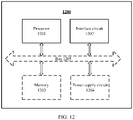
- the apparatus may include at least one processor and an interface circuit.
- the communication apparatus is enabled to implement the method according to any one of the first aspect to the fourth aspect and the designs of the first aspect to the fourth aspect.
- the apparatus may be a terminal device or a network device, or a chip in the terminal device or in the network device in the method according to any one of the first aspect to the fourth aspect and the designs of the first aspect to the fourth aspect.
- the communication apparatus may further include at least one memory, and the memory stores the related program instructions.
- this application provides a computer-readable storage medium.
- the computer-readable storage medium may be applied to a communication apparatus.
- the computer-readable storage medium stores related program instructions.
- the communication apparatus is enabled to implement the method according to any one of the first aspect to the fourth aspect and the designs of the first aspect to the fourth aspect.
- this application provides a computer program product.
- the computer program product includes related program instructions.
- the related program instructions When the related program instructions are executed, the method according to any one of the first aspect to the fourth aspect and the designs of the first aspect to the fourth aspect is implemented.
- this application provides a communication apparatus.
- the apparatus is configured to perform the method according to any one of the first aspect to the fourth aspect and the designs of the first aspect to the fourth aspect.
- transmission may include the following three cases: data sending, data receiving, or data sending and data receiving.
- data may include service data and/or signaling data.
- Thresholds, thresholds, offsets, preset values, or the like of user equipment in this application may be configured by a network device, or may be stored in user equipment when the user equipment is delivered from a factory, or may be standard-specified or standard-defined. Values of these thresholds, thresholds, offsets, or preset values may be 0.
- a global system for mobile communications global system for mobile communications
- code division multiple access code division multiple access
- CDMA code division multiple access
- WCDMA wideband code division multiple access
- general packet radio service general packet radio service, GPRS
- LTE long term evolution
- LTE frequency division duplex frequency division duplex
- FDD frequency division duplex
- TDD time division duplex
- WiMAX worldwide interoperability for microwave access
- 5G 5th generation
- 5G new radio
- NR new radio
- a carrier may be a carrier used to carry information from a perspective of a physical layer.
- the carrier occupies a specific frequency range (for example, a frequency range represented by a center frequency and a bandwidth).
- a cell may be a unit that manages wireless communication from a perspective of higher layer resource management.
- the cell may include a carrier, and second configuration information of the cell may include second configuration information of the carrier.
- a downlink carrier and an uplink carrier of a cell may be different (for example, in a frequency division duplex (frequency division duplex, frequency division duplex (FDD) FDD) system), or a downlink carrier and an uplink carrier of a cell may be the same (for example, in a time division duplex (time division duplex, TDD) system).
- FDD frequency division duplex
- TDD time division duplex
- a part of cells may include both a downlink carrier and an uplink carrier, and a part of cells may include only a downlink carrier.
- One carrier may correspond to a plurality of cells. In other words, different cells may correspond to a same carrier. Interference may be avoided between cells having a same carrier by using different azimuths deployed in the cells.
- a communication system to which an embodiment of this application is applicable may include a network device 100, first user equipment 110, and a first relay device 120, and optionally include another relay device such as a second relay device 130.
- the network device 100 may communicate with the first user equipment 110 through the first relay device 120.
- a link between the network device and the first user equipment may be referred to as an indirect path.
- the network device 100 may communicate with the first relay device 120 through a wireless communication interface, for example, an LTE Uu interface or an NR Uu interface.
- the LTE Uu interface or the NR Uu interface may be a wireless communication interface between a radio access network (radio access network, RAN) device and a terminal device in a cellular communication system.
- radio access network radio access network
- a wireless communication link used for uplink communication between a terminal device and a network device through the LTE Uu interface or the NR Uu interface may be referred to as an uplink (Uplink, UL), and a wireless communication link used for downlink communication between the terminal device and the network device through the LTE Uu interface or the NR Uu interface may be referred to as a downlink (downlink, DL).
- the first relay device 120 may communicate with the first user equipment 110 through a wireless direct communication interface, for example, a PC5 interface.
- the PC5 interface may be a wireless communication interface for direct communication between terminal devices.
- the terminal devices may directly exchange data through the PC5 interface without forwarding the data through a cellular communication network.
- a communication link used for direct communication between terminal devices through the PC5 interface may be referred to as a sidelink (sidelink, SL).
- the first relay device 120 may communicate with the first user equipment 110 through microwave, Wi-Fi, Bluetooth, or the like.
- the network device 100 may communicate with the first user equipment 110 through the second relay device 130.
- the network device 100 may directly communicate with the first user equipment 110 through a wireless communication interface.
- a link between the network device and the first user equipment may be referred to as a direct path.
- the network architecture shown in FIG. 1 is merely an example architecture. Other than the network functional entities shown in FIG. 1 , the communication system shown in FIG.
- the first user equipment 110 may further include another functional entity, for example, a core network element, more user equipment, or more relay devices. This is not limited in this application.
- the first user equipment 110 is located at an edge or outside coverage of the network device, or the first user equipment 110 may be located at an edge or within coverage of the network device.
- there may be no appropriate communication resource between the first user equipment 110 and the network device 100 or a communication resource between the first user equipment 110 and the network device 100 is not as good as a communication resource between the first relay device 120 and the network device 100 (for example, quality of the communication resource may be measured by using channel quality).
- the first user equipment 110 may communicate with the network device 100 through the first relay device 120.
- a link 1 includes an SL between the first user equipment 110 and the first relay device 120, and a Uu link between the first relay device 120 and the network device 100.
- a link 2 includes a Uu link between the first user equipment 110 and the network device 100.
- a link 3 includes an SL between the first user equipment 110 and the second relay device 130, and a Uu link between the second relay device 130 and the network device 100.
- the user equipment in FIG. 1 may be an access terminal device, a subscriber unit, a subscriber station, a mobile station, a remote station, a remote terminal device, a mobile device, a user terminal device, a wireless terminal device, a user agent, a user apparatus, or the like.
- the user equipment may alternatively be a cellular phone, a cordless phone, a session initiation protocol (session initiation protocol, SIP) phone, a wireless local loop (wireless local loop, WLL) station, a personal digital assistant (personal digital assistant, PDA), a handheld device having a wireless communication function, a computing device, another processing device connected to a wireless modem, a vehicle-mounted device, a wearable device (such as a smartwatch or a smart band), smart furniture or a home appliance, a terminal device in a 5G network, a terminal device in a future evolved public land mobile network (public land mobile network, PLMN), a vehicle device in vehicle-to-everything (vehicle-to-everything, V2X), a customer premises equipment (customer premises equipment, CPE), or the like.
- a specific implementation form of the user equipment is not limited in this application.
- the network device in FIG. 1 may be configured to implement functions such as a radio physical entity, resource scheduling and radio resource management, or radio access control and mobility management.
- the network device may be a radio access network (radio access network, RAN) device, for example, may be a base transceiver station (base transceiver station, BTS) in a GSM system or a CDMA system, a NodeB (NodeB, NB) in a WCDMA system, an evolved NodeB (evolved NodeB, eNB) in an LTE system, a radio controller in a cloud radio access network (cloud radio access network, C-RAN) scenario, a relay node station, a transmission reception point (transmission reception point, TRP), an access point, a vehicle-mounted device, a road side unit (road side unit, RSU), a wearable device, a network device in a 5G network such as an NR NodeB or a next generation NodeB (generation NodeB, gNB), a radio
- the relay device in FIG. 1 may be a communication device having a relay function.
- the communication device may further have a normal communication function.
- the relay function is specially used by the network device to perform relay communication with the user equipment, and serves the user equipment.
- the normal communication function is specially used by the network device to perform direct communication with the relay device, and serves the relay device.
- the relay device may be cooperated user equipment (cooperated user equipment, CUE) in a network assisted UE cooperation (network assisted UE cooperation, NAUC) communication scenario.
- the relay device may be an IAB node in an integrated access and backhaul (integrated access and backhaul, IAB) communication scenario.
- the relay device may be relay user equipment (relay user equipment, relay UE).
- FIG. 2 and FIG. 3 show two relay device discovery methods according to this application.
- user equipment actively broadcasts an announcement (Announcement) message, to notify nearby user equipment of existence of the user equipment.
- Announcement an announcement
- user equipment first broadcasts a solicitation (Solicitation) message, and other user equipment that receives the solicitation message may reply with a response (Response) message to notify the user equipment of existence of the user equipment.
- Solicitation solicitation
- Repsponse response
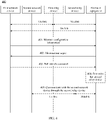
- FIG. 4 shows a communication method according to an embodiment of this application.
- the communication method 400 includes the following steps.
- Operation 401 A first network device sends first configuration information to first user equipment.
- the first user equipment receives the first configuration information from the first network device, and obtains a first condition based on the first configuration information.
- the first network device may send the first configuration information to the first user equipment through a Uu link.
- the first configuration information needs to be forwarded through the first relay device.
- the first configuration information in this application may be carried in an RRC message.
- the first condition includes any one of the following: a reference signal measurement value corresponding to the first network device is less than or less than or equal to a first threshold; a reference signal measurement value corresponding to second user equipment is greater than or greater than or equal to a second threshold; a reference signal measurement value corresponding to the first network device is less than or less than or equal to a first threshold, and a reference signal measurement value corresponding to second user equipment is greater than or greater than or equal to a second threshold; a reference signal measurement value corresponding to second user equipment is greater than or greater than or equal to a sum of a reference signal measurement value corresponding to the first network device and a first offset (offset); a reference signal measurement value corresponding to the first relay device is less than or less than or equal to a third threshold; a reference signal measurement value corresponding to the first relay device is less than or less than or equal to a third threshold, and a reference signal measurement value corresponding to second user equipment is greater than or greater than or equal to a fourth threshold; or a reference signal measurement value corresponding
- the first configuration information includes second measurement object information and a measurement event.
- the first user equipment obtains the first condition based on the second measurement object information and the measurement event.
- the first condition may correspond to one measurement identifier.
- the second measurement object information indicates the first user equipment to measure other user equipment.
- the second measurement object information may specifically include frequency information.
- a frequency corresponding to the frequency information belongs to a PC5 interface operating frequency band.
- the second measurement object information may specifically include at least one bit.
- a value of the at least one bit is a first value.
- the first value may be 0 or 1.
- the measurement event may include any one of the following: a reference signal measurement value corresponding to a current node (for example, a serving node, for example, the first network device or the first relay device) is less than or less than or equal to a first threshold; a reference signal measurement value (which may be a reference signal measurement value corresponding to other user equipment, another cell, or another carrier) is greater than or greater than or equal to a second threshold; a reference signal measurement value corresponding to a current node is less than or less than or equal to a first threshold, and a reference signal measurement value is greater than or greater than or equal to a second threshold; or a reference signal measurement value is greater than or greater than or equal to a sum of a reference signal measurement value corresponding to a current node and a first offset.
- a reference signal measurement value corresponding to a current node for example, a serving node, for example, the first network device or the first relay device
- a reference signal measurement value which may be a reference signal measurement value corresponding to other user
- the first or second measurement object information may include at least one of carrier information, a cell identifier, a user equipment identifier, and a network device identifier.
- a measurement object indicated by the first or second measurement object information is user equipment that works on a carrier corresponding to the carrier information.
- the first or second measurement object information includes the cell identifier
- a measurement object indicated by the first or second measurement object information is user equipment that camps on or is connected to a cell corresponding to the cell identifier.
- a measurement object indicated by the first or second measurement object information is user equipment corresponding to the user equipment identifier.
- a measurement object indicated by the first or second measurement object information is user equipment that camps on or is connected to a network device corresponding to the network device identifier.
- the first or second measurement object information may also be referred to as an allowlist.
- the first configuration information may include a blocklist. It should be understood that, when performing measurement, the first user equipment forbids, based on the blocklist, measuring an object belonging to the blocklist. For example, when the blocklist includes the cell identifier, the first user equipment is forbidden from measuring the user equipment that camps on or is connected to the cell corresponding to the cell identifier.
- the cell identifier in this application may be a cell global identifier (cell global identification, CGI).
- An identifier of the user equipment may be a cell radio network temporary identifier (cell radio network temporary identifier, C-RNTI), an inactive radio network temporary identifier (Inactive RNTI, I-RNTI), a 5G system architecture evolution temporary mobile subscription identifier (5G System Architecture Evolution Temporary Mobile Subscription Identifier, 5G-S-TMSI), a layer 2 identifier (L2 ID), or a local index (local index).
- the carrier information may be a carrier identifier or a carrier index (index).
- the carrier index may indicate a corresponding carrier in a system information block (system information block, SIB) message sent by the first network device.
- Operation 402 The first user equipment sends a measurement report to the first network device.
- the first user equipment may perform measurement based on the first configuration information. If the first condition is met, the first user equipment sends the measurement report (measurement report, MR) to the first network device. It may also be understood as that when the first condition is met, the first user equipment is triggered to send the measurement report to a network.
- measurement report measurement report
- the first user equipment may measure a reference signal corresponding to the measurement object indicated by the first or second measurement object information.
- the first user equipment may perform reporting based on the first or second measurement object information. For example, a reporting object included in the measurement report belongs to the object indicated by the first or second measurement object information.
- the measurement report includes identification information of at least one second user equipment, and/or a reference signal measurement value corresponding to the at least one second user equipment.
- the reference signal measurement value in this application includes reference signal received power (reference signal received power, RSRP), reference signal received quality (reference signal received quality, RSRQ), a signal to interference plus noise ratio (signal to interference plus noise ratio, SINR), or a received signal strength indicator (received signal strength indicator, RSSI).
- reference signal received power reference signal received power
- RSRQ reference signal received quality
- SINR signal to interference plus noise ratio
- RSSI received signal strength indicator
- a reference signal corresponding to the network device in this application may be a reference signal corresponding to a current serving cell of the first user equipment or a reference signal corresponding to a current operating carrier of the first user equipment.
- a reference signal corresponding to the first relay device or a reference signal corresponding to the second user equipment may be a discovery (Discovery) message, and the discovery message includes an announcement (Announcement) message or a response (Response) message.
- the reference signal corresponding to the first relay device may alternatively be a data signal between the first user equipment and the first relay device.
- the first user equipment may alternatively obtain a measurement value of a reference signal between the first user equipment and the first relay device by measuring a data signal normally transmitted between the first user equipment and the first relay device.
- a specific measurement process of the reference signal corresponding to the second user equipment in this application may be as follows: The first user equipment sends a solicitation (Solicitation) message; the first user equipment receives a response message from the second user equipment; and the first user equipment obtains a measurement value of the response message, and uses the measurement value as a reference signal measurement value corresponding to the second user equipment.
- the first user equipment receives an announcement message sent by second user equipment; and the first user equipment obtains a measurement value of the announcement message, and uses the measurement value as the reference signal measurement value corresponding to the second user equipment.
- a specific measurement process may be as follows: The first user equipment sends a solicitation (Solicitation) message, where the solicitation message includes the first or second measurement object information; the first user equipment receives a response message from a first or second measurement object, where optionally, in user equipments that receive the solicitation message, only user equipment belonging to the measurement object replies with the response message; and the first user equipment obtains or retains a measurement value of the response message, and uses the measurement value as a reference signal measurement value corresponding to the first or second measurement object.
- Solicitation solicitation
- the first user equipment receives a response message from a first or second measurement object, where optionally, in user equipments that receive the solicitation message, only user equipment belonging to the measurement object replies with the response message; and the first user equipment obtains or retains a measurement value of the response message, and uses the measurement value as a reference signal measurement value corresponding to the first or second measurement object.
- a specific measurement process may be as follows: The first user equipment sends a solicitation message; the first user equipment receives a response message; and when user equipment that sends the response message belongs to a first or second measurement object, the first user equipment obtains or retains a measurement value of the response message, and uses the measurement value as a reference signal measurement value corresponding to the first or second measurement object.
- a specific measurement process may be as follows: The first user equipment receives an announcement message; and when user equipment that sends the announcement message belongs to a first or second measurement object, the first user equipment obtains or retains a measurement value of the announcement message, and uses the measurement value as a reference signal measurement value corresponding to the first or second measurement object.
- this embodiment may further include the following operations 403 to 405.
- Operation 403 The first network device sends a path switch command to the first user equipment.
- the first network device may send the path switch command (path switch command) to the first user equipment, where the path switch command may include identification information of X third user equipments, and X is a positive integer.
- the third user equipment may also be referred to as a candidate relay device.
- the first network device may select a reference signal measurement value with a maximum reference signal measurement value from reference signal measurement values included in the measurement report, and determine second user equipment corresponding to the maximum reference signal measurement value as the third user equipment.
- the first network device may select X reference signal measurement values greater than a preset threshold from reference signal measurement values included in the measurement report, and determine X second user equipments corresponding to the X reference signal measurement values as the X third user equipments.
- the first network device may select, from second user equipment identifiers included in the measurement report, a second user equipment identifier that ranks (ranking) first, and determine second user equipment corresponding to the second user equipment identifier that ranks first as the third user equipment.
- the first network device may select first X second user equipment identifiers from second user equipment identifiers included in the measurement report, and determine second user equipments corresponding to the first X second user equipment identifiers as the X third user equipments.
- Operation 404 The first user equipment determines a second relay device.
- the first user equipment determines that the third user equipment is the second relay device.
- the first user equipment selects the second relay device from the third user equipments. For example, the first user equipment may select third user equipment with a best reference signal measurement value in the X third user equipments as the second relay device.
- the selection may be autonomous selection by the user equipment, or may be selection performed by the user equipment with assistance of indication information provided by the network device.
- Operation 405 The first user equipment communicates with a second network device through the second relay device.
- the second network device may be a network device on which the second relay device camps or to which the second relay device is connected.
- the first user equipment may establish a sidelink connection to the second relay device.
- the first user equipment sends a path switch complete (path switch command complete) message to the first network device or the second network device through the second relay device, where the message is used to indicate that the first user equipment is successfully switched to the second network device.
- path switch complete path switch command complete
- the first user equipment establishes the sidelink connection to the second relay device may be that the first user equipment establishes a PC5-S connection to the second relay device by sending a direct communication request (direct communication request) message.
- the second network device and the first network device may be a same network device, or may be different network devices.
- FIG. 5 shows a communication method according to an embodiment of this application.
- the communication method 500 includes the following steps.
- Operation 501 A first network device sends first configuration information to first user equipment.
- the first user equipment receives the first configuration information from the first network device, and obtains a second condition based on the first configuration information.
- the second condition includes any one of the following: a reference signal measurement value corresponding to a serving cell is less than or less than or equal to a ninth threshold; a reference signal measurement value corresponding to another cell is greater than or greater than or equal to a tenth threshold; a reference signal measurement value corresponding to a serving cell is less than or less than or equal to a ninth threshold, and a reference signal measurement value corresponding to another cell is greater than or greater than or equal to a tenth threshold; a reference signal measurement value corresponding to another cell is greater than or greater than or equal to a sum of a reference signal measurement value corresponding to the serving cell and a fifth offset; a reference signal measurement value corresponding to a serving carrier is less than or less than or equal to a ninth threshold; a reference signal measurement value corresponding to another carrier is greater than or greater than or equal to a tenth threshold; a reference signal measurement value corresponding to a serving carrier is less than or less than or equal to a ninth threshold, and a reference signal measurement value corresponding to another carrier
- the first configuration information includes the second condition.
- the first configuration information may further include third measurement object information.
- the first configuration information includes fourth measurement object information and a measurement event.
- the first user equipment obtains the second condition based on the fourth measurement object information and the measurement event.
- the second condition may correspond to one measurement identifier.
- the fourth measurement object information indicates the first user equipment to measure a cell or a carrier.
- the fourth measurement object information may specifically include frequency information.
- a frequency corresponding to the frequency information may belong to a Uu interface operating frequency band.
- the fourth measurement object information may specifically include at least one bit.
- a value of the at least one bit is a second value. The second value may be 0 or 1.
- the measurement event may include any one of the following: a reference signal measurement value corresponding to a current node (for example, a serving node, which may be the first network device or the first relay device) is less than or less than or equal to a first threshold; a reference signal measurement value (which may be a reference signal measurement value corresponding to other user equipment, another cell, or another carrier) is greater than or greater than or equal to a second threshold; a reference signal measurement value corresponding to a current node is less than or less than or equal to a first threshold, and a reference signal measurement value is greater than or greater than or equal to a second threshold; or a reference signal measurement value is greater than or greater than or equal to a sum of a reference signal measurement value corresponding to a current node and a first offset.
- a reference signal measurement value corresponding to a current node for example, a serving node, which may be the first network device or the first relay device
- a reference signal measurement value which may be a reference signal measurement value corresponding to other user
- the third or fourth measurement object information may include at least one of carrier information, a cell identifier, a user equipment identifier, and a network device identifier.
- the third or fourth measurement object information includes the carrier information
- a measurement object indicated by the third or fourth measurement object information is a carrier corresponding to the carrier information.
- the third or fourth measurement object information includes the cell identifier
- a measurement object indicated by the third or fourth measurement object information is a cell corresponding to the cell identifier.
- a measurement object indicated by the third or fourth measurement object information is a cell in which user equipment corresponding to the user equipment identifier is located or a carrier on which user equipment corresponding to the user equipment identifier is located.
- a measurement object indicated by the third or fourth measurement object information is a cell or a carrier served by a network device corresponding to the network device identifier.
- the third or fourth measurement object information may also be referred to as an allowlist.
- the first configuration information may include a blocklist. It should be understood that, when performing measurement, the first user equipment forbids, based on the blocklist, measuring an object belonging to the blocklist. For example, when the blocklist includes the cell identifier, the first user equipment is forbidden from measuring the cell corresponding to the cell identifier. When the blocklist includes a carrier identifier, the first user equipment is forbidden from measuring a carrier corresponding to the carrier identifier.
- Operation 502 The first user equipment sends a measurement report to the first network device.
- the first user equipment may perform measurement based on the first configuration information. If the second condition is met, the first user equipment sends the measurement report to the first network device. It may also be understood as that when the second condition is met, the first user equipment is triggered to send the measurement report to a network.
- the first user equipment may measure a reference signal corresponding to the measurement object indicated by the third or fourth measurement object information.
- the first user equipment may perform reporting based on the third or fourth measurement object information. For example, a reporting object included in the measurement report belongs to the object indicated by the third or fourth measurement object information.
- the measurement report includes identification information of at least one cell or at least one carrier, and/or a reference signal measurement value corresponding to the at least one cell or the at least one carrier.
- this embodiment may further include the following operations 503 to 505.
- Operation 503 The first network device sends a path switch command to the first user equipment.
- the first network device may send the path switch command (path switch command) to the first user equipment, where the path switch command may include identification information of Y cells or Y carriers, and Y is a positive integer.
- the first network device may select a reference signal measurement value with a maximum reference signal measurement value from reference signal measurement values included in the measurement report, and determine a cell or a carrier corresponding to the maximum reference signal measurement value as the cell or the carrier included in the path switch command.
- the first network device may select Y reference signal measurement values greater than a preset threshold from reference signal measurement values included in the measurement report, and determine Y cells or Y carriers corresponding to the Y reference signal measurement values as the Y cells or the Y carriers included in the path switch command.
- the first network device may select, from cell identifiers or carrier identifiers included in the measurement report, a cell identifier or a carrier identifier that ranks (ranking) first, and determine a cell or a carrier corresponding to the cell identifier or the carrier identifier that ranks first as the cell or the carrier included in the path switch command.
- the first network device may select first Y cell identifiers or first Y carrier identifiers from cell identifiers or carrier identifiers included in the measurement report, and determine cells or carriers corresponding to the first Y cell identifiers or the first Y carrier identifiers as the Y cells or the Y carriers included in the path switch command.
- Operation 504 The first user equipment determines a first cell or a first carrier.
- the first user equipment determines that a cell included in the path switch command is the first cell, or determines that a carrier included in the path switch command is the first carrier.
- the first user equipment selects the first cell from the Y cells, or selects the first carrier from the Y carriers. For example, the first user equipment may select a cell with a best reference signal measurement value in the Y cells as the first cell, or the first user equipment may select a carrier with a best reference signal measurement value in the Y carriers as the first carrier.
- the selection may be autonomous selection by the user equipment, or may be selection performed by the user equipment with assistance of indication information provided by the network device.
- Operation 505 The first user equipment communicates with a second network device through the first cell, or communicates with a second network device through the first carrier.
- the second network device may be a network device to which the first cell or the first carrier belongs.
- the first user equipment may initiate random access to the second network device, to attempt to access the second network device.
- the first user equipment may further send a path switch command complete (path switch command complete) message to the first network device or the second network device, where the message is used to indicate that the first user equipment is successfully switched to the second network device.
- path switch command complete path switch command complete
- the second network device and the first network device may be a same network device, or may be different network devices.
- FIG. 6 shows a communication method according to an embodiment of this application.
- the communication method 600 includes the following steps.
- Operation 601 A first network device sends first configuration information to first user equipment.
- the first user equipment receives the first configuration information from the first network device, where the first configuration information includes a third condition.
- the third condition may include: a reference signal measurement value corresponding to the first network device is less than or less than or equal to a seventeenth threshold; a reference signal measurement value corresponding to another device (user equipment or a network device) is greater than or greater than or equal to an eighteenth threshold; a reference signal measurement value corresponding to the first network device is less than or less than or equal to a seventeenth threshold, and a reference signal measurement value corresponding to another device (user equipment or a network device) is greater than or greater than or equal to an eighteenth threshold; a reference signal measurement value corresponding to another device (user equipment or a network device) is greater than or greater than or equal to a sum of a reference signal measurement value corresponding to the first network device and a ninth offset; a reference signal measurement value corresponding to a first relay device is less than or less than or equal to a nineteenth threshold; a reference signal measurement value corresponding to a first relay device is less than or less than or equal to a nineteenth threshold, and a reference signal measurement value corresponding to another
- the first configuration information may include fifth measurement object information.
- the fifth measurement object information may include at least one of carrier information, a cell identifier, a user equipment identifier, and a network device identifier.
- a measurement object indicated by the fifth measurement object information is a carrier corresponding to the carrier information and/or user equipment that works on the carrier.
- a measurement object indicated by the fifth measurement object information is a cell corresponding to the cell identifier and/or user equipment in the cell.
- the fifth measurement object information includes the user equipment identifier
- a measurement object indicated by the fifth measurement object information is user equipment corresponding to the user equipment identifier.
- a measurement object indicated by the fifth measurement object information is a network device corresponding to the network device identifier.
- the fifth measurement object information may also be referred to as an allowlist.
- the first configuration information may include a blocklist. It should be understood that, when performing measurement, the first user equipment forbids, based on the blocklist, measuring an object belonging to the blocklist. For example, when the blocklist includes the cell identifier, the first user equipment is forbidden from measuring the user equipment that camps on or is connected to the cell corresponding to the cell identifier, and/or measuring the cell corresponding to the cell identifier. For example, when the blocklist includes a carrier identifier, the first user equipment is forbidden from measuring user equipment that camps on or is connected to a carrier corresponding to the carrier identifier, and/or measuring the carrier corresponding to the carrier identifier. For example, when the blocklist includes the user equipment identifier, the first user equipment is forbidden from measuring the user equipment identifier. For example, when the blocklist includes the network device identifier, the first user equipment is forbidden from measuring the network device identifier.
- Operation 602 The first user equipment sends a measurement report to the first network device.
- the first user equipment may perform measurement based on the first configuration information. If the third condition is met, the first user equipment sends the measurement report to the first network device. Optionally, the first user equipment may measure a reference signal corresponding to the measurement object indicated by the fifth measurement object information. Optionally, the first user equipment may perform reporting based on the fifth measurement object information. For example, a reporting object included in the measurement report belongs to the object indicated by the fifth measurement object information.
- the measurement report includes at least one of the following: identification information of at least one second user equipment, a reference signal measurement value corresponding to at least one second user equipment, identification information of at least one cell or at least one carrier, or a reference signal measurement value corresponding to at least one cell or at least one carrier.
- this embodiment may further include the following operations 603 to 605.
- Operation 603 The first network device sends a path switch command to the first user equipment.
- the first network device may send a path switch command (path switch command) to the first user equipment, where the path switch command may include identification information of Y third user equipments, and Y is a positive integer; or the path switch command may include identification information of Y cells; or the path switch command may include identification information of Y carriers, and Y is a positive integer.
- path switch command may include identification information of Y third user equipments, and Y is a positive integer
- the path switch command may include identification information of Y cells
- the path switch command may include identification information of Y carriers, and Y is a positive integer.
- the first network device may select a reference signal measurement value with a maximum reference signal measurement value from reference signal measurement values included in the measurement report, and determine second user equipment, a cell, or a carrier corresponding to the maximum reference signal measurement value as the third user equipment, the cell, or the carrier included in the path switch command.
- the first network device may select Y reference signal measurement values greater than a preset threshold from reference signal measurement values included in the measurement report, and determine Y second user equipments, Y cells, or Y carriers corresponding to the Y reference signal measurement values as the Y third user equipments, the Y cells, or the Y carriers included in the path switch command.
- the first network device may select, from second user equipment identifiers, cell identifiers, or carrier identifiers included in the measurement report, a second user equipment identifier, a cell identifier, or a carrier identifier that ranks (ranking) first, and determine second user equipment, a cell, or a carrier corresponding to the second user equipment identifier, the cell identifier, or the carrier identifier that ranks first as the third user equipment, the cell, or the carrier included in the path switch command.
- the first network device may select first Y second user equipment identifiers, first Y cell identifiers, or first Y carrier identifiers from second user equipment identifiers, cell identifiers, or carrier identifiers included in the measurement report, and determine cells or carriers corresponding to the first Y second user equipment identifiers, the first Y cell identifiers, or the first Y carrier identifiers as the Y third user equipments, the Y cells, or the Y carriers included in the path switch command.
- Operation 604 The first user equipment determines a second relay device, a first cell, or a first carrier.
- the path switch command includes the identification information of the Y third user equipments, the following descriptions are provided.
- the first user equipment determines that the third user equipment is the second relay device.
- the first user equipment selects the second relay device from the third user equipments. For example, the first user equipment may select third user equipment with a best reference signal measurement value in the Y third user equipments as the second relay device.
- the selection may be autonomous selection by the user equipment, or may be selection performed by the user equipment with assistance of indication information provided by the network device.
- the path switch command includes the identification information of the Y cells or the Y carriers, the following descriptions are provided.
- the first user equipment determines that a cell included in the path switch command is the first cell, or determines that a carrier included in the path switch command is the first carrier.
- the first user equipment selects the first cell from the Y cells, or selects the first carrier from the Y carriers. For example, the first user equipment may select a cell with a best reference signal measurement value in the Y cells as the first cell, or the first user equipment may select a carrier with a best reference signal measurement value in the Y carriers as the first carrier.
- the selection may be autonomous selection by the user equipment, or may be selection performed by the user equipment with assistance of indication information provided by the network device.
- Operation 605 The first user equipment communicates with a second network device through the second relay device, or communicates with a second network device through the first cell, or communicates with a second network device through the first carrier.
- a path switching method is provided in each of the methods 400 to 600.
- the first user equipment may separately obtain the first condition, the second condition, or the third condition based on the first configuration information from the first network device.
- the terminal device reports the measurement report based on the first condition, the second condition, or the third condition. According to the methods 400 to 600, the measurement report in a relay scenario can be appropriately reported.
- the methods 400 to 600 may further include: The first network device determines a candidate path switch target (which may be a network device, a cell, a carrier, or user equipment) based on the measurement report reported by the first user equipment, and delivers the candidate path switch target to the first user equipment by using the path switch command.
- the first user equipment determines a final path switch target based on the path switch command, and attempts to access the final path switch target.
- the first network device may provide only one candidate path switch target. In this way, the first user equipment may directly determine the candidate path switch target as the final path switch target.
- the first configuration information directly includes the first condition. In this way, air interface overheads are reduced.
- the first configuration information may further include the first measurement object information.
- the first configuration information includes the second measurement object information and the measurement event, and the first condition is obtained by the first user equipment based on the second measurement object information and the measurement event. In this way, when the first condition needs to be updated, the network device may update only the second measurement object information or the measurement event, to improve efficiency of updating or modifying the first condition.
- the first configuration information directly includes the second condition. In this way, air interface overheads are reduced.
- the first configuration information may further include the third measurement object information.
- the first configuration information includes the fourth measurement object information and the measurement event, and the second condition is obtained by the first user equipment based on the fourth measurement object information and the measurement event. In this way, when the second condition needs to be updated, the network device may update only the fourth measurement object information or the measurement event, to improve efficiency of updating or modifying the second condition.
- the first configuration information directly includes the third condition.
- the first configuration information may further include the fifth measurement object information.
- the first to fifth measurement object information may specifically include at least one of the carrier information, the cell identifier, the user equipment identifier, and the network device identifier.
- the first configuration information may include the blocklist. Configurations of the first to the fifth measurement object information and/or the blocklist can greatly improve measurement efficiency of the user equipment.
- FIG. 7 shows a communication method according to an embodiment of this application.
- the communication method 700 includes the following steps.
- Operation 701 A first network device sends second configuration information to first user equipment.
- the first user equipment receives the second configuration information from the network device, and obtains a fourth condition based on the second configuration information.
- the first user equipment determines fourth user equipment that meets the fourth condition. For example, when a reference signal measurement value corresponding to the first network device is less than or less than or equal to a preset threshold, the first user equipment starts to determine the fourth user equipment that meets the fourth condition.
- the network device may send the second configuration information to the first user equipment a Uu link. If the network device communicates with the first user equipment through a first relay device, the second configuration information needs to be forwarded through the first relay device.
- the second configuration information in this application may be carried in an RRC message.
- the fourth user equipment that meets the fourth condition includes any one of the following: a reference signal measurement value corresponding to the fourth user equipment is greater than or greater than or equal to a fifth threshold; a reference signal measurement value corresponding to the first network device is less than or less than or equal to a fifth threshold, and a reference signal measurement value corresponding to the fourth user equipment is greater than or greater than or equal to a sixth threshold; a reference signal measurement value corresponding to the fourth user equipment is greater than or greater than or equal to a sum of a reference signal measurement value corresponding to the first network device and a third offset; a reference signal measurement value corresponding to the first relay device is less than or less than or equal to a third threshold, and a reference signal measurement value corresponding to the fourth user equipment is greater than or greater than or equal to an eighth threshold; or a reference signal measurement value corresponding to the fourth user equipment is greater than or greater than or equal to a sum of a reference signal measurement value corresponding to the first relay device and a fourth offset.
- the second configuration information includes the fourth condition.
- the second configuration information may further include sixth measurement object information.
- the second configuration information includes seventh measurement object information and a measurement event.
- the first user equipment obtains the fourth condition based on the seventh measurement object information and the measurement event.
- the seventh measurement object information indicates the first user equipment to measure other user equipment.
- the seventh measurement object information may specifically include frequency information.
- a frequency corresponding to the frequency information belongs to a PC5 interface operating frequency band.
- the seventh measurement object information may specifically include at least one bit.
- a value of the at least one bit is a first value. The first value may be 0.
- the measurement event may include any one of the following: a reference signal measurement value corresponding to other user equipment, another cell, or another carrier is greater than or greater than or equal to a fourth threshold; a reference signal measurement value corresponding to a current node (a serving node, for example, the first network device or the first relay device) is less than or less than or equal to a third threshold, and a reference signal measurement value corresponding to other user equipment, another cell, or another carrier is greater than or greater than or equal to a fourth threshold; or a reference signal measurement value corresponding to other user equipment, another cell, or another carrier is greater than or greater than or equal to a sum of a reference signal measurement value corresponding to a current node (a serving node, for example, the network device or the relay device) and a second offset.
- a reference signal measurement value corresponding to other user equipment, another cell, or another carrier is greater than or greater than or equal to a fourth threshold.
- the sixth or seventh measurement object information may include at least one of carrier information, a cell identifier, a user equipment identifier, and a network device identifier.
- a measurement object indicated by the sixth or seventh measurement object information is user equipment that works on a carrier corresponding to the carrier information.
- the sixth or seventh measurement object information includes the cell identifier
- a measurement object indicated by the sixth or seventh measurement object information is user equipment that camps on or is connected to a cell corresponding to the cell identifier.
- a measurement object indicated by the sixth or seventh measurement object information is user equipment corresponding to the user equipment identifier.
- a measurement object indicated by the sixth or seventh measurement object information is user equipment that camps on or is connected to a network device corresponding to the network device identifier.
- the sixth or seventh measurement object information may also be referred to as an allowlist.
- the second configuration information may include a blocklist. It should be understood that, when performing measurement, the first user equipment forbids, based on the blocklist, measuring an object belonging to the blocklist. For example, when the blocklist includes the cell identifier, the first user equipment is forbidden from measuring the user equipment that camps on or is connected to the cell corresponding to the cell identifier.
- Operation 702 The first user equipment determines a third relay device.
- the first user equipment may perform measurement based on the second configuration information. For example, when the fourth user equipment that meets the fourth condition exists, the first user equipment may start to perform path switching. Optionally, the first user equipment may measure the user equipment indicated by the sixth or seventh measurement object information.
- the first user equipment determines, based on a measurement result, Y fourth user equipments that meet the fourth condition, where Y is a positive integer.
- the first user equipment determines the third relay device in the Y fourth user equipments that meet the fourth condition. For example, the first user equipment may determine fourth user equipment with a best reference signal measurement value in the Y fourth user equipments as the third relay device. The determining may be autonomous determining by the user equipment, or may be determining performed by the user equipment with assistance of indication information provided by the network device.
- Operation 703 The first user equipment communicates with a second network device through the third relay device.
- the second network device may be a network device on which the third relay device camps or to which the third relay device is connected.
- the first user equipment may establish a sidelink connection to the third relay device.
- the first user equipment sends a path switch notification (path switch notification) message to the first network device or the second network device through the third relay device.
- the path switch notification information may include an identifier of the third relay device, and optionally further includes an identifier of a cell on which the third relay device camps or to which the third relay device is connected.
- the path switch notification message may enable the first network device and the second network device to exchange data information (for example, a data packet sequence number) of the first user equipment, to ensure service continuity during path switching.
- data information for example, a data packet sequence number
- the first user equipment establishes the sidelink connection to the third relay device may be that the first user equipment establishes a PC5-S connection to the third relay device by sending a direct communication request (direct communication request) message.
- the second network device and the first network device may be a same network device, or may be different network devices.
- FIG. 8 shows a communication method according to an embodiment of this application.
- the communication method 800 includes the following steps.
- Operation 801 A first network device sends second configuration information to first user equipment.
- the first user equipment receives the second configuration information from the first network device, and obtains a fifth condition based on the second configuration information.
- the first user equipment determines a cell or a carrier that meets the fifth condition. For example, when a reference signal measurement value corresponding to the first network device is less than or less than or equal to a preset threshold, the first user equipment starts to determine the cell or the carrier that meets the fifth condition.
- the cell that meets the fifth condition includes any one of the following: a reference signal measurement value corresponding to the cell is greater than or greater than or equal to a thirteenth threshold; a reference signal measurement value corresponding to a first relay device is less than or less than or equal to a sixteenth threshold, and a reference signal measurement value corresponding to the cell is greater than or greater than or equal to a fifteenth threshold; or a reference signal measurement value corresponding to the cell is greater than or greater than or equal to a sum of a reference signal measurement value corresponding to a first relay device and an eighth offset.
- the carrier that meets the fifth condition includes any one of the following: a reference signal measurement value corresponding to the carrier is greater than or greater than or equal to a thirteenth threshold; a reference signal measurement value corresponding to a serving carrier is less than or less than or equal to a fourteenth threshold, and a reference signal measurement value corresponding to the carrier is greater than or greater than or equal to a thirteenth threshold; a reference signal measurement value corresponding to the carrier is greater than or greater than or equal to a sum of a reference signal measurement value corresponding to a serving carrier and a seventh offset; a reference signal measurement value corresponding to a first relay device is less than or less than or equal to a sixteenth threshold, and a reference signal measurement value corresponding to the carrier is greater than or greater than or equal to a fifteenth threshold; or a reference signal measurement value corresponding to the carrier is greater than or greater than or equal to a sum of a reference signal measurement value corresponding to a first relay device and an eighth offset.
- the second configuration information includes the fifth condition.
- the second configuration information further includes eighth measurement object information.
- the second configuration information may include ninth measurement object information and a measurement event.
- the first user equipment obtains the fifth condition based on the ninth measurement object information and the measurement event.
- the ninth measurement object information indicates the first user equipment to measure a cell or a carrier.
- the ninth measurement object information may specifically include frequency information.
- a frequency corresponding to the frequency information may belong to a Uu interface operating frequency band.
- the ninth measurement object information may specifically include at least one bit.
- a value of the at least one bit is a second value.
- the measurement event may include any one of the following: a reference signal measurement value corresponding to a current node (for example, a serving node, which may be the first network device or the first relay device) is less than or less than or equal to a first threshold; a reference signal measurement value corresponding to other user equipment, another cell, or another carrier is greater than or greater than or equal to a second threshold; a reference signal measurement value corresponding to a current node is less than or less than or equal to a first threshold, and a reference signal measurement value corresponding to other user equipment, another cell, or another carrier is greater than or greater than or equal to a second threshold; or a reference signal measurement value corresponding to other user equipment, another cell, or another carrier is greater than or greater than or equal to a sum of a reference signal measurement value corresponding to a current node and a first offset.
- a reference signal measurement value corresponding to a current node for example, a serving node, which may be the first network device or the first relay device
- the eighth or ninth measurement object information may include at least one of carrier information, a cell identifier, a user equipment identifier, and a network device identifier.
- a measurement object indicated by the eighth or ninth measurement object information is a carrier corresponding to the carrier information.
- a measurement object indicated by the eighth or ninth measurement object information is a cell corresponding to the cell identifier.
- a measurement object indicated by the eighth or ninth measurement object information is a cell in which user equipment corresponding to the user equipment identifier is located or a carrier on which user equipment corresponding to the user equipment identifier is located.
- a measurement object indicated by the eighth or ninth measurement object information is a cell or a carrier served by a network device corresponding to the network device identifier.
- the eighth or ninth measurement object information may also be referred to as an allowlist.
- the second configuration information may include a blocklist. It should be understood that, when performing measurement, the first user equipment forbids, based on the blocklist, measuring an object belonging to the blocklist. For example, when the blocklist includes the cell identifier, the first user equipment is forbidden from measuring the cell corresponding to the cell identifier. When the blocklist includes a carrier identifier, the first user equipment is forbidden from measuring a carrier corresponding to the carrier identifier.
- Operation 802 The first user equipment determines a second cell or a second carrier.
- the first user equipment may perform measurement based on the second configuration information. For example, when the cell or the carrier that meets the fifth condition exists, the first user equipment may start to perform path switching. Optionally, the first user equipment may measure the cell or the carrier indicated by the eighth or ninth measurement object information.
- the first user equipment determines, based on a measurement result, Y cells or Y carriers that meet the fifth condition, where Y is a positive integer.
- the first user equipment determines the second cell or the second carrier in the Y cells or the Y carriers that meet the fifth condition.
- the first user equipment may determine a cell or a carrier with a best reference signal measurement value in the Y cells or the Y carriers as the second cell or the second carrier.
- the determining may be autonomous determining by the user equipment, or may be determining performed by the user equipment with assistance of indication information provided by the network device.
- Operation 803 The first user equipment communicates with a second network device in the second cell, or communicates with a second network device on the second carrier.
- the second network device may be a network device to which the second cell or the second carrier belongs.
- the first user equipment may initiate random access to the second network device, to attempt to access the second network device.
- the first user equipment may further send a path switch notification (path switch notification) message to the first network device or the second network device.
- the path switch notification information may include an identifier of a third relay device, and optionally further includes an identifier of a cell on which the third relay device camps or to which the third relay device is connected.
- the second network device and the first network device may be a same network device, or may be different network devices.
- FIG. 9 shows a communication method according to an embodiment of this application.
- the communication method 900 includes the following steps.
- Operation 901 A first network device sends second configuration information to first user equipment.
- the first user equipment receives the second configuration information from the first network device, where the second configuration information includes a sixth condition.
- the first user equipment determines fourth user equipment, a cell, or a carrier that meets the sixth condition. For example, when a reference signal measurement value corresponding to the first network device is less than or less than or equal to a preset threshold, the first user equipment starts to determine the fourth user equipment, the cell, or the carrier that meets the sixth condition.
- the fourth user equipment, the cell, or the carrier that meets the sixth condition includes any one of the following: a reference signal measurement value corresponding to the user equipment, the cell, or the carrier is greater than or greater than or equal to a twenty-first threshold; a reference signal measurement value corresponding to the first network device is less than or less than or equal to a twenty-second threshold, and a reference signal measurement value corresponding to the user equipment, the cell, or the carrier is greater than or greater than or equal to a twenty-first threshold; a reference signal measurement value corresponding to the user equipment, the cell, or the carrier is greater than or greater than or equal to a sum of a reference signal measurement value corresponding to the network device and an eleventh offset; a reference signal measurement value corresponding to a first relay device is less than or less than or equal to a twenty-fourth threshold, and a reference signal measurement value corresponding to the user equipment, the cell, or the carrier is greater than or greater than or equal to a twenty-third threshold; or a reference signal measurement value corresponding to the user equipment,
- the second configuration information may include tenth measurement object information.
- the tenth measurement object information may include at least one of carrier information, a cell identifier, a user equipment identifier, and a network device identifier.
- a measurement object indicated by the tenth measurement object information is a carrier corresponding to the carrier information and/or user equipment that works on the carrier.
- a measurement object indicated by the tenth measurement object information is a cell corresponding to the cell identifier and/or user equipment in the cell.
- a measurement object indicated by the tenth measurement object information is user equipment corresponding to the user equipment identifier.
- a measurement object indicated by the tenth measurement object information is a network device corresponding to the network device identifier.
- the tenth measurement object information may also be referred to as an allowlist.
- the second configuration information may include a blocklist.
- the first user equipment forbids, based on the blocklist, measuring an object belonging to the blocklist.
- the blocklist includes the cell identifier
- the first user equipment is forbidden from measuring the user equipment that camps on or is connected to the cell corresponding to the cell identifier, and/or measuring the cell corresponding to the cell identifier.
- the blocklist includes a carrier identifier
- the first user equipment is forbidden from measuring user equipment that camps on or is connected to a carrier corresponding to the carrier identifier, and/or measuring the carrier corresponding to the carrier identifier.
- the blocklist includes the user equipment identifier
- the first user equipment is forbidden from measuring the user equipment identifier.
- the blocklist includes the network device identifier
- the first user equipment is forbidden from measuring the network device identifier.
- Operation 902 The first user equipment determines a third relay device, a second cell, or a second carrier.
- the first user equipment may perform measurement based on the second configuration information. For example, when the fourth user equipment, the cell, or the carrier that meets the sixth condition exists, the first user equipment may start to perform path switching. Optionally, the first user equipment may measure the user equipment, the cell, or the carrier indicated by the tenth measurement object information.
- the first user equipment determines, based on a measurement result, Y fourth user equipments, Y cells, or Y carriers that meet the sixth condition, where Y is a positive integer.
- the first user equipment determines the third relay device, the second cell, or the second carrier in the Y fourth user equipments and/or the Y cells and/or the Y carriers that meet the sixth condition. For example, the first user equipment may determine that fourth user equipment, a cell, or a carrier with a best reference signal measurement value in the Y fourth user equipments and/or the Y cells and/or the Y carriers is the third relay device, the second cell, or the second carrier.
- the determining may be autonomous determining by the user equipment, or may be determining performed by the user equipment with assistance of indication information provided by the network device.
- Operation 903 The first user equipment communicates with a network device through the third relay device, or communicates with a network device in the second cell, or communicates with a network device on the second carrier.
- a path switching method is provided in each of the methods 700 to 900.
- the first user equipment may separately obtain the fourth condition, the fifth condition, or the sixth condition based on the second configuration information from the first network device.
- the terminal device determines a path switch target (which may be the network device, the cell, the carrier, or the user equipment) that meets the fourth condition, the fifth condition, or the sixth condition, and autonomously determines to perform path switching on the target.
- the second configuration information directly includes the fourth condition. In this way, air interface overheads are reduced.
- the second configuration information may further include the sixth measurement object information.
- the second configuration information includes the seventh measurement object information and the measurement event, and the fourth condition is obtained by the first user equipment based on the seventh measurement object information and the measurement event. In this way, when the fourth condition needs to be updated, the network device may update only the seventh measurement object information or the measurement event, to improve efficiency of updating or modifying the fourth condition.
- the second configuration information directly includes the fifth condition. In this way, air interface overheads are reduced.
- the second configuration information may further include the eighth measurement object information.
- the second configuration information includes the ninth measurement object information and the measurement event, and the fifth condition is obtained by the first user equipment based on the ninth measurement object information and the measurement event. In this way, when the fifth condition needs to be updated, the network device may update only the ninth measurement object information or the measurement event, to improve efficiency of updating or modifying the fifth condition.
- the second configuration information directly includes the sixth condition.
- the second configuration information may further include the tenth measurement object information.
- the sixth to tenth measurement object information may specifically include at least one of the carrier information, the cell identifier, the user equipment identifier, and the network device identifier.
- the second configuration information may include the blocklist. Configurations of the sixth to tenth measurement object information and/or the blocklist can greatly improve measurement efficiency of the user equipment.
- the communication device may be the relay device, the network device, or the user equipment in the communication method and any possible design of the communication method provided in any one of the foregoing embodiments.
- the relay device, the network device, or the user equipment may include at least one corresponding unit configured to perform a method step, an operation, or behavior performed by the relay device, the network device, or the user equipment in the communication method provided in any one of the foregoing embodiments.
- the at least one unit may be disposed in a one-to-one correspondence with the method step, the operation, or the behavior performed by the relay device, the network device, or the user equipment.
- Embodiment 400 uses Embodiment 400 as an example to describe a specific communication device in detail. A communication device corresponding to another embodiment is not described again.
- FIG. 10 is a schematic block diagram of a communication apparatus 1000 according to an embodiment of this application. The following specifically describes a structure and a function of the communication apparatus 1000 with reference to FIG. 10 .
- the communication apparatus 1000 may include: an obtaining module 1001, configured to receive first configuration information from a first network device; a processing module 1002, configured to obtain a first condition based on the first configuration information; and a sending module 1003, configured to send a measurement report to the first network device when the first condition is met, where the obtaining module 1001 is further configured to receive a path switch command from the first network device, where the path switch command may include identification information of X third user equipments, and X is a positive integer; and the processing module 1002 is further configured to: determine a second relay device in the third user equipments, and communicate with a second network device through the second relay device.
- That the processing module 1002 determines a second relay device in the third user equipments may include: When X is equal to 1, the processing module 1002 determines that the third user equipment is the second relay device; or when X is greater than 1, the processing module 1002 selects the second relay device from the third user equipment.
- the obtaining module 1001 receives first configuration information from a first network device may include: The obtaining module 1001 receives the first configuration information through a wireless communication link between the obtaining module 1001 and the first network device; or the obtaining module 1001 receives the first configuration information from the first network device through a first relay device.
- the first condition may include any one of the following: a reference signal measurement value corresponding to the first network device is less than or less than or equal to a first threshold; a reference signal measurement value corresponding to second user equipment is greater than or greater than or equal to a second threshold; a reference signal measurement value corresponding to the first network device is less than or less than or equal to a first threshold, and a reference signal measurement value corresponding to second user equipment is greater than or greater than or equal to a second threshold; a reference signal measurement value corresponding to second user equipment is greater than or greater than or equal to a sum of a reference signal measurement value corresponding to the first network device and a first offset; a reference signal measurement value corresponding to the first relay device is less than or less than or equal to a third threshold; a reference signal measurement value corresponding to the first relay device is less than or less than or equal to a third threshold, and a reference signal measurement value corresponding to second user equipment is greater than or greater than or equal to a fourth threshold; or a reference signal measurement value corresponding to second
- the first configuration information may include the first condition, and the processing module 1002 obtains the first condition from the first configuration information.
- the first configuration information may further include first measurement object information, and the first measurement object information may include at least one of carrier information, a cell identifier, a user equipment identifier, and a network device identifier.
- the first measurement object information may include the carrier information
- a measurement object indicated by the first measurement object information is user equipment that works on a carrier corresponding to the carrier information.
- the first measurement object information may include the cell identifier
- a measurement object indicated by the first measurement object information is user equipment in a cell corresponding to the cell identifier.
- the first measurement object information may include the user equipment identifier
- a measurement object indicated by the first measurement object information is user equipment corresponding to the user equipment identifier.
- the first measurement object information may include the network device identifier
- a measurement object indicated by the first measurement object information is user equipment that camps on or is connected to a network device corresponding to the network device identifier.
- the processing module 1002 obtains a first condition based on the first configuration information may include:
- the first configuration information may include second measurement object information and a measurement event, and the first user equipment obtains the first condition based on the second measurement object information and the measurement event, where the second measurement object information indicates the first user equipment to measure other user equipment, and the measurement event may include any one of the following: a reference signal measurement value corresponding to a serving node is less than or less than or equal to a first threshold; a reference signal measurement value corresponding to other user equipment, another cell, or another carrier is greater than or greater than or equal to a second threshold; a reference signal measurement value corresponding to a serving node is less than or less than or equal to a first threshold, and a reference signal measurement value corresponding to other user equipment, another cell, or another carrier is greater than or greater than or equal to a second threshold; or a reference signal measurement value corresponding to other user equipment, another cell, or another carrier is greater than or greater than or equal to a sum of a reference signal measurement value
- the second measurement object information may further include at least one of carrier information, a cell identifier, a user equipment identifier, and a network device identifier.
- a measurement object indicated by the second measurement object information is user equipment that works on a carrier corresponding to the carrier information.
- the second measurement object information may include the cell identifier
- a measurement object indicated by the second measurement object information is user equipment in a cell corresponding to the cell identifier.
- the second measurement object information may include the user equipment identifier
- a measurement object indicated by the second measurement object information is user equipment corresponding to the user equipment identifier.
- the second measurement object information may include the network device identifier
- a measurement object indicated by the second measurement object information is user equipment that camps on or is connected to a network device corresponding to the network device identifier.
- the sending module 1003 is further configured to send a solicitation Solicitation message, where the solicitation message may include the first or second measurement object information; the obtaining module 1001 receives a response Response message from the user equipment indicated by the first or second measurement object information; and the processing module 1002 obtains a measurement value of the response message, and uses the measurement value of the response message as a reference signal measurement value corresponding to the user equipment indicated by the first or second measurement object information.
- the sending module 1003 is further configured to send a solicitation message; the obtaining module 1001 receives a response message; and when user equipment that sends the response message belongs to the user equipment indicated by the first or second measurement object information, the processing module 1002 obtains a measurement value of the response message, and uses the measurement value of the response message as a reference signal measurement value corresponding to the user equipment indicated by the first or second measurement object information.
- the obtaining module 1001 receives an announcement Announcement message; and when user equipment that sends the announcement message belongs to the user equipment indicated by the first or second measurement object information, the processing module 1002 obtains a measurement value of the announcement message, and uses the measurement value of the response message as a reference signal measurement value corresponding to the user equipment indicated by the first or second measurement object information.
- the first network device and the second network device are a same network device, or the first network device and the second network device are different network devices.
- the reference signal measurement value may include a reference signal received power value RSRP, reference signal received quality RSRQ, a signal to interference plus noise ratio SINR, or a received signal strength indicator RSSI.
- the first configuration information is carried in a radio resource control RRC message.
- FIG. 11 is a schematic block diagram of a communication apparatus 1100 according to an embodiment of this application. The following specifically describes a structure and a function of the communication apparatus 1100 with reference to FIG. 11 .
- the communication apparatus 1100 may include: a sending module 1101, configured to send first configuration information to first user equipment, where the first configuration information may include a first condition; or the first configuration information may include second measurement object information and a measurement event, and the first user equipment obtains a first condition based on the second measurement object information and the measurement event, where the second measurement object information indicates the first user equipment to measure other user equipment, and the measurement event may include any one of the following: a reference signal measurement value corresponding to a serving node is less than or less than or equal to a first threshold; a reference signal measurement value corresponding to other user equipment, another cell, or another carrier is greater than or greater than or equal to a second threshold; a reference signal measurement value corresponding to a serving node is less than or less than or equal to a first threshold, and a reference signal measurement value
- That the sending module 1101 sends first configuration information to first user equipment may include: The sending module 1101 sends the first configuration information through a wireless communication link between the sending module 1101 and the first user equipment; or the sending module 1101 sends the first configuration information to the first user equipment through a first relay device.
- the first condition may include any one of the following: a reference signal measurement value corresponding to the first network device is less than or less than or equal to a first threshold; a reference signal measurement value corresponding to second user equipment is greater than or greater than or equal to a second threshold; a reference signal measurement value corresponding to the first network device is less than or less than or equal to a first threshold, and a reference signal measurement value corresponding to second user equipment is greater than or greater than or equal to a second threshold; a reference signal measurement value corresponding to second user equipment is greater than or greater than or equal to a sum of a reference signal measurement value corresponding to the first network device and a first offset; a reference signal measurement value corresponding to the first relay device is less than or less than or equal to a third threshold; a reference signal measurement value corresponding to the first relay device is less than or less than or equal to a third threshold, and a reference signal measurement value corresponding to second user equipment is greater than or greater than or equal to a fourth threshold; or a reference signal measurement value corresponding to second
- the communication apparatus 1100 further includes an obtaining module 1102, configured to receive a measurement report from the first user equipment.
- the sending module 1101 is further configured to send a path switch command to the first user equipment.
- an embodiment of this application further provides an apparatus 1200.
- the apparatus may include at least one processor 1201 and an interface circuit 1202.
- the apparatus 1200 may be enabled to implement the communication method and any possible design of the communication method provided in any one of the foregoing embodiments.
- the interface circuit 1202 may be configured to receive the program instructions and transmit the program instructions to the processor. Alternatively, the interface circuit 1202 may be used by the apparatus 1200 to communicate and interact with another communication device, for example, exchange control signaling and/or service data with another communication device.
- the interface circuit 1202 may be a code and/or data read and write interface circuit, or the interface circuit 1202 may be a signal transmission interface circuit between a communication processor and a transceiver.
- the communication apparatus 1200 may further include at least one memory 1203, and the memory 1203 may be configured to store the related program instructions and/or data that are/is required.
- the apparatus 1200 may further include a power supply circuit 1204.
- the power supply circuit 1204 may be configured to supply power to the processor 1201.
- the power supply circuit 1204 and the processor 1201 may be located in a same chip, or the power supply circuit 1204 may be located in a chip other than a chip in which the processor 1201 is located.
- the apparatus 1200 may further include a bus 1205, and parts in the apparatus 1200 may be interconnected through the bus 1205.
- the processor in embodiments of this application may be a central processing unit (central processing unit, CPU), or the processor may be another general-purpose processor, a digital signal processor (digital signal processor, DSP), an application-specific integrated circuit (application-specific integrated circuit, ASIC), a field programmable gate array (field programmable gate array, FPGA) or another programmable logic device, a discrete gate or a transistor logic device, a discrete hardware component, or the like.
- the general-purpose processor may be a microprocessor or the processor may be any conventional processor or the like.
- the memory in embodiments of this application may be a volatile memory or a nonvolatile memory, or may include a volatile memory and a nonvolatile memory.
- the nonvolatile memory may be a read-only memory (read-only memory, ROM), a programmable read-only memory (programmable ROM, PROM), an erasable programmable read-only memory (erasable PROM, EPROM), an electrically erasable programmable read-only memory (electrically EPROM, EEPROM), or a flash memory.
- the volatile memory may be a random access memory (random access memory, RAM), used as an external cache.
- RAM random access memory
- static random access memory static random access memory
- DRAM dynamic random access memory
- DRAM dynamic random access memory
- SDRAM synchronous dynamic random access memory
- double data rate SDRAM double data rate SDRAM
- DDR SDRAM double data rate SDRAM
- ESDRAM enhanced synchronous dynamic random access memory
- synchlink dynamic random access memory synchlink DRAM, SLDRAM
- direct rambus RAM direct rambus RAM, DR RAM
- the power supply circuit in embodiments of this application includes but is not limited to at least one of the following: a power supply line, a power supply subsystem, a power management chip, a power consumption management processor, or a power consumption management control circuit.
- the transceiver apparatus, the interface circuit, or the transceiver in embodiments of this application may include a separate transmitter and/or a separate receiver, or the transmitter and the receiver may be integrated.
- the transceiver apparatus, the interface circuit, or the transceiver may work under an indication of a corresponding processor.
- the transmitter may correspond to a transmitter machine in a physical device
- the receiver may correspond to a receiver machine in the physical device.
- the disclosed systems, apparatuses, and methods may be implemented in other manners.
- the described apparatus embodiments are merely examples.
- division into the modules or units is merely logical function division and may be other division during actual implementation.
- a plurality of units or components may be combined or integrated into another system, or some features may be ignored or not performed.
- the displayed or discussed mutual couplings or direct couplings or communication connections may be implemented through some interfaces.
- the indirect couplings or communication connections between the apparatuses or units may be implemented in electrical, mechanical, or another form.
- the processor is a processing circuit that has a function of executing the program instructions, and includes but is not limited to at least one of the following: types of processing circuits that can execute the program instructions such as a central processing unit (central processing unit, CPU), a microprocessor, a digital signal processor (digital signal processor, DSP), a microcontroller unit (microcontroller unit, MCU), or an artificial intelligence processor.
- the processor may further include a circuit that has another processing function (for example, a hardware circuit, a bus, and an interface circuit that are used for hardware acceleration).
- the processor may be presented in a form of an integrated chip.
- the processor may be presented in a form of an integrated chip whose processing function includes only a function of executing software instructions; or the processor may be presented in a form of a SoC (system-on-a chip, system-on-a-chip).
- SoC system-on-a chip, system-on-a-chip
- processing circuit which is usually referred to as a "core”
- another hardware circuit configured to implement a specific function is further included (where certainly, the hardware circuit may also be independently implemented based on an ASIC or an FPGA).
- processing functions may further include various hardware acceleration functions (such as AI computing, encoding and decoding, and compression and decompression).
- the hardware processing circuit may include a discrete hardware component, or may be an integrated circuit. To reduce power consumption and a size, an integrated circuit is usually used for implementation.
- the hardware processing circuit may include an ASIC or a PLD (programmable logic device, programmable logic device), where the PLD may further include an FPGA, a CPLD (complex programmable logic device, complex programmable logic device), and the like.
- These hardware processing circuits may be an independently packaged semiconductor chip (for example, packaged into an ASIC), or may be integrated with another circuit (such as a CPU or a DSP) and then packaged into a semiconductor chip.
- a plurality of hardware circuits and CPUs may be formed on one silicon base, and are independently packaged into a chip, where the chip is also referred to as a SoC; or a circuit that is configured to implement an FPGA function and a CPU may be formed on a silicon base, and are independently packaged into a chip, where the chip is also referred to as a SoPC (system-on-a programmable chip, system-on-a-programmable-chip).
- SoC system-on-a programmable chip, system-on-a-programmable-chip
- this application when this application is implemented by using software, hardware, or a combination of software and hardware, this application may be implemented by using different software and hardware, which is not limited to only one type of software or hardware.
- one of the modules or units may be implemented through the CPU, and another module or unit may be implemented through the DSP.
- one of the modules or units when hardware is used for implementation, one of the modules or units may be implemented through the ASIC, and another module or unit may be implemented through the FPGA.
- some or all modules or units are implemented by using a same type of software (for example, through the CPU) or a same type of hardware (for example, through the ASIC).
- software generally has better flexibility but poorer performance than hardware, and hardware is exactly opposite. Therefore, a person skilled in the art may select software, hardware, or a combination thereof for implementation based on an actual requirement.
- the units described as separate components may or may not be physically separate, and components displayed as units may or may not be physical units, may be located in one position, or may be distributed on a plurality of network units. Some or all of the units may be selected based on actual requirements to achieve the objectives of the solutions of embodiments in this application.
- each of the units may exist alone physically, or two or more units may be integrated into one unit.
- the integrated unit may be implemented in a form of hardware, or may be implemented in a form of a software functional unit.
- the integrated unit When the integrated unit is implemented in the form of the software functional unit and sold or used as an independent product, the integrated unit may be stored in a computer-readable storage medium. Based on such an understanding, the technical solutions of this application essentially, or the part contributing to the conventional technology, or all or a part of the technical solutions may be implemented in the form of a software product.
- the computer software product is stored in a storage medium and may include several instructions for instructing a computer device, for example, a personal computer, a server, or a network device, or a processor (processor) to perform all or a part of the operations of the methods described in embodiments of this application.
- the foregoing storage medium may include any medium or computer-readable storage medium that can store program code, such as a USB flash drive, a removable hard disk, a read-only memory (read-only memory, ROM), a random access memory (random access memory, RAM), a magnetic disk, or an optical disc.
- program code such as a USB flash drive, a removable hard disk, a read-only memory (read-only memory, ROM), a random access memory (random access memory, RAM), a magnetic disk, or an optical disc.
Landscapes
- Engineering & Computer Science (AREA)
- Computer Networks & Wireless Communication (AREA)
- Signal Processing (AREA)
- Mobile Radio Communication Systems (AREA)
Applications Claiming Priority (2)
| Application Number | Priority Date | Filing Date | Title |
|---|---|---|---|
| CN202010280916.2A CN113518398A (zh) | 2020-04-10 | 2020-04-10 | 一种中继通信方法及相关设备 |
| PCT/CN2021/079368 WO2021203884A1 (zh) | 2020-04-10 | 2021-03-05 | 一种中继通信方法及相关设备 |
Publications (2)
| Publication Number | Publication Date |
|---|---|
| EP4120737A1 true EP4120737A1 (de) | 2023-01-18 |
| EP4120737A4 EP4120737A4 (de) | 2023-08-09 |
Family
ID=78022799
Family Applications (1)
| Application Number | Title | Priority Date | Filing Date |
|---|---|---|---|
| EP21784004.0A Pending EP4120737A4 (de) | 2020-04-10 | 2021-03-05 | Relaiskommunikationsverfahren und zugehörige vorrichtung |
Country Status (5)
| Country | Link |
|---|---|
| US (1) | US12520204B2 (de) |
| EP (1) | EP4120737A4 (de) |
| CN (1) | CN113518398A (de) |
| BR (1) | BR112022020139A2 (de) |
| WO (1) | WO2021203884A1 (de) |
Families Citing this family (9)
| Publication number | Priority date | Publication date | Assignee | Title |
|---|---|---|---|---|
| CN113873600B (zh) * | 2021-11-22 | 2024-05-03 | Oppo广东移动通信有限公司 | 侧行链路的切换方法、装置、终端、存储介质及程序产品 |
| CN116800390A (zh) * | 2022-03-14 | 2023-09-22 | 上海朗帛通信技术有限公司 | 一种被用于无线通信的方法和设备 |
| CN117204039A (zh) * | 2022-04-08 | 2023-12-08 | 中兴通讯股份有限公司 | 网络中继安全 |
| CN115398964A (zh) * | 2022-05-31 | 2022-11-25 | 北京小米移动软件有限公司 | 触发测量上报的方法、装置、设备、存储介质及芯片 |
| CN115315985A (zh) * | 2022-06-28 | 2022-11-08 | 北京小米移动软件有限公司 | 一种信道测量方法及其装置 |
| CN117395673B (zh) * | 2022-07-05 | 2024-08-06 | 中国电信股份有限公司 | 通信方法、通信系统、用户设备、基站和存储介质 |
| CN117545005A (zh) * | 2022-08-01 | 2024-02-09 | 大唐移动通信设备有限公司 | 测量上报方法、终端及网络设备 |
| WO2025065406A1 (en) * | 2023-09-27 | 2025-04-03 | Nec Corporation | Devices and methods for communication |
| WO2025081490A1 (zh) * | 2023-10-20 | 2025-04-24 | 北京小米移动软件有限公司 | 通信方法、设备和存储介质 |
Family Cites Families (52)
| Publication number | Priority date | Publication date | Assignee | Title |
|---|---|---|---|---|
| EP2710826A1 (de) * | 2011-05-17 | 2014-03-26 | Interdigital Patent Holdings, Inc. | Knoten-b-leistungsanpassung zur reduzierung von referenzen |
| US20130201316A1 (en) * | 2012-01-09 | 2013-08-08 | May Patents Ltd. | System and method for server based control |
| GB201314080D0 (en) * | 2013-08-06 | 2013-09-18 | Nec Corp | Communication system,apparatus and related methods of operation |
| CN107439040A (zh) * | 2015-04-08 | 2017-12-05 | Lg 电子株式会社 | 在无线通信系统中由终端执行的中继终端选择方法和使用其方法的终端 |
| EP3311605B1 (de) * | 2015-06-22 | 2022-04-20 | Samsung Electronics Co., Ltd. | Verfahren und vorrichtung zum betrieb in einer koexistenzumgebung von mobilfunk-, nicht-mobilfunk-, makro- und mikronetzen |
| WO2018117313A1 (ko) * | 2016-12-23 | 2018-06-28 | 엘지전자(주) | 무선 통신 시스템에서 단말의 무선 링크 및 무선 연결을 제어하기 위한 방법 및 이를 지원하는 장치 |
| DE112017006689T5 (de) * | 2016-12-30 | 2019-09-12 | Intel Corporation | Verfahren und vorrichtungen zur funkkommunikation |
| CN107071842B (zh) * | 2017-02-04 | 2020-06-16 | 北京佰才邦技术有限公司 | 自动切换方法、系统、基站及用户设备 |
| KR102398842B1 (ko) * | 2017-03-23 | 2022-05-17 | 삼성전자 주식회사 | 무선 통신 시스템에서 무선 경로 변경 방법 및 장치 |
| KR102280004B1 (ko) * | 2017-04-20 | 2021-07-22 | 주식회사 케이티 | 단말 기반 핸드오버 수행 방법 및 그 장치 |
| WO2018204863A1 (en) * | 2017-05-04 | 2018-11-08 | Ofinno Technologies, Llc | Beam-based measurement configuration |
| EP3636005B1 (de) * | 2017-06-06 | 2023-05-24 | Motorola Mobility LLC | Schalten von kommunikationsmodi (direkter und indirekter benutzergerätezugang) |
| CN112055392B (zh) * | 2017-08-09 | 2022-07-01 | 维沃移动通信有限公司 | 一种移动性管理方法、用户设备及网络侧设备 |
| EP3666028B1 (de) * | 2017-08-10 | 2022-11-16 | IPLA Holdings Inc. | Verbundene knotenmobilität in new radio |
| US11206549B1 (en) * | 2017-11-09 | 2021-12-21 | Verana Networks, Inc. | Wireless mesh network |
| WO2019093934A1 (en) * | 2017-11-10 | 2019-05-16 | Telefonaktiebolaget Lm Ericsson (Publ) | A radio access network node, wireless devices, methods and software for device-to-device communication |
| US11362921B2 (en) * | 2017-12-19 | 2022-06-14 | Qualcomm Incorporated | Systems and methods for multiple round trip time (RTT) estimation in wireless networks |
| DE112018006743T5 (de) * | 2017-12-30 | 2020-10-01 | Intel Corporation | Verfahren und geräte für drahtlose kommunikationen |
| US11290923B2 (en) * | 2017-12-30 | 2022-03-29 | Intel Corporation | Handover-related technology, apparatuses, and methods |
| EP3738348A4 (de) * | 2018-01-08 | 2021-08-11 | Lenovo (Beijing) Limited | Verfahren und vorrichtung für ue-handover |
| CN110035464B (zh) | 2018-01-11 | 2021-01-05 | 华为技术有限公司 | 一种切换方法、终端设备和网络设备 |
| CN108495342A (zh) * | 2018-01-29 | 2018-09-04 | 努比亚技术有限公司 | 一种切换方法、终端、基站及计算机可读存储介质 |
| US11864031B2 (en) * | 2018-03-22 | 2024-01-02 | Asustek Computer Inc. | Method and apparatus for beam failure handling in a wireless communication system |
| CN118200998A (zh) * | 2018-04-03 | 2024-06-14 | 交互数字专利控股公司 | 用于无线系统中增强的移动性的方法 |
| JP2021114635A (ja) * | 2018-04-05 | 2021-08-05 | ソニーグループ株式会社 | 通信装置、方法およびプログラム |
| US11330653B2 (en) * | 2018-06-14 | 2022-05-10 | Qualcomm Incorporated | Mobility robustness and spatial reliability using multi-connectivity |
| JP7217078B2 (ja) * | 2018-09-06 | 2023-02-02 | リンク グローバル、インコーポレイテッド | 宇宙におけるセルラコアネットワークおよび無線アクセスネットワークのインフラストラクチャおよび管理 |
| US12010619B2 (en) * | 2018-09-21 | 2024-06-11 | Comcast Cable Communications, Llc | Activation and deactivation of power saving operation |
| US11671858B2 (en) * | 2018-09-28 | 2023-06-06 | Lg Electronics Inc. | Relaxed measurement based on data transmission |
| US11546103B2 (en) * | 2018-10-19 | 2023-01-03 | Qualcomm Incorporated | Physical layer aspects of round-trip time and observed time difference of arrival based positioning |
| US20220408285A1 (en) * | 2018-10-24 | 2022-12-22 | Lg Electronics Inc. | Method and device for sidelink terminal to detect sidelink signal in wireless communication system |
| WO2020091660A1 (en) * | 2018-10-30 | 2020-05-07 | Telefonaktiebolaget Lm Ericsson (Publ) | Measurement configuration in nr-dc |
| US11159972B2 (en) * | 2018-10-31 | 2021-10-26 | Qualcomm Incorporated | Handling of radio frequency front-end group delays for round trip time estimation |
| JP2020072428A (ja) * | 2018-11-01 | 2020-05-07 | ソニー株式会社 | 基地局、端末装置、方法及び記録媒体 |
| US11445429B2 (en) * | 2018-11-12 | 2022-09-13 | Qualcomm Incorporated | Resource utilization based event triggering in wireless communications |
| WO2020113367A1 (en) * | 2018-12-03 | 2020-06-11 | Qualcomm Incorporated | Fast recovery from link failure in dual-connectivity systems |
| US12133197B2 (en) * | 2019-01-11 | 2024-10-29 | Lg Electronics Inc. | Method and apparatus for sidelink terminal to transmit signal in wireless communication system |
| US12004111B2 (en) * | 2019-01-14 | 2024-06-04 | Apple Inc. | Management of vehicle-to-everything PC5 capability in 5G systems |
| WO2020160178A1 (en) * | 2019-01-29 | 2020-08-06 | Apple Inc. | V2x ue with different pc5 rat capability in 5gs |
| US11985095B2 (en) * | 2019-02-01 | 2024-05-14 | Lg Electronics Inc. | Method and apparatus for transmitting signal by side link terminal in wireless communication system |
| WO2020165485A1 (en) * | 2019-02-11 | 2020-08-20 | Nokia Technologies Oy | Apparatus, method and computer program for ue cell selection control in non-terrestial networks |
| EP3925171A1 (de) * | 2019-02-13 | 2021-12-22 | Telefonaktiebolaget LM Ericsson (publ) | Effiziente wiederherstellung von fehlgeschlagenen backhaul-verbindungen in integrated-access-backhaul (iab)-netzwerken |
| WO2020176537A1 (en) * | 2019-02-25 | 2020-09-03 | Apple Inc. | Uplink (ul) retransmission and radio link failure (rlf) recovery in a multi-hop relay network |
| US12082061B2 (en) * | 2019-03-28 | 2024-09-03 | Telefonaktiebolaget Lm Ericsson (Publ) | Conditional handover execution probability information to potential target node |
| EP3949518A1 (de) * | 2019-03-28 | 2022-02-09 | Telefonaktiebolaget Lm Ericsson (Publ) | Bedingte mobilität in einem drahtloskommunikationsnetzwerk |
| EP4079027A4 (de) * | 2019-12-19 | 2023-08-30 | Qualcomm Incorporated | Berichterstattung der benutzergeräte über messungen der einheitlichen zugangskontrolle |
| US11570640B2 (en) * | 2020-01-30 | 2023-01-31 | Qualcomm Incorporated | Techniques for coordinating scheduling wireless communications using a repeater |
| CN115152303B (zh) * | 2020-02-13 | 2025-04-29 | 株式会社Ntt都科摩 | 终端、无线通信方法以及基站 |
| EP4106388A4 (de) * | 2020-02-14 | 2023-11-08 | Ntt Docomo, Inc. | Endgerät, drahtloskommunikationsverfahren und basisstation |
| CN116762391A (zh) * | 2021-01-13 | 2023-09-15 | 苹果公司 | 基于移动性状态的用户装备的无线电资源管理放宽 |
| KR20220152863A (ko) * | 2021-05-10 | 2022-11-17 | 삼성전자주식회사 | 무선 통신 시스템에서 l1, l2 기반의 셀간 이동을 지원하는 방법 및 장치 |
| US20250150912A1 (en) * | 2022-02-10 | 2025-05-08 | Kyocera Corporation | Inter-cell service continuity |
-
2020
- 2020-04-10 CN CN202010280916.2A patent/CN113518398A/zh active Pending
-
2021
- 2021-03-05 BR BR112022020139A patent/BR112022020139A2/pt unknown
- 2021-03-05 WO PCT/CN2021/079368 patent/WO2021203884A1/zh not_active Ceased
- 2021-03-05 EP EP21784004.0A patent/EP4120737A4/de active Pending
-
2022
- 2022-09-30 US US17/957,594 patent/US12520204B2/en active Active
Also Published As
| Publication number | Publication date |
|---|---|
| EP4120737A4 (de) | 2023-08-09 |
| US20230029414A1 (en) | 2023-01-26 |
| WO2021203884A1 (zh) | 2021-10-14 |
| US12520204B2 (en) | 2026-01-06 |
| BR112022020139A2 (pt) | 2022-12-13 |
| CN113518398A (zh) | 2021-10-19 |
Similar Documents
| Publication | Publication Date | Title |
|---|---|---|
| US12520204B2 (en) | Relay communication method and related device | |
| US12267138B2 (en) | First node, wireless device and methods performed thereby, for handling beamforming beams | |
| US10299155B2 (en) | Information exchange for cellular non-cellular interworking | |
| US11006473B2 (en) | Resource scheduling method and apparatus | |
| US10492113B2 (en) | Mobility procedures between beams from different radio network nodes | |
| US12464420B2 (en) | Communication method and communication apparatus | |
| KR20180102613A (ko) | 무선 통신 네트워크에서 셀 및 무선 액세스 기술을 선택하기 위한 통신 디바이스 및 그 방법 | |
| US12101802B2 (en) | BWP switching method and terminal device | |
| EP4152696A1 (de) | Relaiskommunikationsverfahren und zugehörige vorrichtung | |
| US11172414B2 (en) | Coordinated cell determining method and network device | |
| EP3913976B1 (de) | Netzwerkknoten und davon durchgeführte verfahren zur handhabung von messungen an einem satz von zellen | |
| US12598595B2 (en) | Communication method and apparatus | |
| CN115280830A (zh) | 一种确定小区的质量信息的方法及装置 | |
| US20240187898A1 (en) | Configuration of a device to avoid frequency conflicts | |
| CN114041317A (zh) | 一种通信系统切换方法及通信装置 | |
| CN111526533A (zh) | 测量方法和通信装置 | |
| EP3031247A1 (de) | Endgerät und verfahren zur inter-rat-zugangsauswahl in einem kommunikationsnetzwerk | |
| CN103404072A (zh) | 多载波通信的方法、装置和设备 | |
| CN114599058B (zh) | 通信方法、装置、电子设备及计算机可读存储介质 | |
| KR20210079344A (ko) | 복제 데이터를 기반으로 하는 전송 방법 및 장치 | |
| EP4607992A1 (de) | Drahtloskommunikationsverfahren, endgerätevorrichtung und netzwerkvorrichtung | |
| US12634910B2 (en) | Method for selecting initial bandwidth part (BWP), terminal device and network device | |
| US20250261132A1 (en) | Method, apparatus, terminal device, and network device for reporting power headroom | |
| WO2026101419A1 (en) | Methods, user equipment and network nodes for triggering measurement-related actions | |
| WO2026044515A1 (zh) | 通信方法、终端、接入网设备、系统及存储介质 |
Legal Events
| Date | Code | Title | Description |
|---|---|---|---|
| STAA | Information on the status of an ep patent application or granted ep patent |
Free format text: STATUS: THE INTERNATIONAL PUBLICATION HAS BEEN MADE |
|
| PUAI | Public reference made under article 153(3) epc to a published international application that has entered the european phase |
Free format text: ORIGINAL CODE: 0009012 |
|
| STAA | Information on the status of an ep patent application or granted ep patent |
Free format text: STATUS: REQUEST FOR EXAMINATION WAS MADE |
|
| 17P | Request for examination filed |
Effective date: 20221012 |
|
| AK | Designated contracting states |
Kind code of ref document: A1 Designated state(s): AL AT BE BG CH CY CZ DE DK EE ES FI FR GB GR HR HU IE IS IT LI LT LU LV MC MK MT NL NO PL PT RO RS SE SI SK SM TR |
|
| DAV | Request for validation of the european patent (deleted) | ||
| DAX | Request for extension of the european patent (deleted) | ||
| A4 | Supplementary search report drawn up and despatched |
Effective date: 20230707 |
|
| RIC1 | Information provided on ipc code assigned before grant |
Ipc: H04W 36/30 20090101ALI20230703BHEP Ipc: H04W 36/00 20090101AFI20230703BHEP |
|
| STAA | Information on the status of an ep patent application or granted ep patent |
Free format text: STATUS: EXAMINATION IS IN PROGRESS |
|
| 17Q | First examination report despatched |
Effective date: 20260203 |