EP4120636A1 - Kommunikationsverfahren, kommunikationsvorrichtung und kommunikationssystem - Google Patents
Kommunikationsverfahren, kommunikationsvorrichtung und kommunikationssystem Download PDFInfo
- Publication number
- EP4120636A1 EP4120636A1 EP22306013.8A EP22306013A EP4120636A1 EP 4120636 A1 EP4120636 A1 EP 4120636A1 EP 22306013 A EP22306013 A EP 22306013A EP 4120636 A1 EP4120636 A1 EP 4120636A1
- Authority
- EP
- European Patent Office
- Prior art keywords
- slave
- master
- slave device
- master device
- message
- Prior art date
- Legal status (The legal status is an assumption and is not a legal conclusion. Google has not performed a legal analysis and makes no representation as to the accuracy of the status listed.)
- Pending
Links
Images

Classifications
-
- G—PHYSICS
- G06—COMPUTING OR CALCULATING; COUNTING
- G06F—ELECTRIC DIGITAL DATA PROCESSING
- G06F13/00—Interconnection of, or transfer of information or other signals between, memories, input/output devices or central processing units
- G06F13/38—Information transfer, e.g. on bus
- G06F13/40—Bus structure
-
- G—PHYSICS
- G06—COMPUTING OR CALCULATING; COUNTING
- G06F—ELECTRIC DIGITAL DATA PROCESSING
- G06F9/00—Arrangements for program control, e.g. control units
- G06F9/06—Arrangements for program control, e.g. control units using stored programs, i.e. using an internal store of processing equipment to receive or retain programs
- G06F9/44—Arrangements for executing specific programs
- G06F9/4401—Bootstrapping
-
- H—ELECTRICITY
- H04—ELECTRIC COMMUNICATION TECHNIQUE
- H04L—TRANSMISSION OF DIGITAL INFORMATION, e.g. TELEGRAPHIC COMMUNICATION
- H04L12/00—Data switching networks
- H04L12/28—Data switching networks characterised by path configuration, e.g. LAN [Local Area Networks] or WAN [Wide Area Networks]
- H04L12/40—Bus networks
-
- G—PHYSICS
- G06—COMPUTING OR CALCULATING; COUNTING
- G06F—ELECTRIC DIGITAL DATA PROCESSING
- G06F11/00—Error detection; Error correction; Monitoring
- G06F11/07—Responding to the occurrence of a fault, e.g. fault tolerance
- G06F11/0703—Error or fault processing not based on redundancy, i.e. by taking additional measures to deal with the error or fault not making use of redundancy in operation, in hardware, or in data representation
- G06F11/0751—Error or fault detection not based on redundancy
- G06F11/0754—Error or fault detection not based on redundancy by exceeding limits
- G06F11/0757—Error or fault detection not based on redundancy by exceeding limits by exceeding a time limit, i.e. time-out, e.g. watchdogs
-
- G—PHYSICS
- G06—COMPUTING OR CALCULATING; COUNTING
- G06F—ELECTRIC DIGITAL DATA PROCESSING
- G06F11/00—Error detection; Error correction; Monitoring
- G06F11/30—Monitoring
- G06F11/3055—Monitoring arrangements for monitoring the status of the computing system or of the computing system component, e.g. monitoring if the computing system is on, off, available, not available
-
- G—PHYSICS
- G06—COMPUTING OR CALCULATING; COUNTING
- G06F—ELECTRIC DIGITAL DATA PROCESSING
- G06F13/00—Interconnection of, or transfer of information or other signals between, memories, input/output devices or central processing units
- G06F13/38—Information transfer, e.g. on bus
- G06F13/42—Bus transfer protocol, e.g. handshake; Synchronisation
-
- H—ELECTRICITY
- H04—ELECTRIC COMMUNICATION TECHNIQUE
- H04L—TRANSMISSION OF DIGITAL INFORMATION, e.g. TELEGRAPHIC COMMUNICATION
- H04L12/00—Data switching networks
- H04L12/28—Data switching networks characterised by path configuration, e.g. LAN [Local Area Networks] or WAN [Wide Area Networks]
- H04L12/40—Bus networks
- H04L2012/4026—Bus for use in automation systems
Definitions
- the present disclosure relates to a communication method for a slave device in a master-slave communication structure, a communication method for a communication system having a master-slave communication structure, a communication device for a slave device in a master-slave communication structure and a communication system having a master-slave communication structure.
- a digital, serial, multi-point communication data bus is set up, which is also known as a fieldbus.
- Common fieldbuses include RS422, Ethernet/IP, CAN, etc.
- CAN Controller Area Network
- CAN bus is widely used today in automotive manufacturing, industrial automation, medical devices and other technical fields.
- the signaling between multiple modules or devices in a system can be realized by only two signal lines, thus greatly reducing the number of harnesses between modules or devices.
- CAN bus adopts serial data transmission, and when one of the nodes on the CAN bus sends data, it is broadcast to all nodes in the bus in the form of telegrams.
- the CAN bus is based on the OSI 7-layer network model defining the first layer (physical layer, ISO 11898-2) and the second layer (data link layer ISO 11898-1), which are fully implemented in hardware. For the application of the CAN bus it is also necessary to define the application layer.
- CiA301 CAN in Automation
- CANopen In addition to the CMS (CAN-based Message Specification) service function for accessing devices, CANopen also provides the NMT (Network Management) service function for managing devices.
- NMT Network Management
- the NMT master can control the status of all slave devices, such as initial, pre-operation, operation and stop status. Moreover, the master can confirm the connection with the slave devices through BOOTUP messages and determine whether the connection with the slave devices is interrupted through heartbeat messages.
- the present disclosure provides a communication method for a slave device in a master-slave communication structure, a communication method for a communication system having a master-slave communication structure, a communication device for a slave device in a master-slave communication structure, and a communication system having a master-slave communication structure, whereby communication connection between a master device and a slave device can be automatically re-established in the event that communication between the master device and the slave device is interrupted.
- Embodiments of the present disclosure provide a communication method for a slave device in a master-slave communication structure comprising: sending a boot report to a master device at power-up to report that the slave device is booting, wherein the boot report includes identity information for the slave device; receiving a heartbeat message from the master device; and, if no heartbeat message is received from the master device for more than a predetermined time, the boot report is continuously sent to the master device at predetermined intervals until a feedback message of successful connection is received from the master device.
- the communication structure uses the CANopen protocol; and the boot report is a BOOTUP message.
- the communication method of a slave device further comprises: issuing a failure indication in the event that the heartbeat message from the master device is not received for more than a predetermined time.
- the present disclosure also provides a communication method for a communication system having a master-slave communication structure, wherein the communication system includes a master device and a slave device, and wherein the communication method comprises: the slave device sending a boot report to the master device at power-up to report that the slave device is booting, wherein the boot report includes identity information for the slave device; the master device receiving a heartbeat message from the slave device and, if no heartbeat message is received from the slave device for more than a first predetermined time, continuously sending a restore initial state request message to the slave device at a first predetermined time interval to restore the slave device to its initial state until the boot report is received from the slave device again; and the slave device receives the heartbeat message from the master device and, if no heartbeat message is received from the master device for more than a second predetermined time, continuously sends the boot report to the master device at a second predetermined time interval until a feedback message of successful connection is received from the master device.
- the communication structure uses the CANopen protocol; the boot report is a BOOTUP message; and the restore initial state request message is an NMT state command.
- the communication method of the communication system further comprises: the slave device issuing a failure indication if a heartbeat message from the master device is not received for more than a second predetermined time.
- the present disclosure also provides a communication device for a slave device in a master-slave communication structure, comprising: an initial connection unit for sending a boot report to the master device at power-up to report that the slave device is booting, wherein the boot report includes identity information of the slave device; a heartbeat receiving unit for receiving a heartbeat message from the master device; and a reconnection unit for continuously sending the boot report to the master device at predetermined intervals until a feedback message of successful connection is received from the master device, in the event that the heartbeat message from the master device is not received for more than a predetermined time.
- the communication structure uses the CANopen protocol; and the boot report is a BOOTUP message.
- the present disclosure also provides a communication system having a master-slave communication structure, wherein the communication system comprising master and slave equipment; wherein the slave device sending a boot report to the master device at power-up to report that the slave device is booting, wherein the boot report includes identity information of the slave device; wherein the master device receiving a heartbeat message from the slave device and, if no heartbeat message is received from the slave device for more than a first predetermined time, continuously sending a restore initial state request message to the slave device at a first predetermined time interval to restore the slave device to its initial state until the boot report is received from the slave device again; and wherein the slave device receives the heartbeat message from the master device and, if no heartbeat message is received from the master device for more than a second predetermined time, continuously sends the boot report to the master device at a second predetermined interval until a feedback message of successful connection is received from the master device.
- the communication structure uses the CANopen protocol; the boot report is a BOOTUP message; and the restore initial state request message is an NMT state command.
- the communication method for a slave device in a master-slave communication structure the communication method for a communication system having a master-slave communication structure, the communication device for a slave device in a master-slave communication structure, and the communication system having a master-slave communication structure according to the present disclosure, in the event that communication between the slave device and the master device is interrupted due to interference, failure, and/or abnormality, the master device and the slave device are always able to automatically resume communication between each other after the interference. This eliminates the need for maintenance personnel to visit the site, and thus reduces the cost of restoring communication.
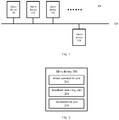
- FIG. 1 A communication system 100 with a master-slave communication structure according to an embodiment of the present disclosure is illustrated in FIG. 1 , in which a master device 110 and three slave devices 101, 102, 103, and of course one or more other numbers of slave devices, are provided, and the master device 110 and the slave devices 101, 102, 103 are connected via a communication line, for example, to a bus 120, respectively.
- the concept of master and slave devices indicates that the slave devices are managed by the master device.
- master device 110 may be an NMT master device for network management and bus 120 may be a CAN bus consisting of a high level line CANH and a low level line CANL.
- the master device and the slave devices can transmit data to each other for communication, while in management operation, the master device can send NMT status commands to each slave device to set its operating state, such as placing it in the initial state, pre-operation state, operation state, and stop state, etc.
- the slave devices 101, 102, 103 send a boot report to the master device 110 at power-up to report that the slave devices 101, 102, 103 are booting up, wherein the boot report includes information about the identity of the slave devices 101, 102, 103.
- this boot report is a BOOTUP message, wherein the BOOTUP message contains the node ID of the slave device.
- the NMT master device knows that the corresponding slave device has joined the network and knows the node ID of the slave device. Subsequent to this, the master device 110 can start the management of the slave device, i.e. the status setting.
- the slave devices 101, 102, 103 may send heartbeat messages to the master device 110, and the master device 110 receives heartbeat messages from the slave devices 101, 102, 103. If the heartbeat messages from the slave devices 101, 102, 103 are not received after the first predetermined time, the master device 110 continuously sends a restore initial state request message to the slave devices 101, 102, 103 at the first predetermined time interval, and after the slave devices 101, 102, 103 receive the restore initial state request message, the slave devices 101, 102, 103 restore the initial state and able to re-send a boot report to the master device 110.
- the master device 110 again receives the boot report from the slave devices 101, 102, 103 indicating that the slave devices 101, 102, 103 are successfully connected, and then the master device 110 stops sending the restore initial state request message.
- the first predetermined time and the first predetermined time interval can be predetermined according to the scenario and needs of the application.
- the slave device as producer sends a heartbeat message to the NMT master according to the heartbeat production time filled in its object dictionary
- the NMT master device as consumer receives the heartbeat message according to the heartbeat consumption time filled in its object dictionary. If the NMT master device has not received a heartbeat message from a slave device after a first predetermined time, i.e., after a specific number of heartbeat consumption times, the NMT master device sends an NMT status command to the corresponding slave device. In addition, the NMT master device may also send a fault indication to indicate that the corresponding slave device is offline.
- the master device may also send a heartbeat message to the slave device, and the slave device receives the heartbeat message from the master device and, if no heartbeat message is received from the master device for more than a second predetermined time, the slave device sends the boot report to the master device continuously at a second predetermined interval until a feedback message of successful connection is received from the master device. Receipt of the feedback message from the master device by the slave device indicates that the connection between the master device and the slave device has been successful established.
- the second predetermined time and the second predetermined time interval may be predetermined according to the scenario and needs of the application and may be the same or different from the first predetermined time and the first predetermined time interval.
- the NMT master device can send heartbeat messages in a broadcast manner, i.e. the NMT master device as producer sends heartbeat messages to all slave devices according to the heartbeat production time filled in its object dictionary. If a slave device does not receive a heartbeat message after the second predetermined time, i.e. a specific number of heartbeat consumption times, the corresponding slave device can keep sending BOOTUP messages at the second predetermined time interval, and after the NMT master receives the BOOTUP message, it can send an NMT status command to the corresponding slave device as a feedback message, and stop sending the BOOTUP message. In addition, if the slave device has not received a heartbeat message after a second predetermined time, i.e., a specific number of heartbeat consumption times, the slave device itself can also send a fault indication in order to alert maintenance personnel for inspection and repair.
- a second predetermined time i.e., a specific number of heartbeat consumption times
- FIG. 2 One of the above-mentioned slave devices 201 in the master-slave communication structure is illustrated in FIG. 2 , the slave device 201 being a communication device comprising: an initial connection unit 203 for sending a boot report to the master device at power-up to report that said slave device is started, wherein said boot report includes identity information of the slave device a heartbeat receiving unit 204 for receiving a heartbeat message from the master device; and a reconnection unit 205 for continuously sending said boot report to said master device at predetermined intervals until a feedback message of successful connection is received from said master device, if a heartbeat message from said master device is not received for more than a predetermined time.
- the above description of the system with reference to FIG. 1 is equally applicable to slave device 201 and will not be repeated here.
- the slave device has a transmitter that sends a BOOTUP message to the NMT master at power-up, wherein the BOOTUP message contains the node ID of the slave device.
- the slave device also has a receiver that can receive heartbeat messages from the NMT master.
- the slave device also has a reconnect unit which can check the heartbeat messages according to the heartbeat consumption time in the object dictionary of the slave device, and if no heartbeat message is received from the master device for more than a predetermined time, i.e., a specific number of heartbeat consumption times, the BOOTUP message is continuously sent to the NMT master device at predetermined intervals until the NMT status command is received from the master.
- FIG. 3 illustrates a communication method for a communication system having a master-slave communication structure, wherein the communication system includes a master device and a slave device as described above.
- step S301 is first performed: The slave device sends a boot report to the master device at power-up to report that the slave device is booting, wherein the boot report includes information about the identity of the slave device.
- the slave device has to send a boot report, i.e. a BOOTUP message, to the NMT master when connected to the CAN bus, i.e. after power-up, wherein the BOOTUP message contains the node ID of the corresponding slave device.
- the NMT master knows that the corresponding slave device has joined the network and knows the node ID of the slave device. Based on this, the NMT master can set or change the status of this slave device by the above NMT status command.
- the master device performs step S302: Receives a heartbeat message from the slave device.
- the slave device as producer sends a heartbeat message to the NMT master device according to the heartbeat production time filled in its object dictionary
- the NMT master device as consumer receives the heartbeat message according to the heartbeat consumption time filled in its object dictionary.
- the heartbeat message and other data information from the slave device may not reach the master device, and the restore initial state request message and other data information from the master device may not reach the slave device.
- the master device performs step S303: If no heartbeat message is received from the slave device for more than a first predetermined time, the master device continuously sends a resume initial state request message to the slave device at a first predetermined time interval to restore the initial state of the slave device until a boot report from the slave device is received again. For example, in the CANopen protocol, if the NMT master device has not received a heartbeat message from a slave device after a first predetermined time, e.g.
- the NMT master device may continuously send a restore initial state request message to the corresponding slave device at a first predetermined time interval. After the corresponding slave device receives the restore initial state request message, the slave device restores its initial state and can send BOOTUP information to the NMT master device again. The NMT master device receives the BOOTUP information from the slave device again, indicating that the slave device is successfully connected, and the NMT master device stops sending the restore initial state request message.
- the inventors of the present disclosure found that in the case where the communication system is affected by the external environment, such as drastic changes in temperature or strong electromagnetic wave interference, the communication system may have the following anomalies, i.e., the heartbeat messages and other data messages sent by the slave device can reach the master device, while the restore initial state request messages, the heartbeat messages, heartbeat messages and other data messages sent by the master device cannot reach the slave device.
- the master device assumes that the slave device is not offline and operating normally, so the master device does not send a restore initial state request message to the slave device to bring it back to its initial state.
- the slave device can also perform step S304: The slave device receives a heartbeat message from the master device.
- the NMT master device may send heartbeat messages in a broadcast manner, i.e. the NMT master device as producer sends heartbeat messages to all nodes, i.e. all slave devices, according to the heartbeat production time filled in its object dictionary; and step S305: If no heartbeat message is received from the master device for more than a second predetermined time, the slave device continuously sends the boot report to the master device at a second predetermined interval until a feedback message of successful connection is received from the master device.
- the slave device if the slave device does not receive a heartbeat message from the NMT master device for more than a second predetermined time, i.e. a specific number of heartbeat consumption times, the slave device sends a boot report, i.e. a BOOTUP message, to the NMT master device continuously at a second predetermined interval. Based on each BOOTUP message, the NMT master sends the NMT status command to the slave device.
- a boot report i.e. a BOOTUP message
- the NMT master Based on each BOOTUP message, the NMT master sends the NMT status command to the slave device.
- the slave device can receive the NMT status command from the NMT master device and thus enters the operating state and communication between the slave device and the NMT master device is resumed.
- a communication method for a slave device in a master-slave communication structure is illustrated in FIG. 4 , comprising step S401: Sending a boot report to a master device at power-up to report that the slave device is booting, wherein the boot report includes identity information of the slave device; step S402: Receiving a heartbeat message from the master device; step S403: If no heartbeat message is received from the master device for more than a predetermined time, the boot report is continuously sent to the master device at predetermined intervals until a feedback message of successful connection is received from the master device.
- the above description for the communication system and its method and the slave device is also applicable to the communication method of the slave device and will not be repeated herein.
- a slave device when a slave device is connected to the CAN bus, i.e. after power-up, it sends a boot report to the NMT master, i.e. a BOOTUP message, which contains the node ID of the corresponding slave device.
- the NMT master knows that the corresponding slave device has joined the network and knows the node ID of the slave device.
- the slave device can thus receive the heartbeat information from the NMT master device. Therefore, the NMT master device can set or change the state of this slave device by the above-mentioned NMT state command.
- the master device assumes that the slave device is not offline and is operating normally, so the master device does not send a restore initial state request message to the slave device to bring it back to the initial state.
- the slave device if the slave device does not receive a heartbeat message from the NMT master device for more than a predetermined time, i.e., the second predetermined time mentioned above, the slave device sends a boot report, i.e., a BOOTUP message, to the NMT master device continuously at a second predetermined interval. Based on each BOOTUP message, the NMT master sends the NMT status command to the slave device.
- a boot report i.e., a BOOTUP message
- the communication system having a master-slave communication structure and the communication method thereof and the communication device for a slave device in a master-slave communication structure and the communication method thereof enable communication between the master device and the slave device to be automatically restored after the interference, failure and/or anomaly disappears, thereby eliminating the need for maintenance personnel to visit the site for manual restoration, thereby greatly reducing maintenance costs.
- the communication between the master device and the slave device can still be automatically restored after the interference, fault and/or abnormality disappears, thereby eliminating the need for maintenance personnel to visit the site for manual restoration.
- circuits, units, devices, apparatus, equipment, systems involved in this disclosure are intended as exemplary examples only and do not purport to require or imply that they must be connected, arranged, configured in the manner illustrated in the block diagrams. As will be recognized by those skilled in the art, these circuits, units, devices, apparatus, equipment, systems may be connected, arranged, configured in any manner that will achieve the desired purpose.
- the circuits, units, devices, and apparatuses involved in this disclosure may be implemented in any suitable manner, such as by using a dedicated integrated circuit, field programmable gate array (FPGA), etc., or by using a general purpose processor in combination with a program.
- FPGA field programmable gate array
Landscapes
- Engineering & Computer Science (AREA)
- Theoretical Computer Science (AREA)
- General Engineering & Computer Science (AREA)
- General Physics & Mathematics (AREA)
- Physics & Mathematics (AREA)
- Software Systems (AREA)
- Quality & Reliability (AREA)
- Computer Security & Cryptography (AREA)
- Computing Systems (AREA)
- Signal Processing (AREA)
- Computer Networks & Wireless Communication (AREA)
- Computer Hardware Design (AREA)
- Small-Scale Networks (AREA)
Applications Claiming Priority (1)
| Application Number | Priority Date | Filing Date | Title |
|---|---|---|---|
| CN202110806290.9A CN115617729A (zh) | 2021-07-16 | 2021-07-16 | 通信方法,通信设备和通信系统 |
Publications (1)
| Publication Number | Publication Date |
|---|---|
| EP4120636A1 true EP4120636A1 (de) | 2023-01-18 |
Family
ID=82846228
Family Applications (1)
| Application Number | Title | Priority Date | Filing Date |
|---|---|---|---|
| EP22306013.8A Pending EP4120636A1 (de) | 2021-07-16 | 2022-07-07 | Kommunikationsverfahren, kommunikationsvorrichtung und kommunikationssystem |
Country Status (4)
| Country | Link |
|---|---|
| US (1) | US20230053889A1 (de) |
| EP (1) | EP4120636A1 (de) |
| CN (1) | CN115617729A (de) |
| AU (1) | AU2022205145B2 (de) |
Cited By (1)
| Publication number | Priority date | Publication date | Assignee | Title |
|---|---|---|---|---|
| WO2026037736A1 (de) | 2024-08-13 | 2026-02-19 | Turck Holding Gmbh | Verfahren zum ansteuern, insbesondere zur inbetriebnahme, eines feldgeräts über ein bus-system und steuervorrichtung |
Families Citing this family (1)
| Publication number | Priority date | Publication date | Assignee | Title |
|---|---|---|---|---|
| CN120710822B (zh) * | 2025-08-27 | 2025-12-05 | 宁波领微电子科技有限公司 | 起爆板从机的通信方法、装置、设备及存储介质 |
Citations (2)
| Publication number | Priority date | Publication date | Assignee | Title |
|---|---|---|---|---|
| CN109245979A (zh) * | 2018-11-02 | 2019-01-18 | 合肥保得工业自动化有限公司 | 一种CANopen主从站可靠性控制方法及其统筹管理器 |
| CN109787795B (zh) * | 2017-11-13 | 2020-12-25 | 比亚迪股份有限公司 | 列车网络主节点故障的处理方法、节点及电子设备 |
Family Cites Families (10)
| Publication number | Priority date | Publication date | Assignee | Title |
|---|---|---|---|---|
| US7421478B1 (en) * | 2002-03-07 | 2008-09-02 | Cisco Technology, Inc. | Method and apparatus for exchanging heartbeat messages and configuration information between nodes operating in a master-slave configuration |
| US7028218B2 (en) * | 2002-12-02 | 2006-04-11 | Emc Corporation | Redundant multi-processor and logical processor configuration for a file server |
| TWI235299B (en) * | 2004-04-22 | 2005-07-01 | Univ Nat Cheng Kung | Method for providing application cluster service with fault-detection and failure-recovery capabilities |
| US20110161538A1 (en) * | 2009-12-31 | 2011-06-30 | Schneider Electric USA, Inc. | Method and System for Implementing Redundant Network Interface Modules in a Distributed I/O System |
| CN101854300B (zh) * | 2010-06-02 | 2012-05-16 | 北京工业大学 | 一种实现CANopen从站的方法 |
| JP5630910B2 (ja) * | 2011-09-30 | 2014-11-26 | 株式会社野村総合研究所 | モバイル端末のプログラム起動保全システム |
| CN109104349B (zh) * | 2017-06-21 | 2020-11-20 | 比亚迪股份有限公司 | 基于CANopen协议的列车网络数据传输方法、系统及其装置 |
| CN109104348B (zh) * | 2017-06-21 | 2020-09-15 | 比亚迪股份有限公司 | 基于CANopen协议的列车网络数据传输方法、系统及其装置 |
| CN109104346B (zh) * | 2017-06-21 | 2020-10-23 | 比亚迪股份有限公司 | 基于CANopen协议的列车网络数据传输方法、系统及其装置 |
| CN112448959B (zh) * | 2020-12-07 | 2023-01-24 | 四川光慧新能源科技有限公司 | 一种充电桩与控制中心的通信方法 |
-
2021
- 2021-07-16 CN CN202110806290.9A patent/CN115617729A/zh active Pending
-
2022
- 2022-07-07 EP EP22306013.8A patent/EP4120636A1/de active Pending
- 2022-07-11 AU AU2022205145A patent/AU2022205145B2/en active Active
- 2022-07-12 US US17/862,985 patent/US20230053889A1/en not_active Abandoned
Patent Citations (2)
| Publication number | Priority date | Publication date | Assignee | Title |
|---|---|---|---|---|
| CN109787795B (zh) * | 2017-11-13 | 2020-12-25 | 比亚迪股份有限公司 | 列车网络主节点故障的处理方法、节点及电子设备 |
| CN109245979A (zh) * | 2018-11-02 | 2019-01-18 | 合肥保得工业自动化有限公司 | 一种CANopen主从站可靠性控制方法及其统筹管理器 |
Cited By (1)
| Publication number | Priority date | Publication date | Assignee | Title |
|---|---|---|---|---|
| WO2026037736A1 (de) | 2024-08-13 | 2026-02-19 | Turck Holding Gmbh | Verfahren zum ansteuern, insbesondere zur inbetriebnahme, eines feldgeräts über ein bus-system und steuervorrichtung |
Also Published As
| Publication number | Publication date |
|---|---|
| US20230053889A1 (en) | 2023-02-23 |
| AU2022205145B2 (en) | 2023-07-27 |
| CN115617729A (zh) | 2023-01-17 |
| AU2022205145A1 (en) | 2023-02-02 |
Similar Documents
| Publication | Publication Date | Title |
|---|---|---|
| US6466539B1 (en) | Bus system | |
| US20130007319A1 (en) | Method and system for implementing redundant network interface modules in a distributed i/o system | |
| EP1759251B1 (de) | Fernverarbeitungs- und protokollumsetzungs-schnittstellenmodul | |
| CN1527169B (zh) | 用于过程控制系统的冗余应用站 | |
| US8665700B2 (en) | Fault detection and mitigation for in-vehicle LAN network management | |
| US11016463B2 (en) | Control and data-transfer system, gateway module, I/O module, and method for process control | |
| AU2022205145B2 (en) | Communication method, communication device and communication system | |
| CN203206272U (zh) | 一种具有故障检测功能的can网络系统 | |
| US11646909B2 (en) | Method for data transmission in a redundantly operable communications network and coupling communication device | |
| EP2661023A1 (de) | Kommunikationsgerät für ein redundant betreibbares industrielles Kommunikationsnetz und Verfahren zum Betrieb eines Kommunikationsgeräts | |
| RU2510932C2 (ru) | Система автоматизации и способ управления системой автоматизации | |
| US12111367B2 (en) | Cable abnormality assessment system, slave device, and cable abnormality assessment method | |
| EP3547049B1 (de) | Sicherheitssteuerungssystem und sicherheitssteuerungseinheit | |
| EP2784988B1 (de) | Kommunikationsschnittstellenmodul für ein modulares Steuerungsgerät eines industriellen Automatisierungssystems | |
| US8959386B2 (en) | Network and expansion unit and method for operating a network | |
| CN108667640B (zh) | 通信方法及设备、网络接入系统 | |
| CA2350346A1 (en) | Method and apparatus for electrically terminating a transmission bus for a communication network | |
| RU2430400C1 (ru) | Комплекс резервируемых программно-аппаратных средств автоматизации контроля и управления | |
| KR100724495B1 (ko) | 피엘씨 이중화 시스템 및 운전 방법 | |
| RU2450305C1 (ru) | Комплекс программно-аппаратных средств автоматизации контроля и управления | |
| JP5854219B2 (ja) | プロセス制御システム | |
| CN202856779U (zh) | 用于自动化网络的网络设备,安全模块和自动化网络 | |
| CN109245864B (zh) | 基于自反馈的eth-can通讯前端检测装置及错误自检方法 | |
| EP3565186B1 (de) | Vorrichtung und netzwerk zur zuverlässigen kommunikation in einem netzwerk | |
| KR20260063937A (ko) | 이더넷 기반 안전 제어 plc 장치 |
Legal Events
| Date | Code | Title | Description |
|---|---|---|---|
| PUAI | Public reference made under article 153(3) epc to a published international application that has entered the european phase |
Free format text: ORIGINAL CODE: 0009012 |
|
| STAA | Information on the status of an ep patent application or granted ep patent |
Free format text: STATUS: THE APPLICATION HAS BEEN PUBLISHED |
|
| AK | Designated contracting states |
Kind code of ref document: A1 Designated state(s): AL AT BE BG CH CY CZ DE DK EE ES FI FR GB GR HR HU IE IS IT LI LT LU LV MC MK MT NL NO PL PT RO RS SE SI SK SM TR |
|
| STAA | Information on the status of an ep patent application or granted ep patent |
Free format text: STATUS: REQUEST FOR EXAMINATION WAS MADE |
|
| 17P | Request for examination filed |
Effective date: 20230718 |
|
| RBV | Designated contracting states (corrected) |
Designated state(s): AL AT BE BG CH CY CZ DE DK EE ES FI FR GB GR HR HU IE IS IT LI LT LU LV MC MK MT NL NO PL PT RO RS SE SI SK SM TR |
|
| STAA | Information on the status of an ep patent application or granted ep patent |
Free format text: STATUS: EXAMINATION IS IN PROGRESS |
|
| 17Q | First examination report despatched |
Effective date: 20250722 |