EP4115759A1 - Clothing - Google Patents
Clothing Download PDFInfo
- Publication number
- EP4115759A1 EP4115759A1 EP21765239.5A EP21765239A EP4115759A1 EP 4115759 A1 EP4115759 A1 EP 4115759A1 EP 21765239 A EP21765239 A EP 21765239A EP 4115759 A1 EP4115759 A1 EP 4115759A1
- Authority
- EP
- European Patent Office
- Prior art keywords
- joined part
- adhesive
- clothes
- joined
- fabric
- Prior art date
- Legal status (The legal status is an assumption and is not a legal conclusion. Google has not performed a legal analysis and makes no representation as to the accuracy of the status listed.)
- Pending
Links
Images




Classifications
-
- A—HUMAN NECESSITIES
- A41—WEARING APPAREL
- A41H—APPLIANCES OR METHODS FOR MAKING CLOTHES, e.g. FOR DRESS-MAKING OR FOR TAILORING, NOT OTHERWISE PROVIDED FOR
- A41H43/00—Other methods, machines or appliances
- A41H43/04—Joining garment parts or blanks by gluing or welding ; Gluing presses
-
- A—HUMAN NECESSITIES
- A41—WEARING APPAREL
- A41D—OUTERWEAR; PROTECTIVE GARMENTS; ACCESSORIES
- A41D27/00—Details of garments or of their making
- A41D27/24—Hems; Seams
- A41D27/245—Hems; Seams made by welding or gluing
-
- A—HUMAN NECESSITIES
- A41—WEARING APPAREL
- A41B—SHIRTS; UNDERWEAR; BABY LINEN; HANDKERCHIEFS
- A41B9/00—Undergarments
-
- A—HUMAN NECESSITIES
- A41—WEARING APPAREL
- A41D—OUTERWEAR; PROTECTIVE GARMENTS; ACCESSORIES
- A41D31/00—Materials specially adapted for outerwear
- A41D31/04—Materials specially adapted for outerwear characterised by special function or use
- A41D31/18—Elastic
-
- A—HUMAN NECESSITIES
- A41—WEARING APPAREL
- A41B—SHIRTS; UNDERWEAR; BABY LINEN; HANDKERCHIEFS
- A41B2300/00—Details of shirts, underwear, baby linen or handkerchiefs not provided for in other groups of this subclass
- A41B2300/35—Seams
- A41B2300/52—Seams made by welding or gluing
-
- A—HUMAN NECESSITIES
- A41—WEARING APPAREL
- A41D—OUTERWEAR; PROTECTIVE GARMENTS; ACCESSORIES
- A41D2300/00—Details of garments
- A41D2300/50—Seams
- A41D2300/52—Seams made by welding or gluing
Landscapes
- Engineering & Computer Science (AREA)
- Textile Engineering (AREA)
- Details Of Garments (AREA)
Abstract
Description
- The present invention relates to clothes.
- Conventionally, a technique of joining fabrics together by an adhesive instead of joining fabrics together by using a sewing machine to compose clothes has been known. For example, in Patent Literature 1, a related technique of composing the hem part of a swimsuit or the like by bonding outer fabrics together with a hot-melt sheet in the case where the outer fabrics such as the hem of a swimsuit or the like are folded has been developed.
- On the other hand, as a technique of providing elongation properties to a joined part where fabrics are joined together using an adhesive, a technique of joining fabrics composing clothes together using an adhesive attached in the form of dots has been known. For example, in
Patent Literature 2, a technique of bonding fabrics together with an adhesive repeatedly provided in a dot or zigzag shape has been developed in the case where the body and sleeves of an undershirt are joined. -
- Patent Literature 1:
Japanese Patent Application Laid-open No. 2005-264394 - Patent Literature 2:
Japanese Patent No. 6249821 - Even for clothes composed using these techniques, however, the joined part between the fabrics is felt to be relatively difficult to stretch when the clothes are actually touched and worn, and thus uncomfortable feeling to the sense of touch and wearing feeling remains, although the numerical elongation properties are provided to the joined part where fabrics are joined together. This is because the conventional techniques have focused only on the elongation properties at the joined part, whereby the essence of the uncomfortable feeling has not been completely captured when the clothes have been actually touched and worn. In other words, the cause of the uncomfortable feeling felt when the product is actually touched and worn is that the difference in elongation properties between the joined part and the fabrics adjacent to the joined part is so large that the difference in the outstanding elongation properties of the joined part and the fabrics adjacent to the joined part is felt as the uncomfortable feeling. Even when the elongation properties of the joined part are excellent, the sense of touch and wearing feeling have not been always satisfactory. In particular, not only when the closes are worn but also in the sense of resistance and hand feeling in a relatively low-stretch region such as when the clothes are held by hands and lightly stretched, the elongation properties of the adjacent fabrics usually have a further better state even if the elongation properties of the joined part are excellent. Consequently, the outstanding difference between the joined part and the adjacent fabrics has caused uncomfortable feeling to be generated. In particular, in the case where the edge of the opening part is folded back and fixed with an adhesive, the difference in the elongation properties between the joined part and the fabrics adjacent to the joined part is easily felt when the clothes are worn and thus this difference has caused deterioration in the wearing feeling.
- The present invention is made in view of the above description and an object of the present invention is to provide clothes that can improve uncomfortable feeling when the joined part is actually touched and the clothes are worn, even when fabrics are joined using an adhesive to compose the clothes.
- To solve the problem described above and to achieve the object, clothes according to the present invention includes: fabrics having a stretchability; and a joined part where the fabrics are fixed together using an adhesive. A difference between a stress of the joined part at 50% elongation in a longitudinal direction of the joined part and a stress of the fabrics fixed by the joined part at 50% elongation in a direction parallel to the longitudinal direction of the joined part is within 30%.
- In the clothes according to the present invention, the joined part is fixed by a dot adhesive arranged in a single row or multiple rows, and a ratio of an area occupied by the adhesive at the joined part is 35% or less.
- In the clothes according to the present invention, a peeling force at time of opening and peeling the joined part in the longitudinal direction is 10 N/cm or more.
- In the clothes according to the present invention, a peeling force of the joined part in the longitudinal direction after high temperature washing at 92°C is 75% or more of the peeling force before the washing.
- In the clothes according to the present invention,
the joined part is an opening part through which a wearer's human body part passes; and the opening part has a structure in which a fabric edge is folded in two, and the opening part is formed by fixing the fabric edge and a fabric body with a dot adhesive attached in a single row or multiple rows along the fabric edge. - According to the present invention, the clothes that can improve uncomfortable feeling when the joined part is actually touched and the clothes are worn, even when fabrics are joined using an adhesive to compose the clothes, can be provided.
-
-
FIG. 1 is a view illustrating the appearance of clothes according to the first embodiment. -
FIG. 2 is a schematic view of a side joined part in the clothes illustrated inFIG. 1 . -
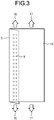
FIG. 3 is a view illustrating the joined part of the opening part of the clothes illustrated inFIG. 1 through which an arm passes. -
FIG. 4 is a view schematically illustrating how an adhesive arranged at the joined part is attached. -
FIG. 5 is a view illustrating the appearance of clothes according to the second embodiment. - Hereinafter, embodiments for carrying out the present invention (hereinafter, referred to as "embodiments") will be described with reference to the attached drawings. It should be noted that the drawings are merely schematic.
-
FIG. 1 is a view schematically illustrating the clothes 1 according to the first embodiment. The clothes 1 illustrated inFIG. 1 is an example of the top of a short-sleeved underwear and has openingparts parts - The clothes 1 are made of stretchable fabrics. For example, a circular knitting material and a warp knitting material have a stretchability required for carrying out the present invention and thus materials are not particularly limited as long as the materials are knitted materials provided as the materials for general clothes. Even when the materials are textile materials, materials for clothes having a stretchability are suitable for the present invention. The clothes 1 can be applied to materials for general underwear and innerwear having cups, and in addition, for outerwear such as T-shirts and cut-and-sews and are not limited thereto.
-
FIG. 2 is a view illustrating an example of an aspect of a joined part of the side joinedpart 5 in the clothes 1. In the clothes 1, instead of sewing afabric 8 and afabric 8a composing the main front piece and the main back piece together using a sewing machine, the side joinedpart 5 is composed by overlapping a fabric edge and a fabric edge and fixing these edges using a dot adhesive 9 between these edges. In the present invention, the joinedpart 5 is composed so that the difference between a stress of the joinedpart 5 at 50% elongation in thelongitudinal direction 10 of the joinedpart 5 and a stress of thefabric part 5 at 50% elongation in adirection 11 parallel to the longitudinal direction of the joinedpart 5 is within 30%. This allows thejoined part 5 to be less likely to be felt as a hard-to-stretch part and thus the uncomfortable feeling during wearing to be reduced when the clothes 1 is actually touched and worn. The clothes 1 is composed so that the difference is preferably set within 25% and more preferably set within 20% and thus the clothes 1 generating no uncomfortable feeling at thejoined part 5 and having excellent wearing feeling can be obtained. Here, although the description is made using the joinedpart 5 as an example, the above description is also applicable to the joinedparts part 7, the elongation rates of the fabrics may differ on both sides of the joinedpart 7. In such a case, when the fabric having the lower stress at 50% elongation is used as a comparison target, the difference in elongation properties between the adjacent joined part and the fabric becomes smaller and thus the uncomfortable feeling is less likely to be felt. - In addition, in the
opening parts FIG. 3 is a view illustrating the joined part of theopening part 3 of the clothes 1 through which an arm passes. Theopening part 3 is a structure in which the fabric edge is folded in two. The folded fabric edge and the fabric body are fixed by the adhesive 9 that is arranged in two rows at the fabric edge. Theopening part 3 is also composed so that the difference between a stress of the joined part at 50% elongation in thelongitudinal direction 16 of the joined part and a stress of thefabric 18 in which the fabric edge and the fabric body are fixed by the joined part at 50% elongation in adirection 17 parallel to the longitudinal direction of the joined part is within 30%, whereby the clothes 1 generating no uncomfortable feeling at the joined part and having excellent wearing feeling can be obtained. - With respect to the clothes 1 according to the present invention, the stress at 50% elongation is important. In general, as an index representing the elongation ratio of the clothes materials, elongation properties are frequently represented by an elongation ratio at a load of 1.5 kg. However, the elongation load to this level is rarely applied when the clothes 1 are actually worn or light exercise is performed. The elongation required for actually wearing the clothes 1 is an elongation ratio of about 50% and thus the difference in the stresses in this region is important.
- As the direction of stretch of a single fabric, stretching the single fabric in a direction parallel to the longitudinal direction of the comparing joined
part 5 in the state of the clothes 1 is important. In other words, the direction of elongation is not always a warp direction or a weft direction of the fabric. The direction differs depending on the cut shape of the fabric composing the clothes 1 and the direction where the fabric is taken. - The measurement method of the stress at 50% elongation is performed in accordance with the grab method of elongation rate described in JIS-L-1096 (2010). In the case where a sample having a desired size cannot be taken depending on the design of the clothes 1, the measurement may be performed by reducing the sample size to 5 cm in width and 10 cm in length and setting the gripping spacing to 5 cm. For the stress measurement at the joined part, the sample may be taken by joining the joined part and the fabric region connecting to the joined part. In the case of an aspect in which fabric edges are overlapped and joined, the sample is taken so that the joined part is centered. On the other hand, in the case of an aspect in which the fabric edge is folded and connected, the same is true for collectively taking the sample the joined part and the fabric region connecting to the joined part. It is important that the adhesive region is gripped when the sample is gripped with a tensile tester. The sample is gripped at the position where the edge of the grip and the folded edge are aligned as much as possible and the measurement is performed.
- In addition, in the stress measurement of the single fabric, a sample may be taken at any part of the same fabric as long as the part is in a direction parallel to the longitudinal direction of the joined part. It is important that the sample does not include other components including the joined part that worsen the elongation properties.
- In the joined
part 5 of the clothes 1, the adhesive 9 is arranged in two rows of dots along the edge of thefabric fabrics - Synthetic resins are more preferable than natural resins as the resins that compose the adhesive 9 used in the clothes 1. Of these resins, thermoplastic resins are more preferable. For example, the resins are not particularly limited as long as the resins are made of macromolecule compounds such as polyethylene, polypropylene, polyvinyl chloride, polystyrene, polyvinyl acetate, polyurethane, polytetrafluoroethylene, polyacrylic, polyamide, polyacetal, polycarbonate, polyphenylene ether, polyester, polyphenylene sulfide, polysulfone, polyethersulfone, polyetheretherketone, polyimide, and polyamideimide and various macromolecule compounds can be used.
- The resin composing the adhesive 9 is preferably a reactive hot melt. When the resin is the reactive hot melt, an adhesive structure having excellent heat resistance, solvent resistance, and the like can be formed by softening or melting the resin to penetrate between structures at the bonding sites, cooling and solidifying the resin, and thereafter developing cross-linking by reacting the resin with the surrounding moisture.
- In the clothes 1, it is important that the ratio of an area where the adhesive 9 is attached at the joined part is 35% or less. The area is preferably 30% or less and more preferably 25% or less. This allows the difference between the stress of the joined part at 50% elongation in the longitudinal direction and the stress of the fabrics fixed by the joined part at 50% elongation in the direction parallel to the joined part to be easily retained within 30% and thus the uncomfortable feeling can be reduced. The ratio of the area where the adhesive is attached at the joined part is preferably 5% or more from the viewpoint of retaining the bonding strength at the joined part. The ratio is more preferably 10% or more and further preferably 15% or more.
FIG. 4 is a view schematically illustrating how the adhesive 9 arranged at the joined part is attached. The ratio of the area of adhesive 9 at the joined part can be calculated from the following formula as the ratio of the area of the adhesive 9 in the area determined from thewidth 12 of the joined part and thepitch 13 at which the adhesive 9 is attached.

- With respect to the clothes 1 according to the present invention, it is important that the peeling force when the joined part is opened and peeled off in the longitudinal direction is 10 N/cm or more. The peeling force is more preferably 20 N/cm or more. In order to reduce the stress of the joined part at 50% elongation described above, reduction in the area occupied by the adhesive at the joined part may be exemplified. However, this results in also reducing the peeling force at the joined part and causing peeling after repeated wear and washing and thus may easily cause a problem. From this result, in order to secure durability as the clothes 1, the peeling force is preferably 10 N/cm or more and preferably 20 N/cm or more in terms of per 1 cm width of the joined part.
- In general, as an indicator of the strength of the joined part represented by sewing with a sewing machine, the strength when the joined part is pulled in the direction orthogonal to the longitudinal direction of the joined part is used. However, the desired pulling test may not be reproducible depending on the design of the clothes. Consequently, as the clothes 1 according to the present invention, it is suitable that the peeling force when the joined part is opened and peeled in the longitudinal direction of the joined part is evaluated as the bonding strength. The method of measurement is performed in accordance with the test method for peeling strength described in JIS-L-1086 (2013) and the obtained results are represented by converting the peeling strength per width of the joined part into the peeling strength per 1 cm.
- With respect to the clothes 1 according to the present invention, peeling force measured by opening and peeling the joined part in a longitudinal direction after high-temperature washing at 92°C is preferably 75% or more of the peeling force before the washing. This ratio is more preferably 80% or more and further preferably 90% or more. The washing method is equivalent to 5-times washing of the 9N method specified in JIS-L-1930 (2014). This allows sufficient durability to be secured even when the repeated wear and washing are performed in the case where the area occupied by the adhesive 9 is reduced in order to reduce the above-described stress at 50% elongation. In addition, the clothes 1 can secure sufficient durability to the high temperature washing that is commonly performed in Europe.
-
FIG. 5 is a view illustrating the form of the clothes according to the second embodiment. Theclothes 20 illustrated inFIG. 5 are an example of an underwear such as a pair of shorts having openingparts clothes 20 are also joined at the side joinedparts 21. It goes without saying that in the second embodiment, the same point of view as the first embodiment can be adopted to achieve the effects of the present invention. - The embodiments for implementing the present invention have been described above. The present invention should not be limited by the embodiments described above. For example, the same effect may be provided to openings and other joined parts of clothes such as hats, arm covers, and clothes with cups.
- In a clothes 1 that was a common underwear as illustrated in
FIG. 1 , thedot adhesive 9 having a diameter of 0.8 mm (1 mm after bonding) was applied along the edge of a fabric for theneckline opening 2 and the fabric edge was folded in two in the manner illustrated inFIG. 3 . The adhesive 9 was applied in three rows. Both of the pitch of the row spacing and the pitch in the longitudinal direction of the application were set to a spacing of 2 mm. The width of the region to which adhesive 9 was applied was 5 mm. The folded width of the fabric edge was set to 7 mm. The test specimen of Example 1 was obtained by bonding the fabric edge with a general flat plate heat press machine. As the adhesive, a reactive hot melt PU resin having a viscosity of about 12,000 mPa·s at 120°C was used. The obtained test specimen was evaluated for an elongation ratio at 1.5 Kg load, stress difference at 50% elongation between the joined part and the fabric, peeling force, peeling force retention ratio after high temperature washing, and resistance feeling when the joined part was stretched. The results are listed in Table 1. The resistance feeling when the joined part is stretched is the uncomfortable feeling when a fabric including the joined part is stretched by hand. "o" means that the joined part is stretched together with the fabric when the fabric is stretched and no resistance exists, whereas "×" means that resistance exists at the joined part when the fabric is stretched. - In a clothes 1 that was a common underwear as illustrated in
FIG. 1 , thedot adhesive 9 having a diameter of 0.8 mm (1 mm after bonding) was applied along the edge of a fabric for the side joinedpart 5. At this time, the adhesive was applied in three rows. The pitch of the row spacing was set to 2 mm and the pitch in the longitudinal direction of the adhesive application was set to 1.8 mm. The structure of joinedpart 5 was determined to be an aspect in which the adjacent fabrics were overlapped as illustrated inFIG. 2 . The number of rows and the application pitch of the adhesive 9 were the same as those in Example 1. The overlap width between the adjacent fabrics was set to 7 mm. The bonding was performed by the same method as the method in Example 1 to give a test specimen of Example 2. The results that were evaluated in the same manner as the manner in Example 1 are listed in Table 1. - The test specimen of Example 3 was obtained by the same manner as the manner in Example 2 except that the pitch of the application of the adhesive 9 in the longitudinal direction was set to 1.6 mm. The results that were evaluated in the same manner as the manner in Example 1 are listed in Table 1.
- The test specimen of Example 4 was obtained by the same manner as the manner in Example 1 except that the diameter of the adhesive 9 was set to 0.4 mm (0.5 mm after bonding). The results that were evaluated in the same manner as the manner in Example 1 are listed in Table 1.
- In a commonly sold underwear as illustrated in
FIG. 1 , a side joined part was used as the test specimen of Comparative Example 1 with respect to an underwear in which the side joined part was joined by a tape-like adhesive. - In a pair of commonly sold shorts as illustrated in
FIG. 5 , the side joinedpart 21 is composed in an overlapped aspect as illustrated inFIG. 2 . The joined part in which the dot adhesive having a diameter of 2.0 mm was applied in a region having a width of 5 mm in two rows and in a pitch in a longitudinal direction of 2.0 mm was used as the test specimen of Comparative Example 2. The results that were evaluated in the same manner as the manner in Example 1 are listed in Table 1. - In Comparative Example 3, in a commonly sold underwear as illustrated in
FIG. 1 , a joined part in which a shoulder joined part was formed by bonding in a zig-zag pattern was used as the test specimen of Comparative Example 3. The results that were evaluated in the same manner as the manner in Example 1 are listed in Table 1. - In Comparative Example 4, the specimen was obtained in the same manner as the manner in Example 1 except that the pitch of the adhesive application in the longitudinal direction was set to 1.0 mm. The results that were evaluated in the same manner as the manner in Example 1 are listed in Table 1.
Table 1 Example 1 Example 2 Example 3 Example 4 Comparative Example 1 Comparative Example 2 Comparative Example 3 Comparative Example 4 Shape of adhesive Dots Dots Dots Dots Tape (planar) Dots Zigzag Dots Structure of joined part Folding fabric edge in two Overlapping Overlapping Folding fabric edge in two Overlapping Overlapping Overlapping Folding fabric edge in two Width of joined part mm 5. 0 5. 0 5.0 5. 0 8.0 5.0 6.0 5. 0 Pitch of adhesive (longitudinal direction) mm 2.0 1.8 1.6 2.0 - 2.0 2.5 1.0 Diameter (width) of adhesive mm 1.0 1.0 1.0 0.5 8.0mm Width 2.0 1.0mm Width 1.0 Ratio of area of adhesive % 23.6% 26.1% 29.4% 5.9% 100.0% 62.8% 43.0% 47.1% Elongation ratio at 1.5kg load % 175% 111% 102% 176% 110% 104% 203% 155% Stress difference between joined part and single fabric at 50% elongation % 18.4% 22.0% 24.2% 11.5% 70.2% 53.8% 47.1% 32.4% Converted value of peeling force N/cm 21.6 22.0 22.0 8.8 8.6 31.4 24.2 23.5 Peeling force retention ratio after washing % 81.8% 80.5% 81.2% 75.0% 64.3% 75.0% 87.0% 81.0% Resistance feeling when stretching joined part ∘ ∘ ∘ ∘ × × × × -
- 1 Clothes
- 2 Opening part through which head passes
- 3 Opening part through which arm passes
- 4 Opening part through which body passes
- 5 Side joined part
- 6 Shoulder joined part
- 7 Armhole joined part
- 8, 8a, 18 Fabric
- 9 Adhesive
- 10, 16 Longitudinal direction of joined part
- 11, 17 Direction parallel to longitudinal direction of joined part
- 12 Width of joined part
- 13 Pitch where adhesive is attached
- 20 Clothes
- 21 Side joined part
- 22 Opening part through which body passes
- 23 Opening part through which leg passes
Claims (5)
- Clothes comprising:fabrics having a stretchability; anda joined part where the fabrics are fixed together using an adhesive, whereina difference between a stress of the joined part at 50% elongation in a longitudinal direction of the joined part and a stress of the fabrics fixed by the joined part at 50% elongation in a direction parallel to the longitudinal direction of the joined part is within 30%.
- The clothes according to claim 1, wherein the joined part is fixed by a dot adhesive arranged in a single row or multiple rows, and a ratio of an area occupied by the adhesive at the joined part is 35% or less.
- The clothes according to claim 1 or 2, wherein a peeling force at time of opening and peeling the joined part in the longitudinal direction is 10 N/cm or more.
- The clothes according to any one of claims 1 to 3, wherein a peeling force of the joined part in the longitudinal direction after high temperature washing at 92°C is 75% or more of the peeling force before the washing.
- The clothes according to any one of claims 1 to 4, whereinthe joined part is an opening part through which a wearer's human body part passes; andthe opening part has a structure in which a fabric edge is folded in two, and the opening part is formed by fixing the fabric edge and a fabric body with a dot adhesive attached in a single row or multiple rows along the fabric edge.
Applications Claiming Priority (2)
| Application Number | Priority Date | Filing Date | Title |
|---|---|---|---|
| JP2020036129 | 2020-03-03 | ||
| PCT/JP2021/007375 WO2021177172A1 (en) | 2020-03-03 | 2021-02-26 | Clothing |
Publications (2)
| Publication Number | Publication Date |
|---|---|
| EP4115759A1 true EP4115759A1 (en) | 2023-01-11 |
| EP4115759A4 EP4115759A4 (en) | 2024-03-27 |
Family
ID=77613354
Family Applications (1)
| Application Number | Title | Priority Date | Filing Date |
|---|---|---|---|
| EP21765239.5A Pending EP4115759A4 (en) | 2020-03-03 | 2021-02-26 | CLOTHING |
Country Status (7)
| Country | Link |
|---|---|
| US (1) | US20230097764A1 (en) |
| EP (1) | EP4115759A4 (en) |
| JP (1) | JPWO2021177172A1 (en) |
| KR (1) | KR20220146610A (en) |
| CN (1) | CN115243577A (en) |
| TW (1) | TWI888491B (en) |
| WO (1) | WO2021177172A1 (en) |
Families Citing this family (4)
| Publication number | Priority date | Publication date | Assignee | Title |
|---|---|---|---|---|
| WO2025199146A1 (en) * | 2024-03-18 | 2025-09-25 | Carrie Shaltz Haslup | Port patches |
| WO2025231957A1 (en) * | 2024-05-10 | 2025-11-13 | 东丽纤维研究所(中国)有限公司 | Garment with elastic part |
| WO2026000520A1 (en) * | 2024-06-27 | 2026-01-02 | 东丽纤维研究所(中国)有限公司 | Garment |
| WO2026036466A1 (en) * | 2024-08-16 | 2026-02-19 | 东丽纤维研究所(中国)有限公司 | Garment having opening |
Family Cites Families (16)
| Publication number | Priority date | Publication date | Assignee | Title |
|---|---|---|---|---|
| JPS5641720A (en) | 1979-09-10 | 1981-04-18 | Tokyo Shibaura Electric Co | Gate circuit of thyristor converter |
| US20030121586A1 (en) * | 2001-12-11 | 2003-07-03 | 3M Innovative Properties Company | Tack-on-pressure films for temporary surface protection and surface modification |
| JP2003253510A (en) * | 2002-03-05 | 2003-09-10 | Gunze Ltd | Wear |
| US20050000622A1 (en) * | 2003-05-30 | 2005-01-06 | Cano Carlos Alberto | Method of producing garment blanks having seamless trim |
| JP2005264394A (en) | 2004-03-19 | 2005-09-29 | Goldwin Technical Center:Kk | Clothes and method for producing the same |
| JP4837346B2 (en) * | 2005-09-20 | 2011-12-14 | 日本ゴア株式会社 | Seal tape and textiles using the same |
| JP2008101304A (en) * | 2006-10-20 | 2008-05-01 | Morito Co Ltd | Seamless garment |
| US10029816B2 (en) * | 2010-05-26 | 2018-07-24 | Avery Dennison Retail Information Services, Llc | Pressure sensitive labels for use in a cold transfer method and process for making |
| KR101551554B1 (en) * | 2011-02-15 | 2015-09-08 | 미쓰이 가가쿠 가부시키가이샤 | Nonwoven laminate |
| JP6249821B2 (en) | 2013-03-05 | 2017-12-20 | グンゼ株式会社 | Undershirt |
| JP6347716B2 (en) * | 2014-10-06 | 2018-06-27 | グンゼ株式会社 | clothing |
| DE102015005089A1 (en) * | 2015-04-22 | 2016-10-27 | Carl Freudenberg Kg | Thermally fixable fabric |
| JP3210964U (en) * | 2017-04-04 | 2017-06-15 | 日回style株式会社 | underwear |
| JP6908034B2 (en) * | 2017-05-18 | 2021-07-21 | 東レ株式会社 | Composite sheet |
| CN110799609A (en) * | 2017-05-26 | 2020-02-14 | 美商百美贴有限公司 | System and method for forming an adhesive bond |
| CN108378447A (en) * | 2018-02-12 | 2018-08-10 | 中山爵邦时装科技有限公司 | A method for making seamlessly assembled clothes |
-
2021
- 2021-02-26 EP EP21765239.5A patent/EP4115759A4/en active Pending
- 2021-02-26 KR KR1020227033784A patent/KR20220146610A/en active Pending
- 2021-02-26 WO PCT/JP2021/007375 patent/WO2021177172A1/en not_active Ceased
- 2021-02-26 JP JP2022505179A patent/JPWO2021177172A1/ja active Pending
- 2021-02-26 US US17/908,373 patent/US20230097764A1/en not_active Abandoned
- 2021-02-26 CN CN202180018068.0A patent/CN115243577A/en active Pending
- 2021-03-02 TW TW110107232A patent/TWI888491B/en active
Also Published As
| Publication number | Publication date |
|---|---|
| WO2021177172A1 (en) | 2021-09-10 |
| TWI888491B (en) | 2025-07-01 |
| TW202139869A (en) | 2021-11-01 |
| US20230097764A1 (en) | 2023-03-30 |
| CN115243577A (en) | 2022-10-25 |
| KR20220146610A (en) | 2022-11-01 |
| EP4115759A4 (en) | 2024-03-27 |
| JPWO2021177172A1 (en) | 2021-09-10 |
Similar Documents
| Publication | Publication Date | Title |
|---|---|---|
| EP4115759A1 (en) | Clothing | |
| EP2807936B1 (en) | Clothing | |
| JP5414998B2 (en) | Adhesive tape | |
| EP2938217B1 (en) | Garments including elastic composite fabric | |
| JP7088624B2 (en) | clothing | |
| EP1897983A1 (en) | Stretch fabric | |
| US12075851B2 (en) | Garment | |
| KR20200087850A (en) | Bottom medical | |
| JP2011132644A (en) | Woven or knitted fabric | |
| JP2021085103A (en) | Garment | |
| US11634842B2 (en) | Stretchable wire member | |
| JP7313261B2 (en) | clothing | |
| EP4581971A1 (en) | Garment | |
| JP5401346B2 (en) | Woven knitted fabric and clothing including the woven and knitted fabric | |
| JP2009235630A (en) | Garment having figure correcting function | |
| JP7501210B2 (en) | Clothing and clothing manufacturing method | |
| CN212488545U (en) | Simple isolation protective clothing | |
| EP4649846A1 (en) | Garment | |
| CN211241781U (en) | Jacket | |
| WO2018224845A1 (en) | Fabric and method of making a fabric | |
| JP6829042B2 (en) | Waist belt mesh fabric and its manufacturing method | |
| KR20170066023A (en) | A Method for Coupling a Power Band to a Flexible Knitted Fabric by Seamless Welding | |
| CN117479860A (en) | Adjustable strap system | |
| CN120918423A (en) | Garment with elastic parts | |
| DE202015009705U1 (en) | Upper body garment |
Legal Events
| Date | Code | Title | Description |
|---|---|---|---|
| STAA | Information on the status of an ep patent application or granted ep patent |
Free format text: STATUS: THE INTERNATIONAL PUBLICATION HAS BEEN MADE |
|
| PUAI | Public reference made under article 153(3) epc to a published international application that has entered the european phase |
Free format text: ORIGINAL CODE: 0009012 |
|
| STAA | Information on the status of an ep patent application or granted ep patent |
Free format text: STATUS: REQUEST FOR EXAMINATION WAS MADE |
|
| 17P | Request for examination filed |
Effective date: 20220831 |
|
| AK | Designated contracting states |
Kind code of ref document: A1 Designated state(s): AL AT BE BG CH CY CZ DE DK EE ES FI FR GB GR HR HU IE IS IT LI LT LU LV MC MK MT NL NO PL PT RO RS SE SI SK SM TR |
|
| DAV | Request for validation of the european patent (deleted) | ||
| DAX | Request for extension of the european patent (deleted) | ||
| A4 | Supplementary search report drawn up and despatched |
Effective date: 20240222 |
|
| RIC1 | Information provided on ipc code assigned before grant |
Ipc: A41D 13/00 20060101ALI20240219BHEP Ipc: A41B 9/00 20060101ALI20240219BHEP Ipc: A41H 43/04 20060101AFI20240219BHEP |
|
| STAA | Information on the status of an ep patent application or granted ep patent |
Free format text: STATUS: EXAMINATION IS IN PROGRESS |
|
| 17Q | First examination report despatched |
Effective date: 20250819 |