EP4115433B1 - Herstellungsverfahren eines polkerns, polkern, elektromagnetischer aktor sowie schwingungsdämpfer - Google Patents
Herstellungsverfahren eines polkerns, polkern, elektromagnetischer aktor sowie schwingungsdämpfer Download PDFInfo
- Publication number
- EP4115433B1 EP4115433B1 EP21709920.9A EP21709920A EP4115433B1 EP 4115433 B1 EP4115433 B1 EP 4115433B1 EP 21709920 A EP21709920 A EP 21709920A EP 4115433 B1 EP4115433 B1 EP 4115433B1
- Authority
- EP
- European Patent Office
- Prior art keywords
- groove
- insertions
- accordance
- workpiece
- pole core
- Prior art date
- Legal status (The legal status is an assumption and is not a legal conclusion. Google has not performed a legal analysis and makes no representation as to the accuracy of the status listed.)
- Active
Links
Images
Classifications
-
- H—ELECTRICITY
- H01—ELECTRIC ELEMENTS
- H01F—MAGNETS; INDUCTANCES; TRANSFORMERS; SELECTION OF MATERIALS FOR THEIR MAGNETIC PROPERTIES
- H01F7/00—Magnets
- H01F7/06—Electromagnets; Actuators including electromagnets
- H01F7/08—Electromagnets; Actuators including electromagnets with armatures
- H01F7/081—Magnetic constructions
-
- H—ELECTRICITY
- H02—GENERATION; CONVERSION OR DISTRIBUTION OF ELECTRIC POWER
- H02K—DYNAMO-ELECTRIC MACHINES
- H02K15/00—Processes or apparatus specially adapted for manufacturing, assembling, maintaining or repairing of dynamo-electric machines
- H02K15/02—Processes or apparatus specially adapted for manufacturing, assembling, maintaining or repairing of dynamo-electric machines of stator or rotor bodies
- H02K15/021—Magnetic cores
- H02K15/022—Magnetic cores with salient poles
-
- H—ELECTRICITY
- H01—ELECTRIC ELEMENTS
- H01F—MAGNETS; INDUCTANCES; TRANSFORMERS; SELECTION OF MATERIALS FOR THEIR MAGNETIC PROPERTIES
- H01F3/00—Cores, Yokes, or armatures
-
- H—ELECTRICITY
- H01—ELECTRIC ELEMENTS
- H01F—MAGNETS; INDUCTANCES; TRANSFORMERS; SELECTION OF MATERIALS FOR THEIR MAGNETIC PROPERTIES
- H01F41/00—Apparatus or processes specially adapted for manufacturing or assembling magnets, inductances or transformers; Apparatus or processes specially adapted for manufacturing materials characterised by their magnetic properties
- H01F41/02—Apparatus or processes specially adapted for manufacturing or assembling magnets, inductances or transformers; Apparatus or processes specially adapted for manufacturing materials characterised by their magnetic properties for manufacturing cores, coils, or magnets
- H01F41/0206—Manufacturing of magnetic cores by mechanical means
-
- H—ELECTRICITY
- H01—ELECTRIC ELEMENTS
- H01F—MAGNETS; INDUCTANCES; TRANSFORMERS; SELECTION OF MATERIALS FOR THEIR MAGNETIC PROPERTIES
- H01F7/00—Magnets
- H01F7/06—Electromagnets; Actuators including electromagnets
- H01F7/08—Electromagnets; Actuators including electromagnets with armatures
- H01F7/127—Assembling
-
- H—ELECTRICITY
- H02—GENERATION; CONVERSION OR DISTRIBUTION OF ELECTRIC POWER
- H02K—DYNAMO-ELECTRIC MACHINES
- H02K1/00—Details of the magnetic circuit
- H02K1/06—Details of the magnetic circuit characterised by the shape, form or construction
- H02K1/08—Salient poles
-
- B—PERFORMING OPERATIONS; TRANSPORTING
- B60—VEHICLES IN GENERAL
- B60G—VEHICLE SUSPENSION ARRANGEMENTS
- B60G17/00—Resilient suspensions having means for adjusting the spring or vibration-damper characteristics, for regulating the distance between a supporting surface and a sprung part of vehicle or for locking suspension during use to meet varying vehicular or surface conditions, e.g. due to speed or load
- B60G17/06—Characteristics of dampers, e.g. mechanical dampers
- B60G17/08—Characteristics of fluid dampers
-
- B—PERFORMING OPERATIONS; TRANSPORTING
- B60—VEHICLES IN GENERAL
- B60G—VEHICLE SUSPENSION ARRANGEMENTS
- B60G2500/00—Indexing codes relating to the regulated action or device
- B60G2500/10—Damping action or damper
-
- B—PERFORMING OPERATIONS; TRANSPORTING
- B60—VEHICLES IN GENERAL
- B60G—VEHICLE SUSPENSION ARRANGEMENTS
- B60G2800/00—Indexing codes relating to the type of movement or to the condition of the vehicle and to the end result to be achieved by the control action
- B60G2800/16—Running
- B60G2800/162—Reducing road induced vibrations
-
- F—MECHANICAL ENGINEERING; LIGHTING; HEATING; WEAPONS; BLASTING
- F16—ENGINEERING ELEMENTS AND UNITS; GENERAL MEASURES FOR PRODUCING AND MAINTAINING EFFECTIVE FUNCTIONING OF MACHINES OR INSTALLATIONS; THERMAL INSULATION IN GENERAL
- F16F—SPRINGS; SHOCK-ABSORBERS; MEANS FOR DAMPING VIBRATION
- F16F9/00—Springs, vibration-dampers, shock-absorbers, or similarly-constructed movement-dampers using a fluid or the equivalent as damping medium
- F16F9/32—Details
- F16F9/3271—Assembly or repair
Definitions
- the present invention relates to a manufacturing method of a pole core having the features of patent claim 1, a pole core having the features of patent claim 10 and an electromagnetic actuator having a pole core having the features of patent claim 11 and a vibration damper having such an electromagnetic actuator having the features of patent claim 12.
- Pole cores are known from the prior art in various designs and are made from a magnetic material, in particular ferromagnetic metal. Such pole cores are widely used in electromagnetic actuators for guiding a magnetic flux, which are used, for example, in damper valves to control the damping characteristics of a vibration damper.
- Damper valves have an outlet opening between an inlet and an outlet, which can be closed more or less. By opening or closing the outlet opening is throttled and thus the damping behavior of a vibration damper is adjusted. If the vehicle is to have a "hard” chassis, the throttling effect is increased or the outlet opening is closed more, while for a "soft” chassis the outlet opening is opened further.
- the opening and closing of the damper valve is carried out by an electromagnetic actuator system, which positions a valve body when an excitation coil is energized accordingly.
- Damper valves should be designed to be "fall-safe" so that, for example, if the electromagnetic actuator fails, the motor vehicle can still be operated safely with such a vibration damper.
- pole cores In the prior art, various types of pole cores have been proposed for this purpose, whereby the pole core is on the one hand a flux-conducting component and on the other hand seals off components of the electromagnetic actuator from the medium in the vibration damper. This sealing is necessary to prevent contaminants from penetrating the components of the electromagnetic actuator and possibly disrupting the function of the electromagnetic actuator or the vibration damper.
- a pole core with a flange was proposed for this purpose, which is divided into a first section and a second section by an interruption.
- a non-magnetic insert is arranged in the interruption, which connects the first section to the second section.
- the insert is typically bonded to both the first section and the second section by brazing and seals the interruption.
- a pole core designed in this way is gas- and liquid-tight and has proven itself in the past.
- the bonded connection between the first section, the insert and the second section is subject to wear due to residual stresses and different thermal expansion coefficients and the The tightness of the interruption cannot be permanently guaranteed, which leads to premature failure of the electromagnetic actuator or the damper valve as well as possibly the vibration damper.
- the present invention has the object of proposing an improved manufacturing method for a pole core, a pole core, an improved electromagnetic actuator and an improved vibration damper, which expediently eliminates the disadvantages known from the prior art and enables the production of a long-term stable pole core while taking economic aspects into account.
- the manufacturing method for a pole core according to the invention is based on the knowledge that when the connecting agent is melted, capillary forces distribute the melted connecting agent over the contact surfaces between the workpiece and the inserts and the contact surfaces are completely wetted, thereby creating an intermetallic connection between the inserts and the workpiece.
- material stresses are partially balanced by the distribution of the force vectors and a pole core with a closed and materially bonded connection can be provided, which eliminates the problems known from the prior art. It has also proven to be essential that the flow paths of the melted connecting agent are reduced.
- a magnetic workpiece is understood to mean a workpiece which is made of a soft magnetic material which can be easily magnetized in a magnetic field.
- a material is, for example, carbon steel, iron or so-called soft iron, steel with added silicon, a nickel-iron alloy, a nickel-cobalt alloy or similar.
- the at least two inserts are made of a non-magnetic material, in particular stainless steel or rust-proof steel.
- the at least one connecting means comprises at least one isolated copper body that is inserted into the groove.
- Copper is ideal for producing a material-locking connection designed as a closed soldered connection and, due to its material properties, has a high level of elasticity, which means that tensions due to different thermal expansions of the inserts and the workpiece can be compensated. Furthermore, copper has a low viscosity in the molten state, which is why the melt of the connecting means completely wets the inserts in the groove due to capillary forces and, after cooling, enables a resilient brazed and material-locking connection.
- the at least one isolated copper body can preferably be a copper body adapted to the shape of the groove.
- the copper body can be a copper wire, a molded part or bulk material.
- the copper body can also be made of a copper alloy.
- another non-magnetic connecting material can be used, which contains silver, brass or similar and is suitable for brazing. Brazing is by definition carried out in a temperature range of over 723 K.
- the groove is machined into the first side of the workpiece by a machining process, wherein the groove in the first side is preferably formed as an annular groove with a U-shaped cross section, having an inner side, a bottom side and an outer side.
- the respective insert is cuboid-shaped in cross section and can be adapted to the shape of the Groove.
- the insert has a first surface and a second surface.
- the respective insert can also be annular, wherein the first surface corresponds to an inner circumferential surface and the second surface corresponds to an outer circumferential surface.
- the first surface and/or the second surface of at least one of the two inserts is designed as a transition fit, which is why the insert in question can be pressed into the groove with a moderate pressing force. It can be advantageous if the insert only has a transition fit on the first side or the second side, while a clearance fit can be provided on the other side, which takes into account the different thermal expansion of the materials used for the workpiece and the inserts.
- the connecting agent melts and can flow through capillary gaps of approximately the same size on both the first side and the second side. Due to capillary forces, the melt flows and is distributed throughout.
- the workpiece is positioned during the material-locking connection such that at least one of the inserts is pressed into the groove due to gravity.
- the connecting agent has liquefied when the melting temperature is reached, at least one of the inserts can apply a compressive force to the liquefied connecting agent due to gravity and the liquefied connecting agent between the at least two inserts in order to promote the distribution of the melted connecting agent on the contact surfaces in the capillary gaps.
- the corresponding insert sinks, preferably until the at least two inserts in the groove are in contact with one another - apart from a thin layer of the melted connecting agent.
- the connecting agent hardens and forms a closed, material-locking connection both between the workpiece and the inserts and preferably between the at least two inserts.
- the workpiece is heated and the connecting agent is liquefied until the connecting agent is almost completely displaced by capillary transport in the groove between the inserts and the two inserts lie abutting in the groove. Excess melt of the connecting agent can either escape from the groove or settle in a recess in the bottom side.
- An approximately constant thickness of the connecting agent after cooling both in the capillary gaps and between the inserts prevents the formation of cavities or hollow spaces which could impair the tightness of the material connection and promote residual stresses.
- a further development of the manufacturing process provides that after cooling of the workpiece, material is removed on the first side and/or on the second side.
- material is removed on the first side and/or on the second side.
- the first side and/or the second side are or will be reworked by a machining process, such as turning, milling or grinding.
- material is removed at least in some areas on the second side in order to expose a front side of one of the at least two inserts - or the bottom side of the groove - on the second side, whereby the magnetic workpiece is divided into a first section and a second section.
- the groove forms an interruption between the first section and the second section, wherein the first section and the second section are integrally connected in the interruption by means of the at least two inserts and the connecting means.
- a further aspect of the present invention relates to a pole core produced using the production method according to the invention.
- the pole core is preferably divided into at least two sections by an interruption, wherein at least two non-magnetic inserts are arranged in the interruption, via which the at least two sections can be connected with a material bond.
- the at least two non-magnetic inserts are made of stainless steel or stainless steel and are connected by means of a brazed, material-locking connection, whereby copper can serve as a connecting means.
- the interruption is sealed gas- and liquid-tight by the inserts and the material-locking connection, whereby no material transport through the interruption can occur from the first page to the second page or vice versa.
- a further aspect of the present invention relates to an electromagnetic actuator with such a pole core.
- a third aspect of the present invention relates to a vibration damper with such an electromagnetic actuator.
- a fourth and final aspect of the present invention relates to a motor vehicle with at least one such vibration damper.
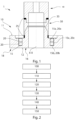
- Figure 1 shows a workpiece 10 that is approximately rotationally symmetrical about a longitudinal axis XX.
- the workpiece 10 has a sleeve section and a flange section, wherein the flange protrudes perpendicularly from the longitudinal axis XX from the sleeve section.
- the flange portion has a first side 11 and a second side 12 which are arranged spaced apart in the longitudinal axis X-X on opposite sides of the flange portion.
- a groove 15 with a U-shaped cross section is arranged from the first side 11, which is arranged in a ring around the longitudinal axis X-X, preferably rotationally symmetrically thereabout, and is directed towards the second side.
- the groove 15 has an inner side 15a, a bottom side 15b and an outer side 15c, wherein the inner side 15a and the outer side 15c are arranged parallel to the longitudinal axis X-X.
- the bottom side 15b can be curved in the direction of the second side 12 and can have a conical or spherical depression.
- the respective insert 20 is made of a non-magnetic material, for example stainless steel.
- the respective insert 20 is ring-shaped with two end faces 20b, a first surface 20a formed by an inner surface and a second surface 20c formed by an outer surface.
- the respective insert 20 can be inserted coaxially to the longitudinal axis XX into the groove 15, wherein the first surface 20a and the second surface 20c of the insert 20 are pressed against the inside 15a and the outside 15c are adapted.
- the inside 15a of the groove 15 and the first surface 20a of the respective insert 20 can be designed as a transition fit and their dimensions lie within a tolerance band of ⁇ 0.05mm, more preferably ⁇ 0.025mm and particularly more preferably ⁇ 0.015mm.
- the outside 15c of the groove 15 and the second surface 20c of the respective insert 20 can also be designed as a transition fit and their dimensions lie within a tolerance band of ⁇ 0.025mm, more preferably 10.015mm.
- Figure 1 shows that a further pole core section 40 made of a magnetic material can be connected to the workpiece 10.
- the pole core section 40 is connected to the workpiece 10 via a non-magnetic sleeve 30, preferably made of stainless steel, wherein the non-magnetic sleeve 30 can also be connected by means of the connecting means 25 through a brazed material connection.
- the workpiece 10 can preferably have a conical bevel 35 on the side facing the sleeve 30.
- the two inserts 20 are materially connected to the workpiece, wherein the materially bonded connection is achieved by brazing with a connecting agent 25 at temperatures above 723 K, which contains copper according to a preferred embodiment of the manufacturing process described in detail later.
- the workpiece 10 made of a magnetic material with the first side 11 and the second side 12 is firstly formed in a process step 100 according to Figure 2 provided.
- the groove 15 is machined into the workpiece 10 on the first side 11 - preferably by turning or milling.
- a subsequent method step 130 at least two inserts 20 and the connecting means 25 are inserted into the groove 15, with the connecting means 25, preferably as at least one separate body, being arranged between the two inserts 20.
- the insert 20 last inserted or pressed into the groove 15 can protrude from the groove 15 in some areas.
- a subsequent method step 140 the arrangement formed in method step 130 for the material-locking connection of the inserts 20 to the workpiece 10 and the inserts 20 to one another is heated until the connecting agent melts.
- the arrangement is heated to at least the melting temperature of copper, which is approximately 1358 K.
- the copper liquefies and flows due to capillary forces around the inserts 20 in the groove 15, in particular in capillary gaps between the inner side 15a and the first side 20a as well as between the outer side 15c and the second side 20c.
- the workpiece 10 is arranged such that the groove 15 is arranged in the vertical direction such that the inserts 20 are pressed into the groove 15 by gravity. Accordingly, the Figure 1 shown workpiece 10 so that the longitudinal axis XX in aligned with the vertical and the groove 15 points upwards with respect to the earth's surface.
- the arrangement from method step 130 is heated to a temperature above the melting temperature of the connecting means 25 until the connecting means 25 between the two inserts 20 has completely melted and the two inserts 20 are in abutting relationship except for a remaining film layer of connecting means 25.
- a pressing force can also press the two inserts 20 into the groove 15 in the heated state of the arrangement.
- both the first side 11 and the second side 12 can be mechanically reworked.
- material is removed from the second side 12 in process step 150 in order to expose the groove 15 or the insert 20 first inserted in the groove 15 and to divide the workpiece into two areas 16, 18.
- the insert 20 is preferably exposed by milling or turning, whereby the workpiece 10 is divided into the two sections 16, 18 by an interruption filled by the groove 15 and the inserts 20 arranged in a material-locking manner in the groove 15.
- the two sections 16, 18 are connected exclusively by non-magnetic material, namely the two inserts 20 and the connecting means 25.
Landscapes
- Engineering & Computer Science (AREA)
- Power Engineering (AREA)
- Physics & Mathematics (AREA)
- Electromagnetism (AREA)
- Manufacturing & Machinery (AREA)
- Electromagnets (AREA)
- Pressure Welding/Diffusion-Bonding (AREA)
- Iron Core Of Rotating Electric Machines (AREA)
- Magnetically Actuated Valves (AREA)
Description
- Die vorliegende Erfindung betrifft ein Herstellungsverfahren eines Polkerns mit den Merkmalen des Patentanspruchs 1, einen Polkern mit den Merkmalen des Patentanspruchs 10 sowie einen elektromagnetischen Aktor mit einem Polkern mit den Merkmalen des Patentanspruchs 11 sowie ein Schwingungsdämpfer mit einem solchen elektromagnetischen Aktor mit den Merkmalen des Patentanspruchs 12.
- Polkerne sind aus dem Stand der Technik in unterschiedlichen Ausgestaltungen vorbekannt und werden aus einem magnetischen Werkstoff, insbesondere ferromagnetischem Metall, hergestellt. Derartige Polkerne werden verbreitet in elektromagnetischen Aktoren zum Führen eines magnetischen Flusses verwendet, die beispielsweise in Dämpferventilen zur Steuerung der Dämpfercharakteristik eines Schwingungsdämpfers zur Abwendung kommen. Dämpferventile weisen zwischen einem Zulauf und einem Ablauf eine Austrittsöffnung auf, die mehr oder weniger verschlossen werden kann. Durch das Öffnen oder Verschließen wird die Austrittsöffnung gedrosselt und damit das Dämpfungsverhalten eines Schwingungsdämpfers eingestellt. Soll das Fahrzeug ein "hartes" Fahrwerk erhalten, wird die Drosselwirkung erhöht bzw. die Austrittsöffnung mehr geschlossen, währenddessen bei einem "weichen" Fahrwerk die Austrittsöffnung weiter geöffnet wird. Das Öffnen und Schließen des Dämpferventils erfolgt durch ein elektromagnetisches Aktorsystem, welches bei einer entsprechenden Bestromung einer Erregerspule einen Ventilkörper zustellt.
- Dämpferventile sollten "Fall-Safe" ausgebildet sein, damit beispielsweise beim Versagen des elektromagnetischen Aktors ein sicheres Betreiben des Kraftfahrzeugs mit einem solchen Schwingungsdämpfer möglich ist.
- In dem Stand der Technik wurden hierzu verschiedene Bauarten von Polkernen vorgeschlagen, wobei der Polkern einerseits ein flussführendes Bauteil ist und andererseits Bestandteile des elektromagnetischen Aktors vom Medium in dem Schwingungsdämpfer abdichtet. Diese Abdichtung ist notwendig um zu verhindern, dass keine Verunreinigungen in die Bestandteile des elektromagnetischen Aktors eindringen können und möglicherweise die Funktion des elektromagnetischen Aktors bzw. des Schwingungsdämpfers stören.
- Weiteren Stand der Technik bilden die Druckschriften
DE 43 10 719 A1 undUS 2006 144 666 A1 , aus denen ein Herstellungsverfahren für einen Polkern vorbekannt ist. - In der Vergangenheit wurde hierzu ein Polkern mit einem Flansch vorgeschlagen, der durch eine Unterbrechung in einen ersten Abschnitt und einen zweiten Abschnitt unterteilt ist. In der Unterbrechung ist ein nicht-magnetischer Einsetzling angeordnet, der den ersten Abschnitt mit dem zweiten Abschnitt verbindet. Der Einsetzling ist typischerweise durch Hartlöten stoffschlüssig sowohl mit dem ersten Abschnitt als auch mit dem zweiten Abschnitt verbunden und dichtet die Unterbrechung ab. Ein derart ausgestalteter Polkern ist gas- und flüssigkeitsdicht und hat sich in der Vergangenheit bewährt. Allerdings hat sich gezeigt, dass die stoffschlüssige Verbindung zwischen dem ersten Abschnitt, dem Einsetzling und dem zweiten Abschnitt aufgrund von Eigenspannungen und unterschiedlichen Wärmeausdehnungskoeffizienten Verschleiß unterliegt und die Dichtigkeit der Unterbrechung nicht dauerhaft gewährleistet ist, was zu einem frühzeitigen Versagen des elektromagnetischen Aktors bzw. des Dämpferventils als auch möglicherweise des Schwingungsdämpfers führt.
- Hier setzt die vorliegende Erfindung an.
- Die vorliegende Erfindung stellt sich der Aufgabe, ein verbessertes Herstellungsverfahren für einen Polkern, einen Polkern, einen verbesserten elektromagnetischen Aktor sowie einen verbesserten Schwingungsdämpfer vorzuschlagen, der die aus dem Stand der Technik bekannten Nachteile in zweckmäßiger Weise beseitigt und die Herstellung eines langzeitstabilen Polkerns unter Berücksichtigung wirtschaftlicher Aspekte ermöglicht. Diese Aufgaben werden durch ein Herstellungsverfahren für einen Polkern mit den Merkmalen des Patentanspruchs 1, einen Polkern mit den Merkmalen des Patentanspruchs 10, ein elektromagnetischer Aktor mit den Merkmalen des Patentanspruchs 11 und einen Schwingungsdämpfer mit den Merkmalen des Patentanspruchs 12 gelöst.
- Weitere vorteilhafte Ausgestaltungen der vorliegenden Erfindung werden in den Unteransprüchen angegeben.
- Das erfindungsgemäße Herstellungsverfahren für einen Polkern mit den Merkmalen des Patentanspruchs 1 weist folgende Verfahrensschritte auf:
- Bereitstellen eines magnetischen Werkstücks mit einer ersten Seite und einer zweiten Seite, wobei die erste Seite eine zu der zweiten Seite gerichtete Nut aufweist,
- Einsetzten von mindestens zwei Einsetzlingen sowie mindestens eines Verbindungsmittels in die Nut, wobei das mindestens eine Verbindungsmittel zwischen zwei Einsetzlingen angeordnet ist, und
- stoffschlüssiges Verbinden der mindestens zwei Einsetzlinge miteinander und/oder der mindestens zwei Einsetzlinge mit dem Werkstück durch bevorzugtes Aufschmelzen des Verbindungsmittels.
- Das erfindungsgemäße Herstellungsverfahren für einen Polkern beruht auf der Erkenntnis, dass beim Aufschmelzen des Verbindungsmittels Kapillarkräfte das aufgeschmolzene Verbindungsmittel auf den Kontaktflächen zwischen dem Werkstück und den Einsetzlingen verteilen und die Kontaktflächen vollständig benetzt werden, wodurch eine intermetallische Verbindung zwischen den Einsetzlingen und dem Werkstück bewerkstelligt wird. Durch die mindestens zwei in die Nut eingesetzten Einsetzlinge werden Materialspannungen durch die Verteilung der Kraftvektoren teilweise ausgeglichen und es kann ein Polkern mit einer geschlossenen und stoffschlüssigen Verbindung bereitgestellt werden, der die aus dem Stand der Technik bekannten Probleme beseitigt. Als wesentlich hat sich auch erwiesen, dass die Fließwege des aufgeschmolzenen Verbindungsmittels reduziert werden.
- Hier und im Nachfolgenden ist im Zusammenhang mit dieser Erfindung unter einem magnetischen Werkstück ein Werkstück zu verstehen, welches aus einem weichmagnetischem Werkstoff hergestellt ist, der sich in einem Magnetfeld leicht magnetisieren lässt. Ein solcher Werkstoff ist zum Beispiel ein Kohlenstoffstahl, Eisen oder sogenanntes Weicheisen, Stahl mit Siliziumzusatz, eine Nickel-Eisen-Legierung, eine Nickel-KobaltLegierung o.Ä.
- Weiterhin sieht eine bevorzugte Weiterbildung des Herstellungsverfahrens vor, dass die mindestens zwei Einsetzlinge aus einem nicht-magnetischen Werkstoff, insbesondere aus Edelstahl oder rostfreiem Stahl, hergestellt sind.
- Auch hat es sich bei der Durchführung des Herstellungsverfahrens von Vorteil gezeigt, dass das mindestens eine Verbindungsmittel mindestens einen vereinzelten Kupferkörper umfasst, der in die Nut eingesetzt wird. Kupfer eignet sich zum Herstellen einer als geschlossene Lötverbindung ausgebildeten stoffschlüssigen Verbindung hervorragend und weist aufgrund seiner Materialeigenschaften eine hohe Elastizität auf, wodurch Spannungen aufgrund unterschiedlicher Wärmeausdehnungen der Einsetzlinge und des Werkstücks ausgeglichen werden können. Weiterhin weist Kupfer im geschmolzenen Zustand eine geringe Viskosität auf, weshalb die Schmelze des Verbindungsmittels aufgrund von Kapillarkräften die Einsetzlinge in der Nut vollständig benetzt und nach dem Abkühlen eine belastbare hartgelötete und stoffschlüssige Verbindung ermöglicht. Der mindestens eine vereinzelte Kupferkörper kann bevorzugt ein an die Form der Nut angepasster Kupferkörper sein. Beispielsweise kann der Kupferkörper ein Kupferdraht, ein Formteil oder Schüttgut sein. Der Kupferkörper kann weiterhin aus einer Kupferlegierung gebildet sein. Alternativ kann an Stelle von Kupfer als Verbindungsmittel ein anderes nicht-magnetisches Verbindungsmittel verwendet werden, welches Silber, Messing o.Ä. beinhaltet und zum Hartlöten geeignet ist. Hartlöten erfolgt definitionsgemäß in einem Temperaturbereich von über 723 K.
- Eine Weiterbildung des Herstellungsverfahrens sieht vor, dass die Nut durch ein spanendes Fertigungsverfahren in die erste Seite des Werkstücks eingearbeitet wird, wobei bevorzugt die Nut in die erste Seite als ringförmige Nut mit einem U-förmigen Querschnitt, aufweisend eine Innenseite, eine Bodenseite und eine Außenseite, ausgebildet wird. Der jeweilige Einsetzling ist im Querschnitt quaderförmig und kann an die Form der Nut angepasst sein. Der Einsetzling weist eine erste Fläche und eine zweite Fläche auf. In dem Fall, dass die Nut eine ringförmige Nut ist, kann der jeweilige Einsetzling ebenfalls ringförmig ausgebildet sein, wobei die erste Fläche einer inneren Mantelfläche und die zweite Fläche einer äußeren Mantelfläche entspricht.
- Gemäß einer weiteren bevorzugten Ausführung des Herstellungsverfahrens ist die erste Fläche und/oder die zweite Fläche mindestens einer der zwei Einsetzlinge als Übergangspassung ausgebildet, weshalb der betreffende Einsetzling in die Nut mit einer moderaten Presskraft eingepresst werden kann. Es kann dabei vorteilhaft sein, wenn der Einsetzling lediglich an der ersten Seite oder der zweiten Seite eine Übergangspassung aufweist, währenddessen auf der anderen Seite eine Spielpassung vorgesehen sein kann, womit der unterschiedlichen Wärmeausdehnung der verwendeten Materialien für das Werkstück und die Einsetzlinge Rechnung getragen wird. Beim Erreichen der erforderlichen Temperatur schmilzt das Verbindungsmittels auf und kann sowohl auf der ersten Seite als auch auf der zweiten Seite einen näherungsweise gleich groß bemessene Kapillarspalten fließen. Aufgrund von Kapillarkräften fließt die Schmelz und wird in dem verteilt.
- Nach Maßgabe einer weiteren vorteilhaften Ausführung des vorliegenden Herstellungsverfahrens ist das Werkstück beim stoffschlüssigen Verbinden derart positioniert, dass mindestens einer der Einsetzlinge schwerkraftbedingt in die Nut gedrückt wird. Sobald das Verbindungsmittel beim Erreichen der Schmelztemperatur verflüssigt ist, kann mindestens einer der Einsetzlinge schwerkraftbedingt auf das verflüssigte Verbindungsmittel eine Druckkraft aufbringen und das verflüssigte Verbindungsmittel zwischen den mindestens zwei Einsetzlingen verdrängen, um so das Verteilen des aufgeschmolzenen Verbindungsmittels auf den Kontaktflächen in den Kapillarspalten zu begünstigen. Dabei sinkt der entsprechende Einsetzling ab und zwar vorzugsweise so weit, bis die mindestens zwei Einsetzlinge in der Nut - abgesehen von einer dünnen Schicht des aufgeschmolzenen Verbindungsmittels - auf Stoß liegen. Beim Abkühlen des Werkstücks härtet das Verbindungsmittel aus und bildet eine geschlossene stoffschlüssige Verbindung sowohl zwischen dem Werkstück und den Einsetzlingen als auch vorzugsweise zwischen den mindestens zwei Einsetzlingen.
- Gemäß einer bevorzugten Weiterbildung des Herstellungsverfahrens erfolgt das Erhitzen des Werkstücks und das Verflüssigen des Verbindungsmittels so lange, bis das Verbindungsmittel durch kapillaren Transport in der Nut zwischen den Einsetzlingen näherungsweise vollständig verdrängt ist und die beiden Einsetzlinge in der Nut auf Stoß liegen. Überflüssige Schmelze des Verbindungsmittels kann entweder aus der Nut austreten oder sich in einer Ausnehmung in der Bodenseite absetzen. Durch eine näherungsweise konstante Dicke des Verbindungsmittels nach dem Abkühlen sowohl in den Kapillarspalten als auch zwischen den Einsetzlingen wird verhindert, dass Lunker oder Hohlräume ausgebildet sind, welche einerseits die Dichtigkeit der stoffschlüssigen Verbindung beeinträchtigen könnten und andererseits Eigenspannungen begünstigen.
- Eine Weiterbildung des Herstellungsverfahrens sieht vor, dass nach dem Abkühlen des Werkstücks auf der ersten Seite und/oder auf der zweiten Seite Material abgetragen wird. Insbesondere ist es bevorzugt, wenn nach dem Abkühlen des Werkstücks die erste Seite und/oder die zweite Seite durch ein spanendes Fertigungsverfahren, beispielsweise Drehen, Fräsen oder Schleifen, überarbeitet werden bzw. wird.
- Vorzugsweise wird auf der zweiten Seite zumindest bereichsweise Material abgetragen, um auf der zweiten Seite eine Stirnseite eines der mindestens zwei Einsetzlinge - oder die Bodenseite der Nut - freizulegen, wodurch das magnetische Werkstück in einen ersten Abschnitt und einen zweiten Abschnitt unterteilt wird. Die Nut bildet nach dem zumindest teilweisen Abtragen der zweiten Seite und dem Freilegen mindestens eines der Einsetzlinge eine Unterbrechung zwischen dem ersten Abschnitt und dem zweiten Abschnitt, wobei der erste Abschnitt und der zweite Abschnitt in der Unterbrechung mittels der mindestens zwei Einsetzlinge und dem Verbindungsmittel stoffschlüssig verbunden sind.
- Ein weiterer Aspekt der vorliegenden Erfindung betrifft einen Polkern, hergestellt mit dem erfindungsgemäßen Herstellungsverfahren. Der Polkern ist vorzugsweise durch eine Unterbrechung in mindestens zwei Abschnitte unterteilt, wobei in der Unterbrechung mindestens zwei nicht-magnetische Einsetzlinge angeordnet sind, über die die mindestens zwei Abschnitte mit einer stoffschlüssigen Verbindung verbunden sein können.
- Weiterhin ist es bevorzugt, wenn die mindestens zwei nicht-magnetischen Einsetzlinge aus einem rostfreien Stahl oder Edelstahl hergestellt sind und mittels einer hartgelöteten stoffschlüssigen Verbindung verbunden sind, wobei Kupfer als Verbindungsmittel dienen kann. Die Unterbrechung ist durch die Einsetzlinge und die stoffschlüssige Verbindung gas- und flüssigkeitsdicht verschlossen, wodurch kein Stofftransport durch die Unterbrechung von der ersten Seite zu der zweiten Seite oder vice versa erfolgen kann.
- Ein weiterer Aspekt der vorliegenden Erfindung betrifft einen elektromagnetischen Aktor mit einem solchen Polkern.
- Ein dritter Aspekt der vorliegenden Erfindung betrifft einen Schwingungsdämpfer mit einem solchen elektromagnetischen Aktor.
- Ein vierter und letzter Aspekt der vorliegenden Erfindung betrifft ein Kraftfahrzeug mit wenigstens einem solchen Schwingungsdämpfer.
- Nachfolgend wird unter Bezugnahme auf die begleitenden Zeichnungen ein Ausführungsbeispiel eines erfindungsgemäßen Polkerns im Detail beschrieben. Es zeigen:
- Figur 1
- eine Schnittdarstellung eines Werkstücks mit einer Nut, in die zwei Einsetzlinge eingepresst sind und die mittels einer hartgelöteten stoffschlüssigen Verbindung in der Nut mit dem Werkstück verbunden sind, und
- Figur 2
- eine schematische Darstellung des Herstellungsverfahrens eines Polkerns.
- Nachfolgend werden gleiche oder funktional gleiche Bauteile mit gleichen Bezugszeichen gekennzeichnet. Der Übersichtlichkeit halber sind in den einzelnen Figuren nicht alle gleichen oder funktional gleichen Teile mit einer Bezugsziffer versehen.
-
Figur 1 zeigt ein Werkstück 10, dass näherungsweise um eine Längsachse X-X rotationssymmetrisch ausgebildet ist. Das Werkstück 10 weist einen Hülsenabschnitt und einen Flanschabschnitt auf, wobei der Flansch senkrecht von der Längsachse X-X vom Hülsenabschnitt absteht. - Der Flanschabschnitt weist eine erste Seite 11 und eine zweite Seite 12 auf, die in der Längsachse X-X beabstandet auf gegenüberliegenden Seiten des Flanschabschnitts angeordnet sind.
- In dem Flanschabschnitt ist von der ersten Seite 11 eine im Querschnitt U-förmige Nut 15 angeordnet, die ringförmig um die Längsachse X-X, vorzugweise um diese rotationssymmetrisch, angeordnet ist und in Richtung der zweiten Seite gerichtet ist. Die Nut 15 weist eine Innenseite 15a, eine Bodenseite 15b und eine Außenseite 15c auf, wobei die Innenseite 15a und die Außenseite 15c parallel zu der Längsachse X-X angeordnet sind. Die Bodenabseite 15b kann in Richtung der zweiten Seite 12 gewölbt sein und kann eine Kegel- oder Kugelsenkung aufweisen.
- Weiterhin ist aus der
Figur 1 ersichtlich, dass in die Nut 15 zwei Einsetzlinge 20 eingesteckt oder eingepresst sind. Der jeweilige Einsetzling 20 ist aus einem nicht-magnetischen Werkstoff, beispielsweise rostfreiem Stahl, hergestellt. Der jeweilige Einsetzling 20 ist ringförmig mit zwei Stirnseiten 20b, einer durch eine innere Mantelfläche gebildeten ersten Fläche 20a und einer durch eine äußere Mantelfläche gebildeten zweiten Fläche 20c, ausgebildet. - Der jeweilige Einsetzling 20 kann koaxial zu der Längsachse X-X in die Nut 15 eingesetzt werden, wobei die erste Fläche 20a und die zweite Fläche 20c des Einsetzlings 20 an die Innenseite 15a und die Außenseite 15c angepasst sind. Die Innenseite 15a der Nut 15 und die erste Fläche 20a des jeweiligen Einsetzlings 20 können als Übergangspassung ausgebildet sein und deren Maße innerhalb eines Toleranzbands von ± 0,05mm, weiter bevorzugt ± 0,025mm und besonders weiter bevorzugt von ±0,015mm, liegen. Die Außenseite 15c der Nut 15 und die zweite Fläche 20c des jeweiligen Einsetzlings 20 können ebenfalls als Übergangspassung ausgebildet sein und deren Maße innerhalb eines Toleranzbands von ± 0,025mm, weiter bevorzugt von 10,015mm, liegen.
-
Figur 1 zeigt, dass ein weiterer Polkernabschnitt 40 aus einem magnetischen Werkstoff mit dem Werkstück 10 verbunden sein kann. Der Polkernabschnitt 40 ist über eine nicht-magnetische Hülse 30, vorzugsweise aus Edelstahl, mit dem Werkstück 10 verbunden, wobei die nicht-magnetische Hülse 30 ebenfalls mittels dem Verbindungsmittel 25 durch eine hartgelötete stoffschlüssige Verbindung verbunden sein kann. Bevorzugt kann das Werkstück 10 auf der der Hülse 30 zugewandten Seite eine kegelförmig ausgebildete Fase 35 aufweisen. - In der Nut 15 sind die zwei Einsetzlinge 20 mit dem Werkstück stoffschlüssig verbunden, wobei die stoffschlüssige Verbindung durch ein Hartlöten mit einem Verbindungsmittel 25 bei Temperaturen über 723 K erfolgt, welches gemäß einer bevorzugten Ausführung des im späteren noch detailliert beschriebenen Herstellungsverfahren Kupfer beinhaltet.
- Hierzu wird zunächst das Werkstück 10 aus einem magnetischen Werkstoff mit der ersten Seite 11 und der zweiten Seite 12 in einem Verfahrensschritt 100 gemäß
Figur 2 bereitgestellt. - Anschließend wird im Verfahrensschritt 120 in das Werkstück 10 auf der ersten Seite 11 die Nut 15 - bevorzugt durch Drehen oder Fräsen - eingearbeitet.
- In einem folgenden Verfahrensschritt 130 werden mindestens zwei Einsetzlinge 20 und das Verbindungsmittel 25 in die Nut 15 eingesetzt, wobei zwischen die zwei Einsetzlinge 20 das Verbindungsmittel 25, bevorzugt als mindestens ein vereinzelter Körper, angeordnet ist. In diesem Zustand kann der zuletzt in die Nut 15 eingesetzte oder eingepresste Einsetzling 20 aus der Nut 15 bereichsweise herausragen.
- In einem folgenden Verfahrensschritt 140 wird die in Verfahrensschritt 130 gebildete Anordnung zum stoffschlüssigen Verbinden der Einsetzlinge 20 mit dem Werkstück 10 sowie der Einsetzlinge 20 miteinander erhitzt, bis das Verbindungsmittel aufschmilzt.
- Für den Fall, das Kupfer als Verbindungsmittel 25 verwendet wird, wird die Anordnung mindestens auf die Schmelztemperatur von Kupfer erhitzt, welche bei ca. 1358K liegt. Das Kupfer verflüssigt sich, und fließt aufgrund von Kapillarkräften um die Einsetzlinge 20 in der Nut 15, insbesondere in Kapillarspalten zwischen die Innenseite 15a und die erste Seite 20a als auch zwischen die Außenseite 15c und die zweite Seite 20c.
- Beim Erhitzen der in Verfahrensschritt 130 gebildeten Anordnung ist es vorteilhaft, wenn das Werkstück 10 derart angeordnet ist, dass die Nut 15 in der Vertikalrichtung so angeordnet ist, dass die Einsetzlinge 20 durch die Schwerkraft in die Nut 15 gedrückt werden. Entsprechend ist das in der
Figur 1 gezeigte Werkstück 10 so anzuordnen, dass die Längsachse X-X in der Vertikalen ausgerichtet ist, und die Nut 15 in Bezug auf die Erdoberfläche nach oben zeigt. - Die Anordnung aus dem Verfahrensschritt 130 wird so lange auf eine Temperatur oberhalb der Schmelztemperatur des Verbindungsmittels 25 erhitzt, bis das Verbindungsmittel 25 zwischen den beiden Einsetzlingen 20 vollständig aufgeschmolzen ist und die beiden Einsetzlinge 20 bis auf eine verbleibende Filmschicht von Verbindungsmittel 25 auf Stoß liegen. Auch kann eine Presskraft die beiden Einsetzlinge 20 im erhitzten Zustand der Anordnung in die Nut 15 pressen.
- Nach dem Abkühlen können sowohl die erste Seite 11 als auch zweite Seite 12 mechanisch überarbeitet werden. Um den erfindungsgemäßen Polkern 1 zu bilden, wind in Verfahrensschritt 150 auf der zweiten Seite 12 Material abgetragen, um die Nut 15 bzw. den in der Nut 15 zuerst eingesetzten Einsetzling 20 freizulegen und das Werkstück in zwei Bereiche 16, 18 zu teilen. Das Freilegen des Einsetzlings 20 erfolgt bevorzugt durch Fräsen oder Drehen, wodurch das Werkstück 10 in die zwei Abschnitte 16, 18 durch eine durch die Nut 15 und die in die Nut 15 stoffschlüssig angeordneten Einsetzlinge 20 ausgefüllte Unterbrechnung getrennt wird. Die beiden Abschnitte 16, 18 werden ausschließlich durch nicht-magnetische Werkstoff verbunden, nämlich den zwei Einsetzlingen 20 und dem Verbindungsmittel 25.
-
- 1
- Polkern
- 10
- Werkstück
- 11
- erste Seite
- 12
- zweite Seite
- 15
- Nut
- 15a
- Innenseite
- 15b
- Bodenseite
- 15c
- Außenseite
- 16
- Abschnitte
- 18
- Abschnitt
- 20
- Einsetzling
- 20a
- erste Fläche von 20
- 20b
- Stirnseite von 20
- 20c
- zweite Fläche von 20
- 21
- erste Fläche
- 22
- zweite Fläche
- 25
- Verbindungsmittel
- 30
- Hülse
- 35
- Fase
- 40
- Polkernabschnitt
- X-X
- Längsachse
Claims (13)
- Herstellungsverfahren eines Polkerns (1), aufweisend folgende Verfahrensschritte:- Bereitstellen eines magnetischen Werkstücks (10) mit einer ersten Seite (11) und einer zweiten Seite (12), wobei die erste Seite (11) eine zur zweiten Seite (12) gerichtete Nut (15) aufweist,- Einsetzten von mindestens zwei Einsetzlingen (20) sowie mindestens eines Verbindungsmittels (25) in die Nut (15), wobei das mindestens eine Verbindungsmittel (25) zwischen den zwei Einsetzlingen (20) angeordnet ist, und- stoffschlüssiges Verbinden der mindestens zwei Einsetzlinge (20) miteinander und optional der mindestens zwei Einsetzlinge (20) mit dem Werkstück (10).
- Verfahren nach Anspruch 1,
gekennzeichnet dadurch, dass
das stoffschlüssiges Verbinden der mindestens zwei Einsetzlinge (20) miteinander und/oder der mindestens zwei Einsetzlinge (20) mit dem Werkstück (10) durch ein Erhitzen des Werkstücks und ein Verflüssigen des Verbindungsmittels (25) erfolgt. - Verfahren nach Anspruch 1 oder 2,
gekennzeichnet dadurch, dass
die mindestens zwei Einsetzlinge (20) aus einem nicht-magnetischen Werkstoff, insbesondere aus Edelstahl, sind. - Verfahren nach einem der Ansprüche 1 bis 3,
gekennzeichnet dadurch, dass
das Verbindungsmittel (25) mindestens einen vereinzelten Kupferkörper umfasst, der in die Nut (15) eingesetzt wird. - Verfahren nach einem der vorgenannten Ansprüche,
gekennzeichnet dadurch, dass
mindestens einer der zwei Einsetzlinge (20) auf einer ersten Fläche (21) und/oder auf einer zweiten Fläche (22) eine Übergangspassung (23) aufweist, die an die Nut (15) angepasst ist. - Verfahren nach einem der vorgenannten Ansprüche,
gekennzeichnet dadurch, dass
mindestens einer der zwei Einsetzlinge (20) durch Einpressen in die Nut (15) einsetzt wird. - Verfahren nach einem der vorgenannten Ansprüche,
gekennzeichnet dadurch, dass
das Werkstück (10) beim stoffschlüssigen Verbinden derart positioniert ist, dass mindestens einer der zwei Einsetzlinge (20) schwerkraftbedingt in die Nut (15) gedrückt wird. - Verfahren nach einem der vorgenannten Ansprüche,
gekennzeichnet dadurch, dass
das Erhitzen des Werkstücks und Verflüssigen des Verbindungsmittels (25) solange erfolgt, bis das Verbindungsmittel durch kapillaren Transport in der Nut (15) zwischen den Einsetzlingen (20) zerflossen ist und die mindestens zwei Einsetzlinge (20) näherungsweise in der Nut (15) auf Stoß liegen. - Verfahren nach einem der vorgenannten Ansprüche,
gekennzeichnet dadurch, dass
die zweite Seite zum Freilegen des mindestens einen der zwei Einsetzlinge (20) abgetragen wird, vorzugsweise durch ein spanendes Fertigungsverfahren. - Polkern (1) mit einer Nut (15), die den Polkern (1) in mindestens zwei Abschnitte (16, 18) unterteilt, wobei in der Nut (15) mindestens zwei nicht-magnetischen Einsetzlinge (20) angeordnet sind, über die die mindestens zwei Abschnitte (16, 18) miteinander verbunden sind, und die untereinander mit einem Verbindungsmittel stoffschlüssig verbunden sind.
- Elektromagnetischer Aktor mit einem Polkern (1) nach Anspruch 10.
- Schwingungsdämpfer für ein Fahrzeug mit einem elektromagnetischen Aktor nach Anspruch 11.
- Fahrzeug mit einem Schwingungsdämpfer nach Anspruch 12.
Applications Claiming Priority (2)
| Application Number | Priority Date | Filing Date | Title |
|---|---|---|---|
| DE102020106013.0A DE102020106013B4 (de) | 2020-03-05 | 2020-03-05 | Herstellungsverfahren eines Polkerns, Polkern, elektromagnetischer Aktor, Schwingungsdämpfer sowie Fahrzeug |
| PCT/EP2021/055113 WO2021175811A1 (de) | 2020-03-05 | 2021-03-02 | Herstellungsverfahren eines polkerns, polkern, elektromagnetischer aktor sowie schwingungsdämpfer |
Publications (2)
| Publication Number | Publication Date |
|---|---|
| EP4115433A1 EP4115433A1 (de) | 2023-01-11 |
| EP4115433B1 true EP4115433B1 (de) | 2024-09-11 |
Family
ID=74858402
Family Applications (1)
| Application Number | Title | Priority Date | Filing Date |
|---|---|---|---|
| EP21709920.9A Active EP4115433B1 (de) | 2020-03-05 | 2021-03-02 | Herstellungsverfahren eines polkerns, polkern, elektromagnetischer aktor sowie schwingungsdämpfer |
Country Status (6)
| Country | Link |
|---|---|
| US (1) | US12176769B2 (de) |
| EP (1) | EP4115433B1 (de) |
| CN (1) | CN115280438A (de) |
| DE (1) | DE102020106013B4 (de) |
| ES (1) | ES3000733T3 (de) |
| WO (1) | WO2021175811A1 (de) |
Citations (2)
| Publication number | Priority date | Publication date | Assignee | Title |
|---|---|---|---|---|
| JPS5828021A (ja) * | 1981-08-10 | 1983-02-18 | Yutaka Nishinakagawa | 電磁クラツチ用のロ−タ製造方法 |
| US20060144666A1 (en) * | 2004-12-24 | 2006-07-06 | Masashi Aikawa | Magnetic-path member, electromagnetic coupling device using magnetic-path member, and method of manufacturing magnetic-path member |
Family Cites Families (12)
| Publication number | Priority date | Publication date | Assignee | Title |
|---|---|---|---|---|
| JPS57127128A (en) | 1981-01-29 | 1982-08-07 | Miki Puurii Kk | Manufacture of electromagnetic clutch rotor |
| JPS582021A (ja) | 1981-06-26 | 1983-01-07 | Fujitsu Ltd | 半導体装置の製造方法 |
| RU1839705C (ru) * | 1988-12-07 | 1993-12-30 | Али Мамедович Мурадов | Электромагнитный привод |
| DE4310719C2 (de) | 1993-04-01 | 2002-09-12 | Bosch Gmbh Robert | Verfahren zur Herstellung eines Magnetkreises für ein Ventil |
| CN100434739C (zh) * | 2002-10-22 | 2008-11-19 | 臼井国际产业株式会社 | 外部控制型风扇耦合装置 |
| DE102011013702B4 (de) * | 2011-03-11 | 2016-02-04 | Kendrion (Villingen) Gmbh | Elektromagnetischer Aktor |
| DE102011088463A1 (de) * | 2011-06-29 | 2013-01-03 | Robert Bosch Gmbh | Bauteil für einen Magnetaktor sowie Verfahren zu dessen Herstellung |
| DE102013100440A1 (de) * | 2013-01-16 | 2014-07-17 | Kendrion (Villingen) Gmbh | Hochdruckventil |
| DE102013100717B3 (de) * | 2013-01-24 | 2014-06-26 | Kendrion (Villingen) Gmbh | Elektromagnetisches Fluidventil |
| DE102013211014A1 (de) * | 2013-06-13 | 2014-12-18 | Kendrion (Villingen) Gmbh | Elektromagnetisches Ventil zur Durchflusssteuerung eines Druckmediums |
| EP3244425A1 (de) * | 2016-02-23 | 2017-11-15 | Rausch und Pausch GmbH | Polrohr für elektromagnete und magnetventile, und verfahren sowie vorrichtung zu dessen herstellung |
| JP2017227268A (ja) * | 2016-06-22 | 2017-12-28 | 株式会社デンソー | 電磁クラッチ、および電磁クラッチの製造方法 |
-
2020
- 2020-03-05 DE DE102020106013.0A patent/DE102020106013B4/de not_active Expired - Fee Related
-
2021
- 2021-03-02 EP EP21709920.9A patent/EP4115433B1/de active Active
- 2021-03-02 CN CN202180019202.9A patent/CN115280438A/zh active Pending
- 2021-03-02 WO PCT/EP2021/055113 patent/WO2021175811A1/de not_active Ceased
- 2021-03-02 ES ES21709920T patent/ES3000733T3/es active Active
- 2021-03-02 US US17/909,140 patent/US12176769B2/en active Active
Patent Citations (2)
| Publication number | Priority date | Publication date | Assignee | Title |
|---|---|---|---|---|
| JPS5828021A (ja) * | 1981-08-10 | 1983-02-18 | Yutaka Nishinakagawa | 電磁クラツチ用のロ−タ製造方法 |
| US20060144666A1 (en) * | 2004-12-24 | 2006-07-06 | Masashi Aikawa | Magnetic-path member, electromagnetic coupling device using magnetic-path member, and method of manufacturing magnetic-path member |
Also Published As
| Publication number | Publication date |
|---|---|
| CN115280438A (zh) | 2022-11-01 |
| EP4115433A1 (de) | 2023-01-11 |
| DE102020106013A1 (de) | 2021-09-09 |
| WO2021175811A1 (de) | 2021-09-10 |
| ES3000733T3 (en) | 2025-03-03 |
| US12176769B2 (en) | 2024-12-24 |
| US20230148245A1 (en) | 2023-05-11 |
| DE102020106013B4 (de) | 2022-09-29 |
Similar Documents
| Publication | Publication Date | Title |
|---|---|---|
| EP2670580B1 (de) | Elektromagnetventil sowie verfahren zum verbinden mittels laserstrahlen von werkstückteilen eines elektromagnetventils | |
| DD269577A5 (de) | Verfahren und vorrichtung zur befestigung von teilen auf einem hohlkoerper | |
| DE3339751A1 (de) | Fuegeverfahren | |
| DE4237405C2 (de) | Kraftstoffeinspritzvorrichtung für eine Brennkraftmaschine und Verfahren zur Herstellung eines festen Kerns für diese Einspritzvorrichtung | |
| EP0110234A1 (de) | Gusswerkstück mit eingeformten Kanal | |
| DE112006001316B4 (de) | Schweissen von pressgepassten kraftstoffeinspritzventilkomponenten | |
| DE112007002353B4 (de) | Düse für ein Spritzgießwerkzeug und Verfahren zur Herstellung | |
| EP3687714B1 (de) | Gussbauteil mit eingegossenem rohr und verfahren zur herstellung | |
| DE102011084724A1 (de) | Verfahren zur Herstellung einer magnetischen Trennung für ein Magnetventil | |
| EP4115433B1 (de) | Herstellungsverfahren eines polkerns, polkern, elektromagnetischer aktor sowie schwingungsdämpfer | |
| DE102009008458B4 (de) | Polrohr mit Metallverbindung, Elektromagnet mit dem Polrohr und Verfahren zur Herstellung des Polrohrs | |
| WO2017125411A1 (de) | Verfahren zum herstellen einer polrohrbaugruppe und hydraulikventil mit einer polrohrbaugruppe | |
| DE3914862A1 (de) | Verfahren zum verschweissen von teilen besonders mit unterschiedlichen ausdehnungen | |
| EP1699578A1 (de) | Verfahren zur herstellung eines hülsenförmigen gehäuses aus mehreren flachen blechen | |
| DE112018002646T5 (de) | Proportionalsolenoid, Verfahren zur Herstellung desselben und Verfahren zum Steuern von Eigenschaften des Proportionalsolenoids | |
| DE10038139B4 (de) | Führungselement für eine Magnetanordnung | |
| EP4015887B1 (de) | Rohranordnung | |
| DE3730011C2 (de) | ||
| DE102017130451A1 (de) | Verfahren zum Herstellen einer Polrohrbaugruppe und Hydraulikventil mit einer Polrohrbaugruppe | |
| CH713420A2 (de) | Ventilsitzring eines Gaswechselventils, Gaswechselventil und Verfahren zum Herstellen des Ventilsitzrings. | |
| EP1179152A1 (de) | Verfahren zur herstellung eines elektromagnetischen ventils | |
| EP4264648B1 (de) | Verfahren zu einer herstellung eines magnetisch getrennten kernrohrs und magnetaktorvorrichtung mit dem kernrohr | |
| EP0593986A1 (de) | Verfahren zum Verlöten eines Halbleiterkörpers mit einem Trägerelement | |
| DE102021002196A1 (de) | Vefahren zum Herstelllen eines Lötverbindungsteils, insbesondere für ein Kraftfahrzeug, sowie Lötverbindungsteil | |
| DE102014219215A1 (de) | Einspritzdüse mit mehrteiligem Düsenspitzenbereich |
Legal Events
| Date | Code | Title | Description |
|---|---|---|---|
| STAA | Information on the status of an ep patent application or granted ep patent |
Free format text: STATUS: UNKNOWN |
|
| STAA | Information on the status of an ep patent application or granted ep patent |
Free format text: STATUS: THE INTERNATIONAL PUBLICATION HAS BEEN MADE |
|
| PUAI | Public reference made under article 153(3) epc to a published international application that has entered the european phase |
Free format text: ORIGINAL CODE: 0009012 |
|
| STAA | Information on the status of an ep patent application or granted ep patent |
Free format text: STATUS: REQUEST FOR EXAMINATION WAS MADE |
|
| 17P | Request for examination filed |
Effective date: 20220812 |
|
| AK | Designated contracting states |
Kind code of ref document: A1 Designated state(s): AL AT BE BG CH CY CZ DE DK EE ES FI FR GB GR HR HU IE IS IT LI LT LU LV MC MK MT NL NO PL PT RO RS SE SI SK SM TR |
|
| DAV | Request for validation of the european patent (deleted) | ||
| DAX | Request for extension of the european patent (deleted) | ||
| P01 | Opt-out of the competence of the unified patent court (upc) registered |
Effective date: 20230322 |
|
| GRAP | Despatch of communication of intention to grant a patent |
Free format text: ORIGINAL CODE: EPIDOSNIGR1 |
|
| STAA | Information on the status of an ep patent application or granted ep patent |
Free format text: STATUS: GRANT OF PATENT IS INTENDED |
|
| INTG | Intention to grant announced |
Effective date: 20240508 |
|
| RIN1 | Information on inventor provided before grant (corrected) |
Inventor name: BUCHTA, ALES |
|
| GRAS | Grant fee paid |
Free format text: ORIGINAL CODE: EPIDOSNIGR3 |
|
| GRAA | (expected) grant |
Free format text: ORIGINAL CODE: 0009210 |
|
| STAA | Information on the status of an ep patent application or granted ep patent |
Free format text: STATUS: THE PATENT HAS BEEN GRANTED |
|
| REG | Reference to a national code |
Ref country code: DE Ref legal event code: R081 Ref document number: 502021005123 Country of ref document: DE Owner name: SOLERO TECHNOLOGIES VILLINGEN GMBH, DE Free format text: FORMER OWNER: ANMELDERANGABEN UNKLAR / UNVOLLSTAENDIG, 80297 MUENCHEN, DE Ref country code: DE Ref legal event code: R081 Ref document number: 502021005123 Country of ref document: DE Owner name: KENDRION (VILLINGEN) GMBH, DE Free format text: FORMER OWNER: ANMELDERANGABEN UNKLAR / UNVOLLSTAENDIG, 80297 MUENCHEN, DE |
|
| REG | Reference to a national code |
Ref country code: DE Ref legal event code: R081 Ref document number: 502021005123 Country of ref document: DE Owner name: SOLERO TECHNOLOGIES VILLINGEN GMBH, DE Free format text: FORMER OWNER: KENDRION (VILLINGEN) GMBH, 78048 VILLINGEN-SCHWENNINGEN, DE Ref country code: DE Ref legal event code: R081 Ref document number: 502021005123 Country of ref document: DE Owner name: KENDRION (VILLINGEN) GMBH, DE Free format text: FORMER OWNER: KENDRION (VILLINGEN) GMBH, 78048 VILLINGEN-SCHWENNINGEN, DE |
|
| AK | Designated contracting states |
Kind code of ref document: B1 Designated state(s): AL AT BE BG CH CY CZ DE DK EE ES FI FR GB GR HR HU IE IS IT LI LT LU LV MC MK MT NL NO PL PT RO RS SE SI SK SM TR |
|
| REG | Reference to a national code |
Ref country code: GB Ref legal event code: FG4D Free format text: NOT ENGLISH |
|
| REG | Reference to a national code |
Ref country code: CH Ref legal event code: EP |
|
| REG | Reference to a national code |
Ref country code: DE Ref legal event code: R096 Ref document number: 502021005123 Country of ref document: DE |
|
| REG | Reference to a national code |
Ref country code: IE Ref legal event code: FG4D Free format text: LANGUAGE OF EP DOCUMENT: GERMAN |
|
| REG | Reference to a national code |
Ref country code: LT Ref legal event code: MG9D |
|
| PG25 | Lapsed in a contracting state [announced via postgrant information from national office to epo] |
Ref country code: NO Free format text: LAPSE BECAUSE OF FAILURE TO SUBMIT A TRANSLATION OF THE DESCRIPTION OR TO PAY THE FEE WITHIN THE PRESCRIBED TIME-LIMIT Effective date: 20241211 |
|
| REG | Reference to a national code |
Ref country code: NL Ref legal event code: MP Effective date: 20240911 |
|
| PG25 | Lapsed in a contracting state [announced via postgrant information from national office to epo] |
Ref country code: GR Free format text: LAPSE BECAUSE OF FAILURE TO SUBMIT A TRANSLATION OF THE DESCRIPTION OR TO PAY THE FEE WITHIN THE PRESCRIBED TIME-LIMIT Effective date: 20241212 Ref country code: FI Free format text: LAPSE BECAUSE OF FAILURE TO SUBMIT A TRANSLATION OF THE DESCRIPTION OR TO PAY THE FEE WITHIN THE PRESCRIBED TIME-LIMIT Effective date: 20240911 |
|
| PG25 | Lapsed in a contracting state [announced via postgrant information from national office to epo] |
Ref country code: BG Free format text: LAPSE BECAUSE OF FAILURE TO SUBMIT A TRANSLATION OF THE DESCRIPTION OR TO PAY THE FEE WITHIN THE PRESCRIBED TIME-LIMIT Effective date: 20240911 |
|
| PG25 | Lapsed in a contracting state [announced via postgrant information from national office to epo] |
Ref country code: LV Free format text: LAPSE BECAUSE OF FAILURE TO SUBMIT A TRANSLATION OF THE DESCRIPTION OR TO PAY THE FEE WITHIN THE PRESCRIBED TIME-LIMIT Effective date: 20240911 |
|
| PG25 | Lapsed in a contracting state [announced via postgrant information from national office to epo] |
Ref country code: HR Free format text: LAPSE BECAUSE OF FAILURE TO SUBMIT A TRANSLATION OF THE DESCRIPTION OR TO PAY THE FEE WITHIN THE PRESCRIBED TIME-LIMIT Effective date: 20240911 |
|
| PG25 | Lapsed in a contracting state [announced via postgrant information from national office to epo] |
Ref country code: RS Free format text: LAPSE BECAUSE OF FAILURE TO SUBMIT A TRANSLATION OF THE DESCRIPTION OR TO PAY THE FEE WITHIN THE PRESCRIBED TIME-LIMIT Effective date: 20241211 |
|
| PG25 | Lapsed in a contracting state [announced via postgrant information from national office to epo] |
Ref country code: RS Free format text: LAPSE BECAUSE OF FAILURE TO SUBMIT A TRANSLATION OF THE DESCRIPTION OR TO PAY THE FEE WITHIN THE PRESCRIBED TIME-LIMIT Effective date: 20241211 Ref country code: NO Free format text: LAPSE BECAUSE OF FAILURE TO SUBMIT A TRANSLATION OF THE DESCRIPTION OR TO PAY THE FEE WITHIN THE PRESCRIBED TIME-LIMIT Effective date: 20241211 Ref country code: LV Free format text: LAPSE BECAUSE OF FAILURE TO SUBMIT A TRANSLATION OF THE DESCRIPTION OR TO PAY THE FEE WITHIN THE PRESCRIBED TIME-LIMIT Effective date: 20240911 Ref country code: HR Free format text: LAPSE BECAUSE OF FAILURE TO SUBMIT A TRANSLATION OF THE DESCRIPTION OR TO PAY THE FEE WITHIN THE PRESCRIBED TIME-LIMIT Effective date: 20240911 Ref country code: GR Free format text: LAPSE BECAUSE OF FAILURE TO SUBMIT A TRANSLATION OF THE DESCRIPTION OR TO PAY THE FEE WITHIN THE PRESCRIBED TIME-LIMIT Effective date: 20241212 Ref country code: FI Free format text: LAPSE BECAUSE OF FAILURE TO SUBMIT A TRANSLATION OF THE DESCRIPTION OR TO PAY THE FEE WITHIN THE PRESCRIBED TIME-LIMIT Effective date: 20240911 Ref country code: BG Free format text: LAPSE BECAUSE OF FAILURE TO SUBMIT A TRANSLATION OF THE DESCRIPTION OR TO PAY THE FEE WITHIN THE PRESCRIBED TIME-LIMIT Effective date: 20240911 |
|
| PG25 | Lapsed in a contracting state [announced via postgrant information from national office to epo] |
Ref country code: NL Free format text: LAPSE BECAUSE OF FAILURE TO SUBMIT A TRANSLATION OF THE DESCRIPTION OR TO PAY THE FEE WITHIN THE PRESCRIBED TIME-LIMIT Effective date: 20240911 |
|
| REG | Reference to a national code |
Ref country code: DE Ref legal event code: R081 Ref document number: 502021005123 Country of ref document: DE Owner name: SOLERO TECHNOLOGIES VILLINGEN GMBH, DE Free format text: FORMER OWNER: KENDRION (VILLINGEN) GMBH, MARKDORF, DE |
|
| REG | Reference to a national code |
Ref country code: ES Ref legal event code: FG2A Ref document number: 3000733 Country of ref document: ES Kind code of ref document: T3 Effective date: 20250303 |
|
| PG25 | Lapsed in a contracting state [announced via postgrant information from national office to epo] |
Ref country code: IS Free format text: LAPSE BECAUSE OF FAILURE TO SUBMIT A TRANSLATION OF THE DESCRIPTION OR TO PAY THE FEE WITHIN THE PRESCRIBED TIME-LIMIT Effective date: 20250111 Ref country code: PT Free format text: LAPSE BECAUSE OF FAILURE TO SUBMIT A TRANSLATION OF THE DESCRIPTION OR TO PAY THE FEE WITHIN THE PRESCRIBED TIME-LIMIT Effective date: 20250113 |
|
| PG25 | Lapsed in a contracting state [announced via postgrant information from national office to epo] |
Ref country code: SM Free format text: LAPSE BECAUSE OF FAILURE TO SUBMIT A TRANSLATION OF THE DESCRIPTION OR TO PAY THE FEE WITHIN THE PRESCRIBED TIME-LIMIT Effective date: 20240911 |
|
| PGFP | Annual fee paid to national office [announced via postgrant information from national office to epo] |
Ref country code: RO Payment date: 20250225 Year of fee payment: 5 |
|
| PG25 | Lapsed in a contracting state [announced via postgrant information from national office to epo] |
Ref country code: EE Free format text: LAPSE BECAUSE OF FAILURE TO SUBMIT A TRANSLATION OF THE DESCRIPTION OR TO PAY THE FEE WITHIN THE PRESCRIBED TIME-LIMIT Effective date: 20240911 |
|
| PGFP | Annual fee paid to national office [announced via postgrant information from national office to epo] |
Ref country code: AT Payment date: 20250417 Year of fee payment: 5 |
|
| PG25 | Lapsed in a contracting state [announced via postgrant information from national office to epo] |
Ref country code: PL Free format text: LAPSE BECAUSE OF FAILURE TO SUBMIT A TRANSLATION OF THE DESCRIPTION OR TO PAY THE FEE WITHIN THE PRESCRIBED TIME-LIMIT Effective date: 20240911 |
|
| PG25 | Lapsed in a contracting state [announced via postgrant information from national office to epo] |
Ref country code: SK Free format text: LAPSE BECAUSE OF FAILURE TO SUBMIT A TRANSLATION OF THE DESCRIPTION OR TO PAY THE FEE WITHIN THE PRESCRIBED TIME-LIMIT Effective date: 20240911 |
|
| REG | Reference to a national code |
Ref country code: DE Ref legal event code: R097 Ref document number: 502021005123 Country of ref document: DE |
|
| PGFP | Annual fee paid to national office [announced via postgrant information from national office to epo] |
Ref country code: DE Payment date: 20250429 Year of fee payment: 5 |
|
| PG25 | Lapsed in a contracting state [announced via postgrant information from national office to epo] |
Ref country code: DK Free format text: LAPSE BECAUSE OF FAILURE TO SUBMIT A TRANSLATION OF THE DESCRIPTION OR TO PAY THE FEE WITHIN THE PRESCRIBED TIME-LIMIT Effective date: 20240911 |
|
| PLBE | No opposition filed within time limit |
Free format text: ORIGINAL CODE: 0009261 |
|
| STAA | Information on the status of an ep patent application or granted ep patent |
Free format text: STATUS: NO OPPOSITION FILED WITHIN TIME LIMIT |
|
| 26N | No opposition filed |
Effective date: 20250612 |
|
| PG25 | Lapsed in a contracting state [announced via postgrant information from national office to epo] |
Ref country code: SE Free format text: LAPSE BECAUSE OF FAILURE TO SUBMIT A TRANSLATION OF THE DESCRIPTION OR TO PAY THE FEE WITHIN THE PRESCRIBED TIME-LIMIT Effective date: 20240911 |
|
| PG25 | Lapsed in a contracting state [announced via postgrant information from national office to epo] |
Ref country code: MC Free format text: LAPSE BECAUSE OF FAILURE TO SUBMIT A TRANSLATION OF THE DESCRIPTION OR TO PAY THE FEE WITHIN THE PRESCRIBED TIME-LIMIT Effective date: 20240911 |
|
| PG25 | Lapsed in a contracting state [announced via postgrant information from national office to epo] |
Ref country code: CZ Free format text: LAPSE BECAUSE OF NON-PAYMENT OF DUE FEES Effective date: 20250302 |
|
| REG | Reference to a national code |
Ref country code: CH Ref legal event code: H13 Free format text: ST27 STATUS EVENT CODE: U-0-0-H10-H13 (AS PROVIDED BY THE NATIONAL OFFICE) Effective date: 20251023 |
|
| PG25 | Lapsed in a contracting state [announced via postgrant information from national office to epo] |
Ref country code: LU Free format text: LAPSE BECAUSE OF NON-PAYMENT OF DUE FEES Effective date: 20250302 |
|
| GBPC | Gb: european patent ceased through non-payment of renewal fee |
Effective date: 20250302 |
|
| REG | Reference to a national code |
Ref country code: BE Ref legal event code: MM Effective date: 20250331 |
|
| PG25 | Lapsed in a contracting state [announced via postgrant information from national office to epo] |
Ref country code: GB Free format text: LAPSE BECAUSE OF NON-PAYMENT OF DUE FEES Effective date: 20250302 |
|
| PG25 | Lapsed in a contracting state [announced via postgrant information from national office to epo] |
Ref country code: FR Free format text: LAPSE BECAUSE OF NON-PAYMENT OF DUE FEES Effective date: 20250331 Ref country code: IT Free format text: LAPSE BECAUSE OF NON-PAYMENT OF DUE FEES Effective date: 20250302 |
|
| PG25 | Lapsed in a contracting state [announced via postgrant information from national office to epo] |
Ref country code: BE Free format text: LAPSE BECAUSE OF NON-PAYMENT OF DUE FEES Effective date: 20250331 |
|
| PG25 | Lapsed in a contracting state [announced via postgrant information from national office to epo] |
Ref country code: CH Free format text: LAPSE BECAUSE OF NON-PAYMENT OF DUE FEES Effective date: 20250331 |
|
| PG25 | Lapsed in a contracting state [announced via postgrant information from national office to epo] |
Ref country code: IE Free format text: LAPSE BECAUSE OF NON-PAYMENT OF DUE FEES Effective date: 20250302 |
|
| REG | Reference to a national code |
Ref country code: ES Ref legal event code: FD2A Effective date: 20260424 |