EP4110634B1 - Vehicule avec au moins une vitre en deux parties dont une partie basculante et un joint dispose entre les deux parties - Google Patents
Vehicule avec au moins une vitre en deux parties dont une partie basculante et un joint dispose entre les deux parties Download PDFInfo
- Publication number
- EP4110634B1 EP4110634B1 EP21708717.0A EP21708717A EP4110634B1 EP 4110634 B1 EP4110634 B1 EP 4110634B1 EP 21708717 A EP21708717 A EP 21708717A EP 4110634 B1 EP4110634 B1 EP 4110634B1
- Authority
- EP
- European Patent Office
- Prior art keywords
- window
- glass
- vehicle
- throat
- moving part
- Prior art date
- Legal status (The legal status is an assumption and is not a legal conclusion. Google has not performed a legal analysis and makes no representation as to the accuracy of the status listed.)
- Active
Links
Images

Classifications
-
- B—PERFORMING OPERATIONS; TRANSPORTING
- B60—VEHICLES IN GENERAL
- B60J—WINDOWS, WINDSCREENS, NON-FIXED ROOFS, DOORS, OR SIMILAR DEVICES FOR VEHICLES; REMOVABLE EXTERNAL PROTECTIVE COVERINGS SPECIALLY ADAPTED FOR VEHICLES
- B60J1/00—Windows; Windscreens; Accessories therefor
- B60J1/08—Windows; Windscreens; Accessories therefor arranged at vehicle sides
- B60J1/12—Windows; Windscreens; Accessories therefor arranged at vehicle sides adjustable
- B60J1/14—Windows; Windscreens; Accessories therefor arranged at vehicle sides adjustable with pivotal or rotary movement
-
- B—PERFORMING OPERATIONS; TRANSPORTING
- B60—VEHICLES IN GENERAL
- B60J—WINDOWS, WINDSCREENS, NON-FIXED ROOFS, DOORS, OR SIMILAR DEVICES FOR VEHICLES; REMOVABLE EXTERNAL PROTECTIVE COVERINGS SPECIALLY ADAPTED FOR VEHICLES
- B60J10/00—Sealing arrangements
- B60J10/20—Sealing arrangements characterised by the shape
- B60J10/27—Sealing arrangements characterised by the shape having projections, grooves or channels in the longitudinal direction
-
- B—PERFORMING OPERATIONS; TRANSPORTING
- B60—VEHICLES IN GENERAL
- B60J—WINDOWS, WINDSCREENS, NON-FIXED ROOFS, DOORS, OR SIMILAR DEVICES FOR VEHICLES; REMOVABLE EXTERNAL PROTECTIVE COVERINGS SPECIALLY ADAPTED FOR VEHICLES
- B60J10/00—Sealing arrangements
- B60J10/70—Sealing arrangements specially adapted for windows or windscreens
Definitions
- the invention lies in the field of motor vehicles comprising at least one window in at least two parts including at least one tilting part, that is to say capable of being moved between an open position and a closed position by rotation around 'an axe.
- tilting windows are interesting for reducing the production costs of certain motor vehicles, because they eliminate the need for sliding windows which retract into the door box and which are costly to produce, even in a mechanical version. . Indeed, sliding windows integrate a complex window lift device comprising numerous parts and result in a long assembly time.
- FIG. 1 An example of a vehicle equipped with a tilting window is given in the document FR2926494 .
- This document presents a vehicle door window tilting downwards from a closed position to an open position. In its closed position, the window has an interior face and comprises at least one hinge mechanism which is arranged at the bottom of the window, and a closing mechanism which is arranged at the top of the window, said mechanisms cooperating with the door.
- the window can be operated by the user of the vehicle by means of a handle placed on its interior face and opens by tilting towards the outside of the vehicle.
- windows in two parts were designed, at least one part of which is movable.
- Motor vehicles whose side openings are equipped with windows in two parts, including a fixed part and a mobile part, are described, for example, in the documents FR1 175210 And FR1066043 .
- the document FR1 175210 describes an opening window for a car door mounted in a pivoting manner around a vertical axis, which allows the user to pivot this window forward and ensure the free opening of his window while not requiring simple installation and a low cost price.
- vehicle windows which are foldable are also known from the prior art.
- the document EP0453098 describes a folding window comprising a window in two parts connected together by a folding strip showing an H profile.
- the folding strip adheres to the two parts of the window.
- the folding strip acts as both a hinge and a seal.
- the proposed solution does not allow one of the parts of the window to be placed in an open position.
- the mechanical tensions imposed on the folding strip when it is in the folded position can accelerate the wear of said strip.
- a similar two-part openable window with a seal between them, which discloses the features of the preamble is disclosed in the document US 2015/043051 A1 .
- the invention aims to propose a solution to at least one of the problems encountered in the prior art.
- the invention aims to propose a vehicle with at least one window in two parts offering improved comfort to its user in particular by offering improved sealing between the two parts of the window without however accelerating the wear of a seal placed between said parts of the window.
- the invention relates to a vehicle comprising at least one opening and a window in two parts according to claim 1.
- the invention proposes a seal with a first U-shaped groove into which one of the edges of the movable part of the window.
- the sizing of the first U-shaped groove so as to show an air gap greater than the thickness of the movable part of the window will allow the edge of said movable part to emerge from the seal when it is placed in the open position and to reinsert it when placed in the closed position.
- the edge of the movable part is clear of the first groove of the seal when the movable part is in the open position.
- This characteristic offers the advantage of not maintaining the seal under stress when the moving part of the window is in the open position. The forces to which the seal is subjected are therefore reduced over time, which limits its wear.
- the clearance of the edge of the moving part of the window offers more freedom in the design of the seal since the latter is not driven with said edge.
- the width of the first groove as defined by the spacing between its side walls corresponds to at least 1.2 times the thickness of the movable part of the window; preferably, at least 1.4 times, or 1.5 times, or 1.6 times, or 1.8 times, or 2 times the thickness of the movable part of the window.
- the vehicle comprising a passenger compartment, the movable part of the window comprising an internal face and an external face, the internal face being intended to be facing the passenger compartment of the vehicle when said movable part is in the closed position
- the vehicle is remarkable in that the first groove comprises an internal side wall and an external side wall, the internal side wall being positioned on the side of the passenger compartment of the vehicle, and in that the seal is configured so that the external side wall is placed away from the external face of the movable part of the window when the latter is in the closed position.
- the movable part of the window is not in contact with said external side wall. This absence of contact facilitates the insertion of the edge of the movable part into the first groove when placing the movable part in the closed position.
- the edge of the movable part of the window is in contact with the bottom wall of the first groove and/or with the internal side wall of the first throat.
- the vehicle comprising a passenger compartment, the movable part of the window comprising an internal face and an external face, the internal face being intended to face the passenger compartment of the vehicle when said movable part is in the closed position
- the vehicle is remarkable in that the first groove comprises an internal side wall and an external side wall, the internal side wall being positioned on the side of the passenger compartment of the vehicle, and in that the seal is configured so that the external side wall either in contact with the external face of the moving part of the window when it is in the closed position.
- the support of the upper edge of the window on the bottom of the groove will, through a “tumble” effect, press the external side wall at least partially against the external surface of the window.
- the vehicle comprising a passenger compartment
- the vehicle is remarkable in that the seal comprises a second groove having a bottom and two side walls, the second groove being open in a direction non-parallel to the direction of opening of the first gorge.
- one of the side walls of the second groove forms the bottom wall of the first groove and/or the second groove is open towards the passenger compartment.
- the bottom wall of the first groove is inclined relative to a plane passing through the top of its side walls.
- the outer side wall has a height greater than the height of the inner side wall. This configuration promotes contact between the edge of the movable part of the window and the bottom wall of the first groove.
- the window in two parts having a movable part and another part showing an internal face and an external face the vehicle is remarkable in that the other part of the window is a fixed part and/or in what the seal is fixed to the other part of the window by a fixing bracket.
- the fixing bracket is sized to extend over the entire length of the seal; and/or fixed by gluing on one of the faces of the other part of the window; and/or the fixing tab is fixed on the internal face of the other part of the window.
- the axis of rotation around which the movable part of the window pivots is a horizontal axis.
- the mobile part of the window therefore opens by tilting upwards or downwards.
- the movable part of the window comprising a lower edge and an upper edge
- the edge received in the first groove is the upper edge of the movable part of the window.
- the first groove is therefore open towards the ground.
- the other part of the window is a fixed part and the vehicle comprises a hinge system comprising a fixed hinge mounted on the fixed part of the window and a movable hinge mounted on the movable part of the window.
- the fixed and movable knuckles are arranged on the external faces of the fixed and movable parts of the window.
- the vehicle comprises at least one side opening and is remarkable in that at least one opening which can be closed by a window in two parts is arranged on the or one of its side openings.
- the subject of the invention is a seal according to claim 9, intended to be placed between two parts of a window of a vehicle according to the first aspect.
- the term “include” is synonymous with “include” and is not restrictive in that it authorizes the presence of other elements or shapes in the seal or the vehicle to which it relates. . It is understood that the term “understand” includes the terms “consist of”. Likewise, the terms “lower”, “upper”, “high”, “low”, “front” and “rear” will be understood in relation to the general orientation of the vehicle as taken in its normal direction of travel. In the different figures, the same references designate identical or similar elements.
- the invention relates to a vehicle comprising at least one opening closed by a window in two parts, namely a movable part 3 and another part 1.
- the movable part 3 is pivotally mounted around an axis between an open position illustrated in figure 2 and a closed position illustrated in figure 1 .
- a seal 5 is placed between the two parts (1, 3) of the window.
- the other part is a fixed part 1.
- At least one opening which can be closed by a window in two parts is arranged on one of the side openings of the vehicle. It is nevertheless possible to adapt the invention to an opening arranged at the level of the rear hatch of the vehicle or at the level of an opening on the roof roof.
- the vehicle comprises a passenger compartment (not shown), the movable part 3 of the window comprises an internal face and an external face.
- the internal face is intended to be facing the passenger compartment of the vehicle when said movable part 3 is in the closed position.
- the movable part 3 of the window is advantageously configured to pivot towards the outside of the vehicle. The invention can nevertheless be adapted to pivoting towards the interior of the vehicle.
- the fixed and mobile parts are aligned when the mobile part 3 is in the closed position, that is to say they are coplanar and follow one another in a given direction. They are arranged in parallel or intersecting planes when the mobile part 3 is in the open position.
- the axis of rotation around which the movable part 3 of the window pivots can be horizontal, vertical or inclined relative to the vertical and the horizontal; according to a preferred embodiment illustrated on the figures 1 And 2 , the axis of rotation is horizontal.
- the fixed parts 1 and movable parts 3 are arranged in a stepped manner so that one part is arranged lower than the other part.
- the movable part of the window is arranged lower than the fixed part.
- the mobile part 3 of the window can pivot by tilting downwards or upwards.
- the movable part of the window carries a hinge mechanism cooperating with the box of the side opening of the vehicle arranged at the level of the lower edge of the movable part of the window and a closing mechanism, arranged at the level of the upper edge of the movable part of the window or at the level of one of its side edges.
- the vehicle is configured so that the axis around which the movable part pivots is at least partly arranged at the level of the joint extending between the two parts of the window. For example, it extends at least partly parallel to said seal 5.
- the vehicle therefore comprises a hinge system comprising a fixed knuckle 7 mounted on the fixed part 1 of the window and a movable knuckle 9 mounted on the mobile part 3 of the window.
- the fixed 7 and mobile 9 knuckles are arranged on the external faces of the fixed 1 and mobile 3 parts of the window.
- the fixed knuckles 7 and mobile 9 can be fixed by any means. For example, they are fixed by screws 11 passing through the window by means of openings provided for this purpose. Screwing can be completed by gluing, the presence of a strip of glue 13 also making it possible to reinforce the sealing of the assembly.
- the seal 5 is fixed to the fixed part 1 of the window.
- the seal 5 can be fixed by any means.
- the seal 5 comprises, for the purposes of its fixing, a fixing tab 15 dimensioned to extend over at least part of its length; preferably over at least 50% of the length of the seal 5, and more preferably over the entire length of the seal 5.
- the tab 15 of fixation is advantageously glued to one of the faces of the fixed part 1 of the window by means of a bead of glue 17.
- the fixing tab 15 can be fixed on the internal face or on the external face of the fixed part 1 of the window ; preferably, it is fixed on the internal face.
- the seal 5 is fixed, by means of its fixing tab 15 on the opposite face of the window, namely the internal face of said fixed part 1 of the window.
- the internal face is the face oriented towards the passenger compartment of the vehicle, while the external face is the face oriented towards the exterior of the vehicle.
- the fixing tab 15 is bordered by a lip 19 placed against the window so as to protect the glue bead 17 against the accumulation of dirt or water coming from a possible runoff on the internal face of the fixed part of the window.
- the seal 5 has a bead 31 extending towards the external face of the fixed part 1.
- the bead 31 also forms a sealing lip extending over all or part of the length of the seal sealing 5.
- the seal 5 does not have a bead extending towards the external face of the fixed part 1. This configuration reduces the risk of water infiltration.
- the seal shows a channel with a U-shaped profile in which one of the edges of the fixed part of the window is fitted for the purpose of fixing said seal. Fitting one of the edges of the fixed part of the window into the channel allows the seal to be retained on said edge. If necessary, those skilled in the art can reinforce this retention by gluing.
- the seal 5 has a first groove 21 intended to receive an edge of the movable part 3 of the window when the latter is in the closed position.
- the first groove 21 has a bottom wall 23 and two side walls, i.e. an external wall 25 and an internal wall 27.
- the first groove 21 is dimensioned so that its width as defined by the spacing between its side walls (25, 27) is greater than the thickness of the movable part 3 of the window.
- the width of the first groove as defined by the spacing between its side walls corresponds to at least 1.2 times the thickness of the movable part 3 of the window, preferably at least 1.4 times , or 1.5 times, or 1.6 times, or 1.8 times or 2 times the thickness of the moving part 3 of the window.
- the dimensioning of the first groove 21 will allow the edge of the movable part of the window to penetrate it and to emerge from it during the opening and closing operations of the window.
- the edge of the movable part 3 of the window is in its position closed, one of its edges is received in said first groove 21 as illustrated in figure 1 .
- the edge of the movable part 3 of the window intended to be received in the first groove 21 is the upper edge of the movable part 3 of the window as defined when the movable part 3 of the window is in closed position.
- the seal 5 is configured so that the external side wall is placed spaced apart from the external face of the movable part 3 of the window when the latter is in the closed position, so that the movable part 3 of the window is not in contact with said external side wall. This configuration makes it easier to engage the edge of the movable part 3 of the window in the first groove 21 when it passes into the closed position.
- the seal 5 is configured so that the external side wall is in contact with the external face of the movable part 3 of the window when the latter is in the closed position.
- the engagement of the edge of the movable part 3 of the window in the first groove when it passes into the closed position is always facilitated by the relative dimensions of the first groove and the edge of the window of the movable part.
- the seal 5 is configured so that the interference of the edge of the window with the bottom of the first groove causes the external wall to tilt towards the external surface of the window until it rests on the latter.
- the tilting direction is indicated with an arrow.
- the support of the upper edge of the window on the bottom of the groove will press at least partly the external side wall against the external surface of the window by a tumbling type effect.
- the end edge 33 of the outer wall of the seal has a rounded or pointed section in order to move it away from the surface of the window and to give it a “drip-stop” function. It is therefore advantageous for the external wall to be in contact with the external surface of the window only over a portion of its height.
- the first groove 21 being preferentially open towards the bottom, the presence of an external side wall 25 allows the water flowing outside the vehicle onto the seal 5 to drop from the edge of the the external side wall 25 towards the ground. The running water is not thus guided towards the moving part 3 of the window, which limits the risk of water infiltration into the passenger compartment.
- the seal 5 comprises a second groove 29 having a bottom and two side walls.
- the second groove 29 is oriented to be opened in a direction non-parallel to the opening direction of the first groove 21.
- the second groove 29 has a U-shaped or V-shaped profile; preferably, V-shaped.
- the second groove 29 is open towards the passenger compartment.
- one of its side walls coincides with the bottom wall 23 of the first groove 21.
- the presence of a second groove 29 in the seal 5 offers several advantages. It is advantageously dimensioned to be closed, at least in part, by the thrust of the edge of the movable part 3 of the window when it enters the first groove 21 and the movable part 3 of the window is placed in the closed position.
- this makes it possible to ensure contact between the edge of the movable part 3 of the window and the bottom wall 23 of the first groove 21 and therefore to ensure the sealing of the whole.
- this makes it possible to ensure this seal while absorbing possible positioning dispersions between the fixed part 1 and the mobile part 3 of the window.
- seal is a profile showing a section in the shape of an inverted Y or forming the lowercase Greek letter Pi.
- the bottom wall 23 of the first groove 21 is inclined relative to a plane passing through the top of its side walls (25, 27).
- the side walls (25, 27) of the first groove 21 have different heights.
- the external side wall 25 has a height greater than the height of the internal side wall 27.
- the seal 5 is a profile made of thermoplastic elastomeric material, for example thermoplastic polyurethane elastomer, thermoplastic styrenic elastomer, thermoplastic copolyester or thermoplastic copolyamide.
- thermoplastic elastomeric material for example thermoplastic polyurethane elastomer, thermoplastic styrenic elastomer, thermoplastic copolyester or thermoplastic copolyamide.
- EPDM ethylene-propylene-diene monomer
Landscapes
- Engineering & Computer Science (AREA)
- Mechanical Engineering (AREA)
- Window Of Vehicle (AREA)
- Seal Device For Vehicle (AREA)
- Specific Sealing Or Ventilating Devices For Doors And Windows (AREA)
Description
- L'invention se situe dans le domaine des véhicules automobiles comprenant au moins une vitre en au moins deux parties dont au moins une partie basculante, c'est-à-dire pouvant être déplacée entre une position ouverte et une position fermée par rotation autour d'un axe.
- L'utilisation de vitres basculantes est intéressante pour diminuer les coûts de production de certains véhicules automobiles, car elles permettent de s'affranchir des vitres coulissantes qui s'escamotent dans le caisson de porte et dont la réalisation, même en version mécanique, est coûteuse. En effet, les vitres coulissantes intègrent un dispositif de lève-vitre complexe comprenant de nombreuses pièces et engendrent un temps de montage long.
- Un exemple d'un véhicule équipé d'une vitre basculante est donné par le document
FR2926494 - Il est néanmoins parfois souhaitable de proposer une vitre s'ouvrant seulement en partie et non pas intégralement. Pour ce faire, il a été imaginé des vitres en deux parties dont au moins une partie est mobile. Des véhicules automobiles dont les ouvrants latéraux sont équipés de vitres en deux parties, dont une partie fixe et une partie mobile, sont décrits, par exemple, dans les documents
FR1 175210 FR1066043 - Le document
FR1 175210 - La réalisation d'une vitre en deux parties dont une partie fixe et une partie mobile pose la problématique de l'étanchéité entre les vitres. Cet aspect est absent du document
FR1066043 FR1175210 - On notera qu'il est également connu de l'art antérieur des vitres de véhicule qui sont pliables. Par exemple, le document
EP0453098 décrit une fenêtre pliante comprenant une vitre en deux parties reliées entre elles par une bande pliante montrant un profil en H. La bande pliante adhère aux deux parties de la vitre. Dans ce document, la bande pliante fait à la fois office de charnière et de joint d'étanchéité. Malheureusement, la solution proposée ne permet pas de placer une des parties de la vitre dans une position ouverte. Par ailleurs, les tensions mécaniques imposées à la bande pliante lorsqu'elle est en position pliée peuvent accélérer l'usure de ladite bande. Une vitre ouvrable en deux parties similaire avec un joint entre elles, qui divulgue les caractéristiques du préambule, est divulguée dans le documentUS 2015/043051 A1 . - L'invention a pour objectif de proposer une solution à au moins un des problèmes rencontrés dans l'art antérieur. En particulier, l'invention a pour objectif de proposer un véhicule avec au moins une vitre en deux parties offrant un confort amélioré à son utilisateur notamment en offrant une étanchéité améliorée entre les deux parties de la vitre sans toutefois accélérer l'usure d'un joint disposé entre lesdites parties de la vitre.
- A cet effet, et selon un premier aspect, l'invention a pour objet un véhicule comprenant au moins une ouverture et une vitre en deux parties selon la revendication 1.
- Comme on l'aura compris à la lecture de la définition qui vient d'en être donnée, l'invention propose un joint d'étanchéité avec une première gorge en forme de U dans laquelle s'insère un des bords de la partie mobile de la vitre. Le dimensionnement de la première gorge en forme de U de sorte à montrer un entrefer supérieur à l'épaisseur de la partie mobile de la vitre va permettre au bord de ladite partie mobile de se dégager du joint d'étanchéité lorsqu'elle est placée en position ouverte et de s'y réinsérer lorsqu'elle est placée en position fermée.
- Avantageusement, le bord de la partie mobile est dégagé de la première gorge du joint d'étanchéité lorsque la partie mobile est en position ouverte. Cette caractéristique offre l'avantage de ne pas maintenir le joint d'étanchéité sous contrainte lorsque la partie mobile de la vitre est en position ouverte. Les efforts auxquels est soumis le joint sont donc réduits dans le temps ce qui limite son usure. Par ailleurs, le dégagement du bord de la partie mobile de la vitre offre plus de liberté dans la conception du joint puisque ce dernier n'est pas entraîné avec ledit bord.
- Selon l'invention, la largeur de la première gorge telle que définie par l'écartement entre ses parois latérales correspond à au moins 1,2 fois l'épaisseur de la partie mobile de la vitre ; de préférence, au moins 1,4 fois, ou 1,5 fois, ou 1,6 fois, ou 1,8 fois, ou 2 fois l'épaisseur de la partie mobile de la vitre.
- Avantageusement, le véhicule comprenant un habitacle, la partie mobile de la vitre comprenant une face interne et une face externe, la face interne étant destinée à être en regard de l'habitacle du véhicule lorsque ladite partie mobile est en position fermée, le véhicule est remarquable en ce que la première gorge comprend une paroi latérale interne et une paroi latérale externe, la paroi latérale interne étant positionnée du côté de l'habitacle du véhicule, et en ce que le joint d'étanchéité est configuré pour que la paroi latérale externe soit disposée écartée de la face externe de la partie mobile de la vitre lorsque celle-ci est en position fermée. Ainsi, la partie mobile de la vitre n'est pas en contact avec ladite paroi latérale externe. Cette absence de contact facilite l'insertion du bord de la partie mobile dans la première gorge lors de la mise en position fermée de la partie mobile. On notera, néanmoins, qu'afin d'assurer l'étanchéité de l'ensemble, le bord de la partie mobile de la vitre est en contact avec la paroi de fond de la première gorge et/ou avec la paroi latérale interne de la première gorge.
- Alternativement, le véhicule comprenant un habitacle, la partie mobile de la vitre comprenant une face interne et une face externe, la face interne étant destinée à être en regard de l'habitacle du véhicule lorsque ladite partie mobile est en position fermée, le véhicule est remarquable en ce que la première gorge comprend une paroi latérale interne et une paroi latérale externe, la paroi latérale interne étant positionnée du côté de l'habitacle du véhicule, et en ce que le joint d'étanchéité est configuré pour que la paroi latérale externe soit en contact avec la face externe de la partie mobile de la vitre lorsque celle-ci est en position fermée. L'appui du bord supérieur de la vitre sur le fond de la gorge va, par un effet « culbuto », plaquer au moins en partie la paroi latérale externe contre la surface externe de la vitre. Ce contact permet de renforcer la qualité perçue du véhicule par une effet de type « flush » entre le joint et la vitre. On notera, que dans un tel cas, l'étanchéité de l'ensemble est assuré à la fois par contact entre le bord de la partie mobile de la vitre avec la paroi de fond de la première gorge et avec la paroi latérale externe de la première gorge. Avantageusement, le bord d'extrémité de la paroi latérale externe montre une section arrondie ou en pointe afin de l'éloigner de la surface de la vitre et de lui donner une fonction « casse-goutte ». Cette configuration limite les risques d'infiltration d'eau par capillarité.
- Préférentiellement, le véhicule comprenant un habitacle, le véhicule est remarquable en ce que le joint d'étanchéité comprend une deuxième gorge présentant un fond et deux parois latérales, la deuxième gorge étant ouverte selon une direction non-parallèle à la direction d'ouverture de la première gorge. De préférence, une des parois latérales de la deuxième gorge forme la paroi de fond de la première gorge et/ou la deuxième gorge est ouverte en direction de l'habitacle. Cette configuration permet de garantir un rattrapage des dispersions de positionnement entre les deux parties de la vitre et une bonne étanchéité de l'ensemble en donnant une certaine élasticité au joint d'étanchéité lui permettant d'être comprimé par l'insertion du bord de la partie mobile de la vitre dans la première gorge.
- Avantageusement, la paroi de fond de la première gorge est inclinée par rapport à un plan passant par le sommet de ses parois latérales. De préférence, la paroi latérale externe montre une hauteur supérieure à la hauteur de la paroi latérale interne. Cette configuration favorise le contact entre le bord de la partie mobile de la vitre et la paroi de fond de la première gorge.
- Selon un mode de réalisation, la vitre en deux parties présentant une partie mobile et une autre partie montrant une face interne et une face externe, le véhicule est remarquable en ce que l'autre partie de la vitre est une partie fixe et/ou en ce que le joint d'étanchéité est fixé à l'autre partie de la vitre par une patte de fixation. De préférence, la patte de fixation est dimensionnée pour s'étendre sur toute la longueur du joint d'étanchéité ; et/ou fixée par collage sur une des faces de l'autre partie de la vitre; et/ou la patte de fixation est fixée sur la face interne de l'autre partie de la vitre.
- Selon un mode de réalisation préféré, l'axe de rotation autour duquel la partie mobile de la vitre pivote est un axe horizontal. La partie mobile de la vitre s'ouvre donc par basculement vers le haut ou vers le bas.
- Selon un mode de réalisation préféré, la partie mobile de la vitre comprenant un bord inférieur et un bord supérieur, le bord reçu dans la première gorge est le bord supérieur de la partie mobile de la vitre. La première gorge est donc ouverte en direction du sol.
- Par exemple, l'autre partie de la vitre est une partie fixe et le véhicule comprend un système de charnière comprenant un charnon fixe monté sur la partie fixe de la vitre et un charnon mobile monté sur la partie mobile de la vitre. De préférence, les charnons fixe et mobile sont disposés sur les faces externes des parties fixe et mobile de la vitre.
- Selon une mise en oeuvre, le véhicule comprend au moins un ouvrant latéral et est remarquable en ce que au moins une ouverture pouvant être fermée par une vitre en deux parties est agencée sur le ou un de ses ouvrants latéraux.
- Selon un deuxième aspect, l'invention a pour objet un joint d'étanchéité selon la revendication 9, destiné à être disposé entre deux parties d'une vitre d'un véhicule selon le premier aspect.
- L'invention sera bien décrite et d'autres aspects et avantages apparaîtront clairement à la lecture de la description qui suit donnée en référence aux figures annexées sur lesquelles :
- [
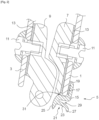
Fig.1 ] Lafigure 1 est une vue partielle en coupe d'un ensemble selon l'invention comprenant une vitre en deux parties avec un joint d'étanchéité disposé entre les parties fixe et mobile de la vitre, la partie mobile étant placée en position fermée de sorte à ce qu'un de ses bords soit inséré dans la première gorge. - [
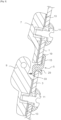
Fig.2 ] Lafigure 2 est une vue analogue à celle de lafigure 1 mais dans laquelle la partie mobile de la vitre est en position ouverte de sorte à ce que son bord soit dégagé de la première gorge. - [
Fig.3 ] Lafigure 3 est une vue analogue à celle de lafigure 1 mais illustre une variante de l'invention. - Dans la description qui suit, le terme « comprendre » est synonyme de « inclure » et n'est pas limitatif en ce qu'il autorise la présence d'autres éléments ou formes dans le joint d'étanchéité ou le véhicule auquel il se rapporte. Il est entendu que le terme « comprendre » inclut les termes « consister en ». De même, les termes « inférieur », « supérieur », « haut », « bas », « avant » et « arrière » s'entendront par rapport à l'orientation générale du véhicule tel que pris selon son sens normal de marche. Sur les différentes figures, les mêmes références désignent des éléments identiques ou similaires.
- L'invention concerne un véhicule comprenant au moins une ouverture fermée par une vitre en deux parties, à savoir une partie mobile 3 et une autre partie 1. La partie mobile 3 est montée de manière pivotante autour d'un axe entre une position ouverte illustrée en
figure 2 et une position fermée illustrée enfigure 1 . Un joint d'étanchéité 5 est disposé entre les deux parties (1, 3) de la vitre. Dans l'exemple de réalisation illustré et décrit ci-après, l'autre partie est une partie fixe 1. - Néanmoins, l'homme du métier pourra adapter l'invention à une vitre dont les deux parties sont mobiles chacune entre une position ouverte et fermée. Les deux parties sont alors déplacées de manière successive, c'est-à-dire l'une après l'autre, et la partie mobile devient une première partie mobile et l'autre partie devient une deuxième partie mobile. La première partie mobile peut être déplacée entre ses positions ouverte et fermée lorsque la deuxième partie mobile est en position fermée. La deuxième partie mobile peut être déplacée entre ses positions ouverte et fermée lorsque la première partie mobile est en position ouverte. Chacune des parties est dotée d'un mécanisme de charnière coopérant avec un bord de l'ouverture.
- Avantageusement, au moins une ouverture pouvant être fermée par une vitre en deux parties est agencée sur un des ouvrants latéraux du véhicule. Il est néanmoins possible d'adapter l'invention à une ouverture agencée au niveau du hayon arrière du véhicule ou au niveau d'une ouverture sur le pavillon de toit.
- Le véhicule comprend un habitacle (non représenté), la partie mobile 3 de la vitre comprend une face interne et une face externe. La face interne est destinée à être en regard de l'habitacle du véhicule lorsque ladite partie mobile 3 est en position fermée. La partie mobile 3 de la vitre est avantageusement configurée pour pivoter vers l'extérieur du véhicule. L'invention peut néanmoins être adaptée à un pivotement en direction de l'intérieur du véhicule.
- Selon un mode de réalisation préférentiel, les parties fixe et mobile sont alignées lorsque la partie mobile 3 est en position fermée, c'est-à-dire qu'elles sont coplanaires et se succèdent selon une direction donnée. Elles sont disposées dans des plans parallèles ou sécants lorsque la partie mobile 3 est en position ouverte.
- L'axe de rotation autour duquel pivote la partie mobile 3 de la vitre peut être horizontal, vertical ou incliné par rapport à la verticale et à l'horizontale ; selon un mode de réalisation préféré illustré sur les
figures 1 et2 , l'axe de rotation est horizontal. - Lorsque l'axe de rotation autour duquel pivote la partie mobile 3 de la vitre est horizontal, les parties fixe 1 et mobile 3 sont agencées de manière étagée de sorte à ce qu'une partie soit disposée inférieurement à l'autre partie. Dans un mode de réalisation préféré, la partie mobile de la vitre est disposée inférieurement à la partie fixe. La partie mobile 3 de la vitre peut pivoter par un basculement vers le bas ou vers le haut. Dans la variante non représentée où le véhicule est configuré pour que la partie mobile de la vitre pivote vers le bas, c'est-à-dire en direction du sol, la partie mobile de la vitre porte un mécanisme de charnière coopérant avec le caisson de l'ouvrant latéral du véhicule disposé au niveau du bord inférieur de la partie mobile de la vitre et un mécanisme de fermeture, disposé au niveau du bord supérieur de la partie mobile de la vitre ou au niveau d'un de ses bords latéraux.
- Dans l'exemple de réalisation illustré en
figures 1 et2 , le véhicule est configuré pour que l'axe autour duquel pivote la partie mobile soit au moins en partie agencé au niveau du joint s'étendant entre les deux parties de la vitre. Par exemple, il s'étend au moins en partie de manière parallèle audit joint d'étanchéité 5. Le véhicule comprend donc un système de charnière comprenant un charnon fixe 7 monté sur la partie fixe 1 de la vitre et un charnon mobile 9 monté sur la partie mobile 3 de la vitre. Les charnons fixe 7 et mobile 9 sont disposés sur les faces externes des parties fixe 1 et mobile 3 de la vitre. Les charnons fixe 7 et mobile 9 peuvent être fixés par tout moyen. Par exemple, ils sont fixés par des vis 11 traversant la vitre au moyen d'ouvertures prévues à cet effet. Le vissage peut être complété par un collage, la présence d'une bande de colle 13 permettant, en outre, de renforcer l'étanchéité de l'ensemble. - Selon un mode de réalisation préféré, le joint d'étanchéité 5 est fixé à la partie fixe 1 de la vitre. Le joint d'étanchéité 5 peut être fixé par tout moyen.
- Dans notre exemple, le joint d'étanchéité 5 comprend, aux fins de sa fixation, une patte 15 de fixation dimensionnée pour s'étendre sur au moins une partie de sa longueur ; de préférence sur au moins 50 % de la longueur du joint d'étanchéité 5, et plus préférentiellement sur toute la longueur du joint d'étanchéité 5. La patte 15 de fixation est avantageusement collée sur une des faces de la partie fixe 1 de la vitre au moyen d'un cordon de colle 17. La patte 15 de fixation peut être fixée sur la face interne ou sur la face externe de la partie fixe 1 de la vitre ; de préférence, elle est fixée sur la face interne. Ainsi dans les variantes où un charnon fixe 7 est fixé sur la face externe de la partie fixe 1 de la vitre, le joint d'étanchéité 5 est fixé, par le biais de sa patte 15 de fixation sur la face opposée de la vitre, à savoir la face interne, de ladite partie fixe 1 de la vitre. La face interne est la face orientée en direction de l'habitacle du véhicule, tandis que la face externe est la face orientée vers l'extérieur du véhicule.
- Selon un mode de réalisation avantageux, la patte 15 de fixation est bordée par une lèvre 19 se plaçant en appui contre la vitre de manière à protéger le cordon de colle 17 contre l'accumulation de saletés ou d'eau en provenance d'un éventuel ruissèlement sur la face interne de la partie fixe de la vitre.
- De manière optionnelle, comme illustré en
figure 1 , le joint d'étanchéité 5 présente un bourrelet 31 s'étendant en direction de la face externe de partie fixe 1. De préférence, le bourrelet 31 forme également une lèvre d'étanchéité s'étendant sur tout ou partie de la longueur du joint d'étanchéité 5. Selon un mode de réalisation préférentiel illustré enfigure 3 , le joint d'étanchéité 5 est dépourvu d'un bourrelet s'étendant en direction de la face externe de partie fixe 1. Cette configuration réduit le risque d'infiltration d'eau. - Dans un exemple de réalisation non représenté, le joint d'étanchéité montre un canal avec un profil en U dans lequel un des bords de la partie fixe de la vitre est emmanché en vue de la fixation dudit joint. L'emmanchement d'un des bords de la partie fixe de la vitre dans le canal permet au joint d'être retenu sur ledit bord. Au besoin, l'homme du métier pourra renforcer cette retenue par collage.
- Le joint d'étanchéité 5 présente une première gorge 21 destinée à recevoir un bord de la partie mobile 3 de la vitre lorsque celle-ci est en position fermée. La première gorge 21 présentant une paroi de fond 23 et deux parois latérales, soit une paroi externe 25 et une paroi interne 27. La première gorge 21 est dimensionnée pour que sa largeur telle que définie par l'écartement entre ses paroi latérales (25, 27) soit supérieure à l'épaisseur de la partie mobile 3 de la vitre. Selon l'invention, la largeur de la première gorge telle que définie par l'écartement entre ses parois latérales correspond à au moins 1,2 fois l'épaisseur de la partie mobile 3 de la vitre, de préférence au moins 1,4 fois, ou 1,5 fois, ou 1,6 fois, ou 1,8 fois ou 2 fois l'épaisseur de la partie mobile 3 de la vitre.
- Le dimensionnement de la première gorge 21 va permettre au bord de la partie mobile de la vitre de la pénétrer et de s'en dégager lors des opérations d'ouverture et de fermeture de la vitre. Ainsi, lorsque la partie mobile 3 de la vitre est dans sa position fermée, un de ses bords est reçu dans ladite première gorge 21 comme illustré en
figure 1 . Tandis que lorsque la partie mobile 3 de la vitre est dans sa position ouverte, ce même bord est dégagé de ladite première gorge 21 comme illustré enfigure 2 . Selon un mode de réalisation, le bord de la partie mobile 3 de la vitre destiné à être reçu dans la première gorge 21 est le bord supérieur de la partie mobile 3 de la vitre tel que défini lorsque la partie mobile 3 de la vitre est en position fermée. - Selon un mode de réalisation illustré en
figure 1 , le joint d'étanchéité 5 est configuré pour que la paroi latérale externe soit disposée écartée de la face externe de la partie mobile 3 de la vitre lorsque celle-ci est en position fermée, de manière à ce que la partie mobile 3 de la vitre ne soit pas en contact avec ladite paroi latérale externe. Cette configuration permet de faciliter l'engagement du bord de la partie mobile 3 de la vitre dans la première gorge 21 lors de son passage en position fermée. - Selon un autre mode de réalisation illustré en
figure 3 , le joint d'étanchéité 5 est configuré pour que la paroi latérale externe soit en contact de la face externe de la partie mobile 3 de la vitre lorsque celle-ci est en position fermée. L'engagement du bord de la partie mobile 3 de la vitre dans la première gorge lors de son passage en position fermée est toujours facilité par les dimensions relatives de la première gorge et du bord de la vitre de la partie mobile. Néanmoins, le joint d'étanchéité 5 est configuré pour que la mise en interférence du bord de la vitre avec le fond de la première gorge fasse basculer la paroi externe en direction de la surface externe de la vitre jusqu'à se placer en appui sur cette dernière. La direction de basculement est indiquée avec une flèche. En d'autres termes, l'appui du bord supérieur de la vitre sur le fond de la gorge va plaquer au moins en partie la paroi latérale externe contre la surface externe de la vitre par un effet de type culbuto. Avantageusement, le bord d'extrémité 33 de la paroi externe du joint montre une section arrondie ou en pointe afin de l'éloigner de la surface de la vitre et de lui donner une fonction « casse-goutte ». Il est donc avantageux que la paroi externe ne soit en contact avec la surface externe de la vitre que sur une portion de sa hauteur. - Par ailleurs, la première gorge 21 étant préférentiellement ouverte en direction du bas, la présence d'une paroi latérale externe 25 permet à ce que l'eau ruisselant à l'extérieur du véhicule sur le joint d'étanchéité 5 goute depuis le bord de la paroi latérale externe 25 en direction du sol. L'eau ruisselante n'est pas ainsi guidée vers la partie mobile 3 de la vitre ce qui limite les risques d'infiltration d'eau dans l'habitacle.
- Selon des modes de réalisation, le joint d'étanchéité 5 comprend une deuxième gorge 29 présentant un fond et deux parois latérales. La deuxième gorge 29 est orientée pour être ouverte selon une direction non-parallèle à la direction d'ouverture de la première gorge 21. La deuxième gorge 29 montre un profil forme de U ou en forme de V ; de préférence, en forme de V. Selon le mode de réalisation illustré en
figures 1 et2 , la deuxième gorge 29 est ouverte en direction de l'habitacle. Avantageusement, une de ses parois latérales est confondue avec la paroi de fond 23 de la première gorge 21. La présence d'une deuxième gorge 29 dans le joint d'étanchéité 5 offre plusieurs avantages. Elle est avantageusement dimensionnée pour être refermée, au moins en partie, par la poussée du bord de la partie mobile 3 de la vitre lorsqu'il pénètre dans la première gorge 21 et que la partie mobile 3 de la vitre est placée en position fermée. D'une part, cela permet de s'assurer d'un contact entre le bord de la partie mobile 3 de la vitre et la paroi de fond 23 de la première gorge 21 et donc d'assurer l'étanchéité de l'ensemble. D'autre part cela permet d'assurer cette étanchéité tout en absorbant les éventuelles dispersions de positionnement entre la partie fixe 1 et la partie mobile 3 de la vitre. - Ainsi le joint d'étanchéité est un profilé montrant une section en forme de Y inversé ou formant la lettre grecque minuscule Pi.
- Dans des modes de réalisation, la paroi de fond 23 de la première gorge 21 est inclinée par rapport à un plan passant par le sommet de ses parois latérales (25, 27). Ainsi, les parois latérales (25, 27) de la première gorge 21 montrent des hauteurs différentes. De préférence, la paroi latérale externe 25 montre une hauteur supérieure à la hauteur de la paroi latérale interne 27. Cette configuration permet de garantir un contact entre le bord de la partie mobile de la vitre et la paroi de fond 23 de la première gorge 21 lorsqu'il est inséré dans ladite première gorge 21. Lorsque la première gorge est ouverte selon une direction verticale et orientée soit vers le haut soit vers le bas, la paroi de fond est inclinée par rapport à un plan horizontal. Lorsque la première gorge est ouverte selon une direction horizontale et orientée soit vers l'avant soit vers l'arrière du véhicule, la paroi de fond est inclinée par rapport à un plan vertical perpendiculaire à une des faces de la vitre lorsqu'elle est en position fermée.
- Préférentiellement, le joint d'étanchéité 5 est un profilé fabriqué en matériau thermoplastique élastomère, par exemple en élastomère thermoplastique de polyuréthane, en élastomère thermoplastique styrénique, en copolyester thermoplastique ou en copolyamide thermoplastique. Un exemple de matériau thermoplastique élastomère utilisé est l'EPDM (éthylène-propylène-diène monomère).
Claims (9)
- Véhicule comprenant au moins une ouverture et une vitre en deux parties (1, 3) dont au moins une partie mobile (3), l'ouverture étant adaptée pour être fermée par la vitre en deux parties (1, 3), ladite partie (3) étant mobile en ce qu'elle est montée de manière pivotante autour d'un axe de rotation et en ce qu'elle est déplaçable entre une position ouverte et une position fermée ; et un joint d'étanchéité (5) disposé entre les deux parties (1, 3) de la vitre, le joint d'étanchéité (5) présentant une première gorge (21) destinée à recevoir un bord de la partie mobile (3) de la vitre lorsque celle-ci est en position fermée, et la première gorge (21) présentant une paroi de fond (23) et deux parois latérales (25, 27), et est dimensionnée pour que sa largeur telle que définie par l'écartement entre ses paroi latérales (25, 27) soit supérieure à l'épaisseur de la partie mobile (3) de la vitre, caractérisé en ce que le bord de la partie mobile (3) est dégagé de la première gorge (21) du joint d'étanchéité (5) lorsque la partie mobile (3) est en position ouverte ; et/ou en ce que la largeur de la première gorge (21) telle que définie par l'écartement entre ses parois latérales (25, 27) correspond à au moins 1,2 fois l'épaisseur de la partie mobile (3) de la vitre, de préférence au moins 1,5 fois l'épaisseur de la partie mobile (3) de la vitre.
- Véhicule selon la revendication 1, le véhicule comprenant un habitacle, la partie mobile (3) de la vitre comprenant une face interne et une face externe, la face interne étant destinée à être en regard de l'habitacle du véhicule lorsque ladite partie mobile (3) est en position fermée, le véhicule est caractérisé en ce que la première gorge (21) comprend une paroi latérale interne (27) et une paroi latérale externe (25), la paroi latérale interne (27) étant positionnée du côté de l'habitacle du véhicule, et en ce que le joint d'étanchéité (5) est configuré pour que la paroi latérale externe (25) soit en contact la face externe de la partie mobile (3) de la vitre lorsque celle-ci est en position fermée ; de préférence, le bord d'extrémité (33) de la paroi latérale externe (25) montre une section arrondie ou en pointe.
- Véhicule selon la revendication 1 ou 2, le véhicule comprenant un habitacle, le véhicule est caractérisé en ce que le joint d'étanchéité (5) comprend une deuxième gorge (29) présentant un fond et deux parois latérales, la deuxième gorge étant ouverte selon une direction non-parallèle à la direction d'ouverture la première gorge (21) ; de préférence, une des parois latérales de la deuxième gorge (29) forme la paroi de fond (23) de la première gorge (21) et/ou la deuxième gorge (29) est ouverte en direction de l'habitacle.
- Véhicule selon l'une des revendications 1 à 3, caractérisé en ce que la paroi de fond (23) de la première gorge (21) est inclinée par rapport à un plan passant par le sommet de ses parois latérales (25, 27) ; de préférence, la paroi latérale externe (25) montre une hauteur supérieure à la hauteur de la paroi latérale interne (27).
- Véhicule selon l'une des revendications 1 à 4, la vitre en deux parties présentant une partie mobile (3) et une autre partie montrant une face interne et une face externe, le véhicule est caractérisé en ce que l'autre partie de la vitre est une partie fixe (1) et/ou en ce que le joint d'étanchéité (5) est fixé à l'autre partie de la vitre par une patte (15) de fixation ; de préférence, la patte (15) de fixation est dimensionnée pour s'étendre sur toute la longueur du joint d'étanchéité (5) ; et/ou la patte (15) de fixation est fixée par collage sur une des faces de l'autre partie de la vitre; et/ou fixée sur la face interne de l'autre partie de la vitre.
- Véhicule selon l'une des revendications 1 à 5, caractérisé en ce que l'axe de rotation autour duquel la partie mobile (3) de la vitre pivote est un axe horizontal ; et/ou ce que la partie mobile (3) de la vitre comprenant un bord inférieur et un bord supérieur, le bord reçu dans la première gorge (21) est le bord supérieur de la partie mobile (3) de la vitre.
- Véhicule selon l'une des revendications 1 à 6, caractérisé en ce que l'autre partie de la vitre est une partie fixe (1) et en ce qu'il comprend un système de charnière comprenant un charnon fixe (7) monté sur la partie fixe (1) de la vitre et un charnon mobile (9) monté sur la partie mobile (3) de la vitre ; de préférence, les charnons fixe (7) et mobile (9) sont disposés sur les faces externes des parties fixe (1) et mobile (3) de la vitre.
- Véhicule selon l'une des revendications 1 à 7, le véhicule comprenant au moins un ouvrant latéral et est caractérisé en ce que au moins une ouverture pouvant être fermée par une vitre en deux parties est agencée sur le ou un de ses ouvrants latéraux.
- Joint d'étanchéité (5) destiné à être disposé entre deux parties d'une vitre d'un véhicule selon l'une des revendications 1 à 8, le joint d'étanchéité (5) présentant une première gorge (21) destinée à recevoir un bord de la partie mobile (3) de la vitre lorsque celle-ci est en position fermée, et la première gorge (21) présentant une paroi de fond (23) et deux parois latérales (25, 27), et est dimensionnée pour que sa largeur telle que définie par l'écartement entre ses paroi latérales (25, 27) soit supérieure à l'épaisseur de la partie mobile (3) de la vitre; caractérisé en ce que la largeur de la première gorge (21) telle que définie par l'écartement entre ses parois latérales (25, 27) correspond à au moins 1,2 fois l'épaisseur de la partie mobile (3) de la vitre, de préférence au moins 1,5 fois l'épaisseur de la partie mobile (3) de la vitre; aussi de préférence : le joint d'étanchéité (5) comprend une deuxième gorge (29) présentant un fond et deux parois latérales et ouverte selon une direction non-parallèle à la direction d'ouverture de la première gorge (21) ; et/ou la paroi de fond (23) de la première gorge (21) est inclinée par rapport à un plan passant par le sommet de ses parois latérales ; et/ou le joint d'étanchéité (5) présente une patte (15) de fixation destinée à sa fixation par collage.
Priority Applications (1)
| Application Number | Priority Date | Filing Date | Title |
|---|---|---|---|
| MA66187A MA66187B1 (fr) | 2020-02-28 | 2021-01-27 | Vehicule avec au moins une vitre en deux parties dont une partie basculante et un joint dispose entre les deux parties |
Applications Claiming Priority (2)
| Application Number | Priority Date | Filing Date | Title |
|---|---|---|---|
| FR2002033A FR3107670B1 (fr) | 2020-02-28 | 2020-02-28 | Vehicule avec au moins une vitre en deux parties dont une partie basculante et un joint dispose entre les deux parties |
| PCT/FR2021/050148 WO2021170928A1 (fr) | 2020-02-28 | 2021-01-27 | Vehicule avec au moins une vitre en deux parties dont une partie basculante et un joint dispose entre les deux parties |
Publications (2)
| Publication Number | Publication Date |
|---|---|
| EP4110634A1 EP4110634A1 (fr) | 2023-01-04 |
| EP4110634B1 true EP4110634B1 (fr) | 2024-06-05 |
Family
ID=70738699
Family Applications (1)
| Application Number | Title | Priority Date | Filing Date |
|---|---|---|---|
| EP21708717.0A Active EP4110634B1 (fr) | 2020-02-28 | 2021-01-27 | Vehicule avec au moins une vitre en deux parties dont une partie basculante et un joint dispose entre les deux parties |
Country Status (4)
| Country | Link |
|---|---|
| EP (1) | EP4110634B1 (fr) |
| FR (1) | FR3107670B1 (fr) |
| MA (1) | MA66187B1 (fr) |
| WO (1) | WO2021170928A1 (fr) |
Families Citing this family (2)
| Publication number | Priority date | Publication date | Assignee | Title |
|---|---|---|---|---|
| CN114559796B (zh) * | 2022-02-24 | 2023-10-24 | 岚图汽车科技有限公司 | 一种前三角窗安装支架及安装结构 |
| FR3158067B1 (fr) * | 2024-01-04 | 2025-12-26 | Renault Sas | Ensemble destiné à fermer une ouverture d’un véhicule automobile. |
Family Cites Families (7)
| Publication number | Priority date | Publication date | Assignee | Title |
|---|---|---|---|---|
| FR1066043A (fr) | 1951-06-26 | 1954-06-01 | Dispositif de verrouillage en position ouverte relevée d'une glace articulée | |
| FR1175210A (fr) | 1957-05-15 | 1959-03-23 | Glace ouvrante pour portière de voiture ou autres applications | |
| JPS54183018U (fr) * | 1978-06-14 | 1979-12-25 | ||
| JP2801619B2 (ja) * | 1989-01-06 | 1998-09-21 | 日産自動車株式会社 | 自動車用ウインドウパネルのシール構造 |
| US5015028A (en) | 1990-04-03 | 1991-05-14 | Ford Motor Company | Hinge for a folding window |
| FR2926494B1 (fr) | 2008-01-18 | 2010-03-26 | Peugeot Citroen Automobiles Sa | Vitrage de porte basculant vers le bas |
| US9713948B2 (en) * | 2013-08-08 | 2017-07-25 | Fitz Woodrow | Vehicle with mounted windshield |
-
2020
- 2020-02-28 FR FR2002033A patent/FR3107670B1/fr not_active Expired - Fee Related
-
2021
- 2021-01-27 MA MA66187A patent/MA66187B1/fr unknown
- 2021-01-27 WO PCT/FR2021/050148 patent/WO2021170928A1/fr not_active Ceased
- 2021-01-27 EP EP21708717.0A patent/EP4110634B1/fr active Active
Also Published As
| Publication number | Publication date |
|---|---|
| EP4110634A1 (fr) | 2023-01-04 |
| WO2021170928A1 (fr) | 2021-09-02 |
| FR3107670A1 (fr) | 2021-09-03 |
| FR3107670B1 (fr) | 2022-07-29 |
| MA66187B1 (fr) | 2024-06-28 |
Similar Documents
| Publication | Publication Date | Title |
|---|---|---|
| EP0568435B1 (fr) | Joint d'étanchéité destiné notamment à former une coulisse pour glace mobile de véhicule automobile | |
| FR2483338A1 (fr) | Toit ouvrant a panneau rigide coulissant et relevable pour vehicules automobiles | |
| EP0381552A1 (fr) | Système de glace mobile affleurante pour porte d'automobile | |
| FR2670162A1 (fr) | Dispositif d'etancheite pour cadre de baie a vitre coulissante ou fixe. | |
| EP0983891B1 (fr) | Coulisse pour portière automobile et son procédé de mise en place, notamment parcintrage differentiel | |
| EP4110634B1 (fr) | Vehicule avec au moins une vitre en deux parties dont une partie basculante et un joint dispose entre les deux parties | |
| EP0544582B1 (fr) | Dispositif de guidage d'un ouvrant coulissant telle une porte coulissante, en particulier pour véhicule automobile | |
| EP0333536B1 (fr) | Profil d'étanchéité de bas de glace mobile | |
| FR2552483A1 (fr) | Agencement de fenetre coulissante pour equiper une paroi, notamment une paroi de vehicule | |
| FR2587942A1 (fr) | Toit ouvrant coulissant pour vehicules automobiles | |
| FR2585799A1 (fr) | Joint d'etancheite multifonction notamment pour portiere d'automobile et garniture de baie de portiere automobile constituee de ce joint | |
| EP2089245B1 (fr) | Structure de hayon de vehicule automobile et vehicule automobile comportant une telle structure. | |
| FR2861118A1 (fr) | Ensemble de fermeture de la baie d'une carrosserie | |
| EP2100761A1 (fr) | Sous ensemble de véhicule, notamment de véhicule automobile, comportant une structure d'encadrement et un profile d'étanchéité | |
| EP1477355B1 (fr) | Porte de vèhicule comprenant des moyens d'inviolabilitè de la partie supèrieure d'une vitre affleurante, extension d'inviolabilitè et vèhicule correspondants. | |
| EP1871966B1 (fr) | Dispositif d'articulation esthétique pour porte de véhicule automobile | |
| EP4594119A1 (fr) | Encadrement de porte pour un véhicule | |
| WO2006027472A1 (fr) | Porte de vehicule equipee d'un joint | |
| WO2022084305A1 (fr) | Agencement pour l'étanchéité inter-portes de véhicule | |
| EP1932703B1 (fr) | Dispositif d'étanchéité pour l'encadrement d'une ouverture pouvant être fermée par un ouvrant d'un véhicule | |
| FR3148937A1 (fr) | Ensemble de vitres latérales pour véhicule automobile | |
| FR2747076A1 (fr) | Agencement pour le montage d'une vitre sur un encadrement incline d'une caisse de vehicule automobile | |
| EP4448313A1 (fr) | Ouvrant pour véhicule comprenant un moyen d'étanchéité | |
| FR2464843A1 (fr) | Toit ouvrant de vehicules avec un pavillon articule et amovible | |
| FR2951671A1 (fr) | Dispositif d'etancheite pour un montant de cadre de porte de vehicule |
Legal Events
| Date | Code | Title | Description |
|---|---|---|---|
| STAA | Information on the status of an ep patent application or granted ep patent |
Free format text: STATUS: UNKNOWN |
|
| STAA | Information on the status of an ep patent application or granted ep patent |
Free format text: STATUS: THE INTERNATIONAL PUBLICATION HAS BEEN MADE |
|
| PUAI | Public reference made under article 153(3) epc to a published international application that has entered the european phase |
Free format text: ORIGINAL CODE: 0009012 |
|
| STAA | Information on the status of an ep patent application or granted ep patent |
Free format text: STATUS: REQUEST FOR EXAMINATION WAS MADE |
|
| 17P | Request for examination filed |
Effective date: 20220809 |
|
| AK | Designated contracting states |
Kind code of ref document: A1 Designated state(s): AL AT BE BG CH CY CZ DE DK EE ES FI FR GB GR HR HU IE IS IT LI LT LU LV MC MK MT NL NO PL PT RO RS SE SI SK SM TR |
|
| DAX | Request for extension of the european patent (deleted) | ||
| RAV | Requested validation state of the european patent: fee paid |
Extension state: MA Effective date: 20220809 |
|
| RAP3 | Party data changed (applicant data changed or rights of an application transferred) |
Owner name: STELLANTIS AUTO SAS |
|
| GRAP | Despatch of communication of intention to grant a patent |
Free format text: ORIGINAL CODE: EPIDOSNIGR1 |
|
| STAA | Information on the status of an ep patent application or granted ep patent |
Free format text: STATUS: GRANT OF PATENT IS INTENDED |
|
| INTG | Intention to grant announced |
Effective date: 20240131 |
|
| GRAS | Grant fee paid |
Free format text: ORIGINAL CODE: EPIDOSNIGR3 |
|
| GRAA | (expected) grant |
Free format text: ORIGINAL CODE: 0009210 |
|
| STAA | Information on the status of an ep patent application or granted ep patent |
Free format text: STATUS: THE PATENT HAS BEEN GRANTED |
|
| AK | Designated contracting states |
Kind code of ref document: B1 Designated state(s): AL AT BE BG CH CY CZ DE DK EE ES FI FR GB GR HR HU IE IS IT LI LT LU LV MC MK MT NL NO PL PT RO RS SE SI SK SM TR |
|
| REG | Reference to a national code |
Ref country code: CH Ref legal event code: EP |
|
| REG | Reference to a national code |
Ref country code: DE Ref legal event code: R096 Ref document number: 602021014071 Country of ref document: DE |
|
| REG | Reference to a national code |
Ref country code: MA Ref legal event code: VAGR Ref document number: 66187 Country of ref document: MA Kind code of ref document: B1 |
|
| REG | Reference to a national code |
Ref country code: IE Ref legal event code: FG4D Free format text: LANGUAGE OF EP DOCUMENT: FRENCH |
|
| REG | Reference to a national code |
Ref country code: GB Ref legal event code: 746 Effective date: 20240724 |
|
| REG | Reference to a national code |
Ref country code: LT Ref legal event code: MG9D |
|
| PG25 | Lapsed in a contracting state [announced via postgrant information from national office to epo] |
Ref country code: BG Free format text: LAPSE BECAUSE OF FAILURE TO SUBMIT A TRANSLATION OF THE DESCRIPTION OR TO PAY THE FEE WITHIN THE PRESCRIBED TIME-LIMIT Effective date: 20240605 |
|
| REG | Reference to a national code |
Ref country code: NL Ref legal event code: MP Effective date: 20240605 |
|
| PG25 | Lapsed in a contracting state [announced via postgrant information from national office to epo] |
Ref country code: FI Free format text: LAPSE BECAUSE OF FAILURE TO SUBMIT A TRANSLATION OF THE DESCRIPTION OR TO PAY THE FEE WITHIN THE PRESCRIBED TIME-LIMIT Effective date: 20240605 Ref country code: HR Free format text: LAPSE BECAUSE OF FAILURE TO SUBMIT A TRANSLATION OF THE DESCRIPTION OR TO PAY THE FEE WITHIN THE PRESCRIBED TIME-LIMIT Effective date: 20240605 |
|
| PG25 | Lapsed in a contracting state [announced via postgrant information from national office to epo] |
Ref country code: GR Free format text: LAPSE BECAUSE OF FAILURE TO SUBMIT A TRANSLATION OF THE DESCRIPTION OR TO PAY THE FEE WITHIN THE PRESCRIBED TIME-LIMIT Effective date: 20240906 |
|
| PG25 | Lapsed in a contracting state [announced via postgrant information from national office to epo] |
Ref country code: ES Free format text: LAPSE BECAUSE OF FAILURE TO SUBMIT A TRANSLATION OF THE DESCRIPTION OR TO PAY THE FEE WITHIN THE PRESCRIBED TIME-LIMIT Effective date: 20240605 |
|
| REG | Reference to a national code |
Ref country code: DE Ref legal event code: R084 Ref document number: 602021014071 Country of ref document: DE |
|
| PG25 | Lapsed in a contracting state [announced via postgrant information from national office to epo] |
Ref country code: LV Free format text: LAPSE BECAUSE OF FAILURE TO SUBMIT A TRANSLATION OF THE DESCRIPTION OR TO PAY THE FEE WITHIN THE PRESCRIBED TIME-LIMIT Effective date: 20240605 |
|
| PG25 | Lapsed in a contracting state [announced via postgrant information from national office to epo] |
Ref country code: NO Free format text: LAPSE BECAUSE OF FAILURE TO SUBMIT A TRANSLATION OF THE DESCRIPTION OR TO PAY THE FEE WITHIN THE PRESCRIBED TIME-LIMIT Effective date: 20240905 Ref country code: LV Free format text: LAPSE BECAUSE OF FAILURE TO SUBMIT A TRANSLATION OF THE DESCRIPTION OR TO PAY THE FEE WITHIN THE PRESCRIBED TIME-LIMIT Effective date: 20240605 Ref country code: HR Free format text: LAPSE BECAUSE OF FAILURE TO SUBMIT A TRANSLATION OF THE DESCRIPTION OR TO PAY THE FEE WITHIN THE PRESCRIBED TIME-LIMIT Effective date: 20240605 Ref country code: GR Free format text: LAPSE BECAUSE OF FAILURE TO SUBMIT A TRANSLATION OF THE DESCRIPTION OR TO PAY THE FEE WITHIN THE PRESCRIBED TIME-LIMIT Effective date: 20240906 Ref country code: FI Free format text: LAPSE BECAUSE OF FAILURE TO SUBMIT A TRANSLATION OF THE DESCRIPTION OR TO PAY THE FEE WITHIN THE PRESCRIBED TIME-LIMIT Effective date: 20240605 Ref country code: ES Free format text: LAPSE BECAUSE OF FAILURE TO SUBMIT A TRANSLATION OF THE DESCRIPTION OR TO PAY THE FEE WITHIN THE PRESCRIBED TIME-LIMIT Effective date: 20240605 Ref country code: BG Free format text: LAPSE BECAUSE OF FAILURE TO SUBMIT A TRANSLATION OF THE DESCRIPTION OR TO PAY THE FEE WITHIN THE PRESCRIBED TIME-LIMIT Effective date: 20240605 Ref country code: RS Free format text: LAPSE BECAUSE OF FAILURE TO SUBMIT A TRANSLATION OF THE DESCRIPTION OR TO PAY THE FEE WITHIN THE PRESCRIBED TIME-LIMIT Effective date: 20240905 |
|
| PG25 | Lapsed in a contracting state [announced via postgrant information from national office to epo] |
Ref country code: NL Free format text: LAPSE BECAUSE OF FAILURE TO SUBMIT A TRANSLATION OF THE DESCRIPTION OR TO PAY THE FEE WITHIN THE PRESCRIBED TIME-LIMIT Effective date: 20240605 |
|
| REG | Reference to a national code |
Ref country code: AT Ref legal event code: MK05 Ref document number: 1692224 Country of ref document: AT Kind code of ref document: T Effective date: 20240605 |
|
| PG25 | Lapsed in a contracting state [announced via postgrant information from national office to epo] |
Ref country code: NL Free format text: LAPSE BECAUSE OF FAILURE TO SUBMIT A TRANSLATION OF THE DESCRIPTION OR TO PAY THE FEE WITHIN THE PRESCRIBED TIME-LIMIT Effective date: 20240605 |
|
| PG25 | Lapsed in a contracting state [announced via postgrant information from national office to epo] |
Ref country code: PT Free format text: LAPSE BECAUSE OF FAILURE TO SUBMIT A TRANSLATION OF THE DESCRIPTION OR TO PAY THE FEE WITHIN THE PRESCRIBED TIME-LIMIT Effective date: 20241007 |
|
| PG25 | Lapsed in a contracting state [announced via postgrant information from national office to epo] |
Ref country code: PT Free format text: LAPSE BECAUSE OF FAILURE TO SUBMIT A TRANSLATION OF THE DESCRIPTION OR TO PAY THE FEE WITHIN THE PRESCRIBED TIME-LIMIT Effective date: 20241007 |
|
| PG25 | Lapsed in a contracting state [announced via postgrant information from national office to epo] |
Ref country code: PL Free format text: LAPSE BECAUSE OF FAILURE TO SUBMIT A TRANSLATION OF THE DESCRIPTION OR TO PAY THE FEE WITHIN THE PRESCRIBED TIME-LIMIT Effective date: 20240605 |
|
| PG25 | Lapsed in a contracting state [announced via postgrant information from national office to epo] |
Ref country code: EE Free format text: LAPSE BECAUSE OF FAILURE TO SUBMIT A TRANSLATION OF THE DESCRIPTION OR TO PAY THE FEE WITHIN THE PRESCRIBED TIME-LIMIT Effective date: 20240605 |
|
| PG25 | Lapsed in a contracting state [announced via postgrant information from national office to epo] |
Ref country code: AT Free format text: LAPSE BECAUSE OF FAILURE TO SUBMIT A TRANSLATION OF THE DESCRIPTION OR TO PAY THE FEE WITHIN THE PRESCRIBED TIME-LIMIT Effective date: 20240605 Ref country code: IS Free format text: LAPSE BECAUSE OF FAILURE TO SUBMIT A TRANSLATION OF THE DESCRIPTION OR TO PAY THE FEE WITHIN THE PRESCRIBED TIME-LIMIT Effective date: 20241005 |
|
| PG25 | Lapsed in a contracting state [announced via postgrant information from national office to epo] |
Ref country code: CZ Free format text: LAPSE BECAUSE OF FAILURE TO SUBMIT A TRANSLATION OF THE DESCRIPTION OR TO PAY THE FEE WITHIN THE PRESCRIBED TIME-LIMIT Effective date: 20240605 |
|
| PG25 | Lapsed in a contracting state [announced via postgrant information from national office to epo] |
Ref country code: RO Free format text: LAPSE BECAUSE OF FAILURE TO SUBMIT A TRANSLATION OF THE DESCRIPTION OR TO PAY THE FEE WITHIN THE PRESCRIBED TIME-LIMIT Effective date: 20240605 Ref country code: SK Free format text: LAPSE BECAUSE OF FAILURE TO SUBMIT A TRANSLATION OF THE DESCRIPTION OR TO PAY THE FEE WITHIN THE PRESCRIBED TIME-LIMIT Effective date: 20240605 |
|
| PG25 | Lapsed in a contracting state [announced via postgrant information from national office to epo] |
Ref country code: SM Free format text: LAPSE BECAUSE OF FAILURE TO SUBMIT A TRANSLATION OF THE DESCRIPTION OR TO PAY THE FEE WITHIN THE PRESCRIBED TIME-LIMIT Effective date: 20240605 |
|
| PG25 | Lapsed in a contracting state [announced via postgrant information from national office to epo] |
Ref country code: SM Free format text: LAPSE BECAUSE OF FAILURE TO SUBMIT A TRANSLATION OF THE DESCRIPTION OR TO PAY THE FEE WITHIN THE PRESCRIBED TIME-LIMIT Effective date: 20240605 Ref country code: SK Free format text: LAPSE BECAUSE OF FAILURE TO SUBMIT A TRANSLATION OF THE DESCRIPTION OR TO PAY THE FEE WITHIN THE PRESCRIBED TIME-LIMIT Effective date: 20240605 Ref country code: RO Free format text: LAPSE BECAUSE OF FAILURE TO SUBMIT A TRANSLATION OF THE DESCRIPTION OR TO PAY THE FEE WITHIN THE PRESCRIBED TIME-LIMIT Effective date: 20240605 Ref country code: PL Free format text: LAPSE BECAUSE OF FAILURE TO SUBMIT A TRANSLATION OF THE DESCRIPTION OR TO PAY THE FEE WITHIN THE PRESCRIBED TIME-LIMIT Effective date: 20240605 Ref country code: IS Free format text: LAPSE BECAUSE OF FAILURE TO SUBMIT A TRANSLATION OF THE DESCRIPTION OR TO PAY THE FEE WITHIN THE PRESCRIBED TIME-LIMIT Effective date: 20241005 Ref country code: EE Free format text: LAPSE BECAUSE OF FAILURE TO SUBMIT A TRANSLATION OF THE DESCRIPTION OR TO PAY THE FEE WITHIN THE PRESCRIBED TIME-LIMIT Effective date: 20240605 Ref country code: CZ Free format text: LAPSE BECAUSE OF FAILURE TO SUBMIT A TRANSLATION OF THE DESCRIPTION OR TO PAY THE FEE WITHIN THE PRESCRIBED TIME-LIMIT Effective date: 20240605 Ref country code: AT Free format text: LAPSE BECAUSE OF FAILURE TO SUBMIT A TRANSLATION OF THE DESCRIPTION OR TO PAY THE FEE WITHIN THE PRESCRIBED TIME-LIMIT Effective date: 20240605 |
|
| REG | Reference to a national code |
Ref country code: DE Ref legal event code: R097 Ref document number: 602021014071 Country of ref document: DE |
|
| PLBE | No opposition filed within time limit |
Free format text: ORIGINAL CODE: 0009261 |
|
| STAA | Information on the status of an ep patent application or granted ep patent |
Free format text: STATUS: NO OPPOSITION FILED WITHIN TIME LIMIT |
|
| PG25 | Lapsed in a contracting state [announced via postgrant information from national office to epo] |
Ref country code: DK Free format text: LAPSE BECAUSE OF FAILURE TO SUBMIT A TRANSLATION OF THE DESCRIPTION OR TO PAY THE FEE WITHIN THE PRESCRIBED TIME-LIMIT Effective date: 20240605 |
|
| 26N | No opposition filed |
Effective date: 20250306 |
|
| REG | Reference to a national code |
Ref country code: CH Ref legal event code: PL |
|
| PG25 | Lapsed in a contracting state [announced via postgrant information from national office to epo] |
Ref country code: SE Free format text: LAPSE BECAUSE OF FAILURE TO SUBMIT A TRANSLATION OF THE DESCRIPTION OR TO PAY THE FEE WITHIN THE PRESCRIBED TIME-LIMIT Effective date: 20240605 |
|
| PG25 | Lapsed in a contracting state [announced via postgrant information from national office to epo] |
Ref country code: MC Free format text: LAPSE BECAUSE OF FAILURE TO SUBMIT A TRANSLATION OF THE DESCRIPTION OR TO PAY THE FEE WITHIN THE PRESCRIBED TIME-LIMIT Effective date: 20240605 Ref country code: LU Free format text: LAPSE BECAUSE OF NON-PAYMENT OF DUE FEES Effective date: 20250127 |
|
| GBPC | Gb: european patent ceased through non-payment of renewal fee |
Effective date: 20250127 |
|
| PG25 | Lapsed in a contracting state [announced via postgrant information from national office to epo] |
Ref country code: GB Free format text: LAPSE BECAUSE OF NON-PAYMENT OF DUE FEES Effective date: 20250127 Ref country code: BE Free format text: LAPSE BECAUSE OF NON-PAYMENT OF DUE FEES Effective date: 20250131 |
|
| PG25 | Lapsed in a contracting state [announced via postgrant information from national office to epo] |
Ref country code: CH Free format text: LAPSE BECAUSE OF NON-PAYMENT OF DUE FEES Effective date: 20250131 |
|
| REG | Reference to a national code |
Ref country code: BE Ref legal event code: MM Effective date: 20250131 |
|
| VSFP | Annual fee paid to validation state [announced via postgrant information from national office to epo] |
Ref country code: MA Payment date: 20250106 Year of fee payment: 5 |
|
| PGFP | Annual fee paid to national office [announced via postgrant information from national office to epo] |
Ref country code: FR Payment date: 20251217 Year of fee payment: 6 |
|
| PG25 | Lapsed in a contracting state [announced via postgrant information from national office to epo] |
Ref country code: IE Free format text: LAPSE BECAUSE OF NON-PAYMENT OF DUE FEES Effective date: 20250127 |
|
| PGFP | Annual fee paid to national office [announced via postgrant information from national office to epo] |
Ref country code: DE Payment date: 20251217 Year of fee payment: 6 |
|
| PGFP | Annual fee paid to national office [announced via postgrant information from national office to epo] |
Ref country code: IT Payment date: 20260107 Year of fee payment: 6 |
|
| VSFP | Annual fee paid to validation state [announced via postgrant information from national office to epo] |
Ref country code: MA Payment date: 20260129 Year of fee payment: 6 |