EP4109699B1 - Improvements in or relating to stability and power control in multiphase ac networks - Google Patents
Improvements in or relating to stability and power control in multiphase ac networks Download PDFInfo
- Publication number
- EP4109699B1 EP4109699B1 EP21275088.9A EP21275088A EP4109699B1 EP 4109699 B1 EP4109699 B1 EP 4109699B1 EP 21275088 A EP21275088 A EP 21275088A EP 4109699 B1 EP4109699 B1 EP 4109699B1
- Authority
- EP
- European Patent Office
- Prior art keywords
- radius
- phase angle
- abc
- angle values
- time
- Prior art date
- Legal status (The legal status is an assumption and is not a legal conclusion. Google has not performed a legal analysis and makes no representation as to the accuracy of the status listed.)
- Active
Links
Images

Classifications
-
- H—ELECTRICITY
- H02—GENERATION; CONVERSION OR DISTRIBUTION OF ELECTRIC POWER
- H02J—ELECTRIC POWER NETWORKS; CIRCUIT ARRANGEMENTS OR SYSTEMS FOR SUPPLYING OR DISTRIBUTING ELECTRIC POWER; SYSTEMS FOR STORING ELECTRIC ENERGY
- H02J3/00—Circuit arrangements for AC mains or AC distribution networks
- H02J3/001—Arrangements for handling faults or abnormalities, e.g. emergencies or contingencies
- H02J3/0014—Arrangements for handling faults or abnormalities, e.g. emergencies or contingencies for preventing or reducing power oscillations in networks
-
- H—ELECTRICITY
- H02—GENERATION; CONVERSION OR DISTRIBUTION OF ELECTRIC POWER
- H02J—ELECTRIC POWER NETWORKS; CIRCUIT ARRANGEMENTS OR SYSTEMS FOR SUPPLYING OR DISTRIBUTING ELECTRIC POWER; SYSTEMS FOR STORING ELECTRIC ENERGY
- H02J2103/00—Details of circuit arrangements for mains or AC distribution networks
- H02J2103/30—Simulating, planning, modelling, reliability check or computer assisted design [CAD] of electric power networks
-
- H—ELECTRICITY
- H02—GENERATION; CONVERSION OR DISTRIBUTION OF ELECTRIC POWER
- H02J—ELECTRIC POWER NETWORKS; CIRCUIT ARRANGEMENTS OR SYSTEMS FOR SUPPLYING OR DISTRIBUTING ELECTRIC POWER; SYSTEMS FOR STORING ELECTRIC ENERGY
- H02J2103/00—Details of circuit arrangements for mains or AC distribution networks
- H02J2103/30—Simulating, planning, modelling, reliability check or computer assisted design [CAD] of electric power networks
- H02J2103/35—Grid-level management of power transmission or distribution systems, e.g. load flow analysis or active network management
Definitions
- This invention relates to a method of determining actual first and second radius and phase angle values of a first time-domain symmetrical sequence component of an AC voltage in a multi-phase AC network, and to a controller for a power converter operable within such a multi-phase AC network.
- AC power is typically converted to DC power for transmission via overhead lines, under-sea cables and/or underground cables. This conversion removes the need to compensate for the AC capacitive load effects imposed by the power transmission medium, i.e. the transmission line or cable, and reduces the cost per kilometre of the lines and/or cables, and thus becomes cost-effective when power needs to be transmitted over a long distance.
- DC power may also be transmitted directly from offshore wind parks to onshore AC power transmission networks
- converters i.e. power converters
- One type of power converter is a voltage source converter, although other types of power converter are also possible.
- WO 2018/122391 A1 relates to a hardware-synchronised integrator for grid monitoring that eliminates the offset in the determination of the grid frequency as well as an invertor which includes the hardware-synchronised integrator.
- radius and phase angle values of a symmetrical sequence component in the time-domain can similarly be used to control the AC network voltage and power, and to help ensure overall power system stability.
- a method of determining actual first and second radius and phase angle values of a first time-domain symmetrical sequence component of an AC voltage in a multi-phase AC network comprising the steps of:
- Determining actual first and second radius and phase angle values of a first time-domain symmetrical sequence component is beneficial since it can be used to apply a voltage to a point of common coupling in an AC network to either first or second, i.e. positive or negative, time-domain symmetrical sequence components, or both, or to control the power, current and/or voltage of those components.
- first time-domain symmetrical sequence component desirably sets up an equation with a unique solution and thereby permits the subsequent iterative process to calculate actual first and second radius and phase angle values from initial estimated first and second radius and phase angle values.
- such an iterative process is relatively speedy since it avoids the additional need to transform the at least first time-domain symmetrical sequence component into further components within a synchronous rotating frame, i.e. a so-called dq-frame, which carries with it a significant transformational processing overhead and thereby computational delay, as well as the need for a considerable degree of filtering. Also, since actual measured values are continuously used to express the at least first time-domain symmetrical sequence component and actual and estimated first and second values are similarly continuously calculated, the iterative process of the invention is not slowed down by the need to wait for discrete sampling periods.
- the method of determining second radius and phase angle values according to the invention avoids the instabilities associated with the resolution of one or more time-domain symmetrical components in existing methods of estimation, and therefore improves the stability and power quality of the corresponding AC network.
- step (c) of calculating actual first and second radius and phase angle values includes using an estimator module to control the steady-state difference between each estimated value and its corresponding actual value towards zero.
- an estimator module advantageously drives the difference between each estimated and actual value to zero very quickly with a low computational overhead.
- the estimator module may be or include a proportional integral controller with an initial condition input.
- Such a proportional integral controller provides the desired quick and low overhead processing, while the inclusion of an initial condition input permits the ready provision of an initial estimated value to the controller at which to begin the required processing.
- step (c) of calculating actual first and second radius and phase angle values includes determining an optimal initial estimated value for at least one of the estimated first and second radius and phase angle values.
- Determining one or more optimal initial estimated values has the benefit of speeding up even further the calculation of the corresponding actual first or second value, since fewer iterative steps are needed for the difference between the at least one optimal initial estimated value and the corresponding actual value to reach zero.
- Preferably determining an optimal initial estimated value for at least one of the estimated first and second radius and phase angle values includes determining maximum and minimum values of the first time-domain symmetrical sequence component.
- Determining maximum and minimum values of the first time-domain symmetrical sequence component effectively by establishing maximum and minimum values of the summed first and second polar quantities, and utilising the maximum and minimum values to determine one or more optimal initial estimated values, desirably means that the subsequent closed-loop estimation achieved by driving the difference between estimated and actual values to zero only has to compensate for small differences between the estimated and actual values, i.e. only has to compensate for small errors in the or each initial estimated value.
- a controller for a power converter operable within a multi-phase AC network the controller being programmed to determine actual first and second radius and phase angle values of a first time-domain symmetrical component of an AC voltage in the AC network by:
- controller is further programmed to modify the AC voltage provided by the power converter using one or both of the calculated actual first radius and phase angle values and the calculated actual second radius and phase angle values.
- the controller of the invention shares the benefits associated with the corresponding steps of the method of the invention.
- determining actual first and second radius and phase angle values (r p , ⁇ p , r n , ⁇ n ) of a first time-domain symmetrical component ( v abc + ) of an AC voltage in a multi-phase AC network (10), e.g. a three-phase AC network 10 having a three-phase voltage source 12 and an equivalent series impedance 14 (as shown schematically in Figure 1 ), includes a first step (a) of expressing a measured AC voltage, e.g. a three phase AC voltage v abc measured at a point of common coupling 16 in the AC network 10, as first and second time-domain symmetrical sequence components.
- V _ a V a e j ⁇ a
- V _ b V b e j ⁇ b
- V _ c V c e j ⁇ c
- the zero-sequence time-domain symmetrical sequence component v abc 0 can be assumed to be zero.
- v abc + is a first, i.e. a positive-sequence, time-domain symmetrical sequence component
- v abc ⁇ is a second, i.e. a negative-sequence, symmetrical sequence component of the measured AC voltage v abc in the AC network 10, while V 1 is a positive component phasor and V 2 is a negative component phasor.
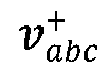
- the steady-state component phasors V 1 , V 2 are contained in the first, i.e. positive-sequence, time-domain symmetrical sequence component v abc + and so it contains all the necessary information to extract the symmetrical components.
- a second step (b) of the preferred method of the invention involves equating the first time-domain symmetrical sequence component, i.e. the positive sequence component v abc + , to a summation of first and second polar quantities, with the first polar quantity having a first radius value and a first phase angle value and the second polar quantity having a second radius value and a second phase angle value.
- positive time-domain symmetrical sequence component v abc + is formed of a summation of two circumferences, one rotating anticlockwise, i.e. in a positive direction, and one rotating clockwise, i.e. in a negative, direction.
- Such circumferences can be represented in a complex plane as polar quantities.
- the circumference rotating in the positive, anticlockwise direction can be represented as a positive phase sequence circumference C p having a radius value r p and a sampled positive phase sequence phase angle value ⁇ p (k)
- the circumference rotating in the negative, clockwise direction can be represented as a negative phase sequence circumference C n having a radius value r n and a sampled negative phase sequence phase angle value ⁇ n (k), as shown in Figure 2 .
- an instantaneous complex quantity z ( k ) at a k -th sampling instant is a composition of a positive phase sequence complex quantity z p (k) and a negative phase sequence complex quantity z n (k).
- the trajectory of samples z(k) describe an ellipse C of radius r(k) and phase angle ⁇ (k).
- the first, positive time-domain symmetrical sequence component v abc + is equated to a summation of a first polar quantity having a first radius value r p and a first phase angle value ⁇ p and a second polar quantity having a second radius value r n and a second phase angle value ⁇ n .
- a further step, step (c), of the preferred method of the invention involves calculating the actual first and second radius and phase angle values r p , r n , ⁇ p , ⁇ n .
- the above-identified equality becomes true when the respective differences, i.e. errors, are equal to zero.
- an estimator module may be used to control the steady-state difference between each estimated value r ⁇ p , ⁇ p , r ⁇ n , ⁇ n and its corresponding actual value r p , ⁇ p , r n , ⁇ n towards zero.
- estimator modules examples include MIMO (multiple input, multiple output) and SISO (single input, single output) modules, but an especially preferred type of estimator module is a proportional integral controller 18 with an initial condition input.
- each proportional integral controller 18 acts on corresponding initial phase values, i.e. DC values, instead of instantaneous phase values, i.e. AC values, and so an independently generated AC frequency estimate ⁇ is fed into an integrator and limited to 2 ⁇ using a modulus function to generate the quantity ⁇ ⁇ t ⁇ 0,2 ⁇
- step (c) of calculating actual first and second radius and phase angle values r p , ⁇ p , r n , ⁇ n also includes determining an optimal initial estimated value r p0 , ⁇ p0 , r n0 , ⁇ n0 for each of the estimated first and second radius and phase angle values r ⁇ p , ⁇ p , r ⁇ n , ⁇ n .
- the proportional integral controller 18 further includes a reset input.
- the magnitudes and phases obtained from the above are used as the optimal initial estimated value r p0 , ⁇ p0 , r n0 , ⁇ n0 for each of the estimated first and second radius and phase angle values r ⁇ p , ⁇ p , r ⁇ n , ⁇ n .
Landscapes
- Engineering & Computer Science (AREA)
- Power Engineering (AREA)
- Measuring Phase Differences (AREA)
Description
- This invention relates to a method of determining actual first and second radius and phase angle values of a first time-domain symmetrical sequence component of an AC voltage in a multi-phase AC network, and to a controller for a power converter operable within such a multi-phase AC network.
- In HVDC power transmission networks AC power is typically converted to DC power for transmission via overhead lines, under-sea cables and/or underground cables. This conversion removes the need to compensate for the AC capacitive load effects imposed by the power transmission medium, i.e. the transmission line or cable, and reduces the cost per kilometre of the lines and/or cables, and thus becomes cost-effective when power needs to be transmitted over a long distance. DC power may also be transmitted directly from offshore wind parks to onshore AC power transmission networks
- The conversion between DC power and AC power is utilised where it is necessary to interconnect DC and AC networks. In any such power transmission network, converters (i.e. power converters) are required at each interface between AC and DC power to affect the required conversion from AC to DC or from DC to AC.
- One type of power converter is a voltage source converter, although other types of power converter are also possible.
-
WO 2018/122391 A1 relates to a hardware-synchronised integrator for grid monitoring that eliminates the offset in the determination of the grid frequency as well as an invertor which includes the hardware-synchronised integrator. - With the advent of renewable energy systems such as offshore wind generation, the role of robust AC frequency and phase angle displacement estimation have become fundamental features in safely controlling the AC network voltage and power, as well as ensuring the stability of the overall power system of which the AC network is a part. In addition, radius and phase angle values of a symmetrical sequence component in the time-domain, can similarly be used to control the AC network voltage and power, and to help ensure overall power system stability.
- According to a first aspect of the invention there is provided a method of determining actual first and second radius and phase angle values of a first time-domain symmetrical sequence component of an AC voltage in a multi-phase AC network, the method comprising the steps of:
- (a) expressing a measured AC voltage in the AC network as at least a first time-domain symmetrical sequence component;
- (b) equating the first time-domain symmetrical sequence component to a summation of first and second polar quantities, the first polar quantity having a first radius value and a first phase angle value and the second polar quantity having a second radius value and a second phase angle value; and
- (c) calculating actual first radius and phase angle values by iteratively subtracting estimated second radius and phase angle values from the first time-domain symmetrical sequence component and calculating actual second radius and phase angle values by iteratively subtracting estimate first radius and phase angle values from the first time-domain symmetrical sequence component, both while driving the difference between the estimated and actual values to zero.
- Determining actual first and second radius and phase angle values of a first time-domain symmetrical sequence component is beneficial since it can be used to apply a voltage to a point of common coupling in an AC network to either first or second, i.e. positive or negative, time-domain symmetrical sequence components, or both, or to control the power, current and/or voltage of those components.
- Meanwhile, equating the first time-domain symmetrical sequence component to a summation of first and second polar quantities, of the type set out above, desirably sets up an equation with a unique solution and thereby permits the subsequent iterative process to calculate actual first and second radius and phase angle values from initial estimated first and second radius and phase angle values.
- Moreover, such an iterative process is relatively speedy since it avoids the additional need to transform the at least first time-domain symmetrical sequence component into further components within a synchronous rotating frame, i.e. a so-called dq-frame, which carries with it a significant transformational processing overhead and thereby computational delay, as well as the need for a considerable degree of filtering. Also, since actual measured values are continuously used to express the at least first time-domain symmetrical sequence component and actual and estimated first and second values are similarly continuously calculated, the iterative process of the invention is not slowed down by the need to wait for discrete sampling periods.
- Consequently the method of determining second radius and phase angle values according to the invention avoids the instabilities associated with the resolution of one or more time-domain symmetrical components in existing methods of estimation, and therefore improves the stability and power quality of the corresponding AC network.
- Preferably step (c) of calculating actual first and second radius and phase angle values includes using an estimator module to control the steady-state difference between each estimated value and its corresponding actual value towards zero.
- The use of an estimator module advantageously drives the difference between each estimated and actual value to zero very quickly with a low computational overhead.
- The estimator module may be or include a proportional integral controller with an initial condition input.
- Such a proportional integral controller provides the desired quick and low overhead processing, while the inclusion of an initial condition input permits the ready provision of an initial estimated value to the controller at which to begin the required processing.
- In a preferred embodiment of the invention step (c) of calculating actual first and second radius and phase angle values includes determining an optimal initial estimated value for at least one of the estimated first and second radius and phase angle values.
- Determining one or more optimal initial estimated values has the benefit of speeding up even further the calculation of the corresponding actual first or second value, since fewer iterative steps are needed for the difference between the at least one optimal initial estimated value and the corresponding actual value to reach zero.
- Preferably determining an optimal initial estimated value for at least one of the estimated first and second radius and phase angle values includes determining maximum and minimum values of the first time-domain symmetrical sequence component.
- Determining maximum and minimum values of the first time-domain symmetrical sequence component, effectively by establishing maximum and minimum values of the summed first and second polar quantities, and utilising the maximum and minimum values to determine one or more optimal initial estimated values, desirably means that the subsequent closed-loop estimation achieved by driving the difference between estimated and actual values to zero only has to compensate for small differences between the estimated and actual values, i.e. only has to compensate for small errors in the or each initial estimated value.
- According to a second aspect of the invention there is provided a controller for a power converter operable within a multi-phase AC network, the controller being programmed to determine actual first and second radius and phase angle values of a first time-domain symmetrical component of an AC voltage in the AC network by:
- (a) expressing a measured AC voltage in the AC network as at least a first time-domain symmetrical sequence component;
- (b) equating the first time-domain symmetrical sequence component to a summation of first and second polar quantities, the first polar quantity having a first radius value and a first phase angle value and the second polar quantity having a second radius value and a second phase angle value; and
- (c) calculating actual first radius and phase angle values by iteratively subtracting estimated second radius and phase angle values from the first time-domain symmetrical sequence component and calculating actual second radius and phase angle values by iteratively subtracting estimate first radius and phase angle values from the first time-domain symmetrical sequence component, both while driving the difference between the estimated and actual values to zero.
- Optionally the controller is further programmed to modify the AC voltage provided by the power converter using one or both of the calculated actual first radius and phase angle values and the calculated actual second radius and phase angle values.
- The controller of the invention shares the benefits associated with the corresponding steps of the method of the invention.
- It will be appreciated that the use of the terms "first" and "second", and the like, in this patent specification is merely intended to help distinguish between similar features, and is not intended to indicate the relative importance of one feature over another feature, unless otherwise specified.
- Within the scope of this application it is expressly intended that the various aspects, embodiments, examples and alternatives set out in the preceding paragraphs, and the claims and/or the following description and drawings, and in particular the individual features thereof, may be taken independently or in any combination. That is, all embodiments and all features of any embodiment can be combined in any way and/or combination, unless such features are incompatible. The applicant reserves the right to change any originally filed claim or file any new claim accordingly, including the right to amend any originally filed claim to depend from and/or incorporate any feature of any other claim although not originally claimed in that manner.
- There now follows a brief description of preferred embodiments of the invention, by way of non-limiting example, with reference being made to the following figures in which:
-
Figure 1 shows a schematic view of a portion of an exemplary three-phase AC network; -
Figure 2 shows first time-domain symmetrical sequence components of an unbalanced AC voltage in the complex plane; and -
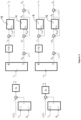
Figure 3 shows a schematic view of preferred actions to calculate actual first and second radius and phase angle values according to a step within an embodiment of the method of the invention. - In a method according to a first embodiment of the invention, determining actual first and second radius and phase angle values (rp, θp, rn, θn) of a first time-domain symmetrical component (

phase AC network 10 having a three-phase voltage source 12 and an equivalent series impedance 14 (as shown schematically inFigure 1 ), includes a first step (a) of expressing a measured AC voltage, e.g. a three phase AC voltage vabc measured at a point ofcommon coupling 16 in theAC network 10, as first and second time-domain symmetrical sequence components. - More particularly, the instantaneous three-phase voltage waveform vabc can be expressed in the following manner:

- Thereafter, using the identity


- Defining


- Without loss of generality, the zero-sequence time-domain symmetrical sequence
component 
- Meanwhile

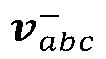
AC network 10, while V 1 is a positive component phasor and V 2 is a negative component phasor. - The steady-state component phasors V 1 , V 2 are contained in the first, i.e. positive-sequence, time-domain symmetrical sequence component

- Thereafter, a second step (b) of the preferred method of the invention involves equating the first time-domain symmetrical sequence component, i.e. the positive sequence component

- As indicated above the first, positive time-domain symmetrical sequence component


- Such circumferences can be represented in a complex plane as polar quantities.
- More particularly the circumference rotating in the positive, anticlockwise direction, can be represented as a positive phase sequence circumference Cp having a radius value rp and a sampled positive phase sequence phase angle value θp(k), and the circumference rotating in the negative, clockwise direction, can be represented as a negative phase sequence circumference Cn having a radius value rn and a sampled negative phase sequence phase angle value θn(k), as shown in
Figure 2 . - By definition of positive phase sequence and negative phase sequence phase, these obey the following equations:


- Moreover, an instantaneous complex quantity z(k) at a k-th sampling instant is a composition of a positive phase sequence complex quantity zp(k) and a negative phase sequence complex quantity zn(k). Additionally, the trajectory of samples z(k) describe an ellipse C of radius r(k) and phase angle θ(k).
- Defining


- In other words the first, positive time-domain symmetrical sequence component

- A further step, step (c), of the preferred method of the invention involves calculating the actual first and second radius and phase angle values rp, rn, θp, θn.
- As can be seen from equating the first, positive time-domain symmetrical sequence component


- Therefore, one way in which the actual first radius and phase angle values rp, θp, may be calculated is by iteratively subtracting estimated second radius and phase angle values r̂n , θ̂n from the first time-domain symmetrical sequence component


- Similarly, one way in which the actual second radius and phase angle values rn, θn, may be calculated is by iteratively subtracting estimated second radius and phase angle values r̂p , θ̂p from the first time-domain symmetrical sequence component


- Since there is a unique solution to the equation of the first, positive time-domain symmetrical sequence component


- More particularly, an estimator module may be used to control the steady-state difference between each estimated value r̂p , θ̂p, r̂n , θ̂n and its corresponding actual value rp, θp, rn, θn towards zero.
- Examples of possible estimator modules that are able to bring the difference, i.e. error, between the estimated and actual values down to zero include MIMO (multiple input, multiple output) and SISO (single input, single output) modules, but an especially preferred type of estimator module is a proportional
integral controller 18 with an initial condition input. - With some manipulation, each of


integral controllers 18 to control the steady-state difference, i.e. error, between each estimated value r̂p , θ̂p, r̂n , θ̂n and its corresponding actual value rp, θp, rn, θn towards zero, in the manner illustrated by a schematic algorithm inFigure 3 . - In this regard, to calculate each of the first and second phase angle values θp, θn each proportional
integral controller 18 acts on corresponding initial phase values, i.e. DC values, instead of instantaneous phase values, i.e. AC values, and so an independently generated AC frequency estimate ŵ is fed into an integrator and limited to 2π using a modulus function to generate the quantity
- When all steady-state differences, i.e. errors, between each estimated value r̂p , θ̂p, r̂n , θ̂n and its corresponding actual value rp, θp, rn, θn have converged to zero, the unique solution has been found and in turn each of the actual first and second radius and phase angle values rp, θp, rn, θn has been calculated.
- In addition to the foregoing, in the exemplary first embodiment of the method of the invention, step (c) of calculating actual first and second radius and phase angle values rp, θp, rn, θn also includes determining an optimal initial estimated value rp0, θp0, rn0, θn0 for each of the estimated first and second radius and phase angle values r̂p , θ̂p, r̂n , θ̂n . As a consequence, the proportional
integral controller 18 further includes a reset input. - One way in which such optimal initial estimated values rp0, θp0, rn0, θn0 can be determined is by determining maximum and minimum values of the first positive time-domain symmetrical sequence component

Figure 2 . - A Lyapunov function may be used to determine the maximum and minimum values of the first, positive time-domain symmetrical sequence component
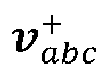


Figure 2 . - At these points, four measurements of the optimal initial estimated first and second phase angle values θp0, θn0 are readily available from a first set of equations that are valid at





- The sign of rotation is



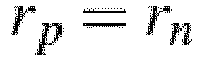
- At



- Moreover, by combining


factor 
- Accordingly, the magnitudes and phases obtained from the above are used as the optimal initial estimated value rp0, θp0, rn0, θn0 for each of the estimated first and second radius and phase angle values r̂p , θ̂p, r̂n , θ̂n .
Claims (7)
- A method of determining actual first and second radius and phase angle values (rp, θp, rn, θn ) of a first time-domain symmetrical component (
 (a) expressing a measured AC voltage (vabc) in the AC network (10) as at least a first time-domain symmetrical sequence component (
 (b) equating the first time-domain symmetrical sequence component (
 (c) calculating actual first radius and phase angle values (rp, θp ) by iteratively subtracting estimated second radius and phase angle values (r̂n , θ̂n ) from the first time-domain symmetrical sequence component (

- A method according to Claim 1 wherein step (c) of calculating actual first and second radius and phase angle values (rp, θp, rn, θn ) includes using an estimator module to control the steady-state difference between each estimated value (r̂p, θ̂p, r̂n , θ̂n ) and its corresponding actual value (rp, θp, rn, θn ) towards zero.
- A method according to Claim 2 wherein the estimator module is or includes a proportional integral controller (18) with an initial condition input.
- A method according to any proceeding claim wherein step (c) of calculating actual first and second radius and phase angle values (rp, θp, rn, θn ) includes determining an optimal initial estimated value (rp0, θp0, rn0, θn0 ) for at least one of the estimated first and second radius and phase angle values (r̂p, θ̂p, r̂n , θ̂n ).
- A method according to Claim 4 wherein determining an optimal initial estimated value (rp0, θp0, rn0, θn0 ) for at least one of the estimated first and second radius and phase angle values (r̂p, θ̂p, r̂n, θ̂n ) includes determining maximum and minimum values of the first time-domain symmetrical sequence component (

- A controller for a power converter operable within a multi-phase AC network (10), the controller being programmed to determine actual first and second radius and phase angle values (rp, θp, rn, θn ) of a first time-domain symmetrical component
 (a) expressing a measured AC voltage (vabc ) in the AC network (10) as at least a first time-domain symmetrical sequence component (
 (b) equating the first time-domain symmetrical sequence component (
 (c) calculating actual first radius and phase angle values (rp, θp ) by iteratively subtracting estimated second radius and phase angle values (r̂n , θ̂n ) from the first time-domain symmetrical sequence component (

- A controller according to Claim 6 further programmed to modify the AC voltage provided by the power converter using one or both of the calculated actual first radius and phase angle values (rp, θp ) and the calculated actual second radius and phase angle values (rn, θn ).
Priority Applications (1)
| Application Number | Priority Date | Filing Date | Title |
|---|---|---|---|
| EP21275088.9A EP4109699B1 (en) | 2021-06-25 | 2021-06-25 | Improvements in or relating to stability and power control in multiphase ac networks |
Applications Claiming Priority (1)
| Application Number | Priority Date | Filing Date | Title |
|---|---|---|---|
| EP21275088.9A EP4109699B1 (en) | 2021-06-25 | 2021-06-25 | Improvements in or relating to stability and power control in multiphase ac networks |
Publications (2)
| Publication Number | Publication Date |
|---|---|
| EP4109699A1 EP4109699A1 (en) | 2022-12-28 |
| EP4109699B1 true EP4109699B1 (en) | 2024-07-24 |
Family
ID=76708157
Family Applications (1)
| Application Number | Title | Priority Date | Filing Date |
|---|---|---|---|
| EP21275088.9A Active EP4109699B1 (en) | 2021-06-25 | 2021-06-25 | Improvements in or relating to stability and power control in multiphase ac networks |
Country Status (1)
| Country | Link |
|---|---|
| EP (1) | EP4109699B1 (en) |
Family Cites Families (4)
| Publication number | Priority date | Publication date | Assignee | Title |
|---|---|---|---|---|
| DE102009031017B4 (en) * | 2009-06-29 | 2018-06-21 | Wobben Properties Gmbh | Method and device for monitoring a three-phase alternating voltage network and wind energy plant |
| EP2978122A1 (en) * | 2014-07-22 | 2016-01-27 | ABB Technology AG | Model predictive control of a modular multilevel converter |
| DE102015112155A1 (en) * | 2015-07-24 | 2017-01-26 | Wobben Properties Gmbh | Method and device for detecting an electrical voltage in a supply network |
| WO2018122391A1 (en) * | 2016-12-31 | 2018-07-05 | Vito Nv | Precise real-time advanced grid monitoring |
-
2021
- 2021-06-25 EP EP21275088.9A patent/EP4109699B1/en active Active
Also Published As
| Publication number | Publication date |
|---|---|
| EP4109699A1 (en) | 2022-12-28 |
Similar Documents
| Publication | Publication Date | Title |
|---|---|---|
| EP2324567B1 (en) | Direct power control with component separation | |
| JP6265826B2 (en) | Power converter connected to single-phase system | |
| EP2731223A1 (en) | Power conversion apparatus directed to combined-cycle power generation system | |
| CN107623479B (en) | Fault-tolerant fault control method and device for motor | |
| EP2456064B1 (en) | Control method for doubly-fed electric generator | |
| CN104782013A (en) | Wind power plant and method for supplying electrical energy | |
| EP2963804B1 (en) | Inverter device, construction machine, and motor control method | |
| US9160267B2 (en) | AC motor control apparatus | |
| Moazen et al. | Model-based predictive direct power control of brushless doubly fed reluctance generator for wind power applications | |
| DE102013202741A1 (en) | AC MOTOR CONTROL DEVICE | |
| Arashloo et al. | A robust predictive current controller for healthy and open-circuit faulty conditions of five-phase BLDC drives applicable for wind generators and electric vehicles | |
| US6518718B2 (en) | Speed electromotive force phase control system adapted to low speed | |
| Phan et al. | Analysis and compensation of voltage unbalance of a DFIG using predictive rotor current control | |
| Boukettaya et al. | Improving grid connected hybrid generation system supervision with sensorless control | |
| CN116885781A (en) | A grid-connected converter operating mode switching method and system | |
| CN112290858A (en) | A fault-tolerant control method for phase-to-phase short circuit of five-phase permanent magnet synchronous motor based on multi-vector model prediction | |
| EP4415245A1 (en) | Power conversion device and control device | |
| EP4109699B1 (en) | Improvements in or relating to stability and power control in multiphase ac networks | |
| Jihene et al. | Speed-sensorless DFIG wind drive based on DTC using sliding mode rotor flux observer | |
| DE102013202770A1 (en) | CONTROL DEVICE FOR AN ELECTRICITY MOTOR | |
| Chioncel et al. | Control of wind power systems imposing the current in the intermediate circuit of the converter at variable wind speed | |
| Akhbari et al. | Direct current grid‐based doubly‐fed induction generator wind turbines: Real‐time control and stability analysis | |
| Rani et al. | A versatile method for computation of power pulsations in DFIG under grid imperfections | |
| CN110474350A (en) | A control method, device and system for a virtual synchronous generator | |
| US20160336750A1 (en) | A controller for a voltage source converter |
Legal Events
| Date | Code | Title | Description |
|---|---|---|---|
| PUAI | Public reference made under article 153(3) epc to a published international application that has entered the european phase |
Free format text: ORIGINAL CODE: 0009012 |
|
| STAA | Information on the status of an ep patent application or granted ep patent |
Free format text: STATUS: THE APPLICATION HAS BEEN PUBLISHED |
|
| AK | Designated contracting states |
Kind code of ref document: A1 Designated state(s): AL AT BE BG CH CY CZ DE DK EE ES FI FR GB GR HR HU IE IS IT LI LT LU LV MC MK MT NL NO PL PT RO RS SE SI SK SM TR |
|
| STAA | Information on the status of an ep patent application or granted ep patent |
Free format text: STATUS: REQUEST FOR EXAMINATION WAS MADE |
|
| P01 | Opt-out of the competence of the unified patent court (upc) registered |
Effective date: 20230522 |
|
| 17P | Request for examination filed |
Effective date: 20230614 |
|
| RBV | Designated contracting states (corrected) |
Designated state(s): AL AT BE BG CH CY CZ DE DK EE ES FI FR GB GR HR HU IE IS IT LI LT LU LV MC MK MT NL NO PL PT RO RS SE SI SK SM TR |
|
| GRAP | Despatch of communication of intention to grant a patent |
Free format text: ORIGINAL CODE: EPIDOSNIGR1 |
|
| STAA | Information on the status of an ep patent application or granted ep patent |
Free format text: STATUS: GRANT OF PATENT IS INTENDED |
|
| RIC1 | Information provided on ipc code assigned before grant |
Ipc: H02J 3/24 20060101ALI20240202BHEP Ipc: H02J 3/00 20060101AFI20240202BHEP |
|
| INTG | Intention to grant announced |
Effective date: 20240220 |
|
| GRAS | Grant fee paid |
Free format text: ORIGINAL CODE: EPIDOSNIGR3 |
|
| GRAA | (expected) grant |
Free format text: ORIGINAL CODE: 0009210 |
|
| STAA | Information on the status of an ep patent application or granted ep patent |
Free format text: STATUS: THE PATENT HAS BEEN GRANTED |
|
| AK | Designated contracting states |
Kind code of ref document: B1 Designated state(s): AL AT BE BG CH CY CZ DE DK EE ES FI FR GB GR HR HU IE IS IT LI LT LU LV MC MK MT NL NO PL PT RO RS SE SI SK SM TR |
|
| REG | Reference to a national code |
Ref country code: GB Ref legal event code: FG4D |
|
| REG | Reference to a national code |
Ref country code: CH Ref legal event code: EP |
|
| REG | Reference to a national code |
Ref country code: DE Ref legal event code: R096 Ref document number: 602021016104 Country of ref document: DE |
|
| REG | Reference to a national code |
Ref country code: IE Ref legal event code: FG4D |
|
| REG | Reference to a national code |
Ref country code: SE Ref legal event code: TRGR |
|
| REG | Reference to a national code |
Ref country code: LT Ref legal event code: MG9D |
|
| REG | Reference to a national code |
Ref country code: NL Ref legal event code: MP Effective date: 20240724 |
|
| PG25 | Lapsed in a contracting state [announced via postgrant information from national office to epo] |
Ref country code: PT Free format text: LAPSE BECAUSE OF FAILURE TO SUBMIT A TRANSLATION OF THE DESCRIPTION OR TO PAY THE FEE WITHIN THE PRESCRIBED TIME-LIMIT Effective date: 20241125 |
|
| REG | Reference to a national code |
Ref country code: AT Ref legal event code: MK05 Ref document number: 1707210 Country of ref document: AT Kind code of ref document: T Effective date: 20240724 |
|
| PG25 | Lapsed in a contracting state [announced via postgrant information from national office to epo] |
Ref country code: NL Free format text: LAPSE BECAUSE OF FAILURE TO SUBMIT A TRANSLATION OF THE DESCRIPTION OR TO PAY THE FEE WITHIN THE PRESCRIBED TIME-LIMIT Effective date: 20240724 |
|
| PG25 | Lapsed in a contracting state [announced via postgrant information from national office to epo] |
Ref country code: PT Free format text: LAPSE BECAUSE OF FAILURE TO SUBMIT A TRANSLATION OF THE DESCRIPTION OR TO PAY THE FEE WITHIN THE PRESCRIBED TIME-LIMIT Effective date: 20241125 Ref country code: NL Free format text: LAPSE BECAUSE OF FAILURE TO SUBMIT A TRANSLATION OF THE DESCRIPTION OR TO PAY THE FEE WITHIN THE PRESCRIBED TIME-LIMIT Effective date: 20240724 |
|
| PG25 | Lapsed in a contracting state [announced via postgrant information from national office to epo] |
Ref country code: NO Free format text: LAPSE BECAUSE OF FAILURE TO SUBMIT A TRANSLATION OF THE DESCRIPTION OR TO PAY THE FEE WITHIN THE PRESCRIBED TIME-LIMIT Effective date: 20241024 |
|
| PG25 | Lapsed in a contracting state [announced via postgrant information from national office to epo] |
Ref country code: FI Free format text: LAPSE BECAUSE OF FAILURE TO SUBMIT A TRANSLATION OF THE DESCRIPTION OR TO PAY THE FEE WITHIN THE PRESCRIBED TIME-LIMIT Effective date: 20240724 Ref country code: GR Free format text: LAPSE BECAUSE OF FAILURE TO SUBMIT A TRANSLATION OF THE DESCRIPTION OR TO PAY THE FEE WITHIN THE PRESCRIBED TIME-LIMIT Effective date: 20241025 Ref country code: PL Free format text: LAPSE BECAUSE OF FAILURE TO SUBMIT A TRANSLATION OF THE DESCRIPTION OR TO PAY THE FEE WITHIN THE PRESCRIBED TIME-LIMIT Effective date: 20240724 |
|
| PG25 | Lapsed in a contracting state [announced via postgrant information from national office to epo] |
Ref country code: BG Free format text: LAPSE BECAUSE OF FAILURE TO SUBMIT A TRANSLATION OF THE DESCRIPTION OR TO PAY THE FEE WITHIN THE PRESCRIBED TIME-LIMIT Effective date: 20240724 |
|
| PG25 | Lapsed in a contracting state [announced via postgrant information from national office to epo] |
Ref country code: LV Free format text: LAPSE BECAUSE OF FAILURE TO SUBMIT A TRANSLATION OF THE DESCRIPTION OR TO PAY THE FEE WITHIN THE PRESCRIBED TIME-LIMIT Effective date: 20240724 |
|
| PG25 | Lapsed in a contracting state [announced via postgrant information from national office to epo] |
Ref country code: IS Free format text: LAPSE BECAUSE OF FAILURE TO SUBMIT A TRANSLATION OF THE DESCRIPTION OR TO PAY THE FEE WITHIN THE PRESCRIBED TIME-LIMIT Effective date: 20241124 Ref country code: AT Free format text: LAPSE BECAUSE OF FAILURE TO SUBMIT A TRANSLATION OF THE DESCRIPTION OR TO PAY THE FEE WITHIN THE PRESCRIBED TIME-LIMIT Effective date: 20240724 |
|
| PG25 | Lapsed in a contracting state [announced via postgrant information from national office to epo] |
Ref country code: HR Free format text: LAPSE BECAUSE OF FAILURE TO SUBMIT A TRANSLATION OF THE DESCRIPTION OR TO PAY THE FEE WITHIN THE PRESCRIBED TIME-LIMIT Effective date: 20240724 |
|
| PG25 | Lapsed in a contracting state [announced via postgrant information from national office to epo] |
Ref country code: ES Free format text: LAPSE BECAUSE OF FAILURE TO SUBMIT A TRANSLATION OF THE DESCRIPTION OR TO PAY THE FEE WITHIN THE PRESCRIBED TIME-LIMIT Effective date: 20240724 Ref country code: RS Free format text: LAPSE BECAUSE OF FAILURE TO SUBMIT A TRANSLATION OF THE DESCRIPTION OR TO PAY THE FEE WITHIN THE PRESCRIBED TIME-LIMIT Effective date: 20241024 |
|
| PG25 | Lapsed in a contracting state [announced via postgrant information from national office to epo] |
Ref country code: RS Free format text: LAPSE BECAUSE OF FAILURE TO SUBMIT A TRANSLATION OF THE DESCRIPTION OR TO PAY THE FEE WITHIN THE PRESCRIBED TIME-LIMIT Effective date: 20241024 Ref country code: PL Free format text: LAPSE BECAUSE OF FAILURE TO SUBMIT A TRANSLATION OF THE DESCRIPTION OR TO PAY THE FEE WITHIN THE PRESCRIBED TIME-LIMIT Effective date: 20240724 Ref country code: NO Free format text: LAPSE BECAUSE OF FAILURE TO SUBMIT A TRANSLATION OF THE DESCRIPTION OR TO PAY THE FEE WITHIN THE PRESCRIBED TIME-LIMIT Effective date: 20241024 Ref country code: LV Free format text: LAPSE BECAUSE OF FAILURE TO SUBMIT A TRANSLATION OF THE DESCRIPTION OR TO PAY THE FEE WITHIN THE PRESCRIBED TIME-LIMIT Effective date: 20240724 Ref country code: IS Free format text: LAPSE BECAUSE OF FAILURE TO SUBMIT A TRANSLATION OF THE DESCRIPTION OR TO PAY THE FEE WITHIN THE PRESCRIBED TIME-LIMIT Effective date: 20241124 Ref country code: HR Free format text: LAPSE BECAUSE OF FAILURE TO SUBMIT A TRANSLATION OF THE DESCRIPTION OR TO PAY THE FEE WITHIN THE PRESCRIBED TIME-LIMIT Effective date: 20240724 Ref country code: GR Free format text: LAPSE BECAUSE OF FAILURE TO SUBMIT A TRANSLATION OF THE DESCRIPTION OR TO PAY THE FEE WITHIN THE PRESCRIBED TIME-LIMIT Effective date: 20241025 Ref country code: FI Free format text: LAPSE BECAUSE OF FAILURE TO SUBMIT A TRANSLATION OF THE DESCRIPTION OR TO PAY THE FEE WITHIN THE PRESCRIBED TIME-LIMIT Effective date: 20240724 Ref country code: ES Free format text: LAPSE BECAUSE OF FAILURE TO SUBMIT A TRANSLATION OF THE DESCRIPTION OR TO PAY THE FEE WITHIN THE PRESCRIBED TIME-LIMIT Effective date: 20240724 Ref country code: BG Free format text: LAPSE BECAUSE OF FAILURE TO SUBMIT A TRANSLATION OF THE DESCRIPTION OR TO PAY THE FEE WITHIN THE PRESCRIBED TIME-LIMIT Effective date: 20240724 Ref country code: AT Free format text: LAPSE BECAUSE OF FAILURE TO SUBMIT A TRANSLATION OF THE DESCRIPTION OR TO PAY THE FEE WITHIN THE PRESCRIBED TIME-LIMIT Effective date: 20240724 |
|
| PG25 | Lapsed in a contracting state [announced via postgrant information from national office to epo] |
Ref country code: RO Free format text: LAPSE BECAUSE OF FAILURE TO SUBMIT A TRANSLATION OF THE DESCRIPTION OR TO PAY THE FEE WITHIN THE PRESCRIBED TIME-LIMIT Effective date: 20240724 Ref country code: DK Free format text: LAPSE BECAUSE OF FAILURE TO SUBMIT A TRANSLATION OF THE DESCRIPTION OR TO PAY THE FEE WITHIN THE PRESCRIBED TIME-LIMIT Effective date: 20240724 Ref country code: SM Free format text: LAPSE BECAUSE OF FAILURE TO SUBMIT A TRANSLATION OF THE DESCRIPTION OR TO PAY THE FEE WITHIN THE PRESCRIBED TIME-LIMIT Effective date: 20240724 |
|
| PG25 | Lapsed in a contracting state [announced via postgrant information from national office to epo] |
Ref country code: EE Free format text: LAPSE BECAUSE OF FAILURE TO SUBMIT A TRANSLATION OF THE DESCRIPTION OR TO PAY THE FEE WITHIN THE PRESCRIBED TIME-LIMIT Effective date: 20240724 |
|
| PG25 | Lapsed in a contracting state [announced via postgrant information from national office to epo] |
Ref country code: CZ Free format text: LAPSE BECAUSE OF FAILURE TO SUBMIT A TRANSLATION OF THE DESCRIPTION OR TO PAY THE FEE WITHIN THE PRESCRIBED TIME-LIMIT Effective date: 20240724 |
|
| REG | Reference to a national code |
Ref country code: DE Ref legal event code: R097 Ref document number: 602021016104 Country of ref document: DE |
|
| PG25 | Lapsed in a contracting state [announced via postgrant information from national office to epo] |
Ref country code: IT Free format text: LAPSE BECAUSE OF FAILURE TO SUBMIT A TRANSLATION OF THE DESCRIPTION OR TO PAY THE FEE WITHIN THE PRESCRIBED TIME-LIMIT Effective date: 20240724 Ref country code: SK Free format text: LAPSE BECAUSE OF FAILURE TO SUBMIT A TRANSLATION OF THE DESCRIPTION OR TO PAY THE FEE WITHIN THE PRESCRIBED TIME-LIMIT Effective date: 20240724 |
|
| PLBE | No opposition filed within time limit |
Free format text: ORIGINAL CODE: 0009261 |
|
| STAA | Information on the status of an ep patent application or granted ep patent |
Free format text: STATUS: NO OPPOSITION FILED WITHIN TIME LIMIT |
|
| 26N | No opposition filed |
Effective date: 20250425 |
|
| PGFP | Annual fee paid to national office [announced via postgrant information from national office to epo] |
Ref country code: DE Payment date: 20250520 Year of fee payment: 5 |
|
| PGFP | Annual fee paid to national office [announced via postgrant information from national office to epo] |
Ref country code: GB Payment date: 20250520 Year of fee payment: 5 |
|
| PGFP | Annual fee paid to national office [announced via postgrant information from national office to epo] |
Ref country code: SE Payment date: 20250520 Year of fee payment: 5 |
|
| REG | Reference to a national code |
Ref country code: CH Ref legal event code: H13 Free format text: ST27 STATUS EVENT CODE: U-0-0-H10-H13 (AS PROVIDED BY THE NATIONAL OFFICE) Effective date: 20260127 |
|
| PG25 | Lapsed in a contracting state [announced via postgrant information from national office to epo] |
Ref country code: MC Free format text: LAPSE BECAUSE OF FAILURE TO SUBMIT A TRANSLATION OF THE DESCRIPTION OR TO PAY THE FEE WITHIN THE PRESCRIBED TIME-LIMIT Effective date: 20240724 |
|
| PG25 | Lapsed in a contracting state [announced via postgrant information from national office to epo] |
Ref country code: LU Free format text: LAPSE BECAUSE OF NON-PAYMENT OF DUE FEES Effective date: 20250625 |
|
| REG | Reference to a national code |
Ref country code: BE Ref legal event code: MM Effective date: 20250630 |
|
| PG25 | Lapsed in a contracting state [announced via postgrant information from national office to epo] |
Ref country code: IE Free format text: LAPSE BECAUSE OF NON-PAYMENT OF DUE FEES Effective date: 20250625 |
|
| PG25 | Lapsed in a contracting state [announced via postgrant information from national office to epo] |
Ref country code: BE Free format text: LAPSE BECAUSE OF NON-PAYMENT OF DUE FEES Effective date: 20250630 |
|
| PG25 | Lapsed in a contracting state [announced via postgrant information from national office to epo] |
Ref country code: FR Free format text: LAPSE BECAUSE OF NON-PAYMENT OF DUE FEES Effective date: 20250630 |
|
| PG25 | Lapsed in a contracting state [announced via postgrant information from national office to epo] |
Ref country code: CH Free format text: LAPSE BECAUSE OF NON-PAYMENT OF DUE FEES Effective date: 20250630 |