EP4103189B1 - Usp7-inhibitoren zur verwendung in der behandlung von krebs - Google Patents
Usp7-inhibitoren zur verwendung in der behandlung von krebs Download PDFInfo
- Publication number
- EP4103189B1 EP4103189B1 EP21706379.1A EP21706379A EP4103189B1 EP 4103189 B1 EP4103189 B1 EP 4103189B1 EP 21706379 A EP21706379 A EP 21706379A EP 4103189 B1 EP4103189 B1 EP 4103189B1
- Authority
- EP
- European Patent Office
- Prior art keywords
- cancer
- usp7
- optionally substituted
- inhibitor
- methyl
- Prior art date
- Legal status (The legal status is an assumption and is not a legal conclusion. Google has not performed a legal analysis and makes no representation as to the accuracy of the status listed.)
- Active
Links
Images


















Classifications
-
- A—HUMAN NECESSITIES
- A61—MEDICAL OR VETERINARY SCIENCE; HYGIENE
- A61K—PREPARATIONS FOR MEDICAL, DENTAL OR TOILETRY PURPOSES
- A61K31/00—Medicinal preparations containing organic active ingredients
- A61K31/33—Heterocyclic compounds
- A61K31/395—Heterocyclic compounds having nitrogen as a ring hetero atom, e.g. guanethidine or rifamycins
- A61K31/495—Heterocyclic compounds having nitrogen as a ring hetero atom, e.g. guanethidine or rifamycins having six-membered rings with two or more nitrogen atoms as the only ring heteroatoms, e.g. piperazine or tetrazines
- A61K31/505—Pyrimidines; Hydrogenated pyrimidines, e.g. trimethoprim
- A61K31/519—Pyrimidines; Hydrogenated pyrimidines, e.g. trimethoprim ortho- or peri-condensed with heterocyclic rings
- A61K31/52—Purines, e.g. adenine
- A61K31/522—Purines, e.g. adenine having oxo groups directly attached to the heterocyclic ring, e.g. hypoxanthine, guanine, acyclovir
-
- A—HUMAN NECESSITIES
- A61—MEDICAL OR VETERINARY SCIENCE; HYGIENE
- A61K—PREPARATIONS FOR MEDICAL, DENTAL OR TOILETRY PURPOSES
- A61K31/00—Medicinal preparations containing organic active ingredients
- A61K31/33—Heterocyclic compounds
- A61K31/335—Heterocyclic compounds having oxygen as the only ring hetero atom, e.g. fungichromin
- A61K31/34—Heterocyclic compounds having oxygen as the only ring hetero atom, e.g. fungichromin having five-membered rings with one oxygen as the only ring hetero atom, e.g. isosorbide
- A61K31/343—Heterocyclic compounds having oxygen as the only ring hetero atom, e.g. fungichromin having five-membered rings with one oxygen as the only ring hetero atom, e.g. isosorbide condensed with a carbocyclic ring, e.g. coumaran, bufuralol, befunolol, clobenfurol, amiodarone
-
- A—HUMAN NECESSITIES
- A61—MEDICAL OR VETERINARY SCIENCE; HYGIENE
- A61K—PREPARATIONS FOR MEDICAL, DENTAL OR TOILETRY PURPOSES
- A61K31/00—Medicinal preparations containing organic active ingredients
- A61K31/33—Heterocyclic compounds
- A61K31/335—Heterocyclic compounds having oxygen as the only ring hetero atom, e.g. fungichromin
- A61K31/357—Heterocyclic compounds having oxygen as the only ring hetero atom, e.g. fungichromin having two or more oxygen atoms in the same ring, e.g. crown ethers, guanadrel
-
- A—HUMAN NECESSITIES
- A61—MEDICAL OR VETERINARY SCIENCE; HYGIENE
- A61K—PREPARATIONS FOR MEDICAL, DENTAL OR TOILETRY PURPOSES
- A61K31/00—Medicinal preparations containing organic active ingredients
- A61K31/33—Heterocyclic compounds
- A61K31/395—Heterocyclic compounds having nitrogen as a ring hetero atom, e.g. guanethidine or rifamycins
- A61K31/40—Heterocyclic compounds having nitrogen as a ring hetero atom, e.g. guanethidine or rifamycins having five-membered rings with one nitrogen as the only ring hetero atom, e.g. sulpiride, succinimide, tolmetin, buflomedil
- A61K31/4025—Heterocyclic compounds having nitrogen as a ring hetero atom, e.g. guanethidine or rifamycins having five-membered rings with one nitrogen as the only ring hetero atom, e.g. sulpiride, succinimide, tolmetin, buflomedil not condensed and containing further heterocyclic rings, e.g. cromakalim
-
- A—HUMAN NECESSITIES
- A61—MEDICAL OR VETERINARY SCIENCE; HYGIENE
- A61K—PREPARATIONS FOR MEDICAL, DENTAL OR TOILETRY PURPOSES
- A61K31/00—Medicinal preparations containing organic active ingredients
- A61K31/33—Heterocyclic compounds
- A61K31/395—Heterocyclic compounds having nitrogen as a ring hetero atom, e.g. guanethidine or rifamycins
- A61K31/435—Heterocyclic compounds having nitrogen as a ring hetero atom, e.g. guanethidine or rifamycins having six-membered rings with one nitrogen as the only ring hetero atom
- A61K31/4353—Heterocyclic compounds having nitrogen as a ring hetero atom, e.g. guanethidine or rifamycins having six-membered rings with one nitrogen as the only ring hetero atom ortho- or peri-condensed with heterocyclic ring systems
- A61K31/436—Heterocyclic compounds having nitrogen as a ring hetero atom, e.g. guanethidine or rifamycins having six-membered rings with one nitrogen as the only ring hetero atom ortho- or peri-condensed with heterocyclic ring systems the heterocyclic ring system containing a six-membered ring having oxygen as a ring hetero atom, e.g. rapamycin
-
- A—HUMAN NECESSITIES
- A61—MEDICAL OR VETERINARY SCIENCE; HYGIENE
- A61K—PREPARATIONS FOR MEDICAL, DENTAL OR TOILETRY PURPOSES
- A61K31/00—Medicinal preparations containing organic active ingredients
- A61K31/33—Heterocyclic compounds
- A61K31/395—Heterocyclic compounds having nitrogen as a ring hetero atom, e.g. guanethidine or rifamycins
- A61K31/435—Heterocyclic compounds having nitrogen as a ring hetero atom, e.g. guanethidine or rifamycins having six-membered rings with one nitrogen as the only ring hetero atom
- A61K31/4353—Heterocyclic compounds having nitrogen as a ring hetero atom, e.g. guanethidine or rifamycins having six-membered rings with one nitrogen as the only ring hetero atom ortho- or peri-condensed with heterocyclic ring systems
- A61K31/4365—Heterocyclic compounds having nitrogen as a ring hetero atom, e.g. guanethidine or rifamycins having six-membered rings with one nitrogen as the only ring hetero atom ortho- or peri-condensed with heterocyclic ring systems the heterocyclic ring system having sulfur as a ring hetero atom, e.g. ticlopidine
-
- A—HUMAN NECESSITIES
- A61—MEDICAL OR VETERINARY SCIENCE; HYGIENE
- A61K—PREPARATIONS FOR MEDICAL, DENTAL OR TOILETRY PURPOSES
- A61K31/00—Medicinal preparations containing organic active ingredients
- A61K31/33—Heterocyclic compounds
- A61K31/395—Heterocyclic compounds having nitrogen as a ring hetero atom, e.g. guanethidine or rifamycins
- A61K31/435—Heterocyclic compounds having nitrogen as a ring hetero atom, e.g. guanethidine or rifamycins having six-membered rings with one nitrogen as the only ring hetero atom
- A61K31/4353—Heterocyclic compounds having nitrogen as a ring hetero atom, e.g. guanethidine or rifamycins having six-membered rings with one nitrogen as the only ring hetero atom ortho- or peri-condensed with heterocyclic ring systems
- A61K31/4375—Heterocyclic compounds having nitrogen as a ring hetero atom, e.g. guanethidine or rifamycins having six-membered rings with one nitrogen as the only ring hetero atom ortho- or peri-condensed with heterocyclic ring systems the heterocyclic ring system containing a six-membered ring having nitrogen as a ring heteroatom, e.g. quinolizines, naphthyridines, berberine, vincamine
-
- A—HUMAN NECESSITIES
- A61—MEDICAL OR VETERINARY SCIENCE; HYGIENE
- A61K—PREPARATIONS FOR MEDICAL, DENTAL OR TOILETRY PURPOSES
- A61K31/00—Medicinal preparations containing organic active ingredients
- A61K31/33—Heterocyclic compounds
- A61K31/395—Heterocyclic compounds having nitrogen as a ring hetero atom, e.g. guanethidine or rifamycins
- A61K31/495—Heterocyclic compounds having nitrogen as a ring hetero atom, e.g. guanethidine or rifamycins having six-membered rings with two or more nitrogen atoms as the only ring heteroatoms, e.g. piperazine or tetrazines
- A61K31/4965—Non-condensed pyrazines
- A61K31/497—Non-condensed pyrazines containing further heterocyclic rings
-
- A—HUMAN NECESSITIES
- A61—MEDICAL OR VETERINARY SCIENCE; HYGIENE
- A61K—PREPARATIONS FOR MEDICAL, DENTAL OR TOILETRY PURPOSES
- A61K31/00—Medicinal preparations containing organic active ingredients
- A61K31/33—Heterocyclic compounds
- A61K31/395—Heterocyclic compounds having nitrogen as a ring hetero atom, e.g. guanethidine or rifamycins
- A61K31/495—Heterocyclic compounds having nitrogen as a ring hetero atom, e.g. guanethidine or rifamycins having six-membered rings with two or more nitrogen atoms as the only ring heteroatoms, e.g. piperazine or tetrazines
- A61K31/498—Pyrazines or piperazines ortho- and peri-condensed with carbocyclic ring systems, e.g. quinoxaline, phenazine
-
- A—HUMAN NECESSITIES
- A61—MEDICAL OR VETERINARY SCIENCE; HYGIENE
- A61K—PREPARATIONS FOR MEDICAL, DENTAL OR TOILETRY PURPOSES
- A61K31/00—Medicinal preparations containing organic active ingredients
- A61K31/33—Heterocyclic compounds
- A61K31/395—Heterocyclic compounds having nitrogen as a ring hetero atom, e.g. guanethidine or rifamycins
- A61K31/495—Heterocyclic compounds having nitrogen as a ring hetero atom, e.g. guanethidine or rifamycins having six-membered rings with two or more nitrogen atoms as the only ring heteroatoms, e.g. piperazine or tetrazines
- A61K31/505—Pyrimidines; Hydrogenated pyrimidines, e.g. trimethoprim
- A61K31/513—Pyrimidines; Hydrogenated pyrimidines, e.g. trimethoprim having oxo groups directly attached to the heterocyclic ring, e.g. cytosine
-
- A—HUMAN NECESSITIES
- A61—MEDICAL OR VETERINARY SCIENCE; HYGIENE
- A61K—PREPARATIONS FOR MEDICAL, DENTAL OR TOILETRY PURPOSES
- A61K31/00—Medicinal preparations containing organic active ingredients
- A61K31/33—Heterocyclic compounds
- A61K31/395—Heterocyclic compounds having nitrogen as a ring hetero atom, e.g. guanethidine or rifamycins
- A61K31/53—Heterocyclic compounds having nitrogen as a ring hetero atom, e.g. guanethidine or rifamycins having six-membered rings with three nitrogens as the only ring hetero atoms, e.g. chlorazanil, melamine
-
- A—HUMAN NECESSITIES
- A61—MEDICAL OR VETERINARY SCIENCE; HYGIENE
- A61K—PREPARATIONS FOR MEDICAL, DENTAL OR TOILETRY PURPOSES
- A61K31/00—Medicinal preparations containing organic active ingredients
- A61K31/33—Heterocyclic compounds
- A61K31/395—Heterocyclic compounds having nitrogen as a ring hetero atom, e.g. guanethidine or rifamycins
- A61K31/55—Heterocyclic compounds having nitrogen as a ring hetero atom, e.g. guanethidine or rifamycins having seven-membered rings, e.g. azelastine, pentylenetetrazole
- A61K31/553—Heterocyclic compounds having nitrogen as a ring hetero atom, e.g. guanethidine or rifamycins having seven-membered rings, e.g. azelastine, pentylenetetrazole having at least one nitrogen and one oxygen as ring hetero atoms, e.g. loxapine, staurosporine
-
- A—HUMAN NECESSITIES
- A61—MEDICAL OR VETERINARY SCIENCE; HYGIENE
- A61K—PREPARATIONS FOR MEDICAL, DENTAL OR TOILETRY PURPOSES
- A61K45/00—Medicinal preparations containing active ingredients not provided for in groups A61K31/00 - A61K41/00
- A61K45/06—Mixtures of active ingredients without chemical characterisation, e.g. antiphlogistics and cardiaca
-
- A—HUMAN NECESSITIES
- A61—MEDICAL OR VETERINARY SCIENCE; HYGIENE
- A61P—SPECIFIC THERAPEUTIC ACTIVITY OF CHEMICAL COMPOUNDS OR MEDICINAL PREPARATIONS
- A61P35/00—Antineoplastic agents
-
- A—HUMAN NECESSITIES
- A61—MEDICAL OR VETERINARY SCIENCE; HYGIENE
- A61P—SPECIFIC THERAPEUTIC ACTIVITY OF CHEMICAL COMPOUNDS OR MEDICINAL PREPARATIONS
- A61P35/00—Antineoplastic agents
- A61P35/04—Antineoplastic agents specific for metastasis
-
- A—HUMAN NECESSITIES
- A61—MEDICAL OR VETERINARY SCIENCE; HYGIENE
- A61K—PREPARATIONS FOR MEDICAL, DENTAL OR TOILETRY PURPOSES
- A61K39/00—Medicinal preparations containing antigens or antibodies
- A61K39/395—Antibodies; Immunoglobulins; Immune serum, e.g. antilymphocytic serum
-
- C—CHEMISTRY; METALLURGY
- C07—ORGANIC CHEMISTRY
- C07K—PEPTIDES
- C07K16/00—Immunoglobulins [IG], e.g. monoclonal or polyclonal antibodies
- C07K16/18—Immunoglobulins [IG], e.g. monoclonal or polyclonal antibodies against material from animals or humans
- C07K16/28—Immunoglobulins [IG], e.g. monoclonal or polyclonal antibodies against material from animals or humans against receptors, cell surface antigens or cell surface determinants
- C07K16/2803—Immunoglobulins [IG], e.g. monoclonal or polyclonal antibodies against material from animals or humans against receptors, cell surface antigens or cell surface determinants against the immunoglobulin superfamily
- C07K16/2818—Immunoglobulins [IG], e.g. monoclonal or polyclonal antibodies against material from animals or humans against receptors, cell surface antigens or cell surface determinants against the immunoglobulin superfamily against CD28 or CD152
-
- C—CHEMISTRY; METALLURGY
- C07—ORGANIC CHEMISTRY
- C07K—PEPTIDES
- C07K16/00—Immunoglobulins [IG], e.g. monoclonal or polyclonal antibodies
- C07K16/18—Immunoglobulins [IG], e.g. monoclonal or polyclonal antibodies against material from animals or humans
- C07K16/28—Immunoglobulins [IG], e.g. monoclonal or polyclonal antibodies against material from animals or humans against receptors, cell surface antigens or cell surface determinants
- C07K16/2803—Immunoglobulins [IG], e.g. monoclonal or polyclonal antibodies against material from animals or humans against receptors, cell surface antigens or cell surface determinants against the immunoglobulin superfamily
- C07K16/2827—Immunoglobulins [IG], e.g. monoclonal or polyclonal antibodies against material from animals or humans against receptors, cell surface antigens or cell surface determinants against the immunoglobulin superfamily against B7 molecules, e.g. CD80, CD86
Definitions
- the present invention relates to the treatment of cancer by inhibition of USP7 activity in fibroblasts.
- Treatment of cancer in accordance with the invention can be through, for example, inhibition of extra-cellular matrix remodelling in the tumour microenvironment, inhibition of VEGF, inhibition of angiogenesis or metastasis, modulation of the immune system, or a combination thereof.
- TEE tumour microenvironment
- USP7 has emerged as a potential therapeutic target due to its key role in regulation of oncogenic pathways and thus the potential to target USP7 in order to inhibit the cancer cell proliferation.
- references in the description to methods of treatment by therapy or surgery or in vivo diagnosis methods refer to the compounds, pharmaceutical compositions and medicaments of the present invention for use in those methods.
- USP7 plays a critical role in affecting the tumour microenvironment.
- the effects of USP7 inhibition demonstrated herein include promoting remodelling of the extracellular matrix (ECM), thereby promoting tumour invasion and metastasis.
- USP7 also affects angiogenesis and VEGF levels both systemically and in the tumour microenvironment (TME).
- TME tumour microenvironment
- USP7 inhibition particularly in the fibroblast compartment of the TME, leads to a significant decrease in both cell invasion and angiogenesis. USP7 inhibition also results in modulation of the tumour immune environment (e.g. by promoting infiltration of CD8 T cells).
- a method of treating cancer by inhibiting USP7 activity in fibroblasts comprising administering to a subject in need thereof a composition comprising a USP7 inhibitor.
- composition comprising the USP7 inhibitor treats the cancer by inhibiting USP7 activity in cancer-associated fibroblasts (CAFs).
- CAFs cancer-associated fibroblasts
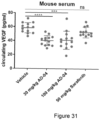
- administration of the composition comprising the USP7 inhibitor treats the cancer by reducing the level of VEGF in the serum of the subject.
- administration of the composition comprising the USP7 inhibitor treats the cancer by reducing the level of VEGF in the tumour microenvironment.
- administration of the composition comprising the USP7 inhibitor treats the cancer by inhibiting production of VEGF by cancer-associated fibroblasts (CAFs).
- CAFs cancer-associated fibroblasts
- a method of treating cancer by modulating the tumour immune environment comprising administering to a subject in need thereof a composition comprising a USP7 inhibitor, wherein administration of the USP7 inhibitor modulates the tumour immune environment.
- a method of treating cancer by increasing tumour infiltrating lymphocytes comprising administering to a subject in need thereof a composition comprising a USP7 inhibitor, wherein administration of the USP7 inhibitor increases the number of TILs, preferably CD8+ TILs.
- a method of treating cancer by decreasing the proportion of Treg cells relative to CD8+ T cells in the TME comprising administering to a subject in need thereof a composition comprising a USP7 inhibitor, wherein administration of the USP7 inhibitor decreases the proportion of Treg cells relative to CD8+ T cells in the TME.
- a method of treating cancer by decreasing the number of macrophages in the TME comprising administering to a subject in need thereof a composition comprising a USP7 inhibitor, wherein administration of the USP7 inhibitor decreases the number of macrophages in the TME.
- a USP7 inhibitor for use in a method of treating cancer, the method comprising administering to a subject in need thereof a combination therapy, the combination therapy comprising a composition comprising the USP7 inhibitor and a composition comprising an immune checkpoint inhibitor.
- an immune checkpoint inhibitor for use in a method of treating cancer, the method comprising administering to a subject in need thereof a combination therapy, the combination therapy comprising a composition comprising a USP7 inhibitor and a composition comprising the immune checkpoint inhibitor.
- administration of the composition comprising the USP7 inhibitor treats the cancer by inhibiting extra-cellular matrix (ECM) remodelling by cancer-associated fibroblasts.
- ECM extra-cellular matrix
- the ECM is the ECM of the tumour microenvironment.
- administration of the composition comprising the USP7 inhibitor treats the cancer by inhibiting angiogenesis, optionally neo-angiogenesis.
- angiogenesis is inhibited in the tumour microenvironment.
- administration of the composition comprising the USP7 inhibitor treats the cancer by modulation of the tumour immune environment (e.g. by promoting infiltration of CD8 T cells).
- the composition is administered at a dose that achieves an inhibition of tumour metastasis.
- the composition is administered at a dose that achieves modulation of the tumour immune environment.
- the cancer treated by the method is formed of cancer cells, and the cancer cells are resistant to the USP7 inhibitor. In certain embodiments, the cancer treated by the method is formed of cancer cells, and the cancer cells are resistant to the USP7 inhibitor in vitro.
- a USP7 inhibitor for use in a method of treating cancer according to the invention.
- USP7 plays a critical role in affecting the tumour microenvironment that is not mediated by the cells of the cancer itself.
- USP7 is demonstrated to be mediating the effects of fibroblasts on the tumour microenvironment (TME).
- TME tumour microenvironment
- USP7 affects the fibroblast-mediated remodelling of the TME extracellular matrix (ECM), as well as contributing to fibroblast expression of VEGF.
- ECM extracellular matrix
- Inhibiting USP7 in fibroblasts, especially cancer-associated fibroblasts (CAFs) is thus able to limit tumour growth and invasion via a number of different effects.
- USP7 inhibition in the fibroblast compartment of the TME leads to a significant decrease in both cell invasion and angiogenesis. USP7 inhibition in fibroblasts in the TME also results in modulation of the tumour immune environment so as to promote infiltration of CD8 T cells.
- a method of treating cancer by inhibiting USP7 activity in fibroblasts comprising administering to a subject in need thereof a composition comprising a USP7 inhibitor.
- CAFs are fibroblasts present in the tumour-microenvironment.
- CAFs are derived from normal fibroblasts in the normal surrounding tissue, but can also be derived from pericytes, smooth muscle cells, fibrocytes, or mesenchymal stem cells (MSCs). Markers of CAFs include smooth muscle actin ( ⁇ SMA), vimentin, platelet-derived growth factor receptor ⁇ (PDGFR- ⁇ ), platelet-derived growth factor receptor ⁇ (PDGFR- ⁇ ), fibroblast specific protein 1 (FSP-1) and fibroblast activation protein (FAP).
- ⁇ SMA smooth muscle actin
- PDGFR- ⁇ platelet-derived growth factor receptor ⁇
- PDGFR- ⁇ platelet-derived growth factor receptor ⁇
- FSP-1 fibroblast specific protein 1
- FAP fibroblast activation protein
- CAFs exhibit an activated fibroblast phenotype, for example exhibiting elevated levels of fibroblast activation protein (FAP) compared to normal fibroblasts.
- CAFs secrete growth factors such as VEGF and FGF which promote growth of the tumour, for example by promoting angiogenesis.
- CAFs also promote tumour growth, invasion and metastasis by remodelling of the extracellular matrix (ECM) in the tumour microenvironment (TME).
- ECM extracellular matrix
- TME tumour microenvironment
- CAFs are able to remodel the ECM to include more survival signals such as IGF-1 and IGF-2, thus promoting survival of the surrounding cancer cells.
- CAFs can also produce enzymes (e.g. matrix metalloproteinases MMPs) that degrade ECM components such as the basement membrane. Tumour cells can invade tissues by migrating through the degraded membrane, in some instances by attaching to migrating CAFs. Migration of tumour cells through the ECM can lead to metastases.
- composition comprising the USP7 inhibitor treats the cancer by inhibiting USP7 activity in cancer-associated fibroblasts (CAFs).
- CAFs cancer-associated fibroblasts
- USP7 inhibition in fibroblasts reduces the tumorigenic effects of fibroblasts, for example by reducing cell invasion, reducing MMP secretion, reducing basement membrane degradation, and reducing systemic and TME VEGF levels.
- Administration of a USP7 inhibitor can thus treat cancer by inhibiting one or more, for example two or three or all, of these tumorigenic effects.
- administering treats the cancer by inhibiting extra-cellular matrix (ECM) remodelling by cancer-associated fibroblasts.
- ECM extra-cellular matrix
- the ECM is the ECM of the tumour microenvironment.
- administration of the composition comprising the USP7 inhibitor treats the cancer by inhibiting degradation of a basement membrane.
- administration of the composition comprising the USP7 inhibitor inhibits degradation of one or more ECM components selected from elastin, collagen (e.g. collagen type IV) and laminin. In certain embodiments, administration of the composition comprising the USP7 inhibitor inhibits degradation of collagen IV.
- administration of the USP7 inhibitor inhibits fibroblast (optionally CAF) secretion of MMP2 and/or MMP7. In certain preferred embodiments, administration of the USP7 inhibitor inhibits fibroblast (optionally CAF) secretion of MMP7. In certain preferred embodiments, administration of the USP7 inhibitor inhibits fibroblast (optionally CAF) secretion of MMP2. In certain preferred embodiments, administration of the USP7 inhibitor inhibits fibroblast (optionally CAF) secretion of MMP2 and MMP7.
- administration of the composition comprising the USP7 inhibitor inhibits fibroblast invasion through the basement membrane. In certain embodiments, administration of the composition comprising the USP7 inhibitor inhibits CAF invasion through the basement membrane.
- MMP2 By inhibiting fibroblast secretion of MMP2, MMP7, or both, inhibition of USP7 in fibroblasts is particularly advantageous because as well as degrading ECM components such as the basement membrane, MMP2 and MMP7 are known to contribute to epithelial to mesenchymal transition (EMT), for example by triggering TGF- ⁇ activation.
- EMT epithelial to mesenchymal transition
- EMT the process by which epithelial cells lose adhesion and become mesenchymal stem cells - is a known contributor to tumour metastasis, particularly in epithelial cell-derived cancers.
- MMP2 and MMP7 production by fibroblasts inhibition of USP7 is able to regulate EMT, and this further. reduces tumour invasion and metastasis.
- composition comprising the USP7 inhibitor treats the cancer by modulating EMT (e.g. by reducing EMT).
- fibroblasts In addition to their role in modelling of the extracellular matrix, fibroblasts have the capacity to alter the extracellular microenvironment and therefore regulate vascularization processes. Fibroblast-derived proteins, including growth factors and matrix proteins, have been shown to induce, support and modulate endothelial cell sprouting and the expansion of capillary-like networks (tubes). Formation of tubes contributes to the vascularisation of a tumour as well as providing further means for metastasis of tumour cells. Reducing the formation of fibroblast-mediated epithelial tube formation through USP7 inhibition thus offers a further route to treating the tumour and reducing metastases.
- administration of the USP7 inhibitor treats the cancer by inhibiting fibroblast-mediated epithelial tube formation.
- administration of the USP7 inhibitor treats the cancer by inhibiting de novo fibroblast-mediated epithelial tube formation.
- Fibroblasts also contribute to tumour-related angiogenesis through production of growth factors such as VEGF. It is demonstrated herein for the first time that USP7 inhibition reduces VEGF production by fibroblasts, thereby reducing VEGF levels systemically as well as in the tumour microenvironment.
- VEGF is a well-validated target for cancer therapy, with anti-VEGF bevacizumab (Avastin TM ) used to treat at least colon cancer, lung cancer, glioblastoma and renal cancer. Inhibiting USP7 to reduce VEGF therefore provides a further means for treating cancer.
- administration of the composition comprising the USP7 inhibitor treats the cancer by reducing the level of VEGF in the serum of the subject.
- composition comprising the USP7 inhibitor treats the cancer by reducing the level of VEGF in the tumour microenvironment.
- administration of the composition comprising the USP7 inhibitor treats the cancer by inhibiting production of VEGF by cancer-associated fibroblasts (CAFs).
- CAFs cancer-associated fibroblasts
- inhibition of USP7 inhibits secretion of VEGF by CAFs.
- inhibition of USP7 reduces VEGF mRNA levels in CAFs.
- VEGF refers to VEGFA, encoded by the VEGFA gene.
- Inhibition of fibroblast (e.g. CAF) production of VEGF by inhibition of USP7 is mediated through destabilisation of hypoxia inducible factor alpha (HIF ⁇ ), the transcription factor for VEGF.
- HIF ⁇ hypoxia inducible factor alpha
- a USP7 inhibitor reduces the half-life of HIF ⁇ in fibroblasts, thereby reducing the driver of VEGF expression.
- administration of the USP7 inhibitor destabilizes hypoxia-inducible transcription factor (HIF1 ⁇ ), thereby inhibiting VEGF production by cancer-associated fibroblasts.
- administration of the USP7 inhibitor destabilizes hypoxia-inducible transcription factor (HIF1 ⁇ ) in cancer-associated fibroblasts, thereby inhibiting tumour-associated angiogenesis.
- administration of the composition comprising the USP7 inhibitor treats the cancer by inhibiting angiogenesis.
- administration of the composition comprising the USP7 inhibitor treats the cancer by inhibiting neo-angiogenesis.
- angiogenesis is inhibited in the tumour microenvironment.
- administration of the composition comprising the USP7 inhibitor up-regulates expression of short (191aa) VEGF-165 mRNA. In certain embodiments, administration of the composition comprising the USP7 inhibitor down-regulates expression of long (371aa) VEGF-165 mRNA.
- tumour infiltrating lymphocytes TILs
- TILs tumour infiltrating lymphocytes
- cytotoxic CD8+ TILs cytotoxic CD8+ TILs.
- the increase in cytotoxic CD8+ TILs following USP7 inhibition may be due to the effects reported herein of USP7 inhibition on TME remodelling, for example by cancer associated fibroblasts, with the reduced CAF-mediated remodelling permitting greater TIL infiltration.
- USP7 inhibition also reduces the proportion of Treg cells in the TME relative to CD8+ TILs.
- the dampening effect of Treg cells on the local immune response in the TME is a known mechanism by which tumour cells evade immune control.
- USP7 inhibition provides a further means for promoting effective cancer treatment.
- a method of treating cancer by inhibiting USP7 activity comprising administering to a subject in need thereof a composition comprising a USP7 inhibitor, wherein administration of the USP7 inhibitor modulates the tumour immune environment.
- Modulation of the tumour immune environment can be characterised by a change in the number and/or type of immune cells present in the TME.
- modulation of the tumour immune environment may be characterised by an increase in TILs in the TME, a decrease in Treg cells in the TME, and/or a decrease in macrophages in the TME.
- a method of treating cancer by inhibiting USP7 activity comprising administering to a subject in need thereof a composition comprising a USP7 inhibitor, wherein administration of the composition comprising the USP7 inhibitor increases the number of TILs in the TME, preferably CD8+ TILs.
- the modulation of the tumour immune environment is mediated through inhibition of USP7 in cells other than the tumour cells.
- the modulation is mediated through inhibition of USP7 in fibroblasts, for example CAFs.
- a method of treating cancer by administering to a subject in need thereof a combination therapy, the combination therapy comprising a composition comprising a USP7 inhibitor and composition comprising an immune checkpoint inhibitor.
- a USP7 inhibitor for use in a method of treating cancer, the method comprising administering to a subject in need thereof a combination therapy, the combination therapy comprising a composition comprising the USP7 inhibitor and a composition comprising an immune checkpoint inhibitor.
- an immune checkpoint inhibitor for use in a method of treating cancer, the method comprising administering to a subject in need thereof a combination therapy, the combination therapy comprising a composition comprising a USP7 inhibitor and a composition comprising the immune checkpoint inhibitor.
- a combination therapy for use in a method of treating cancer comprising administering to a subject in need thereof the combination therapy, the combination therapy comprising a composition comprising a USP7 inhibitor and a composition comprising an immune checkpoint inhibitor.
- the immune checkpoint inhibitor is selected from an inhibitor of PD1, PD-L1, CTLA4, TIGIT, 41BB, OX40, GITR.
- the checkpoint inhibitor is selected from an anti-PD1 antibody, an anti-PD-L1 antibody, an anti-CTLA4 antibody, an anti-41BB antibody, an anti-OX40 antibody, an anti-GITR antibody, and an anti-ICOS antibody.
- the checkpoint inhibitor is selected from an anti-PD1 antibody, an anti-PD-L1 antibody, and an anti-CTLA4 antibody.
- the checkpoint inhibitor is selected from an anti-PD1 antibody and an anti-PD-L1 antibody.
- the checkpoint inhibitor is an anti-CTLA4 antibody.
- the checkpoint inhibitor is selected from: pembrolizumab (Keytruda TM ), nivolumab (Opdivo TM ), cemiplimab (Libtayo TM ), Atezolizumab (Tecentriq TM ), Avelumab (Bavencio TM ), Durvalumab (Imfinzi TM ), and Ipilimumab (Yervoy TM ).
- the composition is administered at a dose that achieves an inhibition of tumour growth.
- the composition is administered at a dose that achieves an inhibition of tumour invasion.
- the composition is administered at a dose that achieves an inhibition of tumour metastasis.
- the composition is administered at a dose that achieves modulation of the tumour immune environment.
- the composition is administered at a dose that achieves an inhibition of angiogenesis in the tumour microenvironment.
- a particular advantage of the newly-identified effects of USP7 inhibitors on fibroblasts is that the effects are independent of any action (or lack of action) of the USP7 inhibitor directly on the cancer cells. Even when a cancer is not responsive to direct inhibition of USP7 in the cancer cells, an anti-tumour effect is achieved through inhibition of USP7 in fibroblasts, for example those fibroblasts associated with the cancer.
- the cancer treated by the method is formed of cancer cells, and the cancer cells are resistant to the USP7 inhibitor.
- Cancer cells are resistant to the USP7 inhibitor when survival and proliferation of the cancer cells is not affected by direct exposure of the cancer cells to the USP7 inhibitor. Whether cancer cells are resistant to the USP7 can be determined by exposing the cancer cells to the USP7 inhibitor in vitro and monitoring their growth and survival.
- USP7 inhibitors have been used to target cancer proliferation through modulating the ubiquitination of oncoprotein MDM2.
- MDM2 has been hypothesised as having a role in HIF ⁇ expression; however, it is demonstrated herein that the effects of USP7 inhibition in fibroblasts are not mediated through MDM2.
- treatment of cancer by inhibition of USP7 in fibroblasts in accordance with the invention is effective when treating cancers that are resistant to inhibitors of the MDM2 pathway.
- the cancer is formed of cancer cells and the cancer cells are resistant to an inhibitor of the MDM2 pathway.
- the cancer is formed of cancer cells and the cancer cells are resistant to an MDM2 inhibitor, e.g. an inhibitor of MDM2's regulation of p53.
- the cancer is formed of cancer cells and the cancer cells are resistant to an MDM2 inhibitor selected from: RG7112, RG7388 (Idasanutlin), SAR405838, MK-8242, AMG232, CGM097, HDM201, CGM097, and ALRN-6924.
- MDM2 inhibitor selected from: RG7112, RG7388 (Idasanutlin), SAR405838, MK-8242, AMG232, CGM097, HDM201, CGM097, and ALRN-6924.
- inhibiting USP7 in fibroblasts is effective in reducing the pro-tumour effects of fibroblasts (e.g. angiogenesis, ECM remodelling, VEGF production).
- fibroblasts e.g. angiogenesis, ECM remodelling, VEGF production.
- the methods provided herein treat cancer through action on fibroblasts, in particular cancer-associated fibroblasts, and do not require any effect on the cancer cells themselves, the methods are suitable for treating a broad range of cancers.
- the cancer treated in accordance with the invention is selected from: renal cancer (e.g., renal cell carcinoma), breast cancer, brain tumours, lymphomas (e.g., Hodgkin's and non-Hodgkin's lymphoma, lymphocytic lymphoma, primary CNS lymphoma, B-cell lymphoma (e.g. CLL), T-cell lymphoma (e.g. Sezary Syndrome)), nasopharyngeal carcinomas, melanoma (e.g., metastatic malignant melanoma), prostate cancer, colon cancer, lung cancer, bone cancer, pancreatic cancer, skin cancer, cancer of the head or neck (e.g.
- lymphomas e.g., Hodgkin's and non-Hodgkin's lymphoma, lymphocytic lymphoma, primary CNS lymphoma, B-cell lymphoma (e.g. CLL), T-cell lymphoma (e.g. Sez
- HNSCC head and neck squamous cell carcinoma
- cutaneous carcinoma cutaneous or intraocular malignant melanoma, uterine cancer, ovarian cancer, rectal cancer, cancer of the anal region, stomach cancer, testicular cancer, carcinoma of the fallopian tubes, carcinoma of the endometrium, carcinoma of the cervix, carcinoma of the vagina, carcinoma of the vulva, cancer of the oesophagus, cancer of the small intestine, cancer of the endocrine system, cancer of the thyroid gland, cancer of the parathyroid gland, cancer of the adrenal gland, sarcoma of soft tissue, cancer of the urethra, cancer of the penis, cancer of the bladder, neoplasm of the central nervous system (CNS), spinal axis tumour, brain stem glioma, pituitary adenoma, Kaposi's sarcoma, epidermoid cancer, squamous cell cancer, mesothelioma.
- CNS central nervous system
- the cancer is characterised by the presence of cancer-associated fibroblasts in the tumour microenvironment.
- the cancer is a carcinoma or breast cancer. In certain embodiments, the cancer is adenocarcinoma. In certain embodiments, the cancer is colorectal carcinoma. In certain embodiments, the cancer is prostate carcinoma. In certain embodiments, the cancer is colon cancer. In certain embodiments, the cancer is lung cancer (e.g. non-small cell lung cancer). In certain embodiments, the cancer is glioblastoma. In certain embodiments, the cancer is renal cancer.
- the cancer is a solid tumour.
- the methods of the invention will be particularly effective at treating metastatic cancer due to the ability to reduce remodelling of the ECM, thereby reducing migration of cancer cells through the basement membrane, a known factor in cancer metastasis.
- the method is a method of treating metastatic cancer. Treating metastatic cancer in this context includes preventing or reducing metastasis, slowing the progression to metastasis and/or reducing the risk of metastasis.
- the method comprises treatment of a cancer that has already metastasised. In certain such embodiments, the treatment of the cancer is of the secondary tumour.
- the cancer treated is a primary tumour.
- methods of the invention will be effective at treating cancers that have not been responsive to therapies intended to target the cancer cells themselves. Accordingly, the methods of the invention are advantageous for treating patients who have not responded to an alternative cancer therapy, for example first line cancer therapy. The methods will also be effective at treating patients who have relapsed, for example after successful first line therapy.
- the subject has previously been administered an initial therapeutic agent and did not exhibit a response.
- the subject has previously been administered an initial therapeutic agent and has relapsed.
- the initial therapeutic agent is not a USP7 inhibitor.
- the initial therapeutic agent is an inhibitor of the p53/MDM2 pathway.
- the initial therapeutic agent is an inhibitor of the p53/MDM2 interaction.
- USP7 inhibitors have the potential to deliver combination efficacy with other agents known to modulate the TME such as immune checkpoint inhibitors (e.g. inhibitors of PD-1, PD-L1, CTLA4), anti-angiogenic agents (e.g. VEGF inhibitors, VEGFR inhibitors), or extra-cellular matrix reprogramming agents.
- immune checkpoint inhibitors e.g. inhibitors of PD-1, PD-L1, CTLA4
- anti-angiogenic agents e.g. VEGF inhibitors, VEGFR inhibitors
- extra-cellular matrix reprogramming agents e.g. VEGF inhibitors, VEGFR inhibitors
- Methods of the invention will be particularly effective in combination with checkpoint inhibitors as inhibition of USP7 in fibroblasts in accordance with the invention is demonstrated herein to lead to a greater infiltration of CD8 T cells to the tumour site and greater than additive improvements in survival and tumour volume.
- the method further comprises administration of an additional therapeutic agent.
- the additional therapeutic agent is selected from a checkpoint inhibitor (also referred to as immune checkpoint inhibitor) and an anti-angiogenic agent.
- the checkpoint inhibitor is selected from an inhibitor of PD1, PD-L1, CTLA4, TIGIT, 41BB, OX40, GITR. In certain embodiments the checkpoint inhibitor is selected from an anti-PD1 antibody, an anti-PD-L1 antibody, an anti-CTLA4 antibody, an anti-41BB antibody, an anti-OX40 antibody, an anti-GITR antibody, and an anti-ICOS antibody. In certain embodiments the checkpoint inhibitor is selected from an anti-PD1 antibody, an anti-PD-L1 antibody, and an anti-CTLA4 antibody. In certain embodiments the checkpoint inhibitor is selected from an anti-PD1 antibody and an anti-PD-L1 antibody. In certain embodiments the checkpoint inhibitor is an anti-CTLA4 antibody.
- the checkpoint inhibitor is selected from: pembrolizumab (Keytruda TM ), nivolumab (Opdivo TM ), cemiplimab (Libtayo TM ), Atezolizumab (Tecentriq TM ), Avelumab (Bavencio TM ), Durvalumab (Imfinzi TM ), and Ipilimumab (Yervoy TM ).
- the anti-angiogenic agent is a VEGF inhibitor or a VEGFR inhibitor.
- the anti-angiogenic agent is selected from: Axitinib (Inlyta ® ), Bevacizumab (Avastin ® ), Cabozantinib (Cometriq ® ), Everolimus (Afinitor ® ), Lenalidomide (Revlimid ® ), Lenvatinib mesylate (Lenvima ® ), Pazopanib (Votrient ® ), Ramucirumab (Cyramza ® ), Regorafenib (Stivarga ® ), Sorafenib (Nexavar ® ), Sunitinib (Sutent ® ), Thalidomide (Synovir, Thalomid ® ), Vandetanib (Caprelsa ® ), and Ziv-aflibercept (Zaltrap ® ).
- the additional therapeutic agent is administered in combination with the composition comprising the USP7 inhibitor, e.g. as part of a combination therapy.
- the USP7 inhibitor and the additional therapeutic agent are administered simultaneously.
- the USP7 inhibitor and the additional therapeutic agent are not administered simultaneously.
- the USP7 inhibitor and the additional therapeutic agent are co-formulated. In certain embodiments, the USP7 inhibitor and the additional therapeutic agent are separately formulated.
- composition comprising the USP7 inhibitor further comprises a pharmaceutically acceptable excipient.
- compositions may be formulated according to their particular use and purpose by mixing, for example, excipient, binding agent, lubricant, disintegrating agent, coating material, emulsifier, suspending agent, solvent, stabilizer, absorption enhancer and / or ointment base.
- the composition may be suitable for oral, injectable, rectal or topical administration.
- Suitable pharmaceutically acceptable excipients would be known by the person skilled in the art, for example: fats, water, physiological saline, alcohol (e.g. ethanol), glycerol, polyols, aqueous glucose solution, extending agent, disintegrating agent, binder, lubricant, wetting agent, stabilizer, emulsifier, dispersant, preservative, sweetener, colorant, seasoning agent or aromatizer, concentrating agent, diluent, buffer substance, solvent or solubilizing agent, chemical for achieving storage effect, salt for modifying osmotic pressure, coating agent or antioxidant, saccharides such as lactose or glucose; starch of corn, wheat or rice; fatty acids such as stearic acid; inorganic salts such as magnesium metasilicate aluminate or anhydrous calcium phosphate; synthetic polymers such as polyvinylpyrrolidone or polyalkylene glycol; alcohols such as stearyl alcohol or benzyl alcohol; synthetic
- the pharmaceutical composition may be administered orally, such as in the form of tablets, coated tablets, hard or soft gelatine capsules, solutions, emulsions, or suspensions.
- Administration can also be carried out rectally, for example using suppositories, locally or percutaneously, for example using ointments, creams, gels or solution, or parenterally, for example using injectable solutions.
- excipients include, for example, water, polyols, saccharose, invert sugar and glucose.
- excipients include, for example, water, alcohols, polyols, glycerine and vegetable oil.
- excipients include, for example, natural or hardened oils, waxes, fats and semi-solid or liquid polyols.
- compositions may also contain preserving agents, solublizing agents, stabilizing agents, wetting agents, emulsifiers, sweeteners, colorants, odorants, buffers, coating agents and / or antioxidants.
- the second drug may be provided in pharmaceutical composition with the USP7 inhibitor or may be provided separately.
- a USP7 inhibitor for use in a method of treating cancer as provided herein.
- USP7 inhibitors are known in the art and can be used in the methods of the invention.
- the USP7 inhibitor is a small molecule inhibitor.
- the USP7 inhibitor is an organic compound having a molecular weight of 900 daltons or less.
- USP7 inhibitors are described in WO2018/073602 , US 2008/0103149 A1 , WO 2010/114881 A1 , WO 2010/081783 A1 , WO 2011/086178 A1 , WO 2013/030218 A1 , EP 2565186 A1 , EP 1749822 A1 , WO 2016/109515 A1 , WO 2016/109480 A1 , WO 2016/126929 A1 , WO 2016/126926 A1 , WO 2016/126935 A1 , WO 2016/150800 A1 , WO2017/158381 , WO2017/158388 , WO2017/212010 , WO2017/212012 and US20190142834 .
- Suitable USP7 inhibitors include those provided in WO2018/073602 .
- the USP7 inhibitor is selected from a compound of formula (I): including a pharmaceutically acceptable salt, tautomer, stereoisomer or N-oxide derivative thereof, wherein:
- the USP7 inhibitor is a compound according to formula (I), or a pharmaceutically acceptable salt thereof, wherein Q is selected from: wherein:
- the USP7 inhibitor is a compound according to formula (I), or a pharmaceutically acceptable salt thereof, wherein Q is selected from:
- R 5a , R 5b , R 6a , R 6b , R 9a , and R 9b are as defined above.
- the optional substituents are independently selected from OH, F, Cl, Br, I, CN, C1-C6 alkyl, CF 3 , CHF 2 , CH 2 F, CH 2 OH, COOH, C(O)CH 3 , CH2NHC(O)OCH 2 CH 3 , C2-C6 alkenyl, C2-C6 alkynyl, C3-C6 cycloalkyl, C1-C6 alkoxy, amino, C1-C6 alkylamine, C5-C6 aryl, C3-C6 heteroaryl, benzyl, oxo and amide, or two adjacent substituents may together constitute a ring.
- the USP7 inhibitor is a compound according to formula (I), or a pharmaceutically acceptable salt thereof, wherein Q is: and:
- R' is H and R" is ethylpyrollidine optionally substituted with methyl, fluoro, or fluorophenyl.
- the USP7 inhibitor is a compound according to formula (I), or a pharmaceutically acceptable salt thereof, wherein Q is: and
- R 9a is Cl, Br, I, or cyano and R 9b is phenyl optionally substituted with F, Cl, Br, methoxy, OH, C1-C6 alkylamine, cyclopropane, tetrahydrofuran, dioxolane, furan, methylpyrazole.
- R 9a is Cl
- R 9b is selected from:
- R 9b is:
- the USP7 inhibitor is a compound according to formula (I), or a pharmaceutically acceptable salt thereof, wherein Q is: and
- R 6a is H, methyl or ethyl
- R 6b is H, Br, optionally substituted propenyl, ethynyl, optionally substituted propynyl, optionally substituted pentynyl, optionally substituted cyclohexane, optionally substituted phenyl, pyrazole, pyridine
- the optional substituents are independently selected from F, CN, OH, CH2OH, amide, NH2, C1-C6 alkylamine, C3-C6 cycloalkylamine, CF3, CH(CF3)NH2, CH(CHF2)NH2.
- R 6a is methyl and R 6b is phenyl optionally substituted with one or more of F, CN, OH, CH2OH, NH2, CH2NH2, CH2CH2NH2, CH(CH3)NH2, amide, cyclopropylamine, and cyclobutylamine.
- R 2 is optionally substituted oxazole or optionally substituted C3-C6 cycloalkyl. In certain preferred embodiments, R 2 is optionally substituted oxazole or optionally substituted cyclopropyl.
- each one or more optional substituent is independently selected from C1-C6 alkyl and C3-C6 cycloalkyl.
- the optional substituent is methyl or cyclopropyl.
- R 2 is oxazole substituted with cyclopropane. In certain preferred embodiments, R 2 is cyclopropyl substituted with methyl.
- R 2 is selected from:
- the compound is the R-enantiomer. In preferred embodiments where the USP7 inhibitor is a compound exhibiting stereoisomerism, the compound is the S-enantiomer.
- the USP7 inhibitor is a compound according to formula (I), or a pharmaceutically acceptable salt thereof, selected from the compounds exemplified in WO2018/073602 .
- the USP7 inhibitor is a compound, or a pharmaceutically acceptable salt thereof, selected from the following, where Example number is given in reference to WO2018/073602 :
- the USP7 inhibitor is: or a stereoisomer or a pharmaceutically acceptable salt thereof.
- the USP7 inhibitor is: or a stereoisomer or a pharmaceutically acceptable salt thereof.
- the USP7 inhibitor is: or a stereoisomer or a pharmaceutically acceptable salt thereof.
- the USP7 inhibitor is: or a stereoisomer or a pharmaceutically acceptable salt thereof.
- the USP7 inhibitor is: or a stereoisomer or a pharmaceutically acceptable salt thereof.
- the USP7 inhibitor is: or a stereoisomer or a pharmaceutically acceptable salt thereof.
- USP7 inhibitors As well as suitable USP7 inhibitors to be used in accordance with the methods of the invention, all USP7 inhibitor compounds provided herein are also disclosed as compounds themselves, including their pharmaceutically acceptable salts, stereoisomers, tautomers and N-oxide derivatives thereof.
- the USP7 inhibitor is selected from the USP7 inhibitors provided in one or more of WO2018/073602 , US 2008/0103149 A1 , WO 2010/114881 A1 , WO 2010/081783 A1 , WO 2011/086178 A1 , WO 2013/030218 A1 , EP 2565186 A1 , EP 1749822 A1 , WO 2016/109515 A1 , WO 2016/109480 A1 , WO 2016/126929 A1 , WO 2016/126926 A1 , WO 2016/126935 A1 , WO 2016/150800 A1 , WO2017/158381 , WO2017/158388 , WO2017/212010 , WO2017/212012 and US20190142834 .
- the compounds may be administered to the subject in need of treatment in an "effective amount".
- effective amount refers to the amount or dose of a compound which, upon single or multiple dose administration to a subject, provides therapeutic efficacy in the treatment of disease.
- Therapeutically effective amounts of a compound according to the invention can comprise an amount in the range of from about 0.1 mg/kg to about 20 mg/kg per single dose.
- a therapeutic effective amount for any individual patient can be determined by the healthcare professional by methods understood by the skilled person.
- the amount of compound administered at any given time point may be varied so that optimal amounts of the compound, whether employed alone or in combination with any other therapeutic agent, are administered during the course of treatment.
- AD-04 (corresponding to Example 30 in WO2018/073602 ) is a potent and specific USP7 inhibitor.
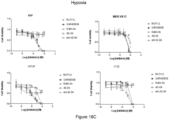
- AD-04 was screened in the cell based BioMAP assay, a clinically-relevant biomarker profiling panel which comprises various primary human cell-derived co-cultures. The screen was performed in multiple cellular disease systems: AD-04 displayed a significant impact on cytokine modulation in primary human dermal fibroblasts (HDF) co-cultured with T-cell receptor (TCR) ligands stimulated PBMCs, as well as in cancer cells (HT29 or H1299) co-cultured with HDF and stimulated PBMCs.
- HDF primary human dermal fibroblasts
- TCR T-cell receptor
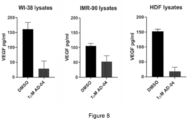
- BioMap panel data findings were further confirmed in the same cancer cell line, HT29, co-cultured with activated PBMCs and multiple primary human fibroblast, including either primary lung fibroblasts WI-38 and IMR-90 or primary dermal fibroblasts HDF. Ent- AD-04 had no significant effect on secreted VEGF levels ( Figure 3 ).
- myofibroblasts proliferate and migrate, show contractile activity, exert physical forces to modify tissue architecture and become transcriptionally active leading to the secretion of cytokines, chemokines and extra-cellular matrix (ECM) components.
- ECM extra-cellular matrix
- CAF cancer associated fibroblasts
- WI38, IMR90 and HDF were co-cultured with anti-CD3/anti-CD28 stimulated PBMCs or were stimulated by FGF-2 or TGF ⁇ .
- FGF-2 or TGF ⁇ tumor necrosis factor
- VEGF vascular endothelial growth factor 1
- HIF-1 hypoxia-inducible factor 1
- HIF-1 ⁇ half-life was examined.
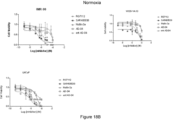
- HDF were pre-treated with cycloheximide followed by treatment with AD-04 or DMSO as a control and placed in a hypoxic chamber.
- Samples were subsequently collected at various time points for immuno-blot analysis probing for HIF-1 ⁇ levels.
- HIF-1 ⁇ half-life was determined to be 6 minutes and 36 seconds in untreated cells.
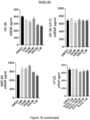
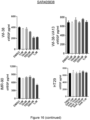
- Treatment with AD-04 significantly reduced this value by 40% to 4 minutes ( Figure 10 ), confirming direct modulation of HIF-1 ⁇ stability by USP7 inhibition.
- HIF-1 ⁇ stability is known to be regulated at the protein level by ubiquitination
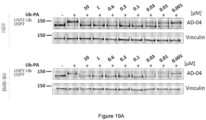
- USP7 inhibition modulates HIF-1 ⁇ polyubiquitination.
- HDF were incubated in hypoxia for 3 hours followed by treatment with DMSO, AD-04 or MG132 at indicated concentrations for another 1 hour.
- Cells were harvested, lysed and polyubiquitinated proteins pulled down using two types of Tetra Ubiquitin Binding Entities (TUBES); with equal affinity for K48/K63 or 10 times more affinity for K63.
- TABES Tetra Ubiquitin Binding Entities
- Samples were analysed by immuno-blot using a HIF-1 ⁇ antibody.
- MG132 efficiently blocked the proteasomal degradation resulting in increased polyubiquitination of HIF-1 ⁇ .
- RNA-seq was performed. HDF were treated with vehicle DMSO and AD-04 followed by incubation in either normoxia or hypoxia for 6 or 24 hours. Afterwards RNA was extracted and analysed by RNA-seq. Comparison of VEGF mRNA levels showed that its expression is induced under hypoxic conditions and down-regulated after the treatment with AD-04 ( Figure 13 ). These findings suggest that USP7 inhibitor mediates VEGF modulation both at the protein and mRNA levels.
- hypoxia activated fibroblasts To evaluate which signalling pathways are induced in hypoxia activated fibroblasts, a comparative pathway analysis was performed on of samples coming from both, non-activated (normoxia) and hypoxia activated primary fibroblasts. The results showed that HIF1A mRNA expression network is the most significantly enriched pathway using the NCI-Nature canonical pathway database in hypoxia activated fibroblast samples ( Figure 12 ). Furthermore, treatment with AD-04 of the same samples results in modulation of known genes in the HIF1A expression network, including the VEGF gene ( Figure 14 ). Interestingly, hypoxia activated and USP7 inhibitor-treated primary human fibroblasts display alternative patterns of VEGFA alternative splicing.
- AD-04 inhibits fibroblast invasion and downregulates MMP-7 secretion in invading fibroblasts
- fibroblasts In addition to their primary role in synthesis and maintenance of the extracellular matrix, fibroblasts have the capacity to alter the mechanical extracellular microenvironment and therefore regulate vascularization processes. Fibroblast-derived proteins, including growth factors and matrix proteins, have been shown to induce, support and modulate endothelial cell sprouting and the expansion of capillary-like networks (tubes) in vitro.
- the effect of USP7 inhibition on HDF capacity to support the formation of capillary-like structures was assessed in a co-culture system with primary human endothelial cells (HUVEC).
- TME has been shown to play a key role in tumour progression and prognosis. Efficacy of anti-cancer therapies depends on TME profile. For instance, tumour immune cell infiltration is considered to be an important factor determining successful immune checkpoint inhibition and is associated with improved survival of patients.
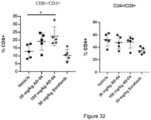
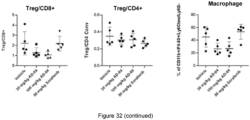
- flow cytometry was used to profile several immune populations. We first assessed the frequency of various T cell subpopulations among tumour-infiltrating lymphocytes (TILs). The results showed a significant increase in cytotoxic T-lymphocytes after AD-04 treatment while no significant change was observed in CD4 lymphocytes. In contrast, a trend in Treg/CD8 ratio decrease upon USP7 inhibition was observed. Analysis of myeloid cell infiltrate showed decrease in macrophages after the treatment with USP7 inhibitor ( Figure 32 ).
- ADC-159 is a USP7 inhibitor with potency and selectivity equivalent to AD-04.
- ADC-159 has the structure:
- HDF were treated with vehicle or various concentrations of USP7 inhibitor ADC-159 and incubated for 48 hours in a hypoxic chamber.
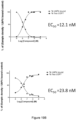
- Cell culture supernatants were collected, and secreted VEGF was measured by ELISA.
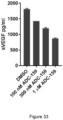
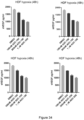
- ADC-159 decreased VEGF levels in a dose-dependent manner showing comparable potency to AD-04. Comparable results were observed for other USP7 inhibitors ADC-160, ADC-198, ADC-199 and ADC-556 ( Figure 34 ).
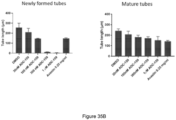
- ADC-159 showed inhibitory effect on newly formed tubes in a dose-dependent manner while it did not have significant effect on already established tubes ( Figure 35 ).
- the inhibitory effect of ADC-159 on tube formation is comparable to AD-04.
- ADC-159 was tested in a syngeneic mouse xenograft model of CT-26 cells in BALB/C mice. Similarly to AD-04, the CT-26 mouse cancer cell line is not sensitive to ADC-159 in vitro, making it a good model to study the impact of USP7 inhibition on the TME.
- ADC-159 prevents tumour vessel formation in vivo.
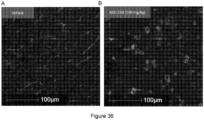
- Control animals treated with vehicle only exhibited tumour vessel formation at the tumour site, characterised by fine branching of mature blood vessels, the fine branches detecting by positive staining for endothelial marker CD31 and pericyte marker NG2 ( Figure 36A ).
- ADC-159 treatment prevented this fine branching of mature blood vessels at the tumour site ( Figure 36B ).
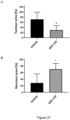
- ADC-159 treatment resulted in a significant reduction in tumour area in the CT-26 in vivo model compared to control animals treated with vehicle alone ( Figure 37A ) despite the resistance of CT-26 cells to direct USP7 inhibition by ADC-159.
- ADC-159 therapy also resulted in a significant increase compared to vehicle controls in the necrosis area at the tumour site ( Figure 37B ), providing further evidence of the effects of USP7 inhibition on the TME resulting in reduced tumour growth.
- TGI tumour growth
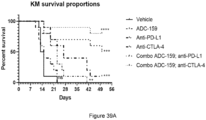
- FIG 39 shows the survival plot from the syngeneic CT-26 mouse model described herein, where mice were treated with USP7 inhibitor ADC-159 alone, anti-PD-L1 or anti-CTLA4 alone, or a combination of USP7 inhibitor ADC-159 and anti-PD-L1 or anti-CTLA4. Vehicle treatment only served as control.
- Figure 39 shows that mice treated with the combination of a USP7 inhibitor and an ICI had significantly increased survival compared to either alone. The effect was greater than an additive effect of two therapies, evidenced by anti-PD-L1 treatment alone resulting in no improvement in survival compared to vehicle controls. Treatment with ADC-159 resulted in a modest but significant increase in survival. In contrast, the combination of ADC-159 with anti-PD-L1 resulted in a much greater increase in survival. The same synergistic combination effect was also observed with ADC-159 and anti-CTLA4 where survival at 50 days was as high as 80% ( Figure 39A ). The effect on tumour growth of each treatment is shown in Figure 39B .
- USP7 inhibitors have previously been shown to modulate the ubiquitylation of the oncoprotein MDM2 and inhibit the cancer cell proliferation. To the best of our knowledge, the data reported herein represents the first published role of USP7 in the reprogramming of TME, targeting major stromal cell population-fibroblasts.
- HIF-1 ⁇ transcriptional factor The major activator of VEGF gene expression is HIF-1 ⁇ transcriptional factor.
- Multiple stimuli, such as growth factors can induce VEGF expression in a HIF-1-dependent manner in normoxic cells.
- HIF-1 ⁇ protein is undetectable in most cell types due to rapid degradation by the ubiquitin-proteasome system.
- hypoxia induces the accumulation of HIF-1 ⁇ protein and consequently, VEGF protein.
- low oxygen levels induce VEGF secretion in fibroblasts as presented in Figure 9 .
- We identified that the mechanism of action of USP7 inhibition in activated fibroblasts is via modulation of HIF-1 ⁇ protein.
- a crosstalk between fibroblasts, immune cells, endothelial and cancer cells results in induction of growth factors, cytokines, extra cellular matrix proteins and the matrix-degrading enzymes metalloproteinases, required for the tumour cell proliferation and metastasis.
- USP7 inhibition has an impact on cell function within TME such as proliferation, migration and invasion.
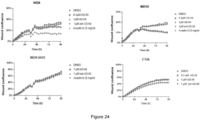
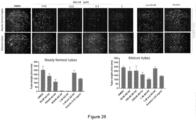
- AD-04 did not have any significant effect on proliferation and migration of any cell type within the TME ( Figure 22 and 23 ), it showed however a strong inhibition of fibroblast invasion through basement membrane ( Figure 24 ).
- a tumour invasion mechanism has been reported in which cancer cells invade the collagen matrix by binding to fibroblasts through the integrin/fibronectin interaction.
- a possible mechanism of fibroblast invasion inhibition upon the treatment with a USP7 inhibitor could be through observed decrease in MMP7 levels in invading fibroblasts ( Figure 25 ) since MMP-7 degrades the major components of the tubular basement membrane such as elastin, collagen type IV and laminin to induce epithelial-mesenchymal transition (EMT).
- EMT epithelial-mesenchymal transition
- Another role of fibroblast in reprogramming of TME is regulation of vascularization process.
- USP7 inhibition prevents de novo tube formation in fibroblast and endothelial cell co-culture in vitro ( Figure 26 ).
- All primary cells and cell lines were obtained from the American Type Culture Collection (ATCC), authenticated by STR profiling (Promega) and shown to be mycoplasma-free using the MycoAlert mycoplasma detection (Lonza; LT07-318). For growth, cells were maintained at 37 °C in a humidified atmosphere with 5% CO 2 .
- HT29 (colorectal) cells were cultured in McCoy's medium 5A supplemented with 10% (v/v) FBS, 1% (v/v) penicillin-streptomycin, 1% (v/v) L-glutamine.
- HDF were cultured in fibroblasts basal media supplemented with Fibroblast Growth Kit-Low Serum (final concentration for each component is as follows: L-glutamine 7.5 mM; rh FGF basic 5 ng/mL; rh Insulin 5 ⁇ g/mL; Hydrocortisone 1 ⁇ g/mL; Ascorbic acid 50 ⁇ g/mL; Fetal bovine serum 2%).
- WI38, WI38-VA13 and IMR-90 were cultured in Eagle's Minimum Essential Medium supplemented with 10% (v/v) FBS.
- MMP2 and MMP7 Concentrations of MMP2 and MMP7 were determined in cell culture supernatants in triplicates using Luminex human cytokine/chemokine multiplex kits (Millipore, St. Charles, MO, USA) according to the manufacturer's protocol.
- VEGF vascular endothelial growth factor
- human/mouse VEGF immunoassay Quantikine ELISA kit R&D systems, Minneapolis,MN, USA
- VEGF levels determined using the same kit described above.
- BioMAP systems were employed using primary human cells. These studies follow the guidelines for human subjects research under HHS human subjects regulations (45 CFR Part 46) for the United States.
- Human neonatal foreskin fibroblasts (HDFn) from 3 donors were pooled and cultured according to the supplier's (Lonza, Inc., Allendale, NJ) recommendation.
- Peripheral blood mononuclear cells (PBMC) were prepared from buffy coats from normal human donors according to standard methods.
- Autoimmune HDFSAg system consisted of primary human dermal fibroblasts (HDF) co-cultured with PBMCs stimulated with T-cell receptor (SAg) to model chronic T cell activation and inflammation.
- NSCLC Stromal Oncology Colorectal Cancer and Non-Small Cell Lung Cancer (NSCLC) panels were composed of cancer cells (HT29 or H1299), HDF and PBMCs stimulated with SAg. This model captures the interactions between tumour cells, stimulated immune cells and the host stromal network. Co-cultures were activated with SAg, (20 ng/ml) and treated with vehicle and AD-04 at the concentration of 10, 3.3, 1.1 and 0.37 ⁇ M for 48h.
- biomarkers were measured in supernatants from co-cultures using ELISA as following: MCP-1, VCAM-1, Collagen I, IP-10, MMP-1, sIL-10, sIL-17A, sIL-17F, sIL-2, sIL-6, SRB, sTGFb, sTNFa, sVEGF, IL-8, MIG, MCSF, uPAR, Col-III, IP-10, EGFR, HGF, Pal-1, PBMC Cytotoxicity, tPA, uPA, sGranzyme, sPGE2, slFg, Sil-13, sMDC, Collagen III, MMP-9, TIMP-2, CEACAM5, Keratin 20. Biomarker levels are presented as log-transformed ratios ( log 10 AD 04 Vehicle control ).
- tracrRNA:crRNA duplex guide RNA
- Samples were heated at 95°C for 5min and allowed to cool down at RT.
- Cas9 enzyme 21uM final concentration
- RNP complex was incubated at RT for 20 min. Prior to electroporation, HDF were harvested by trypsinisation and washed with PBS.
- Pellets containing 5x10 5 cells were mixed with 94 ⁇ l of Nucleofector solution (Amaxa Human Dermal Fibroblasts Nucleofector, Lonza), 5 ⁇ l of the correct RNP or 2 ⁇ g total pmaxGFP and 1 ⁇ l of Alt-R Cas9 Electroporation Enhancer (final concentration 1 ⁇ M) were added to each tube, mixed and transferred to electroporation cuvette. Subsequently, the cells were nucleofected by using the U-020 program from the nucleofection device (Nucleofector IIb Device) and 500 ⁇ l of pre-warmed culture medium was immediately added to the cells. Cells were grown for 9 days allowing the phenotype to develop.
- Nucleofector solution Amaxa Human Dermal Fibroblasts Nucleofector, Lonza
- 5 ⁇ l of the correct RNP or 2 ⁇ g total pmaxGFP and 1 ⁇ l of Alt-R Cas9 Electroporation Enhancer (final concentration 1 ⁇ M) were added to each tube
- 96-well ImageLock plates were coated with 0.1 mg/ml growth factor reduced Matrigel ® and incubated for 1h at 37°C. Cells were seeded a density of 10,000-40,000 cells/well in 100 ⁇ L/well and incubated overnight. Next day wounds were simultaneously created in all wells using the WoundMaker. After wounding, media was aspirated from each well and cells were washed twice with PBS. For invasion cells were overlayed with 50 ⁇ L of the Matrigel ® top layer at 3mg/ml and incubated for 30 min at 37°C. Afterwards, 100 ⁇ l of culture media containing vehicle (DMSO), AD-04, ent-AD-04 and Avastin was added to each well. Cell plates were placed into the IncuCyte live-cell analysis system and each well imaged using 10x objective every 2 hours for the total of 5-days. Images were analysed using IncuCyte scratch wound protocol and results presented as percentage of wound confluence.
- DMSO vehicle
- CT26 cells were injected subcutaneously (1x10 6 cells in 200 ⁇ L of RPMI) in the right flank of 8- to 10-week-old BALB/c female mice.
- Mice received Subcutaneous infusion of vehicle, Subcutaneous infusion of AD-04 with ALZET ® pumps at a dose of 30 mg/kg/day and 100 mg/kg/day or oral administration of sorafenib at 50mg/kg/administration once every day for total of ten days.
- the antibodies directed against the CD45, CD335 (Nkp46), FoxP3 CD8a, CD4, CD3e, CD19, F4/80, CD11c, CD11b (Miltenyi Biotec), Ly6G and Ly6C (Biolegend) were added.
- the stained cells were analyzed with a Fortessa X20 cytometer (BD Biosciences).
- Freshly collected tumour tissues (5 animals/group) were placed in 10% NBF and fixed for 24 hours at RT followed by trimming to the thickness which did not exceed 3-5mm. After rinsing with running water, the specimens were transferred to the Vacuum Tissue Processor (HistoCore PEARL, Leica) for dehydration, then embedded into FFPE blocks using Tissue embedding center (EG1150, Leica). FFPE blocks were sectioned with a manual rotary microtome (RM2235, Leica), 4 ⁇ m thickness/section. Sections were processed for staining with hematoxylin and eosin (H&E) or for immunofluorescent (IF) analysis.
- H&E hematoxylin and eosin
- IF immunofluorescent
- Microwave experiments were carried out using a Biotage Initiator TM Eight instrument.
- the system gives good reproducibility and control at temperature ranges from 60-250°C and pressures of up to a maximum of 20 bar.
- Biotage KP-Sil SNAP cartridge columns (10-340 g) or Grace GraceResolv cartridge columns (4-330 g) were used along with the stated solvent system and an appropriate solvent gradient depending on compound polarity.
- Biotage KP-NH SNAP cartridge columns 11 g were used.
- Method B The system consisted of an Agilent Technologies 6140 single quadrupole mass spectrometer linked to an Agilent Technologies 1290 Infinity LC system with UV diode array detector and autosampler.
- the spectrometer consisted of a multimode ionization source (electrospray and atmospheric pressure chemical ionizations) operating in positive and negative ion mode.
- LCMS experiments were performed on each sample submitted using the following conditions: LC Column: Zorbax Eclipse Plus C18 RRHD, 1.8 ⁇ m, 50 x 2.1 mm maintained at 40 °C.
- Mobile phases A) 0.1% (v/v) formic acid in water; B) 0.1% (v/v) formic acid in acetonitrile.
- Gradient Time (min) Flow (mL/min) %A %B 0.00 1.0 95 5 1.80 1.0 0 100 2.20 1.0 0 100 2.21 1.0 95 5 2.50 1.0 95 5
- Example 1 6-Chloro-7-(2,3-dihydrobenzofuran-5-yl)-3-((4-hydroxy-1-(1-methylcyclopropane-1-carbonyl)piperidin-4-yl)methyl)-3,7-dihydro-4 H -pyrrolo[2,3- d ]pyrimidin-4-one
- Step 1 4,6-Dichloro-7-(2,3-dihydrobenzofuran-5-yl)-7H-pyrrolo[2,3-d]pyrimidine: A suspension of 4,6-dichloro- 7H -pyrrolo[2,3- d ]pyrimidine (500 mg, 2.66 mmol) [commercially available], 2,3-dihydrobenzofuran-5-boronic acid (1.31 g, 7.98 mmol), 1,10-phenanthroline (958 mg, 5.32 mmol) and copper(II) acetate (966 mg, 5.32 mmol) in DMF (30 mL) was stirred at rt under air overnight.
- Step 2 6-Chloro-7-(2,3-dihydrobenzofuran-5-yl)-3,7-dihydro-4H-pyrrolo[2,3-d]pyrimidin-4-one: A suspension of 4,6-dichloro-7-(2,3-dihydrobenzofuran-5-yl)-7 H -pyrrolo[2,3- d ]pyrimidine (392 mg, 1.24 mmol) in 2M HCl (aq) solution (2.5 mL, 4.96 mmol) and 1,4-dioxane (5 mL) was heated under microwave irradiation at 120 °C for 2 h before the mixture was concentrated in vacuo and then dried in a vacuum oven overnight to give crude title compound (358 mg, 84%) as a pink/brown solid that was used without further purification.
- Step 3 tert-Butyl 4-((6-chloro-7-(2,3-dihydrobenzofuran-5-yl)-4-oxo-4,7-dihydro-3H-pyrrolo[2,3-d]pyrimidin-3-yl)methyl)-4-hydroxypiperidine-1-carboxylate: A suspension of 6-chloro-7-(2,3-dihydrobenzofuran-5-yl)-3,7-dihydro-4 H -pyrrolo[2,3- d ]pyrimidin-4-one (357 mg, 1.04 mmol), tert-butyl 1-oxa-6-azaspiro[2.5]octane-6-carboxylate (442 mg, 2.08 mmol) [commercially available] and cesium carbonate (372 mg, 1.14 mmol) in DMF (8 mL) was heated at 80 °C for 4 h.
- Step 4 6-Chloro-7-(2,3-dihydrobenzofuran-5-yl)-3-((4-hydroxypiperidin-4-yl)methyl)-3,7-dihydro-4H-pyrrolo[2,3-d]pyrimidin-4-one: A solution of tert-butyl 4-((6-chloro-7-(2,3-dihydrobenzofuran-5-yl)-4-oxo-4,7-dihydro-3 H -pyrrolo[2,3- d ]pyrimidin-3-yl)methyl)-4-hydroxypiperidine-1-carboxylate (169 mg, 0.337 mmol) in DCM (3 mL) and TFA (1.5 mL, 19.5 mmol) was stirred at rt for 1 h.
- Step 5 6-Chloro-7-(2,3-dihydrobenzofuran-5-yl)-3-((4-hydroxy-1-(1-methylcyclopropane-1-carbonyl)piperidin-4-yl)methyl)-3,7-dihydro-4H-pyrrolo[2,3-d]pyrimidin-4-one: To a stirred solution of 6-chloro-7-(2,3-dihydrobenzofuran-5-yl)-3-((4-hydroxypiperidin-4-yl)methyl)-3,7-dihydro-4H-pyrrolo[2,3- d ]pyrimidin-4-one (59.6 mg, 0.149 mmol), 1-methylcyclopropane-1-carboxylic acid (14.9 mg, 0.149 mmol) and HATU (67.8 mg, 0.178 mmol) in anhydrous DCM (1 mL) was added DIPEA (78 uL, 0.446 mmol) and the solution stirred for 30 min.
- ADC-159 is particularly advantageous as it exhibits potent and selective USP7 inhibition equivalent to AD-04 (see Figures 33 and 35 ) but also exhibit improved oral availability compared to AD-04.
- ADC-159 The properties of ADC-159 are further characterised in Table 1:
- Step 1 4,6-Dichloro-7-(2,3-dihydrobenzofuran-6-yl)-7H-pyrrolo[2,3-d]pyrimidine: A suspension of 4,6-dichloro-7 H -pyrrolo[2,3- d ]pyrimidine (100 mg, 0.532 mmol), 2,3-dihydrobenzofuran-6-boronic acid (262 mg, 1.60 mmol), 1,10-phenanthroline (192 mg, 1.06 mmol) and copper(II) acetate (193 mg, 1.06 mmol) in DMF (10 mL) was stirred at rt under air over 64 h.
- Step 2 6-Chloro-7-(2,3-dihydrobenzofuran-6-yl)-3,7-dihydro-4H-pyrrolo[2,3-d]pyrimidin-4-one:A suspension of 4,6-dichloro-7-(2,3-dihydrobenzofuran-6-yl)-7 H -pyrrolo[2,3- d ]pyrimidine (160 mg, 0.471 mmol) in 2M HCl (aq) solution (1.3 mL, 2.59 mmol) and 1,4-dioxane (3 mL) was heated under microwave irradiation at 120 °C for 2 h before the mixture was concentrated in vacuo and then dried in a vacuum oven overnight to give the crude title compound (150 mg, 92%) as a dark yellow solid that was used without further purification.
- Step 3 tert-Butyl4-((6-chloro-7-(2,3-dihydrobenzofuran-6-yl)-4-oxo-4,7-dihydro-3H-pyrrolo[2,3-d]pyrimidin-3-yl)methyl)-4-hydroxypiperidine-1-carboxylate: A suspension of 6-chloro-7-(2,3-dihydrobenzofuran-6-yl)-3,7-dihydro-4 H -pyrrolo[2,3- d ]pyrimidin-4-one (150 mg, 0.434 mmol), tert-butyl 1-oxa-6-azaspiro[2.5]octane-6-carboxylate (201 mg, 0.943 mmol) and cesium carbonate (169 mg, 0.519 mmol) in DMF (4 mL) was heated at 80 °C for 4 h.
- Step 4 6-Chloro-7-(2,3-dihydrobenzofuran-6-yl)-3-((4-hydroxypiperidin-4-yl)methyl)-3,7-dihydro-4H-pyrrolo[2,3-d]pyrimidin-4-one: A solution of tert-butyl 4-((6-chloro-7-(2,3-dihydrobenzofuran-6-yl)-4-oxo-4,7-dihydro-3 H -pyrrolo[2,3- d ]pyrimidin-3-yl)methyl)-4-hydroxypiperidine-1-carboxylate (80 mg, 0.160 mmol) in DCM (1.5 mL) and TFA (0.75 mL, 9.73 mmol) was stirred at rt for 1 h.
- Step 5 6-Chloro-7-(2,3-dihydrobenzofuran-6-yl)-3-((4-hydroxy-1-(1-methylcyclopropane-1-carbonyl)piperidin-4-yl)methyl)-3,7-dihydro-4H-pyrrolo[2,3-d]pyrimidin-4-one: To a stirred suspension of 6-chloro-7-(2,3-dihydrobenzofuran-6-yl)-3-((4-hydroxypiperidin-4-yl)methyl)-3,7-dihydro-4H-pyrrolo[2,3- d ]pyrimidin-4-one (66.1 mg, 0.165 mmol), 1-methylcyclopropane-1-carboxylic acid (17.5 mg, 0.175 mmol) and HATU (66.4 mg, 0.175 mmol) in anhydrous DCM (2 mL) was added DIPEA (122 ⁇ L, 0.699 mmol) and the solution was stirred for 1 h.
- Example 5 7-(Benzo[ d ][1,3]dioxol-5-yl)-6-chloro-3-((4-hydroxy-1-(1-methylcyclopropane-1-carbonyl)piperidin-4-yl)methyl)-3,7-dihydro-4 H -pyrrolo[2,3- d ]pyrimidin-4-one
- Step 1 7-(1-Benzofuran-5-yl)-4,6-dichloro-7H-pyrrolo[2,3-d]pyrimidine: A suspension of 4,6-dichloro-7 H -pyrrolo[2,3- d ]pyrimidine (385 mg, 2.05 mmol), 1-benzofuran-5-ylboronic acid (1 g, 6.17 mmol), boric acid (506 mg, 8.19 mmol), copper(II) acetate (744 mg, 4.10 mmol) and 1,10-phenanthroline (738 mg, 4.10 mmol) in DMF (20.5 mL) was stirred at 50 °C for 5 days. Upon cooling to rt the reaction mixture was diluted with 10% aq.
- Step 2 7-(1-Benzofuran-5-yl)-6-chloro-3,7-dihydro-4H-pyrrolo[2,3-d]pyrimidin-4-one hydrochloride: A suspension of 7-(1-benzofuran-5-yl)-4,6-dichloro-7 H -pyrrolo[2,3- d ]pyrimidine (31.3 mg, 0.103 mmol) in 2 M HCl (aq) (0.21 mL, 0.420 mmol) and 1,4-dioxane (1.1 mL) was heated under microwave irradiation 120 °C for 2 h.
- Step 3 7-(1-Benzofuran-5-yl)-6-chloro-3-((4-hydroxy-1-(1-methylcyclopropane-1-carbonyl)piperidin-4-yl)methyl)-3,7-dihydro-4H-pyrrolo[2,3-d]pyrimidin-4-one: A suspension of 7-(1-benzofuran-5-yl)-6-chloro-3,7-dihydro-4 H -pyrrolo[2,3- d ]pyrimidin-4-one hydrochloride (34 mg, 0.106 mmol), (1-methylcyclopropyl)(1-oxa-6-azaspiro[2.5]octan-6-yl)methanone ( WO 2018/073602 A1 , incorporated herein by reference) (30.9 mg, 0.1583mmol) and cesium carbonate (75.7 mg, 0.232 mmol) in DMF (1.1 mL) was stirred at 80 °C for 18 h.
Landscapes
- Health & Medical Sciences (AREA)
- Chemical & Material Sciences (AREA)
- Medicinal Chemistry (AREA)
- Pharmacology & Pharmacy (AREA)
- Life Sciences & Earth Sciences (AREA)
- Animal Behavior & Ethology (AREA)
- General Health & Medical Sciences (AREA)
- Public Health (AREA)
- Veterinary Medicine (AREA)
- Epidemiology (AREA)
- Chemical Kinetics & Catalysis (AREA)
- General Chemical & Material Sciences (AREA)
- Nuclear Medicine, Radiotherapy & Molecular Imaging (AREA)
- Organic Chemistry (AREA)
- Oncology (AREA)
- Medicines That Contain Protein Lipid Enzymes And Other Medicines (AREA)
- Pharmaceuticals Containing Other Organic And Inorganic Compounds (AREA)
- Acyclic And Carbocyclic Compounds In Medicinal Compositions (AREA)
- Nitrogen Condensed Heterocyclic Rings (AREA)
- Medicines Containing Antibodies Or Antigens For Use As Internal Diagnostic Agents (AREA)
Claims (15)
- USP7-Inhibitor zur Verwendung in einem Verfahren zur Behandlung von Krebs durch die Hemmung der USP7-Aktivität in Fibroblasten, wobei das Verfahren die Verabreichung einer Zusammensetzung, die den USP7-Inhbitor umfasst, an ein bedürftiges Individuum umfasst.
- USP7-Inhibitor zur Verwendung nach Anspruch 1, wobei die Verabreichung der Zusammensetzung, die den USP7-Inhibitor umfasst, den Krebs wie folgt behandelt:durch Hemmen der USP7-Aktivität in mit dem Krebs assoziierten Fibroblasten (CAFs);und/oder durch Senken des VEGF-Spiegels im Serum des Individuums;und/oder durch Senken des VEGF-Spiegels in der Tumor-Mikroumgebung;und/oder durch Hemmen der Produktion von VEGF durch mit dem Krebs assoziierte Fibroblasten (CAFs).
- USP7-Inhibitor zur Verwendung nach einem der vorangegangenen Ansprüche, wobei der USP7-Inhibitor den Hypoxie-induzierbaren Transkriptionsfaktor (HIF1α) destabilisiert, wodurch die VEGF-Produktion durch mit dem Krebs assoziierte Fibroblasten gehemmt wird.
- USP7-Inhibitor zur Verwendung nach einem der vorangegangenen Ansprüche, wobei die Verabreichung des USP7-Inhibitors die Tumor-Immunumgebung moduliert;und/oder wobei die Verabreichung des USP7-Inhibitors die tumorinfiltrierenden Lymphozyten (TILs), vorzugsweise CD8+ TILs, erhöht;und/oder wobei die Verabreichung der Zusammensetzung, die den USP7-Inhibitor umfasst, den Anteil an Treg-Zellen bezogen auf CD8+ T-Zellen in der Tumor-Mikroumgebung (TME) verringert und/oder die Anzahl an Makrophagen in der TME verringert.
- USP7-Inhibitor zur Verwendung nach einem der vorangegangenen Ansprüche, wobei die Verabreichung der Zusammensetzung, die den USP7-Inhibitor umfasst, den Krebs durch Hemmen des Umbaus der extrazellulären Matrix (EZM) durch mit dem Krebs assoziierte Fibroblasten behandelt,
wobei der durch den USP7-Inhibitor gehemmte EZM-Umbau gegebenenfalls die Bildung von Fibroblasten-Epithelzellen-Tubuli, gegebenenfalls eine De-novo-Tubuli-Bildung, umfasst, und/oder wobei der durch den USP7-Inhibitor gehemmte EZM-Umbau gegebenenfalls den Abbau der Basalmembran, gegebenenfalls den Abbau der tubulären Basalmembran, umfasst. - USP7-Inhibitor zur Verwendung nach einem der vorangegangenen Ansprüche, wobei die Verabreichung der Zusammensetzung, die den USP7-Inhibitor umfasst, den Krebs durch Hemmung der EMT-Transition behandelt;und/oder wobei die Verabreichung der Zusammensetzung, die den USP7-Inhibitor umfasst, die Fibroblastensekretion von MMP7 und/oder MMP2 hemmt;und/oder wobei die Verabreichung der Zusammensetzung, die den USP7-Inhibitor umfasst, das Eindringen von Fibroblasten hemmt;und/oder wobei die Verabreichung der Zusammensetzung, die den USP7-Inhibitor umfasst, den Krebs durch Hemmung von Angiogenese, gegebenenfalls Neoangiogenese, hemmt.
- USP7-Inhibitor zur Verwendung nach einem der vorangegangenen Ansprüche, wobei der Krebs aus Krebszellen besteht und die Krebszellen resistent gegen den USP7-Inhibitor sind;und/oder wobei der Krebs aus Krebszellen besteht und die Krebszellen resistent gegen Inhibitoren des MDM2-Wegs, gegebenenfalls resistent gegen MDM2-Inhibitoren, sind;und/oder wobei der Krebs ein metastatischer Krebs ist.
- USP7-Inhibitor zur Verwendung nach einem der vorangegangenen Ansprüche, wobei der Krebs ein solider Tumor ist und gegebenenfalls aus Folgenden ausgewählt ist: Nierenkrebs (z. B. Nierenzellkarzinomen), Brustkrebs, Hirntumoren, Lymphomen (z. B. Hodgkin- und Non-Hodgkin-Lymphomen, lymphozytischen Lymphomen, primären ZNS-Lymphomen, B-Zell-Lymphomen (z. B. CLL), T-Zell-Lymphomen (z. B. Sézary-Syndrom)), Nasopharynxkarzinomen, Melanomen (z. B. metastatischen malignen Melanomen), Prostatakrebs, Kolonkrebs, Lungenkrebs, Knochenkrebs, Pankreaskrebs, Hautkrebs, Kopf-Hals-Krebs (z. B. Plattenepithelkarzinomen des Kopf-Hals-Bereichs (HNSCC)), kutanen Karzinomen, kutanen oder intraokularen malignen Melanomen, Uteruskrebs, Ovarialkrebs, Rektalkrebs, Krebs des Analbereichs, Magenkrebs, Hodenkrebs, Karzinomen der Eileiter, Karzinomen des Endometriums, Karzinomen des Zervix, Karzinomen der Vagina, Karzinomen der Vulva, Ösophaguskrebs, Dünndarmkrebs, Krebs des endokrinen Systems, Schilddrüsenkrebs, Nebenschilddrüsenkrebs, Nebennierenkrebs, Weichgewebesarkomen, Harnröhrenkrebs, Peniskrebs, Blasenkrebs, Neoplasmen des Zentralnervensystems (ZNS), Spinalachsentumoren, Hirnstammgliomen, Hypophysenadenomen, Kaposi-Sarkomen, Epidermoidkrebs, Plattenepithelkrebs, Mesotheliomen,
vorzugsweise Brustkrebs oder -karzinomen, vorzugsweise Adenokarzinomen, vorzugsweise Kolorektalkarzinomen oder Prostatakarzinomen. - USP7-Inhibitor zur Verwendung nach einem der vorangegangenen Ansprüche, wobei dem Individuum zuvor ein anfängliches Therapeutikum verabreicht wurde, das darauf aber nicht ansprach oder einen Rückfall erlitten hat, wobei das anfängliche Therapeutikum gegebenenfalls ein Inhibitor des MDM2-Wegs, beispielsweise ein Inhibitor von MDM2, war.
- USP7-Inhibitor zur Verwendung nach einem der vorangegangenen Ansprüche, wobei das Verfahren weiters die Verabreichung eines weiteren Therapeutikums umfasst, wobei das weitere Therapeutikum vorzugsweise in Kombination mit der Zusammensetzung, die den USP7-Inhibitor umfasst, verabreicht wird und wobei das weitere Therapeutikum gegebenenfalls aus einem Checkpoint-Inhibitor und einem antiangiogenen Mittel ausgewählt ist.
- USP7-Inhibitor zur Verwendung nach einem der vorangegangenen Ansprüche, wobei der USP7-Inhibitor eine Verbindung der Formel (I) ist:
 R1 H, OH oder eine gegebenenfalls substituierte Alkylgruppe ist;R2 eine gegebenenfalls substituierte C1-C6-Alkyl-, gegebenenfalls substituierte C2-C6-Alkenyl-, gegebenenfalls substituierte C2-C6-Alkinyl-, gegebenenfalls substituierte C3-C6-Cycloalkyl-, gegebenenfalls substituierte C4-C6-Alkylcycloalkyl-, gegebenenfalls substituierte C4-C6-Aryl-, gegebenenfalls substituierte C3-C6-Heteroaryl-, gegebenenfalls substituierte C4-C8-Aryloxy-, gegebenenfalls substituierte C7-C10-Arylalkyl- oder gegebenenfalls substituierte C5-C10-Heteroarylalkylgruppe ist; undQ ein gegebenenfalls substituierter Stickstoff ist, der eine Heterocyclylgruppe enthält, die vorzugsweise aus folgenden ausgewählt ist:
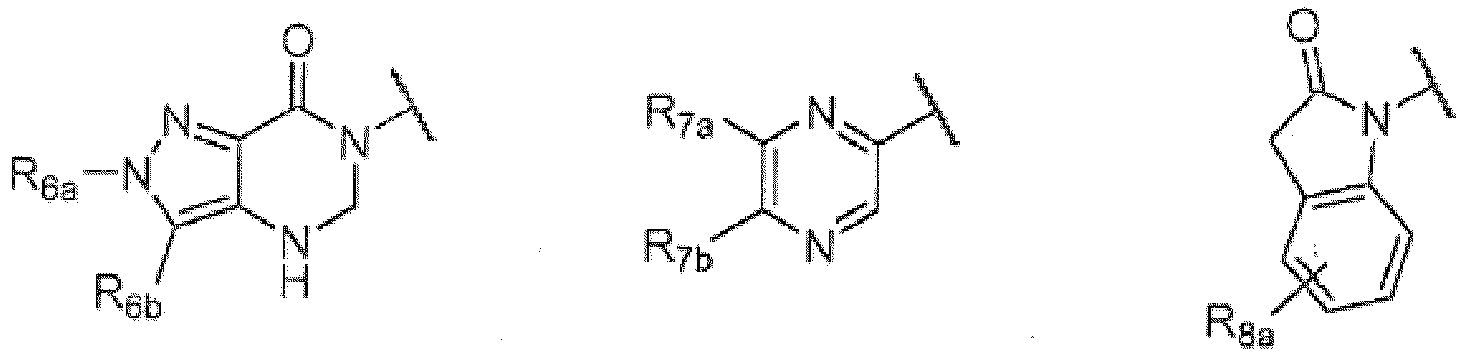 W N oder C ist,X S, O, N oder CH ist,Y CR6a, CR9a, N oder NR6a ist,Z CR6b, N, NR6b, NR9b oder O ist,m fehlt oder CR8a ist,worin, wenn X S ist, Z N ist und M fehlt; und worin, wenn M CR8a ist, Y nicht N ist;R5a H, Halogen, gegebenenfalls substituiertes C1-C6-Alkyl oder gegebenenfalls substituiertes Amino ist;R5b H, Halogen, gegebenenfalls substituiertes C1-C6-Alkyl, gegebenenfalls substituiertes C2-C6-Alkinyl, Benzyl, gegebenenfalls monosubstituiertes C3-C6-Heteroaryl, gegebenenfalls substituiertes C3-C6-Heterocycloalkyl, gegebenenfalls substituiertes C1-C6-Alkoxy, NR'R" oder RaNR'R" ist,worin Ra C1-C6-Alkyl oder C2-C6-Alkenyl ist; undworin R' und R" jeweils unabhängig voneinander aus H, Oxo-substituiertem C1-C6-Alkyl, Hydroxy-substituiertem C1-C6-Alkyl, gegebenenfalls substituiertem C1-C6-Alkoxy, gegebenenfalls substituiertem C3-C6-Cycloalkyl, gegebenenfalls substituiertem C1-C7-Alkylamin, gegebenenfalls substituiertem C2-C7-Alkenylamin, gegebenenfalls substituiertem C3-C10-Heterocycloalkyl, gegebenenfalls substituiertem C4-C10-Aryl, gegebenenfalls substituiertem C3-C10-Heteroaryl, gegebenenfalls substituiertem C5-C10-Alkylaryl, gegebenenfalls substituiertem C4-C10-Alkylheterocycloalkyl und C4-C6-Alkylheteroaryl ausgewählt sind oder worin R' und R" zusammen ein gegebenenfalls substituiertes C3-C8-Heterocycloalkyl bilden, das den N einschließt, an den sie gebunden sind;R6a H, Cyano, Halogen, gegebenenfalls substituiertes C1-C6-Alkyl, gegebenenfalls substituiertes C2-C6-Alkenyl, gegebenenfalls substituiertes C2-C6-Alkinyl, gegebenenfalls substituiertes C3-C6-Cycloalkyl, gegebenenfalls substituiertes C4-C6-Cycloalkenyl, gegebenenfalls substituiertes C2-C6-Inol, gegebenenfalls substituiertes C4-C6-Aryl, gegebenenfalls substituiertes C3-C6-Heteroaryl, gegebenenfalls substituiertes Amino ist;R7a H ist;R7b H oder gegebenenfalls substituiertes C4-C6-Aryl ist,oder worin R7a und R7b zusammen mit den Kohlenstoffatomen, an die sie gebunden sind, eine gegebenenfalls substituierte C1-C6-Arylgruppe bilden;R8a H oder gegebenenfalls substituiertes C4-C6-Aryl ist;R9a Cl, F, Br, I oder Cyano ist;R9b H, gegebenenfalls substituiertes C1-C6-Alkyl, gegebenenfalls substituiertes C4-C6-Aryl, gegebenenfalls substituiertes C3-C8-Heteroaryl, C1-C6-Alkoxy ist,wobei der USP7-Inhibitor beispielsweise
- USP7-Inhibitor zur Verwendung in einem Verfahren zur Behandlung von Krebs durch Hemmung der USP7-Aktivität in Fibroblasten, wobei das Verfahren die Verabreichung einer Kombinationstherapie an ein bedürftiges Individuum umfasst, wobei die Kombinationstherapie eine den USP7-Inhibitor umfassende Zusammensetzung und eine einen Immuncheckpoint-Inhibitor umfassende Zusammensetzung umfasst.
- Immuncheckpoint-Inhibitor zur Verwendung in einem Verfahren zur Behandlung von Krebs, wobei das Verfahren die Verabreichung einer Kombinationstherapie an ein bedürftiges Individuum umfasst, wobei die Kombinationstherapie eine einen USP7-Inhibitor umfassende Zusammensetzung und eine den Immuncheckpoint-Inhibitor umfassende Zusammensetzung umfasst; wobei der USP7-Inhibitor in diesem Verfahren USP7-Aktivität in Fibroblasten hemmt.
- Kombinationstherapie zur Verwendung in einem Verfahren zur Behandlung von Krebs durch Hemmung von USP7-Aktivität in Fibroblasten, wobei das Verfahren die Verabreichung der Kombinationstherapie an ein bedürftiges Individuum umfasst, wobei die Kombinationstherapie eine einen USP7-Inhibitor umfassende Zusammensetzung und eine einen Immuncheckpoint-Inhibitor umfassende Zusammensetzung umfasst.
- USP7-Inhibitor, Immuncheckpoint-Inhibitor oder Kombinationstherapie zur Verwendung nach einem der Ansprüche 12 bis 14, wobei der Immuncheckpoint-Inhibitor aus einem Anti-PD1-Antikörper, einem Anti-PD-L1-Antikörper und einem Anti-CTLA4-Antikörper ausgewählt ist.
Applications Claiming Priority (2)
| Application Number | Priority Date | Filing Date | Title |
|---|---|---|---|
| GBGB2001980.8A GB202001980D0 (en) | 2020-02-13 | 2020-02-13 | Therapeutic mentods |
| PCT/GB2021/050360 WO2021161047A1 (en) | 2020-02-13 | 2021-02-12 | Usp7 inhibitor for use in the treatment of cancer |
Publications (2)
| Publication Number | Publication Date |
|---|---|
| EP4103189A1 EP4103189A1 (de) | 2022-12-21 |
| EP4103189B1 true EP4103189B1 (de) | 2025-05-14 |
Family
ID=69956543
Family Applications (1)
| Application Number | Title | Priority Date | Filing Date |
|---|---|---|---|
| EP21706379.1A Active EP4103189B1 (de) | 2020-02-13 | 2021-02-12 | Usp7-inhibitoren zur verwendung in der behandlung von krebs |
Country Status (7)
| Country | Link |
|---|---|
| US (1) | US20230088286A1 (de) |
| EP (1) | EP4103189B1 (de) |
| JP (1) | JP2023514258A (de) |
| CN (1) | CN115427047A (de) |
| ES (1) | ES3037813T3 (de) |
| GB (1) | GB202001980D0 (de) |
| WO (1) | WO2021161047A1 (de) |
Families Citing this family (3)
| Publication number | Priority date | Publication date | Assignee | Title |
|---|---|---|---|---|
| EP4452984A1 (de) | 2021-12-23 | 2024-10-30 | Molecure S.A. | Deubiquitinasehemmer und verfahren zur verwendung davon |
| CN114480639B (zh) * | 2021-12-24 | 2022-09-30 | 中国医学科学院北京协和医院 | 新靶点用于诊断和治疗垂体腺瘤 |
| GB202200753D0 (en) | 2022-01-21 | 2022-03-09 | Almac Discovery Ltd | Pharmaceutical compounds |
Family Cites Families (22)
| Publication number | Priority date | Publication date | Assignee | Title |
|---|---|---|---|---|
| ATE411300T1 (de) | 2005-08-05 | 2008-10-15 | Hybrigenics Sa | Neue cysteine protease hemmers und ihre therapeutische anwendungen |
| US7875613B2 (en) | 2006-10-30 | 2011-01-25 | Hybrigenics Sa | Tetracyclic inhibitors of cysteine proteases, the pharmaceutical compositions thereof and their therapeutic applications |
| EP2208725A1 (de) | 2009-01-13 | 2010-07-21 | Hybrigenics S.A. | Neuartige spezifische Inhibitoren von Ubiquitin-spezifischer Protease 7, pharmazeutische Zusammensetzungen damit und ihre therapeutischen Anwendungen |
| US8680139B2 (en) | 2009-04-01 | 2014-03-25 | Progenra | Anti-neoplastic compounds, compositions and methods |
| US20110177105A1 (en) | 2010-01-15 | 2011-07-21 | Roman Lopez | Novel Selective Inhibitors of Ubiquitin Specific Protease 7, the Pharmaceutical Compositions Thereof and Their Therapeutic Applications |
| EP2565186A1 (de) | 2011-09-02 | 2013-03-06 | Hybrigenics S.A. | Spezifische und reversible Inhibitoren von ubiquitinspezifischer Protease 7 |
| TWI698436B (zh) | 2014-12-30 | 2020-07-11 | 美商佛瑪治療公司 | 作為泛素特異性蛋白酶7抑制劑之吡咯并及吡唑并嘧啶 |
| MA41291A (fr) | 2014-12-30 | 2017-11-07 | Forma Therapeutics Inc | Dérivés de la pyrrolotriazinone et de l'imidazotriazinone en tant qu'inhibiteurs de la protéase spécifique de l'ubiquitine n° 7 (usp7) pour le traitement d'un cancer |
| HK1248221A1 (zh) | 2015-02-05 | 2018-10-12 | Forma Therapeutics, Inc. | 异噻唑啉酮类,吡唑并嘧啶酮类和吡咯并嘧啶酮作为泛蛋白特异性蛋白酶7抑制剂 |
| HK1248220A1 (zh) | 2015-02-05 | 2018-10-12 | Forma Therapeutics, Inc. | 喹唑啉酮和偶氮喹唑啉作为泛特丁胺蛋白酶7抑制剂 |
| HK1248222A1 (zh) | 2015-02-05 | 2018-10-12 | Forma Therapeutics, Inc. | 噻吩并嘧啶酮作为泛素特异性蛋白酶7抑制剂 |
| WO2016150800A1 (en) | 2015-03-20 | 2016-09-29 | F. Hoffmann-La Roche Ag | Usp7 inhibitor compounds and methods of use |
| US9717717B1 (en) * | 2015-07-31 | 2017-08-01 | Progenra, Inc. | Methods of treating cancer through the inhibition of USP7 and immune system modulation |
| GB201604638D0 (en) | 2016-03-18 | 2016-05-04 | Mission Therapeutics Ltd | Novel compounds |
| GB201604647D0 (en) | 2016-03-18 | 2016-05-04 | Mission Therapeutics Ltd | Novel compounds |
| FR3052452B1 (fr) | 2016-06-10 | 2018-06-22 | Les Laboratoires Servier | Nouveaux derives de piperidinyle, leur procede de preparation et les compositions pharmaceutiques qui les contiennent |
| RU2742271C2 (ru) | 2016-06-10 | 2021-02-04 | Ле Лаборатуар Сервье | Новые (гетеро)арил-замещенные пиперидинильные производные, способ их получения и фармацевтические композиции, содержащие их |
| GB201612938D0 (en) * | 2016-07-26 | 2016-09-07 | Almac Discovery Ltd | Pharmaceutical compounds |
| GB201617758D0 (en) * | 2016-10-20 | 2016-12-07 | Almac Discovery Limited | Pharmaceutical compounds |
| US10722514B2 (en) | 2017-11-13 | 2020-07-28 | Rapt Therapeutics, Inc. | Ubiquitin-specific-processing protease 7 (USP7) modulators and uses thereof |
| CN111542524A (zh) * | 2017-11-29 | 2020-08-14 | 法国施维雅药厂 | 作为泛素特异性蛋白酶7的抑制剂的新的哌啶基衍生物 |
| GB202200753D0 (en) * | 2022-01-21 | 2022-03-09 | Almac Discovery Ltd | Pharmaceutical compounds |
-
2020
- 2020-02-13 GB GBGB2001980.8A patent/GB202001980D0/en not_active Ceased
-
2021
- 2021-02-12 CN CN202180025645.9A patent/CN115427047A/zh active Pending
- 2021-02-12 ES ES21706379T patent/ES3037813T3/es active Active
- 2021-02-12 WO PCT/GB2021/050360 patent/WO2021161047A1/en not_active Ceased
- 2021-02-12 JP JP2022549044A patent/JP2023514258A/ja active Pending
- 2021-02-12 US US17/760,329 patent/US20230088286A1/en active Pending
- 2021-02-12 EP EP21706379.1A patent/EP4103189B1/de active Active
Also Published As
| Publication number | Publication date |
|---|---|
| JP2023514258A (ja) | 2023-04-05 |
| EP4103189A1 (de) | 2022-12-21 |
| WO2021161047A1 (en) | 2021-08-19 |
| US20230088286A1 (en) | 2023-03-23 |
| GB202001980D0 (en) | 2020-04-01 |
| CN115427047A (zh) | 2022-12-02 |
| ES3037813T3 (en) | 2025-10-07 |
Similar Documents
| Publication | Publication Date | Title |
|---|---|---|
| JP7639010B2 (ja) | 化合物及びその使用 | |
| Yingling et al. | Preclinical assessment of galunisertib (LY2157299 monohydrate), a first-in-class transforming growth factor-β receptor type I inhibitor | |
| Wallin et al. | GDC-0980 is a novel class I PI3K/mTOR kinase inhibitor with robust activity in cancer models driven by the PI3K pathway | |
| Rao et al. | The iron chelator Dp44mT causes DNA damage and selective inhibition of topoisomerase IIα in breast cancer cells | |
| AU2026200677A1 (en) | CSF1R inhibitors for use in treating cancer | |
| CN111225903B (zh) | 谷氨酰胺酶抑制剂疗法 | |
| US20230088286A1 (en) | Usp7 inhibitor for use in the treatment of cancer | |
| WO2015026818A1 (en) | Survival benefit in patients with solid tumors with elevated c-reactive protein levels | |
| Hawkins et al. | Microenvironmental factors drive tenascin C and Src cooperation to promote invadopodia formation in ewing sarcoma | |
| US20240197729A1 (en) | ALK-5 Inhibitors and Uses Thereof | |
| EP4138823A1 (de) | Verfahren zur auswahl von patienten zur behandlung mit einer kombination aus einem axl-hemmer und einem immuncheckpoint-modulator | |
| TW201722422A (zh) | 用於治療癌症之合理組合療法 | |
| JP2025533802A (ja) | 癌の治療における使用のための抗pd-1抗体及び/又は抗血管新生剤と組み合わせたperk阻害薬hc-5404 | |
| US20220025036A1 (en) | Use of il-1beta binding antibodies | |
| Chakraborty et al. | AZD4625 is a potent and selective inhibitor of KRASG12C | |
| TANAKA | Profiling of Naquotinib, a Small Molecule Kinase Inhibitor, as EGFR and BTK Inhibitor | |
| CN119677732A (zh) | 双环四氢氮杂䓬衍生物 | |
| HK40080957A (en) | Compounds and uses thereof |
Legal Events
| Date | Code | Title | Description |
|---|---|---|---|
| STAA | Information on the status of an ep patent application or granted ep patent |
Free format text: STATUS: UNKNOWN |
|
| STAA | Information on the status of an ep patent application or granted ep patent |
Free format text: STATUS: THE INTERNATIONAL PUBLICATION HAS BEEN MADE |
|
| PUAI | Public reference made under article 153(3) epc to a published international application that has entered the european phase |
Free format text: ORIGINAL CODE: 0009012 |
|
| STAA | Information on the status of an ep patent application or granted ep patent |
Free format text: STATUS: REQUEST FOR EXAMINATION WAS MADE |
|
| 17P | Request for examination filed |
Effective date: 20220909 |
|
| AK | Designated contracting states |
Kind code of ref document: A1 Designated state(s): AL AT BE BG CH CY CZ DE DK EE ES FI FR GB GR HR HU IE IS IT LI LT LU LV MC MK MT NL NO PL PT RO RS SE SI SK SM TR |
|
| DAV | Request for validation of the european patent (deleted) | ||
| DAX | Request for extension of the european patent (deleted) | ||
| GRAP | Despatch of communication of intention to grant a patent |
Free format text: ORIGINAL CODE: EPIDOSNIGR1 |
|
| STAA | Information on the status of an ep patent application or granted ep patent |
Free format text: STATUS: GRANT OF PATENT IS INTENDED |
|
| INTG | Intention to grant announced |
Effective date: 20230626 |
|
| GRAJ | Information related to disapproval of communication of intention to grant by the applicant or resumption of examination proceedings by the epo deleted |
Free format text: ORIGINAL CODE: EPIDOSDIGR1 |
|
| STAA | Information on the status of an ep patent application or granted ep patent |
Free format text: STATUS: REQUEST FOR EXAMINATION WAS MADE |
|
| GRAP | Despatch of communication of intention to grant a patent |
Free format text: ORIGINAL CODE: EPIDOSNIGR1 |
|
| STAA | Information on the status of an ep patent application or granted ep patent |
Free format text: STATUS: GRANT OF PATENT IS INTENDED |
|
| INTC | Intention to grant announced (deleted) | ||
| INTG | Intention to grant announced |
Effective date: 20231117 |
|
| GRAJ | Information related to disapproval of communication of intention to grant by the applicant or resumption of examination proceedings by the epo deleted |
Free format text: ORIGINAL CODE: EPIDOSDIGR1 |
|
| STAA | Information on the status of an ep patent application or granted ep patent |
Free format text: STATUS: REQUEST FOR EXAMINATION WAS MADE |
|
| INTC | Intention to grant announced (deleted) | ||
| GRAP | Despatch of communication of intention to grant a patent |
Free format text: ORIGINAL CODE: EPIDOSNIGR1 |
|
| STAA | Information on the status of an ep patent application or granted ep patent |
Free format text: STATUS: GRANT OF PATENT IS INTENDED |
|
| INTG | Intention to grant announced |
Effective date: 20240430 |
|
| GRAJ | Information related to disapproval of communication of intention to grant by the applicant or resumption of examination proceedings by the epo deleted |
Free format text: ORIGINAL CODE: EPIDOSDIGR1 |
|
| STAA | Information on the status of an ep patent application or granted ep patent |
Free format text: STATUS: REQUEST FOR EXAMINATION WAS MADE |
|
| GRAP | Despatch of communication of intention to grant a patent |
Free format text: ORIGINAL CODE: EPIDOSNIGR1 |
|
| STAA | Information on the status of an ep patent application or granted ep patent |
Free format text: STATUS: GRANT OF PATENT IS INTENDED |
|
| INTC | Intention to grant announced (deleted) | ||
| INTG | Intention to grant announced |
Effective date: 20241206 |
|
| GRAS | Grant fee paid |
Free format text: ORIGINAL CODE: EPIDOSNIGR3 |
|
| GRAA | (expected) grant |
Free format text: ORIGINAL CODE: 0009210 |
|
| STAA | Information on the status of an ep patent application or granted ep patent |
Free format text: STATUS: THE PATENT HAS BEEN GRANTED |
|
| P01 | Opt-out of the competence of the unified patent court (upc) registered |
Free format text: CASE NUMBER: APP_16114/2025 Effective date: 20250402 |
|
| AK | Designated contracting states |
Kind code of ref document: B1 Designated state(s): AL AT BE BG CH CY CZ DE DK EE ES FI FR GB GR HR HU IE IS IT LI LT LU LV MC MK MT NL NO PL PT RO RS SE SI SK SM TR |
|
| REG | Reference to a national code |
Ref country code: GB Ref legal event code: FG4D |
|
| REG | Reference to a national code |
Ref country code: CH Ref legal event code: EP |
|
| REG | Reference to a national code |
Ref country code: DE Ref legal event code: R096 Ref document number: 602021030744 Country of ref document: DE |
|
| REG | Reference to a national code |
Ref country code: IE Ref legal event code: FG4D |
|
| REG | Reference to a national code |
Ref country code: NL Ref legal event code: MP Effective date: 20250514 |
|
| REG | Reference to a national code |
Ref country code: ES Ref legal event code: FG2A Ref document number: 3037813 Country of ref document: ES Kind code of ref document: T3 Effective date: 20251007 |
|
| PG25 | Lapsed in a contracting state [announced via postgrant information from national office to epo] |
Ref country code: PT Free format text: LAPSE BECAUSE OF FAILURE TO SUBMIT A TRANSLATION OF THE DESCRIPTION OR TO PAY THE FEE WITHIN THE PRESCRIBED TIME-LIMIT Effective date: 20250915 Ref country code: FI Free format text: LAPSE BECAUSE OF FAILURE TO SUBMIT A TRANSLATION OF THE DESCRIPTION OR TO PAY THE FEE WITHIN THE PRESCRIBED TIME-LIMIT Effective date: 20250514 |
|
| REG | Reference to a national code |
Ref country code: LT Ref legal event code: MG9D |
|
| PG25 | Lapsed in a contracting state [announced via postgrant information from national office to epo] |
Ref country code: NO Free format text: LAPSE BECAUSE OF FAILURE TO SUBMIT A TRANSLATION OF THE DESCRIPTION OR TO PAY THE FEE WITHIN THE PRESCRIBED TIME-LIMIT Effective date: 20250814 Ref country code: GR Free format text: LAPSE BECAUSE OF FAILURE TO SUBMIT A TRANSLATION OF THE DESCRIPTION OR TO PAY THE FEE WITHIN THE PRESCRIBED TIME-LIMIT Effective date: 20250815 |
|
| PG25 | Lapsed in a contracting state [announced via postgrant information from national office to epo] |
Ref country code: NL Free format text: LAPSE BECAUSE OF FAILURE TO SUBMIT A TRANSLATION OF THE DESCRIPTION OR TO PAY THE FEE WITHIN THE PRESCRIBED TIME-LIMIT Effective date: 20250514 Ref country code: PL Free format text: LAPSE BECAUSE OF FAILURE TO SUBMIT A TRANSLATION OF THE DESCRIPTION OR TO PAY THE FEE WITHIN THE PRESCRIBED TIME-LIMIT Effective date: 20250514 |
|
| REG | Reference to a national code |
Ref country code: AT Ref legal event code: MK05 Ref document number: 1794252 Country of ref document: AT Kind code of ref document: T Effective date: 20250514 |
|
| PG25 | Lapsed in a contracting state [announced via postgrant information from national office to epo] |
Ref country code: BG Free format text: LAPSE BECAUSE OF FAILURE TO SUBMIT A TRANSLATION OF THE DESCRIPTION OR TO PAY THE FEE WITHIN THE PRESCRIBED TIME-LIMIT Effective date: 20250514 |
|
| PG25 | Lapsed in a contracting state [announced via postgrant information from national office to epo] |
Ref country code: HR Free format text: LAPSE BECAUSE OF FAILURE TO SUBMIT A TRANSLATION OF THE DESCRIPTION OR TO PAY THE FEE WITHIN THE PRESCRIBED TIME-LIMIT Effective date: 20250514 |
|
| PG25 | Lapsed in a contracting state [announced via postgrant information from national office to epo] |
Ref country code: AT Free format text: LAPSE BECAUSE OF FAILURE TO SUBMIT A TRANSLATION OF THE DESCRIPTION OR TO PAY THE FEE WITHIN THE PRESCRIBED TIME-LIMIT Effective date: 20250514 |
|
| PG25 | Lapsed in a contracting state [announced via postgrant information from national office to epo] |
Ref country code: RS Free format text: LAPSE BECAUSE OF FAILURE TO SUBMIT A TRANSLATION OF THE DESCRIPTION OR TO PAY THE FEE WITHIN THE PRESCRIBED TIME-LIMIT Effective date: 20250814 |
|
| PG25 | Lapsed in a contracting state [announced via postgrant information from national office to epo] |
Ref country code: IS Free format text: LAPSE BECAUSE OF FAILURE TO SUBMIT A TRANSLATION OF THE DESCRIPTION OR TO PAY THE FEE WITHIN THE PRESCRIBED TIME-LIMIT Effective date: 20250914 |
|
| PG25 | Lapsed in a contracting state [announced via postgrant information from national office to epo] |
Ref country code: LV Free format text: LAPSE BECAUSE OF FAILURE TO SUBMIT A TRANSLATION OF THE DESCRIPTION OR TO PAY THE FEE WITHIN THE PRESCRIBED TIME-LIMIT Effective date: 20250514 |
|
| PG25 | Lapsed in a contracting state [announced via postgrant information from national office to epo] |
Ref country code: SM Free format text: LAPSE BECAUSE OF FAILURE TO SUBMIT A TRANSLATION OF THE DESCRIPTION OR TO PAY THE FEE WITHIN THE PRESCRIBED TIME-LIMIT Effective date: 20250514 Ref country code: DK Free format text: LAPSE BECAUSE OF FAILURE TO SUBMIT A TRANSLATION OF THE DESCRIPTION OR TO PAY THE FEE WITHIN THE PRESCRIBED TIME-LIMIT Effective date: 20250514 |
|
| PG25 | Lapsed in a contracting state [announced via postgrant information from national office to epo] |
Ref country code: CZ Free format text: LAPSE BECAUSE OF FAILURE TO SUBMIT A TRANSLATION OF THE DESCRIPTION OR TO PAY THE FEE WITHIN THE PRESCRIBED TIME-LIMIT Effective date: 20250514 |
|
| PG25 | Lapsed in a contracting state [announced via postgrant information from national office to epo] |
Ref country code: EE Free format text: LAPSE BECAUSE OF FAILURE TO SUBMIT A TRANSLATION OF THE DESCRIPTION OR TO PAY THE FEE WITHIN THE PRESCRIBED TIME-LIMIT Effective date: 20250514 |
|
| PG25 | Lapsed in a contracting state [announced via postgrant information from national office to epo] |
Ref country code: SK Free format text: LAPSE BECAUSE OF FAILURE TO SUBMIT A TRANSLATION OF THE DESCRIPTION OR TO PAY THE FEE WITHIN THE PRESCRIBED TIME-LIMIT Effective date: 20250514 |
|
| REG | Reference to a national code |
Ref country code: DE Ref legal event code: R097 Ref document number: 602021030744 Country of ref document: DE |
|
| REG | Reference to a national code |
Ref country code: CH Ref legal event code: U11 Free format text: ST27 STATUS EVENT CODE: U-0-0-U10-U11 (AS PROVIDED BY THE NATIONAL OFFICE) Effective date: 20260301 |
|
| PGFP | Annual fee paid to national office [announced via postgrant information from national office to epo] |
Ref country code: LU Payment date: 20260216 Year of fee payment: 6 |
|
| PLBE | No opposition filed within time limit |
Free format text: ORIGINAL CODE: 0009261 |
|
| STAA | Information on the status of an ep patent application or granted ep patent |
Free format text: STATUS: NO OPPOSITION FILED WITHIN TIME LIMIT |
|
| REG | Reference to a national code |
Ref country code: CH Ref legal event code: L10 Free format text: ST27 STATUS EVENT CODE: U-0-0-L10-L00 (AS PROVIDED BY THE NATIONAL OFFICE) Effective date: 20260325 |
|
| PGFP | Annual fee paid to national office [announced via postgrant information from national office to epo] |
Ref country code: GB Payment date: 20260216 Year of fee payment: 6 |
|
| PGFP | Annual fee paid to national office [announced via postgrant information from national office to epo] |
Ref country code: ES Payment date: 20260303 Year of fee payment: 6 |
|
| PGFP | Annual fee paid to national office [announced via postgrant information from national office to epo] |
Ref country code: IE Payment date: 20260216 Year of fee payment: 6 Ref country code: DE Payment date: 20260217 Year of fee payment: 6 |
|
| PGFP | Annual fee paid to national office [announced via postgrant information from national office to epo] |
Ref country code: BE Payment date: 20260216 Year of fee payment: 6 Ref country code: IT Payment date: 20260223 Year of fee payment: 6 |
|
| PGFP | Annual fee paid to national office [announced via postgrant information from national office to epo] |
Ref country code: FR Payment date: 20260217 Year of fee payment: 6 |
|
| 26N | No opposition filed |
Effective date: 20260217 |
|
| PGFP | Annual fee paid to national office [announced via postgrant information from national office to epo] |
Ref country code: CH Payment date: 20260301 Year of fee payment: 6 |