EP4097787B1 - Batteriepack mit verstärkungselementen - Google Patents
Batteriepack mit verstärkungselementen Download PDFInfo
- Publication number
- EP4097787B1 EP4097787B1 EP21702862.0A EP21702862A EP4097787B1 EP 4097787 B1 EP4097787 B1 EP 4097787B1 EP 21702862 A EP21702862 A EP 21702862A EP 4097787 B1 EP4097787 B1 EP 4097787B1
- Authority
- EP
- European Patent Office
- Prior art keywords
- battery pack
- battery
- cell
- reinforcing elements
- rows
- Prior art date
- Legal status (The legal status is an assumption and is not a legal conclusion. Google has not performed a legal analysis and makes no representation as to the accuracy of the status listed.)
- Active
Links
Images


Classifications
-
- H—ELECTRICITY
- H01—ELECTRIC ELEMENTS
- H01M—PROCESSES OR MEANS, e.g. BATTERIES, FOR THE DIRECT CONVERSION OF CHEMICAL ENERGY INTO ELECTRICAL ENERGY
- H01M50/00—Constructional details or processes of manufacture of the non-active parts of electrochemical cells other than fuel cells, e.g. hybrid cells
- H01M50/20—Mountings; Secondary casings or frames; Racks, modules or packs; Suspension devices; Shock absorbers; Transport or carrying devices; Holders
- H01M50/204—Racks, modules or packs for multiple batteries or multiple cells
- H01M50/207—Racks, modules or packs for multiple batteries or multiple cells characterised by their shape
- H01M50/213—Racks, modules or packs for multiple batteries or multiple cells characterised by their shape adapted for cells having curved cross-section, e.g. round or elliptic
-
- H—ELECTRICITY
- H01—ELECTRIC ELEMENTS
- H01M—PROCESSES OR MEANS, e.g. BATTERIES, FOR THE DIRECT CONVERSION OF CHEMICAL ENERGY INTO ELECTRICAL ENERGY
- H01M50/00—Constructional details or processes of manufacture of the non-active parts of electrochemical cells other than fuel cells, e.g. hybrid cells
- H01M50/20—Mountings; Secondary casings or frames; Racks, modules or packs; Suspension devices; Shock absorbers; Transport or carrying devices; Holders
- H01M50/289—Mountings; Secondary casings or frames; Racks, modules or packs; Suspension devices; Shock absorbers; Transport or carrying devices; Holders characterised by spacing elements or positioning means within frames, racks or packs
- H01M50/291—Mountings; Secondary casings or frames; Racks, modules or packs; Suspension devices; Shock absorbers; Transport or carrying devices; Holders characterised by spacing elements or positioning means within frames, racks or packs characterised by their shape
-
- H—ELECTRICITY
- H01—ELECTRIC ELEMENTS
- H01M—PROCESSES OR MEANS, e.g. BATTERIES, FOR THE DIRECT CONVERSION OF CHEMICAL ENERGY INTO ELECTRICAL ENERGY
- H01M10/00—Secondary cells; Manufacture thereof
- H01M10/04—Construction or manufacture in general
- H01M10/0422—Cells or battery with cylindrical casing
-
- H—ELECTRICITY
- H01—ELECTRIC ELEMENTS
- H01M—PROCESSES OR MEANS, e.g. BATTERIES, FOR THE DIRECT CONVERSION OF CHEMICAL ENERGY INTO ELECTRICAL ENERGY
- H01M10/00—Secondary cells; Manufacture thereof
- H01M10/05—Accumulators with non-aqueous electrolyte
- H01M10/052—Li-accumulators
-
- H—ELECTRICITY
- H01—ELECTRIC ELEMENTS
- H01M—PROCESSES OR MEANS, e.g. BATTERIES, FOR THE DIRECT CONVERSION OF CHEMICAL ENERGY INTO ELECTRICAL ENERGY
- H01M50/00—Constructional details or processes of manufacture of the non-active parts of electrochemical cells other than fuel cells, e.g. hybrid cells
- H01M50/20—Mountings; Secondary casings or frames; Racks, modules or packs; Suspension devices; Shock absorbers; Transport or carrying devices; Holders
- H01M50/218—Mountings; Secondary casings or frames; Racks, modules or packs; Suspension devices; Shock absorbers; Transport or carrying devices; Holders characterised by the material
- H01M50/22—Mountings; Secondary casings or frames; Racks, modules or packs; Suspension devices; Shock absorbers; Transport or carrying devices; Holders characterised by the material of the casings or racks
- H01M50/227—Organic material
-
- H—ELECTRICITY
- H01—ELECTRIC ELEMENTS
- H01M—PROCESSES OR MEANS, e.g. BATTERIES, FOR THE DIRECT CONVERSION OF CHEMICAL ENERGY INTO ELECTRICAL ENERGY
- H01M50/00—Constructional details or processes of manufacture of the non-active parts of electrochemical cells other than fuel cells, e.g. hybrid cells
- H01M50/20—Mountings; Secondary casings or frames; Racks, modules or packs; Suspension devices; Shock absorbers; Transport or carrying devices; Holders
- H01M50/251—Mountings; Secondary casings or frames; Racks, modules or packs; Suspension devices; Shock absorbers; Transport or carrying devices; Holders specially adapted for stationary devices, e.g. power plant buffering or backup power supplies
-
- H—ELECTRICITY
- H01—ELECTRIC ELEMENTS
- H01M—PROCESSES OR MEANS, e.g. BATTERIES, FOR THE DIRECT CONVERSION OF CHEMICAL ENERGY INTO ELECTRICAL ENERGY
- H01M50/00—Constructional details or processes of manufacture of the non-active parts of electrochemical cells other than fuel cells, e.g. hybrid cells
- H01M50/20—Mountings; Secondary casings or frames; Racks, modules or packs; Suspension devices; Shock absorbers; Transport or carrying devices; Holders
- H01M50/289—Mountings; Secondary casings or frames; Racks, modules or packs; Suspension devices; Shock absorbers; Transport or carrying devices; Holders characterised by spacing elements or positioning means within frames, racks or packs
- H01M50/293—Mountings; Secondary casings or frames; Racks, modules or packs; Suspension devices; Shock absorbers; Transport or carrying devices; Holders characterised by spacing elements or positioning means within frames, racks or packs characterised by the material
-
- H—ELECTRICITY
- H01—ELECTRIC ELEMENTS
- H01M—PROCESSES OR MEANS, e.g. BATTERIES, FOR THE DIRECT CONVERSION OF CHEMICAL ENERGY INTO ELECTRICAL ENERGY
- H01M50/00—Constructional details or processes of manufacture of the non-active parts of electrochemical cells other than fuel cells, e.g. hybrid cells
- H01M50/50—Current conducting connections for cells or batteries
- H01M50/502—Interconnectors for connecting terminals of adjacent batteries; Interconnectors for connecting cells outside a battery casing
- H01M50/507—Interconnectors for connecting terminals of adjacent batteries; Interconnectors for connecting cells outside a battery casing comprising an arrangement of two or more busbars within a container structure, e.g. busbar modules
-
- H—ELECTRICITY
- H01—ELECTRIC ELEMENTS
- H01M—PROCESSES OR MEANS, e.g. BATTERIES, FOR THE DIRECT CONVERSION OF CHEMICAL ENERGY INTO ELECTRICAL ENERGY
- H01M50/00—Constructional details or processes of manufacture of the non-active parts of electrochemical cells other than fuel cells, e.g. hybrid cells
- H01M50/50—Current conducting connections for cells or batteries
- H01M50/502—Interconnectors for connecting terminals of adjacent batteries; Interconnectors for connecting cells outside a battery casing
- H01M50/509—Interconnectors for connecting terminals of adjacent batteries; Interconnectors for connecting cells outside a battery casing characterised by the type of connection, e.g. mixed connections
-
- H—ELECTRICITY
- H01—ELECTRIC ELEMENTS
- H01M—PROCESSES OR MEANS, e.g. BATTERIES, FOR THE DIRECT CONVERSION OF CHEMICAL ENERGY INTO ELECTRICAL ENERGY
- H01M2220/00—Batteries for particular applications
- H01M2220/10—Batteries in stationary systems, e.g. emergency power source in plant
-
- Y—GENERAL TAGGING OF NEW TECHNOLOGICAL DEVELOPMENTS; GENERAL TAGGING OF CROSS-SECTIONAL TECHNOLOGIES SPANNING OVER SEVERAL SECTIONS OF THE IPC; TECHNICAL SUBJECTS COVERED BY FORMER USPC CROSS-REFERENCE ART COLLECTIONS [XRACs] AND DIGESTS
- Y02—TECHNOLOGIES OR APPLICATIONS FOR MITIGATION OR ADAPTATION AGAINST CLIMATE CHANGE
- Y02E—REDUCTION OF GREENHOUSE GAS [GHG] EMISSIONS, RELATED TO ENERGY GENERATION, TRANSMISSION OR DISTRIBUTION
- Y02E60/00—Enabling technologies; Technologies with a potential or indirect contribution to GHG emissions mitigation
- Y02E60/10—Energy storage using batteries
-
- Y—GENERAL TAGGING OF NEW TECHNOLOGICAL DEVELOPMENTS; GENERAL TAGGING OF CROSS-SECTIONAL TECHNOLOGIES SPANNING OVER SEVERAL SECTIONS OF THE IPC; TECHNICAL SUBJECTS COVERED BY FORMER USPC CROSS-REFERENCE ART COLLECTIONS [XRACs] AND DIGESTS
- Y02—TECHNOLOGIES OR APPLICATIONS FOR MITIGATION OR ADAPTATION AGAINST CLIMATE CHANGE
- Y02P—CLIMATE CHANGE MITIGATION TECHNOLOGIES IN THE PRODUCTION OR PROCESSING OF GOODS
- Y02P70/00—Climate change mitigation technologies in the production process for final industrial or consumer products
- Y02P70/50—Manufacturing or production processes characterised by the final manufactured product
Definitions
- the invention relates to a battery pack which has reinforcing elements as short-circuit protection during production.
- battery cells are combined in a battery pack to form a battery, whereby the cells are connected to one another in series and parallel connections in order to achieve a desired voltage and a desired capacity of the battery.
- the battery cells are stored in cell holders and connected to each other using appropriate cell connectors.
- the EP 2 891 195 B1 shows, for example, a battery pack that includes a large number of battery cells.
- a cell carrier holds the plurality of batteries and a connector is connected to the plurality of batteries.
- a circuit substrate is used to mount circuits for the plurality of batteries.
- the cell carrier is integrally formed with battery cell storage units that support the plurality of batteries, a base unit that supports the battery cell storage units, and shock relief ribs. Each shock relief rib is formed between an outer periphery of the base unit and an outer surface of each of the battery cell storage units and is designed in a shape capable of being deformed in a direction in which a shock occurs.
- the US 2013/122341 A1 , US 2012/100399 A1 and US 2005/031945 A1 also disclose further examples of battery packs with cell holders.
- An object of the invention is therefore to provide a battery pack which has improved short-circuit protection during production.
- a battery pack according to the invention comprises a large number of cell holders for holding battery cells.
- the cell holders are arranged in N rows and M columns and are integrally connected to one another, so that a flat battery cell holder is formed, with M and N each ⁇ 3.
- M and N can each be > 10.
- the cell holders are designed to be open in the vertical direction so that both poles of battery cells stored therein can be contacted. This means that the positive pole of a battery cell can be contacted on an upper side of the battery cell holder and the negative pole of the same battery cell can be contacted on the opposite lower side of the battery cell holder.
- a large number of battery cells are stored in the cell holders with the same polarity within the N rows and with opposite polarity within the M columns.
- the contactable polarity of the battery cells on each side of the battery cell holder alternates with each of the N rows.
- the battery pack also comprises a large number of cell connectors, which are arranged on both sides of the battery cell holder, each offset over two of the N rows, and which interconnect the battery cells with one another.
- the battery pack also comprises a plurality of reinforcing elements, which are arranged between the N rows at a distance of two rows each, such that they separate the cell connectors arranged above the two of the N rows.
- the reinforcing elements are designed to be higher in a longitudinal direction than the cell holders.
- the reinforcing elements serve as a barrier against falling metal objects.
- the metal objects lie on the reinforcing elements and can therefore no longer short-circuit the battery cells via the cell connectors.
- the reinforcing elements can be integrally connected to the cell holders.
- the cell holders can form a one-piece battery cell holder with the reinforcing elements.
- the stability of the battery pack against horizontal deformation can also be advantageously improved, which in turn improves the stackability of the battery pack.
- the reinforcing elements can be designed as reinforcing ribs with at least one incision.
- a reinforcing rib can, for example, be designed in the form of a partition wall which has at least one incision in an area between adjacent cell holders. The technical effect of the at least one incision can be compared with the effect of an expansion joint, which can compensate for deformation of the battery cell holder, for example in response to heating/cooling.
- the reinforcing ribs can have two incisions.
- the cell holders and the reinforcing elements can be made of plastic. Particularly preferably, the cell holders and the reinforcing elements can be made from the same plastic.
- the plastic can be acrylic butadiene styrene (ABS).
- the cell holders and the reinforcing elements can be manufactured using injection molding or vacuum casting, for example as a one-piece battery cell holder.
- the above-mentioned at least one incision can positively influence the rheology of the component during the manufacturing process, i.e. prevent, for example, deformation of the battery cell holder in response to temperature differences, for example in a cooling process.
- pin-shaped spacers can be arranged in series on the cell holders, alternating with the reinforcing elements.
- the reinforcing elements can extend in the longitudinal direction to below the spacers.
- the spacers can be made higher in the longitudinal direction than the reinforcing elements.
- the reinforcing elements can preferably extend into a range of 1.0 mm to 0.2 mm below the spacers. Very particularly preferably, however, the reinforcing elements can extend up to 0.5 mm below the spacers. In other words, the reinforcing elements can extend in the longitudinal direction into an area above the cell holders and below the spacers.
- the pin-shaped spacers can also improve the stackability of the battery pack.
- such spacers can be used to define the distance to a housing in which the battery pack can be installed. In this way, for example, leakage current can be avoided. This is particularly important for meeting specific protection classes.
- battery cells can be connected together in series and parallel connections to achieve a desired voltage and capacity.
- the battery cells M can be connected in parallel and N in series.
- the circuit 15 can be serial and 16 parallel.
- the type of battery cells is not restricted according to the invention. In a preferred embodiment, however, the battery cells can be plastic-coated round cells.
- the type of battery cells is also not restricted according to the invention.
- the battery cells can be lithium iron phosphate cells. In this way, the safety of the battery pack can be advantageously increased, since lithium iron phosphate cells are comparatively less reactive.
- the shape of the cell holders is not restricted. In a further preferred embodiment, however, the cell holders can be cylindrical in shape.
- the cylindrical shape is particularly suitable for storing the above-mentioned plastic-coated round cells.
- the battery pack can have at least 4 feedthroughs for connecting elements.
- the term connecting elements is to be interpreted broadly here and can include elements of both a plug connection and a screw connection. However, screw connections, for example screws and nuts, are preferred.
- the battery pack can be connected to a surrounding housing, for example.
- the battery pack according to the invention is preferably used in a battery module for home applications.
- a home application includes in particular modular storage systems, which, for example, make single or multi-family homes independent of the public power grid.
- FIG. 1 schematically shows a battery pack according to one embodiment.
- the battery pack 10 comprises a plurality of battery cells 2, each of which is surrounded by corresponding cell holders 3 in order to store the battery cells 2 therein.
- the cell holders 3 are arranged in N rows and M columns and are integrally connected to one another, so that a flat battery cell holder 1 is formed with M and N each ⁇ 3.
- the cell holders 3 are designed to be open in the vertical direction, ie towards the upper and lower sides of the battery cell holder 1.
- the battery cells 2 can be stored in these cell holders 3, for example via appropriate fixing elements (not shown). Due to the design of the cell holder 3, which is open at the top and bottom, the battery cells 2 stored therein can be placed on both sides of the battery cell holder 1 can be contacted, ie both the positive pole and the negative pole of a battery cell 2 can be contacted.
- the shape of the cell holder 3 is not restricted according to the invention and can be based on the shape of the battery cells 2 to be stored therein. In a preferred embodiment, however, the cell holders 3 can be cylindrical in shape.
- the type and type of battery cells 2 are also not restricted according to the invention.
- the battery cells 2 can be plastic-coated round cells 2.
- the battery cells 2 can also be lithium iron phosphate cells.
- Lithium iron phosphate cells have the advantage that they are less reactive and therefore safer compared to other battery cells.
- the battery pack 10 also has a large number of cell connectors 5.
- Cell connectors are generally used to combine battery cells in a battery pack to form a battery, with the battery cells being connected in series and parallel.
- cell connectors 5 are arranged on both sides of the battery cell holder 1, each offset over two of the N rows of cell holders 3, which interconnect the battery cells 2 stored therein.
- the type of connection is not restricted according to the invention and can be selected according to the application requirements for the battery pack.
- the battery cells 2 can be connected M in parallel and N in series.
- the battery cells 16 can be connected in parallel (16p) and 15 in series (15s).
- the battery pack 10 has a large number of reinforcing elements 4.
- the reinforcing elements 4 are arranged between the N rows of cell holders 3 at a distance of two rows each. In a longitudinal direction, the reinforcing elements 4 are designed higher than the cell holders 3, such that they separate the cell connectors 5 arranged above the two of the N rows. In other words, reinforcing elements 4 are arranged alternately at a distance of two rows based on the rows connected via cell connectors.
- the reinforcing elements offer the advantage that metallic objects that could fall during the production of the battery pack no longer fall over several rows of cells come to rest and in this way can cause a short circuit.
- the reinforcing elements thus serve as a kind of barrier.
- the reinforcing elements can also reinforce the battery pack, in particular the flat battery cell holder, against deformation.
- the cell holders 3 and the reinforcing elements 4 can be made of plastic. Particularly preferably, the cell holders 3 and the reinforcing elements 4 can be made from the same plastic.
- the plastic can be acrylic butadiene styrene (ABS).
- ABS acrylic butadiene styrene
- the cell holders 3 and the reinforcing elements 4 can be manufactured using injection molding or vacuum casting.
- the reinforcing elements 4 can be integrally connected to the cell holders 3. In this way, the stability of the battery cell holder can be increased even further and possible slipping of the reinforcing elements can be avoided.
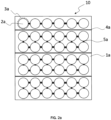
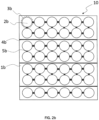
- Figure 1 show the Figures 2a and 2 B schematically both sides of a battery pack according to one embodiment.
- Figure 2a 1a corresponds to an upper side of the battery cell holder
- Figure 2b 1b corresponds to a lower side of the battery cell holder.
- the other reference numbers are analogous to Figure 1 marked with the indices a and b.
- cell connectors 5a, 5b are arranged on both sides 1a, 1b of the battery cell holder, each offset over two of the N rows and interconnect the battery cells 2a, 2b stored in the cell holders 3a, 3b with one another.
- reinforcing elements 4a, 4b are arranged at a distance of two rows between the N rows.
- the reinforcing elements 4a, 4b are each designed higher in a longitudinal direction than the cell holders 3a, 3b, such that they separate the cell connectors 5a, 5b arranged above the two of the N rows.
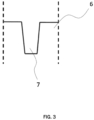
- FIG 3 shows schematically a reinforcing element according to an embodiment.
- the reinforcing element is shown here in detail and is designed as a reinforcing rib 6 in this embodiment.
- a reinforcing rib 6 can be between two be arranged adjacent cell holders.
- the reinforcing ribs 6 can be arranged in the row direction between the adjacent cell holders and extend over the entire length of a row.
- the reinforcing ribs 6 can be made higher in a longitudinal direction than the cell holders.
- the reinforcing elements can be designed as reinforcing ribs with at least one incision.
- the in the embodiment in Figure 3 Reinforcing rib 6 shown has an incision 7.
- the incision 7 can in particular be wedge-shaped.
- the at least one incision can advantageously function as a type of expansion joint, which can prevent deformation of the battery cell holder, for example depending on the temperature. If the cell holders and the reinforcing ribs are made in one piece, for example from plastic using injection molding or vacuum casting, the at least one incision can prevent deformation of the resulting battery cell holder during the cooling process.
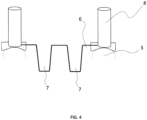
- Figure 4 shows schematically a section of a battery pack according to an embodiment with spacers and a reinforcing element.
- the reinforcing element is designed as a reinforcing rib 6 with two incisions 7.
- the two incisions 7 can be particularly wedge-shaped.
- the reinforcing ribs 6 can extend in the longitudinal direction to below the spacers 8, preferably to a range of 1.0 mm to 0.2 mm, but particularly preferably up to 0.5 mm below the spacers 8.
- the pin-shaped spacers 8 can alternate to the reinforcing ribs 6 in the row direction on the cell holders 3. If the battery pack is installed in a housing, for example, a distance to the housing wall can advantageously be defined using the spacers. In this way, the occurrence of current leakage can be avoided.
- the spacers can also improve the stackability of the battery packs.
- FIG. 5 shows schematically an embodiment of a battery pack with bushings for connecting elements.
- the battery pack 10 can have at least four feedthroughs 9a, 9b for connecting elements.
- the four bushings can either be in the middle 9b on the Battery pack 10 can be arranged or in the area of the corners 9a of the battery pack 10.
- the battery pack 10 can also have four bushings both in the middle 9b and in the area of the corners 9a.
- the bushings 9a, 9b are not restricted in relation to the connecting elements.
- the connecting elements can include plug connections or screw connections, such as screws and nuts, and the bushings 9a, 9b can be designed accordingly.
- the bushings 9a, 9b can advantageously be designed for screw connections.
- the battery pack 10 can be connected, for example, to a surrounding housing via the connecting elements guided through the bushings 9a, 9b.
- the battery pack according to the invention can be used in a battery module for home applications.
- Home applications can in particular be modular storage systems, which, for example, make single or multi-family homes independent of the public power grid and are powered by alternative energy sources, such as solar energy.
Landscapes
- Chemical & Material Sciences (AREA)
- Chemical Kinetics & Catalysis (AREA)
- Electrochemistry (AREA)
- General Chemical & Material Sciences (AREA)
- Engineering & Computer Science (AREA)
- Manufacturing & Machinery (AREA)
- Battery Mounting, Suspending (AREA)
Description
- Die Erfindung betrifft einen Batteriepack, welcher Verstärkungselemente als Kurzschlussschutz während der Fertigung aufweist.
- In Zeiten erneuerbarer Energien spielen Energiespeicher insbesondere für Heimanwendungen eine immer größere Rolle. Dies führte bislang zur Entwicklung einer Vielzahl unterschiedlicher Batterietypen, wie z.B. Zink-Mangan-, Zink-Luft-, Quecksilber-Zink- oder Lithium-Ionen-Batterien. Aufgrund der vergleichsweise geringeren Reaktivität und der dadurch höheren Sicherheit sind für Heimanwendungen vor allem Lithium-Eisenphosphat-Batterien von großem Interesse.
- Um leistungsstärkere Batterien herzustellen, werden mehrere Batteriezellen in einem Batteriepack zu einer Batterie zusammengefasst, wobei die Zellen in Reihen- und Parallelschaltungen miteinander verschalten sind, um eine gewünschte Spannung und eine gewünschte Kapazität der Batterie zu erreichen. Hierzu werden die Batteriezellen in Zellhaltern gelagert und über entsprechende Zellverbinder miteinander verschalten.
- Die
EP 2 891 195 B1 zeigt beispielsweise einen Batteriepack, welcher eine Vielzahl von Batteriezellen umfasst. Ein Zellenträger hält die Vielzahl von Batterien und ein Verbindungsteil ist mit der Vielzahl von Batterien verbunden. Ein Schaltungssubstrat wird zum Befestigen von Schaltungen für die Vielzahl von Batterien verwendet. Der Zellenträger ist integral mit Batteriezellenlagereinheiten gebildet, die die Vielzahl von Batterien lagern, einer Basiseinheit, die die Batteriezellenlagereinheiten trägt und Stoßentspannungsrippen. Jede Stoßentspannungsrippe ist zwischen einem Außenumfang der Basiseinheit und einer Außenoberfläche jeder der Batteriezellenlagereinheiten gebildet und in einer Form gestaltet, die fähig ist, in einer Richtung, in der ein Stoß erfolgt, verformt zu werden. DieUS 2013/122341 A1 ,US 2012/100399 A1 undUS 2005/031945 A1 offenbaren ebenfalls weitere Beispiele für Batteriepack mit Zellhalter. - Insbesondere die Fertigung von Batteriepacks birgt jedoch nach wie vor Risiken. So können beispielsweise metallische Gegenstände während der Fertigung herabfallen und Kurzschlüsse an den Zellverbindern verursachen. Dies kann etwa beim Einsetzen der Zellverbinder selbst geschehen. Ebenso können aber auch Schrauben und Muttern, welche beispielsweise zur Befestigung von CSC-, T-CSC-Platinen oder eines Gehäuses verwendet werden, auf bereits eingesetzte Zellverbinder fallen und diese kurzschließen. Denkbar ist auch das versehentliche Herabfallen persönlicher Gegenstände von mit der Fertigung eines Batteriepacks betrauten Mitarbeitern.
- Eine Aufgabe der Erfindung ist es daher, einen Batteriepack bereit zu stellen, welcher einen verbesserten Kurzschlussschutz während der Fertigung aufweist.
- Die Aufgabe wird mit den Merkmalen des unabhängigen Anspruchs 1 und des nebengeordneten Anspruchs 15 gelöst. Die abhängigen Ansprüche sind auf besondere Ausführungsformen der Erfindung gerichtet.
- Ein erfindungsgemäßer Batteriepack umfasst eine Vielzahl an Zellhaltern zur Aufnahme von Batteriezellen. Die Zellhalter sind in N Reihen und M Spalten angeordnet und integral miteinander verbunden, so dass eine flächige Batteriezellhalterung gebildet wird, mit M und N jeweils ≥ 3. In einer bevorzugten Ausführungsform können M und N jeweils > 10 sein.
- Die Zellhalter sind in vertikaler Richtung offen ausgebildet, so dass beide Pole darin gelagerter Batteriezellen kontaktiert werden können. Das bedeutet, dass der positive Pol einer Batteriezelle auf einer oberen Seite der Batteriezellhalterung kontaktiert werden kann und der negative Pol der gleichen Batteriezelle auf der gegenüberliegenden unteren Seite der Batteriezellhalterung kontaktiert werden kann.
- Erfindungsgemäß wird eine Vielzahl an Batteriezellen in den Zellhaltern jeweils gleichpolig innerhalb der N Reihen und gegenpolig innerhalb der M Spalten gelagert. In anderen Worten, die kontaktierbare Polung der Batteriezellen auf jeweils einer Seite der Batteriezellhalterung alterniert mit jeder der N Reihen.
- Erfindungsgemäß umfasst der Batteriepack außerdem eine Vielzahl an Zellverbindern, welche beidseitig der Batteriezellhalterung jeweils versetzt über zwei der N Reihen angeordnet sind und die Batteriezellen miteinander verschalten. So können beispielsweise die Batteriezellen der Reihen mit N = 1 und N = 2, N = 3 und N = 4, N = 5 und N = 6 usw. auf der oberen Seite der Batteriezellhalterung über Zellverbinder verschalten sein, wohingegen auf der gegenüberliegenden unteren Seite entsprechend die Batteriezellen der Reihen mit N = 2 und N = 3, N = 4 und N = 5, N = 6 und N = 7 usw. über Zellverbinder verschalten sein können.
- Erfindungsgemäß umfasst der Batteriepack überdies eine Vielzahl an Verstärkungselementen, welche zwischen den N Reihen im Abstand von jeweils zwei Reihen angeordnet sind, derart, dass sie die über den jeweils zwei der N Reihen angeordneten Zellverbinder separieren. Die Verstärkungselemente sind dabei in einer Längsrichtung höher ausgebildet, als die Zellhalter.
- Durch die Separation der Zellverbinder mittels der Verstärkungselemente kann vorteilhaft ein höherer Schutz gegen Kurzschlüsse während der Fertigung des Batteriepacks erzielt werden, da die Verstärkungselemente als Barriere gegen herabfallende Metallgegenstände dienen. Die Metallgegenstände kommen auf den Verstärkungselementen zu liegen und können somit die Batteriezellen über die Zellverbinder nicht mehr kurzschließen.
- In einer bevorzugten Ausführungsform können die Verstärkungselemente integral mit den Zellhaltern verbunden sein. In anderen Worten, in dieser Ausführungsform können die Zellhalter mit den Verstärkungselementen eine einstückige Batteriezellhalterung bilden. Neben der Barrierewirkung kann dadurch vorteilhaft zusätzlich auch die Stabilität des Batteriepacks gegen eine horizontale Verformung verbessert werden, was wiederum die Stapelbarkeit des Batteriepacks verbessert.
- In einer überdies bevorzugten Ausführungsform können die Verstärkungselemente als Verstärkungsrippen mit mindestens einem Einschnitt ausgebildet sein. Eine Verstärkungsrippe kann dabei beispielsweise in Art einer Trennwand ausgebildet sein, welche in einem Bereich zwischen angrenzenden Zellhaltern den mindestens einen Einschnitt aufweist. Der technische Effekt des mindestens einen Einschnitts kann dabei mit dem Effekt einer Dehnungsfuge verglichen werden, welche eine Verformung der Batteriezellhalterung, beispielsweise als Reaktion auf Erwärmung/Abkühlung, ausgleichen kann. Besonders bevorzugt können die Verstärkungsrippen zwei Einschnitte aufweisen.
- In einer bevorzugten Ausführungsform können die Zellhalter und die Verstärkungselemente aus Kunststoff gefertigt sein. Besonders bevorzugt können die Zellhalter und die Verstärkungselemente aus demselben Kunststoff gefertigt sein.
- In einer besonders bevorzugten Ausführungsform kann der Kunststoff Acryl-Butadien-Styrol (ABS) sein.
- In einer ganz besonders bevorzugten Ausführungsform können die Zellhalter und die Verstärkungselemente mittels Spritzgussverfahren oder Vakuumgussverfahren gefertigt sein, beispielsweise als einstückige Batteriezellhalterung. In diesem Fall kann der oben genannte mindestens eine Einschnitt die Rheologie des Bauteils während des Herstellungsverfahrens positiv beeinflussen, d.h. etwa eine Verformung der Batteriezellhalterung als Reaktion auf Temperaturunterschiede, beispielsweise in einem Abkühlprozess, verhindern.
- In einer weiterhin bevorzugten Ausführungsform können stiftförmige Abstandshalter in Reihe alternierend zu den Verstärkungselementen an den Zellhaltern angeordnet sein. In einer besonders bevorzugten Ausführungsform können sich die Verstärkungselemente in Längsrichtung bis unterhalb der Abstandshalter erstrecken. Mit anderen Worten können die Abstandshalter in Längsrichtung höher ausgebildet sein als die Verstärkungselemente. Bevorzugt können sich die Verstärkungselemente dabei in einen Bereich von 1,0 mm bis 0,2 mm unterhalb der Abstandshalter erstrecken. Ganz besonders bevorzugt können sich die Verstärkungselemente jedoch bis 0,5 mm unterhalb der Abstandshalter erstrecken. Mit anderen Worten können sich die Verstärkungselemente in Längsrichtung in einen Bereich bis oberhalb der Zellhalter und unterhalb der Abstandshalter erstrecken.
- Neben den Verstärkungselementen können auch die stiftförmigen Abstandshalter eine Stapelbarkeit des Batteriepacks verbessern. Außerdem kann über derartige Abstandshalter der Abstand zu einem Gehäuse, in welches der Batteriepack eingebaut werden kann, definiert werden. Auf diese Weise kann beispielsweise Kriechstrom vermieden werden. Dies ist insbesondere für die Erfüllung spezifischer Schutzklassen wichtig.
- Im Allgemeinen können Batteriezellen in Reihen- und Parallelschaltungen miteinander verschalten werden, um eine gewünschte Spannung und eine gewünschte Kapazität zu erreichen. In einer bevorzugten Ausführungsform können die Batteriezellen M parallel und N seriell verschalten sein. Besonders bevorzugt kann dabei die Schaltung 15 seriell und 16 parallel sein.
- Die Art der Batteriezellen ist erfindungsgemäß nicht eingeschränkt. In einer bevorzugten Ausführungsform können die Batteriezellen jedoch kunststoffummantelte Rundzellen sein.
- Auch der Typ der Batteriezellen ist erfindungsgemäß nicht eingeschränkt. In einer besonders bevorzugten Ausführungsform können die Batteriezellen jedoch Lithium-Eisenphosphat-Zellen sein. Auf diese Weise kann vorteilhaft die Sicherheit des Batteriepacks erhöht werden, da Lithium-Eisenphosphat-Zellen vergleichsweise weniger reaktiv sind.
- Erfindungsgemäß ist die Form der Zellhalter nicht eingeschränkt. In einer überdies bevorzugten Ausführungsform können die Zellhalter jedoch zylindrisch geformt sein. Die zylindrische Form eignet sich vorteilhaft insbesondere zur Lagerung der oben genannten kunststoffummantelten Rundzellen.
- In einer weiteren bevorzugten Ausführungsform kann der Batteriepack mindestens 4 Durchführungen für Verbindungselemente aufweisen. Der Begriff Verbindungselemente ist hierin breit auszulegen und kann Elemente sowohl einer Steckverbindung, als auch einer Schraubverbindung umfassen. Bevorzugt sind jedoch Schraubverbindungen, beispielsweise durch Schraube und Mutter. Mittels der Durchführungen kann der Batteriepack beispielsweise mit einem umgebenden Gehäuse verbunden werden.
- Verwendet wird der erfindungsgemäße Batteriepack bevorzugt in einem Batteriemodul für Heimanwendungen. Eine solche Heimanwendung umfasst insbesondere modulare Speichersysteme, welche beispielsweise Ein- oder Mehrfamilienhäuser unabhängig vom öffentlichen Stromnetz machen.
-
-
Figuren 1 und2a ,2b zeigen schematisch einen Batteriepack gemäß einer Ausführungsform. -
Figur 3 zeigt schematisch ein Verstärkungselement gemäß einer Ausführungsform. -
Figur 4 zeigt schematisch einen Ausschnitt eines Batteriepacks mit Abstandshaltern und einem Verstärkungselement gemäß einer Ausführungsform. -
Figur 5 zeigt schematisch einen Batteriepack mit Durchführungen für Verbindungselemente gemäß einer Ausführungsform. - Im Folgenden werden Beispiele bzw. Ausführungsbeispiele der vorliegenden Erfindung detailliert unter Bezugnahme auf die beigefügten Figuren beschrieben. Gleiche bzw. ähnliche Elemente in den Figuren können hierbei mit gleichen Bezugszeichen bezeichnet sein, manchmal allerdings auch mit unterschiedlichen Bezugszeichen.
- Es sei hervorgehoben, dass die vorliegende Erfindung jedoch in keiner Weise auf die im Folgenden beschriebenen Ausführungsbeispiele und deren Ausführungsmerkmale begrenzt bzw. eingeschränkt ist, sondern weiterhin Modifikationen der Ausführungsbeispiele umfasst, insbesondere diejenigen, die durch Modifikation der Merkmale der beschriebenen Beispiele bzw. durch Kombination einzelner oder mehrere Merkmale der beschriebenen Beispiele im Rahmen des Schutzumfanges der Ansprüche umfasst sind.
-
Figur 1 zeigt schematisch einen Batteriepack gemäß einer Ausführungsform. Der Batteriepack 10 umfasst eine Vielzahl an Batteriezellen 2, welche jeweils von entsprechenden Zellhaltern 3 umgeben sind, um die Batteriezellen 2 darin zu lagern. Die Zellhalter 3 sind in N Reihen und M Spalten angeordnet und integral miteinander verbunden, so dass eine flächige Batteriezellhalterung 1 gebildet wird mit M und N jeweils ≥ 3. Die Anzahl der N Reihen und M Spalten ist erfindungsgemäß nicht eingeschränkt und kann entsprechend den Anwendungsanforderungen an den Batteriepack gewählt sein. In einer bevorzugten Ausführungsform können M und N jedoch jeweils > 10 sein. Bevorzugt kann der Batteriepack 10 jedoch auch N = 15 Reihen und M = 16 Spalten an Zellhaltern 3 aufweisen. - Die Zellhalter 3 sind in vertikaler Richtung, d.h. zur oberen und unteren Seite der Batteriezellhalterung 1 hin, offen ausgebildet. Die Batteriezellen 2 können in diesen Zellhaltern 3 beispielsweise über entsprechende Fixierungselemente (nicht gezeigt) gelagert werden. Durch die nach oben und unten offene Ausführung der Zellhalter 3 können die darin gelagerten Batteriezellen 2 beidseitig der Batteriezellhalterung 1 kontaktiert werden, d.h. sowohl der positive Pol, als auch der negative Pol einer Batteriezelle 2 ist kontaktierbar.
- Die Form der Zellhalter 3 ist erfindungsgemäß nicht eingeschränkt und kann sich an der Form der darin zu lagernden Batteriezellen 2 orientieren. In einer bevorzugten Ausführungsform können die Zellhalter 3 jedoch zylindrisch geformt sein.
- Auch die Art und der Typ der Batteriezellen 2 ist erfindungsgemäß nicht eingeschränkt. In einer bevorzugten Ausführungsform können die Batteriezellen 2 kunststoffummantelte Rundzellen 2 sein.
- In einer besonders bevorzugten Ausführungsform können die Batteriezellen 2 überdies Lithium-Eisenphosphat-Zellen sein. Lithium-Eisenphosphat-Zellen weisen dabei den Vorteil auf, dass sie im Vergleich zu anderen Batteriezellen weniger reaktiv und dadurch sicherer sind.
- Der Batteriepack 10 weist erfindungsgemäß weiterhin eine Vielzahl an Zellverbindern 5 auf. Zellverbinder dienen im Allgemeinen dazu, Batteriezellen in einem Batteriepack zu einer Batterie zusammenzufassen, wobei die Batteriezellen in Reihen- und Parallelschaltung verschalten werden. Erfindungsgemäß sind Zellverbinder 5 beidseitig der Batteriezellhalterung 1 jeweils versetzt über zwei der N Reihen an Zellhaltern 3 angeordnet, welche die darin gelagerten Batteriezellen 2 miteinander verschalten. Die Art der Verschaltung ist dabei erfindungsgemäß nicht eingeschränkt und kann entsprechend den Anwendungsanforderungen an den Batteriepack gewählt sein. In einer bevorzugten Ausführungsform können die Batteriezellen 2 jedoch M parallel und N seriell verschalten sein. Besonders bevorzugt können die Batteriezellen 16 parallel (16p) und 15 seriell (15s) verschalten sein.
- Überdies weist der Batteriepack 10 erfindungsgemäß eine Vielzahl an Verstärkungselementen 4 auf. Die Verstärkungselemente 4 sind zwischen den N Reihen an Zellhaltern 3 im Abstand von jeweils zwei Reihen angeordnet. In einer Längsrichtung sind die Verstärkungselemente 4 höher ausgebildet als die Zellhalter 3, derart, dass sie die über den jeweils zwei der N Reihen angeordneten Zellverbinder 5 separieren. Mit anderen Worten sind Verstärkungselemente 4 alternierend im Abstand von zwei Reihen bezogen auf die über Zellverbinder verbundenen Reihen angeordnet.
- Die Verstärkungselemente bieten den Vorteil, dass metallische Gegenstände, welche während der Fertigung des Batteriepacks herabfallen können, nicht mehr über mehrere Zellreihen zu liegen kommen und auf diese Weise einen Kurzschluss verursachen können. Die Verstärkungselemente dienen somit als eine Art Barriere. Überdies können die Verstärkungselemente den Batteriepack, insbesondere die flächige Batteriezellhalterung, auch gegen Verformung verstärken.
- In einer bevorzugten Ausführungsform können die Zellhalter 3 und die Verstärkungselemente 4 aus Kunststoff gefertigt sein. Besonders bevorzugt können die Zellhalter 3 und die Verstärkungselemente 4 aus demselben Kunststoff gefertigt sein. In einer besonders bevorzugten Ausführungsform kann der Kunststoff Acryl-Butadien-Styrol (ABS) sein. In einer ganz besonders bevorzugten Ausführungsform können die Zellhalter 3 und die Verstärkungselemente 4 mittels Spritzgussverfahren oder Vakuumgussverfahren gefertigt sein.
- In einer überdies bevorzugten Ausführungsform können die Verstärkungselemente 4 integral mit den Zellhaltern 3 verbunden sein. Auf diese Weise kann die Stabilität der Batteriezellhalterung noch weiter erhöht werden und ein mögliches verrutschen der Verstärkungselemente vermieden werden.
- In Ergänzung zu
Figur 1 zeigen dieFiguren 2a und2b schematisch beide Seiten eines Batteriepacks gemäß einer Ausführungsform. InFigur 2a entspricht 1a einer oberen Seite der Batteriezellhalterung und inFigur 2b entspricht 1b einer unteren Seite der Batteriezellhalterung. Entsprechend der Seitenkennzeichnung sind in denFiguren 2a und2b die weiteren Bezugszeichen analog zuFigur 1 mit den Indices a und b gekennzeichnet. Wie in denFiguren 2a und2b ersichtlich, sind Zellverbinder 5a, 5b beidseitig 1a, 1b der Batteriezellhalterungjeweils versetzt über zwei der N Reihen angeordnet und verschalten die in den Zellhaltern 3a, 3b gelagerten Batteriezellen 2a, 2b miteinander. Auf jeder der beiden Seiten 1a, 1b sind Verstärkungselemente 4a, 4b im Abstand von zwei Reihen jeweils zwischen den N Reihen angeordnet. Die Verstärkungselemente 4a, 4b sind jeweils in einer Längsrichtung höher ausgebildet, als die Zellhalter 3a, 3b, derart, dass sie die über den jeweils zwei der N Reihen angeordneten Zellverbinder 5a, 5b separieren. -
Figur 3 zeigt schematisch ein Verstärkungselement gemäß einer Ausführungsform. Das Verstärkungselement ist hier im Detail gezeigt und ist in dieser Ausführungsform als eine Verstärkungsrippe 6 ausgebildet. Wie durch die gestrichelten Linien inFigur 3 angedeutet, kann eine Verstärkungsrippe 6 jeweils zwischen zwei angrenzenden Zellhaltern angeordnet sein. Die Verstärkungsrippen 6 können dabei in Reihenrichtung zwischen den angrenzenden Zellhaltern angeordnet sein und sich über die gesamte Länge einer Reihe erstrecken. Die Verstärkungsrippen 6 können dabei in einer Längsrichtung höher ausgebildet sein als die Zellhalter. - In einer bevorzugten Ausführungsform können die Verstärkungselemente als Verstärkungsrippen mit mindestens einem Einschnitt ausgebildet sein. Die in der Ausführungsform in
Figur 3 gezeigte Verstärkungsrippe 6 weist einen Einschnitt 7 auf. Der Einschnitt 7 kann insbesondere keilförmig ausgebildet sein. Der mindestens eine Einschnitt kann vorteilhaft als eine Art Dehnungsfuge fungieren, welche eine Verformung der Batteriezellhalterung, beispielsweise in Abhängigkeit der Temperatur, verhindern kann. Werden die Zellhalter und die Verstärkungsrippen beispielsweise aus Kunststoff mittels Spritzgussverfahren oder Vakuumgussverfahren einstückig gefertigt, so kann der mindestens eine Einschnitt eine Verformung der resultierenden Batteriezellhalterung während des Abkühlprozesses verhindern. -
Figur 4 zeigt schematisch einen Ausschnitt eines Batteriepacks gemäß einer Ausführungsform mit Abstandshaltern und einem Verstärkungselement. In der Ausführungsform inFigur 4 ist das Verstärkungselement als Verstärkungsrippe 6 mit zwei Einschnitten 7 ausgebildet. Auch in diesem Fall können die zwei Einschnitte 7 insbesondere keilförmig ausgebildet sein. Im Unterschied zuFigur 3 weisen die in der Ausführungsform inFigur 4 gezeigten Zellhalter 3 jeweils einen stiftförmigen Abstandshalter 8 auf. Die Verstärkungsrippen 6 können sich dabei in Längsrichtung bis unterhalb der Abstandshalter 8 erstrecken, bevorzugt bis in einen Bereich von 1,0 mm bis 0,2 mm, besonders bevorzugt jedoch bis 0,5 mm unterhalb der Abstandshalter 8. Die stiftförmigen Abstandshalter 8 können alternierend zu den Verstärkungsrippen 6 in Reihenrichtung an den Zellhaltern 3 angeordnet sein. Wird der Batteriepack beispielsweise in ein Gehäuse eingebaut, so kann über die Abstandshalter vorteilhaft ein Abstand zur Gehäusewand definiert werden. Auf diese Weise kann das Auftreten von Kriechstrom vermieden werden. Außerdem können die Abstandshalter die Stapelbarkeit der Batteriepacks verbessern. -
Figur 5 zeigt schematisch eine Ausführungsform eines Batteriepacks mit Durchführungen für Verbindungselemente. In einer bevorzugten Ausführungsform kann der Batteriepack 10 mindestens vier Durchführungen 9a, 9b für Verbindungselemente aufweisen. Die vier Durchführungen können dabei entweder mittig 9b auf dem Batteriepack 10 angeordnet sein oder im Bereich der Ecken 9a des Batteriepacks 10. Vorteilhaft, kann der Batteriepack 10 auch jeweils vier Durchführungen sowohl mittig 9b, als auch im Bereich der Ecken 9a aufweisen. Erfindungsgemäß sind dabei die Durchführungen 9a, 9b in Bezug auf die Verbindungselemente nicht eingeschränkt. Die Verbindungselemente können Steckverbindungen oder auch Schraubverbindungen, etwa Schraube und Mutter, umfassen und die Durchführungen 9a, 9b entsprechend gestaltet sein. Vorteilhaft können die Durchführungen 9a, 9b jedoch für Schraubverbindungen ausgelegt sein. Über die durch die Durchführungen 9a, 9b geführten Verbindungselemente kann der Batteriepack 10 beispielsweise mit einem umgebenden Gehäuse verbunden werden. - Der erfindungsgemäße Batteriepack kann in einem Batteriemodul für Heimanwendungen verwendet werden. Heimanwendungen können dabei insbesondere modulare Speichersysteme sein, welche beispielsweise Ein- oder Mehrfamilienhäuser unabhängig vom öffentlichen Stromnetz machen und über alternative Energiequellen, wie Solarenergie, gespeist werden.
-
- 10
- Batteriepack
- 1
- Batteriezellhalterung
- 1a
- obere Seite der Batteriezellhalterung
- 1b
- untere Seite der Batteriezellhalterung
- 2, 2a, 2b
- Batteriezelle
- 3, 3a, 3b
- Zellhalter
- 4, 4a, 4b
- Verstärkungselement
- 5, 5a, 5b
- Zellverbinder
- 6
- Verstärkungsrippe
- 7
- Einschnitt
- 8
- Abstandshalter
- 9a, 9b
- Durchführung
Claims (15)
- Batteriepack (10) umfassend:eine Vielzahl an Zellhaltern (3, 3a, 3b) zur Aufnahme von Batteriezellen (2, 2a, 2b), welche in N Reihen und M Spalten angeordnet und integral miteinander verbunden sind, so dass eine flächige Batteriezellhalterung (1) gebildet wird, mit M und N jeweils ≥ 3, wobei die Zellhalter (3, 3a, 3b) in vertikaler Richtung offen ausgebildet sind, derart, dass beide Pole einer darin gelagerten Batteriezelle (2, 2a, 2b) kontaktiert werden können,eine Vielzahl an Batteriezellen (2, 2a, 2b), welche in den Zellhaltern (3, 3a, 3b) jeweils gleichpolig innerhalb der N Reihen und gegenpolig innerhalb der M Spalten gelagert sind,eine Vielzahl an Zellverbindern (5, 5a, 5b), welche beidseitig (1a, 1b) der Batteriezellhalterung (1) jeweils versetzt über zwei der N Reihen angeordnet sind und die Batteriezellen (2, 2a, 2b) miteinander verschalten, undeine Vielzahl an Verstärkungselementen (4, 4a, 4b), welche zwischen den N Reihen jeweils im Abstand von zwei Reihen angeordnet und in einer Längsrichtung höher ausgebildet sind, als die Zellhalter (3, 3a, 3b), derart, dass sie die über den jeweils zwei der N Reihen angeordneten Zellverbinder (5, 5a, 5b) separieren.
- Batteriepack (10) nach Anspruch 1, wobei M und N jeweils > 10 sind.
- Batteriepack (10) nach einem der Ansprüche 1 oder 2, wobei die Verstärkungselemente (4, 4a, 4b) integral mit den Zellhaltern (3, 3a, 3b) verbunden sind.
- Batteriepack (10) nach einem der Ansprüche 1 bis 3, wobei die Verstärkungselemente (4, 4a, 4b) als Verstärkungsrippen (6) mit mindestens einem Einschnitt (7) ausgebildet sind.
- Batteriepack (10) nach einem der Ansprüche 1 bis 4, wobei die Zellhalter (3, 3a, 3b) und die Verstärkungselemente (4, 4a, 4b) aus Kunststoff gefertigt sind.
- Batteriepack (10) nach Anspruch 5, wobei der Kunststoff Acryl-Butadien-Styrol (ABS) ist.
- Batteriepack (10) nach Anspruch 5 oder 6, wobei die Zellhalter (3, 3a, 3b) und die Verstärkungselemente (4, 4a, 4b) mittels Spritzgussverfahren oder Vakuumgussverfahren gefertigt sind.
- Batteriepack (10) nach einem der Ansprüche 1 bis 7, wobei stiftförmige Abstandshalter (8) alternierend zu den Verstärkungselementen (4, 4a, 4b) in Reihenrichtung an den Zellhaltern (3, 3a, 3b) angeordnet sind.
- Batteriepack (10) nach Anspruch 8, wobei sich die Verstärkungselemente (4, 4a, 4b) in Längsrichtung bis unterhalb der Abstandshalter (8) erstrecken.
- Batteriepack (10) nach einem der Ansprüche 1 bis 9, wobei die Batteriezellen (2, 2a, 2b) M parallel und N seriell verschalten sind.
- Batteriepack (10) nach einem der Ansprüche 1 bis 10, wobei die Batteriezellen (2, 2a, 2b) kunststoffummantelte Rundzellen sind.
- Batteriepack (10) nach einem der Ansprüche 1 bis 11, wobei die Batteriezellen (2, 2a, 2b) Lithium-Eisenphosphat-Zellen sind.
- Batteriepack (10) nach einem der Ansprüche 1 bis 12, wobei die Zellhalter (3, 3a, 3b) zylindrisch geformt sind.
- Batteriepack (10) nach einem der Ansprüche 1 bis 13, wobei der Batteriepack (10) mindestens vier Durchführungen (9a, 9b) für Verbindungselemente aufweist.
- Verwendung des Batteriepacks (10) nach einem der Ansprüche 1 bis 14 in einem Batteriemodul für Heimanwendungen.
Applications Claiming Priority (2)
| Application Number | Priority Date | Filing Date | Title |
|---|---|---|---|
| DE102020201204.0A DE102020201204B4 (de) | 2020-01-31 | 2020-01-31 | Batteriepack mit Verstärkungselementen |
| PCT/EP2021/050693 WO2021151679A1 (de) | 2020-01-31 | 2021-01-14 | Batteriepack mit verstärkungselementen |
Publications (2)
| Publication Number | Publication Date |
|---|---|
| EP4097787A1 EP4097787A1 (de) | 2022-12-07 |
| EP4097787B1 true EP4097787B1 (de) | 2024-03-27 |
Family
ID=74505176
Family Applications (1)
| Application Number | Title | Priority Date | Filing Date |
|---|---|---|---|
| EP21702862.0A Active EP4097787B1 (de) | 2020-01-31 | 2021-01-14 | Batteriepack mit verstärkungselementen |
Country Status (5)
| Country | Link |
|---|---|
| US (1) | US20220393279A1 (de) |
| EP (1) | EP4097787B1 (de) |
| CN (1) | CN115039266B (de) |
| DE (1) | DE102020201204B4 (de) |
| WO (1) | WO2021151679A1 (de) |
Families Citing this family (1)
| Publication number | Priority date | Publication date | Assignee | Title |
|---|---|---|---|---|
| DE102023123142A1 (de) * | 2023-08-29 | 2025-03-06 | Bayerische Motoren Werke Aktiengesellschaft | Batterie, sowie Baukastensystem und Verfahren zum Herstellen einer Batterie und Kraftfahrzeug mit einer Batterie |
Family Cites Families (17)
| Publication number | Priority date | Publication date | Assignee | Title |
|---|---|---|---|---|
| US4678253A (en) * | 1984-10-29 | 1987-07-07 | Eaton Corporation | Bus duct having improved bus bar clamping structure |
| JP4036805B2 (ja) * | 2003-08-05 | 2008-01-23 | 三洋電機株式会社 | パック電池 |
| US20100136402A1 (en) * | 2009-04-22 | 2010-06-03 | Tesla Motors, Inc. | Sealed battery enclosure |
| FR2963485B1 (fr) * | 2010-07-29 | 2013-03-22 | Commissariat Energie Atomique | Batterie d'accumulateurs a conception et montage facilites |
| JP5699536B2 (ja) * | 2010-10-26 | 2015-04-15 | ソニー株式会社 | 電池ユニット |
| CN103460437B (zh) * | 2011-03-31 | 2016-08-17 | 三洋电机株式会社 | 电池组 |
| US9741979B2 (en) * | 2012-06-25 | 2017-08-22 | Nec Energy Devices, Ltd. | Battery pack |
| JP6044186B2 (ja) | 2012-08-30 | 2016-12-14 | ソニー株式会社 | 電池パックおよび電動車両 |
| US10211433B2 (en) * | 2012-11-27 | 2019-02-19 | Apple Inc. | Battery packaging |
| KR20140110554A (ko) * | 2013-03-08 | 2014-09-17 | 삼성에스디아이 주식회사 | 이차 전지 |
| DE102016104171A1 (de) | 2016-03-08 | 2017-09-14 | Dr. Ing. H.C. F. Porsche Aktiengesellschaft | Modul für eine Traktionsbatterie und Traktionsbatterie mit einem solchen Modul |
| EP3220444B1 (de) | 2016-03-14 | 2026-04-22 | Miba Battery Systems GmbH | Batterie |
| CN106169549B (zh) * | 2016-09-27 | 2019-07-02 | 中航锂电(洛阳)有限公司 | 一种电池模块 |
| DE102017007035A1 (de) | 2017-07-11 | 2019-01-17 | BMZ GmbH | Vorrichtung zum Halten von elektrisch leitend verbundenen Bauelementen und Verfahren zur Herstellung einer Vorrichtung zum Halten von elektrisch leitend verbundenen Bauelementen |
| CN209104210U (zh) * | 2018-12-03 | 2019-07-12 | 上海展枭新能源科技有限公司 | 方形电池包水冷模组 |
| CN209087957U (zh) * | 2018-12-29 | 2019-07-09 | 宁德时代新能源科技股份有限公司 | 电池包 |
| CN110323385B (zh) * | 2019-07-08 | 2024-11-08 | 北京新能源汽车股份有限公司 | 电池模组、电池包以及车辆 |
-
2020
- 2020-01-31 DE DE102020201204.0A patent/DE102020201204B4/de active Active
-
2021
- 2021-01-14 CN CN202180012230.8A patent/CN115039266B/zh active Active
- 2021-01-14 WO PCT/EP2021/050693 patent/WO2021151679A1/de not_active Ceased
- 2021-01-14 EP EP21702862.0A patent/EP4097787B1/de active Active
- 2021-01-14 US US17/779,154 patent/US20220393279A1/en active Pending
Also Published As
| Publication number | Publication date |
|---|---|
| DE102020201204B4 (de) | 2023-02-16 |
| US20220393279A1 (en) | 2022-12-08 |
| EP4097787A1 (de) | 2022-12-07 |
| DE102020201204A1 (de) | 2021-08-05 |
| CN115039266B (zh) | 2026-04-14 |
| WO2021151679A1 (de) | 2021-08-05 |
| CN115039266A (zh) | 2022-09-09 |
Similar Documents
| Publication | Publication Date | Title |
|---|---|---|
| EP3475998B1 (de) | Akkumulatormodul | |
| EP3096372B1 (de) | Batterie-speichermodul und batterie-speichersystem | |
| EP2593982B1 (de) | Batteriezellenmodul, batterie und kraftfahrzeug | |
| EP3396733B1 (de) | System bestehend aus einer aufnahmeeinrichtung und in der aufnahmeeinrichtung anzuordnenden energiespeichern, aufnahmeeinrichtung und träger zur aufnahme von energiespeichern | |
| WO2011069651A1 (de) | Elektrochemischer energiespeicher und anordnung einer mehrzahl solcher elektrochemischen energiespeicher | |
| DE102015206248B4 (de) | Batteriezellentrenner | |
| DE202021103056U1 (de) | Modulares Batteriesystem | |
| DE112019005686T5 (de) | Batteriemodul mit eng verpackten zylindrischen Zellen und Zusammenbauverfahren | |
| DE102020201204B4 (de) | Batteriepack mit Verstärkungselementen | |
| EP4156368A1 (de) | System bestehend aus einer stapelhilfe und einer mehrzahl von agm-batterien | |
| DE102011114526A1 (de) | Haltevorrichtung für elektrische Energiespeicher | |
| EP0801819B1 (de) | Elektrodenanordnung, daraus hergestellte elektrochemische einrichtung und verfahren zu deren herstellung | |
| DE202021002632U1 (de) | Erweiterbarer Leistungsbatteriesatz | |
| EP2956976B1 (de) | Zellverbinder zum elektrisch leitfähigen kontaktieren einer mehrzahl von batteriezellterminals, verfahren zum herstellen eines solchen zellverbinders und batteriemodul mit wenigstens einem solchen zellverbinder | |
| DE102021006202B3 (de) | Batteriemodul mit einem Modulgehäuse | |
| DE102023128242A1 (de) | Stapelbares batteriemodul und batteriesystem für ein batteriebetriebenes fahrzeug | |
| DE60006369T2 (de) | Kasten für elektrische akkumulatoreinheit | |
| WO2015059146A1 (de) | Gitteranordnung für eine plattenförmige batterieelektrode und akkumulator | |
| EP4182995B1 (de) | Energiespeichermodul zum speichern von elektrischer energie | |
| DE102014201494A1 (de) | Batterievorrichtung | |
| DE102019131127A1 (de) | Feststoffbatterie | |
| EP0842521B1 (de) | Elektrischer kondensator, daraus hergestellte kondensatoranordnung und verfahren zu dessen bzw. deren herstellung | |
| DE102019126515A1 (de) | Modularer Akkublock | |
| AT525486B1 (de) | Batteriestapel mit wenigstens zwei Batteriemodulen und Batterie | |
| DE29512059U1 (de) | Elektrodenanordnung und daraus hergestellte elektrochemische Einrichtung |
Legal Events
| Date | Code | Title | Description |
|---|---|---|---|
| STAA | Information on the status of an ep patent application or granted ep patent |
Free format text: STATUS: UNKNOWN |
|
| STAA | Information on the status of an ep patent application or granted ep patent |
Free format text: STATUS: THE INTERNATIONAL PUBLICATION HAS BEEN MADE |
|
| PUAI | Public reference made under article 153(3) epc to a published international application that has entered the european phase |
Free format text: ORIGINAL CODE: 0009012 |
|
| STAA | Information on the status of an ep patent application or granted ep patent |
Free format text: STATUS: REQUEST FOR EXAMINATION WAS MADE |
|
| 17P | Request for examination filed |
Effective date: 20220831 |
|
| AK | Designated contracting states |
Kind code of ref document: A1 Designated state(s): AL AT BE BG CH CY CZ DE DK EE ES FI FR GB GR HR HU IE IS IT LI LT LU LV MC MK MT NL NO PL PT RO RS SE SI SK SM TR |
|
| DAV | Request for validation of the european patent (deleted) | ||
| DAX | Request for extension of the european patent (deleted) | ||
| GRAP | Despatch of communication of intention to grant a patent |
Free format text: ORIGINAL CODE: EPIDOSNIGR1 |
|
| STAA | Information on the status of an ep patent application or granted ep patent |
Free format text: STATUS: GRANT OF PATENT IS INTENDED |
|
| INTG | Intention to grant announced |
Effective date: 20231122 |
|
| GRAS | Grant fee paid |
Free format text: ORIGINAL CODE: EPIDOSNIGR3 |
|
| GRAA | (expected) grant |
Free format text: ORIGINAL CODE: 0009210 |
|
| STAA | Information on the status of an ep patent application or granted ep patent |
Free format text: STATUS: THE PATENT HAS BEEN GRANTED |
|
| AK | Designated contracting states |
Kind code of ref document: B1 Designated state(s): AL AT BE BG CH CY CZ DE DK EE ES FI FR GB GR HR HU IE IS IT LI LT LU LV MC MK MT NL NO PL PT RO RS SE SI SK SM TR |
|
| REG | Reference to a national code |
Ref country code: GB Ref legal event code: FG4D Free format text: NOT ENGLISH |
|
| REG | Reference to a national code |
Ref country code: CH Ref legal event code: EP |
|
| P01 | Opt-out of the competence of the unified patent court (upc) registered |
Effective date: 20240228 |
|
| REG | Reference to a national code |
Ref country code: DE Ref legal event code: R096 Ref document number: 502021003109 Country of ref document: DE |
|
| REG | Reference to a national code |
Ref country code: IE Ref legal event code: FG4D Free format text: LANGUAGE OF EP DOCUMENT: GERMAN |
|
| PG25 | Lapsed in a contracting state [announced via postgrant information from national office to epo] |
Ref country code: LT Free format text: LAPSE BECAUSE OF FAILURE TO SUBMIT A TRANSLATION OF THE DESCRIPTION OR TO PAY THE FEE WITHIN THE PRESCRIBED TIME-LIMIT Effective date: 20240327 |
|
| REG | Reference to a national code |
Ref country code: LT Ref legal event code: MG9D |
|
| PG25 | Lapsed in a contracting state [announced via postgrant information from national office to epo] |
Ref country code: GR Free format text: LAPSE BECAUSE OF FAILURE TO SUBMIT A TRANSLATION OF THE DESCRIPTION OR TO PAY THE FEE WITHIN THE PRESCRIBED TIME-LIMIT Effective date: 20240628 |
|
| PG25 | Lapsed in a contracting state [announced via postgrant information from national office to epo] |
Ref country code: RS Free format text: LAPSE BECAUSE OF FAILURE TO SUBMIT A TRANSLATION OF THE DESCRIPTION OR TO PAY THE FEE WITHIN THE PRESCRIBED TIME-LIMIT Effective date: 20240627 Ref country code: HR Free format text: LAPSE BECAUSE OF FAILURE TO SUBMIT A TRANSLATION OF THE DESCRIPTION OR TO PAY THE FEE WITHIN THE PRESCRIBED TIME-LIMIT Effective date: 20240327 |
|
| PG25 | Lapsed in a contracting state [announced via postgrant information from national office to epo] |
Ref country code: RS Free format text: LAPSE BECAUSE OF FAILURE TO SUBMIT A TRANSLATION OF THE DESCRIPTION OR TO PAY THE FEE WITHIN THE PRESCRIBED TIME-LIMIT Effective date: 20240627 Ref country code: NO Free format text: LAPSE BECAUSE OF FAILURE TO SUBMIT A TRANSLATION OF THE DESCRIPTION OR TO PAY THE FEE WITHIN THE PRESCRIBED TIME-LIMIT Effective date: 20240627 Ref country code: LT Free format text: LAPSE BECAUSE OF FAILURE TO SUBMIT A TRANSLATION OF THE DESCRIPTION OR TO PAY THE FEE WITHIN THE PRESCRIBED TIME-LIMIT Effective date: 20240327 Ref country code: HR Free format text: LAPSE BECAUSE OF FAILURE TO SUBMIT A TRANSLATION OF THE DESCRIPTION OR TO PAY THE FEE WITHIN THE PRESCRIBED TIME-LIMIT Effective date: 20240327 Ref country code: GR Free format text: LAPSE BECAUSE OF FAILURE TO SUBMIT A TRANSLATION OF THE DESCRIPTION OR TO PAY THE FEE WITHIN THE PRESCRIBED TIME-LIMIT Effective date: 20240628 Ref country code: FI Free format text: LAPSE BECAUSE OF FAILURE TO SUBMIT A TRANSLATION OF THE DESCRIPTION OR TO PAY THE FEE WITHIN THE PRESCRIBED TIME-LIMIT Effective date: 20240327 Ref country code: BG Free format text: LAPSE BECAUSE OF FAILURE TO SUBMIT A TRANSLATION OF THE DESCRIPTION OR TO PAY THE FEE WITHIN THE PRESCRIBED TIME-LIMIT Effective date: 20240327 |
|
| REG | Reference to a national code |
Ref country code: NL Ref legal event code: MP Effective date: 20240327 |
|
| PG25 | Lapsed in a contracting state [announced via postgrant information from national office to epo] |
Ref country code: SE Free format text: LAPSE BECAUSE OF FAILURE TO SUBMIT A TRANSLATION OF THE DESCRIPTION OR TO PAY THE FEE WITHIN THE PRESCRIBED TIME-LIMIT Effective date: 20240327 Ref country code: LV Free format text: LAPSE BECAUSE OF FAILURE TO SUBMIT A TRANSLATION OF THE DESCRIPTION OR TO PAY THE FEE WITHIN THE PRESCRIBED TIME-LIMIT Effective date: 20240327 |
|
| PG25 | Lapsed in a contracting state [announced via postgrant information from national office to epo] |
Ref country code: NL Free format text: LAPSE BECAUSE OF FAILURE TO SUBMIT A TRANSLATION OF THE DESCRIPTION OR TO PAY THE FEE WITHIN THE PRESCRIBED TIME-LIMIT Effective date: 20240327 |
|
| PG25 | Lapsed in a contracting state [announced via postgrant information from national office to epo] |
Ref country code: NL Free format text: LAPSE BECAUSE OF FAILURE TO SUBMIT A TRANSLATION OF THE DESCRIPTION OR TO PAY THE FEE WITHIN THE PRESCRIBED TIME-LIMIT Effective date: 20240327 |
|
| PG25 | Lapsed in a contracting state [announced via postgrant information from national office to epo] |
Ref country code: IS Free format text: LAPSE BECAUSE OF FAILURE TO SUBMIT A TRANSLATION OF THE DESCRIPTION OR TO PAY THE FEE WITHIN THE PRESCRIBED TIME-LIMIT Effective date: 20240727 |
|
| PG25 | Lapsed in a contracting state [announced via postgrant information from national office to epo] |
Ref country code: PT Free format text: LAPSE BECAUSE OF FAILURE TO SUBMIT A TRANSLATION OF THE DESCRIPTION OR TO PAY THE FEE WITHIN THE PRESCRIBED TIME-LIMIT Effective date: 20240729 Ref country code: SM Free format text: LAPSE BECAUSE OF FAILURE TO SUBMIT A TRANSLATION OF THE DESCRIPTION OR TO PAY THE FEE WITHIN THE PRESCRIBED TIME-LIMIT Effective date: 20240327 |
|
| PG25 | Lapsed in a contracting state [announced via postgrant information from national office to epo] |
Ref country code: ES Free format text: LAPSE BECAUSE OF FAILURE TO SUBMIT A TRANSLATION OF THE DESCRIPTION OR TO PAY THE FEE WITHIN THE PRESCRIBED TIME-LIMIT Effective date: 20240327 |
|
| PG25 | Lapsed in a contracting state [announced via postgrant information from national office to epo] |
Ref country code: EE Free format text: LAPSE BECAUSE OF FAILURE TO SUBMIT A TRANSLATION OF THE DESCRIPTION OR TO PAY THE FEE WITHIN THE PRESCRIBED TIME-LIMIT Effective date: 20240327 Ref country code: CZ Free format text: LAPSE BECAUSE OF FAILURE TO SUBMIT A TRANSLATION OF THE DESCRIPTION OR TO PAY THE FEE WITHIN THE PRESCRIBED TIME-LIMIT Effective date: 20240327 |
|
| PG25 | Lapsed in a contracting state [announced via postgrant information from national office to epo] |
Ref country code: PL Free format text: LAPSE BECAUSE OF FAILURE TO SUBMIT A TRANSLATION OF THE DESCRIPTION OR TO PAY THE FEE WITHIN THE PRESCRIBED TIME-LIMIT Effective date: 20240327 |
|
| PG25 | Lapsed in a contracting state [announced via postgrant information from national office to epo] |
Ref country code: SK Free format text: LAPSE BECAUSE OF FAILURE TO SUBMIT A TRANSLATION OF THE DESCRIPTION OR TO PAY THE FEE WITHIN THE PRESCRIBED TIME-LIMIT Effective date: 20240327 |
|
| PG25 | Lapsed in a contracting state [announced via postgrant information from national office to epo] |
Ref country code: SM Free format text: LAPSE BECAUSE OF FAILURE TO SUBMIT A TRANSLATION OF THE DESCRIPTION OR TO PAY THE FEE WITHIN THE PRESCRIBED TIME-LIMIT Effective date: 20240327 Ref country code: SK Free format text: LAPSE BECAUSE OF FAILURE TO SUBMIT A TRANSLATION OF THE DESCRIPTION OR TO PAY THE FEE WITHIN THE PRESCRIBED TIME-LIMIT Effective date: 20240327 Ref country code: RO Free format text: LAPSE BECAUSE OF FAILURE TO SUBMIT A TRANSLATION OF THE DESCRIPTION OR TO PAY THE FEE WITHIN THE PRESCRIBED TIME-LIMIT Effective date: 20240327 Ref country code: PT Free format text: LAPSE BECAUSE OF FAILURE TO SUBMIT A TRANSLATION OF THE DESCRIPTION OR TO PAY THE FEE WITHIN THE PRESCRIBED TIME-LIMIT Effective date: 20240729 Ref country code: PL Free format text: LAPSE BECAUSE OF FAILURE TO SUBMIT A TRANSLATION OF THE DESCRIPTION OR TO PAY THE FEE WITHIN THE PRESCRIBED TIME-LIMIT Effective date: 20240327 Ref country code: IS Free format text: LAPSE BECAUSE OF FAILURE TO SUBMIT A TRANSLATION OF THE DESCRIPTION OR TO PAY THE FEE WITHIN THE PRESCRIBED TIME-LIMIT Effective date: 20240727 Ref country code: ES Free format text: LAPSE BECAUSE OF FAILURE TO SUBMIT A TRANSLATION OF THE DESCRIPTION OR TO PAY THE FEE WITHIN THE PRESCRIBED TIME-LIMIT Effective date: 20240327 Ref country code: EE Free format text: LAPSE BECAUSE OF FAILURE TO SUBMIT A TRANSLATION OF THE DESCRIPTION OR TO PAY THE FEE WITHIN THE PRESCRIBED TIME-LIMIT Effective date: 20240327 Ref country code: CZ Free format text: LAPSE BECAUSE OF FAILURE TO SUBMIT A TRANSLATION OF THE DESCRIPTION OR TO PAY THE FEE WITHIN THE PRESCRIBED TIME-LIMIT Effective date: 20240327 |
|
| PG25 | Lapsed in a contracting state [announced via postgrant information from national office to epo] |
Ref country code: IT Free format text: LAPSE BECAUSE OF FAILURE TO SUBMIT A TRANSLATION OF THE DESCRIPTION OR TO PAY THE FEE WITHIN THE PRESCRIBED TIME-LIMIT Effective date: 20240327 |
|
| PG25 | Lapsed in a contracting state [announced via postgrant information from national office to epo] |
Ref country code: IT Free format text: LAPSE BECAUSE OF FAILURE TO SUBMIT A TRANSLATION OF THE DESCRIPTION OR TO PAY THE FEE WITHIN THE PRESCRIBED TIME-LIMIT Effective date: 20240327 |
|
| REG | Reference to a national code |
Ref country code: DE Ref legal event code: R097 Ref document number: 502021003109 Country of ref document: DE |
|
| PG25 | Lapsed in a contracting state [announced via postgrant information from national office to epo] |
Ref country code: DK Free format text: LAPSE BECAUSE OF FAILURE TO SUBMIT A TRANSLATION OF THE DESCRIPTION OR TO PAY THE FEE WITHIN THE PRESCRIBED TIME-LIMIT Effective date: 20240327 |
|
| PG25 | Lapsed in a contracting state [announced via postgrant information from national office to epo] |
Ref country code: DK Free format text: LAPSE BECAUSE OF FAILURE TO SUBMIT A TRANSLATION OF THE DESCRIPTION OR TO PAY THE FEE WITHIN THE PRESCRIBED TIME-LIMIT Effective date: 20240327 |
|
| PLBE | No opposition filed within time limit |
Free format text: ORIGINAL CODE: 0009261 |
|
| STAA | Information on the status of an ep patent application or granted ep patent |
Free format text: STATUS: NO OPPOSITION FILED WITHIN TIME LIMIT |
|
| 26N | No opposition filed |
Effective date: 20250103 |
|
| PG25 | Lapsed in a contracting state [announced via postgrant information from national office to epo] |
Ref country code: SI Free format text: LAPSE BECAUSE OF FAILURE TO SUBMIT A TRANSLATION OF THE DESCRIPTION OR TO PAY THE FEE WITHIN THE PRESCRIBED TIME-LIMIT Effective date: 20240327 |
|
| PGFP | Annual fee paid to national office [announced via postgrant information from national office to epo] |
Ref country code: AT Payment date: 20250417 Year of fee payment: 5 Ref country code: BE Payment date: 20250121 Year of fee payment: 5 |
|
| REG | Reference to a national code |
Ref country code: DE Ref legal event code: R081 Ref document number: 502021003109 Country of ref document: DE Owner name: VIESSMANN HOLDING INTERNATIONAL GMBH, DE Free format text: FORMER OWNER: VIESSMANN CLIMATE SOLUTIONS SE, 35108 ALLENDORF, DE |
|
| REG | Reference to a national code |
Ref country code: CH Ref legal event code: PL |
|
| PG25 | Lapsed in a contracting state [announced via postgrant information from national office to epo] |
Ref country code: LU Free format text: LAPSE BECAUSE OF NON-PAYMENT OF DUE FEES Effective date: 20250114 Ref country code: MC Free format text: LAPSE BECAUSE OF FAILURE TO SUBMIT A TRANSLATION OF THE DESCRIPTION OR TO PAY THE FEE WITHIN THE PRESCRIBED TIME-LIMIT Effective date: 20240327 |
|
| GBPC | Gb: european patent ceased through non-payment of renewal fee |
Effective date: 20250114 |
|
| PG25 | Lapsed in a contracting state [announced via postgrant information from national office to epo] |
Ref country code: GB Free format text: LAPSE BECAUSE OF NON-PAYMENT OF DUE FEES Effective date: 20250114 |
|
| PG25 | Lapsed in a contracting state [announced via postgrant information from national office to epo] |
Ref country code: CH Free format text: LAPSE BECAUSE OF NON-PAYMENT OF DUE FEES Effective date: 20250131 |
|
| PGFP | Annual fee paid to national office [announced via postgrant information from national office to epo] |
Ref country code: FR Payment date: 20251217 Year of fee payment: 6 |
|
| PG25 | Lapsed in a contracting state [announced via postgrant information from national office to epo] |
Ref country code: IE Free format text: LAPSE BECAUSE OF NON-PAYMENT OF DUE FEES Effective date: 20250114 |
|
| PGFP | Annual fee paid to national office [announced via postgrant information from national office to epo] |
Ref country code: DE Payment date: 20251217 Year of fee payment: 6 |