EP4087342B1 - Übertragungsverfahren und -vorrichtung - Google Patents
Übertragungsverfahren und -vorrichtung Download PDFInfo
- Publication number
- EP4087342B1 EP4087342B1 EP20909716.1A EP20909716A EP4087342B1 EP 4087342 B1 EP4087342 B1 EP 4087342B1 EP 20909716 A EP20909716 A EP 20909716A EP 4087342 B1 EP4087342 B1 EP 4087342B1
- Authority
- EP
- European Patent Office
- Prior art keywords
- resource information
- terminal
- pieces
- information
- resource
- Prior art date
- Legal status (The legal status is an assumption and is not a legal conclusion. Google has not performed a legal analysis and makes no representation as to the accuracy of the status listed.)
- Active
Links
Images





Classifications
-
- H—ELECTRICITY
- H04—ELECTRIC COMMUNICATION TECHNIQUE
- H04W—WIRELESS COMMUNICATION NETWORKS
- H04W72/00—Local resource management
- H04W72/20—Control channels or signalling for resource management
- H04W72/23—Control channels or signalling for resource management in the downlink direction of a wireless link, i.e. towards a terminal
-
- H—ELECTRICITY
- H04—ELECTRIC COMMUNICATION TECHNIQUE
- H04W—WIRELESS COMMUNICATION NETWORKS
- H04W72/00—Local resource management
- H04W72/50—Allocation or scheduling criteria for wireless resources
- H04W72/54—Allocation or scheduling criteria for wireless resources based on quality criteria
- H04W72/542—Allocation or scheduling criteria for wireless resources based on quality criteria using measured or perceived quality
-
- H—ELECTRICITY
- H04—ELECTRIC COMMUNICATION TECHNIQUE
- H04L—TRANSMISSION OF DIGITAL INFORMATION, e.g. TELEGRAPHIC COMMUNICATION
- H04L1/00—Arrangements for detecting or preventing errors in the information received
- H04L1/0001—Systems modifying transmission characteristics according to link quality, e.g. power backoff
- H04L1/0002—Systems modifying transmission characteristics according to link quality, e.g. power backoff by adapting the transmission rate
- H04L1/0003—Systems modifying transmission characteristics according to link quality, e.g. power backoff by adapting the transmission rate by switching between different modulation schemes
-
- H—ELECTRICITY
- H04—ELECTRIC COMMUNICATION TECHNIQUE
- H04W—WIRELESS COMMUNICATION NETWORKS
- H04W72/00—Local resource management
- H04W72/12—Wireless traffic scheduling
- H04W72/1263—Mapping of traffic onto schedule, e.g. scheduled allocation or multiplexing of flows
- H04W72/1268—Mapping of traffic onto schedule, e.g. scheduled allocation or multiplexing of flows of uplink data flows
-
- H—ELECTRICITY
- H04—ELECTRIC COMMUNICATION TECHNIQUE
- H04W—WIRELESS COMMUNICATION NETWORKS
- H04W72/00—Local resource management
- H04W72/20—Control channels or signalling for resource management
- H04W72/21—Control channels or signalling for resource management in the uplink direction of a wireless link, i.e. towards the network
-
- H—ELECTRICITY
- H04—ELECTRIC COMMUNICATION TECHNIQUE
- H04W—WIRELESS COMMUNICATION NETWORKS
- H04W72/00—Local resource management
- H04W72/50—Allocation or scheduling criteria for wireless resources
- H04W72/51—Allocation or scheduling criteria for wireless resources based on terminal or device properties
-
- H—ELECTRICITY
- H04—ELECTRIC COMMUNICATION TECHNIQUE
- H04W—WIRELESS COMMUNICATION NETWORKS
- H04W74/00—Wireless channel access
- H04W74/002—Transmission of channel access control information
- H04W74/006—Transmission of channel access control information in the downlink, i.e. towards the terminal
Definitions
- the present disclosure relates to the field of communications technologies, in particular, relates to a transmission method and a transmission device.
- a network configures semi-permanent scheduling (also referred to as Semi-Persistent Scheduling (SPS) and configured grant transmission in the following manners.
- SPS Semi-Persistent Scheduling
- Modulation and Coding Scheme MCS
- RB Radio Bear
- RRC Radio Resource Control
- the MCS, the frequency-domain start position of the RB and the RB size are configured by Downlink Control Information (DCI) of a physical layer.
- DCI Downlink Control Information
- CSI Channel State Information
- UE User Equipment
- the network side modifies the MCS and the RB size through RRC reconfiguration, or through deactivating and reactivating resources.
- resources of each semi-static scheduling/configured grant are not updated after activation or RRC configuration, for example, the UE needs to transmit an IP-based voice transmission (Voice over Internet Protocol, VoIP) service, the network side determines resources (for example, MCS, Resource Block Group (RBG) size, and the like) for transmitting the VoIP service for the UE according to a channel state in which the UE initially establishes a VoIP bearer.
- resources for example, MCS, Resource Block Group (RBG) size, and the like
- the network side can only re-configure the MCS or the RBG size of the resources by reactivation or even by RRC reconfiguration.
- the base station also needs to perform resource reconfiguration by activation/deactivation, or even RRC reconfiguration.
- EP3379881A1 discloses a scheduling resource configuration method and apparatus, user equipment, and a base station.
- EP3528572A1 discloses a grant-free transmission method, a terminal, and a network device in the communications field.
- EP3370364A1 discloses a service transmission method and apparatus.
- EP3379883A1 discloses a method for transmitting a service, a mobile station (MS) and network equipment.
- An object of the embodiments of the present disclosure is to provide a transmission method and a transmission device, to solve the problem of a delay being increased as a result of resources being reconfigured or reactivated by the network side.
- the invention is set out in the appended set of claims.
- a network device configures a plurality of pieces of resource information the configured grant scheduling or the random access, and if a channel quality changes/a service state changes, the network device may select at least one of the plurality of pieces of resource information to perform data transmission, so as to avoid the problem of increasing a time delay due to reconfiguring or reactivating a resource by the network side.
- SPS/configured grant scheduling is first described below: unlike allocating radio resources to a UE once per slot/Transmission Time Interval (TTI) during dynamic scheduling (designated by a Physical Downlink Control Channel (PDCCH)), SPS/configured grant scheduling allows semi-statically configuring radio resources and periodically allocating the resources to a particular UE.
- a network side notifies the UE that a certain resource can be used periodically, and optionally, a location of the periodic resource can be notified through a Radio Resource Control (RRC) signaling.
- RRC Radio Resource Control
- the network side may also notify the UE of a frequency-domain location, start time, end time, Modulation and Coding Scheme (MCS), and other information of the used resources, which will not be repeated here.
- RRC Radio Resource Control
- the network reduces a PDCCH notification overhead by periodically allocating resources.
- the SPS/configured grant scheduling is suitable for periodic services, such as VoIP-based services or services such as some URLLC services having a periodic control signaling.
- SPS transmission is a downlink scheduling.
- the network side activates SPS resources through a physical-layer signaling during a RRC allocation period, and indicates time-frequency-domain resource locations and other information.
- the configured grant is an uplink scheduling.
- the configured grant has two types, i.e., Type 1 and Type 2.
- the RRC allocates periodic resources, and after configuration by the RRC, the resources are in an active state, that is, the UE can use the resources to send uplink data after receiving a RRC configuration message.
- the RRC allocates periodic resources, but an initial state is an inactive state, and the network side needs to activate the resources through a physical-layer signaling. After data transmission is completed, the network side deactivates the resource through Downlink Control Information (DCI).
- DCI Downlink Control Information
- resource information of part of the configured grant may also be modified through a physical-layer signaling, for example, the time-frequency-domain location information of the resources may be modified.
- the transmission method and the transmission device provided in the embodiments of the present disclosure may be applied to a radio communication system.
- the radio communication system may be a fifth-generation (5G) mobile communication system, or an Evolved Long Term Evolution (eLTE) system, or a subsequent evolved communication system.
- 5G fifth-generation
- eLTE Evolved Long Term Evolution
- Fig. 1 is a schematic diagram of an architecture of a radio communication system provided in the present disclosure.
- the radio communication system may include a network device 10 and a terminal (e.g., User Equipment, UE), for example, the terminal being referred to as UE 11, the UE 11 may communicate (transmit signaling or transmit data) with the network device 10.
- UE User Equipment
- connection between the above devices may be a wireless connection.
- a solid line is used in Fig. 1 for the connection relationship.
- the communication system may include a plurality of UEs 11, and the network device 10 may communicate with the plurality of UEs 11.
- the network device 10 provided in the embodiment of the present disclosure may be a base station, and the base station may be a commonly used base station or an evolved node base station (eNB), or may also be a network device (for example, a next generation node base station (gNB) or a transmission and reception point (TRP) or the like in a 5G system.
- eNB evolved node base station
- gNB next generation node base station
- TRP transmission and reception point
- the user equipment provided in the embodiments of the present disclosure may be a mobile phone, a tablet computer, a notebook computer, a Ultra-Mobile Personal Computer (UMPC), a netbook or a Personal Digital Assistant (PDA), etc.
- UMPC Ultra-Mobile Personal Computer
- PDA Personal Digital Assistant
- the present disclosure provides a transmission method, wherein an entity for performing the method may be a network device.
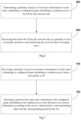
- the method includes step 201 and step 202.
- Step 201 transmitting a plurality of pieces of resource information for semi-static scheduling or configured grant scheduling or random access to a terminal.
- the plurality of pieces of resource information may include one or more of the following: (1) MCS information; (2) a physical resource block (PRB) start position; (3) a time-domain start position; (4) a Resource Block Group (RBG) size; (5) a Physical Uplink Shared Channel (PUSCH) length; (6) a period of configuring resources.
- MCS information MCS information
- PRB physical resource block
- RBG Resource Block Group
- PUSCH Physical Uplink Shared Channel
- the plurality of pieces of resource information is configured for the same semi-static scheduling or the same configured grant scheduling or the same random access.
- the plurality of pieces of resource information may correspond to a plurality of transmission modes, each of the plurality of transmission modes corresponds to one set of resource information, and each set of resource information includes multiple pieces of resource information.
- the network side configures three sets of resource information for the semi-static scheduling or the configured grant scheduling or the random access of the UE.
- the first set of resource information includes MCS 1, a start position 1 of a network-configured resource, PRB1, a PUSCH length 1, and a period 1.
- the second set of resource information includes MCS2, a start position 2 of a network-configured resource, PRB2, a PUSCH length 2, and a period 2.
- the third set of resource information includes MCS3, a start position 3 of a network-configured resource, PRB3, a PUSCH length 3, and a period 3.
- the above three sets of resource information may be configured for the same semi-static scheduling or the same configured grant scheduling or the same random access.
- Step 202 receiving data from the terminal according to at least one of the plurality of pieces of resource information.
- step 202 indication information sent by the terminal is received, the indication information indicates at least one piece of resource information used by the terminal to transmit data currently or to transmit data next time; at least one piece of resource information is selected according to the indication information, data currently transmitted by the terminal or data transmitted next time by the terminal is received by using the at least one piece of resource information.
- the indication information may be configured by a network device, for example, the method may further include, configuring corresponding indication information according to at least one of the plurality of pieces of resource information, and sending the indication information to the terminal.
- indication information 1 configured by the network device corresponds to the MCS 1, the start position 1 of the network-configured resource, the PRB 1, the PUSCH length 1, and the period 1.
- the indication information 2 configured by the network device corresponds to the MCS 2, the start position 2 of the network-configured resource, the PRB 2, the PUSCH length 2, and the period 2.
- the indication information 3 configured by the network device corresponds to the MCS 3, the start position 3 of the network-configured resource, the PRB 3, the PUSCH length 3, and the period 3.
- the indication information may include at least one of following: (1) a Demodulation Reference Signal (DM-RS); (2) a Medium Access Control Control Element (MAC CE); (3) Uplink Control Information (UCI); (4) a preamble sequence (Preamble).
- DM-RS Demodulation Reference Signal
- MAC CE Medium Access Control Control Element
- UCI Uplink Control Information
- Preamble a preamble sequence
- the DM-RS or the Preamble is used to indicate at least one piece of resource information used by the terminal to transmit data currently; for another example, the MAC CE or UCI is used to indicate at least one piece of resource information used by the terminal to transmit data next time, that is, the DM-RS or the Preamble is used for current transmission, and the MAC CE or the UCI is used for the next transmission.
- step 202 channel quality information sent by the terminal is received, and at least one piece of resource information is selected according to the channel quality information, for receiving data from the terminal.
- the channel quality information may be Channel Quality Indication (CQI) information, Reference Signal Receiving Power (RSRP), Signal to Interference plus Noise Ratio (SINR), Reference Signal Received Quality (RSRQ) or Received Signal Strength Indication (RSSI) information.
- CQI Channel Quality Indication
- RSRP Reference Signal Receiving Power
- SINR Signal to Interference plus Noise Ratio
- RSSI Reference Signal Received Quality
- RSSI Received Signal Strength Indication
- mapping between the channel quality information and the resource information may be configured by the network device, for example, the method may further include: configuring mapping relationship between the channel quality information and the at least one piece of resource information.
- channel quality information 1 configured by the network device corresponds to the MCS 1, the start position 1 of the network-configured resource, the PRB 1, the PUSCH length 1, and the period 1.
- Channel quality information 2 configured by the network device corresponds to the MCS 2, the start position 2 of the network-configured resource, the PRB 2, the PUSCH length 2, and the period 2.
- Channel quality information 3 configured by the network device corresponds to the MCS 3, the start position 3 of the network-configured resource, the PRB 3, the PUSCH length 3, and the period 3.
- the terminal described in step 201 and step 202 may be in an RRC connected state or an RRC inactive state.
- a network device configures a plurality of pieces of resource information for the semi-static scheduling or the configured grant scheduling or the random access, and if a channel quality changes/a service state changes, the network device may select at least one of the plurality of pieces of resource information to receive the data sent by the terminal, so as to avoid the problem of increasing a time delay due to reconfiguring or reactivating a resource by the network side.
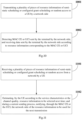
- an entity of performing the method may be a terminal, and the method includes step 301 and step 302.
- Step 301 receiving a plurality of pieces of resource information for semi-static scheduling or configured grant scheduling or random access transmitted by a network device.
- the plurality of pieces of resource information may include one or more of the following: (1) MCS information; (2) a physical resource block (PRB) start position; (3) a time-domain start position; (4) a Resource Block Group (RBG) size; (5) a Physical Uplink Shared Channel (PUSCH) length; (6) a period of configuring resources.
- MCS information MCS information
- PRB physical resource block
- RBG Resource Block Group
- PUSCH Physical Uplink Shared Channel
- the plurality of pieces of resource information is configured for the same semi-static scheduling or the same configured grant scheduling or the same random access.
- Step 302 transmitting data to the network device by using at least one piece of resource information selected from the plurality of pieces of resource information according to a channel quality or service characteristics of the terminal.
- the network device may configure mapping relationship between channel quality information or service characteristics and different pieces of resource information, so that the terminal may, according to the mapping relationship and the current channel quality or service characteristics, determine corresponding resource information.
- channel quality information 1 or service characteristics 1 configured by the network device corresponds to the MCS 1, the start position 1 of the network-configured resource, the PRB 1, the PUSCH length 1, and the period 1.
- Channel quality information 2 or service characteristics 2 configured by the network device corresponds to the MCS 2, the start position 2 of the network-configured resource, the PRB 2, the PUSCH length 2, and the period 2.
- Channel quality information 3 or service characteristics 3 configured by the network device corresponds to the MCS 3, the start position 3 of the network-configured resource, the PRB 3, the PUSCH length 3, and the period 3.
- the MCS corresponds to the MCS 1 when SINR is in [range 1]
- the MCS corresponds to the MCS 2 when SINR is in [range 2]
- the MCS corresponds to the MCS 3 when the SINR is in [range 3].
- the channel quality information may be CQI information, RSRP, SINR, RSRQ, or RSSI information.
- the service characteristics may be information such as period information of a service, a service interval, or delay requirement of a service.
- the method may further include: sending indication information to the network device, the indication information indicates at least one piece of resource information used by the terminal to transmit data currently or to transmit data next time.
- the indication information may be configured by a network device, and the indication information may be received by the terminal from the network device, for example, the method may further include: receiving the indication information configured by the network device, the indication information corresponds to at least one piece of resource information of the plurality of pieces of resource information.
- the indication information may include at least one of following: (1) DM-RS; (2) MAC CE; (3) UCI, (4) Preamble.
- the DM-RS or the Preamble is used to indicate at least one piece of resource information used by the terminal to transmit data currently; for another example, the MAC CE or UCI is used to indicate at least one piece of resource information used by the terminal to transmit data next time.
- the terminal may be in an RRC connected state or an RRC inactive state.
- a network device configures a plurality of pieces of resource information for the semi-static scheduling or the configured grant scheduling or the random access, and if a channel quality changes/a service state changes, the terminal may select at least one of the plurality of pieces of resource information to send data to the network device, so as to avoid the problem of increasing a time delay due to reconfiguring or reactivating a resource by the network side.
- Embodiment 1 the network side configures a plurality of pieces of resource information for the same semi-persistent scheduling/ the same configured grant, and the plurality of pieces of resource information may be MCS information, a PRB start position, or a time-domain start position, or a RBG size, a PUSCH length, or the period of configuring resources, and the UE selects a corresponding MCS and a corresponding RBG size to transmit data according to the channel quality.
- the transmission method at the network side in the Embodiment 1 includes the following steps 401-402.
- Step 401 sending a plurality of pieces of resource information for semi-static scheduling or configured grant scheduling or random access to the UE by the network side.
- the pieces of resource information represent information related to resources available by the semi-static scheduling or the configured grant scheduling or the random access, the pieces of resource information include one or more of the following parameters: (1) the MCS information; (2) the PRB start location; (3) the time-domain start location; (4) the RBG size; (5) the PUSCH length; (6) the period of configuring resources.
- the network side configures three sets of resource information for the semi-static scheduling or the configured grant scheduling or the random access of the UE:
- the plurality of pieces of resource information may be configured for one set of semi-static scheduling or configured grant scheduling or random access.
- Step 402 receiving data at a plurality of PRB start positions, or receiving data through different MCSs by the network side.
- data of a UE is received at the start position 2, and the network side demodulates the data of the UE through the MCS2, and delivers the demodulated data to an upper layer.
- a transmission method at a terminal side in the Embodiment 1 includes the following steps 501-502.
- Step 501 receiving a plurality of pieces of resource information of semi-static scheduling or configured grant scheduling or random access from a network by a UE.
- the pieces of resource information represent information related to resources available by the semi-static scheduling or the configured grant scheduling or the random access
- the pieces of resource information include one or more of the following parameters: (1) the MCS information; (2) the PRB start location; (3) the time-domain start location; (4) the RBG size; (5) the PUSCH length; (6) the period of configuring resources.
- the network side configures three MCSs for the semi-static scheduling or the configured grant scheduling or the random access of the UE.
- a start position 1 of a network-configured resource For a MCS 1, a start position 1 of a network-configured resource, PRB 1, a PUSCH length 1.
- a start position 2 of a network-configured resource For a MCS 2, a start position 2 of a network-configured resource, PRB 2, a PUSCH length 2.
- a start position 3 of a network-configured resource For a MCS 3, a start position 3 of a network-configured resource, PRB 3, a PUSCH length 3.
- the plurality of pieces of resource information may be configured for one set of semi-static scheduling or configured grant scheduling or random access.
- Step 502 selecting an MCS, or a corresponding resource start position, or a size of a PRB block, or an index of resource information from the pieces of resource information according to the channel quality by the UE, and transmitting data at the selected resource start position with the selected MCS and the corresponding PRB size by the UE.
- Embodiment 2 the network side configures a plurality of pieces of resource information for the same semi-persistent scheduling/ the same configured grant, and the plurality of pieces of resource information may be MCS information, a PRB start position, or a time-domain start position, or a RBG size, a PUSCH length, or the period of configuring resources, and the UE selects corresponding period information to transmit data according to the service characteristics.
- the transmission method at the network side in the Embodiment 2 includes the following steps 601-602.
- Step 601 sending a plurality of pieces of resource information of semi-static scheduling or configured grant scheduling or random access to the UE by the network side.
- the pieces of resource information represent information related to resources available by the semi-static scheduling or the configured grant scheduling or the random access, the pieces of resource information include one or more of the following parameters: (1) the MCS information; (2) the PRB start location; (3) the time-domain start location; (4) the RBG size; (5) the PUSCH length; (6) the period of configuring resources.
- the network side configures three sets of resource information for the semi-static scheduling or the configured grant scheduling or the random access of the UE:
- the above three sets of resource information may be configured for one set of semi-static scheduling or configured grant scheduling or random access.
- Step 602 receiving data sent by the UE by the network side at a plurality of sets of periodic positions, and transferring the received data to an upper layer.
- the transmission method at the terminal side in the Embodiment 2 includes the following steps 701-702.
- Step 701 receiving a plurality of pieces of resource information of semi-static scheduling or configured grant scheduling or random access from a network by a UE.
- the pieces of resource information represent information related to resources available by the semi-static scheduling or the configured grant scheduling or the random access
- the pieces of resource information include one or more of the following parameters: (1) the MCS information; (2) the PRB start location; (3) the time-domain start location; (4) the RBG size; (5) the PUSCH length; (6) the period of configuring resources.
- the network side configures three MCSs for the semi-static scheduling or the configured grant scheduling or the random access of the UE.
- a start position 1 of a network-configured resource For a MCS 1, a start position 1 of a network-configured resource, PRB 1, a PUSCH length 1.
- a start position 2 of a network-configured resource For a MCS 2, a start position 2 of a network-configured resource, PRB 2, a PUSCH length 2.
- a start position 3 of a network-configured resource For a MCS 3, a start position 3 of a network-configured resource, PRB 3, a PUSCH length 3.
- the plurality of pieces of resource information may be configured for one set of semi-static scheduling or configured grant scheduling or random access.
- Step 702 selecting a period of the semi-static scheduling or the configured grant scheduling or the random access from the pieces of resource information according to the service characteristics by the UE, and transmitting data with the corresponding period by the UE.
- the network side allocates 3 periods to the UE in configuration 1 of the semi-static scheduling or the configured grant scheduling or the random access, the UE selects a period 1 according to the service characteristics, and as a service is transmitted, a period length of the service becomes period 2, and the UE selects, according to the service characteristics, the period 2 to transmit data.
- Embodiment 3 the network side configures different DM-RSs for different characteristics, such as different MCS information, or different RBG sizes, or different PUSCH lengths, or the different periods of configuring resources; the UE sends the DM-RS to the network side according to different characteristics, such as different MCS information, or different RBG sizes, or different PUSCH lengths, or the different periods of configuring resources.
- the transmission method at the network side in the Embodiment 3 includes the following steps 801-802.
- Step 801 sending a plurality of pieces of resource information of semi-static scheduling or configured grant scheduling or random access to the UE by the network side.
- the pieces of resource information represent information related to resources available by the semi-static scheduling or the configured grant scheduling or the random access
- the pieces of resource information include one or more of the following parameters: (1) the MCS information; (2) the PRB start location; (3) the time-domain start location; (4) the RBG size; (5) the PUSCH length; (6) the period of configuring resources.
- the network side configures three sets of resource information for the semi-static scheduling or the configured grant scheduling or the random access of the UE:
- the sets of resource information may be configured for one set of semi-static scheduling or configured grant scheduling or random access.
- the network side configures one DM-RS for each set of resource information, for example, DM-RS 1 is configured for the first set, DM-RS 2 is configured for the second set, and DM-RS 3 is configured for the third set.
- Step 802 detecting a DM-RS sent by the UE by the network side, and receiving data sent by the terminal by the network side according to resource information corresponding to the DM-RS.
- different DM-RSs are used to indicate different pieces of resource information.
- the network side when the network side receives the DM-RS1 and determines that the UE selects the first set of resource information to transmit data, the network side will receive data according to the first set of resource information, such as the MCS 1, the start position 1, and the RBG size 1.
- the first set of resource information such as the MCS 1, the start position 1, and the RBG size 1.
- the transmission method at the terminal side in the Embodiment 3 includes the following steps 901-902.
- Step 901 receiving a plurality of pieces of resource information of semi-static scheduling or configured grant scheduling or random access from a network by the UE.
- the pieces of resource information represent information related to resources available by the semi-static scheduling or the configured grant scheduling or the random access
- the pieces of resource information include one or more of the following parameters: (1) the MCS information; (2) the PRB start location; (3) the time-domain start location; (4) the RBG size; (5) the PUSCH length; (6) the period of configuring resources.
- the network side configures three sets of resource information for the semi-static scheduling or the configured grant scheduling or the random access of the UE.
- the first set of resource information includes: MCS 1, a start position 1 of a network-configured resource, PRB 1, a PUSCH length 1, and a period 1.
- the second set of resource information includes: MCS 2, a start position 2 of a network-configured resource, PRB 2, a PUSCH length 2, and a period 2.
- the third set of resource information includes: MCS 3, a start position 3 of a network-configured resource, PRB 3, a PUSCH length 3, and a period 3.
- the plurality of pieces of resource information may be configured for one set of semi-static scheduling or configured grant scheduling or random access.
- the network side configures one DM-RS for each set of resource information, for example, DM-RS 1 is configured for the first set, DM-RS 2 is configured for the second set, and DM-RS 3 is configured for the third set.
- Step 902 selecting, by the UE according to the service characteristics or the channel quality, corresponding resource information to send data using the DM-RS corresponding to the resource information.
- the UE selects the period 1 according to period characteristics of the service, then the UE selects the first set of resource information, and DM-RS for the first set of resource information is the DM-RS 1, so the UE sends the DM-RS 1, and uses the first set of resource information to transmit data, for example, the MCS 1, the start position 1, and the PRB 1 are used to receive the transmitted data.
- Embodiment 4 the network side configures different DM-RSs for different characteristics, such as different MCS information, or different RBG sizes, or different PUSCH lengths, or the different periods of configuring resources.
- the UE sends a MAC CE or UCI or Preamble to the network side according to different characteristics, such as different MCS information, or different RBG sizes, or different PUSCH lengths, or the different periods of configuring resources.
- the transmission method at the network side in the Embodiment 4 includes the following steps 1001-1002.
- Step 1001 sending a plurality of pieces of resource information of semi-static scheduling or configured grant scheduling or random access to the UE by the network side.
- the pieces of resource information represent information related to resources available by the semi-static scheduling or the configured grant scheduling or the random access
- the pieces of resource information include one or more of the following parameters: (1) the MCS information; (2) the PRB start location; (3) the time-domain start location; (4) the RBG size; (5) the PUSCH length; (6) the period of configuring resources.
- the network side configures three sets of resource information for the semi-static scheduling or the configured grant scheduling or the random access of the UE.
- the first set of resource information includes: MCS 1, a start position 1 of a network-configured resource, PRB 1, a PUSCH length 1, and a period 1.
- the second set of resource information includes: MCS 2, a start position 2 of a network-configured resource, PRB 2, a PUSCH length 2, and a period 2.
- the third set of resource information includes: MCS 3, a start position 3 of a network-configured resource, PRB 3, a PUSCH length 3, and a period 3.
- the sets of resource information may be configured for one set of semi-static scheduling or configured grant scheduling or random access.
- Step 1002 detecting the MAC CE or UCI sent by the UE by the network side, and receiving data sent by the terminal by the network side according to resource information corresponding to the MAC CE or UCI.
- the MAC CE or UCI is used to indicate which resource is used by the UE to transmit data next time. For example, the MAC CE or UCI indicates that the MCS to be used next time is MCS 2, and then the network side uses the MCS 2 to perform demodulation when receiving data next time; or, the MAC CE or UCI indicates that a period of semi-static configuration to be used next time is period 3, then when the network side receives data of the next semi-static scheduling or configured grant scheduling or random access, reception will be performed according to period 3.
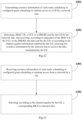
- the transmission method at the terminal side in the Embodiment 4 includes the following steps 1101-1102.
- Step 1101 receiving a plurality of pieces of resource information of semi-static scheduling or configured grant scheduling or random access from the network by the UE.
- the pieces of resource information represent information related to resources available by the semi-static scheduling or the configured grant scheduling or the random access
- the pieces of resource information include one or more of the following parameters: (1) the MCS information; (2) the PRB start location; (3) the time-domain start location; (4) the RBG size; (5) the PUSCH length; (6) the period of configuring resources.
- the network side configures three sets of resource information for the semi-static scheduling or the configured grant scheduling or the random access of the UE.
- the first set of resource information includes: MCS 1, a start position 1 of a network-configured resource, PRB 1, a PUSCH length 1, and a period 1.
- the second set of resource information includes: MCS 2, a start position 2 of a network-configured resource, PRB 2, a PUSCH length 2, and a period 2.
- the third set of resource information includes: MCS 3, a start position 3 of a network-configured resource, PRB 3, a PUSCH length 3, and a period 3.
- the plurality of pieces of resource information may be configured for one set of semi-static scheduling or configured grant scheduling or random access.
- Step 1102 estimating, by the UE according to the service characteristics or the channel quality, resource information to be selected next time; and during a current sending process, notifying, through the MAC CE or the UCI, the network side of the resource information to be used for the next transmission.
- the MAC CE or UCI is used to indicate which resource is used by the UE to transmit UL data next time. For example, the MAC CE or UCI indicates that the MCS to be used next time is MCS 2, and then the UE will use the resource information of the semi-static scheduling or the configured grant scheduling or the random access to transmit data next time, and perform modulation using the MCS 2 when transmitting the data; or, the MAC CE or UCI indicates that a period of semi-static configuration to be used next time is period 3, then when the UE transmits data on a resource of the next semi-static scheduling or the next configured grant scheduling or the next random access, transmission will be performed according to period 3.
- the transmission method at the network side in Embodiment 5 includes the following steps 1201-1202.
- Step 1201 transmitting resource information of semi-static scheduling or configured grant scheduling or random access to the UE by the network side.
- the resource information represent information related to resources available by the semi-static scheduling or the configured grant scheduling or the random access
- the resource information includes one or more of the following parameters: (1) the MCS information; (2) the PRB start location; (3) the time-domain start location; (4) the RBG size; (5) the PUSCH length; (6) the period of configuring resources.
- the network side configures three sets of resource information for the semi-static scheduling or the configured grant scheduling or the random access of the UE:
- the sets of resource information may be configured for one set of semi-static scheduling or configured grant scheduling or random access.
- the resource information includes mapping relationship between channel quality information and different parameters. For example, when a Signal to Interference plus Noise Ratio (SINR) is in [range 1], the MCS corresponds to MCS 1; when the SINR is in [range 2], the MCS corresponds to MCS 2; and when the SINR is in [range 3], the MCS corresponds to MCS 3.
- SINR Signal to Interference plus Noise Ratio
- Step 1202 detecting the MAC CE, the UCI, the Preamble or the DM-RS sent by the UE by the network side, and receiving, according to indication of the MAC CE, the UCI, the Preamble or the DM-RS, the data sent by the UE; or according to the channel quality information reported by the UE, selecting the resource information by the network side to receive the data transmitted by the UE.
- the MAC CE or the UCI is used to indicate which resource is used by the UE to transmit data next time.
- the MAC CE or the UCI indicates that the MCS to be used next time is MCS 2, and then the network side uses the MCS 2 to perform demodulation when receiving data next time; or, the MAC CE or the UCI indicates that a period of semi-static configuration to be used next time is period 3, then when the network side receives data of the next semi-static scheduling or configured grant scheduling or random access, reception will be performed according to period 3.
- the DM-RS is the same as that of Embodiment 3, and is not described herein.
- the network side determines that the SINR is in the [range 1] according to a CSI SINR reported by the UE, and the network side selects the MCS 1 to receive the data sent by the UE.
- the transmission method at the terminal side in Embodiment 5 includes the following steps 1301-1302.
- Step 1301 receiving resource information of semi-static scheduling or configured grant scheduling or random access from the network by the UE.
- the resource information includes a resource information list available by the semi-static scheduling or the configured grant scheduling or the random access
- the resource information list includes one or more of the following: (1) the MCS information; (2) the PRB start location; (3) the time-domain start location; (4) the RBG size; (5) the PUSCH length; (6) the period of configuring resources.
- the network side configures three sets of resource information for the semi-static scheduling or the configured grant scheduling or the random access of the UE, which are following respectively: MCS 1, a start position 1 of a network-configured resource, PRB 1, a PUSCH length 1, and a period 1; MCS 2, a start position 2 of a network-configured resource, PRB 2, a PUSCH length 2, and a period 2; MCS 3, a start position 3 of a network-configured resource, PRB 3, a PUSCH length 3, and a period 3.
- MCS 1 a start position 1 of a network-configured resource, PRB 1, a PUSCH length 1, and a period 1
- MCS 2 a start position 2 of a network-configured resource, PRB 2, a PUSCH length 2, and a period 2
- MCS 3 a start position 3 of a network-configured resource, PRB 3, a PUSCH length 3, and a period 3.
- the sets of resource information are configured for one set of semi-static scheduling or configured grant scheduling or random access.
- the resource information includes mapping relationship between channel quality information and different parameters. For example, when a SINR is in [range 1], the MCS corresponds to MCS 1; when the SINR is in [range 2], the MCS corresponds to MCS 2; and when the SINR is in [range 3], the MCS corresponds to MCS 3.
- Step 1302 selecting, according to the channel quality by the UE, a corresponding MCS to transmit data.
- the SINR is in [range 1]
- the UE selects MCS 1, and transmits data on a resource of semi-static scheduling or configured grant scheduling or random access.
- the terminal may be in the RRC connected state or the RRC inactive state.
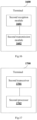
- an embodiment of the present disclosure also provides a network device 1400, which includes a first transmission module 1401 and a first reception module 1402.
- the first transmission module 1401 is configured to transmit a plurality of pieces of resource information for semi-static scheduling or configured grant scheduling or random access to a terminal.
- the first reception module 1402 is configured to receive data from the terminal according to at least one of the plurality of pieces of resource information.
- the plurality of pieces of resource information is configured for the same semi-static scheduling or configured grant scheduling or random access.
- the first reception module 1402 is further configured to: receive indication information sent by the terminal, the indication information indicating at least one piece of resource information used by the terminal to transmit data currently or to transmit data next time; select at least one piece of resource information according to the indication information; receive, by using the at least one piece of resource information, data currently transmitted by the terminal or data transmitted next time by the terminal.
- the network device 1400 further includes a first configuration module configured to configure corresponding indication information according to at least one of the plurality of pieces of resource information.
- the first transmission module 1401 is further configured to send the indication information to the terminal.
- the indication information includes at least one of the following: DM-RS, MAC CE, UCI, Preamble.
- the DM-RS or the Preamble is used to indicate at least one piece of resource information used by the terminal to transmit data currently; or, the MAC CE or UCI is used to indicate at least one piece of resource information used by the terminal to transmit data next time.
- the first reception module 1402 is further configured to: receive channel quality information sent by the terminal; select at least one piece of resource information according to the channel quality information; and receive data from the terminal using the at least one piece of resource information.
- the network device 1400 further includes a second configuration module configured to configure mapping relationship between the channel quality information and the at least one piece of resource information.
- the resource information includes one or more of the following: MCS information; a PRB start position; a time-domain start position; a RBG size; a PUSCH length; and a period of configuring resources.
- the terminal may be in an RRC connected state or an RRC inactive state.
- the network device provided in the embodiment of the present disclosure may execute the method in the embodiment shown in Fig. 2 , and implementation principles and technical effects in the embodiments are similar, and detailed description is not repeated here in this embodiment.
- Fig. 15 shows an embodiment of the present disclosure which is not covered by the claims and which provides a network device 1500 including a first transceiver 1501 and a first processor 1502, the first transceiver 1501 is configured to transmit a plurality of pieces of resource information for semi-static scheduling or configured grant scheduling or random access to a terminal, and the first transceiver 1501 is further configured to transmit a plurality of pieces of resource information for semi-static scheduling or configured grant scheduling or random access to a terminal, the first transceiver 1501 is further configured to receive data from the terminal according to at least one of the plurality of pieces of resource information.
- the plurality of pieces of resource information is configured for the same semi-static scheduling or configured grant scheduling or random access.
- the first transceiver 1501 is further configured to receive indication information sent by the terminal, the indication information indicating at least one piece of resource information used by the terminal to transmit data currently or to transmit data next time; select at least one piece of resource information according to the indication information; receive, by using the at least one piece of resource information, data currently transmitted by the terminal or data transmitted next time by the terminal.
- the first processor 1502 is configured to configure corresponding indication information according to at least one of the plurality of pieces of resource information, and the first transceiver 1501 is further configured to send the indication information to the terminal.
- the indication information includes at least one of the following: DM-RS, MAC CE, UCI, Preamble.
- the DM-RS or the Preamble is used to indicate at least one piece of resource information used by the terminal to transmit data currently; or, the MAC CE or UCI is used to indicate at least one piece of resource information used by the terminal to transmit data next time.
- the first transceiver 1501 is further configured to receive channel quality information sent by the terminal; select at least one piece of resource information according to the channel quality information; and receive data from the terminal.
- the first processor 1502 is further configured to configure mapping relationship between the channel quality information and the at least one piece of resource information.
- the resource information includes one or more of the following: MCS information; a PRB start position; a time-domain start position; a RBG size; a PUSCH length; and a period of configuring resources.
- the terminal may be in an RRC connected state or an RRC inactive state.
- the network device provided in the embodiment of the present disclosure may execute the method in the embodiment shown in Fig. 2 , and implementation principles and technical effects in the embodiments are similar, and detailed description is not repeated here in this embodiment.
- an embodiment of the present disclosure also provides a terminal 1600, which includes a second reception module 1601 and a second transmission module 1602.
- the second reception module 1601 is configured to receive a plurality of pieces of resource information of semi-static scheduling or configured grant scheduling or random access sent by a network device.
- the second transmission module 1602 is configured to select at least one piece of resource information from the plurality of pieces of resource information according to a channel quality or a service characteristic of the terminal, and send data to the network device.
- the plurality of pieces of resource information is configured for the same semi-static scheduling or configured grant scheduling or random access.
- the terminal 1600 further includes a third transmission module configured to send indication information to the network device, the indication information indicating at least one piece of resource information used by the terminal to transmit data currently or to transmit data next time.
- the terminal 1600 further includes a third reception module configured to receive indication information configured by the network device, wherein the indication information corresponds to at least one of the plurality of pieces of resource information.
- the indication information includes at least one of the following: DM-RS, MAC CE, UCI, Preamble.
- the DM-RS or the Preamble is used to indicate at least one piece of resource information used by the terminal to transmit data currently; or, the MAC CE or UCI is used to indicate at least one piece of resource information used by the terminal to transmit data next time.
- the resource information includes one or more of the following: MCS information; a PRB start position; a time-domain start position; a RBG size; a PUSCH length; and a period of configuring resources.
- the terminal may be in an RRC connected state or an RRC inactive state.
- the terminal provided in the embodiment of the present disclosure may execute the method in the embodiment shown in Fig. 3 , and implementation principles and technical effects in the embodiments are similar, and detailed description is not repeated here in this embodiment.
- Fig. 17 shows an embodiment of the present disclosure which is not covered by the claims and which further provides a terminal 1700 including a second transceiver 1701 and a second processor 1702.
- the second transceiver 1701 is configured to select at least one piece of resource information from the plurality of pieces of resource information according to a channel quality or a service characteristic of the terminal, and send data to the network device.
- the plurality of pieces of resource information is configured for the same semi-static scheduling or configured grant scheduling or random access.
- that second transceiver 1701 is further configured to send indication information to the network device, the indication information indicating at least one piece of resource information used by the terminal to transmit data currently or to transmit data next time.
- the second transceiver 1701 is further configured to receive indication information configured by the network device, wherein the indication information corresponds to at least one of the plurality of pieces of resource information.
- the indication information includes at least one of the following: DM-RS, MAC CE, UCI, Preamble.
- the DM-RS or the Preamble is used to indicate at least one piece of resource information used by the terminal to transmit data currently; or, the MAC CE or UCI is used to indicate at least one piece of resource information used by the terminal to transmit data next time.
- the resource information includes one or more of the following: MCS information; a PRB start position; a time-domain start position; a RBG size; a PUSCH length; and a period of configuring resources.
- the terminal may be in an RRC connected state or an RRC inactive state.
- the terminal provided in the embodiment of the present disclosure may execute the method in the embodiment shown in Fig. 3 , and implementation principles and technical effects in the embodiments are similar, and detailed description is not repeated here in this embodiment.
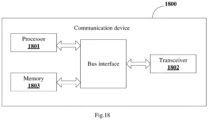
- Fig. 18 is a block diagram of a communication device applied in embodiments of the present disclosure.
- the communication device 1800 includes a processor 1801, a transceiver 1802, a memory 1803, and a bus interface.
- the processor 1801 may be responsible for managing a bus architecture and general processing.
- the memory 1803 may store data used by the processor 1801 in performing operations.
- the communication device 1800 also includes a program stored on the memory 1803 and executable by the processor 1801.
- the processor 1801 implements the steps in the method shown in Fig. 2 or Fig. 3 above.
- the bus architecture may include any number of interconnected buses and bridges, specifically various circuits such as one or more processors represented by the processor 1801 and a memory represented by the memory 1803 are linked together.
- the bus architecture may also link together various other circuits such as peripheral devices, regulators, and power management circuits, all of which are well known in the art, and therefore, will not be further described in the embodiments of the present disclosure.
- a bus interface provides an interface.
- the transceiver 1802 may be a number of elements, including a transmitter and a receiver, for providing means for communicating with various other devices over a transmission medium.
- the communication device can execute the method in the embodiment shown in Fig. 2 or Fig. 3 , and implementation principles and technical effects are similar, and detailed description is not repeated here.
- the steps of the method or algorithm described in connection with the present disclosure may be implemented in hardware, or may be implemented by a processor executing software instructions.
- the software instructions may consist of corresponding software modules, the software modules may be stored in a RAM, a flash memory, a ROM, an EPROM, an EEPROM, a register, a hard disk, a removable hard disk, a read only optical disk, or any other form of storage medium well known in the art.
- An exemplary storage medium is coupled to the processor such that the processor can read information from the storage medium and can write information to the storage medium.
- the storage medium may also be an integral part of the processor.
- the processor and the storage medium may be located in an Application Specific Integrated Circuit (ASIC).
- ASIC Application Specific Integrated Circuit
- the ASIC may be located in a core network interface device.
- the processor and the storage medium may also exist as separate components in the core network interface device.
- a computer-readable medium includes a computer storage medium and a communication medium, wherein the communication medium includes any medium that facilitates the transfer of a computer program from one place to another.
- the storage medium may be any available medium that can be accessed by a general purpose computer or a special purpose computer.
- the embodiments of the present disclosure may be provided as methods, systems, or computer program products.
- the embodiments of the present disclosure may take the form of an entirely hardware embodiment, an entirely software embodiment, or an embodiment combining software and hardware aspects.
- the embodiments of the present disclosure may employ forms of computer program products implemented on one or more computer usable storage media (including, being but not limited to, a disk storage, a CD-ROM, and an optical storage) having computer usable program codes contained therein.
- These computer program instructions may be provided to a processor of a general purpose computer, a special purpose computer, an embedded processor, or other programmable data processing device to produce a machine, so that a means for implementing functions specified in one or more flows of the flowcharts and/or one or more blocks of the block diagrams is generated by executing instructions by a processor of a computer or other programmable data processing devices.
- These computer program instructions may also be stored in a computer-readable memory capable of directing a computer or other programmable data processing devices to operate in a particular manner, so that instructions stored in the computer-readable memory produce an article of manufacture including an instruction device, the instruction device implements a function specified in one or more flows of the flowcharts and/or one or more blocks of the block diagrams.
- These computer program instructions may also be loaded onto a computer or other programmable data processing devices such that a series of operational steps are performed on the computer or other programmable devices to produce a computer-implemented process, and instructions executed on a computer or other programmable devices provide steps for implementing the functions specified in one or more flows of the flowcharts and/or one or more blocks of the block diagrams.
- modules are only divisions in respect of logical functions, and the modules can be entirely or partially integrated into one physical entity in actual implementation, or can also be physically separated.
- all of the modules may be implemented in form of software invoked by a processing element, or all of the modules may be implemented in form of hardware; or, some of the modules may be implemented in form of software invoked by a processing element, some of the modules are implemented in form of hardware.
- a determining module may be a separate processing element, or may be integrated in a chip of the device, or may also be stored in a memory of the device in form of program codes, functions of the above determining module is called and executed by a processing element of the above device.
- Implementation of the other modules is similar to the determining module. In addition, all or part of these modules may be integrated together or may be implemented independently.
- the processing element described herein may be an integrated circuit with a signal processing capability. In an implementation, the steps of the above methods or the above various modules may be performed by integrated logic circuits of hardware in a processor element or by instructions in form of software.
- each module, unit, sub-unit, or sub-module may be one or more integrated circuits configured to implement the above methods, such as one or more Application Specific Integrated Circuits (ASICs), or, one or more digital signal processors (DSPs), or one or more Field Programmable Gate Arrays (FPGAs), etc.
- ASICs Application Specific Integrated Circuits
- DSPs digital signal processors
- FPGAs Field Programmable Gate Arrays
- the processing element may be a general purpose processor, such as a Central Processing Unit (CPU) or other processors that can invoke program codes.
- these modules may be integrated together and implemented in the form of a system-on-a-chip (SOC).
- SOC system-on-a-chip
Landscapes
- Engineering & Computer Science (AREA)
- Computer Networks & Wireless Communication (AREA)
- Signal Processing (AREA)
- Quality & Reliability (AREA)
- Mobile Radio Communication Systems (AREA)
Claims (13)
- Übertragungsverfahren, das durch eine Netzwerkvorrichtung durchgeführt wird, wobei das Verfahren umfasst:Übertragen (201, 401, 601, 801, 1001, 1201) einer Vielzahl von Ressourceninformationen für eine konfigurierte Gewährungsplanung oder einen wahlfreien Zugriff an ein Endgerät;Empfangen (202) von Daten von dem Endgerät gemäß mindestens einer der Vielzahl von Ressourceninformationen, wobei die mindestens eine der Vielzahl von Ressourceninformationen von einem Endgerät gemäß einer Kanalqualität oder einer Diensteigenschaft des Endgeräts zum Senden von Daten an die Netzwerkvorrichtung ausgewählt wird, wobei die Vielzahl von Ressourceninformationen für eine gleiche konfigurierte Gewährungsplanung oder einen gleichen wahlfreien Zugriff konfiguriert ist.
- Verfahren nach Anspruch 1, wobei das Empfangen (202) von Daten von dem Endgerät nach mindestens einer der Vielzahl von Ressourceninformationen Folgendes umfasst:Empfangen von Angabeinformationen, die von dem Endgerät gesendet werden, wobei die Angabeinformationen mindestens eine der Ressourceninformationen angeben, die von dem Endgerät verwendet wird, um aktuell oder beim nächsten Mal Daten zu übertragen;Auswählen mindestens einer von Ressourceninformationen gemäß der Angabeinformation; Empfangen von Daten, die aktuell von dem Endgerät übertragen werden, oder von Daten, die beim nächsten Mal von dem Endgerät übertragen werden, unter Verwendung der mindestens einen Ressourceninformation.
- Verfahren nach Anspruch 2, ferner umfassend:Konfigurieren entsprechender Angabeinformationen gemäß mindestens einer der Vielzahl von Ressourceninformationen;Senden der Angabeinformationen an das Endgerät.
- Verfahren nach Anspruch 1, wobei das Empfangen (202) der Daten von dem Endgerät gemäß der mindestens einen der Vielzahl von Ressourceninformationen umfasst:Empfangen von Kanalqualitätsinformationen, die von dem Endgerät gesendet wurden;Auswählen von mindestens einer von Ressourceninformationen entsprechend der Kanalqualitätsinformationen und Empfangen von Daten von dem Endgerät unter Verwendung der mindestens einen von Ressourceninformationen.
- Verfahren nach Anspruch 4, ferner umfassend:
Konfigurieren einer Zuordnungsbeziehung zwischen den Kanalqualitätsinformationen und der mindestens einen Ressourceninformation. - Übertragungsverfahren, das durch ein Endgerät durchgeführt wird, wobei das Verfahren umfasst:Empfangen (301, 501, 701, 901, 1101, 1301) einer Vielzahl von Ressourceninformationen, die von einer Netzwerkvorrichtung übertragen werden, für eine konfigurierte Genehmigungsplanung oder einen wahlfreien Zugriff;Auswählen (302) mindestens einer Ressourceninformation aus der Vielzahl von Ressourceninformationen entsprechend einer Kanalqualität oder einer Diensteigenschaft des Endgeräts zum Senden von Daten an die Netzwerkvorrichtung, wobei die Vielzahl von Ressourceninformationen für eine gleiche konfigurierte Gewährungsplanung oder einen gleichen wahlfreien Zugriff konfiguriert ist.
- Verfahren nach Anspruch 6, wobei das Verfahren nach dem Auswählen (302) von mindestens einer Ressourceninformation aus der Vielzahl von Ressourceninformationen ferner umfasst:
Senden von Angabeinformationen an die Netzwerkvorrichtung, wobei die Angabeinformationen mindestens eine Ressourceninformation angeben, die von dem Endgerät verwendet wird, um aktuell oder beim nächsten Mal Daten zu übertragen. - Verfahren nach Anspruch 7, ferner umfassend:
Empfangen von Angabeinformationen, die von der Netzwerkvorrichtung konfiguriert wurden, wobei die Angabeinformationen mindestens einer der Vielzahl von Ressourceninformationen entsprechen. - Verfahren nach Anspruch 7 oder 8, wobei die Angabeinformationen mindestens eines der Folgenden umfassen:ein Demodulationsreferenzsignal, DM-RS;ein Medienzugriffskontrollelement, MAC-CE;Uplink-Steuerinformationen, UCI;eine Präambelsequenz, Präambel.
- Verfahren nach Anspruch 9, wobeidas DM-RS oder die Präambel so konfiguriert ist, dass sie mindestens eine Ressourceninformation angibt, die von dem Endgerät aktuell zum Übertragen von Daten verwendet wird; oderder MAC CE oder die UCI so konfiguriert ist, dass sie mindestens eine Ressourceninformation angibt, die das Endgerät bei der nächsten Datenübertragung verwendet.
- Verfahren nach einem der Ansprüche 6 bis 10, wobei die Ressourceninformation eines oder mehrere der Folgenden umfasst:Modulations- und Codierungsschemainformationen, MCS-Informationen;eine Startposition eines physikalischen Ressourcenblocks, PRB;eine Zeitbereichs-Startposition;eine Größe der Ressourcenblockgruppe, RBG;eine Länge des physikalischen gemeinsam genutzten Uplink-Kanals, PUSCH;eine Zeitspanne für die Ressourcenkonfiguration.
- Netzwerkvorrichtung, wobei die Netzwerkvorrichtung Folgendes umfasst:ein erstes Übertragungsmodul (1401), das dazu konfiguriert ist, an ein Endgerät eine Vielzahl von Ressourceninformationen für eine konfigurierte Gewährungsplanung oder einen wahlfreien Zugriff zu übertragen;ein erstes Empfangsmodul (1402), das dazu konfiguriert ist, Daten von dem Endgerät gemäß mindestens einer der Vielzahl von Ressourceninformationen zu empfangen, wobei die mindestens eine der Vielzahl von Ressourceninformationen von einem Endgerät gemäß einer Kanalqualität oder einer Diensteigenschaft des Endgeräts zum Senden von Daten an die Netzwerkvorrichtung ausgewählt wird,die Vielzahl von Ressourceninformationen für eine gleiche konfigurierte Gewährungsplanung oder einen gleichen wahlfreien Zugriff konfiguriert ist.
- Endgerät, wobei das Endgerät umfasst:ein zweites Empfangsmodul (1601), das zum Empfangen einer Vielzahl von Ressourceninformationen konfiguriert ist, die von einer Netzwerkvorrichtung übertragen werden, für eine konfigurierte Genehmigungsplanung oder einen wahlfreien Zugriff;und ein zweites Übertragungsmodul (1602), das so konfiguriert ist, dass es mindestens eine Ressourceninformation aus der Vielzahl von Ressourceninformationen gemäß einer Kanalqualität oder einer Diensteigenschaft des Endgeräts auswählt, um Daten an die Netzwerkvorrichtung zu senden, wobei die Vielzahl von Ressourceninformationen für eine gleiche konfigurierte Gewährungsplanung oder einen gleichen wahlfreien Zugriff konfiguriert ist.
Applications Claiming Priority (2)
| Application Number | Priority Date | Filing Date | Title |
|---|---|---|---|
| CN202010006114.2A CN113079570B (zh) | 2020-01-03 | 2020-01-03 | 传输方法及设备 |
| PCT/CN2020/139948 WO2021136146A1 (zh) | 2020-01-03 | 2020-12-28 | 传输方法及设备 |
Publications (4)
| Publication Number | Publication Date |
|---|---|
| EP4087342A1 EP4087342A1 (de) | 2022-11-09 |
| EP4087342A4 EP4087342A4 (de) | 2023-01-25 |
| EP4087342B1 true EP4087342B1 (de) | 2025-06-18 |
| EP4087342C0 EP4087342C0 (de) | 2025-06-18 |
Family
ID=76608633
Family Applications (1)
| Application Number | Title | Priority Date | Filing Date |
|---|---|---|---|
| EP20909716.1A Active EP4087342B1 (de) | 2020-01-03 | 2020-12-28 | Übertragungsverfahren und -vorrichtung |
Country Status (4)
| Country | Link |
|---|---|
| US (1) | US20230044206A1 (de) |
| EP (1) | EP4087342B1 (de) |
| CN (1) | CN113079570B (de) |
| WO (1) | WO2021136146A1 (de) |
Families Citing this family (4)
| Publication number | Priority date | Publication date | Assignee | Title |
|---|---|---|---|---|
| CN113453372B (zh) * | 2020-03-25 | 2023-08-25 | 大唐移动通信设备有限公司 | 一种随机接入方法、基站、用户设备、装置、介质 |
| CN114285520B (zh) * | 2021-12-21 | 2024-12-27 | 中国电信股份有限公司 | 配置授权的自适应配置方法、装置、存储介质及电子设备 |
| CN116566560B (zh) * | 2022-01-28 | 2025-12-30 | 大唐移动通信设备有限公司 | 信令传输方法、装置及存储介质 |
| CN117858245A (zh) * | 2022-09-30 | 2024-04-09 | 华为技术有限公司 | 通信方法及装置 |
Family Cites Families (92)
| Publication number | Priority date | Publication date | Assignee | Title |
|---|---|---|---|---|
| MX2010001184A (es) * | 2007-08-10 | 2010-05-20 | Fujitsu Ltd | Aparato de transmicion, aparato de recepcion y metodo de comunicacion. |
| US8913672B2 (en) * | 2008-09-12 | 2014-12-16 | Qualcomm Incorporated | Efficiently identifying system waveform in uplink transmission |
| KR101729550B1 (ko) * | 2009-03-23 | 2017-04-24 | 엘지전자 주식회사 | Ack/nack을 전송하는 방법 및 장치 |
| CN101932019B (zh) * | 2009-06-19 | 2015-06-03 | 中兴通讯股份有限公司 | 一种实现上报缓冲区状态报告的方法、终端及网络系统 |
| PL2486692T3 (pl) * | 2009-10-05 | 2018-05-30 | Telefonaktiebolaget Lm Ericsson (Publ) | Przydzielanie zasobów PUCCH dla agregacji nośnej w LTE-Advanced |
| CN102122979B (zh) * | 2010-01-08 | 2013-04-17 | 华为技术有限公司 | 信号发送方法、设备及系统 |
| US8982796B2 (en) * | 2010-06-22 | 2015-03-17 | Lg Electronics Inc. | Method and device for determining precoding information for uplink multi-antenna transmission |
| CN102104962B (zh) * | 2010-09-17 | 2014-02-05 | 电信科学技术研究院 | 多天线场景下的上行控制信道资源的配置方法和设备 |
| CN103283292B (zh) * | 2011-01-05 | 2016-05-25 | 松下电器(美国)知识产权公司 | 终端装置、基站装置、发送方法和接收方法 |
| US9094849B2 (en) * | 2011-02-23 | 2015-07-28 | Telefonaktiebolaget L M Ericsson (Publ) | Communication of data using independent downlink and uplink connections |
| CN102970761A (zh) * | 2011-09-01 | 2013-03-13 | 华为技术有限公司 | 数据发送方法和用户设备 |
| CN103828256A (zh) * | 2011-09-26 | 2014-05-28 | Lg电子株式会社 | 在无线通信系统中传送上行链路控制信号的方法和设备 |
| US9723592B2 (en) * | 2011-10-13 | 2017-08-01 | Lg Electronics Inc. | Method and user equipment for transmitting uplink signal, and method and evolved node B for receiving uplink signal |
| ES2707853T3 (es) * | 2011-12-30 | 2019-04-05 | Nokia Solutions & Networks Oy | Acceso basado en contienda en un sistema de comunicaciones |
| US20140045507A1 (en) * | 2012-08-07 | 2014-02-13 | Chandra Sekhar Bontu | Code rate adaptation in wireless communication systems |
| CN109152063A (zh) * | 2012-12-17 | 2019-01-04 | 华为技术有限公司 | 一种载波的分配方法、用户设备及基站 |
| CN104969522B (zh) * | 2012-12-21 | 2019-03-15 | 三星电子株式会社 | 在无线通信系统中使用调制技术收发信号的方法和设备 |
| KR102008467B1 (ko) * | 2012-12-27 | 2019-08-07 | 삼성전자주식회사 | 빔포밍 기반 무선 통신시스템의 상향링크 전력 제어 방법 및 장치 |
| WO2015030669A1 (en) * | 2013-09-02 | 2015-03-05 | Telefonaktiebolaget L M Ericsson (Publ) | Enabling modulation mode selection |
| US9949216B2 (en) * | 2013-09-25 | 2018-04-17 | Apple Inc. | Power consumption optimization for cellular communication via power amplifier biasing |
| KR20150084308A (ko) * | 2014-01-13 | 2015-07-22 | 삼성전자주식회사 | 무선 통신 시스템에서 채널의 비-가우시안 특성에 따른 적응적 채널 부호 선택 장치 및 방법 |
| WO2016182228A1 (ko) * | 2015-05-10 | 2016-11-17 | 엘지전자 주식회사 | 대용량의 산발적 패킷 서비스를 지원하는 방법 및 이를 위한 장치 |
| US10271276B2 (en) * | 2015-05-27 | 2019-04-23 | Telefonaktiebolaget L M Ericsson (Publ) | Optimized MCS selection for machine type communication |
| US9961690B2 (en) * | 2015-06-26 | 2018-05-01 | Telefonaktiebolaget L M Ericsson (Publ) | Method and base station for selecting a transport format |
| US20180270803A1 (en) * | 2015-09-25 | 2018-09-20 | Lg Electronics Inc. | Method for transmitting uplink data in wireless communication system and apparatus for method |
| EP3379881B1 (de) * | 2015-12-15 | 2020-09-02 | Huawei Technologies Co., Ltd. | Konfigurationsverfahren und -vorrichtungen zur zeitplanung von ressourcen |
| WO2017132995A1 (zh) * | 2016-02-05 | 2017-08-10 | 广东欧珀移动通信有限公司 | 业务传输的方法和装置 |
| JP6665298B2 (ja) * | 2016-02-05 | 2020-03-13 | オッポ広東移動通信有限公司Guangdong Oppo Mobile Telecommunications Corp., Ltd. | サービス伝送のための方法、移動局及びネットワークデバイス |
| US10045376B2 (en) * | 2016-02-16 | 2018-08-07 | Mediatek Inc. | Channel access procedure and QoS provisioning for uplink LAA |
| EP3430836B1 (de) * | 2016-03-16 | 2020-09-02 | Sony Corporation | Drahtlostelekommunikationssystem, endgerätevorrichtung, infrastrukturausrüstung, integrierte schaltung und verfahren |
| US10200907B2 (en) * | 2016-05-11 | 2019-02-05 | Nokia Of America Corporation | Systems and methods for dynamic uplink and downlink rate assignment in a wireless communication network |
| CN111683411B (zh) * | 2016-05-13 | 2023-06-13 | 中兴通讯股份有限公司 | 资源请求、资源分配方法及装置 |
| US10200162B2 (en) * | 2016-05-27 | 2019-02-05 | Qualcomm Incorporated | HARQ feedback in shared RF spectrum band |
| US10333649B1 (en) * | 2016-07-12 | 2019-06-25 | Sprint Spectrum L.P. | Selection of modulation and coding scheme (MCS) based on packet length |
| US10412710B2 (en) * | 2016-09-08 | 2019-09-10 | Samsung Electronics Co., Ltd. | Method and system for implementing multiple-access in wireless communication system |
| CN107889220B (zh) * | 2016-09-29 | 2022-01-28 | 华为技术有限公司 | 通信方法、基站和终端设备 |
| CN108023706A (zh) * | 2016-11-03 | 2018-05-11 | 夏普株式会社 | 无授权传输的应答信息反馈方法、基站和用户设备 |
| US10492107B2 (en) * | 2016-11-03 | 2019-11-26 | Ofinno, Llc | SPS configuration during handover |
| CN108024360B (zh) * | 2016-11-04 | 2023-11-21 | 华为技术有限公司 | 免授权传输的方法、终端和网络设备 |
| JP2020036051A (ja) * | 2016-12-28 | 2020-03-05 | 株式会社Nttドコモ | ユーザ装置、及びデータ送信方法 |
| CN108282898B (zh) * | 2017-01-06 | 2023-10-24 | 华为技术有限公司 | 随机接入方法、用户设备和网络设备 |
| CN108289335B (zh) * | 2017-01-10 | 2023-07-14 | 中兴通讯股份有限公司 | 数据发送方法及装置、终端 |
| CN110235399A (zh) * | 2017-01-25 | 2019-09-13 | 华为技术有限公司 | 发送及检测控制信息的方法、终端设备和网络设备 |
| WO2018143869A1 (en) * | 2017-02-03 | 2018-08-09 | Telefonaktiebolaget Lm Ericsson (Publ) | First communication device, second communication device, and methods performed thereby for handling uplink transmissions based on quality of service requirements |
| CN110447290B (zh) * | 2017-02-10 | 2023-03-21 | Oppo广东移动通信有限公司 | 无线通信方法、终端设备和网络设备 |
| WO2018173483A1 (ja) * | 2017-03-23 | 2018-09-27 | パナソニック インテレクチュアル プロパティ コーポレーション オブ アメリカ | 基地局、端末及び通信方法 |
| WO2018186791A1 (en) * | 2017-04-03 | 2018-10-11 | Telefonaktiebolaget Lm Ericsson (Publ) | Uci resource determination |
| US10624070B2 (en) * | 2017-04-14 | 2020-04-14 | Qualcomm Incorporated | Scheduling and transmission scheme for periodic and aperiodic control information |
| CN111034321B (zh) * | 2017-08-02 | 2023-08-25 | Lg电子株式会社 | 终端在无线通信系统中发送上行链路信号的方法及使用该方法的终端 |
| CN109392103B (zh) * | 2017-08-04 | 2020-08-28 | 大唐移动通信设备有限公司 | 一种资源分配方法及装置 |
| JP2020530695A (ja) * | 2017-08-09 | 2020-10-22 | コンヴィーダ ワイヤレス, エルエルシー | 5g nrにおけるアクセス制御 |
| US11350445B2 (en) * | 2017-08-10 | 2022-05-31 | Kyocera Corporation | Communication control method for controlling a user equipment to perform early data transmission |
| US10855421B2 (en) * | 2017-08-10 | 2020-12-01 | Qualcomm Incorporated | Configuration of sounding reference signal resources in an uplink transmission time interval |
| JP6732231B2 (ja) * | 2017-08-10 | 2020-07-29 | 京セラ株式会社 | 通信制御方法 |
| JP6894042B2 (ja) * | 2017-08-11 | 2021-06-23 | 京セラ株式会社 | 隣接基地局とスケジューリング情報を共有することによる航空機通信の干渉緩和 |
| AU2017427858A1 (en) * | 2017-08-18 | 2020-02-27 | Guangdong Oppo Mobile Telecommunications Corp., Ltd. | Wireless communication method and device |
| WO2019036940A1 (en) * | 2017-08-23 | 2019-02-28 | Qualcomm Incorporated | SYSTEMS AND METHODS USING USER EQUIPMENT LATENCY REQUIREMENT (UE) FOR SELECTION OF A SYNCHRONIZATION SIGNAL BLOCK |
| US20190068335A1 (en) * | 2017-08-25 | 2019-02-28 | Qualcomm Incorporated | Grant-free uplink communication |
| US10524212B2 (en) * | 2017-09-07 | 2019-12-31 | Ofinno, Llc | Uplink beam failure recovery |
| WO2019061021A1 (zh) * | 2017-09-26 | 2019-04-04 | 华为技术有限公司 | 一种数据传输方法以及相关设备 |
| CN109756317B (zh) * | 2017-11-07 | 2022-02-18 | 华为技术有限公司 | 干扰确定方法及网络设备 |
| CN112865946B (zh) * | 2017-11-10 | 2022-07-15 | 中兴通讯股份有限公司 | 无线通信方法及装置 |
| EP3706490B1 (de) * | 2017-11-15 | 2024-01-03 | LG Electronics Inc. | Verfahren und endgerät zur übertragung aperiodischer kanalzustandsinformationen in einem drahtlosen kommunikationssystem und endgerät mit diesem verfahren |
| CN109803326B (zh) * | 2017-11-17 | 2023-10-31 | 中兴通讯股份有限公司 | 资源分配指示、接收方法及装置 |
| CN109890076B (zh) * | 2017-12-06 | 2023-01-06 | 华为技术有限公司 | 一种非授权频谱上的数据传输方法、设备和存储介质 |
| JP6889331B2 (ja) * | 2018-05-09 | 2021-06-18 | 京セラ株式会社 | 通信制御方法、無線端末、及び基地局 |
| WO2019217829A1 (en) * | 2018-05-10 | 2019-11-14 | Convida Wireless, Llc | Small data transmission with non-orthogonal multiple access |
| CN110557835B (zh) * | 2018-06-04 | 2022-04-05 | 华为技术有限公司 | 数据传输方法、通信装置及存储介质 |
| CN109076365A (zh) * | 2018-07-20 | 2018-12-21 | 北京小米移动软件有限公司 | 波束故障恢复请求发送方法、响应方法、装置及存储介质 |
| WO2020033434A1 (en) * | 2018-08-10 | 2020-02-13 | Google Llc | Methods and apparatus for an uplink control channel in noma asynchronous transmissions |
| CN110831232B (zh) * | 2018-08-13 | 2022-07-01 | 大唐移动通信设备有限公司 | 一种uci组合传输方法、终端及网络侧设备 |
| CN110859003A (zh) * | 2018-08-22 | 2020-03-03 | 成都华为技术有限公司 | 确定上行资源的方法与装置 |
| EP3857768A1 (de) * | 2018-09-25 | 2021-08-04 | IDAC Holdings, Inc. | Verfahren, vorrichtungen und systeme zur unterstützung von harq auf v2x |
| JP7161549B2 (ja) * | 2018-09-27 | 2022-10-26 | パナソニック インテレクチュアル プロパティ コーポレーション オブ アメリカ | 端末及び通信方法 |
| KR102694930B1 (ko) * | 2018-10-30 | 2024-08-14 | 삼성전자 주식회사 | 차세대 이동 통신 시스템에서 이더넷 프레임의 오버헤드를 줄이는 방법 및 장치 |
| KR102541220B1 (ko) * | 2018-11-21 | 2023-06-09 | 삼성전자 주식회사 | 무선 통신 시스템에서 신호를 송수신하는 방법 및 장치 |
| CN113348709A (zh) * | 2019-02-01 | 2021-09-03 | 华为技术有限公司 | 一种资源管理方法及装置 |
| EP3925316B1 (de) * | 2019-02-15 | 2026-02-18 | ZTE Corporation | Anzeige von leistungssteuerungsparametern |
| WO2020167011A1 (ko) * | 2019-02-15 | 2020-08-20 | 엘지전자 주식회사 | 무선 통신 시스템에서 랜덤 액세스를 위한 물리 상향링크 공유 채널을 송수신하는 방법 및 이를 위한 장치 |
| WO2020168573A1 (en) * | 2019-02-22 | 2020-08-27 | Nokia Shanghai Bell Co., Ltd. | Uplink positioning for idle or inactive terminal device |
| US11233550B2 (en) * | 2019-03-21 | 2022-01-25 | Samsung Electronics Co., Ltd. | Multi-user precoders based on partial reciprocity |
| CN113875163A (zh) * | 2019-05-13 | 2021-12-31 | 谷歌有限责任公司 | 与协调基站进行并行波束成形训练 |
| US12389379B2 (en) * | 2019-07-03 | 2025-08-12 | Apple Inc. | Time-domain resource allocation for configured grant transmissions in new radio systems |
| US11601981B2 (en) * | 2019-07-31 | 2023-03-07 | Qualcomm Incorporated | Two-step RACH procedure for NR reduced capability UE |
| EP4014457B1 (de) * | 2019-08-13 | 2024-04-24 | Telefonaktiebolaget Lm Ericsson (Publ) | Verfahren und vorrichtung zur übertragungskonfiguration |
| US11483859B2 (en) * | 2019-08-16 | 2022-10-25 | Comcast Cable Communications, Llc | Random access procedures using repetition |
| EP4022786A1 (de) * | 2019-08-26 | 2022-07-06 | Telefonaktiebolaget LM Ericsson (publ) | Uplink-mimo-vorcodierung mit einem benutzer in drahtlosen zellularen systemen |
| US11432277B2 (en) * | 2019-08-26 | 2022-08-30 | Qualcomm Incorporated | Techniques for determining resources for transmitting wireless communications |
| EP4018759B1 (de) * | 2019-10-03 | 2023-09-13 | LG Electronics Inc. | Abschlussmechanismus für die übertragung unter verwendung vorkonfigurierter uplink-ressourcen |
| CN114616904A (zh) * | 2019-11-07 | 2022-06-10 | 富士通株式会社 | 随机接入方法、装置和通信系统 |
| US11589346B2 (en) * | 2019-12-09 | 2023-02-21 | Qualcomm Incorporated | Management of resources in integrated access and backhaul |
| EP4256874A4 (de) * | 2021-01-06 | 2024-04-10 | ZTE Corporation | Verfahren und vorrichtung zur bestimmung des pucch eines verzögerten harq-ack-codebuchs |
-
2020
- 2020-01-03 CN CN202010006114.2A patent/CN113079570B/zh active Active
- 2020-12-28 WO PCT/CN2020/139948 patent/WO2021136146A1/zh not_active Ceased
- 2020-12-28 US US17/790,057 patent/US20230044206A1/en not_active Abandoned
- 2020-12-28 EP EP20909716.1A patent/EP4087342B1/de active Active
Also Published As
| Publication number | Publication date |
|---|---|
| CN113079570B (zh) | 2023-06-30 |
| WO2021136146A1 (zh) | 2021-07-08 |
| EP4087342A1 (de) | 2022-11-09 |
| EP4087342A4 (de) | 2023-01-25 |
| EP4087342C0 (de) | 2025-06-18 |
| US20230044206A1 (en) | 2023-02-09 |
| CN113079570A (zh) | 2021-07-06 |
Similar Documents
| Publication | Publication Date | Title |
|---|---|---|
| US12185321B2 (en) | Sidelink communication method, terminal device and network device | |
| EP3598676B1 (de) | Verfahren zur übertragung von daten, endgerätevorrichtung und netzwerkvorrichtung | |
| EP4087342B1 (de) | Übertragungsverfahren und -vorrichtung | |
| CN114389922B (zh) | 一种码本子集的确定方法及装置、用户设备 | |
| US10314103B2 (en) | Exchanging patterns of shared resources between machine-type and human traffic | |
| EP3091799B1 (de) | Synchronisationsverfahren, basisstation und benutzervorrichtung | |
| US12101653B2 (en) | Wireless communication method, terminal device and network device | |
| EP4216610B1 (de) | Drahtloskommunikationsverfahren, endgerätevorrichtung und netzwerkvorrichtung | |
| EP3852396B1 (de) | Verfahren zur bestimmung des übertragungsmodus in sidelink, endgerät und netzwerkgerät | |
| CN113519177A (zh) | 一种资源共享方法及装置、终端设备 | |
| TW201830908A (zh) | 通信方法及終端 | |
| EP3451562B1 (de) | Cqi-messverfahren, vorrichtung und drahtloskommunikationssystem | |
| WO2020164156A1 (zh) | 传输带宽的确定方法、设备及存储介质 | |
| US20230239898A1 (en) | Communication method and related device | |
| US20200205144A1 (en) | Method for Sending Control Information, Method for Receiving Control Information, Sending Device, and Receiving Device | |
| WO2018058584A1 (zh) | 发送或接收信道状态信息的方法和设备 | |
| CN114070528B (zh) | 一种信号传输方法、装置及存储介质 | |
| CN113366779B (zh) | 一种信息传输方法、相关设备及系统 | |
| WO2020210961A1 (zh) | 侧行数据传输方法、设备及存储介质 | |
| CN109756935B (zh) | 一种调整工作带宽的方法和装置 | |
| CN114554600A (zh) | 一种分配pucch资源的方法、基站及存储介质 | |
| WO2018171568A1 (zh) | 一种信息传输方法、处理方法及装置 | |
| WO2024234167A1 (zh) | 无线通信的方法、终端设备和网络设备 | |
| WO2017049537A1 (zh) | 传输信道状态信息的方法和设备 | |
| CN118785482A (zh) | 通信方法和通信装置 |
Legal Events
| Date | Code | Title | Description |
|---|---|---|---|
| STAA | Information on the status of an ep patent application or granted ep patent |
Free format text: STATUS: THE INTERNATIONAL PUBLICATION HAS BEEN MADE |
|
| PUAI | Public reference made under article 153(3) epc to a published international application that has entered the european phase |
Free format text: ORIGINAL CODE: 0009012 |
|
| STAA | Information on the status of an ep patent application or granted ep patent |
Free format text: STATUS: REQUEST FOR EXAMINATION WAS MADE |
|
| 17P | Request for examination filed |
Effective date: 20220630 |
|
| AK | Designated contracting states |
Kind code of ref document: A1 Designated state(s): AL AT BE BG CH CY CZ DE DK EE ES FI FR GB GR HR HU IE IS IT LI LT LU LV MC MK MT NL NO PL PT RO RS SE SI SK SM TR |
|
| REG | Reference to a national code |
Ref legal event code: R079 Ipc: H04W0072080000 Ref country code: DE Ref legal event code: R079 Ref document number: 602020053101 Country of ref document: DE Free format text: PREVIOUS MAIN CLASS: H04W0072040000 Ipc: H04W0072080000 |
|
| A4 | Supplementary search report drawn up and despatched |
Effective date: 20221223 |
|
| RIC1 | Information provided on ipc code assigned before grant |
Ipc: H04W 74/00 20090101ALN20221219BHEP Ipc: H04W 72/04 20090101ALN20221219BHEP Ipc: H04W 72/08 20090101AFI20221219BHEP |
|
| DAV | Request for validation of the european patent (deleted) | ||
| DAX | Request for extension of the european patent (deleted) | ||
| REG | Reference to a national code |
Ref legal event code: R079 Ipc: H04W0072542000 Ref country code: DE Ref legal event code: R079 Ref document number: 602020053101 Country of ref document: DE Free format text: PREVIOUS MAIN CLASS: H04W0072080000 Ipc: H04W0072542000 |
|
| GRAP | Despatch of communication of intention to grant a patent |
Free format text: ORIGINAL CODE: EPIDOSNIGR1 |
|
| STAA | Information on the status of an ep patent application or granted ep patent |
Free format text: STATUS: GRANT OF PATENT IS INTENDED |
|
| RIC1 | Information provided on ipc code assigned before grant |
Ipc: H04W 74/00 20090101ALN20250109BHEP Ipc: H04W 72/51 20230101ALN20250109BHEP Ipc: H04W 72/21 20230101ALN20250109BHEP Ipc: H04W 72/1268 20230101ALN20250109BHEP Ipc: H04W 72/542 20230101AFI20250109BHEP |
|
| INTG | Intention to grant announced |
Effective date: 20250117 |
|
| GRAS | Grant fee paid |
Free format text: ORIGINAL CODE: EPIDOSNIGR3 |
|
| GRAA | (expected) grant |
Free format text: ORIGINAL CODE: 0009210 |
|
| STAA | Information on the status of an ep patent application or granted ep patent |
Free format text: STATUS: THE PATENT HAS BEEN GRANTED |
|
| AK | Designated contracting states |
Kind code of ref document: B1 Designated state(s): AL AT BE BG CH CY CZ DE DK EE ES FI FR GB GR HR HU IE IS IT LI LT LU LV MC MK MT NL NO PL PT RO RS SE SI SK SM TR |
|
| REG | Reference to a national code |
Ref country code: GB Ref legal event code: FG4D |
|
| REG | Reference to a national code |
Ref country code: CH Ref legal event code: EP |
|
| REG | Reference to a national code |
Ref country code: DE Ref legal event code: R096 Ref document number: 602020053101 Country of ref document: DE |
|
| REG | Reference to a national code |
Ref country code: CH Ref legal event code: EP |
|
| REG | Reference to a national code |
Ref country code: IE Ref legal event code: FG4D |
|
| U01 | Request for unitary effect filed |
Effective date: 20250710 |
|
| U07 | Unitary effect registered |
Designated state(s): AT BE BG DE DK EE FI FR IT LT LU LV MT NL PT RO SE SI Effective date: 20250717 |
|
| PG25 | Lapsed in a contracting state [announced via postgrant information from national office to epo] |
Ref country code: NO Free format text: LAPSE BECAUSE OF FAILURE TO SUBMIT A TRANSLATION OF THE DESCRIPTION OR TO PAY THE FEE WITHIN THE PRESCRIBED TIME-LIMIT Effective date: 20250918 Ref country code: GR Free format text: LAPSE BECAUSE OF FAILURE TO SUBMIT A TRANSLATION OF THE DESCRIPTION OR TO PAY THE FEE WITHIN THE PRESCRIBED TIME-LIMIT Effective date: 20250919 |
|
| PG25 | Lapsed in a contracting state [announced via postgrant information from national office to epo] |
Ref country code: HR Free format text: LAPSE BECAUSE OF FAILURE TO SUBMIT A TRANSLATION OF THE DESCRIPTION OR TO PAY THE FEE WITHIN THE PRESCRIBED TIME-LIMIT Effective date: 20250618 |
|
| PG25 | Lapsed in a contracting state [announced via postgrant information from national office to epo] |
Ref country code: RS Free format text: LAPSE BECAUSE OF FAILURE TO SUBMIT A TRANSLATION OF THE DESCRIPTION OR TO PAY THE FEE WITHIN THE PRESCRIBED TIME-LIMIT Effective date: 20250918 |
|
| PG25 | Lapsed in a contracting state [announced via postgrant information from national office to epo] |
Ref country code: IS Free format text: LAPSE BECAUSE OF FAILURE TO SUBMIT A TRANSLATION OF THE DESCRIPTION OR TO PAY THE FEE WITHIN THE PRESCRIBED TIME-LIMIT Effective date: 20251018 |
|
| PGFP | Annual fee paid to national office [announced via postgrant information from national office to epo] |
Ref country code: GB Payment date: 20251219 Year of fee payment: 6 |
|
| PG25 | Lapsed in a contracting state [announced via postgrant information from national office to epo] |
Ref country code: SM Free format text: LAPSE BECAUSE OF FAILURE TO SUBMIT A TRANSLATION OF THE DESCRIPTION OR TO PAY THE FEE WITHIN THE PRESCRIBED TIME-LIMIT Effective date: 20250618 |
|
| PG25 | Lapsed in a contracting state [announced via postgrant information from national office to epo] |
Ref country code: CZ Free format text: LAPSE BECAUSE OF FAILURE TO SUBMIT A TRANSLATION OF THE DESCRIPTION OR TO PAY THE FEE WITHIN THE PRESCRIBED TIME-LIMIT Effective date: 20250618 |
|
| PG25 | Lapsed in a contracting state [announced via postgrant information from national office to epo] |
Ref country code: PL Free format text: LAPSE BECAUSE OF FAILURE TO SUBMIT A TRANSLATION OF THE DESCRIPTION OR TO PAY THE FEE WITHIN THE PRESCRIBED TIME-LIMIT Effective date: 20250618 |
|
| PG25 | Lapsed in a contracting state [announced via postgrant information from national office to epo] |
Ref country code: SK Free format text: LAPSE BECAUSE OF FAILURE TO SUBMIT A TRANSLATION OF THE DESCRIPTION OR TO PAY THE FEE WITHIN THE PRESCRIBED TIME-LIMIT Effective date: 20250618 |
|
| PG25 | Lapsed in a contracting state [announced via postgrant information from national office to epo] |
Ref country code: ES Free format text: LAPSE BECAUSE OF FAILURE TO SUBMIT A TRANSLATION OF THE DESCRIPTION OR TO PAY THE FEE WITHIN THE PRESCRIBED TIME-LIMIT Effective date: 20250618 |
|
| U20 | Renewal fee for the european patent with unitary effect paid |
Year of fee payment: 6 Effective date: 20251230 |