EP4087331A1 - Verfahren und vorrichtung zur sendeleistungseinstellung, endgerät, basisstation und speichermedium - Google Patents
Verfahren und vorrichtung zur sendeleistungseinstellung, endgerät, basisstation und speichermedium Download PDFInfo
- Publication number
- EP4087331A1 EP4087331A1 EP20911582.3A EP20911582A EP4087331A1 EP 4087331 A1 EP4087331 A1 EP 4087331A1 EP 20911582 A EP20911582 A EP 20911582A EP 4087331 A1 EP4087331 A1 EP 4087331A1
- Authority
- EP
- European Patent Office
- Prior art keywords
- duty cycle
- upper limit
- transmit power
- terminal
- uplink
- Prior art date
- Legal status (The legal status is an assumption and is not a legal conclusion. Google has not performed a legal analysis and makes no representation as to the accuracy of the status listed.)
- Withdrawn
Links
- 238000000034 method Methods 0.000 title claims abstract description 76
- 230000005540 biological transmission Effects 0.000 title claims abstract description 70
- 238000004590 computer program Methods 0.000 claims description 29
- 230000006870 function Effects 0.000 claims description 25
- 238000012545 processing Methods 0.000 claims description 18
- 230000004044 response Effects 0.000 claims description 15
- 238000010521 absorption reaction Methods 0.000 claims description 7
- 238000004891 communication Methods 0.000 abstract description 19
- 230000000694 effects Effects 0.000 abstract description 15
- 230000000875 corresponding effect Effects 0.000 description 51
- 238000010586 diagram Methods 0.000 description 12
- 230000009467 reduction Effects 0.000 description 8
- 230000008569 process Effects 0.000 description 6
- 230000009977 dual effect Effects 0.000 description 4
- 238000005516 engineering process Methods 0.000 description 3
- 238000006243 chemical reaction Methods 0.000 description 2
- 230000005670 electromagnetic radiation Effects 0.000 description 2
- 230000010365 information processing Effects 0.000 description 2
- 230000003287 optical effect Effects 0.000 description 2
- 230000003068 static effect Effects 0.000 description 2
- 230000002776 aggregation Effects 0.000 description 1
- 238000004220 aggregation Methods 0.000 description 1
- 238000013459 approach Methods 0.000 description 1
- 230000009286 beneficial effect Effects 0.000 description 1
- 230000008901 benefit Effects 0.000 description 1
- 230000008859 change Effects 0.000 description 1
- 230000002596 correlated effect Effects 0.000 description 1
- 230000006872 improvement Effects 0.000 description 1
- 238000005259 measurement Methods 0.000 description 1
- 238000012986 modification Methods 0.000 description 1
- 230000004048 modification Effects 0.000 description 1
- 230000006855 networking Effects 0.000 description 1
- 238000003672 processing method Methods 0.000 description 1
- 230000005855 radiation Effects 0.000 description 1
- 238000012546 transfer Methods 0.000 description 1
Images


Classifications
-
- H—ELECTRICITY
- H04—ELECTRIC COMMUNICATION TECHNIQUE
- H04W—WIRELESS COMMUNICATION NETWORKS
- H04W52/00—Power management, e.g. Transmission Power Control [TPC] or power classes
- H04W52/04—Transmission power control [TPC]
- H04W52/06—TPC algorithms
- H04W52/14—Separate analysis of uplink or downlink
- H04W52/146—Uplink power control
-
- H—ELECTRICITY
- H04—ELECTRIC COMMUNICATION TECHNIQUE
- H04W—WIRELESS COMMUNICATION NETWORKS
- H04W52/00—Power management, e.g. Transmission Power Control [TPC] or power classes
- H04W52/04—Transmission power control [TPC]
- H04W52/30—Transmission power control [TPC] using constraints in the total amount of available transmission power
- H04W52/36—Transmission power control [TPC] using constraints in the total amount of available transmission power with a discrete range or set of values, e.g. step size, ramping or offsets
- H04W52/367—Power values between minimum and maximum limits, e.g. dynamic range
-
- H—ELECTRICITY
- H04—ELECTRIC COMMUNICATION TECHNIQUE
- H04W—WIRELESS COMMUNICATION NETWORKS
- H04W52/00—Power management, e.g. Transmission Power Control [TPC] or power classes
- H04W52/04—Transmission power control [TPC]
- H04W52/38—TPC being performed in particular situations
- H04W52/44—TPC being performed in particular situations in connection with interruption of transmission
Definitions
- the present application relates to the field of communication technologies, and in particular, to a method, apparatus, terminal, base station, and storage medium for adjusting a transmit power.
- the electromagnetic wave absorption ratio (Specific Absorption Rate, SAR) is an index parameter to measure an electromagnetic radiation intensity of the terminal to the human body.
- the communication standard has a strict index requirement on the SAR value of the electromagnetic radiation of the terminal.
- the terminal capability of a maximum uplink duty cycle (maxULdutycycle) is introduced, that is, the maximum uplink duty cycle that can be supported by the terminal in the case that the SAR requirement is met when the terminal reports to the base station that it performs uplink transmission with the maximum transmit power in a certain frequency band.
- maxULdutycycle the maximum uplink duty cycle that can be supported by the terminal in the case that the SAR requirement is met when the terminal reports to the base station that it performs uplink transmission with the maximum transmit power in a certain frequency band.
- the terminal may return back the transmit power to a transmit power that can satisfy the SAR requirement in any uplink duty cycle.
- the reduced transmit power value is usually low, thereby affecting the effect of uplink data transmission.
- Embodiments of the present application provide a method, apparatus, terminal, base station, and storage medium for adjusting a transmit power.
- the technical solutions are as follows.
- the embodiment of the present application provides a method for adjusting a transmit power, the method is performed by a terminal, and the method includes:
- the embodiment of the present application provides a method for adjusting a transmit power, the method is performed by a base station, and the method includes:
- the embodiment of the present application provides an apparatus for adjusting a transmit power, which is applied in a terminal, and the apparatus includes:
- the embodiment of the present application provides an apparatus for adjusting a transmit power, which is applied in a base station, and the apparatus includes:
- the embodiment of the present application provides a terminal, the terminal includes a processor, a memory, and a transceiver, the memory stores a computer program, and the computer program is configured to be executed by the processor to implement the above-mentioned method for adjusting a transmit power.
- the embodiment of the present application provides a base station, the base station includes a processor, a memory, and a transceiver, the memory stores a computer program, and the computer program is configured to be executed by the processor to implement the above-mentioned method for adjusting a transmit power.
- the embodiment of the present application further provides a computer-readable storage medium, where a computer program is stored in the storage medium, and the computer program is loaded and executed by a processor to implement the above-mentioned method for adjusting a transmit power.
- the embodiment of the present application further provides a computer-readable storage medium, where a computer program is stored in the storage medium, and the computer program is loaded and executed by a processor to implement the above-mentioned method for adjusting a transmit power.
- the present application provides a computer program product, when the computer program product runs on a terminal, the terminal is enabled to perform the above-mentioned method for adjusting a transmit power.
- the present application provides a computer program product, when the computer program product runs on a base station, the base station is enabled to perform the above-mentioned method for adjusting a transmit power.
- the terminal can adjust the upper limit of the transmit power according to the actual uplink duty cycle, that is, the terminal can appropriately adjust the upper limit of the transmit power according to the value of the actual uplink duty cycle.
- the solution shown in the present application can avoid excessively restricting the transmit power of the terminal, thereby improving the uplink data transmission effect of the terminal.
- the network architecture and service scenarios described in the embodiments of the present application are for the purpose of illustrating the technical solutions of the embodiments of the present application more clearly, and do not constitute a limitation on the technical solutions provided by the embodiments of the present application.
- Those skilled in the art can know that with the evolution of network architecture and the emergence of new service scenarios, the technical solutions provided in the embodiment of the present application are also applicable to similar technical problems.
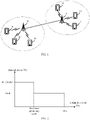
- FIG. 1 shows a schematic diagram of a network architecture provided by an embodiment of the present application.
- the network architecture may include: a terminal 10 and a base station 20.
- the number of the terminals 10 is usually multiple, and one or more terminals 10 may be distributed in a cell managed by each base station 20.
- the terminal 10 may include various handheld devices, vehicle-mounted devices, wearable devices, computing devices with wireless communication functions, or other processing devices connected to the wireless modem, as well as various forms of User Equipment (UE), Mobile Station (MS), terminal device, etc.
- UE User Equipment
- MS Mobile Station
- terminals the devices mentioned above are collectively referred to as terminals.
- the base station 20 is an apparatus deployed in the access network to provide the terminal 20 with a wireless communication function.
- the base station 20 may include various forms of macro base stations, micro base stations, relay stations, access points, and the like.
- the names of devices with base station functions may be different.
- gNodeB 5th-Generation New Radio
- the name "base station” may change.
- the above-mentioned apparatuses for providing the wireless communication function for the terminal 20 are collectively referred to as base stations.
- the "5G NR system" in the embodiments of the present disclosure may also be referred to as a 5G system or an NR system, but those skilled in the art can understand its meaning.
- the technical solutions described in the embodiments of the present disclosure may be applicable to the 5G NR system, and may also be applicable to the subsequent evolution system of the 5G NR system.
- the SAR index is an average measurement value of the terminal during communication in frequency bands below 6 GHz over a period of time.
- the SAR value is positively correlated with the transmit power and the transmit time. That is to say, the higher the transmit power of the terminal, the higher the SAR value, and the longer the uplink transmit time of the terminal, the higher the SAR value.
- the terminal may adopt a sensor (such as a distance sensor) to detect a distance between the terminal and the human body, and perform power back-off when it is detected that the terminal is close to the human body so as to reduce the transmit power and avoid the SAR value exceeding the standard.
- a sensor such as a distance sensor
- the terminal will be close to the human body. Therefore, although this solution can effectively solve the problem that the SAR value exceeds the standard, it is necessary to perform uplink transmission with low transmit power in many cases, resulting in high loss of the transmit power, thereby seriously affecting the effect of uplink transmission.
- the terminal reports to the base station the maximum uplink duty cycle that can be supported under the condition that the SAR requirement is met when the terminal performs uplink transmission with the maximum transmit power in a certain frequency band.
- NR SA High Power UE HPUE
- a maxULdutycycle capability is defined for the frequency band below 6GHz
- a maxULdutycycle-EN-DC capability is defined in the Non-Standalone (NSA) HPUE.
- NSA Non-Standalone
- the capability information reported by the terminal to the base station is one maximum uplink duty cycle supporting capability only corresponding to the maximum transmit power of the terminal.
- the terminal may potentially accept scheduling of a higher uplink duty cycle while satisfying the SAR.
- the processing method in the above solution is that as long as the actual uplink duty cycle of the terminal is higher than maxULdutycycle, the 3dBm power level back-off is performed, which limits the transmit power capability of the terminal.
- FIG. 2 exemplarily shows a corresponding relationship diagram between the transmit power before and after back-off and the uplink slot duty cycle.
- the maximum uplink duty cycle of the terminal corresponding to the transmit power P1 (such as 26dBm) is Dutycycle1, and the corresponding maximum uplink duty cycle when the transmit power is 23dBm is 100%.
- the terminal uses the above-mentioned P1 as the upper limit of the transmit power to send uplink data, that is to say, when the terminal sends uplink data, it controls its own transmit power not to exceed P1.
- the terminal may also obtain the actual uplink duty cycle and compare the actual uplink duty cycle with Dutycycle1.
- the terminal directly adjusts the upper limit of transmit power to P2 (i.e. a lower 23dbm) that can support 100% of uplink duty cycle, and when sending uplink data subsequently, P2 is used as the upper limit of transmit power for sending uplink data.
- the subsequent embodiments of the present application propose a solution for non-linearly adjusting the upper limit of the transmit power of the terminal according to the actual uplink duty cycle of the terminal under the condition that the SAR requirement is satisfied, which can, when the actual uplink duty cycle of the terminal exceeds Dutycycle1 but is less than 100%, moderately adjust the upper limit of the transmit power to avoid excessively restricting the transmit power of the terminal, thereby improving the uplink data transmission effect of the terminal.
- FIG. 3 shows a flowchart of a method for adjusting a transmit power provided by an embodiment of the present application.
- the method may be applied to the terminal of the network architecture shown in FIG. 1 , and the method may include the following steps.
- step 301 an actual uplink duty cycle is acquired.
- the actual uplink duty cycle is a duty cycle that the terminal actually performs uplink transmission within a predetermined time length before the current moment.
- the above uplink duty cycle refers to a ratio of the time that the terminal actually performs uplink transmission according to the scheduling of the base station after the base station schedules the terminal to perform uplink transmission to the total time.
- the above-mentioned actual uplink duty cycle may be a duty cycle that the terminal actually performs uplink transmission in a preset time period before the current moment.
- the actual uplink duty cycle in the above preset time period refers to a ratio of the time that the terminal performs uplink transmission in the preset time period according to the scheduling information of the base station to the total time of the preset time period.
- the terminal in the process of data transmission with the base station, the terminal may count the actual uplink duty cycle in the preset time period before the current moment.
- an upper limit of the transmit power of the terminal is adjusted from a first transmit power upper limit to a second transmit power upper limit; where the second transmit power upper limit is determined based on the first transmit power upper limit, the actual uplink duty cycle and a maximum uplink duty cycle corresponding to the first transmit power upper limit.
- the upper limit of the transmit power of the terminal refers to the maximum transmit power that the terminal needs to follow when performing uplink transmission. That is to say, when the terminal performs uplink transmission, it needs to control its transmit power not to exceed the currently set transmit power upper limit.
- the terminal may adjust the upper limit of the transmit power according to the actual uplink duty cycle before the current moment, such as the actual uplink duty cycle within the above preset time period; that is, different actual uplink duty cycles may correspond to different upper limits of the transmit power of the terminal.
- the upper limit of the transmit power of the terminal changes nonlinearly with the actual uplink duty cycle.
- the transmit power during uplink data transmission is controlled not to exceed the second transmit power upper limit until the upper limit of the power is updated again.
- the solutions shown in the embodiments of the present application obtain the actual uplink duty cycle of the terminal before the current moment; determines the second transmit power upper limit according to the actual uplink duty cycle, the first transmit power limit of the terminal, and the maximum uplink duty cycle corresponding to the first transmit power upper limit, and adjusts the upper limit of the transmit power of the terminal from the first transmit power upper limit to the second transmit power upper limit.
- the terminal can adjust the upper limit of the transmit power corresponding to the actual uplink duty cycle, that is to say, the terminal can adjust the upper limit of the transmit power moderately according to the value of the actual uplink duty cycle.
- the solution shown in the present application can avoid excessively restricting the transmit power of the terminal, thereby improving the uplink data transmission effect of the terminal.
- FIG. 4 shows a flowchart of a method for adjusting a transmit power provided by an embodiment of the present application.
- the method may be applied to the base station of the network architecture shown in FIG. 1 , and the method may include the following steps.
- step 401 an actual uplink duty cycle of the terminal is acquired.
- the actual uplink duty cycle is a duty cycle that the terminal actually performs uplink transmission within a predetermined time length before a current moment.
- the time of uplink transmission and downlink reception may be scheduled in real time or pre-scheduled by the base station.
- the relevant information that the base station schedules the time of uplink transmission and downlink reception of the terminal may be referred to as the above-mentioned uplink and downlink time configuration information.
- the base station may use the uplink and downlink time configuration information to schedule the subsequent uplink transmission time and downlink reception time of the terminal in real time during data communication with the terminal, and the terminal performs uplink data sending at the uplink transmission time and performs downlink data reception at the downlink reception time according to the uplink and downlink time configuration information.
- the base station may also use the uplink and downlink time configuration information in advance to schedule an uplink time interval in which the terminal can perform uplink transmission and a downlink time interval in which the terminal can perform downlink reception before performing data communication with the terminal. Afterwards, when the uplink transmission is required, the terminal selects an appropriate time from the uplink time interval to perform sending, and when there is a downlink receiving demand, the terminal may monitor within the downlink time interval and receive the downlink data when the downlink data is detected.
- the base station may record the uplink sending time of the terminal, and perform statistics and obtain the actual uplink duty cycle of the terminal. For example, the base station may perform statistics on the uplink duty cycle of the terminal in the preset time period before the current moment, that is, a proportion of the time that the terminal actually performs uplink transmission in the preset time period to the total time of the preset time period.
- step 402 the upper limit of the transmit power of the terminal is adjusted from a first transmit power upper limit to a second transmit power upper limit, and the second transmit power upper limit is determined based on the first transmit power upper limit, the actual uplink duty cycle and the maximum uplink duty cycle corresponding to the first transmit power upper limit.
- the base station may, after the preset time period, adjust the upper limit of the transmit power of the terminal from the first transmit power upper limit to the second transmit power upper limit, and receive the uplink data sent by the terminal according to the second transmit power upper limit.
- the second transmit power upper limit has a non-linear corresponding relationship with the actual uplink duty cycle.
- the base station side may also determine the updated transmit power upper limit of the terminal (that is, the above-mentioned second transmit power upper limit) based on the non-linear corresponding rule according to the actual uplink duty cycle of the terminal in the preset time period before the current moment, so as to subsequently receive uplink data sent by the terminal according to the second transmit power upper limit.
- the updated transmit power upper limit of the terminal that is, the above-mentioned second transmit power upper limit
- the base station obtains the actual uplink duty cycle of the terminal; determines the second transmit power upper limit according to the actual uplink duty cycle, the first transmit power upper limit of the terminal and the maximum uplink duty cycle corresponding to the first transmit power upper limit, and adjusts the upper limit of the transmit power of the terminal from the first transmit power upper limit to the second transmit power upper limit.
- the base station can determine the upper limit of the transmit power of the terminal corresponding to the actual uplink duty cycle of the terminal, that is, it can appropriately adjust the upper limit of the transmit power of the terminal according to the value of the actual uplink duty cycle.
- the solution shown in the present application can avoid excessively restricting the transmit power of the terminal, thereby improving the uplink data transmission effect of the terminal.
- FIG. 5 shows a flowchart of a method for adjusting a transmit power provided by an embodiment of the present application.
- the method may be applied to the network architecture shown in FIG. 1 and is performed by the terminal and the base station in FIG. 1 interactively.
- the method may include the following steps.
- step 501 the terminal reports terminal capability information to the base station, and the base station receives the terminal capability information.
- the terminal capability information is used to indicate that the terminal has an ability to adjust the upper limit of the transmit power of the terminal according to the actual uplink duty cycle.
- the terminal when the terminal successfully accesses the base station, it may report its terminal capability information to the base station to notify the base station that it has the ability to adjust its own transmit power upper limit according to the actual uplink duty cycle, so that when performing uplink and downlink scheduling on the terminal subsequently, the base station may perform uplink and downlink scheduling based on the terminal capability information.
- the terminal capability information reported by the terminal to the base station may trigger the base station to perform the subsequent step 502 and the steps after step 502.
- the base station may not perform the subsequent step 502.
- step 502 the base station acquires a service requirement of uplink and downlink service corresponding to the terminal, and obtains the scheduled uplink duty cycle according to the service requirement.
- the base station may, in response to the terminal reporting the terminal capability information, perform the step of acquiring the service requirement of the uplink and downlink service corresponding to the terminal.
- the above service requirement may include at least one of a power requirement and a delay requirement.
- the power requirement is used to indicate the transmit power required for transmitting the corresponding uplink or downlink service; and the delay requirement is used to indicate the transmission delay required for the transmission of the corresponding uplink or downlink service.
- the base station may determine the uplink duty cycle to be scheduled for the terminal corresponding to the uplink and downlink service according to the service requirement of the uplink and downlink service corresponding to the terminal.
- the base station may determine a relatively small uplink duty cycle scheduled for the terminal according to the power requirement, so that when the terminal performs power adjustment subsequently, it can increase the upper limit of transmit power as much as possible while meeting the SAR requirement to meet the power requirement of uplink and downlink service.
- the base station may determine a relatively large uplink duty cycle scheduled for the terminal according to the power requirement, so that when the terminal performs power adjustment subsequently, it can reduce the upper limit of transmit power under the condition of meeting the SAR requirement to meet the relatively large uplink duty cycle, so as to improve the uplink transmission efficiency.
- the uplink or downlink service of the terminal requires a relatively high delay requirement.
- the terminal and the base station need to transmit with a small delay.
- the base station can determine a relatively large uplink duty cycle scheduled for the terminal according to the delay requirement, so that when the terminal performs power adjustment in the future, it can reduce the upper limit of the transmit power while meeting the SAR requirement to meet the relatively large uplink duty cycle, thereby improving the uplink transmission efficiency, and thus reducing the uplink transmission delay between the terminal and the base station.
- the uplink or downlink service of the terminal requires a relatively low delay.
- a relatively large uplink delay may be allowed between the terminal and the base station.
- the base station can determine a relatively small uplink duty cycle scheduled for the terminal, so that when the terminal performs power adjustment later, it can increase the upper limit of the transmit power as much as possible while meeting the SAR requirement, so as to improve the uplink transmission effect of the terminal.
- step 503 the base station generates uplink and downlink time configuration information according to the scheduled uplink duty cycle.
- the base station when scheduling the uplink and downlink time domain resources of the terminal within the preset time period subsequently, the base station may generate the uplink and downlink time configuration information according to the above-mentioned scheduled uplink duty cycle. That is to say, in the above uplink and downlink time configuration information, the ratio of the uplink time of the terminal in the preset time period to the total time in the preset time period is the above-mentioned scheduled uplink duty cycle.
- step 504 the base station delivers the uplink and downlink time configuration information to the terminal, and accordingly, the terminal receives the uplink and downlink time configuration information.
- the uplink and downlink time configuration information is used to indicate the time configuration of uplink transmission and downlink reception of the terminal.
- the uplink and downlink time configuration information may indicate the time configuration of uplink transmission and downlink reception of the terminal within the preset time period.
- the base station when the base station performs dynamic scheduling on the uplink and downlink resources of the terminal, the base station may deliver the above-mentioned generated uplink and downlink time configuration information to the terminal, and accordingly, the terminal may receive the uplink and downlink time configuration information delivered by the base station.
- step 505 the terminal and the base station perform uplink and downlink data transmission according to the above-mentioned uplink and downlink time configuration information.
- the terminal may perform data transmission with the base station according to the uplink time and downlink time configured by the uplink and downlink time configuration information.
- the terminal sends uplink data to the base station within the uplink time configured by the uplink and downlink time configuration information; and the terminal receives downlink data sent by the base station within the downlink time configured by the uplink and downlink time configuration information.
- step 506 the terminal acquires the actual uplink duty cycle.
- the actual uplink duty cycle is a duty cycle that the terminal actually performs uplink sending within a predetermined time length before the current moment.
- the terminal may obtain the preset time period and the actual uplink duty cycle.
- the above-mentioned preset time period is a time period commonly known by the base station and the terminal.
- the preset time period may be a predefined time period. For example, it may be pre-defined in the terminal and the base station respectively, and starting from the terminal accessing the base station, each fixed time period is used as one preset time period.
- the above-mentioned preset time period may also be configured by the base station for the terminal.
- the base station may deliver preset time period configuration information to the terminal to indicate a start point and an end point of the above-mentioned preset time period.
- the base station may configure the preset time period for the terminal in a semi-static or dynamic manner.
- the base station may send a preset time period configuration table to the terminal, and the preset time period configuration table may include various lengths of time periods.
- the base station may send time period length indication information to the terminal, and the terminal may determine the start point of the preset time period according to the time-domain position of a channel/signal where the time period length indication information is located, or, according to the time-domain position of other designated channels/signals, determine the duration of the preset time period from the preset time period configuration table according to the time period length indication information, and determine the above-mentioned preset time period according to the start point of the preset time period and the duration of the preset time period.
- the base station may send time period length indication information to the terminal, and the time period length indication information may directly include the duration of the preset time period; the terminal may determine the start point of the preset time period according to the time-domain position of the channel/signal where the time period length indication information is located, or, according to the time-domain position of other specified channels/signals, and determine the above-mentioned preset time period according to the duration of the preset time period included in the time period length indication information and the start point of the preset time period.
- the terminal may obtain the actual uplink duty cycle within the preset time period by statistics.
- step 507 the terminal acquires the maximum uplink duty cycle corresponding to the first transmit power upper limit.
- the above-mentioned first transmit power upper limit may be an upper limit of transmit power used by the terminal to perform uplink sending before the current moment.
- the above-mentioned first transmit power upper limit may be an upper limit of transmit power used by the terminal when sending uplink data within the above-mentioned preset time period.
- the above-mentioned first transmit power upper limit is an upper limit of transmit power used by the terminal when sending uplink data according to the above-mentioned uplink and downlink time configuration information.
- the terminal may determine the maximum uplink duty cycle corresponding to the first transmit power upper limit of the terminal according to the value of the first transmit power upper limit, where the maximum uplink duty cycle refers to the maximum value of the uplink duty cycle for the terminal to meet the SAR requirement when the transmit power of the terminal is the above-mentioned first transmit power upper limit.
- the maximum uplink duty cycle corresponding to each upper limit of transmit power may be preset in the terminal, and the terminal may query the corresponding maximum uplink duty cycle according to the first transmit power upper limit.
- the terminal may also calculate the corresponding maximum uplink duty cycle according to the first transmit power upper limit based on a preset conversion relationship (such as a preset conversion formula).
- a preset conversion relationship such as a preset conversion formula
- step 508 the terminal determines a power adjustment value according to the actual uplink duty cycle and the maximum uplink duty cycle.
- logarithmic function processing is performed on a first ratio to obtain the power adjustment value; where the first ratio is a ratio between the maximum uplink duty cycle and the actual uplink duty cycle.
- the above-mentioned ratio (i.e., the first ratio) between the maximum uplink duty cycle and the actual uplink duty cycle refers to a ratio with the maximum uplink duty cycle as the numerator and the actual uplink duty cycle as the denominator.
- logarithmic function processing is performed on a second ratio to obtain the power adjustment value; where the second ratio is a ratio between the actual uplink duty cycle and the maximum uplink duty cycle.
- the above-mentioned ratio (i.e., the second ratio) between the actual uplink duty cycle and the maximum uplink duty cycle refers to a ratio with the actual uplink duty cycle as the numerator and the maximum uplink duty cycle as the denominator.
- step 509 the terminal determines the second transmit power upper limit based on the first transmit power upper limit and the power adjustment value.
- a sum of the first transmit power upper limit and the power adjustment value is determined as the second transmit power upper limit.
- a difference between the first transmit power upper limit and the power adjustment value is determined as the second transmit power upper limit.
- the updated terminal can meet the Specific Absorption Rate (SAR) requirement when sending uplink data according to the second transmit power upper limit.
- SAR Specific Absorption Rate
- the terminal can appropriately reduce or increase the upper limit of the transmit power according to the difference between the actual uplink duty cycle and the maximum uplink duty cycle, so as to take into account both the uplink duty cycle and the transmit power as much as possible while meeting the SAR requirement.
- the updated upper limit of transmit power There are two ways to obtain the updated upper limit of transmit power as mentioned above: raising and lowering.
- the terminal can appropriately increase the upper limit of the transmit power, so as to ensure the transmit power of the terminal under the condition that the SAR requirement is met, thereby guaranteeing the effect of uplink data transmission.
- the terminal can appropriately determine a second transmit power upper limit that is higher than the first transmit power upper limit in the following manner:
- a power increase value that is, the above-mentioned power adjustment value
- the terminal may determine the power increase value by performing logarithmic processing on the ratio between the maximum uplink duty cycle and the actual uplink duty cycle, and combine the power increase value on the basis of the first transmit power upper limit to obtain the above-mentioned second transmit power upper limit with a moderate increase.
- the above-mentioned formula for increasing the power increase value on the basis of the first transmit power upper limit to obtain the second transmit power upper limit may be as follows: P 1 + 10 * lg maxUplinkdutycycle / realUplinkdutycycle ; where realUplinkdutycycle is the actual uplink duty cycle, maxUplinkdutycycle is the maximum uplink duty cycle, and P1 is the first transmit power upper limit.
- the terminal calculates the logarithmic value of the ratio between the maximum uplink duty cycle and the actual uplink duty cycle based on 10, and increases the logarithmic value by 10 times on the basis of the first transmit power upper limit P1 to obtain the updated upper limit of the transmit power, in this way, the upper limit of the transmit power of the terminal can be adjusted appropriately under the condition of satisfying the SAR requirement, so as to increase the upper limit of the transmit power of the terminal as much as possible, thereby improving the uplink transmission effect of the terminal.
- the terminal may appropriately reduce the upper limit of the transmit power to preferentially ensure the data transmission rate.
- the terminal can appropriately determine an updated transmit power upper limit that is lower than the preset transmit power upper limit in the following manner:
- the terminal may determine the power reduction value (that is, the above-mentioned power adjustment value) by performing a logarithmic processing on the ratio between the actual uplink duty cycle and the maximum uplink duty cycle, and obtain the above-mentioned second transmit power upper limit with a moderate reduction by combining the power reduction value on the basis of the first transmit power upper limit.
- the power reduction value that is, the above-mentioned power adjustment value
- the above formula for reducing the power reduction value based on the preset transmit power upper limit to obtain the updated transmit power upper limit may be as follows: P 1 - 10 * lg realUplinkdutycycle / maxUplinkdutycycle .
- the terminal calculates the logarithm value of the ratio between the actual uplink duty cycle and the maximum uplink duty cycle based on 10, and subtracts 10 times the logarithmic value from P1 to obtain the updated transmit power upper limit.
- the upper limit of the transmit power of the terminal can be appropriately adjusted under the condition of meeting the SAR requirement, so as to avoid excessive restrictions on the transmit power of the terminal, thereby improving the uplink transmission effect of the terminal.
- step 510 the terminal adjusts the upper limit of the transmit power from the first transmit power upper limit to the second transmit power upper limit.
- the terminal may adjust the currently used upper limit of the transmit power from the first transmit power upper limit to the second transmit power upper limit.
- the terminal may also determine a power increase value or a power reduction value in step 508, and in step 510, by directly adding the above-mentioned power increase value to the preset transmit power or subtracting the above-mentioned power reduction value from the preset transmit power, the adjustment of transmit power is realized.
- step 511 the base station adjusts the upper limit of the transmit power of the terminal from the first transmit power upper limit to the second transmit power upper limit.
- the base station side in addition to the terminal adjusting its own upper limit of transmit power, the base station side also adjusts the upper limit of the transmit power of the terminal to the above-mentioned second transmit power according to the actual uplink duty cycle of the terminal before the current moment, so that the uplink data sent by the terminal can be better received in the future.
- the above-mentioned second transmit power upper limit may also be determined according to the actual uplink duty cycle of the terminal within the preset time period.
- the manner in which the base station determines the second transmit power upper limit according to the actual uplink duty cycle of the terminal is similar to the manner in which the terminal determines the second transmit power upper limit in steps 507 to 508, and will not be repeated here.
- step 512 the terminal performs subsequent uplink data sending according to the second transmit power upper limit, and accordingly, the base station receives the uplink data sent by the terminal according to the second transmit power upper limit.
- the terminal may send uplink data to the base station according to the adjusted second transmit power upper limit, that is, after the preset time period, the transmit power of the terminal when sending uplink data to the base station does not exceed the second transmit power upper limit; correspondingly, when receiving the uplink data sent by the terminal, the base station can optimize the receiving process according to the second transmit power upper limit.
- the base station may generate uplink and downlink time configuration information for the terminal according to the maximum uplink duty cycle corresponding to the second transmit power upper limit and deliver it to the terminal. That is to say, the uplink and downlink time configuration information generated by the base station after the preset time period may make the terminal meet the SAR requirement under the condition of the updated transmit power upper limit as much as possible.
- the terminal by performing nonlinear processing on the actual uplink duty cycle of the terminal together with the upper limit of transmit power, the terminal can schedule a relatively high uplink duty cycle when the transmit power is low, thereby increasing the uplink duty cycle of the terminal.
- the maximum uplink duty cycle corresponding to the second transmit power upper limit may be determined according to the second transmit power upper limit after obtaining the second transmit power upper limit and reported to the base station by the terminal.
- the maximum uplink duty cycle corresponding to the second transmit power upper limit may also be determined and stored by the base station according to the second transmit power upper limit after acquiring the second transmit power upper limit.
- the solution shown in the embodiment of the present application obtains the actual uplink duty cycle of the terminal; determines the second transmit power upper limit according to the actual plink duty cycle, the first transmit power upper limit of the terminal and the maximum uplink duty cycle corresponding to the first transmit power upper limit, and adjusts the upper limit of the transmit power of the terminal from the first transmit power upper limit to the second transmit power upper limit; in the above solution, the terminal and the base station can perform non-linear adjustment on the upper limit of the transmit power of the terminal corresponding to the actual uplink duty cycle of the terminal, that is to say, the terminal and the base station can moderately adjust the upper limit of the transmit power of the terminal according to the value of the actual uplink duty cycle of the terminal.
- the solution shown in the present application can avoid excessively restricting the transmit power of the terminal, thereby improving the uplink data transmission effect of the terminal.
- FIG. 6 shows a block diagram of an apparatus for adjusting a transmit power provided by an embodiment of the present application.
- the apparatus has the function of implementing the above-mentioned method example for adjusting the transmit power, and the function may be implemented by hardware, or by executing corresponding software in hardware.
- the apparatus may be the terminal described above, or may be set in the terminal. As shown in FIG. 6 , the apparatus may include:
- the apparatus further includes:
- the adjustment value determination unit is configured to perform a logarithmic function processing on a first ratio to obtain the power adjustment value if the actual uplink duty cycle is less than the maximum uplink duty cycle; where the first ratio is a ratio between the maximum uplink duty cycle and the actual uplink duty cycle.
- the power upper limit determination unit is configured to determine a sum of the first transmit power upper limit and the power adjustment value as the second transmit power upper limit if the actual uplink duty cycle is less than the maximum uplink duty cycle.
- the adjustment value determination unit is configured to perform a logarithmic function processing on a second ratio to obtain the power adjustment value if the actual uplink duty cycle is greater than the maximum uplink duty cycle; where the second ratio is a ratio between the actual uplink duty cycle and the maximum uplink duty cycle.
- the power upper limit determination unit is configured to determine a difference between the first transmit power upper limit and the power adjustment value as the second transmit power upper limit if the actual uplink duty cycle is less than the maximum uplink duty cycle.
- the apparatus further includes: a capability information reporting module, configured to report terminal capability information to the base station before the actual duty cycle acquisition module 610 acquires the actual uplink duty cycle, where the terminal capability information is used to indicate that the terminal has an ability to adjust the upper limit of the transmit power of the terminal according to the actual uplink duty cycle and the maximum uplink duty cycle.
- a capability information reporting module configured to report terminal capability information to the base station before the actual duty cycle acquisition module 610 acquires the actual uplink duty cycle, where the terminal capability information is used to indicate that the terminal has an ability to adjust the upper limit of the transmit power of the terminal according to the actual uplink duty cycle and the maximum uplink duty cycle.
- the terminal satisfies the specific absorption rate (SAR) requirement when sending uplink data according to the second transmit power upper limit under an uplink duty cycle subsequently scheduled by the base station for the terminal.
- SAR specific absorption rate
- the apparatus further includes:
- the service requirement includes at least one of a power requirement and a delay requirement.
- the terminal obtains the actual uplink duty cycle of the terminal before the current moment; determines the second transmit power upper limit according to the actual uplink duty cycle, the first transmit power limit of the terminal, and the maximum uplink duty cycle corresponding to the first transmit power upper limit, and adjusts the upper limit of the transmit power of the terminal from the first transmit power upper limit to the second transmit power upper limit; in the above solution, the terminal can adjust the upper limit of the transmit power corresponding to the actual uplink duty cycle, that is, the terminal can adjust the upper limit of the transmit power moderately according to the value of the actual uplink duty cycle.
- the solution shown in the present application can avoid excessively restricting the transmit power of the terminal, thereby improving the uplink data transmission effect of the terminal.
- FIG. 7 shows a block diagram of an apparatus for adjusting a transmit power provided by an embodiment of the present application.
- the apparatus has the function of implementing the above-mentioned method example for adjusting the transmit power, and the function may be implemented by hardware, or by executing corresponding software in hardware.
- the apparatus may be the base station described above, or may be set in the base station. As shown in FIG. 7 , the apparatus may include:
- the apparatus further includes:
- the service requirement includes at least one of a power requirement and a delay requirement.
- the service requirement acquisition module is configured to, in response to the terminal capability information being reported by the terminal, execute the step of acquiring the service requirement of the uplink and downlink service corresponding to the terminal; where the terminal capability information is used to indicate that the terminal has an ability to adjust the upper limit of the transmit power of the terminal according to the actual uplink duty cycle.
- the base station obtains the actual uplink duty cycle of the terminal; determines the second transmit power upper limit according to the actual uplink duty cycle, the first transmit power limit of the terminal, and the maximum uplink duty cycle corresponding to the first transmit power upper limit, and adjusts the upper limit of the transmit power of the terminal from the first transmit power upper limit to the second transmit power upper limit.
- the base station can determine the upper limit of the transmit power of the terminal corresponding to the actual uplink duty cycle of the terminal, that is, it can appropriately adjust the upper limit of the transmit power of the terminal according to the value of the actual uplink duty cycle of the terminal.
- the solution shown in the present application can avoid excessively restricting the transmit power of the terminal, thereby improving the uplink data transmission effect of the terminal.
- FIG. 8 shows a schematic structural diagram of a terminal 80 provided by an embodiment of the present application.
- the terminal 80 may include: a processor 81, a receiver 82, a transmitter 83, a memory 84 and a bus 85.
- the processor 81 includes one or more processing cores, and the processor 81 executes various functional applications and information processing by running software programs and modules.
- the receiver 82 and the transmitter 83 may be implemented as one communication component, which may be a communication chip.
- the communication chip may also be referred to as a transceiver.
- the memory 84 is connected to the processor 81 via the bus 85.
- the memory 84 may be used to store a computer program, and the processor 81 is used to execute the computer program, so as to realize the various steps performed by the terminal in the above method embodiments.
- the memory 84 may be implemented by any type or combination of volatile or non-volatile storage devices including, but not limited to, magnetic or optical disks, electrically erasable programmable Read Only Memory (EEPROM), Erasable Programmable Read Only Memory (EPROM), Static Anytime Access Memory (SRAM), Read Only Memory (ROM), Magnetic Memory, Flash Memory, Programmable Read Only Memory (PROM).
- EEPROM electrically erasable programmable Read Only Memory
- EPROM Erasable Programmable Read Only Memory
- SRAM Static Anytime Access Memory
- ROM Read Only Memory
- Magnetic Memory Magnetic Memory
- Flash Memory Programmable Read Only Memory
- the terminal includes a processor, a memory, and a transceiver (the transceiver may include a receiver for receiving information and a transmitter for sending information).
- the processor is configured to acquire an actual uplink duty cycle.
- the processor is configured to adjust an upper limit of the transmit power of the terminal from a first transmit power upper limit to a second transmit power upper limit, and the second transmit power upper limit is determined based on the first transmit power upper limit, the actual uplink duty cycle and a maximum uplink duty cycle corresponding to the first transmit power upper limit.
- the processor is further configured to acquire the maximum uplink duty cycle
- the processor when determining the power adjustment value according to the actual uplink duty cycle and the maximum uplink duty cycle, is specifically configured to: if the actual uplink duty cycle is less than the maximum uplink duty cycle, perform logarithmic function processing on a first ratio to obtain the power adjustment value; the first ratio is a ratio between the maximum uplink duty cycle and the actual uplink duty cycle.
- the processor when determining the second transmit power upper limit based on the first transmit power upper limit and the power adjustment value, is specifically configured to: if the actual uplink duty cycle is less than the maximum uplink duty cycle, determine a sum of the first transmit power upper limit and the power adjustment value as the second transmit power upper limit.
- the processor when determining the power adjustment value according to the actual uplink duty cycle and the maximum uplink duty cycle, is specifically configured to: if the actual uplink duty cycle is greater than the maximum uplink duty cycle, perform logarithmic function processing on a second ratio to obtain the power adjustment value; the second ratio is a ratio between the actual uplink duty cycle and the maximum uplink duty cycle.
- the processor when determining the second transmit power upper limit based on the first transmit power upper limit and the power adjustment value, is specifically configured to: if the actual uplink duty cycle is less than the maximum uplink duty cycle, determine a difference between the first transmit power upper limit and the power adjustment value as the second transmit power upper limit.
- the transceiver is configured to: before the processor acquires the actual uplink duty cycle, report terminal capability information to the base station, where the terminal capability information is used to indicate that the terminal has the ability to adjust the upper limit of the transmit power of the terminal according to the actual uplink duty cycle and the maximum uplink duty cycle.
- the transceiver is configured to satisfy the specific absorption rate (SAR) requirement when the terminal sends uplink data according to the second transmit power upper limit under the uplink duty cycle subsequently scheduled by the base station for the terminal.
- SAR specific absorption rate
- the transceiver is further configured to, before the processor acquires the actual uplink duty cycle, receive uplink and downlink time configuration information issued by the base station, the uplink and downlink time configuration information is used to indicate the time configuration of uplink transmission and downlink reception of the terminal.
- the base station obtains the service requirement of the uplink and downlink service corresponding to the terminal, obtains the scheduled uplink duty cycle according to the service requirement, and generates the uplink and downlink time configuration information according to the scheduled uplink duty cycle.
- the service requirement includes at least one of a power requirement and a delay requirement.
- FIG. 9 shows a schematic structural diagram of a base station 90 provided by an embodiment of the present application.
- the base station 90 may include: a processor 91, a receiver 92, a transmitter 93, a memory 94, and a bus 95.
- the processor 91 includes one or more processing cores, and the processor 91 executes various functional applications and information processing by running software programs and modules.
- the receiver 92 and the transmitter 93 may be implemented as one communication component, which may be a communication chip.
- the communication chip may also be referred to as a transceiver.
- the memory 94 is connected to the processor 91 via a bus 95.
- the memory 94 may be used to store a computer program, and the processor 91 is used to execute the computer program, so as to implement various steps performed by the base station in the above method embodiments.
- memory 94 may be implemented by any type or combination of volatile or non-volatile storage devices including, but not limited to, magnetic or optical disks, electrically erasable programmable Read Only Memory (EEPROM), Erasable Programmable Read Only Memory (EPROM), Static Radom Access Memory (SRAM), Read Only Memory (ROM), Magnetic Memory, Flash Memory, Programmable Read Only Memory (PROM).
- EEPROM electrically erasable programmable Read Only Memory
- EPROM Erasable Programmable Read Only Memory
- SRAM Static Radom Access Memory
- ROM Read Only Memory
- Magnetic Memory Magnetic Memory
- Flash Memory Programmable Read Only Memory
- the base station includes a processor, a memory, and a transceiver (the transceiver may include a receiver for receiving information and a transmitter for sending information).
- the processor is configured to obtain the actual uplink duty cycle of the terminal.
- the processor is further configured to adjust the upper limit of transmit power of the terminal from a first transmit power upper limit to a second transmit power upper limit, and the second transmit power upper limit is determined based on the first transmit power upper limit, the actual uplink duty cycle and the maximum uplink duty cycle corresponding to the first transmit power upper limit.
- the processor is further configured to acquire a service requirement of uplink and downlink service corresponding to the terminal before acquiring the actual uplink duty cycle of the terminal; determine scheduled uplink duty cycle according to the service requirement; and generate the uplink and downlink time configuration information according to the scheduled uplink duty cycle, where the uplink and downlink time configuration information is used to indicate the time configuration of uplink transmission and downlink reception of the terminal.
- the transceiver is further configured to deliver the uplink and downlink time configuration information to the terminal.
- the service requirement includes at least one of a power requirement and a delay requirement.
- the processor when acquiring the service requirement of the uplink and downlink service corresponding to the terminal, is configured to, in response to the terminal reporting the terminal capability information, perform the step of acquiring the service requirement of uplink and downlink service corresponding to the terminal; the terminal capability information is used to indicate that the terminal has the ability to adjust the upper limit of the transmit power of the terminal according to the actual uplink duty cycle.
- the embodiments of the present application further provide a computer-readable storage medium, where a computer program is stored in the storage medium, and the computer program is loaded and executed by a processor to implement the above method for adjusting a transmit power.
- the embodiments of the present application further provide a computer-readable storage medium, where a computer program is stored in the storage medium, and the computer program is loaded and executed by a processor to implement the above method for adjusting a transmit power.
- the present application also provides a computer program product, when the computer program product runs on the terminal, the terminal is enabled to perform the above-mentioned method for adjusting a transmit power.
- the present application also provides a computer program product, when the computer program product runs on the base station, the base station is enabled to perform the above-mentioned method for adjusting a transmit power.
- the functions described in the embodiments of the present application may be implemented by hardware, software, firmware, or any combination thereof.
- the functions When being implemented in software, the functions may be stored in a computer-readable medium or transmitted as one or more instructions or code on the computer-readable medium.
- the computer-readable medium includes both a computer storage medium and a communication medium, and the communication medium includes any medium that facilitates transfer of a computer program from one place to another.
- the storage medium may be any available medium that can be accessed by a general purpose or special purpose computer.
Landscapes
- Engineering & Computer Science (AREA)
- Computer Networks & Wireless Communication (AREA)
- Signal Processing (AREA)
- Mobile Radio Communication Systems (AREA)
Applications Claiming Priority (1)
| Application Number | Priority Date | Filing Date | Title |
|---|---|---|---|
| PCT/CN2020/070736 WO2021138811A1 (zh) | 2020-01-07 | 2020-01-07 | 发射功率调整的方法、装置、终端、基站及存储介质 |
Publications (2)
| Publication Number | Publication Date |
|---|---|
| EP4087331A1 true EP4087331A1 (de) | 2022-11-09 |
| EP4087331A4 EP4087331A4 (de) | 2023-01-11 |
Family
ID=76788407
Family Applications (1)
| Application Number | Title | Priority Date | Filing Date |
|---|---|---|---|
| EP20911582.3A Withdrawn EP4087331A4 (de) | 2020-01-07 | 2020-01-07 | Verfahren und vorrichtung zur sendeleistungseinstellung, endgerät, basisstation und speichermedium |
Country Status (4)
| Country | Link |
|---|---|
| US (1) | US20220338136A1 (de) |
| EP (1) | EP4087331A4 (de) |
| CN (1) | CN114902750A (de) |
| WO (1) | WO2021138811A1 (de) |
Families Citing this family (5)
| Publication number | Priority date | Publication date | Assignee | Title |
|---|---|---|---|---|
| US11924770B2 (en) * | 2021-07-02 | 2024-03-05 | Qualcomm Incorporated | Enhanced uplink power control with lookahead |
| CN116321388B (zh) * | 2022-12-28 | 2026-04-03 | 深圳市共进电子股份有限公司 | 一种路由功率的控制方法、装置、终端设备及存储介质 |
| CN120814263A (zh) * | 2023-03-10 | 2025-10-17 | 上海诺基亚贝尔股份有限公司 | 连接性丢失检测和重新关联 |
| CN119997170A (zh) * | 2023-11-10 | 2025-05-13 | 华为技术有限公司 | 功率确定方法及相关产品 |
| CN120239071A (zh) * | 2023-12-28 | 2025-07-01 | 华为技术有限公司 | 一种通信方法及装置 |
Family Cites Families (8)
| Publication number | Priority date | Publication date | Assignee | Title |
|---|---|---|---|---|
| US9271234B2 (en) * | 2012-08-03 | 2016-02-23 | Sony Corporation | Terminal requested base station controlled terminal transmission throttling |
| CN105052218A (zh) * | 2013-10-31 | 2015-11-11 | 华为技术有限公司 | 功率控制方法、用户设备和基站 |
| WO2018141457A1 (en) * | 2017-02-03 | 2018-08-09 | Telefonaktiebolaget Lm Ericsson (Publ) | Maximum communication distance range adaptation |
| US10531397B2 (en) * | 2017-10-02 | 2020-01-07 | Lg Electronics Inc. | Method for determining transmission power for uplink signal and a user equipment performing the method |
| CN110493871B (zh) * | 2018-05-14 | 2020-12-15 | Oppo广东移动通信有限公司 | 一种降低sar值的方法及装置、计算机存储介质 |
| WO2019218112A1 (zh) * | 2018-05-14 | 2019-11-21 | Oppo广东移动通信有限公司 | 一种终端功率等级的调整方法及装置、计算机存储介质 |
| EP3799487B1 (de) * | 2018-05-31 | 2025-07-02 | Beijing Xiaomi Mobile Software Co., Ltd. | Verfahren und vorrichtung zur steuerung der uplink-übertragungsleistung, basisstation und benutzergerät |
| CN112996091B (zh) * | 2019-05-03 | 2022-07-22 | 华为技术有限公司 | 传输功率控制方法、相关设备及系统 |
-
2020
- 2020-01-07 EP EP20911582.3A patent/EP4087331A4/de not_active Withdrawn
- 2020-01-07 WO PCT/CN2020/070736 patent/WO2021138811A1/zh not_active Ceased
- 2020-01-07 CN CN202080090646.7A patent/CN114902750A/zh active Pending
-
2022
- 2022-07-01 US US17/810,398 patent/US20220338136A1/en not_active Abandoned
Also Published As
| Publication number | Publication date |
|---|---|
| EP4087331A4 (de) | 2023-01-11 |
| US20220338136A1 (en) | 2022-10-20 |
| WO2021138811A1 (zh) | 2021-07-15 |
| CN114902750A (zh) | 2022-08-12 |
Similar Documents
| Publication | Publication Date | Title |
|---|---|---|
| US20220338136A1 (en) | Transmission power adjustment method and apparatus, terminal, base station and storage medium | |
| US11706708B2 (en) | Wireless communication method and terminal device | |
| EP4593472A2 (de) | Informationsübertragungsverfahren und -vorrichtung, informationsempfangsverfahren und -vorrichtung, kommunikationsknoten und speichermedium | |
| US8576738B2 (en) | Method, apparatus and system for sharing a subchannel | |
| CN102118787B (zh) | 一种功率控制方法和装置 | |
| EP3282811B1 (de) | Verfahren und vorrichtung zur einstellung der übertragungsleistung | |
| US12507181B2 (en) | Method for indicating transmit power, method for determining transmit power, terminal, device, and medium | |
| US10187858B2 (en) | System for boosting a network signal, and the method thereof | |
| WO2018111844A1 (en) | Reporting power limit and corresponding constraint | |
| US11864125B2 (en) | Power configuration method, apparatus, device, and system for multi-bandwidth transmission | |
| JP7800708B2 (ja) | 方法 | |
| US12432663B2 (en) | Systems and methods for high-power transmission | |
| US20240323860A1 (en) | Uplink transmit power determining method and terminal device | |
| EP3522646B1 (de) | Basisstationsvorrichtung, endgerätevorrichtung, drahtloskommunikationssystem und verfahren zur steuerung eines drahtloskommunikationssystems | |
| CN114402664A (zh) | 用于功率回退的方法、终端设备以及网络设备 | |
| WO2020051917A1 (zh) | 一种时隙调度方法及终端、存储介质 | |
| US20230292255A1 (en) | Wireless electronic device with total exposure ratio (ter) control and operation method thereof | |
| US20230188307A1 (en) | Triggering and reporting mechanism for scs change | |
| US20260122585A1 (en) | Method for indicating transmit power, method for determining transmit power, terminal, device, and medium | |
| US11844108B2 (en) | Channel access for semi-static uplink resources | |
| CN118786652A (zh) | 无线通信方法、终端设备以及网络设备 | |
| CA3130418A1 (en) | Uplink transmit power determining method and terminal device |
Legal Events
| Date | Code | Title | Description |
|---|---|---|---|
| STAA | Information on the status of an ep patent application or granted ep patent |
Free format text: STATUS: THE INTERNATIONAL PUBLICATION HAS BEEN MADE |
|
| PUAI | Public reference made under article 153(3) epc to a published international application that has entered the european phase |
Free format text: ORIGINAL CODE: 0009012 |
|
| STAA | Information on the status of an ep patent application or granted ep patent |
Free format text: STATUS: REQUEST FOR EXAMINATION WAS MADE |
|
| 17P | Request for examination filed |
Effective date: 20220804 |
|
| AK | Designated contracting states |
Kind code of ref document: A1 Designated state(s): AL AT BE BG CH CY CZ DE DK EE ES FI FR GB GR HR HU IE IS IT LI LT LU LV MC MK MT NL NO PL PT RO RS SE SI SK SM TR |
|
| A4 | Supplementary search report drawn up and despatched |
Effective date: 20221208 |
|
| RIC1 | Information provided on ipc code assigned before grant |
Ipc: H04W 52/14 20090101ALI20221202BHEP Ipc: H04W 52/36 20090101ALI20221202BHEP Ipc: H04W 52/08 20090101AFI20221202BHEP |
|
| DAV | Request for validation of the european patent (deleted) | ||
| DAX | Request for extension of the european patent (deleted) | ||
| STAA | Information on the status of an ep patent application or granted ep patent |
Free format text: STATUS: EXAMINATION IS IN PROGRESS |
|
| 17Q | First examination report despatched |
Effective date: 20231121 |
|
| STAA | Information on the status of an ep patent application or granted ep patent |
Free format text: STATUS: THE APPLICATION HAS BEEN WITHDRAWN |
|
| 18W | Application withdrawn |
Effective date: 20240125 |