EP3799487B1 - Verfahren und vorrichtung zur steuerung der uplink-übertragungsleistung, basisstation und benutzergerät - Google Patents
Verfahren und vorrichtung zur steuerung der uplink-übertragungsleistung, basisstation und benutzergerät Download PDFInfo
- Publication number
- EP3799487B1 EP3799487B1 EP18920238.5A EP18920238A EP3799487B1 EP 3799487 B1 EP3799487 B1 EP 3799487B1 EP 18920238 A EP18920238 A EP 18920238A EP 3799487 B1 EP3799487 B1 EP 3799487B1
- Authority
- EP
- European Patent Office
- Prior art keywords
- power
- uplink
- preset
- transmission power
- resource ratio
- Prior art date
- Legal status (The legal status is an assumption and is not a legal conclusion. Google has not performed a legal analysis and makes no representation as to the accuracy of the status listed.)
- Active
Links
Images




Classifications
-
- H—ELECTRICITY
- H04—ELECTRIC COMMUNICATION TECHNIQUE
- H04W—WIRELESS COMMUNICATION NETWORKS
- H04W52/00—Power management, e.g. Transmission Power Control [TPC] or power classes
- H04W52/04—Transmission power control [TPC]
- H04W52/06—TPC algorithms
- H04W52/14—Separate analysis of uplink or downlink
- H04W52/146—Uplink power control
-
- H—ELECTRICITY
- H04—ELECTRIC COMMUNICATION TECHNIQUE
- H04L—TRANSMISSION OF DIGITAL INFORMATION, e.g. TELEGRAPHIC COMMUNICATION
- H04L1/00—Arrangements for detecting or preventing errors in the information received
- H04L1/0001—Systems modifying transmission characteristics according to link quality, e.g. power backoff
- H04L1/0002—Systems modifying transmission characteristics according to link quality, e.g. power backoff by adapting the transmission rate
- H04L1/0003—Systems modifying transmission characteristics according to link quality, e.g. power backoff by adapting the transmission rate by switching between different modulation schemes
-
- H—ELECTRICITY
- H04—ELECTRIC COMMUNICATION TECHNIQUE
- H04W—WIRELESS COMMUNICATION NETWORKS
- H04W52/00—Power management, e.g. Transmission Power Control [TPC] or power classes
- H04W52/04—Transmission power control [TPC]
- H04W52/06—TPC algorithms
- H04W52/08—Closed loop power control
-
- H—ELECTRICITY
- H04—ELECTRIC COMMUNICATION TECHNIQUE
- H04W—WIRELESS COMMUNICATION NETWORKS
- H04W52/00—Power management, e.g. Transmission Power Control [TPC] or power classes
- H04W52/04—Transmission power control [TPC]
- H04W52/18—TPC being performed according to specific parameters
- H04W52/28—TPC being performed according to specific parameters using user profile, e.g. mobile speed, priority or network state, e.g. standby, idle or non-transmission
- H04W52/288—TPC being performed according to specific parameters using user profile, e.g. mobile speed, priority or network state, e.g. standby, idle or non-transmission taking into account the usage mode, e.g. hands-free, data transmission or telephone
-
- H—ELECTRICITY
- H04—ELECTRIC COMMUNICATION TECHNIQUE
- H04W—WIRELESS COMMUNICATION NETWORKS
- H04W52/00—Power management, e.g. Transmission Power Control [TPC] or power classes
- H04W52/04—Transmission power control [TPC]
- H04W52/30—Transmission power control [TPC] using constraints in the total amount of available transmission power
- H04W52/36—Transmission power control [TPC] using constraints in the total amount of available transmission power with a discrete range or set of values, e.g. step size, ramping or offsets
-
- H—ELECTRICITY
- H04—ELECTRIC COMMUNICATION TECHNIQUE
- H04W—WIRELESS COMMUNICATION NETWORKS
- H04W52/00—Power management, e.g. Transmission Power Control [TPC] or power classes
- H04W52/04—Transmission power control [TPC]
- H04W52/30—Transmission power control [TPC] using constraints in the total amount of available transmission power
- H04W52/36—Transmission power control [TPC] using constraints in the total amount of available transmission power with a discrete range or set of values, e.g. step size, ramping or offsets
- H04W52/365—Power headroom reporting
-
- H—ELECTRICITY
- H04—ELECTRIC COMMUNICATION TECHNIQUE
- H04W—WIRELESS COMMUNICATION NETWORKS
- H04W52/00—Power management, e.g. Transmission Power Control [TPC] or power classes
- H04W52/04—Transmission power control [TPC]
- H04W52/30—Transmission power control [TPC] using constraints in the total amount of available transmission power
- H04W52/36—Transmission power control [TPC] using constraints in the total amount of available transmission power with a discrete range or set of values, e.g. step size, ramping or offsets
- H04W52/367—Power values between minimum and maximum limits, e.g. dynamic range
-
- H—ELECTRICITY
- H04—ELECTRIC COMMUNICATION TECHNIQUE
- H04W—WIRELESS COMMUNICATION NETWORKS
- H04W8/00—Network data management
- H04W8/22—Processing or transfer of terminal data, e.g. status or physical capabilities
- H04W8/24—Transfer of terminal data
Definitions
- the present disclosure relates to the technical field of communications, and more particularly, to a method and device for controlling uplink transmission power, a base station and user equipment (UE).
- UE user equipment
- embodiments of the present disclosure provide a method and device for controlling uplink transmission power, a base station and UE, such that when the UE uses a higher uplink resource ratio to transmit uplink information in an HPUE mode, exceeding a standard SAR is avoided by controlling uplink transmission power of the HPUE.
- the execution subjects in the present disclosure include: base stations and UE.
- the base stations may be base stations and sub-base stations with large-scale antenna arrays.
- the UE may be user terminals, user nodes, mobile terminals or tablet computers, etc.
- the base station and the UE are independent and coupled to each other at the same time, so as to jointly implement the technical solutions of the present disclosure.
- a method for controlling uplink transmission power of the present disclosure may be applied in an LTE system, a 5G NR system, or a network where the LTE system and the NR system are deployed simultaneously, which is not limited in the present disclosure.
- SAR measured in watts per kilogram (W/Kg)
- W/Kg watts per kilogram
- a 5G NR system may use a method of an LTE system to classify the transmission power of the UE, and use a preset power class value to represent the HP mode of the UE.
- power class 3 corresponding to the transmission power 23dBm represents a common power transmission mode, which does not belong to the high-power transmission mode.
- Power class 2 corresponding to the transmission power 26dBm represents a high-power transmission mode, and power class 1 and power class 0 represent two high-power transmission modes with higher transmission power.
- the power classifying manner and the power class value corresponding to the HP mode may vary and should not be interpreted as a limitation to the solutions of the present disclosure.
- An application scenario of the technical solutions in the present disclosure may include: for a preset high-power (HPUE) mode of the UE such as power class 2 and the transmission power 26dBm, if an uplink resource proportion is configured for the UE according to the upper limit value of SAR, for example, 2.0 W/Kg, an uplink transmission throughput requirement cannot be met. For example, there is a problem of large uplink transmission delay. In order to meet the uplink transmission throughput requirement, the base station needs to configure a higher uplink resource ratio for the above UE in the HPUE mode.
- HPUE high-power
- the present disclosure provides a method for controlling uplink transmission power.
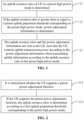
- FIG. 1 illustrates a flow chart showing a method for controlling uplink transmission power according to an exemplary embodiment
- the method may include the following steps.
- step 11 an uplink resource ratio of UE in a preset high-power mode is determined.
- a base station may configure transmission resources for the UE1 in the preset high-power mode, such as a power class 2 mode, according to radio frequency (RF) transceiver capability of the UE1.
- the transmission resources include: the transmission resources of uplink information and the transmission resources of downlink information, so as to determine the uplink resource ratio in a basic information transmission unit.
- the basic information transmission unit may be a frame, and uplink data and downlink data are transmitted on different sub-frames in the same frame.
- the uplink resource refers to a physical uplink shared channel (PUSCH) resource, which is mainly configured to bear uplink data transmission.
- PUSCH physical uplink shared channel
- the base station when configuring the uplink resource proportion for the HPUE, the base station needs to consider an uplink transmission power value and the upper limit value of SAR in the high-power mode, so as to ensure that the UE will not exceed SAR after being configured in the preset HPUE mode.
- the embodiments of the present disclosure may reduce the uplink transmission power in one or more units of information transmission time on the PUSCH in at least one of the following manners.
- the uplink transmission power P PUSCH (i) is reduced by reducing the maximum transmission power value P CMAX of the UE.
- the unit information transmission time may be a sub-frame.
- the unit information transmission time may be a slot, a mini-slot, a symbol and other smaller resource units. The present disclosure does not limit the unit information transmission time.
- the uplink resource ratio R UL is expressed as: the uplink transmission time t_UL per unit time
- the nominal power corresponding to the preset high-power mode is reduced.
- the nominal power is P O_PUSCH (j) in the above formula (1). Similar to the first manner, the present disclosure may also obtain the reduced nominal power by reducing the original nominal power by a correction or multiplying it by a preset correction factor, which will not be described here.
- a power offset namely the MCS adjustment value, determined by the MCS and a data type is reduced.
- the power offset is ⁇ TF (i) in the above formula (1), the adjusting manner of which is similar to the first manner.
- the present disclosure may reduce the adjustment value formed by the closed-loop power control of the UE by reducing it by a correction or multiplying it by the preset correction factor, as f(i) in the above formula (1).
- the uplink transmission power may be reduced in the second manner to the fifth manner.
- a power adjustment value for reducing the uplink transmission power is determined on the basis of calculating an original transmission power value P0 according to the formula (1).
- the step 121 may include the following steps.
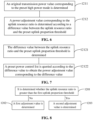
- an original transmission power value corresponding to the preset high-power mode is determined.
- the original transmission power value is the uplink transmission power determined when the uplink resource proportion is less than the preset uplink proportion threshold.
- the base station may determine preset uplink transmission power, namely the original transmission power value P0, configured for the UE1 according to the formula (1) when the R UL is less than 70%.
- a power adjustment value corresponding to the uplink resource ratio is determined according to a difference value between the uplink resource ratio and the preset uplink proportion threshold.
- the power adjustment value is configured to reduce the uplink transmission power based on the original transmission power value.
- the power adjustment value is determined based on ⁇ R in the embodiments of the present disclosure.
- the power adjustment value may be the preset power reduction ⁇ P or the power adjustment factor ⁇ for reducing the uplink transmission power.
- the implementation of the step 1212 may also include two modes.
- a fixed power adjustment value is configured.
- the base station may configure the adjustment value as a fixed value considering the allowance of power margin, for example, whatever the value of ⁇ R is, the original transmission power value P0 is reduced by 3dBm.
- the base station sets different power adjustment values for the difference value between the uplink resource ratio and the preset uplink proportion threshold.
- the power reduction ⁇ P that the base station determines for the UE1 may change according to the different uplink resource ratios R UL . If the power adjustment value is the power reduction ⁇ P, the value of ⁇ P increases with the increase of ⁇ R. Similarly, if the power adjustment value is the power adjustment factor ⁇ , ⁇ decreases with the increase of ⁇ R.
- a preset power control list is queried according to the difference value to obtain the power adjustment value corresponding to the difference value.
- the preset power control list includes a corresponding relationship between a range of the difference value and the power adjustment value.
- the base station may also determine the corresponding power adjustment value for the uplink resource ratio according to the relationship between the preset uplink proportion threshold and the first uplink proportion threshold.
- the first uplink proportion threshold is the uplink proportion threshold corresponding to the upper limit value of SAR.
- the step 1212 may include the following steps.
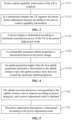
- step 1201 it is determined whether the uplink resource ratio is greater than the first uplink proportion threshold.
- step 1202 if the uplink resource ratio is greater than or equal to the preset uplink proportion threshold and less than the first uplink proportion threshold, a first adjustment value is determined.
- step 1203 if the uplink resource ratio is greater than or equal to the first uplink proportion threshold, a second adjustment value is determined. A power reduction corresponding to the first adjustment value is less than a power reduction corresponding to the second adjustment value.
- the preset uplink proportion threshold is 70% and the first uplink proportion threshold corresponding to the upper limit value of SAR is 75%
- the corresponding relationship between the uplink resource ratio R UL that the base station configures for the UE in the preset HPUE mode and the power reduction ⁇ P may be illustrated in Table 4.
- Table 4 Equipment identification HPUE mode Uplink resource ratio R UL Power reduction ⁇ P UE1 power class 2 70% ⁇ R UL ⁇ 75% ⁇ P1 R UL ⁇ 75% ⁇ P2
- ⁇ P1 is less than ⁇ P2.
- two different power adjustment values are configured to perform power control to the UE, which can not only ensure uplink coverage but also avoid exceeding a standard SAR.
- ⁇ P1 and ⁇ P2 may also be dynamic values changing with different R UL .
- different power adjustment values may be determined according to different situations in which the uplink resource ratio is close to the first uplink proportion threshold in the present disclosure.
- the base station may simultaneously send the uplink resource ratio R UL and the corresponding power adjustment information to the UE through preset downlink control signaling.
- the base station may also send the original transmission power value and the power adjustment value corresponding to the uplink resource ratio to the UE in different time cycles. For example, when the UE is configured in the preset high-power mode, and the uplink resource ratio exceeds the preset uplink proportion threshold, the base station sends the original transmission power value to the UE for every ten sub-frames, and sends the power adjustment value to the UE for each sub-frame, so as to avoid sending the original transmission power value repeatedly for each frame and thus achieve the purpose of saving signaling overhead.
- step 22 when uplink information is transmitted according to the uplink resource ratio in a preset high-power mode, uplink transmission power is controlled according to the power adjustment information.
- the UE first determines the target uplink transmission power P according to the original transmission power value P0 and the power adjustment value, and transmits the uplink information according to the target uplink transmission power P.
- the method may further include as follows.
- step 20 power control capability information is reported to the base station.
- the power control capability information is configured to indicate whether the UE supports a preset power adjustment function.
- the preset power adjustment function is configured to avoid exceeding a standard SAR by adjusting the uplink transmission power when the uplink resource ratio exceeds the preset uplink proportion threshold corresponding to the preset high-power mode.
- the UE may inform the base station whether it supports the preset power adjustment function through a capability indicator in the power control capability information reported to the base station, or implicitly informs the base station that it supports the preset power adjustment function directly through the preset uplink proportion threshold corresponding to the preset high-power mode. Or, the UE explicitly informs the base station that it supports the preset power adjustment function through the capability indicator in combination with the preset uplink proportion threshold corresponding to the preset high-power mode, referring to the description in the step 1112, which will not be repeated here.
- the base station may send the resource allocation information and the power adjustment information to the UE through broadcasting signaling, upper level signaling and physical layer downlink signaling.
- the upper signaling may be radio resource control (RRC) signaling and medium access control (MAC) control element (CE) signaling.
- RRC radio resource control
- MAC medium access control
- CE control element
- the present disclosure also provides embodiments of an application function realization device and a corresponding terminal.
- the present disclosure provides a device for controlling uplink transmission power, which may be in the base station.
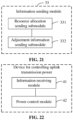
- the device may include: a resource allocation module 31, an adjustment information determining module 32 and an information sending module 33.
- the resource allocation module 31 is configured to determine an uplink resource ratio of UE in a preset high-power mode.
- the adjustment information determining module 32 is configured to determine power adjustment information if the uplink resource ratio is greater than or equal to a preset uplink proportion threshold corresponding to the preset high-power mode.
- the information sending module 33 is configured to send the uplink resource ratio and the power adjustment information to the UE, such that the UE controls uplink transmission power according to the power adjustment information when transmitting uplink information according to the uplink resource ratio in the preset high-power mode.
- the resource allocation module 31 may include: a function determining submodule 311 and a resource ratio determining submodule 312.
- the function determining submodule 311 is configured to determine whether the UE supports a preset power adjustment function, and the preset power adjustment function is configured to avoid exceeding a standard SAR by adjusting the uplink transmission power when the uplink resource ratio exceeds the preset uplink proportion threshold corresponding to the preset high-power mode.
- the resource ratio determining submodule 312 is configured to determine, if the UE supports the preset power adjustment function, the uplink resource ratio according to a first uplink proportion threshold corresponding to the preset high-power mode.
- the first uplink proportion threshold is an uplink proportion threshold corresponding to an upper limit value of SAR.
- the estimating unit 3122 is configured to determine a configurable maximum uplink proportion based on the power margin.
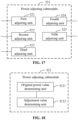
- the adjustment information determining module 32 may include: a power adjusting submodule 321 and an adjustment information determining submodule 322.
- the power adjusting submodule 321 is configured to reduce the uplink transmission power corresponding to the uplink resource ratio according to preset strategies, and obtain a power adjustment result.
- the adjustment information determining submodule 322 is configured to determine the power adjustment information according to the power adjustment result.
- the power adjusting submodule 321 may include at least one of: a first adjusting unit 3211, a second adjusting unit 3212, a third adjusting unit 3213, a fourth adjusting unit 3214 or a fifth adjusting unit 3215.
- the first adjusting unit 3211 is configured to reduce maximum transmission power corresponding to the preset high-power mode.
- the first adjusting unit 3211 may be configured to reduce the maximum transmission power corresponding to the preset high-power mode according to an adjustment value determined by a preset MPR.
- the fourth adjusting unit 3214 is configured to reduce an MCS adjustment value determined by an MCS and a data type.
- the fifth adjusting unit 3215 is configured to reduce an adjustment value formed by closed-loop power control of the UE.
- the power adjusting submodule 321 may include: an original power value determining unit 3211 and an adjustment value determining unit 3212.
- the adjustment value determining unit 3212 is configured to determine a power adjustment value corresponding to the uplink resource ratio according to a difference value between the uplink resource ratio and the preset uplink proportion threshold.
- the power adjustment value is configured to reduce the uplink transmission power based on the original transmission power value.
- the adjustment information determining submodule 322 may be configured to determine the power adjustment information based on the original transmission power value and the power adjustment value.
- the information receiving module 41 is configured to receive an uplink resource ratio and power adjustment information in a preset high-power mode which are sent by a base station.
- the uplink resource ratio is higher than a preset uplink proportion threshold.
- the processor is configured to:
Landscapes
- Engineering & Computer Science (AREA)
- Computer Networks & Wireless Communication (AREA)
- Signal Processing (AREA)
- Databases & Information Systems (AREA)
- Quality & Reliability (AREA)
- Mobile Radio Communication Systems (AREA)
Claims (8)
- Verfahren zum Steuern von Uplink-Übertragungsleistung, das von einer Basisstation durchgeführt wird, wobei das Verfahren umfasst:Bestimmen (11) eines Uplink-Ressourcenverhältnisses einer Benutzerausrüstung, UE, in einem voreingestellten Hochleistungsmodus;Bestimmen (12), als Reaktion darauf, dass das Uplink-Ressourcenverhältnis größer oder gleich einer voreingestellten Uplink-Anteilsschwelle ist, die dem voreingestellten Hochleistungsmodus entspricht, von Leistungsanpassungsinformationen; undSenden (13) des Uplink-Ressourcenverhältnisses und der Leistungsanpassungsinformationen an die UE; wobei die Leistungsanpassungsinformationen konfiguriert sind, um die UE im voreingestellten Hochleistungsmodus anzuweisen, Uplink-Übertragungsleistung beim Übertragen von Uplink-Informationen gemäß dem Uplink-Ressourcenverhältnis zu reduzieren;wobei Bestimmen (11) des Uplink-Ressourcenverhältnisses der UE im voreingestellten Hochleistungsmodus umfasst:Bestimmen (111), ob die UE eine voreingestellte Leistungsanpassungsfunktion unterstützt, wobei die voreingestellte Leistungsanpassungsfunktion konfiguriert ist, um Überschreiten einer spezifischen Standard-Absorptionsrate, SAR, durch Anpassen der Uplink-Übertragungsleistung als Reaktion darauf, dass das Uplink-Ressourcenverhältnis die dem voreingestellten Hochleistungsmodus entsprechende, voreingestellte Uplink-Anteilsschwelle überschreitet, zu vermeiden; undBestimmen (112), als Reaktion darauf, dass die UE die voreingestellte Leistungsanpassungsfunktion unterstützt, des Uplink-Ressourcenverhältnisses gemäß einer ersten Uplink-Anteilsschwelle, die dem voreingestellten Hochleistungsmodus entspricht, wobei die erste Uplink-Anteilsschwelle eine Uplink-Anteilsschwelle ist, die einem oberen SAR-Grenzwert entspricht;wobei Bestimmen (112) des Uplink-Ressourcenverhältnisses gemäß der ersten Uplink-Anteilsschwelle, die dem voreingestellten Hochleistungsmodus entspricht, umfasst:Bestimmen (1121) eines Leistungsbereichs gemäß der maximalen Übertragungsleistung der UE im voreingestellten Hochleistungsmodus;Bestimmen (1122) eines konfigurierbaren maximalen Uplink-Anteils basierend auf dem Leistungsbereich; undBestimmen (1123) eines Uplink-Anteils, der höher ist als die erste Uplink-Anteilsschwelle, als Uplink-Ressourcenverhältnis, wobei das Uplink-Ressourcenverhältnis den maximalen Uplink-Anteil nicht überschreitet.
- Verfahren nach Anspruch 1, wobei Bestimmen (111), ob die UE die voreingestellte Leistungsanpassungsfunktion unterstützt, umfasst:Erfassen (1111) von Leistungssteuerungsfähigkeits-Informationen der UE; undBestimmen (1112), ob die UE die voreingestellte Leistungsanpassungsfunktion gemäß den Leistungssteuerungsfähigkeits-Informationen unterstützt.
- Verfahren nach Anspruch 2, wobei Erfassen der Leistungssteuerungsfähigkeits-Informationen der UE umfasst: Empfangen der Leistungssteuerungsfähigkeits-Informationen, die von der UE gemeldet werden;
wobei die Leistungssteuerungsfähigkeits-Informationen mindestens eines umfassen von: einem Fähigkeitsindikator, der angibt, ob die voreingestellte Leistungsanpassungsfunktion unterstützt wird, oder die voreingestellte Uplink-Anteilsschwelle, die dem voreingestellten Hochleistungsmodus entspricht. - Verfahren nach Anspruch 1, wobei Bestimmen (12) der Leistungsanpassungsinformationen umfasst:Reduzieren (121) der Uplink-Übertragungsleistung, die dem Uplink-Ressourcenverhältnis entspricht, gemäß voreingestellten Strategien, und Erhalten eines Leistungsanpassungsergebnisses; undBestimmen (122) der Leistungsanpassungsinformationen gemäß dem Leistungsanpassungsergebnis.
- Verfahren nach Anspruch 4, wobei die voreingestellten Strategien mindestens eines umfassen von:Reduzieren von maximaler Übertragungsleistung, die dem voreingestellten Hochleistungsmodus entspricht;Reduzieren von Nennleistung, die dem voreingestellten Hochleistungsmodus entspricht;Reduzieren eines Pfadkompensationswerts einer Zelle;Reduzieren eines Modulations- und Codierungsschema-, MCS, Anpassungswerts, der durch ein MCS und einen Datentyp bestimmt wird; oderReduzieren eines Anpassungswerts, der durch Leistungsregelung der UE gebildet wird.
- Verfahren nach Anspruch 5, wobei Reduzieren der maximalen Übertragungsleistung, die dem voreingestellten Hochleistungsmodus entspricht, umfasst:
Reduzieren der maximalen Übertragungsleistung, die dem voreingestellten Hochleistungsmodus entspricht, gemäß einem Anpassungswert, der durch eine voreingestellte maximale Leistungsreduzierung, MPR, bestimmt wird. - Basisstation, umfassend:einen Prozessor; undeinen Speicher, der konfiguriert ist, um Anweisungen zu speichern, die durch den Prozessor ausführbar sind;wobei der Prozessor konfiguriert ist, um die Schritte des Verfahrens nach einem der Ansprüche 1 bis 6 durchzuführen.
- Computerlesbares Speichermedium, das konfiguriert ist, um Computeranweisungen zu speichern, wobei die Computeranweisungen, die von einem Prozessor einer Basisstation ausgeführt werden, das Verfahren nach einem der Ansprüche 1-6 durchführen.
Applications Claiming Priority (1)
| Application Number | Priority Date | Filing Date | Title |
|---|---|---|---|
| PCT/CN2018/089401 WO2019227444A1 (zh) | 2018-05-31 | 2018-05-31 | 控制上行发射功率的方法和装置、基站及用户设备 |
Publications (3)
| Publication Number | Publication Date |
|---|---|
| EP3799487A1 EP3799487A1 (de) | 2021-03-31 |
| EP3799487A4 EP3799487A4 (de) | 2022-01-26 |
| EP3799487B1 true EP3799487B1 (de) | 2025-07-02 |
Family
ID=63841465
Family Applications (1)
| Application Number | Title | Priority Date | Filing Date |
|---|---|---|---|
| EP18920238.5A Active EP3799487B1 (de) | 2018-05-31 | 2018-05-31 | Verfahren und vorrichtung zur steuerung der uplink-übertragungsleistung, basisstation und benutzergerät |
Country Status (5)
| Country | Link |
|---|---|
| US (1) | US11533686B2 (de) |
| EP (1) | EP3799487B1 (de) |
| CN (1) | CN108702709B (de) |
| ES (1) | ES3037969T3 (de) |
| WO (1) | WO2019227444A1 (de) |
Families Citing this family (25)
| Publication number | Priority date | Publication date | Assignee | Title |
|---|---|---|---|---|
| CN110198560B (zh) | 2018-02-26 | 2020-11-13 | 维沃移动通信有限公司 | 一种功率配置方法和终端 |
| CN112655250B (zh) * | 2018-10-31 | 2023-06-27 | Oppo广东移动通信有限公司 | 无线通信的方法、终端设备和网络设备 |
| CN112166630B (zh) * | 2018-11-07 | 2022-03-08 | Oppo广东移动通信有限公司 | 资源调整方法、装置、芯片及计算机可读存储介质 |
| CN111742583B (zh) * | 2018-11-09 | 2021-11-09 | Oppo广东移动通信有限公司 | 通信方法、终端设备和网络设备 |
| CN109587779B (zh) * | 2019-01-29 | 2021-12-07 | 中国联合网络通信集团有限公司 | 一种双连接通信结构及其上行方法 |
| WO2020164144A1 (zh) * | 2019-02-15 | 2020-08-20 | 北京小米移动软件有限公司 | 多带宽传输时的功率配置方法、装置、设备及系统 |
| WO2020199221A1 (zh) * | 2019-04-04 | 2020-10-08 | Oppo广东移动通信有限公司 | 一种资源配置方法、网络设备、终端设备 |
| WO2020210964A1 (zh) * | 2019-04-15 | 2020-10-22 | Oppo广东移动通信有限公司 | 无线通信方法、终端设备和网络设备 |
| CN112996091B (zh) | 2019-05-03 | 2022-07-22 | 华为技术有限公司 | 传输功率控制方法、相关设备及系统 |
| CN113455053A (zh) * | 2019-05-16 | 2021-09-28 | Oppo广东移动通信有限公司 | 一种资源管理方法、网络设备、用户设备 |
| WO2021026934A1 (zh) * | 2019-08-15 | 2021-02-18 | 华为技术有限公司 | 功率值确定方法、装置及系统 |
| WO2021035457A1 (en) * | 2019-08-26 | 2021-03-04 | Qualcomm Incorporated | Full-duplex techniques in wireless communications |
| CN112714489B (zh) * | 2019-10-25 | 2023-05-02 | 中国电信股份有限公司 | 超级上行功率控制方法、终端和计算机可读存储介质 |
| CN115802510B (zh) * | 2019-11-08 | 2024-08-16 | Oppo广东移动通信有限公司 | 信息处理方法及设备、存储介质、芯片 |
| EP4087331A4 (de) * | 2020-01-07 | 2023-01-11 | Guangdong Oppo Mobile Telecommunications Corp., Ltd. | Verfahren und vorrichtung zur sendeleistungseinstellung, endgerät, basisstation und speichermedium |
| CN113163435B (zh) * | 2020-01-22 | 2022-11-22 | 华为技术有限公司 | 确定回退功率的方法和调整发射功率的方法 |
| US12593284B2 (en) | 2020-08-13 | 2026-03-31 | Nokia Technologies Oy | Apparatus, methods, and computer programs |
| CN114731652B (zh) * | 2020-11-05 | 2025-10-17 | 北京小米移动软件有限公司 | 通信处理方法、装置、通信设备及存储介质 |
| EP4033821A1 (de) * | 2021-01-21 | 2022-07-27 | Google LLC | Verbesserung der uplink-leistungs- und ressourcenzuteilung für benutzervorrichtungen |
| US11924770B2 (en) * | 2021-07-02 | 2024-03-05 | Qualcomm Incorporated | Enhanced uplink power control with lookahead |
| US11968632B2 (en) * | 2021-12-01 | 2024-04-23 | Qualcomm Incorporated | Power control adaptation |
| US12535867B2 (en) * | 2022-09-22 | 2026-01-27 | Samsung Electronics Co., Ltd. | Electronic device and method for controlling heat generation thereof during a call |
| US12432663B2 (en) * | 2023-02-16 | 2025-09-30 | Apple Inc. | Systems and methods for high-power transmission |
| CN119653461A (zh) * | 2023-09-18 | 2025-03-18 | 上海华为技术有限公司 | 功率控制方法及装置 |
| US20250234307A1 (en) * | 2024-01-17 | 2025-07-17 | T-Mobile Usa, Inc. | Dynamic scheduling request framework for hp ue sar reduction |
Family Cites Families (8)
| Publication number | Priority date | Publication date | Assignee | Title |
|---|---|---|---|---|
| US8565205B2 (en) | 2010-11-04 | 2013-10-22 | Qualcomm Incorporated | Specific absorption rate backoff in power headroom report |
| US8781437B2 (en) | 2011-03-04 | 2014-07-15 | Qualcomm Incorporated | Systems and methods for dynamic transmission power limit back-off for specific absorption rate compliance |
| US9215686B2 (en) * | 2012-12-28 | 2015-12-15 | Telefonaktiebolaget L M Ericsson (Publ) | Wireless device, measuring node, network node, methods therein, computer program, and computer-readable storage medium |
| US9078220B2 (en) * | 2013-09-27 | 2015-07-07 | Motorola Solutions, Inc. | Method and apparatus for UE power class adaption for coverage extension in LTE |
| WO2017196612A1 (en) * | 2016-05-11 | 2017-11-16 | Idac Holdings, Inc. | Systems and methods for beamformed uplink transmission |
| US20170332333A1 (en) | 2016-05-13 | 2017-11-16 | Qualcomm Incorporated | Managing specific absorption rate for user equipments |
| CN107231682A (zh) * | 2017-05-25 | 2017-10-03 | 北京小米移动软件有限公司 | 降低终端sar的处理方法、装置及终端 |
| EP3793281B1 (de) * | 2018-05-11 | 2024-05-15 | Beijing Xiaomi Mobile Software Co., Ltd. | Verfahren und benutzergerät zur übertragung von informationen |
-
2018
- 2018-05-31 EP EP18920238.5A patent/EP3799487B1/de active Active
- 2018-05-31 US US17/059,424 patent/US11533686B2/en active Active
- 2018-05-31 CN CN201880000742.0A patent/CN108702709B/zh active Active
- 2018-05-31 WO PCT/CN2018/089401 patent/WO2019227444A1/zh not_active Ceased
- 2018-05-31 ES ES18920238T patent/ES3037969T3/es active Active
Also Published As
| Publication number | Publication date |
|---|---|
| CN108702709A (zh) | 2018-10-23 |
| EP3799487A1 (de) | 2021-03-31 |
| ES3037969T3 (en) | 2025-10-08 |
| US20210160787A1 (en) | 2021-05-27 |
| EP3799487A4 (de) | 2022-01-26 |
| WO2019227444A1 (zh) | 2019-12-05 |
| US11533686B2 (en) | 2022-12-20 |
| CN108702709B (zh) | 2021-08-31 |
Similar Documents
| Publication | Publication Date | Title |
|---|---|---|
| EP3799487B1 (de) | Verfahren und vorrichtung zur steuerung der uplink-übertragungsleistung, basisstation und benutzergerät | |
| CN108702761B (zh) | 传输信息的方法和装置、基站及用户设备 | |
| CN109314931B (zh) | 调整终端上行发射功率的方法、装置及存储介质 | |
| CN114982302B (zh) | 功率控制方法及装置、通信设备和存储介质 | |
| CN114731652A (zh) | 通信处理方法、装置、通信设备及存储介质 | |
| EP4358553A1 (de) | Informationsübertragungsverfahren und -vorrichtung sowie kommunikationsvorrichtung und speichermedium | |
| EP4383840A1 (de) | Leistungssteuerungsverfahren und -vorrichtung mit offenem regelkreis für uplink-pusch und speichermedium | |
| CN115088315B (zh) | 一种功率配置方法、装置、设备及存储介质 | |
| EP4645991A1 (de) | Verfahren und vorrichtung zur meldung von leistungsinformationen und speichermedium | |
| EP4645961A1 (de) | Verfahren und vorrichtung zur meldung von leistungsinformationen und speichermedium | |
| EP4645967A1 (de) | Verfahren und vorrichtung zur meldung von leistungsinformationen, vorrichtung und speichermedium | |
| EP4645998A1 (de) | Verfahren und vorrichtung zur meldung der endgerätekapazität sowie vorrichtung und speichermedium | |
| WO2024138717A1 (zh) | 功率域信息的上报、接收方法、装置及存储介质 | |
| WO2025031240A1 (zh) | 功率等级相关信息上报方法及装置 | |
| WO2024138736A1 (zh) | 功率域信息的上报、接收方法、装置及存储介质 | |
| WO2024138738A1 (zh) | 一种功率信息的上报方法、装置及存储介质 | |
| WO2024159537A1 (zh) | 一种传输请求信息的方法、装置以及可读存储介质 | |
| CN118556429A (zh) | 一种传输功率余量报告的方法、装置以及可读存储介质 |
Legal Events
| Date | Code | Title | Description |
|---|---|---|---|
| STAA | Information on the status of an ep patent application or granted ep patent |
Free format text: STATUS: THE INTERNATIONAL PUBLICATION HAS BEEN MADE |
|
| PUAI | Public reference made under article 153(3) epc to a published international application that has entered the european phase |
Free format text: ORIGINAL CODE: 0009012 |
|
| STAA | Information on the status of an ep patent application or granted ep patent |
Free format text: STATUS: REQUEST FOR EXAMINATION WAS MADE |
|
| 17P | Request for examination filed |
Effective date: 20201222 |
|
| AK | Designated contracting states |
Kind code of ref document: A1 Designated state(s): AL AT BE BG CH CY CZ DE DK EE ES FI FR GB GR HR HU IE IS IT LI LT LU LV MC MK MT NL NO PL PT RO RS SE SI SK SM TR |
|
| AX | Request for extension of the european patent |
Extension state: BA ME |
|
| DAV | Request for validation of the european patent (deleted) | ||
| DAX | Request for extension of the european patent (deleted) | ||
| A4 | Supplementary search report drawn up and despatched |
Effective date: 20220104 |
|
| RIC1 | Information provided on ipc code assigned before grant |
Ipc: H04W 8/24 20090101ALN20211221BHEP Ipc: H04W 52/28 20090101ALI20211221BHEP Ipc: H04W 52/14 20090101ALI20211221BHEP Ipc: H04W 52/36 20090101ALI20211221BHEP Ipc: H04W 52/08 20090101AFI20211221BHEP |
|
| STAA | Information on the status of an ep patent application or granted ep patent |
Free format text: STATUS: EXAMINATION IS IN PROGRESS |
|
| 17Q | First examination report despatched |
Effective date: 20230619 |
|
| GRAP | Despatch of communication of intention to grant a patent |
Free format text: ORIGINAL CODE: EPIDOSNIGR1 |
|
| STAA | Information on the status of an ep patent application or granted ep patent |
Free format text: STATUS: GRANT OF PATENT IS INTENDED |
|
| RIC1 | Information provided on ipc code assigned before grant |
Ipc: H04W 8/24 20090101ALN20250304BHEP Ipc: H04W 52/28 20090101ALI20250304BHEP Ipc: H04W 52/14 20090101ALI20250304BHEP Ipc: H04W 52/36 20090101ALI20250304BHEP Ipc: H04W 52/08 20090101AFI20250304BHEP |
|
| INTG | Intention to grant announced |
Effective date: 20250326 |
|
| GRAS | Grant fee paid |
Free format text: ORIGINAL CODE: EPIDOSNIGR3 |
|
| GRAA | (expected) grant |
Free format text: ORIGINAL CODE: 0009210 |
|
| STAA | Information on the status of an ep patent application or granted ep patent |
Free format text: STATUS: THE PATENT HAS BEEN GRANTED |
|
| P01 | Opt-out of the competence of the unified patent court (upc) registered |
Free format text: CASE NUMBER: APP_21401/2025 Effective date: 20250506 |
|
| AK | Designated contracting states |
Kind code of ref document: B1 Designated state(s): AL AT BE BG CH CY CZ DE DK EE ES FI FR GB GR HR HU IE IS IT LI LT LU LV MC MK MT NL NO PL PT RO RS SE SI SK SM TR |
|
| REG | Reference to a national code |
Ref country code: GB Ref legal event code: FG4D |
|
| REG | Reference to a national code |
Ref country code: CH Ref legal event code: EP |
|
| REG | Reference to a national code |
Ref country code: DE Ref legal event code: R096 Ref document number: 602018083324 Country of ref document: DE |
|
| REG | Reference to a national code |
Ref country code: IE Ref legal event code: FG4D |
|
| REG | Reference to a national code |
Ref country code: NL Ref legal event code: FP |
|
| REG | Reference to a national code |
Ref country code: ES Ref legal event code: FG2A Ref document number: 3037969 Country of ref document: ES Kind code of ref document: T3 Effective date: 20251008 |
|
| PG25 | Lapsed in a contracting state [announced via postgrant information from national office to epo] |
Ref country code: PT Free format text: LAPSE BECAUSE OF FAILURE TO SUBMIT A TRANSLATION OF THE DESCRIPTION OR TO PAY THE FEE WITHIN THE PRESCRIBED TIME-LIMIT Effective date: 20251103 |
|
| REG | Reference to a national code |
Ref country code: AT Ref legal event code: MK05 Ref document number: 1810750 Country of ref document: AT Kind code of ref document: T Effective date: 20250702 |
|
| PG25 | Lapsed in a contracting state [announced via postgrant information from national office to epo] |
Ref country code: IS Free format text: LAPSE BECAUSE OF FAILURE TO SUBMIT A TRANSLATION OF THE DESCRIPTION OR TO PAY THE FEE WITHIN THE PRESCRIBED TIME-LIMIT Effective date: 20251102 |
|
| PG25 | Lapsed in a contracting state [announced via postgrant information from national office to epo] |
Ref country code: NO Free format text: LAPSE BECAUSE OF FAILURE TO SUBMIT A TRANSLATION OF THE DESCRIPTION OR TO PAY THE FEE WITHIN THE PRESCRIBED TIME-LIMIT Effective date: 20251002 |
|
| REG | Reference to a national code |
Ref country code: LT Ref legal event code: MG9D |
|
| PG25 | Lapsed in a contracting state [announced via postgrant information from national office to epo] |
Ref country code: AT Free format text: LAPSE BECAUSE OF FAILURE TO SUBMIT A TRANSLATION OF THE DESCRIPTION OR TO PAY THE FEE WITHIN THE PRESCRIBED TIME-LIMIT Effective date: 20250702 |
|
| PG25 | Lapsed in a contracting state [announced via postgrant information from national office to epo] |
Ref country code: FI Free format text: LAPSE BECAUSE OF FAILURE TO SUBMIT A TRANSLATION OF THE DESCRIPTION OR TO PAY THE FEE WITHIN THE PRESCRIBED TIME-LIMIT Effective date: 20250702 |
|
| PG25 | Lapsed in a contracting state [announced via postgrant information from national office to epo] |
Ref country code: HR Free format text: LAPSE BECAUSE OF FAILURE TO SUBMIT A TRANSLATION OF THE DESCRIPTION OR TO PAY THE FEE WITHIN THE PRESCRIBED TIME-LIMIT Effective date: 20250702 |
|
| PG25 | Lapsed in a contracting state [announced via postgrant information from national office to epo] |
Ref country code: GR Free format text: LAPSE BECAUSE OF FAILURE TO SUBMIT A TRANSLATION OF THE DESCRIPTION OR TO PAY THE FEE WITHIN THE PRESCRIBED TIME-LIMIT Effective date: 20251003 |
|
| PG25 | Lapsed in a contracting state [announced via postgrant information from national office to epo] |
Ref country code: SE Free format text: LAPSE BECAUSE OF FAILURE TO SUBMIT A TRANSLATION OF THE DESCRIPTION OR TO PAY THE FEE WITHIN THE PRESCRIBED TIME-LIMIT Effective date: 20250702 Ref country code: CZ Free format text: LAPSE BECAUSE OF FAILURE TO SUBMIT A TRANSLATION OF THE DESCRIPTION OR TO PAY THE FEE WITHIN THE PRESCRIBED TIME-LIMIT Effective date: 20250702 |
|
| PG25 | Lapsed in a contracting state [announced via postgrant information from national office to epo] |
Ref country code: LV Free format text: LAPSE BECAUSE OF FAILURE TO SUBMIT A TRANSLATION OF THE DESCRIPTION OR TO PAY THE FEE WITHIN THE PRESCRIBED TIME-LIMIT Effective date: 20250702 |
|
| PG25 | Lapsed in a contracting state [announced via postgrant information from national office to epo] |
Ref country code: PL Free format text: LAPSE BECAUSE OF FAILURE TO SUBMIT A TRANSLATION OF THE DESCRIPTION OR TO PAY THE FEE WITHIN THE PRESCRIBED TIME-LIMIT Effective date: 20250702 Ref country code: BG Free format text: LAPSE BECAUSE OF FAILURE TO SUBMIT A TRANSLATION OF THE DESCRIPTION OR TO PAY THE FEE WITHIN THE PRESCRIBED TIME-LIMIT Effective date: 20250702 |
|
| PG25 | Lapsed in a contracting state [announced via postgrant information from national office to epo] |
Ref country code: RS Free format text: LAPSE BECAUSE OF FAILURE TO SUBMIT A TRANSLATION OF THE DESCRIPTION OR TO PAY THE FEE WITHIN THE PRESCRIBED TIME-LIMIT Effective date: 20251002 |
|
| PG25 | Lapsed in a contracting state [announced via postgrant information from national office to epo] |
Ref country code: SM Free format text: LAPSE BECAUSE OF FAILURE TO SUBMIT A TRANSLATION OF THE DESCRIPTION OR TO PAY THE FEE WITHIN THE PRESCRIBED TIME-LIMIT Effective date: 20250702 |
|
| PGFP | Annual fee paid to national office [announced via postgrant information from national office to epo] |
Ref country code: GB Payment date: 20260324 Year of fee payment: 9 |
|
| PG25 | Lapsed in a contracting state [announced via postgrant information from national office to epo] |
Ref country code: DK Free format text: LAPSE BECAUSE OF FAILURE TO SUBMIT A TRANSLATION OF THE DESCRIPTION OR TO PAY THE FEE WITHIN THE PRESCRIBED TIME-LIMIT Effective date: 20250702 |
|
| PG25 | Lapsed in a contracting state [announced via postgrant information from national office to epo] |
Ref country code: IT Free format text: LAPSE BECAUSE OF FAILURE TO SUBMIT A TRANSLATION OF THE DESCRIPTION OR TO PAY THE FEE WITHIN THE PRESCRIBED TIME-LIMIT Effective date: 20250702 |