EP4087285B1 - Verfahren zur umschaltung des kommunikationsmodus, vorrichtung und gerät - Google Patents
Verfahren zur umschaltung des kommunikationsmodus, vorrichtung und gerät Download PDFInfo
- Publication number
- EP4087285B1 EP4087285B1 EP20917671.8A EP20917671A EP4087285B1 EP 4087285 B1 EP4087285 B1 EP 4087285B1 EP 20917671 A EP20917671 A EP 20917671A EP 4087285 B1 EP4087285 B1 EP 4087285B1
- Authority
- EP
- European Patent Office
- Prior art keywords
- network device
- communication mode
- pdcp
- user equipment
- status
- Prior art date
- Legal status (The legal status is an assumption and is not a legal conclusion. Google has not performed a legal analysis and makes no representation as to the accuracy of the status listed.)
- Active
Links
Images


Classifications
-
- H—ELECTRICITY
- H04—ELECTRIC COMMUNICATION TECHNIQUE
- H04L—TRANSMISSION OF DIGITAL INFORMATION, e.g. TELEGRAPHIC COMMUNICATION
- H04L1/00—Arrangements for detecting or preventing errors in the information received
- H04L1/0001—Systems modifying transmission characteristics according to link quality, e.g. power backoff
- H04L1/0015—Systems modifying transmission characteristics according to link quality, e.g. power backoff characterised by the adaptation strategy
-
- H—ELECTRICITY
- H04—ELECTRIC COMMUNICATION TECHNIQUE
- H04W—WIRELESS COMMUNICATION NETWORKS
- H04W36/00—Hand-off or reselection arrangements
- H04W36/0005—Control or signalling for completing the hand-off
- H04W36/0011—Control or signalling for completing the hand-off for data sessions of end-to-end connection
- H04W36/0016—Hand-off preparation specially adapted for end-to-end data sessions
-
- H—ELECTRICITY
- H04—ELECTRIC COMMUNICATION TECHNIQUE
- H04W—WIRELESS COMMUNICATION NETWORKS
- H04W28/00—Network traffic management; Network resource management
- H04W28/02—Traffic management, e.g. flow control or congestion control
- H04W28/06—Optimizing the usage of the radio link, e.g. header compression, information sizing, discarding information
-
- H—ELECTRICITY
- H04—ELECTRIC COMMUNICATION TECHNIQUE
- H04L—TRANSMISSION OF DIGITAL INFORMATION, e.g. TELEGRAPHIC COMMUNICATION
- H04L1/00—Arrangements for detecting or preventing errors in the information received
- H04L1/0001—Systems modifying transmission characteristics according to link quality, e.g. power backoff
- H04L1/0006—Systems modifying transmission characteristics according to link quality, e.g. power backoff by adapting the transmission format
-
- H—ELECTRICITY
- H04—ELECTRIC COMMUNICATION TECHNIQUE
- H04L—TRANSMISSION OF DIGITAL INFORMATION, e.g. TELEGRAPHIC COMMUNICATION
- H04L1/00—Arrangements for detecting or preventing errors in the information received
- H04L1/0001—Systems modifying transmission characteristics according to link quality, e.g. power backoff
- H04L1/0023—Systems modifying transmission characteristics according to link quality, e.g. power backoff characterised by the signalling
- H04L1/0025—Transmission of mode-switching indication
-
- H—ELECTRICITY
- H04—ELECTRIC COMMUNICATION TECHNIQUE
- H04W—WIRELESS COMMUNICATION NETWORKS
- H04W28/00—Network traffic management; Network resource management
- H04W28/02—Traffic management, e.g. flow control or congestion control
- H04W28/04—Error control
-
- H—ELECTRICITY
- H04—ELECTRIC COMMUNICATION TECHNIQUE
- H04W—WIRELESS COMMUNICATION NETWORKS
- H04W36/00—Hand-off or reselection arrangements
- H04W36/0005—Control or signalling for completing the hand-off
- H04W36/0007—Control or signalling for completing the hand-off for multicast or broadcast services, e.g. MBMS
-
- H—ELECTRICITY
- H04—ELECTRIC COMMUNICATION TECHNIQUE
- H04W—WIRELESS COMMUNICATION NETWORKS
- H04W36/00—Hand-off or reselection arrangements
- H04W36/16—Performing reselection for specific purposes
- H04W36/18—Performing reselection for specific purposes for allowing seamless reselection, e.g. soft reselection
-
- H—ELECTRICITY
- H04—ELECTRIC COMMUNICATION TECHNIQUE
- H04W—WIRELESS COMMUNICATION NETWORKS
- H04W4/00—Services specially adapted for wireless communication networks; Facilities therefor
- H04W4/06—Selective distribution of broadcast services, e.g. multimedia broadcast multicast service [MBMS]; Services to user groups; One-way selective calling services
-
- H—ELECTRICITY
- H04—ELECTRIC COMMUNICATION TECHNIQUE
- H04W—WIRELESS COMMUNICATION NETWORKS
- H04W36/00—Hand-off or reselection arrangements
- H04W36/02—Buffering or recovering information during reselection ; Modification of the traffic flow during hand-off
-
- H—ELECTRICITY
- H04—ELECTRIC COMMUNICATION TECHNIQUE
- H04W—WIRELESS COMMUNICATION NETWORKS
- H04W80/00—Wireless network protocols or protocol adaptations to wireless operation
- H04W80/02—Data link layer protocols
Definitions
- Embodiments of the present disclosure generally relate to the communication technical field, and more particularly, to the technical field of communication conversion.
- MBMS Multimedia Broadcast Multicast Service
- 3GPP R6 Release 6
- the MBMS is a technology that transmits data from one data source to multiple user equipments by sharing network resources. It can effectively utilize network resources while providing multimedia services, and realize high-speed multimedia service broadcast and multicast (also called groupcast).
- 3GPP Because the spectrum efficiency of MBMS in 3GPP R6 is low, it is not enough to effectively carry and support the operation of mobile TV type services. Therefore, in the Long Term Evolution (LTE) standard of the wireless access network, 3GPP clearly proposes to enhance the support capability for downlink high-speed multimedia broadcast and multicast services, and determines the design requirements for the physical layer and air interface.
- LTE Long Term Evolution
- Evolved MBMS is introduced in the LTE network.
- E-MBMS proposes the concept of Single Frequency Network (SFN), that is, using a uniform frequency to transmit data in all cells at the same time, but to ensure synchronization between cells. In this way, the overall signal-to-noise ratio distribution of the cells can be greatly improved, and the spectrum efficiency can also be greatly increased accordingly.
- SFN Single Frequency Network
- IP Internet Protocol
- the UE may receive services in a groupcast manner.
- the communication mode for receiving services may change. For example, the UE may move from a cell that supports multicast services to a cell that does not support multicast services, or moves from a cell that does not support multicast services to a cell that supports multicast services; or, in a same cell, the UE may move from a location where it cannot receive multicast signals to a location where it can receive multicast signals, or the UE may move from a location where it can receive multicast signals to a location where it cannot receive multicast signals. All these moving may result in a change in the communication mode. Therefore, it is needed to switch the communication mode.
- WO 2019/028893 discloses that a first terminal device switches from a second terminal device to a network device; the first terminal device receives a first packet data convergence protocol (PDCP) data packet sent by the network device; and the first terminal device submits a second PDCP data packet if the first PDCP data packet is a target PDCP data packet, wherein the target PDCP data packet is a PDCP data packet sent by the network device according to a transmission status report, and the transmission status report is a status report sent by the first terminal device or the second terminal device to the network device and is used for feeding back the receiving condition of data sent by the network device to the first terminal device by means of the second terminal device before the first terminal devices switches to the network device; the second PDCP data packet is a PDCP data packet that starts from a count value of the first PDCP data packet and whose count value is continuous from the count value of the first PDCP data packet.
- PDCP packet data convergence protocol
- the method is applied to a second network device, and the method includes: sending a Packet Data Convergence Protocol (PDCP) data transmission status of user equipment to a first network device, wherein the first network device is configured to use a first communication mode to deliver a service to the user equipment according to the PDCP data transmission status.
- PDCP Packet Data Convergence Protocol
- the method is applied to user equipment, and the method includes:
- a communication mode switching device including: a forwarding module configured to send a Packet Data Convergence Protocol (PDCP) data transmission status of user equipment in a first communication mode to a second network device, wherein the second network device is configured to use a second communication mode to send a service to the user equipment according to the PDCP data transmission status.
- PDCP Packet Data Convergence Protocol
- a communication mode switching device including: a sending module configured to send a Packet Data Convergence Protocol (PDCP) data transmission status of user equipment to a first network device, wherein the first network device is configured to use a first communication mode to deliver a service to the user equipment according to the PDCP data transmission status.
- PDCP Packet Data Convergence Protocol
- a communication mode switching device including:
- a network device including: a processor, a memory and a network interface, wherein the processor is configured to call a program in the memory to perform any one of the communication mode switching methods in embodiments of the present disclosure which is applied to the first network device and to send an execution result through the network interface.
- a network device including: a processor, a memory and a network interface, wherein the processor is configured to call a program in the memory to perform any one of the communication mode switching methods in embodiments of the present disclosure which is applied to the second network device and to send an execution result through the network interface.
- user equipment including: a processor, a memory and a network interface, wherein the processor is configured to call a program in the memory to perform any one of the communication mode switching methods in embodiments of the present disclosure which is applied to the user equipment and to send an execution result through the network interface.
- a chip including: a processor, wherein the processor is configured to call a computer program from a memory and executes the computer program to cause a device in which the chip is installed to perform any one of the communication mode switching methods in embodiments of the present disclosure.
- a computer-readable storage medium having a program for an uplink transmission method stored thereon, wherein when the program for the uplink transmission method is executed by a processor, the processor is caused to perform any one of the communication mode switching methods in embodiments of the present disclosure.
- the beneficial effects of embodiments of the present disclosure are as follows.
- the PDCP data transmission status of the user equipment in the first communication mode is sent to the second network device, thereby ensuring the continuity of the PDCP sequence numbers during the communication mode switching procedure. In this way, communication mode switching is performed in the PDCP layer and thus lossless switching is realized.
- system and “network” are often used interchangeably herein.
- the term “and/or” herein is only an association relationship to describe associated objects, indicating that there can be three kinds of relationships, for example, A and/or B can mean three cases: A alone, B alone, and A and B together.
- the character “/” herein generally indicates that the related objects are an "or” relationship.
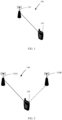
- the wireless communication system 100 includes a network device 110 and at least one user equipment 120 within the coverage of the network device 110.
- the network device 110 sends trigger signaling to the user equipment 120 to trigger the user equipment 120 to report a PDCP status.
- the wireless communication system 100 may include multiple network devices, and the coverage of each network device may include other user equipment, and embodiments of the present disclosure do not impose specific limitations on this.
- the network devices 110, 110A and 110B may provide communication coverage for a designated geographic area, and may communicate with user equipment (e.g., UE) within the coverage area.
- the network device 100 may be a base station (Base Transceiver Station, BTS) in a GSM system or a CDMA system, or a base station (NodeB, NB) in a WCDMA system, or an evolved base station (Evolutional Node B, eNB or eNodeB) in an LTE system, or a wireless controller in a Cloud Radio Access Network (CRAN).
- BTS Base Transceiver Station
- NodeB, NB base station
- Evolutional Node B, eNB or eNodeB evolved base station
- the network device can be a relay station, an access point, an in-vehicle device, a wearable device, a network side device in the 5G network or a network device in a future evolved Public Land Mobile Network (PLMN).
- PLMN Public Land Mobile Network
- GSM Global System of Mobile communication
- CDMA Code Division Multiple Access
- WCDMA Wideband Code Division Multiple Access
- GPRS General Packet Radio Service
- LTE Long Term Evolution
- LTE-A Advanced Long Term Evolution
- NR New Radio
- UMTS Universal Mobile Telecommunication System
- WLAN Wireless Local Area Networks
- WiFi Wireless Fidelity
- the user equipment 120 may be mobile or stationary. According to some embodiments, the user equipment 120 may refer to an access terminal, User Equipment (UE), user unit, user station, mobile station, mobile terminal, remote station, remote terminal, mobile device, user terminal, terminal, wireless communication device, user agent or user device.
- the access terminal may be a cellular phone, a cordless phone, a Session Initiation Protocol (SIP) phone, a Wireless Local Loop (WLL) station, a Personal Digital Assistant (PDA), a handheld device with wireless communication capabilities, a computing device or other processing device connected to a wireless modem, a vehicle-mounted device, a wearable device, or user equipment in a 5G network, or user equipment in a future evolved PLMN, and so on.
- SIP Session Initiation Protocol
- WLL Wireless Local Loop
- PDA Personal Digital Assistant
- the communication system in the embodiments of the present disclosure can be applied to a Carrier Aggregation (CA) scenario, or a Dual Connectivity (DC) scenario, or can be applied to a Standalone (SA) network deployment scenario.
- CA Carrier Aggregation
- DC Dual Connectivity
- SA Standalone
- a network device sends a service to user equipment in a first communication mode.
- a communication mode switching mechanism is triggered to switch to a second communication mode to send the service to the user.
- the situations that trigger the communication mode switching include but are not limited to one of the following situations:
- FIG. 3 is a flowchart of a communication mode switching method according to an example embodiment of the present disclosure. This embodiment is illustrated by taking an example where the method is applied to a first network device.
- the method includes: In S210, the first network device sends a PDCP data transmission status of user equipment in a first communication mode, and/or the user equipment sends a PDCP data reception status in the first communication mode.
- the first network device sends the PDCP data transmission status of the user equipment in the first communication mode to the second network device, and/or the user equipment sends the PDCP data reception status in the first communication mode to the second network device.
- the second network device sends a service to the user equipment by using a second communication mode according to the PDCP data transmission status and/or the PDCP data reception status.
- the first network device When the user terminal moves between two cells, the first network device is the network device of the source cell, and the second network device is the network device of the target cell.
- the first network device and the second network device are different network devices.
- the first network device and the second network device are the same network device.
- the first network device sends the PDCP data transmission status of the user equipment in the first communication mode to the second network device, which belongs to data communication within the device.
- the PDCP data transmission status and/or the PDCP data reception status is information related to the PDCP sequence number.
- unicast-multicast switching is implemented through an application layer server or a core network element. Since the switching is implemented at a higher layer, it is difficult to achieve lossless switching. In addition, due to the large number of network elements involved in the switching procedure, the switching delay is large.
- the PDCP data transmission status or PDCP data reception status of the user equipment in the first communication mode is sent to the second network device, that is, the communication mode switching is performed through the PCDP layer, which can realize lossless switching.
- the switching at the PDCP layer is generally implemented by an access layer network element, the unicast-multicast switching at the access layer network element can reduce the number of network elements involved in the switching procedure, and thus the switching delay can be reduced.
- FIG. 4 shows a situation in which the above communication mode switching method is applied to user equipment moving across cells. That is, the user equipment moves from the source cell to the target cell.
- the network device of the source cell uses the first communication mode to send the service to the user equipment, and the network device of the target cell uses the second communication mode to send the service to the user equipment.
- the network device before the communication mode switching is the network device of the source cell, referred to as the first network device; the network device after the communication mode switching is the network device of the target cell, referred to as the second network device. Both the first network device and the second network device are access layer network devices.
- the method includes:
- the first network device sends a PDCP data transmission status of the user equipment in the first communication mode to the second network device.
- the second network device sends the service to the user equipment by using the second communication mode.
- the second network device sends the service to the user equipment using the second communication mode.
- the PDCP data transmission status includes at least one of the following:
- the PDCP data transmission status may further include at least one of the following:
- the user equipment may also report its PCDP status to the second network device.
- the method may further include:
- S340 specifically includes: according to the PDCP data transmission status and/or the PDCP data reception status, sending, by the second network device, the service to the user equipment by using the second communication mode.
- triggering the user equipment to report the PDCP status in S320 may include: according to a Radio Link Control (RLC) mode of the user equipment under the network equipment of the source cell and/or the network equipment of the target cell, triggering the user equipment to report the PDCP status; optionally, if the RLC mode of the user equipment is Acknowledge Mode (AM), triggering the user equipment to report the PDCP status.
- RLC Radio Link Control
- AM Acknowledge Mode
- the network device of the source cell and/or the network device of the target cell sends configuration information to the user equipment.
- the configuration information is used to trigger the user equipment to report the PDCP status.
- the PDCP data reception status includes at least one of the following:
- the network device of the source cell sends the PDCP data transmission status of the user equipment in the first communication mode to the network device of the target cell, thereby ensuring that the PDCP sequence numbers of the user equipment are continuous and network equipment of the target cell can switch to the second communication state without loss according to the PDCP data transmission status to continue to send services to the user equipment through the second communication mode.
- the switching at the PDCP layer is generally implemented by the access layer network elements, the unicast-multicast switching at the access layer network elements can reduce the number of the network elements involved in the switching procedure and can thus reduce the switching delay.
- FIG. 5 is a flowchart of a communication mode switching method according to an example embodiment of the present disclosure.
- FIG. 5 shows a situation in which the above communication mode switching method is applied to a user equipment moving across cells. That is, the user equipment moves from the source cell to the target cell.
- the network device of the source cell uses the first communication mode to send the service to the user equipment, and the network device of the target cell uses the second communication mode to send the service to the user equipment.
- the network device before the communication mode switching is the network device of the source cell, referred to as the first network device; the network device after the communication mode switching is the network device of the target cell, referred to as the second network device.
- Both the first network device and the second network device are access layer network devices.
- the method includes: In S410, the second network device sends the PDCP data transmission status of the user equipment to the first network device.
- the PDCP data transmission status includes at least one of the following:
- the first network device uses the first communication mode to deliver the service to the user equipment according to the PDCP data transmission status.
- the first network device forwards data to the second network device according to the PDCP data transmission status.
- the first network device forwards the last data that needs to be forwarded to the second network device to the second network device according to the PDCP data transmission status.
- the second network device receives data forwarding performed by the first network device according to the PDCP data transmission status.
- both the first communication mode and the second communication mode may be either unicast or multicast.
- the first communication mode is multicast and the second communication mode is unicast; or, the first communication mode is unicast and the second communication mode is multicast; or, when the user equipment moves from one cell to another cell, both the first communication mode and the second communication mode are unicast or both are multicast.
- the network equipment of the target cell sends the PDCP data transmission status of the user equipment to the first network equipment, thereby ensuring that the PDCP sequence numbers of the user equipment are continuous and the first network device can forward the last data to the second network device according to the PDCP data transmission status, realizing a lossless switch to the second communication state to continues to send services to the user equipment through the second communication mode.
- the switching at the PDCP layer is generally implemented by the access layer network elements, the unicast-multicast switching at the access layer network elements can reduce the number of network elements involved in the switching procedure, and can thus reduce the switching delay.
- FIG. 6 is a flowchart of a communication mode switching method according to an example embodiment of the present disclosure. On the basis of the embodiment based on FIG. 3 , this embodiment is applied to the situation where the user equipment performs communication mode switching in the same cell. In this embodiment, the first network device before the communication mode switching and the second network device after the communication switching are the same network device.
- the method includes:
- the network device switches to the second communication mode to deliver the service according to the PDCP data transmission status and/or the PDCP data reception status sent by the user equipment, thereby ensuring the continuity of PDCP sequence numbers and achieving lossless switching at the PDCP layer.
- the PDCP data transmission status includes at least one of the following:
- the PDCP data transmission status may further include at least one of the following:
- the method may further include:
- the user equipment is triggered to report the PDCP status.
- triggering the user equipment to report the PDCP status in S510 may specifically include:
- the PDCP data reception status includes at least one of the following:
- the network device can send services to the user equipment through the second communication mode according to the PDCP data transmission status.
- lossless switching of the communication mode can be realized at the PCDP layer.
- the switching at the PDCP layer is generally implemented by the access layer network elements, the unicast-multicast switching at the access layer network element can reduce the number of network elements involved in the switching procedure, and can thus reduce the switching delay.
- FIG. 7 is block diagram of a communication mode switching device 600 according to an example embodiment of the present disclosure.
- the communication mode switching device is applied to the first network device, especially the first network device of the access layer.
- the communication mode switching device includes a forwarding module 610.
- the forwarding module 610 is configured to send a Packet Data Convergence Protocol (PDCP) data transmission status of user equipment in a first communication mode to a second network device.
- the second network device is configured to use a second communication mode to send a service to the user equipment according to the PDCP data transmission status.
- PDCP Packet Data Convergence Protocol
- the PDCP data transmission status includes at least one of the following:
- the network device of the source cell needs to send the PDCP data transmission status to the network device of the target cell (that is, the above-mentioned another network device), so that the network device of the target cell can realize the switching of the communication mode according to the PDCP transmission status.
- the communication mode switching device further includes: a triggering module 620 configured to trigger the user equipment to report a PDCP status to the second network device.
- the triggering module 620 is configured to: send configuration information, wherein the configuration information is used to trigger the user equipment to report the PDCP status to the second network device.
- the configuration information is used to trigger the user equipment to report a PDCP data reception status to the second network device; wherein the second network device is configured to use the second communication mode to deliver the service to the user equipment according to the PDCP data transmission status and/or the PDCP data reception status.
- the communication mode switching device further includes:
- the communication mode switching device sends the PDCP data transmission status of the user equipment in the first communication mode to the network device of another cell, so that the network device of the another cell can send the services to the user equipment using the second communication mode according to the PDCP data transmission status and the sequence numbers of the user equipment.
- the communication mode switching is performed at the PCDP layer, and lossless switching can be realized.
- the communication mode switching device is generally applied to the access layer network element, performing the unicast-multicast switching at the access layer network element can reduce the number of network elements involved in the switching procedure and thus reduce the switching delay.
- FIG. 8 is a block diagram of a communication mode switching device 700 according to an example embodiment of the present disclosure.
- the communication mode switching device is applied to the second network device, especially the second network device of the access layer.
- the communication mode switching device includes a sending module 720.
- the sending module 720 is configured to send a Packet Data Convergence Protocol (PDCP) data transmission status of user equipment to a first network device, wherein the first network device is configured to use a first communication mode to deliver a service to the user equipment according to the PDCP data transmission status.
- PDCP Packet Data Convergence Protocol
- the PDCP data transmission status includes at least one of the following:
- the device further includes: a receiving module 740 configured to receive data forwarding performed by the first network device according to the PDCP data transmission status.
- the device is an access layer network device.
- FIG. 9 is a block diagram of a communication mode switching device 800 according to an example embodiment of the present disclosure.
- the communication mode switching device is applied in user equipment.
- the communication mode switching device includes a reporting module 820 and a service receiving module 830.
- the reporting module 820 is configured to report a Packet Data Convergence Protocol (PDCP) data reception status in a first communication mode to a second network device; and the service receiving module 830 is configured to receive a service which is delivered by the second network device using a second communication mode.
- PDCP Packet Data Convergence Protocol
- the PDCP data reception status includes at least one of the following:
- the service receiving module 830 is specifically configured to receive the service which is delivered by the second network device through the second communication mode according to the PDCP data transmission status and/or the PDCP data reception status of the communication mode switching device in the first communication mode.
- the communication mode switching device further includes a reporting module 820 which is configured to: in response to a trigger condition being satisfied, report a PDCP status to the second network device.
- the reporting module 820 is configured to:
- the reporting module 820 is configured to: in response to that the RLC mode of the device is a Acknowledge Mode (AM), report the PDCP status.
- the reporting module 820 is specifically configured to report the PDCP data reception status in the first communication mode to the second network device according to one of the following conditions:
- the trigger reporting module 820 receives the trigger signaling using the network device of the source cell, and reports the PDCP data reception in the first communication mode to the network device of the target cell state, and the network device of the target cell delivers the service through the second communication mode.
- the trigger reporting module 820 receives the trigger signaling of the network device in the cell, and report the PDCP data reception status in the first communication mode to the network device in the cell, and the network device in the cell delivers the service through the second communication mode.
- the communication mode switching device keeps the PDCP sequence number unchanged during the switching procedure, and the network device switches the communication mode for sending the service to the second communication mode according to the PDCP data transmission status in the first communication mode and the sequence number of the user equipment. That is, in the fifth embodiment of the present application, the communication mode switching is performed through at PCDP layer, so that lossless switching can be realized. Also, because the switching at the PDCP layer is generally implemented by the access layer network element, performing the unicast-multicast switching at the access layer network element can reduce the number of network elements involved in the switching procedure and can thus reduce switching delay.
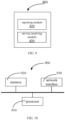
- FIG. 10 is a schematic structural diagram of a communication mode switching device according to an example embodiment of the present disclosure.
- the communication mode switching device 900 includes: a processor 910, a memory 920 and a network interface 930.
- the processor 910 invokes a program in the memory 920 to perform the corresponding processes implemented by the network device in any of the communication mode switching methods provided in the foregoing embodiments, or perform corresponding processes implemented by the user equipment in any of the communication mode switching methods provided in the foregoing embodiments, and sends the execution result through the network interface 930.
- the processor 910 may be an independent component, or may be a collective term for multiple processing components. For example, it may be a CPU, or an ASIC, or one or more integrated circuits configured to implement the above methods, such as at least one microprocessor DSP, or at least one programmable gate array (FPGA), or the like.
Landscapes
- Engineering & Computer Science (AREA)
- Computer Networks & Wireless Communication (AREA)
- Signal Processing (AREA)
- Quality & Reliability (AREA)
- Multimedia (AREA)
- Mobile Radio Communication Systems (AREA)
- Communication Control (AREA)
Claims (9)
- Verfahren zur Umschaltung eines Kommunikationsmodus, das auf eine erste Netzwerkvorrichtung einer Ursprungszelle angewendet wird, wobei das Verfahren umfasst:Senden (S210), durch die erste Netzwerkvorrichtung der Ursprungszelle, eines PDCP (Packet Data Convergence Protocol, Paketdatenkonvergenzprotokoll), -Datenübertragungsstatus einer Benutzereinrichtung in einem ersten Kommunikationsmodus an eine zweite Netzwerkvorrichtung einer Zielzelle, wobei die zweite Netzwerkvorrichtung dafür ausgelegt ist, einen zweiten Kommunikationsmodus zu verwenden, um einen Dienst an die Benutzereinrichtung bereitzustellen, entsprechend dem PDCP-Datenübertragungsstatus;wobei das Verfahren ferner umfasst:
Veranlassen, durch die erste Netzwerkvorrichtung, der Benutzereinrichtung, einen PDCP-Empfangsstatus an die zweite Netzwerkvorrichtung zu melden, durch Senden von Konfigurationsinformationen, wobei die Konfigurationsinformationen verwendet werden, um die Benutzereinrichtung zu veranlassen, den PDCP-Empfangsstatus an die zweite Netzwerkvorrichtung zu melden. - Verfahren gemäß Anspruch 1, wobei der PDCP-Datenübertragungsstatus umfasst:
eine PDCP-Sequenznummer, die mit den letzten Daten verknüpft ist, die von der ersten Netzwerkvorrichtung an die Benutzereinrichtung gesendet wurden. - Verfahren gemäß einem der Ansprüche 1 bis 2, wobei die erste Netzwerkvorrichtung eine Zugangsschicht-Netzwerkvorrichtung ist.
- Verfahren zur Umschaltung eines Kommunikationsmodus, das auf eine Benutzereinrichtung angewendet wird, wobei das Verfahren umfasst:Melden eines PDCP (Packet Data Convergence Protocol, Paketdatenkonvergenzprotokoll), -Datenempfangsstatus in einem ersten Kommunikationsmodus an eine zweite Netzwerkvorrichtung einer Zielzelle; undEmpfangen eines Dienstes, der durch die zweite Netzwerkvorrichtung über einen zweiten Kommunikationsmodus zugestellt wird;wobei das Verfahren ferner umfasst:in Reaktion auf die Erfüllung einer Auslösebedingung, Melden des PDCP-Empfangsstatus an die zweite Netzwerkvorrichtung;wobei das Melden des PDCP-Empfangsstatus an die zweite Netzwerkvorrichtung in Reaktion auf die Erfüllung der Auslösebedingung umfasst:
Veranlassen der Benutzereinrichtung, den PDCP-Empfangsstatus an die zweite Netzwerkvorrichtung zu melden, gemäß den Konfigurationsinformationen, die durch eine erste Netzwerkvorrichtung einer Ursprungszelle gesendet wurden. - Verfahren gemäß Anspruch 4, wobei der PDCP-Datenempfangsstatus umfasst:
eine PDCP-Sequenznummer, die mit mindestens einem Datenwert verknüpft ist, der durch die Benutzereinrichtung im ersten Kommunikationsmodus korrekt empfangen wurde. - Vorrichtung zur Umschaltung eines Kommunikationsmodus, umfassend eine erste Netzwerkvorrichtung einer Ursprungszelle, umfassend:ein Weiterleitungsmodul, das ausgelegt ist zum Senden eines PDCP (Packet Data Convergence Protocol, Paketdatenkonvergenzprotokoll), -Datenübertragungsstatus einer Benutzereinrichtung in einem ersten Kommunikationsmodus an eine zweite Netzwerkvorrichtung einer Zielzelle, wobei die zweite Netzwerkvorrichtung dafür ausgelegt ist, einen zweiten Kommunikationsmodus zu verwenden, um einen Dienst an die Benutzereinrichtung zu senden, entsprechend dem PDCP-Datenübertragungsstatus;wobei die Vorrichtung zur Umschaltung eines Kommunikationsmodus ferner ein Auslösemodul umfasst, das ausgelegt ist zum: Veranlassen der Benutzereinrichtung, einen PDCP-Empfangsstatus an die zweite Netzwerkvorrichtung zu melden, durch Senden von Konfigurationsinformationen, wobei die Konfigurationsinformationen verwendet werden, um die Benutzereinrichtung zu veranlassen, den PDCP-Empfangsstatus an die zweite Netzwerkvorrichtung zu melden.
- Vorrichtung gemäß Anspruch 6, wobei der PDCP-Datenübertragungsstatus umfasst:
eine PDCP-Sequenznummer, die mit den letzten Daten verknüpft ist, die von der ersten Netzwerkvorrichtung an die Benutzereinrichtung gesendet wurden. - Vorrichtung gemäß einem der Ansprüche 6 bis 7, wobei die Vorrichtung eine Zugangsschicht-Netzwerkvorrichtung ist.
- Netzwerkvorrichtung, umfassend: einen Prozessor, einen Speicher und eine Netzschnittstelle, wobei der Prozessor dafür ausgelegt ist, ein Programm im Speicher aufzurufen, um das Verfahren zur Umschaltung eines Kommunikationsmodus gemäß einem der Ansprüche 1 bis 3 durchzuführen und ein Ausführungsergebnis über die Netzschnittstelle zu senden.
Applications Claiming Priority (2)
| Application Number | Priority Date | Filing Date | Title |
|---|---|---|---|
| PCT/CN2020/074519 WO2021155584A1 (zh) | 2020-02-07 | 2020-02-07 | 通信方式切换方法、装置及其设备 |
| PCT/CN2020/120230 WO2021155673A1 (zh) | 2020-02-07 | 2020-10-10 | 通信方式切换方法、装置及其设备 |
Publications (3)
| Publication Number | Publication Date |
|---|---|
| EP4087285A1 EP4087285A1 (de) | 2022-11-09 |
| EP4087285A4 EP4087285A4 (de) | 2023-06-28 |
| EP4087285B1 true EP4087285B1 (de) | 2025-04-23 |
Family
ID=77199121
Family Applications (1)
| Application Number | Title | Priority Date | Filing Date |
|---|---|---|---|
| EP20917671.8A Active EP4087285B1 (de) | 2020-02-07 | 2020-10-10 | Verfahren zur umschaltung des kommunikationsmodus, vorrichtung und gerät |
Country Status (4)
| Country | Link |
|---|---|
| US (1) | US20220377608A1 (de) |
| EP (1) | EP4087285B1 (de) |
| CN (2) | CN116318540B (de) |
| WO (2) | WO2021155584A1 (de) |
Citations (1)
| Publication number | Priority date | Publication date | Assignee | Title |
|---|---|---|---|---|
| CN110519814A (zh) * | 2017-03-23 | 2019-11-29 | 展讯通信(上海)有限公司 | 数据传输方法及装置、存储介质、基站 |
Family Cites Families (26)
| Publication number | Priority date | Publication date | Assignee | Title |
|---|---|---|---|---|
| US7920866B2 (en) * | 2005-07-07 | 2011-04-05 | Alcatel-Lucent Usa Inc. | Method of hard handover in a wireless communication system |
| US8131295B2 (en) * | 2006-06-20 | 2012-03-06 | Interdigital Technology Corporation | Methods and system for performing handover in a wireless communication system |
| CN101370239B (zh) * | 2007-08-15 | 2011-09-28 | 上海贝尔阿尔卡特股份有限公司 | 越区切换方法和用户设备 |
| US8687590B2 (en) * | 2009-10-02 | 2014-04-01 | Blackberry Limited | System and method for handover between relays |
| US8406192B2 (en) * | 2009-10-02 | 2013-03-26 | Research In Motion Limited | Handover mechanisms with synchronous PDCP protocol under various relay architectures |
| WO2012143981A1 (ja) * | 2011-04-22 | 2012-10-26 | 富士通株式会社 | 無線通信システム |
| WO2013013412A1 (en) * | 2011-07-28 | 2013-01-31 | Renesas Mobile Corporation | Switching between cellular and license-exempt (shared) bands |
| CN106604336B (zh) * | 2011-09-29 | 2020-03-20 | 华为技术有限公司 | 通信模式切换的方法和装置 |
| WO2014017838A1 (ko) * | 2012-07-24 | 2014-01-30 | 한국전자통신연구원 | 핸드오버 방법 및 그 장치 |
| KR20140022711A (ko) * | 2012-08-14 | 2014-02-25 | 삼성전자주식회사 | 이동통신 시스템에서 핸드 오버를 수행하는 방법 및 장치 |
| WO2014056163A1 (en) * | 2012-10-10 | 2014-04-17 | Broadcom Corporation | Method and apparatus for managing handovers |
| EP2974490B1 (de) * | 2013-03-15 | 2017-12-06 | Nokia Solutions and Networks Oy | Gemeinsame koordinierte mehrpunktübertragung mit reduzierten backhaul-anforderungen |
| ES2724239T3 (es) * | 2013-04-16 | 2019-09-09 | Huawei Tech Co Ltd | Dispositivo y procedimiento de traspaso de célula |
| CN109510697B (zh) * | 2013-07-04 | 2021-07-06 | 韩国电子通信研究院 | 处理无线电链路故障的方法 |
| CN104301954A (zh) * | 2013-07-17 | 2015-01-21 | 中兴通讯股份有限公司 | 切换方法、装置、基站和系统 |
| KR101870624B1 (ko) * | 2014-02-21 | 2018-06-26 | 콘비다 와이어리스, 엘엘씨 | 통합된 소형 셀 및 wifi 네트워크들에서의 핸드오버 |
| CN104954994A (zh) * | 2014-03-26 | 2015-09-30 | 电信科学技术研究院 | 一种组通信业务中断处理方法及处理装置 |
| US10064115B2 (en) * | 2014-03-28 | 2018-08-28 | Nokia Solutions And Networks Oy | Method and apparatus for handover in dual connectivity user equipment and base station |
| US10470090B2 (en) * | 2014-11-14 | 2019-11-05 | Qualcomm Incorporated | Data compression techniques for handover and radio link failure recovery |
| CN104918204A (zh) * | 2015-03-17 | 2015-09-16 | 华中科技大学 | 一种lte中的单播多播转换控制方法 |
| KR102362973B1 (ko) * | 2015-04-09 | 2022-02-15 | 삼성전자 주식회사 | 그룹 통신 서비스 데이터를 송신하기 위한 방법, 시스템 및 장치 |
| US12082055B2 (en) * | 2016-11-17 | 2024-09-03 | Comcast Cable Communications, Llc | Handover of user equipment with multimedia broadcast multicast services |
| WO2018224128A1 (en) * | 2017-06-06 | 2018-12-13 | Motorola Mobility Llc | Switching communication modes (direct and indirect ue access) |
| WO2019028893A1 (zh) * | 2017-08-11 | 2019-02-14 | 华为技术有限公司 | 数据传输的方法及相关设备 |
| CN109982266B (zh) * | 2017-12-28 | 2021-05-11 | 华为技术有限公司 | 一种通信方法、及相关产品 |
| EP4080912B1 (de) * | 2019-12-31 | 2024-03-20 | Huawei Technologies Co., Ltd. | Multicast-sende- und -empfangsverfahren und -geräte |
-
2020
- 2020-02-07 WO PCT/CN2020/074519 patent/WO2021155584A1/zh not_active Ceased
- 2020-10-10 WO PCT/CN2020/120230 patent/WO2021155673A1/zh not_active Ceased
- 2020-10-10 CN CN202310083403.6A patent/CN116318540B/zh active Active
- 2020-10-10 CN CN202080095370.1A patent/CN115053542A/zh active Pending
- 2020-10-10 EP EP20917671.8A patent/EP4087285B1/de active Active
-
2022
- 2022-08-04 US US17/881,062 patent/US20220377608A1/en active Pending
Patent Citations (1)
| Publication number | Priority date | Publication date | Assignee | Title |
|---|---|---|---|---|
| CN110519814A (zh) * | 2017-03-23 | 2019-11-29 | 展讯通信(上海)有限公司 | 数据传输方法及装置、存储介质、基站 |
Also Published As
| Publication number | Publication date |
|---|---|
| WO2021155584A1 (zh) | 2021-08-12 |
| WO2021155673A1 (zh) | 2021-08-12 |
| CN116318540A (zh) | 2023-06-23 |
| US20220377608A1 (en) | 2022-11-24 |
| EP4087285A1 (de) | 2022-11-09 |
| EP4087285A4 (de) | 2023-06-28 |
| CN115053542A (zh) | 2022-09-13 |
| CN116318540B (zh) | 2025-03-25 |
Similar Documents
| Publication | Publication Date | Title |
|---|---|---|
| US12574803B2 (en) | Multicast-broadcast services mobility and service continuity | |
| US9883355B2 (en) | Method and apparatus for transmitting interest indication for group communication in wireless communication system | |
| US20190090173A1 (en) | Service message sending method, terminal device, and network device | |
| JP5122638B2 (ja) | 無線資源制御状態の切替え方法、基地局およびユーザ装置 | |
| CN104780509B (zh) | 处理多媒体广播群播服务的最小化路测的方法 | |
| US12495282B2 (en) | Communication method and apparatus | |
| CN113840242B (zh) | 多播广播业务的传输方法及设备 | |
| CN105282257A (zh) | 用于车辆通信的数据传输方法及装置、终端和路侧单元 | |
| US11418925B2 (en) | Communication method and apparatus | |
| CN104754522A (zh) | 一种保持组通信业务连续性的方法、装置和系统 | |
| WO2017166244A1 (zh) | 多播传输方法、基站和用户设备 | |
| KR20210127978A (ko) | Mbms 다중 레벨 베어러 품질 표시자에 기초한 동적 mbms/유니캐스트 베어러 확립 | |
| WO2022052912A1 (zh) | 一种上行反馈方法及装置 | |
| EP4087285B1 (de) | Verfahren zur umschaltung des kommunikationsmodus, vorrichtung und gerät | |
| US11140656B2 (en) | Paging in a group communications system | |
| US20200092757A1 (en) | Method and Apparatus for Reducing a Service Interruption Time Within a Single-Cell Point-to-Multipoint System | |
| CN115942400A (zh) | 多播控制、切换配置方法、装置及设备 | |
| CN115804064A (zh) | 一种mbs业务的接收方法及装置、终端设备 | |
| WO2023060445A1 (en) | User equipment, source base station, target base station, and handover methods for seamless ue mbs mobility | |
| CN114846825A (zh) | 一种数据转发方法及装置、通信设备 |
Legal Events
| Date | Code | Title | Description |
|---|---|---|---|
| STAA | Information on the status of an ep patent application or granted ep patent |
Free format text: STATUS: THE INTERNATIONAL PUBLICATION HAS BEEN MADE |
|
| PUAI | Public reference made under article 153(3) epc to a published international application that has entered the european phase |
Free format text: ORIGINAL CODE: 0009012 |
|
| STAA | Information on the status of an ep patent application or granted ep patent |
Free format text: STATUS: REQUEST FOR EXAMINATION WAS MADE |
|
| 17P | Request for examination filed |
Effective date: 20220805 |
|
| AK | Designated contracting states |
Kind code of ref document: A1 Designated state(s): AL AT BE BG CH CY CZ DE DK EE ES FI FR GB GR HR HU IE IS IT LI LT LU LV MC MK MT NL NO PL PT RO RS SE SI SK SM TR |
|
| DAV | Request for validation of the european patent (deleted) | ||
| DAX | Request for extension of the european patent (deleted) | ||
| A4 | Supplementary search report drawn up and despatched |
Effective date: 20230531 |
|
| RIC1 | Information provided on ipc code assigned before grant |
Ipc: H04W 36/02 20090101ALI20230524BHEP Ipc: H04W 4/06 20090101AFI20230524BHEP |
|
| STAA | Information on the status of an ep patent application or granted ep patent |
Free format text: STATUS: EXAMINATION IS IN PROGRESS |
|
| 17Q | First examination report despatched |
Effective date: 20240215 |
|
| GRAP | Despatch of communication of intention to grant a patent |
Free format text: ORIGINAL CODE: EPIDOSNIGR1 |
|
| STAA | Information on the status of an ep patent application or granted ep patent |
Free format text: STATUS: GRANT OF PATENT IS INTENDED |
|
| INTG | Intention to grant announced |
Effective date: 20250127 |
|
| GRAS | Grant fee paid |
Free format text: ORIGINAL CODE: EPIDOSNIGR3 |
|
| GRAA | (expected) grant |
Free format text: ORIGINAL CODE: 0009210 |
|
| STAA | Information on the status of an ep patent application or granted ep patent |
Free format text: STATUS: THE PATENT HAS BEEN GRANTED |
|
| AK | Designated contracting states |
Kind code of ref document: B1 Designated state(s): AL AT BE BG CH CY CZ DE DK EE ES FI FR GB GR HR HU IE IS IT LI LT LU LV MC MK MT NL NO PL PT RO RS SE SI SK SM TR |
|
| REG | Reference to a national code |
Ref country code: GB Ref legal event code: FG4D |
|
| REG | Reference to a national code |
Ref country code: CH Ref legal event code: EP |
|
| REG | Reference to a national code |
Ref country code: DE Ref legal event code: R096 Ref document number: 602020050191 Country of ref document: DE |
|
| REG | Reference to a national code |
Ref country code: IE Ref legal event code: FG4D |
|
| REG | Reference to a national code |
Ref country code: NL Ref legal event code: MP Effective date: 20250423 |
|
| PG25 | Lapsed in a contracting state [announced via postgrant information from national office to epo] |
Ref country code: NL Free format text: LAPSE BECAUSE OF FAILURE TO SUBMIT A TRANSLATION OF THE DESCRIPTION OR TO PAY THE FEE WITHIN THE PRESCRIBED TIME-LIMIT Effective date: 20250423 |
|
| REG | Reference to a national code |
Ref country code: AT Ref legal event code: MK05 Ref document number: 1788989 Country of ref document: AT Kind code of ref document: T Effective date: 20250423 |
|
| P01 | Opt-out of the competence of the unified patent court (upc) registered |
Free format text: CASE NUMBER: UPC_APP_5330_4087285/2025 Effective date: 20250829 |
|
| PG25 | Lapsed in a contracting state [announced via postgrant information from national office to epo] |
Ref country code: PT Free format text: LAPSE BECAUSE OF FAILURE TO SUBMIT A TRANSLATION OF THE DESCRIPTION OR TO PAY THE FEE WITHIN THE PRESCRIBED TIME-LIMIT Effective date: 20250825 Ref country code: ES Free format text: LAPSE BECAUSE OF FAILURE TO SUBMIT A TRANSLATION OF THE DESCRIPTION OR TO PAY THE FEE WITHIN THE PRESCRIBED TIME-LIMIT Effective date: 20250423 Ref country code: FI Free format text: LAPSE BECAUSE OF FAILURE TO SUBMIT A TRANSLATION OF THE DESCRIPTION OR TO PAY THE FEE WITHIN THE PRESCRIBED TIME-LIMIT Effective date: 20250423 |
|
| REG | Reference to a national code |
Ref country code: LT Ref legal event code: MG9D |
|
| PG25 | Lapsed in a contracting state [announced via postgrant information from national office to epo] |
Ref country code: GR Free format text: LAPSE BECAUSE OF FAILURE TO SUBMIT A TRANSLATION OF THE DESCRIPTION OR TO PAY THE FEE WITHIN THE PRESCRIBED TIME-LIMIT Effective date: 20250724 Ref country code: NO Free format text: LAPSE BECAUSE OF FAILURE TO SUBMIT A TRANSLATION OF THE DESCRIPTION OR TO PAY THE FEE WITHIN THE PRESCRIBED TIME-LIMIT Effective date: 20250723 |
|
| PG25 | Lapsed in a contracting state [announced via postgrant information from national office to epo] |
Ref country code: PL Free format text: LAPSE BECAUSE OF FAILURE TO SUBMIT A TRANSLATION OF THE DESCRIPTION OR TO PAY THE FEE WITHIN THE PRESCRIBED TIME-LIMIT Effective date: 20250423 |
|
| PG25 | Lapsed in a contracting state [announced via postgrant information from national office to epo] |
Ref country code: BG Free format text: LAPSE BECAUSE OF FAILURE TO SUBMIT A TRANSLATION OF THE DESCRIPTION OR TO PAY THE FEE WITHIN THE PRESCRIBED TIME-LIMIT Effective date: 20250423 |
|
| PG25 | Lapsed in a contracting state [announced via postgrant information from national office to epo] |
Ref country code: HR Free format text: LAPSE BECAUSE OF FAILURE TO SUBMIT A TRANSLATION OF THE DESCRIPTION OR TO PAY THE FEE WITHIN THE PRESCRIBED TIME-LIMIT Effective date: 20250423 |
|
| PG25 | Lapsed in a contracting state [announced via postgrant information from national office to epo] |
Ref country code: AT Free format text: LAPSE BECAUSE OF FAILURE TO SUBMIT A TRANSLATION OF THE DESCRIPTION OR TO PAY THE FEE WITHIN THE PRESCRIBED TIME-LIMIT Effective date: 20250423 |
|
| PG25 | Lapsed in a contracting state [announced via postgrant information from national office to epo] |
Ref country code: RS Free format text: LAPSE BECAUSE OF FAILURE TO SUBMIT A TRANSLATION OF THE DESCRIPTION OR TO PAY THE FEE WITHIN THE PRESCRIBED TIME-LIMIT Effective date: 20250723 |
|
| PG25 | Lapsed in a contracting state [announced via postgrant information from national office to epo] |
Ref country code: IS Free format text: LAPSE BECAUSE OF FAILURE TO SUBMIT A TRANSLATION OF THE DESCRIPTION OR TO PAY THE FEE WITHIN THE PRESCRIBED TIME-LIMIT Effective date: 20250823 |
|
| PG25 | Lapsed in a contracting state [announced via postgrant information from national office to epo] |
Ref country code: LV Free format text: LAPSE BECAUSE OF FAILURE TO SUBMIT A TRANSLATION OF THE DESCRIPTION OR TO PAY THE FEE WITHIN THE PRESCRIBED TIME-LIMIT Effective date: 20250423 |
|
| PGFP | Annual fee paid to national office [announced via postgrant information from national office to epo] |
Ref country code: DE Payment date: 20251027 Year of fee payment: 6 |
|
| PGFP | Annual fee paid to national office [announced via postgrant information from national office to epo] |
Ref country code: GB Payment date: 20251024 Year of fee payment: 6 |
|
| PG25 | Lapsed in a contracting state [announced via postgrant information from national office to epo] |
Ref country code: DK Free format text: LAPSE BECAUSE OF FAILURE TO SUBMIT A TRANSLATION OF THE DESCRIPTION OR TO PAY THE FEE WITHIN THE PRESCRIBED TIME-LIMIT Effective date: 20250423 Ref country code: SM Free format text: LAPSE BECAUSE OF FAILURE TO SUBMIT A TRANSLATION OF THE DESCRIPTION OR TO PAY THE FEE WITHIN THE PRESCRIBED TIME-LIMIT Effective date: 20250423 |
|
| PG25 | Lapsed in a contracting state [announced via postgrant information from national office to epo] |
Ref country code: CZ Free format text: LAPSE BECAUSE OF FAILURE TO SUBMIT A TRANSLATION OF THE DESCRIPTION OR TO PAY THE FEE WITHIN THE PRESCRIBED TIME-LIMIT Effective date: 20250423 |
|
| PG25 | Lapsed in a contracting state [announced via postgrant information from national office to epo] |
Ref country code: EE Free format text: LAPSE BECAUSE OF FAILURE TO SUBMIT A TRANSLATION OF THE DESCRIPTION OR TO PAY THE FEE WITHIN THE PRESCRIBED TIME-LIMIT Effective date: 20250423 |
|
| REG | Reference to a national code |
Ref country code: DE Ref legal event code: R097 Ref document number: 602020050191 Country of ref document: DE |
|
| PG25 | Lapsed in a contracting state [announced via postgrant information from national office to epo] |
Ref country code: SK Free format text: LAPSE BECAUSE OF FAILURE TO SUBMIT A TRANSLATION OF THE DESCRIPTION OR TO PAY THE FEE WITHIN THE PRESCRIBED TIME-LIMIT Effective date: 20250423 |
|
| PG25 | Lapsed in a contracting state [announced via postgrant information from national office to epo] |
Ref country code: IT Free format text: LAPSE BECAUSE OF FAILURE TO SUBMIT A TRANSLATION OF THE DESCRIPTION OR TO PAY THE FEE WITHIN THE PRESCRIBED TIME-LIMIT Effective date: 20250423 |
|
| PG25 | Lapsed in a contracting state [announced via postgrant information from national office to epo] |
Ref country code: RO Free format text: LAPSE BECAUSE OF FAILURE TO SUBMIT A TRANSLATION OF THE DESCRIPTION OR TO PAY THE FEE WITHIN THE PRESCRIBED TIME-LIMIT Effective date: 20250423 |
|
| PLBE | No opposition filed within time limit |
Free format text: ORIGINAL CODE: 0009261 |
|
| STAA | Information on the status of an ep patent application or granted ep patent |
Free format text: STATUS: NO OPPOSITION FILED WITHIN TIME LIMIT |
|
| REG | Reference to a national code |
Ref country code: CH Ref legal event code: L10 Free format text: ST27 STATUS EVENT CODE: U-0-0-L10-L00 (AS PROVIDED BY THE NATIONAL OFFICE) Effective date: 20260304 |
|
| 26N | No opposition filed |
Effective date: 20260126 |