EP4086122B1 - Automotive front seat overhead airbag and automobile - Google Patents
Automotive front seat overhead airbag and automobile Download PDFInfo
- Publication number
- EP4086122B1 EP4086122B1 EP20908499.5A EP20908499A EP4086122B1 EP 4086122 B1 EP4086122 B1 EP 4086122B1 EP 20908499 A EP20908499 A EP 20908499A EP 4086122 B1 EP4086122 B1 EP 4086122B1
- Authority
- EP
- European Patent Office
- Prior art keywords
- air chamber
- protective
- human body
- supporting
- air
- Prior art date
- Legal status (The legal status is an assumption and is not a legal conclusion. Google has not performed a legal analysis and makes no representation as to the accuracy of the status listed.)
- Active
Links
Images



Classifications
-
- B—PERFORMING OPERATIONS; TRANSPORTING
- B60—VEHICLES IN GENERAL
- B60R—VEHICLES, VEHICLE FITTINGS, OR VEHICLE PARTS, NOT OTHERWISE PROVIDED FOR
- B60R21/00—Arrangements or fittings on vehicles for protecting or preventing injuries to occupants or pedestrians in case of accidents or other traffic risks
- B60R21/02—Occupant safety arrangements or fittings, e.g. crash pads
- B60R21/16—Inflatable occupant restraints or confinements designed to inflate upon impact or impending impact, e.g. air bags
- B60R21/20—Arrangements for storing inflatable members in their non-use or deflated condition; Arrangement or mounting of air bag modules or components
- B60R21/213—Arrangements for storing inflatable members in their non-use or deflated condition; Arrangement or mounting of air bag modules or components in vehicle roof frames or pillars
-
- B—PERFORMING OPERATIONS; TRANSPORTING
- B60—VEHICLES IN GENERAL
- B60R—VEHICLES, VEHICLE FITTINGS, OR VEHICLE PARTS, NOT OTHERWISE PROVIDED FOR
- B60R21/00—Arrangements or fittings on vehicles for protecting or preventing injuries to occupants or pedestrians in case of accidents or other traffic risks
- B60R21/02—Occupant safety arrangements or fittings, e.g. crash pads
- B60R21/16—Inflatable occupant restraints or confinements designed to inflate upon impact or impending impact, e.g. air bags
- B60R21/20—Arrangements for storing inflatable members in their non-use or deflated condition; Arrangement or mounting of air bag modules or components
- B60R21/214—Arrangements for storing inflatable members in their non-use or deflated condition; Arrangement or mounting of air bag modules or components in roof panels
-
- B—PERFORMING OPERATIONS; TRANSPORTING
- B60—VEHICLES IN GENERAL
- B60R—VEHICLES, VEHICLE FITTINGS, OR VEHICLE PARTS, NOT OTHERWISE PROVIDED FOR
- B60R21/00—Arrangements or fittings on vehicles for protecting or preventing injuries to occupants or pedestrians in case of accidents or other traffic risks
- B60R21/02—Occupant safety arrangements or fittings, e.g. crash pads
- B60R21/16—Inflatable occupant restraints or confinements designed to inflate upon impact or impending impact, e.g. air bags
- B60R21/23—Inflatable members
- B60R21/231—Inflatable members characterised by their shape, construction or spatial configuration
-
- B—PERFORMING OPERATIONS; TRANSPORTING
- B60—VEHICLES IN GENERAL
- B60R—VEHICLES, VEHICLE FITTINGS, OR VEHICLE PARTS, NOT OTHERWISE PROVIDED FOR
- B60R21/00—Arrangements or fittings on vehicles for protecting or preventing injuries to occupants or pedestrians in case of accidents or other traffic risks
- B60R21/02—Occupant safety arrangements or fittings, e.g. crash pads
- B60R21/16—Inflatable occupant restraints or confinements designed to inflate upon impact or impending impact, e.g. air bags
- B60R21/23—Inflatable members
- B60R21/231—Inflatable members characterised by their shape, construction or spatial configuration
- B60R21/232—Curtain-type airbags deploying mainly in a vertical direction from their top edge
-
- B—PERFORMING OPERATIONS; TRANSPORTING
- B60—VEHICLES IN GENERAL
- B60R—VEHICLES, VEHICLE FITTINGS, OR VEHICLE PARTS, NOT OTHERWISE PROVIDED FOR
- B60R21/00—Arrangements or fittings on vehicles for protecting or preventing injuries to occupants or pedestrians in case of accidents or other traffic risks
- B60R21/02—Occupant safety arrangements or fittings, e.g. crash pads
- B60R21/16—Inflatable occupant restraints or confinements designed to inflate upon impact or impending impact, e.g. air bags
- B60R21/23—Inflatable members
- B60R21/231—Inflatable members characterised by their shape, construction or spatial configuration
- B60R21/233—Inflatable members characterised by their shape, construction or spatial configuration comprising a plurality of individual compartments; comprising two or more bag-like members, one within the other
-
- B—PERFORMING OPERATIONS; TRANSPORTING
- B60—VEHICLES IN GENERAL
- B60R—VEHICLES, VEHICLE FITTINGS, OR VEHICLE PARTS, NOT OTHERWISE PROVIDED FOR
- B60R21/00—Arrangements or fittings on vehicles for protecting or preventing injuries to occupants or pedestrians in case of accidents or other traffic risks
- B60R21/02—Occupant safety arrangements or fittings, e.g. crash pads
- B60R21/16—Inflatable occupant restraints or confinements designed to inflate upon impact or impending impact, e.g. air bags
- B60R21/23—Inflatable members
- B60R21/235—Inflatable members characterised by their material
-
- B—PERFORMING OPERATIONS; TRANSPORTING
- B60—VEHICLES IN GENERAL
- B60R—VEHICLES, VEHICLE FITTINGS, OR VEHICLE PARTS, NOT OTHERWISE PROVIDED FOR
- B60R21/00—Arrangements or fittings on vehicles for protecting or preventing injuries to occupants or pedestrians in case of accidents or other traffic risks
- B60R2021/003—Arrangements or fittings on vehicles for protecting or preventing injuries to occupants or pedestrians in case of accidents or other traffic risks characterised by occupant or pedestian
- B60R2021/0039—Body parts of the occupant or pedestrian affected by the accident
- B60R2021/0048—Head
-
- B—PERFORMING OPERATIONS; TRANSPORTING
- B60—VEHICLES IN GENERAL
- B60R—VEHICLES, VEHICLE FITTINGS, OR VEHICLE PARTS, NOT OTHERWISE PROVIDED FOR
- B60R21/00—Arrangements or fittings on vehicles for protecting or preventing injuries to occupants or pedestrians in case of accidents or other traffic risks
- B60R21/02—Occupant safety arrangements or fittings, e.g. crash pads
- B60R21/16—Inflatable occupant restraints or confinements designed to inflate upon impact or impending impact, e.g. air bags
- B60R2021/161—Inflatable occupant restraints or confinements designed to inflate upon impact or impending impact, e.g. air bags characterised by additional means for controlling deployment trajectory
-
- B—PERFORMING OPERATIONS; TRANSPORTING
- B60—VEHICLES IN GENERAL
- B60R—VEHICLES, VEHICLE FITTINGS, OR VEHICLE PARTS, NOT OTHERWISE PROVIDED FOR
- B60R21/00—Arrangements or fittings on vehicles for protecting or preventing injuries to occupants or pedestrians in case of accidents or other traffic risks
- B60R21/02—Occupant safety arrangements or fittings, e.g. crash pads
- B60R21/16—Inflatable occupant restraints or confinements designed to inflate upon impact or impending impact, e.g. air bags
- B60R21/23—Inflatable members
- B60R21/231—Inflatable members characterised by their shape, construction or spatial configuration
- B60R2021/23192—Roof bags, i.e. protecting the occupant in a roll-over situation
-
- B—PERFORMING OPERATIONS; TRANSPORTING
- B60—VEHICLES IN GENERAL
- B60R—VEHICLES, VEHICLE FITTINGS, OR VEHICLE PARTS, NOT OTHERWISE PROVIDED FOR
- B60R21/00—Arrangements or fittings on vehicles for protecting or preventing injuries to occupants or pedestrians in case of accidents or other traffic risks
- B60R21/02—Occupant safety arrangements or fittings, e.g. crash pads
- B60R21/16—Inflatable occupant restraints or confinements designed to inflate upon impact or impending impact, e.g. air bags
- B60R21/23—Inflatable members
- B60R21/231—Inflatable members characterised by their shape, construction or spatial configuration
- B60R21/233—Inflatable members characterised by their shape, construction or spatial configuration comprising a plurality of individual compartments; comprising two or more bag-like members, one within the other
- B60R2021/23308—Inflatable members characterised by their shape, construction or spatial configuration comprising a plurality of individual compartments; comprising two or more bag-like members, one within the other the individual compartments defining the external shape of the bag
-
- B—PERFORMING OPERATIONS; TRANSPORTING
- B60—VEHICLES IN GENERAL
- B60R—VEHICLES, VEHICLE FITTINGS, OR VEHICLE PARTS, NOT OTHERWISE PROVIDED FOR
- B60R21/00—Arrangements or fittings on vehicles for protecting or preventing injuries to occupants or pedestrians in case of accidents or other traffic risks
- B60R21/02—Occupant safety arrangements or fittings, e.g. crash pads
- B60R21/16—Inflatable occupant restraints or confinements designed to inflate upon impact or impending impact, e.g. air bags
- B60R21/23—Inflatable members
- B60R21/235—Inflatable members characterised by their material
- B60R2021/23571—Inflatable members characterised by their material characterised by connections between panels
- B60R2021/23576—Sewing
Definitions
- the present invention relates to the technical field of airbags, and particularly relates to an automotive front seat overhead airbag and an automobile.
- automotive front seat overhead airbags are known from EP 3 483 012 A1 and JP 2018 086886 A .
- Document EP3483012 A1 discloses an automobile having an automotive front seat overhead airbag, comprising a supporting air chamber and a protective air chamber mounted on a roof, wherein the supporting air chamber is inflated from the roof towards a dashboard upon inflation, the protective air chamber is in communication with the supporting air chamber, after the supporting air chamber is inflated, the protective air chamber is inflated from the supporting air chamber towards the human body, a first protective space is reserved between the supporting air chamber and the protective air chamber on a side facing the human body, and the first protective space corresponds to the head of the human body for protecting the head and neck of the human body.
- the present invention provides an automobile as defined by claim 1.
- the technical solution of the present invention provides an automotive front seat overhead airbag, comprising a supporting air chamber and a protective air chamber mounted on a roof.
- the supporting air chamber is inflated from the roof towards a dashboard upon inflation.
- the protective air chamber is in communication with the supporting air chamber. After the supporting air chamber is inflated, the protective air chamber is inflated from the supporting air chamber towards the human body.
- a first protective space is reserved between the supporting air chamber and the protective air chamber on a side facing the human body.
- the first protective space corresponds to the head of the human body for protecting the head and neck of the human body.
- the supporting air chamber comprises a first air chamber and a second air chamber.
- the protective air chamber comprises a third air chamber and a fourth air chamber.
- the first air chamber and the second air chamber are connected at upper ends thereof, and then separate and extend therefrom to respectively connect to outer sides of the third air chamber and the fourth air chamber. Inner sides of the third air chamber and the fourth air chamber are in communication with each other.
- the first protective space is formed between extended sections of the first air chamber and the second air chamber and sides of the third air chamber and the fourth air chamber facing the human body.
- first air chamber and the second air chamber are both tubular, and extend downward from the roof along a windshield upon inflation.
- Middle sections of the first air chamber and the second air chamber are in communication with the third air chamber and the fourth air chamber.
- a first air inlet hole is provided between the middle section of the first air chamber and the third air chamber.
- a second air inlet hole is provided between the middle section of the second air chamber and the fourth air chamber.
- a circle of sewing thread at a junction of the inner sides of the third air chamber and the fourth air chamber is located on a vertical plane.
- the length of the sewing thread is less than the maximum perimeter of the third air chamber and that of the fourth air chamber.
- a connecting sheet is further arranged at the junction of the inner sides of the third air chamber and the fourth air chamber, and is provided with a plurality of air holes in communication with the third air chamber and the fourth air chamber. An edge of the connecting sheet is sewn to the third air chamber and the fourth air chamber to form the sewing thread.
- a second protective space for reducing injuries caused to children is reserved between the supporting air chamber and the protective air chamber on a side away from the human body.
- the supporting air chamber comprises a first air chamber and a second air chamber.
- the first air chamber and the second air chamber are connected at upper ends thereof, and then separate and extend therefrom to respectively connect to an outer side of the protective air chamber.
- the second protective space is reserved between lower ends of the first air chamber and the second air chamber and the protective air chamber on a side away from the human body.
- the present invention also provides an automobile, comprising a roof and a dashboard, and further comprising the automotive front seat overhead airbag as described in any of the foregoing.
- An upper end of the supporting air chamber is connected to a gas generator.
- a first protective space is reserved between a supporting airbag and a protective airbag on a side facing the human body in the present invention.
- the first protective space corresponds to the head of the human body for protecting the head and neck of the human body.
- the first protective space provides a sufficient cushioning space for the head of the human body, such that the head of the human body will sink into the first protective space after a forward collision, thereby protecting the neck and the head from severe injures under the condition of no seat belt load.
- an automotive front seat overhead airbag 10 includes a supporting air chamber 1 and a protective air chamber 2 mounted on a roof.
- the supporting air chamber 1 is inflated from the roof towards a dashboard upon inflation.
- the protective air chamber 2 is in communication with the supporting air chamber 1. After the supporting air chamber 1 is inflated, the protective air chamber 2 is inflated from the supporting air chamber 1 towards the human body 100.
- a first protective space 3 is reserved between the supporting air chamber 1 and the protective air chamber 2 on a side facing the human body 100.
- the first protective space 3 corresponds to the head of the human body for protecting the head and neck of the human body 100.
- an upper end of the supporting air chamber 1 is directly connected to a gas generator.
- the supporting air chamber 1 feeds gas from the gas generator to the protective air chamber 2. Therefore, the supporting air chamber 1 is configured to guide gas and support the protective air chamber 2, such that the protective air chamber 2 can be rapidly inflated towards the human body 100 to protect the human body 100.
- the automotive front seat overhead airbag 10 is folded and stored in the roof before being inflated.
- the gas generator inflates the automotive front seat overhead airbag 10.
- the supporting air chamber 1 is inflated.
- the supporting air chamber 1 is ejected from the roof and is inflated obliquely downward and forward (towards the head).
- the protective air chamber 2 starts to be inflated.
- the protective air chamber 2 is inflated towards the human body 100 from the front of the human body.
- a first protective space 3 is formed between the supporting air chamber 1 and the protective air chamber 2.
- the first protective space 3 is located on a side facing the human body 100, i.e., on a side facing the rear of an automobile body.
- the protective air chamber 2 is in contact with the chest of the human body.
- the head of the human body sinks into the first protective space 3.
- the first protective space 3 provides a cushioning space for the head and neck of the human body under the condition of no seat belt load, so as to reduce injuries caused to the neck and the head.
- the supporting air chamber 1 includes a first air chamber 11 and a second air chamber 12.
- the protective air chamber 2 includes a third air chamber 21 and a fourth air chamber 22.
- the first air chamber 11 and the second air chamber 12 are connected at upper ends thereof, and then separate and extend therefrom to respectively connect to outer sides of the third air chamber 21 and the fourth air chamber 22. Inner sides of the third air chamber 21 and the fourth air chamber 22 are in communication with each other.
- the first protective space 3 is formed between extended sections of the first air chamber 11 and the second air chamber 12 and sides of the third air chamber 21 and the fourth air chamber 22 facing the human body.
- the upper ends of the first air chamber 11 and the second air chamber 12 are directly connected to the gas generator.
- the gas generator performs inflation starting from the upper ends of the first air chamber 11 and the second air chamber 12.
- Lower ends of the first air chamber 11 and the second air chamber 12 are closed ends and extend to the dashboard.
- the first air chamber 11 and the second air chamber 12 are connected at the upper ends thereof and then separate to form structures similar to tree branches. After separation, the first air chamber 11 and the second air chamber 12 are connected to outer sides of the third air chamber 21 and the fourth air chamber 22 respectively.
- Outer side and “inner side” here are relative to the centers of the third air chamber and the fourth air chamber. “Outer side” is located away from the centers of the two air chambers. “Inner side” is located close to the centers of the two air chamber.
- the first air chamber 11 and the second air chamber 12 are connected to the outer sides of the third air chamber 21 and the fourth air chamber 22, so as to increase the size of the first protective space 3.
- the first protective space 3 is located between extended sections of the first air chamber 11 and the second air chamber 12 and sides of the third air chamber 21 and the fourth air chamber 22 facing the human body and has a shape similar to a rhombus shape.
- the first protective space 3 provides a sufficient cushioning space for the head and neck of the human body.
- the protective air chamber 2 includes two air chambers, good performance can be achieved under the conditions of 90 Km/h oblique moving deformation barrier (90 OMDB) and 64 Km/h small overlap barrier (64 SOB).
- 90 OMDB 90 Km/h oblique moving deformation barrier
- 64 SOB 64 Km/h small overlap barrier
- the shape of the first protective space 3 is not limited to the shape presented in this example.
- the first air chamber 11 and the second air chamber 12 can also separate and extend to connect to top portions of the third air chamber 21 and the fourth air chamber 22.
- the first air chamber 11 and the second air chamber 12 are both tubular, and extend downward from the roof along a windshield 40 upon inflation.
- the first air chamber 11 and the second air chamber 12 extend obliquely downward and forward from the roof along the windshield 40 towards the dashboard. This inflation path facilitates rapid inflation of the first air chamber 11 and the second air chamber 12. After the first air chamber 11 and the second air chamber 12 are inflated, upper surfaces thereof abut the windshield 40.
- the protective air chamber 2 can be stably supported by means of the windshield 40.
- first air chamber 11 and the second air chamber 12 may also have a flat tubular shape or a rectangular tubular shape.
- first air chamber 11 and the second air chamber 12 abut the dashboard upon inflation.
- Middle sections of the first air chamber 11 and the second air chamber 12 are in communication with the third air chamber 21 and the fourth air chamber 22.
- first air chamber 11 and the second air chamber 12 Since the lower ends of the first air chamber 11 and the second air chamber 12 abut the dashboard upon inflation, the first air chamber 11 and the second air chamber 12 are held between the roof and the dashboard to stably support the protective air chamber 2.
- a first air inlet hole is provided between the middle section of the first air chamber 11 and the third air chamber 21.
- a second air inlet hole is provided between the middle section of the second air chamber 12 and the fourth air chamber 22.
- the first air chamber 11 supplies air to the third air chamber 21 by means of the first air inlet hole
- the second air chamber 12 supplies air to the fourth air chamber 22 by means of the second air inlet hole.
- the third air chamber 21 and the fourth air chamber 22 are in communication with each other to facilitate rapid inflation of the entire airbag.
- a circle of sewing thread 4 at a junction of the inner sides of the third air chamber 21 and the fourth air chamber 22 is located on a vertical plane.
- the length of the sewing thread 4 is less than the maximum perimeter of the third air chamber 21 and that of the fourth air chamber 22.
- the sewing thread 4 is a circle of closed thread between the third air chamber 21 and the fourth air chamber 22.
- each of the third air chamber 21 and the fourth air chamber 22 After being inflated, each of the third air chamber 21 and the fourth air chamber 22 has a shape similar to a loaf of bulged bread and is arranged in a vertical direction. The maximum perimeters of the third air chamber 21 and the fourth air chamber 22 along the vertical plane are greater than the length of the sewing thread 4 therebetween.
- the first protective space 3 has a recess structure formed on sides of the third air chamber 21 and the fourth air chamber 22 facing the human body 100.
- the recess structure and extended ends of the first air chamber 11 and the second air chamber 12 form a space having a shape similar to a rhombus shape.
- the head of the human body moves forwards at a high speed
- the head sinks into the recess structure while being supported by the extended ends of the first air chamber 11 and the second air chamber 12.
- the recess structure cushions the head and the neck from an impact, and prevents the head from passing through the first protective space 3 when moving forwards.
- a connecting sheet 5 is further arranged at the junction of the inner sides of the third air chamber 21 and the fourth air chamber 22.
- the connecting sheet 5 is provided with a plurality of air holes 51.
- the air holes 51 are in communication with the third air chamber 21 and the fourth air chamber 22.
- An edge of the connecting sheet 5 is sewn to the third air chamber 21 and the fourth air chamber 22 to form the sewing thread 4.
- the plurality of air holes 51 enable a balance to be attained between air pressures of the third air chamber 21 and the fourth air chamber 22.
- the third air chamber 21 and the fourth air chamber 22 are inflated at the same time when possible.
- the connecting sheet 5 is not provided, and the third air chamber 21 and the fourth air chamber 22 have openings on inner sides thereof and are connected by means of the sewing thread 4.
- a second protective space 6 is reserved between the supporting air chamber 1 and the protective air chamber 2 on a side away from the human body 100.
- the second protective space 6 is used for reducing injuries caused to children.
- the supporting air chamber 1 includes a first air chamber 11 and a second air chamber 12.
- the first air chamber 11 and the second air chamber 12 are connected at upper ends thereof, and then separate and extend therefrom to respectively connect to an outer side of the protective air chamber 2.
- a second protective space 6 is reserved between lower ends of the first air chamber 11 and the second air chamber 12 and the protective air chamber 2 on a side away from the human body 100.
- the second protective space 6 is located on a side close to a front region of an automobile.
- the lower ends of the first air chamber 11 and the second air chamber 12 define left and right boundaries of the second protective space 6.
- the protective air chamber 2 defines a rear boundary of the second protective space 6.
- An upper boundary of the second protective space 6 is the windshield 40.
- a front boundary is the dashboard.
- the second protective space 6 is located on the front side of the protective air chamber 2. Upon occurrence of a forward collision, when the human body 100 hits against the protective air chamber 2, the protective air chamber 2 provides cushioning while exerting large reaction force to the human body 100. The second protective space 6 can enhance the cushioning performance of the protective air chamber 2. The protective air chamber 2 can deform towards the second protective space 6.
- the above arrangement can reduce reaction force exerted by the protective air chamber 2 to children aged 3-6 years in out of position (OOP) condition, thereby avoiding serious injuries.
- the present invention also provides an automobile.
- the automobile includes a roof and a dashboard, and further includes the automotive front seat overhead airbag 10.
- An upper end of the supporting air chamber 1 is connected to a gas generator.
- the automotive front seat overhead airbag 10 in this example is mounted on the roof at a position above the passenger seat for protecting a passenger on the passenger seat.
- the provision of the second protective space 6 in the automotive front seat overhead airbag 10 can meet the requirements of the American market. Meanwhile, the airbag can also provide protection to adults without a seat belt load in the Chinese market.
Landscapes
- Engineering & Computer Science (AREA)
- Mechanical Engineering (AREA)
- Air Bags (AREA)
Description
- The present invention relates to the technical field of airbags, and particularly relates to an automotive front seat overhead airbag and an automobile. Such automotive front seat overhead airbags are known from
EP 3 483 012 A1JP 2018 086886 A EP3483012 A1 discloses an automobile having an automotive front seat overhead airbag, comprising a supporting air chamber and a protective air chamber mounted on a roof, wherein the supporting air chamber is inflated from the roof towards a dashboard upon inflation, the protective air chamber is in communication with the supporting air chamber, after the supporting air chamber is inflated, the protective air chamber is inflated from the supporting air chamber towards the human body, a first protective space is reserved between the supporting air chamber and the protective air chamber on a side facing the human body, and the first protective space corresponds to the head of the human body for protecting the head and neck of the human body. - Existing automotive front seat overhead airbags are unable to protect children in an out of position (OOP) condition from serious injuries. Conventional overhead airbags can cause very severe injuries to the neck and head of a dummy without a seat belt load.
- It is therefore necessary to design an automobile with an automotive front seat overhead airbag and an automobile capable of protecting children in an out of position condition and passengers without a seat belt load from injuries.
- Aiming at overcoming the disadvantages of the prior art, the present invention provides an automobile as defined by
claim 1. - The technical solution of the present invention provides an automotive front seat overhead airbag, comprising a supporting air chamber and a protective air chamber mounted on a roof.
- The supporting air chamber is inflated from the roof towards a dashboard upon inflation.
- The protective air chamber is in communication with the supporting air chamber. After the supporting air chamber is inflated, the protective air chamber is inflated from the supporting air chamber towards the human body.
- A first protective space is reserved between the supporting air chamber and the protective air chamber on a side facing the human body. The first protective space corresponds to the head of the human body for protecting the head and neck of the human body.
- Further, the supporting air chamber comprises a first air chamber and a second air chamber.
- The protective air chamber comprises a third air chamber and a fourth air chamber. The first air chamber and the second air chamber are connected at upper ends thereof, and then separate and extend therefrom to respectively connect to outer sides of the third air chamber and the fourth air chamber. Inner sides of the third air chamber and the fourth air chamber are in communication with each other.
- The first protective space is formed between extended sections of the first air chamber and the second air chamber and sides of the third air chamber and the fourth air chamber facing the human body.
- Further, the first air chamber and the second air chamber are both tubular, and extend downward from the roof along a windshield upon inflation.
- Further, lower ends of the first air chamber and the second air chamber abut the dashboard upon inflation. Middle sections of the first air chamber and the second air chamber are in communication with the third air chamber and the fourth air chamber.
- Further, a first air inlet hole is provided between the middle section of the first air chamber and the third air chamber. A second air inlet hole is provided between the middle section of the second air chamber and the fourth air chamber.
- Further, a circle of sewing thread at a junction of the inner sides of the third air chamber and the fourth air chamber is located on a vertical plane. The length of the sewing thread is less than the maximum perimeter of the third air chamber and that of the fourth air chamber.
- Further, a connecting sheet is further arranged at the junction of the inner sides of the third air chamber and the fourth air chamber, and is provided with a plurality of air holes in communication with the third air chamber and the fourth air chamber. An edge of the connecting sheet is sewn to the third air chamber and the fourth air chamber to form the sewing thread.
- Further, a second protective space for reducing injuries caused to children is reserved between the supporting air chamber and the protective air chamber on a side away from the human body.
- Further, the supporting air chamber comprises a first air chamber and a second air chamber. The first air chamber and the second air chamber are connected at upper ends thereof, and then separate and extend therefrom to respectively connect to an outer side of the protective air chamber.
- The second protective space is reserved between lower ends of the first air chamber and the second air chamber and the protective air chamber on a side away from the human body.
- The present invention also provides an automobile, comprising a roof and a dashboard, and further comprising the automotive front seat overhead airbag as described in any of the foregoing. An upper end of the supporting air chamber is connected to a gas generator.
- The above technical solution can achieve the following beneficial effects:
- A first protective space is reserved between a supporting airbag and a protective airbag on a side facing the human body in the present invention. The first protective space corresponds to the head of the human body for protecting the head and neck of the human body. The first protective space provides a sufficient cushioning space for the head of the human body, such that the head of the human body will sink into the first protective space after a forward collision, thereby protecting the neck and the head from severe injures under the condition of no seat belt load.
- The disclosure of the present invention will become better understood with reference to the accompanying drawings. It should be understood that these drawings are for illustrative purposes only and are not intended to limit the scope of protection of the present invention. In the drawings:
-
FIG. 1 is a perspective view of an automotive front seat overhead airbag according to an example of the present invention. -
FIG. 2 is a perspective view of an automotive front seat overhead airbag according to an example of the present invention from another viewing angle. -
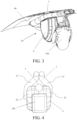
FIG. 3 is a diagram showing an automotive front seat overhead airbag in a use state according to an example of the present invention. -
FIG. 4 is a rear view of an automotive front seat overhead airbag in a use state according to an example of the present invention. -
FIG. 5 is a cross-sectional view of a connecting sheet of an automotive front seat overhead airbag according to an example of the present invention. -
-
Human body 100, automotive frontseat overhead airbag 10,roof dashboard windshield 40; - Supporting air chamber 1:
first air chamber 11,second air chamber 12; - Protective air chamber 2:
third air chamber 21,fourth air chamber 22; - First
protective space 3, sewing thread 4, second protective space 6; - Connecting sheet 5:
air hole 51. - Specific embodiments of the present invention are described further below with reference to the accompanying drawings.
- It may be easily understood that those of ordinary skills in the art may propose a plurality of interchangeable structural modes and implementation methods according to the technical solutions of the present invention without changing the essential spirit of the present invention. Therefore, the following specific embodiments and the accompanying drawings are merely exemplary description of the technical solutions of the present invention, and should not be regarded as the whole of the present invention or regarded as limitations to the technical solutions of the present invention.
- The positional terms of up, down, left, right, before, behind, front, back, top, bottom, etc. which are referred to or possibly referred to in this specification are defined with respect to the configurations shown in the drawings, and they are relative concepts; therefore, they may possibly change correspondingly according to different positions thereof and different use states. Therefore, these or other positional terms should not be construed as restrictive terms. Specifically, "before" and "behind" in the present invention are based on the orientation of the entire automobile.
- As shown in
FIG. 1 , an automotive frontseat overhead airbag 10 includes a supportingair chamber 1 and aprotective air chamber 2 mounted on a roof. - The supporting
air chamber 1 is inflated from the roof towards a dashboard upon inflation. - The
protective air chamber 2 is in communication with the supportingair chamber 1. After the supportingair chamber 1 is inflated, theprotective air chamber 2 is inflated from the supportingair chamber 1 towards thehuman body 100. - A first
protective space 3 is reserved between the supportingair chamber 1 and theprotective air chamber 2 on a side facing thehuman body 100. The firstprotective space 3 corresponds to the head of the human body for protecting the head and neck of thehuman body 100. - Specifically, as shown in
FIG. 1 , an upper end of the supportingair chamber 1 is directly connected to a gas generator. The supportingair chamber 1 feeds gas from the gas generator to theprotective air chamber 2. Therefore, the supportingair chamber 1 is configured to guide gas and support theprotective air chamber 2, such that theprotective air chamber 2 can be rapidly inflated towards thehuman body 100 to protect thehuman body 100. - The automotive front seat
overhead airbag 10 is folded and stored in the roof before being inflated. When the automobile is subjected to a forward collision, the gas generator inflates the automotive front seatoverhead airbag 10. First, the supportingair chamber 1 is inflated. The supportingair chamber 1 is ejected from the roof and is inflated obliquely downward and forward (towards the head). After the supportingair chamber 1 is inflated, theprotective air chamber 2 starts to be inflated. Theprotective air chamber 2 is inflated towards thehuman body 100 from the front of the human body. - In this example, as shown in
FIGS. 3-4 , a firstprotective space 3 is formed between the supportingair chamber 1 and theprotective air chamber 2. The firstprotective space 3 is located on a side facing thehuman body 100, i.e., on a side facing the rear of an automobile body. When thehuman body 100 is subjected to a forward collision, theprotective air chamber 2 is in contact with the chest of the human body. The head of the human body sinks into the firstprotective space 3. The firstprotective space 3 provides a cushioning space for the head and neck of the human body under the condition of no seat belt load, so as to reduce injuries caused to the neck and the head. - Further, as shown in
FIG. 1 , the supportingair chamber 1 includes afirst air chamber 11 and asecond air chamber 12. - The
protective air chamber 2 includes athird air chamber 21 and afourth air chamber 22. Thefirst air chamber 11 and thesecond air chamber 12 are connected at upper ends thereof, and then separate and extend therefrom to respectively connect to outer sides of thethird air chamber 21 and thefourth air chamber 22. Inner sides of thethird air chamber 21 and thefourth air chamber 22 are in communication with each other. - The first
protective space 3 is formed between extended sections of thefirst air chamber 11 and thesecond air chamber 12 and sides of thethird air chamber 21 and thefourth air chamber 22 facing the human body. - The upper ends of the
first air chamber 11 and thesecond air chamber 12 are directly connected to the gas generator. The gas generator performs inflation starting from the upper ends of thefirst air chamber 11 and thesecond air chamber 12. Lower ends of thefirst air chamber 11 and thesecond air chamber 12 are closed ends and extend to the dashboard. - The
first air chamber 11 and thesecond air chamber 12 are connected at the upper ends thereof and then separate to form structures similar to tree branches. After separation, thefirst air chamber 11 and thesecond air chamber 12 are connected to outer sides of thethird air chamber 21 and thefourth air chamber 22 respectively. - "Outer side" and "inner side" here are relative to the centers of the third air chamber and the fourth air chamber. "Outer side" is located away from the centers of the two air chambers. "Inner side" is located close to the centers of the two air chamber.
- The
first air chamber 11 and thesecond air chamber 12 are connected to the outer sides of thethird air chamber 21 and thefourth air chamber 22, so as to increase the size of the firstprotective space 3. - The first
protective space 3 is located between extended sections of thefirst air chamber 11 and thesecond air chamber 12 and sides of thethird air chamber 21 and thefourth air chamber 22 facing the human body and has a shape similar to a rhombus shape. When the human body is subj ected to a forward collision, the head of the human body moves forward and sinks into the firstprotective space 3 under the condition of no seat belt load. The firstprotective space 3 provides a sufficient cushioning space for the head and neck of the human body. - Since the
protective air chamber 2 includes two air chambers, good performance can be achieved under the conditions of 90 Km/h oblique moving deformation barrier (90 OMDB) and 64 Km/h small overlap barrier (64 SOB). - Alternatively, the shape of the first
protective space 3 is not limited to the shape presented in this example. - Optionally, if the widths of the
third air chamber 21 and thefourth air chamber 22 in a left-right direction of the automobile body are sufficient, thefirst air chamber 11 and thesecond air chamber 12 can also separate and extend to connect to top portions of thethird air chamber 21 and thefourth air chamber 22. - Further, as shown in
FIGS. 1 and3 , thefirst air chamber 11 and thesecond air chamber 12 are both tubular, and extend downward from the roof along awindshield 40 upon inflation. - The
first air chamber 11 and thesecond air chamber 12 extend obliquely downward and forward from the roof along thewindshield 40 towards the dashboard. This inflation path facilitates rapid inflation of thefirst air chamber 11 and thesecond air chamber 12. After thefirst air chamber 11 and thesecond air chamber 12 are inflated, upper surfaces thereof abut thewindshield 40. Theprotective air chamber 2 can be stably supported by means of thewindshield 40. - Optionally, the
first air chamber 11 and thesecond air chamber 12 may also have a flat tubular shape or a rectangular tubular shape. - Further, as shown in
FIG. 1 , lower ends of thefirst air chamber 11 and thesecond air chamber 12 abut the dashboard upon inflation. Middle sections of thefirst air chamber 11 and thesecond air chamber 12 are in communication with thethird air chamber 21 and thefourth air chamber 22. - Since the lower ends of the
first air chamber 11 and thesecond air chamber 12 abut the dashboard upon inflation, thefirst air chamber 11 and thesecond air chamber 12 are held between the roof and the dashboard to stably support theprotective air chamber 2. - Further, a first air inlet hole is provided between the middle section of the
first air chamber 11 and thethird air chamber 21. A second air inlet hole is provided between the middle section of thesecond air chamber 12 and thefourth air chamber 22. - Specifically, the
first air chamber 11 supplies air to thethird air chamber 21 by means of the first air inlet hole, and thesecond air chamber 12 supplies air to thefourth air chamber 22 by means of the second air inlet hole. Thethird air chamber 21 and thefourth air chamber 22 are in communication with each other to facilitate rapid inflation of the entire airbag. - Further, as shown in
FIGS. 1 and5 , a circle of sewing thread 4 at a junction of the inner sides of thethird air chamber 21 and thefourth air chamber 22 is located on a vertical plane. The length of the sewing thread 4 is less than the maximum perimeter of thethird air chamber 21 and that of thefourth air chamber 22. - Specifically, the sewing thread 4 is a circle of closed thread between the
third air chamber 21 and thefourth air chamber 22. - After being inflated, each of the
third air chamber 21 and thefourth air chamber 22 has a shape similar to a loaf of bulged bread and is arranged in a vertical direction. The maximum perimeters of thethird air chamber 21 and thefourth air chamber 22 along the vertical plane are greater than the length of the sewing thread 4 therebetween. - Therefore, the first
protective space 3 has a recess structure formed on sides of thethird air chamber 21 and thefourth air chamber 22 facing thehuman body 100. The recess structure and extended ends of thefirst air chamber 11 and thesecond air chamber 12 form a space having a shape similar to a rhombus shape. - When the head of the human body moves forwards at a high speed, the head sinks into the recess structure while being supported by the extended ends of the
first air chamber 11 and thesecond air chamber 12. The recess structure cushions the head and the neck from an impact, and prevents the head from passing through the firstprotective space 3 when moving forwards. - Further, as shown in
FIG. 5 , a connectingsheet 5 is further arranged at the junction of the inner sides of thethird air chamber 21 and thefourth air chamber 22. The connectingsheet 5 is provided with a plurality of air holes 51. The air holes 51 are in communication with thethird air chamber 21 and thefourth air chamber 22. An edge of the connectingsheet 5 is sewn to thethird air chamber 21 and thefourth air chamber 22 to form the sewing thread 4. - The plurality of
air holes 51 enable a balance to be attained between air pressures of thethird air chamber 21 and thefourth air chamber 22. Thethird air chamber 21 and thefourth air chamber 22 are inflated at the same time when possible. - Optionally, there may be one or more than two
air holes 51 on the connectingsheet 5. - Optionally, the connecting
sheet 5 is not provided, and thethird air chamber 21 and thefourth air chamber 22 have openings on inner sides thereof and are connected by means of the sewing thread 4. - Further, as shown in
FIG. 2 , a second protective space 6 is reserved between the supportingair chamber 1 and theprotective air chamber 2 on a side away from thehuman body 100. The second protective space 6 is used for reducing injuries caused to children. - Specifically, the supporting
air chamber 1 includes afirst air chamber 11 and asecond air chamber 12. Thefirst air chamber 11 and thesecond air chamber 12 are connected at upper ends thereof, and then separate and extend therefrom to respectively connect to an outer side of theprotective air chamber 2. - A second protective space 6 is reserved between lower ends of the
first air chamber 11 and thesecond air chamber 12 and theprotective air chamber 2 on a side away from thehuman body 100. - The second protective space 6 is located on a side close to a front region of an automobile. The lower ends of the
first air chamber 11 and thesecond air chamber 12 define left and right boundaries of the second protective space 6. Theprotective air chamber 2 defines a rear boundary of the second protective space 6. An upper boundary of the second protective space 6 is thewindshield 40. A front boundary is the dashboard. - The second protective space 6 is located on the front side of the
protective air chamber 2. Upon occurrence of a forward collision, when thehuman body 100 hits against theprotective air chamber 2, theprotective air chamber 2 provides cushioning while exerting large reaction force to thehuman body 100. The second protective space 6 can enhance the cushioning performance of theprotective air chamber 2. Theprotective air chamber 2 can deform towards the second protective space 6. - The above arrangement can reduce reaction force exerted by the
protective air chamber 2 to children aged 3-6 years in out of position (OOP) condition, thereby avoiding serious injuries. - The present invention also provides an automobile. The automobile includes a roof and a dashboard, and further includes the automotive front seat
overhead airbag 10. An upper end of the supportingair chamber 1 is connected to a gas generator. - The automotive front seat
overhead airbag 10 in this example is mounted on the roof at a position above the passenger seat for protecting a passenger on the passenger seat. - In the American market, children aged 3-6 years are allowed to be seated on passenger seats. Therefore, the provision of the second protective space 6 in the automotive front seat
overhead airbag 10 can meet the requirements of the American market. Meanwhile, the airbag can also provide protection to adults without a seat belt load in the Chinese market.
Claims (7)
- An automobile, comprising a roof and a dashboard and an automotive front seat overhead airbag (10), the automotive front seat overhead airbag (10) comprising a supporting air chamber (1) and a protective air chamber (2) mounted on the roof, whereinthe supporting air chamber (1) is inflated from the roof towards the dashboard upon inflation, wherein the supporting air chamber (1) comprises a first air chamber (11) and a second air chamber (12), wherein the first air chamber (11) and the second air chamber (12) are both tubular, and extend downward from the roof along a windshield upon inflation, wherein lower ends of the first air chamber (11) and the second air chamber (12) abut the dashboard upon inflation,the protective air chamber (2) is in communication with the supporting air chamber (1), after the supporting air chamber (1) is inflated, the protective air chamber (2) is inflated from the supporting air chamber (1) towards the human body (100), wherein the protective air chamber (2) comprises a third air chamber (21) and a fourth air chamber (22), the first air chamber (11) and the second air chamber (12) are connected at upper ends thereof and then separate and extend therefrom to respectively connect to outer sides of the third air chamber (21) and the fourth air chamber (22), inner sides of the third air chamber (21) and the fourth air chamber (22) are in communication with each other, and wherein middle sections of the first air chamber (11) and the second air chamber (12) are in communication with the third air chamber (21) and the fourth air chamber (22),a first protective space (3) is reserved between the supporting air chamber (1) and the protective air chamber (2) on a side facing the human body (100), and the first protective space (3) corresponds to the head of the human body for protecting the head and neck of the human body (100), wherein the first protective space (3) is formed between extended sections of the first air chamber (11) and the second air chamber (12) and sides of the third air chamber (21) and the fourth air chamber (22) facing the human body (100).
- The automobile according to claim 1, characterized in that a first air inlet hole is provided between the middle section of the first air chamber (11) and the third air chamber (21), and a second air inlet hole is provided between the middle section of the second air chamber (12) and the fourth air chamber (22).
- The automobile according to claim 1, characterized in that a circle of sewing thread (4) at a junction of the inner sides of the third air chamber (23) and the fourth air chamber (22) is located on a vertical plane, and the length of the sewing thread (4) is less than the maximum perimeter of the third air chamber (21) and that of the fourth air chamber (22).
- The automobile according to claim 3, characterized in that a connecting sheet (5) is further arranged at the junction of the inner sides of the third air chamber (21) and the fourth air chamber (22), the connecting sheet (5) is provided with a plurality of air holes (51) in communication with the third air chamber (21) and the fourth air chamber (22), and an edge of the connecting sheet (5) is sewn to the third air chamber (21) and the fourth air chamber (22) to form the sewing thread (4).
- The automobile according to claim 1, characterized in that a second protective space (6) for reducing injuries caused to children is reserved between the supporting air chamber (1) and the protective air chamber (2) on a side away from the human body (100).
- The automobile according to claim 5, characterized in that
the second protective space (6) is reserved between lower ends of the first air chamber (11) and the second air chamber (12) and the protective air chamber (2) on a side away from the human body (100). - The automobile according to any one of claims 1-6, wherein an upper end of the supporting air chamber (1) is connected to a gas generator.
Applications Claiming Priority (2)
| Application Number | Priority Date | Filing Date | Title |
|---|---|---|---|
| CN201911412993.2A CN113060090B (en) | 2019-12-31 | 2019-12-31 | Head safety airbag of front row seat of automobile and automobile |
| PCT/CN2020/133233 WO2021135794A1 (en) | 2019-12-31 | 2020-12-02 | Automotive front seat overhead airbag and automobile |
Publications (3)
| Publication Number | Publication Date |
|---|---|
| EP4086122A1 EP4086122A1 (en) | 2022-11-09 |
| EP4086122A4 EP4086122A4 (en) | 2024-01-24 |
| EP4086122B1 true EP4086122B1 (en) | 2024-09-18 |
Family
ID=76558453
Family Applications (1)
| Application Number | Title | Priority Date | Filing Date |
|---|---|---|---|
| EP20908499.5A Active EP4086122B1 (en) | 2019-12-31 | 2020-12-02 | Automotive front seat overhead airbag and automobile |
Country Status (6)
| Country | Link |
|---|---|
| US (1) | US11964624B2 (en) |
| EP (1) | EP4086122B1 (en) |
| JP (1) | JP7423777B2 (en) |
| KR (1) | KR102828233B1 (en) |
| CN (1) | CN113060090B (en) |
| WO (1) | WO2021135794A1 (en) |
Family Cites Families (40)
| Publication number | Priority date | Publication date | Assignee | Title |
|---|---|---|---|---|
| DE19757410C2 (en) * | 1997-12-15 | 2001-01-25 | Petri Ag | Airbag for an airbag module |
| DE19860933A1 (en) * | 1998-12-30 | 2000-07-13 | Petri Ag | Airbag module |
| US6722691B1 (en) * | 1999-01-12 | 2004-04-20 | Autoliv Development Ab | Air-bag and a method of deploying an air-bag |
| US20040239082A1 (en) * | 2003-05-30 | 2004-12-02 | Schneider David W. | Overhead airbag system |
| US20050070414A1 (en) * | 2003-09-11 | 2005-03-31 | Schneider David W. | Cushion fold patterns for overhead airbags |
| US6932380B2 (en) * | 2003-10-01 | 2005-08-23 | Autoliv Asp, Inc. | Overhead airbag having an external side cushion panel |
| WO2007014581A1 (en) * | 2005-08-02 | 2007-02-08 | Dalphi Metal España, S.A. | Airbag arranged on the vehicle roof |
| JP5183055B2 (en) * | 2006-10-19 | 2013-04-17 | タカタ株式会社 | Crew restraint system |
| KR101113677B1 (en) * | 2009-12-01 | 2012-02-14 | 현대자동차주식회사 | Car airbag device |
| KR101219695B1 (en) * | 2010-09-30 | 2013-01-21 | 현대자동차주식회사 | Roof airbag apparatus for vehicle |
| KR101219703B1 (en) * | 2010-11-11 | 2013-01-21 | 현대자동차주식회사 | Roof airbag apparatus for vehicle |
| KR101241157B1 (en) * | 2010-11-29 | 2013-03-11 | 현대자동차주식회사 | Intternal air bag device |
| US8876156B2 (en) * | 2011-01-31 | 2014-11-04 | TRW Vehical Safety Systems Inc. | Reduced volume air bag |
| EP2686207A1 (en) * | 2011-03-14 | 2014-01-22 | TRW Automotive GmbH | Air bag for vehicles |
| US9533650B2 (en) * | 2011-03-14 | 2017-01-03 | Trw Automotive Gmbh | Airbag device for motor vehicles |
| KR101316389B1 (en) * | 2011-10-05 | 2013-10-08 | 현대자동차주식회사 | Roof airbag apparatus of vehicle |
| US8807593B2 (en) * | 2011-10-05 | 2014-08-19 | Hyundai Motor Company | Roof airbag device for vehicle |
| KR101382293B1 (en) * | 2012-09-21 | 2014-04-08 | 현대자동차(주) | Roof airbag for vehicle |
| DE102014006576A1 (en) * | 2014-05-07 | 2015-11-12 | Dalphimetal España S.A. | Method for collapsing a gas bag, gas bag folded according to such a method, gas bag, gas bag module and vehicle safety system |
| US10525927B2 (en) * | 2014-10-21 | 2020-01-07 | Trw Automotive Gmbh | Self-conforming rearseat air bag |
| CN107249938B (en) * | 2015-02-16 | 2020-10-30 | 奥托立夫开发公司 | Airbag device |
| KR102474669B1 (en) * | 2015-10-21 | 2022-12-07 | 현대모비스 주식회사 | Cushion of passenger air bag device |
| JP6575448B2 (en) * | 2016-06-30 | 2019-09-18 | 豊田合成株式会社 | Airbag device |
| JP6885046B2 (en) * | 2016-07-12 | 2021-06-09 | Joyson Safety Systems Japan株式会社 | Airbag |
| GB2552369B (en) | 2016-07-21 | 2021-09-08 | Kohler Mira Ltd | Plumbing fixtures |
| US10293777B2 (en) * | 2016-08-26 | 2019-05-21 | Autoliv Asp, Inc. | Multi-cushion airbag assemblies for reducing rotational velocity of an occupant's head |
| JP2018086886A (en) * | 2016-11-28 | 2018-06-07 | タカタ株式会社 | Airbag |
| US10246043B2 (en) * | 2017-02-03 | 2019-04-02 | Autoliv Asp, Inc. | Overhead airbag assemblies |
| CN207000393U (en) * | 2017-05-12 | 2018-02-13 | 延锋百利得(上海)汽车安全系统有限公司 | A kind of overhead type air bag |
| CN207328369U (en) * | 2017-08-15 | 2018-05-08 | 奥托立夫开发公司 | Overhead type air-bag module |
| JP6801609B2 (en) * | 2017-08-21 | 2020-12-16 | トヨタ自動車株式会社 | Passenger seat occupant protection device |
| DE102017124576A1 (en) * | 2017-10-20 | 2019-04-25 | Dalphi Metal Espana, S.A. | VEHICLE BASE RESTRAINT SYSTEM WITH A GAS CABLE MODULE AND METHOD FOR ASSEMBLING A GAS BAG |
| EP3483012B1 (en) * | 2017-11-09 | 2020-05-27 | Autoliv Development AB | Frontal airbag unit and motor vehicle |
| CN208291166U (en) * | 2017-12-15 | 2018-12-28 | 蔚来汽车有限公司 | Airbags, airbag systems and cars |
| CN108501857B (en) * | 2018-03-22 | 2023-09-01 | 上海临港均胜汽车安全系统有限公司 | Ceiling air bag device |
| US10583799B2 (en) * | 2018-05-02 | 2020-03-10 | Autoliv Asp, Inc. | Overhead inflatable airbag assembly |
| CN109774646B (en) * | 2019-03-13 | 2023-09-01 | 上海临港均胜汽车安全系统有限公司 | Overhead type air bag |
| CN209757037U (en) * | 2019-03-13 | 2019-12-10 | 延锋百利得(上海)汽车安全系统有限公司 | Overhead safety airbag |
| US10960844B2 (en) * | 2019-03-28 | 2021-03-30 | Zoox, Inc. | Occupant protection system including ceiling trim panels |
| US11623603B2 (en) * | 2021-04-26 | 2023-04-11 | Ford Global Technologies, Llc | Vehicle front airbag assembly with multiple chambers |
-
2019
- 2019-12-31 CN CN201911412993.2A patent/CN113060090B/en active Active
-
2020
- 2020-12-02 WO PCT/CN2020/133233 patent/WO2021135794A1/en not_active Ceased
- 2020-12-02 US US17/757,997 patent/US11964624B2/en active Active
- 2020-12-02 JP JP2022531506A patent/JP7423777B2/en active Active
- 2020-12-02 EP EP20908499.5A patent/EP4086122B1/en active Active
- 2020-12-02 KR KR1020227025921A patent/KR102828233B1/en active Active
Also Published As
| Publication number | Publication date |
|---|---|
| JP7423777B2 (en) | 2024-01-29 |
| CN113060090B (en) | 2023-11-28 |
| EP4086122A1 (en) | 2022-11-09 |
| JP2023504102A (en) | 2023-02-01 |
| US11964624B2 (en) | 2024-04-23 |
| CN113060090A (en) | 2021-07-02 |
| US20230015426A1 (en) | 2023-01-19 |
| WO2021135794A1 (en) | 2021-07-08 |
| KR102828233B1 (en) | 2025-07-03 |
| EP4086122A4 (en) | 2024-01-24 |
| KR20220112855A (en) | 2022-08-11 |
Similar Documents
| Publication | Publication Date | Title |
|---|---|---|
| US11285904B2 (en) | Seat airbag for vehicle | |
| US20210146874A1 (en) | Airbag apparatus | |
| US8398113B2 (en) | Knee air bag for vehicle | |
| US20190176739A1 (en) | Headrest airbag for vehicle | |
| KR102614144B1 (en) | Airbag for table of vehicles | |
| US20190054890A1 (en) | Airbag for Vehicle | |
| US11766985B2 (en) | Airbag device | |
| CN114222685B (en) | Driver's seat airbag device | |
| EP4090559B1 (en) | Vehicle having a seat and an airbag assembly | |
| US20150014969A1 (en) | Airbag device | |
| US20150343984A1 (en) | Airbag with multiple layers of cushioning effect | |
| US9187058B2 (en) | Airbag device | |
| CN211391192U (en) | Car seat air bag and car seat | |
| EP3725600A1 (en) | Airbag, airbag system, and automobile | |
| EP1775177B1 (en) | Airbag forming a recess | |
| EP4086122B1 (en) | Automotive front seat overhead airbag and automobile | |
| EP4105084B1 (en) | Airbag device and vehicle seat | |
| JP3018579U (en) | Cylindrical airbag | |
| CN110626307B (en) | T-pillar central airbag | |
| JP2016043713A (en) | Front passenger seat airbag system | |
| KR20260042579A (en) | Side airbags and seats | |
| US20150054262A1 (en) | Airbag device for vehicle | |
| CN215663331U (en) | Automobile body and automobile | |
| CN213768479U (en) | Novel automobile copilot safety airbag structure | |
| JP6374272B2 (en) | Vehicle airbag device |
Legal Events
| Date | Code | Title | Description |
|---|---|---|---|
| STAA | Information on the status of an ep patent application or granted ep patent |
Free format text: STATUS: THE INTERNATIONAL PUBLICATION HAS BEEN MADE |
|
| PUAI | Public reference made under article 153(3) epc to a published international application that has entered the european phase |
Free format text: ORIGINAL CODE: 0009012 |
|
| STAA | Information on the status of an ep patent application or granted ep patent |
Free format text: STATUS: REQUEST FOR EXAMINATION WAS MADE |
|
| 17P | Request for examination filed |
Effective date: 20220719 |
|
| AK | Designated contracting states |
Kind code of ref document: A1 Designated state(s): AL AT BE BG CH CY CZ DE DK EE ES FI FR GB GR HR HU IE IS IT LI LT LU LV MC MK MT NL NO PL PT RO RS SE SI SK SM TR |
|
| DAV | Request for validation of the european patent (deleted) | ||
| DAX | Request for extension of the european patent (deleted) | ||
| A4 | Supplementary search report drawn up and despatched |
Effective date: 20231222 |
|
| RIC1 | Information provided on ipc code assigned before grant |
Ipc: B60R 21/232 20110101ALI20231218BHEP Ipc: B60R 21/231 20110101ALI20231218BHEP Ipc: B60R 21/214 20110101AFI20231218BHEP |
|
| REG | Reference to a national code |
Ref legal event code: R079 Ref country code: DE Ref legal event code: R079 Ref document number: 602020038146 Country of ref document: DE Free format text: PREVIOUS MAIN CLASS: B60R0021214000 Ipc: B60R0021233000 |
|
| RIC1 | Information provided on ipc code assigned before grant |
Ipc: B60R 21/231 20110101ALI20240412BHEP Ipc: B60R 21/233 20060101AFI20240412BHEP |
|
| GRAP | Despatch of communication of intention to grant a patent |
Free format text: ORIGINAL CODE: EPIDOSNIGR1 |
|
| STAA | Information on the status of an ep patent application or granted ep patent |
Free format text: STATUS: GRANT OF PATENT IS INTENDED |
|
| INTG | Intention to grant announced |
Effective date: 20240528 |
|
| GRAS | Grant fee paid |
Free format text: ORIGINAL CODE: EPIDOSNIGR3 |
|
| GRAA | (expected) grant |
Free format text: ORIGINAL CODE: 0009210 |
|
| STAA | Information on the status of an ep patent application or granted ep patent |
Free format text: STATUS: THE PATENT HAS BEEN GRANTED |
|
| AK | Designated contracting states |
Kind code of ref document: B1 Designated state(s): AL AT BE BG CH CY CZ DE DK EE ES FI FR GB GR HR HU IE IS IT LI LT LU LV MC MK MT NL NO PL PT RO RS SE SI SK SM TR |
|
| REG | Reference to a national code |
Ref country code: GB Ref legal event code: FG4D |
|
| REG | Reference to a national code |
Ref country code: CH Ref legal event code: EP |
|
| REG | Reference to a national code |
Ref country code: DE Ref legal event code: R096 Ref document number: 602020038146 Country of ref document: DE |
|
| REG | Reference to a national code |
Ref country code: IE Ref legal event code: FG4D |
|
| REG | Reference to a national code |
Ref country code: LT Ref legal event code: MG9D |
|
| PG25 | Lapsed in a contracting state [announced via postgrant information from national office to epo] |
Ref country code: NO Free format text: LAPSE BECAUSE OF FAILURE TO SUBMIT A TRANSLATION OF THE DESCRIPTION OR TO PAY THE FEE WITHIN THE PRESCRIBED TIME-LIMIT Effective date: 20241218 |
|
| PG25 | Lapsed in a contracting state [announced via postgrant information from national office to epo] |
Ref country code: GR Free format text: LAPSE BECAUSE OF FAILURE TO SUBMIT A TRANSLATION OF THE DESCRIPTION OR TO PAY THE FEE WITHIN THE PRESCRIBED TIME-LIMIT Effective date: 20241219 Ref country code: FI Free format text: LAPSE BECAUSE OF FAILURE TO SUBMIT A TRANSLATION OF THE DESCRIPTION OR TO PAY THE FEE WITHIN THE PRESCRIBED TIME-LIMIT Effective date: 20240918 |
|
| PG25 | Lapsed in a contracting state [announced via postgrant information from national office to epo] |
Ref country code: BG Free format text: LAPSE BECAUSE OF FAILURE TO SUBMIT A TRANSLATION OF THE DESCRIPTION OR TO PAY THE FEE WITHIN THE PRESCRIBED TIME-LIMIT Effective date: 20240918 |
|
| PG25 | Lapsed in a contracting state [announced via postgrant information from national office to epo] |
Ref country code: LV Free format text: LAPSE BECAUSE OF FAILURE TO SUBMIT A TRANSLATION OF THE DESCRIPTION OR TO PAY THE FEE WITHIN THE PRESCRIBED TIME-LIMIT Effective date: 20240918 |
|
| PG25 | Lapsed in a contracting state [announced via postgrant information from national office to epo] |
Ref country code: HR Free format text: LAPSE BECAUSE OF FAILURE TO SUBMIT A TRANSLATION OF THE DESCRIPTION OR TO PAY THE FEE WITHIN THE PRESCRIBED TIME-LIMIT Effective date: 20240918 |
|
| REG | Reference to a national code |
Ref country code: NL Ref legal event code: MP Effective date: 20240918 |
|
| PG25 | Lapsed in a contracting state [announced via postgrant information from national office to epo] |
Ref country code: RS Free format text: LAPSE BECAUSE OF FAILURE TO SUBMIT A TRANSLATION OF THE DESCRIPTION OR TO PAY THE FEE WITHIN THE PRESCRIBED TIME-LIMIT Effective date: 20241218 |
|
| PG25 | Lapsed in a contracting state [announced via postgrant information from national office to epo] |
Ref country code: RS Free format text: LAPSE BECAUSE OF FAILURE TO SUBMIT A TRANSLATION OF THE DESCRIPTION OR TO PAY THE FEE WITHIN THE PRESCRIBED TIME-LIMIT Effective date: 20241218 Ref country code: NO Free format text: LAPSE BECAUSE OF FAILURE TO SUBMIT A TRANSLATION OF THE DESCRIPTION OR TO PAY THE FEE WITHIN THE PRESCRIBED TIME-LIMIT Effective date: 20241218 Ref country code: LV Free format text: LAPSE BECAUSE OF FAILURE TO SUBMIT A TRANSLATION OF THE DESCRIPTION OR TO PAY THE FEE WITHIN THE PRESCRIBED TIME-LIMIT Effective date: 20240918 Ref country code: HR Free format text: LAPSE BECAUSE OF FAILURE TO SUBMIT A TRANSLATION OF THE DESCRIPTION OR TO PAY THE FEE WITHIN THE PRESCRIBED TIME-LIMIT Effective date: 20240918 Ref country code: GR Free format text: LAPSE BECAUSE OF FAILURE TO SUBMIT A TRANSLATION OF THE DESCRIPTION OR TO PAY THE FEE WITHIN THE PRESCRIBED TIME-LIMIT Effective date: 20241219 Ref country code: FI Free format text: LAPSE BECAUSE OF FAILURE TO SUBMIT A TRANSLATION OF THE DESCRIPTION OR TO PAY THE FEE WITHIN THE PRESCRIBED TIME-LIMIT Effective date: 20240918 Ref country code: BG Free format text: LAPSE BECAUSE OF FAILURE TO SUBMIT A TRANSLATION OF THE DESCRIPTION OR TO PAY THE FEE WITHIN THE PRESCRIBED TIME-LIMIT Effective date: 20240918 |
|
| REG | Reference to a national code |
Ref country code: AT Ref legal event code: MK05 Ref document number: 1724445 Country of ref document: AT Kind code of ref document: T Effective date: 20240918 |
|
| PG25 | Lapsed in a contracting state [announced via postgrant information from national office to epo] |
Ref country code: NL Free format text: LAPSE BECAUSE OF FAILURE TO SUBMIT A TRANSLATION OF THE DESCRIPTION OR TO PAY THE FEE WITHIN THE PRESCRIBED TIME-LIMIT Effective date: 20240918 |
|
| PG25 | Lapsed in a contracting state [announced via postgrant information from national office to epo] |
Ref country code: PT Free format text: LAPSE BECAUSE OF FAILURE TO SUBMIT A TRANSLATION OF THE DESCRIPTION OR TO PAY THE FEE WITHIN THE PRESCRIBED TIME-LIMIT Effective date: 20250120 Ref country code: IS Free format text: LAPSE BECAUSE OF FAILURE TO SUBMIT A TRANSLATION OF THE DESCRIPTION OR TO PAY THE FEE WITHIN THE PRESCRIBED TIME-LIMIT Effective date: 20250118 |
|
| PG25 | Lapsed in a contracting state [announced via postgrant information from national office to epo] |
Ref country code: SM Free format text: LAPSE BECAUSE OF FAILURE TO SUBMIT A TRANSLATION OF THE DESCRIPTION OR TO PAY THE FEE WITHIN THE PRESCRIBED TIME-LIMIT Effective date: 20240918 Ref country code: RO Free format text: LAPSE BECAUSE OF FAILURE TO SUBMIT A TRANSLATION OF THE DESCRIPTION OR TO PAY THE FEE WITHIN THE PRESCRIBED TIME-LIMIT Effective date: 20240918 |
|
| PG25 | Lapsed in a contracting state [announced via postgrant information from national office to epo] |
Ref country code: ES Free format text: LAPSE BECAUSE OF FAILURE TO SUBMIT A TRANSLATION OF THE DESCRIPTION OR TO PAY THE FEE WITHIN THE PRESCRIBED TIME-LIMIT Effective date: 20240918 |
|
| PG25 | Lapsed in a contracting state [announced via postgrant information from national office to epo] |
Ref country code: AT Free format text: LAPSE BECAUSE OF FAILURE TO SUBMIT A TRANSLATION OF THE DESCRIPTION OR TO PAY THE FEE WITHIN THE PRESCRIBED TIME-LIMIT Effective date: 20240918 Ref country code: EE Free format text: LAPSE BECAUSE OF FAILURE TO SUBMIT A TRANSLATION OF THE DESCRIPTION OR TO PAY THE FEE WITHIN THE PRESCRIBED TIME-LIMIT Effective date: 20240918 |
|
| PG25 | Lapsed in a contracting state [announced via postgrant information from national office to epo] |
Ref country code: CZ Free format text: LAPSE BECAUSE OF FAILURE TO SUBMIT A TRANSLATION OF THE DESCRIPTION OR TO PAY THE FEE WITHIN THE PRESCRIBED TIME-LIMIT Effective date: 20240918 Ref country code: PL Free format text: LAPSE BECAUSE OF FAILURE TO SUBMIT A TRANSLATION OF THE DESCRIPTION OR TO PAY THE FEE WITHIN THE PRESCRIBED TIME-LIMIT Effective date: 20240918 |
|
| PG25 | Lapsed in a contracting state [announced via postgrant information from national office to epo] |
Ref country code: SK Free format text: LAPSE BECAUSE OF FAILURE TO SUBMIT A TRANSLATION OF THE DESCRIPTION OR TO PAY THE FEE WITHIN THE PRESCRIBED TIME-LIMIT Effective date: 20240918 Ref country code: IT Free format text: LAPSE BECAUSE OF FAILURE TO SUBMIT A TRANSLATION OF THE DESCRIPTION OR TO PAY THE FEE WITHIN THE PRESCRIBED TIME-LIMIT Effective date: 20240918 |
|
| REG | Reference to a national code |
Ref country code: DE Ref legal event code: R097 Ref document number: 602020038146 Country of ref document: DE |
|
| PG25 | Lapsed in a contracting state [announced via postgrant information from national office to epo] |
Ref country code: MC Free format text: LAPSE BECAUSE OF FAILURE TO SUBMIT A TRANSLATION OF THE DESCRIPTION OR TO PAY THE FEE WITHIN THE PRESCRIBED TIME-LIMIT Effective date: 20240918 |
|
| PG25 | Lapsed in a contracting state [announced via postgrant information from national office to epo] |
Ref country code: DK Free format text: LAPSE BECAUSE OF FAILURE TO SUBMIT A TRANSLATION OF THE DESCRIPTION OR TO PAY THE FEE WITHIN THE PRESCRIBED TIME-LIMIT Effective date: 20240918 |
|
| PLBE | No opposition filed within time limit |
Free format text: ORIGINAL CODE: 0009261 |
|
| STAA | Information on the status of an ep patent application or granted ep patent |
Free format text: STATUS: NO OPPOSITION FILED WITHIN TIME LIMIT |
|
| REG | Reference to a national code |
Ref country code: CH Ref legal event code: PL |
|
| PG25 | Lapsed in a contracting state [announced via postgrant information from national office to epo] |
Ref country code: LU Free format text: LAPSE BECAUSE OF NON-PAYMENT OF DUE FEES Effective date: 20241202 |
|
| 26N | No opposition filed |
Effective date: 20250619 |
|
| PG25 | Lapsed in a contracting state [announced via postgrant information from national office to epo] |
Ref country code: SE Free format text: LAPSE BECAUSE OF FAILURE TO SUBMIT A TRANSLATION OF THE DESCRIPTION OR TO PAY THE FEE WITHIN THE PRESCRIBED TIME-LIMIT Effective date: 20240918 |
|
| REG | Reference to a national code |
Ref country code: BE Ref legal event code: MM Effective date: 20241231 |
|
| PG25 | Lapsed in a contracting state [announced via postgrant information from national office to epo] |
Ref country code: BE Free format text: LAPSE BECAUSE OF NON-PAYMENT OF DUE FEES Effective date: 20241231 |
|
| PG25 | Lapsed in a contracting state [announced via postgrant information from national office to epo] |
Ref country code: CH Free format text: LAPSE BECAUSE OF NON-PAYMENT OF DUE FEES Effective date: 20241231 |
|
| PG25 | Lapsed in a contracting state [announced via postgrant information from national office to epo] |
Ref country code: IE Free format text: LAPSE BECAUSE OF NON-PAYMENT OF DUE FEES Effective date: 20241202 |
|
| PGFP | Annual fee paid to national office [announced via postgrant information from national office to epo] |
Ref country code: GB Payment date: 20251223 Year of fee payment: 6 |
|
| PGFP | Annual fee paid to national office [announced via postgrant information from national office to epo] |
Ref country code: FR Payment date: 20251223 Year of fee payment: 6 |
|
| PG25 | Lapsed in a contracting state [announced via postgrant information from national office to epo] |
Ref country code: CY Free format text: LAPSE BECAUSE OF FAILURE TO SUBMIT A TRANSLATION OF THE DESCRIPTION OR TO PAY THE FEE WITHIN THE PRESCRIBED TIME-LIMIT; INVALID AB INITIO Effective date: 20201202 |
|
| PGFP | Annual fee paid to national office [announced via postgrant information from national office to epo] |
Ref country code: DE Payment date: 20251229 Year of fee payment: 6 |