EP4083884A1 - Verbessertes system zur herstellung von baustoffen - Google Patents
Verbessertes system zur herstellung von baustoffen Download PDFInfo
- Publication number
- EP4083884A1 EP4083884A1 EP22170712.8A EP22170712A EP4083884A1 EP 4083884 A1 EP4083884 A1 EP 4083884A1 EP 22170712 A EP22170712 A EP 22170712A EP 4083884 A1 EP4083884 A1 EP 4083884A1
- Authority
- EP
- European Patent Office
- Prior art keywords
- movable
- silo
- loading
- management unit
- raw materials
- Prior art date
- Legal status (The legal status is an assumption and is not a legal conclusion. Google has not performed a legal analysis and makes no representation as to the accuracy of the status listed.)
- Granted
Links
Images


Classifications
-
- G—PHYSICS
- G06—COMPUTING OR CALCULATING; COUNTING
- G06Q—INFORMATION AND COMMUNICATION TECHNOLOGY [ICT] SPECIALLY ADAPTED FOR ADMINISTRATIVE, COMMERCIAL, FINANCIAL, MANAGERIAL OR SUPERVISORY PURPOSES; SYSTEMS OR METHODS SPECIALLY ADAPTED FOR ADMINISTRATIVE, COMMERCIAL, FINANCIAL, MANAGERIAL OR SUPERVISORY PURPOSES, NOT OTHERWISE PROVIDED FOR
- G06Q10/00—Administration; Management
- G06Q10/08—Logistics, e.g. warehousing, loading or distribution; Inventory or stock management
- G06Q10/087—Inventory or stock management, e.g. order filling, procurement or balancing against orders
- G06Q10/0875—Itemisation or classification of parts, supplies or services, e.g. bill of materials
-
- B—PERFORMING OPERATIONS; TRANSPORTING
- B28—WORKING CEMENT, CLAY, OR STONE
- B28C—PREPARING CLAY; PRODUCING MIXTURES CONTAINING CLAY OR CEMENTITIOUS MATERIAL, e.g. PLASTER
- B28C7/00—Controlling the operation of apparatus for producing mixtures of clay or cement with other substances; Supplying or proportioning the ingredients for mixing clay or cement with other substances; Discharging the mixture
- B28C7/0046—Storage or weighing apparatus for supplying ingredients
- B28C7/0053—Storage containers, e.g. hoppers, silos, bins
- B28C7/0069—Storage containers, e.g. hoppers, silos, bins having compartments
-
- B—PERFORMING OPERATIONS; TRANSPORTING
- B28—WORKING CEMENT, CLAY, OR STONE
- B28C—PREPARING CLAY; PRODUCING MIXTURES CONTAINING CLAY OR CEMENTITIOUS MATERIAL, e.g. PLASTER
- B28C7/00—Controlling the operation of apparatus for producing mixtures of clay or cement with other substances; Supplying or proportioning the ingredients for mixing clay or cement with other substances; Discharging the mixture
- B28C7/0046—Storage or weighing apparatus for supplying ingredients
- B28C7/0053—Storage containers, e.g. hoppers, silos, bins
- B28C7/0076—Parts or details thereof, e.g. opening, closing or unloading means
-
- B—PERFORMING OPERATIONS; TRANSPORTING
- B28—WORKING CEMENT, CLAY, OR STONE
- B28C—PREPARING CLAY; PRODUCING MIXTURES CONTAINING CLAY OR CEMENTITIOUS MATERIAL, e.g. PLASTER
- B28C7/00—Controlling the operation of apparatus for producing mixtures of clay or cement with other substances; Supplying or proportioning the ingredients for mixing clay or cement with other substances; Discharging the mixture
- B28C7/04—Supplying or proportioning the ingredients
- B28C7/0404—Proportioning
- B28C7/0418—Proportioning control systems therefor
-
- B—PERFORMING OPERATIONS; TRANSPORTING
- B28—WORKING CEMENT, CLAY, OR STONE
- B28C—PREPARING CLAY; PRODUCING MIXTURES CONTAINING CLAY OR CEMENTITIOUS MATERIAL, e.g. PLASTER
- B28C7/00—Controlling the operation of apparatus for producing mixtures of clay or cement with other substances; Supplying or proportioning the ingredients for mixing clay or cement with other substances; Discharging the mixture
- B28C7/04—Supplying or proportioning the ingredients
- B28C7/0422—Weighing predetermined amounts of ingredients, e.g. for consecutive delivery
-
- B—PERFORMING OPERATIONS; TRANSPORTING
- B28—WORKING CEMENT, CLAY, OR STONE
- B28C—PREPARING CLAY; PRODUCING MIXTURES CONTAINING CLAY OR CEMENTITIOUS MATERIAL, e.g. PLASTER
- B28C9/00—General arrangement or layout of plant
- B28C9/02—General arrangement or layout of plant for producing mixtures of clay or cement with other materials
-
- G—PHYSICS
- G06—COMPUTING OR CALCULATING; COUNTING
- G06Q—INFORMATION AND COMMUNICATION TECHNOLOGY [ICT] SPECIALLY ADAPTED FOR ADMINISTRATIVE, COMMERCIAL, FINANCIAL, MANAGERIAL OR SUPERVISORY PURPOSES; SYSTEMS OR METHODS SPECIALLY ADAPTED FOR ADMINISTRATIVE, COMMERCIAL, FINANCIAL, MANAGERIAL OR SUPERVISORY PURPOSES, NOT OTHERWISE PROVIDED FOR
- G06Q50/00—Information and communication technology [ICT] specially adapted for implementation of business processes of specific business sectors, e.g. utilities or tourism
- G06Q50/08—Construction
Definitions
- the present invention refers to a complex technological system for producing building materials comprising a station for the automated loading of the movable silos which, once transported on the construction site, are able to continuously exchange data with said station.
- This system allows, for example, the production of building materials for screeds, bike lanes, insulations of vertical walls, finished floors, etc.
- the following description refers to this field of application with the sole purpose to simplify the exposition thereof.
- the aggregates and the binders which are separately brought on the construction site are often approximately dosed without using the instruments which can allow a properly carrying out of the prescribed production recipe; furthermore, by mixing the products on the construction site as described above, there are no ways to precisely dose the quantity of water which is necessary to form the various types of agglomerate as provided by the production recipe.
- the pre-mixed product is taken out of the silo and, by suitable pumping stations, it is mixed with water or other additives, however, without a scientific and mandatory control of the quantity of dosed components and of the temperature present at that moment.
- the technical problem underlying the present invention is to devise a system for producing building materials having functional and structural characteristics so as to allow to overcome the limits and drawbacks complained related to the prior art, in particular which is able to manage all the steps of the process in an efficient and completely automatic way, thus optimizing it in all the steps and avoiding errors by the operators, allowing to produce actually certified building materials.
- the solution idea underlying the present invention is to provide a system for producing building materials which comprises an automated loading station, construction site movable silos and mixing and pumping stations which are in permanent communication with each other thanks to a management unit placed for example at the loading station, said management unit being able to automatically manage a plurality of orders (consequently changing the recipes for the single silos) to obtain a plurality of products to be produced, and being furthermore able to manage the following loading steps of the movable silos and the transport logistics thereof, as well as to control the mixing/pumping steps on the construction site and order the taking out of the depleted silos providing for the substitution thereof with full silos.
- each silo is automatically carried out based on the production recipe processed by the management unit according to what was determined by the order (for example automatically provided by the corporate management software), as well as the taking out of the raw materials from said silos (which comprise at least two chambers separated from each other) is automatically managed and innovatively controlling in a precise way the quantity and the proportions of the taken-out raw materials to be mixed on the construction site in the mixing and pumping station, such that an operator cannot vary the production parameters set by the production recipe; also the transport and taking out steps of the silos on the construction site are managed in a completely automated way by the management unit, by sending all the suitable instructions to the drivers based on the production recipe and/or the progress of the works/production on the construction site.
- a silo is no more a simple material container, but a smart car which is able to efficiently communicate with the other components of the system thanks to the management unit, by controlling all the process steps up to the laying of the building material to be produced, and wherein it does not further contain pre-mixed material, but raw materials to be mixed on the construction site.
- a system for producing building materials comprising:
- the invention comprises the following additional and optional characteristics, taken singularly or, if necessary, in combination.
- the loading station can comprise a first plurality of storage silos, which are adapted to contain binders, and a second plurality of storage silos, which are adapted to contain aggregates, which are intended to be loaded in the chambers of the movable silo.
- the loading station can comprise sensors which are controlled by the management unit to generate, based on signals of said sensors, a signalling (for example activate acoustic signalling elements and/or manage the emission of luminous signalling elements or send a signal to computerized means of transport means) if a raw material contained in one or more of said storage silos is finished or below a predetermined threshold value.
- sensors can be for example level sensors, as well as weight and/or position sensors to verify the presence of material in the storage silos (or also when exiting therefrom).
- the system can comprise, at the binder loading area of the loading station, a plurality of inlet ports for feeding binders to the storage silos adapted to contain binders, each inlet port being associated to a determined binder to be fed, wherein the management unit is configured to:
- the loading station can comprise a plurality of attachment means, such as magnetic holders and compressed air holders, for a corresponding plurality of storage silos adapted to contain aggregates, the management unit being configured to:
- the loading station can comprise a weighting station, such as a weighbridge, configured to measure the weight of transport means of raw materials, which enter the loading station, before and after the delivering of said raw materials, said management unit being configured to verify if the difference between the weight measured by said weighting station before the delivering of the raw materials and the weight measured by said weighting station after the delivering of the raw materials substantially corresponds to the weight of said raw materials as provided by the production recipe.
- a weighting station such as a weighbridge
- the system can comprise, at the loading station, a loading grid comprising a plurality of loading terminals for a corresponding plurality of movable silos, said management unit being configured to manage the loading of each movable silo at one of said loading terminals independently from the other movable silos based on the instructions of the production recipes.
- the management unit can be further configured to select, based on the production recipe, the number of movable silos of the plurality of movable silos to be filled and to be successively taken out.
- the loading station can comprise, at the loading grid, attachment means at each loading terminal for the movable silos, the management unit being configured to verify the connection of said movable silos to the attachment means at the respective loading terminal.
- the mixing and pumping station can comprise sensors configured to weight the raw materials from the chambers of the movable silo, such as for example a plurality of loading cells arranged on a base platform of said mixing and pumping station, and wherein the dosage of the mixed raw materials is established based on the detection of said sensors.
- the sensors configured to weight the raw materials can be arranged on the movable silo itself, for example on the support feet thereof. In this case it is evaluated the overall diminishing of the weight of the movable silo.
- the system of the present invention can comprise sensors adapted to measure the weight of the raw materials which are taken out and that the dosage of said raw materials is adjusted based on said sensors, still following the instruction of the production recipe.
- the system can comprise (for example, but not necessarily, at the mixing and pumping station) sensors (such as for example temperature sensors) adapted to detect environmental parameters in a construction site area, said sensors being operatively coupled with the management unit, wherein said management unit is configured to interrupt the operation of the mixing and pumping station if the environmental parameters detected via said sensors exceed or are equal to a determined threshold value.
- sensors can be also arranged on the movable silo.
- the movable silo can comprise at least one first chamber and one second chamber which follow each other along a longitudinal axis of said movable silo, wherein the first chamber is adapted to contain aggregates and the second chamber is adapted to contain binders.
- the movable silo can further comprise a third chamber arranged for example between the first chamber and the second chamber, said third chamber being adapted to contain liquids.
- the movable silo can comprise sensors, such as level sensors, configured to detect the level of the raw materials contained in the chambers thereof, the management unit being further configured to monitor the quantity of the raw materials in said chambers of said movable silo based on signals from said sensors.
- sensors such as level sensors, configured to detect the level of the raw materials contained in the chambers thereof
- the management unit being further configured to monitor the quantity of the raw materials in said chambers of said movable silo based on signals from said sensors.
- the system can comprise computerized means adapted to be installed on transport means of the movable silo, said computerized means being in operative communication with the management unit, which is configured to generate transport instructions communicated to said computerized means, for example based on the production recipe and/or work parameters on the construction site or in the loading station.
- the transport instructions can be generated based on the quantity of raw materials in the chambers of the movable silos detected via the signals from the level sensors when said movable silos are on the construction site, wherein the management unit is configured to estimate the number of remaining mixing and pumping cycles based on said detected quantity.
- the movable silo can comprise a display controlled by the management unit and adapted to show visual information.
- the management unit can be at the loading station, the mixing and pumping station can comprise data reception/transmission means from/to the management unit for an operative communication therewith, and the movable silo can be adapted to communicate with the loading station via said mixing and pumping station.
- the movable silo can comprise data reception/transmission means from/to the management unit for an operative connection therewith, without necessarily having to pass through the mixing and pumping station.
- the present invention also refers to a production process of a building material, comprising the steps of:
- the present invention also refers to a computer product for managing a system for the production of a building material, said computer product comprising code portions which, when they are executed in a management unit as described above, are adapted to control the system according to the above-mentioned method.
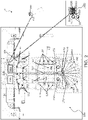
- FIG. 1 globally and schematically indicates a system for producing building materials according to the present invention.
- the system 1 of the present invention is able to carry out a continuous and automatic operative communication between movable silos intended for the building construction sites for producing various types of product, a technological plant for loading aggregates, binders, water, fibres (for example automatically mixed with the aggregates) and/or additives (such as for example dyes) and similar in said movable silos (said plant being called "loading station” in the following) and one or more mixing and pumping stations on the construction sites.
- the communication between these components is automatically managed via a management unit, which is suitably programmed to carry out steps of an innovative management algorithm.
- the system 1 comprises fifteen movable silos, indicated with the reference 10, a loading station, indicated with the reference 100, and four mixing and pumping stations installable on the construction site, indicated with the reference 1000.
- the present invention does not exclude a different number of said components, as well as the presence of other components, said aspects can vary according to the needs and/or necessities.
- the system 1 of the present invention is managed in an innovative way in each detail thereof. All the components of the system 1 are interconnected with each other to determine the maximum automation and efficiency level according to the management principles of the Industry 4.0.
- the movable silos 10, the loading stations 100 and the mixing and pumping stations 1000 on the construction site are all connected via remote access and satisfy all the requirements established by the regulations related to the Industry 4.0.
- the movable silos 10 adapted to contain raw materials to be transported and mixed on the construction site, they comprise a main body 11 with substantially cylindrical shape with flared or conical bottom and which extends along a longitudinal axis, indicated with the reference H-H, between two opposite ends.
- each movable silo 10 comprises at least two chambers, indicated with the references 11a and 11b, which are separated from each other and adapted to contain a respective raw material.
- the subdivision of the chambers of the movable silo 10 is horizontal, that is said chambers follow each other one after another along the longitudinal axis H-H of said movable silo 10.
- a first chamber for example the chamber 11a (which is a lower chamber according to the reference of figure 1 ) is adapted to contain aggregates
- a second chamber for example the chamber 11b (which is an upper chamber according to the reference of figure 1 ) is adapted to contain binders.
- the above-mentioned subdivision of the chambers of the movable silo 10 is advantageous since it allows an optimal transport of the raw materials to be mixed directly on the construction site and a better management thereof.
- the transport of the separated raw materials on the construction site allows proceeding with the mixing thereof directly close to the laying point, with great advantages which will be illustrated in the following.
- the horizontal subdivision of the chambers of the movable silo 10 avoids the arising of detrimental condensate phenomena which would instead take place if the separation of said chambers is a vertical separation.
- the movable silo 10 further comprises a third chamber 11c, preferably arranged between the first chamber 11a and the second chamber 11b and fluid-tightly separated therefrom.
- the chamber 11c is adapted to contain liquids, for example water, such that it is in this way possible to transport the water on the construction site directly through the movable site 10, already in the desired quantity, without the need to use external sources, which, in some construction sites, are not always available.
- the containment and management of the liquid in the third chamber 11c are managed by a suitable vent valve of the movable silo 10.
- the present invention provides, in an aspect thereof, that the movable silo 10 is not only a simple transport system of the raw materials on the construction site, but a real intelligent machine which is able to communicate with a management unit, as will be detailed in the following.
- the management unit of the system 1, indicated in the following with the reference "MU”, is able to monitor, manage and control the components and the process steps in an innovative way.
- the management unit MU it not limited by a particular architecture and/or installation and can comprise any hardware adapted to provide the present invention.
- the management unit MU can comprise any computerized system which is able to carry out the instructions of a software dedicated and specifically developed for managing the system 1.
- the present invention is thus not limited by a particular installation or hardware/software means adopted for the management unit, and also the representations in the drawings are given only by way of example, what matters is that said management unit and the components managed therewith are such as to work as described.
- each movable silo 10 comprises data reception/transmission means TX1 in communication with the management unit MU, which is in turn provided with own data reception/transmission means TX2 to allow the above-mentioned communication.
- the present invention is not limited by the type of used data reception/transmission means.
- the data reception/transmission means TX1 of the movable silo 10 comprise an antenna connected to a GSM card for receiving/transmitting data.
- GSM Global System for Mobile communications
- the communication of the movable silo 10 with the management unit MU can be also indirect, for example it can take place via the mixing and pumping station 1000 which communicates with said management unit MU, said movable silo 10 being thus connected to said mixing and pumping station 1000 for example by data transfer cables (indicated in figure 1 with reference TXc), said station thus providing for a communication with the management unit MU.
- the movable silo 10 can comprise one or more additional reservoirs (globally indicated with the reference 12 in figure 1 ), for example arranged at a lower end of said movable silo 10 (that is the end along the longitudinal axis H-H which is closer to the ground when the movable silo 10 is installed on the construction site).
- the additional reservoirs 12 can be adapted to contain additives, dyes, further liquids (such as for example water), etc., so as to be able to directly provide, on the construction site, in addition to the main raw materials, further components, which are separated from each other, via the movable silo 10; these further components can be thus optionally added to the mixture of the raw materials according to the specific needs.
- the present invention is thus related to a movable silo 10 as described above, comprising two or more separated chambers and possibly additional reservoirs 12, said movable silo 10 being possibly configured as intelligent machine which is able to exchange data, for example with the loading station 100 and with the mixing and pumping stations 1000, said communication being managed by the management unit MU.
- the construction site movable silo 10 comprises sensors, such as for example level sensor (probes), configured to detect the level of the raw materials contained in the chambers thereof.
- the movable silo 10 can comprise at least one level sensor 11as of the aggregate in the first chamber 11a (for example arranged in said chamber 11a at around 30% of the depletion), as well as a pair of level sensors 11bs to measure the level of the binder in the chamber 11b (for example a sensor at 200 kg and one at the maximum load level, for example 6500 Kg).
- the management unit MU is configured to receive signals from the above-mentioned level sensors and constantly monitor the quantity of the raw materials contained in the chambers of the movable silo 10, for example during the loading in the loading station 100 and/or during the carrying out of the mixing and pumping cycles on the construction site, so as to be able to optimize the loading process, the production process on the construction site and the logistics associated thereto, as will be described in the following more in detail.
- the movable silo 10 comprises a display 13 controlled by the management unit MU and adapted to show visual information, such as for example information on the raw materials contained in the movable silo 10, information on the production process, information on the construction site, on the client, on the manufacturing company, as well as many other usual information.
- the display 13 can be arranged on the external surface of the body 11 of the movable silo 10.
- the movable silo 10 comprises a programmable logic controller (indicated in the sector as PLC and not illustrated in the figures) which is specifically programmed to manage the supply components of said movable silo 10 and the communication thereof with the remaining components of the system.
- the PLC can be for example programmable for recording the type of the loaded raw materials and for managing data, as well as many other useful functions.
- the movable silo 10 can comprise one or more of the following components: a transformer, a network inlet with three-poles plug, a knife gate valve, two status sensors for the pneumatic activation of the knife gate valve, a communication module PLC for managing the data, two electrovalves for fluidifying the binder (for example cement) with compressed air, a metering screw for extracting binders, a conveyor belt for extracting aggregates, a motorized winch for moving the conveyor belt for extracting aggregates, one or more (for example three) vibrators for the cone at which the aggregate is stored, a vibrator for the binder chamber, various power supplies, electrical contacts for binder loading/vent sleeves and a water feeding tube.
- the loading of the movable silo 10 is carried out in a loading station 100 which comprises suitable loading means (which will be detailed in the following) adapted to load the raw materials in the chambers of said movable silo 10.
- the management unit MU is arranged at the loading station 100 (that is an integral component of the loading station 100) and it is in operative communication with the remaining main components; in this case, the loading station 100, thanks to the management unit MU installed therein, represents the central brain of the whole system 1.
- the management unit MU can be a remote system (and thus not necessarily installed physically in the loading station 100), which communicates (for example by a network system) with various components of the system 1.
- the management unit MU following an input by the user, is able to manage a production order, which includes for example the client's name, the seller's name (agent or corporate seller), the name of the construction site and the location thereof, the name of the project manager on the construction site and obviously the type of the desired product and the estimated total quantity to be provided.
- a production order which includes for example the client's name, the seller's name (agent or corporate seller), the name of the construction site and the location thereof, the name of the project manager on the construction site and obviously the type of the desired product and the estimated total quantity to be provided.
- the management unit MU carries out steps of a management algorithm which can integrate with management programs which are already present, and thus for example it can receive the order made before and process it. It can be then provided that a first management program (which is for example already present) provides the order and that the management unit MU, which carries out the steps of an own algorithm which is able to easily integrate with management programs which are already present, processes the corresponding recipe; obviously, these are applicative details which are not to be understood as limiting the present invention. Also a point of view can be adopted in which there is only one management software which carries out all the steps, obviously without limiting the scope of the present invention.
- the management unit MU is able to manage the various components of the system 1 based on the processed recipe, which can be for example previously stored therein together with other recipes for other corresponding building materials to be produced.
- the management unit MU is able to manage all the rest, starting from the orders to the suppliers of the raw materials, for example in the desired quantities as established by the production recipe.
- a specific production recipe for example previously stored in the management unit MU, is associated with each product.
- the production recipe includes all the instructions useful to produce the product (that is the desired building material), starting from the type of raw materials (including the water to be added), the quantity and proportion thereof, process methodology, etc.
- the loading station 100 via the management unit MU, automatically manages, based on the production recipe associated to the order and provided for each single type of product, the type and the quantities of aggregates and binders to be loaded in each single construction site movable silo 10, remotely controls the mixing and pumping station 1000 present at the laying point, autonomously calculate in real time the quantity of raw materials which is still necessary to complete the order, autonomously manages the need for raw materials (including the required water) by early sending the orders to the suppliers (for example when said raw materials are finished and/or the level thereof is under a limit level), manages the access ways to the plant for the transport means for the input and/or output of the raw materials and other products, as well as it is able to manage the delivering and/or the withdrawal of the movable silos 10 of the construction site. All these aspects, which can be implemented individually or in combination with each other, will be detailed in the following of the present disclosure.
- the management unit MU once generated/received the order of a building material to be produced, is thus configured to process the production recipe containing the instructions related to the production of said building material, for example (preferably) recalling said production recipe from the own memory or receiving it from an external source.
- the management unit MU is able to manage a plurality of production recipes (whose instructions can be for example stored therein or provided in any suitable way, as mentioned above), each production recipe being associated to a particular building material which the system 1 of the present invention is able to provide.
- the recipe related to the product (building material) required in said order is processed and the production process managed based on said specific recipe is started, said process being managed in an automatic and efficient way in each step thereof, starting from the supply of the raw materials up to the laying on the construction site, thanks to the particular functionality provided by the management unit MU.
- the production recipe associated thereto is processed via the management unit MU, among the various recipes which said management unit MU is able to process, and the process begins in which the various components begin to perform their own function.
- the management unit MU is able to automatically select the raw materials to be loaded in the chambers of the movable silo 10 based on the production recipe, and, advantageously according to the present invention, still based on the production recipe, it is able to automatically control the loading means of the loading station 100 to load the raw materials selected in the movable silo 10, as will be detailed in the following.
- Each chamber of the movable silo 10 is loaded by the loading means of the loading station 100 with a respective raw material, said raw materials being then directly mixed on the construction site via the mixing and pumping station 1000.
- specific raw materials with specific dosages and granularities are selected, as well as the number of movable silos 10 to be filled and to be successively taken out is selected.
- the loading station 100 is adapted to provide the loading of a raw material in a determined chamber of the movable silo 10 independently from the loading of the other chambers, said process taking place in a completely automated way via the designated loading means of the loading station 100, which comprises multiple components designated for this purpose and controlled and coordinated by the management unit MU.
- the loading station 100 is able to load in an automatic way the first chamber 11a of the movable silo 10 with the raw material (for example the aggregate) required by the production recipe, and the second chamber 11b with a different raw material (for example binder); possibly, it is also able to control the pumping of water in the third chamber 11c, which therefore acts as liquid reservoir; in this way, advantageously, after the automatic loading at the loading station 100, the mixing of said loaded and separated raw materials can directly take place on the construction site.
- the raw material for example the aggregate
- a different raw material for example binder
- one or more movable silos 10 of the plurality of movable silos 10 to be loaded with the selected raw materials are chosen, wherein each chamber is adapted to receive a specific raw material.
- the loaded raw materials and also the number of movable silos to be loaded can vary, each silo being preferably managed independently from the others.
- the loading station 100 is thus able to manage, via the loading means, a variety of different raw materials to produce various building materials, starting from the management of the aggregates, up to the management of the binders, fluidifying substances, fuels, various liquids, and also the fibre management, as will be described more in detail hereinafter.
- the modes (and the main involved components, comprising the above-mentioned loading means), with which the loading station 100 manages the raw materials and the loading thereof in the chambers of the movable silo 10, is described in the following.
- the loading station 100 comprises a first plurality of storage silos 110, which are adapted to contain binders, and a second plurality of storage silos 120, which are adapted to contain aggregates.
- the storage silos 110 for the binders are located in a determined binder storage area (identified with the reference 111 inside a dashed rectangle in figure 2 only by way of example), while the storage silos 120 for the aggregates are located in a determined aggregate storage area, identified with the reference 121 in figure 2 .
- the aggregate storage area 121 can comprise eight terminals 120' for eight corresponding storage silos 120; for example, the loading station 100 can be configured to manage four types of aggregates different from each other, wherein each aggregate type has two storage silos 120 placed facing each other on opposite sides of a four-tank hopper, as will be also described in the following.
- the binder storage area 111 can comprise seven storage silos.
- each of the storage silos 120 for the aggregates is with one chamber and can comprise two electrovalves (for example of 24 V DC) and two status sensors for opening/closing a knife gate valve associated thereto, as well as it can comprise three vibrators mounted on the lower cone thereof and a luminous signalling element.
- the management unit MU (preferably automatically) sends an order to a supplier when it detects (for example via sensors which will be described in the following) that a raw material stored in the loading station 100 is going to finish, both for the aggregates and for the binders.
- the system 1 of the present invention is able to control each designated step, component and loading means, as detailed below.
- said aggregate is delivered at the loading station 100 by a suitable transport means.
- a suitable transport means for example a truck
- the person designated for the transport firstly positions the transport means of the storage silo 120 of the aggregate on a weighbridge 130, for example after opening a first inlet bar by a pressure sensor.
- the designated person is required, for example via a panel of the touch-screen type present at the weighbridge 130, to insert the following data: supplier choice, number of the transport document (DDT), diameter of the granulometry of the aggregate as signalled in the DDT, with confirmation request, and the weight signalled by the supplier.
- DDT transport document
- diameter of the granulometry of the aggregate as signalled in the DDT
- confirmation request confirmation request
- weight signalled by the supplier Obviously, other or different data can be required.
- the management unit MU is adapted to verify if the data which were manually inserted by the operator are correct for the storage silo 120 which is being weighted (that is if it corresponds to the one expected based on the production recipe).
- the outlet bar from the weighbridge 130 opens, but not the inlet one to the plant, forcing the driver to temporarily park the wrong aggregate storage silo 120 (for example, but not only, with a wrong granulometry) in a specifically provided parking area, indicated for example with the reference 150 in figure 2 .
- An error message can also appear on the touch-screen panel.
- the management unit MU instead verifies that the inserted data are correct, it commands the opening of the access bars to the loading station 100 and the transport means can head towards the aggregate storage area 121.
- the storage silo 120 while entering the loading station 100, the storage silo 120 con be detected for example by a RF-ID system (for example at ultrahigh frequency UHF) present at the inlet of the loading station 100 at the weighbridge 130, as further preliminary check of the type of storage silo 120 which is entering.
- a RF-ID system for example at ultrahigh frequency UHF
- the truck transporting the storage silos 120 is parked in a parking terminal 120' set among a plurality of parking terminals 120' of the aggregate storage area 120.
- each terminal 120' comprises an own detection system (for example RF-ID UHF), adapted to read information of the silo on the truck to verify if the storage silo 120 is parked in the parking terminal 120' assigned thereto as determined by the management unit MU.
- the management unit MU is able to locate the correct parking position of the storage silo 120 for example through the system RF-ID UHF, present on each parking terminal 120', such that it is verified that the silo identified as entering is correctly arranged in the determined terminal 120'.
- an alarm is generated, for example on computerized means in the transport means, as well as a sound alarm in the loading station 100, these operations being automatically managed by the management unit MU.
- the management unit MU When the access bars to the loading station 100 are opened, the management unit MU simultaneously further controls the switching on of a determined luminous signalling element of a plurality of luminous signalling elements (which are not limited by a particular type) of the aggregate storage area 121, in particular at the determined parking terminal 120' in which the storage silo 120, which was just weighted and verified, must be positioned; in general, a luminous signalling element is provided for each terminal 120'.
- the emission of the luminous signalling element can be varied in addition to the above-mentioned alarms.
- the management unit MU would control the switching on only of the luminous signalling element in the terminal 120' to which the arrived first storage silo 120 is destined.
- the operator is requested to unload, within a predetermined amount of time, the storage silo 120 of the semitrailer by parking it in the terminal 120' destined thereto and signalled by the luminous signalling element activated at said terminal 120'.
- the signalling of the current terminal 120' can also occur via computerized means (such as, for example, a tablet) present in the cabin of the transport means of the storage silo 120.
- the person responsible for the transports actually connects the aggregate storage silo 120 to the loading station 100 by suitable attachment means present in the station, such as for example a magnetic coupling holders and a compressed air line which is preferably provided with fast attachment, both present in each parking terminal 120' of the aggregate storage area 121; obviously, also the storage silos 120 are provided with complementary attachment means.
- suitable attachment means present in the station, such as for example a magnetic coupling holders and a compressed air line which is preferably provided with fast attachment, both present in each parking terminal 120' of the aggregate storage area 121; obviously, also the storage silos 120 are provided with complementary attachment means.
- the management unit MU can successively, if necessary, take out the aggregate from the parked storage silo 120, controlling the opening of the exhaust valve of the silo (that is, for example, of the knife gate valve of the silo) for the successive feeding of the aggregates to a hopper and thus to the movable silos 10, as will be described in the following. Once all is connected, the parking light signals turn off.
- the management unit MU is configured to generate an alarm (for example to activate an acoustic signalling element or manage the emission of the luminous signalling means), to signal that the storage silo 120 is disconnected or still not parked. If instead, despite the expedients described in the previous paragraphs, the aggregate storage silo 120 is connected in the wrong parking terminal 120', the same alarms, which were just described, activate.
- the loading station 100 comprises, at the aggregate storage area 121, a plurality of attachment means including for example a plurality of magnetic holders and compressed air holders (not illustrated in the figures) in a corresponding plurality of terminals 120' for a corresponding plurality of aggregate storage silos 120.
- the management unit MU is configured to generate, based on the type of delivered aggregate, a signal indicating the magnetic holder and the compressed air holder to which the storage silo 120 is to be connected, for example by activating a corresponding luminous signalling element.
- the management unit MU is thus programmed to enable the opening of an exhaust valve of the silo (such as the above-mentioned knife gate valve) if the storage silo 120 is connected in the expected and determined point and/or in a predetermined amount of time, while it is programmed to generate a warning signal if the storage silo 120 is not connected in the determined and expected point, and/or when these steps take place in a higher amount of time than a predetermined amount of time.
- an exhaust valve of the silo such as the above-mentioned knife gate valve
- aggregate loading means which are schematically and globally indicated with the reference 160 inside a square dashed in figure 2 and shown more in detail in figure 3 , are present in the loading station 100.
- the loading station 100 via the management unit MU, is configured to control the starting of a hopper, indicated with the reference 162, for filling one or more construction site movable silos 10 destined to a determined order, and more in particular for filling the chamber 11a of said movable silos 10.
- a hopper indicated with the reference 162
- the aggregate contained in a storage silo 120 is conveyed by means of the conveyor belt 161 towards a respective tank of the hopper 162 to be loaded.
- eight conveyor belts 161 for loading four tanks of the hopper 162 are present (which is thus, in this example, a four-tank hopper, in which each tank is designated for a particular type of aggregate from one of the eight storage silos), wherein a single tank is filled with the aggregate from the two storage silos 120 which are arranged on opposite sides with respect to said tank.
- a different number of tanks and/or storage silos can be used according to the needs and/or necessities, the present invention being not limited to the above-described configuration.
- the hopper 162 is adapted to prepare the granulometric curve determined by the production recipe; to this end, at each tank, the hopper 162 comprises a respective dispenser (not illustrated in the figures) and, suitably, there is the chance that the speed of said dispenser under each tank is automatically varied based on the production recipe (for example following a command by the management unit MU).
- a belt 163 for conveying the aggregates extracted towards the movable silos 10 to be filled is furthermore arranged under the hopper 162.
- the hopper 162 is configured to work based on the instructions of the production recipe, under control of the management unit MU. For example, the granulometry, as well as possible mixes of aggregates from different storage silos 120, are automatically selected and managed based on the production recipe.
- the conveyor belt 161, the hopper 162 with the respective tanks and dispensers at each tank, and the belt 163 are part of the above-mentioned aggregate loading means 160, which are generally part of the loading means of the loading station 100; obviously, also other components can be present without limiting the scope of the present invention. Furthermore, it can be observed that the loading of the aggregates can also occur in other suitable modes, without necessarily providing the components described above.
- the management itself of the loading means of the loading station itself has many innovative aspects as seen above (starting from the management of the supply of the aggregates and the conveying thereof towards the movable silo) and is not necessarily connected to the structure of the movable silos 10 and/or to the structure and operation of the mixing and pumping station 1000.
- the invention can also refer to the automatic management of the loading station 100, including the safety systems for the correct supply of all the raw materials up to the loading thereof.
- the belt 163 arranged below the hopper 162 is configured to convey the prepared raw material towards a conveyor 170, at which a swinging belt 171 is arranged which provides for the loading of the movable silos 10 with the above-mentioned raw material prepared and conveyed thereto.
- the swinging belt 171 is provided with a level sensor configured to stop, together with the management unit MU, the input of material if there are obstructions on the swinging belt 171. Furthermore, the swinging belt 171 comprises a rotating fifth wheel and an encoder arranged thereon for the correct orientation thereof at terminals 180' defined in a loading grid 180 of the movable silos 10 (for example at the centre of said terminals 180'), so as to be able to precisely fill said movable silos 10.
- the loading grid 180 comprises a plurality of terminals 180' for filling respective movable silos 10 with the raw materials, and is illustrated in figure 2 , only by way of example, with fifteen circles inside the dashed rectangle.
- Each terminal 180' of the loading grid 180 comprises attachment means of the movable silo 10, such as for example a magnetic holder (for example of 24 V), said movable silo 10 in turn comprising complementary attachment means.
- the movable silo 10 to be loaded is automatically selected by the loading station 100 thanks to the management unit MU, said selection (including the number of movable silos to be loaded) being determined based on the production recipe.
- each production recipe provides, for each product, the loading and successive taking out of at least two movable silos 10, while for very large construction sites the number of movable silos is higher than two.
- the movable silo 10 to be loaded is identified between those present in the loading grid 180 thanks to the connection to the central station via the above-mentioned magnetic holder line present for each movable silo 10 in the loading grid 180.
- Each movable silo 10 comprises an aggregate loading port (not illustrated in the figures) and, in order to reach the correct position at said aggregate loading port, the swinging belt 171 comprises an optical reader (also not illustrated) configured to intercept a refractive mirror positioned for this purpose near the aggregate loading port of each movable silo 10; there is then possibly a level sensor at the inlet port of the movable silo 10.
- the management unit MU is configured to send, to computerized means associated to the transport means of the movable silo 10 (such as for example a corporate mobile phone or a tablet present in the cabin and globally indicated with the reference 200), the terminal 180' of the movable silo 10 to be taken out from the loading grid 180 and to be taken on the construction site.
- computerized means associated to the transport means of the movable silo 10 such as for example a corporate mobile phone or a tablet present in the cabin and globally indicated with the reference 200
- the management unit MU is further configured to activate the display 13 mounted on the movable silo 10, as well as to activate a luminous signalling element prearranged at the respective terminal 180' of the loading grid 180.
- the personnel responsible for the transports is requested to disconnect the utilities connected to the loaded movable silo 10 to be taken out (such as for example the above-mentioned magnetic holder, the compressed air holder, the binder feeding pipe, and similar), thereafter the above-mentioned light signal present in the respective terminal 180' of the loading grid 180 turns off.
- the utilities connected to the loaded movable silo 10 such as for example the above-mentioned magnetic holder, the compressed air holder, the binder feeding pipe, and similar
- the management unit MU is able to recognize the error and the loading station 100, under control of said management unit MU, does not allow the vehicle to open the outlet bar.
- the computerized means 200 associated to the transport vehicles are configured to ask, under control of the management unit MU, for confirmation to the driver about the disconnection of the utilities of the movable silo.
- the transport means can be further provided with a transponder connected with the management unit MU for recognizing the loaded movable silo 10.
- the computerized means 200 on the transport means continue to signal the number and the position of the correct movable silo 10 which had to be loaded and also the terminal 180' thereof in the loading grid 180, such that the operator can correct the error.
- the depletion is detected thanks to a material presence sensor (for example mounted on a conveyor between the storage silo 120 and the conveyor belt 161), and/or thanks to the presence of weight sensors (such as for example loading cells) configured to detect the weight of the related tank of the hopper 162 fed from the storage silo 120.
- a material presence sensor for example mounted on a conveyor between the storage silo 120 and the conveyor belt 161
- weight sensors such as for example loading cells
- the management unit MU When it is detected that the storage silo 120 is depleted, the management unit MU is configured to generate a warning message, which can be sent to the personnel responsible for the transports (for example on the above-mentioned computerized means 200, for example on the corporate mobile phone and/or on the tablet present in the cabin), and the loading station 100 is adapted to activate the luminous signalling element positioned at (for example facing) the aggregate storage silo 120 to be loaded, and to automatically close the exhaust of the silo (for example the knife gate valve).
- the personnel responsible for the transports for example on the above-mentioned computerized means 200, for example on the corporate mobile phone and/or on the tablet present in the cabin
- the loading station 100 is adapted to activate the luminous signalling element positioned at (for example facing) the aggregate storage silo 120 to be loaded, and to automatically close the exhaust of the silo (for example the knife gate valve).
- the loading station 100 comprises suitable sensors to detect the weight and/or the presence of the fed raw material (aggregate) from the storage silo, said sensors being controlled by the management unit MU in order to generate a signalling if the raw material contained in one or more of said storage silos 120 is finished or below a predetermined threshold value.
- the maximum and minimum level values are detected with the stationary dosing belt, through the loading cells present on each of the tanks of the hopper 162.
- the management unit MU is configured to automatically control the feeding of the related tank of the hopper 162 using the storage silo 120 and the conveyor belt 161 arranged on the opposite side with respect to the tank to be fed, and can automatically order the replacement.
- the replacement of the depleted storage silo then takes place in the above-described way.
- the operator disconnects the attachment means (such as for example the magnetic coupling holder and the compressed air holder) present in each terminal 120' of the aggregate storage area 121.
- the light signal of the luminous signalling element in this case turns off and the aggregate silo substitution message, which is previously appeared on the computerized means 200 of the transport means, is as read.
- a detector RF-ID UHF detects the outlet of the depleted stored silo 120 of the plant, otherwise, the management unit MU is configured to activate the alarms described above.
- the fibre dispenser 175 is arranged over the extractor belt 163 after the fourth tank of the hopper 162. If the recipe provides it, the management unit MU activates suitable motorized means of the fibre dispenser 175, stopping it a few seconds before the aggregate loading stops in order to allow the total depletion of the belts.
- the order of the desired binder is sent to the supplier, for example through the management unit MU in a similar way to what happens for the aggregates, after receiving the order and/or when is detected via sensors that the raw materials in the storage silos are quite depleted.
- the person designated for the transports positions said transport means on the weighbridge 130, for example after opening the inlet bar by the pressure sensor, as previously seen for the aggregates.
- the designated person is requested to insert the following data: supplier choice, number of the transport document (DDT), product code signalled in the DDT, for example selectable among a list of codes, with confirmation request, and the weight signalled by the supplier.
- DDT transport document
- the management unit MU is adapted to verify if the above-mentioned manually inserted code is correct and corresponds to the code expected for the ordered binder. If so, the inlet bar to the loading station 100 is opened in order to allow the entering of the transport mean for feeding the desired binder.
- the storage silos 110 for the binders are in the binder storage area 111 of the loading station 100, said area comprising a plurality of inlet ports 112 (also called sleeves) for feeding the desired binder present on the transport means inside the storage silos 110.
- the management unit MU enables the activation of a light signal emitted by a luminous signalling element prearranged on a determined inlet port 112 which the operator can use to connect the pipe of its own means and then feed the binder in the storage silo 110 dedicated for that particular fed binder.
- the management system MU enables the opening of a valve (for example an electropneumatic valve or any type of suitable valve) present in the feeding line designated for the binder entering from the enabled feeding port 112 towards the storage silo 110.
- the remaining valves related to the other inlet ports 112 remain close, such that it is not possible for the operator to feed a wrong storage silo 110.
- the loading station 100 comprises a plurality of inlet ports 112 for feeding the raw materials (in particular the binders) to the storage silos 110, each inlet port 112 being associated with a determined binder to be fed in a determined storage silo 110.
- the management unit MU is configured to generate an order of a binder as determined by the production recipe, verify if the provided raw material corresponds to the expected raw material (for example by verifying if the code inserted by the operator is the correct one), enable, based on said verification, the opening of a determined inlet port 112 and control the closing of the remaining inlet ports, and finally signal said enabled inlet port 112 with luminous signalling elements, in order to ease the work of the operator and avoid errors.
- a luminous signalling element is present for each inlet port 112; the inlet ports 112 can be arranged in any suitable way in the binder storage area 111, what matters is that they are easily reachable by the trucks and that each is connected to the respective storage silo.
- the operator positions the outgoing transport means on the weighbridge 130 to verify the tare and allow the system to compare said value with the weight verified at the inlet, opening the outlet bar when the measured weight is according to the tare (and possibly proceeding with the accounting in the management software).
- the loading station 100 comprises weighing means, such as indeed the weighbridge 130, configured to measure the weight of raw materials transport means entering the loading station 100 before and after the delivering of said raw materials; the management unit MU is suitably configured to verify if the difference between the measured weight before the delivering of the raw materials and the weight measured after the delivering of the raw materials substantially corresponds to the weight of the raw materials as provided by the order and the production recipe.
- the loading station 100 based on the production recipe determined by the order, under the control of the management unit MU, is thus able to discriminate the type and control the binder quantity to be used.
- the loading station 100 comprises two binder feeding lines: one for the white ones and one for the gray ones.
- the feeding line of the white binders is located to the left of the binder storage area 111, while the feeding line of the gray binders is located to the right of the binder storage area 111.
- Each line comprises three storage silos 110 (one for each type of white binders and gray binders);
- the binder feeding area further comprises a storage silo 110' (arranged for example in central position between said lines, as represented in figure 2 ) adapted to contain a powder additive which, for example by two metering screws, supplies both the above-mentioned binder lines.
- a powder additive which, for example by two metering screws, supplies both the above-mentioned binder lines.
- each storage silo 110 is connected with the respective inlet port 112 as previously described for the loading of the respective binder; a fluidifying electrovalve can also be present, as well as a metering screw for loading the binder towards a mixer 113 (one for each line).
- Both the binder lines are further provided with a group of a propeller 114 (one for each line) and a dust collector 116 (which can be common to both the lines).
- the dust collector 116 can be positioned away from the binder storage area 111, for example can be at the conveyor 170.
- the mixer 113 which is positioned above the propeller 114, is provided with three loading cells which allow to precisely quantify the quantity of mixed material.
- the material from the mixer 113 is droopingly conveyed in the propeller 114.
- the mixer 113 and the propeller 114 are then connected to the dust collector 116.
- the propeller 114 is configured to pneumatically pump the raw materials pre-mixed in the mixer 113 towards the construction site movable silo 10 preselected by the management system MU, which, for this purpose, controls flow pneumatic deflectors with centralized opening, thus allowing to reach said construction site movable silo 10 to be loaded without disconnecting the pipes.
- each movable silo 10 comprises a full load safety sensor connected with the management unit MU in order to stop the propeller 114 if there is an error in the quantification made by the loading cells of the mixer 113. This sensor is positioned such that, once an alarm is activated, the depletion of the pipes as described above can be guaranteed.
- the management unit MU is suitably configured to control the loading station 100 in each loading means thereof, said loading station 100 being adapted to automatically load, by the above-mentioned loading means, the chambers of the movable silo 10 based on the instructions of said management unit MU, as provided by the production recipe.
- the loading means can comprise all the above-mentioned means illustrated above, starting from the storage silos 110 and 120 and the connections thereof, the hopper 162, the conveyor belt 161 and the belt 163, the mixer 113 and the propeller 114, the conveyor 175, the swinging belt 171, all the connection means of the storage silos, the signalling elements in the aggregate and binder storage areas, the dust collector, the fibre management system, the loading grid 180 and the operation thereof and still others, which cooperate with each other and are automatically controllable to fill the movable silos 10 based on specific recipes.
- these aspects of the loading station 100 can be considered as independent from the specific configuration of the movable silos 10 and of the mixing and pumping stations 1000; the single aspects are also independent from each other (such as for example the automated management of the supply of the raw materials in order to avoid errors by the operators, for example at the parking terminals of the aggregates and of the inlet ports of the binders), unless specifically indicated otherwise.
- the aspects of the mixing and pumping station 1000 are independent from the specific control of the loading means and the movable silos. In general, they can cooperate with each other to obtain a synergic effect, as well as they present alone many advantages, still thanks to the specific configuration of the management unit MU.
- the management unit MU can be integrated in the loading central station 100 but it can also be a remote unit arranged in any suitable position.
- the loading station 100 can furthermore comprise reservoirs 195 (for example two reservoirs) for the loading of water in the third chamber 11c of the movable silo 10.
- the quantity of raw materials in the storage silos is detected by suitable sensors. For example, there are, for the aggregates, material presence sensors at the conveyors as well as loading cells at the hopper, while there are level sensors in the storage silos for the binders.
- the loading station 100 comprises a plurality (for example fifteen) terminals 180' which are preferably arranged in a radial pattern for housing the construction site movable silos 10, each provided with suitable attachment means such as for example a magnetic attachment holder for connecting the sensors of the movable silos 10, an electrovalve for controlling the waterline from autoclaves, and a luminous signalling element, and similar.
- the loading central station 100 thus comprises the loading grid 180 of the movable silos 10.
- the loading grid 180 comprises the plurality of terminals 180' for a corresponding plurality of movable silos 10, said management unit MU being configured to manage the loading of each movable silo MU independently from the other movable silos based on the instructions of the production recipes.
- the construction site movable silos 10 parked on the loading grid 180 are connected to the loading station 100 via the above-mentioned magnetic attachment holder which every terminal 180' is provided with.
- the movable silo 10 is instead connected to the loading station 100 thanks to the connection thereof with the mixing/pumping station 1000 present on site (for example via the cable TXc of figure 1 ), in turn connected to the loading station 100 for example through a GSM card incorporated therein.
- the management unit MU is located at the loading station 100 and the mixing and pumping station 1000 comprises own data reception/transmission means (indicated as TX3 in the figure 2 ) from/to the management unit MU for an operative communication therewith, while the movable silos 10 communicate with said loading station 100 via said mixing and pumping station 1000.
- the movable silos 10 comprise the own data reception/transmission means TX1 from/to the management unit MU for a direct operative communication therewith, as previously observed.
- each movable silo 10 comprises electric contacts on binder loading and vent sleeves and, if it is present, also the third chamber 11c, on the water attachment.
- the personnel designed for the transports once the movable silo 10 is positioned on the loading grid 180 when returning from the construction site, connects it, within a predetermined amount of time, to the following utilities which are prearranged in each of the various terminals 180' of said loading grid 180: a magnetic attachment holder for the connection to the electric line (for example at 24 V), a connection tube to the binder loading sleeve, a connection powder-downflowing tube to the vent sleeve, a water feeding tube for the reservoirs of the movable silo 10.
- the management unit MU if the above-mentioned operations are not carried out within the predetermined amount of time (which can be counted starting from the moment in which the sensor detects the passage of the movable silo 10 from the construction site to the inlet of the loading station 100), the management unit MU generates a sound alarm via acoustic signalling means and/or a sound alarm via the luminous signalling element, said alarms ending only when the above-mentioned utilities are connected, without any exception.
- the loading station 100 comprises, at the loading grid 180, attachment means at each loading terminal 180' for the movable silos 180', such as for example the magnetic attachment holder for connecting to the electric line, the connection tube to the binder loading sleeve, a powered outflowing tube to the exhaust sleeve, a water feeding tube for the reservoirs; the management unit MU is thus configured to verify the correct connection of said movable silos 10 to said attachment means at the respective loading terminal 180' and possibly control the activation of alarm signals if some operation does not occur as established.
- attachment means at each loading terminal 180' for the movable silos 180' such as for example the magnetic attachment holder for connecting to the electric line, the connection tube to the binder loading sleeve, a powered outflowing tube to the exhaust sleeve, a water feeding tube for the reservoirs;
- the management unit MU is thus configured to verify the correct connection of said movable silos 10 to said attachment means at the respective loading terminal 180' and possibly control the activation of alarm
- the failing coupling of the binder loading and vent tubes with the sleeves of the movable silo 10 furthermore determines the blocking of the loading of the binders.
- the opening of the outlet bars of the loading station 100 is not allowed for the transport means, thanks to a detection system of said silo (for example RF-ID UHF at the outlet of the loading station). It can be observed that, in an embodiment, this is provided also for the storage silos 120.
- a detection system of said silo for example RF-ID UHF at the outlet of the loading station.
- management unit MU manages each step in an optimal way avoiding any type of error.
- the management unit MU is furthermore configured to select the number of movable silos of the plurality of movable silos 10 to be filled and successively taken out based on the product recipe. Generally, as previously described, it is provided that at least two movable silos 10 are filled and taken out for a determined product.
- the system 1 comprises also the mixing and pumping station 1000, which is configured to receive the raw materials of the chambers of the movable silo 10 for mixing and successively pumping them for the laying on the construction site. Only by way of example, four mixing and pumping stations 1000 with the same amount of management boards can be provided.
- the mixing and pumping station 1000 comprises a pump body 1010 positioned on a platform 1020 provided with sensors 1030, such as for example loading cells (preferably four loading cells) configured to measure the weight of the raw materials fed from the chambers of the movable silo 10 (as will be observed in the following, the platform and the sensors can be not present, said sensors can be for example arranged on the movable silo 10);
- the mixing and pumping station 1000 is in operative connection with the management unit MU via own data reception/transmission means TX3, said management unit MU being configured to automatically control the taking out of the raw materials from the construction site movable silo 10 and in the proportion provided by the production recipe.
- the mixing of the raw materials and the pumping of the raw materials take place thanks to designated means, such as for example a mixing chamber (or mixer) in the pump body 1010 provided with blades which are put into rotation by a rotation shaft, and pumping means for laying the mixture communicating with said mixing chamber.
- designated means such as for example a mixing chamber (or mixer) in the pump body 1010 provided with blades which are put into rotation by a rotation shaft, and pumping means for laying the mixture communicating with said mixing chamber.
- the management unit MU is adapted to automatically control the taking out of the raw materials from the chambers of the movable silo 10 and the introduction thereof in the mixing and pumping station 1000 based on the production recipe thanks to the specific sensors (for example the above-mentioned loading cells arranged under the platform 1020), such that the quantities and/or proportions (that is the correct dosage) of the raw materials taken out from said chambers and mixed with each other are according to the instructions of the production recipe and cannot be modified on site by the operators responsible for the laying.
- the specific sensors for example the above-mentioned loading cells arranged under the platform 1020
- the recipe can be remotely modified via the management unit MU, if necessary.
- the management unit MU is programmed to immediately stop the mixing and pumping station 1000 by ending the ongoing pumping cycle, by depleting the pipes up to the laying plane and finally start a washing cycle thereof.
- the system in particular (but not necessarily) the mixing and pumping station 1000, comprises sensors adapted to detect environmental parameters in the construction site area, said sensors being operatively coupled with the management unit MU, which is configured to interrupt the operation of said mixing and pumping station 1000 if the detected parameters exceed or are equal to a determined threshold value, without the possibility of error by an operator on the construction site.
- the management unit MU thus has multiple functionalities, among which the ability to control the block and the reboot of the mixing and pumping stations 1000 on the construction site if, for example, the environmental parameters are outside the set tolerances and excluding the possibility by the personnel present on the construction site to force the orders given by the management unit.
- the mixing and pumping station 1000 can be rebooted, in case of urgent need, only by the management unit MU, or by other means which are specifically enabled by said management unit MU.
- the turning on of the mixing and pumping station 1000 is started by the operator, for example by a touch-screen panel, once it has been verified that all the functions are activated on the display of the control board.
- the mixing and pumping station 1000 can be also remotely controlled by the operator, for example through a radio control.
- the radio control can control the following functions: turning on cycle, turning on pumping, turning off pumping, percentage displaying of material still contained in the mixer, adjusting a litre-counter with a maximum tolerance of ⁇ 5 litres for each pumping and displaying, remote starting of the washing cycle with opening/closing of the valves and possibly turning on of the mega-cube pump for recovering water, displaying cycles which are still available in the construction site movable silo 10, for example following the reading of the values of the sensors 11as, 11bs and 11cs.
- the above-mentioned advantageous functionalities can be started also without the aid of a radio control.
- the construction site movable silo 10 starts to, successively, unload aggregate and binder with the control of the weights defined by the recipe through sensors 1030 placed under the platform 1020 of the mixing and pumping station 1000, as described above.
- the mixing and pumping station 1000 comprises one or more sensors 1030 configured to weight the raw materials taken out from the chambers of the movable silo 10, such as for example the loading cells arranged on the base platform 1020, and wherein the quantity and/or proportion of the mixed raw materials is established based on the signals of said sensors 1030.
- water and additives are dosed through an electromagnetic impulse litre-counter pump, still based on the predetermined production recipe for the product defined by the order.
- the sensors 1030 detect only the weight of the tare of the body of the mixing and pumping station 1000, it means that the previously mixed material was completely pumped, and a new cycle will be therefore rebooted.
- the electric board of the mixing and pumping station 1000 includes a touch-screen control panel and a PLC automatically manages the production recipe received by the management unit MU (for example via GSM card) and provides thereto all the information regarding the construction site or the material quantity taken out from each movable silo 10.
- the weight sensor for example loading cells
- the weight sensor is present also at the base of each movable silo 10 (see for this reason the reference 14 of figure 1 ), such that the dosing of the mixed raw materials can take place based on the weight measured by the sensors on the movable silo 10, that is based on the detected reduction of the weight of said movable silo 10 during the taking out of the raw materials.
- the mixing and pumping station 1000 is configured to perform an automatic washing cycle thereof, said automatic washing cycle being remotely controllable via the management unit MU.
- the mixing and pumping station 1000 comprises a washing pump designated for this purpose (wherein the arrangement of this washing pump is not important), which is configured to inject (for example under control of the management unit MU) washing water in the pump body, for example in the mixing chamber and/or in the connected pumping means, said high-pressure washing water being introduced inside the pump body to be washed thanks to a suitable hole formed on the rotation shaft of the blades of the mixer.
- a washing pump designated for this purpose wherein the arrangement of this washing pump is not important
- the mixing and pumping station 1000 comprises a washing pump designated for this purpose (wherein the arrangement of this washing pump is not important), which is configured to inject (for example under control of the management unit MU) washing water in the pump body, for example in the mixing chamber and/or in the connected pumping means, said high-pressure washing water being introduced inside the pump body to be washed thanks to a suitable hole formed on the rotation shaft of the blades of the mixer.
- the high-pressure pump can be activated after specific events or automatically at each predetermined time range, in order to always guarantee the best performances and a high quality of the laid building material.
- mixing and pumping station 1000 comprises a body 1010 and a control unit CU configured to communicate with the management unit MU (for example via the means TX3) and perform all the advantageous above-mentioned functionalities, including the above-mentioned automatic washing.
- the body 1010 comprises inlet ports of the raw materials (including water), means for mixing the raw materials, such as for example the mixing blades, and the means which are necessary to pump the mixture produced by the mixing means in the laying area.
- An inlet port for high-pressure washing water can also be provided.
- Each transport means is indeed provided with computerized means, indicated with the reference 200 as seen above, which can comprise for example a tablet in the guide cabin, said computerized means 200 being in operative communication with the management unit MU via own data reception/transmission means TX4.
- the management unit MU is configured to generate transport instruction communicated to said computerized means 200, said information being generated based on the information provided thereto, for example from the sensors on the construction site on the movable silo 10 and/or on the mixing and pumping station 1000.
- the transport instructions are generated based on the quantity of raw materials in the chambers of the silos 10, such that the management unit MU is able to determine how many cycles remains inside a movable silo 10 and thus optimizes the paths of the transport means based on these information, with considerable time and cost saving; the travel instructions based on the detections thus optimizing the taking out and transport operations of the movable silos 10.
- this invention aspect related to the management of the logistics is per se independent from the structure and configuration of the silos 10, of the station 100 and of the station 1000, even if a considerable synergic effect is given together with these components, as clear from the previous description.
- the present invention is also related to a production process of a building material, said process comprising the processing preliminary step of a production recipe (which contains instruction related to the production of the building material), and the selection step, by the management unit MU, of the raw materials to be loaded inside the chambers of the movable silo 10 based on said received production recipe.
- a control step of the taking out of the raw materials of the chambers of the movable silo 10 based on the production recipe is then performed on the construction site, still under the control of the management unit MU, wherein the quantity and/or proportions (generally the dosage) of the raw materials taken out from the chambers of the movable silo 10 are automatically defined based on the instructions of the production recipe and controlled by the management unit MU, for example based on signals from suitable weight sensors (for example loading cells).
- the present invention provides a system for producing building materials which comprises an automated loading station, construction site movable silos and mixing and pumping stations which are in permanent communication with each other thanks to a management unit arranged for example at the loading station, said management unit being able to automatically manage a plurality of orders (consequently changing the recipes for the single silos) to obtain a plurality of products to be produced, and being furthermore able to manage the subsequent loading steps of the movable silos and the transport logistics thereof, as well as to control the mixing/pumping steps on the construction site and order the taking out of the depleted silos providing for the substitution thereof with full silos.
- each silo automatically takes place based on the production recipe processed by the management unit according to what is determined by the order (for example automatically provided by the corporate management software), as well as the taking out of the raw materials from said silos (which comprise at least two chambers separated from each other) is automatically and innovatively managed by precisely controlling the quantity and proportions of the taken-out raw materials to be mixed on the construction site in the mixing and pumping station, such that an operator cannot vary the production parameters set by the production recipe; also the taking out and transport steps of the silos on the construction site are managed in a completely automated way by the management unit, with sending of all the suitable instructions to the drivers based on the production recipe and/or the progress of the works/production on the construction site.
- an automated system in which a silo is no more a simple material container, but an intelligent machine which is able to efficiently communicate with the other components of the system thanks to the management unit, by controlling all the process steps up to the laying of the construction material to be produced, and wherein, furthermore, it does not contain pre-mixed material, but raw materials to be mixed on the construction site.
- the construction site movable silos once the point of use on the construction site has been reached, are connected to the mixing and pumping station, which is connected to the loading station for example through a GSM card for the continuous remote order and information exchange such as, for example, the quantity of raw materials still present inside the chambers of the silos, the environment parameters detected on the construction site, the pumping cycles carried out up to that moment, the production recipe to be mixed for the order, remote assistance operations, the blocking of the operation of the mixing and pumping station for various reasons, such as for example the exceeding of the minimal and maximal tolerances set for the temperature.
- an innovative system is obtained having an optimized management of all the components and all the process steps, in which each possible human error is avoided.
- the precise control of the dosage during the taking out of the raw materials to be mixed on the construction site allows to avoid that the designated operator can make errors while dosing or to vary the process parameters set based on the production recipe: it is in fact not possible to modify the composition set by the recipe, since all is managed in a automated and efficient way by the management unit, thus obtaining a truly certified building material which the operator can than lay in the set point.
- each movable silo comprises at least two separated chambers for transporting the raw materials on the construction site, which thus arrive on the construction site separated from each other and are not previously mixed.
Landscapes
- Business, Economics & Management (AREA)
- Dispersion Chemistry (AREA)
- Chemical & Material Sciences (AREA)
- Engineering & Computer Science (AREA)
- Economics (AREA)
- Theoretical Computer Science (AREA)
- General Physics & Mathematics (AREA)
- Physics & Mathematics (AREA)
- Human Resources & Organizations (AREA)
- Marketing (AREA)
- General Business, Economics & Management (AREA)
- Strategic Management (AREA)
- Tourism & Hospitality (AREA)
- General Health & Medical Sciences (AREA)
- Entrepreneurship & Innovation (AREA)
- Health & Medical Sciences (AREA)
- Automation & Control Theory (AREA)
- Accounting & Taxation (AREA)
- Finance (AREA)
- Development Economics (AREA)
- Primary Health Care (AREA)
- Operations Research (AREA)
- Quality & Reliability (AREA)
- Preparation Of Clay, And Manufacture Of Mixtures Containing Clay Or Cement (AREA)
- Filling Or Emptying Of Bunkers, Hoppers, And Tanks (AREA)
- Threshing Machine Elements (AREA)
- Polymerisation Methods In General (AREA)
- Processing And Handling Of Plastics And Other Materials For Molding In General (AREA)
Applications Claiming Priority (1)
| Application Number | Priority Date | Filing Date | Title |
|---|---|---|---|
| IT102021000010937A IT202100010937A1 (it) | 2021-04-29 | 2021-04-29 | Sistema perfezionato per la produzione di materiali da costruzione |
Publications (3)
| Publication Number | Publication Date |
|---|---|
| EP4083884A1 true EP4083884A1 (de) | 2022-11-02 |
| EP4083884B1 EP4083884B1 (de) | 2026-01-28 |
| EP4083884C0 EP4083884C0 (de) | 2026-01-28 |
Family
ID=76921229
Family Applications (1)
| Application Number | Title | Priority Date | Filing Date |
|---|---|---|---|
| EP22170712.8A Active EP4083884B1 (de) | 2021-04-29 | 2022-04-29 | Verbessertes system zur herstellung von baustoffen |
Country Status (2)
| Country | Link |
|---|---|
| EP (1) | EP4083884B1 (de) |
| IT (1) | IT202100010937A1 (de) |
Families Citing this family (1)
| Publication number | Priority date | Publication date | Assignee | Title |
|---|---|---|---|---|
| CN116757458B (zh) * | 2023-08-21 | 2023-11-28 | 中国水利水电第九工程局有限公司 | 基于数据分析的施工现场材料精细化管理系统 |
Citations (7)
| Publication number | Priority date | Publication date | Assignee | Title |
|---|---|---|---|---|
| EP0268991A2 (de) * | 1986-11-28 | 1988-06-01 | Maschinen- und Apparatebau August Tepe GmbH | Vorrichtung zur Herstellung gebrauchsfertiger Mischungen aus in einem Silo bereitgehaltenem Schüttgut |
| ES2061364A2 (es) * | 1992-07-29 | 1994-12-01 | Hatmix S A | Sistema de carga para silos de transporte de materias primas para preparacion de hormigon y morteros. |
| DE4401402A1 (de) * | 1994-01-19 | 1995-07-20 | Metallbau Weischlitz Gmbhh | Vorrichtung, Verfahren und Verwendung einer Vorrichtung zur Herstellung von Putzmörtel |
| EP0468827B1 (de) * | 1990-07-25 | 1995-09-13 | Société Anonyme dite : BUREAU ENGINEERING TRAVAUX PUBLICS | Bewegliche, schwere, selbständige und selbstaufrichtende Zentrale für die Herstellung von Beton |
| US20140030031A1 (en) * | 2011-04-04 | 2014-01-30 | Proven Engineering And Technologies, Llc A Dba Of Proven Technologies, Llc | Accurate Dry Bulk Handling System and Method of Use |
| CN110435011A (zh) * | 2019-07-23 | 2019-11-12 | 宜昌益智建材有限责任公司 | 混凝土移动生产设备 |
| CN210589936U (zh) * | 2019-06-25 | 2020-05-22 | 厦门三航混凝土有限公司 | 一种搅拌站粉料罐安全上料系统 |
-
2021
- 2021-04-29 IT IT102021000010937A patent/IT202100010937A1/it unknown
-
2022
- 2022-04-29 EP EP22170712.8A patent/EP4083884B1/de active Active
Patent Citations (7)
| Publication number | Priority date | Publication date | Assignee | Title |
|---|---|---|---|---|
| EP0268991A2 (de) * | 1986-11-28 | 1988-06-01 | Maschinen- und Apparatebau August Tepe GmbH | Vorrichtung zur Herstellung gebrauchsfertiger Mischungen aus in einem Silo bereitgehaltenem Schüttgut |
| EP0468827B1 (de) * | 1990-07-25 | 1995-09-13 | Société Anonyme dite : BUREAU ENGINEERING TRAVAUX PUBLICS | Bewegliche, schwere, selbständige und selbstaufrichtende Zentrale für die Herstellung von Beton |
| ES2061364A2 (es) * | 1992-07-29 | 1994-12-01 | Hatmix S A | Sistema de carga para silos de transporte de materias primas para preparacion de hormigon y morteros. |
| DE4401402A1 (de) * | 1994-01-19 | 1995-07-20 | Metallbau Weischlitz Gmbhh | Vorrichtung, Verfahren und Verwendung einer Vorrichtung zur Herstellung von Putzmörtel |
| US20140030031A1 (en) * | 2011-04-04 | 2014-01-30 | Proven Engineering And Technologies, Llc A Dba Of Proven Technologies, Llc | Accurate Dry Bulk Handling System and Method of Use |
| CN210589936U (zh) * | 2019-06-25 | 2020-05-22 | 厦门三航混凝土有限公司 | 一种搅拌站粉料罐安全上料系统 |
| CN110435011A (zh) * | 2019-07-23 | 2019-11-12 | 宜昌益智建材有限责任公司 | 混凝土移动生产设备 |
Non-Patent Citations (7)
| Title |
|---|
| ANONYMOUS: "INNOVATIV, WIRTSCHAFTLICH, INDIVIDUELL Intelligente Silo-L�sungen", 10 March 2014 (2014-03-10), pages 1 - 15, XP055878650, Retrieved from the Internet <URL:https://www.zeppelin-systems.com/media/zeppelin-systems-silotechnik-bolttec-paneltec-weldtec.pdf> [retrieved on 20220113] * |
| ANONYMOUS: "Mobilit� et productivit� Centrales � b�ton mobiles", 15 March 2017 (2017-03-15), pages 1 - 12, XP055878295, Retrieved from the Internet <URL:https://www.liebherr.com/external/products/products-assets/276541/liebherr-brochure-mobilmix-fr.pdf> [retrieved on 20220112] * |
| ANONYMOUS: "New Liebherr mobile tower silo for concrete batching plants - Liebherr", 2 July 2018 (2018-07-02), pages 1 - 2, XP055877973, Retrieved from the Internet <URL:https://www.liebherr.com/en/usa/latest-news/news-press-releases/detail/new-liebherr-mobile-tower-silo-for-concrete-batching-plants.html> [retrieved on 20220112] * |
| BENDAOUD HAKIM: "Quand installer une centrale � b�ton mobile ?", 18 September 2015 (2015-09-18), pages 1 - 7, XP055878219, Retrieved from the Internet <URL:https://www.lemoniteur.fr/article/quand-installer-une-centrale-a-beton-mobile.813654> [retrieved on 20220112] * |
| KOENIG PAT: "A case for IIoT's future in supply chain management: White Paper | VEGA", 25 April 2019 (2019-04-25), pages 1 - 5, XP055877823, Retrieved from the Internet <URL:https://www.vega.com/en-de/company/blog/2019/white-paper-iiot-future-in-supply-chain-management> [retrieved on 20220111] * |
| ROTTENDORF H ET AL: "Computer-aided dispatch automation at Mannersdorf cement works, Austria", ZKG - ZEMENT/KALK/GIPS,, vol. 40, no. 12, 1 December 1987 (1987-12-01), pages 602 - 609, XP001261501 * |
| TITO LUCCHINI SUSANNA: "Industry 4.0 in Italy; example of application: prepackaged concrete production plants", 1 January 2019 (2019-01-01), pages 1,3-6,53-71, XP055877795, Retrieved from the Internet <URL:http://tesi.luiss.it/25006/1/212341_TITO%20LUCCHINI_SUSANNA.pdf> [retrieved on 20220111] * |
Also Published As
| Publication number | Publication date |
|---|---|
| IT202100010937A1 (it) | 2022-10-29 |
| EP4083884B1 (de) | 2026-01-28 |
| EP4083884C0 (de) | 2026-01-28 |
Similar Documents
| Publication | Publication Date | Title |
|---|---|---|
| US20250282080A1 (en) | Automatic washout system for a mixer vehicle | |
| CN101795837B (zh) | 用于计算和报告运送车中的塌落度的方法和系统 | |
| EP4083884B1 (de) | Verbessertes system zur herstellung von baustoffen | |
| CN102233613B (zh) | 一种移动式混凝土搅拌装置及其混凝土搅拌方法 | |
| US20080011775A1 (en) | Station for dispensing liquid colorant for wet concrete | |
| CN103737726A (zh) | 混凝土搅拌运输罐车运输过程自动添加配料装置 | |
| CN202129869U (zh) | 一种移动式混凝土搅拌装置 | |
| CN202237860U (zh) | 一种智能配药送药装置 | |
| US6123602A (en) | Portable slurry distribution system | |
| EP3113876B1 (de) | Temporäres zugabe- oder injektionssystem | |
| CN103884411A (zh) | 一种计算机控制泥样制作精确配料装置和控制方法 | |
| CN218365666U (zh) | 一种移动式混凝土搅拌装置 | |
| WO2020161589A1 (en) | A mobile cement processing machine | |
| US20020169517A1 (en) | Quality monitoring procedure | |
| CN202129866U (zh) | 一种具有安全保护措施的移动式混凝土搅拌装置 | |
| CN114271206A (zh) | 一种养猪场的液态饲喂集中供料控制方法 | |
| CN111186029A (zh) | 远程控制砂浆自动生产系统 | |
| CN211729738U (zh) | 远程控制砂浆自动生产系统 | |
| CN102320081B (zh) | 具有安全保护措施的混凝土搅拌装置及其混凝土搅拌方法 | |
| CN112207965A (zh) | 智能移动商砼站 | |
| RU160425U1 (ru) | Установка для производства строительных и бетонных смесей | |
| CN1079316C (zh) | 机动搅拌设备 | |
| CN214605152U (zh) | 搅拌站多仓称重计量主机平台 | |
| RU2778725C1 (ru) | Система автоматизации технологического процесса изготовления энергоэффективного теплоаккумулирующего строительного материала | |
| CN214605173U (zh) | L形一体化上等待仓搅拌站 |
Legal Events
| Date | Code | Title | Description |
|---|---|---|---|
| PUAI | Public reference made under article 153(3) epc to a published international application that has entered the european phase |
Free format text: ORIGINAL CODE: 0009012 |
|
| STAA | Information on the status of an ep patent application or granted ep patent |
Free format text: STATUS: THE APPLICATION HAS BEEN PUBLISHED |
|
| AK | Designated contracting states |
Kind code of ref document: A1 Designated state(s): AL AT BE BG CH CY CZ DE DK EE ES FI FR GB GR HR HU IE IS IT LI LT LU LV MC MK MT NL NO PL PT RO RS SE SI SK SM TR |
|
| STAA | Information on the status of an ep patent application or granted ep patent |
Free format text: STATUS: REQUEST FOR EXAMINATION WAS MADE |
|
| 17P | Request for examination filed |
Effective date: 20230502 |
|
| RBV | Designated contracting states (corrected) |
Designated state(s): AL AT BE BG CH CY CZ DE DK EE ES FI FR GB GR HR HU IE IS IT LI LT LU LV MC MK MT NL NO PL PT RO RS SE SI SK SM TR |
|
| REG | Reference to a national code |
Ref country code: DE Ref legal event code: R079 Free format text: PREVIOUS MAIN CLASS: G06Q0010080000 Ipc: G06Q0010087500 Ref document number: 602022029077 Country of ref document: DE |
|
| GRAP | Despatch of communication of intention to grant a patent |
Free format text: ORIGINAL CODE: EPIDOSNIGR1 |
|
| STAA | Information on the status of an ep patent application or granted ep patent |
Free format text: STATUS: GRANT OF PATENT IS INTENDED |
|
| RIC1 | Information provided on ipc code assigned before grant |
Ipc: G06Q 10/0875 20230101AFI20250730BHEP Ipc: B28C 7/00 20060101ALI20250730BHEP Ipc: B28C 7/04 20060101ALI20250730BHEP Ipc: B28C 9/02 20060101ALI20250730BHEP Ipc: G06Q 50/08 20120101ALI20250730BHEP |
|
| INTG | Intention to grant announced |
Effective date: 20250901 |
|
| GRAS | Grant fee paid |
Free format text: ORIGINAL CODE: EPIDOSNIGR3 |
|
| GRAA | (expected) grant |
Free format text: ORIGINAL CODE: 0009210 |
|
| STAA | Information on the status of an ep patent application or granted ep patent |
Free format text: STATUS: THE PATENT HAS BEEN GRANTED |
|
| AK | Designated contracting states |
Kind code of ref document: B1 Designated state(s): AL AT BE BG CH CY CZ DE DK EE ES FI FR GB GR HR HU IE IS IT LI LT LU LV MC MK MT NL NO PL PT RO RS SE SI SK SM TR |
|
| REG | Reference to a national code |
Ref country code: CH Ref legal event code: F10 Free format text: ST27 STATUS EVENT CODE: U-0-0-F10-F00 (AS PROVIDED BY THE NATIONAL OFFICE) Effective date: 20260128 Ref country code: GB Ref legal event code: FG4D |
|
| REG | Reference to a national code |
Ref country code: CH Ref legal event code: R17 Free format text: ST27 STATUS EVENT CODE: U-0-0-R10-R17 (AS PROVIDED BY THE NATIONAL OFFICE) Effective date: 20260203 |
|
| REG | Reference to a national code |
Ref country code: DE Ref legal event code: R096 Ref document number: 602022029077 Country of ref document: DE |
|
| REG | Reference to a national code |
Ref country code: IE Ref legal event code: FG4D |
|
| U01 | Request for unitary effect filed |
Effective date: 20260210 |
|
| U07 | Unitary effect registered |
Designated state(s): AT BE BG DE DK EE FI FR IT LT LU LV MT NL PT RO SE SI Effective date: 20260216 |