EP4082834B1 - Base assembly, and periphery monitoring device for vehicle - Google Patents
Base assembly, and periphery monitoring device for vehicle Download PDFInfo
- Publication number
- EP4082834B1 EP4082834B1 EP20905857.7A EP20905857A EP4082834B1 EP 4082834 B1 EP4082834 B1 EP 4082834B1 EP 20905857 A EP20905857 A EP 20905857A EP 4082834 B1 EP4082834 B1 EP 4082834B1
- Authority
- EP
- European Patent Office
- Prior art keywords
- edge part
- base
- cover
- abutting
- stopper
- Prior art date
- Legal status (The legal status is an assumption and is not a legal conclusion. Google has not performed a legal analysis and makes no representation as to the accuracy of the status listed.)
- Active
Links
Images




Classifications
-
- B—PERFORMING OPERATIONS; TRANSPORTING
- B60—VEHICLES IN GENERAL
- B60R—VEHICLES, VEHICLE FITTINGS, OR VEHICLE PARTS, NOT OTHERWISE PROVIDED FOR
- B60R1/00—Optical viewing arrangements; Real-time viewing arrangements for drivers or passengers using optical image capturing systems, e.g. cameras or video systems specially adapted for use in or on vehicles
- B60R1/02—Rear-view mirror arrangements
- B60R1/06—Rear-view mirror arrangements mounted on vehicle exterior
-
- B—PERFORMING OPERATIONS; TRANSPORTING
- B60—VEHICLES IN GENERAL
- B60J—WINDOWS, WINDSCREENS, NON-FIXED ROOFS, DOORS, OR SIMILAR DEVICES FOR VEHICLES; REMOVABLE EXTERNAL PROTECTIVE COVERINGS SPECIALLY ADAPTED FOR VEHICLES
- B60J5/00—Doors
- B60J5/04—Doors arranged at the vehicle sides
- B60J5/0401—Upper door structure
- B60J5/0404—Outside rear view mirror support
Definitions
- the present invention relates to a base assembly configuring a periphery monitoring device for a vehicle.
- the present invention also relates to a periphery monitoring device for a vehicle with a base assembly.
- the outside mirror device for a vehicle disclosed in the JP2015-24755 includes a base assembly and a mirror assembly.
- the base assembly comprises base, gasket, and cover.
- Each of the base and the cover has a mating part and an elastic mating claw part.
- Each of the base and the gasket has a mating pin and a mating hole.
- the gasket has a press part.
- the outside mirror device for a vehicle disclosed in JP2015-24755 is capable of assembling the base, the gasket, and the cover integrally without screws.
- JP2014/097716 relates to a door mirror for an automobile, including a mirror base capable of forming a plurality of box-shaped seat parts in design on the back of a base body, and which projects a boss part integrally on each seat part.
- Seat parts of boss parts set on the lower end back of a base body can be formed in a box shape along a parting line P-L between a cavity mold forming the lower surface side of a stay and a core 31 forming the back side of the base body by a slide core of the cavity mold, and even in a small area range of the back of the base body, a plurality of box-shaped seat parts are formed reasonably in design, and a boss part can be projected from each seat part.
- a base assembly according to the present invention is defined in claim 1.
- the cover is provided continuously at the vertical edge part and has a concave part that is concaved from the vertical edge part's side to the downward portion of the base and to the downward portion of the gasket.
- the stopper part on the cover's side has a plate part provided in a horizontal direction and an abutting edge part provided at an edge of an opening provided in the plate part
- the stopper part on the base's side has an abutting protrusion part provided in a vertical direction
- the abutting edge part and the abutting protrusion part are abutted to each other to restrict the vertical edge part from moving in a direction away from the edge part at the downward portion of the base by action of the horizontal edge part.
- the stopper part on the cover's side has an additional plate part provided in a horizontal direction adjacent to the plate part and an additional abutting edge part provided in the additional plate part
- the stopper part on the base's side has an additional abutting protrusion part provided in a vertical direction adjacent to the abutting protrusion part
- the additional abutting edge part and the additional abutting protrusion part are abutted to each other to restrict the vertical edge part from moving in a direction close to the edge part at the downward portion of the base.
- the stopper part on the cover's side has a plate part provided in a horizontal direction and an abutting edge part provided in the plate part
- the stopper part on the base's side has an abutting protrusion part provided in a vertical direction
- the abutting edge part and the abutting protrusion part are abutted to each other to restrict the vertical edge part from moving in a direction away from the edge part at the downward portion of the base by action of the horizontal edge part.
- the stopper part on the cover's side has an additional abutting edge part provided in the plate part adjacent to the abutting edge part
- the stopper part on the base's side has an additional abutting protrusion part provided in a vertical direction adjacent to the abutting protrusion part
- the additional abutting edge part and the additional abutting protrusion part are abutted to each other to restrict the vertical edge part from moving in a direction close to the edge part at the downward portion of the base.
- a periphery monitoring device for a vehicle includes the base assembly fixed to the vehicle body and a monitoring assembly attached to the base assembly.
- the base assembly and the periphery monitoring device for a vehicle according to the present invention can restrict the edge part of the cover from moving with respect to the base.
- front, back, up, down, left, and right direction respectively correspond to front, back, up, down, left, and right direction when a vehicle is equipped with the periphery monitoring device for a vehicle according to the present invention.
- the reference symbols "F”, “B”, “U”, “D”, “L”, and “R” express "front”, “back”, “up”, “down”, “left”, and “right”, respectively.
- reference numeral 1 denotes the periphery monitoring device for a vehicle according to the embodiment.
- the periphery monitoring device for a vehicle 1 is, for example, an outside mirror device for a vehicle as a door mirror for a vehicle, which is hereinafter simply referred to as "door mirror 1."
- the door mirrors 1 are equipped with a vehicle on its left and right doors, respectively, (see an outer panel 10 of a vehicle body in FIGS. 6 and 7 ).
- the door mirror 1 equipped on the left side door is described below.
- the left side is defined as the outside of the vehicle, while the right side is defined as the inside of the vehicle.
- the door mirrors 1 equipped on the right side and the left side doors are of substantially symmetrical shape. Accordingly, description of the door mirror equipped on the right side door is omitted.
- the door mirror 1 has monitoring assembly 2 and base assembly 3, as shown in FIGS. 1 and 2 .
- the base assembly 3 is fixed to the door.
- the monitoring assembly 2 is attached to the base assembly 3 with being rotatably around a rotation center axis line O.
- the monitoring assembly 2 has housing 20, monitoring unit 21, and electric holding unit (not shown).
- the monitoring assembly 2 may have a side turn signal lamp as a vehicle light on the housing 20.
- the housing 20 is in a hollow box shape and is opened at the front side (back side of the vehicle).
- the monitoring unit 21 is a mirror and is installed in opening portion of the housing 20.
- the monitoring unit 21 is attached to the housing 20 through a driving mechanism (power unit).
- a mirror surface of the monitoring unit 21 is, by the driving mechanism, rotatable around a vertical axis in a left-right direction as well as rotatable around a horizontal axis in an up-down direction, and is adjustable.
- the monitoring unit may be a camera in place of the mirror in this example. In the case where the monitoring unit is a camera, dimension of the housing 20 can be much reduced in the up-down direction.
- Information about a periphery of the vehicle captured by the camera can be displayed on a display device (not shown) built in the interior of the vehicle via an image processing unit or the like (not shown).
- the electric holding unit causes the monitoring assembly 2 to rotationally move between a use position (shown in FIGS. 1 and 2 ) and a back holding position (not shown) with electric power (see solid arrow in FIG. 1 ).
- the electric holding unit is composed of shaft, motor, reduction gear, and clutch mechanism. Most of the parts of the electric holding unit is accommodated in the housing 20 and attached thereto. A longitudinal center axis line of the shaft aligns with the rotation center axis line O of the monitoring assembly 2.
- the base assembly 3 has base 4, gasket 5, and cover 6 (also referred to as base undercover).
- the base assembly 3 is fixed to the outer panel 10 with fixing means (not shown). Screws or the like are used as the fixing means as appropriate.
- the base 4 is manufactured by die-cast, highly rigid resin, or the like. As shown in FIGS. 4 and 5 , the base 4 has fixing part 40 and attaching part 41.
- the fixing part 40 and the attaching part 41 are configured integrally. Namely, downward portion of the fixing part 40 is connected to a right end portion of the attaching part 41 integrally.
- the fixing part 40 is provided along a substantially vertical direction.
- the fixing part 40 is fixed to the outer panel 10.
- the fixing part 40 has a peripheral edge part 42.
- the attaching part 41 is provided along a substantially horizontal direction.
- the monitoring assembly 2 is attached on an upward portion of the attaching part 41.
- the gasket 5 is made of PE (polyethylene), EPDM (ethylene propylene rubber), POM (polyacetal, acetal resin), TEO (thermoplastic elastomer), etc.
- the gasket 5 is made of resin-based or rubber-based flexible elastic material.
- the gasket 5 is attached to the fixing part 40 of the base 4 with attachment means (not shown) to exist between the fixing part 40 and the outer panel 10.
- attachment means such as mating means or elastic mating means can be employed as the attachment means as appropriate.
- the peripheral edge part of the gasket 5 has an edge part 50. As shown in FIGS. 6 and 7 , the edge part 50 at the downward portion of the gasket 5 has a horizontal edge part 51 provided in a horizontal direction from the edge part 42 at the downward portion of the base 4 toward a vertical edge part 61 of the cover 6.
- the cover 6 is composed of molded resin. As shown in FIGS. 3 through 10 , the cover 6 is attached to a downward portion of the fixing part 40 of the base 4 and a downward portion of the attaching part 41 with an attachment means (not shown) to cover the downward portion of the fixing part 40 and the downward portion of the attaching part 41. Means such as mating means or elastic mating means can be employed as the attachment means as appropriate.
- the cover 6 has a peripheral edge part 60. As shown in FIGS. 4 through 7 , 9 and 10 , the edge part 60 among edge parts 60 of the cover 6, which faces the edge part 42 at the downward portion of the fixing part 40 of the base 4 as well as the edge part 50 at the downward portion of the gasket 5, has a vertical edge part 61 provided in a vertical direction.
- the cover 6 is provided continuously at the vertical edge part 61 and has a concave part 62 which is concaved from the vertical edge part 61's side to the downward portion of the base 4 and to the downward portion of the gasket 5.
- the concave part 62 is formed at the rear side portion of the cover 6.
- stopper parts 7 and 8 are provided at the edge part 42 at the downward portion of the base 4 and the vertical edge part 61 of the cover 6, respectively.
- the stopper parts 7 and 8 restrict the vertical edge part 61 of the cover 6 from moving with respect to the edge part 42 at the downward portion of the base 4 by action of the horizontal edge part 51 of the gasket 5.
- the vertical edge part 61 may include the edge part 60 and the concave part 62.
- the stopper part 7 at the base 4's side is provided in the vertical direction.
- the stopper part 8 at the cover 6's side is provided in the horizontal direction. Namely, the stopper part 7 at the base 4's side and the stopper part 8 at the cover 6's side intersect each other.
- the stopper parts 7 and 8 include a back-side stopper part 7B provided on the back side portion of the base 4 and a back-side stopper part 8B provided on the back side portion of the cover 6, and a front-side stopper part 7F provided on the front side portion of the base 4 and a front-side stopper part 8F provided on the front side portion of the cover 6, respectively.
- the back-side stopper part 8B of the cover 6 has plate part 80, abutting edge part 81, additional plate part 82, and additional abutting edge part 83.
- the plate part 80 is integrally provided in a horizontal direction from an inside surface of the vertical edge part 61, which faces the edge part 42 of the base 4.
- the plate part 80 is substantially perpendicular (orthogonal) to the vertical edge part 61.
- the abutting edge part 81 is provided at an edge of an opening 86 of the plate part 80. Namely, the plate part 80 has the opening 86.
- the abutting edge part 81 is provided at the edge opposed to the vertical edge part 61 among edges of the opening 86.
- the additional plate part 82 is integrally provided to be adjacent to the plate part 80 in a horizontal direction from the inside surface of the vertical edge part 61. Similar to the plate part 80, the additional plate part 82 is substantially perpendicular (orthogonal) to the vertical edge part 61.
- the plate part 80 and the additional plate part 82 are made thinner to prevent cracking during molding.
- the plate part 80 and the additional plate part 82 are made thicker at the peripheral edge potions than at the center portions to improve strength.
- the abutting edge part 81 can obtain sufficient strength even if a dimension in an abutting direction (solid arrow direction in FIG. 8 ) is reduced.
- the additional abutting edge part 83 is provided at the edge opposed to the vertical edge part 61 among edges of the additional plate part 82.
- the additional abutting edge part 83 is provided to be adjacent to the abutting edge part 81.
- the back-side stopper part 7B on the base 4's side has abutting protrusion part 70 and additional abutting protrusion part 71.
- the abutting protrusion part 70 is integrally provided in a vertical direction from the edge part 42 so as to correspond to the abutting edge part 81.
- the additional abutting protrusion part 71 is integrally provided to be adjacent to the abutting protrusion part 70 in a vertical direction from the edge part 42 so as to correspond to the additional abutting edge part 83.
- the abutting edge part 81 and the abutting protrusion part 70 are in contact with each other, so that the vertical edge part 61 can be restricted from moving in a direction away from the edge part 42 (in a direction of a frontward solid arrow in FIG. 8 ) by action of the horizontal edge part 51.
- the additional abutting edge part 83 and the additional abutting protrusion part 71 are in contact with each other, so that the vertical edge part 61 can be restricted from moving in a direction close to the edge part 42 (in a direction of a frontward broken line arrow in FIG. 8 ).
- the front-side stopper part 8F on the cover 6's side has plate part 84, abutting edge part 85, and additional abutting edge part 87.
- the plate part 84 is integrally provided in a horizontal direction from the inside surface of the vertical edge part 61, which faces the edge part 42 of the base 4.
- the plate part 84 is substantially perpendicular (orthogonal) to the vertical edge part 61.
- the plate part 84 has a bending shape forming a right angle.
- the abutting edge part 85 is provided at the edge opposed to the vertical edge part 61 among edges of the plate part 84.
- the additional abutting edge part 87 is provided at the edge opposed to the vertical edge part 61.
- the additional abutting edge part 87 is provided to be adjacent to the abutting edge part 85.
- the front-side stopper part 7F on the base 4's side has abutting protrusion part 72 and additional abutting protrusion part 73.
- the abutting protrusion part 72 is integrally provided in a vertical direction from the edge part 42 so as to correspond to the abutting edge part 85.
- the additional abutting protrusion part 73 is integrally provided to be adjacent to the abutting protrusion part 72 in a vertical direction from the edge part 42 so as to correspond to the additional abutting edge part 87.
- the abutting edge part 85 and the abutting protrusion part 72 are in contact with each other, so that the vertical edge part 61 can be restricted from moving in a direction away from the edge part 42 (in a direction of a backward solid arrow in FIG. 8 ) by action of the horizontal edge part 51.
- the additional abutting edge part 87 and the additional abutting protrusion part 73 are in contact with each other, so that the vertical edge part 61 can be restricted from moving in a direction close to the edge part 42 (in a direction of the backward broken line arrow in FIG. 8 ).
- the cover 6 is attached to the downward portion of the fixing part 40 and the downward portion of the attaching part 41 of the base 4 by attachment means. This allows the downward portion of the fixing part 40 and the downward portion of the attaching part 41 to be covered by the cover 6.
- the abutting protrusion part 70 is inserted into the opening 86 to bring the abutting protrusion part 70 into contact with the abutting edge part 81 each other. Furthermore, the additional abutting edge part 83 is faced to the additional abutting protrusion part 71. On the other hand, the abutting edge part 85 is abutted to the abutting protrusion part 72. Furthermore, the additional abutting edge part 87 is faced to the additional abutting protrusion part 73.
- the gasket 5 is attached to the fixing part 40 of the base 4 by the attaching means. This allows the base assembly 3 to be assembled.
- the additional abutting edge part 87 and the additional abutting protrusion part 73 mutually face each other as well as the additional abutting edge part 87 and the additional abutting protrusion part 73 mutually face each other, even if the vertical edge part 61 of the cover 6 is subjected to the above mentioned force in the direction to bring the vertical edge part 61 closer to the edge part 42 of the base 4, it is possible to prevent the vertical edge part 61 from getting close to the edge part 42 of the base 4 or being deformed.
- the monitoring assembly 2 is attached on an upstream portion of the attaching part 41 of the base 4 of the base assembly 3 whose assembly is completed, rotatably around the rotation center axis line O by the electric holding unit. This allows the door mirror 1 to be assembled.
- the fixing part 40 of the base 4 of the door mirror 1 is fixed to the outer panel 10 of the door of a vehicle by fixing means. Thereby, the door mirror 1 is equipped on the vehicle. At this time, as shown in FIGS. 6 and 7 , the gasket 5 exists between the fixing part 40 of the base 4 and the outer panel 10.
- the gasket 5 is subjected to various forces during existing between the fixing part 40 of the base 4 and the outer panel 10. Thereby, the horizontal edge part 51 of the gasket 5 may be forced to press against the vertical edge part 61 of the cover 6. Accordingly, the vertical edge part 61 of the cover 6 is subjected to force in a direction to separate the vertical edge part 61 away from the edge part 42 of the base 4 (solid arrow direction in FIG. 8 ).
- the base assembly 3 and the periphery monitoring device for a vehicle 1 according to the present embodiment are configured as mentioned above. A working and effect thereof are described below.
- the base assembly 3 and the periphery monitoring device for a vehicle 1 according to the present embodiment includes stopper parts 7 and 8 to restrict the vertical edge part 61(which may include the edge part 60 and the concave part 62) from moving with respect to the edge part 42 at the downward portion of the base 4 by action of the horizontal edge part 51 of the gasket 5, wherein the stopper parts 7 and 8 are provided on the edge part 42 at the downward portion of the base 4 and the vertical edge part 61 of the cover 6, respectively.
- the base assembly 3 and the periphery monitoring device for a vehicle 1 according to the present embodiment can restrict the vertical edge part 61 of the cover 6 from moving with respect to the base 4. This allows the base assembly 3 and the periphery monitoring device for a vehicle 1 according to the present embodiment to prevent the vertical edge part 61 of the cover 6 from being lifted, fallen, or deformed.
- the base assembly 3 and the periphery monitoring device for a vehicle 1 in this embodiment have stopper parts 7, 7B, 7F on the base 4 side in the vertical direction and stopper parts 8, 8B, 8F on the cover 6 side in the horizontal direction. Consequently, as shown in FIGS. 9(A) and 10(A) , the base assembly 3 and the periphery monitoring device for a vehicle 1 according to the present embodiment can have dimensions T1 and T3 between the edge part 42 of the base 4 and the vertical edge part 61 of the cover 6 larger than dimensions T2 and T4 in the case where the present invention is not carried out (see FIGS. 9(B) and 10(B) ).
- the base assembly 3 and the periphery monitoring device for a vehicle 1 to have increased dimensions T1 and T3 between the edge part 42 of the base 4 and the vertical edge part 61 of the cover 6, so that flexibility of design shape of the base assembly 3, flexibility of design shape of the periphery monitoring device for a vehicle 1, and flexibility of design shape of the outer panel 10 can be increased.
- stopper parts 70B and 70F on a base 400's side are provided in a vertical direction
- the stopper parts 80B and 80F on a cover 600's side are also provided in the vertical direction.
- the comparative example has dimensions T2 and T4 between the edge part 42 of the base 400 and the vertical edge part 61 of the cover 600 smaller than dimensions T1 and T3 of the base assembly 3 and the periphery monitoring device for a vehicle 1 according to the present embodiment (see FIGS. 9(A) and 10(A) ).
- the stopper parts 7, 7B, and 7F on the base 4's side are provided in the vertical direction, as well as the stopper parts 8, 8B, and 8F on the cover 6's side are provided in the horizontal direction.
- the base assembly 3 and the periphery monitoring device for a vehicle 1 it is possible to increase dimensions T1 and T3 between the edge part 42 of the base 4 and the vertical edge part 61 of the cover 6 without shaping constraint of the edge part 42 of the base 4 and the vertical edge part 61 of the cover 6 as well as molding mold constraint of the base 4 and the cover 6.
- the cover 6 is provided continuously at the vertical edge part 61 and has a concave part 62 which is concaved from the vertical edge part 61's side to the downward portion of the base 4 and to the downward portion of the gasket 5.
- the base assembly 3 and the periphery monitoring device for a vehicle 1 according to the present embodiment can increase flexibility of design shape of the vertical edge part 61 of the cover 6.
- the concave part 62 is even formed at the vertical edge part 61 of the cover 6. Nevertheless, it is possible to restrict the vertical edge part 61 of the cover 6 from moving with respect to the base 4 by means of the stopper parts 7, 7B, and 7F provided in the vertical direction on the base 4's side and the stopper parts 8, 8B, and 8F provided in the horizontal direction on the cover 6's side.
- the stopper part 8, 8B provided on the cover 6's side includes the plate part 80 provided in a horizontal direction, and the abutting edge part 81 provided at an edge part of the opening 86 provided in the plate part 80, and the stopper part 7, 7B on the base 4's side includes the abutting protrusion part 70 provided in the vertical direction.
- the base assembly 3 and the periphery monitoring device for a vehicle 1 can restrict the vertical edge part 61 from moving in a direction away from the edge part 42 at the downward portion of the base 4 by action of the horizontal edge part 51 as the abutting edge part 81 and the abutting protrusion part 70 are abutted to each other.
- the stopper part 8, 8B provided on the cover 6's side includes the additional plate part 82 provided in the horizontal direction adjacent to the plate part 80, and the additional abutting edge part 83 provided at the additional plate part 82, and the stopper part 7, 7B on the base 4's side includes the additional abutting protrusion part 71 provided in the vertical direction adjacent to the abutting protrusion part 70.
- the base assembly 3 and the periphery monitoring device for a vehicle 1 can restrict the vertical edge part 61 from moving in a direction close to the edge part 42 at the downward portion of the base 4 as the additional abutting edge part 83 and the additional abutting protrusion part 71 are abutted to each other.
- the stopper part 8, 8F provided on the cover 6's side includes the plate part 84 provided in the horizontal direction, and the abutting edge part 85 provided in the plate part 84, and the stopper part 7, 7F on the base 4's side includes the abutting protrusion part 72 provided in the vertical direction.
- the base assembly 3 and the periphery monitoring device for a vehicle 1 according to the present embodiment can restrict the vertical edge part 61 from moving in a direction away from the edge part 42 at the downward portion of the base 4 by action of the horizontal edge part 51 as the abutting edge part 85 and the abutting protrusion part 72 are abutted to each other.
- the stopper part 8, 8F provided on the cover 6's side includes the additional abutting edge part 87 provided at the plate part 84 adjacent to the abutting edge part 85
- the stopper part 7, 7F on the base 4's side includes the additional abutting protrusion part 73 provided in the vertical direction adjacent to the abutting protrusion part 72.
- the base assembly 3 and the periphery monitoring device for a vehicle 1 can restrict the vertical edge part 61 from moving in a direction close to the edge part 42 at the downward portion of the base 4 as the additional abutting edge part 87 and the additional abutting protrusion part 73 are abutted to each other.
- the base assembly 3 and the periphery monitoring device for a vehicle 1 has the base 4 in which the back-side stopper part 7B and the front-side stopper part 7F are provided, and the cover 6 in which the back-side stopper part 8B and the front-side stopper part 8F are provided.
- either the back-side stopper part 7B or the front-side stopper part 7F may be provided in the base 4, and either the back-side stopper part 8B or the front-side stopper part 8F may be provided in the cover 6.
- either the back-side stopper part 7B or the front-side stopper part 7F may be provided two each at a back-side and a front-side of the base 4, and either the back-side stopper part 8B or the front-side stopper part 8F may be provided two each at a back-side and a front-side of the cover 6.
- one set or three or more sets of stopper part 7 and stopper part 8 may be provided at the base 4 and the cover 6, respectively.
- the periphery monitoring device for a vehicle 1 in the above mentioned embodiment has the monitoring assembly 2 mounted on the base assembly 3, which is attached rotatably around the rotation center axis line O electrically and manually via the electric holding unit.
- the periphery monitoring device for a vehicle according to the present invention may have the monitoring assembly 2 mounted on the base assembly 3, which is attached rotatably around the rotation center axis line O manually without via the electric holding unit.
- the monitoring assembly 2 may be fixed to the base assembly 3 so as not to rotate around the rotation center axis line O.
Landscapes
- Engineering & Computer Science (AREA)
- Mechanical Engineering (AREA)
- Multimedia (AREA)
- Rear-View Mirror Devices That Are Mounted On The Exterior Of The Vehicle (AREA)
Description
- The present invention relates to a base assembly configuring a periphery monitoring device for a vehicle. The present invention also relates to a periphery monitoring device for a vehicle with a base assembly.
- Conventionally, there has been a base assembly configuring a periphery monitoring device for a vehicle, or a periphery monitoring device for a vehicle with such a base assembly (see
Japanese Patent Laid-Open Publication No. 2015-24755 JP2015-24755 - The outside mirror device for a vehicle disclosed in the
JP2015-24755 JP2015-24755 - In a base assembly and a periphery monitoring device for a vehicle, especially it is important to restrict an edge of a cover from moving with respect to the base. Namely, if the edge of the cover moves with respect to the base, an appearance is spoiled. Accordingly, it is important to restrict the edge of the cover from moving with respect to the base.
-
JP2014/097716 - We have appreciated that it would be desirable to provide a base assembly and a periphery monitoring device for a vehicle, which is capable of restricting the edge of the cover from moving with respect to the base.
- The invention is defined in the dependent claims to which reference should now be made.
- A base assembly according to the present invention is defined in
claim 1. - In the base assembly according to the present invention, it is preferred that the cover is provided continuously at the vertical edge part and has a concave part that is concaved from the vertical edge part's side to the downward portion of the base and to the downward portion of the gasket.
- In the base assembly according to the present invention, it is preferred that the stopper part on the cover's side has a plate part provided in a horizontal direction and an abutting edge part provided at an edge of an opening provided in the plate part, the stopper part on the base's side has an abutting protrusion part provided in a vertical direction, the abutting edge part and the abutting protrusion part are abutted to each other to restrict the vertical edge part from moving in a direction away from the edge part at the downward portion of the base by action of the horizontal edge part.
- In the base assembly according to the present invention, it is preferred that the stopper part on the cover's side has an additional plate part provided in a horizontal direction adjacent to the plate part and an additional abutting edge part provided in the additional plate part, the stopper part on the base's side has an additional abutting protrusion part provided in a vertical direction adjacent to the abutting protrusion part, and the additional abutting edge part and the additional abutting protrusion part are abutted to each other to restrict the vertical edge part from moving in a direction close to the edge part at the downward portion of the base.
- In the base assembly according to the present invention, it is preferred that the stopper part on the cover's side has a plate part provided in a horizontal direction and an abutting edge part provided in the plate part, the stopper part on the base's side has an abutting protrusion part provided in a vertical direction, the abutting edge part and the abutting protrusion part are abutted to each other to restrict the vertical edge part from moving in a direction away from the edge part at the downward portion of the base by action of the horizontal edge part.
- In the base assembly according to the present invention, it is preferred that the stopper part on the cover's side has an additional abutting edge part provided in the plate part adjacent to the abutting edge part, the stopper part on the base's side has an additional abutting protrusion part provided in a vertical direction adjacent to the abutting protrusion part, and the additional abutting edge part and the additional abutting protrusion part are abutted to each other to restrict the vertical edge part from moving in a direction close to the edge part at the downward portion of the base.
- A periphery monitoring device for a vehicle according to the present invention includes the base assembly fixed to the vehicle body and a monitoring assembly attached to the base assembly.
- The base assembly and the periphery monitoring device for a vehicle according to the present invention can restrict the edge part of the cover from moving with respect to the base.
-
-
FIG. 1 is a plan view of an outside mirror device for a vehicle illustrating an embodiment of a base assembly and a periphery monitoring device for a vehicle of the present invention. -
FIG. 2 is a front view illustrating the outside mirror device for a vehicle, which is viewed along a direction of an arrow II inFIG. 1 . -
FIG. 3 is a bottom view of the base assembly, which is viewed along a direction of an arrow III inFIG. 2 . -
FIG. 4 is a cross-sectional view of the base assembly, which is taken along line IV-IV inFIG. 3 . -
FIG. 5 is a cross-sectional view of the base assembly, which is taken along line V-V inFIG. 3 . -
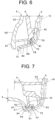
FIG. 6 is a partially enlarged cross-sectional view of the base assembly, which is an enlarged view of an encircled area VI inFIG. 4 . -
FIG. 7 is a partially enlarged cross-sectional view of the base assembly, which is an enlarged view of an encircled area VII inFIG. 5 . -
FIG. 8 is a plan view illustrating a stopper part of a base and a stopper part of a cover. -
FIG. 9 shows a partially enlarged cross-sectional view illustrating a back-side stopper part of the base and a back-side stopper part of the cover, which corresponds toFIG. 6 ,FIG. 9 (A) shows a partially enlarged cross-sectional view illustrating an embodiment of the present invention, andFIG. 9 (B) shows a partially enlarged cross-sectional view illustrating an example without carrying out the present invention. -
FIG. 10 shows a partially enlarged cross-sectional view illustrating a front-side stopper part of the base and a front-side stopper part of the cover, which corresponds toFIG. 7 ,FIG. 10 (A) shows a partially enlarged cross-sectional view illustrating an embodiment of the present invention, and -
FIG. 10 (B) shows a partially enlarged cross-sectional view illustrating an example without carrying out the present invention. - Now, a base assembly and a periphery monitoring device for a vehicle according to an embodiment of the present invention is described below in detail with reference to drawings. It should be noted that as the drawings are schematically illustrated, main components are illustrated, components other than the main components are omitted, and hatching or cross section would be partially omitted from the drawings.
- In this specification, front, back, up, down, left, and right direction respectively correspond to front, back, up, down, left, and right direction when a vehicle is equipped with the periphery monitoring device for a vehicle according to the present invention. In
FIG. 1 through 3 , the reference symbols "F", "B", "U", "D", "L", and "R" express "front", "back", "up", "down", "left", and "right", respectively. - The configuration of each of the base assembly and the periphery monitoring device for a vehicle according to the embodiment is described below. In
FIGS. 1 and2 ,reference numeral 1 denotes the periphery monitoring device for a vehicle according to the embodiment. - In the embodiment, the periphery monitoring device for a
vehicle 1 is, for example, an outside mirror device for a vehicle as a door mirror for a vehicle, which is hereinafter simply referred to as "door mirror 1." Thedoor mirrors 1 are equipped with a vehicle on its left and right doors, respectively, (see anouter panel 10 of a vehicle body inFIGS. 6 and 7 ). - The
door mirror 1 equipped on the left side door is described below. Here, in thedoor mirror 1 equipped on the left side door, the left side is defined as the outside of the vehicle, while the right side is defined as the inside of the vehicle. Thedoor mirrors 1 equipped on the right side and the left side doors are of substantially symmetrical shape. Accordingly, description of the door mirror equipped on the right side door is omitted. - The
door mirror 1 has monitoringassembly 2 andbase assembly 3, as shown inFIGS. 1 and2 . Thebase assembly 3 is fixed to the door. Themonitoring assembly 2 is attached to thebase assembly 3 with being rotatably around a rotation center axis line O. - As shown in
FIGS. 1 and2 , themonitoring assembly 2 has housing 20,monitoring unit 21, and electric holding unit (not shown). Themonitoring assembly 2 may have a side turn signal lamp as a vehicle light on thehousing 20. - The
housing 20 is in a hollow box shape and is opened at the front side (back side of the vehicle). - in this example, the
monitoring unit 21 is a mirror and is installed in opening portion of thehousing 20. Themonitoring unit 21 is attached to thehousing 20 through a driving mechanism (power unit). A mirror surface of themonitoring unit 21 is, by the driving mechanism, rotatable around a vertical axis in a left-right direction as well as rotatable around a horizontal axis in an up-down direction, and is adjustable. - The monitoring unit may be a camera in place of the mirror in this example. In the case where the monitoring unit is a camera, dimension of the
housing 20 can be much reduced in the up-down direction. Information about a periphery of the vehicle captured by the camera can be displayed on a display device (not shown) built in the interior of the vehicle via an image processing unit or the like (not shown). - The electric holding unit causes the
monitoring assembly 2 to rotationally move between a use position (shown inFIGS. 1 and2 ) and a back holding position (not shown) with electric power (see solid arrow inFIG. 1 ). - The electric holding unit is composed of shaft, motor, reduction gear, and clutch mechanism. Most of the parts of the electric holding unit is accommodated in the
housing 20 and attached thereto. A longitudinal center axis line of the shaft aligns with the rotation center axis line O of themonitoring assembly 2. - As shown in
FIG. 3 , thebase assembly 3 hasbase 4,gasket 5, and cover 6 (also referred to as base undercover). Thebase assembly 3 is fixed to theouter panel 10 with fixing means (not shown). Screws or the like are used as the fixing means as appropriate. - In this example, the
base 4 is manufactured by die-cast, highly rigid resin, or the like. As shown inFIGS. 4 and5 , thebase 4 has fixingpart 40 and attachingpart 41. - The fixing
part 40 and the attachingpart 41 are configured integrally. Namely, downward portion of the fixingpart 40 is connected to a right end portion of the attachingpart 41 integrally. - The fixing
part 40 is provided along a substantially vertical direction. The fixingpart 40 is fixed to theouter panel 10. The fixingpart 40 has aperipheral edge part 42. - The attaching
part 41 is provided along a substantially horizontal direction. Themonitoring assembly 2 is attached on an upward portion of the attachingpart 41. - In this example, the
gasket 5 is made of PE (polyethylene), EPDM (ethylene propylene rubber), POM (polyacetal, acetal resin), TEO (thermoplastic elastomer), etc. Namely, thegasket 5 is made of resin-based or rubber-based flexible elastic material. - As shown in
FIGS. 3 through 7 , thegasket 5 is attached to the fixingpart 40 of thebase 4 with attachment means (not shown) to exist between the fixingpart 40 and theouter panel 10. Means such as mating means or elastic mating means can be employed as the attachment means as appropriate. - The peripheral edge part of the
gasket 5 has anedge part 50. As shown inFIGS. 6 and 7 , theedge part 50 at the downward portion of thegasket 5 has ahorizontal edge part 51 provided in a horizontal direction from theedge part 42 at the downward portion of thebase 4 toward avertical edge part 61 of thecover 6. - In this example, the
cover 6 is composed of molded resin. As shown inFIGS. 3 through 10 , thecover 6 is attached to a downward portion of the fixingpart 40 of thebase 4 and a downward portion of the attachingpart 41 with an attachment means (not shown) to cover the downward portion of the fixingpart 40 and the downward portion of the attachingpart 41. Means such as mating means or elastic mating means can be employed as the attachment means as appropriate. - The
cover 6 has aperipheral edge part 60. As shown inFIGS. 4 through 7 ,9 and 10 , theedge part 60 amongedge parts 60 of thecover 6, which faces theedge part 42 at the downward portion of the fixingpart 40 of thebase 4 as well as theedge part 50 at the downward portion of thegasket 5, has avertical edge part 61 provided in a vertical direction. - As shown in
FIGS. 4 ,6 and9 , thecover 6 is provided continuously at thevertical edge part 61 and has aconcave part 62 which is concaved from thevertical edge part 61's side to the downward portion of thebase 4 and to the downward portion of thegasket 5. Theconcave part 62 is formed at the rear side portion of thecover 6. - As shown in
FIGS 4 through 10 , stopper parts 7 and 8 are provided at theedge part 42 at the downward portion of thebase 4 and thevertical edge part 61 of thecover 6, respectively. The stopper parts 7 and 8 restrict thevertical edge part 61 of thecover 6 from moving with respect to theedge part 42 at the downward portion of thebase 4 by action of thehorizontal edge part 51 of thegasket 5. In an event when thevertical edge part 61 of thecover 6 moves with respect to theedge part 42 at the downward portion of thebase 4, thevertical edge part 61 may include theedge part 60 and theconcave part 62. - The stopper part 7 at the
base 4's side is provided in the vertical direction. The stopper part 8 at thecover 6's side is provided in the horizontal direction. Namely, the stopper part 7 at thebase 4's side and the stopper part 8 at thecover 6's side intersect each other. - The stopper parts 7 and 8 include a back-
side stopper part 7B provided on the back side portion of thebase 4 and a back-side stopper part 8B provided on the back side portion of thecover 6, and a front-side stopper part 7F provided on the front side portion of thebase 4 and a front-side stopper part 8F provided on the front side portion of thecover 6, respectively. - The back-
side stopper part 8B of thecover 6 hasplate part 80, abuttingedge part 81,additional plate part 82, and additionalabutting edge part 83. - As shown in
FIG. 8 , theplate part 80 is integrally provided in a horizontal direction from an inside surface of thevertical edge part 61, which faces theedge part 42 of thebase 4. Theplate part 80 is substantially perpendicular (orthogonal) to thevertical edge part 61. - The abutting
edge part 81 is provided at an edge of anopening 86 of theplate part 80. Namely, theplate part 80 has theopening 86. The abuttingedge part 81 is provided at the edge opposed to thevertical edge part 61 among edges of theopening 86. - The
additional plate part 82 is integrally provided to be adjacent to theplate part 80 in a horizontal direction from the inside surface of thevertical edge part 61. Similar to theplate part 80, theadditional plate part 82 is substantially perpendicular (orthogonal) to thevertical edge part 61. - The
plate part 80 and theadditional plate part 82 are made thinner to prevent cracking during molding. On the other hand, theplate part 80 and theadditional plate part 82 are made thicker at the peripheral edge potions than at the center portions to improve strength. As a result, the abuttingedge part 81 can obtain sufficient strength even if a dimension in an abutting direction (solid arrow direction inFIG. 8 ) is reduced. - The additional
abutting edge part 83 is provided at the edge opposed to thevertical edge part 61 among edges of theadditional plate part 82. The additionalabutting edge part 83 is provided to be adjacent to theabutting edge part 81. - The back-
side stopper part 7B on thebase 4's side has abuttingprotrusion part 70 and additionalabutting protrusion part 71. The abuttingprotrusion part 70 is integrally provided in a vertical direction from theedge part 42 so as to correspond to theabutting edge part 81. The additionalabutting protrusion part 71 is integrally provided to be adjacent to the abuttingprotrusion part 70 in a vertical direction from theedge part 42 so as to correspond to the additional abuttingedge part 83. - The abutting
edge part 81 and the abuttingprotrusion part 70 are in contact with each other, so that thevertical edge part 61 can be restricted from moving in a direction away from the edge part 42 (in a direction of a frontward solid arrow inFIG. 8 ) by action of thehorizontal edge part 51. The additionalabutting edge part 83 and the additionalabutting protrusion part 71 are in contact with each other, so that thevertical edge part 61 can be restricted from moving in a direction close to the edge part 42 (in a direction of a frontward broken line arrow inFIG. 8 ). - The front-
side stopper part 8F on thecover 6's side hasplate part 84, abuttingedge part 85, and additionalabutting edge part 87. - As shown in
FIG. 8 , theplate part 84 is integrally provided in a horizontal direction from the inside surface of thevertical edge part 61, which faces theedge part 42 of thebase 4. Theplate part 84 is substantially perpendicular (orthogonal) to thevertical edge part 61. Theplate part 84 has a bending shape forming a right angle. - The abutting
edge part 85 is provided at the edge opposed to thevertical edge part 61 among edges of theplate part 84. The additionalabutting edge part 87 is provided at the edge opposed to thevertical edge part 61. The additionalabutting edge part 87 is provided to be adjacent to theabutting edge part 85. - The front-
side stopper part 7F on thebase 4's side has abuttingprotrusion part 72 and additionalabutting protrusion part 73. The abuttingprotrusion part 72 is integrally provided in a vertical direction from theedge part 42 so as to correspond to theabutting edge part 85. The additionalabutting protrusion part 73 is integrally provided to be adjacent to the abuttingprotrusion part 72 in a vertical direction from theedge part 42 so as to correspond to the additional abuttingedge part 87. - The abutting
edge part 85 and the abuttingprotrusion part 72 are in contact with each other, so that thevertical edge part 61 can be restricted from moving in a direction away from the edge part 42 (in a direction of a backward solid arrow inFIG. 8 ) by action of thehorizontal edge part 51. The additionalabutting edge part 87 and the additionalabutting protrusion part 73 are in contact with each other, so that thevertical edge part 61 can be restricted from moving in a direction close to the edge part 42 (in a direction of the backward broken line arrow inFIG. 8 ). - Description of assembling
Base assembly 3 intoDoor mirror 1 Assembling thebase assembly 3 into thedoor mirror 1 is described below. - First, the
cover 6 is attached to the downward portion of the fixingpart 40 and the downward portion of the attachingpart 41 of thebase 4 by attachment means. This allows the downward portion of the fixingpart 40 and the downward portion of the attachingpart 41 to be covered by thecover 6. - Here, as shown in
FIG. 8 , the abuttingprotrusion part 70 is inserted into theopening 86 to bring the abuttingprotrusion part 70 into contact with the abuttingedge part 81 each other. Furthermore, the additional abuttingedge part 83 is faced to the additionalabutting protrusion part 71. On the other hand, the abuttingedge part 85 is abutted to the abuttingprotrusion part 72. Furthermore, the additional abuttingedge part 87 is faced to the additionalabutting protrusion part 73. - Next, the
gasket 5 is attached to the fixingpart 40 of thebase 4 by the attaching means. This allows thebase assembly 3 to be assembled. - During a handling step of the assembled
base assembly 3, there is a case where thevertical edge part 61 of thecover 6 is subject to force in a direction to separate thevertical edge part 61 away from theedge part 42 of the base 4 (solid arrow direction inFIG. 8 ), or force in a direction to bring thevertical edge part 61 closer to theedge part 42 of the base 4 (dashed arrow direction inFIG. 8 ). - In this case, since the abutting
edge part 81 and the abuttingprotrusion part 70 are abutted to each other as well as the abuttingedge part 85 and the abuttingprotrusion part 72 are abutted to each other, even if thevertical edge part 61 of thecover 6 is subjected to the force in the direction to separate thevertical edge part 61 away from theedge part 42 of thebase 4 as mentioned above, it is possible to prevent thevertical edge part 61 from separating away from theedge part 42 of thebase 4 and thus being lifted or fallen. - In addition, since the additional abutting
edge part 87 and the additionalabutting protrusion part 73 mutually face each other as well as the additional abuttingedge part 87 and the additionalabutting protrusion part 73 mutually face each other, even if thevertical edge part 61 of thecover 6 is subjected to the above mentioned force in the direction to bring thevertical edge part 61 closer to theedge part 42 of thebase 4, it is possible to prevent thevertical edge part 61 from getting close to theedge part 42 of thebase 4 or being deformed. - Then, the
monitoring assembly 2 is attached on an upstream portion of the attachingpart 41 of thebase 4 of thebase assembly 3 whose assembly is completed, rotatably around the rotation center axis line O by the electric holding unit. This allows thedoor mirror 1 to be assembled. - Then, the fixing
part 40 of thebase 4 of thedoor mirror 1 is fixed to theouter panel 10 of the door of a vehicle by fixing means. Thereby, thedoor mirror 1 is equipped on the vehicle. At this time, as shown inFIGS. 6 and 7 , thegasket 5 exists between the fixingpart 40 of thebase 4 and theouter panel 10. - Here, the
gasket 5 is subjected to various forces during existing between the fixingpart 40 of thebase 4 and theouter panel 10. Thereby, thehorizontal edge part 51 of thegasket 5 may be forced to press against thevertical edge part 61 of thecover 6. Accordingly, thevertical edge part 61 of thecover 6 is subjected to force in a direction to separate thevertical edge part 61 away from theedge part 42 of the base 4 (solid arrow direction inFIG. 8 ). - Even if the
vertical edge part 61 of thecover 6 is subjected to the above mentioned force to separate, as described above, since the abuttingedge part 81 and the abuttingprotrusion part 70 are abutted to each other as well as the abuttingedge part 85 and the abuttingprotrusion part 72 are abutted to each other, it is possible to prevent thevertical edge part 61 from separating from theedge part 42 of thebase 4 and thus being lifted or fallen. - The
base assembly 3 and the periphery monitoring device for avehicle 1 according to the present embodiment are configured as mentioned above. A working and effect thereof are described below. - The
base assembly 3 and the periphery monitoring device for avehicle 1 according to the present embodiment includes stopper parts 7 and 8 to restrict the vertical edge part 61(which may include theedge part 60 and the concave part 62) from moving with respect to theedge part 42 at the downward portion of thebase 4 by action of thehorizontal edge part 51 of thegasket 5, wherein the stopper parts 7 and 8 are provided on theedge part 42 at the downward portion of thebase 4 and thevertical edge part 61 of thecover 6, respectively. As a result, thebase assembly 3 and the periphery monitoring device for avehicle 1 according to the present embodiment can restrict thevertical edge part 61 of thecover 6 from moving with respect to thebase 4. This allows thebase assembly 3 and the periphery monitoring device for avehicle 1 according to the present embodiment to prevent thevertical edge part 61 of thecover 6 from being lifted, fallen, or deformed. - The
base assembly 3 and the periphery monitoring device for avehicle 1 in this embodiment havestopper parts base 4 side in the vertical direction andstopper parts cover 6 side in the horizontal direction. Consequently, as shown inFIGS. 9(A) and 10(A) , thebase assembly 3 and the periphery monitoring device for avehicle 1 according to the present embodiment can have dimensions T1 and T3 between theedge part 42 of thebase 4 and thevertical edge part 61 of thecover 6 larger than dimensions T2 and T4 in the case where the present invention is not carried out (seeFIGS. 9(B) and 10(B) ). - This allows the
base assembly 3 and the periphery monitoring device for avehicle 1 according to the present embodiment to have increased dimensions T1 and T3 between theedge part 42 of thebase 4 and thevertical edge part 61 of thecover 6, so that flexibility of design shape of thebase assembly 3, flexibility of design shape of the periphery monitoring device for avehicle 1, and flexibility of design shape of theouter panel 10 can be increased. - The case where the present invention is not carried out (hereinafter referred to as "comparative example") is explained below with reference to
FIGS. 9(B) and 10(B) . AmongFIGS. 1 through 8 ,9(A), 9(B), 10(A), and 10(B) , the same reference numeral or reference symbol denotes the same component. - In the comparative example,
stopper parts stopper parts cover 600's side are also provided in the vertical direction. As a result, in the comparative example, it is necessary to reduce dimensions T2 and T4 between theedge part 42 of thebase 400 and thevertical edge part 61 of thecover 600 due to shaping constraint of theedge part 42 of thebase 400 and thevertical edge part 61 of thecover 600 as well as molding mold constraint of thebase 400 and thecover 600. - Consequently, as shown in
FIGS. 9(B) and 10(B) , the comparative example has dimensions T2 and T4 between theedge part 42 of thebase 400 and thevertical edge part 61 of thecover 600 smaller than dimensions T1 and T3 of thebase assembly 3 and the periphery monitoring device for avehicle 1 according to the present embodiment (seeFIGS. 9(A) and 10(A) ). - To the contrary, as shown in
FIGS. 9(A) and 10(A) , in thebase assembly 3 and the periphery monitoring device for avehicle 1 according to the present embodiment, thestopper parts base 4's side are provided in the vertical direction, as well as thestopper parts cover 6's side are provided in the horizontal direction. As a result, in thebase assembly 3 and the periphery monitoring device for avehicle 1 according to the present embodiment, it is possible to increase dimensions T1 and T3 between theedge part 42 of thebase 4 and thevertical edge part 61 of thecover 6 without shaping constraint of theedge part 42 of thebase 4 and thevertical edge part 61 of thecover 6 as well as molding mold constraint of thebase 4 and thecover 6. - In the
base assembly 3 and the periphery monitoring device for avehicle 1 according to the present embodiment, thecover 6 is provided continuously at thevertical edge part 61 and has aconcave part 62 which is concaved from thevertical edge part 61's side to the downward portion of thebase 4 and to the downward portion of thegasket 5. As a result, thebase assembly 3 and the periphery monitoring device for avehicle 1 according to the present embodiment can increase flexibility of design shape of thevertical edge part 61 of thecover 6. - Furthermore, in the
base assembly 3 and the periphery monitoring device for avehicle 1 according to the present embodiment, theconcave part 62 is even formed at thevertical edge part 61 of thecover 6. Nevertheless, it is possible to restrict thevertical edge part 61 of thecover 6 from moving with respect to thebase 4 by means of thestopper parts base 4's side and thestopper parts cover 6's side. - In the
base assembly 3 and the periphery monitoring device for avehicle 1 according to the present embodiment, thestopper part 8, 8B provided on thecover 6's side includes theplate part 80 provided in a horizontal direction, and theabutting edge part 81 provided at an edge part of theopening 86 provided in theplate part 80, and thestopper part 7, 7B on thebase 4's side includes the abuttingprotrusion part 70 provided in the vertical direction. As a result, thebase assembly 3 and the periphery monitoring device for avehicle 1 according to the present embodiment can restrict thevertical edge part 61 from moving in a direction away from theedge part 42 at the downward portion of thebase 4 by action of thehorizontal edge part 51 as the abuttingedge part 81 and the abuttingprotrusion part 70 are abutted to each other. - In the
base assembly 3 and the periphery monitoring device for avehicle 1 according to the present embodiment, thestopper part 8, 8B provided on thecover 6's side includes theadditional plate part 82 provided in the horizontal direction adjacent to theplate part 80, and the additional abuttingedge part 83 provided at theadditional plate part 82, and thestopper part 7, 7B on thebase 4's side includes the additionalabutting protrusion part 71 provided in the vertical direction adjacent to the abuttingprotrusion part 70. As a result, thebase assembly 3 and the periphery monitoring device for avehicle 1 according to the present embodiment can restrict thevertical edge part 61 from moving in a direction close to theedge part 42 at the downward portion of thebase 4 as the additional abuttingedge part 83 and the additionalabutting protrusion part 71 are abutted to each other. - In the
base assembly 3 and the periphery monitoring device for avehicle 1 according to the present embodiment, thestopper part 8, 8F provided on thecover 6's side includes theplate part 84 provided in the horizontal direction, and theabutting edge part 85 provided in theplate part 84, and thestopper part 7, 7F on thebase 4's side includes the abuttingprotrusion part 72 provided in the vertical direction. As a result, thebase assembly 3 and the periphery monitoring device for avehicle 1 according to the present embodiment can restrict thevertical edge part 61 from moving in a direction away from theedge part 42 at the downward portion of thebase 4 by action of thehorizontal edge part 51 as the abuttingedge part 85 and the abuttingprotrusion part 72 are abutted to each other. - In the
base assembly 3 and the periphery monitoring device for avehicle 1 according to the present embodiment, thestopper part 8, 8F provided on thecover 6's side includes the additional abuttingedge part 87 provided at theplate part 84 adjacent to theabutting edge part 85, and thestopper part 7, 7F on thebase 4's side includes the additionalabutting protrusion part 73 provided in the vertical direction adjacent to the abuttingprotrusion part 72. As a result, thebase assembly 3 and the periphery monitoring device for avehicle 1 according to the present embodiment can restrict thevertical edge part 61 from moving in a direction close to theedge part 42 at the downward portion of thebase 4 as the additional abuttingedge part 87 and the additionalabutting protrusion part 73 are abutted to each other. - The
base assembly 3 and the periphery monitoring device for avehicle 1 according to the above mentioned embodiment has thebase 4 in which the back-side stopper part 7B and the front-side stopper part 7F are provided, and thecover 6 in which the back-side stopper part 8B and the front-side stopper part 8F are provided. - However, in the present invention, either the back-
side stopper part 7B or the front-side stopper part 7F may be provided in thebase 4, and either the back-side stopper part 8B or the front-side stopper part 8F may be provided in thecover 6. - In addition, in the present invention, either the back-
side stopper part 7B or the front-side stopper part 7F may be provided two each at a back-side and a front-side of thebase 4, and either the back-side stopper part 8B or the front-side stopper part 8F may be provided two each at a back-side and a front-side of thecover 6. - Furthermore, in the present invention, one set or three or more sets of stopper part 7 and stopper part 8 may be provided at the
base 4 and thecover 6, respectively. - The periphery monitoring device for a
vehicle 1 in the above mentioned embodiment has themonitoring assembly 2 mounted on thebase assembly 3, which is attached rotatably around the rotation center axis line O electrically and manually via the electric holding unit. However, the periphery monitoring device for a vehicle according to the present invention may have themonitoring assembly 2 mounted on thebase assembly 3, which is attached rotatably around the rotation center axis line O manually without via the electric holding unit. Themonitoring assembly 2 may be fixed to thebase assembly 3 so as not to rotate around the rotation center axis line O. -
- 1 Door mirror (periphery monitoring device for a vehicle)
- 10 Door (outer panel of vehicle body)
- 2 Monitoring assembly
- 20 Housing
- 21 Monitoring unit
- 3 Base assembly
- 4, 400 Base
- 40 Fixing part
- 41 Attaching part
- 42 Edge part
- 5 Gasket
- 50 Edge
- 51 Horizontal edge part
- 6, 600 Cover (base undercover)
- 60 Edge part
- 61 Vertical edge part
- 62 Concave part
- 7 Stopper part (stopper part on
base 4's side) - 7B, 70B Back-side stopper part (back-side stopper part on
base 4's side) - 70 Abutting protrusion part
- 71 Additional abutting protrusion part
- 7F, 70F Front-side stopper part (front-side stopper part on
base 4's side) - 72 Abutting protrusion part
- 73 Additional abutting protrusion part
- 8 Stopper part (stopper part on
cover 6's side) - 8B, 80B Back-side stopper part (back-side stopper part on
cover 6's side) - 80 Plate part
- 81 Abutting edge part
- 82 Additional plate part
- 83 Additional abutting edge part
- 86 Opening
- 8F, 80F Front-side stopper part (front-side stopper part on
cover 6's side) - 84 Plate part
- 85 Abutting edge part
- 87 Additional abutting edge part
- B Back
- D Down
- F Front
- L Left
- O Rotation center axis line
- R Right
- T1, T2, T3, T4 Dimensions between
edge part 42 and vertical edge part 61 U Up
Claims (7)
- A base assembly (3) comprising: a base (4); a gasket (5); and a cover (6),
whereinthe base (4) includes a fixing part (40) to be fixed to a vehicle body and an attaching part (41), an upward portion of the attaching part (41) being attached to a monitoring assembly (2),the gasket (5) is attached to the fixing part (40) to exist between the fixing part (40) and the vehicle body,the cover (6) is attached at a downward portion of the fixing part (40) and at a downward portion of the attaching part (41) to cover the downward portion of the fixing part (40) and the downward portion of the attaching part (41), and wherein among edge parts of the cover (6), an edge part (60) of the cover (6) that faces an edge part (42) of the fixing part (40) at the downward portion of the fixing part (40) and faces an edge part (50) of the gasket (5) at a downward portion of the gasket (5) has a vertical edge part (61) that is provided in a vertical direction,the edge part (50) of the gasket (5) at the downward portion of the gasket (5) has a horizontal edge part (51) provided in a horizontal direction from the edge part (42) of the fixing part (40) at a downward portion of the base (4) toward the vertical edge part (61) of the cover (6),characterized in thata plurality of stopper parts (7F, 7B, 8F, 8B) to restrict the vertical edge part (61) of the cover (6) from moving with respect to the edge part (42) of the base (4) at the downward portion of the base (4) by action of the horizontal edge part (51) of the gasket (5) are provided at the edge part (42) of the fixing part (40) at the downward portion of the base (4) and at the vertical edge part (61) of the cover (6), respectively, andthe stopper part (7F, 7B) of the base (4) is provided in a vertical direction, andthe stopper part (8F, 8B) of the cover (6) is provided in a horizontal direction. - The base assembly (3) according to claim 1,
wherein the cover (6) is provided continuously at the vertical edge part (61) of the cover (6) and has a concave part (62) that is concaved from the vertical edge part (61) to the downward portion of the base (4) and to the downward portion of the gasket (5). - The base assembly (3) according to claim 1, whereinthe stopper part (8F, 8B) of the cover (6) has a plate part (80) provided in a horizontal direction and an abutting edge part (81) provided at an edge of an opening (86) provided in the plate part (80),the stopper part (7F, 7B) of the base (4) has an abutting protrusion part (70) provided in a vertical direction,the abutting edge part (81) and the abutting protrusion part (70) are abutted to each other to restrict the vertical edge part (61) of the cover (6) from moving in a direction away from the edge part (42) of the fixing part (40) at the downward portion of the base (4) by action of the horizontal edge part (51) of the gasket (5).
- The base assembly (3) according to claim 3, whereinthe stopper part (8F, 8B) of the cover (6) has an additional plate part (82) provided in a horizontal direction adjacent to the plate part (80) and an additional abutting edge part (83, 87) provided in the additional plate part (82),the stopper part (7F, 7B) of the base (4) has an additional abutting protrusion part (71, 73) provided in a vertical direction adjacent to the abutting protrusion part (70), andthe additional abutting edge part (83, 87) and the additional abutting protrusion part (71, 73) are abutted to each other to restrict the vertical edge part (61) of the cover (6) from moving in a direction close to the edge part (42) of the fixing part at the downward portion of the base (4).
- The base assembly (3) according to claim 1, whereinthe stopper part (8F, 8B) of the cover (6) has a plate part (80) provided in a horizontal direction and an abutting edge part (81) provided in the plate part (80),the stopper part (7F, 7B) of the base (4) has an abutting protrusion part (70) provided in a vertical direction,the abutting edge part (81) and the abutting protrusion part (70) are abutted to each other to restrict the vertical edge part (61) of the cover (6) from moving in a direction away from the edge part (42) of the fixing part (40) at the downward portion of the base (4) by action of the horizontal edge part (51) of the gasket (5).
- The base assembly (3) according to claim 5, whereinthe stopper part (8F, 8B) of the cover (6) has an additional abutting edge part (83) provided in the plate part (80) adjacent to the abutting edge part (81),the stopper part (7F, 7B) of the base (4) has an additional abutting protrusion part (71, 73) provided in a vertical direction adjacent to the abutting protrusion part (70), andthe additional abutting edge part (83, 87) and the additional abutting protrusion part (71, 73) are abutted to each other to restrict the vertical edge part (61) of the cover (6) from moving in a direction close to the edge part (42) of the fixing part (40) at the downward portion of the base (4).
- A periphery monitoring device for a vehicle (1), wherein
the periphery monitoring device for a vehicle (1) comprises:the base assembly (3) according to any one of claims 1 to 6 fixed to the vehicle body, anda monitoring assembly (2) attached to the base assembly (3).
Applications Claiming Priority (2)
| Application Number | Priority Date | Filing Date | Title |
|---|---|---|---|
| JP2019236710A JP7313275B2 (en) | 2019-12-26 | 2019-12-26 | Base assembly, vehicle peripheral vision device |
| PCT/JP2020/048119 WO2021132313A1 (en) | 2019-12-26 | 2020-12-23 | Base assembly, and periphery monitoring device for vehicle |
Publications (3)
| Publication Number | Publication Date |
|---|---|
| EP4082834A1 EP4082834A1 (en) | 2022-11-02 |
| EP4082834A4 EP4082834A4 (en) | 2024-02-14 |
| EP4082834B1 true EP4082834B1 (en) | 2025-04-23 |
Family
ID=76573015
Family Applications (1)
| Application Number | Title | Priority Date | Filing Date |
|---|---|---|---|
| EP20905857.7A Active EP4082834B1 (en) | 2019-12-26 | 2020-12-23 | Base assembly, and periphery monitoring device for vehicle |
Country Status (5)
| Country | Link |
|---|---|
| US (1) | US12179667B2 (en) |
| EP (1) | EP4082834B1 (en) |
| JP (1) | JP7313275B2 (en) |
| CN (1) | CN114929519B (en) |
| WO (1) | WO2021132313A1 (en) |
Families Citing this family (1)
| Publication number | Priority date | Publication date | Assignee | Title |
|---|---|---|---|---|
| JP7401410B2 (en) * | 2020-07-31 | 2023-12-19 | 美里工業株式会社 | Base assembly, vehicle peripheral visibility device |
Family Cites Families (24)
| Publication number | Priority date | Publication date | Assignee | Title |
|---|---|---|---|---|
| JPH089573B2 (en) * | 1988-03-28 | 1996-01-31 | 財団法人相模中央化学研究所 | Method for producing ω-hydroxy fatty acid ester |
| JPH0249750U (en) * | 1988-09-30 | 1990-04-06 | ||
| US7070287B2 (en) * | 2002-04-23 | 2006-07-04 | Magna Donnelly Mirrors North America L.L.C. | Vehicular mirror system with at least one of power-fold and power-extend functionality |
| JP4951280B2 (en) * | 2006-06-15 | 2012-06-13 | 株式会社村上開明堂 | Mirror base |
| JP4793188B2 (en) * | 2006-09-11 | 2011-10-12 | 市光工業株式会社 | Outside mirror device for vehicle |
| JP5045623B2 (en) * | 2008-09-17 | 2012-10-10 | 市光工業株式会社 | Vehicle headlamp with leveling device |
| JP5406752B2 (en) * | 2010-02-08 | 2014-02-05 | 株式会社村上開明堂 | Vehicle door mirror |
| JP2012192882A (en) * | 2011-03-17 | 2012-10-11 | Murakami Corp | Door mirror base |
| JP2013112203A (en) * | 2011-11-29 | 2013-06-10 | Murakami Corp | Mirror base |
| JP2013123929A (en) * | 2011-12-13 | 2013-06-24 | Ichikoh Ind Ltd | Vehicle outside mirror device |
| DE102021107597B4 (en) * | 2021-03-25 | 2022-11-17 | Motherson Innovations Company Limited | 3-PIECE BASE COVER, REAR VIEW ASSEMBLY, VEHICLE AND ASSEMBLY AND DISASSEMBLY PROCEDURES |
| JP5955746B2 (en) * | 2012-06-29 | 2016-07-20 | 株式会社村上開明堂 | Outer mirror |
| JP6012300B2 (en) * | 2012-07-06 | 2016-10-25 | 株式会社石▲崎▼本店 | Mirror base structure |
| JP5959354B2 (en) * | 2012-07-23 | 2016-08-02 | 株式会社東海理化電機製作所 | Outer mirror device for vehicle |
| JP6075022B2 (en) * | 2012-11-14 | 2017-02-08 | 市光工業株式会社 | Automotive door mirrors |
| JP6252012B2 (en) | 2013-07-26 | 2017-12-27 | 市光工業株式会社 | Outside mirror device for vehicle |
| JP6353708B2 (en) * | 2014-06-09 | 2018-07-04 | 株式会社石▲崎▼本店 | Vehicle side mirror |
| JP6159699B2 (en) * | 2014-10-16 | 2017-07-05 | 本田技研工業株式会社 | Side mirror device |
| JP6732478B2 (en) * | 2016-03-04 | 2020-07-29 | 株式会社石▲崎▼本店 | Vehicle side mirror |
| JP2017218130A (en) * | 2016-06-10 | 2017-12-14 | 株式会社東海理化電機製作所 | Door mirror device |
| JP6802713B2 (en) * | 2017-01-10 | 2020-12-16 | 株式会社ミツバ | door mirror |
| US11951908B2 (en) * | 2019-07-31 | 2024-04-09 | Ficosa North America Corporation | Exterior rearview mirror or winglet for a vehicle having an electrical device attached to a housing |
| JP7401410B2 (en) * | 2020-07-31 | 2023-12-19 | 美里工業株式会社 | Base assembly, vehicle peripheral visibility device |
| US11505125B2 (en) * | 2020-08-05 | 2022-11-22 | Honda Motor Co., Ltd. | Vehicle door mirror assembly |
-
2019
- 2019-12-26 JP JP2019236710A patent/JP7313275B2/en active Active
-
2020
- 2020-12-23 EP EP20905857.7A patent/EP4082834B1/en active Active
- 2020-12-23 US US17/758,001 patent/US12179667B2/en active Active
- 2020-12-23 WO PCT/JP2020/048119 patent/WO2021132313A1/en not_active Ceased
- 2020-12-23 CN CN202080090251.7A patent/CN114929519B/en active Active
Also Published As
| Publication number | Publication date |
|---|---|
| CN114929519B (en) | 2025-11-11 |
| WO2021132313A1 (en) | 2021-07-01 |
| US12179667B2 (en) | 2024-12-31 |
| JP2021104733A (en) | 2021-07-26 |
| EP4082834A4 (en) | 2024-02-14 |
| US20230331154A1 (en) | 2023-10-19 |
| CN114929519A (en) | 2022-08-19 |
| EP4082834A1 (en) | 2022-11-02 |
| JP7313275B2 (en) | 2023-07-24 |
Similar Documents
| Publication | Publication Date | Title |
|---|---|---|
| JP6700979B2 (en) | Glass run for car door | |
| EP3501899B1 (en) | Cutline gasket for external side mirror | |
| JP7232601B2 (en) | Automobile door seal structure | |
| EP1138552B1 (en) | Mirror assembly for a vehicle | |
| US12179667B2 (en) | Base assembly, and periphery monitoring device for vehicle | |
| US6595670B2 (en) | Mirror assembly for vehicle | |
| JP7403399B2 (en) | Glass run for car doors | |
| EP2070751B1 (en) | Power back door for vehicle | |
| US8876305B2 (en) | Rearview mirror for vehicles | |
| CN114103606A (en) | Vehicle door | |
| US7384162B2 (en) | Vehicles outside mirror with wall portion hiding shaft | |
| JP7359717B2 (en) | Division bar for automobiles and its manufacturing method | |
| JP2021172155A (en) | On-vehicle camera mounting structure | |
| JPH0558158A (en) | Side door structure | |
| JP4066578B2 (en) | Assembly of corner vanes and front side panels | |
| JP6159699B2 (en) | Side mirror device | |
| JP3656003B2 (en) | Auto body structure | |
| JP7831181B2 (en) | Vehicle rear structure | |
| JP7263686B2 (en) | Visual recognition device for vehicles | |
| CN217705447U (en) | Tail door structure and vehicle | |
| US10703290B2 (en) | Interior module for a cargo space of a vehicle, a cargo space cladding and a manufacturing method for manufacturing an interior module | |
| JP7401301B2 (en) | Vehicle parts, vehicle peripheral visibility equipment | |
| JP5647928B2 (en) | Tail light mounting structure | |
| JP2000238528A (en) | Car body structure | |
| CN120331584A (en) | vehicle |
Legal Events
| Date | Code | Title | Description |
|---|---|---|---|
| STAA | Information on the status of an ep patent application or granted ep patent |
Free format text: STATUS: THE INTERNATIONAL PUBLICATION HAS BEEN MADE |
|
| PUAI | Public reference made under article 153(3) epc to a published international application that has entered the european phase |
Free format text: ORIGINAL CODE: 0009012 |
|
| STAA | Information on the status of an ep patent application or granted ep patent |
Free format text: STATUS: REQUEST FOR EXAMINATION WAS MADE |
|
| 17P | Request for examination filed |
Effective date: 20220627 |
|
| AK | Designated contracting states |
Kind code of ref document: A1 Designated state(s): AL AT BE BG CH CY CZ DE DK EE ES FI FR GB GR HR HU IE IS IT LI LT LU LV MC MK MT NL NO PL PT RO RS SE SI SK SM TR |
|
| DAV | Request for validation of the european patent (deleted) | ||
| DAX | Request for extension of the european patent (deleted) | ||
| RAP1 | Party data changed (applicant data changed or rights of an application transferred) |
Owner name: MISATO INDUSTRIES CO., LTD. |
|
| A4 | Supplementary search report drawn up and despatched |
Effective date: 20240111 |
|
| RIC1 | Information provided on ipc code assigned before grant |
Ipc: B60R 1/06 20060101AFI20240105BHEP |
|
| GRAP | Despatch of communication of intention to grant a patent |
Free format text: ORIGINAL CODE: EPIDOSNIGR1 |
|
| STAA | Information on the status of an ep patent application or granted ep patent |
Free format text: STATUS: GRANT OF PATENT IS INTENDED |
|
| INTG | Intention to grant announced |
Effective date: 20241218 |
|
| GRAS | Grant fee paid |
Free format text: ORIGINAL CODE: EPIDOSNIGR3 |
|
| GRAA | (expected) grant |
Free format text: ORIGINAL CODE: 0009210 |
|
| STAA | Information on the status of an ep patent application or granted ep patent |
Free format text: STATUS: THE PATENT HAS BEEN GRANTED |
|
| AK | Designated contracting states |
Kind code of ref document: B1 Designated state(s): AL AT BE BG CH CY CZ DE DK EE ES FI FR GB GR HR HU IE IS IT LI LT LU LV MC MK MT NL NO PL PT RO RS SE SI SK SM TR |
|
| REG | Reference to a national code |
Ref country code: GB Ref legal event code: FG4D |
|
| REG | Reference to a national code |
Ref country code: CH Ref legal event code: EP |
|
| REG | Reference to a national code |
Ref country code: DE Ref legal event code: R096 Ref document number: 602020050176 Country of ref document: DE |
|
| REG | Reference to a national code |
Ref country code: IE Ref legal event code: FG4D |
|
| REG | Reference to a national code |
Ref country code: NL Ref legal event code: MP Effective date: 20250423 |
|
| PG25 | Lapsed in a contracting state [announced via postgrant information from national office to epo] |
Ref country code: NL Free format text: LAPSE BECAUSE OF FAILURE TO SUBMIT A TRANSLATION OF THE DESCRIPTION OR TO PAY THE FEE WITHIN THE PRESCRIBED TIME-LIMIT Effective date: 20250423 |
|
| REG | Reference to a national code |
Ref country code: AT Ref legal event code: MK05 Ref document number: 1787483 Country of ref document: AT Kind code of ref document: T Effective date: 20250423 |
|
| PG25 | Lapsed in a contracting state [announced via postgrant information from national office to epo] |
Ref country code: FI Free format text: LAPSE BECAUSE OF FAILURE TO SUBMIT A TRANSLATION OF THE DESCRIPTION OR TO PAY THE FEE WITHIN THE PRESCRIBED TIME-LIMIT Effective date: 20250423 Ref country code: PT Free format text: LAPSE BECAUSE OF FAILURE TO SUBMIT A TRANSLATION OF THE DESCRIPTION OR TO PAY THE FEE WITHIN THE PRESCRIBED TIME-LIMIT Effective date: 20250825 Ref country code: ES Free format text: LAPSE BECAUSE OF FAILURE TO SUBMIT A TRANSLATION OF THE DESCRIPTION OR TO PAY THE FEE WITHIN THE PRESCRIBED TIME-LIMIT Effective date: 20250423 |
|
| REG | Reference to a national code |
Ref country code: LT Ref legal event code: MG9D |
|
| PG25 | Lapsed in a contracting state [announced via postgrant information from national office to epo] |
Ref country code: GR Free format text: LAPSE BECAUSE OF FAILURE TO SUBMIT A TRANSLATION OF THE DESCRIPTION OR TO PAY THE FEE WITHIN THE PRESCRIBED TIME-LIMIT Effective date: 20250724 Ref country code: NO Free format text: LAPSE BECAUSE OF FAILURE TO SUBMIT A TRANSLATION OF THE DESCRIPTION OR TO PAY THE FEE WITHIN THE PRESCRIBED TIME-LIMIT Effective date: 20250723 |
|
| PG25 | Lapsed in a contracting state [announced via postgrant information from national office to epo] |
Ref country code: PL Free format text: LAPSE BECAUSE OF FAILURE TO SUBMIT A TRANSLATION OF THE DESCRIPTION OR TO PAY THE FEE WITHIN THE PRESCRIBED TIME-LIMIT Effective date: 20250423 |
|
| PG25 | Lapsed in a contracting state [announced via postgrant information from national office to epo] |
Ref country code: BG Free format text: LAPSE BECAUSE OF FAILURE TO SUBMIT A TRANSLATION OF THE DESCRIPTION OR TO PAY THE FEE WITHIN THE PRESCRIBED TIME-LIMIT Effective date: 20250423 |
|
| PG25 | Lapsed in a contracting state [announced via postgrant information from national office to epo] |
Ref country code: HR Free format text: LAPSE BECAUSE OF FAILURE TO SUBMIT A TRANSLATION OF THE DESCRIPTION OR TO PAY THE FEE WITHIN THE PRESCRIBED TIME-LIMIT Effective date: 20250423 |
|
| PG25 | Lapsed in a contracting state [announced via postgrant information from national office to epo] |
Ref country code: AT Free format text: LAPSE BECAUSE OF FAILURE TO SUBMIT A TRANSLATION OF THE DESCRIPTION OR TO PAY THE FEE WITHIN THE PRESCRIBED TIME-LIMIT Effective date: 20250423 |
|
| PG25 | Lapsed in a contracting state [announced via postgrant information from national office to epo] |
Ref country code: RS Free format text: LAPSE BECAUSE OF FAILURE TO SUBMIT A TRANSLATION OF THE DESCRIPTION OR TO PAY THE FEE WITHIN THE PRESCRIBED TIME-LIMIT Effective date: 20250723 |
|
| PG25 | Lapsed in a contracting state [announced via postgrant information from national office to epo] |
Ref country code: IS Free format text: LAPSE BECAUSE OF FAILURE TO SUBMIT A TRANSLATION OF THE DESCRIPTION OR TO PAY THE FEE WITHIN THE PRESCRIBED TIME-LIMIT Effective date: 20250823 |
|
| PG25 | Lapsed in a contracting state [announced via postgrant information from national office to epo] |
Ref country code: LV Free format text: LAPSE BECAUSE OF FAILURE TO SUBMIT A TRANSLATION OF THE DESCRIPTION OR TO PAY THE FEE WITHIN THE PRESCRIBED TIME-LIMIT Effective date: 20250423 |
|
| PG25 | Lapsed in a contracting state [announced via postgrant information from national office to epo] |
Ref country code: DK Free format text: LAPSE BECAUSE OF FAILURE TO SUBMIT A TRANSLATION OF THE DESCRIPTION OR TO PAY THE FEE WITHIN THE PRESCRIBED TIME-LIMIT Effective date: 20250423 Ref country code: SM Free format text: LAPSE BECAUSE OF FAILURE TO SUBMIT A TRANSLATION OF THE DESCRIPTION OR TO PAY THE FEE WITHIN THE PRESCRIBED TIME-LIMIT Effective date: 20250423 |
|
| PG25 | Lapsed in a contracting state [announced via postgrant information from national office to epo] |
Ref country code: CZ Free format text: LAPSE BECAUSE OF FAILURE TO SUBMIT A TRANSLATION OF THE DESCRIPTION OR TO PAY THE FEE WITHIN THE PRESCRIBED TIME-LIMIT Effective date: 20250423 |
|
| PG25 | Lapsed in a contracting state [announced via postgrant information from national office to epo] |
Ref country code: EE Free format text: LAPSE BECAUSE OF FAILURE TO SUBMIT A TRANSLATION OF THE DESCRIPTION OR TO PAY THE FEE WITHIN THE PRESCRIBED TIME-LIMIT Effective date: 20250423 |
|
| REG | Reference to a national code |
Ref country code: DE Ref legal event code: R097 Ref document number: 602020050176 Country of ref document: DE |
|
| PG25 | Lapsed in a contracting state [announced via postgrant information from national office to epo] |
Ref country code: SK Free format text: LAPSE BECAUSE OF FAILURE TO SUBMIT A TRANSLATION OF THE DESCRIPTION OR TO PAY THE FEE WITHIN THE PRESCRIBED TIME-LIMIT Effective date: 20250423 |
|
| PG25 | Lapsed in a contracting state [announced via postgrant information from national office to epo] |
Ref country code: IT Free format text: LAPSE BECAUSE OF FAILURE TO SUBMIT A TRANSLATION OF THE DESCRIPTION OR TO PAY THE FEE WITHIN THE PRESCRIBED TIME-LIMIT Effective date: 20250423 |
|
| PG25 | Lapsed in a contracting state [announced via postgrant information from national office to epo] |
Ref country code: RO Free format text: LAPSE BECAUSE OF FAILURE TO SUBMIT A TRANSLATION OF THE DESCRIPTION OR TO PAY THE FEE WITHIN THE PRESCRIBED TIME-LIMIT Effective date: 20250423 |
|
| PLBE | No opposition filed within time limit |
Free format text: ORIGINAL CODE: 0009261 |
|
| STAA | Information on the status of an ep patent application or granted ep patent |
Free format text: STATUS: NO OPPOSITION FILED WITHIN TIME LIMIT |
|
| REG | Reference to a national code |
Ref country code: CH Ref legal event code: L10 Free format text: ST27 STATUS EVENT CODE: U-0-0-L10-L00 (AS PROVIDED BY THE NATIONAL OFFICE) Effective date: 20260304 |
|
| 26N | No opposition filed |
Effective date: 20260126 |
|
| PGFP | Annual fee paid to national office [announced via postgrant information from national office to epo] |
Ref country code: GB Payment date: 20260129 Year of fee payment: 6 |
|
| PGFP | Annual fee paid to national office [announced via postgrant information from national office to epo] |
Ref country code: DE Payment date: 20260217 Year of fee payment: 6 |
|
| PGFP | Annual fee paid to national office [announced via postgrant information from national office to epo] |
Ref country code: FR Payment date: 20260129 Year of fee payment: 6 |