EP4080818B1 - Kommunikationsverfahren und -vorrichtung, ecu, fahrzeug und speichermedium - Google Patents
Kommunikationsverfahren und -vorrichtung, ecu, fahrzeug und speichermedium Download PDFInfo
- Publication number
- EP4080818B1 EP4080818B1 EP21206903.3A EP21206903A EP4080818B1 EP 4080818 B1 EP4080818 B1 EP 4080818B1 EP 21206903 A EP21206903 A EP 21206903A EP 4080818 B1 EP4080818 B1 EP 4080818B1
- Authority
- EP
- European Patent Office
- Prior art keywords
- ecu
- message
- communication
- state information
- preset
- Prior art date
- Legal status (The legal status is an assumption and is not a legal conclusion. Google has not performed a legal analysis and makes no representation as to the accuracy of the status listed.)
- Active
Links
Images




Classifications
-
- H—ELECTRICITY
- H04—ELECTRIC COMMUNICATION TECHNIQUE
- H04L—TRANSMISSION OF DIGITAL INFORMATION, e.g. TELEGRAPHIC COMMUNICATION
- H04L63/00—Network architectures or network communication protocols for network security
- H04L63/04—Network architectures or network communication protocols for network security for providing a confidential data exchange among entities communicating through data packet networks
- H04L63/0428—Network architectures or network communication protocols for network security for providing a confidential data exchange among entities communicating through data packet networks wherein the data content is protected, e.g. by encrypting or encapsulating the payload
-
- H—ELECTRICITY
- H04—ELECTRIC COMMUNICATION TECHNIQUE
- H04L—TRANSMISSION OF DIGITAL INFORMATION, e.g. TELEGRAPHIC COMMUNICATION
- H04L63/00—Network architectures or network communication protocols for network security
- H04L63/06—Network architectures or network communication protocols for network security for supporting key management in a packet data network
- H04L63/062—Network architectures or network communication protocols for network security for supporting key management in a packet data network for key distribution, e.g. centrally by trusted party
-
- H—ELECTRICITY
- H04—ELECTRIC COMMUNICATION TECHNIQUE
- H04L—TRANSMISSION OF DIGITAL INFORMATION, e.g. TELEGRAPHIC COMMUNICATION
- H04L12/00—Data switching networks
- H04L12/28—Data switching networks characterised by path configuration, e.g. LAN [Local Area Networks] or WAN [Wide Area Networks]
- H04L12/40—Bus networks
-
- H—ELECTRICITY
- H04—ELECTRIC COMMUNICATION TECHNIQUE
- H04L—TRANSMISSION OF DIGITAL INFORMATION, e.g. TELEGRAPHIC COMMUNICATION
- H04L63/00—Network architectures or network communication protocols for network security
- H04L63/08—Network architectures or network communication protocols for network security for authentication of entities
-
- H—ELECTRICITY
- H04—ELECTRIC COMMUNICATION TECHNIQUE
- H04L—TRANSMISSION OF DIGITAL INFORMATION, e.g. TELEGRAPHIC COMMUNICATION
- H04L67/00—Network arrangements or protocols for supporting network services or applications
- H04L67/01—Protocols
- H04L67/12—Protocols specially adapted for proprietary or special-purpose networking environments, e.g. medical networks, sensor networks, networks in vehicles or remote metering networks
-
- H—ELECTRICITY
- H04—ELECTRIC COMMUNICATION TECHNIQUE
- H04L—TRANSMISSION OF DIGITAL INFORMATION, e.g. TELEGRAPHIC COMMUNICATION
- H04L12/00—Data switching networks
- H04L12/28—Data switching networks characterised by path configuration, e.g. LAN [Local Area Networks] or WAN [Wide Area Networks]
- H04L12/40—Bus networks
- H04L2012/40208—Bus networks characterized by the use of a particular bus standard
- H04L2012/40215—Controller Area Network CAN
-
- H—ELECTRICITY
- H04—ELECTRIC COMMUNICATION TECHNIQUE
- H04L—TRANSMISSION OF DIGITAL INFORMATION, e.g. TELEGRAPHIC COMMUNICATION
- H04L12/00—Data switching networks
- H04L12/28—Data switching networks characterised by path configuration, e.g. LAN [Local Area Networks] or WAN [Wide Area Networks]
- H04L12/40—Bus networks
- H04L2012/40267—Bus for use in transportation systems
- H04L2012/40273—Bus for use in transportation systems the transportation system being a vehicle
Definitions
- the present invention relates to the technical field of vehicles, in particular to a communication method and device, an ECU, a vehicle and a storage medium.
- ECUs electronice control units
- CAN controller area network
- CANFD CAN with flexible data-rate
- ECUs transmit data to each other by broadcasting.
- almost all data is transmitted in plaintext, and the ECUs utilize a relatively simple manner of verifying the received data, making the data easy to be cracked by a third party.
- the third party may crack a communication protocol in the vehicle and then imitate corresponding messages to control the vehicle, which may result in reduced security of in-vehicle communication and may further affect personal safety of drivers.
- WO 2020/219128 A1 discloses systems and methods for secure communications.
- the system includes a first controller configured to generate a network key and transform the network key and a second controller configured to obtain the transformed network key and form a network with the first controller.
- Each of the first controller and the second controller is configured to generate a same symmetric key using the network key and values from the other of the first controller and second controller.
- US 2020/177398 A1 discloses a system including a certification authority and a vehicle-mounted computer mounted in a vehicle.
- the certification authority includes a certification authority key storage that stores a certification authority public key certificate and a certification authority private key, a first communicator that receives an issuance request that is configured to request issuance of a vehicle-mounted computer public key certificate, and a vehicle-mounted computer public key certificate issuer that is configured to apply a signature to the vehicle-mounted computer public key included in the issuance request with the certification authority private key and issue the vehicle-mounted computer public key certificate.
- the first communicator is configured to transmit the vehicle-mounted computer public key certificate to the vehicle-mounted computer that is a transmission source of the issuance request.
- the vehicle-mounted computer includes a vehicle-mounted computer key generator and a public key certificate acquirer.
- US 2020/162436 A1 describes a system and method for managing communications between modules in a Controller Area Network (CAN) in a secure manner.
- the system employs a hierarchical key generation method that allows a module in the CAN to use a single ascendant key together with relevant identifiers to generate descendant keys for CAN identities in the Controller Area Network. These keys are then used by the broadcasting and receiving CAN modules to authenticate published messages.
- CAN Controller Area Network
- the present invention provides a communication method, a communication device, an ECU, a vehicle and a storage medium.
- the invention is set out in the appended set of claims.
- a communication method applicable to a first electronic control unit (ECU) of a vehicle wherein the vehicle further includes a second ECU, and the method includes: sending first state information to the second ECU when communication state information of the first ECU against the second ECU is the first state information, wherein the first state information is configured to indicate that a communication state between the second ECU and the first ECU is a communication unauthorized state and the second ECU needs to perform communication verification with the first ECU; sending verification information to the second ECU when a communication verification request sent by the second ECU based on the first state information is received; receiving feedback information sent by the second ECU based on the verification information; and when the feedback information conforms to a preset rule, changing the communication state information to second state information and sending to the second ECU an encryption key assigned to the second ECU, wherein the second state information is configured to indicate that the communication state between the second ECU and the first ECU is a communication authorized state, and wherein the encryption key is configured to encrypt messages in
- a communication device applicable to a first ECU of a vehicle, wherein the vehicle further includes a second ECU, and the device includes: a state information sending module, a verification information sending module, an information receiving module and a key distribution module.
- the state information sending module is configured to send first state information to the second ECU when communication state information of the first ECU against the second ECU is the first state information, wherein the first state information is configured to indicate that a communication state between the second ECU and the first ECU is a communication unauthorized state and the second ECU needs to perform communication verification with the first ECU.
- the verification information sending module is configured to send verification information to the second ECU when a communication verification request sent by the second ECU based on the first state information is received.
- the information receiving module is configured to receive feedback information sent by the second ECU based on the verification information.
- the key distribution module is configured to, when the feedback information conforms to a preset rule, change the communication state information to second state information and send to the second ECU an encryption key assigned to the second ECU, wherein the second state information is configured to indicate that the communication state between the second ECU and the first ECU is a communication authorized state, and wherein the encryption key is configured to encrypt messages in a communication process between the first ECU and the second ECU.
- an ECU including: one or more processors, memory, and one or more programs, wherein the one or more programs are stored in the memory and are configured to be executed by the one or more processors, and the one or more programs are configured to perform the communication method provided in the first aspect.
- a vehicle including a vehicle body and the above ECUs arranged in the vehicle body.
- a computer-readable storage medium having stored thereupon program codes, which may be called by a processor to perform the communication method provided in the first aspect.
- the first state information of the first ECU against the second ECU is first state information
- the first state information is sent to the second ECU
- the first state information is configured to indicate that the communication state between the second ECU and the first ECU is a communication unauthorized state and the second ECU needs to perform communication verification with the first ECU. If a communication verification request sent by the second ECU based on the first state information is received, verification information is sent to the second ECU. Feedback information sent by the second ECU based on the verification information is received.
- the communication state information is changed to second state information when the feedback information conforms to a preset rule, and an encryption key is sent to the second ECU, wherein the second state information is configured to indicate that the communication state between the second ECU and the first ECU is a communication authorized state, and the encryption key is configured to encrypt messages during the communication process between the first ECU and the second ECU.
- the second state information is configured to indicate that the communication state between the second ECU and the first ECU is a communication authorized state
- the encryption key is configured to encrypt messages during the communication process between the first ECU and the second ECU.
- a vehicle includes multiple ECUs, which are the most important components for controlling a system in the vehicle. Moreover, different ECUs exchange data with each other through CAN or CANFD communication, and each item of the data transmitted in the vehicle is crucial to the life security of the driver.
- information security is not taken into account in the design of CAN or CANFD.
- CAN bus network When using a CAN bus network for data broadcasting, information in a message is transmitted in plaintext. Therefore, the CAN bus network cannot ensure confidentiality of CAN data frames and the authentication of CAN data frames by ECUs, such that malicious attackers may easily steal data or perform replay attacks, thereby further threatening the life security of the driver.
- control messages are encrypted in advance and then the encrypted control messages are transmitted between different ECUs to improve confidentiality of the messages.
- a fixed key has been used for encryption. Once the key is intercepted by a third party, messages during transmission may also be stolen, which in turn leads to a replay attack by the third party on internal communication of the vehicle, thereby affecting life security of the driver.
- the inventors propose a communication method and device, an ECU, a vehicle and a storage medium, which can encrypt messages communicated between ECUs through an encryption key to improve security, and ensure that the communication method can resist replay attacks through designing the format of a security check field. That is, even if a message of a vehicle is replayed, an ECU can identify that the message is an illegitimate message, thereby improving security of in-vehicle communication.
- the contents will be described in detail below.
- FIG. 1 is a diagram showing the hardware environment of a communication method provided by the present invention.
- Multiple ECUs may be included inside a vehicle, for example but not limited to, ECU1, ECU2, ECU3 and ECU4 shown in Fig. 1 .
- ECU1 and ECU2 ECU3 as well as ECU4
- messages can be transmitted between ECU1 and ECU2, ECU3 and ECU4 via a CAN or CANFD bus respectively.
- the communication state between ECU4 and ECU2 as well as ECU3 is communication authorized, the messages can be transmitted between ECU4 and ECU2 and ECU3 via the CAN or CANFD bus.
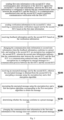
- Fig. 2 is a flow chart of a communication method provided by the present invention applicable to an ECU of a vehicle, and the vehicle further includes a second ECU.
- the communication method provided by the present invention will be illustrated in detail below in combination with Fig. 2 .
- the communication method may include steps S 110 to S 140.
- Step S 110 sending first state information to the second ECU when communication state information of the first ECU against the second ECU is the first state information, wherein the first state information is configured to indicate that a communication state between the second ECU and the first ECU is a communication unauthorized state and the second ECU needs to perform communication verification with the first ECU.
- An ECU is an electronic control unit, which can also be understood as a vehicle's computer or an in-vehicle computer.
- the ECU has computing and controlling functionality. When the vehicle is powered on, the ECU can collect signals from various sensors for computation, and transform the communication result into a control signal, to control the operation of a controlled object.
- vehicle electronic automation multiple ECUs can be provided inside a vehicle. Information can be communicated between the multiple ECUs inside the vehicle by CAN or CANFD in order to simplify circuits and reduce costs.
- communication verification may be performed in advance before the communication between the multiple ECUs. Messages can be transmitted when the communication verification is passed, so as to improve security of in-vehicle communication.
- the communication state between the first ECU and the second ECU is the first state, i.e., a communication unauthorized state
- a communication path can be established between the first ECU and the second ECU by means of the communication verification for transmission of messages.
- the first ECU may broadcast a message to broadcast to the second ECU the communication state information (first communication state) against the second ECU to the second ECU.
- the second ECU may initiate the communication verification to the first ECU after receiving the message carrying the first communication state.
- the message for broadcasting the communication state information may be transmitted in plaintext or may be encrypted for transmission, which is not limited herein.
- the first ECU may also simultaneously perform communication verification with multiple ECUs (e.g., the second ECU, the third ECU, and the fourth ECU, etc.) to establish communication paths for transmission of messages.
- multiple ECUs e.g., the second ECU, the third ECU, and the fourth ECU, etc.
- the first ECU will actively broadcast messages carrying the first state information to each of the above-mentioned multiple ECUs, to inform each of the above-mentioned multiple ECUs to initiate communication verification to the first ECU based on the messages.
- For communication verification it is possible to preset in advance which ECUs can broadcast messages carrying communication state information and which ECUs can initiate a communication verification.
- the first ECU may be set as an ECU that can broadcast messages carrying communication state information and the second ECU may be set as an ECU that can initiate communication verification. It is also possible to set the second ECU as an ECU that can broadcast messages carrying communication state information and set the first ECU as an ECU that can initiate communication verification.
- the present invention will not limit settings of ECUs for broadcast or communication verification.
- Step S120 sending verification information to the second ECU when a communication verification request sent by the second ECU based on the first state information is received.
- the verification information may be a message carrying a random number, or may be a message carrying a communication request authorization identifier.
- Step S130 receiving feedback information sent by the second ECU based on the verification information.
- the second ECU may send the feedback information based on the verification information to the first ECU.
- the first ECU receives the feedback information based on verification information and sent by the second ECU.
- the feedback information can be an encrypted message obtained from the second ECU by encrypting the above-mentioned message using an encryption algorithm and a key.
- the encryption algorithm may be an asymmetric encryption algorithm or a symmetric encryption algorithm, which is not limited herein.
- the feedback information may be a message carrying a communication authorization identifier and generated by the second ECU.
- Step S140 changing the communication state information to second state information when the feedback information conforms to a preset rule, and sending to the second ECU an encryption key assigned to the second ECU, wherein the second state information is configured to indicate that the communication state between the second ECU and the first ECU is a communication authorized state, and wherein the encryption key is configured to encrypt the message in a communication process between the first ECU and the second ECU.
- the first ECU may determine whether the feedback information conforms to the preset rule. If the feedback information conforms to the preset rule, the first ECU changes the communication state information is to the second state information, i.e., a communication authorized state, and sends the encryption key to the second ECU.
- the encryption key can be a key randomly generated by the first ECU using a key generation mechanism, and a different encryption key can be generated each time. Alternatively, the first ECU randomly selects an encryption key from a large number of different encryption keys pre-stored in advance and assigns it to the second ECU, and the encryption key assigned each time is different from the previously assigned encryption key.
- the second ECU when the second ECU receives a message containing the second state information and the encryption key, the second ECU can encrypt the message in the subsequent communication by the encryption key and an encryption algorithm, and send the encrypted message to the first ECU.
- the first ECU After receiving the encrypted message, the first ECU can decrypt the encrypted message with the encryption key and a decryption algorithm corresponding to the encryption algorithm, and control the operation of an object corresponding to the message according to the decrypted message.
- the first ECU can decrypt the data by the key and a decryption algorithm corresponding to the encryption algorithm to obtain target data.
- the preset rule may be to determine whether the target data matches with the verification information. If the target data matches with the verification information, the feedback information is determined to conform to the preset rule; and if the target data does not match with the verification information, the feedback information is determined not to conform to the preset rule.
- the preset rule may be to verify whether the communication authorization identifier is consistent with an authorization identifier pre-stored in the first ECU for the second ECU. If they are consistent, the feedback information is determined to conform to the preset rule; and if they are inconsistent, the feedback information is determined not to conform to the preset rule.
- the first state information of the first ECU against the second ECU is first state information
- the first state information is sent to the second ECU
- the first state information is configured to indicate that the communication state between the second ECU and the first ECU is a communication unauthorized state and the second ECU needs to perform communication verification with the first ECU.
- verification information is sent to the second ECU.
- Feedback information sent by the second ECU based on the verification information is received.
- the communication state information is changed to the second state information and an encryption key is sent to the second ECU.
- the second state information is configured to indicate that the communication state between the second ECU and the first ECU is a communication authorized state.
- the encryption key is configured to encrypt the message during communication between the first ECU and the second ECU. In this way, messages in the communication between ECUs can be encrypted through an encryption key to improve security, and communication verification is performed before the ECUs have negotiated a same encryption key, and the ECUs can communicate with each other with the same encryption key only after the communication verification, thereby improving communication security between the ECUs.
- Fig. 3 is a flow chart of a communication method provided in another embodiment of the present invention applicable to a first ECU of a vehicle, and the vehicle further includes a second ECU.
- the communication method provided in the embodiment of the present invention will be illustrated in detail below in combination with Fig. 3 .
- the communication method may include steps S210 to S280.
- Step S210 sending first state information to the second ECU when communication state information of the first ECU against the second ECU is first state information, wherein the first state information is configured to indicate that the communication state between the second ECU and the first ECU is a communication unauthorized state and the second ECU needs to perform communication verification with the first ECU.
- Step S220 sending verification information to the second ECU if receiving a communication verification request sent by the second ECU based on the first state information.
- Step S230 receiving feedback information sent by the second ECU based on the verification information.
- Step S240 changing the communication state information to second state information when the feedback information conforms to preset rules, and sending to the second ECU an encryption key assigned to the second ECU, wherein the second state information is configured to indicate that the communication state between the second ECU and the first ECU is a communication authorized state, and the encryption key is configured to encrypt a message in a communication process between the first ECU and the second ECU.
- the second state information is configured to indicate that the communication state between the second ECU and the first ECU is a communication authorized state
- the encryption key is configured to encrypt a message in a communication process between the first ECU and the second ECU.
- step S210 to step S240 please refer to the contents of step S110 to step S140 described above, which will not be repeated herein.
- Step S250 receiving an encrypted message sent by the second ECU, wherein the encrypted message is obtained from the second ECU by encrypting the message using the encryption key and a first encryption algorithm.
- the second ECU can use the received encryption key and the first encryption algorithm to encrypt the message to obtain the encrypted message, and then send the encrypted message to the first ECU.
- the first encryption algorithm may be a symmetric encryption algorithm or an asymmetric encryption algorithm, which is not limited herein.
- Step S260 decrypting the encrypted message using the encryption key and a first decryption algorithm corresponding to the first encryption algorithm to obtain the message.
- Step S270 determining whether the message conforms to the preset message rule.
- the first ECU can decrypt the encrypted message with the same encryption key and the first decryption algorithm corresponding to the first encryption algorithm to obtain the unencrypted message, and determine whether the message conforms to the preset message rule. Only when the message is determined to conform to the preset message rule, the first ECU determines that the message is sent by the second ECU, and executes a control instruction for the vehicle contained in the message. If the first ECU determines that the message does not conform to the preset message rule, the first ECU determines the message as an illegitimate message.
- the illegitimate message may be a message obtained by a third party through maliciously intercepting and imitating a message of communication between the first ECU and the second ECU in a certain time period, and the third party sends the illegitimate message in an attempt to control the vehicle. Therefore, after receiving the encrypted message sent by the second ECU, a playback attack can be prevented by decrypting the encrypted message and determining whether the decrypted message conforms to the preset message rule.
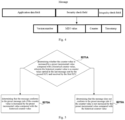
- a message may include an application data field, a security check field and an integrality check field.
- the security check field further includes a version number, a message digest algorithm (MD5) value, a counter and a timestamp.
- Whether a message conforms to the preset message rule may be determined by determining whether the version number is consistent with a preset version number. If the version number is consistent with the preset version number, it is determined that the currently received message conforms to the preset message rule; otherwise, if the version number is inconsistent with the preset version number, it is determined that the currently received message does not conform to the preset message rule.
- step S270 may include sub-steps S271A to S273A.
- Sub-step S271A determining whether the counter value is increased by a preset incremental value compared with a historical counter value, wherein the historical counter value is a counter value carried in the last message sent by the second ECU and received by the first ECU.
- Each message sent by the second ECU to the first ECU contains a counter value, and the counter value is increased by the preset incremental value over time during sending of messages.
- the incremental value may be, but not limited to, for example 1, 3, or 5.
- a third party attempts to control the vehicle by monitoring messages communicated between the first ECU and the second ECU and imitating and sending illegitimate messages based on intercepted messages
- the third party when sending the illegitimate message, cannot determine what the counter values in the messages of the second ECU have been increased to. That is, the counter values in the illegitimate messages imitated by the third party cannot satisfy the condition that the counter value in the previous message sent by the second ECU should be increased by the preset incremental value next time. Therefore, it is possible to determine whether the message is a legitimate message by determining whether the counter value in the message is increased by the preset incremental value compared with the historical counter value.
- Sub-step S272A determining that the message conforms to the preset message rule if the counter value is increased by the preset incremental value compared with the historical counter value.
- Sub-step S273A determining that the message does not conform to the preset message rule if the counter value is not increased by the preset incremental value compared with the historical counter value.
- the message is determined to conform to the preset message rule. If the counter value is not increased by the preset incremental value than the historical counter value, it is determined that the message does not conform to the preset message rule.
- the second ECU sends messages to the first ECU at a fixed interval (e.g., 5ms), and the second ECU sends a total of three messages to the first ECU within a preset time period (e.g., 15ms). If the counter value in the first message is set to 1 in advance and the counter value in the second message is increased by a preset incremental value of 2, then the counter value in the second message is 3, and the counter value in the third message is 5. At this time, if the first ECU receives a message sent by the second ECU again, then the counter value carried in this message can be determined.
- a preset time period e.g. 15ms
- the message can be determined to be a legitimate message sent by the second ECU and is not an illegitimate message sent by a third party simulating a historical message. If the counter value is 5, the first ECU will determine that the message is an illegitimate message and will not execute the control instruction contained in the illegitimate message.
- step S270 may include sub-steps S271B to S273B.
- Sub-step S271B determining whether a time difference between the timestamp and a historical timestamp carried in the last message received by the first ECU is less than a preset threshold.
- the timestamp in the message may represent the time when the message is sent.
- Each message will contain a timestamp that may be in the format of 2021/4/12 15:30:03, which represents that the time when the message is sent is 15:30:3 on April 12, 2021.
- Each message sent by the second ECU to the first ECU contains a timestamp, and the timestamp in each message is increased sequentially. After the communication state between the first ECU and the second ECU becomes the communication authorized state, even if no control message is to be transmitted between the first ECU and the second ECU, beacon messages will be transmitted at fixed intervals to maintain the communication link.
- the timestamp of each message sent by the second ECU is increased in sequence. If a third party attempts to control the vehicle by monitoring messages communicated between the first ECU and the second ECU and imitating and sending an illegitimate message based on intercepted messages, the third party cannot obtain the timestamp of the last message sent by the second ECU when sending the illegitimate message and thus cannot imitate successfully the correct format of messages between the first ECU and the second ECU.
- the timestamp in each message may be verified to determine whether the message is an illegitimate message that has been tampered with. That is, the timestamp in the last message received by the first ECU is acquired. The difference between the timestamp carried in the current message and the timestamp in the last message received is calculated. A determination is made as to whether the difference is less than the preset threshold to determine whether the message conforms to preset message rule.
- Sub-step S272B determining that the message conforms to the preset message rule if the time difference is less than the preset threshold.
- Sub-step S273B determining that the message does not conform to the preset message rule if the time difference is not less than the preset threshold.
- the preset threshold may be a value set in advance, or may be the interval at which the above-mentioned beacon messages are sent.
- the time difference is less than the preset threshold, it means that the message received at this time is a legitimate message sent continuously by the second ECU, and the message is determined to conform to the preset message rule.
- the time difference is not less than the preset threshold, it means that the message may be an illegitimate message sent by a third party by illegitimately intercepting and imitating a historical message.
- the first ECU will determine the message as an illegitimate message, and the message is determined not to conform to the preset message rule.
- a historical timestamp carried in the last message received by the first ECU is 2021/4/12 15:30:03, and the preset threshold is 2s. If the timestamp in the currently received message is 2021/4/12 15:30:08, the time difference between this timestamp and the historical timestamp carried in the last message received by the first ECU is 5s. At this point, the currently received message can be determined to be an illegitimate message, that is, the currently received message does not conform to the preset message rule. If the timestamp in the currently received message is 2021/4/12 15:30:04, the time difference between this timestamp and the historical timestamp carried in the last message received by the first ECU is 1s. The current message can then be determined to be a legitimate message and to conform to the preset message rule.
- the first ECU before determining whether the time difference between the timestamp and the historical timestamp carried in the last message received by the first ECU is less than the preset threshold, it can also determine whether the timestamp of the currently received message is increased incrementally compared with the historical timestamp carried in the last message received. If the timestamp of the currently received message is not increased incrementally, it can also be determined that the currently received message does not conform to the preset message rule.
- the first ECU performs a security check on the security check field of the received message. If any of the version number, MD5 value, counter and timestamp in the message does not satisfy the above rules, it is determined that the message does not conform to the preset message rules. Alternatively, the first ECU performs a cyclic redundancy check (CRC) on the integrality check field. If the message is determined to be incomplete, it can also be determined that the message does not conform to the preset message rules. That is, when both the security check on the security check field passes and the CRC check on the integrality check field succeed, it can be determined that the message conforms to the preset message rules.
- CRC cyclic redundancy check
- Step S280 changing the communication state information to the first state information if the message does not conform to the preset message rule.
- the first ECU When it is detected that the message does not conform to a preset message rule, it means that the currently received message may be an illegitimate message sent by a third party.
- the first ECU then will change the second state information against the second ECU to the first state information, i.e., change the communication state between the first ECU and the second ECU to the communication unauthorized state again, and will not executed control instructions contained in the message.
- step S 110 to step S 140 are performed again. That is, the first ECU determines that the current communication with the second ECU may be illegitimately monitored by a third party, and therefore changes the communication state against the second ECU to the communication unauthorized state to ensure communication security. Further, after receiving information that the first ECU changes the current communication state information, the second ECU can request communication verification again.
- the first ECU assigns a new encryption key to the second ECU, and changes the communication state to the second state information, such that a communication path with the second ECU is re-established and subsequent control message is transmitted.
- the first state information of the first ECU against the second ECU is first state information
- the first state information is sent to the second ECU.
- verification information is sent to the second ECU.
- Feedback information sent by the second ECU based on verification information is received.
- the communication state information is changed to second state information and an encryption key is sent to the second ECU.
- An encrypted message sent by the second ECU is received, wherein the encrypted message is obtained from the second ECU by encrypting a message using the encryption key and a first encryption algorithm.
- the encrypted message is decrypted using the encryption key and a first decryption algorithm corresponding to the first encryption algorithm to obtain the message.
- the first ECU will assign a new encryption key to the second ECU to encrypt messages during the transmission, thereby reducing the possibility of the encryption key being maliciously stolen and the encryption algorithm being cracked, and improving security of message transmission. Furthermore, through security check on the security field of the messages, replay attacks can be effectively prevented and security of in-vehicle communication can be improved.
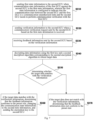
- Fig. 7 is a flow chart of a communication method provided in another embodiment of the present invention applicable to a first ECU of a vehicle, and the vehicle further includes a second ECU.
- the communication method provided in the embodiment of the present invention will be illustrated in detail below in combination with Fig. 7 .
- the communication method may include steps S310 to S370.
- Step S310 sending first state information to the second ECU when communication state information of the first ECU against the second ECU is the first state information, wherein the first state information is configured to indicate that the communication state between the second ECU and the first ECU is a communication unauthorized state and the second ECU needs to perform communication verification with the first ECU.
- Step S320 sending verification information to the second ECU when a communication verification request sent by the second ECU based on the first state information is received.
- Step S330 receiving feedback information sent by the second ECU based on the verification information.
- step S310 to step S330 please refer to the contents of step S110 to step S130 described above, which will not be repeated herein.
- Step S340 decrypting data using the first key and a second decryption algorithm corresponding to the second encryption algorithm to obtain target data.
- the data is obtained from the second ECU by encrypting the verification information using the first key and the second encryption algorithm. Therefore, after receiving the feedback information sent by the second ECU based on the verification information, the first ECU can decrypt the data using the same first key and the second decryption algorithm corresponding to the second encryption algorithm to obtain the target data. Since the first ECU decrypts the data using a key same as the key used by the second ECU for encrypting the verification information, the target data obtained by decrypting the data should match with the initial verification information. If the target data does not match with the initial verification information, it may mean that the feedback information is an illegitimate message sent by a third party by imitating a historical message. Therefore, it is possible to determine whether the feedback information conforms to the preset rule by determining whether the target data obtained through the decryption matches with the verification information.
- Step S350 determining whether the target data matches with the verification information.
- Step S360 if the target data matches with the verification information, determining that the feedback information conforms to the preset rule, changing the communication state information to the second state information, and sending the encryption key to the second ECU.
- the second ECU may encrypt the subsequent messages using the encryption key and the first encryption algorithm after receiving messages containing the changed communication state information and the encryption key.
- the second ECU encrypts the random number using a first key and a second encryption algorithm after receiving the random number to obtain feedback information 543210, and sends the feedback information to the first ECU.
- the first ECU can decrypt the feedback information using the first key and the second decryption algorithm corresponding to the second encryption algorithm to obtain target data. If the decrypted target data is 123456, it means that the target data matches with the verification information, and the feedback information is thus determined to conform to the preset rule, and the communication state information is changed to the second state information, and the encryption key is sent to the second ECU.
- Step S370 if the target data does not match with the verification information, determining that the feedback information does not conform to the preset rule.
- the verification information sent by the first ECU being a random number 123456
- the decrypted target data is 423016
- the feedback information is thus determined to not conform to the preset rule, which is equivalent to a failure in the communication verification between the second ECU and the first ECU. That is, the first ECU determines that the second ECU is not a legitimate node, and therefore will not assign an encryption key to the second ECU.
- the second ECU may initiate communication verification again to the first ECU, that is, step S310 to step S350 may be performed again.
- the first state information of the first ECU against the second ECU is first state information
- the first state information is sent to the second ECU. If a communication verification request sent by the second ECU based on the first state information is received, verification information is sent to the second ECU. Feedback information sent by the second ECU based on the verification information is received. Data is decrypted using a first key and a second decryption algorithm corresponding to the second encryption algorithm to obtain target data. A determination is made as to whether the target data matches with the verification information. If the target data matches with the verification information, it is determined that the feedback information conforms to the preset rule, the communication state information is changed to the second state information, and the encryption key is sent to the second ECU.
- the messages in the communication process can be encrypted by an encryption key between the ECUs to improve security, and communication verification is performed before the ECUs have negotiated a same encryption key, and the ECUs can communicate with each other with the same encryption key only after the communication verification, thereby improving communication security between the ECUs.
- Fig. 8 is a flow chart of a communication method provided in still another embodiment of the present invention applicable to a first ECU of a vehicle, and the vehicle further includes a second ECU.
- the communication method provided in the embodiment of the present invention will be illustrated in detail below in combination with Fig. 8 .
- the communication method may include steps S410 to S450.
- Step S410 sending first state information to the second ECU when communication state information of the first ECU against the second ECU is the first state information, wherein the first state information is configured to indicate that a communication state between the second ECU and the first ECU is a communication unauthorized state and the second ECU needs to perform communication verification with the first ECU.
- Step S420 sending verification information to the second ECU when a communication verification request sent by the second ECU based on the first state information is obtained.
- Step S430 receiving feedback information sent by the second ECU based on the verification information.
- Step S440 when the feedback information conforms to a preset rule, changing the communication state information to second state information and sending to the second ECU an encryption key assigned to the second ECU, wherein the second state information is configured to indicated that the communication state between the second ECU and the first ECU is a communication authorized state, and wherein the encryption key is configured to encrypt messages in a communication process between the first ECU and the second ECU.
- step S410 to step S440 please refer to the contents of step S110 to step S140 described above, which will not be repeated herein.
- Step S450 if no encrypted message sent by the second ECU is received, a restart message sent by the second ECU is received or restart of the first ECU is detected within a preset time period, changing the communication state information against the second ECU to the first state information, wherein the restart message is configured to represent that the second ECU has been restarted within a specified time period.
- the first ECU may continuously monitor messages sent by the second ECU and whether the second ECU is restarted.
- the first ECU When the first ECU detects that the format of a message from the second ECU is incorrect, the message is determined to be an illegitimate message. To ensure security of in-vehicle communication, the first ECU will change the communication state information to the first state information.
- the first ECU may determine that the second ECU may have a hardware failure or the communication between the second ECU and the first ECU may be interrupted due to other reasons. At this time, the first ECU will also change the communication state information to the first state information. Even if the second ECU resumes secure communication with the first ECU, communication verification still needs to be re-initiated to ensure secure in-vehicle communication.
- the first ECU may also change the communication state information to the first state information. That is, once the second ECU is restarted, if secure communication with the first ECU is needed again, communication verification needs to be initiated again. Subsequent control messages will be encrypted with a new encryption key after the communication verification has passed.
- the communication state against the second ECU automatically recovers to an initial state (i.e., the first state information).
- the second ECU needs to perform security communication with the first ECU again, communication verification still needs to be initiated again and the subsequent control messages will be encrypted with a new encryption key after the communication verification has passed.
- the second ECU re-initiates communication verification to obtain an encryption key from the first ECU, which will be used to encrypt the subsequent messages.
- the first state information of the first ECU against the second ECU is first state information
- the first state information is sent to the second ECU.
- Verification information is sent to the second ECU when a communication verification request sent by the second ECU based on first state information is received.
- Feedback information sent by the second ECU based on verification information is received.
- the communication state information is changed to second state information, and an encryption key is sent to the second ECU.
- the communication state information against the second ECU is changed to the first state information if an encrypted message sent by the second ECU is not received, a restart message sent by the second ECU is received or restart of the first ECU is detected within a preset time period, wherein the restart message is configured to represent that the second ECU has been restarted within a specified time period.
- the first ECU will assign a new encryption key to the second ECU to encrypt messages during the transmission, thereby reducing the possibility of the encryption key being maliciously stolen and the encryption algorithm being cracked, and improving security of message transmission.
- FIG. 9 shows a flow chart of interaction between a first ECU and a second ECU in the present solution.
- the first ECU and the second ECU may communicate via CANFD.
- the first ECU sends the communication state to the second ECU by broadcasting.
- the second ECU sends a communication verification request to the first ECU when acquiring that the communication state information is the communication unauthorized state.
- the first ECU after receiving the communication verification request, generates a verification information containing a random number, and sends the verification information to the second ECU.
- the second ECU after receiving the verification information, encrypts the random number in the verification information using a first key to obtain encrypted data, and sends the data to the first ECU.
- the first ECU decrypts the received encrypted data using the first key, and compares the decrypted target data with the verification information. If the decrypted target data does not match with the verification information, the first ECU maintains the current communication state as the communication unauthorized. If the decrypted target data matches with the verification information, the first ECU changes the current communication state to a communication authorized state, and encrypts an encryption key with the first key, and then sends the encrypted encryption key to the second ECU. If the time waiting for a message containing the communication state information and the encryption key sent by the first ECU exceeds a preset time period, the second ECU will re-initiate a communication request. If the encrypted encryption key is received within the preset time period, the second ECU decrypts the encryption key using the first key to obtain a decrypted encryption key.
- the second ECU encrypts a message 1 using the encryption key and sends the encrypted message 1 to the first ECU. If the first ECU does not receive the encrypted message 1 within a specified time period, the first ECU will change the current communication state to the communication unauthorized state. If the encrypted message 1 is received, the first ECU uses the encryption key to decrypt the message 1 and determines whether the message conforms to a preset message rule or rules. If the message does not conform to the preset message rules, the first ECU changes the current communication state to the communication unauthorized state. If the message conforms to the preset message rules, the first ECU encrypts messages 2 continuously using the encryption key and send it to the second ECU.
- the second ECU re-initiates a communication verification request. If the message 2 is received within the preset time period, the second ECU decrypts the message 2 using the encryption key and determines whether the message 2 conforms to a preset message rule or rules. If the message 2 does not conform to the preset message rules, the second ECU re-initiates a communication verification. If the message 2 conforms to the preset message rules, the second ECU encrypts subsequent messages continuously using the encryption key.
- the second ECU may continuously monitor the communication state of the first ECU and its own stored encryption key, and re-initiate a communication verification to the first ECU if detecting that the communication state of the first ECU is changed to a communication unauthorized state or the encryption key is restored to an initial value of 0.
- the first ECU can also continuously detect messages sent by the second ECU, and change the current communication state information to a communication unauthorized state if it determines that a received message does not conform to the preset message rules, if a message sent by the second ECU is not received within a preset time period, if a restart message sent by the second ECU is received, or if a restart of the first ECU is detected.
- messages in the communication between ECUs can be encrypted by an encryption key to improve security.
- communication verification is performed before the ECUs have negotiated a same encryption key between ECUs, and the ECUs can communicate with each other with the same encryption key only after the communication verification, thereby improving communication security between the ECUs. It also ensures that each time the vehicle is powered on or an ECU detects an abnormality, the first ECU will assign a new encryption key to the second ECU to encrypt messages during the transmission, thereby reducing the possibility of the encryption key being maliciously stolen and the encryption algorithm being cracked, and improving security of message transmission. Furthermore, through security check on the security field of the messages, replay attacks can be effectively prevented and security of in-vehicle communication can be improved.
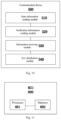
- Fig. 10 shows a structural block diagram of a communication device 500 provided in embodiments of the present invention applicable to a first ECU of a vehicle, and the vehicle further includes a second ECU.
- the device 500 may include: a state information sending module 510, a verification information sending module 520, an information receiving module 530 and a key distribution module 540.
- the state information sending module 510 is configured to send first state information to the second ECU when communication state information of the first ECU against the second ECU is the first state information, wherein the first state information is configured to indicate that a communication state between the second ECU and the first ECU is a communication unauthorized state and the second ECU needs to perform communication verification with the first ECU.
- the verification information sending module 520 is configured to send verification information to the second ECU when a communication verification request sent by the second ECU based on the first state information is received.
- the information receiving module 530 is configured to receive feedback information sent by the second ECU based on the verification information.
- the key distribution module 540 is configured to, when the feedback information conforms to a preset rule, change the communication state information to second state information and send to the second ECU an encryption key assigned to the second ECU, wherein the second state information is configured to indicate that the communication state between the second ECU and the first ECU is a communication authorized state, and wherein the encryption key is configured to encrypt messages in a communication process between the first ECU and the second ECU.
- the communication device 500 may include: a ciphertext receiving module, a decryption module and a message determining module.
- the ciphertext receiving module may be configured to receive an encrypted message sent by the second ECU, wherein the encrypted message is obtained from the second ECU by encrypting a message using the encryption key and a first encryption algorithm.
- the decryption module may be configured to decrypt the encrypted message using the encryption key and a first decryption algorithm corresponding to the first encryption algorithm to obtain the messages.
- the message determination module may be configured to determine whether the messages conform to a preset message rule; and if the messages do not conform to the preset message rule, change the communication state information to the first state information to perform the step of sending first state information to the second ECU when communication state information of the first ECU against the second ECU is the first state information to the step of changing the communication state information to second state information when the feedback information conforms to the preset rule and sending the encryption key to the second ECU.
- the message determination module may include a counter value determination unit.
- the counter value determination unit may be specifically configured to determine whether the counter value is increased by a preset incremental value compared with a historical counter value, wherein the historical counter value is a counter value carried in the last message sent by the second ECU and received by the first ECU; if the counter value is increased by the preset incremental value compared with the historical counter value, determine that the message conforms to the preset message rule; and if the counter value is not increased by the preset incremental value compared with the historical counter value, determine that the message does not conform to preset message rule.
- the message determination module may further include a timestamp determination unit.
- the timestamp determination unit may be specifically configured to determine whether a time difference between the timestamp and a historical timestamp carried in the last message received by the first ECU is less than a preset threshold; determine that the message conforms to the preset message rule if the time difference is less than the preset threshold; and determine that the message does not conform to the preset message rule if the time difference is not less than the preset threshold.
- the feedback information is data obtained by the second ECU by encrypting the verification information using a first key and a second encryption algorithm.
- the communication device 500 may further include a target data acquisition unit and a target data determination unit.
- the target data acquisition unit may be configured to decrypt the data using the first key and a second decryption algorithm corresponding to the second encryption algorithm to obtain target data.
- the target data determination unit can be configured to determine whether the target data matches with the verification information; if the target data matches with the verification information, determine that the feedback information conforms to the preset rule; and if the target data does not match with the verification information, determine that the feedback information does not conform to the preset rule.
- the communication device 500 may further include a state changing module.
- the state changing module is configured to change the communication state information against the second ECU to the first state information if no encrypted message sent by the second ECU is received, a restart message sent by the second ECU is received or restart of the first ECU is detected within a preset time period, wherein the restart message is configured to represent that the second ECU has been restarted within a specified time period.
- the modules may be coupled to each other electrically, mechanically, or in other forms.
- each function module in each embodiment of the present invention may be integrated in a processing module, or each module may physically exist separately, or two or more modules may be integrated in a module.
- the above integrated modules may be implemented either in the form of hardware or in the form of software function modules.
- the first state information of the first ECU against the second ECU is the first state information
- the first state information is sent to the second ECU. If a communication verification request sent by the second ECU based on the first state information is received, the verification information is sent to the second ECU. Feedback information sent by the second ECU based on the verification information is received. When the feedback information conforms to a preset rule, the communication state information is changed to second state information and the encryption key is sent to the second ECU. The encrypted message sent by the second ECU is received, wherein the encrypted message is obtained from the second ECU by encrypting a message using the encryption key and the first encryption algorithm.
- the encrypted message is decrypted using the encryption key and a first decryption algorithm corresponding to the first encryption algorithm to obtain the message.
- a determination is made as to whether the message conforms to a preset message rule. If the message does not conform to the preset message rule, the communication state information is changed to the first state information. In this way, the message during communication between the ECUs can be encrypted by an encryption key to improve security. Further, communication verification is performed before the ECUs have negotiated a same encryption key, and the ECUs can communicate with each other with the same encryption key only after the communication verification, thereby improving communication security between ECUs.
- the first ECU will assign a new encryption key to the second ECU to encrypt messages during the transmission, thereby reducing the possibility of the encryption key being maliciously stolen and the encryption algorithm being cracked, and improving security of message transmission. Furthermore, through security check on the security field of messages, replay attacks can be effectively prevented and security of in-vehicle communication can be improved.
- FIG. 11 shows a structural block diagram of an ECU 600 provided in an embodiment of the present invention, and a communication method provided in the embodiments of the present invention may be performed by the ECU 600.
- the ECU 600 may include one or more of the following components: a processor 601, memory 602, and one or more applications, wherein the one or more applications may be stored in the memory 602 and configured to be executed by the one or more processors 601, and the one or more programs are configured to perform the methods described above.
- the processors 601 may include one or more processing cores.
- the processors 601 utilize various interfaces and lines to connect various parts within the entire ECU 600, to perform various functions and process data of the ECU 600 by running or executing instructions, programs, code sets or instruction sets stored in the memory 602, and by calling data stored in the memory 602.
- the processors 601 may be realized by employing at least one hardware form including digital signal processing (DSP), field-programmable gate array (FPGA), and programmable logic array (PLA).
- DSP digital signal processing
- FPGA field-programmable gate array
- PDA programmable logic array
- the processor 601 can integrate one or a combination of more of a central processing unit (CPU), a graphics processing unit (GPU), and a modem.
- the CPU mainly handles with an operating system, user interfaces, and applications, etc.
- the GPU is configured to be responsible for rendering and drawing of displayed content; and the modem is configured to handle with wireless communication. It can be understood that the above modem can also be
- the memory 602 may include a random access memory (RAM) or may also include a read-only memory (ROM).
- the memory 602 may be used to store instructions, programs, codes, code sets, or instruction sets.
- the memory 602 may include a stored program area and a stored data area, wherein the stored program area may store instructions for implementing an operating system, instructions for implementing at least one function (such as a touch function, a sound playback function, an image playback function, etc.), instructions for implementing each of the method embodiments described below, and the like.
- the storage data area may also store data created by the ECU 600 in use (such as various corresponding relationships described above), etc.
- the coupling or direct coupling or communication connection between the modules shown or discussed may be indirect coupling or communication connection through some interfaces, devices or modules, and may be in electrical, mechanical or other forms.
- each function module in the present invention may be integrated in a processing module, or each module may physically exist separately, or two or more modules may be integrated in one module.
- the above integrated modules may be implemented either in the form of hardware or in the form of software function modules.
- the present invention further provides a vehicle 700, the vehicle 700 includes a vehicle body 710, a first ECU 720 and a second ECU 730.
- the first ECU 720 and the second ECU 730 are arranged inside the vehicle body 710 and can control the vehicle 700.
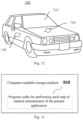
- FIG. 13 shows a structural block diagram of a computer-readable storage medium provided by the present invention.
- the computer-readable medium 800 stores program codes that may be called by a processor to perform the method described above.
- the computer-readable storage medium 800 may be an electronic memory such as a flash memory, an EEPROM (electrically erasable programmable read-only memory), an EPROM, a hard disk, or an ROM.
- the computer-readable storage medium 800 includes a non-transitory computer-readable storage medium.
- the computer-readable storage medium 800 has a storage space for program codes 810 that perform any method step of the method described above. These program codes may be read from or written to one or more computer program products.
- the program codes 810 may be compressed, for example, in an appropriate form.
Landscapes
- Engineering & Computer Science (AREA)
- Computer Networks & Wireless Communication (AREA)
- Signal Processing (AREA)
- Computer Security & Cryptography (AREA)
- Computing Systems (AREA)
- Computer Hardware Design (AREA)
- General Engineering & Computer Science (AREA)
- Health & Medical Sciences (AREA)
- General Health & Medical Sciences (AREA)
- Medical Informatics (AREA)
- Small-Scale Networks (AREA)
- Mobile Radio Communication Systems (AREA)
Claims (14)
- Kommunikationsverfahren, das auf eine erste elektronische Steuereinheit, ECU, eines Fahrzeugs anwendbar ist, wobei das Fahrzeug ferner eine zweite ECU umfasst, wobei das Verfahren gekennzeichnet ist durch:Senden erster Zustandsinformationen zur zweiten ECU, wenn Kommunikationszustandsinformationen der ersten ECU gegenüber der zweiten ECU die ersten Zustandsinformationen sind (S 110, S210, S310, S410), wobei die ersten Zustandsinformationen angeben, dass ein Kommunikationszustand zwischen der zweiten ECU und der ersten ECU ein unautorisierter Kommunikationszustand ist und dass die zweite ECU Kommunikationsverifizierung mit der ersten ECU durchführen muss;Senden von Verifizierungsinformationen zur zweiten ECU, wenn eine von der zweiten ECU auf der Basis der ersten Zustandsinformationen gesendete Kommunikationsverifizierungsanforderung empfangen wird (S120, S220, S320, S420);Empfangen von von der zweiten ECU auf der Basis der Verifizierungsinformationen (S130, S230, S330, S430) gesendeten Feedback-Informationen; undÄndern, wenn die Feedback-Informationen einer voreingestellten Regel entsprechen, der Kommunikationszustandsinformationen in zweite Zustandsinformationen und Senden eines der zweiten ECU zugewiesenen Verschlüsselungsschlüssels zur zweiten ECU (S140, S240, S440), wobei die zweiten Zustandsinformationen angeben, dass der Kommunikationszustand zwischen der zweiten ECU und der ersten ECU ein autorisierter Kommunikationszustand ist, und wobei sich der Verschlüsselungsschlüssel jedes Mal von einem der zweiten ECU in einem vorherigen Kommunikationsverifizierungsprozess zugewiesenen Verschlüsselungsschlüssel unterscheidet und zum Verschlüsseln von Nachrichten in einem nachfolgenden Kommunikationsprozess zwischen der ersten ECU und der zweiten ECU konfiguriert ist.
- Verfahren nach Anspruch 1, das ferner nach dem Schritt des Änderns der Kommunikationszustandsinformationen in die zweiten Zustandsinformationen, wenn die Feedback-Informationen mit der voreingestellten Regel übereinstimmen, und des Sendens des Verschlüsselungsschlüssels zur zweiten ECU (S240) Folgendes beinhaltet:Empfangen einer von der zweiten ECU gesendeten verschlüsselten Nachricht (S250), wobei die verschlüsselte Nachricht von der zweiten ECU durch Verschlüsseln einer Nachricht mit dem Verschlüsselungsschlüssel und einem ersten Verschlüsselungsalgorithmus erhalten wird;Entschlüsseln der verschlüsselten Nachricht mit dem Verschlüsselungsschlüssel und einem ersten Entschlüsselungsalgorithmus entsprechend dem ersten Verschlüsselungsalgorithmus, um die Nachricht zu erhalten (S260);Feststellen, ob die Nachricht mit einer voreingestellten Nachrichtenregel übereinstimmt (S270); undÄndern der Kommunikationszustandsinformationen in die ersten Zustandsinformationen, wenn die Nachricht nicht mit der voreingestellten Nachrichtenregel übereinstimmt (S280).
- Verfahren nach Anspruch 2, das ferner nach dem Schritt des Änderns der Kommunikationszustandsinformationen in die ersten Zustandsinformationen, wenn die Nachricht nicht mit der voreingestellten Nachrichtenregel übereinstimmt S280), Folgendes beinhaltet:
Durchführen des Schritts des Sendens von ersten Zustandsinformationen zur zweiten ECU, wenn die Kommunikationszustandsinformationen der ersten ECU gegenüber der zweiten ECU die ersten Zustandsinformationen sind (S210), bis zu dem Schritt des Änderns der Kommunikationszustandsinformationen in die zweiten Zustandsinformationen und des Sendens eines Verschlüsselungsschlüssels zur zweiten ECU (S240), wenn die Feedback-Informationen mit einer voreingestellten Regel übereinstimmen. - Verfahren nach Anspruch 2, wobei die Nachricht einen Zählerwert umfasst und das genannte Feststellen, ob die Nachricht einer voreingestellten Nachrichtenregel entspricht (S270), Folgendes beinhaltet:Feststellen, ob der Zählerwert um einen voreingestellten inkrementellen Wert im Vergleich zu einem historischen Zählerwert erhöht ist (S271A), wobei der historische Zählerwert ein in der letzten von der zweiten ECU gesendeten und von der ersten ECU empfangenen Nachricht geführter Zählerwert ist;Feststellen, dass die Nachricht mit der voreingestellten Nachrichtenregel übereinstimmt, wenn der Zählerwert um den voreingestellten inkrementellen Wert im Vergleich zu dem historischen Zählerwert erhöht ist (S272A); undFeststellen, dass die Nachricht nicht mit der voreingestellten Nachrichtenregel übereinstimmt, wenn der Zählerwert nicht um den voreingestellten inkrementellen Wert im Vergleich zu dem historischen Zählerwert erhöht ist (S273A).
- Verfahren nach Anspruch 2, wobei die Nachricht einen Zeitstempel umfasst und das genannte Feststellen, ob die Nachricht einer voreingestellten Nachrichtenregel entspricht (S270), ferner Folgendes beinhaltet:Feststellen, ob eine Zeitdifferenz zwischen dem Zeitstempel und einem in der letzten von der ersten ECU empfangenen Nachricht geführten historischen Zeitstempel kleiner als ein voreingestellter Schwellenwert ist (S271B);Feststellen, dass die Nachricht der voreingestellten Nachrichtenregel entspricht, wenn die Zeitdifferenz kleiner als der voreingestellte Schwellenwert ist (S272B); undFeststellen, dass die Nachricht nicht mit der voreingestellten Nachrichtenregel übereinstimmt, wenn die Zeitdifferenz nicht kleiner als der voreingestellte Schwellenwert ist (S273B).
- Verfahren nach Anspruch 1, wobei die Feedback-Informationen Daten sind, die von der zweiten ECU durch Verschlüsseln der Verifizierungsinformationen mit einem ersten Schlüssel und einem zweiten Verschlüsselungsalgorithmus erhalten werden, und wobei das Verfahren ferner nach dem Empfang der von der zweiten ECU gesendeten Feedback-Informationen auf der Basis der Verifizierungsinformationen (S330) Folgendes beinhaltet:Entschlüsseln der Daten mit dem ersten Schlüssel und einem zweiten Entschlüsselungsalgorithmus entsprechend dem zweiten Verschlüsselungsalgorithmus, um Zieldaten zu erhalten (S340);Feststellen, ob die Zieldaten mit den Verifikationsinformationen übereinstimmen (S350);Feststellen, dass die Feedback-Informationen mit der voreingestellten Regel übereinstimmen, wenn die Zieldaten mit den Verifizierungsinformationen übereinstimmen (S360); undFeststellen, dass die Feedback-Informationen nicht mit der voreingestellten Regel übereinstimmen, wenn die Zieldaten nicht mit den Verifizierungsinformationen übereinstimmen (S370).
- Verfahren nach einem der Ansprüche 1-6, das ferner Folgendes beinhaltet:
Ändern, wenn keine von der zweiten ECU gesendete verschlüsselte Nachricht empfangen wird, eine von der zweiten ECU gesendete Neustart-Nachricht empfangen wird oder ein Neustart der ersten ECU innerhalb einer voreingestellten Zeitspanne erkannt wird, der Kommunikationszustandsinformationen gegenüber der zweiten ECU in die ersten Zustandsinformationen (S450), wobei die Neustart-Nachricht so konfiguriert ist, dass sie darstellt, dass die zweite ECU innerhalb einer spezifizierten Zeitspanne neu gestartet wurde. - Kommunikationsgerät (500), das auf eine erste ECU eines Fahrzeugs anwendbar ist, wobei das Fahrzeug ferner eine zweite ECU umfasst, angegeben durch:ein Zustandsinformations-Sendemodul (510), konfiguriert zum Senden erster Zustandsinformationen zur zweiten ECU, wenn Kommunikationszustandsinformationen der ersten ECU gegenüber der zweiten ECU die ersten Zustandsinformationen sind (S 110, S210, S310, S410), wobei die ersten Zustandsinformationen konfiguriert sind zum Angeben, dass ein Kommunikationszustand zwischen der zweiten ECU und der ersten ECU ein unautorisierter Kommunikationszustand ist und die zweite ECU eine Kommunikationsverifizierung mit der ersten ECU durchführen muss;ein Verifizierungsinformations-Sendemodul (520), konfiguriert zum Senden von Verifizierungsinformationen zur zweiten ECU, wenn eine von der zweiten ECU auf der Basis der ersten Zustandsinformationen gesendete Kommunikationsverifizierungsanforderung empfangen wird (S120, S220, S320, S420);ein Informationsempfangsmodul (530), konfiguriert zum Empfangen von von der zweiten ECU auf der Basis der Verifizierungsinformationen gesendeten Feedback-Informationen (S130, S230, S330, S430); undein Schlüsselverteilungsmodul (540), konfiguriert zum Ändern, wenn die Feedback-Informationen mit einer voreingestellten Regel übereinstimmen, der Kommunikationszustandsinformationen in zweite Zustandsinformationen und zum Senden eines der zweiten ECU zugewiesenen Verschlüsselungsschlüssels zur zweiten ECU (S140, S240, S440), wobei die zweiten Zustandsinformationen konfiguriert sind zum Angeben, dass der Kommunikationszustand zwischen der zweiten ECU und der ersten ECU ein autorisierter Kommunikationszustand ist, und wobei sich der Verschlüsselungsschlüssel jedes Mal von einem der zweiten ECU in einem vorherigen Kommunikationsverifizierungsprozess zugewiesenen Verschlüsselungsschlüssel unterscheidet und zum Verschlüsseln von Nachrichten in einem nachfolgenden Kommunikationsprozess zwischen der ersten ECU und der zweiten ECU konfiguriert ist.
- Kommunikationsgerät (500) nach Anspruch 8, das ferner Folgendes umfasst:ein Chiffretext-Empfangsmodul, konfiguriert zum Empfangen, nach dem Ändern der Kommunikationszustandsinformationen in die zweiten Zustandsinformationen, wenn die Feedback-Informationen mit der voreingestellten Regel übereinstimmen, und nach dem Senden des Verschlüsselungsschlüssels zur zweiten ECU, einer von der zweiten ECU gesendeten verschlüsselten Nachricht (S250), wobei die verschlüsselte Nachricht von der zweiten ECU durch Verschlüsseln einer Nachricht mit dem Verschlüsselungsschlüssel und einem ersten Verschlüsselungsalgorithmus erhalten wird;ein Entschlüsselungsmodul, konfiguriert zum Entschlüsseln der verschlüsselten Nachricht mit dem Verschlüsselungsschlüssel und einem ersten Entschlüsselungsalgorithmus entsprechend dem ersten Verschlüsselungsalgorithmus, um die Nachricht zu erhalten (S260);ein Nachrichtenbestimmungsmodul, konfiguriert zum Feststellen, ob die Nachricht mit einer voreingestellten Nachrichtenregel übereinstimmt (S270); undein Kommunikationszustandsinformations-Änderungsmodul, konfiguriert zum Ändern der Kommunikationszustandsinformationen in die ersten Zustandsinformationen, wenn die Nachricht nicht mit der voreingestellten Nachrichtenregel übereinstimmt (S280).
- Kommunikationsgerät (500) nach Anspruch 9, wobei die Nachricht einen Zählerwert umfasst und das Nachrichtenbestimmungsmodul ferner konfiguriert ist zum:Feststellen, ob der Zählerwert um einen voreingestellten inkrementellen Wert im Vergleich zu einem historischen Zählerwert erhöht ist (S271A), wobei der historische Zählerwert ein Zählerwert ist, der in der letzten von der zweiten ECU gesendeten und von der ersten ECU empfangenen Nachricht geführt wurde;Feststellen, dass die Nachricht mit der voreingestellten Nachrichtenregel übereinstimmt, wenn der Zählerwert um den voreingestellten inkrementellen Wert im Vergleich zu dem historischen Zählerwert erhöht ist (S272A); undFeststellen, dass die Nachricht nicht mit der voreingestellten Nachrichtenregel übereinstimmt, wenn der Zählerwert nicht um den voreingestellten inkrementellen Wert im Vergleich zum historischen Zählerwert erhöht ist (S273A).
- Kommunikationsgerät (500) nach Anspruch 9, wobei die Nachricht einen Zeitstempel umfasst und das Nachrichtenbestimmungsmodul ferner konfiguriert ist zum:Feststellen, ob eine Zeitdifferenz zwischen dem Zeitstempel und einem in der letzten von der ersten ECU empfangenen Nachricht geführten historischen Zeitstempel kleiner als ein voreingestellter Schwellenwert ist (S271B);Feststellen, dass die Nachricht mit der voreingestellten Nachrichtenregel übereinstimmt, wenn die Zeitdifferenz kleiner als der voreingestellte Schwellenwert ist (S272B); undFeststellen, dass die Nachricht nicht mit der voreingestellten Nachrichtenregel übereinstimmt, wenn die Zeitdifferenz nicht kleiner als der voreingestellte Schwellenwert ist (S273B).
- ECU (600), die Folgendes umfasst:einen oder mehrere Prozessoren (601);Speicher (602); undein oder mehrere Programme, wobei die ein oder mehreren Programme im Speicher (602) gespeichert und zur Ausführung durch die ein oder mehreren Prozessoren (601) konfiguriert sind und die ein oder mehreren Programme zum Durchführen des Verfahrens nach einem der Ansprüche 1 bis 7 konfiguriert sind.
- Fahrzeug mit einer Fahrzeugkarosserie und einer in der Fahrzeugkarosserie vorgesehenen ECU (600) nach Anspruch 12.
- Computerlesbares Speichermedium, auf dem Programmcodes gespeichert sind, die von einem Prozessor zum Durchführen des Verfahrens nach einem der Ansprüche 1 bis 7 ausgeführt werden können.
Applications Claiming Priority (1)
| Application Number | Priority Date | Filing Date | Title |
|---|---|---|---|
| CN202110420141.9A CN113162928B (zh) | 2021-04-19 | 2021-04-19 | 通信方法、装置、ecu、车辆及存储介质 |
Publications (3)
| Publication Number | Publication Date |
|---|---|
| EP4080818A1 EP4080818A1 (de) | 2022-10-26 |
| EP4080818B1 true EP4080818B1 (de) | 2024-07-24 |
| EP4080818C0 EP4080818C0 (de) | 2024-07-24 |
Family
ID=76868695
Family Applications (1)
| Application Number | Title | Priority Date | Filing Date |
|---|---|---|---|
| EP21206903.3A Active EP4080818B1 (de) | 2021-04-19 | 2021-11-08 | Kommunikationsverfahren und -vorrichtung, ecu, fahrzeug und speichermedium |
Country Status (2)
| Country | Link |
|---|---|
| EP (1) | EP4080818B1 (de) |
| CN (1) | CN113162928B (de) |
Families Citing this family (6)
| Publication number | Priority date | Publication date | Assignee | Title |
|---|---|---|---|---|
| CN114422181B (zh) * | 2021-12-11 | 2024-10-29 | 浙江吉利控股集团有限公司 | 一种车辆数据报文安全通信方法 |
| CN116566586A (zh) * | 2022-01-28 | 2023-08-08 | 上海海拉电子有限公司 | 一种信息处理方法、一种信息处理终端及一种网络安全系统 |
| CN115348048B (zh) * | 2022-04-28 | 2024-08-23 | 青岛海尔科技有限公司 | 安全通信的建立方法和装置、存储介质及电子装置 |
| CN115098891B (zh) * | 2022-06-24 | 2026-02-27 | 浙江极氪智能科技有限公司 | 防止信号被篡改的程序运行方法、装置、设备及存储介质 |
| CN115167377B (zh) * | 2022-08-11 | 2025-07-08 | 北谷电子股份有限公司 | 高空作业平台电控系统防互换方法 |
| CN117671825A (zh) * | 2022-08-31 | 2024-03-08 | 长城汽车股份有限公司 | 一种密钥匹配方法、装置、车辆及存储介质 |
Citations (1)
| Publication number | Priority date | Publication date | Assignee | Title |
|---|---|---|---|---|
| US20200007319A1 (en) * | 2018-06-27 | 2020-01-02 | Karamba Security | Cryptographic key management for end-to-end communication security |
Family Cites Families (10)
| Publication number | Priority date | Publication date | Assignee | Title |
|---|---|---|---|---|
| CN101420297B (zh) * | 2008-09-08 | 2010-11-03 | 北京飞天诚信科技有限公司 | 协商密钥的方法和系统 |
| CN105791307B (zh) * | 2016-04-06 | 2019-09-06 | 新华三技术有限公司 | 网络时间协议报文安全认证方法及装置 |
| CN109417480A (zh) * | 2016-06-17 | 2019-03-01 | Kddi株式会社 | 系统、认证站、车载计算机、车辆、公开密钥证书发行方法以及程序 |
| SG10201705960QA (en) * | 2017-07-20 | 2019-02-27 | Huawei Int Pte Ltd | System and method for managing secure communications between modules in a controller area network |
| CN108650082B (zh) * | 2018-05-08 | 2020-10-30 | 腾讯科技(深圳)有限公司 | 待验证信息的加密和验证方法、相关装置及存储介质 |
| CN109495449A (zh) * | 2018-10-18 | 2019-03-19 | 东南(福建)汽车工业有限公司 | 一种车辆can总线加密方法 |
| US12206651B2 (en) * | 2019-04-25 | 2025-01-21 | Deere & Company | Systems, methods and controllers for secure communications |
| CN111432374B (zh) * | 2020-02-28 | 2023-09-15 | 深圳开源互联网安全技术有限公司 | 网联汽车网络节点身份认证方法、装置及可读存储介质 |
| CN111817849A (zh) * | 2020-06-30 | 2020-10-23 | 宝能(广州)汽车研究院有限公司 | 电子控制单元ecu及其安全通信方法、系统 |
| CN111935317B (zh) * | 2020-09-27 | 2021-01-01 | 恒大新能源汽车投资控股集团有限公司 | 车辆信息验证方法及装置、计算机可读存储介质 |
-
2021
- 2021-04-19 CN CN202110420141.9A patent/CN113162928B/zh active Active
- 2021-11-08 EP EP21206903.3A patent/EP4080818B1/de active Active
Patent Citations (1)
| Publication number | Priority date | Publication date | Assignee | Title |
|---|---|---|---|---|
| US20200007319A1 (en) * | 2018-06-27 | 2020-01-02 | Karamba Security | Cryptographic key management for end-to-end communication security |
Also Published As
| Publication number | Publication date |
|---|---|
| CN113162928B (zh) | 2023-03-31 |
| EP4080818A1 (de) | 2022-10-26 |
| EP4080818C0 (de) | 2024-07-24 |
| CN113162928A (zh) | 2021-07-23 |
Similar Documents
| Publication | Publication Date | Title |
|---|---|---|
| EP4080818A1 (de) | Kommunikationsverfahren und -vorrichtung, ecu, fahrzeug und speichermedium | |
| CA2998994C (en) | Computer-implemented cryptographic method for improving a computer network, and terminal, system and computer-readable medium for the same | |
| CN110708388B (zh) | 用于提供安全服务的车身安全锚节点设备、方法以及网络系统 | |
| KR101356476B1 (ko) | 차량용 데이터의 인증 및 획득 방법 | |
| JP2010011400A (ja) | 共通鍵方式の暗号通信システム | |
| US11516194B2 (en) | Apparatus and method for in-vehicle network communication | |
| JP2014204444A (ja) | センサへの操作及び/又はセンサのセンサデータへの操作を検出するための方法及び装置 | |
| US20180219688A1 (en) | Information Transmission Method and Mobile Device | |
| JP2012186635A (ja) | 車両ネットワークシステム | |
| CN104506497B (zh) | 一种信息发布方法和系统 | |
| CN113709123A (zh) | 安全控制方法、装置和计算机设备 | |
| CN116055033B (zh) | 生成会话密钥方法、通信网络系统、存储介质及电子设备 | |
| CN114793184B (zh) | 一种基于第三方密钥管理节点的安全芯片通信方法及装置 | |
| CN115883174A (zh) | 一种适用于汽车ecu ota升级的国密混合加密算法、装置及存储介质 | |
| CN117041958B (zh) | 车载v2x-obu与智能域控制器通信内容的认证方法 | |
| CN116419217B (zh) | Ota数据升级方法、系统、设备及存储介质 | |
| CN117595988A (zh) | 一种车载can网络安全通信方法、装置、设备及介质 | |
| CN118337371A (zh) | 一种车内网轻量化节点身份认证及分级加解密方法及系统 | |
| CN117354016A (zh) | 一种整车ota安全升级方法、装置、设备及介质 | |
| JP7545490B2 (ja) | 情報検証装置、電子制御装置、及び情報検証方法 | |
| CN118590879B (zh) | 基于kdc的密钥分发管理及安全通信方法 | |
| KR102236282B1 (ko) | 차량용 통신 데이터 인증 방법 및 시스템 | |
| CN114879980B (zh) | 车载应用安装方法、装置、计算机设备、存储介质 | |
| CN118900174A (zh) | 车辆FlexRay总线数据的通信方法、装置及车辆 | |
| CN116132134A (zh) | 一种数据传输方法、装置、电子设备及存储介质 |
Legal Events
| Date | Code | Title | Description |
|---|---|---|---|
| PUAI | Public reference made under article 153(3) epc to a published international application that has entered the european phase |
Free format text: ORIGINAL CODE: 0009012 |
|
| STAA | Information on the status of an ep patent application or granted ep patent |
Free format text: STATUS: THE APPLICATION HAS BEEN PUBLISHED |
|
| AK | Designated contracting states |
Kind code of ref document: A1 Designated state(s): AL AT BE BG CH CY CZ DE DK EE ES FI FR GB GR HR HU IE IS IT LI LT LU LV MC MK MT NL NO PL PT RO RS SE SI SK SM TR |
|
| STAA | Information on the status of an ep patent application or granted ep patent |
Free format text: STATUS: REQUEST FOR EXAMINATION WAS MADE |
|
| 17P | Request for examination filed |
Effective date: 20230411 |
|
| RBV | Designated contracting states (corrected) |
Designated state(s): AL AT BE BG CH CY CZ DE DK EE ES FI FR GB GR HR HU IE IS IT LI LT LU LV MC MK MT NL NO PL PT RO RS SE SI SK SM TR |
|
| GRAP | Despatch of communication of intention to grant a patent |
Free format text: ORIGINAL CODE: EPIDOSNIGR1 |
|
| STAA | Information on the status of an ep patent application or granted ep patent |
Free format text: STATUS: GRANT OF PATENT IS INTENDED |
|
| INTG | Intention to grant announced |
Effective date: 20240402 |
|
| GRAS | Grant fee paid |
Free format text: ORIGINAL CODE: EPIDOSNIGR3 |
|
| GRAA | (expected) grant |
Free format text: ORIGINAL CODE: 0009210 |
|
| STAA | Information on the status of an ep patent application or granted ep patent |
Free format text: STATUS: THE PATENT HAS BEEN GRANTED |
|
| AK | Designated contracting states |
Kind code of ref document: B1 Designated state(s): AL AT BE BG CH CY CZ DE DK EE ES FI FR GB GR HR HU IE IS IT LI LT LU LV MC MK MT NL NO PL PT RO RS SE SI SK SM TR |
|
| REG | Reference to a national code |
Ref country code: GB Ref legal event code: FG4D |
|
| REG | Reference to a national code |
Ref country code: CH Ref legal event code: EP |
|
| REG | Reference to a national code |
Ref country code: DE Ref legal event code: R096 Ref document number: 602021016071 Country of ref document: DE |
|
| REG | Reference to a national code |
Ref country code: IE Ref legal event code: FG4D |
|
| U01 | Request for unitary effect filed |
Effective date: 20240819 |
|
| U07 | Unitary effect registered |
Designated state(s): AT BE BG DE DK EE FI FR IT LT LU LV MT NL PT SE SI Effective date: 20240828 |
|
| U20 | Renewal fee for the european patent with unitary effect paid |
Year of fee payment: 4 Effective date: 20241031 |
|
| PG25 | Lapsed in a contracting state [announced via postgrant information from national office to epo] |
Ref country code: NO Free format text: LAPSE BECAUSE OF FAILURE TO SUBMIT A TRANSLATION OF THE DESCRIPTION OR TO PAY THE FEE WITHIN THE PRESCRIBED TIME-LIMIT Effective date: 20241024 |
|
| PG25 | Lapsed in a contracting state [announced via postgrant information from national office to epo] |
Ref country code: PL Free format text: LAPSE BECAUSE OF FAILURE TO SUBMIT A TRANSLATION OF THE DESCRIPTION OR TO PAY THE FEE WITHIN THE PRESCRIBED TIME-LIMIT Effective date: 20240724 Ref country code: GR Free format text: LAPSE BECAUSE OF FAILURE TO SUBMIT A TRANSLATION OF THE DESCRIPTION OR TO PAY THE FEE WITHIN THE PRESCRIBED TIME-LIMIT Effective date: 20241025 |
|
| PG25 | Lapsed in a contracting state [announced via postgrant information from national office to epo] |
Ref country code: IS Free format text: LAPSE BECAUSE OF FAILURE TO SUBMIT A TRANSLATION OF THE DESCRIPTION OR TO PAY THE FEE WITHIN THE PRESCRIBED TIME-LIMIT Effective date: 20241124 |
|
| PG25 | Lapsed in a contracting state [announced via postgrant information from national office to epo] |
Ref country code: HR Free format text: LAPSE BECAUSE OF FAILURE TO SUBMIT A TRANSLATION OF THE DESCRIPTION OR TO PAY THE FEE WITHIN THE PRESCRIBED TIME-LIMIT Effective date: 20240724 |
|
| PG25 | Lapsed in a contracting state [announced via postgrant information from national office to epo] |
Ref country code: ES Free format text: LAPSE BECAUSE OF FAILURE TO SUBMIT A TRANSLATION OF THE DESCRIPTION OR TO PAY THE FEE WITHIN THE PRESCRIBED TIME-LIMIT Effective date: 20240724 Ref country code: RS Free format text: LAPSE BECAUSE OF FAILURE TO SUBMIT A TRANSLATION OF THE DESCRIPTION OR TO PAY THE FEE WITHIN THE PRESCRIBED TIME-LIMIT Effective date: 20241024 |
|
| PG25 | Lapsed in a contracting state [announced via postgrant information from national office to epo] |
Ref country code: RS Free format text: LAPSE BECAUSE OF FAILURE TO SUBMIT A TRANSLATION OF THE DESCRIPTION OR TO PAY THE FEE WITHIN THE PRESCRIBED TIME-LIMIT Effective date: 20241024 Ref country code: PL Free format text: LAPSE BECAUSE OF FAILURE TO SUBMIT A TRANSLATION OF THE DESCRIPTION OR TO PAY THE FEE WITHIN THE PRESCRIBED TIME-LIMIT Effective date: 20240724 Ref country code: NO Free format text: LAPSE BECAUSE OF FAILURE TO SUBMIT A TRANSLATION OF THE DESCRIPTION OR TO PAY THE FEE WITHIN THE PRESCRIBED TIME-LIMIT Effective date: 20241024 Ref country code: IS Free format text: LAPSE BECAUSE OF FAILURE TO SUBMIT A TRANSLATION OF THE DESCRIPTION OR TO PAY THE FEE WITHIN THE PRESCRIBED TIME-LIMIT Effective date: 20241124 Ref country code: HR Free format text: LAPSE BECAUSE OF FAILURE TO SUBMIT A TRANSLATION OF THE DESCRIPTION OR TO PAY THE FEE WITHIN THE PRESCRIBED TIME-LIMIT Effective date: 20240724 Ref country code: GR Free format text: LAPSE BECAUSE OF FAILURE TO SUBMIT A TRANSLATION OF THE DESCRIPTION OR TO PAY THE FEE WITHIN THE PRESCRIBED TIME-LIMIT Effective date: 20241025 Ref country code: ES Free format text: LAPSE BECAUSE OF FAILURE TO SUBMIT A TRANSLATION OF THE DESCRIPTION OR TO PAY THE FEE WITHIN THE PRESCRIBED TIME-LIMIT Effective date: 20240724 |
|
| PG25 | Lapsed in a contracting state [announced via postgrant information from national office to epo] |
Ref country code: RO Free format text: LAPSE BECAUSE OF FAILURE TO SUBMIT A TRANSLATION OF THE DESCRIPTION OR TO PAY THE FEE WITHIN THE PRESCRIBED TIME-LIMIT Effective date: 20240724 Ref country code: SM Free format text: LAPSE BECAUSE OF FAILURE TO SUBMIT A TRANSLATION OF THE DESCRIPTION OR TO PAY THE FEE WITHIN THE PRESCRIBED TIME-LIMIT Effective date: 20240724 |
|
| PG25 | Lapsed in a contracting state [announced via postgrant information from national office to epo] |
Ref country code: CZ Free format text: LAPSE BECAUSE OF FAILURE TO SUBMIT A TRANSLATION OF THE DESCRIPTION OR TO PAY THE FEE WITHIN THE PRESCRIBED TIME-LIMIT Effective date: 20240724 |
|
| PG25 | Lapsed in a contracting state [announced via postgrant information from national office to epo] |
Ref country code: SK Free format text: LAPSE BECAUSE OF FAILURE TO SUBMIT A TRANSLATION OF THE DESCRIPTION OR TO PAY THE FEE WITHIN THE PRESCRIBED TIME-LIMIT Effective date: 20240724 |
|
| PLBE | No opposition filed within time limit |
Free format text: ORIGINAL CODE: 0009261 |
|
| STAA | Information on the status of an ep patent application or granted ep patent |
Free format text: STATUS: NO OPPOSITION FILED WITHIN TIME LIMIT |
|
| REG | Reference to a national code |
Ref country code: CH Ref legal event code: PL |
|
| 26N | No opposition filed |
Effective date: 20250425 |
|
| PG25 | Lapsed in a contracting state [announced via postgrant information from national office to epo] |
Ref country code: MC Free format text: LAPSE BECAUSE OF FAILURE TO SUBMIT A TRANSLATION OF THE DESCRIPTION OR TO PAY THE FEE WITHIN THE PRESCRIBED TIME-LIMIT Effective date: 20240724 |
|
| REG | Reference to a national code |
Ref country code: CH Ref legal event code: PL |
|
| PG25 | Lapsed in a contracting state [announced via postgrant information from national office to epo] |
Ref country code: CH Free format text: LAPSE BECAUSE OF NON-PAYMENT OF DUE FEES Effective date: 20241130 |
|
| PG25 | Lapsed in a contracting state [announced via postgrant information from national office to epo] |
Ref country code: IE Free format text: LAPSE BECAUSE OF NON-PAYMENT OF DUE FEES Effective date: 20241108 |
|
| U20 | Renewal fee for the european patent with unitary effect paid |
Year of fee payment: 5 Effective date: 20251121 |
|
| PG25 | Lapsed in a contracting state [announced via postgrant information from national office to epo] |
Ref country code: HU Free format text: LAPSE BECAUSE OF FAILURE TO SUBMIT A TRANSLATION OF THE DESCRIPTION OR TO PAY THE FEE WITHIN THE PRESCRIBED TIME-LIMIT; INVALID AB INITIO Effective date: 20211108 |
|
| PG25 | Lapsed in a contracting state [announced via postgrant information from national office to epo] |
Ref country code: CY Free format text: LAPSE BECAUSE OF FAILURE TO SUBMIT A TRANSLATION OF THE DESCRIPTION OR TO PAY THE FEE WITHIN THE PRESCRIBED TIME-LIMIT; INVALID AB INITIO Effective date: 20211108 |