EP4080614A1 - Positive electrode active material precursor for secondary battery, positive electrode active material, and lithium secondary battery comprising same - Google Patents
Positive electrode active material precursor for secondary battery, positive electrode active material, and lithium secondary battery comprising same Download PDFInfo
- Publication number
- EP4080614A1 EP4080614A1 EP21747086.3A EP21747086A EP4080614A1 EP 4080614 A1 EP4080614 A1 EP 4080614A1 EP 21747086 A EP21747086 A EP 21747086A EP 4080614 A1 EP4080614 A1 EP 4080614A1
- Authority
- EP
- European Patent Office
- Prior art keywords
- positive electrode
- active material
- electrode active
- secondary battery
- material precursor
- Prior art date
- Legal status (The legal status is an assumption and is not a legal conclusion. Google has not performed a legal analysis and makes no representation as to the accuracy of the status listed.)
- Pending
Links
Images



Classifications
-
- H—ELECTRICITY
- H01—ELECTRIC ELEMENTS
- H01M—PROCESSES OR MEANS, e.g. BATTERIES, FOR THE DIRECT CONVERSION OF CHEMICAL ENERGY INTO ELECTRICAL ENERGY
- H01M4/00—Electrodes
- H01M4/02—Electrodes composed of, or comprising, active material
- H01M4/36—Selection of substances as active materials, active masses, active liquids
- H01M4/48—Selection of substances as active materials, active masses, active liquids of inorganic oxides or hydroxides
- H01M4/52—Selection of substances as active materials, active masses, active liquids of inorganic oxides or hydroxides of nickel, cobalt or iron
- H01M4/525—Selection of substances as active materials, active masses, active liquids of inorganic oxides or hydroxides of nickel, cobalt or iron of mixed oxides or hydroxides containing iron, cobalt or nickel for inserting or intercalating light metals, e.g. LiNiO2, LiCoO2 or LiCoOxFy
-
- C—CHEMISTRY; METALLURGY
- C01—INORGANIC CHEMISTRY
- C01G—COMPOUNDS CONTAINING METALS NOT COVERED BY SUBCLASSES C01D OR C01F
- C01G53/00—Compounds of nickel
- C01G53/40—Complex oxides containing nickel and at least one other metal element
- C01G53/42—Complex oxides containing nickel and at least one other metal element containing alkali metals, e.g. LiNiO2
- C01G53/44—Complex oxides containing nickel and at least one other metal element containing alkali metals, e.g. LiNiO2 containing manganese
- C01G53/50—Complex oxides containing nickel and at least one other metal element containing alkali metals, e.g. LiNiO2 containing manganese of the type (MnO2)n-, e.g. Li(NixMn1-x)O2 or Li(MyNixMn1-x-y)O2
-
- C—CHEMISTRY; METALLURGY
- C01—INORGANIC CHEMISTRY
- C01G—COMPOUNDS CONTAINING METALS NOT COVERED BY SUBCLASSES C01D OR C01F
- C01G53/00—Compounds of nickel
- C01G53/80—Compounds containing nickel, with or without oxygen or hydrogen, and containing one or more other elements
- C01G53/82—Compounds containing nickel, with or without oxygen or hydrogen, and containing two or more other elements
-
- H—ELECTRICITY
- H01—ELECTRIC ELEMENTS
- H01M—PROCESSES OR MEANS, e.g. BATTERIES, FOR THE DIRECT CONVERSION OF CHEMICAL ENERGY INTO ELECTRICAL ENERGY
- H01M10/00—Secondary cells; Manufacture thereof
- H01M10/05—Accumulators with non-aqueous electrolyte
- H01M10/052—Li-accumulators
-
- H—ELECTRICITY
- H01—ELECTRIC ELEMENTS
- H01M—PROCESSES OR MEANS, e.g. BATTERIES, FOR THE DIRECT CONVERSION OF CHEMICAL ENERGY INTO ELECTRICAL ENERGY
- H01M4/00—Electrodes
- H01M4/02—Electrodes composed of, or comprising, active material
- H01M4/36—Selection of substances as active materials, active masses, active liquids
- H01M4/48—Selection of substances as active materials, active masses, active liquids of inorganic oxides or hydroxides
- H01M4/50—Selection of substances as active materials, active masses, active liquids of inorganic oxides or hydroxides of manganese
- H01M4/505—Selection of substances as active materials, active masses, active liquids of inorganic oxides or hydroxides of manganese of mixed oxides or hydroxides containing manganese for inserting or intercalating light metals, e.g. LiMn2O4 or LiMn2OxFy
-
- C—CHEMISTRY; METALLURGY
- C01—INORGANIC CHEMISTRY
- C01P—INDEXING SCHEME RELATING TO STRUCTURAL AND PHYSICAL ASPECTS OF SOLID INORGANIC COMPOUNDS
- C01P2002/00—Crystal-structural characteristics
- C01P2002/50—Solid solutions
- C01P2002/52—Solid solutions containing elements as dopants
-
- C—CHEMISTRY; METALLURGY
- C01—INORGANIC CHEMISTRY
- C01P—INDEXING SCHEME RELATING TO STRUCTURAL AND PHYSICAL ASPECTS OF SOLID INORGANIC COMPOUNDS
- C01P2004/00—Particle morphology
- C01P2004/50—Agglomerated particles
-
- C—CHEMISTRY; METALLURGY
- C01—INORGANIC CHEMISTRY
- C01P—INDEXING SCHEME RELATING TO STRUCTURAL AND PHYSICAL ASPECTS OF SOLID INORGANIC COMPOUNDS
- C01P2004/00—Particle morphology
- C01P2004/51—Particles with a specific particle size distribution
-
- C—CHEMISTRY; METALLURGY
- C01—INORGANIC CHEMISTRY
- C01P—INDEXING SCHEME RELATING TO STRUCTURAL AND PHYSICAL ASPECTS OF SOLID INORGANIC COMPOUNDS
- C01P2004/00—Particle morphology
- C01P2004/54—Particles characterised by their aspect ratio, i.e. the ratio of sizes in the longest to the shortest dimension
-
- C—CHEMISTRY; METALLURGY
- C01—INORGANIC CHEMISTRY
- C01P—INDEXING SCHEME RELATING TO STRUCTURAL AND PHYSICAL ASPECTS OF SOLID INORGANIC COMPOUNDS
- C01P2004/00—Particle morphology
- C01P2004/60—Particles characterised by their size
- C01P2004/61—Micrometer sized, i.e. from 1-100 micrometer
-
- C—CHEMISTRY; METALLURGY
- C01—INORGANIC CHEMISTRY
- C01P—INDEXING SCHEME RELATING TO STRUCTURAL AND PHYSICAL ASPECTS OF SOLID INORGANIC COMPOUNDS
- C01P2006/00—Physical properties of inorganic compounds
- C01P2006/40—Electric properties
-
- H—ELECTRICITY
- H01—ELECTRIC ELEMENTS
- H01M—PROCESSES OR MEANS, e.g. BATTERIES, FOR THE DIRECT CONVERSION OF CHEMICAL ENERGY INTO ELECTRICAL ENERGY
- H01M4/00—Electrodes
- H01M4/02—Electrodes composed of, or comprising, active material
- H01M2004/026—Electrodes composed of, or comprising, active material characterised by the polarity
- H01M2004/028—Positive electrodes
-
- Y—GENERAL TAGGING OF NEW TECHNOLOGICAL DEVELOPMENTS; GENERAL TAGGING OF CROSS-SECTIONAL TECHNOLOGIES SPANNING OVER SEVERAL SECTIONS OF THE IPC; TECHNICAL SUBJECTS COVERED BY FORMER USPC CROSS-REFERENCE ART COLLECTIONS [XRACs] AND DIGESTS
- Y02—TECHNOLOGIES OR APPLICATIONS FOR MITIGATION OR ADAPTATION AGAINST CLIMATE CHANGE
- Y02E—REDUCTION OF GREENHOUSE GAS [GHG] EMISSIONS, RELATED TO ENERGY GENERATION, TRANSMISSION OR DISTRIBUTION
- Y02E60/00—Enabling technologies; Technologies with a potential or indirect contribution to GHG emissions mitigation
- Y02E60/10—Energy storage using batteries
Definitions
- the present invention relates to a positive electrode active material precursor for a secondary battery, a positive electrode active material, preparation methods thereof, and a lithium secondary battery including the positive electrode active material.
- lithium secondary battery is lightweight and has high energy density, the lithium secondary battery is in the spotlight as a driving power source for portable devices. Accordingly, research and development efforts for improving the performance of the lithium secondary battery have been actively conducted.
- Lithium cobalt oxide LiCoO 2
- lithium nickel oxide LiNiO 2
- lithium manganese oxide LiMnO 2 or LiMn 2 O 4 , etc.
- a lithium iron phosphate compound LiFePO 4
- the lithium cobalt oxide (LiCoO 2 ) has been widely used because of its high operating voltage and excellent capacity characteristics, and has been used as a positive electrode active material for high voltage.
- NCM-based lithium composite transition metal oxide nickel cobalt manganese-based lithium composite transition metal oxide
- Co cobalt
- Ni nickel
- Mn manganese
- a method of improving the structural stability by doping the high-nickel NCM-based positive electrode active material with aluminum (Al) has been proposed.
- a conventional method of doping the NCM-based positive electrode active material with Al a dry doping method, in which an aluminum-containing raw material was mixed together, when mixing a positive electrode active material precursor and a lithium raw material, and then sintered, or a wet doping method, in which a positive electrode active material precursor was doped with Al by performing a co-precipitation reaction using a metal solution containing nickel, manganese, cobalt, and aluminum during the preparation of the precursor, was used.
- Patent Document 1 Korean Patent Application Laid-Open Publication No. 2017-0063418
- An aspect of the present invention provides a positive electrode active material precursor, which may significantly improve life characteristics and resistance increase when used in a lithium secondary battery, and a method of preparing the same.
- Another aspect of the present invention provides a positive electrode active material prepared by using the positive electrode active material precursor, and a secondary battery positive electrode and a lithium secondary battery which include the positive electrode active material.
- a positive electrode active material precursor for a secondary battery which is composed of a hydroxide represented by Formula 1, wherein the positive electrode active material precursor is a secondary particle, in which a plurality of primary particles are aggregated, and includes crystallines in which major axes of the primary particles are arranged in a direction from a center of the secondary particle toward a surface thereof and a (001) plane of the primary particle is arranged parallel to the major axis of the primary particle.
- Formula 1 Ni x1 Co y1 Mn z1 Al s1 (OH) 2
- a method of preparing a positive electrode active material precursor for a secondary battery which includes: preparing a transition metal-containing solution containing cations of nickel (Ni), cobalt (Co), and manganese (Mn) and an aluminum-containing solution containing cations of aluminum (Al); and respectively adding the transition metal-containing solution and the aluminum-containing solution to a reactor, and forming a positive electrode active material precursor by a co-precipitation reaction while adding a basic aqueous solution and an ammonium solution.
- a method of preparing a positive electrode active material for a secondary battery which includes: mixing the positive electrode active material precursor prepared as described above with a lithium source and sintering the mixture to form a lithium transition metal oxide.
- a positive electrode active material including a lithium transition metal oxide represented by Formula 2, wherein the lithium transition metal oxide is a secondary particle, in which a plurality of primary particles are aggregated, and includes crystallines in which major axes of the primary particles are arranged in a direction from a center of the secondary particle toward a surface thereof and a (003) plane of the primary particle is arranged parallel to the major axis of the primary particle.
- Formula 2 Li a [Ni b Co c Mn d Al e ] 1-f M 1 f O 2
- M 1 is at least one selected from the group consisting of Zr, B, W, Mg, Ce, Hf, Ta, La, Ti, Sr, Ba, F, P, and S, and 0.8 ⁇ a ⁇ 1.2, 0.7 ⁇ b ⁇ 0.99, 0 ⁇ c ⁇ 0.3, 0 ⁇ d ⁇ 0.3, 0.01 ⁇ e ⁇ 0.1, and 0 ⁇ f ⁇ 0.1.
- a positive electrode and a lithium secondary battery which include the positive electrode active material.
- a positive electrode active material precursor which may significantly improve life characteristics and resistance increase, and a positive electrode active material prepared by using the same may be provided.
- life characteristics and resistance characteristics of a lithium secondary battery using the positive electrode active material may be significantly improved.
- the expression "crystalline" means a single crystal unit having a regular atomic arrangement.
- An arrangement of crystal planes of the crystalline in the present invention may be confirmed by transmission electron microscope (TEM) analysis of a cross section of a positive electrode active material precursor or positive electrode active material particle to be measured, and, in this case, the TEM analysis may be performed using a selected area diffraction pattern (SADP) and/or FAST Fourier Transform (FFT).
- SADP selected area diffraction pattern
- FFT FAST Fourier Transform
- the expression "primary particle” denotes a smallest particle unit which is distinguished as one body when a cross section of a positive electrode active material particle or a positive electrode active material precursor particle is observed through a transmission electron microscope (TEM), wherein it may be composed of a single grain, or may also be composed of a plurality of grains.
- TEM transmission electron microscope
- an aspect ratio of the primary particle may be calculated as a ratio of the major axis length to the minor axis length measured, and an average value may be measured by a method of calculating an arithmetic average value of the measured aspect ratios of the primary particles.
- the expression "secondary particle” denotes a secondary structure formed by aggregation of a plurality of primary particles.
- An average particle diameter of the secondary particle may be measured using a particle size analyzer, and, in the present invention, Microtrac S3500 was used as the particle size analyzer.
- particle diameter D n of the positive electrode active material in the present invention denotes a particle diameter at n% of cumulative distribution of volume according to the particle diameter. That is, D 50 is a particle diameter at 50% of the cumulative distribution of volume according to the particle diameter, D 90 is a particle diameter at 90% of the cumulative distribution of volume according to the particle diameter, and D 10 is a particle diameter at 10% of the cumulative distribution of volume according to the particle diameter.
- the D n may be measured by using a laser diffraction method.
- the dispersion medium is introduced into a commercial laser diffraction particle size measurement instrument (e.g., Microtrac S3500) and a particle size distribution is calculated by measuring a difference in diffraction patterns due to a particle size when particles pass through a laser beam.
- the D 10 , D 50 , and D 90 may be measured by calculating particle diameters at 10%, 50%, and 90% of the cumulative distribution of volume according to the particle diameter using the measurement instrument.
- the method of preparing a positive electrode active material precursor of the present invention includes the steps of: preparing a transition metal-containing solution containing cations of nickel (Ni), cobalt (Co), and manganese (Mn) and an aluminum-containing solution containing cations of aluminum (Al); and respectively adding the transition metal-containing solution and the aluminum-containing solution to a reactor, and forming a positive electrode active material precursor by a co-precipitation reaction while adding a basic aqueous solution and an ammonium solution.
- a transition metal-containing solution containing cations of nickel (Ni), cobalt (Co), and manganese (Mn) and an aluminum-containing solution containing cations of aluminum (Al) are prepared.
- the transition metal-containing solution may include a nickel (Ni)-containing raw material, a cobalt (Co)-containing raw material, and a manganese (Mn)-containing raw material.
- the nickel (Ni)-containing raw material may be nickel-containing acetic acid salts, nitrates, sulfates, halides, sulfides, hydroxides, oxides, or oxyhydroxides, and may specifically be Ni(OH) 2 , NiO, NiOOH, NiCO 3 ⁇ 2Ni(OH) 2 ⁇ 4H 2 O, NiC 2 O 2 ⁇ 2H 2 O, Ni(NO 3 ) 2 ⁇ 6H 2 O, NiSO 4 , NiSO 4 ⁇ O6H 2 O, a fatty acid nickel salt, a nickel halide, or a combination thereof, but the present invention is not limited thereto.
- the cobalt (Co)-containing raw material may be cobalt-containing acetic acid salts, nitrates, sulfates, halides, sulfides, hydroxides, oxides, or oxyhydroxides, and may specifically be Co(OH) 2 , CoOOH, Co(OCOCH 3 ) 2 ⁇ 4H 2 O, Co(NO 3 ) 2 ⁇ 6H 2 O, CoSO 4 , Co(SO 4 ) 2 ⁇ 7H 2 O, or a combination thereof, but the present invention is not limited thereto.
- the manganese (Mn)-containing raw material may be manganese-containing acetic acid salts, nitrates, sulfates, halides, sulfides, hydroxides, oxides, oxyhydroxides, or a combination thereof, and may specifically be a manganese oxide such as Mn 2 O 3 , MnO 2 , and Mn 3 O 4 ; a manganese salt such as MnCO 3 , Mn(NO 3 ) 2 , MnSO 4 , manganese acetate, manganese dicarboxylate, manganese citrate, and a fatty acid manganese salt; a manganese oxyhydroxide, manganese chloride, or a combination thereof, but the present invention is not limited thereto.
- the transition metal-containing solution may be prepared by adding the nickel (Ni)-containing raw material, the cobalt (Co)-containing raw material, and the manganese (Mn)-containing raw material to a solvent, specifically water, or a mixture of water and an organic solvent (e.g., alcohol etc.) which may be uniformly mixed with the water, or may be prepared by mixing an aqueous solution of the nickel (Ni)-containing raw material, an aqueous solution of the cobalt (Co)-containing raw material, and the manganese (Mn)-containing raw material.
- the transition metal-containing solution may contain 70 atm% to 99 atm%, 80 atm% to 98 atm%, 85 atm% to 98 atm%, or 88 atm% to 95 atm% of nickel among total transition metals.
- the transition metal-containing solution may contain greater than 0 atm% to less than 0.3 atm%, 0.01 atm% or more to less than 0.2 atm%, 0.01 atm% or more to less than 0.15 atm%, or 0.01 atm% or more to less than 0.12 atm% of cobalt among the total transition metals.
- the transition metal-containing solution may contain greater than 0 atm% to less than 0.3 atm%, 0.01 atm% or more to less than 0.2 atm%, 0.01 atm% or more to less than 0.15 atm%, or 0.01 atm% or more to less than 0.12 atm% of manganese among the total transition metals.
- the aluminum-containing solution includes an aluminum (Al)-containing raw material, and the aluminum (Al)-containing raw material, for example, may be aluminum chloride, aluminum acetate, aluminum nitrate, aluminum hydroxide, or a combination thereof, but the present invention is not limited thereto.
- the aluminum-containing solution may be prepared by adding the aluminum (Al)-containing raw material to a solvent, specifically water, or a mixture of water and an organic solvent (e.g., alcohol etc.) which may be uniformly mixed with the water.
- a solvent specifically water, or a mixture of water and an organic solvent (e.g., alcohol etc.) which may be uniformly mixed with the water.
- transition metal-containing solution and the aluminum-containing solution are respectively added to a reactor, and a positive electrode active material precursor is formed by a co-precipitation reaction while adding a basic aqueous solution and an ammonium solution.
- the transition metal-containing solution and the aluminum-containing solution are respectively added to a reactor.
- a metal aqueous solution was prepared by mixing all of a nickel-containing raw material, a cobalt-containing raw material, a manganese-containing raw material, and an aluminum-containing raw material, and it was common that the metal aqueous solution was coprecipitated to form precursor particles.
- aluminum cations contained in the metal aqueous solution reacted with anions present in the metal aqueous solution to form aluminum sulfate, it may be a factor interfering with particle growth.
- a nickel content in the metal aqueous solution was 70 atm% or more and an aluminum content was 1 atm% or more, such a problem was particularly prominent, and it was difficult to prepare a precursor having a desired size.
- the transition metal-containing solution containing nickel, cobalt, and manganese and the aluminum-containing solution are separately formed and then added to the reactor according to the embodiment of the present invention, since the growth of precursor particles is not inhibited even in the case that the nickel content is 70 atm% or more and the aluminum content is 1 mol% or more, the precursor particles may be grown to a desired size.
- an orientation of primary particles and arrangement of crystal planes may be specifically controlled.
- the positive electrode active material precursor including crystallines, in which major axes of the primary particles are arranged in a direction from a center of a secondary particle toward a surface thereof and a (001) plane is arranged parallel to the major axis of the primary particle, may be prepared.
- Primary particle arrangement and crystalline structure of the positive electrode active material are affected by the primary particle arrangement and crystalline structure of the positive electrode active material precursor.
- a positive electrode active material is prepared by using the positive electrode active material precursor having a structure in which the major axes of the primary particles are arranged in the direction from the center of the secondary particle toward the surface thereof, that is, a radial arrangement structure
- primary particles of the positive electrode active material are also arranged in a direction from a center of a secondary particle toward a surface thereof. Since lithium ions in the positive electrode active material particle move along an interface between the primary particles, a movement path of the lithium ions in the particle is shortened when the primary particles are arranged radially, and thus, an effect of improving lithium mobility may be obtained.
- the (001) plane of the positive electrode active material precursor is converted to a (003) plane after sintering.
- the positive electrode active material which is prepared by using the positive electrode active material precursor including crystallines with the (001) plane arranged parallel to the major axis of the primary particle, includes crystallines in which the (003) plane is arranged parallel to a major axis direction of the primary particle.
- the (003) plane in the lithium transition metal oxide is a stable crystal plane in which intercalation/deintercalation of lithium is not possible.
- the (003) plane is arranged parallel to the major axis direction of the primary particle, since the stable (003) plane is formed widely on a surface of the primary particle, structural degradation due to the intercalation/deintercalation of lithium ions may be minimized, and thus, an effect of improving life characteristics may be obtained.
- the transition metal-containing solution and the aluminum-containing solution may be added in amounts such that a molar ratio of total transition metals (i.e., Ni+Co+Mn) contained in the transition metal-containing solution : aluminum contained in the aluminum-containing solution is in a range of 0.99 : 0.01 to 0.90 : 0.10, preferably 0.99 : 0.01 to 0.92 : 0.08, and more preferably 0.99 : 0.01 to 0.95 : 0.05.
- a positive electrode active material precursor having a desired composition may be prepared.
- the ammonium solution as a complexing agent, for example, may include NH 4 OH, (NH 4 ) 2 SO 4 , NH 4 NO 3 , NH 4 Cl, CH 3 COONH 4 , NH 4 CO 3 , or a combination thereof, but the present invention is not limited thereto.
- the ammonium solution may be used in the form of an aqueous solution, and, in this case, water or a mixture of water and an organic solvent (specifically, alcohol etc.), which may be uniformly mixed with the water, may be used as a solvent.
- the basic solution may include a hydroxide of alkali metal or alkaline earth metal, such as NaOH, KOH, or Ca(OH) 2 , a hydrate thereof, or an alkaline compound of a combination thereof.
- the basic solution may also be used in the form of an aqueous solution, and, in this case, water or a mixture of water and an organic solvent (specifically, alcohol etc.), which may be uniformly mixed with the water, may be used as a solvent.
- the basic solution is added to adjust a pH of a reaction solution, wherein an amount of the alkaline compound may be adjusted to maintain the pH of the reaction solution during the co-precipitation reaction to be 10.5 to 12.2, preferably 11.0 to 11.5, and more preferably 11.3 to 11.45.
- the co-precipitation reaction may be performed in an inert atmosphere such as nitrogen or argon, and may be performed at a temperature in the reactor during the co-precipitation reaction of 45°C to 65°C, preferably 50°C to 60°C, and more preferably 53°C to 58°C.
- the positive electrode active material precursor according to the present invention is prepared according to the method of the present invention, wherein it is composed of a hydroxide represented by the following Formula 1, is a secondary particle in which a plurality of primary particles are aggregated, and includes crystallines in which major axes of the primary particles are arranged in a direction from a center of the secondary particle toward a surface thereof, and a (001) plane of the primary particle is arranged parallel to the major axis of the primary particle.
- a hydroxide represented by the following Formula 1 is a secondary particle in which a plurality of primary particles are aggregated, and includes crystallines in which major axes of the primary particles are arranged in a direction from a center of the secondary particle toward a surface thereof, and a (001) plane of the primary particle is arranged parallel to the major axis of the primary particle.
- Formula 1 Ni x1 Co y1 Mn z1 Al s1 (OH) 2
- aluminum (Al) is uniformly distributed throughout the entire particle. That is, aluminum may be contained without a concentration gradient in the secondary particle of the positive electrode active material precursor. Since the aluminum (Al) is uniformly distributed in the secondary particle without the concentration gradient, an aluminum (Al) agglomeration phenomenon may be suppressed to minimize capacity reduction and increase an effect of improving the life characteristics and resistance increase rate characteristics with a small amount of the aluminum (Al).
- the positive electrode active material precursor of the present invention may be one in which nickel, manganese, cobalt, and aluminum are distributed in a uniform concentration throughout the entire secondary particle without a concentration gradient.
- the positive electrode active material precursor according to the present invention may be a secondary particle in which a plurality of primary particles are aggregated, and major axes of the primary particles may be arranged in a direction from the center of the secondary particle toward the surface thereof.
- the primary particle orientation of the positive electrode active material shows the same tendency as the primary particle orientation of the positive electrode active material precursor and the lithium ions in the positive electrode active material particle move along the interface between the primary particles, the movement path of the lithium ions in the positive electrode active material particle is shortened when the positive electrode active material precursor has a structure in which the major axes of the primary particles are arranged in the direction from the center of the secondary particle toward the surface thereof, that is, a radial structure, and thus, the effect of improving the lithium mobility may be obtained.
- the primary particle of the positive electrode active material precursor according to the present invention includes crystallines in which a (001) plane is arranged parallel to the major axis of the primary particle. Since the (001) plane of the positive electrode active material precursor is converted to a (003) plane after sintering, the primary particle of the positive electrode active material, which is prepared by using the positive electrode active material precursor including the crystallines as described above, includes crystallines in which the (003) plane is arranged parallel to the major axis of the primary particle. In the case that the (003) plane is arranged parallel to the major axis of the primary particle, an area of the (003) plane exposed to the interface between the primary particles is increased.
- the (003) plane is a stable crystal plane in which the intercalation/deintercalation of the lithium ions is not possible, the structural degradation of the active material due to the intercalation/deintercalation of the lithium ions is suppressed when the external exposed area of the (003) plane is large, and, accordingly, the effect of improving the life characteristics may be obtained.
- the primary particle of the positive electrode active material precursor may have a columnar shape, and, in this case, an aspect ratio of the primary particle may be 3 or more. More preferably, the aspect ratio of the primary particle of the positive electrode active material precursor may be in a range of 3 to 15, for example, 5 to 8. When the aspect ratio of the primary particle of the positive electrode active material precursor satisfies the above range, there is an effect of shortening a lithium movement path inside and outside the primary particle.
- An average particle diameter D50 of the secondary particle of the positive electrode active material precursor of the present invention may be in a range of 3 ⁇ m to 20 ⁇ m, 5 ⁇ m to 20 ⁇ m, or 8 ⁇ m to 20 ⁇ m.
- advantageous effects may be obtained in terms of energy density, lifetime, and gas generation.
- the positive electrode active material according to the present invention may be prepared through a step of mixing the above-described positive electrode active material precursor of the present invention with a lithium source and sintering the mixture to form a lithium transition metal oxide.
- the positive electrode active material precursor is the same as described above.
- the lithium source lithium-containing sulfates, nitrates, acetic acid salts, carbonates, oxalates, citrates, halides, hydroxides, or oxyhydroxides may be used, and these materials are not particularly limited as long as they may be dissolved in water.
- the lithium source may be Li 2 CO 3 , LiNO 3 , LiNO 2 , LiOH, LiOH ⁇ H 2 O, LiH, LiF, LiCl, LiBr, LiI, CH 3 COOLi, Li 2 O, Li 2 SO 4 , CH 3 COOLi, or Li 3 C 6 H 5 O 7 , and any one thereof or a mixture of two or more thereof may be used.
- the positive electrode active material precursor and the lithium source may be mixed and sintered at 730°C to 830°C to form a lithium transition metal oxide.
- the sintering may be performed at 750°C to 810°C, for example, 780°C to 800°C, and the sintering may be performed for 5 hours to 20 hours, for example, 8 hours to 15 hours.
- a raw material containing doping element M 1 may be further mixed during the sintering.
- M 1 may be at least one selected from the group consisting of Zr, B, W, Mg, Ce, Hf, Ta, La, Ti, Sr, Ba, F, P, and S, and the raw material containing the doping element M 1 may be M 1 -containing acetates, nitrates, sulfates, halides, sulfides, hydroxides, oxides, oxyhydroxides, or a combination thereof.
- M 1 is additionally mixed during the sintering, since the M 1 element is diffused into the lithium transition metal oxide and is doped by the sintering, an effect of improving structural stability of the positive electrode active material may be obtained.
- the positive electrode active material of the present invention thus prepared includes a lithium transition metal oxide represented by Formula 2 below, wherein the lithium transition metal oxide is a secondary particle, in which a plurality of primary particles are aggregated, and includes crystallines in which major axes of the primary particles are arranged in a direction from a center of the secondary particle toward a surface thereof and a (003) plane of the primary particle is arranged parallel to the major axis of the primary particle.
- Formula 2 Li a [Ni b Co c Mn d Al e ] 1-f M 1 f O 2
- M 1 is a doping element doped in the lithium transition metal oxide, and, for example, may be at least one selected from the group consisting of Zr, B, W, Mg, Ce, Hf, Ta, La, Ti, Sr, Ba, F, P, and S.
- aluminum (Al) is uniformly distributed throughout the secondary particle. That is, aluminum may be contained without a concentration gradient in the secondary particle of the positive electrode active material. Since the aluminum (Al) is uniformly distributed in the secondary particle without the concentration gradient, the aluminum (Al) agglomeration phenomenon may be suppressed to minimize the capacity reduction and increase the effect of improving the life characteristics and resistance increase rate characteristics with the small amount of the aluminum (Al).
- the positive electrode active material of the present invention may be one in which nickel, manganese, cobalt, and aluminum are distributed in a uniform concentration throughout the secondary particle without a concentration gradient.
- the positive electrode active material according to the present invention may be a secondary particle in which a plurality of primary particles are aggregated, and major axes of the primary particles may be arranged in a direction from the center of the secondary particle toward the surface thereof. Since the lithium ions in the positive electrode active material particle move along the interface between the primary particles, the movement path of the lithium ions in the positive electrode active material particle is shortened when the positive electrode active material has a structure in which the major axes of the primary particles are arranged in the direction from the center of the secondary particle toward the surface thereof, that is, a radial structure, and thus, the effect of improving the lithium mobility may be obtained.
- the primary particle of the positive electrode active material according to the present invention includes crystallines in which a (003) plane is arranged parallel to the major axis of the primary particle.
- the (003) plane is arranged parallel to the major axis of the primary particle, the area of the (003) plane exposed to the interface between the primary particles is increased. Since the (003) plane is a stable crystal plane in which the intercalation/deintercalation of the lithium ions is not possible, the structural degradation of the active material due to the intercalation/deintercalation of the lithium ions is suppressed when the external exposed area of the (003) plane is large, and, accordingly, the effect of improving the life characteristics may be obtained.
- the primary particle of the positive electrode active material may have a columnar shape, and, in this case, an aspect ratio of the primary particle may be 1.5 or more, preferably 1.5 to 10, and more preferably 2.5 to 8, for example, 2.5 to 5.
- an aspect ratio of the primary particle of the positive electrode active material satisfies the above range, there is an effect of shortening a lithium movement path inside and outside the primary particle.
- An average particle diameter D50 of the secondary particle of the positive electrode active material of the present invention may be in a range of 3 ⁇ m to 20 ⁇ m, 5 ⁇ m to 20 ⁇ m, or 8 ⁇ m to 20 ⁇ m.
- advantageous effects may be obtained in terms of the energy density, lifetime, and gas generation.
- a positive electrode for a secondary battery and a lithium secondary battery which include the positive electrode active material prepared as described above.
- the positive electrode includes a positive electrode collector and a positive electrode active material layer which is disposed on the positive electrode collector and includes the positive electrode active material.
- the positive electrode collector is not particularly limited as long as it has conductivity without causing adverse chemical changes in the battery, and, for example, stainless steel, aluminum, nickel, titanium, fired carbon, or aluminum or stainless steel that is surface-treated with one of carbon, nickel, titanium, silver, or the like may be used.
- the positive electrode collector may typically have a thickness of 3 ⁇ m to 500 ⁇ m, and microscopic irregularities may be formed on the surface of the collector to improve the adhesion of the positive electrode active material.
- the positive electrode collector for example, may be used in various shapes such as that of a film, a sheet, a foil, a net, a porous body, a foam body, a non-woven fabric body, and the like.
- the positive electrode active material layer may include a conductive agent and a binder in addition to the above-described positive electrode active material.
- the conductive agent is used to provide conductivity to the electrode, wherein any conductive agent may be used without particular limitation as long as it has suitable electron conductivity without causing adverse chemical changes in the battery.
- the conductive agent may be graphite such as natural graphite or artificial graphite; carbon based materials such as carbon black, acetylene black, Ketjen black, channel black, furnace black, lamp black, thermal black, and carbon fibers; powder or fibers of metal such as copper, nickel, aluminum, and silver; conductive whiskers such as zinc oxide whiskers and potassium titanate whiskers; conductive metal oxides such as titanium oxide; or conductive polymers such as polyphenylene derivatives, and any one thereof or a mixture of two or more thereof may be used.
- the conductive agent may be typically included in an amount of 1 wt% to 30 wt% based on a total weight of the positive electrode active material layer.
- the binder improves the adhesion between the positive electrode active material particles and the adhesion between the positive electrode active material and the current collector.
- the binder may be polyvinylidene fluoride (PVDF), polyvinylidene fluoride-hexafluoropropylene copolymer (PVDF-co-HFP), polyvinyl alcohol, polyacrylonitrile, carboxymethyl cellulose (CMC), starch, hydroxypropyl cellulose, regenerated cellulose, polyvinylpyrrolidone, polytetrafluoroethylene, polyethylene, polypropylene, an ethylene-propylene-diene monomer rubber (EPDM rubber), a sulfonated-EPDM, a styrene-butadiene rubber (SBR), a fluorine rubber, or various copolymers thereof, and any one thereof or a mixture of two or more thereof may be used.
- the binder may be included in an amount of 1 wt% to 30 wt%
- the positive electrode may be prepared according to a typical method of preparing a positive electrode except that the above-described positive electrode active material is used. Specifically, a composition for forming a positive electrode active material layer, which includes the above-described positive electrode active material as well as selectively the binder and the conductive agent, is coated on the positive electrode collector, and the positive electrode may then be prepared by drying and rolling the coated positive electrode collector. In this case, types and amounts of the positive electrode active material, the binder, and the conductive agent are the same as those previously described.
- the solvent may be a solvent normally used in the art.
- the solvent may include dimethyl sulfoxide (DMSO), isopropyl alcohol, N-methylpyrrolidone (NMP), acetone, or water, and any one thereof or a mixture of two or more thereof may be used.
- An amount of the solvent used may be sufficient if the solvent may dissolve or disperse the positive electrode active material, the conductive agent, and the binder in consideration of a coating thickness of a slurry and manufacturing yield, and may allow to have a viscosity that may provide excellent thickness uniformity during the subsequent coating for the preparation of the positive electrode.
- the positive electrode may be prepared by casting the composition for forming a positive electrode active material layer on a separate support and then laminating a film separated from the support on the positive electrode collector.
- an electrochemical device including the positive electrode is provided.
- the electrochemical device may specifically be a battery or a capacitor, and, for example, may be a lithium secondary battery.
- the lithium secondary battery specifically includes a positive electrode, a negative electrode disposed to face the positive electrode, a separator disposed between the positive electrode and the negative electrode, and an electrolyte, wherein the positive electrode is as described above. Also, the lithium secondary battery may further selectively include a battery container accommodating an electrode assembly of the positive electrode, the negative electrode, and the separator, and a sealing member sealing the battery container.
- the negative electrode includes a negative electrode collector and a negative electrode active material layer disposed on the negative electrode collector.
- the negative electrode collector is not particularly limited as long as it has high conductivity without causing adverse chemical changes in the battery, and, for example, copper, stainless steel, aluminum, nickel, titanium, fired carbon, copper or stainless steel that is surface-treated with one of carbon, nickel, titanium, silver, or the like, and an aluminum-cadmium alloy may be used.
- the negative electrode collector may typically have a thickness of 3 ⁇ m to 500 ⁇ m, and, similar to the positive electrode collector, microscopic irregularities may be formed on the surface of the collector to improve the adhesion of a negative electrode active material.
- the negative electrode collector for example, may be used in various shapes such as that of a film, a sheet, a foil, a net, a porous body, a foam body, a non-woven fabric body, and the like.
- the negative electrode active material layer selectively includes a binder and a conductive agent in addition to the negative electrode active material.
- the negative electrode active material layer may be prepared by coating a composition for forming a negative electrode in the form of a slurry, which includes selectively the binder and the conductive agent as well as the negative electrode active material, on the negative electrode collector and drying the coated negative electrode collector, or may be prepared by casting the composition for forming a negative electrode on a separate support and then laminating a film separated from the support on the negative electrode collector.
- a compound capable of reversibly intercalating and deintercalating lithium may be used as the negative electrode active material.
- the negative electrode active material may be a carbonaceous material such as artificial graphite, natural graphite, graphitized carbon fibers, and amorphous carbon; a metallic compound alloyable with lithium such as silicon (Si), aluminum (Al), tin (Sn), lead (Pb), zinc (Zn), bismuth (Bi), indium (In), magnesium (Mg), gallium (Ga), cadmium (Cd), a Si alloy, a Sn alloy, or an Al alloy; a metal oxide which may be doped and undoped with lithium such as SiO ⁇ (0 ⁇ ⁇ ⁇ 2), SnO 2 , vanadium oxide, and lithium vanadium oxide; or a composite including the metallic compound and the carbonaceous material such as a Si-C composite or a Sn-C composite, and any one thereof or a mixture of two or more thereof may be used.
- a metallic lithium thin film may be used as the negative electrode active material.
- both low crystalline carbon and high crystalline carbon may be used as the carbon material.
- Typical examples of the low crystalline carbon may be soft carbon and hard carbon
- typical examples of the high crystalline carbon may be irregular, planar, flaky, spherical, or fibrous natural graphite or artificial graphite, Kish graphite, pyrolytic carbon, mesophase pitch-based carbon fibers, meso-carbon microbeads, mesophase pitches, and high-temperature sintered carbon such as petroleum or coal tar pitch derived cokes.
- the binder and the conductive agent may be the same as those previously described in the positive electrode.
- the separator separates the negative electrode and the positive electrode and provides a movement path of lithium ions
- any separator may be used as the separator without particular limitation as long as it is typically used in a lithium secondary battery, and particularly, a separator having high moisture-retention ability for an electrolyte as well as low resistance to the transfer of electrolyte ions may be used.
- a porous polymer film for example, a porous polymer film prepared from a polyolefin-based polymer, such as an ethylene homopolymer, a propylene homopolymer, an ethylene/butene copolymer, an ethylene/hexene copolymer, and an ethylene/methacrylate copolymer, or a laminated structure having two or more layers thereof may be used.
- a typical porous nonwoven fabric for example, a nonwoven fabric formed of high melting point glass fibers or polyethylene terephthalate fibers may be used.
- a coated separator including a ceramic component or a polymer material may be used to secure heat resistance or mechanical strength, and the separator having a single layer or multilayer structure may be selectively used.
- the electrolyte used in the present invention may include an organic liquid electrolyte, an inorganic liquid electrolyte, a solid polymer electrolyte, a gel-type polymer electrolyte, a solid inorganic electrolyte, or a molten-type inorganic electrolyte which may be used in the preparation of the lithium secondary battery, but the present invention is not limited thereto.
- the electrolyte may include an organic solvent and a lithium salt.
- any organic solvent may be used as the organic solvent without particular limitation so long as it may function as a medium through which ions involved in an electrochemical reaction of the battery may move.
- an ester-based solvent such as methyl acetate, ethyl acetate, ⁇ -butyrolactone, and ⁇ -caprolactone
- an ether-based solvent such as dibutyl ether or tetrahydrofuran
- a ketone-based solvent such as cyclohexanone
- an aromatic hydrocarbon-based solvent such as benzene and fluorobenzene
- a carbonate-based solvent such as dimethyl carbonate (DMC), diethyl carbonate (DEC), methylethyl carbonate (MEC), ethylmethyl carbonate (EMC), ethylene carbonate (EC), and propylene carbonate (PC)
- an alcohol-based solvent such as ethyl alcohol and isopropyl alcohol
- nitriles such as R-CN (where R is
- the carbonate-based solvent may be used, and, for example, a mixture of a cyclic carbonate (e.g., ethylene carbonate or propylene carbonate) having high ionic conductivity and high dielectric constant, which may increase charge/discharge performance of the battery, and a low-viscosity linear carbonate-based compound (e.g., ethylmethyl carbonate, dimethyl carbonate, or diethyl carbonate) may be used.
- a cyclic carbonate e.g., ethylene carbonate or propylene carbonate
- a low-viscosity linear carbonate-based compound e.g., ethylmethyl carbonate, dimethyl carbonate, or diethyl carbonate
- the performance of the electrolyte solution may be excellent when the cyclic carbonate and the chain carbonate are mixed in a volume ratio of about 1:1 to about 1:9.
- the lithium salt may be used without particular limitation as long as it is a compound capable of providing lithium ions used in the lithium secondary battery. Specifically, LiPF 6 , LiClO 4 , LiAsF 6 , LiBF 4 , LiSbF 6 , LiAlO 4 , LiAlCl 4 , LiCF 3 SO 3 , LiC 4 F 9 SO 3 , LiN(C 2 F 5 SO 3 ) 2 , LiN(C 2 F 5 SO 2 ) 2 , LiN(CF 3 SO 2 ) 2 , LiCl, LiI, or LiB(C 2 O 4 ) 2 may be used as the lithium salt.
- the lithium salt may be used in a concentration range of 0.1 M to 2.0 M. In a case in which the concentration of the lithium salt is included within the above range, since the electrolyte may have appropriate conductivity and viscosity, excellent performance of the electrolyte may be obtained and lithium ions may effectively move.
- At least one additive for example, a halo-alkylene carbonate-based compound such as difluoroethylene carbonate, pyridine, triethylphosphite, triethanolamine, cyclic ether, ethylenediamine, n-glyme, hexamethylphosphate triamide, a nitrobenzene derivative, sulfur, a quinone imine dye, N-substituted oxazolidinone, N,N-substituted imidazolidine, ethylene glycol dialkyl ether, an ammonium salt, pyrrole, 2-methoxy ethanol, or aluminum trichloride, may be further added to the electrolyte in addition to the electrolyte components.
- the additive may be included in an amount of 0.1 wt% to 5 wt% based on a total weight of the electrolyte.
- the lithium secondary battery including the positive electrode active material according to the present invention stably exhibits excellent discharge capacity, output characteristics, and capacity retention
- the lithium secondary battery is suitable for portable devices, such as mobile phones, notebook computers, and digital cameras, and electric cars such as hybrid electric vehicles (HEVs).
- portable devices such as mobile phones, notebook computers, and digital cameras
- electric cars such as hybrid electric vehicles (HEVs).
- HEVs hybrid electric vehicles
- a battery module including the lithium secondary battery as a unit cell and a battery pack including the battery module are provided.
- the battery module or the battery pack may be used as a power source of at least one medium and large sized device of a power tool; electric cars including an electric vehicle (EV), a hybrid electric vehicle, and a plug-in hybrid electric vehicle (PHEV); or a power storage system.
- electric cars including an electric vehicle (EV), a hybrid electric vehicle, and a plug-in hybrid electric vehicle (PHEV); or a power storage system.
- EV electric vehicle
- PHEV plug-in hybrid electric vehicle
- nucleation was performed while stirring at 600 rpm, and, thereafter, particles were grown while stirring at 250 rpm to 600 rpm.
- the inside of the batch-type reactor was filled by performing a co-precipitation reaction for 20 hours, the stirring was stopped, the precursor particles were precipitated, and, after removing a supernatant and leaving 4 L of the reactants, the reaction was performed again.
- the reaction was performed for a total of 40 hours to form precursor particles.
- the precursor particles were separated, washed in water, dried in a warm air dryer at 130°C for 12 hours or more, disintegrated, and sieved to prepare a positive electrode active material precursor having a composition of Ni 0.86 Co 0.05 Mn 0.07 Al 0.02 (OH) 2 .
- the positive electrode active material precursor prepared in Example 1, LiOH, and ZrO 2 were mixed in amounts such that a molar ratio of (Ni+Co+Mn+Al) : Li : Zr was 1:1.07:0.0015, and sintered at 790°C for 10 hours in an oxygen atmosphere to prepare a positive electrode active material which was doped with 1,500 ppm of Zr and had a molar ratio of Ni : Co : Mn : Al of 86 : 5 : 7 : 2.
- a transition metal aqueous solution with a concentration of 2.29 mol/L in which NiSO 4 , CoSO 4 , MnSO 4 , and AlSO 4 were mixed in amounts such that a molar ratio of nickel:cobalt:manganese:aluminum was 86:5:7:2, was added to the reactor at a rate of 500 ml/hr, and a 9 wt% aqueous ammonia solution was continuously added to the reactor at a rate of 510 ml/hr. Also, a 15 wt% aqueous sodium hydroxide solution was added at a rate of 306 ml/hr, and the addition of the aqueous sodium hydroxide solution was adjusted so that a pH was maintained at 11.4.
- nucleation was performed while stirring at 600 rpm, and, thereafter, particles were grown while stirring at 250 rpm to 600 rpm.
- the inside of the batch-type reactor was filled by performing a co-precipitation reaction for 20 hours, the stirring was stopped, the precursor particles were precipitated, and, after removing a supernatant and leaving 4 L of the reactants, the reaction was performed again.
- the reaction was performed for a total of 40 hours to form precursor particles.
- the precursor particles were separated, washed in water, dried in a warm air dryer at 130°C for 12 hours or more, disintegrated, and sieved to prepare a positive electrode active material precursor having a composition of Ni 0.86 Co 0.05 Mn 0.07 Al 0.02 (OH) 2 .
- a transition metal aqueous solution with a concentration of 2.29 mol/L in which NiSO 4 , CoSO 4 , and MnSO 4 were mixed in amounts such that a molar ratio of nickel:cobalt:manganese was 88:5:7, was added to the reactor at a rate of 510 ml/hr, and a 9 wt% aqueous ammonia solution was continuously added to the reactor at a rate of 510 ml/hr.
- a 15 wt% aqueous sodium hydroxide solution was added at a rate of 306 ml/hr, and the addition of the aqueous sodium hydroxide solution was adjusted so that a pH was maintained at 11.4.
- nucleation was performed while stirring at 600 rpm, and, thereafter, particles were grown while stirring at 250 rpm to 600 rpm.
- the inside of the batch-type reactor was filled by performing a co-precipitation reaction for 20 hours, the stirring was stopped, the precursor particles were precipitated, and, after removing a supernatant and leaving 4 L of the reactants, the reaction was performed again. The reaction was performed for a total of 40 hours to form precursor particles having a composition of Ni 0.88 Co 0.05 Mn 0.07 (OH) 2 .
- the above-prepared positive electrode active material precursor, LiOH, Al 2 O 3 , and ZrO 2 were mixed in amounts such that a molar ratio of (Ni+Co+Mn) : Li : Al : Zr was 1:1.07:0.02:0.0015, and sintered at 770°C for 10 hours in an oxygen atmosphere to prepare a positive electrode active material which was doped with 1,500 ppm of Zr and had a molar ratio of Ni : Co : Mn : Al of 86 : 5 : 7 : 2.
- Crystal structures and aspect ratios of primary particles of the positive electrode active material precursors and the positive electrode active material of Examples 1 and 2 and Comparative Example 1 were measured through transmission electron microscope (TEM) analysis.
- TEM analysis was performed using a selected area diffraction pattern (SADP) and/or FAST Fourier Transform (FFT) .
- SADP selected area diffraction pattern
- FFT FAST Fourier Transform
- FIGS. 1 to 3 The results thereof are presented in FIGS. 1 to 3 .
- FIG. 1 is a cross-sectional TEM image of the positive electrode active material precursor prepared in Example 1. As illustrated in FIG. 1 , in the positive electrode active material precursor of Example 1, Al was uniformly distributed throughout an entire particle, and major axes of primary particles were arranged in a direction from a center of a secondary particle toward a surface thereof.
- an aspect ratio of the primary particle was calculated by measuring a minor axis length and a major axis length of the primary particle through TEM image analysis, and the measured aspect ratio of the primary particle was an average of 6.7.
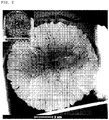
- FIG. 2 is a cross-sectional TEM image of the positive electrode active material prepared in Example 2. As illustrated in FIG. 2 , in the positive electrode active material of Example 2, Al was uniformly distributed throughout an entire secondary particle, and major axes of primary particles were arranged in a direction from a center of the secondary particle toward a surface thereof.
- an aspect ratio of the primary particle was calculated by measuring a minor axis length and a major axis length of the primary particle through TEM image analysis, and the measured aspect ratio of the primary particle was an average of 3.2.
- FIG. 3 is a scanning electron microscope (SEM) image of the positive electrode active material precursor prepared in Comparative Example 1.
- SEM scanning electron microscope
- FIG. 4 is a cross-sectional TEM image of the positive electrode active material prepared in Comparative Example 2. As illustrated in FIG. 4 , in the positive electrode active material of Comparative Example 2, Al was uniformly distributed throughout an entire secondary particle, and major axes of primary particles were arranged in a direction from a center of the secondary particle toward a surface thereof.
- an aspect ratio of the primary particle was calculated by measuring a minor axis length and a major axis length of the primary particle through TEM image analysis, and the measured aspect ratio of the primary particle was an average of 2.4.
- Example 2 Each of the positive electrode active materials prepared in Example 2 and Comparative Example 2, a carbon black conductive agent, and a PVdF binder were mixed in an N-methylpyrrolidone solvent at a weight ratio of 96:2:2 to prepare a positive electrode material mixture, and one surface of an aluminum current collector was coated with the positive electrode material mixture, dried at 100°C, and then rolled to prepare a positive electrode.
- Lithium metal was used as a negative electrode.
- Each lithium secondary battery was prepared by preparing an electrode assembly by disposing a porous polyethylene separator between the positive electrode and negative electrode prepared as described above, disposing the electrode assembly in a case, and then injecting an electrolyte solution into the case.
- Each lithium secondary battery cell prepared as described above was charged at a constant current of 1 C to 4.25 V at 45°C and cut-off charged at 3 C. Thereafter, each lithium secondary battery cell was discharged at a constant current of 0.33 C to a voltage of 3.0 V.
- the charging and discharging behaviors were set as one cycle, and, after this cycle was repeated 100 times, capacity retention and resistance increase rate according to cycles were measured. With respect to the capacity retention, its value was calculated by dividing capacity in a 100 th cycle by initial capacity and then multiplying by 100, and, with respect to the resistance increase rate, its value was calculated by dividing resistance in the 100 th cycle by initial resistance and then multiplying by 100. The results thereof are presented in the following Table 1 and FIG. 5 . [Table 1] 100 cycles (%) Capacity Resistance increase rate Example 2 94.6 5.6 Comparative Example 2 93.4 11.9
- capacity retention and resistance increase rate characteristics of the positive electrode active material of Example 2 were significantly better, and, with respect to the positive electrode active material of Comparative Example 2 prepared through Al dry doping, capacity retention and resistance increase rate characteristics were inferior.
Landscapes
- Chemical & Material Sciences (AREA)
- Organic Chemistry (AREA)
- Inorganic Chemistry (AREA)
- Chemical Kinetics & Catalysis (AREA)
- Electrochemistry (AREA)
- General Chemical & Material Sciences (AREA)
- Engineering & Computer Science (AREA)
- Manufacturing & Machinery (AREA)
- Battery Electrode And Active Subsutance (AREA)
- Inorganic Compounds Of Heavy Metals (AREA)
Abstract
Description
- This application claims priority from
Korean Patent Application No. 10-2020-0010699, filed on January 29, 2020 - The present invention relates to a positive electrode active material precursor for a secondary battery, a positive electrode active material, preparation methods thereof, and a lithium secondary battery including the positive electrode active material.
- Recently, with the rapid spread of electronic devices using batteries, such as mobile phones, notebook computers, and electric vehicles, demand for secondary batteries with relatively high capacity as well as small size and lightweight has been rapidly increased. Particularly, since a lithium secondary battery is lightweight and has high energy density, the lithium secondary battery is in the spotlight as a driving power source for portable devices. Accordingly, research and development efforts for improving the performance of the lithium secondary battery have been actively conducted.
- In the lithium secondary battery in a state in which an organic electrolyte solution or a polymer electrolyte solution is filled between a positive electrode and a negative electrode which are respectively formed of active materials capable of intercalating and deintercalating lithium ions, electrical energy is produced by oxidation and reduction reactions when the lithium ions are intercalated/deintercalated into/from the positive electrode and the negative electrode.
- Lithium cobalt oxide (LiCoO2), lithium nickel oxide (LiNiO2), lithium manganese oxide (LiMnO2 or LiMn2O4, etc.), or a lithium iron phosphate compound (LiFePO4) has been used as a positive electrode active material of the lithium secondary battery. Among them, the lithium cobalt oxide (LiCoO2) has been widely used because of its high operating voltage and excellent capacity characteristics, and has been used as a positive electrode active material for high voltage. However, due to an increase in the price of cobalt (Co) and supply instability, there is a limitation in using a large amount of the lithium cobalt oxide as a power source for applications such as electric vehicles, and thus, there is a need to develop a positive electrode active material that may replace the lithium cobalt oxide.
- Accordingly, a nickel cobalt manganese-based lithium composite transition metal oxide (hereinafter, simply referred to as "NCM-based lithium composite transition metal oxide"), in which a portion of cobalt (Co) is substituted with nickel (Ni) and manganese (Mn), has been developed. Recently, as the demand for high-capacity batteries increases, techniques for increasing the capacity by increasing a nickel content in an NCM-based positive electrode active material are being studied. With respect to a high-nickel NCM-based positive electrode active material containing a high concentration of nickel, capacity characteristics are excellent, but there has been a problem in that life characteristics are degraded due to low structural stability. Thus, a method of improving the structural stability by doping the high-nickel NCM-based positive electrode active material with aluminum (Al) has been proposed. As a conventional method of doping the NCM-based positive electrode active material with Al, a dry doping method, in which an aluminum-containing raw material was mixed together, when mixing a positive electrode active material precursor and a lithium raw material, and then sintered, or a wet doping method, in which a positive electrode active material precursor was doped with Al by performing a co-precipitation reaction using a metal solution containing nickel, manganese, cobalt, and aluminum during the preparation of the precursor, was used.
- However, with respect to the dry doping, there is a problem in that it is difficult to uniformly distribute the aluminum (Al) in the NCM-based positive electrode active material and doping of a lithium layer with the aluminum may not be controlled. Also, with respect to the aluminum (Al) wet doping in which the aluminum (Al) doping is performed during the co-precipitation of the NCM-based positive electrode active material precursor, since an unwanted side reaction with anions occurs if aluminum cations are dissolved in the transition metal solution containing nickel cobalt manganese cations together and used as in a conventional case, growth of the precursor is interfered or there has been difficulties in controlling crystal orientation.
- Thus, there is a need to develop a positive electrode active material precursor and a positive electrode active material which may exhibit excellent life characteristics and resistance characteristics when used in a lithium secondary battery.
- (Patent Document 1)
Korean Patent Application Laid-Open Publication No. 2017-0063418 - An aspect of the present invention provides a positive electrode active material precursor, which may significantly improve life characteristics and resistance increase when used in a lithium secondary battery, and a method of preparing the same.
- Another aspect of the present invention provides a positive electrode active material prepared by using the positive electrode active material precursor, and a secondary battery positive electrode and a lithium secondary battery which include the positive electrode active material.
- According to an aspect of the present invention, there is provided a positive electrode active material precursor for a secondary battery which is composed of a hydroxide represented by Formula 1, wherein the positive electrode active material precursor is a secondary particle, in which a plurality of primary particles are aggregated, and includes crystallines in which major axes of the primary particles are arranged in a direction from a center of the secondary particle toward a surface thereof and a (001) plane of the primary particle is arranged parallel to the major axis of the primary particle.
[Formula 1] Nix1Coy1Mnz1Als1(OH)2
- In Formula 1, 0.7≤x1≤0.99, 0<y1<0.3, 0<z1<0.3, and 0.01≤s1≤0.1.
- According to another aspect of the present invention, there is provided a method of preparing a positive electrode active material precursor for a secondary battery which includes: preparing a transition metal-containing solution containing cations of nickel (Ni), cobalt (Co), and manganese (Mn) and an aluminum-containing solution containing cations of aluminum (Al); and respectively adding the transition metal-containing solution and the aluminum-containing solution to a reactor, and forming a positive electrode active material precursor by a co-precipitation reaction while adding a basic aqueous solution and an ammonium solution.
- According to another aspect of the present invention, there is provided a method of preparing a positive electrode active material for a secondary battery which includes: mixing the positive electrode active material precursor prepared as described above with a lithium source and sintering the mixture to form a lithium transition metal oxide.
- According to another aspect of the present invention, there is provided a positive electrode active material including a lithium transition metal oxide represented by Formula 2, wherein the lithium transition metal oxide is a secondary particle, in which a plurality of primary particles are aggregated, and includes crystallines in which major axes of the primary particles are arranged in a direction from a center of the secondary particle toward a surface thereof and a (003) plane of the primary particle is arranged parallel to the major axis of the primary particle.
[Formula 2] Lia[NibCocMndAle]1-fM1 fO2
- In
Formula 2, M1 is at least one selected from the group consisting of Zr, B, W, Mg, Ce, Hf, Ta, La, Ti, Sr, Ba, F, P, and S, and 0.8≤a≤1.2, 0.7≤b≤0.99, 0<c<0.3, 0<d<0.3, 0.01≤e≤0.1, and 0≤f≤0.1. - According to another aspect of the present invention, there is provided a positive electrode and a lithium secondary battery which include the positive electrode active material.
- According to the present invention, a positive electrode active material precursor, which may significantly improve life characteristics and resistance increase, and a positive electrode active material prepared by using the same may be provided.
- Also, life characteristics and resistance characteristics of a lithium secondary battery using the positive electrode active material may be significantly improved.
-
-
FIG. 1 is a cross-sectional transmission electron microscope (TEM) image of a positive electrode active material precursor prepared in Example 1; -
FIG. 2 is a cross-sectional TEM image of a positive electrode active material prepared in Example 2; -
FIG. 3 is a scanning electron microscope (SEM) image of a positive electrode active material precursor prepared in Comparative Example 1; -
FIG. 4 is a cross-sectional TEM image of a positive electrode active material prepared in Comparative Example 2; and -
FIG. 5 is a graph illustrating cycle characteristics of lithium secondary batteries respectively using the positive electrode active materials prepared in Example 2 and Comparative Example 2. - Hereinafter, the present invention will be described in more detail to allow for a clearer understanding of the present invention. In this case, it will be understood that words or terms used in the specification and claims shall not be interpreted as the meaning defined in commonly used dictionaries, and it will be further understood that the words or terms should be interpreted as having a meaning that is consistent with their meaning in the context of the relevant art and the technical idea of the invention, based on the principle that an inventor may properly define the meaning of the words or terms to best explain the invention.
- In the present invention, the expression "crystalline" means a single crystal unit having a regular atomic arrangement. An arrangement of crystal planes of the crystalline in the present invention may be confirmed by transmission electron microscope (TEM) analysis of a cross section of a positive electrode active material precursor or positive electrode active material particle to be measured, and, in this case, the TEM analysis may be performed using a selected area diffraction pattern (SADP) and/or FAST Fourier Transform (FFT).
- In the present invention, the expression "primary particle" denotes a smallest particle unit which is distinguished as one body when a cross section of a positive electrode active material particle or a positive electrode active material precursor particle is observed through a transmission electron microscope (TEM), wherein it may be composed of a single grain, or may also be composed of a plurality of grains.
- In the present invention, after measuring a minor axis length and a major axis length of each primary particle in a cross-sectional TEM image of the positive electrode active material precursor or positive electrode active material particle, an aspect ratio of the primary particle may be calculated as a ratio of the major axis length to the minor axis length measured, and an average value may be measured by a method of calculating an arithmetic average value of the measured aspect ratios of the primary particles.
- In the present invention, the expression "secondary particle" denotes a secondary structure formed by aggregation of a plurality of primary particles. An average particle diameter of the secondary particle may be measured using a particle size analyzer, and, in the present invention, Microtrac S3500 was used as the particle size analyzer.
- The expression "particle diameter Dn" of the positive electrode active material in the present invention denotes a particle diameter at n% of cumulative distribution of volume according to the particle diameter. That is, D50 is a particle diameter at 50% of the cumulative distribution of volume according to the particle diameter, D90 is a particle diameter at 90% of the cumulative distribution of volume according to the particle diameter, and D10 is a particle diameter at 10% of the cumulative distribution of volume according to the particle diameter. The Dn may be measured by using a laser diffraction method. Specifically, after dispersing measurement target powder in a dispersion medium (distilled water), the dispersion medium is introduced into a commercial laser diffraction particle size measurement instrument (e.g., Microtrac S3500) and a particle size distribution is calculated by measuring a difference in diffraction patterns due to a particle size when particles pass through a laser beam. The D10, D50, and D90 may be measured by calculating particle diameters at 10%, 50%, and 90% of the cumulative distribution of volume according to the particle diameter using the measurement instrument.
- First, a method of preparing a positive electrode active material precursor according to the present invention will be described.
- The method of preparing a positive electrode active material precursor of the present invention includes the steps of: preparing a transition metal-containing solution containing cations of nickel (Ni), cobalt (Co), and manganese (Mn) and an aluminum-containing solution containing cations of aluminum (Al); and respectively adding the transition metal-containing solution and the aluminum-containing solution to a reactor, and forming a positive electrode active material precursor by a co-precipitation reaction while adding a basic aqueous solution and an ammonium solution.
- The method of preparing a positive electrode active material precursor will be described in detail for each step.
- First, a transition metal-containing solution containing cations of nickel (Ni), cobalt (Co), and manganese (Mn) and an aluminum-containing solution containing cations of aluminum (Al) are prepared.
- The transition metal-containing solution, for example, may include a nickel (Ni)-containing raw material, a cobalt (Co)-containing raw material, and a manganese (Mn)-containing raw material.
- The nickel (Ni)-containing raw material, for example, may be nickel-containing acetic acid salts, nitrates, sulfates, halides, sulfides, hydroxides, oxides, or oxyhydroxides, and may specifically be Ni(OH)2, NiO, NiOOH, NiCO3·2Ni(OH)2·4H2O, NiC2O2·2H2O, Ni(NO3)2·6H2O, NiSO4, NiSO4·O6H2O, a fatty acid nickel salt, a nickel halide, or a combination thereof, but the present invention is not limited thereto.
- The cobalt (Co)-containing raw material may be cobalt-containing acetic acid salts, nitrates, sulfates, halides, sulfides, hydroxides, oxides, or oxyhydroxides, and may specifically be Co(OH)2, CoOOH, Co(OCOCH3)2·4H2O, Co(NO3)2·6H2O, CoSO4, Co(SO4)2·7H2O, or a combination thereof, but the present invention is not limited thereto.
- The manganese (Mn)-containing raw material, for example, may be manganese-containing acetic acid salts, nitrates, sulfates, halides, sulfides, hydroxides, oxides, oxyhydroxides, or a combination thereof, and may specifically be a manganese oxide such as Mn2O3, MnO2, and Mn3O4; a manganese salt such as MnCO3, Mn(NO3)2, MnSO4, manganese acetate, manganese dicarboxylate, manganese citrate, and a fatty acid manganese salt; a manganese oxyhydroxide, manganese chloride, or a combination thereof, but the present invention is not limited thereto.
- The transition metal-containing solution may be prepared by adding the nickel (Ni)-containing raw material, the cobalt (Co)-containing raw material, and the manganese (Mn)-containing raw material to a solvent, specifically water, or a mixture of water and an organic solvent (e.g., alcohol etc.) which may be uniformly mixed with the water, or may be prepared by mixing an aqueous solution of the nickel (Ni)-containing raw material, an aqueous solution of the cobalt (Co)-containing raw material, and the manganese (Mn)-containing raw material. The transition metal-containing solution may contain 70 atm% to 99 atm%, 80 atm% to 98 atm%, 85 atm% to 98 atm%, or 88 atm% to 95 atm% of nickel among total transition metals.
- Also, the transition metal-containing solution may contain greater than 0 atm% to less than 0.3 atm%, 0.01 atm% or more to less than 0.2 atm%, 0.01 atm% or more to less than 0.15 atm%, or 0.01 atm% or more to less than 0.12 atm% of cobalt among the total transition metals.
- Furthermore, the transition metal-containing solution may contain greater than 0 atm% to less than 0.3 atm%, 0.01 atm% or more to less than 0.2 atm%, 0.01 atm% or more to less than 0.15 atm%, or 0.01 atm% or more to less than 0.12 atm% of manganese among the total transition metals.
- The aluminum-containing solution includes an aluminum (Al)-containing raw material, and the aluminum (Al)-containing raw material, for example, may be aluminum chloride, aluminum acetate, aluminum nitrate, aluminum hydroxide, or a combination thereof, but the present invention is not limited thereto.
- The aluminum-containing solution may be prepared by adding the aluminum (Al)-containing raw material to a solvent, specifically water, or a mixture of water and an organic solvent (e.g., alcohol etc.) which may be uniformly mixed with the water.
- Next, the transition metal-containing solution and the aluminum-containing solution are respectively added to a reactor, and a positive electrode active material precursor is formed by a co-precipitation reaction while adding a basic aqueous solution and an ammonium solution.
- In the preparation method according to an embodiment of the present invention, the transition metal-containing solution and the aluminum-containing solution are respectively added to a reactor. Conventionally, when preparing an aluminum-doped positive electrode active material precursor, a metal aqueous solution was prepared by mixing all of a nickel-containing raw material, a cobalt-containing raw material, a manganese-containing raw material, and an aluminum-containing raw material, and it was common that the metal aqueous solution was coprecipitated to form precursor particles. However, according to such a conventional method, since aluminum cations contained in the metal aqueous solution reacted with anions present in the metal aqueous solution to form aluminum sulfate, it may be a factor interfering with particle growth. Particularly, in a case in which a nickel content in the metal aqueous solution was 70 atm% or more and an aluminum content was 1 atm% or more, such a problem was particularly prominent, and it was difficult to prepare a precursor having a desired size.
- However, if the transition metal-containing solution containing nickel, cobalt, and manganese and the aluminum-containing solution are separately formed and then added to the reactor according to the embodiment of the present invention, since the growth of precursor particles is not inhibited even in the case that the nickel content is 70 atm% or more and the aluminum content is 1 mol% or more, the precursor particles may be grown to a desired size.
- Also, in a case in which the co-precipitation reaction is performed using the transition metal-containing solution and the aluminum-containing solution which are separately formed as in the present invention, an orientation of primary particles and arrangement of crystal planes may be specifically controlled. Specifically, in a case in which a positive electrode active material precursor is prepared according to the method of the present invention, the positive electrode active material precursor including crystallines, in which major axes of the primary particles are arranged in a direction from a center of a secondary particle toward a surface thereof and a (001) plane is arranged parallel to the major axis of the primary particle, may be prepared.
- Primary particle arrangement and crystalline structure of the positive electrode active material are affected by the primary particle arrangement and crystalline structure of the positive electrode active material precursor. In a case in which a positive electrode active material is prepared by using the positive electrode active material precursor having a structure in which the major axes of the primary particles are arranged in the direction from the center of the secondary particle toward the surface thereof, that is, a radial arrangement structure, primary particles of the positive electrode active material are also arranged in a direction from a center of a secondary particle toward a surface thereof. Since lithium ions in the positive electrode active material particle move along an interface between the primary particles, a movement path of the lithium ions in the particle is shortened when the primary particles are arranged radially, and thus, an effect of improving lithium mobility may be obtained.
- The (001) plane of the positive electrode active material precursor is converted to a (003) plane after sintering. Thus, the positive electrode active material, which is prepared by using the positive electrode active material precursor including crystallines with the (001) plane arranged parallel to the major axis of the primary particle, includes crystallines in which the (003) plane is arranged parallel to a major axis direction of the primary particle. The (003) plane in the lithium transition metal oxide is a stable crystal plane in which intercalation/deintercalation of lithium is not possible. In a case in which the (003) plane is arranged parallel to the major axis direction of the primary particle, since the stable (003) plane is formed widely on a surface of the primary particle, structural degradation due to the intercalation/deintercalation of lithium ions may be minimized, and thus, an effect of improving life characteristics may be obtained.
- The transition metal-containing solution and the aluminum-containing solution may be added in amounts such that a molar ratio of total transition metals (i.e., Ni+Co+Mn) contained in the transition metal-containing solution : aluminum contained in the aluminum-containing solution is in a range of 0.99 : 0.01 to 0.90 : 0.10, preferably 0.99 : 0.01 to 0.92 : 0.08, and more preferably 0.99 : 0.01 to 0.95 : 0.05. When the amounts of the transition metal-containing solution and aluminum-containing solution added satisfy the above range, a positive electrode active material precursor having a desired composition may be prepared.
- The ammonium solution, as a complexing agent, for example, may include NH4OH, (NH4)2SO4, NH4NO3, NH4Cl, CH3COONH4, NH4CO3, or a combination thereof, but the present invention is not limited thereto. The ammonium solution may be used in the form of an aqueous solution, and, in this case, water or a mixture of water and an organic solvent (specifically, alcohol etc.), which may be uniformly mixed with the water, may be used as a solvent.
- The basic solution, as a precipitant, may include a hydroxide of alkali metal or alkaline earth metal, such as NaOH, KOH, or Ca(OH)2, a hydrate thereof, or an alkaline compound of a combination thereof. The basic solution may also be used in the form of an aqueous solution, and, in this case, water or a mixture of water and an organic solvent (specifically, alcohol etc.), which may be uniformly mixed with the water, may be used as a solvent.
- The basic solution is added to adjust a pH of a reaction solution, wherein an amount of the alkaline compound may be adjusted to maintain the pH of the reaction solution during the co-precipitation reaction to be 10.5 to 12.2, preferably 11.0 to 11.5, and more preferably 11.3 to 11.45.
- The co-precipitation reaction may be performed in an inert atmosphere such as nitrogen or argon, and may be performed at a temperature in the reactor during the co-precipitation reaction of 45°C to 65°C, preferably 50°C to 60°C, and more preferably 53°C to 58°C.
- When the pH of the reaction solution, the reactor temperature, and the atmosphere satisfy the above conditions, since crystallinity of the precursor particles is increased and a ratio of the (001) plane is increased, the effect of improving the life characteristics may be obtained.
- Next, a positive electrode active material precursor according to the present invention will be described.
- The positive electrode active material precursor according to the present invention is prepared according to the method of the present invention, wherein it is composed of a hydroxide represented by the following Formula 1, is a secondary particle in which a plurality of primary particles are aggregated, and includes crystallines in which major axes of the primary particles are arranged in a direction from a center of the secondary particle toward a surface thereof, and a (001) plane of the primary particle is arranged parallel to the major axis of the primary particle.
[Formula 1] Nix1Coy1Mnz1Als1(OH)2
- x1 represents a molar ratio of nickel among total metallic elements in the transition metal hydroxide, wherein x1 may satisfy 0.7≤x1≤0.99, 0.8≤x1≤0.98, 0.85≤x1≤0.98, or 0.88≤x1≤0.95. In a case in which a nickel content in the transition metal hydroxide satisfies the above range, a positive electrode active material having high capacity characteristics may be prepared.
- y1 represents a molar ratio of cobalt among the total metallic elements in the transition metal hydroxide, wherein y1 may satisfy 0<y1<0.3, 0.01≤y1<0.2, 0.01≤y1<0.14, or 0.01≤y1<0.12.
- z1 represents a molar ratio of manganese among the total metallic elements in the transition metal hydroxide, wherein z1 may satisfy 0<z1<0.3, 0.01≤z1<0.2, 0.01≤z1<0.14, or 0.01≤z1<0.12.
- s1 represents a molar ratio of aluminum among the total metallic elements in the transition metal hydroxide, wherein s1 may satisfy 0.01≤s1≤0.1, 0.01≤s1≤0.08, or 0.01≤s1≤0.05. In a case in which an aluminum (Al) content in the transition metal hydroxide satisfies the above range, cation disordering and the formation of oxygen vacancy during the preparation of the positive electrode active material may be suppressed, and, accordingly, life characteristics and resistance increase rate characteristics may be improved.
- In the positive electrode active material precursor, it is desirable that aluminum (Al) is uniformly distributed throughout the entire particle. That is, aluminum may be contained without a concentration gradient in the secondary particle of the positive electrode active material precursor. Since the aluminum (Al) is uniformly distributed in the secondary particle without the concentration gradient, an aluminum (Al) agglomeration phenomenon may be suppressed to minimize capacity reduction and increase an effect of improving the life characteristics and resistance increase rate characteristics with a small amount of the aluminum (Al).
- Preferably, the positive electrode active material precursor of the present invention may be one in which nickel, manganese, cobalt, and aluminum are distributed in a uniform concentration throughout the entire secondary particle without a concentration gradient.
- The positive electrode active material precursor according to the present invention may be a secondary particle in which a plurality of primary particles are aggregated, and major axes of the primary particles may be arranged in a direction from the center of the secondary particle toward the surface thereof. As described above, since the primary particle orientation of the positive electrode active material shows the same tendency as the primary particle orientation of the positive electrode active material precursor and the lithium ions in the positive electrode active material particle move along the interface between the primary particles, the movement path of the lithium ions in the positive electrode active material particle is shortened when the positive electrode active material precursor has a structure in which the major axes of the primary particles are arranged in the direction from the center of the secondary particle toward the surface thereof, that is, a radial structure, and thus, the effect of improving the lithium mobility may be obtained.
- Also, the primary particle of the positive electrode active material precursor according to the present invention includes crystallines in which a (001) plane is arranged parallel to the major axis of the primary particle. Since the (001) plane of the positive electrode active material precursor is converted to a (003) plane after sintering, the primary particle of the positive electrode active material, which is prepared by using the positive electrode active material precursor including the crystallines as described above, includes crystallines in which the (003) plane is arranged parallel to the major axis of the primary particle. In the case that the (003) plane is arranged parallel to the major axis of the primary particle, an area of the (003) plane exposed to the interface between the primary particles is increased. Since the (003) plane is a stable crystal plane in which the intercalation/deintercalation of the lithium ions is not possible, the structural degradation of the active material due to the intercalation/deintercalation of the lithium ions is suppressed when the external exposed area of the (003) plane is large, and, accordingly, the effect of improving the life characteristics may be obtained.
- The primary particle of the positive electrode active material precursor may have a columnar shape, and, in this case, an aspect ratio of the primary particle may be 3 or more. More preferably, the aspect ratio of the primary particle of the positive electrode active material precursor may be in a range of 3 to 15, for example, 5 to 8. When the aspect ratio of the primary particle of the positive electrode active material precursor satisfies the above range, there is an effect of shortening a lithium movement path inside and outside the primary particle.
- An average particle diameter D50 of the secondary particle of the positive electrode active material precursor of the present invention may be in a range of 3 µm to 20 µm, 5 µm to 20 µm, or 8 µm to 20 µm. When the average particle diameter of the secondary particle of the positive electrode active material precursor satisfies the above range, advantageous effects may be obtained in terms of energy density, lifetime, and gas generation.
- Next, a positive electrode active material according to the present invention and a preparation method thereof will be described.
- The positive electrode active material according to the present invention may be prepared through a step of mixing the above-described positive electrode active material precursor of the present invention with a lithium source and sintering the mixture to form a lithium transition metal oxide.
- The positive electrode active material precursor is the same as described above.
- As the lithium source, lithium-containing sulfates, nitrates, acetic acid salts, carbonates, oxalates, citrates, halides, hydroxides, or oxyhydroxides may be used, and these materials are not particularly limited as long as they may be dissolved in water. Specifically, the lithium source may be Li2CO3, LiNO3, LiNO2, LiOH, LiOH·H2O, LiH, LiF, LiCl, LiBr, LiI, CH3COOLi, Li2O, Li2SO4, CH3COOLi, or Li3C6H5O7, and any one thereof or a mixture of two or more thereof may be used.
- The positive electrode active material precursor and the lithium source may be mixed and sintered at 730°C to 830°C to form a lithium transition metal oxide. Preferably, the sintering may be performed at 750°C to 810°C, for example, 780°C to 800°C, and the sintering may be performed for 5 hours to 20 hours, for example, 8 hours to 15 hours.
- If necessary, a raw material containing doping element M1 may be further mixed during the sintering. M1, for example, may be at least one selected from the group consisting of Zr, B, W, Mg, Ce, Hf, Ta, La, Ti, Sr, Ba, F, P, and S, and the raw material containing the doping element M1 may be M1-containing acetates, nitrates, sulfates, halides, sulfides, hydroxides, oxides, oxyhydroxides, or a combination thereof. In a case in which M1 is additionally mixed during the sintering, since the M1 element is diffused into the lithium transition metal oxide and is doped by the sintering, an effect of improving structural stability of the positive electrode active material may be obtained.
- The positive electrode active material of the present invention thus prepared includes a lithium transition metal oxide represented by
Formula 2 below, wherein the lithium transition metal oxide is a secondary particle, in which a plurality of primary particles are aggregated, and includes crystallines in which major axes of the primary particles are arranged in a direction from a center of the secondary particle toward a surface thereof and a (003) plane of the primary particle is arranged parallel to the major axis of the primary particle.
[Formula 2] Lia[NibCocMndAle]1-fM1 fO2
- In
Formula 2, M1 is a doping element doped in the lithium transition metal oxide, and, for example, may be at least one selected from the group consisting of Zr, B, W, Mg, Ce, Hf, Ta, La, Ti, Sr, Ba, F, P, and S. - a represents a molar ratio of lithium in the lithium transition metal oxide, wherein a may satisfy 0.8≤a≤1.2, 0.85≤a≤1.15, or 0.9≤a≤1.1.
- b represents a molar ratio of nickel based on a total number of moles of transition metals in the lithium transition metal oxide, wherein b may satisfy 0.7≤b≤0.99, 0.8≤b≤0.98, 0.85≤b≤0.98, or 0.85≤b≤0.95.
- c represents a molar ratio of cobalt based on the total number of moles of transition metals in the lithium transition metal oxide, wherein c may satisfy 0<c<0.3, 0.01≤c<0.2, 0.01≤c<0.14, or 0.01≤c<0.12.
- d represents a molar ratio of manganese based on the total number of moles of transition metals in the lithium transition metal oxide, wherein d may satisfy 0<d<0.3, 0.01≤d<0.2, 0.01≤d<0.14, or 0.01≤d<0.12.
- e represents a molar ratio of aluminum based on the total number of moles of transition metals in the lithium transition metal oxide, wherein e may satisfy 0.01≤e≤0.1, 0.01≤e≤0.08, or 0.01≤e≤0.05.
- f represents a molar ratio of the doping element M1 doped in a transition metal layer in the lithium transition metal oxide, wherein f may satisfy 0≤f≤0.1, 0≤f≤0.05, or 0≤f≤0.03.
- In the positive electrode active material, it is desirable that aluminum (Al) is uniformly distributed throughout the secondary particle. That is, aluminum may be contained without a concentration gradient in the secondary particle of the positive electrode active material. Since the aluminum (Al) is uniformly distributed in the secondary particle without the concentration gradient, the aluminum (Al) agglomeration phenomenon may be suppressed to minimize the capacity reduction and increase the effect of improving the life characteristics and resistance increase rate characteristics with the small amount of the aluminum (Al).
- Preferably, the positive electrode active material of the present invention may be one in which nickel, manganese, cobalt, and aluminum are distributed in a uniform concentration throughout the secondary particle without a concentration gradient.
- The positive electrode active material according to the present invention may be a secondary particle in which a plurality of primary particles are aggregated, and major axes of the primary particles may be arranged in a direction from the center of the secondary particle toward the surface thereof. Since the lithium ions in the positive electrode active material particle move along the interface between the primary particles, the movement path of the lithium ions in the positive electrode active material particle is shortened when the positive electrode active material has a structure in which the major axes of the primary particles are arranged in the direction from the center of the secondary particle toward the surface thereof, that is, a radial structure, and thus, the effect of improving the lithium mobility may be obtained.
- Also, the primary particle of the positive electrode active material according to the present invention includes crystallines in which a (003) plane is arranged parallel to the major axis of the primary particle. In the case that the (003) plane is arranged parallel to the major axis of the primary particle, the area of the (003) plane exposed to the interface between the primary particles is increased. Since the (003) plane is a stable crystal plane in which the intercalation/deintercalation of the lithium ions is not possible, the structural degradation of the active material due to the intercalation/deintercalation of the lithium ions is suppressed when the external exposed area of the (003) plane is large, and, accordingly, the effect of improving the life characteristics may be obtained.
- The primary particle of the positive electrode active material may have a columnar shape, and, in this case, an aspect ratio of the primary particle may be 1.5 or more, preferably 1.5 to 10, and more preferably 2.5 to 8, for example, 2.5 to 5. When the aspect ratio of the primary particle of the positive electrode active material satisfies the above range, there is an effect of shortening a lithium movement path inside and outside the primary particle.
- An average particle diameter D50 of the secondary particle of the positive electrode active material of the present invention may be in a range of 3 µm to 20 µm, 5 µm to 20 µm, or 8 µm to 20 µm. When the average particle diameter of the secondary particle of the positive electrode active material satisfies the above range, advantageous effects may be obtained in terms of the energy density, lifetime, and gas generation.
- According to another embodiment of the present invention, provided are a positive electrode for a secondary battery and a lithium secondary battery which include the positive electrode active material prepared as described above.
- Specifically, the positive electrode includes a positive electrode collector and a positive electrode active material layer which is disposed on the positive electrode collector and includes the positive electrode active material.
- In the positive electrode, the positive electrode collector is not particularly limited as long as it has conductivity without causing adverse chemical changes in the battery, and, for example, stainless steel, aluminum, nickel, titanium, fired carbon, or aluminum or stainless steel that is surface-treated with one of carbon, nickel, titanium, silver, or the like may be used. Also, the positive electrode collector may typically have a thickness of 3 µm to 500 µm, and microscopic irregularities may be formed on the surface of the collector to improve the adhesion of the positive electrode active material. The positive electrode collector, for example, may be used in various shapes such as that of a film, a sheet, a foil, a net, a porous body, a foam body, a non-woven fabric body, and the like.
- Also, the positive electrode active material layer may include a conductive agent and a binder in addition to the above-described positive electrode active material.
- In this case, the conductive agent is used to provide conductivity to the electrode, wherein any conductive agent may be used without particular limitation as long as it has suitable electron conductivity without causing adverse chemical changes in the battery. Specific examples of the conductive agent may be graphite such as natural graphite or artificial graphite; carbon based materials such as carbon black, acetylene black, Ketjen black, channel black, furnace black, lamp black, thermal black, and carbon fibers; powder or fibers of metal such as copper, nickel, aluminum, and silver; conductive whiskers such as zinc oxide whiskers and potassium titanate whiskers; conductive metal oxides such as titanium oxide; or conductive polymers such as polyphenylene derivatives, and any one thereof or a mixture of two or more thereof may be used. The conductive agent may be typically included in an amount of 1 wt% to 30 wt% based on a total weight of the positive electrode active material layer.
- Furthermore, the binder improves the adhesion between the positive electrode active material particles and the adhesion between the positive electrode active material and the current collector. Specific examples of the binder may be polyvinylidene fluoride (PVDF), polyvinylidene fluoride-hexafluoropropylene copolymer (PVDF-co-HFP), polyvinyl alcohol, polyacrylonitrile, carboxymethyl cellulose (CMC), starch, hydroxypropyl cellulose, regenerated cellulose, polyvinylpyrrolidone, polytetrafluoroethylene, polyethylene, polypropylene, an ethylene-propylene-diene monomer rubber (EPDM rubber), a sulfonated-EPDM, a styrene-butadiene rubber (SBR), a fluorine rubber, or various copolymers thereof, and any one thereof or a mixture of two or more thereof may be used. The binder may be included in an amount of 1 wt% to 30 wt% based on the total weight of the positive electrode active material layer.
- The positive electrode may be prepared according to a typical method of preparing a positive electrode except that the above-described positive electrode active material is used. Specifically, a composition for forming a positive electrode active material layer, which includes the above-described positive electrode active material as well as selectively the binder and the conductive agent, is coated on the positive electrode collector, and the positive electrode may then be prepared by drying and rolling the coated positive electrode collector. In this case, types and amounts of the positive electrode active material, the binder, and the conductive agent are the same as those previously described.
- The solvent may be a solvent normally used in the art. The solvent may include dimethyl sulfoxide (DMSO), isopropyl alcohol, N-methylpyrrolidone (NMP), acetone, or water, and any one thereof or a mixture of two or more thereof may be used. An amount of the solvent used may be sufficient if the solvent may dissolve or disperse the positive electrode active material, the conductive agent, and the binder in consideration of a coating thickness of a slurry and manufacturing yield, and may allow to have a viscosity that may provide excellent thickness uniformity during the subsequent coating for the preparation of the positive electrode.
- Also, as another method, the positive electrode may be prepared by casting the composition for forming a positive electrode active material layer on a separate support and then laminating a film separated from the support on the positive electrode collector.
- According to another embodiment of the present invention, an electrochemical device including the positive electrode is provided. The electrochemical device may specifically be a battery or a capacitor, and, for example, may be a lithium secondary battery.
- The lithium secondary battery specifically includes a positive electrode, a negative electrode disposed to face the positive electrode, a separator disposed between the positive electrode and the negative electrode, and an electrolyte, wherein the positive electrode is as described above. Also, the lithium secondary battery may further selectively include a battery container accommodating an electrode assembly of the positive electrode, the negative electrode, and the separator, and a sealing member sealing the battery container.
- In the lithium secondary battery, the negative electrode includes a negative electrode collector and a negative electrode active material layer disposed on the negative electrode collector.
- The negative electrode collector is not particularly limited as long as it has high conductivity without causing adverse chemical changes in the battery, and, for example, copper, stainless steel, aluminum, nickel, titanium, fired carbon, copper or stainless steel that is surface-treated with one of carbon, nickel, titanium, silver, or the like, and an aluminum-cadmium alloy may be used. Also, the negative electrode collector may typically have a thickness of 3 µm to 500 µm, and, similar to the positive electrode collector, microscopic irregularities may be formed on the surface of the collector to improve the adhesion of a negative electrode active material. The negative electrode collector, for example, may be used in various shapes such as that of a film, a sheet, a foil, a net, a porous body, a foam body, a non-woven fabric body, and the like.
- The negative electrode active material layer selectively includes a binder and a conductive agent in addition to the negative electrode active material. The negative electrode active material layer may be prepared by coating a composition for forming a negative electrode in the form of a slurry, which includes selectively the binder and the conductive agent as well as the negative electrode active material, on the negative electrode collector and drying the coated negative electrode collector, or may be prepared by casting the composition for forming a negative electrode on a separate support and then laminating a film separated from the support on the negative electrode collector.
- A compound capable of reversibly intercalating and deintercalating lithium may be used as the negative electrode active material. Specific examples of the negative electrode active material may be a carbonaceous material such as artificial graphite, natural graphite, graphitized carbon fibers, and amorphous carbon; a metallic compound alloyable with lithium such as silicon (Si), aluminum (Al), tin (Sn), lead (Pb), zinc (Zn), bismuth (Bi), indium (In), magnesium (Mg), gallium (Ga), cadmium (Cd), a Si alloy, a Sn alloy, or an Al alloy; a metal oxide which may be doped and undoped with lithium such as SiOβ(0 < β < 2), SnO2, vanadium oxide, and lithium vanadium oxide; or a composite including the metallic compound and the carbonaceous material such as a Si-C composite or a Sn-C composite, and any one thereof or a mixture of two or more thereof may be used. Also, a metallic lithium thin film may be used as the negative electrode active material. Furthermore, both low crystalline carbon and high crystalline carbon may be used as the carbon material. Typical examples of the low crystalline carbon may be soft carbon and hard carbon, and typical examples of the high crystalline carbon may be irregular, planar, flaky, spherical, or fibrous natural graphite or artificial graphite, Kish graphite, pyrolytic carbon, mesophase pitch-based carbon fibers, meso-carbon microbeads, mesophase pitches, and high-temperature sintered carbon such as petroleum or coal tar pitch derived cokes.
- Also, the binder and the conductive agent may be the same as those previously described in the positive electrode.
- In the lithium secondary battery, the separator separates the negative electrode and the positive electrode and provides a movement path of lithium ions, wherein any separator may be used as the separator without particular limitation as long as it is typically used in a lithium secondary battery, and particularly, a separator having high moisture-retention ability for an electrolyte as well as low resistance to the transfer of electrolyte ions may be used. Specifically, a porous polymer film, for example, a porous polymer film prepared from a polyolefin-based polymer, such as an ethylene homopolymer, a propylene homopolymer, an ethylene/butene copolymer, an ethylene/hexene copolymer, and an ethylene/methacrylate copolymer, or a laminated structure having two or more layers thereof may be used. Also, a typical porous nonwoven fabric, for example, a nonwoven fabric formed of high melting point glass fibers or polyethylene terephthalate fibers may be used. Furthermore, a coated separator including a ceramic component or a polymer material may be used to secure heat resistance or mechanical strength, and the separator having a single layer or multilayer structure may be selectively used.
- Also, the electrolyte used in the present invention may include an organic liquid electrolyte, an inorganic liquid electrolyte, a solid polymer electrolyte, a gel-type polymer electrolyte, a solid inorganic electrolyte, or a molten-type inorganic electrolyte which may be used in the preparation of the lithium secondary battery, but the present invention is not limited thereto.
- Specifically, the electrolyte may include an organic solvent and a lithium salt.
- Any organic solvent may be used as the organic solvent without particular limitation so long as it may function as a medium through which ions involved in an electrochemical reaction of the battery may move. Specifically, an ester-based solvent such as methyl acetate, ethyl acetate, γ-butyrolactone, and ε-caprolactone; an ether-based solvent such as dibutyl ether or tetrahydrofuran; a ketone-based solvent such as cyclohexanone; an aromatic hydrocarbon-based solvent such as benzene and fluorobenzene; or a carbonate-based solvent such as dimethyl carbonate (DMC), diethyl carbonate (DEC), methylethyl carbonate (MEC), ethylmethyl carbonate (EMC), ethylene carbonate (EC), and propylene carbonate (PC); an alcohol-based solvent such as ethyl alcohol and isopropyl alcohol; nitriles such as R-CN (where R is a linear, branched, or cyclic C2-C20 hydrocarbon group and may include a double-bond, an aromatic ring or ether bond); amides such as dimethylformamide; dioxolanes such as 1,3-dioxolane; or sulfolanes may be used as the organic solvent. Among these solvents, the carbonate-based solvent may be used, and, for example, a mixture of a cyclic carbonate (e.g., ethylene carbonate or propylene carbonate) having high ionic conductivity and high dielectric constant, which may increase charge/discharge performance of the battery, and a low-viscosity linear carbonate-based compound (e.g., ethylmethyl carbonate, dimethyl carbonate, or diethyl carbonate) may be used. In this case, the performance of the electrolyte solution may be excellent when the cyclic carbonate and the chain carbonate are mixed in a volume ratio of about 1:1 to about 1:9.
- The lithium salt may be used without particular limitation as long as it is a compound capable of providing lithium ions used in the lithium secondary battery. Specifically, LiPF6, LiClO4, LiAsF6, LiBF4, LiSbF6, LiAlO4, LiAlCl4, LiCF3SO3, LiC4F9SO3, LiN(C2F5SO3)2, LiN(C2F5SO2)2, LiN(CF3SO2)2, LiCl, LiI, or LiB(C2O4)2 may be used as the lithium salt. The lithium salt may be used in a concentration range of 0.1 M to 2.0 M. In a case in which the concentration of the lithium salt is included within the above range, since the electrolyte may have appropriate conductivity and viscosity, excellent performance of the electrolyte may be obtained and lithium ions may effectively move.
- In order to improve lifetime characteristics of the battery, suppress the reduction in battery capacity, and improve discharge capacity of the battery, at least one additive, for example, a halo-alkylene carbonate-based compound such as difluoroethylene carbonate, pyridine, triethylphosphite, triethanolamine, cyclic ether, ethylenediamine, n-glyme, hexamethylphosphate triamide, a nitrobenzene derivative, sulfur, a quinone imine dye, N-substituted oxazolidinone, N,N-substituted imidazolidine, ethylene glycol dialkyl ether, an ammonium salt, pyrrole, 2-methoxy ethanol, or aluminum trichloride, may be further added to the electrolyte in addition to the electrolyte components. In this case, the additive may be included in an amount of 0.1 wt% to 5 wt% based on a total weight of the electrolyte.
- As described above, since the lithium secondary battery including the positive electrode active material according to the present invention stably exhibits excellent discharge capacity, output characteristics, and capacity retention, the lithium secondary battery is suitable for portable devices, such as mobile phones, notebook computers, and digital cameras, and electric cars such as hybrid electric vehicles (HEVs).
- Thus, according to another embodiment of the present invention, a battery module including the lithium secondary battery as a unit cell and a battery pack including the battery module are provided.
- The battery module or the battery pack may be used as a power source of at least one medium and large sized device of a power tool; electric cars including an electric vehicle (EV), a hybrid electric vehicle, and a plug-in hybrid electric vehicle (PHEV); or a power storage system.
- Hereinafter, examples of the present invention will be described in detail in such a manner that it may easily be carried out by a person with ordinary skill in the art to which the present invention pertains. The invention may, however, be embodied in many different forms and should not be construed as being limited to the examples set forth herein.
- After 4 liters of distilled water was put in a reactor (capacity 20 L), the temperature was maintained at 58°C, a transition metal aqueous solution with a concentration of 2.29 mol/L, in which NiSO4, CoSO4, and MnSO4 were mixed in amounts such that a molar ratio of nickel:cobalt:manganese was 88:5:7, and an Al(NO3)3 aqueous solution with a concentration of 1.145 mol/L were added to the reactor at rates of 500 ml/hr and 20 mL/hr, respectively, and a 9 wt% aqueous ammonia solution was continuously added to the reactor at a rate of 510 ml/hr. Also, a 15 wt% aqueous sodium hydroxide solution was added at a rate of 306 ml/hr, and the addition of the aqueous sodium hydroxide solution was adjusted so that a pH was maintained at 11.4.
- In the first 30 minutes, nucleation was performed while stirring at 600 rpm, and, thereafter, particles were grown while stirring at 250 rpm to 600 rpm. When the inside of the batch-type reactor was filled by performing a co-precipitation reaction for 20 hours, the stirring was stopped, the precursor particles were precipitated, and, after removing a supernatant and leaving 4 L of the reactants, the reaction was performed again. The reaction was performed for a total of 40 hours to form precursor particles. The precursor particles were separated, washed in water, dried in a warm air dryer at 130°C for 12 hours or more, disintegrated, and sieved to prepare a positive electrode active material precursor having a composition of Ni0.86Co0.05Mn0.07Al0.02(OH)2.
- The positive electrode active material precursor prepared in Example 1, LiOH, and ZrO2 were mixed in amounts such that a molar ratio of (Ni+Co+Mn+Al) : Li : Zr was 1:1.07:0.0015, and sintered at 790°C for 10 hours in an oxygen atmosphere to prepare a positive electrode active material which was doped with 1,500 ppm of Zr and had a molar ratio of Ni : Co : Mn : Al of 86 : 5 : 7 : 2.
- After 4 liters of distilled water was put in a reactor (capacity 20 L), the temperature was maintained at 58°C, a transition metal aqueous solution with a concentration of 2.29 mol/L, in which NiSO4, CoSO4, MnSO4, and AlSO4 were mixed in amounts such that a molar ratio of nickel:cobalt:manganese:aluminum was 86:5:7:2, was added to the reactor at a rate of 500 ml/hr, and a 9 wt% aqueous ammonia solution was continuously added to the reactor at a rate of 510 ml/hr. Also, a 15 wt% aqueous sodium hydroxide solution was added at a rate of 306 ml/hr, and the addition of the aqueous sodium hydroxide solution was adjusted so that a pH was maintained at 11.4.
- In the first 30 minutes, nucleation was performed while stirring at 600 rpm, and, thereafter, particles were grown while stirring at 250 rpm to 600 rpm. When the inside of the batch-type reactor was filled by performing a co-precipitation reaction for 20 hours, the stirring was stopped, the precursor particles were precipitated, and, after removing a supernatant and leaving 4 L of the reactants, the reaction was performed again. The reaction was performed for a total of 40 hours to form precursor particles. The precursor particles were separated, washed in water, dried in a warm air dryer at 130°C for 12 hours or more, disintegrated, and sieved to prepare a positive electrode active material precursor having a composition of Ni0.86Co0.05Mn0.07Al0.02(OH)2.
- After 4 liters of distilled water was put in a reactor (capacity 20 L), the temperature was maintained at 58°C, a transition metal aqueous solution with a concentration of 2.29 mol/L, in which NiSO4, CoSO4, and MnSO4 were mixed in amounts such that a molar ratio of nickel:cobalt:manganese was 88:5:7, was added to the reactor at a rate of 510 ml/hr, and a 9 wt% aqueous ammonia solution was continuously added to the reactor at a rate of 510 ml/hr. Also, a 15 wt% aqueous sodium hydroxide solution was added at a rate of 306 ml/hr, and the addition of the aqueous sodium hydroxide solution was adjusted so that a pH was maintained at 11.4.
- In the first 30 minutes, nucleation was performed while stirring at 600 rpm, and, thereafter, particles were grown while stirring at 250 rpm to 600 rpm. When the inside of the batch-type reactor was filled by performing a co-precipitation reaction for 20 hours, the stirring was stopped, the precursor particles were precipitated, and, after removing a supernatant and leaving 4 L of the reactants, the reaction was performed again. The reaction was performed for a total of 40 hours to form precursor particles having a composition of Ni0.88Co0.05Mn0.07(OH)2.
- The above-prepared positive electrode active material precursor, LiOH, Al2O3, and ZrO2 were mixed in amounts such that a molar ratio of (Ni+Co+Mn) : Li : Al : Zr was 1:1.07:0.02:0.0015, and sintered at 770°C for 10 hours in an oxygen atmosphere to prepare a positive electrode active material which was doped with 1,500 ppm of Zr and had a molar ratio of Ni : Co : Mn : Al of 86 : 5 : 7 : 2.
- Crystal structures and aspect ratios of primary particles of the positive electrode active material precursors and the positive electrode active material of Examples 1 and 2 and Comparative Example 1 were measured through transmission electron microscope (TEM) analysis. The TEM analysis was performed using a selected area diffraction pattern (SADP) and/or FAST Fourier Transform (FFT) .
- The results thereof are presented in
FIGS. 1 to 3 . -
FIG. 1 is a cross-sectional TEM image of the positive electrode active material precursor prepared in Example 1. As illustrated inFIG. 1 , in the positive electrode active material precursor of Example 1, Al was uniformly distributed throughout an entire particle, and major axes of primary particles were arranged in a direction from a center of a secondary particle toward a surface thereof. - Also, an aspect ratio of the primary particle was calculated by measuring a minor axis length and a major axis length of the primary particle through TEM image analysis, and the measured aspect ratio of the primary particle was an average of 6.7.
- Furthermore, as a result of confirming a crystalline structure through the SADP, it was confirmed that (001) planes were arranged parallel to the major axis of the primary particle. Directions of the (001) planes were indicated by arrows.
-
FIG. 2 is a cross-sectional TEM image of the positive electrode active material prepared in Example 2. As illustrated inFIG. 2 , in the positive electrode active material of Example 2, Al was uniformly distributed throughout an entire secondary particle, and major axes of primary particles were arranged in a direction from a center of the secondary particle toward a surface thereof. - Also, an aspect ratio of the primary particle was calculated by measuring a minor axis length and a major axis length of the primary particle through TEM image analysis, and the measured aspect ratio of the primary particle was an average of 3.2.
- Furthermore, as a result of confirming a crystalline structure through the SADP, it was confirmed that (003) planes were arranged parallel to the major axis of the primary particle. Directions of the (003) planes were indicated by arrows.
-
FIG. 3 is a scanning electron microscope (SEM) image of the positive electrode active material precursor prepared in Comparative Example 1. As illustrated inFIG. 3 , the positive electrode active material precursor of Comparative Example 1 shows a state in which particles in the form of a small NCM seed and a compound of Al and Sulfur exist separately. Also, D50 of a secondary particle was 5 µm or less even though the reaction was performed for 40 hours, wherein it may be understood that particle growth hardly occurred. -
FIG. 4 is a cross-sectional TEM image of the positive electrode active material prepared in Comparative Example 2. As illustrated inFIG. 4 , in the positive electrode active material of Comparative Example 2, Al was uniformly distributed throughout an entire secondary particle, and major axes of primary particles were arranged in a direction from a center of the secondary particle toward a surface thereof. - Also, an aspect ratio of the primary particle was calculated by measuring a minor axis length and a major axis length of the primary particle through TEM image analysis, and the measured aspect ratio of the primary particle was an average of 2.4.
- Furthermore, as a result of confirming a crystalline structure through the SADP, it was confirmed that (003) planes were distributed in various directions. The directions of the (003) planes were indicated by arrows.
- Each of the positive electrode active materials prepared in Example 2 and Comparative Example 2, a carbon black conductive agent, and a PVdF binder were mixed in an N-methylpyrrolidone solvent at a weight ratio of 96:2:2 to prepare a positive electrode material mixture, and one surface of an aluminum current collector was coated with the positive electrode material mixture, dried at 100°C, and then rolled to prepare a positive electrode.
- Lithium metal was used as a negative electrode.
- Each lithium secondary battery was prepared by preparing an electrode assembly by disposing a porous polyethylene separator between the positive electrode and negative electrode prepared as described above, disposing the electrode assembly in a case, and then injecting an electrolyte solution into the case. In this case, the electrolyte solution was prepared by dissolving 1.0 M lithium hexafluorophosphate (LiPF6) in an organic solvent composed of ethylene carbonate/ethylmethyl carbonate/diethyl carbonate (mixing volume ratio of EC/EMC/DEC=3/4/3).
- Each lithium secondary battery cell prepared as described above was charged at a constant current of 1 C to 4.25 V at 45°C and cut-off charged at 3 C. Thereafter, each lithium secondary battery cell was discharged at a constant current of 0.33 C to a voltage of 3.0 V. The charging and discharging behaviors were set as one cycle, and, after this cycle was repeated 100 times, capacity retention and resistance increase rate according to cycles were measured. With respect to the capacity retention, its value was calculated by dividing capacity in a 100th cycle by initial capacity and then multiplying by 100, and, with respect to the resistance increase rate, its value was calculated by dividing resistance in the 100th cycle by initial resistance and then multiplying by 100. The results thereof are presented in the following Table 1 and
FIG. 5 .[Table 1] 100 cycles (%) Capacity Resistance increase rate Example 2 94.6 5.6 Comparative Example 2 93.4 11.9 - Referring to Table 1 and
FIG. 5 , capacity retention and resistance increase rate characteristics of the positive electrode active material of Example 2 were significantly better, and, with respect to the positive electrode active material of Comparative Example 2 prepared through Al dry doping, capacity retention and resistance increase rate characteristics were inferior.
Claims (19)
- A positive electrode active material precursor for a secondary battery, the positive electrode active material precursor composed of a hydroxide represented by Formula 1,wherein the positive electrode active material precursor is a secondary particle, in which a plurality of primary particles are aggregated, and comprises crystallines in which major axes of the primary particles are arranged in a direction from a center of the secondary particle toward a surface thereof and a (001) plane of the primary particle is arranged parallel to the major axis of the primary particle:
[Formula 1] Nix1Coy1Mnz1Als1(OH)2
wherein, in Formula 1, 0.7≤x<10.99, 0<y1<0.3, 0<z1<0.3, and 0.01≤s1≤0.1. - The positive electrode active material precursor for a secondary battery of claim 1, wherein an aspect ratio of the primary particle is 3 or more.
- The positive electrode active material precursor for a secondary battery of claim 1, wherein an aspect ratio of the primary particle is in a range of 3 to 15.
- The positive electrode active material precursor for a secondary battery of claim 1, wherein, in Formula 1, 0.85≤x1≤0.98, 0.01≤y1<0.14, and 0.01≤z1<0.14.
- The positive electrode active material precursor for a secondary battery of claim 1, wherein aluminum (Al) is uniformly distributed throughout the entire secondary particle of the positive electrode active material precursor.
- The positive electrode active material precursor for a secondary battery of claim 1, wherein nickel, manganese, cobalt, and aluminum are distributed in a uniform concentration throughout the entire secondary particle of the positive electrode active material precursor without a concentration gradient.
- The positive electrode active material precursor for a secondary battery of claim 1, wherein an average particle diameter D50 of the secondary particle of the positive electrode active material precursor is in a range of 3 µm to 20 µm.
- A method of preparing the positive electrode active material precursor for a secondary battery of claim 1, the method comprising:preparing a transition metal-containing solution containing cations of nickel (Ni), cobalt (Co), and manganese (Mn) and an aluminum-containing solution containing cations of aluminum (Al); andrespectively adding the transition metal-containing solution and the aluminum-containing solution to a reactor, and forming a positive electrode active material precursor by a co-precipitation reaction while adding a basic aqueous solution and an ammonium solution.
- The method of claim 8, wherein a pH of a reaction solution during the co-precipitation reaction is in a range of 10.5 to 12.2.
- The method of claim 8, wherein a temperature in the reactor during the co-precipitation reaction is in a range of 45°C to 65°C.
- The method of claim 8, wherein the aluminum-containing solution comprises aluminum chloride, aluminum acetate, aluminum nitrate, aluminum hydroxide, or a combination thereof.
- A method of preparing a positive electrode active material for a secondary battery, the method comprising mixing the positive electrode active material precursor prepared according to claim 7 with a lithium source and sintering the mixture to form a lithium transition metal oxide.
- A positive electrode active material for a secondary battery, the positive electrode active material comprising a lithium transition metal oxide represented by Formula 2,wherein the lithium transition metal oxide is a secondary particle, in which a plurality of primary particles are aggregated, andcomprises crystallines in which major axes of the primary particles are arranged in a direction from a center of the secondary particle toward a surface thereof anda (003) plane of the primary particle is arranged parallel to the major axis of the primary particle:
[Formula 2] Lia[NibCocMndAle]1-fM1 fO2
wherein, in Formula 2, M1 is at least one selected from the group consisting of Zr, B, W, Mg, Ce, Hf, Ta, La, Ti, Sr, Ba, F, P, and S, and 0.8≤a≤1.2, 0.7≤b≤0.99, 0<c<0.3, 0<d<0.3, 0.01≤e≤0.1, and 0≤f≤0.1. - The positive electrode active material for a secondary battery of claim 13, wherein an aspect ratio of the primary particle is 1.5 or more.
- The positive electrode active material precursor for a secondary battery of claim 13, wherein, in Formula 2, 0.85≤b≤0.98, 0.01≤c<0.14, and 0.01≤d<0.14.
- The positive electrode active material for a secondary battery of claim 13, wherein nickel, manganese, cobalt, and aluminum are distributed in a uniform concentration throughout the entire secondary particle of the positive electrode active material without a concentration gradient.
- The positive electrode active material for a secondary battery of claim 13, wherein an average particle diameter D50 of the secondary particle of the positive electrode active material is in a range of 3 µm to 20 µm.
- A positive electrode for a secondary battery, the positive electrode comprising the positive electrode active material of claim 13.
- A lithium secondary battery comprising the positive electrode of claim 18.
Applications Claiming Priority (2)
| Application Number | Priority Date | Filing Date | Title |
|---|---|---|---|
| KR20200010699 | 2020-01-29 | ||
| PCT/KR2021/001197 WO2021154021A1 (en) | 2020-01-29 | 2021-01-29 | Positive electrode active material precursor for secondary battery, positive electrode active material, and lithium secondary battery comprising same |
Publications (2)
| Publication Number | Publication Date |
|---|---|
| EP4080614A1 true EP4080614A1 (en) | 2022-10-26 |
| EP4080614A4 EP4080614A4 (en) | 2023-07-19 |
Family
ID=77078291
Family Applications (1)
| Application Number | Title | Priority Date | Filing Date |
|---|---|---|---|
| EP21747086.3A Pending EP4080614A4 (en) | 2020-01-29 | 2021-01-29 | PRECURSOR OF POSITIVE ELECTRODE ACTIVE MATERIAL FOR SECONDARY BATTERY, POSITIVE ELECTRODE ACTIVE MATERIAL AND LITHIUM SECONDARY BATTERY CONTAINING THERETO |
Country Status (6)
| Country | Link |
|---|---|
| US (1) | US20230081939A1 (en) |
| EP (1) | EP4080614A4 (en) |
| JP (2) | JP7562207B2 (en) |
| KR (1) | KR102595883B1 (en) |
| CN (1) | CN115004417B (en) |
| WO (1) | WO2021154021A1 (en) |
Cited By (1)
| Publication number | Priority date | Publication date | Assignee | Title |
|---|---|---|---|---|
| EP4636932A3 (en) * | 2024-04-19 | 2025-12-17 | SK On Co., Ltd. | Lithium secondary battery |
Families Citing this family (9)
| Publication number | Priority date | Publication date | Assignee | Title |
|---|---|---|---|---|
| JP7460252B2 (en) * | 2020-03-20 | 2024-04-02 | エルジー・ケム・リミテッド | Method for producing a positive electrode active material precursor for a lithium secondary battery, a positive electrode active material precursor, a positive electrode active material manufactured using the same, a positive electrode, and a lithium secondary battery |
| PL4229008T3 (en) * | 2020-10-13 | 2024-11-25 | Basf Se | Process for making a particulate (oxy)hydroxide, and particulate (oxy)hydroxide and its use |
| CN113651370B (en) * | 2021-08-18 | 2024-01-23 | 宁波容百新能源科技股份有限公司 | NCMA precursor material, preparation method and NCMA positive electrode material |
| KR20230026862A (en) * | 2021-08-18 | 2023-02-27 | 주식회사 엘지화학 | Positive electrode active material, method for preparing the active material and lithium secondary battery comprising the active material |
| CA3238348A1 (en) * | 2022-05-20 | 2023-11-23 | Won Sig Jung | Positive electrode active material, method for preparing the same, and positive electrode including the same |
| KR102891133B1 (en) * | 2022-10-31 | 2025-11-27 | 주식회사 에코프로비엠 | positive electrode active material for sodium secondary battery, method for preparing the same and sodium secondary battery including the same |
| KR102861757B1 (en) * | 2022-12-20 | 2025-09-17 | 삼성에스디아이 주식회사 | Positive active material for rechargeable lithium batteries, preparation method thereof, and rechargeable lithium batteries |
| CN121843903A (en) * | 2023-09-25 | 2026-04-10 | 株式会社Lg化学 | Method for manufacturing precursors of positive electrode active materials and positive electrode active material precursors |
| KR20260035526A (en) * | 2024-09-06 | 2026-03-13 | 주식회사 엘 앤 에프 | Transition Metal Precursor for Preparation of Cathode Active Material |
Family Cites Families (35)
| Publication number | Priority date | Publication date | Assignee | Title |
|---|---|---|---|---|
| JP2006054159A (en) | 2004-07-15 | 2006-02-23 | Sumitomo Metal Mining Co Ltd | Cathode active material for non-aqueous secondary battery and method for producing the same |
| JP5659696B2 (en) * | 2009-12-24 | 2015-01-28 | ソニー株式会社 | Lithium ion secondary battery, negative electrode for lithium ion secondary battery, electric tool, electric vehicle and power storage system |
| WO2012137391A1 (en) * | 2011-04-07 | 2012-10-11 | 日本碍子株式会社 | Cathode active material for lithium secondary battery and lithium secondary battery |
| JP5634362B2 (en) * | 2011-09-15 | 2014-12-03 | 本田技研工業株式会社 | Electrode active material and method for producing the same |
| JP5971109B2 (en) * | 2011-12-20 | 2016-08-17 | 住友金属鉱山株式会社 | Nickel composite hydroxide and production method thereof, positive electrode active material for non-aqueous electrolyte secondary battery, production method thereof, and non-aqueous electrolyte secondary battery |
| KR20130138073A (en) * | 2012-06-08 | 2013-12-18 | 한양대학교 산학협력단 | Precursor for cathod active material of lithium secondary battery, cathode active materials made by the same, and lithium secondary battery containing the same |
| JP6088923B2 (en) * | 2012-09-04 | 2017-03-01 | 日本碍子株式会社 | Method for producing positive electrode active material for lithium secondary battery or precursor thereof |
| WO2014061580A1 (en) * | 2012-10-15 | 2014-04-24 | 日本碍子株式会社 | Process for manufacturing positive electrode active material for lithium secondary battery, and active material precursor powder to be used therein |
| WO2014061399A1 (en) * | 2012-10-15 | 2014-04-24 | 日本碍子株式会社 | Positive active material for lithium secondary battery, and positive electrode obtained using same |
| WO2014061579A1 (en) * | 2012-10-15 | 2014-04-24 | 日本碍子株式会社 | Method for producing positive electrode active material for lithium secondary battery, and active material precursor powder used therein |
| JP6196175B2 (en) * | 2013-10-11 | 2017-09-13 | 日本碍子株式会社 | Method for producing positive electrode active material for lithium secondary battery and active material precursor powder used therefor |
| KR101568263B1 (en) * | 2014-08-07 | 2015-11-11 | 주식회사 에코프로 | Cathod active material for lithium rechargeable battery and lithium rechargeable battery comprising the same |
| KR101593401B1 (en) * | 2014-10-14 | 2016-02-12 | 주식회사 이엔에프테크놀로지 | Porous cathod active material for lithium rechargeable battery and preparation method thereof |
| JP6287970B2 (en) * | 2014-10-30 | 2018-03-07 | 住友金属鉱山株式会社 | Nickel composite hydroxide and production method thereof |
| KR102227304B1 (en) | 2015-11-30 | 2021-03-15 | 주식회사 엘지화학 | Positive electrode active material for lithium secondary battery, method for preparing the same, and lithium secondary battery comprising the same |
| KR101937896B1 (en) * | 2016-03-04 | 2019-01-14 | 주식회사 엘지화학 | Precursor of positive electrode active material for secondary battery and positive electrode active material prepared by the same |
| US11569503B2 (en) * | 2016-07-20 | 2023-01-31 | Samsung Sdi Co., Ltd. | Nickel-based active material for lithium secondary battery, method of preparing the same, and lithium secondary battery including positive electrode including the nickel-based active material |
| US11302919B2 (en) * | 2016-07-20 | 2022-04-12 | Samsung Sdi Co., Ltd. | Nickel-based active material for lithium secondary battery, method of preparing the same, and lithium secondary battery including positive electrode including the nickel-based active material |
| US11476460B2 (en) * | 2016-07-29 | 2022-10-18 | Sumitomo Metal Mining Co., Ltd. | Nickel manganese composite hydroxide and method for producing same, positive electrode active material for nonaqueous electrolyte secondary battery and method for producing same, and nonaqueous electrolyte secondary battery |
| JP7215169B2 (en) * | 2016-07-29 | 2023-01-31 | 住友金属鉱山株式会社 | Nickel-manganese composite hydroxide and method for producing same, positive electrode active material for non-aqueous electrolyte secondary battery and method for producing same, and non-aqueous electrolyte secondary battery |
| JP2018037393A (en) * | 2016-08-25 | 2018-03-08 | Basf戸田バッテリーマテリアルズ合同会社 | Method for evaluating thermal stability of positive electrode active material powder for non-aqueous electrolyte secondary battery containing Ni |
| JP2018092931A (en) * | 2016-11-30 | 2018-06-14 | 三星エスディアイ株式会社Samsung SDI Co., Ltd. | Nickel-based active material for lithium secondary battery, manufacturing method thereof, and lithium secondary battery including positive electrode including the same |
| CN108155357B (en) * | 2016-12-02 | 2022-03-08 | 三星Sdi株式会社 | Nickel-based active material for lithium secondary battery, method for producing the same, and lithium secondary battery including positive electrode including the same |
| JP7012721B2 (en) * | 2016-12-02 | 2022-01-28 | サムスン エスディアイ カンパニー,リミテッド | A lithium secondary battery containing a nickel-based active material precursor for a lithium secondary battery, a method for producing the precursor, a nickel-based active material for a lithium secondary battery formed from the precursor, and a positive electrode containing the same. |
| CN110073527B (en) * | 2016-12-02 | 2023-07-14 | 三星Sdi株式会社 | Nickel active material precursor and preparation method thereof, nickel active material and lithium secondary battery |
| CN109994726B (en) * | 2017-12-29 | 2022-04-29 | 湖北九邦新能源科技有限公司 | Positive electrode material precursor, preparation method thereof, positive electrode material and lithium ion battery |
| US12374688B2 (en) * | 2018-01-12 | 2025-07-29 | Battery Solution | Positive active material, method of preparing the same, and lithium secondary battery including the same |
| KR20190130932A (en) * | 2018-05-15 | 2019-11-25 | 삼성에스디아이 주식회사 | Positive electrode material for lithium secondary battery and lithium secondary battery comprising positive electrode including nickel-based active material |
| KR102256298B1 (en) * | 2018-06-26 | 2021-05-26 | 삼성에스디아이 주식회사 | Nickel-based active material precursor for lithium secondary battery, preparing method thereof, nickel-based active material for lithium secondary battery formed thereof, and lithium secondary battery comprising positive electrode including the nickel-based active material |
| KR102608772B1 (en) | 2018-07-19 | 2023-12-04 | 삼성디스플레이 주식회사 | Display apparatus and method of manufacturing the same |
| CN109336192B (en) * | 2018-10-11 | 2021-06-25 | 新乡天力锂能股份有限公司 | An Ultrasonic Oscillation Reactor for Preparing Lithium-ion Battery Cathode Material Precursor |
| CN109437339A (en) * | 2018-12-03 | 2019-03-08 | 林奈(中国)新能源有限公司 | Nickelic quaternary positive electrode material precursor and nickelic quaternary positive electrode, preparation method and purposes |
| JP2019167291A (en) * | 2019-05-31 | 2019-10-03 | 住友化学株式会社 | Lithium composite metal oxide, cathode active material for lithium secondary battery, cathode for lithium secondary battery and lithium secondary battery |
| CN113748541A (en) * | 2019-09-26 | 2021-12-03 | 株式会社Lg化学 | Positive electrode active material precursor for secondary battery, method for preparing same, and method for preparing positive electrode active material |
| WO2021080374A1 (en) * | 2019-10-23 | 2021-04-29 | 주식회사 엘지화학 | Method for preparing positive electrode active material precursor and positive electrode active material precursor |
-
2021
- 2021-01-29 WO PCT/KR2021/001197 patent/WO2021154021A1/en not_active Ceased
- 2021-01-29 JP JP2022546106A patent/JP7562207B2/en active Active
- 2021-01-29 EP EP21747086.3A patent/EP4080614A4/en active Pending
- 2021-01-29 CN CN202180010754.3A patent/CN115004417B/en active Active
- 2021-01-29 US US17/793,490 patent/US20230081939A1/en active Pending
- 2021-01-29 KR KR1020210013086A patent/KR102595883B1/en active Active
-
2024
- 2024-07-11 JP JP2024111942A patent/JP7810488B2/en active Active
Cited By (1)
| Publication number | Priority date | Publication date | Assignee | Title |
|---|---|---|---|---|
| EP4636932A3 (en) * | 2024-04-19 | 2025-12-17 | SK On Co., Ltd. | Lithium secondary battery |
Also Published As
| Publication number | Publication date |
|---|---|
| KR20210097057A (en) | 2021-08-06 |
| EP4080614A4 (en) | 2023-07-19 |
| JP2023513027A (en) | 2023-03-30 |
| US20230081939A1 (en) | 2023-03-16 |
| JP7810488B2 (en) | 2026-02-03 |
| KR102595883B1 (en) | 2023-11-01 |
| CN115004417B (en) | 2024-05-17 |
| JP2024137966A (en) | 2024-10-07 |
| CN115004417A (en) | 2022-09-02 |
| JP7562207B2 (en) | 2024-10-07 |
| WO2021154021A1 (en) | 2021-08-05 |
Similar Documents
| Publication | Publication Date | Title |
|---|---|---|
| US20230420649A1 (en) | Positive Electrode Active Material For Lithium Secondary Battery, Method Of Preparing The Same, And Positive Electrode For Lithium Secondary Battery And Lithium Secondary Battery Which Include The Positive Electrode Active Material | |
| US12206104B2 (en) | Positive electrode active material for lithium secondary battery and method of preparing the same | |
| US12308415B2 (en) | Positive electrode active material for secondary battery, method of preparing the same, and lithium secondary battery including the same | |
| US11973209B2 (en) | Positive electrode active material including single particles of lithium nickel composite transition metal oxide, method of preparing the same, and lithium secondary battery including the same | |
| US20240313210A1 (en) | Positive Electrode Active Material for Secondary Battery, Method for Preparing the Same and Lithium Secondary Battery Comprising the Same | |
| US20240351914A1 (en) | Positive Electrode Active Material, Positive Electrode Including the Same, and Lithium Secondary Battery | |
| EP4080614A1 (en) | Positive electrode active material precursor for secondary battery, positive electrode active material, and lithium secondary battery comprising same | |
| CN115004416B (en) | Positive electrode active material precursor for secondary battery, positive electrode active material, and lithium secondary battery containing the positive electrode active material | |
| US12100837B2 (en) | Method of preparing positive electrode active material precursor and positive electrode active material precursor | |
| EP3747833A1 (en) | Method for manufacturing positive electrode active material for secondary battery | |
| US12606457B2 (en) | Positive electrode active material precursor for secondary battery, positive electrode active material, preparation methods thereof, and lithium secondary battery including the positive electrode active material | |
| US20250062336A1 (en) | Positive Electrode Active Material Precursor for Secondary Battery, Preparation Method Thereof and Method of Preparing Positive Electrode Active Material | |
| EP4046968B1 (en) | Method of preparing positive electrode active material precursor for lithium secondary battery, positive electrode active material precursor, and positive electrode active material, positive electrode, and lithium secondary battery which are prepared by using the precursor | |
| KR20220077103A (en) | Positive electrode active material precursor, manufacturing method of the same, and positive electrode active material | |
| EP3868715A1 (en) | Method for manufacturing cathode active material precursor for lithium secondary battery | |
| US12132203B2 (en) | Method of preparing positive electrode active material precursor for lithium secondary battery and positive electrode active material precursor prepared by the method | |
| US20250038182A1 (en) | Positive Electrode Active Material for Lithium Secondary Battery and Method for Preparing the Same | |
| US20250260000A1 (en) | Positive Electrode Material, Positive Electrode Including the Same, and Lithium Secondary Battery | |
| KR102876290B1 (en) | Cathode active material for lithium secondary battery, manufacturing method of the same and lithium secondary battery comprising the same | |
| KR20250049936A (en) | Cathode active material for lithium secondary battery, manufacturing method of the same and lithium secondary battery comprising the same | |
| CN116134638A (en) | Positive electrode active material precursor and preparation method thereof |
Legal Events
| Date | Code | Title | Description |
|---|---|---|---|
| STAA | Information on the status of an ep patent application or granted ep patent |
Free format text: STATUS: THE INTERNATIONAL PUBLICATION HAS BEEN MADE |
|
| PUAI | Public reference made under article 153(3) epc to a published international application that has entered the european phase |
Free format text: ORIGINAL CODE: 0009012 |
|
| STAA | Information on the status of an ep patent application or granted ep patent |
Free format text: STATUS: REQUEST FOR EXAMINATION WAS MADE |
|
| 17P | Request for examination filed |
Effective date: 20220720 |
|
| AK | Designated contracting states |
Kind code of ref document: A1 Designated state(s): AL AT BE BG CH CY CZ DE DK EE ES FI FR GB GR HR HU IE IS IT LI LT LU LV MC MK MT NL NO PL PT RO RS SE SI SK SM TR |
|
| DAV | Request for validation of the european patent (deleted) | ||
| DAX | Request for extension of the european patent (deleted) | ||
| A4 | Supplementary search report drawn up and despatched |
Effective date: 20230615 |
|
| RIC1 | Information provided on ipc code assigned before grant |
Ipc: H01M 10/052 20100101ALI20230609BHEP Ipc: C01G 53/00 20060101ALI20230609BHEP Ipc: H01M 4/505 20100101ALI20230609BHEP Ipc: H01M 4/525 20100101AFI20230609BHEP |