EP4080378B1 - Method and apparatus for updating location of photovoltaic string - Google Patents
Method and apparatus for updating location of photovoltaic string Download PDFInfo
- Publication number
- EP4080378B1 EP4080378B1 EP20915266.9A EP20915266A EP4080378B1 EP 4080378 B1 EP4080378 B1 EP 4080378B1 EP 20915266 A EP20915266 A EP 20915266A EP 4080378 B1 EP4080378 B1 EP 4080378B1
- Authority
- EP
- European Patent Office
- Prior art keywords
- photovoltaic
- photovoltaic string
- string
- physical location
- location
- Prior art date
- Legal status (The legal status is an assumption and is not a legal conclusion. Google has not performed a legal analysis and makes no representation as to the accuracy of the status listed.)
- Active
Links
Images



Classifications
-
- G—PHYSICS
- G06—COMPUTING OR CALCULATING; COUNTING
- G06F—ELECTRIC DIGITAL DATA PROCESSING
- G06F16/00—Information retrieval; Database structures therefor; File system structures therefor
- G06F16/20—Information retrieval; Database structures therefor; File system structures therefor of structured data, e.g. relational data
- G06F16/29—Geographical information databases
-
- G—PHYSICS
- G06—COMPUTING OR CALCULATING; COUNTING
- G06F—ELECTRIC DIGITAL DATA PROCESSING
- G06F16/00—Information retrieval; Database structures therefor; File system structures therefor
- G06F16/20—Information retrieval; Database structures therefor; File system structures therefor of structured data, e.g. relational data
- G06F16/23—Updating
-
- G—PHYSICS
- G06—COMPUTING OR CALCULATING; COUNTING
- G06Q—INFORMATION AND COMMUNICATION TECHNOLOGY [ICT] SPECIALLY ADAPTED FOR ADMINISTRATIVE, COMMERCIAL, FINANCIAL, MANAGERIAL OR SUPERVISORY PURPOSES; SYSTEMS OR METHODS SPECIALLY ADAPTED FOR ADMINISTRATIVE, COMMERCIAL, FINANCIAL, MANAGERIAL OR SUPERVISORY PURPOSES, NOT OTHERWISE PROVIDED FOR
- G06Q10/00—Administration; Management
- G06Q10/06—Resources, workflows, human or project management; Enterprise or organisation planning; Enterprise or organisation modelling
- G06Q10/063—Operations research, analysis or management
-
- G—PHYSICS
- G06—COMPUTING OR CALCULATING; COUNTING
- G06Q—INFORMATION AND COMMUNICATION TECHNOLOGY [ICT] SPECIALLY ADAPTED FOR ADMINISTRATIVE, COMMERCIAL, FINANCIAL, MANAGERIAL OR SUPERVISORY PURPOSES; SYSTEMS OR METHODS SPECIALLY ADAPTED FOR ADMINISTRATIVE, COMMERCIAL, FINANCIAL, MANAGERIAL OR SUPERVISORY PURPOSES, NOT OTHERWISE PROVIDED FOR
- G06Q10/00—Administration; Management
- G06Q10/20—Administration of product repair or maintenance
-
- G—PHYSICS
- G06—COMPUTING OR CALCULATING; COUNTING
- G06Q—INFORMATION AND COMMUNICATION TECHNOLOGY [ICT] SPECIALLY ADAPTED FOR ADMINISTRATIVE, COMMERCIAL, FINANCIAL, MANAGERIAL OR SUPERVISORY PURPOSES; SYSTEMS OR METHODS SPECIALLY ADAPTED FOR ADMINISTRATIVE, COMMERCIAL, FINANCIAL, MANAGERIAL OR SUPERVISORY PURPOSES, NOT OTHERWISE PROVIDED FOR
- G06Q50/00—Information and communication technology [ICT] specially adapted for implementation of business processes of specific business sectors, e.g. utilities or tourism
- G06Q50/06—Energy or water supply
-
- G—PHYSICS
- G06—COMPUTING OR CALCULATING; COUNTING
- G06T—IMAGE DATA PROCESSING OR GENERATION, IN GENERAL
- G06T7/00—Image analysis
- G06T7/0002—Inspection of images, e.g. flaw detection
-
- H—ELECTRICITY
- H02—GENERATION; CONVERSION OR DISTRIBUTION OF ELECTRIC POWER
- H02J—ELECTRIC POWER NETWORKS; CIRCUIT ARRANGEMENTS OR SYSTEMS FOR SUPPLYING OR DISTRIBUTING ELECTRIC POWER; SYSTEMS FOR STORING ELECTRIC ENERGY
- H02J3/00—Circuit arrangements for AC mains or AC distribution networks
- H02J3/004—Generation forecast, e.g. methods or systems for forecasting future energy generation
-
- H—ELECTRICITY
- H02—GENERATION; CONVERSION OR DISTRIBUTION OF ELECTRIC POWER
- H02S—GENERATION OF ELECTRIC POWER BY CONVERSION OF INFRARED RADIATION, VISIBLE LIGHT OR ULTRAVIOLET LIGHT, e.g. USING PHOTOVOLTAIC [PV] MODULES
- H02S50/00—Monitoring or testing of PV systems, e.g. load balancing or fault identification
- H02S50/10—Testing of PV devices, e.g. of PV modules or single PV cells
- H02S50/15—Testing of PV devices, e.g. of PV modules or single PV cells using optical means, e.g. using electroluminescence
-
- H—ELECTRICITY
- H02—GENERATION; CONVERSION OR DISTRIBUTION OF ELECTRIC POWER
- H02J—ELECTRIC POWER NETWORKS; CIRCUIT ARRANGEMENTS OR SYSTEMS FOR SUPPLYING OR DISTRIBUTING ELECTRIC POWER; SYSTEMS FOR STORING ELECTRIC ENERGY
- H02J2101/00—Supply or distribution of decentralised, dispersed or local electric power generation
- H02J2101/20—Dispersed power generation using renewable energy sources
- H02J2101/22—Solar energy
- H02J2101/24—Photovoltaics
-
- Y—GENERAL TAGGING OF NEW TECHNOLOGICAL DEVELOPMENTS; GENERAL TAGGING OF CROSS-SECTIONAL TECHNOLOGIES SPANNING OVER SEVERAL SECTIONS OF THE IPC; TECHNICAL SUBJECTS COVERED BY FORMER USPC CROSS-REFERENCE ART COLLECTIONS [XRACs] AND DIGESTS
- Y02—TECHNOLOGIES OR APPLICATIONS FOR MITIGATION OR ADAPTATION AGAINST CLIMATE CHANGE
- Y02E—REDUCTION OF GREENHOUSE GAS [GHG] EMISSIONS, RELATED TO ENERGY GENERATION, TRANSMISSION OR DISTRIBUTION
- Y02E10/00—Energy generation through renewable energy sources
- Y02E10/50—Photovoltaic [PV] energy
-
- Y—GENERAL TAGGING OF NEW TECHNOLOGICAL DEVELOPMENTS; GENERAL TAGGING OF CROSS-SECTIONAL TECHNOLOGIES SPANNING OVER SEVERAL SECTIONS OF THE IPC; TECHNICAL SUBJECTS COVERED BY FORMER USPC CROSS-REFERENCE ART COLLECTIONS [XRACs] AND DIGESTS
- Y04—INFORMATION OR COMMUNICATION TECHNOLOGIES HAVING AN IMPACT ON OTHER TECHNOLOGY AREAS
- Y04S—SYSTEMS INTEGRATING TECHNOLOGIES RELATED TO POWER NETWORK OPERATION, COMMUNICATION OR INFORMATION TECHNOLOGIES FOR IMPROVING THE ELECTRICAL POWER GENERATION, TRANSMISSION, DISTRIBUTION, MANAGEMENT OR USAGE, i.e. SMART GRIDS
- Y04S10/00—Systems supporting electrical power generation, transmission or distribution
- Y04S10/50—Systems or methods supporting the power network operation or management, involving a certain degree of interaction with the load-side end user applications
Definitions
- This disclosure generally relates to photovoltaic technologies, and the invention in particular relates to a photovoltaic string location update method and a photovoltaic string location system for a photovoltaic power station comprising at least one inverter connected to a plurality of photovoltaic strings.
- a solar photovoltaic module is a basic unit of an optoelectronic system (or an optoelectronic apparatus) for implementing optical-to-electrical conversion, and can convert sunlight energy to direct-current electrical energy.
- the photovoltaic module converts the sunlight energy to the direct-current electrical energy, the following problem may occur: Output power of the photovoltaic module is low. Therefore, operation and maintenance need to be regularly performed on the photovoltaic module.
- a photovoltaic string in which the photovoltaic module is located needs to be first determined.
- An actual physical location of the photovoltaic string is inconsistent with a physical location in a physical map. As a result, the operation and maintenance cannot be accurately performed on the photovoltaic module subsequently.
- CN 108390645 A discloses a photovoltaic panel fault positioning method based on an unmanned aerial vehicle (UAV) and a thermal imaging technology.
- the method includes the steps of adopting a thermal imaging camera carried by a multi-rotor UAV to obtain an infrared image of a photovoltaic panel in the air, and adopting an onboard processor to process the infrared image and judge whether theinfrared image has a hot spot fault; calculating an optimal inspection path of the U A V, and ensuring that the UAV is on a planned inspection path by correcting the location during the flight; acquiring the real-time location of the UAV through onboard positioning equipment, and when the fault is found, combining the location of the UAV (latitude and longitude information) and the location of the fault in the image to position the fault location, and storing and uploading relevant information; and implementing precise spot landing and automatic charging of the UAV through a ground marker, and further achieving the automation of the whole process.
- WO 2018/211427 A1 discloses a mobile laboratory for testing photovoltaic (PV) modules.
- the mobile laboratory comprises an enclosure, a testing unit, a GPS unit, and a power supply unit.
- the enclosure is configured to provide a controlled environment for testing of PV modules with the help of an air conditioning unit.
- the GPS unit is configured to identify the location of the PV modules being tested and is further configured to transmit location information to the testing unit.
- the testing unit is configured to test a plurality of parameters associated with the PV modules and, generate an evaluation report based on the tested plurality of parameters in order to assess operational viability of the PV modules.
- the object of the present invention is to provide a photovoltaic string location update method and a photovoltaic string location system for a photovoltaic power station comprising at least one inverter connected to a plurality of photovoltaic strings such that the following case is avoided:
- An actual physical location of a photovoltaic string is inconsistent with a physical location in a physical map, to prepare for subsequent operation and maintenance accurately performed on a photovoltaic module.
- the invention provides the following photovoltaic string location update method.
- the method is applied to a photovoltaic power station management system, a chip.
- the method according to the invention includes:
- the first logical location is an identifier corresponding to the first photovoltaic string.
- the first logical location may be a number corresponding to the first photovoltaic string.
- the physical map is updated when the actual physical location of the photovoltaic string is inconsistent with the physical location in the physical map.
- the following case is avoided: The actual physical location of the photovoltaic string is inconsistent with the physical location in the physical map, to prepare for subsequent operation and maintenance accurately performed on a photovoltaic module.
- the method further includes:
- the physical map is further used to indicate a relative physical location relationship between the plurality of photovoltaic strings.
- the obtaining, based on the first infrared image, a physical location of a photovoltaic string whose image feature is different from the image feature corresponding to the another photovoltaic string, to obtain the first actual physical location includes: obtaining the first actual physical location based on the relative physical location relationship between the plurality of photovoltaic strings and the first infrared image.
- the method before the receiving a first infrared image from an image collection terminal, the method further includes: sending a control indication to an inverter, where the control indication is used to indicate the inverter to control detectable light intensity of the first photovoltaic string to be higher than or lower than detectable light intensity of the another photovoltaic string.
- the first infrared image is an infrared image obtained after the image collection terminal photographs the plurality of photovoltaic strings when the detectable light intensity of the first photovoltaic string is higher than or lower than the detectable light intensity of the another photovoltaic string.
- the detectable light intensity of the first photovoltaic string is controlled to be higher than or lower than the detectable light intensity of the another photovoltaic string, so that the image collection terminal obtains the infrared image through photographing, to prepare for obtaining the actual physical location of the first photovoltaic string based on the infrared image.
- the method further includes: receiving the first actual physical location sent from the first photovoltaic string.
- the first photovoltaic string includes a plurality of photovoltaic modules connected in series.
- a communication module is disposed on each of the plurality of photovoltaic modules.
- the first actual physical location is sent by a communication module corresponding to a first photovoltaic module.
- the first photovoltaic module is one of the plurality of photovoltaic modules.
- the method further includes:
- the method further includes: receiving a fault type of a faulty photovoltaic module from the image collection terminal, where the faulty photovoltaic module is at least one photovoltaic module of the faulty photovoltaic string, the fault type of the faulty photovoltaic module is obtained by the image collection terminal based on a second infrared image including the faulty photovoltaic module, and the second infrared image is obtained through photographing performed by the image collection terminal based on the physical location of the faulty photovoltaic string.
- the faulty photovoltaic module is finely determined, and the fault type of the faulty photovoltaic module is obtained, to prepare for subsequent operation and maintenance.
- this application provides a photovoltaic string location update method.
- the method may be applied to an electronic apparatus.
- the electronic apparatus may be, for example, a photovoltaic power station management system, a chip, or an apparatus including the chip.
- the method includes:
- the obtaining a physical location of the faulty photovoltaic string based on the logical location of the faulty photovoltaic string includes: obtaining the physical location of the faulty photovoltaic string based on the logical location of the faulty photovoltaic string and a correspondence between a logical location of a photovoltaic string and a physical location.
- the method before the obtaining the physical location of the faulty photovoltaic string based on the logical location of the faulty photovoltaic string and a first correspondence between a logical location of a photovoltaic string and a physical location, the method further includes:
- the physical map is updated when the actual physical location of the photovoltaic string is inconsistent with the physical location in the physical map.
- the following case is avoided:
- the actual physical location of the photovoltaic string is inconsistent with the physical location in the physical map, to prepare for subsequent operation and maintenance accurately performed on the photovoltaic module.
- the logical location of the faulty photovoltaic string is subsequently roughly determined, the physical location of the faulty photovoltaic string is obtained based on the correspondence between a logical location of a photovoltaic string and a physical location.
- the method further includes:
- the actual physical location of the photovoltaic string is obtained based on the infrared image, to prepare for subsequent update of the physical map based on the actual physical location of the photovoltaic string.
- the physical map is further used to indicate a relative physical location relationship between the plurality of photovoltaic strings.
- the obtaining, based on the first infrared image, a physical location of a photovoltaic string whose image feature is different from the image feature corresponding to the another photovoltaic string, to obtain the first actual physical location includes: obtaining the first actual physical location based on the relative physical location relationship between the plurality of photovoltaic strings and the first infrared image.
- the method before the receiving a first infrared image from the image collection terminal, the method further includes: sending a control indication to the inverter, where the control indication is used to indicate the inverter to control detectable light intensity of the first photovoltaic string to be higher than or lower than detectable light intensity of the another photovoltaic string.
- the first infrared image is an infrared image obtained after the image collection terminal photographs the plurality of photovoltaic strings when the detectable light intensity of the first photovoltaic string is higher than or lower than the detectable light intensity of the another photovoltaic string.
- the detectable light intensity of the first photovoltaic string is controlled to be higher than or lower than the detectable light intensity of the another photovoltaic string, so that the image collection terminal obtains the infrared image through photographing, to prepare for obtaining the actual physical location of the first photovoltaic string based on the physical map and the infrared image.
- the method further includes: receiving the first actual physical location sent from the first photovoltaic string.
- the first photovoltaic string includes a plurality of photovoltaic modules connected in series.
- a communication module is disposed on each of the plurality of photovoltaic modules.
- the first actual physical location is sent by a communication module corresponding to the first photovoltaic module.
- the first photovoltaic module is one of the plurality of photovoltaic modules.
- the method further includes: receiving a fault type of a faulty photovoltaic module from the image collection terminal, where the faulty photovoltaic module is at least one photovoltaic module of the faulty photovoltaic string, the fault type of the faulty photovoltaic module is obtained by the image collection terminal based on a second infrared image including the faulty photovoltaic module, and the second infrared image is obtained through photographing performed by the image collection terminal based on the physical location of the faulty photovoltaic string.
- the faulty photovoltaic module is finely determined, and the fault type of the faulty photovoltaic module is obtained, to prepare for subsequent operation and maintenance.
- this application provides a photovoltaic string location update apparatus, including: a processing module, configured to obtain, based on a physical map, a physical location of a first photovoltaic string corresponding to a first logical location in the physical map, where the physical map is used to indicate a correspondence between a logical location of a photovoltaic string and a physical location of the photovoltaic string in the physical map, and the photovoltaic string includes the first photovoltaic string.
- a processing module configured to obtain, based on a physical map, a physical location of a first photovoltaic string corresponding to a first logical location in the physical map, where the physical map is used to indicate a correspondence between a logical location of a photovoltaic string and a physical location of the photovoltaic string in the physical map, and the photovoltaic string includes the first photovoltaic string.
- the processing module is further configured to: when the physical location of the first photovoltaic string in the physical map is different from a first actual physical location of the first photovoltaic string, update the physical location of the photovoltaic string in the physical map to the first actual physical location, to obtain the updated physical map.
- the apparatus further includes a transceiver module.
- the transceiver module is configured to receive a first infrared image from an image collection terminal.
- the first infrared image includes a plurality of photovoltaic strings.
- the first photovoltaic string is one of the plurality of photovoltaic strings.
- An image feature corresponding to the first photovoltaic string in the first infrared image is different from an image feature corresponding to another photovoltaic string.
- the processing module is further configured to obtain, based on the first infrared image, a physical location of a photovoltaic string whose image feature is different from the image feature corresponding to the another photovoltaic string, to obtain the first actual physical location.
- the physical map is further used to indicate a relative physical location relationship between the plurality of photovoltaic strings.
- the processing module is specifically configured to obtain the first actual physical location based on the relative physical location relationship between the plurality of photovoltaic strings and the first infrared image.
- the transceiver module before receiving the first infrared image sent by the image collection terminal, is further configured to send a control indication to an inverter, where the control indication is used to indicate the inverter to control detectable light intensity of the first photovoltaic string to be higher than or lower than detectable light intensity of the another photovoltaic string.
- the first infrared image is an infrared image obtained after the image collection terminal photographs the plurality of photovoltaic strings when the detectable light intensity of the first photovoltaic string is higher than or lower than the detectable light intensity of the another photovoltaic string.
- the apparatus further includes the transceiver module.
- the transceiver module is configured to receive the first actual physical location sent from the first photovoltaic string.
- the transceiver module is further configured to receive a logical location of a faulty photovoltaic string that is sent by the inverter.
- the processing module is further configured to obtain a physical location of the faulty photovoltaic string based on the updated physical map and the logical location of the faulty photovoltaic string.
- the transceiver module is further configured to send the physical location of the faulty photovoltaic string to the image collection terminal.
- the physical location of the faulty photovoltaic string is used by the image collection terminal to perform photographing.
- the transceiver module is further configured to receive a fault type of the faulty photovoltaic module from the image collection terminal.
- the faulty photovoltaic module is at least one photovoltaic module of the faulty photovoltaic string.
- the fault type of the faulty photovoltaic module is obtained by the image collection terminal based on a second infrared image including the faulty photovoltaic module.
- the second infrared image is obtained through photographing performed by the image collection terminal based on the physical location of the faulty photovoltaic string.
- this application provides a photovoltaic string location update apparatus, including:
- the transceiver module is further configured to send the physical location of the faulty photovoltaic string to an image collection terminal.
- the physical location of the faulty photovoltaic string is used by the image collection terminal to perform photographing.
- the processing module is specifically configured to obtain the physical location of the faulty photovoltaic string based on the logical location of the faulty photovoltaic string and a correspondence between a logical location of a photovoltaic string and a physical location.
- the processing module before obtaining the physical location of the faulty photovoltaic string based on the logical location of the faulty photovoltaic string and the first correspondence between a logical location of a photovoltaic string and a physical location, is further configured to obtain, based on a physical map, a physical location of a first photovoltaic string corresponding to a first logical location in the physical map.
- the physical map is used to indicate a correspondence between a logical location of a photovoltaic string and a physical location of the photovoltaic string in the physical map.
- the photovoltaic string includes the first photovoltaic string.
- the processing module is further configured to: when the physical location of the first photovoltaic string in the physical map is different from a first actual physical location of the first photovoltaic string, update the physical location of the photovoltaic string in the physical map to the first actual physical location, to obtain the updated physical map.
- the transceiver module is further configured to receive a first infrared image from the image collection terminal.
- the first infrared image includes a plurality of photovoltaic strings.
- the first photovoltaic string is one of the plurality of photovoltaic strings.
- An image feature corresponding to the first photovoltaic string in the first infrared image is different from an image feature corresponding to another photovoltaic string.
- the processing module is further configured to obtain, based on the first infrared image, a physical location of a photovoltaic string whose image feature is different from the image feature corresponding to the another photovoltaic string, to obtain the first actual physical location.
- the physical map is further used to indicate a relative physical location relationship between the plurality of photovoltaic strings.
- the processing module is specifically configured to obtain the first actual physical location based on the relative physical location relationship between the plurality of photovoltaic strings and the first infrared image.
- the transceiver module before receiving the first infrared image from the image collection terminal, is further configured to send a control indication to the inverter.
- the control indication is used to indicate the inverter to control detectable light intensity of the first photovoltaic string to be higher than or lower than detectable light intensity of the another photovoltaic string.
- the first infrared image is an infrared image obtained after the image collection terminal photographs the plurality of photovoltaic strings when the detectable light intensity of the first photovoltaic string is higher than or lower than the detectable light intensity of the another photovoltaic string.
- the transceiver module is further configured to receive the first actual physical location sent from the first photovoltaic string.
- the transceiver module is further configured to receive a fault type of a faulty photovoltaic module from the image collection terminal, where the faulty photovoltaic module is at least one photovoltaic module of the faulty photovoltaic string, the fault type of the faulty photovoltaic module is obtained by the image collection terminal based on a second infrared image including the faulty photovoltaic module, and the second infrared image is obtained through photographing performed by the image collection terminal based on the physical location of the faulty photovoltaic string.
- an embodiment of this application provides a computer readable storage medium.
- the computer readable storage medium stores a computer program.
- the program is executed by a processor to perform the method according to any one of the first aspect, the second aspect, or any possible implementation of the first aspect and the second aspect.
- an embodiment of this application provides a computer program product including instructions.
- the computer program product runs on a computer, the computer is enabled to perform the method according to any one of the first aspect, the second aspect, or any possible implementation of the first aspect and the second aspect.
- the computer program product may be all or partially stored in a storage medium encapsulated inside the processor, or may be all or a partially stored in a storage medium encapsulated outside the processor.
- an embodiment of this application provides an electronic apparatus.
- the electronic apparatus may be a chip or an apparatus including the chip.
- the chip includes a processor and a data interface.
- the processor uses the data interface to read instructions stored in a memory, to perform the method according to any one of the first aspect, the second aspect, or any possible implementation of the first aspect and the second aspect.
- the chip may further include a memory.
- the memory stores the instructions.
- the processor is configured to execute the instructions stored in the memory. When the instructions are executed, the processor is configured to perform the method according to any one of the first aspect, the second aspect, or any possible implementation of the first aspect and the second aspect.
- the invention provides the following photovoltaic string location update system.
- the photovoltaic string location update system includes a photovoltaic power station management system.
- the photovoltaic power station management system is configured to perform the method according to any one of the first aspect, the second aspect, or any possible implementation of the first aspect and the second aspect.
- FIG. 1 is a diagram of an architecture of a photovoltaic string location update system according to an embodiment of this application.
- the photovoltaic string location update system includes a photovoltaic power station management system 101, a communication apparatus 102, n inverters 103, and an image collection terminal 104.
- the photovoltaic power station management system 101 according to the claimed invention is a device having a data processing capability and a data storage capability.
- the communication apparatus 102 is separately connected to the photovoltaic power station management system 101, each of the n inverters 103, and the image collection terminal 104, to implement transmission of data, instructions, and the like.
- the photovoltaic power station management system 101 may send instructions to an inverter 1 in the n inverters 103 by using the communication apparatus 102.
- the image collection terminal 104 may send data and the like to the photovoltaic power station management system 101 by using the communication apparatus 102. It may be understood that the communication apparatus 102 may be, for example, a data collector.
- the n inverters 103 include the inverter 1 to an inverter n.
- Each of the n inverters 103 is connected to a plurality of photovoltaic strings.
- the inverter 1 is connected to a plurality of photovoltaic strings
- the inverter n is connected to a plurality of photovoltaic strings.
- the image collection terminal 104 is a removable device capable of data processing, data storage, and infrared image photographing.
- the image collection terminal 104 is a drone capable of data processing, data storage, and infrared image photographing.
- FIG. 2 is a schematic diagram of an actual physical location of a photovoltaic string and a physical location in a physical map according to an embodiment of this application.
- the physical map includes a plurality of photovoltaic strings.
- Each of the plurality of photovoltaic strings includes five photovoltaic modules connected in series.
- a physical location corresponding to a photovoltaic string PV1 in the physical map is Row 1 and Column 1.
- Each of the plurality of photovoltaic strings includes five photovoltaic modules connected in series.
- an actual physical location corresponding to the photovoltaic string PV1 is Row 1 and Column 3. Therefore, the actual physical location of the photovoltaic string PV1 is inconsistent with the physical location in the physical map. As a result, subsequent operation and maintenance cannot be accurately performed on the photovoltaic module.
- an embodiment of this application provides a photovoltaic string location update method to resolve the foregoing problem.
- the photovoltaic string location update method provided in this embodiment of this application may be applied to an electronic apparatus.
- the electronic apparatus may be, for example, a photovoltaic power station management system, a chip, or an apparatus including the chip.
- the following uses the photovoltaic power station management system as an example.
- FIG. 3 is a schematic flowchart of a photovoltaic string location update method according to an embodiment of this application. As shown in FIG. 3 , the method includes the following steps:
- a photovoltaic power station management system obtains according to the claimed invention, based on a physical map, a physical location of a first photovoltaic string corresponding to a first logical location in the physical map.
- the physical map is used to indicate a correspondence between a logical location of a photovoltaic string and a physical location of the photovoltaic string in the physical map.
- the photovoltaic string includes the first photovoltaic string.
- the first logical location is an identifier corresponding to the first photovoltaic string.
- the first logical location may be a number corresponding to the first photovoltaic string. Further, the number corresponding to the first photovoltaic string is obtained through coding.
- the photovoltaic power station management system updates according to the claimed invention the physical location of the photovoltaic string in the physical map to the first actual physical location, to obtain the updated physical map.
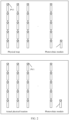
- FIG. 4 is a schematic diagram of a physical map before being updated and a physical map after being updated according to an embodiment of this application.
- the physical map before being updated includes a plurality of photovoltaic strings.
- Each of the plurality of photovoltaic strings includes five photovoltaic modules connected in series.
- a physical location corresponding to a photovoltaic string PV1 in the physical map before being updated is Row 1 and Column 1.
- the first logical location of the photovoltaic string in the physical map before being updated is PV1.
- the physical map before being updated includes a correspondence between PV 1 and Row 1 and Column 1.
- the physical map after being updated includes a plurality of photovoltaic strings.
- Each of the plurality of photovoltaic strings includes five photovoltaic modules connected in series.
- a physical location of the photovoltaic string PV 1 in the physical map after being updated is Row 1 and Column 3.
- a first actual physical location of the photovoltaic string PV 1 is Row 1 and Column 3.
- the physical map after being updated includes a correspondence between PV1 and Row 1 and Column 3.
- the physical map is updated when the actual physical location of the photovoltaic string is inconsistent with the physical location in the physical map.
- the following case is avoided: The actual physical location of the photovoltaic string is inconsistent with the physical location in the physical map, to prepare for subsequent operation and maintenance accurately performed on the photovoltaic module.
- FIG. 5 is a schematic flowchart of another photovoltaic string location update method according to an embodiment of this application. As shown in FIG. 5 , the method further includes the following steps:
- the physical map is further used to indicate a relative location relationship between the plurality of photovoltaic strings.
- the obtaining, based on the first infrared image, a physical location of a photovoltaic string whose image feature is different from the image feature corresponding to the another photovoltaic string, to obtain the first actual physical location includes: obtaining the first actual physical location based on the relative physical location relationship between the plurality of photovoltaic strings and the first infrared image.
- FIG. 6 is a schematic diagram of a first infrared image and a physical map according to an embodiment of this application.
- the first infrared image includes a plurality of photovoltaic strings.
- Each of the plurality of photovoltaic strings includes five photovoltaic modules connected in series. Because the detectable light intensity of the first photovoltaic string is higher than or lower than the detectable light intensity of the another photovoltaic string, the image feature corresponding to the first photovoltaic string in the first infrared image is different from the image feature corresponding to the another photovoltaic string.
- the first photovoltaic string may be distinguished from the plurality of photovoltaic strings based on the first infrared image.
- the physical map includes a relative location relationship between the plurality of photovoltaic strings.
- a relative location relationship between a photovoltaic string 1 and a photovoltaic string 2 is that the photovoltaic string 2 is located on a right side of the photovoltaic string 1. It may be understood that, based on the relative location relationship between the plurality of photovoltaic strings and the first infrared image, it can be learned that the first photovoltaic string is located in Row 1 and Column 3. In other words, the first actual physical location of the first photovoltaic string is Row 1 and Column 3.
- the actual physical location of the photovoltaic string is obtained based on the infrared image, to prepare for subsequent update of the physical map based on the actual physical location of the photovoltaic string.
- the method before the first infrared image is received from the image collection terminal, the method further includes: sending a control indication to an inverter.
- the control indication is used to indicate the inverter to control the detectable light intensity of the first photovoltaic string to be higher than or lower than the detectable light intensity of the another photovoltaic string.
- the first infrared image is an infrared image obtained after the image collection terminal photographs the plurality of photovoltaic strings when the detectable light intensity of the first photovoltaic string is higher than or lower than the detectable light intensity of the another photovoltaic string.
- the inverter is connected to the plurality of photovoltaic strings.
- the control indication carries a threshold.
- the control indication is used to indicate the inverter to control the detectable light intensity of the first photovoltaic string to be higher than or lower than the threshold.
- the detectable light intensity of the another photovoltaic string is lower than the threshold.
- control indication is used to indicate the inverter to control the detectable light intensity of the first photovoltaic string to be higher than or lower than the threshold through adjusting an electrical performance parameter of the first photovoltaic string, and control the detectable light intensity of the another photovoltaic string to be lower than the threshold through adjusting an electrical performance parameter of the another photovoltaic string.
- the electrical performance parameter includes a current or a voltage.
- control indication is used to indicate the inverter to control the detectable light intensity of the first photovoltaic string to be higher than or lower than the threshold through switching an operation mode of the first photovoltaic string, and control the detectable light intensity of the another photovoltaic string to be lower than the threshold through switching an operation mode of the another photovoltaic string.
- the operation mode of the first photovoltaic string includes an open circuit, a short circuit, and a closed circuit.
- the control indication is used to indicate the inverter to control the detectable light intensity of the first photovoltaic string to be higher than or lower than the threshold through switching the first photovoltaic string from a closed circuit to an open circuit, and control the detectable light intensity of the another photovoltaic string to be lower than the threshold through switching the operation mode of the another photovoltaic string to a closed circuit.
- the detectable light intensity of the first photovoltaic string may be higher than or lower than the threshold in a current backflow manner, or the detectable light intensity of the first photovoltaic string may be higher than or lower than the threshold in a voltage backflow manner. This is not limited in this application.
- maximum power point tracking maximum power point tracking, MPPT
- the first photovoltaic string is connected to a first MPPT in the plurality of MPPTs.
- the control indication is used to indicate the first MPPT in the inverter to control the detectable light intensity of the first photovoltaic string to be higher than or lower than the threshold, and another MPPT in the inverter to control the detectable light intensity of the another photovoltaic string to be lower than the threshold.
- control indication is used to indicate the first MPPT in the inverter to control the detectable light intensity of the first photovoltaic string to be higher than or lower than the threshold through adjusting the electrical performance parameter of the first photovoltaic string, and the another MPPT in the inverter to control the detectable light intensity of the another photovoltaic string to be lower than the threshold through adjusting the electrical performance parameter of the another photovoltaic string.
- control indication is used to indicate the first MPPT in the inverter to control the detectable light intensity of the first photovoltaic string to be higher than or lower than the threshold through switching the operation mode of the first photovoltaic string, and the another MPPT in the inverter to control the detectable light intensity of the another photovoltaic string to be lower than the threshold through switching the operation mode of the another photovoltaic string.
- control indication is used to indicate the first MPPT in the inverter to control the detectable light intensity of the first photovoltaic string to be higher than or lower than the threshold through switching the first photovoltaic string from a closed circuit to an open circuit, and the another MPPT in the inverter to control the detectable light intensity of the another photovoltaic string to be lower than the threshold through switching the operation mode of the another photovoltaic string to a closed circuit.
- the method before the first infrared image is received from the image collection terminal, the method further includes: sending a control indication to a combiner box.
- the control indication is used to indicate the inverter to control the detectable light intensity of the first photovoltaic string to be higher than or lower than the detectable light intensity of the another photovoltaic string.
- the first infrared image is an infrared image obtained after the image collection terminal photographs the plurality of photovoltaic strings when the detectable light intensity of the first photovoltaic string is higher than or lower than the detectable light intensity of the another photovoltaic string.
- the combiner box is connected to the plurality of photovoltaic strings. Further, the control indication is used to indicate the combiner box to control the detectable light intensity of the first photovoltaic string to be higher than or lower than the threshold through adjusting an electrical performance parameter of the first photovoltaic string, and control the detectable light intensity of the another photovoltaic string to be lower than the threshold through adjusting an electrical performance parameter of the another photovoltaic string.
- the electrical performance parameter includes a current or a voltage.
- control indication is used to indicate the combiner box to control the detectable light intensity of the first photovoltaic string to be higher than or lower than the threshold through switching an operation mode of the first photovoltaic string, and control the detectable light intensity of the another photovoltaic string to be lower than the threshold through switching an operation mode of the another photovoltaic string.
- the operation mode of the first photovoltaic string includes an open circuit, a short circuit, and a closed circuit.
- control indication is used to indicate the combiner box to control the detectable light intensity of the first photovoltaic string to be higher than or lower than the threshold through switching the first photovoltaic string from a closed circuit to an open circuit, and control the detectable light intensity of the another photovoltaic string to be lower than the threshold through switching the operation mode of the another photovoltaic string to a closed circuit.
- an operation may be performed on the combiner box in a manual manner, so that the detectable light intensity of the first photovoltaic string is higher than or lower than the detectable light intensity of the another photovoltaic string.
- the another photovoltaic string is in a closed circuit; or at night, the another photovoltaic string is in a closed state.
- the detectable light intensity of the first photovoltaic string is higher than or lower than the detectable light intensity of the another photovoltaic string.
- a related operation does not need to be performed on the another photovoltaic string.
- control indication further carries a preset detection sequence.
- the control indication is used to indicate the inverter to perform actual physical location detection on the plurality of photovoltaic strings according to the preset detection sequence.
- the inverter controls detectable light intensity of a photovoltaic string in the plurality of photovoltaic strings to be higher than or lower than the threshold, and detectable light intensity of a photovoltaic string other than the photovoltaic string in the plurality of photovoltaic strings to be lower than the threshold.
- the image collection terminal obtains an infrared image through photographing when the detectable light intensity of the photovoltaic string in the plurality of photovoltaic strings is higher than or lower than the threshold, and the detectable light intensity of the photovoltaic string other than the photovoltaic string in the plurality of photovoltaic strings is lower than the threshold.
- the detectable light intensity of the first photovoltaic string is controlled to be higher than or lower than the detectable light intensity of the another photovoltaic string, so that the image collection terminal obtains the infrared image through photographing, to prepare for obtaining the actual physical location of the first photovoltaic string based on the physical map and the infrared image.
- the method further includes: receiving the first actual physical location sent from the first photovoltaic string.
- the first photovoltaic string includes a plurality of photovoltaic modules connected in series.
- a communication module is disposed on each of the plurality of photovoltaic modules.
- the first actual physical location is sent by a communication module corresponding to the first photovoltaic module.
- the first photovoltaic module is one of the plurality of photovoltaic modules.
- FIG. 7 is a schematic flowchart of another photovoltaic string location update method according to an embodiment of this application. As shown in FIG. 7 , the method further includes the following steps: 701: An inverter sends a logical location of a faulty photovoltaic string to a photovoltaic power station management system.
- the logical location of the faulty photovoltaic string is an identifier corresponding to the faulty photovoltaic string.
- the logical location of the faulty photovoltaic string may be a number corresponding to the faulty photovoltaic string. Further, the number corresponding to the faulty photovoltaic string is obtained through coding.
- the method before the logical location of the faulty photovoltaic string is received from the inverter, the method further includes: sending a fault detection indication to the inverter.
- the fault detection indication is used to indicate the inverter to perform fault detection on each of the plurality of photovoltaic strings.
- the inverter obtains a current value and a voltage value of each of the plurality of photovoltaic strings, and then processes the current value and the voltage value of each of the plurality of photovoltaic strings by using a first fault identification algorithm, to obtain a faulty photovoltaic string from the plurality of photovoltaic strings.
- a photovoltaic string having a current value and a voltage value different from a standard current value and a standard voltage value is screened by using the first fault identification algorithm.
- the fault detection indication may carry the standard current value and the standard voltage value.
- the photovoltaic power station management system obtains a physical location of the faulty photovoltaic string based on an updated physical map and the logical location of the faulty photovoltaic string.
- the second photovoltaic string is any one of the another photovoltaic string.
- the updated physical map is further used to indicate a correspondence between a second logical location of a second photovoltaic string and a second actual physical location.
- the updated physical map is further used to indicate a correspondence between a second logical location of the second photovoltaic string and a physical location of the second photovoltaic string in the physical map.
- the second logical location is an identifier corresponding to the second photovoltaic string.
- the second logical location may be a number corresponding to the second photovoltaic string.
- the second actual physical location of the another photovoltaic string may be the same as or different from the physical location in the physical map.
- the correspondence between the second logical location of the another photovoltaic string and the physical location does not need to be updated in the physical map.
- the correspondence between the second logical location of the another photovoltaic string and the physical location needs to be updated in the physical map.
- An image collection terminal receives the physical location of the faulty photovoltaic string sent by the photovoltaic power station management system.
- the physical location of the faulty photovoltaic string is used by the image collection terminal to perform photographing.
- the method further includes: receiving a fault type of the faulty photovoltaic module from the image collection terminal.
- the faulty photovoltaic module is at least one photovoltaic module of the faulty photovoltaic string.
- the fault type of the faulty photovoltaic module is obtained by the image collection terminal based on a second infrared image including the faulty photovoltaic module.
- the second infrared image is obtained through photographing performed by the image collection terminal based on the physical location of the faulty photovoltaic string.
- the fault type of the faulty photovoltaic module is obtained through processing the second infrared image by using a second fault identification algorithm by the image collection terminal.
- the second fault identification algorithm is used to compare the second infrared image with a plurality of template images, to set at least one fault type in one-to-one correspondence with at least one template image in the plurality of template images to the fault type corresponding to the second infrared image.
- Each of the plurality of template images corresponds to one fault type.
- the fault type of the faulty photovoltaic module includes at least one of the following: abnormal attenuation of output power of a photovoltaic module, potential induced degradation PID of a photovoltaic module, a failure of a battery unit in a photovoltaic module, a current mismatch of a photovoltaic module, a hot spot of a photovoltaic module, a short circuit of a diode in a photovoltaic module, a broken glass panel of a photovoltaic module, an open circuit in a photovoltaic module, or blocking of a photovoltaic module.
- the faulty photovoltaic module is finely determined, and the fault type of the faulty photovoltaic module is obtained, to prepare for subsequent operation and maintenance.
- the method may be applied to an electronic apparatus.
- the electronic apparatus may be, for example, a photovoltaic power station management system, a chip, or an apparatus including the chip.
- the method includes: receiving a logical location of a faulty photovoltaic string that is sent from an inverter; and obtaining a physical location of a faulty photovoltaic string based on the logical location of the faulty photovoltaic string; sending a physical location of the faulty photovoltaic string to an image collection terminal, where the physical location of the faulty photovoltaic string is used by the image collection terminal to perform photographing.
- the logical location of the faulty photovoltaic string that is sent from the inverter is received. For this process, refer to step 701 in FIG. 7 .
- the physical location of the faulty photovoltaic string is sent to the image collection terminal. For this process, refer to step 703 in FIG. 7 .
- the obtaining a physical location of a faulty photovoltaic string based on the logical location of the faulty photovoltaic string includes: obtaining the physical location of the faulty photovoltaic string based on the logical location of the faulty photovoltaic string and a correspondence between a logical location of a photovoltaic string and a physical location.
- the method before obtaining the physical location of the faulty photovoltaic string based on the logical location of the faulty photovoltaic string and the first correspondence between a logical location of a photovoltaic string and a physical location, the method further includes: obtaining, based on a physical map, a physical location of a first photovoltaic string corresponding to a first logical location in the physical map.
- the physical map is used to indicate a correspondence between a logical location of a photovoltaic string and a physical location of the photovoltaic string in the physical map.
- the photovoltaic string includes the first photovoltaic string.
- the physical location of the first photovoltaic string in the physical map is different from a first actual physical location of the first photovoltaic string, the physical location of the photovoltaic string in the physical map is updated to the first actual physical location, to obtain the updated physical map.
- the physical location of the first photovoltaic string corresponding to the first logical location in the physical map is obtained based on the physical map. For this process, refer to step 301 in FIG. 3 .
- the physical location of the photovoltaic string in the physical map is updated to the first actual physical location, to obtain the updated physical map. For this process, refer to step 302 in FIG. 3 .
- the physical map is updated when the actual physical location of the photovoltaic string is inconsistent with the physical location in the physical map.
- the following case is avoided:
- the actual physical location of the photovoltaic string is inconsistent with the physical location in the physical map, to prepare for subsequent operation and maintenance accurately performed on the photovoltaic module.
- the logical location of the faulty photovoltaic string is subsequently roughly determined, the physical location of the faulty photovoltaic string is obtained based on the correspondence between a logical location of a photovoltaic string and a physical location.
- the method further includes: receiving a first infrared image from an image collection terminal, where the first infrared image includes a plurality of photovoltaic strings, the first photovoltaic string is one of the plurality of photovoltaic strings, and an image feature corresponding to the first photovoltaic string in the first infrared image is different from an image feature corresponding to another photovoltaic string; and obtaining, based on the first infrared image, a physical location of a photovoltaic string whose image feature is different from the image feature corresponding to the another photovoltaic string, to obtain the first actual physical location.
- the first infrared image is received from the image collection terminal.
- step 501 in FIG. 5 The physical location of the photovoltaic string whose image feature is different from the image feature corresponding to the another photovoltaic string is obtained based on the first infrared image, to obtain the first actual physical location.
- step 502 in FIG. 5 refers to step 502 in FIG. 5 .
- the actual physical location of the photovoltaic string is obtained based on the infrared image, to prepare for subsequent update of the physical map based on the actual physical location of the photovoltaic string.
- the physical map is further used to indicate a relative physical location relationship between the plurality of photovoltaic strings.
- the obtaining, based on the first infrared image, a physical location of the photovoltaic string whose image feature is different from the image feature corresponding to the another photovoltaic string, to obtain the first actual physical location includes: obtaining the first actual physical location based on the relative physical location relationship between the plurality of photovoltaic strings and the first infrared image.
- the method before the first infrared image is received from the image collection terminal, the method further includes: sending a control indication to an inverter.
- the control indication is used to indicate the inverter to control the detectable light intensity of the first photovoltaic string to be higher than or lower than the detectable light intensity of the another photovoltaic string.
- the first infrared image is an infrared image obtained after the image collection terminal photographs the plurality of photovoltaic strings when the detectable light intensity of the first photovoltaic string is higher than or lower than the detectable light intensity of the another photovoltaic string.
- the control indication is sent to the inverter.
- the detectable light intensity of the first photovoltaic string is controlled to be higher than or lower than the detectable light intensity of the another photovoltaic string, so that the image collection terminal obtains the infrared image through photographing, to prepare for obtaining the actual physical location of the first photovoltaic string based on the physical map and the infrared image.
- the method further includes: receiving the first actual physical location sent from the first photovoltaic string.
- the first photovoltaic string includes a plurality of photovoltaic modules connected in series.
- a communication module is disposed on each of the plurality of photovoltaic modules.
- the first actual physical location is sent by a communication module corresponding to the first photovoltaic module.
- the first photovoltaic module is one of the plurality of photovoltaic modules.
- the method further includes: receiving a fault type of the faulty photovoltaic module from the image collection terminal, where the faulty photovoltaic module is at least one photovoltaic module of the faulty photovoltaic string, the fault type of the faulty photovoltaic module is obtained by the image collection terminal based on a second infrared image including the faulty photovoltaic module, and the second infrared image is obtained through photographing performed by the image collection terminal based on the physical location of the faulty photovoltaic string.
- the faulty photovoltaic module is finely determined, and the fault type of the faulty photovoltaic module is obtained, to prepare for subsequent operation and maintenance.
- FIG. 8 is a schematic diagram of a structure of a photovoltaic string location update apparatus according to an embodiment of this application.
- the apparatus 800 may be applied to the methods shown in FIG. 3 to FIG. 7 .
- the apparatus 800 includes a processing module 801 and a transceiver module 802.
- the processing module 801 is configured to obtain, based on a physical map, a physical location of a first photovoltaic string corresponding to a first logical location in the physical map.
- the physical map is used to indicate a correspondence between a logical location of a photovoltaic string and a physical location of the photovoltaic string in the physical map.
- the photovoltaic string includes the first photovoltaic string.
- the processing module 801 is further configured to: when the physical location of the first photovoltaic string in the physical map is different from a first actual physical location of the first photovoltaic string, update the physical location of the photovoltaic string in the physical map to the first actual physical location, to obtain the updated physical map.
- the physical location of the first photovoltaic string corresponding to the first logical location in the physical map is obtained based on the physical map. For this process, refer to step 301 in FIG. 3 .
- the physical location of the photovoltaic string in the physical map is updated to the first actual physical location, to obtain the updated physical map. For this process, refer to step 302 in FIG. 3 .
- the apparatus further includes a transceiver module.
- the transceiver module 802 is configured to receive a first infrared image from an image collection terminal.
- the first infrared image includes a plurality of photovoltaic strings.
- the first photovoltaic string is one of the plurality of photovoltaic strings.
- An image feature corresponding to the first photovoltaic string in the first infrared image is different from an image feature corresponding to another photovoltaic string.
- the processing module 801 is further configured to obtain, based on the first infrared image, a physical location of a photovoltaic string whose image feature is different from the image feature corresponding to the another photovoltaic string, to obtain the first actual physical location.
- the first infrared image is received from the image collection terminal.
- step 501 in FIG. 5 The physical location of the photovoltaic string whose image feature is different from the image feature corresponding to the another photovoltaic string is obtained based on the first infrared image, to obtain the first actual physical location.
- step 502 in FIG. 5 refers to step 502 in FIG. 5 .
- the physical map is further used to indicate a relative physical location relationship between the plurality of photovoltaic strings.
- the processing module 801 is specifically configured to obtain the first actual physical location based on the relative physical location relationship between the plurality of photovoltaic strings and the first infrared image.
- the transceiver module 802 before receiving the first infrared image sent by the image collection terminal, is further configured to send a control indication to an inverter, where the control indication is used to indicate the inverter to control detectable light intensity of the first photovoltaic string to be higher than or lower than detectable light intensity of the another photovoltaic string.
- the first infrared image is an infrared image obtained after the image collection terminal photographs the plurality of photovoltaic strings when the detectable light intensity of the first photovoltaic string is higher than or lower than the detectable light intensity of the another photovoltaic string.
- the control indication is sent to the inverter.
- the apparatus further includes the transceiver module 802.
- the transceiver module 802 is configured to receive the first actual physical location sent from the first photovoltaic string.
- the transceiver module 802 is further configured to receive a logical location of a faulty photovoltaic string that is sent by the inverter.
- the processing module 801 is further configured to obtain a physical location of the faulty photovoltaic string based on the updated physical map and the logical location of the faulty photovoltaic string.
- the transceiver module 802 is further configured to send the physical location of the faulty photovoltaic string to the image collection terminal.
- the physical location of the faulty photovoltaic string is used by the image collection terminal to perform photographing.
- the logical location of the faulty photovoltaic string that is sent from the inverter is received. For this process, refer to step 701 in FIG. 7 .
- the physical location of the faulty photovoltaic string is sent to the image collection terminal. For this process, refer to step 703 in FIG. 7 .
- the transceiver module 802 is further configured to receive a fault type of the faulty photovoltaic module from the image collection terminal.
- the faulty photovoltaic module is at least one photovoltaic module of the faulty photovoltaic string.
- the fault type of the faulty photovoltaic module is obtained by the image collection terminal based on a second infrared image including the faulty photovoltaic module.
- the second infrared image is obtained through photographing performed by the image collection terminal based on the physical location of the faulty photovoltaic string.
- FIG. 9 is a schematic diagram of a structure of another photovoltaic string location update apparatus according to an embodiment of this application.
- the apparatus 900 may be applied to the methods shown in FIG. 3 to FIG. 7 .
- the apparatus 900 includes a transceiver module 901 and a processing module 902.
- the transceiver module 901 is further configured to receive a logical location of a faulty photovoltaic string that is sent from an inverter.
- the processing module 902 is configured to obtain a physical location of the faulty photovoltaic string based on the logical location of the faulty photovoltaic string.
- the transceiver module 901 is further configured to send the physical location of the faulty photovoltaic string to the image collection terminal.
- the physical location of the faulty photovoltaic string is used by the image collection terminal to perform photographing.
- the logical location of the faulty photovoltaic string that is sent from the inverter is received.
- the physical location of the faulty photovoltaic string is sent to the image collection terminal.
- the processing module 902 is specifically configured to obtain the physical location of the faulty photovoltaic string based on the logical location of the faulty photovoltaic string and a correspondence between a logical location of a photovoltaic string and a physical location.
- the processing module 902 before obtaining the physical location of the faulty photovoltaic string based on the logical location of the faulty photovoltaic string and the first correspondence between a logical location of a photovoltaic string and a physical location, is further configured to obtain, based on a physical map, a physical location of a first photovoltaic string corresponding to a first logical location in the physical map.
- the physical map is used to indicate a correspondence between a logical location of a photovoltaic string and a physical location of the photovoltaic string in the physical map.
- the photovoltaic string includes the first photovoltaic string.
- the processing module 902 is further configured to: when the physical location of the first photovoltaic string in the physical map is different from a first actual physical location of the first photovoltaic string, update the physical location of the photovoltaic string in the physical map to the first actual physical location, to obtain the updated physical map.
- the physical location of the first photovoltaic string corresponding to the first logical location in the physical map is obtained based on the physical map. For this process, refer to step 301 in FIG. 3 .
- the physical location of the photovoltaic string in the physical map is updated to the first actual physical location, to obtain the updated physical map. For this process, refer to step 302 in FIG. 3 .
- the transceiver module 901 is further configured to receive a first infrared image from the image collection terminal.
- the first infrared image includes a plurality of photovoltaic strings.
- the first photovoltaic string is one of the plurality of photovoltaic strings.
- An image feature corresponding to the first photovoltaic string in the first infrared image is different from an image feature corresponding to another photovoltaic string.
- the processing module 902 is further configured to obtain, based on the first infrared image, a physical location of a photovoltaic string whose image feature is different from the image feature corresponding to the another photovoltaic string, to obtain the first actual physical location.
- the first infrared image is received from the image collection terminal.
- step 501 in FIG. 5 The physical location of the photovoltaic string whose image feature is different from the image feature corresponding to the another photovoltaic string is obtained based on the first infrared image, to obtain the first actual physical location.
- step 502 in FIG. 5 refers to step 502 in FIG. 5 .
- the physical map is further used to indicate a relative physical location relationship between the plurality of photovoltaic strings.
- the processing module 902 is specifically configured to obtain the first actual physical location based on the relative physical location relationship between the plurality of photovoltaic strings and the first infrared image.
- the transceiver module before receiving the first infrared image from the image collection terminal, is further configured to send a control indication to the inverter.
- the control indication is used to indicate the inverter to control detectable light intensity of the first photovoltaic string to be higher than or lower than detectable light intensity of the another photovoltaic string.
- the first infrared image is an infrared image obtained after the image collection terminal photographs the plurality of photovoltaic strings when the detectable light intensity of the first photovoltaic string is higher than or lower than the detectable light intensity of the another photovoltaic string.
- the control indication is sent to the inverter.
- the transceiver module 901 is further configured to receive the first actual physical location sent from the first photovoltaic string.
- the first photovoltaic string includes a plurality of photovoltaic modules connected in series.
- a communication module is disposed on each of the plurality of photovoltaic modules.
- the first actual physical location is sent by a communication module corresponding to the first photovoltaic module.
- the first photovoltaic module is one of the plurality of photovoltaic modules.
- the transceiver module 901 is further configured to receive a fault type of a faulty photovoltaic module from the image collection terminal.
- the faulty photovoltaic module is at least one photovoltaic module of the faulty photovoltaic string.
- the fault type of the faulty photovoltaic module is obtained by the image collection terminal based on a second infrared image including the faulty photovoltaic module.
- the second infrared image is obtained through photographing performed by the image collection terminal based on the physical location of the faulty photovoltaic string.
- FIG. 10 is a schematic diagram of a structure of another photovoltaic string location update apparatus according to an embodiment of this application.
- the apparatus 1000 includes at least one processor 1001, at least one memory 1002, and at least one communication interface 1003.
- the processor 1001, the memory 1002, and the communication interface 1003 are connected and communicate with each other by using a communication bus.
- the processor 1001 may be a general-purpose central processing unit (CPU), a microprocessor, an application-specific integrated circuit (application-specific integrated circuit, ASIC), or one or more integrated circuits configured to control execution of the foregoing solution program.
- CPU central processing unit
- ASIC application-specific integrated circuit
- the memory 1002 may be, but is not limited to, a read-only memory (read-only memory, ROM) or another type of static storage device capable of storing static information and instructions, a random access memory (random access memory, RAM) or another type of dynamic storage device capable of storing information and instructions, an electrically erasable programmable read-only memory (Electrically Erasable Programmable Read-Only Memory, EEPROM), a compact disc read-only memory (Compact Disc Read-Only Memory, CD-ROM) or another compact disc storage, an optical disc storage (including a compact disc, a laser disc, an optical disc, a digital versatile disc, a Blu-ray disc, and the like), a magnetic disk storage medium or another magnetic storage device, or any other medium that can be used to carry or store expected program code in an instruction or data structure form and that can be accessed by a computer.
- the memory may exist independently, and is connected to the processor through the bus. The memory may alternatively be integrated with the processor.
- the memory 1002 is configured to store application program code for performing a photovoltaic string location update method.
- the application program code is controlled and executed by the processor 1001.
- the processor 1001 is configured to execute the application program code stored in the memory 1002.
- the communication interface 1003 is configured to communicate with another device or a communication network, for example, the Ethernet, a radio access network (RAN), and a wireless local area network (Wireless Local Area Networks, WLAN).
- a communication network for example, the Ethernet, a radio access network (RAN), and a wireless local area network (Wireless Local Area Networks, WLAN).
- RAN radio access network
- WLAN Wireless Local Area Networks
- An embodiment of this application further provides a computer storage medium.
- the computer storage medium may store a program. When the program is executed, some or all steps of any photovoltaic string location update method recorded in the foregoing method embodiments are performed.
- the photovoltaic string location update system includes a photovoltaic power station management system.
- the photovoltaic power station management system is configured to obtain, based on a physical map, a physical location of a first photovoltaic string corresponding to a first logical location in the physical map.
- the physical map is used to indicate a correspondence between a logical location of a photovoltaic string and a physical location of the photovoltaic string in the physical map.
- the photovoltaic string includes the first photovoltaic string.
- the photovoltaic power station management system is further configured to: when the physical location of the first photovoltaic string in the physical map is different from a first actual physical location of the first photovoltaic string, update the physical location of the photovoltaic string in the physical map to the first actual physical location, to obtain the updated physical map.
- the physical location of the first photovoltaic string corresponding to the first logical location in the physical map is obtained based on the physical map. For this process, refer to step 301 in FIG. 3 .
- the physical location of the photovoltaic string in the physical map is updated to the first actual physical location, to obtain the updated physical map. For this process, refer to step 302 in FIG. 3 .
- the physical map is updated when the actual physical location of the photovoltaic string is inconsistent with the physical location in the physical map.
- the following case is avoided: The actual physical location of the photovoltaic string is inconsistent with the physical location in the physical map, to prepare for subsequent operation and maintenance accurately performed on a photovoltaic module.
- the photovoltaic string location update system further includes an image collection terminal.
- the image collection terminal is configured to send a first infrared image to the photovoltaic power station management system.
- the first infrared image includes a plurality of photovoltaic strings.
- the first photovoltaic string is one of the plurality of photovoltaic strings.
- An image feature corresponding to the first photovoltaic string in the first infrared image is different from an image feature corresponding to another photovoltaic string.
- the photovoltaic power station management system is configured to obtain, based on the first infrared image, a physical location of a photovoltaic string whose image feature is different from the image feature corresponding to the another photovoltaic string, to obtain the first actual physical location.
- the first infrared image is sent to the photovoltaic power station management system.
- step 501 in FIG. 5 The physical location of the photovoltaic string whose image feature is different from the image feature corresponding to the another photovoltaic string is obtained based on the first infrared image, to obtain the first actual physical location.
- step 502 in FIG. 5 refers to step 502 in FIG. 5 .
- the physical map is further used to indicate a relative physical location relationship between the plurality of photovoltaic strings.
- the photovoltaic station management system is specifically configured to obtain the first actual physical location based on the relative physical location relationship between the plurality of photovoltaic strings and the first infrared image.
- the photovoltaic string location update system further includes an inverter.
- the inverter is configured to receive a control indication from the photovoltaic power station management system.
- the control indication is used to indicate the inverter to control detectable light intensity of the first photovoltaic string to be higher than or lower than detectable light intensity of the another photovoltaic string.
- the first infrared image is an infrared image obtained after the image collection terminal photographs the plurality of photovoltaic strings when the detectable light intensity of the first photovoltaic string is higher than or lower than the detectable light intensity of the another photovoltaic string.
- the control indication is received from the photovoltaic power station management system. For this process, refer to related content of the control indication in FIG. 5 .
- the detectable light intensity of the first photovoltaic string is controlled to be higher than or lower than the detectable light intensity of the another photovoltaic string, so that the image collection terminal obtains the infrared image through photographing, to prepare for obtaining the actual physical location of the first photovoltaic string based on the infrared image.
- the photovoltaic power station management system is configured to receive the first actual physical location sent from the first photovoltaic string.
- the first photovoltaic string includes a plurality of photovoltaic modules connected in series.
- a communication module is disposed on each of the plurality of photovoltaic modules.
- the first actual physical location is sent by a communication module corresponding to the first photovoltaic module.
- the first photovoltaic module is one of the plurality of photovoltaic modules.
- the inverter is further configured to send a logical location of a faulty photovoltaic string to the photovoltaic power station management system.
- the photovoltaic power station management system is further configured to obtain a physical location of the faulty photovoltaic string based on the updated physical map and the logical location of the faulty photovoltaic string.
- the image collection terminal is further configured to receive the physical location of the faulty photovoltaic string from the photovoltaic power station management system. The physical location of the faulty photovoltaic string is used by the image collection terminal to perform photographing.
- the logical location of the faulty photovoltaic string is sent to the photovoltaic power station management system. For this process, refer to step 701 in FIG. 7 .
- the physical location of the faulty photovoltaic string is received from the photovoltaic power station management system. For this process, refer to step 703 in FIG. 7 .
- the photovoltaic power station management system is further configured to receive a fault type of a faulty photovoltaic module from the image collection terminal.
- the faulty photovoltaic module is at least one photovoltaic module of the faulty photovoltaic string.
- the fault type of the faulty photovoltaic module is obtained by the image collection terminal based on a second infrared image including the faulty photovoltaic module.
- the second infrared image is obtained through photographing performed by the image collection terminal based on the physical location of the faulty photovoltaic string.
- the faulty photovoltaic module is finely determined, and the fault type of the faulty photovoltaic module is obtained, to prepare for subsequent operation and maintenance.
- the photovoltaic string location update system includes a photovoltaic power station management system, an inverter, and an image collection terminal.
- the inverter is configured to send a logical location of a faulty photovoltaic string to the photovoltaic power station management system.
- the photovoltaic power station management system is configured to obtain a physical location of the faulty photovoltaic string based on the logical location of the faulty photovoltaic string.
- the image collection terminal is configured to receive the physical location of the faulty photovoltaic string from the photovoltaic power station management system. The physical location of the faulty photovoltaic string is used by the image collection terminal to perform photographing.
- the logical location of the faulty photovoltaic string is sent to the photovoltaic power station management system. For this process, refer to step 701 in FIG. 7 .
- the physical location of the faulty photovoltaic string is received from the photovoltaic power station management system. For this process, refer to step 703 in FIG. 7 .
- the photovoltaic power station management system is specifically configured to obtain the physical location of the faulty photovoltaic string based on the logical location of the faulty photovoltaic string and a correspondence between a logical location of a photovoltaic string and a physical location.
- the photovoltaic power station management system is further configured to obtain, based on a physical map, a physical location of a first photovoltaic string corresponding to a first logical location in the physical map.
- the physical map is used to indicate a correspondence between a logical location of a photovoltaic string and a physical location of the photovoltaic string in the physical map.
- the photovoltaic string includes the first photovoltaic string.
- the photovoltaic power station management system is further configured to: when the physical location of the first photovoltaic string in the physical map is different from a first actual physical location of the first photovoltaic string, update the physical location of the photovoltaic string in the physical map to the first actual physical location, to obtain the updated physical map.
- the physical location of the first photovoltaic string corresponding to the first logical location in the physical map is obtained based on the physical map. For this process, refer to step 301 in FIG. 3 .
- the physical location of the photovoltaic string in the physical map is updated to the first actual physical location, to obtain the updated physical map. For this process, refer to step 302 in FIG. 3 .
- the physical map is updated when the actual physical location of the photovoltaic string is inconsistent with the physical location in the physical map.
- the following case is avoided:
- the actual physical location of the photovoltaic string is inconsistent with the physical location in the physical map, to prepare for subsequent operation and maintenance accurately performed on the photovoltaic module.
- the logical location of the faulty photovoltaic string is subsequently roughly determined, the physical location of the faulty photovoltaic string is obtained based on the correspondence between a logical location of a photovoltaic string and a physical location.
- the image collection terminal is further configured to send a first infrared image to the photovoltaic power station management system.
- the first infrared image includes a plurality of photovoltaic strings.
- the first photovoltaic string is one of the plurality of photovoltaic strings.
- An image feature corresponding to the first photovoltaic string in the first infrared image is different from an image feature corresponding to another photovoltaic string.
- the photovoltaic power station management system is further configured to obtain, based on the first infrared image, a physical location of a photovoltaic string whose image feature is different from the image feature corresponding to the another photovoltaic string, to obtain the first actual physical location.
- the first infrared image is sent to the photovoltaic power station management system.
- step 501 in FIG. 5 The physical location of the photovoltaic string whose image feature is different from the image feature corresponding to the another photovoltaic string is obtained based on the first infrared image, to obtain the first actual physical location.
- step 502 in FIG. 5 refers to step 502 in FIG. 5 .
- the actual physical location of the photovoltaic string is obtained based on the infrared image, to prepare for subsequent update of the physical map based on the actual physical location of the photovoltaic string.
- the photovoltaic power station management system is specifically configured to obtain the first actual physical location based on the relative physical location relationship between the plurality of photovoltaic strings and the first infrared image.
- the photovoltaic string location update system further includes the inverter.
- the inverter is configured to receive a control indication from the photovoltaic power station management system.
- the control indication is used to indicate the inverter to control detectable light intensity of the first photovoltaic string to be higher than or lower than detectable light intensity of the another photovoltaic string.
- the first infrared image is an infrared image obtained after the image collection terminal photographs the plurality of photovoltaic strings when the detectable light intensity of the first photovoltaic string is higher than or lower than the detectable light intensity of the another photovoltaic string.
- the control indication is received from the photovoltaic power station management system. For this process, refer to related content of the control indication in FIG. 5 .
- the detectable light intensity of the first photovoltaic string is controlled to be higher than or lower than the detectable light intensity of the another photovoltaic string, so that the image collection terminal obtains the infrared image through photographing, to prepare for obtaining the actual physical location of the first photovoltaic string based on the physical map and the infrared image.
- the photovoltaic power station management system is further configured to receive the first actual physical location sent from the first photovoltaic string.
- the first photovoltaic string includes a plurality of photovoltaic modules connected in series.
- a communication module is disposed on each of the plurality of photovoltaic modules.
- the first actual physical location is sent by a communication module corresponding to the first photovoltaic module.
- the first photovoltaic module is one of the plurality of photovoltaic modules.
- the photovoltaic power station management system is further configured to receive a fault type of a faulty photovoltaic module from the image collection terminal.
- the faulty photovoltaic module is at least one photovoltaic module of the faulty photovoltaic string.
- the fault type of the faulty photovoltaic module is obtained by the image collection terminal based on a second infrared image including the faulty photovoltaic module.
- the second infrared image is obtained through photographing performed by the image collection terminal based on the physical location of the faulty photovoltaic string.
- the faulty photovoltaic module is finely determined, and the fault type of the faulty photovoltaic module is obtained, to prepare for subsequent operation and maintenance.
- division into the units is merely logical function division and may be another division in actual implementation.
- a plurality of units or components may be combined or integrated into another system, or some features may be ignored or not performed.
- the displayed or discussed mutual couplings or direct couplings or communication connections may be implemented through some interfaces.
- the indirect couplings or communication connections between the apparatuses or units may be implemented in electronic, mechanical, or other forms.
- the units described as separate parts may or may not be physically separate, and parts displayed as units may or may not be physical units. In other words, the units or the parts may be located in one location, or may be distributed on a plurality of network units. Some or all of the units may be selected based on actual requirements to achieve the objectives of the solutions of embodiments.
- All or some of the foregoing embodiments may be implemented through software, hardware, firmware, or any combination thereof.
- the embodiments may be implemented completely or partially in a form of a computer program product.
- the computer program product includes one or more computer instructions.
- the computer may be a general-purpose computer, a special-purpose computer, a computer network, or another programmable apparatus.
- the computer instructions may be stored in a computer-readable storage medium, or may be transmitted by using the computer-readable storage medium.
- the computer instructions may be transmitted from one website, computer, server, or data center to another website, computer, server, or data center in a wired (for example, a coaxial cable, an optical fiber, or a digital subscriber line (digital subscriber line, DSL)) or wireless (for example, infrared, radio, or microwave) manner.
- the computer-readable storage medium may be any usable medium accessible by a computer, or a data storage device, such as a server or a data center, integrating one or more usable media.
- the usable medium may be a read-only memory (read-only memory, ROM); a random access memory (random access memory, RAM); or a magnetic medium, for example, a floppy disk, a hard disk, a magnetic tape, or a magnetic disk; an optical medium, for example, a digital versatile disc (digital versatile disc, DVD); a semiconductor medium, for example, a solid-state disk (solid-state disk, SSD); or the like
Landscapes
- Engineering & Computer Science (AREA)
- Business, Economics & Management (AREA)
- Theoretical Computer Science (AREA)
- Physics & Mathematics (AREA)
- General Physics & Mathematics (AREA)
- Economics (AREA)
- Human Resources & Organizations (AREA)
- Strategic Management (AREA)
- Marketing (AREA)
- Health & Medical Sciences (AREA)
- General Business, Economics & Management (AREA)
- Tourism & Hospitality (AREA)
- Quality & Reliability (AREA)
- Databases & Information Systems (AREA)
- Entrepreneurship & Innovation (AREA)
- Primary Health Care (AREA)
- General Health & Medical Sciences (AREA)
- General Engineering & Computer Science (AREA)
- Data Mining & Analysis (AREA)
- Operations Research (AREA)
- Public Health (AREA)
- Water Supply & Treatment (AREA)
- Computer Vision & Pattern Recognition (AREA)
- Power Engineering (AREA)
- Educational Administration (AREA)
- Development Economics (AREA)
- Game Theory and Decision Science (AREA)
- Remote Sensing (AREA)
- Photovoltaic Devices (AREA)
Description
- This disclosure generally relates to photovoltaic technologies, and the invention in particular relates to a photovoltaic string location update method and a photovoltaic string location system for a photovoltaic power station comprising at least one inverter connected to a plurality of photovoltaic strings.
- With large-scale application of photovoltaic technologies, application scenarios are increasingly diversified. Currently, in a photovoltaic power station, a solar photovoltaic module is a basic unit of an optoelectronic system (or an optoelectronic apparatus) for implementing optical-to-electrical conversion, and can convert sunlight energy to direct-current electrical energy. When the photovoltaic module converts the sunlight energy to the direct-current electrical energy, the following problem may occur: Output power of the photovoltaic module is low. Therefore, operation and maintenance need to be regularly performed on the photovoltaic module.
- Generally, when the operation and maintenance are performed on the photovoltaic module, a photovoltaic string in which the photovoltaic module is located needs to be first determined. However, in a construction process of a power station, the following case may exist: An actual physical location of the photovoltaic string is inconsistent with a physical location in a physical map. As a result, the operation and maintenance cannot be accurately performed on the photovoltaic module subsequently.
-
CN 108390645 A discloses a photovoltaic panel fault positioning method based on an unmanned aerial vehicle (UAV) and a thermal imaging technology. The method includes the steps of adopting a thermal imaging camera carried by a multi-rotor UAV to obtain an infrared image of a photovoltaic panel in the air, and adopting an onboard processor to process the infrared image and judge whether theinfrared image has a hot spot fault; calculating an optimal inspection path of the U A V, and ensuring that the UAV is on a planned inspection path by correcting the location during the flight; acquiring the real-time location of the UAV through onboard positioning equipment, and when the fault is found, combining the location of the UAV (latitude and longitude information) and the location of the fault in the image to position the fault location, and storing and uploading relevant information; and implementing precise spot landing and automatic charging of the UAV through a ground marker, and further achieving the automation of the whole process. According to the photovoltaic panel fault positioning method, the fault detection and positioning of the photovoltaic panel can be performed intelligently and efficiently, and the purpose of operation and maintenance of a photovoltaic power station can be achieved. -
WO 2018/211427 A1 discloses a mobile laboratory for testing photovoltaic (PV) modules. The mobile laboratory comprises an enclosure, a testing unit, a GPS unit, and a power supply unit. The enclosure is configured to provide a controlled environment for testing of PV modules with the help of an air conditioning unit. The GPS unit is configured to identify the location of the PV modules being tested and is further configured to transmit location information to the testing unit. The testing unit is configured to test a plurality of parameters associated with the PV modules and, generate an evaluation report based on the tested plurality of parameters in order to assess operational viability of the PV modules. - The object of the present invention is to provide a photovoltaic string location update method and a photovoltaic string location system for a photovoltaic power station comprising at least one inverter connected to a plurality of photovoltaic strings such that the following case is avoided: An actual physical location of a photovoltaic string is inconsistent with a physical location in a physical map, to prepare for subsequent operation and maintenance accurately performed on a photovoltaic module. This object is solved by the attached independent claims and further embodiments and improvements of the invention are listed in the attached dependent claims. Hereinafter, up to the "brief description of the drawings", expressions like "...aspect according to the invention", "according to the invention", or "the present invention", relate to technical teaching of the broadest embodiment as claimed with the independent claims. Expressions like "implementation", "design", "optionally", "preferably", "scenario", "aspect" or similar relate to further embodiments as claimed, and expressions like "example", "... aspect according to an example", "the disclosure describes", or "the disclosure" describe technical teaching which relates to the understanding of the invention or its embodiments, which, however, is not claimed as such.
- According to a first aspect according to the invention, the invention provides the following photovoltaic string location update method. The method is applied to a photovoltaic power station management system, a chip. The method according to the invention includes:
- obtaining, based on a physical map, a physical location of a first photovoltaic string corresponding to a first logical location in the physical map, where the physical map is used to indicate a correspondence between a logical location of a photovoltaic string and a physical location of the photovoltaic string in the physical map, and the photovoltaic string includes the first photovoltaic string; and
- when the physical location of the first photovoltaic string in the physical map is different from a first actual physical location of the first photovoltaic string, updating the physical location of the photovoltaic string in the physical map to the first actual physical location, to obtain an updated physical map.
- The first logical location is an identifier corresponding to the first photovoltaic string. For example, the first logical location may be a number corresponding to the first photovoltaic string.
- It can be learned that, in the foregoing technical solution, the physical map is updated when the actual physical location of the photovoltaic string is inconsistent with the physical location in the physical map. The following case is avoided: The actual physical location of the photovoltaic string is inconsistent with the physical location in the physical map, to prepare for subsequent operation and maintenance accurately performed on a photovoltaic module.
- According to the invention, the method further includes:
- receiving a first infrared image from an image collection terminal, where the first infrared image includes a plurality of photovoltaic strings, the first photovoltaic string is one of the plurality of photovoltaic strings, and an image feature corresponding to the first photovoltaic string in the first infrared image is different from an image feature corresponding to another photovoltaic string; and
- obtaining, based on the first infrared image, a physical location of a photovoltaic string whose image feature is different from the image feature corresponding to the another photovoltaic string, to obtain the first actual physical location.
- It can be learned that, in the foregoing technical solution, the actual physical location of the photovoltaic string is obtained based on the infrared image, to prepare for subsequent update of the physical map.
- In a possible implementation, the physical map is further used to indicate a relative physical location relationship between the plurality of photovoltaic strings. The obtaining, based on the first infrared image, a physical location of a photovoltaic string whose image feature is different from the image feature corresponding to the another photovoltaic string, to obtain the first actual physical location includes:
obtaining the first actual physical location based on the relative physical location relationship between the plurality of photovoltaic strings and the first infrared image. - It can be learned that, in the foregoing technical solution, the actual physical location of the photovoltaic string is obtained based on the infrared image, to prepare for subsequent update of the physical map.
- In a possible implementation, before the receiving a first infrared image from an image collection terminal, the method further includes:
sending a control indication to an inverter, where the control indication is used to indicate the inverter to control detectable light intensity of the first photovoltaic string to be higher than or lower than detectable light intensity of the another photovoltaic string. - The first infrared image is an infrared image obtained after the image collection terminal photographs the plurality of photovoltaic strings when the detectable light intensity of the first photovoltaic string is higher than or lower than the detectable light intensity of the another photovoltaic string.
- It can be learned that, in the foregoing technical solution, the detectable light intensity of the first photovoltaic string is controlled to be higher than or lower than the detectable light intensity of the another photovoltaic string, so that the image collection terminal obtains the infrared image through photographing, to prepare for obtaining the actual physical location of the first photovoltaic string based on the infrared image.
- In a possible implementation, the method further includes:
receiving the first actual physical location sent from the first photovoltaic string. - The first photovoltaic string includes a plurality of photovoltaic modules connected in series. A communication module is disposed on each of the plurality of photovoltaic modules. The first actual physical location is sent by a communication module corresponding to a first photovoltaic module. The first photovoltaic module is one of the plurality of photovoltaic modules.
- It can be learned that, in the foregoing technical solution, the actual physical location of the photovoltaic string is obtained, to prepare for subsequent update of the physical map.
- In a possible implementation, the method further includes:
- receiving a logical location of a faulty photovoltaic string from the inverter;
- obtaining a physical location of the faulty photovoltaic string based on the updated physical map and the logical location of the faulty photovoltaic string; and
- sending the physical location of the faulty photovoltaic string to the image collection terminal, where the physical location of the faulty photovoltaic string is used by the image collection terminal to perform photographing.
- It can be learned that, in the foregoing technical solution, when the logical location of the faulty photovoltaic string is roughly determined, the physical location of the faulty photovoltaic string is obtained based on the updated physical map, to prepare for photographing performed by the image collection terminal based on the physical location of the faulty photovoltaic string.
- In a possible implementation, the method further includes:
receiving a fault type of a faulty photovoltaic module from the image collection terminal, where the faulty photovoltaic module is at least one photovoltaic module of the faulty photovoltaic string, the fault type of the faulty photovoltaic module is obtained by the image collection terminal based on a second infrared image including the faulty photovoltaic module, and the second infrared image is obtained through photographing performed by the image collection terminal based on the physical location of the faulty photovoltaic string. - It can be learned that, in the foregoing technical solution, the faulty photovoltaic module is finely determined, and the fault type of the faulty photovoltaic module is obtained, to prepare for subsequent operation and maintenance.
- According to a second aspect, , wherein the second aspect and its implementations are not claimed, this application provides a photovoltaic string location update method. The method may be applied to an electronic apparatus. The electronic apparatus may be, for example, a photovoltaic power station management system, a chip, or an apparatus including the chip. The method includes:
- receiving a logical location of a faulty photovoltaic string that is sent from an inverter;
- obtaining a physical location of the faulty photovoltaic string based on the logical location of the faulty photovoltaic string; and
- sending the physical location of the faulty photovoltaic string to an image collection terminal, where the physical location of the faulty photovoltaic string is used by the image collection terminal to perform photographing.
- It can be learned that, in the foregoing technical solution, when the logical location of the faulty photovoltaic string is roughly determined, the physical location of the faulty photovoltaic string is obtained, to prepare for photographing performed by the image collection terminal based on the physical location of the faulty photovoltaic string.
- In a possible implementation, the obtaining a physical location of the faulty photovoltaic string based on the logical location of the faulty photovoltaic string includes:
obtaining the physical location of the faulty photovoltaic string based on the logical location of the faulty photovoltaic string and a correspondence between a logical location of a photovoltaic string and a physical location. - It can be learned that, in the foregoing technical solution, when the logical location of the faulty photovoltaic string is roughly determined, the physical location of the faulty photovoltaic string is obtained based on the correspondence between a logical location of a photovoltaic string and a physical location.
- In a possible implementation, before the obtaining the physical location of the faulty photovoltaic string based on the logical location of the faulty photovoltaic string and a first correspondence between a logical location of a photovoltaic string and a physical location, the method further includes:
- obtaining, based on a physical map, a physical location of a first photovoltaic string corresponding to a first logical location in the physical map, where the physical map is used to indicate a correspondence between a logical location of a photovoltaic string and a physical location of the photovoltaic string in the physical map, and the photovoltaic string includes the first photovoltaic string; and
- when the physical location of the first photovoltaic string in the physical map is different from a first actual physical location of the first photovoltaic string, updating the physical location of the photovoltaic string in the physical map to the first actual physical location, to obtain the updated physical map.
- It can be learned that, in the foregoing technical solution, the physical map is updated when the actual physical location of the photovoltaic string is inconsistent with the physical location in the physical map. The following case is avoided: The actual physical location of the photovoltaic string is inconsistent with the physical location in the physical map, to prepare for subsequent operation and maintenance accurately performed on the photovoltaic module. In addition, when the logical location of the faulty photovoltaic string is subsequently roughly determined, the physical location of the faulty photovoltaic string is obtained based on the correspondence between a logical location of a photovoltaic string and a physical location.
- In a possible implementation, the method further includes:
- receiving a first infrared image from the image collection terminal, where the first infrared image includes a plurality of photovoltaic strings, the first photovoltaic string is one of the plurality of photovoltaic strings, and an image feature corresponding to the first photovoltaic string in the first infrared image is different from an image feature corresponding to another photovoltaic string; and
- obtaining, based on the first infrared image, a physical location of a photovoltaic string whose image feature is different from the image feature corresponding to the another photovoltaic string, to obtain the first actual physical location.
- It can be learned that, in the foregoing technical solution, the actual physical location of the photovoltaic string is obtained based on the infrared image, to prepare for subsequent update of the physical map based on the actual physical location of the photovoltaic string.
- In a possible implementation, the physical map is further used to indicate a relative physical location relationship between the plurality of photovoltaic strings. The obtaining, based on the first infrared image, a physical location of a photovoltaic string whose image feature is different from the image feature corresponding to the another photovoltaic string, to obtain the first actual physical location includes:
obtaining the first actual physical location based on the relative physical location relationship between the plurality of photovoltaic strings and the first infrared image. - It can be learned that, in the foregoing technical solution, the actual physical location of the photovoltaic string is obtained based on the infrared image, to prepare for subsequent update of the physical map.
- In a possible implementation, before the receiving a first infrared image from the image collection terminal, the method further includes:
sending a control indication to the inverter, where the control indication is used to indicate the inverter to control detectable light intensity of the first photovoltaic string to be higher than or lower than detectable light intensity of the another photovoltaic string. - The first infrared image is an infrared image obtained after the image collection terminal photographs the plurality of photovoltaic strings when the detectable light intensity of the first photovoltaic string is higher than or lower than the detectable light intensity of the another photovoltaic string.
- It can be learned that, in the foregoing technical solution, the detectable light intensity of the first photovoltaic string is controlled to be higher than or lower than the detectable light intensity of the another photovoltaic string, so that the image collection terminal obtains the infrared image through photographing, to prepare for obtaining the actual physical location of the first photovoltaic string based on the physical map and the infrared image.
- In a possible implementation, the method further includes:
receiving the first actual physical location sent from the first photovoltaic string. - The first photovoltaic string includes a plurality of photovoltaic modules connected in series. A communication module is disposed on each of the plurality of photovoltaic modules. The first actual physical location is sent by a communication module corresponding to the first photovoltaic module. The first photovoltaic module is one of the plurality of photovoltaic modules.
- It can be learned that, in the foregoing technical solution, the actual physical location of the photovoltaic string is obtained, to prepare for subsequent update of the physical map based on the actual physical location of the photovoltaic string.
- In a possible implementation, the method further includes:
receiving a fault type of a faulty photovoltaic module from the image collection terminal, where the faulty photovoltaic module is at least one photovoltaic module of the faulty photovoltaic string, the fault type of the faulty photovoltaic module is obtained by the image collection terminal based on a second infrared image including the faulty photovoltaic module, and the second infrared image is obtained through photographing performed by the image collection terminal based on the physical location of the faulty photovoltaic string. - It can be learned that, in the foregoing technical solution, the faulty photovoltaic module is finely determined, and the fault type of the faulty photovoltaic module is obtained, to prepare for subsequent operation and maintenance.
- According to a third aspect, wherein the third aspect and its implementations are not claimed, in a possible implementation, this application provides a photovoltaic string location update apparatus, including:
a processing module, configured to obtain, based on a physical map, a physical location of a first photovoltaic string corresponding to a first logical location in the physical map, where the physical map is used to indicate a correspondence between a logical location of a photovoltaic string and a physical location of the photovoltaic string in the physical map, and the photovoltaic string includes the first photovoltaic string. - The processing module is further configured to: when the physical location of the first photovoltaic string in the physical map is different from a first actual physical location of the first photovoltaic string, update the physical location of the photovoltaic string in the physical map to the first actual physical location, to obtain the updated physical map.
- In a possible implementation, the apparatus further includes a transceiver module.
- The transceiver module is configured to receive a first infrared image from an image collection terminal. The first infrared image includes a plurality of photovoltaic strings. The first photovoltaic string is one of the plurality of photovoltaic strings. An image feature corresponding to the first photovoltaic string in the first infrared image is different from an image feature corresponding to another photovoltaic string.
- The processing module is further configured to obtain, based on the first infrared image, a physical location of a photovoltaic string whose image feature is different from the image feature corresponding to the another photovoltaic string, to obtain the first actual physical location.
- In a possible implementation, the physical map is further used to indicate a relative physical location relationship between the plurality of photovoltaic strings.
- The processing module is specifically configured to obtain the first actual physical location based on the relative physical location relationship between the plurality of photovoltaic strings and the first infrared image.
- In a possible implementation, before receiving the first infrared image sent by the image collection terminal,
the transceiver module is further configured to send a control indication to an inverter, where the control indication is used to indicate the inverter to control detectable light intensity of the first photovoltaic string to be higher than or lower than detectable light intensity of the another photovoltaic string. - The first infrared image is an infrared image obtained after the image collection terminal photographs the plurality of photovoltaic strings when the detectable light intensity of the first photovoltaic string is higher than or lower than the detectable light intensity of the another photovoltaic string.
- In a possible implementation, the apparatus further includes the transceiver module. The transceiver module is configured to receive the first actual physical location sent from the first photovoltaic string.
- In a possible implementation, the transceiver module is further configured to receive a logical location of a faulty photovoltaic string that is sent by the inverter.
- The processing module is further configured to obtain a physical location of the faulty photovoltaic string based on the updated physical map and the logical location of the faulty photovoltaic string.
- The transceiver module is further configured to send the physical location of the faulty photovoltaic string to the image collection terminal. The physical location of the faulty photovoltaic string is used by the image collection terminal to perform photographing.
- In a possible implementation, the transceiver module is further configured to receive a fault type of the faulty photovoltaic module from the image collection terminal. The faulty photovoltaic module is at least one photovoltaic module of the faulty photovoltaic string. The fault type of the faulty photovoltaic module is obtained by the image collection terminal based on a second infrared image including the faulty photovoltaic module. The second infrared image is obtained through photographing performed by the image collection terminal based on the physical location of the faulty photovoltaic string.
- According to a fourth aspect, wherein the fourth aspect and its implementations are not claimed, in a possible implementation, this application provides a photovoltaic string location update apparatus, including:
- a transceiver module, configured to receive a logical location of a faulty photovoltaic string that is sent from an inverter; and
- a processing module, configured to obtain a physical location of the faulty photovoltaic string based on the logical location of the faulty photovoltaic string.
- The transceiver module is further configured to send the physical location of the faulty photovoltaic string to an image collection terminal. The physical location of the faulty photovoltaic string is used by the image collection terminal to perform photographing.
- In a possible implementation, in the aspect of obtaining the physical location of the faulty photovoltaic string based on the logical location of the faulty photovoltaic string, the processing module is specifically configured to obtain the physical location of the faulty photovoltaic string based on the logical location of the faulty photovoltaic string and a correspondence between a logical location of a photovoltaic string and a physical location.
- In a possible implementation, before obtaining the physical location of the faulty photovoltaic string based on the logical location of the faulty photovoltaic string and the first correspondence between a logical location of a photovoltaic string and a physical location, the processing module is further configured to obtain, based on a physical map, a physical location of a first photovoltaic string corresponding to a first logical location in the physical map. The physical map is used to indicate a correspondence between a logical location of a photovoltaic string and a physical location of the photovoltaic string in the physical map. The photovoltaic string includes the first photovoltaic string. The processing module is further configured to: when the physical location of the first photovoltaic string in the physical map is different from a first actual physical location of the first photovoltaic string, update the physical location of the photovoltaic string in the physical map to the first actual physical location, to obtain the updated physical map.
- In a possible implementation, the transceiver module is further configured to receive a first infrared image from the image collection terminal. The first infrared image includes a plurality of photovoltaic strings. The first photovoltaic string is one of the plurality of photovoltaic strings. An image feature corresponding to the first photovoltaic string in the first infrared image is different from an image feature corresponding to another photovoltaic string.
- The processing module is further configured to obtain, based on the first infrared image, a physical location of a photovoltaic string whose image feature is different from the image feature corresponding to the another photovoltaic string, to obtain the first actual physical location.
- In a possible implementation, the physical map is further used to indicate a relative physical location relationship between the plurality of photovoltaic strings.
- The processing module is specifically configured to obtain the first actual physical location based on the relative physical location relationship between the plurality of photovoltaic strings and the first infrared image.
- In a possible implementation, before receiving the first infrared image from the image collection terminal, the transceiver module is further configured to send a control indication to the inverter. The control indication is used to indicate the inverter to control detectable light intensity of the first photovoltaic string to be higher than or lower than detectable light intensity of the another photovoltaic string.
- The first infrared image is an infrared image obtained after the image collection terminal photographs the plurality of photovoltaic strings when the detectable light intensity of the first photovoltaic string is higher than or lower than the detectable light intensity of the another photovoltaic string.
- In a possible implementation, the transceiver module is further configured to receive the first actual physical location sent from the first photovoltaic string.
- In a possible implementation, the transceiver module is further configured to receive a fault type of a faulty photovoltaic module from the image collection terminal, where the faulty photovoltaic module is at least one photovoltaic module of the faulty photovoltaic string, the fault type of the faulty photovoltaic module is obtained by the image collection terminal based on a second infrared image including the faulty photovoltaic module, and the second infrared image is obtained through photographing performed by the image collection terminal based on the physical location of the faulty photovoltaic string.
- According to a fifth aspect, wherein the fifth aspect and its implementations are not claimed, an embodiment of this application provides a computer readable storage medium. The computer readable storage medium stores a computer program. The program is executed by a processor to perform the method according to any one of the first aspect, the second aspect, or any possible implementation of the first aspect and the second aspect.
- According to a sixth aspect, wherein the sixth aspect and its implementations are not claimed, an embodiment of this application provides a computer program product including instructions. When the computer program product runs on a computer, the computer is enabled to perform the method according to any one of the first aspect, the second aspect, or any possible implementation of the first aspect and the second aspect. The computer program product may be all or partially stored in a storage medium encapsulated inside the processor, or may be all or a partially stored in a storage medium encapsulated outside the processor.
- According to a seventh aspect, wherein the sixth aspect and its implementations are not claimed, an embodiment of this application provides an electronic apparatus. The electronic apparatus may be a chip or an apparatus including the chip. The chip includes a processor and a data interface. The processor uses the data interface to read instructions stored in a memory, to perform the method according to any one of the first aspect, the second aspect, or any possible implementation of the first aspect and the second aspect.
- Optionally, in an implementation, the chip may further include a memory. The memory stores the instructions. The processor is configured to execute the instructions stored in the memory. When the instructions are executed, the processor is configured to perform the method according to any one of the first aspect, the second aspect, or any possible implementation of the first aspect and the second aspect.
- According to an eighth aspect according to the invention, the invention provides the following photovoltaic string location update system. The photovoltaic string location update system includes a photovoltaic power station management system. The photovoltaic power station management system is configured to perform the method according to any one of the first aspect, the second aspect, or any possible implementation of the first aspect and the second aspect.
- In the following description, features which in the above summary of the invention have been marked as "not claimed" or "according to the invention" are also hereinafter, when they are described and explained with reference to the drawings, to be understood as "not claimed" or "not part of the invention" or "according to the invention".
- The following briefly describes the accompanying drawings used in describing the embodiments or the conventional technologies.
-
FIG. 1 is a diagram of an architecture of a photovoltaic string location update system according to an embodiment of this application; -
FIG. 2 is a schematic diagram of an actual physical location of a photovoltaic string and a physical location in a physical map according to an embodiment of this application; -
FIG. 3 is a schematic flowchart of a photovoltaic string location update method according to an embodiment of this application; -
FIG. 4 is a schematic diagram of a physical map before being updated and a physical map after being updated according to an embodiment of this application; -
FIG. 5 is a schematic flowchart of another photovoltaic string location update method according to an embodiment of this application; -
FIG. 6 is a schematic diagram of a first infrared image and a physical map according to an embodiment of this application; -
FIG. 7 is a schematic flowchart of another photovoltaic string location update method according to an embodiment of this application; -
FIG. 8 is a schematic diagram of a structure of a photovoltaic string location update apparatus according to an embodiment of this application; -
FIG. 9 is a schematic diagram of a structure of another photovoltaic string location update apparatus according to an embodiment of this application; and -
FIG. 10 is a schematic diagram of a structure of another photovoltaic string location update apparatus according to an embodiment of this application. - The following describes technical solutions in embodiments of this application with reference to accompanying drawings in the embodiments of this application.
- In the specification, claims, and accompanying drawings of this application, the terms "target", "second", and the like are intended to distinguish between different objects but do not indicate a particular order.
- First,
FIG. 1 is a diagram of an architecture of a photovoltaic string location update system according to an embodiment of this application. As shown inFIG. 1 , the photovoltaic string location update system includes a photovoltaic power station management system 101, a communication apparatus 102,n inverters 103, and animage collection terminal 104. The photovoltaic power station management system 101 according to the claimed invention is a device having a data processing capability and a data storage capability. The communication apparatus 102 is separately connected to the photovoltaic power station management system 101, each of then inverters 103, and theimage collection terminal 104, to implement transmission of data, instructions, and the like. For example, the photovoltaic power station management system 101 may send instructions to aninverter 1 in then inverters 103 by using the communication apparatus 102. Theimage collection terminal 104 may send data and the like to the photovoltaic power station management system 101 by using the communication apparatus 102. It may be understood that the communication apparatus 102 may be, for example, a data collector. In addition, then inverters 103 include theinverter 1 to an inverter n. Each of then inverters 103 is connected to a plurality of photovoltaic strings. For example, theinverter 1 is connected to a plurality of photovoltaic strings, and the inverter n is connected to a plurality of photovoltaic strings. Theimage collection terminal 104 is a removable device capable of data processing, data storage, and infrared image photographing. For example, theimage collection terminal 104 is a drone capable of data processing, data storage, and infrared image photographing. -
FIG. 2 is a schematic diagram of an actual physical location of a photovoltaic string and a physical location in a physical map according to an embodiment of this application. As shown inFIG. 2 , the physical map includes a plurality of photovoltaic strings. Each of the plurality of photovoltaic strings includes five photovoltaic modules connected in series. Further, a physical location corresponding to a photovoltaic string PV1 in the physical map isRow 1 andColumn 1. In addition, there are a plurality of photovoltaic strings for an actual physical location. Each of the plurality of photovoltaic strings includes five photovoltaic modules connected in series. Further, it can be learned that an actual physical location corresponding to the photovoltaic string PV1 isRow 1 and Column 3. Therefore, the actual physical location of the photovoltaic string PV1 is inconsistent with the physical location in the physical map. As a result, subsequent operation and maintenance cannot be accurately performed on the photovoltaic module. - On this basis, an embodiment of this application provides a photovoltaic string location update method to resolve the foregoing problem. The following describes this embodiment of this application in detail.
- The photovoltaic string location update method provided in this embodiment of this application may be applied to an electronic apparatus. The electronic apparatus may be, for example, a photovoltaic power station management system, a chip, or an apparatus including the chip. The following uses the photovoltaic power station management system as an example.
FIG. 3 is a schematic flowchart of a photovoltaic string location update method according to an embodiment of this application. As shown inFIG. 3 , the method includes the following steps: - 301: A photovoltaic power station management system obtains according to the claimed invention, based on a physical map, a physical location of a first photovoltaic string corresponding to a first logical location in the physical map. The physical map is used to indicate a correspondence between a logical location of a photovoltaic string and a physical location of the photovoltaic string in the physical map. The photovoltaic string includes the first photovoltaic string.
- The first logical location is an identifier corresponding to the first photovoltaic string. For example, the first logical location may be a number corresponding to the first photovoltaic string. Further, the number corresponding to the first photovoltaic string is obtained through coding.
- 302: When the physical location of the first photovoltaic string in the physical map is different from a first actual physical location of the first photovoltaic string, the photovoltaic power station management system updates according to the claimed invention the physical location of the photovoltaic string in the physical map to the first actual physical location, to obtain the updated physical map.
- For example,
FIG. 4 is a schematic diagram of a physical map before being updated and a physical map after being updated according to an embodiment of this application. As shown inFIG. 4 , it can be learned that the physical map before being updated includes a plurality of photovoltaic strings. Each of the plurality of photovoltaic strings includes five photovoltaic modules connected in series. A physical location corresponding to a photovoltaic string PV1 in the physical map before being updated isRow 1 andColumn 1. Further, the first logical location of the photovoltaic string in the physical map before being updated is PV1. It can be understood that the physical map before being updated includes a correspondence betweenPV 1 andRow 1 andColumn 1. In addition, the physical map after being updated includes a plurality of photovoltaic strings. Each of the plurality of photovoltaic strings includes five photovoltaic modules connected in series. A physical location of thephotovoltaic string PV 1 in the physical map after being updated isRow 1 and Column 3. In other words, a first actual physical location of thephotovoltaic string PV 1 isRow 1 and Column 3. Further, the physical map after being updated includes a correspondence between PV1 andRow 1 and Column 3. - It can be learned that, in the foregoing technical solution, the physical map is updated when the actual physical location of the photovoltaic string is inconsistent with the physical location in the physical map. The following case is avoided: The actual physical location of the photovoltaic string is inconsistent with the physical location in the physical map, to prepare for subsequent operation and maintenance accurately performed on the photovoltaic module.
-
FIG. 5 is a schematic flowchart of another photovoltaic string location update method according to an embodiment of this application. As shown inFIG. 5 , the method further includes the following steps: - 501: An image collection terminal sends according to the claimed invention a first infrared image to a photovoltaic power station management system. The first infrared image includes a plurality of photovoltaic strings. The first photovoltaic string is one of the plurality of photovoltaic strings. An image feature corresponding to the first photovoltaic string in the first infrared image is different from an image feature corresponding to another photovoltaic string.
Because detectable light intensity of the first photovoltaic string is higher than or lower than detectable light intensity of the another photovoltaic string, the image feature corresponding to the first photovoltaic string in the first infrared image is different from the image feature corresponding to the another photovoltaic string. In addition, another technical means may also be used to enable the image feature corresponding to the first photovoltaic string in the first infrared image to be different from the image feature corresponding to the another photovoltaic string. This is not limited in this application. - 502: The photovoltaic power station management system obtains, according to the claimed invention, based on the first infrared image, a physical location of a photovoltaic string whose image feature is different from the image feature corresponding to the another photovoltaic string, to obtain the first actual physical location.
- The physical map is further used to indicate a relative location relationship between the plurality of photovoltaic strings. The obtaining, based on the first infrared image, a physical location of a photovoltaic string whose image feature is different from the image feature corresponding to the another photovoltaic string, to obtain the first actual physical location includes: obtaining the first actual physical location based on the relative physical location relationship between the plurality of photovoltaic strings and the first infrared image.
- For example,
FIG. 6 is a schematic diagram of a first infrared image and a physical map according to an embodiment of this application. As shown inFIG. 6 , the first infrared image includes a plurality of photovoltaic strings. Each of the plurality of photovoltaic strings includes five photovoltaic modules connected in series. Because the detectable light intensity of the first photovoltaic string is higher than or lower than the detectable light intensity of the another photovoltaic string, the image feature corresponding to the first photovoltaic string in the first infrared image is different from the image feature corresponding to the another photovoltaic string. In other words, the first photovoltaic string may be distinguished from the plurality of photovoltaic strings based on the first infrared image. Further, the physical map includes a relative location relationship between the plurality of photovoltaic strings. For example, a relative location relationship between aphotovoltaic string 1 and aphotovoltaic string 2 is that thephotovoltaic string 2 is located on a right side of thephotovoltaic string 1. It may be understood that, based on the relative location relationship between the plurality of photovoltaic strings and the first infrared image, it can be learned that the first photovoltaic string is located inRow 1 and Column 3. In other words, the first actual physical location of the first photovoltaic string isRow 1 and Column 3. - It can be learned that, in the foregoing technical solution, the actual physical location of the photovoltaic string is obtained based on the infrared image, to prepare for subsequent update of the physical map based on the actual physical location of the photovoltaic string.
- Optionally, in a possible implementation, before the first infrared image is received from the image collection terminal, the method further includes: sending a control indication to an inverter. The control indication is used to indicate the inverter to control the detectable light intensity of the first photovoltaic string to be higher than or lower than the detectable light intensity of the another photovoltaic string. The first infrared image is an infrared image obtained after the image collection terminal photographs the plurality of photovoltaic strings when the detectable light intensity of the first photovoltaic string is higher than or lower than the detectable light intensity of the another photovoltaic string.
- The inverter is connected to the plurality of photovoltaic strings.
- The control indication carries a threshold. The control indication is used to indicate the inverter to control the detectable light intensity of the first photovoltaic string to be higher than or lower than the threshold. The detectable light intensity of the another photovoltaic string is lower than the threshold.
- Further, the control indication is used to indicate the inverter to control the detectable light intensity of the first photovoltaic string to be higher than or lower than the threshold through adjusting an electrical performance parameter of the first photovoltaic string, and control the detectable light intensity of the another photovoltaic string to be lower than the threshold through adjusting an electrical performance parameter of the another photovoltaic string. The electrical performance parameter includes a current or a voltage. Alternatively, the control indication is used to indicate the inverter to control the detectable light intensity of the first photovoltaic string to be higher than or lower than the threshold through switching an operation mode of the first photovoltaic string, and control the detectable light intensity of the another photovoltaic string to be lower than the threshold through switching an operation mode of the another photovoltaic string. The operation mode of the first photovoltaic string includes an open circuit, a short circuit, and a closed circuit. Further, the control indication is used to indicate the inverter to control the detectable light intensity of the first photovoltaic string to be higher than or lower than the threshold through switching the first photovoltaic string from a closed circuit to an open circuit, and control the detectable light intensity of the another photovoltaic string to be lower than the threshold through switching the operation mode of the another photovoltaic string to a closed circuit.
- It can be understood that, when the electrical performance parameter of the first photovoltaic string is adjusted, the detectable light intensity of the first photovoltaic string may be higher than or lower than the threshold in a current backflow manner, or the detectable light intensity of the first photovoltaic string may be higher than or lower than the threshold in a voltage backflow manner. This is not limited in this application.
- In addition, there are a plurality of maximum power point tracking (maximum power point tracking, MPPT) solar controllers in the inverter. The first photovoltaic string is connected to a first MPPT in the plurality of MPPTs. The control indication is used to indicate the first MPPT in the inverter to control the detectable light intensity of the first photovoltaic string to be higher than or lower than the threshold, and another MPPT in the inverter to control the detectable light intensity of the another photovoltaic string to be lower than the threshold.
- Further, the control indication is used to indicate the first MPPT in the inverter to control the detectable light intensity of the first photovoltaic string to be higher than or lower than the threshold through adjusting the electrical performance parameter of the first photovoltaic string, and the another MPPT in the inverter to control the detectable light intensity of the another photovoltaic string to be lower than the threshold through adjusting the electrical performance parameter of the another photovoltaic string. Alternatively, the control indication is used to indicate the first MPPT in the inverter to control the detectable light intensity of the first photovoltaic string to be higher than or lower than the threshold through switching the operation mode of the first photovoltaic string, and the another MPPT in the inverter to control the detectable light intensity of the another photovoltaic string to be lower than the threshold through switching the operation mode of the another photovoltaic string. In other words, the control indication is used to indicate the first MPPT in the inverter to control the detectable light intensity of the first photovoltaic string to be higher than or lower than the threshold through switching the first photovoltaic string from a closed circuit to an open circuit, and the another MPPT in the inverter to control the detectable light intensity of the another photovoltaic string to be lower than the threshold through switching the operation mode of the another photovoltaic string to a closed circuit.
- Further, in a possible implementation, before the first infrared image is received from the image collection terminal, the method further includes: sending a control indication to a combiner box. The control indication is used to indicate the inverter to control the detectable light intensity of the first photovoltaic string to be higher than or lower than the detectable light intensity of the another photovoltaic string. The first infrared image is an infrared image obtained after the image collection terminal photographs the plurality of photovoltaic strings when the detectable light intensity of the first photovoltaic string is higher than or lower than the detectable light intensity of the another photovoltaic string.
- The combiner box is connected to the plurality of photovoltaic strings. Further, the control indication is used to indicate the combiner box to control the detectable light intensity of the first photovoltaic string to be higher than or lower than the threshold through adjusting an electrical performance parameter of the first photovoltaic string, and control the detectable light intensity of the another photovoltaic string to be lower than the threshold through adjusting an electrical performance parameter of the another photovoltaic string. The electrical performance parameter includes a current or a voltage. Alternatively, the control indication is used to indicate the combiner box to control the detectable light intensity of the first photovoltaic string to be higher than or lower than the threshold through switching an operation mode of the first photovoltaic string, and control the detectable light intensity of the another photovoltaic string to be lower than the threshold through switching an operation mode of the another photovoltaic string. The operation mode of the first photovoltaic string includes an open circuit, a short circuit, and a closed circuit. Further, the control indication is used to indicate the combiner box to control the detectable light intensity of the first photovoltaic string to be higher than or lower than the threshold through switching the first photovoltaic string from a closed circuit to an open circuit, and control the detectable light intensity of the another photovoltaic string to be lower than the threshold through switching the operation mode of the another photovoltaic string to a closed circuit.
- In addition, an operation may be performed on the combiner box in a manual manner, so that the detectable light intensity of the first photovoltaic string is higher than or lower than the detectable light intensity of the another photovoltaic string.
- Further, in the daytime, the another photovoltaic string is in a closed circuit; or at night, the another photovoltaic string is in a closed state. In other words, when the detectable light intensity of the first photovoltaic string is higher than or lower than the detectable light intensity of the another photovoltaic string. A related operation does not need to be performed on the another photovoltaic string.
- It may be understood that the control indication further carries a preset detection sequence. The control indication is used to indicate the inverter to perform actual physical location detection on the plurality of photovoltaic strings according to the preset detection sequence. During each time of actual physical location detection, the inverter controls detectable light intensity of a photovoltaic string in the plurality of photovoltaic strings to be higher than or lower than the threshold, and detectable light intensity of a photovoltaic string other than the photovoltaic string in the plurality of photovoltaic strings to be lower than the threshold. The image collection terminal obtains an infrared image through photographing when the detectable light intensity of the photovoltaic string in the plurality of photovoltaic strings is higher than or lower than the threshold, and the detectable light intensity of the photovoltaic string other than the photovoltaic string in the plurality of photovoltaic strings is lower than the threshold.
- It can be learned that, in the foregoing technical solution, the detectable light intensity of the first photovoltaic string is controlled to be higher than or lower than the detectable light intensity of the another photovoltaic string, so that the image collection terminal obtains the infrared image through photographing, to prepare for obtaining the actual physical location of the first photovoltaic string based on the physical map and the infrared image.
- Optionally, in a possible implementation, the method further includes:
receiving the first actual physical location sent from the first photovoltaic string. - The first photovoltaic string includes a plurality of photovoltaic modules connected in series. A communication module is disposed on each of the plurality of photovoltaic modules. The first actual physical location is sent by a communication module corresponding to the first photovoltaic module. The first photovoltaic module is one of the plurality of photovoltaic modules.
- It can be learned that, in the foregoing technical solution, the actual physical location of the photovoltaic string is obtained, to prepare for subsequent update of the physical map based on the actual physical location of the photovoltaic string.
-
FIG. 7 is a schematic flowchart of another photovoltaic string location update method according to an embodiment of this application. As shown inFIG. 7 , the method further includes the following steps:
701: An inverter sends a logical location of a faulty photovoltaic string to a photovoltaic power station management system. - The logical location of the faulty photovoltaic string is an identifier corresponding to the faulty photovoltaic string. For example, the logical location of the faulty photovoltaic string may be a number corresponding to the faulty photovoltaic string. Further, the number corresponding to the faulty photovoltaic string is obtained through coding.
- In a possible implementation, before the logical location of the faulty photovoltaic string is received from the inverter, the method further includes: sending a fault detection indication to the inverter. The fault detection indication is used to indicate the inverter to perform fault detection on each of the plurality of photovoltaic strings. When the fault detection function is implemented, the inverter obtains a current value and a voltage value of each of the plurality of photovoltaic strings, and then processes the current value and the voltage value of each of the plurality of photovoltaic strings by using a first fault identification algorithm, to obtain a faulty photovoltaic string from the plurality of photovoltaic strings. A photovoltaic string having a current value and a voltage value different from a standard current value and a standard voltage value is screened by using the first fault identification algorithm. The fault detection indication may carry the standard current value and the standard voltage value.
- 702: The photovoltaic power station management system obtains a physical location of the faulty photovoltaic string based on an updated physical map and the logical location of the faulty photovoltaic string.
- The second photovoltaic string is any one of the another photovoltaic string. The updated physical map is further used to indicate a correspondence between a second logical location of a second photovoltaic string and a second actual physical location. Alternatively, the updated physical map is further used to indicate a correspondence between a second logical location of the second photovoltaic string and a physical location of the second photovoltaic string in the physical map. The second logical location is an identifier corresponding to the second photovoltaic string. For example, the second logical location may be a number corresponding to the second photovoltaic string.
- It can be learned that for the another photovoltaic string, the second actual physical location of the another photovoltaic string may be the same as or different from the physical location in the physical map. When the second actual physical location is the same as the physical location, the correspondence between the second logical location of the another photovoltaic string and the physical location does not need to be updated in the physical map. When the second actual physical location is different from the physical location, the correspondence between the second logical location of the another photovoltaic string and the physical location needs to be updated in the physical map.
- 703: An image collection terminal receives the physical location of the faulty photovoltaic string sent by the photovoltaic power station management system. The physical location of the faulty photovoltaic string is used by the image collection terminal to perform photographing.
- It can be learned that, in the foregoing technical solution, when the logical location of the faulty photovoltaic string is roughly determined, the physical location of the faulty photovoltaic string is obtained based on the updated physical map, to prepare for photographing performed by the image collection terminal based on the physical location of the faulty photovoltaic string.
- Optionally, in a possible implementation, the method further includes: receiving a fault type of the faulty photovoltaic module from the image collection terminal. The faulty photovoltaic module is at least one photovoltaic module of the faulty photovoltaic string. The fault type of the faulty photovoltaic module is obtained by the image collection terminal based on a second infrared image including the faulty photovoltaic module. The second infrared image is obtained through photographing performed by the image collection terminal based on the physical location of the faulty photovoltaic string.
- The fault type of the faulty photovoltaic module is obtained through processing the second infrared image by using a second fault identification algorithm by the image collection terminal. The second fault identification algorithm is used to compare the second infrared image with a plurality of template images, to set at least one fault type in one-to-one correspondence with at least one template image in the plurality of template images to the fault type corresponding to the second infrared image. Each of the plurality of template images corresponds to one fault type. Further, the fault type of the faulty photovoltaic module includes at least one of the following: abnormal attenuation of output power of a photovoltaic module, potential induced degradation PID of a photovoltaic module, a failure of a battery unit in a photovoltaic module, a current mismatch of a photovoltaic module, a hot spot of a photovoltaic module, a short circuit of a diode in a photovoltaic module, a broken glass panel of a photovoltaic module, an open circuit in a photovoltaic module, or blocking of a photovoltaic module.
- It can be learned that, in the foregoing technical solution, the faulty photovoltaic module is finely determined, and the fault type of the faulty photovoltaic module is obtained, to prepare for subsequent operation and maintenance.
- This application provides another photovoltaic string location update method. The method may be applied to an electronic apparatus. The electronic apparatus may be, for example, a photovoltaic power station management system, a chip, or an apparatus including the chip. The method includes: receiving a logical location of a faulty photovoltaic string that is sent from an inverter; and obtaining a physical location of a faulty photovoltaic string based on the logical location of the faulty photovoltaic string; sending a physical location of the faulty photovoltaic string to an image collection terminal, where the physical location of the faulty photovoltaic string is used by the image collection terminal to perform photographing.
- The logical location of the faulty photovoltaic string that is sent from the inverter is received. For this process, refer to step 701 in
FIG. 7 . The physical location of the faulty photovoltaic string is sent to the image collection terminal. For this process, refer to step 703 inFIG. 7 . - It can be learned that, in the foregoing technical solution, when the logical location of the faulty photovoltaic string is roughly determined, the physical location of the faulty photovoltaic string is obtained, to prepare for photographing performed by the image collection terminal based on the physical location of the faulty photovoltaic string.
- In a possible implementation, the obtaining a physical location of a faulty photovoltaic string based on the logical location of the faulty photovoltaic string includes: obtaining the physical location of the faulty photovoltaic string based on the logical location of the faulty photovoltaic string and a correspondence between a logical location of a photovoltaic string and a physical location.
- It can be learned that, in the foregoing technical solution, when the logical location of the faulty photovoltaic string is roughly determined, the physical location of the faulty photovoltaic string is obtained based on the correspondence between a logical location of a photovoltaic string and a physical location.
- In a possible implementation, before obtaining the physical location of the faulty photovoltaic string based on the logical location of the faulty photovoltaic string and the first correspondence between a logical location of a photovoltaic string and a physical location, the method further includes: obtaining, based on a physical map, a physical location of a first photovoltaic string corresponding to a first logical location in the physical map. The physical map is used to indicate a correspondence between a logical location of a photovoltaic string and a physical location of the photovoltaic string in the physical map. The photovoltaic string includes the first photovoltaic string. When the physical location of the first photovoltaic string in the physical map is different from a first actual physical location of the first photovoltaic string, the physical location of the photovoltaic string in the physical map is updated to the first actual physical location, to obtain the updated physical map.
- The physical location of the first photovoltaic string corresponding to the first logical location in the physical map is obtained based on the physical map. For this process, refer to step 301 in
FIG. 3 . When the physical location of the first photovoltaic string in the physical map is different from the first actual physical location of the first photovoltaic string, the physical location of the photovoltaic string in the physical map is updated to the first actual physical location, to obtain the updated physical map. For this process, refer to step 302 inFIG. 3 . - It can be learned that, in the foregoing technical solution, the physical map is updated when the actual physical location of the photovoltaic string is inconsistent with the physical location in the physical map. The following case is avoided: The actual physical location of the photovoltaic string is inconsistent with the physical location in the physical map, to prepare for subsequent operation and maintenance accurately performed on the photovoltaic module. In addition, when the logical location of the faulty photovoltaic string is subsequently roughly determined, the physical location of the faulty photovoltaic string is obtained based on the correspondence between a logical location of a photovoltaic string and a physical location.
- In a possible implementation, the method further includes: receiving a first infrared image from an image collection terminal, where the first infrared image includes a plurality of photovoltaic strings, the first photovoltaic string is one of the plurality of photovoltaic strings, and an image feature corresponding to the first photovoltaic string in the first infrared image is different from an image feature corresponding to another photovoltaic string; and obtaining, based on the first infrared image, a physical location of a photovoltaic string whose image feature is different from the image feature corresponding to the another photovoltaic string, to obtain the first actual physical location.
- The first infrared image is received from the image collection terminal. For this process, refer to step 501 in
FIG. 5 . The physical location of the photovoltaic string whose image feature is different from the image feature corresponding to the another photovoltaic string is obtained based on the first infrared image, to obtain the first actual physical location. For this process, refer to step 502 inFIG. 5 . - It can be learned that, in the foregoing technical solution, the actual physical location of the photovoltaic string is obtained based on the infrared image, to prepare for subsequent update of the physical map based on the actual physical location of the photovoltaic string.
- In a possible implementation, the physical map is further used to indicate a relative physical location relationship between the plurality of photovoltaic strings. The obtaining, based on the first infrared image, a physical location of the photovoltaic string whose image feature is different from the image feature corresponding to the another photovoltaic string, to obtain the first actual physical location includes: obtaining the first actual physical location based on the relative physical location relationship between the plurality of photovoltaic strings and the first infrared image.
- It can be learned that, in the foregoing technical solution, the actual physical location of the photovoltaic string is obtained based on the infrared image, to prepare for subsequent update of the physical map.
- In a possible implementation, before the first infrared image is received from the image collection terminal, the method further includes: sending a control indication to an inverter. The control indication is used to indicate the inverter to control the detectable light intensity of the first photovoltaic string to be higher than or lower than the detectable light intensity of the another photovoltaic string. The first infrared image is an infrared image obtained after the image collection terminal photographs the plurality of photovoltaic strings when the detectable light intensity of the first photovoltaic string is higher than or lower than the detectable light intensity of the another photovoltaic string.
- The control indication is sent to the inverter. For this process, refer to related content of the control indication in
FIG. 5 . - It can be learned that, in the foregoing technical solution, the detectable light intensity of the first photovoltaic string is controlled to be higher than or lower than the detectable light intensity of the another photovoltaic string, so that the image collection terminal obtains the infrared image through photographing, to prepare for obtaining the actual physical location of the first photovoltaic string based on the physical map and the infrared image.
- In a possible implementation, the method further includes: receiving the first actual physical location sent from the first photovoltaic string.
- The first photovoltaic string includes a plurality of photovoltaic modules connected in series. A communication module is disposed on each of the plurality of photovoltaic modules. The first actual physical location is sent by a communication module corresponding to the first photovoltaic module. The first photovoltaic module is one of the plurality of photovoltaic modules.
- It can be learned that, in the foregoing technical solution, the actual physical location of the photovoltaic string is obtained, to prepare for subsequent update of the physical map based on the actual physical location of the photovoltaic string.
- In a possible implementation, the method further includes:
receiving a fault type of the faulty photovoltaic module from the image collection terminal, where the faulty photovoltaic module is at least one photovoltaic module of the faulty photovoltaic string, the fault type of the faulty photovoltaic module is obtained by the image collection terminal based on a second infrared image including the faulty photovoltaic module, and the second infrared image is obtained through photographing performed by the image collection terminal based on the physical location of the faulty photovoltaic string. - For the fault type, refer to related content of the fault type in
FIG. 7 . - It can be learned that, in the foregoing technical solution, the faulty photovoltaic module is finely determined, and the fault type of the faulty photovoltaic module is obtained, to prepare for subsequent operation and maintenance.
-
FIG. 8 is a schematic diagram of a structure of a photovoltaic string location update apparatus according to an embodiment of this application. Theapparatus 800 may be applied to the methods shown inFIG. 3 to FIG. 7 . As shown inFIG. 8 , theapparatus 800 includes aprocessing module 801 and atransceiver module 802. - The
processing module 801 is configured to obtain, based on a physical map, a physical location of a first photovoltaic string corresponding to a first logical location in the physical map. The physical map is used to indicate a correspondence between a logical location of a photovoltaic string and a physical location of the photovoltaic string in the physical map. The photovoltaic string includes the first photovoltaic string. Theprocessing module 801 is further configured to: when the physical location of the first photovoltaic string in the physical map is different from a first actual physical location of the first photovoltaic string, update the physical location of the photovoltaic string in the physical map to the first actual physical location, to obtain the updated physical map. - The physical location of the first photovoltaic string corresponding to the first logical location in the physical map is obtained based on the physical map. For this process, refer to step 301 in
FIG. 3 . When the physical location of the first photovoltaic string in the physical map is different from the first actual physical location of the first photovoltaic string, the physical location of the photovoltaic string in the physical map is updated to the first actual physical location, to obtain the updated physical map. For this process, refer to step 302 inFIG. 3 . - In a possible implementation, the apparatus further includes a transceiver module.
- The
transceiver module 802 is configured to receive a first infrared image from an image collection terminal. The first infrared image includes a plurality of photovoltaic strings. The first photovoltaic string is one of the plurality of photovoltaic strings. An image feature corresponding to the first photovoltaic string in the first infrared image is different from an image feature corresponding to another photovoltaic string. Theprocessing module 801 is further configured to obtain, based on the first infrared image, a physical location of a photovoltaic string whose image feature is different from the image feature corresponding to the another photovoltaic string, to obtain the first actual physical location. - The first infrared image is received from the image collection terminal. For this process, refer to step 501 in
FIG. 5 . The physical location of the photovoltaic string whose image feature is different from the image feature corresponding to the another photovoltaic string is obtained based on the first infrared image, to obtain the first actual physical location. For this process, refer to step 502 inFIG. 5 . - In a possible implementation, the physical map is further used to indicate a relative physical location relationship between the plurality of photovoltaic strings.
- The
processing module 801 is specifically configured to obtain the first actual physical location based on the relative physical location relationship between the plurality of photovoltaic strings and the first infrared image. - In a possible implementation, before receiving the first infrared image sent by the image collection terminal, the
transceiver module 802 is further configured to send a control indication to an inverter, where the control indication is used to indicate the inverter to control detectable light intensity of the first photovoltaic string to be higher than or lower than detectable light intensity of the another photovoltaic string. - The first infrared image is an infrared image obtained after the image collection terminal photographs the plurality of photovoltaic strings when the detectable light intensity of the first photovoltaic string is higher than or lower than the detectable light intensity of the another photovoltaic string.
- The control indication is sent to the inverter. For this process, refer to related content of the control indication in
FIG. 5 . - In a possible implementation, the apparatus further includes the
transceiver module 802. Thetransceiver module 802 is configured to receive the first actual physical location sent from the first photovoltaic string. - In a possible implementation, the
transceiver module 802 is further configured to receive a logical location of a faulty photovoltaic string that is sent by the inverter. - The
processing module 801 is further configured to obtain a physical location of the faulty photovoltaic string based on the updated physical map and the logical location of the faulty photovoltaic string. - The
transceiver module 802 is further configured to send the physical location of the faulty photovoltaic string to the image collection terminal. The physical location of the faulty photovoltaic string is used by the image collection terminal to perform photographing. - The logical location of the faulty photovoltaic string that is sent from the inverter is received. For this process, refer to step 701 in
FIG. 7 . The physical location of the faulty photovoltaic string is sent to the image collection terminal. For this process, refer to step 703 inFIG. 7 . - In a possible implementation, the
transceiver module 802 is further configured to receive a fault type of the faulty photovoltaic module from the image collection terminal. The faulty photovoltaic module is at least one photovoltaic module of the faulty photovoltaic string. The fault type of the faulty photovoltaic module is obtained by the image collection terminal based on a second infrared image including the faulty photovoltaic module. The second infrared image is obtained through photographing performed by the image collection terminal based on the physical location of the faulty photovoltaic string. - For the fault type, refer to related content of the fault type in
FIG. 7 . -
FIG. 9 is a schematic diagram of a structure of another photovoltaic string location update apparatus according to an embodiment of this application. Theapparatus 900 may be applied to the methods shown inFIG. 3 to FIG. 7 . As shown inFIG. 9 , theapparatus 900 includes atransceiver module 901 and aprocessing module 902. - The
transceiver module 901 is further configured to receive a logical location of a faulty photovoltaic string that is sent from an inverter. Theprocessing module 902 is configured to obtain a physical location of the faulty photovoltaic string based on the logical location of the faulty photovoltaic string. - The
transceiver module 901 is further configured to send the physical location of the faulty photovoltaic string to the image collection terminal. The physical location of the faulty photovoltaic string is used by the image collection terminal to perform photographing. - The logical location of the faulty photovoltaic string that is sent from the inverter is received. For this process, refer to step 701 in
FIG. 7 . The physical location of the faulty photovoltaic string is sent to the image collection terminal. For this process, refer to step 703 inFIG. 7 . In a possible implementation, in the aspect of obtaining the physical location of the faulty photovoltaic string based on the logical location of the faulty photovoltaic string, theprocessing module 902 is specifically configured to obtain the physical location of the faulty photovoltaic string based on the logical location of the faulty photovoltaic string and a correspondence between a logical location of a photovoltaic string and a physical location. - In a possible implementation, before obtaining the physical location of the faulty photovoltaic string based on the logical location of the faulty photovoltaic string and the first correspondence between a logical location of a photovoltaic string and a physical location, the
processing module 902 is further configured to obtain, based on a physical map, a physical location of a first photovoltaic string corresponding to a first logical location in the physical map. The physical map is used to indicate a correspondence between a logical location of a photovoltaic string and a physical location of the photovoltaic string in the physical map. The photovoltaic string includes the first photovoltaic string. Theprocessing module 902 is further configured to: when the physical location of the first photovoltaic string in the physical map is different from a first actual physical location of the first photovoltaic string, update the physical location of the photovoltaic string in the physical map to the first actual physical location, to obtain the updated physical map. - The physical location of the first photovoltaic string corresponding to the first logical location in the physical map is obtained based on the physical map. For this process, refer to step 301 in
FIG. 3 . When the physical location of the first photovoltaic string in the physical map is different from the first actual physical location of the first photovoltaic string, the physical location of the photovoltaic string in the physical map is updated to the first actual physical location, to obtain the updated physical map. For this process, refer to step 302 inFIG. 3 . - In a possible implementation, the
transceiver module 901 is further configured to receive a first infrared image from the image collection terminal. The first infrared image includes a plurality of photovoltaic strings. The first photovoltaic string is one of the plurality of photovoltaic strings. An image feature corresponding to the first photovoltaic string in the first infrared image is different from an image feature corresponding to another photovoltaic string. - The
processing module 902 is further configured to obtain, based on the first infrared image, a physical location of a photovoltaic string whose image feature is different from the image feature corresponding to the another photovoltaic string, to obtain the first actual physical location. - The first infrared image is received from the image collection terminal. For this process, refer to step 501 in
FIG. 5 . The physical location of the photovoltaic string whose image feature is different from the image feature corresponding to the another photovoltaic string is obtained based on the first infrared image, to obtain the first actual physical location. For this process, refer to step 502 inFIG. 5 . - In a possible implementation, the physical map is further used to indicate a relative physical location relationship between the plurality of photovoltaic strings.
- The
processing module 902 is specifically configured to obtain the first actual physical location based on the relative physical location relationship between the plurality of photovoltaic strings and the first infrared image. - In a possible implementation, before receiving the first infrared image from the image collection terminal, the transceiver module is further configured to send a control indication to the inverter. The control indication is used to indicate the inverter to control detectable light intensity of the first photovoltaic string to be higher than or lower than detectable light intensity of the another photovoltaic string.
- The first infrared image is an infrared image obtained after the image collection terminal photographs the plurality of photovoltaic strings when the detectable light intensity of the first photovoltaic string is higher than or lower than the detectable light intensity of the another photovoltaic string.
- The control indication is sent to the inverter. For this process, refer to related content of the control indication in
FIG. 5 . - In a possible implementation, the
transceiver module 901 is further configured to receive the first actual physical location sent from the first photovoltaic string. - The first photovoltaic string includes a plurality of photovoltaic modules connected in series. A communication module is disposed on each of the plurality of photovoltaic modules. The first actual physical location is sent by a communication module corresponding to the first photovoltaic module. The first photovoltaic module is one of the plurality of photovoltaic modules.
- In a possible implementation, the
transceiver module 901 is further configured to receive a fault type of a faulty photovoltaic module from the image collection terminal. The faulty photovoltaic module is at least one photovoltaic module of the faulty photovoltaic string. The fault type of the faulty photovoltaic module is obtained by the image collection terminal based on a second infrared image including the faulty photovoltaic module. The second infrared image is obtained through photographing performed by the image collection terminal based on the physical location of the faulty photovoltaic string. - For the fault type, refer to related content of the fault type in
FIG. 7 . -
FIG. 10 is a schematic diagram of a structure of another photovoltaic string location update apparatus according to an embodiment of this application. As shown inFIG. 10 , theapparatus 1000 includes at least oneprocessor 1001, at least onememory 1002, and at least one communication interface 1003. Theprocessor 1001, thememory 1002, and the communication interface 1003 are connected and communicate with each other by using a communication bus. - The
processor 1001 may be a general-purpose central processing unit (CPU), a microprocessor, an application-specific integrated circuit (application-specific integrated circuit, ASIC), or one or more integrated circuits configured to control execution of the foregoing solution program. - The
memory 1002 may be, but is not limited to, a read-only memory (read-only memory, ROM) or another type of static storage device capable of storing static information and instructions, a random access memory (random access memory, RAM) or another type of dynamic storage device capable of storing information and instructions, an electrically erasable programmable read-only memory (Electrically Erasable Programmable Read-Only Memory, EEPROM), a compact disc read-only memory (Compact Disc Read-Only Memory, CD-ROM) or another compact disc storage, an optical disc storage (including a compact disc, a laser disc, an optical disc, a digital versatile disc, a Blu-ray disc, and the like), a magnetic disk storage medium or another magnetic storage device, or any other medium that can be used to carry or store expected program code in an instruction or data structure form and that can be accessed by a computer. The memory may exist independently, and is connected to the processor through the bus. The memory may alternatively be integrated with the processor. - The
memory 1002 is configured to store application program code for performing a photovoltaic string location update method. The application program code is controlled and executed by theprocessor 1001. Theprocessor 1001 is configured to execute the application program code stored in thememory 1002. - The communication interface 1003 is configured to communicate with another device or a communication network, for example, the Ethernet, a radio access network (RAN), and a wireless local area network (Wireless Local Area Networks, WLAN).
- An embodiment of this application further provides a computer storage medium. The computer storage medium may store a program. When the program is executed, some or all steps of any photovoltaic string location update method recorded in the foregoing method embodiments are performed.
- An embodiment of this application provides a photovoltaic string location update system. With reference to
FIG. 1 , the photovoltaic string location update system includes a photovoltaic power station management system. The photovoltaic power station management system is configured to obtain, based on a physical map, a physical location of a first photovoltaic string corresponding to a first logical location in the physical map. The physical map is used to indicate a correspondence between a logical location of a photovoltaic string and a physical location of the photovoltaic string in the physical map. The photovoltaic string includes the first photovoltaic string. The photovoltaic power station management system is further configured to: when the physical location of the first photovoltaic string in the physical map is different from a first actual physical location of the first photovoltaic string, update the physical location of the photovoltaic string in the physical map to the first actual physical location, to obtain the updated physical map. - The physical location of the first photovoltaic string corresponding to the first logical location in the physical map is obtained based on the physical map. For this process, refer to step 301 in
FIG. 3 . When the physical location of the first photovoltaic string in the physical map is different from the first actual physical location of the first photovoltaic string, the physical location of the photovoltaic string in the physical map is updated to the first actual physical location, to obtain the updated physical map. For this process, refer to step 302 inFIG. 3 . - It can be learned that, in the foregoing technical solution, the physical map is updated when the actual physical location of the photovoltaic string is inconsistent with the physical location in the physical map. The following case is avoided: The actual physical location of the photovoltaic string is inconsistent with the physical location in the physical map, to prepare for subsequent operation and maintenance accurately performed on a photovoltaic module.
- In a possible implementation, the photovoltaic string location update system further includes an image collection terminal. The image collection terminal is configured to send a first infrared image to the photovoltaic power station management system. The first infrared image includes a plurality of photovoltaic strings. The first photovoltaic string is one of the plurality of photovoltaic strings. An image feature corresponding to the first photovoltaic string in the first infrared image is different from an image feature corresponding to another photovoltaic string. The photovoltaic power station management system is configured to obtain, based on the first infrared image, a physical location of a photovoltaic string whose image feature is different from the image feature corresponding to the another photovoltaic string, to obtain the first actual physical location.
- The first infrared image is sent to the photovoltaic power station management system. For this process, refer to step 501 in
FIG. 5 . The physical location of the photovoltaic string whose image feature is different from the image feature corresponding to the another photovoltaic string is obtained based on the first infrared image, to obtain the first actual physical location. For this process, refer to step 502 inFIG. 5 . - It can be learned that, in the foregoing technical solution, the actual physical location of the photovoltaic string is obtained based on the infrared image, to prepare for subsequent update of the physical map.
- In a possible implementation, the physical map is further used to indicate a relative physical location relationship between the plurality of photovoltaic strings. Based on the first infrared image, the photovoltaic station management system is specifically configured to obtain the first actual physical location based on the relative physical location relationship between the plurality of photovoltaic strings and the first infrared image.
- It can be learned that, in the foregoing technical solution, the actual physical location of the photovoltaic string is obtained based on the infrared image, to prepare for subsequent update of the physical map.
- In a possible implementation, the photovoltaic string location update system further includes an inverter. The inverter is configured to receive a control indication from the photovoltaic power station management system. The control indication is used to indicate the inverter to control detectable light intensity of the first photovoltaic string to be higher than or lower than detectable light intensity of the another photovoltaic string. The first infrared image is an infrared image obtained after the image collection terminal photographs the plurality of photovoltaic strings when the detectable light intensity of the first photovoltaic string is higher than or lower than the detectable light intensity of the another photovoltaic string.
- The control indication is received from the photovoltaic power station management system. For this process, refer to related content of the control indication in
FIG. 5 . - It can be learned that, in the foregoing technical solution, the detectable light intensity of the first photovoltaic string is controlled to be higher than or lower than the detectable light intensity of the another photovoltaic string, so that the image collection terminal obtains the infrared image through photographing, to prepare for obtaining the actual physical location of the first photovoltaic string based on the infrared image.
- In a possible implementation, the photovoltaic power station management system is configured to receive the first actual physical location sent from the first photovoltaic string.
- The first photovoltaic string includes a plurality of photovoltaic modules connected in series. A communication module is disposed on each of the plurality of photovoltaic modules. The first actual physical location is sent by a communication module corresponding to the first photovoltaic module. The first photovoltaic module is one of the plurality of photovoltaic modules.
- It can be learned that, in the foregoing technical solution, the actual physical location of the photovoltaic string is obtained, to prepare for subsequent update of the physical map.
- In a possible implementation, the inverter is further configured to send a logical location of a faulty photovoltaic string to the photovoltaic power station management system. The photovoltaic power station management system is further configured to obtain a physical location of the faulty photovoltaic string based on the updated physical map and the logical location of the faulty photovoltaic string. The image collection terminal is further configured to receive the physical location of the faulty photovoltaic string from the photovoltaic power station management system. The physical location of the faulty photovoltaic string is used by the image collection terminal to perform photographing.
- The logical location of the faulty photovoltaic string is sent to the photovoltaic power station management system. For this process, refer to step 701 in
FIG. 7 . The physical location of the faulty photovoltaic string is received from the photovoltaic power station management system. For this process, refer to step 703 inFIG. 7 . - It can be learned that, in the foregoing technical solution, when the logical location of the faulty photovoltaic string is roughly determined, the physical location of the faulty photovoltaic string is obtained based on the updated physical map, to prepare for photographing performed by the image collection terminal based on the physical location of the faulty photovoltaic string.
- In a possible implementation, the photovoltaic power station management system is further configured to receive a fault type of a faulty photovoltaic module from the image collection terminal. The faulty photovoltaic module is at least one photovoltaic module of the faulty photovoltaic string. The fault type of the faulty photovoltaic module is obtained by the image collection terminal based on a second infrared image including the faulty photovoltaic module. The second infrared image is obtained through photographing performed by the image collection terminal based on the physical location of the faulty photovoltaic string.
- For the fault type, refer to related content of the fault type in
FIG. 7 . - It can be learned that, in the foregoing technical solution, the faulty photovoltaic module is finely determined, and the fault type of the faulty photovoltaic module is obtained, to prepare for subsequent operation and maintenance.
- An embodiment of this application provides another photovoltaic string location update system. With reference to
FIG. 1 , the photovoltaic string location update system includes a photovoltaic power station management system, an inverter, and an image collection terminal. The inverter is configured to send a logical location of a faulty photovoltaic string to the photovoltaic power station management system. The photovoltaic power station management system is configured to obtain a physical location of the faulty photovoltaic string based on the logical location of the faulty photovoltaic string. The image collection terminal is configured to receive the physical location of the faulty photovoltaic string from the photovoltaic power station management system. The physical location of the faulty photovoltaic string is used by the image collection terminal to perform photographing. - The logical location of the faulty photovoltaic string is sent to the photovoltaic power station management system. For this process, refer to step 701 in
FIG. 7 . The physical location of the faulty photovoltaic string is received from the photovoltaic power station management system. For this process, refer to step 703 inFIG. 7 . - It can be learned that, in the foregoing technical solution, when the logical location of the faulty photovoltaic string is roughly determined, the physical location of the faulty photovoltaic string is obtained, to prepare for photographing performed by the image collection terminal based on the physical location of the faulty photovoltaic string.
- In a possible implementation, the photovoltaic power station management system is specifically configured to obtain the physical location of the faulty photovoltaic string based on the logical location of the faulty photovoltaic string and a correspondence between a logical location of a photovoltaic string and a physical location.
- It can be learned that, in the foregoing technical solution, when the logical location of the faulty photovoltaic string is roughly determined, the physical location of the faulty photovoltaic string is obtained based on the correspondence between a logical location of a photovoltaic string and a physical location.
- In a possible implementation, before obtaining the physical location of the faulty photovoltaic string based on the logical location of the faulty photovoltaic string and the first correspondence between a logical location of a photovoltaic string and a physical location, the photovoltaic power station management system is further configured to obtain, based on a physical map, a physical location of a first photovoltaic string corresponding to a first logical location in the physical map. The physical map is used to indicate a correspondence between a logical location of a photovoltaic string and a physical location of the photovoltaic string in the physical map. The photovoltaic string includes the first photovoltaic string. The photovoltaic power station management system is further configured to: when the physical location of the first photovoltaic string in the physical map is different from a first actual physical location of the first photovoltaic string, update the physical location of the photovoltaic string in the physical map to the first actual physical location, to obtain the updated physical map.
- The physical location of the first photovoltaic string corresponding to the first logical location in the physical map is obtained based on the physical map. For this process, refer to step 301 in
FIG. 3 . When the physical location of the first photovoltaic string in the physical map is different from the first actual physical location of the first photovoltaic string, the physical location of the photovoltaic string in the physical map is updated to the first actual physical location, to obtain the updated physical map. For this process, refer to step 302 inFIG. 3 . - It can be learned that, in the foregoing technical solution, the physical map is updated when the actual physical location of the photovoltaic string is inconsistent with the physical location in the physical map. The following case is avoided: The actual physical location of the photovoltaic string is inconsistent with the physical location in the physical map, to prepare for subsequent operation and maintenance accurately performed on the photovoltaic module. In addition, when the logical location of the faulty photovoltaic string is subsequently roughly determined, the physical location of the faulty photovoltaic string is obtained based on the correspondence between a logical location of a photovoltaic string and a physical location.
- In a possible implementation, the image collection terminal is further configured to send a first infrared image to the photovoltaic power station management system. The first infrared image includes a plurality of photovoltaic strings. The first photovoltaic string is one of the plurality of photovoltaic strings. An image feature corresponding to the first photovoltaic string in the first infrared image is different from an image feature corresponding to another photovoltaic string. The photovoltaic power station management system is further configured to obtain, based on the first infrared image, a physical location of a photovoltaic string whose image feature is different from the image feature corresponding to the another photovoltaic string, to obtain the first actual physical location.
- The first infrared image is sent to the photovoltaic power station management system. For this process, refer to step 501 in
FIG. 5 . The physical location of the photovoltaic string whose image feature is different from the image feature corresponding to the another photovoltaic string is obtained based on the first infrared image, to obtain the first actual physical location. For this process, refer to step 502 inFIG. 5 . - It can be learned that, in the foregoing technical solution, the actual physical location of the photovoltaic string is obtained based on the infrared image, to prepare for subsequent update of the physical map based on the actual physical location of the photovoltaic string.
- In a possible implementation, the photovoltaic power station management system is specifically configured to obtain the first actual physical location based on the relative physical location relationship between the plurality of photovoltaic strings and the first infrared image.
- It can be learned that, in the foregoing technical solution, the actual physical location of the photovoltaic string is obtained based on the infrared image, to prepare for subsequent update of the physical map.
- In a possible implementation, the photovoltaic string location update system further includes the inverter. The inverter is configured to receive a control indication from the photovoltaic power station management system. The control indication is used to indicate the inverter to control detectable light intensity of the first photovoltaic string to be higher than or lower than detectable light intensity of the another photovoltaic string. The first infrared image is an infrared image obtained after the image collection terminal photographs the plurality of photovoltaic strings when the detectable light intensity of the first photovoltaic string is higher than or lower than the detectable light intensity of the another photovoltaic string.
- The control indication is received from the photovoltaic power station management system. For this process, refer to related content of the control indication in
FIG. 5 . - It can be learned that, in the foregoing technical solution, the detectable light intensity of the first photovoltaic string is controlled to be higher than or lower than the detectable light intensity of the another photovoltaic string, so that the image collection terminal obtains the infrared image through photographing, to prepare for obtaining the actual physical location of the first photovoltaic string based on the physical map and the infrared image.
- In a possible implementation, the photovoltaic power station management system is further configured to receive the first actual physical location sent from the first photovoltaic string.
- The first photovoltaic string includes a plurality of photovoltaic modules connected in series. A communication module is disposed on each of the plurality of photovoltaic modules. The first actual physical location is sent by a communication module corresponding to the first photovoltaic module. The first photovoltaic module is one of the plurality of photovoltaic modules.
- It can be learned that, in the foregoing technical solution, the actual physical location of the photovoltaic string is obtained, to prepare for subsequent update of the physical map based on the actual physical location of the photovoltaic string.
- In a possible implementation, the photovoltaic power station management system is further configured to receive a fault type of a faulty photovoltaic module from the image collection terminal. The faulty photovoltaic module is at least one photovoltaic module of the faulty photovoltaic string. The fault type of the faulty photovoltaic module is obtained by the image collection terminal based on a second infrared image including the faulty photovoltaic module. The second infrared image is obtained through photographing performed by the image collection terminal based on the physical location of the faulty photovoltaic string.
- For the fault type, refer to related content of the fault type in
FIG. 7 . - It can be learned that, in the foregoing technical solution, the faulty photovoltaic module is finely determined, and the fault type of the faulty photovoltaic module is obtained, to prepare for subsequent operation and maintenance.
- It may be clearly understood by a person skilled in the art that, for the purpose of convenient and brief description, for a detailed working process of the foregoing system, apparatus, and unit, refer to a corresponding process in the foregoing method embodiments. Details are not described herein again.
- In the several embodiments provided in this application, it should be understood that the disclosed system, apparatus, and method may be implemented in other manners. For example, division into the units is merely logical function division and may be another division in actual implementation. For example, a plurality of units or components may be combined or integrated into another system, or some features may be ignored or not performed. In addition, the displayed or discussed mutual couplings or direct couplings or communication connections may be implemented through some interfaces. The indirect couplings or communication connections between the apparatuses or units may be implemented in electronic, mechanical, or other forms.
- The units described as separate parts may or may not be physically separate, and parts displayed as units may or may not be physical units. In other words, the units or the parts may be located in one location, or may be distributed on a plurality of network units. Some or all of the units may be selected based on actual requirements to achieve the objectives of the solutions of embodiments.
- All or some of the foregoing embodiments may be implemented through software, hardware, firmware, or any combination thereof. When software is used to implement the embodiments, the embodiments may be implemented completely or partially in a form of a computer program product. The computer program product includes one or more computer instructions. When the computer instructions are loaded and executed on a computer, the procedures or functions according to the embodiments of this application are all or partially generated. The computer may be a general-purpose computer, a special-purpose computer, a computer network, or another programmable apparatus. The computer instructions may be stored in a computer-readable storage medium, or may be transmitted by using the computer-readable storage medium. The computer instructions may be transmitted from one website, computer, server, or data center to another website, computer, server, or data center in a wired (for example, a coaxial cable, an optical fiber, or a digital subscriber line (digital subscriber line, DSL)) or wireless (for example, infrared, radio, or microwave) manner. The computer-readable storage medium may be any usable medium accessible by a computer, or a data storage device, such as a server or a data center, integrating one or more usable media. The usable medium may be a read-only memory (read-only memory, ROM); a random access memory (random access memory, RAM); or a magnetic medium, for example, a floppy disk, a hard disk, a magnetic tape, or a magnetic disk; an optical medium, for example, a digital versatile disc (digital versatile disc, DVD); a semiconductor medium, for example, a solid-state disk (solid-state disk, SSD); or the like
Claims (10)
- A photovoltaic string location update method for a photovoltaic power station comprising at least one inverter (103) connected to a plurality of photovoltaic strings, comprising:obtaining (301), based on a physical map having row and columns and indicating the plurality of photovoltaic strings arranged in the column direction each including a plurality of photovoltaic modules connected in series in the row direction, a physical location of a first photovoltaic string (PV1) corresponding to a first logical location in the physical map, wherein the logical location of the first photovoltaic string is an identifier corresponding to the first photovoltaic string and wherein the physical location is a row/column where the first photovoltaic string is located in the physical map, wherein the physical map is used to indicate a correspondence between a logical location of a photovoltaic string and a physical location of the photovoltaic string in the physical map, and the photovoltaic string comprises the first photovoltaic string; andwhen the physical location of the first photovoltaic string in the physical map is different from a first actual physical location of the first photovoltaic string, updating (302) the physical location of the photovoltaic string in the physical map to the first actual physical location, to obtain an updated physical map;receiving (501) a first infrared image from an image collection terminal (104), wherein the first infrared image comprises a plurality of photovoltaic strings, the first photovoltaic string is one of the plurality of photovoltaic strings, and an image feature corresponding to the first photovoltaic string in the first infrared image is different from an image feature corresponding to another photovoltaic string; andobtaining (502), based on the first infrared image, a physical location of a photovoltaic string whose image feature is different from the image feature corresponding to the another photovoltaic string, to obtain the first actual physical location.
- The method according to claim 1, wherein before the receiving a first infrared image from an image collection terminal (104), the method further comprises:sending a control indication to the inverter (103), wherein the control indication is used to indicate the inverter (103) to control detectable light intensity of the first photovoltaic string to be higher than or lower than detectable light intensity of the another photovoltaic string, whereinthe first infrared image is an infrared image obtained after the image collection terminal (104) photographs the plurality of photovoltaic strings when the detectable light intensity of the first photovoltaic string is higher than or lower than the detectable light intensity of the another photovoltaic string.
- The method according to claim 1, wherein the method further comprises:
receiving (703) the first actual physical location sent from the first photovoltaic string. - The method according to claim 3, wherein the method further comprises:receiving (701) a logical location of a faulty photovoltaic string from the inverter (103);obtaining (702) a physical location of the faulty photovoltaic string based on the updated physical map and the logical location of the faulty photovoltaic string; andsending (703) the physical location of the faulty photovoltaic string to the image collection terminal (104), wherein the physical location of the faulty photovoltaic string is used by the image collection terminal (104) to perform photographing.
- The method according to claim 4, wherein the method further comprises:
receiving a fault type of a faulty photovoltaic module from the image collection terminal (104), wherein the faulty photovoltaic module is at least one photovoltaic module of the faulty photovoltaic string, the fault type of the faulty photovoltaic module is obtained by the image collection terminal (104) based on a second infrared image comprising the faulty photovoltaic module, and the second infrared image is obtained through photographing performed by the image collection terminal (104) based on the physical location of the faulty photovoltaic string. - A photovoltaic string location update system (101) for a photovoltaic power station comprising at least one inverter (103) connected to a plurality of photovoltaic strings, wherein the photovoltaic string location update system (101) comprises a photovoltaic power station management system (101);the photovoltaic power station management system (101) is configured to: obtain, based on a physical map having row and columns and indicating the plurality of photovoltaic strings arranged in the column direction each including a plurality of photovoltaic modules connected in series in the row direction, a physical location of a first photovoltaic string (PV1) corresponding to a first logical location in the physical map, wherein the logical location of the first photovoltaic string is an identifier corresponding to the first photovoltaic string and wherein the physical location is a row/column where the first photovoltaic string is indicated in the physical map, wherein the physical map is used to indicate a correspondence between a logical location of a photovoltaic string and a physical location of the photovoltaic string in the physical map, and the photovoltaic string comprises the first photovoltaic string; andthe photovoltaic power station management system (101) is further configured to: when the physical location of the first photovoltaic string in the physical map is different from a first actual physical location of the first photovoltaic string, update the physical location of the photovoltaic string in the physical map to the first actual physical location, to obtain an updated physical map; andwherein the photovoltaic string location update system (101) further comprises an image collection terminal (104);the image collection terminal (104) is configured to send a first infrared image to the photovoltaic power station management system (101), wherein the first infrared image comprises a plurality of photovoltaic strings, the first photovoltaic string is one of the plurality of photovoltaic strings, and an image feature corresponding to the first photovoltaic string in the first infrared image is different from an image feature corresponding to another photovoltaic string; andthe photovoltaic power station management system (101) is further configured to obtain, based on the first infrared image, a physical location of a photovoltaic string whose image feature is different from the image feature corresponding to the another photovoltaic string, to obtain the first actual physical location.
- The system (101) according to claim 6, wherein the photovoltaic string location update system (101) further comprises the inverter (103);the inverter (103) is configured to receive a control indication from the photovoltaic power station management system (101), wherein the control indication is used to indicate the inverter (103) to control detectable light intensity of the first photovoltaic string to be higher than or lower than detectable light intensity of the another photovoltaic string; andthe first infrared image is an infrared image obtained after the image collection terminal (104) photographs the plurality of photovoltaic strings when the detectable light intensity of the first photovoltaic string is higher than or lower than the detectable light intensity of the another photovoltaic string.
- The system (101) according to claim 6, wherein the photovoltaic power station management system (101) is configured to receive the first actual physical location sent from the first photovoltaic string.
- The system (101) according to claim 7, whereinthe inverter (103) is further configured to send a logical location of a faulty photovoltaic string to the photovoltaic power station management system (101);the photovoltaic power station management system (101) is further configured to obtain a physical location of the faulty photovoltaic string based on the updated physical map and the logical location of the faulty photovoltaic string; andthe image collection terminal (104) is further configured to receive the physical location of the faulty photovoltaic string from the photovoltaic power station management system (101), wherein the physical location of the faulty photovoltaic string is used by the image collection terminal (104) to perform photographing.
- The system (102, 800, 900, 1000) according to claim 9, wherein the photovoltaic power station management system (101) is further configured to receive a fault type of a faulty photovoltaic module from the image collection terminal (104), wherein the faulty photovoltaic module is at least one photovoltaic module of the faulty photovoltaic string, the fault type of the faulty photovoltaic module is obtained by the image collection terminal (104) based on a second infrared image comprising the faulty photovoltaic module, and the second infrared image is photographed by the image collection terminal (104) based on the physical location of the faulty photovoltaic string.
Applications Claiming Priority (2)
| Application Number | Priority Date | Filing Date | Title |
|---|---|---|---|
| CN202010075397.6A CN113157830B (en) | 2020-01-22 | 2020-01-22 | Position updating method and device for photovoltaic string |
| PCT/CN2020/113622 WO2021147329A1 (en) | 2020-01-22 | 2020-09-04 | Method and apparatus for updating location of photovoltaic string |
Publications (3)
| Publication Number | Publication Date |
|---|---|
| EP4080378A1 EP4080378A1 (en) | 2022-10-26 |
| EP4080378A4 EP4080378A4 (en) | 2023-02-08 |
| EP4080378B1 true EP4080378B1 (en) | 2024-11-06 |
Family
ID=76881786
Family Applications (1)
| Application Number | Title | Priority Date | Filing Date |
|---|---|---|---|
| EP20915266.9A Active EP4080378B1 (en) | 2020-01-22 | 2020-09-04 | Method and apparatus for updating location of photovoltaic string |
Country Status (5)
| Country | Link |
|---|---|
| US (1) | US12531510B2 (en) |
| EP (1) | EP4080378B1 (en) |
| CN (1) | CN113157830B (en) |
| ES (1) | ES2998839T3 (en) |
| WO (1) | WO2021147329A1 (en) |
Families Citing this family (2)
| Publication number | Priority date | Publication date | Assignee | Title |
|---|---|---|---|---|
| CN113963370B (en) * | 2021-10-27 | 2025-08-12 | 阳光智维科技股份有限公司 | Numbering method and numbering device for photovoltaic equipment in photovoltaic power station |
| US12475416B2 (en) | 2023-09-26 | 2025-11-18 | Hanwha Solutions Corporation | Self-discovery of PV array installation mapping using wireless communication methods |
Family Cites Families (20)
| Publication number | Priority date | Publication date | Assignee | Title |
|---|---|---|---|---|
| US10193347B2 (en) * | 2013-03-29 | 2019-01-29 | Enphase Energy, Inc. | Method and apparatus for improved burst mode during power conversion |
| JPWO2016098400A1 (en) * | 2014-12-15 | 2017-09-21 | ソニー株式会社 | Imaging device assembly, three-dimensional shape measuring device, and motion detecting device |
| CN104796082A (en) * | 2015-04-22 | 2015-07-22 | 中国科学院广州能源研究所 | System and method for diagnosing faults of photovoltaic power generation systems in online manner |
| CN104917460B (en) * | 2015-06-03 | 2017-06-06 | 华为技术有限公司 | The monitoring method and device of a kind of photovoltaic cell component |
| CN104899936B (en) * | 2015-06-16 | 2017-06-13 | 深圳市联翼风电技术有限公司 | A kind of photovoltaic module fault cues method and system based on image recognition |
| CN205249118U (en) * | 2015-09-25 | 2016-05-18 | 日月元科技(深圳)有限公司 | Double - circuit maximum power point tracks from net type photovoltaic inverter device |
| US9588058B1 (en) * | 2015-12-29 | 2017-03-07 | Lawrence Livermore National Security, Llc | Non-destructive evaluation of water ingress in photovoltaic modules |
| CN105743439B (en) * | 2016-02-29 | 2019-02-26 | 华为技术有限公司 | Method and related device for detecting operating parameters of photovoltaic cell strings |
| CN106052700A (en) * | 2016-07-13 | 2016-10-26 | 四川九阵妙凰科技集团有限公司 | Indoor navigation map and navigation method |
| CN107782764B (en) * | 2016-08-25 | 2021-02-23 | 成都鼎桥通信技术有限公司 | Fault identification method for photovoltaic module |
| WO2018211427A1 (en) * | 2017-05-17 | 2018-11-22 | Mahindra Susten Pvt. Ltd. | A mobile laboratory for testing photovoltaic (pv) modules |
| CN107769250B (en) * | 2017-11-07 | 2019-12-17 | 华为数字技术(苏州)有限公司 | Physical address determination method, apparatus, device and storage medium |
| CN108092622B (en) * | 2017-12-14 | 2023-09-05 | 中国计量大学 | A PV string fault diagnosis method based on resistance calculation |
| CN108390645A (en) * | 2018-02-11 | 2018-08-10 | 同济大学 | Photovoltaic panel fault location method based on UAV and thermal imaging technology |
| WO2019212981A1 (en) * | 2018-04-30 | 2019-11-07 | The Southern Company | Systems and methods for ultraviolet imaging of photovoltaic modules |
| CN108919821A (en) * | 2018-06-12 | 2018-11-30 | 浙江大学 | A kind of unmanned plane automatic tour inspection system and method towards scale centralization photovoltaic plant |
| CN110022123A (en) * | 2019-03-07 | 2019-07-16 | 王成 | Photovoltaic plant intelligent cleaning management system |
| CN110277961B (en) * | 2019-06-18 | 2021-07-13 | 合肥阳光新能源科技有限公司 | Photovoltaic string fault detection method and device |
| CN110719038B (en) * | 2019-09-09 | 2021-02-12 | 华为数字技术(苏州)有限公司 | Control method, device, system and storage medium for string inverter |
| CN210640852U (en) * | 2019-11-29 | 2020-05-29 | 广州城市用电服务有限公司 | Photovoltaic power generation system with module fault detection and elimination function |
-
2020
- 2020-01-22 CN CN202010075397.6A patent/CN113157830B/en active Active
- 2020-09-04 ES ES20915266T patent/ES2998839T3/en active Active
- 2020-09-04 WO PCT/CN2020/113622 patent/WO2021147329A1/en not_active Ceased
- 2020-09-04 EP EP20915266.9A patent/EP4080378B1/en active Active
-
2022
- 2022-07-19 US US17/868,105 patent/US12531510B2/en active Active
Also Published As
| Publication number | Publication date |
|---|---|
| CN113157830B (en) | 2024-05-17 |
| US12531510B2 (en) | 2026-01-20 |
| WO2021147329A1 (en) | 2021-07-29 |
| CN113157830A (en) | 2021-07-23 |
| US20220352849A1 (en) | 2022-11-03 |
| ES2998839T3 (en) | 2025-02-21 |
| EP4080378A1 (en) | 2022-10-26 |
| EP4080378A4 (en) | 2023-02-08 |
Similar Documents
| Publication | Publication Date | Title |
|---|---|---|
| US10850840B2 (en) | Drone and rover preplacement for remote autonomous inspection of utility system components | |
| US11561251B2 (en) | Remote autonomous inspection of utility system components utilizing drones and rovers | |
| CN114898232A (en) | Photovoltaic power station unmanned aerial vehicle inspection method and system based on photovoltaic string data analysis | |
| CN108370233B (en) | Method, equipment and drone for detecting photovoltaic panels | |
| US11275376B2 (en) | Large scale unmanned monitoring device assessment of utility system components | |
| CN113311861B (en) | Automatic detection method and system for hidden crack characteristics of photovoltaic module | |
| US20230260097A1 (en) | Power station inspection system and power station inspection method | |
| CN106468918B (en) | Standardized data acquisition method and system for line inspection | |
| KR102377859B1 (en) | Photovoltaic panel management system. | |
| KR101548272B1 (en) | System for collecting image data regarding module of solar photovolatic power facilities | |
| KR20220055082A (en) | System and method for defect detection based on deep learning through machine-learning of solar module data of thermal image | |
| EP4080378B1 (en) | Method and apparatus for updating location of photovoltaic string | |
| KR102560261B1 (en) | a condition checking system for renewable energy plant using a drone equipted with thermal imaging camera and the condition checking method | |
| CN112087528B (en) | A water environment intelligent monitoring system and method based on deep learning | |
| US20210325910A1 (en) | Autonomous inspection system and method | |
| CN115720080A (en) | Inspection control system and inspection control method for power generation area of photovoltaic power station | |
| CN115617080B (en) | Unmanned aerial vehicle inspection system and method for transformer substation | |
| WO2020189492A1 (en) | Information processing device and information processing method | |
| JP7378564B1 (en) | Smart patrol system and method for wind power generation equipment | |
| KR20200099267A (en) | smart solar energy generation system for sending self failure signal | |
| KR20230026890A (en) | Apparatus for sharing pollution level information of solar panel in solar energy generation equipment and method thereof | |
| CN113325877B (en) | RTK positioning-based photovoltaic module positioning method for unmanned aerial vehicle platform | |
| JP2019140886A (en) | Solar cell module deterioration diagnosis system | |
| KR102874836B1 (en) | Fault diagnosis system for solar panel | |
| CN113902976A (en) | Fault battery plate position identification processing method and system |
Legal Events
| Date | Code | Title | Description |
|---|---|---|---|
| STAA | Information on the status of an ep patent application or granted ep patent |
Free format text: STATUS: THE INTERNATIONAL PUBLICATION HAS BEEN MADE |
|
| PUAI | Public reference made under article 153(3) epc to a published international application that has entered the european phase |
Free format text: ORIGINAL CODE: 0009012 |
|
| STAA | Information on the status of an ep patent application or granted ep patent |
Free format text: STATUS: REQUEST FOR EXAMINATION WAS MADE |
|
| 17P | Request for examination filed |
Effective date: 20220722 |
|
| AK | Designated contracting states |
Kind code of ref document: A1 Designated state(s): AL AT BE BG CH CY CZ DE DK EE ES FI FR GB GR HR HU IE IS IT LI LT LU LV MC MK MT NL NO PL PT RO RS SE SI SK SM TR |
|
| A4 | Supplementary search report drawn up and despatched |
Effective date: 20230112 |
|
| RIC1 | Information provided on ipc code assigned before grant |
Ipc: H02S 50/15 20140101ALI20230105BHEP Ipc: G06Q 50/06 20120101ALI20230105BHEP Ipc: G06F 16/23 20190101ALI20230105BHEP Ipc: G06F 16/29 20190101AFI20230105BHEP |
|
| DAV | Request for validation of the european patent (deleted) | ||
| DAX | Request for extension of the european patent (deleted) | ||
| STAA | Information on the status of an ep patent application or granted ep patent |
Free format text: STATUS: EXAMINATION IS IN PROGRESS |
|
| 17Q | First examination report despatched |
Effective date: 20230525 |
|
| GRAP | Despatch of communication of intention to grant a patent |
Free format text: ORIGINAL CODE: EPIDOSNIGR1 |
|
| STAA | Information on the status of an ep patent application or granted ep patent |
Free format text: STATUS: GRANT OF PATENT IS INTENDED |
|
| INTG | Intention to grant announced |
Effective date: 20240528 |
|
| GRAS | Grant fee paid |
Free format text: ORIGINAL CODE: EPIDOSNIGR3 |
|
| P01 | Opt-out of the competence of the unified patent court (upc) registered |
Free format text: CASE NUMBER: APP_44270/2024 Effective date: 20240730 |
|
| GRAA | (expected) grant |
Free format text: ORIGINAL CODE: 0009210 |
|
| STAA | Information on the status of an ep patent application or granted ep patent |
Free format text: STATUS: THE PATENT HAS BEEN GRANTED |
|
| AK | Designated contracting states |
Kind code of ref document: B1 Designated state(s): AL AT BE BG CH CY CZ DE DK EE ES FI FR GB GR HR HU IE IS IT LI LT LU LV MC MK MT NL NO PL PT RO RS SE SI SK SM TR |
|
| REG | Reference to a national code |
Ref country code: GB Ref legal event code: FG4D |
|
| REG | Reference to a national code |
Ref country code: CH Ref legal event code: EP |
|
| REG | Reference to a national code |
Ref country code: DE Ref legal event code: R096 Ref document number: 602020041099 Country of ref document: DE |
|
| REG | Reference to a national code |
Ref country code: IE Ref legal event code: FG4D |
|
| REG | Reference to a national code |
Ref country code: ES Ref legal event code: FG2A Ref document number: 2998839 Country of ref document: ES Kind code of ref document: T3 Effective date: 20250221 |
|
| REG | Reference to a national code |
Ref country code: LT Ref legal event code: MG9D |
|
| REG | Reference to a national code |
Ref country code: NL Ref legal event code: MP Effective date: 20241106 |
|
| PG25 | Lapsed in a contracting state [announced via postgrant information from national office to epo] |
Ref country code: IS Free format text: LAPSE BECAUSE OF FAILURE TO SUBMIT A TRANSLATION OF THE DESCRIPTION OR TO PAY THE FEE WITHIN THE PRESCRIBED TIME-LIMIT Effective date: 20250306 Ref country code: HR Free format text: LAPSE BECAUSE OF FAILURE TO SUBMIT A TRANSLATION OF THE DESCRIPTION OR TO PAY THE FEE WITHIN THE PRESCRIBED TIME-LIMIT Effective date: 20241106 Ref country code: PT Free format text: LAPSE BECAUSE OF FAILURE TO SUBMIT A TRANSLATION OF THE DESCRIPTION OR TO PAY THE FEE WITHIN THE PRESCRIBED TIME-LIMIT Effective date: 20250306 |
|
| PG25 | Lapsed in a contracting state [announced via postgrant information from national office to epo] |
Ref country code: FI Free format text: LAPSE BECAUSE OF FAILURE TO SUBMIT A TRANSLATION OF THE DESCRIPTION OR TO PAY THE FEE WITHIN THE PRESCRIBED TIME-LIMIT Effective date: 20241106 Ref country code: NL Free format text: LAPSE BECAUSE OF FAILURE TO SUBMIT A TRANSLATION OF THE DESCRIPTION OR TO PAY THE FEE WITHIN THE PRESCRIBED TIME-LIMIT Effective date: 20241106 |
|
| REG | Reference to a national code |
Ref country code: AT Ref legal event code: MK05 Ref document number: 1740148 Country of ref document: AT Kind code of ref document: T Effective date: 20241106 |
|
| PG25 | Lapsed in a contracting state [announced via postgrant information from national office to epo] |
Ref country code: BG Free format text: LAPSE BECAUSE OF FAILURE TO SUBMIT A TRANSLATION OF THE DESCRIPTION OR TO PAY THE FEE WITHIN THE PRESCRIBED TIME-LIMIT Effective date: 20241106 |
|
| PG25 | Lapsed in a contracting state [announced via postgrant information from national office to epo] |
Ref country code: NO Free format text: LAPSE BECAUSE OF FAILURE TO SUBMIT A TRANSLATION OF THE DESCRIPTION OR TO PAY THE FEE WITHIN THE PRESCRIBED TIME-LIMIT Effective date: 20250206 |
|
| PG25 | Lapsed in a contracting state [announced via postgrant information from national office to epo] |
Ref country code: GR Free format text: LAPSE BECAUSE OF FAILURE TO SUBMIT A TRANSLATION OF THE DESCRIPTION OR TO PAY THE FEE WITHIN THE PRESCRIBED TIME-LIMIT Effective date: 20250207 Ref country code: LV Free format text: LAPSE BECAUSE OF FAILURE TO SUBMIT A TRANSLATION OF THE DESCRIPTION OR TO PAY THE FEE WITHIN THE PRESCRIBED TIME-LIMIT Effective date: 20241106 Ref country code: AT Free format text: LAPSE BECAUSE OF FAILURE TO SUBMIT A TRANSLATION OF THE DESCRIPTION OR TO PAY THE FEE WITHIN THE PRESCRIBED TIME-LIMIT Effective date: 20241106 |
|
| PG25 | Lapsed in a contracting state [announced via postgrant information from national office to epo] |
Ref country code: PL Free format text: LAPSE BECAUSE OF FAILURE TO SUBMIT A TRANSLATION OF THE DESCRIPTION OR TO PAY THE FEE WITHIN THE PRESCRIBED TIME-LIMIT Effective date: 20241106 |
|
| PG25 | Lapsed in a contracting state [announced via postgrant information from national office to epo] |
Ref country code: RS Free format text: LAPSE BECAUSE OF FAILURE TO SUBMIT A TRANSLATION OF THE DESCRIPTION OR TO PAY THE FEE WITHIN THE PRESCRIBED TIME-LIMIT Effective date: 20250206 |
|
| PG25 | Lapsed in a contracting state [announced via postgrant information from national office to epo] |
Ref country code: SM Free format text: LAPSE BECAUSE OF FAILURE TO SUBMIT A TRANSLATION OF THE DESCRIPTION OR TO PAY THE FEE WITHIN THE PRESCRIBED TIME-LIMIT Effective date: 20241106 |
|
| PG25 | Lapsed in a contracting state [announced via postgrant information from national office to epo] |
Ref country code: DK Free format text: LAPSE BECAUSE OF FAILURE TO SUBMIT A TRANSLATION OF THE DESCRIPTION OR TO PAY THE FEE WITHIN THE PRESCRIBED TIME-LIMIT Effective date: 20241106 |
|
| PG25 | Lapsed in a contracting state [announced via postgrant information from national office to epo] |
Ref country code: EE Free format text: LAPSE BECAUSE OF FAILURE TO SUBMIT A TRANSLATION OF THE DESCRIPTION OR TO PAY THE FEE WITHIN THE PRESCRIBED TIME-LIMIT Effective date: 20241106 |
|
| PG25 | Lapsed in a contracting state [announced via postgrant information from national office to epo] |
Ref country code: RO Free format text: LAPSE BECAUSE OF FAILURE TO SUBMIT A TRANSLATION OF THE DESCRIPTION OR TO PAY THE FEE WITHIN THE PRESCRIBED TIME-LIMIT Effective date: 20241106 |
|
| PG25 | Lapsed in a contracting state [announced via postgrant information from national office to epo] |
Ref country code: SK Free format text: LAPSE BECAUSE OF FAILURE TO SUBMIT A TRANSLATION OF THE DESCRIPTION OR TO PAY THE FEE WITHIN THE PRESCRIBED TIME-LIMIT Effective date: 20241106 |
|
| PG25 | Lapsed in a contracting state [announced via postgrant information from national office to epo] |
Ref country code: CZ Free format text: LAPSE BECAUSE OF FAILURE TO SUBMIT A TRANSLATION OF THE DESCRIPTION OR TO PAY THE FEE WITHIN THE PRESCRIBED TIME-LIMIT Effective date: 20241106 |
|
| PG25 | Lapsed in a contracting state [announced via postgrant information from national office to epo] |
Ref country code: IT Free format text: LAPSE BECAUSE OF FAILURE TO SUBMIT A TRANSLATION OF THE DESCRIPTION OR TO PAY THE FEE WITHIN THE PRESCRIBED TIME-LIMIT Effective date: 20241106 |
|
| REG | Reference to a national code |
Ref country code: DE Ref legal event code: R097 Ref document number: 602020041099 Country of ref document: DE |
|
| PG25 | Lapsed in a contracting state [announced via postgrant information from national office to epo] |
Ref country code: SE Free format text: LAPSE BECAUSE OF FAILURE TO SUBMIT A TRANSLATION OF THE DESCRIPTION OR TO PAY THE FEE WITHIN THE PRESCRIBED TIME-LIMIT Effective date: 20241106 |
|
| PLBE | No opposition filed within time limit |
Free format text: ORIGINAL CODE: 0009261 |
|
| STAA | Information on the status of an ep patent application or granted ep patent |
Free format text: STATUS: NO OPPOSITION FILED WITHIN TIME LIMIT |
|
| PGFP | Annual fee paid to national office [announced via postgrant information from national office to epo] |
Ref country code: DE Payment date: 20250730 Year of fee payment: 6 |
|
| 26N | No opposition filed |
Effective date: 20250807 |
|
| PGFP | Annual fee paid to national office [announced via postgrant information from national office to epo] |
Ref country code: ES Payment date: 20251017 Year of fee payment: 6 |