EP4078626B1 - Bremswiderstand für ein fahrzeug - Google Patents
Bremswiderstand für ein fahrzeug Download PDFInfo
- Publication number
- EP4078626B1 EP4078626B1 EP21704410.6A EP21704410A EP4078626B1 EP 4078626 B1 EP4078626 B1 EP 4078626B1 EP 21704410 A EP21704410 A EP 21704410A EP 4078626 B1 EP4078626 B1 EP 4078626B1
- Authority
- EP
- European Patent Office
- Prior art keywords
- heating cartridge
- heating
- braking resistance
- cartridge
- monitoring device
- Prior art date
- Legal status (The legal status is an assumption and is not a legal conclusion. Google has not performed a legal analysis and makes no representation as to the accuracy of the status listed.)
- Active
Links
Images


Classifications
-
- H—ELECTRICITY
- H01—ELECTRIC ELEMENTS
- H01C—RESISTORS
- H01C1/00—Details
- H01C1/08—Cooling, heating or ventilating arrangements
-
- B—PERFORMING OPERATIONS; TRANSPORTING
- B60—VEHICLES IN GENERAL
- B60L—PROPULSION OF ELECTRICALLY-PROPELLED VEHICLES; SUPPLYING ELECTRIC POWER FOR AUXILIARY EQUIPMENT OF ELECTRICALLY-PROPELLED VEHICLES; ELECTRODYNAMIC BRAKE SYSTEMS FOR VEHICLES IN GENERAL; MAGNETIC SUSPENSION OR LEVITATION FOR VEHICLES; MONITORING OPERATING VARIABLES OF ELECTRICALLY-PROPELLED VEHICLES; ELECTRIC SAFETY DEVICES FOR ELECTRICALLY-PROPELLED VEHICLES
- B60L7/00—Electrodynamic brake systems for vehicles in general
- B60L7/02—Dynamic electric resistor braking
-
- B—PERFORMING OPERATIONS; TRANSPORTING
- B60—VEHICLES IN GENERAL
- B60L—PROPULSION OF ELECTRICALLY-PROPELLED VEHICLES; SUPPLYING ELECTRIC POWER FOR AUXILIARY EQUIPMENT OF ELECTRICALLY-PROPELLED VEHICLES; ELECTRODYNAMIC BRAKE SYSTEMS FOR VEHICLES IN GENERAL; MAGNETIC SUSPENSION OR LEVITATION FOR VEHICLES; MONITORING OPERATING VARIABLES OF ELECTRICALLY-PROPELLED VEHICLES; ELECTRIC SAFETY DEVICES FOR ELECTRICALLY-PROPELLED VEHICLES
- B60L7/00—Electrodynamic brake systems for vehicles in general
- B60L7/22—Dynamic electric resistor braking, combined with dynamic electric regenerative braking
Definitions
- the invention relates to a braking resistor for a vehicle equipped with an electrodynamic braking device.
- Such a braking resistor is used in regenerative electrical braking, for example.
- B. a rail vehicle is required if it is operated in a non-regenerative supply network in order to dissipate the electrical energy generated by traction motors elsewhere.
- the braking resistor then converts the electrical energy into thermal energy.
- a well-known braking resistor comes from the DE 10 2017 207 274 B3 out.
- the braking resistor described there is used on a rail vehicle, is housed in the roof area and is constantly surrounded by wind when the vehicle is in operation in order to cool the braking resistor.
- the background to this is that when braking, the braking resistor is supplied with current from the vehicle's electrodynamic/generative brake. This current causes the braking resistor to heat up, so that subsequent heat dissipation is necessary.
- the invention is based on the object of further developing the braking resistor of the type mentioned in such a way that sufficient protection against overheating is achieved.
- the documents DE102018218296A1 , FR1131168A , DE69400184T2 reveal additional braking resistors and power resistors with cooling.
- the braking resistor mentioned at the beginning is characterized in that the braking resistor has at least one elongated heating cartridge, which has cold areas without a heating element at its ends and a hot area between the cold areas, which thermally expands in the longitudinal direction when current flows through a heating element extending over the length of the hot area Heating cartridge expands, has and is held by means of a bearing arrangement which comprises a fixed bearing and at least one floating bearing, the braking resistor having a monitoring device which switches off the braking resistor due to the determination of a maximum permissible heating cartridge temperature based on a detected maximum thermal linear expansion of the heating cartridge.
- a braking resistor designed in this way has suitable monitoring of its temperature, in particular the heating cartridge temperature.
- the braking resistor is switched off, for example, via a vehicle control system that is in a signal connection with the monitoring device if necessary, namely when a maximum permissible heating cartridge temperature is reached.
- the fixed bearing can be arranged at one end of the heating cartridge in its cold area and the monitoring device can be arranged at the end of the heating cartridge opposite the fixed bearing in its cold area.
- an entire length of the hot area of the heating cartridge is available for thermal linear expansion, which increases the accuracy of the measurement result, for example using a displacement transducer.
- the fixed bearing can be arranged in the hot area of the heating cartridge and the monitoring device can be provided at at least one end of the heating cartridge in its cold area.
- the relevant length range of the heating cartridge for thermal linear expansion is shorter than in the previously described embodiment. The length range extends from that intended Fixed bearing in the hot area up to the interface between the hot area and the cold area, near which the monitoring device is provided.
- the braking resistor preferably comprises at least two floating bearings which are distributed over the length of the heating cartridge. In this way, reliable support of the heating cartridge is achieved, with it being fixed at a point in its length with the help of the fixed bearing.
- the monitoring device can have at least one position sensor, for example potentiometric, based on the Hall effect, magnetostrictive or inductive, for detecting a current thermal linear expansion of the heating cartridge, the current linear expansion reflecting a current heating cartridge temperature.
- the displacement sensor can therefore be used to determine a current average temperature of the heating cartridge, whereby reaching the maximum permissible heating cartridge temperature results in the braking resistor being switched off.
- To calculate the current heating cartridge temperature it is necessary to include the thermal expansion coefficient of the heating cartridge.
- temperature monitoring in a rail vehicle makes it possible to calculate an existing residual energy buffer that is available for possible braking.
- the energetic residual buffer corresponds to the specific thermal capacity of the heating cartridge material, multiplied by the heated mass, multiplied by the difference from a permissible maximum temperature of the heating cartridges and the actual temperature of the heating cartridges.
- the function of the displacement transducer can also be carried out by a z.
- the limit switch arranged in the extension of the heating cartridge can be adopted. This then only monitors the presence or absence of the maximum permissible heating cartridge temperature.
- the temperature monitoring can then take place both via a respective displacement sensor (e.g. continuous temperature measurement and via a limit switch (only maximum temperature).
- a respective displacement sensor e.g. continuous temperature measurement and via a limit switch (only maximum temperature).
- the braking resistor will preferably have a plurality of heating cartridges which are identical in construction to the heating cartridge explained in more detail and are arranged parallel to one another. This entire majority of heating cartridges can use the fixed bearing as a common fixed bearing and the floating bearings as common floating bearings. Likewise, the statements made above for the individual heating cartridge with regard to the design and arrangement of the monitoring device in their alternative embodiments apply in the same way to the plurality of heating cartridges.
- the monitoring device has a driver for each heating cartridge, which is attached to the assigned end of the heating cartridge, and a stop for interacting with the driver, the stops are supported against a slider common to the heating cartridges and a local position of the slider is detected by means of a displacement sensor and/or the slide actuates a limit switch when the thermal linear expansion of at least one of the heating cartridges reaches a value which corresponds to the maximum permissible heating cartridge temperature.
- the above measures allow the temperature exposure of the braking resistor to be monitored appropriately. As soon as one of the heating cartridges reaches the maximum permissible heating cartridge temperature, either a limit switch is actuated directly using the slide or an output signal from the position sensor is evaluated to the extent that a shutdown must be carried out. If all heating cartridges with e.g. B. Position transducers are equipped as monitoring devices, all individual temperatures of the heating cartridges can be monitored.
- the slide can be pretensioned in such a way that it is returned to its zero position when the heating cartridges cool down.
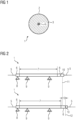
- FIG. 1 shows a cross-sectional view of a heating cartridge 1 for use in a braking resistor for a rail vehicle, which can be housed on the roof for its ventilation by airflow.
- a braking resistor will have a plurality (e.g. approximately 20 to 100) of heating cartridges of the same type as the heating cartridge 1, which are arranged and stored parallel to one another (an arrangement both next to one another and at a height offset from one another is conceivable).
- the heating cartridge 1 has a cylindrical outer shape and is delimited on the outside by a metal jacket 2. Inside the metal jacket 2 there is a filling 3 made of compacted ceramic powder, the filling 3 surrounding a heating element 4 located centrally on the longitudinal axis of the heating cartridge 1.
- an electrodynamic braking device of a vehicle is actuated and electrical energy is to be dissipated by releasing heat with the aid of the braking resistor, current flows through the heating element 4 so that it heats up considerably.
- FIG. 2 shows the heating cartridge 1 in its cold state in its upper part.
- the heating cartridge 1 is equipped with electrical connections 5 at its free ends.
- the free ends of the heating cartridge 1 are designed as cold areas 6 of the heating cartridge 1, ie they do not have a length section of the actual heating element 4 and only show a relatively small increase in temperature even when current flows through the heating element 4.
- a current flow through the heating element 4 when braking causes a thermal change in the length of the heating cartridge 1.
- the length of the heating cartridge 1 increases when its hot area is 7-6 m long when heated to 20 ° C to 600 °C by approx. 60 mm. This corresponds to approximately 1% based on the length of the hot area 7.
- the thermal expansion coefficient of the heating cartridge 1 essentially corresponds to that of stainless steel.
- the heating cartridge 1 is fixed locally in one of its cold areas 6 with the help of a fixed bearing 8.
- a bearing arrangement for the heating cartridge 1 has two floating bearings 9, which are arranged suitably distributed along the hot area 7 to support the heating cartridge 1.
- the fixed bearing-free end which is also present as a cold area 6, is equipped with a displacement sensor 10 designed as a potentiometer as a monitoring device for a temperature of the hot area 7 of the heating cartridge 1.
- a displacement sensor 10 designed as a potentiometer as a monitoring device for a temperature of the hot area 7 of the heating cartridge 1.
- the measurement signal from the displacement sensor 10 is evaluated by a vehicle control unit (e.g. train control unit and drive control unit) and this stops the energization of the braking resistor.
- the displacement sensor 10 allows the residual heat buffer that the braking resistor still holds to be calculated. This can be used to calculate how quickly e.g. B.
- a rail vehicle equipped with the braking resistor is allowed to travel at the maximum so that there is still enough support for rapid braking. If rapid braking is initiated and the braking resistor becomes hotter than the specified limit temperature, the rail vehicle must still be able to be braked to a stop.
- FIG. 2 The lower part of Figure 2 shows the heating cartridge 1 in its hot state, ie in the case when the hot area 7 is heated due to current flow and thus there is a thermal linear expansion of the hot area 7. Because the heating cartridge 1 is thermally very sluggish and cools down slowly (minute range), the hot state is not necessarily characterized by the fact that current flows through the heating element 4.
- a zero position for the heating cartridge 1 is illustrated with a dashed line 11 and a new layer with a thermally expanded hot area 7 is illustrated with a dashed line 12.
- the translation 13 For the monitoring device, there is a translation 13 between the two lines 11 and 12, the translation 13 being converted into an average temperature of this hot area 7 using a thermal (longitudinal) expansion coefficient of the hot area 7 and for the purpose of switching off the braking resistor when reached the maximum permissible heating cartridge temperature can be used to switch it off.
- Fig. 1 to 3 applies equally to a plurality of heating cartridges of the same type as the heating cartridge 1, which belong to the same braking resistor.
- a suitable temperature monitoring then takes place for each of the heating cartridges using displacement sensors, which are preferably identical in construction to the displacement sensor 10. All displacement transducers then signal the current temperatures of the heating cartridges to the vehicle control system.
- FIG. 1 As a representative of a braking resistor, which is equipped with a large number of heating cartridges similar to the hot cartridge 1, shows Figure 4 an end region of three staggered heating cartridges 1.
- the respective cold regions 6 (only partially shown here) of the heating cartridges 1 are all equipped with a driver 14.
- a slide 15 At a distance in the longitudinal direction of the heating cartridges 1, a slide 15 is provided, which runs orthogonally to the heating cartridges 1 and is therefore arranged along their ends.
- the slide 15 has a stop 16, which runs in the longitudinal direction of the heating cartridges 1 and is attached to the slide 15 on one side, while its opposite side abuts against the driver 14.
- FIG. 4 shows the heating cartridges 1 in their hot state, in which the individual heating cartridges 1 each experience a thermal linear expansion, which is different for the three heating cartridges 1 shown. While the in Figure 4 The heating cartridge 1 shown at the bottom experiences the greatest thermal linear expansion, the thermal linear expansion of the other heating cartridges 1 is lower. Due to the stops 16 and the slide 15, only one displacement sensor 17 is required to record the maximum heating cartridge temperature.
- the monitoring device includes the drivers 14, the stops 16, the slide 15 and the displacement sensor 17, can alternatively or, as in Fig. 4 shown, additionally It can also be provided that the slide 15 directly actuates a limit switch 18 arranged to achieve a maximum permissible heating cartridge temperature. If necessary, several limit switches 18 can also be provided.
- suitable return devices 19 which can be formed, for example, by tension springs, but also other actuators, such as suitably guided helical compression springs, gas pressure springs or the like, the slide 15 is biased towards the adjacent ends of the heating cartridges 1, so that it cools down Heating cartridges 1 reach their zero position again.
- the limit switch 18 preferably outputs a binary signal, which is evaluated by the vehicle control, which may lead to the energization of the braking resistor being stopped.
- the power supply is stopped by the vehicle control system, since the current that flows through the braking resistor should not be interrupted directly by the limit switch 18, since there are several hundred kilowatts of power here.
- the measurement of the maximum temperature via the displacement sensor is used to limit the permissible train speed in order to provide enough thermal buffer for rapid braking at this moment without the braking resistor overheating.
Landscapes
- Engineering & Computer Science (AREA)
- Power Engineering (AREA)
- Transportation (AREA)
- Mechanical Engineering (AREA)
- Microelectronics & Electronic Packaging (AREA)
- Control Of Resistance Heating (AREA)
- Braking Arrangements (AREA)
- Valves And Accessory Devices For Braking Systems (AREA)
- Details Of Resistors (AREA)
Description
- Die Erfindung bezieht sich auf einen Bremswiderstand für ein mit einer elektrodynamischen Bremseinrichtung ausgestattetes Fahrzeug.
- Ein solcher Bremswiderstand ist beim generatorischen elektrischen Bremsen z. B. eines Schienenfahrzeugs erforderlich, wenn dieses in einem nicht rückspeisefähigen Versorgungsnetz betrieben wird, um die mithilfe von Fahrmotoren erzeugte elektrische Energie anderweitig abzuführen. Der Bremswiderstand wandelt dann die elektrische Energie in Wärmeenergie um.
- Ein bekannter Bremswiderstand geht beispielsweise aus der
DE 10 2017 207 274 B3 hervor. Der dort beschriebene Bremswiderstand ist an einem Schienenfahrzeug eingesetzt, in dessen Dachbereich untergebracht und wird im Betrieb des Fahrzeugs dauerhaft von Fahrtwind umströmt, um den Bremswiderstand zu kühlen. Hintergrund dessen ist es, dass im Bremsfall der Bremswiderstand mit Strom aus der elektrodynamischen/generatorischen Bremse des Fahrzeugs beaufschlagt wird. Dieser Strom führt zur Erwärmung des Bremswiderstands, so dass eine nachfolgende Entwärmung erforderlich ist. - Beim Betrieb eines solchen Bremswiderstands ist es erforderlich, seine Temperatur zu überwachen, so dass hitzebedingte Zerstörungen vermieden werden.
- Ausgehend hiervon liegt der Erfindung die Aufgabe zugrunde, den Bremswiderstand der eingangs genannten Art derart weiterzuentwickeln, dass ein ausreichender Schutz vor Überhitzung erzielt wird. Die Dokumente
DE102018218296A1 ,FR1131168A DE69400184T2 , offenbaren weitere Bremswiderstände und Leistungswiderstände mit Kühlung. - Diese Aufgabe wird gelöst durch einen Bremswiderstand mit den Merkmalen des Anspruchs 1.
- Danach zeichnet sich der eingangs genannte Bremswiderstand dadurch aus, dass der Bremswiderstand wenigstens eine langgestreckte Heizpatrone aufweist, die an ihren Enden Kaltbereiche ohne Heizelement und zwischen den Kaltbereichen einen Heißbereich, der sich bei Stromdurchfluss eines sich über die Länge des Heißbereiches erstreckenden Heizelementes thermisch in Längsrichtung der Heizpatrone ausdehnt, aufweist und mittels einer Lageranordnung gehalten ist, die ein Festlager und wenigstens ein Loslager umfasst, wobei der Bremswiderstand eine Überwachungseinrichtung aufweist, die aufgrund der Feststellung einer maximal zulässigen Heizpatronentemperatur auf der Basis einer erfassten maximalen thermischen Längenausdehnung der Heizpatrone den Bremswiderstand abschaltet.
- Ein derart ausgebildeter Bremswiderstand verfügt über eine geeignete Überwachung seiner Temperatur, insbesondere der Heizpatronentemperatur. Der Bremswiderstand wird beispielsweise über eine mit der Überwachungseinrichtung in einer Signalverbindung stehende Fahrzeugsteuerung im Bedarfsfalle abgeschaltet, nämlich dann, wenn eine maximal zulässige Heizpatronentemperatur erreicht ist.
- Vorteilhafterweise kann das Festlager an einem Ende der Heizpatrone in deren Kaltbereich angeordnet sein und die Überwachungseinrichtung an dem, dem Festlager gegenüberliegenden Ende der Heizpatrone in deren Kaltbereich. Bei dieser Ausführungsform steht eine gesamte Länge des Heißbereichs der Heizpatrone für eine thermische Längenausdehnung zur Verfügung, was eine Genauigkeit des Messergebnisses beispielsweise durch einen Wegaufnehmer erhöht.
- Alternativ kann das Festlager im Heißbereich der Heizpatrone angeordnet sein und die Überwachungseinrichtung an wenigstens einem Ende der Heizpatrone in deren Kaltbereich vorgesehen sein. Bei dieser Ausführungsform der Erfindung ist der relevante Längenbereich der Heizpatrone für eine thermische Längenausdehnung kürzer als bei der zuvor beschriebenen Ausführungsform. Der Längenbereich reicht nämlich von dem vorgesehenen Festlager im Heißbereich bis zur Grenzfläche zwischen dem Heißbereich und dem Kaltbereich, in dessen Nähe die Überwachungseinrichtung vorgesehen ist.
- Bei Anordnung des Festlagers im Heißbereich der Heizpatrone ist es zudem möglich, eine weitere Überwachungseinrichtung vorzusehen, die am gegenüberliegenden Ende der Heizpatrone in deren Kaltbereich angeordnet ist. In dieser Weise kann die doppelte Anzahl an Überwachungseinrichtungen insbesondere in ihrer Ausführungsform als Wegaufnehmer vorgesehen werden, was die Genauigkeit einer Temperaturmessung für die Heizpatrone erhöht.
- Bevorzugt umfasst der Bremswiderstand wenigstens zwei Loslager, die über die Länge der Heizpatrone verteilt sind. In dieser Weise wird eine zuverlässige Abstützung der Heizpatrone erzielt, wobei sie mit Hilfe des Festlagers an einem Punkt ihrer Längenausdehnung fixiert ist.
- In einer Ausführungsform kann die Überwachungseinrichtung wenigstens einen beispielsweise potentiometrisch, auf Basis des Halleffekts, magnetostriktiv oder induktiv arbeitenden Wegaufnehmer zur Erfassung einer aktuellen thermischen Längenausdehnung der Heizpatrone aufweisen, wobei die aktuelle Längenausdehnung eine aktuelle Heizpatronentemperatur wiedergibt. Der Wegaufnehmer kann somit dazu verwendet werden, eine aktuelle mittlere Temperatur der Heizpatrone zu ermitteln, wobei ein Erreichen der maximalen zulässigen Heizpatronentemperatur eine Abschaltung des Bremswiderstands nach sich zieht. Für die Berechnung der aktuellen Heizpatronentemperatur ist es erforderlich, den thermischen Ausdehnungskoeffizienten der Heizpatrone einzubeziehen. Zudem ist durch die Temperaturüberwachung bei einem Schienenfahrzeug die Möglichkeit gegeben, einen vorhandenen energetischen Restpuffer, welcher für eine mögliche Bremsung zur Verfügung steht, zu berechnen. Der energetische Restpuffer entspricht der spezifischen Wärmekapizität des Heizpatronenmaterials, multipliziert mit der beheizten Masse, multipliziert mit der Differenz aus einer zulässigen Maximaltemperatur der Heizpatronen und der Ist-Temperatur der Heizpatronen.
- In einer demgegenüber vereinfachten Ausführung der Erfindung kann auch die Funktion des Wegaufnehmers durch einen z. B. in Verlängerung der Heizpatrone angeordneten Endlagenschalter übernommen werden. Hiermit wird dann lediglich das Vor- oder Nichtvorliegen der maximal zulässigen Heizpatronentemperatur überwacht.
- Bei einer Mehrzahl gleichartiger Heizpatronen kann dann die Temperaturüberwachung sowohl über einen jeweiligen Wegaufnehmer (z. B. kontinuierliche Temperaturmessung als auch über einen Endlagenschalter (nur Maximaltemperatur) erfolgen.
- Bevorzugt wird der Bremswiderstand eine Mehrzahl von mit der vorstehend näher erläuterten Heizpatrone baugleichen und parallel zueinander angeordneten Heizpatronen aufweisen. Diese gesamte Mehrzahl von Heizpatronen können das Festlager als gemeinsames Festlager und die Loslager als gemeinsame Loslager nutzen. Ebenso treffen die oben für die einzelne Heizpatrone getroffenen Ausführungen hinsichtlich Ausbildung und Anordnung der Überwachungseinrichtung in ihren alternativen Ausführungsformen in gleicher Weise für die Mehrzahl von Heizpatronen zu.
- Danach kann es vorgesehen sein, dass die Überwachungseinrichtung für jede Heizpatrone einen Mitnehmer, der an dem zugeordneten Ende der Heizpatrone angebracht ist, und einen Anschlag zum Zusammenwirken mit dem Mitnehmer aufweist, die Anschläge gegen einen den Heizpatronen gemeinsamen Schieber abgestützt sind und eine Ortsposition des Schiebers mittels eines Wegaufnehmers erfasst ist und/oder der Schieber einen Endlagenschalter betätigt, wenn die thermische Längenausdehnung wenigstens einer der Heizpatronen einen Wert erreicht, der der maximal zulässigen Heizpatronentemperatur entspricht.
- Denkbar ist für alternative Ausführungsformen der Erfindung auch die Verwendung eines Seilzuges statt des Schiebers oder von Hebeln statt der Anschläge.
- Vorstehende Maßnahmen gestatten es, die Temperaturbeaufschlagung des Bremswiderstands in geeigneter Weise zu überwachen. Sobald eine der Heizpatronen die maximal zulässige Heizpatronentemperatur erreicht, wird entweder unmittelbar mittels des Schiebers ein Endlagenschalter betätigt oder ein Ausgangssignal des Wegaufnehmers wird dahingehend ausgewertet, dass eine Abschaltung vorzunehmen ist. Sofern sämtliche Heizpatronen mit z. B. Wegaufnehmern als Überwachungseinrichtungen ausgestattet sind, lassen sich sämtliche Einzeltemperaturen der Heizpatronen überwachen.
- Dabei kann der Schieber derart vorgespannt sein, dass er bei Abkühlen der Heizpatronen zurück in seine Nulllage verbracht wird.
- Ausführungsbeispiele der Erfindung werden nachfolgend unter Bezugnahme auf die Zeichnungen noch näher erläutert, wobei funktionsgleiche Komponenten mit denselben Bezugszeichen bezeichnet sind. Es zeigen:
-
Figur 1 : eine Querschnittsansicht einer Heizpatrone zur Verwendung bei einem Bremswiderstand für ein Schienenfahrzeug, -
Figur 2 : eine schematische Seitenansicht der Heizpatrone vonFigur 1 in Kombination mit einer Lager-Anordnung für die Heizpatrone in einer ersten Ausführungsform und einer Überwachungseinrichtung (oben Kaltzustand, unten Heißzustand), -
Figur 3 eine schematische Seitenansicht der Heizpatrone vonFigur 1 in Kombination mit einer Lager-Anordnung für die Heizpatrone in einer zweiten Ausführungsform und einer Überwachungseinrichtung (oben Kaltzustand, unten Heißzustand) und -
Figur 4 : eine schematische Ansicht von oben auf einen Endabschnitt einer Mehrzahl parallel zueinander angeordneter Heizpatronen in Kombination mit einer Überwachungseinrichtung (oben Kaltzustand, unten Heißzustand). -
Figur 1 zeigt eine Querschnittsansicht einer Heizpatrone 1 zur Verwendung bei einem Bremswiderstand für ein Schienenfahrzeug, der für seine Entwärumg durch Fahrtwind auf dessen Dach untergebracht sein kann. Typischer Weise wird ein solcher Bremswiderstand eine Mehrzahl (z. B. ca. 20 bis 100) von mit der Heizpatrone 1 gleichartigen Heizpatronen aufweisen, die parallel zueinander (eine Anordnung sowohl nebeneinander als auch höhenversetzt zueinander ist denkbar) angeordnet und gelagert ist. Die Heizpatrone 1 hat eine zylinderförmige äußere Form und wird nach außen von einem Metallmantel 2 begrenzt. Im Inneren des Metallmantels 2 befindet sich eine Füllung 3 aus verdichtetem Keramikpulver, wobei die Füllung 3 ein zentral auf der Längsachse der Heizpatrone 1 befindliches Heizelement 4 umgibt. In dem Fall, wenn eine elektrodynamische Bremseinrichtung eines Fahrzeugs betätigt wird und elektrische Energie mit Hilfe des Bremswiderstands durch Wärmeabgabe abzuführen ist, wird das Heizelement 4 von Strom durchflossen, so dass es sich erheblich aufheizt. -
Figur 2 zeigt in ihrem oberen Teil die Heizpatrone 1 in ihrem Kaltzustand. An ihren freien Enden ist die Heizpatrone 1 mit elektrischen Anschlüssen 5 ausgestattet. Die freien Enden der Heizpatrone 1 sind als Kaltbereiche 6 der Heizpatrone 1 ausgebildet, d.h. sie weisen keinen Längenabschnitt des eigentlichen Heizelementes 4 auf und zeigen selbst bei Stromdurchfluss für das Heizelement 4 nur eine verhältnismäßig geringe Temperaturerhöhung. Zwischen den beiden endständigen Kaltbereichen 6 liegt ein Heißbereich 7 der Heizpatrone 1, der über seine gesamte Länge mit dem Heizelement 4 ausgestattet ist. Ein Stromdurchfluss des Heizelementes 4 im Bremsfall bewirkt somit eine thermische Längenänderung der Heizpatrone 1. Beispielsweise vergrößert sich die Länge der Heizpatrone 1, wenn deren Heißbereich 7 6 m lang ist, bei der Erwärmung von 20 °C auf 600 °C um ca. 60 mm. Dies entspricht ca. 1 % bezogen auf die Länge des Heißbereichs 7. Der thermische Ausdehnungskoeffizient der Heizpatrone 1 entspricht im Wesentlichen dem von Edelstahl. - Im Ausführungsbeispiel der
Figur 2 ist die Heizpatrone 1 in einem ihrer Kaltbereiche 6 mit Hilfe eines Festlagers 8 örtlich fixiert. Dazu weist eine Lageranordnung für die Heizpatrone 1 noch zwei Loslager 9 auf, die entlang des Heißbereichs 7 zur Abstützung der Heizpatrone 1 geeignet verteilt angeordnet sind. - Das festlagerfreie Ende, das ebenfalls als Kaltbereich 6 vorliegt, ist als Überwachungseinrichtung für eine Temperatur des Heißbereichs 7 der Heizpatrone 1 mit einem als Potentiometer ausgeführten Wegaufnehmer 10 ausgestattet. Mit Hilfe des Wegaufnehmers 10 wird eine thermische Längenausdehnung der Heizpatrone 1 gemessen und bei Erreichen einer maximal zulässigen Heizpatronentemperatur eine Abschaltung des Bremswiderstands herbeigeführt. Dazu wird das Messsignal des Wegaufnehmers 10 von einer Fahrzeugsteuerung (z. B. Zugsteuergerät und Antriebssteuergerät) ausgewertet und durch diese wird eine Bestromung des Bremswiderstandes gestoppt. Zusätzlich gestattet es der Wegaufnehmer 10 den Restwärmepuffer, welchen der Bremswiderstand noch vorhält, zu berechnen. Anhand von diesem kann berechnet werden, wie schnell z. B. ein mit dem Bremswiderstand ausgestattetes Schienenfahrzeug maximal fahren darf, damit noch genügend Rückhalt für eine Schnellbremsung gegeben ist. Wenn eine Schnellbremsung eingeleitet wird und der Bremswiderstand heißer als die festgelegte Grenztemperatur werden sollte, muss das Schienenfahrzeug dennoch bis zum Stopp gebremst werden können.
- Der untere Teil von
Figur 2 zeigt die Heizpatrone 1 in ihrem Heißzustand, d.h. in dem Fall, wenn der Heißbereich 7 aufgrund von Stromdurchfluss erhitzt ist und somit eine thermische Längenausdehnung des Heißbereichs 7 vorliegt. Da die Heizpatrone 1 thermisch sehr träge ist und sich langsam abkühlt (Minutenbereich) ist der Heißzustand nicht zwingend dadurch gekennzeichnet, dass das Heizelement 4 von Strom durchflossen ist. InFigur 2 ist eine Nulllage für die Heizpatrone 1 mit einer gestrichelten Linie 11 und eine neue Lage mit thermisch gedehntem Heißbereich 7 mit einer gestrichelten Linie 12 veranschaulicht. Für die Überwachungseinrichtung ergibt sich eine Translation 13 zwischen den beiden Linien 11 und 12, wobei die Translation 13 mit Hilfe eines thermischen (Längs-)Ausdehnungskoeffizienten des Heißbereichs 7 in eine mittlere Temperatur dieses Heißbereichs 7 umgerechnet und für die Zwecke einer Abschaltung des Bremswiderstands bei Erreichen der maximal zulässigen Heizpatronentemperatur zu dessen Abschaltung herangezogen werden kann. - Im Vergleich zur
Figur 2 ist inFigur 3 allein die Lagerung der Heizpatrone 1 geändert. Bei der Ausführungsform nach Figur 3 befindet sich das Festlager 8 in einem zentralen Längenbereich der Heizpatrone 1. Die beiden Loslager 9 sind jeweils zu beiden Seiten des Festlagers 8 angeordnet. Durch die Änderung der Lagerung ergibt sich insbesondere ein abweichender relevanter Abschnitt des Heißbereichs 7 für eine vorzunehmende Abschaltung des Bremswiderstands. Während bei der Ausführungsform nachFigur 2 der gesamte Heißbereich 7 in seiner Längenausdehnung erfasst wird, umfasst bei der Ausführungsform nachFig. 3 ein relevanter Heißbereich 14 lediglich die Strecke von dem Festlager 8 bis zu der Grenzfläche zwischen dem Heißbereich 7 und dem mit dem Wegaufnehmer 10ausgestatteten Kaltbereich 6 der Heizpatrone 1. In einer nicht dargestellten Ausführungsform der Erfindung kann auch der lagerfreie Kaltbereich 6 mit einem weiteren Wegaufnehmer, der mit dem Wegaufnehmer 10 gleichartig ist, ausgeführt sein. - Was in den
Fig. 1 bis 3 dargestellt ist, gilt gleichermaßen für eine Mehrzahl von mit der Heizpatrone 1 gleichartigen Heizpatronen, die zu demselben Bremswiderstand gehören. Dann findet für jede der Heizpatronen eine geeignete Temperaturüberwachung mittels Wegaufnehmern statt, die vorzugsweise mit dem Wegaufnehmer 10 baugleich sind. Sämtliche Wegaufnehmer signalisieren dann der Fahrzeugsteuerung aktuelle Temperaturen der Heizpatronen. - Alternativ kann für eine Mehrzahl von Heizpatronen wie folgt vorgegangen werden: Stellvertretend für einen Bremswiderstand, der mit einer Vielzahl von mit der Heißpatrone 1 gleichartigen Heizpatronen ausgestattet ist, zeigt
Figur 4 einen Endbereich von drei versetzt angeordneten Heizpatronen 1. Die jeweiligen (hier nur teilweise dargestellten) Kaltbereiche 6 der Heizpatronen 1 sind sämtlich mit einem Mitnehmer 14 ausgestattet. In einem Abstand in Längsrichtung der Heizpatronen 1 ist ein Schieber 15 vorgesehen, der orthogonal zu den Heizpatronen 1 verläuft und damit entlang deren Enden angeordnet ist. Für jede Heizpatrone 1 weist der Schieber 15 einen Anschlag 16 auf, der in Längsrichtung der Heizpatronen 1 verläuft und an seiner einen Seite am Schieber 15 angebracht ist, während seine gegenüberliegende Seite gegen den Mitnehmer 14 stößt. Im oberen Teil vonFigur 2 ist wiederum die Lage der Heizpatronen 1 in deren Kaltzustand gezeigt. Dies bedeutet, dass sich der Schieber 15, die Anschläge 16 und die Mitnehmer 14 jeweils in einer Nulllage befinden. Zur Überwachung der Position des Schiebers 15 ist dieser mit einem als Potentiometer ausgeführten Wegaufnehmer 17 ausgestattet. - Der untere Teil von
Figur 4 zeigt die Heizpatronen 1 in ihrem Heißzustand, bei dem die einzelnen Heizpatronen 1 jeweils eine thermische Längenausdehnung erfahren, die bei den drei dargestellten Heizpatronen 1 jeweils unterschiedlich stark ausfällt. Während die inFigur 4 ganz unten dargestellte Heizpatrone 1 die größte thermische Längenausdehnung erfährt, liegen die thermischen Längenausdehnungen der weiteren Heizpatronen 1 niedriger. Durch die Anschläge 16 und den Schieber 15 wird für die Erfassung der maximalen Heizpatronentemperatur lediglich ein Wegaufnehmer 17 benötigt. - Während in
Figur 4 die Überwachungseinrichtung die Mitnehmer 14, die Anschläge 16, den Schieber 15 und den Wegaufnehmer 17 umfasst, kann alternativ oder, wie inFig. 4 dargestellt, zusätzlich auch vorgesehen sein, dass der Schieber 15 unmittelbar einen passend zum Erreichen einer maximal zulässigen Heizpatronentemperatur angeordneten Endlagenschalter 18 unmittelbar betätigt. Bei Bedarf können auch mehrere Endlagenschalter 18 vorgesehen sein. - Mit Hilfe geeigneter Rückholeinrichtungen 19, die beispielsweise von Zugfedern, aber auch weiteren Aktuatoren, wie geeignet geführte Schraubendruckfedern, Gasdruckfedern oder ähnliches, gebildet sein können, ist der Schieber 15 in Richtung auf die benachbarten Enden der Heizpatronen 1 vorgespannt, so dass er bei Abkühlen der Heizpatronen 1 wieder seine Nulllage erreicht.
- Der Endlagenschalter 18 gibt bevorzugt ein binäres Signal aus, welches von der Fahrzeugsteuerung ausgewertet wird, dieses führt gegebenenfalls dazu, dass die Bestromung des Bremswiderstandes gestoppt wird.
- Die Stromzufuhr wird von der Fahrzeugsteuerung beendet, da der Strom, welcher durch den Bremswiderstand fließt, nicht direkt von dem Endlagenschalter 18 unterbrochen werden soll, da hier mehrere hundert Kilowatt an Leistung vorliegen. Die Messung der Maximaltemperatur über den Wegaufnehmer wird genutzt, um die zulässige Zuggeschwindigkeit zu begrenzen, um genug thermischen Puffer für eine Schnellbremsung in diesem Moment vorzuhalten ohne, dass der Bremswiderstand überhitzt.
- In dem Fall, wenn die Schnellbremsung eintritt und der Bremswiderstand trotz des thermischen Rückhaltes die maximal zulässige Grenztemperatur, welche gesondert über den Endlagenschalter (18) detektiert wird, überschreitet, wird der Bremswiderstand, gesteuert von der Fahrzeugsteuerung für zukünftige Bremsungen nicht mehr genutzt. Dies geschieht, da das Überhitzen trotz des thermischen Puffers darauf hindeutet, dass z.B. mittlerweile zu viele Heizpatronen ausgefallen sind (nicht heizen) und der thermische Puffer demnach kleiner ist als der theoretische, oder sehr viele Worst-Case Szenarien zusammentreffen, wie Bremsen an einem heißen trockenen Sommertag mit Rückenwind und Gefälle.
Claims (8)
- Bremswiderstand für ein mit einer elektrodynamischen Bremseinrichtung ausgestattetes Fahrzeug,
dadurch gekennzeichnet, dass
der Bremswiderstand wenigstens eine langgestreckte Heizpatrone (1) aufweist, die- an ihren Enden Kaltbereiche (6) ohne Heizelement (4) und zwischen den Kaltbereichen (6) einen Heißbereich (7), der sich bei Stromdurchfluss eines sich über die Länge des Heißbereiches (7) erstreckenden Heizelementes (4) thermisch in Längsrichtung der Heizpatrone (1) ausdehnt, aufweist und- mittels einer Lageranordnung gehalten ist, die ein Festlager (8) und wenigstens ein Loslager (9) umfasst,- wobei der Bremswiderstand eine Überwachungseinrichtung aufweist, die aufgrund der Feststellung einer maximal zulässigen Heizpatronentemperatur auf der Basis einer erfassten maximalen thermischen Längenausdehnung der Heizpatrone (1) den Bremswiderstand abschaltet. - Bremswiderstand nach Anspruch 1,
dadurch gekennzeichnet, dass
das Festlager (8) an einem Ende der Heizpatrone (1) in deren Kaltbereich (6) angeordnet ist und die Überwachungseinrichtung an dem dem Festlager (8) gegenüberliegenden Ende der Heizpatrone (1) in deren Kaltbereich (6) angeordnet ist. - Bremswiderstand nach einem der Ansprüche 1 oder 2,
dadurch gekennzeichnet, dass
das Festlager (8) im Heißbereich (7) der Heizpatrone (1) angeordnet ist und die Überwachungseinrichtung an wenigstens einem Ende der Heizpatrone (1) in deren Kaltbereich (6) vorgesehen ist. - Bremswiderstand nach Anspruch 3,
dadurch gekennzeichnet, dass
eine weitere Überwachungseinrichtung vorgesehen ist, die am gegenüberliegenden Ende der Heizpatrone (1) in deren Kaltbereich (6) angeordnet ist. - Bremswiderstand nach einem der Ansprüche 1 bis 4,
dadurch gekennzeichnet, dass
er wenigstens zwei über die Länge der Heizpatrone (1) verteilte Loslager (9) umfasst. - Bremswiderstand nach einem der Ansprüche 1 bis 5,
dadurch gekennzeichnet, dass
die Überwachungseinrichtung wenigstens einen Wegaufnehmer (10) zur Erfassung einer aktuellen thermischen Längenausdehnung der Heizpatrone (1) aufweist, wobei die aktuelle Längenausdehnung eine aktuelle Heizpatronentemperatur wiedergibt. - Bremswiderstand nach Anspruch 1,
dadurch gekennzeichnet, dass
er eine Mehrzahl von mit der Heizpatrone (1) baugleichen und parallel zueinander angeordneten Heizpatronen (1) aufweist, wobei- die Überwachungseinrichtung für jede Heizpatrone (1) einen Mitnehmer (14), der an dem zugeordneten Ende der Heizpatrone (1) angebracht ist, und einen Anschlag (16) zum Zusammenwirken mit dem Mitnehmer (14) aufweist,- die Anschläge gegen einen den Heizpatronen (1) gemeinsamen Schieber (15) abgestützt sind und- eine Ortsposition des Schiebers (15) mittels eines Wegaufnehmers (17) erfasst ist und/oder der Schieber (15) einen Endlagenschalter (18) betätigt, wenn die thermische Längenausdehnung wenigstens einer der Heizpatronen (1) einen Wert erreicht, der der maximal zulässigen Heizpatronentemperatur entspricht. - Bremswiderstand nach Anspruch 7,
dadurch gekennzeichnet, dass
der Schieber (15) derart vorgespannt ist, dass der Mitnehmer (14) bei Abkühlen der Heizpatrone (1) zurück in seine Nulllage verbracht wird.
Applications Claiming Priority (2)
| Application Number | Priority Date | Filing Date | Title |
|---|---|---|---|
| DE102020202249.6A DE102020202249A1 (de) | 2020-02-21 | 2020-02-21 | Bremswiderstand für ein Fahrzeug |
| PCT/EP2021/051449 WO2021164981A1 (de) | 2020-02-21 | 2021-01-22 | Bremswiderstand für ein fahrzeug |
Publications (3)
| Publication Number | Publication Date |
|---|---|
| EP4078626A1 EP4078626A1 (de) | 2022-10-26 |
| EP4078626B1 true EP4078626B1 (de) | 2024-01-10 |
| EP4078626C0 EP4078626C0 (de) | 2024-01-10 |
Family
ID=74586973
Family Applications (1)
| Application Number | Title | Priority Date | Filing Date |
|---|---|---|---|
| EP21704410.6A Active EP4078626B1 (de) | 2020-02-21 | 2021-01-22 | Bremswiderstand für ein fahrzeug |
Country Status (5)
| Country | Link |
|---|---|
| EP (1) | EP4078626B1 (de) |
| CN (1) | CN219286120U (de) |
| DE (1) | DE102020202249A1 (de) |
| ES (1) | ES2977365T3 (de) |
| WO (1) | WO2021164981A1 (de) |
Families Citing this family (1)
| Publication number | Priority date | Publication date | Assignee | Title |
|---|---|---|---|---|
| DE102023201751A1 (de) * | 2023-02-27 | 2024-08-29 | Robert Bosch Gesellschaft mit beschränkter Haftung | Bremswiderstand eines elektrisch angetriebenen Fahrzeugs |
Citations (1)
| Publication number | Priority date | Publication date | Assignee | Title |
|---|---|---|---|---|
| DE102018218296A1 (de) * | 2018-10-25 | 2020-04-30 | Siemens Mobility GmbH | Bremswiderstand für ein elektrisch angetriebenes Fahrzeug |
Family Cites Families (3)
| Publication number | Priority date | Publication date | Assignee | Title |
|---|---|---|---|---|
| FR1131168A (fr) * | 1954-05-20 | 1957-02-18 | Brown | Résistance de démarrage et de freinage pour moteurs électriques |
| FR2704682B1 (fr) * | 1993-04-29 | 1995-06-02 | Gec Alsthom Transport Sa | Résistance de puissance à convection naturelle. |
| DE102017207274B3 (de) | 2017-04-28 | 2017-12-21 | Siemens Aktiengesellschaft | Fahrzeug sowie Bremswiderstand für ein Fahrzeug |
-
2020
- 2020-02-21 DE DE102020202249.6A patent/DE102020202249A1/de not_active Withdrawn
-
2021
- 2021-01-22 WO PCT/EP2021/051449 patent/WO2021164981A1/de not_active Ceased
- 2021-01-22 EP EP21704410.6A patent/EP4078626B1/de active Active
- 2021-01-22 ES ES21704410T patent/ES2977365T3/es active Active
- 2021-01-22 CN CN202190000312.6U patent/CN219286120U/zh active Active
Patent Citations (1)
| Publication number | Priority date | Publication date | Assignee | Title |
|---|---|---|---|---|
| DE102018218296A1 (de) * | 2018-10-25 | 2020-04-30 | Siemens Mobility GmbH | Bremswiderstand für ein elektrisch angetriebenes Fahrzeug |
Also Published As
| Publication number | Publication date |
|---|---|
| ES2977365T3 (es) | 2024-08-22 |
| EP4078626A1 (de) | 2022-10-26 |
| DE102020202249A1 (de) | 2021-08-26 |
| CN219286120U (zh) | 2023-06-30 |
| WO2021164981A1 (de) | 2021-08-26 |
| EP4078626C0 (de) | 2024-01-10 |
Similar Documents
| Publication | Publication Date | Title |
|---|---|---|
| EP2731164B1 (de) | Batteriesystem | |
| DE102007053706B4 (de) | Verfahren zur Steuerung mindestens einer Reibkupplung | |
| EP4078626B1 (de) | Bremswiderstand für ein fahrzeug | |
| DE10055987B4 (de) | Elektronisch gesteuerter oder geregelter Thermostat | |
| DE102013215557A1 (de) | Lagersystem und Verfahren zum Betreiben eines Lagersystems | |
| DE102011079362B4 (de) | Verfahren zum Nachspannen einer elektromechanischen Bremse und elektromechanische Bremse | |
| EP2805869B1 (de) | Heizeinrichtung für Kraftfahrzeuge, Sitzheizung sowie Lenkradheizung mit einer solchen Heizeinrichtung und Verfahren zur Steuerung der Temperatur einer Heizeinrichtung für Kraftfahrzeuge | |
| DE4401620A1 (de) | Kühlanlage für einen Verbrennungsmotor eines Kraftfahrzeuges mit einem Thermostatventil, das ein elektrisch beheizbares Dehnstoffelement enthält | |
| DE10207036B4 (de) | Elektronisch gesteuerter oder geregelter Thermostat | |
| WO2018153534A1 (de) | Verfahren und system zum regeln einer temperatur eines bauteils eines fahrzeugs | |
| DE19635339A1 (de) | Thermostatventil | |
| EP0988226A1 (de) | Bremse für einen auftriebsklappenverstellmechanismus | |
| DE102021213681A1 (de) | Elektrisches trommelbremssystem und steuerverfahren dafür | |
| EP3243060B1 (de) | Temperieranordnung für messgeräte | |
| DE102010029225B4 (de) | Elektromechanisches Bremssystem, insbesondere Feststellbremssystem und Verfahren zum Betreiben des Bremssystems | |
| DE102018116437A1 (de) | Bremse mit Keilgetriebe und mechanischem Energiespeicher sowie Verfahren für deren Betrieb | |
| EP0848311B1 (de) | Verstelleinrichtung | |
| EP3990800B1 (de) | Lamellenbremse für ein drehbares element | |
| DE10106374A1 (de) | Verfahren zur Reduktion der Betriebstemperatur elektromechanischer Bremszuspanneinrichtungen einer Fahrzeugbremse | |
| DE102006037640B4 (de) | Wärmetauscher für ein Kraftfahrzeug | |
| EP4072894B1 (de) | Bremswiderstand und damit ausgestattetes fahrzeug | |
| EP3825589B1 (de) | Ventil | |
| DE102018202131A1 (de) | Komponente für ein Kraftfahrzeug und Kraftfahrzeug | |
| WO2009124810A1 (de) | Selbstverstärkende elektromechanische bremse | |
| DE2136256C3 (de) | Greifvorrichtung |
Legal Events
| Date | Code | Title | Description |
|---|---|---|---|
| STAA | Information on the status of an ep patent application or granted ep patent |
Free format text: STATUS: UNKNOWN |
|
| STAA | Information on the status of an ep patent application or granted ep patent |
Free format text: STATUS: THE INTERNATIONAL PUBLICATION HAS BEEN MADE |
|
| PUAI | Public reference made under article 153(3) epc to a published international application that has entered the european phase |
Free format text: ORIGINAL CODE: 0009012 |
|
| STAA | Information on the status of an ep patent application or granted ep patent |
Free format text: STATUS: REQUEST FOR EXAMINATION WAS MADE |
|
| 17P | Request for examination filed |
Effective date: 20220721 |
|
| AK | Designated contracting states |
Kind code of ref document: A1 Designated state(s): AL AT BE BG CH CY CZ DE DK EE ES FI FR GB GR HR HU IE IS IT LI LT LU LV MC MK MT NL NO PL PT RO RS SE SI SK SM TR |
|
| GRAP | Despatch of communication of intention to grant a patent |
Free format text: ORIGINAL CODE: EPIDOSNIGR1 |
|
| STAA | Information on the status of an ep patent application or granted ep patent |
Free format text: STATUS: GRANT OF PATENT IS INTENDED |
|
| DAV | Request for validation of the european patent (deleted) | ||
| DAX | Request for extension of the european patent (deleted) | ||
| INTG | Intention to grant announced |
Effective date: 20230511 |
|
| GRAJ | Information related to disapproval of communication of intention to grant by the applicant or resumption of examination proceedings by the epo deleted |
Free format text: ORIGINAL CODE: EPIDOSDIGR1 |
|
| STAA | Information on the status of an ep patent application or granted ep patent |
Free format text: STATUS: REQUEST FOR EXAMINATION WAS MADE |
|
| GRAP | Despatch of communication of intention to grant a patent |
Free format text: ORIGINAL CODE: EPIDOSNIGR1 |
|
| STAA | Information on the status of an ep patent application or granted ep patent |
Free format text: STATUS: GRANT OF PATENT IS INTENDED |
|
| INTC | Intention to grant announced (deleted) | ||
| INTG | Intention to grant announced |
Effective date: 20230926 |
|
| GRAS | Grant fee paid |
Free format text: ORIGINAL CODE: EPIDOSNIGR3 |
|
| GRAA | (expected) grant |
Free format text: ORIGINAL CODE: 0009210 |
|
| STAA | Information on the status of an ep patent application or granted ep patent |
Free format text: STATUS: THE PATENT HAS BEEN GRANTED |
|
| AK | Designated contracting states |
Kind code of ref document: B1 Designated state(s): AL AT BE BG CH CY CZ DE DK EE ES FI FR GB GR HR HU IE IS IT LI LT LU LV MC MK MT NL NO PL PT RO RS SE SI SK SM TR |
|
| REG | Reference to a national code |
Ref country code: GB Ref legal event code: FG4D Free format text: NOT ENGLISH |
|
| REG | Reference to a national code |
Ref country code: CH Ref legal event code: EP |
|
| REG | Reference to a national code |
Ref country code: DE Ref legal event code: R096 Ref document number: 502021002430 Country of ref document: DE |
|
| REG | Reference to a national code |
Ref country code: IE Ref legal event code: FG4D Free format text: LANGUAGE OF EP DOCUMENT: GERMAN |
|
| U01 | Request for unitary effect filed |
Effective date: 20240110 |
|
| U07 | Unitary effect registered |
Designated state(s): AT BE BG DE DK EE FI FR IT LT LU LV MT NL PT SE SI Effective date: 20240115 |
|
| U20 | Renewal fee for the european patent with unitary effect paid |
Year of fee payment: 4 Effective date: 20240119 |
|
| PG25 | Lapsed in a contracting state [announced via postgrant information from national office to epo] |
Ref country code: IS Free format text: LAPSE BECAUSE OF FAILURE TO SUBMIT A TRANSLATION OF THE DESCRIPTION OR TO PAY THE FEE WITHIN THE PRESCRIBED TIME-LIMIT Effective date: 20240510 |
|
| PG25 | Lapsed in a contracting state [announced via postgrant information from national office to epo] |
Ref country code: GR Free format text: LAPSE BECAUSE OF FAILURE TO SUBMIT A TRANSLATION OF THE DESCRIPTION OR TO PAY THE FEE WITHIN THE PRESCRIBED TIME-LIMIT Effective date: 20240411 |
|
| PG25 | Lapsed in a contracting state [announced via postgrant information from national office to epo] |
Ref country code: HR Free format text: LAPSE BECAUSE OF FAILURE TO SUBMIT A TRANSLATION OF THE DESCRIPTION OR TO PAY THE FEE WITHIN THE PRESCRIBED TIME-LIMIT Effective date: 20240110 Ref country code: RS Free format text: LAPSE BECAUSE OF FAILURE TO SUBMIT A TRANSLATION OF THE DESCRIPTION OR TO PAY THE FEE WITHIN THE PRESCRIBED TIME-LIMIT Effective date: 20240410 |
|
| PG25 | Lapsed in a contracting state [announced via postgrant information from national office to epo] |
Ref country code: RS Free format text: LAPSE BECAUSE OF FAILURE TO SUBMIT A TRANSLATION OF THE DESCRIPTION OR TO PAY THE FEE WITHIN THE PRESCRIBED TIME-LIMIT Effective date: 20240410 Ref country code: NO Free format text: LAPSE BECAUSE OF FAILURE TO SUBMIT A TRANSLATION OF THE DESCRIPTION OR TO PAY THE FEE WITHIN THE PRESCRIBED TIME-LIMIT Effective date: 20240410 Ref country code: IS Free format text: LAPSE BECAUSE OF FAILURE TO SUBMIT A TRANSLATION OF THE DESCRIPTION OR TO PAY THE FEE WITHIN THE PRESCRIBED TIME-LIMIT Effective date: 20240510 Ref country code: HR Free format text: LAPSE BECAUSE OF FAILURE TO SUBMIT A TRANSLATION OF THE DESCRIPTION OR TO PAY THE FEE WITHIN THE PRESCRIBED TIME-LIMIT Effective date: 20240110 Ref country code: GR Free format text: LAPSE BECAUSE OF FAILURE TO SUBMIT A TRANSLATION OF THE DESCRIPTION OR TO PAY THE FEE WITHIN THE PRESCRIBED TIME-LIMIT Effective date: 20240411 |
|
| PG25 | Lapsed in a contracting state [announced via postgrant information from national office to epo] |
Ref country code: PL Free format text: LAPSE BECAUSE OF FAILURE TO SUBMIT A TRANSLATION OF THE DESCRIPTION OR TO PAY THE FEE WITHIN THE PRESCRIBED TIME-LIMIT Effective date: 20240110 |
|
| REG | Reference to a national code |
Ref country code: ES Ref legal event code: FG2A Ref document number: 2977365 Country of ref document: ES Kind code of ref document: T3 Effective date: 20240822 |
|
| PG25 | Lapsed in a contracting state [announced via postgrant information from national office to epo] |
Ref country code: PL Free format text: LAPSE BECAUSE OF FAILURE TO SUBMIT A TRANSLATION OF THE DESCRIPTION OR TO PAY THE FEE WITHIN THE PRESCRIBED TIME-LIMIT Effective date: 20240110 |
|
| REG | Reference to a national code |
Ref country code: DE Ref legal event code: R097 Ref document number: 502021002430 Country of ref document: DE |
|
| PG25 | Lapsed in a contracting state [announced via postgrant information from national office to epo] |
Ref country code: SM Free format text: LAPSE BECAUSE OF FAILURE TO SUBMIT A TRANSLATION OF THE DESCRIPTION OR TO PAY THE FEE WITHIN THE PRESCRIBED TIME-LIMIT Effective date: 20240110 |
|
| PG25 | Lapsed in a contracting state [announced via postgrant information from national office to epo] |
Ref country code: CZ Free format text: LAPSE BECAUSE OF FAILURE TO SUBMIT A TRANSLATION OF THE DESCRIPTION OR TO PAY THE FEE WITHIN THE PRESCRIBED TIME-LIMIT Effective date: 20240110 |
|
| PG25 | Lapsed in a contracting state [announced via postgrant information from national office to epo] |
Ref country code: SK Free format text: LAPSE BECAUSE OF FAILURE TO SUBMIT A TRANSLATION OF THE DESCRIPTION OR TO PAY THE FEE WITHIN THE PRESCRIBED TIME-LIMIT Effective date: 20240110 |
|
| PG25 | Lapsed in a contracting state [announced via postgrant information from national office to epo] |
Ref country code: SM Free format text: LAPSE BECAUSE OF FAILURE TO SUBMIT A TRANSLATION OF THE DESCRIPTION OR TO PAY THE FEE WITHIN THE PRESCRIBED TIME-LIMIT Effective date: 20240110 Ref country code: SK Free format text: LAPSE BECAUSE OF FAILURE TO SUBMIT A TRANSLATION OF THE DESCRIPTION OR TO PAY THE FEE WITHIN THE PRESCRIBED TIME-LIMIT Effective date: 20240110 Ref country code: RO Free format text: LAPSE BECAUSE OF FAILURE TO SUBMIT A TRANSLATION OF THE DESCRIPTION OR TO PAY THE FEE WITHIN THE PRESCRIBED TIME-LIMIT Effective date: 20240110 Ref country code: CZ Free format text: LAPSE BECAUSE OF FAILURE TO SUBMIT A TRANSLATION OF THE DESCRIPTION OR TO PAY THE FEE WITHIN THE PRESCRIBED TIME-LIMIT Effective date: 20240110 |
|
| PG25 | Lapsed in a contracting state [announced via postgrant information from national office to epo] |
Ref country code: MC Free format text: LAPSE BECAUSE OF FAILURE TO SUBMIT A TRANSLATION OF THE DESCRIPTION OR TO PAY THE FEE WITHIN THE PRESCRIBED TIME-LIMIT Effective date: 20240110 |
|
| PLBE | No opposition filed within time limit |
Free format text: ORIGINAL CODE: 0009261 |
|
| STAA | Information on the status of an ep patent application or granted ep patent |
Free format text: STATUS: NO OPPOSITION FILED WITHIN TIME LIMIT |
|
| PG25 | Lapsed in a contracting state [announced via postgrant information from national office to epo] |
Ref country code: MC Free format text: LAPSE BECAUSE OF FAILURE TO SUBMIT A TRANSLATION OF THE DESCRIPTION OR TO PAY THE FEE WITHIN THE PRESCRIBED TIME-LIMIT Effective date: 20240110 |
|
| 26N | No opposition filed |
Effective date: 20241011 |
|
| PG25 | Lapsed in a contracting state [announced via postgrant information from national office to epo] |
Ref country code: IE Free format text: LAPSE BECAUSE OF NON-PAYMENT OF DUE FEES Effective date: 20240122 |
|
| PG25 | Lapsed in a contracting state [announced via postgrant information from national office to epo] |
Ref country code: IE Free format text: LAPSE BECAUSE OF NON-PAYMENT OF DUE FEES Effective date: 20240122 |
|
| U20 | Renewal fee for the european patent with unitary effect paid |
Year of fee payment: 5 Effective date: 20250120 |
|
| PGFP | Annual fee paid to national office [announced via postgrant information from national office to epo] |
Ref country code: ES Payment date: 20250422 Year of fee payment: 5 |
|
| PGFP | Annual fee paid to national office [announced via postgrant information from national office to epo] |
Ref country code: CH Payment date: 20250403 Year of fee payment: 5 |
|
| PG25 | Lapsed in a contracting state [announced via postgrant information from national office to epo] |
Ref country code: CY Free format text: LAPSE BECAUSE OF FAILURE TO SUBMIT A TRANSLATION OF THE DESCRIPTION OR TO PAY THE FEE WITHIN THE PRESCRIBED TIME-LIMIT; INVALID AB INITIO Effective date: 20210122 |
|
| PG25 | Lapsed in a contracting state [announced via postgrant information from national office to epo] |
Ref country code: HU Free format text: LAPSE BECAUSE OF FAILURE TO SUBMIT A TRANSLATION OF THE DESCRIPTION OR TO PAY THE FEE WITHIN THE PRESCRIBED TIME-LIMIT; INVALID AB INITIO Effective date: 20210122 |
|
| PG25 | Lapsed in a contracting state [announced via postgrant information from national office to epo] |
Ref country code: TR Free format text: LAPSE BECAUSE OF FAILURE TO SUBMIT A TRANSLATION OF THE DESCRIPTION OR TO PAY THE FEE WITHIN THE PRESCRIBED TIME-LIMIT Effective date: 20240110 |
|
| U1H | Name or address of the proprietor changed after the registration of the unitary effect |
Owner name: SIEMENS MOBILITY GMBH; DE |
|
| U20 | Renewal fee for the european patent with unitary effect paid |
Year of fee payment: 6 Effective date: 20260119 |
|
| REG | Reference to a national code |
Ref country code: CH Ref legal event code: U11 Free format text: ST27 STATUS EVENT CODE: U-0-0-U10-U11 (AS PROVIDED BY THE NATIONAL OFFICE) Effective date: 20260402 |
|
| PGFP | Annual fee paid to national office [announced via postgrant information from national office to epo] |
Ref country code: GB Payment date: 20260210 Year of fee payment: 6 |