EP4074486B1 - Verfahren zum herstellen von bauteilen einer aussenhaut eines fahrzeugs - Google Patents
Verfahren zum herstellen von bauteilen einer aussenhaut eines fahrzeugs Download PDFInfo
- Publication number
- EP4074486B1 EP4074486B1 EP22165179.7A EP22165179A EP4074486B1 EP 4074486 B1 EP4074486 B1 EP 4074486B1 EP 22165179 A EP22165179 A EP 22165179A EP 4074486 B1 EP4074486 B1 EP 4074486B1
- Authority
- EP
- European Patent Office
- Prior art keywords
- film
- components
- punched
- regions
- layer
- Prior art date
- Legal status (The legal status is an assumption and is not a legal conclusion. Google has not performed a legal analysis and makes no representation as to the accuracy of the status listed.)
- Active
Links
Images

Classifications
-
- B—PERFORMING OPERATIONS; TRANSPORTING
- B29—WORKING OF PLASTICS; WORKING OF SUBSTANCES IN A PLASTIC STATE IN GENERAL
- B29C—SHAPING OR JOINING OF PLASTICS; SHAPING OF MATERIAL IN A PLASTIC STATE, NOT OTHERWISE PROVIDED FOR; AFTER-TREATMENT OF THE SHAPED PRODUCTS, e.g. REPAIRING
- B29C51/00—Shaping by thermoforming, i.e. shaping sheets or sheet like preforms after heating, e.g. shaping sheets in matched moulds or by deep-drawing; Apparatus therefor
- B29C51/14—Shaping by thermoforming, i.e. shaping sheets or sheet like preforms after heating, e.g. shaping sheets in matched moulds or by deep-drawing; Apparatus therefor using multilayered preforms or sheets
-
- B—PERFORMING OPERATIONS; TRANSPORTING
- B29—WORKING OF PLASTICS; WORKING OF SUBSTANCES IN A PLASTIC STATE IN GENERAL
- B29C—SHAPING OR JOINING OF PLASTICS; SHAPING OF MATERIAL IN A PLASTIC STATE, NOT OTHERWISE PROVIDED FOR; AFTER-TREATMENT OF THE SHAPED PRODUCTS, e.g. REPAIRING
- B29C45/00—Injection moulding, i.e. forcing the required volume of moulding material through a nozzle into a closed mould; Apparatus therefor
- B29C45/14—Injection moulding, i.e. forcing the required volume of moulding material through a nozzle into a closed mould; Apparatus therefor incorporating preformed parts or layers, e.g. injection moulding around inserts or for coating articles
- B29C45/1418—Injection moulding, i.e. forcing the required volume of moulding material through a nozzle into a closed mould; Apparatus therefor incorporating preformed parts or layers, e.g. injection moulding around inserts or for coating articles the inserts being deformed or preformed, e.g. by the injection pressure
- B29C45/14221—Injection moulding, i.e. forcing the required volume of moulding material through a nozzle into a closed mould; Apparatus therefor incorporating preformed parts or layers, e.g. injection moulding around inserts or for coating articles the inserts being deformed or preformed, e.g. by the injection pressure by tools, e.g. cutting means
-
- B—PERFORMING OPERATIONS; TRANSPORTING
- B29—WORKING OF PLASTICS; WORKING OF SUBSTANCES IN A PLASTIC STATE IN GENERAL
- B29C—SHAPING OR JOINING OF PLASTICS; SHAPING OF MATERIAL IN A PLASTIC STATE, NOT OTHERWISE PROVIDED FOR; AFTER-TREATMENT OF THE SHAPED PRODUCTS, e.g. REPAIRING
- B29C45/00—Injection moulding, i.e. forcing the required volume of moulding material through a nozzle into a closed mould; Apparatus therefor
- B29C45/0001—Injection moulding, i.e. forcing the required volume of moulding material through a nozzle into a closed mould; Apparatus therefor characterised by the choice of material
-
- B—PERFORMING OPERATIONS; TRANSPORTING
- B29—WORKING OF PLASTICS; WORKING OF SUBSTANCES IN A PLASTIC STATE IN GENERAL
- B29C—SHAPING OR JOINING OF PLASTICS; SHAPING OF MATERIAL IN A PLASTIC STATE, NOT OTHERWISE PROVIDED FOR; AFTER-TREATMENT OF THE SHAPED PRODUCTS, e.g. REPAIRING
- B29C45/00—Injection moulding, i.e. forcing the required volume of moulding material through a nozzle into a closed mould; Apparatus therefor
- B29C45/0053—Injection moulding, i.e. forcing the required volume of moulding material through a nozzle into a closed mould; Apparatus therefor combined with a final operation, e.g. shaping
-
- B—PERFORMING OPERATIONS; TRANSPORTING
- B29—WORKING OF PLASTICS; WORKING OF SUBSTANCES IN A PLASTIC STATE IN GENERAL
- B29C—SHAPING OR JOINING OF PLASTICS; SHAPING OF MATERIAL IN A PLASTIC STATE, NOT OTHERWISE PROVIDED FOR; AFTER-TREATMENT OF THE SHAPED PRODUCTS, e.g. REPAIRING
- B29C45/00—Injection moulding, i.e. forcing the required volume of moulding material through a nozzle into a closed mould; Apparatus therefor
- B29C45/14—Injection moulding, i.e. forcing the required volume of moulding material through a nozzle into a closed mould; Apparatus therefor incorporating preformed parts or layers, e.g. injection moulding around inserts or for coating articles
- B29C45/14688—Coating articles provided with a decoration
-
- B—PERFORMING OPERATIONS; TRANSPORTING
- B29—WORKING OF PLASTICS; WORKING OF SUBSTANCES IN A PLASTIC STATE IN GENERAL
- B29C—SHAPING OR JOINING OF PLASTICS; SHAPING OF MATERIAL IN A PLASTIC STATE, NOT OTHERWISE PROVIDED FOR; AFTER-TREATMENT OF THE SHAPED PRODUCTS, e.g. REPAIRING
- B29C45/00—Injection moulding, i.e. forcing the required volume of moulding material through a nozzle into a closed mould; Apparatus therefor
- B29C45/14—Injection moulding, i.e. forcing the required volume of moulding material through a nozzle into a closed mould; Apparatus therefor incorporating preformed parts or layers, e.g. injection moulding around inserts or for coating articles
- B29C45/14819—Injection moulding, i.e. forcing the required volume of moulding material through a nozzle into a closed mould; Apparatus therefor incorporating preformed parts or layers, e.g. injection moulding around inserts or for coating articles the inserts being completely encapsulated
-
- B—PERFORMING OPERATIONS; TRANSPORTING
- B29—WORKING OF PLASTICS; WORKING OF SUBSTANCES IN A PLASTIC STATE IN GENERAL
- B29C—SHAPING OR JOINING OF PLASTICS; SHAPING OF MATERIAL IN A PLASTIC STATE, NOT OTHERWISE PROVIDED FOR; AFTER-TREATMENT OF THE SHAPED PRODUCTS, e.g. REPAIRING
- B29C65/00—Joining or sealing of preformed parts, e.g. welding of plastics materials; Apparatus therefor
- B29C65/48—Joining or sealing of preformed parts, e.g. welding of plastics materials; Apparatus therefor using adhesives, i.e. using supplementary joining material; solvent bonding
-
- B—PERFORMING OPERATIONS; TRANSPORTING
- B29—WORKING OF PLASTICS; WORKING OF SUBSTANCES IN A PLASTIC STATE IN GENERAL
- B29C—SHAPING OR JOINING OF PLASTICS; SHAPING OF MATERIAL IN A PLASTIC STATE, NOT OTHERWISE PROVIDED FOR; AFTER-TREATMENT OF THE SHAPED PRODUCTS, e.g. REPAIRING
- B29C66/00—General aspects of processes or apparatus for joining preformed parts
- B29C66/40—General aspects of joining substantially flat articles, e.g. plates, sheets or web-like materials; Making flat seams in tubular or hollow articles; Joining single elements to substantially flat surfaces
- B29C66/47—Joining single elements to sheets, plates or other substantially flat surfaces
-
- B—PERFORMING OPERATIONS; TRANSPORTING
- B62—LAND VEHICLES FOR TRAVELLING OTHERWISE THAN ON RAILS
- B62D—MOTOR VEHICLES; TRAILERS
- B62D29/00—Superstructures, understructures, or sub-units thereof, characterised by the material thereof
- B62D29/001—Superstructures, understructures, or sub-units thereof, characterised by the material thereof characterised by combining metal and synthetic material
-
- H—ELECTRICITY
- H01—ELECTRIC ELEMENTS
- H01Q—ANTENNAS, i.e. RADIO AERIALS
- H01Q1/00—Details of, or arrangements associated with, antennas
- H01Q1/42—Housings not intimately mechanically associated with radiating elements, e.g. radome
-
- H—ELECTRICITY
- H01—ELECTRIC ELEMENTS
- H01Q—ANTENNAS, i.e. RADIO AERIALS
- H01Q1/00—Details of, or arrangements associated with, antennas
- H01Q1/42—Housings not intimately mechanically associated with radiating elements, e.g. radome
- H01Q1/422—Housings not intimately mechanically associated with radiating elements, e.g. radome comprising two or more layers of dielectric material
-
- B—PERFORMING OPERATIONS; TRANSPORTING
- B29—WORKING OF PLASTICS; WORKING OF SUBSTANCES IN A PLASTIC STATE IN GENERAL
- B29C—SHAPING OR JOINING OF PLASTICS; SHAPING OF MATERIAL IN A PLASTIC STATE, NOT OTHERWISE PROVIDED FOR; AFTER-TREATMENT OF THE SHAPED PRODUCTS, e.g. REPAIRING
- B29C45/00—Injection moulding, i.e. forcing the required volume of moulding material through a nozzle into a closed mould; Apparatus therefor
- B29C45/14—Injection moulding, i.e. forcing the required volume of moulding material through a nozzle into a closed mould; Apparatus therefor incorporating preformed parts or layers, e.g. injection moulding around inserts or for coating articles
- B29C45/1418—Injection moulding, i.e. forcing the required volume of moulding material through a nozzle into a closed mould; Apparatus therefor incorporating preformed parts or layers, e.g. injection moulding around inserts or for coating articles the inserts being deformed or preformed, e.g. by the injection pressure
- B29C2045/14237—Injection moulding, i.e. forcing the required volume of moulding material through a nozzle into a closed mould; Apparatus therefor incorporating preformed parts or layers, e.g. injection moulding around inserts or for coating articles the inserts being deformed or preformed, e.g. by the injection pressure the inserts being deformed or preformed outside the mould or mould cavity
- B29C2045/14245—Injection moulding, i.e. forcing the required volume of moulding material through a nozzle into a closed mould; Apparatus therefor incorporating preformed parts or layers, e.g. injection moulding around inserts or for coating articles the inserts being deformed or preformed, e.g. by the injection pressure the inserts being deformed or preformed outside the mould or mould cavity using deforming or preforming means outside the mould cavity
-
- B—PERFORMING OPERATIONS; TRANSPORTING
- B29—WORKING OF PLASTICS; WORKING OF SUBSTANCES IN A PLASTIC STATE IN GENERAL
- B29C—SHAPING OR JOINING OF PLASTICS; SHAPING OF MATERIAL IN A PLASTIC STATE, NOT OTHERWISE PROVIDED FOR; AFTER-TREATMENT OF THE SHAPED PRODUCTS, e.g. REPAIRING
- B29C45/00—Injection moulding, i.e. forcing the required volume of moulding material through a nozzle into a closed mould; Apparatus therefor
- B29C45/14—Injection moulding, i.e. forcing the required volume of moulding material through a nozzle into a closed mould; Apparatus therefor incorporating preformed parts or layers, e.g. injection moulding around inserts or for coating articles
- B29C45/14688—Coating articles provided with a decoration
- B29C2045/14704—Coating articles provided with a decoration ink decorations
-
- B—PERFORMING OPERATIONS; TRANSPORTING
- B29—WORKING OF PLASTICS; WORKING OF SUBSTANCES IN A PLASTIC STATE IN GENERAL
- B29C—SHAPING OR JOINING OF PLASTICS; SHAPING OF MATERIAL IN A PLASTIC STATE, NOT OTHERWISE PROVIDED FOR; AFTER-TREATMENT OF THE SHAPED PRODUCTS, e.g. REPAIRING
- B29C45/00—Injection moulding, i.e. forcing the required volume of moulding material through a nozzle into a closed mould; Apparatus therefor
- B29C45/14—Injection moulding, i.e. forcing the required volume of moulding material through a nozzle into a closed mould; Apparatus therefor incorporating preformed parts or layers, e.g. injection moulding around inserts or for coating articles
- B29C45/14688—Coating articles provided with a decoration
- B29C2045/14713—Coating articles provided with a decoration decorations in contact with injected material
-
- B—PERFORMING OPERATIONS; TRANSPORTING
- B29—WORKING OF PLASTICS; WORKING OF SUBSTANCES IN A PLASTIC STATE IN GENERAL
- B29C—SHAPING OR JOINING OF PLASTICS; SHAPING OF MATERIAL IN A PLASTIC STATE, NOT OTHERWISE PROVIDED FOR; AFTER-TREATMENT OF THE SHAPED PRODUCTS, e.g. REPAIRING
- B29C2791/00—Shaping characteristics in general
- B29C2791/001—Shaping in several steps
-
- B—PERFORMING OPERATIONS; TRANSPORTING
- B29—WORKING OF PLASTICS; WORKING OF SUBSTANCES IN A PLASTIC STATE IN GENERAL
- B29C—SHAPING OR JOINING OF PLASTICS; SHAPING OF MATERIAL IN A PLASTIC STATE, NOT OTHERWISE PROVIDED FOR; AFTER-TREATMENT OF THE SHAPED PRODUCTS, e.g. REPAIRING
- B29C2791/00—Shaping characteristics in general
- B29C2791/002—Making articles of definite length, i.e. discrete articles
-
- B—PERFORMING OPERATIONS; TRANSPORTING
- B29—WORKING OF PLASTICS; WORKING OF SUBSTANCES IN A PLASTIC STATE IN GENERAL
- B29C—SHAPING OR JOINING OF PLASTICS; SHAPING OF MATERIAL IN A PLASTIC STATE, NOT OTHERWISE PROVIDED FOR; AFTER-TREATMENT OF THE SHAPED PRODUCTS, e.g. REPAIRING
- B29C2793/00—Shaping techniques involving a cutting or machining operation
- B29C2793/0009—Cutting out
-
- B—PERFORMING OPERATIONS; TRANSPORTING
- B29—WORKING OF PLASTICS; WORKING OF SUBSTANCES IN A PLASTIC STATE IN GENERAL
- B29C—SHAPING OR JOINING OF PLASTICS; SHAPING OF MATERIAL IN A PLASTIC STATE, NOT OTHERWISE PROVIDED FOR; AFTER-TREATMENT OF THE SHAPED PRODUCTS, e.g. REPAIRING
- B29C2793/00—Shaping techniques involving a cutting or machining operation
- B29C2793/009—Shaping techniques involving a cutting or machining operation after shaping
-
- B—PERFORMING OPERATIONS; TRANSPORTING
- B29—WORKING OF PLASTICS; WORKING OF SUBSTANCES IN A PLASTIC STATE IN GENERAL
- B29C—SHAPING OR JOINING OF PLASTICS; SHAPING OF MATERIAL IN A PLASTIC STATE, NOT OTHERWISE PROVIDED FOR; AFTER-TREATMENT OF THE SHAPED PRODUCTS, e.g. REPAIRING
- B29C2795/00—Printing on articles made from plastics or substances in a plastic state
- B29C2795/002—Printing on articles made from plastics or substances in a plastic state before shaping
-
- B—PERFORMING OPERATIONS; TRANSPORTING
- B29—WORKING OF PLASTICS; WORKING OF SUBSTANCES IN A PLASTIC STATE IN GENERAL
- B29K—INDEXING SCHEME ASSOCIATED WITH SUBCLASSES B29B, B29C OR B29D, RELATING TO MOULDING MATERIALS OR TO MATERIALS FOR MOULDS, REINFORCEMENTS, FILLERS OR PREFORMED PARTS, e.g. INSERTS
- B29K2069/00—Use of PC, i.e. polycarbonates or derivatives thereof, as moulding material
-
- B—PERFORMING OPERATIONS; TRANSPORTING
- B29—WORKING OF PLASTICS; WORKING OF SUBSTANCES IN A PLASTIC STATE IN GENERAL
- B29K—INDEXING SCHEME ASSOCIATED WITH SUBCLASSES B29B, B29C OR B29D, RELATING TO MOULDING MATERIALS OR TO MATERIALS FOR MOULDS, REINFORCEMENTS, FILLERS OR PREFORMED PARTS, e.g. INSERTS
- B29K2705/00—Use of metals, their alloys or their compounds, for preformed parts, e.g. for inserts
-
- B—PERFORMING OPERATIONS; TRANSPORTING
- B29—WORKING OF PLASTICS; WORKING OF SUBSTANCES IN A PLASTIC STATE IN GENERAL
- B29K—INDEXING SCHEME ASSOCIATED WITH SUBCLASSES B29B, B29C OR B29D, RELATING TO MOULDING MATERIALS OR TO MATERIALS FOR MOULDS, REINFORCEMENTS, FILLERS OR PREFORMED PARTS, e.g. INSERTS
- B29K2995/00—Properties of moulding materials, reinforcements, fillers, preformed parts or moulds
- B29K2995/0018—Properties of moulding materials, reinforcements, fillers, preformed parts or moulds having particular optical properties, e.g. fluorescent or phosphorescent
- B29K2995/002—Coloured
-
- B—PERFORMING OPERATIONS; TRANSPORTING
- B29—WORKING OF PLASTICS; WORKING OF SUBSTANCES IN A PLASTIC STATE IN GENERAL
- B29K—INDEXING SCHEME ASSOCIATED WITH SUBCLASSES B29B, B29C OR B29D, RELATING TO MOULDING MATERIALS OR TO MATERIALS FOR MOULDS, REINFORCEMENTS, FILLERS OR PREFORMED PARTS, e.g. INSERTS
- B29K2995/00—Properties of moulding materials, reinforcements, fillers, preformed parts or moulds
- B29K2995/0018—Properties of moulding materials, reinforcements, fillers, preformed parts or moulds having particular optical properties, e.g. fluorescent or phosphorescent
- B29K2995/0026—Transparent
-
- B—PERFORMING OPERATIONS; TRANSPORTING
- B29—WORKING OF PLASTICS; WORKING OF SUBSTANCES IN A PLASTIC STATE IN GENERAL
- B29L—INDEXING SCHEME ASSOCIATED WITH SUBCLASS B29C, RELATING TO PARTICULAR ARTICLES
- B29L2031/00—Other particular articles
- B29L2031/30—Vehicles, e.g. ships or aircraft, or body parts thereof
-
- B—PERFORMING OPERATIONS; TRANSPORTING
- B29—WORKING OF PLASTICS; WORKING OF SUBSTANCES IN A PLASTIC STATE IN GENERAL
- B29L—INDEXING SCHEME ASSOCIATED WITH SUBCLASS B29C, RELATING TO PARTICULAR ARTICLES
- B29L2031/00—Other particular articles
- B29L2031/30—Vehicles, e.g. ships or aircraft, or body parts thereof
- B29L2031/3005—Body finishings
-
- B—PERFORMING OPERATIONS; TRANSPORTING
- B29—WORKING OF PLASTICS; WORKING OF SUBSTANCES IN A PLASTIC STATE IN GENERAL
- B29L—INDEXING SCHEME ASSOCIATED WITH SUBCLASS B29C, RELATING TO PARTICULAR ARTICLES
- B29L2031/00—Other particular articles
- B29L2031/30—Vehicles, e.g. ships or aircraft, or body parts thereof
- B29L2031/3005—Body finishings
- B29L2031/3041—Trim panels
-
- B—PERFORMING OPERATIONS; TRANSPORTING
- B29—WORKING OF PLASTICS; WORKING OF SUBSTANCES IN A PLASTIC STATE IN GENERAL
- B29L—INDEXING SCHEME ASSOCIATED WITH SUBCLASS B29C, RELATING TO PARTICULAR ARTICLES
- B29L2031/00—Other particular articles
- B29L2031/30—Vehicles, e.g. ships or aircraft, or body parts thereof
- B29L2031/3044—Bumpers
-
- B—PERFORMING OPERATIONS; TRANSPORTING
- B29—WORKING OF PLASTICS; WORKING OF SUBSTANCES IN A PLASTIC STATE IN GENERAL
- B29L—INDEXING SCHEME ASSOCIATED WITH SUBCLASS B29C, RELATING TO PARTICULAR ARTICLES
- B29L2031/00—Other particular articles
- B29L2031/30—Vehicles, e.g. ships or aircraft, or body parts thereof
- B29L2031/3055—Cars
-
- G—PHYSICS
- G01—MEASURING; TESTING
- G01S—RADIO DIRECTION-FINDING; RADIO NAVIGATION; DETERMINING DISTANCE OR VELOCITY BY USE OF RADIO WAVES; LOCATING OR PRESENCE-DETECTING BY USE OF THE REFLECTION OR RERADIATION OF RADIO WAVES; ANALOGOUS ARRANGEMENTS USING OTHER WAVES
- G01S13/00—Systems using the reflection or reradiation of radio waves, e.g. radar systems; Analogous systems using reflection or reradiation of waves whose nature or wavelength is irrelevant or unspecified
- G01S13/88—Radar or analogous systems specially adapted for specific applications
- G01S13/93—Radar or analogous systems specially adapted for specific applications for anti-collision purposes
- G01S13/931—Radar or analogous systems specially adapted for specific applications for anti-collision purposes of land vehicles
- G01S2013/9327—Sensor installation details
-
- H—ELECTRICITY
- H01—ELECTRIC ELEMENTS
- H01Q—ANTENNAS, i.e. RADIO AERIALS
- H01Q1/00—Details of, or arrangements associated with, antennas
- H01Q1/27—Adaptation for use in or on movable bodies
- H01Q1/32—Adaptation for use in or on road or rail vehicles
- H01Q1/3208—Adaptation for use in or on road or rail vehicles characterised by the application wherein the antenna is used
- H01Q1/3233—Adaptation for use in or on road or rail vehicles characterised by the application wherein the antenna is used particular used as part of a sensor or in a security system, e.g. for automotive radar, navigation systems
-
- H—ELECTRICITY
- H01—ELECTRIC ELEMENTS
- H01Q—ANTENNAS, i.e. RADIO AERIALS
- H01Q1/00—Details of, or arrangements associated with, antennas
- H01Q1/27—Adaptation for use in or on movable bodies
- H01Q1/32—Adaptation for use in or on road or rail vehicles
- H01Q1/325—Adaptation for use in or on road or rail vehicles characterised by the location of the antenna on the vehicle
- H01Q1/3283—Adaptation for use in or on road or rail vehicles characterised by the location of the antenna on the vehicle side-mounted antennas, e.g. bumper-mounted, door-mounted
Definitions
- the invention relates to a method for producing components of an outer skin of a vehicle with a film which is back-injected with clear plastic material on at least one side, wherein the film is subjected to a deep-drawing process in order to produce the desired three-dimensional shape and the film is subjected to further steps to prepare for back-injection, wherein the film is at least partially provided with a layer of color, and the film has areas which are intended for the shine through of other colors or the penetration of electromagnetic waves.
- radiator inlet openings are no longer required to the same extent as for combustion engines.
- Front panels in electric vehicles are increasingly getting closed radiator covers, which means better aerodynamics of the vehicle while requiring less cooling air.
- Front panels are often made of transparent polycarbonate and provided with suitable decorative elements or functional elements.
- front panels are manufactured using injection molding in a 2K process.
- the back i.e. the inside of the panel, is then painted, while the front, i.e. the outside of the vehicle, must be protected from painting. To do this, the front is masked.
- embossed geometries of the front panel are exposed with a laser.
- the inside is then coated using a physical vapor deposition process. PVD, to create a PVD
- the front is given a hard lacquer coating.
- This process requires a large number of sequential processes, each of which has individual scrap rates and increases the overall scrap and component costs.
- DE 10 2006 046 436 B3 shows a cover element that is a film that can be deep-drawn and painted. This is overmolded with plastic on both sides. The film is metallized, whereby paragraph 15 states that this layer must be thin enough to be transparent to electromagnetic waves such as radar signals. Therefore, there are expressly no areas with punched-out areas. Components provided in openings also do not show through.
- DE 602 10 178 T2 shows the production of film for a mobile phone.
- the film is perforated so that buttons etc. can penetrate the film. It is not about components of different colors or different electromagnetic transmitters shining through.
- US 6 241 153 B1 shows a glued sensor that is built into a smart card.
- a manufacturing method comprising the steps of: introducing a first polymer material into a mold, the first polymer material resisting metallization; introducing a second polymer material into the mold, the second polymer material accepting metallization; molding an article from the first polymer material and the second polymer material, coupling a metallic material to the surface portion of the article to form a part having a metallic surface finish.
- CN 109 648 781 A1 discloses an in-mold labeling technology for a radome.
- the mold labeling technology includes step A of material cutting, step B of plan printing, step C of drying and fixing the printing ink, step D of applying a protective layer, step E of punching a positioning hole, step F of thermal forming, step G of mold shearing, step H of injection molding, and step I of surface treatment of the finished product.
- US 2005 / 168 374 A1 shows a molded part for the beam path of a radar device with low radio transmission loss and improved hardness and abrasion resistance.
- the molded part for the beam path of the radar device comprises a base body 1 made of a resin layer and a glossy decorative layer 2 arranged on the surface of the base body, wherein the glossy decorative layer consists of tin and/or a tin alloy.
- US 2007 / 210 979 A1 comprises a proximity element arranged along an outer periphery of an electromagnetic wave transmission element provided at a center of the component arranged in front of a radar device.
- the proximity element includes a chromium-plated portion formed on its front surface and reflecting an electromagnetic wave.
- the proximity element is formed of an acrylate-styrene-acrylonitrile resin or a modified polyphenylene oxide resin having an attenuation coefficient for electromagnetic wave transmission equal to or greater than a predetermined value.
- the object is achieved with a method for producing components of an outer skin of a vehicle with a film which is back-injected with clear plastic material on at least one side, wherein the film is subjected to a deep-drawing process in order to produce the desired three-dimensional shape and the film is subjected to further steps to prepare the back-injection, wherein the film is at least partially provided with a layer of color, and the film has areas which are intended for the shine through of other colors or the penetration of electromagnetic waves.
- the electromagnetic waves can be in the visible range and represent lighting. This should also include sensor signals, for example radar signals.
- metallic coatings such as chrome plating are also considered to be colours.
- the method according to the invention reduces the number of processes and thus has advantages in terms of production cycle times. Very different design ideas can be integrated in a simple manner.
- the film is provided with a layer of color before or after deep drawing. This increases the flexibility of the manufacturing process.
- the film is a metallized, chrome-like reflective film.
- the areas are prepared by punching out the film.
- Components are manufactured separately and have the desired color or metal surfaces. Components can have a variety of light functions or sensor functions
- the areas are formed by selectively printing the film with color.
- the components are connected in the areas with the film.
- the components are connected to the film with crystal-clear adhesive, at least in the areas.
- the components are bonded to the film by overmolding with a clear plastic material.
- the basis is a film 2 which is suitably prepared and overmolded with a crystal-clear PC material.
- this layer can be colored to be partially transparent and in another embodiment it can be formed from PMMA.
- the film 2 is first deep-drawn to its predefined shape and then painted with a color, for example the car color.
- the color layer 3 is applied to the side of the film that will later be sprayed over.
- the painted, preformed film 2 has areas 4. These are intended to be illuminated later in a different color or in a chrome variant. To do this, the areas 4 in the film 2 must be punched out. First, the prepared colored film 2 with its punched-out areas 6 is sprayed over with a crystal-clear PC layer 7, in which the specially embossed geometries can then be found.
- the components 5 can be made in different colors, or as a chrome-plated or PVD-coated component and/or as a light guide. Their appearance shines through the punched openings in the film 2 as well as the crystal-clear overmolding, the PC layer 7, and is visible from the outside, i.e. from the front side V.
- the over-sprayed color film 2 is then coated from the back R with an optically transparent adhesive 8, at least in the areas of the cutouts 6, and the components 5 are fitted in. If the components 5 are larger or more complex, the holder can also be connected to the component 5 and the adhesive 8 from behind by a separate holding frame 9. This facilitates the assembly of active components, which then only need to be fitted into the holding frame after the manufacturing process has been completed.
- the film 2 is made from a chrome film.
- the chrome film is printed with color, the vehicle color or a contrasting color, using a screen printing process, so that the areas 4 in which chrome is to be visible are left out.
- the punching outs can be omitted in this embodiment.
- the film 2 can always be provided with the colour layer 3 before or after deep drawing.
- the color layer can also be applied to the side of the film facing the back.
Landscapes
- Engineering & Computer Science (AREA)
- Mechanical Engineering (AREA)
- Manufacturing & Machinery (AREA)
- Architecture (AREA)
- Structural Engineering (AREA)
- Chemical & Material Sciences (AREA)
- Combustion & Propulsion (AREA)
- Transportation (AREA)
- Vehicle Waterproofing, Decoration, And Sanitation Devices (AREA)
- Injection Moulding Of Plastics Or The Like (AREA)
- Vehicle Interior And Exterior Ornaments, Soundproofing, And Insulation (AREA)
- Shaping Of Tube Ends By Bending Or Straightening (AREA)
Description
- Die Erfindung betrifft ein Verfahren zum Herstellen von Bauteilen einer Außenhaut eines Fahrzeugs mit einer Folie, die zumindest von einer Seite mit klarem Kunststoffmaterial hinterspritzt wird, wobei die Folie einem Tiefziehprozess unterzogen wird, um die gewünschte dreidimensionale Form zu erzeugen und die Folie weiteren Schritten zur Vorbereitung der Hinterspritzung unterzogen wird, wobei die Folie mindestens teilweise mit einer Farbschicht versehen wird, und die Folie Bereiche aufweist, die für das Durchscheinen anderer Farben, oder Durchdringen von elektromagnetischen Wellen vorgesehen sind.
- Durch die zunehmende Verbreitung von elektrischen Fahrzeugen ändern sich die Anforderungen an Frontpanel, da keine Kühlereintrittsöffnungen in demselben Maß wie für Verbrennungsmotoren gefordert sind.
- Frontpanele in elektrischen Fahrzeugen bekommen mehr und mehr geschlossene Kühlerverkleidungen, was eine bessere Aerodynamik des Fahrzeugs bei gleichzeitig weniger Kühlluftbedarf entspricht.
- Frontpanele werden häufig aus transparentem Polycarbonat gefertigt und mit geeigneten Dekorationselementen oder auch Funktionselementen versehen.
- Im Stand der Technik werden Frontpanele im Spitzguss im 2K-Verfahren hergestellt. Die Rückseite, also die Fahrzeuginnenseite des Panels, wird anschließend lackiert, wobei die Vorderseite, also die Außenseite des Fahrzeugs, vor Lackierung geschützt werden muss. Dazu wird die Vorderseite maskiert.
- Zur Herstellung von Strukturen werden eingeprägter Geometrien des Frontpanel mit einem Laser freigelegt. Anschließend erfolgt eine Beschichtung der Innenseite mit einem physikalischen Gasabscheideverfahren. PVD, um einen
- Chromeffekt bei gleichzeitiger Radar- und Lichttransparenz zu bekommen.
- Die Vorderseite erhält eine Hartlackbeschichtung.
- Diese Verfahren erfordert eine Vielzahl aufeinanderfolgender Prozesse, die alle individuelle Ausschusszahlen haben und den gesamten Ausschuss, sowie die Bauteilkosten erhöhen.
-
DE 10 2006 046 436 B3 zeigt ein Abdeckelement, das eine Folie ist, die tiefgezogen und lackiert werden kann. Diese wird mit Kunststoff überspritzt, und zwar beidseitig. Die Folie ist dabei metallisiert, wobei im Paragraf 15 ausgeführt ist, dass diese Schicht so dünn sein muss, damit sie für elektromagnetische Wellen, wie die Radarsignale, transparent ist. Es sind daher ausdrücklich keine Bereiche mit Ausstanzungen vorgesehen. Auch ein Durchscheinen von in Öffnungen vorgesehenen Bauteilen erfolgt nicht. -
DE 602 10 178 T2 zeigt die Folienherstellung für ein Mobiltelefon. Die Folie wird gelocht, damit Tasten etc. die Folie durchdringen können. Es geht nicht um das Durchscheinen von Bauteilen verschiedener Farbe oder verschiedener elektromagnetischer Sender. -
US 6 241 153 B1 zeigt einen verklebten Sensor, der in einer Smartcard verbaut ist. -
DE 10 2009 017 698 A1 zeigt ein Verfahren zur Herstellung eines Fahrzeug-Bauteils mit den Verfahrensschritten: - Bereitstellen einer Bauteil-Form,
- Anpassen einer Folie an die Form, wobei die Folie ein Loch mit vorgegebener Kontur aufweist,
- Einlegen der Folie in die Form,
- zumindest teilweises Hinterfüllen der Folie in der Form mit mindestens einer Kunststoffschicht, wobei das Hinterfüllen der Folie zumindest im Bereich des mindestens einen Loches mit einem transparenten Kunststoff erfolgt, derart dass das Loch mit dem transparentem Kunststoff zumindest teilweise gefüllt wird, sowie - Einbringen mindestens eines weiteren Elementes in den Bereich des Loches in die Bauteilform vor deren Befüllen, an welches der transparente Kunststoff zumindest teilweise anschließt.
- Aus
US 2017 / 190 083 A1 ist ein Herstellungsverfahren bekannt mit den Schritten: Einführen eines ersten Polymermaterials in eine Form, wobei das erste Polymermaterial einer Metallisierung widersteht; Einführen eines zweiten Polymermaterials in die Form, wobei das zweite Polymermaterial eine Metallisierung annimmt; Formen eines Artikels aus dem ersten Polymermaterial und dem zweiten Polymermaterial, Koppeln eines metallischen Materials an den Oberflächenabschnitt des Artikels, um ein Teil mit einer metallischen Oberflächenbeschaffenheit zu bilden. -
CN 109 648 781 A1 offenbart eine In-Mold-Labeling-Technologie für ein Radom. Die Formetikettiertechnik umfasst den Schritt A des Materialschneidens, den Schritt B des Plandruckens, den Schritt C des Trocknens und Fixierens der Druckfarbe, den Schritt D des Auftragens einer Schutzschicht, den Schritt E des Stanzens eines Positionierungslochs, den Schritt E Schritt F des thermischen Formens, Schritt G des Formscherens, Schritt H des Spritzgießens und Schritt I der Oberflächenbehandlung des fertigen Produkts. -
US 2005 / 168 374 A1 zeigt ein Formteil für den Strahlengang eines Radargeräts mit geringem Funkübertragungsverlust und verbesserter Härte und Abriebfestigkeit. Das Formteil für den Strahlengang des Radargeräts umfasst einen Grundkörper 1 aus einer Harzschicht und eine auf der Oberfläche des Grundkörpers angeordnete Glanzdekorschicht 2, wobei die Glanzdekorschicht aus Zinn und/oder einem Zinn besteht Legierung. -
US 2007 / 210 979 A1 umfasst ein Näherungselement, das entlang eines Außenumfangs eines Übertragungselements für elektromagnetische Wellen angeordnet ist, das in einer Mitte der Komponente vorgesehen ist, die vor einer Radarvorrichtung angeordnet ist. Das Näherungselement enthält einen chromplattierten Abschnitt, der auf seiner Vorderfläche ausgebildet ist und eine elektromagnetische Welle reflektiert. Das Näherungselement ist aus einem Acrylat-Styrol-Acrylnitril-Harz oder einem modifizierten Polyphenylenoxid-Harz mit einem Dämpfungskoeffizienten für die Übertragung elektromagnetischer Wellen gebildet, der gleich oder größer als ein vorbestimmter Wert ist. - Es ist Aufgabe der Erfindung, ein Verfahren einzusetzen, das eine gleichwertiges Aussehen bei gleichzeitiger Reduzierung der Prozessschritte und Erhalt der Beleuchtungs- sowie Sensorintegrationsfunktion bereitstellt.
- Die Aufgabe wird gelöst mit einem Verfahren zum Herstellen von Bauteilen einer Außenhaut eines Fahrzeugs mit einer Folie, die zumindest von einer Seite mit klarem Kunststoffmaterial hinterspritzt wird, wobei die Folie einem Tiefziehprozess unterzogen wird, um die gewünschte dreidimensionale Form zu erzeugen und die Folie weiteren Schritten zur Vorbereitung der Hinterspritzung unterzogen wird, wobei die Folie mindestens teilweise mit einer Farbschicht versehen wird, und die Folie Bereiche aufweist, die für das Durchscheinen anderer Farben, oder Durchdringen von elektromagnetischen Wellen vorgesehen sind.
- Die elektromagnetischen Wellen können dabei im sichtbaren Bereich liegen und eine Beleuchtung darstellen. Auch Sensorsignale sollen damit umfasst sein, also beispielsweise Radarsignale.
- Als Farben werden in diesem Zusammenhang auch metallische Beschichtungen wie beispielsweise eine Verchromung verstanden.
- Das erfindungsgemäße Verfahren reduziert die Anzahl der Prozesse und weist somit Vorteile bezüglich der Zykluszeiten der Herstellung auf. Ganz unterschiedliche Design-Ideen lassen sich auf einfache Art integrieren.
- Die Folie wird vor oder nach dem Tiefziehen mit einer Farbschicht versehen. Das erhöht die Flexibilität des Herstellungsprozesses.
- In einer Ausführungsform ist die Folie eine metallisierte, chrom-ähnlich spiegelnde Folie.
- In einer Ausführungsform werden die Bereiche durch Ausstanzungen aus der Folie vorbereitet.
- Dadurch entstehen Aussparungen, in die später Bauteile eingesetzt werden, die ein farbiges und/oder leuchtendes Erscheinungsbild nach außen abgeben.
- Diese Bauteile werden separat hergestellt und weisen die gewünschten Farb- oder Metalloberflächen auf. Bauteile können dabei eine Vielzahl von Lichtfunktionen oder Sensorfunktionen aufweisen
- Verwendet man einen metallisierte, z.B. chrombeschichtete Folie werden die Bereiche durch selektives Bedrucken der Folie mit Farbe ausgebildet.
- Die Bauteile werden in den Bereichen mit der Folie verbunden.
- In einer Ausführungsform werden die Bauteile mit glasklarem Kleber mit der Folie zumindest an den Bereichen verbunden.
- Alternativ werden die Bauteile durch Überspritzen mit einem klaren Kunststoffmaterial mit der Folie verbunden.
-
-
Fig. 1 zeigt ein Schnittbild eines Aufbaus in einer ersten Ausführungsform vor der Montage von Bauteilen, -
Fig. 2 zeigt ein Schnittbild eines Aufbaus in einer ersten Ausführungsform nach der Montage von Bauteilen, -
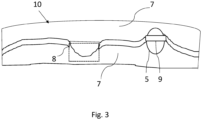
Fig. 3 zeigt eine alternative Ausführungsform. - Um das Herstellungsverfahren für ein Frontpanel oder auch ein anderes Bauteils 1 einer Außenhaut eines Fahrzeugs zu verbessern, wird ein Verfahren verwendet, das mit einer hinterspritzten Folie arbeitet.
- Als Basis dient eine Folie 2, die geeignet vorbereitet und mit einem glasklaren PC-Material überspritzt wird. In einer Ausführungsform kann diese Schicht teiltransparent eingefärbt werden und in einer anderen Ausführungsform aus PMMA geformt werden.
- In einer ersten Ausführungsform nach den
Fig. 1 und 2 wird die Folie 2 zunächst zu ihrer vordefinierten Form tiefgezogen und anschließend mit einer Farbe, zum Beispiel der Wagenfarbe, lackiert. Die Farbschicht 3 ist dabei auf der Seite der Folie angebracht, die später überspritzt wird. - Die lackierte, vorgeformte Folie 2 weist Bereiche 4 auf, auf. Diese sind dafür vorgesehen, später in einer anderen Farbe oder in einer Chromvariante durchleuchtet zu werden. Dazu müssen die Bereiche 4 in der Folie 2 ausgestanzt werden. Zunächst wird die vorbereitete farbige Folie 2 mit ihren Ausstanzungen 6 mit einer glasklaren PC-Schicht 7 überspritzt, in der sich dann die speziell eingeprägten Geometrien wiederfinden.
- Bauteile 5, die entweder Funktionselement oder Dekorationselemente sind, sind den geometrischen Eindellungen oder Erhebungen angepasst und werden als separate Bauteile 5 hergestellt. Die Bauteile 5 können mit unterschiedlichen Farben, oder als verchromtes oder PVD beschichtetes Bauteil und/oder als Lichtleiter ausgeführt werden. Ihr Erscheinungsbild scheint durch die Stanzöffnungen der Folie 2 sowie der glasklaren Umspritzung, der PC-Schicht 7, durch und ist von außen also von der Vorderseite V sichtbar.
- Die überspritzte Farbfolie 2 wird dann von der Rückseite R mit einem optisch durchsichtigen Kleber 8 zumindest in den Bereichen der Ausstanzungen 6 beschichtet und die Bauteile 5 werden eingepasst. Sollte es sich um größere oder komplexere Bauteile 5 handeln, kann die Halterung auch von einem separaten Halterahmen 9 von hinten mit dem Bauteil 5 und dem Kleber 8 verbunden werden. Das erleichtert die Montage von aktiven Bauteilen, die dann nach erfolgtem Herstellungsprozess nur noch in der Halterahmen eingepasst werden müssen.
- In einer alternativen Ausführungsform wird die Folie 2 aus einer Chromfolie hergestellt. Die Chromfolie wird mit einem Siebdruckverfahren mit Farbe, der Wagenfarbe oder mit einer Kontrastfarbe, bedruckt, sodass die Bereiche 4, in denen Chrom sichtbar sein soll, ausgespart werden. Die Ausstanzungen können bei dieser Ausführung unterbleiben.
- Die Folie 2 kann stets vor oder nach dem Tiefziehen mit der Farbschicht 3 versehen werden.
- In einer weiteren alternativen Ausführungsform nach
Figur 3 werden die getrennt hergestellten Bauteile 5 nicht geklebt, sondern in ein Spritzgusswerkzeug eingelegt und mit klarem PC-Material mit der Folie 2 überspritzt, so dass sich die Bauteile 5 mit der Folie 2 verbinden. - Wenn die Folie von hinten als auch von der Rückseite R hinterspritzt wird, kann die Farbschicht auch auf der zu Rückseite hin gelegenen Seite der Folie angebracht sein.
- Bei allen Varianten mit einer Sichtseite aus Polycarbonat erfolgt eine Beschichtung mit einem Hartlack 10 von außen, der die PC-Schicht vor UV und Verkratzung schützt.
-
- 1 Bauteil einer Außenhaut eines Fahrzeugs
- 2 Folie
- 3 Farbschicht
- 4 Bereiche
- 5 Bauteile
- 6 Ausstanzungen
- 7 PC-Schicht
- 8 Kleber
- 9 Halterahmen
- 10 Hartlack
Claims (9)
- Verfahren zum Herstellen von Bauteilen (1) einer Außenhaut eines Fahrzeugs mit einer Folie (2), die zumindest von einer Seite - Vorderseite (V) oder Rückseite (R) - mit klarem Kunststoffmaterial hinterspritzt wird, wobei die Folie (2) einem Tiefziehprozess unterzogen wird, um die gewünschte dreidimensionale Form zu erzeugen und die Folie (2) weiteren Schritten zur Vorbereitung der Hinterspritzung unterzogen wird,- wobei die Folie (2) mindestens teilweise mit einer Farbschicht (3) versehen wird,- und die Folie (2) Bereiche (4) aufweist, die für das Durchscheinen anderer Farben oder Durchdringen von elektromagnetischen Wellen vorgesehen sind, und die aus speziell eingeprägten Geometrien, wie Eindellungen, Erhebungen bestehen, wobei die Bereiche (4) durch Ausstanzungen (6) aus der Folie (2) vorbereitet werden,- wobei die vorbereitete farbige Folie (2) zunächst mit ihren Ausstanzungen (6) mit einer glasklaren Kunststoffschicht (7) überspritzt wird, in der sich dann die speziell eingeprägten Geometrien wiederfinden,- und in die Ausstanzungen (6) Bauteile (5) eingesetzt werden, die ein farbiges oder leuchtendes Erscheinungsbild nach außen abgeben, wobei die Bauteile (5) durch Ausstanzungen (6) der Folie (2) sowie der glasklaren Umspritzung der Folie (2) durchscheinen und von außen also von der Vorderseite (V) sichtbar sind.
- Verfahren nach Anspruch 1, dadurch gekennzeichnet, dass die Folie (2) vor oder nach dem Tiefziehen mit einer Farbschicht (3) versehen wird.
- Verfahren nach Anspruch 1, dadurch gekennzeichnet, dass die Folie (2) eine metallisierte Folie ist.
- Verfahren nach Anspruch 3, dadurch gekennzeichnet, dass die Bereiche (4) durch selektives Bedrucken der Folie (2) mit Farbe ausgebildet werden.
- Verfahren nach Anspruch 4, dadurch gekennzeichnet, dass Bauteile (5) in den Bereichen (4) mit der Folie (2) verbunden werden.
- Verfahren nach Anspruch 1 oder 5, dadurch gekennzeichnet, dass die Bauteile (5) mit glasklarem Kleber (8) mit der Folie (2) zumindest an den Bereichen (4) verbunden werden.
- Verfahren nach Anspruch 1 oder 5, dadurch gekennzeichnet, dass die Bauteile (5) durch Überspritzen mit einem klaren Kunststoffmaterial in einer PC- oder PMMA- Schicht (7) mit der Folie (2) verbunden werden.
- Verfahren nach Anspruch 4 oder 5, dadurch gekennzeichnet, dass zum Überspritzen klares Kunststoffmaterial transparent eingefärbt verwendet wird.
- Verfahren nach Anspruch 1, dadurch gekennzeichnet, dass ausgewählte Ausstanzungen (6) aus der Folie (2) als Öffnungen für elektromagnetische Wellen von Sensoren verwendet werden.
Applications Claiming Priority (1)
| Application Number | Priority Date | Filing Date | Title |
|---|---|---|---|
| DE102021203582.5A DE102021203582B4 (de) | 2021-04-12 | 2021-04-12 | Verfahren zum Herstellen von Bauteilen einer Außenhaut eines Fahrzeugs |
Publications (2)
| Publication Number | Publication Date |
|---|---|
| EP4074486A1 EP4074486A1 (de) | 2022-10-19 |
| EP4074486B1 true EP4074486B1 (de) | 2024-11-13 |
Family
ID=80999514
Family Applications (1)
| Application Number | Title | Priority Date | Filing Date |
|---|---|---|---|
| EP22165179.7A Active EP4074486B1 (de) | 2021-04-12 | 2022-03-29 | Verfahren zum herstellen von bauteilen einer aussenhaut eines fahrzeugs |
Country Status (4)
| Country | Link |
|---|---|
| US (1) | US12370736B2 (de) |
| EP (1) | EP4074486B1 (de) |
| CN (1) | CN115195017A (de) |
| DE (1) | DE102021203582B4 (de) |
Family Cites Families (13)
| Publication number | Priority date | Publication date | Assignee | Title |
|---|---|---|---|---|
| US6241153B1 (en) | 1998-03-17 | 2001-06-05 | Cardxx, Inc. | Method for making tamper-preventing, contact-type, smart cards |
| US6790396B2 (en) | 2001-08-29 | 2004-09-14 | Nokia Corporation | Method of making illuminated covers |
| JP2005212745A (ja) * | 2004-02-02 | 2005-08-11 | Toyota Motor Corp | レーダ装置ビーム経路内用成形品 |
| JP2007240358A (ja) * | 2006-03-09 | 2007-09-20 | Honda Motor Co Ltd | 車両用外装部品 |
| DE102006046436B3 (de) | 2006-09-25 | 2008-04-30 | Decoma (Germany) Gmbh | Abdeckelement |
| DE102009017698A1 (de) * | 2008-04-23 | 2009-10-29 | Daimler Ag | Fahrzeug-Folienbauteil und Verfahren zu dessen Herstellung |
| DE102008041616A1 (de) * | 2008-08-27 | 2010-03-04 | BSH Bosch und Siemens Hausgeräte GmbH | Haushaltsgerät, insbesondere Dunstabzugsvorrichtung oder Gargerät, sowie Verfahren zu dessen Herstellung |
| WO2010083534A1 (en) * | 2009-01-19 | 2010-07-22 | Avery Dennison Corporation | Durable in-mold decoration laminates using semi-crystalline polymer as top film |
| CN101987335B (zh) * | 2009-07-30 | 2013-02-06 | 中国商用飞机有限责任公司 | 翼尖罩镜面零件拉深的加工方法 |
| DE102011103796B4 (de) * | 2011-06-09 | 2015-12-10 | Webasto Ag | Verdeck mit Stoffaußenhaut |
| DE102013114276A1 (de) * | 2013-12-18 | 2015-06-18 | Leonhard Kurz Stiftung & Co. Kg | Kunststoffformteil und Verfahren zu dessen Herstellung |
| KR20170015365A (ko) * | 2014-06-04 | 2017-02-08 | 사빅 글로벌 테크놀러지스 비.브이. | 지시계 패널의 인 몰드 성형체 및 그 물품 |
| CN109648781A (zh) * | 2018-11-27 | 2019-04-19 | 嘉兴敏胜汽车零部件有限公司 | 一种acc标牌的模内贴膜注塑工艺 |
-
2021
- 2021-04-12 DE DE102021203582.5A patent/DE102021203582B4/de active Active
-
2022
- 2022-03-29 EP EP22165179.7A patent/EP4074486B1/de active Active
- 2022-04-07 CN CN202210360293.9A patent/CN115195017A/zh active Pending
- 2022-04-08 US US17/716,157 patent/US12370736B2/en active Active
Also Published As
| Publication number | Publication date |
|---|---|
| US12370736B2 (en) | 2025-07-29 |
| DE102021203582A1 (de) | 2022-10-13 |
| EP4074486A1 (de) | 2022-10-19 |
| CN115195017A (zh) | 2022-10-18 |
| DE102021203582B4 (de) | 2024-06-20 |
| US20220324155A1 (en) | 2022-10-13 |
Similar Documents
| Publication | Publication Date | Title |
|---|---|---|
| DE102006046436B3 (de) | Abdeckelement | |
| EP3405366B1 (de) | Beleuchtetes markenemblem | |
| DE102007009583B4 (de) | Verfahren zur Herstellung eines Verbundformteils | |
| DE102018219294A1 (de) | Abdeckelement | |
| DE102016009549A1 (de) | Fahrzeugelement | |
| EP1812989B1 (de) | Strahlungsdurchlässige kunststoff-abdeckung und verfahren zum herstellen einer kunststoff-abdeckung | |
| DE102013221064A1 (de) | Abdeckung für einen Radarsensor für Kraftfahrzeuge | |
| DE102021003615A1 (de) | Beleuchtetes Bauteil für ein Fahrzeug | |
| DE102004021630B4 (de) | Strahlungsdurchlässige Kunststoff-Abdeckung und Verfahren zu deren Herstellung | |
| DE102004060810A1 (de) | Kunststoff-Formteil und Verfahren zu dessen Herstellung | |
| WO2019020716A1 (de) | Zierteil für ein fahrzeug und verfahren zur herstellung eines zierteils | |
| EP4344949B1 (de) | Beleuchtungssystem für ein aussenverkleidungsteil eines kraftfahrzeugs | |
| EP1436167B1 (de) | Dekorelement und mit einem dekorelement versehenes kunststoffteil | |
| WO2023017071A1 (de) | Spritzgussfertigung eines bauteils | |
| EP4288266B1 (de) | Externes karosserieteil mit designstrukturen und verfahren zur herstellung von anlageteilen | |
| EP1725443B1 (de) | Fahrzeug folienbauteil und verfahren zu dessen herstellung | |
| EP3670135B1 (de) | Kaschierte folie, damit hergestelltes kunststoffbauteil, sowie verfahren und werkzeug dafür | |
| DE102021203582B4 (de) | Verfahren zum Herstellen von Bauteilen einer Außenhaut eines Fahrzeugs | |
| EP1910983B1 (de) | Gespritzter Gegenstand aus Kunststoff und Verfahren zu dessen Herstellung | |
| AT508716A2 (de) | Mehrschichtiges dekorelement | |
| WO2003033275A2 (de) | Mit einem dekorelement versehenes ausstattungsteil für ein kraftfahrzeug | |
| DE102023203211A1 (de) | Beleuchtete Radomabdeckung |
Legal Events
| Date | Code | Title | Description |
|---|---|---|---|
| PUAI | Public reference made under article 153(3) epc to a published international application that has entered the european phase |
Free format text: ORIGINAL CODE: 0009012 |
|
| STAA | Information on the status of an ep patent application or granted ep patent |
Free format text: STATUS: THE APPLICATION HAS BEEN PUBLISHED |
|
| STAA | Information on the status of an ep patent application or granted ep patent |
Free format text: STATUS: REQUEST FOR EXAMINATION WAS MADE |
|
| AK | Designated contracting states |
Kind code of ref document: A1 Designated state(s): AL AT BE BG CH CY CZ DE DK EE ES FI FR GB GR HR HU IE IS IT LI LT LU LV MC MK MT NL NO PL PT RO RS SE SI SK SM TR |
|
| 17P | Request for examination filed |
Effective date: 20220919 |
|
| RBV | Designated contracting states (corrected) |
Designated state(s): AL AT BE BG CH CY CZ DE DK EE ES FI FR GB GR HR HU IE IS IT LI LT LU LV MC MK MT NL NO PL PT RO RS SE SI SK SM TR |
|
| GRAP | Despatch of communication of intention to grant a patent |
Free format text: ORIGINAL CODE: EPIDOSNIGR1 |
|
| STAA | Information on the status of an ep patent application or granted ep patent |
Free format text: STATUS: GRANT OF PATENT IS INTENDED |
|
| RIC1 | Information provided on ipc code assigned before grant |
Ipc: H01Q 1/32 20060101ALN20240710BHEP Ipc: G01S 13/931 20200101ALN20240710BHEP Ipc: B60R 13/00 20060101ALN20240710BHEP Ipc: B29L 31/30 20060101ALN20240710BHEP Ipc: B29K 69/00 20060101ALN20240710BHEP Ipc: B29C 65/48 20060101ALN20240710BHEP Ipc: H01Q 1/42 20060101ALI20240710BHEP Ipc: B62D 29/00 20060101ALI20240710BHEP Ipc: B29C 45/14 20060101AFI20240710BHEP |
|
| INTG | Intention to grant announced |
Effective date: 20240719 |
|
| GRAS | Grant fee paid |
Free format text: ORIGINAL CODE: EPIDOSNIGR3 |
|
| GRAA | (expected) grant |
Free format text: ORIGINAL CODE: 0009210 |
|
| STAA | Information on the status of an ep patent application or granted ep patent |
Free format text: STATUS: THE PATENT HAS BEEN GRANTED |
|
| AK | Designated contracting states |
Kind code of ref document: B1 Designated state(s): AL AT BE BG CH CY CZ DE DK EE ES FI FR GB GR HR HU IE IS IT LI LT LU LV MC MK MT NL NO PL PT RO RS SE SI SK SM TR |
|
| REG | Reference to a national code |
Ref country code: GB Ref legal event code: FG4D Free format text: NOT ENGLISH |
|
| REG | Reference to a national code |
Ref country code: CH Ref legal event code: EP |
|
| REG | Reference to a national code |
Ref country code: IE Ref legal event code: FG4D Free format text: LANGUAGE OF EP DOCUMENT: GERMAN |
|
| REG | Reference to a national code |
Ref country code: DE Ref legal event code: R096 Ref document number: 502022002105 Country of ref document: DE |
|
| REG | Reference to a national code |
Ref country code: LT Ref legal event code: MG9D |
|
| REG | Reference to a national code |
Ref country code: NL Ref legal event code: MP Effective date: 20241113 |
|
| PG25 | Lapsed in a contracting state [announced via postgrant information from national office to epo] |
Ref country code: HR Free format text: LAPSE BECAUSE OF FAILURE TO SUBMIT A TRANSLATION OF THE DESCRIPTION OR TO PAY THE FEE WITHIN THE PRESCRIBED TIME-LIMIT Effective date: 20241113 Ref country code: IS Free format text: LAPSE BECAUSE OF FAILURE TO SUBMIT A TRANSLATION OF THE DESCRIPTION OR TO PAY THE FEE WITHIN THE PRESCRIBED TIME-LIMIT Effective date: 20250313 Ref country code: PT Free format text: LAPSE BECAUSE OF FAILURE TO SUBMIT A TRANSLATION OF THE DESCRIPTION OR TO PAY THE FEE WITHIN THE PRESCRIBED TIME-LIMIT Effective date: 20250313 |
|
| PG25 | Lapsed in a contracting state [announced via postgrant information from national office to epo] |
Ref country code: NL Free format text: LAPSE BECAUSE OF FAILURE TO SUBMIT A TRANSLATION OF THE DESCRIPTION OR TO PAY THE FEE WITHIN THE PRESCRIBED TIME-LIMIT Effective date: 20241113 Ref country code: FI Free format text: LAPSE BECAUSE OF FAILURE TO SUBMIT A TRANSLATION OF THE DESCRIPTION OR TO PAY THE FEE WITHIN THE PRESCRIBED TIME-LIMIT Effective date: 20241113 |
|
| PG25 | Lapsed in a contracting state [announced via postgrant information from national office to epo] |
Ref country code: BG Free format text: LAPSE BECAUSE OF FAILURE TO SUBMIT A TRANSLATION OF THE DESCRIPTION OR TO PAY THE FEE WITHIN THE PRESCRIBED TIME-LIMIT Effective date: 20241113 |
|
| PG25 | Lapsed in a contracting state [announced via postgrant information from national office to epo] |
Ref country code: ES Free format text: LAPSE BECAUSE OF FAILURE TO SUBMIT A TRANSLATION OF THE DESCRIPTION OR TO PAY THE FEE WITHIN THE PRESCRIBED TIME-LIMIT Effective date: 20241113 |
|
| PG25 | Lapsed in a contracting state [announced via postgrant information from national office to epo] |
Ref country code: NO Free format text: LAPSE BECAUSE OF FAILURE TO SUBMIT A TRANSLATION OF THE DESCRIPTION OR TO PAY THE FEE WITHIN THE PRESCRIBED TIME-LIMIT Effective date: 20250213 |
|
| PG25 | Lapsed in a contracting state [announced via postgrant information from national office to epo] |
Ref country code: GR Free format text: LAPSE BECAUSE OF FAILURE TO SUBMIT A TRANSLATION OF THE DESCRIPTION OR TO PAY THE FEE WITHIN THE PRESCRIBED TIME-LIMIT Effective date: 20250214 Ref country code: LV Free format text: LAPSE BECAUSE OF FAILURE TO SUBMIT A TRANSLATION OF THE DESCRIPTION OR TO PAY THE FEE WITHIN THE PRESCRIBED TIME-LIMIT Effective date: 20241113 |
|
| PG25 | Lapsed in a contracting state [announced via postgrant information from national office to epo] |
Ref country code: PL Free format text: LAPSE BECAUSE OF FAILURE TO SUBMIT A TRANSLATION OF THE DESCRIPTION OR TO PAY THE FEE WITHIN THE PRESCRIBED TIME-LIMIT Effective date: 20241113 |
|
| PG25 | Lapsed in a contracting state [announced via postgrant information from national office to epo] |
Ref country code: RS Free format text: LAPSE BECAUSE OF FAILURE TO SUBMIT A TRANSLATION OF THE DESCRIPTION OR TO PAY THE FEE WITHIN THE PRESCRIBED TIME-LIMIT Effective date: 20250213 |
|
| REG | Reference to a national code |
Ref country code: DE Ref legal event code: R082 Ref document number: 502022002105 Country of ref document: DE Representative=s name: EULER, MATTHIAS, DR., DE |
|
| PG25 | Lapsed in a contracting state [announced via postgrant information from national office to epo] |
Ref country code: SM Free format text: LAPSE BECAUSE OF FAILURE TO SUBMIT A TRANSLATION OF THE DESCRIPTION OR TO PAY THE FEE WITHIN THE PRESCRIBED TIME-LIMIT Effective date: 20241113 |
|
| PG25 | Lapsed in a contracting state [announced via postgrant information from national office to epo] |
Ref country code: DK Free format text: LAPSE BECAUSE OF FAILURE TO SUBMIT A TRANSLATION OF THE DESCRIPTION OR TO PAY THE FEE WITHIN THE PRESCRIBED TIME-LIMIT Effective date: 20241113 |
|
| PG25 | Lapsed in a contracting state [announced via postgrant information from national office to epo] |
Ref country code: EE Free format text: LAPSE BECAUSE OF FAILURE TO SUBMIT A TRANSLATION OF THE DESCRIPTION OR TO PAY THE FEE WITHIN THE PRESCRIBED TIME-LIMIT Effective date: 20241113 |
|
| PG25 | Lapsed in a contracting state [announced via postgrant information from national office to epo] |
Ref country code: RO Free format text: LAPSE BECAUSE OF FAILURE TO SUBMIT A TRANSLATION OF THE DESCRIPTION OR TO PAY THE FEE WITHIN THE PRESCRIBED TIME-LIMIT Effective date: 20241113 |
|
| PG25 | Lapsed in a contracting state [announced via postgrant information from national office to epo] |
Ref country code: SK Free format text: LAPSE BECAUSE OF FAILURE TO SUBMIT A TRANSLATION OF THE DESCRIPTION OR TO PAY THE FEE WITHIN THE PRESCRIBED TIME-LIMIT Effective date: 20241113 |
|
| PG25 | Lapsed in a contracting state [announced via postgrant information from national office to epo] |
Ref country code: CZ Free format text: LAPSE BECAUSE OF FAILURE TO SUBMIT A TRANSLATION OF THE DESCRIPTION OR TO PAY THE FEE WITHIN THE PRESCRIBED TIME-LIMIT Effective date: 20241113 |
|
| PG25 | Lapsed in a contracting state [announced via postgrant information from national office to epo] |
Ref country code: IT Free format text: LAPSE BECAUSE OF FAILURE TO SUBMIT A TRANSLATION OF THE DESCRIPTION OR TO PAY THE FEE WITHIN THE PRESCRIBED TIME-LIMIT Effective date: 20241113 |
|
| REG | Reference to a national code |
Ref country code: DE Ref legal event code: R097 Ref document number: 502022002105 Country of ref document: DE |
|
| PG25 | Lapsed in a contracting state [announced via postgrant information from national office to epo] |
Ref country code: SE Free format text: LAPSE BECAUSE OF FAILURE TO SUBMIT A TRANSLATION OF THE DESCRIPTION OR TO PAY THE FEE WITHIN THE PRESCRIBED TIME-LIMIT Effective date: 20241113 |
|
| PLBE | No opposition filed within time limit |
Free format text: ORIGINAL CODE: 0009261 |
|
| STAA | Information on the status of an ep patent application or granted ep patent |
Free format text: STATUS: NO OPPOSITION FILED WITHIN TIME LIMIT |
|
| PG25 | Lapsed in a contracting state [announced via postgrant information from national office to epo] |
Ref country code: MC Free format text: LAPSE BECAUSE OF FAILURE TO SUBMIT A TRANSLATION OF THE DESCRIPTION OR TO PAY THE FEE WITHIN THE PRESCRIBED TIME-LIMIT Effective date: 20241113 |
|
| 26N | No opposition filed |
Effective date: 20250814 |
|
| REG | Reference to a national code |
Ref country code: CH Ref legal event code: H13 Free format text: ST27 STATUS EVENT CODE: U-0-0-H10-H13 (AS PROVIDED BY THE NATIONAL OFFICE) Effective date: 20251023 |
|
| PG25 | Lapsed in a contracting state [announced via postgrant information from national office to epo] |
Ref country code: LU Free format text: LAPSE BECAUSE OF NON-PAYMENT OF DUE FEES Effective date: 20250329 |
|
| REG | Reference to a national code |
Ref country code: BE Ref legal event code: MM Effective date: 20250331 |
|
| PG25 | Lapsed in a contracting state [announced via postgrant information from national office to epo] |
Ref country code: BE Free format text: LAPSE BECAUSE OF NON-PAYMENT OF DUE FEES Effective date: 20250331 |
|
| PG25 | Lapsed in a contracting state [announced via postgrant information from national office to epo] |
Ref country code: CH Free format text: LAPSE BECAUSE OF NON-PAYMENT OF DUE FEES Effective date: 20250331 |
|
| PG25 | Lapsed in a contracting state [announced via postgrant information from national office to epo] |
Ref country code: IE Free format text: LAPSE BECAUSE OF NON-PAYMENT OF DUE FEES Effective date: 20250329 |
|
| PGFP | Annual fee paid to national office [announced via postgrant information from national office to epo] |
Ref country code: GB Payment date: 20260324 Year of fee payment: 5 |
|
| PGFP | Annual fee paid to national office [announced via postgrant information from national office to epo] |
Ref country code: DE Payment date: 20260319 Year of fee payment: 5 |
|
| PGFP | Annual fee paid to national office [announced via postgrant information from national office to epo] |
Ref country code: AT Payment date: 20260301 Year of fee payment: 5 |
|
| PGFP | Annual fee paid to national office [announced via postgrant information from national office to epo] |
Ref country code: FR Payment date: 20260323 Year of fee payment: 5 |
|
| PG25 | Lapsed in a contracting state [announced via postgrant information from national office to epo] |
Ref country code: CY Free format text: LAPSE BECAUSE OF FAILURE TO SUBMIT A TRANSLATION OF THE DESCRIPTION OR TO PAY THE FEE WITHIN THE PRESCRIBED TIME-LIMIT Effective date: 20241113 |
|
| PG25 | Lapsed in a contracting state [announced via postgrant information from national office to epo] |
Ref country code: LT Free format text: LAPSE BECAUSE OF FAILURE TO SUBMIT A TRANSLATION OF THE DESCRIPTION OR TO PAY THE FEE WITHIN THE PRESCRIBED TIME-LIMIT Effective date: 20241113 |
|
| PG25 | Lapsed in a contracting state [announced via postgrant information from national office to epo] |
Ref country code: TR Free format text: LAPSE BECAUSE OF FAILURE TO SUBMIT A TRANSLATION OF THE DESCRIPTION OR TO PAY THE FEE WITHIN THE PRESCRIBED TIME-LIMIT Effective date: 20241113 |