EP4072565B1 - GOLDCLUSTER (AuCs) UND ZUSAMMENSETZUNG ZUR BEHANDLUNG VON LEBERZIRRHOSE - Google Patents
GOLDCLUSTER (AuCs) UND ZUSAMMENSETZUNG ZUR BEHANDLUNG VON LEBERZIRRHOSE Download PDFInfo
- Publication number
- EP4072565B1 EP4072565B1 EP20925719.5A EP20925719A EP4072565B1 EP 4072565 B1 EP4072565 B1 EP 4072565B1 EP 20925719 A EP20925719 A EP 20925719A EP 4072565 B1 EP4072565 B1 EP 4072565B1
- Authority
- EP
- European Patent Office
- Prior art keywords
- cysteine
- ligand
- group
- bound
- aucs
- Prior art date
- Legal status (The legal status is an assumption and is not a legal conclusion. Google has not performed a legal analysis and makes no representation as to the accuracy of the status listed.)
- Active
Links
Images





Classifications
-
- A—HUMAN NECESSITIES
- A61—MEDICAL OR VETERINARY SCIENCE; HYGIENE
- A61K—PREPARATIONS FOR MEDICAL, DENTAL OR TOILETRY PURPOSES
- A61K33/00—Medicinal preparations containing inorganic active ingredients
- A61K33/24—Heavy metals; Compounds thereof
- A61K33/242—Gold; Compounds thereof
-
- A—HUMAN NECESSITIES
- A61—MEDICAL OR VETERINARY SCIENCE; HYGIENE
- A61K—PREPARATIONS FOR MEDICAL, DENTAL OR TOILETRY PURPOSES
- A61K47/00—Medicinal preparations characterised by the non-active ingredients used, e.g. carriers or inert additives; Targeting or modifying agents chemically bound to the active ingredient
- A61K47/06—Organic compounds, e.g. natural or synthetic hydrocarbons, polyolefins, mineral oil, petrolatum or ozokerite
- A61K47/16—Organic compounds, e.g. natural or synthetic hydrocarbons, polyolefins, mineral oil, petrolatum or ozokerite containing nitrogen, e.g. nitro-, nitroso-, azo-compounds, nitriles, cyanates
- A61K47/18—Amines; Amides; Ureas; Quaternary ammonium compounds; Amino acids; Oligopeptides having up to five amino acids
- A61K47/183—Amino acids, e.g. glycine, EDTA or aspartame
-
- A—HUMAN NECESSITIES
- A61—MEDICAL OR VETERINARY SCIENCE; HYGIENE
- A61K—PREPARATIONS FOR MEDICAL, DENTAL OR TOILETRY PURPOSES
- A61K47/00—Medicinal preparations characterised by the non-active ingredients used, e.g. carriers or inert additives; Targeting or modifying agents chemically bound to the active ingredient
- A61K47/50—Medicinal preparations characterised by the non-active ingredients used, e.g. carriers or inert additives; Targeting or modifying agents chemically bound to the active ingredient the non-active ingredient being chemically bound to the active ingredient, e.g. polymer-drug conjugates
- A61K47/51—Medicinal preparations characterised by the non-active ingredients used, e.g. carriers or inert additives; Targeting or modifying agents chemically bound to the active ingredient the non-active ingredient being chemically bound to the active ingredient, e.g. polymer-drug conjugates the non-active ingredient being a modifying agent
- A61K47/54—Medicinal preparations characterised by the non-active ingredients used, e.g. carriers or inert additives; Targeting or modifying agents chemically bound to the active ingredient the non-active ingredient being chemically bound to the active ingredient, e.g. polymer-drug conjugates the non-active ingredient being a modifying agent the modifying agent being an organic compound
- A61K47/542—Carboxylic acids, e.g. a fatty acid or an amino acid
-
- A—HUMAN NECESSITIES
- A61—MEDICAL OR VETERINARY SCIENCE; HYGIENE
- A61K—PREPARATIONS FOR MEDICAL, DENTAL OR TOILETRY PURPOSES
- A61K47/00—Medicinal preparations characterised by the non-active ingredients used, e.g. carriers or inert additives; Targeting or modifying agents chemically bound to the active ingredient
- A61K47/50—Medicinal preparations characterised by the non-active ingredients used, e.g. carriers or inert additives; Targeting or modifying agents chemically bound to the active ingredient the non-active ingredient being chemically bound to the active ingredient, e.g. polymer-drug conjugates
- A61K47/51—Medicinal preparations characterised by the non-active ingredients used, e.g. carriers or inert additives; Targeting or modifying agents chemically bound to the active ingredient the non-active ingredient being chemically bound to the active ingredient, e.g. polymer-drug conjugates the non-active ingredient being a modifying agent
- A61K47/62—Medicinal preparations characterised by the non-active ingredients used, e.g. carriers or inert additives; Targeting or modifying agents chemically bound to the active ingredient the non-active ingredient being chemically bound to the active ingredient, e.g. polymer-drug conjugates the non-active ingredient being a modifying agent the modifying agent being a protein, peptide or polyamino acid
- A61K47/64—Drug-peptide, drug-protein or drug-polyamino acid conjugates, i.e. the modifying agent being a peptide, protein or polyamino acid which is covalently bonded or complexed to a therapeutically active agent
-
- A—HUMAN NECESSITIES
- A61—MEDICAL OR VETERINARY SCIENCE; HYGIENE
- A61K—PREPARATIONS FOR MEDICAL, DENTAL OR TOILETRY PURPOSES
- A61K47/00—Medicinal preparations characterised by the non-active ingredients used, e.g. carriers or inert additives; Targeting or modifying agents chemically bound to the active ingredient
- A61K47/50—Medicinal preparations characterised by the non-active ingredients used, e.g. carriers or inert additives; Targeting or modifying agents chemically bound to the active ingredient the non-active ingredient being chemically bound to the active ingredient, e.g. polymer-drug conjugates
- A61K47/69—Medicinal preparations characterised by the non-active ingredients used, e.g. carriers or inert additives; Targeting or modifying agents chemically bound to the active ingredient the non-active ingredient being chemically bound to the active ingredient, e.g. polymer-drug conjugates the conjugate being characterised by physical or galenical forms, e.g. emulsion, particle, inclusion complex, stent or kit
- A61K47/6921—Medicinal preparations characterised by the non-active ingredients used, e.g. carriers or inert additives; Targeting or modifying agents chemically bound to the active ingredient the non-active ingredient being chemically bound to the active ingredient, e.g. polymer-drug conjugates the conjugate being characterised by physical or galenical forms, e.g. emulsion, particle, inclusion complex, stent or kit the form being a particulate, a powder, an adsorbate, a bead or a sphere
- A61K47/6923—Medicinal preparations characterised by the non-active ingredients used, e.g. carriers or inert additives; Targeting or modifying agents chemically bound to the active ingredient the non-active ingredient being chemically bound to the active ingredient, e.g. polymer-drug conjugates the conjugate being characterised by physical or galenical forms, e.g. emulsion, particle, inclusion complex, stent or kit the form being a particulate, a powder, an adsorbate, a bead or a sphere the form being an inorganic particle, e.g. ceramic particles, silica particles, ferrite or synsorb
-
- A—HUMAN NECESSITIES
- A61—MEDICAL OR VETERINARY SCIENCE; HYGIENE
- A61K—PREPARATIONS FOR MEDICAL, DENTAL OR TOILETRY PURPOSES
- A61K47/00—Medicinal preparations characterised by the non-active ingredients used, e.g. carriers or inert additives; Targeting or modifying agents chemically bound to the active ingredient
- A61K47/50—Medicinal preparations characterised by the non-active ingredients used, e.g. carriers or inert additives; Targeting or modifying agents chemically bound to the active ingredient the non-active ingredient being chemically bound to the active ingredient, e.g. polymer-drug conjugates
- A61K47/69—Medicinal preparations characterised by the non-active ingredients used, e.g. carriers or inert additives; Targeting or modifying agents chemically bound to the active ingredient the non-active ingredient being chemically bound to the active ingredient, e.g. polymer-drug conjugates the conjugate being characterised by physical or galenical forms, e.g. emulsion, particle, inclusion complex, stent or kit
- A61K47/6921—Medicinal preparations characterised by the non-active ingredients used, e.g. carriers or inert additives; Targeting or modifying agents chemically bound to the active ingredient the non-active ingredient being chemically bound to the active ingredient, e.g. polymer-drug conjugates the conjugate being characterised by physical or galenical forms, e.g. emulsion, particle, inclusion complex, stent or kit the form being a particulate, a powder, an adsorbate, a bead or a sphere
- A61K47/6927—Medicinal preparations characterised by the non-active ingredients used, e.g. carriers or inert additives; Targeting or modifying agents chemically bound to the active ingredient the non-active ingredient being chemically bound to the active ingredient, e.g. polymer-drug conjugates the conjugate being characterised by physical or galenical forms, e.g. emulsion, particle, inclusion complex, stent or kit the form being a particulate, a powder, an adsorbate, a bead or a sphere the form being a solid microparticle having no hollow or gas-filled cores
- A61K47/6929—Medicinal preparations characterised by the non-active ingredients used, e.g. carriers or inert additives; Targeting or modifying agents chemically bound to the active ingredient the non-active ingredient being chemically bound to the active ingredient, e.g. polymer-drug conjugates the conjugate being characterised by physical or galenical forms, e.g. emulsion, particle, inclusion complex, stent or kit the form being a particulate, a powder, an adsorbate, a bead or a sphere the form being a solid microparticle having no hollow or gas-filled cores the form being a nanoparticle, e.g. an immuno-nanoparticle
-
- A—HUMAN NECESSITIES
- A61—MEDICAL OR VETERINARY SCIENCE; HYGIENE
- A61P—SPECIFIC THERAPEUTIC ACTIVITY OF CHEMICAL COMPOUNDS OR MEDICINAL PREPARATIONS
- A61P1/00—Drugs for disorders of the alimentary tract or the digestive system
- A61P1/16—Drugs for disorders of the alimentary tract or the digestive system for liver or gallbladder disorders, e.g. hepatoprotective agents, cholagogues, litholytics
-
- Y—GENERAL TAGGING OF NEW TECHNOLOGICAL DEVELOPMENTS; GENERAL TAGGING OF CROSS-SECTIONAL TECHNOLOGIES SPANNING OVER SEVERAL SECTIONS OF THE IPC; TECHNICAL SUBJECTS COVERED BY FORMER USPC CROSS-REFERENCE ART COLLECTIONS [XRACs] AND DIGESTS
- Y02—TECHNOLOGIES OR APPLICATIONS FOR MITIGATION OR ADAPTATION AGAINST CLIMATE CHANGE
- Y02A—TECHNOLOGIES FOR ADAPTATION TO CLIMATE CHANGE
- Y02A50/00—TECHNOLOGIES FOR ADAPTATION TO CLIMATE CHANGE in human health protection, e.g. against extreme weather
- Y02A50/30—Against vector-borne diseases, e.g. mosquito-borne, fly-borne, tick-borne or waterborne diseases whose impact is exacerbated by climate change
Definitions
- the present invention relates to the technical field of treatment of liver cirrhosis, particularly to ligand-bound gold clusters (AuCs) and composition comprising the ligand-bound AuCs for use in the treatment of liver cirrhosis.
- AuCs ligand-bound gold clusters
- the liver is the largest solid organ in a human body, and performs many important functions including: making blood proteins that aid in clotting, transporting oxygen, and helping the immune system; storing excess nutrients and returning some of the nutrients to the bloodstream; manufacturing bile to help digest food; helping the body store sugar (glucose) in the form of glycogen; ridding the body of harmful substances in the bloodstream, including drugs and alcohol; and breaking down saturated fat and producing cholesterol.
- Liver cirrhosis is a slowly progressive disease, being developed over many years due to long-term, continuous damage to the liver. Along with the development of liver cirrhosis, healthy liver tissue is gradually destroyed and replaced by scar tissue. The scar tissue blocks the flow of blood through the liver and slows the liver's ability to process nutrients, hormones, drugs, and natural toxins. It also reduces the production of proteins and other substances made by the liver. Cirrhosis may eventually lead to liver failure that may require a liver transplant and/or liver cancer.
- liver cirrhosis In the early stage of liver cirrhosis, there are no obvious symptoms due to strong liver compensatory function. In its later stage, the symptoms include liver function damage, portal hypertension, upper gastrointestinal bleeding, hepatic encephalopathy, secondary infection, spleen hyperfunction, ascites, canceration and other complications. Liver cirrhosis results from gradual liver deformation and hardening. Histopathologically, liver cirrhosis is characterized by extensive hepatic cell necrosis, nodular regeneration of residual hepatocytes, connective tissue hyperplasia and fibrous septum formation, leading to the destruction of hepatic lobular structure and the formation of pseudolobules.
- Liver cirrhosis has different causes. Some people with cirrhosis have more than one cause of liver damage.
- the common causes of cirrhosis include long-term alcohol abuse, chronic hepatitis B and C infection, fatty liver disease, toxic metals, genetic diseases, nutrition disorders, industrial poisons, drugs, circulation disorders, metabolic disorders, cholestasis, schistosomiasis, etc.
- Liver cirrhosis could be diagnosed by many tests/techniques. For example, blood test could suggest liver cirrhosis if the levels of the liver enzymes including alanine transaminase (ALT), aspartate transaminase (AST) and alkaline phosphatase (ALP), and bilirubin are increased and the levels of blood proteins are decreased.
- ALT alanine transaminase
- AST aspartate transaminase
- ALP alkaline phosphatase
- liver cirrhosis Currently, while treatments can delay the progress of liver cirrhosis by dealing with its causes, there is no specific treatments for liver cirrhosis.
- WO 2013/176468 A1 discloses a gold nanoparticle that bonds with a protein drug for treating a liver disease.
- the gold nanoparticle may have particle size of 10 nm or more, more preferably 10 nm to 30 nm.
- WO 2018024111 A1 and WO 2018095429 A1 involve the pharmaceutical application of the ligand-bound gold cluster as described in the present disclosure in the treatment of Parkinson's disease (PD) and Alzheimer's disease (AD), and glaucoma respectively. They are silent on the treatment of live cirrhosis.
- PD Parkinson's disease
- AD Alzheimer's disease
- Noelia et al. or US 2018/169044 A1 teaches to treat liver disease with NAC combined with other effective components, such as glycine, vitamin D, bFCF, theanine, and other amino acids.
- US 2018/036270 A1 only briefly mentions that NAC may be used for treating liver disease, no further detail is presented.
- WO 00/06244 A2 and EP 2226082 A2 reveal the use of gold particles for therapy, but none of them relates to a treatment in liver cirrhosis.
- the present invention provides ligand-bound gold clusters and a pharmaceutical composition for use in the treatment of liver cirrhosis in a subject.
- Certain embodiments of the present invention provide a ligand-bound gold cluster for use in the treatment of liver cirrhosis, wherein the ligand-bound gold cluster comprises a gold core; and a ligand bound to the gold core;
- the gold core has a diameter in the range of 0.5-2.6 nm.
- cysteine-containing dipeptides are selected from the group consisting of L(D)-cysteine-L(D)-arginine dipeptide (CR), L(D)-arginine-L(D)-cysteine dipeptide (RC), L(D)-histidine-L(D)-cysteine dipeptide (HC), and L(D)-cysteine-L(D)-histidine dipeptide (CH).
- Certain embodiments of the present invention provide a pharmaceutical composition for use in the treatment of liver cirrhosis, wherein the pharmaceutical composition comprises a ligand-bound gold cluster and a pharmaceutically acceptable excipient, and the ligand-bound gold cluster comprises a gold core; and a ligand bound the gold core;
- the gold core has a diameter in the range of 0.5-2.6 nm.
- the cysteine-containing dipeptides are selected from the group consisting of L(D)-cysteine-L(D)-arginine dipeptide (CR), L(D)-arginine-L(D)-cysteine dipeptide (RC), L(D)-histidine-L(D)-cysteine dipeptide (HC), and L(D)-cysteine-L(D)-histidine dipeptide (CH).
- cysteine-containing tripeptides are selected from the group consisting of glycine-L(D)-cysteine-L(D)-arginine tripeptide (GCR), L(D)-proline-L(D)-cysteine-L(D)-arginine tripeptide (PCR), L(D)-lysine-L(D)-cysteine-L(D)-proline tripeptide (KCP), and L(D)-glutathione (GSH).
- GCR glycine-L(D)-cysteine-L(D)-arginine tripeptide
- PCR L(D)-proline-L(D)-cysteine-L(D)-arginine tripeptide
- KCP L(D)-lysine-L(D)-cysteine-L(D)-proline tripeptide
- GSH L(D)-glutathione
- cysteine-containing tetrapeptides are selected from the group consisting of glycine-L(D)-serine-L(D)-cysteine-L(D)-arginine tetrapeptide (GSCR), and glycine-L(D)-cysteine-L(D)-serine-L(D)-arginine tetrapeptide (GCSR).
- AuCs are a special form of gold existing between gold atoms and gold nanoparticles.
- AuCs have a size smaller than 3 nm, and are composed of only several to a few hundreds of gold atoms, leading to the collapse of face-centered cubic stacking structure of gold nanoparticles.
- AuCs exhibit molecule-like discrete electronic structures with distinct HOMO-LUMO gap unlike the continuous or quasi-continuous energy levels of gold nanoparticles. This leads to the disappearance of surface plasmon resonance effect and the corresponding plasmon resonance absorption band (520 ⁇ 20 nm) at uv-vis spectrum that possessed by conventional gold nanoparticles.
- the present invention provides a ligand-bound AuC.
- the ligand-bound AuC comprises a ligand and a gold core, wherein the ligand is bound to the gold core.
- the binding of ligands with gold cores means that ligands form stable-in-solution complexes with gold cores through covalent bond, hydrogen bond, electrostatic force, hydrophobic force, van der Waals force, etc.
- the diameter of the gold core is in the range of 0.5 - 3 nm. In certain embodiments, the diameter of the gold core is in the range of 0.5 - 2.6 nm.
- the ligand of the ligand-bound AuC is a thiol-containing compound or oligopeptide. In certain embodiments, the ligand bonds to the gold core to form a ligand-bonded AuC via Au-S bond.
- the ligand is, but not limited to, L-cysteine, D-cysteine, or a cysteine derivative.
- the cysteine derivative is N-isobutyryl-L-cysteine (L-NIBC), N-isobutyryl-D-cysteine (D-NIBC), N-acetyl-L-cysteine (L-NAC), or N-acetyl-D-cysteine (D-NAC).
- the ligand is, but not limited to, a cysteine-containing oligopeptide and its derivatives.
- the cysteine-containing oligopeptide is a cysteine-containing dipeptide.
- the cysteine-containing dipeptide is L(D)-cysteine-L(D)-arginine dipeptide (CR), L(D)-arginine-L(D)-cysteine dipeptide (RC), or L(D)-cysteine-L-histidine dipeptide (CH).
- the cysteine-containing oligopeptide is a cysteine-containing tripeptide.
- the cysteine-containing tripeptide is glycine-L(D)-cysteine-L(D)-arginine tripeptide (GCR), L(D)-proline-L(D)-cysteine-L(D)-arginine tripeptide (PCR), or L(D)-glutathione (GSH).
- the cysteine-containing oligopeptide is a cysteine-containing tetrapeptide.
- the cysteine-containing tetrapeptide is glycine-L(D)-serine-L(D)-cysteine-L(D)-arginine tetrapeptide (GSCR) or glycine-L(D)-cysteine-L(D)-serine-L(D)-arginine tetrapeptide (GCSR).
- the ligand is a thiol-containing compound.
- thiol-containing compound is 1-[(2S)-2-methyl-3-thiol-l-oxopropyl]-L(D)-proline, thioglycollic acid, mercaptoethanol, thiophenol, D-3-trolovol, or dodecyl mercaptan.
- the present invention provides a pharmaceutical composition for the treatment of liver cirrhosis in a subject.
- the subject is human.
- the subject is a pet animal such as a dog.
- the pharmaceutical composition comprises a ligand-bound AuC as disclosed above and a pharmaceutically acceptable excipient.
- the excipient is phosphate-buffered solution, or physiological saline.
- the present invention provides a use of the above disclosed ligand-bound AuCs for manufacturing a medication for the treatment of liver cirrhosis in a subject.
- the present invention provides a use of the above disclosed ligand-bound AuCs for treating liver cirrhosis in a subject or a method for treating liver cirrhosis in subject using the above disclosed ligand-bound AuCs.
- the method for treatment comprises administering a pharmaceutically effective amount of ligand-bound AuCs to the subject.
- the pharmaceutically effective amount can be ascertained by routine in vivo studies.
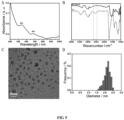
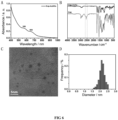
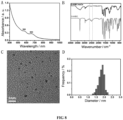
- the particle size of the powdery or flocculant substance obtained by the foregoing method is smaller than 3 nm (distributed in 0.5-2.6nm in general). No obvious absorption peak at 520 nm. It is determined that the obtained powder or floc is ligand-bound AuCs.
- L-NIBC-AuCs ligand L-NIBC-modified gold nanoparticles
- the method for preparing gold nanoparticles with ligand being L-NIBC refers to the reference ( W. Yan, L. Xu, C. Xu, W. Ma, H. Kuang, L. Wang and N. A. Kotov, Journal of the American Chemical Society 2012, 134, 15114 ; X. Yuan, B. Zhang, Z. Luo, Q. Yao, D. T. Leong, N. Yan and J. Xie, Angewandte Chemie International Edition 2014, 53, 4623 ).
- test powders (L-NIBC-AuCs sample and L-NIBC-AuNPs sample) were dissolved in ultrapure water to 2 mg/L as samples, and then test samples were prepared by hanging drop method. More specifically, 5 ⁇ L of the samples were dripped on an ultrathin carbon film, volatized naturally till the water drop disappeared, and then observe the morphology of the samples by JEM-2100F STEM/EDS field emission high-resolution TEM.
- the four TEM images of L-NIBC-AuNPs are shown in panels B, E, H, and K of FIG 1 ; the three TEM images of L-NIBC-AuCs are shown in panels B, E, and H of FIG 2 .
- each of L-NIBC-AuCs samples has a uniform particle size and good dispersibility
- the average diameter of L-NIBC-AuCs (refer to the diameter of gold core) is 1.1 nm, 1.8 nm and 2.6 nm respectively, in good accordance with the results in panels C, F and I of FIG 2 .
- L-NIBC-AuNPs samples have a larger particle size.
- Their average diameter (refer to the diameter of gold core) is 3.6 nm, 6.0 nm, 10.1 nm and 18.2 nm respectively, in good accordance with the results in panels C, F, I and L of FIG 1 .
- test powders (L-NIBC-AuCs sample and L-NIBC-AuNPs sample) were dissolved in ultrapure water till the concentration was 10mg ⁇ L -1 , and the UV-vis absorption spectra were measured at room temperature.
- the scanning range was 190-1100 nm
- the sample cell was a standard quartz cuvette with an optical path of 1 cm
- the reference cell was filled with ultrapure water.
- UV-vis absorption spectra of the four L-NIBC-AuNPs samples with different sizes are shown in panels A, D, G and J of FIG 1 , and the statistical distribution of particle size is shown in panels C, F, I and L of FIG 1 ;
- UV-vis absorption spectra of three L-NIBC-AuCs samples with different sizes are shown in panels A, D and G of FIG 2 , and the statistical distribution of particle size is shown in panels C, F and I of FIG 2 .
- FIG 1 indicates that due to the surface plasmon effect, L-NIBC-AuNPs had an absorption peak at about 520 nm.
- the position of the absorption peak is relevant with particle size.
- the UV absorption peak appears at 516 nm; when the particle size is 6.0 nm, the UV absorption peak appears at 517 nm; when the particle size is 10.1 nm, the UV absorption peak appears at 520 nm, and when the particle size is 18.2 nm, the absorption peak appears at 523 nm. None of the four samples has any absorption peak above 560 nm.
- FIG 2 indicates that in the UV absorption spectra of three L-NIBC-AuCs samples with different particle sizes, the surface plasmon effect absorption peak at 520 nm disappeared, and two obvious absorption peaks appeared above 560 nm and the positions of the absorption peaks varied slightly with the particle sizes of AuCs. This is because AuCs exhibit molecule-like properties due to the collapse of the face-centered cubic structure, which leads to the discontinuity of the density of states of AuCs, the energy level splitting, the disappearance of plasmon resonance effect and the appearance of a new absorption peak in the long-wave direction. It could be concluded that the three powder samples in different particle sizes obtained above are all ligand-bound AuCs.
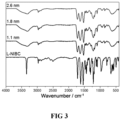
- Infrared spectra were measured on a VERTEX80V Fourier transform infrared spectrometer manufactured by Bruker in a solid powder high vacuum total reflection mode. The scanning range is 4000-400 cm -1 and the number of scans is 64. Taking L-NIBC-AuCs samples for example, the test samples were L-NIBC-AuCs dry powder with three different particle sizes and the control sample was pure L-NIBC powder. The results are shown in FIG 3 .
- FIG 3 shows the infrared spectrum of L-NIBC-AuCs with different particle sizes.
- the S-H stretching vibrations of L-NIBC-AuCs with different particle sizes all disappeared completely at 2500-2600 cm -1 , while other characteristic peaks of L-NIBC were still observed, proving that L-NIBC molecules were successfully bound to the surface of AuCs via Au-S bond.
- the figure also shows that the infrared spectrum of the ligand-bound AuCs is irrelevant with its size.
- AuCs bound with other ligands were prepared by a method similar to the above method, except that the solvent of solution B, the feed ratio between HAuCl 4 and ligand, the reaction time and the amount of NaBH 4 added were slightly adjusted.
- the solvent of solution B the feed ratio between HAuCl 4 and ligand, the reaction time and the amount of NaBH 4 added were slightly adjusted.
- L-cysteine, D-cysteine, N-isobutyryl-L-cysteine (L-NIBC) or N-isobutyryl-D-cysteine (D-NIBC) is used as the ligand
- acetic acid is selected as the solvent
- dipeptide CR, dipeptide RC or 1-[(2S)-2-methyl-3-thiol-1-oxopropyl]-L-proline water is selected as the solvent, and so on and so forth; other steps are similar, so no further details are provided herein.
- the present invention prepared and obtained a series of ligand-bound AuCs by the foregoing method.
- the ligands and the parameters of the preparation process are shown in Table 1.
- Table 1. Preparation parameters of AuCs bound with different ligands in the present invention
- Ligand Parameter Solvent used for solution B Feed ratio between HAuCl 4 and ligand Time of reaction in an ice bath under stirring before addition of NaBH 4 Mole ratio between HAuCl 4 and NaBH 4 Time of reaction in an ice bath under stirring after addition of NaBH 4 1 L-cysteine Acetic acid 1:3 2h 1:2 0.5h 2 D-cysteine Acetic acid 1:3 2h 1:2 0.5h 3 N-acetyl-L-cysteine Ethanol 1:4 1h 1:1 0.5h 4 N-acetyl-D-cysteine Ethanol 1:4 1h 1:1 0.5h 5 L-NIBC Water 1:4 0.5h 1:2 0.5h 6 D-NIBC Water 1
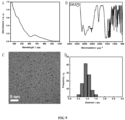
- FIGS 4-FIG 9 show UV spectra (panel A), infrared spectra (panel B), TEM images (panel C), and particle size distribution (panel D).
- the mouse liver tissue samples were fixed with 4% paraformaldehyde fixative for more than 48 h. After fixation, the liver samples were dehydrated with alcohol gradient and treated with xylene and ethanol. Then, the liver tissues were then dipped in wax and embedded. After the embedded material being trimmed, attached, and repaired, the liver tissues were sliced with a paraffin microtome, and the slices were with a thickness of 4 ⁇ m.
- the main process of HE staining is as follows: After baked in the oven at 65 °C, the slices were treated with xylene and dehydrated with gradient ethanol. The slices were sequentially stained with hematoxylin, blue color-enhancing solution, and 0.5% eosin, then treated with gradient ethanol and xylene and sealed with neutral gum. The fibrosis of liver tissue was observed with a microscope.
- mice in the model group were divided into round or oval masses of different sizes by proliferating fibrous septa.
- the serum ALT, TBil, and AST indexes increased significantly compared to that of the blank control group, the serum ALB significantly decreased compared to the blank control group, and the MAO index was no significant difference from the control group, but the value also increased. All the above results suggest that this experimental modeling was successful.
- ALT alanine aminotransferase
- Til total bilirubin
- AST aspartate aminotransferase
- MAO monoamine oxidase
- ALB albumin
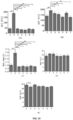
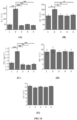
- the ALT activity of the model group is extremely significantly higher than that of the blank control group (increased from 43.5 ⁇ 8.1 U/L to 188.5 ⁇ 4.9 U/L; P ⁇ 0.01), which indicates that liver functions of the cirrhotic model mice had pathological changes.
- the ALT activity of all treated groups decreased significantly (the highest is 41.5 ⁇ 5.4 U/L for A-02 low dose group; the lowest is 30.0 ⁇ 5.9 U/L for A-01 high dose group; and 42.8 ⁇ 5.4 U/L for positive control group), and returned to the similar level of the blank control group or even lower, which is significantly different from that of the model group (P ⁇ 0.01).
- the serum AST activity of the model group was significantly increased compared to the blank control group (increased from 141.9 ⁇ 13.5 U/L to 192.0 ⁇ 11.3 U/L; P ⁇ 0.05).
- the AST activity of all treated groups decreased, where the high-dose A-01 and A-02 administration significantly reduced the AST activity (130 ⁇ 12.8 U/L for A-01 high dose group; 131.3 ⁇ 9.9 U/L for A-02 high dose group; both P ⁇ 0.01), obviously superior to the positive control group (165.5 ⁇ 11.6 U/L).
- the concentration of TBil of the model group was significantly higher than that of the blank control group (increased from 1.02 ⁇ 0.20 ⁇ mol/L to 2.91 ⁇ 0.39 ⁇ mol/L), and there was a significant difference from the blank control group ( P ⁇ 0.01).
- the concentrations of TBil were all significantly reduced (the highest is 0.91 ⁇ 0.13 ⁇ mol/L; the lowest is 0.78 ⁇ 0.25 ⁇ mol/L); they are in the similar level of the blank control group, but are extremely significantly different from the model group ( P ⁇ 0.01).
- the MAO activity of the model group is increased compared to the blank control group (18.8 ⁇ 2.9 U/L for blank control group; 21.5 ⁇ 0.7 U/L for model group), but there is no statistical difference, suggesting that the changes of the MAO activity in the cirrhosis mice induced by carbon tetrachloride are not significant.
- the administration of A-01 and A-02 did not significantly affect the MAO activity of all treated groups, but the MAO activity of all treated groups decreased (the highest is 19.3 ⁇ 1.5 U/L and the lowest is 18.5 ⁇ 1.9 U/L); they are in the similar to the level of the blank control group. In comparison, the MAO activity of the positive control group did not decrease (21.3 ⁇ 2.1 U/L). This result suggests that A-01 and A-02 may adjust the activity of MAO to the level of the blank control group, playing a role in the recovery of liver functions in cirrhosis mice.
- the ALB level of the model group is significantly decreased compared to the blank control group (decreased from 24.2 ⁇ 0.6 g/L to 22.1 ⁇ 1.3 g/L), and there is a significant difference from the blank control group (P ⁇ 0.05), showing that carbon tetrachloride administration may significantly decrease serum ALB levels.
- the administration of different doses of A-01 and A-02, and positive control d did not significantly affect the serum ALB levels.
- the positive drug sorafenib significantly reduced the levels of ALT, AST, and TBIL but may not have a relief effect on cirrhotic mice for the MAO index.
- the results suggest that A-01 and A-02 have a repairing effect on liver function in cirrhotic mice, and the effect is better than that of the positive control drug.
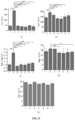
- the low and high doses of B-01 and B-02 could significantly reduce ALT activity (the highest is 46.3 ⁇ 7.4 U/L; the lowest is 33.0 ⁇ 7.1 U/L); they are in the level similar to the that of the blank control group, but significantly different from the model group (188.5 ⁇ 4.9 U/L; P ⁇ 0.01).
- B-01 low or dose administration can significantly reduce AST activity to normal levels (132.3 ⁇ 10.0 U/L and 129.7 ⁇ 26.6 U/L respectively; P ⁇ 0.01), and B-02 low dose administration can significantly reduce AST activity (149.6 ⁇ 21.8 U/L; P ⁇ 0.05); they are in similar level to that of blank control group.
- B-02 high-dose administration reduces AST activity to some extent, but there was no significant difference (P> 0.05).
- the positive drug sorafenib can also decrease the AST activity to 165.5 ⁇ 11.6 U/L (P ⁇ 0.05), but the effect is not as good as the administration of B-01 low and high doses and B-02 low dose.
- low and high doses of B-01 and B-02 all significantly reduced TBil (the highest is 1.28 ⁇ 0.12 ⁇ mol/L; the lowest is 0.96 ⁇ 0.15 ⁇ mol/L); they are in a level similar to that of the blank control group (1.02 ⁇ 0.20 ⁇ mol/L), but are significantly different from the model group (2.91 ⁇ 0.39 ⁇ mol/L; P ⁇ 0.01).
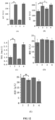
- high-dose drug C administration has no significant improvement on the levels of (A) ALT, (B) AST, (C) TBIL, (D) MAO, and (E) ALB compared to the model control group, and there is even a certain deterioration trend, suggesting that the drug C is ineffective in improving the liver functions of cirrhotic mice and may be toxic.
- Liver cirrhosis is pathologically characterized by diffuse fibrosis of the liver tissue and formation of pseudolobules.
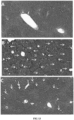
- the results of HE staining pathological analyses showed that as shown in FIG 13A , the normal liver tissue from the mice of the blank control group had clear structure, intact liver lobules, neatly arranged hepatocytes, radial arrangement being centered on the central vein, normal nucleus of hepatocytes, and only a small amount of fibrous tissue in the catchment area.
- FIG 13B in the liver tissue of the model group, the hepatocytes were disordered, balloon-like structures appeared, the hepatic lobules nearly disappeared, pseudolobules (as pointed to by right-orientated arrows in FIG 13B ) were abundantly formed, and a large number of proliferated protofibrils were present in the liver tissues, forming round- or oval-shaped fibrous septa (as pointed to by left-orientated arrows in FIG 13B ).
- the positive control group showed significant reduction of liver damages; the hepatocytes evidently have neat arrangement; fibrous hyperplasia, while increased, apparently reduced, not forming fibrous septa; pseudolobules nearly disappeared; but compared with normal liver tissues, the liver tissues in the positive control group showed apparent increases of inter-cellular gaps (as pointed to by downward-orientated arrows).
- the 4 groups administered with gold clusters drugs (A-01, A-02, B-01 and B-02) showed that their hepatocytes significantly recovered from liver damages, as evidenced by apparent reduction of fibrous hyperplasia and pseudolobules, and that the recovery is dose-dependent to a certain extent.
- FIG 13D and FIG 13E show the HE images that showed the effects of the exemplary A-01 lose and high dose drug administration respectively on the recovery of liver damages.
- A-01 low dose drug administration group showed relatively neat arrangement of hepatocytes, near disappearance of pseudolobules, evident reduction of fibrous hyperplasia, but the inter-hepatocytes gaps, compared with normal liver tissues, are increased to a certain extent (as pointed to by downward-orientated arrows in FIG 13D ).
- A-01 high dose drug administration group had even better effects of reduction of liver damages, complete disappearance of pseudolobules, no observation of fibrous hyperplasia, no discernable increases of inter-hepatocytes gaps, and no apparent difference from normal liver tissues.
- A-01 drug showed better effects on recovery of liver damages than the positive control drug.
- the four test drugs A-01, A-02, B-01 and B-02 significantly reduced liver fibrous hyperplasia and liver pseudolobules.
- the test results of liver function indicators also showed the recovery of liver function. The most significant changes were alanine aminotransferase (ALT) and total bilirubin (TBil). Aspartate aminotransferase (AST) and monoamino oxidase (MAO) also recovered significantly, while albumin (ALB) did not change significantly.
- the four gold clusters drugs may significantly improve liver function and part of the liver pathological structure in cirrhotic mice, and the total effects are superior to the positive control drug sorafenib, providing experimental basis for further application in the future.
- drug C has no obvious therapeutic effect, and cannot be used for the treatment of liver cirrhosis.
- liver cirrhosis model of mice in other groups was prepared by the method of carbon tetrachloride (CCl 4 )-induction treatment.
- the modeling protocoal was as follows: (1) Each mouse was intraperitoneally injected with 10% CCl 4 (diluted with olive oil) at 7 ⁇ L/g body weight, twice a week for a total of 8 weeks; mice of the blank control group were injected intraperitoneally with the same amount of olive oil solvent. (2) from the 6th week, two mice were selected and killed 48 hours after the last injection every week. The appearance of the liver was observed. After the appearance was in line with the characteristics of cirrhosis (the 8th week), the liver tissue was fixed with formalin. HE staining and Masson staining were used to evaluate the model of cirrhosis.
- mice in the three drug administration groups were given by intraperitoneal injection at a dose of 40 mg/kg respectively of the corresponding gold clusters drugs; and the mice in the blank control group and the model group were given intraperitoneally physiological saline at 10 mL/kg.
- the administration was once a day for 20 consecutive days.
- mice in the model group were divided into round or oval masses of different sizes by proliferating fibrous septa.
- the serum ALT, TBil, and AST indexes increased significantly compared to that of the blank control group, the serum ALB significantly decreased compared to the blank control group, and the MAO index was no significant difference from the control group, but the value also increased. All the above results suggest that this experimental modeling was successful.
- ALT alanine aminotransferase
- Til total bilirubin
- AST aspartate aminotransferase
- MAO monoamine oxidase
- ALB albumin
- the ALT activity of the model group is extremely significantly higher than that of the blank control group (P ⁇ 0.01, **), which indicates that liver functions of the cirrhotic model mice had pathological changes.
- the ALT activity of all treated groups decreased significantly, and returned to the similar level of the blank control group, which is significantly different from that of the model group (P ⁇ 0.01).
- the AST activity of the model group is significantly higher than that of the blank control group (P ⁇ 0.05, *).
- the AST activity of all treated groups decreased significantly (P ⁇ 0.05, *).
- the TBil concentration of the model group is significantly higher than that of the blank control group (P ⁇ 0.01, **).
- the TBil concentration of all treated groups decreased significantly to the level of the blank control group, but are significantly different than that of the model control group (P ⁇ 0.01, **).
- the MAO activity of the model group was increased compared to the blank control group, but there is no statistical difference (P >0.5), suggesting that the changes of the MAO activity in the cirrhosis mice induced by carbon tetrachloride are not significant.
- the administration of D, E or F drugs did not significantly affect MAO activity, but the MAO activity of all drug administration groups decreased to the level of the blank control group.
- the ALB concentration of the model group is decreased in comparison with that of the blank control group, but the difference is not significant (P >0.05).
- the administration of D, E or F drugs increased the serum ALB concentration, but the difference is not significant (P >0.05).
- ALT Alanine aminotransferase
- Til total bilirubin
- MAO aspartate aminotransferase
- MAO monoamino oxidase
- ALB albumin
- L-Cys-AuCs L-NIBC-AuCs, L-NAC-AuCs, CR-AuCs, RC-AuCs, and other ligand-bound AuCs with different sizes also have the similar effects, while their effects vary to certain extents. They would not be described in detail here.
Landscapes
- Health & Medical Sciences (AREA)
- Life Sciences & Earth Sciences (AREA)
- Chemical & Material Sciences (AREA)
- Engineering & Computer Science (AREA)
- Veterinary Medicine (AREA)
- Medicinal Chemistry (AREA)
- Pharmacology & Pharmacy (AREA)
- Animal Behavior & Ethology (AREA)
- General Health & Medical Sciences (AREA)
- Public Health (AREA)
- Bioinformatics & Cheminformatics (AREA)
- Epidemiology (AREA)
- Inorganic Chemistry (AREA)
- Proteomics, Peptides & Aminoacids (AREA)
- Chemical Kinetics & Catalysis (AREA)
- General Chemical & Material Sciences (AREA)
- Nuclear Medicine, Radiotherapy & Molecular Imaging (AREA)
- Gastroenterology & Hepatology (AREA)
- Organic Chemistry (AREA)
- Ceramic Engineering (AREA)
- Immunology (AREA)
- Nanotechnology (AREA)
- Molecular Biology (AREA)
- Oil, Petroleum & Natural Gas (AREA)
- Medicines That Contain Protein Lipid Enzymes And Other Medicines (AREA)
- Pharmaceuticals Containing Other Organic And Inorganic Compounds (AREA)
- Medicinal Preparation (AREA)
- Peptides Or Proteins (AREA)
- Medicines Containing Material From Animals Or Micro-Organisms (AREA)
Claims (10)
- Liganden-gebundener Goldcluster zur Verwendung in der Behandlung von Leberzirrhose, wobei der ligandengebundene Goldcluster umfasst:einen Goldkern; undeinen an den Goldkern gebundenen Liganden;dadurch gekennzeichnet, dass der Goldkern einen Durchmesser im Bereich von 0,5 bis 3 nm aufweist;der Ligand ausgewählt ist aus der Gruppe bestehend aus L-Cystein undseinen Derivaten, D-Cystein und seinen Derivaten sowie cysteinhaltigen Oligopeptiden und ihren Derivaten;die L-Cysteine und ihre Derivate ausgewählt sind aus der Gruppe bestehend aus L-Cystein, N-Isobutyryl-L-Cystein (L-NIBC) und N-Acetyl-L-Cystein (L-NAC); die D-Cysteine und ihre Derivate ausgewählt sind aus der Gruppe bestehend aus D-Cystein, N-Isobutyryl-D-Cystein (D-NIBC) und N-Acetyl-D-Cystein (D-NAC); unddie cysteinhaltigen Oligopeptide und ihre Derivate cysteinhaltige Dipeptide, cysteinhaltige Tripeptide oder cysteinhaltige Tetrapeptide sind.
- Liganden-gebundener Goldcluster zur Verwendung nach Anspruch 1, wobei der Goldkern einen Durchmesser im Bereich von 0,5 bis 2,6 nm aufweist.
- Liganden-gebundener Goldcluster zur Verwendung nach Anspruch 1, wobei die cysteinhaltigen Dipeptide ausgewählt sind aus der Gruppe bestehend aus L(D)-Cystein-L(D)-Arginin-Dipeptid (CR), L(D)-Arginin-L(D)-Cystein-Dipeptid (RC), L(D)-Histidin-L(D)-Cystein-Dipeptid (HC) und L(D)-Cystein-L(D)-Histidin-Dipeptid (CH).
- Liganden-gebundener Goldcluster zur Verwendung nach Anspruch 1, wobei die cysteinhaltigen Tripeptide ausgewählt sind aus der Gruppe bestehend aus Glycin-L(D)-Cystein-L(D)-Arginin-Tripeptid (GCR), L(D)-Prolin-L(D)-Cystein-L(D)-Arginin-Tripeptid (PCR), L(D)-Lysin-L(D)-Cystein-L(D)-Prolin-Tripeptid (KCP) und L(D)-Glutathion (GSH).
- Liganden-gebundener Goldcluster zur Verwendung nach Anspruch 1, wobei die cysteinhaltigen Tetrapeptide ausgewählt sind aus der Gruppe bestehend aus Glycin-L(D)-Serin-L(D)-Cystein-L(D)-Arginin-Tetrapeptid (GSCR) und Glycin-L(D)-Cystein-L(D)-Serin-L(D)-Arginin-Tetrapeptid (GCSR).
- Pharmazeutische Zusammensetzung zur Verwendung in der Behandlung von Leberzirrhose, wobei die pharmazeutische Zusammensetzung einen ligandengebundenen Goldcluster und einen pharmazeutisch unbedenklichen Hilfsstoff umfasst, und der ligandengebundene Goldcluster umfasst:einen Goldkern; undeinen an den Goldkern gebundenen Liganden;dadurch gekennzeichnet, dass der Goldkern einen Durchmesser im Bereich von 0,5 bis 3 nm aufweist;der Ligand ausgewählt ist aus der Gruppe bestehend aus L-Cystein und seinen Derivaten, D-Cystein und seinen Derivaten sowie cysteinhaltigen Oligopeptiden und ihren Derivaten;die L-Cysteine und ihre Derivate ausgewählt sind aus der Gruppe bestehend aus L-Cystein, N-Isobutyryl-L-cystein (L-NIBC) und N-Acetyl-L-cystein (L-NAC); die D-Cysteine und ihre Derivate ausgewählt sind aus der Gruppe bestehend aus D-Cystein, N-Isobutyryl-D-cystein (D-NIBC) und N-Acetyl-D-cystein (D-NAC); unddie cysteinhaltigen Oligopeptide und ihre Derivate cysteinhaltige Dipeptide, cysteinhaltige Tripeptide oder cysteinhaltige Tetrapeptide sind.
- Pharmazeutische Zusammensetzung zur Verwendung nach Anspruch 6, wobei der Goldkern einen Durchmesser im Bereich von 0,5 bis 2,6 nm aufweist.
- Pharmazeutische Zusammensetzung zur Verwendung nach Anspruch 6, wobei die cysteinhaltigen Dipeptide ausgewählt sind aus der Gruppe bestehend aus L(D)-Cystein-L(D)-Arginin-Dipeptid (CR), L(D)-Arginin-L(D)-Cystein-Dipeptid (RC), L(D)-Histidin-L(D)-Cystein-Dipeptid (HC) und L(D)-Cystein-L(D)-Histidin-Dipeptid (CH).
- Pharmazeutische Zusammensetzung zur Verwendung nach Anspruch 6, wobei die cysteinhaltigen Tripeptide ausgewählt sind aus der Gruppe bestehend aus Glycin-L(D)-Cystein-L(D)-Arginin-Tripeptid (GCR), L(D)-Prolin-L(D)-Cystein-L(D)-Arginin-Tripeptid (PCR), L(D)-Lysin-L(D)-Cystein-L(D)-Prolin-Tripeptid (KCP) und L(D)-Glutathion (GSH).
- Pharmazeutische Zusammensetzung zur Verwendung nach Anspruch 6, wobei die cysteinhaltigen Tetrapeptide ausgewählt sind aus der Gruppe bestehend aus Glycin-L(D)-Serin-L(D)-Cystein-L(D)-Arginin-Tetrapeptid (GSCR) und Glycin-L(D)-Cystein-L(D)-Serin-L(D)-Arginin-Tetrapeptid (GCSR).
Priority Applications (1)
| Application Number | Priority Date | Filing Date | Title |
|---|---|---|---|
| EP24186976.7A EP4417253A3 (de) | 2020-03-16 | 2020-10-28 | Goldcluster (aucs) und zusammensetzung zur behandlung von leberzirrhose |
Applications Claiming Priority (2)
| Application Number | Priority Date | Filing Date | Title |
|---|---|---|---|
| CN2020079499 | 2020-03-16 | ||
| PCT/CN2020/124285 WO2021184762A1 (en) | 2020-03-16 | 2020-10-28 | GOLD CLUSTERS (AuCs), COMPOSITION AND METHOD FOR TREATMENT OF LIVER CIRRHOSIS |
Related Child Applications (2)
| Application Number | Title | Priority Date | Filing Date |
|---|---|---|---|
| EP24186976.7A Division EP4417253A3 (de) | 2020-03-16 | 2020-10-28 | Goldcluster (aucs) und zusammensetzung zur behandlung von leberzirrhose |
| EP24186976.7A Division-Into EP4417253A3 (de) | 2020-03-16 | 2020-10-28 | Goldcluster (aucs) und zusammensetzung zur behandlung von leberzirrhose |
Publications (4)
| Publication Number | Publication Date |
|---|---|
| EP4072565A1 EP4072565A1 (de) | 2022-10-19 |
| EP4072565A4 EP4072565A4 (de) | 2023-01-25 |
| EP4072565B1 true EP4072565B1 (de) | 2024-08-14 |
| EP4072565C0 EP4072565C0 (de) | 2024-08-14 |
Family
ID=77771866
Family Applications (2)
| Application Number | Title | Priority Date | Filing Date |
|---|---|---|---|
| EP24186976.7A Withdrawn EP4417253A3 (de) | 2020-03-16 | 2020-10-28 | Goldcluster (aucs) und zusammensetzung zur behandlung von leberzirrhose |
| EP20925719.5A Active EP4072565B1 (de) | 2020-03-16 | 2020-10-28 | GOLDCLUSTER (AuCs) UND ZUSAMMENSETZUNG ZUR BEHANDLUNG VON LEBERZIRRHOSE |
Family Applications Before (1)
| Application Number | Title | Priority Date | Filing Date |
|---|---|---|---|
| EP24186976.7A Withdrawn EP4417253A3 (de) | 2020-03-16 | 2020-10-28 | Goldcluster (aucs) und zusammensetzung zur behandlung von leberzirrhose |
Country Status (9)
| Country | Link |
|---|---|
| US (1) | US20230037702A1 (de) |
| EP (2) | EP4417253A3 (de) |
| JP (1) | JP7553586B2 (de) |
| KR (1) | KR102903284B1 (de) |
| AU (1) | AU2020436811B2 (de) |
| BR (1) | BR112022018594A2 (de) |
| ES (1) | ES2991818T3 (de) |
| HU (1) | HUE069286T2 (de) |
| WO (1) | WO2021184762A1 (de) |
Families Citing this family (3)
| Publication number | Priority date | Publication date | Assignee | Title |
|---|---|---|---|---|
| AU2020478924A1 (en) * | 2020-11-27 | 2023-06-01 | Shenzhen Profound View Pharmaceutical Technology Co., Ltd. | Gold clusters, compositions, and methods for treatment of cerebral ischemic stroke |
| EP4466274A1 (de) * | 2022-01-20 | 2024-11-27 | Shenzhen Profound View Pharmaceutical Technology Co., Ltd. | L-n-isobutyrylcystein-(l-nibc)-gebundene goldcluster au 18(l-nibc) 14-zusammensetzungen und anwendungen davon |
| WO2023137671A1 (en) * | 2022-01-20 | 2023-07-27 | Shenzhen Profound View Pharmaceutical Technology Co., Ltd. | L-n-isobutyryl cysteine (l-nibc) -bound gold cluster au 15 (l-nibc) 13, compositions and applications thereof |
Family Cites Families (12)
| Publication number | Priority date | Publication date | Assignee | Title |
|---|---|---|---|---|
| WO2000006244A2 (en) | 1998-07-30 | 2000-02-10 | Hainfeld James F | Loading metal particles into cell membrane vesicles and metal particle use for imaging and therapy |
| JP2003055215A (ja) * | 2001-06-05 | 2003-02-26 | Ajinomoto Co Inc | 肝線維化抑制剤 |
| EP1466602A4 (de) * | 2001-12-25 | 2006-03-01 | Ajinomoto Kk | Organfibroseinhibitoren |
| EP2226082A3 (de) | 2009-03-05 | 2011-07-27 | Universität Duisburg-Essen | Kontrolle der Toxizität von Gold-Nanopartikeln |
| WO2013176468A1 (en) | 2012-05-23 | 2013-11-28 | Postech Academy-Industry Foundation | Liver targeted drug delivery systems using metal nanoparticles and preparing method thereof |
| KR101756417B1 (ko) * | 2014-08-21 | 2017-07-10 | 한국유나이티드제약 주식회사 | 금제제를 포함하는 간 섬유화 또는 간 경화의 예방 또는 치료용 약학적 조성물 |
| US20180036270A1 (en) | 2015-02-13 | 2018-02-08 | Board Of Supervisors Of Louisiana State University And Agricultural And Mechanical College | A method of protecting against carbonyl stress induced ischemia-reperfusion injury in the diabetic brain via administration of n-acetylcysteine |
| EP4000636B1 (de) | 2016-08-05 | 2025-09-03 | Shenzhen Profound-View Pharma Tech Co., Ltd. | Aucs-haltige substanzen und verfahren zu ihrer herstellung und verwendung davon |
| PT3545948T (pt) * | 2016-11-28 | 2021-09-10 | Shenzhen Profound View Pharma Tech Co Ltd | Utilização de aglomerado de ouro ou substância que contém aglomerado de ouro na preparação de droga para prevenção e/ou tratamento de glaucoma |
| JOP20190146A1 (ar) | 2016-12-19 | 2019-06-18 | Axcella Health Inc | تركيبات حمض أميني وطرق لمعالجة أمراض الكبد |
| WO2019010485A1 (en) * | 2017-07-07 | 2019-01-10 | Symic Ip, Llc | TREATMENT OF FIBROSIS |
| CN115400225B (zh) * | 2020-03-16 | 2025-08-15 | 武汉广行科学研究有限公司 | 用于治疗肝硬化的配体结合的金团簇,组合物和方法 |
-
2020
- 2020-10-28 JP JP2022555677A patent/JP7553586B2/ja active Active
- 2020-10-28 HU HUE20925719A patent/HUE069286T2/hu unknown
- 2020-10-28 WO PCT/CN2020/124285 patent/WO2021184762A1/en not_active Ceased
- 2020-10-28 KR KR1020227028338A patent/KR102903284B1/ko active Active
- 2020-10-28 BR BR112022018594A patent/BR112022018594A2/pt unknown
- 2020-10-28 AU AU2020436811A patent/AU2020436811B2/en active Active
- 2020-10-28 EP EP24186976.7A patent/EP4417253A3/de not_active Withdrawn
- 2020-10-28 EP EP20925719.5A patent/EP4072565B1/de active Active
- 2020-10-28 ES ES20925719T patent/ES2991818T3/es active Active
- 2020-10-29 US US17/758,308 patent/US20230037702A1/en active Pending
Also Published As
| Publication number | Publication date |
|---|---|
| US20230037702A1 (en) | 2023-02-09 |
| HUE069286T2 (hu) | 2025-02-28 |
| JP2023517373A (ja) | 2023-04-25 |
| CA3164005A1 (en) | 2020-10-28 |
| EP4072565A4 (de) | 2023-01-25 |
| KR20220130733A (ko) | 2022-09-27 |
| ES2991818T3 (es) | 2024-12-05 |
| AU2020436811A1 (en) | 2022-08-04 |
| BR112022018594A2 (pt) | 2022-11-08 |
| AU2020436811B2 (en) | 2024-07-04 |
| KR102903284B1 (ko) | 2025-12-23 |
| EP4417253A2 (de) | 2024-08-21 |
| WO2021184762A1 (en) | 2021-09-23 |
| EP4417253A3 (de) | 2024-11-20 |
| EP4072565A1 (de) | 2022-10-19 |
| JP7553586B2 (ja) | 2024-09-18 |
| EP4072565C0 (de) | 2024-08-14 |
Similar Documents
| Publication | Publication Date | Title |
|---|---|---|
| CN107684560B (zh) | 含金团簇的物质在制备预防和治疗阿兹海默病药物中的应用 | |
| EP4072565B1 (de) | GOLDCLUSTER (AuCs) UND ZUSAMMENSETZUNG ZUR BEHANDLUNG VON LEBERZIRRHOSE | |
| CN115919895A (zh) | 用于治疗多发性硬化症的组合物和方法 | |
| CN113398279B (zh) | 用于治疗肝硬化的配体结合的金团簇,组合物和方法 | |
| CN112675196B (zh) | 用于治疗糖尿病的组合物和方法 | |
| KR102903286B1 (ko) | 다발성 경화증의 치료를 위한 조성물 및 방법 | |
| CA3164005C (en) | Gold clusters (aucs) and composition for treatment of liver cirrhosis | |
| AU2021442565B2 (en) | Gold clusters, compositions, and methods for treatment of depression | |
| JP7462744B2 (ja) | 糖尿病を治療するための組成物及び方法 | |
| RU2806634C1 (ru) | КЛАСТЕРЫ ЗОЛОТА (AuCs), КОМПОЗИЦИЯ И СПОСОБ ЛЕЧЕНИЯ ЦИРРОЗА ПЕЧЕНИ | |
| HK40050088A (en) | Ligand-bound gold cluster, composition and methods for treating liver cirrhosis | |
| HK40050088B (en) | Ligand-bound gold cluster, composition and methods for treating liver cirrhosis | |
| HK40083033A (en) | Composition and method for treatment of multiple sclerosis | |
| HK40041440B (en) | Composition and method for treatment of diabetes | |
| HK40041440A (en) | Composition and method for treatment of diabetes | |
| HK40075514A (en) | Composition and method for treatment of multiple sclerosis | |
| HK40075514B (en) | Composition and method for treatment of multiple sclerosis | |
| HK40039782A (en) | Use of gold cluster-containing substances in preparation of a medicament for preventing and treating alzheimer's disease | |
| HK1250488B (zh) | 含金团簇的物质在制备预防和治疗帕金森症药物中的应用 |
Legal Events
| Date | Code | Title | Description |
|---|---|---|---|
| STAA | Information on the status of an ep patent application or granted ep patent |
Free format text: STATUS: THE INTERNATIONAL PUBLICATION HAS BEEN MADE |
|
| PUAI | Public reference made under article 153(3) epc to a published international application that has entered the european phase |
Free format text: ORIGINAL CODE: 0009012 |
|
| STAA | Information on the status of an ep patent application or granted ep patent |
Free format text: STATUS: REQUEST FOR EXAMINATION WAS MADE |
|
| 17P | Request for examination filed |
Effective date: 20220715 |
|
| AK | Designated contracting states |
Kind code of ref document: A1 Designated state(s): AL AT BE BG CH CY CZ DE DK EE ES FI FR GB GR HR HU IE IS IT LI LT LU LV MC MK MT NL NO PL PT RO RS SE SI SK SM TR |
|
| A4 | Supplementary search report drawn up and despatched |
Effective date: 20230104 |
|
| RIC1 | Information provided on ipc code assigned before grant |
Ipc: A61P 1/16 20060101ALI20221222BHEP Ipc: A61K 47/69 20170101ALI20221222BHEP Ipc: A61K 47/54 20170101ALI20221222BHEP Ipc: A61K 47/64 20170101ALI20221222BHEP Ipc: A61K 33/24 20190101AFI20221222BHEP |
|
| DAV | Request for validation of the european patent (deleted) | ||
| DAX | Request for extension of the european patent (deleted) | ||
| STAA | Information on the status of an ep patent application or granted ep patent |
Free format text: STATUS: EXAMINATION IS IN PROGRESS |
|
| 17Q | First examination report despatched |
Effective date: 20231012 |
|
| REG | Reference to a national code |
Ref country code: DE Ref legal event code: R079 Free format text: PREVIOUS MAIN CLASS: A61K0033240000 Ipc: A61K0033242000 Ref country code: DE Ref legal event code: R079 Ref document number: 602020035992 Country of ref document: DE Free format text: PREVIOUS MAIN CLASS: A61K0033240000 Ipc: A61K0033242000 |
|
| GRAP | Despatch of communication of intention to grant a patent |
Free format text: ORIGINAL CODE: EPIDOSNIGR1 |
|
| STAA | Information on the status of an ep patent application or granted ep patent |
Free format text: STATUS: GRANT OF PATENT IS INTENDED |
|
| RIC1 | Information provided on ipc code assigned before grant |
Ipc: A61P 1/16 20060101ALI20240227BHEP Ipc: A61K 47/69 20170101ALI20240227BHEP Ipc: A61K 47/54 20170101ALI20240227BHEP Ipc: A61K 47/64 20170101ALI20240227BHEP Ipc: A61K 33/24 20190101ALI20240227BHEP Ipc: A61K 33/242 20190101AFI20240227BHEP |
|
| INTG | Intention to grant announced |
Effective date: 20240314 |
|
| GRAS | Grant fee paid |
Free format text: ORIGINAL CODE: EPIDOSNIGR3 |
|
| GRAA | (expected) grant |
Free format text: ORIGINAL CODE: 0009210 |
|
| STAA | Information on the status of an ep patent application or granted ep patent |
Free format text: STATUS: THE PATENT HAS BEEN GRANTED |
|
| AK | Designated contracting states |
Kind code of ref document: B1 Designated state(s): AL AT BE BG CH CY CZ DE DK EE ES FI FR GB GR HR HU IE IS IT LI LT LU LV MC MK MT NL NO PL PT RO RS SE SI SK SM TR |
|
| REG | Reference to a national code |
Ref country code: GB Ref legal event code: FG4D |
|
| REG | Reference to a national code |
Ref country code: CH Ref legal event code: EP |
|
| REG | Reference to a national code |
Ref country code: DE Ref legal event code: R096 Ref document number: 602020035992 Country of ref document: DE |
|
| REG | Reference to a national code |
Ref country code: IE Ref legal event code: FG4D |
|
| U01 | Request for unitary effect filed |
Effective date: 20240912 |
|
| U07 | Unitary effect registered |
Designated state(s): AT BE BG DE DK EE FI FR IT LT LU LV MT NL PT RO SE SI Effective date: 20241016 |
|
| REG | Reference to a national code |
Ref country code: ES Ref legal event code: FG2A Ref document number: 2991818 Country of ref document: ES Kind code of ref document: T3 Effective date: 20241205 |
|
| U20 | Renewal fee for the european patent with unitary effect paid |
Year of fee payment: 5 Effective date: 20241112 |
|
| REG | Reference to a national code |
Ref country code: GR Ref legal event code: EP Ref document number: 20240402663 Country of ref document: GR Effective date: 20241209 |
|
| PG25 | Lapsed in a contracting state [announced via postgrant information from national office to epo] |
Ref country code: PL Free format text: LAPSE BECAUSE OF FAILURE TO SUBMIT A TRANSLATION OF THE DESCRIPTION OR TO PAY THE FEE WITHIN THE PRESCRIBED TIME-LIMIT Effective date: 20240814 |
|
| PG25 | Lapsed in a contracting state [announced via postgrant information from national office to epo] |
Ref country code: IS Free format text: LAPSE BECAUSE OF FAILURE TO SUBMIT A TRANSLATION OF THE DESCRIPTION OR TO PAY THE FEE WITHIN THE PRESCRIBED TIME-LIMIT Effective date: 20241214 |
|
| PG25 | Lapsed in a contracting state [announced via postgrant information from national office to epo] |
Ref country code: HR Free format text: LAPSE BECAUSE OF FAILURE TO SUBMIT A TRANSLATION OF THE DESCRIPTION OR TO PAY THE FEE WITHIN THE PRESCRIBED TIME-LIMIT Effective date: 20240814 |
|
| PG25 | Lapsed in a contracting state [announced via postgrant information from national office to epo] |
Ref country code: RS Free format text: LAPSE BECAUSE OF FAILURE TO SUBMIT A TRANSLATION OF THE DESCRIPTION OR TO PAY THE FEE WITHIN THE PRESCRIBED TIME-LIMIT Effective date: 20241114 |
|
| PG25 | Lapsed in a contracting state [announced via postgrant information from national office to epo] |
Ref country code: RS Free format text: LAPSE BECAUSE OF FAILURE TO SUBMIT A TRANSLATION OF THE DESCRIPTION OR TO PAY THE FEE WITHIN THE PRESCRIBED TIME-LIMIT Effective date: 20241114 Ref country code: PL Free format text: LAPSE BECAUSE OF FAILURE TO SUBMIT A TRANSLATION OF THE DESCRIPTION OR TO PAY THE FEE WITHIN THE PRESCRIBED TIME-LIMIT Effective date: 20240814 Ref country code: IS Free format text: LAPSE BECAUSE OF FAILURE TO SUBMIT A TRANSLATION OF THE DESCRIPTION OR TO PAY THE FEE WITHIN THE PRESCRIBED TIME-LIMIT Effective date: 20241214 Ref country code: HR Free format text: LAPSE BECAUSE OF FAILURE TO SUBMIT A TRANSLATION OF THE DESCRIPTION OR TO PAY THE FEE WITHIN THE PRESCRIBED TIME-LIMIT Effective date: 20240814 |
|
| REG | Reference to a national code |
Ref country code: HU Ref legal event code: AG4A Ref document number: E069286 Country of ref document: HU |
|
| PG25 | Lapsed in a contracting state [announced via postgrant information from national office to epo] |
Ref country code: SM Free format text: LAPSE BECAUSE OF FAILURE TO SUBMIT A TRANSLATION OF THE DESCRIPTION OR TO PAY THE FEE WITHIN THE PRESCRIBED TIME-LIMIT Effective date: 20240814 |
|
| PG25 | Lapsed in a contracting state [announced via postgrant information from national office to epo] |
Ref country code: CZ Free format text: LAPSE BECAUSE OF FAILURE TO SUBMIT A TRANSLATION OF THE DESCRIPTION OR TO PAY THE FEE WITHIN THE PRESCRIBED TIME-LIMIT Effective date: 20240814 |
|
| PG25 | Lapsed in a contracting state [announced via postgrant information from national office to epo] |
Ref country code: SK Free format text: LAPSE BECAUSE OF FAILURE TO SUBMIT A TRANSLATION OF THE DESCRIPTION OR TO PAY THE FEE WITHIN THE PRESCRIBED TIME-LIMIT Effective date: 20240814 |
|
| PLBE | No opposition filed within time limit |
Free format text: ORIGINAL CODE: 0009261 |
|
| STAA | Information on the status of an ep patent application or granted ep patent |
Free format text: STATUS: NO OPPOSITION FILED WITHIN TIME LIMIT |
|
| PG25 | Lapsed in a contracting state [announced via postgrant information from national office to epo] |
Ref country code: MC Free format text: LAPSE BECAUSE OF FAILURE TO SUBMIT A TRANSLATION OF THE DESCRIPTION OR TO PAY THE FEE WITHIN THE PRESCRIBED TIME-LIMIT Effective date: 20240814 |
|
| 26N | No opposition filed |
Effective date: 20250515 |
|
| REG | Reference to a national code |
Ref country code: CH Ref legal event code: U11 Free format text: ST27 STATUS EVENT CODE: U-0-0-U10-U11 (AS PROVIDED BY THE NATIONAL OFFICE) Effective date: 20251101 |
|
| U20 | Renewal fee for the european patent with unitary effect paid |
Year of fee payment: 6 Effective date: 20251019 |
|
| PGFP | Annual fee paid to national office [announced via postgrant information from national office to epo] |
Ref country code: HU Payment date: 20251127 Year of fee payment: 6 |
|
| PGFP | Annual fee paid to national office [announced via postgrant information from national office to epo] |
Ref country code: GB Payment date: 20251019 Year of fee payment: 6 |
|
| PGFP | Annual fee paid to national office [announced via postgrant information from national office to epo] |
Ref country code: NO Payment date: 20251027 Year of fee payment: 6 |
|
| PGFP | Annual fee paid to national office [announced via postgrant information from national office to epo] |
Ref country code: GR Payment date: 20251024 Year of fee payment: 6 Ref country code: TR Payment date: 20251024 Year of fee payment: 6 |
|
| PGFP | Annual fee paid to national office [announced via postgrant information from national office to epo] |
Ref country code: CH Payment date: 20251101 Year of fee payment: 6 |
|
| PGFP | Annual fee paid to national office [announced via postgrant information from national office to epo] |
Ref country code: IE Payment date: 20251019 Year of fee payment: 6 |
|
| PGFP | Annual fee paid to national office [announced via postgrant information from national office to epo] |
Ref country code: ES Payment date: 20251114 Year of fee payment: 6 |
|
| PG25 | Lapsed in a contracting state [announced via postgrant information from national office to epo] |
Ref country code: CY Free format text: LAPSE BECAUSE OF FAILURE TO SUBMIT A TRANSLATION OF THE DESCRIPTION OR TO PAY THE FEE WITHIN THE PRESCRIBED TIME-LIMIT; INVALID AB INITIO Effective date: 20201028 |