EP4069197B1 - Co-amorphe formen von beta-lactoglobulin und einer arzneimittelsubstanz - Google Patents
Co-amorphe formen von beta-lactoglobulin und einer arzneimittelsubstanz Download PDFInfo
- Publication number
- EP4069197B1 EP4069197B1 EP20817354.2A EP20817354A EP4069197B1 EP 4069197 B1 EP4069197 B1 EP 4069197B1 EP 20817354 A EP20817354 A EP 20817354A EP 4069197 B1 EP4069197 B1 EP 4069197B1
- Authority
- EP
- European Patent Office
- Prior art keywords
- lactoglobulin
- beta
- amorphous form
- amorphous
- compound
- Prior art date
- Legal status (The legal status is an assumption and is not a legal conclusion. Google has not performed a legal analysis and makes no representation as to the accuracy of the status listed.)
- Active
Links
Images





Classifications
-
- A—HUMAN NECESSITIES
- A61—MEDICAL OR VETERINARY SCIENCE; HYGIENE
- A61K—PREPARATIONS FOR MEDICAL, DENTAL OR TOILETRY PURPOSES
- A61K9/00—Medicinal preparations characterised by special physical form
- A61K9/14—Particulate form, e.g. powders, Processes for size reducing of pure drugs or the resulting products, Pure drug nanoparticles
- A61K9/141—Intimate drug-carrier mixtures characterised by the carrier, e.g. ordered mixtures, adsorbates, solid solutions, eutectica, co-dried, co-solubilised, co-kneaded, co-milled, co-ground products, co-precipitates, co-evaporates, co-extrudates, co-melts; Drug nanoparticles with adsorbed surface modifiers
- A61K9/146—Intimate drug-carrier mixtures characterised by the carrier, e.g. ordered mixtures, adsorbates, solid solutions, eutectica, co-dried, co-solubilised, co-kneaded, co-milled, co-ground products, co-precipitates, co-evaporates, co-extrudates, co-melts; Drug nanoparticles with adsorbed surface modifiers with organic macromolecular compounds
-
- A—HUMAN NECESSITIES
- A61—MEDICAL OR VETERINARY SCIENCE; HYGIENE
- A61K—PREPARATIONS FOR MEDICAL, DENTAL OR TOILETRY PURPOSES
- A61K9/00—Medicinal preparations characterised by special physical form
- A61K9/14—Particulate form, e.g. powders, Processes for size reducing of pure drugs or the resulting products, Pure drug nanoparticles
- A61K9/16—Agglomerates; Granulates; Microbeadlets ; Microspheres; Pellets; Solid products obtained by spray drying, spray freeze drying, spray congealing,(multiple) emulsion solvent evaporation or extraction
- A61K9/1605—Excipients; Inactive ingredients
- A61K9/1629—Organic macromolecular compounds
- A61K9/1658—Proteins, e.g. albumin, gelatin
Definitions
- the present invention relates to co-amorphous forms of a drug substance and a protein, more particularly beta-lactoglobulin.
- the present invention also relates to compositions, such as pharmaceutical, cosmetic, veterinary, food or dietary compositions, comprising the co-amorphous form.
- Oral delivery is the preferred way of drug administration, since oral formulations are cheap to produce and convenient for the patient.
- oral formulation of crystalline drug substances with poor aqueous solubility is a major challenge for the pharmaceutical industry, since these substances exhibit poor solubility and low dissolution rates, resulting in low bioavailability and poor therapeutic performance.
- Amorphous formulations have previously been used for addressing these issues.
- the solubility and dissolution rate of the drug substance is increased, leading to improved bioavailability and therapeutic efficacy ( Hancock et al., Pharm. Res. 17 (2000) pp. 397-404 ).
- amorphous drug forms are physically unstable and tend to re-crystallize back into the poorly soluble crystalline form during storage ( Laitinen et al., Int. J. Pharm. 453 (2013) pp. 65-79 ).
- methods for stabilizing amorphous drug forms are warranted by the pharmaceutical industry.
- Albreht et al. J. Agric. Food Chem., 2012, 60, 10834-10843 ) disclose increasing solubility of shikonins using beta-lactoglobulin. The purity of the beta-lactoglobulin used in these experiments was 90%. Furthermore, Albreht et al. did not mention co-amorphous forms of the shikonins with beta-lactoglobulin.
- WO 2018/113890 discloses co-amorphous forms of drug substances and various proteins.
- One of these proteins is beta-lactoglobulin.
- the purity of the beta-lactoglobulin is not specified, and the beta-lactoglobulin used in the examples was from bovine milk with a standard purity of around 90% (from Sigma-Aldrich, Germany).
- the highest performing proteins were found to be protein mixtures and in particular whey protein isolate (WPI), which contains approximately 50 to approximately 70% beta-lactoglobulin.
- WPI whey protein isolate
- intrinsic dissolution was used as it is a frequently used dissolution assessment technique, which minimizes the contribution of particle size effects or dispersing effects in the dissolution medium.
- intrinsic dissolution does provide a general insight into the potential performance, but may not necessarily reflect the true dissolution behavior of a formulation or compound.
- the dissolved amounts in an intrinsic dissolution experiment are so small, that they remain far below the saturation concentration of the drug in the dissolution medium (sink conditions). Hence, they provide no information on the possibility of supersaturation or precipitation inhibition of a formulation. These properties can be assessed using powder dissolution that allows the formulations to supersaturate (non-sink conditions).
- beta-lactoglobulin with a higher purity performs better with respect to powder dissolution and physical stability than both WPI and beta-lactoglobulin having the standard purity.
- Beta-lactoglobulin having higher purity than the standard purity may be prepared according to WO 2018/115520 .
- the present invention concerns a co-amorphous form of a drug substance and beta-lactoglobulin, as defined by the claims, wherein the purity of the beta-lactoglobulin is at least 92% (w/w) of the total amount of protein comprised in the co-amorphous form.
- the present invention concerns the use of a beta-lactoglobulin having a purity of at least 92% (w/w) for preparing a co-amorphous form with a drug substance, as defined by the claims.
- composition comprising a co-amorphous form according to the invention and at least one pharmaceutically acceptable carrier or excipient.
- co-amorphous refers to a combination of two or more components that form a homogeneous amorphous system where the components are intimately mixed on the molecular level.
- the "co-amorphous” samples can be prepared by melt and solvent-based approaches, such as spray drying, solvent evaporation, freeze drying, precipitation from supercritical fluids, melt quenching, hot melt extrusion, electrospinning, 2D printing, 3D printing, or by kinetic disordering processes, such as ball milling and cryo-milling.
- X-ray powder diffraction XRPD
- DSC Differential Scanning Calorimetry
- the term "purity" in connection with the beta-lactoglobulin comprised in the co-amorphous form according to the invention is defined as a percentage (w/w) of the total amount of protein comprised in the co-amorphous form.
- any additional protein, such as gelatin, that may be included as an excipient in the pharmaceutical formulation does not enter into the calculation of the purity of the beta-lactoglobulin comprised in the co-amorphous form.
- an additional protein is included as an excipient in a pharmaceutical composition
- said additional protein may give rise to an additional, second glass transition temperature (if amorphous) or melting point (if crystalline) in addition to the glass transition temperature of the co-amorphous form.
- drug substance is intended to refer to an active pharmacetical ingredient, a nutraceutical, or a veterinary medicinal product.
- drug substance refers to an active pharmaceutical ingredient.
- drug substance in the context of the present invention, it may refer to one or more drug substances.
- the present invention concerns a co-amorphous form of a drug substance and beta-lactoglobulin, as defined by the claims, wherein the purity of the beta-lactoglobulin is at least 92% (w/w) of the total amount of protein comprised in the co-amorphous form.
- the purity of the beta-lactoglobulin contributes positively towards a higher solubility and/or stability of the drug substance.
- the purity of the beta-lactoglobulin in the co-amorphous form of the invention is at least 94% (w/w) of the total amount of protein comprised in the co-amorphous form.
- the purity of the beta-lactoglobulin in the co-amorphous form of the invention is at least 95% (w/w) of the total amount of protein comprised in the co-amorphous form. In still another embodiment of the present invention, the purity of the beta-lactoglobulin in the co-amorphous form of the invention is at least 96% (w/w) of the total amount of protein comprised in the co-amorphous form. In yet another embodiment, the purity of the beta-lactoglobulin in the co-amorphous form of the invention is at least 97% (w/w) of the total amount of protein comprised in the co-amorphous form. In a further embodiment of the present invention, the purity of the beta-lactoglobulin in the co-amorphous form of the invention is at least 98% (w/w) of the total amount of protein comprised in the co-amorphous form.
- the co-amorphous form of the invention may contain from 1 to 99% (w/w) of the drug substance, such as from 5 to 95% (w/w) of the drug substance.
- the co-amorphous form comprises from 10 to 90% (w/w) of the drug substance and from 10 to 90% (w/w) of the beta-lactoglobulin.
- the co-amorphous form comprises from 20 to 90% (w/w) of the drug substance and from 10 to 80% (w/w) of the beta-lactoglobulin.
- the co-amorphous form comprises from 30 to 85% (w/w) of the drug substance and from 15 to 70% (w/w) of the beta-lactoglobulin.
- the co-amorphous form comprises from 50 to 85% (w/w) of the drug substance and from 15 to 50% (w/w) of the beta-lactoglobulin. In a further embodiment, the co-amorphous form comprises from 55 to 75% (w/w) of the drug substance and from 25 to 45% (w/w) of the beta-lactoglobulin. In yet another embodiment, the co-amorphous form comprises 30% (w/w) of the drug substance and 70% (w/w) of the beta-lactoglobulin. In yet a further embodiment, the co-amorphous form comprises 50% (w/w) of the drug substance and 50% (w/w) of the beta-lactoglobulin.
- the co-amorphous form comprises 60% (w/w) of the drug substance and 40% (w/w) of the beta-lactoglobulin. In yet another embodiment, the co-amorphous form comprises 70% (w/w) of the drug substance and 30% (w/w) of the beta-lactoglobulin.
- the co-amorphous form comprises from 5 to 35% (w/w) of the drug substance and from 65 to 95% (w/w) of the beta-lactoglobulin. In a further embodiment, the co-amorphous form comprises from 10 to 30% (w/w) of the drug substance and from 70 to 90% (w/w) of the beta-lactoglobulin. In still a further embodiment, the co-amorphous form comprises from 12 to 25% (w/w) of the drug substance and from 75 to 88% (w/w) of the beta-lactoglobulin. In yet a further embodiment, the co-amorphous form comprises from 15 to 20% (w/w) of the drug substance and from 80 to 85% (w/w) of the beta-lactoglobulin.
- the present invention concerns the use of a beta-lactoglobulin having a purity of at least 92% (w/w), as defined by the claims, for preparing a co-amorphous form with a drug substance.
- the co-amorphous forms may be prepared according to the present examples or according to the general methods disclosed in WO 2018/113890 . Accordingly, in one aspect, the present invention concerns a method of preparing a co-amorphous form of the invention, said method selected from subjecting the drug substance and beta-lactoglobulin together to spray drying, solvent evaporation, freeze drying, precipitation from supercritical fluids, melt quenching, hot melt extrusion, electrospinning, 2D printing, 3D printing, and any milling process, such as ball milling and cryo-milling.
- the present invention concerns a co-amorphous form of a drug substance and beta-lactoglobulin, as defined by the claims, wherein the purity of the beta-lactoglobulin is at least 92% (w/w) of the total amount of protein comprised in the co-amorphous form, and wherein the drug substance is classified in classes II or IV of the BCS.
- the crystalline drug substance has a solubility in water at 25° C of less than 0.1 mg/ml. In still a further embodiment, the crystalline drug substance has a solubility in water at 25° C of less than 0.02 mg/ml.
- the present concept as defined by the claims is of a general character, i.e. it can be applied to al types of drug substances for which an improved amorphous physical stability and/or solubility is advantageous.
- drug substances as defined by the claims, may be classified as poorly or not soluble, poorly or not permeable, and slowly dissolving according to the biopharmaceutics classification system.
- Such drug substance may be selected from the following list: abiraterone acetate, aceclofenac, acetazolamide, albendazole, allopurinol, alprostadil, amiodarone hydrochloride, amprenavir, anagrelide hydrochloride, anidulafungin, apalutamide, apremilast, aprepitant, apriprazole, atorvastatin, azelaic acid, azithromycin, benidipine, bazedoxifene acetate, bedaquiline fumarate, benzonatate, bexarotene, bicalutamide, binimetinib, bisacodyl, budesonide, candesartan, carbamazepine, cabergoline, carfilzomib, carisoprodol, carvedilol, cefdinir, cefditoren, cefixime, cefpodoxime, cefur
- Some drug substances contain functional groups that are alkaline and thus give rise to salts with acids.
- Other drug substances contain functional groups that are acidic and thus give rise to salts with bases.
- drug substances containing one or more acidic functional groups will maintain their low solubility in gastric acid since they are not prone to protonation in the gastric acid.
- drug substances containing one or more alkaline groups will increase their solubility in gastric acid due to protonation. It has been found that the advantages obtained with the co-amorphous forms of the invention are not limited by the presence or absence of acidic and alkaline groups and the invention is therefore envisioned to be useful for all types of drug substances.
- Beta-lactoglobulin is the major whey protein in the milk of ruminants and many other mammals. Whey refers to the liquid supernatant that is left after the casein of milk has been precipitated and removed (during cheese production). However, beta-lactoglobulin may also be isolated directly from milk. Bovine beta-lactoglobulin is a protein of 162 amino acids, having a molecular weight of approximately 18.4 kDa. Under physiological conditions, the protein is predominantly dimeric (in an open form) while it dissociates to the monomeric state (closed conformation) at pH below 3. The pH is also important for the crystallization of bovine beta-lactoglobulin that may form different lattices depending on the pH.
- beta-lactoglobulin is beta-lactoglobulin obtained from mammalian species, such as cow, sheep or goat, in its native and/or glycosylated form and includes the genetic variants. It is contemplated as part of the present invention that also modifications including additions, deletions, substitutions of amino acids in the protein of the naturally occurring forms and variants thereof, or recombinant forms of beta-lactoglobulin are useful in the present invention.
- the beta-lactoglobulin is bovine beta-lactoglobulin.
- co-amorphous forms of the invention may be included in a pharmaceutical composition.
- a pharmaceutical composition comprising a co-amorphous form according to the invention and at least one pharmaceutically acceptable carrier or excipient.
- the co-amorphous forms of the invention are preferably formulated with a pharmaceutically acceptable carrier or excipient.
- a pharmaceutically acceptable carrier or excipient is an inert carrier or excipient suitable for each administration method and can be formulated into conventional pharmaceutical preparation (tablets, granules, capsules, powder, solution, suspension, emulsion, injection, infusion, etc.).
- a carrier or excipient there may be mentioned, for example, a binder, a lubricant, a disintegrant and the like, which are pharmaceutically acceptable.
- they When they are used as an injection suspension or an infusion suspension, they can be formulated by using distilled water for injection, physiological saline, an aqueous glucose solution.
- the administration method of the pharmaceutical compositions of the present invention is not particularly limited, and a usual oral or parenteral administration method (intravenous, intramuscular, subcutaneous, percutaneous, intranasal, transmucosal, enteral, etc.) can be applied.
- the pharmaceutical composition is in a form suitable for oral or nasal administration, such as a solid formulation, powder, tablets, capsule, granules, sachets, reconstitutable powders, powders, dry powder inhalers and chewables.
- Drug Compound A and drug Compound B are small molecule active compounds.
- Apalutamide (APA), bedaquiline fumarate (BDQ), nimodipine (NMD), rifaximin (RIF), ritonavir (RIT), and venetoclax (VNX) are small molecule active compounds with different physico-chemical properties comprising acidic, basic and neutral molecules as well as an ionic compound in form of a salt.
- Protein-based co-amorphous forms were prepared using vibrational ball milling (MixerMill MM400, Retsch GmbH & Co., Haan, Germany) in a 4°C cold room for 60 min at 30 Hz. For this purpose, a total mass of 500 mg materials at the respective weight ratio between proteins and drug (30%, 50%, 60% or 70% drug loading) was weighed into 25 ml milling jar and milling was performed with two 12 mm stainless steel balls.
- Protein-based co-amorphous forms were prepared by using a Büchi B-290 spray dryer (Büchi Labortechnik AG, Falwil, Switzerland), equipped with a three-fluid nozzle (Büchi Labortechnik AG, Flawil, Switzerland), an inert loop B-295 (Büchi Labortechnik AG) and a dehumidifier (Büchi Labortechnik AG).
- Compound RIF was dissolved in ethanol (absolute, ⁇ 99.8%) at a concentration of 20 mg/ml as the inner feed solution
- BLG98 or BLG90 was dissolved in water at a concentration of 20 mg/ml and used as the outer feed solution.
- the inner feed solution and the outer feed solution were separately pumped into the spray dryer at a constant feeding rate of 1.8 ml/min.
- the spray drying process was conducted under the following process settings: inlet temperature of 100 °C, drying air flow rate of ca. 35 m 3 /h and atomization air flow rate of 473 l/h.
- the outlet temperature was recorded to be 65-70 °C.
- XRPD X-ray powder diffraction
- the powder dissolution of the samples was determined at room temperature in either 0.1M HCl or fasted state simulated intestinal fluid V2 (FaSSIF V2, Biorelevant) as dissolution medium.
- Samples equivalent to 20 mg of drug were added into a 100 ml of Erlenmeyer flask containing 20 ml of dissolution medium.
- a magnetic stirring bar was added to the Erlenmeyer flask containing the dissolution medium and stirred at 200 rpm.
- 2 ml of dissolution medium were withdrawn from the dissolution vessels and immediately replaced by 2 ml of fresh dissolution medium.
- the column was an Agilent 5 TC-C18 (2) 250*4.6 mm, 5 ⁇ m and the injection volume was 20 ⁇ l. The flow rate was 1 ml/min for all compounds.
- a 5 TC-C18 (2) (Agilent, 4.6 ⁇ 150 mm, 5 ⁇ m) column was used for the quantifications of Compound A, Compound B, Compound RIF and Compound RIT.
- An Eclipse XDB-C18 (Agilent, 4.6 ⁇ 150 mm, 5 ⁇ m) column was used for the quantification of Compound VNX (with BLG90).
- the mobile phase consisted of 15 mM ammonium dihydrogen phosphate in water and acetronitrile at a volume ratio of 3 to 7 whereas for Compound B, the mobile phase consisted of 0.05% TFA in water and acetronitrile at a volume ratio of 4 to 6.
- the UV detection wavelengths were 225 nm and 248 nm for Compound A and Compound B, respectively.
- the retention times were approx. 3.9 min and 4.3 min for Compound A and Compound B, respectively.
- the mobile phase consisted of 1.25% phosphoric acid in water and methanol at a volume ratio of 15 to 85.
- the UV detection wavelength was 240 nm and the retention time was approx. 5.5 min.
- the mobile phase was 20 volumes of 3.16 g/l ammonium formate (pH 7.2 ⁇ 0.05) and 80 volumes of a mixture of equal volumes of acetonitrile and methanol.
- the UV detection wavelength was 276 nm and the retention time was approx. 5.6 min.
- the mobile phase was a mixture of 2 g/l KH 2 PO 4 in water and acetonitrile at a volume ratio of 45 to 55.
- the mobile phase was adjusted to pH of 4.0 ⁇ 0.05 by using H 3 PO 4 .
- the UV detection wavelength was 215 nm and the retention time was approx. 11.7 min.
- the mobile phase was 10 volumes of 25 mM ammonium formate (pH 6.5) and 90 volumes of acetonitrile.
- the UV detection wavelength was 250 nm and the retention time was approx. 5.3 min.
- the mDSC thermograms of the samples were collected using a Discovery DSC (TA instruments, New Castle, USA) under a nitrogen gas flow of 50 ml/min.
- the samples containing Compound A, Compound B and IND were analysed at a heating rate of 2 °C/min from 25 °C to 200 °C, with an underlying modulation temperature amplitude of 0.2120 °C and a period of 40 s. For the remaining samples the same heating rate, amplitude and period were applied.
- Samples containing compounds APA, BDQ, RIF and VNX were heated from 25 °C to 250 °C, and samples containing Compound RIT were heated from 0 °C to 170 °C.
- a total of 4-8mg sample powder was filled into aluminium Tzero pans and sealed with an aluminium Tzero lid.
- the glass transition temperature (Tg) was determined as the midpoint from the reversing heat flow signal.
- Example 1 Powder dissolution of the co-amorphous formulations (Drugs Compound A, Compound B, and indomethacin)
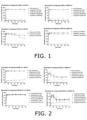
- the co-amorphous formulations containing WPI, ALA and BLG98 release approx. 90% of Compound A and perform equally in 0.1M HCl and FaSSIF ( Figure 1 ).
- the co-amorphous formulations containing WPI, ALA and BLG98 perform differently.
- the co-amorphous formulations with ALA and BLG98 release initially approx. 80% of Compound A (5 min to 60 min) and subsequently, the formulation containing ALA shows precipitation of the drug, whereas the formulation containing BLG98 remains at its concentration level and does not show any signs of precipitation.
- the co-amorphous formulation containing WPI reaches slightly lower concentration at approx. 75% Compound A release after 10 min and a slight but continuous decrease in concentration to approx. 70% Compound A release at 120 min. Hence it performs overall inferior to BLG98 (entire experiment) and ALA (first 60 min of the experiment).
- the co-amorphous form with ALA and BLG98 perform equally, releasing quickly approx. 80% of Compound A, which remains at its concentration level and does not show any signs of precipitation.
- the co-amorphous formulation containing WPI reaches slightly lower concentrations at approx. 75% Compound A release and performs overall inferior to ALA and BLG98 (entire experiment).
- all co-amorphous formulations (50 and 60% drug loading) perform better than the pure crystalline Compound A.
- the co-amorphous formulations containing WPI, ALA, BLG98 and cGMP release approx. 90% and 80% of Compound B, respectively, in 0.1 M HCl, which is kept until the end of the experiment ( Figure 2 ).
- the co-amorphous formulations containing ALA and BLG98 releases approx. 80% of Compound B in 0.1 M HCl, which is kept until the end of the experiment.
- the co-amorphous formulations at a Compound B loading of 50% and 60% (w/w) containing WPI, ALA and BLG98 release initially approx. 70% of Compound B (10 min) followed by a precipitation of Compound B to concentration levels of approx. 40% drug release.
- the co-amorphous formulations at a Compound B loading of 70% (w/w) containing ALA and BLG98 show a similar performance.
- the co-amorphous formulation at a Compound B loading of 50% and 60% (w/w) containing cGMP performs inferior to all other formulations in FaSSIF, releasing a total of approx. 20% Compound B.
- Example 2 Physical stability of co-amorphous samples containing the drugs Compound A, Compound B, and indomethacin
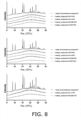
- XRPD XRPD was used to analyze the solid state of the samples.
- An amorphous material is indicated by the appearance of an amorphous halo structure in the XRPD, i.e. no Bragg peaks in the diffractograms, whereas the presence of crystallinity can be identified by the presence of crystalline peaks in the diffractograms.
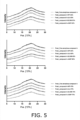
- Figures 5 and 6 show the appearance of the amorphous halo in each case, proving the success in amorphization either for the pure drugs Compound A and Compound B or for all drug-protein mixtures. Physical stability was performed under humid conditions at 40°C and 75%RH in open vials.
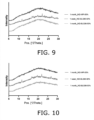
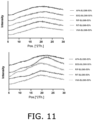
- BLG98 Indomethacin stored at accelerated conditions (40°C/75%RH) and at ambient conditions in co-amorphous formulation with WPI, BLG90 and BLG98, respectively, at 50% drug loading demonstrated that BLG98 has improved stability compared to BLG90 ( Figures 9 and 10 ). After 1 month, BLG98 still has an amorphous halo, whereas BLG90 shows crystalline peaks after 1 week. WPI also maintains the amorphous form longer than BLG90.
- Table 1 reveals that the Tg of the pure drugs Compound A and Compound B are both lower than for any of the co-amorphous formulations.
- Example 4 Preparation, diffractometric analysis, thermal analysis and powder dissolution of co-amorphous formulations at 50% drug loading in combination with BLG98 or BLG90 obtained by ball milling (Drugs APA, BDQ, RIF, RIT and VNX)
- BLG98 provides improved dissolution and solubility for various compounds with different physico-chemical properties at a drug loading of 50% (w/w) compared to the respective crystalline drugs and co-amorphous formulation prepared with BLG90.
- Example 5 Preparation, physical stability, thermal analysis and powder dissolution of co-amorphous formulations at 30% drug loading in combination with BLG98 obtained by ball milling (Drug IND)
- co-amorphous formulations containing the Compound IND together with BLG98 or BLG90, at a drug loading of 30% (w/w) were prepared by ball milling.
- the co-amorphous formulation containing BLG98 or BLG90 reached approx. 800 ⁇ g/ml drug release in both, 0.1M HCl and FaSSIF ( Fig 14 ).
- the dissolution medium 0.1M HCl the dissolution was faster and much higher concentrations were obtained compared to the drug release of a co-amorphous formulation at a Compound IND drug loading of 50% (w/w) containing BLG98 (approx. 25 pg/ml, see Fig 4 ).
- Example 6 Powder dissolution and physical stability of co-amorphous formulation obtained by spray drying (Drug RIF)
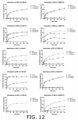
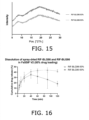
- the two spraydried co-amorphous formulations showed a similar drug release in the first 20 min, however, post 20 min the co-amorphous formulation containing RIF together with BLG98 remained stable in the concentrations of dissolved RIF whereas the co-amorphous formulation containing the RIF together with BLG90 showed precipitation and hence was not able to maintain the drug in its supersaturated state. Furthermore, a higher drug release was obtained from the spray dried materials compared to the dissolution obtained from the ball milled co-amorphous formulations ( Fig 12 ).
Landscapes
- Health & Medical Sciences (AREA)
- Engineering & Computer Science (AREA)
- Bioinformatics & Cheminformatics (AREA)
- Animal Behavior & Ethology (AREA)
- Medicinal Chemistry (AREA)
- Pharmacology & Pharmacy (AREA)
- Epidemiology (AREA)
- Life Sciences & Earth Sciences (AREA)
- Chemical & Material Sciences (AREA)
- General Health & Medical Sciences (AREA)
- Public Health (AREA)
- Veterinary Medicine (AREA)
- Medicinal Preparation (AREA)
- Medicines That Contain Protein Lipid Enzymes And Other Medicines (AREA)
- Coloring Foods And Improving Nutritive Qualities (AREA)
- General Preparation And Processing Of Foods (AREA)
Claims (15)
- Co-amorphe Form eines pharmazeutischen Wirkstoffs, eines Nahrungsergänzungsmittels oder eines Tierarzneimittels und von beta-Lactoglobulin, wobei die Reinheit des beta-Lactoglobulins mindestens 92 % (Gew.-%) der Gesamtmenge an in der co-amorphen Form umfasstem Protein beträgt, und wobei der pharmazeutische Wirkstoff, das Nahrungsergänzungsmittel oder das Tierarzneimittel in Klassen II oder IV des biopharmazeutischen Klassifizierungssystems (BCS) klassifiziert ist.
- Co-amorphe Form nach Anspruch 1, wobei der pharmazeutische Wirkstoff, das Nahrungsergänzungsmittel oder das Tierarzneimittel eine Löslichkeit in Wasser bei 25 °C von weniger als 0,1 mg/ml aufweist.
- Co-amorphe Form nach einem der vorstehenden Ansprüche, wobei die Reinheit des beta-Lactoglobulins mindestens 94 % (Gew.-%) der Gesamtmenge an in der co-amorphen Form umfasstem Protein beträgt.
- Co-amorphe Form nach Anspruch 3, wobei die Reinheit des beta-Lactoglobulins mindestens 96 % (Gew.-%) der Gesamtmenge an in der co-amorphen Form umfasstem Protein beträgt.
- Co-amorphe Form nach Anspruch 4, wobei die Reinheit des beta-Lactoglobulins mindestens 97 % (Gew.-%) der Gesamtmenge an in der co-amorphen Form umfasstem Protein beträgt.
- Co-amorphe Form nach Anspruch 5, wobei die Reinheit des beta-Lactoglobulins mindestens 98 % (Gew.-%) der Gesamtmenge an in der co-amorphen Form umfasstem Protein beträgt.
- Co-amorphe Form nach einem der vorstehenden Ansprüche, wobei das beta-Lactoglobulin Rinder-beta-Lactoglobulin ist.
- Co-amorphe Form nach einem der vorstehenden Ansprüche, wobei die co-amorphe Form 5 bis 85 % (Gew.-%) des pharmazeutischen Wirkstoffs, des Nahrungsergänzungsmittels oder des Tierarzneimittels und 15 bis 95 % (Gew.-%) des beta-Lactoglobulins umfasst.
- Co-amorphe Form nach einem der vorstehenden Ansprüche, wobei der pharmazeutische Wirkstoff, das Nahrungsergänzungsmittel oder dasTierarzneimittel eine Löslichkeit in Wasser bei 25 °C von weniger als 0,02 mg/ml aufweist.
- Pharmazeutische Zusammensetzung, umfassend eine co-amorphe Form nach einem der Ansprüche 1 bis 9, und mindestens einen pharmazeutisch verträglichen Träger oder Hilfsstoff.
- Verwendung eines beta-Lactoglobulins zur Herstellung einer co-amorphen Form mit einem pharmazeutischen Wirkstoff, einem Nahrungsergänzungsmittel oder einem Tierarzneimittel, wobei der pharmazeutische Wirkstoff, ein Nahrungsergänzungsmittel oder ein Tierarzneimittel in Klassen II oder IV des biopharmazeutischen Klassifikationssystems (BCS) klassifiziert ist, wobei die Reinheit des beta-Lactoglobulins mindestens 92 % (Gew.-%) der Gesamtmenge an in der co-amorphen Form umfasstem Protein beträgt.
- Verwendung nach Anspruch 11, wobei die Reinheit des beta-Lactoglobulins mindestens 94 %, wie mindestens 95 %, 96 %, 97 % oder 98 % (Gew.-%) beträgt.
- Verfahren zur Herstellung einer co-amorphen Form nach einem der Ansprüche 1 bis 9, wobei das Verfahren ausgewählt ist aus dem gemeinsamen Unterziehen des pharmazeutischen Wirkstoffs, des Nahrungsergänzungsmittels oder des Tierarzneimittels und des beta-Lactoglobulins einer Sprühtrocknung, einer Lösungsmittelverdampfung, einer Gefriertrocknung, einer Ausfällung aus überkritischen Fluiden, einer Schmelzabschreckung, einer Heißschmelzextrusion, einem Elektrospinning, 2D-Druck, 3D-Druck und einem beliebigen Mahlprozess, wie etwa einem Kugelmahlen und einem Kryomahlen.
- Verfahren nach Anspruch 13, wobei das Verfahren Sprühtrocknung ist.
- Verfahren nach Anspruch 14, wobei die Sprühtrocknung entweder unter Verwendung einer Zweistoffdüse durchgeführt wird, wobei beide, der pharmazeutische Wirkstoff, das Nahrungsergänzungsmittel oder das Tierarzneimittel und das beta-Lactoglobulin zusammen in demselben Lösungsmittel oder Lösungsmittelgemisch aufgelöst, und anschließend dem Sprühtrocknungsprozess unterzogen werden; oder unter Verwendung einer Dreistoffdüse, wobei der pharmazeutische Wirkstoff, das Nahrungsergänzungsmittel oder das Tierarzneimittel und das beta-Lactoglobulin in getrennten Lösungsmitteln oder Lösungsmittelgemischen aufgelöst werden und beim Sprühen die Lösungsmittel im Sprühtrocknungsprozess durch die Dreistoffdüse kombiniert werden.
Priority Applications (1)
| Application Number | Priority Date | Filing Date | Title |
|---|---|---|---|
| EP24178410.7A EP4400098A3 (de) | 2019-12-05 | 2020-12-04 | Co-amorphe formen von beta-lactoglobulin und eine arzneimittelsubstanz |
Applications Claiming Priority (2)
| Application Number | Priority Date | Filing Date | Title |
|---|---|---|---|
| EP19213832 | 2019-12-05 | ||
| PCT/EP2020/084754 WO2021110983A1 (en) | 2019-12-05 | 2020-12-04 | Co-amorphous forms of beta-lactoglobulin and a drug substance |
Related Child Applications (1)
| Application Number | Title | Priority Date | Filing Date |
|---|---|---|---|
| EP24178410.7A Division EP4400098A3 (de) | 2019-12-05 | 2020-12-04 | Co-amorphe formen von beta-lactoglobulin und eine arzneimittelsubstanz |
Publications (3)
| Publication Number | Publication Date |
|---|---|
| EP4069197A1 EP4069197A1 (de) | 2022-10-12 |
| EP4069197B1 true EP4069197B1 (de) | 2024-05-29 |
| EP4069197C0 EP4069197C0 (de) | 2024-05-29 |
Family
ID=68806676
Family Applications (2)
| Application Number | Title | Priority Date | Filing Date |
|---|---|---|---|
| EP20817354.2A Active EP4069197B1 (de) | 2019-12-05 | 2020-12-04 | Co-amorphe formen von beta-lactoglobulin und einer arzneimittelsubstanz |
| EP24178410.7A Pending EP4400098A3 (de) | 2019-12-05 | 2020-12-04 | Co-amorphe formen von beta-lactoglobulin und eine arzneimittelsubstanz |
Family Applications After (1)
| Application Number | Title | Priority Date | Filing Date |
|---|---|---|---|
| EP24178410.7A Pending EP4400098A3 (de) | 2019-12-05 | 2020-12-04 | Co-amorphe formen von beta-lactoglobulin und eine arzneimittelsubstanz |
Country Status (9)
| Country | Link |
|---|---|
| US (1) | US20230009276A1 (de) |
| EP (2) | EP4069197B1 (de) |
| JP (1) | JP7682176B2 (de) |
| KR (1) | KR20220113964A (de) |
| CN (1) | CN114929201A (de) |
| AU (1) | AU2020398386B2 (de) |
| CA (1) | CA3160194A1 (de) |
| ES (1) | ES2983695T3 (de) |
| WO (1) | WO2021110983A1 (de) |
Families Citing this family (4)
| Publication number | Priority date | Publication date | Assignee | Title |
|---|---|---|---|---|
| US11807957B2 (en) * | 2020-05-22 | 2023-11-07 | University Of Dayton Research Institute | Creating defined electrospun fiber geometries |
| EP4351519A1 (de) * | 2021-06-07 | 2024-04-17 | Zerion Pharma Aps | Co-amorphe formen zur verwendung in der krebstherapie |
| EP4436550A1 (de) | 2021-11-24 | 2024-10-02 | Zerion Pharma Aps | Ternäre coamorphe formen von arzneimitteln, proteinen und wasserlöslichen polymeren |
| KR20240025990A (ko) * | 2022-08-19 | 2024-02-27 | 주식회사 스카이테라퓨틱스 | 무정형 수니티닙, 그 제조방법 및 이를 포함한 의약 조성물 |
Family Cites Families (4)
| Publication number | Priority date | Publication date | Assignee | Title |
|---|---|---|---|---|
| GB0418791D0 (en) * | 2004-08-23 | 2004-09-22 | Glaxo Group Ltd | Novel process |
| WO2009130704A1 (en) * | 2008-04-24 | 2009-10-29 | Technion Research And Development Foundation Ltd. | Beta-lactoglobulin-polysaccharide nanoparticles for hydrophobic bioactive compounds |
| PT3558024T (pt) | 2016-12-23 | 2021-05-25 | Arla Foods Amba | Produção de novas preparações de beta-lactoglobulina e métodos, usos, e produtos alimentares relacionados |
| EP3558382A1 (de) * | 2016-12-23 | 2019-10-30 | University of Copenhagen | Co-amorphe form einer substanz und eines proteins |
-
2020
- 2020-12-04 EP EP20817354.2A patent/EP4069197B1/de active Active
- 2020-12-04 CN CN202080084595.7A patent/CN114929201A/zh active Pending
- 2020-12-04 KR KR1020227021018A patent/KR20220113964A/ko active Pending
- 2020-12-04 ES ES20817354T patent/ES2983695T3/es active Active
- 2020-12-04 EP EP24178410.7A patent/EP4400098A3/de active Pending
- 2020-12-04 WO PCT/EP2020/084754 patent/WO2021110983A1/en not_active Ceased
- 2020-12-04 AU AU2020398386A patent/AU2020398386B2/en active Active
- 2020-12-04 JP JP2022534246A patent/JP7682176B2/ja active Active
- 2020-12-04 CA CA3160194A patent/CA3160194A1/en active Pending
- 2020-12-04 US US17/779,566 patent/US20230009276A1/en active Pending
Non-Patent Citations (3)
| Title |
|---|
| LEITLINIE GEMEINSAME ET AL: "S2k-Leitlinie Chronische Obstipation: Definition, Pathophysiologie, Diagnostik und Therapie", 28 February 2013 (2013-02-28), XP055854688, Retrieved from the Internet <URL:https://www.awmf.org/uploads/tx_szleitlinien/021-019l_S2k_Chronische_Obstipation_2013-06-abgelaufen.pdf> [retrieved on 20211025] * |
| PRIOULT GUENOLEE: "EFFET DES PROBIOTIQUES SUR L'INDUCTION ET LE MAINTIEN DE LA TOLÉRANCE ORALE À LA - LACTOGLOBULINE CHEZ LA SOURIS ET ÉTUDE DE LEURS MÉCANISMES D'ACTION", 31 December 2003 (2003-12-31), XP055854720, Retrieved from the Internet <URL:https://www.collectionscanada.gc.ca/obj/s4/f2/dsk3/QQLA/TC-QQLA-21356.pdf> [retrieved on 20211025] * |
| THOMAS MARIE E.C.: "Influence de l'activite de l'eau sur les interactions lactose et betalactoglobuline de poudres laitiers", 7 October 2004 (2004-10-07), XP055854730, Retrieved from the Internet <URL:http://docnum.univ-lorraine.fr/public/INPL_T_2004_THOMAS_M.pdf> [retrieved on 20211025] * |
Also Published As
| Publication number | Publication date |
|---|---|
| JP2023509307A (ja) | 2023-03-08 |
| CN114929201A (zh) | 2022-08-19 |
| ES2983695T3 (es) | 2024-10-24 |
| EP4400098A2 (de) | 2024-07-17 |
| EP4400098A3 (de) | 2024-10-02 |
| JP7682176B2 (ja) | 2025-05-23 |
| US20230009276A1 (en) | 2023-01-12 |
| CA3160194A1 (en) | 2021-06-10 |
| AU2020398386B2 (en) | 2026-01-08 |
| AU2020398386A1 (en) | 2022-06-23 |
| KR20220113964A (ko) | 2022-08-17 |
| EP4069197A1 (de) | 2022-10-12 |
| WO2021110983A1 (en) | 2021-06-10 |
| EP4069197C0 (de) | 2024-05-29 |
Similar Documents
| Publication | Publication Date | Title |
|---|---|---|
| EP4069197B1 (de) | Co-amorphe formen von beta-lactoglobulin und einer arzneimittelsubstanz | |
| Huang et al. | Effects of the preparation process on the properties of amorphous solid dispersions | |
| Patil et al. | A review-Solubility enhancement of poorly water soluble drugs | |
| KR102225416B1 (ko) | 엔잘루타마이드 제제 | |
| Jatwani et al. | An overview on solubility enhancement techniques for poorly soluble drugs and solid dispersion as an eminent strategic approach | |
| US20110207660A1 (en) | Pharmaceutical formulations of an hcv protease inhibitor in a solid molecular dispersion | |
| EA028009B1 (ru) | Фармацевтическая композиция с улучшенной биодоступностью | |
| US20120225118A1 (en) | Compositions for delivery of insoluble agents | |
| JP2009533357A (ja) | 貧溶解性薬剤における、溶解度および溶解速度を向上させる方法 | |
| WO2018113890A1 (en) | A co-amorphous form of a substance and a protein | |
| US20250025420A1 (en) | Ternary co-amorphous forms of drugs, proteins, and water-soluble polymers | |
| EP1909763A2 (de) | Benzochinone mit erhöhter bioverfügbarkeit | |
| Rams-Baron et al. | Amorphous drug solubility and absorption enhancement | |
| KR102601617B1 (ko) | 비-뉴클레오시드 역전사 효소 억제제의 조성물 | |
| Sharma et al. | A review on solubility enhancement by solid dispersion technique | |
| WO2021222163A1 (en) | Pharmaceutical compositions and methods of manufacture using thermally conductive excipients | |
| US20250325517A1 (en) | Oral dosage forms of elraglusib | |
| El Sayed et al. | Optimizing amorphous multidrug formulations: A particle engineering approach through spray drying |
Legal Events
| Date | Code | Title | Description |
|---|---|---|---|
| STAA | Information on the status of an ep patent application or granted ep patent |
Free format text: STATUS: UNKNOWN |
|
| STAA | Information on the status of an ep patent application or granted ep patent |
Free format text: STATUS: THE INTERNATIONAL PUBLICATION HAS BEEN MADE |
|
| PUAI | Public reference made under article 153(3) epc to a published international application that has entered the european phase |
Free format text: ORIGINAL CODE: 0009012 |
|
| STAA | Information on the status of an ep patent application or granted ep patent |
Free format text: STATUS: REQUEST FOR EXAMINATION WAS MADE |
|
| 17P | Request for examination filed |
Effective date: 20220629 |
|
| AK | Designated contracting states |
Kind code of ref document: A1 Designated state(s): AL AT BE BG CH CY CZ DE DK EE ES FI FR GB GR HR HU IE IS IT LI LT LU LV MC MK MT NL NO PL PT RO RS SE SI SK SM TR |
|
| DAV | Request for validation of the european patent (deleted) | ||
| DAX | Request for extension of the european patent (deleted) | ||
| GRAP | Despatch of communication of intention to grant a patent |
Free format text: ORIGINAL CODE: EPIDOSNIGR1 |
|
| STAA | Information on the status of an ep patent application or granted ep patent |
Free format text: STATUS: GRANT OF PATENT IS INTENDED |
|
| INTG | Intention to grant announced |
Effective date: 20230727 |
|
| GRAJ | Information related to disapproval of communication of intention to grant by the applicant or resumption of examination proceedings by the epo deleted |
Free format text: ORIGINAL CODE: EPIDOSDIGR1 |
|
| STAA | Information on the status of an ep patent application or granted ep patent |
Free format text: STATUS: REQUEST FOR EXAMINATION WAS MADE |
|
| GRAP | Despatch of communication of intention to grant a patent |
Free format text: ORIGINAL CODE: EPIDOSNIGR1 |
|
| STAA | Information on the status of an ep patent application or granted ep patent |
Free format text: STATUS: GRANT OF PATENT IS INTENDED |
|
| INTC | Intention to grant announced (deleted) | ||
| INTG | Intention to grant announced |
Effective date: 20240103 |
|
| GRAS | Grant fee paid |
Free format text: ORIGINAL CODE: EPIDOSNIGR3 |
|
| GRAA | (expected) grant |
Free format text: ORIGINAL CODE: 0009210 |
|
| STAA | Information on the status of an ep patent application or granted ep patent |
Free format text: STATUS: THE PATENT HAS BEEN GRANTED |
|
| AK | Designated contracting states |
Kind code of ref document: B1 Designated state(s): AL AT BE BG CH CY CZ DE DK EE ES FI FR GB GR HR HU IE IS IT LI LT LU LV MC MK MT NL NO PL PT RO RS SE SI SK SM TR |
|
| REG | Reference to a national code |
Ref country code: CH Ref legal event code: EP |
|
| REG | Reference to a national code |
Ref country code: IE Ref legal event code: FG4D |
|
| REG | Reference to a national code |
Ref country code: DE Ref legal event code: R096 Ref document number: 602020031758 Country of ref document: DE |
|
| U01 | Request for unitary effect filed |
Effective date: 20240628 |
|
| U07 | Unitary effect registered |
Designated state(s): AT BE BG DE DK EE FI FR IT LT LU LV MT NL PT SE SI Effective date: 20240704 |
|
| PG25 | Lapsed in a contracting state [announced via postgrant information from national office to epo] |
Ref country code: IS Free format text: LAPSE BECAUSE OF FAILURE TO SUBMIT A TRANSLATION OF THE DESCRIPTION OR TO PAY THE FEE WITHIN THE PRESCRIBED TIME-LIMIT Effective date: 20240929 |
|
| PG25 | Lapsed in a contracting state [announced via postgrant information from national office to epo] |
Ref country code: HR Free format text: LAPSE BECAUSE OF FAILURE TO SUBMIT A TRANSLATION OF THE DESCRIPTION OR TO PAY THE FEE WITHIN THE PRESCRIBED TIME-LIMIT Effective date: 20240529 |
|
| PG25 | Lapsed in a contracting state [announced via postgrant information from national office to epo] |
Ref country code: GR Free format text: LAPSE BECAUSE OF FAILURE TO SUBMIT A TRANSLATION OF THE DESCRIPTION OR TO PAY THE FEE WITHIN THE PRESCRIBED TIME-LIMIT Effective date: 20240830 |
|
| REG | Reference to a national code |
Ref country code: ES Ref legal event code: FG2A Ref document number: 2983695 Country of ref document: ES Kind code of ref document: T3 Effective date: 20241024 |
|
| PG25 | Lapsed in a contracting state [announced via postgrant information from national office to epo] |
Ref country code: PL Free format text: LAPSE BECAUSE OF FAILURE TO SUBMIT A TRANSLATION OF THE DESCRIPTION OR TO PAY THE FEE WITHIN THE PRESCRIBED TIME-LIMIT Effective date: 20240529 |
|
| PG25 | Lapsed in a contracting state [announced via postgrant information from national office to epo] |
Ref country code: PL Free format text: LAPSE BECAUSE OF FAILURE TO SUBMIT A TRANSLATION OF THE DESCRIPTION OR TO PAY THE FEE WITHIN THE PRESCRIBED TIME-LIMIT Effective date: 20240529 Ref country code: NO Free format text: LAPSE BECAUSE OF FAILURE TO SUBMIT A TRANSLATION OF THE DESCRIPTION OR TO PAY THE FEE WITHIN THE PRESCRIBED TIME-LIMIT Effective date: 20240829 Ref country code: IS Free format text: LAPSE BECAUSE OF FAILURE TO SUBMIT A TRANSLATION OF THE DESCRIPTION OR TO PAY THE FEE WITHIN THE PRESCRIBED TIME-LIMIT Effective date: 20240929 Ref country code: HR Free format text: LAPSE BECAUSE OF FAILURE TO SUBMIT A TRANSLATION OF THE DESCRIPTION OR TO PAY THE FEE WITHIN THE PRESCRIBED TIME-LIMIT Effective date: 20240529 Ref country code: GR Free format text: LAPSE BECAUSE OF FAILURE TO SUBMIT A TRANSLATION OF THE DESCRIPTION OR TO PAY THE FEE WITHIN THE PRESCRIBED TIME-LIMIT Effective date: 20240830 Ref country code: RS Free format text: LAPSE BECAUSE OF FAILURE TO SUBMIT A TRANSLATION OF THE DESCRIPTION OR TO PAY THE FEE WITHIN THE PRESCRIBED TIME-LIMIT Effective date: 20240829 |
|
| PG25 | Lapsed in a contracting state [announced via postgrant information from national office to epo] |
Ref country code: CZ Free format text: LAPSE BECAUSE OF FAILURE TO SUBMIT A TRANSLATION OF THE DESCRIPTION OR TO PAY THE FEE WITHIN THE PRESCRIBED TIME-LIMIT Effective date: 20240529 |
|
| PG25 | Lapsed in a contracting state [announced via postgrant information from national office to epo] |
Ref country code: RO Free format text: LAPSE BECAUSE OF FAILURE TO SUBMIT A TRANSLATION OF THE DESCRIPTION OR TO PAY THE FEE WITHIN THE PRESCRIBED TIME-LIMIT Effective date: 20240529 Ref country code: SK Free format text: LAPSE BECAUSE OF FAILURE TO SUBMIT A TRANSLATION OF THE DESCRIPTION OR TO PAY THE FEE WITHIN THE PRESCRIBED TIME-LIMIT Effective date: 20240529 |
|
| PG25 | Lapsed in a contracting state [announced via postgrant information from national office to epo] |
Ref country code: SM Free format text: LAPSE BECAUSE OF FAILURE TO SUBMIT A TRANSLATION OF THE DESCRIPTION OR TO PAY THE FEE WITHIN THE PRESCRIBED TIME-LIMIT Effective date: 20240529 |
|
| PG25 | Lapsed in a contracting state [announced via postgrant information from national office to epo] |
Ref country code: SM Free format text: LAPSE BECAUSE OF FAILURE TO SUBMIT A TRANSLATION OF THE DESCRIPTION OR TO PAY THE FEE WITHIN THE PRESCRIBED TIME-LIMIT Effective date: 20240529 Ref country code: SK Free format text: LAPSE BECAUSE OF FAILURE TO SUBMIT A TRANSLATION OF THE DESCRIPTION OR TO PAY THE FEE WITHIN THE PRESCRIBED TIME-LIMIT Effective date: 20240529 Ref country code: RO Free format text: LAPSE BECAUSE OF FAILURE TO SUBMIT A TRANSLATION OF THE DESCRIPTION OR TO PAY THE FEE WITHIN THE PRESCRIBED TIME-LIMIT Effective date: 20240529 Ref country code: CZ Free format text: LAPSE BECAUSE OF FAILURE TO SUBMIT A TRANSLATION OF THE DESCRIPTION OR TO PAY THE FEE WITHIN THE PRESCRIBED TIME-LIMIT Effective date: 20240529 |
|
| U20 | Renewal fee for the european patent with unitary effect paid |
Year of fee payment: 5 Effective date: 20241227 |
|
| PLBE | No opposition filed within time limit |
Free format text: ORIGINAL CODE: 0009261 |
|
| STAA | Information on the status of an ep patent application or granted ep patent |
Free format text: STATUS: NO OPPOSITION FILED WITHIN TIME LIMIT |
|
| PGFP | Annual fee paid to national office [announced via postgrant information from national office to epo] |
Ref country code: ES Payment date: 20250102 Year of fee payment: 5 |
|
| PGFP | Annual fee paid to national office [announced via postgrant information from national office to epo] |
Ref country code: CH Payment date: 20250108 Year of fee payment: 5 |
|
| 26N | No opposition filed |
Effective date: 20250303 |
|
| PG25 | Lapsed in a contracting state [announced via postgrant information from national office to epo] |
Ref country code: MC Free format text: LAPSE BECAUSE OF FAILURE TO SUBMIT A TRANSLATION OF THE DESCRIPTION OR TO PAY THE FEE WITHIN THE PRESCRIBED TIME-LIMIT Effective date: 20240529 |
|
| PG25 | Lapsed in a contracting state [announced via postgrant information from national office to epo] |
Ref country code: IE Free format text: LAPSE BECAUSE OF NON-PAYMENT OF DUE FEES Effective date: 20241204 |
|
| REG | Reference to a national code |
Ref country code: CH Ref legal event code: U11 Free format text: ST27 STATUS EVENT CODE: U-0-0-U10-U11 (AS PROVIDED BY THE NATIONAL OFFICE) Effective date: 20260101 |
|
| PGFP | Annual fee paid to national office [announced via postgrant information from national office to epo] |
Ref country code: GB Payment date: 20251229 Year of fee payment: 6 |