EP4068087B1 - Verfahren und system zur betriebsmittelverschlüsselung und -anzeige - Google Patents
Verfahren und system zur betriebsmittelverschlüsselung und -anzeige Download PDFInfo
- Publication number
- EP4068087B1 EP4068087B1 EP20938969.1A EP20938969A EP4068087B1 EP 4068087 B1 EP4068087 B1 EP 4068087B1 EP 20938969 A EP20938969 A EP 20938969A EP 4068087 B1 EP4068087 B1 EP 4068087B1
- Authority
- EP
- European Patent Office
- Prior art keywords
- file
- time
- splash screen
- hidden
- resource
- Prior art date
- Legal status (The legal status is an assumption and is not a legal conclusion. Google has not performed a legal analysis and makes no representation as to the accuracy of the status listed.)
- Active
Links
Images



Classifications
-
- G—PHYSICS
- G06—COMPUTING OR CALCULATING; COUNTING
- G06F—ELECTRIC DIGITAL DATA PROCESSING
- G06F21/00—Security arrangements for protecting computers, components thereof, programs or data against unauthorised activity
- G06F21/60—Protecting data
- G06F21/62—Protecting access to data via a platform, e.g. using keys or access control rules
-
- G—PHYSICS
- G06—COMPUTING OR CALCULATING; COUNTING
- G06F—ELECTRIC DIGITAL DATA PROCESSING
- G06F21/00—Security arrangements for protecting computers, components thereof, programs or data against unauthorised activity
- G06F21/60—Protecting data
- G06F21/602—Providing cryptographic facilities or services
-
- G—PHYSICS
- G06—COMPUTING OR CALCULATING; COUNTING
- G06F—ELECTRIC DIGITAL DATA PROCESSING
- G06F21/00—Security arrangements for protecting computers, components thereof, programs or data against unauthorised activity
- G06F21/60—Protecting data
- G06F21/62—Protecting access to data via a platform, e.g. using keys or access control rules
- G06F21/6218—Protecting access to data via a platform, e.g. using keys or access control rules to a system of files or objects, e.g. local or distributed file system or database
-
- G—PHYSICS
- G06—COMPUTING OR CALCULATING; COUNTING
- G06F—ELECTRIC DIGITAL DATA PROCESSING
- G06F9/00—Arrangements for program control, e.g. control units
- G06F9/06—Arrangements for program control, e.g. control units using stored programs, i.e. using an internal store of processing equipment to receive or retain programs
- G06F9/44—Arrangements for executing specific programs
- G06F9/445—Program loading or initiating
- G06F9/44505—Configuring for program initiating, e.g. using registry, configuration files
-
- G—PHYSICS
- G06—COMPUTING OR CALCULATING; COUNTING
- G06F—ELECTRIC DIGITAL DATA PROCESSING
- G06F9/00—Arrangements for program control, e.g. control units
- G06F9/06—Arrangements for program control, e.g. control units using stored programs, i.e. using an internal store of processing equipment to receive or retain programs
- G06F9/44—Arrangements for executing specific programs
- G06F9/451—Execution arrangements for user interfaces
-
- H—ELECTRICITY
- H04—ELECTRIC COMMUNICATION TECHNIQUE
- H04L—TRANSMISSION OF DIGITAL INFORMATION, e.g. TELEGRAPHIC COMMUNICATION
- H04L63/00—Network architectures or network communication protocols for network security
- H04L63/04—Network architectures or network communication protocols for network security for providing a confidential data exchange among entities communicating through data packet networks
- H04L63/0428—Network architectures or network communication protocols for network security for providing a confidential data exchange among entities communicating through data packet networks wherein the data content is protected, e.g. by encrypting or encapsulating the payload
-
- H—ELECTRICITY
- H04—ELECTRIC COMMUNICATION TECHNIQUE
- H04L—TRANSMISSION OF DIGITAL INFORMATION, e.g. TELEGRAPHIC COMMUNICATION
- H04L67/00—Network arrangements or protocols for supporting network services or applications
- H04L67/01—Protocols
- H04L67/06—Protocols specially adapted for file transfer, e.g. file transfer protocol [FTP]
-
- H—ELECTRICITY
- H04—ELECTRIC COMMUNICATION TECHNIQUE
- H04L—TRANSMISSION OF DIGITAL INFORMATION, e.g. TELEGRAPHIC COMMUNICATION
- H04L67/00—Network arrangements or protocols for supporting network services or applications
- H04L67/01—Protocols
- H04L67/10—Protocols in which an application is distributed across nodes in the network
- H04L67/1095—Replication or mirroring of data, e.g. scheduling or transport for data synchronisation between network nodes
-
- H—ELECTRICITY
- H04—ELECTRIC COMMUNICATION TECHNIQUE
- H04L—TRANSMISSION OF DIGITAL INFORMATION, e.g. TELEGRAPHIC COMMUNICATION
- H04L67/00—Network arrangements or protocols for supporting network services or applications
- H04L67/01—Protocols
- H04L67/10—Protocols in which an application is distributed across nodes in the network
- H04L67/1097—Protocols in which an application is distributed across nodes in the network for distributed storage of data in networks, e.g. transport arrangements for network file system [NFS], storage area networks [SAN] or network attached storage [NAS]
-
- H—ELECTRICITY
- H04—ELECTRIC COMMUNICATION TECHNIQUE
- H04L—TRANSMISSION OF DIGITAL INFORMATION, e.g. TELEGRAPHIC COMMUNICATION
- H04L9/00—Cryptographic mechanisms or cryptographic arrangements for secret or secure communications; Network security protocols
- H04L9/32—Cryptographic mechanisms or cryptographic arrangements for secret or secure communications; Network security protocols including means for verifying the identity or authority of a user of the system or for message authentication, e.g. authorization, entity authentication, data integrity or data verification, non-repudiation, key authentication or verification of credentials
-
- H—ELECTRICITY
- H04—ELECTRIC COMMUNICATION TECHNIQUE
- H04W—WIRELESS COMMUNICATION NETWORKS
- H04W12/00—Security arrangements; Authentication; Protecting privacy or anonymity
- H04W12/60—Context-dependent security
- H04W12/61—Time-dependent
-
- H—ELECTRICITY
- H04—ELECTRIC COMMUNICATION TECHNIQUE
- H04L—TRANSMISSION OF DIGITAL INFORMATION, e.g. TELEGRAPHIC COMMUNICATION
- H04L2463/00—Additional details relating to network architectures or network communication protocols for network security covered by H04L63/00
- H04L2463/121—Timestamp
Definitions
- the present application relates to the technical field of data processing, and in particular to a method and system of resource encryption and display, a computer program product, and a computer-readable storage medium.
- a main implementation is to deliver a splash screen resource, or display directly an online resource on the day when it needs to be displayed.
- the first implementation loses the real-time performance and the success rate of display.
- the users may no longer open the splash screen page the day the resource is downloaded.
- the second implementation can avoid the above problems, it has defects in the fluency of resource display.
- resource loading may block the use of applications due to network problems.
- both implementations involve communication with a server, which takes 100 milliseconds or longer. In some blocked scenarios, a client can decide what to do next only after the communication has been completed, which brings user experience problems. If the splash screen resource loading takes too long, it will lead to a delay in entering the applications.
- a method performed by at least one computer processor comprising: obtaining an original file to be encrypted; encrypting header data of the original file to obtain encrypted header data, the header data comprising metadata of the original file; storing the encrypted header data; recording, to correspond to a file identifier of the original file, a first storage path of the encrypted header data; partitioning file data other than the header data in the original file, into segments; storing the segments in a disordered fragment sequence; and recording, to correspond to the file identifier, second storage paths of the segments along with an actual sequence of the segments in the original file.
- a computer system including a processing unit that processes data in response to instructions read from memory.
- the system Before being ready for a user to make use of a loaded application, the system initially loads executable instructions from permanent storage (such as a magnetic disc drive) during a loading process.
- operation related data that is data for assisting a user to operate the system
- the operation related data is stored in a user accessible file.
- the application itself facilitates the user re-configuration of the user accessible file under the control of the processing unit when the processing unit is executing the instructions; it not being necessary to use a third party text editor and navigate through the file structure. Then, during a subsequent instruction loading process, the user re-configured data is read.
- a file multi-cloud storage method and device is provided, a file multi-cloud downloading method and device and a storage medium.
- the multi-cloud storage method of the file is applied to encryption distributed storage equipment.
- the file multi-cloud storage method comprises: segmenting an original file to be uploaded to the cloud for storage into a plurality of cascaded sub-files through the encryption distributed storage device, the cascade sub-files being stored in the cloud; then encrypting the cascade sub-files, and uploading the cascade sub-files to the corresponding cloud for storage according to the preset weight, so that any cloud storage provider cannot analyze the original file, and the security of the cloud storage file is improved.
- the encryption key and the file splicing rule are stored in the encryption distributed storage device, so that lawbreakers obtaining all the sub-files cannot decrypt and splice the original file, the security of cloud storage data is further improved, and the technical problem that existing cloud storage data is prone to leakage is solved.
- the encryption device comprises: one or more non-transitory computer readable medium configured to store computer-executable instruction; at least one processor to execute the computer-executable instruction to cause: selecting important data in a source file to be encrypted; receiving the important data selected by the selector and encrypting the important data according to a pre-set encryption algorithm; receiving the encrypted important data provided by the encryptor and storing the encrypted important data at a specified first location; a deletion component for deleting the unencrypted important data in the source file; generating encryption information according to the above encryption procedure and storing the encryption information at a specified second location, the encryption information at least including the original location of the important data in the source file.
- the method and system of resource encryption and display, the computer program product, and the computer-readable storage medium provided by the embodiments of the present application can ensure the authenticity and validity of the current device time without waiting for synchronization with the server, and ensure that the splash screen resource can be displayed for most users at the first time. Moreover, without a large amount of encryption and decryption operations, the security of splash screen resources is ensured and resource leakage is prevented. Therefore, the embodiments of the present application can ensure secure and efficient display of a splash screen resource without blocking startup of an application.
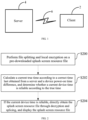
- the server 4 is configured to provide the client 2 with the resource file and a correct time.
- the server 4 may be a computing device, e.g., a rack server, a blade server, a tower server, or a cabinet server, or may be a standalone server or a server cluster composed of a plurality of servers.
- the network 6 may be a wireless or wired network, e.g., an intranet, the Internet, a global system for mobile communications (GSM), wideband code division multiple access (WCDMA), a 4G network, a 5G network, a Bluetooth network, or a Wi-Fi network.
- GSM global system for mobile communications
- WCDMA wideband code division multiple access
- 4G network a 4G network
- 5G network a 5G network
- Bluetooth network e.g., Bluetooth network
- Wi-Fi e.g., Wi-Fi
- the resource encryption and display solutions of the present application will be described by taking a splash screen resource as an example.
- other resources that have similar characteristics to the splash screen resource such as any resource that can be downloaded by means of preloading, can be encrypted and displayed using a solution similar to the present application.
- FIG. 2 is a flowchart of a method of resource encryption and display according to a first embodiment of the present application. It may be understood that the flowchart in this method embodiment is not intended to limit an execution sequence of the steps.
- the client 2 is used as a main execution body for exemplary description.
- the method includes the following steps.
- the splash screen resource file is used to provide loaded content to a splash screen page of an application and is pre-downloaded by the client 2 from the server 4.
- file splitting and local encryption need to be first performed on the splash screen resource file, specifically including operations such as resource hiding (transferring the downloaded splash screen resource file and changing a format), path encryption (recording a hidden path into an encrypted resource management file), file splitting (removing header information), and partial encryption (writing the header information into a corresponding field of the resource management file).
- the local encryption refers to encrypting at least one component part of the splash screen resource file after the splitting.
- step S200 is a detailed schematic flowchart of step S200. It may be understood that the flowchart is not intended to limit an execution sequence of the steps. As required, addition or deletion may also be made to some steps in the flowchart. In this embodiment, step S200 specifically includes the following steps.
- the downloaded splash screen resource file is transferred to a specific location for storage, for example, in a random directory of the application that is not subject to automatic cleanup. Then, a suffix to a filename of the splash screen resource file is removed, and the filename is changed to a name with a naming style similar to file names in the directory. For example, file names in most directories are in the base64 format.
- the splash screen resource file obtained after the transfer and change is the hidden file.
- S2002 Record a hidden path corresponding to the hidden file into an encrypted resource management file.
- the hidden path is a path for a storage location of the transferred splash screen resource file, i.e., a storage path of the hidden file. After the hidden file is obtained, the hidden path is recorded into a resource management file, which is an encrypted file.
- the header information in the hidden file is removed and only the remaining part is kept, and the removed header information is written into the corresponding field of the resource management file.
- the resource management file is an encrypted file
- the header information is encrypted, i.e., the hidden file (the splash screen resource file) is locally encrypted.
- step S200 may alternatively include: transferring the downloaded splash screen resource file and changing a file format to obtain a hidden file; encrypting a hidden path corresponding to the hidden file; splitting the hidden file into a plurality of component parts; and removing at least one component part from the hidden file, and encrypting the removed component part.
- the splash screen resource file is a zip file
- the file header information (information about start bytes of the file) occupies 512 bytes, representing information such as file type and modification time.
- the 512-byte information is used as the header information during file splitting, and the header information is removed from the hidden file.
- the removed component part may alternatively be set to 1024-byte information (the file header information plus partial content information, or simply partial content information), or to even more bytes.
- the header information (or another removed component part) is written into a Content field of the encrypted resource management file, and the hidden path is written into a File field of the resource management file.
- the encryption method may be simple AES (Advanced Encryption Standard) encryption, or a stronger encryption algorithm such as 3DES (Triple Data Encryption Algorithm) encryption.
- the embodiment uses local encryption instead of encrypting the entire file, thereby greatly reducing consumption of resources required for encryption.
- file splitting and encryption can be implemented with or without a network connection by using the foregoing method.
- S202 includes calculating a current true time according to a correct time last obtained from the server 4 and a device power-on time difference, and determining whether a current device time is reliable according to the true time.
- the client 2 needs to compare the current device time with the correct time obtained from the server 4.
- it can be determined whether the current device time is reliable according to the correct time last obtained from the server 4 and the device power-on time difference without a network connection.
- the processing method used in this embodiment is based on the usage habit of current users: leaving the device on or started for a long time.
- the device has not been restarted since synchronizing with the server 4 for a correct time, the current true time can be directly calculated and the splash screen resource can be displayed in this embodiment.
- the client 2 has been restarted since then, it is necessary to perform determination and calculate the time again when starting.
- step S2020 Determine whether the device has been restarted since the correct time was last obtained from the server 4. If not restarted, step S2022 is to be performed, and if restarted, step S2028 is to be performed.
- the client 2 may synchronize with the server 4 for a correct time serverTime (a server time at synchronization) by communicating with the server 4. Specifically, the correct time may be updated by directly requesting time synchronization with the server 4 or by a time stamp returned in another request to the server 4. Moreover, the client 2 may directly obtain a current system time systemTime and a device power-on time poweronTime via a system interface. If the obtained device power-on time is very short (lower than a preset value) or shorter than a previously recorded device power-on time, it indicates that the device power-on time has been reset, i.e., the client 2 has been restarted.
- serverTime a server time at synchronization
- a restart time point of the client 2 can be obtained, and it is further determined whether the time point is before or after the correct time was last obtained from the server 4, so as to determine whether the client 2 has been restarted since the correct time was last obtained from the server 4.
- S2022 Calculate the current true time according to the correct time last obtained from the server 4 and the device power-on time difference.
- step S2024 Compare whether the current system time is equal to the true time. If they are equal, step S2026 is to be performed; and if they are not equal, step S2028 is to be performed.
- the client 2 may obtain the current system time systemTime via the system interface, and then compare whether the system time is equal to the calculated true time.
- the client 2 determines that the current device time is unreliable, and it is necessary to obtain a correct time from the server 4 again.
- the authenticity of the current device time can be ensured even without a network connection, thus saving time consumed for communicating with the server 4 when the application is started, and making a decision in a very short time (e.g., in 1 millisecond) to preferentially display the splash screen resource to a trusted device.
- a time synchronization operation is triggered, and the correct time is forcibly re-obtained from the server 4 and updated. Later, when the device is not restarted, the above steps may be used to determine whether the current device time is reliable.
- the client 2 further randomly records a timeline (including, but not limited to, the correct time, the power-on time of the device, and the system time) in a running process of an application, and when the timeline is found not conform to the normal time rule, sets the current device time to be unreliable, and then re-obtains a correct time from the server 4 for update.
- a timeline including, but not limited to, the correct time, the power-on time of the device, and the system time
- the client 2 further randomly records a timeline (including, but not limited to, the correct time, the power-on time of the device, and the system time) in a running process of an application, and when the timeline is found not conform to the normal time rule, sets the current device time to be unreliable, and then re-obtains a correct time from the server 4 for update.
- the recorded system time is 8 o'clock, 9 o'clock, and 10 o'clock. If the next obtained system time is 6 o'clock, it indicates that the time has
- S204 includes, if the current device time is reliable, directly obtaining the splash screen resource file through decryption and splicing, and displaying the splash screen resource file.
- the splash screen resource file can be directly obtained and displayed without waiting for communication with the server 4.
- step S204 specifically includes the following steps.
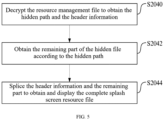
- S2040 Decrypt the resource management file to obtain the hidden path and the header information.
- the hidden path and the header information corresponding to the splash screen resource file have previously been written into the encrypted resource management file, the hidden path and the header information can be obtained by decrypting the resource management file.
- the header information can be obtained from the Content field, and the hidden path can be obtained from the File field.
- the header information corresponding to the part of data in the Content field and the remaining part corresponding to the hidden path in the File field are combined together, and the splash screen resource file can be complete again through splicing.
- the hidden path indicates a storage location of the remaining part of the hidden file after the header information is removed, and according to the hidden path, the client 2 can find the storage location and obtain the remaining part. For example, according to the hidden path obtained from the File field, the remaining part of the hidden file after the 512-byte header information is removed can be obtained.
- S2044 Splice the header information and the remaining part to obtain and display the complete splash screen resource file.
- the complete splash screen resource file can be obtained by splicing the two. Then, the corresponding splash screen resource is displayed to the user on a splash screen page of the currently started application according to the splash screen resource file.
- step S204 may alternatively include: decrypting the hidden path and the removed component part of the hidden file; obtaining a remaining component part of the hidden file according to the hidden path; and splicing the removed component part and the remaining component part to obtain and display the complete splash screen resource file.
- the method of resource encryption and display provided by this embodiment can ensure no leakage of the splash screen resource without needing a large amount of encryption and decryption computing resources; ensure the authenticity of the current device time to the greatest extent without depending on a network, and make a decision on whether to display the splash screen resource to the user without needing to wait for reconfirmation of time from the server, thus ensuring that most normal users can view the display of the splash screen resource at the first time.
- FIG. 6 is a schematic diagram of a hardware architecture of an electronic apparatus 20 according to a second embodiment of the present application.
- the electronic apparatus 20 may include, but is not limited to, a memory 21, a processor 22, and a network interface 23 that can be communicatively connected to each other via a system bus.
- FIG. 6 shows only the electronic apparatus 20 having the components 21 to 23, but it should be understood that not all of the illustrated components are required to be implemented, and more or fewer components may be implemented instead.
- the electronic apparatus 20 may be the client 2.
- the memory 21 includes at least one type of readable storage medium, and the readable storage medium includes a flash memory, a hard disk, a multimedia card, a card-type memory (e.g., an SD or DX memory, etc.), a random access memory (RAM), a static random access memory (SRAM), a read-only memory (ROM), an electrically erasable programmable read-only memory (EEPROM), a programmable read-only memory (PROM), a magnetic memory, a magnetic disk, an optical disc, etc.
- the memory 21 may be an internal storage unit of the electronic apparatus 20, such as a hard disk or an internal memory of the electronic apparatus 20.
- the memory 21 may alternatively be an external storage device of the electronic apparatus 20, for example, a plug-in type hard disk equipped on the electronic apparatus 20, a smart media card (SMC), a secure digital (SD) card, or a flash card.
- the memory 21 may alternatively include both the internal storage unit of the electronic apparatus 20 and the external storage device thereof.
- the memory 21 is generally configured to store an operating system and various types of application software installed on the electronic apparatus 20, such as program code of a system of resource encryption and display 60.
- the memory 21 may be further configured to temporarily store various types of data that has been output or will be output.
- the processor 22 may be, in some embodiments, a central processing unit (CPU), a controller, a microcontroller, a microprocessor, or other data processing chips.
- the processor 22 is generally configured to control overall operations of the electronic apparatus 20.
- the processor 22 is configured to run the program code stored in the memory 21 or process data, for example, to run the system of resource encryption and display 60.
- the network interface 23 may include a wireless network interface or a wired network interface, and the network interface 23 is typically configured to establish a communication connection between the electronic apparatus 20 and another electronic device.
- the system of resource encryption and display 60 includes an encryption module 600, a determination module 602, and a display module 604.
- the encryption module 600 is configured to perform file splitting and local encryption on a pre-downloaded splash screen resource file.
- the splash screen resource file is used to provide loaded content to a splash screen page of an application and is pre-downloaded by the client 2 from the server 4.
- file splitting and local encryption need to be first performed on the splash screen resource file, specifically including operations such as resource hiding (transferring the downloaded splash screen resource file and changing a format), path encryption (recording a hidden path into an encrypted resource management file), file splitting (removing header information), and partial encryption (writing the header information into a corresponding field of the resource management file).
- the local encryption refers to encrypting at least one component part of the splash screen resource file after the splitting.
- a specific process of performing file splitting and local encryption on the splash screen resource file by the encryption module 600 includes:
- the embodiments of the present application focus on file splitting and local encryption, so as to make the splash screen resource file unrecognizable.
- the specific number of parts into which the file is split and the specific method of encryption do not affect the encryption effect, and how to split and encrypt the file may depend on an actual scenario and file type.
- the above process may alternatively include: transferring the downloaded splash screen resource file and changing a file format to obtain a hidden file; encrypting a hidden path corresponding to the hidden file; splitting the hidden file into a plurality of component parts; and removing at least one component part from the hidden file, and encrypting the removed component part.
- the embodiment uses local encryption instead of encrypting the entire file, thereby greatly reducing consumption of resources required for encryption.
- file splitting and encryption can be implemented with or without a network connection by using the foregoing method.
- the determination module 602 is configured to calculate a current true time according to a correct time last obtained from a server and a device power-on time difference, and determine whether a current device time is reliable according to the true time.
- a specific process includes:
- the authenticity of the current device time can be ensured even without a network connection, thus saving time consumed for communicating with the server 4 when the application is started, and making a decision in a very short time (e.g., in 1 millisecond) to preferentially display the splash screen resource to a trusted device.
- a time synchronization operation is triggered, and the correct time is forcibly re-obtained from the server 4 and updated. Later, when the device is not restarted, the above steps may be used to determine whether the current device time is reliable.
- the client 2 further randomly records a timeline (including, but not limited to, the correct time, the power-on time of the device, and the system time) in a running process of an application, and when the timeline is found not conform to the normal time rule, sets the current device time to be unreliable, and then re-obtains a correct time from the server 4 for update.
- a timeline including, but not limited to, the correct time, the power-on time of the device, and the system time
- the client 2 further randomly records a timeline (including, but not limited to, the correct time, the power-on time of the device, and the system time) in a running process of an application, and when the timeline is found not conform to the normal time rule, sets the current device time to be unreliable, and then re-obtains a correct time from the server 4 for update.
- the recorded system time is 8 o'clock, 9 o'clock, and 10 o'clock. If the next obtained system time is 6 o'clock, it indicates that the time has
- the display module 604 is configured to, when the current device time is reliable, directly obtain the splash screen resource file through decryption and splicing, and display the splash screen resource file.
- the splash screen resource file can be directly obtained and displayed without waiting for communication with the server 4.
- a specific process includes:
- the above process may alternatively include: decrypting the hidden path and the removed component part of the hidden file; obtaining a remaining component part of the hidden file according to the hidden path; and splicing the removed component part and the remaining component part to obtain and display the complete splash screen resource file.
- the system of resource encryption and display provided by this embodiment can ensure no leakage of the splash screen resource without needing a large amount of encryption and decryption computing resources; ensure the authenticity of the current device time to the greatest extent without depending on a network, and make a decision on whether to display the splash screen resource to the user without needing to wait for reconfirmation of time from the server, thus ensuring that most normal users can view the display of the splash screen resource at the first time.
- the present application further provides another implementation, that is, provides a computer-readable storage medium storing computer-readable instructions that may be executed by at least one processor to cause the at least one processor to perform the following steps: performing file splitting and local encryption on a pre-downloaded splash screen resource file, where the local encryption is encrypting of at least one component part of the resource file; calculating a current true time according to a correct time obtained from a server and a device power-on time difference of a client, and determining whether a current device time is reliable according to the true time; if the current device time is reliable, obtaining the splash screen resource file through decryption and splicing, and displaying the splash screen resource file.
- serial numbers of the foregoing embodiments of the present application are merely for description, and do not represent the superiority or inferiority of the embodiments.
- modules or steps in the embodiments of the present application can be implemented by a general-purpose computing device that can be centralized on a single computing device or distributed across a network formed by a plurality of computing devices.
- they may be implemented by program codes executable by the computing device, such that they may be stored in a storage device and executed by the computing device, and in some cases, the steps shown or described may be performed in a sequence different from the sequence described herein, or they may be respectively fabricated into individual integrated circuit modules, or a plurality of modules or steps thereof may be implemented as a single integrated circuit module.
- the embodiments of the present application are not limited to any specific combination of hardware and software.
Landscapes
- Engineering & Computer Science (AREA)
- Theoretical Computer Science (AREA)
- Software Systems (AREA)
- Computer Security & Cryptography (AREA)
- General Engineering & Computer Science (AREA)
- General Physics & Mathematics (AREA)
- Computer Networks & Wireless Communication (AREA)
- Signal Processing (AREA)
- Physics & Mathematics (AREA)
- Computer Hardware Design (AREA)
- Health & Medical Sciences (AREA)
- Bioethics (AREA)
- General Health & Medical Sciences (AREA)
- Computing Systems (AREA)
- Databases & Information Systems (AREA)
- Human Computer Interaction (AREA)
- Storage Device Security (AREA)
Claims (14)
- Ein computerimplementiertes Verfahren zur Ressourcenverschlüsselung und -anzeige, das folgende Merkmale aufweist:Durchführen (S200) von Dateiaufteilung und lokaler Verschlüsselung an einer vorab heruntergeladenen Startbildschirm-Ressourcendatei, wobei die lokale Verschlüsselung eine Verschlüsselung von zumindest einem Komponententeil der vorab heruntergeladenen Startbildschirm-Ressourcendatei ist, die durch Durchführen der Dateiaufteilung an der vorab heruntergeladenen Startbildschirm-Ressourcendatei erhalten wird;Berechnen (S202) einer aktuellen wahren Zeit gemäß einer korrekten Zeit, die von einem Server erhalten wird, und einer Geräteinschaltzeitdifferenz eines Clients, und Bestimmen, ob eine aktuelle Gerätzeit gemäß der wahren Zeit zuverlässig ist, das folgende Schritte aufweist:Bestimmen (S2020), ob das Gerät neu gestartet ist, seit die korrekte Zeit zuletzt von dem Server erhalten wurde;wenn das Gerät nicht neu gestartet hat, Berechnen (S2022) der aktuellen wahren Zeit gemäß der korrekten Zeit, die zuletzt von dem Server erhalten wurde, und der Geräteinschaltzeitdifferenz, wobei die Geräteinschaltzeitdifferenz eine Differenz zwischen einer ersten Einschaltzeit des Geräts, wenn die korrekte Zeit zuletzt von dem Server erhalten wurde, und einer zweiten Einschaltzeit des Geräts ist, die aktuell erhalten wird;Vergleichen (S2024), ob eine aktuelle Systemzeit gleich der wahren Zeit ist; undBestimmen (S2026), dass die aktuelle Gerätzeit zuverlässig ist, wenn die Systemzeit gleich der wahren Zeit ist; undwenn die aktuelle Gerätzeit zuverlässig ist, Erhalten (S204) der Startbildschirm-Ressourcendatei durch Entschlüsselung und Zusammenfügen und Anzeigen der Startbildschirm-Ressourcendatei, ohne auf Kommunikation mit dem Server zu warten.
- Das Verfahren zur Ressourcenverschlüsselung und -anzeige gemäß Anspruch 1, wobei das Durchführen von Dateiaufteilung und lokaler Verschlüsselung an der vorab heruntergeladenen Startbildschirm-Ressourcendatei folgende Schritte aufweist:Übertragen der Startbildschirm-Ressourcendatei an einen spezifischen Ort zur Speicherung und Entfernen eines Suffix zu einem Dateinamen der übertragenen Startbildschirm-Ressourcendatei, um eine versteckte Datei zu erhalten;Aufzeichnen eines versteckten Pfads, der der versteckten Datei entspricht, in eine verschlüsselte Ressourcenverwaltungsdatei, wobei der versteckte Pfad ein Speicherpfad der versteckten Datei ist;Aufteilen der versteckten Datei in eine Mehrzahl von Komponententeilen; undEntfernen von zumindest einem Komponententeil der Mehrzahl von Komponententeilen aus der versteckten Datei und Verschlüsseln des entfernten Komponententeils.
- Das Verfahren zur Ressourcenverschlüsselung und -anzeige gemäß Anspruch 1 oder 2, wobei das Durchführen von Dateiaufteilung und lokaler Verschlüsselung an der vorab heruntergeladenen Startbildschirm-Ressourcendatei folgende Schritte aufweist:Übertragen (S2000) der Startbildschirm-Ressourcendatei an einen spezifischen Ort zur Speicherung und Entfernen eines Suffix zu einem Dateinamen der übertragenen Startbildschirm-Ressourcendatei, um eine versteckte Datei zu erhalten;Aufzeichnen (S2002) eines versteckten Pfads, der der versteckten Datei entspricht, in eine verschlüsselte Ressourcenverwaltungsdatei, wobei der versteckte Pfad ein Speicherpfad der versteckten Datei ist;Aufteilen (S2004) der versteckten Datei in Anfangsblock-Informationen und einen verbleibenden Teil; undEntfernen (S2006) der Anfangsblock-Informationen aus der versteckten Datei und Schreiben der Anfangsblock-Informationen in ein entsprechendes Feld der Ressourcenverwaltungsdatei.
- Das Verfahren zur Ressourcenverschlüsselung und -anzeige gemäß Anspruch 1, wobei das Berechnen der aktuellen wahren Zeit gemäß der korrekten Zeit, die von dem Server erhalten wird, und der Geräteinschaltzeitdifferenz des Clients, und das Bestimmen, ob die aktuelle Gerätzeit gemäß der wahren Zeit zuverlässig ist, ferner folgenden Schritt aufweist:
Bestimmen (S2028), dass die aktuelle Gerätzeit unzuverlässig ist, wenn das Gerät neu gestartet hat, seit die korrekte Zeit zuletzt von dem Server erhalten wurde, oder wenn die Systemzeit nicht gleich der wahren Zeit ist. - Das Verfahren zur Ressourcenverschlüsselung und -anzeige gemäß einem der Ansprüche 1 bis 4, wobei die wahre Zeit die korrekte Zeit plus die Geräteinschaltzeitdifferenz ist.
- Das Verfahren zur Ressourcenverschlüsselung und -anzeige gemäß einem der Ansprüche 2 bis 5, wobei das Erhalten der Startbildschirm-Ressourcendatei durch Entschlüsselung und Zusammenfügen und das Anzeigen der Startbildschirm-Ressourcendatei folgende Schritte aufweist:Entschlüsseln des versteckten Pfads und des entfernten Komponententeils der versteckten Datei;Erhalten eines verbleibenden Komponententeils der versteckten Datei gemäß dem versteckten Pfad; undZusammenfügen des entfernten Komponententeils und des verbleibenden Komponententeils, um die vollständige Startbildschirm-Ressourcendatei zu erhalten, und Anzeigen der vollständigen Startbildschirm-Ressourcendatei.
- Das Verfahren zur Ressourcenverschlüsselung und -anzeige gemäß einem der Ansprüche 3 bis 6, wobei das Erhalten der Startbildschirm-Ressourcendatei durch Entschlüsselung und Zusammenfügen und das Anzeigen der Startbildschirm-Ressourcendatei folgende Schritte aufweist:Entschlüsseln (S2040) der Ressourcenverwaltungsdatei, um den versteckten Pfad und die Anfangsblock-Informationen zu erhalten;Erhalten (S2042) des verbleibenden Teils der versteckten Datei gemäß dem versteckten Pfad; undZusammenfügen (S2044) der Anfangsblock-Informationen und des verbleibenden Teils, um die vollständige Startbildschirm-Ressourcendatei zu erhalten, und Anzeigen der vollständigen Startbildschirm-Ressourcendatei.
- Das Verfahren zur Ressourcenverschlüsselung und -anzeige gemäß einem der Ansprüche 1 bis 7, wobei das Verfahren ferner folgende Schritte aufweist:
zufälliges Aufzeichnen von Systemzeit in einem laufenden Prozess einer Anwendung, die der Startbildschirm-Ressourcendatei entspricht, und wenn die aufgezeichnete Systemzeit nicht in einer inkrementalen Reihenfolge gefunden wird, Einstellen der aktuellen Gerätzeit als unzuverlässig. - Das Verfahren zur Ressourcenverschlüsselung und -anzeige gemäß einem der Ansprüche 1 bis 8, wobei die Ressource eine Startbildschirm-Ressource ist.
- Ein System zur Ressourcenverschlüsselung und -anzeige, das folgende Merkmale aufweist:ein Verschlüsselungsmodul (600), das dazu konfiguriert ist, Dateiaufteilung und lokale Verschlüsselung an einer vorab heruntergeladenen Startbildschirm-Ressourcendatei durchzuführen, wobei die lokale Verschlüsselung eine Verschlüsselung von zumindest einem Komponententeil der vorab heruntergeladenen Startbildschirm-Ressourcendatei ist, die durch Durchführen der Dateiaufteilung an der vorab heruntergeladenen Startbildschirm-Ressourcendatei erhalten wird;ein Bestimmungsmodul (602), das dazu konfiguriert ist, eine aktuelle wahre Zeit gemäß einer korrekten Zeit, die von einem Server erhalten wird, und einer Geräteinschaltzeitdifferenz eines Clients zu berechnen, und zu bestimmen, ob eine aktuelle Gerätzeit gemäß der wahren Zeit zuverlässig ist, das folgende Schritte aufweist:Bestimmen, ob das Gerät neu gestartet ist, seit die korrekte Zeit zuletzt von dem Server erhalten wurde;wenn das Gerät nicht neu gestartet hat, Berechnen der aktuellen wahren Zeit gemäß der korrekten Zeit, die zuletzt von dem Server erhalten wurde, und der Geräteinschaltzeitdifferenz, wobei die Geräteinschaltzeitdifferenz eine Differenz zwischen einer ersten Einschaltzeit des Geräts, wenn die korrekte Zeit zuletzt von dem Server erhalten wurde, und einer zweiten Einschaltzeit des Geräts ist, die aktuell erhalten wird;Vergleichen, ob eine aktuelle Systemzeit gleich der wahren Zeit ist; undBestimmen, dass die aktuelle Gerätzeit zuverlässig ist, wenn die Systemzeit gleich der wahren Zeit ist; undein Anzeigemodul (604), das dazu konfiguriert ist, wenn die aktuelle Gerätzeit zuverlässig ist, die Startbildschirm-Ressourcendatei durch Entschlüsselung und Zusammenfügen zu erhalten und die Startbildschirm-Ressourcendatei anzuzeigen, ohne auf Kommunikation mit dem Server zu warten.
- Das System zur Ressourcenverschlüsselung und -anzeige gemäß Anspruch 10, wobei das Verschlüsselungsmodul ferner konfiguriert ist zum:Übertragen der Startbildschirm-Ressourcendatei an einen spezifischen Ort zur Speicherung und Entfernen eines Suffix zu einem Dateinamen der Startbildschirm-Ressourcendatei, um eine versteckte Datei zu erhalten;Aufzeichnen eines versteckten Pfads, der der versteckten Datei entspricht, in eine verschlüsselte Ressourcenverwaltungsdatei, wobei der versteckte Pfad ein Speicherpfad der versteckten Datei ist;Aufteilen der versteckten Datei in eine Mehrzahl von Komponententeilen; undEntfernen von zumindest einem Komponententeil der Mehrzahl von Komponententeilen aus der versteckten Datei und Verschlüsseln des entfernten Komponententeils.
- Das System zur Ressourcenverschlüsselung und -anzeige gemäß einem der Ansprüche 10 bis 11, wobei das Verschlüsselungsmodul, das Bestimmungsmodul und das Anzeigemodul folgende Merkmale aufweisen:zumindest einen Prozessor; undzumindest einen Speicher, der Computerprogrammcode beinhaltet, wobei der zumindest eine Speicher und der Computerprogrammcode dazu konfiguriert sind, mit dem zumindest einen Prozessor die Leistung des Systems zu bewirken.
- Ein Computerprogrammprodukt, das Computerprogrammanweisungen aufweist, wobei die Computerprogrammanweisungen, wenn dieselben von einem Prozessor ausgeführt werden, bewirken, dass der Prozessor das Verfahren gemäß einem der Ansprüche 1 bis 9 durchführt.
- Ein computerlesbares Speichermedium, auf dem Computerprogrammanweisungen gespeichert sind, wobei die Computerprogrammanweisungen, wenn dieselben von einem Prozessor ausgeführt werden, bewirken, dass der Prozessor das Verfahren gemäß einem der Ansprüche 1 bis 9 durchführt.
Applications Claiming Priority (2)
| Application Number | Priority Date | Filing Date | Title |
|---|---|---|---|
| CN202010507936.9A CN112416450B (zh) | 2020-06-05 | 2020-06-05 | 资源加密及展示方法及系统 |
| PCT/CN2020/140993 WO2021244020A1 (zh) | 2020-06-05 | 2020-12-29 | 资源加密及展示方法及系统 |
Publications (3)
| Publication Number | Publication Date |
|---|---|
| EP4068087A1 EP4068087A1 (de) | 2022-10-05 |
| EP4068087A4 EP4068087A4 (de) | 2023-06-28 |
| EP4068087B1 true EP4068087B1 (de) | 2025-02-05 |
Family
ID=74844168
Family Applications (1)
| Application Number | Title | Priority Date | Filing Date |
|---|---|---|---|
| EP20938969.1A Active EP4068087B1 (de) | 2020-06-05 | 2020-12-29 | Verfahren und system zur betriebsmittelverschlüsselung und -anzeige |
Country Status (4)
| Country | Link |
|---|---|
| US (1) | US12153695B2 (de) |
| EP (1) | EP4068087B1 (de) |
| CN (1) | CN112416450B (de) |
| WO (1) | WO2021244020A1 (de) |
Families Citing this family (4)
| Publication number | Priority date | Publication date | Assignee | Title |
|---|---|---|---|---|
| US11818431B2 (en) * | 2021-12-14 | 2023-11-14 | Dish Network L.L.C. | Systems and methods for efficient processing and presentation of advertisement based on content re-encoding |
| CN115510473A (zh) * | 2022-11-24 | 2022-12-23 | 广州市千钧网络科技有限公司 | 保密资源的处理方法、处理装置和电子设备 |
| CN115567328B (zh) * | 2022-12-06 | 2023-03-14 | 杭州菲助科技有限公司 | 一种视频资源地址的安全加密传输方法、装置及应用 |
| CN120012139B (zh) * | 2025-04-17 | 2025-06-24 | 广州市迪士普音响科技有限公司 | 文件加密存储方法、存储介质及设备 |
Family Cites Families (21)
| Publication number | Priority date | Publication date | Assignee | Title |
|---|---|---|---|---|
| US20020057795A1 (en) * | 2000-11-10 | 2002-05-16 | Spurgat Jeffrey Jonathan | Content protection through the audio and video decrypting and decoding device |
| US20050135613A1 (en) * | 2002-05-10 | 2005-06-23 | Karlheinz Brandenburg | Device and method for generating encrypted data, for decrypting encrypted data and for generating re-signed data |
| US7653897B2 (en) * | 2003-07-21 | 2010-01-26 | Autodesk, Inc. | Displaying user operation data |
| US7861308B2 (en) * | 2005-11-28 | 2010-12-28 | Sony Corporation | Digital rights management using trusted time |
| JP4753398B2 (ja) * | 2006-03-11 | 2011-08-24 | 株式会社日立ソリューションズ | 位置情報付きファイル暗号化システム及び復号化システム、並びにその方法 |
| US8261320B1 (en) * | 2008-06-30 | 2012-09-04 | Symantec Corporation | Systems and methods for securely managing access to data |
| CN102025490A (zh) * | 2009-12-18 | 2011-04-20 | 华为终端有限公司 | 一种文件分段保护的方法、装置及系统 |
| CN103294961A (zh) * | 2013-06-07 | 2013-09-11 | 北京奇虎科技有限公司 | 一种文件加/解密方法以及文件加/解密装置 |
| CN107153794B (zh) * | 2016-03-03 | 2020-07-21 | 腾讯科技(深圳)有限公司 | 文件加密方法和装置、文件解密方法和装置 |
| CN107153790A (zh) | 2016-03-04 | 2017-09-12 | 北京众思铭信息技术有限公司 | 移动终端安全防护方法、装置及移动终端 |
| CN106331763B (zh) * | 2016-09-12 | 2020-01-14 | 北京小度互娱科技有限公司 | 无缝播放分片媒体文件的方法及实现该方法的装置 |
| CN107341368B (zh) * | 2017-06-06 | 2019-11-05 | 广州视源电子科技股份有限公司 | 许可证有效时间校验方法及装置 |
| CN109428912B (zh) * | 2017-08-24 | 2020-07-10 | 阿里巴巴集团控股有限公司 | 一种分布式系统资源分配方法、装置及系统 |
| CN108038075A (zh) * | 2017-12-07 | 2018-05-15 | 湖北三新文化传媒有限公司 | 电子书文档的展示方法、电子书阅读设备及可读存储介质 |
| CN109995735A (zh) * | 2017-12-31 | 2019-07-09 | 中国移动通信集团重庆有限公司 | 下载和使用方法、服务器、客户端、系统、设备及介质 |
| CN110138716B (zh) * | 2018-02-09 | 2020-11-27 | 网宿科技股份有限公司 | 一种密钥的提供、视频播放方法、服务器及客户端 |
| CN108923875B (zh) * | 2018-05-31 | 2020-11-06 | 北京五八信息技术有限公司 | 时间同步方法和装置 |
| US10939173B2 (en) * | 2018-07-19 | 2021-03-02 | Cox Communications, Inc. | Systems and methods for encrypting video |
| CN110381061A (zh) * | 2019-07-19 | 2019-10-25 | 广东省新一代通信与网络创新研究院 | 文件的多云存储方法、下载方法、装置及存储介质 |
| CN110838885B (zh) * | 2019-11-20 | 2021-11-05 | 金蝶软件(中国)有限公司 | 系统时间同步方法以及相关装置 |
| CN111212065B (zh) * | 2019-12-31 | 2021-08-27 | 海信集团有限公司 | 一种家电设备通信加密的方法、家电设备和服务器 |
-
2020
- 2020-06-05 CN CN202010507936.9A patent/CN112416450B/zh active Active
- 2020-12-29 EP EP20938969.1A patent/EP4068087B1/de active Active
- 2020-12-29 WO PCT/CN2020/140993 patent/WO2021244020A1/zh not_active Ceased
-
2022
- 2022-06-21 US US17/844,825 patent/US12153695B2/en active Active
Also Published As
| Publication number | Publication date |
|---|---|
| US12153695B2 (en) | 2024-11-26 |
| WO2021244020A1 (zh) | 2021-12-09 |
| CN112416450B (zh) | 2023-02-17 |
| CN112416450A (zh) | 2021-02-26 |
| EP4068087A4 (de) | 2023-06-28 |
| EP4068087A1 (de) | 2022-10-05 |
| US20220321344A1 (en) | 2022-10-06 |
Similar Documents
| Publication | Publication Date | Title |
|---|---|---|
| US12153695B2 (en) | Resource encryption and display | |
| JP6774499B2 (ja) | オフラインでのハイブリッドアプリケーションへのアクセスの提供 | |
| WO2019201039A1 (zh) | 一种更新应用程序的方法、系统及应用服务器 | |
| EP3304310B1 (de) | System und verfahren zur automatischen cloud-basierten volldatensicherung und -wiederherstellung auf mobilen vorrichtungen | |
| US9244960B2 (en) | Metadata-driven version management service in pervasive environment | |
| CN103259762B (zh) | 一种基于云存储的文件加密、解密方法及系统 | |
| KR20210002574A (ko) | 데이터 백업 방법, 저장 매체 및 컴퓨팅 기기 | |
| US20160070431A1 (en) | Sync based on navigation history | |
| CN112965945A (zh) | 数据存储方法、装置、电子设备及计算机可读介质 | |
| US9900386B2 (en) | Provisioning data to distributed computing systems | |
| WO2021164462A1 (zh) | 一种数据加密方法、数据解密方法、计算机设备和介质 | |
| CN102480508B (zh) | 多用户共享的网络储存服务系统与方法 | |
| US20080043774A1 (en) | Method, System and Program Product for Determining an Initial Number of Connections for a Multi-Source File Download | |
| US20110016194A1 (en) | Connecting galleries to dynamic server-hosted content | |
| CN118568743A (zh) | 基于硬件加密卡的数据加解密方法、装置、介质及设备 | |
| CN111147226A (zh) | 数据存储方法、装置及存储介质 | |
| CN110046510B (zh) | 跨云的数据迁移方法、装置和系统 | |
| CN107810499B (zh) | 用于内容存储和检索的系统和方法 | |
| CN110765382A (zh) | 图片读物加载方法、装置、存储介质和计算机设备 | |
| US8028134B2 (en) | System and method of imaging a memory module while in functional operation | |
| US20140214768A1 (en) | Reducing backup bandwidth by remembering downloads | |
| JP2015207081A (ja) | クラウド・ストレージ・システム | |
| RU2746570C1 (ru) | Способ управления службой доступа и отображения конфиденциальной информации и данных с помощью виртуального рабочего стола | |
| CN113641369B (zh) | 字体加载方法、装置、电子设备及存储介质 | |
| CN120658444A (zh) | 数据处理方法、装置、存储介质及计算机设备 |
Legal Events
| Date | Code | Title | Description |
|---|---|---|---|
| STAA | Information on the status of an ep patent application or granted ep patent |
Free format text: STATUS: THE INTERNATIONAL PUBLICATION HAS BEEN MADE |
|
| PUAI | Public reference made under article 153(3) epc to a published international application that has entered the european phase |
Free format text: ORIGINAL CODE: 0009012 |
|
| STAA | Information on the status of an ep patent application or granted ep patent |
Free format text: STATUS: REQUEST FOR EXAMINATION WAS MADE |
|
| 17P | Request for examination filed |
Effective date: 20220628 |
|
| AK | Designated contracting states |
Kind code of ref document: A1 Designated state(s): AL AT BE BG CH CY CZ DE DK EE ES FI FR GB GR HR HU IE IS IT LI LT LU LV MC MK MT NL NO PL PT RO RS SE SI SK SM TR |
|
| A4 | Supplementary search report drawn up and despatched |
Effective date: 20230601 |
|
| RIC1 | Information provided on ipc code assigned before grant |
Ipc: H04W 12/61 20210101ALI20230525BHEP Ipc: H04L 67/06 20220101ALI20230525BHEP Ipc: H04L 9/40 20220101ALI20230525BHEP Ipc: G06F 21/62 20130101ALI20230525BHEP Ipc: G06F 21/60 20130101ALI20230525BHEP Ipc: G06F 9/445 20180101AFI20230525BHEP |
|
| DAV | Request for validation of the european patent (deleted) | ||
| DAX | Request for extension of the european patent (deleted) | ||
| GRAP | Despatch of communication of intention to grant a patent |
Free format text: ORIGINAL CODE: EPIDOSNIGR1 |
|
| STAA | Information on the status of an ep patent application or granted ep patent |
Free format text: STATUS: GRANT OF PATENT IS INTENDED |
|
| RIC1 | Information provided on ipc code assigned before grant |
Ipc: H04W 12/61 20210101ALI20240807BHEP Ipc: H04L 67/06 20220101ALI20240807BHEP Ipc: H04L 9/40 20220101ALI20240807BHEP Ipc: G06F 21/62 20130101ALI20240807BHEP Ipc: G06F 21/60 20130101ALI20240807BHEP Ipc: G06F 9/445 20180101AFI20240807BHEP |
|
| INTG | Intention to grant announced |
Effective date: 20240906 |
|
| GRAS | Grant fee paid |
Free format text: ORIGINAL CODE: EPIDOSNIGR3 |
|
| GRAA | (expected) grant |
Free format text: ORIGINAL CODE: 0009210 |
|
| STAA | Information on the status of an ep patent application or granted ep patent |
Free format text: STATUS: THE PATENT HAS BEEN GRANTED |
|
| AK | Designated contracting states |
Kind code of ref document: B1 Designated state(s): AL AT BE BG CH CY CZ DE DK EE ES FI FR GB GR HR HU IE IS IT LI LT LU LV MC MK MT NL NO PL PT RO RS SE SI SK SM TR |
|
| REG | Reference to a national code |
Ref country code: GB Ref legal event code: FG4D |
|
| REG | Reference to a national code |
Ref country code: CH Ref legal event code: EP |
|
| REG | Reference to a national code |
Ref country code: IE Ref legal event code: FG4D |
|
| REG | Reference to a national code |
Ref country code: DE Ref legal event code: R096 Ref document number: 602020045779 Country of ref document: DE |
|
| REG | Reference to a national code |
Ref country code: NL Ref legal event code: MP Effective date: 20250205 |
|
| PG25 | Lapsed in a contracting state [announced via postgrant information from national office to epo] |
Ref country code: RS Free format text: LAPSE BECAUSE OF FAILURE TO SUBMIT A TRANSLATION OF THE DESCRIPTION OR TO PAY THE FEE WITHIN THE PRESCRIBED TIME-LIMIT Effective date: 20250505 |
|
| PG25 | Lapsed in a contracting state [announced via postgrant information from national office to epo] |
Ref country code: FI Free format text: LAPSE BECAUSE OF FAILURE TO SUBMIT A TRANSLATION OF THE DESCRIPTION OR TO PAY THE FEE WITHIN THE PRESCRIBED TIME-LIMIT Effective date: 20250205 |
|
| PG25 | Lapsed in a contracting state [announced via postgrant information from national office to epo] |
Ref country code: PL Free format text: LAPSE BECAUSE OF FAILURE TO SUBMIT A TRANSLATION OF THE DESCRIPTION OR TO PAY THE FEE WITHIN THE PRESCRIBED TIME-LIMIT Effective date: 20250205 |
|
| PG25 | Lapsed in a contracting state [announced via postgrant information from national office to epo] |
Ref country code: ES Free format text: LAPSE BECAUSE OF FAILURE TO SUBMIT A TRANSLATION OF THE DESCRIPTION OR TO PAY THE FEE WITHIN THE PRESCRIBED TIME-LIMIT Effective date: 20250205 |
|
| REG | Reference to a national code |
Ref country code: LT Ref legal event code: MG9D |
|
| PG25 | Lapsed in a contracting state [announced via postgrant information from national office to epo] |
Ref country code: IS Free format text: LAPSE BECAUSE OF FAILURE TO SUBMIT A TRANSLATION OF THE DESCRIPTION OR TO PAY THE FEE WITHIN THE PRESCRIBED TIME-LIMIT Effective date: 20250605 Ref country code: NO Free format text: LAPSE BECAUSE OF FAILURE TO SUBMIT A TRANSLATION OF THE DESCRIPTION OR TO PAY THE FEE WITHIN THE PRESCRIBED TIME-LIMIT Effective date: 20250505 |
|
| PG25 | Lapsed in a contracting state [announced via postgrant information from national office to epo] |
Ref country code: NL Free format text: LAPSE BECAUSE OF FAILURE TO SUBMIT A TRANSLATION OF THE DESCRIPTION OR TO PAY THE FEE WITHIN THE PRESCRIBED TIME-LIMIT Effective date: 20250205 |
|
| PG25 | Lapsed in a contracting state [announced via postgrant information from national office to epo] |
Ref country code: HR Free format text: LAPSE BECAUSE OF FAILURE TO SUBMIT A TRANSLATION OF THE DESCRIPTION OR TO PAY THE FEE WITHIN THE PRESCRIBED TIME-LIMIT Effective date: 20250205 |
|
| PG25 | Lapsed in a contracting state [announced via postgrant information from national office to epo] |
Ref country code: PT Free format text: LAPSE BECAUSE OF FAILURE TO SUBMIT A TRANSLATION OF THE DESCRIPTION OR TO PAY THE FEE WITHIN THE PRESCRIBED TIME-LIMIT Effective date: 20250605 Ref country code: LV Free format text: LAPSE BECAUSE OF FAILURE TO SUBMIT A TRANSLATION OF THE DESCRIPTION OR TO PAY THE FEE WITHIN THE PRESCRIBED TIME-LIMIT Effective date: 20250205 |
|
| PG25 | Lapsed in a contracting state [announced via postgrant information from national office to epo] |
Ref country code: GR Free format text: LAPSE BECAUSE OF FAILURE TO SUBMIT A TRANSLATION OF THE DESCRIPTION OR TO PAY THE FEE WITHIN THE PRESCRIBED TIME-LIMIT Effective date: 20250506 Ref country code: BG Free format text: LAPSE BECAUSE OF FAILURE TO SUBMIT A TRANSLATION OF THE DESCRIPTION OR TO PAY THE FEE WITHIN THE PRESCRIBED TIME-LIMIT Effective date: 20250205 |
|
| REG | Reference to a national code |
Ref country code: AT Ref legal event code: MK05 Ref document number: 1764998 Country of ref document: AT Kind code of ref document: T Effective date: 20250205 |
|
| PG25 | Lapsed in a contracting state [announced via postgrant information from national office to epo] |
Ref country code: SE Free format text: LAPSE BECAUSE OF FAILURE TO SUBMIT A TRANSLATION OF THE DESCRIPTION OR TO PAY THE FEE WITHIN THE PRESCRIBED TIME-LIMIT Effective date: 20250205 |
|
| PG25 | Lapsed in a contracting state [announced via postgrant information from national office to epo] |
Ref country code: SM Free format text: LAPSE BECAUSE OF FAILURE TO SUBMIT A TRANSLATION OF THE DESCRIPTION OR TO PAY THE FEE WITHIN THE PRESCRIBED TIME-LIMIT Effective date: 20250205 |
|
| PG25 | Lapsed in a contracting state [announced via postgrant information from national office to epo] |
Ref country code: DK Free format text: LAPSE BECAUSE OF FAILURE TO SUBMIT A TRANSLATION OF THE DESCRIPTION OR TO PAY THE FEE WITHIN THE PRESCRIBED TIME-LIMIT Effective date: 20250205 |
|
| PG25 | Lapsed in a contracting state [announced via postgrant information from national office to epo] |
Ref country code: IT Free format text: LAPSE BECAUSE OF FAILURE TO SUBMIT A TRANSLATION OF THE DESCRIPTION OR TO PAY THE FEE WITHIN THE PRESCRIBED TIME-LIMIT Effective date: 20250205 |
|
| PG25 | Lapsed in a contracting state [announced via postgrant information from national office to epo] |
Ref country code: AT Free format text: LAPSE BECAUSE OF FAILURE TO SUBMIT A TRANSLATION OF THE DESCRIPTION OR TO PAY THE FEE WITHIN THE PRESCRIBED TIME-LIMIT Effective date: 20250205 |
|
| PG25 | Lapsed in a contracting state [announced via postgrant information from national office to epo] |
Ref country code: CZ Free format text: LAPSE BECAUSE OF FAILURE TO SUBMIT A TRANSLATION OF THE DESCRIPTION OR TO PAY THE FEE WITHIN THE PRESCRIBED TIME-LIMIT Effective date: 20250205 Ref country code: EE Free format text: LAPSE BECAUSE OF FAILURE TO SUBMIT A TRANSLATION OF THE DESCRIPTION OR TO PAY THE FEE WITHIN THE PRESCRIBED TIME-LIMIT Effective date: 20250205 |
|
| PG25 | Lapsed in a contracting state [announced via postgrant information from national office to epo] |
Ref country code: RO Free format text: LAPSE BECAUSE OF FAILURE TO SUBMIT A TRANSLATION OF THE DESCRIPTION OR TO PAY THE FEE WITHIN THE PRESCRIBED TIME-LIMIT Effective date: 20250205 |
|
| PG25 | Lapsed in a contracting state [announced via postgrant information from national office to epo] |
Ref country code: SK Free format text: LAPSE BECAUSE OF FAILURE TO SUBMIT A TRANSLATION OF THE DESCRIPTION OR TO PAY THE FEE WITHIN THE PRESCRIBED TIME-LIMIT Effective date: 20250205 |
|
| REG | Reference to a national code |
Ref country code: DE Ref legal event code: R097 Ref document number: 602020045779 Country of ref document: DE |
|
| PLBE | No opposition filed within time limit |
Free format text: ORIGINAL CODE: 0009261 |
|
| STAA | Information on the status of an ep patent application or granted ep patent |
Free format text: STATUS: NO OPPOSITION FILED WITHIN TIME LIMIT |
|
| PGFP | Annual fee paid to national office [announced via postgrant information from national office to epo] |
Ref country code: DE Payment date: 20251031 Year of fee payment: 6 |
|
| PGFP | Annual fee paid to national office [announced via postgrant information from national office to epo] |
Ref country code: GB Payment date: 20251229 Year of fee payment: 6 |
|
| 26N | No opposition filed |
Effective date: 20251106 |
|
| PGFP | Annual fee paid to national office [announced via postgrant information from national office to epo] |
Ref country code: FR Payment date: 20251223 Year of fee payment: 6 |