EP4065119B1 - Initial triple combination therapy with macitentan, tadalafil, and selexipag for treating pulmonary arterial hypertension - Google Patents
Initial triple combination therapy with macitentan, tadalafil, and selexipag for treating pulmonary arterial hypertension Download PDFInfo
- Publication number
- EP4065119B1 EP4065119B1 EP20820054.3A EP20820054A EP4065119B1 EP 4065119 B1 EP4065119 B1 EP 4065119B1 EP 20820054 A EP20820054 A EP 20820054A EP 4065119 B1 EP4065119 B1 EP 4065119B1
- Authority
- EP
- European Patent Office
- Prior art keywords
- use according
- selexipag
- macitentan
- tadalafil
- combination therapy
- Prior art date
- Legal status (The legal status is an assumption and is not a legal conclusion. Google has not performed a legal analysis and makes no representation as to the accuracy of the status listed.)
- Revoked
Links
Images











Classifications
-
- A—HUMAN NECESSITIES
- A61—MEDICAL OR VETERINARY SCIENCE; HYGIENE
- A61K—PREPARATIONS FOR MEDICAL, DENTAL OR TOILETRY PURPOSES
- A61K31/00—Medicinal preparations containing organic active ingredients
- A61K31/33—Heterocyclic compounds
- A61K31/395—Heterocyclic compounds having nitrogen as a ring hetero atom, e.g. guanethidine or rifamycins
- A61K31/495—Heterocyclic compounds having nitrogen as a ring hetero atom, e.g. guanethidine or rifamycins having six-membered rings with two or more nitrogen atoms as the only ring heteroatoms, e.g. piperazine or tetrazines
- A61K31/496—Non-condensed piperazines containing further heterocyclic rings, e.g. rifampin, thiothixene or sparfloxacin
-
- A—HUMAN NECESSITIES
- A61—MEDICAL OR VETERINARY SCIENCE; HYGIENE
- A61K—PREPARATIONS FOR MEDICAL, DENTAL OR TOILETRY PURPOSES
- A61K31/00—Medicinal preparations containing organic active ingredients
- A61K31/33—Heterocyclic compounds
- A61K31/395—Heterocyclic compounds having nitrogen as a ring hetero atom, e.g. guanethidine or rifamycins
- A61K31/495—Heterocyclic compounds having nitrogen as a ring hetero atom, e.g. guanethidine or rifamycins having six-membered rings with two or more nitrogen atoms as the only ring heteroatoms, e.g. piperazine or tetrazines
- A61K31/4965—Non-condensed pyrazines
-
- A—HUMAN NECESSITIES
- A61—MEDICAL OR VETERINARY SCIENCE; HYGIENE
- A61K—PREPARATIONS FOR MEDICAL, DENTAL OR TOILETRY PURPOSES
- A61K31/00—Medicinal preparations containing organic active ingredients
- A61K31/33—Heterocyclic compounds
- A61K31/395—Heterocyclic compounds having nitrogen as a ring hetero atom, e.g. guanethidine or rifamycins
- A61K31/495—Heterocyclic compounds having nitrogen as a ring hetero atom, e.g. guanethidine or rifamycins having six-membered rings with two or more nitrogen atoms as the only ring heteroatoms, e.g. piperazine or tetrazines
- A61K31/4985—Pyrazines or piperazines ortho- or peri-condensed with heterocyclic ring systems
-
- A—HUMAN NECESSITIES
- A61—MEDICAL OR VETERINARY SCIENCE; HYGIENE
- A61K—PREPARATIONS FOR MEDICAL, DENTAL OR TOILETRY PURPOSES
- A61K31/00—Medicinal preparations containing organic active ingredients
- A61K31/33—Heterocyclic compounds
- A61K31/395—Heterocyclic compounds having nitrogen as a ring hetero atom, e.g. guanethidine or rifamycins
- A61K31/495—Heterocyclic compounds having nitrogen as a ring hetero atom, e.g. guanethidine or rifamycins having six-membered rings with two or more nitrogen atoms as the only ring heteroatoms, e.g. piperazine or tetrazines
- A61K31/505—Pyrimidines; Hydrogenated pyrimidines, e.g. trimethoprim
-
- A—HUMAN NECESSITIES
- A61—MEDICAL OR VETERINARY SCIENCE; HYGIENE
- A61K—PREPARATIONS FOR MEDICAL, DENTAL OR TOILETRY PURPOSES
- A61K31/00—Medicinal preparations containing organic active ingredients
- A61K31/33—Heterocyclic compounds
- A61K31/395—Heterocyclic compounds having nitrogen as a ring hetero atom, e.g. guanethidine or rifamycins
- A61K31/495—Heterocyclic compounds having nitrogen as a ring hetero atom, e.g. guanethidine or rifamycins having six-membered rings with two or more nitrogen atoms as the only ring heteroatoms, e.g. piperazine or tetrazines
- A61K31/505—Pyrimidines; Hydrogenated pyrimidines, e.g. trimethoprim
- A61K31/506—Pyrimidines; Hydrogenated pyrimidines, e.g. trimethoprim not condensed and containing further heterocyclic rings
-
- A—HUMAN NECESSITIES
- A61—MEDICAL OR VETERINARY SCIENCE; HYGIENE
- A61K—PREPARATIONS FOR MEDICAL, DENTAL OR TOILETRY PURPOSES
- A61K31/00—Medicinal preparations containing organic active ingredients
- A61K31/33—Heterocyclic compounds
- A61K31/395—Heterocyclic compounds having nitrogen as a ring hetero atom, e.g. guanethidine or rifamycins
- A61K31/495—Heterocyclic compounds having nitrogen as a ring hetero atom, e.g. guanethidine or rifamycins having six-membered rings with two or more nitrogen atoms as the only ring heteroatoms, e.g. piperazine or tetrazines
- A61K31/505—Pyrimidines; Hydrogenated pyrimidines, e.g. trimethoprim
- A61K31/519—Pyrimidines; Hydrogenated pyrimidines, e.g. trimethoprim ortho- or peri-condensed with heterocyclic rings
-
- A—HUMAN NECESSITIES
- A61—MEDICAL OR VETERINARY SCIENCE; HYGIENE
- A61K—PREPARATIONS FOR MEDICAL, DENTAL OR TOILETRY PURPOSES
- A61K31/00—Medicinal preparations containing organic active ingredients
- A61K31/33—Heterocyclic compounds
- A61K31/395—Heterocyclic compounds having nitrogen as a ring hetero atom, e.g. guanethidine or rifamycins
- A61K31/53—Heterocyclic compounds having nitrogen as a ring hetero atom, e.g. guanethidine or rifamycins having six-membered rings with three nitrogens as the only ring hetero atoms, e.g. chlorazanil, melamine
-
- A—HUMAN NECESSITIES
- A61—MEDICAL OR VETERINARY SCIENCE; HYGIENE
- A61K—PREPARATIONS FOR MEDICAL, DENTAL OR TOILETRY PURPOSES
- A61K45/00—Medicinal preparations containing active ingredients not provided for in groups A61K31/00 - A61K41/00
- A61K45/06—Mixtures of active ingredients without chemical characterisation, e.g. antiphlogistics and cardiaca
-
- A—HUMAN NECESSITIES
- A61—MEDICAL OR VETERINARY SCIENCE; HYGIENE
- A61K—PREPARATIONS FOR MEDICAL, DENTAL OR TOILETRY PURPOSES
- A61K9/00—Medicinal preparations characterised by special physical form
- A61K9/0012—Galenical forms characterised by the site of application
- A61K9/0053—Mouth and digestive tract, i.e. intraoral and peroral administration
-
- A—HUMAN NECESSITIES
- A61—MEDICAL OR VETERINARY SCIENCE; HYGIENE
- A61P—SPECIFIC THERAPEUTIC ACTIVITY OF CHEMICAL COMPOUNDS OR MEDICINAL PREPARATIONS
- A61P11/00—Drugs for disorders of the respiratory system
-
- A—HUMAN NECESSITIES
- A61—MEDICAL OR VETERINARY SCIENCE; HYGIENE
- A61P—SPECIFIC THERAPEUTIC ACTIVITY OF CHEMICAL COMPOUNDS OR MEDICINAL PREPARATIONS
- A61P9/00—Drugs for disorders of the cardiovascular system
- A61P9/12—Antihypertensives
-
- A—HUMAN NECESSITIES
- A61—MEDICAL OR VETERINARY SCIENCE; HYGIENE
- A61K—PREPARATIONS FOR MEDICAL, DENTAL OR TOILETRY PURPOSES
- A61K2300/00—Mixtures or combinations of active ingredients, wherein at least one active ingredient is fully defined in groups A61K31/00 - A61K41/00
-
- Y—GENERAL TAGGING OF NEW TECHNOLOGICAL DEVELOPMENTS; GENERAL TAGGING OF CROSS-SECTIONAL TECHNOLOGIES SPANNING OVER SEVERAL SECTIONS OF THE IPC; TECHNICAL SUBJECTS COVERED BY FORMER USPC CROSS-REFERENCE ART COLLECTIONS [XRACs] AND DIGESTS
- Y02—TECHNOLOGIES OR APPLICATIONS FOR MITIGATION OR ADAPTATION AGAINST CLIMATE CHANGE
- Y02A—TECHNOLOGIES FOR ADAPTATION TO CLIMATE CHANGE
- Y02A50/00—TECHNOLOGIES FOR ADAPTATION TO CLIMATE CHANGE in human health protection, e.g. against extreme weather
- Y02A50/30—Against vector-borne diseases, e.g. mosquito-borne, fly-borne, tick-borne or waterborne diseases whose impact is exacerbated by climate change
Definitions
- the disclosure relates to an initial combination therapy of macitentan, tadalafil and selexipag for use in methods of treating pulmonary arterial hypertension (PAH), including methods of reducing the risk of disease progression in a patient with PAH.
- the methods comprise administering to a patient in need thereof an initial triple combination therapy of macitentan, tadalafil, and selexipag wherein the macitentan and tadalafil are initiated on day 1 and the selexipag is initiated on day 15 ⁇ 3 days.
- Pulmonary arterial hypertension is a serious chronic disorder of the pulmonary circulation of diverse etiologies and pathogeneses. It is characterized by progressive increase in pulmonary vascular resistance (PVR) and pulmonary artery pressure (PAP), and decrease in cardiac output (CO), which ultimately leads to right heart failure and death.
- PVR pulmonary vascular resistance
- PAP pulmonary artery pressure
- CO cardiac output
- the complex pathogenesis of PAH involves dysfunction in three key pathways: the prostacyclin, endothelin and nitric oxide pathways.
- PAH is defined hemodynamically as a resting mean pulmonary artery pressure of ⁇ 25 mmHg with normal pulmonary artery wedge pressure (or left ventricular end-diastolic pressure) of ⁇ 15 mmHg and PVR > 240 dyn.sec/cm 5 (or 3 Wood unit). It is further classified clinically into 4 subgroups, based on clinical presentation, pathology, pathophysiology, prognosis and therapeutic approach: 1) in the absence of a demonstrable cause (idiopathic), 2) in a familial setting (heritable), 3) as the result of the use of certain drugs and toxins, and 4) associated with a connective tissue disease, HIV infection, portal hypertension, congenital heart disease, or schistosomiasis.
- WO 2012/051559 relates to formulations comprising ambrisentan and tadalafil in methods of treating pulmonary hypertension by administering the same.
- WO 2016/114993 relates to a combination therapy comprising a compound that increases BMPR2 signaling and at least one other agent for the treatment of pulmonary hypertension.
- Laj oie Annie-Christine et al.: "Combination therapy in pulmonary arterial hypertension: recent accomplishments and future challenges”, PULMONARY CIRCULATION 2012 Apr-Jun, vol. 7, no. 2, June 2012, pages 312-325 is a review article relating to the evolution of treatments and clinical trial design in the field of PAH over the past decades with a special focus on combination therapy and its current role in the management of PAH.
- the invention relates to an initial combination therapy of macitentan, tadalafil and selexipag for use in reducing the risk of disease progression in a patient with pulmonary arterial hypertension (PAH) wherein the macitentan and tadalafil are initiated on day 1 and the selexipag is initiated on day 15 ⁇ 3 days.
- PAH pulmonary arterial hypertension
- the invention relates to macitentan for use in reducing the risk of disease progression in a patient with pulmonary arterial hypertension (PAH), wherein the macitentan is part of an initial triple combination therapy of macitentan, tadalafil and selexipag and further wherein the macitentan and tadalafil are initiated on day 1 and the selexipag is initiated on day 15 ⁇ 3 days.
- PAH pulmonary arterial hypertension
- the invention relates to tadalafil for use in reducing the risk of disease progression in a patient with pulmonary arterial hypertension (PAH), wherein the tadalafil is part of an initial triple combination therapy of macitentan, tadalafil and selexipag and further wherein macitentan and tadalafil are initiated on day 1 and the selexipag is initiated on day 15 ⁇ 3 days.
- PAH pulmonary arterial hypertension
- the invention relates to selexipag for use in reducing the risk of disease progression in a patient with pulmonary arterial hypertension (PAH), wherein the selexipag is part of an initial triple combination therapy of macitentan, tadalafil and selexipag and further wherein macitentan and tadalafil are initiated on day 1 and the selexipag is initiated on day 15 ⁇ 3 days.
- PAH pulmonary arterial hypertension
- gradations used in a series of values may be used to determine the intended range available to the term "about” or “substantially” for each value. Where present, all ranges are inclusive and combinable. That is, references to values stated in ranges include every value within that range.
- treating shall include the management and care of a patient for the purpose of combating a disease, condition, or disorder.
- the terms “treating” and “treatment” also include the administration of the compounds or pharmaceutical compositions as described herein to (a) alleviate one or more symptoms or complications of the disease, condition or disorder; (b) prevent the onset of one or more symptoms or complications of the disease, condition or disorder; and/or (c) eliminate one or more symptoms or complications of the disease, condition, or disorder.
- subject and “patient” are interchangeably used herein to refer to a human, who has been the object of treatment, observation or experiment. Preferably, the patient has experienced and/or exhibited at least one symptom of the disease or disorder to be treated and/or prevented.
- amount means that amount of active compound or pharmaceutical agent that elicits the biological or medicinal response in a human that is being sought by a researcher, medical doctor or other clinician, which includes alleviation of one or more symptoms of the disease or disorder being treated.
- a disease has progressed if a death occurs. In other embodiments, a disease has progressed if a patient is hospitalized for worsening of PAH. In further embodiments, a disease has progressed if a patient's PAH has worsened and it is necessary to initiate administration of an agent to reduce worsening of PAH, such as a prostacyclin, prostacyclin analog, or prostacyclin receptor agonist. In yet other embodiments, a disease is considered as progressing if the patient has clinical worsening.
- Clinical worsening refers to a post-baseline decrease in 6MWD by > 15% from the highest 6MWD obtained at or after baseline, accompanied by WHO FC III or IV (both conditions confirmed at two consecutive post-baseline evaluations separated by 1-21 days).
- references to methods of treatment by therapy or surgery or in vivo diagnosis methods in the description are to be interpreted as references to compounds, pharmaceutical compositions and medicaments for use in those methods.
- the methods described herein are directed to reducing the risk of disease progression in a patient with pulmonary arterial hypertension (PAH).
- the methods include administering to a patient in need thereof an initial triple combination therapy of macitentan, tadalafil, and selexipag wherein the macitentan and tadalafil are initiated on day 1 and the selexipag is initiated on day 15 ⁇ 3 days.
- the initial triple combination therapy reduces a patient's risk of disease progression, including, for example, the risk of hospitalization.
- the risk is reduced relative to a patient population with PAH, such as a population at substantially the same level of disease progression as the patient, that receives an initial double combination therapy of an ERA and PDE-5 inhibitor, i.e., absent an IP receptor agonist.
- PAH a patient population with PAH
- PDE-5 inhibitor i.e., absent an IP receptor agonist.
- the methods reduce the risk of disease progression by at least about 20% relative to a patient population receiving an initial double combination therapy.
- the methods reduce the risk of disease progression by about 20 to about 50%, and more preferably about 30% to about 40%, relative to an initial double combination therapy.
- the methods reduce the risk of disease progression by about 25 to about 45%, about 30 to about 45%, about 35 to about 50%, or about 40 to about 50%, relative to an initial double combination therapy. In still other embodiments, the methods reduce the risk of disease progression by at least about 30%, including about 30%, relative to an initial double combination therapy. In still other embodiments, the methods reduce the risk of disease progression by at least about 40%, including about 40%, relative to an initial double combination therapy. In still other embodiments, the methods reduce the risk of disease progression by at least about 50%, including about 50%, relative to an initial double combination therapy.
- triple combination therapy refers to the treatment protocol disclosed herein using all three of an ERA, PDE-5 inhibitor, and IP receptor agonist (i.e. , macitentan, tadalafil, and selexipag).
- double combination therapy refers to the treatment protocol and methods in the art using an ERA and PDE-5 inhibitor, in the absence of an IP receptor agonist.
- the term "initial" when referencing the "triple combination therapy” means an upfront combination treatment of an ERA, PDE-5, and IP receptor agonist.
- An “initial” triple combination therapy (or an “initial” double combination therapy) comprises the components being initiated within a short period of time of each other, and thereafter with each being administered as prescribed by a physician or other healthcare provider.
- the ERA (macitentan) and PDE-5 inhibitor (tadalafil) are started on Day 1, with the IP receptor agonist (selexipag) started on Day 15 ⁇ 3 days.
- an initial triple combination therapy of an ERA, PDE-5, and IP receptor agonist comprises an upfront treatment regimen including all three components as opposed to a sequential triple combination therapy wherein an initial double combination therapy of an ERA and PDE-5 inhibitor is supplemented with an IP receptor agonist after a patient is assessed to have an inadequate clinical response to the initial double combination therapy of an ERA and PDE-5 inhibitor.
- the initial triple combination therapy could also be administered independent of a patient's clinical response to a monotherapy of one of the components, such as an ERA or PDE-5 inhibitor.
- an initial double combination therapy comprises an upfront treatment of two of the components, typically an ERA and PDE-5 inhibitor, as opposed to a sequential therapy where one the components is added based on a patient's clinical response to a previous initial monotherapy with one of the other components.
- pulmonary arterial hypertension and "PAH” are interchangeable and define a condition where the patient has high blood pressure in the lungs. PAH occurs when the very small arteries throughout the lungs narrow in diameter, which increases the resistance to blood flow through the lungs. In some embodiments, the underlying cause of the narrowing is not known, i.e., idiopathic pulmonary hypertension.
- PAH also is classified into subgroups including (i) familial, or heritable PAH, (ii) PAH caused by drugs or toxins, (iii) PAH associated with other conditions such as connective tissue diseases (scleroderma or lupus), congenital heart problems, high blood pressure in the liver, HIV, infections (schistosomiasis), and sickle cell anemia, (iv) PAH caused by rare blood conditions (e.g. pulmonary capillary hemangiomatosis), or (v) PAH in babies (persistent pulmonary hypertension of the newborn). Severity of PAH in a patient is generally evaluated by a classification system, i.e., the World Health Organization (WHO) class system. See, Table A.
- WHO World Health Organization
- Table A WHO Class System for PAH Patients Class Patient's Symptoms I • No limitations on physical activity. • Ordinary physical activity does not cause undue dyspnea of fatigue, chest pain, or near syncope. II • Slight limitation of physical activity. • Comfortable at rest. • Ordinary physical activity causes undue dyspnea or fatigue, chest pain, or near syncope. III • Marked limitation of physical activity. • Comfortable at rest. • Less than ordinary activity causes undue dyspnea or fatigue, chest pain or near syncope. IV • Inability to carry out any physical activity without symptoms. • Manifest signs of right heart failure. • Dyspnea and/or fatigue mav be present at rest. • Discomfort is increased bv any physical activity.
- a higher PAH class indicates a more severe disease state and/or greater urgency for a patient to be accurately diagnosed and started on PAH therapy.
- the methods reduce the risk of a patient progressing from a lower WHO PAH class to a higher WHO PAH class.
- the methods reduce the risk of a PAH patient progressing from a WHO class I to a WHO class II, WHO class I to a WHO class III, WHO class I to a WHO class IV, WHO class II to a WHO class III, WHO class II to a WHO class IV, or WHO class III to a WHO class IV.
- the methods may also, or in addition, reduce PAH disease progression by preventing or limiting PAH-related hospitalization, clinical worsening of PAH, initiation of an agent to reduce worsening of PAH, or death.
- the methods reduce the risk of patient hospitalization, e.g., for worsening of PAH.
- the methods reduce the risk of clinical worsening of PAH.
- the methods reduce the risk of patient death.
- the methods avoid having to initiate administration of an agent to reduce worsening of PAH, such as a prostacyclin, prostacyclin analog, or prostacyclin receptor agonist.
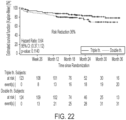
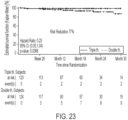
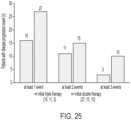
- Table 13 in the example section herein includes an evaluation of certain disease progression events.
- the patient is treatment naive for PAH, however, patients previously or currently on a treatment regimen for PAH may also benefit from the methods disclosed herein.
- treatment naive refers to a patient who has not been treated for PAH prior to initiating treatment according to the methods described herein.
- the patient hasn't taken an endothelin receptor antagonist (ERA) prior to initiating treatment according to the methods described herein.
- ERA endothelin receptor antagonist
- PDE-5 phosphodiesterase type 5
- the patient hasn't taken a prostacyclin receptor agonist (IP receptor agonist) prior to initiating treatment according to the methods described herein.
- the patient hasn't taken an endothelin receptor antagonist (ERA), a phosphodiesterase type 5 (PDE-5) inhibitor, and a prostacyclin receptor agonist (IP receptor agonist) prior to initiating treatment according to the methods described herein.
- ERA endothelin receptor antagonist
- PDE-5 phosphodiesterase type 5
- IP receptor agonist a prostacyclin receptor agonist
- the patient is also, or in addition to being treatment naive, newly diagnosed with PAH.
- an initial PAH diagnosis of the patient is made within about six months of the start of the initial triple combination therapy. In some embodiments, the initial PAH diagnosis made within about 6, about 5, about 4, about 3, about 2, or about 1 month of the start of the initial triple combination therapy.
- the methods described herein are also effective in normalizing and/or improving one or more of mean pulmonary arterial hypertension (mPAP), pulmonary arterial wedge pressure (PAWP), and pulmonary vascular resistance (PVR).
- mPAP mean pulmonary arterial hypertension
- PAWP pulmonary arterial wedge pressure
- PVR pulmonary vascular resistance
- the methods are effective in lowering abnormally elevated levels of one or more of a mPAP, or PVR.
- the mPAP, and/or PVR may be elevated at the time of commencing therapy and are lowered using the initial triple combination therapy methods disclosed herein.
- the patient may have an mPAP of greater than or equal to about 25 mmHg at rest.
- the initial triple combination therapy may reduce mPAP levels in the patient.
- the methods result in lowering mPAP levels by about 5 mmHg, about 10 mmHg, about 15 mmHg, or about 20 mmHg.
- the patient may also have a mean PAWP of less than or equal to about 15 mmHg at the start of the initial triple combination therapy.
- patients may have a mean pulmonary arterial wedge pressure of less than about 15, about 14, about 13, about 12, about 11, about 10, about 9, about 8, about 7, about 6, about 5, about 4, about 3, about 2, or about 1 mmHg at the start of the initial triple combination therapy.
- the patient may also have a PVR of greater than or equal to about 240 dyn. sec/cm 5 at the start of the initial triple combination therapy. In other embodiments, the patient has a PVR of greater than or equal to about 480 dyn ⁇ sec/cm 5 at the start of the initial triple combination therapy The methods result in lowering the PVR of the patient.
- the patient has a 6-minute walk distance (6MWD) of greater than or equal to about 50 meters at the start of the initial triple combination therapy.
- 6MWD 6-minute walk distance
- typically the 6MWD of a newly diagnosed patient ranges from about 150 to 500 meters.
- the patient has a 6MWD of less than 50 meters at the start of the initial therapy.
- the initial triple combination therapy disclosed herein is effective in increasing 6MWD levels.
- the methods described herein include administering an amount of an ERA.
- the "endothelin receptor antagonist” or "ERA” may be selected by a physician or other healthcare provider.
- the ERA is macitentan.
- the amount of the ERA is less than about 15 mg. In further embodiments, the amount of the ERA is about 1 mg, about 2 mg, about 3 mg, about 4 mg, about 5 mg, about 6 mg, about 7 mg, about 8 mg, about 9 mg, about 10 mg, about 11 mg, about 12 mg, about 13 mg, about 14 mg, or about 15 mg. In other embodiments, the amount of the ERA is about 1 to about 15 mg, about 1 to about 10 mg, about 1 to about 5 mg, about 5 to about 15 mg, about 5 to about 10 mg, or about 10 to about 15 mg. In yet further embodiments, the amount of the ERA is about 5 to about 15 mg. In yet further embodiments, the amount of the ERA is about 10 mg.
- the amount of the ERA may be the same throughout the treatment method or may be altered. In some embodiments, the amount of the ERA is increased. In other embodiments, the amount of the ERA is decreased. Desirably, the ERA is taken by the patient at the same time during the day. Thus, in some embodiments, the ERA is taken in the morning. In other embodiments, the ERA is taken in the evening.
- the amount of the ERA may be taken as a single dose or broken up into two or more doses as determined by a physician or other healthcare provider. Preferably, the ERA is taken as a single dose.
- macitentan refers to N-[5-(4-Bromophenyl)-6-[2-[(5-bromo-2-pyrimidinyl)oxy]ethoxy]-4-pyrimidinyl]-N'-propylsulfamide of formula (I).
- macitentan refers to stereoisomers of macitentan, such as enantiomers and diastereomers as pure or substantially pure forms. Macitentan also refers to racemic mixtures thereof. As used herein, "macitentan” also refers to amorphous or crystalline forms of macitentan. In some embodiments, the macitentan is a crystalline form. In other embodiments, the macitentan is an amorphous form. The crystallinity may be determined by those skilled in the art using one or more techniques such as, e.g. , single crystal x-ray diffraction, powder x-ray diffraction, differential scanning calorimetry, melting point, among others.
- Macitentan as used herein includes anhydrous forms or hydrates thereof. In certain embodiments, the macitentan is in an anhydrous form. In other embodiments, the macitentan is a hydrate thereof. “Macitentan” as used herein further refers to solvates thereof. Such solvates include a molecule of a solvent bound through intermolecular forces or chemical bonds to one or more locations of the macitentan molecule. As used herein, “macitentan” may also refer to polymorphs thereof. Such polymorphs of macitentan include crystalline forms of the molecule, having variations to the crystal lattices of each polymorph.
- macitentan may also include pharmaceutically acceptable salts thereof, which may readily be selected by those skilled in the art.
- pharmaceutically acceptable salts encompasses either salts with inorganic acids or organic acids like hydrohalogenic acids, e.g. hydrochloric or hydrobromic acid; sulfuric acid, phosphoric acid, nitric acid, citric acid, formic acid, acetic acid, maleic acid, tartaric acid, methylsulfonic acid, p-toluolsulfonic acid and the like or in case the compound of formula I is acidic in nature with an inorganic base like an alkali or earth alkali base, e.g. sodium hydroxide, potassium hydroxide, calcium hydroxide and the like.
- Macitentan is commercially available as understood to those skilled in the art.
- macitentan is available as OPSUMIT ® .
- Macitentan is an endothelin receptor antagonist and may be prepared according to the process as disclosed in US Patent No. 7,094,781 .
- the macitentan metabolite is metabolically active compound.
- the macitentan metabolite is of formula I-M1 to I-M7.
- the macitentan metabolite is of formula I-M6; I-M6 is also known under the code name ACT-132577 and the International non-proprietary name aprocitentan.
- the methods described herein also include administration of a prostacyclin receptor agonist (IP receptor agonist).
- IP receptor agonist is selexipag, 4-[(5,6-diphenylpyrazin-2-yl)(isopropyl)amino]butoxy ⁇ acetic acid (MRE-269).
- MRE-269 4-[(5,6-diphenylpyrazin-2-yl)(isopropyl)amino]butoxy ⁇ acetic acid
- the disclosure herein concerning the IP receptor agonist also applies to a prostacyclin analogue (or prostanoid).
- Treatment with the IP receptor agonist in the initial triple combination commences after initial treatment with the PDE-5 inhibitor and ERA is started.
- the starting dose of the IP receptor agonist is administered to the patient about 15 ⁇ 3 days after day 1 of the initial triple combination therapy.
- the starting dose of the IP receptor agonist is administered about 12 to about 18, about 13 to about 17, about 14 to about 16, about 13 to about 18, about 13 to about 17, about 13 to about 16, about 13 to about 15, about 14 to about 18, about 14 to about 17, about 14 to about 16, about 15 to about 18, about 15 to about 17, about 15 to about 16, about 16 to about 18, about 16 to about 17, or about 17 to about 18 days after day 1 of the initial triple combination therapy.
- the starting dose of the IP receptor agonist is administered about 12 days after day 1 of the initial triple combination therapy. In further embodiments, the starting dose of the IP receptor agonist is administered about 13 days after day 1 of the initial triple combination therapy. In yet other embodiments, the starting dose of the IP receptor agonist is administered about 14 days after day 1 of the initial triple combination therapy. In still further embodiments, the starting dose of the IP receptor agonist is administered about 15 days after day 1 of the initial triple combination therapy. In other embodiments, the starting dose of the IP receptor agonist is administered about 16 days after day 1 of the initial triple combination therapy. In further embodiments, the starting dose of the IP receptor agonist is administered about 17 days after day 1 of the initial triple combination therapy. In still other embodiments, the starting dose of the IP receptor agonist is administered about 18 days after day 1 of the initial triple combination therapy.
- the amount of the IP receptor agonist may be selected by a physician or other health care provider based on factors such as severity of the disease, physical characteristics of the patient, among others. In some embodiments, the amount of the IP receptor agonist is at least about 10 ⁇ g. In some embodiments, the amount of the IP receptor agonist is at least about 100, about 200, about 300, about 400, about 500, about 600, about 700, about 800, about 900, about 1000, about 1100, about 1200, about 1300, about 1400, about 1500, about 1600, about 1700, about 1800, about 1900, about 2000, about 2100, about 2200, about 2300, about 2400, about 2500, about 2600, about 2700, about 2800, about 2900, about 3000, about 3100, about 3200, about 3300, about 3400, or about 3500 ⁇ g.
- the daily dose of IP receptor agonist may be administered once daily, twice daily, or thrice daily, preferably twice daily. In some embodiments, the dose is administered twice daily. In other embodiments, the dose is administered once before mid-day and once after mid-day. In further embodiments, the daily dose is administered once daily.
- the dose of IP receptor agonist does not exceed about 1600 ⁇ g twice daily, i.e., 3200 ⁇ g per day.
- the dose of the IP receptor agonist, twice daily is about 100 to about 3500 ⁇ g, about 200 to about 3200, about 200 to about 3000, about 200 to about 2800, about 200 to about 2600, about 200 to about 2400, about 200 to about 2200, about 200 to about 2000, about 200 to about 1800, about 200 to about 1600, about 200 to about 1400, about 200 to about 1200, about 200 to about 1000, about 200 to about 800, about 200 to about 600, about 200 to about 400, about 400 to about 3200, about 400 to about 3000, about 400 to about 2800, about 400 to about 2600, about 400 to about 2400, about 400 to about 2200, about 400 to about 2000, about 400 to about 1800, about 400 to about 1600, about 400 to about 1400, about 400 to about 1200, about 400 to about 1000, about 400 to about 800, about 400 to about 600, about
- the dose of IP receptor agonist, on a twice daily basis is about 200 to about 1600 ⁇ g. In other embodiments, the dose of IP receptor agonist, on a twice daily basis, is about 200 ⁇ g to about 1600 ⁇ g. In yet further embodiments, the dose of IP receptor agonist, on a twice daily basis is about 1200 ⁇ g to about 1600 ⁇ g twice daily.
- the starting, daily amount of the IP receptor agonist is about 400 ⁇ g.
- This can be administered to the patient in one dose (400 ⁇ g) or, preferably, in two doses (200 ⁇ g/dose).
- the doses are taken at the same time or staggered.
- the first 200 ⁇ g dose may be taken in the morning and the second 200 ⁇ g dose is taken in the evening.
- a 400 ⁇ g starting dose is taken in the morning.
- a 400 ⁇ g starting dose is taken in the evening.
- the amount of the IP receptor agonist is adjusted to provide the maximum tolerable dose, as determined by a physician or other healthcare provider.
- the dose of the IP receptor agonist is increased from the initial dose of the IP receptor agonist at regular intervals, depending on patient tolerability, until a maximum tolerable dose (MTD).
- MTD maximum tolerable dose
- the MTD is 1600 ⁇ g twice daily or until the patient experiences adverse pharmacological effects that cannot be tolerated and/or medically managed.
- the regular intervals may be daily or weekly, but the dosing is typically increased at weekly intervals.
- the IP receptor agonist is selexipag.
- selexipag refers to 2- ⁇ 4-[(5,6-diphenylpyrazin-2-yl)(propan-2-yl)amino]butoxy ⁇ -N-(methanesulfonyl)acetamide of formula (II).
- selexipag also refers to amorphous or crystalline forms of selexipag, such as polymorphs thereof.
- the selexipag is a crystalline form, such as a polymorph.
- the selexipag is an amorphous form.
- the selexipag is the Form I as described in U.S. Patent Nos. 8,791,122 and 9,284,280 , Form II as described in U.S. Patent No. 9,340,516 , or Form III as described in U.S. Patent No. 9,440,931 .
- the crystallinity may be determined by those skilled in the art using one or more techniques such as, e .
- “Selexipag” as used herein includes anhydrous or hydrates thereof. In certain embodiments, the selexipag is an anhydrous form. In other embodiments, the selexipag is a hydrate thereof. “Selexipag” as used herein further refers to solvates thereof. Such solvates include a molecule of a solvent bound through intermolecular forces or chemical bonds to one or more locations of the selexipag molecule.
- selexipag may also include pharmaceutically acceptable salts thereof, which may readily be selected by those skilled in the art.
- a "pharmaceutically acceptable salt” is intended to mean a salt of selexipag that is non-toxic, biologically tolerable, or otherwise biologically suitable for administration to the subject. See, e.g., Berge, "Pharmaceutical Salts", J. Pharm. Sci., 1977, 66:1-19 , and Handbook of Pharmaceutical Salts, Properties, Selection, and Use, Stahl and Wermuth, Eds., Wiley-VCH and VHCA, Zurich, 2002 .
- Selexipag can be used in the form of a free base or acid, but can also be used after forming into a pharmaceutically acceptable salt by a known method.
- examples of “salt” include salts of inorganic acids such as hydrochloric acid, sulfuric acid, nitric acid, phosphoric acid, hydrofluoric acid and hydrobromic acid, and salts of organic acids such as acetic acid, tartaric acid, lactic acid, citric acid, fumaric acid, maleic acid, succinic acid, methanesulfonic acid, ethanesulfonic acid, benzenesulfonic acid, p-toluenesulfonic acid, naphthalenesulfonic acid and camphorsulfonic acid.
- selexipag When the selexipag is acidic, examples of “salt” include alkali metal salts such as sodium salt and potassium salt, and alkali earth metal salts such as calcium salt. Geometrical isomers (Z form and E form) of selexipag or mixtures thereof are also contemplated.
- Selexipag is commercially available as understood to those skilled in the art. See, e.g., U.S. Patent No. 7,205,302 .
- selexipag is available as Uptravi ® and also is known as ACT-293987 or NS-304.
- Selexipag is an agonist of the prostacyclin receptor and may be prepared according to a process as disclosed in U.S. Patent No. 7,205,302 .
- the present disclosure also contemplates the administration of selexipag metabolites.
- the selexipag metabolite is metabolically active compound.
- the selexipag metabolite is of formula II-M1, 4-[(5,6-diphenylpyrazin-2-yl)(isopropyl)amino]butoxy ⁇ acetic acid.
- II-M1 is also known under the code name ACT-333679 or MRE-269.
- the preparation of selexipag is described in WO-2002/088084 .
- the preparation of polymorphic forms, i.e. the crystalline forms I, II, and III of the free base is disclosed in WO-2010/150865 ; polymorphic forms of pharmaceutically acceptable salts are disclosed in WO-2011/024874 .
- the methods described herein also include administration of a phosphodiesterase type 5 (PDE-5) inhibitor.
- PDE-5 inhibitor is tadalafil.
- the daily dose of PDE-5 inhibitor may be administered once daily, twice daily, or thrice daily, preferably twice daily. In some embodiments, the dose is administered once daily.
- the amount of the PDE-5 inhibitor may be selected by a physician or other healthcare provider based on factors such as severity of the disease, physical characteristics of the patient, among others. In some embodiments, the amount of the PDE-5 inhibitor is at least about 5 mg.
- the amount of the PDE-5 inhibitor is about 5 to about 100 mg, about 10 to about 100 mg, about 10 to about 90 mg, about 10 to about 80 mg, about 10 to about 70 mg, about 10 to about 60 mg, about 10 to about 50 mg, about 10 to about 40 mg, about 10 to about 30 mg, about 10 to about 20 mg, about 20 to about 100 mg, about 20 to about 90 mg, about 20 to about 80 mg, about 20 to about 70 mg, about 20 to about 60 mg, about 20 to about 50 mg, about 20 to about 40 mg, about 20 to about 30 mg, about 30 to about 100 mg, about 30 to about 90 mg, about 30 to about 80 mg, about 30 to about 70 mg, about 30 to about 60 mg, about 30 to about 50 mg, about 30 to about 40 mg, about 40 to about 100 mg, about 40 to about 90 mg, about 40 to about 80 mg, about 40 to about 70 mg, about 40 to about 60 mg, about 40 to about 50 mg, about 50 to about 80 mg, about 50 mg, about 50 to about 60 mg, about 40 to about 50 mg, about 40 to
- the maximum tolerable dose (MTD) of the PDE-5 inhibitor is attained during the initial triple combination therapy.
- the amount of the PDE-5 inhibitor may be the same throughout the treatment method or be altered.
- the amount of the PDE-5 inhibitor is increased from an initial dose.
- the amount of the PDE-5 inhibitor is decreased from an initial dose.
- the dose of the PDE-5 inhibitor may be adjusted depending on a number of factors including, without limitation, renal and hepatic impairment.
- the initial dose of the PDE-5 inhibitor is increased by at about 20 mg during the initial triple combination therapy.
- the initial dose of the PDE-5 inhibitor is about 20 mg and is later increased to about 40 mg, depending on patient tolerability.
- the dose of the PDE-5 inhibitor is adjusted after day 1 of the initial triple combination therapy. In some embodiments, the dose of the PDE-5 inhibitor is adjusted at least about 5 days after day 1 of the initial triple combination therapy. In other embodiments, the dose of the PDE-5 inhibitor is adjusted at least about 8 days after day 1 of the initial triple combination therapy. In further embodiments, the dose of the PDE-5 inhibitor is adjusted at least about 11 days after day 1 of the initial triple combination therapy.
- the dose of the PDE-5 inhibitor agonist is adjusted about 5 to about 15 days, about 5 to about 11 days, about 5 to about 8 days, about 6 to about 15 days, about 6 to about 11 days, about 6 to about 8 days, about 7 to about 15 days, about 7 to about 11 days, about 7 to about 8 days, about 8 to about 15 days, or about 8 to about 11 days, after day 1 of the initial triple combination therapy.
- the initial dose of the PDE-5 inhibitor is about 20 mg and the dose is increased in about 5 to about 11 days to a dose of about 40 mg thereafter.
- the PDE-5 inhibitor is taken by the patient at the same time during the day.
- the PDE-5 inhibitor is taken in the morning.
- the PDE-5 inhibitor is taken in the evening.
- the amount of the PDE-5 inhibitor may be taken as a single dose or broken up into two or more doses as determined by one skilled in the art.
- the PDE-5 inhibitor is taken as a single dose.
- tadalafil refers to pyrazino[1';,2';:1,6]pyrido[3,4-b]indole-1,4-dione, 6-(1,3-benzodioxol-5-yl)2,3,6,7,12,12a-hexahydro-2-methyl-, (6R,12aR)- of formula (III).
- tadalafil may also include pharmaceutically acceptable salts thereof, which may readily be selected by those skilled in the art.
- a “pharmaceutically acceptable salt” is intended to mean a salt of tadalafil that is non-toxic, biologically tolerable, or otherwise biologically suitable for administration to the subject. See, e.g., Berge, "Pharmaceutical Salts", J. Pharm. Sci., 1977, 66:1-19 , and Handbook of Pharmaceutical Salts, Properties, Selection, and Use, Stahl and Wermuth, Eds., Wiley-VCH and VHCA, Zurich, 2002 .
- Tadalafil can be used in the form of a free base or acid, but can also be used after forming into a pharmaceutically acceptable salt by a known method.
- salts of inorganic acids such as hydrochloric acid, sulfuric acid, nitric acid, phosphoric acid, hydrofluoric acid and hydrobromic acid
- organic acids such as acetic acid, tartaric acid, lactic acid, citric acid, fumaric acid, maleic acid, succinic acid, methanesulfonic acid, ethanesulfonic acid, benzenesulfonic acid, p-toluenesulfonic acid, naphthalenesulfonic acid and camphorsulfonic acid.
- salt examples include alkali metal salts such as sodium salt and potassium salt, and alkali earth metal salts such as calcium salt.
- Tadalafil is commercially available as Adcirca TM .
- the treatment period of the initial triple combination therapy typically includes a maintenance period.
- the maintenance period may be determined by a physician or other healthcare provider.
- the maintenance period typically begins following a time sufficient to determine the maximum tolerable dose (MTD) for one or more of the ERA, PDE-5 inhibitor, and IP receptor agonist.
- the maintenance period begins following the determination of the MTD of the IP receptor agonist.
- the time from the start of initial triple combination therapy until the start of the maintenance phase may vary from, for example, about 4 weeks to about 30 weeks.
- the treating physician will evaluate the patient to assess the need to maintain therapy on all of the ERA, PDE-5 inhibitor, and IP receptor agonist or to discontinue use of one or more of the ERA, PDE-5 inhibitor, or IP receptor agonist.
- the patient continues therapy with the ERA, PDE-5 inhibitor, and IP receptor agonist during the maintenance treatment period. In other embodiments, the patient continues therapy with the ERA and PDE-5 inhibitor during the maintenance treatment period. In further embodiments, the patient continues therapy with the ERA and IP receptor agonist during the maintenance treatment period. In yet other embodiments, the patient continues therapy with the PDE-5 inhibitor and IP receptor agonist during the maintenance treatment period. In still further embodiments, the patient continues therapy with the ERA during the maintenance treatment period. In other embodiments, the patient continues therapy with the PDE-5 inhibitor during the maintenance treatment period. In further embodiments, the patient continues therapy with the IP receptor agonist during the maintenance treatment period.
- the dosing amount and frequency of the one or more of ERA, PDE-5 inhibitor, or IP receptor agonist during the maintenance treatment period will be determined by the attending physician.
- the dosing frequency and amount of the ERA, PDE-5 inhibitor, and/or IP receptor agonist during the maintenance treatment period is the minimum frequency and amount to reduce the risk of disease progression in the patient.
- the maintenance treatment period is at least about 4 weeks, about 5 weeks, about 6 weeks, about 7 weeks, about 8 weeks, about 9 week, about 10 weeks, about 11 weeks, about 12 weeks, about 13 weeks, about 17 weeks, about 18 weeks, about 19 weeks, about 20 weeks, about 6 months, about 7 months, about 8 months, about 9 months, about 10 months, about 11 months, 1 year, or about 2 years.
- the maintenance treatment period is at least six months. In other embodiments, the maintenance treatment period is at least one year.
- the maintenance treatment period may include longer periods of time depending on the patient's condition. In some embodiments, those longer periods may be at least about 3 years, about 4 years, about 5 years, about 6 years, about 7 years, about 8 years, about 9 years, about 10 years, or more than about 10 years, including indefinitely.
- the patient will remain on the maintenance treatment period until the patient no longer exhibits PAH symptoms, the PAH symptoms continue to decrease, the PAH symptoms do not worsen, and/or the patient fails to respond to the treatment.
- the amount of the ERA, PDE-5 inhibitor, or IP receptor agonist administered to the patient during the maintenance treatment period is an amount that elicits the biological or medicinal response resulting in elimination of one or more PAH symptoms or a reduction of one or more PAH symptoms.
- the amount of the one or more of ERA, PDE-5 inhibitor, or IP receptor agonist will be the same as any amount administered prior to the maintenance period.
- the amount for one or more of the ERA, PDE-5 inhibitor, or IP receptor agonist may be increased or decreased as needed.
- the patient's response to the treatment may be assessed. This assessment may be performed until the patient is considered by a physician or other healthcare provider to have achieved a suitable response to the initial triple combination therapy.
- the amounts/doses of the PDE-5 inhibitor, ERA, and IP receptor agonist are safe, effective, or safe and effective.
- safe shall mean without undue adverse side effects (such as toxicity, irritation, or allergic response), commensurate with a reasonable benefit/risk ratio when used in the manner of this invention.
- effective means the efficacy of treatment has been demonstrated for the treatment of patients with pulmonary arterial hypertension when dosed in a therapeutically effective dose.
- the methods described herein are safe. In other embodiments, the methods described herein are effective. In further embodiments, the methods described herein are safe and effective.
- the therapeutically effective amounts of the PDE-5 inhibitor, ERA, and IP receptor agonist are safe. In still further embodiments, the therapeutically effective amounts of the PDE-5 inhibitor, ERA, and IP receptor agonist are effective. In other embodiments, the therapeutically effective amounts of the PDE-5 inhibitor, ERA, and IP receptor agonist are safe and effective.
- the term “clinically proven” (used independently or to modify the terms “safe” and/or “effective”) shall mean that proof has been proven by a Phase III or IV clinical trial that are sufficient to meet approval standards of U.S. Food and Drug Administration or similar study for market authorization by EMEA.
- an adequately sized, randomized, double-blinded controlled study is used to clinically prove the effects of the PDE-5 inhibitor, ERA, and IP receptor agonist as compared to a placebo with the patient's condition assessed by techniques described herein.
- the term "clinically proven effective” means the efficacy of treatment has been proven by a Phase III or IV clinical trial as statistically significant i.e., the results of the clinical trial are not likely to be due to chance with an alpha level less than 0.05 or the clinical efficacy results are sufficient to meet approval standards of U.S. Food and Drug Administration or similar study for market authorization by EMEA.
- selexipag, macitentan, and tadalafil were each, independently, clinically proven effective for the treatment of patients with pulmonary arterial hypertension in therapeutically effective doses as described herein, and as specifically set forth in the examples.
- the term "clinically proven safe” means the safety of treatment has been proven by a Phase III or IV clinical trial by analysis of the trial data and results establishing that the treatment is without undue adverse side effects and commensurate with the statistically significant clinical benefit (e.g., efficacy) sufficient to meet approval standards of U.S. Food and Drug Administration or similar study for market authorization by Europe, the Middle East, and Africa (EMEA).
- EMEA Middle East, and Africa
- selexipag, macitentan, and tadalafil were each, independently, clinically proven safe for the treatment of patients with pulmonary arterial hypertension when dosed in therapeutically effective doses as described herein, and as specifically set forth in the examples.
- methods of selling a drug product comprising the PDE-5 inhibitor, ERA, and IP receptor agonist are also provided.
- the terms “sale” or “selling” as used herein refers to transferring a drug product, e . g ., a pharmaceutical composition or a dosage form, from a seller to a buyer.
- the methods include selling a drug product comprising the PDE-5 inhibitor, ERA, and IP receptor agonist, wherein the method comprises selling the drug product.
- a drug product label for a reference listed drug for the drug product includes instructions for treating PAH.
- the methods also include offering for sale a drug product comprising the PDE-5 inhibitor, ERA, and IP receptor agonist.
- the term "offering for sale,” as used herein, refers to the proposal of a sale by a seller to a buyer for a drug product, e.g., a pharmaceutical composition or a dosage form. These methods comprise offering the drug product for sale.
- the PDE-5 inhibitor, ERA, and IP receptor agonist may be provided as pharmaceutical drug products comprising clinically proven safe and clinically proven effective amounts of PDE-5 inhibitor, ERA, and IP receptor agonist wherein the pharmaceutical product is packaged and wherein the package includes a label that identifies PDE-5 inhibitor, ERA, and IP receptor agonist as regulatory approved chemical entities and includes instructions for treating PAH.
- drug product refers to a product that contains an active pharmaceutical ingredient that has been approved for marketing by a governmental authority, e.g., the Food and Drug Administration or the similar authority in other countries.
- the drug product comprises a PDE-5 inhibitor, ERA, and IP receptor agonist.
- label or drug product label refers to information provided to a patient which provides relevant information regarding the drug product. Such information includes, without limitation, one or more of the description of the drug, clinical pharmacology, indications (uses for the drug product), contraindication (who should not take the drug product), warnings, precautions, adverse events (side effects), drug abuse and dependence, dosage and administration, use in pregnancy, use in nursing mothers, use in children and older patients, how the drug is supplied, safety information for the patient, or any combination thereof.
- the label or drug product label provides instructions for treating PAH.
- the label or drug product label identifies the PDE-5 inhibitor, ERA, and IP receptor agonist as regulatory approved chemical entities.
- RTD reference listed drug
- a drug product to which new generic versions are compared to show that they are bioequivalent. It is also a medicinal product that has been granted marketing authorization by a member state of the European Union or by the Commission on the basis of a completed dossier, i.e., with the submission of quality, pre-clinical and clinical data in accordance with Articles 8(3), 10a, 10b or 10c of Directive 2001/83/EC and to which the application for marketing authorization for a generic/hybrid medicinal product refers, by demonstration of bioequivalence, usually through the submission of the appropriate bioavailability studies.
- the drug product is an ANDA drug product, a supplemental New Drug Application drug product, or a 505(b)(2) drug product.
- ANDA Abbreviated New Drug Application
- an ANDA applicant relies on the FDA's finding that a previously approved drug product, i.e., the RLD, is safe and effective, and must demonstrate, among other things, that the proposed generic drug product is the same as the RLD in certain ways.
- a drug product for which an ANDA is submitted must have, among other things, the same active ingredient(s), conditions of use, route of administration, dosage form, strength, and (with certain permissible differences) labeling as the RLD.
- the RLD is the listed drug to which the ANDA applicant must show its proposed ANDA drug product is the same with respect to active ingredient(s), dosage form, route of administration, strength, labeling and conditions of use, among other characteristics.
- the electronic Orange Book there is a column for RLDs and a column for reference standards. In the printed version of the Orange Book, the RLDs and reference standards are identified by specific symbol.
- Applicants identify in the application form for its generic/hybrid medicinal product, which is the same as an ANDA or supplemental NDA (sNDA) drug product, the reference medicinal product (product name, strength, pharmaceutical form, marketing authorization holder (MAH, first authorization, Member State/Community), which is synonymous with a RLD, as follows:
- NDAs and ANDAs can be divided into the following four categories:
- a scientific premise underlying the Hatch-Waxman Act is that a drug product approved in an ANDA under section 505(j) of the FD&C Act is presumed to be therapeutically equivalent to its RLD. Products classified as therapeutically equivalent can be substituted with the full expectation that the substituted product will produce the same clinical effect and safety profile as the prescribed product when administered to patients under the conditions specified in the labeling.
- a section 505(b)(2) application allows greater flexibility as to the characteristics of the proposed product.
- a section 505(b)(2) application will not necessarily be rated therapeutically equivalent to the listed drug it references upon approval
- the methods may also comprise, consist of, or consist essentially of placing the PDE-5 inhibitor, ERA, and IP receptor agonist into the stream of commerce.
- the PDE-5 inhibitor, ERA, and IP receptor agonist includes a package insert that contains instructions for treating PAH.
- compositions independently, containing the PDE-5 inhibitor, ERA, and IP receptor agonist comprising, consisting of, or consisting essentially of placing the pharmaceutical compositions into the stream of commerce.
- the pharmaceutical composition includes a package insert that contains instructions for treating PAH.
- the PDE-5 inhibitor, ERA, and IP receptor agonist comprises, consisting of, or consisting essentially of offering to place the PDE-5 inhibitor, ERA, and IP receptor agonist into the stream of commerce.
- the PDE-5 inhibitor, ERA, and IP receptor agonist includes a package insert that contains instructions for treating PAH.
- compositions independently containing one or more of the IP receptor agonist, PDE-5 inhibitor, or ERA as the active ingredient can be prepared by intimately mixing the compound or compounds with a pharmaceutical carrier according to conventional pharmaceutical compounding techniques.
- composition and “formulation” are used interchangeably and encompass a product comprising the specified ingredients in the specified amounts, as well as any product, such as a pharmaceutical product, which results, directly or indirectly, from combinations of the specified ingredients in the specified amounts.
- the IP receptor agonist, PDE-5 inhibitor, and ERA are, independently, formulated into compositions as discussed herein, although one or more of the IP receptor agonist, ERA, and PDE-5 inhibitor may be in a single formulation.
- Such compositions may be administered to a patient neat or in a mixture with a pharmaceutically acceptable non-toxic inert carrier, for example, as a pharmaceutical composition containing the compound at a level of 0.1% to 99.5wt%, preferably 0.5% to 90%, based on the total weight of the composition.
- a pharmaceutical composition containing the compound at a level of 0.1% to 99.5wt%, preferably 0.5% to 90%, based on the total weight of the composition.
- auxiliary agents for formulations such as solid, semi-solid and liquid diluent, filler and other auxiliary agents for drug formulations may be used. It is desirable that a pharmaceutical composition is administered as a unit dosage form.
- the IP receptor agonist, PDE-5 inhibitor, and/or ERA may be, independently, administered by a number of routes as determined by those skilled in the art.
- the IP receptor agonist, PDE-5 inhibitor, and/or ERA are, independently, administered by route that is suitable for the IP receptor agonist.
- the IP receptor agonist, PDE-5 inhibitor, and/or ERA are, independently, administered orally, parenterally, or any combination thereof.
- the IP receptor agonist, PDE-5 inhibitor, or ERA are, independently, administered orally.
- the IP receptor agonist, PDE-5 inhibitor, or ERA are, independently, administered orally in the form of one or more tablets.
- independently administered refers to each of the IP receptor agonist, PDE-5 inhibitor, and ERA being present in separate formulations, i.e. , one unit dose/formulation contains the IP receptor agonist, one unit dose/formulation contains the PDE-5 inhibitor, and one unit dose/formulation contains the ERA.
- independent formulations may be administered at the same time, i.e., the unit dose containing the IP receptor, the unit dose/formulation containing the PDE-5 inhibitor, and the unit dose/formulation containing the ERA may be administered at the same time or at different times as described herein.
- the ERA and PDE-5 inhibitor are administered orally together in the form of a single tablet, and the IP receptor agonist is administered orally in the form of one or more separate tablets.
- the IP receptor agonist, PDE-5 inhibitor, and/or ERA are, independently, administered as injections or infusions such as intravenous injections.
- the IP receptor agonist, PDE-5 inhibitor, and/or ERA or pharmaceutical product is a sterile solution.
- injectable suspensions or solutions may be prepared utilizing aqueous carriers along with appropriate additives.
- the carrier will usually consist of sterile water and other ingredients which increase solubility or preservation.
- Suitable dispersing or suspending agents for aqueous suspensions include synthetic and natural gums such as tragacanth, acacia, alginate, dextran, sodium carboxymethylcellulose, methylcellulose, polyvinyl-pyrrolidone or gelatin. Isotonic preparations which may contain suitable preservatives are employed when intravenous administration is desired.
- the carrier used in intravenous formulations comprises sterile water.
- each preparation may be solid or liquid.
- the oral forms of the IP receptor agonist, PDE-5 inhibitor, and ERA as described herein are solids.
- solid formulations include, for example, pastilles, thin films, pastes, lozenges, granules, powders, capsules, pills such as caplets, gelcaps, tablets, and capsules (each including immediate release, timed release and sustained release pills).
- the oral compositions are administered as tablets, i.e., desirably, the pharmaceutical product comprises a tablet.
- tablets or caplets may be sugar coated or enteric coated by standard techniques or otherwise compounded to provide a dosage form affording the advantage of prolonged action.
- the principal active ingredient e.g., IP receptor agonist, PDE-5 inhibitor, or ERA
- a pharmaceutical carrier/additive such as starches, sweeteners such as sugars, diluents, coloring agents, granulating agents, preservatives, lubricants, flavoring agents, binders, disintegrating agents and the like.
- conventional tableting ingredients such as corn starch, lactose, sucrose, sorbitol, talc, stearic acid, magnesium stearate, dicalcium phosphate or gums, and other pharmaceutical diluents, e.g., water, ethanol, glycerol, or the like, may be used.
- Suitable binders include, without limitation, starch, gelatin, natural sugars such as glucose or beta-lactose, corn sweeteners, natural and synthetic gums such as acacia, tragacanth or sodium oleate, sodium stearate, magnesium stearate, sodium benzoate, sodium acetate, sodium chloride and the like.
- Disintegrating agents include, without limitation, starch, methyl cellulose, agar, bentonite, xanthan gum and the like.
- the liquid oral preparations independently contain the IP receptor agonist, PDE-5 inhibitor, and/or ERA and one or more of suitable carriers/additives such as water, glycols, oils, alcohols, flavoring agents, preservatives, stabilizers, coloring agents and the like.
- the IP receptor agonist, PDE-5 inhibitor, or ERA as the active ingredient, may be intimately admixed with a pharmaceutical carrier according to conventional pharmaceutical compounding techniques, which carrier may take a wide variety of forms depending of the form of preparation desired for administration (e.g., oral or parenteral).
- a pharmaceutical carrier may take a wide variety of forms depending of the form of preparation desired for administration (e.g., oral or parenteral).
- Suitable pharmaceutically acceptable carriers are well known in the art. Descriptions of some of these pharmaceutically acceptable carriers may be found in The Handbook of Pharmaceutical Excipients, published by the American Pharmaceutical Association and the Pharmaceutical Society of Great Britain .
- Randomization Subjects were randomized in a 1:1 ratio to triple or dual therapy (selexipag/placebo double-blind and open label macitentan and tadalafil), stratified by region (North America versus rest of the world) and WHO FC at baseline (VII versus III/IV).
- Study/treatment duration The treatment period consisted of 2 weeks of open-label macitentan and tadalafil followed by a double-blind phase (+ open-label macitentan and tadalafil) with up-titration of selexipag/placebo until Week 12 and a maintenance treatment period that lasts up to the EOT visit. At the time the last subject completed the Week 26 visit, all patients who were still in the study returned for the EOMOP visit. The EOMOP visit was the individual cut-off date for the primary database lock. Subjects are followed-up until EOS, i.e. 30 days after EOT, regardless of whether they are receiving any study treatment or not. See, Figs. 1 and 2 for the study design.
- Fig. 1 Signed written informed consent is required prior to any study-mandated procedure; right heart catheterization [RHC] data obtained at the study site before informed consent signature but within 28 days prior to Day 1 are acceptable.
- RHC right heart catheterization
- 2 Study treatment initiation scheme. 3 For simplification, most visits between Day 1 and end of main observation period (EOMOP) are not displayed. 4 If double-blind treatment (selexipag/placebo) is discontinued before Week 26, the Week 26 assessments should be done either at Week 26 or before start of rescue therapy (prostacyclin, prostacyclin analog, or prostacyclin receptor agonist), whichever is first. 5
- the EOMOP is the data cutoff for the main efficacy and safety analyses, followed by data cleaning and unblinding of the treatment group allocation.
- the EOMOP visit is planned 26 ⁇ 1 weeks after enrollment of the last subject.
- the EOMOP visit is not required if within ⁇ 2 weeks of a patient's Week 26 visit or Month 12, 18, 24, 30, etc. visit.
- All 3 study treatments are provided until the EOT visit, which is planned approximately 4 months after the EOMOP visit. In the event of premature discontinuation of all 3 study treatments, the EOT visit should be performed within 1 week but the subject should be followed up according to the schedule of assessments until end of study.
- EOS is defined as the last data collection for a subject.
- the EOS visit for all subjects (regardless of whether they are receiving 3, 2, 1, or no study treatment) is planned approximately 5 months after the EOMOP visit. For all randomized patients, follow-up for disease progression (including death) will continue until EOS.
- baseline refers the last available assessment/measurement obtained before or on Day 1 (before randomization).
- the FAS includes all randomized subjects. Subjects are evaluated according to the treatment they have been randomized to (treatment policy estimand with missing Week 26 assessments imputed with LOCF for all types of intercurrent events).
- Ratio of Week 26 to baseline PVR (Week 26 divided by baseline PVR).
- PVR is log-transformed and change from baseline to Week 26 in log PVR is analyzed using an ANCOVA model with factors for treatment and randomization stratification variables region and WHO FC and baseline log PVR as covariate. Ratio of geometric means [triple over dual therapy] is obtained by exponentiation).
- the Safety Set includes all subjects who received at least one dose of any of the 3 study treatments.
- the FAS includes all randomized subjects.
- the Modified FAS includes all subjects from the FAS who received at least one dose of each of the 3 study treatments.
- the Per-protocol Set includes all subjects from the FAS who received at least one dose of double-blind study treatment and who have no major protocol deviation.
- the safety endpoints will be analyzed for the following time periods:
- the comparator group will receive the following:
- the 3 study treatments are administered as follows:
- the starting dose of double-blind selexipag or placebo on Day 15 ⁇ 3 is 200 ⁇ g twice daily (in the morning and in the evening).
- the dose is up-titrated in increments of 200 ⁇ g twice daily, usually at weekly intervals (see Table 1), until either a maximum dose of 1600 ⁇ g twice daily is reached or adverse pharmacological effects that cannot be tolerated or medically managed are experienced, whichever is first.
- it is recommended not to discontinue double-blind treatment because these effects are usually transient or manageable with symptomatic treatment. If a dose that cannot be tolerated is reached, the dose should be reduced to the previous dose level.
- Table 1 Double-blind up-titration scheme up to the Week 12 visit Duration (Study Days, all ⁇ 3) Dose regimen 1,2 Day 15 to Day 21 200 ⁇ g twice daily (1 tablet twice daily) Day 22 to Day 28 400 ⁇ g twice daily (2 tablets twice daily) Day 29 to Day 35 600 ⁇ g twice daily (3 tablets twice daily) Day 36 to Day 42 800 ⁇ g twice daily (4 tablets twice daily) Day 43 to Day 49 1000 g twice daily (5 tablets twice daily) Day 50 to Day 56 1200 ⁇ g twice daily (6 tablets twice daily) Day 57 to Day 63 1400 ⁇ g twice daily (7 tablets twice daily) Day 64 to Week 12 visit 1600 ⁇ g twice daily (8 tablets twice daily) 1 Or maximum tolerated dose.
- the indicated doses are target doses if previous dose level was tolerated or if tolerability issues were addressed by down-titration. 2 When titrating up or down, it is recommended to take the first new dose in the evening.
- tablets are to be taken orally, with or without food. Tolerability may be improved when taken with food.
- the tablets should not be split, crushed or chewed, and are to be swallowed with some water. If a dose has been missed, the subject must take it as soon as possible (unless the next dose is within the next 6 hours), and then take the next dose at the next scheduled time.
- Hematology Hematology, clinical chemistry including liver and hemoglobin tests, coagulation tests, and NT-proBNP.
- Hematology Hemoglobin, Hematocrit, Erythrocyte count (reticulocyte count), Leukocyte count with differential counts, and Platelet count
- Coagulation tests International Normalized Ratio, Prothrombin time, and Activated partial thromboplastin time
- Biomarkers of myocardial stress and of right ventricular function and structure NT-proBNP and circulating biomarkers involved in right ventricular function and structure.
- the screening period includes recording check of eligibility (inclusion and exclusion criteria), demographics, medical history, RHC, physical examination, vital signs (BP, HR), WHO FC, 6MWD, Borg dyspnea index, central laboratory tests (general, serum pregnancy test, and biomarkers); eligibility of subjects at Screening may alternatively be determined using local laboratory tests as long as the central laboratory kit is used in parallel, contraceptive methods used, previous therapies, and AEs, SAEs.
- the Day 1 (randomization) visit includes recording vital signs (BP, HR), WHO FC, 6MWD, Borg dyspnea index, central laboratory tests (general), urine pregnancy test, contraceptive methods used, concomitant therapies, and AEs, SAEs.
- BP vital signs
- WHO FC World Health Organization
- 6MWD 6MWD
- Borg dyspnea index central laboratory tests
- central laboratory tests general
- urine pregnancy test contraceptive methods used
- concomitant therapies and AEs, SAEs.
- AEs, SAEs AEs, SAEs.
- Day 8 ( ⁇ 3 days) visit includes recording AEs and SAEs. At the end of this visit, the dose of tadalafil is increased.
- Day 15 ( ⁇ 3 days) visit includes recording physical examination, vital signs (BP, HR), contraceptive methods used, concomitant therapies, and AEs, SAEs.
- BP vital signs
- HR vital signs
- contraceptive methods used concomitant therapies
- AEs SAEs.
- SAEs AEs, SAEs.
- double-blind selexipag/placebo is dispensed to the subjects.
- the subjects initiate treatment and up-titration (on top of ongoing study treatment with macitentan and tadalafil)
- Week 12 ( ⁇ 1 week) visit includes recording physical examination, vital signs (BP, HR), WHO FC, 6MWD, Borg dyspnea index, central laboratory tests (general, serum pregnancy test), contraceptive methods used, concomitant therapies, and AEs, SAEs.
- Week 26 ( ⁇ 1 week) visit includes recording RHC, physical examination, vital signs (BP, HR), WHO FC, 6MWD, Borg dyspnea index, central laboratory tests (general, serum pregnancy test, and biomarkers), contraceptive methods used, concomitant therapies, and AEs, SAEs.
- Month 12, 18, 24, 30, etc. ( ⁇ 2 weeks) visits include recording physical examination, vital signs (BP, HR), WHO FC, 6MWD, Borg dyspnea index, central laboratory tests (general, serum pregnancy test), contraceptive methods used, concomitant therapies, and AEs, SAEs.
- the EOMOP visit includes recording physical examination, vital signs (BP, HR), WHO FC, 6MWD, Borg dyspnea index, central laboratory tests (general, serum pregnancy test), contraceptive methods used, concomitant therapies, and AEs, SAEs.
- the EOT visit includes recording physical examination, vital signs (BP, HR), WHO FC, 6MWD, Borg dyspnea index, central laboratory tests (general, serum pregnancy test), contraceptive methods used, concomitant therapies, and AEs, SAEs.
- the EOS visit is performed at the end of the safety follow-up, i.e., 30-35 days after EOT.
- the EOS visit includes recording pregnancy test (serum or urine), contraceptive methods used, and AEs, SAEs.
- Table 2 provides a summary of the patient disposition up to EOMOP.
- Table 2 Subject disposition up to EOMOP Analysis Set: Screened Analysis Set Triple th. n Double th. n Total n Subjects Screened 291 Subjects Randomized 123 124 247 Macitentan Subjects Treated 123 123 246 Subjects Completed Treatment up to EOMOP 96 96 192 Tadalafil Subjects Treated 123 123 246 Subjects Completed Treatment up to EOMOP 103 102 205 Selexipag/Placebo Subjects Treated 119 120 239 Subjects Completed Treatment up to EOMOP 95 85 180 Output: t-disp-scr (subject disposition; Analysis Set: Screened Analysis Set) (modified from original)
- the median individual maintenance dose of selexipag was 1200 ⁇ g b.i.d. in triple therapy. See, Table 8.
- the primary endpoint was not met: triple therapy reduced PVR at Week 26 similarly as double therapy.
- the median [Q1, Q3] baseline PVR was 880.0 [673.7, 1131.0] in the initial triple therapy group and 932.7 [712.6, 1220.5] in the initial double therapy group.
- N 124 Number of subjects included in the analysis 123 124 Baseline Mean 940.3 980.2 Standard Deviation 401.33 348.42 Standard Error of the Mean 36.19 31.29 Median 880.0 932.7 Q1, Q3 673.7, 1131.0 712.6, 1220.5 Min, Max 325.9, 3000.0 376.5, 2240.0 Week 26 Mean 475.5 484.6 Standard Deviation 352.53 228.12 Standard Error of the Mean 31.79 20.49 Median 378.2 443.7 Q1, Q3 272.7, 581.8 306.9, 585.5 Min, Max 100.0, 3000.0 114.3, 1236.4 Total number of subjects with imputation of missing values [n (%)] 11 (8.9) 7 (5.6) by last observation carried forward 11 (8.9) 7 (5.6) Change from Baseline to Week 26 Mean -464.8 -495.6 Standard Deviation 309.40 349.27 Standard Error of the Mean 27.90 31.37 Median -421.2 -454.4 Q1, Q3 -618.2, -27
- 6MWD is used in multiparameter risk assessment of patients with PAH, and the week 26 values should be interpreted with respect to the established "low-risk" threshold of 440 m.
- N 124 Number of subjects included in the analysis 123 121 Baseline Mean 345.3 347.2 Standard Deviation 121.00 116.88 Standard Error of the Mean 10.91 10.63 Median 354.0 366.0 Q1, Q3 267.0, 415.0 255.0, 432.0 Min, Max 51.0, 735.0 67.0, 573.0 Week 26 Mean 403.9 407.2 Standard Deviation 124.50 116.81 Standard Error of the Mean 11.23 10.62 Median 405.0 421.0 Q1, Q3 334.0, 470.0 338.0, 482.0 Min, Max 60.0, 765.0 67.0, 634.0 Total number of subjects with imputation of missing values [n (%)] 13 (10.6) 11(9.1) by last observation carried forward 13 (10.6) 11 (9.1) Change from Baseline to Week 26 Mean 58.6 59.9 Standard Deviation 73.38 74.65 Standard Error of the Mean 6.62 6.79 Median 45.1 48.0 Q1, Q3 9.0, 105.0 2.0, 104.0 Min, Max -168.0, 284.0 -99.0, 292.0 Change from
- N 124 Number of subjects included in the analysis 121 122 Baseline Mean 2073.1 1931.9 Standard Deviation 2387.02 2103.92 Standard Error of the Mean 217.00 190.48 Median 1377.0 1237.0 Q1, Q3 453.0, 2783.0 434.0, 2699.0 Min, Max 66.0, 17441.0 19.0, 11201.0 Week 26 Mean 674.5 696.7 Standard Deviation 1277.32 1351.41 Standard Error of the Mean 116.12 122.35 Median 220.0 243.5 Q1, Q3 120.0, 550.0 90.0, 762.0 Min, Max 11.0, 8070.0 5.0, 9098.0 Total number of subjects with imputation of missing values [n (%)] 12 (9.9) 12 (9.8) by last observation carried forward 12 (9.9) 12 (9.8) Change from Baseline to Week 26 Mean -1398.6 -1235.2 Standard Deviation 1978.38 1724.41 Standard Error of the Mean 179.85 156.12 Median -980.0 -700.0 Q1, Q3 -19
- a selexipag/placebo ratio ⁇ 1 favors the selexipag treatment group.
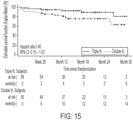
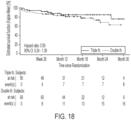
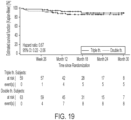
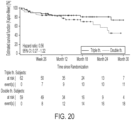
- the most frequently first-reported event was ⁇ Hospitalization for worsening of PAH'.
- the proportion with ⁇ Hospitalization for worsening of PAH' was 62.5% in the triple therapy group, compared to 70.4% in the double therapy group.
- TEAE treatment-emergent adverse event
- Table 15 The most common TEAEs were headache (68.9%), diarrhoea (53.8%), nausea (47.9%), oedema peripheral (37.0%), pain in extremity (30.3%), pain in jaw (29.4%) for the triple therapy group, and headache (60.6%), oedema peripheral (36.2%), diarrhoea (31.5%) and nausea (25.2%) for the double therapy group.
- Table 15 There was no difference between the treatment groups in peripheral edema, a common adverse drug reaction of ERAs and a symptom of the disease.
- peripheral edema (around 36%) in both treatment groups was higher than expected. This observation may reflect the challenge of adjusting diuretics in newly diagnosed (and typically diuretic naive) patients, while initiating two or three PAH drugs within a short period of time.
- N 127 n (%) Subjects with at least one AE 119 (100) 123 (96.9) Headache 82 (68.9) 77 (60.6) Diarrhoea 64 (53.8) 40 (31.5) Nausea 57 (47.9) 32 (25.2) Oedema peripheral 44 (37.0) 46 (36.2) Pain in extremity 36 (30.3) 20 (15.7) Pain in jaw 35 (29.4) 14 (11.0) Vomiting 30 (25.2) 15 (11.8) Dyspepsia 27 (22.7) 16 (12.6) Fatigue 24 (20.2) 21 (16.5) Dyspnoea 21 (17.6) 23 (18.1) Myalgia 21 (17.6) 19 (15.0) Nasal congestion 21 (17.6) 23 (18.1) Flushing 20 (16.8) 21 (16.5) Arthralgia 19 (16.0) 19 (15.0) Nasopharyngitis 19 (16.0) 21 (16.5) Cough 17 (14.3) 17 (13.4) Dizziness 17 (14.3) 26 (20.5) Anaemia 16 (13.4) 11(8.7) Hypokalaemia 14 (1
- Treatment-emergent adverse events with onset between start of first dose of selexipag/placebo and last dose of selexipag/placebo +30 days (or EOMOP, whichever the earliest is) are summarized.
- Analysis Set Safety Analysis Set, subjects treated with at least one dose of selexipag/placebo
- TEAEs leading to premature discontinuation of double-blind treatment were reported for 19 (16.0%) subjects in the triple therapy group, and 17 (14.2%) subjects in the double therapy group. See, Table 17.
- Table 17: AEs leading to discontinuation of selexipag / placebo up to EOMOP by SOC and PT Analysis Set: Safety set (subjects treated with at least one dose of selexipag/placebo) System Organ Class Preferred Term Triple th. N 119 n (%) Double th.
- N 127 n (%) Subjects with at least one AE 19 (16.0) 17 (14.2) Respiratory, thoracic and mediastinal disorders 8 (6.7) 6 (5.0) Pulmonary arterial hypertension 5 (4.2) 6 (5.0) Acute respiratory failure 1 (0.8) 0 Dyspnoea 1 (0.8) 0 Hypoxia 1 (0.8) 0 Cardiac disorders 4 (3.4) 3 (2.5) Right ventricular failure 2 (1.7) 2 (1.7) Left ventricular failure 1 (0.8) 0 Pericardial effusion 1 (0.8) 0 Palpitations 0 1 (0.8) Hepatobiliary disorders 2 (1.7) 0 Hepatic failure 1 (0.8) 0 Liver disorder 1 (0.8) 0 Nervous system disorders 2 (1.7) 1 (0.8) Headache 2 (1.7) 0 Dizziness 0 1 (0.8) Gastrointestinal disorders 1 (0.8) 1 (0.8) Nausea 1 (0.8) 0 Gastrointestinal haemorrhage 0 1 (0.8) Injury, poisoning and procedural complications 1 (
- Treatment-emergent adverse events leading to discontinuation of selexipag/placebo with onset between start of first dose of study medication and last dose of study medication +30 days (or EOMOP, whichever the earliest is) are summarized; Output: t-teae-dc-soc-s-s (incidence of treatment-emergent adverse events leading to discontinuation of selexipag/placebo up to EOMOP, by primary system organ class and preferred term; Analysis Set: Safety Analysis Set, subjects treated with at least one dose of selexipag/placebo)
- N 127 n (%) Subjects who died 2 (1.7) 9 (7.1) Cardiac Disorders 1 (0.8) 2 (1.6) Right Ventricular Failure 1 (0.8) 1 (0.8) Cardiac Arrest 0 1 (0.8) Respiratory, Thoracic and Mediastinal Disorders 1 (0.8) 2 (1.6) Respiratory Failure 1 (0.8) 0 Acute Respiratory Failure 0 1 (0.8) Pulmonary Veno-Occlusive Disease 0 1 (0.8) Gastrointestinal Disorders 0 1 (0.8) Gastrointestinal Haemorrhage 0 1 (0.8) General Disorders and Administration Site Conditions 0 1 (0.8) Sudden Cardiac Death 1 (0.8) 0 Infections and Infestations 0 1 (0.8) Sepsis 0 1 (0.8) Injury, Poisoning and Procedural Complications 0 1 (0.8) Toxicity to Various Agents 0 1 (0.8) Nervous Systems Disorders 0 1 (0.8) Haemorrhagic Stroke 0 1 (
- N 127 n (%) ALT ⁇ 3*ULN 14 /117 (12.0) 7 /121 (5.8) AST ⁇ 3*ULN 13 /117 (11.1) 9 /121 (7.4) ALT or AST ⁇ 3 *ULN 15 /117 (12.8) 11 /121 (9.1) ALT or AST ⁇ 3*ULN + ⁇ 5*ULN 14/117 (12.0) 10/121 (8.3) ALT or AST ⁇ 5*ULN + ⁇ 8*ULN 8/117 (6.8) 6/121 (5.0) ALT or AST ⁇ 8*ULN 5/117 (4.3) 3/121 (2.5) ALT or AST ⁇ 3*ULN + TBIL > 2*ULN # 2/114 (1.8) 0/121 # At the same time as ALT or AST ⁇ 3*ULN.
- n is the number of subjects with abnormal values. N is the total number of subjects in the treatment group. n is the number of subjects at risk with non-missing values; Abnormalities reported between first dose of study medication and last dose of study medication +30 days (or EOMOP, whichever the earliest is) are summarized. Frequencies present the number of subjects with defined abnormality reported at least once post baseline; Output: t-lb-abn-spec-s (incidence of treatment-emergent notable laboratory values for hepatic safety up to EOMOP; Analysis Set: Safety Analysis Set)
- initial triple therapy reduced the risk of death by 77% (95% CLs: -4, 95) as compared with initial double therapy. Based on the available data, selexipag as part of the initial triple therapy regimen was well-tolerated and the safety profile was consistent with previous trials.
- Time to the first disease progression event for a patient was assessed. For example, the time to first disease progression event up to the first treatment discontinuation of any of the three study medications was analyzed. See, Fig. 7 .
- the time to death due to PAH or hospitalization due to PAH worsening up to EOMOP (and EOMOP + 7 days) is shown in Figs. 8 and 8A ; the time to death or first hospitalization (all causes) up to EOMOP (and EOMOP + 7 days) is shown in Figs. 9 and 9A ; and the time from randomization to death (all causes) up to EOMOP is shown in Fig. 10 .
- Fig. 16 time to disease progression by median mRAP (patient mRAP ⁇ 8 mmHg); Fig. 17 : time to disease progression by CI at baseline (patient CI ⁇ 2.1 L/min/m 2 ) and Fig. 18 : time to disease progression by CI at baseline (patient CI ⁇ 2.1 L/min/m 2 ); Fig. 19 : time to disease progression by median NT-proBNP at baseline (patient NT-proBNP ⁇ 1360 ng/L) and Fig. 20 : time to disease progression by median NT-proBNP at baseline (patient NT-proBNP ⁇ 1360 ng/L).
Landscapes
- Health & Medical Sciences (AREA)
- Chemical & Material Sciences (AREA)
- Medicinal Chemistry (AREA)
- Pharmacology & Pharmacy (AREA)
- Life Sciences & Earth Sciences (AREA)
- Animal Behavior & Ethology (AREA)
- General Health & Medical Sciences (AREA)
- Public Health (AREA)
- Veterinary Medicine (AREA)
- Epidemiology (AREA)
- Engineering & Computer Science (AREA)
- General Chemical & Material Sciences (AREA)
- Organic Chemistry (AREA)
- Bioinformatics & Cheminformatics (AREA)
- Nuclear Medicine, Radiotherapy & Molecular Imaging (AREA)
- Chemical Kinetics & Catalysis (AREA)
- Heart & Thoracic Surgery (AREA)
- Cardiology (AREA)
- Pulmonology (AREA)
- Nutrition Science (AREA)
- Physiology (AREA)
- Pharmaceuticals Containing Other Organic And Inorganic Compounds (AREA)
- Medicines That Contain Protein Lipid Enzymes And Other Medicines (AREA)
- Medicines Containing Material From Animals Or Micro-Organisms (AREA)
Applications Claiming Priority (4)
| Application Number | Priority Date | Filing Date | Title |
|---|---|---|---|
| US201962941910P | 2019-11-29 | 2019-11-29 | |
| US202063023452P | 2020-05-12 | 2020-05-12 | |
| US202063076149P | 2020-09-09 | 2020-09-09 | |
| PCT/EP2020/083593 WO2021105331A1 (en) | 2019-11-29 | 2020-11-27 | Methods of treating pulmonary arterial hypertension |
Publications (2)
| Publication Number | Publication Date |
|---|---|
| EP4065119A1 EP4065119A1 (en) | 2022-10-05 |
| EP4065119B1 true EP4065119B1 (en) | 2024-09-04 |
Family
ID=73726769
Family Applications (1)
| Application Number | Title | Priority Date | Filing Date |
|---|---|---|---|
| EP20820054.3A Revoked EP4065119B1 (en) | 2019-11-29 | 2020-11-27 | Initial triple combination therapy with macitentan, tadalafil, and selexipag for treating pulmonary arterial hypertension |
Country Status (18)
| Country | Link |
|---|---|
| US (1) | US12485119B2 (https=) |
| EP (1) | EP4065119B1 (https=) |
| JP (3) | JP7721520B2 (https=) |
| KR (1) | KR20220106974A (https=) |
| CN (1) | CN114728002A (https=) |
| AU (1) | AU2020392424A1 (https=) |
| BR (1) | BR112022010311A2 (https=) |
| CA (1) | CA3158292A1 (https=) |
| CR (1) | CR20220305A (https=) |
| EC (1) | ECSP22051163A (https=) |
| ES (1) | ES2994089T3 (https=) |
| IL (1) | IL293271A (https=) |
| JO (1) | JOP20220127A1 (https=) |
| MX (1) | MX2022006403A (https=) |
| PE (1) | PE20221320A1 (https=) |
| PH (1) | PH12022551294A1 (https=) |
| TW (1) | TW202133851A (https=) |
| WO (1) | WO2021105331A1 (https=) |
Families Citing this family (2)
| Publication number | Priority date | Publication date | Assignee | Title |
|---|---|---|---|---|
| WO2024099953A1 (en) * | 2022-11-07 | 2024-05-16 | Actelion Pharmaceuticals Ltd | Combination of macitentan and tadalafil for the treatment of pulmonary arterial hypertension |
| KR102663470B1 (ko) * | 2023-03-16 | 2024-05-10 | 주식회사 케어사이드 | 폐성 고혈압에 의한 심장 질환 예방 및 심장 치료용 조성물 및 이를 포함하는 기능성 제제 |
Citations (5)
| Publication number | Priority date | Publication date | Assignee | Title |
|---|---|---|---|---|
| US20070197544A1 (en) | 2003-09-24 | 2007-08-23 | Cotherix, Inc. | Iloprost in combination therapies for the treatment of pulmonary arterial hypertension |
| WO2010018549A2 (en) | 2008-08-13 | 2010-02-18 | Actelion Pharmaceuticals Ltd | Therapeutic compositions containing macitentan |
| WO2012051559A2 (en) | 2010-10-15 | 2012-04-19 | Gilead Sciences, Inc. | Compositions and methods of treating pulmonary hypertension |
| WO2016114993A1 (en) | 2015-01-13 | 2016-07-21 | Selten Pharma, Inc. | Combination therapy for pulmonary hypertension |
| EP3136101A1 (en) | 2014-04-22 | 2017-03-01 | Tohoku University | Method of testing for pulmonary hypertension |
Family Cites Families (8)
| Publication number | Priority date | Publication date | Assignee | Title |
|---|---|---|---|---|
| AU2002227984B8 (en) | 2000-12-18 | 2007-01-04 | Actelion Pharmaceuticals Ltd. | Novel sulfamides and their use as endothelin receptor antagonists |
| TWI316055B (https=) | 2001-04-26 | 2009-10-21 | Nippon Shinyaku Co Ltd | |
| WO2007031933A2 (en) | 2005-09-12 | 2007-03-22 | Actelion Pharmaceuticals Ltd | Stable pharmaceutical composition comprising a pyrimidine-sulfamide |
| AR062501A1 (es) | 2006-08-29 | 2008-11-12 | Actelion Pharmaceuticals Ltd | Composiciones terapeuticas |
| LT2447254T (lt) | 2009-06-26 | 2018-01-10 | Nippon Shinyaku Co., Ltd. | Kristalai |
| WO2011024874A1 (ja) | 2009-08-26 | 2011-03-03 | 日本新薬株式会社 | 塩基付加塩 |
| CA3041679A1 (en) | 2016-10-27 | 2018-05-03 | Lawrence S. ZISMAN | Combination therapy for treating pulmonary hypertension |
| PT3897646T (pt) * | 2018-12-21 | 2024-07-08 | Actelion Pharmaceuticals Ltd | Macitentano para tratamento de hipertensão arterial pulmonar |
-
2020
- 2020-11-27 CA CA3158292A patent/CA3158292A1/en active Pending
- 2020-11-27 AU AU2020392424A patent/AU2020392424A1/en not_active Abandoned
- 2020-11-27 KR KR1020227017465A patent/KR20220106974A/ko active Pending
- 2020-11-27 CR CR20220305A patent/CR20220305A/es unknown
- 2020-11-27 BR BR112022010311A patent/BR112022010311A2/pt not_active IP Right Cessation
- 2020-11-27 US US17/780,064 patent/US12485119B2/en active Active
- 2020-11-27 ES ES20820054T patent/ES2994089T3/es active Active
- 2020-11-27 WO PCT/EP2020/083593 patent/WO2021105331A1/en not_active Ceased
- 2020-11-27 JP JP2022531531A patent/JP7721520B2/ja active Active
- 2020-11-27 TW TW109141697A patent/TW202133851A/zh unknown
- 2020-11-27 MX MX2022006403A patent/MX2022006403A/es unknown
- 2020-11-27 CN CN202080081138.2A patent/CN114728002A/zh active Pending
- 2020-11-27 PE PE2022000799A patent/PE20221320A1/es unknown
- 2020-11-27 JO JOP/2022/0127A patent/JOP20220127A1/ar unknown
- 2020-11-27 IL IL293271A patent/IL293271A/en unknown
- 2020-11-27 EP EP20820054.3A patent/EP4065119B1/en not_active Revoked
- 2020-11-27 PH PH1/2022/551294A patent/PH12022551294A1/en unknown
-
2022
- 2022-06-28 EC ECSENADI202251163A patent/ECSP22051163A/es unknown
-
2024
- 2024-07-24 JP JP2024118344A patent/JP7620758B2/ja active Active
-
2025
- 2025-07-30 JP JP2025127467A patent/JP2025172745A/ja active Pending
Patent Citations (5)
| Publication number | Priority date | Publication date | Assignee | Title |
|---|---|---|---|---|
| US20070197544A1 (en) | 2003-09-24 | 2007-08-23 | Cotherix, Inc. | Iloprost in combination therapies for the treatment of pulmonary arterial hypertension |
| WO2010018549A2 (en) | 2008-08-13 | 2010-02-18 | Actelion Pharmaceuticals Ltd | Therapeutic compositions containing macitentan |
| WO2012051559A2 (en) | 2010-10-15 | 2012-04-19 | Gilead Sciences, Inc. | Compositions and methods of treating pulmonary hypertension |
| EP3136101A1 (en) | 2014-04-22 | 2017-03-01 | Tohoku University | Method of testing for pulmonary hypertension |
| WO2016114993A1 (en) | 2015-01-13 | 2016-07-21 | Selten Pharma, Inc. | Combination therapy for pulmonary hypertension |
Non-Patent Citations (29)
| Title |
|---|
| ACTELION: "The Ecacy and Safety of Initial Triple Versus Initial Dual Oral Combination Therapy in Patients With Newly Diagnosed Pulmonary Arterial Hypertension (TRITON) - NCT02558231", CLINICAL TRIALS, CLINICALTRIALS.GOV, 26 August 2020 (2020-08-26), XP093285398, Retrieved from the Internet <URL:https://clinicaltrials.gov/study/NCT02558231?term=NCT02558231&rank=1&a=12> |
| ACTELION: "The Ecacy and Safety of Initial Triple Versus Initial Dual Oral Combination Therapy in Patients With Newly Diagnosed Pulmonary Arterial Hypertension (TRITON) - NCT02558231", CLINICAL TRIALS, CLINICALTRIALS.GOV, 4 September 2019 (2019-09-04), XP093285396, Retrieved from the Internet <URL:https://clinicaltrials.gov/study/NCT02558231?term=NCT02558231&rank=1&a=9> |
| ANONYMOUS: " UPTRAVI ® (selexipag) tablets, for oral use - HIGHLIGHTS OF PRESCRIBING INFORMATION ", FDA, 1 December 2015 (2015-12-01), XP093285368, Retrieved from the Internet <URL:https://www.accessdata.fda.gov/drugsatfda_docs/label/2015/207947s000lbl.pdf> |
| ANONYMOUS: "Guideline on clinical development of fixed combination medicinal products (Revision 2)", EUROPEAN MEDICINES AGENCY (EMA); EMA/CHMP/158268/2017, COMMITTEE FOR HUMAN MEDICINAL PRODUCTS (CHMP), 23 March 2017 (2017-03-23), XP093285387, Retrieved from the Internet <URL:https://www.ema.europa.eu/en/documents/scientific-guideline/guideline-clinical-development-fixed-combination-medicinal-products-revision-2_en.pdf> |
| ANONYMOUS: "HIGHLIGHTS OF PRESCRIBING INFORMATION - OPSUMIT® (macitentan) tablets, for oral use", 1 October 2013 (2013-10-01), XP093261687 |
| ANONYMOUS: "New OPSUMIT (macitentan) Data Show Initial Combination Therapy with Tadalafil Improved Hemodynamic Clinical and Functional Parameters in Patients with Pulmonary Arterial Hypertension", JOHNSON & JOHNSON, 21 October 2019 (2019-10-21), XP093285383, Retrieved from the Internet <URL: https://www.jnj.com/media-center/press-releases/new-opsumit-macitentan-data-show-initial-combination-therapy-with-tadalafil-improved-hemodynamic-clinical-and-functional-parameters-in-patients-with-pulmonary-arterial-hypertension> |
| BELGE CATHARINA, DELCROIX MARION: "Treatment of pulmonary arterial hypertension with the dual endothelin receptor antagonist macitentan: clinical evidence and experience", THERAPEUTIC ADVANCES IN RESPIRATORY DISEASE, SAGE PUBLICATIONS, vol. 13, 1 January 2019 (2019-01-01), XP093285350, ISSN: 1753-4666, DOI: 10.1177/1753466618823440 |
| BESINQUE GARY M, LICKERT CASSANDRA A: "The Myth of the Stable Pulmonary Arterial Hypertension Patient", AM J MANAG CARE, vol. 25, no. 3, 1 March 2019 (2019-03-01), pages S47 - S52, XP093285353 |
| BURKS MARSHA, STICKEL SIMONE, GALIÈ NAZZARENO: "Pulmonary Arterial Hypertension: Combination Therapy in Practice", AMERICAN JOURNAL OF CARDIOVASCULAR DRUGS, ADIS INTERNATIONAL,, NZ, vol. 18, no. 4, 1 August 2018 (2018-08-01), NZ , pages 249 - 257, XP093285349, ISSN: 1175-3277, DOI: 10.1007/s40256-018-0272-5 |
| COGHLAN J GERRY, PICKEN CHRISTINA, CLAPP LUCIE H.: "Selexipag in the management of pulmonary arterial hypertension: an update", DRUG, HEALTHCARE AND PATIENT SAFETY, vol. Volume 11, pages 55 - 64, XP093043884, DOI: 10.2147/DHPS.S181313 |
| COGHLAN J. GERRY, CHANNICK RICHARD, CHIN KELLY, DI SCALA LILLA, GALIÈ NAZZARENO, GHOFRANI HOSSEIN-ARDESCHIR, HOEPER MARIUS M., LAN: "Targeting the Prostacyclin Pathway with Selexipag in Patients with Pulmonary Arterial Hypertension Receiving Double Combination Therapy: Insights from the Randomized Controlled GRIPHON Study", AMERICAN JOURNAL OF CARDIOVASCULAR DRUGS, ADIS INTERNATIONAL,, NZ, vol. 18, no. 1, 1 February 2018 (2018-02-01), NZ , pages 37 - 47, XP093285355, ISSN: 1175-3277, DOI: 10.1007/s40256-017-0262-z |
| D1A - REFERENCE 48 OF D1 |
| D25 - https://news.thoracic.org/stat/05-06-20.php, webpage capture dated 18 January 2025, accessed via WayBack Machine |
| D30 - Protocol for TM6, published as Supplementary Appendix |
| D9 - HOSSEIN-ARDESCHIR GHOFRANI: "The role of combination therapy in managing pulmonary arterial hypertension", EUR RESPIR J. , 1 December 2014 (2014-12-01) |
| FDA: "HIGHLIGHTS OF PRESCRIBING INFORMATION ADCIRCA", FDA.GOV, 1 May 2009 (2009-05-01), XP002762843, Retrieved from the Internet <URL:http://www.accessdata.fda.gov/drugsatfda_docs/label/2009/022332lbl.pdf> [retrieved on 20161012] |
| GALIÈ NAZZARENO, HUMBERT MARC, VACHIERY JEAN-LUC, GIBBS SIMON, LANG IRENE, TORBICKI ADAM, SIMONNEAU GÉRALD, PEACOCK ANDREW, VONK N: "2015 ESC/ERS Guidelines for the diagnosis and treatment of pulmonary hypertension : The Joint Task Force for the Diagnosis and Treatment of Pulmonary Hypertension of the European Society of Cardiology (ESC) and the European Respiratory Society (ERS)Endorsed by: Association for European Paediatric an", EUROPEAN HEART JOURNAL, OXFORD UNIVERSITY PRESS, GB, vol. 37, no. 1, 1 January 2016 (2016-01-01), GB , pages 67 - 119, XP093285364, ISSN: 0195-668X, DOI: 10.1093/eurheartj/ehv317 |
| JANSA PAVEL, PULIDO TOMáS: "Macitentan in Pulmonary Arterial Hypertension: A Focus on Combination Therapy in the SERAPHIN Trial", AMERICAN JOURNAL OF CARDIOVASCULAR DRUGS, ADIS INTERNATIONAL,, NZ, vol. 18, no. 1, 1 February 2018 (2018-02-01), NZ , pages 1 - 11, XP055852156, ISSN: 1175-3277, DOI: 10.1007/s40256-017-0260-1 |
| K.M. CHIN, O. SITBON, M. DOELBERG, J.S.S.R. GIBBS, M.M. HOEPER, N. MARTIN, S.C. MATHAI, V.V. MCLAUGHLIN, L. PERCHENET, G. SIMONNEA: "Efficacy and Safety of Initial Triple Oral Versus Initial Double Oral Combination Therapy in Patients with Newly Diagnosed Pulmonary Arterial Hypertension (PAH): Results of the Randomized Controlled TRITON Study", AMERICAN JOURNAL OF RESPIRATORY AND CRITICAL CARE MEDICINE, vol. 201, no. Suppl., 1 January 2020 (2020-01-01), pages A2928 - A2928, XP009561869, ISSN: 1073-449X, DOI: 10.1164/ajrccm-conference.2020.201.1_MeetingAbstracts.A2928 |
| LAJOIE ANNIE-CHRISTINE ET AL: "Combination therapy in pulmonary arterial hypertension: recent accomplishments and future challenges", PULMONARY CIRCULATION 2012 APR-JUN, vol. 7, no. 2, 1 June 2017 (2017-06-01), pages 312 - 325, XP055810165, ISSN: 2045-8940, Retrieved from the Internet <URL:https://www.ncbi.nlm.nih.gov/pmc/articles/PMC5467950/pdf/10.1177_2045893217710639.pdf> DOI: 10.1177/2045893217710639 * |
| LAJOIE ANNIE-CHRISTINE, BONNET SEBASTIEN, PROVENCHER STEEVE: "Combination therapy in pulmonary arterial hypertension: recent accomplishments and future challenges", PULMONARY CIRCULATION 2012 APR-JUN, vol. 7, no. 2, 1 June 2017 (2017-06-01), pages 312 - 325, XP055810165, ISSN: 2045-8940, DOI: 10.1177/2045893217710639 |
| MCLAUGHLIN VALLERIE V.; CHANNICK RICHARD; CHIN KELLY; FREY ALINE; GAINE SEAN; GHOFRANI ARDESCHIR; HOEPER MARIUS; LANG IRENE; PREIS: "EFFECT OF SELEXIPAG ON MORBIDITY/MORTALITY IN PULMONARY ARTERIAL HYPERTENSION: RESULTS OF THE GRIPHON STUDY", JOURNAL OF THE AMERICAN COLLEGE OF CARDIOLOGY, ELSEVIER, AMSTERDAM, NL, vol. 65, no. 10, 1 January 1900 (1900-01-01), AMSTERDAM, NL, XP029208198, ISSN: 0735-1097, DOI: 10.1016/S0735-1097(15)61538-8 |
| N GALIE, O SITBON, M DOELBERG, J.S.R GIBBS, M.M HOEPER, N MARTIN, S.C MATHAI, V MCLAUGHLIN, L PERCHENET, G SIMONNEAU, K CHIN: "Long-term outcomes in newly diagnosed pulmonary arterial hypertension (PAH) patients receiving initial triple oral combination therapy: insights from the randomised controlled TRITON study", EUROPEAN HEART JOURNAL: ACUTE CARDIOVASCULAR CARE, SAGE PUBLICATIONS, vol. 41, no. Suppl. 2, 25 November 2020 (2020-11-25), pages 2288, XP009561874, ISSN: 2048-8726, DOI: 10.1093/ehjci/ehaa946.2288 |
| OLIVIER SITBON, MATTHIEU CANUET, FRANÇOIS PICARD, GREGOIRE PREVOT, EMMANUEL BERGOT, VINCENT COTTIN, FABRICE BAUER, BRUNO DEGANO, V: "Initial Combination Therapy with Macitentan and Tadalafil in Newly Diagnosed Patients with Pulmonary Arterial Hypertension: Results from the OPTIMA Trial", AMERICAN JOURNAL OF RESPIRATORY AND CRITICAL CARE MEDICINE, vol. 195, no. Suppl., 1 January 2017 (2017-01-01) - 24 May 2017 (2017-05-24), pages A2297, XP009561870, ISSN: 1073-449X, DOI: 10.1164/ajrccm-conference.2017.195.1_MeetingAbstracts.A2297 |
| SITBON OLIVIER, CANUET MATTHIEU, PICARD FRANCOIS, GREGOIRE PREVOT, BERGOT EMMANUEL, COTTIN VINCENT, BAUER FABRICE, DEGANO BRUNO, G: "INITIAL TREATMENT COMBINATION WITH MACITENTAN AND TADALAFIL IN PATIENTS WITH PULMONARY ARTERIAL HYPERTENSION: RESULTS FROM THE OPTIMA STUDY", CHEST ANNUAL MEETING 2019, vol. 156, 19 October 2019 (2019-10-19) - 23 October 2019 (2019-10-23), pages A870 - A871, XP093285366, DOI: 10.1016/j.chest.2019.08.825 |
| SITBON OLIVIER, CHANNICK RICHARD, CHIN KELLY M., FREY ALINE, GAINE SEAN, GALIÈ NAZZARENO, GHOFRANI HOSSEIN-ARDESCHIR, HOEPER MARIU: "Selexipag for the Treatment of Pulmonary Arterial Hypertension", NEW ENGLAND JOURNAL OF MEDICINE, vol. 373, no. 26, 24 December 2015 (2015-12-24), pages 2522 - 2533, XP093285400, ISSN: 0028-4793, DOI: 10.1056/NEJMoa1503184 |
| SITBON OLIVIER, GAINE SEAN: "Beyond a single pathway: combination therapy in pulmonary arterial hypertension", EUROPEAN RESPIRATORY REVIEW, EUROPEAN RESPIRATORY SOCIETY, CH, vol. 25, no. 142, 30 September 2016 (2016-09-30), CH , pages 408 - 417, XP093285348, ISSN: 0905-9180, DOI: 10.1183/16000617.0085-2016 |
| SITBON OLIVIER, JAÏS XAVIER, SAVALE LAURENT, COTTIN VINCENT, BERGOT EMMANUEL, MACARI ELISE ARTAUD, BOUVAIST HÉLÈNE, DAUPHIN CLAIRE: "Upfront triple combination therapy in pulmonary arterial hypertension: a pilot study", EUROPEAN RESPIRATORY JOURNAL, EUROPEAN RESPIRATORY SOCIETY, vol. 43, no. 6, 11 February 2014 (2014-02-11), pages 1691 - 1697, XP093285358, ISSN: 0903-1936, DOI: 10.1183/09031936.00116313 |
| SITBON OLIVIER, SATTLER CAROLINE, BERTOLETTI LAURENT, SAVALE LAURENT, COTTIN VINCENT, JAÏS XAVIER, DE GROOTE PASCAL, CHAOUAT ARI, : "Initial dual oral combination therapy in pulmonary arterial hypertension", EUROPEAN RESPIRATORY JOURNAL, EUROPEAN RESPIRATORY SOCIETY, vol. 47, no. 6, 22 February 2016 (2016-02-22), pages 1727 - 1736, XP093285357, ISSN: 0903-1936, DOI: 10.1183/13993003.02043-2015 |
Also Published As
| Publication number | Publication date |
|---|---|
| CR20220305A (es) | 2022-07-28 |
| BR112022010311A2 (pt) | 2022-08-16 |
| PH12022551294A1 (en) | 2023-11-20 |
| KR20220106974A (ko) | 2022-08-01 |
| PE20221320A1 (es) | 2022-09-08 |
| US20230032813A1 (en) | 2023-02-02 |
| JP7721520B2 (ja) | 2025-08-12 |
| JP7620758B2 (ja) | 2025-01-23 |
| JP2023504115A (ja) | 2023-02-01 |
| AU2020392424A1 (en) | 2022-06-02 |
| JOP20220127A1 (ar) | 2023-01-30 |
| ES2994089T3 (en) | 2025-01-17 |
| MX2022006403A (es) | 2022-08-25 |
| EP4065119A1 (en) | 2022-10-05 |
| WO2021105331A1 (en) | 2021-06-03 |
| JP2024153734A (ja) | 2024-10-29 |
| CN114728002A (zh) | 2022-07-08 |
| TW202133851A (zh) | 2021-09-16 |
| IL293271A (en) | 2022-07-01 |
| ECSP22051163A (es) | 2022-07-29 |
| JP2025172745A (ja) | 2025-11-26 |
| CA3158292A1 (en) | 2021-06-03 |
| US12485119B2 (en) | 2025-12-02 |
Similar Documents
| Publication | Publication Date | Title |
|---|---|---|
| EP3661514B1 (en) | Mavacamten for use in the treatment of hypertrophic cardiomyopathy | |
| US9532984B2 (en) | Therapeutic combination for cancer treatment | |
| US20230044943A1 (en) | Pharmaceutical Combinations | |
| US20110009460A1 (en) | Compositions and methods for treating amyotrophic lateral sclerosis | |
| JP7620758B2 (ja) | 肺動脈性肺高血圧症の治療方法 | |
| US20220323437A1 (en) | Methods for treating pulmonary arterial hypertension | |
| CZ296534B6 (cs) | Farmaceutická jednotková dávková forma a lék pro lécbu stavu, pri nemz je zádoucí inhibice fosfodiesterasy PDE5 | |
| KR20080081358A (ko) | Hiv 인테그라제 억제제의 약동학을 개선하기 위한 방법 | |
| US20220257595A1 (en) | Macitentan for use in treating portopulmonary hypertension | |
| US20240299384A1 (en) | Methods for treating pulmonary hypertension in patients with left ventricular assist device implantation | |
| ES2969766T3 (es) | Composiciones terapéuticas para tratar el cáncer de páncreas | |
| HK40026724B (en) | Mavacamten for use in the treatment of hypertrophic cardiomyopathy | |
| HK40003387A (en) | Therapeutic compositions for treating pancreatic cancer |
Legal Events
| Date | Code | Title | Description |
|---|---|---|---|
| STAA | Information on the status of an ep patent application or granted ep patent |
Free format text: STATUS: UNKNOWN |
|
| STAA | Information on the status of an ep patent application or granted ep patent |
Free format text: STATUS: THE INTERNATIONAL PUBLICATION HAS BEEN MADE |
|
| PUAI | Public reference made under article 153(3) epc to a published international application that has entered the european phase |
Free format text: ORIGINAL CODE: 0009012 |
|
| STAA | Information on the status of an ep patent application or granted ep patent |
Free format text: STATUS: REQUEST FOR EXAMINATION WAS MADE |
|
| 17P | Request for examination filed |
Effective date: 20220523 |
|
| AK | Designated contracting states |
Kind code of ref document: A1 Designated state(s): AL AT BE BG CH CY CZ DE DK EE ES FI FR GB GR HR HU IE IS IT LI LT LU LV MC MK MT NL NO PL PT RO RS SE SI SK SM TR |
|
| REG | Reference to a national code |
Ref country code: HK Ref legal event code: DE Ref document number: 40080740 Country of ref document: HK |
|
| P01 | Opt-out of the competence of the unified patent court (upc) registered |
Effective date: 20230515 |
|
| STAA | Information on the status of an ep patent application or granted ep patent |
Free format text: STATUS: EXAMINATION IS IN PROGRESS |
|
| 17Q | First examination report despatched |
Effective date: 20231110 |
|
| GRAP | Despatch of communication of intention to grant a patent |
Free format text: ORIGINAL CODE: EPIDOSNIGR1 |
|
| STAA | Information on the status of an ep patent application or granted ep patent |
Free format text: STATUS: GRANT OF PATENT IS INTENDED |
|
| INTG | Intention to grant announced |
Effective date: 20240524 |
|
| GRAS | Grant fee paid |
Free format text: ORIGINAL CODE: EPIDOSNIGR3 |
|
| GRAA | (expected) grant |
Free format text: ORIGINAL CODE: 0009210 |
|
| STAA | Information on the status of an ep patent application or granted ep patent |
Free format text: STATUS: THE PATENT HAS BEEN GRANTED |
|
| AK | Designated contracting states |
Kind code of ref document: B1 Designated state(s): AL AT BE BG CH CY CZ DE DK EE ES FI FR GB GR HR HU IE IS IT LI LT LU LV MC MK MT NL NO PL PT RO RS SE SI SK SM TR |
|
| REG | Reference to a national code |
Ref country code: GB Ref legal event code: FG4D |
|
| REG | Reference to a national code |
Ref country code: CH Ref legal event code: EP |
|
| REG | Reference to a national code |
Ref country code: IE Ref legal event code: FG4D |
|
| REG | Reference to a national code |
Ref country code: DE Ref legal event code: R096 Ref document number: 602020037214 Country of ref document: DE |
|
| REG | Reference to a national code |
Ref country code: LT Ref legal event code: MG9D |
|
| REG | Reference to a national code |
Ref country code: NL Ref legal event code: MP Effective date: 20240904 |
|
| PGFP | Annual fee paid to national office [announced via postgrant information from national office to epo] |
Ref country code: DE Payment date: 20241001 Year of fee payment: 5 |
|
| PG25 | Lapsed in a contracting state [announced via postgrant information from national office to epo] |
Ref country code: NO Free format text: LAPSE BECAUSE OF FAILURE TO SUBMIT A TRANSLATION OF THE DESCRIPTION OR TO PAY THE FEE WITHIN THE PRESCRIBED TIME-LIMIT Effective date: 20241204 |
|
| PG25 | Lapsed in a contracting state [announced via postgrant information from national office to epo] |
Ref country code: PL Free format text: LAPSE BECAUSE OF FAILURE TO SUBMIT A TRANSLATION OF THE DESCRIPTION OR TO PAY THE FEE WITHIN THE PRESCRIBED TIME-LIMIT Effective date: 20240904 Ref country code: GR Free format text: LAPSE BECAUSE OF FAILURE TO SUBMIT A TRANSLATION OF THE DESCRIPTION OR TO PAY THE FEE WITHIN THE PRESCRIBED TIME-LIMIT Effective date: 20241205 Ref country code: FI Free format text: LAPSE BECAUSE OF FAILURE TO SUBMIT A TRANSLATION OF THE DESCRIPTION OR TO PAY THE FEE WITHIN THE PRESCRIBED TIME-LIMIT Effective date: 20240904 |
|
| REG | Reference to a national code |
Ref country code: ES Ref legal event code: FG2A Ref document number: 2994089 Country of ref document: ES Kind code of ref document: T3 Effective date: 20250117 |
|
| PG25 | Lapsed in a contracting state [announced via postgrant information from national office to epo] |
Ref country code: BG Free format text: LAPSE BECAUSE OF FAILURE TO SUBMIT A TRANSLATION OF THE DESCRIPTION OR TO PAY THE FEE WITHIN THE PRESCRIBED TIME-LIMIT Effective date: 20240904 |
|
| PG25 | Lapsed in a contracting state [announced via postgrant information from national office to epo] |
Ref country code: LV Free format text: LAPSE BECAUSE OF FAILURE TO SUBMIT A TRANSLATION OF THE DESCRIPTION OR TO PAY THE FEE WITHIN THE PRESCRIBED TIME-LIMIT Effective date: 20240904 |
|
| PG25 | Lapsed in a contracting state [announced via postgrant information from national office to epo] |
Ref country code: HR Free format text: LAPSE BECAUSE OF FAILURE TO SUBMIT A TRANSLATION OF THE DESCRIPTION OR TO PAY THE FEE WITHIN THE PRESCRIBED TIME-LIMIT Effective date: 20240904 |
|
| PG25 | Lapsed in a contracting state [announced via postgrant information from national office to epo] |
Ref country code: RS Free format text: LAPSE BECAUSE OF FAILURE TO SUBMIT A TRANSLATION OF THE DESCRIPTION OR TO PAY THE FEE WITHIN THE PRESCRIBED TIME-LIMIT Effective date: 20241204 |
|
| PGFP | Annual fee paid to national office [announced via postgrant information from national office to epo] |
Ref country code: ES Payment date: 20241211 Year of fee payment: 5 |
|
| PG25 | Lapsed in a contracting state [announced via postgrant information from national office to epo] |
Ref country code: RS Free format text: LAPSE BECAUSE OF FAILURE TO SUBMIT A TRANSLATION OF THE DESCRIPTION OR TO PAY THE FEE WITHIN THE PRESCRIBED TIME-LIMIT Effective date: 20241204 Ref country code: PL Free format text: LAPSE BECAUSE OF FAILURE TO SUBMIT A TRANSLATION OF THE DESCRIPTION OR TO PAY THE FEE WITHIN THE PRESCRIBED TIME-LIMIT Effective date: 20240904 Ref country code: NO Free format text: LAPSE BECAUSE OF FAILURE TO SUBMIT A TRANSLATION OF THE DESCRIPTION OR TO PAY THE FEE WITHIN THE PRESCRIBED TIME-LIMIT Effective date: 20241204 Ref country code: LV Free format text: LAPSE BECAUSE OF FAILURE TO SUBMIT A TRANSLATION OF THE DESCRIPTION OR TO PAY THE FEE WITHIN THE PRESCRIBED TIME-LIMIT Effective date: 20240904 Ref country code: HR Free format text: LAPSE BECAUSE OF FAILURE TO SUBMIT A TRANSLATION OF THE DESCRIPTION OR TO PAY THE FEE WITHIN THE PRESCRIBED TIME-LIMIT Effective date: 20240904 Ref country code: GR Free format text: LAPSE BECAUSE OF FAILURE TO SUBMIT A TRANSLATION OF THE DESCRIPTION OR TO PAY THE FEE WITHIN THE PRESCRIBED TIME-LIMIT Effective date: 20241205 Ref country code: FI Free format text: LAPSE BECAUSE OF FAILURE TO SUBMIT A TRANSLATION OF THE DESCRIPTION OR TO PAY THE FEE WITHIN THE PRESCRIBED TIME-LIMIT Effective date: 20240904 Ref country code: BG Free format text: LAPSE BECAUSE OF FAILURE TO SUBMIT A TRANSLATION OF THE DESCRIPTION OR TO PAY THE FEE WITHIN THE PRESCRIBED TIME-LIMIT Effective date: 20240904 |
|
| REG | Reference to a national code |
Ref country code: AT Ref legal event code: MK05 Ref document number: 1719661 Country of ref document: AT Kind code of ref document: T Effective date: 20240904 |
|
| PG25 | Lapsed in a contracting state [announced via postgrant information from national office to epo] |
Ref country code: NL Free format text: LAPSE BECAUSE OF FAILURE TO SUBMIT A TRANSLATION OF THE DESCRIPTION OR TO PAY THE FEE WITHIN THE PRESCRIBED TIME-LIMIT Effective date: 20240904 |
|
| PG25 | Lapsed in a contracting state [announced via postgrant information from national office to epo] |
Ref country code: IS Free format text: LAPSE BECAUSE OF FAILURE TO SUBMIT A TRANSLATION OF THE DESCRIPTION OR TO PAY THE FEE WITHIN THE PRESCRIBED TIME-LIMIT Effective date: 20250104 Ref country code: PT Free format text: LAPSE BECAUSE OF FAILURE TO SUBMIT A TRANSLATION OF THE DESCRIPTION OR TO PAY THE FEE WITHIN THE PRESCRIBED TIME-LIMIT Effective date: 20250106 |
|
| PG25 | Lapsed in a contracting state [announced via postgrant information from national office to epo] |
Ref country code: RO Free format text: LAPSE BECAUSE OF FAILURE TO SUBMIT A TRANSLATION OF THE DESCRIPTION OR TO PAY THE FEE WITHIN THE PRESCRIBED TIME-LIMIT Effective date: 20240904 Ref country code: SM Free format text: LAPSE BECAUSE OF FAILURE TO SUBMIT A TRANSLATION OF THE DESCRIPTION OR TO PAY THE FEE WITHIN THE PRESCRIBED TIME-LIMIT Effective date: 20240904 |
|
| PG25 | Lapsed in a contracting state [announced via postgrant information from national office to epo] |
Ref country code: EE Free format text: LAPSE BECAUSE OF FAILURE TO SUBMIT A TRANSLATION OF THE DESCRIPTION OR TO PAY THE FEE WITHIN THE PRESCRIBED TIME-LIMIT Effective date: 20240904 Ref country code: AT Free format text: LAPSE BECAUSE OF FAILURE TO SUBMIT A TRANSLATION OF THE DESCRIPTION OR TO PAY THE FEE WITHIN THE PRESCRIBED TIME-LIMIT Effective date: 20240904 |
|
| PG25 | Lapsed in a contracting state [announced via postgrant information from national office to epo] |
Ref country code: CZ Free format text: LAPSE BECAUSE OF FAILURE TO SUBMIT A TRANSLATION OF THE DESCRIPTION OR TO PAY THE FEE WITHIN THE PRESCRIBED TIME-LIMIT Effective date: 20240904 |
|
| PG25 | Lapsed in a contracting state [announced via postgrant information from national office to epo] |
Ref country code: SK Free format text: LAPSE BECAUSE OF FAILURE TO SUBMIT A TRANSLATION OF THE DESCRIPTION OR TO PAY THE FEE WITHIN THE PRESCRIBED TIME-LIMIT Effective date: 20240904 |
|
| REG | Reference to a national code |
Ref country code: DE Ref legal event code: R026 Ref document number: 602020037214 Country of ref document: DE |
|
| PLBI | Opposition filed |
Free format text: ORIGINAL CODE: 0009260 |
|
| VS25 | Lapsed in a validation state [announced via postgrant information from nat. office to epo] |
Ref country code: MD Free format text: LAPSE BECAUSE OF FAILURE TO SUBMIT A TRANSLATION OF THE DESCRIPTION OR TO PAY THE FEE WITHIN THE PRESCRIBED TIME-LIMIT Effective date: 20240904 |
|
| PLAX | Notice of opposition and request to file observation + time limit sent |
Free format text: ORIGINAL CODE: EPIDOSNOBS2 |
|
| REG | Reference to a national code |
Ref country code: CH Ref legal event code: PL |
|
| PG25 | Lapsed in a contracting state [announced via postgrant information from national office to epo] |
Ref country code: MC Free format text: LAPSE BECAUSE OF FAILURE TO SUBMIT A TRANSLATION OF THE DESCRIPTION OR TO PAY THE FEE WITHIN THE PRESCRIBED TIME-LIMIT Effective date: 20240904 |
|
| 26 | Opposition filed |
Opponent name: SANDOZ AG Effective date: 20250604 Opponent name: TEVA PHARMACEUTICAL INDUSTRIES LTD. Effective date: 20250604 Opponent name: GENERICS (UK) LIMITED Effective date: 20250604 Opponent name: SANOVEL ILAC SANAYI VE TICARET ANONIM SIRKETI Effective date: 20250603 |
|
| PG25 | Lapsed in a contracting state [announced via postgrant information from national office to epo] |
Ref country code: DK Free format text: LAPSE BECAUSE OF FAILURE TO SUBMIT A TRANSLATION OF THE DESCRIPTION OR TO PAY THE FEE WITHIN THE PRESCRIBED TIME-LIMIT Effective date: 20240904 |
|
| PG25 | Lapsed in a contracting state [announced via postgrant information from national office to epo] |
Ref country code: LU Free format text: LAPSE BECAUSE OF NON-PAYMENT OF DUE FEES Effective date: 20241127 |
|
| REG | Reference to a national code |
Ref country code: CH Ref legal event code: PL |
|
| PLBB | Reply of patent proprietor to notice(s) of opposition received |
Free format text: ORIGINAL CODE: EPIDOSNOBS3 |
|
| RDAF | Communication despatched that patent is revoked |
Free format text: ORIGINAL CODE: EPIDOSNREV1 |
|
| REG | Reference to a national code |
Ref country code: DE Ref legal event code: R064 Ref document number: 602020037214 Country of ref document: DE Ref country code: DE Ref legal event code: R103 Ref document number: 602020037214 Country of ref document: DE |
|
| PG25 | Lapsed in a contracting state [announced via postgrant information from national office to epo] |
Ref country code: CH Free format text: LAPSE BECAUSE OF NON-PAYMENT OF DUE FEES Effective date: 20241130 |
|
| REG | Reference to a national code |
Ref country code: BE Ref legal event code: MM Effective date: 20241130 |
|
| PG25 | Lapsed in a contracting state [announced via postgrant information from national office to epo] |
Ref country code: SE Free format text: LAPSE BECAUSE OF FAILURE TO SUBMIT A TRANSLATION OF THE DESCRIPTION OR TO PAY THE FEE WITHIN THE PRESCRIBED TIME-LIMIT Effective date: 20240904 |
|
| PG25 | Lapsed in a contracting state [announced via postgrant information from national office to epo] |
Ref country code: BE Free format text: LAPSE BECAUSE OF NON-PAYMENT OF DUE FEES Effective date: 20241130 |
|
| PGFP | Annual fee paid to national office [announced via postgrant information from national office to epo] |
Ref country code: FR Payment date: 20250930 Year of fee payment: 6 |
|
| PG25 | Lapsed in a contracting state [announced via postgrant information from national office to epo] |
Ref country code: IE Free format text: LAPSE BECAUSE OF NON-PAYMENT OF DUE FEES Effective date: 20241127 |
|
| RDAG | Patent revoked |
Free format text: ORIGINAL CODE: 0009271 |
|
| STAA | Information on the status of an ep patent application or granted ep patent |
Free format text: STATUS: PATENT REVOKED |
|
| REG | Reference to a national code |
Ref country code: CH Ref legal event code: N12 Free format text: ST27 STATUS EVENT CODE: U-0-0-N10-N12 (AS PROVIDED BY THE NATIONAL OFFICE) Effective date: 20251029 |
|
| 27W | Patent revoked |
Effective date: 20250721 |
|
| GBPR | Gb: patent revoked under art. 102 of the ep convention designating the uk as contracting state |
Effective date: 20250721 |
|
| PGFP | Annual fee paid to national office [announced via postgrant information from national office to epo] |
Ref country code: GB Payment date: 20251001 Year of fee payment: 6 |
|
| PGFP | Annual fee paid to national office [announced via postgrant information from national office to epo] |
Ref country code: IT Payment date: 20251022 Year of fee payment: 6 |
|
| PGFP | Annual fee paid to national office [announced via postgrant information from national office to epo] |
Ref country code: TR Payment date: 20251121 Year of fee payment: 6 |