EP4060180A1 - Egr valve deterioration degree calculation system, control device for internal combustion engine, and vehicle - Google Patents
Egr valve deterioration degree calculation system, control device for internal combustion engine, and vehicle Download PDFInfo
- Publication number
- EP4060180A1 EP4060180A1 EP22159257.9A EP22159257A EP4060180A1 EP 4060180 A1 EP4060180 A1 EP 4060180A1 EP 22159257 A EP22159257 A EP 22159257A EP 4060180 A1 EP4060180 A1 EP 4060180A1
- Authority
- EP
- European Patent Office
- Prior art keywords
- egr valve
- pressure
- deterioration
- degree
- egr
- Prior art date
- Legal status (The legal status is an assumption and is not a legal conclusion. Google has not performed a legal analysis and makes no representation as to the accuracy of the status listed.)
- Withdrawn
Links
- 230000006866 deterioration Effects 0.000 title claims abstract description 126
- 238000002485 combustion reaction Methods 0.000 title claims description 34
- 230000008859 change Effects 0.000 claims abstract description 74
- 238000000034 method Methods 0.000 claims abstract description 44
- 230000008569 process Effects 0.000 claims abstract description 44
- 238000011144 upstream manufacturing Methods 0.000 claims abstract description 9
- 239000000446 fuel Substances 0.000 description 11
- 230000004048 modification Effects 0.000 description 10
- 238000012986 modification Methods 0.000 description 10
- 230000007423 decrease Effects 0.000 description 8
- 230000006870 function Effects 0.000 description 5
- 238000012545 processing Methods 0.000 description 5
- 238000004891 communication Methods 0.000 description 4
- 230000000694 effects Effects 0.000 description 4
- 239000000203 mixture Substances 0.000 description 4
- 239000002826 coolant Substances 0.000 description 3
- 238000002347 injection Methods 0.000 description 3
- 239000007924 injection Substances 0.000 description 3
- 230000007246 mechanism Effects 0.000 description 3
- 230000003134 recirculating effect Effects 0.000 description 2
- 238000003745 diagnosis Methods 0.000 description 1
- 238000010586 diagram Methods 0.000 description 1
- 238000012423 maintenance Methods 0.000 description 1
Images



Classifications
-
- F—MECHANICAL ENGINEERING; LIGHTING; HEATING; WEAPONS; BLASTING
- F02—COMBUSTION ENGINES; HOT-GAS OR COMBUSTION-PRODUCT ENGINE PLANTS
- F02D—CONTROLLING COMBUSTION ENGINES
- F02D13/00—Controlling the engine output power by varying inlet or exhaust valve operating characteristics, e.g. timing
- F02D13/02—Controlling the engine output power by varying inlet or exhaust valve operating characteristics, e.g. timing during engine operation
- F02D13/0223—Variable control of the intake valves only
- F02D13/0234—Variable control of the intake valves only changing the valve timing only
-
- F—MECHANICAL ENGINEERING; LIGHTING; HEATING; WEAPONS; BLASTING
- F02—COMBUSTION ENGINES; HOT-GAS OR COMBUSTION-PRODUCT ENGINE PLANTS
- F02M—SUPPLYING COMBUSTION ENGINES IN GENERAL WITH COMBUSTIBLE MIXTURES OR CONSTITUENTS THEREOF
- F02M26/00—Engine-pertinent apparatus for adding exhaust gases to combustion-air, main fuel or fuel-air mixture, e.g. by exhaust gas recirculation [EGR] systems
- F02M26/49—Detecting, diagnosing or indicating an abnormal function of the EGR system
-
- F—MECHANICAL ENGINEERING; LIGHTING; HEATING; WEAPONS; BLASTING
- F02—COMBUSTION ENGINES; HOT-GAS OR COMBUSTION-PRODUCT ENGINE PLANTS
- F02M—SUPPLYING COMBUSTION ENGINES IN GENERAL WITH COMBUSTIBLE MIXTURES OR CONSTITUENTS THEREOF
- F02M26/00—Engine-pertinent apparatus for adding exhaust gases to combustion-air, main fuel or fuel-air mixture, e.g. by exhaust gas recirculation [EGR] systems
- F02M26/45—Sensors specially adapted for EGR systems
- F02M26/46—Sensors specially adapted for EGR systems for determining the characteristics of gases, e.g. composition
- F02M26/47—Sensors specially adapted for EGR systems for determining the characteristics of gases, e.g. composition the characteristics being temperatures, pressures or flow rates
-
- F—MECHANICAL ENGINEERING; LIGHTING; HEATING; WEAPONS; BLASTING
- F02—COMBUSTION ENGINES; HOT-GAS OR COMBUSTION-PRODUCT ENGINE PLANTS
- F02D—CONTROLLING COMBUSTION ENGINES
- F02D2200/00—Input parameters for engine control
- F02D2200/02—Input parameters for engine control the parameters being related to the engine
- F02D2200/04—Engine intake system parameters
- F02D2200/0406—Intake manifold pressure
-
- F—MECHANICAL ENGINEERING; LIGHTING; HEATING; WEAPONS; BLASTING
- F02—COMBUSTION ENGINES; HOT-GAS OR COMBUSTION-PRODUCT ENGINE PLANTS
- F02D—CONTROLLING COMBUSTION ENGINES
- F02D41/00—Electrical control of supply of combustible mixture or its constituents
- F02D41/0025—Controlling engines characterised by use of non-liquid fuels, pluralities of fuels, or non-fuel substances added to the combustible mixtures
- F02D41/0047—Controlling exhaust gas recirculation [EGR]
- F02D41/0065—Specific aspects of external EGR control
-
- F—MECHANICAL ENGINEERING; LIGHTING; HEATING; WEAPONS; BLASTING
- F02—COMBUSTION ENGINES; HOT-GAS OR COMBUSTION-PRODUCT ENGINE PLANTS
- F02D—CONTROLLING COMBUSTION ENGINES
- F02D41/00—Electrical control of supply of combustible mixture or its constituents
- F02D41/02—Circuit arrangements for generating control signals
- F02D41/04—Introducing corrections for particular operating conditions
- F02D41/12—Introducing corrections for particular operating conditions for deceleration
- F02D41/123—Introducing corrections for particular operating conditions for deceleration the fuel injection being cut-off
Definitions
- the present disclosure relates to EGR valve deterioration degree calculation systems, control devices for internal combustion engines, and vehicles.
- JP 2018-123694 A an internal combustion engine including an exhaust gas recirculation (EGR) device for recirculating a part of exhaust gas into intake air is known in the art.
- EGR exhaust gas recirculation
- a failure diagnosis of the EGR valve is made based on a pressure change amount.
- the pressure change amount is the difference between the pressure when an EGR valve included in the exhaust gas recirculation device is open and the pressure when the EGR valve is closed.
- the pressure change amount decreases as deterioration of the EGR valve progresses. Accordingly, the degree of deterioration of the EGR valve can be calculated based on the pressure change amount. However, such a pressure change amount also changes due to factors other than deterioration of the EGR valve. It is therefore difficult to accurately calculate the degree of deterioration based merely on the pressure change amount.
- An EGR valve deterioration degree calculation system is applied to an internal combustion engine and is configured to calculate a degree of deterioration of an EGR valve, the internal combustion engine including an EGR passage, the EGR valve, and a pressure sensor, the EGR passage allowing an exhaust passage and an intake passage of the internal combustion engine to communicate with each other, the EGR valve being located in the EGR passage, and the pressure sensor being located on a downstream side of the EGR valve.
- the EGR valve deterioration degree calculation system includes an execution device.
- the execution device is configured to perform: a pressure acquisition process of acquiring a pressure detected by the pressure sensor; a pressure change amount calculation process of calculating a pressure change amount, the pressure change amount being an amount of change in the pressure associated with an operation of opening and closing the EGR valve; a differential pressure calculation process of calculating a differential pressure, the differential pressure being a difference in pressure between an upstream side of the EGR valve and the downstream side of the EGR valve when the EGR valve is in a closed state; and a deterioration degree calculation process of calculating the degree of deterioration of the EGR valve based on the pressure change amount and the differential pressure.
- the differential pressure affects the pressure change amount.
- the degree of deterioration of the EGR valve is calculated based on the pressure change amount and the differential pressure. The degree of deterioration of the EGR valve can therefore be accurately calculated.
- the execution device may be configured to calculate the degree of deterioration in the deterioration degree calculation process in such a manner that the smaller the differential pressure, the lower the degree of deterioration even when the pressure change amount is the same.
- the degree of deterioration in the deterioration degree calculation process may be calculated in such a manner that the smaller the differential pressure, the lower the degree of deterioration even when the pressure change amount is the same.
- the execution device may be configured to perform an engine speed acquisition process of acquiring an engine speed of the internal combustion engine during the operation of opening and closing the EGR valve as a reference engine speed.
- the execution device may be configured to calculate the degree of deterioration of the EGR valve based on the pressure change amount, the differential pressure, and the reference engine speed in the deterioration degree calculation process.
- the degree of deterioration of the EGR valve is calculated in view of the engine speed in addition to the pressure change amount and the differential pressure. The degree of deterioration of the EGR valve can therefore be accurately calculated even when the pressure sensor is located on an intake manifold or a surge tank.
- the execution device may be configured to calculate the degree of deterioration in the deterioration degree calculation process in such a manner that the higher the engine speed, the lower the degree of deterioration even when the pressure change amount is the same.
- the deterioration degree may be calculated in such a manner that the higher the engine speed, the lower the degree of deterioration even when the pressure change amount is the same.
- the pressure sensor may be located on the intake manifold or the surge tank of the internal combustion engine.
- the pressure sensor may be located in a part of the EGR passage located between a position where the EGR passage is connected to the intake passage and a position where the EGR valve is located.
- the pressure detected by the pressure sensor is according to the flow rate of EGR gas and is less likely to be affected by the flow rate of the intake air. According to the EGR valve deterioration degree calculation system of the aspect of the present disclosure, the influence of the engine speed on the pressure change amount can therefore be reduced. The degree of deterioration of the EGR valve can thus be accurately calculated.
- an internal combustion engine 1 mounted on a vehicle 500 air is taken into a combustion chamber 2 through an intake passage 3 and an intake port 3a, and fuel injected from a fuel injection valve 4 is supplied into the combustion chamber 2.
- a spark plug 5 ignites the air-fuel mixture composed of air and fuel
- the air-fuel mixture burns and a piston 6 reciprocates, so that a crankshaft 7 that is an output shaft of the internal combustion engine 1 rotates.
- the burned air-fuel mixture is discharged from the combustion chamber 2 to an exhaust passage 8 as exhaust gas.
- the intake passage 3 of the internal combustion engine 1 includes a surge tank 11 and an intake manifold 3A.
- a throttle valve 29 for adjusting the intake air amount is located in the intake passage 3 on the intake upstream side of the surge tank 11. The degree of opening of the throttle valve 29 is adjusted by an electric motor.
- the intake manifold 3A for distributing air in the surge tank 11 to each cylinder of the internal combustion engine 1 is connected to the intake downstream side of the surge tank 11.
- An intake valve 9 is located in the intake port 3a connected to the intake manifold 3A.
- An exhaust valve 10 is located in an exhaust port 8a connected to the exhaust passage 8.
- a variable valve mechanism 21 for changing the valve timing of the intake valve 9 is provided for the intake valve 9.
- the internal combustion engine 1 includes an exhaust gas recirculation device for recirculating a part of exhaust gas into the intake passage 3.
- This exhaust gas recirculation device includes an EGR passage 50, an EGR cooler 51, an EGR valve 52, etc.
- the EGR passage 50 is a passage that allows the surge tank 11 that forms a part of the intake passage 3 and the exhaust passage 8 to communicate with each other.
- the EGR valve 52 is located at an intermediate position in the EGR passage 50. When the EGR valve 52 is open, exhaust gas (EGR gas) flows into the EGR passage 50.
- the EGR cooler 51 is located on the upstream side of the EGR valve 52, that is, on the exhaust passage 8 side of the EGR valve 52.
- the internal combustion engine 1 is a controlled object of a control device 100.
- the control device 100 controls controlled variables (intake air amount, fuel injection amount, etc.) of the internal combustion engine 1 by operating various devices to be operated such as the throttle valve 29, the fuel injection valve 4, the spark plug 5, the variable valve mechanism 21, and the EGR valve 52.
- the control device 100 includes a central processing unit (CPU) 110 and a memory 120.
- the memory 120 stores control programs and data.
- the control device 100 controls the controlled variables and performs processes that will be described later by the CPU 110 executing the programs stored in the memory 120.
- the CPU 110 and the memory 120 form an execution device.
- the control device 100 When controlling the controlled variables, the control device 100 refers to an accelerator operation amount ACCP and a throttle valve opening degree TA.
- the accelerator operation amount ACCP is the amount of operation of an accelerator pedal that is detected by an accelerator position sensor 31.
- the throttle valve opening degree TA is the degree of opening of the throttle valve 29 that is detected by a throttle sensor 32.
- the control device 100 also refers to an intake air amount GA and an intake pressure PM.
- the intake air amount GA is detected by an air flow meter 33.
- the intake pressure PM is the pressure in the surge tank 11 that is detected by a pressure sensor 34.
- the pressure sensor 34 is a pressure sensor located on the downstream side of the EGR valve 52.
- the control device 100 also refers to a coolant temperature THW, a vehicle speed SP of the vehicle 500, and an output signal Scr of a crank angle sensor 37.
- the coolant temperature THW is detected by a coolant temperature sensor 35.
- the vehicle speed SP is detected by a vehicle speed sensor 36.
- the control device 100 also refers to an output signal Scf of a cam angle sensor 38 and an atmospheric pressure PA.
- the atmospheric pressure PA is detected by an atmospheric pressure sensor 39.
- the control device 100 detects a crank angle and an engine speed NE based on the output signal Scr of the crank angle sensor 37.
- the control device 100 calculates an engine load factor KL based on the engine speed NE and the intake air amount GA.
- the control device 100 detects the valve timing VT of the intake valve 9 based on the output signal Scf of the cam angle sensor 38.
- the control device 100 calculates a desired valve timing VTp based on the engine operating state such as the engine speed NE and the engine load factor KL.
- the desired valve timing VTp is a desired value of the valve timing VT of the intake valve 9.
- the control device 100 controls the variable valve mechanism 21 so that the valve timing VT matches the desired valve timing VTp.
- the control device 100 calculates a desired EGR rate EGp based on the engine operating state such as the engine speed NE and the engine load factor KL.
- the desired EGR rate EGp is a command value for adjusting the amount of exhaust gas (EGR amount) that flows into the intake passage 3 through the EGR passage 50.
- the EGR rate is the percentage of the EGR amount to the total amount of gas that enters the cylinders.
- the control device 100 calculates a desired degree of opening of the EGR valve 52 based on the desired EGR rate EGp, the intake air amount GA, etc. and adjusts the degree of opening of the EGR valve 52 so that an actual degree of opening of the EGR valve 52 becomes the desired degree of opening.
- the desired degree of opening of the EGR valve 52 is such a value that an actual EGR rate becomes the desired EGR rate EGp.
- deterioration of the EGR valve 52 the control device 100 calculates the degree of deterioration, namely the degree to which the EGR valve 52 has been deteriorated.
- the greater the value of the degree of deterioration the more the deterioration has progressed.
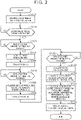
- FIG. 2 shows the steps of a process of calculating the degree of deterioration R.
- the process shown in FIG. 2 is implemented by the CPU 110 executing the program stored in the memory 120.
- the process shown in FIG. 2 is started when conditions for calculating the degree of deterioration R are satisfied.
- the conditions for calculating the degree of deterioration R include, for example, that deceleration fuel cut is active and burning of the air-fuel mixture has stopped, and that a specified amount of time has passed or the vehicle has traveled a specified distance since the previous calculation of the degree of deterioration R.
- the process shown in FIG. 2 is started after the EGR valve 52 is fully closed.
- the CPU 110 determines whether a change in valve timing is completed, that is, whether the valve timing VT has become the fixed value VTa (S110).
- the CPU 110 determines that the change in valve timing is not completed (S110: NO)
- the CPU 110 repeats the step S110.
- the CPU 110 determines whether a specified amount of time Tw1 has passed since the completion of the change in valve timing (S120).
- the specified amount of time Tw1 is set to the amount of time it takes for a change in the intake pressure PM caused by the change in valve timing to converge.
- the CPU 110 determines that the specified amount of time Tw1 has not passed (S120: NO)
- the CPU 110 repeats the step S120.
- the CPU 110 determines that the specified amount of time Tw1 has passed (S120: YES)
- the CPU 110 performs a pressure acquisition process of acquiring a current intake pressure PM as a first pressure PM1 (S130).
- the first pressure PM1 is the intake pressure PM when the EGR valve 52 is closed.
- the CPU 110 opens the EGR valve 52 (S140).
- the CPU 110 controls the EGR valve 52 to a fully open state.
- the CPU 110 determines whether a specified amount of time Tw2 has passed since the opening of the EGR valve 52 (S150).
- the specified amount of time Tw2 is set to the amount of time it takes for an increase in the intake pressure PM caused by opening the EGR valve 52 in S140 to converge.
- the CPU 110 then closes the EGR valve 52 (S170). In S170, the CPU 110 controls the EGR valve 52 to a fully closed state. The CPU 110 then determines whether a specified amount of time Tw3 has passed since the closing of the EGR valve 52 (S180). The specified amount of time Tw3 is set to the amount of time it takes for a decrease in the intake pressure PM caused by closing the EGR valve 52 in S170 to converge.
- the CPU 110 determines that the specified amount of time Tw3 has not passed (S180: NO)
- the CPU 110 repeats the step S180.
- the CPU 110 determines that the specified amount of time Tw3 has passed (S180: YES)
- the CPU 110 performs a pressure acquisition process of acquiring a current intake pressure PM as a third pressure PM3 (S190).
- the third pressure PM3 is the intake pressure PM when the EGR valve 52 is closed.
- the CPU 110 then performs a pressure change amount calculation process of calculating a pressure change amount ⁇ P and a differential pressure calculation process of calculating a differential pressure Pba (S200).
- the pressure change amount ⁇ P is the amount of pressure change associated with the operation of opening and closing the EGR valve 52.
- the pressure change amount ⁇ P is a value obtained by the following equation (1) based on the first pressure PM1, the second pressure PM2, and the third pressure PM3.
- ⁇ P PM2 - ⁇ (PM1 + PM3)/2 ⁇ ⁇ (1)
- the differential pressure Pba is the difference in pressure between the upstream side (exhaust passage side) of the EGR valve 52 and the downstream side (intake passage side) of the EGR valve 52 when the EGR valve 52 is in the closed state.
- the differential pressure Pba is a value obtained by the following equation (2) based on the first pressure PM1, the third pressure PM3, and the atmospheric pressure PA acquired when the step S200 is performed.
- the pressure on the upstream side of the EGR valve 52 that is, the pressure in the exhaust passage 8, correlates with the atmospheric pressure PA during the fuel cut.
- the atmospheric pressure PA is therefore used as a value indicating the pressure on the upstream side of the EGR valve 52.
- Pba PA - ⁇ (PM1 + PM3)/2 ⁇ ⁇ (2)
- the value of ⁇ (PM1 + PM3)/2 ⁇ in the equations (1) and (2) is the arithmetic mean value PMclav of the first pressure PM1 and the third pressure PM3 that are the intake pressures PM when the EGR valve 52 is closed.
- the CPU 110 then performs a deterioration degree calculation process of calculating the degree of deterioration R based on the pressure change amount ⁇ P, the differential pressure Pba, and the reference engine speed NEs (S210). More specifically, the memory 120 stores a map defining the correspondence between each of the pressure change amount ⁇ P, the differential pressure Pba, and the reference engine speed NEs and the degree of deterioration R as a deterioration degree map. The CPU 110 calculates the degree of deterioration R by referring to the deterioration degree map.
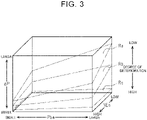
- the degree of deterioration Rc is the highest, followed by the degree of deterioration Rb and the degree of deterioration Ra.
- the larger the pressure change amount ⁇ P the lower the calculated degree of deterioration R.
- the pressure change amount ⁇ P is the same, the smaller the differential pressure Pba, the lower the calculated degree of deterioration R.
- the pressure change amount ⁇ P is the same, the higher the reference engine speed NEs, the lower the calculated degree of deterioration R.
- the CPU 110 After finishing the calculation of the degree of deterioration R, the CPU 110 then resumes normal control of the valve timing. That is, the CPU 110 changes the desired valve timing VTp set to the fixed value VTa in S100 to a value that is set according to the engine operating state (S220). The CPU 110 then ends this process.
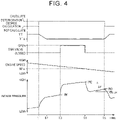
- FIG. 4 shows functions obtained by the series of steps shown in FIG. 2 .
- valve timing VT of the intake valve 9 changes toward the fixed value VTa.
- the first pressure PM1 is acquired at time t3, that is, after the specified amount of time Tw1 from time t2.
- the EGR valve 52 is also changed from the closed state to the open state at time t3.
- the second pressure PM2 and the reference engine speed NEs are acquired at time t4, that is, after the specified amount of time Tw2 from time t3.
- the EGR valve 52 is also changed from the open state to the closed state at time t4.
- the third pressure PM3 is acquired at time t5, that is, after the specified amount of time Tw3 from time t4.
- the pressure change amount ⁇ P and the differential pressure Pba are calculated, and the degree of deterioration R is also calculated based on the pressure change amount ⁇ P, the differential pressure Pba, and the reference engine speed NEs.
- the calculation of the degree of deterioration R is finished, the calculation of the degree of deterioration is completed, and the valve timing VT of the intake valve 9 is changed from the fixed value VTa to a variable value according to the engine operating state.
- the pressure change amount ⁇ P is smaller when the differential pressure Pba is small than when the differential pressure Pba is large. That is, the degree of deterioration R for the pressure change amount ⁇ P is smaller when the differential pressure Pba is small than when the differential pressure Pba is large.
- the degree of deterioration R is calculated so that the smaller the differential pressure Pba, the lower the degree of deterioration R even when the pressure change amount ⁇ P is the same. Since the degree of deterioration R of the EGR valve 52 is thus calculated based on the pressure change amount ⁇ P and the differential pressure Pba, the degree of deterioration R can be accurately calculated.
- the flow rate of the intake air flowing through the intake passage 3 increases.
- the flow rate of the EGR gas passing through the EGR valve 52 is affected by the intake air pressure. Accordingly, even when the flow rate of the intake air increases, the flow rate of the EGR gas is substantially constant if the intake air pressure does not change. Therefore, the ratio of the EGR gas to the intake air amount decreases as the flow rate of the intake air increases. As the ratio of the EGR gas to the intake air amount decreases, the influence of opening of the EGR valve 52 on the intake pressure PM decreases and the pressure change amount ⁇ P therefore decreases.
- the pressure change amount ⁇ P is smaller when the engine speed is high than when the engine speed is low. That is, the degree of deterioration R for the pressure change amount ⁇ P is lower when the engine speed is high than when the engine speed is low.
- the degree of deterioration R is calculated so that the higher reference engine speed NEs, the lower the degree of deterioration R even when the pressure change amount ⁇ P is the same.
- the degree of deterioration R of the EGR valve 52 is thus calculated in view of the engine speed such as the reference engine speed NEs in addition to the pressure change amount ⁇ P and the differential pressure Pba. Accordingly, the degree of deterioration R of the EGR valve 52 can be accurately calculated even when the pressure sensor 34 is provided on the surge tank 11.
- the downstream side of the EGR passage 50 is connected to the surge tank 11.
- the position where the downstream side of the EGR passage 50 is connected can be changed as appropriate as long as this position is located in a part of the intake passage 3 on the downstream side of the throttle valve 29.
- the arithmetic mean value PMclav of the first pressure PM1 and the third pressure PM3 is obtained as the intake pressure PM when the EGR valve 52 is closed.
- the first pressure PM1 or the third pressure PM3 may be used as the intake pressure PM when the EGR valve 52 is closed.
- the atmospheric pressure PA is used as a value indicating the pressure on the upstream side of the EGR valve 52.
- the pressure in the exhaust passage 8 may be used instead of the atmospheric pressure PA.
- the EGR valve 52 is controlled to the fully opened state when the EGR valve 52 is opened.
- the EGR valve 52 need not necessarily be controlled to the fully opened state.
- the degree of opening of the EGR valve 52 may be controlled to a specified value or more.
- the EGR valve 52 is controlled to the fully closed state when the EGR valve 52 is closed.
- the EGR valve 52 need not necessarily be controlled to the fully closed state.
- the degree of opening of the EGR valve 52 may be controlled to a specified value or less.
- the pressure sensor 34 may be provided on the intake manifold 3A. Even in this case, functions and effects similar to those of the above embodiment can be obtained by performing the above deterioration degree calculation process.
- the reference engine speed NEs may not be used for calculation of the degree of deterioration R in the above embodiment. Even when the reference engine speed NEs is not used, the effects other than (2) can be obtained.
- a pressure sensor 340 is provided in a downstream-side passage 50L.
- the downstream-side passage 50L is a part of the EGR passage 50 and connects the EGR valve 52 and the surge tank 11 in the intake passage 3. That is, the pressure sensor 340 is provided in a part of the EGR passage 50 located between the position where the surge tank 11 is connected to the EGR passage 50 and the EGR valve 52.
- the pressure sensor 340 is a pressure sensor located on the downstream side of the EGR valve 52.
- a pressure P detected by the pressure sensor 340 is input to the control device 100.
- the pressure change amount ⁇ P and the differential pressure Pba may be obtained by acquiring the pressure P instead of the intake pressure PM.
- the pressure detected by the pressure sensor is according to the flow rate of the EGR gas and is less likely to be affected by the flow rate of the intake air.
- Providing the pressure sensor 340 at the position shown in this modification can therefore reduce the influence of the engine speed on the pressure change amount ⁇ P. Accordingly, the degree of deterioration R of the EGR valve 52 can be accurately calculated even when the reference engine speed NEs is not used for calculation of the degree of deterioration R.
- the degree of deterioration R is calculated by the execution device mounted on the vehicle 500.
- the degree of deterioration R may be calculated by an external execution device that is not mounted on the vehicle 500.
- FIG. 6 shows a system configuration according to this modification.
- each of the control devices 100 mounted on the vehicle 500 and a vehicle 600 includes a communication device 130.
- the control device 100 can communicate with a data analysis center 300 via the communication device 130 over an external network 200.
- the CPU 110 and the memory 120 of the control device 100 form a first execution device.
- the data analysis center 300 analyzes data sent from the plurality of vehicles 500, 600, etc.
- the data analysis center 300 includes a CPU 310, a memory 320, and a communication device 330, and the CPU 310, the memory 320, and the communication device 330 can communicate with each other over the local network.
- the CPU 310 and the memory 320 form a second execution device.
- the CPU 110 performs the steps S100 to S190 shown in FIG. 2 and performs the step S220 after S190.
- the CPU 110 sends the first pressure PM1, the second pressure PM2, the reference engine speed NEs, and the third pressure PM3 acquired in S130, S160, and S190 to the data analysis center 300.
- the CPU 310 of the data analysis center 300 that has received the first pressure PM1, the second pressure PM2, the reference engine speed NEs, and the third pressure PM3 calculates the degree of deterioration R by performing the steps S200 and S210 shown in FIG. 2 .
- the CPU 110 of the vehicle may perform the step S200 and send the pressure change amount ⁇ P, the differential pressure Pba, and the reference engine speed NEs to the data analysis center 300.
- the calculation load on the CPU 110 can be reduced as compared to the case where, for example, the CPU 110 of the vehicle calculates the degree of deterioration R.
- the execution device is not limited to the device that includes the CPU and the memory and performs software processing.
- the execution device may include a dedicated hardware circuit (e.g., an application-specific integrated circuit (ASIC)) that performs at least a part of the software processing performed in the above embodiment and modifications. That is, the execution device need only have one of the following configurations (a) to (c).
- ASIC application-specific integrated circuit
Landscapes
- Engineering & Computer Science (AREA)
- Chemical & Material Sciences (AREA)
- Combustion & Propulsion (AREA)
- Mechanical Engineering (AREA)
- General Engineering & Computer Science (AREA)
- Physics & Mathematics (AREA)
- Fluid Mechanics (AREA)
- Analytical Chemistry (AREA)
- Exhaust-Gas Circulating Devices (AREA)
- Combined Controls Of Internal Combustion Engines (AREA)
- Output Control And Ontrol Of Special Type Engine (AREA)
Abstract
An EGR valve deterioration degree calculation system configured to calculate a degree of deterioration of an EGR valve includes an execution device (110, 120; 110, 120, 310, 320). The execution device (110, 120; 110, 120, 310, 320) is configured to perform: a pressure acquisition process; a pressure change amount calculation process of calculating a pressure change amount associated with an operation of opening and closing the EGR valve; a differential pressure calculation process of calculating a differential pressure between an upstream side of the EGR valve and a downstream side of the EGR valve when the EGR valve is in a closed state; and a deterioration degree calculation process of calculating the degree of deterioration of the EGR valve based on the pressure change amount and the differential pressure.
Description
- The present disclosure relates to EGR valve deterioration degree calculation systems, control devices for internal combustion engines, and vehicles.
- As described in, for example,
Japanese Unexamined Patent Application Publication No. 2018-123694 JP 2018-123694 A JP 2018-123694 A - The pressure change amount decreases as deterioration of the EGR valve progresses. Accordingly, the degree of deterioration of the EGR valve can be calculated based on the pressure change amount. However, such a pressure change amount also changes due to factors other than deterioration of the EGR valve. It is therefore difficult to accurately calculate the degree of deterioration based merely on the pressure change amount.
- An EGR valve deterioration degree calculation system according to one aspect of the present disclosure is applied to an internal combustion engine and is configured to calculate a degree of deterioration of an EGR valve, the internal combustion engine including an EGR passage, the EGR valve, and a pressure sensor, the EGR passage allowing an exhaust passage and an intake passage of the internal combustion engine to communicate with each other, the EGR valve being located in the EGR passage, and the pressure sensor being located on a downstream side of the EGR valve. The EGR valve deterioration degree calculation system includes an execution device. The execution device is configured to perform: a pressure acquisition process of acquiring a pressure detected by the pressure sensor; a pressure change amount calculation process of calculating a pressure change amount, the pressure change amount being an amount of change in the pressure associated with an operation of opening and closing the EGR valve; a differential pressure calculation process of calculating a differential pressure, the differential pressure being a difference in pressure between an upstream side of the EGR valve and the downstream side of the EGR valve when the EGR valve is in a closed state; and a deterioration degree calculation process of calculating the degree of deterioration of the EGR valve based on the pressure change amount and the differential pressure.
- The differential pressure affects the pressure change amount. According to the EGR valve deterioration degree calculation system of the aspect of the present disclosure, the degree of deterioration of the EGR valve is calculated based on the pressure change amount and the differential pressure. The degree of deterioration of the EGR valve can therefore be accurately calculated.
- In the EGR valve deterioration degree calculation system according to the aspect of the present disclosure, the execution device may be configured to calculate the degree of deterioration in the deterioration degree calculation process in such a manner that the smaller the differential pressure, the lower the degree of deterioration even when the pressure change amount is the same.
- Even when the degree of deterioration of the EGR valve is the same, the pressure change amount is smaller when the differential pressure is small than when the differential pressure is large. That is, the degree of deterioration for the pressure change amount is smaller when the differential pressure is small than when the differential pressure is large. According to the EGR valve deterioration degree calculation system of the aspect of the present disclosure, the degree of deterioration in the deterioration degree calculation process may be calculated in such a manner that the smaller the differential pressure, the lower the degree of deterioration even when the pressure change amount is the same.
- In the EGR valve deterioration degree calculation system according to the aspect of the present disclosure, the execution device may be configured to perform an engine speed acquisition process of acquiring an engine speed of the internal combustion engine during the operation of opening and closing the EGR valve as a reference engine speed. The execution device may be configured to calculate the degree of deterioration of the EGR valve based on the pressure change amount, the differential pressure, and the reference engine speed in the deterioration degree calculation process.
- Depending on the position of the pressure sensor, the difference in flow rate of intake air due to the difference in engine speed may affect the pressure change amount. According to the EGR valve deterioration degree calculation system of the aspect of the present disclosure, the degree of deterioration of the EGR valve is calculated in view of the engine speed in addition to the pressure change amount and the differential pressure. The degree of deterioration of the EGR valve can therefore be accurately calculated even when the pressure sensor is located on an intake manifold or a surge tank.
- In the EGR valve deterioration degree calculation system of the present disclosure, the execution device may be configured to calculate the degree of deterioration in the deterioration degree calculation process in such a manner that the higher the engine speed, the lower the degree of deterioration even when the pressure change amount is the same.
- Even when the degree of deterioration of the EGR valve is the same, the pressure change amount is smaller when the engine speed is high than when the engine speed is low. That is, the degree of deterioration for the pressure change amount is lower when the engine speed is high than when the engine speed is low. According to the EGR valve deterioration degree calculation system of the aspect of the present disclosure, in the deterioration degree calculation process, the deterioration degree may be calculated in such a manner that the higher the engine speed, the lower the degree of deterioration even when the pressure change amount is the same.
- The difference in flow rate of intake air due to the difference in engine speed affects the pressure change amount when the pressure sensor is located on the intake manifold or the surge tank of the internal combustion engine. According to the EGR valve deterioration degree calculation system of the aspect of the present disclosure, in the deterioration degree calculation process, the pressure sensor may be located on the intake manifold or the surge tank of the internal combustion engine.
- In the EGR valve deterioration degree calculation system according to the aspect of the present disclosure, the pressure sensor may be located in a part of the EGR passage located between a position where the EGR passage is connected to the intake passage and a position where the EGR valve is located. In the case where the pressure sensor is located in the part of the EGR passage located between the position where the EGR passage is connected to the intake passage and the EGR valve, the pressure detected by the pressure sensor is according to the flow rate of EGR gas and is less likely to be affected by the flow rate of the intake air. According to the EGR valve deterioration degree calculation system of the aspect of the present disclosure, the influence of the engine speed on the pressure change amount can therefore be reduced. The degree of deterioration of the EGR valve can thus be accurately calculated.
- A control device for the internal combustion engine may include the execution device in the above EGR valve deterioration degree calculation system. A vehicle may include the above control device for the internal combustion engine.
- Features, advantages, and technical and industrial significance of exemplary embodiments of the invention will be described below with reference to the accompanying drawings, in which like signs denote like elements, and wherein:
-
FIG. 1 is a schematic view of an internal combustion engine in an embodiment; -
FIG. 2 is a flowchart showing the steps of a process that is performed by a control device of the embodiment; -
FIG. 3 is a conceptual diagram showing the correspondence among the pressure change amount, the differential pressure, the reference engine speed, and the degree of deterioration; -
FIG. 4 is a timing chart showing functions of the embodiment; -
FIG. 5 is a schematic view of an internal combustion engine in a modification of the embodiment; and -
FIG. 6 is a schematic view showing a configuration of a deterioration degree calculation system in a modification of the embodiment. - Hereinafter, an embodiment in which a deterioration degree calculation system for an EGR valve is applied to an internal combustion engine mounted on a vehicle will be described with reference to
FIGS. 1 to 4 . - As shown in
FIG. 1 , in aninternal combustion engine 1 mounted on avehicle 500, air is taken into acombustion chamber 2 through anintake passage 3 and anintake port 3a, and fuel injected from afuel injection valve 4 is supplied into thecombustion chamber 2. When a spark plug 5 ignites the air-fuel mixture composed of air and fuel, the air-fuel mixture burns and apiston 6 reciprocates, so that acrankshaft 7 that is an output shaft of theinternal combustion engine 1 rotates. The burned air-fuel mixture is discharged from thecombustion chamber 2 to anexhaust passage 8 as exhaust gas. - The
intake passage 3 of theinternal combustion engine 1 includes asurge tank 11 and anintake manifold 3A. Athrottle valve 29 for adjusting the intake air amount is located in theintake passage 3 on the intake upstream side of thesurge tank 11. The degree of opening of thethrottle valve 29 is adjusted by an electric motor. Theintake manifold 3A for distributing air in thesurge tank 11 to each cylinder of theinternal combustion engine 1 is connected to the intake downstream side of thesurge tank 11. - An
intake valve 9 is located in theintake port 3a connected to theintake manifold 3A. Anexhaust valve 10 is located in anexhaust port 8a connected to theexhaust passage 8. Avariable valve mechanism 21 for changing the valve timing of theintake valve 9 is provided for theintake valve 9. - The
internal combustion engine 1 includes an exhaust gas recirculation device for recirculating a part of exhaust gas into theintake passage 3. This exhaust gas recirculation device includes anEGR passage 50, anEGR cooler 51, anEGR valve 52, etc. The EGRpassage 50 is a passage that allows thesurge tank 11 that forms a part of theintake passage 3 and theexhaust passage 8 to communicate with each other. TheEGR valve 52 is located at an intermediate position in theEGR passage 50. When theEGR valve 52 is open, exhaust gas (EGR gas) flows into theEGR passage 50. In theEGR passage 50, theEGR cooler 51 is located on the upstream side of theEGR valve 52, that is, on theexhaust passage 8 side of theEGR valve 52. - The
internal combustion engine 1 is a controlled object of acontrol device 100. Thecontrol device 100 controls controlled variables (intake air amount, fuel injection amount, etc.) of theinternal combustion engine 1 by operating various devices to be operated such as thethrottle valve 29, thefuel injection valve 4, the spark plug 5, thevariable valve mechanism 21, and theEGR valve 52. - The
control device 100 includes a central processing unit (CPU) 110 and amemory 120. Thememory 120 stores control programs and data. Thecontrol device 100 controls the controlled variables and performs processes that will be described later by theCPU 110 executing the programs stored in thememory 120. TheCPU 110 and thememory 120 form an execution device. - When controlling the controlled variables, the
control device 100 refers to an accelerator operation amount ACCP and a throttle valve opening degree TA. The accelerator operation amount ACCP is the amount of operation of an accelerator pedal that is detected by anaccelerator position sensor 31. The throttle valve opening degree TA is the degree of opening of thethrottle valve 29 that is detected by athrottle sensor 32. Thecontrol device 100 also refers to an intake air amount GA and an intake pressure PM. The intake air amount GA is detected by anair flow meter 33. The intake pressure PM is the pressure in thesurge tank 11 that is detected by apressure sensor 34. Thepressure sensor 34 is a pressure sensor located on the downstream side of theEGR valve 52. Thecontrol device 100 also refers to a coolant temperature THW, a vehicle speed SP of thevehicle 500, and an output signal Scr of acrank angle sensor 37. The coolant temperature THW is detected by acoolant temperature sensor 35. The vehicle speed SP is detected by avehicle speed sensor 36. Thecontrol device 100 also refers to an output signal Scf of acam angle sensor 38 and an atmospheric pressure PA. The atmospheric pressure PA is detected by anatmospheric pressure sensor 39. Thecontrol device 100 detects a crank angle and an engine speed NE based on the output signal Scr of thecrank angle sensor 37. Thecontrol device 100 calculates an engine load factor KL based on the engine speed NE and the intake air amount GA. Thecontrol device 100 detects the valve timing VT of theintake valve 9 based on the output signal Scf of thecam angle sensor 38. - The
control device 100 calculates a desired valve timing VTp based on the engine operating state such as the engine speed NE and the engine load factor KL. The desired valve timing VTp is a desired value of the valve timing VT of theintake valve 9. Thecontrol device 100 controls thevariable valve mechanism 21 so that the valve timing VT matches the desired valve timing VTp. - The
control device 100 calculates a desired EGR rate EGp based on the engine operating state such as the engine speed NE and the engine load factor KL. The desired EGR rate EGp is a command value for adjusting the amount of exhaust gas (EGR amount) that flows into theintake passage 3 through theEGR passage 50. The EGR rate is the percentage of the EGR amount to the total amount of gas that enters the cylinders. Thecontrol device 100 calculates a desired degree of opening of theEGR valve 52 based on the desired EGR rate EGp, the intake air amount GA, etc. and adjusts the degree of opening of theEGR valve 52 so that an actual degree of opening of theEGR valve 52 becomes the desired degree of opening. The desired degree of opening of theEGR valve 52 is such a value that an actual EGR rate becomes the desired EGR rate EGp. - Residual components in the EGR gas adhere to the
EGR valve 52. Therefore, the more residual components that accumulate on theEGR valve 52, the less the flow rate of the gas passing through theEGR valve 52. In the present embodiment, such a decrease in gas flow rate over time is referred to as deterioration of theEGR valve 52, and thecontrol device 100 calculates the degree of deterioration, namely the degree to which theEGR valve 52 has been deteriorated. In the present embodiment, the greater the value of the degree of deterioration, the more the deterioration has progressed. - Hereinafter, calculation of the degree of deterioration R will be described.
FIG. 2 shows the steps of a process of calculating the degree of deterioration R. The process shown inFIG. 2 is implemented by theCPU 110 executing the program stored in thememory 120. The process shown inFIG. 2 is started when conditions for calculating the degree of deterioration R are satisfied. The conditions for calculating the degree of deterioration R include, for example, that deceleration fuel cut is active and burning of the air-fuel mixture has stopped, and that a specified amount of time has passed or the vehicle has traveled a specified distance since the previous calculation of the degree of deterioration R. In the case where theEGR valve 52 is not in a fully closed state when the conditions for calculating the degree of deterioration R are satisfied, the process shown inFIG. 2 is started after theEGR valve 52 is fully closed. - In the following description, numbers with the letter "S" at the beginning represent step numbers. When this process is started, the
CPU 110 first sets a desired valve timing VTp of theintake valve 9 to a fixed value VTa (S100). - Next, the
CPU 110 determines whether a change in valve timing is completed, that is, whether the valve timing VT has become the fixed value VTa (S110). When theCPU 110 determines that the change in valve timing is not completed (S110: NO), theCPU 110 repeats the step S110. - When the
CPU 110 determines that the change in valve timing is completed (S110: YES), theCPU 110 determines whether a specified amount of time Tw1 has passed since the completion of the change in valve timing (S120). The specified amount of time Tw1 is set to the amount of time it takes for a change in the intake pressure PM caused by the change in valve timing to converge. When theCPU 110 determines that the specified amount of time Tw1 has not passed (S120: NO), theCPU 110 repeats the step S120. - When the
CPU 110 determines that the specified amount of time Tw1 has passed (S120: YES), theCPU 110 performs a pressure acquisition process of acquiring a current intake pressure PM as a first pressure PM1 (S130). The first pressure PM1 is the intake pressure PM when theEGR valve 52 is closed. - Next, the
CPU 110 opens the EGR valve 52 (S140). In S140, theCPU 110 controls theEGR valve 52 to a fully open state. TheCPU 110 then determines whether a specified amount of time Tw2 has passed since the opening of the EGR valve 52 (S150). The specified amount of time Tw2 is set to the amount of time it takes for an increase in the intake pressure PM caused by opening theEGR valve 52 in S140 to converge. - When the
CPU 110 determines that the specified amount of time Tw2 has not passed (S150: NO), theCPU 110 repeats S150. When theCPU 110 determines that the specified amount of time Tw2 has passed (S150: YES), theCPU 110 performs a pressure acquisition process of acquiring a current intake pressure PM as a second pressure PM2, and also performs an engine speed acquisition process of acquiring a current engine speed NE as a reference engine speed NEs (S160). The second pressure PM2 is the intake pressure PM when theEGR valve 52 is open. - The
CPU 110 then closes the EGR valve 52 (S170). In S170, theCPU 110 controls theEGR valve 52 to a fully closed state. TheCPU 110 then determines whether a specified amount of time Tw3 has passed since the closing of the EGR valve 52 (S180). The specified amount of time Tw3 is set to the amount of time it takes for a decrease in the intake pressure PM caused by closing theEGR valve 52 in S170 to converge. - When the
CPU 110 determines that the specified amount of time Tw3 has not passed (S180: NO), theCPU 110 repeats the step S180. When theCPU 110 determines that the specified amount of time Tw3 has passed (S180: YES), theCPU 110 performs a pressure acquisition process of acquiring a current intake pressure PM as a third pressure PM3 (S190). The third pressure PM3 is the intake pressure PM when theEGR valve 52 is closed. - The
CPU 110 then performs a pressure change amount calculation process of calculating a pressure change amount ΔP and a differential pressure calculation process of calculating a differential pressure Pba (S200). The pressure change amount ΔP is the amount of pressure change associated with the operation of opening and closing theEGR valve 52. The pressure change amount ΔP is a value obtained by the following equation (1) based on the first pressure PM1, the second pressure PM2, and the third pressure PM3. ΔP = PM2 - {(PM1 + PM3)/2} ··· (1) - The differential pressure Pba is the difference in pressure between the upstream side (exhaust passage side) of the
EGR valve 52 and the downstream side (intake passage side) of theEGR valve 52 when theEGR valve 52 is in the closed state. The differential pressure Pba is a value obtained by the following equation (2) based on the first pressure PM1, the third pressure PM3, and the atmospheric pressure PA acquired when the step S200 is performed. The pressure on the upstream side of theEGR valve 52, that is, the pressure in theexhaust passage 8, correlates with the atmospheric pressure PA during the fuel cut. In the present embodiment, the atmospheric pressure PA is therefore used as a value indicating the pressure on the upstream side of theEGR valve 52. Pba = PA - {(PM1 + PM3)/2} ··· (2) - The value of {(PM1 + PM3)/2} in the equations (1) and (2) is the arithmetic mean value PMclav of the first pressure PM1 and the third pressure PM3 that are the intake pressures PM when the
EGR valve 52 is closed. - The
CPU 110 then performs a deterioration degree calculation process of calculating the degree of deterioration R based on the pressure change amount ΔP, the differential pressure Pba, and the reference engine speed NEs (S210). More specifically, thememory 120 stores a map defining the correspondence between each of the pressure change amount ΔP, the differential pressure Pba, and the reference engine speed NEs and the degree of deterioration R as a deterioration degree map. TheCPU 110 calculates the degree of deterioration R by referring to the deterioration degree map. - As shown in
FIG. 3 , for example, the degree of deterioration Rc is the highest, followed by the degree of deterioration Rb and the degree of deterioration Ra. The larger the pressure change amount ΔP, the lower the calculated degree of deterioration R. Even when the pressure change amount ΔP is the same, the smaller the differential pressure Pba, the lower the calculated degree of deterioration R. Even when the pressure change amount ΔP is the same, the higher the reference engine speed NEs, the lower the calculated degree of deterioration R. - After finishing the calculation of the degree of deterioration R, the
CPU 110 then resumes normal control of the valve timing. That is, theCPU 110 changes the desired valve timing VTp set to the fixed value VTa in S100 to a value that is set according to the engine operating state (S220). TheCPU 110 then ends this process. - Functions of the present embodiment will be described.
FIG. 4 shows functions obtained by the series of steps shown inFIG. 2 . - When the calculation of the degree of deterioration R is started at time t1, the valve timing VT of the
intake valve 9 changes toward the fixed value VTa. When the change in valve timing is completed at time t2, the first pressure PM1 is acquired at time t3, that is, after the specified amount of time Tw1 from time t2. TheEGR valve 52 is also changed from the closed state to the open state at time t3. - The second pressure PM2 and the reference engine speed NEs are acquired at time t4, that is, after the specified amount of time Tw2 from time t3. The
EGR valve 52 is also changed from the open state to the closed state at time t4. - The third pressure PM3 is acquired at time t5, that is, after the specified amount of time Tw3 from time t4. When the third pressure PM3 is acquired, the pressure change amount ΔP and the differential pressure Pba are calculated, and the degree of deterioration R is also calculated based on the pressure change amount ΔP, the differential pressure Pba, and the reference engine speed NEs. When the calculation of the degree of deterioration R is finished, the calculation of the degree of deterioration is completed, and the valve timing VT of the
intake valve 9 is changed from the fixed value VTa to a variable value according to the engine operating state. - Effects of the present embodiment will be described.
- (1) The pressure change amount ΔP decreases as deterioration of the
EGR valve 52 progresses. The pressure change amount ΔP is therefore a value that correlates with the degree of deterioration R. The differential pressure Pba affects the pressure change amount ΔP. - That is, even when the degree of deterioration R of the
EGR valve 52 is the same, the pressure change amount ΔP is smaller when the differential pressure Pba is small than when the differential pressure Pba is large. That is, the degree of deterioration R for the pressure change amount ΔP is smaller when the differential pressure Pba is small than when the differential pressure Pba is large. - Therefore, in the same embodiment, as shown in
FIG. 3 , the degree of deterioration R is calculated so that the smaller the differential pressure Pba, the lower the degree of deterioration R even when the pressure change amount ΔP is the same. Since the degree of deterioration R of theEGR valve 52 is thus calculated based on the pressure change amount ΔP and the differential pressure Pba, the degree of deterioration R can be accurately calculated. - (2) When the
pressure sensor 34 for detecting the intake pressure PM is provided on thesurge tank 11 or theintake manifold 3A of theinternal combustion engine 1, the difference in flow rate of the intake air due to the difference in engine speed affects the pressure change amount ΔP. - That is, when the engine speed increases at the same intake pressure PM, the flow rate of the intake air flowing through the
intake passage 3 increases. The flow rate of the EGR gas passing through theEGR valve 52 is affected by the intake air pressure. Accordingly, even when the flow rate of the intake air increases, the flow rate of the EGR gas is substantially constant if the intake air pressure does not change. Therefore, the ratio of the EGR gas to the intake air amount decreases as the flow rate of the intake air increases. As the ratio of the EGR gas to the intake air amount decreases, the influence of opening of theEGR valve 52 on the intake pressure PM decreases and the pressure change amount ΔP therefore decreases. - Accordingly, even when the degree of deterioration R of the
EGR valve 52 is the same, the pressure change amount ΔP is smaller when the engine speed is high than when the engine speed is low. That is, the degree of deterioration R for the pressure change amount ΔP is lower when the engine speed is high than when the engine speed is low. - In the embodiment, as shown in
FIG. 3 , the degree of deterioration R is calculated so that the higher reference engine speed NEs, the lower the degree of deterioration R even when the pressure change amount ΔP is the same. The degree of deterioration R of theEGR valve 52 is thus calculated in view of the engine speed such as the reference engine speed NEs in addition to the pressure change amount ΔP and the differential pressure Pba. Accordingly, the degree of deterioration R of theEGR valve 52 can be accurately calculated even when thepressure sensor 34 is provided on thesurge tank 11. - (3) Since the degree of deterioration R of the
EGR valve 52 can be calculated, maintenance etc. can be carried out before theEGR valve 52 is broken. Accordingly, theEGR valve 52 can be prevented from malfunctioning. - The above embodiment can be modified as follows. The above embodiment and the following modifications can be combined as appropriate as long as no technical inconsistency occurs.
- In the above embodiment, the downstream side of the
EGR passage 50 is connected to thesurge tank 11. However, the position where the downstream side of theEGR passage 50 is connected can be changed as appropriate as long as this position is located in a part of theintake passage 3 on the downstream side of thethrottle valve 29. - In the above embodiment, the arithmetic mean value PMclav of the first pressure PM1 and the third pressure PM3 is obtained as the intake pressure PM when the
EGR valve 52 is closed. However, the first pressure PM1 or the third pressure PM3 may be used as the intake pressure PM when theEGR valve 52 is closed. - In the above embodiment, the atmospheric pressure PA is used as a value indicating the pressure on the upstream side of the
EGR valve 52. However, the pressure in theexhaust passage 8 may be used instead of the atmospheric pressure PA. In calculation of the degree of deterioration R, theEGR valve 52 is controlled to the fully opened state when theEGR valve 52 is opened. However, theEGR valve 52 need not necessarily be controlled to the fully opened state. The degree of opening of theEGR valve 52 may be controlled to a specified value or more. - In calculation of the degree of deterioration R, the
EGR valve 52 is controlled to the fully closed state when theEGR valve 52 is closed. However, theEGR valve 52 need not necessarily be controlled to the fully closed state. The degree of opening of theEGR valve 52 may be controlled to a specified value or less. - The
pressure sensor 34 may be provided on theintake manifold 3A. Even in this case, functions and effects similar to those of the above embodiment can be obtained by performing the above deterioration degree calculation process. - The reference engine speed NEs may not be used for calculation of the degree of deterioration R in the above embodiment. Even when the reference engine speed NEs is not used, the effects other than (2) can be obtained.
- As shown in
FIG. 5 , a pressure sensor 340 is provided in a downstream-side passage 50L. The downstream-side passage 50L is a part of theEGR passage 50 and connects theEGR valve 52 and thesurge tank 11 in theintake passage 3. That is, the pressure sensor 340 is provided in a part of theEGR passage 50 located between the position where thesurge tank 11 is connected to theEGR passage 50 and theEGR valve 52. The pressure sensor 340 is a pressure sensor located on the downstream side of theEGR valve 52. A pressure P detected by the pressure sensor 340 is input to thecontrol device 100. In calculation of the degree of deterioration R described above, the pressure change amount ΔP and the differential pressure Pba may be obtained by acquiring the pressure P instead of the intake pressure PM. - In the case where the pressure sensor is provided in the part of the
EGR passage 50 located between the position where theEGR passage 50 is connected to theintake passage 3 and theEGR valve 52 as described above, the pressure detected by the pressure sensor is according to the flow rate of the EGR gas and is less likely to be affected by the flow rate of the intake air. Providing the pressure sensor 340 at the position shown in this modification can therefore reduce the influence of the engine speed on the pressure change amount ΔP. Accordingly, the degree of deterioration R of theEGR valve 52 can be accurately calculated even when the reference engine speed NEs is not used for calculation of the degree of deterioration R. - In the above embodiment, the degree of deterioration R is calculated by the execution device mounted on the
vehicle 500. Alternatively, the degree of deterioration R may be calculated by an external execution device that is not mounted on thevehicle 500.FIG. 6 shows a system configuration according to this modification. - As shown in
FIG. 6 , each of thecontrol devices 100 mounted on thevehicle 500 and avehicle 600 includes acommunication device 130. Thecontrol device 100 can communicate with adata analysis center 300 via thecommunication device 130 over anexternal network 200. In the modification, theCPU 110 and thememory 120 of thecontrol device 100 form a first execution device. - The
data analysis center 300 analyzes data sent from the plurality ofvehicles data analysis center 300 includes aCPU 310, amemory 320, and acommunication device 330, and theCPU 310, thememory 320, and thecommunication device 330 can communicate with each other over the local network. In the modification, theCPU 310 and thememory 320 form a second execution device. - The
CPU 110 performs the steps S100 to S190 shown inFIG. 2 and performs the step S220 after S190. TheCPU 110 sends the first pressure PM1, the second pressure PM2, the reference engine speed NEs, and the third pressure PM3 acquired in S130, S160, and S190 to thedata analysis center 300. TheCPU 310 of thedata analysis center 300 that has received the first pressure PM1, the second pressure PM2, the reference engine speed NEs, and the third pressure PM3 calculates the degree of deterioration R by performing the steps S200 and S210 shown inFIG. 2 . Alternatively, theCPU 110 of the vehicle may perform the step S200 and send the pressure change amount ΔP, the differential pressure Pba, and the reference engine speed NEs to thedata analysis center 300. - In this modification, the calculation load on the
CPU 110 can be reduced as compared to the case where, for example, theCPU 110 of the vehicle calculates the degree of deterioration R. The execution device is not limited to the device that includes the CPU and the memory and performs software processing. For example, the execution device may include a dedicated hardware circuit (e.g., an application-specific integrated circuit (ASIC)) that performs at least a part of the software processing performed in the above embodiment and modifications. That is, the execution device need only have one of the following configurations (a) to (c). - (a) The execution device includes a processing device that performs all of the above processes according to a program and a program storage device storing the program such as a memory.
- (b) The execution device includes a processing device that performs a part of the above processes according to a program, a program storage device, and a dedicated hardware circuit that performs the remainder of the processes.
- (c) The execution device includes a dedicated hardware circuit that performs all of the processes. The execution device may include a plurality of software processing circuits each including the processing device and the program storage device, and a plurality of the dedicated hardware circuits. That is, the above processes need only be performed by a processing circuit including either or both of one or more software processing circuits and one or more dedicated hardware circuits.
Claims (8)
- An EGR valve deterioration degree calculation system applied to an internal combustion engine and configured to calculate a degree of deterioration of an EGR valve, the internal combustion engine including an EGR passage, the EGR valve, and a pressure sensor, the EGR passage allowing an exhaust passage and an intake passage of the internal combustion engine to communicate with each other, the EGR valve being located in the EGR passage, and the pressure sensor being located on a downstream side of the EGR valve, the EGR valve deterioration degree calculation system comprising an execution device (110, 120; 110, 120, 310, 320) configured to perform:a pressure acquisition process of acquiring a pressure detected by the pressure sensor;a pressure change amount calculation process of calculating a pressure change amount, the pressure change amount being an amount of change in the pressure associated with an operation of opening and closing the EGR valve;a differential pressure calculation process of calculating a differential pressure, the differential pressure being a difference in pressure between an upstream side of the EGR valve and the downstream side of the EGR valve when the EGR valve is in a closed state; anda deterioration degree calculation process of calculating the degree of deterioration of the EGR valve based on the pressure change amount and the differential pressure.
- The EGR valve deterioration degree calculation system according to claim 1, wherein the execution device (110, 120; 110, 120, 310, 320) is configured to calculate the degree of deterioration in the deterioration degree calculation process in such a manner that the smaller the differential pressure, the lower the degree of deterioration even when the pressure change amount is the same.
- The EGR valve deterioration degree calculation system according to claim 1 or 2, wherein the execution device (110, 120; 110, 120, 310, 320) is configured to:perform an engine speed acquisition process of acquiring an engine speed of the internal combustion engine during the operation of opening and closing the EGR valve as a reference engine speed; andcalculate the degree of deterioration of the EGR valve based on the pressure change amount, the differential pressure, and the reference engine speed in the deterioration degree calculation process.
- The EGR valve deterioration degree calculation system according to claim 3, wherein the execution device (110, 120; 110, 120, 310, 320) is configured to calculate the degree of deterioration in the deterioration degree calculation process in such a manner that the higher the engine speed, the lower the degree of deterioration even when the pressure change amount is the same.
- The EGR valve deterioration degree calculation system according to claim 3 or 4, wherein the pressure sensor is located on an intake manifold or a surge tank of the internal combustion engine.
- The EGR valve deterioration degree calculation system according to claim 1 or 2, wherein the pressure sensor is located in a part of the EGR passage located between a position where the EGR passage is connected to the intake passage and a position where the EGR valve is located.
- A control device for the internal combustion engine, the control device comprising the execution device (110, 120; 110, 120, 310, 320) in the EGR valve deterioration degree calculation system according to any one of claims 1 to 6.
- A vehicle comprising the control device for the internal combustion engine according to claim 7.
Applications Claiming Priority (1)
| Application Number | Priority Date | Filing Date | Title |
|---|---|---|---|
| JP2021042148A JP7480730B2 (en) | 2021-03-16 | 2021-03-16 | EGR valve deterioration degree calculation system, internal combustion engine control device, and vehicle |
Publications (1)
| Publication Number | Publication Date |
|---|---|
| EP4060180A1 true EP4060180A1 (en) | 2022-09-21 |
Family
ID=80595440
Family Applications (1)
| Application Number | Title | Priority Date | Filing Date |
|---|---|---|---|
| EP22159257.9A Withdrawn EP4060180A1 (en) | 2021-03-16 | 2022-02-28 | Egr valve deterioration degree calculation system, control device for internal combustion engine, and vehicle |
Country Status (4)
| Country | Link |
|---|---|
| US (1) | US11473537B2 (en) |
| EP (1) | EP4060180A1 (en) |
| JP (1) | JP7480730B2 (en) |
| CN (1) | CN115075992B (en) |
Citations (3)
| Publication number | Priority date | Publication date | Assignee | Title |
|---|---|---|---|---|
| US20070062499A1 (en) * | 2005-09-21 | 2007-03-22 | Mitsubishi Denki Kabushiki Kaisha | Control apparatus for an internal combustion engine |
| US20130145830A1 (en) * | 2011-12-07 | 2013-06-13 | Kia Motors Corporation | Apparatus for diagnosing exhaust gas recirculation and method thereof |
| JP2018123694A (en) | 2017-01-30 | 2018-08-09 | 日立オートモティブシステムズ株式会社 | Fault diagnosis device for low pressure EGR system |
Family Cites Families (60)
| Publication number | Priority date | Publication date | Assignee | Title |
|---|---|---|---|---|
| JPH0323354A (en) * | 1989-06-19 | 1991-01-31 | Japan Electron Control Syst Co Ltd | Exhaust gas reflux detecting device for exhaust gas reflex device for internal combustion engine |
| US5152273A (en) * | 1990-11-07 | 1992-10-06 | Mitsubishi Denki Kabushiki Kaisha | Exhaust gas recirculation control device and its failure diagnosis device |
| JP2661396B2 (en) * | 1991-04-15 | 1997-10-08 | 三菱電機株式会社 | Failure diagnosis device for EGR control device |
| JP2595148B2 (en) * | 1991-08-26 | 1997-03-26 | 株式会社日立製作所 | Internal combustion engine control device |
| JP2881075B2 (en) * | 1992-08-05 | 1999-04-12 | 三菱電機株式会社 | Failure diagnosis method for exhaust gas recirculation control device |
| US5309887A (en) * | 1992-08-07 | 1994-05-10 | Mitsubishi Denki Kabushiki Kaisha | Method of detecting abnormality in exhaust gas recirculation control system of internal combustion engine and apparatus for carrying out the same |
| JP2866541B2 (en) * | 1992-11-19 | 1999-03-08 | 三菱電機株式会社 | Failure detection device for exhaust gas recirculation control device |
| JPH06229323A (en) * | 1993-01-30 | 1994-08-16 | Suzuki Motor Corp | Self-diagnostic device of exhaust gas recirculating device |
| DE4406281C2 (en) * | 1993-03-01 | 1996-08-22 | Mitsubishi Motors Corp | Method for determining a failure of an exhaust gas recirculation device |
| JP2922099B2 (en) * | 1993-09-29 | 1999-07-19 | 三菱電機株式会社 | Self-diagnosis device of exhaust gas recirculation device |
| US5508926A (en) * | 1994-06-24 | 1996-04-16 | General Motors Corporation | Exhaust gas recirculation diagnostic |
| JPH0828364A (en) * | 1994-07-20 | 1996-01-30 | Mitsubishi Electric Corp | Failure detection device for exhaust gas recirculation control device |
| JPH0835449A (en) * | 1994-07-25 | 1996-02-06 | Mitsubishi Electric Corp | Failure detection device for exhaust gas recirculation control device |
| JP2870418B2 (en) * | 1994-09-30 | 1999-03-17 | 三菱自動車工業株式会社 | Failure diagnosis device for exhaust gas recirculation device |
| JPH08226354A (en) * | 1995-02-20 | 1996-09-03 | Unisia Jecs Corp | Diagnostic device for exhaust gas recirculation system of internal combustion engine |
| US6308694B1 (en) * | 1999-01-11 | 2001-10-30 | Ford Global Technologies, Inc. | Flow measurement and control |
| US6164270A (en) * | 1999-08-09 | 2000-12-26 | Ford Global Technologies, Inc. | Exhaust gas recirculation fault detection system |
| GB2359857B (en) * | 2000-03-02 | 2004-02-18 | Ford Global Tech Inc | System and method for air flow and EGR flow estimation |
| JP4415515B2 (en) * | 2000-12-26 | 2010-02-17 | トヨタ自動車株式会社 | Abnormality diagnosis device for exhaust gas recirculation system |
| JP4441139B2 (en) * | 2001-03-27 | 2010-03-31 | 本田技研工業株式会社 | Variable valve timing engine |
| US6763708B2 (en) * | 2001-07-31 | 2004-07-20 | General Motors Corporation | Passive model-based EGR diagnostic |
| US6802302B1 (en) * | 2003-04-08 | 2004-10-12 | Cummins, Inc. | System for diagnosing EGR flow rate operation |
| US6850833B1 (en) * | 2003-11-03 | 2005-02-01 | Cummins, Inc. | System for diagnosing delta pressure sensor operation |
| JP4468039B2 (en) * | 2004-03-26 | 2010-05-26 | 富士重工業株式会社 | Failure diagnosis device for exhaust gas recirculation device |
| DE102007026945B4 (en) * | 2007-06-12 | 2013-03-21 | Continental Automotive Gmbh | Method and device for checking an exhaust gas recirculation system and computer program for carrying out the method |
| US7743757B2 (en) * | 2007-07-19 | 2010-06-29 | Ford Global Technologies, Llc | System and method for exhaust gas recirculation |
| DE102008041804B4 (en) * | 2008-09-04 | 2020-06-25 | Robert Bosch Gmbh | Method and device for monitoring an exhaust gas recirculation system |
| JP2010084519A (en) * | 2008-09-29 | 2010-04-15 | Yanmar Co Ltd | Engine |
| US8096125B2 (en) * | 2009-12-23 | 2012-01-17 | Ford Global Technologies, Llc | Methods and systems for emission system control |
| JP5343880B2 (en) * | 2010-02-03 | 2013-11-13 | 三菱自動車工業株式会社 | Diagnostic device for exhaust gas recirculation system |
| WO2011141994A1 (en) * | 2010-05-11 | 2011-11-17 | トヨタ自動車株式会社 | Method for specifying egr rate in internal combustion engine, and control device for internal combustion engine |
| WO2012157024A1 (en) * | 2011-05-17 | 2012-11-22 | トヨタ自動車株式会社 | Fault diagnosis method for exhaust gas recirculation device |
| WO2013080353A1 (en) * | 2011-12-01 | 2013-06-06 | トヨタ自動車株式会社 | Fault diagnosis device for egr system |
| JP2013144961A (en) * | 2012-01-16 | 2013-07-25 | Hitachi Automotive Systems Ltd | Failure diagnostic device for egr system |
| JP2013174201A (en) * | 2012-02-27 | 2013-09-05 | Isuzu Motors Ltd | Internal combustion engine and deterioration determination method for egr cooler |
| DE102012204756A1 (en) * | 2012-03-26 | 2013-09-26 | Robert Bosch Gmbh | Method and device for fault monitoring in an exhaust gas recirculation |
| JP2014020227A (en) * | 2012-07-13 | 2014-02-03 | Honda Motor Co Ltd | Device for estimating state of waste gate valve |
| EP2876291B1 (en) * | 2012-07-18 | 2018-08-22 | Nissan Motor Co., Ltd | Internal combustion engine |
| WO2014087809A1 (en) * | 2012-12-05 | 2014-06-12 | 日産自動車株式会社 | Abnormality diagnosis method and abnormality diagnosis device for egr device |
| US9267453B2 (en) * | 2013-08-22 | 2016-02-23 | Ford Global Technologies, Llc | Learning of EGR valve lift and EGR valve flow transfer function |
| US9541040B2 (en) * | 2014-09-05 | 2017-01-10 | General Electric Company | Method and systems for exhaust gas recirculation system diagnosis |
| US9845749B2 (en) * | 2015-02-06 | 2017-12-19 | Ford Global Technologies, Llc | System and methods for diagnosing soot accumulation on an exhaust gas recirculation valve |
| US9970348B2 (en) * | 2015-02-06 | 2018-05-15 | Ford Global Technologies, Llc | System and methods for adjusting an exhaust gas recirculation valve based on multiple sensor outputs |
| JP2017186940A (en) * | 2016-04-04 | 2017-10-12 | いすゞ自動車株式会社 | Abnormality detection apparatus, abnormality detection method, and abnormality detection system |
| MY176701A (en) * | 2016-09-07 | 2020-08-19 | Nissan Motor | Engine control method and control device |
| JP6764761B2 (en) * | 2016-11-02 | 2020-10-07 | 日立オートモティブシステムズ株式会社 | Internal combustion engine controller and method |
| US10138830B1 (en) * | 2017-05-03 | 2018-11-27 | Ford Global Technologies, Llc | Systems and methods for engine control |
| JP6866040B2 (en) * | 2017-07-24 | 2021-04-28 | ダイハツ工業株式会社 | Internal combustion engine control device |
| US10914251B2 (en) * | 2017-12-22 | 2021-02-09 | Ford Global Technologies, Llc | Systems and methods for EGR valve diagnostics |
| US10641214B2 (en) * | 2018-02-15 | 2020-05-05 | Ford Global Technologies, Llc | System and method for diagnosing an EGR system |
| DE102018213809A1 (en) * | 2018-08-16 | 2020-02-20 | Robert Bosch Gmbh | Method and device for operating an internal combustion engine with a throttle valve and with an exhaust gas recirculation system for detecting a soaked EGR line |
| CN110566381B (en) * | 2018-11-30 | 2021-07-20 | 长城汽车股份有限公司 | Engine EGR System and Diagnosis Strategy of Engine EGR System |
| JP7250249B2 (en) * | 2019-04-19 | 2023-04-03 | マツダ株式会社 | Abnormality determination method and abnormality determination system for differential pressure sensor |
| GB2583336A (en) * | 2019-04-23 | 2020-10-28 | Delphi Automotive Systems Lux | Method of determining a fault in an engine with EGR |
| GB2583337A (en) * | 2019-04-23 | 2020-10-28 | Delphi Automotive Systems Lux | Method of determining a fault in an engine with EGR |
| JP6750708B1 (en) * | 2019-06-03 | 2020-09-02 | トヨタ自動車株式会社 | Exhaust gas recirculation system abnormality detection device |
| US11143124B2 (en) * | 2020-02-20 | 2021-10-12 | Ford Global Technologies, Llc | Systems and methods for exhaust gas recirculation valve calibration |
| US11215532B2 (en) * | 2020-05-04 | 2022-01-04 | Ford Global Technologies, Llc | Methods and systems for exhaust gas recirculation system diagnostics |
| US11459964B2 (en) * | 2020-12-07 | 2022-10-04 | Ford Global Technologies, Llc | Methods and systems for an exhaust gas recirculation system |
| US11274637B1 (en) * | 2021-03-15 | 2022-03-15 | Ford Global Technologies, Llc | Methods and systems for EGR system |
-
2021
- 2021-03-16 JP JP2021042148A patent/JP7480730B2/en active Active
-
2022
- 2022-02-15 US US17/672,243 patent/US11473537B2/en active Active
- 2022-02-28 EP EP22159257.9A patent/EP4060180A1/en not_active Withdrawn
- 2022-03-08 CN CN202210227283.8A patent/CN115075992B/en active Active
Patent Citations (4)
| Publication number | Priority date | Publication date | Assignee | Title |
|---|---|---|---|---|
| US20070062499A1 (en) * | 2005-09-21 | 2007-03-22 | Mitsubishi Denki Kabushiki Kaisha | Control apparatus for an internal combustion engine |
| US20130145830A1 (en) * | 2011-12-07 | 2013-06-13 | Kia Motors Corporation | Apparatus for diagnosing exhaust gas recirculation and method thereof |
| JP2018123694A (en) | 2017-01-30 | 2018-08-09 | 日立オートモティブシステムズ株式会社 | Fault diagnosis device for low pressure EGR system |
| JP6653274B2 (en) * | 2017-01-30 | 2020-02-26 | 日立オートモティブシステムズ株式会社 | Failure diagnosis device for low pressure EGR system |
Also Published As
| Publication number | Publication date |
|---|---|
| CN115075992B (en) | 2025-05-09 |
| JP7480730B2 (en) | 2024-05-10 |
| US20220298993A1 (en) | 2022-09-22 |
| US11473537B2 (en) | 2022-10-18 |
| CN115075992A (en) | 2022-09-20 |
| JP2022142126A (en) | 2022-09-30 |
Similar Documents
| Publication | Publication Date | Title |
|---|---|---|
| US7150264B2 (en) | Control device for internal combustion engine | |
| US20170198615A1 (en) | Apparatus and method for diagnosing lubricant degradation in internal combustion engine | |
| CN103380281B (en) | Controller and control method for internal combustion engine | |
| US20150032359A1 (en) | Method of correcting operating set points of an internal combustion engine | |
| JP2013256895A (en) | Failure diagnosis device for air bypass valve | |
| JP6486523B1 (en) | Engine system | |
| US10428750B2 (en) | Turbocharged internal combustion engine system | |
| GB2498783A (en) | A method of operating an internal combustion engine to provide correction of fuel injection times and indication of injector failure | |
| US10704504B1 (en) | Deceleration cylinder cut-off (DCCO) methodology with enhanced EGR | |
| EP4060180A1 (en) | Egr valve deterioration degree calculation system, control device for internal combustion engine, and vehicle | |
| CN110529266B (en) | Method for diagnosing valve control timing of combustion engines | |
| CN111065801B (en) | Control system and control method | |
| JP2015190397A (en) | Soot emission estimation device for internal combustion engine | |
| JP2020051326A (en) | Exhaust gas recirculation control device | |
| JP2005009448A (en) | Atmospheric pressure detection device for multi-cylinder internal combustion engine | |
| US7209825B2 (en) | Control apparatus for internal combustion engine | |
| US10578047B2 (en) | Controller for internal combustion engine and method for controlling internal combustion engine | |
| JP7430114B2 (en) | Internal combustion engine control device | |
| US20110004394A1 (en) | Method and device for operating an internal combustion engine | |
| JP7384089B2 (en) | throttle control device | |
| US20260015967A1 (en) | Controller for internal combustion engine | |
| US11111842B2 (en) | Method for charge pressure control of an internal combustion engine | |
| JP6448830B1 (en) | Control device for internal combustion engine and control method for internal combustion engine | |
| JP7206625B2 (en) | Control device for internal combustion engine | |
| JP6494822B1 (en) | Control device for internal combustion engine and control method for internal combustion engine |
Legal Events
| Date | Code | Title | Description |
|---|---|---|---|
| PUAI | Public reference made under article 153(3) epc to a published international application that has entered the european phase |
Free format text: ORIGINAL CODE: 0009012 |
|
| STAA | Information on the status of an ep patent application or granted ep patent |
Free format text: STATUS: REQUEST FOR EXAMINATION WAS MADE |
|
| 17P | Request for examination filed |
Effective date: 20220314 |
|
| AK | Designated contracting states |
Kind code of ref document: A1 Designated state(s): AL AT BE BG CH CY CZ DE DK EE ES FI FR GB GR HR HU IE IS IT LI LT LU LV MC MK MT NL NO PL PT RO RS SE SI SK SM TR |
|
| STAA | Information on the status of an ep patent application or granted ep patent |
Free format text: STATUS: THE APPLICATION IS DEEMED TO BE WITHDRAWN |
|
| 18D | Application deemed to be withdrawn |
Effective date: 20230322 |