EP4055019B1 - Bifunktionelle verbindungen zum abbau von btk über den ubiquitin-proteosom-signalweg - Google Patents
Bifunktionelle verbindungen zum abbau von btk über den ubiquitin-proteosom-signalweg Download PDFInfo
- Publication number
- EP4055019B1 EP4055019B1 EP19816986.4A EP19816986A EP4055019B1 EP 4055019 B1 EP4055019 B1 EP 4055019B1 EP 19816986 A EP19816986 A EP 19816986A EP 4055019 B1 EP4055019 B1 EP 4055019B1
- Authority
- EP
- European Patent Office
- Prior art keywords
- alkyl
- membered
- bond
- compound
- optionally substituted
- Prior art date
- Legal status (The legal status is an assumption and is not a legal conclusion. Google has not performed a legal analysis and makes no representation as to the accuracy of the status listed.)
- Active
Links
Classifications
-
- C—CHEMISTRY; METALLURGY
- C07—ORGANIC CHEMISTRY
- C07D—HETEROCYCLIC COMPOUNDS
- C07D487/00—Heterocyclic compounds containing nitrogen atoms as the only ring hetero atoms in the condensed system, not provided for by groups C07D451/00 - C07D477/00
- C07D487/02—Heterocyclic compounds containing nitrogen atoms as the only ring hetero atoms in the condensed system, not provided for by groups C07D451/00 - C07D477/00 in which the condensed system contains two hetero rings
- C07D487/04—Ortho-condensed systems
-
- A—HUMAN NECESSITIES
- A61—MEDICAL OR VETERINARY SCIENCE; HYGIENE
- A61P—SPECIFIC THERAPEUTIC ACTIVITY OF CHEMICAL COMPOUNDS OR MEDICINAL PREPARATIONS
- A61P35/00—Antineoplastic agents
-
- A—HUMAN NECESSITIES
- A61—MEDICAL OR VETERINARY SCIENCE; HYGIENE
- A61P—SPECIFIC THERAPEUTIC ACTIVITY OF CHEMICAL COMPOUNDS OR MEDICINAL PREPARATIONS
- A61P37/00—Drugs for immunological or allergic disorders
-
- C—CHEMISTRY; METALLURGY
- C07—ORGANIC CHEMISTRY
- C07D—HETEROCYCLIC COMPOUNDS
- C07D401/00—Heterocyclic compounds containing two or more hetero rings, having nitrogen atoms as the only ring hetero atoms, at least one ring being a six-membered ring with only one nitrogen atom
- C07D401/14—Heterocyclic compounds containing two or more hetero rings, having nitrogen atoms as the only ring hetero atoms, at least one ring being a six-membered ring with only one nitrogen atom containing three or more hetero rings
Definitions
- the present invention provides novel bifunctional compounds for proteolytically degrading targeted Bruton's tyrosine kinases (BTK), and compositions comprising the same.
- BTK Bruton's tyrosine kinases
- the disclosure also extends to medical uses of said compounds and compositions in the treatment of diseases modulated by BTK.
- B cell receptor (BCR) signaling controls B cell development, as well as mature B cell activation, signaling and survival. Mis-regulation of the BCR signaling pathway is associated with numerous disease indications involving B cell function, and targeting B cells and BCR signaling has clear therapeutic potential ( Woyach, et al.; Blood. 120(6); 1175-1184. 2012 .). For example, depletion of B cells with monoclonal antibodies targeting CD20 has significant effects in treatment of B cell malignancies and auto-immune and inflammatory diseases ( Cang, et al.; J Hematolo Oncol. 5; 64, 2012 .).
- BTK is a member of the TEC family of kinases and is a crucial signaling hub in the BCR pathway. Mutations in BTK result in X-linked agammaglobulinaemia (XLA), in which B cell maturation is impaired, resulting in reduced immunoglobulin production ( Hendriks, et al.; Expert Opin Ther Targets 15; 1002-1021, 2011 .). The central role of BTK in B cell signaling and function makes BTK an attractive therapeutic target for B cell malignancies as well as autoimmune and inflammatory diseases.
- XLA X-linked agammaglobulinaemia
- Ibrutinib a covalent inhibitor of BTK
- CLL chronic lymphocytic leukemia
- MCL mantle cell lymphoma
- GvHD graft-versus-host disease
- ibrutinib and second-generation BTK inhibitors are being investigated for oncology and immune-related indications such as rheumatoid arthritis ( Akinleye, et al.; J of Hematolo Oncol. 6: 59, 2013 ; Liu, et al.; J Pharm and Exper Ther. 338(1): 154-163. 2011 ; Di Paolo, et al.; Nat Chem Biol. 7(1): 41-50. 2011 ).
- proteolytic degradation of BTK could have dramatic consequences for B cell function by effectively blocking BCR signaling. Removal of BTK protein would eliminate BTK kinase activity as well as any protein interaction or scaffolding function of BTK. Specific degradation of BTK could be accomplished using heterobifunctional small molecules to recruit BTK to a ubiquitin ligase and thus promoting ubiquitylation and proteasomal degradation of BTK. Thalidomide derivatives, such as lenalidomide or pomalidomide, can be used to recruit potential substrates to cereblon (CRBN), a component of a ubiquitin ligase complex.
- CRBN cereblon
- This unique therapeutic approach could present a mechanism of action for interfering with BTK activity and BCR signaling that is distinct from the mechanism of stoichiometric BTK inhibition. Furthermore, this degradative approach could effectively target the C481S mutated form of BTK, which mutation has been clinically observed and confers resistance to inhibition by ibrutinib ( Woyach, et al.; Blood. 120(6): 1175-1184. 2012 .).
- WO 2019/148150 and WO 2018/098275 relate to bifunctional compounds which act as protein degradation inducing moieties for BTK, and methods of targeted degradation of BTK through use of said compounds.
- the present disclosure provides bifunctional compounds that induce the proteolytic degradation of BTK via a ubiquitin proteolysis pathway.
- Z is
- Z is
- one D is CH and the other D is N. In other examples, each D is CH.
- At least one of A 4 and A 5 is N.
- a 4 is N
- a 5 is CR 15
- R 15 is -H or C 1-3 alkyl.
- R 15 is -H or methyl.
- This disclosure also provides a compound of Formula ( I-A ) or a pharmaceutically acceptable salt thereof, wherein ring A, A 4 , A 5 , r, R 3 , X Y , L and Z are as defined in any of the compounds of Formulae ( I ), ( I-A1 ), ( I-A2 ), ( I-A3 ), ( I-B1 ), ( I-B2 ), ( I-B3 ), ( II ), ( II-A ), ( II-B ), ( III ), ( III-A ), ( III-B ), and ( III-C ) (as applicable).
- This disclosure also provides a compound of Formula ( I-A1 ) or a pharmaceutically acceptable salt thereof, wherein ring A, r, R 3 , X Y , L and Z are as defined in any of the compounds of Formulae ( I ), ( I-A ), ( I-A2 ), ( I-A3 ), ( I-B1 ), ( I-B2 ), ( I-B3 ), ( II ), ( II-A ), ( II-B ), ( III ), ( III-A ), ( III-B ), and ( III-C ) (as applicable).
- X Y is ring B is and ring D is absent.
- X Y is ring B is and ring D is and R 5 is -H or C 1-3 alkyl.
- X Y is ring B is and ring D is
- This disclosure also provides a compound of Formula ( I-A2 )
- This disclosure also provides a compound of Formula (I-A3) or a pharmaceutically acceptable salt thereof, wherein each of ring A, r, R 3 , L, and Z are as defined in any of the compounds of Formulae ( I ), ( I-A ), ( I-A1 ), ( I-A2 ), ( I-B1 ), ( I-B2 ), (I- B3 ), ( II ), ( II-A ), ( II-B ), ( III ), ( III-A ), ( III-B ), and ( III-C ) (as applicable).
- This disclosure also provides a compound of Formula ( I-B1 ), a compound of Formula (I-B2), or a compound of Formula ( I-B3 ) or or a pharmaceutically acceptable salt thereof.
- ring A, r, R 3 , ring B and ring D are as defined in any of the compounds of Formulae ( I ), ( I-A ), ( I-A1 ), ( I-A2), ( I-B1 ), (I-B2), (I-B3), (II), (II-A), (II-B), (III), (III-A), (III-B), and ( III-C ) (as applicable).
- ring B is phenyl, pyridine-yl, or pyrimidine-yl.
- ring D is an optionally substituted 4-7 membered heterocycle having 1-2 nitrogen atoms.
- ring D is an optionally substituted 5-6 membered heterocycle having 1-2 nitrogen atoms.
- --- is a bond
- X 1 is N
- X B is C
- ring C is a 6 membered fully unsaturated carbocycle, optionally substituted with R 1 and R 2 groups.
- ring A is wherein each of R 1 and R 2 is independently halo, -H, -OH, -CN, -CF 3 , -C 1-6 alkyl, or a 3-6 membered cycloaliphatic.
- --- is absent, X 1 is -CH 2 - , X B is N, and ring C is a 5-6 membered partially or fully unsaturated heterocycle having 1-2 nitrogen atoms, wherein ring C is substituted with R 1 and R 2 groups.
- ring A is wherein each of R 1 and R 2 is independently halo, -H, -OH, -CN, -CF 3 , -C 1-6 alkyl, or a 3-6 membered cycloaliphatic, or R 1 and R 2 together with the atoms to which they are attached form a 5-6 membered cycloalkyl, wherein the cycloalkyl is optionally substituted with 1-2 of R 6 .
- R 1 and R 2 is independently halo, -H, -OH, -CN, -CF 3 , -C 1-6 alkyl, or a 3-6 membered cycloaliphatic, or R 1 and R 2 together with the atoms to which they are attached form a 5-6 membered cycloalkyl, wherein the cycloalkyl is optionally substituted with 1-2 of R 6 .
- ring A is
- R 3 is a C 1-3 alkyl.
- R 3 is methyl or ethyl.
- r is 1 or 2.
- r is 1.
- L is -Y 1 -Y 2 -Y 3 -Y 4 -Y 5 -Y 6 -, wherein Y 1 is -C(O)-, -C(O)-N(R)-, -(CH 2 -CH 2 -O) m -, -(O-CH 2 -CH 2 ) m -, or -C 1-6 alkyl-; Y 2 is a bond, -C(O)-, -O-, -(CH 2 -CH 2 -O) n -, -(O-CH 2 -CH 2 ) n -, -C 1-4 alkyl-, an optionally substituted 3-6 membered monocyclic cycloalkyl, or an optionally substituted 7-11 membered fused or spiro bicycloalkyl; Y 3 is a bond, -O-, -N(R)-, -C 1-4 alkyl-, -(CH 2
- Y 1 is -C(O)- or -C(O)-N(R)-.
- Y 1 is -C(O)-
- Y 2 is -(CH 2 -CH 2 -O) n -, -(O-CH 2 -CH 2 ) n -, -C 1-4 alkyl-, a 3-6 membered monocyclic cycloalkyl, or a 7-11 membered fused or spiro bicycloalkyl
- n is 1 or 2.
- Y 2 is -(CH 2 -CH 2 -O) n -, -(O-CH 2 -CH 2 ) n -, -CH 2 -, -CH 2 -CH 2 -, -CH 2 -CH 2 -CH 2 -, cyclopentyl, cyclohexyl, or a 7-11 membered spiro bicycloalkyl, and n is 1 or 2.
- Y 3 is a bond, -O-, -N(R)-, -C 1-4 alkyl-, -(CH 2 -CH 2 -N(R))-, phenyl, a 5-6 membered monocyclic heteroaryl having 1-2 heteroatoms independently selected from N and S, an optionally substituted 3-6 membered cycloalkyl, or an optionally substituted 4-6 membered heterocycle having 1-3 heteroatoms independently selected from N, O, or S.
- Y 3 is a bond, -N(R)-, -O-, -CH 2 -, -CH 2 -CH 2 -, -CH 2 -CH 2 -CH 2 -, -(CH 2 -CH 2 -N(R))-, phenyl,
- Y 4 is a bond, -C(O)-, -N(R)-, -C(O)N(R)-, -N(R)C(O)-, -C 1-4 alkyl-, -(CH 2 -CH 2 -N(R))-, an optionally substituted 3-6 membered cycloalkyl, or an optionally substituted 4-6 membered heterocycle having 1-3 heteroatoms independently selected from N, O, or S.
- Y 4 is a bond, -C(O)-, -N(R)-, -C(O)N(R)-, -N(R)C(O)-, -CH 2 -, -CH 2 -CH 2 -,
- Y 5 is a bond, -N(R)-, -C 1-4 alkyl-, -(CH 2 -CH 2 -O) s -, -(O-CH 2 -CH 2 ) s -, or a 5-6 membered heteroaryl having 1-3 heteroatoms independently selected from N or S.
- Y 5 is a bond, -N(R)-, -CH 2 -, -CH 2 -CH 2 -, -CH 2 -CH 2 -CH 2 -, -(CH 2 -CH 2 -O) s -, -(O-CH 2 -CH 2 ) s -, or and s is 1 or 2.
- Y 6 is a bond.
- Y 1 is -(CH 2 -CH 2 -O) m -, -(O-CH 2 -CH 2 ) m -, or -C 1-6 alkyl-.
- Y 2 is -C(O)-, -O-, -(CH 2 -CH 2 -O) n -, -(O-CH 2 -CH 2 ) n -,
- Y 2 is -C(O)-, -O-, -(CH 2 -CH 2 -O) n -, or -(O-CH 2 -CH 2 ) n -, and n is 2 or 3.
- Y 3 is a bond, -O-, -N(R)-, -(CH 2 -CH 2 -O) p -, -(O-CH 2 -CH 2 ) p -, -(CH 2 -CH 2 -N(R))-, phenyl, an optionally substituted 3-6 membered monocyclic cycloalkyl, or an optionally substituted 4-6 membered monocyclic heterocycle having 1-3 heteroatoms independently selected from N, O, or S.
- Y 3 is a bond, -O-, -N(R)-, -(CH 2 -CH 2 -O) p -, or -(O-CH 2 -CH 2 ) p -, and p is 1 or 2. In other examples, Y 3 is
- Y 4 is a bond, -N(R)-, -C(O)N(R)-, -N(R)C(O)-, -C 1-4 alkyl-, - (CH 2 -CH 2 -N(R))-, an optionally substituted 3-6 membered cycloalkyl, or an optionally substituted 4-6 membered heterocycle having 1-3 heteroatoms independently selected from N, O, or S.
- Y 4 is a bond, -N(H)-, -N(CH 3 )-, -N(H)C(O)-, -CH 2 -, -CH 2 -CH 2 -, -CH 2 -CH 2 -CH 2 -, -(CH 2 -CH 2 -N(H))-,
- Y 5 is a bond, -C(O)-, -C 1-4 alkyl-, -(CH 2 -CH 2 -O) s -, -(O-CH 2 -CH 2 ) s -, or a 5-6 membered heteroaryl having 1-3 heteroatoms independently selected from N or S.
- Y 5 is a bond, -C(O)-, -CH 2 -, -CH 2 -CH 2 -, -CH 2 -CH 2 -CH 2 -, -(CH 2 -CH 2 -O) s -, -(O-CH 2 -CH 2 ) s -, or and s is 1 or 2.
- Y 6 is a bond or -CH 2 -CH 2 -N(H)-.
- R 2 is C 1-6 alkyl, hydroxyl, halo, or cyano.
- This disclosure also provides a compound of Formula ( II-A ) or a pharmaceutically acceptable salt thereof, wherein R 1 , R 2 , X 1 , r, R 3 , X 2 , L and Z are as defined in any of the compounds of Formulae ( I ), ( I-A ), ( I-A1 ), ( I-A2 ), ( I-B1 ), ( I-B2 ), ( I-B3 ), ( II ), ( II-B ), ( III ), ( III-A ), ( III-B ), and ( III-C ) (as applicable).
- R 1 is C 1-6 alkyl.
- R 1 is methyl, ethyl, propyl, iso- propyl, sec-butyl, or tert-butyl. In other examples, R 1 is tert -butyl.
- R 1 is 3-6 membered cycloaliphatic.
- R 1 is cyclopropyl, cyclopentyl, or cyclohexyl.
- R 2 is halo.
- R 2 is -F.
- R 3 is methyl, ethyl, propyl, iso -propyl, sec -butyl, or tert-butyl.
- R 3 is methyl.
- n 1
- L is a bivalent C 1-20 alkyl group, wherein one or more methylene units of the C 1-20 alkyl group is optionally and independently replaced by -CO-, -CS-, -OCO-, -O-, -NHCO-, -S-, -NH-, bivalent mono- or bicyclic heterocycle, bivalent mono- or bicyclic cycloalkyl, bivalent mono- or bicyclic aryl, or bivalent mono- or bicyclic heteroaryl, wherein the heterocycle and heteroaryl have 1-3 heteroatoms independently selected from N, O, or S.
- L is a bivalent C 1-20 alkyl group, wherein one or more methylene units of the C 1-20 alkyl group is optionally and independently replaced by -CO-, -O-, -NH-, bivalent mono- or bicyclic heterocycloalkyl having 1-3 heteroatoms independently selected from N, O, or S, or bivalent mono- or bicyclic cycloalkyl.
- L is a bivalent C 1-10 alkyl group, wherein one or more methylene units of the C 1-10 alkyl group is optionally and independently replaced by -CO-, -OCO-, -O-, -NHCO-, -NH-, bivalent mono- or bicyclic heterocycle, bivalent mono- or bicyclic cycloalkyl, bivalent mono- or bicyclic aryl, or bivalent mono- or bicyclic heteroaryl, wherein the heterocycle and heteroaryl have 1-3 heteroatoms independently selected from N, O, or S.
- the bivalent heterocycle of L is selected from piperazine, piperidine, dioxane, pyran, morpholine, pyrrolidine, and tetrahydrofuran.
- the bivalent heterocycloalkyl is piperazine.
- the bivalent cycloalkyl is selected from cyclopropyl, cyclobutyl, cyclopentyl, cyclohexyl, and cycloheptyl.
- the bivalent cycloalkyl is cyclohexyl.
- L is -Y 1 -Y 2 -Y 3 -Y 4 -Y 5 -, wherein Y 1 is -C(O)- or -C 1-6 alkyl-; Y 2 is a bond, -O-, -(CH 2 -CH 2 -O) n -, -(O-CH 2 -CH 2 ) n -, -C 1-4 alkyl-, 3-6 membered cycloalkyl; Y 3 is a bond, -O-, -N(R)-, -C 1-4 alkyl-, -(CH 2 -CH 2 -O) p -, -(O-CH 2 -CH 2 ) p -, -(CH 2 -CH 2 -N(R))-, phenyl, 3-6 membered cycloalkyl, or 4-6 membered heterocycle having 1-3 heteroatoms independently selected from N, O, or S; Y 4 is a bond,
- Y 1 is -C(O)- or -C 4-6 alkyl-.
- Y 2 is -(CH 2 -CH 2 -O) n -, -(O-CH 2 -CH 2 ) n -, or -C 1-4 alkyl-.
- Y 3 is a bond, -O-, -C 1-4 alkyl-, -(CH 2 -CH 2 -N(R))-,
- Y 4 is a bond, -C(O)-, -C(O)N(R)-, -C(O)N(R)-, or -C 1-4 alkyl-
- Y 5 is a bond, -N(R)-, -C(O)-, -C 1-4 alkyl-, or
- This disclosure also provides a compound of Formula (II-B) or a pharmaceutically acceptable salt thereof, wherein L and Z are as defined in any of the compounds of Formulae ( I ), (I-A), ( I-A1 ), ( I-A2 ), ( I-B1 ), ( I-B2 ), ( I-B3 ), ( II ), ( II-A ), ( III ), ( III-A ), ( III-B ), and (III-C ) (as applicable).
- L is selected from methylene, ethylene, n-propylene, n-butylene, n-pentylene, n-hexylene, or
- This disclosure also provides a compound of Formula ( III ) or pharmaceutically acceptable salt thereof, wherein each of R 6 , R 4 , L and Z are as defined in any of the compounds of Formulae ( I ), ( I-A ), ( I-A1 ), ( I-A2 ), ( I-B1 ), ( I-B2 ), ( I-B3 ), ( II ), ( II- A), ( II-B ), ( III-A ), ( III-B ), and ( III-C ) (as applicable).
- each R 6 is independently -H or C 1-3 alkyl.
- R 4 is independently -H or C 1-3 alkyl.
- This disclosure also provides a compound of Formula ( III-A ) or a pharmaceutically acceptable salt thereof, wherein R 4 is -H or -C 1-3 alkyl; L is -Y 1 -Y 2 -Y 3 -Y 4 -Y 5 -Y 6 -; Y 1 is -C(O)-, -C(O)-N(R)-, -(CH 2 -CH 2 -O) m -, -(O-CH 2 -CH 2 ) m -, or -C 1-4 alkyl-; Y 2 is a bond, -O-, -C 1-4 alkyl-, -(O-CH 2 -CH 2 ) n -, -(CH 2 -CH 2 -O) n -, -(CH 2 -CH 2 -N(R))-, or 3-6 membered cycloalkyl; Y 3 is a bond, -O-, -N(R)-,
- This disclosure also provides a compound of Formula (III-B) or a pharmaceutically acceptable salt thereof, wherein R 4 and L are as defined in any of the compounds of Formulae (I), (I-A), (I-A1), (I-A2), (I-B1), (I-B2), (I-B3), (II), (II-A), (II-B), (III), (III-A), and (III-C) (as applicable).
- Y 1 is -C(O)- or -C(O)-N(R)-.
- Y 1 is -C(O)-
- Y 2 is -(O-CH 2 -CH 2 ) n -, -(CH 2 -CH 2 -O) n -, or - C 1-4 alkyl-.
- Y 2 is -(O-CH 2 -CH 2 ) n - or -(CH 2 -CH 2 -O) n - and n is 1.
- Y 3 is -C 1-4 alkyl- or -(CH 2 -CH 2 -N(R))-, and at least one of Y 4 , Y 5 , and Y 6 is a bond.
- Y 3 is methylene, ethylene, or propylene, and each of Y 4 , Y 5 , and Y 6 is a bond.
- Y 3 is -(CH 2 -CH 2 -N(R))-, and each of Y 4 , Y 5 , and Y 6 is a bond.
- L is -C(O)-(CH 2 -CH 2 -O)-(CH 2 ) 3 - or -C(O)-(CH 2 -CH 2 -O)-(CH 2 -CH 2 -N(R))-.
- R 4 is methyl
- Y 1 is -C(O)-N(R)- and Y 2 is -(O-CH 2 -CH 2 ) n -, -(CH 2 -CH 2 -O) n -, or -C 1-4 alkyl-.
- Y 2 is -(O-CH 2 -CH 2 ) n - or -(CH 2 -CH 2 -O) n -, wherein n is 3.
- Y 3 is -(O-CH 2 -CH 2 ) p -, -(CH 2 -CH 2 -O) p -, or -C 1-4 alkyl-, wherein p is 1 or 2.
- Y 3 is methylene, ethylene, or propylene
- Y 4 is a bond
- Y 3 is -(O-CH 2 -CH 2 ) p - or -(CH 2 -CH 2 -O) p -, and Y 4 is a bond or - C 1-4 alkyl-.
- Y 4 is methylene, ethylene, or propylene, and each of Y 5 and Y 6 is a bond.
- Y 1 is -C(O)-
- Y 2 is 3-6 membered cycloalkyl or -C 1-4 alkyl-
- Y 3 is -(O-CH 2 -CH 2 ) p -, -(CH 2 -CH 2 -O) p -, 3-6 membered cycloalkyl, or 4-6 membered heterocycloalkyl having 1-3 heteroatoms independently selected from N, O, or S.
- Y 2 is methylene
- Y 3 is -(O-CH 2 -CH 2 ) p -, -(CH 2 -CH 2 -O) p -, -N(R)-, wherein p is 1.
- Y 2 is methylene and Y 3 is
- L is selected from or
- This disclosure also provides a compound of Formula ( III-C ) or a pharmaceutically acceptable salt thereof, wherein L and R4 are as defined in any of the compounds of Formulae ( I ), ( I-A ), ( I-A1 ), ( I-A2 ), ( I-B1 ), ( I-B2 ), ( I-B3 ), ( II ), ( II-A ), ( II-B ), ( III ), ( III-A ), and ( III-B ) (as applicable).
- L is -Y 1 -Y 2 -Y 3 -Y 4 -Y 5 -Y 6 -, wherein Y 1 is -C(O)-, -C(O)-N(R)-, -(CH 2 -CH 2 -O) m -, -(O-CH 2 -CH 2 ) m -, or -C 1-6 alkyl-; Y 2 is a bond, -C(O)-, -O-, -(CH 2 -CH 2 -O) n -, -(O-CH 2 -CH 2 ) n -, -C 1-4 alkyl-, an optionally substituted 3-6 membered monocyclic cycloalkyl, or an optionally substituted 7-11 membered fused or spiro bicycloalkyl; Y 3 is a bond, -O-, -N(R)-, -C 1-4 alkyl-, -(CH 2
- Y 1 is -C(O)- or -C(O)-N(R)-.
- Y 1 is -C(O)-
- Y 2 is -(CH 2 -CH 2 -O) n -, -(O-CH 2 -CH 2 ) n -, -C 1-4 alkyl-, a 3-6 membered monocyclic cycloalkyl, or a 7-11 membered fused or spiro bicycloalkyl
- n is 1 or 2.
- Y 2 is -(CH 2 -CH 2 -O) n -, -(O-CH 2 -CH 2 ) n -, -CH 2 -, -CH 2 -CH 2 -, -CH 2 -CH 2 -CH 2 -, cyclopentyl, cyclohexyl, or a 7-11 membered spiro bicycloalkyl, and n is 1 or 2.
- Y 3 is a bond, -O-, -N(R)-, -C 1-4 alkyl-, -(CH 2 -CH 2 -N(R))-, phenyl, a 5-6 membered monocyclic heteroaryl having 1-2 heteroatoms independently selected from N and S, an optionally substituted 3-6 membered cycloalkyl, or an optionally substituted 4-6 membered heterocycle having 1-3 heteroatoms independently selected from N, O, or S.
- Y 3 is a bond, -N(R)-, -O-, -CH 2 -, -CH 2 -CH 2 -, -CH 2 -CH 2 -CH 2 -, -(CH 2 -CH 2 -N(R))-, phenyl,
- Y 4 is a bond, -C(O)-, -N(R)-, -C(O)N(R)-, -N(R)C(O)-, -C 1-4 alkyl-, -(CH 2 -CH 2 -N(R))-, an optionally substituted 3-6 membered cycloalkyl, or an optionally substituted 4-6 membered heterocycle having 1-3 heteroatoms independently selected from N, O, or S.
- Y 4 is a bond, -C(O)-, -N(R)-, -C(O)N(R)-, -N(R)C(O)-, -CH 2 -, -CH 2 -CH 2 -,
- Y 5 is a bond, -N(R)-, -C 1-4 alkyl-, -(CH 2 -CH 2 -O) s -, -(O-CH 2 -CH 2 ) s -, or a 5-6 membered heteroaryl having 1-3 heteroatoms independently selected from N or S.
- Y 5 is a bond, -N(R)-, -CH 2 -, -CH 2 -CH 2 -, -CH 2 -CH 2 -CH 2 -, -(CH 2 -CH 2 -O) s -, -(O-CH 2 -CH 2 ) s -, or and s is 1 or 2. In some instances, s is 1.
- Y 6 is a bond.
- Y 1 is -(CH 2 -CH 2 -O) m -, -(O-CH 2 -CH 2 ) m -, or -C 1-6 alkyl-.
- Y 2 is -C(O)-, -O-, -(CH 2 -CH 2 -O) n -, -(O-CH 2 -CH 2 ) n -,
- Y 2 is -C(O)-, -O-, -(CH 2 -CH 2 -O) n -, or -(O-CH 2 -CH 2 ) n -, and n is 2 or 3.
- Y 3 is a bond, -O-, -N(R)-, -(CH 2 -CH 2 -O) p -, -(O-CH 2 -CH 2 ) p -, -(CH 2 -CH 2 -N(R))-, phenyl, an optionally substituted 3-6 membered monocyclic cycloalkyl, or an optionally substituted 4-6 membered monocyclic heterocycle having 1-3 heteroatoms independently selected from N, O, or S.
- Y 3 is a bond, -O-, -N(R)-, -(CH 2 -CH 2 -O) p -, or -(O-CH 2 -CH 2 ) p -, and p is 1 or 2. In other examples, Y 3 is
- Y 4 is a bond, -N(R)-, -C(O)N(R)-, -N(R)C(O)-, -C 1-4 alkyl-, - (CH 2 -CH 2 -N(R))-, an optionally substituted 3-6 membered cycloalkyl, or an optionally substituted 4-6 membered heterocycle having 1-3 heteroatoms independently selected from N, O, or S.
- Y 4 is a bond, -N(H)-, -N(CH 3 )-, -N(H)C(O)-, -CH 2 -, -CH 2 -CH 2 -, -CH 2 -CH 2 -CH 2 -, -(CH 2 -CH 2 -N(H))-,
- Y 5 is a bond, -C(O)-, -C 1-4 alkyl-, -(CH 2 -CH 2 -O) s -, -(O-CH 2 -CH 2 ) s -, or a 5-6 membered heteroaryl having 1-3 heteroatoms independently selected from N or S.
- Y 5 is a bond, -C(O)-, -CH 2 -, -CH 2 -CH 2 -, -CH 2 -CH 2 -CH 2 -, -(CH 2 -CH 2 -O) s -, -(O-CH 2 -CH 2 ) s -, or and s is 1 or 2.
- Y 6 is a bond or -CH 2 -CH 2 -N(H)- or -N(H)-CH 2 -CH 2 -.
- the present disclosure provides bifunctional compounds that induce the proteolytic degradation of BTK via a ubiquitin proteolysis pathway.
- the present disclosure also provides a compound of Formula ( I ) or a pharmaceutically acceptable salt thereof.
- protecting group refers to a moiety or functionality that is introduced into a molecule by chemical modification of a functional group in order to obtain chemoselectivity in a subsequent chemical reaction.
- Standard protecting groups are provided in Wuts and Greene: “Greene's Protective Groups in Organic Synthesis,” 4th Ed, Wuts, P.G.M. and Greene, T.W., Wiley-Interscience, New York:2006 .
- compounds of this disclosure optionally may be substituted with one or more substituents, such as are illustrated generally above, or as exemplified by particular classes, subclasses, and species of the disclosure.
- hydroxyl or "hydroxy” refers to an -OH moiety.
- aliphatic encompasses the terms alkyl, alkenyl, and alkynyl, each of which being optionally substituted as set forth below.
- an "alkyl” group refers to a saturated aliphatic hydrocarbon group containing 1-12 (e.g., 1-8, 1-6, or 1-4) carbon atoms.
- An alkyl group can be straight or branched. Examples of alkyl groups include, but are not limited to, methyl, ethyl, propyl, isopropyl, butyl, isobutyl, sec-butyl, tert-butyl, n-pentyl, n-heptyl, or 2-ethylhexyl.
- An alkyl group can be substituted (i.e., optionally substituted) with one or more substituents such as halo, phospho, cycloaliphatic [e.g., cycloalkyl or cycloalkenyl], heterocycloaliphatic [e.g., heterocycloalkyl or heterocycloalkenyl], aryl, heteroaryl, alkoxy, aroyl, heteroaroyl, acyl [e.g., (aliphatic)carbonyl, (cycloaliphatic)carbonyl, or (heterocycloaliphatic)carbonyl], nitro, cyano, amido [e.g., (cycloalkylalkyl)carbonylamino, arylcarbonylamino, aralkylcarbonylamino, (heterocycloalkyl)carbonylamino, (heterocycloalkylalkyl)carbonylamino, heteroarylcarbonylamino, heteroaral
- substituted alkyls include carboxyalkyl (such as HOOC-alkyl, alkoxycarbonylalkyl, and alkylcarbonyloxyalkyl), cyanoalkyl, hydroxyalkyl, alkoxyalkyl, acylalkyl, aralkyl, (alkoxyaryl)alkyl, (sulfonylamino)alkyl (such as (alkyl-SO 2 -amino)alkyl), aminoalkyl, amidoalkyl, (cycloaliphatic)alkyl, or haloalkyl.
- carboxyalkyl such as HOOC-alkyl, alkoxycarbonylalkyl, and alkylcarbonyloxyalkyl
- cyanoalkyl hydroxyalkyl, alkoxyalkyl, acylalkyl, aralkyl, (alkoxyaryl)alkyl, (sulfonylamino)alkyl (such as (alky
- an "alkenyl” group refers to an aliphatic carbon group that contains 2-8 (e.g., 2-12, 2-6, or 2-4) carbon atoms and at least one double bond. Like an alkyl group, an alkenyl group can be straight or branched. Examples of an alkenyl group include, but are not limited to allyl, 1- or 2-isopropenyl, 2-butenyl, and 2-hexenyl.
- An alkenyl group can be optionally substituted with one or more substituents such as halo, phospho, cycloaliphatic [e.g., cycloalkyl or cycloalkenyl], heterocycloaliphatic [e.g., heterocycloalkyl or heterocycloalkenyl], aryl, heteroaryl, alkoxy, aroyl, heteroaroyl, acyl [e.g., (aliphatic)carbonyl, (cycloaliphatic)carbonyl, or (heterocycloaliphatic)carbonyl], nitro, cyano, amido [e.g., (cycloalkylalkyl)carbonylamino, arylcarbonylamino, aralkylcarbonylamino, (heterocycloalkyl)carbonylamino, (heterocycloalkylalkyl)carbonylamino, heteroarylcarbonylamino, heteroaralkylcarbonylamino al
- substituted alkenyls include cyanoalkenyl, alkoxyalkenyl, acylalkenyl, hydroxyalkenyl, aralkenyl, (alkoxyaryl)alkenyl, (sulfonylamino)alkenyl (such as (alkyl-SO 2 -amino)alkenyl), aminoalkenyl, amidoalkenyl, (cycloaliphatic)alkenyl, or haloalkenyl.
- an "alkynyl” group refers to an aliphatic carbon group that contains 2-8 (e.g., 2-12, 2-6, or 2-4) carbon atoms and has at least one triple bond.
- An alkynyl group can be straight or branched. Examples of an alkynyl group include, but are not limited to, propargyl and butynyl.
- An alkynyl group can be optionally substituted with one or more substituents such as aroyl, heteroaroyl, alkoxy, cycloalkyloxy, heterocycloalkyloxy, aryloxy, heteroaryloxy, aralkyloxy, nitro, carboxy, cyano, halo, hydroxy, sulfo, mercapto, sulfanyl [e.g., aliphaticsulfanyl or cycloaliphaticsulfanyl], sulfinyl [e.g., aliphaticsulfinyl or cycloaliphaticsulfinyl], sulfonyl [e.g., aliphatic-SO 2 -, aliphaticamino-SO 2 -, or cycloaliphatic-SO 2 -], amido [e.g., aminocarbonyl, alkylaminocarbonyl, alkylcarbonylamino, cycloalkylaminocarbonyl
- an “amido” encompasses both “aminocarbonyl” and “carbonylamino.” These terms when used alone or in connection with another group refer to an amido group such as -N(R X )-C(O)-R Y or -C(O)-N(R X ) 2 , when used terminally, and -C(O)-N(R X )- or -N(R X )-C(O)- when used internally, wherein R X and R Y can be aliphatic, cycloaliphatic, aryl, araliphatic, heterocycloaliphatic, heteroaryl or heteroaraliphatic.
- amido groups include alkylamido (such as alkylcarbonylamino or alkylaminocarbonyl), (heterocycloaliphatic)amido, (heteroaralkyl)amido, (heteroaryl)amido, (heterocycloalkyl)alkylamido, arylamido, aralkylamido, (cycloalkyl)alkylamido, or cycloalkylamido.
- alkylamido such as alkylcarbonylamino or alkylaminocarbonyl
- heterocycloaliphatic such as alkylcarbonylamino or alkylaminocarbonyl
- heteroaryl heteroaryl
- an "amino" group refers to -NR X R Y wherein each of R X and R Y is independently hydrogen, aliphatic, cycloaliphatic, (cycloaliphatic)aliphatic, aryl, araliphatic, heterocycloaliphatic, (heterocycloaliphatic)aliphatic, heteroaryl, carboxy, sulfanyl, sulfinyl, sulfonyl, (aliphatic)carbonyl, (cycloaliphatic)carbonyl, ((cycloaliphatic)aliphatic)carbonyl, arylcarbonyl, (araliphatic)carbonyl, (heterocycloaliphatic)carbonyl, ((heterocycloaliphatic)aliphatic)carbonyl, (heteroaryl)carbonyl, or (heteroaraliphatic)carbonyl, each of which being defined herein and being optionally substituted.
- amino groups examples include alkylamino, dialkylamino, or arylamino.
- amino is not the terminal group (e.g., alkylcarbonylamino), it is represented by -NR X -, where R X has the same meaning as defined above.
- an "aryl” group used alone or as part of a larger moiety as in “aralkyl,” “aralkoxy,” or “aryloxyalkyl” refers to monocyclic (e.g., phenyl); bicyclic (e.g., indenyl, naphthalenyl, tetrahydronaphthyl, tetrahydroindenyl); and tricyclic (e.g., fluorenyl tetrahydrofluorenyl, or tetrahydroanthracenyl, anthracenyl) ring systems in which the monocyclic ring system is aromatic or at least one of the rings in a bicyclic or tricyclic ring system is aromatic.
- the bicyclic and tricyclic groups include benzofused 2-3 membered carbocyclic rings.
- a benzofused group includes phenyl fused with two or more C 4-8 carbocyclic moieties.
- An aryl is optionally substituted with one or more substituents including aliphatic [e.g., alkyl, alkenyl, or alkynyl]; cycloaliphatic; (cycloaliphatic)aliphatic; heterocycloaliphatic; (heterocycloaliphatic)aliphatic; aryl; heteroaryl; alkoxy; (cycloaliphatic)oxy; (heterocycloaliphatic)oxy; aryloxy; heteroaryloxy; (araliphatic)oxy; (heteroaraliphatic)oxy; aroyl; heteroaroyl; amino; oxo (on a non-aromatic carbocyclic ring of a benzofused bicyclic or tricyclic aryl); nitro; carb
- Non-limiting examples of substituted aryls include haloaryl [e.g., mono-, di (such as p,m-dihaloaryl), and (trihalo)aryl]; (carboxy)aryl [e.g., (alkoxycarbonyl)aryl, ((aralkyl)carbonyloxy)aryl, and (alkoxycarbonyl)aryl]; (amido)aryl [e.g., (aminocarbonyl)aryl, (((alkylamino)alkyl)aminocarbonyl)aryl, (alkylcarbonyl)aminoaryl, (arylaminocarbonyl)aryl, and (((heteroaryl)amino)carbonyl)aryl]; aminoaryl [e.g., ((alkylsulfonyl)amino)aryl or ((dialkyl)amino)aryl]; (cyanoalkyl)aryl; (alk
- an "araliphatic” such as an “aralkyl” group refers to an aliphatic group (e.g., a C 1-4 alkyl group) that is substituted with an aryl group.
- "Aliphatic,” “alkyl,” and “aryl” are defined herein.
- An example of an araliphatic such as an aralkyl group is benzyl.
- an "aralkyl” group refers to an alkyl group (e.g., a C 1-4 alkyl group) that is substituted with an aryl group. Both “alkyl” and “aryl” have been defined above. An example of an aralkyl group is benzyl.
- An aralkyl is optionally substituted with one or more substituents such as aliphatic [e.g., alkyl, alkenyl, or alkynyl, including carboxyalkyl, hydroxyalkyl, or haloalkyl such as trifluoromethyl], cycloaliphatic [e.g., cycloalkyl or cycloalkenyl], (cycloalkyl)alkyl, heterocycloalkyl, (heterocycloalkyl)alkyl, aryl, heteroaryl, alkoxy, cycloalkyloxy, heterocycloalkyloxy, aryloxy, heteroaryloxy, aralkyloxy, heteroaralkyloxy, aroyl, heteroaroyl, nitro, carboxy, alkoxycarbonyl, alkylcarbonyloxy, amido [e.g., aminocarbonyl, alkylcarbonylamino, cycloalkylcarbonylamino, (cycloal
- a "bicyclic ring system” includes 6-12 (e.g., 8-12 or 9, 10, or 11) membered structures that form two rings, wherein the two rings have at least one atom in common (e.g., 2 atoms in common).
- Bicyclic ring systems include bicycloaliphatics (e.g., bicycloalkyl or bicycloalkenyl), bicycloheteroaliphatics, bicyclic aryls, and bicyclic heteroaryls.
- cycloaliphatic encompasses a “cycloalkyl” group and a “cycloalkenyl” group, each of which being optionally substituted as set forth below.
- a "cycloalkyl” group refers to a saturated carbocyclic mono- or bicyclic (fused or bridged) ring of 3-10 (e.g., 5-10) carbon atoms.
- Examples of cycloalkyl groups include cyclopropyl, cyclobutyl, cyclopentyl, cyclohexyl, cycloheptyl, adamantyl, norbornyl, cubyl, octahydro-indenyl, decahydro-naphthyl, bicyclo[3.2.1]octyl, bicyclo[2.2.2]octyl, bicyclo[3.3.1]nonyl, bicyclo[3.3.2.]decyl, bicyclo[2.2.2]octyl, adamantyl, or ((aminocarbonyl)cycloalkyl)cycloalkyl.
- cycloalkenyl refers to a non-aromatic carbocyclic ring of 3-10 (e.g., 4-8) carbon atoms having one or more double bonds.
- cycloalkenyl groups include cyclopentenyl, 1,4-cyclohexa-di-enyl, cycloheptenyl, cyclooctenyl, hexahydro-indenyl, octahydro-naphthyl, cyclohexenyl, bicyclo[2.2.2]octenyl, or bicyclo[3.3.1]nonenyl.
- a cycloalkyl or cycloalkenyl group can be optionally substituted with one or more substituents such as phospho, aliphatic [e.g., alkyl, alkenyl, or alkynyl], cycloaliphatic, (cycloaliphatic) aliphatic, heterocycloaliphatic, (heterocycloaliphatic) aliphatic, aryl, heteroaryl, alkoxy, (cycloaliphatic)oxy, (heterocycloaliphatic)oxy, aryloxy, heteroaryloxy, (araliphatic)oxy, (heteroaraliphatic)oxy, aroyl, heteroaroyl, amino, amido [e.g., (aliphatic)carbonylamino, (cycloaliphatic)carbonylamino, ((cycloaliphatic)aliphatic)carbonylamino, (aryl)carbonylamino, (araliphatic)carbonylamino, (heterocycloalipha
- heterocycloaliphatic encompasses heterocycloalkyl groups and heterocycloalkenyl groups, each of which being optionally substituted as set forth below.
- heterocycloalkyl refers to a 3-10 membered mono- or bicylic (fused or bridged) (e.g., 5- to 10-membered mono- or bicyclic) saturated ring structure, in which one or more of the ring atoms is a heteroatom (e.g., N, O, S, or combinations thereof).
- heterocycloalkyl group examples include piperidyl, piperazyl, tetrahydropyranyl, tetrahydrofuryl, 1,4-dioxolanyl, 1,4-dithianyl, 1,3-dioxolanyl, oxazolidyl, isoxazolidyl, morpholinyl, thiomorpholyl, octahydrobenzofuryl, octahydrochromenyl, octahydrothiochromenyl, octahydroindolyl, octahydropyrindinyl, decahydroquinolinyl, octahydrobenzo[b]thiopheneyl, 2-oxa-bicyclo[2.2.2]octyl, 1-aza-bicyclo[2.2.2]octyl, 3-aza-bicyclo[3.2.1]octyl, and 2,6-dioxa
- heterocycloalkenyl refers to a mono- or bicylic (e.g., 5- to 10-membered mono- or bicyclic) non-aromatic ring structure having one or more double bonds, and wherein one or more of the ring atoms is a heteroatom (e.g., N, O, or S).
- monocyclic and bicyclic heterocycloaliphatics are numbered according to standard chemical nomenclature.
- a heterocycloalkyl or heterocycloalkenyl group can be optionally substituted with one or more substituents such as phospho, aliphatic [e.g., alkyl, alkenyl, or alkynyl], cycloaliphatic, (cycloaliphatic)aliphatic, heterocycloaliphatic, (heterocycloaliphatic)aliphatic, aryl, heteroaryl, alkoxy, (cycloaliphatic)oxy, (heterocycloaliphatic)oxy, aryloxy, heteroaryloxy, (araliphatic)oxy, (heteroaraliphatic)oxy, aroyl, heteroaroyl, amino, amido [e.g., (aliphatic)carbonylamino, (cycloaliphatic)carbonylamino, ((cycloaliphatic) aliphatic)carbonylamino, (aryl)carbonylamino, (araliphatic)carbonylamino, (heterocycloaliphatic
- heteroaryl group refers to a monocyclic, bicyclic, or tricyclic ring system having 4 to 15 ring atoms wherein one or more of the ring atoms is a heteroatom (e.g., N, O, S, or combinations thereof) and in which the monocyclic ring system is aromatic or at least one of the rings in the bicyclic or tricyclic ring systems is aromatic.
- a heteroaryl group includes a benzofused ring system having 2 to 3 rings.
- a benzofused group includes benzo fused with one or two 4 to 8 membered heterocycloaliphatic moieties (e.g., indolizyl, indolyl, isoindolyl, 3H-indolyl, indolinyl, benzo[b]furyl, benzo[b]thiophene-yl, quinolinyl, or isoquinolinyl).
- heterocycloaliphatic moieties e.g., indolizyl, indolyl, isoindolyl, 3H-indolyl, indolinyl, benzo[b]furyl, benzo[b]thiophene-yl, quinolinyl, or isoquinolinyl.
- heteroaryl examples include azetidinyl, pyridyl, 1H-indazolyl, furyl, pyrrolyl, thienyl, thiazolyl, oxazolyl, imidazolyl, tetrazolyl, benzofuryl, isoquinolinyl, benzthiazolyl, xanthene, thioxanthene, phenothiazine, dihydroindole, benzo[1,3]dioxole, benzo[b]furyl, benzo[b]thiophenyl, indazolyl, benzimidazolyl, benzthiazolyl, puryl, cinnolyl, quinolyl, quinazolyl,cinnolyl, phthalazyl, quinazolyl, quinoxalyl, isoquinolyl, 4H-quinolizyl, benzo-1,2,5-thiadiazolyl, or 1,
- monocyclic heteroaryls include furyl, thiophene-yl, 2H-pyrrolyl, pyrrolyl, oxazolyl, thazolyl, imidazolyl, pyrazolyl, isoxazolyl, isothiazolyl, 1,3,4-thiadiazolyl, 2H-pyranyl, 4-H-pranyl, pyridyl, pyridazyl, pyrimidyl, pyrazolyl, pyrazyl, or 1,3,5-triazyl.
- Monocyclic heteroaryls are numbered according to standard chemical nomenclature.
- bicyclic heteroaryls include indolizyl, indolyl, isoindolyl, 3H-indolyl, indolinyl, benzo[b]furyl, benzo[b]thiophenyl, quinolinyl, isoquinolinyl, indolizyl, isoindolyl, indolyl, benzo[b]furyl, bexo[b]thiophenyl, indazolyl, benzimidazyl, benzthiazolyl, purinyl, 4H-quinolizyl, quinolyl, isoquinolyl, cinnolyl, phthalazyl, quinazolyl, quinoxalyl, 1,8-naphthyridyl, or pteridyl.
- Bicyclic heteroaryls are numbered according to standard chemical nomenclature.
- a heteroaryl is optionally substituted with one or more substituents such as aliphatic [e.g., alkyl, alkenyl, or alkynyl]; cycloaliphatic; (cycloaliphatic)aliphatic; heterocycloaliphatic; (heterocycloaliphatic)aliphatic; aryl; heteroaryl; alkoxy; (cycloaliphatic)oxy; (heterocycloaliphatic)oxy; aryloxy; heteroaryloxy; (araliphatic)oxy; (heteroaraliphatic)oxy; aroyl; heteroaroyl; amino; oxo (on a non-aromatic carbocyclic or heterocyclic ring of a bicyclic or tricyclic heteroaryl); carboxy; amido; acyl [ e.g., aliphaticcarbonyl; (cycloaliphatic)carbonyl; ((cycloaliphatic)aliphatic)carbonyl; (araliphatic)carbonyl
- Non-limiting examples of substituted heteroaryls include (halo)heteroaryl [e.g., mono- and di-(halo)heteroaryl]; (carboxy)heteroaryl [e.g., (alkoxycarbonyl)heteroaryl]; cyanoheteroaryl; aminoheteroaryl [e.g., ((alkylsulfonyl)amino)heteroaryl and ((dialkyl)amino)heteroaryl]; (amido)heteroaryl [e.g., aminocarbonylheteroaryl, ((alkylcarbonyl)amino)heteroaryl, ((((alkyl)amino)alkyl)aminocarbonyl)heteroaryl, (((heteroaryl)amino)carbonyl)heteroaryl, ((heteroaryl)amino)carbonyl)heteroaryl, (
- heteroaralkyl refers to an aliphatic group (e.g., a C 1-4 alkyl group) that is substituted with a heteroaryl group.
- aliphatic group e.g., a C 1-4 alkyl group
- heteroaryl e.g., a C 1-4 alkyl group
- heteroarylkyl refers to an alkyl group (e.g., a C 1-4 alkyl group) that is substituted with a heteroaryl group. Both “alkyl” and “heteroaryl” have been defined above.
- a heteroaralkyl is optionally substituted with one or more substituents such as alkyl (including carboxyalkyl, hydroxyalkyl, and haloalkyl such as trifluoromethyl), alkenyl, alkynyl, cycloalkyl, (cycloalkyl)alkyl, heterocycloalkyl, (heterocycloalkyl)alkyl, aryl, heteroaryl, alkoxy, cycloalkyloxy, heterocycloalkyloxy, aryloxy, heteroaryloxy, aralkyloxy, heteroaralkyloxy, aroyl, heteroaroyl, nitro, carboxy, alkoxycarbonyl, alkylcarbonyloxy, aminocarbonyl, alkylcarbonylamino, cycloalkylcarbonylamino, (cycloalkylalkyl)carbonylamino, arylcarbonylamino, aralkylcarbonylamino, (heterocycloal
- cyclic moiety and “cyclic group” refer to mono-, bi-, and tri-cyclic ring systems including cycloaliphatic, heterocycloaliphatic, aryl, or heteroaryl, each of which has been previously defined.
- bridged bicyclic ring system refers to a bicyclic heterocyclicalipahtic ring system or bicyclic cycloaliphatic ring system in which the rings are bridged.
- bridged bicyclic ring systems include, but are not limited to, adamantanyl, norbornanyl, bicyclo[3.2.1]octyl, bicyclo[2.2.2]octyl, bicyclo[3.3.1]nonyl, bicyclo[3.3.2]decyl, 2-oxabicyclo[2.2.2]octyl, 1-azabicyclo[2.2.2]octyl, 3-azabicyclo[3.2.1]octyl, and 2,6-dioxa-tricyclo[3.3.1.0 3,7 ]nonyl.
- a bridged bicyclic ring system can be optionally substituted with one or more substituents such as alkyl (including carboxyalkyl, hydroxyalkyl, and haloalkyl such as trifluoromethyl), alkenyl, alkynyl, cycloalkyl, (cycloalkyl)alkyl, heterocycloalkyl, (heterocycloalkyl)alkyl, aryl, heteroaryl, alkoxy, cycloalkyloxy, heterocycloalkyloxy, aryloxy, heteroaryloxy, aralkyloxy, heteroaralkyloxy, aroyl, heteroaroyl, nitro, carboxy, alkoxycarbonyl, alkylcarbonyloxy, aminocarbonyl, alkylcarbonylamino, cycloalkylcarbonylamino, (cycloalkylalkyl)carbonylamino, arylcarbonylamino, aralkylcarbonylamino, (heter
- an "acyl” group refers to a formyl group or R X -C(O)- (such as alkyl-C(O)-, also referred to as “alkylcarbonyl”) where R X and "alkyl” have been defined previously.
- Acetyl and pivaloyl are examples of acyl groups.
- an “aroyl” or “heteroaroyl” refers to an aryl-C(O)- or a heteroaryl-C(O)-.
- the aryl and heteroaryl portion of the aroyl or heteroaroyl is optionally substituted as previously defined.
- alkoxy group refers to an alkyl-O- group where “alkyl” has been defined previously.
- a "carbamoyl” group refers to a group having the structure -O-CO-NR X R Y or -NR X -CO-O-R Z , wherein R X and R Y have been defined above and R Z can be aliphatic, aryl, araliphatic, heterocycloaliphatic, heteroaryl, or heteroaraliphatic.
- a "carboxy” group refers to -COOH, -COOR X , -OC(O)H, -OC(O)R X , when used as a terminal group; or -OC(O)- or -C(O)O- when used as an internal group.
- haloaliphatic refers to an aliphatic group substituted with 1-3 halogen.
- haloalkyl includes the group -CF 3 .
- mercapto refers to -SH.
- a "sulfo" group refers to -SO 3 H or -SO 3 R X when used terminally or -S(O) 3 - when used internally.
- a "sulfamide” group refers to the structure -NR X -S(O) 2 -NR Y R Z when used terminally and -NR X -S(O) 2 -NR Y - when used internally, wherein R X , R Y , and R Z have been defined above.
- a "sulfamoyl” group refers to the structure -O-S(O) 2 -NR Y R Z wherein R Y and R Z have been defined above.
- a "sulfonamide” group refers to the structure -S(O) 2 -NR X R Y or -NRX-S(O) 2 -R Z when used terminally; or -S(O) 2 -NR X - or -NR X -S(O) 2 - when used internally, wherein R X , R Y , and R Z are defined above.
- sulfanyl group refers to -S-R X when used terminally and -S-when used internally, wherein R X has been defined above.
- sulfanyls include aliphatic-S-, cycloaliphatic-S-, aryl-S-, or the like.
- sulfinyl refers to -S(O)-R X when used terminally and - S(O)- when used internally, wherein R X has been defined above.
- sulfinyl groups include aliphatic-S(O)-, aryl-S(O)-, (cycloaliphatic(aliphatic))-S(O)-, cycloalkylS(O)-, heterocycloaliphatic-S(O)-, heteroaryl-S(O)-, or the like.
- a "sulfonyl” group refers to-S(O) 2 -R X when used terminally and -S(O) 2 - when used internally, wherein R X has been defined above.
- sulfonyl groups include aliphatic-S(O) 2 -, aryl-S(O) 2 -, (cycloaliphatic(aliphatic))-S(O) 2 -, cycloaliphatic-S(O) 2 -, heterocycloaliphatic-S(O) 2 -, heteroaryl-S(O) 2 -, (cycloaliphatic(amido(aliphatic)))-S(O) 2 -or the like.
- a "sulfoxy" group refers to -O-S(O)-R X or -S(O)-O-R X , when used terminally and -O-S(O)- or -S(O)-O- when used internally, where R X has been defined above.
- halogen or halo group refers to fluorine, chlorine, bromine or iodine.
- alkoxycarbonyl which is encompassed by the term carboxy, used alone or in connection with another group refers to a group such as alkyl-O-C(O)-.
- alkoxyalkyl refers to an alkyl group such as alkyl-O-alkyl-, wherein alkyl has been defined above.
- a "carbonyl” refers to -C(O)-.
- phospho refers to phosphinates and phosphonates.
- phosphinates and phosphonates include -P(O)(R P ) 2 , wherein R P is aliphatic, alkoxy, aryloxy, heteroaryloxy, (cycloaliphatic)oxy, (heterocycloaliphatic)oxy aryl, heteroaryl, cycloaliphatic or amino.
- aminoalkyl refers to the structure (R X ) 2 N-alkyl-.
- cyanoalkyl refers to the structure (NC)-alkyl-.
- urea refers to the structure -NR X -CO-NR Y R Z and a "thiourea” group refers to the structure -NR X -CS-NR Y R Z when used terminally and -NR X -CO-NR Y - or -NR X -CS-NR Y - when used internally, wherein R X , R Y , and R Z have been defined above.
- the term "vicinal” generally refers to the placement of substituents on a group that includes two or more carbon atoms, wherein the substituents are attached to adjacent carbon atoms.
- the term "geminal” generally refers to the placement of substituents on a group that includes two or more carbon atoms, wherein the substituents are attached to the same carbon atom.
- terminal refers to the location of a group within a substituent.
- a group is terminal when the group is present at the end of the substituent not further bonded to the rest of the chemical structure.
- Carboxyalkyl i.e., R X O(O)C-alkyl, is an example of a carboxy group used terminally.
- a group is internal when the group is present in the middle of a substituent of the chemical structure.
- Alkylcarboxy e.g., alkyl-C(O)O- or alkyl-OC(O)-
- alkylcarboxyaryl e.g., alkyl-C(O)O-aryl- or alkyl-O(CO)-aryl-
- an "aliphatic chain” refers to a branched or straight aliphatic group (e.g., alkyl groups, alkenyl groups, or alkynyl groups).
- a straight aliphatic chain has the structure -[CH 2 ] v -, where v is 1-12.
- a branched aliphatic chain is a straight aliphatic chain that is substituted with one or more aliphatic groups.
- a branched aliphatic chain has the structure -[CQQ] v - where Q is independently a hydrogen or an aliphatic group; however, Q shall be an aliphatic group in at least one instance.
- the term aliphatic chain includes alkyl chains, alkenyl chains, and alkynyl chains, where alkyl, alkenyl, and alkynyl are defined above.
- Each substituent of a specific group is further optionally substituted with one to three of halo, cyano, oxo, alkoxy, hydroxy, amino, nitro, aryl, cycloaliphatic, heterocycloaliphatic, heteroaryl, haloalkyl, and alkyl.
- an alkyl group can be substituted with alkylsulfanyl and the alkylsulfanyl can be optionally substituted with one to three of halo, cyano, oxo, alkoxy, hydroxy, amino, nitro, aryl, haloalkyl, and alkyl.
- the cycloalkyl portion of a (cycloalkyl)carbonylamino can be optionally substituted with one to three of halo, cyano, alkoxy, hydroxy, nitro, haloalkyl, and alkyl.
- the two alkoxy groups can form a ring together with the atom(s) to which they are bound.
- substituted refers generally to the replacement of hydrogen atoms in a given structure with the radical of a specified substituent. Specific substituents are described above in the definitions and below in the description of compounds and examples thereof. Unless otherwise indicated, an optionally substituted group can have a substituent at each substitutable position of the group, and when more than one position in any given structure can be substituted with more than one substituent selected from a specified group, the substituent can be either the same or different at every position.
- a ring substituent such as a heterocycloalkyl
- substituents envisioned by the disclosure are those combinations that result in the formation of stable or chemically feasible compounds.
- stable or chemically feasible refers to compounds that are not substantially altered when subjected to conditions to allow for their production, detection, and preferably their recovery, purification, and use for one or more of the purposes disclosed herein.
- a stable compound or chemically feasible compound is one that is not substantially altered when kept at a temperature of 40 °C or less, in the absence of moisture or other chemically reactive conditions, for at least a week.
- an "effective amount” is defined as the amount required to confer a therapeutic effect on the treated patient, and is typically determined based on age, surface area, weight, and condition of the patient. The interrelationship of dosages for animals and humans (based on milligrams per meter squared of body surface) is described by Freireich et al., Cancer Chemother. Rep., 50: 219 (1966 ). Body surface area may be approximately determined from height and weight of the patient. See, e.g., Scientific Tables, Geigy Pharmaceuticals, Ardsley, New York, 537 (1970 ). As used herein, "patient” refers to a mammal, including a human.
- structures depicted herein also are meant to include all isomeric (e.g., enantiomeric, diastereomeric, and geometric (or conformational)) forms of the structure; for example, the R and S configurations for each asymmetric center, (Z) and (E) double bond isomers, and (Z) and (E) conformational isomers. Therefore, single stereochemical isomers as well as enantiomeric, diastereomeric, and geometric (or conformational) mixtures of the present compounds are within the scope of this disclosure. Unless otherwise stated, all tautomeric forms of the compounds of this disclosure are within the scope of this disclosure.
- structures depicted herein also are meant to include compounds that differ only in the presence of one or more isotopically enriched atoms.
- compounds having the present structures except for the replacement of hydrogen by deuterium or tritium, or the replacement of a carbon by a 13 C- or 14 C-enriched carbon are within the scope of this disclosure.
- Such compounds are useful, for example, as analytical tools or probes in biological assays, or as therapeutic agents.
- first,” “second,” “third,” or the like is used to differentiate separate elements (e.g., solvents, reaction steps, processes, reagents, or the like) and may or may not refer to the relative order or relative chronology of the elements described.
- the present disclosure provides bifunctional compounds that induce the proteolytic degradation of targeted BTK via a ubiquitin proteosome pathway.
- the present disclosure provides bifunctional compounds that induce the proteolytic degradation of BTK via a ubiquitin proteolysis pathway.
- Z is
- At least one of A 4 and A 5 is N.
- a 4 is N
- a 5 is CR 15
- R 15 is -H or C 1-3 alkyl (e.g., methyl or ethyl).
- R 15 is -H or methyl.
- L is a bivalent C 1-20 (e.g., C 1-15 , C 1-12 , C 1-10 , C 1-7 , C 1-6 , or C 1-5 ) alkyl group, wherein one or more methylene units of the C 1-20 (e.g., C 1-15 , C 1-12 , C 1-10 , C 1-7 , C 1-6 , or C 1-5 ) alkyl group is optionally and independently replaced by -CO-, -CS-, -OCO-, -O-, -NHCO-, -S-, -NH-, bivalent mono- or bicyclic heterocycle, bivalent mono- or bicyclic cycloalkyl, bivalent mono- or bicyclic aryl, or bivalent mono- or bicyclic heteroaryl, wherein each heterocycle and heteroaryl of L have 1-3 heteroatoms independently selected from N, O, or S.
- C 1-20 e.g., C 1-15 , C 1-12 , C 1-10 ,
- L is a bivalent C 1-20 (e.g., C 1-15 , C 1-12 , C 1-10 , C 1-7 , C 1-6 , or C 1-5 ) alkyl group, wherein one or more methylene units of the C 1-20 (e.g., C 1-15 , C 1-12 , C 1-10 , C 1-7 , C 1-6 , or C 1-5 ) alkyl group is optionally and independently replaced by -CO-, -O-, -NH-, bivalent mono- or bicyclic heterocycloalkyl having 1-3 heteroatoms independently selected from N, O, or S, or bivalent mono- or bicyclic cycloalkyl.
- C 1-20 e.g., C 1-15 , C 1-12 , C 1-10 , C 1-7 , C 1-6 , or C 1-5
- L is a bivalent C 1-10 alkyl group, wherein one or more methylene units of the C 1-10 alkyl group is optionally and independently replaced by -CO-, -OCO-, -O-, -NHCO-, -NH-, bivalent mono- or bicyclic heterocycle, bivalent mono- or bicyclic cycloalkyl, bivalent mono- or bicyclic aryl, or bivalent mono- or bicyclic heteroaryl, wherein the heterocycle and heteroaryl of L have 1-3 heteroatoms independently selected from N, O, or S.
- L has at least one bivalent heterocycle selected from piperazine, piperidine, dioxane, pyran, morpholine, pyrrolidine, and tetrahydrofuran.
- L has at least one bivalent piperazine.
- L has at least one bivalent cycloalkyl selected from cyclopropyl, cyclobutyl, cyclopentyl, cyclohexyl, and cycloheptyl.
- L has at least one bivalent cyclohexyl.
- L is -Y 1 -Y 2 -Y 3 -Y 4 -Y 5 -Y 6 -, wherein Y 1 is -C(O)- or -C 1-6 alkyl-;
- Y 2 is a bond, -O-, -(CH 2 -CH 2 -O) m -, -(O-CH 2 -CH 2 ) m -, -C 1-4 alkyl-, 3-6 membered cycloalkyl;
- Y 3 a bond, -O-, -N(R)-, -C 1-4 alkyl-, -(CH 2 -CH 2 -O) p -, -(O-CH 2 -CH 2 ) p -, -(CH 2 -CH 2 -N(R))-, phenyl, 3-6 membered cycloalkyl, or 4-6 membered heterocycle having 1-3 heteroatoms independently selected from N, O, or S;
- Y 1 is -C(O)- or -C 4-6 alkyl-.
- Y 2 is -(CH 2 -CH 2 -O) m -, -(O-CH 2 -CH 2 ) m -, or -C 1-4 alkyl-.
- Y 3 a bond, -O-, -C 1-4 alkyl-, -(CH 2 -CH 2 -N(R))-,
- Y 4 is a bond, -C(O)-, -C(O)N(R)-, -C(O)N(R)-, or -C 1-4 alkyl-.
- Y 5 is a bond, -N(R)-, -C(O)-, -C 1-4 alkyl-, or
- Y 6 is a bond or -(CH 2 -CH 2 -N(R))-.
- --- is a bond
- X 1 is N
- X B is C
- ring C is a 6 membered fully unsaturated carbocycle, optionally substituted with R 1 and R 2 groups.
- ring A is wherein each of R 1 and R 2 is independently halo, -H, -OH, -CN, -CF 3 , -C 1-6 alkyl, or a 3-6 membered cycloaliphatic.
- --- is absent, X 1 is -CH 2 - , X B is N, and ring C is a 5-6 membered partially or fully unsaturated heterocycle having 1-2 nitrogen atoms, wherein ring C is substituted with R 1 and R 2 groups.
- ring A is wherein each of R 1 and R 2 is independently halo, -H, -OH, -CN, -CF 3 , -C 1-6 alkyl, or a 3-6 membered cycloaliphatic, or R 1 and R 2 together with the atoms to which they are attached form a 5-6 membered cycloalkyl, wherein the cycloalkyl is optionally substituted with 1-2 C 1-3 alkyl groups.
- R 1 and R 2 together with the atoms to which they are attached form a 5-6 membered cycloalkyl (e.g., cyclopentyl or cyclohexyl), wherein the cycloalkyl is optionally substituted with 1-2 C 1-3 alkyl (e.g., methyl or ethyl) groups.
- cycloalkyl e.g., cyclopentyl or cyclohexyl
- 1-2 C 1-3 alkyl e.g., methyl or ethyl
- ring A is For instance, ring A is
- This disclosure also provides a compound of Formula ( I-A ) or a pharmaceutically acceptable salt thereof, wherein ring A, A 4 , A 5 , r, R 3 , X Y , L and Z are as defined in any of the compounds of Formulae (I), (I-A1), (I-A2), (I-A3), (I-B1), (I-B2), (I-B3), (II), (II-A), (II-B), (III), (III-A), (III-B), and ( III-C ) (as applicable).
- Z is or
- --- is a bond
- X 1 is N
- X B is C
- ring C is a 6 membered fully unsaturated carbocycle, optionally substituted with R 1 and R 2 groups.
- ring A is wherein each of R 1 and R 2 is independently halo, -H, -OH, -CN, -CF 3 , -C 1-6 alkyl, or a 3-6 membered cycloaliphatic.
- one of R 1 and R 2 is cyclopropyl, cyclobutyl, cyclopentyl, and the other is halo, -H, -OH, -CN, -CF 3 , or -C 1-6 alkyl.
- --- is absent, X 1 is -CH 2 - , X B is N, and ring C is a 5-6 membered partially or fully unsaturated heterocycle having 1-2 nitrogen atoms, wherein ring C is substituted with R 1 and R 2 groups.
- ring A is wherein each of R 1 and R 2 is independently halo, -H, -OH, -CN, -CF 3 , -C 1-6 alkyl, or a 3-6 membered cycloaliphatic, or R 1 and R 2 together with the atoms to which they are attached form a 5-6 membered cycloalkyl, wherein the cycloalkyl is optionally substituted with 1-2 C 1-3 alkyl groups.
- R 1 and R 2 together with the atoms to which they are attached form a 5-6 membered cycloalkyl (e.g., cyclopentyl or cyclohexyl), wherein the cycloalkyl is optionally substituted with 1-2 C 1-3 alkyl (e.g., methyl or ethyl) groups.
- cycloalkyl e.g., cyclopentyl or cyclohexyl
- 1-2 C 1-3 alkyl e.g., methyl or ethyl
- ring A is where R 6 is as defined in the compound of Formula (I).
- R 6 is as defined in the compound of Formula (I).
- ring A is
- R 3 is C 1-6 alkyl. In other examples, R 3 is a C 1-3 alkyl. For example, R 3 is methyl, ethyl, or propyl. In other examples, R 3 is methyl.
- r is 1 or 2.
- r is 1.
- X Y is ring B is and ring D is absent.
- ring B is and ring C is absent.
- ring B is and ring C is absent.
- X Y is ring B is and ring D is and R 5 is -H or C 1-3 alkyl.
- X Y is ring B is and ring D is
- ring B is and ring D is or
- ring B is and ring D is
- ring B is and ring D is
- ring B is or and ring D is
- L is -Y 1 -Y 2 -Y 3 -Y 4 -Y 5 -Y 6 -, wherein Y 1 is -C(O)-, -C(O)-N(R)-, -(CH 2 -CH 2 -O) m -, -(O-CH 2 -CH 2 ) m -, or -C 1-6 alkyl-; Y 2 is a bond, -C(O)-, -O-, -(CH 2 -CH 2 -O) n -, -(O-CH 2 -CH 2 ) n -, -C 1-4 alkyl-, an optionally substituted 3-6 membered monocyclic cycloalkyl, or an optionally substituted 7-11 membered fused or spiro bicycloalkyl; Y 3 is a bond, -O-, -N(R)-, -C 1-4 alkyl-, -(CH 2
- Y 1 is -C(O)- or -C(O)-N(R)-.
- Y 1 is -C(O)-.
- Y 1 is-C(O)-N(R)-.
- Y 1 is -C(O)-
- Y 2 is -(CH 2 -CH 2 -O) n -, -(O-CH 2 -CH 2 ) n -, -C 1-4 alkyl-, a 3-6 membered monocyclic cycloalkyl, or a 7-11 membered fused or spiro bicycloalkyl
- n is 1 or 2.
- Y 2 is -(CH 2 -CH 2 -O) n -, -(O-CH 2 -CH 2 ) n -, -CH 2 -, -CH 2 -CH 2 -, -CH 2 -CH 2 -CH 2 -, cyclopentyl, cyclohexyl, or a 7-11 membered spiro bicycloalkyl, and n is 1 or 2.
- Y 2 is -(CH 2 -CH 2 -O) n -, -(O-CH 2 -CH 2 ) n -, -CH 2 -, -CH 2 -CH 2 -, or cyclohexyl, and n is 1.
- Y 3 is a bond, -O-, -N(R)-, -C 1-4 alkyl-, -(CH 2 -CH 2 -N(R))-, phenyl, a 5-6 membered monocyclic heteroaryl having 1-2 heteroatoms independently selected from N and S, an optionally substituted 3-6 membered cycloalkyl, or an optionally substituted 4-6 membered heterocycle having 1-3 heteroatoms independently selected from N, O, or S.
- Y 3 is a bond, -N(R)-, -O-, -CH 2 -, -CH 2 -CH 2 -, -CH 2 -CH 2 -CH 2 -, -(CH 2 -CH 2 -N(R))-, phenyl,
- Y 3 is a bond, -N(H)-, -O-, -CH 2 -, -CH 2 -CH 2 -, -CH 2 -CH 2 -CH 2 -, or phenyl.
- Y 4 is a bond, -C(O)-, -N(R)-, -C(O)N(R)-, -N(R)C(O)-, -C 1-4 alkyl-, -CH 2 -CH 2 -N(R)-, an optionally substituted 3-6 membered cycloalkyl, or an optionally substituted 4-6 membered heterocycle having 1-3 heteroatoms independently selected from N, O, or S.
- Y 4 is a bond, -C(O)-, -N(R)-, -C(O)N(R)-, -N(R)C(O)-, -CH 2 -, -CH 2 -CH 2 -, In other examples, Y 4 is a bond, -N(H)-, -CH 2 -, -CH 2 -CH 2 -, Or in other examples, Y 4 is-N(H)-.
- Y 5 is a bond, -N(R)-, -C 1-4 alkyl-, -(CH 2 -CH 2 -O) s -, - (O-CH 2 -CH 2 ) s -, or a 5-6 membered heteroaryl having 1-3 heteroatoms independently selected from N or S.
- Y 5 is a bond, -N(R)-, -CH 2 -, -CH 2 -CH 2 -, -CH 2 -CH 2 -CH 2 -, -(CH 2 -CH 2 -O) s -, -(O-CH 2 -CH 2 ) s -, or and s is 1 or 2. In some instances, s is 1. In other examples, Y 5 is a bond, -N(H)-, or
- Y 6 is a bond.
- Y 1 is -C(O)-N(R)-
- Y 2 is -(CH 2 -CH 2 -O) n -, -(O-CH 2 -CH 2 ) n -, - C 1-4 alkyl-, an optionally substituted 3-6 membered monocyclic cycloalkyl, or an optionally substituted 7-11 membered fused or spiro bicycloalkyl.
- Y 2 is -(CH 2 -CH 2 -O)-, -(O-CH 2 -CH 2 )-, -(CH 2 -CH 2 -O) 2 -, -(O-CH 2 -CH 2 ) 2 -, -CH 2 -, -CH 2 -CH 2 -, -CH 2 -CH 2 -CH 2 -, cyclobutyl, cyclopentyl, cyclohexyl, or a 7-11 membered spiro bicycloalkyl.
- Y 3 is a bond, -O-, -N(R)-, -C 1-4 alkyl-, -(CH 2 -CH 2 -N(R))-, phenyl, a 5-6 membered monocyclic heteroaryl having 1-2 heteroatoms independently selected from N and S, an optionally substituted 3-6 membered cycloalkyl, or an optionally substituted 4-6 membered heterocycle having 1-3 heteroatoms independently selected from N, O, or S.
- Y 3 is a bond, -N(R)-, -O-, -CH 2 -, -CH 2 -CH 2 -, -CH 2 -CH 2 -CH 2 -, -(CH 2 -CH 2 -N(R))-, phenyl,
- Y 4 is a bond, -C(O)-, -N(R)-, -C(O)N(R)-, -N(R)C(O)-, -C 1-4 alkyl-, -(CH 2 -CH 2 -N(R))-, an optionally substituted 3-6 membered cycloalkyl, or an optionally substituted 4-6 membered heterocycle having 1-3 heteroatoms independently selected from N, O, or S.
- Y 4 is a bond, -C(O)-, -N(R)-, -C(O)N(R)-, -N(R)C(O)-, -CH 2 -, -CH 2 -CH 2 -,
- Y 5 is a bond, -N(R)-, -C 1-4 alkyl-, -(CH 2 -CH 2 -O) s -, -(O-CH 2 -CH 2 ) s -, or a 5-6 membered heteroaryl having 1-3 heteroatoms independently selected from N or S.
- Y 5 is a bond, -N(R)-, -CH 2 -, -CH 2 -CH 2 -, -CH 2 -CH 2 -CH 2 -, -(CH 2 -CH 2 -O) s -, -(O-CH 2 -CH 2 ) s -, or and s is 1 or 2. In some instances, s is 1.
- Y 6 is a bond.
- Y 1 is -(CH 2 -CH 2 -O) m -, -(O-CH 2 -CH 2 ) m -, or -C 1-6 alkyl-, and m is 1, 2, 3, 4, or 5.
- Y 1 is -(CH 2 -CH 2 -O)-, -(O-CH 2 -CH 2 )-, -(CH 2 -CH 2 -O) 2 -, - (O-CH 2 -CH 2 ) 2 -, -(CH 2 -CH 2 -O) 3 -, -(O-CH 2 -CH 2 ) 3 -, -(CH 2 -CH 2 -O) 4 -, -(O-CH 2 -CH 2 ) 4 -, -(CH 2 -CH 2 -O) 5 -, -(O-CH 2 -CH 2 ) 5 -, or -C 1-6 alkyl-.
- Y 1 is -(CH 2 -CH 2 -O) 1-3 -, -(O-CH 2 -CH 2 ) 1-3 -, or -C 1-6 alkyl- (e.g., methylene, ethylene, propylene, butylene, and the like).
- Y 2 is -C(O)-, -O-, -(CH 2 -CH 2 -O) n -, -(O-CH 2 -CH 2 ) n -, -C 1-4 alkyl-, an optionally substituted 3-6 membered monocyclic cycloalkyl, or an optionally substituted 7-11 membered fused or spiro bicycloalkyl.
- Y 2 is an optionally substituted 3-6 membered monocyclic cycloalkyl.
- Y 2 is In other examples, for example, Y 2 is -C(O)-, -O-, -(CH 2 -CH 2 -O) n -, or -(O-CH 2 -CH 2 ) n -, and n is 2 or 3. For instance, Y 2 is -C(O)- or -O-. In other instances, Y 2 is -C(O)-, -O-, -(CH 2 -CH 2 -O) 1-2 -, -(O-CH 2 -CH 2 ) 1-2 -,
- Y 3 is a bond, -O-, -N(R)-, -(CH 2 -CH 2 -O) p -, -(O-CH 2 -CH 2 ) p -, -(CH 2 -CH 2 -N(R))-, phenyl, an optionally substituted 3-6 membered monocyclic cycloalkyl, or an optionally substituted 4-6 membered monocyclic heterocycle having 1-3 heteroatoms independently selected from N, O, or S.
- Y 3 is a bond, -O-, -N(R)-, -(CH 2 -CH 2 -O) p -, or -(O-CH 2 -CH 2 ) p -, and p is 1 or 2.
- Y 3 is In some examples, Y 3 is a bond, -O-, or -N(H)-. In other instances, Y 3 is phenyl or
- Y 4 is a bond, -N(R)-, -C(O)N(R)-, -N(R)C(O)-, -C 1-4 alkyl-, - (CH 2 -CH 2 -N(R))-, an optionally substituted 3-6 membered cycloalkyl, or an optionally substituted 4-6 membered heterocycle having 1-3 heteroatoms independently selected from N, O, or S.
- Y 4 is a bond, -N(H)-, -N(CH 3 )-, -N(H)C(O)-, -CH 2 -, -CH 2 -CH 2 -, -CH 2 -CH 2 -CH 2 -, -(CH 2 -CH 2 -N(H))-,
- Y 5 is a bond, -C(O)-, -C 1-4 alkyl-, -(CH 2 -CH 2 -O) s -, -(O-CH 2 -CH 2 ) s -, or a 5-6 membered heteroaryl having 1-3 heteroatoms independently selected from N or S.
- Y 5 is a bond, -C(O)-, -CH 2 -, -CH 2 -CH 2 -, -CH 2 -CH 2 -CH 2 -, -(CH 2 -CH 2 -O) s -, -(O-CH 2 -CH 2 ) s -, or and s is 1 or 2.
- Y 6 is a bond or -CH 2 -CH 2 -N(H)- or -N(H)-CH 2 -CH 2 -.
- This disclosure also provides a compound of Formula (I-A1) or a pharmaceutically acceptable salt thereof, wherein ring A, r, R 3 , X Y , L and Z are as defined in any of the compounds of Formulae (I), (I-A), (I-A2), (I-A3), (I-B1), (I-B2), (I-B3), (II), (II-A), (II-B), (III), (III-A), (III-B), and (III-C) (as applicable).
- X Y is ring B is and ring D is absent.
- X Y is ring B is and ring D is and R 5 is -H or C 1-3 alkyl.
- X Y is ring B is and ring D is
- L is -Y 1 -Y 2 -Y 3 -Y 4 -Y 5 -Y 6 -, wherein Y 1 is -C(O)-, -C(O)-N(R)-, -(CH 2 -CH 2 -O) m -, -(O-CH 2 -CH 2 ) m -, or -C 1-6 alkyl-; Y 2 is a bond, -C(O)-, -O-, -(CH 2 -CH 2 -O) n -, -(O-CH 2 -CH 2 ) n -, -C 1-4 alkyl-, an optionally substituted 3-6 membered monocyclic cycloalkyl, or an optionally substituted 7-11 membered fused or spiro bicycloalkyl; Y 3 is a bond, -O-, -N(R)-, -C 1-4 alkyl-, -(CH 2
- Z is
- L is -Y 1 -Y 2 -Y 3 -Y 4 -Y 5 -Y 6 -, wherein Y 1 is - C(O)-, -C(O)-N(R)-, -(CH 2 -CH 2 -O) m -, -(O-CH 2 -CH 2 ) m -, or -C 1-6 alkyl-; Y 2 is a bond, - C(O)-, -O-, -(CH 2 -CH 2 -O) n -, -(O-CH 2 -CH 2 ) n -, -C 1-4 alkyl-, an optionally substituted 5-6 membered monocyclic cycloalkyl, or an optionally substituted 7-11 membered fused or spiro bicycloalkyl; Y 3 is a bond, -O-, -N(R)-, -(CH 2 -CH 2 -
- This disclosure also provides a compound of Formula (I-A3) or a pharmaceutically acceptable salt thereof, wherein each of ring A, r, R 3 , L, and Z are as defined in any of the compounds of Formulae (I), (I-A), (I-A1), (I-A2), (I-B1), (I-B2), (I-B3), (II), (II-A), (II-B), (III), (III-A), (III-B), and (III-C) (as applicable).
- This disclosure also provides a compound of Formula (I-B1), a compound of Formula (I-B2), or a compound of Formula (I-B3): or or a pharmaceutically acceptable salt thereof.
- ring A, r, R 3 , ring B and ring D are as defined in any of the compounds of Formulae (I), (I-A), (I-A1), (I-A2), (I-B1), (I-B2), (I-B3), (II), (II-A), (II-B), (III), (III-A), (III-B), and (III-C) (as applicable).
- ring B is phenyl, pyridine-yl, or pyrimidine-yl.
- ring D is an optionally substituted 4-7 membered heterocycle having 1-2 nitrogen atoms.
- ring D is an optionally substituted 5-6 membered heterocycle having 1-2 nitrogen atoms.
- ring B is or ring D is and R 5 is -H or C 1-3 alkyl.
- ring B is or and ring D is
- --- is a bond
- X 1 is N
- X B is C
- ring C is a 6 membered fully unsaturated carbocycle, optionally substituted with R 1 and R 2 groups.
- ring A is wherein each of R 1 and R 2 is independently halo, -H, -OH, -CN, -CF 3 , -C 1-6 alkyl, or a 3-6 membered cycloaliphatic.
- --- is absent, X 1 is -CH 2 - , X B is N, and ring C is a 5-6 membered partially or fully unsaturated heterocycle having 1-2 nitrogen atoms, wherein ring C is substituted with R 1 and R 2 groups.
- ring A is wherein each of R 1 and R 2 is independently halo, -H, -OH, -CN, -CF 3 , -C 1-6 alkyl, or a 3-6 membered cycloaliphatic, or R 1 and R 2 together with the atoms to which they are attached form a 5-6 membered cycloalkyl, wherein the cycloalkyl is optionally substituted with 1-2 of R 6 .
- R 1 and R 2 is independently halo, -H, -OH, -CN, -CF 3 , -C 1-6 alkyl, or a 3-6 membered cycloaliphatic, or R 1 and R 2 together with the atoms to which they are attached form a 5-6 membered cycloalkyl, wherein the cycloalkyl is optionally substituted with 1-2 of R 6 .
- ring A is
- R 3 is a C 1-3 alkyl.
- R 3 is methyl or ethyl.
- r is 1 or 2.
- r is 1.
- L is -Y 1 -Y 2 -Y 3 -Y 4 -Y 5 -Y 6 -, wherein Y 1 is -C(O)-, -C(O)-N(R)-, -(CH 2 -CH 2 -O) m -, -(O-CH 2 -CH 2 ) m -, or -C 1-6 alkyl-; Y 2 is a bond, -C(O)-, -O-, -(CH 2 -CH 2 -O) n -, -(O-CH 2 -CH 2 ) n -, -C 1-4 alkyl-, an optionally substituted 3-6 membered monocyclic cycloalkyl, or an optionally substituted 7-11 membered fused or spiro bicycloalkyl; Y 3 is a bond, -O-, -N(R)-, -C 1-4 alkyl-, -(CH 2
- Y 1 is -C(O)- or -C(O)-N(R)-.
- Y 1 is -C(O)-
- Y 2 is -(CH 2 -CH 2 -O) n -, -(O-CH 2 -CH 2 ) n -, -C 1-4 alkyl-, a 3-6 membered monocyclic cycloalkyl, or a 7-11 membered fused or spiro bicycloalkyl
- n is 1 or 2.
- Y 2 is -(CH 2 -CH 2 -O) n -, -(O-CH 2 -CH 2 ) n -, -CH 2 -, -CH 2 -CH 2 -, -CH 2 -CH 2 -CH 2 -, cyclopentyl, cyclohexyl, or a 7-11 membered spiro bicycloalkyl, and n is 1 or 2.
- Y 3 is a bond, -O-, -N(R)-, -C 1-4 alkyl-, -(CH 2 -CH 2 -N(R))-, phenyl, a 5-6 membered monocyclic heteroaryl having 1-2 heteroatoms independently selected from N and S, an optionally substituted 3-6 membered cycloalkyl, or an optionally substituted 4-6 membered heterocycle having 1-3 heteroatoms independently selected from N, O, or S.
- Y 3 is a bond, -N(R)-, -O-, -CH 2 -, -CH 2 -CH 2 -, -CH 2 -CH 2 -CH 2 -, -(CH 2 -CH 2 -N(R))-, phenyl,
- Y 4 is a bond, -C(O)-, -N(R)-, -C(O)N(R)-, -N(R)C(O)-, -C 1-4 alkyl-, -(CH 2 -CH 2 -N(R))-, an optionally substituted 3-6 membered cycloalkyl, or an optionally substituted 4-6 membered heterocycle having 1-3 heteroatoms independently selected from N, O, or S.
- Y 4 is a bond, -C(O)-, -N(R)-, -C(O)N(R)-, -N(R)C(O)-, -CH 2 -, -CH 2 -CH 2 -,
- Y 5 is a bond, -N(R)-, -C 1-4 alkyl-, -(CH 2 -CH 2 -O) s -, -(O-CH 2 -CH 2 ) s -, or a 5-6 membered heteroaryl having 1-3 heteroatoms independently selected from N or S.
- Y 5 is a bond, -N(R)-, -CH 2 -, -CH 2 -CH 2 -, -CH 2 -CH 2 -CH 2 -, -(CH 2 -CH 2 -O) s -, -(O-CH 2 -CH 2 ) s -, or and s is 1 or 2.
- Y 6 is a bond.
- Y 1 is -(CH 2 -CH 2 -O) m -, -(O-CH 2 -CH 2 ) m -, or -C 1-6 alkyl-.
- Y 2 is -C(O)-, -O-, -(CH 2 -CH 2 -O) n -, -(O-CH 2 -CH 2 ) n -,
- Y 2 is -C(O)-, -O-, -(CH 2 -CH 2 -O) n -, or -(O-CH 2 -CH 2 ) n -, and n is 2 or 3.
- Y 3 is a bond, -O-, -N(R)-, -(CH 2 -CH 2 -O) p -, -(O-CH 2 -CH 2 ) p -, -(CH 2 -CH 2 -N(R))-, phenyl, an optionally substituted 3-6 membered monocyclic cycloalkyl, or an optionally substituted 4-6 membered monocyclic heterocycle having 1-3 heteroatoms independently selected from N, O, or S.
- Y 3 is a bond, -O-, -N(R)-, -(CH 2 -CH 2 -O) p -, or -(O-CH 2 -CH 2 ) p -, and p is 1 or 2. In other examples, Y 3 is
- Y 4 is a bond, -N(R)-, -C(O)N(R)-, -N(R)C(O)-, -C 1-4 alkyl-, - (CH 2 -CH 2 -N(R))-, an optionally substituted 3-6 membered cycloalkyl, or an optionally substituted 4-6 membered heterocycle having 1-3 heteroatoms independently selected from N, O, or S.
- Y 4 is a bond, -N(H)-, -N(CH 3 )-, -N(H)C(O)-, -CH 2 -, -CH 2 -CH 2 -, -CH 2 -CH 2 -CH 2 -, -(CH 2 -CH 2 -N(H))-,
- Y 5 is a bond, -C(O)-, -C 1-4 alkyl-, -(CH 2 -CH 2 -O) s -, -(O-CH 2 -CH 2 ) s -, or a -6 membered heteroaryl having 1-3 heteroatoms independently selected from N or S.
- Y 5 is a bond, -C(O)-, -CH 2 -, -CH 2 -CH 2 -, -CH 2 -CH 2 -CH 2 -, -(CH 2 -CH 2 -O) s -, -(O-CH 2 -CH 2 ) s -, or and s is 1 or 2.
- Y 6 is a bond or -CH 2 -CH 2 -N(H)-.
- R 1 is C 1-6 alkyl.
- R 1 is methyl, ethyl, propyl, iso- propyl, sec -butyl, or tert- butyl . In other instances, R 1 is tert -butyl.
- R 1 is 3-6 membered cycloaliphatic.
- R 1 is cyclopropyl, cyclopentyl, or cyclohexyl.
- R 2 is C 1-6 alkyl, hydroxyl, halo, or cyano.
- R 2 is halo.
- R 2 is -F or -Cl.
- R 2 is -F.
- R 3 is methyl, ethyl, propyl, iso -propyl, sec -butyl, or tert- butyl . In some examples, R 3 is methyl.
- r is 1 or 2. For instance, r is 1.
- L is a bivalent C 1-20 (e.g., C 1-15 , C 1-12 , C 1-10 , C 1-7 , C 1-6 , or C 1-5 ) alkyl group, wherein one or more methylene units of the C 1-20 (e.g., C 1-15 , C 1-12 , C 1-10 , C 1-7 , C 1-6 , or C 1-5 ) alkyl group is optionally and independently replaced by -CO-, -CS-, -OCO-, -O-, -NHCO-, -S-, -NH-, bivalent mono- or bicyclic heterocycle, bivalent mono- or bicyclic cycloalkyl, bivalent mono- or bicyclic aryl, or bivalent mono- or bicyclic heteroaryl, wherein each heterocycle and heteroaryl of L have 1-3 heteroatoms independently selected from N, O, or S.
- C 1-20 e.g., C 1-15 , C 1-12 , C 1-10 ,
- L is a bivalent C 1-20 (e.g., C 1-15 , C 1-12 , C 1-10 , C 1-7 , C 1-6 , or C 1-5 ) alkyl group, wherein one or more methylene units of the C 1-20 (e.g., C 1-15 , C 1-12 , C 1-10 , C 1-7 , C 1-6 , or C 1-5 ) alkyl group is optionally and independently replaced by -CO-, -O-, -NH-, bivalent mono- or bicyclic heterocycloalkyl having 1-3 heteroatoms independently selected from N, O, or S, or bivalent mono- or bicyclic cycloalkyl.
- C 1-20 e.g., C 1-15 , C 1-12 , C 1-10 , C 1-7 , C 1-6 , or C 1-5
- L is a bivalent C 1-10 alkyl group, wherein one or more methylene units of the C 1-10 alkyl group is optionally and independently replaced by -CO-, -OCO-, -O-, -NHCO-, -NH-, bivalent mono- or bicyclic heterocycle, bivalent mono- or bicyclic cycloalkyl, bivalent mono- or bicyclic aryl, or bivalent mono- or bicyclic heteroaryl, wherein the heterocycle and heteroaryl of L have 1-3 heteroatoms independently selected from N, O, or S.
- L has at least one bivalent heterocycle selected from piperazine, piperidine, dioxane, pyran, morpholine, pyrrolidine, and tetrahydrofuran.
- L has at least one bivalent piperazine.
- L has at least one bivalent cycloalkyl selected from cyclopropyl, cyclobutyl, cyclopentyl, cyclohexyl, and cycloheptyl.
- L has at least one bivalent cyclohexyl.
- L is -Y 1 -Y 2 -Y 3 -Y 4 -Y 5 -, wherein Y 1 is -C(O)- or -C 1-6 alkyl-;
- Y 2 is a bond, -O-, -(CH 2 -CH 2 -O) m -, -(O-CH 2 -CH 2 ) m -, -C 1-4 alkyl-, 3-6 membered cycloalkyl;
- Y 3 a bond, -O-, -N(R)-, -C 1-4 alkyl-, -(CH 2 -CH 2 -O) p -, -(O-CH 2 -CH 2 ) p -, -(CH 2 -CH 2 -N(R))-, phenyl, 3-6 membered cycloalkyl, or 4-6 membered heterocycle having 1-3 heteroatoms independently selected from N, O, or S;
- Y 4
- Y 1 is -C(O)- or -C 4-6 alkyl-.
- Y 2 is -(CH 2 -CH 2 -O) m -, -(O-CH 2 -CH 2 ) m -, or -C 1-4 alkyl-.
- Y 3 a bond, -O-, -C 1-4 alkyl-, -(CH 2 -CH 2 -N(R))-,
- Y 4 is a bond, -C(O)-, -C(O)N(R)-, -C(O)N(R)-, or -C 1-4 alkyl-.
- Y 5 is a bond, -N(R)-, -C(O)-, -C 1-4 alkyl-, or
- This disclosure also provides a compound of Formula (II-A) or a pharmaceutically acceptable salt thereof, wherein R 1 , R 2 , X 1 , r, R 3 , X 2 , L and Z are as defined in any of the compounds of Formulae (I), (I-A), (I-A1), (I-A2), (I-B1), (I-B2), (I-B3), (II), (II-B), (III), (III-A), (III-B), and (III-C) (as applicable).
- R 1 is C 1-6 alkyl.
- R 1 is methyl, ethyl, propyl, iso- propyl, sec -butyl, or tert- butyl . In other examples, R 1 is tert -butyl.
- R 1 is 3-6 membered cycloaliphatic.
- R 1 is cyclopropyl, cyclopentyl, or cyclohexyl.
- R 2 is halo.
- R 2 is -F.
- R 3 is methyl, ethyl, propyl, iso -propyl, sec -butyl, or tert-butyl.
- R 3 is methyl.
- n 1
- L is a bivalent C 1-20 alkyl group, wherein one or more methylene units of the C 1-20 alkyl group is optionally and independently replaced by -CO-, -CS-, -OCO-, -O-, -NHCO-, -S-, -NH-, bivalent mono- or bicyclic heterocycle, bivalent mono- or bicyclic cycloalkyl, bivalent mono- or bicyclic aryl, or bivalent mono- or bicyclic heteroaryl, wherein the heterocycle and heteroaryl have 1-3 heteroatoms independently selected from N, O, or S.
- L is a bivalent C 1-20 alkyl group, wherein one or more methylene units of the C 1-20 alkyl group is optionally and independently replaced by -CO-, -O-, -NH-, bivalent mono- or bicyclic heterocycloalkyl having 1-3 heteroatoms independently selected from N, O, or S, or bivalent mono- or bicyclic cycloalkyl.
- L is a bivalent C 1-10 alkyl group, wherein one or more methylene units of the C 1-10 alkyl group is optionally and independently replaced by -CO-, -OCO-, -O-, -NHCO-, -NH-, bivalent mono- or bicyclic heterocycle, bivalent mono- or bicyclic cycloalkyl, bivalent mono- or bicyclic aryl, or bivalent mono- or bicyclic heteroaryl, wherein the heterocycle and heteroaryl have 1-3 heteroatoms independently selected from N, O, or S.
- the bivalent heterocycle of L is selected from piperazine, piperidine, dioxane, pyran, morpholine, pyrrolidine, and tetrahydrofuran.
- the bivalent heterocycloalkyl is piperazine.
- the bivalent cycloalkyl is selected from cyclopropyl, cyclobutyl, cyclopentyl, cyclohexyl, and cycloheptyl.
- the bivalent cycloalkyl is cyclohexyl.
- L is -Y 1 -Y 2 -Y 3 -Y 4 -Y 5 -, wherein Y 1 is -C(O)- or -C 1-6 alkyl-; Y 2 is a bond, -O-, -(CH 2 -CH 2 -O) n -, -(O-CH 2 -CH 2 ) n -, -C 1-4 alkyl-, 3-6 membered cycloalkyl; Y 3 is a bond, -O-, -N(R)-, -C 1-4 alkyl-, -(CH 2 -CH 2 -O) p -, -(O-CH 2 -CH 2 ) p -, -(CH 2 -CH 2 -N(R))-, phenyl, 3-6 membered cycloalkyl, or 4-6 membered heterocycle having 1-3 heteroatoms independently selected from N, O, or S; Y 4 is a bond,
- Y 1 is -C(O)- or -C 4-6 alkyl-.
- Y 2 is -(CH 2 -CH 2 -O) n -, -(O-CH 2 -CH 2 ) n -, or -C 1-4 alkyl-.
- Y 3 is a bond, -O-, -C 1-4 alkyl-, -(CH 2 -CH 2 -N(R))-,
- Y 4 is a bond, -C(O)-, -C(O)N(R)-, -C(O)N(R)-, or -C 1-4 alkyl-
- Y 5 is a bond, -N(R)-, -C(O)-, -C 1-4 alkyl-, or
- This disclosure also provides a compound of Formula (II-B) or a pharmaceutically acceptable salt thereof, wherein L and Z are as defined in any of the compounds of Formulae (I), (I-A), (I-A1), (I-A2), (I-B1), (I-B2), (I-B3), (II), (II-A), (III), (III-A), (III-B), and (III-C) (as applicable).
- L is selected from methylene, ethylene, n-propylene, n-butylene, n-pentylene, n-hexylene, or
- This disclosure also provides a compound of Formula (III) or pharmaceutically acceptable salt thereof, wherein each of R 6 , R 4 , L and Z are as defined in any of the compounds of Formulae (I), (I-A), (I-A1), (I-A2), (I-B1), (I-B2), (I-B3), (II), (II-A), (II-B), (III-A), (III-B), and (III-C) (as applicable).
- each R 6 is independently -H or C 1-3 alkyl.
- R 4 is independently -H or C 1-3 alkyl.
- This disclosure also provides a compound of Formula (III-A) or a pharmaceutically acceptable salt thereof, wherein R 4 is -H or -C 1-3 alkyl; L is -Y 1 -Y 2 -Y 3 -Y 4 -Y 5 -Y 6 -; Y 1 is -C(O)-, -C(O)-N(R)-, -(CH 2 -CH 2 -O) m -, -(O-CH 2 -CH 2 ) m -, or -C 1-4 alkyl-; Y 2 is a bond, -O-, -C 1-4 alkyl-, -(O-CH 2 -CH 2 ) n -, -(CH 2 -CH 2 -O) n -, -(CH 2 -CH 2 -N(R))-, or 3-6 membered cycloalkyl; Y 3 is a bond, -O-, -N(R)-,
- This disclosure also provides a compound of Formula (III-B) or a pharmaceutically acceptable salt thereof, wherein R 4 and L are as defined in any of the compounds of Formulae (I), (I-A), (I-A1), (I-A2), (I-B1), (I-B2), (I-B3), (II), (II-A), (II-B), (III), (III- A ), and (III-C) (as applicable).
- Y 1 is -C(O)- or -C(O)-N(R)-.
- Y 1 is -C(O)-
- Y 2 is -(O-CH 2 -CH 2 ) n -, -(CH 2 -CH 2 -O) n -, or - C 1-4 alkyl-.
- Y 2 is -(O-CH 2 -CH 2 ) n - or -(CH 2 -CH 2 -O) n - and n is 1.
- Y 3 is -C 1-4 alkyl- or -(CH 2 -CH 2 -N(R))-, and at least one of Y 4 , Y 5 , and Y 6 is a bond.
- Y 3 is methylene, ethylene, or propylene, and each of Y 4 , Y 5 , and Y 6 is a bond.
- Y 3 is -(CH 2 -CH 2 -N(R))-, and each of Y 4 , Y 5 , and Y 6 is a bond.
- L is -C(O)-(CH 2 -CH 2 -O)-(CH 2 ) 3 - or -C(O)-(CH 2 -CH 2 -O)-(CH 2 -CH 2 -N(R))-.
- R 4 is methyl
- Y 1 is -C(O)-N(R)- and Y 2 is -(O-CH 2 -CH 2 ) n -, -(CH 2 -CH 2 -O) n -, or -C 1-4 alkyl-.
- Y 2 is -(O-CH 2 -CH 2 ) n - or -(CH 2 -CH 2 -O) n -, wherein n is 3.
- Y 3 is -(O-CH 2 -CH 2 ) p -, -(CH 2 -CH 2 -O) p -, or -C 1-4 alkyl-, wherein p is 1 or 2.
- Y 3 is methylene, ethylene, or propylene
- Y 4 is a bond
- Y 3 is -(O-CH 2 -CH 2 ) p - or -(CH 2 -CH 2 -O) p -, and Y 4 is a bond or - C 1-4 alkyl-.
- Y 4 is methylene, ethylene, or propylene, and each of Y 5 and Y 6 is a bond.
- Y 1 is -C(O)-
- Y 2 is 3-6 membered cycloalkyl or -C 1-4 alkyl-
- Y 3 is -(O-CH 2 -CH 2 ) p -, -(CH 2 -CH 2 -O) p -, 3-6 membered cycloalkyl, or 4-6 membered heterocycloalkyl having 1-3 heteroatoms independently selected from N, O, or S.
- Y 2 is methylene
- Y 3 is -(O-CH 2 -CH 2 ) p -, -(CH 2 -CH 2 -O) p -, -N(R)-, wherein p is 1.
- Y 2 is methylene and Y 3 is
- L is selected from or
- This disclosure also provides a compound of Formula (III-C) or a pharmaceutically acceptable salt thereof, wherein L and R4 are as defined in any of the compounds of Formulae (I), (I-A), (I-A1), (I-A2), (I-B1), (I-B2), (I-B3), (II), (II-A), (II-B), (III), (III-A), and (III-B) (as applicable).
- L is -Y 1 -Y 2 -Y 3 -Y 4 -Y 5 -Y 6 -, wherein Y 1 is -C(O)-, -C(O)-N(R)-, -(CH 2 -CH 2 -O) m -, -(O-CH 2 -CH 2 ) m -, or -C 1-6 alkyl-; Y 2 is a bond, -C(O)-, -O-, -(CH 2 -CH 2 -O) n -, -(O-CH 2 -CH 2 ) n -, -C 1-4 alkyl-, an optionally substituted 3-6 membered monocyclic cycloalkyl, or an optionally substituted 7-11 membered fused or spiro bicycloalkyl; Y 3 is a bond, -O-, -N(R)-, -C 1-4 alkyl-, -(CH 2
- Y 1 is -C(O)- or -C(O)-N(R)-.
- Y 1 is -C(O)-
- Y 2 is -(CH 2 -CH 2 -O) n -, -(O-CH 2 -CH 2 ) n -, -C 1-4 alkyl-, a 3-6 membered monocyclic cycloalkyl, or a 7-11 membered fused or spiro bicycloalkyl
- n is 1 or 2.
- Y 2 is -(CH 2 -CH 2 -O) n -, -(O-CH 2 -CH 2 ) n -, -CH 2 -, -CH 2 -CH 2 -, -CH 2 -CH 2 -CH 2 -, cyclopentyl, cyclohexyl, or a 7-11 membered spiro bicycloalkyl, and n is 1 or 2.
- Y 3 is a bond, -O-, -N(R)-, -C 1-4 alkyl-, -(CH 2 -CH 2 -N(R))-, phenyl, a 5-6 membered monocyclic heteroaryl having 1-2 heteroatoms independently selected from N and S, an optionally substituted 3-6 membered cycloalkyl, or an optionally substituted 4-6 membered heterocycle having 1-3 heteroatoms independently selected from N, O, or S.
- Y 3 is a bond, -N(R)-, -O-, -CH 2 -, -CH 2 -CH 2 -, -CH 2 -CH 2 -CH 2 -, -(CH 2 -CH 2 -N(R))-, phenyl,
- Y 4 is a bond, -C(O)-, -N(R)-, -C(O)N(R)-, -N(R)C(O)-, -C 1-4 alkyl-, -(CH 2 -CH 2 -N(R))-, an optionally substituted 3-6 membered cycloalkyl, or an optionally substituted 4-6 membered heterocycle having 1-3 heteroatoms independently selected from N, O, or S.
- Y 4 is a bond, -C(O)-, -N(R)-, -C(O)N(R)-, -N(R)C(O)-, -CH 2 -, -CH 2 -CH 2 -,
- Y 5 is a bond, -N(R)-, -C 1-4 alkyl-, -(CH 2 -CH 2 -O) s -, -(O-CH 2 -CH 2 ) s -, or a 5-6 membered heteroaryl having 1-3 heteroatoms independently selected from N or S.
- Y 5 is a bond, -N(R)-, -CH 2 -, -CH 2 -CH 2 -, -CH 2 -CH 2 -CH 2 -, -(CH 2 -CH 2 -O) s -, -(O-CH 2 -CH 2 ) s -, or and s is 1 or 2. In some instances, s is 1.
- Y 6 is a bond.
- Y 1 is -(CH 2 -CH 2 -O) m -, -(O-CH 2 -CH 2 ) m -, or -C 1-6 alkyl-.
- Y 2 is -C(O)-, -O-, -(CH 2 -CH 2 -O) n -, -(O-CH 2 -CH 2 ) n -,
- Y 2 is -C(O)-, -O-, -(CH 2 -CH 2 -O) n -, or -(O-CH 2 -CH 2 ) n -, and n is 2 or 3.
- Y 3 is a bond, -O-, -N(R)-, -(CH 2 -CH 2 -O) p -, -(O-CH 2 -CH 2 ) p -, -(CH 2 -CH 2 -N(R))-, phenyl, an optionally substituted 3-6 membered monocyclic cycloalkyl, or an optionally substituted 4-6 membered monocyclic heterocycle having 1-3 heteroatoms independently selected from N, O, or S.
- Y 3 is a bond, -O-, -N(R)-, -(CH 2 -CH 2 -O) p -, or -(O-CH 2 -CH 2 ) p -, and p is 1 or 2. In other examples, Y 3 is
- Y 4 is a bond, -N(R)-, -C(O)N(R)-, -N(R)C(O)-, -C 1-4 alkyl-, - (CH 2 -CH 2 -N(R))-, an optionally substituted 3-6 membered cycloalkyl, or an optionally substituted 4-6 membered heterocycle having 1-3 heteroatoms independently selected from N, O, or S.
- Y 4 is a bond, -N(H)-, -N(CH 3 )-, -N(H)C(O)-, -CH 2 -, -CH 2 -CH 2 -, -CH 2 -CH 2 -CH 2 -, -(CH 2 -CH 2 -N(H))-,
- Y 5 is a bond, -C(O)-, -C 1-4 alkyl-, -(CH 2 -CH 2 -O) s -, -(O-CH 2 -CH 2 ) s -, or a 5-6 membered heteroaryl having 1-3 heteroatoms independently selected from N or S.
- Y 5 is a bond, -C(O)-, -CH 2 -, -CH 2 -CH 2 -, -CH 2 -CH 2 -CH 2 -, -(CH 2 -CH 2 -O) s -, -(O-CH 2 -CH 2 ) s -, or and s is 1 or 2.
- Y 6 is a bond or -CH 2 -CH 2 -N(H)- or -N(H)-CH 2 -CH 2 -.
- the present disclosure provides a method of synthesizing a compound of Formula (I) or a pharmaceutically acceptable salt thereof wherein ring A, X Y , L, D, Z, A 4 , A 5 , R 3 and r are defined herein, comprising the steps of:
- Bifunctional compounds of the present disclosure can be generated according to the following synthetic schemes.
- y is 0, 1, or 2
- R 1 , R 2 , R 3 , X Z , X 1 , and X 2 are as defined herein.
- intermediate ( AA-3 ) can be accomplished via a nucleophilic substitution reaction with bicyclic heteroaryl intermediate ( AA-1 ) and the 2-fluoro-4-iodo-pyridine-3-aldehyde ( AA-2 ) in the presence of a strong base (e.g., NaH).
- a strong base e.g., NaH
- Intermediate (AA-3) undergoes a palladium catalyzed cross-coupling reaction with boronate ester (AB-1) to generate intermediate (AB-2).
- intermediate (AB-2) The treatment of intermediate (AB-2) with a reducing agent (e.g., NaBH 4 ) generates the Boc-protected hydroxyalkyl intermediate (AC-1).
- a reducing agent e.g., NaBH 4
- Intermediate (AD-1) can be coupled to an acid via any commonly known peptide coupling strategy (route 1), for example, the use of the coupling agent, HATU, with a base, such as DIEA, in a solvent, such as DMF.
- route 1 for example, the use of the coupling agent, HATU, with a base, such as DIEA, in a solvent, such as DMF.
- the product in route 1 is an amide, wherein Z A is a chemical moiety that includes the Z group and optionally includes at least a portion of the L group, for instance, any of Y 1 , Y 2 , Y 3 , Y 4 , and Y 5 , wherein the definitions of Z, L, Y 1 , Y 2 , Y 3 , Y 4 , and Y 5 are each independently described herein, for example in the compounds of Formula (I).
- Route 2 in Scheme 5 produces an amine by reductive amination and direct nucleophilic substitution, respectively.
- the reductive amination of route 2 can be accomplished by reacting intermediate (AD-1) with an aldehyde, in the presence of a reducing agent, such as NaB(OAc) 3 , to convert the resulting imine into the amine moiety.
- a reducing agent such as NaB(OAc) 3
- 2-bromo-4-chloronicotinaldehyde (BA-1) can be accomplished according to the general procedure provided by Scheme 6.
- a strong base such as lithium diisopropylamide (LDA)
- DMF dimethylformamide
- boronate ester (BD-6) can be accomplished according to the general procedure provided by Scheme 9.
- 5-bromo-2-nitropyridine is first coupled with tert -butyl piperazine-1-carboxylate (BD-1) under coupling conditions, for example palladium catalyzed coupling conditions (e.g., Pd 2 (dba) 3 , XantPhos, and Cs 2 CO 3 in an organic solvent), to provide a nitropyridin-3-ylpiperazine-1-carboxylate (BD-2).
- palladium catalyzed coupling conditions e.g., Pd 2 (dba) 3 , XantPhos, and Cs 2 CO 3 in an organic solvent
- BD-2 nitropyridin-3-ylpiperazine-1-carboxylate
- BD-3 aminopyridin-3-ylpiperazine-1-carboxylate
- Coupleling of aminopyridin-3-ylpiperazine-1-carboxylate (BD-3) with 3,5-dibromo-1-methylpyridin-2(1H)-one via coupling conditions such a palladium catalyzed coupling conditions (e.g., Pd 2 (dba) 3 , XantPhos, and Cs 2 CO 3 in an organic solvent), provides tert-butyl 4-(6-((5-bromo-1-methyl-2-oxo-1,2-dihydropyridin-3-yl)amino)pyridin-3-yl)piperazine-1-carboxylate (BD-5).
- a palladium catalyzed coupling conditions e.g., Pd 2 (dba) 3 , XantPhos, and Cs 2 CO 3 in an organic solvent
- BD-5 Further coupling of tert-butyl 4-(6-((5-bromo-1-methyl-2-oxo-1,2-dihydropyridin-3-yl)amino)pyridin-3-yl)piperazine-1-carboxylate (BD-5) with a diborane compound, such as 4,4,4',4',5,5,5',5'-octamethyl-2,2'-bi(1,3,2-dioxaborolane), can be accomplished under coupling conditions, for example palladium catalyzed coupling conditions (e.g., Pd 2 (dba) 3 , XPhos, and KOAc in an organic solvent), to provide the boronate ester (BD-6).
- palladium catalyzed coupling conditions e.g., Pd 2 (dba) 3 , XPhos, and KOAc in an organic solvent
- Intermediate (BE-1) can then be converted to Intermediate (BE-2) by first reducing the aldehyde moiety under reducing conditions, such as sodium borohydride, followed by removal of the BOC group under deprotection conditions, such as anhydrous acidic conditions, for example HCl in a mixture of MeOH and THF.
- reducing conditions such as sodium borohydride
- deprotection conditions such as anhydrous acidic conditions, for example HCl in a mixture of MeOH and THF.
- Intermediate (BE-2) can be coupled to an acid via any commonly known peptide coupling strategy (route 1), for example, the use of the coupling agent, HATU, with a base, such as DIEA, in a solvent, such as DMF.
- route 1 for example, the use of the coupling agent, HATU, with a base, such as DIEA, in a solvent, such as DMF.
- the product in route 1 is an amide, wherein Z A is a chemical moiety that includes the Y group and optionally includes at least a portion of the L group, for instance, any of Y 1 , Y 2 , Y 3 , Y 4 , Y 5 , and Y 6 , wherein the definitions of Z, L, Y 1 , Y 2 , Y 3 , Y 4 , Y 5 , and Y 6 (including provisos) are each independently described herein in the compounds of this disclosure, for example Formula (I).
- Routes 2 and 3 in Scheme 11 produce amine by reductive amination and direct nucleophilic substitution, respectively.
- the reductive amination of route 2 can be accomplished by reacting Intermediate (BE-2) with an aldehyde, in the presence of a reducing agent, such as NaB(OAc) 3 , to convert the resulting imine into the amine moiety.
- a reducing agent such as NaB(OAc) 3
- the amine is produced by nucleophilic substitution of the leaving group of an aliphatic moiety by the amine moiety of Intermediate (BE-2).
- suitable leaving groups are Cl, Br, I, and alkyl sulfonate groups such as methane sulfonate and toluene sulfonate.
- Compounds of the present disclosure possessing a urea linking group in L can be produced using the strategy provided by route 4 of Scheme 11. Phosgene, or a phosgene equivalent, can be reacted with the amine moiety of Intermediate (BE-2), followed by treatment with another amine to provide the urea derivative.
- Table 1 Example compounds of the present disclosure. Cmpd No. Structure 1 2 3 4 5 6 7 8 9 10 11 12 13 14 15 16 17 18 19 20 21 22 23 24 25 26 27 28 29 30 31 32 33 34 35 36 37 38 39 40 41 42 43 44 45 46 47 48 49 50 51 52 53 54 55 56 57 58 or a pharmaceutically acceptable salt thereof.
- the compounds described herein can be formulated into pharmaceutical compositions that further comprise a pharmaceutically acceptable carrier, diluent, adjuvant or vehicle.
- the present disclosure provides a pharmaceutical composition comprising a compound of this disclosure described above, and a pharmaceutically acceptable carrier, diluent, adjuvant or vehicle.
- the present disclosure provides a pharmaceutical composition comprising an effective amount of a compound of the present disclosure or a pharmaceutically acceptable salt thereof and a pharmaceutically acceptable carrier, diluent, adjuvant or vehicle.
- Pharmaceutically acceptable carriers include, for example, pharmaceutical diluents, excipients or carriers suitably selected with respect to the intended form of administration, and consistent with conventional pharmaceutical practices.
- compositions of this disclosure comprise a therapeutically effective amount of a compound of Formula (I), (I- A), (II), (II-A), (III), (III-A), or (III-B) , wherein a "therapeutically effective amount" is an amount that is (a) effective to measurably degrade BTK (or reduce the amount of BTK) in a biological sample or in a patient, or (b) effective in treating and/or ameliorating a disease or disorder that is mediated by BTK.
- patient means an animal, preferably a mammal, and most preferably a human.
- a pharmaceutically acceptable derivative includes, but is not limited to, pharmaceutically acceptable prodrugs, salts, esters, salts of such esters, or any other adduct or derivative that upon administration to a patient in need is capable of providing, directly or indirectly, a compound as otherwise described herein, or a metabolite or residue thereof.
- pharmaceutically acceptable salt refers to those salts that are, within the scope of sound medical judgement, suitable for use in contact with the tissues of humans and lower animals without undue toxicity, irritation, allergic response and the like.
- Pharmaceutically acceptable salts are well known in the art. For example, S. M. Berge et al., describe pharmaceutically acceptable salts in detail in J. Pharmaceutical Sciences, 1977, 66, 1-19 .
- Pharmaceutically acceptable salts of the compounds of this disclosure include those derived from suitable inorganic and organic acids and bases.
- Examples of pharmaceutically acceptable, nontoxic acid addition salts include salts of an amino group formed with inorganic acids such as hydrochloric acid, hydrobromic acid, phosphoric acid, sulfuric acid and perchloric acid or with organic acids such as acetic acid, oxalic acid, maleic acid, tartaric acid, citric acid, succinic acid or malonic acid or by using other methods used in the art such as ion exchange.
- salts include adipate, alginate, ascorbate, aspartate, benzenesulfonate, benzoate, bisulfate, borate, butyrate, camphorate, camphorsulfonate, citrate, cyclopentanepropionate, digluconate, dodecylsulfate, ethanesulfonate, formate, fumarate, glucoheptonate, glycerophosphate, gluconate, hemisulfate, heptanoate, hexanoate, hydroiodide, 2-hydroxy-ethanesulfonate, lactobionate, lactate, laurate, lauryl sulfate, malate, maleate, malonate, methanesulfonate, 2-naphthalenesulfonate, nicotinate, nitrate, oleate, oxalate, palmitate, pamoate, pectinate,
- Salts derived from appropriate bases include alkali metal, alkaline earth metal, ammonium and N + (C 1-4 alkyl) 4 salts. This disclosure also envisions the quaternization of any basic nitrogen-containing groups of the compounds disclosed herein. Water or oil-soluble or dispersable products may be obtained by such quaternization.
- Representative alkali or alkaline earth metal salts include sodium, lithium, potassium, calcium, magnesium, and the like.
- Further pharmaceutically acceptable salts include, when appropriate, nontoxic ammonium, quaternary ammonium, and amine cations formed using counterions such as halide, hydroxide, carboxylate, sulfate, phosphate, nitrate, lower alkyl sulfonate and aryl sulfonate.
- a pharmaceutically acceptable carrier may contain inert ingredients that do not unduly inhibit the biological activity of the compounds.
- the pharmaceutically acceptable carriers should be biocompatible, e.g., non-toxic, non-inflammatory, non-immunogenic or devoid of other undesired reactions or side-effects upon the administration to a subject. Standard pharmaceutical formulation techniques can be employed.
- the pharmaceutically acceptable carrier, adjuvant, or vehicle includes any and all solvents, diluents, or other liquid vehicle, dispersion or suspension aids, surface active agents, isotonic agents, thickening or emulsifying agents, preservatives, solid binders, lubricants and the like, as suited to the particular dosage form desired.
- Remington's Pharmaceutical Sciences, Sixteenth Edition, E. W. Martin (Mack Publishing Co., Easton, Pa., 1980 ) discloses various carriers used in formulating pharmaceutically acceptable compositions and known techniques for the preparation thereof.
- any conventional carrier medium is incompatible with the compounds described herein, such as by producing any undesirable biological effect or otherwise interacting in a deleterious manner with any other component(s) of the pharmaceutically acceptable composition
- the use of such conventional carrier medium is contemplated to be within the scope of this disclosure.
- side effects encompasses unwanted and adverse effects of a therapy (e.g., a prophylactic or therapeutic agent). Side effects are always unwanted, but unwanted effects are not necessarily adverse. An adverse effect from a therapy (e.g., prophylactic or therapeutic agent) might be harmful, uncomfortable, or risky.
- Side effects include, but are not limited to, fever, chills, lethargy, gastrointestinal toxicities (including gastric and intestinal ulcerations and erosions), nausea, vomiting, neurotoxicities, nephrotoxicities, renal toxicities (including such conditions as papillary necrosis and chronic interstitial nephritis), hepatic toxicities (including elevated serum liver enzyme levels), myelotoxicities (including leukopenia, myelosuppression, thrombocytopenia and anemia), dry mouth, metallic taste, prolongation of gestation, weakness, somnolence, pain (including muscle pain, bone pain and headache), hair loss, asthenia, dizziness, extra-pyramidal symptoms, akathisia, cardiovascular disturbances and sexual dysfunction.
- gastrointestinal toxicities including gastric and intestinal ulcerations and erosions
- nausea vomiting
- neurotoxicities including nephrotoxicities, renal toxicities (including such conditions as papillary necrosis and chronic interstitial nephritis)
- hepatic toxicities including elevated
- materials that can serve as pharmaceutically acceptable carriers include, but are not limited to, ion exchangers, alumina, aluminum stearate, lecithin, serum proteins (such as human serum albumin), buffer substances (such as twin 80, phosphates, glycine, sorbic acid, or potassium sorbate), partial glyceride mixtures of saturated vegetable fatty acids, water, salts or electrolytes (such as protamine sulfate, disodium hydrogen phosphate, potassium hydrogen phosphate, sodium chloride, or zinc salts), colloidal silica, magnesium trisilicate, polyvinyl pyrrolidone, polyacrylates, waxes, polyethylene-polyoxypropylene-block polymers, methylcellulose, hydroxypropyl methylcellulose, wool fat, sugars such as lactose, glucose and sucrose; starches such as corn starch and potato starch; cellulose and its derivatives such as sodium carboxymethyl cellulose, ethyl cellulose and cellulose acetate;
- the term "measurably degrade,” means a measurable reduction in (a) BTK activity, between a sample comprising a compound of this disclosure and a BTK and an equivalent sample comprising a BTK in the absence of said compound, or (b) the concentration of the BTK in a sample over time.
- compositions of the present disclosure may be administered orally, parenterally, by inhalation spray, topically, rectally, nasally, buccally, vaginally or via an implanted reservoir.
- parenteral includes subcutaneous, intravenous, intramuscular, intra-articular, intra-synovial, intrasternal, intrathecal, intraocular, intrahepatic, intralesional and intracranial injection or infusion techniques.
- the compositions are administered orally, intraperitoneally or intravenously.
- Sterile injectable forms of the compositions of this disclosure may be aqueous or oleaginous suspension. These suspensions may be formulated according to techniques known in the art using suitable dispersing or wetting agents and suspending agents.
- the sterile injectable preparation also may be a sterile injectable solution or suspension in a non-toxic parenterally-acceptable diluent or solvent, for example as a solution in 1,3-butanediol.
- a non-toxic parenterally-acceptable diluent or solvent for example as a solution in 1,3-butanediol.
- acceptable vehicles and solvents that may be employed are water, Ringer's solution and isotonic sodium chloride solution.
- sterile, fixed oils are conventionally employed as a solvent or suspending medium.
- any bland fixed oil may be employed including synthetic mono- or di-glycerides.
- Fatty acids such as oleic acid and its glyceride derivatives, are useful in the preparation of injectables, as are natural pharmaceutically acceptable oils, such as olive oil or castor oil, especially in their polyoxyethylated versions.
- These oil solutions or suspensions also may contain a long-chain alcohol diluent or dispersant, such as carboxymethyl cellulose or similar dispersing agents that are commonly used in the formulation of pharmaceutically acceptable dosage forms including emulsions and suspensions.
- Other commonly used surfactants such as Tweens, Spans and other emulsifying agents or bioavailability enhancers that are commonly used in the manufacture of pharmaceutically acceptable solid, liquid, or other dosage forms may also be used for the purposes of formulation.
- compositions of this disclosure may be orally administered in any orally acceptable dosage form including, but not limited to, capsules, tablets, aqueous suspensions or solutions.
- carriers commonly used include lactose and corn starch.
- Lubricating agents such as magnesium stearate, are also typically added.
- useful diluents include lactose and dried cornstarch.
- aqueous suspensions are required for oral use, the active ingredient is combined with emulsifying and suspending agents. If desired, certain sweetening, flavoring or coloring agents also may be added.
- compositions of this disclosure may be administered in the form of suppositories for rectal or vaginal administration.
- suppositories for rectal or vaginal administration.
- These can be prepared by mixing the agent with a suitable non-irritating excipient that is solid at room temperature but liquid at rectal temperature and therefore will melt in the rectum or vaginal cavity to release the drug.
- suitable non-irritating excipient include cocoa butter, polyethylene glycol or a suppository wax that is solid at ambient temperature but liquid at body temperature and therefore melt in the rectum or vaginal cavity and release the active compound.
- compositions of this disclosure also may be administered topically, especially when the target of treatment includes areas or organs readily accessible by topical application, including diseases of the eye, skin, or lower intestinal tract. Suitable topical formulations are readily prepared for each of these areas or organs.
- Topical application for the lower intestinal tract can be effected in a rectal suppository formulation (see above) or in a suitable enema formulation. Topically-transdermal patches also may be used.
- the pharmaceutically acceptable compositions may be formulated in a suitable ointment containing the active component suspended or dissolved in one or more carriers.
- Carriers for topical administration of the compounds of this disclosure include, but are not limited to, mineral oil, liquid petrolatum, white petrolatum, propylene glycol, polyoxyethylene, polyoxypropylene compound, emulsifying wax and water.
- the pharmaceutically acceptable compositions can be formulated in a suitable lotion or cream containing the active components suspended or dissolved in one or more pharmaceutically acceptable carriers.
- Suitable carriers include, but are not limited to, mineral oil, sorbitan monostearate, polysorbate 60, cetyl esters wax, cetearyl alcohol, 2-octyldodecanol, benzyl alcohol and water.
- the pharmaceutically acceptable compositions may be formulated, e.g., as micronized suspensions in isotonic, pH adjusted sterile saline or other aqueous solution, or, preferably, as solutions in isotonic, pH adjusted sterile saline or other aqueous solution, either with or without a preservative such as benzylalkonium chloride.
- the pharmaceutically acceptable compositions may be formulated in an ointment such as petrolatum.
- the pharmaceutically acceptable compositions of this disclosure also may be administered by nasal aerosol or inhalation.
- compositions are prepared according to techniques well-known in the art of pharmaceutical formulation and may be prepared as solutions in saline, employing benzyl alcohol or other suitable preservatives, absorption promoters to enhance bioavailability, fluorocarbons, and/or other conventional solubilizing or dispersing agents.
- Liquid dosage forms for oral administration include, but are not limited to, pharmaceutically acceptable emulsions, microemulsions, solutions, suspensions, syrups and elixirs.
- the liquid dosage forms may contain inert diluents commonly used in the art such as, for example, water or other solvents, solubilizing agents and emulsifiers such as ethyl alcohol, isopropyl alcohol, ethyl carbonate, ethyl acetate, benzyl alcohol, benzyl benzoate, propylene glycol, 1,3-butylene glycol, dimethylformamide, oils (in particular, cottonseed, groundnut, corn, germ, olive, castor, and sesame oils), glycerol, tetrahydrofurfuryl alcohol, polyethylene glycols and fatty acid esters of sorbitan, and mixtures thereof.
- the oral compositions also can include adjuvants such as, for example, water or other solvents, solubil
- Injectable preparations for example, sterile injectable aqueous or oleaginous suspensions, may be formulated according to the known art using suitable dispersing or wetting agents and suspending agents.
- the sterile injectable preparation also may be a sterile injectable solution, suspension or emulsion in a nontoxic parenterally acceptable diluent or solvent, for example, as a solution in 1,3-butanediol.
- the acceptable vehicles and solvents that may be employed are water, Ringer's solution, U.S.P. and isotonic sodium chloride solution.
- sterile, fixed oils are conventionally employed as a solvent or suspending medium.
- any bland fixed oil can be employed including synthetic mono- or diglycerides.
- fatty acids such as oleic acid may be used in the preparation of injectables.
- the injectable formulations can be sterilized, for example, by filtration through a bacterial-retaining filter, or by incorporating sterilizing agents in the form of sterile solid compositions that can be dissolved or dispersed in sterile water or other sterile injectable medium prior to use.
- the rate of compound release can be controlled.
- biodegradable polymers include poly(orthoesters) and poly(anhydrides).
- Depot injectable formulations also are prepared by entrapping the compound in liposomes or microemulsions that are compatible with body tissues.
- Solid dosage forms for oral administration include capsules, tablets, pills, powders, and granules.
- the active compound is mixed with at least one inert, pharmaceutically acceptable excipient or carrier such as sodium citrate or dicalcium phosphate and/or a) fillers or extenders such as starches, lactose, sucrose, glucose, mannitol, and silicic acid, b) binders such as carboxymethylcellulose, alginates, gelatin, polyvinylpyrrolidinone, sucrose, and acacia, c) humectants such as glycerol, d) disintegrating agents such as agar-agar, calcium carbonate, potato or tapioca starch, alginic acid, certain silicates, and sodium carbonate, e) solution retarding agents such as paraffin, f) absorption accelerators such as quaternary ammonium compounds, g) wetting agents such as, for example, cetyl alcohol and glycerol monostea,
- Solid compositions of a similar type also may be employed as fillers in soft and hard-filled gelatin capsules using such excipients as lactose or milk sugar as well as high molecular weight polyethylene glycols and the like.
- the solid dosage forms of tablets, dragees, capsules, pills, and granules can be prepared with coatings and shells such as enteric coatings and other coatings well known in the pharmaceutical formulating art.
- Solid dosage forms optionally may contain opacifying agents.
- These solid dosage forms also can be of a composition such that they release the active ingredient(s) only, or preferentially, in a certain part of the intestinal tract, optionally, in a delayed manner. Examples of embedding compositions that can be used include polymeric substances and waxes.
- Solid compositions of a similar type also may be employed as fillers in soft and hard-filled gelatin capsules using such excipients as lactose or milk sugar as well as high molecular weight polethylene glycols and the like.
- the active compounds also can be in micro-encapsulated form with one or more excipients as noted above.
- the solid dosage forms of tablets, dragees, capsules, pills, and granules can be prepared with coatings and shells such as enteric coatings, release controlling coatings and other coatings well known in the pharmaceutical formulating art.
- the active compound may be admixed with at least one inert diluent such as sucrose, lactose or starch.
- Such dosage forms also may comprise, as is normal practice, additional substances other than inert diluents, e.g., tableting lubricants and other tableting aids such a magnesium stearate and microcrystalline cellulose.
- the dosage forms also may comprise buffering agents. They may optionally contain opacifying agents and also can be of a composition such that they release the active ingredient(s) only, or preferentially, in a certain part of the intestinal tract, optionally, in a delayed manner.
- buffering agents include polymeric substances and waxes.
- Dosage forms for topical or transdermal administration of a compound of this disclosure include ointments, pastes, creams, lotions, gels, powders, solutions, sprays, inhalants or patches.
- the active component is admixed under sterile conditions with a pharmaceutically acceptable carrier and any needed preservatives or buffers as may be required.
- Ophthalmic formulation, ear drops, and eye drops also are contemplated as being within the scope of this disclosure.
- the present disclosure contemplates the use of transdermal patches, which have the added advantage of providing controlled delivery of a compound to the body.
- Such dosage forms can be made by dissolving or dispensing the compound in the proper medium.
- Absorption enhancers also can be used to increase the flux of the compound across the skin. The rate can be controlled by either providing a rate controlling membrane or by dispersing the compound in a polymer matrix or gel.
- the compounds of this disclosure preferably are formulated in dosage unit form for ease of administration and uniformity of dosage.
- dosage unit form refers to a physically discrete unit of agent appropriate for the patient to be treated. It will be understood, however, that the total daily usage of the compounds and compositions of the present disclosure will be decided by the attending physician within the scope of sound medical judgment.
- the specific effective dose level for any particular patient or organism will depend upon a variety of factors including the disorder being treated and the severity of the disorder; the activity of the specific compound employed; the specific composition employed; the age, body weight, general health, sex and diet of the patient; the time of administration, route of administration, and rate of excretion of the specific compound employed; the duration of the treatment; drugs used in combination or coincidental with the specific compound employed, and like factors well known in the medical arts.
- compositions should be formulated so that a dosage of between 0.01 - 100 mg/kg body weight/day of the inhibitor can be administered to a patient receiving these compositions.
- additional therapeutic agents which are normally administered to treat or prevent that condition, also may be present in the compositions of this disclosure.
- additional therapeutic agents that are normally administered to treat or prevent a particular disease, or condition are known as "appropriate for the disease, or condition, being treated.”
- chemotherapeutic agents or other anti-proliferative agents may be combined with the compounds of this disclosure to treat proliferative diseases and cancer.
- known chemotherapeutic agents include, but are not limited to, PI3K inhibitors (e.g., idelalisib and copanlisib), BCL-2 inhibitors (e.g., venetoclax), BTK inhibitors (e.g., ibrutinib and acalabrutinib), etoposide, CD20 antibodies (e.g., rituximab, ocrelizumab, obinutuzumab, ofatumumab, ibritumomab tiuxetan, tositumomab, and ublituximab), aletuzumab, bendamustine, cladribine, doxorubicin, chlorambucil, prednisone, midostaurin, lenalidomide
- radiation therapy is administered during the treatment course wherein a compound of the present disclosure (or a pharmaceutically acceptable salt thereof) is administered to a patient in need thereof.
- agents with which the inhibitors of this disclosure also may be combined include, without limitation: treatments for Alzheimer's Disease such as Aricept ® and Excelon ® ; treatments for Parkinson's Disease such as L-DOPA/carbidopa, entacapone, ropinrole, pramipexole, bromocriptine, pergolide, trihexephendyl, and amantadine; agents for treating Multiple Sclerosis (MS) such as beta interferon (e.g., Avonex ® and Rebif ® ), Copaxone ® , and mitoxantrone; treatments for asthma such as albuterol and Singulair ® ; agents for treating schizophrenia such as zyprexa, risperdal, seroquel, and haloperidol; antiinflammatory agents such as corticosteroids, TNF blockers, IL-1 RA, azathioprine, cyclophosphamide, and sulfasalazine; immunomodulatory and immunos
- the amount of additional therapeutic agent present in the compositions of this disclosure will be no more than the amount that would normally be administered in a composition comprising that therapeutic agent as the only active agent.
- the amount of additional therapeutic agent in the presently disclosed compositions will range from about 50% to 100% of the amount normally present in a composition comprising that agent as the only therapeutically active agent.
- bifunctional compounds of the present disclosure are useful for degrading BTK in biological samples or in patients via a ubiquitin proteolytic pathway.
- an example of the present disclosure provides medical uses of the compounds and compositions of this disclosure in the treatment of a BTK-mediated disease or disorder.
- BTK-mediated disease or disorder means any disease, disorder, or other deleterious condition in which a BTK is known to play a role.
- a BTK-mediated disease or disorder is a proliferative disorder or an autoimmune disorder. Examples of proliferative disorders include cancer.
- cancer includes, but is not limited to, the following cancers: epidermoid Oral: buccal cavity, lip, tongue, mouth, pharynx; Cardiac: sarcoma (angiosarcoma, fibrosarcoma, rhabdomyosarcoma, liposarcoma), myxoma, rhabdomyoma, fibroma, lipoma, and teratoma; Lung: bronchogenic carcinoma (squamous cell or epidermoid, undifferentiated small cell, undifferentiated large cell, adenocarcinoma), alveolar (bronchiolar) carcinoma, bronchial adenoma, sarcoma, lymphoma, chondromatous hamartoma, mesothelioma; gastrointestinal: esophagus (squamous cell carcinoma, larynx, adenocarcinoma, leiomyosarcoma, lymphoma),
- autoimmune disorders include uticaria, graft-versus-host disease, pemphigus vulgaris, achalasia, Addison's disease, Adult Still's disease, agammaglobulinemia, alopecia areata, amyloidosis, ankylosing spondylitis, anti-GBM/anti-TBM nephritis, antiphospholipid syndrome, autoimmune angioedema, autoimmune dysautonomia, autoimmune encephalomyelitis, autoimmune hepatitis, autoimmune inner ear disease (AIED), autoimmune myocarditis, autoimmune oophoritis, autoimmune orchitis, autoimmune pancreatitis, autoimmune retinopathy, axonal and neuronal neuropathy (AMAN), Bal6 disease, Behcet's disease, benign mucosal pemphigoid, bullous pemphigoid, Castleman disease (CD), Celiac disease, Chagas disease, chronic inflammatory demyelinating polyn
- Example 1 Intermediates useful for generating bifunctional compounds of the present disclosure.
- Example 1A Synthesis of 6-cyclopropyl-8-fluoro-2-(3'-(hydroxymethyl)-1-methyl-6-oxo-5-((4,5,6,7-tetrahydropyrazolo[1,5-a]pyrazin-2-yl)amino)-1,6-dihydro-[3,4'-bipyridin]-2'-yl)isoquinolin-1(2H)-one.
- Step 1 Synthesis of (3-nitro-1H-pyrazol-5-yl)methanol.
- Step 2 Synthesis of (1-(2-bromoethyl)-3-nitro-1H-pyrazol-5-yl)methanol.
- Step 3 Synthesis of 1-(2-bromoethyl)-5-(bromomethyl)-3-nitro-1H-pyrazole.
- Step 4 Synthesis of 2-nitro-4,5,6,7-tetrahydropyrazolo[1,5-a]pyrazine.
- Step 5 Synthesis of tert-butyl 2-nitro-6,7-dihydropyrazolo[1,5-a]pyrazine-5(4H)-carboxylate.
- Step 6 Synthesis of tert-butyl 2-amino-6,7-dihydropyrazolo[1,5-a]pyrazine-5(4H)-carboxylate.
- Step 7 Synthesis of tert-butyl 2-(5-bromo-1-methyl-2-oxo-1,2-dihydropyridin-3-ylamino)-6,7-dihydropyrazolo[1,5-a]pyrazine-5(4H)-carboxylate.
- Step 8 Synthesis of tert-butyl 2-(1-methyl-2-oxo-5-(4,4,5,5-tetramethyl-1,3,2-dioxaborolan-2-yl)-1,2-dihydropyridin-3-ylamino)-6,7-dihydropyrazolo[1,5-a]pyrazine-5(4H)-carboxylate.
- Step 10 Synthesis of 4-cyclopropyl-2-fluoro-6-methylbenzamide.
- Step 11 Synthesis of (E)-4-cyclopropyl-N-((dimethylamino)methylene)-2-fluoro-6-methylbenzamide.
- Step 12 Synthesis of 6-cyclopropyl-8-fluoroisoquinolin-1(2H)-one.
- Step 13 Synthesis of 4-chloro-2-(6-cyclopropyl-8-fluoro-1-oxoisoquinolin-2(1H)-yl)nicotinaldehyde.
- Step 14 Synthesis of tert-butyl 2-(5-(2-(6-cyclopropyl-8-fluoro-1-oxoisoquinolin-2(1H)-yl)-3-formylpyridin-4-yl)-1-methyl-2-oxo-1,2-dihydropyridin-3-ylamino)-6,7-dihydropyrazolo[1,5-a]pyrazine-5(4H)-carboxylate.
- Step 15 Synthesis of tert-butyl 2-(5-(2-(6-cyclopropyl-8-fluoro-1-oxoisoquinolin-2(1H)-yl)-3-(hydroxymethyl)pyridin-4-yl)-1-methyl-2-oxo-1,2-dihydropyridin-3-ylamino)-6,7-dihydropyrazolo[1,5-a]pyrazine-5(4H)-carboxylate.
- the reaction was quenched by the addition of water and the aqueous layer was extracted with ethyl acetate. The organic layers were combined, washed with brine, dried over anhydrous sodium sulfate and filtered. The filtrate was concentrated under vacuum.
- Step 16 Synthesis of 6-cyclopropyl-8-fluoro-2-(3'-(hydroxymethyl)-1-methyl-6-oxo-5-((4,5,6,7-tetrahydropyrazolo[1,5-a]pyrazin-2-yl)amino)-1,6-dihydro-[3,4'-bipyridin]-2'-yl)isoquinolin-1(2H)-one.
- Example 1B Synthesis of 6-(tert-butyl)-8-fluoro-2-(3'-(hydroxymethyl)-1-methyl-6-oxo-5-((4,5,6,7-tetrahydropyrazolo[1,5-a]pyrazin-2-yl)amino)-1,6-dihydro-[3,4'-bipyridin]-2'-yl)phthalazin-1(2H)-one.
- Step 1 Synthesis of 2-(6-(tert-butyl)-8-fluoro-1-oxophthalazin-2(1H)-yl)-4-iodonicotinaldehyde.
- Step 2 Synthesis of tert-butyl 2-((2'-(6-(tert-butyl)-8-fluoro-1-oxophthalazin-2(1H)-yl)-3'-formyl-1-methyl-6-oxo-1,6-dihydro-[3,4'-bipyridin]-5-yl)amino)-6,7-dihydropyrazolo[1,5-a]pyrazine-5(4H)-carboxylate.
- Step 3 Synthesis of tert-butyl 2-((2'-(6-(tert-butyl)-8-fluoro-1-oxophthalazin-2(1H)-yl)-3'-(hydroxymethyl)-1-methyl-6-oxo-1,6-dihydro-[3,4'-bipyridin]-5-yl)amino)-6,7-dihydropyrazolo[1,5-a]pyrazine-5(4H)-carboxylate.
- Step 4 Synthesis of 6-(tert-butyl)-8-fluoro-2-(3'-(hydroxymethyl)-1-methyl-6-oxo-5-((4,5,6,7-tetrahydropyrazolo[1,5-a]pyrazin-2-yl)amino)-1,6-dihydro-[3,4'-bipyridin]-2'-yl)phthalazin-1(2H)-one.
- Example 1C Synthesis of 3-(4-bromo-1-oxoisoindolin-2-yl)piperidine-2,6-dione.
- Step 1 Synthesis of methyl 3-bromo-2-(bromomethyl)benzoate.
- Step 2 Synthesis of 3-(4-bromo-1-oxo-isoindolin-2-yl)piperidine-2,6-dione.
- Example 1D Synthesis of tert-butyl ((S)-1-(((S)-1-cyclohexyl-2-((S)-2-(4-(3-hydroxybenzoyl)thiazol-2-yl)pyrrolidin-1-yl)-2-oxoethyl)amino)-1-oxopropan-2-yl)(methyl)carbamate.
- Step 1 Synthesis of methyl (S)-2-((S)-2-((tert-butoxycarbonyl)(methyl)amino)propanamido)-2-cyclohexylacetate.
- Step 2 Synthesis of (S)-2-((S)-2-((tert-butoxycarbonyl)(methyl)amino)propanamido)-2-cyclohexylacetic acid.
- Step 3 Synthesis of tert-butyl (S)-2-carbamothioylpyrrolidine-1-carboxylate.
- Step 4 Synthesis of ethyl (S)-2-(1-(tert-butoxycarbonyl)pyrrolidin-2-yl)thiazole-4-carboxylate.
- Step 5 Synthesis of (S)-2-(1-(tert-butoxycarbonyl)pyrrolidin-2-yl)thiazole-4-carboxylic acid.
- Step 6 Synthesis of tert-butyl (S)-2-(4-(methoxy(methyl)carbamoyl)thiazol-2-yl)pyrrolidine-1-carboxylate.
- Step 7 Synthesis of tert-butyl (S)-2-(4-(3-methoxybenzoyl)thiazol-2-yl)pyrrolidine-1-carboxylate.
- Step 8 Synthesis of (S)-(3-methoxyphenyl)(2-(pyrrolidin-2-yl)thiazol-4-yl)methanone HCl salt.
- Step 9 Synthesis of tert-butyl ((S)-1-(((S)-1-cyclohexyl-2-((S)-2-(4-(3-methoxybenzoyl)thiazol-2-yl)pyrrolidin-1-yl)-2-oxoethyl)amino)-1-oxopropan-2-yl)(methyl)carbamate.
- Step 10 Synthesis of (S)-N-((S)-1-cyclohexyl-2-((S)-2-(4-(3-hydroxybenzoyl)thiazol-2-yl)pyrrolidin-1-yl)-2-oxoethyl)-2-(methylamino)propanamide.
- Step 11 Synthesis of tert-butyl ((S)-1-(((S)-1-cyclohexyl-2-((S)-2-(4-(3-hydroxybenzoyl)thiazol-2-yl)pyrrolidin-1-yl)-2-oxoethyl)amino)-1-oxopropan-2-yl)(methyl)carbamate.
- Example 1E Synthesis of tert-butyl (S)-1-((S)-2-((2S,4S)-4-amino-2-((R)-1,2,3,4-tetrahydronaphthalen-1-ylcarbamoyl)pyrrolidin-1-yl)-1-cyclohexyl-2-oxoethylamino)-1-oxopropan-2-yl(methyl)carbamate.
- Step 1 Synthesis of (2S,4S)-tert-butyl 4-(((9H-fluoren-9-yl)methoxy)carbonylamino)-2-((R)-1,2,3,4-tetrahydronaphthalen-1-ylcarbamoyl)pyrrolidine-1-carboxylate.
- Step 2 Synthesis of (9H-fluoren-9-yl)methyl ((3S,5S)-5-(((R)-1,2,3,4-tetrahydronaphthalen-1-yl)carbamoyl)pyrrolidin-3-yl)carbamate TFA salt.
- Step 3 Synthesis of 9H-fluoren-9-ylmethyl N-[(3S,5S)-1-[(2S)-2-[[(tert-butoxy)carbonyl]amino]-2-cyclohexylacetyl]-5-[[(1R)-1,2,3,4-tetrahydronaphthalen-1-yl]carbamoyl]pyrrolidin-3-yl]carbamate.
- Step 4 Synthesis of (9H-fluoren-9-yl)methyl (3S,5S)-1-((S)-2-amino-2-cyclohexylacetyl)-5-((R)-1,2,3,4-tetrahydronaphthalen-1-ylcarbamoyl)pyrrolidin-3-ylcarbamate TFA salt.
- Step 5 Synthesis of 9H-fluoren-9-ylmethyl N-[(3S,5S)-1-[(2S)-2-[(2S)-2-[[(tert-butoxy)carbonyl](methyl)amino]propanamido]-2-cyclohexylacetyl]-5-[[(1R)-1,2,3,4-tetrahydronaphthalen-1-yl]carbamoyl]pyrrolidin-3-yl]carbamate.
- Step 6 Synthesis of tert-butyl (S)-1-((S)-2-((2S,4S)-4-amino-2-((R)-1,2,3,4-tetrahydronaphthalen-1-ylcarbamoyl)pyrrolidin-1-yl)-1-cyclohexyl-2-oxoethylamino)-1-oxopropan-2-yl(methyl)carbamate.
- Example 2 General procedure for the synthesis of amide compounds according to Route 1 of Scheme 5.
- Example 2A Synthesis of 3-(3-(2-(2,6-dioxopiperidin-3-yl)-1,3-dioxoisoindolin-4-yl)propoxy)propanoic acid.
- Step 1 Synthesis of tert-butyl 3-(prop-2-yn-1-yloxy)propanoate.
- Step 2 Synthesis of tert-butyl 3-((3-(2-(2,6-dioxopiperidin-3-yl)-1,3-dioxoisoindolin-4-yl)prop-2-yn-1-yl)oxy)propanoate.
- Step 3 Synthesis of tert-butyl 3-(3-(2-(2,6-dioxopiperidin-3-yl)-1,3-dioxoisoindolin-4-yl)propoxy)propanoate.
- Step 4 Synthesis of 3-(3-(2-(2,6-dioxopiperidin-3-yl)-1,3-dioxoisoindolin-4-yl)propoxy)propanoic acid.
- Example 2B Synthesis of 2-(4-(3-(2-(2,6-dioxopiperidin-3-yl)-1,3-dioxoisoindolin-4-yl)propyl)piperazin-1-yl)acetic acid.
- Step 1 Synthesis of tert-butyl 2-(4-(3-(2-(2,6-dioxopiperidin-3-yl)-1,3-dioxoisoindolin-4-yl)prop-2-yn-1-yl)piperazin-1-yl)acetate.
- Step 2 Synthesis of tert-butyl 2-(4-(3-(2-(2,6-dioxopiperidin-3-yl)-1,3-dioxoisoindolin-4-yl)propyl)piperazin-1-yl)acetate.
- Step 3 Synthesis of 2-(4-(3-(2-(2,6-dioxopiperidin-3-yl)-1,3-dioxoisoindolin-4-yl)propyl)piperazin-1-yl)acetic acid TFA salt.
- Example 2C General procedure (A) for the synthesis of carboxylic acid intermediates for use in Example 2.
- linker A is -Y 2 -Y 3 -Y 4 -, wherein each of Y 2 , Y 3 , and Y 4 , are defined herein.
- Step 1 A mixture of 2-(2,6-dioxopiperidin-3-yl)-4-fluoro-2,3-dihydro-1H-isoindole-1,3-dione (0.26 mmol), aminoester (0.26 mmol), ethylbis(propan-2-yl)amine (0.52 mmol) and DMF (1 mL) was allowed to stir at 90°C overnight. The mixture was cooled and purified by HPLC (5-95% MeCN in H 2 O with 0.1% TFA) to afford the tert-butylester intermediate.
- Step 2 A mixture of tert-butyl 4- ⁇ [2-(2,6-dioxopiperidin-3-yl)-1,3-dioxo-2,3-dihydro-1H-isoindol-4-yl]amino ⁇ butanoate (0.10 mmol) , CH 2 Cl 2 (1 mL), and TFA (1 mL) was allowed to stir at r.t. for 2 h. The mixture was concentrated to afford the carboxylic acid product.
- Example 2C The general method of Example 2C, was used to synthesize the intermediates described in Examples 2C-1 through 2C-6.
- Example 2C-1 Synthesis of 4-((2-(2,6-dioxopiperidin-3-yl)-1,3-dioxoisoindolin-4-yl)amino)butanoic acid.
- Step 1 product tert-butyl 4- ⁇ [2-(2,6-dioxopiperidin-3-yl)-1,3-dioxoisoindol-4-yl]amino ⁇ butanoate (40.0 mg, 36.9%).
- LCMS: C 21 H 25 N 3 O 6 requires: 415, found: m/z 416 [M+H] + .
- Step 2 product 4- ⁇ [2-(2,6-dioxopiperidin-3-yl)-1,3-dioxoisoindol-4-yl]amino ⁇ butanoic acid (34.00 mg, 98.3%).
- LCMS: C 21 H 25 N 3 O 6 requires: 359, found: m/z 360 [M+H] + .
- Example 2C-2 Synthesis of 3-((2-(2,6-dioxopiperidin-3-yl)-1,3-dioxoisoindolin-4-yl)amino)propanoic acid.
- Step 1 product tert-butyl 3- ⁇ [2-(2,6-dioxopiperidin-3-yl)-1,3-dioxoisoindol-4-yl]amino ⁇ propanoate (62.0 mg, 38.4%).
- LCMS: C 20 H 23 N 3 O 6 requires: 401, found: m/z 402 [M+H] + .
- Step 2 product 3-((2-(2,6-dioxopiperidin-3-yl)-1,3-dioxoisoindolin-4-yl)amino)propanoic acid (53 mg, 99%).
- LCMS: C 16 H 15 N 3 O 6 requires: 345, found: m/z 346 [M+H] + .
- Example 2C-3 Synthesis of (2-(2,6-dioxopiperidin-3-yl)-1,3-dioxoisoindolin-4-yl)glycine.
- Step 1 product tert-butyl 2- ⁇ [2-(2,6-dioxopiperidin-3-yl)-1,3-dioxoisoindol-4-yl]amino ⁇ acetate (28.0 mg, 20.6%).
- LCMS: C 19 H 21 N 3 O 6 requires: 387, found: m/z 388 [M+H] + .
- Step 2 product (2-(2,6-dioxopiperidin-3-yl)-1,3-dioxoisoindolin-4-yl)glycine (23 mg, 96%).
- LCMS: C 15 H 13 N 3 O 6 requires: 331, found: m/z 332 [M+H] + .
- Example 2C-4 Synthesis of trans -4-((2-(2,6-dioxopiperidin-3-yl)-1,3-dioxoisoindolin-4-yl)amino)cyclohexane-1-carboxylic acid.
- Step 1 product trans-tert-butyl 4-((2-(2,6-dioxopiperidin-3-yl)-1,3-dioxoisoindolin-4-yl)amino)cyclohexane-1-carboxylate (43.40 mg, 47.0%).
- Step 2 product trans-4-((2-(2,6-dioxopiperidin-3-yl)-1,3-dioxoisoindolin-4-yl)amino)cyclohexane-1-carboxylic acid (38 mg, 99%).
- Example 2C-5 Synthesis of 3-(2-((2-(2,6-dioxopiperidin-3-yl)-1,3-dioxoisoindolin-4-yl)amino)ethoxy)propanoic acid.
- Step 1 product tert-butyl 3-[2-[[2-(2,6-dioxo-3-piperidyl)-1,3-dioxo-isoindolin-4-yl]amino]ethoxy]propanoate (1.8 g, 51.9%).
- Step 2 product 3-[2-[[2-(2,6-dioxo-3-piperidyl)-1,3-dioxo-isoindolin-4-yl]amino]ethoxy]propanoic acid (526.8 mg, 32%).
- Example 2C-6 Synthesis of 3-(2-(2-((2-(2,6-dioxopiperidin-3-yl)-1,3-dioxoisoindolin-4-yl)amino)ethoxy)ethoxy)ethoxy)propanoic acid.
- Step 1 product tert-butyl 3-[2-[2-[[2-(2,6-dioxo-3-piperidyl)-1,3-dioxoisoindolin-4-yl]amino]ethoxy]ethoxy]ethoxy]propanoate (1.6 g, 41%).
- Step 2 product 3-[2-[2-[2-[[2-(2,6-dioxo-3-piperidyl)-1,3-dioxo-isoindolin-4-yl]amino]ethoxy]ethoxy]ethoxy]propanoic acid (1.2 g, 73.62%).
- Example 2D General procedure (B) for the synthesis of a carboxylic acid intermediates for use in Example 2.
- linker B is -(CH 2 -CH 2 -O) m -, wherein m is an integer from 1 to 5.
- Step 1 A mixture of 3-(4-bromo-1-oxo-2,3-dihydro-1H-isoindol-2-yl)piperidine-2,6-dione (2.52 mmol), (PPh 3 ) 2 PdCl 2 (0.15 mmol),CuI (0.25 mmol) , alkyne ester (5.04 mmol) were added to a vial.
- the vial was evacuated and backfilled with N 2 5 times. DMF and triethylamine (30.3 mmol) were added and the mixture was allowed to stir at 90 °C overnight.
- the mixture was filtered through celite, washing with MeOH and EtOAc. EtOAc and saturated aqueous NaCl were added.
- the organic layer was dried with MgSO 4 , filtered, concentrated and purified by reverse phase MPLC (5-100% MeCN in H 2 O on C18 column) to afford the product.
- Step 2 A mixture of disubstituted alkyne (0.81 mmol), Pd/C 10wt% (0.08 mmol) and EtOH were mixed in a flask. The flask was evacuated and backfilled with H 2 5 times and allowed to stir at r.t. for 2h. The mixture was filtered through celite washing with MeOH and EtOAc, concentrated and carried to the next step.
- Step 3 A mixture of tert-butylester (0.81 mmol), CH 2 Cl 2 (2 mL), and TFA (2 mL) was allowed to stir at r.t. for 2 h. The mixture was concentrated to afford the carboxylic acid product.
- Example 2B The general method of Example 2B, was used to synthesize the intermediates described in Example 2D-1.
- Example 2D-1 Synthesis of 3-(3-(2-(2.6-dioxopiperidin-3-yl)-1-oxoisoindolin-4-yl)propoxy)propanoic acid.
- Step 1 product tert-butyl 3-((3-(2-(2,6-dioxopiperidin-3-yl)-1-oxoisoindolin-4-yl)prop-2-yn-1-yl)oxy)propanoate (347 mg, 32.3%).
- LCMS: C 23 H 26 N 2 O 6 requires: 426, found: m/z 427 [M+H] + .
- Step 2 product tert-butyl 3-(3-(2-(2,6-dioxopiperidin-3-yl)-1-oxoisoindolin-4-yl)propoxy)propanoate (350 mg, 99%).
- LCMS: C 23 H 30 N 2 O 6 requires: 430, found: m/z 431 [M+H] + .
- Step 3 product 3-(3-(2-(2,6-dioxopiperidin-3-yl)-1-oxoisoindolin-4-yl)propoxy)propanoic acid (304 mg, 99%).
- LCMS: C 19 H 22 N 2 O 6 requires: 374, found: m/z 375 [M+H] + .
- Example 2E General procedure (C) for the synthesis of a carboxylic acid intermediates for use in Example 2.
- a is an integer from 1 to 4.
- Step 1 3-(4-Bromo-1-oxoisoindolin-2-yl)piperidine-2,6-dione (4.6 mmol), copper iodide (177 mg) and bis-triphenylphosphine-palladium dichloride (326 mg) were evacuated and flushed with nitrogen 3 times.
- DMF 5 mL
- triethylamine 6.5 mL
- the alkyne 27.9 mmol
- the mixture was cooled to room temperature and was diluted with DCM/ethyl acetate (1:1, 20 mL) and the solid was filtered over a pad of Celite. The solid was stirred with acetonitrile for 16 h. The solids were filtered and concentrated to give the disubstituted alkyne product.
- Step 2 The disubstituted alkyne (2.2 mmol) was dissolved in methanol (40 mL). Palladium over charcoal (10%, 235 mg) was added and the flask was filled with hydrogen at 65 psi for 3 h. The mixture was filtered over Celite and washed with methanol to give the alcohol product.
- Step 3 Chromic acid (360 mg, 3.6 mmol) was added to 3 M sulfuric acid (3 mL) to make a solution of chromium oxidant (Jones' reagent).
- the alcohol 1.2 mmol was suspended in acetone (2.5 mL) and 3 M sulfuric acid (0.5 mL) and the suspension was cooled to 0 °C.
- the Jones' reagent was slowly added to the alcohol suspension and allowed to stir for 1 h.
- the mixture was poured into of iced water (20 mL) and the solid was filtered and washed with water
- the aqueous solution was extracted with (2 x 20 mL) EtOAc, washed with brine and concentrated.
- the organic fractions were combined with the solid and the mixture was purified by flash column chromatography (0-25% methanol in DCM) to afford the acid product.
- Example 2E-1 Synthesis of 4-(2-(2,6-dioxopiperidin-3-yl)-1-oxoisoindolin-4-yl)butanoic acid.
- Step 1 product 3-(4-(4-hydroxybut-1-yn-1-yl)-1-oxoisoindolin-2-yl)piperidine-2,6-dione (690 mg, 47%).
- LCMS; C 17 H 16 N 2 O 4 requires: 312, found: m/z 335 [M+Na] + .
- Step 2 product 3-(4-(4-hydroxybutyl)-1-oxoisoindolin-2-yl)piperidine-2,6-dione (361 mg, 52%).
- LCMS; C 17 H 20 N 2 O 4 requires: 316, found: m/z 339 [M+Na] + .
- Step 3 product 4-(2-(2,6-dioxopiperidin-3-yl)-1-oxoisoindolin-4-yl)butanoic acid (214 mg, 57%).
- Example 2E-2 Synthesis of 5-(2-(2,6-dioxopiperidin-3-yl)-1-oxoisoindolin-4-yl)pentanoic acid.
- Step 1 product 3-(4-(5-hydroxypent-1-yn-1-yl)-1-oxoisoindolin-2-yl)piperidine-2,6-dione (325 mg, 58%).
- Step 2 product 3-(4-(5-hydroxypentyl)-1-oxoisoindolin-2-yl)piperidine-2,6-dione (160 mg, 99%).
- Step 3 product 5-(2-(2,6-dioxopiperidin-3-yl)-1-oxoisoindolin-4-yl)pentanoic acid (74 mg, 60%).
- Example 2F Synthesis of 2-(4-(3-(2-(2,6-dioxopiperidin-3-yl)-1-oxoisoindolin-4-yl)propyl)piperazin-1-yl)acetic acid.
- Step 1 Synthesis of tert-butyl 2-(4-(prop-2-ynyl)piperazin-1-yl)acetate.
- Step 2 Synthesis of tert-butyl 2-(4-(3-(2-(2,6-dioxopiperidin-3-yl)-1-oxoisoindolin-4-yl)prop-2-ynyl)piperazin-1-yl)acetate.
- Step 3 Synthesis of tert-butyl 2-(4-(3-(2-(2,6-dioxopiperidin-3-yl)-1-oxoisoindolin-4-yl)propyl)piperazin-1-yl)acetate.
- Step 4 Synthesis of 2-(4-(3-(2-(2,6-dioxopiperidin-3-yl)-1-oxoisoindolin-4-yl)propyl)piperazin-1-yl)acetic acid TFA salt.
- Example 2G Synthesis of 2-(4-(2-(2-(2,6-dioxopiperidin-3-yl)-1-oxoisoindolin-4-yl)ethyl)piperazin-1-yl)acetic acid.
- Step 1 Synthesis of benzyl 4-(2-(tert-butoxy)-2-oxoethyl)piperazine-1-carboxylate.
- Step 2 Synthesis of tert-butyl 2-(piperazin-1-yl)acetate.
- Step 3 Synthesis of 3-(4-allyl-1-oxoisoindolin-2-yl)piperidine-2,6-dione.
- Step 4 Synthesis of 2-(2-(2,6-dioxopiperidin-3-yl)-1-oxoisoindolin-4-yl)acetaldehyde.
- Step 5 Synthesis of tert-butyl 2-(4-(2-(2-(2,6-dioxopiperidin-3-yl)-1-oxoisoindolin-4-yl)ethyl)piperazin-1-yl)acetate.
- Step 6 Synthesis of 2-(4-(2-(2-(2,6-dioxopiperidin-3-yl)-1-oxoisoindolin-4-yl)ethyl)piperazin-1-yl)acetic acid TFA salt.
- Example 2H Synthesis of 4-(4-(2-(2,6-dioxopiperidin-3-yl)-6-fluoro-1,3-dioxoisoindolin-5-yl)piperazin-1-yl)butanoic acid.
- Step 1 To a solution of tert-butyl 4-bromobutanoate (8.5 g, 38.10 mmol) and benzyl piperazine-1-carboxylate (10.1 g, 45.72 mmol) in acetonitrile (100 mL) was added K 2 CO 3 (10.5 g, 76.20 mmol). The resulting mixture was stirred at 60 °C for 16 h under nitrogen atmosphere. The solids were filtered out and the filtrate was concentrated under vacuum.
- Step 2 To a solution of benzyl 4-(4-(tert-butoxy)-4-oxobutyl)piperazine-1-carboxylate (11.0 g, 30.39 mmol) in methanol (150 mL) was added Pd/C (10%, 2 g) under nitrogen atmosphere. The mixture was stirred at room temperature for 16 h under hydrogen atmosphere (2 atm). The solids were filtered out and the filtrate was concentrated under vacuum to afford tert-butyl 4-(piperazin-1-yl)butanoate (6.6 g, crude) which was used in the next step without further purification.
- LCMS: C 12 H 24 N 2 O 2 requires: 228, found: m/z 229 [M+H] + .
- Step 1 To a solution of 5,6-difluoroisobenzofuran-1,3-dione (27.16 mmol) in HOAc (50 mL) were added sodium acetate (46.17 mmol) and 3-aminopiperidine-2,6-dione hydrochloride (38.02 mmol). The reaction mixture was stirred at 120 °C for 5 h. The mixture was cooled to room temperature and diluted with water. The solids were collected by filtration and dried to afford 2-(2,6-dioxopiperidin-3-yl)-5,6-difluoroisoindoline-1,3-dione (4.0 g, 50%).
- Step 2 To a solution of 2-(2,6-dioxopiperidin-3-yl)-5,6-difluoroisoindoline-1,3-dione (0.68 mmol) in DMF (30 mL) was added tert-butyl 4-(piperazin-1-yl)butanoate (0.68 mmol) and N-ethyl-N-isopropylpropan-2-amine (1.4 mmol). The reaction mixture was stirred at 80 °C for 4 h. The resulting mixture was cooled to room temperature and diluted with water. The aqueous phase was extracted with ethyl acetate.
- Example 2I Synthesis of 3-(3-(2-(2,6-dioxopiperidin-3-yl)-1,3-dioxoisoindolin-5-yl)propoxy)propanoic acid.
- Step 1 To a mixture of 5-bromoisobenzofuran-1,3-dione (10 g, 44.3 mmol) in acetic acid (100 mL) was added 3-aminopiperidine-2,6-dione hydrochloride (7.9 g, 61.7 mmol) and sodium acetate (6.1 g, 74.9 mmol). The reaction mixture was stirred at 120 °C for 4 h, and then concentrated under vacuum. The residue was diluted with water.
- Step 2 5-bromo-2-(2,6-dioxopiperidin-3-yl)isoindole-1,3-dione (347.00 mg, 1.03 mmol), (PPh 3 ) 2 PdCl 2 (43.4 mg, 0.06 mmol), and CuI (19.6 mg, 0.10 mmol) were added to a vial.
- the vial was evacuated and backfilled with N 2 5 times.
- DMF (5 mL), tert-butyl 3-(prop-2-yn-1-yloxy)propanoate (189.6 mg, 1.03 mmol) and triethylamine (1.72 mL, 12.4 mmol) were added and the mixture was allowed to stir at 90 °C overnight.
- Step 3 A mixture of tert-butyl 3-( ⁇ 3-[2-(2,6-dioxopiperidin-3-yl)-1,3-dioxoisoindol-5-yl]prop-2-yn-1-yl ⁇ oxy)propanoate (173 mg, 0.39 mmol), Pd/C 10wt% (3.97 mg, 0.04 mmol) and EtOH (8 mL) were mixed in a flask. The flask was evacuated and backfilled with H 2 5 times and allowed to stir at r.t. for 2h. The mixture was filtered through celite washing with MeOH and EtOAc.
- Step 4 A mixture of tert-butyl 3- ⁇ 3-[2-(2,6-dioxopiperidin-3-yl)-1,3-dioxoisoindol-5-yl]propoxy ⁇ propanoate (174 mg, 0.39 mmol), CH 2 Cl 2 (3 mL) and trifluoroacetic acid (1 mL) was allowed to stir at rt for 2 h. The volatiles were removed to afford 3- ⁇ 3-[2-(2,6-dioxopiperidin-3-yl)-1,3-dioxoisoindol-5-yl]propoxy ⁇ propanoic acid (151 mg, 99%).
- Example 2J Synthesis of (1s,3s)-3-(3-(2-(2,6-dioxopiperidin-3-yl)-1-oxoisoindolin-4-yl)propoxy)cyclobutane-1-carboxylic acid.
- Step 1 To a solution of 3-oxocyclobutane-1-carboxylic acid (5.0 g, 43.82 mmol) and DMAP (2.7 g, 21.91 mmol) in t-BuOH (20 mL) and THF (20 mL) was added a solution of Boc 2 O (14.3 g, 65.73 mmol) in THF (10 mL) dropwise at 0 °C under nitrogen atmosphere. The mixture was stirred at room temperature for 16 h. The reaction was quenched by the addition of water and extracted with ethyl acetate. The combined organic layer was washed with brine, dried over anhydrous Na 2 SO 4 and concentrated under vacuum.
- Step 2 To a solution of tert-butyl 3-oxocyclobutane-1-carboxylate (5.1 g, 29.96 mmol) in THF (50 mL) and MeOH (5 mL) was added NaBH 4 (566.8 mg, 14.98 mmol) in portions at 0 °C under nitrogen atmosphere. The resulting mixture was stirred at 0 °C for 30 min. The reaction was then quenched by the addition of ice water and extracted with ethyl acetate.
- Step 3 To a solution of tert-butyl (1s,3s)-3-hydroxycyclobutane-1-carboxylate (5.0 g, 29.03 mmol) and 3-bromoprop-1-yne (3.8 g, 31.94 mmol) in THF was added t-BuOK (32 mL, 1 M in THF, 32.0 mmol) dropwise at 0 °C under nitrogen atmosphere. The mixture was stirred at room temperature for 16 h. The reaction was then quenched by the addition of ice water and extracted with ethyl acetate. The combined organic layer was washed with brine, dried over anhydrous Na 2 SO 4 and concentrated under vacuum.
- t-BuOK 32 mL, 1 M in THF, 32.0 mmol
- Step 4 A mixture of 3-(4-bromo-1-oxoisoindolin-2-yl)piperidine-2,6-dione (3.3 g, 10.21 mmol), tert-butyl (1s,3s)-3-(prop-2-yn-1-yloxy)cyclobutane-1-carboxylate (3.2 g, 15.32 mmol), Pd(PPh 3 ) 2 Cl 2 (1.1 g, 1.53 mmol) and CuI (486.2 mg, 2.55 mmol) in triethylamine (30 mL) and DMF (30 mL) was stirred at 80 °C for 16 h under nitrogen atmosphere.
- Step 5 To a solution of tert-butyl (1s,3s)-3-((3-(2-(2,6-dioxopiperidin-3-yl)-1-oxoisoindolin-4-yl)prop-2-yn-1-yl)oxy)cyclobutane-1-carboxylate (1.5 g, 2.75 mmol) in MeOH (20 mL) was added Pd/C (10%, 200 mg) under nitrogen atmosphere. The mixture was stirred at room temperature for 16 h under hydrogen atmosphere (2 atm). The solid was filtered out through a Celite pad and the filtrate was concentrated under vacuum.
- Step 6 A mixture of tert-butyl (1s,3s)-3-(3-(2-(2,6-dioxopiperidin-3-yl)-1-oxoisoindolin-4-yl)propoxy)cyclobutane-1-carboxylate (1.2 g, 2.63 mmol) in TFA (4 mL) and DCM (12 mL) was stirred at room temperature for 2 h before concentrated under vacuum.
- Example 2K General procedure (D) for the synthesis of a carboxylic acid intermediates for use in Example 2.
- Step 1 To a solution of alcohol (3.46 mmol) in dichloromethane (20 mL) was added triethylamine (6.93 mmol) and p-TsCl (5.19 mmol). The mixture was stirred at room temperature for 16 h. The reaction mixture was diluted with water and the aqueous phase was extracted with ethyl acetate. The combined organic layer was washed with brine, dried over anhydrous sodium sulfate, filtered and concentrated under vacuum. The residue was purified by flash column chromatography with 0 ⁇ 50% ethyl acetate in petroleum ether to afford the alkyl tosylate (85%).
- Step 2 To a solution of alkyl tosylate (2.95 mmol) in DMF (10 mL) was added tert-butyl ((S)-1-(((S)-1-cyclohexyl-2-((S)-2-(4-(3-hydroxybenzoyl)thiazol-2-yl)pyrrolidin-1-yl)-2-oxoethyl)amino)-1-oxopropan-2-yl)(methyl)carbamate (1.96 mmol) and potassium carbonate (2.68 mmol). The mixture was stirred at 50 °C for 16 h. The reaction mixture was then diluted with water and the aqueous phase was extracted with ethyl acetate.
- Step 3 To a solution of the methyl ester intermediate (1.39 mmol) in tetrahydrofuran (10 mL) and H 2 O (10 mL) was added lithium hydroxide hydrate (3.33 mmol). The mixture was stirred at room temperature for 16 h. The reaction mixture was diluted with water and the pH was adjusted to ⁇ 3 by HCl (2 N). The aqueous phase was extracted with ethyl acetate. The combined organic layer was washed with brine, dried over anhydrous sodium sulfate, filtered and concentrated under vacuum. The residue was purified by flash column chromatography with 10 ⁇ 80% acetonitrile in water to afford the carboxylic acid product (68%).
- Example 2K-1 Synthesis of 3-(2-(3-(2-((S)-1-((S)-2-((S)-2-((tert-butoxycarbonyl)(methyl)amino)propanamido)-2-cyclohexylacetyl)pyrrolidin-2-yl)thiazole-4-carbonyl)phenoxy)ethoxy)propanoic acid.
- Step 1 product methyl 3-[2-[(4-methylbenzenesulfonyl)oxy]ethoxy]propanoate (1.05 g, 51%).
- LCMS; C 13 H 18 O 6 S requires: 302, found: m/z 303 [M+H] + .
- Step 2 product methyl 3-(2-(3-(2-((S)-1-((S)-2-((S)-2-((tert-butoxycarbonyl)(methyl)amino)propanamido)-2-cyclohexylacetyl)pyrrolidin-2-yl)thiazole-4-carbonyl)phenoxy)ethoxy)propanoate (1.0 g, 62%).
- Step 3 product 3-(2-(3-(2-((S)-1-((S)-2-((S)-2-((tert-butoxycarbonyl)(methyl)amino)propanamido)-2-cyclohexylacetyl)pyrrolidin-2-yl)thiazole-4-carbonyl)phenoxy)ethoxy)propanoic acid (733.9 mg, 75%).
- Example 2K-2 Synthesis of 3-(2-(2-(2-(3-(2-((S)-1-((S)-2-((S)-2-((tert-butoxycarbonyl)(methyl)amino)propanamido)-2-cyclohexylacetyl)pyrrolidin-2-yl)thiazole-4-carbonyl)phenoxy)ethoxy)ethoxy)ethoxy)propanoic acid.
- Step 1 product methyl 3-(2-(2-(2-(tosyloxy)ethoxy)ethoxy)ethoxy)propanoate (1.0 g, 60%).
- Step 2 product methyl 3-(2-(2-(2-(3-(2-((S)-1-((S)-2-((S)-2-((tert-butoxycarbonyl)(methyl)amino)propanamido)-2-cyclohexylacetyl)pyrrolidin-2-yl)thiazole-4-carbonyl)phenoxy)ethoxy)ethoxy)ethoxy)propanoate (1.0 g, 61%).
- Step 3 product 3-(2-(2-(2-(3-(2-((S)-1-((S)-2-((S)-2-((tert-butoxycarbonyl)(methyl)amino)propanamido)-2-cyclohexylacetyl)pyrrolidin-2-yl)thiazole-4-carbonyl)phenoxy)ethoxy)ethoxy)ethoxy)propanoic acid (573.3 mg, 58%).
- Example 2K-3 Synthesis of 1-(3-(2-((S)-1-((S)-2-((S)-2-((tert-butoxycarbonyl)(methyl)amino)propanamido)-2-cyclohexylacetyl)pyrrolidin-2-yl)thiazole-4-carbonyl)phenoxy)-3,6,9,12-tetraoxapentadecan-15-oic acid.
- Step 1 product methyl 1-[(4-methylbenzenesulfonyl)oxy]-3,6,9,12-tetraoxapentadecan-15-oate (1.28 g, 85%).
- Step 2 product methyl 1-(3-(2-((S)-1-((S)-2-((S)-2-((tert-butoxycarbonyl)(methyl)amino)propanamido)-2-cyclohexylacetyl)pyrrolidin-2-yl)thiazole-4-carbonyl)phenoxy)-3,6,9,12-tetraoxapentadecan-15-oate (1.2 g, 60%).
- Step 3 product 1-(3-(2-((S)-1-((S)-2-((S)-2-((tert-butoxycarbonyl)(methyl)amino)propanamido)-2-cyclohexylacetyl)pyrrolidin-2-yl)thiazole-4-carbonyl)phenoxy)-3,6,9,12-tetraoxapentadecan-15-oic acid (805.2 mg, 68%).
- Example 2L Synthesis of 3-(3-(((3S,5S)-1-((S)-2-((S)-2-((tert-butoxycarbonyl)(methyl)amino)propanamido)-2-cyclohexylacetyl)-5-(((R)-1,2,3,4-tetrahydronaphthalen-1-yl)carbamoyl)pyrrolidin-3-yl)amino)-3-oxopropoxy)propanoic acid.
- Step 1 Synthesis of 3,3'-oxydipropanenitrile.
- Step 2 Synthesis of 3,3'-oxydipropionic acid.
- Step 3 Synthesis of 3-(3-(((3S,5S)-1-((S)-2-((S)-2-((tert-butoxycarbonyl)(methyl)amino)propanamido)-2-cyclohexylacetyl)-5-(((R)-1,2,3,4-tetrahydronaphthalen-1-yl)carbamoyl)pyrrolidin-3-yl)amino)-3-oxopropoxy)propanoic acid.
- Example 2M Synthesis of 3-(2-(2-(3-(((3S,5S)-1-((S)-2-((S)-2-((tert-butoxycarbonyl)(methyl)amino)propanamido)-2-cyclohexylacetyl)-5-(((R)-1,2,3,4-tetrahydronaphthalen-1-yl)carbamoyl)pyrrolidin-3-yl)amino)-3-oxopropoxy)ethoxy)ethoxy)propanoic acid.
- Step 1 Synthesis of 3,3'-((oxybis(ethane-2,1-diyl))bis(oxy))dipropanenitrile.
- Step 2 Synthesis of 3,3'-((oxybis(ethane-2,1-diyl))bis(oxy))dipropionic acid.
- Step 3 Synthesis of 3-(2-(2-(3-(((3S,5S)-1-((S)-2-((S)-2-((tert-butoxycarbonyl)(methyl)amino)propanamido)-2-cyclohexylacetyl)-5-(((R)-1,2,3,4-tetrahydronaphthalen-1-yl)carbamoyl)pyrrolidin-3-yl)amino)-3-oxopropoxy)ethoxy)ethoxy)propanoic acid.
- Example 2N General procedure (E) for the synthesis of a compound of the present disclosure according to route 1 of synthetic scheme 5.
- Step 1 A mixture of 2'-(6-tert-butyl-8-fluoro-1-oxo-1,2-dihydrophthalazin-2-yl)-3'-(hydroxymethyl)-1-methyl-5-( ⁇ 4H,5H,6H,7H-pyrazolo[1,5-a]pyrazin-2-yl ⁇ amino)-1,6-dihydro-[3,4'-bipyridin]-6-one (0.04 mmol), carboxylic acid (where t is an integer from 1 to 11) (0.05 mmol), HATU (0.06 mmol), ethylbis(propan-2-yl)amine (0.22 mmol) and DMF (0.60 mL) was allowed to stir at r.t. for 30 min. The mixture was purified by HPLC (10-95% MeCN in H 2 O with 0.1% TFA) to afford the amide product (72%).
- Step 2 A mixture of the amide (0.03 mmol), THF (0.20 mL), hydrogen chloride (4M in dioxane, 0.20 mL) was allowed to stir at r.t. for 1 hour. The volatiles were removed and the mixture was purified by HPLC (10-95% MeCN in H 2 O with 0.1% TFA) to afford the product (63%).
- Example 2N-1 Synthesis of (2S,4S)-4-(3-(3-(2-((2'-(6-(tert-butyl)-8-fluoro-1-oxophthalazin-2(1H)-yl)-3'-(hydroxymethyl)-1-methyl-6-oxo-1,6-dihydro-[3,4'-bipyridinl-5-yl)amino)-6,7-dihydropyrazolo[1,5-a]pyrazin-5(4H)-yl)-3-oxopropoxy)propanamido)-1-((S)-2-cyclohexyl-2-((S)-2-(methylamino)propanamido)acetyl)-N-((R)-1,2,3,4-tetrahydronaphthalen-1-yl)pyrrolidine-2-carboxamide. (Compound 4)
- Step 1 product tert-butyl ((S)-1-(((S)-2-((2S,4S)-4-(3-(3-(2-((2'-(6-(tert-butyl)-8-fluoro-1-oxophthalazin-2(1H)-yl)-3'-(hydroxymethyl)-1-methyl-6-oxo-1,6-dihydro-[3,4'-bipyridin]-5-yl)amino)-6,7-dihydropyrazolo[1,5-a]pyrazin-5(4H)-yl)-3-oxopropoxy)propanamido)-2-(((R)-1,2,3,4-tetrahydronaphthalen-1-yl)carbamoyl)pyrrolidin-1-yl)-1-cyclohexyl-2-oxoethyl)amino)-1-oxopropan-2-yl)(methyl)carbamate (40.1 mg,
- Step 2 product (2S,4S)-4-(3-(3-(2-((2'-(6-(tert-butyl)-8-fluoro-1-oxophthalazin-2(1H)-yl)-3'-(hydroxymethyl)-1-methyl-6-oxo-1,6-dihydro-[3,4'-bipyridin]-5-yl)amino)-6,7-dihydropyrazolo[1,5-a]pyrazin-5(4H)-yl)-3-oxopropoxy)propanamido)-1-((S)-2-cyclohexyl-2-((S)-2-(methylamino)propanamido)acetyl)-N-((R)-1,2,3,4-tetrahydronaphthalen-1-yl)pyrrolidine-2-carboxamide (23.3 mg, 63%).
- Example 2N-2 Synthesis of (2S,4S)-4-(3-(2-(2-(3-(2-((2'-(6-(tert-butyl)-8-fluoro-1-oxophthalazin-2(1H)-yl)-3'-(hydroxymethyl)-1-methyl-6-oxo-1,6-dihydro-[3,4'-bipyridin]-5-yl)amino)-6,7-dihydropyrazolo[1,5-a]pyrazin-5(4H)-yl)-3-oxopropoxy)ethoxy)ethoxy)propanamido)-1-((S)-2-cyclohexyl-2-((S)-2-(methylamino)propanamido)acetyl)-N-((R)-1,2,3,4-tetrahydronaphthalen-1-yl)pyrrolidine-2-carboxamide. (Compound 5)
- Step 1 product tert-butyl ((S)-1-(((S)-2-((2S,4S)-4-(3-(2-(2-(3-(2-((2'-(6-(tert-butyl)-8-fluoro-1-oxophthalazin-2(1H)-yl)-3'-(hydroxymethyl)-1-methyl-6-oxo-1,6-dihydro-[3,4'-bipyridin]-5-yl)amino)-6,7-dihydropyrazolo[1,5-a]pyrazin-5(4H)-yl)-3-oxopropoxy)ethoxy)ethoxy)propanamido)-2-((R)-1,2,3,4-tetrahydronaphthalen-1-yl)carbamoyl)pyrrolidin-1-yl)-1-cyclohexyl-2-oxoethyl)amino)-1-oxopropan-2-yl
- Step 2 product (2S,4S)-4-(3-(2-(2-(3-(2-((2'-(6-(tert-butyl)-8-fluoro-1-oxophthalazin-2(1H)-yl)-3'-(hydroxymethyl)-1-methyl-6-oxo-1,6-dihydro-[3,4'-bipyridin]-5-yl)amino)-6,7-dihydropyrazolo[1,5-a]pyrazin-5(4H)-yl)-3-oxopropoxy)ethoxy)ethoxy)propanamido)-1-((S)-2-cyclohexyl-2-((S)-2-(methylamino)propanamido)acetyl)-N-((R)-1,2,3,4-tetrahydronaphthalen-1-yl)pyrrolidine-2-carboxamide (31.8 mg, 83.8%).
- LCMS C 67 H 86 FN 13 O
- Example 2O General procedure (F) for the synthesis of a compound of the present disclosure according to route 1 of synthetic scheme 5.
- Step 1 A mixture of 2'-(6-tert-butyl-8-fluoro-1-oxo-1,2-dihydrophthalazin-2-yl)-3'-(hydroxymethyl)-1-methyl-5-( ⁇ 4H,5H,6H,7H-pyrazolo[1,5-a]pyrazin-2-yl ⁇ amino)-1,6-dihydro-[3,4'-bipyridin]-6-one (0.04 mmol), carboxylic acid (where u is an integer from 1 to 11) (0.05 mmol), HATU (0.06 mmol), ethylbis(propan-2-yl)amine (0.22 mmol) and DMF (0.60 mL) was allowed to stir at r.t. for 30 min. The mixture was purified by HPLC (10-95% MeCN in H 2 O with 0.1% TFA) to afford the amide product (84%).
- Step 2 A mixture of the amide (0.03 mmol), THF (0.20 mL), hydrogen chloride (4M in dioxane, 0.20 mL) was allowed to stir at r.t. for 1 hour. The volatiles were removed and the mixture was purified by HPLC (10-95% MeCN in H 2 O with 0.1% TFA) to afford the product (38%).
- Example 2O-1 Synthesis of (S)-N-((S)-2-((S)-2-(4-(3-(2-(3-(2-((2'-(6-(tert-butyl)-8-fluoro-1-oxophthalazin-2(1H)-yl)-3'-(hydroxymethyl)-1-methyl-6-oxo-1,6-dihydro-[3,4'-bipyridin]-5-yl)amino)-6,7-dihydropyrazolo[1,5-a]pyrazin-5(4H)-yl)-3-oxopropoxy)ethoxy)benzoyl)thiazol-2-yl)pyrrolidin-1-yl)-1-cyclohexyl-2-oxoethyl)-2-(methylamino)propanamide. (Compound 6)
- Step 1 product tert-butyl ((S)-1-(((S)-2-((S)-2-(4-(3-(2-(3-(2-((2'-(6-(tert-butyl)-8-fluoro-1-oxophthalazin-2(1H)-yl)-3'-(hydroxymethyl)-1-methyl-6-oxo-1,6-dihydro-[3,4'-bipyridin]-5-yl)amino)-6,7-dihydropyrazolo[1,5-a]pyrazin-5(4H)-yl)-3-oxopropoxy)ethoxy)benzoyl)thiazol-2-yl)pyrrolidin-1-yl)-1-cyclohexyl-2-oxoethyl)amino)-1-oxopropan-2-yl)(methyl)carbamate (40 mg, 74%).
- Step 2 product (S)-N-((S)-2-((S)-2-(4-(3-(2-(3-(2-((2'-(6-(tert-butyl)-8-fluoro-1-oxophthalazin-2(1H)-yl)-3'-(hydroxymethyl)-1-methyl-6-oxo-1,6-dihydro-[3,4'-bipyridin]-5-yl)amino)-6,7-dihydropyrazolo[1,5-a]pyrazin-5(4H)-yl)-3-oxopropoxy)ethoxy)benzoyl)thiazol-2-yl)pyrrolidin-1-yl)-1-cyclohexyl-2-oxoethyl)-2-(methylamino)propanamide (17.9 mg, 42%).
- Example 2O-2 Synthesis of (S)-N-((S)-2-((S)-2-(4-(3-(2-(2-(2-(3-(2-((2'-(6-(tert-butyl)-8-fluoro-1-oxophthalazin-2(1H)-yl)-3'-(hydroxymethyl)-1-methyl-6-oxo-1,6-dihydro-[3,4'-bipyridin]-5-yl)amino)-6,7-dihydropyrazolo[1,5-a]pyrazin-5(4H)-yl)-3-oxopropoxy)ethoxy)ethoxy)benzoyl)thiazol-2-yl)pyrrolidin-1-yl)-1-cyclohexyl-2-oxoethyl)-2-(methylamino)propanamide. (Compound 7)
- Step 1 product tert-butyl ((S)-1-(((S)-2-((S)-2-(4-(3-(2-(2-(2-(3-(2-((2'-(6-(tert-butyl)-8-fluoro-1-oxophthalazin-2(1H)-yl)-3'-(hydroxymethyl)-1-methyl-6-oxo-1,6-dihydro-[3,4'-bipyridin]-5-yl)amino)-6,7-dihydropyrazolo[1,5-a]pyrazin-5(4H)-yl)-3-oxopropoxy)ethoxy)ethoxy)benzoyl)thiazol-2-yl)pyrrolidin-1-yl)-1-cyclohexyl-2-oxoethyl)amino)-1-oxopropan-2-yl)(methyl)carbamate (50.0 mg, 84%).
- LCMS C 70 H
- Step 2 product (S)-N-((S)-2-((S)-2-(4-(3-(2-(2-(2-(3-(2-((2'-(6-(tert-butyl)-8-fluoro-1-oxophthalazin-2(1H)-yl)-3'-(hydroxymethyl)-1-methyl-6-oxo-1,6-dihydro-[3,4'-bipyridin]-5-yl)amino)-6,7-dihydropyrazolo[1,5-a]pyrazin-5(4H)-yl)-3-oxopropoxy)ethoxy)ethoxy)benzoyl)thiazol-2-yl)pyrrolidin-1-yl)-1-cyclohexyl-2-oxoethyl)-2-(methylamino)propanamide (15.9 mg, 38%).
- LCMS C 65 H 79 FN 12 O 11 S requires: 1254, found: m/
- Example 2O-3 Synthesis of (S)-N-((S)-2-((S)-2-(4-(3-((15-(2-((2'-(6-(tert-butyl)-8-fluoro-1-oxophthalazin-2(1H)-yl)-3'-(hydroxymethyl)-1-methyl-6-oxo-1,6-dihydro-[3,4'-bipyridin]-5-yl)amino)-6,7-dihydropyrazolo[1,5-a]pyrazin-5(4H)-yl)-15-oxo-3,6,9,12-tetraoxapentadecyl)oxy)benzoyl)thiazol-2-yl)pyrrolidin-1-yl)-1-cyclohexyl-2-oxoethyl)-2-(methylamino)propanamide. (Compound 8)
- Step 1 product tert-butyl ((S)-1-(((S)-2-((S)-2-(4-(3-((15-(2-((2'-(6-(tert-butyl)-8-fluoro-1-oxophthalazin-2(1H)-yl)-3'-(hydroxymethyl)-1-methyl-6-oxo-1,6-dihydro-[3,4'-bipyridin]-5-yl)amino)-6,7-dihydropyrazolo[1,5-a]pyrazin-5(4H)-yl)-15-oxo-3,6,9,12-tetraoxapentadecyl)oxy)benzoyl)thiazol-2-yl)pyrrolidin-1-yl)-1-cyclohexyl-2-oxoethyl)amino)-1-oxopropan-2-yl)(methyl)carbamate (51.0 mg, 83.2%). LC
- Step 2 product (S)-N-((S)-2-((S)-2-(4-(3-((15-(2-((2'-(6-(tert-butyl)-8-fluoro-1-oxophthalazin-2(1H)-yl)-3'-(hydroxymethyl)-1-methyl-6-oxo-1,6-dihydro-[3,4'-bipyridin]-5-yl)amino)-6,7-dihydropyrazolo[1,5-a]pyrazin-5(4H)-yl)-15-oxo-3,6,9,12-tetraoxapentadecyl)oxy)benzoyl)thiazol-2-yl)pyrrolidin-1-yl)-1-cyclohexyl-2-oxoethyl)-2-(methylamino)propanamide (19.2 mg, 71.3%).
- Example 3 General procedure for the synthesis of aldehyde intermediates for use in synthetic Route 2 of Scheme 5.
- Step 1 3-(4-bromo-1-oxo-2,3-dihydro-1H-isoindol-2-yl)piperidine-2,6-dione (1.79 mmol), (PPh 3 ) 2 PdCl 2 (0.11 mmol), CuI (0.15 mmol) were added to a vial. The vial was evacuated and backfilled with N 2 5 times. DMF (5 mL), alkyne (4.37 mmol) and triethylamine (18.05 mmol) were added and the mixture was allowed to stir at 90 °C overnight. The mixture was filtered through celite and purified by HPLC (5-95% MeCN in H 2 O with 0.1% TFA) to afford the aryl alkyne (58%).
- Step 2 A mixture of aryl alkyne (1.04 mmol), Pd/C 10wt% (0.12 mmol) and EtOH (015 mL) were mixed in a flask. The flask was evacuated and backfilled with H 2 5 times and allowed to stir at rt for 16 h. The mixture was filtered through celite washing with MeOH and EtOAc and concentrated to afford the alkyl alcohol (74%).
- Step 3 Dess-Martin periodinane (1.54 mmol) was added to a mixture of the alkyl alcohol (0.77 mmol) and CH 2 Cl 2 (10 mL). The mixture was allowed to stir at r.t, for 1 h. CH 2 Cl 2 and aqueous Na 2 SO 3 were added. The organic layer was dried with MgSO4, filtered, concentrated and purified by MPLC (20-100% EtOAc in hexanes) to afford the aldehyde.
- Example 3A Synthesis of 3-(2-(2,6-dioxopiperidin-3-yl)-1-oxoisoindolin-4-yl)propanal.
- Step 1 product 3-(4-(3-hydroxyprop-1-yn-1-yl)-1-oxoisoindolin-2-yl)piperidine-2,6-dione (127.6 mg, 23.1%).
- LCMS; C 16 H 14 N 2 O 4 requires: 298, found: m/z 299 [M+H] + .
- Step 2 product 3-(4-(3-hydroxypropyl)-1-oxoisoindolin-2-yl)piperidine-2,6-dione (129 mg, 99%).
- Step 3 product 3-(2-(2,6-dioxopiperidin-3-yl)-1-oxoisoindolin-4-yl)propanal (29 mg, 99%).
- Example 3B Synthesis of 4-(2-(2,6-dioxopiperidin-3-yl)-1-oxoisoindolin-4-yl)butanal.
- Step 1 product 3-(4-(4-hydroxybut-1-yn-1-yl)-1-oxoisoindolin-2-yl)piperidine-2,6-dione (325 mg, 58.1%).
- LCMS; C 17 H 16 N 2 O 4 requires: 312, found: m/z 313 [M+H] + .
- Step 2 product 3-(4-(4-hydroxybutyl)-1-oxoisoindolin-2-yl)piperidine-2,6-dione (244 mg, 74.1%).
- Step 3 product 4-(2-(2,6-dioxopiperidin-3-yl)-1-oxoisoindolin-4-yl)butanal (178 mg, 73.4%).
- LCMS; C 17 H 18 N 2 O 4 requires: 314, found: m/z 315 [M+H] + .
- Example 3C Synthesis of 6-(2-(2,6-dioxopiperidin-3-yl)-1-oxoisoindolin-4-yl)hexanal.
- Step 1 product 3-(4-(6-hydroxyhex-1-yn-1-yl)-1-oxoisoindolin-2-yl)piperidine-2,6-dione (104 mg, 99%).
- Step 2 product 3-(4-(6-hydroxyhexyl)-1-oxoisoindolin-2-yl)piperidine-2,6-dione (100 mg, 95%).
- Step 3 product 6-(2-(2,6-dioxopiperidin-3-yl)-1-oxoisoindolin-4-yl)hexanal (38 mg, 95%).
- LCMS; C 19 H 24 N 2 O 4 requires: 342, found: m/z 343 [M+H] + .
- Table 3 Bifunctional compounds generated according to Route 2 of Scheme 5 and using the procedures in Examples 1 and 3. Cmpd No.
- Example 4 Synthesis of intermediate compound 10-[3'-(hydroxymethyl)-1-methyl-5-( ⁇ 5-[(2S)-2-methylpiperazin-1-yl]pyridin-2-yl ⁇ amino)-6-oxo-[3,4'-bipyridin]-2'-yl]-4,4-dimethyl-1,10-diazatricyclo[6.4.0.0 ⁇ 2,6 ⁇ ]dodeca-2(6),7-dien-9-one.
- Step 1 Synthesis of 2-bromo-4-chloronicotinaldehyde (BA-1).
- Step 3 Synthesis of 2-chloro-4,4-dimethylcyclopent-1-enecarbaldehyde.
- Step 4 Synthesis of 7,7-dimethyl-3,4,7,8-tetrahydro-2H-cyclopenta[4,5]pyrrolo[1,2-a]pyrazin-1(6H)-one (BB-4).
- Step 5 Synthesis of 4-chloro-2-(7,7-dimethyl-1-oxo-1,3,4,6,7,8-hexahydro-2H-cyclopenta[4,5]pyrrolo[1,2-a]pyrazin-2-yl)nicotinaldehyde (BC-1):
- Step 6 Synthesis of tert-butyl (3S)-3-methyl-4-(6-nitropyridin-3-yl)piperazine-1-carboxylate.
- Step 7 Synthesis of tert-butyl (3S)-4-(6-aminopyridin-3-yl)-3-methylpiperazine-1-carboxylate.
- Step 8 Synthesis of tert-butyl (3S)-4-[6-[(5-bromo-1-methyl-2-oxo-1,2-dihydropyridin-3-yl)amino]pyridin-3-yl]-3-methylpiperazine-1-carboxylate.
- Step 9 Synthesis of (S)-tert-butyl 3-methyl-4-(6-(1-methyl-2-oxo-5-(4,4,5,5- tetramethyl-1,32-dioxaborolan-2-yl)-12-dihydropyridin-3-ylamino)pyridin-3-yl)piperazine-1-carboxylate.
- Step 10 Synthesis of tert-butyl (S)-4-(6-((2'-(7,7-dimethyl-1-oxo-1,3,4,6,7,8-hexahydro-2H-cyclopenta[4,5]pyrrolo[1,2-a]pyrazin-2-yl)-3'-formyl-1-methyl-6-oxo-1,6-dihydro-[3,4'-bipyridin]-5-yl)amino)pyridin-3-yl)-3-methylpiperazine-1-carboxylate.
- the resulting mixture was stirred at 100 °C for 3 hours under nitrogen.
- the reaction mixture was diluted with water and the aqueous phase was extracted with ethyl acetate.
- the combined organic layer was washed with brine, dried over anhydrous sodium sulfate and filtered. The filtrate was evaporated under vacuum.
- Step 11 Synthesis of tert-butyl (S)-4-(6-((2'-(7,7-dimethyl-1-oxo-1,3,4,6,7,8-hexahydro-2H-cyclopenta[4,5]pyrrolo[1,2-a]pyrazin-2-yl)-3'-(hydroxymethyl)-1-methyl-6-oxo-1,6-dihydro-[3,4'-bipyridin]-5-yl)amino)pyridin-3-yl)-3-methylpiperazine-1-carboxylate.
- reaction mixture was then diluted with water and the aqueous phase was extracted with ethyl acetate. The combined organic layer was washed with brine, dried over anhydrous sodium sulfate and filtered. The filtrate was evaporated under vacuum.
- Step 12 Synthesis of (S)-2-(3'-(hydroxymethyl)-1-methyl-5-((5-(2-methylpiperazin-1-yl)pyridin-2-yl)amino)-6-oxo-1,6-dihydro-[3,4'-bipyridin]-2'-yl)-7,7-dimethyl-3,4,7,8-tetrahydro-2H-cyclopenta[4,5]pyrrolo[1,2-a]pyrazin-1(6H)-one.
- Example 5A General procedure for the synthesis of carboxylic acid intermediates for use in Example 9.
- linker C is -Y 2 -Y 3 -Y 4 -Y 5 -, wherein each of Y 2 , Y 3 , Y 4 , and Y 5 are defined herein.
- Step 1 A mixture of 2-(2,6-dioxopiperidin-3-yl)-4-fluoro-2,3-dihydro-1H-isoindole-1,3-dione (0.26 mmol), aminoester (0.26 mmol), ethylbis(propan-2-yl)amine (0.52 mmol) and DMF (1 mL) was allowed to stir at 90°C overnight. The mixture was cooled and purified by HPLC (5-95% MeCN in H 2 O with 0.1% TFA) to afford the tert-butylester intermediate.
- Step 2 A mixture of tert-butyl 4- ⁇ [2-(2,6-dioxopiperidin-3-yl)-1,3-dioxo-2,3-dihydro-1H-isoindol-4-yl]amino ⁇ butanoate (0.10 mmol) , CH 2 Cl 2 (1 mL), and TFA (1 mL) was allowed to stir at r.t. for 2 h. The mixture was concentrated to afford the carboxylic acid product.
- Example 5A-1 Synthesis of 3-(4-bromo-1-oxoisoindolin-2-yl)piperidine-2,6-dione.
- Step 1 Synthesis of methyl 3-bromo-2-(bromomethyl)benzoate.
- Step 2 Synthesis of 3-(4-bromo-1-oxo-isoindolin-2-yl)piperidine-2,6-dione.
- Example 5A-2 Synthesis of 2-(4-(3-(2-(2,6-dioxopiperidin-3-yl)-1-oxoisoindolin-4-yl)propyl)piperazin-1-yl)acetic acid.
- Step 1 Synthesis of tert-butyl 2-(4-(prop-2-ynyl)piperazin-1-yl)acetate.
- Step 2 Synthesis of tert-butyl 2-(4-(3-(2-(2,6-dioxopiperidin-3-yl)-1-oxoisoindolin-4-yl)prop-2-ynyl)piperazin-1-yl)acetate.
- Step 3 Synthesis of tert-butyl 2-(4-(3-(2-(2,6-dioxopiperidin-3-yl)-1-oxoisoindolin-4-yl)propyl)piperazin-1-yl)acetate.
- Step 4 Synthesis of 2-(4-(3-(2-(2,6-dioxopiperidin-3-yl)-1-oxoisoindolin-4- yl)propyl)piperazin-1-yl)acetic acid TFA salt.
- Example 5A-3 Synthesis of (1s,3s)-3-(2-((2-(2,6-dioxopiperidin-3-yl)-1,3-dioxoisoindolin-4-yl)amino)ethoxy)cyclobutane-1-carboxylic acid.
- Step 1 Synthesis of cis -tert-butyl-3-(prop-2-en-1-yloxy)cyclobutane-1-carboxylate.
- Step 2 Synthesis of cis -tert-butyl-3-(2-oxoethoxy)cyclobutane-1-carboxylate.
- Step 3 Synthesis of cis -tert-butyl-3-[2-(benzylamino)ethoxy]cyclobutane-1-carboxylate.
- Step 4 Synthesis of cis -tert-butyl-3-(2-aminoethoxy)cyclobutane-1-carboxylate.
Landscapes
- Chemical & Material Sciences (AREA)
- Organic Chemistry (AREA)
- Health & Medical Sciences (AREA)
- Chemical Kinetics & Catalysis (AREA)
- General Chemical & Material Sciences (AREA)
- Medicinal Chemistry (AREA)
- Nuclear Medicine, Radiotherapy & Molecular Imaging (AREA)
- Pharmacology & Pharmacy (AREA)
- Life Sciences & Earth Sciences (AREA)
- Animal Behavior & Ethology (AREA)
- General Health & Medical Sciences (AREA)
- Public Health (AREA)
- Veterinary Medicine (AREA)
- Engineering & Computer Science (AREA)
- Bioinformatics & Cheminformatics (AREA)
- Immunology (AREA)
- Pharmaceuticals Containing Other Organic And Inorganic Compounds (AREA)
Claims (17)
- Verbindung der Formel (I):
 oder ein pharmazeutisch verträgliches Salz davon, wobei jedes von A4 und A5 unabhängig N oder C-R15 ist,jedes R15 unabhängig -H oder ein optional substituiertes C1-6-Alkyl ist; jedes D unabhängig N oder CH ist;wobei Ring A wie folgt ist: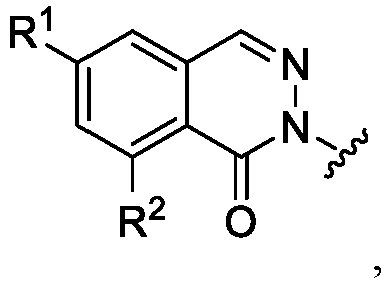

 jedes von R1 und R2 unabhängig Halogen, -H, -OH, -CN, -CF3, -C1-6-Alkyl oder ein 3-6-gliedriger Cycloaliphat ist, oderR1 und R2 zusammen mit den Atomen, an die sie angehängt sind, ein 5-6-gliedriges Cycloalkyl bilden, das an Ring C kondensiert ist, wobei das Cycloalkyl optional mit 1-2 von R6 substituiert ist, wobei jedes R6 unabhängig -H, Halogen oder C1-3-Alkyl ist;R3 C1-6-Alkyl ist;XY
 ist, wobeiRing B Phenyl oder ein 5-6-gliedriges monocyclisches Heteroaryl mit 1-2 Stickstoffatomen oder ein 7-10-gliedriger kondensierter bicyclischer Heterocyclus mit 2-3 Stickstoffatomen ist, wobei zumindest einer der Ringe des bicyclischen Heterocyclus teilweise oder vollständig ungesättigt ist und Ring D fehlt oder ein optional substituierter 4-7-gliedriger Heterocyclus mit zumindest 1 Stickstoffatom und optional 2 zusätzlichen Heteroatomen unabhängig ausgewählt aus N, O oder S ist;L eine zweiwertige C1-20-Alkylgruppe ist, wobei eine oder mehrere Methyleneinheiten der C1-20-Alkylgruppe optional und unabhängig durch -C(O)-, -C(S)-, -(O)CO-, -OC(O)-, -O-, -N(R')-, -S-, -N(R')C(O)-, zweiwertiges mono- oder bicyclisches Heterocycloalkyl, zweiwertiges mono- oder bicyclisches Cycloalkyl, zweiwertiges mono- oder bicyclisches Aryl oder zweiwertiges mono- oder bicyclisches Heteroaryl ersetzt sind, wobei jedes von dem zweiwertigen Heterocycloalkyl, Cycloalkyl, Aryl und Heteroaryl optional substituiert ist; undZ wie folgt ist:
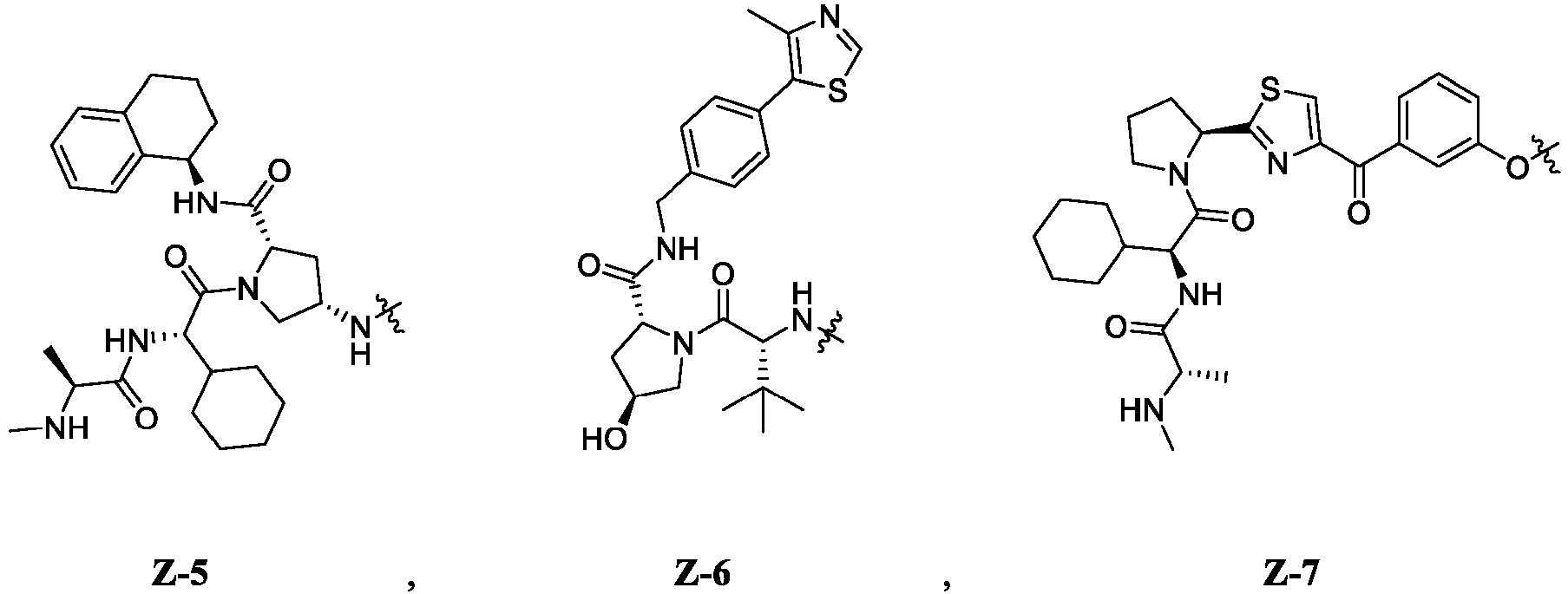 oder
oder Ring E Phenyl oder ein 5-6-gliedriges Heteroaryl mit zumindest 1 Heteroatom unabhängig ausgewählt aus N oder S ist;jedes von A1, A2 und A3 unabhängig -C(RB)= oder -N= ist;B -C(Rc)= oder -N= ist;W -C(RD)2- oder -C(O)- ist;RA -H, -CH3 oder -F ist;jedes RB unabhängig -H, Halogen, -OH, -C1-4-Alkyl oder -C1-4-Alkoxy ist;RC -H, Halogen oder C1-4-Alkyl ist; undjedes RD unabhängig -H oder -C1-3-Alkyl ist; undr 1, 2 oder 3 ist.
 - Verbindung oder pharmazeutisch verträgliches Salz nach Anspruch 1, wobei:- Z


 - ein D CH ist und das andere D N ist; oder jedes D CH ist;- zumindest eines von A4 und A5 N ist; oder A4 N ist, A5 CR15 ist und R15 -H oder C1-3-Alkyl ist;- R15 -H oder Methyl ist;- XY wie folgt ist: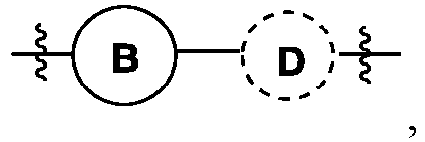


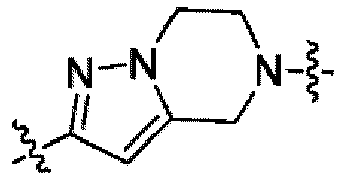


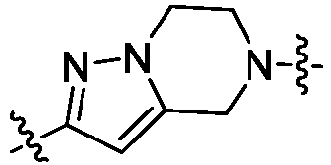
 - R3 ein C1-3-Alkyl ist; und/oder- r 1 oder 2 ist.
 - Verbindung oder pharmazeutisch verträgliches Salz nach Anspruch 1, wobei die Verbindung von Formel (I) wie folgt ist:- eine Verbindung von Formel (I-A)
 - eine Verbindung von Formel (I-A1)
 - eine Verbindung von Formel (I-A2)
 oder ein pharmazeutisch verträgliches Salz davon, wobeiD1 CH oder N ist; D2 CH oder N ist, und zumindest eines von D1 und D2 N ist; wobei optional D1 =CH- ist und D2 =N- ist; oder D1 =N- ist und D2 =CH- ist; oder- eine Verbindung von Formel (I-A3)
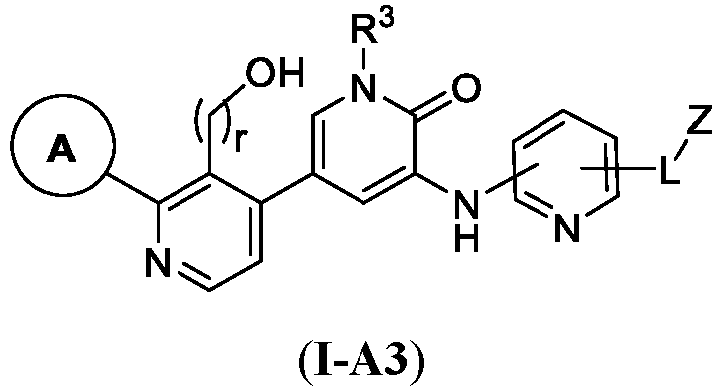 - eine Verbindung von Formel (I-B1), eine Verbindung von Formel (I-B2) oder eine Verbindung von Formel (I-B3)

 oder ein pharmazeutisch verträgliches Salz davon;wobei optionalRing B Phenyl, Pyridinyl oder Pyrimidinyl ist; und/oder Ring D ein optional substituierter 4-7-gliedriger Heterocyclus mit 1-2 Stickstoffatomen ist oder Ring D ein optional substituierter 5-6-gliedriger Heterocyclus mit 1-2 Stickstoffatomen ist.
 - Verbindung oder pharmazeutisch verträgliches Salz nach einem der Ansprüche 1-3, wobei L -Y1-Y2-Y3-Y4-Y5-Y6- ist, wobeiY1 wie folgt ist:-C(O)-, -C(O)-N(R)-, -(CH2-CH2-O)m-, -(O-CH2-CH2)m- oder -C1-6-Alkyl-;-C(O)- oder -C(O)-N(R)-;-C(O)-, Y2 -(CH2-CH2-O)n-, -(O-CH2-CH2)n-, -C1-4-Alkyl-, ein 3-6-gliedriges monocyclisches Cycloalkyl oder ein 7-11-gliedriges kondensiertes oder Spiro-Bicycloalkyl ist, und n 1 oder 2 ist; oder-(CH2-CH2-O)m-, -(O-CH2-CH2)m- oder-C1-6-Alkyl-;Y2 wie folgt ist:eine Bindung, -C(O)-, -O-, -(CH2-CH2-O)n-, -(O-CH2-CH2)n-, -C1-4-Alkyl-, ein optional substituiertes 3-6-gliedriges monocyclisches Cycloalkyl oder ein optional substituiertes 7-11-gliedriges kondensiertes oder Spiro-Bicycloalkyl;-(CH2-CH2-O)n-, -(O-CH2-CH2)n-, -CH2-, -CH2-CH2-, -CH2-CH2-CH2-, Cyclopentyl, Cyclohexyl oder ein 7-11-gliedriges Spiro-Bicycloalkyl, und n 1 oder 2 ist;-C(O)-, -O-, -(CH2-CH2-O)n-, -(O-CH2-CH2)n-,


 -C(O)-, -O-, -(CH2-CH2-O)n- oder -(O-CH2-CH2)n-, und n 2 oder 3 ist;Y3 wie folgt ist:eine Bindung, -O-, -N(R)-, -C1-4-Alkyl-, -(CH2-CH2-O)P-, -(O-CH2-CH2)P-, -(CH2-CH2-N(R))-, Phenyl, ein 5-6-gliedriges monocyclisches Heteroaryl mit 1-2 Heteroatomen unabhängig ausgewählt aus N und S, ein optional substituiertes 3-6-gliedriges Cycloalkyl oder ein optional substituierter 4-6-gliedriger Heterocyclus mit 1-3 Heteroatomen unabhängig ausgewählt aus N, O oder S;eine Bindung, -O-, -N(R)-, -C1-4-Alkyl-, -(CH2-CH2-N(R))-, Phenyl, ein 5-6-gliedriges monocyclisches Heteroaryl mit 1-2 Heteroatomen unabhängig ausgewählt aus N und S, ein optional substituiertes 3-6-gliedriges Cycloalkyl oder ein optional substituierter 4-6-gliedriger Heterocyclus mit 1-3 Heteroatomen unabhängig ausgewählt aus N, O oder S;eine Bindung, -N(R)-, -O-, -CH2-, -CH2-CH2-, -CH2-CH2-CH2-, -(CH2-CH2-N(R))-, Phenyl,
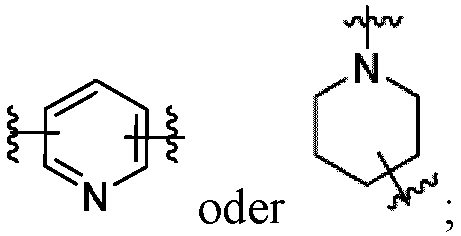 eine Bindung, -O-, -N(R)-, -(CH2-CH2-O)P-, -(O-CH2-CH2)p-, -(CH2-CH2-N(R))-, Phenyl,
 eine Bindung, -O-, -N(R)-, -(CH2-CH2-O)p- oder -(O-CH2-CH2)p-, und p 1 oder 2 ist; oder
 Y4 wie folgt ist:eine Bindung, -C(O)-, -N(R)-, -C(O)N(R)-, -N(R)C(O)-, -C1-4-Alkyl-, -(CH2-CH2-O)q-, - (O-CH2-CH2)q-, -(CH2-CH2-N(R))-, ein optional substituiertes 3-6-gliedriges Cycloalkyl oder ein optional substituierter 4-6-gliedriger Heterocyclus mit 1-3 Heteroatomen unabhängig ausgewählt aus N, O oder S;eine Bindung, -C(O)-, -N(R)-, -C(O)N(R)-, -N(R)C(O)-, -C1-4-Alkyl-, -(CH2-CH2-N(R))-, ein optional substituiertes 3-6-gliedriges Cycloalkyl oder ein optional substituierter 4-6-gliedriger Heterocyclus mit 1-3 Heteroatomen unabhängig ausgewählt aus N, O oder S;eine Bindung, -C(O)-, -N(R)-, -C(O)N(R)-, -N(R)C(O)-, -CH2-, -CH2-CH2-,
 eine Bindung, -N(R)-, -C(O)N(R)-, -N(R)C(O)-, -C1-4-Alkyl-, -(CH2-CH2-N(R))-, ein optional substituiertes 3-6-gliedriges Cycloalkyl oder ein optional substituierter 4-6-gliedriger Heterocyclus mit 1-3 Heteroatomen unabhängig ausgewählt aus N, O oderS; odereine Bindung, -N(H)-, -N(CH3)-, -N(H)C(O)-, -CH2-, -CH2-CH2-, -CH2-CH2-CH2-, -(CH2-CH2-N(H))-,
 Y5 wie folgt ist:eine Bindung, -N(R)-, -C(O)-, -C1-4-Alkyl-, -(CH2-CH2-O)s-, -(O-CH2-CH2)s- oder ein 5-6-gliedriges Heteroaryl mit 1-3 Heteroatomen unabhängig ausgewählt aus N oder S;eine Bindung, -N(R)-, -C-4-Alkyl-, -(CH2-CH2-O)s-, -(O-CH2-CH2)s- oder ein 5-6-gliedriges Heteroaryl mit 1-3 Heteroatomen unabhängig ausgewählt aus N oder S;
 eine Bindung, -N(R)-, -CH2-, -CH2-CH2-, -CH2-CH2-CH2-, -(CH2-CH2-O)s-, -(O-CH2-CH2)s- oder
 eine Bindung, -C(O)-, -C1-4-Alkyl-, -(CH2-CH2-O)s-, -(O-CH2-CH2)s- oder ein 5-6-gliedriges Heteroaryl mit 1-3 Heteroatomen unabhängig ausgewählt aus N oder S; odereine Bindung, -C(O)-, -CH2-, -CH2-CH2-, -CH2-CH2-CH2-, -(CH2-CH2-O)s-, -(O-CH2-CH2)s- oder
 Y6 wie folgt ist:eine Bindung oder -(CH2-CH2-N(R))-; oder eine Bindung oder -CH2-CH2-N(H)-jedes von m und n unabhängig 1, 2, 3, 4 oder 5 ist;jedes von p, q und s unabhängig 1, 2 oder 3 ist; undR -H oder -C1-3-Alkyl ist.
 - Verbindung oder pharmazeutisch verträgliches Salz nach Anspruch 1, wobei die Verbindung von Formel (I) eine Verbindung von Formel (II)
 oder ein pharmazeutisch verträgliches Salz davon;eine Verbindung von Formel (II-A)
 oder ein pharmazeutisch verträgliches Salz davon; odereine Verbindung von Formel (II-B)
 oder ein pharmazeutisch verträgliches Salz davon ist;wobeiR1 C1-6-Alkyl, Hydroxyl, Halogen, Cyano oder ein 3-6-gliedriger Cycloaliphat ist;R2 C1-6-Alkyl, Hydroxyl, Halogen, Cyano oder ein 3-6-gliedriger Cycloaliphat ist; oder R2 C1-6-Alkyl, Hydroxyl, Halogen oder Cyano ist;R3 C1-6-Alkyl ist;X1 =N- ist;X2 =CH- oder =N- ist;r 1, 2 oder 3 ist;L eine zweiwertige C1-20-Alkylgruppe ist, optional substituiert mit C1-6-Alkyl, Acyl, Oxo, Halogen oder Alkoxy, wobei eine oder mehrere Methyleneinheiten der C1-20-Alkylgruppe optional und unabhängig ersetzt sind durch -CO-, -CS-, -CONH-, -CONHNH-, -CO2-, -OCO-, - NHCO2-, -O-, -NHCONH-, -OCONH-, -NHNH-, -NHCO-, -S-, -S(O)-, -S(O)2-, -NH-, -S(O)2NH-, - NHS(O)2-, -NHS(O)2NH-, zweiwertigen mono- oder bicyclischen Heterocyclus, zweiwertiges mono- oder bicyclisches Cycloalkyl, zweiwertiges mono- oder bicyclisches Aryl oder zweiwertiges mono- oder bicyclisches Heteroaryl, wobei der Heterocyclus und das Heteroaryl von L 1-3 Heteroatome unabhängig ausgewählt aus N, O oder S aufweist; undZ wie folgt ist:
 oder
oder
- Verbindung oder pharmazeutisch verträgliches Salz nach Anspruch 5, wobei:- R1 C1-6-Alkyl ist, wobei optional R1 Methyl, Ethyl, Propyl, iso-Propyl, sec-Butyl oder tert-Butyl ist, wobei bevorzugt R1 tert-Butyl ist; oder R1 3-6-gliedriger Cycloaliphat ist, wobei optional R1 Cyclopropyl, Cyclopentyl oder Cyclohexyl ist;- R2 Halogen ist, wobei optional R2 -F ist;- R3 Methyl, Ethyl, Propyl, iso-Propyl, sec-Butyl oder tert-Butyl ist, wobei optional R3 Methyl ist;- n 1 ist;- zumindest eines von X1 und X2 =N- ist; wobei optional beides von X1 und X2 =N-sind; und/oder- L eine zweiwertige C1-20-Alkylgruppe ist, wobei eine oder mehrere Methyleneinheiten der C1-20-Alkylgruppe optional und unabhängig ersetzt sind durch -CO-, -CS-, -OCO-, -O-, -NHCO-, -S-, -NH-, zweiwertigen mono- oder bicyclischen Heterocyclus, zweiwertiges mono- oder bicyclisches Cycloalkyl, zweiwertiges mono- oder bicyclisches Aryl oder zweiwertiges mono- oder bicyclisches Heteroaryl, wobei der Heterocyclus und das Heteroaryl 1-3 Heteroatome unabhängig ausgewählt aus N, O oder S aufweisen; oder wobei L eine zweiwertige C1-20-Alkylgruppe ist, wobei eine oder mehrere Methyleneinheiten der C1-20-Alkylgruppe optional und unabhängig ersetzt sind durch -CO-, -O-, -NH-, zweiwertiges mono- oder bicyclisches Heterocycloalkyl mit 1-3 Heteroatomen unabhängig ausgewählt aus N, O oder S, oder zweiwertiges mono- oder bicyclisches Cycloalkyl; oder wobei L eine zweiwertige C1-10-Alkylgruppe ist, wobei eine oder mehrere Methyleneinheiten der C1-10-Alkylgruppe optional und unabhängig ersetzt sind durch -CO-, -OCO-, -O-, -NHCO-, -NH-, zweiwertigen mono- oder bicyclischen Heterocyclus, zweiwertiges mono- oder bicyclisches Cycloalkyl, zweiwertiges mono- oder bicyclisches Aryl oder zweiwertiges mono- oder bicyclisches Heteroaryl, wobei der Heterocyclus und das Heteroaryl 1-3 Heteroatome unabhängig ausgewählt aus N, O oder S aufweisen.
- Verbindung oder pharmazeutisch verträgliches Salz nach Anspruch 5 oder Anspruch 6, wobei L -Y1-Y2-Y3-Y4-Y5- ist, wobeiY1 wie folgt ist:-C(O)- oder -C1-6-Alkyl-, oder-C(O)- oder -C4-6-Alkyl-;Y2 wie folgt ist:eine Bindung, -O-, -(CH2-CH2-O)n-, -(O-CH2-CH2)n-, -C1-4-Alkyl-, 3-6-gliedriges Cycloalkyl; oder-(CH2-CH2-O)n-, -(O-CH2-CH2)n- oder -C1-4-Alkyl-;Y3 wie folgt ist:eine Bindung, -O-, -N(R)-, -C1-4-Alkyl-, -(CH2-CH2-O)p-, -(O-CH2-CH2)p-, -(CH2-CH2-N(R))-, Phenyl, 3-6-gliedriges Cycloalkyl oder 4-6-gliedriger Heterocyclus mit 1-3 Heteroatomen unabhängig ausgewählt aus N, O oder S; odereine Bindung, -O-, -C1-4-Alkyl-, -(CH2-CH2-N(R))-,

 Y4 wie folgt ist:eine Bindung, -C(O)-, -C(O)N(R)-, -C(O)N(R)-, -C1-4-Alkyl-, -(CH2-CH2-O)q-, -(O-CH2-CH2)q-, -(CH2-CH2-N(R))-, 3-6-gliedriges Cycloalkyl oder 4-6-gliedriger Heterocyclus mit 1-3 Heteroatomen unabhängig ausgewählt aus N, O oder S; odereine Bindung, -C(O)-, -C(O)N(R)-, -C(O)N(R)- oder -C1-4-Alkyl-;Y5 wie folgt ist:eine Bindung, -N(R)-, -C(O)-, -C1-4-Alkyl- oder ein 5-6-gliedriges Heteroaryl mit 1-3 Heteroatomen unabhängig ausgewählt aus N, O oder S;n 1, 2, 3, 4 oder 5 ist;p 1, 2 oder 3 ist;q 1, 2 oder 3 ist; undR -H oder -C1-3-Alkyl odereine Bindung, -N(R)-, -C(O)-, -C1-4-Alkyl- oder
- Verbindung oder pharmazeutisch verträgliches Salz nach einem der Ansprüche 4-7, wobei L ausgewählt ist aus Methylen, Ethylen, n-Propylen, n-Butylen, n-Pentylen, n-Hexylen,







- Verbindung oder pharmazeutisch verträgliches Salz nach Anspruch 1, wobei die Verbindung von Formel (I) eine Verbindung von Formel (III)
 oder pharmazeutisch verträgliches Salz davon ist;wobei optional jedes R6 unabhängig -H oder C1-3-Alkyl ist und/oder R4 unabhängig -H oder C1-3-Alkyl ist.
 - Verbindung oder pharmazeutisch verträgliches Salz nach Anspruch 9, wobei die Verbindung von Formel (III) wie folgt ist:eine Verbindung von Formel (III-A)
 oder ein pharmazeutisch verträgliches Salz davon;eine Verbindung von Formel (III-B)
 oder ein pharmazeutisch verträgliches Salz davon; odereine Verbindung von Formel (III-C)
 oder ein pharmazeutisch verträgliches Salz davon;wobei:R4 -H oder -C1-3-Alkyl ist;L -Y1-Y2-Y3-Y4-Y5-Y6- ist;Y1 -C(O)-, -C(O)-N(R)-, -(CH2-CH2-O)m- -(O-CH2-CH2)m- oder-C1-4-Alkyl- ist;Y2 eine Bindung, -O-, -C1-4-Alkyl-, -(O-CH2-CH2)n-, -(CH2-CH2-O)n-, -(CH2-CH2-N(R))- oder 3-6-gliedriges Cycloalkyl ist,Y3 eine Bindung, -O-, -N(R)-, -C1-4-Alkyl-, -(CH2-CH2-O)P-, -(O-CH2-CH2)P-, -(CH2-CH2-N(R))-, 3-6-gliedriges Cycloalkyl oder 4-6-gliedriges Heterocycloalkyl mit 1-3 Heteroatomen unabhängig ausgewählt aus N, O oder S ist;Y4 eine Bindung, -N(R)-, -C1-4-Alkyl-, -(CH2-CH2-O)q-, -(O-CH2-CH2)q- -(CH2-CH2-N(R))-, 3-6-gliedriges Cycloalkyl oder 4-6-gliedriges Heterocycloalkyl mit 1-3 Heteroatomen unabhängig ausgewählt aus N, O oder S ist;Y5 eine Bindung, -N(R)-, -(CH2-CH2-O)s- oder -(O-CH2-CH2)s- ist;Y6 eine Bindung oder -(CH2-CH2-N(R))- ist;jedes R unabhängig -H oder -C1-3-Alkyl ist; undjedes von m, p, q und s unabhängig 1, 2 oder 3 ist;Z wie folgt ist: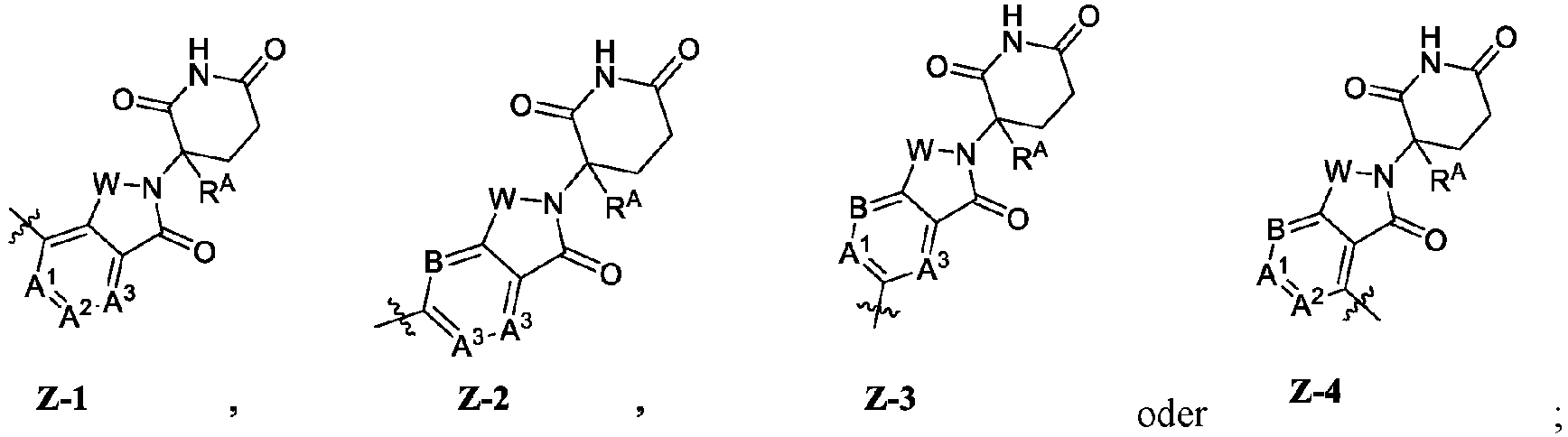
 jedes von A1, A2 und A3 unabhängig -C(RB)= oder -N= ist;B -C(RC)= oder -N= ist;W -C(RD)2- oder -C(O)- ist;RA -H, -CH3 oder -F ist;jedes RB unabhängig -H, Halogen, -OH, -C1-4-Alkyl oder -C1-4-Alkoxy ist;Rc -H, Halogen oder C1-4-Alkyl ist; undjedes RD unabhängig -H oder -C1-3-Alkyl ist;vorausgesetzt, dass, wenn jedes von Y3, Y4, Y5 und Y6 eine Bindung ist, dann Y2 keine Bindung ist.
 - Verbindung oder pharmazeutisch verträgliches Salz nach Anspruch 9 oder Anspruch 10, wobei L ausgewählt ist aus







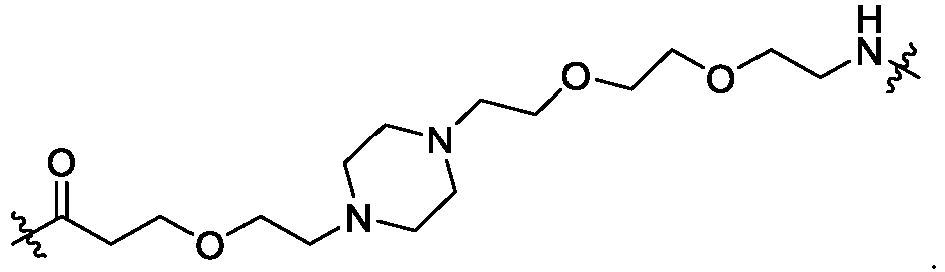
- Verbindung nach Anspruch 1, ausgewählt aus Tabelle 1 oder pharmazeutisch verträgliches Salz davon:
Tabelle 1 Verbind ung Nr. Struktur 1 
Verbind ung Nr. Struktur 2 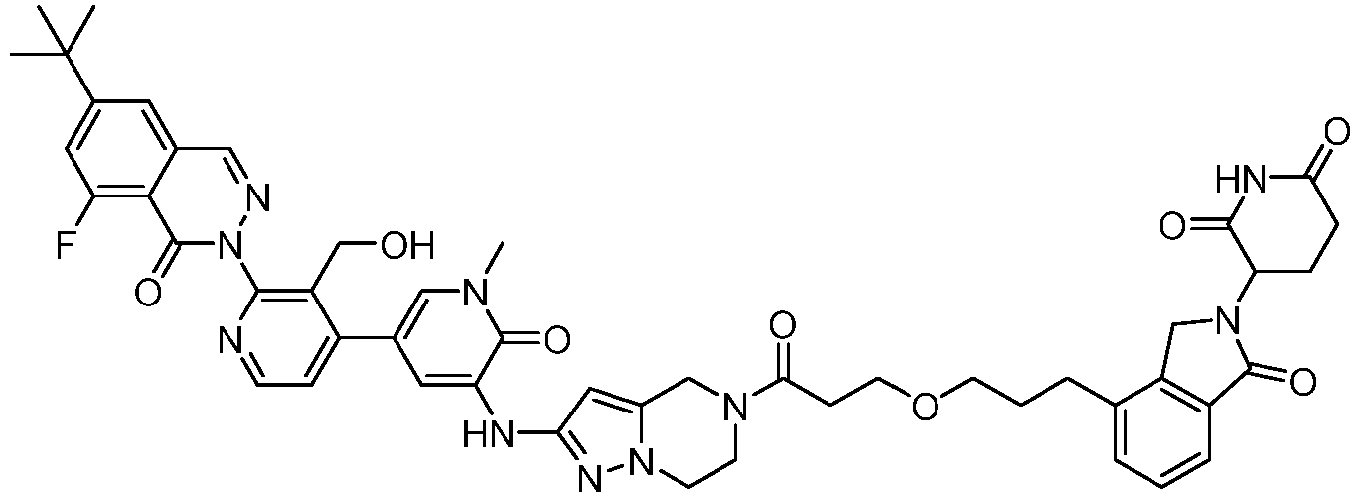
3 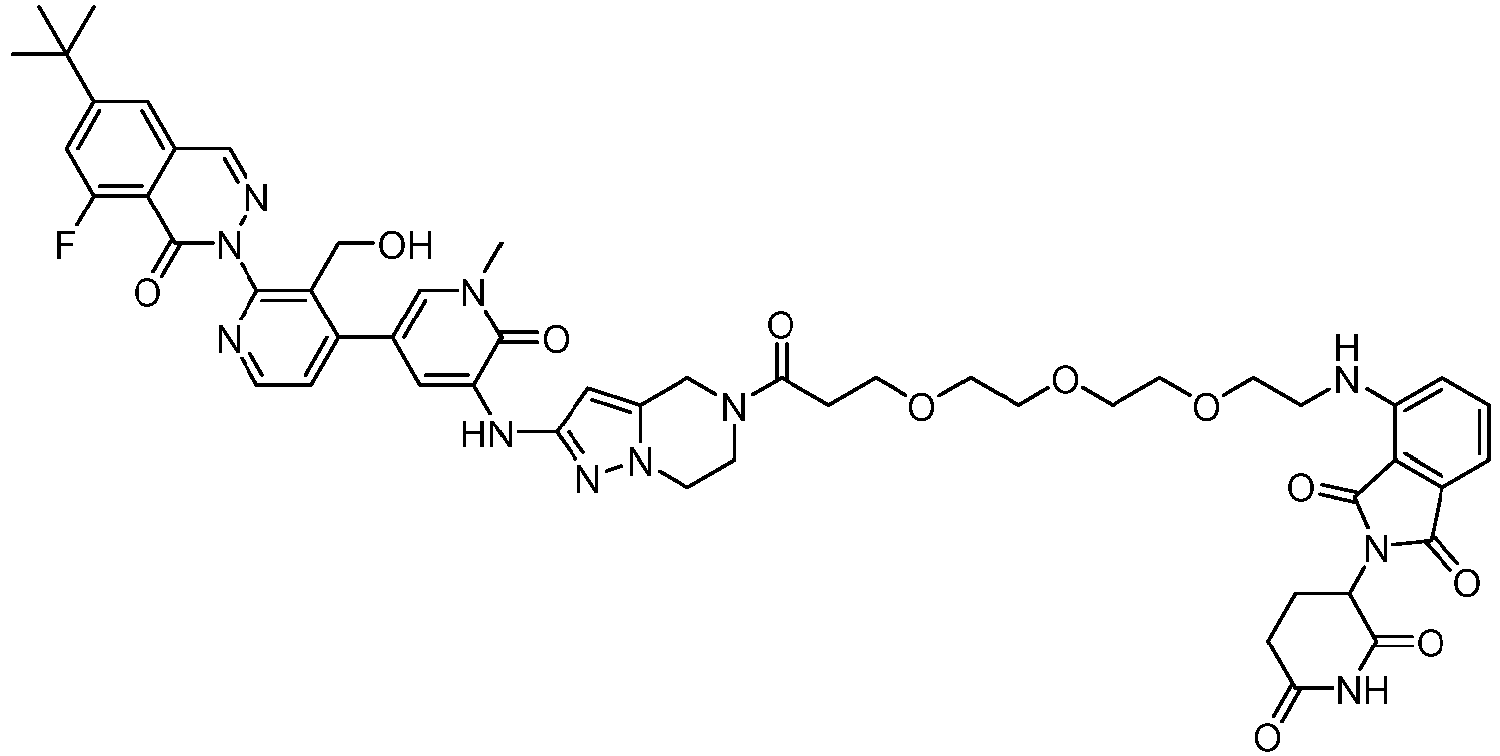
4 
5 
6 
7 
8 
9 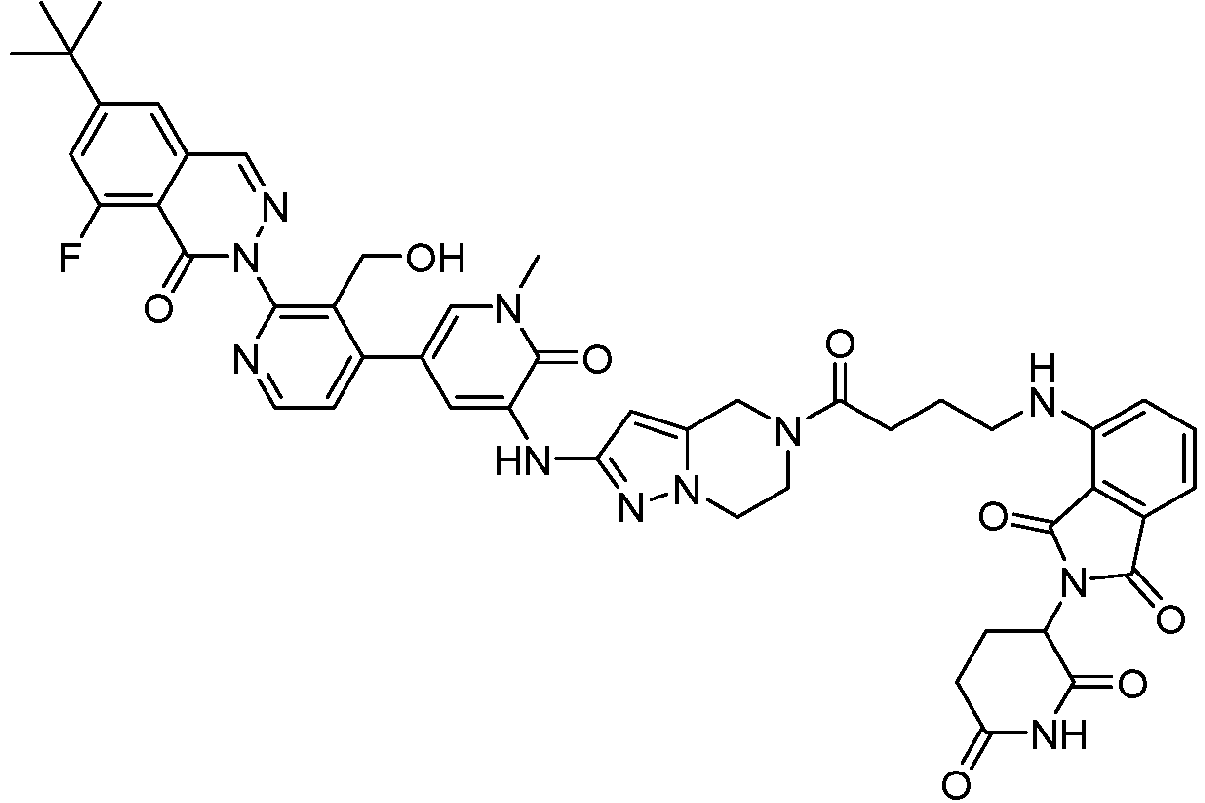
10 
11 
12 
13 
14 
15 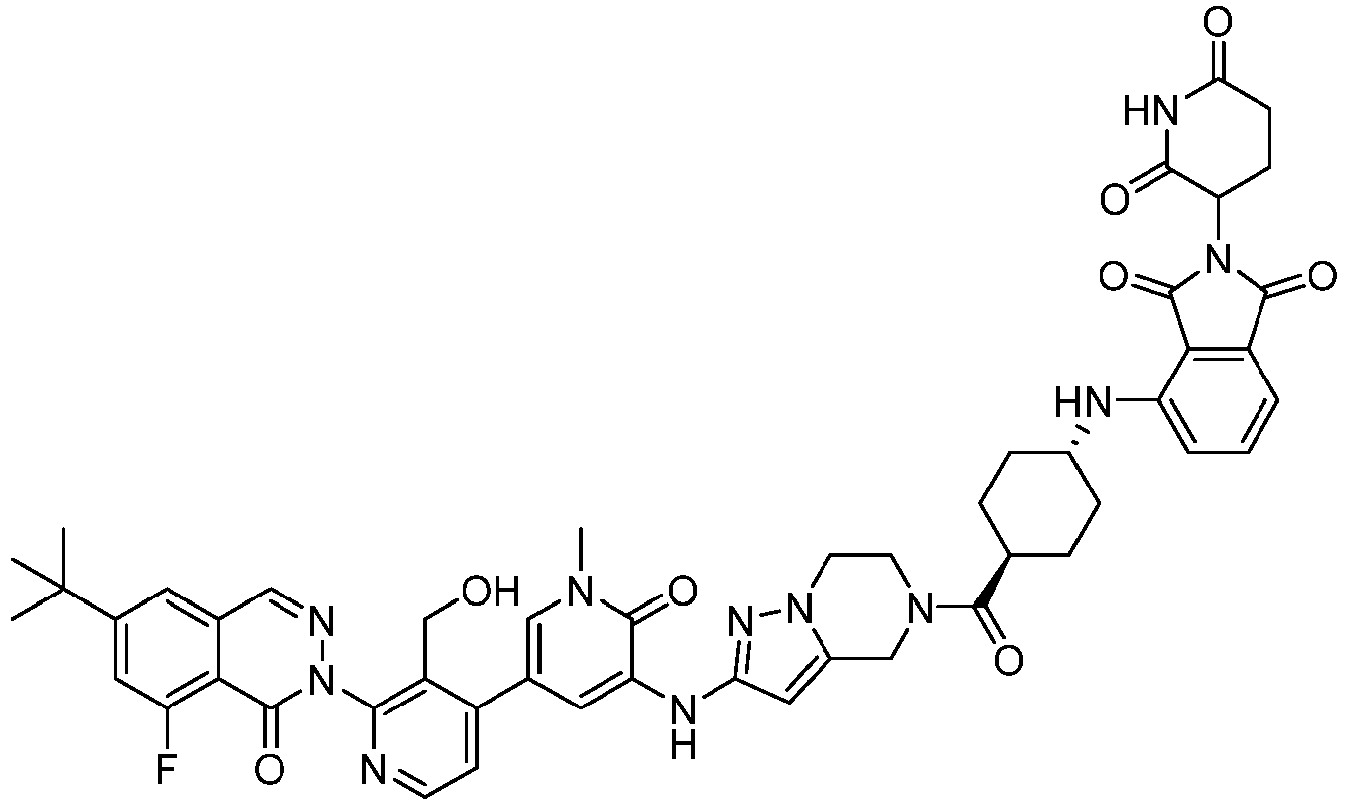
16 
17 
18 
19 
20 
21 
22 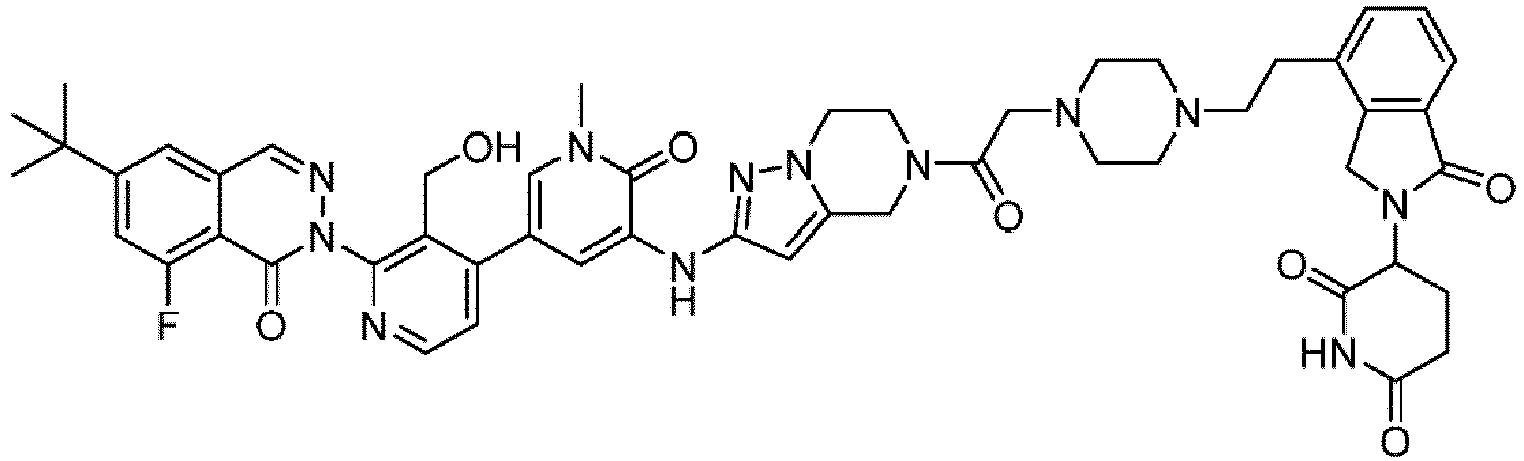
23 
25 
26 
27 
28 
29 
30 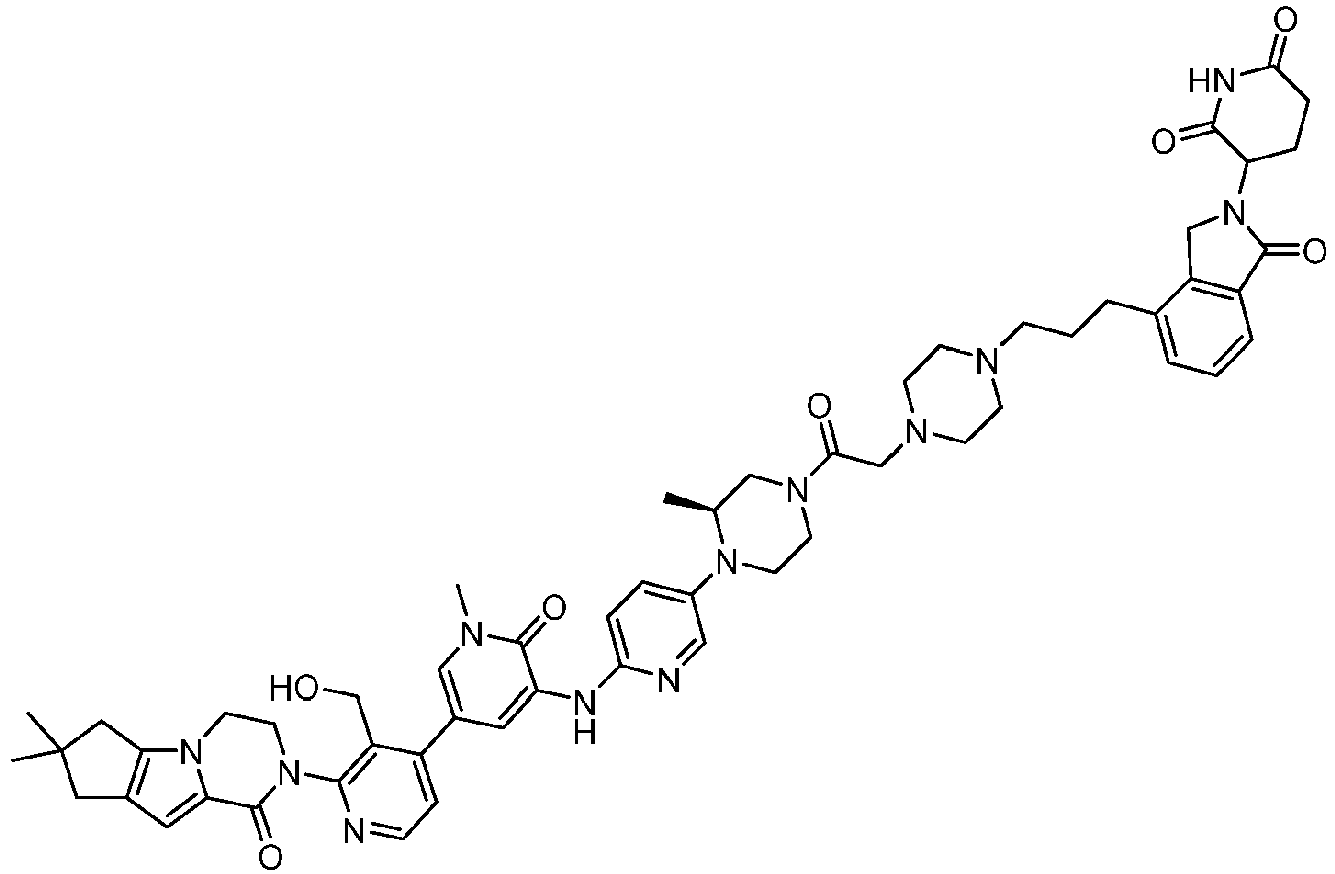
31 
32 
33 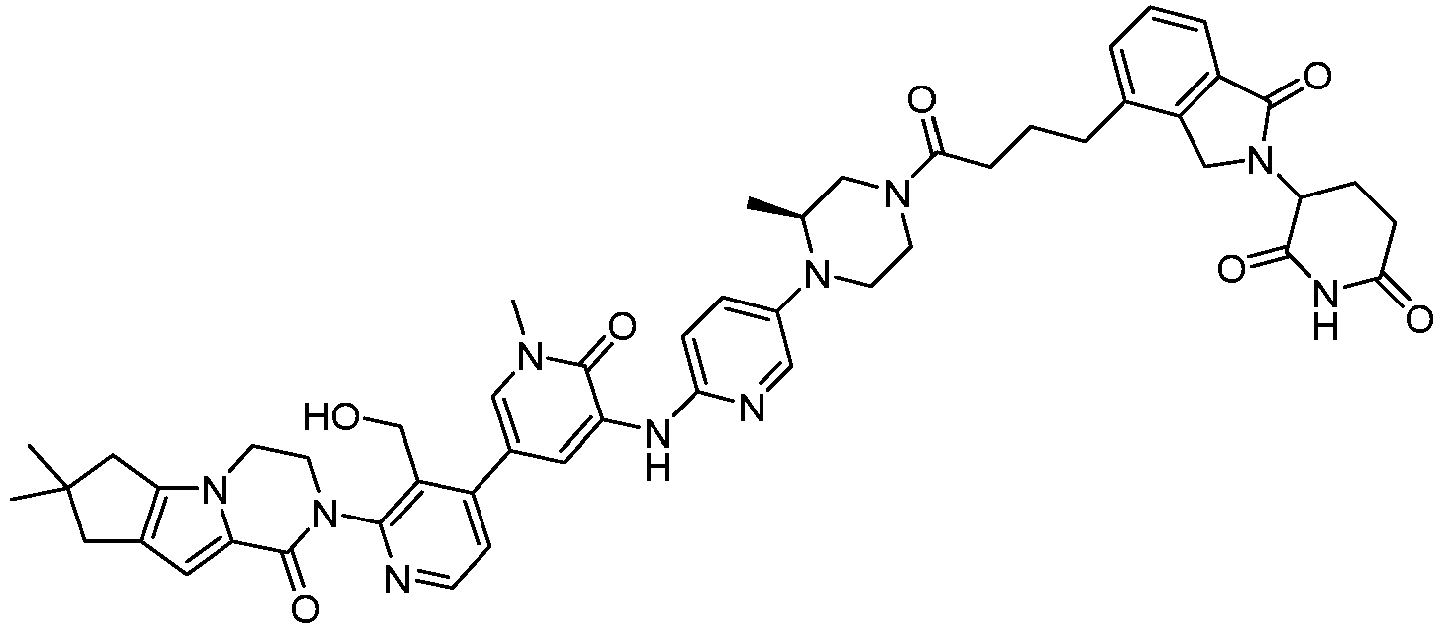
34 
35 
36 
37 
38 
39 
40 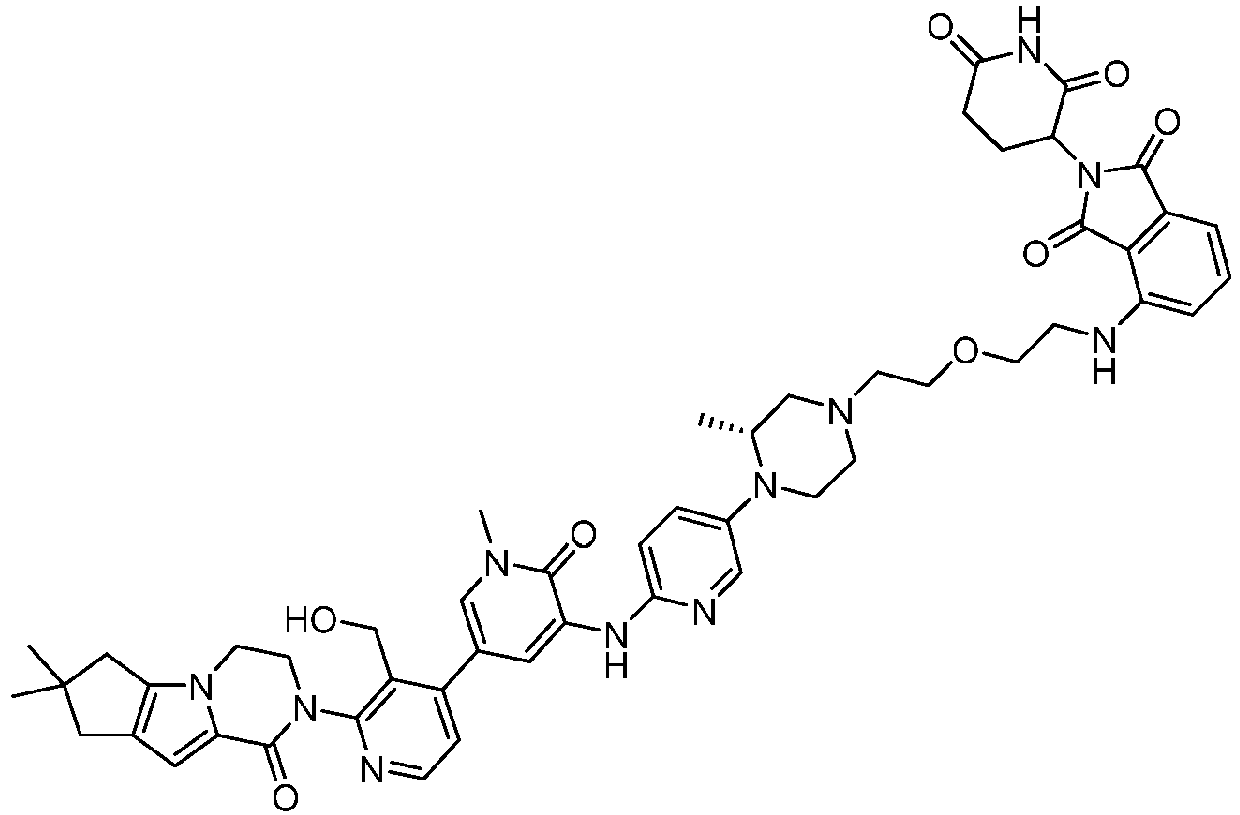
41 
42 
43 
44 
45 
46 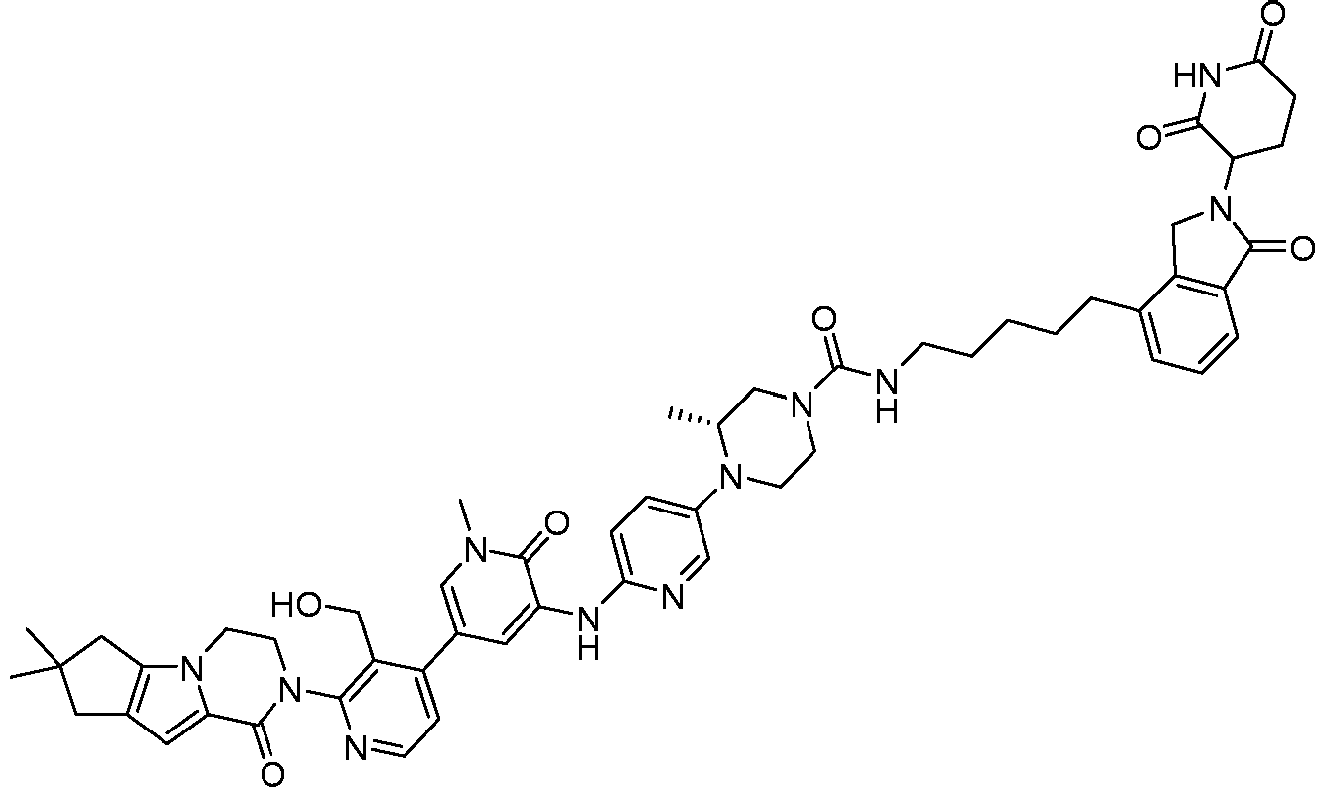
47 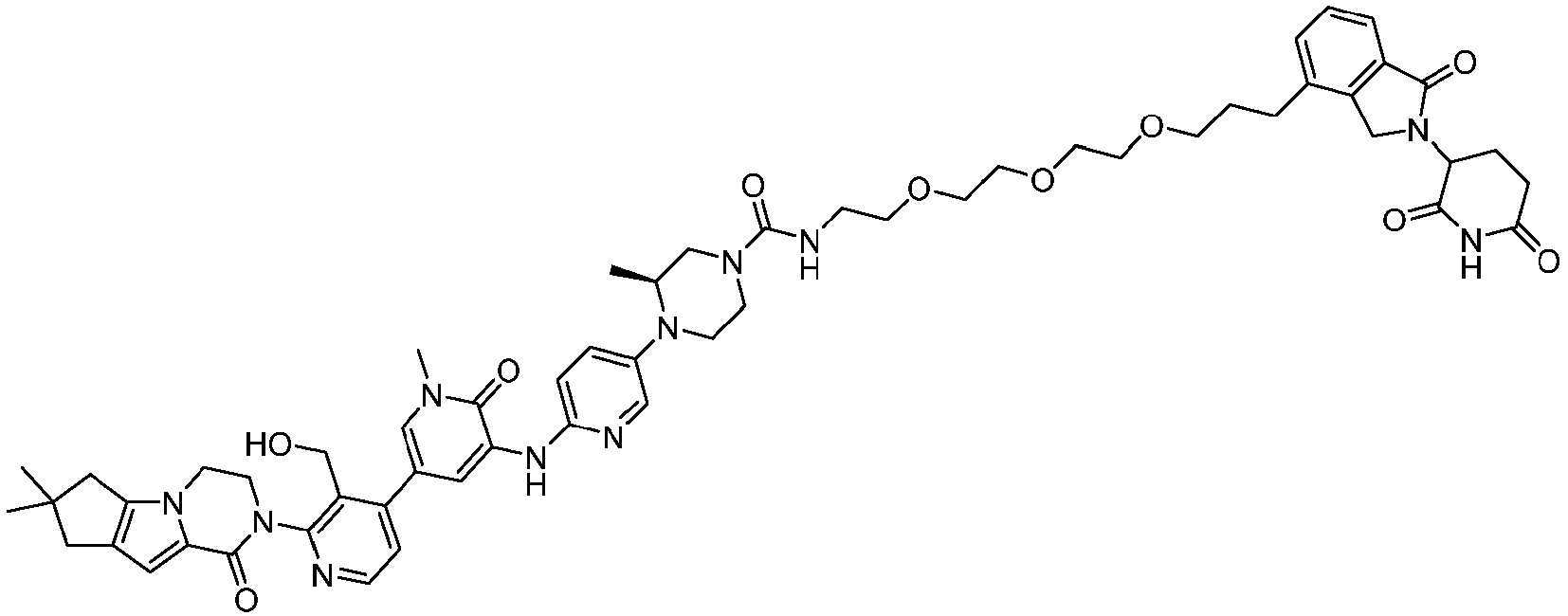
48 
49 
50 
51 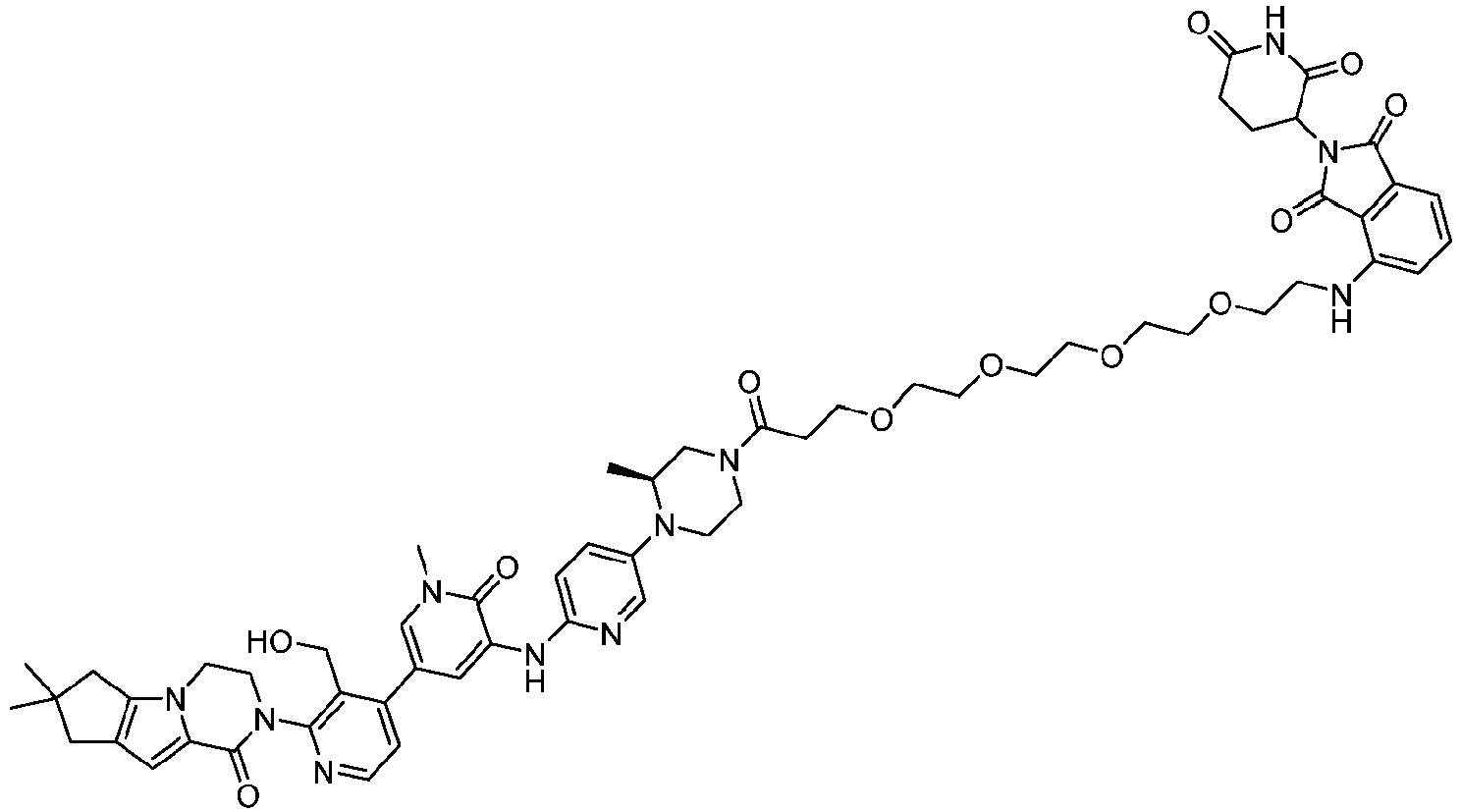
52 
53 
54 
55 
56 
57 
58 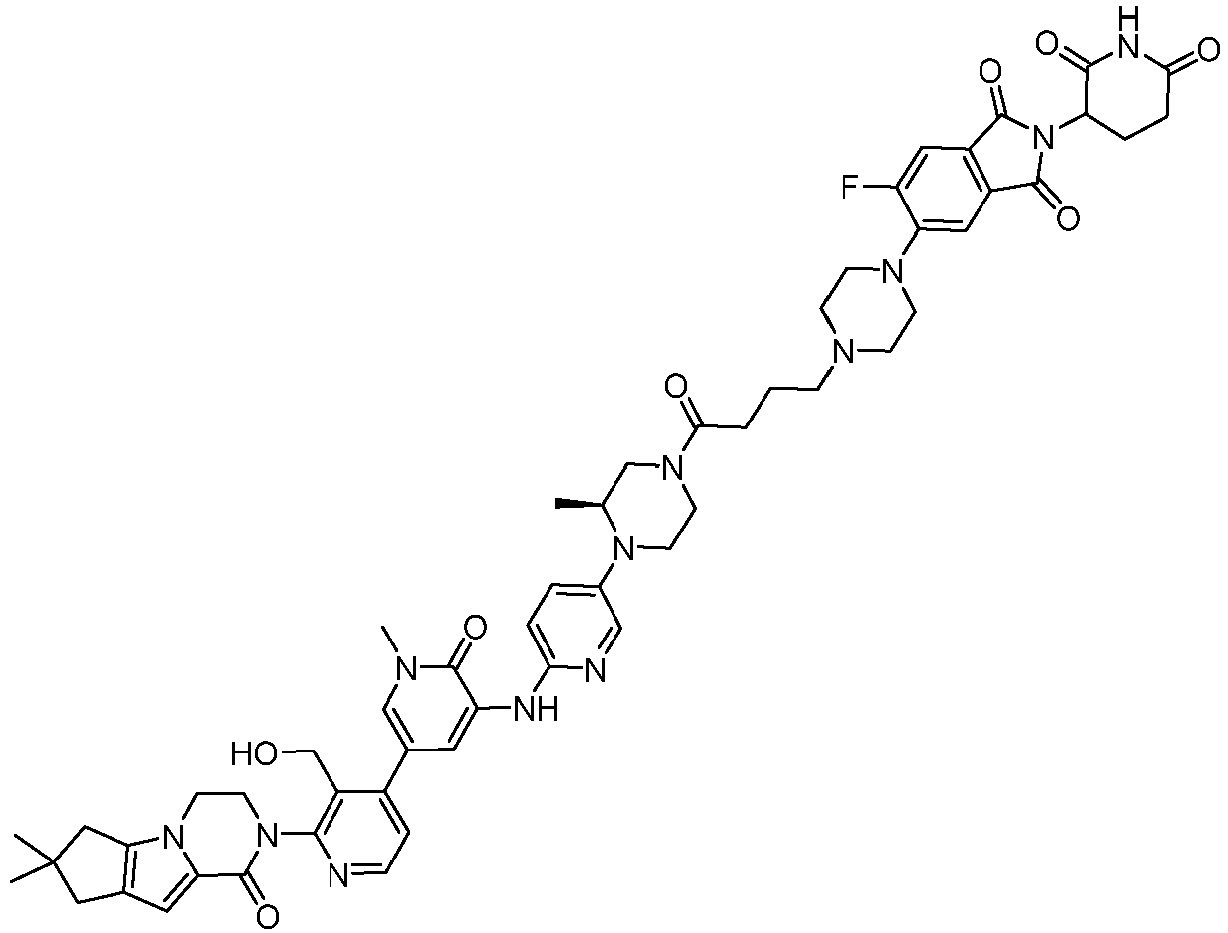
- Verbindung von:
24 
- Pharmazeutische Zusammensetzung, umfassend eine Verbindung oder pharmazeutisch verträgliches Salz einer Verbindung nach einem der vorhergehenden Ansprüche und einen pharmazeutisch verträglichen Träger, ein pharmazeutisch verträgliches Vehikel oder ein pharmazeutisch verträgliches Adjuvans.
- Verbindung oder pharmazeutisch verträgliches Salz nach einem der Ansprüche 1-13 oder pharmazeutische Zusammensetzung nach Anspruch 14 zur Verwendung in einem Verfahren zum Behandeln einer Erkrankung oder Störung, die durch Abbau von Bruton-Tyrosinkinase verursacht wird.
- Verbindung oder Zusammensetzung zur Verwendung gemäß Anspruch 15, wobei die Erkrankung oder Störung Krebs oder eine Autoimmunerkrankung ist.
- Verbindung oder Zusammensetzung zur Verwendung gemäß Anspruch 16, wobei:der Krebs ein hämatologischer Krebs ausgewählt aus myeloischer Leukämie (akut und chronisch), akuter lymphoblastischer Leukämie, chronischer lymphatischer Leukämie, myeloproliferativen Erkrankungen, multiplem Myelom, myelodysplastischem Syndrom, Hodgkin-Erkrankung, Non-Hodgkin-Lymphom (malignes Lymphom), Haarzell-Lymphom, Mantelzell-Lymphom, Waldenström-Makroglobulinämie, Marginalzonen-Lymphom und follikulärem Lymphom ist; oderdie Autoimmunerkrankung ausgewählt ist aus Urtikaria, Graft-versus-Host-Erkrankung, Pemphigus vulgaris, Achalasie, Addison-Erkrankung, adulter Still-Erkrankung, Agammaglobulinämie, Alopezie areata, Amyloidosis, ankylosierender Spondylitis, Anti-GBM/Anti-TBM-Nephritis, Antiphospholipidsyndrom, autoimmunem Angioödem, autoimmuner Dysautonomie, autoimmuner Enzephalomyelitis, autoimmuner Hepatitis, autoimmuner Innenohrerkrankung (AIED), autoimmuner Myokarditis, autoimmuner Oophoritis, autoimmuner Orchitis, autoimmuner Pankreatitis, autoimmuner Retinopathie, axonaler und neuronaler Neuropathie (AMAN), Balo-Erkrankung, Behcet-Erkrankung, benignem Schleimhautpemphigoid, bullösem Pemphigoid, Castleman-Erkrankung (CD), Zöliakie-Erkrankung, Chagas-Erkrankung, chronischer entzündlicher demyelinisierender Polyneuropathie (CIDP), chronischer wiederkehrender multifokaler Osteomyelitis (CRMO), Churg-Strauss-Syndrom (CSS) oder eosinophiler Granulomatose (EGPA), vernarbendem Pemphigoid, Cogan-Syndrom, Kälteagglutininerkrankung, angeborenem Herzblock, Coxsackie-Myokarditis, CREST-Syndrom, Crohn-Erkrankung, Dermatitis herpetiformis, Dermatomyositis, Devic-Erkrankung (Neuromyelitis optica), diskoidem Lupus, Dressler-Syndrom, Endometriose, eosinophiler Ösophagitis (EoE), eosinophiler Fasciitis, Erythema nodosum, essentieller gemischter Kryoglobulinämie, Evans-Syndrom, Fibromyalgie, fibrosierender Alveolitis, Riesenzellarteriitis (temporaler Arteriitis), Riesenzellmmyokarditis, Glomerulonephritis, Goodpasture-Syndrom, Granulomatose mit Polyangiitis, Graves-Erkrankung, Guillain-Barre-Syndrom, Hashimoto thyroiditis, hämolytischer Anämie, Purpura Schönlein-Henoch (HSP), Herpes gestationis oder Pemphigoid gestationis (PG), Hidradenitis suppurativa (HS) (Akne inversa), Hypogammalglobulinämie, IgA-Nephropathie, IgG4-bedingter sklerosierender Erkrankung, immunthrombozytopenischer Purpura (ITP), Einschlusskörpermyositis (IBM), interstitieller Zystitis (IC), juveniler Arthritis, juvenilem Diabetes (Diabetes Typ 1), juveniler Myositis (JM), Kawasaki-Erkrankung, Lambert-Eaton-Syndrom, leukozytoklastischer Vaskulitis, Lichen planus, Lichen sclerosus, Konjunktivitis linosa, linearer IgA-Erkrankung (LAD), Lupus, chronischer Lyme-Erkrankung, Meniere-Erkrankung, mikroskopischer Polyangiitis (MPA), gemischter Bindegewebeerkrankung (MCTD), Mooren's Geschwür, Mucha-Habermann-Erkrankung, multifokaler motorischer Neuropathie (MMN) oder MMNCB, multipler Sklerose, Myasthenia gravis, Myositis, Narkolepsie, neonatalem Lupus, Neuromyelitis optica, Neutropenie, okulärem vernarbenden Pemphigoid, optischer Neuritis, palindromem Rheuma (PR), PANDAS, paraneoplastischer cerebellarer Degeneration (PCD), paroxysmaler nächtlicher Hämoglobinurie (PNH), Parry-Romberg-Syndrom, Pars planitis (peripheraler Uveitis), Parsonnage-Turner-Syndrom, Pemphigus, peripheraler Neuropathie, perivenöser Encephalomyelitis, perniziöser Anämie (PA), POEMS-Syndrom, Polyarteritis nodosa, polyglandulären Syndromen Typ I, II, III, Polymyalgia rheumatica, Polymyositis, Postherzinfarktsyndrom, Postperikardiotomiesyndrom, primärer biliärer Zirrhose, primärer sklerosierender Cholangitis, Progesterondermatitis, Psoriasis, psoriatischer Arthritis, Aplasie der roten Blutkörperchen (PRCA), Pyoderma gangrenosum, Raynaud-Phänomen, reaktiver Arthritis, reflexsympathischer Dystrophie, rezidivierender Polychondritis, Restless-Legs-Syndrom (RLS), retroperitonealer Fibrose, rheumatischem Fieber, rheumatoider Arthritis, Sarkoidose, Schmidt-Syndrom, Skleritis, Skleroderm, Sjögren-Syndrom, Autoimmunität der Spermien und Hoden, Stiff-Person-Syndrom (SPS), subakuter bakterieller Endokarditis (SBE), Susac-Syndrom, sympathischer Ophthalmie (SO), Takayasu-Arteriitis, temporaler Arteriitis (Riesenzellarteriitis), thrombozytopenischer Purpura (TTP), Tolosa-Hunt-Syndrom (THS), transverser Myelitis, Diabetes Typ 1, Colitis ulcerosa (UC), undifferenzierter Bindegewebserkrankung (UCTD), Uveitis, Vaskulitis, Vitiligo, Vogt-Koyanagi-Harada-Erkrankung und Wegener-Granulomatose (oder Granulomatose mit Polyangiitis (GPA)).
Applications Claiming Priority (1)
| Application Number | Priority Date | Filing Date | Title |
|---|---|---|---|
| PCT/US2019/060584 WO2021091575A1 (en) | 2019-11-08 | 2019-11-08 | Bifunctional compounds for degrading btk via ubiquitin proteosome pathway |
Publications (2)
| Publication Number | Publication Date |
|---|---|
| EP4055019A1 EP4055019A1 (de) | 2022-09-14 |
| EP4055019B1 true EP4055019B1 (de) | 2025-01-22 |
Family
ID=68808521
Family Applications (1)
| Application Number | Title | Priority Date | Filing Date |
|---|---|---|---|
| EP19816986.4A Active EP4055019B1 (de) | 2019-11-08 | 2019-11-08 | Bifunktionelle verbindungen zum abbau von btk über den ubiquitin-proteosom-signalweg |
Country Status (3)
| Country | Link |
|---|---|
| US (1) | US20230024442A1 (de) |
| EP (1) | EP4055019B1 (de) |
| WO (1) | WO2021091575A1 (de) |
Families Citing this family (21)
| Publication number | Priority date | Publication date | Assignee | Title |
|---|---|---|---|---|
| US11100492B2 (en) | 2018-02-19 | 2021-08-24 | Peter Garrett | General purpose re-loadable card aggregation implementation |
| EP3867242A1 (de) | 2018-10-15 | 2021-08-25 | Nurix Therapeutics, Inc. | Bifunktionelle verbindungen zum abbau von btk über den ubiquitin-proteosom-signalweg |
| EP3876939A4 (de) | 2018-11-07 | 2022-08-10 | Dana-Farber Cancer Institute, Inc. | Benzothiazolderivate und 7-aza-benzothiazol-derivate als inhibitoren der janus-kinase-2 und verwendungen davon |
| US11464802B2 (en) | 2019-04-09 | 2022-10-11 | Nurix Therapeutics, Inc. | 3-substituted piperidine compounds for Cbl-b inhibition, and use thereof |
| AU2020278592B2 (en) | 2019-05-17 | 2024-10-10 | Nurix Therapeutics, Inc. | Cyano cyclobutyl compounds for Cbl-b inhibition and uses thereof |
| CN114364670B (zh) | 2019-06-26 | 2025-06-13 | 纽力克斯治疗公司 | 用于Cbl-b抑制的取代苄基-三唑类化合物及其进一步用途 |
| EP4570320A3 (de) | 2019-12-04 | 2025-08-27 | Nurix Therapeutics, Inc. | Bifunktionelle verbindungen zum abbau von btk über den ubiquitin-proteosom-signalweg |
| BR112022022409A2 (pt) | 2020-05-06 | 2023-02-07 | Ajax Therapeutics Inc | 6-heteroarilóxi benzimidazóis e azabenzimidazóis como inibidores de jak2 |
| EP4263552A1 (de) * | 2020-12-20 | 2023-10-25 | Guangzhou Lupeng Pharmaceutical Company Ltd. | Btk-abbauer |
| EP4267574B1 (de) | 2020-12-23 | 2025-04-23 | Ajax Therapeutics, Inc. | 6-heteroaryloxybenzimidazole und azabenzimidazole als jak2-inhibitoren |
| WO2022206924A1 (zh) * | 2021-04-02 | 2022-10-06 | 南京明德新药研发有限公司 | 含氮三并环双功能化合物及其制备方法和应用 |
| AU2022254104A1 (en) | 2021-04-08 | 2023-10-26 | Nurix Therapeutics, Inc. | Combination therapies with cbl-b inhibitor compounds |
| WO2023009709A1 (en) * | 2021-07-29 | 2023-02-02 | Ajax Therapeutics, Inc. | Pyrazolo piperazines as jak2 inhibitors |
| CN118475567A (zh) | 2021-08-11 | 2024-08-09 | 西藏海思科制药有限公司 | 一种杂环衍生物及其组合物和药学上的应用 |
| WO2023059583A1 (en) * | 2021-10-04 | 2023-04-13 | Halda Therapeutics Opco, Inc. | Heterobifunctional compounds and their use in treating disease |
| WO2023059582A1 (en) * | 2021-10-04 | 2023-04-13 | Halda Therapeutics Opco, Inc. | Heterobifunctional compounds and their use in treating disease |
| US20240408093A1 (en) * | 2021-10-04 | 2024-12-12 | Halda Therapeutics Opco, Inc. | Heterobifunctional compounds and their use in treating disease |
| KR20240090898A (ko) | 2021-10-26 | 2024-06-21 | 누릭스 테라퓨틱스 인코포레이티드 | 암을 치료 및 예방하고 btk를 분해하기 위한 피페리디닐피라진-카복스아미드 화합물 |
| WO2023086320A1 (en) | 2021-11-09 | 2023-05-19 | Ajax Therapeutics, Inc. | Forms and compositions of inhibitors of jak2 |
| US11970494B2 (en) | 2021-11-09 | 2024-04-30 | Ajax Therapeutics, Inc. | 6-heteroaryloxy benzimidazoles and azabenzimidazoles as JAK2 inhibitors |
| JP2025502928A (ja) * | 2021-12-08 | 2025-01-30 | グルータクス セラピューティクス (シャンハイ) カンパニー、リミテッド | E3ユビキチンリガーゼリガンド化合物、当該リガンド化合物に基づいて開発したタンパク質分解剤及びそれらの応用 |
Family Cites Families (8)
| Publication number | Priority date | Publication date | Assignee | Title |
|---|---|---|---|---|
| WO2009098144A1 (en) * | 2008-02-05 | 2009-08-13 | F. Hoffmann-La Roche Ag | Novel pyridinones and pyridazinones |
| SG185462A1 (en) * | 2010-05-07 | 2012-12-28 | Gilead Connecticut Inc | Pyridone and aza-pyridone compounds and methods of use |
| AR082590A1 (es) * | 2010-08-12 | 2012-12-19 | Hoffmann La Roche | Inhibidores de la tirosina-quinasa de bruton |
| UA111756C2 (uk) * | 2011-11-03 | 2016-06-10 | Ф. Хоффманн-Ля Рош Аг | Сполуки гетероарилпіридону та азапіридону як інгібітори тирозинкінази брутона |
| TWI553004B (zh) * | 2011-11-03 | 2016-10-11 | 建南德克公司 | 8-氟基呔-1(2h)-酮化合物 |
| RU2015111133A (ru) * | 2012-09-13 | 2016-11-10 | Ф. Хоффманн-Ля Рош Аг | Ингибиторы тирозинкиназы брутона |
| US10842878B2 (en) * | 2016-11-22 | 2020-11-24 | Dana-Farber Cancer Institute, Inc. | Degradation of Bruton's tyrosine kinase (BTK) by conjugation of BTK inhibitors with E3 ligase ligand and methods of use |
| WO2019148150A1 (en) * | 2018-01-29 | 2019-08-01 | Dana-Farber Cancer Institute, Inc. | Degradation of bruton's tyrosine kinase (btk) by conjugation of btk inhibitors with e3 ligase ligand and methods of use |
-
2019
- 2019-11-08 WO PCT/US2019/060584 patent/WO2021091575A1/en not_active Ceased
- 2019-11-08 US US17/775,265 patent/US20230024442A1/en active Pending
- 2019-11-08 EP EP19816986.4A patent/EP4055019B1/de active Active
Also Published As
| Publication number | Publication date |
|---|---|
| US20230024442A1 (en) | 2023-01-26 |
| EP4055019A1 (de) | 2022-09-14 |
| WO2021091575A1 (en) | 2021-05-14 |
Similar Documents
| Publication | Publication Date | Title |
|---|---|---|
| EP4055019B1 (de) | Bifunktionelle verbindungen zum abbau von btk über den ubiquitin-proteosom-signalweg | |
| US11866442B2 (en) | Bifunctional compounds for degrading BTK via ubiquitin proteosome pathway | |
| EP4069237B1 (de) | Bifunktionelle verbindungen zum abbau von btk über den ubiquitin-proteosom-signalweg | |
| WO2020167518A1 (en) | Bifunctional compounds for degrading btk via ubiquitin proteosome pathway | |
| CN118019539A (zh) | 用于降解BTK并具有增强的IMiD活性的双官能化合物 | |
| AU2022269594A1 (en) | Compounds for inhibiting or degrading itk, compositions, comprising the same methods of their making and methods of their use | |
| EP4370123A1 (de) | Bifunktionelle verbindungen zum abbau von btk mit verminderter imidaktivität | |
| BR122023025072A2 (pt) | Usos de compostos bifuncionais para degradar btk por meio da via da ubiquitina-proteossoma | |
| HK40081936A (en) | Bifunctional compounds for degrading btk via ubiquitin proteosome pathway |
Legal Events
| Date | Code | Title | Description |
|---|---|---|---|
| STAA | Information on the status of an ep patent application or granted ep patent |
Free format text: STATUS: UNKNOWN |
|
| STAA | Information on the status of an ep patent application or granted ep patent |
Free format text: STATUS: THE INTERNATIONAL PUBLICATION HAS BEEN MADE |
|
| PUAI | Public reference made under article 153(3) epc to a published international application that has entered the european phase |
Free format text: ORIGINAL CODE: 0009012 |
|
| STAA | Information on the status of an ep patent application or granted ep patent |
Free format text: STATUS: REQUEST FOR EXAMINATION WAS MADE |
|
| 17P | Request for examination filed |
Effective date: 20220601 |
|
| AK | Designated contracting states |
Kind code of ref document: A1 Designated state(s): AL AT BE BG CH CY CZ DE DK EE ES FI FR GB GR HR HU IE IS IT LI LT LU LV MC MK MT NL NO PL PT RO RS SE SI SK SM TR |
|
| DAV | Request for validation of the european patent (deleted) | ||
| DAX | Request for extension of the european patent (deleted) | ||
| STAA | Information on the status of an ep patent application or granted ep patent |
Free format text: STATUS: EXAMINATION IS IN PROGRESS |
|
| 17Q | First examination report despatched |
Effective date: 20231218 |
|
| GRAP | Despatch of communication of intention to grant a patent |
Free format text: ORIGINAL CODE: EPIDOSNIGR1 |
|
| STAA | Information on the status of an ep patent application or granted ep patent |
Free format text: STATUS: GRANT OF PATENT IS INTENDED |
|
| INTG | Intention to grant announced |
Effective date: 20240510 |
|
| GRAJ | Information related to disapproval of communication of intention to grant by the applicant or resumption of examination proceedings by the epo deleted |
Free format text: ORIGINAL CODE: EPIDOSDIGR1 |
|
| STAA | Information on the status of an ep patent application or granted ep patent |
Free format text: STATUS: EXAMINATION IS IN PROGRESS |
|
| INTC | Intention to grant announced (deleted) | ||
| GRAP | Despatch of communication of intention to grant a patent |
Free format text: ORIGINAL CODE: EPIDOSNIGR1 |
|
| STAA | Information on the status of an ep patent application or granted ep patent |
Free format text: STATUS: GRANT OF PATENT IS INTENDED |
|
| INTG | Intention to grant announced |
Effective date: 20241018 |
|
| GRAS | Grant fee paid |
Free format text: ORIGINAL CODE: EPIDOSNIGR3 |
|
| GRAA | (expected) grant |
Free format text: ORIGINAL CODE: 0009210 |
|
| STAA | Information on the status of an ep patent application or granted ep patent |
Free format text: STATUS: THE PATENT HAS BEEN GRANTED |
|
| AK | Designated contracting states |
Kind code of ref document: B1 Designated state(s): AL AT BE BG CH CY CZ DE DK EE ES FI FR GB GR HR HU IE IS IT LI LT LU LV MC MK MT NL NO PL PT RO RS SE SI SK SM TR |
|
| P01 | Opt-out of the competence of the unified patent court (upc) registered |
Free format text: CASE NUMBER: APP_65721/2024 Effective date: 20241212 |
|
| REG | Reference to a national code |
Ref country code: GB Ref legal event code: FG4D |
|
| REG | Reference to a national code |
Ref country code: CH Ref legal event code: EP |
|
| REG | Reference to a national code |
Ref country code: IE Ref legal event code: FG4D |
|
| REG | Reference to a national code |
Ref country code: DE Ref legal event code: R096 Ref document number: 602019065172 Country of ref document: DE |
|
| REG | Reference to a national code |
Ref country code: NL Ref legal event code: MP Effective date: 20250122 |
|
| PG25 | Lapsed in a contracting state [announced via postgrant information from national office to epo] |
Ref country code: NL Free format text: LAPSE BECAUSE OF FAILURE TO SUBMIT A TRANSLATION OF THE DESCRIPTION OR TO PAY THE FEE WITHIN THE PRESCRIBED TIME-LIMIT Effective date: 20250122 |
|
| PG25 | Lapsed in a contracting state [announced via postgrant information from national office to epo] |
Ref country code: RS Free format text: LAPSE BECAUSE OF FAILURE TO SUBMIT A TRANSLATION OF THE DESCRIPTION OR TO PAY THE FEE WITHIN THE PRESCRIBED TIME-LIMIT Effective date: 20250422 |
|
| PG25 | Lapsed in a contracting state [announced via postgrant information from national office to epo] |
Ref country code: FI Free format text: LAPSE BECAUSE OF FAILURE TO SUBMIT A TRANSLATION OF THE DESCRIPTION OR TO PAY THE FEE WITHIN THE PRESCRIBED TIME-LIMIT Effective date: 20250122 |
|
| PG25 | Lapsed in a contracting state [announced via postgrant information from national office to epo] |
Ref country code: PL Free format text: LAPSE BECAUSE OF FAILURE TO SUBMIT A TRANSLATION OF THE DESCRIPTION OR TO PAY THE FEE WITHIN THE PRESCRIBED TIME-LIMIT Effective date: 20250122 |
|
| PG25 | Lapsed in a contracting state [announced via postgrant information from national office to epo] |
Ref country code: ES Free format text: LAPSE BECAUSE OF FAILURE TO SUBMIT A TRANSLATION OF THE DESCRIPTION OR TO PAY THE FEE WITHIN THE PRESCRIBED TIME-LIMIT Effective date: 20250122 |
|
| REG | Reference to a national code |
Ref country code: LT Ref legal event code: MG9D |
|
| PG25 | Lapsed in a contracting state [announced via postgrant information from national office to epo] |
Ref country code: NO Free format text: LAPSE BECAUSE OF FAILURE TO SUBMIT A TRANSLATION OF THE DESCRIPTION OR TO PAY THE FEE WITHIN THE PRESCRIBED TIME-LIMIT Effective date: 20250422 Ref country code: IS Free format text: LAPSE BECAUSE OF FAILURE TO SUBMIT A TRANSLATION OF THE DESCRIPTION OR TO PAY THE FEE WITHIN THE PRESCRIBED TIME-LIMIT Effective date: 20250522 |
|
| REG | Reference to a national code |
Ref country code: AT Ref legal event code: MK05 Ref document number: 1761410 Country of ref document: AT Kind code of ref document: T Effective date: 20250122 |
|
| PG25 | Lapsed in a contracting state [announced via postgrant information from national office to epo] |
Ref country code: HR Free format text: LAPSE BECAUSE OF FAILURE TO SUBMIT A TRANSLATION OF THE DESCRIPTION OR TO PAY THE FEE WITHIN THE PRESCRIBED TIME-LIMIT Effective date: 20250122 |
|
| PG25 | Lapsed in a contracting state [announced via postgrant information from national office to epo] |
Ref country code: LV Free format text: LAPSE BECAUSE OF FAILURE TO SUBMIT A TRANSLATION OF THE DESCRIPTION OR TO PAY THE FEE WITHIN THE PRESCRIBED TIME-LIMIT Effective date: 20250122 Ref country code: PT Free format text: LAPSE BECAUSE OF FAILURE TO SUBMIT A TRANSLATION OF THE DESCRIPTION OR TO PAY THE FEE WITHIN THE PRESCRIBED TIME-LIMIT Effective date: 20250522 |
|
| PG25 | Lapsed in a contracting state [announced via postgrant information from national office to epo] |
Ref country code: GR Free format text: LAPSE BECAUSE OF FAILURE TO SUBMIT A TRANSLATION OF THE DESCRIPTION OR TO PAY THE FEE WITHIN THE PRESCRIBED TIME-LIMIT Effective date: 20250423 Ref country code: BG Free format text: LAPSE BECAUSE OF FAILURE TO SUBMIT A TRANSLATION OF THE DESCRIPTION OR TO PAY THE FEE WITHIN THE PRESCRIBED TIME-LIMIT Effective date: 20250122 |
|
| PG25 | Lapsed in a contracting state [announced via postgrant information from national office to epo] |
Ref country code: AT Free format text: LAPSE BECAUSE OF FAILURE TO SUBMIT A TRANSLATION OF THE DESCRIPTION OR TO PAY THE FEE WITHIN THE PRESCRIBED TIME-LIMIT Effective date: 20250122 |
|
| PG25 | Lapsed in a contracting state [announced via postgrant information from national office to epo] |
Ref country code: SE Free format text: LAPSE BECAUSE OF FAILURE TO SUBMIT A TRANSLATION OF THE DESCRIPTION OR TO PAY THE FEE WITHIN THE PRESCRIBED TIME-LIMIT Effective date: 20250122 |
|
| PG25 | Lapsed in a contracting state [announced via postgrant information from national office to epo] |
Ref country code: SM Free format text: LAPSE BECAUSE OF FAILURE TO SUBMIT A TRANSLATION OF THE DESCRIPTION OR TO PAY THE FEE WITHIN THE PRESCRIBED TIME-LIMIT Effective date: 20250122 |
|
| PG25 | Lapsed in a contracting state [announced via postgrant information from national office to epo] |
Ref country code: DK Free format text: LAPSE BECAUSE OF FAILURE TO SUBMIT A TRANSLATION OF THE DESCRIPTION OR TO PAY THE FEE WITHIN THE PRESCRIBED TIME-LIMIT Effective date: 20250122 |
|
| PG25 | Lapsed in a contracting state [announced via postgrant information from national office to epo] |
Ref country code: IT Free format text: LAPSE BECAUSE OF FAILURE TO SUBMIT A TRANSLATION OF THE DESCRIPTION OR TO PAY THE FEE WITHIN THE PRESCRIBED TIME-LIMIT Effective date: 20250122 |
|
| PGFP | Annual fee paid to national office [announced via postgrant information from national office to epo] |
Ref country code: GB Payment date: 20250925 Year of fee payment: 7 |
|
| PGFP | Annual fee paid to national office [announced via postgrant information from national office to epo] |
Ref country code: FR Payment date: 20250930 Year of fee payment: 7 |
|
| PG25 | Lapsed in a contracting state [announced via postgrant information from national office to epo] |
Ref country code: CZ Free format text: LAPSE BECAUSE OF FAILURE TO SUBMIT A TRANSLATION OF THE DESCRIPTION OR TO PAY THE FEE WITHIN THE PRESCRIBED TIME-LIMIT Effective date: 20250122 Ref country code: EE Free format text: LAPSE BECAUSE OF FAILURE TO SUBMIT A TRANSLATION OF THE DESCRIPTION OR TO PAY THE FEE WITHIN THE PRESCRIBED TIME-LIMIT Effective date: 20250122 |
|
| REG | Reference to a national code |
Ref country code: DE Ref legal event code: R097 Ref document number: 602019065172 Country of ref document: DE |
|
| PG25 | Lapsed in a contracting state [announced via postgrant information from national office to epo] |
Ref country code: RO Free format text: LAPSE BECAUSE OF FAILURE TO SUBMIT A TRANSLATION OF THE DESCRIPTION OR TO PAY THE FEE WITHIN THE PRESCRIBED TIME-LIMIT Effective date: 20250122 |
|
| PG25 | Lapsed in a contracting state [announced via postgrant information from national office to epo] |
Ref country code: SK Free format text: LAPSE BECAUSE OF FAILURE TO SUBMIT A TRANSLATION OF THE DESCRIPTION OR TO PAY THE FEE WITHIN THE PRESCRIBED TIME-LIMIT Effective date: 20250122 |
|
| PLBE | No opposition filed within time limit |
Free format text: ORIGINAL CODE: 0009261 |
|
| STAA | Information on the status of an ep patent application or granted ep patent |
Free format text: STATUS: NO OPPOSITION FILED WITHIN TIME LIMIT |