EP4054271B1 - Verfahren und vorrichtung für verbessertes konfliktbasiertes direktzugriffsverfahren - Google Patents
Verfahren und vorrichtung für verbessertes konfliktbasiertes direktzugriffsverfahren Download PDFInfo
- Publication number
- EP4054271B1 EP4054271B1 EP22170066.9A EP22170066A EP4054271B1 EP 4054271 B1 EP4054271 B1 EP 4054271B1 EP 22170066 A EP22170066 A EP 22170066A EP 4054271 B1 EP4054271 B1 EP 4054271B1
- Authority
- EP
- European Patent Office
- Prior art keywords
- random access
- preamble
- rar
- case
- additional information
- Prior art date
- Legal status (The legal status is an assumption and is not a legal conclusion. Google has not performed a legal analysis and makes no representation as to the accuracy of the status listed.)
- Active
Links
Images








Classifications
-
- H—ELECTRICITY
- H04—ELECTRIC COMMUNICATION TECHNIQUE
- H04W—WIRELESS COMMUNICATION NETWORKS
- H04W72/00—Local resource management
- H04W72/12—Wireless traffic scheduling
-
- H—ELECTRICITY
- H04—ELECTRIC COMMUNICATION TECHNIQUE
- H04W—WIRELESS COMMUNICATION NETWORKS
- H04W72/00—Local resource management
- H04W72/20—Control channels or signalling for resource management
- H04W72/21—Control channels or signalling for resource management in the uplink direction of a wireless link, i.e. towards the network
-
- H—ELECTRICITY
- H04—ELECTRIC COMMUNICATION TECHNIQUE
- H04W—WIRELESS COMMUNICATION NETWORKS
- H04W74/00—Wireless channel access
- H04W74/002—Transmission of channel access control information
-
- H—ELECTRICITY
- H04—ELECTRIC COMMUNICATION TECHNIQUE
- H04W—WIRELESS COMMUNICATION NETWORKS
- H04W74/00—Wireless channel access
- H04W74/002—Transmission of channel access control information
- H04W74/004—Transmission of channel access control information in the uplink, i.e. towards network
-
- H—ELECTRICITY
- H04—ELECTRIC COMMUNICATION TECHNIQUE
- H04W—WIRELESS COMMUNICATION NETWORKS
- H04W74/00—Wireless channel access
- H04W74/002—Transmission of channel access control information
- H04W74/006—Transmission of channel access control information in the downlink, i.e. towards the terminal
-
- H—ELECTRICITY
- H04—ELECTRIC COMMUNICATION TECHNIQUE
- H04W—WIRELESS COMMUNICATION NETWORKS
- H04W74/00—Wireless channel access
- H04W74/08—Non-scheduled access, e.g. ALOHA
- H04W74/0833—Random access procedures, e.g. with 4-step access
-
- H—ELECTRICITY
- H04—ELECTRIC COMMUNICATION TECHNIQUE
- H04W—WIRELESS COMMUNICATION NETWORKS
- H04W4/00—Services specially adapted for wireless communication networks; Facilities therefor
- H04W4/02—Services making use of location information
-
- H—ELECTRICITY
- H04—ELECTRIC COMMUNICATION TECHNIQUE
- H04W—WIRELESS COMMUNICATION NETWORKS
- H04W48/00—Access restriction; Network selection; Access point selection
- H04W48/08—Access restriction or access information delivery, e.g. discovery data delivery
- H04W48/12—Access restriction or access information delivery, e.g. discovery data delivery using downlink control channel
-
- H—ELECTRICITY
- H04—ELECTRIC COMMUNICATION TECHNIQUE
- H04W—WIRELESS COMMUNICATION NETWORKS
- H04W72/00—Local resource management
- H04W72/20—Control channels or signalling for resource management
-
- H—ELECTRICITY
- H04—ELECTRIC COMMUNICATION TECHNIQUE
- H04W—WIRELESS COMMUNICATION NETWORKS
- H04W74/00—Wireless channel access
- H04W74/08—Non-scheduled access, e.g. ALOHA
- H04W74/0833—Random access procedures, e.g. with 4-step access
- H04W74/0836—Random access procedures, e.g. with 4-step access with 2-step access
-
- H—ELECTRICITY
- H04—ELECTRIC COMMUNICATION TECHNIQUE
- H04W—WIRELESS COMMUNICATION NETWORKS
- H04W74/00—Wireless channel access
- H04W74/08—Non-scheduled access, e.g. ALOHA
- H04W74/0833—Random access procedures, e.g. with 4-step access
- H04W74/0838—Random access procedures, e.g. with 4-step access using contention-free random access [CFRA]
-
- H—ELECTRICITY
- H04—ELECTRIC COMMUNICATION TECHNIQUE
- H04W—WIRELESS COMMUNICATION NETWORKS
- H04W74/00—Wireless channel access
- H04W74/08—Non-scheduled access, e.g. ALOHA
- H04W74/0866—Non-scheduled access, e.g. ALOHA using a dedicated channel for access
Definitions
- the present disclosure relates to a method and an apparatus for a contention based random access (RA) procedure. More particularly, the present disclosure relates to a method and an apparatus for performing a two-step contention based RA procedure and fall back between two-step and four-step contention based RA procedures.
- RA contention based random access
- the 5G or pre-5G communication system is also called a "beyond 4G network' or a 'post long term evolution (LTE) system'.
- the 5G communication system is considered to be implemented in higher frequency (mmWave) bands, e.g., 60 GHz bands, so as to accomplish higher data rates.
- mmWave e.g. 60 GHz bands
- MIMO massive multiple-input multiple-output
- FD-MIMO full dimensional MIMO
- array antenna analog beam forming, and large scale antenna techniques are discussed in 5G communication systems.
- RANs cloud radio access networks
- D2D device-to-device
- WSC sliding window superposition coding
- ACM advanced coding modulation
- FBMC filter bank multi carrier
- NOMA non-orthogonal multiple access
- SCMA sparse code multiple access
- the second generation (2G) wireless communication system has been developed to provide voice services while ensuring the mobility of users.
- the third generation (3G) wireless communication system supports not only the voice service but also data service.
- the 4G wireless communication system has been developed to provide high-speed data service.
- the 4G wireless communication system currently suffers from lack of resources to meet the growing demand for high speed data services. Therefore, the 5G wireless communication system is being developed to meet the growing demand of various services with diverse requirements, e.g., high speed data services, ultra-reliability and low latency applications and massive machine type communication.
- RA procedure is used to achieve uplink (UL) time synchronization.
- RA procedure is used in LTE during initial access, handover, radio resource control (RRC) connection re-establishment procedure, positioning purpose, scheduling request transmission, secondary cell group (SCG) addition/modification and data or control information transmission in UL by non?synchronized user equipment (UE) in RRC_CONNECTED state.
- RRC radio resource control
- SCG secondary cell group
- UE non?synchronized user equipment
- a procedure for idle to connected state transition using contention-based RA (CBRA) procedure leads to a total delay of 29.5 transmit time intervals (TTIs).
- TTIs transmit time intervals
- the idle to connected transition delay requirement is 10ms. Therefore, a need exits for enhancing the CBRA procedure.
- an aspect of the present disclosure is to provide a communication method and system for converging a fifth generation (5G) communication system for supporting higher data rates beyond a fourth generation (4G) system.
- 5G fifth generation
- 4G fourth generation
- blocks of a flowchart (or sequence diagram) and a combination of flowcharts may be represented and executed by computer program instructions.
- These computer program instructions may be loaded on a processor of a general purpose computer, special purpose computer, or programmable data processing equipment. When the loaded program instructions are executed by the processor, they create a means for carrying out functions described in the flowchart. Because the computer program instructions may be stored in a computer readable memory that is usable in a specialized computer or a programmable data processing equipment, it is also possible to create articles of manufacture that carry out functions described in the flowchart. Because the computer program instructions may be loaded on a computer or a programmable data processing equipment, when executed as processes, they may carry out steps of functions described in the flowchart.
- a block of a flowchart may correspond to a module, a segment, or a code containing one or more executable instructions implementing one or more logical functions, or may correspond to a part thereof.
- functions described by blocks may be executed in an order different from the listed order. For example, two blocks listed in sequence may be executed at the same time or executed in reverse order.
- unit may refer to a software component or hardware component, such as, for example, a field-programmable gate array (FPGA) or an application-specific integrated circuit (ASIC) capable of carrying out a function or an operation.
- a unit, or the like is not limited to hardware or software.
- a unit, or the like may be configured so as to reside in an addressable storage medium or to drive one or more processors.
- Units, or the like may refer to software components, object-oriented software components, class components, task components, processes, functions, attributes, procedures, subroutines, program code segments, drivers, firmware, microcode, circuits, data, databases, data structures, tables, arrays or variables.
- a function provided by a component and unit may be a combination of smaller components and units, and may be combined with others to compose larger components and units.
- Components and units may be configured to drive a device or one or more processors in a secure multimedia card.
- FIG. 1 illustrates a contention-based random access (CBRA) procedure.
- CBRA contention-based random access
- a user equipment transmits a random access (RA) preamble to evolved node B (eNB) at operation 110.
- RA random access
- the UE selects one of the available 64- Ncf contention based RA preambles.
- Ncf is the number of RA preambles reserved for contention free access.
- the contention based RA preambles can be optionally partitioned into two groups. If two groups are configured, the UE selects the group based on size of a message (i.e., MSG3) that the UE can transmit at operation 130.
- the initial RA preamble transmission power is set based on open loop estimation after compensating for path loss.
- the ENB transmits a RA response (RAR) on physical downlink shared channel (PDSCH) addressed to RA-radio network temporary identifier (RA-RNTI) to the UE at operation 120.
- RAR RA response
- PDSCH physical downlink shared channel
- RA-RNTI RA-radio network temporary identifier
- the RA-RNTI identifies the time-frequency slot in which RA preamble was detected by eNB.
- RAR conveys RA preamble identifier (ID), timing alignment information, temporary cell-radio network temporary identifier (C-RNTI) and uplink (UL) grant for a message (i.e., MSG3) to be transmitted at operation 130.
- ID RA preamble identifier
- C-RNTI temporary cell-radio network temporary identifier
- UL uplink
- RAR may also include back off indicator to instruct the UE to back off for period of time before retrying RA attempt.
- RAR is transmitted in RAR window.
- RAR window starts at subframe 'x+3' for RA preamble transmitted in subframe 'x'.
- RAR window size is configurable.
- the UE performs scheduled UL transmission on UL shared channel (UL SCH) at operation 130.
- UL SCH UL shared channel
- a message such as RRC Connection Request, RRC Connection Re-establishment request, RRC handover confirm, scheduling request, and the like, may be transmitted at operation 130.
- the message transmitted at operation 130 is commonly referred as MSG3.
- the message transmitted at operation 130 may include the UE identity, such as C-RNTI or system architecture evolution (SAE)-temporary mobile subscriber identity (S-TMSI) or a random number.
- SAE system architecture evolution
- S-TMSI temporary mobile subscriber identity
- HARQ Hybrid automatic repeat request
- the ENB transmits a contention resolution message at operation 140.
- HARQ is used for transmission of a contention resolution message.
- a contention resolution message is addressed to C-RNTI (if C-RNTI is included in MSG3) or temporary C-RNTI (if the UE identity is included in MSG3).
- C-RNTI if C-RNTI is included in MSG3
- temporary C-RNTI if the UE identity is included in MSG3.
- HARQ feedback is only sent by the UE which detects its own UE ID (or C-RNTI).
- FIG. 2 illustrates a contention-free RA (CFRA) procedure.
- CFRA contention-free RA
- contention free RA procedure is used for scenarios, such as handover where low latency is required, timing advance establishment for secondary cell (Scell), and the like.
- the ENB assigns to the UE non-contention RA preamble in dedicated signaling at operation 210.
- the UE transmits the assigned non-contention RA preamble at operation 220.
- the ENB transmits the RAR on PDSCH addressed to RA-RNTI at operation 230.
- RAR conveys RA preamble ID and timing alignment information.
- RAR may also include UL grant.
- RAR is transmitted in RAR window similar to contention based RA procedure. Contention free RA procedure terminates after receiving the RAR.
- FIG. 3 illustrates a procedure for idle to connected state transition using a CBRA procedure.
- the UE transmits an RA preamble to the eNB at operation 310, the eNB transmits a RAR on PDSCH addressed to RA-RNTI to the UE at operation 320, and the UE performs scheduled UL transmission on UL SCH at operation 330, similar to the CBRA procedure illustrated FIG. 1 .
- the scheduled transmission in operation 330 i.e., MSG3 may refer to a connection request or a connection resume request.
- the ENB transmits a contention resolution message at operation 340.
- the contention resolution message in operation 340 of FIG. 3 may refer to a connection setup (if a connection request is received at operation 330) or a connection resume (if a connection resume request is received at operation 330).
- the UE performs scheduled transmission at operation 350.
- the scheduled transmission in operation 350 may refer to a connection setup complete (if a connection setup is received at operation 340) or a connection resume complete (if a connection resume is received at operation 340).
- TTIs transmit time intervals
- Delay Calculation Average delay due to RACH scheduling period (1ms RACH cycle) 0.5 Transmission of RACH Preamble 1 Preamble detection and transmission of RA response (Time between the end RACH transmission and UE's reception of scheduling grant and timing adjustment) 3 UE Processing Delay (decoding of scheduling grant, timing alignment and C-RNTI assignment + L1 encoding of RRC Connection Request) 5 Transmission of MSG 3 1 Processing delay in eNB 4 Transmission of MSG4 1 Processing delay in UE 12 Transmission of MSG 5 1
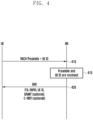
- FIG. 4 illustrates a two-step contention based RA procedure according to an embodiment of the present disclosure.
- contention resolution is performed in two steps.
- the UE transmits a RA channel (RACH) preamble and a UE ID to a base station (BS) (e.g., node B (NB), eNB, or gNB) at operation 410.
- RACH preamble and UE ID can be transmitted in a single physical layer protocol data unit (PDU) or separate physical layer PDUs.
- PDU physical layer protocol data unit
- the RACH preamble and the UE ID at operation 410 can be sent by UE in an unclaimed embodiment i in same time slot or in a claimed embodiment in different time slots.
- the operation 410 of transmitting RACH preamble and UE ID can be referred as MSG1 transmission.
- the UE ID can be at least one of Random ID, S-TMSI, C-RNTI, Resume ID, IMSI, idle mode ID, Inactive Mode ID, and the like.
- the UE ID can be different in different scenarios in which the UE performs the RA procedure.
- the UE When the UE performs RA after power on (i.e., before the UE is attached to the network), the UE ID can be a random ID.
- the UE may have a previously assigned or predetermined UE ID. For example, when the UE perform RA in IDLE state after the UE is attached the network the UE can use a previously assigned S-TMSI as the UE ID. If UE has an assigned C-RNTI (e.g., in connected state) the UE can use the C-RNTI as the UE ID. In case the UE is in INACTIVE state, the UE can use a resume ID as the UE ID.
- C-RNTI e.g., in connected state
- NB determines whether NB has received the RACH preamble and the UE ID at operation 415.
- NB sends a RAR (also referred as MSG2) to the UE at operation 420.
- the RAR include at least one of timing advanced (TA), RACH preamble ID (RAPID) or the UE ID.
- the RAPID may refer to information on the received RACH preamble, e.g., a sequence index of the received RACH preamble.
- UE ID included in RAR is the UE ID received from UE.
- C-RNTI (or temporary C-RNTI) can be additionally included in RAR if the UE ID received from UE is not C-RNTI. Grant for UL transmission may also be included.
- RAPID received in RAR at operation 420 corresponds to UE's RACH preamble transmitted in operation 410
- the UE ID included in RAR is the UE ID transmitted by UE at operation 410
- the UE considers contention resolution as successful.
- RA-RNTI is used to mask cyclic redundancy check (CRC) of PDCCH which schedules the RAR message.
- CRC cyclic redundancy check
- the RA-RNTI is specific to time and/or frequency resource in which RACH preamble is transmitted.
- the RAR message may include a RAPID.
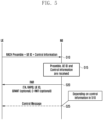
- FIG. 5 illustrates an alternative two-step contention based RA procedure according to an embodiment of the present disclosure
- the two-step contention based RA procedure illustrated in FIG. 5 is similar to that illustrated in FIG. 4 except that in addition to the UE ID some additional control information can be sent in operation 510.
- the UE transmits a RACH preamble, a UE ID, and control information to NB at operation 510.
- RACH preamble, UE ID and control information can be transmitted in a single physical layer PDU or separate physical layer PDUs.
- the RACH preamble, the UE ID and the control information at operation 510 can be sent by UE in same time slot or different time slots.
- the operation 510 of transmitting RACH preamble, UE ID and control information can also be referred as MSG1 transmission.
- the control information may include one or more of connection request indication, connection resume request indication, system information (SI) request indication, bitmap wherein each bit is mapped to SI message or system information block (SIB) requested by UE, buffer status indication, beam information (e.g., one or more DL TX beam ID(s)), data indicator, cell/BS/transmission reception point (TRP) switching indication, or connection re-establishment indication, and the like. Note that any other control information is not precluded.
- SI system information
- SIB system information block
- NB determines whether NB has received the RACH preamble, the UE ID and control information at operation 515.
- NB sends a RAR to the UE at operation 520.
- NB may transmit a control message based on the control information received at operation 510.
- NB may respond with a control message in addition to RAR message at operation 525.
- the control message may depend on control information received at operation 510.
- the RAR at operation 520 and the control message at operation 525 can be sent by NB in same time slot or different time slot.
- Network can signal in dedicated or broadcast signaling the events or services for which UE should use two-step contention based random access procedure.
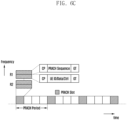
- FIGS. 6a and 6b illustrate enhanced PRACH slot/resource formats for performing a two-step RA procedure according to various embodiments of the present disclosure.
- the UE performs a PRACH transmission in a PRACH resource (e.g., R1 of FIG. 6a ).
- the UE transmits a RA preamble in a PRACH resource on PRACH at first step of a two-step RA procedure (e.g., operation 410 of FIG. 4 , operation 510 of FIG. 5 ).
- the PRACH format (i.e., RA preamble) for performing the PRACH transmission may include cyclic prefix (CP), PRACH preamble sequence, additional information (i.e., the UE ID, data, control information, CRC, and the like) and guard time (GT).
- CP cyclic prefix
- additional information i.e., the UE ID, data, control information, CRC, and the like
- GT guard time
- PRACH format indicator in PRACH configuration may indicate the PRACH format to be used for PRACH configuration.
- NB may configure multiple PRACH configurations having PRACH formats which include additional information (i.e., the UE ID, data, control information, CRC, and the like) and which do not include additional information.
- the UE may choose PRACH configuration based on service/slice in which the UE is interested. For example, for ultra-reliable low latency (URLL) slice/service, the UE may use PRACH configuration which allows transmitting additional information.
- NB may also indicate which PRACH format to be used for which service/slice.
- URLL ultra-reliable low latency
- FIG. 6c illustrates an enhanced PRACH slot/resource format for performing a two-step RA procedure according to an embodiment of the present disclosure.
- PRACH sequence and additional information are frequency division multiplexed in PRACH resources.
- PRACH format of FIG. 6c requires more resources because of additional CP and GT compared to PRACH format of FIG. 6a .
- duration of a slot of PRACH format of FIG. 6c is shorter, compared to that of FIG. 6b , which is beneficial in reducing latency.
- FIG. 6d illustrates an enhanced PRACH slot/resource format for performing a two-step RA procedure according to an embodiment of the present disclosure.
- PRACH sequence and additional information are frequency division multiplexed in PRACH resource, similar to a PRACH format illustrated FIG. 6c . Furthermore, resource R1 for a PRACH sequence and resource R3 for additional information are separated.
- the PRACH configuration indicates resources for a PRACH sequence (i.e., PRACH resources) as well as resources for additional information. Mapping between resources for a PRACH sequence and resources for additional information can be implicit (e.g., first resource for a PRACH sequence maps to first resource for additional information, and so on) or can be explicitly indicated.
- first resource is for a PRACH preamble and then next N (N can be 1) resource(s) is for additional information, and so on. Since all UEs performing RA may not have to transmit additional information, separating resources for a PRACH preamble and resources for additional information can reduce contention on the resources for the additional information. There can be one to one mapping or one to many mapping between resources for a PRACH preamble and resource for additional information. In an embodiment of the present disclosure, only resources for a PRACH preamble are indicated, and resources for additional information can be pre-defined.
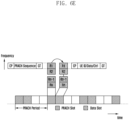
- FIG. 6e illustrates an enhanced PRACH slot/resource format for performing a two-step RA procedure according to an embodiment of the present disclosure.
- PRACH sequence and additional information are time division multiplexed.
- a slot for PRACH sequence i.e., PRACH slot
- a slot for additional information i.e., data slot
- a PRACH slot and a data slot may or may not be consecutive.
- NB can only receive PRACH preamble and cannot decode additional information (i.e., the UE ID, data, control information, and the like) successfully.
- additional information i.e., the UE ID, data, control information, and the like
- NB may not send RAR if only PRACH preamble is received and additional information is not received. But this is not efficient as the UE will again send RA preamble which leads to more delay. Therefore, in case only PRACH preamble is received and additional information is not successfully decoded, a two-step RA procedure may fall back to a four-step RA procedure according to an embodiment of the present disclosure.
- NB sends RAR including TA and RAPID. Temporary C-RNTI may also be included in the RAR.
- the RAR may include an indication that additional information is not decoded.
- NB may indicate that additional information is not decoded implicitly. For example, NB may transmit RAR without the UE ID and the absence of the UE ID in RAR may implicitly indicate that NB has only received RACH preamble. Alternatively, NB may indicate that additional information is not decoded explicitly. For example, NB may transmit one bit indication in RAR to indicate that only RACH preamble is received and additional information (e.g. UE ID) is not received.
- FIG. 7 illustrates a two-step to four-step fall back method for a RA according to an embodiment of the present disclosure.
- the UE falls back to a four-step RA procedure as shown in FIG. 7 .
- the UE transmits MSG1 including RA preamble and additional information (i.e., the UE ID) to NB at operation 710. Additional information may also include data and control information.
- NB tries decoding additional information. If the additional information is successfully decoded, NB sends MSG2 (i.e., RAR) including the UE ID, as illustrated in FIG. 4 and 5 . If the additional information is not successfully decoded, NB sends RAR including UL grant. RAR also includes TA and RAPID. Temporary C-RNTI may also be included in the RAR.
- the UE determines whether RAR includes the UE ID at operation 720. Alternatively, the UE may determine whether RAR includes an indication that additional information (e.g., the UE ID) is received by NB. If RAR includes the UE ID or indicates that additional information is received, contention resolution is successful at operation 730 (i.e., two-step RA procedure END). Otherwise, the UE falls back to four-step procedure, i.e., the UE transmits MSG3 including at least the UE ID using the allocated grant at operation 740. Other information such as connection request or connection resume request or SI request and the like can also be transmitted in MSG3.
- additional information e.g., the UE ID
- contention resolution is successful at operation 730 (i.e., two-step RA procedure END). Otherwise, the UE falls back to four-step procedure, i.e., the UE transmits MSG3 including at least the UE ID using the allocated grant at operation 740.
- Other information such as connection request or connection resume request or SI
- the UE After transmitting MSG3, the UE waits for MSG4 for pre-defined time at operation 750. If MSG4 is received, the UE determines whether MSG4 includes the UE ID transmitted in MSG3 at operation 760. If MSG4 includes the UE ID, contention resolution is successful at operation 770 (i.e., four-step fall back RA procedure END). If MSG4 including UE ID transmitted in MSG3 is not received for pre-defined time UE retransmits MSG1.
- FIG. 8 illustrates a two-step to four-step fall back method for a RA according to an embodiment of the present disclosure.
- the UE falls back to a four-step RA procedure as shown in FIG. 8 .
- the UE transmits MSG1 including RA preamble and additional information (i.e., the UE ID, data, control information, and the like) to NB at operation 810. If MSG1 is received, NB tries decoding additional information. If the additional information is successfully decoded, NB sends MSG2 (i.e., RAR) including the UE ID, as illustrated in FIGS. 4 and 5 . If the additional information is not successfully decoded, NB may determine whether to include grant in RAR. In other words, contrary to the method of FIG. 7 , grant is not always included in RAR. If NB wants the UE to fall back to four-step procedure, NB includes grant in MSG2, otherwise NB does not include grant in RAR. RAR also includes TA and RAPID. Temporary C-RNTI may also be included in the RAR.
- the UE determines whether RAR includes the UE ID at operation 820. Alternatively, the UE may determine whether RAR includes an indication that additional information (e.g., the UE ID) is received by NB. If RAR includes the UE ID or indicates that additional information is received, contention resolution is successful at operation 830 (i.e., two-step RA procedure END).
- additional information e.g., the UE ID
- contention resolution is successful at operation 830 (i.e., two-step RA procedure END).
- the UE determines whether grant is received in RAR at operation 835. If grant is not received in RAR, the UE retransmits RA preamble and the UE ID. If grant is received in RAR, the UE falls back to four-step procedure i.e., the UE transmits MSG3 including the UE ID using the allocated grant at operation 840. Other information such as connection request or connection resume request or SI request and the like can also be transmitted in MSG3.
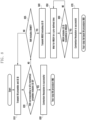
- the UE After transmitting MSG3, the UE waits for MSG4 for pre-defined time at operation 850. If MSG4 is received, the UE determines whether MSG4 includes the UE ID transmitted in MSG3 at operation 860. If MSG4 includes the UE ID, contention resolution is successful at operation 870 (i.e., four-step fall back RA procedure END). If MSG4 including UE ID transmitted in MSG3 is not received for pre-defined time UE retransmits MSG1.
- FIG. 9 illustrates a two-step to four-step fall back method for an RA according to an embodiment of the present disclosure.
- the UE falls back to a four-step RA procedure as shown in FIG. 9 .
- the UE transmits MSG1 including RA preamble and additional information (i.e., the UE ID, data, control information, and the like) to NB at operation 910. If MSG1 is received, NB tries decoding additional information. If the additional information is successfully decoded, NB sends MSG2 (i.e., RAR) including the UE ID, as illustrated in FIGS. 4 and 5 . If the additional information is not successfully decoded, NB may determine whether to include grant in RAR. In other words, contrary to the method of FIG. 7 , grant is not always included in RAR. Similar to the method of FIG. 8 , if NB wants the UE to fall back to four-step procedure, NB includes grant in MSG2, otherwise NB does not include grant in RAR. In addition, NB may determine whether to include an indication to transmit the UE ID in RAR.
- additional information i.e., the UE ID, data, control information, and the like
- the UE determines whether RAR includes the UE ID at operation 920. Alternatively, the UE may determine whether RAR includes an indication that additional information (e.g., the UE ID) is received by NB. If RAR includes the UE ID or indicates that additional information is received, contention resolution is successful at operation 930 (i.e., two-step RA procedure END). If the UE ID is not included in RAR or there is an explicit indication in RAR that additional information (i.e., the UE ID, data, control information, and the like) is not decoded by NB, the UE determines whether grant is received in RAR at operation 935.
- additional information i.e., the UE ID, data, control information, and the like
- the UE falls backs to 4 step procedure i.e., the UE transmits MSG3 including the UE ID using the allocated grant at operation 940.
- Other information such as connection request or connection resume request or SI request and the like can also be transmitted in MSG3.
- the UE waits for MSG4 for pre-defined time at operation 950. If MSG4 is received, the UE determines whether MSG4 includes the UE ID transmitted in MSG3 at operation 960. If MSG4 includes the UE ID, contention resolution is successful at operation 970 (i.e., four-step fall back RA procedure END). If MSG4 including UE ID transmitted in MSG3 is not received for pre-defined time, the UE retransmits MSG1.
- the UE retransmits RA preamble.
- the UE may retransmit additional information (i.e., the UE ID, data, control information, and the like) while transmitting RA preamble based on indication from NB.
- the UE may determine whether RAR includes indication to transmit additional information at operation 937. If RAR includes the indication, the UE retransmits MSG1 including both RA preamble and additional information, otherwise the UE retransmits MSG1 only including RA preamble at operation 939.
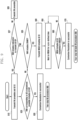
- FIG. 10 illustrates a two-step to four-step fall back method for a RA according to an embodiment of the present disclosure.
- the UE falls back to a four-step RA procedure as shown in FIG. 10 .
- the UE transmits MSG1 including RA preamble and additional information (i.e., the UE ID, data, control information, and the like) to NB at operation 1010. If MSG1 is received, the NB tries decoding additional information. If the additional information is successfully decoded, NB sends MSG2 (i.e., RAR) including the UE ID, as illustrated in FIGS. 4 and 5 . If the additional information is not successfully decoded, the NB may determine whether to include grant in RAR. In other words, contrary to the method of FIG. 7 , grant is not always included in RAR. Similar to the methods of FIGS. 8 and 9 , if NB wants the UE to fall back to four-step procedure, NB includes grant in MSG2, otherwise NB does not include grant in RAR.
- the UE determines whether RAR includes the UE ID at operation 1020. Alternatively, the UE may determine whether RAR includes an indication that additional information (e.g., the UE ID) is received by NB. If RAR includes the UE ID or indicates that additional information is received, contention resolution is successful at operation 1030 (i.e., two-step RA procedure END). If the UE ID is not included in RAR or there is an explicit indication in RAR that additional information (i.e., the UE ID, data, control information, and the like) is not decoded by NB, the UE determines whether grant is received in RAR at operation 1035.
- additional information i.e., the UE ID, data, control information, and the like
- the UE falls backs to 4 step procedure i.e., the UE transmits MSG3 including the UE ID using the allocated grant at operation 1040.
- Other information such as connection request or connection resume request or SI request and the like can also be transmitted in MSG3.
- the UE waits for MSG4 for pre-defined time at operation 1050. If MSG4 is received, the UE determines whether MSG4 includes the UE ID transmitted in MSG3 at operation 1060. If MSG4 includes the UE ID, contention resolution is successful at operation 1070 (i.e., four-step fall back RA procedure END). If MSG4 including UE ID transmitted in MSG3 is not received for pre-defined time UE retransmits MSG1.
- the UE retransmits RA preamble.
- the UE may retransmit additional information (i.e., the UE ID, data, control information, and the like) while transmitting RA preamble based on parameter 'N,' where parameter 'N' indicates the number of times the UE can retransmit additional information (i.e., the UE ID, data, control information, and the like) along with RA preamble.
- the UE may determine whether the UE has transmitted RA preamble with the UE ID 'N' times at operation 1037.
- the UE If the UE has transmitted RA preamble with the UE ID more than 'N' times, the UE retransmits MSG1 only including RA preamble at operation 1039.
- Parameter 'N' can be pre-defined or indicated by network in broadcast or dedicated signaling. Alternatively, parameter 'N' can be signaled along with PRACH configuration.
- FIG. 11 illustrates an RA procedure when a UE does not receive a RAR after transmitting an RA preamble and additional information according to an embodiment of the present disclosure.
- the UE may retransmit MSG1 including RA preamble and additional information.
- the UE may determine whether to retransmit additional information along with RA preamble or not.
- the UE can determine whether to retransmit additional information along with RA preamble based on parameter 'N,' where parameter 'N' indicates the number of times the UE can retransmit additional information along with RACH preamble.
- Parameter 'N' can be pre-defined or indicated by network in broadcast or dedicated signaling. Alternatively, parameter 'N' can be signaled along with PRACH configuration.
- the UE transmits MSG1 including RA preamble and additional information (i.e., the UE ID, data, control information, and the like) to NB at operation 1110. If nothing is received by NB, the NB does not transmit RAR to UE, and the UE cannot receive RAR. Therefore, the UE retransmits MSG1 including RA preamble and additional information to NB at operation 1120. Meanwhile, if the UE retransmits MSG1 including RA preamble and additional information several times but RAR is not received, the UE may determine whether to retransmit additional information along with RA preamble to NB at operation 1130.
- additional information i.e., the UE ID, data, control information, and the like
- the UE may determine whether to retransmit additional information along with RA preamble based on parameter 'N,' where parameter 'N' indicates the number of times the UE can retransmit additional information. Based on the determination, the UE may retransmit only RACH preamble, or both RACH preamble and additional information to the NB at operation 1140.
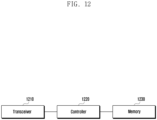
- FIG. 12 is a block diagram of a UE for performing an RA procedure according to an embodiment of the present disclosure.
- the UE include a transceiver (1210), a controller (1220) and a memory (1230).
- the controller (1220) may refer to a circuitry, an application-specific integrated circuit (ASIC), or at least one processor.
- the transceiver (1210), the controller (1220) and the memory (1230) are configured to perform the operations of the UE in the RA procedure illustrated in FIGS. 4 , 5 , and 7 to 11 or described above.
- the transceiver (1210) is configured to receive signals from a BS and transmit signals to the BS.
- the controller (1220) may be configured to control the transceiver (1210) to transmit a first message including a RA preamble and a UE ID to the BS, and control the transceiver (1210) to receive a second message including a sequence index of the RA preamble from the BS.
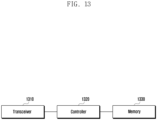
- FIG. 13 is a block diagram of a BS for performing an RA procedure according to an embodiment of the present disclosure.
- the BS includes a transceiver (1310), a controller (1320) and a memory (1330).
- the controller (1320) may refer to a circuitry, an ASIC, or at least one processor.
- the transceiver (1310), the controller (1320) and the memory (1330) are configured to perform the operations of NB in the RA procedure illustrated in FIGS. 4 , 5 , and 7 to 11 or described above.
- the transceiver (1310) is configured to receive signals from a UE, and transmit signals to the UE.
- the controller (1320) may be configured to control the transceiver (1310) to receive a first message including a RA preamble and a UE ID from the UE, and control the transceiver (1310) to transmit a second message including a sequence index of the RA preamble to the UE.
Landscapes
- Engineering & Computer Science (AREA)
- Computer Networks & Wireless Communication (AREA)
- Signal Processing (AREA)
- Computer Security & Cryptography (AREA)
- Mobile Radio Communication Systems (AREA)
Claims (14)
- Verfahren, das von einem Benutzergerät, UE, in einem drahtlosen Kommunikationssystem ausgeführt wird, wobei das Verfahren Folgendes umfasst:Übertragen einer Direktzugriffspräambel für einen 2-stufigen Direktzugriff und einer UE-Kennung, ID, an eine Basisstation, wobei die Direktzugriffspräambel auf einer ersten Ressource übertragen wird und die UE-ID auf einer zweiten Ressource übertragen wird, die von der ersten Ressource getrennt ist;Empfangen einer Direktzugriffsantwort von der Basisstation, gekennzeichnet dadurch, dass:falls die Direktzugriffsantwort nicht die UE-ID enthält und eine Uplink-Gewährung enthält, eine Nachricht 3 eines 4-stufigen Direktzugriffs an die Basisstation übertragen wird, wobei die Nachricht 3 die UE-ID enthält; undfalls die Direktzugriffsantwort nicht die UE-ID enthält und nicht die Uplink-Gewährung enthält, die Direktzugriffspräambel und die UE-ID an die Basisstation übertragen werden.
- Verfahren nach Anspruch 1, wobei, falls die Direktzugriffsantwort nicht die UE-ID enthält und nicht die Uplink-Gewährung enthält, die Direktzugriffspräambel und die UE-ID bis zu einer vorbestimmten Anzahl von Übertragungen erneut übertragen werden.
- Verfahren nach Anspruch 2, wobei die vorbestimmte Anzahl von Übertragungen durch Konfigurationsinformationen signalisiert wird.
- Verfahren nach Anspruch 1, wobei der 2-stufige Direktzugriff erfolgreich abgeschlossen ist, falls die Direktzugriffsantwort die UE-ID enthält, und
wobei die UE-ID eine Zufalls-ID, eine SAE(Systemarchitektur-Evolution)-temporäre mobile Teilnehmeridentität, S-TMSI, und/oder eine Resümee-ID enthält. - Verfahren, das von einer Basisstation in einem drahtlosen Kommunikationssystem ausgeführt wird, wobei das Verfahren Folgendes umfasst:Empfangen einer Direktzugriffspräambel für einen 2-stufigen Direktzugriff auf einem physikalischen Direktzugriffskanal, PRACH, von einem UE;Übertragen einer Direktzugriffsantwort, die keine UE-Kennung, UE-ID, enthält, an das UE, falls die Direktzugriffspräambel empfangen wird, die UE-ID aber nicht decodiert ist; und gekennzeichnet dadurch, dasseine Nachricht 3 eines 4-stufigen Direktzugriffs von dem UE empfangen wird, wobei die Nachricht 3 die UE-ID enthält, falls die Direktzugriffsantwort nicht die UE-ID enthält und eine Uplink-Gewährung enthält,die Direktzugriffspräambel und die UE-ID von dem UE empfangen werden, falls die Direktzugriffsantwort nicht die UE-ID enthält und nicht die Uplink-Gewährung enthält.
- Verfahren nach Anspruch 5, wobei eine vorbestimmte Anzahl von Übertragungen für die Direktzugriffspräambel und die UE-ID durch Konfigurationsinformationen signalisiert wird.
- Verfahren nach Anspruch 5, wobei der 2-stufige Direktzugriff erfolgreich abgeschlossen ist, falls die Direktzugriffsantwort die UE-ID enthält, und
wobei die UE-ID eine Zufalls-ID, eine SAE(Systemarchitektur-Evolution)-temporäre mobile Teilnehmeridentität, S-TMSI, und/oder eine Resümee-ID enthält. - Benutzergerät, UE, in einem drahtlosen Kommunikationssystem, wobei das UE Folgendes umfasst:einen Transceiver, der zum Übertragen oder Empfangen eines Signals konfiguriert ist; undeine Steuerung, die zu Folgendem konfiguriert ist:Übertragen einer Direktzugriffspräambel für einen 2-stufigen Direktzugriff und einer UE-Kennung, ID, an eine Basisstation, wobei die Direktzugriffspräambel auf einer ersten Ressource übertragen wird und die UE-ID auf einer zweiten Ressource übertragen wird, die von der ersten Ressource getrennt ist,Empfangen einer Direktzugriffsantwort von der Basisstation, gekennzeichnet dadurch, dass,falls die Direktzugriffsantwort nicht die UE-ID enthält und eine Uplink-Gewährung enthält, eine Nachricht 3 eines 4-stufigen Direktzugriffs an die Basisstation übertragen wird, wobei die Nachricht 3 die UE-ID enthält, undfalls die Direktzugriffsantwort nicht die UE-ID enthält und nicht die Uplink-Gewährung enthält, die Direktzugriffspräambel und die UE-ID an die Basisstation übertragen werden.
- UE nach Anspruch 8, wobei, falls die Direktzugriffsantwort nicht die UE-ID enthält und nicht die Uplink-Gewährung enthält, die Direktzugriffspräambel und die UE-ID bis zu einer vorbestimmten Anzahl von Übertragungen erneut übertragen werden.
- UE nach Anspruch 9, wobei die vorbestimmte Anzahl von Übertragungen durch Konfigurationsinformationen signalisiert wird.
- UE nach Anspruch 8, wobei der 2-stufige Direktzugriff erfolgreich abgeschlossen ist, falls die Direktzugriffsantwort die UE-ID enthält, und
wobei die UE-ID eine Zufalls-ID, eine SAE(Systemarchitektur-Evolution)-temporäre mobile Teilnehmeridentität, S-TMSI, und/oder eine Resümee-ID enthält. - Basisstation in einem drahtlosen Kommunikationssystem, wobei die Basisstation Folgendes umfasst:einen Transceiver, der zum Übertragen oder Empfangen eines Signals konfiguriert ist; undeine Steuerung, die zu Folgendem konfiguriert ist:Empfangen einer Direktzugriffspräambel für einen 2-stufigen Direktzugriff auf einem physikalischen Direktzugriffskanal, PRACH, von einem UE,Übertragen einer Direktzugriffsantwort, die keine UE-Kennung, UE-ID, enthält, an das UE, falls die Direktzugriffspräambel empfangen wird, die UE-ID aber nicht decodiert ist, gekennzeichnet dadurch, dasseine Nachricht 3 eines 4-stufigen Direktzugriffs von dem UE empfangen wird, wobei die Nachricht 3 die UE-ID enthält, falls die Direktzugriffsantwort nicht die UE-ID enthält und eine Uplink-Gewährung enthält, unddie Direktzugriffspräambel und die UE-ID von dem UE empfangen werden, falls die Direktzugriffsantwort nicht die UE-ID enthält und nicht die Uplink-Gewährung enthält.
- Basisstation nach Anspruch 12, wobei die vorbestimmte Anzahl von Übertragungen für die Direktzugriffspräambel und die UE-ID durch Konfigurationsinformationen signalisiert wird.
- Basisstation nach Anspruch 12, wobei der 2-stufige Direktzugriff erfolgreich abgeschlossen ist, falls die Direktzugriffsantwort die UE-ID enthält, und
wobei die UE-ID eine Zufalls-ID, eine SAE(Systemarchitektur-Evolution)-temporäre mobile Teilnehmeridentität, S-TMSI, und/oder eine Resümee-ID enthält.
Applications Claiming Priority (3)
| Application Number | Priority Date | Filing Date | Title |
|---|---|---|---|
| US201662405555P | 2016-10-07 | 2016-10-07 | |
| EP17858728.3A EP3508020A4 (de) | 2016-10-07 | 2017-09-29 | Verfahren und vorrichtung für verbessertes konfliktbasiertes direktzugriffsverfahren |
| PCT/KR2017/010977 WO2018066934A2 (en) | 2016-10-07 | 2017-09-29 | Method and apparatus for enhanced contention based random access procedure |
Related Parent Applications (1)
| Application Number | Title | Priority Date | Filing Date |
|---|---|---|---|
| EP17858728.3A Division EP3508020A4 (de) | 2016-10-07 | 2017-09-29 | Verfahren und vorrichtung für verbessertes konfliktbasiertes direktzugriffsverfahren |
Publications (2)
| Publication Number | Publication Date |
|---|---|
| EP4054271A1 EP4054271A1 (de) | 2022-09-07 |
| EP4054271B1 true EP4054271B1 (de) | 2025-02-19 |
Family
ID=61829357
Family Applications (2)
| Application Number | Title | Priority Date | Filing Date |
|---|---|---|---|
| EP22170066.9A Active EP4054271B1 (de) | 2016-10-07 | 2017-09-29 | Verfahren und vorrichtung für verbessertes konfliktbasiertes direktzugriffsverfahren |
| EP17858728.3A Ceased EP3508020A4 (de) | 2016-10-07 | 2017-09-29 | Verfahren und vorrichtung für verbessertes konfliktbasiertes direktzugriffsverfahren |
Family Applications After (1)
| Application Number | Title | Priority Date | Filing Date |
|---|---|---|---|
| EP17858728.3A Ceased EP3508020A4 (de) | 2016-10-07 | 2017-09-29 | Verfahren und vorrichtung für verbessertes konfliktbasiertes direktzugriffsverfahren |
Country Status (5)
| Country | Link |
|---|---|
| US (3) | US10917879B2 (de) |
| EP (2) | EP4054271B1 (de) |
| KR (2) | KR102462404B1 (de) |
| CN (2) | CN117042198A (de) |
| WO (1) | WO2018066934A2 (de) |
Families Citing this family (75)
| Publication number | Priority date | Publication date | Assignee | Title |
|---|---|---|---|---|
| US10757732B2 (en) * | 2016-05-23 | 2020-08-25 | Lg Electronics Inc. | Method and apparatus for competition-based transmitting of uplink data in wireless communication system to which non-orthogonal multiple access scheme is applied |
| US11770855B2 (en) | 2016-10-19 | 2023-09-26 | Qualcomm Incorporated | Random access channel (RACH) procedure design |
| US10433342B2 (en) | 2016-10-19 | 2019-10-01 | Qualcomm Incorporated | Enhanced random access channel (RACH) procedure |
| US10425971B2 (en) * | 2016-11-02 | 2019-09-24 | Qualcomm Incorporated | Collision reduction in contention-based access |
| US10568130B2 (en) * | 2016-12-22 | 2020-02-18 | Qualcomm Incorporated | Techniques and apparatuses for multiple types of physical random access channel (PRACH) transmission utilization |
| CN108271275B (zh) * | 2017-01-04 | 2021-02-05 | 电信科学技术研究院 | 一种竞争随机接入的方法和装置 |
| WO2018127487A1 (en) * | 2017-01-05 | 2018-07-12 | Sony Mobile Communications Inc. | Low-latency random access for wireless networks |
| GB2561806B (en) * | 2017-01-05 | 2021-10-06 | Tcl Communication Ltd | Methods and devices for accessing a radio access network |
| CN108282901B (zh) * | 2017-01-06 | 2019-08-09 | 电信科学技术研究院 | 一种随机接入响应方法和装置 |
| CN108282903B (zh) * | 2017-01-06 | 2020-03-24 | 电信科学技术研究院 | 一种信息传输方法、ue及接入网实体 |
| US10568007B2 (en) | 2017-03-22 | 2020-02-18 | Comcast Cable Communications, Llc | Handover random access |
| US11057935B2 (en) * | 2017-03-22 | 2021-07-06 | Comcast Cable Communications, Llc | Random access process in new radio |
| US11647543B2 (en) | 2017-03-23 | 2023-05-09 | Comcast Cable Communications, Llc | Power control for random access |
| EP3603304B1 (de) * | 2017-03-23 | 2023-08-09 | Apple Inc. | Erweitertes schmalbandiges internet der dinge (nb-iot) |
| US10757738B2 (en) * | 2017-03-24 | 2020-08-25 | Mediatek Inc. | On-demand system information request message |
| WO2018200579A1 (en) * | 2017-04-24 | 2018-11-01 | Motorola Mobility Llc | Mapping an access attempt type to a network configuration |
| WO2018195860A1 (zh) | 2017-04-27 | 2018-11-01 | 南通朗恒通信技术有限公司 | 一种支持随机接入的用户设备、基站中的方法和装置 |
| CN111316706B (zh) * | 2017-11-14 | 2022-03-18 | 鸿颖创新有限公司 | 用于具有多分量载波的网络辅助传输的方法、设备和系统 |
| US11968612B2 (en) * | 2018-02-14 | 2024-04-23 | Sony Group Corporation | Data routing in radio access network |
| JP7185758B2 (ja) * | 2018-07-25 | 2022-12-07 | オッポ広東移動通信有限公司 | 信号伝送方法及びその装置、端末装置並びにネットワーク装置 |
| CN110769516B (zh) * | 2018-07-26 | 2022-01-28 | 维沃移动通信有限公司 | 一种随机接入方法及相关设备 |
| CN110769517B (zh) * | 2018-07-26 | 2022-02-01 | 维沃移动通信有限公司 | 一种随机接入方法及相关设备 |
| WO2020024614A1 (zh) * | 2018-08-01 | 2020-02-06 | Oppo广东移动通信有限公司 | 一种随机接入的方法、设备及计算机存储介质 |
| CN110913498B (zh) * | 2018-09-18 | 2021-07-06 | 维沃移动通信有限公司 | 一种随机接入方法及终端 |
| CN119183210A (zh) * | 2018-09-21 | 2024-12-24 | 三星电子株式会社 | 用于支持用于2步随机接入过程的方法和装置 |
| CN112771983B (zh) | 2018-09-26 | 2024-06-11 | 联想(新加坡)私人有限公司 | 执行两步随机接入信道过程 |
| US11259331B2 (en) | 2018-09-27 | 2022-02-22 | Ofinno, Llc | RACH type switching |
| CN113170503B (zh) * | 2018-09-28 | 2024-08-30 | 三星电子株式会社 | 无线通信系统中的随机接入方法和装置 |
| US11711851B2 (en) * | 2018-11-02 | 2023-07-25 | FG Innovation Company Limited | Two-step random access procedure in next generation wireless networks |
| CN111294937B (zh) | 2019-01-17 | 2023-04-18 | 北京紫光展锐通信技术有限公司 | 数据传输方法及装置 |
| CN113348723A (zh) * | 2019-02-01 | 2021-09-03 | 株式会社Ntt都科摩 | 用户装置以及基站装置 |
| US11064537B2 (en) | 2019-02-01 | 2021-07-13 | Qualcomm Incorporated | Random access procedure fallback |
| AU2020218488B2 (en) * | 2019-02-05 | 2025-02-27 | Google Llc | Efficient messaging in a procedure for accessing a communication channel |
| US11432324B2 (en) | 2019-02-08 | 2022-08-30 | Qualcomm Incorporated | Fallback procedures for two-step random access procedures |
| US12302408B2 (en) | 2019-02-12 | 2025-05-13 | Telefonaktiebolaget Lm Ericsson (Publ) | UE, network node and methods for handling 2-step and 4-step random access procedures |
| EP3881633B1 (de) | 2019-02-13 | 2023-12-06 | Samsung Electronics Co., Ltd. | Verfahren und vorrichtung zur behandlung von msga-rückübertragungen während zweistufiger direktzugriffsprozeduren in einem drahtloskommunikationssystem |
| JP7300471B2 (ja) * | 2019-02-14 | 2023-06-29 | 株式会社Nttドコモ | 端末、基地局、通信システム、及び通信方法 |
| EP3915328B1 (de) * | 2019-02-15 | 2025-09-03 | Nokia Technologies Oy | Struktur einer nachricht von benutzergerät zu basisstation in einem zweistufigen direktzugriff |
| WO2020166078A1 (ja) * | 2019-02-15 | 2020-08-20 | 株式会社Nttドコモ | ユーザ端末 |
| CN113439467B (zh) * | 2019-02-19 | 2024-03-19 | 上海诺基亚贝尔股份有限公司 | 在终端和无线网络节点之间的通信 |
| CN111601391A (zh) * | 2019-02-21 | 2020-08-28 | 中国移动通信有限公司研究院 | 随机接入方法、装置、终端及网络侧设备 |
| WO2020177046A1 (en) * | 2019-03-04 | 2020-09-10 | Zte Corporation | Methods, apparatus and systems for indicating information in a random access procedure |
| WO2020194641A1 (ja) * | 2019-03-27 | 2020-10-01 | 株式会社Nttドコモ | ユーザ装置 |
| CN119012398A (zh) | 2019-03-28 | 2024-11-22 | 上海诺基亚贝尔股份有限公司 | 用于第一随机接入模式回退到第二随机接入模式的机制 |
| CN113365295B (zh) * | 2019-04-02 | 2023-02-28 | 北京小米移动软件有限公司 | 随机接入方法和随机接入装置 |
| JP2022529585A (ja) * | 2019-04-04 | 2022-06-23 | オッポ広東移動通信有限公司 | ランダムアクセスチャネルプロセスのユーザ機器及び方法 |
| CN113711682A (zh) | 2019-04-24 | 2021-11-26 | Oppo广东移动通信有限公司 | 一种随机接入方法及装置、用户设备、网络设备 |
| EP3962222A1 (de) * | 2019-04-26 | 2022-03-02 | Ntt Docomo, Inc. | Benutzervorrichtung und basisstationsvorrichtung |
| CN111867125B (zh) * | 2019-04-29 | 2022-12-06 | 华为技术有限公司 | 一种随机接入方法和装置 |
| EP3964005B1 (de) | 2019-04-30 | 2024-08-21 | ZTE Corporation | Ressourcenanzeige in zufallszugriff |
| CN111867126A (zh) * | 2019-04-30 | 2020-10-30 | 华为技术有限公司 | 随机接入方法和装置 |
| MX2021013414A (es) * | 2019-05-02 | 2021-12-10 | Nokia Technologies Oy | Resolucion de contencion en procedimiento de acceso aleatorio. |
| CN111615210A (zh) | 2019-05-09 | 2020-09-01 | 维沃移动通信有限公司 | 两步随机接入的方法及终端 |
| FR3096547A1 (fr) * | 2019-06-28 | 2020-11-27 | Orange | Procédé d’accès à un réseau de communication, procédé d’attachement, terminal, station de base et programmes d’ordinateur correspondants. |
| CN111800886B (zh) | 2019-07-12 | 2022-04-08 | 维沃移动通信有限公司 | 一种随机接入过程回退方法、设备及系统 |
| WO2021046792A1 (zh) * | 2019-09-12 | 2021-03-18 | Oppo广东移动通信有限公司 | 随机接入的方法和装置 |
| PL3821666T3 (pl) * | 2019-09-30 | 2024-05-13 | Nokia Technologies Oy | Dostęp swobodny w systemie komunikacyjnym |
| EP3847865B1 (de) * | 2019-10-02 | 2024-04-03 | Samsung Electronics Co., Ltd. | Verfahren und vorrichtung für direktzugriffsvorgang |
| US12581529B2 (en) | 2019-11-07 | 2026-03-17 | Nokia Technologies Oy | Contention resolution in random access procedure |
| WO2021125627A1 (en) | 2019-12-16 | 2021-06-24 | Samsung Electronics Co., Ltd. | Method and apparatus for releasing pusch resources assigned for random access in wireless communication system |
| WO2021125807A1 (en) | 2019-12-16 | 2021-06-24 | Samsung Electronics Co., Ltd. | Method and apparatus for handling switching between 2-step and 4-step random access |
| CN113079583A (zh) * | 2020-01-06 | 2021-07-06 | 夏普株式会社 | 由用户设备执行的方法及用户设备 |
| US11611998B2 (en) * | 2020-01-10 | 2023-03-21 | Samsung Electronics Co., Ltd. | Apparatus and method of random access procedure |
| EP4351260B1 (de) * | 2020-02-07 | 2026-06-10 | Samsung Electronics Co., Ltd. | Verfahren und vorrichtung zur direktzugriffspräambelgruppenauswahl in einem drahtloskommunikationssystem |
| CN113260076B (zh) * | 2020-02-13 | 2025-02-07 | 华硕电脑股份有限公司 | 无线通信系统中小数据传送的回退动作的方法和设备 |
| WO2021081567A2 (en) * | 2020-03-20 | 2021-04-29 | Zeku, Inc. | Contention resolution in wireless communication systems |
| EP4120770A4 (de) | 2020-04-16 | 2024-09-18 | Samsung Electronics Co., Ltd. | Verfahren und vorrichtung zur bandbreitenteilumschaltung unter berücksichtigung des ruhenden bandbreitenteils in einem mobilkommunikationssystem der nächsten generation |
| US11770861B2 (en) * | 2020-06-11 | 2023-09-26 | Qualcomm Incorporated | Two-step random access procedure for a backhaul node |
| WO2022015108A1 (en) * | 2020-07-17 | 2022-01-20 | Samsung Electronics Co., Ltd. | Method and apparatus for random access procedure for small data transmission in wireless communication |
| CN115997463B (zh) * | 2020-08-05 | 2025-06-03 | 苹果公司 | 使用基于定时的前导码空间划分的随机接入前导码传输 |
| KR20230140463A (ko) * | 2021-02-05 | 2023-10-06 | 베이징 시아오미 모바일 소프트웨어 컴퍼니 리미티드 | 랜덤 액세스 방법 및 장치, 저장 매체(random access method and device, and storage medium) |
| CN113163504A (zh) * | 2021-05-31 | 2021-07-23 | 北京贝耀信科技有限公司 | 从物联网终端群组接收健康大数据的方法及系统 |
| CN116347644A (zh) * | 2021-12-23 | 2023-06-27 | 中国移动通信有限公司研究院 | 消息发送方法、消息接收方法及设备 |
| CN114449677B (zh) * | 2022-04-11 | 2022-07-12 | 广州世炬网络科技有限公司 | 基于竞争的随机接入方法、终端及基站 |
| KR20250144957A (ko) * | 2024-03-27 | 2025-10-13 | 한국전자통신연구원 | 통신 시스템에서 IoT 디바이스의 접속 방법 및 장치 |
Family Cites Families (40)
| Publication number | Priority date | Publication date | Assignee | Title |
|---|---|---|---|---|
| GB2445336B (en) * | 2005-11-04 | 2010-12-08 | Nec Corp | Wireless communication system and method of controlling a transmission power |
| US8000305B2 (en) * | 2006-01-17 | 2011-08-16 | Motorola Mobility, Inc. | Preamble sequencing for random access channel in a communication system |
| WO2008023943A1 (en) * | 2006-08-23 | 2008-02-28 | Electronics And Telecommunications Research Institute | Method for transmitting response message of random access in cellular system and a method of random access using the same |
| KR100937423B1 (ko) | 2006-09-26 | 2010-01-18 | 엘지전자 주식회사 | 반복형 시퀀스 생성 방법 및 이를 이용한 신호 송신 방법 |
| KR101519345B1 (ko) * | 2008-01-01 | 2015-05-21 | 주식회사 팬택 | 랜덤 액세스 요청 송수신 및 랜덤 액세스 응답 송수신 방법 |
| KR101449757B1 (ko) | 2008-01-23 | 2014-10-13 | 한국전자통신연구원 | 셀룰라 시스템에서의 임의 접속 방법 및 장치 |
| CN101646251B (zh) * | 2008-08-07 | 2012-07-18 | 中兴通讯股份有限公司 | 随机接入过程和测量间隙冲突的处理方法 |
| KR100939722B1 (ko) * | 2008-08-11 | 2010-02-01 | 엘지전자 주식회사 | 데이터 전송 방법 및 이를 위한 사용자 기기 |
| US8130667B2 (en) * | 2008-09-19 | 2012-03-06 | Texas Instruments Incorporated | Preamble group selection in random access of wireless networks |
| KR101502626B1 (ko) * | 2008-10-13 | 2015-03-17 | 엘지전자 주식회사 | 랜덤 액세스 방법 |
| JP5312285B2 (ja) * | 2008-10-22 | 2013-10-09 | 創新音▲速▼股▲ふん▼有限公司 | Ul−sch伝送を処理する方法及び通信装置 |
| EP2452535A1 (de) * | 2009-07-07 | 2012-05-16 | Telefonaktiebolaget LM Ericsson (publ) | Direktzugriffsverfahren mit zyklischer verschiebung eines demodulationsreferenzsignals |
| KR20120023511A (ko) | 2010-09-03 | 2012-03-13 | 한국전자통신연구원 | 사물 통신을 지원하는 통신망에서의 임의 접속 수행 장치 및 방법 |
| US8588163B2 (en) * | 2010-10-01 | 2013-11-19 | Industrial Technology Research Institute | Random access method, parameter assignment method, wireless communication device, and base station using the same |
| EP2705720B1 (de) * | 2011-05-05 | 2015-01-28 | Telefonaktiebolaget LM Ericsson (PUBL) | Verfahren und anordnungen zur anpassung der direktzugriffszuweisung von ressourcen zu benutzergeräten |
| US9198200B2 (en) * | 2011-10-04 | 2015-11-24 | Google Technology Holdings LLC | Method for contention based random access on a secondary carrier |
| JP5793252B2 (ja) * | 2011-12-20 | 2015-10-14 | 京セラ株式会社 | 小セル上りリンク干渉軽減のためのシステム及び方法 |
| US20130258956A1 (en) * | 2012-04-01 | 2013-10-03 | Esmael Hejazi Dinan | Random Access Process in a Wireless Device |
| US8971280B2 (en) * | 2012-04-20 | 2015-03-03 | Ofinno Technologies, Llc | Uplink transmissions in a wireless device |
| WO2013157906A1 (ko) * | 2012-04-20 | 2013-10-24 | 엘지전자 주식회사 | 무선 통신 시스템에서의 d2d 데이터 전송 방법 및 장치 |
| KR101502140B1 (ko) * | 2012-12-17 | 2015-03-12 | 주식회사 케이티 | 임의 접속 처리 방법, 그리고 이를 수행하는 디지털 신호 처리장치 |
| US9814076B2 (en) * | 2013-01-28 | 2017-11-07 | Lg Electronics Inc. | Method for performing high-speed initial access process in wireless access system supporting ultrahigh frequency band, and device supporting same |
| MX364576B (es) * | 2013-06-26 | 2019-05-02 | Ericsson Telefon Ab L M | Metodos y nodo de red para activacion de la configuracion de conexion para una estacion base secundaria. |
| US9451639B2 (en) * | 2013-07-10 | 2016-09-20 | Samsung Electronics Co., Ltd. | Method and apparatus for coverage enhancement for a random access process |
| TWI628930B (zh) | 2013-09-20 | 2018-07-01 | 新力股份有限公司 | 通訊裝置及方法 |
| EP3050228B1 (de) * | 2013-09-24 | 2020-11-04 | LG Electronics Inc. | Kommunikation zwischen mac und phy für parallele direktzugriffsverfahren von dualen konnektivität |
| EP3061304B1 (de) * | 2013-11-14 | 2018-08-01 | Sony Corporation | Kommunikationssystem, infrastrukturvorrichtung, kommunikationsvorrichtungen und -verfahren |
| WO2015109512A1 (zh) * | 2014-01-24 | 2015-07-30 | 华为技术有限公司 | 一种随机接入的方法及装置 |
| US10194426B2 (en) * | 2014-02-16 | 2019-01-29 | Lg Electronics Inc. | Method and apparatus for transmitting uplink data in a wireless communication system |
| EP3117683B1 (de) * | 2014-03-11 | 2019-04-03 | LG Electronics Inc. | Verfahren zur zuweisung eines temporären identifikators zu einem endgerät in einem direktzugriffsverfahren in einem drahtloskommunikationssystem und vorrichtung dafür |
| US9730249B2 (en) * | 2014-11-19 | 2017-08-08 | Intel Corporation | Systems, apparatuses, and methods for processing random acccess response messages for coverage constrained devices |
| US10159092B2 (en) * | 2015-02-26 | 2018-12-18 | Hfi Innovation Inc. | Uplink contention based multiple access for cellular IoT |
| US10116361B2 (en) * | 2015-06-02 | 2018-10-30 | Newracom, Inc. | Methods for uplink multiuser signaling and transmission |
| WO2017007074A1 (ko) * | 2015-07-03 | 2017-01-12 | 엘지전자 주식회사 | 무선 통신 시스템에서 랜덤 액세스를 수행하는 방법 및 장치 |
| US10080243B2 (en) * | 2015-07-17 | 2018-09-18 | Apple Inc. | Mechanisms to facilitate random access by link-budget-limited devices |
| CN107925994B (zh) * | 2015-08-07 | 2022-04-08 | 瑞典爱立信有限公司 | 用于资源请求的方法和装置 |
| JP7097696B2 (ja) * | 2015-08-07 | 2022-07-08 | シャープ株式会社 | 端末装置、コアネットワーク内装置、端末装置の通信制御方法及びコアネットワーク内装置の通信制御方法 |
| WO2017030412A1 (ko) * | 2015-08-19 | 2017-02-23 | 엘지전자(주) | 무선 통신 시스템에서의 랜덤 액세스 절차 수행 방법 및 이를 위한 장치 |
| WO2018006245A1 (en) * | 2016-07-04 | 2018-01-11 | Nokia Technologies Oy | Apparatuses and methods for preamble sequence management for contention based access |
| EP3476157B1 (de) * | 2016-07-22 | 2022-08-31 | Samsung Electronics Co., Ltd. | Verfahren und system zur erfassung von systeminformationen in einem drahtloskommunikationssystem |
-
2017
- 2017-09-29 EP EP22170066.9A patent/EP4054271B1/de active Active
- 2017-09-29 CN CN202311024525.4A patent/CN117042198A/zh active Pending
- 2017-09-29 KR KR1020227011267A patent/KR102462404B1/ko active Active
- 2017-09-29 EP EP17858728.3A patent/EP3508020A4/de not_active Ceased
- 2017-09-29 WO PCT/KR2017/010977 patent/WO2018066934A2/en not_active Ceased
- 2017-09-29 KR KR1020197010701A patent/KR102384807B1/ko active Active
- 2017-09-29 CN CN201780061837.9A patent/CN109804697B/zh active Active
- 2017-10-02 US US15/722,629 patent/US10917879B2/en active Active
-
2021
- 2021-02-09 US US17/171,313 patent/US11665694B2/en active Active
-
2023
- 2023-05-23 US US18/322,114 patent/US12047959B2/en active Active
Also Published As
| Publication number | Publication date |
|---|---|
| US11665694B2 (en) | 2023-05-30 |
| US20180103465A1 (en) | 2018-04-12 |
| WO2018066934A2 (en) | 2018-04-12 |
| EP3508020A2 (de) | 2019-07-10 |
| EP4054271A1 (de) | 2022-09-07 |
| US20210168792A1 (en) | 2021-06-03 |
| EP3508020A4 (de) | 2019-08-21 |
| US10917879B2 (en) | 2021-02-09 |
| WO2018066934A3 (en) | 2018-07-26 |
| CN109804697A (zh) | 2019-05-24 |
| US20230300842A1 (en) | 2023-09-21 |
| KR20220045090A (ko) | 2022-04-12 |
| KR20190052696A (ko) | 2019-05-16 |
| KR102384807B1 (ko) | 2022-04-08 |
| KR102462404B1 (ko) | 2022-11-03 |
| CN109804697B (zh) | 2023-09-01 |
| CN117042198A (zh) | 2023-11-10 |
| US12047959B2 (en) | 2024-07-23 |
Similar Documents
| Publication | Publication Date | Title |
|---|---|---|
| US12047959B2 (en) | Method and apparatus for enhanced contention based random access procedure | |
| US12543059B2 (en) | Method and apparatus for supporting multiple message a sizes and uplink coverage for two step random access procedure | |
| EP3847865B1 (de) | Verfahren und vorrichtung für direktzugriffsvorgang | |
| US11985547B2 (en) | Method and apparatus for supporting flexible UE bandwidth in next generation communication system | |
| US20220174747A1 (en) | Method and apparatus for improving msg3 transmission of random access procedure in a wireless communication system | |
| CN113728717B (zh) | 用于在2步与4步ra过程之间切换和竞争解决的方法和设备 | |
| CN113273248B (zh) | 用于处理2步和4步随机接入之间的切换的方法和装置 | |
| US20210051708A1 (en) | Method and apparatus for determining preambles and rach occasions for 2 step random access | |
| CN115997466A (zh) | 用于小数据传输的方法和装置 | |
| KR20220027065A (ko) | 큰 랜덤 액세스 응답(rar) 윈도우 크기를 지원하기 위한 랜덤 액세스 절차 방법 | |
| CN113330804B (zh) | 用于在无线通信系统中释放分配用于随机接入的pusch资源的方法和装置 | |
| CN114830739A (zh) | 用于在无线通信系统中处理系统信息请求的方法和装置 |
Legal Events
| Date | Code | Title | Description |
|---|---|---|---|
| PUAI | Public reference made under article 153(3) epc to a published international application that has entered the european phase |
Free format text: ORIGINAL CODE: 0009012 |
|
| STAA | Information on the status of an ep patent application or granted ep patent |
Free format text: STATUS: THE APPLICATION HAS BEEN PUBLISHED |
|
| AC | Divisional application: reference to earlier application |
Ref document number: 3508020 Country of ref document: EP Kind code of ref document: P |
|
| AK | Designated contracting states |
Kind code of ref document: A1 Designated state(s): AL AT BE BG CH CY CZ DE DK EE ES FI FR GB GR HR HU IE IS IT LI LT LU LV MC MK MT NL NO PL PT RO RS SE SI SK SM TR |
|
| STAA | Information on the status of an ep patent application or granted ep patent |
Free format text: STATUS: REQUEST FOR EXAMINATION WAS MADE |
|
| 17P | Request for examination filed |
Effective date: 20221202 |
|
| RBV | Designated contracting states (corrected) |
Designated state(s): AL AT BE BG CH CY CZ DE DK EE ES FI FR GB GR HR HU IE IS IT LI LT LU LV MC MK MT NL NO PL PT RO RS SE SI SK SM TR |
|
| GRAP | Despatch of communication of intention to grant a patent |
Free format text: ORIGINAL CODE: EPIDOSNIGR1 |
|
| STAA | Information on the status of an ep patent application or granted ep patent |
Free format text: STATUS: GRANT OF PATENT IS INTENDED |
|
| RIC1 | Information provided on ipc code assigned before grant |
Ipc: H04W 74/08 20090101ALI20240911BHEP Ipc: H04W 74/00 20090101AFI20240911BHEP |
|
| INTG | Intention to grant announced |
Effective date: 20241002 |
|
| GRAS | Grant fee paid |
Free format text: ORIGINAL CODE: EPIDOSNIGR3 |
|
| GRAA | (expected) grant |
Free format text: ORIGINAL CODE: 0009210 |
|
| STAA | Information on the status of an ep patent application or granted ep patent |
Free format text: STATUS: THE PATENT HAS BEEN GRANTED |
|
| AC | Divisional application: reference to earlier application |
Ref document number: 3508020 Country of ref document: EP Kind code of ref document: P |
|
| AK | Designated contracting states |
Kind code of ref document: B1 Designated state(s): AL AT BE BG CH CY CZ DE DK EE ES FI FR GB GR HR HU IE IS IT LI LT LU LV MC MK MT NL NO PL PT RO RS SE SI SK SM TR |
|
| REG | Reference to a national code |
Ref country code: GB Ref legal event code: FG4D |
|
| REG | Reference to a national code |
Ref country code: CH Ref legal event code: EP |
|
| REG | Reference to a national code |
Ref country code: DE Ref legal event code: R096 Ref document number: 602017087971 Country of ref document: DE |
|
| REG | Reference to a national code |
Ref country code: IE Ref legal event code: FG4D |
|
| REG | Reference to a national code |
Ref country code: NL Ref legal event code: FP |
|
| PG25 | Lapsed in a contracting state [announced via postgrant information from national office to epo] |
Ref country code: RS Free format text: LAPSE BECAUSE OF FAILURE TO SUBMIT A TRANSLATION OF THE DESCRIPTION OR TO PAY THE FEE WITHIN THE PRESCRIBED TIME-LIMIT Effective date: 20250519 |
|
| PG25 | Lapsed in a contracting state [announced via postgrant information from national office to epo] |
Ref country code: FI Free format text: LAPSE BECAUSE OF FAILURE TO SUBMIT A TRANSLATION OF THE DESCRIPTION OR TO PAY THE FEE WITHIN THE PRESCRIBED TIME-LIMIT Effective date: 20250219 |
|
| PG25 | Lapsed in a contracting state [announced via postgrant information from national office to epo] |
Ref country code: PL Free format text: LAPSE BECAUSE OF FAILURE TO SUBMIT A TRANSLATION OF THE DESCRIPTION OR TO PAY THE FEE WITHIN THE PRESCRIBED TIME-LIMIT Effective date: 20250219 |
|
| PG25 | Lapsed in a contracting state [announced via postgrant information from national office to epo] |
Ref country code: ES Free format text: LAPSE BECAUSE OF FAILURE TO SUBMIT A TRANSLATION OF THE DESCRIPTION OR TO PAY THE FEE WITHIN THE PRESCRIBED TIME-LIMIT Effective date: 20250219 |
|
| REG | Reference to a national code |
Ref country code: LT Ref legal event code: MG9D |
|
| PG25 | Lapsed in a contracting state [announced via postgrant information from national office to epo] |
Ref country code: IS Free format text: LAPSE BECAUSE OF FAILURE TO SUBMIT A TRANSLATION OF THE DESCRIPTION OR TO PAY THE FEE WITHIN THE PRESCRIBED TIME-LIMIT Effective date: 20250619 Ref country code: NO Free format text: LAPSE BECAUSE OF FAILURE TO SUBMIT A TRANSLATION OF THE DESCRIPTION OR TO PAY THE FEE WITHIN THE PRESCRIBED TIME-LIMIT Effective date: 20250519 |
|
| PG25 | Lapsed in a contracting state [announced via postgrant information from national office to epo] |
Ref country code: HR Free format text: LAPSE BECAUSE OF FAILURE TO SUBMIT A TRANSLATION OF THE DESCRIPTION OR TO PAY THE FEE WITHIN THE PRESCRIBED TIME-LIMIT Effective date: 20250219 |
|
| PG25 | Lapsed in a contracting state [announced via postgrant information from national office to epo] |
Ref country code: LV Free format text: LAPSE BECAUSE OF FAILURE TO SUBMIT A TRANSLATION OF THE DESCRIPTION OR TO PAY THE FEE WITHIN THE PRESCRIBED TIME-LIMIT Effective date: 20250219 Ref country code: PT Free format text: LAPSE BECAUSE OF FAILURE TO SUBMIT A TRANSLATION OF THE DESCRIPTION OR TO PAY THE FEE WITHIN THE PRESCRIBED TIME-LIMIT Effective date: 20250620 |
|
| PG25 | Lapsed in a contracting state [announced via postgrant information from national office to epo] |
Ref country code: GR Free format text: LAPSE BECAUSE OF FAILURE TO SUBMIT A TRANSLATION OF THE DESCRIPTION OR TO PAY THE FEE WITHIN THE PRESCRIBED TIME-LIMIT Effective date: 20250520 Ref country code: BG Free format text: LAPSE BECAUSE OF FAILURE TO SUBMIT A TRANSLATION OF THE DESCRIPTION OR TO PAY THE FEE WITHIN THE PRESCRIBED TIME-LIMIT Effective date: 20250219 |
|
| REG | Reference to a national code |
Ref country code: AT Ref legal event code: MK05 Ref document number: 1769616 Country of ref document: AT Kind code of ref document: T Effective date: 20250219 |
|
| PG25 | Lapsed in a contracting state [announced via postgrant information from national office to epo] |
Ref country code: SE Free format text: LAPSE BECAUSE OF FAILURE TO SUBMIT A TRANSLATION OF THE DESCRIPTION OR TO PAY THE FEE WITHIN THE PRESCRIBED TIME-LIMIT Effective date: 20250219 |
|
| PGFP | Annual fee paid to national office [announced via postgrant information from national office to epo] |
Ref country code: NL Payment date: 20250821 Year of fee payment: 9 |
|
| PG25 | Lapsed in a contracting state [announced via postgrant information from national office to epo] |
Ref country code: SM Free format text: LAPSE BECAUSE OF FAILURE TO SUBMIT A TRANSLATION OF THE DESCRIPTION OR TO PAY THE FEE WITHIN THE PRESCRIBED TIME-LIMIT Effective date: 20250219 |
|
| PG25 | Lapsed in a contracting state [announced via postgrant information from national office to epo] |
Ref country code: DK Free format text: LAPSE BECAUSE OF FAILURE TO SUBMIT A TRANSLATION OF THE DESCRIPTION OR TO PAY THE FEE WITHIN THE PRESCRIBED TIME-LIMIT Effective date: 20250219 |
|
| PGFP | Annual fee paid to national office [announced via postgrant information from national office to epo] |
Ref country code: DE Payment date: 20250820 Year of fee payment: 9 |
|
| PG25 | Lapsed in a contracting state [announced via postgrant information from national office to epo] |
Ref country code: IT Free format text: LAPSE BECAUSE OF FAILURE TO SUBMIT A TRANSLATION OF THE DESCRIPTION OR TO PAY THE FEE WITHIN THE PRESCRIBED TIME-LIMIT Effective date: 20250219 |
|
| PGFP | Annual fee paid to national office [announced via postgrant information from national office to epo] |
Ref country code: GB Payment date: 20250820 Year of fee payment: 9 |
|
| PG25 | Lapsed in a contracting state [announced via postgrant information from national office to epo] |
Ref country code: AT Free format text: LAPSE BECAUSE OF FAILURE TO SUBMIT A TRANSLATION OF THE DESCRIPTION OR TO PAY THE FEE WITHIN THE PRESCRIBED TIME-LIMIT Effective date: 20250219 |
|
| PGFP | Annual fee paid to national office [announced via postgrant information from national office to epo] |
Ref country code: FR Payment date: 20250821 Year of fee payment: 9 |
|
| PG25 | Lapsed in a contracting state [announced via postgrant information from national office to epo] |
Ref country code: EE Free format text: LAPSE BECAUSE OF FAILURE TO SUBMIT A TRANSLATION OF THE DESCRIPTION OR TO PAY THE FEE WITHIN THE PRESCRIBED TIME-LIMIT Effective date: 20250219 Ref country code: CZ Free format text: LAPSE BECAUSE OF FAILURE TO SUBMIT A TRANSLATION OF THE DESCRIPTION OR TO PAY THE FEE WITHIN THE PRESCRIBED TIME-LIMIT Effective date: 20250219 |
|
| PG25 | Lapsed in a contracting state [announced via postgrant information from national office to epo] |
Ref country code: RO Free format text: LAPSE BECAUSE OF FAILURE TO SUBMIT A TRANSLATION OF THE DESCRIPTION OR TO PAY THE FEE WITHIN THE PRESCRIBED TIME-LIMIT Effective date: 20250219 |
|
| PG25 | Lapsed in a contracting state [announced via postgrant information from national office to epo] |
Ref country code: SK Free format text: LAPSE BECAUSE OF FAILURE TO SUBMIT A TRANSLATION OF THE DESCRIPTION OR TO PAY THE FEE WITHIN THE PRESCRIBED TIME-LIMIT Effective date: 20250219 |
|
| REG | Reference to a national code |
Ref country code: DE Ref legal event code: R097 Ref document number: 602017087971 Country of ref document: DE |
|
| PLBE | No opposition filed within time limit |
Free format text: ORIGINAL CODE: 0009261 |
|
| STAA | Information on the status of an ep patent application or granted ep patent |
Free format text: STATUS: NO OPPOSITION FILED WITHIN TIME LIMIT |
|
| REG | Reference to a national code |
Ref country code: CH Ref legal event code: L10 Free format text: ST27 STATUS EVENT CODE: U-0-0-L10-L00 (AS PROVIDED BY THE NATIONAL OFFICE) Effective date: 20251231 |
|
| 26N | No opposition filed |
Effective date: 20251120 |
|
| REG | Reference to a national code |
Ref country code: CH Ref legal event code: H13 Free format text: ST27 STATUS EVENT CODE: U-0-0-H10-H13 (AS PROVIDED BY THE NATIONAL OFFICE) Effective date: 20260425 |
|
| PG25 | Lapsed in a contracting state [announced via postgrant information from national office to epo] |
Ref country code: LU Free format text: LAPSE BECAUSE OF NON-PAYMENT OF DUE FEES Effective date: 20250929 |
|
| REG | Reference to a national code |
Ref country code: BE Ref legal event code: MM Effective date: 20250930 |
|
| PG25 | Lapsed in a contracting state [announced via postgrant information from national office to epo] |
Ref country code: LT Free format text: LAPSE BECAUSE OF FAILURE TO SUBMIT A TRANSLATION OF THE DESCRIPTION OR TO PAY THE FEE WITHIN THE PRESCRIBED TIME-LIMIT Effective date: 20250219 |
|
| PG25 | Lapsed in a contracting state [announced via postgrant information from national office to epo] |
Ref country code: MC Free format text: LAPSE BECAUSE OF FAILURE TO SUBMIT A TRANSLATION OF THE DESCRIPTION OR TO PAY THE FEE WITHIN THE PRESCRIBED TIME-LIMIT Effective date: 20250219 |
|
| PG25 | Lapsed in a contracting state [announced via postgrant information from national office to epo] |
Ref country code: CH Free format text: LAPSE BECAUSE OF NON-PAYMENT OF DUE FEES Effective date: 20250930 Ref country code: BE Free format text: LAPSE BECAUSE OF NON-PAYMENT OF DUE FEES Effective date: 20250930 Ref country code: IE Free format text: LAPSE BECAUSE OF NON-PAYMENT OF DUE FEES Effective date: 20250929 |