EP4050835B1 - Knotenvorrichtung, kommunikationssystem, steuerschaltung, speichermedium und synchronisationsverfahren - Google Patents
Knotenvorrichtung, kommunikationssystem, steuerschaltung, speichermedium und synchronisationsverfahren Download PDFInfo
- Publication number
- EP4050835B1 EP4050835B1 EP19953716.8A EP19953716A EP4050835B1 EP 4050835 B1 EP4050835 B1 EP 4050835B1 EP 19953716 A EP19953716 A EP 19953716A EP 4050835 B1 EP4050835 B1 EP 4050835B1
- Authority
- EP
- European Patent Office
- Prior art keywords
- node device
- timing
- weight information
- node
- communication counterparts
- Prior art date
- Legal status (The legal status is an assumption and is not a legal conclusion. Google has not performed a legal analysis and makes no representation as to the accuracy of the status listed.)
- Active
Links
Images


Classifications
-
- H—ELECTRICITY
- H04—ELECTRIC COMMUNICATION TECHNIQUE
- H04W—WIRELESS COMMUNICATION NETWORKS
- H04W56/00—Synchronisation arrangements
- H04W56/001—Synchronization between nodes
- H04W56/0015—Synchronization between nodes one node acting as a reference for the others
-
- G—PHYSICS
- G01—MEASURING; TESTING
- G01S—RADIO DIRECTION-FINDING; RADIO NAVIGATION; DETERMINING DISTANCE OR VELOCITY BY USE OF RADIO WAVES; LOCATING OR PRESENCE-DETECTING BY USE OF THE REFLECTION OR RERADIATION OF RADIO WAVES; ANALOGOUS ARRANGEMENTS USING OTHER WAVES
- G01S19/00—Satellite radio beacon positioning systems; Determining position, velocity or attitude using signals transmitted by such systems
- G01S19/01—Satellite radio beacon positioning systems transmitting time-stamped messages, e.g. GPS [Global Positioning System], GLONASS [Global Orbiting Navigation Satellite System] or GALILEO
- G01S19/03—Cooperating elements; Interaction or communication between different cooperating elements or between cooperating elements and receivers
- G01S19/05—Cooperating elements; Interaction or communication between different cooperating elements or between cooperating elements and receivers providing aiding data
-
- H—ELECTRICITY
- H04—ELECTRIC COMMUNICATION TECHNIQUE
- H04J—MULTIPLEX COMMUNICATION
- H04J3/00—Time-division multiplex systems
- H04J3/02—Details
- H04J3/06—Synchronising arrangements
- H04J3/0635—Clock or time synchronisation in a network
- H04J3/0638—Clock or time synchronisation among nodes; Internode synchronisation
- H04J3/0658—Clock or time synchronisation among packet nodes
- H04J3/0661—Clock or time synchronisation among packet nodes using timestamps
- H04J3/0667—Bidirectional timestamps, e.g. NTP or PTP for compensation of clock drift and for compensation of propagation delays
-
- H—ELECTRICITY
- H04—ELECTRIC COMMUNICATION TECHNIQUE
- H04W—WIRELESS COMMUNICATION NETWORKS
- H04W56/00—Synchronisation arrangements
- H04W56/004—Synchronisation arrangements compensating for timing error of reception due to propagation delay
Definitions
- the present invention relates to a node device having a function of synchronizing with a node device that is a communication counterpart, a communication system, a control circuit, a storage medium, and a synchronization method.
- Patent Literature 1 discloses a method of synchronizing between two node devices. In this method, one node device detects a difference in transmission timing between itself and a node device that is a communication counterpart, and notifies the node device that is a communication counterpart of the detected difference. Each node device adjusts the transmission timing so that the detected difference is reduced.
- US 2006/273777 A1 discloses a direct-current stabilized power supply device that outputs a stabilized voltage.
- US 2010/085989 A1 discloses systems and methods for packet based timing offset determination or for facilitating packet based timing offset determination.
- US 2013/343240 A1 discloses a wireless communication apparatus, a mobile wireless data processing apparatus, and a wireless station that control transmission/reception periods of wireless communications between plural wireless stations.
- Document XP031903967 relates to a weighted average based external clock synchronization protocol for wireless sensor networks.
- Patent Literature 1 Japanese Patent Application Laid-open No. 2007-288508
- the present invention has been made in view of the above, and an object thereof is to obtain a node device capable of shortening a time required for synchronizing between a plurality of node devices.
- the node device according to the present invention achieves an effect that a time required for synchronizing between a plurality of node devices can be shortened.
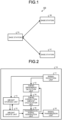
- FIG. 1 is a diagram illustrating a configuration of a communication system 100 according to a first embodiment of the present invention.
- the communication system 100 includes a base station 1A, a base station 1B, and a base station 1C.
- the base station 1A and the base station 1B can communicate with each other, and the base station 1A and the base station 1C can communicate with each other.
- communication counterparts of the base station 1A are the base station 1B and the base station 1C
- a communication counterpart of the base station 1B is the base station 1A
- a communication counterpart of the base station 1C is the base station 1A.
- each of the base stations 1A, 1B, and 1C may be referred to as a base station 1.
- Each of the base stations 1A, 1B, and 1C is an example of a node device having a function of autonomously synchronizing with a node device that is a communication counterpart.
- the node device is the base station 1, and each base station 1 has a function of synchronizing between a plurality of base stations 1, but the present invention is not limited to such an example.
- the node device may be a communication device such as a mobile station or a base station controller.
- a technique described below can be applied not only to synchronization between node devices of the same type but also to synchronization between node devices of different types.
- a wireless cellular system it is desirable to synchronize frame timing not only between a terminal and a base station but also between a plurality of base stations. This is because interference may occur between terminals each connected to corresponding one of the plurality of base stations.
- TDD time division duplex
- a plurality of terminals each connected to one of base stations of different cells are located nearby, for example, at a boundary of a plurality of cells, when one terminal transmits while another terminal is receiving, interference may occur between the terminals.
- FIG. 2 is a diagram illustrating a functional configuration of the base station 1A illustrated in FIG. 1 .
- the base stations 1B and 1C each have a functional configuration similar to the base station 1A.
- a base station and a node device that is a communication counterpart, are different for each device. Therefore, in the following explanation, regarding the base station 1B, the base station 1A is replaced with the base station 1B, and the base stations 1B and 1C which are node devices that are the communication counterparts are replaced with the base station 1A, and thus a detailed description of the function will be omitted.
- the base station 1C the base station 1A is replaced with the base station 1C, and the base stations 1B and 1C which are node devices that are the communication counterparts are replaced with the base station 1A, and thus a detailed description of the function will be omitted.
- a signal transmission unit 10 transmits a signal to the base stations 1B and 1C which are the node devices as communication counterparts.
- the signal transmission unit 10 can transmit a transmission signal output by a transmission signal generation unit 16.
- the signal transmission unit 10 can notify the base stations 1B and 1C which are the node devices as communication counterparts of the updated weight information.
- a signal reception unit 11 receives a signal from each of the node devices that are the communication counterparts. The signal reception unit 11 can output the received signal to a timing difference detection unit 12.
- the signal reception unit 11 can update weight information stored in a weight storage unit 13 on the basis of the weight information included in the received signal. For example, in a case where the signal received from the base station 1B includes weight information Wb of the base station 1B, the signal reception unit 11 updates the weight information Wb of the base station 1B stored in the weight storage unit 13.
- the timing difference detection unit 12 detect a timing difference between the base station 1A and each of the node devices that are the communication counterparts using a transmission timing at which the signal transmission unit 10 transmits a signal and a reception timing at which the signal reception unit 11 receives a signal from each of the node devices that are the communication counterparts.
- the timing difference detection unit 12 receives the transmission timing output by the transmission signal generation unit 16, and sets the timing at which the signal reception unit 11 receives each signal as the reception timing.
- the timing difference detection unit 12 can detect the timing difference by calculating a difference between the transmission timing and each of the plurality of reception timings.
- the timing difference detection unit 12 calculates a difference between the transmission timing of the base station 1A and each of the reception timings of the base stations 1B and 1C, and detects a timing difference Tab between the base station 1A and the base station 1B and a timing difference Tac between the base station 1A and the base station 1C.
- the timing difference detection unit 12 outputs the detected timing differences Tab and Tac to a timing correction amount calculation unit 14.
- the weight storage unit 13 stores the weight information of each of a plurality of node devices, specifically, weight information Wa of the base station 1A and the weight information Wb and weight information Wc of the respective base stations 1B and 1C which are the node devices as communication counterparts.
- the pieces of weight information Wa, Wb, and Wc are parameters used when calculating a timing correction amount which is a correction amount of a transmission timing for synchronizing between the base stations 1A, 1B, and 1C, and indicate the magnitude of an influence of a timing difference between the base stations 1 on the timing correction amount.
- a value of the weight information Wb of the base station 1B indicates the magnitude of an influence of a timing difference between the base station 1A and the base station 1B on the timing correction amount.
- the timing correction amount calculation unit 14 calculates a timing correction amount which is a correction amount of the transmission timing of the signal transmission unit 10 on the basis of the timing difference output by the timing difference detection unit 12 and the weight information stored in the weight storage unit 13. Specifically, with the use of the timing differences Tab and Tac and the weight information Wb and Wc, the timing correction amount calculation unit 14 calculates a timing correction amount Ta obtained by performing weighted averaging of the timing differences Tab and Tac.
- the weight information Wa, Wb, and Wc be determined so that a node device having a larger influence in a network to which the base station 1A is connected has a larger value.
- the weight information Wa, Wb, and Wc can be set to values based on the number of node device(s) that are the communication counterpart(s) to which each of the base stations 1A, 1B, and 1C is connected, for example, values obtained by subtracting 1 from the number of connections of the node device(s) that are the communication counterpart(s). In that case, the weight information Wa is set to 1, the weight information Wb is set to 0, and the weight information Wc is set to 0.
- values of the weight information of the base stations 1B and 1C each having one node device that is the communication counterpart can be set to zero. In that case, it is possible to prevent the influence of the timing of the node device of which the number of connections is one from propagating to other node devices, which makes it possible to improve synchronization performance.
- network centrality An influence in a network is generally called network centrality. Out of network centralities, that based on the number of connected nodes is called degree centrality. It is desirable that the higher the degree centrality, the larger values the weight information Wa, Wb, and Wc have.
- a weight update unit 15 updates the weight information Wa stored in the weight storage unit 13 and outputs the updated weight information Wa to the transmission signal generation unit 16.
- the transmission signal generation unit 16 generates a transmission signal to be transmitted by the base station 1A.
- the transmission signal generation unit 16 outputs the generated transmission signal to the signal transmission unit 10.
- the transmission signal generation unit 16 also has a function of notifying the timing difference detection unit 12 of a transmission timing of the transmission signal.
- the transmission signal generation unit 16 when the weight information Wa of the base station 1A is updated, the transmission signal generation unit 16 generates a transmission signal including the updated weight information Wa and outputs the transmission signal to the signal transmission unit 10, and thus the signal transmission unit 10 notifies the node devices that are the communication counterparts of the updated weight information Wa.
- the transmission signal generation unit 16 is a transmission timing adjustment unit that, when the timing correction amount calculation unit 14 outputs the timing correction amount Ta, uses the timing correction amount Ta to adjust a transmission timing of a signal transmitted by the signal transmission unit 10. Specifically, the transmission signal generation unit 16 adjusts the transmission timing of the base station 1A so that the timing correction amount Ta becomes zero.
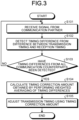
- FIG. 3 is a flowchart for explaining a timing correction operation of the base station 1A illustrated in FIG. 2 .
- the signal reception unit 11 of the base station 1A receives a signal from a communication counterpart (step S101).
- the timing difference detection unit 12 detects a timing difference from a difference between a transmission timing and a reception timing (step S102).
- the timing correction amount calculation unit 14 determines whether the timing differences Tab and Tac from the base stations 1B and 1C that are all of the communication counterparts, respectively, have been detected (step S103).
- step S103 If the timing differences from all of the communication counterparts have not been detected (step S103: No), the process returns to step S101. If the timing differences from all of the communication counterparts have been detected (step S103: Yes), the timing correction amount calculation unit 14 calculates the timing correction amount Ta obtained by performing weighted averaging of the timing differences Tab and Tac (step S104).
- the transmission signal generation unit 16 adjusts the transmission timing using the timing correction amount Ta (step S105).
- step S201: No If the weight information Wa has not been updated (step S201: No), the weight update unit 15 repeats the process in step S201. If the weight information Wa has been updated (step S201: Yes), the weight update unit 15 updates the weight information Wa stored in the weight storage unit 13 (step S202). The weight update unit 15 outputs the updated weight information Wa to the transmission signal generation unit 16. The transmission signal generation unit 16 generates a transmission signal including the updated weight information Wa and causes the signal transmission unit 10 to transmit the signal, thereby notifying the base stations 1B and 1C that are the communication counterparts of the updated weight information Wa (step S203).
- the signal reception unit 11 when the signal reception unit 11 receives a signal including the weight information Wb from the base station 1B, the signal reception unit 11 updates the weight information Wb stored in the weight storage unit 13.
- the signal reception unit 11 receives a signal including the weight information Wc from the base station 1C, the signal reception unit 11 updates the weight information Wc stored in the weight storage unit 13.
- the base station 1A detects the timing differences Tab and Tac from the base stations 1B and 1C that are the communication counterparts, respectively, and adjusts the transmission timing using the timing correction amount Ta obtained by performing weighted averaging of the timing differences Tab and Tac.
- Use of the weighted averaging as described above makes it possible to reduce the timing differences from the plurality of base stations 1 by performing adjustment once even when there are a plurality of base stations 1 that are the communication counterparts. Therefore, it is possible to shorten a time required for synchronizing between a plurality of node devices.
- the signal transmission unit 10 When the weight information of the base station in which the signal transmission unit 10 is included is updated, the signal transmission unit 10 notifies the node device(s) that are the communication counterpart(s) of the updated weight information. When the weight information of any of the node devices that are communication counterpart(s) is updated, the signal reception unit 11 receives the updated weight information and writes the received weight information into the weight storage unit 13. Therefore, the weight information can be kept up-to-date, and it is possible to efficiently synchronize between the node devices even if there occurs a change in a network configuration, or the like.
- the weight information can be set to a value obtained by subtracting 1 from the number of connections of the node device(s) that are the communication counterpart(s). In that case, the weight information of the node device of which the number of connections is one can be set to 0, and it is possible to prevent the influence of the timing of the node device of which the number of connections is one from propagating to other node devices, which makes it possible to improve the synchronization performance.
- the base station 1A can communicate with the base stations 1B and 1C.
- the base station 1B can communicate with the base stations 1A and 1K.
- the base station 1C can communicate with the base stations 1A, 1D, 1E, 1F, and 1G.
- the base station 1D can communicate with the base stations 1C and 1E.
- the base station 1E can communicate with the base stations 1C, 1D, and 1F.
- the base station 1F can communicate with the base stations 1C, 1E, 1G, and 1H.
- the base station 1G can communicate with the base stations 1C, 1F, 1H, and 1I.
- the base station 1H can communicate with the base stations 1F, 1G, and 1I.
- the base station 1I can communicate with the base stations 1G, 1H, and 1J.
- the base station 1J can communicate with the base stations 1I, 1K, and 1L.
- the base station 1K can communicate with the base stations 1B and 1J.
- the base station 1L can communicate with the base stations 1J and 1M.
- the base station 1M can communicate with the base station 1L.
- the numbers written in the circles each indicating one of the base stations 1A to 1M in FIG. 6 indicate values of weight information Wa to Wm of the base stations 1A to 1M, respectively.
- the value of the weight information is set to a value obtained by subtracting 1 from the number of connections of the base station(s) 1 that are the communication counterpart(s) to which each base station 1 is connected.
- the value of the weight information Wa of the base station 1A is 1.
- the value of the weight information Wb of the base station 1B is 1.
- the value of the weight information Wc of the base station 1C is 4.
- the value of the weight information Wd of the base station 1D is 1.
- the value of the weight information We of the base station 1E is 2.
- the value of the weight information Wf of the base station 1F is 3.
- the value of the weight information Wg of the base station 1G 3.
- the value of the weight information Wh of the base station 1H is 2.
- the value of the weight information Wi of the base station 1I is 2.
- the value of the weight information Wj of the base station 1J is 2.
- the value of the weight information Wk of the base station 1K is 1.
- the value of the weight information Wl of the base station 1L is 1.
- the value of the weight information Wm of the base station 1M is 0.
- the base station 1 having a large number of connections has a large influence in the network, increasing the weight of the base station 1 propagates the synchronization throughout the network, and thus it is possible to improve the synchronization performance.
- the value of the weight information is set to a value obtained by subtracting 1 from the number of connections, if the number of connections is one as in the base station 1M, the weight will be 0, and therefore it is possible to prevent the influence of the timing of the base station 1M from propagating to the other node devices. In that case, the synchronization performance can be improved by the base station 1L synchronizing with the base station 1J regardless of the timing of the base station 1M.
- use of the weighted averaging makes it possible to reduce the timing differences from the plurality of base stations 1 by once adjustment even when there are a plurality of base stations 1 that are the communication counterparts. Therefore, it is possible to shorten a time required for synchronizing between a plurality of node devices.
- FIG. 7 is a diagram illustrating a configuration of a communication system 300 according to a third embodiment of the present invention.
- the communication system 300 includes the base stations 1A to 1M.
- Each of the base stations 1A to 1M has a functional configuration similar to the base station 1A illustrated in FIG. 2 .
- each of the base stations 1A to 1M can perform the operations illustrated in FIGS. 3 to 5 .
- circles represent the base stations 1A to 1M, and lines with arrows represent wireless connections.
- the numbers written in the circles each indicating one of the base stations 1A to 1M in FIG. 7 indicate values of the weight information Wa to Wm of the base stations 1A to 1M, respectively. Because the base stations 1 with which each of the base stations 1A to 1M can communicate are similar to those in the second embodiment, the descriptions thereof will be omitted here.
- the weight information is determined differently from the first and second embodiments.
- the base station 1B has a function of connecting to a positioning satellite such as the Global Positioning System (GPS), receives a signal from the positioning satellite, and generates a time signal synchronized with a reference time such as Coordinated Universal Time (UTC), thereby generating a transmission timing.
- a positioning satellite such as the Global Positioning System (GPS)
- GPS Global Positioning System
- UTC Coordinated Universal Time
- the base station 1B serves as reference in the network as described above, it is possible to improve the synchronization performance by employing a configuration in which the value of the weight information Wb of the base station 1B is made larger than the values of the weight information Wa and Wc to Wm of the respective other base stations 1A and 1C to 1M, and in addition, the weight is propagated around the base station 1B.
- the weight update unit 15 of the base station 1B sets the weight information Wb of the base station 1B to a fixed positive value regardless of the number of connections of communication counterparts.
- the value of the weight information Wb is set to a value larger than the values of the weight information Wa and Wc to Wm of the base stations 1A and 1C to 1M which are base stations other than the base station 1B serving as reference. It is desirable that the value of the weight information Wb of the base station 1B serving as reference be larger than a maximum value of the number of connections of communication counterparts in the communication system 300.
- the weight update unit 15 of the base station 1B sets the values of the weight information Wa and Wc to Wm of the respective base stations 1A and 1C to 1M which are base stations other than the base station 1B serving as reference to zero. By setting the weight information Wa to Wm stored in the base station 1B serving as reference as described above, the timing of the base station 1B serving as reference is no longer updated.
- k is a coefficient that takes a value between 0 and 1.
- the values of the weight information Wa to Wm of the respective base stations 1A to 1M are as illustrated in FIG. 7 .
- the value of the weight information Wb of the base station 1B is fixed to "16"
- the coefficient k is set to 0.5.
- the weight information Wc and We to Wi of the base stations 1C and 1E to 1I have each a value obtained by subtracting 1 from the number of connections, and the weight information Wa, Wd and Wj to Wm of the base stations 1A, 1D and 1J to 1M have each a value k times as large as the maximum value of the weights of the surrounding base stations 1.
- a value of the weight information Wa of the base station 1A is 8
- a value of the weight information Wd of the base station 1D is 2
- a value of the weight information Wj of the base station 1J is 4
- a value of the weight information Wk of the base station 1K is 8
- a value of the weight information Wl of the base station 1L is 2
- a value of the weight information Wm of the base station 1M is 1. Because the values of the weight information Wc and We to Wi of the base stations 1C and 1E to 1I are similar to those in the second embodiment, specific descriptions thereof will be omitted here.
- the timing of the base station 1B serving as reference is prevented from being updated, and the timing of the base station 1B is efficiently propagated to the base stations 1A and 1C to 1M not serving as reference. Therefore, it is possible to shorten a time required for achieving synchronization in the communication system 300 including the plurality of base stations 1A to 1M.
- each of the base stations 1A to 1M autonomously updates the weight, it is possible to make an autonomous response even if a failure of the base station 1 occurs in the communication system 300.
- the base station 1 serving as reference is the base station 1B having the GPS function, but the present embodiment is not limited to such an example.
- the base station 1 serving as reference may be a base station 1 having a function of connecting to a positioning satellite other than the GPS, or a base station 1 having a timing serving as reference in the network.
- the communication system 300 even if a failure of the base station 1B serving as reference occurs, the synchronization between the other base stations 1A and 1C to 1M is maintained, which makes a robust system.
- the functions of the timing difference detection unit 12, the weight storage unit 13, the timing correction amount calculation unit 14, the weight update unit 15, and the transmission signal generation unit 16 illustrated in FIG. 2 are realized by processing circuitry.
- the processing circuitry may be realized by dedicated hardware, or one or more control circuits using a central processing unit (CPU).
- FIG. 8 is a diagram illustrating dedicated hardware for realizing functions of the base stations 1A to 1M according to the first to third embodiments of the present invention.
- the processing circuitry 90 is a single circuit, a composite circuit, a programmed processor, a parallel programmed processor, an application specific integrated circuit (ASIC), a field programmable gate array (FPGA), or a combination thereof.
- the control circuit is a control circuit 91 configured as illustrated in FIG. 9 , for example.
- FIG. 9 is a diagram illustrating a configuration of the control circuit 91 for realizing the functions of the base stations 1A to 1M according to the first to third embodiments of the present invention.
- the control circuit 91 includes a processor 92 and a memory 93.
- the processor 92 is a CPU, and also referred to as a processing device, an arithmetic device, a microprocessor, a microcomputer, a digital signal processor (DSP), or the like.
- the memory 93 is, for example, a non-volatile or volatile semiconductor memory such as a random access memory (RAM), a read only memory (ROM), a flash memory, an erasable programmable ROM (EPROM), or an electrically EPROM (EEPROM (registered trademark)), a magnetic disk, a flexible disk, an optical disk, a compact disc, a mini disk, or a digital versatile disk (DVD).
- RAM random access memory
- ROM read only memory
- EPROM erasable programmable ROM
- EEPROM electrically EPROM
- the above-described processing circuitry is realized by the control circuit 91, it is realized by the processor 92 reading and executing a program corresponding to a process of each component stored in the memory 93.
- the memory 93 is also used as a temporary memory in each process executed by the processor 92.
- the program executed by the processor 92 may be provided via a network or may be provided in a state of being stored in a storage medium.
- each base station 1 may exchange a detected timing difference between the plurality of base stations 1 to correct a propagation delay.
Landscapes
- Engineering & Computer Science (AREA)
- Computer Networks & Wireless Communication (AREA)
- Signal Processing (AREA)
- Radar, Positioning & Navigation (AREA)
- Remote Sensing (AREA)
- Physics & Mathematics (AREA)
- General Physics & Mathematics (AREA)
- Mobile Radio Communication Systems (AREA)
- Resistance Heating (AREA)
- Synchronisation In Digital Transmission Systems (AREA)
Claims (12)
- Knoteneinrichtung (1A), die eingerichtet ist, sich mit einer Vielzahl von Knoteneinrichtungen, die Kommunikations-Gegenstücke (1B, 1C) sind, zu synchronisieren, wobei die Knoteneinrichtung (1A) umfasst:eine Signalübertragungseinheit (10), die eingerichtet ist, ein Signal an jede der Vielzahl von Knoteneinrichtungen, welche Kommunikations-Gegenstücke (1) sind, zu übertragen;eine Signalempfangseinheit (11), die eingerichtet ist, ein Signal von jeder der Vielzahl von Knoteneinrichtungen, die Kommunikations-Gegenstücke sind, zu empfangen;eine Zeitdifferenz-Erfassungseinheit (12), die eingerichtet ist, eine Zeitdifferenz (Tab, Tac) zwischen der Knoteneinrichtung (1A) und jeder der Vielzahl von Knoteneinrichtungen, die Kommunikations-Gegenstücke (1B, 1C) sind, unter Verwendung einer Übertragungszeit, zu der die Signalübertragungseinheit (10) ein Signal überträgt, und einer Empfangszeit, zu der die Signalempfangseinheit (11) ein Signal von jeder der Vielzahl von Knoteneinrichtungen, die Kommunikations-Gegenstücke (1B, 1C) sind, empfängt, zu erfassen;eine Gewichtungs-Speichereinheit (13), die eingerichtet ist, Gewichtungsinformationen von jeder von der Knoteneinrichtung (1A) und der Vielzahl von Knoteneinrichtungen, die Kommunikations-Gegenstücke (1B, 1C) sind, zu speichern, wobei die Gewichtungsinformationen, die in der Gewichtungs-Speichereinheit (13) gespeichert sind, einen umso größeren Wert haben, je höher die Gradzentralität von jeder von der Knoteneinrichtung (1A) und der Vielzahl von Knoteneinrichtungen, die Kommunikations-Gegenstücke sind, ist, wobei die Gradzentralität auf einer Anzahl von Kommunikations-Gegenstücken basiert;eine Zeitkorrekturbetrags-Berechnungseinheit (14), die eingerichtet ist, einen Zeitkorrekturbetrag (Ta), der durch Ausführen einer gewichteten Mittelwertbildung der Zeitdifferenzen (Tab, Tac) auf der Grundlage von Gewichtungsinformationen von jeder einer Vielzahl von Knoteneinrichtungen, welche die Kommunikations-Gegenstücke (1B, 1C) sind, erhalten wird, zu berechnen; undeine Übertragungszeit-Einstellungseinheit (16), die eingerichtet ist, die Übertragungszeit unter Verwendung des Zeitkorrekturbetrags einzustellen.
- Knoteneinrichtung (1A) nach Anspruch 1, wobeidie Signalübertragungseinheit derart eingerichtet ist, dass die Signalübertragungseinheit (10), wenn Gewichtungsinformationen der Knoteneinrichtung (1A) aktualisiert werden, die Vielzahl von Knoteneinrichtungen, die Kommunikations-Gegenstücke (1B, 1C) sind, über die aktualisierten Gewichtungsinformationen benachrichtigt, unddie Signalempfangseinheit derart eingerichtet ist, dass die Signalempfangseinheit (11), wenn die Gewichtungsinformationen irgendeiner der Vielzahl von Knoteneinrichtungen, die Kommunikations-Gegenstücke (1B, 1C) sind, aktualisiert werden, die aktualisierten Gewichtungsinformationen empfängt und die empfangenen Gewichtungsinformationen in die Gewichtungs-Speichereinheit (13) schreibt.
- Knoteneinrichtung (1A) nach Anspruch 1 oder Anspruch 2, wobei die in der Gewichtungs-Speichereinheit (13) gespeicherten Gewichtungsinformationen jeweils von der Knoteneinrichtung und der Vielzahl von Knoteneinrichtungen, die Kommunikations-Gegenstücke (1B, 1C) sind, einen Wert haben, der durch Subtrahieren von 1 von einer Anzahl von Verbindungen von jeder von der Knoteneinrichtung und der zumindest einen Knoteneinrichtung, die ein Kommunikations-Gegenstück (1B, 1C) ist, erhalten wird.
- Knoteneinrichtung (1), die eingerichtet ist, sich mit einer Vielzahl von Knoteneinrichtungen, die Kommunikations-Gegenstücke (1) sind, zu synchronisieren, wobei die Knoteneinrichtung (1) umfasst:eine Signalübertragungseinheit (10), die eingerichtet ist, ein Signal an jede der Vielzahl von Knoteneinrichtungen, welche Kommunikations-Gegenstücke (1) sind, zu übertragen;eine Signalübertragungseinheit (11), die eingerichtet ist, ein Signal von jeder der Vielzahl von Knoteneinrichtungen, die Kommunikations-Gegenstücke (1) sind, zu empfangen;eine Zeitdifferenz-Erfassungseinheit (12), die eingerichtet ist, eine Zeitdifferenz zwischen der Knoteneinrichtung (1) und jeder der Vielzahl von Knoteneinrichtungen, die Kommunikations-Gegenstücke (1) sind, unter Verwendung einer Übertragungszeit, zu der die Signalübertragungseinheit (10) ein Signal überträgt, und einer Empfangszeit, zu der die Signalempfangseinheit (11) ein Signal von jeder der Vielzahl von Knoteneinrichtungen, die Kommunikations-Gegenstücke (1) sind, empfängt, zu erfassen;eine Gewichtungs-Speichereinheit (13), die eingerichtet ist, Gewichtungsinformationen von jeder der Vielzahl von Knoteneinrichtungen (1) und der Vielzahl von Knoteneinrichtungen, die Kommunikations-Gegenstücke sind, zu speichern;eine Zeitkorrekturbetrags-Berechnungseinheit (14), die eingerichtet ist, einen Zeitkorrekturbetrag, der durch Ausführen einer gewichteten Mittelwertbildung der zumindest einen Zeitdifferenz auf der Grundlage von Gewichtungsinformationen von jeder der Vielzahl von Knoteneinrichtungen, welche die Kommunikations-Gegenstücke (1) sind, erhalten wird, zu berechnen; undeine Übertragungszeit-Einstellungseinheit (16), die eingerichtet ist, die Übertragungszeit unter Verwendung des Zeitkorrekturbetrags einzustellen, wobeiwenn es eine Knoteneinrichtung gibt, die eingerichtet ist, als Referenz (1B) zu dienen, die nicht die Knoteneinrichtung in einem Kommunikationssystem (300) ist, in welchem die Knoteneinrichtung (1) enthalten ist, verhindert wird, dass die Zeit der Knoteneinrichtung, die als Referenz (1B) dient, aktualisiert wird,die Gewichtungsinformationen der als Referenz (1B) dienenden Knoteneinrichtung einen festen positiven Wert haben, der größer ist als der Wert der Gewichtungsinformationen von jeder von der Knoteneinrichtung und der Vielzahl von Knoteneinrichtungen, die Kommunikations-Gegenstücke sind, die nicht die als Referenz (1B) dienende Knoteneinrichtung ist,die Gewichtungsinformationen von jeder von der Knoteneinrichtung und der Vielzahl von Knoteneinrichtungen, die Kommunikations-Gegenstücke sind, die nicht die als Referenz (1B) dienende Knoteneinrichtung ist, als ein größerer Wert bestimmt wird aus: einem Wert, der durch Multiplizieren eines Maximalwerts der Gewichtungsinformationen von zumindest einer umgebenden Knoteneinrichtung, mit der eine Knoteneinrichtung, für die Gewichtungsinformationen bestimmt werden, verbunden ist, mit einem Koeffizienten mit einem Wert zwischen 0 und 1 erhalten wird, und einem Wert, der durch Subtrahieren von 1 von einer Anzahl von Verbindungen der Knoteneinrichtung, für welche die Gewichtungsinformationen bestimmt werden, erhalten wird.
- Knoteneinrichtung (1A) nach Anspruch 4, wobei die Knoteneinrichtung, die eingerichtet ist, als Referenz (1B) zu dienen, eine Knoteneinrichtung mit einer Funktion zur Verbindung mit einem Positionsbestimmungssatelliten ist.
- Kommunikationssystem (300), umfassend:eine Vielzahl der Knoteneinrichtungen (1A-1M) jeweils nach einem der Ansprüche 1 bis 4, wobeijede der Vielzahl von Knoteneinrichtungen (1A-1M) eingerichtet ist, sich zwischen der Vielzahl von Knoteneinrichtungen (1A-1M) selbstständig zu synchronisieren.
- Steuerschaltung (91), die eingerichtet ist, eine Knoteneinrichtung (1A) zu steuern, wobei die Knoteneinrichtung (1A) eingerichtet ist, sich mit einer Vielzahl von Knoteneinrichtungen, die Kommunikations-Gegenstücke (1) sind, zu synchronisieren, wobei die Steuerschaltung (91), eingerichtet ist, auszuführen:einen Schritt des Erfassens einer Zeitdifferenz zwischen einer zu steuernden Knoteneinrichtung (1A) und jeder der Vielzahl von Knoteneinrichtungen, die Kommunikations-Gegenstücke (1B, 1C) sind, unter Verwendung einer Übertragungszeit, zu der die zu steuernde Knoteneinrichtung ein Signal überträgt, und einer Empfangszeit, zu der die zu steuernde Knoteneinrichtung (1A) ein Signal von jeder der Vielzahl von Knoteneinrichtungen, die Kommunikations-Gegenstücke (1B, 1C) sind, empfängt;einen Schritt des Berechnens eines Zeitkorrekturbetrags, der durch Ausführen einer gewichteten Mittelwertbildung der zumindest einen Zeitdifferenz auf der Grundlage von Gewichtungsinformationen von jeder der Vielzahl von Knoteneinrichtungen, die Kommunikations-Gegenstücke (1B, 1C) sind, erhalten wird, wobei die Gewichtungsinformationen einen umso größeren Wert haben, je höher die Gradzentralität jeder der Vielzahl von Knoteneinrichtungen ist, die Kommunikations-Gegenstücke (1B, 1C) sind, wobei die Gradzentralität auf einer Anzahl von Kommunikations-Gegenstücken basiert; undeinen Schritt des Einstellens der Übertragungszeit unter Verwendung des Zeitkorrekturbetrags.
- Steuerschaltung, die eingerichtet ist, eine Knoteneinrichtung (1) zu steuern, wobei die Knoteneinrichtung (1A) eingerichtet ist, sich mit einer Vielzahl von Knoteneinrichtungen, die Kommunikations-Gegenstücke (1) sind, zu synchronisieren, wobei die Steuerschaltung eingerichtet ist, auszuführen:einen Schritt des Erfassens einer Zeitdifferenz zwischen einer zu steuernden Knoteneinrichtung (1) und jeder der Vielzahl von Knoteneinrichtungen, die Kommunikations-Gegenstücke (1) sind, unter Verwendung einer Übertragungszeit, zu der die zu steuernde Knoteneinrichtung (1) ein Signal überträgt, und einer Empfangszeit, zu der die zu steuernde Knoteneinrichtung (1) ein Signal von jeder der Vielzahl von Knoteneinrichtungen, die Kommunikations-Gegenstücke (1) sind, empfängt;einen Schritt des Berechnens eines Zeitkorrekturbetrags, der durch Durchführen einer gewichteten Mittelwertbildung der Zeitdifferenzen auf der Grundlage von Gewichtungsinformationen jeder der Vielzahl von Knoteneinrichtungen, die Kommunikations-Gegenstücke (1) sind, erhalten wird; undeinen Schritt des Einstellens der Übertragungszeit unter Verwendung des Zeitkorrekturbetrags, wobeiwenn es eine Knoteneinrichtung gibt, die als Referenz (1B) dient, die nicht die Knoteneinrichtung ist, welche in einem Kommunikationssystem (300) zu steuern ist, in welchem die zu steuernde Knoteneinrichtung (1) enthalten ist, verhindert wird, dass die Zeit der Knoteneinrichtung, die als Referenz (1B) dient, aktualisiert wird,die Gewichtungsinformation der Knoteneinrichtung, die eingerichtet ist, als Referenz (1B) zu dienen, einen festen positiven Wert hat, der größer ist als der Wert der Gewichtungsinformation von jeder von der Knoteneinrichtung und der Vielzahl von Knoteneinrichtungen, die Kommunikations-Gegenstücke sind, die nicht die als Referenz (1B) dienende Knoteneinrichtung ist,die Gewichtungsinformationen von jeder von der Knoteneinrichtung und der Vielzahl von Knoteneinrichtungen, die Kommunikations-Gegenstücke sind, als ein größerer Wert bestimmt werden aus: einem Wert, der durch Multiplizieren eines Maximalwerts der Gewichtungsinformationen von zumindest einer umgebenden Knoteneinrichtung, mit der eine Knoteneinrichtung, für die Gewichtungsinformationen bestimmt werden, verbunden ist, mit einem Koeffizienten mit einem Wert zwischen 0 und 1 erhalten wird, und einem Wert, der durch Subtrahieren von 1 von einer Anzahl von Verbindungen der Knoteneinrichtung, für welche die Gewichtungsinformationen bestimmt werden, erhalten wird.
- Speichermedium, das eingerichtet ist, ein Programm zum Steuern einer Knoteneinrichtung (1A) zu speichern, wobei das Programm, wenn es von einer Knoteneinrichtung ausgeführt wird, die Knoteneinrichtung veranlasst, auszuführen:einen Schritt des Erfassens einer Zeitdifferenz zwischen einer zu steuernden Knoteneinrichtung (1A) und jeder der Vielzahl von Knoteneinrichtungen, die Kommunikations-Gegenstücke (1B, 1C) sind, unter Verwendung einer Übertragungszeit, zu der die zu steuernde Knoteneinrichtung (1A) ein Signal überträgt, und einer Empfangszeit, zu der die zu steuernde Knoteneinrichtung (1A) ein Signal von jeder der Vielzahl von Knoteneinrichtungen, die Kommunikations-Gegenstücke (1B, 1C) sind, empfängt;einen Schritt des Berechnens eines Zeitkorrekturbetrags, der durch Ausführen einer gewichteten Mittelwertbildung der zumindest einen Zeitdifferenz auf der Grundlage von Gewichtungsinformationen von jeder der Vielzahl von Knoteneinrichtungen, die Kommunikations-Gegenstücke (1B, 1C) sind, erhalten wird, wobei die Gewichtungsinformationen einen umso größeren Wert haben, je höher die Gradzentralität jeder der Vielzahl von Knoteneinrichtungen ist, die Kommunikations-Gegenstücke (1B, 1C) sind, wobei die Gradzentralität auf einer Anzahl von Kommunikations-Gegenstücken basiert; undeinen Schritt des Einstellens der Übertragungszeit unter Verwendung des Zeitkorrekturbetrags.
- Speichermedium, das eingerichtet ist, ein Programm zum Steuern einer Knoteneinrichtung (1) zu speichern, wobei das Programm, wenn es von einer Knoteneinrichtung ausgeführt wird, die Knoteneinrichtung veranlasst, auszuführen:einen Schritt des Erfassens einer Zeitdifferenz zwischen einer zu steuernden Knoteneinrichtung (1) und jeder der Vielzahl von Knoteneinrichtungen, die Kommunikations-Gegenstücke (1) sind, unter Verwendung einer Übertragungszeit, zu der die zu steuernde Knoteneinrichtung (1) ein Signal überträgt, und einer Empfangszeit, zu der die zu steuernde Knoteneinrichtung (1) ein Signal von jeder der Vielzahl von Knoteneinrichtungen, die Kommunikations-Gegenstücke (1) sind, empfängt;einen Schritt des Berechnens eines Zeitkorrekturbetrags, der durch Durchführen einer gewichteten Mittelwertbildung der Zeitdifferenzen auf der Grundlage von Gewichtungsinformationen jeder der Vielzahl von Knoteneinrichtungen, die Kommunikations-Gegenstücke (1) sind, erhalten wird; undeinen Schritt des Einstellens der Übertragungszeit unter Verwendung des Zeitkorrekturbetrags,wenn es eine Knoteneinrichtung gibt, die als Referenz (1B) dient, die nicht die Knoteneinrichtung ist, welche in einem Kommunikationssystem (300) zu steuern ist, in welchem die zu steuernde Knoteneinrichtung (1) enthalten ist, verhindert wird, dass die Zeit der Knoteneinrichtung, die als Referenz (1B) dient, aktualisiert wird,die Gewichtungsinformationen der als Referenz (1B) dienenden Knoteneinrichtung einen festen positiven Wert haben, der größer ist als der Wert der Gewichtungsinformationen von jeder von der Knoteneinrichtung und der Vielzahl von Knoteneinrichtungen, die Kommunikations-Gegenstücke sind, die nicht die als Referenz (1B) dienende Knoteneinrichtung ist,die Gewichtungsinformationen von jeder von der Knoteneinrichtung und der Vielzahl von Knoteneinrichtungen, die Kommunikations-Gegenstücke sind, die nicht die als Referenz (1B) dienende Knoteneinrichtung ist, als ein größerer Wert bestimmt wird aus: einem Wert, der durch Multiplizieren eines Maximalwerts der Gewichtungsinformationen von zumindest einer umgebenden Knoteneinrichtung, mit der eine Knoteneinrichtung, für die Gewichtungsinformationen bestimmt werden, verbunden ist, mit einem Koeffizienten mit einem Wert zwischen 0 und 1 erhalten wird, und einem Wert, der durch Subtrahieren von 1 von einer Anzahl von Verbindungen der Knoteneinrichtung, für welche die Gewichtungsinformationen bestimmt werden, erhalten wird.
- Synchronisationsverfahren zum selbstständigen Synchronisieren einer Knoteneinrichtung mit einer Vielzahl von Knoteneinrichtungen, welche Kommunikations-Gegenstücke (1) sind, wobei das Verfahren durch die Knoteneinrichtung durchgeführt wird, und das Verfahren (1) umfasst:Übertragen eines Signals an eine Vielzahl von Knoteneinrichtungen, die Kommunikations-Gegenstücke (1) sind;Empfangen eines Signals von der Vielzahl von Knoteneinrichtungen, die Kommunikations-Gegenstücke (1) sind; undSpeichern von Gewichtungsinformationen von jeder von der Knoteneinrichtung (1) und der Vielzahl von Knoteneinrichtungen, die Kommunikations-Gegenstücke (1) sind, wobeije höher die Gradzentralität jeder der Vielzahl von Knoteneinrichtungen ist, die Kommunikations-Gegenstücke (1) sind, umso größer der Wert ist, den die in der Gewichtungs-Speichereinheit (13) gespeicherten Gewichtsinformationen haben, wobei die Gradzentralität auf einer Anzahl von Kommunikations-Gegenstücken basiert;Erfassen einer Zeitdifferenz zwischen der Knoteneinrichtung (1A) und jeder der Vielzahl von Knoteneinrichtungen, die Kommunikations-Gegenstücke (1) sind, unter Verwendung einer Übertragungszeit, zu der die Signalübertragungseinheit (10) ein Signal überträgt, und einer Empfangszeit, zu der die Signalempfangseinheit (11) ein Signal von jeder der Vielzahl von Knoteneinrichtungen, die Kommunikations-Gegenstücke (1) sind, empfängt,Berechnen eines Zeitkorrekturbetrags, der durch Durchführen einer gewichteten Mittelwertbildung der Zeitdifferenzen auf der Grundlage von Gewichtungsinformationen jeder der Vielzahl von Knoteneinrichtungen, die Kommunikations-Gegenstücke (1) sind, erhalten wird, undEinstellen der Übertragungszeit unter Verwendung des Zeitkorrekturbetrags.
- Synchronisationsverfahren zum selbstständigen Synchronisieren einer Knoteneinrichtung mit einer Vielzahl von Knoteneinrichtungen, die Kommunikations-Gegenstücke (1) sind, wobei das Verfahren durch die Knoteneinrichtung ausgeführt wird und das Verfahren umfasst:Übertragen eines Signals an die Vielzahl von Knoteneinrichtungen, die Kommunikations-Gegenstücke (1) sind;Empfangen eines Signals von der Vielzahl von Knoteneinrichtungen, die Kommunikations-Gegenstücke (1) sind; undSpeichern von Gewichtungsinformationen von jeder von der Knoteneinrichtung und der Vielzahl von Knoteneinrichtungen, die Kommunikations-Gegenstücke (1) sind;Erfassen einer Zeitdifferenz zwischen der Knoteneinrichtung (1A) und jeder von der zumindest einen Knoteneinrichtung, die das Kommunikations-Gegenstück (1) ist, unter Verwendung einer Übertragungszeit, zu der die Signalübertragungseinheit (10) ein Signal überträgt, und einer Empfangszeit, zu der die Signalempfangseinheit (11) ein Signal von jeder der Vielzahl von Knoteneinrichtungen, die Kommunikations-Gegenstücke (1) sind, empfängt,Berechnen eines Zeitkorrekturbetrags, der durch Durchführen einer gewichteten Mittelwertbildung der Zeitdifferenzen auf der Grundlage von Gewichtungsinformationen jeder der Vielzahl von Knoteneinrichtungen, die Kommunikations-Gegenstücke (1) sind, erhalten wird,und Einstellen der Übertragungszeit unter Verwendung des Zeitkorrekturbetrags, wobeiwenn es eine Knoteneinrichtung gibt, die als Referenz (1B) dient, die nicht die Knoteneinrichtung in einem Kommunikationssystem (300) ist, in dem die Knoteneinrichtung (1) enthalten ist, verhindert wird, dass der Zeitpunkt der Knoteneinrichtung, die als Referenz (1B) dient, aktualisiert wird,die Gewichtungsinformationen von jeder von der Knoteneinrichtung (1A) und der Vielzahl von Knoteneinrichtungen, die Kommunikations-Gegenstücke ist, die nicht die als Referenz (1B) dienende Knoteneinrichtung ist, als ein größerer Wert bestimmt wird aus: einem Wert, der durch Multiplizieren eines Maximalwerts der Gewichtungsinformationen von mindestens einer umgebenden Knoteneinrichtung, mit der eine Knoteneinrichtung, für welche Gewichtungsinformationen bestimmt werden, verbunden ist, mit einem Koeffizienten mit einem Wert zwischen 0 und 1 erhalten wird, und einem Wert, der durch Subtrahieren von 1 von einer Anzahl von Verbindungen der Knoteneinrichtung, für welche die Gewichtungsinformationen bestimmt werden, erhalten wird.
Applications Claiming Priority (1)
| Application Number | Priority Date | Filing Date | Title |
|---|---|---|---|
| PCT/JP2019/046834 WO2021106206A1 (ja) | 2019-11-29 | 2019-11-29 | ノード装置、通信システム、制御回路、記憶媒体および同期方法 |
Publications (3)
| Publication Number | Publication Date |
|---|---|
| EP4050835A1 EP4050835A1 (de) | 2022-08-31 |
| EP4050835A4 EP4050835A4 (de) | 2022-12-14 |
| EP4050835B1 true EP4050835B1 (de) | 2024-07-17 |
Family
ID=76128673
Family Applications (1)
| Application Number | Title | Priority Date | Filing Date |
|---|---|---|---|
| EP19953716.8A Active EP4050835B1 (de) | 2019-11-29 | 2019-11-29 | Knotenvorrichtung, kommunikationssystem, steuerschaltung, speichermedium und synchronisationsverfahren |
Country Status (7)
| Country | Link |
|---|---|
| US (1) | US20220256491A1 (de) |
| EP (1) | EP4050835B1 (de) |
| JP (1) | JP7034393B2 (de) |
| CN (1) | CN114731265A (de) |
| MY (1) | MY200517A (de) |
| TW (1) | TW202121865A (de) |
| WO (1) | WO2021106206A1 (de) |
Families Citing this family (1)
| Publication number | Priority date | Publication date | Assignee | Title |
|---|---|---|---|---|
| CN118540791A (zh) * | 2024-07-25 | 2024-08-23 | 独角兽网络科技(苏州)有限公司 | 基于uwb的自适应组网定位方法与系统 |
Family Cites Families (13)
| Publication number | Priority date | Publication date | Assignee | Title |
|---|---|---|---|---|
| JPH10190562A (ja) * | 1996-12-26 | 1998-07-21 | Toshiba Corp | 移動通信システムの基地局間フレーム同期方式およびこの方式を適用した基地局装置 |
| JP3088345B2 (ja) * | 1997-07-10 | 2000-09-18 | 日本電気株式会社 | 遠隔通信における位相同期誤差補正方法および位相同期誤差補正システム |
| US20040202119A1 (en) * | 2003-04-10 | 2004-10-14 | Edge Stephen William | Base station synchronization in a wireless network |
| KR100734575B1 (ko) * | 2005-01-31 | 2007-07-02 | 가부시키가이샤 히다치 고쿠사이 덴키 | 기지국간 동기시스템과 방법 및 기지국 |
| JP4671749B2 (ja) * | 2005-04-26 | 2011-04-20 | 株式会社エヌ・ティ・ティ・ドコモ | 送受信機、移動通信システム及び送受信方法 |
| JP4943050B2 (ja) * | 2006-04-17 | 2012-05-30 | 三菱電機株式会社 | ノード間同期方法およびノード装置 |
| GB2460356B (en) * | 2007-03-08 | 2011-10-26 | Fujitsu Ltd | Wireless communication apparatus, mobile wireless communications control method, and wireless station |
| US7983702B2 (en) * | 2007-07-09 | 2011-07-19 | Qualcomm Incorporated | Synchronization of a peer-to-peer communication network |
| US8274998B2 (en) * | 2008-10-02 | 2012-09-25 | Cortina Systems, Inc. | Systems and methods for packet based timing offset determination using timing adjustment information |
| US9913233B2 (en) * | 2015-07-28 | 2018-03-06 | Qualcomm Incorporated | Synchronization for device-to-device positioning in wireless networks |
| US9813877B1 (en) * | 2015-12-14 | 2017-11-07 | Nestwave Sas | Accurate indoor positioning with cellular signals |
| US10581543B2 (en) * | 2017-01-10 | 2020-03-03 | Infineon Technologies Ag | Synchronization mechanism for high speed sensor interface |
| US11140641B2 (en) * | 2018-10-11 | 2021-10-05 | Qualcomm Incorporated | Cellular vehicle-to-everything out of coverage synchronization |
-
2019
- 2019-11-29 EP EP19953716.8A patent/EP4050835B1/de active Active
- 2019-11-29 MY MYPI2022002571A patent/MY200517A/en unknown
- 2019-11-29 CN CN201980102345.9A patent/CN114731265A/zh active Pending
- 2019-11-29 WO PCT/JP2019/046834 patent/WO2021106206A1/ja not_active Ceased
- 2019-11-29 JP JP2021561118A patent/JP7034393B2/ja not_active Expired - Fee Related
-
2020
- 2020-06-05 TW TW109118944A patent/TW202121865A/zh unknown
-
2022
- 2022-04-28 US US17/731,754 patent/US20220256491A1/en not_active Abandoned
Non-Patent Citations (1)
| Title |
|---|
| AMULYA RATNA SWAIN ET AL: "A Weighted Average Based External Clock Synchronization Protocol for Wireless Sensor Networks", DISTRIBUTED COMPUTING SYSTEMS WORKSHOPS (ICDCSW), 2011 31ST INTERNATIONAL CONFERENCE ON, IEEE, 20 June 2011 (2011-06-20), pages 218 - 229, XP031903967, ISBN: 978-1-4577-0384-3, DOI: 10.1109/ICDCSW.2011.30 * |
Also Published As
| Publication number | Publication date |
|---|---|
| EP4050835A1 (de) | 2022-08-31 |
| EP4050835A4 (de) | 2022-12-14 |
| WO2021106206A1 (ja) | 2021-06-03 |
| JPWO2021106206A1 (de) | 2021-06-03 |
| TW202121865A (zh) | 2021-06-01 |
| JP7034393B2 (ja) | 2022-03-11 |
| MY200517A (en) | 2023-12-29 |
| CN114731265A (zh) | 2022-07-08 |
| US20220256491A1 (en) | 2022-08-11 |
Similar Documents
| Publication | Publication Date | Title |
|---|---|---|
| US20240348328A1 (en) | Frequency adjustment for non-terrestrial networks | |
| EP3817245B1 (de) | Delta-strahl-vergleich zur detektion der fehlausrichtung von ul-/dl-strahlen | |
| US8391201B2 (en) | System and method for transmit time computation at a relay station | |
| TWI896877B (zh) | 使用者設備、以及在使用者設備與非陸地網路之間實行定時提前調整的方法 | |
| KR20240067883A (ko) | 유효성 타이머의 구성 | |
| US20250168786A1 (en) | Testing framework for ue timing-tracking capabilities over satellite or similar communications | |
| JP2019505127A (ja) | 同期方法及び装置 | |
| EP4250590A1 (de) | Standortberechnung | |
| EP2232730B1 (de) | System und verfahren zur sendezeitberechnung in einer relaisstation | |
| EP4050835B1 (de) | Knotenvorrichtung, kommunikationssystem, steuerschaltung, speichermedium und synchronisationsverfahren | |
| US20240357533A1 (en) | Apparatus, methods, and computer programs for propagation delay determination | |
| US11943729B2 (en) | Network time monitoring and adjustment | |
| CN114222932B (zh) | 集成网络中的接入方法 | |
| EP4295620B1 (de) | Angepasste ue-tx-leistungserhöhung für anfänglichen zugriff zur unterstützung von nr über ntn | |
| US9213317B2 (en) | Method and arrangement for transferring a time of day value between network elements | |
| EP2883077B1 (de) | Systeme und verfahren zur phasenbestimmung über eine drahtlose verbindung | |
| US11638228B2 (en) | Time comparison device and time quality monitoring method | |
| US11799624B2 (en) | Time-synchronization system, relay apparatus, time-synchronization method, and non-transitory computer readable medium | |
| EP4443766A1 (de) | Netzwerkunterstützter demodulationsreferenzsignalbündelungsrahmen | |
| KR102146527B1 (ko) | 다중 홉 시각 동기 장치를 이용한 owr 측위 방법 | |
| JP4651364B2 (ja) | 位相調整方法及び装置 | |
| US20250024395A1 (en) | Apparatus and method of auxiliary reporting for network verified user equipment location for non-terrestrial networks | |
| EP3170274B1 (de) | Verfahren und vorrichtung zur erzeugung eines taktsignales | |
| TW202446140A (zh) | 報告非陸地網路中的使用者設備時間差的方法、報告非陸地網路中的基站時間差的方法以及非暫時性電腦可讀取儲存媒體 | |
| JPS5829229A (ja) | Tdmaサイトダイバシチ方式における送信バ−スト同期方式 |
Legal Events
| Date | Code | Title | Description |
|---|---|---|---|
| STAA | Information on the status of an ep patent application or granted ep patent |
Free format text: STATUS: THE INTERNATIONAL PUBLICATION HAS BEEN MADE |
|
| PUAI | Public reference made under article 153(3) epc to a published international application that has entered the european phase |
Free format text: ORIGINAL CODE: 0009012 |
|
| STAA | Information on the status of an ep patent application or granted ep patent |
Free format text: STATUS: REQUEST FOR EXAMINATION WAS MADE |
|
| 17P | Request for examination filed |
Effective date: 20220524 |
|
| AK | Designated contracting states |
Kind code of ref document: A1 Designated state(s): AL AT BE BG CH CY CZ DE DK EE ES FI FR GB GR HR HU IE IS IT LI LT LU LV MC MK MT NL NO PL PT RO RS SE SI SK SM TR |
|
| A4 | Supplementary search report drawn up and despatched |
Effective date: 20221110 |
|
| RIC1 | Information provided on ipc code assigned before grant |
Ipc: H04J 3/06 20060101ALI20221104BHEP Ipc: H04W 56/00 20090101ALI20221104BHEP Ipc: H04L 7/00 20060101AFI20221104BHEP |
|
| DAV | Request for validation of the european patent (deleted) | ||
| DAX | Request for extension of the european patent (deleted) | ||
| STAA | Information on the status of an ep patent application or granted ep patent |
Free format text: STATUS: EXAMINATION IS IN PROGRESS |
|
| 17Q | First examination report despatched |
Effective date: 20230822 |
|
| GRAP | Despatch of communication of intention to grant a patent |
Free format text: ORIGINAL CODE: EPIDOSNIGR1 |
|
| STAA | Information on the status of an ep patent application or granted ep patent |
Free format text: STATUS: GRANT OF PATENT IS INTENDED |
|
| INTG | Intention to grant announced |
Effective date: 20240305 |
|
| GRAS | Grant fee paid |
Free format text: ORIGINAL CODE: EPIDOSNIGR3 |
|
| GRAA | (expected) grant |
Free format text: ORIGINAL CODE: 0009210 |
|
| STAA | Information on the status of an ep patent application or granted ep patent |
Free format text: STATUS: THE PATENT HAS BEEN GRANTED |
|
| AK | Designated contracting states |
Kind code of ref document: B1 Designated state(s): AL AT BE BG CH CY CZ DE DK EE ES FI FR GB GR HR HU IE IS IT LI LT LU LV MC MK MT NL NO PL PT RO RS SE SI SK SM TR |
|
| REG | Reference to a national code |
Ref country code: CH Ref legal event code: EP |
|
| REG | Reference to a national code |
Ref country code: DE Ref legal event code: R096 Ref document number: 602019055580 Country of ref document: DE |
|
| REG | Reference to a national code |
Ref country code: IE Ref legal event code: FG4D |
|
| REG | Reference to a national code |
Ref country code: LT Ref legal event code: MG9D |
|
| REG | Reference to a national code |
Ref country code: NL Ref legal event code: MP Effective date: 20240717 |
|
| PG25 | Lapsed in a contracting state [announced via postgrant information from national office to epo] |
Ref country code: PT Free format text: LAPSE BECAUSE OF FAILURE TO SUBMIT A TRANSLATION OF THE DESCRIPTION OR TO PAY THE FEE WITHIN THE PRESCRIBED TIME-LIMIT Effective date: 20241118 |
|
| REG | Reference to a national code |
Ref country code: AT Ref legal event code: MK05 Ref document number: 1705127 Country of ref document: AT Kind code of ref document: T Effective date: 20240717 |
|
| PG25 | Lapsed in a contracting state [announced via postgrant information from national office to epo] |
Ref country code: NL Free format text: LAPSE BECAUSE OF FAILURE TO SUBMIT A TRANSLATION OF THE DESCRIPTION OR TO PAY THE FEE WITHIN THE PRESCRIBED TIME-LIMIT Effective date: 20240717 |
|
| PG25 | Lapsed in a contracting state [announced via postgrant information from national office to epo] |
Ref country code: PT Free format text: LAPSE BECAUSE OF FAILURE TO SUBMIT A TRANSLATION OF THE DESCRIPTION OR TO PAY THE FEE WITHIN THE PRESCRIBED TIME-LIMIT Effective date: 20241118 Ref country code: NL Free format text: LAPSE BECAUSE OF FAILURE TO SUBMIT A TRANSLATION OF THE DESCRIPTION OR TO PAY THE FEE WITHIN THE PRESCRIBED TIME-LIMIT Effective date: 20240717 |
|
| PG25 | Lapsed in a contracting state [announced via postgrant information from national office to epo] |
Ref country code: NO Free format text: LAPSE BECAUSE OF FAILURE TO SUBMIT A TRANSLATION OF THE DESCRIPTION OR TO PAY THE FEE WITHIN THE PRESCRIBED TIME-LIMIT Effective date: 20241017 |
|
| PG25 | Lapsed in a contracting state [announced via postgrant information from national office to epo] |
Ref country code: FI Free format text: LAPSE BECAUSE OF FAILURE TO SUBMIT A TRANSLATION OF THE DESCRIPTION OR TO PAY THE FEE WITHIN THE PRESCRIBED TIME-LIMIT Effective date: 20240717 Ref country code: PL Free format text: LAPSE BECAUSE OF FAILURE TO SUBMIT A TRANSLATION OF THE DESCRIPTION OR TO PAY THE FEE WITHIN THE PRESCRIBED TIME-LIMIT Effective date: 20240717 Ref country code: GR Free format text: LAPSE BECAUSE OF FAILURE TO SUBMIT A TRANSLATION OF THE DESCRIPTION OR TO PAY THE FEE WITHIN THE PRESCRIBED TIME-LIMIT Effective date: 20241018 |
|
| PG25 | Lapsed in a contracting state [announced via postgrant information from national office to epo] |
Ref country code: BG Free format text: LAPSE BECAUSE OF FAILURE TO SUBMIT A TRANSLATION OF THE DESCRIPTION OR TO PAY THE FEE WITHIN THE PRESCRIBED TIME-LIMIT Effective date: 20240717 |
|
| PG25 | Lapsed in a contracting state [announced via postgrant information from national office to epo] |
Ref country code: LV Free format text: LAPSE BECAUSE OF FAILURE TO SUBMIT A TRANSLATION OF THE DESCRIPTION OR TO PAY THE FEE WITHIN THE PRESCRIBED TIME-LIMIT Effective date: 20240717 |
|
| PG25 | Lapsed in a contracting state [announced via postgrant information from national office to epo] |
Ref country code: IS Free format text: LAPSE BECAUSE OF FAILURE TO SUBMIT A TRANSLATION OF THE DESCRIPTION OR TO PAY THE FEE WITHIN THE PRESCRIBED TIME-LIMIT Effective date: 20241117 Ref country code: AT Free format text: LAPSE BECAUSE OF FAILURE TO SUBMIT A TRANSLATION OF THE DESCRIPTION OR TO PAY THE FEE WITHIN THE PRESCRIBED TIME-LIMIT Effective date: 20240717 |
|
| PG25 | Lapsed in a contracting state [announced via postgrant information from national office to epo] |
Ref country code: HR Free format text: LAPSE BECAUSE OF FAILURE TO SUBMIT A TRANSLATION OF THE DESCRIPTION OR TO PAY THE FEE WITHIN THE PRESCRIBED TIME-LIMIT Effective date: 20240717 |
|
| PG25 | Lapsed in a contracting state [announced via postgrant information from national office to epo] |
Ref country code: ES Free format text: LAPSE BECAUSE OF FAILURE TO SUBMIT A TRANSLATION OF THE DESCRIPTION OR TO PAY THE FEE WITHIN THE PRESCRIBED TIME-LIMIT Effective date: 20240717 Ref country code: RS Free format text: LAPSE BECAUSE OF FAILURE TO SUBMIT A TRANSLATION OF THE DESCRIPTION OR TO PAY THE FEE WITHIN THE PRESCRIBED TIME-LIMIT Effective date: 20241017 |
|
| PG25 | Lapsed in a contracting state [announced via postgrant information from national office to epo] |
Ref country code: RS Free format text: LAPSE BECAUSE OF FAILURE TO SUBMIT A TRANSLATION OF THE DESCRIPTION OR TO PAY THE FEE WITHIN THE PRESCRIBED TIME-LIMIT Effective date: 20241017 Ref country code: PL Free format text: LAPSE BECAUSE OF FAILURE TO SUBMIT A TRANSLATION OF THE DESCRIPTION OR TO PAY THE FEE WITHIN THE PRESCRIBED TIME-LIMIT Effective date: 20240717 Ref country code: NO Free format text: LAPSE BECAUSE OF FAILURE TO SUBMIT A TRANSLATION OF THE DESCRIPTION OR TO PAY THE FEE WITHIN THE PRESCRIBED TIME-LIMIT Effective date: 20241017 Ref country code: LV Free format text: LAPSE BECAUSE OF FAILURE TO SUBMIT A TRANSLATION OF THE DESCRIPTION OR TO PAY THE FEE WITHIN THE PRESCRIBED TIME-LIMIT Effective date: 20240717 Ref country code: IS Free format text: LAPSE BECAUSE OF FAILURE TO SUBMIT A TRANSLATION OF THE DESCRIPTION OR TO PAY THE FEE WITHIN THE PRESCRIBED TIME-LIMIT Effective date: 20241117 Ref country code: HR Free format text: LAPSE BECAUSE OF FAILURE TO SUBMIT A TRANSLATION OF THE DESCRIPTION OR TO PAY THE FEE WITHIN THE PRESCRIBED TIME-LIMIT Effective date: 20240717 Ref country code: GR Free format text: LAPSE BECAUSE OF FAILURE TO SUBMIT A TRANSLATION OF THE DESCRIPTION OR TO PAY THE FEE WITHIN THE PRESCRIBED TIME-LIMIT Effective date: 20241018 Ref country code: FI Free format text: LAPSE BECAUSE OF FAILURE TO SUBMIT A TRANSLATION OF THE DESCRIPTION OR TO PAY THE FEE WITHIN THE PRESCRIBED TIME-LIMIT Effective date: 20240717 Ref country code: ES Free format text: LAPSE BECAUSE OF FAILURE TO SUBMIT A TRANSLATION OF THE DESCRIPTION OR TO PAY THE FEE WITHIN THE PRESCRIBED TIME-LIMIT Effective date: 20240717 Ref country code: BG Free format text: LAPSE BECAUSE OF FAILURE TO SUBMIT A TRANSLATION OF THE DESCRIPTION OR TO PAY THE FEE WITHIN THE PRESCRIBED TIME-LIMIT Effective date: 20240717 Ref country code: AT Free format text: LAPSE BECAUSE OF FAILURE TO SUBMIT A TRANSLATION OF THE DESCRIPTION OR TO PAY THE FEE WITHIN THE PRESCRIBED TIME-LIMIT Effective date: 20240717 |
|
| PG25 | Lapsed in a contracting state [announced via postgrant information from national office to epo] |
Ref country code: RO Free format text: LAPSE BECAUSE OF FAILURE TO SUBMIT A TRANSLATION OF THE DESCRIPTION OR TO PAY THE FEE WITHIN THE PRESCRIBED TIME-LIMIT Effective date: 20240717 Ref country code: DK Free format text: LAPSE BECAUSE OF FAILURE TO SUBMIT A TRANSLATION OF THE DESCRIPTION OR TO PAY THE FEE WITHIN THE PRESCRIBED TIME-LIMIT Effective date: 20240717 Ref country code: SM Free format text: LAPSE BECAUSE OF FAILURE TO SUBMIT A TRANSLATION OF THE DESCRIPTION OR TO PAY THE FEE WITHIN THE PRESCRIBED TIME-LIMIT Effective date: 20240717 |
|
| REG | Reference to a national code |
Ref country code: DE Ref legal event code: R097 Ref document number: 602019055580 Country of ref document: DE |
|
| PG25 | Lapsed in a contracting state [announced via postgrant information from national office to epo] |
Ref country code: EE Free format text: LAPSE BECAUSE OF FAILURE TO SUBMIT A TRANSLATION OF THE DESCRIPTION OR TO PAY THE FEE WITHIN THE PRESCRIBED TIME-LIMIT Effective date: 20240717 |
|
| PG25 | Lapsed in a contracting state [announced via postgrant information from national office to epo] |
Ref country code: CZ Free format text: LAPSE BECAUSE OF FAILURE TO SUBMIT A TRANSLATION OF THE DESCRIPTION OR TO PAY THE FEE WITHIN THE PRESCRIBED TIME-LIMIT Effective date: 20240717 |
|
| PG25 | Lapsed in a contracting state [announced via postgrant information from national office to epo] |
Ref country code: SK Free format text: LAPSE BECAUSE OF FAILURE TO SUBMIT A TRANSLATION OF THE DESCRIPTION OR TO PAY THE FEE WITHIN THE PRESCRIBED TIME-LIMIT Effective date: 20240717 |
|
| PLBE | No opposition filed within time limit |
Free format text: ORIGINAL CODE: 0009261 |
|
| STAA | Information on the status of an ep patent application or granted ep patent |
Free format text: STATUS: NO OPPOSITION FILED WITHIN TIME LIMIT |
|
| 26N | No opposition filed |
Effective date: 20250422 |
|
| REG | Reference to a national code |
Ref country code: CH Ref legal event code: PL |
|
| PG25 | Lapsed in a contracting state [announced via postgrant information from national office to epo] |
Ref country code: MC Free format text: LAPSE BECAUSE OF FAILURE TO SUBMIT A TRANSLATION OF THE DESCRIPTION OR TO PAY THE FEE WITHIN THE PRESCRIBED TIME-LIMIT Effective date: 20240717 |
|
| PG25 | Lapsed in a contracting state [announced via postgrant information from national office to epo] |
Ref country code: LU Free format text: LAPSE BECAUSE OF NON-PAYMENT OF DUE FEES Effective date: 20241129 |
|
| REG | Reference to a national code |
Ref country code: CH Ref legal event code: PL |
|
| PG25 | Lapsed in a contracting state [announced via postgrant information from national office to epo] |
Ref country code: CH Free format text: LAPSE BECAUSE OF NON-PAYMENT OF DUE FEES Effective date: 20241130 |
|
| REG | Reference to a national code |
Ref country code: BE Ref legal event code: MM Effective date: 20241130 |
|
| PG25 | Lapsed in a contracting state [announced via postgrant information from national office to epo] |
Ref country code: SE Free format text: LAPSE BECAUSE OF FAILURE TO SUBMIT A TRANSLATION OF THE DESCRIPTION OR TO PAY THE FEE WITHIN THE PRESCRIBED TIME-LIMIT Effective date: 20240717 |
|
| P01 | Opt-out of the competence of the unified patent court (upc) registered |
Free format text: CASE NUMBER: UPC_APP_4942_4050835/2025 Effective date: 20250827 |
|
| PG25 | Lapsed in a contracting state [announced via postgrant information from national office to epo] |
Ref country code: BE Free format text: LAPSE BECAUSE OF NON-PAYMENT OF DUE FEES Effective date: 20241130 |
|
| PGFP | Annual fee paid to national office [announced via postgrant information from national office to epo] |
Ref country code: FR Payment date: 20250930 Year of fee payment: 7 |
|
| PG25 | Lapsed in a contracting state [announced via postgrant information from national office to epo] |
Ref country code: IE Free format text: LAPSE BECAUSE OF NON-PAYMENT OF DUE FEES Effective date: 20241129 |
|
| PGFP | Annual fee paid to national office [announced via postgrant information from national office to epo] |
Ref country code: DE Payment date: 20250930 Year of fee payment: 7 |
|
| PGFP | Annual fee paid to national office [announced via postgrant information from national office to epo] |
Ref country code: GB Payment date: 20251001 Year of fee payment: 7 |
|
| PG25 | Lapsed in a contracting state [announced via postgrant information from national office to epo] |
Ref country code: IT Free format text: LAPSE BECAUSE OF FAILURE TO SUBMIT A TRANSLATION OF THE DESCRIPTION OR TO PAY THE FEE WITHIN THE PRESCRIBED TIME-LIMIT Effective date: 20240717 |
|
| PG25 | Lapsed in a contracting state [announced via postgrant information from national office to epo] |
Ref country code: HU Free format text: LAPSE BECAUSE OF FAILURE TO SUBMIT A TRANSLATION OF THE DESCRIPTION OR TO PAY THE FEE WITHIN THE PRESCRIBED TIME-LIMIT; INVALID AB INITIO Effective date: 20191129 |