EP4048383B1 - Implantierbares medizinprodukt zur stimulation des his-bündels eines menschlichen oder tierischen herzens unter verwendung einer verbesserten unterscheidung zwischen atrialen und ventrikulären beim his-bündel erkannten signalen - Google Patents
Implantierbares medizinprodukt zur stimulation des his-bündels eines menschlichen oder tierischen herzens unter verwendung einer verbesserten unterscheidung zwischen atrialen und ventrikulären beim his-bündel erkannten signalen Download PDFInfo
- Publication number
- EP4048383B1 EP4048383B1 EP20793371.4A EP20793371A EP4048383B1 EP 4048383 B1 EP4048383 B1 EP 4048383B1 EP 20793371 A EP20793371 A EP 20793371A EP 4048383 B1 EP4048383 B1 EP 4048383B1
- Authority
- EP
- European Patent Office
- Prior art keywords
- bundle
- detection unit
- signal
- electric signal
- sensing
- Prior art date
- Legal status (The legal status is an assumption and is not a legal conclusion. Google has not performed a legal analysis and makes no representation as to the accuracy of the status listed.)
- Active
Links
Images


Classifications
-
- A—HUMAN NECESSITIES
- A61—MEDICAL OR VETERINARY SCIENCE; HYGIENE
- A61N—ELECTROTHERAPY; MAGNETOTHERAPY; RADIATION THERAPY; ULTRASOUND THERAPY
- A61N1/00—Electrotherapy; Circuits therefor
- A61N1/18—Applying electric currents by contact electrodes
- A61N1/32—Applying electric currents by contact electrodes alternating or intermittent currents
- A61N1/36—Applying electric currents by contact electrodes alternating or intermittent currents for stimulation
- A61N1/362—Heart stimulators
- A61N1/365—Heart stimulators controlled by a physiological parameter, e.g. heart potential
- A61N1/36514—Heart stimulators controlled by a physiological parameter, e.g. heart potential controlled by a physiological quantity other than heart potential, e.g. blood pressure
- A61N1/36521—Heart stimulators controlled by a physiological parameter, e.g. heart potential controlled by a physiological quantity other than heart potential, e.g. blood pressure the parameter being derived from measurement of an electrical impedance
-
- A—HUMAN NECESSITIES
- A61—MEDICAL OR VETERINARY SCIENCE; HYGIENE
- A61B—DIAGNOSIS; SURGERY; IDENTIFICATION
- A61B5/00—Measuring for diagnostic purposes; Identification of persons
- A61B5/05—Detecting, measuring or recording for diagnosis by means of electric currents or magnetic fields; Measuring using microwaves or radio waves
- A61B5/053—Measuring electrical impedance or conductance of a portion of the body
- A61B5/0538—Measuring electrical impedance or conductance of a portion of the body invasively, e.g. using a catheter
-
- A—HUMAN NECESSITIES
- A61—MEDICAL OR VETERINARY SCIENCE; HYGIENE
- A61B—DIAGNOSIS; SURGERY; IDENTIFICATION
- A61B5/00—Measuring for diagnostic purposes; Identification of persons
- A61B5/24—Detecting, measuring or recording bioelectric or biomagnetic signals of the body or parts thereof
- A61B5/25—Bioelectric electrodes therefor
- A61B5/279—Bioelectric electrodes therefor specially adapted for particular uses
- A61B5/28—Bioelectric electrodes therefor specially adapted for particular uses for electrocardiography [ECG]
- A61B5/283—Invasive
- A61B5/29—Invasive for permanent or long-term implantation
-
- A—HUMAN NECESSITIES
- A61—MEDICAL OR VETERINARY SCIENCE; HYGIENE
- A61B—DIAGNOSIS; SURGERY; IDENTIFICATION
- A61B5/00—Measuring for diagnostic purposes; Identification of persons
- A61B5/48—Other medical applications
- A61B5/4836—Diagnosis combined with treatment in closed-loop systems or methods
-
- A—HUMAN NECESSITIES
- A61—MEDICAL OR VETERINARY SCIENCE; HYGIENE
- A61N—ELECTROTHERAPY; MAGNETOTHERAPY; RADIATION THERAPY; ULTRASOUND THERAPY
- A61N1/00—Electrotherapy; Circuits therefor
- A61N1/02—Details
- A61N1/04—Electrodes
- A61N1/05—Electrodes for implantation or insertion into the body, e.g. heart electrode
- A61N1/056—Transvascular endocardial electrode systems
-
- A—HUMAN NECESSITIES
- A61—MEDICAL OR VETERINARY SCIENCE; HYGIENE
- A61N—ELECTROTHERAPY; MAGNETOTHERAPY; RADIATION THERAPY; ULTRASOUND THERAPY
- A61N1/00—Electrotherapy; Circuits therefor
- A61N1/18—Applying electric currents by contact electrodes
- A61N1/32—Applying electric currents by contact electrodes alternating or intermittent currents
- A61N1/36—Applying electric currents by contact electrodes alternating or intermittent currents for stimulation
- A61N1/362—Heart stimulators
- A61N1/365—Heart stimulators controlled by a physiological parameter, e.g. heart potential
-
- A—HUMAN NECESSITIES
- A61—MEDICAL OR VETERINARY SCIENCE; HYGIENE
- A61N—ELECTROTHERAPY; MAGNETOTHERAPY; RADIATION THERAPY; ULTRASOUND THERAPY
- A61N1/00—Electrotherapy; Circuits therefor
- A61N1/18—Applying electric currents by contact electrodes
- A61N1/32—Applying electric currents by contact electrodes alternating or intermittent currents
- A61N1/36—Applying electric currents by contact electrodes alternating or intermittent currents for stimulation
- A61N1/362—Heart stimulators
- A61N1/365—Heart stimulators controlled by a physiological parameter, e.g. heart potential
- A61N1/36585—Heart stimulators controlled by a physiological parameter, e.g. heart potential controlled by two or more physical parameters
-
- A—HUMAN NECESSITIES
- A61—MEDICAL OR VETERINARY SCIENCE; HYGIENE
- A61N—ELECTROTHERAPY; MAGNETOTHERAPY; RADIATION THERAPY; ULTRASOUND THERAPY
- A61N1/00—Electrotherapy; Circuits therefor
- A61N1/18—Applying electric currents by contact electrodes
- A61N1/32—Applying electric currents by contact electrodes alternating or intermittent currents
- A61N1/36—Applying electric currents by contact electrodes alternating or intermittent currents for stimulation
- A61N1/362—Heart stimulators
- A61N1/365—Heart stimulators controlled by a physiological parameter, e.g. heart potential
- A61N1/368—Heart stimulators controlled by a physiological parameter, e.g. heart potential comprising more than one electrode co-operating with different heart regions
-
- A—HUMAN NECESSITIES
- A61—MEDICAL OR VETERINARY SCIENCE; HYGIENE
- A61N—ELECTROTHERAPY; MAGNETOTHERAPY; RADIATION THERAPY; ULTRASOUND THERAPY
- A61N1/00—Electrotherapy; Circuits therefor
- A61N1/18—Applying electric currents by contact electrodes
- A61N1/32—Applying electric currents by contact electrodes alternating or intermittent currents
- A61N1/36—Applying electric currents by contact electrodes alternating or intermittent currents for stimulation
- A61N1/362—Heart stimulators
- A61N1/365—Heart stimulators controlled by a physiological parameter, e.g. heart potential
- A61N1/368—Heart stimulators controlled by a physiological parameter, e.g. heart potential comprising more than one electrode co-operating with different heart regions
- A61N1/3684—Heart stimulators controlled by a physiological parameter, e.g. heart potential comprising more than one electrode co-operating with different heart regions for stimulating the heart at multiple sites of the ventricle or the atrium
-
- A—HUMAN NECESSITIES
- A61—MEDICAL OR VETERINARY SCIENCE; HYGIENE
- A61N—ELECTROTHERAPY; MAGNETOTHERAPY; RADIATION THERAPY; ULTRASOUND THERAPY
- A61N1/00—Electrotherapy; Circuits therefor
- A61N1/18—Applying electric currents by contact electrodes
- A61N1/32—Applying electric currents by contact electrodes alternating or intermittent currents
- A61N1/36—Applying electric currents by contact electrodes alternating or intermittent currents for stimulation
- A61N1/372—Arrangements in connection with the implantation of stimulators
-
- A—HUMAN NECESSITIES
- A61—MEDICAL OR VETERINARY SCIENCE; HYGIENE
- A61N—ELECTROTHERAPY; MAGNETOTHERAPY; RADIATION THERAPY; ULTRASOUND THERAPY
- A61N1/00—Electrotherapy; Circuits therefor
- A61N1/18—Applying electric currents by contact electrodes
- A61N1/32—Applying electric currents by contact electrodes alternating or intermittent currents
- A61N1/36—Applying electric currents by contact electrodes alternating or intermittent currents for stimulation
- A61N1/372—Arrangements in connection with the implantation of stimulators
- A61N1/37211—Means for communicating with stimulators
- A61N1/37217—Means for communicating with stimulators characterised by the communication link, e.g. acoustic or tactile
- A61N1/37223—Circuits for electromagnetic coupling
-
- A—HUMAN NECESSITIES
- A61—MEDICAL OR VETERINARY SCIENCE; HYGIENE
- A61N—ELECTROTHERAPY; MAGNETOTHERAPY; RADIATION THERAPY; ULTRASOUND THERAPY
- A61N1/00—Electrotherapy; Circuits therefor
- A61N1/18—Applying electric currents by contact electrodes
- A61N1/32—Applying electric currents by contact electrodes alternating or intermittent currents
- A61N1/36—Applying electric currents by contact electrodes alternating or intermittent currents for stimulation
- A61N1/372—Arrangements in connection with the implantation of stimulators
- A61N1/37211—Means for communicating with stimulators
- A61N1/37235—Aspects of the external programmer
-
- A—HUMAN NECESSITIES
- A61—MEDICAL OR VETERINARY SCIENCE; HYGIENE
- A61N—ELECTROTHERAPY; MAGNETOTHERAPY; RADIATION THERAPY; ULTRASOUND THERAPY
- A61N1/00—Electrotherapy; Circuits therefor
- A61N1/18—Applying electric currents by contact electrodes
- A61N1/32—Applying electric currents by contact electrodes alternating or intermittent currents
- A61N1/36—Applying electric currents by contact electrodes alternating or intermittent currents for stimulation
- A61N1/372—Arrangements in connection with the implantation of stimulators
- A61N1/37211—Means for communicating with stimulators
- A61N1/37235—Aspects of the external programmer
- A61N1/37247—User interfaces, e.g. input or presentation means
-
- A—HUMAN NECESSITIES
- A61—MEDICAL OR VETERINARY SCIENCE; HYGIENE
- A61N—ELECTROTHERAPY; MAGNETOTHERAPY; RADIATION THERAPY; ULTRASOUND THERAPY
- A61N1/00—Electrotherapy; Circuits therefor
- A61N1/18—Applying electric currents by contact electrodes
- A61N1/32—Applying electric currents by contact electrodes alternating or intermittent currents
- A61N1/36—Applying electric currents by contact electrodes alternating or intermittent currents for stimulation
- A61N1/372—Arrangements in connection with the implantation of stimulators
- A61N1/37211—Means for communicating with stimulators
- A61N1/37252—Details of algorithms or data aspects of communication system, e.g. handshaking, transmitting specific data or segmenting data
-
- A—HUMAN NECESSITIES
- A61—MEDICAL OR VETERINARY SCIENCE; HYGIENE
- A61N—ELECTROTHERAPY; MAGNETOTHERAPY; RADIATION THERAPY; ULTRASOUND THERAPY
- A61N1/00—Electrotherapy; Circuits therefor
- A61N1/18—Applying electric currents by contact electrodes
- A61N1/32—Applying electric currents by contact electrodes alternating or intermittent currents
- A61N1/36—Applying electric currents by contact electrodes alternating or intermittent currents for stimulation
- A61N1/372—Arrangements in connection with the implantation of stimulators
- A61N1/37211—Means for communicating with stimulators
- A61N1/37252—Details of algorithms or data aspects of communication system, e.g. handshaking, transmitting specific data or segmenting data
- A61N1/37264—Changing the program; Upgrading firmware
-
- A—HUMAN NECESSITIES
- A61—MEDICAL OR VETERINARY SCIENCE; HYGIENE
- A61N—ELECTROTHERAPY; MAGNETOTHERAPY; RADIATION THERAPY; ULTRASOUND THERAPY
- A61N1/00—Electrotherapy; Circuits therefor
- A61N1/18—Applying electric currents by contact electrodes
- A61N1/32—Applying electric currents by contact electrodes alternating or intermittent currents
- A61N1/36—Applying electric currents by contact electrodes alternating or intermittent currents for stimulation
- A61N1/372—Arrangements in connection with the implantation of stimulators
- A61N1/375—Constructional arrangements, e.g. casings
- A61N1/3752—Details of casing-lead connections
-
- A—HUMAN NECESSITIES
- A61—MEDICAL OR VETERINARY SCIENCE; HYGIENE
- A61B—DIAGNOSIS; SURGERY; IDENTIFICATION
- A61B5/00—Measuring for diagnostic purposes; Identification of persons
- A61B5/24—Detecting, measuring or recording bioelectric or biomagnetic signals of the body or parts thereof
- A61B5/316—Modalities, i.e. specific diagnostic methods
- A61B5/318—Heart-related electrical modalities, e.g. electrocardiography [ECG]
- A61B5/346—Analysis of electrocardiograms
- A61B5/349—Detecting specific parameters of the electrocardiograph cycle
- A61B5/363—Detecting tachycardia or bradycardia
-
- H—ELECTRICITY
- H01—ELECTRIC ELEMENTS
- H01R—ELECTRICALLY-CONDUCTIVE CONNECTIONS; STRUCTURAL ASSOCIATIONS OF A PLURALITY OF MUTUALLY-INSULATED ELECTRICAL CONNECTING ELEMENTS; COUPLING DEVICES; CURRENT COLLECTORS
- H01R13/00—Details of coupling devices of the kinds covered by groups H01R12/70 or H01R24/00 - H01R33/00
- H01R13/46—Bases; Cases
- H01R13/465—Identification means, e.g. labels, tags, markings
Definitions
- the present invention relates to an implantable medical device for stimulating a human or animal heart according to the preamble of claim 1, to a method for safely identifying a His bundle activity signal or a ventricular activity signal with such an implantable medical device according to the preamble of claim 8, and to a computer program product according to the preamble of claim 9.
- Implantable medical devices for stimulating a human or animal heart have been known for a long time. They can perform different functions. Different stimulation programs can be carried out by an appropriate pacemaker to restore the treated heart to a normal state. Pacemakers are also known to stimulate the His bundle.
- EP 3 431 135 A1 discloses a cardiac stimulation device that can deliver His bundle pacing.
- the His bundle is a bundle of specific heart muscle cells that is part of the cardiac conduction system.
- the His bundle is located distally of the atrioventricular node towards the apex of the heart.
- a detecting (sensing) and stimulation electrode is not implanted into the ventricle of the human or animal heart to be treated, but rather at or near to the His bundle of the heart.
- a His bundle electrode enables a particularly physiologic stimulation of the human or animal heart.
- an atrial activity signal is erroneously considered to be a ventricular activity signal, a normal activity of the heart would be assumed, even though there is in fact no ventricular activity. In such a case, a stimulation of the His bundle (His bundle pacing) would be inhibited, even though it would be required. Obviously, severe medical conditions may result from such an incorrect interpretation of an atrial activity signal.
- the memory unit comprises a computer-readable program that causes the processor to perform the steps explained in the following when executed on the processor.
- an electric signal at the His bundle is detected with the second detection unit.
- this detection is only started upon termination of a first time period.
- This first time period starts upon sensing the atrial electric signal with the first detection unit and/or starting upon applying a stimulation pulse.
- the first time period lies in a range of from 10 ms to 100 ms, in particular of from 15 ms to 90 ms, in particular of from 20 ms to 80 ms, in particular of from 25 ms to 70 ms, in particular of from 30 ms to 60 ms, in particular of from 40 ms to 50 ms.
- the blanking effected by the first time period is carried out as far-field blanking.
- the implantable medical device is an implantable pulse generator (IPG), an implantable cardioverter-defibrillator (ICD), or a device for cardiac resynchronization therapy (CRT).
- IPG implantable pulse generator
- ICD implantable cardioverter-defibrillator
- CRT cardiac resynchronization therapy
- the computer-readable program causes the processor to set a first sensing threshold prior to the step of sensing an electric signal at the His bundle with the second detection unit.
- the first sensing threshold is lower than a His bundle activity signal when detected with the second detection unit, but higher than noise that is typically expected to be detected with the second detection unit.
- the first sensing threshold is determined by a test measurement aiming at determining a noise level prior to setting the first sensing threshold. Such an approach is often particularly appropriate since the concrete noise level strongly depends on the implantation circumstances and physiologic characteristics of the heart to be stimulated.
- the computer-readable program causes the processor to set a second sensing threshold prior to the step of sensing an electric signal at the His bundle with the second detection unit.
- the second sensing threshold is higher than a His bundle activity signal when detected with the second detection unit.
- the second sensing threshold is lower than a ventricular activity signal when detected with the second detection unit.
- the second sensing threshold can be set to distinguish a ventricular activity signal from a His bundle activity signal. If the detected electric signal exceeds the second sensing threshold, the electric signal sensed with the second detection unit will consequently be classified as ventricular activity signal.
- an appropriate value for the second sensing threshold is determined prior to setting the second sensing threshold. This can be done - as in case of the first sensing threshold - by a test measurement (cf. explanations in the preceding paragraph).
- the computer-readable program causes the processor to set a marker for the electric signal sensed with the second detection unit.
- This marker comprises two kinds of information.
- the first information is information on the type of the electric signal. It reflects the classifying of the electric signal. Thus, this information can be "His bundle activity" or "ventricular activity”.
- the second kind of information is a time information. It reflects a delayed sensing time.
- the delayed sensing time is defined to be an original sensing time plus a delay time.
- the delay time is shorter than the first time period and lies in a range of from 0 to 50 ms, in particular of from 5 ms to 45 ms, in particular of from 10 ms to 40 ms, in particular of from 20 ms to 30 ms.
- the electric signal is only classified as His bundle activity signal or as ventricular activity signal if the delayed sensing time of the marker does not fall into the first time period.
- the marker occurs in a timeline of markers later than the original signal for which the marker was set.
- the delayed sensing time serves for a shift of the marker to a later time point. In doing so, one can make sure that the marker that would be set for an atrial activity reliably falls into the first time period and is thus not detected.
- a similar delay approach is taken, but not with respect to a temporal adjustment of a marker set for a specific electric signal, but rather for the electric signal itself.
- the computer-readable program causes the processor to delay all electric signals sensed by the second detection unit by a delay time.
- This delay time is shorter than the first time period lies in a range of from 0 to 50 ms, in particular of from 5 ms to 45 ms, in particular of from 10 ms to 40 ms, in particular of from 20 ms to 30 ms.
- This delay time results in a different timescale for signals detected with the second detection unit than for signals detected with the first detection unit.
- the computer-readable program causes the processor to set a marker for the classified electric signal sensed with the second detection unit, wherein the marker comprises an information on a type of the electric signal and a time information.
- the information on the type of the electric signal reflects once again the classifying of the electric signal.
- the time information reflects a sensing time already comprising the delay time.
- the electric signal is only classified as His bundle activity signal or as ventricular activity signal if the sensing time (already comprising the delay time) does not fall into the first time period.
- this embodiment enables the use of a marker for a specific electric signal, but does not serve for a delay of the marker with respect to the detected signal, but rather to delay of the detected signal itself.
- an atrial electric signal detected with the second detection unit can be shifted into the first time period (blanking period) so that the risk of accidentally detecting an atrial activity signal with the second detection unit can be further reduced.
- the implantable medical device comprises a stimulation unit that serves for stimulating an atrium of the heart, in particular a right atrium of the heart.
- a stimulation unit that serves for stimulating an atrium of the heart, in particular a right atrium of the heart.
- Such an atrial pacing will immediately result in an atrial electric signal that can be detected with the first detection unit.
- the first time period starting upon detection of an electric signal with the first detection unit can also directly be started upon performing an atrial pacing since there will be no technical difference if the start point of the first time period is triggered with an applied atrial pacing or with a detection of atrial electric signal with the first detection unit in response to such pacing.
- an electric signal at the His bundle is detected with a second detection unit.
- this detection is only started upon termination of a first time period.
- This first time period starts upon sensing the atrial electric signal with the first detection unit.
- the first time period lies in a range of from 10 ms to 100 ms.
- an atrial electric signal is detected with a first detection unit configured to detect an electrical signal at an atrium of a human or animal heart, in particular at the right atrium of the heart.
- an electric signal at the His bundle is detected with a second detection unit.
- this detection is only started upon termination of a first time period.
- This first time period starts upon sensing the atrial electric signal with the first detection unit.
- the first time period lies in a range of from 10 ms to 100 ms.
- the electric signal that has been detected with the second detection unit after termination of the first time period is then classified as His bundle activity signal or as ventricular activity signal.
- an atrial electric signal is detected with the first detection unit at an atrium of the heart, in particular at the right atrium of the heart.
- the His bundle is stimulated with the stimulation unit if no ventricular activity signal has been sensed during a second time period.
- the second time period starts upon sensing the atrial electric signal with the first detection unit.
- the second time period lies in a range of from 15 ms to 300 ms, in particular of from 30 ms to 150 ms, in particular of from 40 ms to 120 ms.
- An absence of any ventricular activity over such a period of time is a medical indication for pacing the heart in order to maintain cardiac activity and, optimally, restoring the natural cardiac activity.
- All embodiments of the implantable medical device can be combined in any desired way and can be transferred either individually or in any arbitrary combination to the described methods and the described computer program product. Likewise, all embodiments of the described methods can be combined in any desired way and can be transferred either individually or in any arbitrary combination to the respective other method, to the implantable medical device and to the computer program product. Finally, all embodiments described with respect to the computer program product can be combined in any desired way and can be transferred either individually or in any arbitrary combination to the described implantable medical device or to the described methods.
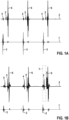
- Figure 1A shows a first intracardiac electrogram obtained with a pacemaker as implantable medical device.
- This first intracardiac electrogram comprises signals of a first channel 1 and signals of the second channel 2.
- the first channel 1 reflects signals obtained with an atrial detection unit serving as first detection unit configured to detect an electric signal at an atrium of the human or animal heart.
- the second channel 2 comprises signals obtained with a His bundle detection unit serving as second detection unit configured to detect an electrical signal at the His bundle of the same heart.
- Atrial activity signals 3 In the first channel 1, a couple of atrial activity signals 3 can be observed. In the second channel 2, very small atrial deflections 4, more prominent His bundle deflections 5 and strong ventricular deflections 6 can be observed.
- Figure 1B shows an intracardiac electrogram obtained once again with an atrial detection unit (giving rise to the signals in the first channel 1) and a His bundle detection unit (giving rise to the signals in the second channel 2).
- atrial detection unit giving rise to the signals in the first channel 1
- His bundle detection unit giving rise to the signals in the second channel 2.
- Figure 2A schematically depicts a first simulated intracardiac electrogram comprising signals of three channels, namely a right atrial channel 1, a His bundle channel 2 and an apical channel 8.
- the right atrial channel 1 indicates electrical signals sensed with a right atrial electrode connected to a right atrial port of a pacemaker serving as implantable medical device.
- an atrial electric signal 3 can be detected (atrial sense in atrial signal).
- a His bundle deflection 5 could be observed in the His bundle channel 2.
- a sensing threshold 9 was set which is higher than the His bundle deflection 5. Therefore, this His bundle deflection 5 will not be detected.
- the apical channel 8 is recorded with a right ventricular electrode that is connected to the left ventricular port of the pacemaker (since the right ventricular port is already occupied by the His bundle electrode). This right ventricular electrode serves as backup electrode for the His bundle electrode. In this apical channel 8, a strong right ventricular deflection 10 can be observed indicating a ventricular contraction.
- Figure 2B shows a second simulated intracardiac electrogram being very similar to the first simulated intracardiac electrogram of Figure 2A . Therefore, reference is made to the explanations given with respect to figure 2A for explaining Figure 2B .
- the only difference between figure 2A and Figure 2B is that in case of Figure 2B , no intrinsic atrial deflection 3 is observed in the right atrial channel 1, but rather an atrial deflection 3 caused in response to an atrial pace 11.
- the consequences for blanking an atrial deflection 4 in His bundle channel 2 for suppressing a detection of a His bundle deflection 5 due to a sensing threshold 9 and for being able to detect a ventricular deflection 6 in the His bundle channel 2 remain the same.
- the blanking window 7 serves for efficient suppression of a detection of the atrial deflection 4 in the His bundle channel 2.
- the apical channel 8 still comprises a strong ventricular deflection 10 being indicative for a ventricular contraction.
- FIG 3 shows a third stimulated intracardiac electrogram and makes reference to the situations depicted in Figures 2A and 2B .
- this stimulated intracardiac electrogram comprises a right atrial channel 1 and a His bundle channel 2.
- a marker channel 12 is displayed.
- an atrial marker 13 is set in the marker channel 12.
- the atrial marker 13 indicates on the one hand that the detected signal is in atrial signal and on the other hand the time point of detection of this atrial signal.
- An atrial deflection 4 in the His bundle channel 2 is subjected to a delay time 14 prior to setting a marker. Consequently, an atrial marker 15 would be set at a time in the marker channel 12 that corresponds to the real occurrence of the underlying atrial deflection 4 plus the delay time 14. However, such an atrial marker 15 would directly fall into the blanking window 7 and will thus not be set; the blanking window 7 suppresses setting of the atrial marker 15.
- a His bundle deflection 5 in the His bundle channel 2 will not be detected due to the applied sensing threshold (cf. Figures 2A and 2B ). However, a ventricular deflection 6 exceeds this sensing threshold and will be detected.
- a ventricular marker 16 is set in the marker channel 12 at a time corresponding to the real occurrence of the ventricular deflection 6 plus the delay time 14.
- the delay time 14 has no influence on suppressing or recording the corresponding ventricular marker 16.
- the ventricular marker 16 is set at a time point which does not fall into the blanking period 7, neither with nor without application of the delay time 14. Consequently, the ventricular marker 16 will be set.
- an atrial pace 11 (cf. Figure 2B ) is applied.
- an atrial pace marker 17 is set in the marker channel 12.
- This atrial pace marker 17 is set at the same time as an atrial marker 13 being indicative for an atrial activity identified by an atrial deflection 3 in the atrial channel 1.
- the delay time 14 is applied to an atrial deflection 4 as well as to a ventricular deflection 6 in the His bundle channel 2.
- An atrial marker 15 for the atrial deflection 4 would fall again into the blanking window 7 and will thus not be set to the marker channel 12.
- a ventricular marker 16 will be set so that the resulting marker channel 12 comprises the atrial marker 13 serving at the same time as atrial pace marker 17 as well as the ventricular marker 16.
Landscapes
- Health & Medical Sciences (AREA)
- Life Sciences & Earth Sciences (AREA)
- Engineering & Computer Science (AREA)
- Biomedical Technology (AREA)
- Animal Behavior & Ethology (AREA)
- General Health & Medical Sciences (AREA)
- Public Health (AREA)
- Veterinary Medicine (AREA)
- Cardiology (AREA)
- Heart & Thoracic Surgery (AREA)
- Nuclear Medicine, Radiotherapy & Molecular Imaging (AREA)
- Radiology & Medical Imaging (AREA)
- Biophysics (AREA)
- Physics & Mathematics (AREA)
- Pathology (AREA)
- Medical Informatics (AREA)
- Molecular Biology (AREA)
- Surgery (AREA)
- Physiology (AREA)
- Human Computer Interaction (AREA)
- Hematology (AREA)
- Vascular Medicine (AREA)
- Electromagnetism (AREA)
- Acoustics & Sound (AREA)
- Electrotherapy Devices (AREA)
Claims (9)
- Implantierbare medizinische Vorrichtung zum Stimulieren eines menschlichen oder tierischen Herzens, umfassend einen Prozessor, eine Speichereinheit, eine Stimulationseinheit, dafür konfiguriert, das His-Bündel eines menschlichen oder tierischen Herzens zu stimulieren, eine erste Detektionseinheit, dafür konfiguriert, ein elektrisches Signal an einem Vorhof desselben Herzens zu erkennen, und eine zweite Detektionseinheit, dafür konfiguriert, ein elektrisches Signal an dem His-Bündel desselben Herzens zu erkennen,
dadurch gekennzeichnet,
dass die Speichereinheit ein computerlesbares Programm umfasst, das den Prozessor veranlasst, die folgenden Schritte durchzuführen, wenn es auf dem Prozessor ausgeführt wird:a) Erfassen eines elektrischen Vorhofsignals (3) mit der ersten Detektionseinheit,b) Erfassen eines elektrischen Signals (5, 6) an dem His-Bündel mit der zweiten Detektionseinheit nach Ende eines ersten Zeitraums (7), der mit dem Erfassen des elektrischen Vorhofsignals (3) mit der ersten Detektionseinheit beginnt, wobei der erste Zeitraum (7) in einem Bereich zwischen 10 ms und 100 ms liegt;c) Klassifizieren des elektrischen Signals (5, 6), das mit der zweiten Detektionseinheit erfasst wird, als His-Bündel-Aktivitätssignal (5) oder als ventrikuläres Aktivitätssignal (6). - Implantierbare medizinische Vorrichtung nach Anspruch 1, dadurch gekennzeichnet, dass das computerlesbare Programm den Prozessor veranlasst, eine erste Sensing-Schwelle vor Schritt b) zu setzen, wobei die erste Sensing-Schwelle niedriger als ein His-Bündel-Aktivitätssignal (5) ist, wenn es mit der zweiten Detektionseinheit erkannt wird, aber höher als üblicherweise erwartetes Rauschen.
- Implantierbare medizinische Vorrichtung nach Anspruch 1 oder 2, dadurch gekennzeichnet, dass das computerlesbare Programm den Prozessor veranlasst, eine zweite Sensing-Schwelle (9) vor Schritt b) zu setzen, wobei die zweite Sensing-Schwelle (9) höher als ein His-Bündel-Aktivitätssignal (5) ist, wenn es mit der zweiten Detektionseinheit erkannt wird, aber niedriger als ein ventrikuläres Aktivitätssignal (6), wenn es mit der zweiten Detektionseinheit erkannt wird, und das elektrische Signal (5, 6), das mit der zweiten Detektionseinheit erfasst wird, als ventrikuläres Aktivitätssignal (6) zu klassifizieren, wenn das elektrische Signal (5, 6) die zweite Sensing-Schwelle (9) überschreitet.
- Implantierbare medizinische Vorrichtung nach einem der vorstehenden Ansprüche, dadurch gekennzeichnet, dass das computerlesbare Programm den Prozessor veranlasst, einen Marker (16) für das elektrische Signal (5, 6) zu setzen, das mit der zweiten Detektionseinheit erfasst wird, wobei der Marker (16) eine Information über eine Art des elektrischen Signals (5, 6) umfasst, die die Klassifizierung des elektrischen Signals (5, 6) wiedergibt, und eine Zeitinformation, die eine verzögerte Sensing-Zeit wiedergibt, wobei die verzögerte Sensing-Zeit als ursprüngliche Sensing-Zeit plus Verzögerungszeit (14) berechnet wird, wobei die Verzögerungszeit (14) kürzer als der erste Zeitraum (7) ist und in einem Bereich zwischen 0 und 50 ms liegt, wobei das elektrische Signal (5, 6) nur als His-Bündel-Aktivitätssignal (5) oder als ventrikuläres Aktivitätssignal (6) klassifiziert wird, wenn die verzögerte Sensing-Zeit nicht in den ersten Zeitraum (7) fällt.
- Implantierbare medizinische Vorrichtung nach einem der Ansprüche 1 bis 3, dadurch gekennzeichnet, dass das computerlesbare Programm den Prozessor veranlasst, alle elektrischen Signale (4, 5, 6), die mit der zweiten Detektionseinheit erfasst werden, um eine Verzögerungszeit (14) zu verzögern, wobei die Verzögerungszeit (14) kürzer als der erste Zeitraum (7) ist und in einem Bereich zwischen 0 und 50 ms liegt.
- Implantierbare medizinische Vorrichtung nach Anspruch 5, dadurch gekennzeichnet, dass das computerlesbare Programm den Prozessor veranlasst, einen Marker (16) für das elektrische Signal (5, 6) zu setzen, das mit der zweiten Detektionseinheit erfasst wird, wobei der Marker (16) eine Information über eine Art des elektrischen Signals (5, 6) umfasst, die die Klassifizierung des elektrischen Signals (5, 6) wiedergibt, und eine Zeitinformation, die eine Sensing-Zeit wiedergibt, die bereits die Verzögerungszeit (14) umfasst, wobei das elektrische Signal (5, 6) nur als His-Bündel-Aktivitätssignal (5) oder als ventrikuläres Aktivitätssignal (6) klassifiziert wird, wenn die Sensing-Zeit nicht in den ersten Zeitraum (7) fällt.
- Implantierbare medizinische Vorrichtung nach einem der vorstehenden Ansprüche, dadurch gekennzeichnet, dass die implantierbare medizinische Vorrichtung eine weitere Stimulationseinheit umfasst, die dafür konfiguriert ist, einen Vorhof desselben Herzens zu stimulieren.
- Verfahren zum sicheren Identifizieren eines His-Bündel-Aktivitätssignal oder eines ventrikulären Aktivitätssignals durch eine Detektionseinheit einer implantierbaren medizinischen Vorrichtung nach einem der vorstehenden Ansprüche, wobei das Verfahren folgende Schritte umfasst:a) Erfassen eines elektrischen Vorhofsignals (3) mit einer ersten Detektionseinheit, dafür konfiguriert, ein elektrisches Signal an einem Vorhof eines menschlichen oder tierischen Herzens zu erkennen;b) Erfassen eines elektrischen Signals (5, 6) an dem His-Bündel mit einer zweiten Detektionseinheit, dafür konfiguriert, ein elektrisches Signal an dem His-Bündel desselben Herzens zu erkennen, nach Ende eines ersten Zeitraums (7), der mit dem Erfassen des elektrischen Vorhofsignals (3) mit der ersten Detektionseinheit beginnt, wobei der erste Zeitraum (7) in einem Bereich zwischen 10 ms und 100 ms liegt;c) Klassifizieren des elektrischen Signals (5, 6), das mit der zweiten Detektionseinheit erfasst wird, als His-Bündel-Aktivitätssignal (5) oder als ventrikuläres Aktivitätssignal (6).
- Computerprogrammprodukt, computerlesbaren Code umfassend, der einen Prozessor veranlasst, die folgenden Schritte durchzuführen, wenn er auf dem Prozessor ausgeführt wird:a) Erfassen eines elektrischen Vorhofsignals (3) mit einer ersten Detektionseinheit, dafür konfiguriert, ein elektrisches Signal an einem Vorhof eines menschlichen oder tierischen Herzens zu erkennen;b) Erfassen eines elektrischen Signals (5, 6) an dem His-Bündel mit einer zweiten Detektionseinheit, dafür konfiguriert, ein elektrisches Signal an dem His-Bündel desselben Herzens zu erkennen, nach Ende eines ersten Zeitraums (7), der mit dem Erfassen des elektrischen Vorhofsignals (3) mit der ersten Detektionseinheit beginnt, wobei der erste Zeitraum (7) in einem Bereich zwischen 10 ms und 100 ms liegt;c) Klassifizieren des elektrischen Signals (5, 6), das mit der zweiten Detektionseinheit erfasst wird, als His-Bündel-Aktivitätssignal (5) oder als ventrikuläres Aktivitätssignal (6).
Applications Claiming Priority (2)
| Application Number | Priority Date | Filing Date | Title |
|---|---|---|---|
| EP19205046 | 2019-10-24 | ||
| PCT/EP2020/079741 WO2021078851A1 (en) | 2019-10-24 | 2020-10-22 | Implantable medical device for stimulating the his bundle of a human or animal heart employing an improved distinction between atrial and ventricular signals detected at the his bundle |
Publications (2)
| Publication Number | Publication Date |
|---|---|
| EP4048383A1 EP4048383A1 (de) | 2022-08-31 |
| EP4048383B1 true EP4048383B1 (de) | 2025-04-09 |
Family
ID=68342774
Family Applications (8)
| Application Number | Title | Priority Date | Filing Date |
|---|---|---|---|
| EP20793371.4A Active EP4048383B1 (de) | 2019-10-24 | 2020-10-22 | Implantierbares medizinprodukt zur stimulation des his-bündels eines menschlichen oder tierischen herzens unter verwendung einer verbesserten unterscheidung zwischen atrialen und ventrikulären beim his-bündel erkannten signalen |
| EP20796775.3A Active EP4048390B1 (de) | 2019-10-24 | 2020-10-22 | Implantierbare medizinische vorrichtung zum stimulieren eines menschlichen oder tierischen herzens mit automatischer wahl zwischen verschiedenen impedanzmessmodi |
| EP20796777.9A Active EP4048391B1 (de) | 2019-10-24 | 2020-10-22 | Implantierbare medizinische vorrichtung zur stimulation des his-bündels eines menschlichen oder tierischen herzens unter verwendung einer angepassten impedanzmessung |
| EP20793370.6A Withdrawn EP4048386A1 (de) | 2019-10-24 | 2020-10-22 | Verfahren zum programmieren eines implantierbaren medizinprodukts |
| EP20793372.2A Pending EP4048384A1 (de) | 2019-10-24 | 2020-10-22 | Programmiervorrichtung zum programmieren einer implantierbaren medizinischen vorrichtung zur stimulation eines menschlichen oder tierischen herzens |
| EP20793375.5A Withdrawn EP4048389A1 (de) | 2019-10-24 | 2020-10-22 | Implantierbares medizinprodukt zur einstellung einer maximalen empfindlichkeit eines kanals seiner detektionseinheit |
| EP20793373.0A Withdrawn EP4048387A1 (de) | 2019-10-24 | 2020-10-22 | Implantierbares medizinprodukt mit his-bündelelektrodenanschluss |
| EP20793374.8A Withdrawn EP4048388A1 (de) | 2019-10-24 | 2020-10-22 | Programmiervorrichtung zum programmieren einer implantierbaren medizinischen vorrichtung zur stimulation eines menschlichen oder tierischen herzens |
Family Applications After (7)
| Application Number | Title | Priority Date | Filing Date |
|---|---|---|---|
| EP20796775.3A Active EP4048390B1 (de) | 2019-10-24 | 2020-10-22 | Implantierbare medizinische vorrichtung zum stimulieren eines menschlichen oder tierischen herzens mit automatischer wahl zwischen verschiedenen impedanzmessmodi |
| EP20796777.9A Active EP4048391B1 (de) | 2019-10-24 | 2020-10-22 | Implantierbare medizinische vorrichtung zur stimulation des his-bündels eines menschlichen oder tierischen herzens unter verwendung einer angepassten impedanzmessung |
| EP20793370.6A Withdrawn EP4048386A1 (de) | 2019-10-24 | 2020-10-22 | Verfahren zum programmieren eines implantierbaren medizinprodukts |
| EP20793372.2A Pending EP4048384A1 (de) | 2019-10-24 | 2020-10-22 | Programmiervorrichtung zum programmieren einer implantierbaren medizinischen vorrichtung zur stimulation eines menschlichen oder tierischen herzens |
| EP20793375.5A Withdrawn EP4048389A1 (de) | 2019-10-24 | 2020-10-22 | Implantierbares medizinprodukt zur einstellung einer maximalen empfindlichkeit eines kanals seiner detektionseinheit |
| EP20793373.0A Withdrawn EP4048387A1 (de) | 2019-10-24 | 2020-10-22 | Implantierbares medizinprodukt mit his-bündelelektrodenanschluss |
| EP20793374.8A Withdrawn EP4048388A1 (de) | 2019-10-24 | 2020-10-22 | Programmiervorrichtung zum programmieren einer implantierbaren medizinischen vorrichtung zur stimulation eines menschlichen oder tierischen herzens |
Country Status (5)
| Country | Link |
|---|---|
| US (8) | US20220379112A1 (de) |
| EP (8) | EP4048383B1 (de) |
| JP (2) | JP2022553134A (de) |
| CN (2) | CN114599423A (de) |
| WO (8) | WO2021078848A1 (de) |
Families Citing this family (4)
| Publication number | Priority date | Publication date | Assignee | Title |
|---|---|---|---|---|
| US12458269B2 (en) | 2021-09-22 | 2025-11-04 | Biosense Webster (Israel) Ltd. | Automatic detection of the his bundle during electrophysiological mapping |
| CN116966417B (zh) * | 2023-09-18 | 2024-04-30 | 北京领创医谷科技发展有限责任公司 | 一种检测植入电极磨损的方法及装置 |
| WO2025199348A1 (en) * | 2024-03-21 | 2025-09-25 | Medtronic, Inc. | Tracking respiration and respirophasic pacing using bioimpedance |
| EP4628149A1 (de) * | 2024-04-05 | 2025-10-08 | BIOTRONIK SE & Co. KG | System zur stimulation eines patienten |
Family Cites Families (32)
| Publication number | Priority date | Publication date | Assignee | Title |
|---|---|---|---|---|
| US6609027B2 (en) | 2001-02-23 | 2003-08-19 | Pacesetter, Inc. | His Bundle sensing device and associated method |
| US6477417B1 (en) * | 2001-04-12 | 2002-11-05 | Pacesetter, Inc. | System and method for automatically selecting electrode polarity during sensing and stimulation |
| US8014861B2 (en) * | 2004-12-20 | 2011-09-06 | Cardiac Pacemakers, Inc. | Systems, devices and methods relating to endocardial pacing for resynchronization |
| US8301246B2 (en) * | 2007-06-07 | 2012-10-30 | Pacesetter, Inc. | System and method for improving CRT response and identifying potential non-responders to CRT therapy |
| US9037239B2 (en) * | 2007-08-07 | 2015-05-19 | Cardiac Pacemakers, Inc. | Method and apparatus to perform electrode combination selection |
| US8560068B2 (en) * | 2007-12-18 | 2013-10-15 | St. Jude Medical Ab | Medical device for stimulation of the HIS bundle |
| EP2370158A1 (de) * | 2008-10-10 | 2011-10-05 | Cardiac Pacemakers, Inc. | Einkammer-pacing mit einem doppelkammer-schrittmacher |
| US8265755B2 (en) * | 2009-07-22 | 2012-09-11 | Pacesetter, Inc. | Systems and methods for optimizing ventricular pacing delays for use with multi-pole leads |
| JP5745617B2 (ja) * | 2010-04-29 | 2015-07-08 | カーディアック ペースメイカーズ, インコーポレイテッド | ポート使用状況に基づく植込み型医療機器の構成 |
| WO2012125273A2 (en) * | 2011-03-14 | 2012-09-20 | Cardiac Pacemakers, Inc. | His capture verification using electro-mechanical delay |
| US8355784B2 (en) * | 2011-05-13 | 2013-01-15 | Medtronic, Inc. | Dynamic representation of multipolar leads in a programmer interface |
| US8639333B2 (en) * | 2011-11-21 | 2014-01-28 | Medtronic, Inc. | Method and apparatus for adaptive cardiac resynchronization therapy employing a multipolar left ventricular lead |
| CN104023621B (zh) * | 2011-12-30 | 2016-06-29 | 圣犹达医疗用品电生理部门有限公司 | 用于组织爆裂的自动监视和检测 |
| EP2890444B1 (de) * | 2012-08-30 | 2018-01-03 | Cardiac Pacemakers, Inc. | System zur einführung einer elektrode zur his-bündelstimulierung |
| US9168382B2 (en) * | 2012-10-11 | 2015-10-27 | Cardiac Pacemakers, Inc. | Method and apparatus for selective his bundle pacing |
| EP3485938B1 (de) * | 2013-09-27 | 2020-05-13 | Cardiac Pacemakers, Inc. | Gekennzeichnete implantierbare medizinische vorrichtungen |
| US9289612B1 (en) * | 2014-12-11 | 2016-03-22 | Medtronic Inc. | Coordination of ventricular pacing in a leadless pacing system |
| US10307600B2 (en) * | 2015-09-22 | 2019-06-04 | Medtronic, Inc. | System and method for interacting with an implantable medical device |
| JP6829955B2 (ja) * | 2016-06-29 | 2021-02-17 | 日本光電工業株式会社 | ケーブル |
| US10471263B2 (en) * | 2016-09-06 | 2019-11-12 | Catheter Precision, Inc. | System and method for cardiac resynchronization |
| US10981001B2 (en) * | 2017-07-18 | 2021-04-20 | Pacesetter, Inc. | Systems and methods for automated capture threshold testing and associated his bundle pacing |
| WO2019079456A1 (en) * | 2017-10-17 | 2019-04-25 | Medtronic, Inc. | HIS BEAM AND BEAM BRANCH STIMULATION ADJUSTMENT |
| CN111295224B (zh) * | 2017-11-02 | 2024-05-24 | 心脏起搏器股份公司 | 用于希氏束起搏的系统 |
| WO2019094557A1 (en) * | 2017-11-08 | 2019-05-16 | Medtronic, Inc. | Implantable medical device and method for determining his bundle pacing capture |
| US10799703B2 (en) * | 2017-12-22 | 2020-10-13 | Medtronic, Inc. | Evaluation of his bundle pacing therapy |
| US11134902B2 (en) * | 2017-12-26 | 2021-10-05 | Cardiac Pacemakers, Inc. | Identification of implanted electrode location |
| WO2019136073A1 (en) * | 2018-01-04 | 2019-07-11 | Cardiac Pacemakers, Inc. | His-bundle pacing system with left-ventricular pacing |
| US11338145B2 (en) * | 2018-01-17 | 2022-05-24 | Cardiac Pacemakers, Inc. | Current steering to achieve spatial selectivity for his bundle pacing |
| EP3762095B1 (de) * | 2018-03-06 | 2024-04-17 | Cardiac Pacemakers, Inc. | Selbstschwellenprüfung für his-bündelstimulation |
| US10842999B2 (en) * | 2018-03-22 | 2020-11-24 | Medtronic, Inc. | Monitoring of His Bundle pacing capture during ventricular pacing therapy |
| US10974042B2 (en) * | 2018-03-26 | 2021-04-13 | Boston Scientific Neuromodulation Corporation | System and methods for heart rate and electrocardiogram extraction from a spinal cord stimulation system |
| US12329975B2 (en) * | 2019-07-18 | 2025-06-17 | Pacesetter, Inc. | Systems and methods for improved his bundle and backup pacing timing |
-
2020
- 2020-10-22 EP EP20793371.4A patent/EP4048383B1/de active Active
- 2020-10-22 WO PCT/EP2020/079735 patent/WO2021078848A1/en not_active Ceased
- 2020-10-22 WO PCT/EP2020/079751 patent/WO2021078859A1/en not_active Ceased
- 2020-10-22 EP EP20796775.3A patent/EP4048390B1/de active Active
- 2020-10-22 WO PCT/EP2020/079743 patent/WO2021078852A1/en not_active Ceased
- 2020-10-22 WO PCT/EP2020/079741 patent/WO2021078851A1/en not_active Ceased
- 2020-10-22 JP JP2022519457A patent/JP2022553134A/ja active Pending
- 2020-10-22 EP EP20796777.9A patent/EP4048391B1/de active Active
- 2020-10-22 CN CN202080073201.8A patent/CN114599423A/zh active Pending
- 2020-10-22 EP EP20793370.6A patent/EP4048386A1/de not_active Withdrawn
- 2020-10-22 US US17/770,705 patent/US20220379112A1/en not_active Abandoned
- 2020-10-22 WO PCT/EP2020/079745 patent/WO2021078853A1/en not_active Ceased
- 2020-10-22 EP EP20793372.2A patent/EP4048384A1/de active Pending
- 2020-10-22 WO PCT/EP2020/079730 patent/WO2021078846A1/en not_active Ceased
- 2020-10-22 EP EP20793375.5A patent/EP4048389A1/de not_active Withdrawn
- 2020-10-22 CN CN202080073536.XA patent/CN114568019B/zh active Active
- 2020-10-22 US US17/768,721 patent/US11759641B2/en active Active
- 2020-10-22 WO PCT/EP2020/079740 patent/WO2021078850A1/en not_active Ceased
- 2020-10-22 US US17/770,186 patent/US20220387804A1/en not_active Abandoned
- 2020-10-22 EP EP20793373.0A patent/EP4048387A1/de not_active Withdrawn
- 2020-10-22 US US17/770,474 patent/US12472362B2/en active Active
- 2020-10-22 US US17/769,911 patent/US11707627B2/en active Active
- 2020-10-22 EP EP20793374.8A patent/EP4048388A1/de not_active Withdrawn
- 2020-10-22 US US17/770,456 patent/US20220387809A1/en not_active Abandoned
- 2020-10-22 WO PCT/EP2020/079748 patent/WO2021078856A1/en not_active Ceased
- 2020-10-22 US US17/770,201 patent/US11819696B2/en active Active
- 2020-10-22 US US17/771,038 patent/US20220387807A1/en not_active Abandoned
- 2020-10-22 JP JP2022519602A patent/JP2022553135A/ja active Pending
Also Published As
Similar Documents
| Publication | Publication Date | Title |
|---|---|---|
| EP4048383B1 (de) | Implantierbares medizinprodukt zur stimulation des his-bündels eines menschlichen oder tierischen herzens unter verwendung einer verbesserten unterscheidung zwischen atrialen und ventrikulären beim his-bündel erkannten signalen | |
| EP3990107B1 (de) | Detektion der erfassung eines his-purkinje-systems | |
| CN104797292B (zh) | 用于促进选择起搏向量的医疗设备 | |
| US9216292B2 (en) | Dynamic morphology based atrial automatic threshold | |
| EP1110581A2 (de) | Implantierbarer ventrikulärer Kardiovertierer/Defibrillator mit Vorhofstimulation um zu verhindern, dass eine ventrikuläre Kardioversion und Defibrillationsshocks eine Vorhof-Fibrillation erzeugen | |
| US20120303082A1 (en) | Adjusting Cardiac Pacing Response Sensing Intervals | |
| US6895272B2 (en) | Atrial tachyarrhythmia detection system and method | |
| US6928326B1 (en) | Diagnosis of fusion or pseudofusion | |
| US7801610B2 (en) | Methods and systems for management of atrial retrograde conduction and pacemaker mediated tachyarrhythmia | |
| US12491369B2 (en) | Implantable medical device with electrode dislocation recognition | |
| WO2017075048A1 (en) | Multisite pacing capture determination based on evoked response | |
| Nayak et al. | Transvenous phrenic nerve stimulation for central sleep apnea is safe and effective in patients with concomitant cardiac devices | |
| Valenza et al. | Conduction system pacing “how to”: tips and tricks | |
| Lazar et al. | Pacemaker and ICD Troubleshooting | |
| Larsen et al. | Anomalous pacing in a biventricular device due to spontaneous premature beats: What is the mechanism? | |
| US7953483B2 (en) | Detection of ventricular tachycardia in an active implantable medical device having an AAI operating mode | |
| US8649877B2 (en) | Extended noise mode | |
| US9238147B2 (en) | Cardiac stimulator | |
| JP7503626B2 (ja) | 人間の心臓または動物の心臓を刺激するための植込み可能なシステム | |
| US9020596B2 (en) | Management of fusion beat detection during capture threshold determination | |
| US20260027376A1 (en) | Medical instrument for delivering pulse stimulation | |
| US20250001184A1 (en) | Implantable medical device allowing safer delivery of atrial antitachycardic stimulation | |
| Erdogan et al. | A Rare Cause of Sensing Integrity Count in a Patient with ICD and Dedicated True Bipolar Lead. | |
| Zagkli et al. | Pseudo‐loss of left ventricular capture due to interventricular crosstalk. | |
| El Hajjaji et al. | When history is forgotten: Old problems can become new ones again oversensing, when history is forgotten. |
Legal Events
| Date | Code | Title | Description |
|---|---|---|---|
| STAA | Information on the status of an ep patent application or granted ep patent |
Free format text: STATUS: UNKNOWN |
|
| STAA | Information on the status of an ep patent application or granted ep patent |
Free format text: STATUS: THE INTERNATIONAL PUBLICATION HAS BEEN MADE |
|
| PUAI | Public reference made under article 153(3) epc to a published international application that has entered the european phase |
Free format text: ORIGINAL CODE: 0009012 |
|
| STAA | Information on the status of an ep patent application or granted ep patent |
Free format text: STATUS: REQUEST FOR EXAMINATION WAS MADE |
|
| 17P | Request for examination filed |
Effective date: 20220421 |
|
| AK | Designated contracting states |
Kind code of ref document: A1 Designated state(s): AL AT BE BG CH CY CZ DE DK EE ES FI FR GB GR HR HU IE IS IT LI LT LU LV MC MK MT NL NO PL PT RO RS SE SI SK SM TR |
|
| DAV | Request for validation of the european patent (deleted) | ||
| DAX | Request for extension of the european patent (deleted) | ||
| GRAP | Despatch of communication of intention to grant a patent |
Free format text: ORIGINAL CODE: EPIDOSNIGR1 |
|
| STAA | Information on the status of an ep patent application or granted ep patent |
Free format text: STATUS: GRANT OF PATENT IS INTENDED |
|
| RIC1 | Information provided on ipc code assigned before grant |
Ipc: A61B 5/00 20060101ALI20241126BHEP Ipc: H01R 13/46 20060101ALI20241126BHEP Ipc: A61B 5/29 20210101ALI20241126BHEP Ipc: A61B 5/0538 20210101ALI20241126BHEP Ipc: A61N 1/372 20060101ALI20241126BHEP Ipc: A61N 1/368 20060101AFI20241126BHEP |
|
| INTG | Intention to grant announced |
Effective date: 20241205 |
|
| GRAS | Grant fee paid |
Free format text: ORIGINAL CODE: EPIDOSNIGR3 |
|
| GRAA | (expected) grant |
Free format text: ORIGINAL CODE: 0009210 |
|
| STAA | Information on the status of an ep patent application or granted ep patent |
Free format text: STATUS: THE PATENT HAS BEEN GRANTED |
|
| AK | Designated contracting states |
Kind code of ref document: B1 Designated state(s): AL AT BE BG CH CY CZ DE DK EE ES FI FR GB GR HR HU IE IS IT LI LT LU LV MC MK MT NL NO PL PT RO RS SE SI SK SM TR |
|
| REG | Reference to a national code |
Ref country code: GB Ref legal event code: FG4D |
|
| REG | Reference to a national code |
Ref country code: CH Ref legal event code: EP |
|
| REG | Reference to a national code |
Ref country code: DE Ref legal event code: R096 Ref document number: 602020049186 Country of ref document: DE |
|
| REG | Reference to a national code |
Ref country code: IE Ref legal event code: FG4D |
|
| P01 | Opt-out of the competence of the unified patent court (upc) registered |
Free format text: CASE NUMBER: APP_23196/2025 Effective date: 20250515 |
|
| REG | Reference to a national code |
Ref country code: NL Ref legal event code: MP Effective date: 20250409 |
|
| PG25 | Lapsed in a contracting state [announced via postgrant information from national office to epo] |
Ref country code: NL Free format text: LAPSE BECAUSE OF FAILURE TO SUBMIT A TRANSLATION OF THE DESCRIPTION OR TO PAY THE FEE WITHIN THE PRESCRIBED TIME-LIMIT Effective date: 20250409 |
|
| REG | Reference to a national code |
Ref country code: AT Ref legal event code: MK05 Ref document number: 1783029 Country of ref document: AT Kind code of ref document: T Effective date: 20250409 |
|
| PG25 | Lapsed in a contracting state [announced via postgrant information from national office to epo] |
Ref country code: FI Free format text: LAPSE BECAUSE OF FAILURE TO SUBMIT A TRANSLATION OF THE DESCRIPTION OR TO PAY THE FEE WITHIN THE PRESCRIBED TIME-LIMIT Effective date: 20250409 Ref country code: ES Free format text: LAPSE BECAUSE OF FAILURE TO SUBMIT A TRANSLATION OF THE DESCRIPTION OR TO PAY THE FEE WITHIN THE PRESCRIBED TIME-LIMIT Effective date: 20250409 Ref country code: PT Free format text: LAPSE BECAUSE OF FAILURE TO SUBMIT A TRANSLATION OF THE DESCRIPTION OR TO PAY THE FEE WITHIN THE PRESCRIBED TIME-LIMIT Effective date: 20250811 |
|
| REG | Reference to a national code |
Ref country code: LT Ref legal event code: MG9D |
|
| PG25 | Lapsed in a contracting state [announced via postgrant information from national office to epo] |
Ref country code: GR Free format text: LAPSE BECAUSE OF FAILURE TO SUBMIT A TRANSLATION OF THE DESCRIPTION OR TO PAY THE FEE WITHIN THE PRESCRIBED TIME-LIMIT Effective date: 20250710 Ref country code: NO Free format text: LAPSE BECAUSE OF FAILURE TO SUBMIT A TRANSLATION OF THE DESCRIPTION OR TO PAY THE FEE WITHIN THE PRESCRIBED TIME-LIMIT Effective date: 20250709 |
|
| PG25 | Lapsed in a contracting state [announced via postgrant information from national office to epo] |
Ref country code: PL Free format text: LAPSE BECAUSE OF FAILURE TO SUBMIT A TRANSLATION OF THE DESCRIPTION OR TO PAY THE FEE WITHIN THE PRESCRIBED TIME-LIMIT Effective date: 20250409 |
|
| PG25 | Lapsed in a contracting state [announced via postgrant information from national office to epo] |
Ref country code: BG Free format text: LAPSE BECAUSE OF FAILURE TO SUBMIT A TRANSLATION OF THE DESCRIPTION OR TO PAY THE FEE WITHIN THE PRESCRIBED TIME-LIMIT Effective date: 20250409 |
|
| PG25 | Lapsed in a contracting state [announced via postgrant information from national office to epo] |
Ref country code: HR Free format text: LAPSE BECAUSE OF FAILURE TO SUBMIT A TRANSLATION OF THE DESCRIPTION OR TO PAY THE FEE WITHIN THE PRESCRIBED TIME-LIMIT Effective date: 20250409 |
|
| PG25 | Lapsed in a contracting state [announced via postgrant information from national office to epo] |
Ref country code: AT Free format text: LAPSE BECAUSE OF FAILURE TO SUBMIT A TRANSLATION OF THE DESCRIPTION OR TO PAY THE FEE WITHIN THE PRESCRIBED TIME-LIMIT Effective date: 20250409 |
|
| PG25 | Lapsed in a contracting state [announced via postgrant information from national office to epo] |
Ref country code: RS Free format text: LAPSE BECAUSE OF FAILURE TO SUBMIT A TRANSLATION OF THE DESCRIPTION OR TO PAY THE FEE WITHIN THE PRESCRIBED TIME-LIMIT Effective date: 20250709 |
|
| PG25 | Lapsed in a contracting state [announced via postgrant information from national office to epo] |
Ref country code: IS Free format text: LAPSE BECAUSE OF FAILURE TO SUBMIT A TRANSLATION OF THE DESCRIPTION OR TO PAY THE FEE WITHIN THE PRESCRIBED TIME-LIMIT Effective date: 20250809 |
|
| PG25 | Lapsed in a contracting state [announced via postgrant information from national office to epo] |
Ref country code: LV Free format text: LAPSE BECAUSE OF FAILURE TO SUBMIT A TRANSLATION OF THE DESCRIPTION OR TO PAY THE FEE WITHIN THE PRESCRIBED TIME-LIMIT Effective date: 20250409 |
|
| REG | Reference to a national code |
Ref country code: CH Ref legal event code: U11 Free format text: ST27 STATUS EVENT CODE: U-0-0-U10-U11 (AS PROVIDED BY THE NATIONAL OFFICE) Effective date: 20251101 |
|
| PGFP | Annual fee paid to national office [announced via postgrant information from national office to epo] |
Ref country code: DE Payment date: 20251020 Year of fee payment: 6 |
|
| REG | Reference to a national code |
Ref country code: DE Ref legal event code: R097 Ref document number: 602020049186 Country of ref document: DE |
|
| PG25 | Lapsed in a contracting state [announced via postgrant information from national office to epo] |
Ref country code: DK Free format text: LAPSE BECAUSE OF FAILURE TO SUBMIT A TRANSLATION OF THE DESCRIPTION OR TO PAY THE FEE WITHIN THE PRESCRIBED TIME-LIMIT Effective date: 20250409 Ref country code: SM Free format text: LAPSE BECAUSE OF FAILURE TO SUBMIT A TRANSLATION OF THE DESCRIPTION OR TO PAY THE FEE WITHIN THE PRESCRIBED TIME-LIMIT Effective date: 20250409 |
|
| PGFP | Annual fee paid to national office [announced via postgrant information from national office to epo] |
Ref country code: CH Payment date: 20251101 Year of fee payment: 6 |
|
| PG25 | Lapsed in a contracting state [announced via postgrant information from national office to epo] |
Ref country code: CZ Free format text: LAPSE BECAUSE OF FAILURE TO SUBMIT A TRANSLATION OF THE DESCRIPTION OR TO PAY THE FEE WITHIN THE PRESCRIBED TIME-LIMIT Effective date: 20250409 |
|
| PGFP | Annual fee paid to national office [announced via postgrant information from national office to epo] |
Ref country code: IE Payment date: 20251021 Year of fee payment: 6 |
|
| PG25 | Lapsed in a contracting state [announced via postgrant information from national office to epo] |
Ref country code: EE Free format text: LAPSE BECAUSE OF FAILURE TO SUBMIT A TRANSLATION OF THE DESCRIPTION OR TO PAY THE FEE WITHIN THE PRESCRIBED TIME-LIMIT Effective date: 20250409 |
|
| PG25 | Lapsed in a contracting state [announced via postgrant information from national office to epo] |
Ref country code: SK Free format text: LAPSE BECAUSE OF FAILURE TO SUBMIT A TRANSLATION OF THE DESCRIPTION OR TO PAY THE FEE WITHIN THE PRESCRIBED TIME-LIMIT Effective date: 20250409 |
|
| PG25 | Lapsed in a contracting state [announced via postgrant information from national office to epo] |
Ref country code: IT Free format text: LAPSE BECAUSE OF FAILURE TO SUBMIT A TRANSLATION OF THE DESCRIPTION OR TO PAY THE FEE WITHIN THE PRESCRIBED TIME-LIMIT Effective date: 20250409 |
|
| PG25 | Lapsed in a contracting state [announced via postgrant information from national office to epo] |
Ref country code: RO Free format text: LAPSE BECAUSE OF FAILURE TO SUBMIT A TRANSLATION OF THE DESCRIPTION OR TO PAY THE FEE WITHIN THE PRESCRIBED TIME-LIMIT Effective date: 20250409 |
|
| PLBE | No opposition filed within time limit |
Free format text: ORIGINAL CODE: 0009261 |
|
| STAA | Information on the status of an ep patent application or granted ep patent |
Free format text: STATUS: NO OPPOSITION FILED WITHIN TIME LIMIT |
|
| REG | Reference to a national code |
Ref country code: CH Ref legal event code: L10 Free format text: ST27 STATUS EVENT CODE: U-0-0-L10-L00 (AS PROVIDED BY THE NATIONAL OFFICE) Effective date: 20260218 |
|
| 26N | No opposition filed |
Effective date: 20260112 |