EP4048073B1 - Fibrinogen als adjuvans für antimikrobielles mittel und therapie - Google Patents
Fibrinogen als adjuvans für antimikrobielles mittel und therapie Download PDFInfo
- Publication number
- EP4048073B1 EP4048073B1 EP20793388.8A EP20793388A EP4048073B1 EP 4048073 B1 EP4048073 B1 EP 4048073B1 EP 20793388 A EP20793388 A EP 20793388A EP 4048073 B1 EP4048073 B1 EP 4048073B1
- Authority
- EP
- European Patent Office
- Prior art keywords
- fibrinogen
- composition
- use according
- bacteria
- aureus
- Prior art date
- Legal status (The legal status is an assumption and is not a legal conclusion. Google has not performed a legal analysis and makes no representation as to the accuracy of the status listed.)
- Active
Links
Images


Classifications
-
- A—HUMAN NECESSITIES
- A01—AGRICULTURE; FORESTRY; ANIMAL HUSBANDRY; HUNTING; TRAPPING; FISHING
- A01N—PRESERVATION OF BODIES OF HUMANS OR ANIMALS OR PLANTS OR PARTS THEREOF; BIOCIDES, e.g. AS DISINFECTANTS, AS PESTICIDES OR AS HERBICIDES; PEST REPELLANTS OR ATTRACTANTS; PLANT GROWTH REGULATORS
- A01N63/00—Biocides, pest repellants or attractants, or plant growth regulators containing microorganisms, viruses, microbial fungi, animals or substances produced by, or obtained from, microorganisms, viruses, microbial fungi or animals, e.g. enzymes or fermentates
- A01N63/50—Isolated enzymes; Isolated proteins
-
- A—HUMAN NECESSITIES
- A01—AGRICULTURE; FORESTRY; ANIMAL HUSBANDRY; HUNTING; TRAPPING; FISHING
- A01P—BIOCIDAL, PEST REPELLANT, PEST ATTRACTANT OR PLANT GROWTH REGULATORY ACTIVITY OF CHEMICAL COMPOUNDS OR PREPARATIONS
- A01P1/00—Disinfectants; Antimicrobial compounds or mixtures thereof
-
- A—HUMAN NECESSITIES
- A61—MEDICAL OR VETERINARY SCIENCE; HYGIENE
- A61K—PREPARATIONS FOR MEDICAL, DENTAL OR TOILETRY PURPOSES
- A61K38/00—Medicinal preparations containing peptides
- A61K38/16—Peptides having more than 20 amino acids; Gastrins; Somatostatins; Melanotropins; Derivatives thereof
- A61K38/17—Peptides having more than 20 amino acids; Gastrins; Somatostatins; Melanotropins; Derivatives thereof from animals; from humans
- A61K38/36—Blood coagulation or fibrinolysis factors
- A61K38/363—Fibrinogen
-
- A—HUMAN NECESSITIES
- A61—MEDICAL OR VETERINARY SCIENCE; HYGIENE
- A61K—PREPARATIONS FOR MEDICAL, DENTAL OR TOILETRY PURPOSES
- A61K38/00—Medicinal preparations containing peptides
- A61K38/16—Peptides having more than 20 amino acids; Gastrins; Somatostatins; Melanotropins; Derivatives thereof
- A61K38/43—Enzymes; Proenzymes; Derivatives thereof
- A61K38/46—Hydrolases (3)
- A61K38/48—Hydrolases (3) acting on peptide bonds (3.4)
- A61K38/482—Serine endopeptidases (3.4.21)
-
- A—HUMAN NECESSITIES
- A61—MEDICAL OR VETERINARY SCIENCE; HYGIENE
- A61K—PREPARATIONS FOR MEDICAL, DENTAL OR TOILETRY PURPOSES
- A61K38/00—Medicinal preparations containing peptides
- A61K38/16—Peptides having more than 20 amino acids; Gastrins; Somatostatins; Melanotropins; Derivatives thereof
- A61K38/43—Enzymes; Proenzymes; Derivatives thereof
- A61K38/46—Hydrolases (3)
- A61K38/48—Hydrolases (3) acting on peptide bonds (3.4)
- A61K38/482—Serine endopeptidases (3.4.21)
- A61K38/4833—Thrombin (3.4.21.5)
-
- A—HUMAN NECESSITIES
- A61—MEDICAL OR VETERINARY SCIENCE; HYGIENE
- A61K—PREPARATIONS FOR MEDICAL, DENTAL OR TOILETRY PURPOSES
- A61K45/00—Medicinal preparations containing active ingredients not provided for in groups A61K31/00 - A61K41/00
- A61K45/06—Mixtures of active ingredients without chemical characterisation, e.g. antiphlogistics and cardiaca
-
- A—HUMAN NECESSITIES
- A61—MEDICAL OR VETERINARY SCIENCE; HYGIENE
- A61K—PREPARATIONS FOR MEDICAL, DENTAL OR TOILETRY PURPOSES
- A61K9/00—Medicinal preparations characterised by special physical form
- A61K9/0012—Galenical forms characterised by the site of application
- A61K9/0019—Injectable compositions; Intramuscular, intravenous, arterial, subcutaneous administration; Compositions to be administered through the skin in an invasive manner
- A61K9/0024—Solid, semi-solid or solidifying implants, which are implanted or injected in body tissue
-
- A—HUMAN NECESSITIES
- A61—MEDICAL OR VETERINARY SCIENCE; HYGIENE
- A61L—METHODS OR APPARATUS FOR STERILISING MATERIALS OR OBJECTS IN GENERAL; DISINFECTION, STERILISATION OR DEODORISATION OF AIR; CHEMICAL ASPECTS OF BANDAGES, DRESSINGS, ABSORBENT PADS OR SURGICAL ARTICLES; MATERIALS FOR BANDAGES, DRESSINGS, ABSORBENT PADS OR SURGICAL ARTICLES
- A61L2/00—Disinfection or sterilisation of materials or objects, in general; Accessories therefor
- A61L2/16—Disinfection or sterilisation of materials or objects, in general; Accessories therefor using chemical substances
-
- A—HUMAN NECESSITIES
- A61—MEDICAL OR VETERINARY SCIENCE; HYGIENE
- A61L—METHODS OR APPARATUS FOR STERILISING MATERIALS OR OBJECTS IN GENERAL; DISINFECTION, STERILISATION OR DEODORISATION OF AIR; CHEMICAL ASPECTS OF BANDAGES, DRESSINGS, ABSORBENT PADS OR SURGICAL ARTICLES; MATERIALS FOR BANDAGES, DRESSINGS, ABSORBENT PADS OR SURGICAL ARTICLES
- A61L27/00—Materials for grafts or prostheses or for coating grafts or prostheses
- A61L27/28—Materials for coating prostheses
- A61L27/34—Macromolecular materials
-
- A—HUMAN NECESSITIES
- A61—MEDICAL OR VETERINARY SCIENCE; HYGIENE
- A61L—METHODS OR APPARATUS FOR STERILISING MATERIALS OR OBJECTS IN GENERAL; DISINFECTION, STERILISATION OR DEODORISATION OF AIR; CHEMICAL ASPECTS OF BANDAGES, DRESSINGS, ABSORBENT PADS OR SURGICAL ARTICLES; MATERIALS FOR BANDAGES, DRESSINGS, ABSORBENT PADS OR SURGICAL ARTICLES
- A61L27/00—Materials for grafts or prostheses or for coating grafts or prostheses
- A61L27/50—Materials characterised by their function or physical properties, e.g. injectable or lubricating compositions, shape-memory materials, surface modified materials
- A61L27/54—Biologically active materials, e.g. therapeutic substances
-
- A—HUMAN NECESSITIES
- A61—MEDICAL OR VETERINARY SCIENCE; HYGIENE
- A61L—METHODS OR APPARATUS FOR STERILISING MATERIALS OR OBJECTS IN GENERAL; DISINFECTION, STERILISATION OR DEODORISATION OF AIR; CHEMICAL ASPECTS OF BANDAGES, DRESSINGS, ABSORBENT PADS OR SURGICAL ARTICLES; MATERIALS FOR BANDAGES, DRESSINGS, ABSORBENT PADS OR SURGICAL ARTICLES
- A61L29/00—Materials for catheters, medical tubing, cannulae, or endoscopes or for coating catheters
- A61L29/08—Materials for coatings
- A61L29/085—Macromolecular materials
-
- A—HUMAN NECESSITIES
- A61—MEDICAL OR VETERINARY SCIENCE; HYGIENE
- A61L—METHODS OR APPARATUS FOR STERILISING MATERIALS OR OBJECTS IN GENERAL; DISINFECTION, STERILISATION OR DEODORISATION OF AIR; CHEMICAL ASPECTS OF BANDAGES, DRESSINGS, ABSORBENT PADS OR SURGICAL ARTICLES; MATERIALS FOR BANDAGES, DRESSINGS, ABSORBENT PADS OR SURGICAL ARTICLES
- A61L29/00—Materials for catheters, medical tubing, cannulae, or endoscopes or for coating catheters
- A61L29/14—Materials characterised by their function or physical properties, e.g. lubricating compositions
- A61L29/16—Biologically active materials, e.g. therapeutic substances
-
- A—HUMAN NECESSITIES
- A61—MEDICAL OR VETERINARY SCIENCE; HYGIENE
- A61L—METHODS OR APPARATUS FOR STERILISING MATERIALS OR OBJECTS IN GENERAL; DISINFECTION, STERILISATION OR DEODORISATION OF AIR; CHEMICAL ASPECTS OF BANDAGES, DRESSINGS, ABSORBENT PADS OR SURGICAL ARTICLES; MATERIALS FOR BANDAGES, DRESSINGS, ABSORBENT PADS OR SURGICAL ARTICLES
- A61L31/00—Materials for other surgical articles, e.g. stents, stent-grafts, shunts, surgical drapes, guide wires, materials for adhesion prevention, occluding devices, surgical gloves, tissue fixation devices
- A61L31/08—Materials for coatings
- A61L31/10—Macromolecular materials
-
- A—HUMAN NECESSITIES
- A61—MEDICAL OR VETERINARY SCIENCE; HYGIENE
- A61L—METHODS OR APPARATUS FOR STERILISING MATERIALS OR OBJECTS IN GENERAL; DISINFECTION, STERILISATION OR DEODORISATION OF AIR; CHEMICAL ASPECTS OF BANDAGES, DRESSINGS, ABSORBENT PADS OR SURGICAL ARTICLES; MATERIALS FOR BANDAGES, DRESSINGS, ABSORBENT PADS OR SURGICAL ARTICLES
- A61L31/00—Materials for other surgical articles, e.g. stents, stent-grafts, shunts, surgical drapes, guide wires, materials for adhesion prevention, occluding devices, surgical gloves, tissue fixation devices
- A61L31/14—Materials characterised by their function or physical properties, e.g. injectable or lubricating compositions, shape-memory materials, surface modified materials
- A61L31/16—Biologically active materials, e.g. therapeutic substances
-
- A—HUMAN NECESSITIES
- A61—MEDICAL OR VETERINARY SCIENCE; HYGIENE
- A61P—SPECIFIC THERAPEUTIC ACTIVITY OF CHEMICAL COMPOUNDS OR MEDICINAL PREPARATIONS
- A61P31/00—Antiinfectives, i.e. antibiotics, antiseptics, chemotherapeutics
- A61P31/04—Antibacterial agents
-
- A—HUMAN NECESSITIES
- A61—MEDICAL OR VETERINARY SCIENCE; HYGIENE
- A61P—SPECIFIC THERAPEUTIC ACTIVITY OF CHEMICAL COMPOUNDS OR MEDICINAL PREPARATIONS
- A61P43/00—Drugs for specific purposes, not provided for in groups A61P1/00-A61P41/00
-
- C—CHEMISTRY; METALLURGY
- C07—ORGANIC CHEMISTRY
- C07K—PEPTIDES
- C07K14/00—Peptides having more than 20 amino acids; Gastrins; Somatostatins; Melanotropins; Derivatives thereof
- C07K14/435—Peptides having more than 20 amino acids; Gastrins; Somatostatins; Melanotropins; Derivatives thereof from animals; from humans
- C07K14/745—Blood coagulation or fibrinolysis factors
- C07K14/75—Fibrinogen
-
- C—CHEMISTRY; METALLURGY
- C12—BIOCHEMISTRY; BEER; SPIRITS; WINE; VINEGAR; MICROBIOLOGY; ENZYMOLOGY; MUTATION OR GENETIC ENGINEERING
- C12N—MICROORGANISMS OR ENZYMES; COMPOSITIONS THEREOF; PROPAGATING, PRESERVING, OR MAINTAINING MICROORGANISMS; MUTATION OR GENETIC ENGINEERING; CULTURE MEDIA
- C12N9/00—Enzymes; Proenzymes; Compositions thereof; Processes for preparing, activating, inhibiting, separating or purifying enzymes
- C12N9/14—Hydrolases (3)
- C12N9/48—Hydrolases (3) acting on peptide bonds (3.4)
- C12N9/50—Proteinases, e.g. Endopeptidases (3.4.21-3.4.25)
- C12N9/64—Proteinases, e.g. Endopeptidases (3.4.21-3.4.25) derived from animal tissue
- C12N9/6421—Proteinases, e.g. Endopeptidases (3.4.21-3.4.25) derived from animal tissue from mammals
- C12N9/6424—Serine endopeptidases (3.4.21)
- C12N9/6429—Thrombin (3.4.21.5)
-
- C—CHEMISTRY; METALLURGY
- C12—BIOCHEMISTRY; BEER; SPIRITS; WINE; VINEGAR; MICROBIOLOGY; ENZYMOLOGY; MUTATION OR GENETIC ENGINEERING
- C12Y—ENZYMES
- C12Y304/00—Hydrolases acting on peptide bonds, i.e. peptidases (3.4)
- C12Y304/21—Serine endopeptidases (3.4.21)
- C12Y304/21005—Thrombin (3.4.21.5)
-
- C—CHEMISTRY; METALLURGY
- C12—BIOCHEMISTRY; BEER; SPIRITS; WINE; VINEGAR; MICROBIOLOGY; ENZYMOLOGY; MUTATION OR GENETIC ENGINEERING
- C12Y—ENZYMES
- C12Y304/00—Hydrolases acting on peptide bonds, i.e. peptidases (3.4)
- C12Y304/21—Serine endopeptidases (3.4.21)
- C12Y304/21074—Venombin A (3.4.21.74)
-
- A—HUMAN NECESSITIES
- A61—MEDICAL OR VETERINARY SCIENCE; HYGIENE
- A61L—METHODS OR APPARATUS FOR STERILISING MATERIALS OR OBJECTS IN GENERAL; DISINFECTION, STERILISATION OR DEODORISATION OF AIR; CHEMICAL ASPECTS OF BANDAGES, DRESSINGS, ABSORBENT PADS OR SURGICAL ARTICLES; MATERIALS FOR BANDAGES, DRESSINGS, ABSORBENT PADS OR SURGICAL ARTICLES
- A61L2103/00—Materials or objects being the target of disinfection or sterilisation
- A61L2103/05—Living organisms or biological materials
-
- A—HUMAN NECESSITIES
- A61—MEDICAL OR VETERINARY SCIENCE; HYGIENE
- A61L—METHODS OR APPARATUS FOR STERILISING MATERIALS OR OBJECTS IN GENERAL; DISINFECTION, STERILISATION OR DEODORISATION OF AIR; CHEMICAL ASPECTS OF BANDAGES, DRESSINGS, ABSORBENT PADS OR SURGICAL ARTICLES; MATERIALS FOR BANDAGES, DRESSINGS, ABSORBENT PADS OR SURGICAL ARTICLES
- A61L2103/00—Materials or objects being the target of disinfection or sterilisation
- A61L2103/15—Laboratory, medical or dentistry appliances, e.g. catheters or sharps
-
- A—HUMAN NECESSITIES
- A61—MEDICAL OR VETERINARY SCIENCE; HYGIENE
- A61L—METHODS OR APPARATUS FOR STERILISING MATERIALS OR OBJECTS IN GENERAL; DISINFECTION, STERILISATION OR DEODORISATION OF AIR; CHEMICAL ASPECTS OF BANDAGES, DRESSINGS, ABSORBENT PADS OR SURGICAL ARTICLES; MATERIALS FOR BANDAGES, DRESSINGS, ABSORBENT PADS OR SURGICAL ARTICLES
- A61L2300/00—Biologically active materials used in bandages, wound dressings, absorbent pads or medical devices
- A61L2300/20—Biologically active materials used in bandages, wound dressings, absorbent pads or medical devices containing or releasing organic materials
- A61L2300/252—Polypeptides, proteins, e.g. glycoproteins, lipoproteins, cytokines
-
- A—HUMAN NECESSITIES
- A61—MEDICAL OR VETERINARY SCIENCE; HYGIENE
- A61L—METHODS OR APPARATUS FOR STERILISING MATERIALS OR OBJECTS IN GENERAL; DISINFECTION, STERILISATION OR DEODORISATION OF AIR; CHEMICAL ASPECTS OF BANDAGES, DRESSINGS, ABSORBENT PADS OR SURGICAL ARTICLES; MATERIALS FOR BANDAGES, DRESSINGS, ABSORBENT PADS OR SURGICAL ARTICLES
- A61L2300/00—Biologically active materials used in bandages, wound dressings, absorbent pads or medical devices
- A61L2300/20—Biologically active materials used in bandages, wound dressings, absorbent pads or medical devices containing or releasing organic materials
- A61L2300/252—Polypeptides, proteins, e.g. glycoproteins, lipoproteins, cytokines
- A61L2300/254—Enzymes, proenzymes
-
- A—HUMAN NECESSITIES
- A61—MEDICAL OR VETERINARY SCIENCE; HYGIENE
- A61L—METHODS OR APPARATUS FOR STERILISING MATERIALS OR OBJECTS IN GENERAL; DISINFECTION, STERILISATION OR DEODORISATION OF AIR; CHEMICAL ASPECTS OF BANDAGES, DRESSINGS, ABSORBENT PADS OR SURGICAL ARTICLES; MATERIALS FOR BANDAGES, DRESSINGS, ABSORBENT PADS OR SURGICAL ARTICLES
- A61L2300/00—Biologically active materials used in bandages, wound dressings, absorbent pads or medical devices
- A61L2300/40—Biologically active materials used in bandages, wound dressings, absorbent pads or medical devices characterised by a specific therapeutic activity or mode of action
- A61L2300/404—Biocides, antimicrobial agents, antiseptic agents
-
- A—HUMAN NECESSITIES
- A61—MEDICAL OR VETERINARY SCIENCE; HYGIENE
- A61L—METHODS OR APPARATUS FOR STERILISING MATERIALS OR OBJECTS IN GENERAL; DISINFECTION, STERILISATION OR DEODORISATION OF AIR; CHEMICAL ASPECTS OF BANDAGES, DRESSINGS, ABSORBENT PADS OR SURGICAL ARTICLES; MATERIALS FOR BANDAGES, DRESSINGS, ABSORBENT PADS OR SURGICAL ARTICLES
- A61L2300/00—Biologically active materials used in bandages, wound dressings, absorbent pads or medical devices
- A61L2300/40—Biologically active materials used in bandages, wound dressings, absorbent pads or medical devices characterised by a specific therapeutic activity or mode of action
- A61L2300/404—Biocides, antimicrobial agents, antiseptic agents
- A61L2300/406—Antibiotics
-
- A—HUMAN NECESSITIES
- A61—MEDICAL OR VETERINARY SCIENCE; HYGIENE
- A61L—METHODS OR APPARATUS FOR STERILISING MATERIALS OR OBJECTS IN GENERAL; DISINFECTION, STERILISATION OR DEODORISATION OF AIR; CHEMICAL ASPECTS OF BANDAGES, DRESSINGS, ABSORBENT PADS OR SURGICAL ARTICLES; MATERIALS FOR BANDAGES, DRESSINGS, ABSORBENT PADS OR SURGICAL ARTICLES
- A61L2300/00—Biologically active materials used in bandages, wound dressings, absorbent pads or medical devices
- A61L2300/60—Biologically active materials used in bandages, wound dressings, absorbent pads or medical devices characterised by a special physical form
- A61L2300/606—Coatings
Definitions
- the present invention relates to a method for increasing the sensitivity of microorganisms for antimicrobial agents and therapies, in particular it may be used to reduce the resistance of biofilms against antimicrobials
- Antimicrobial resistance of pathogens is a cause for growing concern around the world. Frequently, pathogens have managed to escape from the action of once powerful antimicrobial compounds such as penicillins. Different strategies to overcome the problem of antimicrobial resistance are used : 1) new antimicrobials are being developed , 2) combination therapy, using two or more existing antimicrobials, is being used and 3) therapeutic strategies and products that serve as antimicrobial adjuvants are used in conjunction with existing antimicrobial drugs to reduce the resistance of the pathogen to this antimicrobial drug.
- Antimicrobial adjuvant products and therapeutic strategies include anti resistance drugs (e.g. beta-lactamase inhibitors) , anti-virulence drugs (e.g. bacterial toxin inhibitors) and host-directed therapies (e.g. innate immune system agonists).
- a further complication is the existence of polymicrobial biofilms that contain certain fungi and viruses or fungi and bacteria resulting in increased resistance to anti-viral, anti-bacterial and anti-fungal agents.
- Fibrinogen is also considered to increase biofilm resistance to antibiotics.
- Bedran et al. (Biomed Research International vol. 2013, article ID 431465 ) reports in vitro results of fibrinogen induced biofilm formation by S. mutans with increased resistance to penicillin.
- Jorgensen et al. (Microorganisms 2016: 4 ) describes how fibrinolytic enzymes which specifically degrade fibrinogen or fibrin significantly increase the susceptibility to antibiotics of bacterial biofilms in vitro.
- the present invention relates to the use of a composition comprising fibrinogen for treating or preventing antimicrobial resistance in an individual.
- the use according to the invention alleviates the problem of resistance of microorganisms to antimicrobial agents.
- it increases the susceptibility of microorganisms for antimicrobial therapy and is particularly advantageous to combat microorganism which are typically minimally susceptible to antimicrobial compounds, such as microorganisms in biofilms, in aggregates or in microcolonies.
- Biofilms which are a community of microorganisms, are notoriously resistant to antimicrobial agents, i.e. these biofilms escape from the action of once powerful antimicrobial compounds.
- the composition for use according to the invention may serve as antimicrobial adjuvant in conjunction with existing antimicrobial drugs to reduce the resistance of microbial biofilms or aggregates to these antimicrobial drugs.
- a composition for use according to the invention increases the sensitivity of bacteria for anti-bacterial compounds.
- Anti-bacterial compounds are compounds which stop the growth of bacteria (bacteriostatic) or kill bacteria (bactericidal) and include antibiotics, bacteriophages and their endolysines, antibacterial or antimicrobial peptides and antibacterial antibodies.
- bacteriostatic Bacteriostatic
- bactericidal Bacteriostatic
- the anti-bacterial compound is a natural, synthetic or semi-synthetic antibiotic.
- Suitable natural, synthetic or semi-synthetic antibiotics include aminoglycosides, antibacterial imidazoles, beta lactams, macrolides, peptide antibiotics, polyclonal or monoclonal antibodies, quinolones, sulphonamides and tetracyclines, and derivatives thereof.
- aminoglycosides are gentamycin and tobramycin.
- antibacterial imidazoles are miconazole and metronidazole;
- beta-lactams are penicillins, including natural penicillins, aminopenicillins, beta-lactamase-resistant penicillins, carboxypenicillins, such as amoxicillin, ampicillin and penicillin; cephalosporins, such as cephalexim; and carbapenems, such as meropenem and doripenem.
- macrolides are ketolide and macrolide antibiotics, such as clarithromycin, erythromycins and telithromycin.
- peptide antibiotics are glycopeptide antibiotics, such as vancomycin, and lipopeptide antibiotics, such as daptomycin.
- antibodies are antibodies directed against S. aureus clumping factor A, alpha toxin, lipoteichoic acid and teichoic acid.
- quinolones are fluoroquinolones, such as ciprofloxacin and levofloxacin.
- sulphonamides are sulfacetamide and sulfamethoxazole.
- tetracyclines are tetracycline and doxycycline.
- the anti-bacterial compound is a penicillin or a peptide antibiotic.
- the anti-bacterial compound is a carboxypenicillin, a glycopeptide antibiotic or a lipopeptide antibiotic. In yet another embodiment, the anti-bacterial compound is selected from the group consisting of ampicillin, vancomycin, daptomycin and tobramycin.
- antimicrobial agents are used against several groups of microorganisms.
- some antimicrobial peptides may be used both against bacterial and viral or fungal infections.
- the composition may also be used to treat infections comprising several types of microorganisms.
- the composition may be used to increase antimicrobial susceptibility of one type of microorganism or several types of microorganisms.
- viruses or yeasts in a bacterial biofilm may be rendered more susceptible to antiviral or anti-yeast agents.
- pathogens Infectious microorganisms in biofilms or aggregates may also be referred to as pathogens.
- a notorious pathogen in biofilm-associated infections which may be treated using the adjuvant method of the invention is the bacterium Staphylococcus aureus in particular, methicillin-resistant S. aureus (MRSA).
- MRSA methicillin-resistant S. aureus
- compositions for use according to the invention increase the antimicrobial susceptibility of microorganisms.
- Microorganisms which are treated according to the invention are preferably in cluster form, such as in aggregates or clumped together, or they may be adhered to a surface, for example in a biofilm.
- Microorganisms in cluster form or in biofilm tend to be less susceptible to antimicrobial agents than microorganisms in free floating form.
- microorganisms are typically surrounded by an extracellular matrix from polymeric substances (EPSs), such as glycoproteins, secreted by the microorganisms themselves or recruited form the host.
- EPSs polymeric substances
- Biofilm is also referred to in the art as the glycocalyx.
- Surfaces of attachment include living surfaces, such as tissues, cell surfaces and wound beds, and inert surfaces, such as, medical devices, particularly indwelling medical devices or implants, including catheters, cardiac implantable electronic devices (CIED), heart valves, immobilizers, joint replacements, stents, tracheostomies and wound drains.
- catheters are peripherally inserted central catheters (PICC lines), implantable ports and urinary catheters.
- CIED are pace makers, left ventricular assist devices (LVADs) and implantable defibrillators.
- immobilizers are pins, plates, rods, screws, and wires.
- joint replacements are hip, knee and shoulder prostheses.
- the devices may comprise or consist of metal, ceramics or non-biodegradable synthetic polymers, like plastics or polytetrafluorethylene (PTFE, Teflon (trademark)), or biodegradable polymers, like collagen, hyaluronic acid, polylactic acid or poly urethane.
- the medical devices are preferably indwelling devices or implants, which are meant to stay in the body for several days, weeks, months or years.
- the composition for use according to the invention comprises fibrinogen.
- the fibrinogen in the composition may be plasma fibrinogen (plasma Fib) which is a mixture of all the different fibrinogen variants that occur in the blood of healthy individuals; or it may be a preparation from one or more of these specific fibrinogen variants either isolated from plasma (or plasma fibrinogen) or produced by recombinant protein production technology.
- the fibrinogen in the composition preferably comprises human plasma fibrinogen, human WT fibrinogen, a human fibrinogen gamma prime, a human fibrinogen alpha extended variant or a human fibrinogen alpha truncated variant.
- the fibrinogen in the composition consists of human plasma fibrinogen, human WT fibrinogen, a human fibrinogen gamma prime variant, a human fibrinogen alpha extended variant or a human fibrinogen alpha truncated variant.
- Human fibrinogen refers to fibrinogen having the amino acid sequence as found in the majority of human beings.
- Plasma fibrinogen refers to fibrinogen isolated from plasma, typically comprising a mixture of naturally occurring fibrinogen variants that are the result of alternative splicing, proteolytic degradation or post-translational modifications.
- Plasma fibrinogen may have been derived from one individual or may be pooled from more individuals.
- the plasma fibrinogen is of high purity, i.e., comprised in a composition which comprises at least 95% w/w, at least 97% w/w or at least 98% w/w plasma fibrinogen. Purity may be determined by clottability.
- WT fibrinogen refers to the mature, dominant form of human fibrinogen representing 60-80% of the total plasma fibrinogen in circulation, having A ⁇ chains of 610 amino acids, B ⁇ chains of 461 amino acids and ⁇ chains of 411 amino acids. In the literature this form of fibrinogen is also referred to as High Molecular Weight (HMW) fibrinogen or intact fibrinogen.
- HMW High Molecular Weight
- Fibrinogen gamma prime variants have two alpha polypeptide chains, two beta polypeptide chains and two gamma polypeptide chains, wherein at least one of the gamma polypeptide chains is a gamma prime polypeptide chain.
- a gamma prime polypeptide chain has 427 amino acids. If a fibrinogen molecule comprises one WT gamma polypeptide chain ( ⁇ 411) and one gamma prime polypeptide chain ( ⁇ 427), this variant is referred to here as fibrinogen gamma prime heterodimer or Fib ⁇ 427/411.
- compositions for use according to the invention may comprise or consist of mixtures of gamma prime variants, such as a mixture of fibrinogen gamma prime heterodimer and homodimer, or it may comprise or consist of one type of gamma prime variant.
- Fibrinogen alpha extended variants have two alpha polypeptide chains, wherein at least one of the alpha polypeptide chains is an alpha extended polypeptide chain, two beta polypeptide chains and two gamma polypeptide chains, wherein at least one of the gamma polypeptide chains is a gamma prime polypeptide chain.
- an alpha extended polypeptide chain has 847 amino acids. If a fibrinogen molecule comprises one WT alpha polypeptide chain (A ⁇ 610) and one alpha extended polypeptide chain (A ⁇ 847), this variant is referred to here as fibrinogen alpha extended heterodimer or rhFib A ⁇ 847/A ⁇ 610.
- compositions for use according to the invention may comprise or consist of mixtures of alpha extended variants, such as a mixture of fibrinogen alpha extended heterodimer and homodimer, or it may comprise or consist of one type of alpha extended variant.
- Fibrinogen alpha truncated variants have two alpha polypeptide chains wherein at least one of the alpha polypeptide chains is truncated between the amino acid at position 251 and the carboxyl terminal amino acid at position 610, two beta polypeptide chains and two gamma polypeptide chains. If a fibrinogen molecule comprises one WT alpha chain (A ⁇ 610) and one truncated alpha polypeptide chain (A ⁇ ⁇ 610 and ⁇ 251), this variant is referred to here as fibrinogen alpha truncated heterodimer or Fib A ⁇ 610/truncated ⁇ 251 (also referred to in the literature as LMW fibrinogen when isolated from plasma).
- both alpha polypeptide chains are of the alpha truncated type (A ⁇ ⁇ 610 and ⁇ 251), this variant is referred to as fibrinogen alpha truncated homodimer or Fib A ⁇ truncated (also known in the literature as LMW' fibrinogen when isolated from plasma).
- fibrinogen alpha truncated homodimer also known in the literature as LMW' fibrinogen when isolated from plasma.
- Amino acid sequences for fibrinogen have been published, see for example WO2010/004004 for sequences of the alpha, beta and gamma chain and variants thereof.
- compositions for use according to the invention may comprise or consist of mixtures of alpha truncated variants, such as a mixture of fibrinogen alpha truncated heterodimer and homodimer, or it may comprise or consist of one type of alpha truncated variant.
- Fibrinogens combining alpha chain variants (extended or truncated) with gamma prime variants including fibrinogen that are heterodimer for both variant polypeptide chains, hetero dimer for alpha or gamma variants and that are homo dimer for both variant polypeptide chains may be used in compositions for use according to the invention.
- the fibrinogen in the composition may be obtained by methods known in the art.
- plasma fibrinogen may be obtained by isolation from plasma or it may be obtained commercially, for example from Enzyme Research Labs, Swansea, United Kingdom as FIB 3 or Fib 1.
- purified plasma fibrinogen is used, for example at least 95% clottable plasminogen depleted fibrinogen.
- Specific fibrinogen variants may be obtained by purification from plasma or from commercially available plasma fibrinogen.
- specific fibrinogen variants may be obtained by recombinant production, for example by cloning or chemical synthesis of the encoding genomic or cDNA followed by transfection using a host cell or cell culture system, such as a mammalian or human cell culture system. Recombinant production of proteins has many advantages over the use of plasma derived materials. These include its preferred safety profile, the possibility to make variants in a pure way and the fact that there is an unlimited supply.
- the fibrinogen is preferably produced in a mammalian cell culture system, such as in baby hamster kidney (BHK) cells, NSO cells, Sp2/0 cells, PER.C6 cells, HEK293 cells, insect cell, Chinese Hamster Ovary (CHO) cells or African Green Monkey derived COS cells.
- a mammalian cell culture system such as in baby hamster kidney (BHK) cells, NSO cells, Sp2/0 cells, PER.C6 cells, HEK293 cells, insect cell, Chinese Hamster Ovary (CHO) cells or African Green Monkey derived COS cells.
- the mammalian fibrinogen in the composition for use according to the invention is produced in CHO cells.
- the fibrinogen in the composition for use according to the invention consists of human fibrinogen gamma prime, preferably in its homodimer form and preferably recombinantly produced.
- the fibrinogen in the composition for use according to the invention consists of recombinant human fibrinogen alpha extended preferably in its homodimer form.
- the fibrinogen in the composition for use according to the invention consists of recombinant human fibrinogen combining a gamma prime polypeptide chain with an alpha extended polypeptide chain, preferably in its homodimer form for both the gamma and alpha variant polypeptide chains.
- compositions may be used to pre-coat a medical device for implantation before implantation, or coat a wound surface before dressing or closing.
- (Pre)coating with the composition increases the sensitivity of the bacteria for antibiotics in vivo, in comparison with non-coated surfaces.
- the coating may be thin, such as a film, or thick, comprising several layers.
- the composition may be formulated as an aerosol, drops, dry powder, emulsion, foam, gel, ointment, paste, salve, semi-gel, spray or suspension.
- the composition is formulated as a spray, paste or gel.
- the coating may be continuous or discontinuous.
- Pre-coating of medical devices may be performed by incubation for several hours at 37° C with a fibrinogen solution containing 10 - 100 microgram/ml fibrinogen in PBS or by spraying a solution with a concentration of 100-1000 microgram/ml at room temperature, optionally in combination with a thrombin solution.
- Coating of a wound or tissue surface in situ may be performed by spraying a fibrinogen solution containing 1-50 mg/ml, optionally in combination with a thrombin solution. Typically 0.1-1 ml of coating solution per cm 2 of coating surface will suffice.
- a coating solution comprises at least 1 microgram/ml, at least 5 microgram/ml, at least 10 microgram/ml, at least 25 microgram/ml or at least 50 microgram/ml fibrinogen.
- composition may be applied to the medical device or wound tissue using an applicator, a dressing, wound packing, bandage or swab.
- Enhanced sensitivity may be reflected in several ways, such as by slower growth or by cell death, which may be apparent, for example, from lower dry weight, a decrease in colony forming units (CFU), a decrease in metabolic activity, compared to a control situation in which the composition is not used.
- CFU colony forming units
- the decrease is between 1 log and 5 log reduction in CFUs.
- increased antibiotic sensitivity is clear from a reduction of 6 log or more to 0 CFU when the composition is used, to only a reduction of 3 log- if the composition is not used.
- Cure rate may be increased by at least 25%, compared to a control without fibrinogen. In another embodiment, cure rate was increased by 5% to 100% or 5% to 60% or 60% to 100%.
- the bacteria belong to the genera Pseudomonas, Staphylococcus or Streptococcus. More preferably, the bacteria are strains of Staphylococcus aureus, including ampicillin-resistant S. aureus, vancomycin resistant S. aureus, methicillin-resistant S. aureus, such as S. aureus 300 WT or S. aureus 43300, oxacillin-resistant S. aureus and multi-resistant S. aureus.
- Staphylococcus aureus including ampicillin-resistant S. aureus, vancomycin resistant S. aureus, methicillin-resistant S. aureus, such as S. aureus 300 WT or S. aureus 43300, oxacillin-resistant S. aureus and multi-resistant S. aureus.
- the fibrinogen composition according to the invention may include a therapeutically effective amount or a prophylactically effective amount of fibrinogen.
- a therapeutically effective amount refers to an amount effective, at dosages and for periods of time necessary, to achieve the desired therapeutic result.
- a therapeutically effective amount of a variant fibrinogen or compositions thereof may be determined by a person skilled in the art and may vary according to factors such as the disease state, age, sex, and weight of the individual, and the ability of the mammalian fibrinogen or composition to elicit a desired response in the individual.
- a therapeutically effective amount is also one in which any toxic or detrimental effects of variant fibrinogens or compositions of the invention are outweighed by the therapeutically beneficial effects.
- a prophylactically effective amount refers to an amount effective, at dosages and for periods of time necessary, to achieve the desired prophylactic result. Typically, since a prophylactic dose is used in subjects prior to or at an earlier stage of disease, the prophylactically effective amount will be less than the therapeutically effective amount.
- the fibrinogen content of the composition for pre-coating of devices is preferably from 0.0001% w/w to 0.1 w/w, such as from 0.001% w/w to 0.05% w/w, from 0.001% w/w to 0.1% w/w or from 0.005% w/w to 0.1% w/w, by weight of the composition.
- the fibrinogen content of the composition for coating of wound or tissue surfaces is preferably from 0.01% w/w to 10% w/w, such as from 0.1% w/w to 5% w/w, by weight of the composition.
- the fibrinogen composition according to the invention is a pharmaceutical composition or preparation, preferably sterile. Therefore, the composition for use according to the invention may further comprise a pharmaceutically-acceptable excipient, such as an anti-adherent, antioxidant, binder, bulking agent, carrier, colourant, disintegrant, diluent, filler, flavour, lubricant, preserving agent, solvent, surfactant, sweetener, vehicle or wetting agent.
- a pharmaceutically-acceptable excipient such as an anti-adherent, antioxidant, binder, bulking agent, carrier, colourant, disintegrant, diluent, filler, flavour, lubricant, preserving agent, solvent, surfactant, sweetener, vehicle or wetting agent.
- the excipient should not adversely affect the stability of the composition in the formulation.
- pharmaceutically acceptable refers to suitable for preparing a pharmaceutical composition, such as generally considered safe and non-toxic.
- buffering agents such as, but not limited to, magnesium hydroxide and aluminium hydroxide; alginic acid; pyrogen-free water; isotonic saline; Ringer's solution; ethyl alcohol, and phosphate buffer solutions, as well as other nontoxic excipients, such as sodium lauryl sulphate and magnesium stearate, as well as preservatives and antioxidants, which may also be present in the composition.
- buffering agents such as, but not limited to, magnesium hydroxide and aluminium hydroxide
- alginic acid such as, pyrogen-free water; isotonic saline; Ringer's solution; ethyl alcohol, and phosphate buffer solutions
- other nontoxic excipients such as sodium lauryl sulphate and magnesium stearate, as well as preservatives and antioxidants, which may also be present in the composition.
- Techniques and formulations may generally be found in " Remington's Pharmaceutical Sciences,” (Meade Publishing Co.
- the carrier, vehicle or diluent includes sterile water, sterile isotonic saline, sterile Ringer's solution or sterile lactate solution, the selection of which would be well known to those skilled in the art.
- Suitable solvents include water, isotonic saline, ethyl oleate, glycerine, hydroxylated castor oils, alcohols such as ethanol, and phosphate buffer solutions.
- the amount of solvent(s) in a systemic composition may range from 80% to about 99.95% w/w or w/v.
- composition for use according to the invention may further comprise an activator, such as thrombin or a thrombin-like enzyme, such as reptilase or batroxobin, or a non-enzymatic activator such as a peptide that binds fibrinogen.
- an activator such as thrombin or a thrombin-like enzyme, such as reptilase or batroxobin
- a non-enzymatic activator such as a peptide that binds fibrinogen.
- the thrombin and thrombin-like enzymes convert fibrinogen monomers in to fibrin polymers by cleaving the fibrinopeptides A or B from the alpha chain and beta chain respectively.
- the cleaved fibrin(ogen) monomers polymerize spontaneously into a double stranded protofibril that can grow latterly and form fibrin polymers that make up the 3-dimensional fibrin network.
- the activator is human thrombin, most preferably in purified form,
- the non-enzymatic activator is a substance which comprises at least 2 fibrinogen binding sites and by binding to 2 different fibrinogen molecules (which has 2 activator binding sites because fibrinogen is a symmetrical dimer) introduces a polymer form of fibrinogen that has properties similar to thrombin-induced fibrin.
- composition for use according to the invention may serve as antimicrobial adjuvants and may be used in conjunction with an antimicrobial to reduce the resistance of a pathogen to this antimicrobial.
- the antimicrobial may be applied separately from or together with the composition comprising fibrinogen. If applied separately, antimicrobial and fibrinogen may be applied at the same time, or before or after each other. If the antimicrobial and fibrinogen are applied together, they may be present in separate compositions or combined in one composition. Therefore, compositions for use according to the invention may also further comprise one or more antimicrobials, including antibiotic agents, anti-fungal agents, anti-yeast agents and antiviral agents.
- the composition for use according to the method of the invention is supplied together with an antibiotic, separately or in the same composition.
- composition may be used for increasing antimicrobial susceptibility in any individual in need thereof, such as humans and mammalian animals, including alpaca, bison, buffalos, cats, cows, deer, dogs, donkeys, horses, mice, pigs, rabbits and sheep.
- animals typically the animal equivalent of human fibrinogen is preferably used.
- the present invention relates to a medical device coated with fibrinogen, in particular indwelling devices or implants, which are meant to stay in the body for several days, weeks, months or years.
- medical devices include catheters, endotracheal tubes, enteral feeding tubes, heart valves, joint replacements, stents, tracheostomies and wound drains.
- the device may be supplied or commercially obtained pre-coated, or may be pre-coated just before use, such as a few hours, minutes or seconds before use.
- the present invention relates to a method for increasing antimicrobial susceptibility of microorganisms.
- the method comprises providing a composition comprising fibrinogen to a human or animal individual to prevent or treat an infection by a microorganism in the individual, optionally in conjunction with an antimicrobial to reduce the resistance of the microorganism to the antimicrobial.
- the method comprises applying a fibrinogen composition to a medical device or to a wound bed.
- the fibrinogen composition is applied ex vivo to a medical device, before implantation or introduction of the medical device in the body of a human or animal individual.
- the composition comprising fibrinogen may be any of the compositions which have been described above for use according to the invention.
- compositions and preferred embodiments mentioned for use of the composition may also be applied to the medical device and to the method for increasing antimicrobial susceptibility of microorganisms, and vice versa.
- Methicillin Resistant Staphylococcus aureus (MRSA) strains USA 300 and USA 43300 were obtained from ATTCC and routinely grown in Tryptic Soy Broth (TSB) or on Tryptic Soy Agar (TSA) plates medium at 37°C.
- TLB Tryptic Soy Broth
- TSA Tryptic Soy Agar
- Purified plasma fibrinogen (plasma Fib) was obtained from Enzyme Research Labs, Swansea, United Kingdom.
- the rhFib WT and rhFib Gamma prime and rhFib Alpha extended and rhFib Gamma prime/Alpha extended were made by standard recombinant DNA protein production technology.
- cDNA sequences encoding the fibrinogen A ⁇ 610 (WT) chain, A ⁇ 847 (Alpha extended) chain, B ⁇ chain, y411 (Gamma) chain and y427 (Gamma prime) chain were cloned in the pcDNA 3.1 plasmid (Invitrogen, Carlsbad, CA, USA) to construct expression vectors for the different fibrinogen chains.
- Combinations of expression plasmids containing cDNA 's encoding A ⁇ , B ⁇ and ⁇ chains were used to produce the different fully assembled recombinant human species by transient expression using HEK 293 cells (Life technologies EXPI293 system) according to the manufacturer's instructions or by stable expression in CHO cells.
- CHO cells were grown in ProCHO5 cell culture medium (Westburg, Leusden, The Netherlands) and were transfected using electroporation with an Amaxa device (Westburg, Leusden, The Netherlands) according to the manufacturer's instructions. Using blasticidin and zeocin as selection markers, clones producing fibrinogen were selected using an ELISA method described earlier ( Hoegeede Nobel E. et al.
- Thrombosis Haemostasis 1988 Dec22; 60(3): 415-8 Selected CHO clones were grown in CD FortiCHO cell culture media (Life Technologies Europe, Bleiswijk, The Netherlands) for 7 to 10 days at 37°C and under 5% CO2. Cell supernatant was collected by centrifugation or filtration and recombinant fibrinogen variants were purified using affinity purification on a GPRP column essentially as described in Kuyas C et al. (Thrombosis Haemostasis 1990 Jun 28; 63 (3): 439-444 ) and formulated in phosphate buffered saline (PBS) pH 7.4 at concentrations between 2 -40 mg/ml.
- PBS phosphate buffered saline
- the Resazurin method for measuring cell metabolic activity, was performed as described by Lee A. and Jain E. Tip Biosystems Application note AN016 Rev. 1.0 Mar 2017 .
- the Resazurin based Biofilm susceptibility assay was performed as follows. A working stock of USA 300 S. aureus containing 1 ⁇ 10 8 CFU/mL (OD 600 approx. 0.1 AU) was prepared by growing the bacteria in TSB. Fibrinogen dilutions were prepared in PBS pH 7.4. 90 ⁇ L of TSB and 90 ⁇ L of fibrinogen dilution were added to 96-well tissue culture microtiter plates. Subsequently 20 ⁇ L of S. aureus working stock was added to each well and incubated at 37° for 24h to establish a biofilm.
- CAMHB Cation-adjusted Mueller Hinton Broth
- Example 1 In vitro adhesion of S. aureus to different fibrinogen species
- Binding experiments are performed essentially as described earlier ( Flick M. et al Blood 2013 Mar 7; 121(10): 1783-94 ).
- the binding assays are performed as follows: 96 well microtiter plates were coated with fibrinogen solutions in phosphate buffered saline (PBS) (0-25 ⁇ g/ml) by overnight incubation at 37°C. After washing and blocking, wells are incubated for 2 hours at 37°C with a S. aureus USA 300 suspension in PBS (OD 600 nm approx. 0.4). After washing, the plates are incubated with 0.1% crystal violet solution for 30 min and after washing, the bound crystal violet is solubilized in 10% acetic acid and the absorbance at 570 nm is measured to quantify the bacterial adhesion.
- PBS phosphate buffered saline
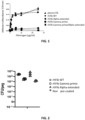
- Fig 1 shows that S. aureus bacteria bind to purified plasma Fib, rhFib WT and rhFib Alpha extended but not to rhFib Gamma prime or rhFib Alpha extended/Gamma prime.
- the different length of the alpha chain (A ⁇ 610 vs A ⁇ 847) has no influence on the S. aureus binding to fibrinogen.
- Example 2 In vitro biofilm formation on surfaces pre-coated with different fibrinogen species.
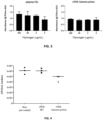
- the assay was performed as follows. Polystyrene lids of 96 well microtiter plates with 96 pegs were pre-coated by submerging the pegs in 0.25 ml of solution containing different fibrinogen species dissolved in PBS buffer at a concentration of 10 or 100 microgram/ml for 24 hours at 37° C. After washing the pre-coated pegs (and non-pre-coated controls) were incubated for 24 hours at 35°C with a bacterial suspension of ⁇ 10E6 CFU/ml in TSB + 1% glucose to allow biofilm formation. After washing the pegs to remove planktonic bacteria, the pegs with the biofilm were incubated with CAMHB for 24 hours at 37°C. After washing, the viable bacteria were detached from the surface by the mild sonification and the number of viable bacteria was determined by plating out on TSA plates. Colonies were counted to determine the CFU/peg surface. Results are shown in Fig 2 .
- Example 3 In vitro biofilm formation on non-pre-coated surfaces in the presence of different fibrinogen species in the bacterial culture media.
- Purified plasma Fib or rhFib Gamma prime at concentrations between 0-250 ⁇ g/ml were added to TSB followed by inoculation of this mixture with bacteria and subsequent incubation for 24 hours at 37°C to allow coating of fibrinogen and biofilm formation to take place simultaneously on polystyrene surfaces.
- the amount of viable bacteria in the biofilms formed under the different conditions was compared by measuring the OD 570 nm after addition of resazurin.
- Example 4 In vivo biofilm formation on pre-coated surfaces
- Polytetrafluorethylene cages pre-coated by incubation for 24 hours at 37 degrees C with a fibrinogen solution in PBS containing 10 or 100 microgram/ml rhFib WT or rhFib Gamma prime and non-pre-coated controls, were implanted under the skin of C57BI mice.
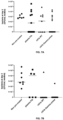
- the cages were infected with approx. 400 CFU S. aureus /cage. Two days after implantation the cages were removed and adherent viable bacteria were measured using mild sonification to detach the bacteria from the surface followed by plating out on TSA plates and colonies were counted to determine the number of CFU per cage.
- Fig 4 show that there was no difference in the amount of CFU between non-pre-coated cages and cages pre-coated with rhFib WT.
- Example 5 In vitro analysis of antibiotic sensitivity of biofilms formed on pre-coated surfaces.
- Example 2 To determine the effect of pre-coating surfaces with different fibrinogen species on the antibiotic sensitivity of the bacteria in the biofilm, in vitro experiments were performed as described in Example 2. During the incubation step with CAMBH different concentrations (0 to 100 ⁇ g/ml) of vancomycin or ampicillin were present. After antibiotic incubation, the surfaces were treated with mild sonification to release bacteria from the surfaces and CFU associated with the surfaces were determined.
- Results are shown in Fig 5 and show that S. aureus USA 300 biofilms formed on non-pre-coated pegs or pegs pre-coated with rhFib Gamma prime or rhFib Alpha extended are more sensitive to vancomycin and ampicillin exposure as compared to biofilms formed on pegs pre-coated with rhFib WT.
- biofilms formed on non-pre-coated pegs or on pegs pre-coated with rhFib Gamma prime or rhFib Alpha extended are more susceptible to antibiotics than biofilms formed on rhFib WT pre-coated pegs.
- antibiotic sensitivity of biofilms is increased by using rhFib Gamma prime and rhFib Alpha extended.
- Example 6 In vitro analysis of antibiotic sensitivity of biofilms formed on non-pre-coated surfaces
- Fig. 6A For purified plasma Fib, the vancomycin results in Fig. 6A show more viable bacteria in comparison to the control. This indicates that resistance in the biofilm for vancomycin is increased in comparison to the control, if plasma Fib is present. Similar results were observed for ampicillin ( Fig 6C ).
- rhFib Gamma prime the vancomycin results in Fig. 6B show similar amounts off viable bacteria in comparison to the control. This indicates that resistance in the biofilm for vancomycin is not changed in comparison to the control if rhFib Gamma prime is present. With ampicillin ( Fig 6D ), higher rhFib Gamma prime concentration result in less viable bacteria as compared to control. This shows that, in vitro, susceptibility for ampicillin of an ampicillin-resistant strain may be increased by using rhFib Gamma prime.
- Fig 6E show that biofilms formed in vitro on non-pre-coated surfaces with a 50/50 mixture of plasma Fib/rhFib Gamma prime at 1 mg/ml in the bacterial culture medium and treated with vancomycin contain significantly less viable S. aureus bacteria as compared to surfaces pre-coated with plasma Fib only. This result indicates that rhFib Gamma prime is able to increase antibiotic susceptibility, also in the presence of WT fibrinogen, which renders it clinically relevant.
- Example 7 In vivo analysis of antibiotic sensitivity of biofilm on pre-coated surfaces
- mice in the prophylactic group were treated with daptomycin (50 mg/kg ) 30 minutes before implantation and infection.
- Mice in the therapeutic were treated with daptomycin (50 mg/kg) 24 hours after implantation and infection.
- Mice were infected with a dose of 400-600 CFU/cage) of S .aureus 43300. At 48 hours after infection, the cages were explanted, washed and treated with ultrasound to release bacteria from the cage surface. CFU associated with the cages were determined.
- rhFib Gamma prime (10 and 100 ⁇ g/ml) showed the strongest reduction in viable bacteria after prophylactic ( Fig 7B ) or therapeutic ( Fig 7A ) treatment with daptomycin.
- Fig 7B shows that only 7% of the cages pre-coated with rhFib Gamma prime and treated prophylactically with daptomycin contained viable bacteria (non-pre-coated cages 100%).
- therapeutic daptomycin treatment was used ( Fig 7A ) 37% of the cages pre-coated with rhFib Gamma prime contained viable bacteria (non-pre-coated 100% and plasma Fib/ rhFib WT coated 55-67%).
- Example 8 In vivo analysis of antibiotic sensitivity of biofilms of different Staphylococci.
- mice To determine the in vivo effect of pre-coated surfaces with different fibrinogen species on the antibiotic sensitivity of biofilms formed by several Staphylococci, a study in mice was performed as described in example 7 with prophylactic addition of daptomycin.
- One of the species included was S. epidermidis, which binds fibrinogen through its beta chain.
- the beta chain in rh Fib WT and in rhFib gamma prime is the same.
- mice free from viable adherent bacteria S. aureus ATCC 43300 S. aureus ATCC 1556 S. epidermidis ATCC 35984 daptomycin (50 mg/kg ) pre-coating none 0 0 0 plasma fib 50 71 n.a. rh Fib WT 89 n.a. 40 rhFib gamma prime 93 100 75
- Example 8 was repeated with Pseudomonas aeruginosa strain PA01 with prophylactic addition of tobramycin, to determine the in vivo effect of pre-coating surfaces with fibrinogen on the antibiotic sensitivity of biofilms of Gram negative bacteria.
- Pseudomonas aeruginosa is a Gram negative bacterium with no known binding site for fibrinogen.
- Tobramycin (50 mg/kg) instead of daptomycin was used, since tobramycin is typically used as an antibiotic against Gram negative bacteria. The results are presented in Table 2 and show that pre-coating with fibrinogen works better than no pre-coating.
- the Gram negative bacteria in the biofilm show an increased sensitivity to antibiotics when the biofilm surface is pre-coated with fibrinogen, compared to none coating.
Landscapes
- Health & Medical Sciences (AREA)
- Life Sciences & Earth Sciences (AREA)
- Chemical & Material Sciences (AREA)
- General Health & Medical Sciences (AREA)
- Animal Behavior & Ethology (AREA)
- Public Health (AREA)
- Veterinary Medicine (AREA)
- Medicinal Chemistry (AREA)
- Engineering & Computer Science (AREA)
- Epidemiology (AREA)
- Organic Chemistry (AREA)
- Bioinformatics & Cheminformatics (AREA)
- Pharmacology & Pharmacy (AREA)
- Biomedical Technology (AREA)
- Zoology (AREA)
- Molecular Biology (AREA)
- Proteomics, Peptides & Aminoacids (AREA)
- Gastroenterology & Hepatology (AREA)
- Wood Science & Technology (AREA)
- Dermatology (AREA)
- Immunology (AREA)
- Genetics & Genomics (AREA)
- Chemical Kinetics & Catalysis (AREA)
- Transplantation (AREA)
- Surgery (AREA)
- Heart & Thoracic Surgery (AREA)
- General Chemical & Material Sciences (AREA)
- Oral & Maxillofacial Surgery (AREA)
- Vascular Medicine (AREA)
- Biochemistry (AREA)
- General Engineering & Computer Science (AREA)
- Hematology (AREA)
- Nuclear Medicine, Radiotherapy & Molecular Imaging (AREA)
- Oncology (AREA)
- Communicable Diseases (AREA)
- Biotechnology (AREA)
- Neurosurgery (AREA)
- Pest Control & Pesticides (AREA)
- Plant Pathology (AREA)
- Environmental Sciences (AREA)
Claims (15)
- Fibrinogen enthaltende Zusammensetzung zur Verwendung in einem Verfahren zur Behandlung oder Vorbeugung einer antimikrobiellen Resistenz von Mikroorganismen in einem menschlichen oder tierischen Individuum.
- Zusammensetzung zur Verwendung nach Anspruch 1, wobei das Antimikrobiotikum ein antibakterielles Mittel, vorzugsweise ein Antibiotikum, ist.
- Zusammensetzung zur Verwendung nach einem der vorhergehenden Ansprüche, wobei die Mikroorganismen in einem Biofilm oder in einer aggregierten Form sind und die Zusammensetzung zur Erhöhung antimikrobieller Empfindlichkeit des Biofilms oder der aggregierten Form dient.
- Zusammensetzung zur Verwendung nach einem der vorhergehenden Ansprüche, wobei sich der Biofilm auf einer medizinischen Vorrichtung oder Wundgewebe befindet.
- Zusammensetzung zur Verwendung nach einem der vorhergehenden Ansprüche, wobei die Zusammensetzung Plasmafibrinogen, Wildtyp-Fibrinogen, Fibrinogen-Gamma-Prime, Fibrinogen-Alpha-erweiterte Variante oder Fibrinogen-Alpha-verkürzte Variante enthält oder daraus besteht.
- Zusammensetzung zur Verwendung nach einem der vorhergehenden Ansprüche, wobei das Fibrinogen verwendet wird, eine medizinische Vorrichtung oder ein Implantat vor Implantation oder eine Wunde vor Verbinden oder Schließen zu beschichten.
- Zusammensetzung zur Verwendung nach einem der vorhergehenden Ansprüche, wobei die Zusammensetzung ferner Thrombin, Batroxobin oder Reptilase enthält.
- Zusammensetzung zur Verwendung nach einem der vorhergehenden Ansprüche, wobei das Verfahren ferner Bereitstellung eines antimikrobiellen Mittels enthält.
- Zusammensetzung zur Verwendung nach Anspruch 8, wobei das antimikrobielle Mittel in der Zusammensetzung enthalten ist.
- Zusammensetzung zur Verwendung nach einem der vorhergehenden Ansprüche, wobei das Fibrinogen in der Zusammensetzung rekombinant hergestellt ist.
- Zusammensetzung zur Verwendung nach einem der vorhergehenden Ansprüche, wobei die Mikroorganismen grampositive Bakterien oder gramnegative Bakterien sind.
- Zusammensetzung zur Verwendung nach Anspruch 11, wobei die Bakterien Pseudomonas-Arten oder Staphylokokken sind, vorzugsweise Streptococcus-aureus-Arten, insbesondere ampicillinresistente S. aureus-, vancomycinresistente S. aureus-, methicillinresistente S. aureus- oder mehrfachresistente S. aureus-Stämme.
- Zusammensetzung zur Verwendung nach einem der vorhergehenden Ansprüche, wobei die Zusammensetzung ein Spray, eine Paste oder ein Gel ist.
- Zusammensetzung zur Verwendung nach einem der Ansprüche 4 bis 13, wobei die medizinische Vorrichtung eine kardiale implantierbare elektronische Vorrichtung (CIED), ein Katheter, ein Endotrachealtubus, eine enterale Ernährungssonde, eine Herzklappe, ein Immobilisator, ein Gelenkersatz, ein Stent, eine Tracheotomie, eine Gefäßzugangsvorrichtung oder ein Wunddrain ist.
- Zusammensetzung zur Verwendung nach einem der Ansprüche 4 bis 14, wobei die medizinische Vorrichtung ein biologisch abbaubares Polymer, wie z. B. Kollagen, Hyaluronsäure, Polymilchsäure oder Polyurethan, enthält oder daraus besteht.
Applications Claiming Priority (2)
| Application Number | Priority Date | Filing Date | Title |
|---|---|---|---|
| EP19204958 | 2019-10-23 | ||
| PCT/EP2020/079970 WO2021078986A1 (en) | 2019-10-23 | 2020-10-23 | Fibrinogen as adjuvant for antimicrobial agents and therapy |
Publications (2)
| Publication Number | Publication Date |
|---|---|
| EP4048073A1 EP4048073A1 (de) | 2022-08-31 |
| EP4048073B1 true EP4048073B1 (de) | 2025-04-23 |
Family
ID=68342714
Family Applications (1)
| Application Number | Title | Priority Date | Filing Date |
|---|---|---|---|
| EP20793388.8A Active EP4048073B1 (de) | 2019-10-23 | 2020-10-23 | Fibrinogen als adjuvans für antimikrobielles mittel und therapie |
Country Status (7)
| Country | Link |
|---|---|
| US (1) | US20240115773A1 (de) |
| EP (1) | EP4048073B1 (de) |
| JP (1) | JP7663252B2 (de) |
| CN (1) | CN114615991B (de) |
| AU (1) | AU2020371238A1 (de) |
| CA (1) | CA3156289A1 (de) |
| WO (1) | WO2021078986A1 (de) |
Family Cites Families (14)
| Publication number | Priority date | Publication date | Assignee | Title |
|---|---|---|---|---|
| US6559119B1 (en) * | 1990-11-27 | 2003-05-06 | Loyola University Of Chicago | Method of preparing a tissue sealant-treated biomedical material |
| AU717906B2 (en) * | 1994-12-07 | 2000-04-06 | American National Red Cross, The | Supplemented and unsupplemented tissue sealants, methods of their production and use |
| US6013099A (en) * | 1998-04-29 | 2000-01-11 | Medtronic, Inc. | Medical device for delivering a water-insoluble therapeutic salt or substance |
| JP2002302404A (ja) * | 2001-04-02 | 2002-10-18 | Shiseido Co Ltd | 抗菌防黴助剤 |
| US7803574B2 (en) * | 2003-05-05 | 2010-09-28 | Nanosys, Inc. | Medical device applications of nanostructured surfaces |
| WO2005065079A2 (en) * | 2003-11-10 | 2005-07-21 | Angiotech International Ag | Medical implants and fibrosis-inducing agents |
| CN102089322B (zh) | 2008-07-09 | 2015-09-23 | 普罗菲布瑞克斯公司 | 重组纤维蛋白原 |
| FR2938544B1 (fr) * | 2008-11-20 | 2011-01-21 | Univ Cergy Pontoise | Materiaux sous forme de reseaux interpenetres de polymeres associant un gel de fibrine et un reseau de polyethylene glycol |
| US20110171285A1 (en) * | 2009-10-28 | 2011-07-14 | The Texas A&M University System | Design of Fibrinogen and Fibrinogen Derived Products with Reduced Bacterial Binding by Using Modified Sequences of Fibrinogen Chains |
| IL203403A (en) | 2010-01-19 | 2016-08-31 | Cupron Inc | Biofilm resistant materials |
| CN105188740A (zh) * | 2013-03-07 | 2015-12-23 | 普罗菲布里克有限公司 | 包含凝血酶和纤维蛋白原的粉末制剂 |
| RU2662764C2 (ru) * | 2013-03-07 | 2018-07-30 | Кейн Байотек Инк. | Антимикробные антибиопленочные композиции и способы их применения |
| US9512279B2 (en) * | 2013-12-18 | 2016-12-06 | Universite Cegy-Pontoise | Interpenetrating polymer network |
| EP3618853B1 (de) * | 2018-04-24 | 2020-09-09 | Fibriant B.V. | Therapeutische verwendungen von fibrinogen-gamma-prime-varianten |
-
2020
- 2020-10-23 CA CA3156289A patent/CA3156289A1/en active Pending
- 2020-10-23 US US17/768,550 patent/US20240115773A1/en active Pending
- 2020-10-23 JP JP2022523883A patent/JP7663252B2/ja active Active
- 2020-10-23 EP EP20793388.8A patent/EP4048073B1/de active Active
- 2020-10-23 CN CN202080074350.6A patent/CN114615991B/zh active Active
- 2020-10-23 AU AU2020371238A patent/AU2020371238A1/en active Pending
- 2020-10-23 WO PCT/EP2020/079970 patent/WO2021078986A1/en not_active Ceased
Also Published As
| Publication number | Publication date |
|---|---|
| WO2021078986A1 (en) | 2021-04-29 |
| CN114615991A (zh) | 2022-06-10 |
| US20240115773A1 (en) | 2024-04-11 |
| JP7663252B2 (ja) | 2025-04-16 |
| AU2020371238A1 (en) | 2022-03-31 |
| CA3156289A1 (en) | 2021-04-29 |
| JP2022554153A (ja) | 2022-12-28 |
| CN114615991B (zh) | 2025-11-18 |
| EP4048073A1 (de) | 2022-08-31 |
Similar Documents
| Publication | Publication Date | Title |
|---|---|---|
| Hogan et al. | Current and future approaches to the prevention and treatment of staphylococcal medical device-related infections | |
| Widmer et al. | Correlation between in vivo and in vitro efficacy of antimicrobial agents against foreign body infections | |
| US7572439B2 (en) | Enzyme disruption of bacterial biofilms | |
| US9968710B2 (en) | Pharmaceutical composition, substrate comprising a pharmaceutical composition, and use of a pharmaceutical composition | |
| CA3035686C (en) | New use of triazolo(4,5-d)pyrimidine derivatives for prevention and treatment of bacterial infection | |
| HUP0002662A2 (hu) | Lizosztafint magában vagy antibiotikus kombinációban tartalmazó gyógyászati készítmény, amely stafilokokkusz fertőzések kezelésére alkalmazható | |
| Bergeron et al. | Pharmacodynamics of antibiotics in fibrin clots | |
| US20100221237A1 (en) | Enzyme disruption of bacterial biofilms | |
| US20240115773A1 (en) | Fibrinogen as adjuvant for antimicrobial agents and therapy | |
| HK40071837A (en) | Fibrinogen as adjuvant for antimicrobial agents and therapy | |
| HK40071837B (en) | Fibrinogen as adjuvant for antimicrobial agents and therapy | |
| JP2008534224A (ja) | デバイス内細菌感染処置用の改良された方法及び装置 | |
| US10905691B2 (en) | Use of triazolo(4,5-d)pyrimidine derivatives for prevention and treatment of bacterial infection | |
| JP2021522336A (ja) | フィブリノーゲンガンマプライム変種の治療的使用 | |
| Graham | Device-Related Infections and MRSA: Central Venous Catheters, Vascular Grafts, and Orthopedic Implants | |
| Gawande et al. | Antibiofilm and Antimicrobial Efficacy of DispersinB (registered trademark)-KSL-W Peptide-Based Wound Gel Against Chronic Wound Infection Associated Bacteria | |
| NZ751185B2 (en) | New use of triazolo(4,5-d)pyrimidine derivatives for prevention and treatment of bacterial infection |
Legal Events
| Date | Code | Title | Description |
|---|---|---|---|
| STAA | Information on the status of an ep patent application or granted ep patent |
Free format text: STATUS: UNKNOWN |
|
| STAA | Information on the status of an ep patent application or granted ep patent |
Free format text: STATUS: THE INTERNATIONAL PUBLICATION HAS BEEN MADE |
|
| PUAI | Public reference made under article 153(3) epc to a published international application that has entered the european phase |
Free format text: ORIGINAL CODE: 0009012 |
|
| STAA | Information on the status of an ep patent application or granted ep patent |
Free format text: STATUS: REQUEST FOR EXAMINATION WAS MADE |
|
| 17P | Request for examination filed |
Effective date: 20220318 |
|
| AK | Designated contracting states |
Kind code of ref document: A1 Designated state(s): AL AT BE BG CH CY CZ DE DK EE ES FI FR GB GR HR HU IE IS IT LI LT LU LV MC MK MT NL NO PL PT RO RS SE SI SK SM TR |
|
| REG | Reference to a national code |
Ref country code: HK Ref legal event code: DE Ref document number: 40071837 Country of ref document: HK |
|
| DAV | Request for validation of the european patent (deleted) | ||
| DAX | Request for extension of the european patent (deleted) | ||
| P01 | Opt-out of the competence of the unified patent court (upc) registered |
Effective date: 20230426 |
|
| REG | Reference to a national code |
Free format text: PREVIOUS MAIN CLASS: A01N0043160000 Ref country code: DE Ref legal event code: R079 Ref document number: 602020050032 Country of ref document: DE Free format text: PREVIOUS MAIN CLASS: A01N0043160000 Ipc: A01P0001000000 |
|
| GRAP | Despatch of communication of intention to grant a patent |
Free format text: ORIGINAL CODE: EPIDOSNIGR1 |
|
| STAA | Information on the status of an ep patent application or granted ep patent |
Free format text: STATUS: GRANT OF PATENT IS INTENDED |
|
| RIC1 | Information provided on ipc code assigned before grant |
Ipc: A01N 43/72 20060101ALI20241111BHEP Ipc: A01N 63/50 20200101ALI20241111BHEP Ipc: A01P 1/00 20060101AFI20241111BHEP |
|
| INTG | Intention to grant announced |
Effective date: 20241209 |
|
| GRAS | Grant fee paid |
Free format text: ORIGINAL CODE: EPIDOSNIGR3 |
|
| GRAA | (expected) grant |
Free format text: ORIGINAL CODE: 0009210 |
|
| STAA | Information on the status of an ep patent application or granted ep patent |
Free format text: STATUS: THE PATENT HAS BEEN GRANTED |
|
| AK | Designated contracting states |
Kind code of ref document: B1 Designated state(s): AL AT BE BG CH CY CZ DE DK EE ES FI FR GB GR HR HU IE IS IT LI LT LU LV MC MK MT NL NO PL PT RO RS SE SI SK SM TR |
|
| REG | Reference to a national code |
Ref country code: GB Ref legal event code: FG4D |
|
| REG | Reference to a national code |
Ref country code: CH Ref legal event code: EP |
|
| REG | Reference to a national code |
Ref country code: DE Ref legal event code: R096 Ref document number: 602020050032 Country of ref document: DE |
|
| REG | Reference to a national code |
Ref country code: IE Ref legal event code: FG4D |
|
| REG | Reference to a national code |
Ref country code: NL Ref legal event code: MP Effective date: 20250423 |
|
| PG25 | Lapsed in a contracting state [announced via postgrant information from national office to epo] |
Ref country code: NL Free format text: LAPSE BECAUSE OF FAILURE TO SUBMIT A TRANSLATION OF THE DESCRIPTION OR TO PAY THE FEE WITHIN THE PRESCRIBED TIME-LIMIT Effective date: 20250423 |
|
| REG | Reference to a national code |
Ref country code: AT Ref legal event code: MK05 Ref document number: 1786840 Country of ref document: AT Kind code of ref document: T Effective date: 20250423 |
|
| PG25 | Lapsed in a contracting state [announced via postgrant information from national office to epo] |
Ref country code: FI Free format text: LAPSE BECAUSE OF FAILURE TO SUBMIT A TRANSLATION OF THE DESCRIPTION OR TO PAY THE FEE WITHIN THE PRESCRIBED TIME-LIMIT Effective date: 20250423 Ref country code: ES Free format text: LAPSE BECAUSE OF FAILURE TO SUBMIT A TRANSLATION OF THE DESCRIPTION OR TO PAY THE FEE WITHIN THE PRESCRIBED TIME-LIMIT Effective date: 20250423 Ref country code: PT Free format text: LAPSE BECAUSE OF FAILURE TO SUBMIT A TRANSLATION OF THE DESCRIPTION OR TO PAY THE FEE WITHIN THE PRESCRIBED TIME-LIMIT Effective date: 20250825 |
|
| REG | Reference to a national code |
Ref country code: LT Ref legal event code: MG9D |
|
| PG25 | Lapsed in a contracting state [announced via postgrant information from national office to epo] |
Ref country code: NO Free format text: LAPSE BECAUSE OF FAILURE TO SUBMIT A TRANSLATION OF THE DESCRIPTION OR TO PAY THE FEE WITHIN THE PRESCRIBED TIME-LIMIT Effective date: 20250723 Ref country code: GR Free format text: LAPSE BECAUSE OF FAILURE TO SUBMIT A TRANSLATION OF THE DESCRIPTION OR TO PAY THE FEE WITHIN THE PRESCRIBED TIME-LIMIT Effective date: 20250724 |
|
| PG25 | Lapsed in a contracting state [announced via postgrant information from national office to epo] |
Ref country code: PL Free format text: LAPSE BECAUSE OF FAILURE TO SUBMIT A TRANSLATION OF THE DESCRIPTION OR TO PAY THE FEE WITHIN THE PRESCRIBED TIME-LIMIT Effective date: 20250423 |
|
| PG25 | Lapsed in a contracting state [announced via postgrant information from national office to epo] |
Ref country code: BG Free format text: LAPSE BECAUSE OF FAILURE TO SUBMIT A TRANSLATION OF THE DESCRIPTION OR TO PAY THE FEE WITHIN THE PRESCRIBED TIME-LIMIT Effective date: 20250423 |
|
| PGFP | Annual fee paid to national office [announced via postgrant information from national office to epo] |
Ref country code: GB Payment date: 20250904 Year of fee payment: 6 |
|
| PG25 | Lapsed in a contracting state [announced via postgrant information from national office to epo] |
Ref country code: HR Free format text: LAPSE BECAUSE OF FAILURE TO SUBMIT A TRANSLATION OF THE DESCRIPTION OR TO PAY THE FEE WITHIN THE PRESCRIBED TIME-LIMIT Effective date: 20250423 |
|
| PG25 | Lapsed in a contracting state [announced via postgrant information from national office to epo] |
Ref country code: AT Free format text: LAPSE BECAUSE OF FAILURE TO SUBMIT A TRANSLATION OF THE DESCRIPTION OR TO PAY THE FEE WITHIN THE PRESCRIBED TIME-LIMIT Effective date: 20250423 |
|
| PG25 | Lapsed in a contracting state [announced via postgrant information from national office to epo] |
Ref country code: RS Free format text: LAPSE BECAUSE OF FAILURE TO SUBMIT A TRANSLATION OF THE DESCRIPTION OR TO PAY THE FEE WITHIN THE PRESCRIBED TIME-LIMIT Effective date: 20250723 |
|
| PG25 | Lapsed in a contracting state [announced via postgrant information from national office to epo] |
Ref country code: IS Free format text: LAPSE BECAUSE OF FAILURE TO SUBMIT A TRANSLATION OF THE DESCRIPTION OR TO PAY THE FEE WITHIN THE PRESCRIBED TIME-LIMIT Effective date: 20250823 |
|
| PG25 | Lapsed in a contracting state [announced via postgrant information from national office to epo] |
Ref country code: LV Free format text: LAPSE BECAUSE OF FAILURE TO SUBMIT A TRANSLATION OF THE DESCRIPTION OR TO PAY THE FEE WITHIN THE PRESCRIBED TIME-LIMIT Effective date: 20250423 |
|
| PGFP | Annual fee paid to national office [announced via postgrant information from national office to epo] |
Ref country code: DE Payment date: 20250827 Year of fee payment: 6 |
|
| PG25 | Lapsed in a contracting state [announced via postgrant information from national office to epo] |
Ref country code: SM Free format text: LAPSE BECAUSE OF FAILURE TO SUBMIT A TRANSLATION OF THE DESCRIPTION OR TO PAY THE FEE WITHIN THE PRESCRIBED TIME-LIMIT Effective date: 20250423 Ref country code: DK Free format text: LAPSE BECAUSE OF FAILURE TO SUBMIT A TRANSLATION OF THE DESCRIPTION OR TO PAY THE FEE WITHIN THE PRESCRIBED TIME-LIMIT Effective date: 20250423 |
|
| PG25 | Lapsed in a contracting state [announced via postgrant information from national office to epo] |
Ref country code: CZ Free format text: LAPSE BECAUSE OF FAILURE TO SUBMIT A TRANSLATION OF THE DESCRIPTION OR TO PAY THE FEE WITHIN THE PRESCRIBED TIME-LIMIT Effective date: 20250423 |
|
| PG25 | Lapsed in a contracting state [announced via postgrant information from national office to epo] |
Ref country code: EE Free format text: LAPSE BECAUSE OF FAILURE TO SUBMIT A TRANSLATION OF THE DESCRIPTION OR TO PAY THE FEE WITHIN THE PRESCRIBED TIME-LIMIT Effective date: 20250423 |
|
| REG | Reference to a national code |
Ref country code: DE Ref legal event code: R097 Ref document number: 602020050032 Country of ref document: DE |
|
| PG25 | Lapsed in a contracting state [announced via postgrant information from national office to epo] |
Ref country code: SK Free format text: LAPSE BECAUSE OF FAILURE TO SUBMIT A TRANSLATION OF THE DESCRIPTION OR TO PAY THE FEE WITHIN THE PRESCRIBED TIME-LIMIT Effective date: 20250423 |
|
| PG25 | Lapsed in a contracting state [announced via postgrant information from national office to epo] |
Ref country code: IT Free format text: LAPSE BECAUSE OF FAILURE TO SUBMIT A TRANSLATION OF THE DESCRIPTION OR TO PAY THE FEE WITHIN THE PRESCRIBED TIME-LIMIT Effective date: 20250423 |
|
| PG25 | Lapsed in a contracting state [announced via postgrant information from national office to epo] |
Ref country code: RO Free format text: LAPSE BECAUSE OF FAILURE TO SUBMIT A TRANSLATION OF THE DESCRIPTION OR TO PAY THE FEE WITHIN THE PRESCRIBED TIME-LIMIT Effective date: 20250423 |
|
| PLBE | No opposition filed within time limit |
Free format text: ORIGINAL CODE: 0009261 |
|
| STAA | Information on the status of an ep patent application or granted ep patent |
Free format text: STATUS: NO OPPOSITION FILED WITHIN TIME LIMIT |
|
| REG | Reference to a national code |
Ref country code: CH Ref legal event code: L10 Free format text: ST27 STATUS EVENT CODE: U-0-0-L10-L00 (AS PROVIDED BY THE NATIONAL OFFICE) Effective date: 20260304 |
|
| 26N | No opposition filed |
Effective date: 20260126 |