EP4048019A1 - Scell-schlafanzeigeverarbeitungsverfahren, endgerät und netzwerkvorrichtung - Google Patents
Scell-schlafanzeigeverarbeitungsverfahren, endgerät und netzwerkvorrichtung Download PDFInfo
- Publication number
- EP4048019A1 EP4048019A1 EP20906921.0A EP20906921A EP4048019A1 EP 4048019 A1 EP4048019 A1 EP 4048019A1 EP 20906921 A EP20906921 A EP 20906921A EP 4048019 A1 EP4048019 A1 EP 4048019A1
- Authority
- EP
- European Patent Office
- Prior art keywords
- pdcch
- drx
- scell
- dormancy
- group
- Prior art date
- Legal status (The legal status is an assumption and is not a legal conclusion. Google has not performed a legal analysis and makes no representation as to the accuracy of the status listed.)
- Pending
Links
Images




Classifications
-
- H—ELECTRICITY
- H04—ELECTRIC COMMUNICATION TECHNIQUE
- H04W—WIRELESS COMMUNICATION NETWORKS
- H04W52/00—Power management, e.g. Transmission Power Control [TPC] or power classes
- H04W52/02—Power saving arrangements
- H04W52/0209—Power saving arrangements in terminal devices
- H04W52/0225—Power saving arrangements in terminal devices using monitoring of external events, e.g. the presence of a signal
- H04W52/0229—Power saving arrangements in terminal devices using monitoring of external events, e.g. the presence of a signal where the received signal is a wanted signal
- H04W52/0232—Power saving arrangements in terminal devices using monitoring of external events, e.g. the presence of a signal where the received signal is a wanted signal according to average transmission signal activity
-
- H—ELECTRICITY
- H04—ELECTRIC COMMUNICATION TECHNIQUE
- H04W—WIRELESS COMMUNICATION NETWORKS
- H04W76/00—Connection management
- H04W76/20—Manipulation of established connections
- H04W76/28—Discontinuous transmission [DTX]; Discontinuous reception [DRX]
-
- H—ELECTRICITY
- H04—ELECTRIC COMMUNICATION TECHNIQUE
- H04L—TRANSMISSION OF DIGITAL INFORMATION, e.g. TELEGRAPHIC COMMUNICATION
- H04L5/00—Arrangements affording multiple use of the transmission path
- H04L5/0001—Arrangements for dividing the transmission path
- H04L5/0003—Two-dimensional division
- H04L5/0005—Time-frequency
- H04L5/0007—Time-frequency the frequencies being orthogonal, e.g. OFDM(A) or DMT
- H04L5/001—Time-frequency the frequencies being orthogonal, e.g. OFDM(A) or DMT the frequencies being arranged in component carriers
-
- H—ELECTRICITY
- H04—ELECTRIC COMMUNICATION TECHNIQUE
- H04W—WIRELESS COMMUNICATION NETWORKS
- H04W52/00—Power management, e.g. Transmission Power Control [TPC] or power classes
- H04W52/02—Power saving arrangements
- H04W52/0209—Power saving arrangements in terminal devices
- H04W52/0212—Power saving arrangements in terminal devices managed by the network, e.g. network or access point is leader and terminal is follower
- H04W52/0216—Power saving arrangements in terminal devices managed by the network, e.g. network or access point is leader and terminal is follower using a pre-established activity schedule, e.g. traffic indication frame
-
- H—ELECTRICITY
- H04—ELECTRIC COMMUNICATION TECHNIQUE
- H04W—WIRELESS COMMUNICATION NETWORKS
- H04W52/00—Power management, e.g. Transmission Power Control [TPC] or power classes
- H04W52/02—Power saving arrangements
- H04W52/0209—Power saving arrangements in terminal devices
- H04W52/0225—Power saving arrangements in terminal devices using monitoring of external events, e.g. the presence of a signal
-
- H—ELECTRICITY
- H04—ELECTRIC COMMUNICATION TECHNIQUE
- H04W—WIRELESS COMMUNICATION NETWORKS
- H04W52/00—Power management, e.g. Transmission Power Control [TPC] or power classes
- H04W52/02—Power saving arrangements
- H04W52/0209—Power saving arrangements in terminal devices
- H04W52/0225—Power saving arrangements in terminal devices using monitoring of external events, e.g. the presence of a signal
- H04W52/0229—Power saving arrangements in terminal devices using monitoring of external events, e.g. the presence of a signal where the received signal is a wanted signal
- H04W52/0235—Power saving arrangements in terminal devices using monitoring of external events, e.g. the presence of a signal where the received signal is a wanted signal where the received signal is a power saving command
-
- H—ELECTRICITY
- H04—ELECTRIC COMMUNICATION TECHNIQUE
- H04W—WIRELESS COMMUNICATION NETWORKS
- H04W72/00—Local resource management
- H04W72/20—Control channels or signalling for resource management
- H04W72/23—Control channels or signalling for resource management in the downlink direction of a wireless link, i.e. towards a terminal
-
- H—ELECTRICITY
- H04—ELECTRIC COMMUNICATION TECHNIQUE
- H04W—WIRELESS COMMUNICATION NETWORKS
- H04W76/00—Connection management
- H04W76/10—Connection setup
- H04W76/15—Setup of multiple wireless link connections
-
- H—ELECTRICITY
- H04—ELECTRIC COMMUNICATION TECHNIQUE
- H04W—WIRELESS COMMUNICATION NETWORKS
- H04W76/00—Connection management
- H04W76/20—Manipulation of established connections
-
- H—ELECTRICITY
- H04—ELECTRIC COMMUNICATION TECHNIQUE
- H04L—TRANSMISSION OF DIGITAL INFORMATION, e.g. TELEGRAPHIC COMMUNICATION
- H04L5/00—Arrangements affording multiple use of the transmission path
- H04L5/0091—Signalling for the administration of the divided path, e.g. signalling of configuration information
- H04L5/0096—Indication of changes in allocation
- H04L5/0098—Signalling of the activation or deactivation of component carriers, subcarriers or frequency bands
-
- Y—GENERAL TAGGING OF NEW TECHNOLOGICAL DEVELOPMENTS; GENERAL TAGGING OF CROSS-SECTIONAL TECHNOLOGIES SPANNING OVER SEVERAL SECTIONS OF THE IPC; TECHNICAL SUBJECTS COVERED BY FORMER USPC CROSS-REFERENCE ART COLLECTIONS [XRACs] AND DIGESTS
- Y02—TECHNOLOGIES OR APPLICATIONS FOR MITIGATION OR ADAPTATION AGAINST CLIMATE CHANGE
- Y02D—CLIMATE CHANGE MITIGATION TECHNOLOGIES IN INFORMATION AND COMMUNICATION TECHNOLOGIES [ICT], I.E. INFORMATION AND COMMUNICATION TECHNOLOGIES AIMING AT THE REDUCTION OF THEIR OWN ENERGY USE
- Y02D30/00—Reducing energy consumption in communication networks
- Y02D30/70—Reducing energy consumption in communication networks in wireless communication networks
Definitions
- the present invention relates to the field of communications technologies, and in particular, to a method for processing an Scell dormancy indication, a terminal, and a network device.
- CDRX discontinuous Reception
- NR New Radio
- CDRX parameters are specified as follows: All cells belonging to a same carrier aggregation can be configured with only one set of CDRX parameters; or all cells belonging to a same carrier aggregation can be configured with a plurality of sets of CDRX parameters, where cells configured with a same set of CDRX parameters can form a CDRX group (or referred to as a DRX group). In a case that there are a plurality of CDRX groups, using a previous dormancy indication configuration to uniformly indicate dormancy indication of each secondary cell Scell has relatively low flexibility.
- Embodiments of the present invention provide a method for processing a secondary cell Scell dormancy indication, a terminal, and a network device, to resolve a problem that flexibility of an Scell dormancy indication is relatively low for different DRX configurations.
- an embodiment of the present invention provides a method for processing an Scell dormancy indication.
- the method is applied to a terminal and includes:
- an embodiment of the present invention provides a method for processing a secondary cell Scell dormancy indication.
- the method is applied to a network device and includes: sending a first physical downlink control channel (PDCCH) to a terminal, where the first PDCCH carries Scell dormancy indications corresponding to at least two discontinuous reception groups (DRX groups), each Scell dormancy indication is used to indicate dormancy behavior of an Scell group in one of DRX groups, and the dormancy behavior includes entering a dormancy state or entering a non-dormancy state.
- PDCCH physical downlink control channel
- DRX groups discontinuous reception groups
- an embodiment of the present invention provides a terminal.
- the terminal includes:
- an embodiment of the present invention provides a network device.
- the network device includes: a sending module, configured to send a first physical downlink control channel (PDCCH) to a terminal, where the first PDCCH carries Scell dormancy indications corresponding to at least two discontinuous reception groups (DRX groups), each Scell dormancy indication is used to indicate dormancy behavior of an Scell group in one of DRX groups, and the dormancy behavior includes entering a dormancy state or entering a non-dormancy state.
- PDCCH physical downlink control channel
- DRX groups discontinuous reception groups
- an embodiment of the present invention provides a terminal.
- the terminal includes a memory, a processor, and a program stored in the memory and executable on the processor, where when the program is executed by the processor, the steps of the foregoing method for processing an Scell dormancy indication are implemented.
- an embodiment of the present invention provides a network device.
- the network device includes a memory, a processor, and a program stored in the memory and executable on the processor, where when the program is executed by the processor, the steps of the foregoing method for processing an Scell dormancy indication are implemented.
- an embodiment of the present invention provides a computer-readable storage medium.
- the computer-readable storage medium stores a computer program, where when the computer program is executed by a processor, the steps of the foregoing method for processing an Scell dormancy indication are implemented.
- a first PDCCH is used to carry Scell dormancy indications in a one-to-one correspondence with DRX groups, to realize configuration of dormancy behavior of an Scell group in the DRX groups.
- Scell dormancy indications can be configured for different DRX groups, thereby improving flexibility of an Scell dormancy indication.
- the term such as "exemplary” or “for example” is used to indicate an example, an instance, or a description. Any embodiment or design solution described as “exemplary” or “for example” in the embodiments of the present invention should not be construed as being more preferred or advantageous than other embodiments or design solutions. To be precise, the use of the term such as “exemplary” or “for example” is intended to present a related concept in a specific manner.
- the embodiments of the present invention provide a method for processing an Scell dormancy indication, a terminal, and a network device, which are applicable to a wireless communication system.
- the wireless communications system may be a 5G system, or an evolved Long Term Evolution (Evolved Long Term Evolution, eLTE) system, or a subsequent evolved communications system.
- eLTE evolved Long Term Evolution
- FIG. 1 is a structural diagram of a network system to which the embodiments of the present invention are applicable.
- a terminal 11 and a network device 12 are included.
- the terminal 11 may be a user terminal, or another terminal side device, such as a mobile phone, a tablet personal computer (Tablet Personal Computer), a laptop computer (Laptop Computer), a personal digital assistant (personal digital assistant, PDA for short), a mobile Internet device (Mobile Internet Device, MID), or a wearable device (Wearable Device).
- a specific type of the terminal 11 is not limited in the embodiments of the present invention.
- the network device 12 may be a base station in 5G or a later release, or a base station in another communications system, or is referred to as a NodeB, an evolved NodeB, a transmission reception point (Transmission Reception Point, TRP), an access point (Access Point, AP), or other terms in the field.
- the network device is not limited to specific technical terms, as long as a same technical effect is achieved.
- the network device 12 may be a master node (Master Node, MN) or a secondary node (Secondary Node, SN). It should be noted that in the embodiments of the present invention, the 5G base station is merely used as an example, but a specific type of the network device is not limited.
- a DRX basic mechanism is used to configure a DRX cycle for a terminal UE in a radio resource control connected (Radio Resource Control connected, RRC CONNECTED) state.
- a DRX cycle includes "on duration (On Duration)” and "opportunity for DRX (Opportunity for DRX)".
- On Duration On Duration
- Opportunity for DRX Opportunity for DRX
- PDCCH Physical downlink control channel
- drx-onDurationTimer (drx-onDurationTimer): When a DRX function is configured, drx-onDurationTimer represents duration by which corresponding medium access control (Medium Access Control, MAC) is in a wake-up state in a DRX cycle. drx-onDurationTimer calculates a start-up time point according to a specified formula. Once being started, drx-onDurationTimer runs until drx-onDurationTimer expires, where restarting is not allowed during this period.
- Medium Access Control Medium Access Control
- the drx-InactivityTimer represents duration by which the corresponding MAC needs to continuously monitor a PDCCH after receiving a PDCCH newly uploaded based on an indication.
- the drx-InactivityTimer is started or restarted at a first symbol after receiving of a PDCCH newly uploaded (uplink UL or downlink DL) based on an indication is completed.
- the corresponding MAC receives a DRX command (Command) or Long DRX command MAC CE, the drx-InactivityTimer is stopped.
- the short DRX cycle (ShortDrx-Cycle) starts; or in a case that the corresponding MAC does not configure a short DRX cycle, the long DRX cycle (longDRX-Cycle) starts.
- longDRX-CycleStartOffset This parameter may simultaneously represent two meanings: longDRX-Cycle and drxStartOffset (drxStartOffset). It should be noted that in a case that a network device also configures the parameter ShortDrx-Cycle (ShortDrx-Cycle), longDRX-Cycle should be configured to an integer multiple of ShortDrx-Cycle.
- shortDRX-Cycle This parameter represents duration of a short cycle used by DRX, where the unit is ms, for example, ms5 indicates that duration of the short cycle is 5 ms.
- drx-ShortCycleTimer This parameter indicates that longDRX-Cycle starts after a quantity of consecutive ondurations by which no PDCCH is received within shortDRX-Cycle reaches a certain value. In a case that drx-ShortCycleTimer is 2, it indicates that longDRX-Cycle starts when a PDCCH has not been successfully decoded within two consecutive ondurations. Duration corresponding to drx-ShortCycleTimer is an integer multiple of ShortDrx-Cycle.
- drx-InactivityTimer expires or a DRX command is received, and the corresponding MAC configures ShortDrx-Cycle
- drx-ShortCycleTimer is started.
- the corresponding MAC enters longDRX-Cycle when drx-ShortCycleTimer expires, or a Long DRX Command is received
- drx-ShortCycleTimer is stopped, and the corresponding MAC enters longDRX-Cycle.
- wake up signal wake up signal
- a WUS controls whether to start an onduration after the WUS.
- a WUS is based on a PDCCH, that is, a WUS is a PDCCH.
- a WUS exists in DRX off, namely, outside active time (outside active time).
- the WUS may be considered as a small-scale PDCCH. Small-scale means that quantities of CORESETs and search spaces (Search Space, SS) occupied by the WUS are less than those of CORESETs and search spaces occupied by a common PDCCH.
- dormancy-like behavior and a PDCCH-based Scell dormancy indication field (field) are introduced for an Scell.
- UE does not monitor a PDCCH or monitors a PDCCH by a long cycle, for example, monitors a PDCCH once every 2,560 slots.
- UE may perform channel state information (Channel State Information, CSI) measurement and reporting.
- CSI Channel State Information
- Non-dormancy state also referred to as an active state
- UE monitors a PDCCH frequently, for example, monitors a PDCCH in each downlink slot; and UE may perform CSI measurement and reporting.
- UE's power consumption is relatively high.
- a Pcell does not has a dormancy state. Only an Scell has the dormancy state.
- a WUS is used to indicate a per cell group (per cell group, per CG) of each piece of UE; and each CG has only one DRX-related configuration.
- an Scell dormancy indication further indicates dormancy behavior of each Scell group in a cell group controlled by a WUS.
- Resource element a minimum unit of a new radio (New Radio, NR) physical layer resource.
- a resource element is a subcarrier in frequency domain, and is an orthogonal frequency division multiplex (Orthogonal frequency division multiplex, OFDM) symbol in time domain.
- Resource element group composed of one radio bearer (Radio Bearer, RB) (12 REs) in frequency domain, and composed of one OFDM in time domain.
- REG bundle (REG Bundle): including a group of REGs ⁇ iL, iL+1, ..., iL+L-1 ⁇ . L is determined based on a high-layer parameter CORESET-REG-bundle-size.
- Control channel element (Control Channel Element, CCE): composed of six REGs.
- a control channel element is a logical resource unit of a PDCCH.
- a PDCCH is composed of n consecutive CCEs (namely, an aggregation level).
- Aggregation level indicates a quantity of CCEs that compose a PDCCH.
- Control resource set Control Resource Set, CORESET
- SS Concepts of control resource set (Control Resource Set, CORESET) and SS are as follows.
- CORESET indicates available resources of a PDCCH.
- a CORESET is composed of a plurality of RBs in frequency domain and one to three OFDM symbols in time domain.
- PDCCH Search Space indicates how to search for a PDCCH.
- UE attempts, by blindly testing a search space SS, to decode downlink control information (Downlink Control Information, DCI) in a PDCCH and provide a corresponding CORESET.
- DCI Downlink Control Information
- a CORESET is used to resolve a range problem of a PDCCH, such as a time-domain length and a frequency-domain range.
- a configuration of a CORESET does not specify a specific time-domain location (instead, only time-domain duration (a symbol quantity) is given); and the specific time-domain location is given by a monitoring occasion (Monitoring Occasion, MO) given by a search space.
- This design may achieve higher flexibility.
- a CORESET may be configured at any frequency-domain location (a configuration parameter FrequencyDomainResources IE is a bitmap numbered by a physical resource block (Physical Resource Block, PRB) of a current BWP).
- Search space is used to resolve a problem of how to search by UE.
- a similar concept is used for LTE, to decrease complexity of a UE blind test as far as possible.
- NR differs from LTE in that for a CORESET, NR may configure different search spaces for different pieces of UE. In other words, different blind test manners (for example, by a monitoring cycle, or a start location and an end location of monitored symbols) are configured for different pieces of UE. Therefore, complexity of a UE blind test can be further decreased.
- Search spaces have a certain cycle.
- One CORESET includes a plurality of SSs.
- One piece of UE may be configured with a plurality of CORESETs.
- FIG. 2 is a flowchart of a method for processing an Scell dormancy indication according to an embodiment of the present invention. As shown in FIG. 2 , the method is applied to a terminal and includes the following steps.
- Step 201 Receive a first physical downlink control channel (PDCCH).
- PDCH physical downlink control channel
- Step 202 Determine dormancy behavior of a secondary cell group (Scell group) based on the first PDCCH.
- the first PDCCH carries Scell dormancy indications in a one-to-one correspondence with at least two discontinuous reception groups (DRX groups).
- Each Scell dormancy indication is used to indicate dormancy behavior of an Scell group in one of DRX groups.
- the dormancy behavior includes entering a dormancy state or entering a non-dormancy state.
- the Scell dormancy indications carried in the first PDCCH are used to determine whether at least some Scell groups in a plurality of DRX groups enter dormancy or non-dormancy.
- the first PDCCH is used to detect downlink control information DCI that is in a preset format and scrambled with a power saving radio network temporary identifier (Power Saving Radio Network Temporary Identifier, PS-RNTI).
- a power saving radio network temporary identifier Power Saving Radio Network Temporary Identifier, PS-RNTI
- the first PDCCH may include one second PDCCH (namely, one PDCCH), or at least two second PDCCHs (namely, at least two PDCCHs).
- the second PDCCH carries at least two Scell dormancy indications.
- each PDCCH carries one Scell dormancy indication.
- the first PDCCH includes any one of the following cases.
- the first PDCCH includes second PDCCHs in a one-to-one correspondence with the DRX groups (that is, each second PDCCH corresponds to one DRX group), and an Scell dormancy indication carried in a second PDCCH is used to indicate dormancy behavior of a first Scell group, the first Scell group is an Scell group in a DRX group corresponding to the second PDCCH.
- the second PDCCH is a PDCCH of a special cell SPcell.
- the second PDCCH may be understood as a PS-PDCCH.
- the SPcell may be a primary cell Pcell or a primary secondary cell PScell.
- the first PDCCH is a second PDCCH.
- the second PDCCH carries at least two of the Scell dormancy indications and wake-up indications in a one-to-one correspondence with the Scell dormancy indications.
- the first PDCCH is a second PDCCH.
- the second PDCCH carries at least two of the Scell dormancy indications and one wake-up indication.
- the Scell dormancy indication is used to indicate dormancy behavior of an Scell group in one of the DRX groups may be understood as follows: An Scell indication manner in a PDCCH is performing Scell dormancy indication by using an Scell group as a unit.
- the preset format is format 2_6 or another format. The following description uses an example in which the preset format is format 2_6.
- the first PDCCH may be understood as a PDCCH used to detect DCI that is in format 2_6 and scrambled with a PS-RNTI.
- the network device may provide a plurality of search space sets for DCI in format 2_6 to the terminal. The terminal detects a PDCCH based on the search space set, thereby detecting DCI that is in format 2_6 and on a downlink BWP activated by a special cell SPcell.
- Scells may be grouped according to different DRX groups. Each Scell group is further divided into different Scell groups. DRX groups are in a one-to-one correspondence with Scell dormancy indications.
- the Scell dormancy indication is used to indicate dormancy behavior of an Scell group in a DRX group. It should be understood that, in the following embodiments, dormancy behavior of an Scell group in a DRX group may be understood as dormancy behavior of an Scell group activated in the DRX group.
- the value X of an Scell dormancy indication in a second PDCCH of each DRX group may be greater than or equal to 0 bits and less than or equal to 5 bits, that is, 0 ⁇ X ⁇ 5.
- RRC is to configure m-bit Scell dormancy indications respectively for all DRX groups by UE. Different DRX groups are independently configured with different m values.
- a first PDCCH is used to carry Scell dormancy indications in a one-to-one correspondence with DRX groups, to realize configuration of dormancy behavior of an Scell group in the DRX groups.
- different Scell dormancy indications can be configured for different DRX groups, thereby improving flexibility of an Scell dormancy indication. Therefore, power consumption of the terminal can be reduced.
- an Scell dormancy indication in a 1st second PDCCH is used to indicate dormancy behavior of an Scell group in a first DRX group; and an Scell dormancy indication in a 2nd second PDCCH is used to indicate dormancy behavior of an Scell group in a second DRX group.
- a difference between the first DRX group and the second DRX group is that the DRX groups have different values of at least one of DRX configuration parameters.
- the DRX configuration parameter may include drx-InactivityTimer, drx-onDurationTimer, and the like.
- All second PDCCHs may be disposed on an SPCell.
- the second PDCCHs may be disposed on SCells in corresponding DRX groups.
- the second PDCCH is a PDCCH of an SPcell.
- the second PDCCH is a PDCCH of a target cell in a DRX group corresponding to the second PDCCH.
- the target cell is an SPcell.
- the DRX group corresponding to the second PDCCH does not include an SPcell
- the target cell is an Scell in the DRX group.
- each DRX group may include one or more Scell groups; and each Scell group may include one or more Scells.
- the following description uses two second PDCCHs as examples.
- the two second PDCCHs are PDCCH1 and PDCCH2.
- PDCCH1 corresponds to DRX group 1.
- DRX group 1 corresponds to frequency range 1.
- PDCCH2 corresponds to DRX group 2.
- DRX group 2 corresponds to frequency range 2.
- DRX group 1 includes two Scell groups (namely, Scell group 1 and Scell group 2).
- Each Scell group includes one Scell.
- DRX group 2 includes one Scell groups (namely, Scell group 1).
- the Scell group includes three Scells.
- an Scell dormancy indication carried in PDCCH1 may include 2 bits; and an Scell dormancy indication carried in PDCCH2 may include 1 bit.
- a quantity of bits of a wake-up indication is configured based on a plurality of DRX groups.
- a 2-bit wake-up indication is configured for two DRX groups.
- all Scell groups configured for different DRX groups may have a same quantity of bits (that is, quantities of bits occupied by all Scell dormancy indications are consistent).
- Solution 1 For case 1 and case 2, in a case that the terminal is configured with a search space set used to monitor the second PDCCH, and the terminal has not detected the second PDCCH, dormancy behavior (dormancy or non-dormancy) of an Scell group in a DRX group corresponding to the second PDCCH which is undetected meets any one of the following.
- Solution 1.1 In a case that a radio resource control RRC configuration carries a target indication, the dormancy behavior of the Scell group in the DRX group corresponding to the second PDCCH which is undetected is determined based on the target indication, where the target indication is used to indicate dormancy behavior of an Scell group in a DRX group corresponding to each second PDCCH. (In other words, in this embodiment, the target indication is used to indicate dormancy behavior of a second PDCCH undetected by the terminal).
- N1 second PDCCHs are determined based on the target indication.
- Solution 1.2 In a case that an RRC configuration does not carry the target indication, the dormancy behavior of the Scell group in the DRX group corresponding to the second PDCCH which is undetected is determined based on default dormancy behavior. In solution 1.2, in a case that a quantity of second PDCCHs that have not been detected is N, the N second PDCCHs are determined based on default dormancy behavior defined by a protocol.
- Solution 1.3 The dormancy behavior of the Scell group in the DRX group corresponding to the second PDCCH which is undetected is consistent with the latest dormancy behavior.
- dormancy behavior for a second Scell group is consistent with the latest dormancy behavior of the second Scell group. For example, in a case that the latest dormancy behavior of the second Scell group is entering a non-dormancy state, the terminal remains in the non-dormancy state when the second PDCCH has not been detected. Alternatively, in a case that the latest dormancy behavior of the second Scell group is entering a dormancy state, the terminal remains in the dormancy state when the second PDCCH has not been detected.
- the target indication may be understood as dormancy behavior indication performed by using an Scell group as a unit.
- dormancy control may be performed on an Scell group in a DRX group corresponding to the second PDCCH based on dormancy behavior indicated by the Scell group in the DRX group.
- the dormancy behavior indicates that when an Scell group in the DRX group is dormant (in other words, enters the dormancy state), the Scell group enters the dormancy state.
- the dormancy behavior indicates that when an Scell group in the DRX group is non-dormant (in other words, enters the non-dormancy state), the Scell group enters the non-dormancy state. Because in this embodiment of the present invention, dormancy behavior of each DRX group is indicated based on a quantity of DRX groups, flexibility of indicating dormancy behavior of an Scell group in the DRX group is improved.
- the dormancy behavior of the second Scell group is consistent with the latest dormancy behavior of the second Scell group.
- the current dormancy behavior of the second Scell group is consistent with the last dormancy behavior of the second Scell group. In a case that the last dormancy behavior is entering the dormancy state, the current dormancy behavior is entering the dormancy state. In a case that the last dormancy behavior is entering the non-dormancy state, the current dormancy behavior is entering the non-dormancy state.
- the dormancy behavior of the second Scell group is consistent with the latest dormancy behavior of the second Scell group may be configured by a network device or specified by a protocol. This is not further limited herein.
- RRC configures whether DRX groups controlled by undetected second PDCCHs start related drx-onDurationTimer and Scell dormancy behavior thereof or not. For example, independent configuration is performed in the form of a bitmap.
- RRC configures PS-PDCCH missing detection behavior of DRX group 1 to skip starting a timer of DRX group 1, and configures PS-PDCCH missing detection behavior of DRX group 2 to skip starting a timer of DRX group 2.
- RRC configures a DRX group controlled by an undetected second PDCCH to start a timer, namely, "1", except for an SPcell
- an Scell group in the DRX group enters the non-dormancy state.
- RRC configures a DRX group controlled by an undetected second PDCCH to skip starting a timer or starting a timer is skipped by default when RRC does not perform configuration, namely, "0", an Scell group in the DRX group enters the dormancy state.
- RRC may explicitly indicate default dormancy behavior. In other words, RRC configures current Scell behavior. That is, RRC configures an Scell controlled by an undetected second PDCCH to enter the dormancy state or the non-dormancy state.
- an Scell controlled by an undetected second PDCCH remains in the latest or newest state, for example, remaining in the dormancy state or the non-dormancy state.
- Solution 2 For case 1 and case 2, in a case that the terminal is configured with a search space set used to monitor the second PDCCH, and a cell configured with a second PDCCH has no valid monitoring occasion, dormancy behavior of Scell groups in DRX groups corresponding to N second PDCCHs that have no valid monitoring occasion meets any one of the following.
- Solution 2.1 Scell groups in L1 first DRX groups enter a non-dormancy state, and the L1 first DRX groups are some or all of DRX groups corresponding to the N second PDCCHs, where both L1 and N are positive integers.
- Solution 2.2 The Scell groups in the L1 first DRX groups enter a dormancy state.
- Solution 2.3 In a case that an RRC configuration carries a target indication, the dormancy behavior of the Scell group in the DRX group corresponding to the N second PDCCHs that have no valid monitoring occasion is determined based on the target indication, where the target indication is used to indicate dormancy behavior of an Scell group in a DRX group corresponding to each second PDCCH.
- Solution 2.4 In a case that an RRC configuration does not carry the target indication, the dormancy behavior of the Scell group in the DRX group corresponding to the N second PDCCHs that have no valid monitoring occasion is determined based on default dormancy behavior.
- Solution 2.5 The dormancy behavior of the Scell group in the DRX group corresponding to the N second PDCCHs that have no valid monitoring occasion is undetected is consistent with latest dormancy behavior.
- That cells of the N second PDCCHs have no valid monitoring occasion may be understood as follows:
- the network device configures an MO, but no valid MO exists within a detection range of the N second PDCCHs (covered by active time or canceled out by another signal channel). Specifically, it may be understood that there is no valid monitoring occasion in any one of the following cases.
- Scell groups relates to all of DRX groups corresponding to the N second PDCCHs enter the non-dormancy state or the dormancy state; or Scell groups relates to some of the DRX groups corresponding to the N second PDCCHs enter the non-dormancy state or the dormancy state.
- an Scell group in primary DRX group 1 (namely, a DRX group that includes an SPcell) may be configured to enter the non-dormancy state
- an Scell group in secondary DRX group 2 (namely, a DRX group that does not include an SPcell) to enter the dormancy state.
- RRC may explicitly indicate dormancy behavior.
- RRC configures current Scell behavior. That is, RRC configures an Scell controlled by an undetected second PDCCH to enter the dormancy state or the non-dormancy state.
- dormancy behavior of the Scell groups in the DRX groups corresponding to the N second PDCCHs is default behavior specified by a protocol (such as entering the dormancy state or the non-dormancy state).
- Solution 3 For case 1 and case 3, in a case that the terminal is configured with a search space set used to monitor the second PDCCH, and an Scell configured with no second PDCCH has no valid monitoring occasion, dormancy behavior of an Scell group meets at least one of the following:
- the second DRX group includes an SPcell, and each third DRX group does not include an SPcell.
- DRX group 1 and DRX group 2 are included.
- Active time of an Scell in DRX group 2 is denoted by a slash-containing shadow area in the figure. It may be understood, based on the slash-containing shadow area, that the Scell of the un-configured second PDCCH has no valid monitoring occasion. In this case, dormancy behavior of the Scell may include the following.
- an indication of a second PDCCH of a DRX group containing an SPcell is valid
- a Pcell includes two independent second PDCCHs
- all Scells in DRX group 2 may conform to a dormancy behavior configuration in the preset rule
- all Scells in DRX group 1 may still conform to the indication of the second PDCCH.
- all second PDCCH indications are invalid
- the cell needs to conform to the dormancy behavior configuration in the preset rule, no matter whether the cell is an Scell or a Pcell.
- some or all Scell groups (all Scell groups in some DRX groups) enter the non-dormancy state or the dormancy state.
- dormancy behavior is performed according to the second PDCCH indications.
- the preset rule may be understood as the rule defined in solution 2. Specifically, the preset rule includes at least one of the following:
- the method further includes: receive high-layer signaling sent by a network device, where the high-layer signaling carries power saving offsets PS-offsets in a one-to-one correspondence with the DRX groups.
- a PS-offset may be a configuration for a (per) DRX group, that is, different PS-offsets are configured based on DRX groups.
- a PS-offset is used to indicate that UE starts to monitor a second PDCCH based on an SS.
- the first PDCCH further includes a wake-up indication, where the wake-up indication is used to indicate an on or off state of a drx-onDurationTimer.
- the wake-up indication may be used to indicate drx-onDurationTimer states corresponding to one or more DRX groups.
- wake-up indications and dormancy indications in a second PDCCH are in a one-to-one correspondence with each other in a case that each wake-up indication is used to indicate a drx-onDurationTimer state corresponding to one DRX group.
- an Scell group in the fourth DRX group enters a dormancy state, where the fourth DRX group is any one of the DRX groups.
- an Scell dormancy indication of a related DRX group needs to indicate that the Scell group enters or remains in the dormancy state.
- an Scell state may be determined according to conditions specified in solution 1 to solution 3.
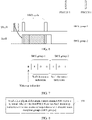
- each DRX group is configured with one PS-PDCCH (full name: a PDCCH that is used to detect DCI format 2_6 and scrambled with a PS-RNTI).
- PS-PDCCH MOs PS-PDCCH monitoring occasions respectively indicating different DRX groups exist before each DRX ON.
- all the PS-PDCCH MOs are configured on a PCell or a PScell (in a DC scenario, UE configures a plurality of cell groups, and each cell group has one Pcell or PScell, where Pcell and PScell are collectively referred to as SPcell).
- an Scell dormancy indication Scells are classified into different DRX groups, and Scells in each DRX group are further classified into different Scell groups.
- Two different PS-PDCCHs are used to respectively and independently indicate dormancy behavior of Scell group in each DRX group.
- There may be different manners of dividing an Scell group for example, dividing an Scell group by frequency range, frequency band, or RF receiver capability of UE.
- the value X of an Scell dormancy indication in a PS-PDCCH of each DRX group may be greater than or equal to 0 bits and less than or equal to 5 bits, that is, 0 ⁇ X ⁇ 5.
- RRC is to configure m-bit Scell dormancy indications respectively for all DRX groups by UE. Different DRX groups are independently configured with different m values. The design of configuring PS-PDCCHs respectively based on different DRX groups is more flexible.
- Case 1 An MO is configured, but UE has not detected a PS-PDCCH:
- a search space set an SS set
- behavior of an Scell includes one of the following:
- RRC configures whether DRX groups controlled by undetected PS-PDCCHs start related drx-onDurationTimer and Scell dormancy behavior thereof or not. For example, independent configuration is performed in the form of a bitmap. (ps-WakeupOrNot for an undetected PS-PDCCH may be 0 or 1.) For example, in a case that there are two DRX groups, RRC configures PS-PDCCH missing detection behavior of DRX group 1 to skip starting a timer of DRX group 1, and configures PS-PDCCH missing detection behavior of DRX group 2 to skip starting a timer of DRX group 2.
- an Scell group in the DRX group enters the dormancy state or the non-dormancy state.
- RRC configures a DRX group controlled by an undetected PS-PDCCH to skip starting a timer or starting a timer is skipped by default when RRC does not perform configuration, namely, '0', an Scell group in the DRX group needs to enter the dormancy state.
- Option 2 An indication is displayed.
- RRC configures current Scell behavior. That is, RRC configures an Scell controlled by an undetected PS-PDCCH to enter the dormancy state or the non-dormancy state. In a case that RRC does not perform configuration, the behavior is entering the dormancy state or the non-dormancy state by default.
- Option 3 No indication exists and the current state is kept (No indication and keep the current state).
- An Scell controlled by an undetected PS-PDCCH remains in the latest or newest state, for example, remaining in the dormancy state or the non-dormancy state.
- Case 2 (no valid MO exist on a Pcell): An MO is configured, but no valid MO exists within a detection range of the PS-PDCCH (covered by active time or canceled out by another signal channel). In this case, ondurationtimer of a DRX group is started, and Scell behavior includes one of the following.
- Scell groups relates to some or all DRX groups (all Scell groups in the some DRX groups) enter the non-dormancy state or the dormancy state.
- an Scell group in primary DRX group 1 namely, a DRX group that includes a Pcell
- an Scell group in secondary DRX group 2 namely, a DRX group that does not include a Pcell
- Option 5 An indication is displayed.
- RRC configures current Scell behavior. That is, RRC configures an Scell controlled by an undetected PS-PDCCH to enter the dormancy state or the non-dormancy state. In a case that RRC does not perform configuration, the behavior is entering the dormancy state or the non-dormancy state by default.
- Option 6 No indication exists and the current state is kept (No indication and keep the current state).
- An Scell controlled by an undetected PS-PDCCH remains in the latest or newest state, for example, remaining in the dormancy state or the non-dormancy state.
- Scell behavior includes one of the following.
- Option 7 (A PS-PDCCH indication of a DRX group containing a Pcell is valid.) Because a Pcell includes two independent PS-PDCCHs, all Scells in DRX group 2 may conform to a dormancy behavior configuration in the preset rule, and all Scells in DRX group 1 may still conform to the PS-PDCCH indication.
- Option 8 (All PS-PDCCH indications are invalid.) As long as there is no valid PS-PDCCH before a cell, the cell needs to conform to the dormancy behavior configuration in the preset rule, no matter whether the cell is an Scell or a Pcell. In other words, some or all Scell groups (all Scell groups in some DRX groups) enter the non-dormancy state or the dormancy state.
- Option 9 (All PS-PDCCH indications are valid.) Dormancy behavior is performed according to the PS-PDCCH indications.
- a PS-offset may be a configuration for a per DRX group, that is, different PS-offsets are configured based on DRX groups.
- an Scell dormancy indication of a related DRX group needs to indicate that the Scell group enters or remains in the dormancy state.
- an Scell state is configurable and may be determined according to the foregoing cases.
- each DRX group is configured with one PS-PDCCH, and PS-PDCCHs are respectively configured on different cells.
- One Scell is selected as a PS-PDCCH Scell.
- a PS-PDCCH is configured for the Scell to indicate a DRX group.
- PS-PDCCH detection in this embodiment lies only in that because for a Pcell or a PS-PDCCH Scell, all PS-PDCCHs before DRX ON only independently control Scell dormancy behavior corresponding to their own DRX groups, this part does not include case 3, but includes only case 1 and case 2. (Case 1 and case 2 in this part differ slightly from those in embodiment 1, and need to be changed to cases in which there is one PS-PDCCH).
- Embodiment 3 As shown in FIG. 5 , only one PS-PDCCH is configured on a PCell, a quantity of bits of a wake-up indication is increased based on a plurality of DRX groups. For example, a 2-bit wake-up indication is configured for two DRX groups.
- PS-PDCCH detection In this embodiment, only case 3 (a case in which only one PS-PDCCH is taken into consideration) exists.
- Embodiment 4 As shown in FIG. 7 , only one PS-PDCCH is configured on a PCell, and there is only one wake-up indication bit. In other words, a plurality of DRX groups are indicated by the one wake-up indication bit.
- PS-PDCCH detection In this embodiment, only case 3 (a case in which only one PS-PDCCH is taken into consideration) exists.
- FIG. 8 is a flowchart of another method for processing an Scell dormancy indication according to an embodiment of the present invention. As shown in FIG. 8 , the method is applied to a network device and includes the following step.
- Step 801 Send a first physical downlink control channel PDCCH to a terminal, where the first PDCCH carries Scell dormancy indications corresponding to at least two discontinuous reception groups (DRX groups), each Scell dormancy indication is used to indicate dormancy behavior of an Scell group in one of the DRX groups, and the dormancy behavior includes entering a dormancy state or entering a non-dormancy state.
- DRX groups discontinuous reception groups
- the first PDCCH includes second PDCCHs in a one-to-one correspondence with the DRX groups, and the Scell dormancy indication carried in the second PDCCH is used to indicate dormancy behavior of a first Scell group that is an Scell group in a DRX group corresponding to the second PDCCH.
- the second PDCCH is a PDCCH of a special cell SPcell.
- the second PDCCH is a PDCCH of a target cell in a DRX group corresponding to the second PDCCH, where in a case that the DRX group corresponding to the second PDCCH includes an SPcell, the target cell is an SPcell; or in a case that the DRX group corresponding to the second PDCCH does not include an SPcell, the target cell is an Scell.
- the first PDCCH is a second PDCCH
- the second PDCCH carries at least two of the Scell dormancy indications.
- the method further includes: sending a radio resource control RRC configuration to the terminal, where the RRC configuration is used to indicate that: in a case that the terminal is configured with a search space set used to monitor the second PDCCH, and the terminal has not detected the second PDCCH, dormancy behavior of an Scell group in a DRX group corresponding to the second PDCCH which is undetected meets any one of the following:
- the method further includes: sending a radio resource control RRC configuration to the terminal, where the RRC configuration is used to indicate that: in a case that the terminal is configured with a search space set used to monitor the second PDCCH, and a cell configured with a second PDCCH has no valid monitoring occasion, dormancy behavior of Scell groups in DRX groups corresponding to N second PDCCHs that have no valid monitoring occasion meets any one of the following:
- the method further includes: sending a radio resource control RRC configuration to the terminal, where the RRC configuration is used to indicate that: in a case that the terminal is configured with a search space set used to monitor the second PDCCH, and an Scell configured with no second PDCCH has no valid monitoring occasion, default dormancy behavior of an Scell group meets at least one of the following:
- the second DRX group includes an SPcell
- the third DRX group does not include an SPcell
- the preset rule includes at least one of the following:
- the method further includes: sending high-layer signaling to the terminal, where the high-layer signaling carries power saving offsets PS-offsets in a one-to-one correspondence with the DRX groups.
- the first PDCCH further includes a wake-up indication, where the wake-up indication is used to indicate an on or off state of a drx-onDurationTimer.
- an Scell group in the fourth DRX group enters a dormancy state, where the fourth DRX group is any one of the DRX groups.
- the first PDCCH is used to detect downlink control information DCI that is in a preset format and scrambled with a power saving radio network temporary identifier PS-RNTI.
- this embodiment serves as an embodiment of the network device corresponding to the embodiment shown in FIG. 2 .
- FIG. 9 is a structural diagram of a terminal according to an embodiment of the present invention. As shown in FIG. 9 , the terminal 900 includes:
- the first PDCCH includes a second PDCCH in a one-to-one correspondence with the DRX group
- the Scell dormancy indication carried in the second PDCCH is used to indicate dormancy behavior of a first Scell group that is an Scell group in a DRX group corresponding to the second PDCCH.
- the second PDCCH is a PDCCH of a special cell SPcell.
- the second PDCCH is a PDCCH of a target cell in a DRX group corresponding to the second PDCCH, where in a case that the DRX group corresponding to the second PDCCH includes an SPcell, the target cell is an SPcell; or in a case that the DRX group corresponding to the second PDCCH does not include an SPcell, the target cell is an Scell.
- the first PDCCH is a second PDCCH
- the second PDCCH carries at least two of the Scell dormancy indications.
- dormancy behavior of an Scell group in a DRX group corresponding to the second PDCCH which is undetected meets any one of the following:
- dormancy behavior of Scell groups in a DRX groups corresponding to N second PDCCHs that have no valid monitoring occasion meets any one of the following:
- dormancy behavior of an Scell group meets at least one of the following:
- the second DRX group includes an SPcell, but the third DRX group does not include an SPcell.
- the preset rule includes at least one of the following:
- the receiving module is further configured to: receive high-layer signaling sent by a network device, where the high-layer signaling carries power saving offsets PS-offsets in a one-to-one correspondence with the DRX groups.
- the first PDCCH further includes a wake-up indication, where the wake-up indication is used to indicate an on or off state of a drx-onDurationTimer.
- an Scell group in the fourth DRX group enters a dormancy state, where the fourth DRX group is any one of the DRX groups.
- the first PDCCH is used to detect downlink control information DCI that is in a preset format and scrambled with a power saving radio network temporary identifier PS-RNTI.
- the terminal provided in this embodiment of the present invention can implement processes implemented by the terminal in the method embodiment of FIG. 2 . To avoid repetition, details are not described herein again.
- FIG. 10 is a structural diagram of a network device according to an embodiment of the present invention.
- the network device 1000 includes: a sending module 1001, configured to send a first physical downlink control channel PDCCH to a terminal, where the first PDCCH carries Scell dormancy indications corresponding to at least two discontinuous reception groups (DRX groups), each Scell dormancy indication is used to indicate dormancy behavior of an Scell group in one of the DRX groups, and the dormancy behavior includes entering a dormancy state or entering a non-dormancy state.
- DRX groups discontinuous reception groups
- the first PDCCH includes second PDCCHs in a one-to-one correspondence with the DRX groups, and the Scell dormancy indication carried in the second PDCCH is used to indicate dormancy behavior of a first Scell group that is an Scell group in a DRX group corresponding to the second PDCCH.
- the second PDCCH is a PDCCH of a special cell SPcell.
- the second PDCCH is a PDCCH of a target cell in a DRX group corresponding to the second PDCCH, where in a case that the DRX group corresponding to the second PDCCH includes an SPcell, the target cell is an SPcell; or in a case that the DRX group corresponding to the second PDCCH does not include an SPcell, the target cell is an Scell.
- the first PDCCH is a second PDCCH
- the second PDCCH carries at least two of the Scell dormancy indications.
- the sending module 1001 is further configured to: send a radio resource control RRC configuration to the terminal, where the RRC configuration is used to indicate that: in a case that the terminal is configured with a search space set used to monitor the second PDCCH, and the terminal has not detected the second PDCCH, dormancy behavior of an Scell group in a DRX group corresponding to the second PDCCH which is undetected meets any one of the following:
- the sending module 1001 is further configured to: send a radio resource control RRC configuration to the terminal, where the RRC configuration is used to indicate that: in a case that the terminal is configured with a search space set used to monitor the second PDCCH, and a cell configured with a second PDCCH has no valid monitoring occasion, dormancy behavior of Scell groups in DRX groups corresponding to N second PDCCHs that have no valid monitoring occasion meets any one of the following:
- the sending module 1001 is further configured to: send a radio resource control RRC configuration to the terminal, where the RRC configuration is used to indicate that: in a case that the terminal is configured with a search space set used to monitor the second PDCCH, and an Scell configured with no second PDCCH has no valid monitoring occasion, default dormancy behavior of an Scell group meets at least one of the following:
- the second DRX group includes an SPcell, but the third DRX group does not include an SPcell.
- the preset rule includes at least one of the following:
- the sending module 1001 is further configured to: send high-layer signaling to the terminal, where the high-layer signaling carries power saving offsets PS-offsets in a one-to-one correspondence with the DRX groups.
- the first PDCCH further includes a wake-up indication, where the wake-up indication is used to indicate an on or off state of a drx-onDurationTimer.
- an Scell group in the fourth DRX group enters a dormancy state, where the fourth DRX group is any one of the DRX groups.
- the first PDCCH is used to detect downlink control information DCI that is in a preset format and scrambled with a power saving radio network temporary identifier PS-RNTI.
- the network device provided in this embodiment of the present invention can implement the processes implemented by the network device in the method embodiment of FIG. 8 . To avoid repetition, details are not described herein again.
- FIG. 11 is a schematic diagram of a hardware structure of a terminal according to the embodiments of the present invention.
- the terminal 1100 includes but is not limited to: a radio frequency unit 1101, a network module 1102, an audio output unit 1103, an input unit 1104, a sensor 1105, a display unit 1106, a user input unit 1107, an interface unit 1108, a memory 1109, a processor 1110, a power supply 1111, and the like.
- a radio frequency unit 1101 includes but is not limited to: a radio frequency unit 1101, a network module 1102, an audio output unit 1103, an input unit 1104, a sensor 1105, a display unit 1106, a user input unit 1107, an interface unit 1108, a memory 1109, a processor 1110, a power supply 1111, and the like.
- the terminal may include more or fewer components than those shown in the figure, or some components may be combined, or there may be a different component arrangement.
- the terminal includes but is not limited to a mobile phone, a tablet computer, a laptop computer, a palmtop computer, an in-vehicle terminal, a wearable device, and
- the radio frequency unit 1101 is configured to receive a first physical downlink control channel PDCCH.
- the processor 1110 is configured to determine dormancy behavior of an Scell group based on the first PDCCH.
- the first PDCCH carries Scell dormancy indications in a one-to-one correspondence with at least two discontinuous reception groups (DRX groups).
- Each Scell dormancy indication is used to indicate dormancy behavior of an Scell group in one of the DRX groups.
- the dormancy behavior includes entering a dormancy state or entering a non-dormancy state.
- the processor 1110 and the radio frequency unit 1101 can implement the processes implemented by the terminal in the method embodiment in FIG. 2 . To avoid repetition, details are not described herein again.
- the radio frequency unit 1101 may be configured to receive and send information or receive and send a signal in a call process. Specifically, after downlink data from a base station is received, the processor 1110 processes the downlink data. In addition, uplink data is sent to the base station.
- the radio frequency unit 1101 includes, but is not limited to, an antenna, at least one amplifier, a transceiver, a coupler, a low noise amplifier, and a duplexer. In addition, the radio frequency unit 1101 may also communicate with a network and another device by using a wireless communications system.
- the terminal provides wireless broadband Internet access for a user by using the network module 1102, for example, helping the user send and receive an email, browse a web page, and access streaming media.
- the audio output unit 1103 may convert audio data received by the radio frequency unit 1101 or the network module 1102 or stored in the memory 1109 into an audio signal and output the audio signal as a sound.
- the audio output unit 1103 may further provide an audio output (for example, a call signal received voice, or a message received voice) related to a specific function implemented by the terminal 1100.
- the audio output unit 1103 includes a loudspeaker, a buzzer, a receiver, and the like.
- the input unit 1104 is configured to receive audio or video signals.
- the input unit 1104 may include a graphics processing unit (Graphics Processing Unit, GPU) 11041 and a microphone 11042.
- the graphics processing unit 11041 processes image data of a static image or video obtained by an image capture apparatus (such as, a camera) in a video capture mode or an image capture mode.
- a processed image frame may be displayed on the display unit 1106.
- the image frame processed by the graphics processing unit 11041 may be stored in the memory 1109 (or another storage medium) or sent by using the radio frequency unit 1101 or the network module 1102.
- the microphone 11042 may receive sound and can process such sound into audio data.
- the processed audio data may be converted, in a telephone call mode, into a format that may be sent to a mobile communication base station by using the radio frequency unit 1101, and the audio data obtained after conversion is output.
- the terminal 1100 further includes at least one sensor 1105, such as an optical sensor, a motion sensor, or another sensor.
- the optical sensor includes an ambient light sensor and a proximity sensor.
- the ambient light sensor may adjust luminance of the display panel 11061 based on brightness of ambient light.
- the proximity sensor may turn off the display panel 11061 and/or backlight when the terminal 1100 is moved to an ear.
- an accelerometer sensor may detect magnitude of acceleration in each direction (generally, on three axes), and may detect magnitude and a direction of gravity when being static.
- the accelerometer sensor may be used for recognizing a terminal gesture (for example, portrait and landscape orientation switching, a related game, or magnetometer posture calibration), a function related to vibration recognition (for example, a pedometer or a strike), or the like.
- the sensor 1105 may further include a fingerprint sensor, a pressure sensor, an iris sensor, a molecular sensor, a gyroscope, a barometer, a hygrometer, a thermometer, an infrared sensor, and the like. Details are not described herein.
- the display unit 1106 is configured to display information entered by the user or information provided for the user.
- the display unit 1106 may include a display panel 11061.
- the display panel 11061 may be configured in a form of a liquid crystal display (LCD), an organic light-emitting diode (OLED), or the like.
- the user input unit 1107 may be configured to receive input digit or character information and generate key signal input related to user settings and function control of the terminal.
- the user input unit 1107 includes a touch panel 11071 and another input device 11072.
- the touch panel 11071 also called a touchscreen, may collect a touch operation of a user on or near the touch panel (for example, the operation of the user on the touch panel 11071 or near the touch panel 11071 by using any suitable accessory such as a finger or a stylus).
- the touch panel 11071 may include two parts: a touch detection apparatus and a touch controller.
- the touch detection apparatus detects a touch position of the user, detects a signal brought by the touch operation, and transmits the signal to the touch controller.
- the touch controller receives touch information from the touch detection apparatus, converts the touch information into contact coordinates, sends the contact coordinates to the processor 1110, and can receive and execute a command sent by the processor 1110.
- the touch panel 11071 may be implemented by using various types such as a resistive type, a capacitive type, an infrared ray type or a surface acoustic wave type.
- the user input unit 1107 may further include another input device 11072.
- the another input device 11072 may include but is not limited to: a physical keyboard, a function key (such as a volume control key, or a switch key), a trackball, a mouse, and a joystick. Details are not described herein.
- the touch panel 11071 may cover the display panel 11061. After detecting the touch operation on or near the touch panel 11071, the touch panel 11071 transmits the touch operation to the processor 1110 to determine a type of a touch event, and then the processor 1110 provides corresponding visual output on the display panel 11061 based on the type of the touch event.
- the touch panel 11071 and the display panel 11061 implement input and output functions of the terminal as two independent components, in some embodiments, the touch panel 11071 and the display panel 11061 may be integrated to implement the input and output functions of the terminal. This is not specifically limited herein.
- the interface unit 1108 is an interface connecting an external apparatus to the terminal 1100.
- the external apparatus may include a wired or wireless headset port, an external power supply (or battery charger) port, a wired or wireless data port, a storage card port, a port configured to connect to an apparatus having a recognition module, an audio input/output (I/O) port, a video I/O port, a headset port, and the like.
- the interface unit 1108 may be configured to receive input (for example, data information and power) from the external apparatus and transmit the received input to one or more elements in the terminal 1100, or may be configured to transmit data between the terminal 1100 and the external apparatus.
- the memory 1109 may be configured to store a software program and various data.
- the memory 1109 may mainly include a program storage area and a data storage area.
- the program storage area may store an operating system, an application required by at least one function (for example, a sound play function or an image display function), and the like.
- the data storage area may store data (for example, audio data or an address book) or the like created based on use of the mobile phone.
- the memory 1109 may include a high-speed random access memory or a nonvolatile memory, for example, at least one disk storage device, a flash memory, or another volatile solid-state storage device.
- the processor 1110 is a control center of the terminal, connects all parts of the entire terminal by using various interfaces and lines, and performs various functions of the terminal and data processing by running or executing a software program and/or a module stored in the memory 1109 and invoking data stored in the memory 1109, to perform overall monitoring on the terminal.
- the processor 1110 may include one or more processing units.
- the processor 1110 may be integrated with an application processor and a modem processor.
- the application processor mainly processes an operating system, a user interface, an application, and the like.
- the modem processor mainly processes wireless communication. It may be understood that the modem processor may not be integrated into the processor 1110.
- the terminal 1100 may further include the power supply 1111 (such as a battery) that supplies power to each component.
- the power supply 1111 may be logically connected to the processor 1110 by using a power management system, so as to implement functions such as charging, discharging, and power consumption management by using the power management system.
- the terminal 1100 includes some function modules not shown. Details are not described herein.
- an embodiment of the present invention further provides a terminal, including a processor 1110, a memory 1109, and a computer program stored in the memory 1109 and executable on the processor 1110.
- a terminal including a processor 1110, a memory 1109, and a computer program stored in the memory 1109 and executable on the processor 1110.
- the computer program is executed by the processor 1110, processes of the foregoing embodiment of the method for processing an Scell dormancy indication are implemented, and a same technical effect can be achieved. To avoid repetition, details are not described herein again.
- FIG. 12 is a structural diagram of another network device according to an embodiment of the present invention.
- the network device 1200 includes: a processor 1201, a transceiver 1202, a memory 1203, and a bus interface.
- the transceiver 1202 is configured send a first physical downlink control channel PDCCH to a terminal, where the first PDCCH carries Scell dormancy indications corresponding to at least two discontinuous reception groups (DRX groups), each Scell dormancy indication is used to indicate dormancy behavior of an Scell group in one of the DRX groups, and the dormancy behavior includes entering a dormancy state or entering a non-dormancy state.
- DRX groups discontinuous reception groups
- the processor 1201 and the transceiver 1202 can implement the processes implemented by the network device in the method embodiment in FIG. 8 . To avoid repetition, details are not described herein again.
- a bus architecture may include any number of interconnected buses and bridges. Specifically, various circuits of one or more processors represented by the processor 1201 and a memory represented by the memory 1203 are interconnected. The bus architecture may further link other various circuits such as a peripheral device, a voltage stabilizer, and a power management circuit. These are well known in the art, and therefore are not further described in this specification.
- the bus interface provides an interface.
- the transceiver 1202 may be a plurality of elements, that is, include a transmitter and a receiver, and provide a unit for communicating with other various apparatuses on a transmission medium.
- a user interface 1204 may also be an interface capable of connecting externally and internally to a required device.
- the connected device includes but is not limited to a keypad, a display, a loudspeaker, a microphone, and a joystick.
- the processor 1201 is responsible for managing the bus architecture and common processing, and the memory 1203 may store data used when the processor 1201 performs an operation.
- an embodiment of the present invention further provides a network device, including a processor 1201, a memory 1203, and a computer program stored in the memory 1203 and executable on the processor 1201.
- a network device including a processor 1201, a memory 1203, and a computer program stored in the memory 1203 and executable on the processor 1201.
- the computer program is executed by the processor 1201
- processes of the foregoing embodiment of the method for processing an Scell dormancy indication are implemented, and a same technical effect can be achieved. To avoid repetition, details are not described herein again.
- An embodiment of the present invention further provides a computer-readable storage medium.
- the computer-readable storage medium stores a computer program, and when the computer program is executed by a processor, the processes of the embodiments of the method for processing an Scell dormancy indication at the network device side, or when the computer program is executed by a processor, the processes of the embodiments of the method for processing an Scell dormancy indication at the terminal side are implemented, and a same technical effect can be achieved. To avoid repetition, details are not described herein again.
- the computer-readable storage medium includes a read-only memory (ROM), a random access memory (RAM), a magnetic disk, an optical disc, or the like.
- the method in the foregoing embodiment may be implemented by software plus a necessary universal hardware platform or by hardware only. In most circumstances, the former is a preferred implementation. Based on such an understanding, the technical solutions of the present invention essentially or the part contributing to the prior art may be implemented in a form of a software product.
- the computer software product is stored in a storage medium (such as a ROM/RAM, a magnetic disk, or an optical disc), and includes several instructions for instructing a terminal (which may be a mobile phone, a computer, a server, an air conditioner, a base station, or the like) to perform the method described in the embodiments of the present invention.
Landscapes
- Engineering & Computer Science (AREA)
- Signal Processing (AREA)
- Computer Networks & Wireless Communication (AREA)
- Mobile Radio Communication Systems (AREA)
Applications Claiming Priority (2)
| Application Number | Priority Date | Filing Date | Title |
|---|---|---|---|
| CN201911349923.7A CN113038635B (zh) | 2019-12-24 | 2019-12-24 | Scell休眠指示处理方法、终端及网络设备 |
| PCT/CN2020/137137 WO2021129504A1 (zh) | 2019-12-24 | 2020-12-17 | Scell休眠指示处理方法、终端及网络设备 |
Publications (2)
| Publication Number | Publication Date |
|---|---|
| EP4048019A1 true EP4048019A1 (de) | 2022-08-24 |
| EP4048019A4 EP4048019A4 (de) | 2022-12-21 |
Family
ID=76451955
Family Applications (1)
| Application Number | Title | Priority Date | Filing Date |
|---|---|---|---|
| EP20906921.0A Pending EP4048019A4 (de) | 2019-12-24 | 2020-12-17 | Scell-schlafanzeigeverarbeitungsverfahren, endgerät und netzwerkvorrichtung |
Country Status (6)
| Country | Link |
|---|---|
| US (1) | US12349069B2 (de) |
| EP (1) | EP4048019A4 (de) |
| JP (1) | JP7691980B2 (de) |
| KR (1) | KR102907843B1 (de) |
| CN (1) | CN113038635B (de) |
| WO (1) | WO2021129504A1 (de) |
Cited By (1)
| Publication number | Priority date | Publication date | Assignee | Title |
|---|---|---|---|---|
| EP4114092A4 (de) * | 2020-02-25 | 2023-08-23 | Vivo Mobile Communication Co., Ltd. | Ps-pdcch-konfigurationsverfahren, endgerätevorrichtung und netzwerkseitige vorrichtung |
Families Citing this family (9)
| Publication number | Priority date | Publication date | Assignee | Title |
|---|---|---|---|---|
| CN112399211B (zh) * | 2019-08-14 | 2023-10-24 | 青岛海信宽带多媒体技术有限公司 | 一种操作方法及融合网关 |
| US11611411B2 (en) * | 2019-12-05 | 2023-03-21 | Qualcomm Incorporated | Downlink control information for dormancy indication and one-shot hybrid automatic repeat request feedback |
| CN113038635B (zh) * | 2019-12-24 | 2023-04-25 | 维沃移动通信有限公司 | Scell休眠指示处理方法、终端及网络设备 |
| CN113518478B (zh) * | 2020-04-10 | 2025-04-29 | 华为技术有限公司 | 一种drx控制方法及装置 |
| US12047823B2 (en) * | 2020-07-14 | 2024-07-23 | Qualcomm Incorporated | Cross-carrier scheduling |
| CN113950130B (zh) * | 2020-07-17 | 2023-10-27 | 大唐移动通信设备有限公司 | 休眠指示方法、终端、网络侧设备和存储介质 |
| CN114501690A (zh) * | 2020-10-23 | 2022-05-13 | 大唐移动通信设备有限公司 | 一种节能信号传输方法及装置 |
| US20250089124A1 (en) * | 2023-09-11 | 2025-03-13 | Samsung Electronics Co., Ltd. | Energy saving in wireless communication systems |
| US20260089798A1 (en) * | 2024-09-26 | 2026-03-26 | Apple Inc. | Enhancing user experience in a bursty data environment with wake up signal on for carrier aggregation or dual connectivity |
Family Cites Families (41)
| Publication number | Priority date | Publication date | Assignee | Title |
|---|---|---|---|---|
| WO2014021631A1 (ko) * | 2012-07-31 | 2014-02-06 | 엘지전자 주식회사 | 하향링크 신호 수신 방법 및 사용자기기와, 하향링크 신호 전송 방법 및 기지국 |
| US8913518B2 (en) | 2012-08-03 | 2014-12-16 | Intel Corporation | Enhanced node B, user equipment and methods for discontinuous reception in inter-ENB carrier aggregation |
| CN110121204B (zh) | 2013-03-29 | 2024-01-05 | 华为技术有限公司 | 一种通信方法、移动管理实体设备、通信设备、存储介质及通信系统 |
| CN103402245B (zh) * | 2013-07-24 | 2016-12-28 | 中国联合网络通信集团有限公司 | 一种非连续接收drx周期的配置方法、设备及系统 |
| CN110536485B (zh) * | 2013-09-27 | 2022-12-23 | Sk电信有限公司 | 支持双连接的用户设备 |
| BR112016015194B1 (pt) | 2013-12-28 | 2022-10-04 | Huawei Technologies Co., Ltd | Método de envio de sinal, método de detecção de sinal, estação base, e equipamento de usuário |
| US10075988B2 (en) * | 2014-01-06 | 2018-09-11 | Intel IP Corporation | Discontinuous reception (DRX) alignment techniques for dual-connectivity architectures |
| US10721720B2 (en) | 2014-01-30 | 2020-07-21 | Qualcomm Incorporated | Cell On-Off procedure for dual connectivity |
| EP3152944B1 (de) * | 2014-06-05 | 2018-09-12 | Sony Corporation | Infrastrukturausrüstung, mobilkommunikationsnetzwerk und verfahren |
| CN105659664B (zh) * | 2014-09-30 | 2019-08-27 | 华为技术有限公司 | 一种异系统测量的方法、相关装置及系统 |
| CN107197508B (zh) * | 2017-05-17 | 2020-01-10 | 电子科技大学 | 一种基于csm机制drx的设备休眠方法 |
| US10791512B2 (en) * | 2017-07-14 | 2020-09-29 | Qualcomm Incorporated | User equipment power consumption and secondary cell activation latency reductions in a wireless communication system |
| CN109327888B (zh) * | 2017-07-31 | 2020-10-16 | 维沃移动通信有限公司 | 一种终端状态的指示、确定方法、基站及终端 |
| US11576085B2 (en) * | 2017-10-25 | 2023-02-07 | Qualcomm Incorporated | Secondary cell activation and deactivation enhancements in new radio |
| US10567145B2 (en) * | 2018-01-05 | 2020-02-18 | Ofinno, Llc | Beam reports with multiple cells |
| US11297674B2 (en) * | 2018-02-14 | 2022-04-05 | Samsung Electronics Co., Ltd. | Method and apparatus for power savings at a user equipment |
| WO2020067988A1 (en) * | 2018-09-27 | 2020-04-02 | Telefonaktiebolaget Lm Ericsson (Publ) | Radio network node, user equipment (ue) and methods performed in a wireless communication network |
| JP2020072330A (ja) * | 2018-10-30 | 2020-05-07 | シャープ株式会社 | 端末装置、基地局装置、および、通信方法 |
| CN113615244B (zh) * | 2019-03-27 | 2025-04-29 | 夏普株式会社 | 用户设备、基站和方法 |
| US11166269B2 (en) * | 2019-03-28 | 2021-11-02 | Ofinno, Llc | Interaction between power saving adaptation and bandwidth part adaptation |
| US11374723B2 (en) * | 2019-03-28 | 2022-06-28 | Beijing Xiaomi Mobile Software Co., Ltd. | Cross-carrier scheduling activation for a dormant cell |
| ES3062885T3 (en) * | 2019-04-30 | 2026-04-14 | Zte Corp | System and method for downlink control signaling |
| US11582784B2 (en) * | 2019-08-12 | 2023-02-14 | FG Innovation Company Limited | Method and apparatus for PDCCH monitoring adaptation |
| WO2021053097A1 (en) * | 2019-09-19 | 2021-03-25 | Telefonaktiebolaget Lm Ericsson (Publ) | Radio network node, user equipment and methods performed in a wireless communication network |
| EP4033797A4 (de) * | 2019-09-19 | 2022-11-23 | Vivo Mobile Communication Co., Ltd. | Steuerverfahren für kanalüberwachung und endgerät |
| EP4032345B1 (de) * | 2019-09-19 | 2025-09-03 | Telefonaktiebolaget LM Ericsson (publ) | Funknetzwerkknoten, benutzergerät und in einem drahtloskommunikationsnetzwerk ausgeführte verfahren |
| CN110572842B (zh) * | 2019-09-20 | 2022-04-05 | 展讯通信(上海)有限公司 | 非连续接收drx数据传输方法、装置及存储介质 |
| EP4011128B1 (de) * | 2019-09-30 | 2023-03-08 | Ofinno, LLC | Energiespar- und zelldormanzbetrieb |
| KR102893226B1 (ko) * | 2019-10-03 | 2025-12-01 | 엘지전자 주식회사 | 무선 통신 시스템에서 drx 동작 및 휴면 bwp에서의 동작 방법 및 상기 방법을 이용하는 단말 |
| EP4039016A1 (de) * | 2019-10-03 | 2022-08-10 | Telefonaktiebolaget LM Ericsson (publ) | Funknetzwerkknoten, benutzergerät und in einem drahtloskommunikationsnetzwerk ausgeführte verfahren |
| KR102943254B1 (ko) * | 2019-10-03 | 2026-03-25 | 샤프 가부시키가이샤 | 전력 절감 동작들을 위한 방법들 및 장치들 |
| EP4027733B1 (de) * | 2019-10-17 | 2023-11-01 | LG Electronics Inc. | Diskontinuierliches empfangsbetriebsverfahren |
| KR20210051621A (ko) * | 2019-10-31 | 2021-05-10 | 삼성전자주식회사 | 무선 통신 시스템에서 단말 전력 소모 감소 방법 및 장치 |
| EP4055987A4 (de) * | 2019-11-04 | 2023-12-13 | Qualcomm Incorporated | Dormanzanzeige einer sekundärzelle und anwendungsverzögerung |
| CN114557076A (zh) * | 2019-11-07 | 2022-05-27 | 富士通株式会社 | 无线通信方法、装置和系统 |
| US11622367B2 (en) * | 2019-11-08 | 2023-04-04 | Qualcomm Incorporated | Cross-carrier scheduling in wireless communication |
| CN112788759A (zh) * | 2019-11-08 | 2021-05-11 | 华为技术有限公司 | 一种通信方法及装置 |
| US12574848B2 (en) * | 2019-11-08 | 2026-03-10 | Sony Group Corporation | Method for controlling communication in DRX |
| EP3823413A1 (de) * | 2019-11-15 | 2021-05-19 | Panasonic Intellectual Property Corporation of America | Benutzergerät, planungsknoten, verfahren für benutzergerät und verfahren für planungsknoten zur bestimmung eines ziel-bwp |
| MX2022003426A (es) * | 2019-12-06 | 2022-04-18 | Fg innovation co ltd | Metodo de comunicacion y equipo de usuario para operaciones con conmutacion de partes de ancho de banda. |
| CN113038635B (zh) * | 2019-12-24 | 2023-04-25 | 维沃移动通信有限公司 | Scell休眠指示处理方法、终端及网络设备 |
-
2019
- 2019-12-24 CN CN201911349923.7A patent/CN113038635B/zh active Active
-
2020
- 2020-12-17 KR KR1020227016850A patent/KR102907843B1/ko active Active
- 2020-12-17 JP JP2022528072A patent/JP7691980B2/ja active Active
- 2020-12-17 WO PCT/CN2020/137137 patent/WO2021129504A1/zh not_active Ceased
- 2020-12-17 EP EP20906921.0A patent/EP4048019A4/de active Pending
-
2022
- 2022-04-29 US US17/733,931 patent/US12349069B2/en active Active
Cited By (1)
| Publication number | Priority date | Publication date | Assignee | Title |
|---|---|---|---|---|
| EP4114092A4 (de) * | 2020-02-25 | 2023-08-23 | Vivo Mobile Communication Co., Ltd. | Ps-pdcch-konfigurationsverfahren, endgerätevorrichtung und netzwerkseitige vorrichtung |
Also Published As
| Publication number | Publication date |
|---|---|
| WO2021129504A1 (zh) | 2021-07-01 |
| KR20220086630A (ko) | 2022-06-23 |
| US12349069B2 (en) | 2025-07-01 |
| CN113038635A (zh) | 2021-06-25 |
| CN113038635B (zh) | 2023-04-25 |
| KR102907843B1 (ko) | 2026-01-05 |
| EP4048019A4 (de) | 2022-12-21 |
| JP2023502946A (ja) | 2023-01-26 |
| US20220256462A1 (en) | 2022-08-11 |
| JP7691980B2 (ja) | 2025-06-12 |
Similar Documents
| Publication | Publication Date | Title |
|---|---|---|
| US12349069B2 (en) | Method for processing Scell dormancy indication, terminal, and network device | |
| US12309870B2 (en) | Wake up signal processing method, wake up signal configuration method, and related device | |
| US12284132B2 (en) | Channel monitoring control method and terminal | |
| US12439338B2 (en) | Wake-up signal configuration method, wake-up signal processing method, and related device | |
| EP3920604A1 (de) | Verfahren und endgerät zur konfiguration von diskontinuierlichem empfang (drx) | |
| US12250629B2 (en) | Power-saving signal receiving method, power- saving signal sending method, terminal and network device | |
| EP3986032A1 (de) | Pdcch-überwachungsverfahren und endgerät | |
| WO2021197378A1 (zh) | 信号测量、测量间隔配置、测量上报方法、终端、网络设备及位置管理设备 | |
| US12484109B2 (en) | PS-PDCCH configuration method, terminal device, and network side device | |
| CN111132280A (zh) | 信号传输方法及设备 | |
| CN110474708B (zh) | 提前指示信号的检测方法、传输方法、终端及网络侧设备 | |
| CN110730504A (zh) | 一种寻呼指示方法、装置及系统 | |
| CN111277381A (zh) | 物理下行控制信道监听、监听配置方法、终端及网络设备 | |
| US20220377779A1 (en) | Scheduling method, terminal, and network side device | |
| US20210136759A1 (en) | Method and terminal for allocating pdsch time domain resources, and computer-readable storage medium | |
| CN113473577B (zh) | 休眠行为处理方法、指示方法、终端及网络设备 | |
| WO2022198570A1 (zh) | 信号处理方法、设备及存储介质 | |
| HK40063757A (en) | Pdcch monitoring method and terminal | |
| CN113286365A (zh) | 时间间隔的确定方法及装置、通信设备 |
Legal Events
| Date | Code | Title | Description |
|---|---|---|---|
| STAA | Information on the status of an ep patent application or granted ep patent |
Free format text: STATUS: THE INTERNATIONAL PUBLICATION HAS BEEN MADE |
|
| PUAI | Public reference made under article 153(3) epc to a published international application that has entered the european phase |
Free format text: ORIGINAL CODE: 0009012 |
|
| STAA | Information on the status of an ep patent application or granted ep patent |
Free format text: STATUS: REQUEST FOR EXAMINATION WAS MADE |
|
| 17P | Request for examination filed |
Effective date: 20220517 |
|
| AK | Designated contracting states |
Kind code of ref document: A1 Designated state(s): AL AT BE BG CH CY CZ DE DK EE ES FI FR GB GR HR HU IE IS IT LI LT LU LV MC MK MT NL NO PL PT RO RS SE SI SK SM TR |
|
| A4 | Supplementary search report drawn up and despatched |
Effective date: 20221118 |
|
| RIC1 | Information provided on ipc code assigned before grant |
Ipc: H04W 76/28 20180101AFI20221114BHEP |
|
| DAV | Request for validation of the european patent (deleted) | ||
| DAX | Request for extension of the european patent (deleted) | ||
| STAA | Information on the status of an ep patent application or granted ep patent |
Free format text: STATUS: EXAMINATION IS IN PROGRESS |
|
| 17Q | First examination report despatched |
Effective date: 20250722 |