EP4045802B1 - Verfahren zur herstellung einer verbundrohranordnung und verbundrohranordnung mit schlitzverbindungen - Google Patents
Verfahren zur herstellung einer verbundrohranordnung und verbundrohranordnung mit schlitzverbindungen Download PDFInfo
- Publication number
- EP4045802B1 EP4045802B1 EP20800503.3A EP20800503A EP4045802B1 EP 4045802 B1 EP4045802 B1 EP 4045802B1 EP 20800503 A EP20800503 A EP 20800503A EP 4045802 B1 EP4045802 B1 EP 4045802B1
- Authority
- EP
- European Patent Office
- Prior art keywords
- fitting
- tube
- diameter
- slot
- tapered outer
- Prior art date
- Legal status (The legal status is an assumption and is not a legal conclusion. Google has not performed a legal analysis and makes no representation as to the accuracy of the status listed.)
- Active
Links
Images


Classifications
-
- F—MECHANICAL ENGINEERING; LIGHTING; HEATING; WEAPONS; BLASTING
- F16—ENGINEERING ELEMENTS AND UNITS; GENERAL MEASURES FOR PRODUCING AND MAINTAINING EFFECTIVE FUNCTIONING OF MACHINES OR INSTALLATIONS; THERMAL INSULATION IN GENERAL
- F16C—SHAFTS; FLEXIBLE SHAFTS; ELEMENTS OR CRANKSHAFT MECHANISMS; ROTARY BODIES OTHER THAN GEARING ELEMENTS; BEARINGS
- F16C7/00—Connecting-rods or like links pivoted at both ends; Construction of connecting-rod heads
- F16C7/02—Constructions of connecting-rods with constant length
- F16C7/026—Constructions of connecting-rods with constant length made of fibre reinforced resin
-
- F—MECHANICAL ENGINEERING; LIGHTING; HEATING; WEAPONS; BLASTING
- F16—ENGINEERING ELEMENTS AND UNITS; GENERAL MEASURES FOR PRODUCING AND MAINTAINING EFFECTIVE FUNCTIONING OF MACHINES OR INSTALLATIONS; THERMAL INSULATION IN GENERAL
- F16L—PIPES; JOINTS OR FITTINGS FOR PIPES; SUPPORTS FOR PIPES, CABLES OR PROTECTIVE TUBING; MEANS FOR THERMAL INSULATION IN GENERAL
- F16L21/00—Joints with sleeve or socket
- F16L21/007—Joints with sleeve or socket clamped by a wedging action
-
- B—PERFORMING OPERATIONS; TRANSPORTING
- B29—WORKING OF PLASTICS; WORKING OF SUBSTANCES IN A PLASTIC STATE IN GENERAL
- B29C—SHAPING OR JOINING OF PLASTICS; SHAPING OF MATERIAL IN A PLASTIC STATE, NOT OTHERWISE PROVIDED FOR; AFTER-TREATMENT OF THE SHAPED PRODUCTS, e.g. REPAIRING
- B29C65/00—Joining or sealing of preformed parts, e.g. welding of plastics materials; Apparatus therefor
- B29C65/48—Joining or sealing of preformed parts, e.g. welding of plastics materials; Apparatus therefor using adhesives, i.e. using supplementary joining material; solvent bonding
-
- B—PERFORMING OPERATIONS; TRANSPORTING
- B29—WORKING OF PLASTICS; WORKING OF SUBSTANCES IN A PLASTIC STATE IN GENERAL
- B29C—SHAPING OR JOINING OF PLASTICS; SHAPING OF MATERIAL IN A PLASTIC STATE, NOT OTHERWISE PROVIDED FOR; AFTER-TREATMENT OF THE SHAPED PRODUCTS, e.g. REPAIRING
- B29C65/00—Joining or sealing of preformed parts, e.g. welding of plastics materials; Apparatus therefor
- B29C65/56—Joining or sealing of preformed parts, e.g. welding of plastics materials; Apparatus therefor using mechanical means or mechanical connections, e.g. form-fits
Definitions
- the present disclosure relates generally to composite tube assemblies and more particularly to composite tube assemblies having form locking fittings.
- Composite materials offer high stiffness and/or strength-to-weight ratios.
- Composite tube assemblies are formed from composite materials and are used for transferring loads in structures such as aircraft or spacecraft. Other applications include control rods, containers, ducts, panel inserts, torque tubes, etc.
- composite tube assemblies In vehicles such as aircraft, it is beneficial to use composite tube assemblies rather than assemblies primarily composed of metal. They are lighter and stronger than comparable metal tube assemblies.
- the composite tube assemblies typically incorporate carbon fiber (“CF”) tubes and are lighter in weight, more resistant to corrosion, stronger and more inert relative to substantially metallic tube assemblies.
- CFRP carbon fiber
- Composite tube assemblies may be used in an overhead luggage bin (or stow bin) assemblies in an aircraft to provide structural support both when the bin is in an open configuration and when it is closed.
- the composite tube assemblies may also be used as structural members in vehicle frames.
- a fitting or insert such as a Hylock insert
- the composite tube end is compressed over a smaller diameter of the fitting to form the composite tube assembly.
- This bunching up of the composite tube end can result in cracked CF material after forming.
- the compressed and bunched composite tube end then requires post processing to clean up the formed area, which adds complexity and risk to the manufacturing process.
- Other forming issues are seen with tubes formed from composite materials having higher cure temperature resins, as it is more difficult to achieve the glass transition temperature (Tg) range of such composite materials and thus, it is more difficult to compress such tube ends over the fitting.
- Tg glass transition temperature
- Composite tube assemblies 10 including fittings 12 are described in U.S. Patent No. 8,205,315 .
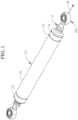
- an end 14 of a composite tube or tube 16 is fitted over a fitting 12 as shown in FIG. 1 .
- the composite tube 16 may be produced by winding composite fibers in a form of a filament (and/or a tape) having an epoxy resin over a tubular mandrel. Any of a number of suitable machines known to those skilled in the art can be used for this purpose.
- the composite tube may be a fiber reinforced composite formed with a thermoset or a thermoplastic resin.
- the composite tube may be a liquid molded tube that may include fiber reinforcement.
- the composite fibers may be wound along a direction that is substantially helical with respect to a longitudinal axis 18 of the composite tube. In other words, in a direction along the circumference transverse or perpendicular to the longitudinal axis of the tube. In one embodiment, the composite fibers are also wound at a very small helical angle (or angles) with respect to the longitudinal axis.
- embodiments of the composite tube 16 are not limited thereto. That is, the composite tube 16 may be produced by winding filaments and/or pre-impregnated composite tapes in any known manner and at any angle.
- the composite tube may include fibers oriented in multiple directions, as for example in the hoop direction (90° to the longitudinal axis) as well as fibers along the longitudinal axis as well as other angles relative to the longitudinal axis, as for example along 45°.
- the fitting 12 includes a tapered outer surface 20, as for example shown in FIGS. 2 ad 3, tapering from a larger diameter section 19 to smaller diameter section 21 distally relative to the tube 16 defining reduced diameter or tapered portion 23.
- the tapered outer surface 20 may have a smooth outer surface as for example shown in FIG. 3 or may have a textured outer surface, as for example shown in FIG. 2 , for better adhesion.
- the textured outer surface may be formed by a plurality of adjacent annular grooves.
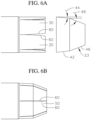
- the outer surface may have multiple tapering outer surfaces, as for example shown in FIG. 6A .
- a first cylindrical outer surface 42 may axially taper at a first angle 44.
- a second cylindrical outer surface 46 extending axially from the first cylindrical outer surface, may taper axially at a second angle 48 greater than the first angle 44 such that it tapers to a smaller diameter in a direction away from the first cylindrical outer surface.
- Fittings also typically include a cylindrical flange 22 proximate the smaller diameter of the tapering outer surfaces.
- a neck 24 extends axially from the flange in a direction away from the tapering outer surface.
- An end fitting, such a clevis bolt 26, may be received in the neck and connect to the fitting, as for example shown in FIG. 1 .
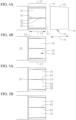
- a tube end portion 27, to be fitted over (i.e., mated with) the tapered outer surface 20 of the fitting is slotted with a slot 32, in at least one location but, preferably in at least at two different locations to form at least two cantilevered arm sections or arms 30 as for example shown in FIG. 4A .
- a slot 32 extends to the distal end 31 of the tube so as to form the cantilevered arms 30.
- more than two slots are formed as for example three, four, five, six, seven, eight, nine, ten, or more than ten to form multiple arms 30. These arms are bent and molded over the tapered surface of the fitting for coupling the tube to the fitting, as for example shown in FIG. 4B which depicts the end portion of the tube fitted over the tapered outer surface of the fitting without showing the fitting.
- a tapered portion 25 of the composite tube 10 is formed by heating the end portion 27 arms 30 of the composite tube 16, into which the fitting 12 was inserted, to a temperature sufficient for the composite tube end portion arms to become thermoplastic or moldable, as for example by softening the resin forming the composite tube.
- the tube is heated to a temperature within the glass transition temperature (T g ) range of the composite material forming the composite tube.
- T g glass transition temperature
- a heated die or any other suitable instrument may be used for this purpose.
- the end portion 27 arms 30 of the composite tube 16 are deformed to collectively have a shape and dimension substantially conforming to a shape and dimension, respectively, of the tapered portion 23 of the fitting 12.
- the tapered portion 25 of the composite tube 16 is thereby formed. As the tapered portion 25 of the composite tube 16 cools, it compresses radially on to the tapered portion 23 of the fitting 12. The tapered portion 25 of the composite tube 16 is thereby secured to the tapered portion 23 of the fitting 12 to form a mechanical lock.
- the tapered portion 25 of the composite tube 16 may also bond to the tapered portion of the fitting 12 as the softened resin cools and bonds onto the tapered portion of the fitting.
- An adhesive may also be used to help adhere the composite tube reduced diameter portion 25 to the fitting tapered portion 23. If an adhesive is used between the composite tube and the fitting, the adhesive by itself or in combination with the resin creates a bond between the composite tube and the fitting.
- the arms 30 provide flexibility (i.e., they are more flexible then the composite tube end portion when not slotted), heat, although desirable, is not necessary for bending each arm and attaching and coupling it to the tapered outer surface of the fitting. Heat is, however, desirable for accelerating the cure of the structure adhesive used on the composite tube and thus the arms.
- the heating temperature can range anywhere from ambient temperate to the upper end of the composite tube material T g range.
- a collar 70 is installed over the arms to provide appropriate force on the arms against the tube to provide a forming force in the tube without having to heat the arms ( FIGS. 1 , 7A and 7B ).
- Another benefit provided by lower temperature forming is the ability to maintain tolerances caused coefficient of the thermal expansion differences in the materials used for the tube and the fitting.
- Another benefit is the ability to use tooling made for materials that would otherwise degrade at the higher forming temperatures. Being able to use lower temperature forming, further provides a great benefit, in that it allows composite tubes made from materials with higher T g to be used as the higher temperatures required when using traditional forming methods with many materials are not necessary.
- the slotted ends of the tube may be formed in the prepreg material prior to rolling to form the tube or may be forming to the other tube after the tube is formed.
- each slot has a length 72 such that when the arms are mounted to the tapered outer surface of the fitting, each slot extends along the entirety, or substantially the entirety, of the length 74 of the fitting annular tapered outer surface 20. In other example embodiments, the length of each slot may be less than the entire length of the tapered outer surface 20.
- each slot is rectangular shaped in that each slot includes generally parallel, or parallel, opposite edges 50 extending along the entire length, or substantially the entire length, of each slot, as for example shown in FIG. 4A .
- the arms 30 shown in FIG. 4A define a shape as shown in FIG. 4B .
- FIG. 4B In another example embodiment as shown in FIG.
- each slot 32 is triangularly shaped, such that the vertex 52 of the triangle is proximal and the base 54 of the triangle is distal of the tube 16 defining the maximum spacing of the slot, or the maximum width of the slot, at the distal end 56 of the tube such that the largest width of the slot is closest to the smallest diameter section 21 of the tapered surface 20 of the fitting when the fitting if fitted in the tube end.
- the slots may have nonlinear or varying widths to accommodate different geometries of tapering of the surface of the fitting, as for example shown in FIG. 6A .
- the tube end (or hoop area) portion includes constant width slots as for example shown in FIG. 4A .
- the width of each slot is based on the reduced circumference at the distal end of the tube when the tube is mated to the fitting end and the number of slots used.
- the proximal ends of the slots may incorporate a radius at each corner to reduce stress concentrations.
- each slot width is defined by the difference of the circumference along the fitting taper divided by the number of slots.
- the length of the slot may vary based on material properties and design requirements, though in most cases the proximal end of the slot will be close to, or at, the point at which the proximal end of the taper on the fitting is located.
- the open volume left after forming between the opposite edges 60 of each slot may be filled with a filler material such as structural adhesive, or left open.
- each slot is approximately an isosceles triangle with the base defined as the slot max width (W) at the distal end 56 of the tube and the angle bisector from the vertex 52 (i.e. the "V") of the triangle to the base 54 defined as the slot length (L).
- W slot max width
- V vertex 52
- L slot length
- the width Wx at a distance X of each slot can be within 25% of Wx derived by Formula 2. In another example embodiment can be within 20% of Wx derived by Formula 2. In yet another example embodiment it can be within 15% of Wx derived by Formula 2. In another example embodiment, it can be within 10% of Wx derived by Formula 2. In a further example embodiment it can within 5% of Wx derived by Formula 2.
- the end portion area has non-linearly varying width slots as for example shown in FIG. 6A .
- the slots are shaped such that when formed over a varying angle tapered outer surface of a fitting, the two sides of the slot nearly meet or abut each other along the entire length of the slot.
- the open volume left after forming may be filled with a filler material such as structural adhesive, or left open.
- the slots are shaped based on the radial projection of the varying taper angle of the tapered outer surface of the fitting, which may result in a polygonal or curved slot shape.
- a first step 78a is provided by reducing the outer diameter of the fitting.
- one or more of the tasks described above may be absent and/or additional tasks may be performed.
- a component when referred to as being “on” another component, it can be directly on the other component or components may also be present there between.
- a component when referred to as being “coupled” to another component, it can be directly attached to the other component or intervening components may be present there between.
Landscapes
- Engineering & Computer Science (AREA)
- Mechanical Engineering (AREA)
- General Engineering & Computer Science (AREA)
- Mutual Connection Of Rods And Tubes (AREA)
- Rigid Pipes And Flexible Pipes (AREA)
Claims (15)
- Verfahren zum Bilden einer Verbundrohrbaugruppe, umfassend:Erhalten eines Verbundrohrs (16), das ein Ende (14) umfasst, wobei das Verbundrohr aus Fasern und Harz gebildet ist, wobei das Rohr einen Endabschnitt (27) umfasst, der sich zu dem Ende erstreckt, das eine Vielzahl von axialen Schlitzen (32) umfasst, wobei jeder der axialen Schlitze zwei Kanten (50) an der Außenfläche des Rohrendes umfasst, die sich entlang einer Länge (72) jedes Schlitzes erstrecken, wobei die Schlitze eine Vielzahl von Armen (30) an dem Endabschnitt definieren;Erhalten eines Formstücks (12), das ein erstes Ende gegenüber einem zweiten Ende umfasst, wobei das Formstück eine ringförmige, sich verjüngende Außenfläche (20) umfasst, die sich von einem ersten Durchmesser an oder in der Nähe des ersten Endes auf einen zweiten Durchmesser verjüngt, wobei der erste Durchmesser größer als der zweite Durchmesser ist; undPlatzieren der sich verjüngenden Außenfläche des Formstücks in dem Endabschnitt des Rohrs, sodass sich der zweite Durchmesser der Außenfläche des Formstücks am oder in der Nähe des Endes des Rohrs befindet und der erste Durchmesser der sich verjüngenden Außenfläche des Formstücks weiter in das Rohr hineinreicht als der zweite Durchmesser des Formstücks, dadurch gekennzeichnet, dass das Verfahren weiter umfasst:radiales Zusammendrücken jedes der Arme über die sich verjüngende, ringförmige Außenfläche des Formstücks;Verbinden oder Verkleben jedes der Arme mit der sich verjüngenden Außenfläche des Formstücks; undPlatzieren einer Versteifungsstruktur oder einer Hülse (70) über den Armen, um die Arme gegen die sich verjüngende Außenfläche des Formstücks zu halten, wobei nach Platzieren der Versteifungsstruktur oder der Hülse die beiden Kanten jedes Schlitzes einander nicht überlappen.
- Verfahren nach Anspruch 1, wobei jeder Schlitz über seine gesamte Länge oder im Wesentlichen über seine gesamte Länge am ersten Durchmesser eine konstante Breite aufweist.
- Verfahren nach Anspruch 2, wobei W = (Cmax - Cmin) / N, wobei W die Breite, Cmax der maximale Umfang des Formstücks mit sich verjüngender Außenfläche, Cmin der minimale Umfang der sich verjüngenden Außenfläche bei dem zweiten Durchmesser und N die Anzahl der Schlitze ist.
- Verfahren nach Anspruch 2, wobei die Breite innerhalb von 15 % einer berechneten Breite liegt, wobei die berechnete Breite W = (Cmax - Cmin) /N ist, wobei Cmax der maximale Umfang der sich verjüngenden Außenfläche des Formstücks beim ersten Durchmesser ist, Cmin der minimale Umfang der sich verjüngenden Außenfläche beim zweiten Durchmesser ist und N die Anzahl von Schlitzen ist.
- Verfahren nach Anspruch 1, wobei jeder Schlitz in Draufsicht dreieckig ist, wobei eine Breite des Schlitzes in einer Richtung des Rohrendes abnimmt.
- Verfahren nach Anspruch 5, wobei die Breite Wx jedes Schlitzes der Vielzahl von Schlitzen als eine Funktion von Länge X durch die Formel Wx = W - 2*X*tan(Θ) berechnet wird, wobei W die Breite an der distalen Kante des Schlitzes ist, Θ der Winkel zwischen den beiden gegenüberliegenden Kanten des Schlitzes ist und durch die Formel Θ =2*tan-1 (LW/2) berechnet werden kann, wobei L die Länge des Schlitzes ist, und wobei W durch die Formel W = (Cmax - Cmin) / N berechnet werden kann, wobei Cmax der maximale Umfang der sich verjüngenden Außenfläche des Formstücks bei dem ersten Durchmesser ist, Cmin der minimale Umfang der sich verjüngenden Außenfläche bei dem zweiten Durchmesser ist und N die Anzahl von Schlitzen ist.
- Verfahren nach Anspruch 5, wobei die Breite Wx jedes Schlitzes der Vielzahl von Schlitzen als eine Funktion von Länge X durch die Formel Wx = W - 2*X*tan(Θ) berechnet wird, wobei W die Breite an der distalen Kante des Schlitzes ist, Θ der Winkel zwischen den beiden gegenüberliegenden Kanten des Schlitzes ist und durch die Formel Θ=2*tan-1 (LW/2) berechnet werden kann, wobei L die Länge des Schlitzes ist, und wobei W innerhalb von 15 % der Breite liegt, Wc durch die Formel Wc = (Cmax - Cmin) / N berechnet wird, wobei Cmax der maximale Umfang der sich verjüngenden Außenfläche des Formstücks beim ersten Durchmesser ist, Cmin der minimale Umfang der sich verjüngenden Außenfläche beim zweiten Durchmesser ist, und N die Anzahl von Schlitzen ist.
- Verfahren nach Anspruch 1, wobei eine Breite Wx jedes Schlitzes der Vielzahl von Schlitzen als eine Funktion seiner Länge X durch die Formel Wx = (Cmax - Cx)/N berechnet wird, wobei Cmax der maximale Außenflächenumfang der sich verjüngenden Außenfläche des Formstücks ist, Cx der Umfang des Formstücks in einem Abstand X ist, gemessen vom proximalen Scheitelpunkt des Schlitzes, wenn das Formstück richtig in das Rohr eingepasst ist, und N die Anzahl von Schlitzen ist.
- Verfahren nach Anspruch 1, wobei die Breite Wx jedes Schlitzes der Vielzahl von Schlitzen als eine Funktion seiner Länge X innerhalb von 15 % der Breite Wc liegt, die nach der Formel Wc = (Cmax - Cx)/N berechnet wird, wobei Cmax der maximale Außenflächenumfang der sich verjüngenden Außenfläche des Formstücks ist, Cx der Umfang des Formstücks in einem Abstand X ist, gemessen vom proximalen Scheitelpunkt des Schlitzes, wenn das Formstück richtig in das Rohr eingepasst ist, und N die Anzahl von Schlitzen ist.
- Verfahren nach Anspruch 1, wobei die Breite jedes Schlitzes der Vielzahl von Schlitzen entlang seiner Länge linear variiert.
- Verfahren nach Anspruch 1, wobei die Breite jedes Schlitzes der Vielzahl von Schlitzen entlang seiner Länge nichtlinear variiert.
- Verfahren nach Anspruch 1 oder 2, wobei das Formstück mindestens eine ringförmige Stufe am oder in der Nähe des ersten Endes des Formstücks umfasst, und wobei das Rohr eine Innenfläche umfasst, die eine ringförmige Stufe umfasst, wobei das Verfahren weiter Anpassen der ringförmigen Stufe der Rohrinnenfläche an die mindestens eine ringförmige Stufe des Formstücks umfasst.
- Verfahren nach Anspruch 12, wobei die mindestens eine ringförmige Stufe des Formstücks eine Vielzahl benachbarter Stufen aufweist.
- Verfahren zum Bilden einer Verbundrohrbaugruppe, umfassend:Erhalten eines Verbundrohrs (16), das ein Ende (14) umfasst, wobei das Verbundrohr aus Fasern und Harz gebildet ist, wobei das Rohr einen Endabschnitt (27) umfasst, der sich zum Ende erstreckt, wobei das Rohr eine Innenfläche umfasst, die eine ringförmige Stufe (80) umfasst, die durch Vergrößern eines Innenflächendurchmessers des Endabschnitts des Rohrs durch Entfernen von Material von der Innenfläche des Endabschnitts des Rohrs gebildet ist;Erhalten eines Formstücks (12), das ein erstes Ende gegenüber einem zweiten Ende umfasst, wobei das Formstück eine ringförmige, sich verjüngende Außenfläche umfasst, die sich von einem ersten Durchmesser an oder in der Nähe des ersten Endes auf einen zweiten Durchmesser verjüngt, wobei der erste Durchmesser größer als der zweite Durchmesser ist, wobei das Formstück mindestens eine ringförmige Stufe (78) am oder in der Nähe des ersten Endes des Formstücks umfasst, die durch Verringern eines Außenflächendurchmessers des Formstücks gebildet wird;Platzieren der ringförmigen, sich verjüngenden Außenfläche des Formstücks im Endabschnitt des Rohrs, sodass die ringförmige Stufe der Innenfläche des Rohrs mit der mindestens einen ringförmigen Stufe des Formstücks zusammenpasst und der zweite Durchmesser der ringförmigen Außenfläche des Formstücks am oder in der Nähe des Endes des Rohrs liegt und der erste Durchmesser der ringförmigen, sich verjüngenden Außenfläche des Formstücks weiter in das Rohr hineinreicht als der zweite Durchmesser der ringförmigen, sich verjüngenden Außenfläche des Formstücks;radiales Zusammendrücken des Endabschnitts des Rohrs über die ringförmige, sich verjüngende Außenfläche des Formstücks; undVerbinden oder Verkleben jedes der Arme mit der sich verjüngenden Außenfläche des Formstücks.
- Verbundrohrbaugruppe umfassend:ein Formstück (12), das eine sich verjüngende Außenfläche (20) umfasst, wobei das Formstück ein erstes Ende gegenüber einem zweiten Ende umfasst, wobei sich die sich verjüngende Außenfläche des Formstücks von oder in der Nähe des ersten Endes in Richtung des zweiten Endes erstreckt; undeinen Endabschnitt (27) eines Verbundrohrs, der sich über die sich verjüngende Außenfläche des Formstücks erstreckt und mit dieser zusammenpasst,dadurch gekennzeichnet, dass das Formstück mindestens eine ringförmige Stufe (78) umfasst, die durch Verringern eines Außenflächendurchmessers des Formstücks am oder in der Nähe des ersten Endes gebildet wird, und dass das Rohr eine ringförmige Stufe (80) umfasst, die auf der Innenfläche des Rohrs durch Vergrößern eines Durchmessers der Innenfläche durch Entfernen von Material von der Innenfläche, die mit der mindestens einen ringförmigen Stufe des Formstücks zusammenpasst, gebildet wird.
Applications Claiming Priority (2)
| Application Number | Priority Date | Filing Date | Title |
|---|---|---|---|
| US16/601,477 US11788652B2 (en) | 2019-10-14 | 2019-10-14 | Slotted and slit joints |
| PCT/US2020/055389 WO2021076500A1 (en) | 2019-10-14 | 2020-10-13 | Slotted and slit joints |
Publications (3)
| Publication Number | Publication Date |
|---|---|
| EP4045802A1 EP4045802A1 (de) | 2022-08-24 |
| EP4045802B1 true EP4045802B1 (de) | 2024-12-04 |
| EP4045802C0 EP4045802C0 (de) | 2024-12-04 |
Family
ID=73040352
Family Applications (1)
| Application Number | Title | Priority Date | Filing Date |
|---|---|---|---|
| EP20800503.3A Active EP4045802B1 (de) | 2019-10-14 | 2020-10-13 | Verfahren zur herstellung einer verbundrohranordnung und verbundrohranordnung mit schlitzverbindungen |
Country Status (5)
| Country | Link |
|---|---|
| US (1) | US11788652B2 (de) |
| EP (1) | EP4045802B1 (de) |
| ES (1) | ES2999210T3 (de) |
| TW (1) | TW202126944A (de) |
| WO (1) | WO2021076500A1 (de) |
Families Citing this family (1)
| Publication number | Priority date | Publication date | Assignee | Title |
|---|---|---|---|---|
| US11384788B2 (en) * | 2019-11-05 | 2022-07-12 | The Boeing Company | Thermoplastic tie-rod |
Citations (2)
| Publication number | Priority date | Publication date | Assignee | Title |
|---|---|---|---|---|
| GB1551223A (en) * | 1975-05-01 | 1979-08-30 | High Temperature Eng Ltd | Tubular members |
| US8205315B2 (en) * | 2006-11-01 | 2012-06-26 | Tyee Aircraft | Composite tube assemblies and methods of forming the same |
Family Cites Families (5)
| Publication number | Priority date | Publication date | Assignee | Title |
|---|---|---|---|---|
| JPH0610215Y2 (ja) | 1987-07-04 | 1994-03-16 | 新日本航空整備株式会社 | プラスチツク管用継手 |
| DE4029008C1 (de) | 1990-09-13 | 1991-10-31 | Deutsche Forschungsanstalt Fuer Luft- Und Raumfahrt Ev, 5300 Bonn, De | |
| US10508682B2 (en) | 2015-12-31 | 2019-12-17 | Moog Inc. | Composite torque tube end fitting attachment method |
| US11041585B2 (en) | 2016-06-08 | 2021-06-22 | Avtechtyee Inc. | Fitting collar and tube-fitting assemblies incorporating fitting collars |
| US9803799B1 (en) * | 2017-01-23 | 2017-10-31 | Shenzhen Annaijia Electronics Co., Ltd. | Multi-functional support pole and rotation telescopic control structure thereof |
-
2019
- 2019-10-14 US US16/601,477 patent/US11788652B2/en active Active
-
2020
- 2020-10-13 TW TW109135374A patent/TW202126944A/zh unknown
- 2020-10-13 ES ES20800503T patent/ES2999210T3/es active Active
- 2020-10-13 WO PCT/US2020/055389 patent/WO2021076500A1/en not_active Ceased
- 2020-10-13 EP EP20800503.3A patent/EP4045802B1/de active Active
Patent Citations (2)
| Publication number | Priority date | Publication date | Assignee | Title |
|---|---|---|---|---|
| GB1551223A (en) * | 1975-05-01 | 1979-08-30 | High Temperature Eng Ltd | Tubular members |
| US8205315B2 (en) * | 2006-11-01 | 2012-06-26 | Tyee Aircraft | Composite tube assemblies and methods of forming the same |
Also Published As
| Publication number | Publication date |
|---|---|
| ES2999210T3 (en) | 2025-02-25 |
| EP4045802C0 (de) | 2024-12-04 |
| WO2021076500A1 (en) | 2021-04-22 |
| US20210108745A1 (en) | 2021-04-15 |
| US11788652B2 (en) | 2023-10-17 |
| EP4045802A1 (de) | 2022-08-24 |
| TW202126944A (zh) | 2021-07-16 |
Similar Documents
| Publication | Publication Date | Title |
|---|---|---|
| US8205315B2 (en) | Composite tube assemblies and methods of forming the same | |
| EP3295047B1 (de) | Torsionsrohre oder -wellen aus faserverstärktem polymermatrixverbund | |
| EP3332946B1 (de) | Verbundgelenkanordnung | |
| EP2790898B1 (de) | Zusammengesetzter holm und herstellungsverfahren dafür | |
| EP3427927B1 (de) | Verbundgelenkanordnung | |
| EP3486503B1 (de) | Konstruktionen und verfahren zur herstellung von verbindungen für verbundkomponenten unter dominanter biegelast | |
| CA3149450A1 (en) | Method for producing a positive-locking load application for a tension-compression rod and a tension-compression rod | |
| CN113543961A (zh) | 纤维复合支柱 | |
| EP3306118B1 (de) | Hybrides metall-/verbundgelenk mit verbesserter leistung | |
| US11788652B2 (en) | Slotted and slit joints | |
| US12092137B2 (en) | Hybrid metallic/composite joint with enhanced strength | |
| EP3578337B1 (de) | Verbundrohr und verfahren | |
| HK40080940A (en) | Methods for forming a composite tube assembly and composite tube assembly comprising slotted joints | |
| HK40080940B (en) | Methods for forming a composite tube assembly and composite tube assembly comprising slotted joints | |
| US11156245B2 (en) | Hybrid metallic/composite axial tension/compression lobe joint |
Legal Events
| Date | Code | Title | Description |
|---|---|---|---|
| STAA | Information on the status of an ep patent application or granted ep patent |
Free format text: STATUS: UNKNOWN |
|
| STAA | Information on the status of an ep patent application or granted ep patent |
Free format text: STATUS: THE INTERNATIONAL PUBLICATION HAS BEEN MADE |
|
| PUAI | Public reference made under article 153(3) epc to a published international application that has entered the european phase |
Free format text: ORIGINAL CODE: 0009012 |
|
| STAA | Information on the status of an ep patent application or granted ep patent |
Free format text: STATUS: REQUEST FOR EXAMINATION WAS MADE |
|
| 17P | Request for examination filed |
Effective date: 20220329 |
|
| AK | Designated contracting states |
Kind code of ref document: A1 Designated state(s): AL AT BE BG CH CY CZ DE DK EE ES FI FR GB GR HR HU IE IS IT LI LT LU LV MC MK MT NL NO PL PT RO RS SE SI SK SM TR |
|
| DAV | Request for validation of the european patent (deleted) | ||
| DAX | Request for extension of the european patent (deleted) | ||
| STAA | Information on the status of an ep patent application or granted ep patent |
Free format text: STATUS: EXAMINATION IS IN PROGRESS |
|
| 17Q | First examination report despatched |
Effective date: 20230316 |
|
| REG | Reference to a national code |
Ref country code: HK Ref legal event code: DE Ref document number: 40080940 Country of ref document: HK |
|
| GRAP | Despatch of communication of intention to grant a patent |
Free format text: ORIGINAL CODE: EPIDOSNIGR1 |
|
| STAA | Information on the status of an ep patent application or granted ep patent |
Free format text: STATUS: GRANT OF PATENT IS INTENDED |
|
| INTG | Intention to grant announced |
Effective date: 20240624 |
|
| GRAS | Grant fee paid |
Free format text: ORIGINAL CODE: EPIDOSNIGR3 |
|
| GRAA | (expected) grant |
Free format text: ORIGINAL CODE: 0009210 |
|
| STAA | Information on the status of an ep patent application or granted ep patent |
Free format text: STATUS: THE PATENT HAS BEEN GRANTED |
|
| AK | Designated contracting states |
Kind code of ref document: B1 Designated state(s): AL AT BE BG CH CY CZ DE DK EE ES FI FR GB GR HR HU IE IS IT LI LT LU LV MC MK MT NL NO PL PT RO RS SE SI SK SM TR |
|
| REG | Reference to a national code |
Ref country code: CH Ref legal event code: EP |
|
| REG | Reference to a national code |
Ref country code: DE Ref legal event code: R096 Ref document number: 602020042616 Country of ref document: DE |
|
| REG | Reference to a national code |
Ref country code: IE Ref legal event code: FG4D |
|
| U01 | Request for unitary effect filed |
Effective date: 20241210 |
|
| U07 | Unitary effect registered |
Designated state(s): AT BE BG DE DK EE FI FR IT LT LU LV MT NL PT RO SE SI Effective date: 20241220 |
|
| REG | Reference to a national code |
Ref country code: ES Ref legal event code: FG2A Ref document number: 2999210 Country of ref document: ES Kind code of ref document: T3 Effective date: 20250225 |
|
| PG25 | Lapsed in a contracting state [announced via postgrant information from national office to epo] |
Ref country code: HR Free format text: LAPSE BECAUSE OF FAILURE TO SUBMIT A TRANSLATION OF THE DESCRIPTION OR TO PAY THE FEE WITHIN THE PRESCRIBED TIME-LIMIT Effective date: 20241204 |
|
| PG25 | Lapsed in a contracting state [announced via postgrant information from national office to epo] |
Ref country code: NO Free format text: LAPSE BECAUSE OF FAILURE TO SUBMIT A TRANSLATION OF THE DESCRIPTION OR TO PAY THE FEE WITHIN THE PRESCRIBED TIME-LIMIT Effective date: 20250304 |
|
| PG25 | Lapsed in a contracting state [announced via postgrant information from national office to epo] |
Ref country code: GR Free format text: LAPSE BECAUSE OF FAILURE TO SUBMIT A TRANSLATION OF THE DESCRIPTION OR TO PAY THE FEE WITHIN THE PRESCRIBED TIME-LIMIT Effective date: 20250305 |
|
| PG25 | Lapsed in a contracting state [announced via postgrant information from national office to epo] |
Ref country code: RS Free format text: LAPSE BECAUSE OF FAILURE TO SUBMIT A TRANSLATION OF THE DESCRIPTION OR TO PAY THE FEE WITHIN THE PRESCRIBED TIME-LIMIT Effective date: 20250304 |
|
| PG25 | Lapsed in a contracting state [announced via postgrant information from national office to epo] |
Ref country code: SM Free format text: LAPSE BECAUSE OF FAILURE TO SUBMIT A TRANSLATION OF THE DESCRIPTION OR TO PAY THE FEE WITHIN THE PRESCRIBED TIME-LIMIT Effective date: 20241204 |
|
| PG25 | Lapsed in a contracting state [announced via postgrant information from national office to epo] |
Ref country code: PL Free format text: LAPSE BECAUSE OF FAILURE TO SUBMIT A TRANSLATION OF THE DESCRIPTION OR TO PAY THE FEE WITHIN THE PRESCRIBED TIME-LIMIT Effective date: 20241204 |
|
| PG25 | Lapsed in a contracting state [announced via postgrant information from national office to epo] |
Ref country code: IS Free format text: LAPSE BECAUSE OF FAILURE TO SUBMIT A TRANSLATION OF THE DESCRIPTION OR TO PAY THE FEE WITHIN THE PRESCRIBED TIME-LIMIT Effective date: 20250404 |
|
| PG25 | Lapsed in a contracting state [announced via postgrant information from national office to epo] |
Ref country code: SK Free format text: LAPSE BECAUSE OF FAILURE TO SUBMIT A TRANSLATION OF THE DESCRIPTION OR TO PAY THE FEE WITHIN THE PRESCRIBED TIME-LIMIT Effective date: 20241204 |
|
| PG25 | Lapsed in a contracting state [announced via postgrant information from national office to epo] |
Ref country code: CZ Free format text: LAPSE BECAUSE OF FAILURE TO SUBMIT A TRANSLATION OF THE DESCRIPTION OR TO PAY THE FEE WITHIN THE PRESCRIBED TIME-LIMIT Effective date: 20241204 |
|
| PLBE | No opposition filed within time limit |
Free format text: ORIGINAL CODE: 0009261 |
|
| STAA | Information on the status of an ep patent application or granted ep patent |
Free format text: STATUS: NO OPPOSITION FILED WITHIN TIME LIMIT |
|
| 26N | No opposition filed |
Effective date: 20250905 |
|
| U20 | Renewal fee for the european patent with unitary effect paid |
Year of fee payment: 6 Effective date: 20251027 |
|
| PGFP | Annual fee paid to national office [announced via postgrant information from national office to epo] |
Ref country code: GB Payment date: 20251027 Year of fee payment: 6 |
|
| PGFP | Annual fee paid to national office [announced via postgrant information from national office to epo] |
Ref country code: ES Payment date: 20251103 Year of fee payment: 6 |