EP4044616B1 - Verfahren und vorrichtung zur erzeugung von video, elektronische vorrichtung und computerlesbares medium - Google Patents
Verfahren und vorrichtung zur erzeugung von video, elektronische vorrichtung und computerlesbares medium Download PDFInfo
- Publication number
- EP4044616B1 EP4044616B1 EP20888628.3A EP20888628A EP4044616B1 EP 4044616 B1 EP4044616 B1 EP 4044616B1 EP 20888628 A EP20888628 A EP 20888628A EP 4044616 B1 EP4044616 B1 EP 4044616B1
- Authority
- EP
- European Patent Office
- Prior art keywords
- music
- video
- clipping
- interface
- image
- Prior art date
- Legal status (The legal status is an assumption and is not a legal conclusion. Google has not performed a legal analysis and makes no representation as to the accuracy of the status listed.)
- Active
Links
Images




Classifications
-
- H—ELECTRICITY
- H04—ELECTRIC COMMUNICATION TECHNIQUE
- H04N—PICTORIAL COMMUNICATION, e.g. TELEVISION
- H04N21/00—Selective content distribution, e.g. interactive television or video on demand [VOD]
- H04N21/40—Client devices specifically adapted for the reception of or interaction with content, e.g. set-top-box [STB]; Operations thereof
- H04N21/43—Processing of content or additional data, e.g. demultiplexing additional data from a digital video stream; Elementary client operations, e.g. monitoring of home network or synchronising decoder's clock; Client middleware
- H04N21/44—Processing of video elementary streams, e.g. splicing a video clip retrieved from local storage with an incoming video stream or rendering scenes according to encoded video stream scene graphs
- H04N21/44016—Processing of video elementary streams, e.g. splicing a video clip retrieved from local storage with an incoming video stream or rendering scenes according to encoded video stream scene graphs involving splicing one content stream with another content stream, e.g. for substituting a video clip
-
- H—ELECTRICITY
- H04—ELECTRIC COMMUNICATION TECHNIQUE
- H04N—PICTORIAL COMMUNICATION, e.g. TELEVISION
- H04N21/00—Selective content distribution, e.g. interactive television or video on demand [VOD]
- H04N21/80—Generation or processing of content or additional data by content creator independently of the distribution process; Content per se
- H04N21/85—Assembly of content; Generation of multimedia applications
- H04N21/854—Content authoring
- H04N21/8549—Creating video summaries, e.g. movie trailer
-
- G—PHYSICS
- G06—COMPUTING OR CALCULATING; COUNTING
- G06F—ELECTRIC DIGITAL DATA PROCESSING
- G06F16/00—Information retrieval; Database structures therefor; File system structures therefor
- G06F16/60—Information retrieval; Database structures therefor; File system structures therefor of audio data
- G06F16/68—Retrieval characterised by using metadata, e.g. metadata not derived from the content or metadata generated manually
- G06F16/683—Retrieval characterised by using metadata, e.g. metadata not derived from the content or metadata generated manually using metadata automatically derived from the content
-
- G—PHYSICS
- G06—COMPUTING OR CALCULATING; COUNTING
- G06F—ELECTRIC DIGITAL DATA PROCESSING
- G06F16/00—Information retrieval; Database structures therefor; File system structures therefor
- G06F16/60—Information retrieval; Database structures therefor; File system structures therefor of audio data
- G06F16/68—Retrieval characterised by using metadata, e.g. metadata not derived from the content or metadata generated manually
- G06F16/686—Retrieval characterised by using metadata, e.g. metadata not derived from the content or metadata generated manually using information manually generated, e.g. tags, keywords, comments, title or artist information, time, location or usage information, user ratings
-
- G—PHYSICS
- G06—COMPUTING OR CALCULATING; COUNTING
- G06F—ELECTRIC DIGITAL DATA PROCESSING
- G06F16/00—Information retrieval; Database structures therefor; File system structures therefor
- G06F16/70—Information retrieval; Database structures therefor; File system structures therefor of video data
- G06F16/78—Retrieval characterised by using metadata, e.g. metadata not derived from the content or metadata generated manually
- G06F16/783—Retrieval characterised by using metadata, e.g. metadata not derived from the content or metadata generated manually using metadata automatically derived from the content
- G06F16/7834—Retrieval characterised by using metadata, e.g. metadata not derived from the content or metadata generated manually using metadata automatically derived from the content using audio features
-
- G—PHYSICS
- G10—MUSICAL INSTRUMENTS; ACOUSTICS
- G10L—SPEECH ANALYSIS TECHNIQUES OR SPEECH SYNTHESIS; SPEECH RECOGNITION; SPEECH OR VOICE PROCESSING TECHNIQUES; SPEECH OR AUDIO CODING OR DECODING
- G10L21/00—Speech or voice signal processing techniques to produce another audible or non-audible signal, e.g. visual or tactile, in order to modify its quality or its intelligibility
- G10L21/04—Time compression or expansion
- G10L21/055—Time compression or expansion for synchronising with other signals, e.g. video signals
-
- H—ELECTRICITY
- H04—ELECTRIC COMMUNICATION TECHNIQUE
- H04N—PICTORIAL COMMUNICATION, e.g. TELEVISION
- H04N21/00—Selective content distribution, e.g. interactive television or video on demand [VOD]
- H04N21/40—Client devices specifically adapted for the reception of or interaction with content, e.g. set-top-box [STB]; Operations thereof
- H04N21/41—Structure of client; Structure of client peripherals
- H04N21/414—Specialised client platforms, e.g. receiver in car or embedded in a mobile appliance
- H04N21/41407—Specialised client platforms, e.g. receiver in car or embedded in a mobile appliance embedded in a portable device, e.g. video client on a mobile phone, PDA, laptop
-
- H—ELECTRICITY
- H04—ELECTRIC COMMUNICATION TECHNIQUE
- H04N—PICTORIAL COMMUNICATION, e.g. TELEVISION
- H04N21/00—Selective content distribution, e.g. interactive television or video on demand [VOD]
- H04N21/40—Client devices specifically adapted for the reception of or interaction with content, e.g. set-top-box [STB]; Operations thereof
- H04N21/41—Structure of client; Structure of client peripherals
- H04N21/422—Input-only peripherals, i.e. input devices connected to specially adapted client devices, e.g. global positioning system [GPS]
- H04N21/4223—Cameras
-
- H—ELECTRICITY
- H04—ELECTRIC COMMUNICATION TECHNIQUE
- H04N—PICTORIAL COMMUNICATION, e.g. TELEVISION
- H04N21/00—Selective content distribution, e.g. interactive television or video on demand [VOD]
- H04N21/40—Client devices specifically adapted for the reception of or interaction with content, e.g. set-top-box [STB]; Operations thereof
- H04N21/43—Processing of content or additional data, e.g. demultiplexing additional data from a digital video stream; Elementary client operations, e.g. monitoring of home network or synchronising decoder's clock; Client middleware
- H04N21/439—Processing of audio elementary streams
- H04N21/4394—Processing of audio elementary streams involving operations for analysing the audio stream, e.g. detecting features or characteristics in audio streams
-
- H—ELECTRICITY
- H04—ELECTRIC COMMUNICATION TECHNIQUE
- H04N—PICTORIAL COMMUNICATION, e.g. TELEVISION
- H04N21/00—Selective content distribution, e.g. interactive television or video on demand [VOD]
- H04N21/40—Client devices specifically adapted for the reception of or interaction with content, e.g. set-top-box [STB]; Operations thereof
- H04N21/47—End-user applications
- H04N21/472—End-user interface for requesting content, additional data or services; End-user interface for interacting with content, e.g. for content reservation or setting reminders, for requesting event notification, for manipulating displayed content
- H04N21/47205—End-user interface for requesting content, additional data or services; End-user interface for interacting with content, e.g. for content reservation or setting reminders, for requesting event notification, for manipulating displayed content for manipulating displayed content, e.g. interacting with MPEG-4 objects, editing locally
-
- H—ELECTRICITY
- H04—ELECTRIC COMMUNICATION TECHNIQUE
- H04N—PICTORIAL COMMUNICATION, e.g. TELEVISION
- H04N21/00—Selective content distribution, e.g. interactive television or video on demand [VOD]
- H04N21/40—Client devices specifically adapted for the reception of or interaction with content, e.g. set-top-box [STB]; Operations thereof
- H04N21/47—End-user applications
- H04N21/472—End-user interface for requesting content, additional data or services; End-user interface for interacting with content, e.g. for content reservation or setting reminders, for requesting event notification, for manipulating displayed content
- H04N21/47217—End-user interface for requesting content, additional data or services; End-user interface for interacting with content, e.g. for content reservation or setting reminders, for requesting event notification, for manipulating displayed content for controlling playback functions for recorded or on-demand content, e.g. using progress bars, mode or play-point indicators or bookmarks
-
- H—ELECTRICITY
- H04—ELECTRIC COMMUNICATION TECHNIQUE
- H04N—PICTORIAL COMMUNICATION, e.g. TELEVISION
- H04N21/00—Selective content distribution, e.g. interactive television or video on demand [VOD]
- H04N21/80—Generation or processing of content or additional data by content creator independently of the distribution process; Content per se
- H04N21/81—Monomedia components thereof
- H04N21/8106—Monomedia components thereof involving special audio data, e.g. different tracks for different languages
-
- H—ELECTRICITY
- H04—ELECTRIC COMMUNICATION TECHNIQUE
- H04N—PICTORIAL COMMUNICATION, e.g. TELEVISION
- H04N21/00—Selective content distribution, e.g. interactive television or video on demand [VOD]
- H04N21/80—Generation or processing of content or additional data by content creator independently of the distribution process; Content per se
- H04N21/81—Monomedia components thereof
- H04N21/8106—Monomedia components thereof involving special audio data, e.g. different tracks for different languages
- H04N21/8113—Monomedia components thereof involving special audio data, e.g. different tracks for different languages comprising music, e.g. song in MP3 format
-
- H—ELECTRICITY
- H04—ELECTRIC COMMUNICATION TECHNIQUE
- H04N—PICTORIAL COMMUNICATION, e.g. TELEVISION
- H04N21/00—Selective content distribution, e.g. interactive television or video on demand [VOD]
- H04N21/80—Generation or processing of content or additional data by content creator independently of the distribution process; Content per se
- H04N21/81—Monomedia components thereof
- H04N21/8146—Monomedia components thereof involving graphical data, e.g. 3D object, 2D graphics
- H04N21/8153—Monomedia components thereof involving graphical data, e.g. 3D object, 2D graphics comprising still images, e.g. texture, background image
-
- H—ELECTRICITY
- H04—ELECTRIC COMMUNICATION TECHNIQUE
- H04N—PICTORIAL COMMUNICATION, e.g. TELEVISION
- H04N21/00—Selective content distribution, e.g. interactive television or video on demand [VOD]
- H04N21/80—Generation or processing of content or additional data by content creator independently of the distribution process; Content per se
- H04N21/83—Generation or processing of protective or descriptive data associated with content; Content structuring
- H04N21/845—Structuring of content, e.g. decomposing content into time segments
- H04N21/8456—Structuring of content, e.g. decomposing content into time segments by decomposing the content in the time domain, e.g. in time segments
-
- H—ELECTRICITY
- H04—ELECTRIC COMMUNICATION TECHNIQUE
- H04N—PICTORIAL COMMUNICATION, e.g. TELEVISION
- H04N21/00—Selective content distribution, e.g. interactive television or video on demand [VOD]
- H04N21/80—Generation or processing of content or additional data by content creator independently of the distribution process; Content per se
- H04N21/85—Assembly of content; Generation of multimedia applications
- H04N21/854—Content authoring
- H04N21/85406—Content authoring involving a specific file format, e.g. MP4 format
-
- H—ELECTRICITY
- H04—ELECTRIC COMMUNICATION TECHNIQUE
- H04N—PICTORIAL COMMUNICATION, e.g. TELEVISION
- H04N21/00—Selective content distribution, e.g. interactive television or video on demand [VOD]
- H04N21/80—Generation or processing of content or additional data by content creator independently of the distribution process; Content per se
- H04N21/85—Assembly of content; Generation of multimedia applications
- H04N21/854—Content authoring
- H04N21/8547—Content authoring involving timestamps for synchronizing content
Definitions
- the embodiments of the present disclosure relate to the technical field of computers, in particular to a method and apparatus for generating a video, an electronic device, and a computer readable medium.
- the video processing technology is also making rapid progress.
- the video processing software has been widely used in various scenes. In many cases, users often need to clip and make a video using a video, a music and other material.
- CN110324718A discloses an audio and video generation method and device, electronic equipment and readable medium; CN110324718A discloses a display video generation method and device, equipment and storage medium.
- It is an object of the present disclosure aims to propose an improved method, apparatus, electronic device and computer readable medium for generating a video to solve the technical problems mentioned in the background section above.
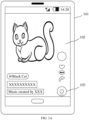
- FIGS. 1A-1C are a plurality of schematic diagrams of application scenarios of a method for generating a video in some embodiments of the present disclosure.
- a user can watch a video through a display interface 102 on a terminal device 101, or click a background music identifier 103 for the video on the display interface 102 to obtain a background music of the video.
- a display interface 104 as illustrated in FIG. 1B is skipped to be displayed, the display interface 104 includes a music detail interface 105, videos 10601-10606 with the same music and a production button 107.
- an upload interface 108 as illustrated in FIG. 1C is skipped to be displayed, and the user can select multiple image material on the upload interface 108.
- an image material 109, an image material 1010, an image material 1011, and an image material 1012 are illustrated in the upload interface 108.
- the background music for the above acquired video is taken as an audio material 1017, and a music point 1018 in the audio material 1017 is determined.
- the audio material 1017 is divided into a music clip A and a music clip B according to the music point 1018.
- the image material 1014 and the image material 1015 are respectively processed according to the durations of the obtained music clip A and the music clip B.
- the corresponding video clips 10141 and 10151 are obtained.
- the video clips 10141 and 10151 are spliced according to the times when the music clip A and the music clip B appear in the audio material 1017, and the audio material 1017 is added as an audio track of the spliced video to obtain the synthesized video 1020.
- the above terminal device 101 transmits image information 1016 including the number of image material (illustrated as 2 in the figure) to a server 1021.
- the server 1021 determines the music point 1018 in the audio material 1017 according to the acquired audio material 1017.
- the audio material 1017 is divided into the music clip A and the music clip B according to the music point 1018.
- the server 1021 transmits the information 1019 including the durations of the music clip A and music clip B to the above terminal device 101.
- the above terminal device 101 processes the image material 1014 and the image material 1015 according to the durations of the music clip A and the music clip B, respectively, so as to obtain corresponding video clip 10141 and video clip 10151.
- the duration of the video clip 10141 is equal to the duration of the music clip A
- the duration of the video clip 10151 is equal to the duration of the music clip B.
- the terminal device 101 splices the video clip 10141 and the video clip 10151 according to the times when the music clip A and the music clip B appear in the audio material 1017, and adds the audio material 1017 as the audio track of the spliced video to obtain the synthesized video 1020.
- the method for generating a video can be executed by the terminal device 101, or by the server 1021, or by various software programs.
- the terminal device 101 can be, for example, various electronic devices with display screens, including but not limited to smart phones, tablet computers, e-book readers, laptop computers, desktop computers, and the like.
- the executive body may also be embodied as the server 1021, a software, etc.. When the executive body is the software, it can be installed in the electronic devices listed above.
- the software can be implemented, for example, as multiple software or software modules for providing distributed services, or as a single software or software module. There is no specific limitation here.
- FIGS. 1A-1G are only schematic. There can be any number of mobile phones and servers according to the implementation requirements.
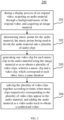
- the method for generating a video comprises the following steps: Step 201, during a display process of an original video, acquiring an audio material through a background music of the original video, and acquiring an image material.
- the executive body (e.g., the server 1021 illustrated in FIG. 1E ) of the method for generating a video can acquire the audio material through the background music of the original video by different ways in the display process of the original video through wired connection or wireless connection.
- the executive body can acquire the background music of the original video as the audio material during the display process of the original video.
- the executive body can acquire the background music of the original video during the display process of the original video, and then clip the background music, and take the clipped music as the audio material. It can be understood that in the case where the original video is a video shot by the user using the music provided by the present disclosure as the background music, the executive body (for example, the server 1021 illustrated in FIG.
- the executive body 1E can obtain the background music from a music library provided by the present disclosure, so that the audio material can be obtained through the obtained background music.
- the executive body separates the audio from the original video to obtain the background music, and then obtains the audio material through the separated background music.
- the executive body can obtain the image material according to the user's video selection operation, and can also use the video or picture taken by the user as the image material.
- the image material may include at least one of the following: a video material and a picture material.
- acquiring the background music of the original video as the audio material comprises: displaying a playing interface for the original video; and acquiring the background music of the original video as the audio material in response to detecting a first user operation on the playing interface.
- the first user operation may be a click operation on the identifier used to indicate the background music in the playing interface of the original video.
- the first user operation may be clicking on the background music identifier 103 for the video on the display interface 102.
- acquiring the image material comprises: displaying a first display interface for the background music in response to detecting the first user operation on the playing interface; displaying the second display interface for the image material in response to detecting a second user operation on the first display interface; and acquiring the image material based on a selection operation for the image material on the second display interface.
- the first display interface may be a display interface with the content of the above background music and a video list made using the above background music.
- the second user operation may be a click operation on the identifier used to indicate the video production in the first display interface.
- the second display interface can be an interface with videos/pictures to be selected.
- the second user operation may be a click operation on the production button 107 in the first display interface (such as FIG. 1B ).
- the user clicks the production button on the first display interface to display the second display interface, and then checks the video or picture displayed on the second display interface.
- the user can click on the identifier of the background music to enter the music display interface, and meanwhile, the background music of the currently playing video can be obtained as the audio material.
- the user can click on the identifier used to indicate the production of the same video so as to enter the interface of image material selection.
- the video or picture to be selected on the above interface is checked to obtain the image material used for making the same video.
- the user clicks the background music identifier 103 for the video in the display interface 102 so as to skip to the first display interface ( FIG. 1B ).
- the second display interface (as illustrated in FIG. 1C ) is skipped to be displayed.
- Displaying the second display interface for the image material in response to detecting the second user operation on the first display interface comprises: displaying an image shooting interface in response to detecting the second user operation on the first display interface; and displaying the second display interface for the image material in response to detecting the third user operation on the second control.
- the image shooting interface comprises a first control and a second control, the first control is used to trigger an image shooting, and the second control is used to trigger an image selection.
- the second display interface can be an image shooting interface with at least two controls.
- the first control can be an image shooting control
- the second control can be an image selection control.
- the third user operation may be a click operation on the second control.
- the user clicks the video production on the above-mentioned first display interface to display the image shooting interface.
- the user can click the first control (which is used to trigger the image shooting) to shoot videos or pictures.
- the user can also click the second control (which is used to trigger the image selection) to display the second display interface and display the image material for the user to select.
- the image material selected by the user can be the image material in the local material library of the user's equipment or the image material on the network.
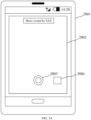
- the user can click the first control 2003 (which is used to trigger the image shooting) to shoot videos or pictures.
- the user can also click the second control 2004 (which is used to trigger the image selection).
- the second display interface 2005 as illustrated in FIG. 2B is skipped to be displayed, the user can check the displayed image material 2006-2009.
- the user can click the production button 2010 to make a video.
- acquiring the image material comprises: displaying a first display interface for the background music in response to detecting the first user operation on the playing interface; displaying an image shooting interface in response to detecting a second user operation on the first display interface; and in response to detecting a fourth user operation on the first control, calling a shooting element to shoot an image so as to obtain the image material.
- the image shooting interface comprises the first control, and the first control is used to trigger an image shooting.
- the fourth user operation can be the trigger operation for the first control.
- acquiring the audio material through the background music of the original video comprises: displaying a playing interface for the original video; displaying a display interface for the background music of the original video in response to detecting a fifth user operation on the playing interface; clipping the background music in response to detecting a sixth user operation on the display interface; and determining a material clipped from the background music as the audio material.
- the display interface comprises the third control and the fourth control, the third control is used to trigger a music manual clipping, and the fourth control is used to trigger a music automatic clipping.
- the fifth user operation may be a click operation on the identifier used to indicate the background music in the playing interface of the original video.
- the display interface for the background music can be a display interface with the content of the background music, the third control, and the fourth control.
- the sixth user operation may be an operation for triggering the music clipping.
- the seventh user operation can be a user operation for the third control or a user operation for the fourth control.
- clipping the background music in response to detecting the sixth user operation on the display interface comprises: in the case where the seventh user operation is a user operation for the third control, displaying an operation interface for an music clipping; determining a clipping interval selected by a manual clipping operation from the background music in response to detecting the manual clipping operation for the background music on the operation interface for the music clipping; and clipping the background music according to the clipping interval.
- the third control is used to trigger the music manual clipping.
- the seventh user operation may be a trigger operation for triggering the third control.
- the above-mentioned operation interface for the music clipping includes, but is not limited to, at least one of the following: a music timeline, music points, and a music duration.
- the manual clipping operation can be the selection and clipping for the music points and the music duration on the music timeline.
- the user clicks on the music manual clipping to display the operation interface for the music clipping.
- the user can manually slide left/right to determine the clipping interval. Then the background music is clipped according to the clipping interval.
- clipping the background music comprises: in the case where a seventh user operation is a user operation for the fourth control, analyzing a clipping interval in the background music which is applicable for being used as the audio material according to an analysis algorithm for the audio material; and clipping the background music according to the clipping interval.
- Step 202 determining music points for the audio material, the music points being used to divide the audio material into a plurality of audio clips.
- the executive body may first determine a candidate music point for the audio material.
- the candidate music point may be a point in the audio material where the preset beat change condition is satisfied.
- the executive body can select a target number of music points from the obtained candidate music points.
- the target number can be determined according to the number of acquired image material, or the number of strong beats in the audio materials, or the number set by the user. As an example, in the case where 10 image material are acquired, 9 music points can be determined.
- the strong beat is usually a beat with strong musical strength.
- the candidate music point is a position in the audio material where the preset musicality is changed.
- the position where the musicality is changed may include the position where the beat is changed and the position where the melody is changed.
- the candidate music point may be determined in the mode below: the executive body may analyze the audio material, and determine the beat point and a musical note starting point therein.
- the beat point is the position where the beat is changed, and the musical note starting point is the position where the melody is changed.
- Step 203 generating one video clip for each music clip in the audio material using the image material so as to obtain a plurality of video clips, a music clip and a video clip, which correspond to each other, having a same duration.
- the executive body can generate, for the music clip, one video clip with the same duration as the music clip based on the image material, so that the plurality of video clips can be obtained.
- the durations of the three music clips are 1 second, 2 seconds, and 3 seconds, respectively.
- the durations of the video clips corresponding to the above music clips can also be 1 second, 2 seconds, and 3 seconds respectively.
- the executive body can generate the plurality of video clips according to one image material. For example, assuming that the executive body obtains a 10-second image material and an 8-second audio material, and the executive body divides the audio material into three audio clips with the duration of 2 seconds, 2 seconds, and 4 seconds respectively, then the executive body can clip three different video clips with the duration of 2 seconds, 2 seconds, and 4 seconds respectively from the image material. As another example, the executive body can also generate one video clip according to one image material.
- one image material is used to generate one video clip for one music clip
- a video clip with the duration of the music clip is clipped from the original image material
- the duration of the image material is smaller than the duration of the music clip
- the original image material is subjected to variable speed processing to lengthen the duration, and then the variable speed image material is used as the video clip, so that the duration of the video clip is equal to the duration of the music clip.
- Step 204 splicing the plurality of video clips together according to the times when music clips respectively corresponding to the plurality of video clips appear in the audio material, and adding the audio material as a video audio track to obtain a synthesized video.
- the executive body of the method for generating a video can splice the video clips corresponding to the above-mentioned music clips together in turn according to the order in which the music clips appear in the audio material, and add the audio material to the audio track of the spliced video so as to obtain the synthesized video.
- the above audio material can be divided into 3 clips in order according to the music points.
- a clip A can be from 0 to 2 seconds
- a clip B can be from 2 to 5 seconds
- a clip C can be from 5 to 10 seconds.
- the corresponding video clips are a clip a, a clip b and a clip c respectively.
- the spliced video can be represented as the abc.
- the above audio material is added to the audio track of the spliced video abc so as to obtain the synthesized video.
- the audio material is acquired through the background music of the original video during the display process of the original video, and the image material is acquired; the music points of the audio material can be determined based on the acquired audio material, and the music points are used to divide the audio material into the plurality of audio clips.
- the video clip for each music clip in the audio material is generated using the image material to obtain the plurality of video clips, and the music clip and the video clip, which correspond to each other, have the same duration.
- the video clips are spliced together according to the times when the music clips corresponding to the video clips appear in the audio material, and the audio material is added as a video track to obtain a synthesized video.
- Step 302 displaying a display interface for the background music of the original video in response to detecting the fifth user operation on the playing interface; the display interface comprising the third control and the fourth control, the third control being used to trigger a music manual clipping, and the fourth control being used to trigger a music automatic clipping.
- the executive body may display the display interface of the background music for the original video.
- the executive body detects that the user clicks the identifier for the background music on the playing interface, and displays the display interface for the background music of the original video.
- Step 303 clipping the background music in response to detecting a sixth user operation on the display interface.
- the executive body can detect the sixth user operation on the display interface and clip the background music in various ways. For example, the executive body can clip the background music according to the manual clipping operation. For example, the executive body can clip the background music according to the automatic clipping.
- clipping the background music in response to detecting the sixth user operation on the display interface comprises: in the case where the seventh user operation is a user operation for the third control, displaying an operation interface for the music clipping; determining a clipping interval selected by a manual clipping operation from the background music in response to detecting the manual clipping operation for the background music on the operation interface for the music clipping; and clipping the background music according to the clipping interval.
- the third control is used to trigger the music manual clipping.
- clipping the background music comprises: in the case where the seventh user operation is a user operation for the fourth control, analyzing a clipping interval in the background music which is applicable for being used as the audio material according to an analysis algorithm for the audio material; and clipping the background music according to the clipping interval.
- Step 304 determining a material clipped from the background music as the audio material.
- the executive body may determine the material clipped from the background music as the audio material for making a video.
- Step 305 determining music points of the above audio material, the music points being used to divide the audio material into a plurality of audio clips.
- Step 306 generating one video clip for each music clip in the audio material using the image material so as to obtain a plurality of video clips, a music clip and a video clip, which correspond to each other, having a same duration.
- Step 307 splicing the plurality of video clips together according to times when music clips respectively corresponding to the plurality of video clips appear in the audio material, and adding the audio material as a video audio track to obtain a synthesized video.
- steps 305-307 and the resulting technical effects can refer to steps 203-204 in those embodiments corresponding to FIG. 2 , which may not be repeated here.
- the present disclosure provides some embodiments of an apparatus for generating a video. These apparatus embodiments correspond to those method embodiments described above in FIG. 2 , and the apparatus can be specifically applied to various electronic devices.
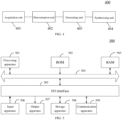
- the apparatus 400 for generating a video in some embodiments includes: an acquisition unit 401, a determination unit 402, a generating unit 403, and a synthesizing unit 404.
- the acquisition unit 401 is configured to, during a display process of an original video, acquire an audio material through a background music of the original video, and acquire an image material.
- the determination unit 402 is configured to determine music points for the audio material, and the music points are used to divide the audio material into a plurality of audio clips.
- the generating unit 403 is configured to generate one video clip for each music clip in the audio material using the image material so as to obtain a plurality of video clips, and a music clip and a video clip, which correspond to each other, have a same duration.
- the synthesizing unit 404 is configured to splice the plurality of video clips together according to times when music clips respectively corresponding to the plurality of video clips appear in the audio material, and add the audio material as a video audio track to obtain a synthesized video.
- the acquisition unit 401 of the apparatus 400 for generating a video includes: a display sub-unit and an acquisition sub-unit.
- the display sub-unit is configured to display a playing interface for the original video.
- the acquisition sub-unit is configured to acquire the background music of the original video as the audio material in response to detecting a first user operation on the playing interface.
- the acquisition unit 401 of the apparatus 400 for generating a video further includes: a first module, a second module, a third module.
- the first module is configured to display a first display interface for the above background music in response to detecting the first user operation on the playing interface.
- the second module is configured to display a second display interface for the image material in response to detecting a second user operation on the first display interface.
- the third module is configured to acquire the image material based on a selection operation for the image material on the second display interface.
- the second module includes: a first sub-module and a second sub-module.
- the first sub-module is configured to display an image shooting interface in response to detecting a second user operation for the first display interface.
- the image shooting interface comprises the first control and the second control, the first control is used for triggering an image shooting, and the second control is used for triggering an image selection.
- the second sub-module is configured to display the second display interface for the image material in response to detecting a third user operation on the second control.
- the apparatus 400 for generating a video further comprises: an adjusting unit and a display unit.
- the adjusting unit is configured to adjust the synthesized video in response to detecting the adjusting operation by the user on the synthesized video.
- the display unit is configured to display the adjusted synthesized video.
- Some embodiments of the present disclosure disclose an apparatus for generating a video that obtains a synthesized video through the acquired image material and the audio material. By adjusting the synthesized video, various synthesized videos can be obtained, thus enriching the diversity of the generated videos.
- FIG. 5 illustrates a structural schematic diagram of an electronic device (e.g., the server in FIG. 1 ) 500 suitable for implementing some embodiments of the present disclosure.
- the terminal device may include, but not limited to, a mobile terminal, such as a mobile phone, a laptop, a digital broadcast receiver, a Personal Digital Assistant (PDA), a Portable Android Device (PAD), a Portable Multimedia Player (PMP), a vehicle-mounted terminal (e.g., a vehicle-mounted navigation terminal), etc., and a stationary terminal, such as a digital TV, a desktop computer, etc.
- PDA Personal Digital Assistant
- PDA Portable Android Device
- PMP Portable Multimedia Player
- vehicle-mounted terminal e.g., a vehicle-mounted navigation terminal
- stationary terminal such as a digital TV, a desktop computer, etc.
- the terminal device illustrated in FIG. 5 is only an example, and should not impose any limitation on the function and use scope of the embodiments of the present disclosure.
- the electronic device 500 may include a processing apparatus (e.g., a central processing unit, a graphics processor, etc.) 501, which may executes various appropriate actions and processing according to a program stored in a Read-Only Memory (ROM) 502 or a program loaded from a storage apparatus 508 into a Random Access Memory (RAM) 503.
- the RAM 503 further stores various programs and data required for operation of the electronic device 500.
- the processing apparatus 501, the ROM 502, and the RAM 503 are connected with each other through a bus 504.
- An input/output (I/O) interface 505 is also coupled to a bus 504.
- an input apparatus 506 including, for example, a touch screen, a touch pad, a keyboard, a mouse, a camera, a microphone, an accelerometer, a gyroscope, etc.
- an output apparatus 507 including, for example, a Liquid Crystal Display (LCD), a speaker, a vibrator, etc.
- a storage apparatus 508 including, for example, a magnetic tape, a hard disk, etc.
- the communication apparatus 509 may allow the electronic device 500 to perform wireless or wired communication with other device so as to exchange data.
- FIG. 5 illustrates the electronic device 500 having various apparatuses, it should be understood that, it is not required to implement or have all the apparatuses illustrated, and the electronic device 500 may alternatively implement or have more or fewer apparatuses.
- Each block illustrated in FIG. 5 may represent one apparatus, or may also represent a plurality of apparatuses as required.
- the flows as described above with reference to the flow charts may be implemented as computer software programs.
- some embodiments of the present disclosure include a computer program product, comprising a computer program carried on a computer-readable medium, the computer program containing program codes for executing the method illustrated in the flow chart.
- the computer program may be downloaded and installed from the network via the communication apparatus 509, or installed from the storage apparatus 508, or installed from the ROM 502.
- the computer program executes the above-described functions limited in the methods according to some embodiments of the present disclosure.
- the above-described computer-readable medium may be a computer-readable signal medium or a computer-readable storage medium, or any combination of the above two.
- the computer-readable storage medium may be, for example, but not limited to, an electronic, magnetic, optical, electromagnetic, infrared, or semiconductor system, apparatus, or device, or any suitable combination of the above.
- a computer-readable storage medium may include, but not limited to: an electrical connection having one or more conductors, a portable computer diskette, a hard disk, a Random Access Memory (RAM), a Read-Only Memory (ROM); an Erasable Programmable Read-Only Memory (EPROM or Flash memory); an optical fiber, a Portable Compact Disc Read-Only Memory (CD-ROM); an optical storage apparatus; a magnetic storage apparatus; or any suitable combination of the above.
- a computer-readable storage medium may be any tangible medium that contains or stores a program that may be used by or in conjunction with an instruction executing system, an apparatus, or a device.
- the computer-readable signal medium may include a data signal propagated in baseband or as a portion of a carrier wave, which carries a computer-readable program code therein. Such propagated data signals may take a variety of forms, including but not limited to, electromagnetic signals, optical signals, or any suitable combination of the above.
- the computer-readable signal medium may also be any computer-readable medium other than a computer-readable storage medium; and the computer-readable signal medium may transmit, propagate, or transport programs for use by or in combination with the instruction executing system, the apparatus, or the device.
- the program code embodied on the computer-readable medium may be transmitted by using any suitable medium, including, but not limited to, an electrical wire, an optical cable, a Radio Frequency (RF), etc., or any suitable combination of the above.
- RF Radio Frequency
- the client and the server may communicate with any network protocol currently known or to be researched and developed in the future such as HyperText Transfer Protocol (HTTP), and may communicate (via a communication network) and interconnect with digital data in any form or medium.
- HTTP HyperText Transfer Protocol
- Examples of communication networks include a Local Area Network ("LAN”), a Wide Area Network (“WAN”), the Internet, and an end-to-end network (e.g., an ad hoc end-to-end network), as well as any network currently known or to be researched and developed in the future.
- the above-described computer-readable medium may be included in the above-described electronic device; or may also exist alone without being assembled into the electronic device.
- the above-described computer-readable medium carries one or more programs, and when the above-described one or more programs are executed by the electronic device, the electronic device, during the display process of an original video, acquires the audio material through background music of the original video, and acquires the image material; determines music points for the audio material; generates one video clip for each music clip in the audio material using the image material so as to obtain a plurality of video clips; and splices the plurality of video clips together according to times when music clips respectively corresponding to the plurality of video clips appear in the audio material, and adding the audio material as a video audio track to obtain a synthesized video.
- the music points are used to divide the audio material into a plurality of audio clips, and a music clip and a video clip, which correspond to each other, have a same duration.
- the computer program code for executing the operations according to some embodiments of the present disclosure may be written in one or more programming languages or a combination thereof; the above-described programming languages include object-oriented programming languages, such as Java, Smalltalk, C++, and also include conventional procedural programming languages such as "C" language or similar programming languages.
- the program code may execute entirely on the user's computer, partly on the user's computer, as a stand-alone software package, partly on the user's computer and partly on a remote computer or entirely on the remote computer or server.
- the remote computer may be connected to the user's computer through any type of network, including a Local Area Network (LAN) or a Wide Area Network (WAN), or the connection may be made to an external computer (for example, through the Internet using an Internet Service Provider).
- LAN Local Area Network
- WAN Wide Area Network
- each block in the flow chart or block diagrams may represent a module, clip, or portion of instructions, which comprises one or more executable instructions for implementing the specified logical function(s).
- the functions noted in the block may occur out of the order noted in the accompanying drawings. For example, two blocks illustrated in succession may, in fact, be executed substantially concurrently, or the blocks may sometimes be executed in the reverse order, depending upon the functionality involved.
- the units as described in some embodiments of the present disclosure may be implemented by means of software, or may also be implemented by means of hardware.
- the described unit may also be provided in a processor, which, for example, may be described as: a processor, including an acquiring unit, an analyzing unit and a display unit.
- a processor including an acquiring unit, an analyzing unit and a display unit.
- the names of these units do not constitute a limitation on the units per se in some cases, for example, the acquiring unit may also be described as "a unit for acquiring an audio material".
- the method for generating a video includes: during a display process of an original video, acquiring audio material through background music of the original video, and acquiring image material; determining music points for the audio material; generating one video clip for each music clip in the audio material using the image material so as to obtain a plurality of video clips; and splicing the plurality of video clips together according to times when music clips respectively corresponding to the plurality of video clips appear in the audio material, and adding the audio material as a video audio track to obtain a synthesized video.
- the music points are used to divide the audio material into a plurality of audio clips, and a music clip and a video clip, which correspond to each other, have a same duration.
- acquiring the audio material through the background music of the original video comprises: displaying a playing interface for the original video; and acquiring the background music of the original video as the audio material in response to detecting a first user operation on the playing interface.
- acquiring the image material comprises: displaying a first display interface for the background music in response to detecting the first user operation on the playing interface; displaying a second display interface for the image material in response to detecting a second user operation on the first display interface; and acquiring the image material based on a selection operation for the image material on the second display interface.
- displaying the second display interface for the image material in response to detecting the second user operation on the first display interface comprises: displaying an image shooting interface in response to detecting the second user operation on the first display interface; and displaying the second display interface for the image material in response to detecting a third user operation on the second control.
- the image shooting interface comprises the first control and the second control, the first control is used to trigger an image shooting, and the second control is used to trigger an image selection.
- acquiring the image material comprises: displaying a first display interface for the background music in response to detecting the first user operation on the playing interface; displaying an image shooting interface in response to detecting a second user operation on the first display interface; and in response to detecting a fourth user operation on the first control, calling a shooting element to shoot an image so as to obtain the image material.
- the image shooting interface comprises the first control, and the first control is used to trigger an image shooting
- acquiring the audio material through the background music of the original video comprises: displaying a playing interface for the original video; displaying a display interface for the background music of the original video in response to detecting a fifth user operation on the playing interface; clipping the background music in response to detecting a sixth user operation on the display interface; and determining material clipped from the background music as the audio material.
- the display interface comprises the third control and the fourth control, the third control is used to trigger a music manual clipping, and the fourth control is used to trigger a music automatic clipping.
- clipping the background music in response to detecting the sixth user operation on the display interface comprises: in the case where a seventh user operation is a user operation for the third control, displaying an operation interface for music clipping; determining a clipping interval selected by a manual clipping operation from the background music in response to detecting the manual clipping operation for the background music on an operation interface for music clipping; and clipping the background music according to the clipping interval.
- the third control is used to trigger music manual clipping.
- clipping the background music comprises: in the case where the seventh user operation is a user operation for the fourth control, analyzing a clipping interval in the background music which is applicable for being used as the audio material according to an analysis algorithm for the audio material; and clipping the background music according to the clipping interval.
- the apparatus includes an acquisition unit, a determination unit, a generating unit, and a synthesizing unit.
- the acquisition unit is configured to, during a display process of an original video, acquire an audio material through a background music of the original video, and acquire an image material.
- the determination unit is configured to determine music points for the audio material, and the music points are used to divide the audio material into a plurality of audio clips.
- the generating unit is configured to generate one video clip for each music clip in the audio material using the image material so as to obtain a plurality of video clips, and a music clip and a video clip, which correspond to each other, have a same duration.
- the synthesizing unit is configured to splice the plurality of video clips together according to times at which music clips respectively corresponding to the plurality of video clips appear in the audio material, and add the audio material as a video audio track to obtain a synthesized video.
- the apparatus further includes a display sub-unit and an acquisition sub-unit.
- the display sub-unit is configured to display a playing interface for the original video.
- the acquisition sub-unit is configured to acquire the background music of the original video as the audio material in response to detecting a first user operation on the playing interface.
- an electronic device which includes one or more processors and a storage apparatus having one or more programs stored thereon.
- the one or more programs cause the one or more processors to execute the method according to any one of the above-described embodiments.
- a computer-readable medium having a computer program stored thereon.
- the computer program executes the method according to any one of the above-described embodiments.
- a computer program comprising program code.
- the program code executes the method according to any one of the above-described embodiments.
- the apparatus further includes a display sub-unit and an acquisition sub-unit.
- the display sub-unit is configured to display a playing interface for the original video.
- the acquisition sub-unit is configured to acquire the background music of the original video as the audio material in response to detecting a first user operation on the playing interface.
- an electronic device which includes one or more processors and a storage apparatus having one or more programs stored thereon.
- the one or more programs cause the one or more processors to execute the method according to any one of the above-described embodiments.
- a computer-readable medium having a computer program stored thereon.
- the computer program executes the method according to any one of the above-described embodiments.
- a computer program comprising program code.
- the program code executes the method according to any one of the above-described embodiments.
Landscapes
- Engineering & Computer Science (AREA)
- Multimedia (AREA)
- Signal Processing (AREA)
- Theoretical Computer Science (AREA)
- Databases & Information Systems (AREA)
- Library & Information Science (AREA)
- Physics & Mathematics (AREA)
- General Engineering & Computer Science (AREA)
- Computer Security & Cryptography (AREA)
- Data Mining & Analysis (AREA)
- General Physics & Mathematics (AREA)
- Human Computer Interaction (AREA)
- Quality & Reliability (AREA)
- Audiology, Speech & Language Pathology (AREA)
- Health & Medical Sciences (AREA)
- Acoustics & Sound (AREA)
- Computational Linguistics (AREA)
- Computer Graphics (AREA)
- Television Signal Processing For Recording (AREA)
- Management Or Editing Of Information On Record Carriers (AREA)
- Two-Way Televisions, Distribution Of Moving Picture Or The Like (AREA)
- User Interface Of Digital Computer (AREA)
- Studio Circuits (AREA)
Claims (11)
- Verfahren zum Erzeugen eines Videos, umfassend:während eines Anzeigeprozesses eines Originalvideos, Erfassen (S201) einer Hintergrundmusik aus dem Originalvideo als Audiomaterial in Reaktion auf das Erkennen einer Auswahl einer Kennung, die die Hintergrundmusik angibt, während des Anzeigeprozesses des Originalvideos;Erfassen eines Bildmaterials auf Basis der Auswahl eines von zwei Steuerelementen, wobei die zwei Steuerelemente so konfiguriert sind, dass sie Bildaufnahme bzw. Bildauswahl auslösen;Bestimmen (S202; S305) von Musikpunkten für das Audiomaterial, wobei die Musikpunkte verwendet werden, um das Audiomaterial in eine Vielzahl von Musikclips aufzuteilen;Erzeugen (S203; S306) eines Videoclips für jeden Musikclip in dem Audiomaterial unter Verwendung des Bildmaterials, um eine Vielzahl von Videoclips zu erhalten, wobei ein Musikclip und ein Videoclip, die einander entsprechen, dieselbe Dauer aufweisen; undZusammenfügen (S204; S307) der Vielzahl von Videoclips miteinander gemäß Zeitpunkten, zu denen Musikclips, die jeweils der Vielzahl von Videoclips entsprechen, in dem Audiomaterial erscheinen, und Hinzufügen des Audiomaterials als Video-Audiospur, um ein synthetisiertes Video zu erhalten;wobei das Bestimmen der Musikpunkte für das Audiomaterial und das Aufteilen des Audiomaterials in die Vielzahl von Musikclips unter Verwendung der Musikpunkte umfasst:Analysieren des Audiomaterials auf Basis eines Beat-Analysealgorithmus, um einen Beat-Punkt im Audiomaterial und einen Zeitstempel, an dem sich der Beat-Punkt befindet, zu erhalten;Durchführen einer Kurzzeit-Spektralanalyse an dem Audiomaterial, um einen Musiknoten-Startpunkt im Audiomaterial und einen Zeitstempel, an dem sich der Musiknoten-Startpunkt befindet, zu erhalten;Durchführen einer Kombinations- und Deduplizierungsoperation an dem Beat-Punkt und dem Musiknoten-Startpunkt, um Kandidaten-Musikpunkte zu erhalten; undAuswählen einer Zielanzahl von Musikpunkten aus den erhaltenen Kandidaten-Musikpunkten als Musikpunkte für das Audiomaterial.
- Verfahren nach Anspruch 1, wobei das Erfassen der Hintergrundmusik aus dem Originalvideo als Audiomaterial während des Anzeigeprozesses des Originalvideos umfasst:Anzeigen einer Wiedergabeschnittstelle für das Originalvideo; undErfassen der Hintergrundmusik aus dem Originalvideo als Audiomaterial in Reaktion auf das Erkennen einer ersten Benutzeroperation in der Wiedergabeschnittstelle.
- Verfahren nach Anspruch 2, wobei das Erfassen des Bildmaterials umfasst:Anzeigen einer ersten Anzeigeschnittstelle für die Hintergrundmusik in Reaktion auf das Erkennen der ersten Benutzeroperation in der Wiedergabeschnittstelle;Anzeigen einer zweiten Anzeigeschnittstelle für das Bildmaterial in Reaktion auf das Erkennen einer zweiten Benutzeroperation in der ersten Anzeigeschnittstelle; undErfassen des Bildmaterials auf Basis einer Auswahloperation für das Bildmaterial in der zweiten Anzeigeschnittstelle.
- Verfahren nach Anspruch 3, wobei das Anzeigen der zweiten Anzeigeschnittstelle für das Bildmaterial in Reaktion auf das Erkennen der zweiten Benutzeroperation in der ersten Anzeigeschnittstelle umfasst:Anzeigen einer Bildaufnahmeschnittstelle in Reaktion auf das Erkennen der zweiten Benutzeroperation in der ersten Anzeigeschnittstelle, wobei die Bildaufnahmeschnittstelle ein erstes Steuerelement und ein zweites Steuerelement umfasst, das erste Steuerelement verwendet wird, um eine Bildaufnahme auszulösen, und das zweite Steuerelement verwendet wird, um eine Bildauswahl auszulösen; undAnzeigen der zweiten Anzeigeschnittstelle für das Bildmaterial in Reaktion auf das Erkennen einer dritten Benutzeroperation am zweiten Steuerelement.
- Verfahren nach Anspruch 2, wobei das Erfassen des Bildmaterials umfasst:Anzeigen einer ersten Anzeigeschnittstelle für die Hintergrundmusik in Reaktion auf das Erkennen der ersten Benutzeroperation in der Wiedergabeschnittstelle;Anzeigen einer Bildaufnahmeschnittstelle in Reaktion auf das Erkennen einer zweiten Benutzeroperation in der ersten Anzeigeschnittstelle, wobei die Bildaufnahmeschnittstelle ein erstes Steuerelement umfasst und das erste Steuerelement verwendet wird, um eine Bildaufnahme auszulösen; undin Reaktion auf das Erkennen einer vierten Benutzeroperation am ersten Steuerelement, Aufrufen eines Aufnahmeelements, um ein Bild aufzunehmen, um das Bildmaterial zu erhalten.
- Verfahren nach einem der Ansprüche 1-5, wobei das Erfassen der Hintergrundmusik aus dem Originalvideo als Audiomaterial während des Anzeigeprozesses des Originalvideos umfasst:Anzeigen (S301) einer Wiedergabeschnittstelle für das Originalvideo;Anzeigen (S302) einer Anzeigeschnittstelle für die Hintergrundmusik des Originalvideos in Reaktion auf das Erkennen einer fünften Benutzeroperation in der Wiedergabeschnittstelle, wobei die Anzeigeschnittstelle ein drittes Steuerelement und ein viertes Steuerelement umfasst, das dritte Steuerelement verwendet wird, um ein manuelles Ausschneiden von Musik auszulösen, und das vierte Steuerelement verwendet wird, um ein automatisches Ausschneiden von Musik auszulösen;Ausschneiden (S303) der Hintergrundmusik in Reaktion auf das Erkennen einer sechsten Benutzeroperation in der Anzeigeschnittstelle; undBestimmen (S304) eines aus der Hintergrundmusik ausgeschnittenen Materials als Audiomaterial.
- Verfahren nach Anspruch 6, wobei das Ausschneiden der Hintergrundmusik in Reaktion auf das Erkennen der sechsten Benutzeroperation in der Anzeigeschnittstelle umfasst:in einem Fall, in dem eine siebte Benutzeroperation eine Benutzeroperation für das dritte Steuerelement ist, Anzeigen einer Bedienschnittstelle für das Ausschneiden einer Musik, wobei das dritte Steuerelement verwendet wird, um das manuelle Ausschneiden von Musik auszulösen;Bestimmen eines durch eine manuelle Ausschneideoperation aus der Hintergrundmusik ausgewählten Ausschneideintervalls in Reaktion auf das Erkennen der manuellen Ausschneideoperation für die Hintergrundmusik in der Bedienschnittstelle für das Ausschneiden von Musik; undAusschneiden der Hintergrundmusik gemäß dem Ausschneideintervall.
- Verfahren nach Anspruch 6, wobei das Ausschneiden der Hintergrundmusik umfasst: in einem Fall, in dem eine siebte Benutzeroperation eine Benutzeroperation für das vierte Steuerelement ist, Analysieren eines Ausschneideintervalls in der Hintergrundmusik, die geeignet ist, um als Audiomaterial verwendet zu werden, gemäß einem Analysealgorithmus für das Audiomaterial; und
Ausschneiden der Hintergrundmusik gemäß dem Ausschneideintervall. - Elektronische Vorrichtung, umfassend:einen oder mehrere Prozessoren;eine Speichereinrichtung, auf der ein oder mehrere Programme gespeichert sind,wobei in einem Fall, in dem das eine oder die mehreren Programme von dem einen oder den mehreren Prozessoren ausgeführt werden, der eine oder die mehreren Prozessoren das Verfahren nach einem der Ansprüche 1-8 implementieren.
- Computerlesbares Medium, das ein Computerprogramm darauf gespeichert aufweist, wobei in einem Fall, in dem das Computerprogramm von einem Prozessor ausgeführt wird, das Verfahren nach einem der Ansprüche 1-8 implementiert wird.
- Computerprogramm, das einen Programmcode umfasst, wobei in einem Fall, in dem das Computerprogramm von einem Computer ausgeführt wird, das Computerprogramm das Verfahren nach einem der Ansprüche 1-8 ausführt.
Applications Claiming Priority (2)
| Application Number | Priority Date | Filing Date | Title |
|---|---|---|---|
| CN201911118901.XA CN112822563A (zh) | 2019-11-15 | 2019-11-15 | 生成视频的方法、装置、电子设备和计算机可读介质 |
| PCT/CN2020/127886 WO2021093737A1 (zh) | 2019-11-15 | 2020-11-10 | 生成视频的方法、装置、电子设备和计算机可读介质 |
Publications (3)
| Publication Number | Publication Date |
|---|---|
| EP4044616A1 EP4044616A1 (de) | 2022-08-17 |
| EP4044616A4 EP4044616A4 (de) | 2022-12-07 |
| EP4044616B1 true EP4044616B1 (de) | 2025-03-12 |
Family
ID=75851646
Family Applications (1)
| Application Number | Title | Priority Date | Filing Date |
|---|---|---|---|
| EP20888628.3A Active EP4044616B1 (de) | 2019-11-15 | 2020-11-10 | Verfahren und vorrichtung zur erzeugung von video, elektronische vorrichtung und computerlesbares medium |
Country Status (7)
| Country | Link |
|---|---|
| US (1) | US11818424B2 (de) |
| EP (1) | EP4044616B1 (de) |
| JP (1) | JP7503629B2 (de) |
| KR (1) | KR102792043B1 (de) |
| CN (1) | CN112822563A (de) |
| BR (1) | BR112022009413A2 (de) |
| WO (1) | WO2021093737A1 (de) |
Families Citing this family (20)
| Publication number | Priority date | Publication date | Assignee | Title |
|---|---|---|---|---|
| CN113038014A (zh) * | 2021-03-17 | 2021-06-25 | 北京字跳网络技术有限公司 | 应用程序的视频处理方法和电子设备 |
| CN115344180B (zh) * | 2021-05-13 | 2025-10-17 | 腾讯科技(深圳)有限公司 | 多媒体数据处理方法、装置、设备及计算机可读存储介质 |
| CN113364999B (zh) * | 2021-05-31 | 2022-12-27 | 北京达佳互联信息技术有限公司 | 视频生成方法、装置、电子设备及存储介质 |
| CN113365133B (zh) * | 2021-06-02 | 2022-10-18 | 北京字跳网络技术有限公司 | 视频分享方法、装置、设备及介质 |
| CN113365134B (zh) * | 2021-06-02 | 2022-11-01 | 北京字跳网络技术有限公司 | 音频分享方法、装置、设备及介质 |
| CN115442639B (zh) * | 2021-06-03 | 2024-01-16 | 北京字跳网络技术有限公司 | 一种特效配置文件的生成方法、装置、设备及介质 |
| CN115766973A (zh) * | 2021-09-02 | 2023-03-07 | 北京字跳网络技术有限公司 | 一种视频拼接方法、装置、设备及介质 |
| CN113542626B (zh) * | 2021-09-17 | 2022-01-18 | 腾讯科技(深圳)有限公司 | 视频配乐方法、装置、计算机设备和存储介质 |
| CN114286164B (zh) * | 2021-12-28 | 2024-02-09 | 北京思明启创科技有限公司 | 一种视频合成的方法、装置、电子设备及存储介质 |
| CN114363698A (zh) * | 2022-01-14 | 2022-04-15 | 北京华亿创新信息技术股份有限公司 | 体育赛事入场仪式音画生成方法、装置、设备和存储介质 |
| CN115529378B (zh) | 2022-02-28 | 2025-06-13 | 荣耀终端股份有限公司 | 一种视频处理方法及相关装置 |
| CN118055290A (zh) * | 2022-05-30 | 2024-05-17 | 荣耀终端有限公司 | 多轨道视频编辑方法、图形用户界面及电子设备 |
| CN115278306B (zh) * | 2022-06-20 | 2024-05-31 | 阿里巴巴(中国)有限公司 | 视频剪辑方法及装置 |
| CN114979495B (zh) * | 2022-06-28 | 2024-04-12 | 北京字跳网络技术有限公司 | 用于内容拍摄的方法、装置、设备和存储介质 |
| CN116132709B (zh) * | 2023-01-17 | 2024-12-20 | 北京达佳互联信息技术有限公司 | 视频编辑方法、视频交互方法、装置、电子设备及介质 |
| CN116405723B (zh) * | 2023-03-28 | 2023-12-22 | 杭州猿马信息科技有限公司 | 视频制作系统、方法、电子设备及可读存储介质 |
| CN116506654A (zh) * | 2023-04-26 | 2023-07-28 | 北京字跳网络技术有限公司 | 媒体内容发布方法、装置、设备及存储介质 |
| CN116761027A (zh) * | 2023-06-15 | 2023-09-15 | 北京字跳网络技术有限公司 | 视频处理方法、装置、设备、介质及程序产品 |
| CN117376634B (zh) * | 2023-12-08 | 2024-03-08 | 湖南快乐阳光互动娱乐传媒有限公司 | 一种短视频配乐方法、装置、电子设备和存储介质 |
| WO2025263828A1 (ko) * | 2024-06-21 | 2025-12-26 | 삼성전자주식회사 | 주행 상황에 기반하여 가공된 콘텐트를 제공하는 전자 장치, 방법, 및 비-일시적 컴퓨터 판독 가능 기록 매체 |
Family Cites Families (23)
| Publication number | Priority date | Publication date | Assignee | Title |
|---|---|---|---|---|
| US7716572B2 (en) * | 2006-07-14 | 2010-05-11 | Muvee Technologies Pte Ltd. | Creating a new music video by intercutting user-supplied visual data with a pre-existing music video |
| WO2008024486A2 (en) * | 2006-08-24 | 2008-02-28 | Fliptrack, Inc. | Beat and text based editing and composing systems and methods |
| US9313359B1 (en) * | 2011-04-26 | 2016-04-12 | Gracenote, Inc. | Media content identification on mobile devices |
| WO2010068175A2 (en) * | 2008-12-10 | 2010-06-17 | Muvee Technologies Pte Ltd | Creating a new video production by intercutting between multiple video clips |
| US20130163963A1 (en) * | 2011-12-21 | 2013-06-27 | Cory Crosland | System and method for generating music videos from synchronized user-video recorded content |
| US9207844B2 (en) * | 2014-01-31 | 2015-12-08 | EyeGroove, Inc. | Methods and devices for touch-based media creation |
| US10388321B2 (en) * | 2015-08-26 | 2019-08-20 | Twitter, Inc. | Looping audio-visual file generation based on audio and video analysis |
| US20180295427A1 (en) * | 2017-04-07 | 2018-10-11 | David Leiberman | Systems and methods for creating composite videos |
| CN107393569B (zh) * | 2017-08-16 | 2019-10-29 | 成都品果科技有限公司 | 音视频剪辑方法及装置 |
| CN110392281B (zh) * | 2018-04-20 | 2022-03-18 | 腾讯科技(深圳)有限公司 | 视频合成方法、装置、计算机设备及存储介质 |
| WO2020014223A1 (en) * | 2018-07-09 | 2020-01-16 | Tree Goat Media, LLC | Systems and methods for transforming digital audio content into visual topic-based segments |
| CN108900768A (zh) * | 2018-07-12 | 2018-11-27 | 北京微播视界科技有限公司 | 视频拍摄方法、装置、终端、服务器和存储介质 |
| CN108600825B (zh) * | 2018-07-12 | 2019-10-25 | 北京微播视界科技有限公司 | 选择背景音乐拍摄视频的方法、装置、终端设备和介质 |
| CN108965706B (zh) | 2018-07-19 | 2020-07-07 | 北京微播视界科技有限公司 | 视频拍摄方法、装置、终端设备和存储介质 |
| CN108616696B (zh) | 2018-07-19 | 2020-04-14 | 北京微播视界科技有限公司 | 一种视频拍摄方法、装置、终端设备及存储介质 |
| CN109257545B (zh) * | 2018-08-27 | 2021-04-13 | 咪咕文化科技有限公司 | 一种多源视频剪辑方法、装置及存储介质 |
| CN109451245A (zh) * | 2018-12-27 | 2019-03-08 | 北京微播视界科技有限公司 | 一种视频拍摄方法、装置、设备和存储介质 |
| CN109922268B (zh) * | 2019-04-03 | 2021-08-10 | 睿魔智能科技(深圳)有限公司 | 视频的拍摄方法、装置、设备及存储介质 |
| CN110278388B (zh) * | 2019-06-19 | 2022-02-22 | 北京字节跳动网络技术有限公司 | 展示视频的生成方法、装置、设备及存储介质 |
| CN110233976B (zh) * | 2019-06-21 | 2022-09-09 | 广州酷狗计算机科技有限公司 | 视频合成的方法及装置 |
| CN110265057B (zh) * | 2019-07-10 | 2024-04-26 | 腾讯科技(深圳)有限公司 | 生成多媒体的方法及装置、电子设备、存储介质 |
| CN110336960B (zh) * | 2019-07-17 | 2021-12-10 | 广州酷狗计算机科技有限公司 | 视频合成的方法、装置、终端及存储介质 |
| CN110324718B (zh) * | 2019-08-05 | 2021-09-07 | 北京字节跳动网络技术有限公司 | 音视频生成方法、装置、电子设备及可读介质 |
-
2019
- 2019-11-15 CN CN201911118901.XA patent/CN112822563A/zh active Pending
-
2020
- 2020-11-10 KR KR1020227016434A patent/KR102792043B1/ko active Active
- 2020-11-10 JP JP2022528166A patent/JP7503629B2/ja active Active
- 2020-11-10 WO PCT/CN2020/127886 patent/WO2021093737A1/zh not_active Ceased
- 2020-11-10 BR BR112022009413A patent/BR112022009413A2/pt unknown
- 2020-11-10 EP EP20888628.3A patent/EP4044616B1/de active Active
-
2022
- 2022-05-13 US US17/744,474 patent/US11818424B2/en active Active
Also Published As
| Publication number | Publication date |
|---|---|
| JP7503629B2 (ja) | 2024-06-20 |
| KR102792043B1 (ko) | 2025-04-04 |
| WO2021093737A1 (zh) | 2021-05-20 |
| KR20220103110A (ko) | 2022-07-21 |
| US11818424B2 (en) | 2023-11-14 |
| EP4044616A4 (de) | 2022-12-07 |
| CN112822563A (zh) | 2021-05-18 |
| EP4044616A1 (de) | 2022-08-17 |
| BR112022009413A2 (pt) | 2022-08-09 |
| US20220279239A1 (en) | 2022-09-01 |
| JP2023501694A (ja) | 2023-01-18 |
Similar Documents
| Publication | Publication Date | Title |
|---|---|---|
| EP4044616B1 (de) | Verfahren und vorrichtung zur erzeugung von video, elektronische vorrichtung und computerlesbares medium | |
| US11587593B2 (en) | Method and apparatus for displaying music points, and electronic device and medium | |
| EP4262221B1 (de) | Videoerzeugungsverfahren und -vorrichtung, elektronische vorrichtung und speichermedium | |
| US11482257B2 (en) | Image display method and apparatus | |
| US12177512B2 (en) | Video processing method and apparatus, electronic device, and storage medium | |
| US11710510B2 (en) | Video generation method and apparatus, electronic device, and computer readable medium | |
| US12112772B2 (en) | Method and apparatus for video production, device and storage medium | |
| CN114697760B (zh) | 一种处理方法、装置、电子设备及介质 | |
| US12487725B2 (en) | Data interaction method, apparatus, electronic device, storage medium, and program product | |
| US20220277775A1 (en) | Video generating method, apparatus, electronic device, and computer-readable medium | |
| EP4345591B1 (de) | Verfahren und vorrichtung zur prop-verarbeitung sowie vorrichtung und medium | |
| US20250278172A1 (en) | Method for multimedia resource interaction, medium and electronic device | |
| EP4319135A1 (de) | Bildfusionsverfahren und -vorrichtung, elektronische vorrichtung und speichermedium | |
| EP4343513B1 (de) | Informationspräsentationsverfahren und -vorrichtung sowie elektronische vorrichtung und speichermedium | |
| US12401859B2 (en) | Method, device, terminal equipment and computer-readable storage medium for synchronous display of video information | |
| WO2023169356A1 (zh) | 图像处理方法、装置、设备及存储介质 | |
| CN113849105B (zh) | 房源信息展示方法、装置、电子设备和计算机可读介质 | |
| CN110022493B (zh) | 播放进度显示方法、装置、电子设备和存储介质 | |
| EP4642031A1 (de) | Videoabspielverfahren und -vorrichtung, elektronische vorrichtung und computerlesbares medium | |
| US20250113082A1 (en) | Information display method and apparatus, electronic device and storage medium | |
| CN111246242A (zh) | 基于播放视频的搜索方法、装置,应用服务器及终端设备 | |
| CN109815408B (zh) | 用于推送信息的方法和装置 | |
| CN111968197A (zh) | 动态图像生成方法、装置、电子设备及计算机可读存储介质 |
Legal Events
| Date | Code | Title | Description |
|---|---|---|---|
| STAA | Information on the status of an ep patent application or granted ep patent |
Free format text: STATUS: THE INTERNATIONAL PUBLICATION HAS BEEN MADE |
|
| PUAI | Public reference made under article 153(3) epc to a published international application that has entered the european phase |
Free format text: ORIGINAL CODE: 0009012 |
|
| STAA | Information on the status of an ep patent application or granted ep patent |
Free format text: STATUS: REQUEST FOR EXAMINATION WAS MADE |
|
| 17P | Request for examination filed |
Effective date: 20220513 |
|
| AK | Designated contracting states |
Kind code of ref document: A1 Designated state(s): AL AT BE BG CH CY CZ DE DK EE ES FI FR GB GR HR HU IE IS IT LI LT LU LV MC MK MT NL NO PL PT RO RS SE SI SK SM TR |
|
| A4 | Supplementary search report drawn up and despatched |
Effective date: 20221108 |
|
| RIC1 | Information provided on ipc code assigned before grant |
Ipc: H04N 21/8549 20110101ALI20221102BHEP Ipc: H04N 21/439 20110101ALI20221102BHEP Ipc: H04N 21/472 20110101ALI20221102BHEP Ipc: H04N 21/414 20110101ALI20221102BHEP Ipc: H04N 21/845 20110101ALI20221102BHEP Ipc: H04N 21/8547 20110101ALI20221102BHEP Ipc: H04N 21/4223 20110101ALI20221102BHEP Ipc: G10L 21/055 20130101ALI20221102BHEP Ipc: H04N 21/81 20110101AFI20221102BHEP |
|
| DAV | Request for validation of the european patent (deleted) | ||
| DAX | Request for extension of the european patent (deleted) | ||
| STAA | Information on the status of an ep patent application or granted ep patent |
Free format text: STATUS: EXAMINATION IS IN PROGRESS |
|
| 17Q | First examination report despatched |
Effective date: 20230829 |
|
| GRAP | Despatch of communication of intention to grant a patent |
Free format text: ORIGINAL CODE: EPIDOSNIGR1 |
|
| STAA | Information on the status of an ep patent application or granted ep patent |
Free format text: STATUS: GRANT OF PATENT IS INTENDED |
|
| INTG | Intention to grant announced |
Effective date: 20241029 |
|
| GRAS | Grant fee paid |
Free format text: ORIGINAL CODE: EPIDOSNIGR3 |
|
| GRAA | (expected) grant |
Free format text: ORIGINAL CODE: 0009210 |
|
| STAA | Information on the status of an ep patent application or granted ep patent |
Free format text: STATUS: THE PATENT HAS BEEN GRANTED |
|
| P01 | Opt-out of the competence of the unified patent court (upc) registered |
Free format text: CASE NUMBER: APP_2781/2025 Effective date: 20250116 |
|
| AK | Designated contracting states |
Kind code of ref document: B1 Designated state(s): AL AT BE BG CH CY CZ DE DK EE ES FI FR GB GR HR HU IE IS IT LI LT LU LV MC MK MT NL NO PL PT RO RS SE SI SK SM TR |
|
| REG | Reference to a national code |
Ref country code: GB Ref legal event code: FG4D |
|
| REG | Reference to a national code |
Ref country code: CH Ref legal event code: EP |
|
| REG | Reference to a national code |
Ref country code: DE Ref legal event code: R096 Ref document number: 602020047737 Country of ref document: DE |
|
| REG | Reference to a national code |
Ref country code: IE Ref legal event code: FG4D |
|
| PG25 | Lapsed in a contracting state [announced via postgrant information from national office to epo] |
Ref country code: RS Free format text: LAPSE BECAUSE OF FAILURE TO SUBMIT A TRANSLATION OF THE DESCRIPTION OR TO PAY THE FEE WITHIN THE PRESCRIBED TIME-LIMIT Effective date: 20250612 |
|
| PG25 | Lapsed in a contracting state [announced via postgrant information from national office to epo] |
Ref country code: FI Free format text: LAPSE BECAUSE OF FAILURE TO SUBMIT A TRANSLATION OF THE DESCRIPTION OR TO PAY THE FEE WITHIN THE PRESCRIBED TIME-LIMIT Effective date: 20250312 |
|
| PG25 | Lapsed in a contracting state [announced via postgrant information from national office to epo] |
Ref country code: ES Free format text: LAPSE BECAUSE OF FAILURE TO SUBMIT A TRANSLATION OF THE DESCRIPTION OR TO PAY THE FEE WITHIN THE PRESCRIBED TIME-LIMIT Effective date: 20250312 |
|
| REG | Reference to a national code |
Ref country code: LT Ref legal event code: MG9D |
|
| PG25 | Lapsed in a contracting state [announced via postgrant information from national office to epo] |
Ref country code: NO Free format text: LAPSE BECAUSE OF FAILURE TO SUBMIT A TRANSLATION OF THE DESCRIPTION OR TO PAY THE FEE WITHIN THE PRESCRIBED TIME-LIMIT Effective date: 20250612 |
|
| PG25 | Lapsed in a contracting state [announced via postgrant information from national office to epo] |
Ref country code: HR Free format text: LAPSE BECAUSE OF FAILURE TO SUBMIT A TRANSLATION OF THE DESCRIPTION OR TO PAY THE FEE WITHIN THE PRESCRIBED TIME-LIMIT Effective date: 20250312 |
|
| REG | Reference to a national code |
Ref country code: NL Ref legal event code: MP Effective date: 20250312 |
|
| PG25 | Lapsed in a contracting state [announced via postgrant information from national office to epo] |
Ref country code: LV Free format text: LAPSE BECAUSE OF FAILURE TO SUBMIT A TRANSLATION OF THE DESCRIPTION OR TO PAY THE FEE WITHIN THE PRESCRIBED TIME-LIMIT Effective date: 20250312 |
|
| PG25 | Lapsed in a contracting state [announced via postgrant information from national office to epo] |
Ref country code: GR Free format text: LAPSE BECAUSE OF FAILURE TO SUBMIT A TRANSLATION OF THE DESCRIPTION OR TO PAY THE FEE WITHIN THE PRESCRIBED TIME-LIMIT Effective date: 20250613 Ref country code: BG Free format text: LAPSE BECAUSE OF FAILURE TO SUBMIT A TRANSLATION OF THE DESCRIPTION OR TO PAY THE FEE WITHIN THE PRESCRIBED TIME-LIMIT Effective date: 20250312 |
|
| REG | Reference to a national code |
Ref country code: AT Ref legal event code: MK05 Ref document number: 1776013 Country of ref document: AT Kind code of ref document: T Effective date: 20250312 |
|
| PG25 | Lapsed in a contracting state [announced via postgrant information from national office to epo] |
Ref country code: NL Free format text: LAPSE BECAUSE OF FAILURE TO SUBMIT A TRANSLATION OF THE DESCRIPTION OR TO PAY THE FEE WITHIN THE PRESCRIBED TIME-LIMIT Effective date: 20250312 |
|
| PG25 | Lapsed in a contracting state [announced via postgrant information from national office to epo] |
Ref country code: SE Free format text: LAPSE BECAUSE OF FAILURE TO SUBMIT A TRANSLATION OF THE DESCRIPTION OR TO PAY THE FEE WITHIN THE PRESCRIBED TIME-LIMIT Effective date: 20250312 |
|
| PG25 | Lapsed in a contracting state [announced via postgrant information from national office to epo] |
Ref country code: SM Free format text: LAPSE BECAUSE OF FAILURE TO SUBMIT A TRANSLATION OF THE DESCRIPTION OR TO PAY THE FEE WITHIN THE PRESCRIBED TIME-LIMIT Effective date: 20250312 |
|
| PG25 | Lapsed in a contracting state [announced via postgrant information from national office to epo] |
Ref country code: PT Free format text: LAPSE BECAUSE OF FAILURE TO SUBMIT A TRANSLATION OF THE DESCRIPTION OR TO PAY THE FEE WITHIN THE PRESCRIBED TIME-LIMIT Effective date: 20250714 |
|
| PG25 | Lapsed in a contracting state [announced via postgrant information from national office to epo] |
Ref country code: PL Free format text: LAPSE BECAUSE OF FAILURE TO SUBMIT A TRANSLATION OF THE DESCRIPTION OR TO PAY THE FEE WITHIN THE PRESCRIBED TIME-LIMIT Effective date: 20250312 Ref country code: IT Free format text: LAPSE BECAUSE OF FAILURE TO SUBMIT A TRANSLATION OF THE DESCRIPTION OR TO PAY THE FEE WITHIN THE PRESCRIBED TIME-LIMIT Effective date: 20250312 |
|
| PG25 | Lapsed in a contracting state [announced via postgrant information from national office to epo] |
Ref country code: AT Free format text: LAPSE BECAUSE OF FAILURE TO SUBMIT A TRANSLATION OF THE DESCRIPTION OR TO PAY THE FEE WITHIN THE PRESCRIBED TIME-LIMIT Effective date: 20250312 |
|
| PG25 | Lapsed in a contracting state [announced via postgrant information from national office to epo] |
Ref country code: CZ Free format text: LAPSE BECAUSE OF FAILURE TO SUBMIT A TRANSLATION OF THE DESCRIPTION OR TO PAY THE FEE WITHIN THE PRESCRIBED TIME-LIMIT Effective date: 20250312 Ref country code: EE Free format text: LAPSE BECAUSE OF FAILURE TO SUBMIT A TRANSLATION OF THE DESCRIPTION OR TO PAY THE FEE WITHIN THE PRESCRIBED TIME-LIMIT Effective date: 20250312 |
|
| PG25 | Lapsed in a contracting state [announced via postgrant information from national office to epo] |
Ref country code: RO Free format text: LAPSE BECAUSE OF FAILURE TO SUBMIT A TRANSLATION OF THE DESCRIPTION OR TO PAY THE FEE WITHIN THE PRESCRIBED TIME-LIMIT Effective date: 20250312 |
|
| PG25 | Lapsed in a contracting state [announced via postgrant information from national office to epo] |
Ref country code: SK Free format text: LAPSE BECAUSE OF FAILURE TO SUBMIT A TRANSLATION OF THE DESCRIPTION OR TO PAY THE FEE WITHIN THE PRESCRIBED TIME-LIMIT Effective date: 20250312 |
|
| PG25 | Lapsed in a contracting state [announced via postgrant information from national office to epo] |
Ref country code: IS Free format text: LAPSE BECAUSE OF FAILURE TO SUBMIT A TRANSLATION OF THE DESCRIPTION OR TO PAY THE FEE WITHIN THE PRESCRIBED TIME-LIMIT Effective date: 20250712 |
|
| REG | Reference to a national code |
Ref country code: DE Ref legal event code: R097 Ref document number: 602020047737 Country of ref document: DE |
|
| PGFP | Annual fee paid to national office [announced via postgrant information from national office to epo] |
Ref country code: DE Payment date: 20251118 Year of fee payment: 6 |
|
| PGFP | Annual fee paid to national office [announced via postgrant information from national office to epo] |
Ref country code: GB Payment date: 20251010 Year of fee payment: 6 |
|
| PG25 | Lapsed in a contracting state [announced via postgrant information from national office to epo] |
Ref country code: DK Free format text: LAPSE BECAUSE OF FAILURE TO SUBMIT A TRANSLATION OF THE DESCRIPTION OR TO PAY THE FEE WITHIN THE PRESCRIBED TIME-LIMIT Effective date: 20250312 |
|
| PGFP | Annual fee paid to national office [announced via postgrant information from national office to epo] |
Ref country code: FR Payment date: 20251010 Year of fee payment: 6 |
|
| PLBE | No opposition filed within time limit |
Free format text: ORIGINAL CODE: 0009261 |
|
| STAA | Information on the status of an ep patent application or granted ep patent |
Free format text: STATUS: NO OPPOSITION FILED WITHIN TIME LIMIT |
|
| REG | Reference to a national code |
Ref country code: CH Ref legal event code: L10 Free format text: ST27 STATUS EVENT CODE: U-0-0-L10-L00 (AS PROVIDED BY THE NATIONAL OFFICE) Effective date: 20260121 |
|
| 26N | No opposition filed |
Effective date: 20251215 |