EP4043273A1 - Charging port device for vehicle - Google Patents
Charging port device for vehicle Download PDFInfo
- Publication number
- EP4043273A1 EP4043273A1 EP19948211.8A EP19948211A EP4043273A1 EP 4043273 A1 EP4043273 A1 EP 4043273A1 EP 19948211 A EP19948211 A EP 19948211A EP 4043273 A1 EP4043273 A1 EP 4043273A1
- Authority
- EP
- European Patent Office
- Prior art keywords
- charge port
- lid
- port device
- lamp
- vehicle
- Prior art date
- Legal status (The legal status is an assumption and is not a legal conclusion. Google has not performed a legal analysis and makes no representation as to the accuracy of the status listed.)
- Pending
Links
- 230000004308 accommodation Effects 0.000 claims abstract description 40
- 238000013459 approach Methods 0.000 description 10
- 238000001514 detection method Methods 0.000 description 6
- 230000005611 electricity Effects 0.000 description 3
- 230000001172 regenerating effect Effects 0.000 description 2
- XLYOFNOQVPJJNP-UHFFFAOYSA-N water Substances O XLYOFNOQVPJJNP-UHFFFAOYSA-N 0.000 description 2
- 238000010586 diagram Methods 0.000 description 1
- 230000000694 effects Effects 0.000 description 1
- 239000002184 metal Substances 0.000 description 1
- 230000002093 peripheral effect Effects 0.000 description 1
Images


Classifications
-
- B—PERFORMING OPERATIONS; TRANSPORTING
- B60—VEHICLES IN GENERAL
- B60L—PROPULSION OF ELECTRICALLY-PROPELLED VEHICLES; SUPPLYING ELECTRIC POWER FOR AUXILIARY EQUIPMENT OF ELECTRICALLY-PROPELLED VEHICLES; ELECTRODYNAMIC BRAKE SYSTEMS FOR VEHICLES IN GENERAL; MAGNETIC SUSPENSION OR LEVITATION FOR VEHICLES; MONITORING OPERATING VARIABLES OF ELECTRICALLY-PROPELLED VEHICLES; ELECTRIC SAFETY DEVICES FOR ELECTRICALLY-PROPELLED VEHICLES
- B60L53/00—Methods of charging batteries, specially adapted for electric vehicles; Charging stations or on-board charging equipment therefor; Exchange of energy storage elements in electric vehicles
- B60L53/10—Methods of charging batteries, specially adapted for electric vehicles; Charging stations or on-board charging equipment therefor; Exchange of energy storage elements in electric vehicles characterised by the energy transfer between the charging station and the vehicle
- B60L53/14—Conductive energy transfer
- B60L53/16—Connectors, e.g. plugs or sockets, specially adapted for charging electric vehicles
-
- H—ELECTRICITY
- H01—ELECTRIC ELEMENTS
- H01R—ELECTRICALLY-CONDUCTIVE CONNECTIONS; STRUCTURAL ASSOCIATIONS OF A PLURALITY OF MUTUALLY-INSULATED ELECTRICAL CONNECTING ELEMENTS; COUPLING DEVICES; CURRENT COLLECTORS
- H01R13/00—Details of coupling devices of the kinds covered by groups H01R12/70 or H01R24/00 - H01R33/00
- H01R13/66—Structural association with built-in electrical component
- H01R13/717—Structural association with built-in electrical component with built-in light source
- H01R13/7172—Conduits for light transmission
-
- B—PERFORMING OPERATIONS; TRANSPORTING
- B60—VEHICLES IN GENERAL
- B60K—ARRANGEMENT OR MOUNTING OF PROPULSION UNITS OR OF TRANSMISSIONS IN VEHICLES; ARRANGEMENT OR MOUNTING OF PLURAL DIVERSE PRIME-MOVERS IN VEHICLES; AUXILIARY DRIVES FOR VEHICLES; INSTRUMENTATION OR DASHBOARDS FOR VEHICLES; ARRANGEMENTS IN CONNECTION WITH COOLING, AIR INTAKE, GAS EXHAUST OR FUEL SUPPLY OF PROPULSION UNITS IN VEHICLES
- B60K15/00—Arrangement in connection with fuel supply of combustion engines or other fuel consuming energy converters, e.g. fuel cells; Mounting or construction of fuel tanks
- B60K15/03—Fuel tanks
- B60K15/04—Tank inlets
- B60K15/05—Inlet covers
-
- B—PERFORMING OPERATIONS; TRANSPORTING
- B60—VEHICLES IN GENERAL
- B60K—ARRANGEMENT OR MOUNTING OF PROPULSION UNITS OR OF TRANSMISSIONS IN VEHICLES; ARRANGEMENT OR MOUNTING OF PLURAL DIVERSE PRIME-MOVERS IN VEHICLES; AUXILIARY DRIVES FOR VEHICLES; INSTRUMENTATION OR DASHBOARDS FOR VEHICLES; ARRANGEMENTS IN CONNECTION WITH COOLING, AIR INTAKE, GAS EXHAUST OR FUEL SUPPLY OF PROPULSION UNITS IN VEHICLES
- B60K15/00—Arrangement in connection with fuel supply of combustion engines or other fuel consuming energy converters, e.g. fuel cells; Mounting or construction of fuel tanks
- B60K15/03—Fuel tanks
- B60K15/04—Tank inlets
- B60K15/05—Inlet covers
- B60K2015/0515—Arrangements for closing or opening of inlet cover
- B60K2015/053—Arrangements for closing or opening of inlet cover with hinged connection to the vehicle body
-
- B—PERFORMING OPERATIONS; TRANSPORTING
- B60—VEHICLES IN GENERAL
- B60K—ARRANGEMENT OR MOUNTING OF PROPULSION UNITS OR OF TRANSMISSIONS IN VEHICLES; ARRANGEMENT OR MOUNTING OF PLURAL DIVERSE PRIME-MOVERS IN VEHICLES; AUXILIARY DRIVES FOR VEHICLES; INSTRUMENTATION OR DASHBOARDS FOR VEHICLES; ARRANGEMENTS IN CONNECTION WITH COOLING, AIR INTAKE, GAS EXHAUST OR FUEL SUPPLY OF PROPULSION UNITS IN VEHICLES
- B60K15/00—Arrangement in connection with fuel supply of combustion engines or other fuel consuming energy converters, e.g. fuel cells; Mounting or construction of fuel tanks
- B60K15/03—Fuel tanks
- B60K15/04—Tank inlets
- B60K15/05—Inlet covers
- B60K2015/0561—Locking means for the inlet cover
-
- H—ELECTRICITY
- H01—ELECTRIC ELEMENTS
- H01R—ELECTRICALLY-CONDUCTIVE CONNECTIONS; STRUCTURAL ASSOCIATIONS OF A PLURALITY OF MUTUALLY-INSULATED ELECTRICAL CONNECTING ELEMENTS; COUPLING DEVICES; CURRENT COLLECTORS
- H01R13/00—Details of coupling devices of the kinds covered by groups H01R12/70 or H01R24/00 - H01R33/00
- H01R13/66—Structural association with built-in electrical component
- H01R13/665—Structural association with built-in electrical component with built-in electronic circuit
- H01R13/6683—Structural association with built-in electrical component with built-in electronic circuit with built-in sensor
-
- H—ELECTRICITY
- H01—ELECTRIC ELEMENTS
- H01R—ELECTRICALLY-CONDUCTIVE CONNECTIONS; STRUCTURAL ASSOCIATIONS OF A PLURALITY OF MUTUALLY-INSULATED ELECTRICAL CONNECTING ELEMENTS; COUPLING DEVICES; CURRENT COLLECTORS
- H01R13/00—Details of coupling devices of the kinds covered by groups H01R12/70 or H01R24/00 - H01R33/00
- H01R13/66—Structural association with built-in electrical component
- H01R13/717—Structural association with built-in electrical component with built-in light source
- H01R13/7175—Light emitting diodes (LEDs)
-
- H—ELECTRICITY
- H01—ELECTRIC ELEMENTS
- H01R—ELECTRICALLY-CONDUCTIVE CONNECTIONS; STRUCTURAL ASSOCIATIONS OF A PLURALITY OF MUTUALLY-INSULATED ELECTRICAL CONNECTING ELEMENTS; COUPLING DEVICES; CURRENT COLLECTORS
- H01R2201/00—Connectors or connections adapted for particular applications
- H01R2201/26—Connectors or connections adapted for particular applications for vehicles
-
- Y—GENERAL TAGGING OF NEW TECHNOLOGICAL DEVELOPMENTS; GENERAL TAGGING OF CROSS-SECTIONAL TECHNOLOGIES SPANNING OVER SEVERAL SECTIONS OF THE IPC; TECHNICAL SUBJECTS COVERED BY FORMER USPC CROSS-REFERENCE ART COLLECTIONS [XRACs] AND DIGESTS
- Y02—TECHNOLOGIES OR APPLICATIONS FOR MITIGATION OR ADAPTATION AGAINST CLIMATE CHANGE
- Y02T—CLIMATE CHANGE MITIGATION TECHNOLOGIES RELATED TO TRANSPORTATION
- Y02T10/00—Road transport of goods or passengers
- Y02T10/60—Other road transportation technologies with climate change mitigation effect
- Y02T10/70—Energy storage systems for electromobility, e.g. batteries
-
- Y—GENERAL TAGGING OF NEW TECHNOLOGICAL DEVELOPMENTS; GENERAL TAGGING OF CROSS-SECTIONAL TECHNOLOGIES SPANNING OVER SEVERAL SECTIONS OF THE IPC; TECHNICAL SUBJECTS COVERED BY FORMER USPC CROSS-REFERENCE ART COLLECTIONS [XRACs] AND DIGESTS
- Y02—TECHNOLOGIES OR APPLICATIONS FOR MITIGATION OR ADAPTATION AGAINST CLIMATE CHANGE
- Y02T—CLIMATE CHANGE MITIGATION TECHNOLOGIES RELATED TO TRANSPORTATION
- Y02T10/00—Road transport of goods or passengers
- Y02T10/60—Other road transportation technologies with climate change mitigation effect
- Y02T10/7072—Electromobility specific charging systems or methods for batteries, ultracapacitors, supercapacitors or double-layer capacitors
-
- Y—GENERAL TAGGING OF NEW TECHNOLOGICAL DEVELOPMENTS; GENERAL TAGGING OF CROSS-SECTIONAL TECHNOLOGIES SPANNING OVER SEVERAL SECTIONS OF THE IPC; TECHNICAL SUBJECTS COVERED BY FORMER USPC CROSS-REFERENCE ART COLLECTIONS [XRACs] AND DIGESTS
- Y02—TECHNOLOGIES OR APPLICATIONS FOR MITIGATION OR ADAPTATION AGAINST CLIMATE CHANGE
- Y02T—CLIMATE CHANGE MITIGATION TECHNOLOGIES RELATED TO TRANSPORTATION
- Y02T90/00—Enabling technologies or technologies with a potential or indirect contribution to GHG emissions mitigation
- Y02T90/10—Technologies relating to charging of electric vehicles
- Y02T90/14—Plug-in electric vehicles
Definitions
- the present invention relates to a charge port device for a vehicle.
- a Patent Literature 1 listed below discloses a charge port device installed in a vehicle.
- the charge port device includes a charge port to which a charging cable is connected, and a lid for concealing the charge port.
- the lid is opened when the charging cable is to be connected to the charge port to charge a battery installed in the vehicle.
- the charge port device has a lamp near the charge port in order to make it easier to connect the charging cable to the charge port at a dark place. When the lid is closed, the charge port and the lamp are not visible from the outside.
- Patent Literature 1 Japanese Patent Application Publication No. 2012-130189
- Gasoline is usually refueled to a vehicle at a gas station provided with bright lamps.
- recharging is often done at a parking space of an ordinary household or at a charging station located in a corner of a public parking lot. Therefore, there is a case where charging has to be done in a dark place. In such a case, it may be difficult to find a lid of a charge port device when trying to open the lid.
- the charge port device disclosed in the above Patent Literature 1 illuminates the charge port when the lid is opened, so that it is difficult to recognize the position of the charge port when the lid is closed.
- An aspect of the present invention provides a charge port device for a vehicle.
- the charge port device includes a charge port provided in a port accommodation recess and a lid for concealing the port accommodation recess.
- a latch is provided in the port accommodation recess on an opposite side to a lid hinge with respect to the charge port.
- a slit is formed between a surface of a vehicle body and an outer circumferential edge of the lid while the lid is closed.
- a lamp is provided at a position in the port accommodation recess between the latch and the slit on an opposite side to the lid hinge with respect to the charge port, and the position is not visible from outside while the lid is closed. Formed is a light-guiding reflection path that guides a light emitted from the lamp toward the above-mentioned slit as an indirect light by reflecting the light while the lid is closed.
- a position of the charge port can be recognized easily by an indirect light led along a light-guiding reflection path(s) even while the lid is closed.
- the charge port device 1 is provided on a left front fender F of a vehicle.
- the charge port device 1 includes a port accommodation recess 2 formed on a surface of a vehicle body (the left front fender F), a charge port 3 provided in the port accommodation recess 2, and a lid 4 attached to the vehicle body for concealing the port accommodation recess 2.
- the charge port device 1 also includes a lid hinge 4a attached to the vehicle body for supporting the lid 4 to be openable and closable, and a latch 5 provided in the port accommodation recess 2 on an opposite side to the lid hinge 4a with respect to the charge port 3 for keeping a closed state of the lid 4.
- the lid 4 is configured of an outer panel 4b made of metal and a plastic part 4c attached on an inner side of the outer panel 4b.
- the lid hinge 4a is formed in the plastic part 4c, and located at a front portion in the port accommodation recess 2.
- the latch 5 provided at a rear portion of the port accommodation recess 2 is a so-called push latch, and its latching/unlatching can be electronically locked.
- the lid 4 is still closed after the latch 5 is only unlocked.
- the lid 4 lifts up and then becomes half open (unlatching). This half-opened lid 4 is fully opened after its edges is pulled.
- the lid 4 is pushed onto the latch 5, the lid 4 is closed and its closed state is held by the latch 5 (latching).
- the above-mentioned lid hinge 4a is formed at an end of an extended portion of the plastic part 4c, and is swingably attached to the front portion of the interior of the port accommodation recess 2.
- a catch 4d that is engageable with the latch 5 is also formed on the plastic part 4c.
- a detection tab 4e used for detecting an open/closed state of the lid 4 is also formed just below the catch 4d on the plastic part 4c. The detection tab 4e protrudes perpendicularly to the lid 4. The detection of the open/closed state of the lid 4 will be described later.
- a charge port 3 is provided at the center of the port accommodation recess 2.
- a charging standard of the charge port 3 shown in Fig. 1 is CHAdeMO.
- the charging standard is not limited to the CHAdeMO.
- a plastic cap 6 for covering the charge port 3 is also provided. The cap 6 is attached on a front side of the charge port 3 via a cap hinge 6a to make it openable and closable.
- a lock 6b is also provided on a rear side of the charge port 3 to hold the closed cap 6.
- the central portion of the port accommodation recess 2 where the charge port 3 is disposed is formed as a deep recess portion, and the peripheral portion of the port accommodation recess 2 outside the deep recess portion is formed as a shallow recess portion.
- a long hole 7 is formed just below the latch 5 in the port accommodation recess 2. This long hole 7 is formed to be associated with the above-mentioned detection tab 4e on the lid 4, and the detection tab 4e is inserted into the long hole 7 while the lid 4 is closed.
- a sensor 8 for detecting the open/closed state of the lid 4 is provided behind the long hole 7.
- the sensor 8 has a light-emitting element and a light-receiving element that are arranged oppositely to each other, and the detection tab 4e is positioned between the light-emitting element and the light-receiving element while the lid 4 is closed. Therefore, when a light from the light emitting element (which does not have to be visible light) is detected by the light receiving element, the lid 4 is open. On the other hand, when the light from the light emitting device cannot be detected by the light receiving device, the lid 4 is closed.
- the plastic part 4c of the lid 4 has an outline shape approximately identical to an outline shape of the deep recess portion of the port accommodation recess 2, except for the above-mentioned extended portion at which the lid hinge 4a is formed. Therefore, when the lid 4 is closed, the plastic part 4c partially enters the deep recess portion of the port accommodation recess 2.
- the outer surface of the closed lid 4 is flush with the outer surface of the left front fender F.
- a slit 9 is formed between an outer circumferential edge of the closed lid 4 and the surface of the left front fender F (see Fig. 3 and Fig. 4 ). This slit 9 is an ordinary slit formed around a lid of a charge port or a refuel port.
- a lamp 10 is provided between the rear portion in the port accommodation recess 2 (an outer circumference of the port accommodation recess 2), more specifically, between the slit 9 on the opposite side to the lid hinge 4a with respect to the charge port 3 and the latch 5.
- the lamp 10 is provided between the slit 9 on the opposite side to the charge port 3 with respect to the latch 5 (the outer circumference of the port accommodation recess 2) and the latch 5.
- the lamp 10 is disposed at a stepped portion located at a boundary between the deep recess portion and the shallow recess portion that are described above.
- the lamp 10 is disposed in an immediate vicinity of a position that is operated by a user when opening the lid 4 and is not visible from an outside of the vehicle while the lid 4 is closed.
- the light emitted from the lamp 10 is not emitted directly toward the outside.
- the light emitted from the lamp 10 is emitted toward the outside only as an indirect light.
- the lamp 10 has a light guide tube 10a and a transparent cover 10b disposed on an outer side of the light guide tube 10a.
- a light source is located at one end of the light guide tube 10a (behind the plastic part that constructs the port accommodation recess 2).
- the light source in the present embodiment is a high-intensity white LED (not shown in the drawings).
- the light from the light source is guided along the light guide tube 10a and then emitted outward through the cover 10b.
- the lamp 10 in the present embodiment is extended in a vertical direction.
- the cover 10b has two faces, one of which is faced toward the charge port 3, i.e., directed forward. The other is faced to a lateral side of the vehicle, i.e., toward a back face of the closed lid 4.
- the lamp 10 has two functions. First, it illuminates the charge port 3 when the lid 4 is open to facilitate the connection of a charging cable (a charge gun 17a: see Fig. 5 ). Second, when the lid 4 is closed, it lights up and illuminates the slit 9 with the indirect light to make it easier to find the lid 4 from the outside and to open the lid 4. Light distribution patterns made on an inner surface of the cover 10b are formed to accomplish these two functions. In the state where the lid 4 is open, the light emitted from the lamp 10 directly illuminates the charge port 3 (or the cap 6 that covers the charge port 3).
- the light emitted from the lamp 10 is reflected by the back face of the lid 4 and user's clothes to generate indirect light, and this indirect light also illuminates the charge port 3 (or the cap 6 that covers the charge port 3).
- the light emitted from the lamp 10 is reflected by reflective surfaces such as the back face of the lid 4 and the inner surface of the port accommodation recess 2 as shown by single dotted lines in Fig. 4 , and thereby emitted toward the outside through the slit 9 as the indirect light.
- the back face of the lid 4 is the back face of the outer panel 4b and the side face of the plastic parts 4c.
- no light-shielding member such as a weather strip is provided between the port accommodation recess 2 and the lid 4, and thereby a light-guiding reflection path(s) P of the above-mentioned indirect light is formed.
- the rear portion of the slit 9 is prominently illuminated by the indirect light at a dark place.
- a user can easily recognize the position (the rear portion of the lid 4) that must be operated for opening the lid 4.
- the indirect light illuminating the slit 9 does not have to be recognizable at a bright place. At such a bright place, an opening operation of the lid 4 can be easily done.
- the slit 9 around the lid 4 does not have to be illuminated all the way around by the indirect light, and its rear side around the lid 4 is rather illuminated. Since the rear side around the lid 4 closer to the lamp 10 (and to the latch 5) is particularly illuminated brightly, it is easy to recognize the position that must be operated for opening the lid 4. If the slit 9 is evenly illuminated all around, it becomes difficult to recognize the operating position of the lid 4.
- the vehicle of the present embodiment is also equipped with a second charge port device 1R on a right front fender symmetrically to the first charge port device 1L.
- the first charge port device 1L and the second charge port device 1R are configured symmetrically with respect to a vertical plane containing a centerline of the vehicle, except that the charging standards of their charge ports 3 are different from each other.
- the charging standard of the first charge port device 1L is the CHAdeMO
- the charging standard of the second charge port device 1R is SAE J1772 Type 1, for example.
- the CHAdeMO is a DC charging standard that allows for quick charging.
- the SAE J1772 is an AC charging standard for normal charging.
- the charge port devices 1 (1L and 1R) are connected to a battery 12 via an electricity control apparatus 11. Electric power supplied from outside through the charge port 3 of the charge port device 1 (1L or 1R) charges the battery 12 by the electricity control apparatus 11.
- the vehicle of the present embodiment can also supply electric power stored in the battery 12 externally through the electricity control apparatus 11, the charge port device 1 (1L or 1R) and the cable.
- the battery 12 is also connected to a powertrain apparatus 13 that includes a motor and so on.
- the powertrain apparatus 13 runs the vehicle with the electric power stored in the battery 12.
- the powertrain apparatus 13 can also generates regenerative electric power when the vehicle decelerates and then charge the battery 12 with the regenerative electric power.
- the lamps 10 of the charge port device 1 (1L and 1R) are connected to a light controller 14. Turning on and off of the lamps 10 are controlled by the light controller 14.
- the light controller 14 also controls a so-called welcome lighting system.
- the welcome lighting system turns on front/rear lights, puddle lamps 15 provided at lower portions of door mirrors, lamps provided on inner sides of door handles, ambient light lamps in a passenger compartment and so on when a user approaches the vehicle to welcome the user.
- the lamps 10 of the charge port device 1 also function as part of the welcome lighting system.
- the light controller 14 communicates wirelessly with a smart key 16 held by the user, so that it can detect the user's approach to the vehicle.
- the smart key 16 is also equipped with an unlock button for the latch 5 of the charge port device 1.
- the light controller 14 also receives an unlock signal sent from the smart key 16 when the unlock button for the latch 5 is pressed. In other words, the light controller 14 receives predetermined signals from the smart key 16, such as the user's approach signal and the unlock signal for the latch 5.
- the light controller 14 also receives signals from a charging station 17.
- the charging station 17 sends information on a charging standard available at the charging station 17 as a signal.
- the charging station 17 is equipped with a charging cable with a charge gun 17a connected to its end.
- the light controller 14 is also connected to a navigation system 18 installed in the vehicle.
- the welcome lighting system When the approach signal from the smart key 16 is detected by the light controller 14 (the user's approach is detected) or when the door unlock signal from the smart key 16 is detected by the light controller 14, the welcome lighting system is activated.
- the light controller 14 lights up the lamps 10 of the charge port devices 1 (both of the first charge port device 1L and the second charge port device 1R) together with the puddle lamps 15 and so on that are lit by the welcome lighting system.
- the slits are illuminated by the indirect light, and thereby the user can easily recognize the operating position of the lid 4 at a dark place.
- the welcome lighting system is deactivated (the lamps 10 are also turned off) by a timer (e.g. 30 seconds) and the doors are also locked.
- the welcome lighting system is deactivated (the lamps 10 are also turned off) and the doors are also locked. If the door is opened, the user is assumed to get in the vehicle, and the welcome lighting system is deactivated (the lamps 10 are also turned off) by the timer (e.g., 3 minutes). Alternatively, if the user gets in the vehicle and its drive mode is set to a mode other than a parking mode by a selector switch, the welcome lighting system is also deactivated (the lamps 10 are also turned off).
- the lamps 10 are lit up in preparation for charging.
- the slits are illuminated by the indirect light, and the user can easily recognize the operating position of the lid 4 at a dark place.
- the lamp 10 is turned off when the door lock signal or the user's leave is detected.
- the lid 4 is opened, the lamp 10 will be turned off when it is closed later.
- the lamp 10 is turned off by the timer (e.g. 3 minutes).
- the lamp 10 of the other when one of the lids 4 of the two charge port devices 1 (1L and 1R) is opened, the lamp 10 of the other is turned off.
- the lamp 10 may be turned on, turned off or flashing depending on a charging state during charging, instead of being turned off.
- the light color of the lamp 10 may be changed to a color other than white (e.g., green, yellow, orange) in order to indicate the charging state.
- the lamp 10 will be turned off when the lid 4 is closed after charging is completed.
- the lamps 10 are turned on when the user approaches or the door unlock signal is detected. Subsequent control of the lamps 10 are the same as the control during charging described above. Note that, if the light controller 14 detects the press of the unlock button for the latch 5 of the smart key 16 while the lamp 10 is turned off, the lamp 10 will be turned on.
- the lamp 10 is turned on in conjunction with the charging station 17 will be described below.
- the light controller 14 wirelessly receives the charging standard information sent from the charging station 17 as a signal. Then, after receiving the signal, the light controller 14 turns on the lamp 10 of one of the two charge port devices 1 (1L and 1R) that matches the charge standard information. The lamp 10 of the other charge port device 1, which does not match the charging standard information, remains off. This makes it easy for the user to know which of the two charge port devices 1 to operate.
- the charging station 17 supports two charging standards, i.e., it has two types of charge guns 17a.
- the light controller 14 controls the two lamps 10 of the charge port devices 1 (1L and 1R) simultaneously. The user can select the desired charge port device 1 (1L and 1R) to charge.
- the light controller 14 gets the charging standard information from the charging station 17 in a non-contact manner.
- the light controller 14 can also get the charging standard information in a different way.
- the navigation system 18 stores the charging standard of the charging station 17 together with location information of the charging station 17.
- the navigation system 18 detects the location of the vehicle using the GPS and so on, and can provide the charging standard information of the charging station 17 to the light controller 14 based on the location information of the charging station 17. In this case, there is no need to communicate with the charging station 17 (although the navigation system 18 uses the GPS system), and the vehicle can get the charging standard information by itself.
- the lamp 10 of only one of the two charge port devices 1 (1L and 1R), which matches the charging standard information is controlled (turned on).
- the latch 5 is provided in the port accommodation recess 2 on the opposite side of the lid hinge 4a with respect to the charge port 3.
- the lamp 10 is provided in the port accommodation recess 2 at a position that is located between the latch 5 and the slit 9 on the opposite side of the lid hinge 4 with respect to the charge port 3 and is not visible from the outside while the lid 4 is closed.
- the light guide reflection path(s) P is formed to guide the light emitted from the lamp 10 toward the slit 9 as the indirect light by reflecting the light while the lid 4 is closed. Therefore, even if the lid 4 is closed at a dark place, the position of the lid 4 (the charge port 3) can be easily recognized by the indirect light guided along the light guide reflection path P.
- the lid 4 it is easy to open the lid 4 because the indirect light illuminates the operating position of the lid 4 most brightly.
- the charge port 3 (or the cap 6) is illuminated by the direct light from the lamp 10 after the lid 4 is opened, it becomes possible to connect the charge gun 17a to the charge port 3 easily.
- the cap 6 is also provided for the charge port 3 in the port accommodation recess 2. Therefore, even if rain water enters the port accommodation recess 2 through the slit 9, the water is prevented from entering the charge port 3. Furthermore, the cap hinge 6a is disposed on the same side as the lid hinge 4a with respect to the charge port 3. Therefore, the cap 6 that is being opened does not block the direct light from the lamp 10, and the charge gun 17a can be easily connected to the charge port 3.
- the light controller 14 that controls the lamp(s) 10 turns on the lamp 10 when it receives a predetermined signal from the smart key 16 (the approach signal, the door unlock signal, the unlock signal for the lid 4 and so on). Therefore, no operation is needed to be done in the passenger compartment in order to find the lid 4, and thereby the user can find the location of the lid 4 (the charge port 3) more easily. It is very user-friendly to easily find the lid 4 (the charge port 3) at a dark place or in rainy weather.
- the two charge port devices 1 are provided in the present embodiment. Both of the lamps 10 are turned on when a predetermined condition is satisfied, but, when any one of them is opened, the other of the lamps 10 is turned off. Thus, unnecessary electric power consumption can be suppressed.
- the two charge port devices 1 (the first charge port device 1L and the second charge port device 1R) that respectively have different charging standards are provided in the present embodiment. Only the lamp 10 of the first charge port device 1L and the second charge port device 1R, which matches the charging standard information of the charging station 17 near the vehicle, is turned on. Therefore, the user can easily recognize the charge port 3 (the first charge port device 1L or the second charge port device 1R) of the charging standard to be used.
- the charging standard information can be recognized reliably.
- the charging standard information is got from the navigation system 18 installed in the vehicle based on the current position of the vehicle, the vehicle can get the charging standard of the nearby charging stations 17 by itself.
- the present invention is not limited to the embodiment described above.
- the sensor 8 optically detects the opening and closing of the lid 4, but a sensor that magnetically or electrically detects the opening and closing may be also used.
- the lid 4 is locked by the latch 5, but a locking mechanism may be provided separately from the latch 5.
- the lid 4 does not have to be locked (only latched and unlatched).
- the charging standards of the two charge port devices 1L and 1R are not limited to the charging standards in the above embodiment as long as they are different from each other.
- the two charge port devices 1L and 1R are provided in the above embodiment, but only a single charge port may be provided.
- two (or more) charge ports 3 may be provided in a single charge port device 1 (i.e., in a single port accommodation recess 2).
- the lamp 10 has the light source, the light guide tube 10a and the cover 10b.
- the lamp 10 may be configured of only the light source, or configured of only the light source and the cover.
- the cover 10b may be a translucent white or milky white part that diffuses the light, instead of the transparent part having the light distribution pattern.
- a switch for arbitrarily turning on the lamp 10 may be provided in the passenger compartment or in the port accommodation recess 2.
- the light controller 14 may be integrated with other equipment controllers.
Landscapes
- Engineering & Computer Science (AREA)
- Power Engineering (AREA)
- Transportation (AREA)
- Mechanical Engineering (AREA)
- Microelectronics & Electronic Packaging (AREA)
- Electric Propulsion And Braking For Vehicles (AREA)
- Navigation (AREA)
- Arrangement Or Mounting Of Propulsion Units For Vehicles (AREA)
- Charge And Discharge Circuits For Batteries Or The Like (AREA)
Abstract
Description
- The present invention relates to a charge port device for a vehicle.
- A
Patent Literature 1 listed below discloses a charge port device installed in a vehicle. The charge port device includes a charge port to which a charging cable is connected, and a lid for concealing the charge port. The lid is opened when the charging cable is to be connected to the charge port to charge a battery installed in the vehicle. The charge port device has a lamp near the charge port in order to make it easier to connect the charging cable to the charge port at a dark place. When the lid is closed, the charge port and the lamp are not visible from the outside. - Patent Literature 1:
Japanese Patent Application Publication No. 2012-130189 - Gasoline is usually refueled to a vehicle at a gas station provided with bright lamps. However, recharging is often done at a parking space of an ordinary household or at a charging station located in a corner of a public parking lot. Therefore, there is a case where charging has to be done in a dark place. In such a case, it may be difficult to find a lid of a charge port device when trying to open the lid. The charge port device disclosed in the
above Patent Literature 1 illuminates the charge port when the lid is opened, so that it is difficult to recognize the position of the charge port when the lid is closed. - Therefore, it is an object of the present invention to provide a charge port device for a vehicle that can make it easy to recognize a position of its charge port.
- An aspect of the present invention provides a charge port device for a vehicle. The charge port device includes a charge port provided in a port accommodation recess and a lid for concealing the port accommodation recess. A latch is provided in the port accommodation recess on an opposite side to a lid hinge with respect to the charge port. A slit is formed between a surface of a vehicle body and an outer circumferential edge of the lid while the lid is closed. A lamp is provided at a position in the port accommodation recess between the latch and the slit on an opposite side to the lid hinge with respect to the charge port, and the position is not visible from outside while the lid is closed. Formed is a light-guiding reflection path that guides a light emitted from the lamp toward the above-mentioned slit as an indirect light by reflecting the light while the lid is closed.
- According to the aspect, a position of the charge port can be recognized easily by an indirect light led along a light-guiding reflection path(s) even while the lid is closed.
-
- [
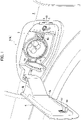
Fig. 1 ] It is a perspective view of a charge port device (its lid is open) according to an embodiment. - [
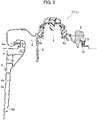
Fig. 2 ] It is a horizontally cross-sectioned view of the charge port device (the lid is open). - [
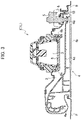
Fig. 3 ] It is a horizontally cross-sectioned view of the charge port device (the lid is closed). - [
Fig. 4 ] It is an enlarged cross-sectional view of a vicinity of a latch and a lamp shown inFig. 3 . - [
Fig. 5 ] It is a system configuration diagram of the charge port device. - Hereinafter, a charge port device according to an embodiment will be described with reference to the drawings.
- As shown in
Fig. 1 to Fig. 3 , thecharge port device 1 according to the present embodiment is provided on a left front fender F of a vehicle. Thecharge port device 1 includes aport accommodation recess 2 formed on a surface of a vehicle body (the left front fender F), acharge port 3 provided in theport accommodation recess 2, and alid 4 attached to the vehicle body for concealing theport accommodation recess 2. Thecharge port device 1 also includes alid hinge 4a attached to the vehicle body for supporting thelid 4 to be openable and closable, and alatch 5 provided in the port accommodation recess 2 on an opposite side to thelid hinge 4a with respect to thecharge port 3 for keeping a closed state of thelid 4. - The
lid 4 is configured of anouter panel 4b made of metal and aplastic part 4c attached on an inner side of theouter panel 4b. Thelid hinge 4a is formed in theplastic part 4c, and located at a front portion in the port accommodation recess 2. Thelatch 5 provided at a rear portion of theport accommodation recess 2 is a so-called push latch, and its latching/unlatching can be electronically locked. Thelid 4 is still closed after thelatch 5 is only unlocked. When thelatch 5 is pushed by pressing the closedlid 4, thelid 4 lifts up and then becomes half open (unlatching). This half-openedlid 4 is fully opened after its edges is pulled. Conversely, when thelid 4 is pushed onto thelatch 5, thelid 4 is closed and its closed state is held by the latch 5 (latching). - The above-mentioned
lid hinge 4a is formed at an end of an extended portion of theplastic part 4c, and is swingably attached to the front portion of the interior of the port accommodation recess 2. Acatch 4d that is engageable with thelatch 5 is also formed on theplastic part 4c. Adetection tab 4e used for detecting an open/closed state of thelid 4 is also formed just below thecatch 4d on theplastic part 4c. Thedetection tab 4e protrudes perpendicularly to thelid 4. The detection of the open/closed state of thelid 4 will be described later. - A
charge port 3 is provided at the center of the port accommodation recess 2. Although there are various charging standards, a charging standard of thecharge port 3 shown inFig. 1 is CHAdeMO. However, the charging standard is not limited to the CHAdeMO. Aplastic cap 6 for covering thecharge port 3 is also provided. Thecap 6 is attached on a front side of thecharge port 3 via acap hinge 6a to make it openable and closable. Alock 6b is also provided on a rear side of thecharge port 3 to hold the closedcap 6. The central portion of the port accommodation recess 2 where thecharge port 3 is disposed is formed as a deep recess portion, and the peripheral portion of the port accommodation recess 2 outside the deep recess portion is formed as a shallow recess portion. - A
long hole 7 is formed just below thelatch 5 in the port accommodation recess 2. Thislong hole 7 is formed to be associated with the above-mentioneddetection tab 4e on thelid 4, and thedetection tab 4e is inserted into thelong hole 7 while thelid 4 is closed. A sensor 8 for detecting the open/closed state of thelid 4 is provided behind thelong hole 7. The sensor 8 has a light-emitting element and a light-receiving element that are arranged oppositely to each other, and thedetection tab 4e is positioned between the light-emitting element and the light-receiving element while thelid 4 is closed. Therefore, when a light from the light emitting element (which does not have to be visible light) is detected by the light receiving element, thelid 4 is open. On the other hand, when the light from the light emitting device cannot be detected by the light receiving device, thelid 4 is closed. - The
plastic part 4c of thelid 4 has an outline shape approximately identical to an outline shape of the deep recess portion of theport accommodation recess 2, except for the above-mentioned extended portion at which thelid hinge 4a is formed. Therefore, when thelid 4 is closed, theplastic part 4c partially enters the deep recess portion of the port accommodation recess 2. In addition, the outer surface of the closedlid 4 is flush with the outer surface of the left front fender F. However, aslit 9 is formed between an outer circumferential edge of the closedlid 4 and the surface of the left front fender F (seeFig. 3 andFig. 4 ). Thisslit 9 is an ordinary slit formed around a lid of a charge port or a refuel port. - A
lamp 10 is provided between the rear portion in the port accommodation recess 2 (an outer circumference of the port accommodation recess 2), more specifically, between theslit 9 on the opposite side to thelid hinge 4a with respect to thecharge port 3 and thelatch 5. In more detail, thelamp 10 is provided between theslit 9 on the opposite side to thecharge port 3 with respect to the latch 5 (the outer circumference of the port accommodation recess 2) and thelatch 5. Thelamp 10 is disposed at a stepped portion located at a boundary between the deep recess portion and the shallow recess portion that are described above. Thelamp 10 is disposed in an immediate vicinity of a position that is operated by a user when opening thelid 4 and is not visible from an outside of the vehicle while thelid 4 is closed. Therefore, in a state where thelid 4 is closed, the light emitted from thelamp 10 is not emitted directly toward the outside. In the state where thelid 4 is closed, the light emitted from thelamp 10 is emitted toward the outside only as an indirect light. - As shown in
Fig. 4 , thelamp 10 has alight guide tube 10a and atransparent cover 10b disposed on an outer side of thelight guide tube 10a. At one end of thelight guide tube 10a (behind the plastic part that constructs the port accommodation recess 2), a light source is located. The light source in the present embodiment is a high-intensity white LED (not shown in the drawings). The light from the light source is guided along thelight guide tube 10a and then emitted outward through thecover 10b. Thelamp 10 in the present embodiment is extended in a vertical direction. Thecover 10b has two faces, one of which is faced toward thecharge port 3, i.e., directed forward. The other is faced to a lateral side of the vehicle, i.e., toward a back face of theclosed lid 4. - The
lamp 10 has two functions. First, it illuminates thecharge port 3 when thelid 4 is open to facilitate the connection of a charging cable (acharge gun 17a: seeFig. 5 ). Second, when thelid 4 is closed, it lights up and illuminates theslit 9 with the indirect light to make it easier to find thelid 4 from the outside and to open thelid 4. Light distribution patterns made on an inner surface of thecover 10b are formed to accomplish these two functions. In the state where thelid 4 is open, the light emitted from thelamp 10 directly illuminates the charge port 3 (or thecap 6 that covers the charge port 3). Note that, in the state where thelid 4 is open, the light emitted from thelamp 10 is reflected by the back face of thelid 4 and user's clothes to generate indirect light, and this indirect light also illuminates the charge port 3 (or thecap 6 that covers the charge port 3). - In the state where the
lid 4 is closed, the light emitted from thelamp 10 is reflected by reflective surfaces such as the back face of thelid 4 and the inner surface of theport accommodation recess 2 as shown by single dotted lines inFig. 4 , and thereby emitted toward the outside through theslit 9 as the indirect light. (More specifically, the back face of thelid 4 is the back face of theouter panel 4b and the side face of theplastic parts 4c.) In other words, no light-shielding member such as a weather strip is provided between theport accommodation recess 2 and thelid 4, and thereby a light-guiding reflection path(s) P of the above-mentioned indirect light is formed. Therefore, the rear portion of theslit 9 is prominently illuminated by the indirect light at a dark place. As a result, a user can easily recognize the position (the rear portion of the lid 4) that must be operated for opening thelid 4. The indirect light illuminating theslit 9 does not have to be recognizable at a bright place. At such a bright place, an opening operation of thelid 4 can be easily done. - In addition, the
slit 9 around thelid 4 does not have to be illuminated all the way around by the indirect light, and its rear side around thelid 4 is rather illuminated. Since the rear side around thelid 4 closer to the lamp 10 (and to the latch 5) is particularly illuminated brightly, it is easy to recognize the position that must be operated for opening thelid 4. If theslit 9 is evenly illuminated all around, it becomes difficult to recognize the operating position of thelid 4. - The above describes the charge port device 1 (the first
charge port device 1L) installed on the left front fender F. However, as shown inFig. 5 , the vehicle of the present embodiment is also equipped with a secondcharge port device 1R on a right front fender symmetrically to the firstcharge port device 1L. The firstcharge port device 1L and the secondcharge port device 1R are configured symmetrically with respect to a vertical plane containing a centerline of the vehicle, except that the charging standards of theircharge ports 3 are different from each other. The charging standard of the firstcharge port device 1L is the CHAdeMO, but the charging standard of the secondcharge port device 1R isSAE J1772 Type 1, for example. The CHAdeMO is a DC charging standard that allows for quick charging. The SAE J1772 is an AC charging standard for normal charging. - The charge port devices 1 (1L and 1R) are connected to a
battery 12 via anelectricity control apparatus 11. Electric power supplied from outside through thecharge port 3 of the charge port device 1 (1L or 1R) charges thebattery 12 by theelectricity control apparatus 11. In addition, the vehicle of the present embodiment can also supply electric power stored in thebattery 12 externally through theelectricity control apparatus 11, the charge port device 1 (1L or 1R) and the cable. Thebattery 12 is also connected to apowertrain apparatus 13 that includes a motor and so on. Thepowertrain apparatus 13 runs the vehicle with the electric power stored in thebattery 12. Thepowertrain apparatus 13 can also generates regenerative electric power when the vehicle decelerates and then charge thebattery 12 with the regenerative electric power. - The
lamps 10 of the charge port device 1 (1L and 1R) are connected to alight controller 14. Turning on and off of thelamps 10 are controlled by thelight controller 14. Thelight controller 14 also controls a so-called welcome lighting system. The welcome lighting system turns on front/rear lights,puddle lamps 15 provided at lower portions of door mirrors, lamps provided on inner sides of door handles, ambient light lamps in a passenger compartment and so on when a user approaches the vehicle to welcome the user. In the present embodiment, thelamps 10 of thecharge port device 1 also function as part of the welcome lighting system. - The
light controller 14 communicates wirelessly with a smart key 16 held by the user, so that it can detect the user's approach to the vehicle. Thesmart key 16 is also equipped with an unlock button for thelatch 5 of thecharge port device 1. Thelight controller 14 also receives an unlock signal sent from thesmart key 16 when the unlock button for thelatch 5 is pressed. In other words, thelight controller 14 receives predetermined signals from thesmart key 16, such as the user's approach signal and the unlock signal for thelatch 5. - The
light controller 14 also receives signals from a chargingstation 17. The chargingstation 17 sends information on a charging standard available at the chargingstation 17 as a signal. The chargingstation 17 is equipped with a charging cable with acharge gun 17a connected to its end. Thelight controller 14 is also connected to anavigation system 18 installed in the vehicle. - Hereinafter, it will be described how the lamp(s) 10 of the
charge port device 1 is lit. - When the approach signal from the
smart key 16 is detected by the light controller 14 (the user's approach is detected) or when the door unlock signal from thesmart key 16 is detected by thelight controller 14, the welcome lighting system is activated. In other words, thelight controller 14 lights up thelamps 10 of the charge port devices 1 (both of the firstcharge port device 1L and the secondcharge port device 1R) together with thepuddle lamps 15 and so on that are lit by the welcome lighting system. As a result, the slits are illuminated by the indirect light, and thereby the user can easily recognize the operating position of thelid 4 at a dark place. If the user does not do any operation, the welcome lighting system is deactivated (thelamps 10 are also turned off) by a timer (e.g. 30 seconds) and the doors are also locked. - Also when it is detected based on the approach signal from the smart key 16 that the user have left the vehicle, the welcome lighting system is deactivated (the
lamps 10 are also turned off) and the doors are also locked. If the door is opened, the user is assumed to get in the vehicle, and the welcome lighting system is deactivated (thelamps 10 are also turned off) by the timer (e.g., 3 minutes). Alternatively, if the user gets in the vehicle and its drive mode is set to a mode other than a parking mode by a selector switch, the welcome lighting system is also deactivated (thelamps 10 are also turned off). - When the user finishes driving the vehicle and the door is opened (after the drive mode is changed to the parking mode), the
lamps 10 are lit up in preparation for charging. As a result, the slits are illuminated by the indirect light, and the user can easily recognize the operating position of thelid 4 at a dark place. After the door is opened and thelamps 10 are lit up, thelamp 10 is turned off when the door lock signal or the user's leave is detected. On the other hand, if thelid 4 is opened, thelamp 10 will be turned off when it is closed later. When the charging cable is connected to thecharge port 3 and charging is started, thelamp 10 is turned off by the timer (e.g. 3 minutes). - Here, when one of the
lids 4 of the two charge port devices 1 (1L and 1R) is opened, thelamp 10 of the other is turned off. In addition, thelamp 10 may be turned on, turned off or flashing depending on a charging state during charging, instead of being turned off. The light color of thelamp 10 may be changed to a color other than white (e.g., green, yellow, orange) in order to indicate the charging state. In a case where thelamp 10 is lit or flashed during charging, thelamp 10 will be turned off when thelid 4 is closed after charging is completed. Although the example done after the vehicle has been driven is explained, it is similarly done when a user approaches the vehicle not to drive it but only to charge it. That is, in such a case, thelamps 10 are turned on when the user approaches or the door unlock signal is detected. Subsequent control of thelamps 10 are the same as the control during charging described above. Note that, if thelight controller 14 detects the press of the unlock button for thelatch 5 of thesmart key 16 while thelamp 10 is turned off, thelamp 10 will be turned on. - A case where the
lamp 10 is turned on in conjunction with the chargingstation 17 will be described below. When the vehicle approaches the chargingstation 17, thelight controller 14 wirelessly receives the charging standard information sent from the chargingstation 17 as a signal. Then, after receiving the signal, thelight controller 14 turns on thelamp 10 of one of the two charge port devices 1 (1L and 1R) that matches the charge standard information. Thelamp 10 of the othercharge port device 1, which does not match the charging standard information, remains off. This makes it easy for the user to know which of the twocharge port devices 1 to operate. Note that there may be a case where the chargingstation 17 supports two charging standards, i.e., it has two types ofcharge guns 17a. If the two charging standards of the chargingstation 17 match the charging standards of the two charge port devices 1 (1L and 1R), respectively, thelight controller 14 controls the twolamps 10 of the charge port devices 1 (1L and 1R) simultaneously. The user can select the desired charge port device 1 (1L and 1R) to charge. - In the example described above, the
light controller 14 gets the charging standard information from the chargingstation 17 in a non-contact manner. Thelight controller 14 can also get the charging standard information in a different way. When the vehicle has thenavigation system 18, thenavigation system 18 stores the charging standard of the chargingstation 17 together with location information of the chargingstation 17. Thenavigation system 18 detects the location of the vehicle using the GPS and so on, and can provide the charging standard information of the chargingstation 17 to thelight controller 14 based on the location information of the chargingstation 17. In this case, there is no need to communicate with the charging station 17 (although thenavigation system 18 uses the GPS system), and the vehicle can get the charging standard information by itself. Then, in the same way, thelamp 10 of only one of the two charge port devices 1 (1L and 1R), which matches the charging standard information, is controlled (turned on). - According to the present embodiment, the
latch 5 is provided in theport accommodation recess 2 on the opposite side of thelid hinge 4a with respect to thecharge port 3. Thelamp 10 is provided in theport accommodation recess 2 at a position that is located between thelatch 5 and theslit 9 on the opposite side of thelid hinge 4 with respect to thecharge port 3 and is not visible from the outside while thelid 4 is closed. In addition, the light guide reflection path(s) P is formed to guide the light emitted from thelamp 10 toward theslit 9 as the indirect light by reflecting the light while thelid 4 is closed. Therefore, even if thelid 4 is closed at a dark place, the position of the lid 4 (the charge port 3) can be easily recognized by the indirect light guided along the light guide reflection path P. In particular, it is easy to open thelid 4 because the indirect light illuminates the operating position of thelid 4 most brightly. In addition, since the charge port 3 (or the cap 6) is illuminated by the direct light from thelamp 10 after thelid 4 is opened, it becomes possible to connect thecharge gun 17a to thecharge port 3 easily. - In the present embodiment, the
cap 6 is also provided for thecharge port 3 in theport accommodation recess 2. Therefore, even if rain water enters theport accommodation recess 2 through theslit 9, the water is prevented from entering thecharge port 3. Furthermore, thecap hinge 6a is disposed on the same side as thelid hinge 4a with respect to thecharge port 3. Therefore, thecap 6 that is being opened does not block the direct light from thelamp 10, and thecharge gun 17a can be easily connected to thecharge port 3. - Also, in the present embodiment, the
light controller 14 that controls the lamp(s) 10 turns on thelamp 10 when it receives a predetermined signal from the smart key 16 (the approach signal, the door unlock signal, the unlock signal for thelid 4 and so on). Therefore, no operation is needed to be done in the passenger compartment in order to find thelid 4, and thereby the user can find the location of the lid 4 (the charge port 3) more easily. It is very user-friendly to easily find the lid 4 (the charge port 3) at a dark place or in rainy weather. - In addition, the two charge port devices 1 (the first
charge port device 1L and the secondcharge port device 1R) are provided in the present embodiment. Both of thelamps 10 are turned on when a predetermined condition is satisfied, but, when any one of them is opened, the other of thelamps 10 is turned off. Thus, unnecessary electric power consumption can be suppressed. - Furthermore, the two charge port devices 1 (the first
charge port device 1L and the secondcharge port device 1R) that respectively have different charging standards are provided in the present embodiment. Only thelamp 10 of the firstcharge port device 1L and the secondcharge port device 1R, which matches the charging standard information of the chargingstation 17 near the vehicle, is turned on. Therefore, the user can easily recognize the charge port 3 (the firstcharge port device 1L or the secondcharge port device 1R) of the charging standard to be used. - Here, if the charging standard information is received contactless from the charging
station 17, the charging standard information can be recognized reliably. On the other hand, if the charging standard information is got from thenavigation system 18 installed in the vehicle based on the current position of the vehicle, the vehicle can get the charging standard of thenearby charging stations 17 by itself. - The present invention is not limited to the embodiment described above. For example, in the above embodiment, the sensor 8 optically detects the opening and closing of the
lid 4, but a sensor that magnetically or electrically detects the opening and closing may be also used. In the above embodiment, thelid 4 is locked by thelatch 5, but a locking mechanism may be provided separately from thelatch 5. In addition, if no electric power is supplied externally from thecharge port 3, thelid 4 does not have to be locked (only latched and unlatched). The charging standards of the twocharge port devices charge port devices charge ports 3 may be provided in a single charge port device 1 (i.e., in a single port accommodation recess 2). - In the above embodiment, the
lamp 10 has the light source, thelight guide tube 10a and thecover 10b. However, thelamp 10 may be configured of only the light source, or configured of only the light source and the cover. In addition, thecover 10b may be a translucent white or milky white part that diffuses the light, instead of the transparent part having the light distribution pattern. A switch for arbitrarily turning on thelamp 10 may be provided in the passenger compartment or in theport accommodation recess 2. Thelight controller 14 may be integrated with other equipment controllers. -
- 1
- charge port device
- 1L
- first charge port device
- 1R
- second charge port device
- 2
- port accommodation recess
- 3
- charge port
- 4
- lid
- 4a
- lid hinge
- 5
- latch
- 6
- cap
- 6a
- cap hinge
- 8
- sensor (for open/close of the lid)
- 9
- slit
- 10
- lamp
- 14
- light controller
- 16
- smart key
- 17
- charging station
- 18
- navigation system
- P
- light-guiding reflection path
Claims (7)
- A charge port device for a vehicle, the device comprising:a port accommodation recess formed on a surface of a vehicle body of the vehicle;a charge port provided in the port accommodation recess;a lid attached to the vehicle body for concealing the port accommodation recess;a lid hinge attached to the vehicle body for supporting the lid to be openable and closable;a latch provided on an opposite side to the lid hinge with respect to the charge port in the port accommodation recess for keeping a closed state of the lid;a slit formed between the surface of the vehicle body and an outer circumferential edge of the lid while the lid is closed;a lamp provided at a position between the latch and the slit on an opposite side to the lid hinge in the port accommodation recess, the position being not visible from an outside of the vehicle while the lid is closed; anda light-guiding reflection path that guides a light emitted from the lamp toward the slit as an indirect light by reflecting the light while the lid is closed.
- The charge port device according to claim 1, further comprisinga cap for covering the charge port and a cap hinge for supporting the cap to be openable and closable in the port accommodation recess,wherein the cap hinge is disposed on the same side as the lid hinge with respect to the charge port.
- The charge port device according to claim 1 or 2, further comprisinga controller for controlling the lamp,wherein the controller turns on the lamp when receiving a predetermined signal from a smart key of the vehicle.
- The charge port device according to claim 1 or 2, further comprisinga controller for controlling the lamp; anda sensor for detecting an open/closed state of the lid,wherein the charge port device comprises a first charge port device and a second charge port device,wherein the controller is configured to turn on both of the lamps of the first charge port device and the second charge port device when a predetermined condition is satisfied, and then, when the sensor of one of the first charge port device and the second charge port device detects opening of the lid of the one of the first charge port device and the second charge port device, turn off the lamp of the other of the first charge port device and the second charge port device.
- The charge port device according to claim 1 or 2, further comprisinga controller for controlling the lamp, wherein the charge port device comprises a first charge port device and a second charge port device that have different charging standards, wherein the controller is configured to get charging standard information from a charging station near the vehicle, and then turn on only the lamp of one of the first charge port device and a second charge port device, which matches the charging standard information that is got.
- The charge port device according to claim 5,
wherein the controller is configured to get the charging standard information contactless from the charging station. - The charge port device according to claim 6,
wherein the controller is configured to get the charging standard information from a navigation system installed on the vehicle based on a current position of the vehicle.
Applications Claiming Priority (1)
| Application Number | Priority Date | Filing Date | Title |
|---|---|---|---|
| PCT/JP2019/039835 WO2021070284A1 (en) | 2019-10-09 | 2019-10-09 | Charging port device for vehicle |
Publications (2)
| Publication Number | Publication Date |
|---|---|
| EP4043273A1 true EP4043273A1 (en) | 2022-08-17 |
| EP4043273A4 EP4043273A4 (en) | 2022-12-07 |
Family
ID=75437045
Family Applications (1)
| Application Number | Title | Priority Date | Filing Date |
|---|---|---|---|
| EP19948211.8A Pending EP4043273A4 (en) | 2019-10-09 | 2019-10-09 | CHARGING PORT DEVICE FOR VEHICLE |
Country Status (5)
| Country | Link |
|---|---|
| US (1) | US20240075824A1 (en) |
| EP (1) | EP4043273A4 (en) |
| JP (1) | JP7207563B2 (en) |
| CN (1) | CN114555410B (en) |
| WO (1) | WO2021070284A1 (en) |
Cited By (1)
| Publication number | Priority date | Publication date | Assignee | Title |
|---|---|---|---|---|
| WO2024186476A1 (en) * | 2023-03-09 | 2024-09-12 | Caterpillar Inc. | Lighting control system for vehicle |
Families Citing this family (10)
| Publication number | Priority date | Publication date | Assignee | Title |
|---|---|---|---|---|
| JP7669194B2 (en) * | 2021-05-31 | 2025-04-28 | 株式会社ユーシン | Vehicle energy receiver |
| JP7648445B2 (en) * | 2021-05-31 | 2025-03-18 | 株式会社ユーシン | Vehicle energy receiver |
| DE102021125153A1 (en) * | 2021-09-28 | 2023-03-30 | Audi Aktiengesellschaft | Charging socket arrangement for a vehicle |
| JP7533415B2 (en) * | 2021-10-04 | 2024-08-14 | トヨタ自動車株式会社 | vehicle |
| EP4420492A1 (en) * | 2021-10-20 | 2024-08-28 | Sew-Eurodrive GmbH & Co. KG | Electrical appliance with housing |
| CN116238356A (en) * | 2021-12-07 | 2023-06-09 | 现代自动车株式会社 | Charging door with projection lamp and projection control method thereof |
| JP7593369B2 (en) * | 2022-04-19 | 2024-12-03 | トヨタ自動車株式会社 | Outer panel structure |
| DE102023126418A1 (en) * | 2023-09-28 | 2025-04-03 | Bos Gmbh & Co. Kg | Tailgate system for a motor vehicle |
| JP2025091732A (en) | 2023-12-07 | 2025-06-19 | トヨタ自動車株式会社 | Charging lid structure |
| WO2025154158A1 (en) * | 2024-01-16 | 2025-07-24 | 日産自動車株式会社 | Vehicle |
Family Cites Families (16)
| Publication number | Priority date | Publication date | Assignee | Title |
|---|---|---|---|---|
| JP4830953B2 (en) * | 2007-04-09 | 2011-12-07 | トヨタ自動車株式会社 | vehicle |
| JP2011148390A (en) * | 2010-01-21 | 2011-08-04 | Toyota Motor Corp | Vehicle |
| JP5488355B2 (en) * | 2010-09-03 | 2014-05-14 | 三菱自動車工業株式会社 | Lid opening / closing mechanism |
| JP2012080646A (en) * | 2010-09-30 | 2012-04-19 | Tokai Rika Co Ltd | Power feeding plug locking device |
| JP2012130189A (en) * | 2010-12-16 | 2012-07-05 | Faltec Co Ltd | Charging port for electric vehicle |
| JP5684600B2 (en) * | 2011-02-21 | 2015-03-11 | 矢崎総業株式会社 | Lighting unit for charging connector |
| CN202243181U (en) * | 2011-08-26 | 2012-05-30 | 奇美精密科技股份有限公司 | Charging display light ring device of electric vehicle |
| WO2013094063A1 (en) * | 2011-12-22 | 2013-06-27 | トヨタ自動車株式会社 | Vehicle equipped with battery |
| JP5759971B2 (en) * | 2012-12-25 | 2015-08-05 | 富士重工業株式会社 | vehicle |
| DE102013010283A1 (en) | 2013-06-19 | 2014-12-24 | Audi Ag | Connection device for an electrical system of a vehicle and method for its operation |
| JP6402384B2 (en) | 2014-12-04 | 2018-10-10 | 三菱自動車工業株式会社 | Charge / discharge current amount display device for electric vehicle |
| JP6905400B2 (en) * | 2016-09-08 | 2021-07-21 | 株式会社ニフコ | Vehicle lighting device |
| WO2018047582A1 (en) | 2016-09-08 | 2018-03-15 | 株式会社ニフコ | Vehicle lighting apparatus |
| CN206610981U (en) * | 2017-03-23 | 2017-11-03 | 东风汽车公司 | A kind of charging socket for electric vehicle with lighting indicating function |
| JP6843702B2 (en) * | 2017-05-18 | 2021-03-17 | ダイキョーニシカワ株式会社 | Charging port structure |
| KR102390652B1 (en) * | 2017-05-18 | 2022-04-26 | 현대자동차주식회사 | Charging apparatus for vehicle |
-
2019
- 2019-10-09 JP JP2021551004A patent/JP7207563B2/en active Active
- 2019-10-09 WO PCT/JP2019/039835 patent/WO2021070284A1/en not_active Ceased
- 2019-10-09 CN CN201980101210.0A patent/CN114555410B/en active Active
- 2019-10-09 US US17/754,707 patent/US20240075824A1/en active Pending
- 2019-10-09 EP EP19948211.8A patent/EP4043273A4/en active Pending
Cited By (1)
| Publication number | Priority date | Publication date | Assignee | Title |
|---|---|---|---|---|
| WO2024186476A1 (en) * | 2023-03-09 | 2024-09-12 | Caterpillar Inc. | Lighting control system for vehicle |
Also Published As
| Publication number | Publication date |
|---|---|
| JP7207563B2 (en) | 2023-01-18 |
| US20240075824A1 (en) | 2024-03-07 |
| EP4043273A4 (en) | 2022-12-07 |
| WO2021070284A1 (en) | 2021-04-15 |
| CN114555410B (en) | 2024-05-07 |
| CN114555410A (en) | 2022-05-27 |
| JPWO2021070284A1 (en) | 2021-04-15 |
Similar Documents
| Publication | Publication Date | Title |
|---|---|---|
| EP4043273A1 (en) | Charging port device for vehicle | |
| US11840172B2 (en) | Vehicular exterior rearview mirror assembly | |
| US10717383B2 (en) | Vehicle illumination device | |
| US9293932B2 (en) | Vehicle including a charging port and a light emitter | |
| US11180042B2 (en) | Charging device for charging a charge storage device | |
| CN100411914C (en) | Lights indicating the position of the outside door handle | |
| US8196977B2 (en) | Door handle structure found on the outside of vehicle | |
| US10160380B1 (en) | Enhanced informational vehicle puddle lamp assemblies | |
| JPWO2021070284A5 (en) | ||
| US20110115375A1 (en) | Lighting device for vehicle | |
| US10507769B1 (en) | Vehicle with front trunk | |
| US20170028795A1 (en) | Indication of vehicle status using light | |
| US20200040638A1 (en) | Opening and closing system | |
| US11511664B2 (en) | Illumination module for illuminating a region of a vehicle component | |
| JP2003327041A (en) | Power supply for sliding door | |
| JP4590691B2 (en) | Vehicle door structure | |
| JP4498112B2 (en) | Vehicle switch | |
| CN223199959U (en) | Vehicle central control assembly and vehicle | |
| JP4526353B2 (en) | Starter switch | |
| CN121268693A (en) | Vehicle and license plate lamp control method, device and medium | |
| KR100369033B1 (en) | illumination device for door handle of automotive vehicle | |
| KR200150713Y1 (en) | Locking and unlocking discreeting apparatus of door inside handle in automobile | |
| KR100209076B1 (en) | Vehicle trunk open detection device | |
| KR19980035511U (en) | Ignition device for trunk and pillar lid open lever identification | |
| JP2016168979A (en) | Vehicle structure |
Legal Events
| Date | Code | Title | Description |
|---|---|---|---|
| STAA | Information on the status of an ep patent application or granted ep patent |
Free format text: STATUS: UNKNOWN |
|
| STAA | Information on the status of an ep patent application or granted ep patent |
Free format text: STATUS: THE INTERNATIONAL PUBLICATION HAS BEEN MADE |
|
| PUAI | Public reference made under article 153(3) epc to a published international application that has entered the european phase |
Free format text: ORIGINAL CODE: 0009012 |
|
| STAA | Information on the status of an ep patent application or granted ep patent |
Free format text: STATUS: REQUEST FOR EXAMINATION WAS MADE |
|
| 17P | Request for examination filed |
Effective date: 20220506 |
|
| AK | Designated contracting states |
Kind code of ref document: A1 Designated state(s): AL AT BE BG CH CY CZ DE DK EE ES FI FR GB GR HR HU IE IS IT LI LT LU LV MC MK MT NL NO PL PT RO RS SE SI SK SM TR |
|
| A4 | Supplementary search report drawn up and despatched |
Effective date: 20221109 |
|
| RIC1 | Information provided on ipc code assigned before grant |
Ipc: B60L 53/14 20190101AFI20221103BHEP |
|
| DAV | Request for validation of the european patent (deleted) | ||
| DAX | Request for extension of the european patent (deleted) | ||
| STAA | Information on the status of an ep patent application or granted ep patent |
Free format text: STATUS: EXAMINATION IS IN PROGRESS |
|
| 17Q | First examination report despatched |
Effective date: 20230731 |
|
| REG | Reference to a national code |
Ref country code: DE Ref legal event code: R079 Free format text: PREVIOUS MAIN CLASS: B60L0053140000 Ipc: B60L0053160000 |
|
| GRAP | Despatch of communication of intention to grant a patent |
Free format text: ORIGINAL CODE: EPIDOSNIGR1 |
|
| STAA | Information on the status of an ep patent application or granted ep patent |
Free format text: STATUS: GRANT OF PATENT IS INTENDED |
|
| RIC1 | Information provided on ipc code assigned before grant |
Ipc: H01R 13/717 20060101ALI20240209BHEP Ipc: H01R 13/66 20060101ALI20240209BHEP Ipc: B60L 53/16 20190101AFI20240209BHEP |
|
| INTG | Intention to grant announced |
Effective date: 20240301 |
|
| GRAJ | Information related to disapproval of communication of intention to grant by the applicant or resumption of examination proceedings by the epo deleted |
Free format text: ORIGINAL CODE: EPIDOSDIGR1 |
|
| STAA | Information on the status of an ep patent application or granted ep patent |
Free format text: STATUS: EXAMINATION IS IN PROGRESS |
|
| INTC | Intention to grant announced (deleted) |