EP4042618B1 - Übertragungsrückkopplung für sidelink-übertragungen - Google Patents
Übertragungsrückkopplung für sidelink-übertragungen Download PDFInfo
- Publication number
- EP4042618B1 EP4042618B1 EP19948626.7A EP19948626A EP4042618B1 EP 4042618 B1 EP4042618 B1 EP 4042618B1 EP 19948626 A EP19948626 A EP 19948626A EP 4042618 B1 EP4042618 B1 EP 4042618B1
- Authority
- EP
- European Patent Office
- Prior art keywords
- feedback
- transmission
- resources
- sidelink
- resource
- Prior art date
- Legal status (The legal status is an assumption and is not a legal conclusion. Google has not performed a legal analysis and makes no representation as to the accuracy of the status listed.)
- Active
Links
Images

Classifications
-
- H—ELECTRICITY
- H04—ELECTRIC COMMUNICATION TECHNIQUE
- H04L—TRANSMISSION OF DIGITAL INFORMATION, e.g. TELEGRAPHIC COMMUNICATION
- H04L1/00—Arrangements for detecting or preventing errors in the information received
- H04L1/12—Arrangements for detecting or preventing errors in the information received by using return channel
- H04L1/16—Arrangements for detecting or preventing errors in the information received by using return channel in which the return channel carries supervisory signals, e.g. repetition request signals
- H04L1/18—Automatic repetition systems, e.g. Van Duuren systems
- H04L1/1812—Hybrid protocols; Hybrid automatic repeat request [HARQ]
-
- H—ELECTRICITY
- H04—ELECTRIC COMMUNICATION TECHNIQUE
- H04L—TRANSMISSION OF DIGITAL INFORMATION, e.g. TELEGRAPHIC COMMUNICATION
- H04L1/00—Arrangements for detecting or preventing errors in the information received
- H04L1/12—Arrangements for detecting or preventing errors in the information received by using return channel
- H04L1/16—Arrangements for detecting or preventing errors in the information received by using return channel in which the return channel carries supervisory signals, e.g. repetition request signals
- H04L1/18—Automatic repetition systems, e.g. Van Duuren systems
- H04L1/1829—Arrangements specially adapted for the receiver end
- H04L1/1854—Scheduling and prioritising arrangements
-
- H—ELECTRICITY
- H04—ELECTRIC COMMUNICATION TECHNIQUE
- H04L—TRANSMISSION OF DIGITAL INFORMATION, e.g. TELEGRAPHIC COMMUNICATION
- H04L1/00—Arrangements for detecting or preventing errors in the information received
- H04L1/12—Arrangements for detecting or preventing errors in the information received by using return channel
- H04L1/16—Arrangements for detecting or preventing errors in the information received by using return channel in which the return channel carries supervisory signals, e.g. repetition request signals
- H04L1/18—Automatic repetition systems, e.g. Van Duuren systems
- H04L1/1829—Arrangements specially adapted for the receiver end
- H04L1/1864—ARQ related signaling
-
- H—ELECTRICITY
- H04—ELECTRIC COMMUNICATION TECHNIQUE
- H04L—TRANSMISSION OF DIGITAL INFORMATION, e.g. TELEGRAPHIC COMMUNICATION
- H04L1/00—Arrangements for detecting or preventing errors in the information received
- H04L1/12—Arrangements for detecting or preventing errors in the information received by using return channel
- H04L1/16—Arrangements for detecting or preventing errors in the information received by using return channel in which the return channel carries supervisory signals, e.g. repetition request signals
- H04L1/18—Automatic repetition systems, e.g. Van Duuren systems
- H04L1/1867—Arrangements specially adapted for the transmitter end
- H04L1/1887—Scheduling and prioritising arrangements
-
- H—ELECTRICITY
- H04—ELECTRIC COMMUNICATION TECHNIQUE
- H04L—TRANSMISSION OF DIGITAL INFORMATION, e.g. TELEGRAPHIC COMMUNICATION
- H04L5/00—Arrangements affording multiple use of the transmission path
- H04L5/003—Arrangements for allocating sub-channels of the transmission path
- H04L5/0053—Allocation of signalling, i.e. of overhead other than pilot signals
- H04L5/0055—Physical resource allocation for ACK/NACK
-
- H—ELECTRICITY
- H04—ELECTRIC COMMUNICATION TECHNIQUE
- H04L—TRANSMISSION OF DIGITAL INFORMATION, e.g. TELEGRAPHIC COMMUNICATION
- H04L1/00—Arrangements for detecting or preventing errors in the information received
- H04L2001/0092—Error control systems characterised by the topology of the transmission link
- H04L2001/0093—Point-to-multipoint
Definitions
- the subject matter disclosed herein relates generally to wireless communications and more particularly relates to transmitting feedback for sidelink transmissions.
- a method performed by a transmitting user equipment and a transmitting user equipment is disclosed herein.
- HARQ-ACK may be used. In such networks, more resources may be allocated than are used.
- R1-1910145 is a 3GPP discussion document titled "Discussion on resource allocation for NR sidelink Mode 1" submitted by Lenovo & Motorola Mobility at TSG RAN WG1 #98bis in Chongqing, China, on 14th October 2019 , and proposes that the RAN1 group should further discuss about the TX UE behavior on SL HARQ feedback reporting to gNB on PUCCH, if the SL HARQ feedback is not enabled by the TX UE.
- embodiments may be embodied as a system, apparatus, method, or program product. Accordingly, embodiments may take the form of an entirely hardware embodiment, an entirely software embodiment (including firmware, resident software, micro-code, etc.) or an embodiment combining software and hardware aspects that may all generally be referred to herein as a "circuit," "module” or “system.” Furthermore, embodiments may take the form of a program product embodied in one or more computer readable storage devices storing machine readable code, computer readable code, and/or program code, referred hereafter as code. The storage devices may be tangible, non-transitory, and/or non-transmission. The storage devices may not embody signals. In a certain embodiment, the storage devices only employ signals for accessing code.
- modules may be implemented as a hardware circuit comprising custom very-large-scale integration ("VLSI") circuits or gate arrays, off-the-shelf semiconductors such as logic chips, transistors, or other discrete components.
- VLSI very-large-scale integration
- a module may also be implemented in programmable hardware devices such as field programmable gate arrays, programmable array logic, programmable logic devices or the like.
- Modules may also be implemented in code and/or software for execution by various types of processors.
- An identified module of code may, for instance, include one or more physical or logical blocks of executable code which may, for instance, be organized as an object, procedure, or function. Nevertheless, the executables of an identified module need not be physically located together, but may include disparate instructions stored in different locations which, when joined logically together, include the module and achieve the stated purpose for the module.
- a module of code may be a single instruction, or many instructions, and may even be distributed over several different code segments, among different programs, and across several memory devices.
- operational data may be identified and illustrated herein within modules, and may be embodied in any suitable form and organized within any suitable type of data structure. The operational data may be collected as a single data set, or may be distributed over different locations including over different computer readable storage devices.
- the software portions are stored on one or more computer readable storage devices.
- the computer readable medium may be a computer readable storage medium.
- the computer readable storage medium may be a storage device storing the code.
- the storage device may be, for example, but not limited to, an electronic, magnetic, optical, electromagnetic, infrared, holographic, micromechanical, or semiconductor system, apparatus, or device, or any suitable combination of the foregoing.
- a storage device More specific examples (a non-exhaustive list) of the storage device would include the following: an electrical connection having one or more wires, a portable computer diskette, a hard disk, a random access memory (“RAM”), a read-only memory (“ROM”), an erasable programmable read-only memory (“EPROM” or Flash memory), a portable compact disc read-only memory (“CD-ROM”), an optical storage device, a magnetic storage device, or any suitable combination of the foregoing.
- a computer readable storage medium may be any tangible medium that can contain, or store a program for use by or in connection with an instruction execution system, apparatus, or device.
- Code for carrying out operations for embodiments may be any number of lines and may be written in any combination of one or more programming languages including an object oriented programming language such as Python, Ruby, Java, Smalltalk, C++, or the like, and conventional procedural programming languages, such as the "C" programming language, or the like, and/or machine languages such as assembly languages.
- the code may execute entirely on the user's computer, partly on the user's computer, as a stand-alone software package, partly on the user's computer and partly on a remote computer or entirely on the remote computer or server.
- the remote computer may be connected to the user's computer through any type of network, including a local area network (“LAN”) or a wide area network (“WAN”), or the connection may be made to an external computer (for example, through the Internet using an Internet Service Provider).
- LAN local area network
- WAN wide area network
- Internet Service Provider an Internet Service Provider
- the code may also be stored in a storage device that can direct a computer, other programmable data processing apparatus, or other devices to function in a particular manner, such that the instructions stored in the storage device produce an article of manufacture including instructions which implement the function/act specified in the schematic flowchart diagrams and/or schematic block diagrams block or blocks.
- the code may also be loaded onto a computer, other programmable data processing apparatus, or other devices to cause a series of operational steps to be performed on the computer, other programmable apparatus or other devices to produce a computer implemented process such that the code which execute on the computer or other programmable apparatus provide processes for implementing the functions/acts specified in the flowchart and/or block diagram block or blocks.
- each block in the schematic flowchart diagrams and/or schematic block diagrams may represent a module, segment, or portion of code, which includes one or more executable instructions of the code for implementing the specified logical function(s).
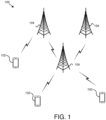
- Figure 1 depicts an embodiment of a wireless communication system 100 for transmitting and/or receiving feedback for sidelink transmissions.
- the wireless communication system 100 includes remote units 102 and network units 104. Even though a specific number of remote units 102 and network units 104 are depicted in Figure 1 , one of skill in the art will recognize that any number of remote units 102 and network units 104 may be included in the wireless communication system 100.
- the remote units 102 may include computing devices, such as desktop computers, laptop computers, personal digital assistants ("PDAs"), tablet computers, smart phones, smart televisions (e.g., televisions connected to the Internet), set-top boxes, game consoles, security systems (including security cameras), vehicle on-board computers, network devices (e.g., routers, switches, modems), IoT devices, or the like.
- the remote units 102 include wearable devices, such as smart watches, fitness bands, optical head-mounted displays, or the like.
- the remote units 102 may be referred to as subscriber units, mobiles, mobile stations, users, terminals, mobile terminals, fixed terminals, subscriber stations, UE, user terminals, a device, or by other terminology used in the art.
- the remote units 102 may communicate directly with one or more of the network units 104 via UL communication signals and/or the remote units 102 may communicate directly with other remote units 102 via sidelink communication.
- the network units 104 may be distributed over a geographic region.
- a network unit 104 may also be referred to as an access point, an access terminal, a base, a base station, a Node-B, an eNB, a gNB, a Home Node-B, a RAN, a relay node, a device, a network device, an IAB node, a donor IAB node, or by any other terminology used in the art.
- the network units 104 are generally part of a radio access network that includes one or more controllers communicably coupled to one or more corresponding network units 104.
- the radio access network is generally communicably coupled to one or more core networks, which may be coupled to other networks, like the Internet and public switched telephone networks, among other networks.
- core networks like the Internet and public switched telephone networks, among other networks.
- the wireless communication system 100 is compliant with the 5G or NG (Next Generation) standard of the 3GPP protocol, wherein the network unit 104 transmits using NG RAN technology. More generally, however, the wireless communication system 100 may implement some other open or proprietary communication protocol, for example, WiMAX, among other protocols.
- the present disclosure is not intended to be limited to the implementation of any particular wireless communication system architecture or protocol.
- the network units 104 may serve a number of remote units 102 within a serving area, for example, a cell or a cell sector via a wireless communication link.
- the network units 104 transmit DL communication signals to serve the remote units 102 in the time, frequency, and/or spatial domain.
- a remote unit 102 may receive information from a network device (e.g., network unit 104) indicating a plurality of resources for sidelink transmission and one or more resources for feedback. In certain embodiments, the remote unit 102 may transmit sidelink data using the plurality of resources for sidelink transmission.
- a network device e.g., network unit 104
- the remote unit 102 may transmit sidelink data using the plurality of resources for sidelink transmission.
- the remote unit 102 may transmit feedback to the network device using the one or more resources for feedback based on the transmission of the sidelink data, wherein transmitting the feedback comprises: transmitting only a negative acknowledgment on a first at least one resource of the one or more resources for feedback in response to sidelink feedback not being used for the transmission of the sidelink data; transmitting only a positive acknowledgment or no acknowledgment on a second at least one resource of the one or more resources for feedback in response to the sidelink feedback being used for the transmission of the sidelink data; or a combination thereof. Accordingly, a remote unit 102 may be used for transmitting feedback for sidelink transmissions.
- a network unit 104 may receive feedback for sidelink transmissions includes transmitting information from a network device (e.g., the network unit 104) indicating a plurality of resources for sidelink transmission and one or more resources for feedback.
- the network unit 104 may receive feedback at the network device using the one or more resources for feedback, wherein receiving the feedback comprises: receiving only a negative acknowledgment on a first at least one resource of the one or more resources for feedback in response to sidelink feedback not being used for the sidelink transmission; receiving only a positive acknowledgment or no acknowledgment on a second at least one resource of the one or more resources for feedback in response to the sidelink feedback being used for the sidelink transmission; or a combination thereof. Accordingly, a network unit 104 may be used for receiving feedback for sidelink transmissions.
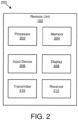
- Figure 2 depicts one embodiment of an apparatus 200 that may be used for transmitting feedback for sidelink transmissions.
- the apparatus 200 includes one embodiment of the remote unit 102.
- the remote unit 102 may include a processor 202, a memory 204, an input device 206, a display 208, a transmitter 210, and a receiver 212.
- the input device 206 and the display 208 are combined into a single device, such as a touchscreen.
- the remote unit 102 may not include any input device 206 and/or display 208.
- the remote unit 102 may include one or more of the processor 202, the memory 204, the transmitter 210, and the receiver 212, and may not include the input device 206 and/or the display 208.
- the processor 202 may include any known controller capable of executing computer-readable instructions and/or capable of performing logical operations.
- the processor 202 may be a microcontroller, a microprocessor, a central processing unit (“CPU"), a graphics processing unit (“GPU”), an auxiliary processing unit, a field programmable gate array (“FPGA”), or similar programmable controller.
- the processor 202 executes instructions stored in the memory 204 to perform the methods and routines described herein.
- the processor 202 is communicatively coupled to the memory 204, the input device 206, the display 208, the transmitter 210, and the receiver 212.
- the memory 204 in one embodiment, is a computer readable storage medium.
- the memory 204 includes volatile computer storage media.
- the memory 204 may include a RAM, including dynamic RAM (“DRAM”), synchronous dynamic RAM (“SDRAM”), and/or static RAM (“SRAM”).
- the memory 204 includes non-volatile computer storage media.
- the memory 204 may include a hard disk drive, a flash memory, or any other suitable non-volatile computer storage device.
- the memory 204 includes both volatile and non-volatile computer storage media.
- the memory 204 also stores program code and related data, such as an operating system or other controller algorithms operating on the remote unit 102.
- the input device 206 may include any known computer input device including a touch panel, a button, a keyboard, a stylus, a microphone, or the like.
- the input device 206 may be integrated with the display 208, for example, as a touchscreen or similar touch-sensitive display.
- the input device 206 includes a touchscreen such that text may be input using a virtual keyboard displayed on the touchscreen and/or by handwriting on the touchscreen.
- the input device 206 includes two or more different devices, such as a keyboard and a touch panel.
- the display 208 may include any known electronically controllable display or display device.
- the display 208 may be designed to output visual, audible, and/or haptic signals.
- the display 208 includes an electronic display capable of outputting visual data to a user.
- the display 208 may include, but is not limited to, an LCD display, an LED display, an OLED display, a projector, or similar display device capable of outputting images, text, or the like to a user.
- the display 208 may include a wearable display such as a smart watch, smart glasses, a heads-up display, or the like.
- the display 208 may be a component of a smart phone, a personal digital assistant, a television, a table computer, a notebook (laptop) computer, a personal computer, a vehicle dashboard, or the like.
- the display 208 includes one or more speakers for producing sound.
- the display 208 may produce an audible alert or notification (e.g., a beep or chime).
- the display 208 includes one or more haptic devices for producing vibrations, motion, or other haptic feedback.
- all or portions of the display 208 may be integrated with the input device 206.
- the input device 206 and display 208 may form a touchscreen or similar touch-sensitive display.
- the display 208 may be located near the input device 206.
- the receiver 212 receives information from a network device (e.g., the network unit 104) indicating a plurality of resources for sidelink transmission and one or more resources for feedback.
- the transmitter 210 transmits sidelink data using the plurality of resources for sidelink transmission; and transmits feedback to the network device using the one or more resources for feedback based on the transmission of the sidelink data, wherein transmitting the feedback comprises: transmitting only a negative acknowledgment on a first at least one resource of the one or more resources for feedback in response to sidelink feedback not being used for the transmission of the sidelink data; transmitting only a positive acknowledgment or no acknowledgment on a second at least one resource of the one or more resources for feedback in response to the sidelink feedback being used for the transmission of the sidelink data; or a combination thereof.
- the remote unit 102 may have any suitable number of transmitters 210 and receivers 212.
- the transmitter 210 and the receiver 212 may be any suitable type of transmitters and receivers.
- the transmitter 210 and the receiver 212 may be part of a transceiver.
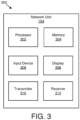
- Figure 3 depicts one embodiment of an apparatus 300 that may be used for receiving feedback for sidelink transmissions.
- the apparatus 300 includes one embodiment of the network unit 104.
- the network unit 104 may include a processor 302, a memory 304, an input device 306, a display 308, a transmitter 310, and a receiver 312.
- the processor 302, the memory 304, the input device 306, the display 308, the transmitter 310, and the receiver 312 may be substantially similar to the processor 202, the memory 204, the input device 206, the display 208, the transmitter 210, and the receiver 212 of the remote unit 102, respectively.
- the transmitter 310 transmits information from the apparatus 300 indicating a plurality of resources for sidelink transmission and one or more resources for feedback.
- the receiver 312 receives feedback at the apparatus using the one or more resources for feedback, wherein receiving the feedback comprises: receiving only a negative acknowledgment on a first at least one resource of the one or more resources for feedback in response to sidelink feedback not being used for the sidelink transmission; receiving only a positive acknowledgment or no acknowledgment on a second at least one resource of the one or more resources for feedback in response to the sidelink feedback being used for the sidelink transmission; or a combination thereof.
- the network unit 104 may have any suitable number of transmitters 310 and receivers 312.
- the transmitter 310 and the receiver 312 may be any suitable type of transmitters and receivers.
- the transmitter 310 and the receiver 312 may be part of a transceiver.
- a TX UE selects a TB and performs sidelink transmissions on allocated resources.
- a gNB transmits DCI (e.g., including a sidelink grant) to a TX UE.
- the DCI allocates one or more resources (e.g., one or more PSSCH resources) for sidelink transmission of a TB from the TX UE, and the DCI allocates one or more resources (e.g., one or more PUCCH resources) for a SL HARQ report to be transmitted to the gNB from the TX UE over a Uu interface.
- the PUCCH resource is for ACK/NACK feedback transmitted from the TX UE to the gNB.
- the TX UE selects the TB and performs a sidelink transmission on the allocated one or more resources (e.g., one or more PSSCH resources).
- the TX UE may select the TB to be transmitted using broadcast, unicast, or groupcast (e.g., multicast).
- broadcast may refer to a transmission from one source to all possible destinations (e.g., one-to-all)
- unicast may refer to a transmission from one source to one destination (e.g., one-to-one)
- groupcast e.g., or multicast
- the TX UE may decide if the SL HARQ feedback transmitted from SL devices to the TX UE is enabled or disabled.
- the TX UE If the SL HARQ feedback transmitted from SL devices to the TX UE is disabled by TX UE or the TB is broadcast (e.g., there will be no SL HARQ feedback transmitted from SL devices to the TX UE), then: 1) on all configured PUCCH resources except the last configured PUCCH resource, the TX UE transmits NACK to the gNB to avoid the gNB releasing the allocated one or more resources (e.g., one or more PSSCH resources and/or one or more PUCCH resources); and 2) on the last configured PUCCH resource, the TX UE transmits ACK to the gNB.
- the TX UE If the SL HARQ feedback transmitted from SL devices to the TX UE is disabled by TX UE or the TB is broadcast (e.g., there will be no SL HARQ feedback transmitted from SL devices to the TX UE), then: 1) on all configured PUCCH resources except the last configured PUCCH resource, the TX UE transmits
- the gNB detects the SL HARQ feedback on the allocated one or more resources (e.g., one or more PUCCH resources) transmitted from the TX UE. If ACK is received on a PUCCH resource before the last PUCCH resource, the gNB may reallocate remaining resources (e.g., PSSCH resources, PUCCH resources) for other purposes. If NACK is received on a PUCCH resource before the last PUCCH resource, then no action may be performed by the gNB in relation to the remaining resources.
- resources e.g., one or more PUCCH resources
- the gNB may assume that the TX UE hasn't received the DCI (e.g., including the sidelink grant) and the gNB may reallocate the remaining resources (e.g., PSSCH resources, PUCCH resources) for other purposes. If ACK is received on the last PUCCH resource, the gNB assumes that the SL transmissions are successful. If NACK is received on the last PUCCH resource, the gNB assumes the SL transmissions are unsuccessful. If the gNB doesn't detect ACK or NACK on the last PUCCH resource, the gNB assumes that the TX UE hasn't received the DCI (e.g., including the sidelink grant).
- the remaining resources e.g., PSSCH resources, PUCCH resources
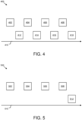
- FIGS 4 through 6 illustrate examples of a TX UE's transmissions if the TX UE determines that there is no SL HARQ feedback to be received from SL devices, but DCI allocates PUCCH resources for transmission of SL HARQ feedback from the TX UE to the gNB.
- FIG. 4 is a schematic block diagram illustrating one embodiment of a TX UE's transmissions 400.
- the TX UE's transmissions 400 include a first SL transmission 402 on a first PSSCH resource, a second SL transmission 404 on a second PSSCH resource, a third SL transmission 406 on a third PSSCH resource, and a fourth SL transmission 408 on a fourth PSSCH resource. All of the illustrated TX UE's transmissions 400 occur over a time period 410.
- the TX UE's transmissions 400 also include a first feedback transmission 412 on a first PUCCH resource, a second feedback transmission 414 on a second PUCCH resource, a third feedback transmission 416 on a third PUCCH resource, and a fourth feedback transmission 418 on a fourth PUCCH resource.
- the TX UE will transmit NACK in the first feedback transmission 412, the second feedback transmission 414, and the third feedback transmission 416. In the fourth feedback transmission 418, the TX UE will transmit ACK.
- FIG. 5 is a schematic block diagram illustrating another embodiment of a TX UE's transmissions 500.
- the TX UE's transmissions 500 include a first SL transmission 502 on a first PSSCH resource, a second SL transmission 504 on a second PSSCH resource, a third SL transmission 506 on a third PSSCH resource, and a fourth SL transmission 508 on a fourth PSSCH resource. All of the illustrated TX UE's transmissions 500 occur over a time period 510.
- the TX UE's transmissions 500 also include a first feedback transmission 512 on a first PUCCH resource.
- the TX UE will transmit ACK in the first feedback transmission 512.
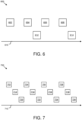
- FIG. 6 is a schematic block diagram illustrating a further embodiment of a TX UE's transmissions 600.
- the TX UE's transmissions 600 include a first SL transmission 602 on a first PSSCH resource, a second SL transmission 604 on a second PSSCH resource, a third SL transmission 606 on a third PSSCH resource, and a fourth SL transmission 608 on a fourth PSSCH resource. All of the illustrated TX UE's transmissions 600 occur over a time period 610.
- the TX UE's transmissions 600 also include a first feedback transmission 612 on a first PUCCH resource and a second feedback transmission 614 on a second PUCCH resource.
- the TX UE will transmit NACK in the first feedback transmission 612. In the second feedback transmission 614, the TX UE will transmit ACK.
- a TX UE selects a TB (e.g., with a restriction of PUCCH resources allocated) and performs sidelink transmission on allocated resources.
- a restriction of PUCCH resources allocated may mean that the gNB may decide whether to allocate PUCCH resources to the TX UE. If the gNB allocates PUCCH resources to the TX UE, the TX UE should select unicast or groupcast transmission and enable HARQ feedback on the SL. If the gNB doesn't allocate PUCCH resources to the TX UE, the TX UE may select broadcast, unicast, or groupcast transmission. Therefore, the presence of whether PUCCH resources are allocated may restrict a type of transmission used by the TX UE.
- a gNB transmits DCI (e.g., including a sidelink grant) to a TX UE.
- the DCI allocates one or more resources (e.g., one or more PSSCH resources) for sidelink transmission of a TB from the TX UE, and the DCI allocates one or more resources (e.g., one or more PUCCH resources) for a SL HARQ report to be transmitted to the gNB from the TX UE over a Uu interface.
- the first PUCCH resource is for ACK/NACK feedback, and the remaining resources are for only ACK feedback.
- an invalid value in the DCI may be used to indicate that there no PUCCH resource allocation.
- DCI may indicate that there are no PUCCH resources allocated using an invalid value such as '00000' in a field used to indicate PUCCH resources (e.g., frequency domain, time domain, and/or code domain resources).
- DCI may indicate that there are PUCCH resources allocated using a valid value in the field used to indicate PUCCH resources.
- the TX UE selects the TB and performs a sidelink transmission on the allocated one or more resources (e.g., one or more PSSCH resources).
- resources e.g., one or more PSSCH resources.
- the TX UE may only select a TB to be transmitted using unicast or groupcast, and the TX UE should enable SL HARQ feedback to be transmitted from SL devices to the TX UE; and 2) the TX UE transmits SL HARQ feedback to the gNB on the allocated PUCCH resources as follows: a) for the first PUCCH resource: i) if the TX UE detects DCI successfully and the SL transmission on the first allocated resource is successful, the TX UE transmits ACK to the gNB on the first PUCCH resource; ii) if the TX UE detects DCI successfully and the SL transmission on the first allocated resource is unsuccessful, the TX UE transmits NACK to the gNB on the first PUCCH resource; and iii) if the TX UE detects DCI unsuccessfully, nothing will be transmitted on the first PUCCH
- the TX UE may select the TB to be transmitted using broadcast, unicast, or groupcast, and for unicast or groupcast transmissions, the TX UE may decide if the SL HARQ feedback transmitted from SL devices to the TX UE is enabled or disabled.
- the gNB detects the SL HARQ feedback on the allocated PUCCH resources. For all the PUCCH resources, if ACK is received by the gNB, the gNB may release the reallocate remaining resources (e.g., PSSCH resources, PUCCH resources) for other purposes. For the first PUCCH resource, if nothing is detected by the gNB, the gNB assumes that the TX UE has missed reception of the DCI and the gNB may re-allocate the remaining resources (e.g., PSSCH resources, PUCCH resources) besides the first ones for other purposes. If NACK is received by the gNB, the gNB may monitor the next PUCCH resource.
- the remaining resources e.g., PSSCH resources, PUCCH resources
- FIGS 7 through 9 illustrate examples of a TX UE's transmissions if the TX UE determines that there is SL HARQ feedback to be received from SL devices and DCI allocates PUCCH resources for transmission of SL HARQ feedback from the TX UE to the gNB.
- FIG. 7 is a schematic block diagram illustrating yet another embodiment of a TX UE's transmissions 700.
- the TX UE's transmissions 700 include a first SL transmission 702 on a first PSSCH resource, a second SL transmission 704 on a second PSSCH resource, a third SL transmission 706 on a third PSSCH resource, and a fourth SL transmission 708 on a fourth PSSCH resource. All of the illustrated TX UE's transmissions 700 occur over a time period 710.
- the TX UE's transmissions 700 also include a first SL feedback transmission 712 received on a first PSFCH resource from SL devices, a second SL feedback transmission 714 received on a second PSFCH resource from SL devices, a third SL feedback transmission 716 received on a third PSFCH resource from SL devices, and a fourth SL feedback transmission 718 received on a fourth PSFCH resource from SL devices.
- the TX UE's transmissions 700 further include a first feedback transmission 720 on a first PUCCH resource, a second feedback transmission 722 on a second PUCCH resource, a third feedback transmission 724 on a third PUCCH resource, and a fourth feedback transmission 726 on a fourth PUCCH resource.
- the TX UE will transmit ACK/NACK in the first feedback transmission 720 (e.g., ACK if the corresponding SL transmission was successful, and NACK if the corresponding SL transmission was unsuccessful).
- the TX UE will transmit ACK or no transmission (e.g., ACK if the corresponding SL transmission was successful, and no transmission if the corresponding SL transmission was unsuccessful).
- FIG 8 is a schematic block diagram illustrating an additional embodiment of a TX UE's transmissions 800.
- the TX UE's transmissions 800 include a first SL transmission 802 on a first PSSCH resource, a second SL transmission 804 on a second PSSCH resource, a third SL transmission 806 on a third PSSCH resource, and a fourth SL transmission 808 on a fourth PSSCH resource. All of the illustrated TX UE's transmissions 800 occur over a time period 810.
- the TX UE's transmissions 800 also include a first SL feedback transmission 812 received on a first PSFCH resource from SL devices, a second SL feedback transmission 814 received on a second PSFCH resource from SL devices, a third SL feedback transmission 816 received on a third PSFCH resource from SL devices, and a fourth SL feedback transmission 818 received on a fourth PSFCH resource from SL devices.
- the TX UE's transmissions 800 further include a first feedback transmission 820 on a first PUCCH resource.
- the TX UE will transmit ACK or no transmission (e.g., ACK if the corresponding SL transmissions were successful, and no transmission if the corresponding SL transmissions were unsuccessful).
- FIG. 9 is a schematic block diagram illustrating yet a further embodiment of a TX UE's transmissions 900.
- the TX UE's transmissions 900 include a first SL transmission 902 on a first PSSCH resource, a second SL transmission 904 on a second PSSCH resource, a third SL transmission 906 on a third PSSCH resource, and a fourth SL transmission 908 on a fourth PSSCH resource. All of the illustrated TX UE's transmissions 900 occur over a time period 910.
- the TX UE's transmissions 900 also include a first SL feedback transmission 912 received on a first PSFCH resource from SL devices, a second SL feedback transmission 914 received on a second PSFCH resource from SL devices, a third SL feedback transmission 916 received on a third PSFCH resource from SL devices, and a fourth SL feedback transmission 918 received on a fourth PSFCH resource from SL devices.
- the TX UE's transmissions 900 further include a first feedback transmission 920 on a first PUCCH resource and a second feedback transmission 922 on a second PUCCH resource.
- the TX UE will transmit ACK/NACK in the first feedback transmission 920 (e.g., ACK if the corresponding SL transmissions were successful, and NACK if the corresponding SL transmissions were unsuccessful).
- the TX UE will transmit ACK or no transmission (e.g., ACK if the corresponding SL transmissions were successful, and no transmission if the corresponding SL transmissions were unsuccessful).
- the embodiments described herein may reduce overhead of resources by reallocated resources when they are no longer needed.
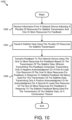
- Figure 10 is a schematic flow chart diagram illustrating one embodiment of a method 1000 for transmitting feedback for sidelink transmissions.
- the method 1000 is performed by an apparatus, such as the remote unit 102.
- the method 1000 may be performed by a processor executing program code, for example, a microcontroller, a microprocessor, a CPU, a GPU, an auxiliary processing unit, a FPGA, or the like.
- the method 1000 may include receiving 1002 information from a network device indicating a plurality of resources for sidelink transmission and one or more resources for feedback. In certain embodiments, the method 1000 includes transmitting 1004 sidelink data using the plurality of resources for sidelink transmission. In various embodiments, the method 1000 includes transmitting 1006 feedback to the network device using the one or more resources for feedback based on the transmission of the sidelink data, wherein transmitting the feedback comprises: transmitting only a negative acknowledgment on a first at least one resource of the one or more resources for feedback in response to sidelink feedback not being used for the transmission of the sidelink data; transmitting only a positive acknowledgment or no acknowledgment on a second at least one resource of the one or more resources for feedback in response to the sidelink feedback being used for the transmission of the sidelink data; or a combination thereof.
- transmitting the feedback comprises transmitting any of the positive acknowledgment, the negative acknowledgment, or the no acknowledgment on at most a single resource of the one or more resources for feedback.
- the single resource is a first resource in time of the one or more resources for feedback.
- the second at least one resource of the one or more resources comprises all resources of the one or more resources except the first resource in time.
- transmitting only the positive acknowledgment or the no acknowledgment on the second at least one resource of the one or more resources for feedback in response to the sidelink feedback being used for the transmission of the sidelink data comprises transmitting the positive acknowledgment in response to a successful transmission of the sidelink data and transmitting the no acknowledgment in response to an unsuccessful transmission of the sidelink data.
- transmitting the feedback comprises transmitting the positive acknowledgment on at most a single resource of the one or more resources for feedback.
- the single resource is a last resource in time of the one or more resources for feedback.
- the first at least one resource of the one or more resources comprises all resources of the one or more resources except the last resource in time.
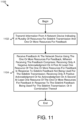
- Figure 11 is a schematic flow chart diagram illustrating one embodiment of a method 1100 for receiving feedback for sidelink transmissions.
- the method 1100 is performed by an apparatus, such as the network unit 104.
- the method 1100 may be performed by a processor executing program code, for example, a microcontroller, a microprocessor, a CPU, a GPU, an auxiliary processing unit, a FPGA, or the like.
Landscapes
- Engineering & Computer Science (AREA)
- Signal Processing (AREA)
- Computer Networks & Wireless Communication (AREA)
- Mobile Radio Communication Systems (AREA)
Claims (10)
- Verfahren (1000), das durch eine übertragende Benutzereinrichtung, TX UE, durchgeführt wird, das Verfahren (1000) umfassend:Empfangen (1002) von Informationen von einer Netzwerkvorrichtung, die eine Vielzahl von Ressourcen für eine Sidelink-Übertragung und eine Vielzahl von Ressourcen für Feedback angeben;Übertragen (1004) von Sidelink-Daten unter Verwendung der Vielzahl von Ressourcen für die Sidelink-Übertragung; undÜbertragen (1006) von Feedback an die Netzwerkvorrichtung unter Verwendung der Vielzahl von Ressourcen für Feedback basierend auf der Übertragung der Sidelink-Daten,wobei das Übertragen des Feedbacks umfasst:als Reaktion darauf, dass die TX UE bestimmt, dass kein Sidelink-Feedback für die Übertragung der Sidelink-Daten verwendet wird, Übertragen nur einer negativen Bestätigung auf einer ersten mindestens einen Ressource der Vielzahl von Ressourcen für Feedback, mit Ausnahme einer zeitlich letzten Ressource; undals Reaktion darauf, dass die TX UE bestimmt, dass das Sidelink-Feedback für die Übertragung der Sidelink-Daten verwendet wird, Übertragen nur einer positiven Bestätigung oder keiner Bestätigung auf einer zweiten mindestens einen Ressource der Vielzahl von Ressourcen für Feedback, mit Ausnahme einer zeitlich ersten Ressource.
- Verfahren nach Anspruch 1, wobei als Reaktion darauf, dass das Sidelink-Feedback für die Übertragung der Sidelink-Daten verwendet wird, das Übertragen des Feedbacks das Übertragen einer negativen Bestätigung auf höchstens einer einzelnen Ressource der Vielzahl von Ressourcen für Feedback umfasst, wobei die einzelne Ressource die zeitlich erste Ressource der Vielzahl von Ressourcen für Feedback ist.
- Verfahren nach Anspruch 1, wobei das Übertragen nur der positiven Bestätigung oder keiner Bestätigung an die zweite mindestens eine Ressource der Vielzahl von Ressourcen für Feedback als Reaktion darauf, dass das Sidelink-Feedback für die Übertragung der Sidelink-Daten verwendet wird, das Übertragen der positiven Bestätigung als Reaktion auf eine erfolgreiche Übertragung der Sidelink-Daten und das Übertragen keiner Bestätigung als Reaktion auf eine nicht erfolgreiche Übertragung der Sidelink-Daten umfasst.
- Verfahren nach Anspruch 1, wobei als Reaktion darauf, dass das Sidelink-Feedback nicht für die Übertragung der Sidelink-Daten verwendet wird, das Übertragen des Feedbacks das Übertragen einer positiven Bestätigung auf höchstens einer einzelnen Ressource der Vielzahl von Ressourcen für Feedback umfasst, wobei die einzelne Ressource die zeitlich letzte Ressource der Vielzahl von Ressourcen für Feedback ist.
- Verfahren nach Anspruch 1, wobei als Reaktion darauf, dass die TX UE bestimmt, dass kein Sidelink-Feedback für die Übertragung der Sidelink-Daten verwendet wird, das Verfahren das Übertragen nur einer negativen Bestätigung auf allen der Vielzahl von Ressourcen für Feedback mit Ausnahme einer zeitlich letzten Ressource und das Übertragen einer positiven Bestätigung auf der zeitlich letzten Ressource der Vielzahl von Ressourcen für Feedback umfasst.
- Übertragende Benutzereinrichtung, TX UE, (200), umfassend:mindestens einen Speicher (204); undmindestens einen Prozessor (202), der mit dem mindestens einen Speicher (204) gekoppelt und konfiguriert ist, um die TX UE (200) zu veranlassen zum:Empfangen von Informationen von einer Netzwerkvorrichtung, die eine Vielzahl von Ressourcen für die Sidelink-Übertragung und eine Vielzahl von Ressourcen für Feedback angeben; undÜbertragen von Sidelink-Daten unter Verwendung der Vielzahl von Ressourcen für die Sidelink-Übertragung;
undÜbertragen von Feedback an die Netzwerkvorrichtung unter Verwendung der Vielzahl von Ressourcen für Feedback basierend auf der Übertragung der Sidelink-Daten, wobei das Übertragen des Feedbacks umfasst:als Reaktion darauf, dass die TX UE bestimmt, dass kein Sidelink-Feedback für die Übertragung der Sidelink-Daten verwendet wird, Übertragen nur einer negativen Bestätigung auf einer ersten mindestens einen Ressource der Vielzahl von Ressourcen für Feedback, mit Ausnahme einer zeitlich letzten Ressource; undals Reaktion darauf, dass die TX UE bestimmt, dass das Sidelink-Feedback für die Übertragung der Sidelink-Daten verwendet wird, Übertragen nur einer positiven Bestätigung oder keiner Bestätigung auf einer zweiten mindestens einen Ressource der Vielzahl von Ressourcen für Feedback, mit Ausnahme einer zeitlich ersten Ressource. - TX UE (200) nach Anspruch 6, wobei, als Reaktion darauf, dass das Sidelink-Feedback für die Übertragung der Sidelink-Daten verwendet wird, die TX UE (200) ferner dazu veranlasst wird, das Feedback zu übertragen, durch Übertragen einer negativen Bestätigung auf höchstens einer einzelnen Ressource der Vielzahl von Ressourcen für Feedback, wobei die einzelne Ressource die zeitlich erste Ressource der Vielzahl von Ressourcen für Feedback ist.
- TX UE (200) nach Anspruch 6, wobei die TX UE (200) ferner dazu veranlasst wird, nur die positive Bestätigung oder keine Bestätigung auf der zweiten mindestens einen Ressource der Vielzahl von Ressourcen für Feedback als Reaktion auf das Sidelink-Feedback zu übertragen, das für die Übertragung der Sidelink-Daten verwendet wird, durch Übertragen der positiven Bestätigung als Reaktion auf eine erfolgreiche Übertragung der Sidelink-Daten, und
Übertragen keiner Bestätigung als Reaktion auf eine nicht erfolgreiche Übertragung der Sidelink-Daten. - TX UE (200) nach Anspruch 6, wobei als Reaktion darauf, dass das Sidelink-Feedback nicht für die Übertragung der Sidelink-Daten verwendet wird, die TX UE (200) dazu veranlasst wird, das Feedback zu übertragen, durch Übertragen der positiven Bestätigung auf höchstens einer einzigen Ressource der Vielzahl von Ressourcen für Feedback, wobei die einzelne Ressource die zeitlich letzte Ressource der Vielzahl von Ressourcen für Feedback ist.
- TX UE (200) nach Anspruch 6, wobei, als Reaktion darauf, dass die TX UE bestimmt, dass kein Sidelink-Feedback für die Übertragung der Sidelink-Daten verwendet wird, die TX UE (200) dazu veranlasst wird, nur eine negative Bestätigung auf allen der Vielzahl von Ressourcen für Feedback mit Ausnahme der zeitlich letzten Ressource zu übertragen und eine positive Bestätigung auf der zeitlich letzten Ressource der Vielzahl von Ressourcen für Feedback zu übertragen.
Applications Claiming Priority (1)
| Application Number | Priority Date | Filing Date | Title |
|---|---|---|---|
| PCT/CN2019/109845 WO2021068095A1 (en) | 2019-10-07 | 2019-10-07 | Transmitting feedback for sidelink transmissions |
Publications (4)
| Publication Number | Publication Date |
|---|---|
| EP4042618A1 EP4042618A1 (de) | 2022-08-17 |
| EP4042618A4 EP4042618A4 (de) | 2023-06-14 |
| EP4042618B1 true EP4042618B1 (de) | 2025-03-19 |
| EP4042618C0 EP4042618C0 (de) | 2025-03-19 |
Family
ID=75436714
Family Applications (1)
| Application Number | Title | Priority Date | Filing Date |
|---|---|---|---|
| EP19948626.7A Active EP4042618B1 (de) | 2019-10-07 | 2019-10-07 | Übertragungsrückkopplung für sidelink-übertragungen |
Country Status (4)
| Country | Link |
|---|---|
| US (1) | US12218880B2 (de) |
| EP (1) | EP4042618B1 (de) |
| CN (1) | CN114503477B (de) |
| WO (1) | WO2021068095A1 (de) |
Families Citing this family (8)
| Publication number | Priority date | Publication date | Assignee | Title |
|---|---|---|---|---|
| EP4498736A3 (de) * | 2019-09-05 | 2025-04-09 | Lenovo (Singapore) Pte. Ltd | Bestimmung einer antennentafel zur sidelink-übertragung |
| US12015491B2 (en) * | 2019-10-10 | 2024-06-18 | Lg Electronics Inc. | Method and apparatus for reporting HARQ feedback information to base station in NR V2X |
| CN115038117B (zh) * | 2020-01-16 | 2023-09-26 | Oppo广东移动通信有限公司 | 数据传输方法及相关设备 |
| US11765736B2 (en) * | 2020-06-08 | 2023-09-19 | Qualcomm Incorporated | Fast feedback for sidelink channels |
| US12256399B2 (en) * | 2020-06-18 | 2025-03-18 | Qualcomm Incorporated | In-coverage network controlled off-loading over an unlicensed sidelink |
| WO2022030975A1 (ko) * | 2020-08-06 | 2022-02-10 | 엘지전자 주식회사 | Nr v2x에서 기지국에 의해 할당되는 자원을 기반으로 sl 통신을 수행하는 방법 및 장치 |
| US12127112B2 (en) * | 2021-07-26 | 2024-10-22 | Qualcomm Incorporated | Integrated access and backhaul sidelink communications |
| CN115348606B (zh) * | 2022-08-05 | 2025-07-11 | 中国信息通信研究院 | 一种侧行定位测量上报方法和设备 |
Family Cites Families (7)
| Publication number | Priority date | Publication date | Assignee | Title |
|---|---|---|---|---|
| CN106793092B (zh) * | 2015-11-19 | 2022-07-26 | 中兴通讯股份有限公司 | 控制信道资源的获取方法及设备 |
| US10595311B2 (en) | 2016-07-29 | 2020-03-17 | Qualcomm Incorporated | Adapting transmissions in multi-transmission time interval (TTI) sidelink communication |
| EP3583716B1 (de) * | 2017-02-17 | 2025-01-15 | Telefonaktiebolaget LM Ericsson (PUBL) | Sidelink-ressourcensignalisierung |
| US10931426B2 (en) * | 2017-08-10 | 2021-02-23 | Futurewei Technologies, Inc. | System and method for sidelink feedback |
| CN109391921A (zh) * | 2017-08-11 | 2019-02-26 | 财团法人工业技术研究院 | 边界连接通信的反馈控制方法、传送节点与接收节点 |
| EP3905569B1 (de) * | 2018-12-29 | 2024-07-31 | Beijing Xiaomi Mobile Software Co., Ltd. | Datenübertragungsverfahren und -vorrichtung für direkte kommunikation, vorrichtung und datenübertragungssystem für direkte kommunikation |
| WO2020256518A1 (ko) * | 2019-06-21 | 2020-12-24 | 엘지전자 주식회사 | Nr v2x에서 제어 정보를 관리하는 방법 및 장치 |
-
2019
- 2019-10-07 US US17/767,316 patent/US12218880B2/en active Active
- 2019-10-07 WO PCT/CN2019/109845 patent/WO2021068095A1/en not_active Ceased
- 2019-10-07 CN CN201980101058.6A patent/CN114503477B/zh active Active
- 2019-10-07 EP EP19948626.7A patent/EP4042618B1/de active Active
Also Published As
| Publication number | Publication date |
|---|---|
| WO2021068095A1 (en) | 2021-04-15 |
| CN114503477B (zh) | 2023-12-29 |
| US20220368503A1 (en) | 2022-11-17 |
| EP4042618C0 (de) | 2025-03-19 |
| CN114503477A (zh) | 2022-05-13 |
| EP4042618A1 (de) | 2022-08-17 |
| EP4042618A4 (de) | 2023-06-14 |
| US12218880B2 (en) | 2025-02-04 |
Similar Documents
| Publication | Publication Date | Title |
|---|---|---|
| US12335196B2 (en) | Data block transmissions | |
| US20210345313A1 (en) | Feedback request determination | |
| EP4042618B1 (de) | Übertragungsrückkopplung für sidelink-übertragungen | |
| US12382434B2 (en) | Integrated access and backhaul node configuration | |
| US12500721B2 (en) | Configuring sounding reference signal resource sets | |
| US12550068B2 (en) | Configuring uplink transmission configuration indication power control parameters | |
| WO2020164117A1 (en) | Indicating dmrs ports for codewords | |
| US12500720B2 (en) | Transmission using DMRS from two code division multiplexing groups | |
| US12457070B2 (en) | Updating sounding reference signal spatial relation information | |
| US20230058765A1 (en) | Data transmissions using multiple transmission reception points | |
| US12003444B2 (en) | Determining resources for phase tracking reference signals | |
| WO2021179285A1 (en) | Channel state information report configuration | |
| CN114424480B (zh) | 用于物理下行链路共享信道配置的信息 | |
| WO2022061699A1 (en) | Downlink control information indicating transmission control indicator states | |
| US12550159B2 (en) | Multiple downlink control information transmissions | |
| WO2020232627A1 (en) | Determining signal-to-interference ratios | |
| WO2021142655A1 (en) | Determining a length of sounding reference signal symbols | |
| WO2020220236A1 (en) | Multiplexing feedback responses |
Legal Events
| Date | Code | Title | Description |
|---|---|---|---|
| STAA | Information on the status of an ep patent application or granted ep patent |
Free format text: STATUS: THE INTERNATIONAL PUBLICATION HAS BEEN MADE |
|
| PUAI | Public reference made under article 153(3) epc to a published international application that has entered the european phase |
Free format text: ORIGINAL CODE: 0009012 |
|
| STAA | Information on the status of an ep patent application or granted ep patent |
Free format text: STATUS: REQUEST FOR EXAMINATION WAS MADE |
|
| 17P | Request for examination filed |
Effective date: 20220401 |
|
| AK | Designated contracting states |
Kind code of ref document: A1 Designated state(s): AL AT BE BG CH CY CZ DE DK EE ES FI FR GB GR HR HU IE IS IT LI LT LU LV MC MK MT NL NO PL PT RO RS SE SI SK SM TR |
|
| DAV | Request for validation of the european patent (deleted) | ||
| DAX | Request for extension of the european patent (deleted) | ||
| A4 | Supplementary search report drawn up and despatched |
Effective date: 20230515 |
|
| RIC1 | Information provided on ipc code assigned before grant |
Ipc: H04L 1/1829 20230101ALI20230509BHEP Ipc: H04L 1/18 20060101AFI20230509BHEP |
|
| STAA | Information on the status of an ep patent application or granted ep patent |
Free format text: STATUS: EXAMINATION IS IN PROGRESS |
|
| 17Q | First examination report despatched |
Effective date: 20240424 |
|
| GRAP | Despatch of communication of intention to grant a patent |
Free format text: ORIGINAL CODE: EPIDOSNIGR1 |
|
| STAA | Information on the status of an ep patent application or granted ep patent |
Free format text: STATUS: GRANT OF PATENT IS INTENDED |
|
| INTG | Intention to grant announced |
Effective date: 20241122 |
|
| GRAS | Grant fee paid |
Free format text: ORIGINAL CODE: EPIDOSNIGR3 |
|
| GRAA | (expected) grant |
Free format text: ORIGINAL CODE: 0009210 |
|
| STAA | Information on the status of an ep patent application or granted ep patent |
Free format text: STATUS: THE PATENT HAS BEEN GRANTED |
|
| AK | Designated contracting states |
Kind code of ref document: B1 Designated state(s): AL AT BE BG CH CY CZ DE DK EE ES FI FR GB GR HR HU IE IS IT LI LT LU LV MC MK MT NL NO PL PT RO RS SE SI SK SM TR |
|
| REG | Reference to a national code |
Ref country code: GB Ref legal event code: FG4D |
|
| REG | Reference to a national code |
Ref country code: CH Ref legal event code: EP |
|
| REG | Reference to a national code |
Ref country code: DE Ref legal event code: R096 Ref document number: 602019067651 Country of ref document: DE |
|
| REG | Reference to a national code |
Ref country code: IE Ref legal event code: FG4D |
|
| U01 | Request for unitary effect filed |
Effective date: 20250402 |
|
| U07 | Unitary effect registered |
Designated state(s): AT BE BG DE DK EE FI FR IT LT LU LV MT NL PT RO SE SI Effective date: 20250409 |
|
| PG25 | Lapsed in a contracting state [announced via postgrant information from national office to epo] |
Ref country code: RS Free format text: LAPSE BECAUSE OF FAILURE TO SUBMIT A TRANSLATION OF THE DESCRIPTION OR TO PAY THE FEE WITHIN THE PRESCRIBED TIME-LIMIT Effective date: 20250619 |
|
| PG25 | Lapsed in a contracting state [announced via postgrant information from national office to epo] |
Ref country code: NO Free format text: LAPSE BECAUSE OF FAILURE TO SUBMIT A TRANSLATION OF THE DESCRIPTION OR TO PAY THE FEE WITHIN THE PRESCRIBED TIME-LIMIT Effective date: 20250619 |
|
| PG25 | Lapsed in a contracting state [announced via postgrant information from national office to epo] |
Ref country code: HR Free format text: LAPSE BECAUSE OF FAILURE TO SUBMIT A TRANSLATION OF THE DESCRIPTION OR TO PAY THE FEE WITHIN THE PRESCRIBED TIME-LIMIT Effective date: 20250319 |
|
| PG25 | Lapsed in a contracting state [announced via postgrant information from national office to epo] |
Ref country code: GR Free format text: LAPSE BECAUSE OF FAILURE TO SUBMIT A TRANSLATION OF THE DESCRIPTION OR TO PAY THE FEE WITHIN THE PRESCRIBED TIME-LIMIT Effective date: 20250620 |
|
| PG25 | Lapsed in a contracting state [announced via postgrant information from national office to epo] |
Ref country code: SM Free format text: LAPSE BECAUSE OF FAILURE TO SUBMIT A TRANSLATION OF THE DESCRIPTION OR TO PAY THE FEE WITHIN THE PRESCRIBED TIME-LIMIT Effective date: 20250319 |
|
| PG25 | Lapsed in a contracting state [announced via postgrant information from national office to epo] |
Ref country code: ES Free format text: LAPSE BECAUSE OF FAILURE TO SUBMIT A TRANSLATION OF THE DESCRIPTION OR TO PAY THE FEE WITHIN THE PRESCRIBED TIME-LIMIT Effective date: 20250319 |
|
| PG25 | Lapsed in a contracting state [announced via postgrant information from national office to epo] |
Ref country code: PL Free format text: LAPSE BECAUSE OF FAILURE TO SUBMIT A TRANSLATION OF THE DESCRIPTION OR TO PAY THE FEE WITHIN THE PRESCRIBED TIME-LIMIT Effective date: 20250319 |
|
| PG25 | Lapsed in a contracting state [announced via postgrant information from national office to epo] |
Ref country code: CZ Free format text: LAPSE BECAUSE OF FAILURE TO SUBMIT A TRANSLATION OF THE DESCRIPTION OR TO PAY THE FEE WITHIN THE PRESCRIBED TIME-LIMIT Effective date: 20250319 |
|
| PG25 | Lapsed in a contracting state [announced via postgrant information from national office to epo] |
Ref country code: SK Free format text: LAPSE BECAUSE OF FAILURE TO SUBMIT A TRANSLATION OF THE DESCRIPTION OR TO PAY THE FEE WITHIN THE PRESCRIBED TIME-LIMIT Effective date: 20250319 |
|
| PG25 | Lapsed in a contracting state [announced via postgrant information from national office to epo] |
Ref country code: IS Free format text: LAPSE BECAUSE OF FAILURE TO SUBMIT A TRANSLATION OF THE DESCRIPTION OR TO PAY THE FEE WITHIN THE PRESCRIBED TIME-LIMIT Effective date: 20250719 |
|
| U20 | Renewal fee for the european patent with unitary effect paid |
Year of fee payment: 7 Effective date: 20251027 |
|
| PGFP | Annual fee paid to national office [announced via postgrant information from national office to epo] |
Ref country code: GB Payment date: 20251023 Year of fee payment: 7 |
|
| PLBE | No opposition filed within time limit |
Free format text: ORIGINAL CODE: 0009261 |
|
| STAA | Information on the status of an ep patent application or granted ep patent |
Free format text: STATUS: NO OPPOSITION FILED WITHIN TIME LIMIT |
|
| REG | Reference to a national code |
Ref country code: CH Ref legal event code: L10 Free format text: ST27 STATUS EVENT CODE: U-0-0-L10-L00 (AS PROVIDED BY THE NATIONAL OFFICE) Effective date: 20260128 |