EP4035443B1 - Identifizieren und melden einer betrügerischen basisstation - Google Patents
Identifizieren und melden einer betrügerischen basisstation Download PDFInfo
- Publication number
- EP4035443B1 EP4035443B1 EP19797617.8A EP19797617A EP4035443B1 EP 4035443 B1 EP4035443 B1 EP 4035443B1 EP 19797617 A EP19797617 A EP 19797617A EP 4035443 B1 EP4035443 B1 EP 4035443B1
- Authority
- EP
- European Patent Office
- Prior art keywords
- base station
- radio devices
- received
- analyser device
- request message
- Prior art date
- Legal status (The legal status is an assumption and is not a legal conclusion. Google has not performed a legal analysis and makes no representation as to the accuracy of the status listed.)
- Active
Links
Images



Classifications
-
- H—ELECTRICITY
- H04—ELECTRIC COMMUNICATION TECHNIQUE
- H04W—WIRELESS COMMUNICATION NETWORKS
- H04W12/00—Security arrangements; Authentication; Protecting privacy or anonymity
- H04W12/12—Detection or prevention of fraud
- H04W12/121—Wireless intrusion detection systems [WIDS]; Wireless intrusion prevention systems [WIPS]
- H04W12/122—Counter-measures against attacks; Protection against rogue devices
-
- H—ELECTRICITY
- H04—ELECTRIC COMMUNICATION TECHNIQUE
- H04W—WIRELESS COMMUNICATION NETWORKS
- H04W60/00—Affiliation to network, e.g. registration; Terminating affiliation with the network, e.g. de-registration
Definitions
- Embodiments presented herein relate to identifying a fraudulent base station.
- Cellular telecommunication systems (2G systems, 3G systems, 4G systems, and 5G systems) are inherently built of a structure of interconnected cells, where a cell in this concept represents a coverage region served by a base station emitting wireless radio signals.
- base stations are equipped with powerful RF (Radio Frequency) transceivers and antennas in order to serve its coverage region.
- Cellular telecommunication systems are sometimes also referred as mobile communication systems (or networks), cellular (or wireless) communications networks, cellular radio systems or cellular networks.
- cellular (or wireless) communications networks cellular radio systems or cellular networks.
- several services might be offered, such as wireless Internet access, voice call service, short messaging services, and data sharing between users.
- each user is represented by its a user equipment (UE) to access cellular telecommunication system.
- UE user equipment
- Base stations are referred with various terms in different generations of cellular telecommunication systems. For example, they are termed as base transceiver station (BTS) in 2G systems, NodeB in 3G systems, eNodeB in 4G systems and gNodeB in 5G systems.
- Base stations emit radio signals structured according to related international standards. These signals include, for example, information about the base station itself, such as physical cell ID, signal frequency, and synchronization information. Each UE extracts this information from the received signals and calculate various parameter values, such as RSRP (Reference Signal Received Power).
- RSRP Reference Signal Received Power
- RSRP depends on several factors, for example the radiating power of the base station, the receiver sensitivity at the UE, and the location at which the measurements are made.
- a UE might sense RF signals simultaneously belonging to different base stations and select the one which is believed to best serve the UE based on some standard criteria.
- One criteria in this regard is the RSRP, since UEs tend to attach a base station resulting in highest possible RSSP. This base station is generally the one physically closest to the UE.
- Each UE is associated with a subscriber, needed for the UE to gain access to the cellular telecommunication system via the base station.
- Subscribers in the cellular telecommunication systems have a long-term identifier, denoted International Mobile Subscriber Identifier (IMSI), which for example could be embedded in a Universal Subscriber Identity Module (USIM).
- IMSI International Mobile Subscriber Identifier
- USIM Universal Subscriber Identity Module
- TMSI Temporary Mobile Subscriber Identity
- VLR Visitor Location Register
- the UE is requested to identify itself by the mobility management entity (MME), or similar, through the base station the UE is attempting to connect to.
- MME mobility management entity
- the UE commonly respond to this request by declaring its TMSI.
- related standards allow base stations to request the long-term identifier, the IMSI, instead of the TMSI, by sending a special IDENTITY REQUEST message, as a mechanism to resolve cases where TMSIs are lost or unreachable in the network.
- This mechanism might be exploited by malicious unauthorized base stations, hereinafter denoted a fraudulent base station, to capture the IMSI of the UE by transmitting IDENTITY REQUEST messages.
- the fraudulent base station might advertise itself as a preferred service point for the UE by radiating more powerful signals than other base station.
- Fraudulent base stations as referred to in the present disclosure are sometimes referred to with different terms, such as fake base stations, IMSI catchers, stingrays, rogue base stations, false base stations, and the like.
- fraudulent base station is used to denote a base station set up with the aim to capture the long-term identifier (such as the IMSI) of subscribers of UEs in a cellular telecommunication system.
- a fraudulent base station might achieve its goal by exploiting the procedures of Tracking Area Update (TAU), as used in 4G systems, and Location Area Update (LAU), as used in 3G systems, in such a way that the fraudulent base station advertise itself with a different Tracking Area Identity or Location Area Identity from legitimate base stations, and thereby convince the UE receiving signals from the fraudulent base station to initiate a TAU or LAU procedure that involves an attach procedure.
- TAU Tracking Area Update
- LAU Location Area Update
- 3G systems 3G systems
- Earlier approaches proposed for detection of fraudulent base stations can be categorized into two groups: (i) Device-assisted mechanisms, and (ii) Network-assisted mechanisms.
- a technician might manually observe the radio signals received at a specific location by using a radio device or spectrum analyzer to see if there is any suspicious signal that could be a sign for a possible fraudulent base station.
- a special kind of terminal is configured to send a Location Area Update Request message to a targeted base station, and then if a REJECT message is received from this base station in return, it is identified as a fraudulent base station.
- regular measurement reports of all UEs in a region of interest are first collected by the base stations and forwarded to a central unit for further processing. Then, anomaly detection is performed at the central unit by analyzing the collected measurement reports whilst comparing to the network topology of all legitimate base stations.
- WO 2016/206610 discloses user equipments (UEs) which report abnormalities to a server, when an unusual location update from a suspicious base station (BS) is detected.
- UEs user equipments
- EP 2 661 113 discloses a system wherein a BS is detected as being rogue, when the BS requests rapid successive re-registrations from a mobile terminal (MT) to force the MT to reveal its identifiers, at a rate above a pre-determined time interval.
- a BS is detected as being rogue, when the BS requests rapid successive re-registrations from a mobile terminal (MT) to force the MT to reveal its identifiers, at a rate above a pre-determined time interval.
- MT mobile terminal
- An object of embodiments herein is to provide efficient identification and reporting of fraudulent base stations not suffering from the issues noted above, or at least where the above issues are mitigated or reduced.
- a system for identifying a fraudulent base station comprises an analyser device and at least two radio devices.
- the system is configured to provide a report, from any of the at least two radio devices and to the analyser device upon that any of the at least two radio devices having received from a base station an identity request message for a long-term identifier of that any of the at least two radio devices, of the identity request message.
- the system is configured to identify, by the analyser device, the base station as fraudulent when reports of the same base station as received from at least two different ones of the at least two radio devices are received within a threshold time duration with respect to each other.
- a method for identifying a fraudulent base station is performed by an analyser device.
- the method comprises receiving a report, from any of at least two radio devices upon that any of the at least two radio devices having received from a base station an identity request message for a long-term identifier of that any of the at least two radio devices, of the identity request message.
- the method comprises identifying the base station as fraudulent when reports of the same base station as received from two different ones of the at least two radio devices are received within a threshold time duration with respect to each other.
- an analyser device for identifying a fraudulent base station.
- the analyser device comprises processing circuitry.
- the processing circuitry is configured to cause the analyser device to receive a report, from any of at least two radio devices upon that any of the at least two radio devices having received from a base station an identity request message for a long-term identifier of that any of the at least two radio devices, of the identity request message.
- the processing circuitry is configured to cause the analyser device to identify the base station as fraudulent when reports of the same base station as received from two different ones of the at least two radio devices are received within a threshold time duration with respect to each other.
- the computer program comprises computer program code which, when run on processing circuitry of an analyser device, causes the analyser device to perform a method according to the second aspect.
- a computer program product comprising a computer program according to the fourth aspect and a computer readable storage medium on which the computer program is stored.
- the computer readable storage medium could be a non-transitory computer readable storage medium.
- this method this system, this analyser device, this computer program and this computer program product enable instantaneous detection of fraudulent base stations without requiring any prior preparations, such as data collection related to legitimate network or region to be scanned.
- this method this system, this analyser device, this computer program and this computer program product enable false alarms to be decreased and the detection accuracy to be increased compared to training-based mechanisms for detecting fraudulent base stations.
- this method does not require any private information about the network or about the end-users, thus eliminating the risk of privacy issue to occur.
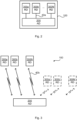
- Fig. 1 is a schematic diagram illustrating a simplification of a cellular telecommunication system 10 where embodiments presented herein can be applied.
- the cellular telecommunication system 10 comprises a base station 20, assumed to be a fraudulent base station.
- the fraudulent base station 20 transmit radio signals, as indicated by radiating arrows 30. It is assumed that the radio signals are received by radio devices (RD) 300a, 300b.
- the radio devices 300a, 300b provide reports to an analyser device (AD) 200 configured to identify the base station as fraudulent.
- the embodiments disclosed herein in particular relate to mechanisms for identifying a fraudulent base station 20 and reporting a fraudulent base station 20.
- an analyser device 200 a method performed by the analyser device 200, a computer program product comprising code, for example in the form of a computer program, that when run on processing circuitry of the analyser device 200, causes the analyser device 200 to perform the method.
- a radio device 300a:300N a method performed by the radio device 300a:300N
- a computer program product comprising code, for example in the form of a computer program, that when run on processing circuitry of the radio device 300a:300N, causes the radio device 300a:300N to perform the method.
- a system comprising the analyser device 200 and at least two radio devices 300a:300N.
- Fig. 2 illustrates a system 100 according to a first embodiment.
- each of the at least two radio devices 300a:300N is operatively connected to the analyser device 200 over a wired connection 40a.
- wired connection 40a As the skilled person, there could be different types of wired connections, such as optical fiber connections, coaxial cable connections, twisted pair cable connections, and the like.
- the analyser device 200 and the at least two radio devices 300a:300N are integrated, collocated, or provided, within one and the same physical entity, where this physical entity defines the system 100.
- the system 100 of Fig. 2 might be stationary and fixed to a critical location to enable continuous monitoring of any fraudulent base stations at such a critical location.
- the system 100 is configured to be mounted on a fixed location.
- the system 100 of Fig. 2 might alternatively be mounted on a vehicle (e.g. car, unmanned aerial vehicle (UAV), or the like) to enable intermittently monitoring of different locations.
- the system 100 is configured to be movable. In this sense, more than one such system 100 might be deployed to monitor different regions and configured to issue notifications of base stations deemed fraudulent.
- Fig. 3 illustrates a system 100 according to a second embodiment.
- each of the at least two radio devices 300a:300N is operatively connected to the analyser device 200 over a wireless connection 40b.
- at least two radio devices 300a':300N' are operatively connected to the analyser device 200 over a respective wireless connection.
- the analyser device 200 of the system 100 in Fig. 3 might reside in a cloud computational environment.
- the system 100 of Fig. 3 is by definition considered to be movable by the virtue of the at least two radio devices 300a:300N being movable.
- radio devices 300a:300N are positioned relative each other to receive signals from the same base station.
- radio devices 300a:300N form a first group of radio devices positioned relative each other to receive signals from one and the same base station and optional radio devices 300a':300N' form a second group of radio devices positioned relative each other to receive signals from one and the same base station
- Fig. 4 illustrating a method for identifying a fraudulent base station 20 as performed by the analyser device 200 according to an embodiment.
- each of the radio devices 300a:300N is configured to report any received identity request messages to the analyser device 200.
- the analyser device 200 is configured to perform S102: S102:
- the analyser device 200 receives a report.
- the report is received from any of at least two radio devices 300a:300N upon that any of the at least two radio devices 300a:300N having received from a base station 20 an identity request message for a long-term identifier of that any of the at least two radio devices 300a:300N.
- the report is of the identity request message.
- the base station 20 is identified as fraudulent based on the time difference between the reports.
- the analyser device 200 is configured to perform S104: S104: The analyser device 200 identifies the base station 20 as fraudulent when reports of the same base station 20 as received from two different ones of the at least two radio devices 300a:300N are received within a threshold time duration with respect to each other.
- the analyser 200 issues a notification when the base station 20 has been identified as fraudulent.
- the analyser device 200 is configured to perform (optional) step S110: S110: The analyser device 200 issues a notification of the thus identified fraudulent base station 20.
- the notification might be an alert message.
- the notification might by the analyser device 200 be sent to a network management entity.
- a notification in the form of an alert message might be sent by the analyzer device 200 to a network management entity for further handling of the fraudulent base station.
- the analyser device 200 only issues the notification in S110 only if one or more conditions is satisfied. Examples of such conditions will be disclosed next.
- One first condition relates to from how many radio devices 300a:300N reports have been received within the threshold time duration. That is, in some embodiments, the notification is in S110 only issued when the analyser device 200 has, for one and the same base station 20, received reports separated from each other at most by the threshold time duration from at least k radio devices 300a:300N, where k >1 is an integer. The higher the value of k , the higher the level of confidence that the base station 20 indeed is fraudulent.
- a certainty level can thereby be developed based on how many radio devices 300a:300N are reporting identity request message for a long-term identifier at the same time, or within a time interval given by the threshold time duration.
- the notification might be issued when k devices out of N receive the same identity request message for a long-term identifier at the same time from the same cell.
- One second condition relates to a certainty level for identifying the base station 20 indeed as fraudulent. That is, in some embodiments the analyser device 200 is configured to perform (optional) step S106: S106: The analyser device 200 determines a certainty level based on how many reports separated from each other at most by the threshold time duration have been received and how many at least two radio devices 300a:300N are operatively connected to the analyser device 200.
- the notification might then in S110 only be issued when the certainty level is above a certainty threshold value.
- One third condition relates to network statistics.
- the certainty level further is based on network statistics obtained by the analyser device 200.
- One fourth condition relates to verification performed by the analyser device 200.
- a fraudulent base station will send identity request messages for the long-term identifier of the radio devices 300a:300N much more often than a legitimate base station, regardless of if the radio devices 300a:300N have valid long-term identifiers or not.
- an identity request message for a long-term identifier could amount to less than 15% with respect to all identity request messages sent; for the remaining more than 85% the identity request message is for a short-term identifier.
- the analyser device 200 is configured to perform (optional) step S108: S108: The analyser device 200 verifies, by querying a database and before the notification is issued, that the base station 20 is not a registered base station.
- S108 is performed, S108 is performed before S110 is performed.
- the analyser device 200 might thus be configured to perform analyses on reports, if any, received from the radio devices 300a:300N and therefrom determine if there is any base station that should be considered as fraudulent based on the number of reports, content of the reports, and timestamps of the reports.
- the herein disclosed system 100 is flexible in the sense that parameters relating to any of the above four conditions might be set with regards to the sensitivity of the detection, for example by changing the value of the threshold time duration and also by adjusting from how many radio devices 300a:300N reports need to be received for a notification to be issued.
- the at least one radio device 300a:300N reports Cell ID, an identifier which unambiguously identifies a cell within a public land mobile network (PLMN). That is, in some embodiments, the report comprises a Cell ID of the base station 20 having sent the identity request message.
- PLMN public land mobile network
- the long-term identifier is the IMSI.
- one or more of the at least two radio devices 300a:300N is/are configured to be served by two or more mobile network operators.
- the at least two radio devices 300a:300N collectively are configured to be served by at least two different mobile network operators.
- one and the same system 100 might be used to identify fraudulent base stations for two or more mobile network operators, which in turn might lower costs and overall power consumption to detect fraudulent base stations in a specific region for all the mobile network operators.
- the identity request message is received during an attach procedure, a TAU procedure, or a LAU procedure.
- the identity request message is received without said any of the at least two radio devices 300a:300N having experienced network lock out.
- the identity request message is received upon said any of the at least two radio devices 300a:300N already having performed initial registration since its radio modem lastly was switched on.
- Fig. 5 illustrating a method for reporting a fraudulent base station 20 as performed by the radio device 300a:300N according to an embodiment.
- the radio device 300a:300N is configured to receive messages from base stations.
- the radio device 300a:300N is configured to perform S202: S202:
- the radio device 300a:300N receives, from a base station 20, an identity request message for a long-term identifier of the radio device 300a:300N.
- the radio device 300a:300N then reports this identity request message to the analyser device. That is, the radio device 300a:300N is configured to perform S204: S204: The radio device 300a:300N provides a report of the identity request message to an analyser device 200 upon the radio device 300a:300N having received the identity request message.
- the radio device 300a:300N is registered to the network as an ordinary UE.
- the report comprises a Cell ID of the base station 20 having sent the identity request message.
- the long-term identifier is the IMSI.
- the identity request message is by the radio device 300a:300N received during an attach procedure, a TAU procedure, or a LAU procedure.
- the identity request message is received without the radio device 300a:300N having experienced network lock out.
- the identity request message is received upon the radio device 300a:300N already having performed initial registration since its radio modem lastly was switched on.
- S301 The radio device 300a:300N listens for any messages as transmitted from base stations.
- the radio device 300a:300N receives a message from one of the base stations.
- step S303 The radio device 300a:300N checks if the message is an identity request message for a long-term identifier. If yes, then step S304 is entered, and if no, then step S301 is entered.
- Fig. 7 illustrating a method for identifying a fraudulent base station 20 as performed by the analyser device 200 based on at least some of the above embodiments.
- the analyser device 200 listens for any reports of identity request messages for a long-term identifier having being received by any of the radio devices 300a:300N.
- the analyser device 200 receives, from one of the radio devices 300a:300N, a report of an identity request message for a long-term identifier having been received by this one of the radio devices 300a:300N.
- the analyser device 200 writes the received report and a timestamp indicating when in time the report was received to a list.
- the timestamp indicates when in time the identity request message was received by the related radio device 300a:300N.
- the analyser device 200 removes from the list any report with timestamp older than a threshold time value.
- the analyser device 200 also removes from the list any previous report of the same base station from the same radio device 300a:300N even if this previous report is not older than the threshold time value.
- step S405 The analyser device 200 checks if there are more than k reports in the list. If yes, then step S406 is entered, and if no, then step S401 is entered.
- the analyser device 200 issues a notification of a fraudulent base station having been identified.
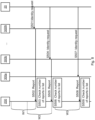
- Fig. 8 illustrating a method for identifying and reporting a fraudulent base station 20 as performed by the analyser device 200 and radio devices 300a:300N based on at least some of the above embodiments.
- S501 Fraudulent base station 20 sends an identity request message for a long-term identifier.
- the identity request message is received by radio device 300N.
- Radio device 300N provides a report of the identity request message to analyser device 200 and also attaches its own ID, and optionally a timestamp indicating when the identity request message was received, to the report.
- Analyser device 200 writes the received report and a timestamp indicating when the report was received (and/or when in time the identity request message was received by the related radio device 300a:300N) to a list. Analyser device 200 removes from the list any previous report received from radio device 300N pertaining to the same reported base station. Since no previous reports have been received, no reports are removed. The analyser device 200 checks if there, for the same base station, are k >1 reports in the list and if these k reports all have timestamp not older than the threshold time value given by the time window W1. Since only one report has been received, this condition is not fulfilled. Base station 20 is therefore not yet identified as fraudulent.
- S504 Fraudulent base station 20 sends another identity request message for a long-term identifier.
- the identity request message is received by radio device 300b.
- Radio device 300b provides a report of the identity request message to analyser device 200 and also attaches its own ID, and optionally a timestamp indicating when the identity request message was received, to the report.
- Analyser device 200 writes the received report and a timestamp indicating when the report was received (and/or when in time the identity request message was received by the related radio device 300a:300N) to the list.
- the analyser device 200 removes from the list any previous report received from radio device 300b. Since no previous reports have been received from radio device 300b, no reports are removed.
- S507 Fraudulent base station 20 sends yet another identity request message for a long-term identifier.
- the identity request message is received by radio device 300a.
- Radio device 300a provides a report of the identity request message to analyser device 200 and also attaches its own ID, and optionally a timestamp indicating when the identity request message was received, to the report.
- Analyser device 200 writes the received report and a timestamp indicating when the report was received (and/or when in time the identity request message was received by the related radio device 300a:300N) to the list. Analyser device 200 removes from the list any previous report received from radio device 300a. Since no previous reports have been received from radio device 300a, no reports are removed. The analyser device 200 checks if there are more than k >1 reports and if these k reports all have timestamp not older than the threshold time value given by the time window W3. There are now three reports in the list, but the reports from radio device 300b and radio device 300N were both received outside the time window W3, this condition is no longer fulfilled. Base station 20 is therefore in this context not identified as fraudulent.
- analyser device 200 thus in a list keeps only the most recent report received for each radio device 300a:300N. Also, older reports are regularly removed from the list according to a sliding time window (as given by W1, W2, W3). In this respect, W1, W2, and W3 are thus examples of the threshold time duration. Whenever there are k >1 reports in the list, this is an indication that a fraudulent base station has been identified.
- a general condition is that it could be required that there are k >z reports in the list, where z >1.
- the higher the value of z the higher the chance that the base station 20 indeed is fraudulent.
- increasing the value of z also increases the risk of missing to identify a base station 20 as fraudulent.
- the value of z could be set so as to be dependent on the total number N of radio devices 300a:300N; the higher the value of N , the higher is the value that z could be set to.
- z should never be set to a value higher than N.
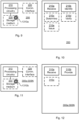
- Fig. 9 schematically illustrates, in terms of a number of functional units, the components of an analyser device 200 according to an embodiment.
- Processing circuitry 210 is provided using any combination of one or more of a suitable central processing unit (CPU), multiprocessor, microcontroller, digital signal processor (DSP), etc., capable of executing software instructions stored in a computer program product 1310a (as in Fig. 13 ), e.g. in the form of a storage medium 230.
- the processing circuitry 210 may further be provided as at least one application specific integrated circuit (ASIC), or field programmable gate array (FPGA).
- ASIC application specific integrated circuit
- FPGA field programmable gate array
- the processing circuitry 210 is configured to cause the analyser device 200 to perform a set of operations, or steps, as disclosed above.
- the storage medium 230 may store the set of operations
- the processing circuitry 210 may be configured to retrieve the set of operations from the storage medium 230 to cause the analyser device 200 to perform the set of operations.
- the set of operations may be provided as a set of executable instructions.
- the processing circuitry 210 is thereby arranged to execute methods as herein disclosed.
- the storage medium 230 may also comprise persistent storage, which, for example, can be any single one or combination of magnetic memory, optical memory, solid state memory or even remotely mounted memory.
- the analyser device 200 may further comprise a communications interface 220 for communications with other entities, node, functions, and devices in the communication network of Fig. 1 .
- the communications interface 220 may comprise one or more transmitters and receivers, comprising analogue and digital components.
- the processing circuitry 210 controls the general operation of the analyser device 200 e.g. by sending data and control signals to the communications interface 220 and the storage medium 230, by receiving data and reports from the communications interface 220, and by retrieving data and instructions from the storage medium 230.
- Other components, as well as the related functionality, of the analyser device 200 are omitted in order not to obscure the concepts presented herein.
- Fig. 10 schematically illustrates, in terms of a number of functional modules, the components of an analyser device 200 according to an embodiment.
- the analyser device 200 of Fig. 10 comprises a number of functional modules; a receive module 210a configured to perform step S102, and an identify module 210b configured to perform step S104.
- the analyser device 200 of Fig. 10 may further comprise a number of optional functional modules, such as any of a determine module 210C configured to perform step S106, a verify module 210d configured to perform step S108, and an issue module 210e configured to perform step S110.
- each functional module 210a-210e may be implemented in hardware or in software.
- one or more or all functional modules 210a-210e may be implemented by the processing circuitry 210, possibly in cooperation with the communications interface 220 and/or the storage medium 230.
- the processing circuitry 210 may thus be arranged to from the storage medium 230 fetch instructions as provided by a functional module 210a-210e and to execute these instructions, thereby performing any steps of the analyser device 200 as disclosed herein.
- the analyser device 200 may be provided as a standalone device or as a part of at least one further device.
- the analyser device 200 may be provided in a node of a radio access network or in a node of a core network.
- functionality of the analyser device 200 may be distributed between at least two devices, or nodes. These at least two nodes, or devices, may either be part of the same network part (such as the radio access network or the core network) or may be spread between at least two such network parts.
- instructions that are required to be performed in real time may be performed in a device, or node, operatively closer to the cell than instructions that are not required to be performed in real time.
- a first portion of the instructions performed by the analyser device 200 may be executed in a first device, and a second portion of the instructions performed by the analyser device 200 may be executed in a second device; the herein disclosed embodiments are not limited to any particular number of devices on which the instructions performed by the analyser device 200 may be executed.
- the methods according to the herein disclosed embodiments are suitable to be performed by an analyser device 200 residing in a cloud computational environment. Therefore, although a single processing circuitry 210 is illustrated in Fig. 9 the processing circuitry 210 may be distributed among a plurality of devices, or nodes. The same applies to the functional modules 210a-210e of Fig. 10 and the computer program 1320a of Fig. 13 .
- Fig. 11 schematically illustrates, in terms of a number of functional units, the components of a radio device 300a:300N
- Processing circuitry 310 is provided using any combination of one or more of a suitable central processing unit (CPU), multiprocessor, microcontroller, digital signal processor (DSP), etc., capable of executing software instructions stored in a computer program product 1310b (as in Fig. 13 ), e.g. in the form of a storage medium 330.
- the processing circuitry 310 may further be provided as at least one application specific integrated circuit (ASIC), or field programmable gate array (FPGA).
- ASIC application specific integrated circuit
- FPGA field programmable gate array
- the processing circuitry 310 is configured to cause the radio device 300a:300N to perform a set of operations, or steps, as disclosed above.
- the storage medium 330 may store the set of operations
- the processing circuitry 310 may be configured to retrieve the set of operations from the storage medium 330 to cause the radio device 300a:300N to perform the set of operations.
- the set of operations may be provided as a set of executable instructions.
- the processing circuitry 310 is thereby arranged to execute methods as herein disclosed.
- the storage medium 330 may also comprise persistent storage, which, for example, can be any single one or combination of magnetic memory, optical memory, solid state memory or even remotely mounted memory.
- the radio device 300a:300N may further comprise a communications interface 320 for communications with other entities, node, functions, and devices in the communication network of Fig. 1 .
- the communications interface 320 may comprise one or more transmitters and receivers, comprising analogue and digital components.
- the processing circuitry 310 controls the general operation of the radio device 300a:300N e.g. by sending data and control signals to the communications interface 320 and the storage medium 330, by receiving data and reports from the communications interface 320, and by retrieving data and instructions from the storage medium 330.
- Other components, as well as the related functionality, of the radio device 300a:300N are omitted in order not to obscure the concepts presented herein.
- Fig. 12 schematically illustrates, in terms of a number of functional modules, the components of a radio device 300a:300N
- the radio device 300a:300N of Fig. 12 comprises a number of functional modules; a receive module 310a configured to perform step S202, and a provide module 310b configured to perform step S204.
- the radio device 300a:300N of Fig. 12 may further comprise a number of optional functional modules, as represented by functional module 310c.
- each functional module 310a-310c may be implemented in hardware or in software.
- one or more or all functional modules 310a-310c may be implemented by the processing circuitry 310, possibly in cooperation with the communications interface 320 and/or the storage medium 330.
- the processing circuitry 310 may thus be arranged to from the storage medium 330 fetch instructions as provided by a functional module 310a-310c and to execute these instructions, thereby performing any steps of the radio device 300a:300N as disclosed herein.
- Fig. 13 shows one example of a computer program product 1310a, 1310b comprising computer readable means 1330.
- a computer program 1320a can be stored, which computer program 1320a can cause the processing circuitry 210 and thereto operatively coupled entities and devices, such as the communications interface 220 and the storage medium 230, to execute methods according to embodiments described herein.
- the computer program 1320a and/or computer program product 1310a may thus provide means for performing any steps of the analyser device 200 as herein disclosed.
- a computer program 1320b can be stored, which computer program 1320b can cause the processing circuitry 310 and thereto operatively coupled entities and devices, such as the communications interface 320 and the storage medium 330, to execute methods according to embodiments described herein.
- the computer program 1320b and/or computer program product 1310b may thus provide means for performing any steps of the radio device 300a:300N as herein disclosed.
- the computer program product 1310a, 1310b is illustrated as an optical disc, such as a CD (compact disc) or a DVD (digital versatile disc) or a Blu-Ray disc.
- the computer program product 1310a, 1310b could also be embodied as a memory, such as a random access memory (RAM), a read-only memory (ROM), an erasable programmable read-only memory (EPROM), or an electrically erasable programmable read-only memory (EEPROM) and more particularly as a non-volatile storage medium of a device in an external memory such as a USB (Universal Serial Bus) memory or a Flash memory, such as a compact Flash memory.
- RAM random access memory
- ROM read-only memory
- EPROM erasable programmable read-only memory
- EEPROM electrically erasable programmable read-only memory
- the computer program 1320a, 1320b is here schematically shown as a track on the depicted optical disk, the computer program 1320a,
Landscapes
- Engineering & Computer Science (AREA)
- Computer Security & Cryptography (AREA)
- Computer Networks & Wireless Communication (AREA)
- Signal Processing (AREA)
- Mobile Radio Communication Systems (AREA)
- Telephone Function (AREA)
Claims (19)
- System (100) zum Identifizieren einer betrügerischen Basisstation (20), wobei das System (100) eine Analysevorrichtung (200) und mindestens zwei Funkvorrichtungen (300a:300N) umfasst, konfiguriert zum:Bereitstellen eines Berichts, von einer beliebigen der mindestens zwei Funkvorrichtungen (300a:300N) und an die Analysevorrichtung (200), wenn die beliebige der mindestens zwei Funkvorrichtungen (300a:300N) von einer Basisstation (20) eine Identitätsanforderungsnachricht für eine Dauerkennung der beliebigen der mindestens zwei Funkvorrichtungen (300a:300N) empfangen hat, der Identitätsanforderungsnachricht;Identifizieren, durch die Analysevorrichtung (200), der Basisstation (20) als betrügerisch, wenn Berichte derselben Basisstation (20), wie sie von mindestens zwei unterschiedlichen der mindestens zwei Funkvorrichtungen (300a:300N) empfangen werden, innerhalb einer Schwellenzeitdauer in Bezug aufeinander empfangen werden.
- System (100) nach Anspruch 1, weiter konfiguriert zum:
Ausstellen, durch die Analysevorrichtung (200), einer Benachrichtigung über die damit identifizierte betrügerische Basisstation (20). - System (100) nach Anspruch 2, wobei die Benachrichtigung nur ausgestellt wird, wenn die Analysevorrichtungen (200) von mindestens k Funkvorrichtungen (300a:300N), wo k>1 eine Ganzzahl ist, Berichte empfangen hat, die höchsten um die Schwellenzeitdauer auseinanderliegen.
- System (100) nach einem der vorstehenden Ansprüche, weiter konfiguriert zum:
Bestimmen, durch die Analysevorrichtung (200), eines Gewissheitsgrads, basierend darauf, wie viele Berichte, die höchstens um die Schwellenzeitdauer auseinanderliegen, empfangen worden sind, und wie viele mindestens zwei Funkvorrichtungen (300a:300N) betriebsfähig mit der Analysevorrichtung (200) verbunden sind. - System (100) nach Anspruch 5, wobei die Benachrichtigung nur ausgestellt wird, wenn der Gewissheitsgrad über einem Gewissheitsschwellenwert liegt.
- System (100) nach Anspruch 4 oder 5, wobei der Gewissheitsgrad weiter auf Netzwerkstatistik basiert, die durch die Analysevorrichtung (200) erhalten wird.
- System (100) nach einem der vorstehenden Ansprüche, weiter konfiguriert zum:
Verifizieren, dadurch, dass die Analysevorrichtung (200) eine Datenbank abfragt, und bevor die Benachrichtigung ausgestellt wird, dass die Basisstation (20) keine registrierte Basisstation ist. - System (100) nach einem der vorstehenden Ansprüche, wobei die mindestens zwei Funkvorrichtungen (300a:300N) relativ zueinander positioniert sind, um Signale von derselben Basisstation zu empfangen.
- System (100) nach einem der vorstehenden Ansprüche, wobei der Bericht eine Zell-ID der Basisstation (20) umfasst, die die Identitätsanforderungsnachricht gesendet hat.
- System (100) nach einem der vorstehenden Ansprüche, wobei die Dauerkennung eine internationale mobile Teilnehmerkennung, IMSI (International Mobile Subscriber Identity), ist.
- System (100) nach einem der vorstehenden Ansprüche, wobei die mindestens zwei Funkvorrichtungen (300a:300N) gemeinsam konfiguriert sind, um von mindestens zwei unterschiedlichen Funknetzbetreibern bedient zu werden.
- System (100) nach einem der vorstehenden Ansprüche, wobei die Identitätsanforderungsnachricht während einer Verbindungsprozedur, einer TAU-Prozedur oder einer LAU-Prozedur empfangen wird.
- System (100) nach einem der vorstehenden Ansprüche, wobei die Identitätsanforderungsnachricht empfangen wird, ohne dass eine beliebige der mindestens zwei Funkvorrichtungen (300a:300N) einen Netzausschluss erfahren hat.
- System (100) nach einem der vorstehenden Ansprüche, wobei die Identitätsanforderungsnachricht empfangen wird, nachdem eine beliebige der mindestens zwei Funkvorrichtungen (300a:300N) bereits eine anfängliche Registrierung durchgeführt hat, seit ihr Funkmodem das letzte Mal eingeschaltet worden ist.
- System (100) nach einem der Ansprüche 1 bis 14, wobei die Analysevorrichtung (200) und die mindestens zwei Funkvorrichtungen (300a:300N) integriert, nebeneinanderstehend oder innerhalb ein und derselben physikalischen Entität, die das System (100) definiert, vorgesehen sind.
- Analysevorrichtung (200) zum Identifizieren einer betrügerischen Basisstation (20), wobei die Analysevorrichtung (200) Verarbeitungsschaltung umfasst, wobei die Verarbeitungsschaltung konfiguriert ist, die Analysevorrichtung (200) zu Folgendem zu veranlassen:Empfangen eines Berichts, von einer beliebigen von mindestens zwei Funkvorrichtungen (300a:300N), wenn eine beliebige der mindestens zwei Funkvorrichtungen (300a:300N) von einer Basisstation (20) eine Identitätsanforderungsnachricht für eine Dauerkennung der beliebigen der mindestens zwei Funkvorrichtungen (300a:300N) empfangen hat, der Identitätsanforderungsnachricht; undIdentifizieren der Basisstation (20) als betrügerisch, wenn Berichte derselben Basisstation (20), wie sie von zwei unterschiedlichen der mindestens zwei Funkvorrichtungen (300a:300N) empfangen werden, innerhalb einer Schwellenzeitdauer voneinander empfangen werden.
- Verfahren zum Identifizieren einer betrügerischen Basisstation (20), wobei das Verfahren von einer Analysevorrichtung (200) durchgeführt wird, das Verfahren umfassend:Empfangen (S102) eines Berichts, von einer beliebigen von mindestens zwei Funkvorrichtungen (300a:300N), nachdem die beliebige der mindestens zwei Funkvorrichtungen (300a:300N) von einer Basisstation (20) eine Identitätsanforderungsnachricht für eine Dauerkennung der beliebigen der mindestens zwei Funkvorrichtungen (300a:300N) empfangen hat, der Identitätsanforderungsnachricht; undIdentifizieren (S104) der Basisstation (20) als betrügerisch, wenn Berichte derselben Basisstation (20), wie sie von zwei unterschiedlichen der mindestens zwei Funkvorrichtungen (300a:300N) empfangen werden, innerhalb einer Schwellenzeitdauer in Bezug aufeinander empfangen werden.
- Computerprogramm (1320a) zum Identifizieren einer betrügerischen Basisstation (20), wobei das Computerprogramm Computercode umfasst, der, wenn er auf Verarbeitungsschaltung (210) einer Analysevorrichtung (200) läuft, die Analysevorrichtung (200) zu Folgendem veranlasst:Empfangen (S102) eines Berichts von einer beliebigen von mindestens zwei Funkvorrichtungen (300a:300N), wenn die beliebige der mindestens zwei Funkvorrichtungen (300a:300N) von einer Basisstation (20) eine Identitätsanforderungsnachricht für eine Dauerkennung der beliebigen der mindestens zwei Funkvorrichtungen (300a:300N) empfangen hat, der Identitätsanforderungsnachricht; undIdentifizieren (S104) der Basisstation (20) als betrügerisch, wenn Berichte derselben Basisstation (20), wie sie von zwei unterschiedlichen der mindestens zwei Funkvorrichtungen (300a:300N) empfangen werden, innerhalb einer Schwellenzeitdauer in Bezug aufeinander empfangen werden.
- Computerprogrammprodukt (1310a, 1310b), das ein Computerprogramm (1320a, 1320b) nach Anspruch 18 und ein computerlesbares Speichermedium (1330), auf dem das Computerprogramm gespeichert ist, umfasst.
Applications Claiming Priority (2)
| Application Number | Priority Date | Filing Date | Title |
|---|---|---|---|
| EP19404005 | 2019-09-24 | ||
| PCT/EP2019/079217 WO2021058120A1 (en) | 2019-09-24 | 2019-10-25 | Identyifying and reporting a fraudelent base station |
Publications (3)
| Publication Number | Publication Date |
|---|---|
| EP4035443A1 EP4035443A1 (de) | 2022-08-03 |
| EP4035443C0 EP4035443C0 (de) | 2023-10-25 |
| EP4035443B1 true EP4035443B1 (de) | 2023-10-25 |
Family
ID=68426423
Family Applications (1)
| Application Number | Title | Priority Date | Filing Date |
|---|---|---|---|
| EP19797617.8A Active EP4035443B1 (de) | 2019-09-24 | 2019-10-25 | Identifizieren und melden einer betrügerischen basisstation |
Country Status (5)
| Country | Link |
|---|---|
| US (1) | US12081987B2 (de) |
| EP (1) | EP4035443B1 (de) |
| JP (1) | JP7403637B2 (de) |
| CN (1) | CN114424606B (de) |
| WO (1) | WO2021058120A1 (de) |
Families Citing this family (2)
| Publication number | Priority date | Publication date | Assignee | Title |
|---|---|---|---|---|
| JP7403637B2 (ja) * | 2019-09-24 | 2023-12-22 | テレフオンアクチーボラゲット エルエム エリクソン(パブル) | 不正な基地局の識別および報告 |
| EP4335137B1 (de) * | 2021-05-04 | 2025-02-12 | Telefonaktiebolaget LM Ericsson (publ) | Erkennung von falschen basisstationen |
Family Cites Families (44)
| Publication number | Priority date | Publication date | Assignee | Title |
|---|---|---|---|---|
| US20080010678A1 (en) * | 2004-09-17 | 2008-01-10 | Jeff Burdette | Authentication Proxy |
| US8019333B2 (en) | 2005-03-14 | 2011-09-13 | Qualcomm Incorporated | Apparatus and methods for product acceptance testing on a wireless device |
| US7386105B2 (en) * | 2005-05-27 | 2008-06-10 | Nice Systems Ltd | Method and apparatus for fraud detection |
| ES2712700T3 (es) * | 2007-06-13 | 2019-05-14 | Exfo Oy | Un detector de hombre-en-el-medio y un método que lo usa |
| US8407112B2 (en) * | 2007-08-01 | 2013-03-26 | Qpay Holdings Limited | Transaction authorisation system and method |
| US9779403B2 (en) * | 2007-12-07 | 2017-10-03 | Jpmorgan Chase Bank, N.A. | Mobile fraud prevention system and method |
| US20120310743A1 (en) * | 2011-01-04 | 2012-12-06 | Rajul Johri | Using mobile devices to make secure and reliable payments for store or online purchases |
| US8655312B2 (en) | 2011-08-12 | 2014-02-18 | F-Secure Corporation | Wireless access point detection |
| US9633201B1 (en) * | 2012-03-01 | 2017-04-25 | The 41St Parameter, Inc. | Methods and systems for fraud containment |
| IL219500A (en) | 2012-04-30 | 2017-06-29 | Verint Systems Ltd | Systems and methods for identifying impostors |
| US9510204B2 (en) * | 2014-02-28 | 2016-11-29 | Life360, Inc. | Apparatus and method of determining fraudulent use of a mobile device based on behavioral abnormality |
| EP3462670B1 (de) * | 2014-05-08 | 2021-06-09 | Panasonic Intellectual Property Corporation of America | Fahrzeuginternes netzwerksystem, elektronische steuereinheit zur betrugserkennung und betrugsbekämpfungsverfahren |
| US10438206B2 (en) * | 2014-05-27 | 2019-10-08 | The Toronto-Dominion Bank | Systems and methods for providing merchant fraud alerts |
| US9838879B2 (en) * | 2014-12-19 | 2017-12-05 | Telefonaktiebolaget Lm Ericsson (Publ) | Network node and method for detecting false base stations |
| US9867039B2 (en) * | 2015-06-26 | 2018-01-09 | Futurewei Technologies, Inc. | System and method for faked base station detection |
| US10949850B1 (en) * | 2015-12-30 | 2021-03-16 | Wells Fargo Bank, N.A. | Systems and methods for using location services to detect fraud |
| US9628994B1 (en) | 2015-12-30 | 2017-04-18 | Argela Yazilim ve Bilisim Teknolojileri San. ve Tic. A.S. | Statistical system and method for catching a man-in-the-middle attack in 3G networks |
| EP3488577B1 (de) * | 2016-07-19 | 2021-09-01 | Telefonaktiebolaget LM Ericsson (PUBL) | Node und verfahren zur erkennung, dass ein drahtlose vorrichtung mit einer nicht-legitimieren vorrichtung kommunikation hat |
| CN106255115A (zh) * | 2016-07-29 | 2016-12-21 | 努比亚技术有限公司 | 一种伪基站识别装置及方法 |
| JP6433951B2 (ja) * | 2016-08-09 | 2018-12-05 | 東芝デジタルソリューションズ株式会社 | ネットワーク監視装置およびプログラム |
| CN106131848A (zh) * | 2016-09-05 | 2016-11-16 | 努比亚技术有限公司 | 防止接入伪基站的方法及具有防止接入伪基站系统的终端 |
| US20180097807A1 (en) * | 2016-09-30 | 2018-04-05 | Lg Electronics Inc. | Method and apparatus for performing initial access procedure based on authentication in wireless communication system |
| CN107071779A (zh) * | 2017-04-13 | 2017-08-18 | 广东欧珀移动通信有限公司 | 伪基站识别方法、装置及终端 |
| US10492056B2 (en) * | 2017-06-15 | 2019-11-26 | T-Mobile Usa, Inc. | Enhanced mobile subscriber privacy in telecommunications networks |
| WO2018232389A1 (en) * | 2017-06-16 | 2018-12-20 | Motorola Mobility Llc | Reporting monitored parameter information |
| CN109548027B (zh) * | 2017-08-17 | 2023-12-05 | 北京三星通信技术研究有限公司 | 在移动终端中识别伪基站的方法和装置 |
| CN109587686A (zh) * | 2017-09-29 | 2019-04-05 | 华为技术有限公司 | 识别伪基站的方法和装置 |
| US20190132740A1 (en) * | 2017-10-31 | 2019-05-02 | Qualcomm Incorporated | Enhanced cloud information system with prefetching and caching decisions to facilitate detection of false network access nodes |
| WO2019107210A1 (ja) * | 2017-12-01 | 2019-06-06 | パナソニック インテレクチュアル プロパティ コーポレーション オブ アメリカ | 電子制御装置、不正検知サーバ、車載ネットワークシステム、車載ネットワーク監視システム及び車載ネットワーク監視方法 |
| PL3576366T3 (pl) * | 2018-05-29 | 2021-12-27 | Exfo Oy | Sposób i fałszywa stacja bazowa do wykrywania tożsamości abonenta |
| JP7147635B2 (ja) * | 2019-03-05 | 2022-10-05 | トヨタ自動車株式会社 | 不正送信データ検知装置 |
| US11468272B2 (en) * | 2019-08-15 | 2022-10-11 | Visa International Service Association | Method, system, and computer program product for detecting fraudulent interactions |
| JP7403637B2 (ja) * | 2019-09-24 | 2023-12-22 | テレフオンアクチーボラゲット エルエム エリクソン(パブル) | 不正な基地局の識別および報告 |
| EP3817351A1 (de) * | 2019-10-28 | 2021-05-05 | Sigos Bvba | System zur analyse und zur blockierung betrügerischer teilnehmeridentitäten in einem kommunikationsnetzwerk |
| US11356473B2 (en) * | 2019-11-25 | 2022-06-07 | Level 3 Communications, Llc | Web service-based monitoring and detection of fraudulent or unauthorized use of calling service |
| JP7189900B2 (ja) * | 2020-01-17 | 2022-12-14 | アンリツ株式会社 | 移動端末試験装置とその圏外試験制御方法 |
| WO2021181012A1 (fr) * | 2020-03-11 | 2021-09-16 | Araxxe | Procede de detection d'un usage frauduleux ou abusif d'un service de telephonie fourni par un operateur de telephonie |
| US11463475B1 (en) * | 2021-03-24 | 2022-10-04 | Amazon Technologies, Inc. | Click-to-call fraud detection |
| EP4335137B1 (de) * | 2021-05-04 | 2025-02-12 | Telefonaktiebolaget LM Ericsson (publ) | Erkennung von falschen basisstationen |
| US12010533B2 (en) * | 2021-12-31 | 2024-06-11 | Motorola Solutions, Inc. | Radio device anomaly detection |
| CN114501462A (zh) * | 2022-02-10 | 2022-05-13 | 上海闻泰信息技术有限公司 | 诈骗来电识别方法、装置、电子设备及存储介质 |
| JP7805259B2 (ja) * | 2022-06-30 | 2026-01-23 | 本田技研工業株式会社 | 不正信号検出装置、車両及び不正信号検出方法 |
| WO2024032935A1 (en) * | 2022-08-08 | 2024-02-15 | Telefonaktiebolaget Lm Ericsson (Publ) | Technique for detecting a bogus radio base station |
| CN116016769A (zh) * | 2022-12-01 | 2023-04-25 | 中国联合网络通信集团有限公司 | 一种欺诈团伙的识别方法、装置及可读存储介质 |
-
2019
- 2019-10-25 JP JP2022515933A patent/JP7403637B2/ja active Active
- 2019-10-25 US US17/762,410 patent/US12081987B2/en active Active
- 2019-10-25 WO PCT/EP2019/079217 patent/WO2021058120A1/en not_active Ceased
- 2019-10-25 EP EP19797617.8A patent/EP4035443B1/de active Active
- 2019-10-25 CN CN201980100585.5A patent/CN114424606B/zh active Active
Also Published As
| Publication number | Publication date |
|---|---|
| EP4035443C0 (de) | 2023-10-25 |
| CN114424606A (zh) | 2022-04-29 |
| WO2021058120A1 (en) | 2021-04-01 |
| US20220345892A1 (en) | 2022-10-27 |
| CN114424606B (zh) | 2025-09-16 |
| JP7403637B2 (ja) | 2023-12-22 |
| US12081987B2 (en) | 2024-09-03 |
| EP4035443A1 (de) | 2022-08-03 |
| JP2022548847A (ja) | 2022-11-22 |
Similar Documents
| Publication | Publication Date | Title |
|---|---|---|
| US10117094B2 (en) | Systems and methods for identifying rogue base stations | |
| EP3298814B1 (de) | System und verfahren zur erkennung einer gefälschten basisstation | |
| US10200869B2 (en) | Network node and method for detecting false base stations | |
| US10904765B2 (en) | Method for operating a wireless communication device | |
| EP3488577B1 (de) | Node und verfahren zur erkennung, dass ein drahtlose vorrichtung mit einer nicht-legitimieren vorrichtung kommunikation hat | |
| US20150140997A1 (en) | Systems and methods for protocol-based identification of rogue base stations | |
| US8983527B2 (en) | Radio communication system, radio base station, and method for reconfiguring communication parameter | |
| EP4035443B1 (de) | Identifizieren und melden einer betrügerischen basisstation | |
| CA2389189C (en) | Detecting a fraudulent mobile station in a mobile communication system using location information of mobile station | |
| US11653241B2 (en) | Reporting performance degradation in a communications system | |
| CN113347634B (zh) | 一种基于信号及信令指纹的4g、5g空口攻击检测方法 | |
| US9326098B1 (en) | Identifying suspects and witness to shooting based on examination of calls made after shooting | |
| US12149984B2 (en) | Reporting of network performance degradation in a communications system | |
| KR20180082678A (ko) | 이동통신시스템에서 물리적 셀 식별자 혼동 검출 방법 |
Legal Events
| Date | Code | Title | Description |
|---|---|---|---|
| STAA | Information on the status of an ep patent application or granted ep patent |
Free format text: STATUS: UNKNOWN |
|
| STAA | Information on the status of an ep patent application or granted ep patent |
Free format text: STATUS: THE INTERNATIONAL PUBLICATION HAS BEEN MADE |
|
| PUAI | Public reference made under article 153(3) epc to a published international application that has entered the european phase |
Free format text: ORIGINAL CODE: 0009012 |
|
| STAA | Information on the status of an ep patent application or granted ep patent |
Free format text: STATUS: REQUEST FOR EXAMINATION WAS MADE |
|
| 17P | Request for examination filed |
Effective date: 20220407 |
|
| AK | Designated contracting states |
Kind code of ref document: A1 Designated state(s): AL AT BE BG CH CY CZ DE DK EE ES FI FR GB GR HR HU IE IS IT LI LT LU LV MC MK MT NL NO PL PT RO RS SE SI SK SM TR |
|
| DAV | Request for validation of the european patent (deleted) | ||
| DAX | Request for extension of the european patent (deleted) | ||
| REG | Reference to a national code |
Ref country code: DE Ref legal event code: R079 Free format text: PREVIOUS MAIN CLASS: H04W0012120000 Ipc: H04W0012122000 Ref country code: DE Ref legal event code: R079 Ref document number: 602019040178 Country of ref document: DE Free format text: PREVIOUS MAIN CLASS: H04W0012120000 Ipc: H04W0012122000 |
|
| RIC1 | Information provided on ipc code assigned before grant |
Ipc: H04W 60/00 20090101ALN20230622BHEP Ipc: H04W 12/122 20210101AFI20230622BHEP |
|
| GRAP | Despatch of communication of intention to grant a patent |
Free format text: ORIGINAL CODE: EPIDOSNIGR1 |
|
| STAA | Information on the status of an ep patent application or granted ep patent |
Free format text: STATUS: GRANT OF PATENT IS INTENDED |
|
| INTG | Intention to grant announced |
Effective date: 20230728 |
|
| GRAS | Grant fee paid |
Free format text: ORIGINAL CODE: EPIDOSNIGR3 |
|
| GRAA | (expected) grant |
Free format text: ORIGINAL CODE: 0009210 |
|
| STAA | Information on the status of an ep patent application or granted ep patent |
Free format text: STATUS: THE PATENT HAS BEEN GRANTED |
|
| AK | Designated contracting states |
Kind code of ref document: B1 Designated state(s): AL AT BE BG CH CY CZ DE DK EE ES FI FR GB GR HR HU IE IS IT LI LT LU LV MC MK MT NL NO PL PT RO RS SE SI SK SM TR |
|
| REG | Reference to a national code |
Ref country code: GB Ref legal event code: FG4D |
|
| REG | Reference to a national code |
Ref country code: CH Ref legal event code: EP |
|
| REG | Reference to a national code |
Ref country code: DE Ref legal event code: R096 Ref document number: 602019040178 Country of ref document: DE |
|
| REG | Reference to a national code |
Ref country code: IE Ref legal event code: FG4D |
|
| U01 | Request for unitary effect filed |
Effective date: 20231025 |
|
| U07 | Unitary effect registered |
Designated state(s): AT BE BG DE DK EE FI FR IT LT LU LV MT NL PT SE SI Effective date: 20231030 |
|
| U20 | Renewal fee for the european patent with unitary effect paid |
Year of fee payment: 5 Effective date: 20231027 |
|
| PG25 | Lapsed in a contracting state [announced via postgrant information from national office to epo] |
Ref country code: GR Free format text: LAPSE BECAUSE OF FAILURE TO SUBMIT A TRANSLATION OF THE DESCRIPTION OR TO PAY THE FEE WITHIN THE PRESCRIBED TIME-LIMIT Effective date: 20240126 |
|
| PG25 | Lapsed in a contracting state [announced via postgrant information from national office to epo] |
Ref country code: IS Free format text: LAPSE BECAUSE OF FAILURE TO SUBMIT A TRANSLATION OF THE DESCRIPTION OR TO PAY THE FEE WITHIN THE PRESCRIBED TIME-LIMIT Effective date: 20240225 |
|
| PG25 | Lapsed in a contracting state [announced via postgrant information from national office to epo] |
Ref country code: ES Free format text: LAPSE BECAUSE OF FAILURE TO SUBMIT A TRANSLATION OF THE DESCRIPTION OR TO PAY THE FEE WITHIN THE PRESCRIBED TIME-LIMIT Effective date: 20231025 |
|
| PG25 | Lapsed in a contracting state [announced via postgrant information from national office to epo] |
Ref country code: IS Free format text: LAPSE BECAUSE OF FAILURE TO SUBMIT A TRANSLATION OF THE DESCRIPTION OR TO PAY THE FEE WITHIN THE PRESCRIBED TIME-LIMIT Effective date: 20240225 Ref country code: GR Free format text: LAPSE BECAUSE OF FAILURE TO SUBMIT A TRANSLATION OF THE DESCRIPTION OR TO PAY THE FEE WITHIN THE PRESCRIBED TIME-LIMIT Effective date: 20240126 Ref country code: ES Free format text: LAPSE BECAUSE OF FAILURE TO SUBMIT A TRANSLATION OF THE DESCRIPTION OR TO PAY THE FEE WITHIN THE PRESCRIBED TIME-LIMIT Effective date: 20231025 |
|
| PG25 | Lapsed in a contracting state [announced via postgrant information from national office to epo] |
Ref country code: RS Free format text: LAPSE BECAUSE OF FAILURE TO SUBMIT A TRANSLATION OF THE DESCRIPTION OR TO PAY THE FEE WITHIN THE PRESCRIBED TIME-LIMIT Effective date: 20231025 Ref country code: PL Free format text: LAPSE BECAUSE OF FAILURE TO SUBMIT A TRANSLATION OF THE DESCRIPTION OR TO PAY THE FEE WITHIN THE PRESCRIBED TIME-LIMIT Effective date: 20231025 Ref country code: NO Free format text: LAPSE BECAUSE OF FAILURE TO SUBMIT A TRANSLATION OF THE DESCRIPTION OR TO PAY THE FEE WITHIN THE PRESCRIBED TIME-LIMIT Effective date: 20240125 Ref country code: HR Free format text: LAPSE BECAUSE OF FAILURE TO SUBMIT A TRANSLATION OF THE DESCRIPTION OR TO PAY THE FEE WITHIN THE PRESCRIBED TIME-LIMIT Effective date: 20231025 |
|
| REG | Reference to a national code |
Ref country code: CH Ref legal event code: PL |
|
| PG25 | Lapsed in a contracting state [announced via postgrant information from national office to epo] |
Ref country code: CH Free format text: LAPSE BECAUSE OF NON-PAYMENT OF DUE FEES Effective date: 20231031 |
|
| PG25 | Lapsed in a contracting state [announced via postgrant information from national office to epo] |
Ref country code: CZ Free format text: LAPSE BECAUSE OF FAILURE TO SUBMIT A TRANSLATION OF THE DESCRIPTION OR TO PAY THE FEE WITHIN THE PRESCRIBED TIME-LIMIT Effective date: 20231025 |
|
| REG | Reference to a national code |
Ref country code: DE Ref legal event code: R097 Ref document number: 602019040178 Country of ref document: DE |
|
| PG25 | Lapsed in a contracting state [announced via postgrant information from national office to epo] |
Ref country code: SK Free format text: LAPSE BECAUSE OF FAILURE TO SUBMIT A TRANSLATION OF THE DESCRIPTION OR TO PAY THE FEE WITHIN THE PRESCRIBED TIME-LIMIT Effective date: 20231025 |
|
| PG25 | Lapsed in a contracting state [announced via postgrant information from national office to epo] |
Ref country code: SM Free format text: LAPSE BECAUSE OF FAILURE TO SUBMIT A TRANSLATION OF THE DESCRIPTION OR TO PAY THE FEE WITHIN THE PRESCRIBED TIME-LIMIT Effective date: 20231025 Ref country code: SK Free format text: LAPSE BECAUSE OF FAILURE TO SUBMIT A TRANSLATION OF THE DESCRIPTION OR TO PAY THE FEE WITHIN THE PRESCRIBED TIME-LIMIT Effective date: 20231025 Ref country code: RO Free format text: LAPSE BECAUSE OF FAILURE TO SUBMIT A TRANSLATION OF THE DESCRIPTION OR TO PAY THE FEE WITHIN THE PRESCRIBED TIME-LIMIT Effective date: 20231025 Ref country code: CZ Free format text: LAPSE BECAUSE OF FAILURE TO SUBMIT A TRANSLATION OF THE DESCRIPTION OR TO PAY THE FEE WITHIN THE PRESCRIBED TIME-LIMIT Effective date: 20231025 Ref country code: CH Free format text: LAPSE BECAUSE OF NON-PAYMENT OF DUE FEES Effective date: 20231031 |
|
| PG25 | Lapsed in a contracting state [announced via postgrant information from national office to epo] |
Ref country code: MC Free format text: LAPSE BECAUSE OF FAILURE TO SUBMIT A TRANSLATION OF THE DESCRIPTION OR TO PAY THE FEE WITHIN THE PRESCRIBED TIME-LIMIT Effective date: 20231025 |
|
| PG25 | Lapsed in a contracting state [announced via postgrant information from national office to epo] |
Ref country code: MC Free format text: LAPSE BECAUSE OF FAILURE TO SUBMIT A TRANSLATION OF THE DESCRIPTION OR TO PAY THE FEE WITHIN THE PRESCRIBED TIME-LIMIT Effective date: 20231025 |
|
| PLBE | No opposition filed within time limit |
Free format text: ORIGINAL CODE: 0009261 |
|
| STAA | Information on the status of an ep patent application or granted ep patent |
Free format text: STATUS: NO OPPOSITION FILED WITHIN TIME LIMIT |
|
| GBPC | Gb: european patent ceased through non-payment of renewal fee |
Effective date: 20240125 |
|
| 26N | No opposition filed |
Effective date: 20240726 |
|
| PG25 | Lapsed in a contracting state [announced via postgrant information from national office to epo] |
Ref country code: IE Free format text: LAPSE BECAUSE OF NON-PAYMENT OF DUE FEES Effective date: 20231025 |
|
| PG25 | Lapsed in a contracting state [announced via postgrant information from national office to epo] |
Ref country code: GB Free format text: LAPSE BECAUSE OF NON-PAYMENT OF DUE FEES Effective date: 20240125 |
|
| PG25 | Lapsed in a contracting state [announced via postgrant information from national office to epo] |
Ref country code: IE Free format text: LAPSE BECAUSE OF NON-PAYMENT OF DUE FEES Effective date: 20231025 Ref country code: GB Free format text: LAPSE BECAUSE OF NON-PAYMENT OF DUE FEES Effective date: 20240125 |
|
| U20 | Renewal fee for the european patent with unitary effect paid |
Year of fee payment: 6 Effective date: 20241028 |
|
| PG25 | Lapsed in a contracting state [announced via postgrant information from national office to epo] |
Ref country code: CY Free format text: LAPSE BECAUSE OF FAILURE TO SUBMIT A TRANSLATION OF THE DESCRIPTION OR TO PAY THE FEE WITHIN THE PRESCRIBED TIME-LIMIT; INVALID AB INITIO Effective date: 20191025 |
|
| PG25 | Lapsed in a contracting state [announced via postgrant information from national office to epo] |
Ref country code: HU Free format text: LAPSE BECAUSE OF FAILURE TO SUBMIT A TRANSLATION OF THE DESCRIPTION OR TO PAY THE FEE WITHIN THE PRESCRIBED TIME-LIMIT; INVALID AB INITIO Effective date: 20191025 |
|
| U20 | Renewal fee for the european patent with unitary effect paid |
Year of fee payment: 7 Effective date: 20251027 |
|
| PG25 | Lapsed in a contracting state [announced via postgrant information from national office to epo] |
Ref country code: TR Free format text: LAPSE BECAUSE OF FAILURE TO SUBMIT A TRANSLATION OF THE DESCRIPTION OR TO PAY THE FEE WITHIN THE PRESCRIBED TIME-LIMIT Effective date: 20231025 |