EP4033898B1 - Spül- und konservierungslösung eines zu transplantierenden organs - Google Patents
Spül- und konservierungslösung eines zu transplantierenden organs Download PDFInfo
- Publication number
- EP4033898B1 EP4033898B1 EP20781054.0A EP20781054A EP4033898B1 EP 4033898 B1 EP4033898 B1 EP 4033898B1 EP 20781054 A EP20781054 A EP 20781054A EP 4033898 B1 EP4033898 B1 EP 4033898B1
- Authority
- EP
- European Patent Office
- Prior art keywords
- concentration
- mmol
- ions
- solution
- solution according
- Prior art date
- Legal status (The legal status is an assumption and is not a legal conclusion. Google has not performed a legal analysis and makes no representation as to the accuracy of the status listed.)
- Active
Links
Images


Classifications
-
- A—HUMAN NECESSITIES
- A01—AGRICULTURE; FORESTRY; ANIMAL HUSBANDRY; HUNTING; TRAPPING; FISHING
- A01N—PRESERVATION OF BODIES OF HUMANS OR ANIMALS OR PLANTS OR PARTS THEREOF; BIOCIDES, e.g. AS DISINFECTANTS, AS PESTICIDES OR AS HERBICIDES; PEST REPELLANTS OR ATTRACTANTS; PLANT GROWTH REGULATORS
- A01N1/00—Preservation of bodies of humans or animals, or parts thereof
- A01N1/10—Preservation of living parts
- A01N1/12—Chemical aspects of preservation
- A01N1/122—Preservation or perfusion media
-
- A—HUMAN NECESSITIES
- A01—AGRICULTURE; FORESTRY; ANIMAL HUSBANDRY; HUNTING; TRAPPING; FISHING
- A01N—PRESERVATION OF BODIES OF HUMANS OR ANIMALS OR PLANTS OR PARTS THEREOF; BIOCIDES, e.g. AS DISINFECTANTS, AS PESTICIDES OR AS HERBICIDES; PEST REPELLANTS OR ATTRACTANTS; PLANT GROWTH REGULATORS
- A01N1/00—Preservation of bodies of humans or animals, or parts thereof
- A01N1/10—Preservation of living parts
- A01N1/12—Chemical aspects of preservation
- A01N1/122—Preservation or perfusion media
- A01N1/126—Physiologically active agents, e.g. antioxidants or nutrients
Definitions
- the present invention relates to an aqueous solution for preserving and/or rinsing an organ to be transplanted and its use for static preservation, dynamic preservation and/or rinsing an organ to be transplanted.
- Organ transplantation is the last resort in the event of failure of a vital organ, which is then replaced by a healthy organ called a graft.
- Transplanted organs generally come from brain-dead subjects, whose circulation and respiration are artificially maintained by resuscitation procedures.
- the law states that all individuals are presumed donors, that is, organ and tissue donors, unless an individual has expressed during their lifetime their refusal to be removed.
- a waiver of organ removal may also be decided by the medical team due to the donor's pathological history (tumors, infectious diseases, or other) or medical obstacles.
- many transplants are performed from living donors, for example, kidney transplants.
- the organs After being removed from the donor, the organs undergo an inevitable period of blood flow suppression or ischemia (hot then cold) to ensure their preservation before being allocated to a compatible recipient and then transplanted.
- Ischemia-reperfusion is one of the main factors causing organ damage before transplantation, delayed and/or impaired recovery of organ function, increased risk of rejection or reduced graft survival. in the long term. This results in too much damage to the organs which can no longer be transplanted or the need for a new transplant due to functional failure of the graft in the more or less long term.
- liver transplantation one solution to address the organ shortage would be to use "marginal" grafts such as livers affected by steatosis.
- Hepatic steatosis is a liver disease associated with an overload of lipids, primarily triglycerides, in the cytoplasm of hepatocytes.
- the prevalence of this disease is 20% to 30% in developed countries. It is therefore a common disease, the prevalence of which tends to increase with the increase in cases of obesity and diabetes.
- microvacuolar steatosis which has a varied etiology, is characterized by the presence of several small lipid vacuoles in the cytoplasm, and whose presence does not induce displacement of the hepatocyte nucleus.
- macrovacuolar steatosis one of the etiologies of which is excessive alcohol consumption. This type of steatosis is characterized by a single large lipid vacuole that displaces the hepatocyte nucleus.
- Steatotic livers are more sensitive to static preservation in hypothermia. Indeed, in this pathological context, oxygen availability is reduced due to morphological abnormalities of hepatocytes.
- transplant "marginal" grafts The criteria for whether or not to transplant "marginal" grafts are clear, and each transplant center has its own evaluation parameters for choosing whether to harvest and then allocate a graft to a recipient.
- Preservation solutions or rinsing solutions are commonly used to wash the graft of residual blood, cool the organ or preserve it, particularly during transport.
- the organ When the organ is removed from the donor's body, it is cut off from all blood supply and is subjected to a process of warm ischemia. The cells rapidly die, which impairs the graft's viability. To limit this phenomenon, the organ is quickly placed in a preservation solution at +4°C. This is static hypothermic preservation, which is the most widely used preservation method. The organ can be kept in this solution until the time of transplantation.
- the role of the preservation fluid is to reduce the impact of ischemia-reperfusion injuries (cellular injuries and alloimmune reaction) but also to ensure irrigation of the graft for almost complete elimination of blood, to distribute hypothermia evenly and to limit the deleterious effects caused by cold ischemia.
- the document WO 00/69259 describes an extracellular type preservation solution that uses as an oncotic agent a polyethylene glycol of 35000 Daltons (PEG 35) at a concentration of 0.029 mM or 1 g.L -1 .
- This preservation solution is implemented for static hypothermic preservation and has shown properties in the protection of endothelial cells as well as antioxidant properties for renal and hepatic preservation before transplantation.
- a first possibility for graft preservation and transport is to immerse the organ to be transplanted in the preservation solution maintained between +2 and +8°C (static hypothermic preservation) as mentioned above. There is no circulation of the solution in the graft.
- An alternative is to continuously perfuse the graft until it is implanted in the recipient (dynamic preservation) under hypothermic conditions.
- the principle of dynamic preservation requires the use of a perfusion machine (or MP) and is based on a controlled continuous or pulsatile circulation of a perfusate (or solution).
- the Lifeport ® machine marketed by ORGAN RECOVERY SYSTEM, is a machine used for hypothermic perfusion of kidney grafts.
- One of the solutions used with this machine is the Belzer-MPS ® solution, derived from the UW ® solution.
- the RM3 ® machine is a pulsatile MP marketed by IGL and which allows the transport of one or two kidneys. It has a regulated pumping system which mimics the systole and diastole phenomena observed in the heart.
- the preservation solution used in a perfusion machine must be chosen judiciously, particularly with regard to its viscosity, in order to ensure effective and continuous perfusion of the graft.
- the Applicant has developed a new generation of solution for the preservation and/or rinsing of organs to be transplanted which makes it possible to resolve the problems of the prior art mentioned above.
- the solution according to the invention ensures better rinsing and/or preservation of the graft, making it possible to reduce cellular alterations as well as impairments to the function of the organ.
- the solution according to the invention is also effective for rinsing and/or preserving “marginal” grafts. This results in an increase in the number of graft candidates for transplantation, faster and more effective functional restoration of the graft and an improvement in the quality of the organs to be transplanted.
- polyethylene glycol has a molar concentration of between 0.057 and 0.143 mmol.L -1 .
- solution means a homogeneous mixture, consisting of a single phase (solvent), containing at least one substance (solute) dissolved in the solvent.
- preservation means the ex vivo maintenance of the viability of the cells of the organ to be transplanted as well as its physiological functions.
- preservation can be used to designate the same mechanism.
- treating means the action of cleaning the organ to be transplanted after its removal to eliminate residual blood, eliminate the degradation products of cellular metabolism or catabolites (for example, endothelin) released after warm ischemia or even eliminate the accumulation of large quantities of potassium likely to cause cardiac rhythm disorders in the recipient.
- organ to be transplanted or “graft” designate the same object, namely, an organ or tissue to be transplanted from a donor to a recipient by surgical intervention with the aim of replacing a failing organ.
- transplantation means the transfer of an entire organ from a donor, involving the reestablishment of the afferent and efferent vascular continuity of this organ with the circulatory system of the recipient.
- graft may be used.
- the solution is of the extracellular type in that it contains a higher concentration of Na + than of K + .
- the solution according to the invention further comprises glutathione, as an antioxidant agent, at a concentration advantageously between 1 and 11 mmol.L -1 , for example 9 mmol.L -1 .
- Glutathione is an enzyme that participates in the elimination of free radicals (or ROS) allowing to reduce the phenomenon of oxidative stress at the origin of deterioration of the organ to be transplanted.
- the solution according to the invention further comprises zinc ions (Zn 2+ ) at a concentration advantageously between 0.08 mmol.L -1 and 0.210 mmol.L -1 , preferably between 0.08 mmol.L -1 and 0.170 mmol.L -1 , even more advantageously between 0.08 mmol.L -1 and 0.1 mmol.L -1 , for example 0.091 mmol.L -1 .
- the solution according to the invention further comprises zinc ions (Zn 2+ ) at a concentration advantageously between 0.170 and 0.210 mmol.L -1 , for example 0.191 mmol.L -1 .
- Zinc plays several roles in cellular metabolism, including being a cofactor for activating the endothelial form of nitric oxide synthase (or eNOS or NOS3). Zinc therefore indirectly participates in increasing nitric oxide concentration in the graft.
- the Zn 2+ ions are provided by a zinc salt, for example zinc gluconate or zinc chloride, preferably zinc chloride.
- the solution according to the invention further comprises nitrite ions (NO 2- ) at a concentration advantageously between 5 and 100 nmol.L -1 , for example 50 nmol.L -1 .
- Nitrite is the soluble form of nitric oxide (NO) which notably induces vasodilation of the endothelium of blood vessels, causing an increase in blood flow.
- NO nitric oxide
- the NO 2- ions are provided by a nitrite salt, for example sodium nitrite (NaNO 2 ), calcium nitrite (Ca(NO 2 ) 2 or potassium nitrite (KNO 2 ) preferably sodium nitrite (NaNO 2 ).
- a nitrite salt for example sodium nitrite (NaNO 2 ), calcium nitrite (Ca(NO 2 ) 2 or potassium nitrite (KNO 2 ) preferably sodium nitrite (NaNO 2 ).
- the pH of the preservation and/or rinsing solution according to the invention is advantageously between 7.2 and 7.6, for example equal to 7.4.
- the osmolarity of the solution is advantageously between 250 and 380 mosm.L -1 , for example equal to 290 mosm.L -1 .
- the solution according to the invention further comprises at least one impermeant anion, at least one sugar, at least one cell membrane stabilizing agent, a buffer solution and/or at least one energy source.
- the invention relates to the use of the solution according to the invention for the preservation, advantageously hypothermic, static of an organ to be transplanted.
- the solution is used at a temperature advantageously between +1 and +12°C, preferably between +2 and +8°C, for example +5°C, for the static preservation of an organ to be transplanted.
- the invention relates to the use of the solution according to the invention for the preservation, advantageously hypothermic, dynamic of an organ to be transplanted.
- the solution is used at a temperature advantageously between +1 and +12°C, preferably between +2 and +8°C, for example +5°C, for the dynamic preservation of an organ to be transplanted.
- the solution according to the invention is used for the perfusion of a graft in a continuous flow machine.
- the solution according to the invention is used for the perfusion of a graft in a pulsatile flow machine.
- the invention relates to the use of the solution according to the invention for rinsing an organ to be transplanted.
- the solution is used at a temperature advantageously between +1 and +12°C, preferably between +2 and +8°C, for example +5°C, for rinsing an organ to be transplanted.
- the solution according to the invention is used to rinse the organ to be transplanted and to ensure its preservation, static or dynamic, before transplantation to a recipient.
- the organ to be transplanted is a healthy or “marginal” organ.
- the organ to be transplanted is an abdominal organ, preferably the liver, the pancreas, the kidney or the intestines.
- the liver to be transplanted is a healthy liver or a steatotic liver.
- the organ to be transplanted is a tissue.
- a tissue according to the invention is the cornea, bone, skin, blood vessels, tendons or even heart valves.
- a solution according to the invention is prepared by mixing the ingredients according to the formulation (for 1 liter) in Table 1: [Table 1] Ingredient Concentration PEG 35000 (molecular weight of 35000 gL -1 ) 0.14 mM (i.e. 5 gL -1 ) Na + (provided by NaOH) 125 mM K + (provided by KH 2 PO 4 ) 25 mM Zn 2+ (provided by ZnCl 2 ) 0.191 mM Glutathione 9 mM NO 2- (provided by NaNO 2 ) 50 nM Raffinose 30 mM Lactobionic acid 100 mM SO 4 2- (provided by MgSO 4 ) 5 mM PO 4 3- (brought by KH 2 PO 4 ) 25 mM Adenosine 5 mM Allopurinol 1 mM
- the preparation of the solution consists of dissolving all the ingredients, under magnetic stirring, in an aqueous solution, the pH of the solution obtained is adjusted to 7.4.
- Viscosity was determined by the European Pharmacopoeia method in chapter 2.2.9 “Viscosity - Capillary tube method”. [Table 2] Solution IGL-1 ® INV Perf-Gen ® Use Static preservation Rinse + Static preservation + dynamic preservation Dynamic preservation Oncotic agent PEG 35 (1g.L -1 ) PEG 35 (5 gL -1 ) HES (50 gL -1 ) Viscosity (cP) 1.2 1.4 2.4
- the viscosity of the solution according to the invention is therefore suitable for its use for static preservation (like IGL-1 ® ) and dynamic preservation (like Perf-Gen ® ).
- evaluations were carried out on healthy livers or livers affected by steatosis.
- liver of normal (healthy) rats and obese rats (Zucker rats; steatotic liver and designated by the term “Ob” or "fatty” in the figures) aged 10 to 12 weeks was removed and then preserved according to techniques known to those skilled in the art.
- the organ is then kept statically in the rinsing solution (100 mL; HTK ® , IGL-1 ® or INV) for 24 h at 4°C.
- IGL-0 IGL-1 ® solution formulated without PEG
- IGL-1 ® or INV solutions an analysis of ALDH2 activation by enzymatic kit was carried out on healthy livers.
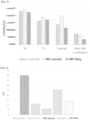
- liver preservation in INV solution induces an increase in ALDH2 activity in the tissue compared to IGL-0, IGL-1 ® and UW ® solutions. This results in protection of the organ against ischemia-related damage.
- the data show that the concentration of transaminases is lower after 24 hours of preservation with the INV solution according to the invention compared to that with the UW ® solution.
- the INV solution ensures better preservation than the UW ® solution.
- Glutamate dehydrogenase is a liver-specific mitochondrial enzyme that plays an important role in amino acid catabolism. It participates in the deamination of glutamic acid (or glutamate) to ⁇ -ketoglutarate. An increase in serum GLDH concentration indicates liver parenchymal degradation, specifically mitochondrial degradation.
- liver of normal (healthy) rats and obese rats (Zucker rats; steatotic liver and designated as "Ob” or "fatty” in the figures) aged 10 to 12 weeks was removed and then washed according to techniques known to those skilled in the art.
- the liver is flushed by influx of the flushing solution through the aorta and efflux through the portal vein.
- the data show that, for healthy livers, the effluent obtained after rinsing the liver with the INV solution is more concentrated in cells, in this case in red blood cells, than the IGL-1 ® solution at T0, T1 and T2.
- the INV effluent is therefore “dirtier”, more concentrated in red blood cells, than the IGL-1 effluent throughout the liver harvesting procedure.
- the INV solution according to the invention therefore ensures better rinsing of the liver than the IGL-1 ® solution.
- the data show that the liver rinsed with INV solution contains 7 times fewer red blood cells than the liver rinsed with HTK ® solution and 2 times fewer than that rinsed with IGL-1 ® solution.
- liver rinsed with INV solution contains more than 1.5 times fewer red blood cells than liver rinsed with UW ® solution.
- a hypothermic perfusion machine is used to preserve a liver for transplantation.
- This equipment allows the implementation of the HOPE protocol (Hypothermic Oxygenated Perfusion) which ensures passive oxygenation of the hypothermic perfusion, i.e. without oxygen carrier, which protects mitochondrial integrity and reduces hepatic ischemia-reperfusion injuries.
- HOPE Hydrophilic Oxygenated Perfusion
- the liver to be transplanted is kept in a preservation solution for 7 hours, then placed in a hypothermic perfusion machine for 1 hour to undergo the HOPE protocol. The liver is then reperfused with Krebs solution under normothermic conditions.
- Perf- Gen® solution is one of the prior art solutions used in a hypothermic perfusion machine. This solution comprises hydroxyethyl starch as an oncotic agent and glucose as an osmotic agent.
- the aim of these experiments is to compare the performance of the solution according to the invention (INV Solution) with the Perf-Gen ® solution.
- the ALDH2 concentration was measured in healthy liver tissue to assess the cell protection properties of the organ to be transplanted of the INV solution used in a perfusion device according to the HOPE protocol (see point 3.4), compared to the Perf-Gen ® solution.
- the data show that the INV solution according to the invention induces significantly higher ALDH2 activity compared to that of the Perf-Gen ® solution after dynamic perfusion in hypothermia.
- ASAT aspartate aminotransferase
- the data show a lower ASAT content in liver tissue perfused with the solution according to the invention compared to the use of the prior art solution.
- the GLDH content was measured by enzymatic kit, at the start of the HOPE protocol and then every 15 minutes, i.e. at 0, 15, 30, 45 and 60 minutes.
- the solution according to the invention is suitable for use for the static preservation in hypothermia of an organ to be transplanted and/or for the dynamic rinsing of the organ in a hypothermic perfusion device. Furthermore, in these two contexts of use, the INV solution according to the invention is more effective than the solutions of the prior art. INV makes it possible to protect the organ to be transplanted and to reduce damage to the liver tissue caused by ischemia and reperfusion.
Landscapes
- Life Sciences & Earth Sciences (AREA)
- Health & Medical Sciences (AREA)
- Engineering & Computer Science (AREA)
- Dentistry (AREA)
- General Health & Medical Sciences (AREA)
- Wood Science & Technology (AREA)
- Zoology (AREA)
- Environmental Sciences (AREA)
- Agricultural Chemicals And Associated Chemicals (AREA)
- Biophysics (AREA)
- Physiology (AREA)
Claims (15)
- Wässrige Konservierungs- und/oder Spüllösung für ein zu transplantierendes Organ, die Folgendes umfasst:- Natriumionen (Na+) in einer Konzentration zwischen 30 und 150 mmol.L-1;- Kaliumionen (K+) in einer Konzentration zwischen 10 und 40 mmol.L-1;- Polyethylenglykol mit einer Molmasse von 35000 g.mol-1 (PEG 35000) in einer Konzentration zwischen 2 und 5 g.L-1.
- Lösung nach Anspruch 1, dadurch gekennzeichnet, dass sie zusätzlich Glutathion als Antioxidationsmittel in einer Konzentration zwischen 1 und 11 mmol.L-1 enthält.
- Lösung nach einem der vorhergehenden Ansprüche, dadurch gekennzeichnet, dass sie zusätzlich Zinkionen (Zn2+) in einer Konzentration zwischen 0,08 und 0,210 mmol.L-1 enthält.
- Lösung nach einem der vorhergehenden Ansprüche, dadurch gekennzeichnet, dass sie zusätzlich Nitrit-Ionen (NO2-) in einer Konzentration zwischen 5 und 100 nmol.L-1 enthält.
- Lösung nach einem der vorhergehenden Ansprüche, dadurch gekennzeichnet, dass der pH-Wert zwischen 7,2 und 7,6 liegt, vorzugsweise gleich 7,4 ist.
- Lösung nach einem der vorhergehenden Ansprüche, dadurch gekennzeichnet, dass sie zusätzlich ein wasserundurchlässiges Anion, einen Zucker, ein Stabilisierungsmittel aus Zellmembran, eine Pufferlösung und/oder eine Energiequelle enthält.
- Lösung nach einem der vorhergehenden Ansprüche, dadurch gekennzeichnet, dass sie außerdem Folgendes enthält:- Raffinose in einer Konzentration zwischen 25 und 35 mmol.L-1 und Allopurinol in einer Konzentration zwischen 0,5 und 1,5 mmol.L-1; oder- Mannitol in einer Konzentration zwischen 40 und 80 mmol.L-1, vorzugsweise Mannitol in einer Konzentration zwischen 40 und 80 mmol.L-1 und Histidin in einer Konzentration zwischen 25 und 35 mmol.L-1.
- Lösung nach einem der vorhergehenden Ansprüche, dadurch gekennzeichnet, dass sie außerdem Folgendes enthält:- Lactobionsäure in einer Konzentration zwischen 80 und 120 mmol.L-1;- Sulfationen (SO4 2-), die vorzugsweise durch Magnesiumsulfat (MgSO4) in einer Konzentration zwischen 4 und 6 mmol.L-1 zugeführt werden;- Phosphationen (PO4 3-), die vorzugsweise durch Kaliumphosphat (KH2PO4) in einer Konzentration zwischen 20 und 30 mmol.L-1 zugeführt werden; und- von Adenosin in einer Konzentration zwischen 4 und 6 mmol.L-1.
- Lösung nach einem der vorhergehenden Ansprüche, dadurch gekennzeichnet, dass sie Folgendes umfasst:- PEG 35000 in einer Konzentration von 5 g.L-1;- Glutathion in einer Konzentration von 9 mmol.L-1;- Zn2+-Ionen in einer Konzentration von 0,191 mmol.L-1;- NO2--Ionen in einer Konzentration von 50 nmol.L-1;- Raffinose in einer Konzentration von 30 mmol.L-1;- Lactobionsäure in einer Konzentration von 100 mmol.L-1;- SO4 2--Ionen, die vorzugsweise durch MgSO4 in einer Konzentration von 5 mmol.L-1 zugeführt werden;- PO4 3--Ionen, die vorzugsweise durch KH2PO4 in einer Konzentration von 25 mmol.L-1 zugeführt werden;- Adenosin in einer Konzentration von 5 mmol.L-1;- Allopurinol in einer Konzentration von 1 mmol.L-1.
- Lösung nach einem der Ansprüche 1 bis 8, dadurch gekennzeichnet, dass sie Folgendes umfasst:- PEG 35000 in einer Konzentration von 5 g.L-1;- Glutathion in einer Konzentration von 9 mmol.L-1;- Zn2+-Ionen in einer Konzentration von 0,191 mmol.L-1;- NO2--Ionen in einer Konzentration von 50 nmol.L-1;- Mannitol in einer Konzentration von 60 mmol.L-1;- Lactobionsäure in einer Konzentration von 100 mmol.L-1;- SO4 2--Ionen, die vorzugsweise durch MgSO4 in einer Konzentration von 5 mmol.L-1 zugeführt werden;- PO4 3--Ionen, die vorzugsweise durch KH2PO4 in einer Konzentration von 25 mmol.L-1 zugeführt werden;- Adenosin in einer Konzentration von 5 mmol.L-1.
- Lösung nach einem der Ansprüche 1 bis 8, dadurch gekennzeichnet, dass sie Folgendes umfasst:- PEG 35000 in einer Konzentration von 5 g.L-1;- Glutathion in einer Konzentration von 9 mmol.L-1;- Zn2+-Ionen in einer Konzentration von 0,191 mmol.L-1;- NO2--Ionen in einer Konzentration von 50 nmol.L-1;- Mannitol in einer Konzentration von 60 mmol.L-1;- Histidin in einer Konzentration von 30 mmol.L-1;- Lactobionsäure in einer Konzentration von 100 mmol.L-1;- SO4 2--Ionen, die vorzugsweise durch MgSO4 in einer Konzentration von 5 mmol.L-1 zugeführt werden;- PO4 3--Ionen, die vorzugsweise durch KH2PO4 in einer Konzentration von 25 mmol.L-1 zugeführt werden;- Adenosin in einer Konzentration von 5 mmol.L-1.
- Verwendung einer Lösung nach einem der Ansprüche 1 bis 10 zur statischen Konservierung von Organen, die transplantiert werden sollen.
- Verwendung einer Lösung nach einem der Ansprüche 1 bis 10 zur dynamischen Konservierung von Organen, die transplantiert werden sollen.
- Verwendung einer Lösung nach einem der Ansprüche 1 bis 10 zum Spülen von Organen, die transplantiert werden sollen.
- Verwendung nach einem der Ansprüche 12 bis 14, dadurch gekennzeichnet, dass das zu transplantierende Organ ein Unterleibsorgan, vorzugsweise die Leber, die Bauchspeicheldrüse, die Niere oder der Darm ist.
Applications Claiming Priority (2)
| Application Number | Priority Date | Filing Date | Title |
|---|---|---|---|
| FR1910747A FR3101227B1 (fr) | 2019-09-27 | 2019-09-27 | Solution de préservation et/ou de rincage d’organe a transplanter |
| PCT/FR2020/051589 WO2021058892A1 (fr) | 2019-09-27 | 2020-09-14 | Solution de préservation et/ou de rinçage d'organe á transplanter |
Publications (3)
| Publication Number | Publication Date |
|---|---|
| EP4033898A1 EP4033898A1 (de) | 2022-08-03 |
| EP4033898C0 EP4033898C0 (de) | 2025-03-19 |
| EP4033898B1 true EP4033898B1 (de) | 2025-03-19 |
Family
ID=69104706
Family Applications (1)
| Application Number | Title | Priority Date | Filing Date |
|---|---|---|---|
| EP20781054.0A Active EP4033898B1 (de) | 2019-09-27 | 2020-09-14 | Spül- und konservierungslösung eines zu transplantierenden organs |
Country Status (6)
| Country | Link |
|---|---|
| US (1) | US11213026B2 (de) |
| EP (1) | EP4033898B1 (de) |
| ES (1) | ES3023733T3 (de) |
| FR (1) | FR3101227B1 (de) |
| PL (1) | PL4033898T3 (de) |
| WO (1) | WO2021058892A1 (de) |
Families Citing this family (1)
| Publication number | Priority date | Publication date | Assignee | Title |
|---|---|---|---|---|
| US11452288B1 (en) | 2022-03-08 | 2022-09-27 | Terry Earl Brady | Innocuous sterilant using hemocyanin and functionalized fullerenes with broad-spectrum intracellular and interstitial microbiocidal and radical scavenging effects for packaged matter, biologics and organics including liquids, gases, tissue, organs, cells, and limbs with copper mediated oxygenation for viability and preservation |
Family Cites Families (4)
| Publication number | Priority date | Publication date | Assignee | Title |
|---|---|---|---|---|
| FR2793651B1 (fr) * | 1999-05-18 | 2003-05-16 | Cair L G L | Solution aqueuse de conservation de tissus et d'organes |
| ES2330404B1 (es) * | 2008-05-19 | 2010-09-22 | Universidad De Barcelona | Solucion acuosa para la preservacion de tejidos y organos. |
| FR2974708B1 (fr) * | 2011-05-02 | 2013-07-05 | Groupe Igl | Solution de rincage de greffon ou de tissu et procede de rincage dudit greffon ou tissu avant revascularisation |
| US10433538B2 (en) * | 2012-10-12 | 2019-10-08 | University of Pittsburgh—of the Commonwealth System of Higher Education | Compositions and methods for organ preservation |
-
2019
- 2019-09-27 FR FR1910747A patent/FR3101227B1/fr active Active
- 2019-10-30 US US16/668,156 patent/US11213026B2/en active Active
-
2020
- 2020-09-14 WO PCT/FR2020/051589 patent/WO2021058892A1/fr not_active Ceased
- 2020-09-14 EP EP20781054.0A patent/EP4033898B1/de active Active
- 2020-09-14 PL PL20781054.0T patent/PL4033898T3/pl unknown
- 2020-09-14 ES ES20781054T patent/ES3023733T3/es active Active
Also Published As
| Publication number | Publication date |
|---|---|
| PL4033898T3 (pl) | 2025-04-14 |
| EP4033898C0 (de) | 2025-03-19 |
| WO2021058892A1 (fr) | 2021-04-01 |
| US20210092947A1 (en) | 2021-04-01 |
| FR3101227B1 (fr) | 2021-09-10 |
| US11213026B2 (en) | 2022-01-04 |
| FR3101227A1 (fr) | 2021-04-02 |
| EP4033898A1 (de) | 2022-08-03 |
| ES3023733T3 (en) | 2025-06-03 |
Similar Documents
| Publication | Publication Date | Title |
|---|---|---|
| EP1809101B1 (de) | Zusammensetzungen für die kryokonservierung und perfusion von organen | |
| EP2184977B1 (de) | Verwendung von globin, einem globinprotomer oder einem extrazellulären hämoglobin zur konservierung von organen, geweben und gewebezellen | |
| US7951590B2 (en) | Storage agent for preservation of an animal cell, tissue or organ, and preserved process of the same | |
| US8236486B2 (en) | Flush preservation solution | |
| FR2625073A1 (fr) | Liquide de perfusion pour la conservation d'organes | |
| WO2000064254A1 (en) | Novel organ preservation solution | |
| JP5796290B2 (ja) | 膵島組織保存溶液及びそれを用いる方法 | |
| EP1997374B1 (de) | Spül- und Konservierungsverfahren eines zu transplantierenden Organs und Lösung, die bei diesem Verfahren verwendet wird | |
| Daniel et al. | Extracorporeal perfusion of isolated organs of large animals-Bridging the gap between in vitro and in vivo studies | |
| EP4033898B1 (de) | Spül- und konservierungslösung eines zu transplantierenden organs | |
| Toledo-Pereyra et al. | Hypothermic pulsatile perfusion: its use in the preservation of pancreases for 24 to 48 hours before islet cell transplantation | |
| Minor et al. | Evaluation of antioxidant treatment with superoxide dismutase in rat liver transplantation after warm ischemia | |
| Herrmann et al. | Preservation of canine kidneys: By hypothermia and low flow perfusion with bloodless perfusate | |
| WO2021183653A1 (en) | Compositions for extending viable preservation and shelf-life of organs and tissues | |
| Bon et al. | Does machine perfusion decrease ischemia reperfusion injury? | |
| EP2704559B1 (de) | Transplantat- oder gewebespüllösung und verfahren zum spülen des transplantats oder gewebes vor der revaskularisation | |
| US20220087252A1 (en) | Solution for preserving and/or rinsing an organ to be transplanted | |
| JPH08325101A (ja) | 動物組織保存方法 | |
| TW201040198A (en) | Large scale pancreatic islet purification | |
| EP1887862A1 (de) | Konservierungslösung für organe und biologische gewebe | |
| Minor et al. | 66. The marginal graft at the gas station–Hypothermic reconditioning to fuel organ recovery upon reperfusion |
Legal Events
| Date | Code | Title | Description |
|---|---|---|---|
| STAA | Information on the status of an ep patent application or granted ep patent |
Free format text: STATUS: UNKNOWN |
|
| STAA | Information on the status of an ep patent application or granted ep patent |
Free format text: STATUS: THE INTERNATIONAL PUBLICATION HAS BEEN MADE |
|
| PUAI | Public reference made under article 153(3) epc to a published international application that has entered the european phase |
Free format text: ORIGINAL CODE: 0009012 |
|
| STAA | Information on the status of an ep patent application or granted ep patent |
Free format text: STATUS: REQUEST FOR EXAMINATION WAS MADE |
|
| 17P | Request for examination filed |
Effective date: 20220324 |
|
| AK | Designated contracting states |
Kind code of ref document: A1 Designated state(s): AL AT BE BG CH CY CZ DE DK EE ES FI FR GB GR HR HU IE IS IT LI LT LU LV MC MK MT NL NO PL PT RO RS SE SI SK SM TR |
|
| DAV | Request for validation of the european patent (deleted) | ||
| DAX | Request for extension of the european patent (deleted) | ||
| GRAP | Despatch of communication of intention to grant a patent |
Free format text: ORIGINAL CODE: EPIDOSNIGR1 |
|
| STAA | Information on the status of an ep patent application or granted ep patent |
Free format text: STATUS: GRANT OF PATENT IS INTENDED |
|
| INTG | Intention to grant announced |
Effective date: 20240927 |
|
| GRAS | Grant fee paid |
Free format text: ORIGINAL CODE: EPIDOSNIGR3 |
|
| GRAJ | Information related to disapproval of communication of intention to grant by the applicant or resumption of examination proceedings by the epo deleted |
Free format text: ORIGINAL CODE: EPIDOSDIGR1 |
|
| GRAL | Information related to payment of fee for publishing/printing deleted |
Free format text: ORIGINAL CODE: EPIDOSDIGR3 |
|
| REG | Reference to a national code |
Ref country code: DE Ref legal event code: R079 Free format text: PREVIOUS MAIN CLASS: A01N0001020000 Ipc: A01N0001122000 Ref country code: DE Ref legal event code: R079 Ref document number: 602020047974 Country of ref document: DE Free format text: PREVIOUS MAIN CLASS: A01N0001020000 Ipc: A01N0001122000 |
|
| STAA | Information on the status of an ep patent application or granted ep patent |
Free format text: STATUS: REQUEST FOR EXAMINATION WAS MADE |
|
| GRAP | Despatch of communication of intention to grant a patent |
Free format text: ORIGINAL CODE: EPIDOSNIGR1 |
|
| STAA | Information on the status of an ep patent application or granted ep patent |
Free format text: STATUS: GRANT OF PATENT IS INTENDED |
|
| GRAA | (expected) grant |
Free format text: ORIGINAL CODE: 0009210 |
|
| STAA | Information on the status of an ep patent application or granted ep patent |
Free format text: STATUS: THE PATENT HAS BEEN GRANTED |
|
| INTC | Intention to grant announced (deleted) | ||
| INTG | Intention to grant announced |
Effective date: 20250203 |
|
| RIC1 | Information provided on ipc code assigned before grant |
Ipc: A01N 1/122 20250101AFI20250124BHEP |
|
| AK | Designated contracting states |
Kind code of ref document: B1 Designated state(s): AL AT BE BG CH CY CZ DE DK EE ES FI FR GB GR HR HU IE IS IT LI LT LU LV MC MK MT NL NO PL PT RO RS SE SI SK SM TR |
|
| REG | Reference to a national code |
Ref country code: GB Ref legal event code: FG4D Free format text: NOT ENGLISH |
|
| REG | Reference to a national code |
Ref country code: CH Ref legal event code: EP |
|
| REG | Reference to a national code |
Ref country code: IE Ref legal event code: FG4D Free format text: LANGUAGE OF EP DOCUMENT: FRENCH |
|
| REG | Reference to a national code |
Ref country code: DE Ref legal event code: R096 Ref document number: 602020047974 Country of ref document: DE |
|
| U01 | Request for unitary effect filed |
Effective date: 20250319 |
|
| U07 | Unitary effect registered |
Designated state(s): AT BE BG DE DK EE FI FR IT LT LU LV MT NL PT RO SE SI Effective date: 20250325 |
|
| REG | Reference to a national code |
Ref country code: ES Ref legal event code: FG2A Ref document number: 3023733 Country of ref document: ES Kind code of ref document: T3 Effective date: 20250603 |
|
| PG25 | Lapsed in a contracting state [announced via postgrant information from national office to epo] |
Ref country code: RS Free format text: LAPSE BECAUSE OF FAILURE TO SUBMIT A TRANSLATION OF THE DESCRIPTION OR TO PAY THE FEE WITHIN THE PRESCRIBED TIME-LIMIT Effective date: 20250619 |
|
| PG25 | Lapsed in a contracting state [announced via postgrant information from national office to epo] |
Ref country code: HR Free format text: LAPSE BECAUSE OF FAILURE TO SUBMIT A TRANSLATION OF THE DESCRIPTION OR TO PAY THE FEE WITHIN THE PRESCRIBED TIME-LIMIT Effective date: 20250319 |
|
| PG25 | Lapsed in a contracting state [announced via postgrant information from national office to epo] |
Ref country code: GR Free format text: LAPSE BECAUSE OF FAILURE TO SUBMIT A TRANSLATION OF THE DESCRIPTION OR TO PAY THE FEE WITHIN THE PRESCRIBED TIME-LIMIT Effective date: 20250620 |
|
| REG | Reference to a national code |
Ref country code: CH Ref legal event code: U11 Free format text: ST27 STATUS EVENT CODE: U-0-0-U10-U11 (AS PROVIDED BY THE NATIONAL OFFICE) Effective date: 20251001 |
|
| PG25 | Lapsed in a contracting state [announced via postgrant information from national office to epo] |
Ref country code: SM Free format text: LAPSE BECAUSE OF FAILURE TO SUBMIT A TRANSLATION OF THE DESCRIPTION OR TO PAY THE FEE WITHIN THE PRESCRIBED TIME-LIMIT Effective date: 20250319 |
|
| PGFP | Annual fee paid to national office [announced via postgrant information from national office to epo] |
Ref country code: NO Payment date: 20250828 Year of fee payment: 6 |
|
| PGFP | Annual fee paid to national office [announced via postgrant information from national office to epo] |
Ref country code: PL Payment date: 20250822 Year of fee payment: 6 |
|
| PGFP | Annual fee paid to national office [announced via postgrant information from national office to epo] |
Ref country code: GB Payment date: 20250919 Year of fee payment: 6 |
|
| PG25 | Lapsed in a contracting state [announced via postgrant information from national office to epo] |
Ref country code: CZ Free format text: LAPSE BECAUSE OF FAILURE TO SUBMIT A TRANSLATION OF THE DESCRIPTION OR TO PAY THE FEE WITHIN THE PRESCRIBED TIME-LIMIT Effective date: 20250319 |
|
| PG25 | Lapsed in a contracting state [announced via postgrant information from national office to epo] |
Ref country code: SK Free format text: LAPSE BECAUSE OF FAILURE TO SUBMIT A TRANSLATION OF THE DESCRIPTION OR TO PAY THE FEE WITHIN THE PRESCRIBED TIME-LIMIT Effective date: 20250319 |
|
| PG25 | Lapsed in a contracting state [announced via postgrant information from national office to epo] |
Ref country code: IS Free format text: LAPSE BECAUSE OF FAILURE TO SUBMIT A TRANSLATION OF THE DESCRIPTION OR TO PAY THE FEE WITHIN THE PRESCRIBED TIME-LIMIT Effective date: 20250719 |
|
| U20 | Renewal fee for the european patent with unitary effect paid |
Year of fee payment: 6 Effective date: 20250929 |
|
| PGFP | Annual fee paid to national office [announced via postgrant information from national office to epo] |
Ref country code: CH Payment date: 20251001 Year of fee payment: 6 |
|
| PLBE | No opposition filed within time limit |
Free format text: ORIGINAL CODE: 0009261 |
|
| STAA | Information on the status of an ep patent application or granted ep patent |
Free format text: STATUS: NO OPPOSITION FILED WITHIN TIME LIMIT |
|
| REG | Reference to a national code |
Ref country code: CH Ref legal event code: L10 Free format text: ST27 STATUS EVENT CODE: U-0-0-L10-L00 (AS PROVIDED BY THE NATIONAL OFFICE) Effective date: 20260128 |
|
| PGFP | Annual fee paid to national office [announced via postgrant information from national office to epo] |
Ref country code: ES Payment date: 20251015 Year of fee payment: 6 |