EP4030845B1 - Kommunikationsverfahren und -vorrichtung - Google Patents
Kommunikationsverfahren und -vorrichtung Download PDFInfo
- Publication number
- EP4030845B1 EP4030845B1 EP20870382.7A EP20870382A EP4030845B1 EP 4030845 B1 EP4030845 B1 EP 4030845B1 EP 20870382 A EP20870382 A EP 20870382A EP 4030845 B1 EP4030845 B1 EP 4030845B1
- Authority
- EP
- European Patent Office
- Prior art keywords
- terminal apparatus
- data
- transmission resource
- resource
- sidelink transmission
- Prior art date
- Legal status (The legal status is an assumption and is not a legal conclusion. Google has not performed a legal analysis and makes no representation as to the accuracy of the status listed.)
- Active
Links
Images




Classifications
-
- H—ELECTRICITY
- H04—ELECTRIC COMMUNICATION TECHNIQUE
- H04W—WIRELESS COMMUNICATION NETWORKS
- H04W40/00—Communication routing or communication path finding
- H04W40/02—Communication route or path selection, e.g. power-based or shortest path routing
- H04W40/04—Communication route or path selection, e.g. power-based or shortest path routing based on wireless node resources
-
- H—ELECTRICITY
- H04—ELECTRIC COMMUNICATION TECHNIQUE
- H04W—WIRELESS COMMUNICATION NETWORKS
- H04W72/00—Local resource management
- H04W72/20—Control channels or signalling for resource management
- H04W72/23—Control channels or signalling for resource management in the downlink direction of a wireless link, i.e. towards a terminal
-
- H—ELECTRICITY
- H04—ELECTRIC COMMUNICATION TECHNIQUE
- H04W—WIRELESS COMMUNICATION NETWORKS
- H04W4/00—Services specially adapted for wireless communication networks; Facilities therefor
- H04W4/30—Services specially adapted for particular environments, situations or purposes
- H04W4/40—Services specially adapted for particular environments, situations or purposes for vehicles, e.g. vehicle-to-pedestrians [V2P]
-
- H—ELECTRICITY
- H04—ELECTRIC COMMUNICATION TECHNIQUE
- H04W—WIRELESS COMMUNICATION NETWORKS
- H04W4/00—Services specially adapted for wireless communication networks; Facilities therefor
- H04W4/70—Services for machine-to-machine communication [M2M] or machine type communication [MTC]
-
- H—ELECTRICITY
- H04—ELECTRIC COMMUNICATION TECHNIQUE
- H04W—WIRELESS COMMUNICATION NETWORKS
- H04W40/00—Communication routing or communication path finding
- H04W40/02—Communication route or path selection, e.g. power-based or shortest path routing
- H04W40/22—Communication route or path selection, e.g. power-based or shortest path routing using selective relaying for reaching a BTS [Base Transceiver Station] or an access point
-
- H—ELECTRICITY
- H04—ELECTRIC COMMUNICATION TECHNIQUE
- H04W—WIRELESS COMMUNICATION NETWORKS
- H04W72/00—Local resource management
- H04W72/04—Wireless resource allocation
- H04W72/044—Wireless resource allocation based on the type of the allocated resource
- H04W72/0446—Resources in time domain, e.g. slots or frames
-
- H—ELECTRICITY
- H04—ELECTRIC COMMUNICATION TECHNIQUE
- H04W—WIRELESS COMMUNICATION NETWORKS
- H04W72/00—Local resource management
- H04W72/04—Wireless resource allocation
- H04W72/044—Wireless resource allocation based on the type of the allocated resource
- H04W72/0453—Resources in frequency domain, e.g. a carrier in FDMA
-
- H—ELECTRICITY
- H04—ELECTRIC COMMUNICATION TECHNIQUE
- H04W—WIRELESS COMMUNICATION NETWORKS
- H04W72/00—Local resource management
- H04W72/04—Wireless resource allocation
- H04W72/044—Wireless resource allocation based on the type of the allocated resource
- H04W72/0466—Wireless resource allocation based on the type of the allocated resource the resource being a scrambling code
-
- H—ELECTRICITY
- H04—ELECTRIC COMMUNICATION TECHNIQUE
- H04W—WIRELESS COMMUNICATION NETWORKS
- H04W72/00—Local resource management
- H04W72/20—Control channels or signalling for resource management
-
- H—ELECTRICITY
- H04—ELECTRIC COMMUNICATION TECHNIQUE
- H04W—WIRELESS COMMUNICATION NETWORKS
- H04W76/00—Connection management
- H04W76/10—Connection setup
- H04W76/14—Direct-mode setup
-
- H—ELECTRICITY
- H04—ELECTRIC COMMUNICATION TECHNIQUE
- H04W—WIRELESS COMMUNICATION NETWORKS
- H04W72/00—Local resource management
- H04W72/04—Wireless resource allocation
- H04W72/044—Wireless resource allocation based on the type of the allocated resource
-
- H—ELECTRICITY
- H04—ELECTRIC COMMUNICATION TECHNIQUE
- H04W—WIRELESS COMMUNICATION NETWORKS
- H04W88/00—Devices specially adapted for wireless communication networks, e.g. terminals, base stations or access point devices
- H04W88/02—Terminal devices
- H04W88/04—Terminal devices adapted for relaying to or from another terminal or user
Definitions
- This application relates to the field of communication technologies, and in particular, to a communication method and apparatus.
- New wireless service types such as an Internet of Things service and an autonomous driving service impose higher requirements on a next-generation wireless communication system, namely, a 5G system.
- the 5G system provides a communication manner through user cooperation.
- a user cooperation group may be established for a target terminal apparatus, and the user cooperation group may include N cooperation terminal apparatuses.
- Each cooperation terminal apparatus may perform sidelink transmission with the target terminal apparatus.
- a base station may send same downlink data to all the terminal apparatuses in the user cooperation group, and each cooperation terminal apparatus may transmit the received downlink data to the target terminal apparatus through the sidelink transmission, to enhance receiving of a signal including the downlink data by the target terminal apparatus.
- modes there are two transmission modes (modes): a base station allocation mode, which is defined as a mode 3 in an LTE standard; and a user autonomous-selection mode, which is defined as a mode 4 in the LTE standard.
- a communication process through user cooperation may specifically include two phases: In the first phase, namely, a downlink transmission phase, a base station sends downlink data to each cooperation terminal apparatus in a cooperative transmission group to which a target terminal apparatus belongs.
- the cooperation terminal apparatus forwards, to the target terminal apparatus on an established sidelink, the downlink data sent by the base station in the first phase, and the target terminal apparatus receives, on the established sidelink, sidelink data sent by the cooperation terminal apparatus to the target terminal apparatus.
- US 2016/234754 A1 describes an apparatus being a UE (user equipment) and a method for wireless communication.
- the UE transmit a message that includes a relay statues of whether the UE intends to function as a relay node between a base station and at least one D2D (device to device) destination.
- the UE may receive a DCI (downlink control information) message indicating resources allocated to the UE and transmit data on the allocated resources based on the relay status ofthe UE
- This application provides a communication method and apparatus, applicable to an Internet of Vehicles such as V2X, LTE-V, and V2V, or applicable to fields such as D2D, intelligent driving, and intelligent network connected vehicles, to allocate sidelink transmission resources for cooperative transmission together, and improve efficiency and transmission performance of the cooperative transmission.
- V2X Internet of Vehicles
- LTE-V Long Term Evolution
- V2V Internet of Vehicles
- D2D intelligent driving, and intelligent network connected vehicles
- a communication method includes: A network apparatus determines an i th sidelink transmission resource of an i th cooperation terminal apparatus, where the i th cooperation terminal apparatus belongs to N cooperation terminals, and the i th sidelink transmission resource belongs to the 1 st sidelink transmission resource to an N th sidelink transmission resource, where i is an integer greater than or equal to 1 and less than or equal to N, and N is an integer greater than or equal to 1; the i th sidelink transmission resource is different from a j th sidelink transmission resource, the j th sidelink transmission resource is a sidelink transmission resource that is of a j th cooperation terminal apparatus and that is determined by the network apparatus, and the j th cooperation terminal apparatus belongs to the N cooperation terminals, where j is an integer greater than or equal to 1 and less than or equal to N, and j is not equal to i; and the i th sidelink transmission resource is used by the i th cooperation terminal apparatus to send second data to
- the network apparatus sends the i th sidelink transmission resource to the i th cooperation terminal apparatus and the target terminal apparatus.
- sidelink transmission resources of the N cooperation terminal apparatuses in cooperative transmission may be predetermined, and configurations of the sidelink transmission resources of the N cooperation terminal apparatuses may be optimized, thereby avoiding a waste of the sidelink transmission resources, and improving spectral efficiency.
- sidelink transmission of the N cooperation terminal apparatuses is prevented from interfering with each other, to effectively improve performance of the cooperative transmission.
- the method further includes: The network apparatus determines a sidelink transmission resource set, where the sidelink transmission resource set includes the 1 st sidelink transmission resource to the N th sidelink transmission resource.
- the network apparatus sends a sidelink transmission resource set indication to the N cooperation terminal apparatuses and the target terminal apparatus. That a network apparatus determines an i th sidelink transmission resource of an i th cooperation terminal apparatus includes: The network apparatus determines the i th sidelink transmission resource from the sidelink transmission resource set.
- the network apparatus may predetermine the sidelink transmission resource set for the cooperative transmission.
- the network apparatus further determines the i th sidelink transmission resource for the i th cooperation terminal apparatus, to improve flexibility of sidelink transmission resource allocation.
- the i th sidelink transmission resource includes an i th time domain resource that is of the i th cooperation terminal apparatus and that is determined by the network apparatus based on time domain resources, where the i th time domain resource is a time domain resource in the i th sidelink transmission resource, the i th time domain resource is different from a j th time domain resource, and the j th time domain resource is a time domain resource that is in the j th sidelink transmission resource and that is determined by the network apparatus based on the time domain resources.
- the network apparatus may determine the i th time domain resource in the i th sidelink transmission resource in a time domain multiplexing manner, to reduce a latency of the sidelink transmission.
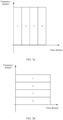
- the i th sidelink transmission resource includes an i th frequency domain resource that is of the i th cooperation terminal apparatus and that is determined by the network apparatus based on frequency domain resources, where the i th frequency domain resource is a frequency domain resource in the i th sidelink transmission resource, the i th frequency domain resource is different from a j th frequency domain resource, and the j th frequency domain resource is a frequency domain resource that is in the j th sidelink transmission resource and that is determined by the network apparatus based on time domain resources.
- the network apparatus may determine the i th frequency domain resource in the i th sidelink transmission resource in a frequency domain multiplexing manner, to improve an anti-interference capability of the sidelink transmission.
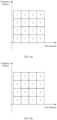
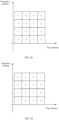
- the i th sidelink transmission resource includes an i th sub-resource group that is of the i th cooperation terminal apparatus and that is determined by the network apparatus based on time domain resources and frequency domain resources, where the i th sub-resource group includes N sub-resources, a time-frequency resource in any one of the N sub-resources in the i th sub-resource group is different from a time-frequency resource in any one of N sub-resources in a j' sub-resource group, the i th sub-resource group is a time-frequency resource in the i th sidelink transmission resource, and the j th sub-resource group is a time-frequency resource that is in the j th sidelink transmission resource and that is determined by the network apparatus.
- the network apparatus may determine an i th time-frequency resource in the i th sidelink transmission resource in a time-frequency domain multiplexing manner, to reduce a latency of the sidelink transmission and improve an anti-interference capability of the sidelink transmission.
- the i th sidelink transmission resource includes an i th reference signal sequence that is of the i th cooperation terminal apparatus and that is determined by the network apparatus, where the i th reference signal sequence is a code resource that is in the i th sidelink transmission resource and that is determined by the network apparatus, the i th reference signal sequence is different from a j th reference signal sequence, and the j th reference signal sequence is a code resource that is in the j th sidelink transmission resource and that is determined by the network apparatus.
- the network apparatus may determine an i th code resource in the i th sidelink transmission resource in a code division multiplexing manner, to improve utilization of the sidelink transmission resources and improve an interference capability of the sidelink transmission.
- the i th sidelink transmission resource further includes an i th soft combination indication field, where the i th soft combination indication field is used to indicate whether the second data sent by the i th cooperation terminal apparatus to the target terminal apparatus is data on which the target terminal apparatus is to perform soft combination.
- the network apparatus may set the i th soft combination indication field in the i th sidelink transmission resource, so that the i th cooperation terminal determines, based on the i th soft combination indication field, whether the soft combination needs to be performed on the second data sent to the target terminal apparatus. If it is determined that the soft combination needs to be performed, the cooperation terminal apparatuses send the same second data to the target terminal apparatus. This can improve a decoding success rate of the target terminal apparatus, and further improve the performance of the cooperative transmission.
- the network apparatus determines an i th soft combination indication field of the i th cooperation terminal apparatus, where the i th soft combination indication field is used to indicate whether the second data sent by the i th cooperation terminal apparatus to the target terminal apparatus is data on which the target terminal apparatus is to perform soft combination.
- the network apparatus may additionally allocate the i th soft combination indication field, to flexibly indicate whether the second data sent by the i th cooperation terminal apparatus is the data on which the soft combination needs to be performed, thereby improving flexibility of the sidelink transmission.
- the i th soft combination indication field includes a first time offset and/or a second time offset, where the first time offset is used to indicate that, if the target terminal apparatus receives the second data from the i th cooperation terminal apparatus at a second moment obtained by increasing a first moment by the time offset, the second data is determined as the data on which the target terminal apparatus is to perform soft combination, where the first moment is a moment of receiving sidelink control signaling sent by the i th cooperation terminal apparatus; and the second time offset is used to indicate that, if the target terminal apparatus receives the second data from the i th cooperation terminal apparatus at a third moment obtained by increasing the first moment by the second time offset, the second data is determined as data on which the target terminal apparatus is not to perform soft combination.
- the network apparatus may configure the first time offset and/or the second time offset, so that the cooperation terminal apparatus and the target terminal apparatus determine whether the soft combination is to be performed. This reduces overheads of control signaling required by a soft combination indication, and the configuration is flexible.
- the i th sidelink transmission resource includes a first transmission resource and a second transmission resource, where the first transmission resource is used to indicate that the second data sent by the i th cooperation terminal apparatus to the target terminal apparatus on the first transmission resource is data on which the target terminal apparatus is to perform soft combination, and the second transmission resource is used to indicate that the second data sent by the i th cooperation terminal apparatus to the target terminal apparatus on the second transmission resource is data on which the target terminal apparatus is not to perform soft combination.
- the network apparatus may configure the first transmission resource and the second transmission resource, so that the cooperation terminal apparatus sends, on the first transmission resource or the second transmission resource, the data on which the soft combination is to be performed, thereby reducing overheads of control signaling required by a soft combination indication, and resolving a problem that the target terminal apparatus may fail to correctly receive the data on which the soft combination is or is not to be performed, where the problem is caused by a latency and may occur in the design of determining the soft combination indication field by using the first time offset and/or the second time offset.
- the first transmission resource includes one or more of the following: a first time-frequency resource and a first code resource; and the second transmission resource includes one or more of the following: a second time-frequency resource and a second code resource.
- the network apparatus configures the first transmission resource and the second transmission resource, to determine, based on a time domain resource, a frequency domain resource, a code domain resource, or the like, whether the soft combination is to be performed, to reduce resource overheads.
- the i th sidelink transmission resource further includes an i th redundancy version set, where the i th redundancy version set includes at least one redundancy version, the redundancy version set is used by the i th cooperation terminal apparatus to determine a first redundancy version in the redundancy version set, the first redundancy version is used by the i th cooperation terminal apparatus to determine, based on the first redundancy version, a start location at which the i th cooperation terminal apparatus is to send third data on which soft combination needs to be performed, and the third data is generated by the i th cooperation terminal based on the first data received from the network apparatus.
- the network apparatus may configure the redundancy version, so that the cooperation terminal apparatus sends the third data based on the redundancy version, where the third data is a part or all of the second data; and further the target terminal apparatus may receive signals of more data, to improve a decoding success rate in the cooperative transmission, and further improve the performance of the cooperative transmission.
- the i th sidelink transmission resource further includes an i th redundancy version set, where the i th redundancy version set includes at least one redundancy version, the redundancy version is used by the i th cooperation terminal apparatus to determine a second redundancy version based on an intra-group identifier of the i th cooperation terminal apparatus in the cooperative transmission group, the second redundancy version is used by the i th cooperation terminal apparatus to determine, based on the second redundancy version, a start location at which the i th cooperation terminal apparatus is to send third data on which soft combination needs to be performed, and the third data is generated by the i th cooperation terminal apparatus based on the first data received from the network apparatus.
- the network apparatus may configure the i th redundancy version set, so that the i th cooperation terminal apparatus determines the corresponding redundancy version based on the intra-group identifier, and the i th redundancy version set may be reused in a plurality of times of cooperative transmission. This can reduce resources occupied by transmission resource allocation in the plurality of times of cooperative transmission, reduce resource overheads, and improve the spectral efficiency.
- a network apparatus determines an i th sidelink transmission resource of N cooperation terminal apparatuses, where the i th sidelink transmission resource belongs to the 1 st sidelink transmission resource to an N th sidelink transmission resource, where i is an integer greater than or equal to 1 and less than or equal to N, and N is an integer greater than or equal to 1; the i th sidelink transmission resource is different from a j th sidelink transmission resource, where j is an integer greater than or equal to 1 and less than or equal to N, and j is not equal to i; and the i th sidelink transmission resource is a sidelink transmission resource of the N cooperation terminal apparatuses that is determined by the network apparatus, the i th sidelink transmission resource is used by the N cooperation terminal apparatuses to send second data to a target terminal apparatus, the second data is determined based on first data sent by the network apparatus to an i th cooperation terminal apparatus, and the N cooperation terminal apparatuses and the target terminal apparatus belong to
- the network apparatus may configure the same sidelink transmission resource for the N cooperation terminal apparatuses, to reduce sidelink transmission resource consumption.
- the network apparatus determines a sidelink transmission resource set, where the sidelink transmission resource set includes the 1 st sidelink transmission resource to the N th sidelink transmission resource.
- the network apparatus sends a sidelink transmission resource set indication to the N cooperation terminal apparatuses and the target terminal apparatus. That a network apparatus determines a sidelink transmission resource of N cooperation terminal apparatuses includes: The network apparatus determines the i th sidelink transmission resource from the sidelink transmission resource set.
- the network apparatus may configure the same sidelink transmission resource in the sidelink transmission resource set for the N cooperation terminal apparatuses, and the sidelink transmission resource may be the i th sidelink transmission resource. This can reduce complexity of configuring the sidelink transmission resource, and improve flexibility of configuring the sidelink transmission resource.
- a communication method includes: A first cooperation terminal apparatus receives a first sidelink transmission resource from a network apparatus, where the first cooperation terminal apparatus is an i th cooperation terminal apparatus in N cooperation terminals, and the first sidelink transmission resource is an i th sidelink transmission resource in the 1 st sidelink transmission resource to an N th sidelink transmission resource, where i is an integer greater than or equal to 1 and less than or equal to N, and N is an integer greater than or equal to 1; the i th sidelink transmission resource is different from a j th sidelink transmission resource, the j th sidelink transmission resource is a sidelink transmission resource of a j th cooperation terminal apparatus, and the j th cooperation terminal apparatus belongs to the N cooperation terminals, where j is an integer greater than or equal to 1 and less than or equal to N, and j is not equal to i; and the N cooperation terminal apparatuses and a target terminal apparatus belong to a same cooperative transmission group.
- the first cooperation terminal apparatus sends second data to the target terminal apparatus on the first sidelink transmission resource, where the second data is determined by the first cooperation terminal apparatus based on first data received from the network apparatus.
- the first cooperation terminal apparatus may predetermine the i th sidelink transmission resource, and the i th sidelink transmission resource is different from the j th sidelink transmission resource of the j th cooperation terminal apparatus, so that sidelink transmission of the N cooperation terminal apparatuses can be effectively prevented from interfering with each other, and performance of cooperative transmission can be effectively improved.
- the first cooperation terminal apparatus receives a sidelink transmission resource set indication from the network apparatus, where a sidelink transmission resource set includes the 1 st sidelink transmission resource to the N th sidelink transmission resource, and the first sidelink transmission resource is the i th sidelink transmission resource in the sidelink transmission resource set.
- the first cooperation terminal apparatus may send a decoding result to the target terminal apparatus, to reduce a resource consumed by the target terminal apparatus for receiving the second data sent by the cooperation terminal apparatus, and avoid unnecessary resource overheads.
- a time domain resource in the i th sidelink transmission resource is an i th time domain resource
- the i th time domain resource is different from a j th time domain resource
- the j th time domain resource is a time domain resource that is in the j th sidelink transmission resource and that is determined by the network apparatus based on time domain resources.
- the i th time domain resource in the i th sidelink transmission resource is in a time domain multiplexing manner, a latency of the sidelink transmission can be reduced.
- a frequency domain resource in the i th sidelink transmission resource is an i th frequency domain resource
- the i th frequency domain resource is different from a j th frequency domain resource
- the j th frequency domain resource is a frequency domain resource that is in the j th sidelink transmission resource and that is determined by the network apparatus based on time domain resources.
- a time-frequency resource in the i th sidelink transmission resource is an i th sub-resource group
- the i th sub-resource group includes N sub-resources
- a time-frequency resource in any one of the N sub-resources in the i th sub-resource group is different from a time-frequency resource in any one of N sub-resources in a j th sub-resource group
- the i th sub-resource group is the time-frequency resource in the i th sidelink transmission resource
- the j th sub-resource group is a time-frequency resource that is in the j th sidelink transmission resource and that is determined by the network apparatus.
- an i th time domain resource in the i th sidelink transmission resource is in a time-frequency multiplexing manner, a latency of the sidelink transmission can be reduced, and an anti-interference capability of the sidelink transmission can be improved.
- a code resource in the i th sidelink transmission resource includes an i th reference signal sequence, the i th reference signal sequence is different from a j th reference signal sequence, and the j th reference signal sequence is a code resource that is in the j th sidelink transmission resource and that is determined by the network apparatus.
- the i th sidelink transmission resource further includes an i th soft combination indication field.
- the first cooperation terminal determines, based on the i th soft combination indication field, whether the second data sent to the target terminal apparatus is data on which the target terminal apparatus is to perform soft combination.
- the i th soft combination indication field is set in the i th sidelink transmission resource, so that the i th cooperation terminal determines, based on the i th soft combination indication field, whether the soft combination needs to be performed on the second data sent to the target terminal apparatus. If it is determined that the soft combination needs to be performed, the cooperation terminal apparatuses send the same second data to the target terminal apparatus. This can improve a decoding success rate of the target terminal apparatus, and further improve the performance of the cooperative transmission.
- the first cooperation terminal receives an i th soft combination indication field from the network apparatus.
- the first cooperation terminal determines, based on the i th soft combination indication field, whether the second data sent to the target terminal apparatus is data on which the target terminal apparatus is to perform soft combination.
- the i th soft combination indication field determined by the network device is additionally received, to improve flexibility of the sidelink transmission.
- the first cooperation terminal apparatus generates sidelink control signaling, where the sidelink control signaling includes an i th soft combination indication field, and the i th soft combination indication field is used to indicate whether the second data sent by the first cooperation terminal apparatus is data on which the target terminal apparatus is to perform soft combination.
- the first cooperation terminal apparatus delivers the i th soft combination indication field to the target terminal apparatus, to improve flexibility and robustness of the sidelink transmission.
- the i th soft combination indication field includes a first time offset and/or a second time offset. If determining that the second data that needs to be sent is the data on which the target terminal apparatus is to perform soft combination, the first cooperation terminal apparatus sends the second data at a second moment obtained by increasing a first moment by the first time offset, where the first moment is a moment of sending sidelink control signaling to the target terminal apparatus by the first cooperation terminal apparatus; and/or if determining that the second data that needs to be sent is data on which the target terminal apparatus is not to perform soft combination, the first cooperation terminal apparatus sends the second data at a third moment obtained by increasing the first moment by the second time offset.
- whether to perform soft combination may be determined based on the first time offset and/or the second time offset. This reduces overheads of receiving control signaling required by a soft combination indication, and a configuration is flexible.
- the i th sidelink transmission resource includes a first transmission resource and a second transmission resource. If determining that the second data that needs to be sent is data on which the target terminal apparatus is to perform soft combination, the first cooperation terminal apparatus sends the second data on the first transmission resource; and if determining that the second data that needs to be sent is data on which the target terminal apparatus is not to perform soft combination, the first cooperation terminal apparatus sends the second data on the second transmission resource.
- the first cooperation terminal apparatus sends, on the first transmission resource or the second transmission resource, the data on which the soft combination is to be performed, thereby reducing overheads of control signaling required by a soft combination indication, and resolving a problem that the target terminal apparatus may fail to correctly receive the data on which the soft combination is or is not to be performed, where the problem is caused by a latency and may occur in the design of determining the soft combination indication field by using the first time offset and/or the second time offset.
- the first transmission resource includes one or more of the following: a first time-frequency resource and a first code resource; and the second transmission resource includes one or more of the following: a second time-frequency resource and a second code resource.
- whether to perform soft combination is determined based on a time domain resource, a frequency domain resource, a code domain resource, or the like, to reduce resource overheads.
- the i th sidelink transmission resource further includes an i th redundancy version set, and the i th redundancy version set includes at least one redundancy version. If determining that third data needs to be sent to the target terminal apparatus, the first cooperation terminal apparatus determines a first redundancy version in the redundancy version set, and determines, based on the first redundancy version, a start location at which the cooperation terminal apparatus is to send the third data, where the third data is data that is generated by the first cooperation terminal apparatus based on the first data received from the network apparatus and on which the target terminal apparatus is to perform soft combination.
- the first cooperation terminal apparatus sends the third data based on the determined redundancy version, where the third data is a part or all of the second data; and further the target terminal apparatus may receive signals of more data, to improve a decoding success rate in the cooperative transmission, and further improve the performance of the cooperative transmission.
- the i th sidelink transmission resource further includes an i th redundancy version set, and the i th redundancy version set includes at least one redundancy version. If determining that third data needs to be sent to the target terminal apparatus, the first cooperation terminal apparatus determines a second redundancy version based on an intra-group identifier of the first cooperation terminal apparatus in the cooperative transmission group. The first cooperation terminal apparatus determines, based on the second redundancy version, a start location for sending the third data, where the third data is data that is generated by the first cooperation terminal apparatus based on the first data received from the network apparatus and on which the target terminal apparatus is to perform soft combination.
- the first cooperation terminal apparatus may determine the corresponding redundancy version based on the intra-group identifier, and the i th redundancy version set may be reused in a plurality of times of cooperative transmission. This can reduce resources occupied by transmission resource allocation in the plurality of times of cooperative transmission, reduce resource overheads, and improve spectral efficiency.
- a first cooperation terminal apparatus receives an i th sidelink transmission resource from a network apparatus, where the first cooperation terminal apparatus is an i th cooperation terminal apparatus in N cooperation terminals, the i th sidelink transmission resource belongs to the 1 st sidelink transmission resource to an N th sidelink transmission resource, the i th sidelink transmission resource is a sidelink transmission resource of the N cooperation terminal apparatuses, and the i th sidelink transmission resource is different from a j th sidelink transmission resource, where j is an integer greater than or equal to 1 and less than or equal to N, j is not equal to i, i is an integer greater than or equal to 1 and less than or equal to N, and N is an integer greater than or equal to 1; and the N cooperation terminal apparatuses and a target terminal apparatus belong to a same cooperative transmission group.
- the first cooperation terminal apparatus sends second data to the target terminal apparatus on the i th sidelink transmission resource, where the second data is determined by the first cooperation terminal apparatus based on first data received from the network apparatus.
- the cooperation terminal apparatuses send the same second data to the target terminal apparatus, the N cooperation terminal apparatuses share the same sidelink transmission resource, to reduce resource consumption of the first cooperation terminal apparatus.
- the first cooperation terminal apparatus receives a sidelink transmission resource set indication from the network apparatus, where a sidelink transmission resource set includes the 1 st sidelink transmission resource to the N th sidelink transmission resource, and the i th sidelink transmission resource includes the i th sidelink transmission resource determined by the network apparatus from the sidelink transmission resource set.
- the sidelink transmission resource may be the i th sidelink transmission resource. This can reduce complexity of configuring the sidelink transmission resource, and improve flexibility of configuring the sidelink transmission resource.
- a target terminal apparatus receives an i th sidelink transmission resource of an i th cooperation terminal apparatus from a network apparatus, where the i th cooperation terminal apparatus belongs to N cooperation terminal apparatuses, and the i th sidelink transmission resource belongs to the 1 st sidelink transmission resource to an N th sidelink transmission resource, where i is an integer greater than or equal to 1 and less than or equal to N, and N is an integer greater than or equal to 1; the i th sidelink transmission resource is different from a j th sidelink transmission resource, the j th sidelink transmission resource is a sidelink transmission resource of a j th cooperation terminal apparatus, and the j th cooperation terminal apparatus belongs to the N cooperation terminals, where j is an integer greater than or equal to 1 and less than or equal to N, and j is not equal to i; and the N cooperation terminal apparatuses and the target terminal apparatus belong to a same cooperative transmission group.
- the target terminal apparatus receives second data from the i th cooperation terminal apparatus on the i th sidelink transmission resource, where the second data is determined by the i th cooperation terminal apparatus based on first data received from the network apparatus.
- the target terminal apparatus may predetermine the i th sidelink transmission resource, and the i th sidelink transmission resource is different from the j th sidelink transmission resource of the j th cooperation terminal apparatus, so that sidelink transmission of the N cooperation terminal apparatuses can be effectively prevented from interfering with each other, and performance of cooperative transmission can be effectively improved.
- the target terminal apparatus receives a sidelink transmission resource set indication from the network apparatus, where a sidelink transmission resource set includes the 1 st sidelink transmission resource to the N th sidelink transmission resource, and the i th sidelink transmission resource includes the i th sidelink transmission resource determined by the network apparatus from the sidelink transmission resource set.
- the target terminal apparatus may first receive the sidelink transmission resource set predetermined by the network apparatus for the cooperative transmission, and then receive, in a cooperative transmission process, the i th sidelink transmission resource configured by the network apparatus for the target terminal apparatus, to effectively improve flexibility of sidelink transmission resource allocation.
- the target terminal apparatus after the target terminal apparatus receives first indication information sent by the first cooperation terminal apparatus, the target terminal apparatus skips receiving the data on the i th sidelink transmission resource, where the first indication information is used to indicate that the first cooperation terminal apparatus does not correctly decode the first data.
- the target terminal apparatus may receive a decoding result from the first cooperation terminal apparatus, to reduce a resource consumed by the target terminal apparatus for receiving the second data sent by the cooperation terminal apparatus, and avoid unnecessary resource overheads.
- the target terminal apparatus receives a sidelink control instruction from the first cooperation terminal apparatus, where the sidelink control instruction is used to indicate the i th sidelink transmission resource used by the first cooperation terminal apparatus to send the second data.
- the target terminal apparatus receives the second data from the first cooperation terminal apparatus on the i th sidelink transmission resource based on the sidelink control instruction.
- the target apparatus receives the i th sidelink transmission resource of the i th cooperation terminal apparatus, to improve flexibility and robustness of the sidelink transmission.
- the sidelink control instruction further includes an i th soft combination indication field.
- the target terminal apparatus determines, based on the i th soft combination indication field, whether soft combination needs to be performed on the received second data.
- the target apparatus receives the i th soft combination indication field of the i th cooperation terminal apparatus, to improve the flexibility and the robustness of the sidelink transmission.
- the i th sidelink transmission resource further includes an i th soft combination indication field.
- the target terminal apparatus determines, based on the i th soft combination indication field, whether soft combination needs to be performed on the received second data.
- the i th soft combination indication field includes a first time offset and/or a second time offset. If determining that the second data sent by the first cooperation terminal apparatus is received at a second moment obtained by increasing a first moment by the first time offset, the target terminal apparatus determines that the soft combination needs to be performed on the second data, where the first moment is a moment of sending sidelink control signaling to the target terminal apparatus by the first cooperation terminal apparatus; and/or if determining that the second data sent by the first cooperation terminal apparatus is received at a third moment obtained by increasing the first moment by the second time offset, the target terminal apparatus determines that the soft combination does not need to be performed on the second data.
- the i th sidelink transmission resource includes a first transmission resource and a second transmission resource. If receiving the second data on the first transmission resource, the target terminal apparatus determines that the second data is data on which soft combination is to be performed. If receiving the second data on the second transmission resource, the target terminal apparatus determines that the second data is data on which soft combination is not to be performed.
- the i th sidelink transmission resource further includes an i th redundancy version set.
- the target terminal apparatus determines, based on a redundancy version in the i th redundancy version set, a start location for receiving third data, and determines that the to-be-received third data is data on which soft combination is to be performed, where the third data is data that is generated by the cooperation terminal apparatus based on the first data received from the network apparatus and on which the target terminal apparatus is to perform soft combination.
- the i th sidelink transmission resource further includes a second redundancy version. If receiving third data at a start location corresponding to the second redundancy version, the target terminal apparatus determines that the third data is data on which soft combination is to be performed, where the second redundancy version is determined based on an intra-group identifier of the i th cooperation terminal apparatus in the cooperative transmission group.
- a target terminal apparatus receives an i th sidelink transmission resource from a network apparatus, where the i th sidelink transmission resource belongs to the 1 st sidelink transmission resource to an N th sidelink transmission resource, the i th sidelink transmission resource is a sidelink transmission resource of N cooperation terminal apparatuses, and the i th sidelink transmission resource is different from a j' sidelink transmission resource, where i is an integer greater than or equal to 1 and less than or equal to N, j is an integer greater than or equal to 1 and less than or equal to N, j is not equal to i, and N is an integer greater than or equal to 1; and the N cooperation terminal apparatuses and the target terminal apparatus belong to a same cooperative transmission group.
- the target terminal apparatus receives, on the sidelink transmission resource, second data sent by the N cooperation terminal apparatuses, where the second data is determined by the N cooperation terminal apparatuses based on first data received from the network apparatus.
- the target terminal apparatus may receive the second data on the same sidelink transmission resource, to reduce resource consumption of the target terminal apparatus.
- the target terminal apparatus receives a sidelink transmission resource set indication from the network apparatus, where a sidelink transmission resource set includes the 1 st sidelink transmission resource to the N th sidelink transmission resource, and the i th sidelink transmission resource is the i th sidelink transmission resource determined by the network apparatus from the sidelink transmission resource set.
- the sidelink transmission resource may be the i th sidelink transmission resource. This can reduce complexity of configuring the sidelink transmission resource, and improve flexibility of configuring the sidelink transmission resource.
- a network apparatus sends first data to an i th cooperation terminal apparatus, and the network apparatus sends a sidelink transmission resource set indication to N cooperation terminal apparatuses and a target terminal apparatus, where the N cooperation terminal apparatuses include the i th cooperation terminal apparatus, a sidelink transmission resource set is used by the i th cooperation terminal apparatus to select an i th sidelink transmission resource, the i th sidelink transmission resource belongs to the sidelink transmission resource set, the i th sidelink transmission resource is used by the i th cooperation terminal apparatus to send second data to the target terminal apparatus, and the second data is determined based on the first data, where i is an integer greater than or equal to 1 and less than or equal to N, and N is an integer greater than or equal to 1.
- the network apparatus may predetermine the sidelink transmission resource set for cooperative transmission, so that when needing to perform sidelink transmission, the N cooperation terminal apparatuses independently select respective sidelink transmission resources from the sidelink transmission resource set, to avoid interference with other cooperative transmission resources, improve flexibility of sidelink transmission resource allocation, and effectively improve performance of the cooperative transmission.
- the sidelink transmission resource set includes the 1 st time domain resource to an N th time domain resource.
- the i th sidelink transmission resource includes an i th time domain resource, the i th time domain resource is a time domain resource in the i th sidelink transmission resource, the i th time domain resource is different from a j th time domain resource, and the j th time domain resource is a time domain resource that is in a j th sidelink transmission resource and that is determined by the network apparatus based on time domain resources.
- the network apparatus may determine the i th time domain resource in the i th sidelink transmission resource in a time domain multiplexing manner, to reduce a latency of the sidelink transmission.
- the sidelink transmission resource set includes the 1 st frequency domain resource to an N th frequency domain resource.
- the i th sidelink transmission resource includes an i th frequency domain resource, the i th frequency domain resource is different from a j th frequency domain resource, and the j th frequency domain resource is a frequency domain resource that is in a j th sidelink transmission resource and that is determined by the network apparatus based on time domain resources.
- the network apparatus may determine the i th frequency domain resource in the i th sidelink transmission resource in a frequency domain multiplexing manner, to improve an anti-interference capability of the sidelink transmission.
- the sidelink transmission resource set includes the 1 st time-frequency sub-resource to an (N ⁇ N) th time-frequency sub-resource.
- the i th sidelink transmission resource includes an i th sub-resource group, the i th sub-resource group includes N sub-resources, a time-frequency resource in any one of the N sub-resources in the i th sub-resource group is different from a time-frequency resource in any one of N sub-resources in a j th sub-resource group, the i th sub-resource group is a time-frequency resource in the i th sidelink transmission resource, and the j th sub-resource group is a time-frequency resource that is in a j th sidelink transmission resource and that is determined by the network apparatus.
- the network apparatus may determine an i th time-frequency resource in the i th sidelink transmission resource in a time-frequency domain multiplexing manner, to reduce a latency of the sidelink transmission and improve an anti-interference capability of the sidelink transmission.
- the sidelink transmission resource set includes the 1 st reference signal sequence to an N th reference signal sequence.
- the i th sidelink transmission resource includes an i th reference signal sequence
- the i th reference signal sequence is a code resource that is in the i th sidelink transmission resource and that is determined by the network apparatus
- the i th reference signal sequence is different from a j th reference signal sequence
- the j th reference signal sequence is a code resource that is in a j th sidelink transmission resource and that is determined by the network apparatus.
- the network apparatus may determine an i th code resource in the i th sidelink transmission resource in a code division multiplexing manner, to improve utilization of the sidelink transmission resources and improve an interference capability of the sidelink transmission.
- the sidelink transmission resource set further includes a soft combination indication field set.
- the i th sidelink transmission resource further includes an i th soft combination indication field, where the i th soft combination indication field is used to indicate whether the second data sent by the i th cooperation terminal apparatus to the target terminal apparatus is data on which the target terminal apparatus is to perform soft combination.
- the i th soft combination indication field includes a first time offset and/or a second time offset, where the first time offset is used to indicate that, if the target terminal apparatus receives the second data from the i th cooperation terminal apparatus at a second moment obtained by increasing a first moment by the time offset, the second data is determined as the data on which the target terminal apparatus is to perform soft combination, where the first moment is a moment of receiving sidelink control signaling sent by the i th cooperation terminal apparatus; and the second time offset is used to indicate that, if the target terminal apparatus receives the second data from the i th cooperation terminal apparatus at a third moment obtained by increasing the first moment by the second time offset, the second data is determined as data on which the target terminal apparatus is not to perform soft combination.
- the network apparatus may set the i th soft combination indication field in the i th sidelink transmission resource, so that the i th cooperation terminal apparatus determines, based on the selected i th soft combination indication field, whether the soft combination needs to be performed on the second data sent to the target terminal apparatus. If it is determined that the soft combination needs to be performed, the cooperation terminal apparatuses send the same second data to the target terminal apparatus. This can improve a decoding success rate of the target terminal apparatus, and further improve the performance of the cooperative transmission.
- the i th sidelink transmission resource includes a first transmission resource and a second transmission resource.
- the first transmission resource is used to indicate that the second data sent by the i th cooperation terminal apparatus to the target terminal apparatus on the first transmission resource is data on which the target terminal apparatus is to perform soft combination.
- the second transmission resource is used to indicate that the second data sent by the i th cooperation terminal apparatus to the target terminal apparatus on the second transmission resource is data on which the target terminal apparatus is not to perform soft combination.
- the network apparatus may configure the first transmission resource and the second transmission resource, so that the cooperation terminal apparatus independently chooses to send, on the first transmission resource or the second transmission resource, the data on which the soft combination is to be performed, thereby reducing overheads of control signaling required by a soft combination indication.
- the first transmission resource includes one or more of the following: a first time-frequency resource and a first code resource; and the second transmission resource includes one or more of the following: a second time-frequency resource and a second code resource.
- the sidelink transmission resource set further includes a redundancy version set, where the redundancy version set includes at least one redundancy version, the redundancy version set is used by the i th cooperation terminal apparatus to determine a first redundancy version in the redundancy version set, the first redundancy version is used by the i th cooperation terminal apparatus to determine, based on the first redundancy version, a start location at which the i th cooperation terminal apparatus is to send third data on which soft combination needs to be performed, and the third data is generated by the i th cooperation terminal based on the first data received from the network apparatus.
- the redundancy version set includes at least one redundancy version
- the redundancy version set is used by the i th cooperation terminal apparatus to determine a first redundancy version in the redundancy version set
- the first redundancy version is used by the i th cooperation terminal apparatus to determine, based on the first redundancy version, a start location at which the i th cooperation terminal apparatus is to send third data on which
- the network apparatus may configure the redundancy version set, so that the cooperation terminal apparatus independently selects the redundancy version from the redundancy version set, and sends the third data based on the redundancy version, where the third data is a part or all of the second data; and further the target terminal apparatus may receive signals of more data, to improve a decoding success rate in the cooperative transmission, and further improve the performance of the cooperative transmission.
- a first cooperation terminal apparatus receives first data from a network apparatus, where the first cooperation terminal apparatus is an i th cooperation terminal apparatus in N cooperation terminals, and the N cooperation terminal apparatuses and a target terminal apparatus belong to a same cooperative transmission group.
- the first cooperation terminal receives a sidelink transmission resource set from the network apparatus, where the sidelink transmission resource set includes the 1 st sidelink transmission resource to an N th sidelink transmission resource, where i is an integer greater than or equal to 1 and less than or equal to N, and N is an integer greater than or equal to 1.
- the first cooperation terminal apparatus may independently select and determine the i th sidelink transmission resource from the sidelink transmission resource set, and the i th sidelink transmission resource is different from a j th sidelink transmission resource of a j th cooperation terminal apparatus, so that sidelink transmission of the N cooperation terminal apparatuses can be effectively prevented from interfering with each other, and performance of cooperative transmission can be effectively improved.
- the first cooperation terminal apparatus sends first indication information to the target terminal apparatus, where the first indication information is used to indicate that the first cooperation terminal apparatus does not correctly decode the first data.
- the first cooperation terminal apparatus may send a decoding result to the target terminal apparatus, to reduce a resource consumed by the target terminal apparatus for receiving the second data sent by the cooperation terminal apparatus, and avoid unnecessary resource overheads.
- a time domain resource in the i th sidelink transmission resource is an i th time domain resource
- the i th time domain resource is different from a j th time domain resource
- the j th time domain resource is a time domain resource that is in the j th sidelink transmission resource and that is determined by the network apparatus based on time domain resources.
- a frequency domain resource in the i th sidelink transmission resource is an i th frequency domain resource
- the i th frequency domain resource is different from a j th frequency domain resource
- the j th frequency domain resource is a frequency domain resource that is in the j th sidelink transmission resource and that is determined by the network apparatus based on time domain resources.
- a time-frequency resource in the i th sidelink transmission resource is an i th sub-resource group
- the i th sub-resource group includes N sub-resources
- a time-frequency resource in any one of the N sub-resources in the i th sub-resource group is different from a time-frequency resource in any one of N sub-resources in a j th sub-resource group
- the i th sub-resource group is the time-frequency resource in the i th sidelink transmission resource
- the j th sub-resource group is a time-frequency resource that is in the j th sidelink transmission resource and that is determined by the network apparatus.
- a code resource in the i th sidelink transmission resource includes an i th reference signal sequence, the i th reference signal sequence is different from a j th reference signal sequence, and the j th reference signal sequence is a code resource in the j th sidelink transmission resource.
- the sidelink transmission resource set further includes a soft combination indication field set.
- the first cooperation terminal selects an i th soft combination indication field from the soft combination indication field set, and determines whether the second data sent to the target terminal apparatus is data on which the target terminal apparatus is to perform soft combination.
- the first cooperation terminal apparatus generates sidelink control signaling, where the sidelink control signaling includes an i th soft combination indication field, and the i th soft combination indication field is used to indicate whether the second data sent by the first cooperation terminal apparatus is data on which the target terminal apparatus is to perform soft combination.
- the first cooperation terminal apparatus delivers the i th soft combination indication field to the target terminal apparatus, to improve flexibility and robustness of the sidelink transmission.
- the i th soft combination indication field includes a first time offset and/or a second time offset. If determining that the second data that needs to be sent is the data on which the target terminal apparatus is to perform soft combination, the first cooperation terminal apparatus sends the second data at a second moment obtained by increasing a first moment by the first time offset, where the first moment is a moment of sending sidelink control signaling to the target terminal apparatus by the first cooperation terminal apparatus; and/or if determining that the second data that needs to be sent is data on which the target terminal apparatus is not to perform soft combination, the first cooperation terminal apparatus sends the second data at a third moment obtained by increasing the first moment by the second time offset.
- whether to perform soft combination may be determined based on the first time offset and/or the second time offset. This reduces overheads of receiving control signaling required by a soft combination indication, and a configuration is flexible.
- the i th sidelink transmission resource includes a first transmission resource and a second transmission resource. If determining that the second data that needs to be sent is data on which the target terminal apparatus is to perform soft combination, the first cooperation terminal apparatus sends the second data on the first transmission resource; and if determining that the second data that needs to be sent is data on which the target terminal apparatus is not to perform soft combination, the first cooperation terminal apparatus sends the second data on the second transmission resource.
- the first cooperation terminal apparatus sends, on the first transmission resource or the second transmission resource, the data on which the soft combination is to be performed, thereby reducing overheads of control signaling required by a soft combination indication, and resolving a problem that the target terminal apparatus may fail to correctly receive the data on which the soft combination is or is not to be performed, where the problem is caused by a latency and may occur in the design of determining the soft combination indication field by using the first time offset and/or the second time offset.
- the first transmission resource includes one or more of the following: a first time-frequency resource and a first code resource; and the second transmission resource includes one or more of the following: a second time-frequency resource and a second code resource.
- the i th sidelink transmission resource further includes an i th redundancy version set, and the i th redundancy version set includes at least one redundancy version. If determining that third data needs to be sent to the target terminal apparatus, the first cooperation terminal apparatus determines a first redundancy version in the redundancy version set, and determines, based on the first redundancy version, a start location at which the cooperation terminal apparatus is to send the third data, where the third data is data that is generated by the first cooperation terminal apparatus based on the first data received from the network apparatus and on which the target terminal apparatus is to perform soft combination.
- the first cooperation terminal apparatus determines the redundancy version in the i th redundancy version set, and sends the third data based on the determined redundancy version, where the third data is a part or all of the second data; and further the target terminal apparatus may receive signals of more data, to improve a decoding success rate in the cooperative transmission, and further improve the performance of the cooperative transmission.
- the i th sidelink transmission resource further includes an i th redundancy version set, and the i th redundancy version set includes at least one redundancy version. If determining that third data needs to be sent to the target terminal apparatus, the first cooperation terminal apparatus determines a second redundancy version based on an intra-group identifier of the first cooperation terminal apparatus in the cooperative transmission group. The first cooperation terminal apparatus determines, based on the second redundancy version, a start location for sending the third data, where the third data is data that is generated by the first cooperation terminal apparatus based on the first data received from the network apparatus and on which the target terminal apparatus is to perform soft combination.
- the first cooperation terminal apparatus may determine the corresponding redundancy version based on the intra-group identifier, and the i th redundancy version set may be reused in a plurality of times of cooperative transmission. This can reduce resources occupied by transmission resource allocation in the plurality of times of cooperative transmission, reduce resource overheads, and improve spectral efficiency.
- a target terminal apparatus receives first data from a network apparatus, where N cooperation terminal apparatuses and the target terminal apparatus belong to a same cooperative transmission group.
- the target terminal receives a sidelink transmission resource set from the network apparatus, where the sidelink transmission resource set includes the 1 st sidelink transmission resource to an N th sidelink transmission resource, where N is an integer greater than or equal to 1.
- the target terminal apparatus receives, on a sidelink transmission resource in the sidelink transmission resource set, second data sent by an i th cooperation terminal apparatus, where the second data is determined by the i th cooperation terminal apparatus based on the first data, and the i th cooperation terminal apparatus belongs to the N cooperation terminal apparatuses, where i is an integer greater than or equal to 1 and less than or equal to N.
- the target terminal apparatus may receive, based on the sidelink transmission resource set, second data sent by each cooperation terminal, to reduce signaling consumption required by the network apparatus for configuration, and improve spectral efficiency.
- the target terminal apparatus receives a sidelink control instruction from the first cooperation terminal apparatus, where the sidelink control instruction is used to indicate the i th sidelink transmission resource used by the first cooperation terminal apparatus to send the second data.
- the target terminal apparatus receives the second data from the i th cooperation terminal apparatus on the i th sidelink transmission resource based on the sidelink control instruction.
- the target terminal apparatus may receive the sidelink control instruction sent by the first cooperation terminal apparatus, to determine the i th sidelink transmission resource independently selected by the first cooperation terminal. This reduces a resource consumed by the target terminal apparatus for receiving the second data sent by the cooperation terminal apparatus, and avoids unnecessary resource overheads.
- the sidelink control instruction further includes an i th soft combination indication field.
- the target terminal apparatus determines, based on the i th soft combination indication field, whether soft combination needs to be performed on the received second data.
- the target terminal apparatus may receive the sidelink control instruction sent by the first cooperation terminal apparatus, to determine the i th soft combination indication field independently selected by the first cooperation terminal, and determine whether the soft combination needs to be performed on the second data sent by the cooperation terminal apparatus and received by the target terminal apparatus, thereby improving performance of cooperative transmission.
- the i th soft combination indication field includes a first time offset and/or a second time offset. If determining that the second data sent by the first cooperation terminal apparatus is received at a second moment obtained by increasing a first moment by the first time offset, the target terminal apparatus determines that the soft combination needs to be performed on the second data, where the first moment is a moment of sending sidelink control signaling to the target terminal apparatus by the first cooperation terminal apparatus; and/or if determining that the second data sent by the first cooperation terminal apparatus is received at a third moment obtained by increasing the first moment by the second time offset, the target terminal apparatus determines that the soft combination does not need to be performed on the second data.
- the target terminal apparatus determines, based on the first time offset and/or the second time offset, whether the soft combination needs to be performed on the second data sent by the cooperation terminal apparatus and received by the target terminal apparatus, to reduce signaling overheads of the soft combination indication field, and improve the performance of the cooperative transmission.
- the i th sidelink transmission resource includes a first transmission resource and a second transmission resource. If receiving the second data on the first transmission resource, the target terminal apparatus determines that the second data is data on which soft combination is to be performed. If receiving the second data on the second transmission resource, the target terminal apparatus determines that the second data is data on which soft combination is not to be performed.
- the target terminal apparatus receives the second data on the first transmission resource and the second transmission resource, to determine whether the soft combination needs to be performed on the second data sent by the cooperation terminal apparatus and received by the target terminal apparatus, thereby reducing signaling overheads of a soft combination indication field, and improving performance of cooperative transmission.
- the sidelink transmission resource set further includes a redundancy version set.
- the target terminal apparatus determines, based on a redundancy version in the redundancy version set, a start location for receiving third data, and determines that the to-be-received third data is data on which soft combination is to be performed, where the third data is data that is generated by the cooperation terminal apparatus based on the first data received from the network apparatus and on which the target terminal apparatus is to perform soft combination.
- the target terminal apparatus receives the third data based on the redundancy version set, to improve performance of cooperative transmission.
- the sidelink transmission resource set further includes a redundancy version set. If receiving third data of the i th cooperation terminal apparatus at a start location corresponding to a second redundancy version, the target terminal apparatus determines that the third data is data on which soft combination is to be performed, where the second redundancy version is determined in the redundancy version set based on an intra-group identifier of the i th cooperation terminal apparatus in the cooperative transmission group.
- the target terminal apparatus receives third data of each cooperation terminal apparatus based on the redundancy version set and an intra-group identifier of each cooperation terminal apparatus, to improve performance of cooperative transmission.
- an embodiment of this application further provides a communication apparatus.
- the communication apparatus has a function of implementing the first cooperation terminal device according to any one of the third aspect, the fourth aspect, the eighth aspect, or the possible designs of the second aspect, the fourth aspect, and the eighth aspect; or has a function of implementing the target terminal device according to any one of the fifth aspect, the sixth aspect, and the ninth aspect, or the possible designs of the fifth aspect, the sixth aspect, and the ninth aspect.
- the communication apparatus may be a terminal device, for example, a handheld terminal device or a vehicle-mounted terminal device; or may be an apparatus, for example, a chip, included in the terminal device; or may be an apparatus including the terminal device.
- a function of the terminal device may be implemented by hardware, or may be implemented by hardware by executing corresponding software.
- the hardware or the software includes one or more modules corresponding to the foregoing function.
- the communication apparatus may alternatively have a function of implementing the network device according to any one of the first aspect, the second aspect, and the seventh aspect, or the possible designs of the first aspect, the second aspect, and the seventh aspect.
- the communication apparatus may be a network device, for example, a base station; or may be an apparatus, for example, a chip, included in the network device.
- a function of the network device may be implemented by hardware, or may be implemented by hardware by executing corresponding software.
- the hardware or the software includes one or more modules corresponding to the foregoing function.
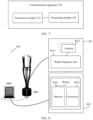
- a structure of the communication apparatus includes a processing module and a transceiver module.
- the processing module is configured to support the communication apparatus to perform a corresponding function according to any one of the first aspect to the ninth aspect or the designs of the first aspect to the ninth aspect.
- the transceiver module is configured to support communication between the communication apparatus and another communication device. For example, when the communication apparatus is the network device, the transceiver module may send an i th sidelink transmission resource to an i th cooperation terminal apparatus and a target terminal apparatus.
- the communication apparatus may further include a storage module.
- the storage module is coupled to the processing module, and stores program instructions and data that are necessary for the communication apparatus.
- the processing module may be a processor, a communication module may be a transceiver, and the storage module may be a memory.
- the memory may be integrated with the processor, or may be separate from the processor. This is not limited in this application.
- an embodiment of this application further provides a communication apparatus.
- a structure of the communication apparatus includes a processor, and may further include a memory.
- the processor is coupled to the memory, and may be configured to execute computer program instructions stored in the memory, to enable the communication apparatus to perform the method according to any one of the first aspect to the ninth aspect or the possible designs of the first aspect to the ninth aspect.
- the communication apparatus further includes a communication interface, and the processor is coupled to the communication interface.
- the communication interface may be a transceiver or an input/output interface.
- the communication interface may be an input/output interface of the chip.
- the transceiver may be a transceiver circuit, and the input/output interface may be an input/output circuit.
- an embodiment of this application further provides a computer-readable storage medium, including instructions.
- the instructions When the instructions are run on a computer, the computer is enabled to perform the method according to any possible design of any one of the first aspect to the ninth aspect.
- an embodiment of this application provides a system.
- the system includes the network apparatus configured to perform the methods according to the first aspect, the second aspect, and the seventh aspect, at least one cooperation terminal apparatus configured to perform the methods according to the third aspect, the fourth aspect, and the eighth aspect, and the target terminal apparatus configured to perform the methods according to the fifth aspect, the sixth aspect, and the ninth aspect.
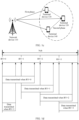
- a cooperative transmission system may include the network apparatus, the at least one cooperation terminal apparatus, and the target terminal apparatus.
- the downlink is used for communication between a network apparatus and a terminal apparatus, where the communication includes one-to-one downlink communication and one-to-many downlink communication.
- the one-to-one downlink communication may include unicast, and the one-to-many downlink communication includes broadcast, multicast, and the like.
- the broadcast may refer to communication between a network apparatus and all terminal apparatuses in a cell
- the multicast may refer to communication between a network apparatus and a terminal in a communication group, where the communication group includes one or more terminal apparatuses.
- the downlink communication may include direct communication between the network apparatus and the terminal apparatus, and may further include downlink communication with forwarding performed by a relay node.
- a physical channel for the downlink communication may include at least one of the following: Physical downlink control channel (physical downlink control channel, PDCCH): used to carry downlink control information (Downlink Control Information, DCI), to allocate a resource for a data channel to the terminal apparatus.
- the DCI includes related information of scheduled downlink transmission, and UE receives the downlink transmission based on the related information.
- the control information may indicate a symbol and/or a resource block (resource block, RB) to which the data channel is mapped, and the network apparatus and the terminal apparatus perform data transmission on the allocated time-frequency resource through the data channel.
- Physical downlink shared channel (physical downlink shared channel, PDSCH): used to carry data delivered by the network apparatus.
- the sidelink may also be referred to as a sidelink, a sidelink, or the like.
- the sidelink is used for communication between terminal apparatuses, where the communication includes one-to-one sidelink communication and one-to-many sidelink communication.
- the one-to-one sidelink communication may include unicast, and the one-to-many sidelink communication includes broadcast, multicast, and the like.
- the broadcast may refer to communication between all terminal apparatuses in a cell
- the multicast may refer to communication between terminals in a communication group, where the communication group includes one or more terminal apparatuses.
- the sidelink communication may include direct communication between two terminal apparatuses, and may further include sidelink communication with forwarding performed by a relay node.
- a physical channel for the sidelink communication may include at least one of the following: Physical sidelink shared channel (physical sidelink shared channel, PSSCH): used to carry sidelink data (SL data).
- Physical sidelink shared channel physical sidelink shared channel, PSSCH
- PSSCH physical sidelink shared channel
- Physical sidelink control channel used to carry sidelink scheduling assignment (sidelink scheduling assignment, SL SA), where the SL SA may also be referred to as sidelink control information (sidelink control information, SCI).
- PSCCH physical sidelink control channel
- SCI sidelink control information
- Physical sidelink feedback channel used to carry sidelink feedback control information.
- the sidelink feedback information may include at least one of channel state information (channel state information, CSI) and hybrid automatic repeat request (hybrid automatic repeat request, HARQ) information.
- the HARQ information may include an acknowledgement (acknowledgement, ACK), a negative acknowledgement (negative acknowledgement, NACK), or the like.
- Physical sidelink broadcast channel (physical sidelink broadcast channel, PSBCH): used to carry system information and synchronization-related information.
- Physical sidelink discovery channel (physical sidelink discovery channel, PSDCH): used to carry a sidelink discovery message.
- Resource configuration mode also referred to as a resource allocation mode:
- One terminal apparatus may use one or two resource configuration modes.
- a resource configuration mode a resource used by the terminal apparatus to perform data transmission on a sidelink each time is scheduled and allocated by a network apparatus.
- the mode is a resource configuration mode defined in an LTE V2X system, namely, a mode 3, and a resource configuration mode defined in an NR V2X system, namely, a mode 1.
- a same resource is not allocated to adjacent terminal apparatuses, and better transmission reliability can be ensured.
- a resource used by the terminal apparatus to perform data transmission on a sidelink each time is dynamically selected by the terminal apparatus from a configured resource pool.
- the mode is a resource configuration mode defined in the LTE V2X system, namely, a mode 4, and a resource configuration mode defined in the NR V2X system, namely, a mode 2.
- the resource pool may be configured by a network apparatus by using a system broadcast message or an RRC message.
- the terminal apparatus may independently obtain at least a part of resources from the resource pool through random selection or according to a sensing based reservation mechanism or a partial sensing based reservation mechanism, to send the data. Because the terminal apparatus independently selects the resource, different terminal apparatuses may select a same resource to send data. Consequently, a transmission collision may occur.
- Downlink control information Downlink control information (downlink control information, DCI)
- the DCI is control information sent by a network apparatus to a terminal apparatus.
- the network apparatus may send the DCI through a physical downlink control channel PDCCH.
- the DCI may be used to schedule uplink data transmission, downlink data transmission, or sidelink resource allocation.
- a communication interface between the network apparatus and the terminal apparatus is a Uu interface, and uplink/downlink data transmission may be performed over the Uu interface, where the uplink data transmission is data transmission from the terminal apparatus to the network apparatus, and the downlink data transmission is data transmission from the network apparatus to the terminal apparatus.
- a communication interface between terminal apparatuses is a PC5 interface, and sidelink transmission may be performed between the terminal apparatuses over the PC5 interface.
- the sidelink resource allocation may be performed to allocate a sidelink resource and/or a sidelink receiving resource.
- the network apparatus may send DCI to a transmit-side terminal apparatus, where the DCI is used to allocate a sidelink resource to the transmit-side terminal apparatus.
- the network apparatus may configure DCI in different formats.
- the network apparatus or a CUE may use the following manner.
- functions of first DCI in different formats may be different.
- DCI in a first format may be referred to as fallback DCI (fallback DCI), and the fallback DCI may be used for data scheduling before or after RRC connection establishment.
- First DCI in a second format may be referred to as non-fallback DCI (non-fallback DCI), and the non-fallback DCI may be used for data scheduling and the like after the RRC connection establishment.
- Table 1 DCI format description
- Function Search space Format 1_0 Downlink data scheduling CSS and/or USS Format 1_1 Downlink data scheduling USS Format X SL resource scheduling
- the CUE may set SCI to be in the first format, where for example, the DCI in the first format may be DCI in the format 1_0 (format 1_0).
- the CUE may set SCI to be in the second format, where for example, the DCI in the second format may be DCI in the format 1_1 (format 1_1).
- cyclic redundancy check (cyclic redundancy check, CRC) scrambling may be performed on the DCI by using different radio network temporary identifiers (radio network temporary identity, RNTI).
- radio network temporary identity RNTI
- different RNTIs may be used to identify different CUEs.
- Network transmission signaling includes connection establishment signaling and handover signaling at an RRC layer, resource request signaling at a media access control layer, measurement feedback signaling at a bottom layer, and the like.
- the RRC signaling may be scheduling information periodically or aperiodically configured by the network apparatus for the terminal apparatus.
- RRC connection state The terminal apparatus may have three RRC connection states: an RRC connected state (RRC_CONNECTED), an RRC idle state (RRC_IDLE), and an RRC inactive state (RRC_INACTIVE).
- the RRC connected state can be mutually transitioned with each of the RRC idle state and the RRC inactive state. However, for the RRC idle state and the RRC inactive state, only the RRC inactive state can be transitioned to the RRC idle state.
- a terminal apparatus in the RRC connected state may use the first resource configuration mode or the second resource configuration mode, or may even simultaneously use the two resource configuration modes.
- a specific resource configuration mode to be used may be determined by a network apparatus.
- terminal apparatuses may be further classified into an in-coverage (in-coverage, IC) terminal apparatus and an out-of-coverage (out-of-coverage, OOC) terminal apparatus depending on whether the terminal apparatuses are located within coverage of the network apparatus. Only the terminal apparatus within the coverage of the network apparatus has various RRC connection states, and the terminal apparatus outside the coverage of the network apparatus cannot directly interact with the network apparatus.
- in-coverage in-coverage
- OOC out-of-coverage
- redundancy version transmission for initial transmission or retransmission is performed.
- a start location of transmitting data is determined based on a redundancy version (redundancy version, RV).
- RV redundancy version
- service data may be transmitted in a unit of transport blocks (transport block, TB).
- transport block, TB After channel coding, one TB includes redundant data.
- one TB may be repeatedly transmitted for a plurality of times, and data in the plurality of times of repeat transmission may be the same or different. All data in a TB is stored in a ring buffer. During each time of transmission, a start location of reading data is determined in the ring buffer based on the redundancy version.
- the ring buffer is a special buffer. In the ring buffer, a start location and an end location of the data are adjacent.
- the ring buffer may also be referred to as a virtual circular buffer (virtual circular buffer).
- Downlink data transmission starts from the TB. After CRC (a check bit) is added to the TB and then the TB added with the CRC check bit is segmented, an uncoded code block is input to a channel coding module.
- An output obtained through channel coding includes a system bit sequence and several check bit sequences. After bit interleaving is performed on the system bit sequence and the check bit sequences, the system bit sequence and the check bit sequences are input to the circular buffer.
- the circular buffer has four anchors corresponding to four RV versions (an RV 0, an RV 1, an RV 2, and an RV 3).
- a transmit end selects an RV as a start data location for sending data after the channel coding, and performs subsequent operations such as bit scrambling and modulation.
- First transmission includes one time of initial transmission and n times of redundancy version transmission for the initial transmission, and next transmission includes one time of retransmission and n times of redundancy version transmission for the retransmission, where n is an integer greater than 0.
- redundancy version transmission is performed for a large quantity of times. This is applicable to a service application scenario in which interference is severe and a reliability requirement is high.
- First transmission includes one time of initial transmission, and next transmission includes one time of retransmission and n times of redundancy version transmission for the retransmission.
- the initial transmission only needs to be performed once. This is applicable to a service application scenario in which a data packet is large and a latency requirement is low.
- First transmission includes one time of initial transmission and n times of redundancy version transmission for the initial transmission, and next transmission includes one time of retransmission, where n is an integer greater than or equal to 0.
- the foregoing is merely examples, and there may be another implementation of a correspondence between a service application scenario and a transmission mode. Examples are not enumerated herein one by one. Similarly, the transmission mode may alternatively be implemented in another manner. Examples are not enumerated herein one by one.
- FIG. 1d is a schematic diagram of a redundancy version according to an embodiment of this application.
- a length of data that is obtained by encoding a TB in FIG. 1d is Ncb.
- start locations are respectively a start location, a 1/4 location, a 2/4 location, and a 3/4 location of the data obtained by encoding the TB, and corresponding redundancy versions are respectively 0, 1, 2, and 3.
- the redundancy version 0 is used for transmission, data with a preset length starts to be transmitted from the start location.
- the redundancy version 1 is used for transmission, the data with the preset length starts to be transmitted from the 1/4 location.
- Other cases are not described.
- the redundancy version transmission may be hybrid automatic repeat request (Hybrid Automatic Repeat reQuest-less, HARQ-less) transmission, or may be hybrid automatic repeat request (Hybrid Automatic Repeat reQuest, HARQ) transmission.
- HARQ transmission is performed, for a same TB, before each time of repeat transmission, whether to perform transmission is determined based on an acknowledgement (Acknowledgement, ACK) or a negative acknowledgement (Negative Acknowledgement, NACK) of the last transmission fed back by a terminal side apparatus.
- ACK acknowledgement
- NACK Negative Acknowledgement
- the HARQ-less transmission is performed, for a same TB, before each time of repeat transmission, there is no need to wait for an ACK/NACK fed back by a terminal side apparatus, and the transmission may be directly performed.
- the first time of transmission may be referred to as initial transmission
- the repeat transmission may be referred to as retransmission.
- a first transmission mode may include redundancy version transmission for initial transmission and redundancy version transmission for retransmission.
- a network side apparatus may indicate, to the terminal side apparatus in a plurality of manners, a redundancy version used for the redundancy version transmission for the initial transmission and a redundancy version used for the redundancy version transmission for the retransmission.
- the network side apparatus may indicate the redundancy version used for the redundancy version transmission for the initial transmission and/or the redundancy version used for the redundancy version transmission for the retransmission, and the terminal side apparatus and the network side apparatus may transmit the corresponding redundancy version based on the indicated redundancy version.
- the network side apparatus does not directly indicate the redundancy version used for the redundancy version transmission for the initial transmission and/or the redundancy version used for the redundancy version transmission for the retransmission, and the terminal side apparatus and the network side apparatus may determine the redundancy version in a redundancy version set in a same manner, and transmit the corresponding redundancy version.
- "at least one” means one or more, and "a plurality of” means two or more.
- the term “and/or” describes an association relationship between associated objects and indicates that three relationships may exist. For example, A and/or B may indicate the following cases: Only A exists, both A and B exist, and only B exists, where A and B may be singular or plural.
- the character “/” generally indicates an “or” relationship between associated objects.
- "At least one of the following items (pieces)” or a similar expression thereof refers to any combination of these items, including any combination of singular items (pieces) or plural items (pieces).
- At least one item (piece) of a, b, or c may represent: a, b, c, a and b, a and c, b and c, or a, b, and c, where a, b, and c may be singular or plural.
- the terminal apparatus may include user equipment (user equipment, UE), a wireless terminal device, a mobile terminal device, a subscriber unit (subscriber unit), a subscriber station (subscriber station), a mobile station (mobile station), a mobile station (mobile), a remote station (remote station), an access point (access point, AP), a remote terminal device (remote terminal), an access terminal device (access terminal), a user terminal device (user terminal), a user agent (user agent), a user device (user device), or the like.
- user equipment user equipment
- UE wireless terminal device
- the terminal may be a mobile phone (mobile phone), a tablet computer (Pad), a computer having a wireless transceiver function, a virtual reality (virtual reality, VR) terminal device, an augmented reality (augmented reality, AR) terminal device, a wireless terminal in industrial control (industrial control), a vehicle-mounted terminal device, a wireless terminal in self driving (self driving), a wireless terminal in telemedicine (remote medical), a wireless terminal in a smart grid (smart grid), a wireless terminal in transportation safety (transportation safety), a wireless terminal in a smart city (smart city), a wireless terminal in a smart home (smart home), a wearable terminal device, or the like.
- An application scenario is not limited in embodiments of this application.
- the terminal apparatus may also be sometimes referred to as a terminal device, user equipment (user equipment, UE), an access terminal device, a vehicle-mounted terminal, an industrial control terminal, a UE unit, a UE station, a mobile station, a mobile station, a remote station, a remote terminal device, a mobile device, a UE terminal device, a terminal device, a wireless communication device, a UE agent, a UE device, or the like.
- the terminal may be fixed or movable.
- the relay may be the foregoing network apparatus, or may be the foregoing terminal apparatus.
- the terminal apparatus may include a mobile phone (or referred to as a "cellular" phone), a computer with a mobile terminal apparatus, a portable, pocket-sized, handheld, computer built-in, or vehicle-mounted mobile device, and an intelligent wearable device.
- the terminal apparatus is a device such as a personal communications service (personal communications service, PCS) phone, a cordless telephone set, a session initiation protocol (session initiation protocol, SIP) phone, a wireless local loop (wireless local loop, WLL) station, or a personal digital assistant (personal digital assistant, PDA).
- the terminal apparatus further includes a limited device, for example, a device with low power consumption, a device with a limited storage capability, or a device with a limited computing capability.
- the terminal apparatus includes an information sensing device such as a barcode, radio frequency identification (radio frequency identification, RFID), a sensor, a global positioning system (global positioning system, GPS), or a laser scanner.
- the terminal apparatus in embodiments of this application may alternatively be a vehicle-mounted module, a vehicle-mounted component, a vehicle-mounted chip, or a vehicle-mounted unit that is built in a vehicle as one or more components or units.
- the vehicle uses the vehicle-mounted module, the vehicle-mounted component, the vehicle-mounted chip, or the vehicle-mounted unit that is built in the vehicle, to implement a method in embodiments of this application.
- the terminal apparatus in embodiments of this application may alternatively be a wearable device.
- the wearable device may also be referred to as a wearable intelligent device, and is a general term of wearable devices, such as glasses, gloves, watches, clothes, and shoes, that are developed by applying wearable technologies to intelligent designs of daily wear.
- the wearable device is a portable device that is directly worn on the body or integrated into clothes or an accessory of a user.
- the wearable device is more than a hardware device, and implements powerful functions through software support, data exchange, and cloud interaction.
- the wearable intelligent device includes full-featured and large-sized devices that can implement all or some functions without depending on smartphones, for example, smart watches or smart glasses, and devices that focus on only one type of application function and need to work with other devices such as smartphones, for example, various smart bands, smart helmets, or smart jewelry for monitoring physical signs.
- Data transmission may be performed between the network apparatus 110 and the terminal apparatuses 120 to 140 on an air interface resource.
- the air interface resource may include at least one of a time domain resource, a frequency domain resource, and a code domain resource.
- the network apparatus 110 may send control information to the terminal apparatuses 120 to 140 through a control channel, for example, a physical downlink control channel (physical downlink control channel, PDCCH), to allocate a resource for a data channel, for example, a physical downlink shared channel (physical downlink shared channel, PDSCH) or a physical uplink shared channel (physical uplink shared channel, PUSCH), to the terminal apparatuses 120 to 140.
- a control channel for example, a physical downlink control channel (physical downlink control channel, PDCCH)
- PDCCH physical downlink control channel
- PDSCH physical downlink shared channel
- PUSCH physical uplink shared channel
- the control information may indicate a symbol and/or a resource block (resource block, RB) to which the data channel is mapped, and the network apparatus 110 and the terminal apparatuses 120 to 140 perform data transmission on the allocated time-frequency resource through the data channel.
- the data transmission may include downlink data transmission and/or uplink data transmission.
- the downlink data (for example, data carried on the PDSCH) transmission may be that the network apparatus 110 sends data to the terminal apparatuses 120 to 140.
- the uplink data (for example, data carried on the PUSCH) transmission may be that the terminal apparatuses 120 to 140 send data to the network apparatus 110.
- the data may be data in a broad sense, for example, may be user data, or may be system information, broadcast information, or other information.
- data transmission may be further performed between the terminal apparatuses 120 to 140 on a sidelink resource.
- the sidelink resource may also include at least one of a time domain resource, a frequency domain resource, and a code domain resource.
- a physical channel used by the terminal apparatuses 120 to 140 to perform data transmission may include at least one of a physical sidelink shared channel (physical sidelink shared channel, PSSCH), a physical sidelink control channel (physical sidelink control channel, PSCCH), a physical sidelink feedback channel (physical sidelink feedback channel, PSFCH), or the like.
- the PSSCH is used to transmit data
- the PSCCH is used to transmit control information such as scheduling assignment (scheduling assignment, SA) information
- the PSFCH is used to transmit feedback information.
- the feedback information may include channel state information (channel state information CSI), an acknowledgement (acknowledgement, ACK), or a negative acknowledgement (negative acknowledgement, NACK).
- FIG. 1a to FIG. 1c each show an example including one network apparatus and three terminal apparatuses 120 to 140.
- the communication system 100 may include a plurality of network apparatuses, and coverage of one network apparatus may include another quantity of terminal apparatuses.
- the sidelink communication in embodiments of this application may be communication (for example, unicast) between one terminal apparatus and another terminal apparatus, or the sidelink communication may be communication (for example, multicast and broadcast) between one terminal apparatus and a plurality of terminal apparatuses.
- the sidelink communication is communication between one terminal apparatus and another terminal apparatus
- the sidelink communication is communication between one terminal apparatus and another terminal apparatus
- a cooperative transmission group includes a target terminal apparatus (Target User Equipment, TUE) and several cooperation terminal apparatuses (Cooperation User Equipment, CUE) serving the target terminal apparatus.
- TUE Target User Equipment
- CUE Cooperation User Equipment
- a cooperative transmission group includes the terminal apparatus 120, the terminal apparatus 130, and the terminal apparatus 140 in FIG. 1a to FIG. 1c .
- the target terminal apparatus is the terminal apparatus 120, and the terminal apparatuses 130 and 140 are the cooperation terminal apparatuses.
- any terminal apparatus may be a target terminal apparatus in a cooperative transmission group using the terminal apparatus as a center, and may also be a cooperation terminal apparatus in one or more other cooperative transmission groups.
- a neighboring terminal apparatus (neighboring user equipment, NUE) adjacent to the target terminal apparatus may be determined as a cooperation terminal apparatus of the target terminal apparatus through random access.
- the cooperation terminal apparatus in this application may be a CUE, may be a sidelink user apparatus (side UE, SUE), or may be a relay user apparatus (relay UE). This is not limited herein.
- the CUE is used as an example for description in embodiments of this application.
- a current sidelink data transmission solution supports only end-to-end single-hop data transmission.
- sidelink data transmission requires a transmit end of data to initiate a transmission resource obtaining request to a network apparatus, and then the network apparatus configures a corresponding sidelink transmission resource for the transmit end.
- second data transmitted on a sidelink is generated based on first data sent by the network apparatus to a cooperation terminal apparatus in a first phase.
- the second data sent by the cooperation terminal apparatus to a target terminal apparatus on the sidelink is also related to a cooperative transmission process, so that after receiving a signal including second data from at least one cooperation terminal apparatus, the target terminal apparatus can better obtain the first data sent by the network apparatus to the target terminal apparatus. Therefore, a data initiator on the sidelink cannot serve as a separate data initiator. As a result, in the cooperative transmission scenario, at least two hops of data transmission are involved.
- a conventional resource allocation solution for sidelink data transmission cannot be directly used during resource allocation.
- the present invention provides a downlink transmission solution through user cooperation with a plurality of cooperation UEs, to implement control signaling exchange and data transmission between a plurality of cooperation terminal apparatuses in a cooperative transmission scenario, SL resource allocation of the plurality of cooperation terminal apparatuses, and preconfiguration of some or all scheduling information on an SL.
- a CUE correctly decodes data
- the CUE performs data transmission on the SL based on a signaling indication.
- signaling is used to indicate a decoding manner of the TUE, to implement a soft combination indication and RV control.
- the TUE may learn that the signals transmitted by the plurality of CUEs on sidelinks can be combined.
- LTE V2X there are two transmission modes: a base station allocation mode, which is defined as a mode 3 in an LTE standard; and a user autonomous-selection mode, which is defined as a mode 4 in the LTE standard.
- the base station allocation mode is mainly applied to V2X communication in a network coverage case.
- a base station centrally performs resource allocation based on a reporting status of a buffer status report (buffer status report, BSR) of a terminal apparatus.
- the base station may perform resource allocation in a semi-persistent scheduling (semi-persistent scheduling, SPS) mode or a dynamic mode.
- a sidelink transmission resource for example, an MCS or an RB
- a network apparatus for example, an MCS or an RB
- a CUE and a TUE are in-coverage (in-coverage, IC) terminal apparatuses of the network apparatus.
- a communication procedure through user cooperation is provided.
- a network apparatus in the procedure may be specifically the network apparatus 110 in FIG. 1a
- a target terminal apparatus may be the terminal apparatus 120 in FIG. 1a
- cooperation terminal apparatuses may be the terminal apparatuses 130 and 140 in FIG. 1a .
- the procedure includes the following steps.
- Transmission based on user apparatus cooperation mainly includes two phases.
- Step 2011 The network apparatus indicates the cooperative transmission apparatus CUE and the target terminal apparatus TUE to terminal apparatuses in a cooperative transmission group.
- the network apparatus may select two cooperation terminal apparatuses from the cooperative transmission group as cooperation terminal apparatuses for current cooperative transmission, or a cooperation terminal apparatus may report that the cooperation terminal apparatus may be used for current cooperative transmission. This is not limited herein.
- two CUEs are used as an example.
- the network apparatus indicates to a UE 1 that the UE 1 is a CUE 1 and is configured to cooperate with the TUE on transmission.
- the network apparatus indicates to a UE 2 that the UE 2 is a CUE 2 and is configured to cooperate with the TUE on transmission.
- the network apparatus indicates to the TUE that the CUE 1 and the CUE 2 are cooperation users of the TUE and are configured to cooperate with the TUE on transmission.
- the network apparatus may send indications to the CUE and the TUE in a plurality of manners. For example, the network apparatus may determine a uniform identifier for the cooperation terminal apparatuses, and determine a target terminal apparatus identifier for the target terminal apparatus, to distinguish the CUE and the TUE.
- the CUE and the TUE may be distinguished by using a field through an RRC configuration.
- the CUE and the TUE may be indicated by using one bit through a dynamic DCI configuration.
- the network apparatus may configure different cooperation terminal apparatus identifiers for the cooperation terminal apparatuses, and determine a target terminal apparatus identifier for the target terminal apparatus, to distinguish the CUE and the TUE.
- the CUEs and the TUE may be distinguished by using a field through an RRC configuration.
- the CUEs and the TUE may be indicated by using a plurality of bits through a dynamic DCI configuration.
- the following cooperation terminal apparatus is the cooperation terminal apparatus used for the current cooperative transmission.
- Step 2012 The network apparatus determines, for the CUE and the TUE, downlink transmission resources used by the network apparatus to transmit first data to the CUE and the TUE, and sends the first data to the CUE and the TUE on the downlink transmission resources.
- the network apparatus may send the first data to N cooperation terminal apparatuses and the target terminal apparatus in a unicast manner.
- the downlink transmission resources occupied by the first data may be separately configured by the network apparatus for the N cooperation terminal apparatuses and the target terminal apparatus, and DCI may be separately sent to the N cooperation terminal apparatuses and the target terminal apparatus to configure the downlink transmission resources. That is, the network apparatus may send, to an i th cooperation terminal apparatus, first DCI that carries an i th downlink transmission resource.
- the network apparatus sends, to the target terminal apparatus, first DCI that carries an (N+1) th downlink transmission resource.
- the network apparatus may send the first data to the i th cooperation terminal on the i th downlink transmission resource.
- the i th cooperation terminal apparatus receives the first data on the i th downlink transmission resource occupied by the first data, and sends an automatic repeat request feedback message based on a decoding result of the received first data and an automatic repeat request parameter in the i th downlink transmission resource, so that the network apparatus sends to-be-retransmitted data to the i th cooperation terminal apparatus.
- the target terminal apparatus may receive the first DCI sent by the network apparatus, to obtain the (N+1) th downlink transmission resource, and further receive the first data of the network apparatus on the (N+1) th downlink transmission resource.
- the downlink transmission resource may be scheduled in a semi-persistent mode.
- N cooperation terminal apparatuses and the target terminal apparatus belong to the same cooperative transmission group.
- the network apparatus may determine an i th downlink transmission resource of an i th cooperation terminal apparatus in a downlink transmission resource set.
- the i th cooperation terminal apparatus belongs to the N cooperation terminals, and the i th downlink transmission resource belongs to the 1 st downlink transmission resource to an (N+1) th downlink transmission resource, where i is an integer greater than or equal to 1 and less than or equal to N, and N is an integer greater than or equal to 1.
- the i th downlink transmission resource is used by the network apparatus to send the first data to the i th cooperation terminal apparatus, and the network apparatus sends the i th downlink transmission resource to the i th cooperation terminal apparatus.
- the i th downlink transmission resource may be different from or may be the same as a j th downlink transmission resource. This is not limited herein.
- the j th downlink transmission resource is a downlink transmission resource that is of a j th cooperation terminal apparatus and that is determined by the network apparatus, and the j th cooperation terminal apparatus belongs to the N cooperation terminals.
- the network apparatus may configure the determined 1 st downlink transmission resource of the 1 st cooperation terminal apparatus to the determined (N+1) th downlink transmission resource of the target terminal apparatus for the N cooperation terminal apparatuses and the target terminal apparatus by using RRC signaling. Further, the network apparatus may send the first data to the i th cooperation terminal apparatus on the i th downlink transmission resource.
- the network apparatus may alternatively send the first data in a multicast or broadcast manner.
- the network apparatus may configure the downlink transmission resources for the N cooperation terminal apparatuses and the target terminal apparatus through dynamic scheduling using DCI.
- first DCI separately sent by the network apparatus to the N cooperation terminal apparatuses and the target terminal apparatus may include the downlink transmission resource of each of the N cooperation terminal apparatuses and the downlink transmission resource of the target terminal apparatus.
- the first data is sent to the N cooperation terminal apparatuses and the target terminal apparatus on the configured downlink transmission resources.
- Two CUEs are used as an example.
- the downlink transmission resource set may include the 1 st downlink transmission resource, the 2 nd downlink transmission resource, and the 3 rd downlink transmission resource.
- the network apparatus may allocate a same downlink transmission resource to the TUE, the CUE 1, and the CUE 2, where the downlink transmission resource may be the 1 st downlink transmission resource in the downlink transmission resource set.
- the first DCI sent by the network apparatus to the N cooperation terminal apparatuses and the target terminal apparatus may include the 1 st downlink transmission resource.
- the network apparatus may send the first data to the TUE, the CUE 1, and the CUE 2 on the 1 st downlink transmission resource in the multicast or broadcast manner.
- the TUE, the CUE 1, and the CUE 2 receive the first data on the 1 st downlink transmission resource occupied by the first data.
- the network apparatus may configure a same downlink transmission resource for the N cooperation terminal apparatuses and the target terminal apparatus by using the RRC signaling. Further, the network apparatus may send the first data on the configured downlink transmission resource in the multicast or broadcast manner.
- Step 2013 The CUE and the TUE obtain the downlink transmission resources, and receive the first data from the network apparatus on the downlink transmission resources.
- the i th cooperation terminal apparatus may receive the first DCI from the network apparatus.
- the first DCI includes the i th downlink transmission resource determined for the i th cooperation terminal apparatus.
- the i th cooperation terminal apparatus receives the first data from the network apparatus on the i th downlink transmission resource.
- the CUE i blindly detects the first DCI in a candidate search space. If parsing succeeds, the CUE i may determine the i th downlink transmission resource that is carried in the first DCI and that is used to transmit the first data.
- the target terminal apparatus may receive the first DCI from the network apparatus.
- the first DCI includes the (N+1) th downlink transmission resource determined for the target terminal apparatus.
- the TUE blindly detects the first DCI in a candidate search space. If parsing succeeds, the TUE may determine the (N+1) th downlink transmission resource that is carried in the first DCI and that is used to transmit the first data. Further, the target terminal apparatus receives the first data from the network apparatus on the (N+1) th downlink transmission resource.
- the i th cooperation terminal apparatus may determine, based on the RRC signaling from the network apparatus, the i th downlink transmission resource determined by the network apparatus for the i th cooperation terminal apparatus. Further, the i th cooperation terminal apparatus receives the first data from the network apparatus on the i th downlink transmission resource.
- the target terminal apparatus may determine, based on the RRC signaling from the network apparatus, the (N+1) th downlink transmission resource determined by the network apparatus for the target terminal apparatus. Further, the target terminal apparatus receives the first data from the network apparatus on the (N+1) th downlink transmission resource.
- the N cooperation terminal apparatuses and the target terminal apparatus receive the first DCI from the network apparatus.
- the first DCI includes the downlink transmission resource determined for the N cooperation terminal apparatuses and the target terminal apparatus.
- the CUE and the TUE blindly detect the first DCI in a candidate search space. If parsing succeeds, the CUE and the TUE may determine the downlink transmission resource that is carried in the first DCI and that is used to transmit the first data. Further, the N cooperation terminal apparatuses and the target terminal apparatus receive the first data from the network apparatus on the downlink transmission resource.
- the N cooperation terminal apparatuses and the target terminal apparatus determine, based on the RRC signaling from the network apparatus, the downlink transmission resource determined by the network apparatus for the N cooperation terminal apparatuses and the target terminal apparatus. Further, the N cooperation terminal apparatuses and the target terminal apparatus receive the first data from the network apparatus on the downlink transmission resource.
- Each cooperation terminal apparatus may establish a sidelink with the target terminal apparatus. This may be applied to a process in which the network apparatus actively allocates a sidelink transmission resource to the terminal apparatus, or may be applied to a process in which the network apparatus passively allocates a sidelink transmission resource to the terminal apparatus.
- the process in which the network apparatus passively allocates the sidelink transmission resource to the terminal apparatus may include: The terminal apparatus sends a sidelink resource request to the network apparatus. After receiving the sidelink resource request, the network apparatus allocates the sidelink transmission resource to the terminal apparatus. That is, the procedure shown in FIG. 1a may further include: The CUE sends an SL resource request to the network apparatus.
- a specific sidelink transmission process may include the following steps.
- Step 2021 The network apparatus determines a sidelink transmission resource set of the N cooperation terminal apparatuses.
- the N cooperation terminal apparatuses and the target terminal apparatus belong to the same cooperative transmission group.
- the sidelink transmission resource set includes the 1 st sidelink transmission resource to an N th sidelink transmission resource.
- the 1 st sidelink transmission resource to the N th sidelink transmission resource may be used by the N cooperation terminal apparatuses to send second data to the target terminal apparatus.
- the second data is determined by the i th cooperation terminal apparatus based on the first data sent by the network apparatus to the i th cooperation terminal apparatus.
- Sidelink transmission resources of the 1 st sidelink transmission resource to the N th sidelink transmission resource may be the same or may be different. This is not limited herein.
- the network apparatus may send a sidelink transmission resource set indication to the N cooperation terminal apparatuses and/or the target terminal apparatus.
- second DCI may be sent to send the sidelink transmission resource set indication to the N cooperation terminal apparatuses and the target terminal apparatus.
- the second DCI is used to indicate a sidelink transmission resource set allocated by the network apparatus to a first CUE to transmit the second data.
- the network apparatus determines a sidelink transmission resource set for the CUE 1 and the CUE 2, where the sidelink transmission resource set includes the 1 st sidelink transmission resource and the 2 nd sidelink transmission resource.
- the network apparatus generates second DCI that carries the sidelink transmission resource set, and then sends the second DCI to the CUE 1 and the CUE 2.
- the sidelink transmission resource set may alternatively be configured by using RRC signaling, to be notified to the N cooperation terminal apparatuses and the target terminal apparatus. This is not limited herein.
- Step 2022 The network apparatus determines an i th sidelink transmission resource of the i th cooperation terminal apparatus.
- the i th cooperation terminal apparatus belongs to the N cooperation terminals, and the i th sidelink transmission resource belongs to the sidelink transmission resource set.
- the i th sidelink transmission resource is used by the i th cooperation terminal apparatus to send the second data to the target terminal apparatus.
- i is an integer greater than or equal to 1 and less than or equal to N
- N is an integer greater than or equal to 1.
- the i th sidelink transmission resource in the sidelink transmission resource set may be different from a j th sidelink transmission resource
- the j th sidelink transmission resource may be a sidelink transmission resource that is of the j th cooperation terminal apparatus and that is determined by the network apparatus
- the j th cooperation terminal apparatus belongs to the N cooperation terminals, where j is an integer greater than or equal to 1 and less than or equal to N, and j is not equal to i.
- the network apparatus may determine that the i th sidelink transmission resource of the i th cooperation terminal apparatus and the j th sidelink transmission resource of the j th cooperation terminal apparatus are the same sidelink transmission resource.
- the network apparatus may determine that a sidelink transmission resource of each cooperation terminal apparatus is the i th sidelink transmission resource in the sidelink transmission resource set. In other words, the network apparatus may determine the i th sidelink transmission resource of the N cooperation terminal apparatuses.
- the i th sidelink transmission resource belongs to the 1 st sidelink transmission resource to the N th sidelink transmission resource.
- the i th sidelink transmission resource may be different from a j th sidelink transmission resource in the sidelink transmission resource set, where j is an integer greater than or equal to 1 and less than or equal to N, and j is not equal to i.
- the i th sidelink transmission resource may be the same as a j th sidelink transmission resource in the sidelink transmission resource set. This is not limited herein.
- the network apparatus may send the sidelink transmission resource to the N cooperation terminal apparatuses and the target terminal apparatus.
- the network apparatus sends the sidelink transmission resource set indication to the CUE and the TUE, and sends third DCI to the CUE and the TUE in a dynamic scheduling mode when determining that the CUE needs to send the second data to the TUE.
- the third DCI is used to indicate the sidelink transmission resource determined by the network apparatus for the CUE to transmit the second data.
- the network apparatus sends each piece of third DCI to the corresponding CUE in the unicast manner, and sends all the third DCI to the TUE.
- the network apparatus determines, for the CUEs, a same sidelink transmission resource used to transmit the second data, and the network apparatus may send the third DCI to the CUEs and the TUE in the broadcast manner.
- the network apparatus may alternatively include, in one piece of third DCI, different sidelink transmission resources that are separately determined for the CUEs to transmit the second data, and the network apparatus may send the third DCI to the CUEs and the TUE in the multicast manner.
- the network apparatus may notify, by using RRC signaling, the CUE and the TUE of the sidelink transmission resource used to transmit the second data.
- the RRC is used to indicate the sidelink transmission resource determined by the network apparatus for the CUE to transmit the second data.
- Step 2023 The network apparatus sends the i th sidelink transmission resource to the i th cooperation terminal apparatus and the target terminal apparatus.
- the network apparatus sends the sidelink transmission resource set indication to the N cooperation terminal apparatuses and the target terminal apparatus.
- the sidelink transmission resource set indication may be specifically sent by using the second DCI.
- the second DCI is used to indicate the sidelink transmission resource set allocated by the network apparatus to the first CUE to transmit the second data.
- the network apparatus determines the sidelink transmission resource set for the CUE 1 and the CUE 2, where the sidelink transmission resource set includes the 1 st sidelink transmission resource and the 2 nd sidelink transmission resource.
- the network apparatus generates the second DCI that carries the sidelink transmission resource set, and then sends the second DCI to the CUE 1 and the CUE 2.
- the sidelink transmission resource set may alternatively be configured by using the RRC signaling.
- the i th cooperation terminal apparatus may receive, based on the second DCI or the RRC signaling, the sidelink transmission resource set sent by the network apparatus.
- the network apparatus may send the third DCI for the i th cooperation terminal apparatus to the i th cooperation terminal apparatus and the target terminal apparatus in the unicast manner.
- the i th cooperation terminal apparatus determines, based on the third DCI from the network apparatus, the i th sidelink transmission resource allocated by the network apparatus to the i th cooperation terminal apparatus to transmit the second data.
- the network apparatus includes, in one piece of third DCI, the different sidelink transmission resources that are separately configured for the cooperation terminal apparatuses to transmit the second data, and sends the third DCI to the N cooperation terminal apparatuses and the target terminal apparatus.
- the i th cooperation terminal apparatus may parse only a field corresponding to the i th cooperation terminal apparatus in the third DCI, to determine the i th sidelink transmission resource used by the i th cooperation terminal apparatus to transmit the second data.
- the network apparatus may notify, by using the RRC signaling, the i th cooperation terminal apparatus and the target terminal apparatus of the i th sidelink transmission resource determined by the network apparatus.
- the network apparatus may notify, by using the RRC signaling, that a sidelink transmission resource of the 1 st cooperation terminal apparatus is the 1 st sidelink transmission resource and that a sidelink transmission resource of the 2 nd cooperation terminal apparatus is the 2 nd sidelink transmission resource.
- the network apparatus may indicate whether the second data sent by the cooperation terminal apparatus to the target terminal apparatus is data on which the target terminal apparatus is to perform soft combination, so that the cooperation terminal apparatus generates the second data based on a soft combination indication.
- the data on which the soft combination is to be performed means that the second data of the i th cooperation terminal apparatus and the second data of the j th cooperation terminal apparatus that are received by the target terminal apparatus are same data obtained through decoding, and therefore may be combined for decoding, to improve a success rate of decoding the second data by the target terminal apparatus.
- the network apparatus may determine an i th soft combination indication field of the i th cooperation terminal apparatus, where the i th soft combination indication field is used to indicate whether the second data sent by the i th cooperation terminal apparatus to the target terminal apparatus is the data on which the target terminal apparatus is to perform soft combination.
- the network apparatus may send, to the i th cooperation terminal apparatus in a dynamic scheduling manner, fourth DCI that carries the i th soft combination indication field.
- the network apparatus may alternatively determine a soft combination indication field set for the N cooperation terminal apparatuses, where the soft combination indication field set includes the 1 st soft combination indication field to an N th soft combination indication field.
- the network apparatus may determine the i th soft combination indication field for the i th cooperation terminal apparatus when required, and send the i th soft combination indication field to the i th cooperation terminal apparatus and the target terminal apparatus after determining the i th soft combination indication field.
- the fourth DCI and the third DCI may be combined into one piece of DCI to be sent, or may be sent separately.
- the network apparatus may alternatively configure the i th soft combination indication field for the i th cooperation terminal apparatus in a semi-persistent scheduling manner.
- the i th cooperation terminal apparatus may independently select a soft combination indication field from the soft combination indication field set, and forward, to the target terminal apparatus based on an indication manner in the selected soft combination indication field, the second data on which the soft combination needs or does not need to be performed.
- a soft combination indication in the i th soft combination indication field is 0, it indicates that the soft combination does not need to be performed on the second data sent by the i th cooperation terminal apparatus to the target terminal apparatus. If a soft combination indication in the i th soft combination indication field is 1, it indicates that the second data sent by the i th cooperation terminal apparatus to the target terminal apparatus may be combined with second data sent by another cooperation terminal apparatus to the target terminal apparatus.
- the i th cooperation terminal apparatus determines that the soft combination does not need to be performed on second data sent to the target terminal apparatus. If a soft combination indication in the 2 nd soft combination indication field of the 2 nd cooperation terminal apparatus is 1, the 2 nd cooperation terminal apparatus determines that the soft combination needs to be performed on second data sent to the target terminal apparatus.
- the i th soft combination indication field may include a first time offset and/or a second time offset.
- the first time offset is used to indicate that, if the target terminal apparatus receives the second data from the i th cooperation terminal apparatus at a second moment obtained by increasing a first moment by the time offset, the second data is determined as the data on which the target terminal apparatus is to perform soft combination, where the first moment is a moment of receiving sidelink control signaling sent by the i th cooperation terminal apparatus.
- the second time offset is used to indicate that, if the target terminal apparatus receives the second data from the i th cooperation terminal apparatus at a third moment obtained by increasing the first moment by the second time offset, the second data is determined as data on which the target terminal apparatus is not to perform soft combination.
- first time offset and/or the second time offset in the i th soft combination indication field determined by the network apparatus for the i th cooperation terminal apparatus may be the same as or different from a first time offset and/or a second time offset in a j th soft combination indication field determined by the network apparatus for the j th cooperation terminal apparatus. This is not limited herein.
- the network apparatus may send one soft combination indication field to the N cooperation terminal apparatuses and the target terminal apparatus, to reduce signaling consumption.
- the network apparatus may send one soft combination indication field set to the N cooperation terminal apparatuses and the target terminal apparatus, where the soft combination indication field set includes the 1 st soft combination indication field to the N th soft combination indication field. Further, the N cooperation terminal apparatuses and the target terminal apparatus may determine, based on the received soft combination indication field set, a soft combination indication field corresponding to each cooperation terminal apparatus, so that the cooperation terminal apparatus may generate the second data based on the corresponding soft combination indication field, and send the second data to the target terminal. Correspondingly, the target terminal apparatus may determine, based on the soft combination indication field set, whether the second data sent by the N cooperation terminal apparatuses is data on which the soft combination may be performed.
- the i th soft combination indication field may be set in the i th sidelink transmission resource.
- the i th soft combination indication field may be determined by configuring different transmission resources.
- the i th sidelink transmission resource may include a first transmission resource and a second transmission resource.
- the first transmission resource is used to indicate that the second data sent by the i th cooperation terminal apparatus to the target terminal apparatus on the first transmission resource is data on which the target terminal apparatus is to perform soft combination
- the second transmission resource is used to indicate that the second data sent by the i th cooperation terminal apparatus to the target terminal apparatus on the second transmission resource is data on which the target terminal apparatus is not to perform soft combination
- the i th soft combination indication field may be determined based on a time-frequency resource, that is, an i th time-frequency resource in the i th sidelink transmission resource includes a first time-frequency resource and a second time-frequency resource.
- the i th sidelink transmission resource further includes an i th sidelink transmission parameter.
- the first time-frequency resource is used to indicate that the second data sent by the i th cooperation terminal apparatus to the target terminal apparatus on the first time-frequency resource by using the i th sidelink transmission parameter is data on which the target terminal apparatus is to perform soft combination
- the second time-frequency resource is used to indicate that the second data sent by the i th cooperation terminal apparatus to the target terminal apparatus on the second time-frequency resource by using the i th sidelink transmission parameter is data on which the target terminal apparatus is not to perform soft combination.
- the i th soft combination indication field may be determined based on a code resource, that is, an i th code resource in the i th sidelink transmission resource includes a first code resource and a second code resource.
- the i th sidelink transmission resource further includes an i th time-frequency resource.
- the first code resource is used to indicate that the second data sent by the i th cooperation terminal apparatus to the target terminal apparatus on the i th time-frequency resource and the first code resource is data on which the target terminal apparatus is to perform soft combination
- the second code resource is used to indicate that the second data sent by the i th cooperation terminal apparatus to the target terminal apparatus on the i th time-frequency resource and the second code resource is data on which the target terminal apparatus is not to perform soft combination.
- the first transmission resource in the i th soft combination indication field includes one or more of the following: the first time-frequency resource and the first code resource; and the second transmission resource includes one or more of the following: the second time-frequency resource and the second code resource. This is not limited herein.
- the cooperation terminal apparatus may further send third data to the target terminal apparatus, where the cooperation terminal apparatus may send the third data at a start location of a redundancy version while sending the second data.
- the third data may be a part of the first data determined by the cooperation terminal apparatus; or may be a part of the second data generated by the cooperation terminal apparatus.
- the third data is data that is generated by the i th cooperation terminal apparatus based on the first data received from the network apparatus and on which the target terminal apparatus is to perform soft combination.
- the start location at which the i th cooperation terminal apparatus is to send the third data may be determined by the network apparatus for the i th cooperation terminal apparatus, or may be independently selected by the i th cooperation terminal apparatus. This is not limited herein.
- the i th sidelink transmission resource further includes an i th redundancy version set, where the i th redundancy version set includes at least one redundancy version, and the redundancy version set is used by the i th cooperation terminal apparatus to determine a first redundancy version in the redundancy version set.
- the first redundancy version is used by the i th cooperation terminal apparatus to determine, based on the first redundancy version, the start location at which the i th cooperation terminal apparatus is to send the third data on which the soft combination needs to be performed, where the third data is generated by the i th cooperation terminal based on the first data received from the network apparatus.
- the redundancy version may alternatively be determined in another manner.
- the i th sidelink transmission resource further includes an i th redundancy version set
- the i th redundancy version set includes at least one redundancy version
- the redundancy version is used by the i th cooperation terminal apparatus to determine a second redundancy version based on an intra-group identifier of the i th cooperation terminal apparatus in the cooperative transmission group.
- the second redundancy version is used by the i th cooperation terminal apparatus to determine, based on the second redundancy version, the start location at which the i th cooperation terminal apparatus is to send the third data on which the soft combination needs to be performed.
- Step 2024 The i th cooperation terminal apparatus receives, from the network apparatus, the i th sidelink transmission resource used to transmit the second data.
- the network apparatus may further send the sidelink transmission resource set indication to the first CUE.
- the sidelink transmission resource set indication may be specifically sent by using the second DCI.
- the second DCI is used to indicate the sidelink transmission resource set allocated by the network apparatus to the first CUE to transmit the second data.
- the network apparatus determines the sidelink transmission resource set for the CUE 1 and the CUE 2, where the sidelink transmission resource set includes the 1 st sidelink transmission resource and the 2 nd sidelink transmission resource.
- the network apparatus generates the second DCI that carries the sidelink transmission resource set, and then sends the second DCI to the CUE 1 and the CUE 2.
- the sidelink transmission resource set may alternatively be configured by using the RRC signaling.
- the i th cooperation terminal apparatus may receive, based on the second DCI or the RRC signaling, the sidelink transmission resource set indication sent by the network apparatus.
- the i th cooperation terminal apparatus may determine, based on the third DCI from the network apparatus, the i th sidelink transmission resource allocated by the network apparatus to the i th cooperation terminal apparatus to transmit the second data.
- the i th cooperation terminal apparatus may receive the i th sidelink transmission resource by using the third DCI. Specifically, the i th cooperation terminal apparatus may parse only the field corresponding to the i th cooperation terminal apparatus in the third DCI, to determine the i th sidelink transmission resource used by the i th cooperation terminal apparatus to transmit the second data.
- the network apparatus may notify, by using the RRC signaling, the i th cooperation terminal apparatus of the i th sidelink transmission resource determined by the network apparatus.
- the i th cooperation terminal apparatus may receive the i th sidelink transmission resource by using the RRC signaling.
- the 1 st cooperation terminal apparatus may determine, based on the RRC signaling, that the sidelink transmission resource of the 1 st cooperation terminal apparatus is the 1 st sidelink transmission resource.
- the 2 nd cooperation terminal apparatus determines, based on the RRC signaling, that the sidelink transmission resource of the 2 nd cooperation terminal apparatus is the 2 nd sidelink transmission resource.
- a first cooperation terminal apparatus may receive the i th sidelink transmission resource from the network apparatus, where the first cooperation terminal apparatus is the i th cooperation terminal apparatus in the N cooperation terminals, the i th sidelink transmission resource belongs to the 1 st sidelink transmission resource to the N th sidelink transmission resource, the i th sidelink transmission resource is a sidelink transmission resource of the N cooperation terminal apparatuses, and the i th sidelink transmission resource is different from the j th sidelink transmission resource.
- the i th cooperation terminal apparatus may generate the second data based on the first data.
- the CUE 1 and the CUE 2 may forward the correctly received sidelink transmission resource and/or the second data to the TUE.
- the CUE 1 may generate the second data in a plurality of manners.
- the downlink control information may further include a manner configured by the network apparatus for the CUE 1 to generate the second data.
- the second data is a part of the first data, all the first data, or data in a signal that includes the first data and that is correctly received by the CUE 1 and sent by the network apparatus. This is not limited herein.
- a manner in which the CUE 1 generates the second data may be preconfigured by the network apparatus for the CUE 1, or may be a second data generation manner selected by the CUE 1 based on a requirement from a plurality of generation manners set in a standard.
- the CUE 1 may send the second data to the TUE on the 1 st sidelink transmission resource.
- the CUE 1 may further send SCI to the TUE, where the SCI carries the 1 st sidelink transmission resource.
- the CUE 1 may determine, based on a HARQ-acknowledgement message or a HARQ-negative acknowledgement message sent by the TUE, whether the TUE has received the 1 st sidelink transmission resource. If determining that the TUE has received the 1 st sidelink transmission resource, the CUE 1 may cancel sending the SCI, to reduce signaling consumption.
- a specific forwarding manner may be amply-and-forward, decode-and-transcode, compress-and-forward, or the like.
- the forwarded second data may be a part of the first data, or may be all the first data.
- the CUE 1 and the CUE 2 may forward a same part of the first data, or may forward different parts of the first data.
- the specific forwarding manner may be determined by the network apparatus for the cooperative transmission group, or may be determined by the cooperative transmission group through negotiation. This is not limited herein.
- the second data may further include a decoding result obtained by decoding the first data by the CUE, so that the TUE obtains the decoding result of the CUE, to improve data receiving performance.
- the network apparatus may indicate whether the second data sent by the cooperation terminal apparatus to the target terminal apparatus is the data on which the target terminal apparatus is to perform soft combination, so that the cooperation terminal apparatus generates the second data based on the soft combination indication.
- the i th cooperation terminal apparatus receives the i th soft combination indication field.
- the i th cooperation terminal apparatus receives the fourth DCI that carries the i th soft combination indication field; or the i th cooperation terminal apparatus receives the fourth DCI that carries the i th soft combination indication field, and further determines the i th soft combination indication field.
- the i th cooperation terminal apparatus determines the i th soft combination indication field based on RRC signaling.
- the 1 st cooperation terminal apparatus determines that the soft combination needs to be performed on the second data sent to the target terminal apparatus. In this case, the 1 st cooperation terminal apparatus needs to generate the second data the same as that of another cooperation terminal apparatus.
- a specific way to determine content of the same second data generated may be set by the network apparatus, or may be determined by the cooperation terminal apparatuses through negotiation. This is not limited herein.
- the i th sidelink transmission resource received by the i th cooperation terminal apparatus may further include the i th soft combination indication field.
- the i th cooperation terminal determines, based on the i th soft combination indication field, whether the second data sent to the target terminal apparatus is the data on which the target terminal apparatus is to perform soft combination.
- the i th soft combination indication field may include the first time offset and/or the second time offset.
- the i th cooperation terminal apparatus determines that the second data that needs to be sent is the data on which the target terminal apparatus is to perform soft combination. If determining that the i th soft combination indication field includes the second time offset, the i th cooperation terminal apparatus determines that the second data that needs to be sent is the data on which the target terminal apparatus is not to perform soft combination.
- the i th soft combination indication field may be set in the i th sidelink transmission resource.
- the i th soft combination indication field may be determined by configuring different transmission resources.
- the i th sidelink transmission resource includes the first transmission resource and the second transmission resource
- the i th cooperation terminal apparatus may select the first transmission resource to send the second data. If determining that the second data is the data on which the target terminal apparatus does not need to perform soft combination, the i th cooperation terminal apparatus may select the second transmission resource to send the second data.
- the i th sidelink transmission resource further includes the i th redundancy version set
- the i th redundancy version set includes the at least one redundancy version
- the redundancy version set is used by the i th cooperation terminal apparatus to determine the first redundancy version in the redundancy version set.
- the i th cooperation terminal apparatus may select the first redundancy version as the start location at which the i th cooperation terminal apparatus is to send the third data on which the soft combination needs to be performed.
- the i th cooperation terminal apparatus may send the first redundancy version to the target terminal apparatus by using SCI. Further, the target terminal apparatus may start receiving the third data at the start location for the third data based on the first redundancy version, and use the third data as the data on which the soft combination is to be performed.
- the 1 st redundancy version set determined by the network apparatus for the 1 st cooperation terminal apparatus CUE 1 by using RRC is ⁇ an RV 0, an RV 1 ⁇
- the 2 nd redundancy version set determined by the network apparatus for the 2 nd cooperation terminal apparatus CUE 2 is ⁇ an RV 3, an RV 4 ⁇ .
- the CUE 1 may select a first redundancy version from the 1 st redundancy version set.
- the 1 st cooperation terminal apparatus may select the RV 1 as a redundancy version for sending the third data by the 1 st cooperation terminal apparatus.
- the 2 nd cooperation terminal apparatus may also select a first redundancy version from the 2 nd redundancy version set.
- the 2 nd cooperation terminal apparatus may select the RV 3 as a redundancy version for sending the third data by the 1 st cooperation terminal apparatus.
- the network apparatus may alternatively indicate the first redundancy version of the i th cooperation terminal apparatus by sending DCI.
- the i th cooperation terminal apparatus receives the DCI sent by the network apparatus, where the DCI carries the first redundancy version, and the first redundancy version is used to indicate that the i th cooperation terminal apparatus needs to send, to the target terminal apparatus, the third data on which the soft combination is to be performed.
- the network apparatus sends DCI carrying the RV 1, to indicate that the first redundancy version of the i th cooperation terminal apparatus is the RV 1.
- the network apparatus may send the DCI to the target terminal apparatus, so that the terminal apparatus receives the third data at the start location corresponding to the first redundancy version, and determines that the to-be-received third data is the data on which the soft combination is to be performed.
- the redundancy version may alternatively be determined in another manner.
- the i th sidelink transmission resource may further include the i th redundancy version set, and the i th redundancy version set includes the at least one redundancy version.
- the network apparatus may preconfigure the i th redundancy version set of the i th cooperative transmission apparatus by using RRC or DCI.
- redundancy version sets corresponding to the cooperative transmission apparatuses may be the same. This is not limited herein.
- the i th cooperation terminal apparatus may independently select the second redundancy version used to transmit the third data.
- the second redundancy version is used by the i th cooperation terminal apparatus to determine, based on the second redundancy version, the start location at which the i th cooperation terminal apparatus is to send the third data on which the soft combination needs to be performed.
- the i th cooperation terminal apparatus may determine the second redundancy version based on the intra-group identifier of the i th cooperation terminal apparatus in the cooperative transmission group.
- the i th cooperation terminal apparatus determines, based on the second redundancy version, the start location for sending the third data. Further, the i th cooperation terminal apparatus starts sending the third data at the start location that is determined for the third data based on the second redundancy version.
- the redundancy version is used by the i th cooperation terminal apparatus to determine the second redundancy version based on the intra-group identifier of the i th cooperation terminal apparatus in the cooperative transmission group.
- the i th cooperation terminal apparatus may select, based on the intra-group identifier of the i th cooperation terminal apparatus, a version number of the second redundancy version used to transmit the third data.
- the 1 st redundancy version set and the 2 nd redundancy version set that are respectively configured by the network apparatus for the 1 st cooperation terminal apparatus CUE 1 and the 2 nd cooperation terminal apparatus CUE 2 are the same, where the 1 st redundancy version set may be ⁇ the RV 0, the RV 1, the RV 2, the RV 3 ⁇ , an intra-group identifier ID of the 1 st cooperation terminal apparatus CUE 1 is 0, and an intra-group identifier ID of the 2 nd cooperation terminal apparatus CUE 2 is 1.
- the 1 st cooperation terminal apparatus CUE 1 may determine, based on the intra-group identifier 0, that a first redundancy version of the 1 st cooperation terminal apparatus is the RV 0; the 2 nd cooperation terminal apparatus CUE 2 may determine, based on the intra-group identifier 1, that a first redundancy version of the 1 st cooperation terminal apparatus is the RV 1.
- Step 2025 The i th cooperation terminal apparatus sends the second data to the target terminal apparatus on the i th sidelink transmission resource, where the second data is determined by the i th cooperation terminal apparatus based on the first data received from the network apparatus.
- the i th cooperation terminal apparatus may send first indication information to the target terminal apparatus.
- the first indication information is used to indicate that the i th cooperation terminal apparatus does not correctly decode the first data.
- the first indication information may be a specific symbol sequence, or may be a bit sequence. Using one bit as an example, 0 or 1 is used to indicate that the CUE does not correctly decode data 1.
- the i th cooperation terminal apparatus may send the second data on a first sidelink transmission resource. If the i th cooperation terminal apparatus does not correctly decode the first data, the i th cooperation terminal apparatus chooses not to send the second data on the first sidelink transmission resource. If the i th cooperation terminal apparatus decodes a part of the first data, the second data sent by the i th cooperation terminal apparatus on the first sidelink transmission resource may be the part, of the first data, that is decoded.
- the i th cooperation terminal apparatus may generate sidelink control information SCI based on the received i th sidelink transmission resource, and send the SCI to the TUE.
- the sidelink control information indicates scheduling information of a sidelink resource.
- the SCI generated by the CUE 1 may indicate scheduling information of a sidelink resource between the CUE 1 and the TUE.
- the scheduling information of a sidelink may include a sidelink transmission resource that is correctly received by the CUE from the network apparatus and that is used to transmit the second data, include a sidelink transmission resource determined by the CUE in the sidelink transmission resource set preconfigured by the network apparatus, or include the sidelink transmission resource set preconfigured by the CUE based on the network apparatus.
- the CUE may send the SCI on a PSCCH, to send the scheduling information of the sidelink resource to the TUE.
- the SCI may alternatively be scheduling assignment (scheduling assignment, SA) information. This is not limited herein.
- the cooperation terminal apparatus sends the second data based on the soft combination indication.
- the i th soft combination indication field may include the first time offset and/or the second time offset.
- the i th cooperation terminal apparatus may send the second data at the second moment obtained by increasing the first moment by the first time offset, where the first moment is the moment of sending the sidelink control signaling to the target terminal apparatus by the i th cooperation terminal apparatus.
- the second data may alternatively be sent at a fourth moment obtained by decreasing the first moment by the first time offset.
- the i th cooperation terminal apparatus sends the second data at the third moment obtained by increasing the first moment by the second time offset.
- the i th soft combination indication field may be set in the i th sidelink transmission resource.
- the i th soft combination indication field may be determined by configuring different transmission resources.
- the i th cooperation terminal apparatus may send the second data on the first transmission resource.
- the i th cooperation terminal apparatus may send the second data on the second transmission resource.
- the target terminal apparatus may determine, based on the i th soft combination indication field, that the second data is the data on which the soft combination is not to be performed.
- the i th soft combination indication field may be determined based on the time-frequency resource, that is, the i th time-frequency resource in the i th sidelink transmission resource includes the first time-frequency resource and the second time-frequency resource.
- the i th sidelink transmission resource further includes the i th sidelink transmission parameter. If determining, based on the i th soft combination indication field, that the second data that needs to be sent is the data on which the target terminal apparatus is to perform soft combination, the i th cooperation terminal apparatus may send the second data on the first time-frequency resource by using the i th sidelink transmission parameter.
- the i th cooperation terminal apparatus may send the second data on the second time-frequency resource by using the i th sidelink transmission parameter.
- the i th sidelink transmission resource further includes the i th redundancy version set, where the i th redundancy version set includes the at least one redundancy version, and the redundancy version set is used by the i th cooperation terminal apparatus to determine the first redundancy version in the redundancy version set.
- the i th cooperation terminal generates the third data based on the first data received from the network apparatus, where the third data is data that is determined by the i th cooperation terminal apparatus and on which the soft combination needs to be performed.
- the i th cooperation terminal apparatus may alternatively determine the redundancy version in another manner, and then send the third data to the target terminal apparatus.
- the i th sidelink transmission resource further includes the i th redundancy version set, and the i th redundancy version set includes the at least one redundancy version.
- the i th cooperation terminal apparatus determines the second redundancy version based on the intra-group identifier of the i th cooperation terminal apparatus in the cooperative transmission group, and further sends, at the start location determined based on the second redundancy version, the third data on which the soft combination needs to be performed.
- Step 2026 The TUE obtains the sidelink transmission resource from the network apparatus, and receives the second data on the sidelink transmission resource.
- the network apparatus sends the sidelink transmission resource set indication to the N cooperation terminal apparatuses and the target terminal apparatus.
- the sidelink transmission resource set indication may be specifically sent by using the second DCI.
- the second DCI is used to indicate the sidelink transmission resource set allocated by the network apparatus to the first CUE to transmit the second data.
- the network apparatus determines the sidelink transmission resource set for the CUE 1 and the CUE 2, where the sidelink transmission resource set includes the 1 st sidelink transmission resource and the 2 nd sidelink transmission resource.
- the network apparatus generates the second DCI that carries the 1 st sidelink transmission resource and the 2 nd sidelink transmission resource, and then sends the second DCI to the CUE 1 and the CUE 2.
- the sidelink transmission resource set may alternatively be configured by using the RRC signaling.
- the target terminal apparatus may receive, based on the second DCI or the RRC signaling, the sidelink transmission resource set indication sent by the network apparatus.
- the TUE determines the sidelink transmission resource of the CUE 1 and the sidelink transmission resource of the CUE 2 based on the parsed third DCI; the TUE receives, on the sidelink transmission resource corresponding to the CUE 1, the second data sent by the CUE 1; and the TUE receives, based on the third DCI corresponding to the CUE 2 and on the sidelink transmission resource corresponding to the CUE 2, the second data sent by the CUE 2.
- the network apparatus sends, to the target terminal apparatus, the i th soft combination indication field determined by the network apparatus for the i th cooperation terminal apparatus, the target terminal apparatus receives, by using the SCI, the i th soft combination indication field determined by the i th cooperation terminal apparatus, the target terminal apparatus receives, by using the SCI, the soft combination indication field set sent by the i th cooperation terminal apparatus, or the target terminal apparatus receives the soft combination indication field set sent by the network apparatus, the second data or the third data sent by the i th cooperation terminal apparatus is determined based on the soft combination indication field in the soft combination indication field set.
- the target terminal apparatus may receive, based on the received i th soft combination indication field or the soft combination indication field in the received soft combination indication field set, the second data or the third data sent by the i th cooperation terminal apparatus.
- the i th soft combination indication field may be set in the i th sidelink transmission resource.
- the i th soft combination indication field may be determined by configuring different transmission resources.
- the target terminal apparatus may determine, based on the i th soft combination indication field, that the second data is the data on which the soft combination is to be performed.
- the target terminal apparatus may determine, based on the i th soft combination indication field, that the second data is the data on which the soft combination is not to be performed.
- the target terminal apparatus may determine, based on the i th soft combination indication field, that the second data is the data on which the soft combination is not to be performed.
- the i th soft combination indication field may be determined based on the code resource, that is, the i th code resource in the i th sidelink transmission resource includes the first code resource and the second code resource.
- the i th sidelink transmission resource may further include the i th time-frequency resource.
- the target terminal apparatus may determine that the second data is the data on which the soft combination is to be performed. If receiving, on the i th time-frequency resource and the second code resource, the second data sent by the i th cooperation terminal apparatus, the target terminal apparatus may determine that the second data is the data on which the soft combination is not to be performed.
- the first transmission resource in the i th soft combination indication field may include one or more of the following: the first time-frequency resource and the first code resource; and the second transmission resource includes one or more of the following: the second time-frequency resource and the second code resource. This is not limited herein.
- the i th sidelink transmission resource may further include the i th redundancy version set, and the i th redundancy version set includes the at least one redundancy version.
- the target terminal apparatus determines that the third data is the data on which the soft combination needs to be performed.
- the target terminal apparatus may determine, based on the first redundancy version carried in the SCI sent by the i th cooperation terminal apparatus, to start receiving the third data at the start location corresponding to the first redundancy version, and use the third data as the data on which the soft combination is to be performed.
- the target terminal apparatus may alternatively determine, in another manner, the redundancy version used by the i th cooperation terminal apparatus to send the third data.
- the i th sidelink transmission resource further includes the i th redundancy version set
- the i th redundancy version set includes the at least one redundancy version
- the target terminal apparatus may determine the second redundancy version in the i th redundancy version set based on the intra-group identifier of the i th cooperation terminal apparatus in the cooperative transmission group. If receiving the third data at the start location corresponding to the second redundancy version, the target terminal apparatus determines that the third data is the data on which the soft combination is to be performed.
- the target terminal apparatus can simultaneously decode the received first data, second data, and third data, to improve a success rate of decoding the received first data sent by the network apparatus, thereby improving receiving reliability of the TUE and the performance of the cooperative transmission, and improving transmission efficiency in a system.
- a TUE is outside coverage of a cell, or channel quality of a TUE is quite poor. Consequently, the TUE cannot receive, in the first phase, first data sent by a network apparatus, but completely depends on a CUE to forward, in the second phase, the first data sent by the network apparatus.
- a network apparatus in the procedure may be specifically the network apparatus 110 in FIG. 1b
- a target terminal apparatus may be the terminal apparatus 120 in FIG. 1b
- cooperation terminal apparatuses may be the terminal apparatuses 130 and 140 in FIG. 1b .
- the procedure includes the following steps.
- the procedure includes the following steps.
- Step 3011 The network apparatus determines the cooperation terminal apparatus and the target terminal apparatus for current cooperative transmission.
- Step 3012 The network apparatus determines, for the CUE, a downlink transmission resource used by the network apparatus to transmit first data to the CUE, and sends the first data to the CUE on the downlink transmission resource.
- the network apparatus may send the first data to N cooperation terminal apparatuses in a unicast manner.
- downlink transmission resources occupied by the first data may be separately configured by the network apparatus for the N cooperation terminal apparatuses, and DCI may be separately sent to the N cooperation terminal apparatuses to configure the downlink transmission resources. That is, the network apparatus may send, to an i th cooperation terminal apparatus, first DCI that carries an i th downlink transmission resource.
- the first DCI indicates the i th downlink transmission resource used by the i th cooperation terminal apparatus and the TUE to receive the first data sent by the network apparatus.
- the network apparatus may send the first data to the i th cooperation terminal on the i th downlink transmission resource.
- the i th cooperation terminal apparatus receives the first data on the i th downlink transmission resource occupied by the first data, and sends an automatic repeat request feedback message based on a decoding result of the received first data and an automatic repeat request parameter in the i th downlink transmission resource, so that the network apparatus sends to-be-retransmitted data to the i th cooperation terminal apparatus.
- the downlink transmission resource may be scheduled in a semi-persistent mode.
- N cooperation terminal apparatuses and the target terminal apparatus belong to a same cooperative transmission group.
- the network apparatus may determine an i th downlink transmission resource of an i th cooperation terminal apparatus in a downlink transmission resource set.
- the i th cooperation terminal apparatus belongs to the N cooperation terminals, and the i th downlink transmission resource belongs to the 1 st downlink transmission resource to an N th downlink transmission resource, where i is an integer greater than or equal to 1 and less than or equal to N, and N is an integer greater than or equal to 1.
- the i th downlink transmission resource is used by the network apparatus to send the first data to the i th cooperation terminal apparatus, and the network apparatus sends the i th downlink transmission resource to the i th cooperation terminal apparatus.
- the i th downlink transmission resource may be different from or may be the same as a j th downlink transmission resource. This is not limited herein.
- the j th downlink transmission resource is a downlink transmission resource that is of a j th cooperation terminal apparatus and that is determined by the network apparatus, and the j th cooperation terminal apparatus belongs to the N cooperation terminals.
- the network apparatus may configure the determined 1 st downlink transmission resource of the 1 st cooperation terminal apparatus to the determined N th downlink transmission resource of the target terminal apparatus for the N cooperation terminal apparatuses by using RRC signaling. Further, the network apparatus may send the first data to the i th cooperation terminal apparatus on the i th downlink transmission resource.
- the network apparatus may alternatively send the first data in a multicast or broadcast manner.
- the network apparatus may configure downlink transmission resources for the N cooperation terminal apparatuses through dynamic scheduling using DCI.
- the first DCI sent by the network apparatus to the N cooperation terminal apparatuses may include the downlink transmission resource of each of the N cooperation terminal apparatuses.
- the first data is sent to the N cooperation terminal apparatuses on the configured downlink transmission resources.
- Two CUEs are used as an example.
- the downlink transmission resource set may include the 1 st downlink transmission resource, the 2 nd downlink transmission resource, and the 3 rd downlink transmission resource.
- the network apparatus may allocate a same downlink transmission resource to a CUE 1 and a CUE 2, where the downlink transmission resource may be the 1 st downlink transmission resource in the downlink transmission resource set.
- the first DCI sent by the network apparatus to the N cooperation terminal apparatuses may include the 1 st downlink transmission resource.
- the network apparatus may send the first data to the CUE 1 and the CUE 2 on the 1 st downlink transmission resource in the multicast or broadcast manner.
- the CUE 1 and the CUE 2 receive the first data on the 1 st downlink transmission resource occupied by the first data.
- the network apparatus may configure a same downlink transmission resource for the N cooperation terminal apparatuses by using the RRC signaling. Further, the network apparatus may send the first data on the configured downlink transmission resource in the multicast or broadcast manner.
- Step 3013 The CUE obtains the downlink transmission resource, and receives the first data from the network apparatus on the downlink transmission resource.
- the i th cooperation terminal apparatus may receive the first DCI from the network apparatus.
- the first DCI includes the i th downlink transmission resource determined for the i th cooperation terminal apparatus.
- the i th cooperation terminal apparatus receives the first data from the network apparatus on the i th downlink transmission resource.
- the CUE i blindly detects the first DCI in a candidate search space. If parsing succeeds, the CUE i may determine the i th downlink transmission resource that is carried in the first DCI and that is used to transmit the first data.
- the i th cooperation terminal apparatus may determine, based on RRC signaling from the network apparatus, the i th downlink transmission resource determined by the network apparatus for the i th cooperation terminal apparatus. Further, the i th cooperation terminal apparatus receives the first data from the network apparatus on the i th downlink transmission resource.
- the N cooperation terminal apparatuses receive the first DCI from the network apparatus.
- the first DCI includes the downlink transmission resource determined for the N cooperation terminal apparatuses.
- the CUE and the TUE blindly detect the first DCI in a candidate search space. If parsing succeeds, the CUE and the TUE may determine the downlink transmission resource that is carried in the first DCI and that is used to transmit the first data. Further, the N cooperation terminal apparatuses receive the first data from the network apparatus on the downlink transmission resource.
- the N cooperation terminal apparatuses determine, based on the RRC signaling from the network apparatus, the downlink transmission resource determined by the network apparatus for the N cooperation terminal apparatuses. Further, the N cooperation terminal apparatuses receive the first data from the network apparatus on the downlink transmission resource.
- Each cooperation terminal apparatus may establish a sidelink with the target terminal apparatus. This may be applied to a process in which the network apparatus actively allocates a sidelink transmission resource to the cooperation terminal apparatus, or may be applied to a process in which the network apparatus passively allocates a sidelink transmission resource to the cooperation terminal apparatus.
- the process in which the network apparatus passively allocates the sidelink transmission resource to the terminal apparatus may include: The cooperation terminal apparatus sends a sidelink resource request to the network apparatus. After receiving the sidelink resource request, the network apparatus allocates the sidelink transmission resource to the cooperation terminal apparatus. That is, the procedure shown in FIG. 1b may further include: The cooperation terminal apparatus sends an SL resource request to the network apparatus.
- a specific sidelink transmission process may include the following steps.
- Step 3021 The network apparatus determines a sidelink transmission resource set of the N cooperation terminal apparatuses.
- the N cooperation terminal apparatuses and the target terminal apparatus belong to the same cooperative transmission group.
- the sidelink transmission resource set includes the 1 st sidelink transmission resource to an N th sidelink transmission resource.
- the 1 st sidelink transmission resource to the N th sidelink transmission resource may be used by the N cooperation terminal apparatuses to send second data to the target terminal apparatus.
- the second data is determined by the i th cooperation terminal apparatus based on the first data sent by the network apparatus to the i th cooperation terminal apparatus.
- Sidelink transmission resources of the 1 st sidelink transmission resource to the N th sidelink transmission resource may be the same or may be different. This is not limited herein.
- the network apparatus may send a sidelink transmission resource set indication to the N cooperation terminal apparatuses CUEs.
- second DCI may be sent to send the sidelink transmission resource set indication to the N cooperation terminal apparatuses.
- the second DCI is used to indicate a sidelink transmission resource set allocated by the network apparatus to a first CUE to transmit the second data.
- the network apparatus determines a sidelink transmission resource set for the CUE 1 and the CUE 2, where the sidelink transmission resource set includes the 1 st sidelink transmission resource and the 2 nd sidelink transmission resource.
- the network apparatus generates second DCI that carries the 1 st sidelink transmission resource and the 2 nd sidelink transmission resource, and then sends the second DCI to the CUE 1 and the CUE 2.
- the sidelink transmission resource set may alternatively be configured by using RRC signaling, to be notified to the N cooperation terminal apparatuses. This is not limited herein.
- Step 3022 The network apparatus determines an i th sidelink transmission resource of the i th cooperation terminal apparatus.
- the i th cooperation terminal apparatus belongs to the N cooperation terminals, and the i th sidelink transmission resource belongs to the sidelink transmission resource set.
- the i th sidelink transmission resource is used by the i th cooperation terminal apparatus to send the second data to the target terminal apparatus.
- i is an integer greater than or equal to 1 and less than or equal to N
- N is an integer greater than or equal to 1.
- the i th sidelink transmission resource in the sidelink transmission resource set may be different from a j th sidelink transmission resource
- the j th sidelink transmission resource may be a sidelink transmission resource that is of the j th cooperation terminal apparatus and that is determined by the network apparatus
- the j th cooperation terminal apparatus belongs to the N cooperation terminals, where j is an integer greater than or equal to 1 and less than or equal to N, and j is not equal to i.
- the network apparatus may determine that the i th sidelink transmission resource of the i th cooperation terminal apparatus and the j th sidelink transmission resource of the j th cooperation terminal apparatus are the same sidelink transmission resource. For a scenario in which a same sidelink transmission resource is configured for all the N cooperation terminals, the network apparatus determines the i th sidelink transmission resource of the N cooperation terminal apparatuses.
- the i th sidelink transmission resource belongs to the 1 st sidelink transmission resource to the N th sidelink transmission resource, where i is an integer greater than or equal to 1 and less than or equal to N, and N is an integer greater than or equal to 1; the i th sidelink transmission resource is different from the j th sidelink transmission resource, where j is an integer greater than or equal to 1 and less than or equal to N, and j is not equal to i; and the i th sidelink transmission resource is a sidelink transmission resource of the N cooperation terminal apparatuses that is determined by the network apparatus, and the i th sidelink transmission resource is used by the N cooperation terminal apparatuses to send the second data to the target terminal apparatus.
- Step 3023 The network apparatus sends the i th sidelink transmission resource to the i th cooperation terminal apparatus. After the sidelink transmission resource set for the cooperation terminal apparatuses is determined, the sidelink transmission resource may be sent to the cooperation terminal apparatus in a plurality of manners. For a dynamic scheduling scenario, the network apparatus sends the sidelink transmission resource set indication to the CUE, and sends third DCI to the CUE in a dynamic scheduling mode when determining that the CUE needs to send the second data to the TUE.
- the third DCI is used to indicate the sidelink transmission resource determined by the network apparatus for the CUE to transmit the second data.
- the network apparatus determines, for the CUEs, a same sidelink transmission resource used to transmit the second data, and the network apparatus may send the third DCI to the CUEs in the broadcast manner.
- the network apparatus may alternatively include, in one piece of third DCI, different sidelink transmission resources that are separately determined for the CUEs to transmit the second data, and the network apparatus may send the third DCI to the CUEs in the multicast manner.
- the network apparatus may notify, by using RRC signaling, the CUE of the sidelink transmission resource used to transmit the second data.
- the RRC is used to indicate the sidelink transmission resource determined by the network apparatus for the CUE to transmit the second data.
- the network apparatus may notify, by using the RRC signaling, that a sidelink transmission resource of the 1 st cooperation terminal apparatus is the 1 st sidelink transmission resource and that a sidelink transmission resource of the 2 nd cooperation terminal apparatus is the 2 nd sidelink transmission resource.
- the network apparatus may indicate whether the second data sent by the cooperation terminal apparatus to the target terminal apparatus is data on which the target terminal apparatus is to perform soft combination, so that the cooperation terminal apparatus generates the second data based on a soft combination indication.
- the data on which the soft combination is to be performed means that the second data of the i th cooperation terminal apparatus and the second data of the j th cooperation terminal apparatus that are received by the target terminal apparatus are same data obtained through decoding, and therefore may be combined for decoding, to improve a success rate of decoding the second data by the target terminal apparatus.
- the network apparatus may determine an i th soft combination indication field of the i th cooperation terminal apparatus, where the i th soft combination indication field is used to indicate whether the second data sent by the i th cooperation terminal apparatus to the target terminal apparatus is the data on which the target terminal apparatus is to perform soft combination.
- the network apparatus may send, to the i th cooperation terminal apparatus in a dynamic scheduling manner, fourth DCI that carries the i th soft combination indication field.
- the network apparatus may alternatively determine a soft combination indication field set for the N cooperation terminal apparatuses, where the soft combination indication field set includes the 1 st soft combination indication field to an N th soft combination indication field.
- the i th soft combination indication field determined for the i th cooperation terminal apparatus may be determined by the network apparatus for the i th cooperation terminal apparatus when required and then sent to the i th cooperation terminal apparatus and the target terminal apparatus.
- the fourth DCI and the third DCI may be combined into one piece of DCI to be sent, or may be sent separately. This is not limited herein.
- the network apparatus may alternatively configure the i th soft combination indication field for the i th cooperation terminal apparatus in a semi-persistent scheduling manner.
- the i th cooperation terminal apparatus may independently select a soft combination indication field from the soft combination indication field set, and forward, to the target terminal apparatus based on an indication manner in the selected soft combination indication field, the second data on which the soft combination needs or does not need to be performed.
- a soft combination indication in the i th soft combination indication field is 0, it indicates that the soft combination does not need to be performed on the second data sent by the i th cooperation terminal apparatus to the target terminal apparatus. If a soft combination indication in the i th soft combination indication field is 1, it indicates that the second data sent by the i th cooperation terminal apparatus to the target terminal apparatus may be combined with second data sent by another cooperation terminal apparatus to the target terminal apparatus.
- the i th cooperation terminal apparatus determines that the soft combination does not need to be performed on the second data sent to the target terminal apparatus. If a soft combination indication in the 2 nd soft combination indication field of the 2 nd cooperation terminal apparatus is 1, the 2 nd cooperation terminal apparatus determines that the soft combination needs to be performed on the second data sent to the target terminal apparatus.
- the i th soft combination indication field may include a first time offset and/or a second time offset.
- the first time offset is used to indicate that, if the target terminal apparatus receives the second data from the i th cooperation terminal apparatus at a second moment obtained by increasing a first moment by the time offset, the second data is determined as the data on which the target terminal apparatus is to perform soft combination, where the first moment is a moment of receiving sidelink control signaling sent by the i th cooperation terminal apparatus.
- the second time offset is used to indicate that, if the target terminal apparatus receives the second data from the i th cooperation terminal apparatus at a third moment obtained by increasing the first moment by the second time offset, the second data is determined as data on which the target terminal apparatus is not to perform soft combination.
- first time offset and/or the second time offset in the i th soft combination indication field determined by the network apparatus for the i th cooperation terminal apparatus may be the same as or different from a first time offset and/or a second time offset in a j th soft combination indication field determined by the network apparatus for the j th cooperation terminal apparatus. This is not limited herein.
- the network apparatus may send one soft combination indication field to the N cooperation terminal apparatuses, to reduce signaling consumption.
- the network apparatus may send one soft combination indication field set to the N cooperation terminal apparatuses, where the soft combination indication field set includes the 1 st soft combination indication field to the N th soft combination indication field. Further, the N cooperation terminal apparatuses may determine, based on the received soft combination indication field set, a soft combination indication field corresponding to each cooperation terminal apparatus, so that the cooperation terminal apparatus may generate the second data based on the corresponding soft combination indication field, and send the second data to the target terminal. Correspondingly, the target terminal apparatus may determine, based on the soft combination indication field set, whether the second data sent by the N cooperation terminal apparatuses is data on which the soft combination may be performed.
- the i th soft combination indication field may be set in the i th sidelink transmission resource.
- the i th soft combination indication field may be determined by configuring different transmission resources.
- the i th sidelink transmission resource may include a first transmission resource and a second transmission resource.
- the first transmission resource is used to indicate that the second data sent by the i th cooperation terminal apparatus to the target terminal apparatus on the first transmission resource is data on which the target terminal apparatus is to perform soft combination
- the second transmission resource is used to indicate that the second data sent by the i th cooperation terminal apparatus to the target terminal apparatus on the second transmission resource is data on which the target terminal apparatus is not to perform soft combination
- the i th soft combination indication field may be determined based on a time-frequency resource, that is, an i th time-frequency resource in the i th sidelink transmission resource includes a first time-frequency resource and a second time-frequency resource.
- the i th sidelink transmission resource further includes an i th sidelink transmission parameter.
- the first time-frequency resource is used to indicate that the second data sent by the i th cooperation terminal apparatus to the target terminal apparatus on the first time-frequency resource by using the i th sidelink transmission parameter is data on which the target terminal apparatus is to perform soft combination
- the second time-frequency resource is used to indicate that the second data sent by the i th cooperation terminal apparatus to the target terminal apparatus on the second time-frequency resource by using the i th sidelink transmission parameter is data on which the target terminal apparatus is not to perform soft combination.
- the first code resource is used to indicate that the second data sent by the i th cooperation terminal apparatus to the target terminal apparatus on the i th time-frequency resource and the first code resource is data on which the target terminal apparatus is to perform soft combination
- the second code resource is used to indicate that the second data sent by the i th cooperation terminal apparatus to the target terminal apparatus on the i th time-frequency resource and the second code resource is data on which the target terminal apparatus is not to perform soft combination.
- the first transmission resource in the i th soft combination indication field includes one or more of the following: a first time-frequency resource and a first code resource; and the second transmission resource includes one or more of the following: a second time-frequency resource and a second code resource.
- the cooperation terminal apparatus may further send third data to the target terminal apparatus, where the cooperation terminal apparatus may send the third data at a start location of a redundancy version while sending the second data.
- the third data may be a part of the first data determined by the cooperation terminal apparatus, or may be a part of the second data generated by the cooperation terminal apparatus. This is not limited herein.
- the third data is data that is generated by the i th cooperation terminal apparatus based on the first data received from the network apparatus and on which the target terminal apparatus is to perform soft combination.
- the start location at which the i th cooperation terminal apparatus is to send the third data may be determined by the network apparatus for the i th cooperation terminal apparatus, or may be independently selected by the i th cooperation terminal apparatus. This is not limited herein.
- the i th sidelink transmission resource further includes an i th redundancy version set, where the i th redundancy version set includes at least one redundancy version, and the redundancy version set is used by the i th cooperation terminal apparatus to determine a first redundancy version in the redundancy version set.
- the first redundancy version is used by the i th cooperation terminal apparatus to determine, based on the first redundancy version, the start location at which the i th cooperation terminal apparatus is to send the third data on which the soft combination needs to be performed, where the third data is generated by the i th cooperation terminal based on the first data received from the network apparatus.
- the redundancy version may alternatively be determined in another manner.
- the i th sidelink transmission resource further includes an i th redundancy version set
- the i th redundancy version set includes at least one redundancy version
- the redundancy version is used by the i th cooperation terminal apparatus to determine a second redundancy version based on an intra-group identifier of the i th cooperation terminal apparatus in the cooperative transmission group.
- the second redundancy version is used by the i th cooperation terminal apparatus to determine, based on the second redundancy version, the start location at which the i th cooperation terminal apparatus is to send the third data on which the soft combination needs to be performed.
- Step 3024 The i th cooperation terminal apparatus receives, from the network apparatus, the i th sidelink transmission resource used to transmit the second data.
- the network apparatus sends the sidelink transmission resource set indication to the N cooperation terminal apparatuses.
- the sidelink transmission resource set indication may be specifically sent by using the second DCI.
- the second DCI is used to indicate the sidelink transmission resource set allocated by the network apparatus to the first CUE to transmit the second data.
- the network apparatus determines the sidelink transmission resource set for the CUE 1 and the CUE 2, where the sidelink transmission resource set includes the 1 st sidelink transmission resource and the 2 nd sidelink transmission resource.
- the network apparatus generates the second DCI that carries the 1 st sidelink transmission resource and the 2 nd sidelink transmission resource, and then sends the second DCI to the CUE 1 and the CUE 2.
- the sidelink transmission resource set may alternatively be configured by using the RRC signaling.
- the i th cooperation terminal apparatus may receive, based on the second DCI or the RRC signaling, the sidelink transmission resource set indication sent by the network apparatus.
- the i th cooperation terminal apparatus may determine, based on the third DCI from the network apparatus, the i th sidelink transmission resource allocated by the network apparatus to the i th cooperation terminal apparatus to transmit the second data.
- the i th cooperation terminal apparatus may parse only a field corresponding to the i th cooperation terminal apparatus in the third DCI, to determine the i th sidelink transmission resource used by the i th cooperation terminal apparatus to transmit the second data.
- the network apparatus may notify, by using the RRC signaling, the i th cooperation terminal apparatus of the i th sidelink transmission resource determined by the network apparatus.
- the 1 st cooperation terminal apparatus may determine, based on the RRC signaling, that the sidelink transmission resource of the 1 st cooperation terminal apparatus is the 1 st sidelink transmission resource.
- the 2 nd cooperation terminal apparatus determines, based on the RRC signaling, that the sidelink transmission resource of the 2 nd cooperation terminal apparatus is the 2 nd sidelink transmission resource.
- the i th cooperation terminal apparatus may generate the second data based on the first data.
- the CUE 1 and the CUE 2 may forward the correctly received sidelink transmission resource and/or the second data to the TUE.
- a specific forwarding manner may be amply-and-forward, decode-and-transcode, compress-and-forward, or the like.
- the forwarded second data may be a part of the first data, or may be all the first data.
- the CUE 1 and the CUE 2 may forward a same part of the first data, or may forward different parts of the first data.
- the specific forwarding manner may be determined by the network apparatus for the cooperative transmission group, or may be determined by the cooperative transmission group through negotiation. This is not limited herein.
- the second data may further include a decoding result obtained by decoding the first data by the CUE, so that the TUE obtains the decoding result of the CUE, to improve data receiving performance.
- the network apparatus may indicate whether the second data sent by the cooperation terminal apparatus to the target terminal apparatus is the data on which the target terminal apparatus is to perform soft combination, so that the cooperation terminal apparatus generates the second data based on the soft combination indication.
- the network apparatus may indicate whether the second data sent by the cooperation terminal apparatus to the target terminal apparatus is the data on which the target terminal apparatus is to perform soft combination, so that the cooperation terminal apparatus generates the second data based on the soft combination indication.
- Step 3025 The i th cooperation terminal apparatus generates first SCI based on the i th sidelink transmission resource, sends the first SCI to the TUE, and sends the second data to the target terminal apparatus on the i th sidelink transmission resource, where the second data is determined by the i th cooperation terminal apparatus based on the first data received from the network apparatus.
- the sidelink control information indicates scheduling information of a sidelink resource.
- SCI generated by the CUE 1 may indicate scheduling information of a sidelink resource between the CUE 1 and the TUE.
- the scheduling information of a sidelink may include a sidelink transmission resource that is correctly received by the CUE from the network apparatus and that is used to transmit the second data, or include a sidelink transmission resource determined by the CUE in a resource pool preconfigured by the network apparatus.
- the CUE may send the SCI on a PSCCH, to send the scheduling information of the sidelink resource to the TUE.
- the SCI may alternatively be scheduling assignment (scheduling assignment, SA) information. This is not limited herein.
- the 1 st cooperation terminal apparatus CUE 1 uses dynamic scheduling as an example, the 1 st cooperation terminal apparatus CUE 1 generates, based on third DCI_CUE1 from the network apparatus, SCI 1 that carries the 1 st sidelink transmission resource, and sends the SCI 1 to the TUE.
- the CUE 1 sends the second data to the TUE on the 1 st sidelink transmission resource.
- the CUE 2 may generate, based on third DCI_CUE2 from the network apparatus, SCI 2 that carries the 2 nd sidelink transmission resource, send the SCI 2 to the TUE, and send the second data to the TUE on the 2 nd sidelink transmission resource.
- the i th cooperation terminal apparatus may send first indication information to the target terminal apparatus.
- the first indication information is used to indicate that the i th cooperation terminal apparatus does not correctly decode the first data.
- the first indication information may be a specific symbol sequence, or may be a bit sequence. Using one bit as an example, 0 or 1 is used to indicate that the CUE does not correctly decode data 1.
- 0 or 1 is used to indicate that the CUE does not correctly decode data 1.
- the cooperation terminal apparatus sends the second data based on the soft combination indication.
- the cooperation terminal apparatus sends the second data based on the soft combination indication.
- Step 3026 The TUE obtains the i th sidelink transmission resource from the i th cooperation terminal apparatus, and receives, on the i th sidelink transmission resource, the second data sent by the i th cooperative transmission apparatus CUE i.
- the TUE obtains the SCI from the i th cooperation terminal apparatus CUE i.
- the SCI carries the sidelink transmission resource set. If the TUE does not receive the i th sidelink transmission resource sent by the i th cooperation terminal apparatus, the target terminal apparatus may receive, on all the sidelink transmission resources in the sidelink transmission resource set, the second data sent by the i th cooperation terminal apparatus.
- the SCI carries only the i th sidelink transmission resource.
- the target terminal apparatus may receive, on the i th sidelink transmission resource, the second data sent by the i th cooperation terminal apparatus CUE i.
- the TUE obtains the SCI 1 from the CUE 1, and receives, on the 1 st sidelink transmission resource indicated by the SCI 1, the second data sent by the CUE 1.
- the TUE obtains the SCI 2 from the CUE 2, and receives, on the 2 nd sidelink transmission resource indicated by the SCI 2, the second data sent by the CUE 2.
- the target terminal apparatus may determine the sidelink transmission resource of the CUE based on the RRC signaling preconfigured by the network apparatus.
- the TUE may decode signals including the second data that are received from the CUE 1 and the CUE 2 in the second phase, to obtain the first data sent by the network apparatus.
- the TUE obtains the SCI 1, and receives, on the 1 st sidelink transmission resource, the second data sent by the CUE 1.
- the TUE obtains the SCI 2, and receives, on the 2 nd sidelink transmission resource, the second data sent by the CUE 2.
- the TUE may combine forwarded signals received from the plurality of CUEs in the second phase, to perform decoding. For example, if the TUE receives a signal 1 that includes the second data and that is sent by the CUE 1 and a signal 2 that includes the second data and that is sent by the CUE 2, the TUE may combine the signal 1 and the signal 2 to perform decoding, to improve accuracy of decoding the second data, and further improve the performance of the cooperative transmission. Transmission through user cooperation is performed, so that performance or reliability of the TUE, a system capacity, and network coverage can be significantly improved, and load of the network apparatus can be reduced.
- the target terminal apparatus may receive, based on the received i th soft combination indication field or the soft combination indication field in the received soft combination indication field set, the second data or the third data sent by the i th cooperation terminal apparatus.
- the i th soft combination indication field refer to the foregoing embodiment, and details are not described herein again.
- the target terminal apparatus can simultaneously decode the received second data and third data, to improve a success rate of decoding the first data received by the target terminal apparatus from the network apparatus, thereby improving receiving reliability of the TUE and the performance of the cooperative transmission, and improving transmission efficiency in the system.
- the following uses a user autonomous-selection mode as an example for description.
- the user autonomous-selection mode is mainly applied to V2X communication in a case with no network coverage.
- a V2X terminal apparatus can only independently select a resource from a resource pool configured by the network apparatus, to perform V2X communication. For example, for a cell, if the network apparatus configures one resource pool, a plurality of V2X terminal apparatuses in the cell select resources from the resource pool.
- the user autonomous-selection mode can avoid problems that due to scheduling performed by the base station, signaling overheads of a base station increase and work efficiency of the base station decreases.
- a cooperation terminal apparatus can independently select a resource from the resource pool without scheduling by the base station, to send data.
- the user selection mode includes a resource configuration mode defined in an LTE V2X system, namely, a mode 4, and a resource configuration mode defined in an NR V2X system, namely, a mode 2.
- the resource pool may be configured by the network apparatus by using a system broadcast message or an RRC message.
- the terminal apparatus may independently obtain at least a part of resources from the resource pool through random selection or according to a sensing based reservation mechanism or a partial sensing based reservation mechanism, to send the data. Because the terminal apparatus independently selects the resource, different terminal apparatuses may select a same resource to send data. Consequently, a transmission collision may occur.
- a network apparatus in the procedure may be specifically the network apparatus 110 in FIG. 1c
- a target terminal apparatus may be the terminal apparatus 120 in FIG. 1c
- cooperation terminal apparatuses may be the terminal apparatuses 130 and 140 in FIG. 1c .
- the procedure includes the following steps.
- Step 4011 The network apparatus determines the target terminal apparatus and the cooperation terminal apparatus in a cooperative transmission group.
- Step 4012 The network apparatus determines, for the cooperative transmission group, downlink transmission resources used to transmit first data.
- the network apparatus may send the first data to N cooperation terminal apparatuses and the target terminal apparatus in a unicast manner.
- the downlink transmission resources occupied by the first data may be separately configured by the network apparatus for the N cooperation terminal apparatuses and the target terminal apparatus, and DCI may be separately sent to the N cooperation terminal apparatuses and the target terminal apparatus to configure the downlink transmission resources.
- the network apparatus may send, to an i th cooperation terminal apparatus, first DCI that carries an i th downlink transmission resource.
- the network apparatus sends, to the target terminal apparatus, first DCI that carries an (N+1) th downlink transmission resource.
- the downlink transmission resource may be scheduled in a semi-persistent mode.
- the network apparatus may configure the determined 1 st downlink transmission resource of the 1 st cooperation terminal apparatus to the determined (N+1) th downlink transmission resource of the target terminal apparatus for the N cooperation terminal apparatuses and the target terminal apparatus by using RRC signaling. Alternatively, the network apparatus may send the first data in a multicast or broadcast manner.
- the network apparatus may configure the downlink transmission resources for the N cooperation terminal apparatuses and the target terminal apparatus through dynamic scheduling using DCI. For example, first DCI separately sent by the network apparatus to the N cooperation terminal apparatuses and the target terminal apparatus may include the downlink transmission resource of each of the N cooperation terminal apparatuses and the downlink transmission resource of the target terminal apparatus.
- the first data is sent to the N cooperation terminal apparatuses and the target terminal apparatus on the configured downlink transmission resources.
- the network apparatus may configure a same downlink transmission resource for the N cooperation terminal apparatuses and the target terminal apparatus by using the RRC signaling. Further, the network apparatus may send the first data on the configured downlink transmission resource in the multicast or broadcast manner.
- Step 4013 The cooperation terminal apparatus and/or the target terminal apparatus determine/determines the downlink transmission resource used to transmit the first data, and receive/receives the first data from the network apparatus on the corresponding downlink transmission resource.
- the i th cooperation terminal apparatus may receive the first DCI from the network apparatus.
- the first DCI includes the i th downlink transmission resource determined for the i th cooperation terminal apparatus.
- the i th cooperation terminal apparatus receives the first data from the network apparatus on the i th downlink transmission resource.
- the CUE i blindly detects the first DCI in a candidate search space. If parsing succeeds, the CUE i may determine the i th downlink transmission resource that is carried in the first DCI and that is used to transmit the first data.
- the target terminal apparatus may receive the first DCI from the network apparatus.
- the first DCI includes the (N+1) th downlink transmission resource determined for the target terminal apparatus.
- the TUE blindly detects the first DCI in a candidate search space. If parsing succeeds, the TUE may determine the (N+1) th downlink transmission resource that is carried in the first DCI and that is used to transmit the first data. Further, the target terminal apparatus receives the first data from the network apparatus on the (N+1) th downlink transmission resource.
- the i th cooperation terminal apparatus may determine, based on the RRC signaling from the network apparatus, the i th downlink transmission resource determined by the network apparatus for the i th cooperation terminal apparatus. Further, the i th cooperation terminal apparatus receives the first data from the network apparatus on the i th downlink transmission resource.
- the target terminal apparatus may determine, based on the RRC signaling from the network apparatus, the (N+1) th downlink transmission resource determined by the network apparatus for the target terminal apparatus. Further, the target terminal apparatus receives the first data from the network apparatus on the (N+1) th downlink transmission resource.
- the N cooperation terminal apparatuses and the target terminal apparatus receive the first DCI from the network apparatus.
- the first DCI includes the downlink transmission resource determined for the N cooperation terminal apparatuses and the target terminal apparatus.
- the CUE and the TUE blindly detect the first DCI in a candidate search space. If parsing succeeds, the CUE and the TUE may determine the downlink transmission resource that is carried in the first DCI and that is used to transmit the first data. Further, the N cooperation terminal apparatuses and the target terminal apparatus receive the first data from the network apparatus on the downlink transmission resource.
- the N cooperation terminal apparatuses and the target terminal apparatus determine, based on the RRC signaling from the network apparatus, the downlink transmission resource determined by the network apparatus for the N cooperation terminal apparatuses and the target terminal apparatus. Further, the N cooperation terminal apparatuses and the target terminal apparatus receive the first data from the network apparatus on the downlink transmission resource.
- the target terminal device may receive the (N+1) TM downlink transmission resource sent by the network apparatus, the target terminal device may receive the first data on the (N+1) th downlink transmission resource.
- Step 4021 The network apparatus determines, for the cooperative transmission group, a sidelink transmission resource set used to transmit second data.
- the sidelink transmission resource set includes the 1 st time domain resource to an N th time domain resource.
- the i th sidelink transmission resource includes an i th time domain resource, the i th time domain resource is a time domain resource in the i th sidelink transmission resource, the i th time domain resource is different from a j th time domain resource, and the j th time domain resource is a time domain resource that is in a j th sidelink transmission resource and that is determined by the network apparatus based on time domain resources.
- Step 4022 The network apparatus sends a sidelink transmission resource set indication to the N cooperation terminal apparatuses and the target terminal apparatus.
- the network apparatus may send the sidelink transmission resource set indication to the N cooperation terminals CUEs.
- second DCI may be sent to send the sidelink transmission resource set indication to the N cooperation terminal apparatuses.
- the second DCI is used to indicate a sidelink transmission resource set allocated by the network apparatus to first CUE to transmit the second data.
- the network apparatus determines a sidelink transmission resource set for a CUE 1 and a CUE 2, where the sidelink transmission resource set includes the 1 st sidelink transmission resource and the 2 nd sidelink transmission resource.
- the network apparatus generates second DCI that carries the sidelink transmission resource set, and then sends the second DCI to the CUE 1 and the CUE 2.
- the sidelink transmission resource set may alternatively be configured by using RRC signaling, to be notified to the N cooperation terminal apparatuses. This is not limited herein.
- Step 4023 The i th cooperation terminal apparatus and the target terminal apparatus receive the sidelink transmission resource set indication used to transmit the second data.
- the CUE 1 may independently select the 1 st sidelink transmission resource in the second DCI based on the second DCI from the network apparatus. In this case, the CUE 1 may send the second data to the TUE on the 1 st sidelink transmission resource.
- the CUE 2 may independently select the 2 nd sidelink transmission resource in the second DCI based on the second DCI from the network apparatus. In this case, the CUE 2 may send the second data to the TUE on the 2 nd sidelink transmission resource.
- the i th cooperation terminal apparatus CUE i may generate first SCI based on the sidelink transmission resource set, and send the first SCI to the TUE, so that the target terminal apparatus receives the second data of the i th cooperation terminal apparatus based on the sidelink transmission resource set.
- the i th cooperation terminal apparatus CUE i may alternatively generate first SCI based on the selected i th sidelink transmission resource, and send the first SCI to the TUE.
- the i th cooperation terminal apparatus may further send first indication information to the target terminal apparatus, where the first indication information is used to indicate that the i th cooperation terminal apparatus does not correctly decode the first data.
- Step 4024 The i th cooperation terminal apparatus determines the i th sidelink transmission resource from the sidelink transmission resource set, and sends the second data to the TUE on the i th sidelink transmission resource.
- the i th cooperation terminal apparatus CUE i may send the first SCI to the TUE, and send the second data to the TUE on the i th sidelink transmission resource of the i th cooperation terminal apparatus CUE i.
- the CUE 1 generates, based on the 1 st sidelink transmission resource, SCI 1 that carries the 1 st sidelink transmission resource, and sends the SCI 1 to the TUE.
- the CUE 1 sends the second data to the TUE on the 1 st sidelink transmission resource.
- the CUE 2 may generate, based on the second DCI from the network apparatus, SCI 2 that carries the 2 nd sidelink transmission resource, and send the SCI 2 to the TUE.
- the CUE 2 sends the second data to the TUE on the 2 nd sidelink transmission resource.
- Step 4025 The target terminal apparatus receives, on the sidelink transmission resource in the sidelink transmission resource set, the second data sent by the i th cooperation terminal apparatus.
- the TUE may determine the i th sidelink transmission resource of the i th cooperation terminal apparatus based on the first SCI. In this case, the TUE may receive, on the i th sidelink transmission resource, the second data sent by the i th cooperation terminal apparatus.
- the TUE may receive, on the sidelink transmission resource in the sidelink transmission resource set, the second data sent by the i th cooperation terminal apparatus.
- the TUE may receive, on the sidelink transmission resource in the sidelink transmission resource set, the second data sent by the i th cooperation terminal apparatus.
- the TUE obtains the SCI 1, and receives, on the 1 st sidelink transmission resource, the second data sent by the CUE 1.
- the TUE obtains the SCI 2, and receives, on the 2 nd sidelink transmission resource, the second data sent by the CUE 2.
- the TUE may combine forwarded signals received from the plurality of CUEs in the second phase, to perform decoding. For example, if the TUE receives a signal 1 that includes the second data and that is sent by the CUE 1 and a signal 2 that includes the second data and that is sent by the CUE 2, the TUE may combine the signal 1 and the signal 2 to perform decoding, to improve accuracy of decoding the second data, and further improve performance of cooperative transmission.
- a plurality of cooperation terminal apparatuses may all select sidelink transmission resources from the same sidelink transmission resource set. Consequently, a probability that resource collision occurs between the cooperation terminal apparatuses is high, affecting an effect of transmission through user cooperation.
- the network apparatus may further divide the sidelink transmission resource set into a plurality of sub-channels based on a quantity of cooperation terminal apparatuses, where one cooperation terminal apparatus CUE uses one sub-channel.
- a sub-channel pattern (sub-channel pattern) may be periodically or aperiodically configured by the network apparatus by using RRC, or may be dynamically configured by the network apparatus by using DCI. This is not limited herein.
- a time domain resource in the i th sidelink transmission resource is an i th time domain resource, where the i th time domain resource is different from a j th time domain resource, and the j th time domain resource is a time domain resource that is in the j th sidelink transmission resource and that is determined by the network apparatus based on time domain resources.
- time-frequency resources corresponding to four sub-channels are a sidelink time-frequency resource set allocated to a cooperative transmission group.
- the network apparatus may divide the sidelink transmission resource set into four sub-channels in time domain. It is assumed that the network apparatus determines that a time domain resource corresponding to the 1 st sub-channel is the 1 st time domain resource, and the 1 st time domain resource is a sidelink time domain resource used by the 1 st cooperation terminal apparatus to send second data.
- the network apparatus determines that a time domain resource corresponding to the 2 nd sub-channel is the 2 nd time domain resource, and the 2 nd time domain resource is a sidelink time domain resource used by the 2 nd cooperation terminal apparatus to send second data.
- the network apparatus determines that a time domain resource corresponding to the 3 rd sub-channel is the 3 rd time domain resource, and the 3 rd time domain resource is a sidelink time domain resource used by the 3 rd cooperation terminal apparatus to send second data.
- the network apparatus determines that a time domain resource corresponding to the 4 th sub-channel is the 4 th time domain resource, and the 4 th time domain resource is a sidelink time domain resource used by the 4 th cooperation terminal apparatus to send second data.
- the TUE when receiving the second data on the 1 st time-frequency resource corresponding to the sub-channel 1, the TUE may immediately attempt decoding, to quickly obtain the second data. Therefore, in this scenario, low-latency cooperative transmission can be implemented, and frequency selective fading can be resisted.
- a frequency domain resource in the i th sidelink transmission resource is an i th frequency domain resource, where the i th frequency domain resource is different from a j th frequency domain resource, and the j th frequency domain resource is a frequency domain resource that is in the j th sidelink transmission resource and that is determined by the network apparatus based on time domain resources.
- time-frequency resources corresponding to four sub-channels are a sidelink time-frequency resource set allocated to a cooperative transmission group.
- the network apparatus may divide the sidelink transmission resource set into four sub-channels in frequency domain. It is assumed that the network apparatus determines that a frequency domain resource corresponding to the 1 st sub-channel is the 1 st frequency domain resource, and the 1 st frequency domain resource is a sidelink frequency domain resource used by the 1 st cooperation terminal apparatus to send second data.
- the network apparatus determines that a frequency domain resource corresponding to the 2 nd sub-channel is the 2 nd frequency domain resource, and the 2 nd frequency domain resource is a sidelink frequency domain resource used by the 2 nd cooperation terminal apparatus to send second data.
- the network apparatus determines that a frequency domain resource corresponding to the 3 rd sub-channel is the 3 rd frequency domain resource, and the 3 rd frequency domain resource is a sidelink frequency domain resource used by the 3 rd cooperation terminal apparatus to send second data.
- the network apparatus determines that a frequency domain resource corresponding to the 4 th sub-channel is the 4 th frequency domain resource, and the 4 th frequency domain resource is a sidelink frequency domain resource used by the 4 th cooperation terminal apparatus to send second data.
- the TUE when receiving the second data on the 1 st time-frequency resource corresponding to the sub-channel 1, the TUE needs to obtain all signals on time domain resources, and then attempts decoding.
- the signal received by the target terminal apparatus may resist burst interference.
- a time-frequency resource in the i th sidelink transmission resource is an i th sub-resource group, where the i th sub-resource group includes N sub-resources, a time-frequency resource in any one of the N sub-resources in the i th sub-resource group is different from a time-frequency resource in any one of N sub-resources in a j th sub-resource group, the i th sub-resource group is the time-frequency resource in the i th sidelink transmission resource, and the j th sub-resource group is a time-frequency resource that is in the j th sidelink transmission resource and that is determined by the network apparatus.
- time-frequency resources corresponding to 16 sub-channels are a sidelink time-frequency resource set allocated to a cooperative transmission group.
- the network apparatus may divide the sidelink transmission resource set into 16 resource grids in both time domain and frequency domain. Therefore, for the 16 resource grids, a plurality of sidelink time-frequency resources may be correspondingly obtained through division.
- the sidelink time-frequency resources obtained through division are classified based on implemented functions.
- adjacent sub-resources are different, each row includes one sub-resource in each sub-resource group, and each column includes one sub-resource in each sub-resource group, so that the sidelink time-frequency resources obtained through division can resist both the frequency selective fading and the burst interference.
- the network apparatus determines that a time-frequency resource corresponding to a resource grid in the 1 st row and the 1 st column is the 1 st sub-resource in the 1 st sub-resource group, a time-frequency resource corresponding to a resource grid in the 2 nd row and the 2 nd column is the 2 nd sub-resource in the 1 st sub-resource group, a time-frequency resource corresponding to a resource grid in the 3 rd row and the 3 rd column is the 3 rd sub-resource in the 1 st sub-resource group, a time-frequency resource corresponding to a resource grid in the 4 th row and the 4 th column is the 4 th sub-resource in the 1 st sub-resource group, and the 1 st sub-resource group is a sidelink frequency domain resource used by the 1 st cooperation terminal apparatus to send second data.
- the network apparatus determines that a time-frequency resource corresponding to a resource grid in the 1 st row and the 2 nd column is the 1 st sub-resource in the 2 nd sub-resource group, a time-frequency resource corresponding to a resource grid in the 2 nd row and the 3 rd column is the 2 nd sub-resource in the 2 nd sub-resource group, a time-frequency resource corresponding to a resource grid in the 3 rd row and the 4 th column is the 3 rd sub-resource in the 2 nd sub-resource group, a time-frequency resource corresponding to a resource grid in the 4 th row and the 1 st column is the 4 th sub-resource in the 2 nd sub-resource group, and the 2 nd sub-resource group is a sidelink frequency domain resource used by the 2 nd cooperation terminal apparatus to send second data.
- the network apparatus determines that a time-frequency resource corresponding to a resource grid in the 1 st row and the 3 rd column is the 1 st sub-resource in the 3 rd sub-resource group, a time-frequency resource corresponding to a resource grid in the 2 nd row and the 4 th column is the 2 nd sub-resource in the 3 rd sub-resource group, a time-frequency resource corresponding to a resource grid in the 3 rd row and the 1 st column is the 3 rd sub-resource in the 3 rd sub-resource group, a time-frequency resource corresponding to a resource grid in the 4 th row and the 2 nd column is the 4 th sub-resource in the 3 rd sub-resource group, and the 3 rd sub-resource group is a sidelink frequency domain resource used by the 3 rd cooperation terminal apparatus to send second data.
- the network apparatus determines that a time-frequency resource corresponding to a resource grid in the 1 st row and the 4 th column is the 1 st sub-resource in the 4 th sub-resource group, a time-frequency resource corresponding to a resource grid in the 2 nd row and the 1 st column is the 2 nd sub-resource in the 4 th sub-resource group, a time-frequency resource corresponding to a resource grid in the 3 rd row and the 2 nd column is the 3 rd sub-resource in the 4 th sub-resource group, a time-frequency resource corresponding to a resource grid in the 4 th row and the 3 rd column is the 4 th sub-resource in the 4 th sub-resource group, and the 4 th sub-resource group is a sidelink frequency domain resource used by the 4 th cooperation terminal apparatus to send second data.
- the TUE when receiving the second data on the four sub-resources in the 1 st sub-resource group whose identifier is 1, the TUE attempts decoding, to obtain the second data sent by the 1 st cooperation terminal apparatus. In this scenario, both the frequency selective fading and the burst interference can be resisted.
- the network apparatus determines that a time-frequency resource corresponding to a resource grid in the 1 st row and the 1 st column is the 1 st sub-resource in the 1 st sub-resource group, a time-frequency resource corresponding to a resource grid in the 2 nd row and the 4 th column is the 2 nd sub-resource in the 1 st sub-resource group, a time-frequency resource corresponding to a resource grid in the 3 rd row and the 3 rd column is the 3 rd sub-resource in the 1 st sub-resource group, a time-frequency resource corresponding to a resource grid in the 4 th row and the 2 nd column is the 4 th sub-resource in the 1 st sub-resource group, and the 1 st sub-resource group is a sidelink frequency domain resource used by the 1 st cooperation terminal apparatus to send second data.
- the network apparatus determines that a time-frequency resource corresponding to a resource grid in the 1 st row and the 2 nd column is the 1 st sub-resource in the 2 nd sub-resource group, a time-frequency resource corresponding to a resource grid in the 2 nd row and the 1 st column is the 2 nd sub-resource in the 2 nd sub-resource group, a time-frequency resource corresponding to a resource grid in the 3 rd row and the 4 th column is the 3 rd sub-resource in the 2 nd sub-resource group, a time-frequency resource corresponding to a resource grid in the 4 th row and the 3 rd column is the 4 th sub-resource in the 2 nd sub-resource group, and the 2 nd sub-resource group is a sidelink frequency domain resource used by the 2 nd cooperation terminal apparatus to send second data.
- the network apparatus determines that a time-frequency resource corresponding to a resource grid in the 1 st row and the 3 rd column is the 1 st sub-resource in the 3 rd sub-resource group, a time-frequency resource corresponding to a resource grid in the 2 nd row and the 2 nd column is the 2 nd sub-resource in the 3 rd sub-resource group, a time-frequency resource corresponding to a resource grid in the 3 rd row and the 1 st column is the 3 rd sub-resource in the 3 rd sub-resource group, a time-frequency resource corresponding to a resource grid in the 4 th row and the 4 th column is the 4 th sub-resource in the 3 rd sub-resource group, and the 3 rd sub-resource group is a sidelink frequency domain resource used by the 3 rd cooperation terminal apparatus to send second data.
- the network apparatus determines that a time-frequency resource corresponding to a resource grid in the 1 st row and the 4 th column is the 1 st sub-resource in the 4 th sub-resource group, a time-frequency resource corresponding to a resource grid in the 2 nd row and the 3 rd column is the 2 nd sub-resource in the 4 th sub-resource group, a time-frequency resource corresponding to a resource grid in the 3 rd row and the 2 nd column is the 3 rd sub-resource in the 4 th sub-resource group, a time-frequency resource corresponding to a resource grid in the 4 th row and the 1 st column is the 4 th sub-resource in the 4 th sub-resource group, and the 4 th sub-resource group is a sidelink frequency domain resource used by the 4 th cooperation terminal apparatus to send second data.
- the TUE when receiving the second data on the four sub-resources in the 1 st sub-resource group whose identifier is 1, the TUE attempts decoding, to obtain the second data sent by the 1 st cooperation terminal apparatus. In this scenario, both the frequency selective fading and the burst interference can be resisted.
- adjacent sub-resources may be the same or may be different, each row includes a plurality of sub-resources in a part of sub-resource groups, and each column includes a plurality of sub-resources in a part of sub-resource groups, so that the sidelink time-frequency resources obtained through division can resist both the frequency selective fading and the burst interference to some extent.
- the network apparatus determines that a time-frequency resource corresponding to a resource grid in the 1 st row and the 1 st column is the 1 st sub-resource in the 1 st sub-resource group, a time-frequency resource corresponding to a resource grid in the 1 st row and the 3 rd column is the 2 nd sub-resource in the 1 st sub-resource group, a time-frequency resource corresponding to a resource grid in the 3 rd row and the 1 st column is the 3 rd sub-resource in the 1 st sub-resource group, a time-frequency resource corresponding to a resource grid in the 3 rd row and the 3 rd column is the 4 th sub-resource in the 1 st sub-resource group, and the 1 st sub-resource group is a sidelink frequency domain resource used by the 1 st cooperation terminal apparatus to send second data.
- the network apparatus determines that a time-frequency resource corresponding to a resource grid in the 1 st row and the 2 nd column is the 1 st sub-resource in the 2 nd sub-resource group, a time-frequency resource corresponding to a resource grid in the 1 st row and the 4 th column is the 2 nd sub-resource in the 2 nd sub-resource group, a time-frequency resource corresponding to a resource grid in the 3 rd row and the 2 nd column is the 3 rd sub-resource in the 2 nd sub-resource group, a time-frequency resource corresponding to a resource grid in the 3 rd row and the 4 th column is the 4 th sub-resource in the 2 nd sub-resource group, and the 2 nd sub-resource group is a sidelink frequency domain resource used by the 2 nd cooperation terminal apparatus to send second data.
- the network apparatus determines that a time-frequency resource corresponding to a resource grid in the 2 nd row and the 1 st column is the 1 st sub-resource in the 3 rd sub-resource group, a time-frequency resource corresponding to a resource grid in the 2 nd row and the 3 rd column is the 2 nd sub-resource in the 3 rd sub-resource group, a time-frequency resource corresponding to a resource grid in the 4 th row and the 1 st column is the 3 rd sub-resource in the 3 rd sub-resource group, a time-frequency resource corresponding to a resource grid in the 3 rd row and the 3 rd column is the 4 th sub-resource in the 3 rd sub-resource group, and the 3 rd sub-resource group is a sidelink frequency domain resource used by the 3 rd cooperation terminal apparatus to send second data.
- the network apparatus determines that a time-frequency resource corresponding to a resource grid in the 2 nd row and the 2 nd column is the 1 st sub-resource in the 4 th sub-resource group, a time-frequency resource corresponding to a resource grid in the 2 nd row and the 4 th column is the 2 nd sub-resource in the 4 th sub-resource group, a time-frequency resource corresponding to a resource grid in the 4 th row and the 2 nd column is the 3 rd sub-resource in the 4 th sub-resource group, a time-frequency resource corresponding to a resource grid in the 4 th row and the 4 th column is the 4 th sub-resource in the 4 th sub-resource group, and the 4 th sub-resource group is a sidelink frequency domain resource used by the 4 th cooperation terminal apparatus to send second data.
- the TUE when receiving the second data on the four sub-resources in the 1 st sub-resource group whose identifier is 1, the TUE attempts decoding, to obtain the second data sent by the 1 st cooperation terminal apparatus.
- a part of same sub-resources in a sub-resource group are set in both time domain and frequency domain. Therefore, both the frequency selective fading and the burst interference can be resisted to some extent.
- the network apparatus determines that a time-frequency resource corresponding to a resource grid in the 1 st row and the 1 st column is the 1 st sub-resource in the 1 st sub-resource group, a time-frequency resource corresponding to a resource grid in the 1 st row and the 3 rd column is the 2 nd sub-resource in the 1 st sub-resource group, a time-frequency resource corresponding to a resource grid in the 3 rd row and the 1 st column is the 3 rd sub-resource in the 1 st sub-resource group, a time-frequency resource corresponding to a resource grid in the 3 rd row and the 3 rd column is the 4 th sub-resource in the 1 st sub-resource group, and the 1 st sub-resource group is a sidelink frequency domain resource used by the 1 st cooperation terminal apparatus to send second data.
- the network apparatus determines that a time-frequency resource corresponding to a resource grid in the 1 st row and the 2 nd column is the 1 st sub-resource in the 2 nd sub-resource group, a time-frequency resource corresponding to a resource grid in the 2 nd row and the 1 st column is the 2 nd sub-resource in the 2 nd sub-resource group, a time-frequency resource corresponding to a resource grid in the 3 rd row and the 2 nd column is the 3 rd sub-resource in the 2 nd sub-resource group, a time-frequency resource corresponding to a resource grid in the 4 th row and the 1 st column is the 4 th sub-resource in the 2 nd sub-resource group, and the 2 nd sub-resource group is a sidelink frequency domain resource used by the 2 nd cooperation terminal apparatus to send second data.
- the network apparatus determines that a time-frequency resource corresponding to a resource grid in the 1 st row and the 4 th column is the 1 st sub-resource in the 3 rd sub-resource group, a time-frequency resource corresponding to a resource grid in the 2 nd row and the 3 rd column is the 2 nd sub-resource in the 3 rd sub-resource group, a time-frequency resource corresponding to a resource grid in the 3 rd row and the 4 th column is the 3 rd sub-resource in the 3 rd sub-resource group, a time-frequency resource corresponding to a resource grid in the 4 th row and the 3 rd column is the 4 th sub-resource in the 3 rd sub-resource group, and the 3 rd sub-resource group is a sidelink frequency domain resource used by the 3 rd cooperation terminal apparatus to send second data.
- the network apparatus determines that a time-frequency resource corresponding to a resource grid in the 2 nd row and the 2 nd column is the 1 st sub-resource in the 4 th sub-resource group, a time-frequency resource corresponding to a resource grid in the 2 nd row and the 4 th column is the 2 nd sub-resource in the 4 th sub-resource group, a time-frequency resource corresponding to a resource grid in the 4 th row and the 2 nd column is the 3 rd sub-resource in the 4 th sub-resource group, a time-frequency resource corresponding to a resource grid in the 4 th row and the 4 th column is the 4 th sub-resource in the 4 th sub-resource group, and the 4 th sub-resource group is a sidelink frequency domain resource used by the 4 th cooperation terminal apparatus to send second data.
- the TUE when receiving the second data on the four sub-resources in the 1 st sub-resource group whose identifier is 1, the TUE attempts decoding, to obtain the second data sent by the 1 st cooperation terminal apparatus.
- a part of same sub-resources in a sub-resource group are set in both time domain and frequency domain. Therefore, both the frequency selective fading and the burst interference can be resisted to some extent.
- adjacent sub-resources may be the same or may be different, each row includes one sub-resource in each sub-resource group, and each column includes a plurality of sub-resources in a part of sub-resource groups, so that the sidelink time-frequency resources obtained through division can resist the frequency selective fading, and can also resist the burst interference to some extent.
- the network apparatus determines that a time-frequency resource corresponding to a resource grid in the 1 st row and the 1 st column is the 1 st sub-resource in the 1 st sub-resource group, a time-frequency resource corresponding to a resource grid in the 2 nd row and the 3 rd column is the 2 nd sub-resource in the 1 st sub-resource group, a time-frequency resource corresponding to a resource grid in the 3 rd row and the 1 st column is the 3 rd sub-resource in the 1 st sub-resource group, a time-frequency resource corresponding to a resource grid in the 4 th row and the 3 rd column is the 4 th sub-resource in the 1 st sub-resource group, and the 1 st sub-resource group is a sidelink frequency domain resource used by the 1 st cooperation terminal apparatus to send second data.
- the network apparatus determines that a time-frequency resource corresponding to a resource grid in the 1 st row and the 2 nd column is the 1 st sub-resource in the 2 nd sub-resource group, a time-frequency resource corresponding to a resource grid in the 2 nd row and the 4 th column is the 2 nd sub-resource in the 2 nd sub-resource group, a time-frequency resource corresponding to a resource grid in the 3 rd row and the 2 nd column is the 3 rd sub-resource in the 2 nd sub-resource group, a time-frequency resource corresponding to a resource grid in the 4 th row and the 4 th column is the 4 th sub-resource in the 2 nd sub-resource group, and the 2 nd sub-resource group is a sidelink frequency domain resource used by the 2 nd cooperation terminal apparatus to send second data.
- the network apparatus determines that a time-frequency resource corresponding to a resource grid in the 1 st row and the 3 rd column is the 1 st sub-resource in the 3 rd sub-resource group, a time-frequency resource corresponding to a resource grid in the 2 nd row and the 1 st column is the 2 nd sub-resource in the 3 rd sub-resource group, a time-frequency resource corresponding to a resource grid in the 3 rd row and the 3 rd column is the 3 rd sub-resource in the 3 rd sub-resource group, a time-frequency resource corresponding to a resource grid in the 4 th row and the 1 st column is the 4 th sub-resource in the 3 rd sub-resource group, and the 3 rd sub-resource group is a sidelink frequency domain resource used by the 3 rd cooperation terminal apparatus to send second data.
- the network apparatus determines that a time-frequency resource corresponding to a resource grid in the 1 st row and the 4 th column is the 1 st sub-resource in the 4 th sub-resource group, a time-frequency resource corresponding to a resource grid in the 2 nd row and the 2 nd column is the 2 nd sub-resource in the 4 th sub-resource group, a time-frequency resource corresponding to a resource grid in the 3 rd row and the 4 th column is the 3 rd sub-resource in the 4 th sub-resource group, a time-frequency resource corresponding to a resource grid in the 4 th row and the 2 nd column is the 4 th sub-resource in the 4 th sub-resource group, and the 4 th sub-resource group is a sidelink frequency domain resource used by the 4 th cooperation terminal apparatus to send second data.
- the TUE when receiving the second data on the four sub-resources in the 1 st sub-resource group whose identifier is 1, the TUE attempts decoding, to obtain the second data sent by the 1 st cooperation terminal apparatus.
- sub-resources in different sub-resource groups are set in time domain, and a part of same sub-resources in a sub-resource group are set in frequency domain. Therefore, the frequency selective fading can be resisted, and the burst interference can also be resisted to some extent.
- adjacent sub-resources may be the same or may be different, each column includes one sub-resource in each sub-resource group, and each row includes a plurality of sub-resources in a part of sub-resource groups, so that the sidelink time-frequency resources obtained through division can resist the frequency selective fading to some extent, and can also resist the burst interference.
- the network apparatus determines that a time-frequency resource corresponding to a resource grid in the 1 st row and the 2 nd column is the 1 st sub-resource in the 1 st sub-resource group, a time-frequency resource corresponding to a resource grid in the 1 st row and the 4 th column is the 2 nd sub-resource in the 1 st sub-resource group, a time-frequency resource corresponding to a resource grid in the 3 rd row and the 1 st column is the 3 rd sub-resource in the 1 st sub-resource group, a time-frequency resource corresponding to a resource grid in the 3 rd row and the 3 rd column is the 4 th sub-resource in the 1 st sub-resource group, and the 1 st sub-resource group is a sidelink frequency domain resource used by the 1 st cooperation terminal apparatus to send second data.
- the network apparatus determines that a time-frequency resource corresponding to a resource grid in the 1 st row and the 1 st column is the 1 st sub-resource in the 2 nd sub-resource group, a time-frequency resource corresponding to a resource grid in the 1 st row and the 3 rd column is the 2 nd sub-resource in the 2 nd sub-resource group, a time-frequency resource corresponding to a resource grid in the 3 rd row and the 2 nd column is the 3 rd sub-resource in the 2 nd sub-resource group, a time-frequency resource corresponding to a resource grid in the 3 rd row and the 4 th column is the 4 th sub-resource in the 2 nd sub-resource group, and the 2 nd sub-resource group is a sidelink frequency domain resource used by the 2 nd cooperation terminal apparatus to send second data.
- the network apparatus determines that a time-frequency resource corresponding to a resource grid in the 2 nd row and the 2 nd column is the 1 st sub-resource in the 3 rd sub-resource group, a time-frequency resource corresponding to a resource grid in the 2 nd row and the 4 th column is the 2 nd sub-resource in the 3 rd sub-resource group, a time-frequency resource corresponding to a resource grid in the 4 th row and the 1 st column is the 3 rd sub-resource in the 3 rd sub-resource group, a time-frequency resource corresponding to a resource grid in the 4 th row and the 3 rd column is the 4 th sub-resource in the 3 rd sub-resource group, and the 3 rd sub-resource group is a sidelink frequency domain resource used by the 3 rd cooperation terminal apparatus to send second data.
- the network apparatus determines that a time-frequency resource corresponding to a resource grid in the 2 nd row and the 1 st column is the 1 st sub-resource in the 4 th sub-resource group, a time-frequency resource corresponding to a resource grid in the 2 nd row and the 3 rd column is the 2 nd sub-resource in the 4 th sub-resource group, a time-frequency resource corresponding to a resource grid in the 4 th row and the 2 nd column is the 3 rd sub-resource in the 4 th sub-resource group, a time-frequency resource corresponding to a resource grid in the 4 th row and the 4 th column is the 4 th sub-resource in the 4 th sub-resource group, and the 4 th sub-resource group is a sidelink frequency domain resource used by the 4 th cooperation terminal apparatus to send second data.
- the TUE When receiving the second data on the four sub-resources in the 1 st sub-resource group whose identifier is 1, the TUE attempts decoding, to obtain the second data sent by the 1 st cooperation terminal apparatus.
- sub-resources in different sub-resource groups are set in frequency domain, and a part of same sub-resources in a sub-resource group are set in time domain. Therefore, the frequency selective fading can be resisted to some extent, and the burst interference can also be resisted.
- the sidelink time-frequency resources are obtained through division to implement time-frequency multiplexing, and there is no interference between the CUEs.
- the sidelink transmission resource in the sidelink transmission resource set is in a time-frequency multiplexing manner, and different sidelink time-frequency resources are used to transmit data to a same TUE.
- the i th cooperation terminal apparatus uses the i th cooperation terminal apparatus as an example, when the i th cooperation terminal apparatus CUE i correctly receives the first data sent by the network apparatus to the TUE, the i th cooperation terminal apparatus forwards the second data to the TUE in the time-frequency multiplexing manner on the i th sidelink transmission resource, to transmit the second data or the third data in the sidelink transmission phase in the cooperative transmission process.
- the sidelink transmission resource set may alternatively be in a spatial multiplexing manner, and space resources in different sidelink transmission resources are used to transmit data to a same TUE.
- the space resource may be mutually orthogonal reference signal sequences, and one CUE uses one space resource.
- a code resource in the i th sidelink transmission resource includes an i th reference signal sequence, the i th reference signal sequence is different from a j th reference signal sequence, and the j th reference signal sequence is a code resource that is in the j th sidelink transmission resource and that is determined by the network apparatus.
- the i th reference signal sequence and the j th reference signal sequence may alternatively be a same reference signal sequence. This is not limited herein.
- the code resource in the i th sidelink transmission resource may be periodically or aperiodically configured by the network apparatus by using RRC signaling, or may be dynamically configured by the network apparatus by sending DCI.
- the i th cooperation terminal apparatus may independently select the i th reference signal sequence from a code resource set in the sidelink transmission resource set. This is not limited herein.
- the following uses an example in which there are two pieces of data of cooperation terminal apparatuses.
- the 1 st reference signal sequence and the 2 nd reference signal sequence are used as a code resource set in a sidelink time-frequency resource set allocated by the network apparatus to a cooperative transmission group.
- the i th sidelink transmission resource includes the i th reference signal sequence that is of the i th cooperation terminal apparatus and that is determined by the network apparatus, the i th reference signal sequence is a code resource that is in the i th sidelink transmission resource and that is determined by the network apparatus, the i th reference signal sequence is different from the j th reference signal sequence, and the j th reference signal sequence is a code resource that is in the j th sidelink transmission resource and that is determined by the network apparatus.
- the network apparatus may allocate a same sidelink time-frequency resource to the N cooperation terminal apparatuses, and the same sidelink time-frequency resource may be selected from the 1 st sidelink time-frequency resource to an N th sidelink time-frequency resource in the sidelink time-frequency resource set.
- the network apparatus may use the 1 st sidelink time-frequency resource as the same sidelink time-frequency resource allocated to the N cooperation terminal apparatuses.
- the following uses an example in which the 1 st sidelink time-frequency resource is the same sidelink time-frequency resource allocated.
- the network apparatus may send a sidelink transmission resource set indication to the N cooperation terminal apparatuses and the target terminal apparatus, where a sidelink transmission resource set may include an i th sidelink time-frequency resource set and the code resource set.
- the i th cooperation terminal apparatus CUE i may further receive the i th reference signal sequence sent by the network apparatus to indicate the i th cooperation terminal apparatus to send the second data or the third data to the target terminal apparatus on the 1 st sidelink time-frequency resource based on the i th reference signal sequence.
- the TUE receives the i th reference signal sequence of the i th cooperation terminal apparatus sent by the network apparatus, and receives, on the 1 st sidelink time-frequency resource based on the i th reference signal sequence, the second data sent by the i th cooperation terminal apparatus.
- each cooperation terminal apparatus receives the 1 st sidelink transmission resource to the N th sidelink transmission resource sent by the network apparatus, where the i th sidelink transmission resource belongs to the 1 st sidelink transmission resource to the N th sidelink transmission resource.
- the i th sidelink transmission resource includes an i th sidelink time-frequency resource and an i th code resource
- the i th sidelink transmission resource is a sidelink transmission resource determined by the network apparatus for the i th cooperation terminal apparatus.
- the i th reference signal sequence is a DMRS generated based on the i th cooperation terminal apparatus. Therefore, the TUE may receive the code resource set determined by the network apparatus, may receive the i th code resource determined by the cooperation terminal apparatus, or may determine the i th reference signal sequence DMRS of the i th cooperation terminal apparatus based on the code resource set. This is not limited herein.
- the i th cooperation terminal apparatus CUE i sends the second data or the third data to the target terminal apparatus on the i th sidelink time-frequency resource based on the i th reference signal sequence in the i th code resource.
- the TUE determines the i th reference signal sequence of the i th cooperation terminal apparatus, and receives, on the i th sidelink time-frequency resource based on the i th reference signal sequence, the second data sent by the i th cooperation terminal apparatus.
- the i th cooperation terminal apparatus CUE i after receiving the sidelink transmission resource set sent by the network apparatus, the i th cooperation terminal apparatus CUE i independently selects the i th reference signal sequence, and further sends, on the i th sidelink time-frequency resource, the second data or the third data to the target terminal apparatus by using the i th reference signal sequence.
- the target terminal apparatus TUE after receiving the i th sidelink transmission resource or the sidelink transmission resource set sent by the network apparatus, the target terminal apparatus TUE indicates a reference signal sequence DMRS of each CUE to the TUE.
- the i th cooperation terminal apparatus CUE i as an example, when the i th cooperation terminal apparatus receives the first data sent by the network apparatus to the TUE, the i th cooperation terminal apparatus CUE i sends the second data to the target terminal apparatus on the 1 st sidelink time-frequency resource by using the i th reference signal sequence DMRS.
- reference signal sequences determined by the network apparatus for the N cooperation terminal apparatuses are the same.
- the i th sidelink transmission resource includes an i th time-frequency resource and an i th reference signal sequence.
- the network apparatus may send a DMRS of the TUE to the N CUEs as code resources of the CUE.
- a sidelink transmission resource received by the i th cooperation terminal apparatus includes the 1 st time-frequency resource and the reference signal sequence of the TUE.
- a sidelink transmission resource received by another cooperation terminal apparatus is also the same. Therefore, each cooperation terminal apparatus may send the second data to the TUE on the 1 st time-frequency resource by using the reference signal sequence of the TUE.
- the TUE may receive the 1 st time-frequency resource sent by the network apparatus, or may receive the 1 st time-frequency resource sent by the i th cooperation terminal apparatus. Further, the TUE may receive, on the 1 st time-frequency resource by using the reference signal sequence of the TUE, the second data sent by each cooperation terminal apparatus.
- the code resource set in the sidelink transmission resource set is divided, to implement spatial multiplexing of the code resources, and avoid interference between the CUEs.
- each CUE uses the configured i th reference signal sequence or independently selects the i th reference signal sequence from the code resource set, to forward the second data to the TUE on the i th sidelink transmission resource in a spatial multiplexing manner.
- a solution in which the network apparatus determines the sidelink transmission resource set or the sidelink transmission resource for the cooperation terminal apparatus in the cooperative transmission process is determined.
- a plurality of sidelink transmission resource sets or the i th sidelink transmission resource of the i th cooperation terminal apparatus, and the time-frequency resource or the space resource in the i th sidelink transmission resource are determined, so that each CUE is configured to assist in transmitting a part or all of the first data sent by the network apparatus to the target terminal apparatus, to improve the performance of the cooperative transmission.
- the soft combination performed by the cooperation terminal apparatus in the sidelink transmission is added, to improve the receiving reliability of the TUE and the transmission efficiency in the system.
- the network apparatus and the terminal may include a hardware structure and/or a software module, and implement the foregoing functions by using the hardware structure, the software module, or a combination of the hardware structure and the software module. Whether a specific function in the foregoing functions is performed by using the hardware structure, the software module, or the combination of the hardware structure and the software module depends on a specific application and a design constraint of the technical solutions.
- FIG. 7 is a schematic diagram of a structure of another communication apparatus according to this embodiment of this application.
- the communication apparatus 700 includes a transceiver module 710 and a processing module 720.
- the communication apparatus may be configured to implement functions of the network apparatus in any one of the foregoing method embodiments.
- the communication apparatus may be a network apparatus or a chip included in the network apparatus, or the communication apparatus may be another combined component, component, or the like having the functions of the foregoing network apparatus.
- the transceiver module may be a transceiver, and may include an antenna, a radio frequency circuit, and the like.
- the processing module may be a processor, for example, a central processing unit (central processing unit, CPU).
- the transceiver module may be a radio frequency unit, and the processing module may be a processor.
- the transceiver module may be an input/output interface of the chip system, and the processing module may be a processor of the chip system.
- the transceiver module 710 is configured to send an i th sidelink transmission resource to an i th cooperation terminal apparatus and a target terminal apparatus.
- the transceiver module 710 is configured to send first data to an i th cooperation terminal apparatus.
- the processing module 720 is configured to determine the i th sidelink transmission resource of the i th cooperation terminal apparatus, where the i th cooperation terminal apparatus belongs to N cooperation terminals, and the i th sidelink transmission resource belongs to the 1 st sidelink transmission resource to an N th sidelink transmission resource, where i is an integer greater than or equal to 1 and less than or equal to N, and N is an integer greater than or equal to 1; the i th sidelink transmission resource is different from a j th sidelink transmission resource, the j th sidelink transmission resource is a sidelink transmission resource that is of a j th cooperation terminal apparatus and that is determined by the communication apparatus, and the j th cooperation terminal apparatus belongs to the N cooperation terminals, where j is an integer greater than or equal to 1 and less than or equal to N, and j is not equal to i; and the i th sidelink transmission resource is used by the i th cooperation terminal apparatus to send second data to the target terminal apparatus, the second data is determined based on first
- the processing module 720 is configured to determine the i th sidelink transmission resource of N cooperation terminal apparatuses, where the i th sidelink transmission resource belongs to the 1 st sidelink transmission resource to an N th sidelink transmission resource, where i is an integer greater than or equal to 1 and less than or equal to N, and N is an integer greater than or equal to 1; the i th sidelink transmission resource is different from a j th sidelink transmission resource, where j is an integer greater than or equal to 1 and less than or equal to N, and j is not equal to i; and the i th sidelink transmission resource is a sidelink transmission resource of the N cooperation terminal apparatuses that is determined by the communication apparatus, the i th sidelink transmission resource is used by the N cooperation terminal apparatuses to send second data to the target terminal apparatus, the second data is determined based on first data sent by the communication apparatus to the i th cooperation terminal apparatus, and the N cooperation terminal apparatuses and the target terminal apparatus belong to a same cooperative transmission group.
- the processing module 720 is configured to send a sidelink transmission resource set indication to N cooperation terminal apparatuses and the target terminal apparatus, where the N cooperation terminal apparatuses include the i th cooperation terminal apparatus, a sidelink transmission resource set is used by the i th cooperation terminal apparatus to select the i th sidelink transmission resource, the i th sidelink transmission resource belongs to the sidelink transmission resource set, the i th sidelink transmission resource is used by the i th cooperation terminal apparatus to send second data to the target terminal apparatus, and the second data is determined based on the first data, where i is an integer greater than or equal to 1 and less than or equal to N, and N is an integer greater than or equal to 1.
- the i th sidelink transmission resource includes an i th time domain resource that is of the i th cooperation terminal apparatus and that is determined by the communication apparatus based on time domain resources, where the i th time domain resource is a time domain resource in the i th sidelink transmission resource, the i th time domain resource is different from a j th time domain resource, and the j th time domain resource is a time domain resource that is in the j th sidelink transmission resource and that is determined by the communication apparatus based on the time domain resources.
- the i th sidelink transmission resource includes an i th frequency domain resource that is of the i th cooperation terminal apparatus and that is determined by the communication apparatus based on frequency domain resources, where the i th frequency domain resource is a frequency domain resource in the i th sidelink transmission resource, the i th frequency domain resource is different from a j th frequency domain resource, and the j th frequency domain resource is a frequency domain resource that is in the j th sidelink transmission resource and that is determined by the communication apparatus based on time domain resources.
- the i th sidelink transmission resource includes an i th sub-resource group that is of the i th cooperation terminal apparatus and that is determined by the communication apparatus based on time domain resources and frequency domain resources, where the i th sub-resource group includes N sub-resources, a time-frequency resource in any one of the N sub-resources in the i th sub-resource group is different from a time-frequency resource in any one of N sub-resources in a j th sub-resource group, the i th sub-resource group is a time-frequency resource in the i th sidelink transmission resource, and the j th sub-resource group is a time-frequency resource that is in the j th sidelink transmission resource and that is determined by the communication apparatus.
- the i th sidelink transmission resource includes an i th reference signal sequence that is of the i th cooperation terminal apparatus and that is determined by the communication apparatus, where the i th reference signal sequence is a code resource that is in the i th sidelink transmission resource and that is determined by the communication apparatus, the i th reference signal sequence is different from a j th reference signal sequence, and the j th reference signal sequence is a code resource that is in the j th sidelink transmission resource and that is determined by the communication apparatus.
- the processing module 720 in the communication apparatus may be implemented by a processor or a processor-related circuit component
- the transceiver module 1010 may be implemented by a transceiver or a transceiver-related circuit component. Operations and/or functions of the modules in the communication apparatus are respectively used to implement corresponding procedures of the methods shown in FIG. 2 to FIG. 4 .
- the transceiver module 710 may be configured to perform step 2012, step 2023, step 3012, and step 3023
- the processing module 720 may be configured to perform step 2011, step 2021, step 2022, step 3011, step 3021, step 3022, step 4031, and step 4041.
- examples are not enumerated one by one herein.
- FIG. 8 is a schematic diagram of another structure of another communication apparatus according to an embodiment of this application.
- the communication apparatus may be specifically a network apparatus, for example, a base station, configured to implement functions of the network apparatus in any one of the foregoing method embodiments.
- the network apparatus includes one or more radio frequency units, such as a remote radio unit (remote radio unit, RRU) 801 and one or more baseband units (baseband unit, BBU) (which may also be referred to as digital units (digital unit, DU)) 802.
- the RRU 801 may be referred to as a transceiver unit, a transceiver machine, a transceiver circuit, a transceiver, or the like, and may include at least one antenna 8011 and a radio frequency unit 8012.
- the RRU 801 is mainly configured to send and receive a radio frequency signal and perform conversion between the radio frequency signal and a baseband signal.
- the BBU 802 is mainly configured to: perform baseband processing, control a base station, and so on.
- the RRU 801 and the BBU 802 may be physically disposed together, or may be physically separated, that is, in a distributed base station.
- the BBU 802 is a control center of the base station, may also be referred to as a processing module, and is mainly configured to implement baseband processing functions such as channel coding, multiplexing, modulation, and spreading.
- the BBU (the processing module) 802 may be configured to control the base station to perform an operation procedure related to the network apparatus in the foregoing method embodiments.
- the BBU 802 may include one or more boards.
- a plurality of boards may jointly support a radio access network (for example, an LTE network) of a single access standard, or may separately support radio access networks (such as an LTE network, a 5G network, or another network) of different access standards.
- the BBU 802 may further include a memory 8021 and a processor 8022.
- the memory 8021 is configured to store necessary instructions and data.
- the processor 8022 is configured to control the base station to perform a necessary action, for example, is configured to control the base station to perform a sending operation in the foregoing method embodiments.
- the memory 8021 and the processor 8022 may serve one or more boards. In other words, the memory and processor may be separately set on each board. Alternatively, a plurality of boards may share a same memory and a same processor.
- a necessary circuit may be further disposed on each board.
- FIG. 9 is a schematic diagram of a structure of a communication apparatus according to an embodiment of this application.
- the communication apparatus 900 includes a transceiver module 910 and a processing module 920.
- the communication apparatus may be configured to implement functions of the first cooperation terminal apparatus or the target terminal apparatus in any one of the foregoing method embodiments.
- the communication apparatus may be a terminal apparatus, for example, a handheld terminal apparatus or an in-vehicle terminal apparatus; or the communication apparatus may be a chip included in the terminal apparatus, or an apparatus including the terminal apparatus, for example, various types of vehicles.
- the communication apparatus may alternatively be another combined component, component, or the like having functions of the foregoing terminal apparatus.
- the transceiver module may be a transceiver, and may include an antenna, a radio frequency circuit, and the like.
- the processing module may be a processor, for example, a central processing unit (central processing unit, CPU).
- CPU central processing unit
- the transceiver module may be a radio frequency unit, and the processing module may be a processor.
- the transceiver module may be an input/output interface of the chip system, and the processing module may be a processor of the chip system.
- the transceiver module 910 is configured to receive a first sidelink transmission resource from a network apparatus, where the communication apparatus is the i th cooperation terminal apparatus in N cooperation terminals, and the first sidelink transmission resource is an i th sidelink transmission resource in the 1 st sidelink transmission resource to an N th sidelink transmission resource, where i is an integer greater than or equal to 1 and less than or equal to N, and N is an integer greater than or equal to 1; the i th sidelink transmission resource is different from a j th sidelink transmission resource, the j th sidelink transmission resource is a sidelink transmission resource of a j th cooperation terminal apparatus, and the j th cooperation terminal apparatus belongs to the N cooperation terminals, where j is an integer greater than or equal to 1 and less than or equal to N, and j is not equal to i; and the N cooperation terminal apparatuses and a target terminal
- the transceiver module 910 is configured to receive an i th sidelink transmission resource from a network apparatus, where the communication apparatus is the i th cooperation terminal apparatus in N cooperation terminals, the i th sidelink transmission resource belongs to the 1 st sidelink transmission resource to an N th sidelink transmission resource, the i th sidelink transmission resource is a sidelink transmission resource of the N cooperation terminal apparatuses, and the i th sidelink transmission resource is different from a j th sidelink transmission resource, where j is an integer greater than or equal to 1 and less than or equal to N, j is not equal to i, i is an integer greater than or equal to 1 and less than or equal to N, and N is an integer greater than or equal to 1; and the N cooperation terminal apparatuses and a target terminal apparatus belong to a same cooperative transmission group.
- the transceiver module 910 is configured to: receive first data from a network apparatus, and receive a sidelink transmission resource set indication from the network apparatus, where a sidelink transmission resource set includes the 1 st sidelink transmission resource to an N th sidelink transmission resource.
- the processing module 920 is configured to send second data to the target terminal apparatus on the first sidelink transmission resource, where the second data is determined by the communication apparatus based on first data received from the network apparatus.
- the processing module 920 is configured to send second data to the target terminal apparatus on the i th sidelink transmission resource, where the second data is determined based on the first data, and the i th sidelink transmission resource is selected by the communication apparatus from the sidelink transmission resource set.
- the processing module 920 in the communication apparatus may be implemented by a processor or a processor-related circuit component, and the transceiver module 910 may be implemented by a transceiver or a transceiver-related circuit component. Operations and/or functions of the modules in the communication apparatus are respectively used to implement corresponding procedures of the methods shown in FIG. 2 to FIG. 4 . If the communication apparatus is the i th cooperation terminal apparatus in FIG. 2 to FIG. 4 , the transceiver module 910 may be configured to perform step 2014, step 2025, step 3014, step 3024, step 4014, and step 4024, and the processing module 920 may be configured to perform step 2024, step 3025, and step 4023.
- the transceiver module 910 may be configured to perform step 2014, step 2026, step 3026, step 4014, and step 4024, and the processing module 920 may be configured to perform step 2026, step 3026, and step 4025.
- modules in embodiments of this application are an example, is merely logical function division, and may be other division during actual implementation.
- functional modules in embodiments of this application may be integrated into one processor, or each of the modules may exist alone physically, or two or more modules may be integrated into one module.
- the integrated module may be implemented in a form of hardware, or may be implemented in a form of a software functional module.
- the transceiver module 910 is configured to receive an i th sidelink transmission resource of an i th cooperation terminal apparatus from a network apparatus, where the i th cooperation terminal apparatus belongs to N cooperation terminals, and the i th sidelink transmission resource belongs to the 1 st sidelink transmission resource to an N th sidelink transmission resource, where i is an integer greater than or equal to 1 and less than or equal to N, and N is an integer greater than or equal to 1; the i th sidelink transmission resource is different from a j th sidelink transmission resource, the j th sidelink transmission resource is a sidelink transmission resource of a j th cooperation terminal apparatus, and the j th cooperation terminal apparatus belongs to the N cooperation terminals, where j is an integer greater than or equal to 1 and less than or equal to N, and j is not equal to i; and the N cooperation terminal apparatuses and the target terminal apparatus belong to
- the transceiver module 910 is configured to receive an i th sidelink transmission resource from a network apparatus, where the i th sidelink transmission resource is a sidelink transmission resource of N cooperation terminal apparatuses, the i th sidelink transmission resource belongs to the 1 st sidelink transmission resource to an N"' sidelink transmission resource, and the i th sidelink transmission resource is different from a j th sidelink transmission resource, where i is an integer greater than or equal to 1 and less than or equal to N, j is an integer greater than or equal to 1 and less than or equal to N, j is not equal to i, and N is an integer greater than or equal to 1; and the N cooperation terminal apparatuses and the target terminal apparatus belong to a same cooperative transmission group.
- the transceiver module 910 is configured to: receive first data from a network apparatus, and receive a sidelink transmission resource set from the network apparatus, where the sidelink transmission resource set includes the 1 st sidelink transmission resource to the N th sidelink transmission resource.
- the processing module 920 is configured to receive second data from the i th cooperation terminal apparatus on the i th sidelink transmission resource, where the second data is determined by the i th cooperation terminal apparatus based on first data received from the network apparatus.
- the processing module 920 is configured to receive, on a sidelink transmission resource in the sidelink transmission resource set, second data sent by the i th cooperation terminal apparatus, where the second data is determined by the i th cooperation terminal apparatus based on first data, and the i th cooperation terminal apparatus belongs to the N cooperation terminal apparatuses.
- FIG. 10 is a schematic diagram of another structure of a communication apparatus according to an embodiment of this application.
- the communication apparatus may be specifically a terminal apparatus.
- the terminal apparatus includes a processor, and may further include a memory.
- the terminal apparatus may further include a radio frequency circuit, an antenna, an input/output apparatus, and the like.
- the processor is mainly configured to: process a communication protocol and communication data, control the terminal apparatus, execute a software program, process data of the software program, and so on.
- the memory is mainly configured to store the software program and the data.
- the radio frequency circuit is mainly configured to: convert a baseband signal and a radio frequency signal, and process the radio frequency signal.
- the antenna is mainly configured to send and receive the radio frequency signal in an electromagnetic wave form.
- the input/output apparatus such as a touchscreen, a display screen, or a keyboard, is mainly configured to receive data input by a user and output data to the user. It should be noted that some types of terminal apparatuses may have no input/output apparatus.
- the processor When data needs to be sent, the processor performs baseband processing on the to-be-sent data, and outputs a baseband signal to the radio frequency circuit. After performing radio frequency processing on the baseband signal, the radio frequency circuit sends a radio frequency signal in the electromagnetic wave form through the antenna.
- the radio frequency circuit receives a radio frequency signal through the antenna, converts the radio frequency signal into a baseband signal, and outputs the baseband signal to the processor.
- the processor converts the baseband signal into data, and processes the data.
- FIG. 8 shows only one memory and only one processor. In an actual terminal apparatus product, there may be one or more processors and one or more memories.
- the memory may also be referred to as a storage medium, a storage apparatus, or the like.
- the memory may be disposed independent of the processor, or may be integrated with the processor. This is not limited in this embodiment of this application.
- the antenna and the radio frequency circuit that have receiving and sending functions may be considered as a transceiver module of the terminal apparatus, and the processor that has a processing function may be considered as a processing module of the terminal apparatus. That is, the terminal apparatus includes the transceiver module and the processing module.
- the transceiver module may also be referred to as a transceiver, a transceiver machine, a transceiver apparatus, or the like.
- the processing module may also be referred to as a processor, a processing board, a processing module, a processing apparatus, or the like.
- a component for implementing the receiving function in the transceiver module may be considered as a receiving module, and a component for implementing the sending function in the transceiver module may be considered as a sending module. That is, the transceiver module includes the receiving module and the sending module.
- the transceiver module may also be sometimes referred to as a transceiver machine, a transceiver, a transceiver circuit, or the like.
- the receiving module may also be sometimes referred to as a receiver machine, a receiver, a receive circuit, or the like.
- the sending module may also be sometimes referred to as a transmitter machine, a transmitter, a transmit circuit, or the like.
- transceiver module is configured to perform the sending operation and the receiving operation of the terminal apparatus in the foregoing method embodiments
- processing module is configured to perform an operation other than the sending operation and the receiving operation of the terminal apparatus in the foregoing method embodiments.
- An embodiment of this application further provides a chip system, including a processor, where the processor is coupled to a memory.
- the memory is configured to store a program or instructions.
- the chip system is enabled to implement the method in any one of the foregoing method embodiments.
- processors in the chip system there may be one or more processors in the chip system.
- the processor may be implemented by using hardware, or may be implemented by using software.
- the processor When the processor is implemented by using the hardware, the processor may be a logic circuit, an integrated circuit, or the like.
- the processor When the processor is implemented by using the software, the processor may be a general-purpose processor, and is implemented by reading software code stored in the memory.
- the memory may be integrated with the processor, or may be disposed separately from the processor.
- the memory may be a non-transitory processor, for example, a read-only memory ROM.
- the memory and the processor may be integrated into a same chip, or may be separately disposed on different chips.
- a type of the memory and a manner of disposing the memory and the processor are not specifically limited in this application.
- the chip system may be a field programmable gate array (field programmable gate array, FPGA), an application-specific integrated circuit (application-specific integrated circuit, ASIC), a system-on-a-chip (system-on-a-chip, SoC), a central processing unit (central processing unit, CPU), a network processor (network processor, NP), a digital signal processor (digital signal processor, DSP), a micro controller unit (micro controller unit, MCU), a programmable controller (programmable logic device, PLD), or another integrated chip.
- field programmable gate array field programmable gate array
- ASIC application-specific integrated circuit
- SoC system-on-a-chip
- CPU central processing unit
- CPU central processing unit
- NP network processor
- DSP digital signal processor
- micro controller unit micro controller unit
- MCU micro controller unit
- PLD programmable logic device
- steps in the foregoing method embodiments may be implemented by using a hardware integrated logic circuit in the processor or instructions in a form of software.
- the steps of the methods disclosed with reference to embodiments of this application may be directly performed and completed by a hardware processor, or may be performed and completed by using a combination of hardware in the processor and a software module.
- An embodiment of this application further provides a computer-readable storage medium.
- the computer storage medium stores computer-readable instructions.
- the computer When a computer reads and executes the computer-readable instructions, the computer is enabled to perform the method in any one of the foregoing method embodiments.
- An embodiment of this application further provides a computer program product.
- a computer reads and executes the computer program product, the computer is enabled to perform the method in any one of the foregoing method embodiments.
- An embodiment of this application further provides a communication system.
- the communication system includes a network apparatus and at least one terminal apparatus.
- the processor in embodiments of this application may be a central processing unit (central processing unit, CPU), or may be another general-purpose processor, a digital signal processor (digital signal processor, DSP), an application-specific integrated circuit (application-specific integrated circuit, ASIC), a field programmable gate array (field programmable gate array, FPGA) or another programmable logic device, a discrete gate or a transistor logic device, a discrete hardware component, or the like.
- the general-purpose processor may be a microprocessor, or the processor may be any conventional processor or the like.
- the memory in embodiments of this application may be a volatile memory or a nonvolatile memory, or may include a volatile memory and a nonvolatile memory.
- the nonvolatile memory may be a read-only memory (read-only memory, ROM), a programmable read-only memory (programmable ROM, PROM), an erasable programmable read-only memory (erasable PROM, EPROM), an electrically erasable programmable read-only memory (electrically EPROM, EEPROM), or a flash memory.
- the volatile memory may be a random access memory (random access memory, RAM) that is used as an external cache.
- RAMs may be used, for example, a static random access memory (static RAM, SRAM), a dynamic random access memory (dynamic RAM, DRAM), a synchronous dynamic random access memory (synchronous DRAM, SDRAM), a double data rate synchronous dynamic random access memory (double data rate SDRAM, DDR SDRAM), an enhanced synchronous dynamic random access memory (enhanced SDRAM, ESDRAM), a synchlink dynamic random access memory (synchlink DRAM, SLDRAM), and a direct rambus random access memory (direct rambus RAM, DR RAM).
- static random access memory static random access memory
- DRAM dynamic random access memory
- DRAM dynamic random access memory
- SDRAM synchronous dynamic random access memory
- double data rate SDRAM double data rate SDRAM
- DDR SDRAM double data rate SDRAM
- ESDRAM enhanced synchronous dynamic random access memory
- synchlink dynamic random access memory synchlink dynamic random access memory
- direct rambus RAM direct rambus RAM, DR RAM
- the processor is a general-purpose processor, a DSP, an ASIC, an FPGA or another programmable logic device, a discrete gate or a transistor logic device, or a discrete hardware component
- the memory is integrated into the processor.
- the memory described in this specification aims to include but is not limited to these memories and any memory of another appropriate type.
- sequence numbers of the foregoing processes do not mean execution sequences in various embodiments of this application.
- the execution sequences of the processes should be determined based on functions and internal logic of the processes, and should not be construed as any limitation on implementation processes of embodiments of the present invention.
- the disclosed system, apparatus, and method may be implemented in another manner.
- the described apparatus embodiments are merely examples.
- the division into units is merely logical function division and may be other division during actual implementation.
- a plurality of units or components may be combined or integrated into another system, or some features may be ignored or not performed.
- the displayed or discussed mutual coupling or direct coupling or communication connections may be implemented by using some interfaces.
- the indirect coupling or communication connections between the apparatuses or units may be implemented in an electrical form, a mechanical form, or other forms.
- the units described as separate parts may or may not be physically separate, and parts displayed as units may or may not be physical units, and may be located at one position, or may be distributed on a plurality of network units. Some or all of the units may be selected based on an actual requirement to achieve the objectives of the solutions of embodiments.
- the functional units in embodiments of this application may be integrated into one processing unit, or each of the units may exist alone physically, or two or more units may be integrated into one unit.
- the functions When the functions are implemented in a form of a software functional unit and sold or used as an independent product, the functions may be stored in a computer-readable storage medium. Based on such an understanding, the technical solutions provided in embodiments of this application essentially, or the part contributing to the prior art, or some of the technical solutions may be implemented in a form of a software product.
- the computer software product is stored in a storage medium, and includes several instructions for instructing a computer apparatus (which may be a personal computer, a server, a network apparatus, or the like) to perform all or some of the steps of the methods described in embodiments of this application.
- the foregoing storage medium includes: any medium that can store program code, such as a USB flash drive, a removable hard disk, a read-only memory (Read-Only Memory, ROM), a random access memory (Random Access Memory, RAM), a magnetic disk, or an optical disc.
- program code such as a USB flash drive, a removable hard disk, a read-only memory (Read-Only Memory, ROM), a random access memory (Random Access Memory, RAM), a magnetic disk, or an optical disc.
Landscapes
- Engineering & Computer Science (AREA)
- Computer Networks & Wireless Communication (AREA)
- Signal Processing (AREA)
- Mobile Radio Communication Systems (AREA)
Claims (14)
- Kommunikationsverfahren, Folgendes umfassend:Empfangen (2013), durch N Kooperationsendgeräte und eine Zielendgerätevorrichtung, von ersten Daten aus einer Netzwerkvorrichtung;Empfangen (2024) einer ersten Sidelink-Übertragungsressource aus der Netzwerkvorrichtung durch eine erste Kooperationsendgerätevorrichtung, wobei die erste Kooperationsendgerätevorrichtung eine i-te Kooperationsendgerätevorrichtung unter N Kooperationsendgeräten ist und die erste Sidelink-Übertragungsressource eine i-te Sidelink-Übertragungsressource unter der ersten Sidelink-Übertragungsressource bis einer N-ten Sidelink-Übertragungsressource ist, die i-te Sidelink-Übertragungsressource eine Sidelink-Übertragungsressource einer i-ten Kooperationsendgerätevorrichtung ist, wobei i eine ganze Zahl größer oder gleich 1 und kleiner oder gleich N ist und N eine ganze Zahl größer oder gleich 2 ist;Empfangen (2024) einer zweiten Sidelink-Übertragungsressource aus der Netzwerkvorrichtung durch eine zweite Kooperationsendgerätevorrichtung, wobei die zweite Kooperationsendgerätevorrichtung eine j-te Kooperationsendgerätevorrichtung unter N Kooperationsendgeräten ist und die zweite Sidelink-Übertragungsressource eine j-te Sidelink-Übertragungsressource unter der ersten Sidelink-Übertragungsressource bis einer N-ten Sidelink-Übertragungsressource ist, die i-te Sidelink-Übertragungsressource von der j-ten Sidelink-Übertragungsressource verschieden ist, die j-te Sidelink-Übertragungsressource eine Sidelink-Übertragungsressource einer j-ten Kooperationsendgerätevorrichtung ist, wobei j eine ganze Zahl größer oder gleich 1 und kleiner oder gleich N ist und j ungleich i ist; unddie N Kooperationsendgerätevorrichtungen und die Zielendgerätevorrichtung zu einer gleichen kooperativen Übertragungsgruppe gehören; und;Senden (2025), durch die erste Kooperationsendgerätevorrichtung, von zweiten Daten an die Zielendgerätevorrichtung auf der ersten Sidelink-Übertragungsressource, wobei die zweiten Daten durch die erste Kooperationsendgerätevorrichtung auf der Grundlage der ersten Daten bestimmt werden, die aus der Netzwerkvorrichtung empfangen wurden; undSenden (2025), durch die zweite Kooperationsendgerätevorrichtung, von zweiten Daten an die Zielendgerätevorrichtung auf der zweiten Sidelink-Übertragungsressource, wobei die zweiten Daten durch die zweite Kooperationsendgerätevorrichtung auf der Grundlage der ersten Daten bestimmt werden, die aus der Netzwerkvorrichtung empfangen wurden.
- Verfahren nach Anspruch 1, wobei das Verfahren weiterhin Folgendes umfasst:
Empfangen einer Sidelink-Übertragungsressourcensatzangabe aus der Netzwerkvorrichtung durch die erste Kooperationsendgerätevorrichtung, wobei ein Sidelink-Übertragungsressourcensatz die erste Sidelink-Übertragungsressource bis N-te Sidelink-Übertragungsressource umfasst und die erste Sidelink-Übertragungsressource die i-te Sidelink-Übertragungsressource in dem Sidelink-Übertragungsressourcensatz ist. - Verfahren nach Anspruch 1 oder 2, wobei das Verfahren weiterhin Folgendes umfasst:
Senden von ersten Angabeinformationen durch die erste Kooperationsendgerätevorrichtung an die Zielendgerätevorrichtung, wobei die ersten Angabeinformationen verwendet werden, um anzugeben, dass die erste Kooperationsendgerätevorrichtung die ersten Daten nicht korrekt decodiert. - Verfahren nach Anspruch 1 oder 2, wobei eine Zeitdomänenressource in der i-ten Sidelink-Übertragungsressource eine i-te Zeitdomänenressource ist, die i-te Zeitdomänenressource von einer j-ten Zeitdomänenressource verschieden ist und die j-te Zeitdomänenressource eine Zeitdomänenressource ist, die in der j-ten Sidelink-Übertragungsressource ist und die von der Netzwerkvorrichtung auf der Grundlage von Zeitdomänenressourcen bestimmt wird.
- Verfahren nach Anspruch 1 oder 2, wobei eine Frequenzdomänenressource in der i-ten Sidelink-Übertragungsressource eine i-te Frequenzdomänenressource ist, die i-te Frequenzdomänenressource von einer j-ten Frequenzdomänenressource verschieden ist und die j-te Frequenzdomänenressource eine Frequenzdomänenressource ist, die in der j-ten Sidelink-Übertragungsressource ist und die von der Netzwerkvorrichtung auf der Grundlage von Zeitdomänenressourcen bestimmt wird.
- Verfahren nach Anspruch 1 oder 2, wobei eine Zeit-Frequenzressource in der i-ten Sidelink-Übertragungsressource eine i-te Ressourcenuntergruppe ist, die i-te Ressourcenuntergruppe N Unterressourcen umfasst, eine Zeit-Frequenzressource in einer beliebigen der N Unterressourcen in der i-ten Ressourcenuntergruppe von einer Zeit-Frequenzressource in einer beliebigen der N Unterressourcen in einer j-ten Ressourcenuntergruppe verschieden ist, die i-te Ressourcenuntergruppe die Zeit-Frequenzressource in der i-ten Sidelink-Übertragungsressource ist und die j-te Ressourcenuntergruppe eine Zeit-Frequenzressource ist, die in der j-ten Sidelink-Übertragungsressource ist und die von der Netzwerkvorrichtung bestimmt wird.
- Verfahren nach Anspruch 1 oder 2, wobei eine Coderessource in der i-ten Sidelink-Übertragungsressource eine i-te Referenzsignalsequenz umfasst, die i-te Referenzsignalsequenz von einer j-ten Referenzsignalsequenz verschieden ist und die j-te Referenzsignalsequenz eine Coderessource ist, die in der j-ten Sidelink-Übertragungsressource ist und die durch die Netzwerkvorrichtung bestimmt wird.
- Verfahren nach Anspruch 1 oder 2, wobei die i-te Sidelink-Übertragungsressource weiterhin ein i-tes weiches Kombinationsangabefeld umfasst und das Verfahren Folgendes umfasst:
Bestimmen durch das erste Kooperationsendgerät auf der Grundlage des i-ten weichen Kombinationsangabefelds, ob die zweiten Daten, die an die Zielendgerätevorrichtung gesendet werden, Daten sind, auf denen die Zielendgerätevorrichtung eine weiche Kombination durchführen soll. - Verfahren nach Anspruch 1 oder 2, wobei das Verfahren Folgendes umfasst:Empfangen, durch das erste Kooperationsendgerät, eines i-ten weichen Kombinationsangabefelds aus der Netzwerkvorrichtung; undBestimmen durch das erste Kooperationsendgerät auf der Grundlage des i-ten weichen Kombinationsangabefelds, ob die zweiten Daten, die an die Zielendgerätevorrichtung gesendet werden, Daten sind, auf denen die Zielendgerätevorrichtung eine weiche Kombination durchführen soll.
- Verfahren nach Anspruch 1 oder 2, wobei das Verfahren weiterhin Folgendes umfasst:
Erzeugen einer Sidelink-Steuersignalisierung durch die erste Kooperationsendgerätevorrichtung, wobei die Sidelink-Steuersignalisierung ein i-tes weiches Kombinationsangabefeld umfasst und das i-te weiche Kombinationsangabefeld verwendet wird, um anzugeben, ob die zweiten Daten, die durch die erste Kooperationsendgerätevorrichtung gesendet werden, Daten sind, auf denen die Zielendgerätevorrichtung eine weiche Kombination durchführen soll. - Verfahren nach Anspruch 1 oder 2, wobei die i-te Sidelink-Übertragungsressource eine erste Übertragungsressource und eine zweite Übertragungsressource umfasst, und das Senden, durch die erste Kooperationsendgerätevorrichtung, von zweiten Daten an die Zielendgerätevorrichtung auf der ersten Sidelink-Übertragungsressource Folgendes umfasst:beim Bestimmen, dass die zweiten Daten, die gesendet werden müssen, Daten sind, auf denen die Zielendgerätevorrichtung eine weiche Kombination durchführen soll, Senden, durch die erste Kooperationsendgerätevorrichtung, der zweiten Daten auf der ersten Übertragungsressource; undbeim Bestimmen, dass die zweiten Daten, die gesendet werden müssen, Daten sind, auf denen die Zielendgerätevorrichtung keine weiche Kombination durchführen soll, Senden, durch die erste Kooperationsendgerätevorrichtung, der zweiten Daten auf der zweiten Übertragungsressource.
- Verfahren nach Anspruch 1 oder 2, wobei die i-te Sidelink-Übertragungsressource weiterhin einen i-ten Redundanzversionssatz umfasst, der i-te Redundanzversionssatz mindestens eine Redundanzversion umfasst und das Verfahren weiterhin Folgendes umfasst:
beim Bestimmen, dass dritte Daten an die Zielendgerätevorrichtung gesendet werden müssen, Bestimmen, durch die erste Kooperationsendgerätevorrichtung, einer ersten Redundanzversion in dem Redundanzversionssatz und Bestimmen, auf der Grundlage der ersten - Redundanzversion, einer Startposition, an der die Kooperationsendgerätevorrichtung die dritten Daten senden soll, wobei die dritten Daten Daten sind, die durch die erste Kooperationsendgerätevorrichtung auf der Grundlage der ersten Daten erzeugt werden, die von der Netzwerkvorrichtung empfangen wurden, und auf denen die Zielendgerätevorrichtung eine weiche Kombination durchführen soll. - Verfahren nach Anspruch 1 oder 2, wobei die i-te Sidelink-Übertragungsressource weiterhin einen i-ten Redundanzversionssatz umfasst, der i-te Redundanzversionssatz mindestens eine Redundanzversion umfasst und das Verfahren weiterhin Folgendes umfasst:beim Bestimmen, dass dritte Daten an die Zielendgerätevorrichtung gesendet werden müssen, Bestimmen, durch die erste Kooperationsendgerätevorrichtung, einer zweiten Redundanzversion auf der Grundlage einer Intra-Gruppenkennung der ersten Kooperationsendgerätevorrichtung in der kooperativen Übertragungsgruppe; undBestimmen, durch die erste Kooperationsendgerätevorrichtung auf der Grundlage der zweiten Redundanzversion, einer Startposition zum Senden der dritten Daten, wobei die dritten Daten Daten sind, die durch die erste Kooperationsendgerätevorrichtung auf der Grundlage der ersten Daten erzeugt werden, die von der Netzwerkvorrichtung empfangen wurden, und auf der die Zielendgerätevorrichtung eine weiche Kombination durchführen soll.
- Kommunikationssystem, das N Kooperationsendgeräte, eine Zielendgerätevorrichtung und eine Netzwerkvorrichtung umfasst, die eingerichtet sind, um das Verfahren nach einem der Ansprüche 1 bis 13 zu implementieren.
Applications Claiming Priority (2)
| Application Number | Priority Date | Filing Date | Title |
|---|---|---|---|
| CN201910911680.5A CN112566248B (zh) | 2019-09-25 | 2019-09-25 | 一种通信方法及装置 |
| PCT/CN2020/117191 WO2021057805A1 (zh) | 2019-09-25 | 2020-09-23 | 一种通信方法及装置 |
Publications (3)
| Publication Number | Publication Date |
|---|---|
| EP4030845A1 EP4030845A1 (de) | 2022-07-20 |
| EP4030845A4 EP4030845A4 (de) | 2022-11-02 |
| EP4030845B1 true EP4030845B1 (de) | 2025-03-26 |
Family
ID=75029394
Family Applications (1)
| Application Number | Title | Priority Date | Filing Date |
|---|---|---|---|
| EP20870382.7A Active EP4030845B1 (de) | 2019-09-25 | 2020-09-23 | Kommunikationsverfahren und -vorrichtung |
Country Status (4)
| Country | Link |
|---|---|
| US (1) | US12267845B2 (de) |
| EP (1) | EP4030845B1 (de) |
| CN (1) | CN112566248B (de) |
| WO (1) | WO2021057805A1 (de) |
Families Citing this family (9)
| Publication number | Priority date | Publication date | Assignee | Title |
|---|---|---|---|---|
| US11805505B2 (en) * | 2020-05-13 | 2023-10-31 | Qualcomm Incorporated | Sidelink tCI indication for sidelink multi-TRP relaying |
| US11711849B2 (en) * | 2020-05-22 | 2023-07-25 | Qualcomm Incorporated | Network controlled sidelink off-loading over unlicensed carrier |
| US11616608B2 (en) * | 2020-06-10 | 2023-03-28 | Qualcomm Incorporated | Supporting network transmissions using broadcast sidelink communications |
| US11664938B2 (en) * | 2020-07-06 | 2023-05-30 | Qualcomm Incorporated | Delivering configured grants to sidelink receivers with confirmation |
| WO2022236577A1 (zh) * | 2021-05-10 | 2022-11-17 | 富士通株式会社 | 设备间协作方法以及装置 |
| US11750338B2 (en) * | 2021-06-02 | 2023-09-05 | Qualcomm Incorporated | Hybrid automatic repeat request feedback for sidelink |
| US12356388B2 (en) * | 2022-06-03 | 2025-07-08 | Qualcomm Incorporated | Network coding with user equipment cooperation |
| US12382308B2 (en) * | 2022-06-13 | 2025-08-05 | Qualcomm Incorporated | Multi-anchor sidelink quasi-colocation indication and configuration for enhanced positioning and sensing |
| CN120076019A (zh) * | 2023-11-30 | 2025-05-30 | 大唐移动通信设备有限公司 | 数据传输方法、协同传输资源分配方法、设备及装置 |
Family Cites Families (10)
| Publication number | Priority date | Publication date | Assignee | Title |
|---|---|---|---|---|
| EP3133842B1 (de) * | 2014-04-13 | 2019-07-31 | LG Electronics Inc. | Verfahren zur verwaltung einer vorrichtung-zu-vorrichtung-endgerätegruppe in einem drahtloskommunikationssystem und vorrichtung dafür |
| US10021620B2 (en) * | 2015-02-10 | 2018-07-10 | Qualcomm Incorporated | Relay signaling between UE and network |
| US20170093541A1 (en) * | 2015-09-25 | 2017-03-30 | Asustek Computer Inc. | Method and apparatus for reducing signaling overhead in a wireless communication system |
| WO2017117253A1 (en) * | 2015-12-30 | 2017-07-06 | Idac Holdings, Inc. | Methods, systems and devices for wireless transmit/receive unit cooperation |
| US10390379B2 (en) * | 2016-12-21 | 2019-08-20 | Huawei Tehcnologies Co., Ltd. | System and method for network-assisted distributed user equipment cooperation in unlicensed spectrum |
| CN108512576A (zh) * | 2017-02-28 | 2018-09-07 | 华为技术有限公司 | 一种实现用户设备协作的方法及装置 |
| CN108809524B (zh) * | 2017-04-28 | 2021-04-09 | 华为技术有限公司 | 传输反馈信息的方法和装置 |
| BR112019027048A2 (pt) * | 2017-09-15 | 2020-06-30 | Guangdong Oppo Mobile Telecommunications Corp., Ltd. | método para alocação de recursos, dispositivo terminal e dispositivo de rede |
| KR102770670B1 (ko) * | 2017-11-15 | 2025-02-19 | 인터디지탈 패튼 홀딩스, 인크 | 위상 추적 기준 신호 전송 |
| US10952266B2 (en) * | 2018-01-30 | 2021-03-16 | Hyundai Motor Company | Method for transmitting and receiving control information including configuration information for transmission and reception in communication system supporting vehicle-to-everything communication and apparatus for the same |
-
2019
- 2019-09-25 CN CN201910911680.5A patent/CN112566248B/zh active Active
-
2020
- 2020-09-23 EP EP20870382.7A patent/EP4030845B1/de active Active
- 2020-09-23 WO PCT/CN2020/117191 patent/WO2021057805A1/zh not_active Ceased
-
2022
- 2022-03-24 US US17/703,728 patent/US12267845B2/en active Active
Also Published As
| Publication number | Publication date |
|---|---|
| CN112566248B (zh) | 2024-09-20 |
| WO2021057805A1 (zh) | 2021-04-01 |
| US12267845B2 (en) | 2025-04-01 |
| EP4030845A1 (de) | 2022-07-20 |
| US20220217690A1 (en) | 2022-07-07 |
| EP4030845A4 (de) | 2022-11-02 |
| CN112566248A (zh) | 2021-03-26 |
Similar Documents
| Publication | Publication Date | Title |
|---|---|---|
| EP4030845B1 (de) | Kommunikationsverfahren und -vorrichtung | |
| US12120700B2 (en) | Communication method and apparatus | |
| US10797777B2 (en) | Method for communication between terminals, network-side device, and terminal | |
| EP3588825B1 (de) | Verfahren und vorrichtung zur übertragung von rückkopplungsinformationen | |
| CN113285794B (zh) | 传输上行反馈信息的方法、终端设备和网络设备 | |
| US12089224B2 (en) | Wireless communication method, terminal device and network device | |
| EP3975647B1 (de) | Drahtloskommunikationsverfahren, empfangsseitige vorrichtung und sendeseitige vorrichtung | |
| US12075408B2 (en) | Communication method and apparatus | |
| CN110831198A (zh) | 带宽资源切换方法、指示带宽资源切换方法、终端和网络设备 | |
| US12245253B2 (en) | Systems and methods for resource allocation and encoding of inter-UE coordination messages | |
| US9295037B2 (en) | Base station, terminal, transmission method, and reception method | |
| US20200044779A1 (en) | Information Sending Method and Apparatus and Information Receiving Method and Apparatus | |
| WO2017135026A1 (ja) | 無線通信装置、通信方法、コンピュータプログラム及び無線通信システム | |
| US12301507B2 (en) | Data feedback method and apparatus | |
| WO2019174055A1 (zh) | 通信方法和通信装置 | |
| US20230171035A1 (en) | Data transmission method and apparatus | |
| US20250254690A1 (en) | Resource allocation for multi-panel simultaneous pusch transmission | |
| KR20240136966A (ko) | 사이드링크 및 셀룰러 통신용 불연속 수신 정렬 그룹화 | |
| WO2017135031A1 (ja) | 無線通信装置、通信方法、コンピュータプログラム及び無線通信システム | |
| KR20180111787A (ko) | 무선 통신 장치, 통신 방법, 컴퓨터 프로그램 및 무선 통신 시스템 | |
| EP4040823A1 (de) | Datenübertragungsverfahren, kommunikationsvorrichtung und kommunikationssystem | |
| CN118104165A (zh) | 无线通信的方法、终端设备和网络设备 | |
| CN116686364A (zh) | 一种无线通信的方法及装置、通信设备 |
Legal Events
| Date | Code | Title | Description |
|---|---|---|---|
| STAA | Information on the status of an ep patent application or granted ep patent |
Free format text: STATUS: THE INTERNATIONAL PUBLICATION HAS BEEN MADE |
|
| PUAI | Public reference made under article 153(3) epc to a published international application that has entered the european phase |
Free format text: ORIGINAL CODE: 0009012 |
|
| STAA | Information on the status of an ep patent application or granted ep patent |
Free format text: STATUS: REQUEST FOR EXAMINATION WAS MADE |
|
| 17P | Request for examination filed |
Effective date: 20220412 |
|
| AK | Designated contracting states |
Kind code of ref document: A1 Designated state(s): AL AT BE BG CH CY CZ DE DK EE ES FI FR GB GR HR HU IE IS IT LI LT LU LV MC MK MT NL NO PL PT RO RS SE SI SK SM TR |
|
| A4 | Supplementary search report drawn up and despatched |
Effective date: 20221005 |
|
| RIC1 | Information provided on ipc code assigned before grant |
Ipc: H04W 76/14 20180101ALI20220928BHEP Ipc: H04W 72/04 20090101AFI20220928BHEP |
|
| DAV | Request for validation of the european patent (deleted) | ||
| DAX | Request for extension of the european patent (deleted) | ||
| GRAP | Despatch of communication of intention to grant a patent |
Free format text: ORIGINAL CODE: EPIDOSNIGR1 |
|
| STAA | Information on the status of an ep patent application or granted ep patent |
Free format text: STATUS: GRANT OF PATENT IS INTENDED |
|
| INTG | Intention to grant announced |
Effective date: 20241129 |
|
| GRAS | Grant fee paid |
Free format text: ORIGINAL CODE: EPIDOSNIGR3 |
|
| GRAA | (expected) grant |
Free format text: ORIGINAL CODE: 0009210 |
|
| STAA | Information on the status of an ep patent application or granted ep patent |
Free format text: STATUS: THE PATENT HAS BEEN GRANTED |
|
| AK | Designated contracting states |
Kind code of ref document: B1 Designated state(s): AL AT BE BG CH CY CZ DE DK EE ES FI FR GB GR HR HU IE IS IT LI LT LU LV MC MK MT NL NO PL PT RO RS SE SI SK SM TR |
|
| REG | Reference to a national code |
Ref country code: GB Ref legal event code: FG4D |
|
| REG | Reference to a national code |
Ref country code: CH Ref legal event code: EP |
|
| REG | Reference to a national code |
Ref country code: DE Ref legal event code: R096 Ref document number: 602020048491 Country of ref document: DE |
|
| REG | Reference to a national code |
Ref country code: IE Ref legal event code: FG4D |
|
| PG25 | Lapsed in a contracting state [announced via postgrant information from national office to epo] |
Ref country code: RS Free format text: LAPSE BECAUSE OF FAILURE TO SUBMIT A TRANSLATION OF THE DESCRIPTION OR TO PAY THE FEE WITHIN THE PRESCRIBED TIME-LIMIT Effective date: 20250626 |
|
| PG25 | Lapsed in a contracting state [announced via postgrant information from national office to epo] |
Ref country code: FI Free format text: LAPSE BECAUSE OF FAILURE TO SUBMIT A TRANSLATION OF THE DESCRIPTION OR TO PAY THE FEE WITHIN THE PRESCRIBED TIME-LIMIT Effective date: 20250326 |
|
| REG | Reference to a national code |
Ref country code: LT Ref legal event code: MG9D |
|
| PG25 | Lapsed in a contracting state [announced via postgrant information from national office to epo] |
Ref country code: NO Free format text: LAPSE BECAUSE OF FAILURE TO SUBMIT A TRANSLATION OF THE DESCRIPTION OR TO PAY THE FEE WITHIN THE PRESCRIBED TIME-LIMIT Effective date: 20250626 |
|
| PG25 | Lapsed in a contracting state [announced via postgrant information from national office to epo] |
Ref country code: HR Free format text: LAPSE BECAUSE OF FAILURE TO SUBMIT A TRANSLATION OF THE DESCRIPTION OR TO PAY THE FEE WITHIN THE PRESCRIBED TIME-LIMIT Effective date: 20250326 |
|
| PG25 | Lapsed in a contracting state [announced via postgrant information from national office to epo] |
Ref country code: LV Free format text: LAPSE BECAUSE OF FAILURE TO SUBMIT A TRANSLATION OF THE DESCRIPTION OR TO PAY THE FEE WITHIN THE PRESCRIBED TIME-LIMIT Effective date: 20250326 |
|
| PG25 | Lapsed in a contracting state [announced via postgrant information from national office to epo] |
Ref country code: GR Free format text: LAPSE BECAUSE OF FAILURE TO SUBMIT A TRANSLATION OF THE DESCRIPTION OR TO PAY THE FEE WITHIN THE PRESCRIBED TIME-LIMIT Effective date: 20250627 Ref country code: BG Free format text: LAPSE BECAUSE OF FAILURE TO SUBMIT A TRANSLATION OF THE DESCRIPTION OR TO PAY THE FEE WITHIN THE PRESCRIBED TIME-LIMIT Effective date: 20250326 |
|
| REG | Reference to a national code |
Ref country code: NL Ref legal event code: MP Effective date: 20250326 |
|
| PG25 | Lapsed in a contracting state [announced via postgrant information from national office to epo] |
Ref country code: NL Free format text: LAPSE BECAUSE OF FAILURE TO SUBMIT A TRANSLATION OF THE DESCRIPTION OR TO PAY THE FEE WITHIN THE PRESCRIBED TIME-LIMIT Effective date: 20250326 |
|
| PG25 | Lapsed in a contracting state [announced via postgrant information from national office to epo] |
Ref country code: SE Free format text: LAPSE BECAUSE OF FAILURE TO SUBMIT A TRANSLATION OF THE DESCRIPTION OR TO PAY THE FEE WITHIN THE PRESCRIBED TIME-LIMIT Effective date: 20250326 |
|
| REG | Reference to a national code |
Ref country code: AT Ref legal event code: MK05 Ref document number: 1780257 Country of ref document: AT Kind code of ref document: T Effective date: 20250326 |
|
| PG25 | Lapsed in a contracting state [announced via postgrant information from national office to epo] |
Ref country code: SM Free format text: LAPSE BECAUSE OF FAILURE TO SUBMIT A TRANSLATION OF THE DESCRIPTION OR TO PAY THE FEE WITHIN THE PRESCRIBED TIME-LIMIT Effective date: 20250326 |
|
| PG25 | Lapsed in a contracting state [announced via postgrant information from national office to epo] |
Ref country code: PT Free format text: LAPSE BECAUSE OF FAILURE TO SUBMIT A TRANSLATION OF THE DESCRIPTION OR TO PAY THE FEE WITHIN THE PRESCRIBED TIME-LIMIT Effective date: 20250728 Ref country code: ES Free format text: LAPSE BECAUSE OF FAILURE TO SUBMIT A TRANSLATION OF THE DESCRIPTION OR TO PAY THE FEE WITHIN THE PRESCRIBED TIME-LIMIT Effective date: 20250326 |
|
| PGFP | Annual fee paid to national office [announced via postgrant information from national office to epo] |
Ref country code: DE Payment date: 20250730 Year of fee payment: 6 |
|
| PG25 | Lapsed in a contracting state [announced via postgrant information from national office to epo] |
Ref country code: IT Free format text: LAPSE BECAUSE OF FAILURE TO SUBMIT A TRANSLATION OF THE DESCRIPTION OR TO PAY THE FEE WITHIN THE PRESCRIBED TIME-LIMIT Effective date: 20250326 Ref country code: PL Free format text: LAPSE BECAUSE OF FAILURE TO SUBMIT A TRANSLATION OF THE DESCRIPTION OR TO PAY THE FEE WITHIN THE PRESCRIBED TIME-LIMIT Effective date: 20250326 |
|
| PG25 | Lapsed in a contracting state [announced via postgrant information from national office to epo] |
Ref country code: AT Free format text: LAPSE BECAUSE OF FAILURE TO SUBMIT A TRANSLATION OF THE DESCRIPTION OR TO PAY THE FEE WITHIN THE PRESCRIBED TIME-LIMIT Effective date: 20250326 |
|
| PG25 | Lapsed in a contracting state [announced via postgrant information from national office to epo] |
Ref country code: EE Free format text: LAPSE BECAUSE OF FAILURE TO SUBMIT A TRANSLATION OF THE DESCRIPTION OR TO PAY THE FEE WITHIN THE PRESCRIBED TIME-LIMIT Effective date: 20250326 |
|
| PG25 | Lapsed in a contracting state [announced via postgrant information from national office to epo] |
Ref country code: RO Free format text: LAPSE BECAUSE OF FAILURE TO SUBMIT A TRANSLATION OF THE DESCRIPTION OR TO PAY THE FEE WITHIN THE PRESCRIBED TIME-LIMIT Effective date: 20250326 |
|
| PG25 | Lapsed in a contracting state [announced via postgrant information from national office to epo] |
Ref country code: SK Free format text: LAPSE BECAUSE OF FAILURE TO SUBMIT A TRANSLATION OF THE DESCRIPTION OR TO PAY THE FEE WITHIN THE PRESCRIBED TIME-LIMIT Effective date: 20250326 |
|
| PG25 | Lapsed in a contracting state [announced via postgrant information from national office to epo] |
Ref country code: IS Free format text: LAPSE BECAUSE OF FAILURE TO SUBMIT A TRANSLATION OF THE DESCRIPTION OR TO PAY THE FEE WITHIN THE PRESCRIBED TIME-LIMIT Effective date: 20250726 |