EP4030657A2 - Verbesserter fehlerschutz von nutzdaten mittels doppel-crc - Google Patents
Verbesserter fehlerschutz von nutzdaten mittels doppel-crc Download PDFInfo
- Publication number
- EP4030657A2 EP4030657A2 EP22150964.9A EP22150964A EP4030657A2 EP 4030657 A2 EP4030657 A2 EP 4030657A2 EP 22150964 A EP22150964 A EP 22150964A EP 4030657 A2 EP4030657 A2 EP 4030657A2
- Authority
- EP
- European Patent Office
- Prior art keywords
- packet
- crc
- phy
- encrypted
- block
- Prior art date
- Legal status (The legal status is an assumption and is not a legal conclusion. Google has not performed a legal analysis and makes no representation as to the accuracy of the status listed.)
- Granted
Links
Images


Classifications
-
- H—ELECTRICITY
- H04—ELECTRIC COMMUNICATION TECHNIQUE
- H04L—TRANSMISSION OF DIGITAL INFORMATION, e.g. TELEGRAPHIC COMMUNICATION
- H04L1/00—Arrangements for detecting or preventing errors in the information received
- H04L1/004—Arrangements for detecting or preventing errors in the information received by using forward error control
- H04L1/0056—Systems characterized by the type of code used
- H04L1/0061—Error detection codes
-
- H—ELECTRICITY
- H04—ELECTRIC COMMUNICATION TECHNIQUE
- H04L—TRANSMISSION OF DIGITAL INFORMATION, e.g. TELEGRAPHIC COMMUNICATION
- H04L1/00—Arrangements for detecting or preventing errors in the information received
- H04L1/004—Arrangements for detecting or preventing errors in the information received by using forward error control
- H04L1/0041—Arrangements at the transmitter end
-
- H—ELECTRICITY
- H04—ELECTRIC COMMUNICATION TECHNIQUE
- H04L—TRANSMISSION OF DIGITAL INFORMATION, e.g. TELEGRAPHIC COMMUNICATION
- H04L1/00—Arrangements for detecting or preventing errors in the information received
- H04L1/004—Arrangements for detecting or preventing errors in the information received by using forward error control
- H04L1/0045—Arrangements at the receiver end
-
- H—ELECTRICITY
- H04—ELECTRIC COMMUNICATION TECHNIQUE
- H04L—TRANSMISSION OF DIGITAL INFORMATION, e.g. TELEGRAPHIC COMMUNICATION
- H04L1/00—Arrangements for detecting or preventing errors in the information received
- H04L1/0078—Avoidance of errors by organising the transmitted data in a format specifically designed to deal with errors, e.g. location
- H04L1/0091—Avoidance of errors by organising the transmitted data in a format specifically designed to deal with errors, e.g. location arrangements specific to receivers, e.g. format detection
-
- H—ELECTRICITY
- H04—ELECTRIC COMMUNICATION TECHNIQUE
- H04L—TRANSMISSION OF DIGITAL INFORMATION, e.g. TELEGRAPHIC COMMUNICATION
- H04L63/00—Network architectures or network communication protocols for network security
- H04L63/04—Network architectures or network communication protocols for network security for providing a confidential data exchange among entities communicating through data packet networks
- H04L63/0428—Network architectures or network communication protocols for network security for providing a confidential data exchange among entities communicating through data packet networks wherein the data content is protected, e.g. by encrypting or encapsulating the payload
-
- H—ELECTRICITY
- H04—ELECTRIC COMMUNICATION TECHNIQUE
- H04L—TRANSMISSION OF DIGITAL INFORMATION, e.g. TELEGRAPHIC COMMUNICATION
- H04L63/00—Network architectures or network communication protocols for network security
- H04L63/04—Network architectures or network communication protocols for network security for providing a confidential data exchange among entities communicating through data packet networks
- H04L63/0428—Network architectures or network communication protocols for network security for providing a confidential data exchange among entities communicating through data packet networks wherein the data content is protected, e.g. by encrypting or encapsulating the payload
- H04L63/0435—Network architectures or network communication protocols for network security for providing a confidential data exchange among entities communicating through data packet networks wherein the data content is protected, e.g. by encrypting or encapsulating the payload wherein the sending and receiving network entities apply symmetric encryption, i.e. same key used for encryption and decryption
-
- H—ELECTRICITY
- H04—ELECTRIC COMMUNICATION TECHNIQUE
- H04L—TRANSMISSION OF DIGITAL INFORMATION, e.g. TELEGRAPHIC COMMUNICATION
- H04L63/00—Network architectures or network communication protocols for network security
- H04L63/16—Implementing security features at a particular protocol layer
- H04L63/164—Implementing security features at a particular protocol layer at the network layer
-
- H—ELECTRICITY
- H04—ELECTRIC COMMUNICATION TECHNIQUE
- H04L—TRANSMISSION OF DIGITAL INFORMATION, e.g. TELEGRAPHIC COMMUNICATION
- H04L1/00—Arrangements for detecting or preventing errors in the information received
- H04L2001/0092—Error control systems characterised by the topology of the transmission link
- H04L2001/0096—Channel splitting in point-to-point links
-
- H—ELECTRICITY
- H04—ELECTRIC COMMUNICATION TECHNIQUE
- H04L—TRANSMISSION OF DIGITAL INFORMATION, e.g. TELEGRAPHIC COMMUNICATION
- H04L2101/00—Indexing scheme associated with group H04L61/00
- H04L2101/60—Types of network addresses
- H04L2101/618—Details of network addresses
- H04L2101/622—Layer-2 addresses, e.g. medium access control [MAC] addresses
-
- H—ELECTRICITY
- H04—ELECTRIC COMMUNICATION TECHNIQUE
- H04L—TRANSMISSION OF DIGITAL INFORMATION, e.g. TELEGRAPHIC COMMUNICATION
- H04L63/00—Network architectures or network communication protocols for network security
- H04L63/12—Applying verification of the received information
- H04L63/123—Applying verification of the received information received data contents, e.g. message integrity
Definitions
- the present description relates generally to communication systems and, in particular, to an enhanced error protection of a payload using double-cyclic redundancy check (CRC).
- CRC double-cyclic redundancy check
- a cyclic redundancy check is an error-detecting code commonly used to detect accidental changes to raw digital data communicated in digital networks and storage devices.
- the changes to raw digital data are in the form of bit flips. Blocks of digital data entering these systems are provided with a short error-check value attached to each packet of data.
- the CRC value is calculated based on the remainder of a polynomial division of the data content of the packet. Upon retrieval, the calculation is repeated and, in the event that the CRC value in the entered data packet does not match the CRC values in the output packet, corrective action can be taken against data corruption based on the CRC value.
- CRCs are so called because the check (data verification) value is a redundancy (it expands the message without adding information) and the applied algorithm is based on cyclic codes.
- the popularity of the CRCs arise from their simple implementation in digital hardware, rather easy mathematical analysis, and particularly good detection of common errors caused by noise in transmission channels. Because the check value has a fixed length, the function that generates it is occasionally used as a hash function.
- the existing CRC error-detection methods have shortcomings that need to be addressed using an enhanced error-protection scheme.
- the method further comprises checking the first CRC, by an Ethernet media-access control (MAC) receive (RX) block of the first PHY, and retaining the first CRC.
- MAC media-access control
- the method further comprises encrypting the first packet by a MAC security (MACsec) block of the first PHY to generate the encrypted first packet.
- MACsec MAC security
- the method further comprises appending, by an Ethernet MAC transmit (TX) block of the first PHY, a second CRC to the encrypted first packet to generate the second packet.
- TX Ethernet MAC transmit
- the method further comprises receiving the second packet from the transmission line by the second PHY, the second packet including the encrypted first packet and the second CRC.
- the method further comprises checking the second CRC, by a MAC RX block of the second PHY, and removing the second CRC to retrieve the encrypted first packet.
- the method further comprises decrypting the encrypted first packet, by a MACsec block of the second PHY, to retrieve the first packet.
- the method further comprises transmitting the first packet to a second switch of a second line card by an Ethernet MAC TX of the second PHY.
- a system comprises:
- the first PHY comprises a MACsec block configured to encrypt the first packet to generate the encrypted first packet.
- the first PHY comprises an Ethernet MAC TX block configured to append a second CRC to the encrypted first packet to generate the second packet.
- the second PHY is configured to receive the second packet, including the encrypted first packet and the second CRC.
- the second PHY comprises a second Ethernet MAC RX block configured to check the second CRC and remove the second CRC to retrieve the encrypted first packet.
- the second PHY comprises a second MACsec block configured to decrypt the encrypted first packet to retrieve the first packet.
- the second PHY comprises a second MAC TX block configured to transmit the retrieved first packet to the second switch.
- a system comprising:
- the first PHY comprises a first Ethernet MAC RX block configured to check the first CRC to detect the silent corruption and retain the first CRC when no silent corruption is detected, and wherein a first MACsec block of the first PHY is disabled or bypassed.
- the second PHY comprises a second Ethernet MAC RX block configured to check the first CRC and retain the first CRC, and wherein a second MACsec block of the second PHY is disabled or bypassed.
- the second PHY comprises a second Ethernet MAC TX block that is configured to transmit the first packet, including the source packet and the first CRC to the second switch of the second line card.
- the subject technology is directed to methods and systems for enhanced error protection of a payload using double-cyclic redundancy check (CRC).
- CRC double-cyclic redundancy check
- the double CRC of the subject technology is implemented in both media-access control security (MACsec) enabled or MACsec-disabled physical layers (PHYs).
- MACsec media-access control security
- PHYs MACsec-disabled physical layers
- the disclosed double-CRC feature allows retaining the incoming CRC instead of having it stripped.
- the egress packet with the CRC is encrypted by the MACsec, and the encrypted packet is then transmitted with a new CRC (e.g., outer CRC) via a transmit MAC.
- a new CRC e.g., outer CRC
- the outer CRC is stripped by the receiving MAC and then decrypted by the MACsec logic.
- the decrypted packet will have the originally received CRC. This entire packet is sent out by the transmit MAC.
- FIG. 1 is a schematic diagram illustrating an example of a high-level view of a system 100 in which various aspects of the subject technology are implemented.
- the system 100 includes a first line card 100A (line card-A) in communication with a second line card 100B (line card-B).
- the first line card 100A and the second line card 100B may be, for example, parts of a digital network or a data storage facility.
- the first line card 100A includes a switch 102 and a first set of MACsec PHYs such as a MACsec PHY1, a MACsec PHY3, a MACsec PHY5 and a MACsec PHY7.
- the switch 102 can be an application-specific integrated circuit (ASIC).
- ASIC application-specific integrated circuit
- the switch or ASIC 102 transmits packets to the MACsec PHYs, and in a receive (RX) path, the switch or ASIC 102 receives packets from the MACsec PHYs.
- the first set of MACsec PHYs are parts of first MAC PHYs in which the double-CRC scheme of the subject technology is implemented, as discussed in more detail herein.
- Each MACsec PHY is a security MAC PHY and, when enabled, is capable of encrypting the content of a received packet.
- the second line card 100B is similar to the first line card 100A and includes a second set of MACsec PHYs such as a MACsec PHY2, a MACsec PHY4, a MACsec PHY6 and a MACsec PHY8.
- the second set of MACsec PHYs is communicatively coupled to a switch and/or ASIC 104.
- the disclosed double-CRC scheme is also implemented in the second MAC PHYs that include the second set of MACsecs, as discussed in more detail herein.
- FIGs. 2A and 2B are schematic diagrams illustrating examples of double-CRC implementation, in accordance with some aspects of the subject technology.
- FIG. 2A shows a high-level view 200A of an example double-CRC scheme of the subject technology, which is implemented using a switch and/or ASIC 202, a MACsec block 210, a line 205, a MACsec 220 and a switch and/or ASIC 204.
- the switch and/or ASIC 202 and the MACsec 210 belong to the first line card 100A of FIG. 1
- the switch and/or ASIC 204 and the MACsec block 220 belong to the second line card 100B of FIG. 1 .
- the switch and/or ASIC 202 sends a packet-plus-CRC 230 including a first CRC (CRC1) in an egress path to a MACsec block 210.
- the MACsec block 210 encrypts the packet-plus-CRC 230 and adds a second CRC (CRC2) to the encrypted packet-plus-CRC 230 to generate a double-CRC packet 232, which is transmitted via the line 205 to the MACsec block 220 of an ingress path.
- the output of the MACsec block 220 is a packet-plus-CRC 234, which is the same as the original packet-plus-CRC 230 entered in the egress path.
- FIG. 2B shows a more detailed implementation 200B of the example double-CRC scheme of FIG. 2A .
- the egress path is shown to consist of a PHY 210 (PHY1) that includes an Ethernet MAC TX block 212, the MACsec block 214 and an Ethernet MAC TX block 216.
- the ingress path of the implementation 200B is similar to the egress path and consists of a PHY 220 (PHY2) that includes an Ethernet MAC RX block 222, the MACsec block 224 and an Ethernet MAC TX block 226.
- the Ethernet MAC RX block 212 receives the packet-plus-CRC 230 and checks the CRC1 to detect any error in the packet data, and, if no error is detected, the CRC1 is retained and the packet-plus-CRC 230 is passed for encryption to the MACsec block 214, where the encrypted packet-plus-CRC 231 is generated.
- the encrypted packet-plus-CRC 231 is sent to the Ethernet MAC TX block 216, where the second CRC (CRC2) is appended to produce the double-CRC packet 232, which is transmitted via line 205 to PHY 220.
- the Ethernet MAC RX block 222 receives the double-CRC packet 232 and checks the CRC2 to detect whether any corruption in the packet data, and, if no corruption is detected, the CRC2 is removed and the encrypted packet-plus-CRC 233 is produced.
- the encrypted packet-plus-CRC 233 is similar to the encrypted packet-plus-CRC 231 and is passed for decryption to the MACsec block 224, where the decrypted packet-plus-CRC 234 is generated.
- the decrypted packet-plus-CRC 234 is the same as the original packet-plus-CRC 230 that was received by the first PHY 210 and can be used to detect any silent error and then is transmitted by the Ethernet MAC TX block 226.
- the same double-CRC scheme of FIG. 2B discussed above can be applied to the path in the opposite direction from PHY 220 to PHY 210.
- the incoming CRC (CRC1) from the source ASIC/switch is retained, and because this CRC is retained through the entire egress and ingress data path, the destination MAC in the destination switch/ASIC will be able to identify any data bit corruption that would otherwise pass unnoticed through the system.
- FIGs. 3A and 3B are schematic diagrams illustrating examples of CRC-pass through implementation with a disabled MACsec feature, in accordance with some aspects of the subject technology.
- FIG. 3A shows a high-level view 300A of an example CRC-pass-through scheme of the subject technology, where the MACsec feature is disabled.
- the example double-CRC scheme of FIG. 3A is implemented using a switch and/or ASIC 302, a MACsec block 314, a line 305, a MACsec block 324 and a switch and/or ASIC 304.
- the switch and/or ASIC 302 and the MACsec block 314 belong to the first line card 100A of FIG.
- the switch and/or ASIC 302 sends a packet-plus-CRC 330 including a first CRC (CRC1) in an egress path to a MACsec block 314.
- the MACsec block 314 is programmed to forward the packet-plus-CRC 330 without appending a second CRC (CRC2) to the encrypted packet-plus-CRC 330 or encrypting it. Therefore, the packet-plus-CRC 330 is transmitted via the line 305 to the MACsec block 324, which in turn is programmed to not append or replace the CRC in the received the packet-plus-CRC.
- the output of the MACsec block 324 is the same as the original packet-plus-CRC 330 entered in the egress path.
- FIG. 3B shows a more detailed implementation 300B of the example double-CRC scheme of FIG. 3A .
- the egress path consists of a PHY 310 (PHY1) that includes an Ethernet MAC TX block 312, the MACsec block 314 and an Ethernet MAC TX block 316.
- the ingress path of the implementation 300B is similar to the egress path and consists of a PHY 320 (PHY2) that includes an Ethernet MAC RX block 322, the MACsec block 324 and an Ethernet MAC TX block 326.
- the Ethernet MAC RX block 312 receives the packet-plus-CRC 330 and checks the CRC1 to detect any error in the packet data, and, if no error is detected, the CRC1 is retained and the packet-plus-CRC 330 is passed to the MACsec block 314, which can be programmed to be disabled. In one or more implementations, the MACsec block 314 can be entirely bypassed. Thus, the packet-plus-CRC 330 is sent to the Ethernet MAC TX block 316 unchanged. The Ethernet MAC TX block 316 is programmed to transmit, without appending, the packet-plus-CRC 330 to the PHY 320 via the line 305.
- the Ethernet MAC RX block 322 receives the packet-plus-CRC 330 and checks the CRC1 to detect whether any silent error occurred during transmission through the line 205 in the packet data, and, if no error is detected, the CRC1 is retained and the packet-plus-CRC 330 is passed to the MACsec block 324, which can be programmed to be disabled. In some implementations, the MACsec block 324 can be entirely bypassed. Therefore, the packet-plus-CRC 330 - that is the same as the original packet-plus-CRC 230 that was received by the first PHY 310 - is transmitted by the Ethernet MAC TX block 326. In one or more aspects, the same double-CRC scheme of FIG. 300B discussed above can be similarly applied to the path in the opposite direction from PHY 320 to PHY 310.
- the example implementation of the double-CRC scheme can be used even when the MACsec feature is disabled in the PHY 310 and the incoming CRC from the source ASIC/switch (e.g., 302) is retained. Because the original CRC is retained through the entire egress and ingress paths, the destination MAC in destination switch/ASIC (e.g., 304) is able to identify any data bit corruption that otherwise would have passed through unnoticed.
- FIGs. 4A and 4B are schematic diagrams illustrating examples of existing normal CRC implementation.
- FIG. 4A shows a high-level view 400A of an example normal CRC scheme, which is described herein, highlighting the differences and advantageous features of the subject technology over the existing solution.
- the normal CRC scheme of high-level view 400A is implemented using a switch and/or ASIC 402, the PHY 410 (PHY1, an egress path PHY), a line 405, PHY 420 (PHY2, an ingress path PHY) and a switch and/or ASIC 404.
- the switch and/or ASIC 402 and the PHY 410 belong to the first line card 100A of FIG.
- the switch and/or ASIC 402 sends a packet-plus-CRC 230 including a first CRC (CRC1) in the egress path to the PHY 410.
- the PHY 410 checks CRC1 and removes it and encrypts the packet and appends a new CRC (CRC2) to the encrypted packet to generate an encrypted packet-plus-CRC2 434, which is transmitted via the line 405 to the PHY 420 of the ingress path.
- the CRC2 is checked and removed, the packet is decrypted and a new CRC (CRC3) is appended to the decrypted packet to generate a packet-plus-CRC3 438.
- FIG. 4B shows a more detailed implementation 400B of the example normal CRC scheme of FIG. 4A .
- the egress path is shown to consist of the PHY 410 (PHY1) that includes an Ethernet MAC RX block 412, a MACsec block 414 and an Ethernet MAC TX block 416.
- the ingress path of the implementation 400B is similar to the egress path and consists of the PHY 420 (PHY2) that includes an Ethernet MAC RX block 422, a MACsec block 424 and an Ethernet MAC TX block 426.
- the Ethernet MAC RX block 412 receives the packet-plus-CRC 430 and checks the CRC1 to detect any error in the packet data, and, if no error is detected, the CRC1 is removed and the packet 431 is passed for encryption to the MACsec block 414, where the encrypted packet 432 is generated.
- the encrypted packet 432 is sent to the Ethernet MAC TX block 216, where a new CRC (CRC2) is appended to the encrypted packet 432 to produce an encrypted packet-plus-CRC2 434, which is transmitted via the line 505 to the PHY 420.
- the Ethernet MAC RX block 422 receives the encrypted packet-plus-CRC2 434, checks and removes the CRC2 and produces the encrypted packet 434.
- the encrypted packet 434 is passed to the MACsec block 424 for decryption, where the decrypted packet 436 is generated.
- the decrypted packet 436 is the same as the original packet-plus-CRC 430 that was received by the PHY 410.
- the decrypted packet 436 is passed to the Ethernet MAC TX block 426, where a new CRC (CRC3) is appended to the packet to generate a packet-plus-CRC3 438, which can be transmitted by the Ethernet MAC TX block 426.
- CRC3 CRC
- the existing CRC scheme if there is any data corruption such as a data bit flip due to a memory corruption inside the PHYs (e.g., PHY 410 and PHY 420), it can slip through as silent corruption, which the regular Ethernet CRC is not capable of capturing. This is because the CRC is recomputed by the transmit MAC (e.g., the Ethernet MAC TX block 426), as described above.
- the transmit MAC e.g., the Ethernet MAC TX block 426
- FIG. 5 is a flow diagram illustrating an example process 500 for double-CRC implementation, in accordance with some aspects of the subject technology.
- the process 500 includes receiving a first packet (e.g., 230 of FIG. 2B ) by a first PHY (e.g., 210 of FIG. 2B ) (510).
- the first packet includes a source packet (e.g., the packet in FIG. 2B ) and a first CRC (e.g., CRC1 of FIG. 2B ).
- the process 500 also includes encrypting (e.g., by 214 of FIG. 2B ) the first packet having the first CRC to generate an encrypted first packet (e.g., 231 of FIG. 2B ) (520).
- the process 500 further includes appending a second CRC (e.g., CRC2 of FIG. 2B ) to the encrypted first packet to produce a second packet (e.g., 232 of FIG. 2B ) (530), and transmitting the second packet to a second PHY (e.g., 220 of FIG. 2B ) via a transmission line (e.g., 205 of FIG. 2B ) (540).
- a second CRC e.g., CRC2 of FIG. 2B
- a second PHY e.g., 220 of FIG. 2B
- a transmission line e.g., 205 of FIG. 2B
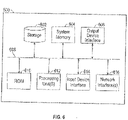
- FIG. 6 is an electronic system within which some aspects of the subject technology are implemented.
- the electronic system 600 can be, and/or can be a part of, the network switch (e.g., 102 or 104 of FIG. 1 ) of a data center or an enterprise network.
- the electronic system 600 may include various types of computer-readable media and interfaces for various other types of computer-readable media.
- the electronic system 600 includes a bus 608, one or more processing units 612, a system memory 604 (and/or buffer), a ROM 610, a permanent storage device 602, an input device interface 614, an output device interface 606, and one or more network interfaces 616, or subsets and variations thereof.
- the bus 608 collectively represents all system, peripheral, and chipset buses that communicatively connect the numerous internal devices of the electronic system 600.
- the bus 608 communicatively connects the one or more processing unit(s) 612 with the ROM 610, the system memory 604, and the permanent storage device 602. From these various memory units, the one or more processing unit(s) 612 retrieves instructions to execute and data to process in order to execute the processes of the subject disclosure.
- the one or more processing units 612 can be a single processor or a multi-core processor in different implementations.
- the ROM 610 stores static data and instructions that are needed by the one or more processing units 612 and other modules of the electronic system 600.
- the permanent storage device 602 may be a read-and-write memory device.
- the permanent storage device 602 may be a nonvolatile memory unit that stores instructions and data, even when the electronic system 600 is off.
- a mass-storage device (such as a magnetic or optical disk and its corresponding disk drive) may be used as the permanent storage device 602.
- a removable storage device such as a floppy disk or flash drive and its corresponding disk drive
- the system memory 604 may be a read-and-write memory device.
- the system memory 604 may be a volatile read-and-write memory, such as random-access memory (RAM).
- RAM random-access memory
- the system memory 604 may store any of the instructions and data that one or more processing units 612 may need at runtime.
- the processes of the subject disclosure are stored in the system memory 604, the permanent storage device 602, and/or the ROM 610. From these various memory units, the one or more processing units 612 retrieves instructions to execute and data to process in order to execute the processes of one or more implementations.
- the bus 608 also connects to the input and output device interfaces 614 and 606.
- the input device interface 614 enables a user to communicate information and select commands to the electronic system 600.
- Input devices that may be used with the input device interface 614 may include, for example, alphanumeric keyboards and pointing devices (also called “cursor control devices").
- the output device interface 606 may enable, for example, the display of images generated by electronic system 600.
- Output devices that may be used with the output device interface 606 may include, for example, printers and display devices such as a liquid crystal display (LCD), a light-emitting diode (LED) display, an organic light-emitting diode (OLED) display, a flexible display, a flat-panel display, a solid-state display, a projector, or any other device for outputting information.
- printers and display devices such as a liquid crystal display (LCD), a light-emitting diode (LED) display, an organic light-emitting diode (OLED) display, a flexible display, a flat-panel display, a solid-state display, a projector, or any other device for outputting information.
- One or more implementations may include devices that function as both input and output devices, such as touchscreens.
- feedback provided to the user can be any form of sensory feedback such as visual feedback, auditory feedback, or tactile feedback; and input from the user can be received in any form, including acoustic, speech,
- the bus 608 also couples the electronic system 600 to one or more networks and/or to one or more network nodes, through the one or more network interfaces 616.
- the electronic system 600 can be a part of a network of computers (such as a LAN, or a wide-area network (“WAN")), or an Intranet, or a network of networks such as the Internet. Any or all components of the electronic system 600 can be used in conjunction with the subject disclosure.
- Implementations within the scope of the present disclosure can be partially or entirely realized using a tangible computer-readable storage medium (or multiple tangible computer-readable storage media of one or more types) encoding one or more instructions.
- the tangible computer-readable storage medium also can be nontransitory in nature.
- the computer-readable storage medium can be any storage medium that can be read, written, or otherwise accessed by a general purpose or special purpose computing device, including any processing electronics and/or processing circuitry capable of executing instructions.
- the computer-readable medium can include any volatile semiconductor memory such as RAM, DRAM, SRAM, T-RAM, Z-RAM, and TTRAM.
- the computer-readable medium also can include any non-volatile semiconductor memory, such as ROM, PROM, EPROM, EEPROM, NVRAM, flash, nvSRAM, FeRAM, FeTRAM, MRAM, PRAM, CBRAM, SONOS, RRAM, NRAM, racetrack memory, FJG, and Millipede memory.
- the computer-readable storage medium can include any nonsemiconductor memory such as optical disk storage, magnetic disk storage, magnetic tape, other magnetic storage devices, or any other medium capable of storing one or more instructions.
- the tangible computer-readable storage medium can be directly coupled to a computing device, while, in other implementations, the tangible computer-readable storage medium can be indirectly coupled to a computing device, e.g., via one or more wired connections, one or more wireless connections, or any combination thereof.
- Instructions can be directly executable or can be used to develop executable instructions.
- instructions can be realized as executable or nonexecutable machine code or as instructions in a high-level language that can be compiled to produce executable or nonexecutable machine code.
- instructions also can be realized as or can include data.
- Computer-executable instructions also can be organized in any format including routines, subroutines, programs, data structures, objects, modules, applications, applets, and functions, among other resources. As recognized by those of skill in the art, details including, but not limited to, the number, structure, sequence, and organization of instructions can vary significantly without varying the underlying logic, function, processing, and output.
- any specific order or hierarchy of blocks in the processes disclosed is an illustration of example approaches. Based upon design preferences, it is understood that the specific order or hierarchy of blocks in the processes may be rearranged, or that all illustrated blocks be performed. Any of the blocks may be performed simultaneously. In one or more implementations, multitasking and parallel processing may be advantageous. Moreover, the separation of various system components in the embodiments described above should not be understood as requiring such separation in all embodiments, and it should be understood that the described program components and systems can generally be integrated together in a single software product or packaged into multiple software products.
- base station As used in this specification and any claims of this application, the terms “base station,” “receiver,” “computer,” “server,” “processor,” and “memory” all refer to electronic or other technological devices. These terms exclude people or groups of people.
- display or “displaying” mean displaying on an electronic device.
- the phrase "at least one of” preceding a series of items, with the term “and” or “or” to separate any of the items, modifies the list as a whole, rather than each member of the list (i.e., each item).
- the phrase "at least one of” does not require selection of at least one of each item listed; rather, the phrase allows a meaning that includes at least one of any one of the items, and/or at least one of any combination of the items, and/or at least one of each of the items.
- phrases “at least one of A, B, and C” or “at least one of A, B, or C” each refer to only A, only B, or only C; any combination of A, B, and C; and/or at least one of each of A, B, and C.
- a processor configured to monitor and control an operation or a component may also mean the processor being programmed to monitor and control the operation or the processor being operable to monitor and control the operation.
- a processor configured to execute code can be construed as a processor programmed to execute code or operable to execute code.
- phrases such as “an aspect,” “the aspect,” “another aspect,” “some aspects,” “one or more aspects,” “an implementation,” “the implementation,” “another implementation,” “some implementations,” “one or more implementations,” “an embodiment,” “the embodiment,” “another embodiment,” “some embodiments,” “one or more embodiments,” “a configuration,” “the configuration,” “another configuration,” “some configurations,” “one or more configurations,” “the subject technology,” “the disclosure,” “the present disclosure,” and other variations thereof and alike are for convenience and do not imply that a disclosure relating to such phrase(s) is essential to the subject technology or that such disclosure applies to all configurations of the subject technology. A disclosure relating to such phrase(s) may apply to all configurations, or one or more configurations. A disclosure relating to such phrase(s) may provide one or more examples.
- a phrase such as “an aspect” or “some aspects” may refer to one or more aspects and vice versa, and this applies similarly to other foregoing phrases.
Landscapes
- Engineering & Computer Science (AREA)
- Computer Networks & Wireless Communication (AREA)
- Signal Processing (AREA)
- Computer Security & Cryptography (AREA)
- Computer Hardware Design (AREA)
- Computing Systems (AREA)
- General Engineering & Computer Science (AREA)
- Data Exchanges In Wide-Area Networks (AREA)
- Detection And Prevention Of Errors In Transmission (AREA)
- Error Detection And Correction (AREA)
Applications Claiming Priority (1)
| Application Number | Priority Date | Filing Date | Title |
|---|---|---|---|
| US17/152,677 US11677494B2 (en) | 2021-01-19 | 2021-01-19 | Enhanced error protection of payload using double CRC |
Publications (3)
| Publication Number | Publication Date |
|---|---|
| EP4030657A2 true EP4030657A2 (de) | 2022-07-20 |
| EP4030657A3 EP4030657A3 (de) | 2022-07-27 |
| EP4030657B1 EP4030657B1 (de) | 2024-10-02 |
Family
ID=79317046
Family Applications (1)
| Application Number | Title | Priority Date | Filing Date |
|---|---|---|---|
| EP22150964.9A Active EP4030657B1 (de) | 2021-01-19 | 2022-01-11 | Verbesserter fehlerschutz von nutzdaten mittels doppel-crc |
Country Status (3)
| Country | Link |
|---|---|
| US (1) | US11677494B2 (de) |
| EP (1) | EP4030657B1 (de) |
| CN (1) | CN114826479B (de) |
Families Citing this family (2)
| Publication number | Priority date | Publication date | Assignee | Title |
|---|---|---|---|---|
| US11949510B2 (en) * | 2022-09-06 | 2024-04-02 | Qualcomm Incorporated | Hardware-based dynamic cyclic-redundancy check (CRC) generator for automotive application |
| CN120111120B (zh) * | 2025-03-07 | 2025-11-28 | 中国人民解放军网络空间部队信息工程大学 | 一种面向异构协议转换功能的fpga原型验证装置与方法 |
Family Cites Families (23)
| Publication number | Priority date | Publication date | Assignee | Title |
|---|---|---|---|---|
| US6357032B1 (en) * | 1999-02-08 | 2002-03-12 | International Business Machines Corporation | Method and apparatus for implementing cyclic redundancy check calculation for data communications |
| US6931581B1 (en) * | 2000-10-25 | 2005-08-16 | Sun Microsystems, Inc. | Method for superimposing a sequence number in an error detection code in a data network |
| US6701478B1 (en) * | 2000-12-22 | 2004-03-02 | Nortel Networks Limited | System and method to generate a CRC (cyclic redundancy check) value using a plurality of CRC generators operating in parallel |
| US7586914B2 (en) * | 2001-09-27 | 2009-09-08 | Broadcom Corporation | Apparatus and method for hardware creation of a DOCSIS header |
| GB2393827B (en) * | 2002-10-04 | 2005-11-16 | Michael John Leck | Monitor system |
| US7403204B2 (en) * | 2004-08-23 | 2008-07-22 | Hewlett-Packard Development Company, L.P. | Method and apparatus for managing changes in a virtual screen buffer |
| KR100719037B1 (ko) * | 2005-07-01 | 2007-05-16 | 엘지전자 주식회사 | 플라즈마 디스플레이 패널 및 그 제조방법 |
| KR100915805B1 (ko) * | 2006-06-20 | 2009-09-07 | 삼성전자주식회사 | 광대역 무선통신시스템에서 맥계층 데이터 통신 장치 및방법 |
| US7729276B2 (en) | 2006-11-29 | 2010-06-01 | Broadcom Corporation | Method and system for tunneling MACSec packets through non-MACSec nodes |
| US8379638B2 (en) * | 2006-09-25 | 2013-02-19 | Certes Networks, Inc. | Security encapsulation of ethernet frames |
| KR101405972B1 (ko) * | 2007-07-02 | 2014-06-12 | 엘지전자 주식회사 | 방송 수신기 및 방송신호 처리방법 |
| WO2009005326A2 (en) * | 2007-07-04 | 2009-01-08 | Lg Electronics Inc. | Digital broadcasting system and method of processing data |
| US8656248B2 (en) * | 2007-12-13 | 2014-02-18 | Qualcomm Incorporated | Hierarchical CRC scheme |
| US20090210770A1 (en) * | 2008-02-14 | 2009-08-20 | International Business Machines Corporation | Method, system and computer program product for end to end error checking in ethernet |
| US20150046775A1 (en) * | 2013-08-07 | 2015-02-12 | Broadcom Corporation | Encoding and Decoding Schemes to Achieve Standard Compliant Mean Time to False Packet Acceptance |
| KR102516027B1 (ko) * | 2016-07-20 | 2023-03-31 | 삼성전자주식회사 | 헤더 처리 장치, 프로세서 및 전자장치 |
| EP3607689B1 (de) * | 2017-04-01 | 2024-03-13 | QUALCOMM Incorporated | Kommunikationssystem und verfahren mit polarcodierung mit zwei verketteten zyklischen redundanz-checkcodes |
| US11553343B2 (en) * | 2018-12-12 | 2023-01-10 | Qualcomm Incorporated | Real-time soft combining, CRC validation, and MIC validation of decrypted packets |
| US11061767B2 (en) * | 2019-01-09 | 2021-07-13 | Synopsys, Inc. | Post-ECC CRC for DDR CRC retry performance improvement |
| US10911184B2 (en) * | 2019-02-05 | 2021-02-02 | Qualcomm Incorporated | Error correction for data packets in short-range wireless communications systems |
| WO2020237377A1 (en) * | 2019-05-27 | 2020-12-03 | École De Technologie Supérieure | Methods and systems for bit error determination and correction |
| JP7136848B2 (ja) * | 2019-10-21 | 2022-09-13 | エルジー エレクトロニクス インコーポレイティド | 無線通信システムにおけるrlf関連端末の動作方法 |
| US11153038B2 (en) * | 2019-11-22 | 2021-10-19 | Qualcomm Incorporated | MIC recovery of BR/EDR links |
-
2021
- 2021-01-19 US US17/152,677 patent/US11677494B2/en active Active
-
2022
- 2022-01-10 CN CN202210020073.1A patent/CN114826479B/zh active Active
- 2022-01-11 EP EP22150964.9A patent/EP4030657B1/de active Active
Also Published As
| Publication number | Publication date |
|---|---|
| CN114826479B (zh) | 2024-09-13 |
| US11677494B2 (en) | 2023-06-13 |
| CN114826479A (zh) | 2022-07-29 |
| US20220231783A1 (en) | 2022-07-21 |
| EP4030657A3 (de) | 2022-07-27 |
| EP4030657B1 (de) | 2024-10-02 |
Similar Documents
| Publication | Publication Date | Title |
|---|---|---|
| EP4030657B1 (de) | Verbesserter fehlerschutz von nutzdaten mittels doppel-crc | |
| CN111506901B (zh) | 基于区块链的数据处理方法、终端及存储介质 | |
| US8756436B2 (en) | Secure archive | |
| KR20150108865A (ko) | 원타임 패스워드의 사용을 보안하기 위한 기술 | |
| US8561198B2 (en) | Detection of malicious system calls | |
| US10985914B2 (en) | Key generation device and key generation method | |
| US8533557B2 (en) | Device and method for error correction and protection against data corruption | |
| KR20150112893A (ko) | 대수적 조작으로부터 데이터를 보호하는 방법 | |
| US11240023B1 (en) | Key management for expiring ciphertexts | |
| US20190044973A1 (en) | Replay protection for memory based on key refresh | |
| US11106549B2 (en) | Secure and encrypted logging systems and methods with data recovery | |
| CN106850211B (zh) | 一种基于mac地址的加密方法及系统 | |
| Ganesh et al. | A panoramic survey of the advanced encryption standard: from architecture to security analysis, key management, real-world applications, and post-quantum challenges | |
| US12361143B2 (en) | Providing user information in association with messaging | |
| US20200028833A1 (en) | Transmitting surreptitious data on an existing communication channel | |
| CN116094764A (zh) | 电力监控系统的电网数据存储方法、装置和设备 | |
| US20250123916A1 (en) | Method for determining an anomaly in a communication channel | |
| US20200296131A1 (en) | Transmitting surreptitious data on an existing communication channel | |
| CN106453335B (zh) | 一种数据传输方法及装置 | |
| JP2017192105A (ja) | 冗長化処理装置、および、異常判定方法 | |
| US8582778B2 (en) | Integrated key server | |
| CN104247326A (zh) | 现场总线数据传输 | |
| CN115269340B (zh) | 日志回捞方法及装置 | |
| CN120493275B (zh) | 一种基于触摸屏的移动硬盘加密方法及移动硬盘 | |
| CN117014164A (zh) | 信息验证方法和系统、计算机可读存储介质及计算机设备 |
Legal Events
| Date | Code | Title | Description |
|---|---|---|---|
| PUAI | Public reference made under article 153(3) epc to a published international application that has entered the european phase |
Free format text: ORIGINAL CODE: 0009012 |
|
| STAA | Information on the status of an ep patent application or granted ep patent |
Free format text: STATUS: THE APPLICATION HAS BEEN PUBLISHED |
|
| PUAL | Search report despatched |
Free format text: ORIGINAL CODE: 0009013 |
|
| AK | Designated contracting states |
Kind code of ref document: A2 Designated state(s): AL AT BE BG CH CY CZ DE DK EE ES FI FR GB GR HR HU IE IS IT LI LT LU LV MC MK MT NL NO PL PT RO RS SE SI SK SM TR |
|
| AK | Designated contracting states |
Kind code of ref document: A3 Designated state(s): AL AT BE BG CH CY CZ DE DK EE ES FI FR GB GR HR HU IE IS IT LI LT LU LV MC MK MT NL NO PL PT RO RS SE SI SK SM TR |
|
| RIC1 | Information provided on ipc code assigned before grant |
Ipc: H04L 1/00 20060101AFI20220622BHEP |
|
| STAA | Information on the status of an ep patent application or granted ep patent |
Free format text: STATUS: REQUEST FOR EXAMINATION WAS MADE |
|
| 17P | Request for examination filed |
Effective date: 20230127 |
|
| RBV | Designated contracting states (corrected) |
Designated state(s): AL AT BE BG CH CY CZ DE DK EE ES FI FR GB GR HR HU IE IS IT LI LT LU LV MC MK MT NL NO PL PT RO RS SE SI SK SM TR |
|
| GRAP | Despatch of communication of intention to grant a patent |
Free format text: ORIGINAL CODE: EPIDOSNIGR1 |
|
| STAA | Information on the status of an ep patent application or granted ep patent |
Free format text: STATUS: GRANT OF PATENT IS INTENDED |
|
| INTG | Intention to grant announced |
Effective date: 20240502 |
|
| GRAS | Grant fee paid |
Free format text: ORIGINAL CODE: EPIDOSNIGR3 |
|
| GRAA | (expected) grant |
Free format text: ORIGINAL CODE: 0009210 |
|
| STAA | Information on the status of an ep patent application or granted ep patent |
Free format text: STATUS: THE PATENT HAS BEEN GRANTED |
|
| AK | Designated contracting states |
Kind code of ref document: B1 Designated state(s): AL AT BE BG CH CY CZ DE DK EE ES FI FR GB GR HR HU IE IS IT LI LT LU LV MC MK MT NL NO PL PT RO RS SE SI SK SM TR |
|
| REG | Reference to a national code |
Ref country code: GB Ref legal event code: FG4D |
|
| REG | Reference to a national code |
Ref country code: CH Ref legal event code: EP |
|
| REG | Reference to a national code |
Ref country code: DE Ref legal event code: R096 Ref document number: 602022006437 Country of ref document: DE |
|
| REG | Reference to a national code |
Ref country code: IE Ref legal event code: FG4D |
|
| REG | Reference to a national code |
Ref country code: NL Ref legal event code: FP |
|
| REG | Reference to a national code |
Ref country code: LT Ref legal event code: MG9D |
|
| REG | Reference to a national code |
Ref country code: AT Ref legal event code: MK05 Ref document number: 1729206 Country of ref document: AT Kind code of ref document: T Effective date: 20241002 |
|
| PG25 | Lapsed in a contracting state [announced via postgrant information from national office to epo] |
Ref country code: PT Free format text: LAPSE BECAUSE OF FAILURE TO SUBMIT A TRANSLATION OF THE DESCRIPTION OR TO PAY THE FEE WITHIN THE PRESCRIBED TIME-LIMIT Effective date: 20250203 Ref country code: HR Free format text: LAPSE BECAUSE OF FAILURE TO SUBMIT A TRANSLATION OF THE DESCRIPTION OR TO PAY THE FEE WITHIN THE PRESCRIBED TIME-LIMIT Effective date: 20241002 Ref country code: IS Free format text: LAPSE BECAUSE OF FAILURE TO SUBMIT A TRANSLATION OF THE DESCRIPTION OR TO PAY THE FEE WITHIN THE PRESCRIBED TIME-LIMIT Effective date: 20250202 |
|
| PG25 | Lapsed in a contracting state [announced via postgrant information from national office to epo] |
Ref country code: FI Free format text: LAPSE BECAUSE OF FAILURE TO SUBMIT A TRANSLATION OF THE DESCRIPTION OR TO PAY THE FEE WITHIN THE PRESCRIBED TIME-LIMIT Effective date: 20241002 |
|
| PG25 | Lapsed in a contracting state [announced via postgrant information from national office to epo] |
Ref country code: BG Free format text: LAPSE BECAUSE OF FAILURE TO SUBMIT A TRANSLATION OF THE DESCRIPTION OR TO PAY THE FEE WITHIN THE PRESCRIBED TIME-LIMIT Effective date: 20241002 |
|
| PG25 | Lapsed in a contracting state [announced via postgrant information from national office to epo] |
Ref country code: ES Free format text: LAPSE BECAUSE OF FAILURE TO SUBMIT A TRANSLATION OF THE DESCRIPTION OR TO PAY THE FEE WITHIN THE PRESCRIBED TIME-LIMIT Effective date: 20241002 |
|
| PG25 | Lapsed in a contracting state [announced via postgrant information from national office to epo] |
Ref country code: NO Free format text: LAPSE BECAUSE OF FAILURE TO SUBMIT A TRANSLATION OF THE DESCRIPTION OR TO PAY THE FEE WITHIN THE PRESCRIBED TIME-LIMIT Effective date: 20250102 |
|
| PG25 | Lapsed in a contracting state [announced via postgrant information from national office to epo] |
Ref country code: AT Free format text: LAPSE BECAUSE OF FAILURE TO SUBMIT A TRANSLATION OF THE DESCRIPTION OR TO PAY THE FEE WITHIN THE PRESCRIBED TIME-LIMIT Effective date: 20241002 Ref country code: LV Free format text: LAPSE BECAUSE OF FAILURE TO SUBMIT A TRANSLATION OF THE DESCRIPTION OR TO PAY THE FEE WITHIN THE PRESCRIBED TIME-LIMIT Effective date: 20241002 Ref country code: GR Free format text: LAPSE BECAUSE OF FAILURE TO SUBMIT A TRANSLATION OF THE DESCRIPTION OR TO PAY THE FEE WITHIN THE PRESCRIBED TIME-LIMIT Effective date: 20250103 |
|
| PG25 | Lapsed in a contracting state [announced via postgrant information from national office to epo] |
Ref country code: PL Free format text: LAPSE BECAUSE OF FAILURE TO SUBMIT A TRANSLATION OF THE DESCRIPTION OR TO PAY THE FEE WITHIN THE PRESCRIBED TIME-LIMIT Effective date: 20241002 Ref country code: CZ Free format text: LAPSE BECAUSE OF FAILURE TO SUBMIT A TRANSLATION OF THE DESCRIPTION OR TO PAY THE FEE WITHIN THE PRESCRIBED TIME-LIMIT Effective date: 20241002 |
|
| PG25 | Lapsed in a contracting state [announced via postgrant information from national office to epo] |
Ref country code: RS Free format text: LAPSE BECAUSE OF FAILURE TO SUBMIT A TRANSLATION OF THE DESCRIPTION OR TO PAY THE FEE WITHIN THE PRESCRIBED TIME-LIMIT Effective date: 20250102 |
|
| PG25 | Lapsed in a contracting state [announced via postgrant information from national office to epo] |
Ref country code: SM Free format text: LAPSE BECAUSE OF FAILURE TO SUBMIT A TRANSLATION OF THE DESCRIPTION OR TO PAY THE FEE WITHIN THE PRESCRIBED TIME-LIMIT Effective date: 20241002 |
|
| REG | Reference to a national code |
Ref country code: DE Ref legal event code: R097 Ref document number: 602022006437 Country of ref document: DE |
|
| PG25 | Lapsed in a contracting state [announced via postgrant information from national office to epo] |
Ref country code: DK Free format text: LAPSE BECAUSE OF FAILURE TO SUBMIT A TRANSLATION OF THE DESCRIPTION OR TO PAY THE FEE WITHIN THE PRESCRIBED TIME-LIMIT Effective date: 20241002 |
|
| PG25 | Lapsed in a contracting state [announced via postgrant information from national office to epo] |
Ref country code: EE Free format text: LAPSE BECAUSE OF FAILURE TO SUBMIT A TRANSLATION OF THE DESCRIPTION OR TO PAY THE FEE WITHIN THE PRESCRIBED TIME-LIMIT Effective date: 20241002 |
|
| PG25 | Lapsed in a contracting state [announced via postgrant information from national office to epo] |
Ref country code: RO Free format text: LAPSE BECAUSE OF FAILURE TO SUBMIT A TRANSLATION OF THE DESCRIPTION OR TO PAY THE FEE WITHIN THE PRESCRIBED TIME-LIMIT Effective date: 20241002 |
|
| PG25 | Lapsed in a contracting state [announced via postgrant information from national office to epo] |
Ref country code: SK Free format text: LAPSE BECAUSE OF FAILURE TO SUBMIT A TRANSLATION OF THE DESCRIPTION OR TO PAY THE FEE WITHIN THE PRESCRIBED TIME-LIMIT Effective date: 20241002 |
|
| PG25 | Lapsed in a contracting state [announced via postgrant information from national office to epo] |
Ref country code: IT Free format text: LAPSE BECAUSE OF FAILURE TO SUBMIT A TRANSLATION OF THE DESCRIPTION OR TO PAY THE FEE WITHIN THE PRESCRIBED TIME-LIMIT Effective date: 20241002 |
|
| PLBE | No opposition filed within time limit |
Free format text: ORIGINAL CODE: 0009261 |
|
| STAA | Information on the status of an ep patent application or granted ep patent |
Free format text: STATUS: NO OPPOSITION FILED WITHIN TIME LIMIT |
|
| REG | Reference to a national code |
Ref country code: CH Ref legal event code: PL |
|
| PG25 | Lapsed in a contracting state [announced via postgrant information from national office to epo] |
Ref country code: SE Free format text: LAPSE BECAUSE OF FAILURE TO SUBMIT A TRANSLATION OF THE DESCRIPTION OR TO PAY THE FEE WITHIN THE PRESCRIBED TIME-LIMIT Effective date: 20241002 |
|
| 26N | No opposition filed |
Effective date: 20250703 |
|
| PG25 | Lapsed in a contracting state [announced via postgrant information from national office to epo] |
Ref country code: LU Free format text: LAPSE BECAUSE OF NON-PAYMENT OF DUE FEES Effective date: 20250111 Ref country code: MC Free format text: LAPSE BECAUSE OF FAILURE TO SUBMIT A TRANSLATION OF THE DESCRIPTION OR TO PAY THE FEE WITHIN THE PRESCRIBED TIME-LIMIT Effective date: 20241002 |
|
| PG25 | Lapsed in a contracting state [announced via postgrant information from national office to epo] |
Ref country code: BE Free format text: LAPSE BECAUSE OF NON-PAYMENT OF DUE FEES Effective date: 20250131 |
|
| PG25 | Lapsed in a contracting state [announced via postgrant information from national office to epo] |
Ref country code: CH Free format text: LAPSE BECAUSE OF NON-PAYMENT OF DUE FEES Effective date: 20250131 |
|
| REG | Reference to a national code |
Ref country code: BE Ref legal event code: MM Effective date: 20250131 |
|
| PGFP | Annual fee paid to national office [announced via postgrant information from national office to epo] |
Ref country code: NL Payment date: 20251217 Year of fee payment: 5 Ref country code: FR Payment date: 20251217 Year of fee payment: 5 |
|
| PG25 | Lapsed in a contracting state [announced via postgrant information from national office to epo] |
Ref country code: IE Free format text: LAPSE BECAUSE OF NON-PAYMENT OF DUE FEES Effective date: 20250111 |
|
| PGFP | Annual fee paid to national office [announced via postgrant information from national office to epo] |
Ref country code: DE Payment date: 20260112 Year of fee payment: 5 |