EP4027232B1 - Informationsverarbeitungssystem und bursting-steuerungsverfahren - Google Patents
Informationsverarbeitungssystem und bursting-steuerungsverfahren Download PDFInfo
- Publication number
- EP4027232B1 EP4027232B1 EP21194490.5A EP21194490A EP4027232B1 EP 4027232 B1 EP4027232 B1 EP 4027232B1 EP 21194490 A EP21194490 A EP 21194490A EP 4027232 B1 EP4027232 B1 EP 4027232B1
- Authority
- EP
- European Patent Office
- Prior art keywords
- bursting
- credit
- credit amount
- amount
- management server
- Prior art date
- Legal status (The legal status is an assumption and is not a legal conclusion. Google has not performed a legal analysis and makes no representation as to the accuracy of the status listed.)
- Active
Links
Images







Classifications
-
- H—ELECTRICITY
- H04—ELECTRIC COMMUNICATION TECHNIQUE
- H04L—TRANSMISSION OF DIGITAL INFORMATION, e.g. TELEGRAPHIC COMMUNICATION
- H04L47/00—Traffic control in data switching networks
- H04L47/70—Admission control; Resource allocation
- H04L47/76—Admission control; Resource allocation using dynamic resource allocation, e.g. in-call renegotiation requested by the user or requested by the network in response to changing network conditions
- H04L47/762—Admission control; Resource allocation using dynamic resource allocation, e.g. in-call renegotiation requested by the user or requested by the network in response to changing network conditions triggered by the network
-
- G—PHYSICS
- G06—COMPUTING OR CALCULATING; COUNTING
- G06F—ELECTRIC DIGITAL DATA PROCESSING
- G06F3/00—Input arrangements for transferring data to be processed into a form capable of being handled by the computer; Output arrangements for transferring data from processing unit to output unit, e.g. interface arrangements
- G06F3/06—Digital input from, or digital output to, record carriers, e.g. RAID, emulated record carriers or networked record carriers
- G06F3/0601—Interfaces specially adapted for storage systems
- G06F3/0602—Interfaces specially adapted for storage systems specifically adapted to achieve a particular effect
- G06F3/0604—Improving or facilitating administration, e.g. storage management
-
- G—PHYSICS
- G06—COMPUTING OR CALCULATING; COUNTING
- G06F—ELECTRIC DIGITAL DATA PROCESSING
- G06F3/00—Input arrangements for transferring data to be processed into a form capable of being handled by the computer; Output arrangements for transferring data from processing unit to output unit, e.g. interface arrangements
- G06F3/06—Digital input from, or digital output to, record carriers, e.g. RAID, emulated record carriers or networked record carriers
- G06F3/0601—Interfaces specially adapted for storage systems
- G06F3/0602—Interfaces specially adapted for storage systems specifically adapted to achieve a particular effect
- G06F3/061—Improving I/O performance
-
- G—PHYSICS
- G06—COMPUTING OR CALCULATING; COUNTING
- G06F—ELECTRIC DIGITAL DATA PROCESSING
- G06F3/00—Input arrangements for transferring data to be processed into a form capable of being handled by the computer; Output arrangements for transferring data from processing unit to output unit, e.g. interface arrangements
- G06F3/06—Digital input from, or digital output to, record carriers, e.g. RAID, emulated record carriers or networked record carriers
- G06F3/0601—Interfaces specially adapted for storage systems
- G06F3/0628—Interfaces specially adapted for storage systems making use of a particular technique
- G06F3/0629—Configuration or reconfiguration of storage systems
- G06F3/0631—Configuration or reconfiguration of storage systems by allocating resources to storage systems
-
- G—PHYSICS
- G06—COMPUTING OR CALCULATING; COUNTING
- G06F—ELECTRIC DIGITAL DATA PROCESSING
- G06F3/00—Input arrangements for transferring data to be processed into a form capable of being handled by the computer; Output arrangements for transferring data from processing unit to output unit, e.g. interface arrangements
- G06F3/06—Digital input from, or digital output to, record carriers, e.g. RAID, emulated record carriers or networked record carriers
- G06F3/0601—Interfaces specially adapted for storage systems
- G06F3/0628—Interfaces specially adapted for storage systems making use of a particular technique
- G06F3/0655—Vertical data movement, i.e. input-output transfer; data movement between one or more hosts and one or more storage devices
- G06F3/0656—Data buffering arrangements
-
- G—PHYSICS
- G06—COMPUTING OR CALCULATING; COUNTING
- G06F—ELECTRIC DIGITAL DATA PROCESSING
- G06F3/00—Input arrangements for transferring data to be processed into a form capable of being handled by the computer; Output arrangements for transferring data from processing unit to output unit, e.g. interface arrangements
- G06F3/06—Digital input from, or digital output to, record carriers, e.g. RAID, emulated record carriers or networked record carriers
- G06F3/0601—Interfaces specially adapted for storage systems
- G06F3/0668—Interfaces specially adapted for storage systems adopting a particular infrastructure
- G06F3/067—Distributed or networked storage systems, e.g. storage area networks [SAN], network attached storage [NAS]
-
- H—ELECTRICITY
- H04—ELECTRIC COMMUNICATION TECHNIQUE
- H04L—TRANSMISSION OF DIGITAL INFORMATION, e.g. TELEGRAPHIC COMMUNICATION
- H04L47/00—Traffic control in data switching networks
- H04L47/70—Admission control; Resource allocation
- H04L47/78—Architectures of resource allocation
- H04L47/782—Hierarchical allocation of resources, e.g. involving a hierarchy of local and centralised entities
-
- H—ELECTRICITY
- H04—ELECTRIC COMMUNICATION TECHNIQUE
- H04L—TRANSMISSION OF DIGITAL INFORMATION, e.g. TELEGRAPHIC COMMUNICATION
- H04L47/00—Traffic control in data switching networks
- H04L47/70—Admission control; Resource allocation
- H04L47/80—Actions related to the user profile or the type of traffic
- H04L47/805—QOS or priority aware
-
- H—ELECTRICITY
- H04—ELECTRIC COMMUNICATION TECHNIQUE
- H04L—TRANSMISSION OF DIGITAL INFORMATION, e.g. TELEGRAPHIC COMMUNICATION
- H04L47/00—Traffic control in data switching networks
- H04L47/70—Admission control; Resource allocation
- H04L47/80—Actions related to the user profile or the type of traffic
- H04L47/808—User-type aware
-
- H—ELECTRICITY
- H04—ELECTRIC COMMUNICATION TECHNIQUE
- H04L—TRANSMISSION OF DIGITAL INFORMATION, e.g. TELEGRAPHIC COMMUNICATION
- H04L47/00—Traffic control in data switching networks
- H04L47/70—Admission control; Resource allocation
- H04L47/83—Admission control; Resource allocation based on usage prediction
-
- H—ELECTRICITY
- H04—ELECTRIC COMMUNICATION TECHNIQUE
- H04L—TRANSMISSION OF DIGITAL INFORMATION, e.g. TELEGRAPHIC COMMUNICATION
- H04L67/00—Network arrangements or protocols for supporting network services or applications
- H04L67/01—Protocols
- H04L67/10—Protocols in which an application is distributed across nodes in the network
- H04L67/1097—Protocols in which an application is distributed across nodes in the network for distributed storage of data in networks, e.g. transport arrangements for network file system [NFS], storage area networks [SAN] or network attached storage [NAS]
-
- G—PHYSICS
- G06—COMPUTING OR CALCULATING; COUNTING
- G06F—ELECTRIC DIGITAL DATA PROCESSING
- G06F3/00—Input arrangements for transferring data to be processed into a form capable of being handled by the computer; Output arrangements for transferring data from processing unit to output unit, e.g. interface arrangements
- G06F3/06—Digital input from, or digital output to, record carriers, e.g. RAID, emulated record carriers or networked record carriers
- G06F3/0601—Interfaces specially adapted for storage systems
- G06F3/0628—Interfaces specially adapted for storage systems making use of a particular technique
- G06F3/0629—Configuration or reconfiguration of storage systems
- G06F3/0637—Permissions
-
- G—PHYSICS
- G06—COMPUTING OR CALCULATING; COUNTING
- G06F—ELECTRIC DIGITAL DATA PROCESSING
- G06F3/00—Input arrangements for transferring data to be processed into a form capable of being handled by the computer; Output arrangements for transferring data from processing unit to output unit, e.g. interface arrangements
- G06F3/06—Digital input from, or digital output to, record carriers, e.g. RAID, emulated record carriers or networked record carriers
- G06F3/0601—Interfaces specially adapted for storage systems
- G06F3/0628—Interfaces specially adapted for storage systems making use of a particular technique
- G06F3/0662—Virtualisation aspects
- G06F3/0665—Virtualisation aspects at area level, e.g. provisioning of virtual or logical volumes
Definitions
- the present invention generally relates to bursting control, and more specifically to an information processing system and a bursting control method.
- multi-tenant-type storage service There has conventionally been a service for a plurality of users to share and use a storage environment composed of one or more storage apparatuses (multi-tenant-type storage service).
- an upper limit is often set to a resource amount of resources which can be used by each user in order to secure the performance required by each user.
- the resources are, for example, ports, processors, caches, disks, and so on of the storage apparatus(es).
- the storage apparatus(es) since the plurality of users share the storage apparatus(es), the storage apparatus(es) sometimes temporarily receives a high access volume. When this happens, the storage apparatus(es) processes the high access volume by temporarily scaling out the resource amount allocated to the users. In the following explanation, if the demand cannot be satisfied with a previously allocated resource amount, to additionally dynamically allocate a resource amount will be described as "bursting."
- PTL 2 is directed towards a storage system, wherein performance of the storage system is adjusted for a client based upon a client target performance value.
- PTL 3 is directed towards techniques for accumulating unused computing resources (resource credits) to be assigned to concurrent tasks.
- PTL 4 is directed towards a computer implemented method for improving the quality of service within hybrid storage systems.
- the present invention was devised in consideration of the above-described circumstance and aims at proposing, for example, an information processing system capable of controlling the bursting more appropriately.
- the additional resource amount is allocated according to the credit amount. So, for example, it is possible to avoid the situation where an operation target which demands the bursting first may occupy the resources.
- the bursting can be controlled more appropriately according to the present invention.
- a credit amount is used as an index for controlling a resource amount of resources for a storage apparatus.
- This information processing system manages the credit amount in accordance with each user's operational results and controls the resource amount to be additionally allocated upon bursting on the basis of the credit amount.
- this information processing system uses, as the operational results, an IOPS (Input Output Per Second) of volumes configured of storage areas provided by the storage apparatus and monitors the difference between the above-mentioned IOPS and a preset IOPS.
- This information processing system adds a credit amount, which is calculated by multiplying the IOPS by a preset conversion coefficient and converting the IOPS into a resource-amount-based value, to an accumulated credit amount.
- this information processing system subtracts a credit amount, which is calculated by multiplying the resource amount added upon bursting by bursting time, from the accumulated credit amount. Furthermore, this information processing system acquires an additional resource amount required for each bursting in advance. Then, this information processing system calculates the resource amount to be additionally allocated by proportionally dividing a free resource amount by a ratio of the respective users' credit amounts with respect to each time slot and the storage apparatus allocates the calculated resource amount.
- the resource amount can be reasonably allocated by using a quantitative index attributable to the user(s) even if a plurality of users demand bursting and shortage of the resource amount is predicted.
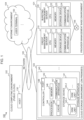
- Fig. 1 is a diagram illustrating an example of a hardware configuration of an information processing system 100.
- the information processing system 100 is a cloud system that is a combination of a credit management server 110 and a bursting management server 120 which are provide in a provider management base environment 101, a host 130 provided in a cloud computing environment 102, a storage apparatus 140 provided in a cloud storage environment 103, and a user terminal 150 provided in an Internet environment 104.
- the credit management server 110 is coupled to the storage apparatus 140 and the user terminal 150 via a network 105.
- the bursting management server 120 is coupled to the storage apparatus 140 and the user terminal 150 via the network 105.
- the host 130 is coupled to the storage apparatus 140 via the network 105.
- the credit management server 110 and the bursting management server 120 are coupled to each other via an internal network 106.
- the credit management server 110 is a computer for executing various kinds of information processing and, for example, manages the credit amount on the basis of information of the storage apparatus 140.
- the credit management server 110 includes, as its constituent elements, a CPU (Central Processing Unit) 111, a memory 112, a storage device 113, and a communication apparatus 114.
- a CPU Central Processing Unit
- the CPU 111 is an apparatus for executing arithmetic operation processing.
- the CPU 111 may be, for example, an MPU (Micro Processing Unit), a GPU (Graphics Processing Unit), or an AI (Artificial Intelligence) chip.
- MPU Micro Processing Unit
- GPU Graphics Processing Unit
- AI Artificial Intelligence
- the memory 112 is an apparatus for storing programs, data, and so on.
- the memory 112 is, for example, a ROM (Read Only Memory), a RAM (Random Access Memory), and so on.
- the ROM is an SRAM (Static Random Access Memory), an NVRAM (Non-Volatile RAM), a mask ROM (Mask Read Only Memory), a PROM (Programmable ROM), and so on.
- the RAM is a DRAM (Dynamic Random Access Memory) and so on.
- the storage device 113 is a hard disk drive, a flash memory, an SSD (Solid State Drive), an optical storage device, and so on.
- the optical storage device is a CD (Compact Disc), a DVD (Digital Versatile Disc), and so on.
- the programs, data, and so on which are stored in the storage device 113 are read to the memory 112 from time to time.
- the communication apparatus 114 is a communication interface for communicating with other apparatuses via a communication medium.
- the communication apparatus 114 is, for example, an NIC (Network Interface Card), a wireless communication module, a USB (Universal Serial Interface) module, and a serial communication module.
- the communication apparatus 114 can also function as an input device for receiving information from other apparatuses coupled thereto so that they can communicate with each other.
- the communication apparatus 114 can also function as an output device for transmitting information to other apparatuses coupled thereto so that they can communicate with each other.
- the credit management server 110 may include an input device and an output device.
- the input device is a user interface which accepts information from a user.
- the input device is, for example, a keyboard, a mouse, a card reader, and a touch panel.
- the output device is a user interface which outputs various kinds of information (such as display outputs, sound outputs, and print outputs).
- the output device is, for example, a display device, a sound output device (a speaker), a printer, and so on for visualizing various kinds of information.
- the display device is, for example, an LCD (Liquid Crystal Display) and a graphic card.
- the credit management server 110 may be a general-purpose server apparatus or a virtual machine embodied by a virtual program mounted in the general-purpose server apparatus.
- the bursting management server 120 is a computer for executing various kinds of information processing and manages (controls) bursting based on, for example, information of the credit management server 110 and information of the storage apparatus 140.
- the bursting management server 120 includes, as constituent elements, a CPU 121, a memory 122, a storage device 123, and a communication apparatus 124.
- the constituent elements of the bursting management server 120 may be the same as those of the credit management server 110 and an explanation about them has been omitted.
- the bursting management server 120 may be a general-purpose server apparatus or a virtual machine embodied by a virtual program mounted in the general-purpose server apparatus.
- the host 130 is a computer equipped with information processing resources such as a CPU and a memory and is configured of, for example, a general-purpose server apparatus. However, the host 130 may be a virtual machine embodied by a virtual program mounted in the general-purpose server apparatus. Specified application software is mounted in the host 130. The host 130 executes specified arithmetic operation processing based on the application software and reads/writes necessary data from/to the storage apparatus 140 in the cloud storage environment 103 via the network 105.
- the storage apparatus 140 includes a storage device 141 and a controller 142 for controlling reading/writing of data from/to the storage device 141.
- the storage device 141 includes a disk unit 143 such as a hard disk unit, an SSD, or a flash memory.
- a disk unit 143 such as a hard disk unit, an SSD, or a flash memory.
- the controller 142 includes a processor 144, a cache 145, a memory 146, a communication apparatus 147, and a port(s) 148.
- the processor 144 is a device for controlling reading/writing of data from/to the storage device 141 according to an I/O command from the host 130.
- the cache 145 is configured of a semiconductor memory and is used to temporarily retain data to be read/written from/to the storage device 141.
- the memory 146 stores programs, data, and so on which are used by the processor 144.
- the communication apparatus 147 is configured of an NIC or the like and conducts protocol control during communication with the host 130 via the network 105. The communication between the host 130 and the communication apparatus 147 is performed via a port 148 allocated to the host 130, among a plurality of ports 148 provided in the controller 142.
- the user terminal 150 is a computer equipped with information processing resources such as a CPU, a memory, and so on and is, for example, a notebook personal computer, a tablet, or the like.
- the user terminal 150 communicates with the credit management server 110, the bursting management server 120, the host 130, etc. via the network 105.
- the user terminal 150 sends an inquiry to the credit management server 110 about the current credit amount according to an instruction from the user and displays the inquiry result.
- the user terminal 150 accepts input of information indicating bursting requirements from the user and transmits the accepted information to the bursting management server 120.
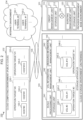
- Fig. 2 is a diagram illustrating an example of a functional configuration of the information processing system 100.
- the credit management server 110 in the provider management base environment 101 includes a credit management unit 211 and a storage unit 212.
- the credit management unit 211 receives information relating to volumes (VOL) from the storage apparatus 140 and adds (accumulates) the credit amount on the basis of the IOPS of the VOLs contained in the received information.
- the credit management unit 211 receives information relating to the cache 145 from the storage apparatus 140 and subtracts (consumes) the credit amount on the basis of an additionally allocated resource amount which is included in the received information.
- the credit management unit 211 transmits the credit amount to the bursting management server 120 at a specified timing (for example, every second). In response to an inquiry about the credit amount from the user terminal 150, the credit management unit 211 transmits information including that credit amount to the user terminal 150.
- the storage unit 212 stores, as the information relating to the credit amount, credit setting information, user information, operation target credit amount information, user credit amount information, and so on.
- the credit setting information will be explained later by using Fig. 3 ; the user information will be explained later by using Fig. 4 ; the operation target credit amount information will be explained later by using Fig. 5 ; and the user credit amount information will be explained later by using Fig. 6 .
- Functions of the credit management server 110 may be implemented, for example, by the CPU 111 reading programs stored in the storage device 113 to the memory 112 and executing them (software), or may be implemented by hardware such as a dedicated circuit, or may be implemented by a combination of the software and the hardware.
- one function of the credit management server 110 may be divided into a plurality of functions or the plurality of functions may be integrated into one function.
- some of the functions of the credit management server 110 may be provided as another function or may be included in another function.
- some of the functions of the credit management server 110 may be implemented by another computer capable of communicating with the credit management server 110.
- the bursting management server 120 in the provider management base environment 101 includes a bursting management unit 221 and a storage unit 222.
- the bursting management unit 221 receives information indicating the bursting requirements from the user terminal 150 and stores it in the storage unit 222.
- the bursting management unit 221 manages the resource amount of the storage apparatus 140 to be allocated to the host(s) 130 on the basis of the bursting requirements, scale-out of the host(s) 130 (an increase in the number of hosts 130), scale-in of the host(s) 130 (a decrease in the number of the hosts 130), and so on.
- the bursting management unit 221 detects that the bursting requirements are satisfied, it sends an instruction to the storage apparatus 140 to increase at least one of the number of the processors 144 allocated to the host 130, the cache capacity of the cache 145 allocated to the host 130, and the number of the ports 148 allocated to the host 130.
- the storage apparatus 140 increases the number of the processors 144 allocated to the host 130, the cache capacity of the cache 145 allocated to the host 130, and/or the number of the ports 148 allocated to the host 130.
- the bursting management unit 221 identifies data with high access frequency from each host 130 and data with high access frequency from a specific host 130, respectively, and sends an instruction to the storage apparatus 140 to copy the identified data to a specified VOL 245.
- the storage apparatus 140 copies the data to the specified VOL 245 in accordance with this instruction.
- the bursting management unit 221 may send an instruction to the storage apparatus 140 to delete the copied data from the specified VOL 245 in order to delete the copied data.
- the storage apparatus 140 deletes the copied data from the specified VOL 245 in accordance with this instruction.
- the bursting management unit 221 calculates the cache capacity which can be additionally allocated, from the information relating to the credit amount which is transmitted from the credit management server 110, and the information relating to the cache 145 which is transmitted from the storage apparatus 140; and sends an instruction (bursting instruction) to the storage apparatus 140 to allocate the calculated cache capacity.
- the storage unit 222 stores bursting requirement information, bursting management information, and so on as information relating to bursting.
- the bursting requirement information will be explained later by using Fig. 7 and the bursting management information will be explained later by using Fig. 8 .
- Functions of the bursting management server 120 may be implemented, for example, by the CPU 121 reading programs stored in the storage device 123 to the memory 122 and executing them (software), or may be implemented by hardware such as a dedicated circuit, or may be implemented by a combination of the software and the hardware.
- one function of the bursting management server 120 may be divided into a plurality of functions or the plurality of functions may be integrated into one function.
- some of the functions of the bursting management server 120 may be provided as another function or may be included in another function.
- some of the functions of the bursting management server 120 may be implemented by another computer capable of communicating with the bursting management server 120.
- the cloud computing environment 102 is provided with operation targets 230, each of which includes one or more hosts 130.
- the operation target 230 may be: in host group units; in iSCSI target units if a communication protocol between the host 130 and the storage apparatus 140 via the network 105 is iSCSI (internet Small Computer System Interface); or in other units.
- a host group is a group that is set for each port 148 and controls the VOLs 245 which can be accessed by the host 130.
- the iSCSI targets are: apparatuses with which an iSCSI initiator communicates; and are, for example, the storage apparatus 140, the VOLs 245, etc. in this embodiment.
- the iSCSI initiator is an apparatus which proactively issues iSCSI commands, and is the host 130 in this embodiment.
- the storage apparatus 140 in the cloud storage environment 103 includes a scale processing unit 241, a VOL information management unit 242, a resource information management unit 243, a storage unit 244, and VOLs 245.
- the scale processing unit 241 changes, for example, the number of the processors 144, the number of the ports 148, the cache capacity of the cache 145, and the configuration of the VOLs 245. For example, the scale processing unit 241 increases the number of the processors 144 allocated to the host 130, increases the number of the ports 148, and/or increases the cache capacity of the cache 145 allocated to the host 130 in accordance with the bursting instruction.
- the VOL information management unit 242 manages, for example, the IOPS of the VOLs 245, access frequency (the number of accesses) of each data read/written from/to the VOLs 245, and bias in data accesses with respect to each host 130, that is, how many times which host 130 accessed which data, on the basis of I/O commands output from the host 130.
- the resource information management unit 243 acquires respective pieces of information regarding the current latency of the storage apparatus 140, the load status of the processor 144, the cache 145, and the port 148, and the load status of the VOLs 245 from/to which the host 130 reads/writes data (storage areas of the disk unit 143 associated with the VOLs 245).
- the storage unit 244 stores, for example, VOL status information, cache management information, cache status information, cache allocation information, and so on as the information relating to the storage apparatus 140.
- VOL status information will be explained later by using Fig. 9 ;
- the cache management information will be explained later by using Fig. 10 ;
- the cache status information will be explained later by using Fig. 11 ;
- the cache allocation information will be explained later by using Fig. 12 .
- the VOLs 245 are composed of storage areas provided by the storage device 141.
- the VOLs 245 are associated with virtual volumes, which are virtually defined in the storage apparatus 140, and are provided to the host 130 as storage areas from/to which such virtual volumes reads/writes data.
- one or a plurality of storage devices 141 may be managed as a RAID (Redundant Arrays of Inexpensive Disks) group and storage areas provided by the storage devices 141 which constitute the RAID group may be managed collectively as one pool.
- RAID Redundant Arrays of Inexpensive Disks
- storage areas provided by the storage devices 141 which constitute the RAID group may be managed collectively as one pool.
- one or a plurality of volumes (the VOLs 245) which are composed of some of the storage areas for the pool are respectively set in the pool.
- Functions of the storage apparatus 140 may be implemented, for example, by the processor 144 reading programs stored in the storage device 141 to the memory 146 and executing them (software), or may be implemented by hardware such as a dedicated circuit, or may be implemented by a combination of the software and the hardware.
- one function of the storage apparatus 140 may be divided into a plurality of functions or the plurality of functions may be integrated into one function.
- some of the functions of the storage apparatus 140 may be provided as another function or may be included in another function.
- some of the functions of the storage apparatus 140 may be implemented by another computer capable of communicating with the storage apparatus 140.
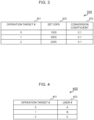
- Fig. 3 is a diagram illustrating one example of the credit setting information (a credit setting table 300).
- the credit setting table 300 manages information relating to settings of the credit amount for each operation target.
- the credit setting table 300 includes items of an operation target number 301, a set IOPS 302, and a conversion coefficient 303.
- the operation target number 301 stores information capable of identifying the relevant operation target (such as information capable of identifying the relevant host group and information capable of identifying the relevant iSCSI target).
- the set IOPS 302 stores information which is input by the user, that is, the IOPS required by the user for the relevant operation target (hereinafter referred to as the "set IOPS").
- the conversion coefficient 303 stores a coefficient for converting the IOPS into the cache capacity (for example, conversion) when calculating the credit amount of the relevant operation target.
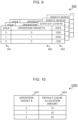
- Fig. 4 is a diagram illustrating one example of the user information (a user table 400).
- the user table 400 manages information relating to users for each operation target.
- the user table 400 includes items of an operation target number 401 and a user number 402.
- the operation target number 401 stores information capable of identifying the relevant operation target.
- the user number 402 stores information capable of identifying a user who operates the relevant operation target.
- Fig. 5 is a diagram illustrating one example of the operation target credit amount information (an operation target credit amount table 500).
- the operation target credit amount table 500 is provided for each time point and manages information of items relating to the credit amount for each operation target.
- the operation target credit amount table 500 includes items of an operation target number 50, a total IOPS 502, a set IOPS 503, a difference IOPS 504, a conversion coefficient 505, an accumulated credit amount 506, and a consumed credit amount 507 as items relating to the credit amount.
- the operation target number 501 stores information capable of identifying the relevant operation target.
- the total IOPS 502 stores a total value of the IOPS of the VOLs 245 associated with the host 130 included in the relevant operation target at the relevant time point (hereinafter referred to as the "total IOPS").
- the set IOPS 503 stores a set IOPS of the relevant operation target.
- the difference IOPS 504 stores the difference between the total IOPS and the set IOPS (hereinafter referred to as the "difference IOPS").
- the conversion coefficient 505 stores a conversion coefficient of the relevant operation target.
- the accumulated credit amount 506 stores a value obtained by multiplying the difference IOPS by the conversion coefficient (hereinafter referred to as the "accumulated credit amount”). Incidentally, when the accumulated credit amount is a negative value, "0" is stored.
- the consumed credit amount 507 stores a cache capacity added to the relevant operation target at the relevant time point (hereinafter referred to as the
- Fig. 6 is a diagram illustrating one example of the user credit amount information (a user credit amount table 600).
- the user credit amount table 600 is provided for each time point and manages information of items relating to the credit amount for each user.
- the user credit amount table 600 includes items of a user number 601, a credit amount 602, an accumulated credit amount 603, a consumed credit amount 604, and a credit amount one second later 605 as the items relating to the credit amount.
- the user number 601 stores information capable of identifying the relevant user.
- the credit amount 602 stores the credit amount at the relevant time point regarding the relevant user.
- the accumulated credit amount 603 stores the accumulated credit amount at the relevant time point regarding the relevant user.
- the consumed credit amount 604 stores the consumed credit amount at the relevant time point regarding the relevant user.
- Fig. 7 is a diagram illustrating one example of the bursting requirement information (a bursting requirement table 700).
- the bursting requirement table 700 manages information relating to the bursting requirements regarding each bursting.
- the bursting requirement table 700 includes items of a bursting number 701, a user number 702, an operation target number 703, a starting date and time 704, duration 705, job multiplicity 706, and an additional required cache capacity 707.
- the bursting number 701 stores information capable of identifying the relevant bursting.
- the user number 702 stores information capable of identifying a user who demands the relevant bursting.
- the operation target number 703 stores information capable of identifying an operation target which is a target of the relevant bursting.
- the starting date and time 704 stores the date and time when the relevant bursting is started.
- the duration 705 stores a period of time during which the relevant bursting continues.
- the job multiplicity 706 stores the number of jobs which can be executed at the same time during the relevant bursting.
- the additional required cache capacity 707 stores the cache capacity which needs to be added in order to execute the relevant number of jobs upon the relevant bursting (hereinafter referred to as the "additional required cache capacity").
- Fig. 8 is a diagram illustrating one example of the bursting management information (a bursting management table 800).
- the bursting management table 800 is provided for each time point and manages information relating to bursting.
- the bursting management table 800 includes items of a bursting number 801, a user number 802, a credit amount one second later 803, an additional required cache capacity one second later 804, a credit amount rate one second later 805, and an additional allocated cache capacity one second later 806.
- the bursting number 801 stores information capable of identifying the relevant bursting.
- the user number 802 stores information capable of identifying a user who demands the relevant bursting.
- the credit amount one second later 803 stores the credit amount one second after the relevant time point regarding the relevant user.
- the additional required cache capacity one second later 804 stores the additional required cache capacity one second after the relevant time point upon the relevant bursting.
- the credit amount rate one second later 805 stores a credit amount rate of the relevant user one second after the relevant time point.
- the additional allocated cache capacity one second later 806 stores the cache capacity to be additionally allocated one second after the relevant time point upon the relevant bursting.
- Fig. 9 is a diagram illustrating one example of the VOL status information (a VOL status table 900).
- the VOL status table 900 is provided for each time point and manages the status of each VOL 245 existing in the storage apparatus 140.
- the VOL status table 900 includes items of a VOL number 901, an operation target number 902, and an IOPS 903.
- the VOL number 901 stores information capable of identifying the relevant VOL 245.
- the operation target number 902 stores information capable of identifying an operation target associated with the relevant VOL 245.
- the IOPS 903 stores the IOPS of the relevant VOL 245 at the relevant time point.
- Fig. 10 is a diagram illustrating one example of the cache management information (a cache management table 1000).
- the cache management table 1000 manages a cache capacity to be allocated as a default to the storage apparatus 140 with respect to each operation target.
- the cache management table 1000 includes items of an operation target number 1001 and a default cache allocation amount 1002.
- the operation target number 1001 stores information capable of identifying the relevant operation target.
- the default cache allocation amount 1002 stores a cache capacity to be allocated as a default to the relevant operation target.
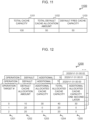
- Fig. 11 is a diagram illustrating one example of the cache status information (a cache status table 1100).
- the cache status table 1100 manages the status of the cache 145 for the storage apparatus 140.
- the cache status table 1100 includes items of a total cache capacity 1101, a total default cache allocation amount 1102, and a default free cache capacity 1103.
- the total cache capacity 1101 stores a cache capacity of the entire storage apparatus 140.
- the total default cache allocation amount 1102 stores a total value of a cache capacity to be allocated as a default to operation targets in the storage apparatus 140 (hereinafter referred to as the "default cache allocation amount").
- the default free cache capacity 1103 stores a cache capacity which is not allocated as the default in the storage apparatus 140 (hereinafter referred to as the "free cache capacity").
- the default free cache capacity 1103 stores a value obtained by subtracting the total default cache allocation amount 1102 from the total cache capacity 1101.
- Fig. 12 is a diagram illustrating one example of the cache allocation information (a cache allocation table 1200).
- the cache allocation table 1200 is provided for each time point and manages the cache capacity allocation status of the cache 145 regarding each operation target.
- the cache allocation table 1200 includes items of an operation target 1201, a default cache allocation amount 1202, an additional allocated cache capacity 1203, a total allocated cache capacity 1204, and an additional allocated cache capacity one second later 1205.
- the operation target 1201 stores information capable of identifying the relevant operation target.
- the default cache allocation amount 1202 stores a default cache allocation amount of the relevant operation target.
- the additional allocated cache capacity 1203 stores a cache capacity to be additionally allocated to the relevant operation target at the relevant time point.
- the total allocated cache capacity 1204 stores a total amount (sum) of the cache capacity to be allocated to the relevant operation target at the relevant time point.
- the additional allocated cache capacity one second later 1205 stores a cache capacity to be additionally allocated to the relevant operation target one second after the relevant time point.
- Fig. 13 is a diagram illustrating an example of processing for setting the bursting requirements (bursting setting processing).
- the user terminal 150 accepts information indicating the bursting requirements from the user and transmits the accepted information indicating the bursting requirements to the bursting management server 120.
- the user terminal 150 accepts the information indicating the bursting requirements via an input screen 1800 described later.
- the bursting management server 120 stores the received information indicating the bursting requirements in the bursting requirement table 700.
- the bursting management server 120 acquires the cache capacity which needs to be added via bursting.
- the bursting management server 120 calculates the additional required cache capacity by using a known technology on the basis of the job multiplicity, the maximum IOPS per job, and so on which are included in the information indicating the bursting requirements; and stores the additional required cache capacity in the bursting requirement table 700.
- the bursting management server 120 may calculate the additional required cache capacity by acquiring, for example, a data size of a bursting target workload, the number of virtual machines of the host 130 for the cloud computing environment 102 (the public cloud side) to be scaled out, and the number of cores of the host 130 on the public cloud side to be scaled out. Furthermore, the additional required cache capacity may be input by the user or may be determined in advance corresponding to the job multiplicity and/or the maximum IOPS per job.
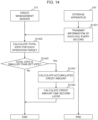
- Fig. 14 is a diagram illustrating an example of processing for accumulating (adding) the credit amount (accumulation processing).
- the credit management server 110 creates the operation target credit amount table 500 and the user credit amount table 600 at every specified time interval (for example, every second).
- the storage apparatus 140 transmits the information of each VOL 245 to the credit management server 110 every second.
- the storage apparatus 140 transmits the information of the VOL status table 900 to the credit management server 110 every second.
- the credit management server 110 calculates the total IOPS of each operation target. More specifically, the credit management server 110 calculates the total IOPS of the VOLs 245 included in the relevant operation target with respect to each operation target. Incidentally, the calculated total IOPS is stored in the operation target credit amount table 500 of the relevant time point.
- the credit management server 110 judges, with respect to each operation target, if the total IOPS is smaller than the set IOPS or not. If the credit management server 110 determines, with respect to one or more operation targets, that the total IOPS is smaller than the set IOPS, it proceeds to the processing in S1404; and if the credit management server 110 determines, with respect to all the operation targets, that the total IOPS is not smaller than the set IOPS, it terminates the accumulation processing. Incidentally, before terminating the accumulation processing, the credit management server 110 updates the difference IOPS and the accumulated credit amount in the operation target credit amount table 500 of the relevant time point and the accumulated credit amount in the user credit amount table 600.
- the credit management server 110 calculates the accumulated credit amount. For example, the credit management server 110: calculates the difference between the total IOPS and the set IOPS (the difference IOPS); and calculates the accumulated credit amount by multiplying the difference IOPS by the conversion coefficient.
- the difference IOPS calculated in S1404 is stored in the operation target credit amount table 500 of the relevant time point.
- the accumulated credit amount calculated in S1404 is stored in the operation target credit amount table 500 and the user credit amount table 600 of the relevant time point.
- the credit management server 110 calculates the credit amount one second later. For example, the credit management server 110 calculates the credit amount one second later by adding the accumulated credit amount calculated in S1404 to the credit amount of the relevant time point for a user linked to each operation target (or the credit amount one second later if the consumed credit amount of the relevant time point is calculated). Incidentally, the credit amount one second later which is calculated in S1405 is stored in the user credit amount table 600 of the relevant time point.
- Fig. 15 is a diagram illustrating an example of processing for consuming (subtracting) the credit amount (consumption processing).
- the storage apparatus 140 transmits the information relating to the cache 145 to the credit management server 110 every second. For example, the storage apparatus 140 transmits the information of the cache allocation table 1200 to the credit management server 110 every second.
- the credit management server 110 stores (collects) the additional allocated cache capacity for each operation target.
- the additional allocated cache capacity is stored, as the consumed credit amount, the operation target credit amount table 500 and the user credit amount table 600 of the relevant time point.
- the credit management server 110 judges, with respect to each operation target, whether or not the additional allocated cache capacity exists (whether or not the additional allocated cache capacity is larger than "0"). If the credit management server 110 determines, with respect to one or more operation targets, that the additional allocated cache capacity exists, it proceeds to the processing in S1504; and if the credit management server 110 determines, with respect to all the operation targets, that the additional allocated cache capacity does not exist, it terminates the consumption processing.
- the credit management server 110 calculates the credit amount one second later. For example, the credit management server 110 calculates the credit amount one second later by subtracting the additional allocated cache capacity from the credit amount of the relevant time point for the user linked to each operation target (or the credit amount one second later if the accumulated credit amount of the relevant time point is calculated). Incidentally, the credit amount one second later which is calculated in S1504 is stored in the user credit amount table 600 of the relevant time point.
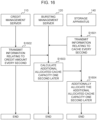
- Fig. 16 is a diagram illustrating an example of processing for allocating the cache capacity required for bursting (allocation processing). Incidentally, it is assumed that the bursting management server 120 creates the bursting management table 800 at every specified time interval (for example, every second).
- the storage apparatus 140 transmits the information relating to the cache 145 to the bursting management server 120 every second.
- the storage apparatus 140 transmits, for example, the information of the cache status table 1100 to the bursting management server 120 every second.
- the credit management server 110 transmits the information relating to the credit amount to the bursting management server 120 every second.
- the credit management server 110 transmits the information of the user credit amount table 600 to the bursting management server 120 every second.
- the bursting management server 120 stores the credit amount one second later in the bursting management table 800 of the relevant time point.
- the bursting management server 120 calculates the cache capacity to be additionally allocated one second after the relevant time point (the next one second) (the additional allocated cache capacity one second later) regarding each operation target and transmits the calculated additional allocated cache capacity one second later to the storage apparatus 140.
- the bursting management server 120 refers to the bursting requirement table 700 and the bursting management table 800, calculates the credit amount rate one second later from the credit amount one second later, and calculates the additional allocated cache capacity one second later according to the credit amount rate one second later.
- the credit amount rate one second later and the additional allocated cache capacity one second later, which are calculated in S1603, are stored in the bursting management table 800 of the relevant time point. Incidentally, calculation examples of the additional allocated cache capacity one second later will be described later by using Fig. 20 to Fig. 23 .
- the storage apparatus 140 receives the additional allocated cache capacity one second later and actually additionally allocates the received additional allocated cache capacity one second later one second after the relevant time point. When this happens, the storage apparatus 140 updates the cache allocation table 1200 of the relevant time point.
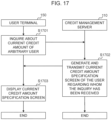
- Fig. 17 is a diagram illustrating an example of processing for displaying the current credit amount (display processing).
- the user terminal 150 sends an inquiry about the current credit amount of an arbitrary user to the credit management server 110.
- the credit management server 110 generates a display screen including the current credit amount of the user, regarding which it has received the inquiry (a credit amount specification screen 2400 described later), and transmits it to the user terminal 150.
- the user terminal 150 displays the credit amount specification screen 2400.
- the credit amount specification screen 2400 will be described later by using Fig. 24 .
- Fig. 18 is a diagram illustrating one example of a screen for inputting the bursting requirements (an input screen 1800).
- the input screen 1800 includes an input area 1810 to an input area 1850.
- the input area 1810 is an input area for inputting the job multiplicity.
- the input area 1820 is an input area for inputting the maximum IOPS per job.
- the input area 1830 is an input area for inputting the operation target number.
- the input area 1840 is an input area for inputting the date and time to start bursting.
- the input area 1850 is an input area for inputting duration during which the bursting continues.
- Fig. 19 is a diagram illustrating one example of accumulation and consumption of the credit amount from the start of operation (t0) to a specified time point (tx) (an accumulation graph 1910 and a consumption graph 1920).
- the accumulation graph 1910 shows that, regarding a period of time from t0 to a first time point (t1) and a period of time from a second time point (t2) to tx, the total IOPS does not exceed the set IOPS and the credit amount is thereby accumulated.
- a value obtained by multiplying the difference between the total IOPS and the set IOPS at the relevant time point by the total IOPS the conversion coefficient is calculated with respect to each time point when the total IOPS does not exceed the set IOPS; and the sum (total amount) of the calculated values at the respective time points is calculated.
- the consumption graph 1920 shows that, regarding a period of time from a third time point (t3) to a fourth time point (t4), the total allocated cache capacity exceeds the default cache allocation amount and the credit amount is thereby consumed.
- the difference between the total allocated cache capacity and the default cache allocation amount at the relevant time point is calculated with respect to each time point when the total allocated cache capacity exceeds the default cache allocation amount; and the sum (total amount) of the calculated differences at the respective time points is calculated.
- the value obtained by multiplying a total amount of the sum of differences between the total IOPS and the set IOPS at the respective time points from t0 to t1 (Area A) and the sum of differences between the total IOPS and the set IOPS at the respective time points from t2 to t3 (Area B), by the conversion coefficient is calculated as the credit amount accumulated until tx.
- the consumption graph 1920 the sum of differences between the total allocated cache capacity and the default cache allocation amount at the respective time points from t3 to t4 (Area C) is calculated as the credit amount consumed until tx. Consequently, "(Area A + Area B) ⁇ the conversion coefficient - Area C" is calculated as the credit amount accumulated or consumed from the time point t0 to tx.
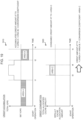
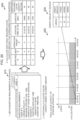
- Fig. 20 to Fig. 23 are diagrams for explaining the cache capacity to be additionally allocated via bursting performed from 00:00:00 on January 1 st , 2020, to 05:00:00 January 1 st , 2020.
- bursting requirement information 2010 indicating the bursting requirements is input to the information processing system 100.
- An explanation will be provided below by assuming that specific content of the bursting requirement information 2010 is the content indicated in a bursting requirement table 2020, the credit amount of each user at the time point of 00:00:00 is the content indicated by a credit amount table 2030, and the total cache capacity (MAX) and the total default cache allocation amount (ALLOCATED) are the content indicated in a cache capacity allocation graph 2040.
- the credit amount of each user at the time point of 01:00:00 is the same as the content indicated in the credit amount table 2030 and is the content indicated in the credit amount table 2110 in Fig. 21 .
- the additional required cache capacity of user A is “30”
- the additional required cache capacity of the other remaining users (user B and user C) is “0”
- the additional required cache capacity of user A is "30”
- the additional required cache capacity of user B is "40
- the additional required cache capacity of the other remaining user (user C) is "0”
- the default free cache capacity is "50.” Therefore, regarding the second period, the total amount of the additional required cache capacity becomes "70” and the default free cache capacity exceeds "50,” so that an additional cache capacity is allocated to user A's operation target and user B's operation target according to user A's credit amount and user B's credit amount.
- user A's credit amount is "72000”
- user B's credit amount is “288000”
- user C's credit amount is “180000”
- "24000" is consumed as user A's credit amount, so that user A's credit amount at the time point of 04:00:00 becomes “48000” as indicated in the credit amount table 2220.
- the additional required cache capacity of user C is "50”
- the additional required cache capacity of the other remaining users is "0”
- the default free cache capacity is "50.” Therefore, regarding the fourth period, the additional cache capacity "50” is allocated to user C's operation target. In this case, "180000” is consumed as user C's credit amount, so that user C's credit amount at the time point of 05:00:00 becomes "-60000" as indicated in the credit amount table 2310.
- Fig. 24 is a diagram illustrating one example of a screen for displaying the credit amount (a credit amount specification screen 2400).
- the credit amount specification screen 2400 includes a display area 2410 and a display area 2420.
- the display area 2410 is a display area for displaying the current credit amount. For example, the display area 2410 displays the credit amount, the accumulated credit amount, and the consumed credit amount at each time point.
- the display area 2420 is a display area for displaying information of each operation target. For example, the display area 2420 displays the default cache allocation amount and the conversion coefficient at each time point regarding each operation target.
- the bursting can be controlled more appropriately.
- the aforementioned embodiment has described the case where if the bursting management unit 221 detects that the requirements for bursting are satisfied, it sends the instruction to the storage apparatus 140 to start bursting; however, other examples outside the scope of the appended claims are possible. For example, if the bursting management unit 221 detects that a load on the processor 144 exceeds a threshold value, the cache capacity of the cache 145 exceeds a threshold value, or a load on the port 148 exceeds a threshold value, the bursting management unit 221 may send the instruction to the storage apparatus 140 to start bursting.
- the bursting management unit 221 may send an instruction to the storage apparatus 140 to reduce the number of the processors 144 allocated to the host 130, the cache capacity of the cache 145 allocated to the host 130, and/or the number of the ports 148 allocated to the host 130.
- the storage apparatus 140 reduces the number of the processors 144 allocated to the host 130, the cache capacity of the cache 145 allocated to the host 130, and/or the number of the ports 148 allocated to the host 130.
- some or all of the programs may be installed from a program source to apparatuses such as the credit management server 110 and the bursting management server 120.
- the program source may be, for example, a program distribution computer connected via the network or a computer-readable recording medium (such as a non-transitory recording medium).
- two or more programs may be implemented as one program or one program may be implemented as two or more programs.
- each table is one example; and one table may be divided into two or more tables or all or some of the two or more tables may be one table.
- the screen(s) illustrated and explained in the aforementioned embodiment is one example and any design may be employed as long as the information to be accepted is the same.
- the screen(s) illustrated and explained in the aforementioned embodiment is one example and any design may be employed as long as the information to be presented is the same.
- outputting of the information is not limited to displaying of the information on a display.
- the information may be output through, for example, sound output by a speaker, output to files, output to paper media by a printing device, projection onto a screen or the like by a projector, or by other aspects.
- information such as programs, tables, and files for implementing each function in the aforementioned explanation can be placed in a memory, storage devices such as hard disks and SSDs, or storage media such as IC cards, SD cards, and DVDs.
- An information processing system for example, the information processing system 100 for performing bursting with respect to a storage apparatus (for example, the storage apparatus 140), which is coupled to a plurality of operation targets (for example, the operation targets 230) including one or more hosts and processes reading and writing of data by the one or more hosts (for example, the host(s) 130), to additionally allocate a resource amount of a specified resource (for example, the number of the processors 144, the cache capacity of the cache 145, and the number of the ports 148) for the storage apparatus relating to the processing, includes: a credit management unit (for example, the credit management unit 211, the credit management server 110, a circuit, or another computer capable of communicating with the credit management server 110) that manages a credit amount for controlling allocation of the resource amount of the resource via the bursting with respect to each of the plurality of operation targets; and a bursting management unit (for example, the bursting management unit 221, the bursting management server 120, a circuit, or another computer capable of communicating with the bursting management server 120) that
- the additional resource amount is allocated according to the credit amount; and, therefore, it is possible to avoid, for example, the situation where an operation target which demands bursting earlier than other operation targets may occupy the resources.
- the above-described storage apparatus is provided with volumes (for example, VOLs 245) for each of the plurality of operation targets (for example, see Fig. 2 ); and the credit management unit: judges whether or not an IOPS (Input Output Per Second) of each volume provided in the storage apparatus is smaller than a preset IOPS (for example, see S1403); and adds a credit amount according to the IOPS of the volume which is determined to be smaller to a credit amount of an operation target associated with the volume (for example, see S1405).
- IOPS Input Output Per Second
- the IOPS is the user's operational result and a quantitative index attributable to the user.
- the credit amount is added by using the quantitative index attributable to the user and the additional resource amount is calculated according to the above-described credit amount, so that the additional resource amount can be set reasonably.
- the credit management unit subtracts the credit amount according to the resource amount from the credit amount of the operation target (for example, see S1504).
- the additional resource amount is the user's operational result and a quantitative index attributable to the user.
- the credit amount is subtracted by using the quantitative index attributable to the user and the additional resource amount is calculated according to the above-described credit amount, so that the additional resource amount can be set reasonably.
- the storage apparatus is provided with volumes (for example, VOLs 245) for each of the plurality of operation targets; the resource is a cache (for example, the cache 145); and the credit management unit judges whether or not an IOPS (Input Output Per Second) of each volume provided in the storage apparatus is smaller than a preset IOPS, calculates a credit amount by multiplying the IOPS of the volume which is determined to be smaller, by a conversion coefficient, and adds the calculated credit amount to a credit amount of an operation target associated with the volume (for example, see Fig.
- IOPS Input Output Per Second
- the credit management unit calculates a credit amount by multiplying the cache capacity by time during which the cache capacity is additionally allocated, and subtracts the calculated credit amount from the credit amount of the operation target (for example, see Fig. 15 ).
- the credit amount is managed by using the quantitative index attributable to the user, that is, the IOPS and the additional cache capacity and the additional cache capacity is calculated according to the above-described credit amount, so that the additional cache capacity can be set reasonably.
- the above-mentioned resource is a cache (for example, the cache 145); and if each capacity required to be added regarding the plurality of operation targets via the bursting is larger than a free cache capacity of the cache, the bursting management unit calculates the cache capacity to be added to the operation targets to proportionally divide the free cache capacity at a ratio of the credit amount of the operation targets which demand the addition of the cache capacity, and issues an instruction to the storage apparatus to allocate the calculated cache capacity to the operation targets (for example, see Fig. 20 to Fig. 23 ).
- the additional cache capacity is calculated by proportionally dividing the free cache capacity by using the credit amount ratio. So, for example, even if the resource amount of the resources is insufficient, the additional cache capacity can be allocated appropriately.
- the credit management unit outputs a credit amount corresponding to an inquiry from a user terminal (for example, the user terminal 150).
- the user can recognize the credit amount and it thereby becomes possible to, for example, change the operation of the host(s), the bursting requirements, etc. so that a large credit amount can be accumulated.
- items included in a list in the format of "at least one of A, B, and C” can mean (A), (B), (C), (A and B), (A and C), (B and C), or (A, B, and C).
- items listed in the format of "at least one of A, B, or C” can mean (A), (B), (C), (A and B), (A and C), (B and C), or (A, B, and C).
Landscapes
- Engineering & Computer Science (AREA)
- Theoretical Computer Science (AREA)
- Computer Networks & Wireless Communication (AREA)
- Signal Processing (AREA)
- Human Computer Interaction (AREA)
- Physics & Mathematics (AREA)
- General Engineering & Computer Science (AREA)
- General Physics & Mathematics (AREA)
- Information Retrieval, Db Structures And Fs Structures Therefor (AREA)
- Debugging And Monitoring (AREA)
Claims (3)
- Informationsverarbeitungssystem (100), das ein Cloud-System ist, umfassend einen Guthabenverwaltungsserver (110), einen Bursting-Verwaltungsserver (120), wobei der Guthabenverwaltungsserver (110) und der Bursting-Verwaltungsserver (120) in einer Provider-Verwaltungsbasisumgebung (101) bereitgestellt sind, eine Vielzahl von Hosts (130), die in einer Cloud-Computerumgebung (102) bereitgestellt ist, eine Speichervorrichtung (140), die in einer Cloudspeicherumgebung (103) bereitgestellt ist, und ein Benutzerendgerät (150), das in einer Internetumgebung (104) bereitgestellt ist, wobei das Informationsverarbeitungssystem zum Durchführen von Bursting in Bezug auf die Speichervorrichtung dient, die mit einer Vielzahl von Operationszielen gekoppelt ist, von denen jedes einen oder mehrere der Hosts umfasst und das Lesen und Schreiben von Daten durch die Hosts verarbeitet, wobei Bursting der Prozess des dynamischen Zuweisens eines zusätzlichen Ressourcenumfangs zusätzlich zu einem zuvor zugewiesenen Ressourcenumfang einer angegebenen Ressource der Speichervorrichtung in Bezug auf die Verarbeitung ist,wobei der Guthabenverwaltungsserver eine Guthabenmenge zum Steuern der Zuweisung des Ressourcenumfangs der Ressource über das Bursting in Bezug auf jedes aus der Vielzahl von Operationszielen verwaltet; undwobei der Bursting-Verwaltungsserver den über das Bursting hinzuzufügenden Ressourcenumfang in Bezug auf jedes aus der Vielzahl von Operationszielen gemäß der Guthabenmenge, die von dem Guthabenverwaltungsserver verwaltet wird, berechnet und einen Befehl an die Speichervorrichtung ausgibt, um jeden berechneten Ressourcenumfang jedem aus der Vielzahl von Operationszielen zuzuweisen; undwobei die Speichervorrichtung mit Datenvolumen für jedes aus der Vielzahl von Operationszielen bereitgestellt ist; undwobei die Ressource ein Cache ist; undwobei der Guthabenverwaltungsserver beurteilt, ob ein IOPS (Eingabe Ausgabe pro Sekunde) jedes Datenvolumens, der in der Speichervorrichtung bereitgestellt ist, kleiner ist als ein voreingestelltes IOPS oder nicht, eine Guthabenmenge durch Multiplizieren des IOPS des Datenvolumens, das als kleiner bestimmt wurde, mit einem Konversionskoeffizienten berechnet, der das IOPS in einen Cache-Kapazitätswert konvertiert, und die berechnete Guthabenmenge zu einer Guthabenmenge eines Operationsziels addiert, das dem Datenvolumen zugeordnet ist; undfalls eine Cache-Kapazität zusätzlich dazu über das Bursting einem angegebenen Operationsziel zugewiesen wird, der Guthabenverwaltungsserver eine Guthabenmenge durch Multiplizieren der Cache-Kapazität mit der Zeit, während der die Cache-Kapazität zusätzlich zugewiesen wird, und Subtrahieren der berechneten Guthabenmenge von der Guthabenmenge des Operationsziels berechnet,wobei die angehäufte Guthabenmenge als Summe aller Werte berechnet wird, die durch Multiplizieren der Differenz zwischen dem Gesamt-IOPS und dem eingestellten IOPS zum relevanten Zeitpunkt mit der Gesamt-IOPS, mit dem Konversionskoeffizienten in Bezug auf jeden Zeitpunkt, wenn das Gesamt-IOPS das eingestellte IOPS zu den entsprechenden Zeitpunkten nicht überschreitet, berechnet wurde,wobei, falls jede Cache-Kapazität, die in Hinblick auf die Vielzahl von Operationsziele über das Bursting hinzugefügt werden muss, größer ist als eine freie Cache-Kapazität des Caches, der Bursting-Verwaltungsserver die Cache-Kapazität, die zu den Operationszielen hinzuzufügen ist, berechnet, um die freie Cache-Kapazität in einem Verhältnis der Guthabenmenge der Operationsziele, die das Hinzufügen der Cache-Kapazität verlangen, proportional zu teilen und einen Befehl an die Speichervorrichtung ausgibt, um die berechnete Cache-Kapazität den Operationszielen zuzuweisen.
- Informationsverarbeitungssystem nach Anspruch 1, wobei der Guthabenverwaltungsserver eine Guthabenmenge ausgibt, die einer Anfrage von einem Benutzerendgerät entspricht.
- Bursting-Steuerverfahren zum Durchführen von Bursting in Bezug auf eine Speichervorrichtung, die mit einer Vielzahl von Operationszielen, einschließlich eines oder mehrerer Hosts und Vorgänge des Lesens und Schreibens von Daten durch den einen oder die mehreren Hosts, gekoppelt ist, um einen Ressourcenumfang einer angegebenen Ressource für die Speichervorrichtung in Bezug auf das Verarbeiten zusätzlich zuzuweisen,wobei die Speichervorrichtung mit Datenvolumenn für jedes aus der Vielzahl von Operationszielen bereitgestellt ist; undwobei die Ressource ein Cache ist; undwobei das Bursting-Steuerverfahren Folgendes umfasst:einen Schritt, der von einem Guthabenverwaltungsserver durchgeführt wird, der eine Guthabenmenge verwaltet, zum Steuern der Zuweisung des Ressourcenumfangs der Ressource über das Bursting in Bezug auf jedes aus der Vielzahl von Operationszielen; undeinen Schritt, der von dem Bursting-Verwaltungsserver durchgeführt wird, des Berechnens des über das Bursting hinzuzufügenden Ressourcenumfangs in Bezug auf jedes aus der Vielzahl von Operationszielen gemäß der Guthabenmenge, die von dem Guthabenverwaltungsserver verwaltet wird, und des Ausgebens eines Befehls an die Speichervorrichtung, um jeden berechneten Ressourcenumfang jedem aus der Vielzahl von Operationszielen zuzuweisen,wobei der Guthabenverwaltungsserver beurteilt, ob ein IOPS (Eingabe Ausgabe pro Sekunde) jedes Datenvolumens, der in der Speichervorrichtung bereitgestellt ist, kleiner ist als ein voreingestelltes IOPS oder nicht, eine Guthabenmenge durch Multiplizieren des IOPS des Datenvolumens, das als kleiner bestimmt wurde, mit einem Konversionskoeffizienten berechnet, der das IOPS in einen Cache-Kapazitätswert konvertiert, und die berechnete Guthabenmenge zu einer Guthabenmenge eines Operationsziels addiert, das dem Datenvolumen zugeordnet ist; undfalls eine Cache-Kapazität zusätzlich dazu über das Bursting einem angegebenen Operationsziel zugewiesen wird, der Guthabenverwaltungsserver eine Guthabenmenge durch Multiplizieren der Cache-Kapazität mit der Zeit, während der die Cache-Kapazität zusätzlich zugewiesen wird, und Subtrahieren der berechneten Guthabenmenge von der Guthabenmenge des Operationsziels berechnet,wobei Bursting der Prozess des dynamischen Zuweisens eines zusätzlichen Ressourcenumfangs zusätzlich zu einem zuvor zugewiesenen Ressourcenumfang einer angegebenen Ressource der Speichervorrichtung in Bezug auf die Verarbeitung ist, undwobei die angehäufte Guthabenmenge als Summe aller Werte berechnet wird, die durch Multiplizieren der Differenz zwischen dem Gesamt-IOPS und dem eingestellten IOPS zum relevanten Zeitpunkt mit der Gesamt-IOPS, mit dem Konversionskoeffizienten in Bezug auf jeden Zeitpunkt, wenn das Gesamt-IOPS das eingestellte IOPS zu den entsprechenden Zeitpunkten nicht überschreitet, berechnet wurde,wobei, falls jede Cache-Kapazität, die in Hinblick auf die Vielzahl von Operationsziele über das Bursting hinzugefügt werden muss, größer ist als eine freie Cache-Kapazität des Caches, der Bursting-Verwaltungsserver die Cache-Kapazität, die zu den Operationszielen hinzuzufügen ist, berechnet, um die freie Cache-Kapazität in einem Verhältnis der Guthabenmenge der Operationsziele, die das Hinzufügen der Cache-Kapazität verlangen, proportional zu teilen und einen Befehl an die Speichervorrichtung ausgibt, um die berechnete Cache-Kapazität den Operationszielen zuzuweisen.
Applications Claiming Priority (1)
| Application Number | Priority Date | Filing Date | Title |
|---|---|---|---|
| JP2021000900A JP7001847B1 (ja) | 2021-01-06 | 2021-01-06 | 情報処理システムおよびバースティング制御方法 |
Publications (3)
| Publication Number | Publication Date |
|---|---|
| EP4027232A1 EP4027232A1 (de) | 2022-07-13 |
| EP4027232B1 true EP4027232B1 (de) | 2024-10-30 |
| EP4027232B8 EP4027232B8 (de) | 2024-12-04 |
Family
ID=77910535
Family Applications (1)
| Application Number | Title | Priority Date | Filing Date |
|---|---|---|---|
| EP21194490.5A Active EP4027232B8 (de) | 2021-01-06 | 2021-09-02 | Informationsverarbeitungssystem und bursting-steuerungsverfahren |
Country Status (3)
| Country | Link |
|---|---|
| US (1) | US11265262B1 (de) |
| EP (1) | EP4027232B8 (de) |
| JP (1) | JP7001847B1 (de) |
Families Citing this family (15)
| Publication number | Priority date | Publication date | Assignee | Title |
|---|---|---|---|---|
| US10795796B1 (en) | 2020-01-24 | 2020-10-06 | Qumulo, Inc. | Predictive performance analysis for file systems |
| US11775481B2 (en) | 2020-09-30 | 2023-10-03 | Qumulo, Inc. | User interfaces for managing distributed file systems |
| US11669255B2 (en) * | 2021-06-30 | 2023-06-06 | Qumulo, Inc. | Distributed resource caching by reallocation of storage caching using tokens and agents with non-depleted cache allocations |
| US12346290B2 (en) | 2022-07-13 | 2025-07-01 | Qumulo, Inc. | Workload allocation for file system maintenance |
| US11722150B1 (en) | 2022-09-28 | 2023-08-08 | Qumulo, Inc. | Error resistant write-ahead log |
| US11729269B1 (en) | 2022-10-26 | 2023-08-15 | Qumulo, Inc. | Bandwidth management in distributed file systems |
| US11966592B1 (en) | 2022-11-29 | 2024-04-23 | Qumulo, Inc. | In-place erasure code transcoding for distributed file systems |
| JP2024162866A (ja) * | 2023-05-11 | 2024-11-21 | 日立ヴァンタラ株式会社 | ストレージシステム、及びストレージシステムの制御方法 |
| US12292853B1 (en) | 2023-11-06 | 2025-05-06 | Qumulo, Inc. | Object-based storage with garbage collection and data consolidation |
| US11934660B1 (en) | 2023-11-07 | 2024-03-19 | Qumulo, Inc. | Tiered data storage with ephemeral and persistent tiers |
| US11921677B1 (en) | 2023-11-07 | 2024-03-05 | Qumulo, Inc. | Sharing namespaces across file system clusters |
| US12222903B1 (en) | 2024-08-09 | 2025-02-11 | Qumulo, Inc. | Global namespaces for distributed file systems |
| US12481625B1 (en) | 2024-11-12 | 2025-11-25 | Qumulo, Inc. | Integrating file system operations with network infrastructure |
| US12443568B1 (en) | 2024-11-12 | 2025-10-14 | Qumulo, Inc. | Verifying performance characteristics of network infrastructure for file systems |
| US12585563B1 (en) | 2025-12-01 | 2026-03-24 | Qumulo, Inc. | Caching for object stores |
Family Cites Families (13)
| Publication number | Priority date | Publication date | Assignee | Title |
|---|---|---|---|---|
| JP2004272669A (ja) * | 2003-03-10 | 2004-09-30 | Hitachi Ltd | グリッドコンピューティングにおける課金管理方法及び課金管理装置 |
| US8677095B2 (en) * | 2008-11-21 | 2014-03-18 | Lsi Corporation | System and method for optimal dynamic resource allocation in a storage system |
| US9054992B2 (en) * | 2011-12-27 | 2015-06-09 | Solidfire, Inc. | Quality of service policy sets |
| EP3796169A1 (de) * | 2011-12-27 | 2021-03-24 | Netapp, Inc. | Proportionelle dienstleistungsqualität nach kundenverwendung und systemmetrik |
| US9003021B2 (en) * | 2011-12-27 | 2015-04-07 | Solidfire, Inc. | Management of storage system access based on client performance and cluser health |
| US10140153B2 (en) * | 2012-09-12 | 2018-11-27 | Salesforce.Com, Inc. | System, method, and medium for facilitating auction-based resource sharing for message queues in an on-demand services environment |
| US9053167B1 (en) * | 2013-06-19 | 2015-06-09 | Amazon Technologies, Inc. | Storage device selection for database partition replicas |
| US9378168B2 (en) * | 2013-09-18 | 2016-06-28 | International Business Machines Corporation | Shared receive queue allocation for network on a chip communication |
| JP6347730B2 (ja) * | 2014-11-27 | 2018-06-27 | 株式会社日立製作所 | 計算機システム及び計算機リソースの割当て管理方法 |
| US9491112B1 (en) * | 2014-12-10 | 2016-11-08 | Amazon Technologies, Inc. | Allocating processor resources based on a task identifier |
| US10198192B2 (en) * | 2015-03-31 | 2019-02-05 | Veritas Technologies Llc | Systems and methods for improving quality of service within hybrid storage systems |
| US10228868B1 (en) * | 2016-09-30 | 2019-03-12 | EMC IP Holding Company LLC | Managing lifespan of a flash memory |
| US10452553B1 (en) * | 2017-10-16 | 2019-10-22 | Veritas Technologies Llc | Systems and methods for distributing cache space |
-
2021
- 2021-01-06 JP JP2021000900A patent/JP7001847B1/ja active Active
- 2021-08-25 US US17/411,990 patent/US11265262B1/en active Active
- 2021-09-02 EP EP21194490.5A patent/EP4027232B8/de active Active
Also Published As
| Publication number | Publication date |
|---|---|
| EP4027232A1 (de) | 2022-07-13 |
| JP7001847B1 (ja) | 2022-01-20 |
| JP2022106130A (ja) | 2022-07-19 |
| US11265262B1 (en) | 2022-03-01 |
| EP4027232B8 (de) | 2024-12-04 |
Similar Documents
| Publication | Publication Date | Title |
|---|---|---|
| EP4027232B1 (de) | Informationsverarbeitungssystem und bursting-steuerungsverfahren | |
| US9075656B2 (en) | Cloud computing system and method for controlling same | |
| US7975123B2 (en) | Computer system, management computer and storage system, and storage area allocation amount controlling method | |
| US7953927B2 (en) | Allocating clusters to storage partitions in a storage system | |
| US20120272241A1 (en) | Computer system and virtual machine control method | |
| CN113110938A (zh) | 一种资源分配方法、装置、计算机设备及存储介质 | |
| JP2022516486A (ja) | リソース管理方法と装置、電子デバイス、及び記録媒体 | |
| KR20120017411A (ko) | 자원관리방법과 컴퓨터 프로그램제품 및 시스템 | |
| JP2005122640A (ja) | サーバシステム及びi/oスロット共有方法。 | |
| US20100070731A1 (en) | Storage system having allocation-on-use volume and power saving function | |
| JP2010282420A (ja) | 管理計算機、リソース管理方法、リソース管理プログラム、記録媒体および情報処理システム | |
| JP2001331333A (ja) | 計算機システム及び計算機システムの制御方法 | |
| US12293236B2 (en) | Scaling processing systems based on database accessibility state | |
| CN109712060B (zh) | 一种基于gpu容器技术的云桌面显卡共享方法及系统 | |
| US20110289501A1 (en) | Information processing device, information processing method, and storage medium storing computer program | |
| US11726834B2 (en) | Performance-based workload/storage allocation system | |
| US20190065078A1 (en) | Acquisition of iops and mbps limits independently at a scheduler in a scheduler hierarchy | |
| JP5552343B2 (ja) | 管理装置、管理方法およびプログラム | |
| US10203879B2 (en) | Control device and control method | |
| WO2016103471A1 (ja) | 計算機システムおよび管理プログラム | |
| US9697047B2 (en) | Cooperation of hoarding memory allocators in a multi-process system | |
| JP4871758B2 (ja) | ボリューム割当方式 | |
| JP7048691B1 (ja) | 運用管理システムおよび運用管理方法 | |
| US11880589B2 (en) | Storage system and control method | |
| CN118210618A (zh) | 存储资源管理方法、装置、电子设备及存储介质 |
Legal Events
| Date | Code | Title | Description |
|---|---|---|---|
| PUAI | Public reference made under article 153(3) epc to a published international application that has entered the european phase |
Free format text: ORIGINAL CODE: 0009012 |
|
| STAA | Information on the status of an ep patent application or granted ep patent |
Free format text: STATUS: REQUEST FOR EXAMINATION WAS MADE |
|
| 17P | Request for examination filed |
Effective date: 20210902 |
|
| AK | Designated contracting states |
Kind code of ref document: A1 Designated state(s): AL AT BE BG CH CY CZ DE DK EE ES FI FR GB GR HR HU IE IS IT LI LT LU LV MC MK MT NL NO PL PT RO RS SE SI SK SM TR |
|
| STAA | Information on the status of an ep patent application or granted ep patent |
Free format text: STATUS: EXAMINATION IS IN PROGRESS |
|
| 17Q | First examination report despatched |
Effective date: 20230220 |
|
| REG | Reference to a national code |
Ref country code: DE Ref legal event code: R079 Free format text: PREVIOUS MAIN CLASS: G06F0003060000 Ipc: H04L0047830000 Ref country code: DE Ref legal event code: R079 Ref document number: 602021020912 Country of ref document: DE Free format text: PREVIOUS MAIN CLASS: G06F0003060000 Ipc: H04L0047830000 |
|
| GRAP | Despatch of communication of intention to grant a patent |
Free format text: ORIGINAL CODE: EPIDOSNIGR1 |
|
| STAA | Information on the status of an ep patent application or granted ep patent |
Free format text: STATUS: GRANT OF PATENT IS INTENDED |
|
| RIC1 | Information provided on ipc code assigned before grant |
Ipc: G06F 3/06 20060101ALI20240405BHEP Ipc: H04L 47/83 20220101AFI20240405BHEP |
|
| INTG | Intention to grant announced |
Effective date: 20240425 |
|
| GRAS | Grant fee paid |
Free format text: ORIGINAL CODE: EPIDOSNIGR3 |
|
| GRAA | (expected) grant |
Free format text: ORIGINAL CODE: 0009210 |
|
| STAA | Information on the status of an ep patent application or granted ep patent |
Free format text: STATUS: THE PATENT HAS BEEN GRANTED |
|
| REG | Reference to a national code |
Ref country code: DE Ref legal event code: R081 Ref document number: 602021020912 Country of ref document: DE Owner name: HITACHI VANTARA, LTD., YOKOHAMA-SHI, JP Free format text: FORMER OWNER: HITACHI, LTD., TOKYO, JP |
|
| AK | Designated contracting states |
Kind code of ref document: B1 Designated state(s): AL AT BE BG CH CY CZ DE DK EE ES FI FR GB GR HR HU IE IS IT LI LT LU LV MC MK MT NL NO PL PT RO RS SE SI SK SM TR |
|
| REG | Reference to a national code |
Ref country code: GB Ref legal event code: FG4D |
|
| REG | Reference to a national code |
Ref country code: CH Ref legal event code: EP |
|
| RAP2 | Party data changed (patent owner data changed or rights of a patent transferred) |
Owner name: HITACHI VANTARA, LTD. |
|
| REG | Reference to a national code |
Ref country code: DE Ref legal event code: R096 Ref document number: 602021020912 Country of ref document: DE |
|
| REG | Reference to a national code |
Ref country code: CH Ref legal event code: PK Free format text: BERICHTIGUNG B8 |
|
| REG | Reference to a national code |
Ref country code: IE Ref legal event code: FG4D |
|
| REG | Reference to a national code |
Ref country code: LT Ref legal event code: MG9D |
|
| REG | Reference to a national code |
Ref country code: NL Ref legal event code: MP Effective date: 20241030 |
|
| PG25 | Lapsed in a contracting state [announced via postgrant information from national office to epo] |
Ref country code: PT Free format text: LAPSE BECAUSE OF FAILURE TO SUBMIT A TRANSLATION OF THE DESCRIPTION OR TO PAY THE FEE WITHIN THE PRESCRIBED TIME-LIMIT Effective date: 20250228 Ref country code: IS Free format text: LAPSE BECAUSE OF FAILURE TO SUBMIT A TRANSLATION OF THE DESCRIPTION OR TO PAY THE FEE WITHIN THE PRESCRIBED TIME-LIMIT Effective date: 20250228 Ref country code: HR Free format text: LAPSE BECAUSE OF FAILURE TO SUBMIT A TRANSLATION OF THE DESCRIPTION OR TO PAY THE FEE WITHIN THE PRESCRIBED TIME-LIMIT Effective date: 20241030 |
|
| PG25 | Lapsed in a contracting state [announced via postgrant information from national office to epo] |
Ref country code: FI Free format text: LAPSE BECAUSE OF FAILURE TO SUBMIT A TRANSLATION OF THE DESCRIPTION OR TO PAY THE FEE WITHIN THE PRESCRIBED TIME-LIMIT Effective date: 20241030 Ref country code: NL Free format text: LAPSE BECAUSE OF FAILURE TO SUBMIT A TRANSLATION OF THE DESCRIPTION OR TO PAY THE FEE WITHIN THE PRESCRIBED TIME-LIMIT Effective date: 20241030 |
|
| REG | Reference to a national code |
Ref country code: AT Ref legal event code: MK05 Ref document number: 1738046 Country of ref document: AT Kind code of ref document: T Effective date: 20241030 |
|
| PG25 | Lapsed in a contracting state [announced via postgrant information from national office to epo] |
Ref country code: BG Free format text: LAPSE BECAUSE OF FAILURE TO SUBMIT A TRANSLATION OF THE DESCRIPTION OR TO PAY THE FEE WITHIN THE PRESCRIBED TIME-LIMIT Effective date: 20241030 |
|
| PG25 | Lapsed in a contracting state [announced via postgrant information from national office to epo] |
Ref country code: ES Free format text: LAPSE BECAUSE OF FAILURE TO SUBMIT A TRANSLATION OF THE DESCRIPTION OR TO PAY THE FEE WITHIN THE PRESCRIBED TIME-LIMIT Effective date: 20241030 |
|
| PG25 | Lapsed in a contracting state [announced via postgrant information from national office to epo] |
Ref country code: NO Free format text: LAPSE BECAUSE OF FAILURE TO SUBMIT A TRANSLATION OF THE DESCRIPTION OR TO PAY THE FEE WITHIN THE PRESCRIBED TIME-LIMIT Effective date: 20250130 |
|
| PG25 | Lapsed in a contracting state [announced via postgrant information from national office to epo] |
Ref country code: GR Free format text: LAPSE BECAUSE OF FAILURE TO SUBMIT A TRANSLATION OF THE DESCRIPTION OR TO PAY THE FEE WITHIN THE PRESCRIBED TIME-LIMIT Effective date: 20250131 Ref country code: LV Free format text: LAPSE BECAUSE OF FAILURE TO SUBMIT A TRANSLATION OF THE DESCRIPTION OR TO PAY THE FEE WITHIN THE PRESCRIBED TIME-LIMIT Effective date: 20241030 Ref country code: AT Free format text: LAPSE BECAUSE OF FAILURE TO SUBMIT A TRANSLATION OF THE DESCRIPTION OR TO PAY THE FEE WITHIN THE PRESCRIBED TIME-LIMIT Effective date: 20241030 |
|
| PG25 | Lapsed in a contracting state [announced via postgrant information from national office to epo] |
Ref country code: PL Free format text: LAPSE BECAUSE OF FAILURE TO SUBMIT A TRANSLATION OF THE DESCRIPTION OR TO PAY THE FEE WITHIN THE PRESCRIBED TIME-LIMIT Effective date: 20241030 |
|
| PG25 | Lapsed in a contracting state [announced via postgrant information from national office to epo] |
Ref country code: RS Free format text: LAPSE BECAUSE OF FAILURE TO SUBMIT A TRANSLATION OF THE DESCRIPTION OR TO PAY THE FEE WITHIN THE PRESCRIBED TIME-LIMIT Effective date: 20250130 |
|
| PG25 | Lapsed in a contracting state [announced via postgrant information from national office to epo] |
Ref country code: SM Free format text: LAPSE BECAUSE OF FAILURE TO SUBMIT A TRANSLATION OF THE DESCRIPTION OR TO PAY THE FEE WITHIN THE PRESCRIBED TIME-LIMIT Effective date: 20241030 |
|
| PG25 | Lapsed in a contracting state [announced via postgrant information from national office to epo] |
Ref country code: DK Free format text: LAPSE BECAUSE OF FAILURE TO SUBMIT A TRANSLATION OF THE DESCRIPTION OR TO PAY THE FEE WITHIN THE PRESCRIBED TIME-LIMIT Effective date: 20241030 |
|
| PG25 | Lapsed in a contracting state [announced via postgrant information from national office to epo] |
Ref country code: RO Free format text: LAPSE BECAUSE OF FAILURE TO SUBMIT A TRANSLATION OF THE DESCRIPTION OR TO PAY THE FEE WITHIN THE PRESCRIBED TIME-LIMIT Effective date: 20241030 |
|
| PG25 | Lapsed in a contracting state [announced via postgrant information from national office to epo] |
Ref country code: SK Free format text: LAPSE BECAUSE OF FAILURE TO SUBMIT A TRANSLATION OF THE DESCRIPTION OR TO PAY THE FEE WITHIN THE PRESCRIBED TIME-LIMIT Effective date: 20241030 |
|
| PG25 | Lapsed in a contracting state [announced via postgrant information from national office to epo] |
Ref country code: CZ Free format text: LAPSE BECAUSE OF FAILURE TO SUBMIT A TRANSLATION OF THE DESCRIPTION OR TO PAY THE FEE WITHIN THE PRESCRIBED TIME-LIMIT Effective date: 20241030 |
|
| PG25 | Lapsed in a contracting state [announced via postgrant information from national office to epo] |
Ref country code: IT Free format text: LAPSE BECAUSE OF FAILURE TO SUBMIT A TRANSLATION OF THE DESCRIPTION OR TO PAY THE FEE WITHIN THE PRESCRIBED TIME-LIMIT Effective date: 20241030 |
|
| REG | Reference to a national code |
Ref country code: DE Ref legal event code: R097 Ref document number: 602021020912 Country of ref document: DE |
|
| PLBE | No opposition filed within time limit |
Free format text: ORIGINAL CODE: 0009261 |
|
| STAA | Information on the status of an ep patent application or granted ep patent |
Free format text: STATUS: NO OPPOSITION FILED WITHIN TIME LIMIT |
|
| PG25 | Lapsed in a contracting state [announced via postgrant information from national office to epo] |
Ref country code: SE Free format text: LAPSE BECAUSE OF FAILURE TO SUBMIT A TRANSLATION OF THE DESCRIPTION OR TO PAY THE FEE WITHIN THE PRESCRIBED TIME-LIMIT Effective date: 20241030 |
|
| 26N | No opposition filed |
Effective date: 20250731 |
|
| PGFP | Annual fee paid to national office [announced via postgrant information from national office to epo] |
Ref country code: DE Payment date: 20250924 Year of fee payment: 5 |
|
| PGFP | Annual fee paid to national office [announced via postgrant information from national office to epo] |
Ref country code: GB Payment date: 20250924 Year of fee payment: 5 |