EP4024582B1 - Battery pack loading apparatus and battery pack loading method using the same - Google Patents
Battery pack loading apparatus and battery pack loading method using the same Download PDFInfo
- Publication number
- EP4024582B1 EP4024582B1 EP21774151.1A EP21774151A EP4024582B1 EP 4024582 B1 EP4024582 B1 EP 4024582B1 EP 21774151 A EP21774151 A EP 21774151A EP 4024582 B1 EP4024582 B1 EP 4024582B1
- Authority
- EP
- European Patent Office
- Prior art keywords
- battery pack
- loading apparatus
- battery
- moving
- pair
- Prior art date
- Legal status (The legal status is an assumption and is not a legal conclusion. Google has not performed a legal analysis and makes no representation as to the accuracy of the status listed.)
- Active
Links
Images




Classifications
-
- H—ELECTRICITY
- H01—ELECTRIC ELEMENTS
- H01M—PROCESSES OR MEANS, e.g. BATTERIES, FOR THE DIRECT CONVERSION OF CHEMICAL ENERGY INTO ELECTRICAL ENERGY
- H01M50/00—Constructional details or processes of manufacture of the non-active parts of electrochemical cells other than fuel cells, e.g. hybrid cells
- H01M50/20—Mountings; Secondary casings or frames; Racks, modules or packs; Suspension devices; Shock absorbers; Transport or carrying devices; Holders
-
- H—ELECTRICITY
- H01—ELECTRIC ELEMENTS
- H01M—PROCESSES OR MEANS, e.g. BATTERIES, FOR THE DIRECT CONVERSION OF CHEMICAL ENERGY INTO ELECTRICAL ENERGY
- H01M10/00—Secondary cells; Manufacture thereof
- H01M10/04—Construction or manufacture in general
- H01M10/0404—Machines for assembling batteries
-
- H—ELECTRICITY
- H01—ELECTRIC ELEMENTS
- H01M—PROCESSES OR MEANS, e.g. BATTERIES, FOR THE DIRECT CONVERSION OF CHEMICAL ENERGY INTO ELECTRICAL ENERGY
- H01M50/00—Constructional details or processes of manufacture of the non-active parts of electrochemical cells other than fuel cells, e.g. hybrid cells
- H01M50/20—Mountings; Secondary casings or frames; Racks, modules or packs; Suspension devices; Shock absorbers; Transport or carrying devices; Holders
- H01M50/204—Racks, modules or packs for multiple batteries or multiple cells
-
- H—ELECTRICITY
- H01—ELECTRIC ELEMENTS
- H01M—PROCESSES OR MEANS, e.g. BATTERIES, FOR THE DIRECT CONVERSION OF CHEMICAL ENERGY INTO ELECTRICAL ENERGY
- H01M50/00—Constructional details or processes of manufacture of the non-active parts of electrochemical cells other than fuel cells, e.g. hybrid cells
- H01M50/20—Mountings; Secondary casings or frames; Racks, modules or packs; Suspension devices; Shock absorbers; Transport or carrying devices; Holders
- H01M50/244—Secondary casings; Racks; Suspension devices; Carrying devices; Holders characterised by their mounting method
-
- H—ELECTRICITY
- H01—ELECTRIC ELEMENTS
- H01M—PROCESSES OR MEANS, e.g. BATTERIES, FOR THE DIRECT CONVERSION OF CHEMICAL ENERGY INTO ELECTRICAL ENERGY
- H01M50/00—Constructional details or processes of manufacture of the non-active parts of electrochemical cells other than fuel cells, e.g. hybrid cells
- H01M50/20—Mountings; Secondary casings or frames; Racks, modules or packs; Suspension devices; Shock absorbers; Transport or carrying devices; Holders
- H01M50/251—Mountings; Secondary casings or frames; Racks, modules or packs; Suspension devices; Shock absorbers; Transport or carrying devices; Holders specially adapted for stationary devices, e.g. power plant buffering or backup power supplies
-
- Y—GENERAL TAGGING OF NEW TECHNOLOGICAL DEVELOPMENTS; GENERAL TAGGING OF CROSS-SECTIONAL TECHNOLOGIES SPANNING OVER SEVERAL SECTIONS OF THE IPC; TECHNICAL SUBJECTS COVERED BY FORMER USPC CROSS-REFERENCE ART COLLECTIONS [XRACs] AND DIGESTS
- Y02—TECHNOLOGIES OR APPLICATIONS FOR MITIGATION OR ADAPTATION AGAINST CLIMATE CHANGE
- Y02E—REDUCTION OF GREENHOUSE GAS [GHG] EMISSIONS, RELATED TO ENERGY GENERATION, TRANSMISSION OR DISTRIBUTION
- Y02E60/00—Enabling technologies; Technologies with a potential or indirect contribution to GHG emissions mitigation
- Y02E60/10—Energy storage using batteries
-
- Y—GENERAL TAGGING OF NEW TECHNOLOGICAL DEVELOPMENTS; GENERAL TAGGING OF CROSS-SECTIONAL TECHNOLOGIES SPANNING OVER SEVERAL SECTIONS OF THE IPC; TECHNICAL SUBJECTS COVERED BY FORMER USPC CROSS-REFERENCE ART COLLECTIONS [XRACs] AND DIGESTS
- Y02—TECHNOLOGIES OR APPLICATIONS FOR MITIGATION OR ADAPTATION AGAINST CLIMATE CHANGE
- Y02P—CLIMATE CHANGE MITIGATION TECHNOLOGIES IN THE PRODUCTION OR PROCESSING OF GOODS
- Y02P70/00—Climate change mitigation technologies in the production process for final industrial or consumer products
- Y02P70/50—Manufacturing or production processes characterised by the final manufactured product
Definitions
- the present invention relates to a battery pack loading apparatus and a battery pack loading method using the same, and more particularly to a battery pack loading apparatus capable of improving safety and workability at the time of loading a heavy battery pack and a battery pack loading method using the same.
- Secondary batteries which have high applicability to products and electrical properties, such as high energy density, have generally been used in electric vehicles (EV) or hybrid electric vehicles (HEV), each of which is driven using an electrical driving source, as well as portable devices.
- EV electric vehicles
- HEV hybrid electric vehicles
- Such secondary batteries have attracted attention as a new energy source capable of increasing environmental friendliness and energy efficiency, since no by-products are generated as the result of use of energy in addition to a primary advantage in that it is possible to remarkably reduce the use of fossil fuels.
- a lithium ion battery a lithium polymer battery, a nickel-cadmium battery, a nickel-hydride battery, and a nickel-zinc battery as secondary batteries that are widely used at present.
- the operating voltage of a unit secondary battery cell i.e. a unit battery cell, is about 2.5V to 4.5V. In the case in which output voltage higher than the above operating voltage is required, therefore, a plurality of battery cells may be connected to each other in series to constitute a battery pack.
- a plurality of battery cells may be connected to each other in parallel depending on required charge and discharge capacities of a battery pack in order to constitute the battery pack. Consequently, the number of battery cells included in the battery pack may be variously set depending on required output voltage or charge and discharge capacities.
- a battery module including at least one battery cell may be manufactured first, and a battery pack may be manufactured using at least one battery module and other components, which is a general method.
- a battery pack including at least one battery module may be provided for home use, or battery racks including at least one battery pack may be combined to constitute an energy storage system for industrial use, depending on various required voltage and capacity conditions.
- a battery pack must be rotated, i.e. the battery pack must be turned upside down, before the battery pack is loaded in a battery rack.
- the reason for this is that, for example, a plurality of battery packs must be received in a multilayered structure and then must be electrically connected to each other, and at this time it is necessary to intensively dispose connection wires at one side as much as possible in order to easily manage the connection wires while minimizing the length of each of the connection wires. Since the weight of one battery pack is approximately 100 kg, however, it is difficult for a worker alone to turn the battery pack upside down. Even if possible, there is a high possibility that an accident will occur, whereby safety and workability may be deteriorated.
- FIG. 1 is a perspective view illustrating rotation of a battery module using a conventional rotation apparatus.
- a rotation apparatus configured to insert a battery pack 10 into a space defined by a first wall member 21, a second wall member 22, and a third wall member 23, which are configured to wrap the battery module 10, and to pull the wall members using a bearing unit 40 in order to rotate the battery module 10 by 90 degrees based on a stationary unit 30. Since the conventional rotation apparatus is manufactured based on the battery module 10, however, it is difficult to use the conventional rotation apparatus in the case in which the battery module is heavy. In particular, the rotatable angle is limited to 90 degrees.
- Patent Document 1 Japanese Patent Application Publication No. 2015-149180 .
- KR 2012 0106088 A , KR 2014 0087780 A , KR 2013 0102976 and WO 2012/105530 A1 each relate to battery handling devices.
- the present invention has been made in view of the above problems, and it is an object of the present invention to provide a battery pack loading apparatus capable of securing safety, whereby it is possible to reduce an accident occurrence rate, and a battery pack loading method using the same.
- a battery pack loading apparatus according claim 1 is provided in a first aspect.
- the seating unit (100) may include a stationary die (110) having a predetermined area, a moving die (120) located above the stationary die (110), the moving die being configured to be brought into tight contact with the bottom surface of the battery pack (B), and a connection shaft (130) configured to connect the stationary die (110) and the moving die (120) to each other, the length of the connection shaft (130) being adjustable in a vertical direction.
- the moving die (120) may be further provided with at least one first rotary roller (121).
- the grip portion (221) may be provided on the inner surface thereof with a pad (221') configured to prevent damage to or slippage of the battery pack (B).
- the pad (221') may be made of an elastic material.
- the first transfer unit (300) may include a transfer plate (310), a hook (320) provided at the transfer plate (310), the hook being configured to hold the battery pack (B) on the seating unit (100), and a moving shaft (330) configured to vertically and horizontally move the transfer plate (310).
- the hook (320) may be provided in a pair so as to be brought into tight contact with a lateral side surface and a lateral bottom surface of the battery pack (B) that face each other, and a plurality of pairs of hooks may be provided in a longitudinal direction.
- the pair of hooks (320) that face each other may be movable in a lateral direction of the battery pack (B).
- the second transfer unit (400) may include a second support fixture (410), a shelf (420) connected to the second support fixture (410), and a second rotary roller (430) located on the shelf (420), wherein the height of the shelf (420) may be adjustable in a vertical direction.
- a method of loading a battery pack in a battery rack using the battery pack loading apparatus includes a first step of seating the battery pack (B) on the moving die (120); a second step of moving the pair of grip portions (221) to fix opposite ends of the seated battery pack (B); a third step of moving the moving die (120) downwards; a fourth step of rotating the battery pack (B) by 180 degrees such that the upper surface of the battery pack (B) faces downwards; a fifth step of moving the moving die (120) to the original position thereof; a sixth step of moving the pair of grip portions (221) to the original positions thereof; a seventh step of operating the first transfer unit (300) to move the rotated battery pack (B) to the second transfer unit (400); an eighth step of adjusting the height of the shelf (420) to locate the battery pack (B) in front of a receiving space (S) of the battery rack; and a ninth step of receiving the battery pack (B) in the receiving space (S) of the battery rack.
- a battery pack loading apparatus and a loading method for loading a battery pack according to the present invention have an advantage in that a rotary plate capable of being rotated 360 degrees and a grip portion are provided, whereby it is possible to safely rotate a battery pack by a desired angle.
- the battery pack loading apparatus and the loading method according to the present invention have an advantage in that a plurality of transfer units is provided, whereby it is possible to safely move the battery pack to a desired position.
- the battery pack loading apparatus and the loading method according to the present invention have an advantage in that a first roller is provided on a moving die, whereby it is possible to easily align the battery pack seated on the moving die and to reduce friction at the time of alignment.
- a direction in which the length of the battery pack is relatively long is defined as a longitudinal direction
- a direction in which the length of the battery pack is relatively short is defined as a lateral direction.
- the battery pack B is seated on the moving die 120 in a state of being biased to one side thereof (X-axis direction), as shown in FIG. 4(a) , one of the grip portions 221, which are connected to a pair of rotary plates 220, comes into tight contact with one end of the battery pack biased to one side thereof first, since the grip portions approach the battery pack B from opposite sides at the same speed.
- the battery pack B may be uniformly located on the moving die 120, since the bottom surface of the battery pack B is in tight contact with the first rotary roller 121 ( FIG. 4(b) ).
- the battery pack B includes a plurality of unit modules, and each of the unit modules is configured such that one or more battery cells are connected to each other in series or in parallel.
- the battery cell, the unit module, and the battery pack are general constructions, and therefore a detailed description thereof will be omitted.
- the rotation unit 200 which is configured to rotate the battery pack B seated on the moving die 120 by 180 degrees based on the upper surface of the moving die 120, will be described.
- the rotation unit 200 includes a pair of first support fixtures 210 spaced apart from each other by a predetermined distance and a rotary plate 220 provided inside each of the pair of first support fixtures 210, the rotary plate being extendable or contractible toward or from the battery pack B, the rotary plate being rotatable up to 360 degrees.
- the pair of first support fixtures 210 is spaced apart from each other by a predetermined distance in the state in which the seating unit 100 is located therebetween, and serves to support the respective rotary plates 220.
- the rotary plate 220 provided inside each of the first support fixtures 210 so as to face the seating unit 100 includes a grip portion 221 configured to hold and fix the vicinity of a corresponding one of the opposite ends of the battery pack B and a sensor 222.
- a pad 221' to be further provided at the inner surface of the grip portion 221. The reason for this is that, when the grip portion 221 holds and fixes the corners of the battery pack B, it is possible to prevent slippage between the grip portion 211 and the battery pack B or damage to the grip portion and the battery pack.
- the construction of the pad 221' is not particularly restricted as long as the pad is capable of performing the above function.
- the pad may be made of a material that exhibits predetermined elasticity and roughness, such as rubber.
- the construction of the pad is not particularly restricted as long as the pad is capable of performing the above function.
- the sensor 222 which is located at the center of the inside of the rotary plate 220 prevents damage to the battery pack B and furthermore determines whether the grip portions 221 have properly fixed the battery pack B.
- the pair of rotary plates 220 to which the grip portions 221 are mounted, respectively, approaches the battery pack B at the same speed from opposite sides to fix the opposite ends of the battery pack B.
- the vicinities of the ends of the battery pack B may be damaged.
- the battery pack B may not be properly fixed by the grip portions 221, whereby a serious accident may occur.
- the senor 222 may be a button type sensor capable of sensing pressure.
- One or more sensors 222 may be mounted at each of the rotary plates 220, and control may be performed such that extension of the rotary plate 220 is stopped when the measured values of the sensors 222 reach a predetermined range.
- FIG. 6 is a sectional view illustrating the operation of the seating unit and the rotation unit, which are configured to rotate the battery pack, in the battery pack loading apparatus according to the preferred embodiment of the present invention.
- connection shaft 130 is moved upwards (Y-axis direction) and is returned to the original position thereof.
- the moving die 120 supports the battery pack B, rotation of which has been completed ( FIG. 6(d) ).
- the first transfer unit 300 which is configured to lift up the battery pack B seated on the moving die 120 and to move the battery pack to the second transfer unit 400, will be described.
- the first transfer unit 300 may also be used when the battery pack B required to be rotated is transferred to the moving die 120.
- the first transfer unit 300 includes a transfer plate 310, a hook 320 of the transfer plate 310, and a moving shaft 330 configured to vertically and horizontally move the transfer plate 310.
- the hook 320 which is connected to the bottom surface or the side surface of the transfer plate 310, is configured to securely hold the battery pack B seated on the seating unit 100.
- the hook When provided at the side surface of the transfer plate, the hook may have an approximately L-shape. That is, the hook 320 may include a vertical portion 321 configured to be brought into tight contact with a lateral side surface of the battery pack B and a horizontal portion 322 configured to be brought into tight contact with the lateral bottom surface of the battery pack B.
- two hooks 320 it is preferable for two hooks 320 to form a pair that face each other so as to be brought into tight contact with the lateral side surface and the lateral bottom surface of the battery pack B such that the battery pack B can be stably moved to a predetermined position, specifically the second transfer unit, after being lifted up. It is more preferable for a minimum of two pairs of hooks to be provided in the longitudinal direction of the battery pack B.
- hooks 320 can be moved in the lateral direction of the battery pack B in order to hold or release the battery pack B.
- the moving shaft 330 connected to the upper part of the transfer plate 310 is configured to move the transfer plate 310 to a desired position, and is rotatable 360 degrees in addition to upward and downward movement (Y-axis direction).
- FIG. 8 is a perspective view of the second transfer unit in the battery pack loading apparatus according to the preferred embodiment of the present invention.
- the second transfer unit 400 will be described with reference to FIG. 8 together with FIG. 2 .
- the second transfer unit 400 which is configured to transfer the battery pack B to the front of a receiving space S of the battery rack, a description of which will follow, includes a second support fixture 410, a shelf 420 connected to the second support fixture 410, and a second rotary roller 430 located on the shelf 420.
- the second support fixture 410 which is configured to support the shelf 420, is provided with an elevating chain (not shown) configured to locate the shelf 420 at a desired height.
- the second rotary roller 430 on the shelf 420 is identical in construction to the first rotary roller 121, and is configured to allow the battery pack B to be moved even with small force when the battery pack B is received in the battery rack 500, whereby work is easily performed.
- the battery pack 500 includes a vertical frame 510 and a horizontal frame 520.
- a plurality of vertical frames 510 e.g. four vertical frames, may be provided so as to be spaced apart from each other by a predetermined distance in order to support corners of a battery pack having an approximately hexahedral shape.
- the number of the vertical frames may be changed, as needed. For example, six vertical frames may be provided.
- the horizontal frame 520 is located inside the vertical frame 510 so as to receive a plurality of battery packs in multiple stages.
- the horizontal frame 520 includes a vertical support portion fixed to the inner surface of the vertical frame 510 and a horizontal support portion extending perpendicularly from the lower edge of the vertical support portion, whereby the horizontal frame has an approximately L-shape.
- a plurality of horizontal frames 520 each of which is configured as described above, is provided so as to be spaced apart from each other by a predetermined distance in a height direction of the vertical frame 520 such that the lower edge of the battery pack B is supported by a receiving space S configured to receive the battery pack B therein, i.e. a pair of horizontal support portions that face each other.
- FIG. 9 is a flowchart illustrating the method of loading the battery pack in the battery rack using the battery pack loading apparatus according to the present invention.
- the battery pack B which is stored in a separate place, is seated on the upper surface of the moving die 120 using the first transfer unit 300.
- the pair of grip portions 221 is moved to hold and fix four corners of the battery pack B.
- the moving die 120 is moved downwards in the state in which the battery pack B is fixed in order to secure a space in which the battery pack B is rotatable.
- the pair of grip portions 221 is rotated 180 degrees, whereby the battery pack B is also rotated 180 degrees, and therefore the upper surface of the battery pack B faces downwards.
- the moving die 120 is moved upwards to the original position thereof and supports the battery pack in a state of being rotated 180 degrees again in order to separate the grip portions 221 from the battery pack.
- the grip portions 221, which are holding and fixing the battery pack B are moved to the original positions thereof.
- the battery pack B in a rotated state is seated on the second rotary roller 430 located on the upper surface of the shelf 420 of the second transfer unit 400 using the first transfer unit 300.
- the shelf 420 of the second transfer unit 400 is moved upwards or downwards such that the battery pack B is located in front of the receiving space S of the battery rack 500 in which the battery pack is to be received.
- force is applied to the battery pack B located in front of the receiving space S such that the battery pack is inserted into and loaded in the battery rack 500.
- the first to ninth steps are repeatedly performed in order to receive a desired number of battery packs B in the battery rack 500.
Landscapes
- Chemical & Material Sciences (AREA)
- Chemical Kinetics & Catalysis (AREA)
- Electrochemistry (AREA)
- General Chemical & Material Sciences (AREA)
- Engineering & Computer Science (AREA)
- Manufacturing & Machinery (AREA)
- Battery Mounting, Suspending (AREA)
Description
- This application claims the benefit of priority to
Korean Patent Application No. 2020-0036740 filed on March 26, 2020 - The present invention relates to a battery pack loading apparatus and a battery pack loading method using the same, and more particularly to a battery pack loading apparatus capable of improving safety and workability at the time of loading a heavy battery pack and a battery pack loading method using the same.
- Secondary batteries, which have high applicability to products and electrical properties, such as high energy density, have generally been used in electric vehicles (EV) or hybrid electric vehicles (HEV), each of which is driven using an electrical driving source, as well as portable devices. Such secondary batteries have attracted attention as a new energy source capable of increasing environmental friendliness and energy efficiency, since no by-products are generated as the result of use of energy in addition to a primary advantage in that it is possible to remarkably reduce the use of fossil fuels.
- There are a lithium ion battery, a lithium polymer battery, a nickel-cadmium battery, a nickel-hydride battery, and a nickel-zinc battery as secondary batteries that are widely used at present. The operating voltage of a unit secondary battery cell, i.e. a unit battery cell, is about 2.5V to 4.5V. In the case in which output voltage higher than the above operating voltage is required, therefore, a plurality of battery cells may be connected to each other in series to constitute a battery pack.
- In addition, a plurality of battery cells may be connected to each other in parallel depending on required charge and discharge capacities of a battery pack in order to constitute the battery pack. Consequently, the number of battery cells included in the battery pack may be variously set depending on required output voltage or charge and discharge capacities.
- In the case in which a plurality of battery cells is connected to each other in series/parallel to constitute a battery pack, a battery module including at least one battery cell may be manufactured first, and a battery pack may be manufactured using at least one battery module and other components, which is a general method. Here, a battery pack including at least one battery module may be provided for home use, or battery racks including at least one battery pack may be combined to constitute an energy storage system for industrial use, depending on various required voltage and capacity conditions.
- Meanwhile, there is a case in which a battery pack must be rotated, i.e. the battery pack must be turned upside down, before the battery pack is loaded in a battery rack. The reason for this is that, for example, a plurality of battery packs must be received in a multilayered structure and then must be electrically connected to each other, and at this time it is necessary to intensively dispose connection wires at one side as much as possible in order to easily manage the connection wires while minimizing the length of each of the connection wires. Since the weight of one battery pack is approximately 100 kg, however, it is difficult for a worker alone to turn the battery pack upside down. Even if possible, there is a high possibility that an accident will occur, whereby safety and workability may be deteriorated.
-
FIG. 1 is a perspective view illustrating rotation of a battery module using a conventional rotation apparatus. Referring toFIG. 1 , there is shown a rotation apparatus configured to insert abattery pack 10 into a space defined by afirst wall member 21, asecond wall member 22, and athird wall member 23, which are configured to wrap thebattery module 10, and to pull the wall members using abearing unit 40 in order to rotate thebattery module 10 by 90 degrees based on astationary unit 30. Since the conventional rotation apparatus is manufactured based on thebattery module 10, however, it is difficult to use the conventional rotation apparatus in the case in which the battery module is heavy. In particular, the rotatable angle is limited to 90 degrees. - (Patent Document 1)
Japanese Patent Application Publication No. 2015-149180 KR 2012 0106088 A KR 2014 0087780 A KR 2013 0102976 WO 2012/105530 A1 each relate to battery handling devices. - The present invention has been made in view of the above problems, and it is an object of the present invention to provide a battery pack loading apparatus capable of securing safety, whereby it is possible to reduce an accident occurrence rate, and a battery pack loading method using the same.
- It is another object of the present invention to provide a battery pack loading apparatus capable of reducing worker fatigue and shortening work time, whereby it is possible to improve work efficiency, and a battery pack loading method using the same.
- In order to accomplish the above objects, a battery pack loading apparatus according claim 1 is provided in a first aspect.
- Also, in the battery pack loading apparatus according to the present invention, the seating unit (100) may include a stationary die (110) having a predetermined area, a moving die (120) located above the stationary die (110), the moving die being configured to be brought into tight contact with the bottom surface of the battery pack (B), and a connection shaft (130) configured to connect the stationary die (110) and the moving die (120) to each other, the length of the connection shaft (130) being adjustable in a vertical direction.
- Also, in the battery pack loading apparatus according to the present invention, the moving die (120) may be further provided with at least one first rotary roller (121).
- Also, in the battery pack loading apparatus according to the present invention, the grip portion (221) may be provided on the inner surface thereof with a pad (221') configured to prevent damage to or slippage of the battery pack (B).
- Also, in the battery pack loading apparatus according to the present invention, the pad (221') may be made of an elastic material.
- Also, in the battery pack loading apparatus according to the present invention, the first transfer unit (300) may include a transfer plate (310), a hook (320) provided at the transfer plate (310), the hook being configured to hold the battery pack (B) on the seating unit (100), and a moving shaft (330) configured to vertically and horizontally move the transfer plate (310).
- Also, in the battery pack loading apparatus according to the present invention, the hook (320) may be provided in a pair so as to be brought into tight contact with a lateral side surface and a lateral bottom surface of the battery pack (B) that face each other, and a plurality of pairs of hooks may be provided in a longitudinal direction.
- Also, in the battery pack loading apparatus according to the present invention, the pair of hooks (320) that face each other may be movable in a lateral direction of the battery pack (B).
- Also, in the battery pack loading apparatus according to the present invention, the second transfer unit (400) may include a second support fixture (410), a shelf (420) connected to the second support fixture (410), and a second rotary roller (430) located on the shelf (420), wherein the height of the shelf (420) may be adjustable in a vertical direction.
- In addition, a method of loading a battery pack in a battery rack using the battery pack loading apparatus according to the present invention includes a first step of seating the battery pack (B) on the moving die (120); a second step of moving the pair of grip portions (221) to fix opposite ends of the seated battery pack (B); a third step of moving the moving die (120) downwards; a fourth step of rotating the battery pack (B) by 180 degrees such that the upper surface of the battery pack (B) faces downwards; a fifth step of moving the moving die (120) to the original position thereof; a sixth step of moving the pair of grip portions (221) to the original positions thereof; a seventh step of operating the first transfer unit (300) to move the rotated battery pack (B) to the second transfer unit (400); an eighth step of adjusting the height of the shelf (420) to locate the battery pack (B) in front of a receiving space (S) of the battery rack; and a ninth step of receiving the battery pack (B) in the receiving space (S) of the battery rack.
- A battery pack loading apparatus and a loading method for loading a battery pack according to the present invention have an advantage in that a rotary plate capable of being rotated 360 degrees and a grip portion are provided, whereby it is possible to safely rotate a battery pack by a desired angle.
- In addition, the battery pack loading apparatus and the loading method according to the present invention have an advantage in that a plurality of transfer units is provided, whereby it is possible to safely move the battery pack to a desired position.
- Furthermore, the battery pack loading apparatus and the loading method according to the present invention have an advantage in that a first roller is provided on a moving die, whereby it is possible to easily align the battery pack seated on the moving die and to reduce friction at the time of alignment.
-
-
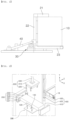
FIG. 1 is a perspective view illustrating rotation of a battery module using a conventional rotation apparatus. -
FIG. 2 is a perspective view of a battery pack loading apparatus according to a preferred embodiment of the present invention. -
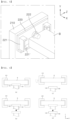
FIG. 3 is a front view of a rotation unit in the battery pack loading apparatus according to the preferred embodiment of the present invention. -
FIG. 4 is a sectional view illustrating a seating unit of the battery pack loading apparatus according to the preferred embodiment of the present invention. -
FIG. 5 is a perspective view illustrating the rotation unit of the battery pack loading apparatus according to the preferred embodiment of the present invention. -
FIG. 6 is a sectional view illustrating the operation of the seating unit and the rotation unit, which are configured to rotate a battery pack, in the battery pack loading apparatus according to the preferred embodiment of the present invention. -
FIG. 7 is a perspective view of a first transfer unit in the battery pack loading apparatus according to the preferred embodiment of the present invention. -
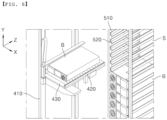
FIG. 8 is a perspective view of a second transfer unit in the battery pack loading apparatus according to the preferred embodiment of the present invention. -
FIG. 9 is a flowchart illustrating a method of loading a battery pack in a battery rack using the battery pack loading apparatus according to the present invention. - In the present application, it should be understood that the terms "comprises," "has," "includes," etc. specify the presence of stated features, numbers, steps, operations, elements, components, or combinations thereof, but do not preclude the presence or addition of one or more other features, numbers, steps, operations, elements, components, or combinations thereof.
- In addition, the same reference numbers will be used throughout the drawings to refer to parts that perform similar functions or operations. In the case in which one part is said to be connected to another part in the specification, not only may the one part be directly connected to the other part, but also, the one part may be indirectly connected to the other part via a further part. In addition, that a certain element is included does not mean that other elements are excluded, but means that such elements may be further included unless mentioned otherwise.
- Hereinafter, a battery pack loading apparatus according to the present invention and a battery pack loading method using the same will be described with reference to the accompanying drawings.
- In describing a battery pack, a direction in which the length of the battery pack is relatively long is defined as a longitudinal direction, and a direction in which the length of the battery pack is relatively short is defined as a lateral direction.
-
FIG. 2 is a perspective view of a battery pack loading apparatus according to a preferred embodiment of the present invention,FIG. 3 is a front view of a rotation unit in the battery pack loading apparatus according to the preferred embodiment of the present invention,FIG. 4 is a sectional view illustrating a seating unit of the battery pack loading apparatus according to the preferred embodiment of the present invention, andFIG. 5 is a perspective view illustrating the rotation unit of the battery pack loading apparatus according to the preferred embodiment of the present invention. Referring toFIGS. 2 to 5 , the battery pack loading apparatus according to the present invention, configured to load a battery pack B, includes aseating unit 100, arotation unit 200, afirst transfer unit 300, and asecond transfer unit 400. - First, the
seating unit 100 includes astationary die 110 having a predetermined area, a movingdie 120 located above thestationary die 110, the moving die being configured to be brought into tight contact with the bottom surface of the battery pack B, which is to be loaded in a battery rack, and aconnection shaft 130 configured to connect thestationary die 110 and the movingdie 120 to each other. - More specifically, the
stationary die 110, which is configured to stably support the movingdie 120, may include a flat plate and a plurality of support legs or a plurality of frames. However, the construction of the stationary die is not particularly restricted as long as the stationary die is capable of supporting the movingdie 120 thereunder. - The shape or size of the moving
die 120 is not particularly restricted as long as the moving die is capable of allowing the battery pack B to be stably seated thereon. Since opposite ends of the battery pack B must be fixed bygrip portions 221 when the battery pack B is rotated by a predetermined angle, however, it is preferable for the movingdie 120 not to be located in the vicinity of the opposite ends of the battery pack B, and it is more preferable to further provide a side plate configured to support the side surface of the battery pack B. - Meanwhile, at least one first
rotary roller 121 is provided on the upper surface of the movingdie 120. When the battery pack B is brought into tight contact with thegrip portions 221, therefore, it is possible to easily move the battery pack to a desired position even in the case in which the center of the moving die 120 and the center of the battery pack B are not exactly aligned with each other when the battery pack is seated on the upper surface of the movingdie 120. - As an example, in the case in which the battery pack B is seated on the moving die 120 in a state of being biased to one side thereof (X-axis direction), as shown in
FIG. 4(a) , one of thegrip portions 221, which are connected to a pair ofrotary plates 220, comes into tight contact with one end of the battery pack biased to one side thereof first, since the grip portions approach the battery pack B from opposite sides at the same speed. At this time, the battery pack B may be uniformly located on the movingdie 120, since the bottom surface of the battery pack B is in tight contact with the first rotary roller 121 (FIG. 4(b) ). - Since the first
rotary roller 121 is capable of allowing the battery pack B to be easily aligned and minimizing friction at the time of alignment, as described above, it is possible to prevent damage to the battery pack B and to improve workability. - The length of the
connection shaft 130, which is located between thestationary die 110 and the movingdie 120, is adjustable in order to move the moving die 120 upwards and downwards (Y-axis direction). The construction of theconnection shaft 130 is not particularly restricted as long as the connection shaft is capable of performing upward and downward movement. - Meanwhile, the battery pack B includes a plurality of unit modules, and each of the unit modules is configured such that one or more battery cells are connected to each other in series or in parallel. The battery cell, the unit module, and the battery pack are general constructions, and therefore a detailed description thereof will be omitted.
- Next, the
rotation unit 200, which is configured to rotate the battery pack B seated on the moving die 120 by 180 degrees based on the upper surface of the movingdie 120, will be described. Therotation unit 200 includes a pair offirst support fixtures 210 spaced apart from each other by a predetermined distance and arotary plate 220 provided inside each of the pair offirst support fixtures 210, the rotary plate being extendable or contractible toward or from the battery pack B, the rotary plate being rotatable up to 360 degrees. - Specifically, the pair of
first support fixtures 210 is spaced apart from each other by a predetermined distance in the state in which theseating unit 100 is located therebetween, and serves to support therespective rotary plates 220. - The
rotary plate 220 provided inside each of thefirst support fixtures 210 so as to face theseating unit 100 includes agrip portion 221 configured to hold and fix the vicinity of a corresponding one of the opposite ends of the battery pack B and asensor 222. Specifically, a pair ofgrip portions 221, each of which is configured to have a "[" shape so as to hold lateral corners of the battery pack B, is provided at a corresponding one of therotary plates 220. In addition, it is preferable for a pad 221' to be further provided at the inner surface of thegrip portion 221. The reason for this is that, when thegrip portion 221 holds and fixes the corners of the battery pack B, it is possible to prevent slippage between the grip portion 211 and the battery pack B or damage to the grip portion and the battery pack. - Here, the construction of the pad 221' is not particularly restricted as long as the pad is capable of performing the above function. The pad may be made of a material that exhibits predetermined elasticity and roughness, such as rubber. However, the construction of the pad is not particularly restricted as long as the pad is capable of performing the above function.
- The
sensor 222, which is located at the center of the inside of therotary plate 220 prevents damage to the battery pack B and furthermore determines whether thegrip portions 221 have properly fixed the battery pack B. - As previously described, the pair of
rotary plates 220, to which thegrip portions 221 are mounted, respectively, approaches the battery pack B at the same speed from opposite sides to fix the opposite ends of the battery pack B. In the case in which therotary plates 220 excessively extend toward the battery pack B, the vicinities of the ends of the battery pack B may be damaged. In the case in which the rotary plates do not sufficiently extend, on the other hand, the battery pack B may not be properly fixed by thegrip portions 221, whereby a serious accident may occur. - However, the above problems may be solved by the provision of the
sensor 222. As an example, thesensor 222 may be a button type sensor capable of sensing pressure. One ormore sensors 222 may be mounted at each of therotary plates 220, and control may be performed such that extension of therotary plate 220 is stopped when the measured values of thesensors 222 reach a predetermined range. -
FIG. 6 is a sectional view illustrating the operation of the seating unit and the rotation unit, which are configured to rotate the battery pack, in the battery pack loading apparatus according to the preferred embodiment of the present invention. - An operation method for rotating the battery pack B placed on the
seating unit 100 by a predetermined angle, e.g. 180 degrees, such that one surface of the battery pack directed to the moving die 120 faces upwards by the operation of theseating unit 100 and therotation unit 200 having the above constructions will be described. First, opposite sides of the battery pack B seated on the moving die 120 are held by thegrip portions 221 in a tight contact state (FIG. 6(a) ). Subsequently, theconnection shaft 130 of the moving die 120 is moved downwards (Y-axis direction) to secure a space in which the battery pack B is rotatable (FIG. 6(b) ), and therotary plates 220, to which thegrip portions 221 are connected, are rotated to rotate the battery pack B (FIG. 6(c) ). - Finally, the
connection shaft 130 is moved upwards (Y-axis direction) and is returned to the original position thereof. As a result, the moving die 120 supports the battery pack B, rotation of which has been completed (FIG. 6(d) ). - Next, the
first transfer unit 300, which is configured to lift up the battery pack B seated on the moving die 120 and to move the battery pack to thesecond transfer unit 400, will be described. Of course, it is obvious that thefirst transfer unit 300 may also be used when the battery pack B required to be rotated is transferred to the movingdie 120. - Referring to
FIG. 7 , which is a perspective view of the first transfer unit in the battery pack loading apparatus according to the preferred embodiment of the present invention, together withFIG. 2 , thefirst transfer unit 300 includes atransfer plate 310, ahook 320 of thetransfer plate 310, and a movingshaft 330 configured to vertically and horizontally move thetransfer plate 310. - The
hook 320, which is connected to the bottom surface or the side surface of thetransfer plate 310, is configured to securely hold the battery pack B seated on theseating unit 100. When provided at the side surface of the transfer plate, the hook may have an approximately L-shape. That is, thehook 320 may include avertical portion 321 configured to be brought into tight contact with a lateral side surface of the battery pack B and ahorizontal portion 322 configured to be brought into tight contact with the lateral bottom surface of the battery pack B. - It is preferable for two
hooks 320 to form a pair that face each other so as to be brought into tight contact with the lateral side surface and the lateral bottom surface of the battery pack B such that the battery pack B can be stably moved to a predetermined position, specifically the second transfer unit, after being lifted up. It is more preferable for a minimum of two pairs of hooks to be provided in the longitudinal direction of the battery pack B. - Here, it is obvious that the
hooks 320 can be moved in the lateral direction of the battery pack B in order to hold or release the battery pack B. - The moving
shaft 330 connected to the upper part of thetransfer plate 310 is configured to move thetransfer plate 310 to a desired position, and is rotatable 360 degrees in addition to upward and downward movement (Y-axis direction). -
FIG. 8 is a perspective view of the second transfer unit in the battery pack loading apparatus according to the preferred embodiment of the present invention. Thesecond transfer unit 400 will be described with reference toFIG. 8 together withFIG. 2 . - The
second transfer unit 400, which is configured to transfer the battery pack B to the front of a receiving space S of the battery rack, a description of which will follow, includes asecond support fixture 410, ashelf 420 connected to thesecond support fixture 410, and a secondrotary roller 430 located on theshelf 420. - The
second support fixture 410, which is configured to support theshelf 420, is provided with an elevating chain (not shown) configured to locate theshelf 420 at a desired height. The secondrotary roller 430 on theshelf 420 is identical in construction to the firstrotary roller 121, and is configured to allow the battery pack B to be moved even with small force when the battery pack B is received in the battery rack 500, whereby work is easily performed. - Meanwhile, the battery pack 500 includes a
vertical frame 510 and ahorizontal frame 520. A plurality ofvertical frames 510, e.g. four vertical frames, may be provided so as to be spaced apart from each other by a predetermined distance in order to support corners of a battery pack having an approximately hexahedral shape. However, the number of the vertical frames may be changed, as needed. For example, six vertical frames may be provided. - The
horizontal frame 520 is located inside thevertical frame 510 so as to receive a plurality of battery packs in multiple stages. Specifically, thehorizontal frame 520 includes a vertical support portion fixed to the inner surface of thevertical frame 510 and a horizontal support portion extending perpendicularly from the lower edge of the vertical support portion, whereby the horizontal frame has an approximately L-shape. - A plurality of
horizontal frames 520, each of which is configured as described above, is provided so as to be spaced apart from each other by a predetermined distance in a height direction of thevertical frame 520 such that the lower edge of the battery pack B is supported by a receiving space S configured to receive the battery pack B therein, i.e. a pair of horizontal support portions that face each other. - Next, a method of loading the battery pack B in the battery rack will be described.
FIG. 9 is a flowchart illustrating the method of loading the battery pack in the battery rack using the battery pack loading apparatus according to the present invention. - Referring to
FIG. 9 , the battery pack loading method according to the present invention includes a first step of seating the battery pack B on the movingdie 120, a second step of moving the pair ofgrip portions 221 to fix opposite ends of the seated battery pack B, a third step of moving the moving die 120 downwards, a fourth step of rotating the battery pack B such that the upper surface of the battery pack B faces downwards, a fifth step of moving the moving die 120 to the original position thereof, a sixth step of moving the pair ofgrip portions 221 to the original positions thereof, a seventh step of moving the rotated battery pack B, an eighth step of locating the battery pack B in front of the receiving space S of the battery rack 500, and a ninth step of receiving the battery pack B in the receiving space S of the battery rack 500. - Specifically, in the first step, which is a step of seating the battery pack B on the moving
die 120, the battery pack B, which is stored in a separate place, is seated on the upper surface of the moving die 120 using thefirst transfer unit 300. - In the second step, the pair of
grip portions 221 is moved to hold and fix four corners of the battery pack B. - In the third step, the moving die 120 is moved downwards in the state in which the battery pack B is fixed in order to secure a space in which the battery pack B is rotatable.
- In the fourth step, the pair of
grip portions 221 is rotated 180 degrees, whereby the battery pack B is also rotated 180 degrees, and therefore the upper surface of the battery pack B faces downwards. - In the fifth step, the moving die 120 is moved upwards to the original position thereof and supports the battery pack in a state of being rotated 180 degrees again in order to separate the
grip portions 221 from the battery pack. - In the sixth step, the
grip portions 221, which are holding and fixing the battery pack B, are moved to the original positions thereof. In the seventh step, the battery pack B in a rotated state is seated on the secondrotary roller 430 located on the upper surface of theshelf 420 of thesecond transfer unit 400 using thefirst transfer unit 300. - In the eighth step, the
shelf 420 of thesecond transfer unit 400 is moved upwards or downwards such that the battery pack B is located in front of the receiving space S of the battery rack 500 in which the battery pack is to be received. - In the ninth step, force is applied to the battery pack B located in front of the receiving space S such that the battery pack is inserted into and loaded in the battery rack 500.
- Subsequently, the first to ninth steps are repeatedly performed in order to receive a desired number of battery packs B in the battery rack 500.
- Although the specific details of the present invention have been described in detail, those skilled in the art will appreciate that the detailed description thereof discloses only preferred embodiments of the present invention and thus does not limit the scope of the present invention. Accordingly, those skilled in the art will appreciate that various changes and modifications are possible, without departing from the category and technical idea of the present invention, and it will be obvious that such changes and modifications fall within the scope of the appended claims.
-
- 100:
- Seating unit
- 110:
- Stationary die
- 120:
- Moving die
- 121:
- First rotary roller
- 130:
- Connection shaft
- 200:
- Rotation unit
- 210:
- First support fixture
- 220:
- Rotary plate
- 221:
- Grip portion 221': Pad
- 222:
- Sensor
- 300:
- First transfer unit
- 310:
- Transfer plate
- 320:
- Hook
- 321:
- Vertical portion 322: Horizontal portion
- 330:
- Moving shaft
- 400:
- Second transfer unit
- 410:
- Second support fixture
- 420:
- Shelf
- 430:
- Second rotary roller
- 500:
- Battery rack
- 510:
- Vertical frame
- 520:
- Horizontal frame
- B:
- Battery pack
- S:
- Receiving space
Claims (10)
- A battery pack loading apparatus comprising:a seating unit (100) configured to allow a battery pack (B) to be seated thereon;a rotation unit (200) configured to rotate the battery pack (B) on the seating unit by a predetermined angle of 180 degrees such that an upper surface of the battery pack (B) faces downwards;a first transfer unit (300) configured to move the battery pack (B) rotated by the predetermined angle to a second transfer unit (400); andthe second transfer unit (400) configured to transfer the battery pack (B) transferred by the first transfer unit (300) to the front of a receiving space (S) of a battery rack (500); wherein the rotation unit (200) comprises:a pair of first support fixtures (210) spaced apart from each other by a predetermined distance;a rotary plate (220) provided inside each of the pair of first support fixtures (210), the rotary plate being rotatable 360 degrees; anda grip portion (221) provided inside the rotary plate (220), the grip portion being configured to hold and fix one of opposite sides of the battery pack (B) on the seating unit (100)wherein the grip portion (221) is provided in a pair, the pair of grip portions being configured to face each other while each of the grip portions having a "[" shape so as to hold lateral corners of the battery pack (B).
- The battery pack loading apparatus according to claim 1, wherein the seating unit (100) comprises:a stationary die (110) having a predetermined area;a moving die (120) located above the stationary die (110), the moving die being configured to be brought into tight contact with a bottom surface of the battery pack (B); anda connection shaft (130) configured to connect the stationary die (110) and the moving die (120) to each other, a length of the connection shaft (130) being adjustable in a vertical direction.
- The battery pack loading apparatus according to claim 2, wherein the moving die (120) is further provided with at least one first rotary roller (121).
- The battery pack loading apparatus according to claim 1, wherein the grip portion (221) is provided on an inner surface thereof with a pad (221') configured to prevent damage to or slippage of the battery pack (B).
- The battery pack loading apparatus according to claim 4, wherein the pad (221') is made of an elastic material.
- The battery pack loading apparatus according to claim 1, wherein the first transfer unit (300) comprises:a transfer plate (310);a hook (320) provided at the transfer plate (310), the hook being configured to hold the battery pack (B) on the seating unit (100); anda moving shaft (330) configured to vertically and horizontally move the transfer plate (310).
- The battery pack loading apparatus according to claim 6, wherein the hook (320) is provided in a pair that face each other so as to be brought into tight contact with a lateral side surface and a lateral bottom surface of the battery pack (B), and
wherein a plurality of pairs of hooks is provided in a longitudinal direction. - The battery pack loading apparatus according to claim 7, wherein the pair of hooks (320) that face each other is movable in a lateral direction of the battery pack (B).
- The battery pack loading apparatus according to claim 1, wherein the second transfer unit (400) comprises:a second support fixture (410);a shelf (420) connected to the second support fixture (410); anda second rotary roller (430) located on the shelf (420),wherein a height of the shelf (420) is adjustable in a vertical direction.
- A method of loading a battery pack (B) in a battery rack using the battery pack loading apparatus according to any one of claims 1 to 9, the method comprising:a first step of seating the battery pack (B) on a moving die (120);a second step of moving a pair of grip portions (221) to fix opposite ends of the seated battery pack (B);a third step of moving the moving die (120) downwards;a fourth step of rotating the battery pack (B) by 180 degrees such that an upper surface of the battery pack (B) faces downwards;a fifth step of moving the moving die (120) to an original position thereof;a sixth step of moving the pair of grip portions (221) to original positions thereof;a seventh step of operating the first transfer unit (300) to move the rotated battery pack (B) to the second transfer unit (400) ;an eighth step of adjusting a height of a shelf (420) to locate the battery pack (B) in front of a receiving space (S) of the battery rack; anda ninth step of receiving the battery pack (B) in the receiving space (S) of the battery rack.
Applications Claiming Priority (2)
| Application Number | Priority Date | Filing Date | Title |
|---|---|---|---|
| KR1020200036740A KR102891342B1 (en) | 2020-03-26 | 2020-03-26 | Battery Pack Stacking Device and Battery Pack Stacking Method Using Same |
| PCT/KR2021/003216 WO2021194147A1 (en) | 2020-03-26 | 2021-03-16 | Battery pack loading apparatus and battery pack loading method using same |
Publications (3)
| Publication Number | Publication Date |
|---|---|
| EP4024582A1 EP4024582A1 (en) | 2022-07-06 |
| EP4024582A4 EP4024582A4 (en) | 2024-06-19 |
| EP4024582B1 true EP4024582B1 (en) | 2025-04-30 |
Family
ID=77890545
Family Applications (1)
| Application Number | Title | Priority Date | Filing Date |
|---|---|---|---|
| EP21774151.1A Active EP4024582B1 (en) | 2020-03-26 | 2021-03-16 | Battery pack loading apparatus and battery pack loading method using the same |
Country Status (8)
| Country | Link |
|---|---|
| US (1) | US12308375B2 (en) |
| EP (1) | EP4024582B1 (en) |
| JP (1) | JP7462981B2 (en) |
| KR (1) | KR102891342B1 (en) |
| CN (2) | CN114144916A (en) |
| ES (1) | ES3030662T3 (en) |
| HU (1) | HUE071605T2 (en) |
| WO (1) | WO2021194147A1 (en) |
Families Citing this family (10)
| Publication number | Priority date | Publication date | Assignee | Title |
|---|---|---|---|---|
| KR102667775B1 (en) * | 2021-12-31 | 2024-05-22 | 주식회사 베스텍 | Loading apparatus for battery |
| KR20240013594A (en) * | 2022-07-22 | 2024-01-30 | 주식회사 엘지에너지솔루션 | Transfer device for secondary batteries |
| CN116683080B (en) * | 2023-06-28 | 2025-10-03 | 贵州电网有限责任公司 | A device and method for automatically fixing lead-acid batteries after disassembly |
| KR102688868B1 (en) * | 2023-09-08 | 2024-07-26 | 주식회사 알디솔루션 | Waste Battery Smart Storage Tower |
| KR102721681B1 (en) * | 2023-09-08 | 2024-10-25 | 주식회사 알디솔루션 | Waste Battery Smart Storage Tower |
| CN220903356U (en) * | 2023-09-21 | 2024-05-07 | 无锡先导智能装备股份有限公司 | Loading and unloading device |
| CN117049161B (en) * | 2023-10-13 | 2024-02-06 | 宁德时代新能源科技股份有限公司 | Clamping device, battery production line and transfer method |
| EP4574331A1 (en) * | 2023-12-18 | 2025-06-25 | Automotive Cells Company SE | Process for manufacturing an electrochemical cell with pivoting tools |
| EP4576291A1 (en) * | 2023-12-18 | 2025-06-25 | Automotive Cells Company SE | Process for manufacturing an electrochemical cell with slided tools |
| CN119890390B (en) * | 2025-01-14 | 2025-08-08 | 扬州天运电力发展有限公司 | Intelligent lithium battery assembling equipment and method |
Family Cites Families (22)
| Publication number | Priority date | Publication date | Assignee | Title |
|---|---|---|---|---|
| JP2938843B2 (en) * | 1997-03-25 | 1999-08-25 | 日本碍子株式会社 | Apparatus and method for installing heavy object on gantry |
| JP5283527B2 (en) | 2009-02-10 | 2013-09-04 | ニチユ三菱フォークリフト株式会社 | rack |
| DE102009025052A1 (en) * | 2009-06-10 | 2011-04-28 | Gottwald Port Technology Gmbh | System for changing a battery of a ground-based transport vehicle, in particular a driverless heavy-duty transport vehicle for ISO containers |
| WO2012105530A1 (en) * | 2011-01-31 | 2012-08-09 | 日本電産サンキョー株式会社 | Battery-replacing robot and battery-replacement system |
| KR20120106088A (en) * | 2011-03-17 | 2012-09-26 | 르노삼성자동차 주식회사 | Jig for changing battery |
| KR101133047B1 (en) * | 2011-04-08 | 2012-04-04 | 주식회사 이노메트리 | Loading apparatus for battery and loading/unloading system for battery |
| KR101313073B1 (en) * | 2012-03-09 | 2013-09-30 | 주식회사 엘지화학 | Battery module managing apparatus for electric power storage system |
| CA2781346C (en) * | 2012-06-22 | 2015-12-01 | Motex Products Co., Ltd. | System for auto-exchanging of electric vehicle battery |
| KR102037209B1 (en) * | 2012-12-31 | 2019-11-26 | 에스케이이노베이션 주식회사 | Assembly Jig for Secondary Battery Pack and Assembly Method for Secondary Battery Pack using the Same |
| JP6056663B2 (en) * | 2013-06-04 | 2017-01-11 | トヨタ自動車株式会社 | Battery assembly device |
| JP6187291B2 (en) | 2014-02-06 | 2017-08-30 | 株式会社豊田自動織機 | Posture change jig |
| KR20160048453A (en) | 2014-10-24 | 2016-05-04 | 현대제철 주식회사 | Fuel cell apparatus |
| KR101654102B1 (en) * | 2016-01-07 | 2016-09-05 | 세방전지(주) | Fusion jig fixed battery module |
| CN108075169B (en) * | 2016-11-16 | 2020-05-12 | 奥动新能源汽车科技有限公司 | Module combination device and battery module assembly machine |
| KR101799537B1 (en) | 2017-01-23 | 2017-11-20 | (주)알씨디에이치 | Assistant DC Power Supplying System for Nuclear Power Plant |
| KR102294729B1 (en) | 2017-02-08 | 2021-08-30 | 주식회사 엘지에너지솔루션 | Tray for Activating Battery Cell Comprising Cover Member |
| KR101806236B1 (en) * | 2017-06-29 | 2017-12-07 | 김태완 | Apparatus for automatically supplying electrode stack to be used for manufacturing a secondary battery |
| CN107855711B (en) | 2017-11-02 | 2019-11-08 | 惠州亿纬锂能股份有限公司 | A kind of battery core stationary fixture |
| CN207688637U (en) | 2017-12-31 | 2018-08-03 | 四会市中达化工颜料有限公司 | A kind of smoke evacuation system for tunnel oven |
| CN108637848A (en) | 2018-06-26 | 2018-10-12 | 盐城恒鼎机械有限公司 | The edging positioning device of front overhang hanging bracket |
| KR102121418B1 (en) * | 2018-07-30 | 2020-06-10 | (주)에스티아이 | Substrate support apparatus and control method thhereof |
| JP6551815B1 (en) | 2018-09-28 | 2019-07-31 | Toto株式会社 | toilet seat |
-
2020
- 2020-03-26 KR KR1020200036740A patent/KR102891342B1/en active Active
-
2021
- 2021-03-16 JP JP2022502528A patent/JP7462981B2/en active Active
- 2021-03-16 ES ES21774151T patent/ES3030662T3/en active Active
- 2021-03-16 WO PCT/KR2021/003216 patent/WO2021194147A1/en not_active Ceased
- 2021-03-16 US US17/628,329 patent/US12308375B2/en active Active
- 2021-03-16 EP EP21774151.1A patent/EP4024582B1/en active Active
- 2021-03-16 HU HUE21774151A patent/HUE071605T2/en unknown
- 2021-03-16 CN CN202180004696.3A patent/CN114144916A/en active Pending
- 2021-03-16 CN CN202411457106.4A patent/CN119447406A/en active Pending
Also Published As
| Publication number | Publication date |
|---|---|
| JP2022541475A (en) | 2022-09-26 |
| EP4024582A1 (en) | 2022-07-06 |
| US12308375B2 (en) | 2025-05-20 |
| ES3030662T3 (en) | 2025-07-01 |
| CN114144916A (en) | 2022-03-04 |
| HUE071605T2 (en) | 2025-09-28 |
| CN119447406A (en) | 2025-02-14 |
| JP7462981B2 (en) | 2024-04-08 |
| US20220255111A1 (en) | 2022-08-11 |
| EP4024582A4 (en) | 2024-06-19 |
| KR102891342B1 (en) | 2025-11-27 |
| WO2021194147A1 (en) | 2021-09-30 |
| KR20210120266A (en) | 2021-10-07 |
Similar Documents
| Publication | Publication Date | Title |
|---|---|---|
| EP4024582B1 (en) | Battery pack loading apparatus and battery pack loading method using the same | |
| US12407054B2 (en) | Transfer jig configured to load battery pack in battery rack and battery pack loading method using the same | |
| KR20120006636A (en) | Secondary battery charging device capable of charging a plurality of secondary batteries | |
| EP4159653B1 (en) | Apparatus for loading and unloading roll | |
| EP3783690A1 (en) | Battery pack manufacturing device, manufacturing method, and battery pack | |
| JP6986611B2 (en) | Secondary battery cell supply device for secondary battery cell folding process | |
| CN114649557A (en) | Apparatus for manufacturing battery cell | |
| US12394815B1 (en) | Grouping device, grouping method, and battery production line | |
| CN118387596B (en) | Automatic feeding and discharging equipment for soft-package cylindrical lithium battery and production line of automatic feeding and discharging equipment | |
| KR102559374B1 (en) | Loading and unloading device for a hollow roll | |
| KR20160145278A (en) | Welding Apparatus of BMU of Secondary Battery Pack | |
| EP4181283B1 (en) | Cell alignment device comprising a cell mounting jig for preventing damage to appearance of battery cell and cell mounting method | |
| KR102809082B1 (en) | Cell pitch transfer device and secondary battery cell processing system including cell pitch transfer device | |
| KR102559375B1 (en) | Loading and unloading device for a hollow roll | |
| US20250355047A1 (en) | Battery cell holding device and battery cell performance test system including same | |
| KR20250178723A (en) | Battery transfer apparatus and ess installation system including the same | |
| CN121848908A (en) | Vehicle battery lifting device and vehicle battery lifting method | |
| KR20250179498A (en) | Electrode supply equipment | |
| CN121404185A (en) | Battery swapping equipment, battery swapping station systems, and battery swapping methods | |
| KR20150037079A (en) | Rotating jig device |
Legal Events
| Date | Code | Title | Description |
|---|---|---|---|
| STAA | Information on the status of an ep patent application or granted ep patent |
Free format text: STATUS: THE INTERNATIONAL PUBLICATION HAS BEEN MADE |
|
| PUAI | Public reference made under article 153(3) epc to a published international application that has entered the european phase |
Free format text: ORIGINAL CODE: 0009012 |
|
| STAA | Information on the status of an ep patent application or granted ep patent |
Free format text: STATUS: REQUEST FOR EXAMINATION WAS MADE |
|
| 17P | Request for examination filed |
Effective date: 20220329 |
|
| AK | Designated contracting states |
Kind code of ref document: A1 Designated state(s): AL AT BE BG CH CY CZ DE DK EE ES FI FR GB GR HR HU IE IS IT LI LT LU LV MC MK MT NL NO PL PT RO RS SE SI SK SM TR |
|
| DAV | Request for validation of the european patent (deleted) | ||
| DAX | Request for extension of the european patent (deleted) | ||
| A4 | Supplementary search report drawn up and despatched |
Effective date: 20240521 |
|
| RIC1 | Information provided on ipc code assigned before grant |
Ipc: H01M 50/24 20210101ALI20240514BHEP Ipc: H01M 50/20 20210101AFI20240514BHEP |
|
| GRAP | Despatch of communication of intention to grant a patent |
Free format text: ORIGINAL CODE: EPIDOSNIGR1 |
|
| STAA | Information on the status of an ep patent application or granted ep patent |
Free format text: STATUS: GRANT OF PATENT IS INTENDED |
|
| INTG | Intention to grant announced |
Effective date: 20241209 |
|
| P01 | Opt-out of the competence of the unified patent court (upc) registered |
Free format text: CASE NUMBER: APP_593/2025 Effective date: 20250107 |
|
| GRAS | Grant fee paid |
Free format text: ORIGINAL CODE: EPIDOSNIGR3 |
|
| GRAA | (expected) grant |
Free format text: ORIGINAL CODE: 0009210 |
|
| STAA | Information on the status of an ep patent application or granted ep patent |
Free format text: STATUS: THE PATENT HAS BEEN GRANTED |
|
| AK | Designated contracting states |
Kind code of ref document: B1 Designated state(s): AL AT BE BG CH CY CZ DE DK EE ES FI FR GB GR HR HU IE IS IT LI LT LU LV MC MK MT NL NO PL PT RO RS SE SI SK SM TR |
|
| REG | Reference to a national code |
Ref country code: CH Ref legal event code: EP Ref country code: GB Ref legal event code: FG4D |
|
| REG | Reference to a national code |
Ref country code: DE Ref legal event code: R096 Ref document number: 602021030077 Country of ref document: DE |
|
| REG | Reference to a national code |
Ref country code: IE Ref legal event code: FG4D |
|
| REG | Reference to a national code |
Ref country code: ES Ref legal event code: FG2A Ref document number: 3030662 Country of ref document: ES Kind code of ref document: T3 Effective date: 20250701 |
|
| REG | Reference to a national code |
Ref country code: NL Ref legal event code: MP Effective date: 20250430 |
|
| REG | Reference to a national code |
Ref country code: AT Ref legal event code: MK05 Ref document number: 1790963 Country of ref document: AT Kind code of ref document: T Effective date: 20250430 |
|
| REG | Reference to a national code |
Ref country code: HU Ref legal event code: AG4A Ref document number: E071605 Country of ref document: HU |
|
| PG25 | Lapsed in a contracting state [announced via postgrant information from national office to epo] |
Ref country code: PT Free format text: LAPSE BECAUSE OF FAILURE TO SUBMIT A TRANSLATION OF THE DESCRIPTION OR TO PAY THE FEE WITHIN THE PRESCRIBED TIME-LIMIT Effective date: 20250901 Ref country code: FI Free format text: LAPSE BECAUSE OF FAILURE TO SUBMIT A TRANSLATION OF THE DESCRIPTION OR TO PAY THE FEE WITHIN THE PRESCRIBED TIME-LIMIT Effective date: 20250430 |
|
| REG | Reference to a national code |
Ref country code: LT Ref legal event code: MG9D |
|
| PG25 | Lapsed in a contracting state [announced via postgrant information from national office to epo] |
Ref country code: NO Free format text: LAPSE BECAUSE OF FAILURE TO SUBMIT A TRANSLATION OF THE DESCRIPTION OR TO PAY THE FEE WITHIN THE PRESCRIBED TIME-LIMIT Effective date: 20250730 Ref country code: GR Free format text: LAPSE BECAUSE OF FAILURE TO SUBMIT A TRANSLATION OF THE DESCRIPTION OR TO PAY THE FEE WITHIN THE PRESCRIBED TIME-LIMIT Effective date: 20250731 |
|
| PG25 | Lapsed in a contracting state [announced via postgrant information from national office to epo] |
Ref country code: PL Free format text: LAPSE BECAUSE OF FAILURE TO SUBMIT A TRANSLATION OF THE DESCRIPTION OR TO PAY THE FEE WITHIN THE PRESCRIBED TIME-LIMIT Effective date: 20250430 Ref country code: NL Free format text: LAPSE BECAUSE OF FAILURE TO SUBMIT A TRANSLATION OF THE DESCRIPTION OR TO PAY THE FEE WITHIN THE PRESCRIBED TIME-LIMIT Effective date: 20250430 |
|
| PG25 | Lapsed in a contracting state [announced via postgrant information from national office to epo] |
Ref country code: BG Free format text: LAPSE BECAUSE OF FAILURE TO SUBMIT A TRANSLATION OF THE DESCRIPTION OR TO PAY THE FEE WITHIN THE PRESCRIBED TIME-LIMIT Effective date: 20250430 |
|
| PG25 | Lapsed in a contracting state [announced via postgrant information from national office to epo] |
Ref country code: HR Free format text: LAPSE BECAUSE OF FAILURE TO SUBMIT A TRANSLATION OF THE DESCRIPTION OR TO PAY THE FEE WITHIN THE PRESCRIBED TIME-LIMIT Effective date: 20250430 |
|
| PG25 | Lapsed in a contracting state [announced via postgrant information from national office to epo] |
Ref country code: AT Free format text: LAPSE BECAUSE OF FAILURE TO SUBMIT A TRANSLATION OF THE DESCRIPTION OR TO PAY THE FEE WITHIN THE PRESCRIBED TIME-LIMIT Effective date: 20250430 |
|
| PG25 | Lapsed in a contracting state [announced via postgrant information from national office to epo] |
Ref country code: RS Free format text: LAPSE BECAUSE OF FAILURE TO SUBMIT A TRANSLATION OF THE DESCRIPTION OR TO PAY THE FEE WITHIN THE PRESCRIBED TIME-LIMIT Effective date: 20250731 |
|
| PG25 | Lapsed in a contracting state [announced via postgrant information from national office to epo] |
Ref country code: IS Free format text: LAPSE BECAUSE OF FAILURE TO SUBMIT A TRANSLATION OF THE DESCRIPTION OR TO PAY THE FEE WITHIN THE PRESCRIBED TIME-LIMIT Effective date: 20250830 |
|
| PG25 | Lapsed in a contracting state [announced via postgrant information from national office to epo] |
Ref country code: LV Free format text: LAPSE BECAUSE OF FAILURE TO SUBMIT A TRANSLATION OF THE DESCRIPTION OR TO PAY THE FEE WITHIN THE PRESCRIBED TIME-LIMIT Effective date: 20250430 |
|
| PG25 | Lapsed in a contracting state [announced via postgrant information from national office to epo] |
Ref country code: SM Free format text: LAPSE BECAUSE OF FAILURE TO SUBMIT A TRANSLATION OF THE DESCRIPTION OR TO PAY THE FEE WITHIN THE PRESCRIBED TIME-LIMIT Effective date: 20250430 Ref country code: DK Free format text: LAPSE BECAUSE OF FAILURE TO SUBMIT A TRANSLATION OF THE DESCRIPTION OR TO PAY THE FEE WITHIN THE PRESCRIBED TIME-LIMIT Effective date: 20250430 |
|
| PG25 | Lapsed in a contracting state [announced via postgrant information from national office to epo] |
Ref country code: CZ Free format text: LAPSE BECAUSE OF FAILURE TO SUBMIT A TRANSLATION OF THE DESCRIPTION OR TO PAY THE FEE WITHIN THE PRESCRIBED TIME-LIMIT Effective date: 20250430 |
|
| PG25 | Lapsed in a contracting state [announced via postgrant information from national office to epo] |
Ref country code: EE Free format text: LAPSE BECAUSE OF FAILURE TO SUBMIT A TRANSLATION OF THE DESCRIPTION OR TO PAY THE FEE WITHIN THE PRESCRIBED TIME-LIMIT Effective date: 20250430 |
|
| PG25 | Lapsed in a contracting state [announced via postgrant information from national office to epo] |
Ref country code: SK Free format text: LAPSE BECAUSE OF FAILURE TO SUBMIT A TRANSLATION OF THE DESCRIPTION OR TO PAY THE FEE WITHIN THE PRESCRIBED TIME-LIMIT Effective date: 20250430 Ref country code: RO Free format text: LAPSE BECAUSE OF FAILURE TO SUBMIT A TRANSLATION OF THE DESCRIPTION OR TO PAY THE FEE WITHIN THE PRESCRIBED TIME-LIMIT Effective date: 20250430 |
|
| PG25 | Lapsed in a contracting state [announced via postgrant information from national office to epo] |
Ref country code: IT Free format text: LAPSE BECAUSE OF FAILURE TO SUBMIT A TRANSLATION OF THE DESCRIPTION OR TO PAY THE FEE WITHIN THE PRESCRIBED TIME-LIMIT Effective date: 20250430 |
|
| REG | Reference to a national code |
Ref country code: DE Ref legal event code: R097 Ref document number: 602021030077 Country of ref document: DE |
|
| PLBE | No opposition filed within time limit |
Free format text: ORIGINAL CODE: 0009261 |
|
| STAA | Information on the status of an ep patent application or granted ep patent |
Free format text: STATUS: NO OPPOSITION FILED WITHIN TIME LIMIT |
|
| REG | Reference to a national code |
Ref country code: CH Ref legal event code: L10 Free format text: ST27 STATUS EVENT CODE: U-0-0-L10-L00 (AS PROVIDED BY THE NATIONAL OFFICE) Effective date: 20260311 |
|
| 26N | No opposition filed |
Effective date: 20260202 |
|
| PGFP | Annual fee paid to national office [announced via postgrant information from national office to epo] |
Ref country code: GB Payment date: 20260224 Year of fee payment: 6 |
|
| PGFP | Annual fee paid to national office [announced via postgrant information from national office to epo] |
Ref country code: DE Payment date: 20260220 Year of fee payment: 6 |
|
| PGFP | Annual fee paid to national office [announced via postgrant information from national office to epo] |
Ref country code: BE Payment date: 20260220 Year of fee payment: 6 |
|
| PGFP | Annual fee paid to national office [announced via postgrant information from national office to epo] |
Ref country code: HU Payment date: 20260310 Year of fee payment: 6 |
|
| PGFP | Annual fee paid to national office [announced via postgrant information from national office to epo] |
Ref country code: FR Payment date: 20260224 Year of fee payment: 6 |