EP4022129B1 - Energieaufnahmesystem und verfahren zur herstellung dessen - Google Patents
Energieaufnahmesystem und verfahren zur herstellung dessen Download PDFInfo
- Publication number
- EP4022129B1 EP4022129B1 EP20760458.8A EP20760458A EP4022129B1 EP 4022129 B1 EP4022129 B1 EP 4022129B1 EP 20760458 A EP20760458 A EP 20760458A EP 4022129 B1 EP4022129 B1 EP 4022129B1
- Authority
- EP
- European Patent Office
- Prior art keywords
- composition
- layer
- isocyanate
- concrete
- subbase
- Prior art date
- Legal status (The legal status is an assumption and is not a legal conclusion. Google has not performed a legal analysis and makes no representation as to the accuracy of the status listed.)
- Active
Links
Images



Classifications
-
- C—CHEMISTRY; METALLURGY
- C08—ORGANIC MACROMOLECULAR COMPOUNDS; THEIR PREPARATION OR CHEMICAL WORKING-UP; COMPOSITIONS BASED THEREON
- C08G—MACROMOLECULAR COMPOUNDS OBTAINED OTHERWISE THAN BY REACTIONS ONLY INVOLVING UNSATURATED CARBON-TO-CARBON BONDS
- C08G18/00—Polymeric products of isocyanates or isothiocyanates
- C08G18/06—Polymeric products of isocyanates or isothiocyanates with compounds having active hydrogen
- C08G18/08—Processes
- C08G18/09—Processes comprising oligomerisation of isocyanates or isothiocyanates involving reaction of a part of the isocyanate or isothiocyanate groups with each other in the reaction mixture
- C08G18/092—Processes comprising oligomerisation of isocyanates or isothiocyanates involving reaction of a part of the isocyanate or isothiocyanate groups with each other in the reaction mixture oligomerisation to isocyanurate groups
-
- B—PERFORMING OPERATIONS; TRANSPORTING
- B64—AIRCRAFT; AVIATION; COSMONAUTICS
- B64F—GROUND OR AIRCRAFT-CARRIER-DECK INSTALLATIONS SPECIALLY ADAPTED FOR USE IN CONNECTION WITH AIRCRAFT; DESIGNING, MANUFACTURING, ASSEMBLING, CLEANING, MAINTAINING OR REPAIRING AIRCRAFT, NOT OTHERWISE PROVIDED FOR; HANDLING, TRANSPORTING, TESTING OR INSPECTING AIRCRAFT COMPONENTS, NOT OTHERWISE PROVIDED FOR
- B64F1/00—Ground or aircraft-carrier-deck installations
- B64F1/02—Ground or aircraft-carrier-deck installations for arresting aircraft, e.g. nets or cables
- B64F1/025—Ground or aircraft-carrier-deck installations for arresting aircraft, e.g. nets or cables using decelerating or arresting beds
-
- C—CHEMISTRY; METALLURGY
- C04—CEMENTS; CONCRETE; ARTIFICIAL STONE; CERAMICS; REFRACTORIES
- C04B—LIME, MAGNESIA; SLAG; CEMENTS; COMPOSITIONS THEREOF, e.g. MORTARS, CONCRETE OR LIKE BUILDING MATERIALS; ARTIFICIAL STONE; CERAMICS; REFRACTORIES; TREATMENT OF NATURAL STONE
- C04B20/00—Use of materials as fillers for mortars, concrete or artificial stone according to more than one of groups C04B14/00 - C04B18/00 and characterised by shape or grain distribution; Treatment of materials according to more than one of the groups C04B14/00 - C04B18/00 specially adapted to enhance their filling properties in mortars, concrete or artificial stone; Expanding or defibrillating materials
- C04B20/10—Coating or impregnating
- C04B20/1051—Organo-metallic compounds; Organo-silicon compounds, e.g. bentone
-
- C—CHEMISTRY; METALLURGY
- C04—CEMENTS; CONCRETE; ARTIFICIAL STONE; CERAMICS; REFRACTORIES
- C04B—LIME, MAGNESIA; SLAG; CEMENTS; COMPOSITIONS THEREOF, e.g. MORTARS, CONCRETE OR LIKE BUILDING MATERIALS; ARTIFICIAL STONE; CERAMICS; REFRACTORIES; TREATMENT OF NATURAL STONE
- C04B26/00—Compositions of mortars, concrete or artificial stone, containing only organic binders, e.g. polymer or resin concrete
- C04B26/02—Macromolecular compounds
- C04B26/10—Macromolecular compounds obtained otherwise than by reactions only involving carbon-to-carbon unsaturated bonds
- C04B26/16—Polyurethanes
-
- C—CHEMISTRY; METALLURGY
- C04—CEMENTS; CONCRETE; ARTIFICIAL STONE; CERAMICS; REFRACTORIES
- C04B—LIME, MAGNESIA; SLAG; CEMENTS; COMPOSITIONS THEREOF, e.g. MORTARS, CONCRETE OR LIKE BUILDING MATERIALS; ARTIFICIAL STONE; CERAMICS; REFRACTORIES; TREATMENT OF NATURAL STONE
- C04B28/00—Compositions of mortars, concrete or artificial stone, containing inorganic binders or the reaction product of an inorganic and an organic binder, e.g. polycarboxylate cements
- C04B28/02—Compositions of mortars, concrete or artificial stone, containing inorganic binders or the reaction product of an inorganic and an organic binder, e.g. polycarboxylate cements containing hydraulic cements other than calcium sulfates
-
- C—CHEMISTRY; METALLURGY
- C08—ORGANIC MACROMOLECULAR COMPOUNDS; THEIR PREPARATION OR CHEMICAL WORKING-UP; COMPOSITIONS BASED THEREON
- C08G—MACROMOLECULAR COMPOUNDS OBTAINED OTHERWISE THAN BY REACTIONS ONLY INVOLVING UNSATURATED CARBON-TO-CARBON BONDS
- C08G18/00—Polymeric products of isocyanates or isothiocyanates
- C08G18/06—Polymeric products of isocyanates or isothiocyanates with compounds having active hydrogen
- C08G18/08—Processes
- C08G18/10—Prepolymer processes involving reaction of isocyanates or isothiocyanates with compounds having active hydrogen in a first reaction step
-
- C—CHEMISTRY; METALLURGY
- C08—ORGANIC MACROMOLECULAR COMPOUNDS; THEIR PREPARATION OR CHEMICAL WORKING-UP; COMPOSITIONS BASED THEREON
- C08G—MACROMOLECULAR COMPOUNDS OBTAINED OTHERWISE THAN BY REACTIONS ONLY INVOLVING UNSATURATED CARBON-TO-CARBON BONDS
- C08G18/00—Polymeric products of isocyanates or isothiocyanates
- C08G18/06—Polymeric products of isocyanates or isothiocyanates with compounds having active hydrogen
- C08G18/08—Processes
- C08G18/16—Catalysts
- C08G18/18—Catalysts containing secondary or tertiary amines or salts thereof
- C08G18/1833—Catalysts containing secondary or tertiary amines or salts thereof having ether, acetal, or orthoester groups
-
- C—CHEMISTRY; METALLURGY
- C08—ORGANIC MACROMOLECULAR COMPOUNDS; THEIR PREPARATION OR CHEMICAL WORKING-UP; COMPOSITIONS BASED THEREON
- C08G—MACROMOLECULAR COMPOUNDS OBTAINED OTHERWISE THAN BY REACTIONS ONLY INVOLVING UNSATURATED CARBON-TO-CARBON BONDS
- C08G18/00—Polymeric products of isocyanates or isothiocyanates
- C08G18/06—Polymeric products of isocyanates or isothiocyanates with compounds having active hydrogen
- C08G18/08—Processes
- C08G18/16—Catalysts
- C08G18/18—Catalysts containing secondary or tertiary amines or salts thereof
- C08G18/20—Heterocyclic amines; Salts thereof
- C08G18/2009—Heterocyclic amines; Salts thereof containing one heterocyclic ring
- C08G18/2036—Heterocyclic amines; Salts thereof containing one heterocyclic ring having at least three nitrogen atoms in the ring
-
- C—CHEMISTRY; METALLURGY
- C08—ORGANIC MACROMOLECULAR COMPOUNDS; THEIR PREPARATION OR CHEMICAL WORKING-UP; COMPOSITIONS BASED THEREON
- C08G—MACROMOLECULAR COMPOUNDS OBTAINED OTHERWISE THAN BY REACTIONS ONLY INVOLVING UNSATURATED CARBON-TO-CARBON BONDS
- C08G18/00—Polymeric products of isocyanates or isothiocyanates
- C08G18/06—Polymeric products of isocyanates or isothiocyanates with compounds having active hydrogen
- C08G18/08—Processes
- C08G18/16—Catalysts
- C08G18/22—Catalysts containing metal compounds
- C08G18/225—Catalysts containing metal compounds of alkali or alkaline earth metals
-
- C—CHEMISTRY; METALLURGY
- C08—ORGANIC MACROMOLECULAR COMPOUNDS; THEIR PREPARATION OR CHEMICAL WORKING-UP; COMPOSITIONS BASED THEREON
- C08G—MACROMOLECULAR COMPOUNDS OBTAINED OTHERWISE THAN BY REACTIONS ONLY INVOLVING UNSATURATED CARBON-TO-CARBON BONDS
- C08G18/00—Polymeric products of isocyanates or isothiocyanates
- C08G18/06—Polymeric products of isocyanates or isothiocyanates with compounds having active hydrogen
- C08G18/28—Polymeric products of isocyanates or isothiocyanates with compounds having active hydrogen characterised by the compounds used containing active hydrogen
- C08G18/2805—Compounds having only one group containing active hydrogen
- C08G18/288—Compounds containing at least one heteroatom other than oxygen or nitrogen
- C08G18/289—Compounds containing at least one heteroatom other than oxygen or nitrogen containing silicon
-
- C—CHEMISTRY; METALLURGY
- C08—ORGANIC MACROMOLECULAR COMPOUNDS; THEIR PREPARATION OR CHEMICAL WORKING-UP; COMPOSITIONS BASED THEREON
- C08G—MACROMOLECULAR COMPOUNDS OBTAINED OTHERWISE THAN BY REACTIONS ONLY INVOLVING UNSATURATED CARBON-TO-CARBON BONDS
- C08G18/00—Polymeric products of isocyanates or isothiocyanates
- C08G18/06—Polymeric products of isocyanates or isothiocyanates with compounds having active hydrogen
- C08G18/28—Polymeric products of isocyanates or isothiocyanates with compounds having active hydrogen characterised by the compounds used containing active hydrogen
- C08G18/30—Low-molecular-weight compounds
- C08G18/32—Polyhydroxy compounds; Polyamines; Hydroxyamines
- C08G18/3225—Polyamines
- C08G18/3237—Polyamines aromatic
- C08G18/324—Polyamines aromatic containing only one aromatic ring
-
- C—CHEMISTRY; METALLURGY
- C08—ORGANIC MACROMOLECULAR COMPOUNDS; THEIR PREPARATION OR CHEMICAL WORKING-UP; COMPOSITIONS BASED THEREON
- C08G—MACROMOLECULAR COMPOUNDS OBTAINED OTHERWISE THAN BY REACTIONS ONLY INVOLVING UNSATURATED CARBON-TO-CARBON BONDS
- C08G18/00—Polymeric products of isocyanates or isothiocyanates
- C08G18/06—Polymeric products of isocyanates or isothiocyanates with compounds having active hydrogen
- C08G18/28—Polymeric products of isocyanates or isothiocyanates with compounds having active hydrogen characterised by the compounds used containing active hydrogen
- C08G18/30—Low-molecular-weight compounds
- C08G18/32—Polyhydroxy compounds; Polyamines; Hydroxyamines
- C08G18/3225—Polyamines
- C08G18/3253—Polyamines being in latent form
- C08G18/3256—Reaction products of polyamines with aldehydes or ketones
-
- C—CHEMISTRY; METALLURGY
- C08—ORGANIC MACROMOLECULAR COMPOUNDS; THEIR PREPARATION OR CHEMICAL WORKING-UP; COMPOSITIONS BASED THEREON
- C08G—MACROMOLECULAR COMPOUNDS OBTAINED OTHERWISE THAN BY REACTIONS ONLY INVOLVING UNSATURATED CARBON-TO-CARBON BONDS
- C08G18/00—Polymeric products of isocyanates or isothiocyanates
- C08G18/06—Polymeric products of isocyanates or isothiocyanates with compounds having active hydrogen
- C08G18/28—Polymeric products of isocyanates or isothiocyanates with compounds having active hydrogen characterised by the compounds used containing active hydrogen
- C08G18/30—Low-molecular-weight compounds
- C08G18/38—Low-molecular-weight compounds having heteroatoms other than oxygen
- C08G18/3819—Low-molecular-weight compounds having heteroatoms other than oxygen having nitrogen
- C08G18/3821—Carboxylic acids; Esters thereof with monohydroxyl compounds
-
- C—CHEMISTRY; METALLURGY
- C08—ORGANIC MACROMOLECULAR COMPOUNDS; THEIR PREPARATION OR CHEMICAL WORKING-UP; COMPOSITIONS BASED THEREON
- C08G—MACROMOLECULAR COMPOUNDS OBTAINED OTHERWISE THAN BY REACTIONS ONLY INVOLVING UNSATURATED CARBON-TO-CARBON BONDS
- C08G18/00—Polymeric products of isocyanates or isothiocyanates
- C08G18/06—Polymeric products of isocyanates or isothiocyanates with compounds having active hydrogen
- C08G18/28—Polymeric products of isocyanates or isothiocyanates with compounds having active hydrogen characterised by the compounds used containing active hydrogen
- C08G18/40—High-molecular-weight compounds
- C08G18/42—Polycondensates having carboxylic or carbonic ester groups in the main chain
- C08G18/4205—Polycondensates having carboxylic or carbonic ester groups in the main chain containing cyclic groups
- C08G18/4208—Polycondensates having carboxylic or carbonic ester groups in the main chain containing cyclic groups containing aromatic groups
- C08G18/4211—Polycondensates having carboxylic or carbonic ester groups in the main chain containing cyclic groups containing aromatic groups derived from aromatic dicarboxylic acids and dialcohols
-
- C—CHEMISTRY; METALLURGY
- C08—ORGANIC MACROMOLECULAR COMPOUNDS; THEIR PREPARATION OR CHEMICAL WORKING-UP; COMPOSITIONS BASED THEREON
- C08G—MACROMOLECULAR COMPOUNDS OBTAINED OTHERWISE THAN BY REACTIONS ONLY INVOLVING UNSATURATED CARBON-TO-CARBON BONDS
- C08G18/00—Polymeric products of isocyanates or isothiocyanates
- C08G18/06—Polymeric products of isocyanates or isothiocyanates with compounds having active hydrogen
- C08G18/28—Polymeric products of isocyanates or isothiocyanates with compounds having active hydrogen characterised by the compounds used containing active hydrogen
- C08G18/40—High-molecular-weight compounds
- C08G18/48—Polyethers
- C08G18/50—Polyethers having heteroatoms other than oxygen
- C08G18/5021—Polyethers having heteroatoms other than oxygen having nitrogen
- C08G18/5024—Polyethers having heteroatoms other than oxygen having nitrogen containing primary and/or secondary amino groups
-
- C—CHEMISTRY; METALLURGY
- C08—ORGANIC MACROMOLECULAR COMPOUNDS; THEIR PREPARATION OR CHEMICAL WORKING-UP; COMPOSITIONS BASED THEREON
- C08G—MACROMOLECULAR COMPOUNDS OBTAINED OTHERWISE THAN BY REACTIONS ONLY INVOLVING UNSATURATED CARBON-TO-CARBON BONDS
- C08G18/00—Polymeric products of isocyanates or isothiocyanates
- C08G18/06—Polymeric products of isocyanates or isothiocyanates with compounds having active hydrogen
- C08G18/70—Polymeric products of isocyanates or isothiocyanates with compounds having active hydrogen characterised by the isocyanates or isothiocyanates used
- C08G18/72—Polyisocyanates or polyisothiocyanates
- C08G18/74—Polyisocyanates or polyisothiocyanates cyclic
- C08G18/76—Polyisocyanates or polyisothiocyanates cyclic aromatic
- C08G18/7657—Polyisocyanates or polyisothiocyanates cyclic aromatic containing two or more aromatic rings
- C08G18/7664—Polyisocyanates or polyisothiocyanates cyclic aromatic containing two or more aromatic rings containing alkylene polyphenyl groups
-
- C—CHEMISTRY; METALLURGY
- C08—ORGANIC MACROMOLECULAR COMPOUNDS; THEIR PREPARATION OR CHEMICAL WORKING-UP; COMPOSITIONS BASED THEREON
- C08G—MACROMOLECULAR COMPOUNDS OBTAINED OTHERWISE THAN BY REACTIONS ONLY INVOLVING UNSATURATED CARBON-TO-CARBON BONDS
- C08G18/00—Polymeric products of isocyanates or isothiocyanates
- C08G18/06—Polymeric products of isocyanates or isothiocyanates with compounds having active hydrogen
- C08G18/70—Polymeric products of isocyanates or isothiocyanates with compounds having active hydrogen characterised by the isocyanates or isothiocyanates used
- C08G18/72—Polyisocyanates or polyisothiocyanates
- C08G18/77—Polyisocyanates or polyisothiocyanates having heteroatoms in addition to the isocyanate or isothiocyanate nitrogen and oxygen or sulfur
- C08G18/78—Nitrogen
- C08G18/79—Nitrogen characterised by the polyisocyanates used, these having groups formed by oligomerisation of isocyanates or isothiocyanates
- C08G18/791—Nitrogen characterised by the polyisocyanates used, these having groups formed by oligomerisation of isocyanates or isothiocyanates containing isocyanurate groups
- C08G18/792—Nitrogen characterised by the polyisocyanates used, these having groups formed by oligomerisation of isocyanates or isothiocyanates containing isocyanurate groups formed by oligomerisation of aliphatic and/or cycloaliphatic isocyanates or isothiocyanates
-
- C—CHEMISTRY; METALLURGY
- C09—DYES; PAINTS; POLISHES; NATURAL RESINS; ADHESIVES; COMPOSITIONS NOT OTHERWISE PROVIDED FOR; APPLICATIONS OF MATERIALS NOT OTHERWISE PROVIDED FOR
- C09D—COATING COMPOSITIONS, e.g. PAINTS, VARNISHES OR LACQUERS; FILLING PASTES; CHEMICAL PAINT OR INK REMOVERS; INKS; CORRECTING FLUIDS; WOODSTAINS; PASTES OR SOLIDS FOR COLOURING OR PRINTING; USE OF MATERIALS THEREFOR
- C09D175/00—Coating compositions based on polyureas or polyurethanes; Coating compositions based on derivatives of such polymers
- C09D175/02—Polyureas
-
- C—CHEMISTRY; METALLURGY
- C04—CEMENTS; CONCRETE; ARTIFICIAL STONE; CERAMICS; REFRACTORIES
- C04B—LIME, MAGNESIA; SLAG; CEMENTS; COMPOSITIONS THEREOF, e.g. MORTARS, CONCRETE OR LIKE BUILDING MATERIALS; ARTIFICIAL STONE; CERAMICS; REFRACTORIES; TREATMENT OF NATURAL STONE
- C04B2111/00—Mortars, concrete or artificial stone or mixtures to prepare them, characterised by specific function, property or use
- C04B2111/00474—Uses not provided for elsewhere in C04B2111/00
- C04B2111/00612—Uses not provided for elsewhere in C04B2111/00 as one or more layers of a layered structure
-
- C—CHEMISTRY; METALLURGY
- C04—CEMENTS; CONCRETE; ARTIFICIAL STONE; CERAMICS; REFRACTORIES
- C04B—LIME, MAGNESIA; SLAG; CEMENTS; COMPOSITIONS THEREOF, e.g. MORTARS, CONCRETE OR LIKE BUILDING MATERIALS; ARTIFICIAL STONE; CERAMICS; REFRACTORIES; TREATMENT OF NATURAL STONE
- C04B2111/00—Mortars, concrete or artificial stone or mixtures to prepare them, characterised by specific function, property or use
- C04B2111/00474—Uses not provided for elsewhere in C04B2111/00
- C04B2111/0075—Uses not provided for elsewhere in C04B2111/00 for road construction
-
- C—CHEMISTRY; METALLURGY
- C04—CEMENTS; CONCRETE; ARTIFICIAL STONE; CERAMICS; REFRACTORIES
- C04B—LIME, MAGNESIA; SLAG; CEMENTS; COMPOSITIONS THEREOF, e.g. MORTARS, CONCRETE OR LIKE BUILDING MATERIALS; ARTIFICIAL STONE; CERAMICS; REFRACTORIES; TREATMENT OF NATURAL STONE
- C04B2111/00—Mortars, concrete or artificial stone or mixtures to prepare them, characterised by specific function, property or use
- C04B2111/10—Compositions or ingredients thereof characterised by the absence or the very low content of a specific material
- C04B2111/1056—Silica-free or very low silica-content materials
-
- C—CHEMISTRY; METALLURGY
- C04—CEMENTS; CONCRETE; ARTIFICIAL STONE; CERAMICS; REFRACTORIES
- C04B—LIME, MAGNESIA; SLAG; CEMENTS; COMPOSITIONS THEREOF, e.g. MORTARS, CONCRETE OR LIKE BUILDING MATERIALS; ARTIFICIAL STONE; CERAMICS; REFRACTORIES; TREATMENT OF NATURAL STONE
- C04B2111/00—Mortars, concrete or artificial stone or mixtures to prepare them, characterised by specific function, property or use
- C04B2111/60—Flooring materials
-
- C—CHEMISTRY; METALLURGY
- C08—ORGANIC MACROMOLECULAR COMPOUNDS; THEIR PREPARATION OR CHEMICAL WORKING-UP; COMPOSITIONS BASED THEREON
- C08G—MACROMOLECULAR COMPOUNDS OBTAINED OTHERWISE THAN BY REACTIONS ONLY INVOLVING UNSATURATED CARBON-TO-CARBON BONDS
- C08G2110/00—Foam properties
-
- C—CHEMISTRY; METALLURGY
- C08—ORGANIC MACROMOLECULAR COMPOUNDS; THEIR PREPARATION OR CHEMICAL WORKING-UP; COMPOSITIONS BASED THEREON
- C08G—MACROMOLECULAR COMPOUNDS OBTAINED OTHERWISE THAN BY REACTIONS ONLY INVOLVING UNSATURATED CARBON-TO-CARBON BONDS
- C08G2110/00—Foam properties
- C08G2110/0083—Foam properties prepared using water as the sole blowing agent
-
- C—CHEMISTRY; METALLURGY
- C08—ORGANIC MACROMOLECULAR COMPOUNDS; THEIR PREPARATION OR CHEMICAL WORKING-UP; COMPOSITIONS BASED THEREON
- C08G—MACROMOLECULAR COMPOUNDS OBTAINED OTHERWISE THAN BY REACTIONS ONLY INVOLVING UNSATURATED CARBON-TO-CARBON BONDS
- C08G2115/00—Oligomerisation
- C08G2115/02—Oligomerisation to isocyanurate groups
-
- C—CHEMISTRY; METALLURGY
- C08—ORGANIC MACROMOLECULAR COMPOUNDS; THEIR PREPARATION OR CHEMICAL WORKING-UP; COMPOSITIONS BASED THEREON
- C08G—MACROMOLECULAR COMPOUNDS OBTAINED OTHERWISE THAN BY REACTIONS ONLY INVOLVING UNSATURATED CARBON-TO-CARBON BONDS
- C08G2150/00—Compositions for coatings
- C08G2150/60—Compositions for foaming; Foamed or intumescent coatings
-
- Y—GENERAL TAGGING OF NEW TECHNOLOGICAL DEVELOPMENTS; GENERAL TAGGING OF CROSS-SECTIONAL TECHNOLOGIES SPANNING OVER SEVERAL SECTIONS OF THE IPC; TECHNICAL SUBJECTS COVERED BY FORMER USPC CROSS-REFERENCE ART COLLECTIONS [XRACs] AND DIGESTS
- Y02—TECHNOLOGIES OR APPLICATIONS FOR MITIGATION OR ADAPTATION AGAINST CLIMATE CHANGE
- Y02W—CLIMATE CHANGE MITIGATION TECHNOLOGIES RELATED TO WASTEWATER TREATMENT OR WASTE MANAGEMENT
- Y02W30/00—Technologies for solid waste management
- Y02W30/50—Reuse, recycling or recovery technologies
- Y02W30/91—Use of waste materials as fillers for mortars or concrete
Definitions
- the present invention relates to a method for producing an energy absorbing system according to the preamble of claim 1 and an energy absorbing system according to the preamble of claim 15.
- End of runway aircraft arresting systems are becoming more popular for trapping aircraft when overshooting runways due to speed or weather conditions.
- a bed of engineered materials can be built.
- Such engineered materials are usually high energy absorbing materials, which will crush under the weight of an aircraft. The aircraft is slowed by the loss of energy required to crush the engineered material.
- Current systems typically use cellular cement materials or lightweight aggregate foams made from recycled glass.
- an energy absorbing system comprising the above structure shows superior arresting properties compared to other energy absorbing systems known in the art.
- the use of polyurethane and polyurea layers in combination with a concrete base on a frangible support results in a superior energy absorbing system.
- polyurethane and polyurea are applied on a frangible support.
- the frangible support is deposited on a terrain adjacent or at the end of runways or roads ad streets is a substantially planar manner.
- the method of the present invention allows producing energy-absorbing systems for arresting vehicles of any kind.
- concrete is applied on a frangible support to form a concrete subbase.
- the frangible support itself is usually produced on the terrain, preferably a substantially planar terrain, where the whole system shall be effective.
- At least one polyurethane layer is applied on the concrete subbase.
- at least one isocyanate as well as a first composition comprising at least one polyol and at least one catalyst are mixed directly before applying the mixture on the subbase or mixed directly on the concrete subbase by using a.
- At least one polyurea is formed on said polyurethane layer by applying isocyanate and a second composition comprising at least one polyamine.
- the superior properties of the energy absorbing system of the present invention are a result of combining various layers comprising frangible support, concrete, polyurethane and polyurea.
- the energy absorbing system of the present invention can be used for arresting vehicles of different types.
- Vehicle refers to cars, trucks, aircrafts and the like.
- the system of the present invention can be used to arrest vehicles like cars, trucks and aircrafts.
- At least one isocyanate means that one or more different types of isocyanates, polyols, polyamines and catalysts, respectively, can be used in the method of the present invention.
- the at least one isocyanate and the various compositions can be applied on a surface by using a brush, a roller, a spray or any other appropriate application technique, whereby the application using a spray is most preferred.
- the application of concrete on the frangible support can be done by using a spray or any other known technique typically used for applying concrete on a surface.
- a levelling composition is applied on the concrete subbase after step a. forming a levelling layer.
- the application of a levelling composition on the concrete subbase is useful to close its pores and to provide a better binding of the polyurea layer.
- At least one isocyanate and a third composition comprising at least one polyol is applied on the concrete subbase after step a. or after step a1. and optionally on the polyurethane layer after step b., wherein the third composition is substantially water-free.
- the at least one isocyanate and the third composition are designed to seal the surface of the concrete so as to eliminate any pinholing in the subsequent layers of the system, and keep water penetration from occurring. Furthermore, the aforementioned combination of the at least one isocyanate and the third composition can also be applied on the polyurethane layer resulting in a much more better binding between these layers.
- At least one isocyanate and a fourth composition comprising at least one polyamine and at least one air release agent is applied on the polyurea layer to obtain an anti-slip layer.
- the concrete comprises limestone having a maximum compression strength of less than 200 N/mm 2 , preferably less than 150 N/mm 2 , more preferably less than 100 N/mm 2 .
- a maximum compression strength of less than 200 N/mm 2 is advantageous because it can break under the pressure caused by a vehicle like an aircraft, truck or bus.
- the concrete comprises limestone having an average particle size of 0.01 to 20 mm, preferably 0.02 to 15 mm, more preferably 0.05 to 10 mm, more preferably from 0.1 to 8 mm.
- the limestone present in the concrete subbase has preferably an average particle size of less than 20 mm. This size limitation is advantageous in regard to breakage of the subbase when pressure is applied.
- Substantially free means that the concrete comprises less than 5 wt%, preferably less than 2 wt%, more preferably less than 1 wt%, quartz.
- the concrete comprises cement.
- Cement is a common binder in concrete which is preferably used for producing the concrete subbase.
- the concrete is applied on the support in a thickness of 10 to 400 mm, preferably 15 to 300 mm, more preferably 20 to 200 mm, more preferably 10 to 100 mm, more preferably 15 to 80 mm, more preferably 20 to 60 mm.
- the thickness of the concrete subbase shall be 400 mm or less, preferably 60 mm or less, to influence positively the breakage under pressure.
- the frangible support comprises rocks with an average grain size of 1 to 10 cm, preferably 2 to 8 cm, more preferably 3 to 6, more preferably 4 to 5 cm, and/or foam glass.
- frangible support is particularly advantageous because of its contribution to absorb the kinetic energy from the vehicles.
- Foam glass used in the system of the present invention may be made from inorganic non-metallic glass material. Due to the foam structure the foam glass comprises a large number of bubble structures with a diameter ranging from 0.1 to 5 mm, preferably from 0.2 to 4 mm, more preferably from 0.5 to 3 mm, more preferably from 1 to 2 mm.
- the foam glass of the present invention may comprise open and/or closed cell bubbles. Methods for producing such foam glass are well known in the art.
- the first composition comprises 60 to 95 wt%, preferably 70 to 90 wt%, of the at least one polyol, and 1 to 5 wt%, preferably 2 to 4 wt%, of the at least one catalyst.
- the first composition comprises 1 to 3 wt%, preferably 1.2 to 2 wt%, of a surfactant, preferably of a silicone surfactant.
- Surfactants are preferably used to aid in the development of consistent closed cell structure in the first composition which is preferably applied or prepared as a foam.
- the surfactant is preferably selected from the group consisting of silicone based surfactants and organic non-ionic surfactants.
- polyurethane in the form of a foam.
- Making a foam requires the formation of a gas at the same time as the urethane polymerization is occurring.
- the gas can be carbon dioxide, either generated by reacting isocyanate with water or added as a gas. According to the present invention the addition of water is preferred.
- the first composition comprises 1 to 5 wt%, preferably 1.2 to 3 wt%, more preferably 1.5 to 2 wt%, water.
- the first composition comprises 5 to 20 wt%, preferably 10 to 20 wt%, more preferably 11 to 15 wt%, of a fire retardant.
- the first composition of the present invention may comprise fire retardants.
- the fire retardant is preferably selected from the group consisting of tris(chloropropyl) phosphate, aluminium trihydrate, antimony oxide and sodium borate.
- the at least one isocyanate and the first composition are combined during step b. in a ratio of 0.1:1 to 5:1, preferably 0.5:1 to 4:1, more preferably 0.8:1 to 2.5:1, more preferably 0.9:1 to 1.1:1.
- the at least one isocyanate and the first composition is applied on the concrete subbase to obtain a polyurethane layer in a thickness of 1 to 50 mm, preferably 1 to 40 mm, more preferably 1 to 30 mm, more preferably 1 to 20 mm, more preferably 1 to 15 mm, more preferably 5 to 10 mm.
- the polyurethane layer has a thickness within these limits.
- the polyamine of the second composition is preferably selected from the group consisting of polyoxypropylenediamine, diethyltoluenediamine, methylenedianaline, polyoxypropylene triamine, substituted methylenedianaline and secondary methylenedianaline.
- the second composition comprises 60 to 100 wt%, preferably 65 to 95 wt%, more preferably 65 to 90 wt%, of the at least one polyamine.
- the second composition comprises 2 to 20 wt%, preferably 5 to 15 wt%, more preferably 5 to 10 wt%, of a fire retardant.
- the second composition comprises at least one fire retardant.
- the fire retardant is selected from the group consisting of tris(chloropropyl) phosphate, aluminium trihydrate, antimony oxide and sodium borate.
- the at least one isocyanate and the second composition are combined during step c. in a ratio of 0.5:1.5 to 1.5:0.5, preferably 1:1.
- the at least one isocyanate and the second composition are applied on the polyurethane layer to obtain a polyurea layer in a thickness of 0.1 to 10 mm, preferably 0.2 to 5 mm, more preferably 0.5 to 3 mm, more preferably 0.5 to 2 mm, more preferably 0.5 to 1.2 mm, more preferably 0.5 to 1 mm.
- the at least one polyol of the third composition is a hydroxyl group comprising triglyceride or fatty acid preferably selected from the group consisting of castor oil, ricolinoeic acid, cashew nut oil and soy based polyol.
- the at least one isocyanate and the at least one polyol of the third composition are applied on the concrete subbase and/or optionally on the polyurethane layer in a ratio of 0.5:1.5 to 1.5:0.5, preferably 1:1.
- the at least one polyamine of the fourth composition is selected from the group consisting of a polyaspartic ester, preferably based on methylene dicyclohexyl amines.
- the at least one air release agent of the fourth composition is selected from the group consisting of silicone based release agents, preferably methylated silica and/or dimethyl silicone polymers.
- the at least one isocyanate and the fourth composition are applied on the polyurea layer (4) in a ratio of 0.5:2 to 2:0.5, preferably 1:1.5.
- the at least one isocyanate and the fourth composition are applied on the polyurea layer (4) in a thickness of 0.1 to 2 mm, preferably 0.25 to 1 mm.
- the at least one isocyanate is selected from the group of isocyanates consisting of aliphatic isocyanates selected from the group consisting of methylene diisocyanate, a bifunctional monomer of tetraalkyl xylene diisocyanate, cyclohexan diisocyanate, 1,12-dodecane diisocyanate, 1,4-tetramethylene diisocyanate, isophorone diisocyanate, and dicyclohexylmethane diisocyanate; aromatic isocyanates selected from the group consisting of m-phenylene diisocyanate, p-phenylene diisocyanate, polymethylene polyphenylisocyanate, 2,4-toluene diisocyanate, 2,6-toluene diisocyanate, dianisidine diisocyanate, bitolylene diisocyanate, bitolylene diisocyanate, naphthalene-1,4-di
- the at least one isocyanate of step c. is an aromatic isocyanate.
- Aromatic isocyanates turned out to be advantageous in forming a substantially rigid spray foam. Aliphatic isocyanates are too slow in reactivity to make a foam system for this purpose.
- the levelling composition comprises a mixture of the at least one polyol and the at least one polyamine in a ratio from 2:1 to 6:1, preferably from 3:1 to 5:1, more preferably from 3.5:1 to 4.5:1.
- a mixture of polyols and polyamines in the levelling composition is particular advantageous because it allows to obtain a composition which shows good rheological properties when applying the composition on a concrete surface to give a smooth and flat surface.
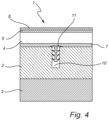
- a first grid 8 of incisions 10 is formed in the concrete subbase 2, wherein the incisions 10 of the first grid 8 originate at a surface of the concrete subbase 2 opposite to the frangible support 3, and extend towards the frangible support 3, having a depth preferably smaller than a thickness of the concrete subbase 2.
- the method according to the present invention preferably includes the step of forming a second grid 9 of incisions 12, wherein the incisions 12 of the second grid 9 originate at a surface of the polyurea layer 5 opposite to the polyurethane layer 4, and extend through the polyurea layer 5, the polyurethane layer 4 and the concrete subbase 2 until the frangible support 3.
- the incisions 10 of the first grid 8 act as contraction joints, and the incisions 12 of the second grid 9 act as dilatation joints. Cracks in the structure of the energy absorbing system are likely to cause an increasingly rapid degradation of the system, especially when exposed to rain and/or snow due to chemical reactions which may occur within the concrete, or by exposing a cracked system according to the invention to additional mechanical stress by the formation of ice within these cracks during winter.
- the incisions 10 of the first 8 grid have a depth, which is preferably smaller than a thickness of the concrete subbase 2. This design accounts for temperature gradients within the concrete subbase 2, which lead to an increased expansion of the concrete subbase 2 closer to the surface of the energy absorbing system, which is often directly exposed to heat and thermal radiation.
- the incisions 12 of the second grid 9 act as dilatation joints, alleviating thermal stress caused by a contraction of the energy absorbing system, when exposed to low temperatures. In cold conditions, the energy absorbing system contracts in an essentially uniform manner throughout its thickness. Therefore the incisions 12 of the second grid 9 extend through the polyurea layer 5, the polyurethane layer 4 and the concrete layer 2 until the frangible support 3.
- a joint profile 11, 13 comprises or consists of ethylene propylene diene monomer (EPDM) rubber.
- EPDM ethylene propylene diene monomer
- a further aspect of the present invention relates to an energy absorbing system for arresting a vehicle comprising a concrete subbase 2 positioned on a frangible support 3 and being covered with at least one polyurethane layer 4 and at least one polyurea layer (5).
- the at least one polyurethane layer 4 is covered with at least one polyurea layer 5.
- At least one polyurethane layer of the energy absorbing system of the present invention is covered with at least one polyurea layer.
- this order of the two layers turns in an energy absorbing system suitably used for heavy vehicles like aircrafts which shows resistance in regard to environmental influences, for instance.
- the method of the present invention allows to obtain an energy absorbing system for arresting a vehicle where the surface of the energy absorbing system is substantially jointless.
- the polyurea layer 5 is preferably covered with an anti-slip layer comprising polyurea.
- the energy absorbing system of the present invention can be used at the end of air runways or even roads.
- the at least one polyurea layer is preferably covered with an anti-slip layer which may also comprise polyurea.
- the energy absorbing system of the present invention can be part of runways at airports.
- said energy absorbing system covers an area having a length of 20 to 500 meters and a width of 20 to 100 meters.
- the energy absorbing system of the present invention can also be installed on roads and streets to stop or decelerate vehicles. This may be helpful for trucks or buses having, for instance, broken breaks so that they can leave the streets or roads on an emergency exit where the energy absorbing system of the present invention is positioned.
- the energy absorbing system of the present invention can also be used to protect certain areas from a non-authorized vehicle.
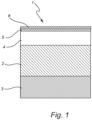
- the present example shows how the energy absorbing system of the present invention (see Fig. 1 ) was manufactured.
- the concrete subbase 2 was applied at a thickness of 20 to 200 mm, with a desired thickness of 40 - 60 mm, on a frangible support 3.
- the primer system was designed to seal the surface of the placed concrete subbase 2 so as to eliminate any pinholing in the subsequent layers of the system, and keep water penetration from occurring.
- the primer can also be used for coating the polyurethane layer.
- This primer was composed of 100% solids (without water), and was based upon an aromatic polymeric isocyanate and a renewable resource polyol, i.e. castor oil. This has significant environmental advantages. While the primer is applied, it is designed to soak into the concrete and seal, and not provide a coating thickness layer.
- the primer was installed at a spreading rate of 0.13 to 0.5 liters/m 2 , with a desired spreading rate of 0.2 to 0.25 liters/m 2 .
- the primer was applied by brush or roller, high pressure airless spray or plural component spray.
- the primer was based upon an aromatic Isocyanate component, such as SUPRASEC 9584 from Huntsman Corporation.
- This is an isocyanate component having an isocyanate content of 24.1%, reactive functionality of 2.67, and an equivalent weight of 174, viscosity of 45 cps @ 25°C.
- the resin component was Castor Oil #1, Ricinus Cumminus Seed Oil, with a hydroxyl value of 60 - 100, a viscosity of 200 - 600 cps @ 25°C.
- the isocyanate and resin are mixed at a 1:1 by volume ratio, and applied to the substrate as noted above.
- the spray foam system was a specialty modified isocyanurate spray foam, being frangible and highly fire retardant, resistance to burning.
- This foam system was based upon a polymeric aromatic isocyanate and a resin blend of polyol, catalyst and water blown. This system did not use any additional organic blowing agents, and is environmentally friendly, using only water for expansion / blowing.
- This spray foam system was processed at a ratio of 200:100 to 400:100 (isocyanate to Resin / polyol), with a desired processing ratio of 200:100 to 250:100.
- Application thickness of the foam can be from 15 to 40 mm, with a desired application thickness of 20 to 30 mm thickness.
- the foam system can be applied to the primer system once the primer is tack free (usually within 1.5 hours).
- the foam system is applied using high pressure, heated variable ratio plural component equipment, fitted with an impingement mix spray gun.
- Polymeric MDI 100 parts by weight such as RUBINATE M from Huntsman Corp
- PET based polyol 70 - 90 parts by weight Water 1.5 - 2.0 parts by weight Trischloropropyl 11 - 15 parts by weight Phosphate (fire retardant) Silicone surfactant 1.3 - 1.8 parts by weight JEFFCAT TR 90 1.6 - 1.8 parts by weight JEFFACT ZF 10 0.5 - 0.7 parts by weight (Catalysts, both from Huntsman) POLYCAT 34 0.6 - 0.8 parts by weight (catalyst from Evonik) Potassium Octoate 0.4 - 0.8 parts by weight (trimer formation catalyst)
- This spray foam system was processed at a volume ratio of 200:100 to 400:100 (ISO to Resin / polyol), with a desired processing volume ratio of 200:100 to 250:100.
- the polyurea coating system is an aromatic based polyurea with properties designed to provide good elasticity and strength, even at low temperature exposure, such as freezing weather. This is a plural component system, based upon an aromatic prepolymer isocyanate and a resin blend composed of amine terminated resins. This is a 100% solids system, with very fast reactivity and cure.
- Application of the polyurea system can be from 0.5 to 2.0 mm, with a desired application thickness of .5 to 1.0 mm.
- the system is applied using high pressure, heated plural component equipment, fitted with an impingement mix spray gun.
- SUPRASEC 2054 100 parts by weight (from Huntsman Corp, 15 % isocyanate content, functionality of 2.0)
- JEFFAMINE D-2000 50 - 70 parts by weight (2000 molecular weight polyether amine from Huntsman Corp) LONZA DETDA 17 - 20 parts by weight (Lonza corp, diethyltoluene diamine) UNILINK 4200 5 - 10 parts by weight (Dorf Ketal, secondary amine based on methylene dianaline) Aluminum Trihydrate 5 - 10 parts by weight (Fire retardant for Clariant) Pigment color 2 - 5 parts by weight Gel Time, secs 5 - 10 Tack free time, sec - 45
- This system is processed at a 1:1 by volume ratio in the high pressure, high temperature proportioning spray equipment
- a top coat can be applied over the polyurea system. This will provide color stability and the ability to incorporate fine aggregate for slip resistance. This was based upon an aliphatic polyurea system, using polyaspartic ester resins.
- Application thickness of the top coat was from 0.25 to 1 mm DFT, with a desired application thickness of 0.4 to 0.6 mm DFT. This can be applied by brush or roller, high pressure airless spray or plural component spray.
- the applied aggregate ranges from 0.2 - 0.5 mm, with 0.3 to 0.4 mm preferred.
- HDI Trimer 100 parts by weight (such as DESMODUR 3900, N-100 or Tolonate HDT-LV)
- Resin blend component
Landscapes
- Chemical & Material Sciences (AREA)
- Organic Chemistry (AREA)
- Chemical Kinetics & Catalysis (AREA)
- Health & Medical Sciences (AREA)
- Polymers & Plastics (AREA)
- Medicinal Chemistry (AREA)
- Engineering & Computer Science (AREA)
- Ceramic Engineering (AREA)
- Materials Engineering (AREA)
- Structural Engineering (AREA)
- Inorganic Chemistry (AREA)
- Aviation & Aerospace Engineering (AREA)
- Mechanical Engineering (AREA)
- Life Sciences & Earth Sciences (AREA)
- Wood Science & Technology (AREA)
- Polyurethanes Or Polyureas (AREA)
- Road Paving Structures (AREA)
- Laminated Bodies (AREA)
- Paints Or Removers (AREA)
- Building Environments (AREA)
Claims (15)
- Verfahren zur Herstellung eines energieabsorbierenden Systems (1) zum Arretieren eines Fahrzeugs, gekennzeichnet durch Umfassen der Schritte:a. Aufbringen von Beton auf einen brechbaren Träger (3), um einen Beton-Unterbau (2) zu bilden,b. Aufbringen wenigstens eines Isocyanats und einer ersten Zusammensetzung, die wenigstens ein Polyol und wenigstens einen Katalysator umfasst, um eine Polyurethanschicht (4) zu bilden, auf den Beton-Unterbau (2) undc. Aufbringen wenigstens eines Isocyanats und einer zweiten Zusammensetzung, die wenigstens ein Polyamin umfasst, um eine Polyharnstoffschicht (5) zu bilden, auf die Polyurethanschicht (4).
- Verfahren gemäß Anspruch 1, wobei bei einem Schritt a1. nach Schritt a. eine Einebnungszusammensetzung auf den Beton-Unterbau (2) aufgebracht wird, um eine Einebnungsschicht (7) zu bilden.
- Verfahren gemäß Anspruch 1 oder 2, wobei wenigstens ein Isocyanat und eine dritte Zusammensetzung, die wenigstens ein Polyol umfasst, nach Schritt a. oder nach Schritt a1. auf den Beton-Unterbau (2) und gegebenenfalls nach Schritt b. auf die Polyurethanschicht (4) aufgebracht wird, wobei die dritte Zusammensetzung im Wesentlichen wasserfrei ist.
- Verfahren gemäß einem der Ansprüche 1 bis 3, wobei wenigstens ein Isocyanat und eine vierte Zusammensetzung, die wenigstens ein Polyamin und wenigstens einen Entlüfter umfasst, auf die Polyharnstoffschicht (5) aufgebracht wird, um eine rutschhemmende Schicht (6) zu erhalten.
- Verfahren gemäß einem der Ansprüche 1 bis 4, wobei die erste Zusammensetzung 1 bis 3 Gew.-%, vorzugsweise 1,2 bis 2 Gew.-%, an einem Tensid, vorzugsweise an einem Silicon-Tensid, umfasst.
- Verfahren gemäß einem der Ansprüche 1 bis 5, wobei die erste Zusammensetzung 1 bis 5 Gew.-%, vorzugsweise 1,2 bis 3 Gew.-%, bevorzugter 1,5 bis 2 Gew.-%, Wasser und/oder 5 bis 20 Gew.-%, vorzugsweise 10 bis 20 Gew.-%, bevorzugter 11 bis 15 Gew.-%, an einem ersten Flammhemmer umfasst.
- Verfahren gemäß einem der Ansprüche 1 bis 6, wobei das wenigstens eine Isocyanat und die erste Zusammensetzung auf den Beton-Unterbau (2) aufgebracht werden, um eine Polyurethanschicht (4) mit einer Dicke von 1 bis 50 mm, vorzugsweise 1 bis 40 mm, bevorzugter 1 bis 30 mm, bevorzugter 1 bis 20 mm, bevorzugter 1 bis 15 mm, bevorzugter 5 bis 10 mm, zu erhalten.
- Verfahren gemäß einem der Ansprüche 1 bis 7, wobei das wenigstens eine Isocyanat und die zweite Zusammensetzung auf die Polyurethanschicht (4) aufgebracht werden, um eine Polyharnstoffschicht (4) mit einer Dicke von 0,1 bis 10 mm, vorzugsweise 0,2 bis 5 mm, bevorzugter 0,5 bis 3 mm, bevorzugter 0,5 bis 2 mm, bevorzugter 0,5 bis 1,2 mm, bevorzugter 0,5 bis 1 mm, zu erhalten.
- Verfahren gemäß einem der Ansprüche 4 bis 8, wobei der wenigstens eine Entlüfter der vierten Zusammensetzung ausgewählt ist aus der Gruppe bestehend aus Freigabemitteln auf Siliconbasis, vorzugsweise methyliertes Siliciumdioxid und/oder Dimethylsiliconpolymere.
- Verfahren gemäß einem der Ansprüche 3 bis 9, wobei das wenigstens eine Isocyanat und die vierte Zusammensetzung auf die Polyharnstoffschicht (4) in einer Dicke von 0,1 bis 2 mm, vorzugsweise 0,25 bis 1 mm, aufgebracht werden.
- Verfahren gemäß einem der Ansprüche 2 bis 10, wobei die Einebnungszusammensetzung ein Gemisch des wenigstens einen Polyols und des wenigstens einen Polyamins in einem Verhältnis von 2:1 bis 6:1, vorzugsweise von 3:1 bis 5:1, bevorzugter von 3,5:1 bis 4,5:1, umfasst.
- Verfahren gemäß einem der Ansprüche 1 bis 11, wobei ein erstes Gitter (8) von Einschnitten (10) in dem Beton-Unterbau (2) gebildet wird, wobei die Einschnitte (10) des ersten Gitters (8) von einer Oberfläche des Beton-Unterbaus (2) gegenüber dem brechbaren Träger (3) ausgehen und in Richtung zu dem brechbaren Träger (3) verlaufen und eine Tiefe aufweisen, die vorzugsweise kleiner als eine Dicke des Beton-Unterbaus (2) ist.
- Verfahren gemäß einem der Ansprüche 1 bis 12, wobei ein zweites Gitter (9) von Einschnitten (12) gebildet wird, wobei die Einschnitte (12) des zweiten Gitters (9) von einer Oberfläche der Polyharnstoffschicht (5) gegenüber der Polyurethanschicht (4) ausgehen und durch die Polyharnstoffschicht (5), die Polyurethanschicht (4) und den Beton-Unterbau (2) bis zu dem brechbaren Träger (3) verlaufen.
- Verfahren gemäß Anspruch 13, wobei das Fugenprofil (11, 13) Ethylen-Propylen-Dien-Monomer(EPDM)-Kautschuk umfasst oder daraus besteht.
- Energieabsorbierendes Systems zum Arretieren eines Fahrzeugs (1), gekennzeichnet durch Umfassen eines Beton-Unterbaus (2), der auf einem brechbaren Träger (3) angeordnet ist und von wenigstens einer Polyurethanschicht (4) und wenigstens einer Polyharnstoffschicht (5) bedeckt ist.
Applications Claiming Priority (3)
| Application Number | Priority Date | Filing Date | Title |
|---|---|---|---|
| EP19194613.6A EP3786360A1 (de) | 2019-08-30 | 2019-08-30 | Energieaufnahmesystem und verfahren zur herstellung dessen |
| EP20157932 | 2020-02-18 | ||
| PCT/EP2020/073531 WO2021037743A1 (en) | 2019-08-30 | 2020-08-21 | Arrestor system |
Publications (3)
| Publication Number | Publication Date |
|---|---|
| EP4022129A1 EP4022129A1 (de) | 2022-07-06 |
| EP4022129B1 true EP4022129B1 (de) | 2023-11-29 |
| EP4022129C0 EP4022129C0 (de) | 2023-11-29 |
Family
ID=72178548
Family Applications (1)
| Application Number | Title | Priority Date | Filing Date |
|---|---|---|---|
| EP20760458.8A Active EP4022129B1 (de) | 2019-08-30 | 2020-08-21 | Energieaufnahmesystem und verfahren zur herstellung dessen |
Country Status (4)
| Country | Link |
|---|---|
| EP (1) | EP4022129B1 (de) |
| JP (1) | JP7623088B2 (de) |
| BR (1) | BR112022001917A2 (de) |
| WO (1) | WO2021037743A1 (de) |
Families Citing this family (1)
| Publication number | Priority date | Publication date | Assignee | Title |
|---|---|---|---|---|
| WO2025233647A1 (en) * | 2024-05-08 | 2025-11-13 | Sika Technology Ag | Battery box comprising a foamed polisocyanurate material |
Family Cites Families (19)
| Publication number | Priority date | Publication date | Assignee | Title |
|---|---|---|---|---|
| US3066896A (en) * | 1959-04-27 | 1962-12-04 | Air Logistics Corp | Method and means for decelerating aircraft on runways |
| GB1169415A (en) * | 1967-05-22 | 1969-11-05 | Mini Of Technology | Arresting Means for Vehicles. |
| JPH0791061A (ja) * | 1993-09-21 | 1995-04-04 | Hachiya Kenzai Kogyo Kk | コンクリート面の目地切り方法 |
| US5885025A (en) * | 1997-02-07 | 1999-03-23 | Datron Inc. | Vehicle arresting bed systems |
| US6685387B2 (en) * | 2001-09-13 | 2004-02-03 | Engineered Arresting Systems Corporation | Jet blast resistant vehicle arresting blocks, beds and methods |
| JP2005213842A (ja) * | 2004-01-29 | 2005-08-11 | Mitsui Kagaku Sanshi Kk | コンクリート表面構造体及びその構築方法 |
| ES2541773T3 (es) * | 2005-10-03 | 2015-07-24 | Engineered Arresting Systems Corporation | Inhibidores de la incursión de vehículos |
| DE102005062028A1 (de) * | 2005-12-22 | 2007-06-28 | Basf Ag | Verfahren zur Herstellung von metallisiertem textilem Flächengebilde, metallisiertes textiles Flächengebilde und Verwendung des so hergestellten metallisierten textilen Flächengebildes |
| WO2015191162A1 (en) * | 2014-06-11 | 2015-12-17 | Earthstone Inernational, Llc | Foamed glass composite material and a method for using the same |
| EP1958926A1 (de) * | 2007-01-24 | 2008-08-20 | Lafarge | Neue Betonzusammensetzung |
| US20080312351A1 (en) * | 2007-06-13 | 2008-12-18 | Air Products And Chemicals, Inc. | Tetraalkylammonium Carboxylate Salts as Trimerization Catalysts for Spray Foam Applications |
| GB2476944B (en) * | 2010-01-13 | 2012-04-11 | Norsk Glassgjenvinning As | Vehicle arresting bed |
| US20130343822A1 (en) * | 2012-06-20 | 2013-12-26 | Mark Swarny | Liner system for mines, tunnels and other ground structures |
| MX2016011389A (es) * | 2014-03-03 | 2016-12-07 | Eng Arresting Systems Corp | Materiales y estructuras de macro-patron para sistemas de detencion de vehiculos. |
| EP3114031A1 (de) * | 2014-03-05 | 2017-01-11 | Engineered Arresting Systems Corporation | Partikel mit geringer dichte für fahrzeugarretierungssysteme |
| CA2985374C (en) * | 2015-05-18 | 2020-07-28 | Engineered Arresting Systems Corporation | Suspended layered energy absorbing material for vehicle arresting systems |
| CN105625126A (zh) * | 2016-03-15 | 2016-06-01 | 中国民航科学技术研究院 | 一种基于缓冲吸能材料的车辆拦阻系统 |
| US10711407B2 (en) * | 2016-06-10 | 2020-07-14 | The Port Authority Of New York And New Jersey | Engineered material arrestor system |
| JP6885854B2 (ja) * | 2016-11-04 | 2021-06-16 | 積水化学工業株式会社 | 現場吹き付け用発泡性ポリウレタン組成物 |
-
2020
- 2020-08-21 JP JP2022512366A patent/JP7623088B2/ja active Active
- 2020-08-21 BR BR112022001917A patent/BR112022001917A2/pt not_active Application Discontinuation
- 2020-08-21 EP EP20760458.8A patent/EP4022129B1/de active Active
- 2020-08-21 WO PCT/EP2020/073531 patent/WO2021037743A1/en not_active Ceased
Also Published As
| Publication number | Publication date |
|---|---|
| EP4022129C0 (de) | 2023-11-29 |
| JP7623088B2 (ja) | 2025-01-28 |
| EP4022129A1 (de) | 2022-07-06 |
| JP2022546339A (ja) | 2022-11-04 |
| BR112022001917A2 (pt) | 2022-05-03 |
| WO2021037743A1 (en) | 2021-03-04 |
Similar Documents
| Publication | Publication Date | Title |
|---|---|---|
| EP0988333B1 (de) | Flüssige fahrbahnmarkierungszusammensetzungen | |
| US9410056B2 (en) | Flame retardant coating | |
| KR101998601B1 (ko) | 분사 및 롤링 도포용 폴리우레아 수지 도막 방수재 | |
| US5709908A (en) | Stripping composition and method for stripping a road or highway surface | |
| WO2010034109A1 (en) | Flame retardant coating | |
| WO2015179903A1 (en) | Ice adhesion reducing polymers | |
| EP2334710A1 (de) | Beschichtungsformulierungen und zusammensetzungen auf basis von polyaminen, polyolen und polyisocyanaten und verfahren zur herstellung und verwendung davon | |
| US4025683A (en) | Urethane-based water-proofing/sound-proofing coating composition | |
| EP4022129B1 (de) | Energieaufnahmesystem und verfahren zur herstellung dessen | |
| EP3786360A1 (de) | Energieaufnahmesystem und verfahren zur herstellung dessen | |
| CN115926605B (zh) | 一种喷膜材料、其制备方法及应用 | |
| KR20190052676A (ko) | 폴리머 콘크리트 조성물용 접착 촉진제 코팅된 입자 | |
| US20060293428A1 (en) | Two-step process for rapid structure repair | |
| CN116179054A (zh) | 一种用于汽车底盘的气凝胶改性复合涂层及其制备方法 | |
| US20070185241A1 (en) | High build coating composition and coatings formed therefrom | |
| CN112266697A (zh) | 一种自适应防结冰铺装路面 | |
| KR102784587B1 (ko) | 부착성 등 물성이 우수한 폴리우레아 수지 도막방수재 조성물 및 이를 이용한 바탕 구조물의 방수 시공방법 | |
| JP7668559B2 (ja) | 路面の施工方法、及び、路面構造 | |
| EP4237335B1 (de) | Fahrzeugfixierungssystem | |
| CA2640098C (en) | Flame retardant coating | |
| KR102291664B1 (ko) | 방수·방식용 폴리우레아계 시트 및 이를 이용한 방수·방식 시공방법 | |
| KR102083426B1 (ko) | 나노 표면보호재 및 이의 제조 방법 | |
| JPH0711602A (ja) | バラスト固結方法 | |
| CN112646464A (zh) | 一种防爆性能高抗冲击防层降组合型聚脲涂料及其施工方法 | |
| MXPA99011101A (en) | Liquid pavement marking compositions |
Legal Events
| Date | Code | Title | Description |
|---|---|---|---|
| STAA | Information on the status of an ep patent application or granted ep patent |
Free format text: STATUS: UNKNOWN |
|
| STAA | Information on the status of an ep patent application or granted ep patent |
Free format text: STATUS: THE INTERNATIONAL PUBLICATION HAS BEEN MADE |
|
| PUAI | Public reference made under article 153(3) epc to a published international application that has entered the european phase |
Free format text: ORIGINAL CODE: 0009012 |
|
| STAA | Information on the status of an ep patent application or granted ep patent |
Free format text: STATUS: REQUEST FOR EXAMINATION WAS MADE |
|
| 17P | Request for examination filed |
Effective date: 20220329 |
|
| AK | Designated contracting states |
Kind code of ref document: A1 Designated state(s): AL AT BE BG CH CY CZ DE DK EE ES FI FR GB GR HR HU IE IS IT LI LT LU LV MC MK MT NL NO PL PT RO RS SE SI SK SM TR |
|
| DAV | Request for validation of the european patent (deleted) | ||
| DAX | Request for extension of the european patent (deleted) | ||
| GRAP | Despatch of communication of intention to grant a patent |
Free format text: ORIGINAL CODE: EPIDOSNIGR1 |
|
| STAA | Information on the status of an ep patent application or granted ep patent |
Free format text: STATUS: GRANT OF PATENT IS INTENDED |
|
| INTG | Intention to grant announced |
Effective date: 20230616 |
|
| GRAS | Grant fee paid |
Free format text: ORIGINAL CODE: EPIDOSNIGR3 |
|
| GRAA | (expected) grant |
Free format text: ORIGINAL CODE: 0009210 |
|
| STAA | Information on the status of an ep patent application or granted ep patent |
Free format text: STATUS: THE PATENT HAS BEEN GRANTED |
|
| AK | Designated contracting states |
Kind code of ref document: B1 Designated state(s): AL AT BE BG CH CY CZ DE DK EE ES FI FR GB GR HR HU IE IS IT LI LT LU LV MC MK MT NL NO PL PT RO RS SE SI SK SM TR |
|
| REG | Reference to a national code |
Ref country code: GB Ref legal event code: FG4D |
|
| REG | Reference to a national code |
Ref country code: CH Ref legal event code: EP |
|
| REG | Reference to a national code |
Ref country code: DE Ref legal event code: R096 Ref document number: 602020021944 Country of ref document: DE |
|
| REG | Reference to a national code |
Ref country code: IE Ref legal event code: FG4D |
|
| U01 | Request for unitary effect filed |
Effective date: 20231214 |
|
| U07 | Unitary effect registered |
Designated state(s): AT BE BG DE DK EE FI FR IT LT LU LV MT NL PT SE SI Effective date: 20231222 |
|
| PG25 | Lapsed in a contracting state [announced via postgrant information from national office to epo] |
Ref country code: GR Free format text: LAPSE BECAUSE OF FAILURE TO SUBMIT A TRANSLATION OF THE DESCRIPTION OR TO PAY THE FEE WITHIN THE PRESCRIBED TIME-LIMIT Effective date: 20240301 |
|
| PG25 | Lapsed in a contracting state [announced via postgrant information from national office to epo] |
Ref country code: IS Free format text: LAPSE BECAUSE OF FAILURE TO SUBMIT A TRANSLATION OF THE DESCRIPTION OR TO PAY THE FEE WITHIN THE PRESCRIBED TIME-LIMIT Effective date: 20240329 |
|
| PG25 | Lapsed in a contracting state [announced via postgrant information from national office to epo] |
Ref country code: ES Free format text: LAPSE BECAUSE OF FAILURE TO SUBMIT A TRANSLATION OF THE DESCRIPTION OR TO PAY THE FEE WITHIN THE PRESCRIBED TIME-LIMIT Effective date: 20231129 |
|
| PG25 | Lapsed in a contracting state [announced via postgrant information from national office to epo] |
Ref country code: IS Free format text: LAPSE BECAUSE OF FAILURE TO SUBMIT A TRANSLATION OF THE DESCRIPTION OR TO PAY THE FEE WITHIN THE PRESCRIBED TIME-LIMIT Effective date: 20240329 Ref country code: GR Free format text: LAPSE BECAUSE OF FAILURE TO SUBMIT A TRANSLATION OF THE DESCRIPTION OR TO PAY THE FEE WITHIN THE PRESCRIBED TIME-LIMIT Effective date: 20240301 Ref country code: ES Free format text: LAPSE BECAUSE OF FAILURE TO SUBMIT A TRANSLATION OF THE DESCRIPTION OR TO PAY THE FEE WITHIN THE PRESCRIBED TIME-LIMIT Effective date: 20231129 |
|
| PG25 | Lapsed in a contracting state [announced via postgrant information from national office to epo] |
Ref country code: RS Free format text: LAPSE BECAUSE OF FAILURE TO SUBMIT A TRANSLATION OF THE DESCRIPTION OR TO PAY THE FEE WITHIN THE PRESCRIBED TIME-LIMIT Effective date: 20231129 Ref country code: PL Free format text: LAPSE BECAUSE OF FAILURE TO SUBMIT A TRANSLATION OF THE DESCRIPTION OR TO PAY THE FEE WITHIN THE PRESCRIBED TIME-LIMIT Effective date: 20231129 Ref country code: NO Free format text: LAPSE BECAUSE OF FAILURE TO SUBMIT A TRANSLATION OF THE DESCRIPTION OR TO PAY THE FEE WITHIN THE PRESCRIBED TIME-LIMIT Effective date: 20240229 Ref country code: HR Free format text: LAPSE BECAUSE OF FAILURE TO SUBMIT A TRANSLATION OF THE DESCRIPTION OR TO PAY THE FEE WITHIN THE PRESCRIBED TIME-LIMIT Effective date: 20231129 |
|
| PG25 | Lapsed in a contracting state [announced via postgrant information from national office to epo] |
Ref country code: CZ Free format text: LAPSE BECAUSE OF FAILURE TO SUBMIT A TRANSLATION OF THE DESCRIPTION OR TO PAY THE FEE WITHIN THE PRESCRIBED TIME-LIMIT Effective date: 20231129 |
|
| PG25 | Lapsed in a contracting state [announced via postgrant information from national office to epo] |
Ref country code: SK Free format text: LAPSE BECAUSE OF FAILURE TO SUBMIT A TRANSLATION OF THE DESCRIPTION OR TO PAY THE FEE WITHIN THE PRESCRIBED TIME-LIMIT Effective date: 20231129 |
|
| PG25 | Lapsed in a contracting state [announced via postgrant information from national office to epo] |
Ref country code: SM Free format text: LAPSE BECAUSE OF FAILURE TO SUBMIT A TRANSLATION OF THE DESCRIPTION OR TO PAY THE FEE WITHIN THE PRESCRIBED TIME-LIMIT Effective date: 20231129 Ref country code: SK Free format text: LAPSE BECAUSE OF FAILURE TO SUBMIT A TRANSLATION OF THE DESCRIPTION OR TO PAY THE FEE WITHIN THE PRESCRIBED TIME-LIMIT Effective date: 20231129 Ref country code: RO Free format text: LAPSE BECAUSE OF FAILURE TO SUBMIT A TRANSLATION OF THE DESCRIPTION OR TO PAY THE FEE WITHIN THE PRESCRIBED TIME-LIMIT Effective date: 20231129 Ref country code: CZ Free format text: LAPSE BECAUSE OF FAILURE TO SUBMIT A TRANSLATION OF THE DESCRIPTION OR TO PAY THE FEE WITHIN THE PRESCRIBED TIME-LIMIT Effective date: 20231129 |
|
| U20 | Renewal fee for the european patent with unitary effect paid |
Year of fee payment: 5 Effective date: 20240715 |
|
| REG | Reference to a national code |
Ref country code: DE Ref legal event code: R097 Ref document number: 602020021944 Country of ref document: DE |
|
| PLBE | No opposition filed within time limit |
Free format text: ORIGINAL CODE: 0009261 |
|
| STAA | Information on the status of an ep patent application or granted ep patent |
Free format text: STATUS: NO OPPOSITION FILED WITHIN TIME LIMIT |
|
| 26N | No opposition filed |
Effective date: 20240830 |
|
| PG25 | Lapsed in a contracting state [announced via postgrant information from national office to epo] |
Ref country code: MC Free format text: LAPSE BECAUSE OF FAILURE TO SUBMIT A TRANSLATION OF THE DESCRIPTION OR TO PAY THE FEE WITHIN THE PRESCRIBED TIME-LIMIT Effective date: 20231129 |
|
| PG25 | Lapsed in a contracting state [announced via postgrant information from national office to epo] |
Ref country code: IE Free format text: LAPSE BECAUSE OF NON-PAYMENT OF DUE FEES Effective date: 20240821 |
|
| U20 | Renewal fee for the european patent with unitary effect paid |
Year of fee payment: 6 Effective date: 20250626 |
|
| PGFP | Annual fee paid to national office [announced via postgrant information from national office to epo] |
Ref country code: GB Payment date: 20250708 Year of fee payment: 6 |
|
| PGFP | Annual fee paid to national office [announced via postgrant information from national office to epo] |
Ref country code: CH Payment date: 20250901 Year of fee payment: 6 |
|
| PG25 | Lapsed in a contracting state [announced via postgrant information from national office to epo] |
Ref country code: CY Free format text: LAPSE BECAUSE OF FAILURE TO SUBMIT A TRANSLATION OF THE DESCRIPTION OR TO PAY THE FEE WITHIN THE PRESCRIBED TIME-LIMIT; INVALID AB INITIO Effective date: 20200821 |
|
| PG25 | Lapsed in a contracting state [announced via postgrant information from national office to epo] |
Ref country code: HU Free format text: LAPSE BECAUSE OF FAILURE TO SUBMIT A TRANSLATION OF THE DESCRIPTION OR TO PAY THE FEE WITHIN THE PRESCRIBED TIME-LIMIT; INVALID AB INITIO Effective date: 20200821 |