EP4021139B1 - Diskontinuierliches sendeverfahren und -vorrichtung und diskontinuierliches empfangsverfahren und -vorrichtung für sidelink und endgerät - Google Patents
Diskontinuierliches sendeverfahren und -vorrichtung und diskontinuierliches empfangsverfahren und -vorrichtung für sidelink und endgerät Download PDFInfo
- Publication number
- EP4021139B1 EP4021139B1 EP20854280.3A EP20854280A EP4021139B1 EP 4021139 B1 EP4021139 B1 EP 4021139B1 EP 20854280 A EP20854280 A EP 20854280A EP 4021139 B1 EP4021139 B1 EP 4021139B1
- Authority
- EP
- European Patent Office
- Prior art keywords
- timer
- user terminal
- transmission
- data scheduling
- target
- Prior art date
- Legal status (The legal status is an assumption and is not a legal conclusion. Google has not performed a legal analysis and makes no representation as to the accuracy of the status listed.)
- Active
Links
Images



Classifications
-
- H—ELECTRICITY
- H04—ELECTRIC COMMUNICATION TECHNIQUE
- H04W—WIRELESS COMMUNICATION NETWORKS
- H04W72/00—Local resource management
- H04W72/20—Control channels or signalling for resource management
- H04W72/25—Control channels or signalling for resource management between terminals via a wireless link, e.g. sidelink
-
- H—ELECTRICITY
- H04—ELECTRIC COMMUNICATION TECHNIQUE
- H04W—WIRELESS COMMUNICATION NETWORKS
- H04W52/00—Power management, e.g. Transmission Power Control [TPC] or power classes
- H04W52/02—Power saving arrangements
- H04W52/0209—Power saving arrangements in terminal devices
- H04W52/0225—Power saving arrangements in terminal devices using monitoring of external events, e.g. the presence of a signal
- H04W52/0248—Power saving arrangements in terminal devices using monitoring of external events, e.g. the presence of a signal dependent on the time of the day, e.g. according to expected transmission activity
-
- H—ELECTRICITY
- H04—ELECTRIC COMMUNICATION TECHNIQUE
- H04L—TRANSMISSION OF DIGITAL INFORMATION, e.g. TELEGRAPHIC COMMUNICATION
- H04L1/00—Arrangements for detecting or preventing errors in the information received
- H04L1/12—Arrangements for detecting or preventing errors in the information received by using return channel
- H04L1/16—Arrangements for detecting or preventing errors in the information received by using return channel in which the return channel carries supervisory signals, e.g. repetition request signals
- H04L1/18—Automatic repetition systems, e.g. Van Duuren systems
- H04L1/1812—Hybrid protocols; Hybrid automatic repeat request [HARQ]
-
- H—ELECTRICITY
- H04—ELECTRIC COMMUNICATION TECHNIQUE
- H04L—TRANSMISSION OF DIGITAL INFORMATION, e.g. TELEGRAPHIC COMMUNICATION
- H04L1/00—Arrangements for detecting or preventing errors in the information received
- H04L1/12—Arrangements for detecting or preventing errors in the information received by using return channel
- H04L1/16—Arrangements for detecting or preventing errors in the information received by using return channel in which the return channel carries supervisory signals, e.g. repetition request signals
- H04L1/18—Automatic repetition systems, e.g. Van Duuren systems
- H04L1/1829—Arrangements specially adapted for the receiver end
- H04L1/1848—Time-out mechanisms
-
- H—ELECTRICITY
- H04—ELECTRIC COMMUNICATION TECHNIQUE
- H04L—TRANSMISSION OF DIGITAL INFORMATION, e.g. TELEGRAPHIC COMMUNICATION
- H04L1/00—Arrangements for detecting or preventing errors in the information received
- H04L1/12—Arrangements for detecting or preventing errors in the information received by using return channel
- H04L1/16—Arrangements for detecting or preventing errors in the information received by using return channel in which the return channel carries supervisory signals, e.g. repetition request signals
- H04L1/18—Automatic repetition systems, e.g. Van Duuren systems
- H04L1/1829—Arrangements specially adapted for the receiver end
- H04L1/1854—Scheduling and prioritising arrangements
-
- H—ELECTRICITY
- H04—ELECTRIC COMMUNICATION TECHNIQUE
- H04L—TRANSMISSION OF DIGITAL INFORMATION, e.g. TELEGRAPHIC COMMUNICATION
- H04L1/00—Arrangements for detecting or preventing errors in the information received
- H04L1/12—Arrangements for detecting or preventing errors in the information received by using return channel
- H04L1/16—Arrangements for detecting or preventing errors in the information received by using return channel in which the return channel carries supervisory signals, e.g. repetition request signals
- H04L1/18—Automatic repetition systems, e.g. Van Duuren systems
- H04L1/1867—Arrangements specially adapted for the transmitter end
- H04L1/188—Time-out mechanisms
- H04L1/1883—Time-out mechanisms using multiple timers
-
- H—ELECTRICITY
- H04—ELECTRIC COMMUNICATION TECHNIQUE
- H04L—TRANSMISSION OF DIGITAL INFORMATION, e.g. TELEGRAPHIC COMMUNICATION
- H04L1/00—Arrangements for detecting or preventing errors in the information received
- H04L1/12—Arrangements for detecting or preventing errors in the information received by using return channel
- H04L1/16—Arrangements for detecting or preventing errors in the information received by using return channel in which the return channel carries supervisory signals, e.g. repetition request signals
- H04L1/18—Automatic repetition systems, e.g. Van Duuren systems
- H04L1/1867—Arrangements specially adapted for the transmitter end
- H04L1/1887—Scheduling and prioritising arrangements
-
- H—ELECTRICITY
- H04—ELECTRIC COMMUNICATION TECHNIQUE
- H04W—WIRELESS COMMUNICATION NETWORKS
- H04W52/00—Power management, e.g. Transmission Power Control [TPC] or power classes
- H04W52/02—Power saving arrangements
- H04W52/0209—Power saving arrangements in terminal devices
- H04W52/0261—Power saving arrangements in terminal devices managing power supply demand, e.g. depending on battery level
- H04W52/0274—Power saving arrangements in terminal devices managing power supply demand, e.g. depending on battery level by switching on or off the equipment or parts thereof
- H04W52/028—Power saving arrangements in terminal devices managing power supply demand, e.g. depending on battery level by switching on or off the equipment or parts thereof switching on or off only a part of the equipment circuit blocks
-
- H—ELECTRICITY
- H04—ELECTRIC COMMUNICATION TECHNIQUE
- H04W—WIRELESS COMMUNICATION NETWORKS
- H04W72/00—Local resource management
- H04W72/12—Wireless traffic scheduling
-
- H—ELECTRICITY
- H04—ELECTRIC COMMUNICATION TECHNIQUE
- H04W—WIRELESS COMMUNICATION NETWORKS
- H04W72/00—Local resource management
- H04W72/12—Wireless traffic scheduling
- H04W72/1263—Mapping of traffic onto schedule, e.g. scheduled allocation or multiplexing of flows
-
- H—ELECTRICITY
- H04—ELECTRIC COMMUNICATION TECHNIQUE
- H04W—WIRELESS COMMUNICATION NETWORKS
- H04W72/00—Local resource management
- H04W72/50—Allocation or scheduling criteria for wireless resources
- H04W72/56—Allocation or scheduling criteria for wireless resources based on priority criteria
-
- H—ELECTRICITY
- H04—ELECTRIC COMMUNICATION TECHNIQUE
- H04W—WIRELESS COMMUNICATION NETWORKS
- H04W76/00—Connection management
- H04W76/20—Manipulation of established connections
- H04W76/28—Discontinuous transmission [DTX]; Discontinuous reception [DRX]
-
- H—ELECTRICITY
- H04—ELECTRIC COMMUNICATION TECHNIQUE
- H04W—WIRELESS COMMUNICATION NETWORKS
- H04W76/00—Connection management
- H04W76/10—Connection setup
- H04W76/14—Direct-mode setup
-
- H—ELECTRICITY
- H04—ELECTRIC COMMUNICATION TECHNIQUE
- H04W—WIRELESS COMMUNICATION NETWORKS
- H04W92/00—Interfaces specially adapted for wireless communication networks
- H04W92/16—Interfaces between hierarchically similar devices
- H04W92/18—Interfaces between hierarchically similar devices between terminal devices
-
- Y—GENERAL TAGGING OF NEW TECHNOLOGICAL DEVELOPMENTS; GENERAL TAGGING OF CROSS-SECTIONAL TECHNOLOGIES SPANNING OVER SEVERAL SECTIONS OF THE IPC; TECHNICAL SUBJECTS COVERED BY FORMER USPC CROSS-REFERENCE ART COLLECTIONS [XRACs] AND DIGESTS
- Y02—TECHNOLOGIES OR APPLICATIONS FOR MITIGATION OR ADAPTATION AGAINST CLIMATE CHANGE
- Y02D—CLIMATE CHANGE MITIGATION TECHNOLOGIES IN INFORMATION AND COMMUNICATION TECHNOLOGIES [ICT], I.E. INFORMATION AND COMMUNICATION TECHNOLOGIES AIMING AT THE REDUCTION OF THEIR OWN ENERGY USE
- Y02D30/00—Reducing energy consumption in communication networks
- Y02D30/70—Reducing energy consumption in communication networks in wireless communication networks
Definitions
- the present disclosure relates to the field of communication technologies, and in particular, to a sidelink discontinuous transmission (DTX) method and apparatus, a sidelink discontinuous reception (DRX) method and apparatus, and a terminal device.
- DTX sidelink discontinuous transmission
- DRX sidelink discontinuous reception
- LTE Long Term Evolution
- UE User Equipment
- the present invention provides a sidelink discontinuous transmission (DTX) method, performed by a second user terminal according to claim 1 and further detailed in the dependent claims referring back to this claim.
- a corresponding sidelink discontinuous transmission (DTX) apparatus, performed by a second user terminal, and a terminal device are provided in claims 5 and 6.
- the present invention provides a sidelink discontinuous reception (DRX) method, performed by a first user terminal according to claim 7 and further detailed in the dependent claims referring back to this claim.
- a corresponding sidelink discontinuous reception (DRX) apparatus, performed by a first user terminal, and a terminal device are provided in claims 10 and 11.
- a readable storage medium corresponding to the sidelink discontinuous transmission (DTX) method performed by the second user terminal, and the sidelink discontinuous reception (DRX) method performed by the first user terminal is provided in claim 12
- the foregoing at least one technical solution adopted in the embodiments of the present disclosure can achieve the following beneficial effects:
- data scheduling/transmission is monitored, or data scheduling/transmission is received, or it is allowed to perform data scheduling/transmission to the first user terminal, or data scheduling/transmission to the first user terminal is performed under control of a timer based on a DRX mechanism only during running of a target receive timer in the timer, so that power saving requirements on both sides of communication can be satisfied.
- GSM Global System for Mobile communications
- CDMA Code Division Multiple Access
- WCDMA Wideband Code Division Multiple Access
- GPRS General Packet Radio Service
- LTE advanced Long Term Evolution Advanced, LTE-A
- NR new radio
- the UE may communicate with one or more core networks through a radio access network ((Radio Access Network, RAN).
- the UE may be a terminal device, such as a mobile phone (or referred to as a "cellular" phone) or a computer with a terminal device, and for example, may be a portable, pocket-sized, handheld, computer built-in, or in-vehicle mobile apparatus exchanging language and/or data with the RAN.
- a base station may be a base transceiver station (Base Transceiver Station, BTS) in the GSM or CDMA, or may be a NodeB (NodeB) in WCDMA, or may be an evolved NodeB (evolved Node B, eNB, or e-NodeB) in LTE, or may be a next-generation NodeB (gNB) in a future 5G network, which is not limited in the present disclosure.
- BTS Base Transceiver Station
- NodeB NodeB
- eNB evolved NodeB
- gNB next-generation NodeB
- a Long Term Evolution (Long Term Evolution, LTE) system supports sidelink communications, allowing direct data transmission between UEs without going through a base station.
- the current sidelink communication mainly includes transmission forms: broadcast (broadcast), groupcast (groupcast), and unicast (unicast).
- DRX Discontinuous reception
- a user terminal in a DRX state does not need to connect to or monitor a control channel, so as to save power.
- a data transmission latency may be increased.
- a time in which the user terminal monitors the channel may be divided into a long DRX cycle and a short DRX cycle according to the length of the time in which the user terminal monitors the channel.
- a DRX short cycle can be configured.
- a DRX long cycle can be configured.
- DRX on duration monitoring timer (OnDuration timer): During running of the DRX on duration monitoring timer, the user terminal needs to continuously monitor a physical downlink control channel (Physical Downlink Control Channel, PDCCH) of a network.
- PDCCH Physical Downlink Control Channel
- DRX on duration transmit timer (OnDuration timer): During running of a DRX on duration transmit timer, it is allowed to perform data scheduling/transmission.
- DRX inactivity timer After a user terminal receives the first symbol of PDCCH signaling for data scheduling, the DRX inactivity timer is started, and during running of the DRX inactivity timer, the user terminal needs to continuously monitor the control channel or allow performing data scheduling/transmission.
- Hybrid automatic repeat request Hybrid Automatic Repeat Request, HARQ
- RTT timer Red-Trip Time Timer: A length of the HARQ RTT timer is a minimum time interval between a HARQ feedback moment to a moment of receiving HARQ retransmission for the process. Only when data corresponding to a current process is not successfully decoded, the user terminal starts the timer at the first symbol after the HARQ NACK feedback of the process. In a case that only the HARQ RTT timer is run on the current terminal, the user terminal does not need to monitor the PDCCH or allow performing data scheduling/transmission.
- Retransmission timer After the HARQ RTT timer expires, the retransmission timer is started at a next symbol.
- the user terminal monitors the control channel of the network or allows performing data scheduling/transmission. In a case that scheduling/data for the process is received, the retransmission timer is started.
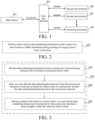
- the present disclosure provides a sidelink DRX method, applicable to a first user terminal 101.
- the method may be performed by software or hardware installed on a terminal device.
- the first user terminal 101 and a second user terminal 102 communicate with each other through a sidelink (that is, the first user terminal 101 and the second user terminal 102 communicate with each other using a sidelink interface).
- the second user terminal 102 and a base station 103 communicate with each other using a 3G/4G/5G network.
- the method includes the following steps: S21: Monitor data scheduling/transmission or receive data scheduling/transmission under control of a timer based on a DRX mechanism during running of a target receive timer in the timer.
- monitoring data scheduling/transmission or receiving data scheduling/transmission is performed based on the sidelink.
- a plurality of target receive timers in the timer may be run simultaneously or one target receive timer is run individually. It may be understood that monitoring data scheduling/transmission or receiving data scheduling/transmission is stopped after the target receive timer in the timer is turned off.
- a configuration method for the DRX mechanism may be that: The second user terminal 102 reports service parameters and power saving requirements to the base station 103. The base station 103 generates DRX mechanism data according to the service parameters and the power saving requirements. Then, the second user terminal 102 receives and configures DRX mechanism data delivered by the base station 103. Further, the first user terminal 101 receives, through the sidelink, and configures the DRX mechanism data sent by the second user terminal 102.
- the configuration method for the DRX mechanism may alternatively be that: The second user terminal 102 directly generates, according to service parameters and power saving requirements, and configures DRX mechanism data, and then, sends the DRX mechanism data to the first user terminal 101.
- the configuration method of the DRX mechanism is not limited to only the foregoing two, which are merely examples for description herein.
- the sidelink DRX method when the user terminals communicate with each other through a sidelink, data scheduling/transmission is monitored or received under control of a timer based on a DRX mechanism only during running of a target receive timer in the timer, so that power saving requirements on both sides of communication can be satisfied.
- the target receive timer includes an on duration monitoring receive timer and an inactivity receive timer.
- S21 includes the following steps:
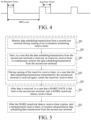
- a protruding portion in a Y (vertical) direction in FIG. 4 represents that data scheduling/transmission from the second user terminal 102 is being monitored
- a low flat portion in the Y direction represents a sleep state (that is, stopping monitoring data scheduling/transmission from the second user terminal 102)
- an X (horizontal) direction is a time axis.
- a DRX cycle is set to 40 ms
- a running duration of the on duration monitoring receive timer is set to 5 ms
- a running duration of the inactivity receive timer is set to 8 ms.
- the on duration monitoring receive timer starts to be run, and in this case, the first user terminal 101 monitors and receives data scheduling/transmission. For example, assuming that a starting position of the on duration monitoring receive timer is 0, data scheduling/transmission from the second user terminal 102 monitored by the first user terminal 101 within 0 to 5 ms is received. In a case that the data scheduling/transmission is not received, the sleep state is entered within 5 to 40 ms, and 40 ms to 80 ms is the second DRX cycle. In 40 ms to 45 ms, the on duration monitoring receive timer monitors data scheduling/transmission.
- the inactivity receive timer is started at 44 ms, and the inactivity receive timer is effective within 44 to 52 ms.
- the first user terminal 101 continuously performs monitoring during this period.
- the inactivity receive timer is restarted.
- the first user terminal 101 enters a sleep period.
- the on duration monitoring receive timer wakes up again. The essence of the above is starting/restarting the on duration monitoring receive timer when the data scheduling/transmission is received, to prolong the time of monitoring the data scheduling/transmission.
- the data scheduling/transmission causing the starting/restarting of the inactivity receive timer may refer to only newly transmitted data or may include both newly transmitted data and retransmitted data. The two can be configured/selected.
- the first user terminal 101 is further configured with a HARQ feedback mechanism.
- the timer further includes a HARQ round-trip latency receive timer.
- the target receive timer further includes a retransmission receive timer.
- the method further includes S51 and S52.
- the HARQ NACK is fed back to the second user terminal 102 to inform the second user terminal 102 that the data scheduling/transmission needs to be performed again, to ensure the reliability of data transmission.
- the HARQ round-trip latency receive timer When the HARQ round-trip latency receive timer is run, in a case that the target receive timer is run simultaneously, data scheduling/transmission is monitored. In a case that no target receive timer is run simultaneously, monitoring the data scheduling/transmission is stopped, so as to satisfy power saving requirements of the first user terminal 101.
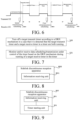
- a protruding portion in a Y (vertical) direction in FIG. 6 represents being in a state of monitoring data scheduling/transmission
- a low flat portion in an X (horizontal) direction represents a sleep state
- the X (horizontal) direction is a time axis.
- the inactivity receive timer is started.
- the second user terminal 102 feeds back a HARQ NACK at a moment t2
- the HARQ round-trip latency receive timer is started, and the inactivity receive timer expires at a moment t3.
- the first user terminal 101 may stop monitoring the data scheduling/transmission.
- the HARQ round-trip latency receive timer expires at the moment t4
- the retransmission receive timer is started, for starting to monitor data retransmission/scheduling.
- the first retransmission/scheduling is received at a moment t5, and the retransmission receive timer is turned off.
- the HARQ NACK is still fed back for the first retransmission at a moment t6
- the HARQ round-trip latency receive timer is restarted, and the first user terminal 101 may stop monitoring data scheduling/transmission.
- the retransmission receive timer is restarted, for starting to monitoring the data retransmission/scheduling.
- the retransmission receive timer is turned off, and the second user terminal 102 stops monitoring the data scheduling/transmission, and then, feeds back a reception success acknowledgment for the second retransmission, so that the HARQ process ends.
- Data scheduling/transmission is not monitored until an on duration monitoring receive timer of a next DRX cycle is run.
- the foregoing first user terminal 101 is used as receive-end UE.
- any user terminal may be used as both receive-end UE and transmit-end UE in different stages. Therefore, when two user terminals interact with each other, receive-end UE and transmit-end UE need to be determined first.
- the timer further includes a target transmit timer.
- the method further includes S20.
- S20 Turn off the target transmit timer according to the DRX mechanism in a case that it is detected that the target transmit timer and a target receive timer in the timer are both running. It is agreed in the DRX mechanism that a send priority of the second user terminal 102 is higher than a send priority of the first user terminal 101.
- the send priority of the first user terminal 101 relative to the second user terminal 102 is determined according to a highest priority level of at least one to-be-processed service parameter of the first user terminal 101 and a highest priority level of at least one to-be-processed service parameter of the second user terminal 102 that are pre-configured.
- the first user terminal 101 includes three service parameters A, B, and C, and their send priorities are respectively 2, 2, and 3.
- the second user terminal 102 includes three service parameters D, E, and F, and their send priorities are respectively 1, 2, and 3. It can be seen that the highest priority level of the to-be-processed service parameters of the first user terminal 101 is 2, and the highest priority level of the to-be-processed service parameters of the second user terminal 102 is 1. In view of the above, the highest priority level of the second user terminal 102 is higher than the highest priority level of the first user terminal 101. Therefore, it is determined that the second user terminal 102 preferentially sends data.
- the send priority of the first user terminal 101 relative to the second user terminal 102 is alternatively determined according to a type of the target transmit timer that is run on the first user terminal 101 and a type of the target receive timer that is run on the first user terminal 101.
- the priority of the retransmission transmit timer is higher than the priority of the on duration monitoring receive timer.
- the on duration monitoring receive timer and the retransmission transmit timer of the second user terminal 102 are also run simultaneously.
- the on duration transmit timer of the first user terminal 101 and the on duration monitoring receive timer of the second user terminal 102 are turned off.
- the send priority of the first user terminal 101 relative to the second user terminal 102 is alternatively determined according to a moment at which the target transmit timer that is run on the first user terminal 101 is run and a moment at which the target receive timer that is run on the first user terminal 101 is run.
- the first user terminal 101 may start the target transmit timer according to the DRX mechanism, and the second user terminal 102 may start the target receive timer according to the DRX mechanism, to determine that the first user terminal 101 preferentially sends data
- the second user terminal 102 may start the target transmit timer according to the DRX mechanism, and the first user terminal 101 may start the target receive timer according to the DRX mechanism, to determine that the second user terminal 102 preferentially sends data.
- the configured DRX cycle is 640 ms
- the second user terminal 102 may start, according to the DRX mechanism, the on duration transmit timer within a configured time period starting from 160 ms (for example, 160 to 180 ms or 160 to 200 ms) in the period of from 160 to 640 ms, and the first user terminal 101 may start, according to the DRX mechanism, the on duration monitoring timer within a configured time period starting from 160 ms for example, 160 to 180 ms or 160 to 200 ms) in the period of from 160 to 640 ms, to determine that the second user terminal 102 preferentially sends data.
- the on duration transmit timer within a configured time period starting from 160 ms (for example, 160 to 180 ms or 160 to 200 ms) in the period of from 160 to 640 ms
- the first user terminal 101 may start, according to the DRX mechanism, the on duration monitoring timer within a configured time period starting from 160 ms for example, 160 to 180 ms or 160 to 200 ms) in the period of
- the present disclosure further provides a sidelink DRX apparatus 800, applicable to a first user terminal 101.
- a sidelink DRX apparatus 800 applicable to a first user terminal 101.
- the basic principle and the produced technical effects of the sidelink DRX apparatus 800 provided by the present disclosure are the same as those in the foregoing embodiment.
- the parts not mentioned in this apparatus embodiment refer to corresponding content in the embodiment of the sidelink DRX method provided above.
- the first user terminal 101 and a second user terminal 102 communicate with each other through a sidelink (that is, the first user terminal 101 and the second user terminal 102 communicate with each other using a sidelink interface).
- the first user terminal 101 and a base station 103 communicate with each other using a 3G/4G/5G network.
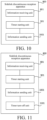
- the sidelink DRX apparatus 800 includes: an information receiving unit 801, configured to monitor data scheduling/transmission or receive data scheduling/transmission under control of a timer based on a DRX mechanism during running of a target receive timer in the timer.
- monitoring data scheduling/transmission or receiving data scheduling/transmission is performed based on the sidelink.
- a plurality of target receive timers in the timer may be run simultaneously or one target receive timer is run individually. It may be understood that monitoring data scheduling/transmission or receiving data scheduling/transmission is stopped after the target receive timer in the timer is turned off.
- a configuration method for the DRX mechanism may be that: The second user terminal 102 reports service parameters and power saving requirements to the base station 103. The base station 103 generates DRX mechanism data according to the service parameters and the power saving requirements. Then, the second user terminal 102 receives and configures DRX mechanism data delivered by the base station 103. Further, the first user terminal 101 receives, through the sidelink, and configures the DRX mechanism data sent by the second user terminal 102.
- the configuration method for the DRX mechanism may alternatively be that: The second user terminal 102 directly generates, according to service parameters and power saving requirements, and configures DRX mechanism data, and then, sends the DRX mechanism data to the first user terminal 101.
- the configuration method of the DRX mechanism is not limited to only the foregoing two, which are merely examples for description herein.
- the sidelink DRX apparatus 800 when the user terminals communicate with each other through a sidelink, data scheduling/transmission is monitored or received under control of a timer based on a DRX mechanism only during running of a target receive timer in the timer, so that power saving requirements on both sides of communication can be satisfied.
- the target receive timer includes an on duration monitoring receive timer and an inactivity receive timer.
- the information receiving unit 801 is configured to monitor data scheduling/transmission from the second user terminal 102 during running of the on duration monitoring receive timer.
- the apparatus 800 further includes a timer starting unit 901, configured to start, in a case that the data scheduling/transmission from the second user terminal 102 is received, the inactivity receive timer to continuously monitor the data scheduling/transmission from the second user terminal 102.
- a timer starting unit 901 configured to start, in a case that the data scheduling/transmission from the second user terminal 102 is received, the inactivity receive timer to continuously monitor the data scheduling/transmission from the second user terminal 102.
- the timer starting unit 901 can be further configured to restart the inactivity receive timer during running of the inactivity receive timer in a case that the data scheduling/transmission transmitted by the second user terminal 102 is received again.
- the first user terminal 101 is further configured with a HARQ feedback mechanism.
- the timer further includes a HARQ round-trip latency receive timer.
- the target receive timer further includes a retransmission receive timer.
- the apparatus 800 further includes: an information sending unit 1001, configured to start the HARQ round-trip latency receive timer after data is received in a case that a HARQ NACK is fed back to the second user terminal 102.
- the timer starting unit 901 may be further configured to start the retransmission receive timer after the HARQ round-trip latency receive timer expires, to monitor retransmission data scheduling/data transmission from the second user terminal 102.
- the timer further includes a target transmit timer.
- the apparatus 800 further includes: a timer turn-off unit 1101, configured to turn off the target transmit timer according to the DRX mechanism in a case that it is detected that the target transmit timer and a target receive timer in the timer are both running, where it is agreed in the DRX mechanism that a send priority of the second user terminal 102 is higher than a send priority of the first user terminal 101.
- the send priority of the first user terminal 101 relative to the second user terminal 102 may be determined according to a highest priority level of at least one to-be-processed service parameter of the first user terminal 101 and a highest priority level of at least one to-be-processed service parameter of the second user terminal 102 that are pre-configured.
- the send priority of the first user terminal 101 relative to the second user terminal 102 is alternatively determined according to a type of the target transmit timer that is run on the first user terminal 101 and a type of the target receive timer that is run on the first user terminal 101.
- the send priority of the first user terminal 101 relative to the second user terminal 102 is determined according to a moment at which the target transmit timer that is run on the first user terminal 101 is run and a moment at which the target receive timer that is run on the first user terminal 101 is run.
- the present disclosure provides a sidelink DTX method, applicable to a second user terminal 102.
- the second user terminal 102 and a first user terminal 101 communicate with each other through a sidelink (that is, the user terminals communicate with each other using a sidelink interface).
- the second user terminal 102 and a base station 103 communicate with each other using a 3G/4G/5G network.
- the sidelink DTX method includes the following steps: S121: Allow performing data scheduling/transmission to the first user terminal 101, or perform data scheduling/transmission to the first user terminal 101 under control of a timer based on a DRX mechanism during running of a target transmit timer in the timer.
- a plurality of target receive timers in the timer may be run simultaneously or one target receive timer is run individually. It may be understood that after the target transmit timer in the timer is turned off, allowing performing data scheduling/transmission to the first user terminal 101, or performing data scheduling/transmission to the first user terminal 101 is stopped.
- a configuration method for the DRX mechanism may be that: The second user terminal 102 reports service parameters and power saving requirements to the base station 103. The base station 103 generates DRX mechanism data according to the service parameters and the power saving requirements. Then, the second user terminal 102 receives and configures DRX mechanism data delivered by the base station 103. Further, the first user terminal 101 receives, through the sidelink, and configures the DRX mechanism data sent by the second user terminal 102.
- the configuration method for the DRX mechanism may alternatively be that: The second user terminal 102 directly generates, according to service parameters and power saving requirements, and configures DRX mechanism data, and then, sends the DRX mechanism data to the first user terminal 101.
- the configuration method of the DRX mechanism is not limited to only the foregoing two, which are merely examples for description herein.
- the sidelink DTX method when the user terminals communicate with each other through a sidelink, it is allowed to perform data scheduling/transmission to the first user terminal 101 or data scheduling/transmission to the first user terminal 101 is performed under control of a timer based on a DRX mechanism only during running of a target receive timer in the timer, so that power saving requirements on both sides of communication can be satisfied.
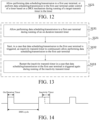
- the target transmit timer includes an on duration transmit timer and an inactivity transmit timer. As shown in FIG. 13 , S121 includes the following steps:
- a protruding portion in a Y (vertical) direction in FIG. 14 represents that data scheduling/transmission from the second user terminal 102 is being allowed
- a low flat portion in the Y direction represents a sleep state (that is, stopping allowing data scheduling/transmission from the second user terminal 102)
- an X (horizontal) direction is a time axis.
- a DRX cycle is set to 40 ms
- a running duration of the on duration transmit timer is set to 5 ms
- a running duration of the inactivity transmit timer is set to 8 ms.
- the on duration transmit timer starts to be run, and in this case, the second user terminal 102 allows data scheduling/transmission. For example, assuming that a starting position of the on duration transmit timer is 0, the second user terminal 102 allows data scheduling/transmission within 0 to 5 ms, and in a case that data scheduling/transmission is not performed, the second user terminal 102 enters a sleep state within 5 to 40 ms. 40 ms to 80 ms is the second DRX cycle, the on duration transmit timer allows data scheduling/transmission within 40 ms to 45 ms.
- the inactivity transmit timer is started at 44 ms.
- the inactivity transmit timer is effective within 44 to 52 ms, and in this period, the second user terminal 102 continuously allows data scheduling/transmission.
- the inactivity transmit timer is restarted.
- the second user terminal 102 enters a sleep period.
- the on duration transmit timer wakes up again. The essence of the above is starting/restarting the inactivity transmit timer when the data scheduling/transmission is sent, to prolong the time of allowing performing the data scheduling/transmission.
- the starting/restarting of the inactivity transmit timer caused by performing the data scheduling/transmission may refer to only newly transmitted data or may include both newly transmitted data and retransmitted data. The two can be configured/selected.
- the second user terminal 102 is further configured with a HARQ retransmission mechanism.
- the timer further includes a HARQ round-trip latency transmit timer.
- the target transmit timer further includes a retransmission transmit timer.
- the method further includes S152 and S153.
- S152 Start the HARQ round-trip latency transmit timer in a case that a HARQ NACK fed back by the first user terminal 101 is received.
- S153 Start, after the HARQ round-trip latency transmit timer expires, the retransmission transmit timer to allow performing retransmission data scheduling/data transmission to the first user terminal 101.
- a protruding portion in a Y (vertical) direction in FIG. 16 represents being in a state of monitoring data scheduling/transmission
- a low flat portion in an X (horizontal) direction represents a sleep state
- the X (horizontal) direction is a time axis.
- the inactivity transmit timer is started.
- the HARQ round-trip latency transmit timer is started, and the inactivity transmit timer expires at a moment t3.
- the second user terminal 102 may stop allowing the data scheduling/transmission.
- the retransmission transmit timer is started, for starting to allow data retransmission/scheduling.
- the first retransmission/scheduling is performed at a moment t5, and the retransmission transmit timer is turned off.
- the HARQ round-trip latency transmit timer is restarted, and the second user terminal 102 may stop allowing the data scheduling/transmission.
- the HARQ round-trip latency transmit timer expires at a moment t7, the retransmission transmit timer is restarted, for starting to allowing the data retransmission/scheduling.
- the retransmission transmit timer is turned off, and the second user terminal 102 stops allowing the data scheduling/transmission, and then, feeds back a reception success acknowledgment for the second retransmission, so that the HARQ process ends.
- Data scheduling/transmission is not allowed until an on duration transmit timer of a next DRX cycle is run.
- the foregoing second user terminal 102 is used as transmit-end UE.
- any user terminal may be used as both receive-end UE and transmit-end UE in different stages. Therefore, when two user terminals interact with each other, receive-end UE and transmit-end UE need to be determined first.
- the timer further includes a target receive timer.
- the method further includes: S 120: Turn off the target receive timer according to the DRX mechanism in a case that it is detected that a target transmit timer and the target receive timer in the timer are both running.
- a send priority of the second user terminal 102 is higher than a send priority of the first user terminal 101. It may be understood that when the target receive timer of the second user terminal 102 is running, because the first user terminal 101 and the second user terminal 102 have the same DRX mechanism, correspondingly a target transmit timer of the first user terminal 101 is also running. In view of the above, when the target transmit timer and the target receive timer are both running, both the first user terminal 101 and the second user terminal 102 have demands for sending data. Because the user terminal is limited by factors such as hardware and interference, it is difficult to perform receiving and sending simultaneously. In this case, data scheduling/transmission needs to be performed on the first user terminal 101 and the second user terminal 102 for coordination, to ensure the data reception effect and the power saving property. Therefore, it is necessary to determine, using the send priorities, which user terminal sends data first.
- the send priority of the first user terminal 101 relative to the second user terminal 102 is determined according to a highest priority level of at least one to-be-processed service parameter of the first user terminal 101 and a highest priority level of at least one to-be-processed service parameter of the second user terminal 102 that are pre-configured.
- the first user terminal 101 includes three service parameters A, B, and C, and their send priorities are respectively 2, 2, and 3.
- the second user terminal 102 includes three service parameters D, E, and F, and their send priorities are respectively 1, 2, and 3. It can be seen that the highest priority level of the to-be-processed service parameters of the first user terminal 101 is 2, and the highest priority level of the to-be-processed service parameters of the second user terminal 102 is 1. In view of the above, the highest priority level of the second user terminal 102 is higher than the highest priority level of the first user terminal 101.
- the send priority of the first user terminal 101 relative to the second user terminal 102 is determined according to a type of the target transmit timer that is run and a type of the target receive timer that is run.
- the priority of the retransmission transmit timer is higher than the priority of the on duration monitoring receive timer.
- the on duration monitoring receive timer and the retransmission transmit timer of the second user terminal 102 are also run simultaneously.
- the on duration transmit timer of the first user terminal 101 and the on duration monitoring receive timer of the second user terminal 102 are turned off.
- the send priority of the first user terminal 101 relative to the second user terminal 102 is determined according to a moment at which the target transmit timer is running and a moment at which the running target receive timer is running.
- the first user terminal 101 may start the target transmit timer according to the DRX mechanism, and the second user terminal 102 may start the target receive timer according to the DRX mechanism, to determine that the first user terminal 101 preferentially sends data
- the second user terminal 102 may start the target transmit timer according to the DRX mechanism, and the first user terminal 101 may start the target receive timer according to the DRX mechanism, to determine that the second user terminal 101 preferentially sends data.
- the configured DRX cycle is 640 ms
- the first user terminal 101 may start, according to the DRX mechanism, the on duration transmit timer within a configured time period starting from 0 ms (for example, 0 to 20 ms or 0 to 40 ms) in the period of from 0 to 160 ms
- the second user terminal 102 may start, according to the DRX mechanism, the on duration monitoring timer within a configured time period starting from 0 ms for example, 0 to 20 ms or 0 to 40 ms) in the period of from 0 to 160 ms, to determine that the first user terminal 101 preferentially sends data.
- the second user terminal 102 may start, according to the DRX mechanism, the on duration transmit timer within a configured time period starting from 160 ms (for example, 160 to 180 ms or 160 to 200 ms) in the period of from 160 to 640 ms, and the first user terminal 101 may start, according to the DRX mechanism, the on duration monitoring timer within a configured time period starting from 160 ms for example, 160 to 180 ms or 160 to 200 ms) in the period of from 160 to 640 ms, to determine that the second user terminal 102 preferentially sends data.
- the on duration transmit timer within a configured time period starting from 160 ms (for example, 160 to 180 ms or 160 to 200 ms) in the period of from 160 to 640 ms
- the first user terminal 101 may start, according to the DRX mechanism, the on duration monitoring timer within a configured time period starting from 160 ms for example, 160 to 180 ms or 160 to 200 ms) in the period of
- the method further includes: receiving HARQ feedback after a preset interval time in a case that data scheduling/transmission to the first user terminal 101 is performed.
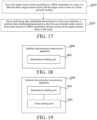
- the present disclosure further provides a sidelink DTX apparatus 1800, applicable to a second user terminal 102.
- the apparatus 1800 includes: an information sending unit 1801, configured to allow performing data scheduling/transmission to a first user terminal 101, or performing data scheduling/transmission to the first user terminal 101 under control of a timer based on a DRX mechanism during running of a target transmit timer in the timer.
- a plurality of target receive timers in the timer may be run simultaneously or one target receive timer is run individually. It may be understood that after the target transmit timer in the timer is turned off, allowing performing data scheduling/transmission to the first user terminal 101, or performing data scheduling/transmission to the first user terminal 101 is stopped.
- a configuration method for the DRX mechanism may be that: The second user terminal 102 reports service parameters and power saving requirements to the base station 103. The base station 103 generates DRX mechanism data according to the service parameters and the power saving requirements. Then, the second user terminal 102 receives and configures DRX mechanism data delivered by the base station 103. Further, the first user terminal 101 receives, through the sidelink, and configures the DRX mechanism data sent by the second user terminal 102.
- the configuration method for the DRX mechanism may alternatively be that: The second user terminal 102 directly generates, according to service parameters and power saving requirements, and configures DRX mechanism data, and then, sends the DRX mechanism data to the first user terminal 101.
- the configuration method of the DRX mechanism is not limited to only the foregoing two, which are merely examples for description herein.
- the sidelink DTX apparatus 1800 when the user terminals communicate with each other through a sidelink, it is allowed to perform data scheduling/transmission to the first user terminal 101 or data scheduling/transmission to the first user terminal 101 is performed under control of a timer based on a DRX mechanism only during running of a target receive timer in the timer, so that power saving requirements on both sides of communication can be satisfied.
- the target transmit timer includes an on duration transmit timer and an inactivity transmit timer.
- the information sending unit 1801 is further configured to allow performing data scheduling/transmission to the first user terminal 101 during running of the on duration transmit timer.
- the apparatus 1800 further includes a timer starting unit 1901, configured to start, in a case that the data scheduling/transmission to the first user terminal 101 is performed, the inactivity transmit timer to continuously allow performing data scheduling/transmission to the first user terminal 101.
- a timer starting unit 1901 configured to start, in a case that the data scheduling/transmission to the first user terminal 101 is performed, the inactivity transmit timer to continuously allow performing data scheduling/transmission to the first user terminal 101.
- the timer starting unit 1901 is further configured to restart the inactivity transmit timer in a case that data scheduling/transmission to the first user terminal 101 is performed again during running of the inactivity transmit timer.
- the second user terminal 102 is further configured with a HARQ retransmission mechanism.
- the timer further includes a HARQ round-trip latency transmit timer.
- the target transmit timer further includes a retransmission transmit timer.
- the timer starting unit 1901 is further configured to start the HARQ round-trip latency transmit timer in a case that a HARQ NACK fed back by the first user terminal 101 is received.
- the timer starting unit 1901 is further configured to start, after the HARQ round-trip latency transmit timer expires, the retransmission transmit timer to allow performing retransmission data scheduling/data transmission to the first user terminal 101.
- the timer further includes a target receive timer.
- the apparatus 1800 further includes: a timer turn-off unit 2001, configured to turn off a target receive timer according to the DRX mechanism in a case that it is detected that a target transmit timer and the target receive timer in the timer are both running, where it is agreed in the DRX mechanism that a send priority of the second user terminal 102 is higher than a send priority of the first user terminal 101.
- the send priority of the first user terminal 101 relative to the second user terminal 102 is determined according to a highest priority level of at least one to-be-processed service parameter of the first user terminal 101 and a highest priority level of at least one to-be-processed service parameter of the second user terminal 102 that are pre-configured.
- the send priority of the first user terminal 101 relative to the second user terminal 102 is determined according to a type of the target transmit timer that is run and a type of the target receive timer that is run.
- the send priority of the first user terminal 101 relative to the second user terminal 102 is determined according to a moment at which the target transmit timer is running and a moment at which the running target receive timer is running.
- the apparatus 1800 further includes: an information receiving unit 2101, configured to receive HARQ feedback after a preset interval time in a case that data scheduling/transmission to the first user terminal 101 is performed.
- the embodiments of the present disclosure further provide a terminal device, including a processor, a memory, and a computer program stored on the memory and executable on the processor, where the computer program is executed by the processor to implement the steps of any embodiment of the sidelink DRX method or the sidelink DTX method as stated above.
- FIG. 22 is a block diagram of a terminal device 2200 according to an embodiment of the present disclosure.
- the terminal device 2200 shown in FIG. 22 includes at least one processor 2201, a memory 2202, at least one network interface 2204, and a user interface 2203. All the components in the terminal device 2200 are coupled together by a bus system 2205. It may be understood that the bus system 2205 is configured to implement connection and communication between the components. In addition to a data bus, the bus system 2205 further includes a power bus, a control bus, and a status signal bus. However, for ease of clear description, all types of buses are marked as the bus system 2205 in FIG. 22 .
- the user interface 2203 may include a display, a keyboard, or a click/tap device (such as a mouse, a track ball, a touch panel, or a touchscreen).
- a click/tap device such as a mouse, a track ball, a touch panel, or a touchscreen.
- the memory 2202 in the embodiments of the present disclosure may be a volatile memory or a non-volatile memory, or may include both a volatile memory and a non-volatile memory.
- the non-volatile memory may be a read-only memory (ROM), a programmable ROM (PROM), an erasable programmable read-only memory (EPROM), an electrically EPROM (EEPROM), or a flash memory.
- the volatile memory may be a random access memory (RAM), used as an external cache.
- RAMs may be used, for example, a static random access memory (Static RAM, SRAM), a dynamic random access memory (Dynamic RAM, DRAM), a synchronous dynamic random access memory (Synchronous DRAM, SDRAM), a double data rate synchronous dynamic random access memory (Double Data Rate SDRAM, DDRSDRAM), an enhanced synchronous dynamic random access memory (Enhanced SDRAM, ESDRAM), a synchlink dynamic random access memory (Synchlink DRAM, SLDRAM), and a direct rambus random access memory (Direct Rambus RAM, DRRAM).
- Static RAM, SRAM static random access memory
- DRAM dynamic random access memory
- DRAM synchronous dynamic random access memory
- SDRAM double data rate synchronous dynamic random access memory
- Double Data Rate SDRAM DDRSDRAM
- Enhanced SDRAM ESDRAM
- Synchlink DRAM synchlink dynamic random access memory
- SLDRAM direct rambus random access memory
- Direct Rambus RAM Direct Rambus RAM
- the memory 2202 stores the following elements: an executable module or a data structure, or a subset thereof, or an extension set thereof: an operating system 22021 and an application program 22022.
- the operating system 22021 includes various system programs, for example, a framework layer, a core library layer, a driver layer, and the like, which are used for implementing various basic services and processing a task based on hardware.
- the application program 22022 may include various application programs such as a media player (Media Player), a browser (Browser), and the like, used for implementing various application services.
- a program for implementing the method in the embodiments of the present disclosure may be included in the application program 22022.
- the terminal device 2200 further includes: a computer program stored on the memory and executable by the processor, when executed by the processor 2201, the computer program implementing the following step: monitoring data scheduling/transmission or receiving data scheduling/transmission under control of a timer based on a DRX mechanism during running of a target receive timer in the timer; or allowing performing data scheduling/transmission to a first user terminal, or performing data scheduling/transmission to the first user terminal under control of a timer based on a DRX mechanism during running of a target transmit timer in the timer.
- the method disclosed in the embodiments of the present disclosure may be applied to the processor 2201 or implemented by the processor 2201.
- the processor 2201 may be an integrated circuit chip, having a capability of processing a signal.
- steps in the foregoing methods can be implemented by using a hardware integrated logical circuit in the processor 2201, or by using instructions in a form of software.
- the foregoing processor 2201 may be a general-purpose processor, a digital signal processor (Digital Signal Processor, DSP), an application-specific integrated circuit (Application Specific Integrated Circuit, ASIC), a field-programmable gate array (Field Programmable Gate Array, FPGA) or another programmable logic device, a discrete gate or a transistor logic device, or a discrete hardware component, and may implement or perform the methods, the steps, and logic block diagrams that are disclosed in the embodiments of the present disclosure.
- the general-purpose processor may be a microprocessor, or the processor may be any conventional processor or the like.
- the steps of the methods disclosed with reference to the embodiments of the present disclosure may be directly performed and completed by using a hardware decoding processor, or may be performed and completed by using a combination of hardware and software modules in the decoding processor.
- the software module may be stored in a computer-readable storage medium that is mature in the art, such as a RAM, a flash memory, a ROM, a programmable ROM, an electrically erasable programmable memory, or a register.
- the computer-readable storage medium is located in the memory 2202, and the processor 2201 reads information in the memory 2202, and completes the steps in the foregoing methods in combination with hardware thereof.
- the computer-readable storage medium stores a computer program.
- the computer program when executed by the processor 2201, causes the processor to perform the steps of the foregoing methods.
- the embodiments described in the embodiments of the present disclosure may be implemented by using software, hardware, firmware, middleware, microcode, or a combination thereof.
- the processing unit may be implemented by one or more application-specific integrated circuits (Application Specific Integrated Circuits, ASIC), digital signal processors (Digital Signal Processing, DSP), digital signal processor devices (DSP Device, DSPD), programmable logic devices (PLDs), field programmable gate arrays (Field-Programmable Gate Array, FPGA), general-purpose processors, controllers, microcontrollers, microprocessors, other electronic components configured to implement the functions of the present disclosure, or a combination thereof.
- ASIC Application Specific Integrated Circuits
- DSP Digital Signal Processing
- DSP Device digital signal processor devices
- PLDs programmable logic devices
- FPGA field programmable gate array
- general-purpose processors controllers, microcontrollers, microprocessors, other electronic components configured to implement the functions of the present disclosure, or a combination thereof.
- the technology described in the embodiments of the present disclosure may be implemented by using modules (for example, processes and functions) implementing the functions of the embodiments of the present disclosure.
- Software code may be stored in a memory and executed by a processor.
- the memory may be implemented inside or outside the processor.
- the computer program when executed by the processor 2201, may further perform the following steps: monitoring data scheduling/transmission or receiving data scheduling/transmission under control of a timer based on a DRX mechanism during running of a target receive timer in the timer; or allowing performing data scheduling/transmission to a first user terminal, or performing data scheduling/transmission to the first user terminal under control of a timer based on a DRX mechanism during running of a target transmit timer in the timer.
- the terminal device 2200 can implement the processes and effects implemented by the terminal device in the foregoing embodiments. To avoid repetition, details are not described herein again.
- the embodiments of the present disclosure further provide a computer-readable storage medium storing one or more programs.
- the one or more programs include instructions.
- the instructions when executed by a portable electronic device including a plurality of application programs, can cause the portable electronic device to perform the operations of any embodiment of the sidelink DRX method or the sidelink DTX method as stated above.
- the instructions when executed by a portable electronic device, can cause the portable electronic device to perform the following operation: monitoring data scheduling/transmission or receiving data scheduling/transmission under control of a timer based on a DRX mechanism during running of a target receive timer in the timer.
- the instructions when executed by a portable electronic device, can cause the portable electronic device to perform following operation: allowing performing data scheduling/transmission to a first user terminal, or performing data scheduling/transmission to the first user terminal under control of a timer based on a DRX mechanism during running of a target transmit timer in the timer.
- the system, the apparatus, the module or the unit described in the foregoing embodiments may be specifically implemented by a computer chip or an entity, or implemented by a product having a certain function.
- a typical implementation device is a computer.
- the computer may be, for example, a personal computer, a laptop computer, a cellular phone, a camera phone, a smartphone, a personal digital assistant, a media player, a navigation device, an email device, a game console, a tablet computer, a wearable device, or a combination of any of these devices.
- each box in a flowchart or a block diagram may represent a unit, a segment, or a part of code.
- the unit, the segment, or the part of code includes one or more executable instructions used for implementing (one or more) designated logic functions.
- each box in a block diagram and/or a flowchart and a combination of boxes in the block diagram and/or the flowchart may be implemented by using a dedicated hardware-based system configured to perform a specified function or operation, or may be implemented by using a combination of dedicated hardware and computer instructions.
- the computer-readable medium includes a non-volatile medium and a volatile medium, a removable medium and a non-removable medium, which may implement storage of information by using any method or technology.
- the information may be a computer-readable instruction, a data structure, a program module, or other data.
- Examples of a computer storage medium include but are not limited to a phase-change memory (PRAM), a static random access memory (SRAM), a dynamic random access memory (DRAM), other type of random access memory (RAM), a read-only memory (ROM), an electrically erasable programmable read-only memory (EEPROM), a flash memory or other memory technology, a compact disc read-only memory (CD-ROM), a digital versatile disc (DVD) or other optical storage, a cassette tape, a magnetic tape, a magnetic disk storage or other magnetic storage device, or any other non-transmission medium, which may be configured to store information accessible by a computing device.
- the computer-readable medium may be a non-transient computer-readable medium, and therefore, does not include transitory computer-readable media (transitory media) such as a modulated data signal and a carrier.
Landscapes
- Engineering & Computer Science (AREA)
- Computer Networks & Wireless Communication (AREA)
- Signal Processing (AREA)
- Mobile Radio Communication Systems (AREA)
Claims (12)
- Verfahren für diskontinuierliche Sidelink-Übertragung (DTX), das von einem zweiten Benutzerendgerät (102) durchgeführt wird, dadurch gekennzeichnet, dass das Verfahren Folgendes umfasst:Durchführen oder Ermöglichen (S121) eines Durchführens von Datenplanung/-übertragung an ein erstes Benutzerendgerät (101) unter Steuerung eines Zeitgebers basierend auf einem Mechanismus für diskontinuierliches Empfangen (DRX) während eines Laufs eines Zielübertragungszeitgebers im Zeitgeber,dadurch gekennzeichnet, dass:
der Zielübertragungszeitgeber einen Einschaltdauer-Übertragungszeitgeber und einen Inaktivitäts-Übertragungszeitgeber umfasst, und das Durchführen oder Ermöglichen eines Durchführens von Datenplanung/-übertragung an ein erstes Benutzerendgerät (101) unter Steuerung eines Zeitgebers basierend auf einem DRX-Mechanismus während eines Laufs eines Zielübertragungszeitgebers im Zeitgeber Folgendes umfasst:Ermöglichen (S131) eines Durchführens von Datenplanung/-übertragung an das erste Benutzerendgerät (101) während eines Laufs des Einschaltdauer-Übertragungszeitgebers; undStarten (S132) des Inaktivitätsübertragungszeitgebers in einem Fall, in dem eine Datenplanung/-übertragung an das erste Benutzerendgerät (101) ausgelöst wird, um ein Durchführen von Datenplanung/-übertragung an das erste Benutzerendgerät (101) kontinuierlich zu ermöglichen,wobei nach dem Starten des Inaktivitätsübertragungszeitgebers in einem Fall, in dem eine Datenplanung/-übertragung an das erste Benutzerendgerät (101) ausgelöst wird, um ein Durchführen von Datenplanung/-übertragung an das erste Benutzerendgerät (101) kontinuierlich zu ermöglichen, das Verfahren ferner Folgendes umfasst:
Neustarten (S133) des Inaktivitätsübertragungszeitgebers für den Fall, dass eine Datenplanung/-übertragung an das erste Benutzerendgerät (101) während eines Laufs des Inaktivitätsübertragungszeitgebers erneut ausgelöst wird. - Verfahren nach Anspruch 1, wobei das zweite Benutzerendgerät (102) ferner mit einem Wiederholungsübertragungsmechanismus für hybride automatische Antwortanforderung (HARQ) konfiguriert ist, der Zeitgeber ferner einen HARQ-Roundtrip-Latenz-Übertragungszeitgeber umfasst, der Zielübertragungszeitgeber ferner einen Wiederholungsübertragungs-Übertragungszeitgeber umfasst, und das Verfahren ferner Folgendes umfasst:Starten (S152) des HARQ-Roundtrip-Latenz-Übertragungszeitgebers für den Fall, dass eine vom ersten Benutzerendgerät (101) zurückgesendete negative HARQ-Bestätigung (NACK) empfangen wird; undStarten (S153), nachdem der HARQ-Roundtrip-Latenz-Übertragungszeitgeber abgelaufen ist, des Wiederholungsübertragungs-Übertragungszeitgebers, um die Durchführung der Wiederholungsübertragungsdatenplanung/-datenübertragung an das erste Benutzerendgerät (101) zu ermöglichen.
- Verfahren nach Anspruch 1, wobei der Zeitgeber ferner einen Zielempfangszeitgeber umfasst, und vor einem Ermöglichen eines Durchführens von Datenplanung/-übertragung an ein erstes Benutzerendgerät (101) oder eines Durchführens von Datenplanung/-übertragung an das erste Benutzerendgerät (101) unter Steuerung eines Zeitgebers basierend auf einem DRX-Mechanismus während eines Laufs eines Zielübertragungszeitgebers im Zeitgeber ermöglicht wird, das Verfahren ferner Folgendes umfasst:
Ausschalten (S120) des Zielempfangszeitgebers gemäß dem DRX-Mechanismus in einem Fall, in dem erkannt wird, dass der Zielübertragungszeitgeber und der Zielempfangszeitgeber im Zeitgeber beide laufen, wobei in dem DRX-Mechanismus vereinbart wird, dass eine Übertragungspriorität des zweiten Benutzerendgeräts (102) höher ist als eine Übertragungspriorität des ersten Benutzerendgeräts (101). - Verfahren nach Anspruch 3, wobei gemäß dem DRX-Mechanismus die Übertragungspriorität des ersten Benutzerendgeräts (101) in Bezug auf das zweite Benutzerendgerät (102) gemäß einer höchsten Prioritätsstufe von mindestens einem zu verarbeitenden Dienstparameter des ersten Benutzerendgeräts (101) und einer höchsten Prioritätsstufe von mindestens einem zu verarbeitenden Dienstparameter des zweiten Benutzerendgeräts (102), die vorkonfiguriert sind, bestimmt wird; oder,wobei gemäß dem DRX-Mechanismus die Übertragungspriorität des ersten Benutzerendgeräts (101) in Bezug auf das zweite Benutzerendgerät (102) gemäß einem Typ des Zielübertragungszeitgebers, der läuft, und einem Typ des Zielempfangszeitgebers, der läuft, bestimmt wird; oder,wobei gemäß dem DRX-Mechanismus die Übertragungspriorität des ersten Benutzerendgeräts (101) in Bezug auf das zweite Benutzerendgerät (102) gemäß den Zeitpunkten bestimmt wird, zu denen der Zielübertragungszeitgeber und der Zielempfangszeitgeber laufen.
- Vorrichtung (1800) für diskontinuierliche Sidelink-Übertragung (DTX), das von einem zweiten Benutzerendgerät (102) durchgeführt wird, dadurch gekennzeichnet, dass die Vorrichtung Folgendes umfasst:
eine Informationsübertragungseinheit (1801), die konfiguriert ist, um Datenplanung/- übertragung an ein erstes Benutzerendgerät (101) unter Steuerung eines Zeitgebers basierend auf einem DRX-Mechanismus während eines Laufs eines Zielübertragungszeitgebers im Zeitgeber durchführt oder durchführen lässt, dadurch gekennzeichnet, dass:der Zielübertragungszeitgeber einen Einschaltdauer-Übertragungszeitgeber und einen Inaktivitätsübertragungszeitgeber umfasst;wobei die Informationsübertragungseinheit (1801) ferner konfiguriert ist, um ein Durchführen von Datenplanung/-übertragung an das erste Benutzerendgerät (101) während eines Laufs des Übertragungszeitgebers über die Dauer der Übertragung zu ermöglichen;die Vorrichtung (1800) ferner eine Zeitgeberstarteinheit (1901) beinhaltet, die konfiguriert ist, um in einem Fall, in dem die Datenplanung/-übertragung an das erste Benutzerendgerät (101) durchgeführt wird, den Inaktivitätsübertragungszeitgeber zu starten, um ein Durchführen von Datenplanung/-übertragung an das erste Benutzerendgerät (101) kontinuierlich zu ermöglichen,die Zeitgeberstarteinheit (1901) ferner konfiguriert ist, um den Inaktivitätsübertragungszeitgeber in einem Fall neu zu starten, in dem die Datenplanung/- übertragung an das erste Benutzerendgerät (101) während eines Laufs des Inaktivitätsübertragungszeitgeber erneut durchgeführt wird. - Endgerätvorrichtung (2200), dadurch gekennzeichnet, dass sie einen Prozessor (2201), einen Speicher (2202) und ein Computerprogramm umfasst, das in dem Speicher (2202) gespeichert ist und von dem Prozessor (2201) ausführbar ist, wobei das Computerprogramm von dem Prozessor (2201) ausgeführt wird, um die Schritte des Verfahrens für diskontinuierliche Sidelink-Übertragung (DTX) nach einem der Ansprüche 1 bis 4 zu implementieren.
- Verfahren für diskontinuierlichen Sidelink-Empfang (DRX), das von einem ersten Benutzerendgerät (101) durchgeführt wird, dadurch gekennzeichnet, dass das Verfahren Folgendes umfasst:Überwachen (S21) von Datenplanung/-übertragung oder Empfangsdatenplanung/- übertragung unter Steuerung eines Zeitgebers basierend auf einem Mechanismus für diskontinuierlichen Empfang (DRX) während eines Laufs eines Zielempfangszeitgebers im Zeitgeber,dadurch gekennzeichnet, dass:
der Zielempfangszeitgeber einen Einschaltdauerüberwachung-Empfangszeitgeber und einen Inaktivitätsempfangszeitgeber umfasst, und das Überwachen (S21) von Datenplanung/- übertragung oder Empfangsdatenplanung/-übertragung unter Steuerung eines Zeitgebers basierend auf einem diskontinuierlichen Empfangsmechanismus (DRX) während eines Laufs eines Zielempfangszeitgebers im Zeitgeber Folgendes umfasst:Überwachen (S31) von Datenplanung/-übertragung von dem zweiten Benutzerendgerät (102) während eines Laufs des Einschaltdauerüberwachung-Empfangszeitgebers;Starten (S32) des Inaktivitätsempfangszeitgebers in einem Fall, in dem die Datenplanung/- übertragung von dem zweiten Benutzerendgerät (102) empfangen wird, um die Datenplanung/- übertragung von dem zweiten Benutzerendgerät (102) kontinuierlich zu überwachen; undNeustarten (S33) des Inaktivitätsempfangszeitgebers für den Fall, dass die von dem zweiten Benutzerendgerät (102) übertragene Datenplanung/-übertragung während eines Laufs des Inaktivitätsempfangszeitgebers erneut empfangen wird. - Verfahren nach Anspruch 10, wobei der Zeitgeber ferner einen Zielübertragungszeitgeber umfasst und das Verfahren vor dem Überwachen von Datenplanung/- übertragung oder Empfangsdatenplanung/-übertragung unter Steuerung eines Zeitgebers basierend auf einem DRX-Mechanismus während eines Laufs eines Zielempfangszeitgebers im Zeitgeber ferner Folgendes umfasst:
Ausschalten (S20) des Zielübertragungszeitgebers gemäß dem DRX-Mechanismus in einem Fall, in dem erkannt wird, dass der Zielübertragungszeitgeber und ein Zielempfangszeitgeber im Zeitgeber beide laufen, wobei in dem DRX-Mechanismus vereinbart wird, dass eine Übertragungspriorität des zweiten Benutzerendgeräts (102) höher ist als eine Übertragungspriorität des ersten Benutzerendgeräts (101). - Verfahren nach Anspruch 11, wobei gemäß dem DRX-Mechanismus die Übertragungspriorität des ersten Benutzerendgeräts (101) in Bezug auf das zweite Benutzerendgerät (102) gemäß einer höchsten Prioritätsstufe von mindestens einem zu verarbeitenden Dienstparameter des ersten Benutzerendgeräts (101) und einer höchsten Prioritätsstufe von mindestens einem zu verarbeitenden Dienstparameter des zweiten Benutzerendgeräts (102), die vorkonfiguriert sind, bestimmt wird;wobei gemäß dem DRX-Mechanismus die Übertragungspriorität des ersten Benutzerendgeräts (101) in Bezug auf das zweite Benutzerendgerät (102) gemäß einem Typ des Zielübertragungszeitgebers, der auf dem ersten Benutzerendgerät (101) läuft, und einem Typ des Zielempfangszeitgebers, der auf dem ersten Benutzerendgerät (101) läuft, bestimmt wird;wobei gemäß dem DRX-Mechanismus die Übertragungspriorität des ersten Benutzerendgeräts (101) in Bezug auf das zweite Benutzerendgerät (102) gemäß den Zeitpunkten bestimmt wird, zu denen der Zielübertragungszeitgeber und der Zielempfangszeitgeber auf dem ersten Benutzerendgerät (101) laufen.
- Vorrichtung (800) für diskontinuierlichen Sidelink-Empfang (DRX), das von einem ersten Benutzerendgerät (101) durchgeführt wird, dadurch gekennzeichnet, dass das Verfahren Folgendes umfasst:eine Informationsempfangseinheit (801), die konfiguriert ist, um Datenplanung/-übertragung oder Empfangsdatenplanung/-übertragung unter der Steuerung eines Zeitgebers basierend auf einem DRX-Mechanismus während eines Laufs eines Zielempfangszeitgebers im Zeitgeber zu überwachen,dadurch gekennzeichnet, dass:der Zielempfangszeitgeber einen Einschaltdauerüberwachung-Empfangszeitgeber und einen Inaktivitätsempfangszeitgeber umfasst, und die Informationsempfangseinheit (801) konfiguriert ist, um während eines Laufs des Einschaltdauerüberwachung-Empfangszeitgebers die Datenplanung/-übertragung von dem zweiten Benutzerendgerät (102) zu überwachen,die Vorrichtung (800) ferner eine Zeitgeberstarteinheit (901) umfasst, die zu Folgendem konfiguriert ist:Starten des Inaktivitätsempfangszeitgebers in einem Fall, in dem die Datenplanung/- übertragung von dem zweiten Benutzerendgerät (102) empfangen wird, um die Datenplanung/- übertragung von dem zweiten Benutzerendgerät (102) kontinuierlich zu überwachen; undNeustarten des Inaktivitätsempfangszeitgebers während eines Laufs des Inaktivitätsempfangszeitgebers, wenn die von dem zweiten Benutzerendgerät (102) übertragene Datenplanung/-übertragung erneut empfangen wird.
- Endgerätvorrichtung (2200), dadurch gekennzeichnet, dass sie einen Prozessor (2201), einen Speicher (2202) und ein Computerprogramm umfasst, das in dem Speicher (2202) gespeichert ist und von dem Prozessor (2201) ausführbar ist, wobei das Computerprogramm von dem Prozessor (2201) ausgeführt wird, um die Schritte des Verfahrens für diskontinuierlichen Sidelink-Empfang (DRX) nach einem der Ansprüche 7 bis 9 zu implementieren.
- Computerlesbares Speichermedium, wobei das computerlesbare Speichermedium ein Computerprogramm speichert, dadurch gekennzeichnet, dass, wenn das Computerprogramm von einem Prozessor ausgeführt wird, die Schritte des Informationsübertragungsverfahrens nach einem der Ansprüche 1 bis 4 oder die Schritte des Informationserfassungsverfahrens nach einem der Ansprüche 7 bis 9 implementiert werden.
Applications Claiming Priority (2)
| Application Number | Priority Date | Filing Date | Title |
|---|---|---|---|
| CN201910780085.2A CN111800893B (zh) | 2019-08-22 | 2019-08-22 | 边链路非连续发送、接收方法与装置及终端设备 |
| PCT/CN2020/108456 WO2021031934A1 (zh) | 2019-08-22 | 2020-08-11 | 边链路非连续发送、接收方法与装置及终端设备 |
Publications (3)
| Publication Number | Publication Date |
|---|---|
| EP4021139A1 EP4021139A1 (de) | 2022-06-29 |
| EP4021139A4 EP4021139A4 (de) | 2022-10-19 |
| EP4021139B1 true EP4021139B1 (de) | 2025-01-01 |
Family
ID=72805026
Family Applications (1)
| Application Number | Title | Priority Date | Filing Date |
|---|---|---|---|
| EP20854280.3A Active EP4021139B1 (de) | 2019-08-22 | 2020-08-11 | Diskontinuierliches sendeverfahren und -vorrichtung und diskontinuierliches empfangsverfahren und -vorrichtung für sidelink und endgerät |
Country Status (6)
| Country | Link |
|---|---|
| US (1) | US12225619B2 (de) |
| EP (1) | EP4021139B1 (de) |
| KR (1) | KR102844337B1 (de) |
| CN (1) | CN111800893B (de) |
| ES (1) | ES3007457T3 (de) |
| WO (1) | WO2021031934A1 (de) |
Families Citing this family (21)
| Publication number | Priority date | Publication date | Assignee | Title |
|---|---|---|---|---|
| CN113133096B (zh) * | 2020-01-15 | 2023-03-28 | 大唐移动通信设备有限公司 | 一种信息确定方法、装置、设备及计算机可读存储介质 |
| US11985514B2 (en) * | 2020-08-13 | 2024-05-14 | Qualcomm Incorporated | Discontinuous reception configuration in sidelink communication deployments |
| CN112153603B (zh) * | 2020-09-29 | 2024-09-24 | 腾讯科技(深圳)有限公司 | 车辆通信方法、装置、计算机可读介质及电子设备 |
| CN116325944A (zh) * | 2020-10-21 | 2023-06-23 | 华为技术有限公司 | 无线通信的方法和装置以及通信设备 |
| KR20230092903A (ko) | 2020-10-22 | 2023-06-26 | 엘지전자 주식회사 | Nr v2x에서 drx 온-듀레이션의 오정렬로 인한 패킷 상실을 해결하는 방법 및 장치 |
| KR102693471B1 (ko) * | 2020-10-22 | 2024-08-09 | 엘지전자 주식회사 | Nr v2x에서 sl drx 동작을 수행하는 방법 및 장치 |
| JP7508706B2 (ja) * | 2020-10-22 | 2024-07-01 | 華為技術有限公司 | 通信方法及び装置 |
| WO2022082806A1 (zh) * | 2020-10-23 | 2022-04-28 | 华为技术有限公司 | 无线通信的方法和装置 |
| WO2022141412A1 (zh) * | 2020-12-31 | 2022-07-07 | Oppo广东移动通信有限公司 | 无线通信的方法和终端设备 |
| WO2022147713A1 (zh) * | 2021-01-07 | 2022-07-14 | 北京小米移动软件有限公司 | 一种直连链路的控制方法、装置、通信设备及存储介质 |
| KR20230118911A (ko) * | 2021-01-13 | 2023-08-14 | 후지쯔 가부시끼가이샤 | 데이터 수신 방법, 장치 및 시스템 |
| EP4258805B1 (de) | 2021-01-14 | 2025-11-19 | Guangdong Oppo Mobile Telecommunications Corp., Ltd. | Verfahren zur konfiguration von sidelink-parametern, benutzergeräte und computerlesbares speichermedium |
| WO2022160106A1 (zh) * | 2021-01-26 | 2022-08-04 | Oppo广东移动通信有限公司 | 一种数据传输方法、电子设备及存储介质 |
| CN115022815B (zh) * | 2021-03-05 | 2023-07-21 | 维沃移动通信有限公司 | 多播业务的接收方法、装置及电子设备 |
| CN115119182B (zh) * | 2021-03-17 | 2024-10-15 | 维沃移动通信有限公司 | 定时器控制方法、装置及终端 |
| WO2022205174A1 (zh) * | 2021-03-31 | 2022-10-06 | Oppo广东移动通信有限公司 | 一种控制定时器的方法及装置、终端设备 |
| WO2022205239A1 (zh) * | 2021-03-31 | 2022-10-06 | 富士通株式会社 | 边链路非连续接收命令的触发方法、装置和系统 |
| CN115209558A (zh) * | 2021-04-01 | 2022-10-18 | 华为技术有限公司 | 一种侧行链路的传输方法及装置 |
| CN115334694B (zh) * | 2021-05-10 | 2024-10-01 | 中信科智联科技有限公司 | 直通链路非连续接收方法、装置及用户设备 |
| CN115568038A (zh) * | 2021-07-02 | 2023-01-03 | 维沃移动通信有限公司 | 非激活定时器的控制方法、装置及终端 |
| US12238757B2 (en) | 2022-04-14 | 2025-02-25 | Qualcomm Incorporated | Discontinuous reception alignment with respect to prioritization |
Family Cites Families (15)
| Publication number | Priority date | Publication date | Assignee | Title |
|---|---|---|---|---|
| PT3403450T (pt) * | 2016-01-11 | 2020-01-03 | Ericsson Telefon Ab L M | Método para controlar operações drx em modo conectado |
| WO2017138378A1 (ja) * | 2016-02-08 | 2017-08-17 | 京セラ株式会社 | 無線端末 |
| CN107241678B (zh) * | 2016-03-28 | 2019-08-06 | 电信科学技术研究院 | 一种进行通信配置的方法和设备 |
| CN107241786B (zh) * | 2016-03-28 | 2020-10-02 | 电信科学技术研究院 | 一种进行通信配置的方法和设备 |
| DE112017003646T5 (de) * | 2016-07-21 | 2019-04-04 | Samsung Electronics Co., Ltd. | SYSTEM UND VERFAHREN ZUM ERKENNEN VON BENUTZERGERÄTEN (UEs) ÜBER SIDE-LINK IN VORRICHTUNG-ZU-VORRICHTUNG (D2D) -KOMMUNIKATION |
| WO2018027821A1 (zh) * | 2016-08-11 | 2018-02-15 | 华为技术有限公司 | 一种通信方法、相关设备及系统 |
| CN108307486A (zh) * | 2016-08-11 | 2018-07-20 | 索尼公司 | 用于网络控制端和网络节点的电子设备和方法 |
| EP3504922B1 (de) * | 2016-08-23 | 2023-01-04 | Telefonaktiebolaget LM Ericsson (PUBL) | Planungs-timer |
| EP3536083B1 (de) * | 2016-11-03 | 2021-03-03 | Telefonaktiebolaget LM Ericsson (publ) | Verfahren und drahtloses endgerät für drahtlose kommunikation mit seitlicher verbindung |
| WO2018170913A1 (zh) * | 2017-03-24 | 2018-09-27 | 华为技术有限公司 | 一种系统信息传输方法及装置 |
| US11115156B2 (en) * | 2017-11-22 | 2021-09-07 | FG Innovation Company Limited | Discontinuous reception operations among multiple bandwidth parts |
| WO2020191747A1 (en) * | 2019-03-28 | 2020-10-01 | Mediatek Singapore Pte. Ltd. | Link configuration and radio link management on a sidelink radio interface |
| US11601252B2 (en) * | 2019-05-02 | 2023-03-07 | Ofinno, Llc | Bandwidth part operations |
| CN116566554A (zh) * | 2019-08-16 | 2023-08-08 | 华为技术有限公司 | 非连续接收方法、相关装置及系统 |
| EP4151042A4 (de) * | 2020-05-21 | 2024-07-17 | FG Innovation Company Limited | Verfahren und benutzervorrichtung zur durchführung von sidelink-kommunikation |
-
2019
- 2019-08-22 CN CN201910780085.2A patent/CN111800893B/zh active Active
-
2020
- 2020-08-11 EP EP20854280.3A patent/EP4021139B1/de active Active
- 2020-08-11 WO PCT/CN2020/108456 patent/WO2021031934A1/zh not_active Ceased
- 2020-08-11 KR KR1020227008960A patent/KR102844337B1/ko active Active
- 2020-08-11 ES ES20854280T patent/ES3007457T3/es active Active
-
2022
- 2022-02-21 US US17/676,532 patent/US12225619B2/en active Active
Also Published As
| Publication number | Publication date |
|---|---|
| KR20220051362A (ko) | 2022-04-26 |
| KR102844337B1 (ko) | 2025-08-07 |
| EP4021139A1 (de) | 2022-06-29 |
| CN111800893B (zh) | 2022-06-17 |
| ES3007457T3 (en) | 2025-03-20 |
| WO2021031934A1 (zh) | 2021-02-25 |
| US20220183103A1 (en) | 2022-06-09 |
| US12225619B2 (en) | 2025-02-11 |
| EP4021139A4 (de) | 2022-10-19 |
| CN111800893A (zh) | 2020-10-20 |
| CN115103424A (zh) | 2022-09-23 |
Similar Documents
| Publication | Publication Date | Title |
|---|---|---|
| EP4021139B1 (de) | Diskontinuierliches sendeverfahren und -vorrichtung und diskontinuierliches empfangsverfahren und -vorrichtung für sidelink und endgerät | |
| US12484108B2 (en) | Method for configuring DRX parameter for Sidelink, and terminal device | |
| US20230048959A1 (en) | Channel monitoring method, electronic device, and storage medium | |
| EP2742768B1 (de) | Entscheidung über die sendung eines uplink-steuersignals basierend auf dem aktivzeitstatus eines benutzergeräts mit drx-konfiguration | |
| WO2021120013A1 (zh) | 监听唤醒信号的方法、终端设备和网络设备 | |
| WO2019192342A1 (zh) | 非连续接收的通信方法、装置、通信设备和通信系统 | |
| EP2810509B1 (de) | Verfahren und vorrichtung zur konservierung physikalischer uplink-steuerkanalressourcen | |
| WO2021082012A1 (zh) | 用于确定非连续接收持续定时器的启动状态的方法及设备 | |
| EP3944656B1 (de) | Eintritt in drx-aktivzeit für drx-gruppen | |
| CN110268763B (zh) | 接收方案 | |
| WO2016063113A1 (en) | Enabling power efficient dual connectivity with reduced delay impact | |
| US12262387B2 (en) | Processing method, device, terminal and apparatus for partial bandwidth deactivation timer | |
| CN110679191B (zh) | 传输信息的方法和终端设备 | |
| CN115085883A (zh) | 信息发送、接收方法、装置、基站、终端及通信系统 | |
| WO2020150903A1 (zh) | 省电信号图案的使用方法、装置、设备及系统 | |
| WO2020062087A1 (en) | Method, apparatus and computer program product | |
| JP2025515840A (ja) | 信号測定の緩和状態の報告 | |
| US20230397293A1 (en) | Timer control method and apparatus, and terminal device | |
| WO2022205346A1 (zh) | 终端设备切换搜索空间集分组sssg的方法、终端设备和网络设备 | |
| WO2019214460A1 (zh) | 模糊期长度确定方法、终端和网络侧设备 | |
| CN115103424B (zh) | 边链路非连续发送、接收方法与装置及终端设备 | |
| CN116438851B (zh) | 一种控制信道检测方法、电子设备及存储介质 | |
| US20240014945A1 (en) | Method for data retransmission and related devices | |
| WO2024093792A1 (zh) | 定时器运行方法及装置 | |
| WO2022205479A1 (zh) | 定时器状态更改方法、装置、终端及存储介质 |
Legal Events
| Date | Code | Title | Description |
|---|---|---|---|
| STAA | Information on the status of an ep patent application or granted ep patent |
Free format text: STATUS: THE INTERNATIONAL PUBLICATION HAS BEEN MADE |
|
| PUAI | Public reference made under article 153(3) epc to a published international application that has entered the european phase |
Free format text: ORIGINAL CODE: 0009012 |
|
| STAA | Information on the status of an ep patent application or granted ep patent |
Free format text: STATUS: REQUEST FOR EXAMINATION WAS MADE |
|
| 17P | Request for examination filed |
Effective date: 20220321 |
|
| AK | Designated contracting states |
Kind code of ref document: A1 Designated state(s): AL AT BE BG CH CY CZ DE DK EE ES FI FR GB GR HR HU IE IS IT LI LT LU LV MC MK MT NL NO PL PT RO RS SE SI SK SM TR |
|
| A4 | Supplementary search report drawn up and despatched |
Effective date: 20220919 |
|
| RIC1 | Information provided on ipc code assigned before grant |
Ipc: H04W 92/18 20090101ALN20220913BHEP Ipc: H04W 72/12 20090101ALI20220913BHEP Ipc: H04W 76/28 20180101ALI20220913BHEP Ipc: H04L 1/18 20060101AFI20220913BHEP |
|
| DAV | Request for validation of the european patent (deleted) | ||
| DAX | Request for extension of the european patent (deleted) | ||
| REG | Reference to a national code |
Ref country code: DE Ref legal event code: R079 Free format text: PREVIOUS MAIN CLASS: H04W0076280000 Ipc: H04L0001180000 Ref country code: DE Ref legal event code: R079 Ref document number: 602020044246 Country of ref document: DE Free format text: PREVIOUS MAIN CLASS: H04W0076280000 Ipc: H04L0001180000 |
|
| RIC1 | Information provided on ipc code assigned before grant |
Ipc: H04W 76/14 20180101ALN20240618BHEP Ipc: H04W 92/18 20090101ALN20240618BHEP Ipc: H04L 1/1867 20230101ALI20240618BHEP Ipc: H04W 72/12 20090101ALI20240618BHEP Ipc: H04W 76/28 20180101ALI20240618BHEP Ipc: H04L 1/18 20060101AFI20240618BHEP |
|
| RIC1 | Information provided on ipc code assigned before grant |
Ipc: H04W 76/14 20180101ALN20240701BHEP Ipc: H04W 92/18 20090101ALN20240701BHEP Ipc: H04L 1/1867 20230101ALI20240701BHEP Ipc: H04W 72/12 20090101ALI20240701BHEP Ipc: H04W 76/28 20180101ALI20240701BHEP Ipc: H04L 1/18 20060101AFI20240701BHEP |
|
| GRAP | Despatch of communication of intention to grant a patent |
Free format text: ORIGINAL CODE: EPIDOSNIGR1 |
|
| STAA | Information on the status of an ep patent application or granted ep patent |
Free format text: STATUS: GRANT OF PATENT IS INTENDED |
|
| RIC1 | Information provided on ipc code assigned before grant |
Ipc: H04W 76/14 20180101ALN20240718BHEP Ipc: H04W 92/18 20090101ALN20240718BHEP Ipc: H04L 1/1867 20230101ALI20240718BHEP Ipc: H04W 72/12 20090101ALI20240718BHEP Ipc: H04W 76/28 20180101ALI20240718BHEP Ipc: H04L 1/18 20060101AFI20240718BHEP |
|
| RIC1 | Information provided on ipc code assigned before grant |
Ipc: H04W 76/14 20180101ALN20240724BHEP Ipc: H04W 92/18 20090101ALN20240724BHEP Ipc: H04L 1/1867 20230101ALI20240724BHEP Ipc: H04W 72/12 20090101ALI20240724BHEP Ipc: H04W 76/28 20180101ALI20240724BHEP Ipc: H04L 1/18 20060101AFI20240724BHEP |
|
| INTG | Intention to grant announced |
Effective date: 20240816 |
|
| GRAS | Grant fee paid |
Free format text: ORIGINAL CODE: EPIDOSNIGR3 |
|
| GRAA | (expected) grant |
Free format text: ORIGINAL CODE: 0009210 |
|
| STAA | Information on the status of an ep patent application or granted ep patent |
Free format text: STATUS: THE PATENT HAS BEEN GRANTED |
|
| AK | Designated contracting states |
Kind code of ref document: B1 Designated state(s): AL AT BE BG CH CY CZ DE DK EE ES FI FR GB GR HR HU IE IS IT LI LT LU LV MC MK MT NL NO PL PT RO RS SE SI SK SM TR |
|
| REG | Reference to a national code |
Ref country code: GB Ref legal event code: FG4D |
|
| REG | Reference to a national code |
Ref country code: CH Ref legal event code: EP |
|
| REG | Reference to a national code |
Ref country code: DE Ref legal event code: R096 Ref document number: 602020044246 Country of ref document: DE |
|
| REG | Reference to a national code |
Ref country code: IE Ref legal event code: FG4D |
|
| REG | Reference to a national code |
Ref country code: NL Ref legal event code: FP |
|
| REG | Reference to a national code |
Ref country code: ES Ref legal event code: FG2A Ref document number: 3007457 Country of ref document: ES Kind code of ref document: T3 Effective date: 20250320 |
|
| REG | Reference to a national code |
Ref country code: LT Ref legal event code: MG9D |
|
| REG | Reference to a national code |
Ref country code: AT Ref legal event code: MK05 Ref document number: 1757388 Country of ref document: AT Kind code of ref document: T Effective date: 20250101 |
|
| PG25 | Lapsed in a contracting state [announced via postgrant information from national office to epo] |
Ref country code: FI Free format text: LAPSE BECAUSE OF FAILURE TO SUBMIT A TRANSLATION OF THE DESCRIPTION OR TO PAY THE FEE WITHIN THE PRESCRIBED TIME-LIMIT Effective date: 20250101 |
|
| PG25 | Lapsed in a contracting state [announced via postgrant information from national office to epo] |
Ref country code: PL Free format text: LAPSE BECAUSE OF FAILURE TO SUBMIT A TRANSLATION OF THE DESCRIPTION OR TO PAY THE FEE WITHIN THE PRESCRIBED TIME-LIMIT Effective date: 20250101 |
|
| PGFP | Annual fee paid to national office [announced via postgrant information from national office to epo] |
Ref country code: GB Payment date: 20250626 Year of fee payment: 6 |
|
| PG25 | Lapsed in a contracting state [announced via postgrant information from national office to epo] |
Ref country code: NO Free format text: LAPSE BECAUSE OF FAILURE TO SUBMIT A TRANSLATION OF THE DESCRIPTION OR TO PAY THE FEE WITHIN THE PRESCRIBED TIME-LIMIT Effective date: 20250401 Ref country code: IS Free format text: LAPSE BECAUSE OF FAILURE TO SUBMIT A TRANSLATION OF THE DESCRIPTION OR TO PAY THE FEE WITHIN THE PRESCRIBED TIME-LIMIT Effective date: 20250501 |
|
| PG25 | Lapsed in a contracting state [announced via postgrant information from national office to epo] |
Ref country code: HR Free format text: LAPSE BECAUSE OF FAILURE TO SUBMIT A TRANSLATION OF THE DESCRIPTION OR TO PAY THE FEE WITHIN THE PRESCRIBED TIME-LIMIT Effective date: 20250101 |
|
| PG25 | Lapsed in a contracting state [announced via postgrant information from national office to epo] |
Ref country code: LV Free format text: LAPSE BECAUSE OF FAILURE TO SUBMIT A TRANSLATION OF THE DESCRIPTION OR TO PAY THE FEE WITHIN THE PRESCRIBED TIME-LIMIT Effective date: 20250101 Ref country code: PT Free format text: LAPSE BECAUSE OF FAILURE TO SUBMIT A TRANSLATION OF THE DESCRIPTION OR TO PAY THE FEE WITHIN THE PRESCRIBED TIME-LIMIT Effective date: 20250502 |
|
| PG25 | Lapsed in a contracting state [announced via postgrant information from national office to epo] |
Ref country code: BG Free format text: LAPSE BECAUSE OF FAILURE TO SUBMIT A TRANSLATION OF THE DESCRIPTION OR TO PAY THE FEE WITHIN THE PRESCRIBED TIME-LIMIT Effective date: 20250101 Ref country code: GR Free format text: LAPSE BECAUSE OF FAILURE TO SUBMIT A TRANSLATION OF THE DESCRIPTION OR TO PAY THE FEE WITHIN THE PRESCRIBED TIME-LIMIT Effective date: 20250402 |
|
| PG25 | Lapsed in a contracting state [announced via postgrant information from national office to epo] |
Ref country code: AT Free format text: LAPSE BECAUSE OF FAILURE TO SUBMIT A TRANSLATION OF THE DESCRIPTION OR TO PAY THE FEE WITHIN THE PRESCRIBED TIME-LIMIT Effective date: 20250101 |
|
| PG25 | Lapsed in a contracting state [announced via postgrant information from national office to epo] |
Ref country code: CZ Free format text: LAPSE BECAUSE OF FAILURE TO SUBMIT A TRANSLATION OF THE DESCRIPTION OR TO PAY THE FEE WITHIN THE PRESCRIBED TIME-LIMIT Effective date: 20250101 |
|
| PGFP | Annual fee paid to national office [announced via postgrant information from national office to epo] |
Ref country code: NL Payment date: 20250704 Year of fee payment: 6 |
|
| PG25 | Lapsed in a contracting state [announced via postgrant information from national office to epo] |
Ref country code: SE Free format text: LAPSE BECAUSE OF FAILURE TO SUBMIT A TRANSLATION OF THE DESCRIPTION OR TO PAY THE FEE WITHIN THE PRESCRIBED TIME-LIMIT Effective date: 20250101 |
|
| REG | Reference to a national code |
Ref country code: DE Ref legal event code: R097 Ref document number: 602020044246 Country of ref document: DE |
|
| PG25 | Lapsed in a contracting state [announced via postgrant information from national office to epo] |
Ref country code: SM Free format text: LAPSE BECAUSE OF FAILURE TO SUBMIT A TRANSLATION OF THE DESCRIPTION OR TO PAY THE FEE WITHIN THE PRESCRIBED TIME-LIMIT Effective date: 20250101 |
|
| PGFP | Annual fee paid to national office [announced via postgrant information from national office to epo] |
Ref country code: ES Payment date: 20250909 Year of fee payment: 6 |
|
| PG25 | Lapsed in a contracting state [announced via postgrant information from national office to epo] |
Ref country code: DK Free format text: LAPSE BECAUSE OF FAILURE TO SUBMIT A TRANSLATION OF THE DESCRIPTION OR TO PAY THE FEE WITHIN THE PRESCRIBED TIME-LIMIT Effective date: 20250101 |
|
| PGFP | Annual fee paid to national office [announced via postgrant information from national office to epo] |
Ref country code: DE Payment date: 20250702 Year of fee payment: 6 |
|
| PGFP | Annual fee paid to national office [announced via postgrant information from national office to epo] |
Ref country code: IT Payment date: 20250722 Year of fee payment: 6 |
|
| PGFP | Annual fee paid to national office [announced via postgrant information from national office to epo] |
Ref country code: FR Payment date: 20250703 Year of fee payment: 6 |
|
| PG25 | Lapsed in a contracting state [announced via postgrant information from national office to epo] |
Ref country code: EE Free format text: LAPSE BECAUSE OF FAILURE TO SUBMIT A TRANSLATION OF THE DESCRIPTION OR TO PAY THE FEE WITHIN THE PRESCRIBED TIME-LIMIT Effective date: 20250101 |
|
| PG25 | Lapsed in a contracting state [announced via postgrant information from national office to epo] |
Ref country code: RO Free format text: LAPSE BECAUSE OF FAILURE TO SUBMIT A TRANSLATION OF THE DESCRIPTION OR TO PAY THE FEE WITHIN THE PRESCRIBED TIME-LIMIT Effective date: 20250101 |
|
| PG25 | Lapsed in a contracting state [announced via postgrant information from national office to epo] |
Ref country code: SK Free format text: LAPSE BECAUSE OF FAILURE TO SUBMIT A TRANSLATION OF THE DESCRIPTION OR TO PAY THE FEE WITHIN THE PRESCRIBED TIME-LIMIT Effective date: 20250101 |
|
| PLBE | No opposition filed within time limit |
Free format text: ORIGINAL CODE: 0009261 |
|
| STAA | Information on the status of an ep patent application or granted ep patent |
Free format text: STATUS: NO OPPOSITION FILED WITHIN TIME LIMIT |
|
| 26N | No opposition filed |
Effective date: 20251002 |