EP4017773B1 - Verfahren zum quantifizieren von extremem verkehrsverhalten - Google Patents
Verfahren zum quantifizieren von extremem verkehrsverhalten Download PDFInfo
- Publication number
- EP4017773B1 EP4017773B1 EP19762107.1A EP19762107A EP4017773B1 EP 4017773 B1 EP4017773 B1 EP 4017773B1 EP 19762107 A EP19762107 A EP 19762107A EP 4017773 B1 EP4017773 B1 EP 4017773B1
- Authority
- EP
- European Patent Office
- Prior art keywords
- road user
- extreme value
- vehicle
- user behavior
- behavior
- Prior art date
- Legal status (The legal status is an assumption and is not a legal conclusion. Google has not performed a legal analysis and makes no representation as to the accuracy of the status listed.)
- Active
Links
Images


Classifications
-
- B—PERFORMING OPERATIONS; TRANSPORTING
- B60—VEHICLES IN GENERAL
- B60W—CONJOINT CONTROL OF VEHICLE SUB-UNITS OF DIFFERENT TYPE OR DIFFERENT FUNCTION; CONTROL SYSTEMS SPECIALLY ADAPTED FOR HYBRID VEHICLES; ROAD VEHICLE DRIVE CONTROL SYSTEMS FOR PURPOSES NOT RELATED TO THE CONTROL OF A PARTICULAR SUB-UNIT
- B60W60/00—Drive control systems specially adapted for autonomous road vehicles
- B60W60/001—Planning or execution of driving tasks
- B60W60/0015—Planning or execution of driving tasks specially adapted for safety
-
- B—PERFORMING OPERATIONS; TRANSPORTING
- B60—VEHICLES IN GENERAL
- B60W—CONJOINT CONTROL OF VEHICLE SUB-UNITS OF DIFFERENT TYPE OR DIFFERENT FUNCTION; CONTROL SYSTEMS SPECIALLY ADAPTED FOR HYBRID VEHICLES; ROAD VEHICLE DRIVE CONTROL SYSTEMS FOR PURPOSES NOT RELATED TO THE CONTROL OF A PARTICULAR SUB-UNIT
- B60W30/00—Purposes of road vehicle drive control systems not related to the control of a particular sub-unit, e.g. of systems using conjoint control of vehicle sub-units
- B60W30/08—Active safety systems predicting or avoiding probable or impending collision or attempting to minimise its consequences
- B60W30/095—Predicting travel path or likelihood of collision
- B60W30/0956—Predicting travel path or likelihood of collision the prediction being responsive to traffic or environmental parameters
-
- B—PERFORMING OPERATIONS; TRANSPORTING
- B60—VEHICLES IN GENERAL
- B60W—CONJOINT CONTROL OF VEHICLE SUB-UNITS OF DIFFERENT TYPE OR DIFFERENT FUNCTION; CONTROL SYSTEMS SPECIALLY ADAPTED FOR HYBRID VEHICLES; ROAD VEHICLE DRIVE CONTROL SYSTEMS FOR PURPOSES NOT RELATED TO THE CONTROL OF A PARTICULAR SUB-UNIT
- B60W40/00—Estimation or calculation of non-directly measurable driving parameters for road vehicle drive control systems not related to the control of a particular sub unit, e.g. by using mathematical models
- B60W40/02—Estimation or calculation of non-directly measurable driving parameters for road vehicle drive control systems not related to the control of a particular sub unit, e.g. by using mathematical models related to ambient conditions
- B60W40/04—Traffic conditions
-
- B—PERFORMING OPERATIONS; TRANSPORTING
- B60—VEHICLES IN GENERAL
- B60W—CONJOINT CONTROL OF VEHICLE SUB-UNITS OF DIFFERENT TYPE OR DIFFERENT FUNCTION; CONTROL SYSTEMS SPECIALLY ADAPTED FOR HYBRID VEHICLES; ROAD VEHICLE DRIVE CONTROL SYSTEMS FOR PURPOSES NOT RELATED TO THE CONTROL OF A PARTICULAR SUB-UNIT
- B60W40/00—Estimation or calculation of non-directly measurable driving parameters for road vehicle drive control systems not related to the control of a particular sub unit, e.g. by using mathematical models
- B60W40/10—Estimation or calculation of non-directly measurable driving parameters for road vehicle drive control systems not related to the control of a particular sub unit, e.g. by using mathematical models related to vehicle motion
-
- B—PERFORMING OPERATIONS; TRANSPORTING
- B60—VEHICLES IN GENERAL
- B60W—CONJOINT CONTROL OF VEHICLE SUB-UNITS OF DIFFERENT TYPE OR DIFFERENT FUNCTION; CONTROL SYSTEMS SPECIALLY ADAPTED FOR HYBRID VEHICLES; ROAD VEHICLE DRIVE CONTROL SYSTEMS FOR PURPOSES NOT RELATED TO THE CONTROL OF A PARTICULAR SUB-UNIT
- B60W60/00—Drive control systems specially adapted for autonomous road vehicles
- B60W60/001—Planning or execution of driving tasks
- B60W60/0015—Planning or execution of driving tasks specially adapted for safety
- B60W60/0016—Planning or execution of driving tasks specially adapted for safety of the vehicle or its occupants
-
- G—PHYSICS
- G06—COMPUTING OR CALCULATING; COUNTING
- G06F—ELECTRIC DIGITAL DATA PROCESSING
- G06F9/00—Arrangements for program control, e.g. control units
- G06F9/06—Arrangements for program control, e.g. control units using stored programs, i.e. using an internal store of processing equipment to receive or retain programs
-
- B—PERFORMING OPERATIONS; TRANSPORTING
- B60—VEHICLES IN GENERAL
- B60W—CONJOINT CONTROL OF VEHICLE SUB-UNITS OF DIFFERENT TYPE OR DIFFERENT FUNCTION; CONTROL SYSTEMS SPECIALLY ADAPTED FOR HYBRID VEHICLES; ROAD VEHICLE DRIVE CONTROL SYSTEMS FOR PURPOSES NOT RELATED TO THE CONTROL OF A PARTICULAR SUB-UNIT
- B60W50/00—Details of control systems for road vehicle drive control not related to the control of a particular sub-unit, e.g. process diagnostic or vehicle driver interfaces
- B60W2050/0001—Details of the control system
- B60W2050/0019—Control system elements or transfer functions
- B60W2050/0028—Mathematical models, e.g. for simulation
-
- B—PERFORMING OPERATIONS; TRANSPORTING
- B60—VEHICLES IN GENERAL
- B60W—CONJOINT CONTROL OF VEHICLE SUB-UNITS OF DIFFERENT TYPE OR DIFFERENT FUNCTION; CONTROL SYSTEMS SPECIALLY ADAPTED FOR HYBRID VEHICLES; ROAD VEHICLE DRIVE CONTROL SYSTEMS FOR PURPOSES NOT RELATED TO THE CONTROL OF A PARTICULAR SUB-UNIT
- B60W50/00—Details of control systems for road vehicle drive control not related to the control of a particular sub-unit, e.g. process diagnostic or vehicle driver interfaces
- B60W2050/0001—Details of the control system
- B60W2050/0043—Signal treatments, identification of variables or parameters, parameter estimation or state estimation
-
- B—PERFORMING OPERATIONS; TRANSPORTING
- B60—VEHICLES IN GENERAL
- B60W—CONJOINT CONTROL OF VEHICLE SUB-UNITS OF DIFFERENT TYPE OR DIFFERENT FUNCTION; CONTROL SYSTEMS SPECIALLY ADAPTED FOR HYBRID VEHICLES; ROAD VEHICLE DRIVE CONTROL SYSTEMS FOR PURPOSES NOT RELATED TO THE CONTROL OF A PARTICULAR SUB-UNIT
- B60W50/00—Details of control systems for road vehicle drive control not related to the control of a particular sub-unit, e.g. process diagnostic or vehicle driver interfaces
- B60W2050/0001—Details of the control system
- B60W2050/0043—Signal treatments, identification of variables or parameters, parameter estimation or state estimation
- B60W2050/005—Sampling
-
- B—PERFORMING OPERATIONS; TRANSPORTING
- B60—VEHICLES IN GENERAL
- B60W—CONJOINT CONTROL OF VEHICLE SUB-UNITS OF DIFFERENT TYPE OR DIFFERENT FUNCTION; CONTROL SYSTEMS SPECIALLY ADAPTED FOR HYBRID VEHICLES; ROAD VEHICLE DRIVE CONTROL SYSTEMS FOR PURPOSES NOT RELATED TO THE CONTROL OF A PARTICULAR SUB-UNIT
- B60W2520/00—Input parameters relating to overall vehicle dynamics
- B60W2520/10—Longitudinal speed
-
- B—PERFORMING OPERATIONS; TRANSPORTING
- B60—VEHICLES IN GENERAL
- B60W—CONJOINT CONTROL OF VEHICLE SUB-UNITS OF DIFFERENT TYPE OR DIFFERENT FUNCTION; CONTROL SYSTEMS SPECIALLY ADAPTED FOR HYBRID VEHICLES; ROAD VEHICLE DRIVE CONTROL SYSTEMS FOR PURPOSES NOT RELATED TO THE CONTROL OF A PARTICULAR SUB-UNIT
- B60W2520/00—Input parameters relating to overall vehicle dynamics
- B60W2520/12—Lateral speed
- B60W2520/125—Lateral acceleration
-
- B—PERFORMING OPERATIONS; TRANSPORTING
- B60—VEHICLES IN GENERAL
- B60W—CONJOINT CONTROL OF VEHICLE SUB-UNITS OF DIFFERENT TYPE OR DIFFERENT FUNCTION; CONTROL SYSTEMS SPECIALLY ADAPTED FOR HYBRID VEHICLES; ROAD VEHICLE DRIVE CONTROL SYSTEMS FOR PURPOSES NOT RELATED TO THE CONTROL OF A PARTICULAR SUB-UNIT
- B60W2520/00—Input parameters relating to overall vehicle dynamics
- B60W2520/14—Yaw
-
- B—PERFORMING OPERATIONS; TRANSPORTING
- B60—VEHICLES IN GENERAL
- B60W—CONJOINT CONTROL OF VEHICLE SUB-UNITS OF DIFFERENT TYPE OR DIFFERENT FUNCTION; CONTROL SYSTEMS SPECIALLY ADAPTED FOR HYBRID VEHICLES; ROAD VEHICLE DRIVE CONTROL SYSTEMS FOR PURPOSES NOT RELATED TO THE CONTROL OF A PARTICULAR SUB-UNIT
- B60W2554/00—Input parameters relating to objects
- B60W2554/40—Dynamic objects, e.g. animals, windblown objects
- B60W2554/404—Characteristics
-
- B—PERFORMING OPERATIONS; TRANSPORTING
- B60—VEHICLES IN GENERAL
- B60W—CONJOINT CONTROL OF VEHICLE SUB-UNITS OF DIFFERENT TYPE OR DIFFERENT FUNCTION; CONTROL SYSTEMS SPECIALLY ADAPTED FOR HYBRID VEHICLES; ROAD VEHICLE DRIVE CONTROL SYSTEMS FOR PURPOSES NOT RELATED TO THE CONTROL OF A PARTICULAR SUB-UNIT
- B60W2554/00—Input parameters relating to objects
- B60W2554/40—Dynamic objects, e.g. animals, windblown objects
- B60W2554/404—Characteristics
- B60W2554/4046—Behavior, e.g. aggressive or erratic
-
- B—PERFORMING OPERATIONS; TRANSPORTING
- B60—VEHICLES IN GENERAL
- B60W—CONJOINT CONTROL OF VEHICLE SUB-UNITS OF DIFFERENT TYPE OR DIFFERENT FUNCTION; CONTROL SYSTEMS SPECIALLY ADAPTED FOR HYBRID VEHICLES; ROAD VEHICLE DRIVE CONTROL SYSTEMS FOR PURPOSES NOT RELATED TO THE CONTROL OF A PARTICULAR SUB-UNIT
- B60W2556/00—Input parameters relating to data
- B60W2556/10—Historical data
Definitions
- the present invention relates to methods, control units and vehicles for quantifying extreme traffic behavior.
- the methods disclosed herein find applications in autonomous drive, driver assistance systems, and other safety critical vehicle functions.
- the invention can be applied in heavy-duty vehicles, such as trucks, semi-trailers and construction equipment.
- heavy-duty vehicles such as trucks, semi-trailers and construction equipment.
- the invention will be described mainly with respect to a cargo transport type vehicle, the invention is not restricted to this particular vehicle, but may also be used in other types of vehicles such as in construction equipment, busses and also in cars.
- ADAS advanced driver assistance systems
- Models of road user behavior can be constructed which can be used in the decision making process. These models describe likelihoods of road users behaving in certain ways, e.g., how likely a vehicle in front of the ego vehicle is to brake in a given scenario, and how hard that braking will be.
- US 9,120,484 B1 discusses a system for modelling road user behavior based on observations of objects in a driving environment.
- EVT extreme value theory
- This object is obtained by a method for quantifying road user behavior.
- An important feature of the disclosed method is that the required amount of data that is needed in order to quantify road user behavior is reduced. By allowing extreme behavior modelling based on a reduced set of data, development and testing time is reduced, which is an advantage. Also, some types of analysis which were previously not possible to perform since they simply required too much data is now enabled by the disclosed methods.
- On-line processing may, e.g., be used to complement more extensive off-line processing, leading to improved model verification and thus improved vehicle operation.
- the pre-determined statistical extreme value distribution may, e.g., be a Generalized Pareto Distribution (GDP) or a Generalized Extreme Value distribution (GEV).
- GDP Generalized Pareto Distribution
- GEV Generalized Extreme Value distribution
- the method comprises measuring a time between exceedances metric indicating the time passed between road user behavior samples exceeding a threshold ⁇ , and monitoring operational design domain (ODD) based on the time between exceedances metric.
- ODD operational design domain
- a sample of road user behavior comprises any of; road user position, road user heading, road user longitudinal velocity, road user lateral velocity, road user longitudinal acceleration, road user lateral acceleration, road user yaw rate, road user motion relative to a road surface, road user motion relative to a road lane, road user motion relative to another road user, and road user intention signaling, and road user action in response to an external event.
- the proposed methods can be used to model a wide range of different types of road user behavior for a wide range of different types of road users, such as other vehicles, pedestrians, and bicyclists.
- Road user behavior sampling can be performed in a number of different way, which will be discussed below.
- the method also comprises quantifying the road user behavior by a set of bounds on the behavior, i.e., by bounding the behavior to lie within a range - w ⁇ b k ⁇ w with probability greater than 1 - ⁇ , based on the pre-determined statistical extreme value distribution.
- the method further comprises determining a confidence value ⁇ associated with the pre-determined statistical extreme value distribution.
- This confidence value will be discussed in more detail below. It indicates the confidence obtained in the parameterized GEV or GDP, i.e., if the GEV or GDP can be accurately fitted to the available data or if more data is needed for a good fit.
- the method comprises assessing a sufficiency of gathered road user behavior data for behavior quantification based on the confidence value ⁇ associated with the pre-determined statistical extreme value distribution.
- the methods disclosed herein also enable providing constructive feedback on when data collection for a given purpose is done, e.g., when a sufficient amount of data has been collected for quantifying road user behavior in some scenario.
- the method comprises assessing a sufficiency of gathered model data for model correctness verification based on the confidence value ⁇ associated with the parameterized GDP or GDP.
- the disclosed methods may optionally also comprise monitoring an operational design domain (ODD) associated with the vehicle by comparing the parameterized statistical extreme value distribution to a set of baseline distribution parameters, wherein operation outside the ODD is indicated by a difference between parameterized statistical extreme value distribution parameters and the baseline distribution parameters.
- ODD operational design domain
- yet another feature of the disclosed methods is that intermediate results can be used to construct a monitor of at least part of the ODD.
- the method comprises obtaining a parameterized GEV or GDP from samples of road user behavior during vehicle operation, like described above or in some other way.
- the method also comprises monitoring an ODD associated with the vehicle by comparing the parameterized GEV or GDP to a set of baseline GEV or GDP parameters, wherein operation outside the ODD is indicated by a difference between parameterized GEV or GDP parameters and baseline parameters.
- control units there are furthermore disclosed herein control units, computer programs and vehicles associated with the same advantages as discussed above in connection to the different methods.
- FIG 1 schematically illustrates a vehicle 100 comprising a control unit 110.
- the control unit 110 may implement various types of support systems and systems for vehicle functional safety, such as advanced driver assistance systems (ADAS) and functions for autonomous drive (AD).
- ADAS advanced driver assistance systems
- AD autonomous drive
- the vehicle may be connected 120 to a processing device 130 arranged to perform off-line calculations to assist the vehicle control system comprising the control unit 110.
- the connection 120 is preferably wireless but may also be a wireline connection or a connection via some storage module such as a hard drive or the like.
- SAM situation avoidance maneuver
- a safe stop maneuver is an example of a SAM.
- SAMs may also comprise maintaining a constant velocity in a given lane or performing an obstacle avoidance maneuver.
- the class of situation avoidance maneuvers comprise all maneuvers which can be executed to avoid undesired situations, such as detected risk situations.
- a SAM may however also relate to, e.g., a difficult parking situation or the like.
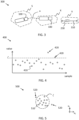
- FIG. 2 illustrates an example SAM.
- the vehicle 100 detects at point A that something is wrong and that the vehicle needs to execute a safe stop maneuver. For instance, the vehicle 100 may have experienced some type of sensor failure at point A, such as radar system failure or a camera malfunction condition.
- the example SAM illustrated in Figure 2 comprises moving the vehicle 100 to the side of the road 210 and stopping the vehicle in a controlled manner at point B.
- the control unit 110 therefore determines a track 220 and an associated speed profile which is to be followed by the vehicle 100 during the SAM.
- Figure 2 shows another vehicle 230 and also a pedestrian 240. These road users will of course move during the duration of the SAM.
- the pedestrian 240 may, for instance, on rare occasions walk very close to the road or even step off a side-walk and onto the road.
- the other vehicle 230 may also on some rare occasions drift into the wrong lane. By modelling this type of road user rare behaviors, sufficient safety margins can be determined such that the SAM can be safely executed with high probability.
- a safe maneuver or vehicle state may be a state in which the vehicle and/or vehicle occupant and/or other road user is not subject to risk in terms of injury or damage.
- Some examples may be given of a safe condition and of an unsafe condition
- a situation where a risk of collision is unlikely may be considered a safe state.
- a situation where a risk of collision is not unlikely may still be considered a safe state depending on the object. I.e., colliding with a small bush or tree may be considered safe, while colliding with another vehicle or a larger object like a brick wall may be considered unsafe.
- colliding with another vehicle where it has been determined beforehand e.g., via vehicle-to-vehicle (V2V) communications, that a collision can be tolerated with low risk, may be considered safe.
- V2V vehicle-to-vehicle
- a situation where the vehicle risks exiting a drivable area is considered unsafe.
- exiting a drivable area may be considered safe depending on the properties of the ground outside the drivable area, as discussed above.
- a vehicle state is a collection of variables which together describe in what state the vehicle is currently in.
- vehicle state comprises variables associated with vehicle location (coordinates) and orientation (such as, e.g., heading, steering angle and articulation angle).
- vehicle state also comprises information associated with vehicle dynamic state, i.e., vehicle velocity, acceleration, turn rate, and so on.
- vehicle state is often represented as a vector of state variables x.
- an allowable vehicle state space may, in general, comprise both upper and lower limits on state variables such as lateral position for the duration of a maneuver.
- Vehicle state can often be bounded to lie within some set with high probability.
- a vehicle 100 may currently be associated with a state x that is comprised in some set S of states, and wishes to transition into some other set of states X.
- the control unit 110 therefore issues a control command u.
- a one-step robust controllable set (or preimage set) S is defined as the set of states that gets robustly mapped to X.
- Preimage sets were discussed by, e.g., F. Borrelli, A. Bemporad, and M. Morari, in "Predictive Control for linear and hybrid systems", Cambridge University Press, 2015 , and will therefore not be discussed in more detail herein.
- the set S is the set of vehicle states for which there exist a control signal u (shown in Figure 3 ) that transitions the vehicle state into a state comprised in the target set of states X, for all possible disturbances.
- the set of disturbances can be assumed bounded, or it can be assumed to be some set representing a fixed probability of occurrence. In other words, it can be ascertained using various known methods that the vehicle will transition into a state x comprised in the set of states X as a consequence of issuing the control signal u, starting from a set of vehicle states S.
- a spatial dimension 310 of the set V may be determined based on a model of vehicle behavior in terms of acceleration and braking. However, this behavior preferably also accounts for very rare actions, such as extreme braking and strong acceleration.
- One way to determine this model of road user behavior is to construct bounds such that the road user will stay within the bounds with high probability.
- EVT Extreme value theory
- the generalized extreme value (GEV) distribution is a family of continuous probability distributions developed within extreme value theory to combine the Gumbel, Fréchet and Weibull families also known as type I, II and III extreme value distributions.
- the GEV distribution is the only possible limit distribution of properly normalized maxima of a sequence of independent and identically distributed random variables. It is noted that a limit distribution need not exist since this requires regularity conditions on the tail of the distribution. Despite this, the GEV distribution is often used as an approximation to model the maxima of long (finite) sequences of random variables.
- the generalized extreme value distribution is known as the Fisher-Tippett distribution, named after Ronald Fisher and L. H. C. Tippett.
- usage of this name is sometimes restricted to mean the special case of the Gumbel distribution.
- Peaks Over Threshold is a class of methods in EVT that model the extreme events that exceed some threshold. Under some assumptions the exceedances converge asymptotically to a so-called Generalized Pareto (GDP) distribution. For a specific data set, the exceedances can be used to estimate the parameters of a GDP distribution which in turn can be used to predict the likelihood of even rarer events. This enables statistical arguments on the limits of behavioral assumptions with significantly less data than traditional methods. The results from this analysis can also be used to verify that a set of assumptions does appear to hold true for the Operational Design Domain (ODD) where the data was collected. For instance, the vehicle ODD may comprise assumptions on maximum relative velocity, maximum retardation, and the like. If the EVT-based analysis indicates that these assumption no longer hold true, some adjustment or emergency procedure may be warranted.
- ODD Operational Design Domain
- the assumptions can then be used when evaluating whether an ego vehicle can perform a certain action, i.e. is the action safe if other road users perform any action within the bounds of the previously mentioned assumptions.
- the parameters for the GEV and/or GDP distribution can also be used in order to create a monitor for certain aspects of the ODD, i.e. assumptions on other traffic. More specifically, if the current traffic behavior deviates from the GDP distribution (with more than a certain probability threshold), there is an indication of a risk that the ego vehicle is no longer within the defined ODD, and thus the ego vehicle may need to take precautionary measures.
- the ODD monitor is also the reason why it is possible to argue that the system will remain safe over time with regards to changing traffic behavior from other road users. This is because the system will be able to detect changes in traffic behavior before an extreme event occurs, which could lead to an accident.
- Quantifying traffic situations and road user behavior could be on many different characteristics and dependencies including but not limited to: position, heading, longitudinal velocity, lateral velocity, longitudinal acceleration, lateral acceleration, curvature, yaw rate, road or lane relative movement, relative movement between different road actors, relative movement between target actor and ego vehicle, high level description of traffic maneuvers, actions depending on static environment (e.g. road type, signs, markings, static objects, road curvature, traffic lights), actions depending on dynamic situations (e.g. states of other actors, type of other actors), intention signaling (e.g. turn indicator or bicyclist pointing with his/her arm), type of road actor (e.g. a car and a pedestrian will behave differently, weather conditions, light conditions, time of day, geographic area, the density of road actors in the area.
- static environment e.g. road type, signs, markings, static objects, road curvature, traffic lights
- dynamic situations e.g. states of other actors, type of other actors
- intention signaling e.g. turn indicator or
- densely sampled road user behavior data has been obtained, such as the longitudinal acceleration of subject vehicles 230. Although it is possible to use this data directly to determine the occurrence rate for extreme instances of acceleration, it does not necessarily well capture the behavior of the traffic. Instead, it is herein proposed to, optionally, filter the densely sampled data to extract a series of low dimensional aggregate samples describing the specific behavior we are interested in modelling. For example, if the purpose is to quantify instances of sudden deceleration, then aggregate samples could be formed by first detecting instances of sudden deceleration based on some criteria (e.g. thresholding), and then quantifying these instances using aggregate measures, e.g. a two dimensional sample consisting of total change in velocity and the duration of the velocity change.
- the densely sampled data can also be replaced by, e.g., block maxima, block means, or block median values determined for consecutive blocks of the densely sampled data, thus provided less dense sampled data.
- Another example is vehicle cut-ins. It is possible to detect instances of cut-ins and record the distance between ego and subject vehicle at the cut in and the relative velocity.
- Figure 4 schematically illustrates a thresholding operation 400, where samples of road user behavior 410, 420 have been collected.
- a threshold ⁇ is applied in order to select a subset of the road user behavior samples such that the selected samples follow a pre-determined statistical extreme value distribution.
- Figure 5 illustrates another thresholding operation, here in two dimensions x 1 , x 2 .
- Samples 510, 520 of road user behavior have been collected.
- a threshold ⁇ is again applied in order to select a subset of the road user behavior samples such that the selected samples follow a pre-determined statistical extreme value distribution.
- Figure 6 is a flow chart illustrating methods which summarize the discussions above. There is illustrated a method for quantifying road user 230, 240 behavior.
- the samples may, e.g., be obtained S11 as a previously stored set of road user behavior samples or obtained S12 as a set of road user behavior samples during operation of an ego vehicle 100.
- a sample of road user behavior may as discussed above comprise any of; road user position, road user heading, road user longitudinal velocity, road user lateral velocity, road user longitudinal acceleration, road user lateral acceleration, road user yaw rate, road user motion relative to a road surface, road user motion relative to a road lane, road user motion relative to another road user, and road user intention signaling, and road user action in response to an external event.
- road user surface may comprise, e.g., road surface slope, road surface friction coefficient, road surface banking, and the like.
- the method comprises selecting S2 a subset of the road user behavior samples such that the selected samples follow a pre-determined statistical extreme value distribution.
- the pre-determined statistical extreme value distribution may, e.g., be a Generalized Pareto Distribution (GDP), or an instance of a Generalized Extreme Value distribution (GEV).
- the selecting comprises determining S21 a threshold ⁇ such that the samples of road user behavior in excess of the threshold ⁇ , ⁇ b i : b i ⁇ ⁇ ⁇ , follow the pre-determined statistical extreme value distribution.
- Some example thresholds were illustrated in Figures 4 and 5 above. The thresholds may be fixed or dynamically adjusted based on some performance criterion.
- the method further comprises parameterizing S3 the pre-determined statistical extreme value distribution based on the selected samples of road user behavior, and quantifying S4 road user behavior based on the parameterized statistical extreme value distribution.
- Methods for extreme value distribution parameterization are known and will therefore not be discussed in more detail herein.
- the method comprises measuring S7 a time between exceedances metric indicating the time passed between road user behavior samples exceeding the threshold ⁇ , and monitoring ODD based on the time between exceedances metric. This way is can be determined if the vehicle is operating in its ODD, or if traffic situation conditions have changed so much that the vehicle 100 is no longer operating in the intended ODD.
- the method comprises comprising quantifying S41 the road user behavior as a bounded model by bounding the behavior to lie within a range - w ⁇ b k ⁇ w with probability greater than 1 - ⁇ , based on the pre-determined statistical extreme value distribution.
- the method comprises determining S5 a confidence value ⁇ associated with the pre-determined statistical extreme value distribution.
- the exceedances b i : b i ⁇ ⁇ can be used to estimate the parameters of the GDP or GEV (with corresponding confidence).
- the identified distribution can in turn be used to find bounds on road user behavior which are fulfilled with a confidence ⁇ .
- the road user behavior model has a verified correctness of ⁇ with confidence value ⁇ , which confidence value ⁇ is associated with the parameterized GEV or GDP. Methods for determining the confidence value ⁇ are known and will not be discussed in more detail herein.
- the confidence value depends at least in part on the number of observations collected over the threshold ⁇ and provides constructive feedback on the needed amount of data.
- the method comprises assessing S51 a sufficiency of gathered road user behavior data for behavior quantification based on the confidence value ⁇ associated with the pre-determined statistical extreme value distribution.
- the method comprises monitoring S6 an operational design domain, ODD, associated with the vehicle by comparing the parameterized pre-determined statistical extreme value distribution to a set of baseline distribution parameters, wherein operation outside the ODD is indicated by a difference between parameterized pre-determined statistical extreme value distribution parameters and the baseline distribution parameters.
- ODD operational design domain
- the described road user behavior modelling may be performed off-line (i.e. in a design phase)
- the identified GDP or GEV distribution can also be used to construct monitors of the ODD for on-line use as well.
- the distribution of the exceedances can be monitored.
- a significantly different distribution of exceedances compared to the distribution that was obtained offline indicates that the system is out of its ODD.
- by the disclosed techniques is becomes possible to monitor an ODD associated with the vehicle by comparing the parameterized GDP or GEV to a set of baseline GDP or GEV parameters. Operation outside the ODD is for instance indicated by a difference between parameterized GDP parameters and baseline GDP parameters.
- a warning signal or SAM may be triggered in case operation outside the ODD is detected.
- a simple monitor of this kind is to calculate the return period (i.e. the average time between exceedances) over some time window. A significant decrease of the return period is then an indication that the vehicle is operated outside of its ODD.
- FIG. 7 schematically illustrates, in terms of a number of functional units, the components of the control unit 110 according to an embodiment of the discussions herein.
- Processing circuitry 710 is provided using any combination of one or more of a suitable central processing unit CPU, multiprocessor, microcontroller, digital signal processor DSP, etc., capable of executing software instructions stored in a computer program product, e.g. in the form of a storage medium 730.
- the processing circuitry 710 may further be provided as at least one application specific integrated circuit ASIC, or field programmable gate array FPGA.
- the processing circuitry 710 is configured to cause the control unit 110 to perform a set of operations, or steps, such as the methods discussed in connection to Figure 6 .
- the storage medium 730 may store the set of operations
- the processing circuitry 710 may be configured to retrieve the set of operations from the storage medium 730 to cause the control unit 110 to perform the set of operations.
- the set of operations may be provided as a set of executable instructions.
- the processing circuitry 710 is thereby arranged to execute methods as herein disclosed.
- the storage medium 730 may also comprise persistent storage, which, for example, can be any single one or combination of magnetic memory, optical memory, solid state memory or even remotely mounted memory.
- the control unit 110 may further comprise an interface 720 for communications with at least one external device, such as the remote server 130 or other vehicle functions.
- the interface 720 may comprise one or more transmitters and receivers, comprising analogue and digital components and a suitable number ports for wireline or wireless communication.
- the processing circuitry 710 controls the general operation of the control unit 110 e.g. by sending data and control signals to the interface 720 and the storage medium 730, by receiving data and reports from the interface 720, and by retrieving data and instructions from the storage medium 730.
- Other components, as well as the related functionality, of the control node are omitted in order not to obscure the concepts presented herein.
- Figure 8 schematically illustrates a computer program product 800, comprising a set of operations 810 executable by the control unit 110.
- the set of operations 810 may be loaded into the storage medium 730 in the control unit 110.
- the set of operations may correspond to the methods discussed above in connection to Figure 6 .
- the computer program product 800 is illustrated as an optical disc, such as a CD (compact disc) or a DVD (digital versatile disc) or a Blu-Ray disc.
- the computer program product could also be embodied as a memory, such as a random-access memory (RAM), a read-only memory (ROM), an erasable programmable read-only memory (EPROM), or an electrically erasable programmable read-only memory (EEPROM) and more particularly as a non-volatile storage medium of a device in an external memory such as a USB (Universal Serial Bus) memory or a Flash memory, such as a compact Flash memory.
- RAM random-access memory
- ROM read-only memory
- EPROM erasable programmable read-only memory
- EEPROM electrically erasable programmable read-only memory
- EEPROM electrically erasable programmable read-only memory
- the computer program is here schematically shown as a track on the depicted optical disk, the computer program can be stored in
Landscapes
- Engineering & Computer Science (AREA)
- Automation & Control Theory (AREA)
- Transportation (AREA)
- Mechanical Engineering (AREA)
- Physics & Mathematics (AREA)
- Mathematical Physics (AREA)
- Human Computer Interaction (AREA)
- Software Systems (AREA)
- Theoretical Computer Science (AREA)
- General Physics & Mathematics (AREA)
- General Engineering & Computer Science (AREA)
- Traffic Control Systems (AREA)
- Control Of Driving Devices And Active Controlling Of Vehicle (AREA)
Claims (16)
- Verfahren zum Steuern eines Fahrzeugs (100) basierend auf einem quantifizierten Verhalten eines Verkehrsteilnehmers (230, 240), wobei das Verfahren Folgendes umfasst:Erhalten (S1) von Stichproben des Verkehrsteilnehmerverhaltens
 Auswählen (S2) einer Untergruppe der Verkehrsteilnehmerverhaltensstichproben, so dass die ausgewählten Stichproben einer vorbestimmten statistischen Extremwertverteilung folgen,Parametrisieren (S3) der vorbestimmten statistischen Extremwertverteilung basierend auf den ausgewählten Stichproben des Verkehrsteilnehmerverhaltens,Quantifizieren (S4) des Verkehrsteilnehmerverhaltens basierend auf der parametrisierten statistischen Extremwertverteilung undSteuern des Fahrzeugs (100) basierend auf dem quantifizierten Verkehrsteilnehmerverhalten.
 - Verfahren nach Anspruch 1, wobei das Erhalten Erhalten (S11) eines zuvor gespeicherten Satzes von Verkehrsteilnehmerverhaltensstichproben umfasst.
- Verfahren nach einem der Ansprüche 1-2, wobei das Erhalten Erhalten (S12) eines Satzes von Verkehrsteilnehmerverhaltensstichproben während dem Betrieb eines Ego-Fahrzeugs (100) umfasst.
- Verfahren nach einem der vorherigen Ansprüche, wobei das Auswählen Bestimmen (S21) eines Schwellenwerts ζ umfasst, so dass die Stichproben des Verkehrsteilnehmerverhaltens, die den Schwellenwert ζ überschreiten, {bi : bi ≰ ζ}, der vorbestimmten statistischen Extremwertverteilung folgen.
- Verfahren nach Anspruch 4, umfassend Messen (S7) einer Metrik "Zeit zwischen Überschreitungen", die die Zeit angibt, die zwischen Verkehrsteilnehmerverhaltensstichproben, die den Schwellenwert ζ überschreiten, verstrichen ist, und Überwachen einer ODD basierend auf der Metrik "Zeit zwischen Überschreitungen".
- Verfahren nach einem der vorherigen Ansprüche, wobei die vorbestimmte statistische Extremwertverteilung eine allgemeine Pareto-Verteilung, GDP-Verteilung, ist.
- Verfahren nach einem der Ansprüche 1-5, wobei die vorbestimmte statistische Extremwertverteilung eine allgemeine Extremwertverteilung, GEV-Verteilung, ist.
- Verfahren nach einem der vorherigen Ansprüche, wobei eine Stichprobe eines Verkehrsteilnehmerverhaltens Folgendes umfasst: Verkehrsteilnehmerposition, Verkehrsteilnehmerfahrtrichtung, Verkehrsteilnehmerlängsgeschwindigkeit, Verkehrsteilnehmerquergeschwindigkeit, Verkehrsteilnehmerlängsbeschleunigung, Verkehrsteilnehmerquerbeschleunigung, Verkehrsteilnehmergierrate, Verkehrsteilnehmerbewegung bezüglich einer Straßenoberfläche, Verkehrsteilnehmerbewegung bezüglich einer Straßenfahrspur, Verkehrsteilnehmerbewegung bezüglich eines anderen Verkehrsteilnehmers und Verkehrsteilnehmerabsichtssignalisierung und Verkehrsteilnehmeraktion als Reaktion auf ein externes Ereignis.
- Verfahren nach einem der vorherigen Ansprüche, umfassend Quantifizieren (S41) des Verkehrsteilnehmerverhaltens als ein begrenztes Modell durch Begrenzen des Verhaltens, so dass es innerhalb eines Bereichs -
w ≤ bk ≤w mit einer Wahrscheinlichkeit von mehr als 1-y basierend auf der vorbestimmten statistischen Extremwertverteilung liegt. - Verfahren nach einem der vorherigen Ansprüche, umfassend Bestimmen (S5) eines Vertrauenswerts β, der mit der vorbestimmten statistischen Extremwertverteilung verknüpft ist.
- Verfahren nach Anspruch 10, umfassend Bewerten (S51) einer Hinlänglichkeit von erfassten Verkehrsteilnehmerverhaltensdaten zur Verhaltensquantifizierung basierend auf dem Vertrauenswert β, der mit der vorbestimmten statistischen Extremwertverteilung verknüpft ist.
- Verfahren nach einem der vorherigen Ansprüche, umfassend Überwachen (S6) einer Betriebsdesigndomäne, ODD, die mit dem Fahrzeug verknüpft ist, durch Vergleichen der parametrisierten vorbestimmten statistischen Extremwertverteilung mit einem Satz von Basisverteilungsparametern, wobei ein Betrieb außerhalb der ODD durch eine Differenz zwischen parametrisierten vorbestimmten statistischen Extremwertverteilungsparametern und den Basisverteilungsparametern angegeben wird.
- Computerprogramm (800) umfassend Programmcodemittel zum Durchführen der Schritte eines der Ansprüche 1-12, wenn das Programm auf einem Computer oder auf einer Verarbeitungsschaltlogik (710) einer Steuereinheit (110) ausgeführt wird.
- Computerlesbares Medium (810) mit einem Computerprogramm (820) umfassend Programmcodemittel zum Durchführen der Schritte eines der Ansprüche 1-12, wenn das Programmprodukt auf einem Computer oder auf einer Verarbeitungsschaltlogik (710) einer Steuereinheit (110) ausgeführt wird.
- Steuereinheit (110) zum Quantifizieren eines Verkehrsteilnehmerverhaltens, wobei die Steuereinheit (110) dazu konfiguriert ist, die Schritte des Verfahrens nach einem der Ansprüche 1-12 durchzuführen.
- Fahrzeug (1) umfassend eine Steuereinheit (110) nach Anspruch 15.
Applications Claiming Priority (1)
| Application Number | Priority Date | Filing Date | Title |
|---|---|---|---|
| PCT/EP2019/072617 WO2021037329A1 (en) | 2019-08-23 | 2019-08-23 | A method for quantifying extreme traffic behavior |
Publications (3)
| Publication Number | Publication Date |
|---|---|
| EP4017773A1 EP4017773A1 (de) | 2022-06-29 |
| EP4017773C0 EP4017773C0 (de) | 2024-05-22 |
| EP4017773B1 true EP4017773B1 (de) | 2024-05-22 |
Family
ID=67810586
Family Applications (1)
| Application Number | Title | Priority Date | Filing Date |
|---|---|---|---|
| EP19762107.1A Active EP4017773B1 (de) | 2019-08-23 | 2019-08-23 | Verfahren zum quantifizieren von extremem verkehrsverhalten |
Country Status (6)
| Country | Link |
|---|---|
| US (1) | US12258044B2 (de) |
| EP (1) | EP4017773B1 (de) |
| JP (1) | JP2022552063A (de) |
| KR (1) | KR20220050184A (de) |
| CN (1) | CN114222689B (de) |
| WO (1) | WO2021037329A1 (de) |
Families Citing this family (3)
| Publication number | Priority date | Publication date | Assignee | Title |
|---|---|---|---|---|
| SE546015C2 (en) * | 2021-11-09 | 2024-04-16 | Volvo Autonomous Solutions AB | A method for quantifying object detection performance |
| SE546864C2 (en) * | 2021-11-09 | 2025-02-25 | Volvo Autonomous Solutions AB | A method for quantifying vehicle ego state estimation performance |
| CN115123292A (zh) * | 2022-06-06 | 2022-09-30 | 宁波均胜智能汽车技术研究院有限公司 | 极端场景数据采集方法及装置、智能车辆、可读存储介质 |
Family Cites Families (25)
| Publication number | Priority date | Publication date | Assignee | Title |
|---|---|---|---|---|
| US7383154B2 (en) * | 2005-12-14 | 2008-06-03 | Gm Global Technology Operations, Inc. | Method for assessing models of vehicle driving style or vehicle usage model detector |
| JP2009146377A (ja) | 2007-11-21 | 2009-07-02 | Toyota Central R&D Labs Inc | ドライバ状態推定装置及びプログラム |
| JP2009266100A (ja) * | 2008-04-28 | 2009-11-12 | Toyota Central R&D Labs Inc | ドライバ状態推定装置及びプログラム |
| EP2172920B1 (de) | 2008-10-01 | 2011-12-07 | Volvo Car Corporation | Bedrohungsbewertung für unerwartete Ereignisse |
| EP2306433A1 (de) | 2009-10-05 | 2011-04-06 | Nederlandse Organisatie voor toegepast -natuurwetenschappelijk onderzoek TNO | Kollisionsverhinderungssystem und -Verfahren für ein Straßenfahrzeug und entpsrechendes Computerprogrammprodukt |
| DE102010008208A1 (de) * | 2010-02-17 | 2011-08-18 | Daimler AG, 70327 | Verfahren zur Verhinderung von Kollisionen oder Verminderung einer Kollisionsstärke eines Fahrzeugs |
| US8509982B2 (en) | 2010-10-05 | 2013-08-13 | Google Inc. | Zone driving |
| GB2491564A (en) | 2011-05-24 | 2012-12-12 | Isis Innovation | Method of system monitoring |
| EP2615598B1 (de) * | 2012-01-11 | 2017-12-06 | Honda Research Institute Europe GmbH | Fahrzeug mit Rechnereinrichtung zur Überwachung und Vorhersage von Verkehrsteilnehmerobjekten |
| KR101507903B1 (ko) * | 2013-04-01 | 2015-04-07 | (주)나노포인트 | 운전 위험 지수관련 이벤트 등록을 위한 관찰 기준 임계값 추정 장치 및 방법 |
| LU92628B1 (en) * | 2015-01-02 | 2016-07-04 | Univ Luxembourg | Vehicular motion monitoring method |
| EP3091370B1 (de) * | 2015-05-05 | 2021-01-06 | Volvo Car Corporation | Verfahren und anordnung zur bestimmung sicherer fahrzeugtrajektorien |
| JP6820668B2 (ja) | 2016-05-10 | 2021-01-27 | 三菱電機株式会社 | 運転支援装置、運転支援システムおよび運転支援プログラム |
| US10496091B1 (en) * | 2016-08-17 | 2019-12-03 | Waymo Llc | Behavior and intent estimations of road users for autonomous vehicles |
| US10429842B2 (en) * | 2017-07-10 | 2019-10-01 | Toyota Research Institute, Inc. | Providing user assistance in a vehicle based on traffic behavior models |
| US10902336B2 (en) * | 2017-10-03 | 2021-01-26 | International Business Machines Corporation | Monitoring vehicular operation risk using sensing devices |
| JP6760331B2 (ja) | 2017-11-17 | 2020-09-23 | 株式会社デンソー | 車両制御装置 |
| US11718303B2 (en) | 2018-01-03 | 2023-08-08 | Toyota Research Institute, Inc. | Vehicles and methods for building vehicle profiles based on reactions created by surrounding vehicles |
| CN112204633B (zh) * | 2018-05-31 | 2021-11-09 | 北美日产公司 | 概率性对象跟踪和预测框架 |
| DE102018222601A1 (de) * | 2018-12-20 | 2020-06-25 | Volkswagen Aktiengesellschaft | Verfahren und Fahrerassistenzsystem zum Unterstützen eines Fahrers eines Fahrzeugs beim Führen des Fahrzeugs |
| JP2022523730A (ja) * | 2019-01-30 | 2022-04-26 | パーセプティブ オートマタ インコーポレイテッド | 交通エンティティの間を縫っての自律車両のニューラルネットワークベースのナビゲーション |
| DE102019108142A1 (de) * | 2019-03-29 | 2020-10-01 | Bayerische Motoren Werke Aktiengesellschaft | Auswählen einer Handlungsoption für ein automatisiertes Kraftfahrzeug |
| US11462111B2 (en) * | 2019-04-29 | 2022-10-04 | Qualcomm Incorporated | Method and apparatus for vehicle maneuver planning and messaging |
| DE102019003431A1 (de) * | 2019-05-15 | 2020-11-19 | Daimler Ag | Verfahren zum Betrieb eines zu einem automatisierten, insbesondere hochautomatisierten oder autonomen Fahrbetrieb ausgebildeten Fahrzeugs |
| DE102019208647B3 (de) * | 2019-06-13 | 2020-08-27 | Audi Ag | Verfahren und Spurführsystem zum Steuern eines autonomen Kraftfahrzeugs in einem urbanen Gebiet |
-
2019
- 2019-08-23 US US17/632,736 patent/US12258044B2/en active Active
- 2019-08-23 KR KR1020227009252A patent/KR20220050184A/ko active Pending
- 2019-08-23 WO PCT/EP2019/072617 patent/WO2021037329A1/en not_active Ceased
- 2019-08-23 JP JP2022510174A patent/JP2022552063A/ja active Pending
- 2019-08-23 CN CN201980099257.8A patent/CN114222689B/zh active Active
- 2019-08-23 EP EP19762107.1A patent/EP4017773B1/de active Active
Also Published As
| Publication number | Publication date |
|---|---|
| US12258044B2 (en) | 2025-03-25 |
| KR20220050184A (ko) | 2022-04-22 |
| US20220274628A1 (en) | 2022-09-01 |
| CN114222689B (zh) | 2024-09-10 |
| CN114222689A (zh) | 2022-03-22 |
| EP4017773C0 (de) | 2024-05-22 |
| EP4017773A1 (de) | 2022-06-29 |
| JP2022552063A (ja) | 2022-12-15 |
| WO2021037329A1 (en) | 2021-03-04 |
Similar Documents
| Publication | Publication Date | Title |
|---|---|---|
| US11702099B2 (en) | Method for quantifying vehicle path following performance | |
| JP6524144B2 (ja) | 車両制御システム及び方法、並びに走行支援サーバ | |
| US9104965B2 (en) | Vehicle with computing means for monitoring and predicting traffic participant objects | |
| EP4177775A1 (de) | Verfahren zur quantifizierung der objektdetektionsleistung | |
| US12065155B2 (en) | Vehicle control system and method | |
| CN106794840A (zh) | 车辆行驶控制装置 | |
| EP4017773B1 (de) | Verfahren zum quantifizieren von extremem verkehrsverhalten | |
| KR102025491B1 (ko) | 차량 제동거리 예측을 통한 보강된 전방 추돌 경고 시스템 및 방법 | |
| CN114581865A (zh) | 深度神经网络中的置信度测量 | |
| JP6796679B2 (ja) | 車両制御システム及び方法、並びに走行支援サーバ | |
| US12122396B2 (en) | Method for quantifying correctness of a vehicle model | |
| EP4177774A1 (de) | Verfahren zur quantifizierung der ego-zustandsschätzungsleistung eines fahrzeugs | |
| CN116125897B (zh) | 自动驾驶决策方法、装置、电子设备及存储介质 | |
| US20250360622A1 (en) | Method for controlling a robotic apparatus | |
| CN119090084A (zh) | 车辆切入概率预测方法、系统、存储介质及电子设备 |
Legal Events
| Date | Code | Title | Description |
|---|---|---|---|
| STAA | Information on the status of an ep patent application or granted ep patent |
Free format text: STATUS: UNKNOWN |
|
| STAA | Information on the status of an ep patent application or granted ep patent |
Free format text: STATUS: THE INTERNATIONAL PUBLICATION HAS BEEN MADE |
|
| PUAI | Public reference made under article 153(3) epc to a published international application that has entered the european phase |
Free format text: ORIGINAL CODE: 0009012 |
|
| STAA | Information on the status of an ep patent application or granted ep patent |
Free format text: STATUS: REQUEST FOR EXAMINATION WAS MADE |
|
| 17P | Request for examination filed |
Effective date: 20220323 |
|
| AK | Designated contracting states |
Kind code of ref document: A1 Designated state(s): AL AT BE BG CH CY CZ DE DK EE ES FI FR GB GR HR HU IE IS IT LI LT LU LV MC MK MT NL NO PL PT RO RS SE SI SK SM TR |
|
| DAV | Request for validation of the european patent (deleted) | ||
| DAX | Request for extension of the european patent (deleted) | ||
| GRAP | Despatch of communication of intention to grant a patent |
Free format text: ORIGINAL CODE: EPIDOSNIGR1 |
|
| STAA | Information on the status of an ep patent application or granted ep patent |
Free format text: STATUS: GRANT OF PATENT IS INTENDED |
|
| INTG | Intention to grant announced |
Effective date: 20231214 |
|
| RAP1 | Party data changed (applicant data changed or rights of an application transferred) |
Owner name: VOLVO AUTONOMOUS SOLUTIONS AB |
|
| GRAS | Grant fee paid |
Free format text: ORIGINAL CODE: EPIDOSNIGR3 |
|
| GRAA | (expected) grant |
Free format text: ORIGINAL CODE: 0009210 |
|
| STAA | Information on the status of an ep patent application or granted ep patent |
Free format text: STATUS: THE PATENT HAS BEEN GRANTED |
|
| AK | Designated contracting states |
Kind code of ref document: B1 Designated state(s): AL AT BE BG CH CY CZ DE DK EE ES FI FR GB GR HR HU IE IS IT LI LT LU LV MC MK MT NL NO PL PT RO RS SE SI SK SM TR |
|
| REG | Reference to a national code |
Ref country code: GB Ref legal event code: FG4D |
|
| REG | Reference to a national code |
Ref country code: CH Ref legal event code: EP |
|
| REG | Reference to a national code |
Ref country code: DE Ref legal event code: R096 Ref document number: 602019052615 Country of ref document: DE |
|
| REG | Reference to a national code |
Ref country code: IE Ref legal event code: FG4D |
|
| RAP4 | Party data changed (patent owner data changed or rights of a patent transferred) |
Owner name: VOLVO AUTONOMOUS SOLUTIONS AB |
|
| U01 | Request for unitary effect filed |
Effective date: 20240613 |
|
| U07 | Unitary effect registered |
Designated state(s): AT BE BG DE DK EE FI FR IT LT LU LV MT NL PT SE SI Effective date: 20240621 |
|
| U20 | Renewal fee for the european patent with unitary effect paid |
Year of fee payment: 6 Effective date: 20240701 |
|
| PG25 | Lapsed in a contracting state [announced via postgrant information from national office to epo] |
Ref country code: IS Free format text: LAPSE BECAUSE OF FAILURE TO SUBMIT A TRANSLATION OF THE DESCRIPTION OR TO PAY THE FEE WITHIN THE PRESCRIBED TIME-LIMIT Effective date: 20240922 |
|
| PG25 | Lapsed in a contracting state [announced via postgrant information from national office to epo] |
Ref country code: HR Free format text: LAPSE BECAUSE OF FAILURE TO SUBMIT A TRANSLATION OF THE DESCRIPTION OR TO PAY THE FEE WITHIN THE PRESCRIBED TIME-LIMIT Effective date: 20240522 |
|
| PG25 | Lapsed in a contracting state [announced via postgrant information from national office to epo] |
Ref country code: GR Free format text: LAPSE BECAUSE OF FAILURE TO SUBMIT A TRANSLATION OF THE DESCRIPTION OR TO PAY THE FEE WITHIN THE PRESCRIBED TIME-LIMIT Effective date: 20240823 |
|
| PG25 | Lapsed in a contracting state [announced via postgrant information from national office to epo] |
Ref country code: ES Free format text: LAPSE BECAUSE OF FAILURE TO SUBMIT A TRANSLATION OF THE DESCRIPTION OR TO PAY THE FEE WITHIN THE PRESCRIBED TIME-LIMIT Effective date: 20240522 |
|
| PG25 | Lapsed in a contracting state [announced via postgrant information from national office to epo] |
Ref country code: PL Free format text: LAPSE BECAUSE OF FAILURE TO SUBMIT A TRANSLATION OF THE DESCRIPTION OR TO PAY THE FEE WITHIN THE PRESCRIBED TIME-LIMIT Effective date: 20240522 |
|
| PG25 | Lapsed in a contracting state [announced via postgrant information from national office to epo] |
Ref country code: PL Free format text: LAPSE BECAUSE OF FAILURE TO SUBMIT A TRANSLATION OF THE DESCRIPTION OR TO PAY THE FEE WITHIN THE PRESCRIBED TIME-LIMIT Effective date: 20240522 Ref country code: NO Free format text: LAPSE BECAUSE OF FAILURE TO SUBMIT A TRANSLATION OF THE DESCRIPTION OR TO PAY THE FEE WITHIN THE PRESCRIBED TIME-LIMIT Effective date: 20240822 Ref country code: IS Free format text: LAPSE BECAUSE OF FAILURE TO SUBMIT A TRANSLATION OF THE DESCRIPTION OR TO PAY THE FEE WITHIN THE PRESCRIBED TIME-LIMIT Effective date: 20240922 Ref country code: HR Free format text: LAPSE BECAUSE OF FAILURE TO SUBMIT A TRANSLATION OF THE DESCRIPTION OR TO PAY THE FEE WITHIN THE PRESCRIBED TIME-LIMIT Effective date: 20240522 Ref country code: GR Free format text: LAPSE BECAUSE OF FAILURE TO SUBMIT A TRANSLATION OF THE DESCRIPTION OR TO PAY THE FEE WITHIN THE PRESCRIBED TIME-LIMIT Effective date: 20240823 Ref country code: ES Free format text: LAPSE BECAUSE OF FAILURE TO SUBMIT A TRANSLATION OF THE DESCRIPTION OR TO PAY THE FEE WITHIN THE PRESCRIBED TIME-LIMIT Effective date: 20240522 Ref country code: RS Free format text: LAPSE BECAUSE OF FAILURE TO SUBMIT A TRANSLATION OF THE DESCRIPTION OR TO PAY THE FEE WITHIN THE PRESCRIBED TIME-LIMIT Effective date: 20240822 |
|
| PG25 | Lapsed in a contracting state [announced via postgrant information from national office to epo] |
Ref country code: CZ Free format text: LAPSE BECAUSE OF FAILURE TO SUBMIT A TRANSLATION OF THE DESCRIPTION OR TO PAY THE FEE WITHIN THE PRESCRIBED TIME-LIMIT Effective date: 20240522 |
|
| PG25 | Lapsed in a contracting state [announced via postgrant information from national office to epo] |
Ref country code: SK Free format text: LAPSE BECAUSE OF FAILURE TO SUBMIT A TRANSLATION OF THE DESCRIPTION OR TO PAY THE FEE WITHIN THE PRESCRIBED TIME-LIMIT Effective date: 20240522 Ref country code: RO Free format text: LAPSE BECAUSE OF FAILURE TO SUBMIT A TRANSLATION OF THE DESCRIPTION OR TO PAY THE FEE WITHIN THE PRESCRIBED TIME-LIMIT Effective date: 20240522 |
|
| PG25 | Lapsed in a contracting state [announced via postgrant information from national office to epo] |
Ref country code: SM Free format text: LAPSE BECAUSE OF FAILURE TO SUBMIT A TRANSLATION OF THE DESCRIPTION OR TO PAY THE FEE WITHIN THE PRESCRIBED TIME-LIMIT Effective date: 20240522 |
|
| PG25 | Lapsed in a contracting state [announced via postgrant information from national office to epo] |
Ref country code: SM Free format text: LAPSE BECAUSE OF FAILURE TO SUBMIT A TRANSLATION OF THE DESCRIPTION OR TO PAY THE FEE WITHIN THE PRESCRIBED TIME-LIMIT Effective date: 20240522 Ref country code: SK Free format text: LAPSE BECAUSE OF FAILURE TO SUBMIT A TRANSLATION OF THE DESCRIPTION OR TO PAY THE FEE WITHIN THE PRESCRIBED TIME-LIMIT Effective date: 20240522 Ref country code: RO Free format text: LAPSE BECAUSE OF FAILURE TO SUBMIT A TRANSLATION OF THE DESCRIPTION OR TO PAY THE FEE WITHIN THE PRESCRIBED TIME-LIMIT Effective date: 20240522 Ref country code: CZ Free format text: LAPSE BECAUSE OF FAILURE TO SUBMIT A TRANSLATION OF THE DESCRIPTION OR TO PAY THE FEE WITHIN THE PRESCRIBED TIME-LIMIT Effective date: 20240522 |
|
| REG | Reference to a national code |
Ref country code: DE Ref legal event code: R097 Ref document number: 602019052615 Country of ref document: DE |
|
| PLBE | No opposition filed within time limit |
Free format text: ORIGINAL CODE: 0009261 |
|
| STAA | Information on the status of an ep patent application or granted ep patent |
Free format text: STATUS: NO OPPOSITION FILED WITHIN TIME LIMIT |
|
| REG | Reference to a national code |
Ref country code: CH Ref legal event code: PL |
|
| GBPC | Gb: european patent ceased through non-payment of renewal fee |
Effective date: 20240823 |
|
| PG25 | Lapsed in a contracting state [announced via postgrant information from national office to epo] |
Ref country code: MC Free format text: LAPSE BECAUSE OF FAILURE TO SUBMIT A TRANSLATION OF THE DESCRIPTION OR TO PAY THE FEE WITHIN THE PRESCRIBED TIME-LIMIT Effective date: 20240522 Ref country code: CH Free format text: LAPSE BECAUSE OF NON-PAYMENT OF DUE FEES Effective date: 20240831 |
|
| 26N | No opposition filed |
Effective date: 20250225 |
|
| PG25 | Lapsed in a contracting state [announced via postgrant information from national office to epo] |
Ref country code: GB Free format text: LAPSE BECAUSE OF NON-PAYMENT OF DUE FEES Effective date: 20240823 |
|
| PG25 | Lapsed in a contracting state [announced via postgrant information from national office to epo] |
Ref country code: IE Free format text: LAPSE BECAUSE OF NON-PAYMENT OF DUE FEES Effective date: 20240823 |
|
| U20 | Renewal fee for the european patent with unitary effect paid |
Year of fee payment: 7 Effective date: 20250825 |
|
| PG25 | Lapsed in a contracting state [announced via postgrant information from national office to epo] |
Ref country code: CY Free format text: LAPSE BECAUSE OF FAILURE TO SUBMIT A TRANSLATION OF THE DESCRIPTION OR TO PAY THE FEE WITHIN THE PRESCRIBED TIME-LIMIT; INVALID AB INITIO Effective date: 20190823 |