EP4016806B1 - Motor and energy conversion device thereof - Google Patents
Motor and energy conversion device thereof Download PDFInfo
- Publication number
- EP4016806B1 EP4016806B1 EP20853507.0A EP20853507A EP4016806B1 EP 4016806 B1 EP4016806 B1 EP 4016806B1 EP 20853507 A EP20853507 A EP 20853507A EP 4016806 B1 EP4016806 B1 EP 4016806B1
- Authority
- EP
- European Patent Office
- Prior art keywords
- coil
- motor
- phase
- windings
- charging port
- Prior art date
- Legal status (The legal status is an assumption and is not a legal conclusion. Google has not performed a legal analysis and makes no representation as to the accuracy of the status listed.)
- Active
Links
Images


Classifications
-
- H—ELECTRICITY
- H02—GENERATION; CONVERSION OR DISTRIBUTION OF ELECTRIC POWER
- H02P—CONTROL OR REGULATION OF ELECTRIC MOTORS, ELECTRIC GENERATORS OR DYNAMO-ELECTRIC CONVERTERS; CONTROLLING TRANSFORMERS, REACTORS OR CHOKE COILS
- H02P27/00—Arrangements or methods for the control of AC motors characterised by the kind of supply voltage
- H02P27/04—Arrangements or methods for the control of AC motors characterised by the kind of supply voltage using variable-frequency supply voltage, e.g. inverter or converter supply voltage
- H02P27/06—Arrangements or methods for the control of AC motors characterised by the kind of supply voltage using variable-frequency supply voltage, e.g. inverter or converter supply voltage using DC to AC converters or inverters
- H02P27/08—Arrangements or methods for the control of AC motors characterised by the kind of supply voltage using variable-frequency supply voltage, e.g. inverter or converter supply voltage using DC to AC converters or inverters with pulse width modulation
-
- H—ELECTRICITY
- H02—GENERATION; CONVERSION OR DISTRIBUTION OF ELECTRIC POWER
- H02P—CONTROL OR REGULATION OF ELECTRIC MOTORS, ELECTRIC GENERATORS OR DYNAMO-ELECTRIC CONVERTERS; CONTROLLING TRANSFORMERS, REACTORS OR CHOKE COILS
- H02P21/00—Arrangements or methods for the control of electric machines by vector control, e.g. by control of field orientation
- H02P21/50—Vector control arrangements or methods not otherwise provided for in H02P21/00- H02P21/36
-
- H—ELECTRICITY
- H02—GENERATION; CONVERSION OR DISTRIBUTION OF ELECTRIC POWER
- H02K—DYNAMO-ELECTRIC MACHINES
- H02K3/00—Details of windings
- H02K3/04—Windings characterised by the conductor shape, form or construction, e.g. with bar conductors
-
- B—PERFORMING OPERATIONS; TRANSPORTING
- B60—VEHICLES IN GENERAL
- B60L—PROPULSION OF ELECTRICALLY-PROPELLED VEHICLES; SUPPLYING ELECTRIC POWER FOR AUXILIARY EQUIPMENT OF ELECTRICALLY-PROPELLED VEHICLES; ELECTRODYNAMIC BRAKE SYSTEMS FOR VEHICLES IN GENERAL; MAGNETIC SUSPENSION OR LEVITATION FOR VEHICLES; MONITORING OPERATING VARIABLES OF ELECTRICALLY-PROPELLED VEHICLES; ELECTRIC SAFETY DEVICES FOR ELECTRICALLY-PROPELLED VEHICLES
- B60L15/00—Methods, circuits, or devices for controlling the traction-motor speed of electrically-propelled vehicles
- B60L15/20—Methods, circuits, or devices for controlling the traction-motor speed of electrically-propelled vehicles for control of the vehicle or its driving motor to achieve a desired performance, e.g. speed, torque, programmed variation of speed
-
- H—ELECTRICITY
- H02—GENERATION; CONVERSION OR DISTRIBUTION OF ELECTRIC POWER
- H02J—ELECTRIC POWER NETWORKS; CIRCUIT ARRANGEMENTS OR SYSTEMS FOR SUPPLYING OR DISTRIBUTING ELECTRIC POWER; SYSTEMS FOR STORING ELECTRIC ENERGY
- H02J7/00—Circuit arrangements for charging or discharging batteries or for supplying loads from batteries
- H02J7/02—Circuit arrangements for charging or discharging batteries or for supplying loads from batteries for charging batteries from AC mains by converters
-
- H—ELECTRICITY
- H02—GENERATION; CONVERSION OR DISTRIBUTION OF ELECTRIC POWER
- H02J—ELECTRIC POWER NETWORKS; CIRCUIT ARRANGEMENTS OR SYSTEMS FOR SUPPLYING OR DISTRIBUTING ELECTRIC POWER; SYSTEMS FOR STORING ELECTRIC ENERGY
- H02J7/00—Circuit arrangements for charging or discharging batteries or for supplying loads from batteries
- H02J7/865—Battery or charger load switching, e.g. concurrent charging and load supply
-
- H—ELECTRICITY
- H02—GENERATION; CONVERSION OR DISTRIBUTION OF ELECTRIC POWER
- H02K—DYNAMO-ELECTRIC MACHINES
- H02K3/00—Details of windings
- H02K3/04—Windings characterised by the conductor shape, form or construction, e.g. with bar conductors
- H02K3/28—Layout of windings or of connections between windings
-
- H—ELECTRICITY
- H02—GENERATION; CONVERSION OR DISTRIBUTION OF ELECTRIC POWER
- H02M—APPARATUS FOR CONVERSION BETWEEN AC AND AC, BETWEEN AC AND DC, OR BETWEEN DC AND DC, AND FOR USE WITH MAINS OR SIMILAR POWER SUPPLY SYSTEMS; CONVERSION OF DC OR AC INPUT POWER INTO SURGE OUTPUT POWER; CONTROL OR REGULATION THEREOF
- H02M1/00—Details of apparatus for conversion
- H02M1/14—Arrangements for reducing ripples from DC input or output
-
- H—ELECTRICITY
- H02—GENERATION; CONVERSION OR DISTRIBUTION OF ELECTRIC POWER
- H02M—APPARATUS FOR CONVERSION BETWEEN AC AND AC, BETWEEN AC AND DC, OR BETWEEN DC AND DC, AND FOR USE WITH MAINS OR SIMILAR POWER SUPPLY SYSTEMS; CONVERSION OF DC OR AC INPUT POWER INTO SURGE OUTPUT POWER; CONTROL OR REGULATION THEREOF
- H02M7/00—Conversion of AC power input into DC power output; Conversion of DC power input into AC power output
- H02M7/66—Conversion of AC power input into DC power output; Conversion of DC power input into AC power output with possibility of reversal
- H02M7/68—Conversion of AC power input into DC power output; Conversion of DC power input into AC power output with possibility of reversal by static converters
- H02M7/72—Conversion of AC power input into DC power output; Conversion of DC power input into AC power output with possibility of reversal by static converters using discharge tubes with control electrode or semiconductor devices with control electrode
- H02M7/79—Conversion of AC power input into DC power output; Conversion of DC power input into AC power output with possibility of reversal by static converters using discharge tubes with control electrode or semiconductor devices with control electrode using devices of a triode or transistor type requiring continuous application of a control signal
- H02M7/797—Conversion of AC power input into DC power output; Conversion of DC power input into AC power output with possibility of reversal by static converters using discharge tubes with control electrode or semiconductor devices with control electrode using devices of a triode or transistor type requiring continuous application of a control signal using semiconductor devices only
-
- H—ELECTRICITY
- H02—GENERATION; CONVERSION OR DISTRIBUTION OF ELECTRIC POWER
- H02P—CONTROL OR REGULATION OF ELECTRIC MOTORS, ELECTRIC GENERATORS OR DYNAMO-ELECTRIC CONVERTERS; CONTROLLING TRANSFORMERS, REACTORS OR CHOKE COILS
- H02P25/00—Arrangements or methods for the control of AC motors characterised by the kind of AC motor or by structural details
- H02P25/16—Arrangements or methods for the control of AC motors characterised by the kind of AC motor or by structural details characterised by the circuit arrangement or by the kind of wiring
- H02P25/22—Multiple windings; Windings for more than three phases
-
- B—PERFORMING OPERATIONS; TRANSPORTING
- B60—VEHICLES IN GENERAL
- B60L—PROPULSION OF ELECTRICALLY-PROPELLED VEHICLES; SUPPLYING ELECTRIC POWER FOR AUXILIARY EQUIPMENT OF ELECTRICALLY-PROPELLED VEHICLES; ELECTRODYNAMIC BRAKE SYSTEMS FOR VEHICLES IN GENERAL; MAGNETIC SUSPENSION OR LEVITATION FOR VEHICLES; MONITORING OPERATING VARIABLES OF ELECTRICALLY-PROPELLED VEHICLES; ELECTRIC SAFETY DEVICES FOR ELECTRICALLY-PROPELLED VEHICLES
- B60L2220/00—Electrical machine types; Structures or applications thereof
- B60L2220/50—Structural details of electrical machines
- B60L2220/58—Structural details of electrical machines with more than three phases
-
- B—PERFORMING OPERATIONS; TRANSPORTING
- B60—VEHICLES IN GENERAL
- B60L—PROPULSION OF ELECTRICALLY-PROPELLED VEHICLES; SUPPLYING ELECTRIC POWER FOR AUXILIARY EQUIPMENT OF ELECTRICALLY-PROPELLED VEHICLES; ELECTRODYNAMIC BRAKE SYSTEMS FOR VEHICLES IN GENERAL; MAGNETIC SUSPENSION OR LEVITATION FOR VEHICLES; MONITORING OPERATING VARIABLES OF ELECTRICALLY-PROPELLED VEHICLES; ELECTRIC SAFETY DEVICES FOR ELECTRICALLY-PROPELLED VEHICLES
- B60L2240/00—Control parameters of input or output; Target parameters
- B60L2240/40—Drive Train control parameters
- B60L2240/42—Drive Train control parameters related to electric machines
- B60L2240/429—Current
-
- H—ELECTRICITY
- H02—GENERATION; CONVERSION OR DISTRIBUTION OF ELECTRIC POWER
- H02K—DYNAMO-ELECTRIC MACHINES
- H02K2213/00—Specific aspects, not otherwise provided for and not covered by codes H02K2201/00 - H02K2211/00
- H02K2213/03—Machines characterised by numerical values, ranges, mathematical expressions or similar information
-
- Y—GENERAL TAGGING OF NEW TECHNOLOGICAL DEVELOPMENTS; GENERAL TAGGING OF CROSS-SECTIONAL TECHNOLOGIES SPANNING OVER SEVERAL SECTIONS OF THE IPC; TECHNICAL SUBJECTS COVERED BY FORMER USPC CROSS-REFERENCE ART COLLECTIONS [XRACs] AND DIGESTS
- Y02—TECHNOLOGIES OR APPLICATIONS FOR MITIGATION OR ADAPTATION AGAINST CLIMATE CHANGE
- Y02T—CLIMATE CHANGE MITIGATION TECHNOLOGIES RELATED TO TRANSPORTATION
- Y02T10/00—Road transport of goods or passengers
- Y02T10/60—Other road transportation technologies with climate change mitigation effect
- Y02T10/64—Electric machine technologies in electromobility
-
- Y—GENERAL TAGGING OF NEW TECHNOLOGICAL DEVELOPMENTS; GENERAL TAGGING OF CROSS-SECTIONAL TECHNOLOGIES SPANNING OVER SEVERAL SECTIONS OF THE IPC; TECHNICAL SUBJECTS COVERED BY FORMER USPC CROSS-REFERENCE ART COLLECTIONS [XRACs] AND DIGESTS
- Y02—TECHNOLOGIES OR APPLICATIONS FOR MITIGATION OR ADAPTATION AGAINST CLIMATE CHANGE
- Y02T—CLIMATE CHANGE MITIGATION TECHNOLOGIES RELATED TO TRANSPORTATION
- Y02T10/00—Road transport of goods or passengers
- Y02T10/60—Other road transportation technologies with climate change mitigation effect
- Y02T10/72—Electric energy management in electromobility
Definitions
- the invention belongs to the field of electronic techniques, and more specifically, to a motor and an energy conversion device therefor.
- a motor coil in a motor is generally formed by a plurality of phase coils. First ends of each phase coil are connected together to form a motor coil connection point, and second ends of each phase coils are connected with a driving circuit.
- the motor coil structure can realize the driving of the motor, when a current passes through the motor coil, a mutual inductance effect is generated between the phase coils, impeding control of the current ripples and reduction of the losses, and affecting the working performance of the motor.
- CN104393699A discloses a motor with a plurality of phase coils.
- motors and an energy conversion device according to the independent claims; dependent claims relate to preferred embodiments
- the invention is intended to provide a motor, to resolve large energy losses and low working performance of a motor caused by a motor coil in the related art.
- a motor includes a motor coil.
- the motor coil includes x sets of windings, x ⁇ 1, and x is an integer.
- a number of phases of an x th set of windings is m x .
- the motor is caused to operate by controlling each set of m x -phase windings by motor vector control.
- each phase winding includes n x coil branches.
- a first end of each of the n x coil branches of each phase winding is connected with a first end of a coil branch separated from the coil branch by an electrical angle of 360 degrees, to form m x phase endpoints.
- a second end of each of the n x coil branches of each phase winding is further connected with a second end of a coil branch separated from the coil branch by an electrical angle of P * (360 * k 1 + 360 / m x ) degrees, to form n x neutral points.
- n x ⁇ m x ⁇ 2, n x ⁇ 3, p ⁇ 1, 1 ⁇ k 1 ⁇ ( n x -1), and m x , n x , and k 1 are all integers.
- the invention is further intended to provide a motor.
- the motor includes a motor coil.
- the motor coil includes x sets of windings, x ⁇ 1, and x is an integer.
- a number of phases of each of the x sets of windings is m.
- the x sets of windings include x * m phase windings.
- the motor is caused to operate by controlling each set of m-phase windings by motor vector control.
- each phase winding includes n coil branches.
- Each of the n coil branches of each phase winding is connected with a coil branch separated from the coil branch by an electrical angle of 360 degrees, to form x * m phase endpoints.
- the invention further provides an energy conversion device.
- the energy conversion device includes the above motor and a reversible pulse-width modulation (PWM) rectifier.
- PWM pulse-width modulation
- a charging circuit or a discharging circuit is formed by an external charging port or a discharging port and an external battery by using the energy conversion device.
- a driving circuit is formed by the external battery and the energy conversion device.
- the motor and the reversible PWM rectifier are both connected with the external charging port or the discharging port.
- the reversible PWM rectifier is connected with the external battery.
- the motor coil including the x sets of windings in the motor by using the motor coil including the x sets of windings in the motor, a mutual inductance effect generated between the windings when a current passes through the windings can be reduced. Therefore, the capability of controlling current ripples is improved, energy losses of the motor coil are reduced. In this way, the large energy losses and the impedance in the control of the current ripples of the motor coil in the related art are resolved.
- An embodiment of the invention provides a motor 21.
- the motor 21 includes a motor coil 211.
- the motor coil 211 includes x sets of windings, x ⁇ 1, and x is an integer.
- a number of phases of an x th set of windings is m x .
- the motor is caused to operate by controlling each set of m x -phase winding by motor vector control.
- each phase winding includes n x coil branches.
- a first end of each of the n x coil branches of each phase winding is connected with a first end of a coil branch separated from the coil branch by an electrical angle of 360 degrees, to form m x phase endpoints.
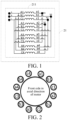
- FIG. 1 is a schematic diagram of a circuit structure of the motor coil 211 when x is 1, m x is 3, and n x is 4 according to this embodiment.
- the motor coil 211 includes one set of windings.
- the set of windings include three phase windings: a first phase winding A, a second phase winding B, and a third phase winding C.
- Each phase winding includes four coil branches. First ends (which are respectively A1, A2, A3, and A4) of the coil branches in the first phase winding A are connected together to form a first phase endpoint. First ends (which are respectively B1, B2, B3, and B4) of the coil branches in the second phase winding B are connected together to form a second phase endpoint. First ends (which are respectively C1, C2, C3, and C4) of the coil branches in the third phase winding C are connected together to form a third phase endpoint.
- a second end of each of the four coil branches of each phase winding is connected with a second end of a coil branch separated from the coil branch by an electrical angle of 480 degrees to form four neutral points.
- P is 1
- k 1 is 1.
- a second end al of a first coil branch of the first phase winding A, a second end b2 of a second coil branch of the second phase winding B, and a second end c3 of a third coil branch of the third phase winding are connected together to form a first neutral point N1.
- a second end a2 of a second coil branch of the first phase winding A, a second end b3 of a third coil branch of the second phase winding B, and a second end c4 of a fourth coil branch of the third phase winding C are connected together to form a second neutral point N2.
- a second end c1 of a first coil branch of the third phase winding C, a second end a3 of a third coil branch of the first phase winding A, and a second end b4 of a fourth coil branch of the second phase winding B are connected together to form a third neutral point N3.
- a second end b1 of a first coil branch of the second phase winding B, a second end c2 of a second coil branch of the third phase winding C, and a second end a4 of a fourth coil branch of the first phase winding A are connected together to form a fourth neutral point N4.
- any two of a first coil branch of a first phase coil A, a first coil branch of a second phase coil B, and a first coil branch of a third phase coil C are spatially spaced apart to form two overlapping circuits, and a mutual inductance effect is generated between the two by using the overlapping circuits.
- projections, on an end portion of the motor 21, of the first end of each of the n x coil branches of each phase winding and the first end of the coil branch separated from the coil branch by the electrical angle of 360 degrees are arranged in a circle.
- the first end and the second end of each coil branch are opposite to each other in an axial direction of the motor 21.
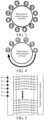
- the motor coil 211 shown in FIG. 1 is used as an example.
- a front-side structure of the one set of windings is shown in FIG. 2
- a back-side structure of the set of windings is shown in FIG. 3 .
- projections, on the end portion of the motor 21, of the first end of each of the four coil branches of each coil and the first end of the coil branch separated from the coil branch by the electrical angle of 360 degrees are arranged in a circle.
- the first end and the second end of each coil branch are opposite to each other in the axial direction of the motor 21.
- Cyclic arrangement into a circle from the 1 st phase to the m x th phase means that all phase coil branches are arranged from the 1 st phase to the m x th phase in ascending order, and the operation is cyclically repeated from the 1 st phase to the m x th phase.
- An arrangement direction of each cycle on the circle is clockwise or counterclockwise.
- the motor coil 211 shown in FIG. 1 is used as an example.
- a projection of the end portion of the motor is shown in FIG. 4 .
- projections of second ends of 12 coil branches on the end portion of the motor are cyclically arranged in a circle according from the first phase winding A to the third phase winding C. Electrical angles of the two coil branches in one phase winding arranged adjacent to each other differ by 360 degrees. Electrical angles of two adjacent coil branches in four coil branches within a same cycle differs by 90 degrees.
- the cycle herein is specifically composed of a coil branch in each phase winding, and a sequence is an arrangement direction of the projections of all phase windings on the end portion.
- a cycle is composed of a coil branch in each phase winding, and four cycles are formed.
- the arrangement direction of all phase windings is A, B, and C in a clockwise direction.
- the arrangement direction of all phase windings are C, B, and A in a counterclockwise direction.
- One cycle in the motor coil 211 is a4, b4, and c4.
- the clockwise arrangement sequence is a4, b4, and c4.
- the counterclockwise arrangement sequence is a4, b4, and c4.
- the current passes through the motor coil 211, the energy losses can be reduced, and the control of the current ripples is enhanced.
- An embodiment of the invention provides a motor 22.
- the motor 22 includes a motor coil 221.
- the motor 22 includes the motor coil 221.
- the motor coil 221 includes x sets of windings, x ⁇ 1, and x is an integer. A number of phases of each of the x sets of windings is m.
- the x sets of windings include x * m phase windings.
- the motor is caused to operate by controlling each set of m-phase winding by motor vector control.
- each phase winding includes n coil branches. Each of the n coil branches of each phase winding is connected with a coil branch separated from the coil branch by an electrical angle of 360 degrees to form x * m phase endpoints.
- FIG. 5 is a schematic diagram of a circuit structure of the motor coil 221 when x is 1, m is 6, and n is 7 according to this embodiment.
- the motor coil 221 includes one set of windings.
- the set of windings include six phase windings: a first phase winding A, a second phase winding B, a third phase winding C, a fourth phase winding D, a fifth phase winding E, and a sixth phase winding F.
- Each phase winding includes seven coil branches. First ends (which are respectively A1, A2, A3, A4, A5, A6, and A7) of all of the coil branches in the first phase winding A are connected together to form a first phase endpoint. First ends (which are respectively B1, B2, B3, B4, B5, B6, and B7) of the coil branches in the second phase winding B are connected together to form a second phase endpoint.
- First ends (which are respectively C1, C2, C3, C4, C5, C6, and C7) of the coil branches in the third phase winding C are connected together to form a third phase endpoint.
- First ends (which are respectively D1, D2, D3, D4, D5, D6, and D7) of the coil branches in the fourth phase winding U are connected together to form a fourth phase endpoint.
- First ends (which are respectively E1, E2, E3, E4, E5, E6, and E7) of the coil branches in the fifth phase winding V are connected together to form a fifth phase endpoint.
- First ends (which are respectively F1, F2, F3, F4, F5, F6, and F7) of the coil branches in the sixth phase winding W are connected together to form a sixth phase endpoint.
- FIG. 5 does not show a method for connecting neutral points N formed by the second ends of all of the coil branches in each phase winding.
- the method specifically includes the following: A second end a1 of a first coil branch of the first phase winding A, a second end b2 of a second coil branch of the second phase winding B, a second end c3 of a third coil branch of the third phase winding C, a second end d4 of a fourth coil branch of the fourth phase winding D, a second end e5 of a fifth coil branch of a fifth phase winding E, and a second end f6 of a sixth coil branch of the sixth phase winding F are connected together to form a first neutral point N1.
- a second end a2 of a second coil branch of the first phase winding A, a second end b3 of a third coil branch of the second phase winding B, a second end c4 of a fourth coil branch of the third phase winding C, a second end d5 of a fifth coil branch of the fourth phase winding D, a second end e6 of a sixth coil branch of the fifth phase winding E, and a second end f7 of a seventh coil branch of the sixth phase winding F are connected together to form a second neutral point N2.
- a second end a3 of a third coil branch of the first phase winding A, a second end b4 of a fourth coil branch of the second phase winding B, a second end c5 of a fifth coil branch of the third phase winding C, a second end d6 of a sixth coil branch of the fourth phase winding D, a second end e7 of a seventh coil branch of the fifth phase winding E, and a second end f1 of a first coil branch of the sixth phase winding F are connected together to form a second neutral point N3.
- a second end a4 of a fourth coil branch of the first phase winding A, a second end b5 of a fifth coil branch of the second phase winding B, a second end c6 of a sixth coil branch of the third phase winding C, a second end d7 of a seventh coil branch of the fourth phase winding D, a second end e1 of a first coil branch of the fifth phase winding E, and a second end f2 of a second coil branch of the sixth phase winding F are connected together to form a second neutral point N4.
- a second end a6 of a sixth coil branch of the first phase winding A, a second end b7 of a seventh coil branch of the second phase winding B, a second end c1 of a first coil branch of the third phase winding C, a second end d2 of a second coil branch of the fourth phase winding D, a second end e3 of a third coil branch of the fifth phase winding E, and a second end f4 of a fourth coil branch of the sixth phase winding F are connected together to form a second neutral point N6.
- a second end a7 of a seventh coil branch of the first phase winding A, a second end b1 of a first coil branch of the second phase winding B, a second end c2 of a second coil branch of the third phase winding C, a second end d3 of a third coil branch of the fourth phase winding D, a second end e4 of a fourth coil branch of the fifth phase winding E, and a second end f5 of a fifth coil branch of the sixth phase winding F are connected together to form a second neutral point N7.
- a phase line of one set of windings is staggered from a phase line of another set of windings, a second end of a coil branch of the set of windings is connected with a second end of a coil branch separated by an electrical angle of P * (360 * k 2 + 360/(x * m)) degrees in the another set of windings, to form n neutral points.
- a structure of the motor coil 211 is described below by using x being 2, m x being 3, and n x being 3 as an example.
- FIG. 9 is a schematic diagram of a circuit structure of the motor coil 221 when x is 2, m is 3, and n is 3 according to this embodiment.
- the motor coil 221 includes a first set of windings 2211 and a second set of windings 2212.
- Each set of windings include three phase windings.
- the three phase windings of the first set of windings are respectively a first phase winding A, a second phase winding B, and a third phase winding C.
- the three phase windings of the second set of windings are respectively a fourth phase winding U, a fifth phase winding V, and a sixth phase winding W.
- Each phase winding includes three coil branches. First ends (which are respectively A1, A2, and A3) of all of the coil branches in the first phase winding A are connected together to form a first phase endpoint.
- First ends (which are respectively B1, B2, and B3) of all of the coil branches in the second phase winding B are connected together to form a second phase endpoint.
- First ends (which are respectively C1, C2, and C3) of all of the coil branches in the third phase winding C are connected together to form a third phase endpoint.
- First ends (which are respectively U1, U2, and U3) of all of the coil branches in the fourth phase winding U are connected together to form a fourth phase endpoint.
- First ends (which are respectively V1, V2, and V3) of all of the coil branches in the fifth phase winding V are connected together to form a fifth phase endpoint.
- First ends (which are respectively W1, W2, and W3) of all of the coil branches in the sixth phase winding W are connected together to form a sixth phase endpoint.
- a second end of each of the four coil branches of each phase winding is connected with a second end of a coil branch separated from the coil branch by an electrical angle of 420 degrees, to form four neutral points.
- P is 1
- k 2 is 1.
- projections, on the end portion of the motor, of a first end of each of the n coil branches of each phase winding and a first end of a coil branch separated from the coil branch by an electrical angle of 360 degrees are arranged in a circle.
- the first end and the second end of each coil branch are opposite to each other in an axial direction of the motor.
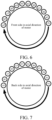
- the motor coil 221 for which x is 1, m is 6, and n is 7 is used as an example. As shown in FIG. 6 and FIG. 7 , projections, on an end portion of the motor, of a first end of each of the n coil branches and a first end of a coil branch separated from the coil branch by an electrical angle of 360 degrees are arranged in a circle.
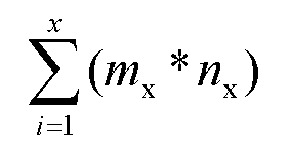
- projections of second ends of m * n coil branches on the end portion of the motor are cyclically arranged in a circle from a 1 st phase to an (x * m) th phase, electrical angles of two coil branches in one phase winding arranged adjacent to each other differ by 360 degrees, and electrical angles of two adjacent coil branches in x * m coil branches within a same cycle differ by 360/(x * m) degrees.
- the motor coil 221 for which x is 1, m is 6, and n is 7 is as an example.
- projections of second ends of m * n coil branches on the end portion of the motor are cyclically arranged in a circle from a 1 st phase to an (x * m) th phase.
- projections of second ends of m * n coil branches on the end portion of the motor are cyclically arranged in a circle from a 1st phase to an (x * m)th phase, electrical angles of two coil branches in one phase winding arranged adjacent to each other differ by 360 degrees, and electrical angles of two adjacent coil branches in n x coil branches within a same cycle differ by 360/(x * m) degrees.
- the invention further provides an energy conversion device 4.
- the energy conversion device 4 includes a motor 2 and a reversible pulse-width modulation (PWM) rectifier 41.
- PWM pulse-width modulation
- the reversible PWM rectifier 41 is connected with the motor 2.
- a charging circuit or a discharging circuit is formed by an external charging port or a discharging port 5 and an external battery 6 by using the energy conversion device 4.
- a driving circuit is formed by the external battery 6 and the energy conversion device 4.
- the motor 2 and the reversible PWM rectifier 41 are both connected with the external charging port or the discharging port 5.
- the reversible PWM rectifier 41 is connected with the external battery 6.
- the reversible PWM rectifier 41 is configured to convert a DC inputted by the battery 6 into an AC, to drive the motor 2 to operate.
- the reversible PWM rectifier 41 is configured to boost the DC in cooperation with the motor 2 and output the boosted DC, so as to charge the battery.
- the reversible PWM rectifier 41 causes the DC inputted by the battery 6 to be discharged through the discharging port 5.
- the motor 2 is configured to receive the AC inputted by the reversible PWM rectifier 41, to achieve driving. In the above charging circuit, the motor 2 is configured to boost the DC in cooperation with the reversible PWM rectifier 41. In the above charging circuit, the motor 2 causes the DC inputted by the battery 6 to be discharged through the discharging port 5.
- the motor 2 may be the motor 21, or may be the motor 22.
- the motor 2 includes a motor coil.
- the motor coil may be the motor coil 211, or may be the motor coil 221. No specific limitation is imposed herein.
- the motor 2 and the reversible PWM rectifier 41 by means of the motor 2 and the reversible PWM rectifier 41, the boosting of the DC can be realized in the charging circuit, and by means of the battery 6 and the reversible PWM rectifier 41, the driving of the motor 2 can be achieved. Therefore, the motor 2 and the reversible PWM rectifier 41 are reused. In this way, the circuit integration level is enhanced, the circuit structure is simplified, thereby reducing the size and the costs.
- the reversible PWM rectifier 41 includes K groups of M x bridge arms.
- a midpoint of at least one bridge arm in a group of M x bridge arms is connected with a phase endpoint. Any two phase endpoints are connected with different bridge arms.
- a first end and a second end of each bridge arm in the K groups of M x bridge arms 41 are connected together to form a first bus terminal and a second bus terminal, M x ⁇ m x , M x ⁇ m, K ⁇ x, and K and M x are both integers.
- the external charging port or the discharging port 5 is connected with a neutral line led out from a neutral point of the motor and the second bus terminal.
- the first bus terminal is connected with a positive electrode of the battery 6, and the second bus terminal is connected with a negative electrode of the battery 6.
- K being 1 and M x being 3 is used as an example.
- the reversible PWM rectifier 41 includes a group of three bridge arms. Each bridge arm includes two power switches connected in series.
- the motor 2 includes three phase windings. Each phase winding includes four coil branches and forms three phase endpoints: A, B, and C.
- the three phase endpoints are connected with midpoints of the three bridge arms in a one-to-one correspondence. First ends of all of the bridge arms are connected together to form the first bus terminal, and then connected with the positive electrode of the battery 6. Second terminals of all of the bridge arms are connected together to form the second bus terminal, and then connected with the negative electrode of the battery 6.
- a bridge arm in the reversible PWM rectifier 41 converts the DC into an AC and inputs the AC to one phase winding, so as to drive the motor 2 to operate.
- Other two phase windings output an AC, and the two bridge arms connected with the other two phase windings convert the AC into a DC, and return the DC to the battery 6.
- a power switch VT4 when the charging port or the discharging port 5 inputs a DC, a power switch VT4 is controlled to turn on and a power switch VT1 to turn off, so that an energy storage circuit is formed by the charging port or the discharging port 5, the first phase winding A, and the power switch VT4, and the first phase winding A completes energy storage.
- the power switch VT4 is turned off, and the power switch VT1 is turned on, an energy releasing circuit is formed by the charging port or the discharging port 5, the first phase winding A, the power switch VT1, and the battery 6.
- the power switch VT1 outputs the boosted DC to charge the battery 6.
- a manner in which a power switch VT3 and a power switch VT5 output a DC is same as the manner in which the power switch VT4 outputs the boosted DC, which is not described herein.
- the reversible PWM rectifier 41 and the motor 2 cause the DC to be discharged through the charging port or the discharging port 5.
- the discharging process is opposite to the above charging process, which is not described herein.
- the DC outputted by the charging port or the discharging port 5 is converted into the boosted DC for charging the battery 6.
- the DC is converted by the reversible PWM rectifier 41 into an AC to drive the motor 2.
- Discharging may be further achieved by the motor 2 and the reversible PWM rectifier 41. Therefore, the reuse of the reversible PWM rectifier 41 and the motor 2 in the driving circuit and the charging and discharging circuits is realized. In this way, the circuit integration level is enhanced, and the circuit structure is simplified, thereby reducing the size and the costs.
- At least one neutral line is led out from one of the neutral points of each set of windings.
- the neutral line may be a neutral line led out from one or more neutral points that are connected together, or may be a plurality of neutral lines correspondingly led out from a plurality of neutral points one by one.
- a number of connected neutral points is controlled by using the neutral line, to control the inductance formed by the motor coil in the motor 2. In this way, in different charging and discharging conditions, different numbers of neutral points are connected, to satisfy different charging power requirements.
- the inductance formed by the motor coil in the motor 2 can be controlled, so that the power requirements in different circuit conditions can be satisfied.
- the charging port 5 is a DC charging port 51.
- one end of the DC charging port 51 is connected with the neutral line, and an other end of the DC charging port 51 is connected with the second bus terminal of the reversible PWM rectifier 41.
- a DC charging circuit for charging the battery 6 or a DC discharging circuit is formed by the DC charging port 51, the motor coil, and the reversible PWM rectifier 41.
- the DC charging circuit and the DC discharging circuit have been described above, and therefore are not described herein again.
- the DC outputted by the DC charging port 51 is converted into the boosted DC for charging the battery 6.
- the DC is converted by the reversible PWM rectifier 41 into an AC to drive the motor 2. Discharging may be further achieved by the motor 2 and the reversible PWM rectifier 41. Therefore, the reuse of the reversible PWM rectifier 41 and the motor 2 in the driving circuit and the charging and discharging circuits is realized. In this way, the circuit integration level is enhanced, and the circuit structure is simplified, thereby reducing the size and the costs.
- the energy conversion device 4 further includes a two-way bridge arm 42.
- the charging port or the discharging port 5 includes an AC discharging port 52.
- One end of the AC discharging port 52 is connected with the motor 2 by the neutral line.
- the two-way bridge arm 42 is connected between the first bus terminal of the reversible PWM rectifier 41 and the second bus terminal of the reversible PWM rectifier 41.
- An other end of the AC discharging port 52 is connected with a midpoint of the two-way bridge arm 42.
- the two-way bridge arm 42 includes a power switch VT7 and a power switch VT8 connected in series. A midpoint between the power switch VT7 and the power switch VT8 is used as the midpoint of the two-way bridge arm 42.
- the AC charging port 52 inputs an AC.
- the three bridge arms in the reversible PWM rectifier respectively form rectifier full bridges with the two-way bridge arm 41, and convert the AC inputted by the AC charging port 52 into a DC.
- the reversible PWM rectifier cooperates with the motor coil, so that the motor coil can implement the energy storage and energy releasing processes.
- the boosted DC is outputted by the three bridge arms in the reversible PWM rectifier and the two-way bridge arm 41.
- the charging port or the discharging port 5 includes a DC charging port 51 and an AC discharging port 52.
- the energy conversion device 4 includes a two-way bridge arm 42.
- one end of the DC charging port 51 is connected with the neutral line, and an other end of the DC charging port 51 is connected with the second bus terminal of the reversible PWM rectifier 41.
- One end of the AC discharging port 52 is connected with the motor 2 by the neutral line.
- the two-way bridge arm 42 is connected between the first bus terminal of the reversible PWM rectifier 41 and the second bus terminal of the reversible PWM rectifier 41.
- An other end of the AC discharging port 52 is connected with a midpoint of the two-way bridge arm 42.
- the two-way bridge arm 42 includes a power switch VT7 and a power switch VT8 connected in series. A midpoint between the power switch VT7 and the power switch VT8 is used as the midpoint of the two-way bridge arm 42.
- the AC charging port 52 inputs an AC.
- the three bridge arms in the reversible PWM rectifier respectively form rectifier full bridges with the two-way bridge arm 41, and convert the AC inputted by the AC charging port 52 into a DC.
- the AC charging port cooperates with the motor coil, so that the motor coil can implement the energy storage and energy releasing processes.
- the boosted DC is outputted by the three bridge arms in the reversible PWM rectifier and the two-way bridge arm 41.
- ADC charging circuit for charging the battery 6 or a DC discharging circuit is formed by the DC charging port 51, the motor coil, and the reversible PWM rectifier 41.
- the DC charging circuit and the DC discharging circuit have been described above, and therefore are not described herein again.
- the DC outputted by the DC charging port 51 is converted into the boosted DC for charging the battery 6, and AC charging and AC discharging can be achieved by using the energy conversion device 4.
- the DC is converted by the reversible PWM rectifier 41 into an AC to drive the motor 2. Discharging may be further achieved by the motor 2 and the reversible PWM rectifier 41. Therefore, the reuse of the reversible PWM rectifier 41 and the motor 2 in the driving circuit, the AC the charging and discharging circuits, and the DC charging and discharging circuits is realized.
- a number of connected neutral points may be controlled to control the inductance of the motor coil, so as to satisfy different charging power requirements.
Landscapes
- Engineering & Computer Science (AREA)
- Power Engineering (AREA)
- Transportation (AREA)
- Mechanical Engineering (AREA)
- Windings For Motors And Generators (AREA)
- Charge And Discharge Circuits For Batteries Or The Like (AREA)
Description
- The invention belongs to the field of electronic techniques, and more specifically, to a motor and an energy conversion device therefor.
- Currently, a motor coil in a motor is generally formed by a plurality of phase coils. First ends of each phase coil are connected together to form a motor coil connection point, and second ends of each phase coils are connected with a driving circuit. Although the motor coil structure can realize the driving of the motor, when a current passes through the motor coil, a mutual inductance effect is generated between the phase coils, impeding control of the current ripples and reduction of the losses, and affecting the working performance of the motor.
-
CN104393699A discloses a motor with a plurality of phase coils. - According to the invention, provided are motors and an energy conversion device according to the independent claims; dependent claims relate to preferred embodiments The invention is intended to provide a motor, to resolve large energy losses and low working performance of a motor caused by a motor coil in the related art.
- The invention is implemented as follows. A motor includes a motor coil. The motor coil includes x sets of windings, x ≥ 1, and x is an integer.
- A number of phases of an xth set of windings is mx. The motor is caused to operate by controlling each set of mx -phase windings by motor vector control.
- In each of the x sets of windings, each phase winding includes nx coil branches.
- A first end of each of the nx coil branches of each phase winding is connected with a first end of a coil branch separated from the coil branch by an electrical angle of 360 degrees, to form mx phase endpoints.
- A second end of each of the nx coil branches of each phase winding is further connected with a second end of a coil branch separated from the coil branch by an electrical angle of P * (360 * k1 + 360/ mx ) degrees, to form nx neutral points.
- nx ≥ mx ≥ 2, nx ≥ 3, p = ± 1, 1 ≤ k1 ≤ (nx -1), and mx, nx, and k1 are all integers.
- The invention is further intended to provide a motor. The motor includes a motor coil. The motor coil includes x sets of windings, x ≥ 1, and x is an integer.
- A number of phases of each of the x sets of windings is m. The x sets of windings include x * m phase windings. The motor is caused to operate by controlling each set of m-phase windings by motor vector control.
- In the x * m phase windings, each phase winding includes n coil branches.
- Each of the n coil branches of each phase winding is connected with a coil branch separated from the coil branch by an electrical angle of 360 degrees, to form x * m phase endpoints.
- Each of the n coil branches of each phase winding is further connected with a coil branch separated from the coil branch by an electrical angle of P * (360 * k2 + 360/(x * m)) degrees, to form n neutral points, n ≥ x * m, m ≥ 2, n ≥ 3, p = ± 1, 1 ≤ k2 ≤ (n-1), and m, n, and k2 are all integers.
- The invention further provides an energy conversion device. The energy conversion device includes the above motor and a reversible pulse-width modulation (PWM) rectifier.
- A charging circuit or a discharging circuit is formed by an external charging port or a discharging port and an external battery by using the energy conversion device. A driving circuit is formed by the external battery and the energy conversion device. The motor and the reversible PWM rectifier are both connected with the external charging port or the discharging port. The reversible PWM rectifier is connected with the external battery.
- In the invention, by using the motor coil including the x sets of windings in the motor, a mutual inductance effect generated between the windings when a current passes through the windings can be reduced. Therefore, the capability of controlling current ripples is improved, energy losses of the motor coil are reduced. In this way, the large energy losses and the impedance in the control of the current ripples of the motor coil in the related art are resolved.
-
-
FIG. 1 is a schematic diagram of an exemplary structure of a motor coil according to a first embodiment of the invention. -
FIG. 2 is a schematic diagram of an exemplary structure of a motor coil according to a second embodiment of the invention. -
FIG. 3 is a schematic diagram of another exemplary structure of the motor coil according to the second embodiment of the invention. -
FIG. 4 is a schematic diagram of still another exemplary structure of the motor coil according to the second embodiment of the invention. -
FIG. 5 is a schematic diagram of an exemplary structure of a motor coil according to a third embodiment of the invention. -
FIG. 6 is a schematic diagram of another exemplary structure of the motor coil according to the third embodiment of the invention. -
FIG. 7 is a schematic diagram of still another exemplary structure of the motor coil according to the third embodiment of the invention. -
FIG. 8 is a schematic diagram of yet another exemplary structure of the motor coil according to the third embodiment of the invention. -
FIG. 9 is a schematic diagram of an exemplary structure of a motor coil according to a fourth embodiment of the invention. -
FIG. 10 is a schematic diagram of a module structure of a device according to a fifth embodiment of the invention. -
FIG. 11 is a schematic diagram of a circuit structure of a device according to a sixth embodiment of the invention. -
FIG. 12 is a schematic diagram of a circuit structure of a device according to a seventh embodiment of the invention. -
FIG. 13 is a schematic diagram of a circuit structure of a device according to an eighth embodiment of the invention. -
FIG. 14 is a schematic diagram of a circuit structure of a device according to a ninth embodiment of the invention. - To make the objectives, technical solutions and advantages of the present invention more apparent and clearer, the following describes the present invention in further detail with reference to the accompanying drawings and embodiments. It should be understood that the specific embodiments described therein are merely used for explain the present invention instead of limiting the present invention.
- The following describes implementations of the present invention in detail with reference to specific accompanying drawings.
- An embodiment of the invention provides a
motor 21. Themotor 21 includes amotor coil 211. - Specifically, the
motor coil 211 includes x sets of windings, x ≥ 1, and x is an integer. A number of phases of an xth set of windings is mx. The motor is caused to operate by controlling each set of mx -phase winding by motor vector control. In each of the x sets of windings, each phase winding includes nx coil branches. A first end of each of the nx coil branches of each phase winding is connected with a first end of a coil branch separated from the coil branch by an electrical angle of 360 degrees, to form mx phase endpoints. A second end of each of the nx coil branches of each phase winding is further connected with a second end of a coil branch separated from the coil branch by an electrical angle of P * (360 * k1 + 360/ mx ) degrees, to form nx neutral points, nx ≥ mx ≥ 2, nx ≥ 3, p = ± 1, 1 ≤ k1 ≤ (nx -1), and mx, nx , and k1 are all integers. - In order to understand a structure of the
motor coil 211 more clearly, the structure of themotor coil 211 is described below by using x being 1, mx being 3, and nx being 4 as an example. -
FIG. 1 is a schematic diagram of a circuit structure of themotor coil 211 when x is 1, mx is 3, and nx is 4 according to this embodiment. - Specifically, referring to
FIG. 1 , themotor coil 211 includes one set of windings. The set of windings include three phase windings: a first phase winding A, a second phase winding B, and a third phase winding C. Each phase winding includes four coil branches. First ends (which are respectively A1, A2, A3, and A4) of the coil branches in the first phase winding A are connected together to form a first phase endpoint. First ends (which are respectively B1, B2, B3, and B4) of the coil branches in the second phase winding B are connected together to form a second phase endpoint. First ends (which are respectively C1, C2, C3, and C4) of the coil branches in the third phase winding C are connected together to form a third phase endpoint. - Further, a second end of each of the four coil branches of each phase winding is connected with a second end of a coil branch separated from the coil branch by an electrical angle of 480 degrees to form four neutral points. In this case, P is 1, and k1 is 1. Specifically, referring to
FIG. 1 , a second end al of a first coil branch of the first phase winding A, a second end b2 of a second coil branch of the second phase winding B, and a second end c3 of a third coil branch of the third phase winding are connected together to form a first neutral point N1. A second end a2 of a second coil branch of the first phase winding A, a second end b3 of a third coil branch of the second phase winding B, and a second end c4 of a fourth coil branch of the third phase winding C are connected together to form a second neutral point N2. A second end c1 of a first coil branch of the third phase winding C, a second end a3 of a third coil branch of the first phase winding A, and a second end b4 of a fourth coil branch of the second phase winding B are connected together to form a third neutral point N3. A second end b1 of a first coil branch of the second phase winding B, a second end c2 of a second coil branch of the third phase winding C, and a second end a4 of a fourth coil branch of the first phase winding A are connected together to form a fourth neutral point N4. - Specifically, when a current passes through the
motor coil 211, any two of a first coil branch of a first phase coil A, a first coil branch of a second phase coil B, and a first coil branch of a third phase coil C are spatially spaced apart to form two overlapping circuits, and a mutual inductance effect is generated between the two by using the overlapping circuits. - In this embodiment, by means of staggered winding in the
motor coil 211, the mutual inductance effect generated when the current passes through themotor coil 211 can be effectively reduced. Therefore, equivalent inductance can be increased, so that the inductance of themotor coil 211 is increased. In this way, the control of the current ripples is enhanced, and the energy losses of the motor coil are reduced, thereby resolving the large energy losses and the impedance in the control of the current ripples of the motor coil in the related art. - Further, as an implementation of the invention, in each set of windings, projections, on an end portion of the
motor 21, of the first end of each of the nx coil branches of each phase winding and the first end of the coil branch separated from the coil branch by the electrical angle of 360 degrees are arranged in a circle. The first end and the second end of each coil branch are opposite to each other in an axial direction of themotor 21. - In order to understand the structure of the
motor coil 211 more clearly, themotor coil 211 shown inFIG. 1 is used as an example. In this case, a front-side structure of the one set of windings is shown inFIG. 2 , and a back-side structure of the set of windings is shown inFIG. 3 . - As shown in
FIG. 2 andFIG. 3 , projections, on the end portion of themotor 21, of the first end of each of the four coil branches of each coil and the first end of the coil branch separated from the coil branch by the electrical angle of 360 degrees are arranged in a circle. The first end and the second end of each coil branch are opposite to each other in the axial direction of themotor 21. - In this embodiment, by arranging the projections, on the end portion of the
motor 21, of the first end of each of the nx coil branches of each phase winding and the first end of the coil branch separated from the coil branch by the electrical angle of 360 degrees in a circle, an occupied area of the motor coil can be effectively reduced, and a space utilization for themotor coil 211 in themotor 21 can be increased. - Further, as an implementation of the invention, when a number mx of phases x of each set of windings is equal, projections of second ends of
- Cyclic arrangement into a circle from the 1st phase to the mx th phase means that all phase coil branches are arranged from the 1st phase to the mx th phase in ascending order, and the operation is cyclically repeated from the 1st phase to the mx th phase. An arrangement direction of each cycle on the circle is clockwise or counterclockwise.
- In order to understand the content of this implementation more clearly, the
motor coil 211 shown inFIG. 1 is used as an example. In this case, a projection of the end portion of the motor is shown inFIG. 4 . - As shown in
FIG. 4 , projections of second ends of 12 coil branches on the end portion of the motor are cyclically arranged in a circle according from the first phase winding A to the third phase winding C. Electrical angles of the two coil branches in one phase winding arranged adjacent to each other differ by 360 degrees. Electrical angles of two adjacent coil branches in four coil branches within a same cycle differs by 90 degrees. - It is to be noted that, the cycle herein is specifically composed of a coil branch in each phase winding, and a sequence is an arrangement direction of the projections of all phase windings on the end portion. For example, in the
motor coil 211 shown inFIG. 1 , a cycle is composed of a coil branch in each phase winding, and four cycles are formed. The arrangement direction of all phase windings is A, B, and C in a clockwise direction. The arrangement direction of all phase windings are C, B, and A in a counterclockwise direction. One cycle in themotor coil 211 is a4, b4, and c4. The clockwise arrangement sequence is a4, b4, and c4. The counterclockwise arrangement sequence is a4, b4, and c4. - As a preferred solution of this embodiment, a coil branch corresponding to an mx th phase of one of the cycles is not connected with a coil branch corresponding to a first phase of a next cycle, a coil branch corresponding to a first phase of one of the cycles is not connected with a coil branch corresponding to an mx th phase of a last cycle, and a coil branch corresponding to a first phase of a first cycle is not connected with a coil branch corresponding to an mx th phase x of a
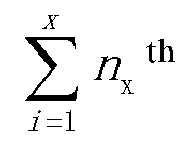
- In this embodiment, when the number mx of phases of each set of windings is x equal, the projections of the second ends of the

motor coil 211 on the end portion of the motor are cyclically arranged in a circle from the 1st phase to the mx th phase, the electrical angles of the two coil branches in one phase winding arranged adjacent to each other differ by 360 degrees, and the electrical angles of the two adjacent coil branches in the nx coil branches within a same cycle differ by 360/mx degrees. In this way, when the current passes through themotor coil 211, the energy losses can be reduced, and the control of the current ripples is enhanced. - An embodiment of the invention provides a
motor 22. Themotor 22 includes amotor coil 221. - Specifically, the
motor 22 includes themotor coil 221. Themotor coil 221 includes x sets of windings, x ≥ 1, and x is an integer. A number of phases of each of the x sets of windings is m. The x sets of windings include x * m phase windings. The motor is caused to operate by controlling each set of m-phase winding by motor vector control. In the x * m phase windings, each phase winding includes n coil branches. Each of the n coil branches of each phase winding is connected with a coil branch separated from the coil branch by an electrical angle of 360 degrees to form x * m phase endpoints. Each of the n coil branches of each phase winding is further connected with a coil branch separated from the coil branch by an electrical angle of P * (360 * k2 + 360/(x * m)) degrees to form n neutral points, n ≥ x * m, m ≥ 2, n ≥ 3, p = ± 1, 1 ≤ k2 ≤ (n-1), and m, n, and k2 are all integers. - In order to understand the structure of the
motor coil 221 more clearly, the structure of themotor coil 221 is described below by using x being 1, mx being 6, and nx being 7 as an example. -
FIG. 5 is a schematic diagram of a circuit structure of themotor coil 221 when x is 1, m is 6, and n is 7 according to this embodiment. - Specifically, referring to
FIG. 5 , themotor coil 221 includes one set of windings. The set of windings include six phase windings: a first phase winding A, a second phase winding B, a third phase winding C, a fourth phase winding D, a fifth phase winding E, and a sixth phase winding F. Each phase winding includes seven coil branches. First ends (which are respectively A1, A2, A3, A4, A5, A6, and A7) of all of the coil branches in the first phase winding A are connected together to form a first phase endpoint. First ends (which are respectively B1, B2, B3, B4, B5, B6, and B7) of the coil branches in the second phase winding B are connected together to form a second phase endpoint. First ends (which are respectively C1, C2, C3, C4, C5, C6, and C7) of the coil branches in the third phase winding C are connected together to form a third phase endpoint. First ends (which are respectively D1, D2, D3, D4, D5, D6, and D7) of the coil branches in the fourth phase winding U are connected together to form a fourth phase endpoint. First ends (which are respectively E1, E2, E3, E4, E5, E6, and E7) of the coil branches in the fifth phase winding V are connected together to form a fifth phase endpoint. First ends (which are respectively F1, F2, F3, F4, F5, F6, and F7) of the coil branches in the sixth phase winding W are connected together to form a sixth phase endpoint. - Further, a second end of each of the four coil branches of each phase winding is connected with a second end of a coil branch separated from the coil branch by an electrical angle of 420 degrees to form four neutral points. In this case, P is 1, and k2 is 1. Specifically, referring to
FIG. 5, FIG. 5 does not show a method for connecting neutral points N formed by the second ends of all of the coil branches in each phase winding. The method specifically includes the following: A second end a1 of a first coil branch of the first phase winding A, a second end b2 of a second coil branch of the second phase winding B, a second end c3 of a third coil branch of the third phase winding C, a second end d4 of a fourth coil branch of the fourth phase winding D, a second end e5 of a fifth coil branch of a fifth phase winding E, and a second end f6 of a sixth coil branch of the sixth phase winding F are connected together to form a first neutral point N1. A second end a2 of a second coil branch of the first phase winding A, a second end b3 of a third coil branch of the second phase winding B, a second end c4 of a fourth coil branch of the third phase winding C, a second end d5 of a fifth coil branch of the fourth phase winding D, a second end e6 of a sixth coil branch of the fifth phase winding E, and a second end f7 of a seventh coil branch of the sixth phase winding F are connected together to form a second neutral point N2. A second end a3 of a third coil branch of the first phase winding A, a second end b4 of a fourth coil branch of the second phase winding B, a second end c5 of a fifth coil branch of the third phase winding C, a second end d6 of a sixth coil branch of the fourth phase winding D, a second end e7 of a seventh coil branch of the fifth phase winding E, and a second end f1 of a first coil branch of the sixth phase winding F are connected together to form a second neutral point N3. A second end a4 of a fourth coil branch of the first phase winding A, a second end b5 of a fifth coil branch of the second phase winding B, a second end c6 of a sixth coil branch of the third phase winding C, a second end d7 of a seventh coil branch of the fourth phase winding D, a second end e1 of a first coil branch of the fifth phase winding E, and a second end f2 of a second coil branch of the sixth phase winding F are connected together to form a second neutral point N4. A second end a5 of a fifth coil branch of the first phase winding A, a second end b6 of a sixth coil branch of the second phase winding B, a second end c7 of a seventh coil branch of the third phase winding C, a second end d1 of a first coil branch of the fourth phase winding D, a second end e2 of a second coil branch of the fifth phase winding E, and a second end f3 of a third coil branch of the sixth phase winding F are connected together to form a second neutral point N5. A second end a6 of a sixth coil branch of the first phase winding A, a second end b7 of a seventh coil branch of the second phase winding B, a second end c1 of a first coil branch of the third phase winding C, a second end d2 of a second coil branch of the fourth phase winding D, a second end e3 of a third coil branch of the fifth phase winding E, and a second end f4 of a fourth coil branch of the sixth phase winding F are connected together to form a second neutral point N6. A second end a7 of a seventh coil branch of the first phase winding A, a second end b1 of a first coil branch of the second phase winding B, a second end c2 of a second coil branch of the third phase winding C, a second end d3 of a third coil branch of the fourth phase winding D, a second end e4 of a fourth coil branch of the fifth phase winding E, and a second end f5 of a fifth coil branch of the sixth phase winding F are connected together to form a second neutral point N7. - In this embodiment, by means of staggered winding in the
motor coil 221, the mutual inductance effect generated when the current passes through themotor coil 221 can be effectively reduced. Therefore, equivalent inductance can be increased, so that the inductance of themotor coil 221 is increased. In this way, the control of the current ripples is enhanced, and the energy losses of the motor coil are reduced, thereby resolving the large energy losses and the impedance in the control of the current ripples of the motor coil in the related art. - Further, as an implementation of the invention, a phase line of one set of windings is staggered from a phase line of another set of windings, a second end of a coil branch of the set of windings is connected with a second end of a coil branch separated by an electrical angle of P * (360 * k2 + 360/(x * m)) degrees in the another set of windings, to form n neutral points.
- In order to understand the content of this implementation more clearly, a structure of the
motor coil 211 is described below by using x being 2, mx being 3, and nx being 3 as an example. -
FIG. 9 is a schematic diagram of a circuit structure of themotor coil 221 when x is 2, m is 3, and n is 3 according to this embodiment. - Specifically, referring to
FIG. 9 , themotor coil 221 includes a first set of windings 2211 and a second set of windings 2212. Each set of windings include three phase windings. The three phase windings of the first set of windings are respectively a first phase winding A, a second phase winding B, and a third phase winding C. The three phase windings of the second set of windings are respectively a fourth phase winding U, a fifth phase winding V, and a sixth phase winding W. Each phase winding includes three coil branches. First ends (which are respectively A1, A2, and A3) of all of the coil branches in the first phase winding A are connected together to form a first phase endpoint. First ends (which are respectively B1, B2, and B3) of all of the coil branches in the second phase winding B are connected together to form a second phase endpoint. First ends (which are respectively C1, C2, and C3) of all of the coil branches in the third phase winding C are connected together to form a third phase endpoint. First ends (which are respectively U1, U2, and U3) of all of the coil branches in the fourth phase winding U are connected together to form a fourth phase endpoint. First ends (which are respectively V1, V2, and V3) of all of the coil branches in the fifth phase winding V are connected together to form a fifth phase endpoint. First ends (which are respectively W1, W2, and W3) of all of the coil branches in the sixth phase winding W are connected together to form a sixth phase endpoint. - Further, a second end of each of the four coil branches of each phase winding is connected with a second end of a coil branch separated from the coil branch by an electrical angle of 420 degrees, to form four neutral points. In this case, P is 1, and k2 is 1. For details of a connection method for forming three neutral points, refer to
FIG. 9 . - In this embodiment, by means of winding in another staggering manner, the mutual inductance effect generated when the current passes through the
motor coil 221 can be effectively reduced. Therefore, equivalent inductance can be increased, so that the inductance of themotor coil 221 is increased. In this way, the control of the current ripples is enhanced, and the energy losses of the motor coil are reduced, thereby resolving the large energy losses and the impedance in the control of the current ripples of the motor coil in the related art. - Further, as an implementation of the invention, projections, on the end portion of the motor, of a first end of each of the n coil branches of each phase winding and a first end of a coil branch separated from the coil branch by an electrical angle of 360 degrees are arranged in a circle. The first end and the second end of each coil branch are opposite to each other in an axial direction of the motor.
- The
motor coil 221 for which x is 1, m is 6, and n is 7 is used as an example. As shown inFIG. 6 and FIG. 7 , projections, on an end portion of the motor, of a first end of each of the n coil branches and a first end of a coil branch separated from the coil branch by an electrical angle of 360 degrees are arranged in a circle. - In this embodiment, by arranging the projections, on the end portion of the
motor 22, of the first end of each of the nx coil branches of each phase winding and the first end of the coil branch separated from the coil branch by the electrical angle of 360 degrees in a circle, an occupied area of the motor coil can be effectively reduced, and a space utilization for themotor coil 221 in themotor 22 can be increased. - Further, as an implementation of the invention, projections of second ends of m * n coil branches on the end portion of the motor are cyclically arranged in a circle from a 1st phase to an (x * m)th phase, electrical angles of two coil branches in one phase winding arranged adjacent to each other differ by 360 degrees, and electrical angles of two adjacent coil branches in x * m coil branches within a same cycle differ by 360/(x * m) degrees.
- The
motor coil 221 for which x is 1, m is 6, and n is 7 is as an example. As shown inFIG. 8 , projections of second ends of m * n coil branches on the end portion of the motor are cyclically arranged in a circle from a 1st phase to an (x * m)th phase. - In this embodiment, projections of second ends of m * n coil branches on the end portion of the motor are cyclically arranged in a circle from a 1st phase to an (x * m)th phase, electrical angles of two coil branches in one phase winding arranged adjacent to each other differ by 360 degrees, and electrical angles of two adjacent coil branches in nx coil branches within a same cycle differ by 360/(x * m) degrees. In this way, when the current passes through the
motor coil 221, the energy losses can be reduced, and the control of the current ripples is enhanced. - As shown in
FIG. 10 , the invention further provides anenergy conversion device 4. Theenergy conversion device 4 includes amotor 2 and a reversible pulse-width modulation (PWM)rectifier 41. - Specifically, the
reversible PWM rectifier 41 is connected with themotor 2. A charging circuit or a discharging circuit is formed by an external charging port or a dischargingport 5 and anexternal battery 6 by using theenergy conversion device 4. A driving circuit is formed by theexternal battery 6 and theenergy conversion device 4. Themotor 2 and thereversible PWM rectifier 41 are both connected with the external charging port or the dischargingport 5. Thereversible PWM rectifier 41 is connected with theexternal battery 6. - In the above driving circuit, the
reversible PWM rectifier 41 is configured to convert a DC inputted by thebattery 6 into an AC, to drive themotor 2 to operate. In the above charging circuit, thereversible PWM rectifier 41 is configured to boost the DC in cooperation with themotor 2 and output the boosted DC, so as to charge the battery. In the above discharging circuit, thereversible PWM rectifier 41 causes the DC inputted by thebattery 6 to be discharged through the dischargingport 5. - In the above driving circuit, the
motor 2 is configured to receive the AC inputted by thereversible PWM rectifier 41, to achieve driving. In the above charging circuit, themotor 2 is configured to boost the DC in cooperation with thereversible PWM rectifier 41. In the above charging circuit, themotor 2 causes the DC inputted by thebattery 6 to be discharged through the dischargingport 5. - It is to be noted that, the
motor 2 may be themotor 21, or may be themotor 22. Themotor 2 includes a motor coil. The motor coil may be themotor coil 211, or may be themotor coil 221. No specific limitation is imposed herein. - In this embodiment, by means of the
motor 2 and thereversible PWM rectifier 41, the boosting of the DC can be realized in the charging circuit, and by means of thebattery 6 and thereversible PWM rectifier 41, the driving of themotor 2 can be achieved. Therefore, themotor 2 and thereversible PWM rectifier 41 are reused. In this way, the circuit integration level is enhanced, the circuit structure is simplified, thereby reducing the size and the costs. - Further, as an implementation of the invention, the
reversible PWM rectifier 41 includes K groups of M x bridge arms. A midpoint of at least one bridge arm in a group of M x bridge arms is connected with a phase endpoint. Any two phase endpoints are connected with different bridge arms. A first end and a second end of each bridge arm in the K groups of M x bridge arms 41 are connected together to form a first bus terminal and a second bus terminal, M x ≥ mx, M x ≥ m, K ≥ x, and K and M x are both integers. The external charging port or the dischargingport 5 is connected with a neutral line led out from a neutral point of the motor and the second bus terminal. The first bus terminal is connected with a positive electrode of thebattery 6, and the second bus terminal is connected with a negative electrode of thebattery 6. - In order to understand the content of this embodiment more clearly, K being 1 and M x being 3 is used as an example.
- Specifically, as shown in
FIG. 11 , thereversible PWM rectifier 41 includes a group of three bridge arms. Each bridge arm includes two power switches connected in series. Themotor 2 includes three phase windings. Each phase winding includes four coil branches and forms three phase endpoints: A, B, and C. The three phase endpoints are connected with midpoints of the three bridge arms in a one-to-one correspondence. First ends of all of the bridge arms are connected together to form the first bus terminal, and then connected with the positive electrode of thebattery 6. Second terminals of all of the bridge arms are connected together to form the second bus terminal, and then connected with the negative electrode of thebattery 6. - In the above example, when the
battery 6 outputs a DC, a bridge arm in thereversible PWM rectifier 41 converts the DC into an AC and inputs the AC to one phase winding, so as to drive themotor 2 to operate. Other two phase windings output an AC, and the two bridge arms connected with the other two phase windings convert the AC into a DC, and return the DC to thebattery 6. - In the above example, when the charging port or the discharging
port 5 inputs a DC, a power switch VT4 is controlled to turn on and a power switch VT1 to turn off, so that an energy storage circuit is formed by the charging port or the dischargingport 5, the first phase winding A, and the power switch VT4, and the first phase winding A completes energy storage. When the power switch VT4 is turned off, and the power switch VT1 is turned on, an energy releasing circuit is formed by the charging port or the dischargingport 5, the first phase winding A, the power switch VT1, and thebattery 6. The power switch VT1 outputs the boosted DC to charge thebattery 6. - It is to be noted that, a manner in which a power switch VT3 and a power switch VT5 output a DC is same as the manner in which the power switch VT4 outputs the boosted DC, which is not described herein.
- In addition, when the
battery 6 outputs the DC, thereversible PWM rectifier 41 and themotor 2 cause the DC to be discharged through the charging port or the dischargingport 5. The discharging process is opposite to the above charging process, which is not described herein. - In this embodiment, by means of the
reversible PWM rectifier 41 and themotor 2 in cooperation, the DC outputted by the charging port or the dischargingport 5 is converted into the boosted DC for charging thebattery 6. In addition, when theexternal battery 6 outputs the DC, the DC is converted by thereversible PWM rectifier 41 into an AC to drive themotor 2. Discharging may be further achieved by themotor 2 and thereversible PWM rectifier 41. Therefore, the reuse of thereversible PWM rectifier 41 and themotor 2 in the driving circuit and the charging and discharging circuits is realized. In this way, the circuit integration level is enhanced, and the circuit structure is simplified, thereby reducing the size and the costs. - Further, as an implementation of the invention, at least one neutral line is led out from one of the neutral points of each set of windings.
- Specifically, the neutral line may be a neutral line led out from one or more neutral points that are connected together, or may be a plurality of neutral lines correspondingly led out from a plurality of neutral points one by one.
- Further, a number of connected neutral points is controlled by using the neutral line, to control the inductance formed by the motor coil in the
motor 2. In this way, in different charging and discharging conditions, different numbers of neutral points are connected, to satisfy different charging power requirements. - In this embodiment, by leading out different numbers of neutral lines, the inductance formed by the motor coil in the
motor 2 can be controlled, so that the power requirements in different circuit conditions can be satisfied. - Further, as an implementation of the invention, as shown in
FIG. 12 , the chargingport 5 is aDC charging port 51. - Specifically, one end of the
DC charging port 51 is connected with the neutral line, and an other end of theDC charging port 51 is connected with the second bus terminal of thereversible PWM rectifier 41. - In this embodiment, a DC charging circuit for charging the
battery 6 or a DC discharging circuit is formed by theDC charging port 51, the motor coil, and thereversible PWM rectifier 41. The DC charging circuit and the DC discharging circuit have been described above, and therefore are not described herein again. - In this embodiment, by means of the
reversible PWM rectifier 41 and themotor 2 in cooperation, the DC outputted by theDC charging port 51 is converted into the boosted DC for charging thebattery 6. In addition, when theexternal battery 6 outputs the DC, the DC is converted by thereversible PWM rectifier 41 into an AC to drive themotor 2. Discharging may be further achieved by themotor 2 and thereversible PWM rectifier 41. Therefore, the reuse of thereversible PWM rectifier 41 and themotor 2 in the driving circuit and the charging and discharging circuits is realized. In this way, the circuit integration level is enhanced, and the circuit structure is simplified, thereby reducing the size and the costs. - Further, as an implementation of the invention, as shown in
FIG. 13 , theenergy conversion device 4 further includes a two-way bridge arm 42. - Specifically, the charging port or the discharging
port 5 includes anAC discharging port 52. One end of theAC discharging port 52 is connected with themotor 2 by the neutral line. The two-way bridge arm 42 is connected between the first bus terminal of thereversible PWM rectifier 41 and the second bus terminal of thereversible PWM rectifier 41. An other end of theAC discharging port 52 is connected with a midpoint of the two-way bridge arm 42. - The two-
way bridge arm 42 includes a power switch VT7 and a power switch VT8 connected in series. A midpoint between the power switch VT7 and the power switch VT8 is used as the midpoint of the two-way bridge arm 42. - In this embodiment, the
AC charging port 52 inputs an AC. The three bridge arms in the reversible PWM rectifier respectively form rectifier full bridges with the two-way bridge arm 41, and convert the AC inputted by theAC charging port 52 into a DC. The reversible PWM rectifier cooperates with the motor coil, so that the motor coil can implement the energy storage and energy releasing processes. The boosted DC is outputted by the three bridge arms in the reversible PWM rectifier and the two-way bridge arm 41. - In addition, by means of the two-
way bridge arm 42, the reversible PWM rectifier, and themotor 2, AC discharging is performed through the AC charging port on the DC outputted by thebattery 6. - In this embodiment, by means of the
energy conversion device 4 including the two-way bridge arm 42, AC charging and AC discharging can be achieved by using theenergy conversion device 4, and themotor 2 can be driven. In this way, the circuit integration level is enhanced, and the circuit structure is simplified, thereby reducing the size and the costs. - Further, as an implementation of the invention, as shown in
FIG. 14 , the charging port or the dischargingport 5 includes aDC charging port 51 and anAC discharging port 52. Theenergy conversion device 4 includes a two-way bridge arm 42. - Specifically, one end of the
DC charging port 51 is connected with the neutral line, and an other end of theDC charging port 51 is connected with the second bus terminal of thereversible PWM rectifier 41. One end of theAC discharging port 52 is connected with themotor 2 by the neutral line. The two-way bridge arm 42 is connected between the first bus terminal of thereversible PWM rectifier 41 and the second bus terminal of thereversible PWM rectifier 41. An other end of theAC discharging port 52 is connected with a midpoint of the two-way bridge arm 42. - The two-
way bridge arm 42 includes a power switch VT7 and a power switch VT8 connected in series. A midpoint between the power switch VT7 and the power switch VT8 is used as the midpoint of the two-way bridge arm 42. - In this embodiment, the
AC charging port 52 inputs an AC. The three bridge arms in the reversible PWM rectifier respectively form rectifier full bridges with the two-way bridge arm 41, and convert the AC inputted by theAC charging port 52 into a DC. The AC charging port cooperates with the motor coil, so that the motor coil can implement the energy storage and energy releasing processes. The boosted DC is outputted by the three bridge arms in the reversible PWM rectifier and the two-way bridge arm 41. ADC charging circuit for charging thebattery 6 or a DC discharging circuit is formed by theDC charging port 51, the motor coil, and thereversible PWM rectifier 41. The DC charging circuit and the DC discharging circuit have been described above, and therefore are not described herein again. - In this embodiment, by means of the
reversible PWM rectifier 41 and themotor 2 in cooperation, the DC outputted by theDC charging port 51 is converted into the boosted DC for charging thebattery 6, and AC charging and AC discharging can be achieved by using theenergy conversion device 4. In addition, when theexternal battery 6 outputs the DC, the DC is converted by thereversible PWM rectifier 41 into an AC to drive themotor 2. Discharging may be further achieved by themotor 2 and thereversible PWM rectifier 41. Therefore, the reuse of thereversible PWM rectifier 41 and themotor 2 in the driving circuit, the AC the charging and discharging circuits, and the DC charging and discharging circuits is realized. In this way, the circuit integration level is enhanced, and the circuit structure is simplified, thereby reducing the size and the costs. In addition, in the invention, a number of connected neutral points may be controlled to control the inductance of the motor coil, so as to satisfy different charging power requirements.
Claims (14)
- A motor (2, 21), comprising a motor coil (221), wherein the motor coil comprises x sets of windings; x ≥ 1; x is an integer;a number of phases of an xth set of windings is mx; the motor (2, 21) is suitable to be operated by controlling each set of mx -phase windings by motor vector control;in each of the x sets of windings, each phase winding comprises nx coil branches;a first end of each of the nx coil branches of each phase winding is connected with a first end of a coil branch separated from the coil branch by an electrical angle of 360 degrees, to form mx phase endpoints;a second end of each of the nx coil branches of each phase winding is further connected with a second end of a coil branch separated from the coil branch by an electrical angle of P * (360 * k1 + 360/mx ) degrees, to form nx neutral points;nx ≥ mx ≥2; nx ≥3; P = ± 1; 1 ≤ k1 ≤ (nx -1); and mx, nx , and k1 are all integers.
- The motor according to claim 1, wherein in each set of windings, projections, on an end portion of the motor (2, 21), of the first end of each of the nx coil branches of each phase winding and the first end of the coil branch separated from the coil branch by the electrical angle of 360 degrees are arranged in a circle; and the first end and the second end of each coil branch are opposite to each other in an axial direction of the motor.
- The motor according to claim 1, wherein when a number mx of phases of each set of windings is equal, projections of second ends of

- A motor (2, 21), comprising a motor coil (221), wherein the motor coil comprises x sets of windings; x ≥ 1; x is an integer;a number of phases of each of the x sets of windings is m; the x sets of windings comprise x * m phase windings; the motor (2, 21) is is suitable to be operated by controlling each set of m-phase windings by motor vector control;in the x * m phase windings, each phase winding comprises n coil branches;each of the n coil branches of each phase winding is connected with a coil branch separated from the coil branch by an electrical angle of 360 degrees, to form x * m phase endpoints;each of the n coil branches of each phase winding is further connected with a coil branch separated from the coil branch by an electrical angle of P * (360 * k2 + 360/(x * m)) degrees, to form n neutral points; n ≥ x * m; m ≥ 2; n ≥ 3; P= ± 1; 1 ≤ k2 ≤ (n-1); and m, n, and k2 are all integers.
- The motor according to claim 4, wherein a phase line of one set of windings is staggered from a phase line of another set of windings; and a second end of a coil branch of the set of windings is connected with a second end of a coil branch separated by an electrical angle of P * (360 * k2 + 360/(x * m)) degrees in the another set of windings, to form n neutral points.
- The motor according to claim 5, wherein projections, on an end portion of the motor (21), of the first end of each of the n coil branches of each phase winding and the first end of the coil branch separated from the coil branch by the electrical angle of 360 degrees are arranged in a circle; and the first end and the second end of each coil branch are opposite to each other in an axial direction of the motor.
- The motor according to claim 5, wherein projections of second ends of m * n coil branches on the end portion of the motor are cyclically arranged in a circle from a 1st phase to an (x * m)th phase; electrical angles of two coil branches in one phase winding arranged adjacent to each other differ by 360 degrees; and electrical angles of two adjacent coil branches in x * m coil branches within a same cycle differ by 360/(x * m) degrees.
- An energy conversion device (4), comprising the motor (2) according to any of claims 1 to 3 or the motor according to claim 4 and a reversible pulse-width modulation, PWM, rectifier (41), wherein
a charging circuit or a discharging circuit is formed by an external charging port or a discharging port (5) and an external battery (6) by using the energy conversion device (4); a driving circuit is formed by the external battery (6) and the energy conversion device (4); the motor (2, 21) and the reversible PWM rectifier (41) are both connected with the external charging port or the discharging port (5); and the reversible PWM rectifier (41) is connected with the external battery (6). - The energy conversion device according to claim 8, wherein the reversible PWM rectifier (41) comprises K groups of M x bridge arms; a midpoint of at least one bridge arm in a group of M x bridge arms is connected with a phase endpoint; any two phase endpoints are connected with different bridge arms; a first end and a second end of each bridge arm in the K groups of M x bridge arms are connected together to form a first bus terminal and a second bus terminal; M x ≥ mx ; M x ≥ m; K ≥ x; K and M x are both integers;
the external charging port or the discharging port (5) is connected with a neutral line led out from a neutral point of the motor and the second bus terminal; the first bus terminal is connected with a positive electrode of the external battery (6); and the second bus terminal is connected with a negative electrode of the external battery (6). - The energy conversion device according to claim 9, wherein at least one neutral line is led out from one of the neutral points of each set of windings.
- The energy conversion device according to claim 9, wherein at least two of the neutral points of each set of windings are connected together to lead out at least one neutral line.
- The energy conversion device according to claim 10 or 11, wherein the external charging port (5) is a DC charging port (51); the DC charging port (51) is connected with at least one neutral point by using one neutral line; the DC charging port (51) is further connected with the second bus terminal; and a DC charging circuit for charging the external battery (6) or a DC discharging circuit is formed by the DC charging port (51), the motor coil (221), and the reversible PWM rectifier (41).
- The energy conversion device according to claim 10 or 11, further comprising a two-way bridge arm (42), wherein a first end of the two-way bridge arm is connected with the first bus terminal; a second end of the two-way bridge arm is connected with the second bus terminal; the external charging port (5) is an AC charging port (52); the AC charging port is connected with at least one neutral point by using one neutral line; the AC charging port (52) is further connected with a third end of the two-way bridge arm (42); and an AC charging circuit for charging the external battery or an AC discharging circuit is formed by the AC charging port (52), the motor coil (221), the reversible PWM rectifier (41), and the two-way bridge arm (42).
- The energy conversion device according to claim 10 or 11, further comprising a two-way bridge arm (42), wherein a first end of the two-way bridge arm is connected with the first bus terminal; a second end of the two-way bridge arm is connected with the second bus terminal; the external charging port (5) comprises a DC charging port (51) and an AC charging port (52);the DC charging port (51) is connected with at least one neutral point by using one neutral line; the DC charging port is further connected with the second bus terminal; a DC charging circuit for charging the external battery or a DC discharging circuit is formed by the DC charging port (51), the motor coil (221), and the reversible PWM rectifier (41);the AC charging port (52) is connected with at least one neutral point by using one neutral line; the AC charging port is further connected with a midpoint of the two-way bridge arm; an AC charging circuit for charging the external battery or an AC discharging circuit is formed by the AC charging port (52), the motor coil (221), the reversible PWM rectifier (41), and the two-way bridge arm (42); and the DC charging port and the AC charging port are connected with different neutral lines and different neutral points.
Applications Claiming Priority (2)
| Application Number | Priority Date | Filing Date | Title |
|---|---|---|---|
| CN201910755484.3A CN112448511B (en) | 2019-08-15 | 2019-08-15 | Motor and energy conversion device thereof |
| PCT/CN2020/108924 WO2021027878A1 (en) | 2019-08-15 | 2020-08-13 | Motor and energy conversion device thereof |
Publications (3)
| Publication Number | Publication Date |
|---|---|
| EP4016806A1 EP4016806A1 (en) | 2022-06-22 |
| EP4016806A4 EP4016806A4 (en) | 2022-11-02 |
| EP4016806B1 true EP4016806B1 (en) | 2023-11-22 |
Family
ID=74570546
Family Applications (1)
| Application Number | Title | Priority Date | Filing Date |
|---|---|---|---|
| EP20853507.0A Active EP4016806B1 (en) | 2019-08-15 | 2020-08-13 | Motor and energy conversion device thereof |
Country Status (9)
| Country | Link |
|---|---|
| US (1) | US12199538B2 (en) |
| EP (1) | EP4016806B1 (en) |
| JP (1) | JP7506737B2 (en) |
| CN (1) | CN112448511B (en) |
| AU (1) | AU2020330253B2 (en) |
| DK (1) | DK4016806T3 (en) |
| ES (1) | ES2970525T3 (en) |
| HU (1) | HUE065822T2 (en) |
| WO (1) | WO2021027878A1 (en) |
Families Citing this family (4)
| Publication number | Priority date | Publication date | Assignee | Title |
|---|---|---|---|---|
| US11850954B2 (en) * | 2022-02-18 | 2023-12-26 | Ford Global Technologies, Llc | Electrified vehicle inverter with dual neutral legs |
| CN115441605A (en) * | 2022-08-08 | 2022-12-06 | 杭州硅湾智能装备有限公司 | Method and system for estimating rotor position of six-phase switched reluctance motor and sensorless rotor |
| TWI882817B (en) * | 2024-05-31 | 2025-05-01 | 棨正科技股份有限公司 | Composite winding motor stator and manufacturing method thereof and motor structure |
| CN121770070A (en) * | 2024-09-27 | 2026-03-31 | 比亚迪股份有限公司 | Charging and discharging systems and control methods, electronic equipment, electrical energy equipment and dielectrics |
Family Cites Families (16)
| Publication number | Priority date | Publication date | Assignee | Title |
|---|---|---|---|---|
| JP4365010B2 (en) | 2000-06-30 | 2009-11-18 | トヨタ自動車株式会社 | Power output device |
| JP4513185B2 (en) * | 2000-07-27 | 2010-07-28 | ダイキン工業株式会社 | Three-phase half-voltage output type rectifier |
| JP4114586B2 (en) * | 2003-09-29 | 2008-07-09 | 株式会社デンソー | Armature for rotating electrical machine |
| JP4506866B2 (en) * | 2008-04-21 | 2010-07-21 | 株式会社デンソー | Stator manufacturing method for inner rotor type rotating electrical machine |
| JP5516045B2 (en) * | 2010-05-11 | 2014-06-11 | アイシン精機株式会社 | Multiphase motor |
| US9479037B2 (en) * | 2014-08-01 | 2016-10-25 | Falcon Power, LLC | Variable torque motor/generator/transmission |
| CN104393699A (en) * | 2014-12-16 | 2015-03-04 | 东南大学 | Winding unitized parallel winding structure of alternating current motor stator winding |
| CN104795917B (en) * | 2015-03-17 | 2018-01-05 | 华中科技大学 | A kind of polyphase machine winding mechanism |
| JP6693319B2 (en) * | 2015-10-21 | 2020-05-13 | 株式会社デンソー | Control device for rotating electric machine |
| JP6173507B1 (en) * | 2016-03-04 | 2017-08-02 | 三菱電機株式会社 | Stator for rotating electric machine and method for manufacturing the same |
| CN105846628B (en) * | 2016-03-24 | 2018-06-15 | 天津大学 | 30 slot, 14 pole fractional-slot bilayer short distance Distributed Winding, 15 phase permasyn morot |
| CN106385215B (en) * | 2016-09-27 | 2018-10-26 | 华中科技大学 | A kind of alternating current generator change switching frequency PWM torque pulsation control methods |
| CN207021795U (en) | 2017-05-17 | 2018-02-16 | 蔚来汽车有限公司 | Motor stator assembly, motor and electric vehicle having same |
| CN107846055A (en) * | 2017-10-31 | 2018-03-27 | 华为技术有限公司 | The charge-discharge circuit and method of electric automobile |
| CN109546779B (en) * | 2019-01-17 | 2024-04-02 | 博格华纳动力驱动系统(天津)有限公司 | Motor winding and motor stator |
| CN112389270B (en) * | 2019-08-15 | 2022-07-15 | 比亚迪股份有限公司 | Energy conversion device and vehicle |
-
2019
- 2019-08-15 CN CN201910755484.3A patent/CN112448511B/en active Active
-
2020
- 2020-08-13 HU HUE20853507A patent/HUE065822T2/en unknown
- 2020-08-13 US US17/635,636 patent/US12199538B2/en active Active
- 2020-08-13 EP EP20853507.0A patent/EP4016806B1/en active Active
- 2020-08-13 JP JP2022509047A patent/JP7506737B2/en active Active
- 2020-08-13 ES ES20853507T patent/ES2970525T3/en active Active
- 2020-08-13 AU AU2020330253A patent/AU2020330253B2/en active Active
- 2020-08-13 WO PCT/CN2020/108924 patent/WO2021027878A1/en not_active Ceased
- 2020-08-13 DK DK20853507.0T patent/DK4016806T3/en active
Also Published As
| Publication number | Publication date |
|---|---|
| CN112448511A (en) | 2021-03-05 |
| DK4016806T3 (en) | 2024-02-19 |
| CN112448511B (en) | 2022-04-15 |
| WO2021027878A1 (en) | 2021-02-18 |
| US20220294380A1 (en) | 2022-09-15 |
| HUE065822T2 (en) | 2024-06-28 |
| JP7506737B2 (en) | 2024-06-26 |
| ES2970525T3 (en) | 2024-05-29 |
| US12199538B2 (en) | 2025-01-14 |
| AU2020330253A1 (en) | 2022-04-07 |
| EP4016806A1 (en) | 2022-06-22 |
| EP4016806A4 (en) | 2022-11-02 |
| AU2020330253B2 (en) | 2023-02-02 |
| JP2022543899A (en) | 2022-10-14 |
Similar Documents
| Publication | Publication Date | Title |
|---|---|---|
| EP4016806B1 (en) | Motor and energy conversion device thereof | |
| CN104737435B (en) | Power conversion system and control method thereof | |
| US7430132B2 (en) | Medium voltage inverter system | |
| CN112217408A (en) | Cascaded multi-port converter and three-phase medium-voltage input system | |
| CN117411155A (en) | A charging device, charging pile and charging system | |
| EP2811630A2 (en) | Power converter and power supplying method thereof | |
| CN115447397A (en) | Power system and moving body | |
| KR102375782B1 (en) | Charge and discharge system for secondary battery having a variable dc output voltage range | |
| WO2019012731A1 (en) | Dc-dc converter, power conditioner, and power supply system | |
| CN118046769A (en) | Charging system, control method thereof, vehicle-mounted charging device and vehicle | |
| US20190273459A1 (en) | Driving device comprising a transformer function, driving system and method for operating a driving device | |
| WO2016159517A1 (en) | H-bridge multilevel inverter | |
| CN106655774A (en) | Multi-input high-gain DC/DC converter | |
| CN111017246B (en) | Airborne multi-motor series power supply circuit of tethered unmanned aerial vehicle | |
| JP6358134B2 (en) | Insulated bidirectional DC-DC converter and power conversion system | |
| EP4399789B1 (en) | Electric drive | |
| JP6817579B2 (en) | Power conversion circuit and power transmission system | |
| EP4579996A1 (en) | Charging system | |
| KR101237843B1 (en) | Dc-to-dc converter for electric vehicle to step a low battery voltage up | |
| US20250350207A1 (en) | Control system for multi-phase control of high voltage converter and the method therefor | |
| CN108448967A (en) | A Switched Reluctance Motor Converter System | |
| JP2024137657A (en) | Electric vehicle charging system | |
| JP2017112816A (en) | Inverter circuit having self-boosting function | |
| KR20250006734A (en) | Integrated charger | |
| CN120433375A (en) | Energy storage devices, energy storage equipment, energy storage systems and electrical equipment |
Legal Events
| Date | Code | Title | Description |
|---|---|---|---|
| STAA | Information on the status of an ep patent application or granted ep patent |
Free format text: STATUS: THE INTERNATIONAL PUBLICATION HAS BEEN MADE |
|
| PUAI | Public reference made under article 153(3) epc to a published international application that has entered the european phase |
Free format text: ORIGINAL CODE: 0009012 |
|
| STAA | Information on the status of an ep patent application or granted ep patent |
Free format text: STATUS: REQUEST FOR EXAMINATION WAS MADE |
|
| 17P | Request for examination filed |
Effective date: 20220315 |
|
| AK | Designated contracting states |
Kind code of ref document: A1 Designated state(s): AL AT BE BG CH CY CZ DE DK EE ES FI FR GB GR HR HU IE IS IT LI LT LU LV MC MK MT NL NO PL PT RO RS SE SI SK SM TR |
|
| REG | Reference to a national code |
Ref country code: DE Ref legal event code: R079 Free format text: PREVIOUS MAIN CLASS: H02K0003040000 Ref country code: DE Ref legal event code: R079 Ref document number: 602020021662 Country of ref document: DE Free format text: PREVIOUS MAIN CLASS: H02K0003040000 Ipc: H02K0003280000 |
|
| A4 | Supplementary search report drawn up and despatched |
Effective date: 20221006 |
|
| RIC1 | Information provided on ipc code assigned before grant |
Ipc: H02P 25/22 20060101ALI20220929BHEP Ipc: H02P 21/00 20160101ALI20220929BHEP Ipc: H02K 3/28 20060101AFI20220929BHEP |
|
| DAV | Request for validation of the european patent (deleted) | ||
| DAX | Request for extension of the european patent (deleted) | ||
| GRAP | Despatch of communication of intention to grant a patent |
Free format text: ORIGINAL CODE: EPIDOSNIGR1 |
|
| STAA | Information on the status of an ep patent application or granted ep patent |
Free format text: STATUS: GRANT OF PATENT IS INTENDED |
|
| INTG | Intention to grant announced |
Effective date: 20230605 |
|
| GRAS | Grant fee paid |
Free format text: ORIGINAL CODE: EPIDOSNIGR3 |
|
| P01 | Opt-out of the competence of the unified patent court (upc) registered |
Effective date: 20230913 |
|
| GRAA | (expected) grant |
Free format text: ORIGINAL CODE: 0009210 |
|
| STAA | Information on the status of an ep patent application or granted ep patent |
Free format text: STATUS: THE PATENT HAS BEEN GRANTED |
|
| AK | Designated contracting states |
Kind code of ref document: B1 Designated state(s): AL AT BE BG CH CY CZ DE DK EE ES FI FR GB GR HR HU IE IS IT LI LT LU LV MC MK MT NL NO PL PT RO RS SE SI SK SM TR |
|
| REG | Reference to a national code |
Ref country code: GB Ref legal event code: FG4D |
|
| REG | Reference to a national code |
Ref country code: CH Ref legal event code: EP |
|
| REG | Reference to a national code |
Ref country code: DE Ref legal event code: R096 Ref document number: 602020021662 Country of ref document: DE |
|
| REG | Reference to a national code |
Ref country code: IE Ref legal event code: FG4D |
|
| REG | Reference to a national code |
Ref country code: NL Ref legal event code: FP |
|
| REG | Reference to a national code |
Ref country code: NO Ref legal event code: T2 Effective date: 20231122 |
|
| REG | Reference to a national code |
Ref country code: DK Ref legal event code: T3 Effective date: 20240214 |
|
| REG | Reference to a national code |
Ref country code: SE Ref legal event code: TRGR Ref country code: LT Ref legal event code: MG9D |
|
| PG25 | Lapsed in a contracting state [announced via postgrant information from national office to epo] |
Ref country code: GR Free format text: LAPSE BECAUSE OF FAILURE TO SUBMIT A TRANSLATION OF THE DESCRIPTION OR TO PAY THE FEE WITHIN THE PRESCRIBED TIME-LIMIT Effective date: 20240223 |
|
| PG25 | Lapsed in a contracting state [announced via postgrant information from national office to epo] |
Ref country code: IS Free format text: LAPSE BECAUSE OF FAILURE TO SUBMIT A TRANSLATION OF THE DESCRIPTION OR TO PAY THE FEE WITHIN THE PRESCRIBED TIME-LIMIT Effective date: 20240322 |
|
| PG25 | Lapsed in a contracting state [announced via postgrant information from national office to epo] |
Ref country code: LT Free format text: LAPSE BECAUSE OF FAILURE TO SUBMIT A TRANSLATION OF THE DESCRIPTION OR TO PAY THE FEE WITHIN THE PRESCRIBED TIME-LIMIT Effective date: 20231122 |
|
| PG25 | Lapsed in a contracting state [announced via postgrant information from national office to epo] |
Ref country code: LT Free format text: LAPSE BECAUSE OF FAILURE TO SUBMIT A TRANSLATION OF THE DESCRIPTION OR TO PAY THE FEE WITHIN THE PRESCRIBED TIME-LIMIT Effective date: 20231122 Ref country code: IS Free format text: LAPSE BECAUSE OF FAILURE TO SUBMIT A TRANSLATION OF THE DESCRIPTION OR TO PAY THE FEE WITHIN THE PRESCRIBED TIME-LIMIT Effective date: 20240322 Ref country code: GR Free format text: LAPSE BECAUSE OF FAILURE TO SUBMIT A TRANSLATION OF THE DESCRIPTION OR TO PAY THE FEE WITHIN THE PRESCRIBED TIME-LIMIT Effective date: 20240223 Ref country code: BG Free format text: LAPSE BECAUSE OF FAILURE TO SUBMIT A TRANSLATION OF THE DESCRIPTION OR TO PAY THE FEE WITHIN THE PRESCRIBED TIME-LIMIT Effective date: 20240222 Ref country code: PT Free format text: LAPSE BECAUSE OF FAILURE TO SUBMIT A TRANSLATION OF THE DESCRIPTION OR TO PAY THE FEE WITHIN THE PRESCRIBED TIME-LIMIT Effective date: 20240322 |
|
| REG | Reference to a national code |
Ref country code: ES Ref legal event code: FG2A Ref document number: 2970525 Country of ref document: ES Kind code of ref document: T3 Effective date: 20240529 |
|
| PG25 | Lapsed in a contracting state [announced via postgrant information from national office to epo] |
Ref country code: RS Free format text: LAPSE BECAUSE OF FAILURE TO SUBMIT A TRANSLATION OF THE DESCRIPTION OR TO PAY THE FEE WITHIN THE PRESCRIBED TIME-LIMIT Effective date: 20231122 Ref country code: PL Free format text: LAPSE BECAUSE OF FAILURE TO SUBMIT A TRANSLATION OF THE DESCRIPTION OR TO PAY THE FEE WITHIN THE PRESCRIBED TIME-LIMIT Effective date: 20231122 Ref country code: LV Free format text: LAPSE BECAUSE OF FAILURE TO SUBMIT A TRANSLATION OF THE DESCRIPTION OR TO PAY THE FEE WITHIN THE PRESCRIBED TIME-LIMIT Effective date: 20231122 Ref country code: HR Free format text: LAPSE BECAUSE OF FAILURE TO SUBMIT A TRANSLATION OF THE DESCRIPTION OR TO PAY THE FEE WITHIN THE PRESCRIBED TIME-LIMIT Effective date: 20231122 |
|
| REG | Reference to a national code |
Ref country code: HU Ref legal event code: AG4A Ref document number: E065822 Country of ref document: HU |
|
| REG | Reference to a national code |
Ref country code: AT Ref legal event code: UEP Ref document number: 1634761 Country of ref document: AT Kind code of ref document: T Effective date: 20231122 |
|
| PG25 | Lapsed in a contracting state [announced via postgrant information from national office to epo] |
Ref country code: CZ Free format text: LAPSE BECAUSE OF FAILURE TO SUBMIT A TRANSLATION OF THE DESCRIPTION OR TO PAY THE FEE WITHIN THE PRESCRIBED TIME-LIMIT Effective date: 20231122 |
|
| PG25 | Lapsed in a contracting state [announced via postgrant information from national office to epo] |
Ref country code: SK Free format text: LAPSE BECAUSE OF FAILURE TO SUBMIT A TRANSLATION OF THE DESCRIPTION OR TO PAY THE FEE WITHIN THE PRESCRIBED TIME-LIMIT Effective date: 20231122 |
|
| PG25 | Lapsed in a contracting state [announced via postgrant information from national office to epo] |
Ref country code: SM Free format text: LAPSE BECAUSE OF FAILURE TO SUBMIT A TRANSLATION OF THE DESCRIPTION OR TO PAY THE FEE WITHIN THE PRESCRIBED TIME-LIMIT Effective date: 20231122 Ref country code: SK Free format text: LAPSE BECAUSE OF FAILURE TO SUBMIT A TRANSLATION OF THE DESCRIPTION OR TO PAY THE FEE WITHIN THE PRESCRIBED TIME-LIMIT Effective date: 20231122 Ref country code: RO Free format text: LAPSE BECAUSE OF FAILURE TO SUBMIT A TRANSLATION OF THE DESCRIPTION OR TO PAY THE FEE WITHIN THE PRESCRIBED TIME-LIMIT Effective date: 20231122 Ref country code: EE Free format text: LAPSE BECAUSE OF FAILURE TO SUBMIT A TRANSLATION OF THE DESCRIPTION OR TO PAY THE FEE WITHIN THE PRESCRIBED TIME-LIMIT Effective date: 20231122 Ref country code: CZ Free format text: LAPSE BECAUSE OF FAILURE TO SUBMIT A TRANSLATION OF THE DESCRIPTION OR TO PAY THE FEE WITHIN THE PRESCRIBED TIME-LIMIT Effective date: 20231122 |
|
| REG | Reference to a national code |
Ref country code: DE Ref legal event code: R097 Ref document number: 602020021662 Country of ref document: DE |
|
| PLBE | No opposition filed within time limit |
Free format text: ORIGINAL CODE: 0009261 |
|
| STAA | Information on the status of an ep patent application or granted ep patent |
Free format text: STATUS: NO OPPOSITION FILED WITHIN TIME LIMIT |
|
| PG25 | Lapsed in a contracting state [announced via postgrant information from national office to epo] |
Ref country code: SI Free format text: LAPSE BECAUSE OF FAILURE TO SUBMIT A TRANSLATION OF THE DESCRIPTION OR TO PAY THE FEE WITHIN THE PRESCRIBED TIME-LIMIT Effective date: 20231122 |
|
| 26N | No opposition filed |
Effective date: 20240823 |
|
| PG25 | Lapsed in a contracting state [announced via postgrant information from national office to epo] |
Ref country code: SI Free format text: LAPSE BECAUSE OF FAILURE TO SUBMIT A TRANSLATION OF THE DESCRIPTION OR TO PAY THE FEE WITHIN THE PRESCRIBED TIME-LIMIT Effective date: 20231122 |
|
| REG | Reference to a national code |
Ref country code: CH Ref legal event code: PL |
|
| PG25 | Lapsed in a contracting state [announced via postgrant information from national office to epo] |
Ref country code: MC Free format text: LAPSE BECAUSE OF FAILURE TO SUBMIT A TRANSLATION OF THE DESCRIPTION OR TO PAY THE FEE WITHIN THE PRESCRIBED TIME-LIMIT Effective date: 20231122 Ref country code: CH Free format text: LAPSE BECAUSE OF NON-PAYMENT OF DUE FEES Effective date: 20240831 |
|
| PG25 | Lapsed in a contracting state [announced via postgrant information from national office to epo] |
Ref country code: IE Free format text: LAPSE BECAUSE OF NON-PAYMENT OF DUE FEES Effective date: 20240813 |
|
| PGFP | Annual fee paid to national office [announced via postgrant information from national office to epo] |
Ref country code: NL Payment date: 20250821 Year of fee payment: 6 Ref country code: LU Payment date: 20250822 Year of fee payment: 6 |
|
| PGFP | Annual fee paid to national office [announced via postgrant information from national office to epo] |
Ref country code: HU Payment date: 20250825 Year of fee payment: 6 |
|
| PG25 | Lapsed in a contracting state [announced via postgrant information from national office to epo] |
Ref country code: FI Free format text: LAPSE BECAUSE OF FAILURE TO SUBMIT A TRANSLATION OF THE DESCRIPTION OR TO PAY THE FEE WITHIN THE PRESCRIBED TIME-LIMIT Effective date: 20231122 |
|
| PGFP | Annual fee paid to national office [announced via postgrant information from national office to epo] |
Ref country code: ES Payment date: 20250926 Year of fee payment: 6 |
|
| PGFP | Annual fee paid to national office [announced via postgrant information from national office to epo] |
Ref country code: DK Payment date: 20250825 Year of fee payment: 6 Ref country code: DE Payment date: 20250820 Year of fee payment: 6 |
|
| PGFP | Annual fee paid to national office [announced via postgrant information from national office to epo] |
Ref country code: NO Payment date: 20250826 Year of fee payment: 6 |
|
| PGFP | Annual fee paid to national office [announced via postgrant information from national office to epo] |
Ref country code: IT Payment date: 20250825 Year of fee payment: 6 |
|
| PGFP | Annual fee paid to national office [announced via postgrant information from national office to epo] |
Ref country code: GB Payment date: 20250820 Year of fee payment: 6 Ref country code: BE Payment date: 20250820 Year of fee payment: 6 |
|
| PGFP | Annual fee paid to national office [announced via postgrant information from national office to epo] |
Ref country code: FR Payment date: 20250828 Year of fee payment: 6 Ref country code: AT Payment date: 20250821 Year of fee payment: 6 |
|
| PGFP | Annual fee paid to national office [announced via postgrant information from national office to epo] |
Ref country code: SE Payment date: 20250820 Year of fee payment: 6 |
|
| PG25 | Lapsed in a contracting state [announced via postgrant information from national office to epo] |
Ref country code: CY Free format text: LAPSE BECAUSE OF FAILURE TO SUBMIT A TRANSLATION OF THE DESCRIPTION OR TO PAY THE FEE WITHIN THE PRESCRIBED TIME-LIMIT; INVALID AB INITIO Effective date: 20200813 |