EP4013104A1 - Verfahren zur erfassung und übertragung von sidelink-messergebnissen und endgerät - Google Patents
Verfahren zur erfassung und übertragung von sidelink-messergebnissen und endgerät Download PDFInfo
- Publication number
- EP4013104A1 EP4013104A1 EP20851037.0A EP20851037A EP4013104A1 EP 4013104 A1 EP4013104 A1 EP 4013104A1 EP 20851037 A EP20851037 A EP 20851037A EP 4013104 A1 EP4013104 A1 EP 4013104A1
- Authority
- EP
- European Patent Office
- Prior art keywords
- measurement result
- information
- measurement
- terminal
- feedback
- Prior art date
- Legal status (The legal status is an assumption and is not a legal conclusion. Google has not performed a legal analysis and makes no representation as to the accuracy of the status listed.)
- Pending
Links
Images


Classifications
-
- H—ELECTRICITY
- H04—ELECTRIC COMMUNICATION TECHNIQUE
- H04W—WIRELESS COMMUNICATION NETWORKS
- H04W24/00—Supervisory, monitoring or testing arrangements
- H04W24/10—Scheduling measurement reports ; Arrangements for measurement reports
-
- H—ELECTRICITY
- H04—ELECTRIC COMMUNICATION TECHNIQUE
- H04L—TRANSMISSION OF DIGITAL INFORMATION, e.g. TELEGRAPHIC COMMUNICATION
- H04L1/00—Arrangements for detecting or preventing errors in the information received
- H04L1/12—Arrangements for detecting or preventing errors in the information received by using return channel
- H04L1/16—Arrangements for detecting or preventing errors in the information received by using return channel in which the return channel carries supervisory signals, e.g. repetition request signals
- H04L1/18—Automatic repetition systems, e.g. Van Duuren systems
- H04L1/1812—Hybrid protocols; Hybrid automatic repeat request [HARQ]
-
- H—ELECTRICITY
- H04—ELECTRIC COMMUNICATION TECHNIQUE
- H04L—TRANSMISSION OF DIGITAL INFORMATION, e.g. TELEGRAPHIC COMMUNICATION
- H04L1/00—Arrangements for detecting or preventing errors in the information received
- H04L1/12—Arrangements for detecting or preventing errors in the information received by using return channel
- H04L1/16—Arrangements for detecting or preventing errors in the information received by using return channel in which the return channel carries supervisory signals, e.g. repetition request signals
- H04L1/18—Automatic repetition systems, e.g. Van Duuren systems
- H04L1/1829—Arrangements specially adapted for the receiver end
- H04L1/1832—Details of sliding window management
-
- H—ELECTRICITY
- H04—ELECTRIC COMMUNICATION TECHNIQUE
- H04L—TRANSMISSION OF DIGITAL INFORMATION, e.g. TELEGRAPHIC COMMUNICATION
- H04L27/00—Modulated-carrier systems
- H04L27/26—Systems using multi-frequency codes
- H04L27/2601—Multicarrier modulation systems
- H04L27/2602—Signal structure
- H04L27/26025—Numerology, i.e. varying one or more of symbol duration, subcarrier spacing, Fourier transform size, sampling rate or down-clocking
-
- H—ELECTRICITY
- H04—ELECTRIC COMMUNICATION TECHNIQUE
- H04L—TRANSMISSION OF DIGITAL INFORMATION, e.g. TELEGRAPHIC COMMUNICATION
- H04L5/00—Arrangements affording multiple use of the transmission path
- H04L5/003—Arrangements for allocating sub-channels of the transmission path
- H04L5/0053—Allocation of signalling, i.e. of overhead other than pilot signals
- H04L5/0055—Physical resource allocation for ACK/NACK
-
- H—ELECTRICITY
- H04—ELECTRIC COMMUNICATION TECHNIQUE
- H04W—WIRELESS COMMUNICATION NETWORKS
- H04W24/00—Supervisory, monitoring or testing arrangements
- H04W24/08—Testing, supervising or monitoring using real traffic
-
- H—ELECTRICITY
- H04—ELECTRIC COMMUNICATION TECHNIQUE
- H04W—WIRELESS COMMUNICATION NETWORKS
- H04W28/00—Network traffic management; Network resource management
- H04W28/02—Traffic management, e.g. flow control or congestion control
- H04W28/0268—Traffic management, e.g. flow control or congestion control using specific QoS parameters for wireless networks, e.g. QoS class identifier [QCI] or guaranteed bit rate [GBR]
-
- H—ELECTRICITY
- H04—ELECTRIC COMMUNICATION TECHNIQUE
- H04W—WIRELESS COMMUNICATION NETWORKS
- H04W72/00—Local resource management
- H04W72/04—Wireless resource allocation
- H04W72/044—Wireless resource allocation based on the type of the allocated resource
- H04W72/0457—Variable allocation of band or rate
-
- H—ELECTRICITY
- H04—ELECTRIC COMMUNICATION TECHNIQUE
- H04W—WIRELESS COMMUNICATION NETWORKS
- H04W72/00—Local resource management
- H04W72/20—Control channels or signalling for resource management
- H04W72/25—Control channels or signalling for resource management between terminals via a wireless link, e.g. sidelink
-
- H—ELECTRICITY
- H04—ELECTRIC COMMUNICATION TECHNIQUE
- H04L—TRANSMISSION OF DIGITAL INFORMATION, e.g. TELEGRAPHIC COMMUNICATION
- H04L5/00—Arrangements affording multiple use of the transmission path
- H04L5/003—Arrangements for allocating sub-channels of the transmission path
- H04L5/0048—Allocation of pilot signals, i.e. of signals known to the receiver
-
- H—ELECTRICITY
- H04—ELECTRIC COMMUNICATION TECHNIQUE
- H04W—WIRELESS COMMUNICATION NETWORKS
- H04W92/00—Interfaces specially adapted for wireless communication networks
- H04W92/16—Interfaces between hierarchically similar devices
- H04W92/18—Interfaces between hierarchically similar devices between terminal devices
Definitions
- the present disclosure relates to the field of communications technologies, and in particular, to a sidelink measurement result obtaining method, a sidelink measurement result sending method, and a terminal.
- Some communication systems support sidelink (or referred to as a direct communication link or the like) transmission, that is, terminals can directly transmit data between each other on a physical layer. Furthermore, some communication systems (for example, 5G communication systems) support unicast, multicast, and broadcast communication on a sidelink, to support more comprehensive service types. However, a sidelink is mainly used for data transmission and sidelink measurement is not supported. As a result, transmission performance of a sidelink is relatively poor.
- the embodiments of the present disclosure provide a sidelink measurement result obtaining method, a sidelink measurement result sending method, and a terminal, to resolve the problem that transmission performance of a sidelink is relatively poor.
- some embodiments of the present disclosure provide a sidelink measurement result obtaining method, applied to a first terminal and including: obtaining a sidelink measurement result, where associated information of the measurement result corresponds to a measurement signal associated with the measurement result, and the associated information includes at least one of the following: a feedback window, identifier information, a feedback resource, and hybrid automatic repeat request (HARQ) feedback information, where the HARQ feedback information is HARQ feedback information sent together with the measurement result, and the HARQ feedback information corresponds to a measurement signal.
- HARQ hybrid automatic repeat request
- some embodiments of the present disclosure provide a sidelink measurement result sending method, applied to a second terminal and including: sending a sidelink measurement result, where associated information of the measurement result corresponds to a measurement signal associated with the measurement result, and the associated information includes at least one of the following: a feedback window, identifier information, a feedback resource, and HARQ feedback information, where the HARQ feedback information is HARQ feedback information sent together with the measurement result, and the HARQ feedback information corresponds to a measurement signal.
- some embodiments of the present disclosure provide a terminal, where the terminal is a first terminal and includes: an obtaining module, configured to obtain a sidelink measurement result, where associated information of the measurement result corresponds to a measurement signal associated with the measurement result, and the associated information includes at least one of the following: a feedback window, identifier information, a feedback resource, and HARQ feedback information, where the HARQ feedback information is HARQ feedback information sent together with the measurement result, and the HARQ feedback information corresponds to a measurement signal.
- an obtaining module configured to obtain a sidelink measurement result, where associated information of the measurement result corresponds to a measurement signal associated with the measurement result, and the associated information includes at least one of the following: a feedback window, identifier information, a feedback resource, and HARQ feedback information, where the HARQ feedback information is HARQ feedback information sent together with the measurement result, and the HARQ feedback information corresponds to a measurement signal.
- some embodiments of the present disclosure provide a terminal, where the terminal is a second terminal and includes: a sending module, configured to send a sidelink measurement result, where associated information of the measurement result corresponds to a measurement signal associated with the measurement result, and the associated information includes at least one of the following: a feedback window, identifier information, a feedback resource, and HARQ feedback information, where the HARQ feedback information is HARQ feedback information sent together with the measurement result, and the HARQ feedback information corresponds to a measurement signal.
- a sending module configured to send a sidelink measurement result, where associated information of the measurement result corresponds to a measurement signal associated with the measurement result, and the associated information includes at least one of the following: a feedback window, identifier information, a feedback resource, and HARQ feedback information, where the HARQ feedback information is HARQ feedback information sent together with the measurement result, and the HARQ feedback information corresponds to a measurement signal.
- some embodiments of the present disclosure provide a terminal, where the terminal is a first terminal and includes: a memory, a processor, and a program stored in the memory and executable on the processor.
- the program is executed by the processor, the steps of the sidelink measurement result obtaining method provided by some embodiments of the present disclosure are implemented.
- some embodiments of the present disclosure provide a terminal, where the terminal is a second terminal and includes: a memory, a processor, and a program stored in the memory and executable on the processor.
- the program is executed by the processor, the steps of the sidelink measurement result sending method provided by some embodiments of the present disclosure are implemented.
- some embodiments of the present disclosure provide a computer-readable storage medium, storing a computer program.
- the steps of the sidelink measurement result obtaining method provided by some embodiments of the present disclosure are implemented, or when the computer program is executed by a processor, the steps of the sidelink measurement result sending method provided by some embodiments of the present disclosure are implemented.
- a sidelink measurement result is obtained, where associated information of the measurement result corresponds to a measurement signal associated with the measurement result, and the associated information includes at least one of the following: a feedback window, identifier information, a feedback resource, and HARQ feedback information, where the HARQ feedback information is HARQ feedback information sent together with the measurement result, and the HARQ feedback information corresponds to a measurement signal.
- the sidelink may be measured, and the measurement signal associated with the measurement result is determined according to the associated information of the measurement result, thereby improving transmission performance of the sidelink and avoiding sidelink transmission adjustment errors.
- the word such as “exemplary” or “example” is used to represent giving an example, an illustration, or a description. Any embodiment or design scheme described as “exemplary” or “for example” in the embodiments of this disclosure should not be construed as being more preferred or advantageous than other embodiments or design schemes. To be precise, the use of the term such as “exemplary” or “for example” is intended to present a related concept in a specific manner.
- a sidelink measurement result obtaining method, a sidelink measurement result sending method, and a terminal may be applied to a wireless communications system.
- the wireless communications system may be a 5G system, an evolved Long Term Evolution (eLTE) system, a Long Term Evolution (LTE) system, a subsequent evolved communications system, or the like.
- eLTE evolved Long Term Evolution
- LTE Long Term Evolution
- FIG. 1 is a structural diagram of a network system that can be applied to some embodiments of the present disclosure.
- the network system includes a terminal 11, a terminal 12, and a control node 13.
- the terminal 11 and the terminal 12 can communicate with each other on a sidelink through a PC5 interface, and the control node 13 and the terminal (including the terminal 11 and the terminal 12) can communicate with each other on an uplink and a downlink (UL and DL) through an air interface (Uu) interface.
- UL and DL downlink
- Uu air interface
- the terminal 11 and the terminal 12 may be user terminals (User Equipment, UE) or other terminal side devices, for example, terminal side devices such as a mobile phone, a tablet personal computer (TPC), a laptop computer (LC), a personal digital assistant (PDA), a mobile Internet device (MID), a wearable device (WD), a smart car, an in-vehicle device, or a robot.
- terminal side devices such as a mobile phone, a tablet personal computer (TPC), a laptop computer (LC), a personal digital assistant (PDA), a mobile Internet device (MID), a wearable device (WD), a smart car, an in-vehicle device, or a robot.
- a specific type of the terminal is not limited in some embodiments of the present disclosure.
- the control node 13 may be a network device such as a base station in 4G, a base station in 5G or later releases, or a base station in other communications systems, or is referred to as a Node B, an evolved Node B, a transmission reception point (TRP), an access point (AP), or other words in the field, as long as the same technical effect is achieved.
- the network device is not limited to specific technical words.
- the control node 13 may be some integrated access backhaul (Integrated Access Backhaul, IAB) nodes, some sidelink terminals, relays, or road side units (RSUs), and certainly may be some other network devices similar to an RSU or an IAB.
- IAB integrated access backhaul
- RSUs road side units
- control nodes 13 may support a sidelink or a Uu link, and may also support a sidelink and a Uu link at the same time, which is not limited in some embodiments of the present disclosure. It should be noted that a specific type of the control node 13 is not limited in some embodiments of the present disclosure.
- FIG. 2 is a flowchart of a sidelink measurement result obtaining method according to some embodiments of the present disclosure. The method is applied to a first terminal, and as shown in FIG. 2 , includes the following steps.
- Step 201 Obtain a sidelink measurement result, where associated information of the measurement result corresponds to a measurement signal associated with the measurement result, and the associated information includes at least one of the following: a feedback window, identifier information, a feedback resource, and HARQ feedback information, where the HARQ feedback information is HARQ feedback information sent together with the measurement result, and the HARQ feedback information corresponds to a measurement signal.
- the first terminal is a terminal that sends the measurement signal.
- the sidelink measurement result is a measurement result obtained by measuring the sidelink
- the measurement signal is a measurement signal sent on the sidelink.
- Obtaining the sidelink measurement result may be receiving the sidelink measurement result on the sidelink.
- the measurement result may be a measurement result sent by the second terminal on the sidelink, where the second terminal is a terminal that receives the measurement signal.
- the measurement result may be a sidelink measurement result sent by other nodes other than the second terminal, for example, a sidelink measurement result forwarded by a control node or another transit terminal. Specifically, if the second terminal sends the sidelink measurement result to the control node or another transit terminal, the control node or another transit terminal forwards the sidelink measurement result to the first terminal.
- That the associated information of the measurement result corresponds to the measurement signal associated with the measurement result may be: there is a correspondence between the associated information and the measurement signal. Specifically, it can be understood as that the associated information can be used to identify the measurement result, or the measurement signal associated with the measurement result includes the measurement signal corresponding to the associated information. Therefore, the first terminal can use the associated information to identify the measurement signal associated with the measurement result, to avoid sidelink transmission adjustment errors, thereby avoiding subsequent data transmission failures and improving transmission performance of the sidelink.
- the associated information corresponds to the measurement signal
- the associated information can also be understood as associated information of the measurement signal, but the first terminal can obtain the associated information by obtaining the measurement result, to identify the measurement signal.
- the measurement signal may be at least one of a channel state indication reference signal (CSI-RS), a demodulation reference signal (DMRS), a sidelink system information block (S-SSB), and the like.
- the measurement result can be at least one of a channel state indicator (CSI), a channel quality indicator (CQI), a precoding matrix indicator (PMI), a CSI-RS resource indicator (CRI), an SS/PSBCH block resource indicator (SSBRI), a layer indicator (LI), a rank indicator (RI), reference signal receiving power (RSRP), and the like.
- CSI channel state indicator
- CQI channel quality indicator
- PMI precoding matrix indicator
- SSBRI SS/PSBCH block resource indicator
- LI layer indicator
- RI rank indicator
- RSRP reference signal receiving power
- the feedback window may be a feedback window of the measurement result, and the window may be a time domain window. These feedback windows are associated with the measurement signal. For example, the correspondence between the feedback window and the measurement signal is pre-configured, or the feedback window is started when the measurement signal is sent.
- the identifier information may be one or more pieces of identifier information associated with the measurement result.
- the identifier information is carried in the measurement result, or a message for sending the measurement result includes the measurement result and the identifier information.
- These pieces of identifier information are associated with measurement signals, for example, these pieces of identifier information can be used to indicate the measurement signals.
- the feedback resource may be a resource used for feedback of the measurement result.
- These resources may be one or more of a frequency domain resource, a time domain resource, or a code domain resource, and these feedback resources are associated with measurement signals. For example, a correspondence between these feedback resources and measurement signals is pre-configured, or these feedback resources are allocated when the measurement signal is sent.
- the HARQ feedback information is HARQ feedback information sent together with the measurement result.
- the HARQ feedback information may be carried in the measurement result, or a message for sending the measurement result includes the measurement result and the HARQ feedback information.
- the correspondence between the HARQ feedback information and the measurement signal may be: there is a correspondence between a data type or identifier corresponding to the HARQ feedback information and the measurement signal, or data transmission corresponding to the HARQ feedback information and the measurement signal are indicated by the same control signaling, or transmission of the HARQ feedback information and the measurement signal are indicated by the same control signaling, or data corresponding to the HARQ feedback information is sent together with the measurement signal, or data corresponding to the HARQ feedback information carries the measurement signal.
- the sidelink may be measured, and the measurement signal associated with the measurement result is determined according to the associated information of the measurement result, thereby improving transmission performance of the sidelink and avoiding sidelink transmission adjustment errors.
- the associated information includes the feedback window
- a measurement signal sent by the first terminal is associated with at least one feedback window
- the measurement signal associated with the measurement result includes: a measurement signal associated with a feedback window of the measurement result.
- each measurement signal is associated with at least one feedback window.
- a measurement signal is associated with at least one feedback window for receiving a measurement feedback, where a window length is N.
- the at least one feedback window associated with the measurement signal sent by the first terminal may include: at least one feedback window that is started after the first terminal sends the measurement signal, where an attribute of the at least one feedback window may be related to at least one of the following parameters: a terminal processing capability, a resource pool configuration, bandwidth part (BWP) parameter set numerology, a BWP subcarrier spacing (SCS), carrier numerology, a carrier SCS, cell numerology, and a cell SCS.
- BWP bandwidth part
- SCS BWP subcarrier spacing
- the attribute may include at least one of a start time of the feedback window and a length of the window.
- the terminal processing capability may be a processing capability of the first terminal or a processing capability of the second terminal
- the resource pool configuration may be a resource pool configuration of the sidelink
- the BWP, the carrier, and the cell may be a BWP, a carrier, and a cell of the sidelink.
- the attribute may be related to at least one of the foregoing parameters.
- the attribute may be determined based on at least one of the foregoing parameters.
- the window length N is not less than a processing delay of the terminal, or the start time T of the window is a sending time of the measurement signal + a processing delay of the terminal, or different BWPs, carriers, or resource pool configurations, or different numerology may have different processing delays or window lengths, or different terminal types may have different processing delays or window lengths.
- a parameter may correspond to an attribute value, or a parameter may correspond to an attribute value range or an attribute reference value.
- an attribute of the at least one feedback window does not change, or an attribute of the at least one feedback window is dynamically adjusted according to a quality of service (QoS) requirement, a channel state, or a link congestion status.
- QoS quality of service
- the QoS requirement can be a priority requirement, a delay requirement, a reliability requirement, or the like
- the link congestion condition status can be a channel busy ratio (CBR) measurement result, a channel occupancy ratio (CR) measurement result, or the like.
- CBR channel busy ratio
- CR channel occupancy ratio
- the attribute of the feedback window does not change may be: an attribute corresponding to a parameter does not change, for example, one parameter corresponds to one attribute value.
- the dynamic adjustment can be: an attribute corresponding to a parameter can be dynamically adjusted.
- a parameter corresponds to an attribute value range or an attribute reference value, and can be dynamically adjusted within this range or dynamically adjusted based on the attribute reference value.
- the window length of the feedback window can be a fixed length, for example, defined in the protocol or determined based on a network configuration.
- the window length of the feedback window is a variable length, for example, dynamically adjusted according to a QoS requirement, a channel state, or a link congestion status (for example, when the link is congested, a longer window is used).
- a time unit granularity of the feedback window may be a radio frame, a subframe, a slot, a sub-slot, a symbol, or the like.
- the window length can be based on a system time (system frame number, SFN), a sidelink time (direct frame number, DFN), valid time domain information of a resource pool, or the like.
- the feedback window can be configured by the control node, directly negotiated between a sending terminal and a receiving terminal, defined in the protocol, pre-configured, or the like.
- the first terminal no longer waits for a measurement result of the measurement signal associated with the at least one feedback window.
- the measurement result is not received in the feedback window, it is determined that feedback of a feedback result of the measurement signal fails.
- the first terminal no longer waits, to avoid that the first terminal continues to wait, which wastes resources.
- the first terminal After sending the measurement signal, the first terminal starts the feedback window at a time T.
- the first terminal waits to receive the measurement feedback of the terminal in a window T+N, and may start a timer with a length of N.
- the first terminal considers that the window time expires when any one of the following conditions is met:
- the first terminal no longer waits for feedback of the measurement signal.
- the first terminal does not send a second measurement signal.
- the second terminal After receiving the measurement signal, the second terminal can feed back the measurement result in the window (within the time T+N). For example, a timer with a length N is started and the timer is stopped after a feedback is sent. If the second terminal cannot send a feedback in this window (for example, the second terminal cannot transmit the feedback because a sidelink resource cannot be obtained, or the second terminal cannot send the feedback because of half-duplex restriction, or sending of the feedback fails, or the feedback cannot be sent because of restricted power, or the like), the second terminal may discard the measurement result and does not feed back the measurement result outside the window. In addition, if sending of the feedback still does not succeed when the timer expires, the measurement result can also be discarded.
- the second terminal can abandon the previously received measurement signal and measurement result, re-determine a window start time, and feed back a measurement result associated with the new measurement signal in the window. For example, a timer with a length N can be restarted.
- the resource for sending the measurement signal may be obtained by the first terminal through resource sensing (sensing) and reservation, or may be allocated by the control node.
- the resource for sending a measurement feedback may be obtained by the second terminal through resource sensing (sensing) and reservation, or may be allocated by the control node.
- the first terminal is UE1
- the second terminal is UE2
- the measurement signal is a CSI-RS, including the following content:
- the fixed window length is 4 slots.
- the length can also be dynamically changed. For example, if CBR measurement shows that the link is congested, a longer window is used (because it may be difficult to reserve a sending resource for the UE in this case), and if the link is idle, a shorter window is used.
- the first terminal For each received measurement result, the first terminal knows CSI-RS associated with the measurement result.
- Control signaling overheads are low, and control signaling (for example, an SCI) indicating the measurement signal does not need to carry additional indicators (for example, an allocation index in the SCI).
- the associated information includes the identifier information
- That the identifier information is used to associate with the measurement signal may be: the identifier information is used to identify the measurement signal associated with the measurement result. For example, the identifier information is used to associate with a specific measurement signal, so that the first terminal can know, based on the identifier information, a measurement signal associated with the measurement result, and whether the second terminal fails to detect a measurement signal.
- That the identifier information is used to associate with the parameter information of the measurement signal may be: the identifier information is used to identify parameter information of the measurement signal associated with the measurement result, so that the specific measurement signal can be determined based on the parameter information.
- the parameter information may include at least one of the following: time domain information, frequency domain information, code domain information, an identifier, feedback window information, control signaling information, and a time interval relative to a transmission moment of the measurement result.
- the time-domain information may be a sub-frame, a slot/sub-slot, a symbol number, or the like of the measurement signal.
- the frequency-domain information may be a start physical resource block (PRB), a sub-channel index of the measurement signal, or the like.
- the code domain information may be a measurement signal sequence or a scrambling sequence or an orthogonal cover code (OCC) sequence, or the like.
- the feedback window information may be feedback window information related to the measurement signal, such as start time domain information or a window length, or the control signaling information may be an allocation index in the SCI or a HARQ process number or an SCI resource location or index, or the like.
- the measurement signal associated with the measurement result can be determined based on at least one of the parameters.
- MOD modular operation
- the obtaining a measurement result includes: obtaining a measurement result message, where the measurement result message carries one or more measurement results and identifier information of each measurement result.
- the payload of the measurement result message may carry the one or more measurement results and the identifier information of each measurement result, the payload has a fixed size or a variable size, and in a case that the payload has a variable size, the measurement result message further carries a measurement result number indicator.
- the payload of the measurement result can be designed as follows:
- the first terminal may obtain one or more measurement results. For example: after sending the measurement signal, the first terminal waits for the measurement feedback of the second terminal, and before receiving a valid measurement feedback, the first terminal can still send a new measurement signal. After receiving the measurement signal, the second terminal feeds back the measurement result to the first terminal.
- One or more measurement results can be carried in one feedback, and each result is associated with one piece of identifier information or a group of identifier information (for example, an ID).
- the second terminal may feed back only one result or some results.
- the measurement results can be selected based on priorities.
- the priorities can be a time sequence of associated measurement signals (for example, if a measurement signal is sent earlier or later, the priority is higher), or QoS information indicated in a scheduling instruction (for example, an SCI), or resource allocation properties of the measurement signals (for example, if the bandwidth of a measurement signal is larger, the priority is higher).
- the second terminal may also combine and feed back the measurement results of the group of measurement signals, for example, measure multiple measurement signals in the group, and perform operations such as averaging or filtering on the results to obtain and feed back a combined measurement result.
- the parameter information overlaps may be: a part or all of the at least one piece of parameter information overlaps.
- the second terminal can expect (or consider or assume) that there is at least one time interval between the transmission of the two measurement signals, that is, the first terminal does not send a measurement signal with the same identifier to the same second terminal within a feedback window.
- the first terminal is UE1
- the second terminal is UE2
- the measurement signal is a CSI-RS, including the following content:
- the first terminal For each received measurement result feedback, according to identifier information in the feedback, the first terminal knows a measurement signal associated with the measurement result. Regardless of whether the second terminal fails to detect a CSI-RS or the first terminal does not receive a measurement feedback, the first terminal can find a specific transmission that fails.
- the transmission delay of a measurement signal is low, and multiple measurement signals can be sent continuously for measurement, which helps to improve measurement accuracy.
- Control signaling overheads are low, and control signaling (for example, an SCI) indicating the measurement signal does not need to carry additional indicators (for example, an allocation index in the SCI).
- the first terminal is UE1
- the second terminal is UE2
- the measurement signal is a CSI-RS, including the following content:
- the feedback result carries the number (2) of measurement results that are fed back, and each measurement result and identifier information of a CSI-RS associated with the measurement result.
- the feedback result carries one measurement result.
- the measurement result is a better and more accurate result obtained after UE2 combines the measurement results of CSI-RS 1 and CSI-RS2.
- CSI-RS 1 occupies sub-channels 0 to 9 and CSI-RS2 occupies sub-channels 10 to 19.
- a wideband measurement result fed back by UE2 is more accurate than that only based on CSI-RS1 or CSI-RS2 because sub-channels 0 to 19 are measured.
- the first terminal For each received measurement result feedback, according to identifier information in the feedback, the first terminal knows a measurement signal associated with the measurement result. If the second terminal fails to detect a measurement signal, the first terminal can find a specific transmission that is lost.
- the transmission delay of a measurement signal is low, and multiple measurement signals can be sent continuously for measurement, which helps to improve measurement accuracy.
- Control signaling overheads are low, and control signaling (for example, an SCI) indicating the measurement signal does not need to carry additional indicators (for example, an allocation index in the SCI).
- the first terminal is allocated with a feedback resource of the measurement result when sending the measurement signal, and the measurement signal associated with the measurement result includes: a measurement signal corresponding to the feedback resource of the measurement result.
- a resource for feeding back a measurement result is allocated for the measurement signal, so that the first terminal obtains the measurement result from the second terminal based on the resource, and determines, based on the resource for feeding back the measurement result, the measurement signal associated with the measurement result. For example: when sending a measurement signal, the first terminal allocates a resource to the second terminal to send a measurement feedback.
- the first terminal may indicate the measurement signal in control signaling (for example, an SCI, a MAC CE, or RRC), and at the same time indicate (including: reserve and allocate) a sidelink resource to the second terminal.
- the measurement signal and the resource can be indicated by using the same or different control signaling, for example, the SCI indicates the measurement signal and the MAC CE indicates the sidelink resource.
- An identifier of the second terminal may be carried in signaling indicating resource reservation, for example, the MAC CE indicates both the sidelink resource and a terminal transmitting the feedback information on the resource.
- the feedback resource may be used to send data, and the measurement result is carried in the data for feedback. This can save resources.
- the second terminal uses the resource to send data (the data may be sent to the first terminal or other terminals in unicast or multicast or other manners), and also uses the data to carry a measurement feedback.
- one or more measurement results can be carried in one feedback.
- each result can be associated with one piece of identifier information or a group of identifier information.
- the feedback resource may not be limited to send data.
- the feedback resource can be used only to feed back a measurement result, but not to send data.
- the first terminal is UE1
- the second terminal is UE2
- the measurement signal is a CSI-RS, including the following content:
- the first terminal knows a measurement signal associated with the measurement result. If the second terminal fails to detect the transmission at the time T1, the data from the second terminal is not received on the resource reserved by the first terminal at the time T2. Therefore, it can be found that the transmission is lost.
- the transmission delay of a measurement signal is low, and multiple measurement signals can be sent continuously for measurement, which helps to improve measurement accuracy.
- the data sent by the first terminal carries a measurement signal
- the measurement signal associated with the measurement result includes: a measurement signal carried by data corresponding to the HARQ feedback information of the measurement result.
- the HARQ feedback information is HARQ feedback information for the data sent by the first terminal. Since the data sent by the first terminal carries the measurement signal, and the feedback information is HARQ feedback information sent together with the measurement result, after receiving the measurement result and the HARQ feedback information, the first terminal can determine the corresponding data, and then determine the corresponding measurement signal.
- the first terminal sends physical sidelink shared channel (PSSCH) data, which carries the measurement signal to the second terminal, and the first terminal can indicate a PSSCH resource and the measurement signal in control signaling (for example, an SCI, a MAC CE, or RRC).
- PSSCH physical sidelink shared channel
- the second terminal When receiving the PSSCH data, the second terminal demodulates the PSSCH data, and measures a measurement signal associated with the PSSCH. Subsequently, the second terminal sends a HARQ feedback of the PSSCH data and a measurement feedback of the measurement signal associated with the PSSCH data at the same time.
- the second terminal may send the HARQ feedback and the measurement feedback by using a physical sidelink feedback channel (PSFCH) resource of the HARQ feedback, or carry the HARQ feedback and the measurement feedback in a PSSCH resource for transmission.
- PSFCH physical sidelink feedback channel
- multiple candidate PSFCHs may be pre-configured, and the second terminal selects one of the PSFCHs to feed back the HARQ feedback information, and indicates the measurement result by using the PSFCH that is used to feed back the HARQ feedback information, that is, the first terminal receives the HARQ feedback information to obtain the measurement result.
- PSFCH-0 and PSFCH-1 are pre-configured.
- PSFCH-0 is selected to send HARQ feedback information to indicate the measurement result 0 through the PSFCH-0.
- PSFCH-1 is selected to send HARQ feedback information to indicate the measurement result 1 through PSFCH-1.
- the measurement result 0 and the measurement result 1 may be measurement result indexes, and the first terminal can determine specific measurement result content through the indexes. Certainly, a specific value of the measurement result may be 0 or 1.
- the measurement results 0 and 1 are only examples.
- N candidate PSFCHs can be configured to represent N measurement results.
- one or more measurement results can be carried in one feedback.
- each result can be associated with one piece of identifier information or a group of identifier information.
- the first terminal receives the HARQ feedback and the measurement feedback, and can determine, according to associated PSSCH data transmission, the measurement signal associated with the measurement feedback.
- the first terminal is UE1
- the second terminal is UE2
- the measurement signal is a CSI-RS, including the following content:
- the first terminal For each received measurement result feedback, the first terminal knows a measurement signal associated with the measurement result. If the second terminal fails to detect the transmission at the time T1, the first terminal does not receive the feedback from the second terminal at the time T2. Therefore, it can be found that the transmission is lost.
- the transmission delay of a measurement signal is low, and multiple measurement signals can be sent continuously for measurement, which helps to improve measurement accuracy.
- the foregoing implementations of the feedback window, the identifier information, the feedback resource, and the HARQ feedback information can be implemented in combination with each other.
- the feedback window and the identifier information are combined:
- the measurement signal sent by the first terminal is associated with a feedback window.
- the first terminal can still send a new measurement signal before receiving a valid measurement feedback.
- the second terminal After receiving the measurement signal, the second terminal feeds back the measurement result to the first terminal.
- the second terminal may abandon some measurement results, or feed back a combined measurement. For example: if two signals have the same identifier, some measurement result may be abandoned, or an average signal measurement value may be obtained.
- the second terminal may carry one or more measurement results in one feedback, for example, identifiers of the measurement signals are different.
- each measurement result can be associated with one piece of identifier information.
- the second terminal may discard the measurement result and does not feed back the result to the first terminal.
- a measurement result may be a measurement result for one or more measurement signals, that is, a measurement result may be associated with one or more measurement signals.
- the second terminal may measure multiple measurement signals in the feedback window time to obtain a measurement result. This helps to improve the accuracy of wideband measurement.
- the feedback of the measurement result can be carried in a PSSCH or transmitted on a PSFCH channel, or the measurement result can be indicated by a PSFCH selected and used by the second terminal.
- the feedback measurement result can be carried in a PSSCH or transmitted on a PSFCH channel, or the measurement result can be indicated by a PSFCH selected and used by the second terminal.
- the sidelink measurement result obtaining method provided in some embodiments of the present disclosure can be used to feed back measurement results between terminals on a sidelink, and the association between the measurement signal and the measurement result can become clear, thereby solving the problem that because the terminals cannot determine the association between the measurement signal and the measurement result, link transmission adjustment errors and subsequent data transmission failures are caused.
- the association between the measurement signal and the measurement result can be determined by using one or more of the following methods:
- FIG. 5 is a flowchart of a sidelink measurement result sending method according to some embodiments of the present disclosure. The method is applied to a second terminal, and as shown in FIG. 5 , includes the following steps.
- Step 501 Send a sidelink measurement result, where associated information of the measurement result corresponds to a measurement signal associated with the measurement result, and the associated information includes at least one of the following: a feedback window, identifier information, a feedback resource, and HARQ feedback information, where the HARQ feedback information is HARQ feedback information sent together with the measurement result, and the HARQ feedback information corresponds to a measurement signal.
- sending the sidelink measurement result may be sending the sidelink measurement result on the sidelink.
- the sidelink measurement result may be directly sent to the first terminal on the sidelink.
- the sidelink measurement result may be sent to a control node or another transit terminal, so that the control node or another transit terminal forwards the sidelink measurement result to the first terminal.
- a measurement signal received by the second terminal is associated with at least one feedback window
- the measurement signal associated with the measurement result includes: a measurement signal associated with a feedback window of the measurement result.
- the at least one feedback window associated with the measurement signal received by the second terminal includes: at least one feedback window that is started after the second terminal receives the measurement signal, where an attribute of the at least one feedback window is related to at least one of the following parameters: a terminal processing capability, a resource pool configuration, BWP numerology, a BWP SCS, carrier numerology, a carrier SCS, cell numerology, and a cell SCS.
- an attribute of the at least one feedback window does not change, or an attribute of the at least one feedback window is dynamically adjusted according to a quality of service (QoS) requirement, a channel state, or a link congestion status.
- QoS quality of service
- the measurement result is discarded; and/or if the second terminal receives a new measurement signal in the at least one feedback window, the second terminal discards the measurement signal and measurement result corresponding to the at least one feedback window, starts at least one feedback window associated with the new measurement signal, and feeds back a measurement result of the new measurement signal.
- the associated information includes the identifier information
- the parameter information includes at least one of the following: time domain information, frequency domain information, code domain information, an identifier, feedback window information, control signaling information, and a time interval relative to a transmission moment of the measurement result.
- At least one of the plurality of measurement results is fed back, or the plurality of measurement results are combined and the combined measurement results are fed back.
- the sending a measurement result includes: sending a measurement result message, where the measurement result message carries one or more measurement results and identifier information of each measurement result.
- the payload of the measurement result message carries the one or more measurement results and the identifier information of each measurement result, the payload has a fixed size or a variable size, and in a case that the payload has a variable size, the measurement result message further carries a measurement result number indicator.
- the second terminal obtains the feedback resource of the measurement result when receiving the measurement signal, and the second terminal sends the measurement result on the feedback resource.
- the feedback resource is used to send data, and the second terminal sends, on the feedback resource, data that carries the measurement result.
- the associated information includes the HARQ feedback information
- data received by the second terminal carries a measurement signal, and the measurement result of the measurement signal is fed back together with the HARQ feedback information of the data.
- this embodiment is used as an implementation of the second terminal side corresponding to the embodiment shown in FIG. 2 .
- this embodiment refer to the related descriptions of the embodiment shown in FIG. 2 . To avoid repeated descriptions, details are not described again in this embodiment.
- the transmission performance of the sidelink can also be improved, and sidelink transmission adjustment errors can also be avoided.
- FIG. 6 is a structural diagram of a terminal according to some embodiments of the present disclosure.
- the terminal is a first terminal.
- the terminal 600 includes: an obtaining module 601, configured to obtain a sidelink measurement result, where associated information of the measurement result corresponds to a measurement signal associated with the measurement result, and the associated information includes at least one of the following: a feedback window, identifier information, a feedback resource, and HARQ feedback information, where the HARQ feedback information is HARQ feedback information sent together with the measurement result, and the HARQ feedback information corresponds to a measurement signal.
- a measurement signal sent by the first terminal is associated with at least one feedback window
- the measurement signal associated with the measurement result includes: a measurement signal associated with a feedback window of the measurement result.
- the at least one feedback window associated with the measurement signal sent by the first terminal includes: at least one feedback window that is started after the first terminal sends the measurement signal, where an attribute of the at least one feedback window is related to at least one of the following parameters: a terminal processing capability, a resource pool configuration, BWP numerology, a BWP SCS, carrier numerology, a carrier SCS, cell numerology, and a cell SCS.
- an attribute of the at least one feedback window does not change, or an attribute of the at least one feedback window is dynamically adjusted according to a quality of service (QoS) requirement, a channel state, or a link congestion status.
- QoS quality of service
- the first terminal no longer waits for a measurement result of the measurement signal associated with the at least one feedback window.
- the associated information includes the identifier information
- the parameter information includes at least one of the following: time domain information, frequency domain information, code domain information, an identifier, feedback window information, control signaling information, and a time interval relative to a transmission moment of the measurement result.
- the obtaining module 601 is configured to obtain a measurement result message, where the measurement result message carries one or more measurement results and identifier information of each measurement result.
- the payload of the measurement result message carries the one or more measurement results and the identifier information of each measurement result, the payload has a fixed size or a variable size, and in a case that the payload has a variable size, the measurement result message further carries a measurement result number indicator.
- the first terminal is allocated with a feedback resource of the measurement result when sending the measurement signal, and the measurement signal associated with the measurement result includes: a measurement signal corresponding to the feedback resource of the measurement result.
- the feedback resource is used to send data, and the measurement result is carried in the data for feedback.
- the data sent by the first terminal carries a measurement signal
- the measurement signal associated with the measurement result includes: a measurement signal carried by data corresponding to the HARQ feedback information of the measurement result.
- the terminal provided in some embodiments of this disclosure can implement the processes implemented by the first terminal in the method embodiments of FIG. 2 . To avoid repetition, details are not described herein again.
- the transmission performance of the sidelink can also be improved, and sidelink transmission adjustment errors can also be avoided.
- FIG. 7 is a structural diagram of a terminal according to some embodiments of the present disclosure.
- the terminal is a second terminal.
- the terminal 700 includes: a sending module 701, configured to send a sidelink measurement result, where associated information of the measurement result corresponds to a measurement signal associated with the measurement result, and the associated information includes at least one of the following: a feedback window, identifier information, a feedback resource, and HARQ feedback information, where the HARQ feedback information is HARQ feedback information sent together with the measurement result, and the HARQ feedback information corresponds to a measurement signal.
- a measurement signal received by the second terminal is associated with at least one feedback window
- the measurement signal associated with the measurement result includes: a measurement signal associated with a feedback window of the measurement result.
- the at least one feedback window associated with the measurement signal received by the second terminal includes: at least one feedback window that is started after the second terminal receives the measurement signal, where an attribute of the at least one feedback window is related to at least one of the following parameters: a terminal processing capability, a resource pool configuration, BWP numerology, a BWP SCS, carrier numerology, a carrier SCS, cell numerology, and a cell SCS.
- an attribute of the at least one feedback window does not change, or an attribute of the at least one feedback window is dynamically adjusted according to a quality of service (QoS) requirement, a channel state, or a link congestion status.
- QoS quality of service
- the measurement result is discarded; and/or if the second terminal receives a new measurement signal in the at least one feedback window, the second terminal discards the measurement signal and measurement result corresponding to the at least one feedback window, starts at least one feedback window associated with the new measurement signal, and feeds back a measurement result of the new measurement signal.
- the associated information includes the identifier information
- the parameter information includes at least one of the following: time domain information, frequency domain information, code domain information, an identifier, feedback window information, control signaling information, and a time interval relative to a transmission moment of the measurement result.
- At least one of the plurality of measurement results is fed back, or the plurality of measurement results are combined and the combined measurement results are fed back.
- the sending module 701 is configured to send a measurement result message, where the measurement result message carries one or more measurement results and identifier information of each measurement result.
- the payload of the measurement result message carries the one or more measurement results and the identifier information of each measurement result, the payload has a fixed size or a variable size, and in a case that the payload has a variable size, the measurement result message further carries a measurement result number indicator.
- the second terminal obtains the feedback resource of the measurement result when receiving the measurement signal, and the second terminal sends the measurement result on the feedback resource.
- the feedback resource is used to send data, and the second terminal sends, on the feedback resource, data that carries the measurement result.
- the associated information includes the HARQ feedback information
- data received by the second terminal carries a measurement signal, and the measurement result of the measurement signal is fed back together with the HARQ feedback information of the data.
- the terminal provided in some embodiments of this disclosure can implement the processes implemented by the first terminal in the method embodiments of FIG. 5 . To avoid repetition, details are not described herein again.
- the transmission performance of the sidelink can also be improved, and sidelink transmission adjustment errors can also be avoided.
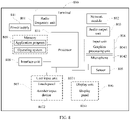
- FIG. 8 is a schematic diagram of a hardware structure of a terminal implementing various embodiments of this disclosure.
- the terminal 800 includes but is not limited to: a radio frequency unit 801, a network module 802, an audio output unit 803, an input unit 804, a sensor 805, a display unit 806, a user input unit 807, an interface unit 808, a memory 809, a processor 810, and a power supply 811.
- a structure of the terminal shown in FIG. 8 does not constitute a limitation on the terminal, and the terminal may include more or fewer components than those shown in the figure, or combine some components, or have different component arrangements.
- the terminal includes but is not limited to a mobile phone, a tablet computer, a notebook computer, a palmtop computer, an vehicle-mounted terminal, a wearable device, a pedometer, and the like.
- the radio frequency unit 801 is configured to obtain a sidelink measurement result, where associated information of the measurement result corresponds to a measurement signal associated with the measurement result, and the associated information includes at least one of the following: a feedback window, identifier information, a feedback resource, and HARQ feedback information, where the HARQ feedback information is HARQ feedback information sent together with the measurement result, and the HARQ feedback information corresponds to a measurement signal.
- a measurement signal sent by the first terminal is associated with at least one feedback window
- the measurement signal associated with the measurement result includes: a measurement signal associated with a feedback window of the measurement result.
- the at least one feedback window associated with the measurement signal sent by the first terminal includes: at least one feedback window that is started after the first terminal sends the measurement signal, where an attribute of the at least one feedback window is related to at least one of the following parameters: a terminal processing capability, a resource pool configuration, BWP numerology, a BWP SCS, carrier numerology, a carrier SCS, cell numerology, and a cell SCS.
- an attribute of the at least one feedback window does not change, or an attribute of the at least one feedback window is dynamically adjusted according to a quality of service (QoS) requirement, a channel state, or a link congestion status.
- QoS quality of service
- the first terminal no longer waits for a measurement result of the measurement signal associated with the at least one feedback window.
- the associated information includes the identifier information
- the parameter information includes at least one of the following: time domain information, frequency domain information, code domain information, an identifier, feedback window information, control signaling information, and a time interval relative to a transmission moment of the measurement result.
- the obtaining a measurement result includes: obtaining a measurement result message, where the measurement result message carries one or more measurement results and identifier information of each measurement result.
- the payload of the measurement result message carries the one or more measurement results and the identifier information of each measurement result, the payload has a fixed size or a variable size, and in a case that the payload has a variable size, the measurement result message further carries a measurement result number indicator.
- the first terminal is allocated with a feedback resource of the measurement result when sending the measurement signal, and the measurement signal associated with the measurement result includes: a measurement signal corresponding to the feedback resource of the measurement result.
- the feedback resource is used to send data, and the measurement result is carried in the data for feedback.
- the HARQ feedback information is HARQ feedback information sent together with the measurement result
- the data sent by the first terminal carries a measurement signal
- the measurement signal associated with the measurement result includes: a measurement signal carried by data corresponding to the HARQ feedback information of the measurement result.
- the radio frequency unit 801 is configured to send a sidelink measurement result, where associated information of the measurement result corresponds to a measurement signal associated with the measurement result, and the associated information includes at least one of the following: a feedback window, identifier information, a feedback resource, and HARQ feedback information, where the HARQ feedback information is HARQ feedback information sent together with the measurement result, and the HARQ feedback information corresponds to a measurement signal.
- a measurement signal received by the second terminal is associated with at least one feedback window
- the measurement signal associated with the measurement result includes: a measurement signal associated with a feedback window of the measurement result.
- the at least one feedback window associated with the measurement signal received by the second terminal includes: at least one feedback window that is started after the second terminal receives the measurement signal, where an attribute of the at least one feedback window is related to at least one of the following parameters: a terminal processing capability, a resource pool configuration, BWP numerology, a BWP SCS, carrier numerology, a carrier SCS, cell numerology, and a cell SCS.
- an attribute of the at least one feedback window does not change, or an attribute of the at least one feedback window is dynamically adjusted according to a quality of service (QoS) requirement, a channel state, or a link congestion status.
- QoS quality of service
- the measurement result is discarded; and/or if the second terminal receives a new measurement signal in the at least one feedback window, the second terminal discards the measurement signal and measurement result corresponding to the at least one feedback window, starts at least one feedback window associated with the new measurement signal, and feeds back a measurement result of the new measurement signal.
- the associated information includes the identifier information
- the parameter information includes at least one of the following: time domain information, frequency domain information, code domain information, an identifier, feedback window information, control signaling information, and a time interval relative to a transmission moment of the measurement result.
- At least one of the plurality of measurement results is fed back, or the plurality of measurement results are combined and the combined measurement results are fed back.
- the sending a measurement result includes: sending a measurement result message, where the measurement result message carries one or more measurement results and identifier information of each measurement result.
- the payload of the measurement result message carries the one or more measurement results and the identifier information of each measurement result, the payload has a fixed size or a variable size, and in a case that the payload has a variable size, the measurement result message further carries a measurement result number indicator.
- the second terminal obtains the feedback resource of the measurement result when receiving the measurement signal, and the second terminal sends the measurement result on the feedback resource.
- the feedback resource is used to send data, and the second terminal sends, on the feedback resource, data that carries the measurement result.
- the associated information includes the HARQ feedback information
- data received by the second terminal carries a measurement signal, and the measurement result of the measurement signal is fed back together with the HARQ feedback information of the data.
- the terminal can improve transmission performance of the sidelink, and can also avoid sidelink transmission adjustment errors.
- the radio frequency unit 801 may be configured to receive and send information or receive and send a signal in a call process. Specifically, after receiving downlink data from a base station, the radio frequency unit sends the downlink data to the processor 810 for processing. In addition, the radio frequency unit 801 sends uplink data to the base station.
- the radio frequency unit 801 includes but is not limited to, an antenna, at least one amplifier, a transceiver, a coupler, a low noise amplifier, a duplexer, and the like.
- the radio frequency unit 801 may communicate with a network and another device through a wireless communications system.
- the terminal provides a user with wireless broadband Internet access by using the network module 802, for example, helping the user receive and send an email, browse a web page, and access streaming media.
- the audio output unit 803 may convert audio data received by the radio frequency unit 801 or the network module 802 or stored in the memory 809 into an audio signal and output the audio signal as a sound.
- the audio output unit 803 may further provide an audio output (for example, a call signal received sound, or a message received sound) related to a specific function implemented by the terminal 800.
- the audio output unit 803 includes a loudspeaker, a buzzer, a receiver, and the like.
- the input unit 804 is configured to receive an audio signal or a video signal.
- the input unit 804 may include a graphics processing unit (GPU) 8041 and a microphone 8042.
- the graphics processing unit 8041 processes image data of a static image or video obtained by an image capture apparatus (such as, a camera) in a video capture mode or an image capture mode.
- a processed image frame may be displayed on the display unit 806.
- An image frame processed by the graphics processing unit 8041 may be stored in the memory 809 (or another storage medium) or sent via the radio frequency unit 801 or the network module 802.
- the microphone 8042 may receive a sound and can process such sound into audio data.
- Processed audio data may be converted, in a telephone call mode, into a format that can be sent to a mobile communication base station via the radio frequency unit 801 for output.
- the terminal 800 further includes at least one type of sensor 805, such as a light sensor, a motion sensor, and another sensor.
- the light sensor includes an ambient light sensor and a proximity sensor, where the ambient light sensor can adjust brightness of the display panel 8061 based on brightness of ambient light, and the proximity sensor can turn off the display panel 8061 and/or backlight when the terminal 800 is moved to an ear.
- an accelerometer sensor may detect values of accelerations in various directions (generally three axes), and may detect a value and a direction of gravity when the terminal stays still.
- the accelerometer sensor may be configured to recognize a terminal posture (for example, landscape/portrait screen switching, a related game, or magnetometer posture calibration), performs a vibration recognition related function (for example, a pedometer or a strike), and so on.
- the sensor 805 may further include a fingerprint sensor, a pressure sensor, an iris sensor, a molecular sensor, a gyroscope, a barometer, a hygrometer, a thermometer, an infrared sensor, and the like. Details are not described herein.
- the display unit 806 is configured to display information entered by a user or information provided for the user.
- the display unit 806 may include a display panel 8061, and the display panel 8061 may be configured in a form of liquid crystal display (LCD), organic light-emitting diode (OLED), or the like.
- LCD liquid crystal display
- OLED organic light-emitting diode
- the user input unit 807 may be configured to receive input digit or character information and generate key signal input related to a user setting and function control of the terminal.
- the user input unit 807 includes a touch panel 8071 and another input device 8072.
- the touch panel 8071 is further referred to as a touchscreen, and may collect a touch operation performed by a user on or near the touch panel 8071 (such as an operation performed by a user on the touch panel 8071 or near the touch panel 8071 by using any proper object or accessory, such as a finger or a stylus).
- the touch panel 8071 can include two parts: a touch detection apparatus and a touch controller.
- the touch detection apparatus detects a touch direction and position of the user, detects a signal brought by the touch operation, and transmits the signal to the touch controller.
- the touch controller receives touch information from the touch detection apparatus, converts the touch information into touch point coordinates, and sends the touch point coordinates to the processor 810; and receives and executes a command sent by the processor 810.
- the touch panel 8071 may be implemented as a resistive type, a capacitive type, an infrared type, a surface acoustic wave type, or the like.
- the user input unit 807 may further include the another input device 8072 in addition to the touch panel 8071.
- the another input device 8072 may include but is not limited to a physical keyboard, a function button (such as a volume control button or a power on/off button), a trackball, a mouse, a joystick, and the like. Details are not described herein.
- the touch panel 8071 may cover the display panel 8061.
- the touch panel 8071 transmits the touch operation to the processor 810 to determine a type of a touch event. Then the processor 810 provides corresponding visual output on the display panel 8061 based on the type of the touch event.
- the touch panel 8071 and the display panel 8061 are used as two independent components to implement input and output functions of the terminal. However, in some embodiments, the touch panel 8071 and the display panel 8061 may be integrated to implement the input and output functions of the terminal. This is not specifically limited herein.
- the interface unit 808 is an interface connecting an external apparatus and the terminal 800.
- the external apparatus may include a wired or wireless headset port, an external power supply (or battery charger) port, a wired or wireless data port, a storage card port, a port configured to connect to an apparatus having a recognition module, an audio input/output (I/O) port, a video I/O port, a headset port, and the like.
- the interface unit 808 may be configured to receive an input (such as data information or electric power) from the external apparatus and transmit the received input to one or more elements of the terminal 800, or may be configured to transmit data between the terminal 800 and the external apparatus.
- the memory 809 may be configured to store a software program as well as various types of data.
- the memory 809 may mainly include a program storage area and a data storage area.
- the program storage area may store an operating system, an application program (for example, a sound play function or an image play function) required for at least one function, and the like.
- the data storage area may store data created based on use of the mobile phone (for example, audio data and a phone book), and the like.
- the memory 809 may include a high-speed random access memory, and may further include a non-volatile memory such as at least one magnetic disk storage device, a flash memory device, or another volatile solid-state storage device.
- the processor 810 is a control center of the terminal, and is connected to all parts of the entire terminal by using various interfaces and lines, and performs various functions of the terminal and processes data by running or executing the software program and/or a module that are stored in the memory 809 and invoking the data stored in the memory 809, to implement overall monitoring on the terminal.
- the processor 810 may include one or more processing units.
- an application processor and a modem processor may be integrated into the processor 810.
- the application processor mainly processes an operating system, a user interface, an application program, and the like.
- the modem processor mainly processes wireless communications. It can be understood that alternatively, the modem processor may not be integrated into the processor 810.
- the terminal 800 may further include a power supply 811 (for example, a battery) that supplies power to each component.
- a power supply 811 for example, a battery
- the power supply 811 may be logically connected to the processor 810 by using a power management system, to implement functions such as charging, discharging, and power consumption management by using the power management system.
- the terminal 800 includes some function modules not shown, and details are not described herein.
- some embodiments of the present disclosure further provide a terminal, including a processor 810, a memory 809, and a computer program stored in the memory 809 and executable on the processor 810.
- a terminal including a processor 810, a memory 809, and a computer program stored in the memory 809 and executable on the processor 810.
- the computer program is executed by the processor 810, the processes of the foregoing embodiments of the sidelink measurement result obtaining method or the sidelink measurement result sending method are implemented, with the same technical effects achieved. To avoid repetition, details are not described herein again.
- Some embodiments of the present disclosure further provide a computer-readable storage medium.
- the computer-readable storage medium stores a computer program.
- steps of the sidelink measurement result obtaining method provided in some embodiments of the present disclosure are implemented, or when the computer program is executed by a processor, steps of the sidelink measurement result sending method provided in some embodiments of the present disclosure are implemented, and a same technical effect can be achieved. To avoid repetition, details are not described herein again.
- the computer-readable storage medium is, for example, a read-only memory (ROM for short), a random access memory (RAM for short), a magnetic disk, or an optical disc.
- the embodiments described in some embodiments of the present disclosure may be implemented by hardware, software, firmware, middleware, microcode, or a combination thereof.
- the module, unit, submodule, subunit, and the like may be implemented in one or more application specific integrated circuits (ASIC), a digital signal processor (DSP), a digital signal processing device (DSPD), a programmable logic device (PLD), a field-programmable gate array (FPGA), a general-purpose processor, a controller, a microcontroller, a microprocessor, another electronic unit for implementing the functions of this application, or a combination thereof.
- ASIC application specific integrated circuits
- DSP digital signal processor
- DSPD digital signal processing device
- PLD programmable logic device
- FPGA field-programmable gate array
- a general-purpose processor a controller, a microcontroller, a microprocessor, another electronic unit for implementing the functions of this application, or a combination thereof.
- the terms "include”, “comprise”, or any of their variants are intended to cover a non-exclusive inclusion, such that a process, a method, an article, or an apparatus that includes a list of elements not only includes those elements but also includes other elements that are not expressly listed, or further includes elements inherent to such a process, method, article, or apparatus.
- An element limited by “includes a " does not, without more constraints, preclude the presence of additional identical elements in the process, method, article, or device that includes the element.
- the method in the foregoing embodiment may be implemented by software in addition to a necessary universal hardware platform or by hardware only. In most circumstances, the former is a preferred implementation. Based on such an understanding, the technical solutions of the present disclosure essentially or the part contributing to the prior art may be implemented in a form of a software product.
- the computer software product is stored in a storage medium (such as a ROM/RAM, a magnetic disk, or an optical disc), and includes several instructions for instructing a terminal (which may be a mobile phone, a computer, a server, an air conditioner, a network device, or the like) to perform the methods described in the embodiments of the present disclosure.
Landscapes
- Engineering & Computer Science (AREA)
- Signal Processing (AREA)
- Computer Networks & Wireless Communication (AREA)
- Physics & Mathematics (AREA)
- Mathematical Physics (AREA)
- Mobile Radio Communication Systems (AREA)
Applications Claiming Priority (2)
| Application Number | Priority Date | Filing Date | Title |
|---|---|---|---|
| CN201910731324.5A CN111836303B (zh) | 2019-08-08 | 2019-08-08 | 一种sidelink测量结果获取方法、发送方法和终端 |
| PCT/CN2020/107789 WO2021023298A1 (zh) | 2019-08-08 | 2020-08-07 | 旁链路测量结果获取方法、发送方法和终端 |
Publications (2)
| Publication Number | Publication Date |
|---|---|
| EP4013104A1 true EP4013104A1 (de) | 2022-06-15 |
| EP4013104A4 EP4013104A4 (de) | 2022-08-17 |
Family
ID=72911662
Family Applications (1)
| Application Number | Title | Priority Date | Filing Date |
|---|---|---|---|
| EP20851037.0A Pending EP4013104A4 (de) | 2019-08-08 | 2020-08-07 | Verfahren zur erfassung und übertragung von sidelink-messergebnissen und endgerät |
Country Status (5)
| Country | Link |
|---|---|
| US (1) | US20220159500A1 (de) |
| EP (1) | EP4013104A4 (de) |
| KR (1) | KR102888633B1 (de) |
| CN (1) | CN111836303B (de) |
| WO (1) | WO2021023298A1 (de) |
Families Citing this family (4)
| Publication number | Priority date | Publication date | Assignee | Title |
|---|---|---|---|---|
| KR20220045200A (ko) * | 2019-08-14 | 2022-04-12 | 아이디에이씨 홀딩스, 인크. | 뉴 라디오 사이드링크 채널 상태 정보 획득을 위한 장치 및 방법들 |
| US11711452B2 (en) * | 2021-06-02 | 2023-07-25 | Qualcomm Incorporated | Multiplexing sidelink and radio access traffic |
| US20240389087A1 (en) * | 2021-09-29 | 2024-11-21 | Beijing Xiaomi Mobile Software Co., Ltd. | Beam switching, assessing and reporting method and apparatus, communication device, and storage medium |
| CN115883010A (zh) * | 2021-09-29 | 2023-03-31 | 华为技术有限公司 | 一种通信方法、装置及系统 |
Family Cites Families (17)
| Publication number | Priority date | Publication date | Assignee | Title |
|---|---|---|---|---|
| US9345039B2 (en) * | 2012-05-31 | 2016-05-17 | Interdigital Patent Holdings, Inc. | Device-to-device (D2D) link adaptation |
| CN108702244B (zh) * | 2016-04-01 | 2022-04-29 | 英特尔公司 | 用于低复杂度设备到设备(d2d)通信的链路适配 |
| WO2017185201A1 (zh) * | 2016-04-25 | 2017-11-02 | 广东欧珀移动通信有限公司 | 数据传输方法和设备 |
| US10439682B2 (en) * | 2016-08-19 | 2019-10-08 | FG Innovation Company Limited | Access mechanism for proximity-based service UE-to-network relay service |
| CN106900005A (zh) * | 2017-04-01 | 2017-06-27 | 宇龙计算机通信科技(深圳)有限公司 | 一种资源参数测量方法、装置及基站 |
| EP3639400B1 (de) * | 2017-06-14 | 2022-03-16 | Sony Group Corporation | Vorrichtung und verfahren zur bestimmung, ob ein csi-bericht bereitgestellt werden soll |
| CN109246659B (zh) * | 2017-06-15 | 2026-04-14 | 中兴通讯股份有限公司 | 一种通信控制方法、装置及计算机可读存储介质 |
| US12068847B2 (en) * | 2018-01-12 | 2024-08-20 | Telefonaktiebolaget Lm Ericsson (Publ) | Control signaling for radio access networks |
| EP3890246B1 (de) * | 2018-11-29 | 2025-06-11 | Beijing Xiaomi Mobile Software Co., Ltd. | Verfahren und vorrichtung zur rückkopplung von csi-messungen und speichermedium |
| WO2020136853A1 (ja) * | 2018-12-27 | 2020-07-02 | 株式会社Nttドコモ | 通信装置及びチャネル状態情報測定方法 |
| WO2020145223A1 (en) * | 2019-01-09 | 2020-07-16 | Sharp Kabushiki Kaisha | User equipments, base stations and methods for a physical sidelink (sl) control channel monitoring |
| CN111435871A (zh) * | 2019-01-11 | 2020-07-21 | 华为技术有限公司 | 一种旁链路中的反馈资源确定方法及设备 |
| CN118764980A (zh) * | 2019-02-12 | 2024-10-11 | 交互数字专利控股公司 | 无线发送/接收单元、由其实施的方法和检测sl-rlf的方法 |
| US11044066B2 (en) * | 2019-03-19 | 2021-06-22 | Lg Electronics Inc. | Method and apparatus transmitting sidelink CSI |
| KR102904014B1 (ko) * | 2019-05-02 | 2025-12-26 | 삼성전자 주식회사 | 무선 통신 시스템에서 채널상태정보 송수신 방법 및 장치 |
| US11412484B2 (en) * | 2019-05-24 | 2022-08-09 | Qualcomm Incorporated | Sidelink communication across frequency bands |
| US11973555B2 (en) * | 2019-07-17 | 2024-04-30 | Samsung Electronics Co., Ltd | Method and device for measuring and reporting channel state in sidelink communication |
-
2019
- 2019-08-08 CN CN201910731324.5A patent/CN111836303B/zh active Active
-
2020
- 2020-08-07 KR KR1020227007554A patent/KR102888633B1/ko active Active
- 2020-08-07 WO PCT/CN2020/107789 patent/WO2021023298A1/zh not_active Ceased
- 2020-08-07 EP EP20851037.0A patent/EP4013104A4/de active Pending
-
2022
- 2022-02-07 US US17/665,785 patent/US20220159500A1/en active Pending
Also Published As
| Publication number | Publication date |
|---|---|
| EP4013104A4 (de) | 2022-08-17 |
| CN111836303A (zh) | 2020-10-27 |
| WO2021023298A1 (zh) | 2021-02-11 |
| KR20220046610A (ko) | 2022-04-14 |
| CN111836303B (zh) | 2022-08-02 |
| KR102888633B1 (ko) | 2025-11-20 |
| US20220159500A1 (en) | 2022-05-19 |
Similar Documents
| Publication | Publication Date | Title |
|---|---|---|
| US12245215B2 (en) | Method for data transmission through scheduling a carrier, user equipment, and control node | |
| US12058711B2 (en) | Sidelink operation method and terminal | |
| US20220159500A1 (en) | Sidelink measurement result obtaining method, sidelink measurement result sending method, and terminal | |
| CN111262668B (zh) | 物理上行控制信道传输方法、网络侧设备和终端 | |
| CN111262663B (zh) | 一种反馈消息的发送方法及终端设备 | |
| CN111835489B (zh) | 一种传输方法、配置方法、终端及网络侧设备 | |
| CN111818659B (zh) | sidelink信息发送方法、接收方法、终端和控制节点 | |
| CN111181706B (zh) | 混合自动重传请求确认的发送方法和终端 | |
| CN110166206B (zh) | 一种harq-ack码本的确定方法和终端 | |
| CN111262670B (zh) | 一种混合自动重传确认反馈信息传输方法和终端设备 | |
| CN113163491B (zh) | 频域资源处理方法、频域资源配置方法及相关设备 | |
| US12192884B2 (en) | Information transmission method and terminal device | |
| CN111278124B (zh) | 资源配置方法、资源确定方法、网络侧设备和终端 | |
| CN113141635A (zh) | 资源选择方法及终端 | |
| CN110933751A (zh) | 上行控制信息的指示方法、接收方法、终端及网络设备 | |
| KR102591574B1 (ko) | 하향 링크 제어 정보의 수신 방법, 전송 방법, 단말 및 네트워크측 장치 | |
| CN111835479B (zh) | 信息传输、接收方法、终端及网络侧设备 | |
| CN110831051A (zh) | Pusch和sr处理方法及设备 | |
| CN113259061A (zh) | Csi传输方法、触发csi传输的方法及相关设备 | |
| CN112804754A (zh) | 资源确定、资源配置方法、终端及网络设备 | |
| CN113225162A (zh) | 信道状态信息csi上报方法、终端及计算机可读存储介质 | |
| CN113543215B (zh) | 一种冲突资源判断方法、终端和网络设备 | |
| CN113498088A (zh) | 资源确定方法及终端 | |
| CN112787767A (zh) | 数据传输方法、设备及介质 | |
| CN111835460B (zh) | 一种mcs值的确定方法及相关设备 |
Legal Events
| Date | Code | Title | Description |
|---|---|---|---|
| STAA | Information on the status of an ep patent application or granted ep patent |
Free format text: STATUS: THE INTERNATIONAL PUBLICATION HAS BEEN MADE |
|
| PUAI | Public reference made under article 153(3) epc to a published international application that has entered the european phase |
Free format text: ORIGINAL CODE: 0009012 |
|
| STAA | Information on the status of an ep patent application or granted ep patent |
Free format text: STATUS: REQUEST FOR EXAMINATION WAS MADE |
|
| 17P | Request for examination filed |
Effective date: 20220307 |
|
| AK | Designated contracting states |
Kind code of ref document: A1 Designated state(s): AL AT BE BG CH CY CZ DE DK EE ES FI FR GB GR HR HU IE IS IT LI LT LU LV MC MK MT NL NO PL PT RO RS SE SI SK SM TR |
|
| A4 | Supplementary search report drawn up and despatched |
Effective date: 20220715 |
|
| RIC1 | Information provided on ipc code assigned before grant |
Ipc: H04W 72/04 20090101ALN20220711BHEP Ipc: H04W 24/10 20090101AFI20220711BHEP |
|
| DAV | Request for validation of the european patent (deleted) | ||
| DAX | Request for extension of the european patent (deleted) | ||
| STAA | Information on the status of an ep patent application or granted ep patent |
Free format text: STATUS: EXAMINATION IS IN PROGRESS |
|
| 17Q | First examination report despatched |
Effective date: 20240625 |