EP4011729B1 - Bremszylinder, sowie nutzfahrzeug mit einem bremszylinder - Google Patents
Bremszylinder, sowie nutzfahrzeug mit einem bremszylinder Download PDFInfo
- Publication number
- EP4011729B1 EP4011729B1 EP20213046.4A EP20213046A EP4011729B1 EP 4011729 B1 EP4011729 B1 EP 4011729B1 EP 20213046 A EP20213046 A EP 20213046A EP 4011729 B1 EP4011729 B1 EP 4011729B1
- Authority
- EP
- European Patent Office
- Prior art keywords
- brake cylinder
- release bolt
- depression
- nut
- securing pin
- Prior art date
- Legal status (The legal status is an assumption and is not a legal conclusion. Google has not performed a legal analysis and makes no representation as to the accuracy of the status listed.)
- Active
Links
Images
Classifications
-
- B—PERFORMING OPERATIONS; TRANSPORTING
- B60—VEHICLES IN GENERAL
- B60T—VEHICLE BRAKE CONTROL SYSTEMS OR PARTS THEREOF; BRAKE CONTROL SYSTEMS OR PARTS THEREOF, IN GENERAL; ARRANGEMENT OF BRAKING ELEMENTS ON VEHICLES IN GENERAL; PORTABLE DEVICES FOR PREVENTING UNWANTED MOVEMENT OF VEHICLES; VEHICLE MODIFICATIONS TO FACILITATE COOLING OF BRAKES
- B60T17/00—Component parts, details, or accessories of power brake systems not covered by groups B60T8/00, B60T13/00 or B60T15/00, or presenting other characteristic features
- B60T17/08—Brake cylinders other than ultimate actuators
- B60T17/085—Spring loaded brake actuators
- B60T17/086—Spring loaded brake actuators with emergency release device
Definitions
- the invention relates to a brake cylinder, in particular for a compressed air brake, as is used, for example, in commercial vehicles such as trucks or trailer vehicles.
- Compressed air operated brake systems for commercial vehicles usually have a parking brake with a brake cylinder that has a parking function.
- the brake cylinder contains a compression spring that causes the parking brake to lock without compressed air. This secures the commercial vehicle when the engine is switched off. However, if the braking system malfunctions, for example if there is a leak in the compressed air system, the commercial vehicle can then no longer be moved.
- the brake cylinder therefore contains a release bolt with a hex nut, which allows one person to manually release the parking brake. If the release bolt is unscrewed by turning the hexagon nut, for example with an open-end wrench, the compression spring is tensioned and the parking brake is thereby released.
- the release bolt and the nut each have a drilled hole into which a locking pin is pushed.
- the holes are designed in such a way that the locking pin sits in the release bolt with a press fit and thereby secures the nut.
- D2 GB 2 144 803 A shows a bolt with through holes for the pin and a castellated nut, ie the notches are on the nut, not the bolt.
- the invention relates to a brake cylinder with a housing, a piston, a pressure bolt, a pressure spring, a release bolt with a thread, a locking pin and a nut, the nut being fastened to the locking pin on one end of the release bolt.
- the release bolt has a recess at the end for receiving the locking pin.
- the nut has a hole or cut for securing the nut to the locking pin on the release bolt.
- the recess of the release pin has a square or a rectangular shape.
- the depth of the indentation is advantageously greater than the diameter of the locking pin and the width of the indentation is equal to or greater than the diameter of the locking pin.
- the indentation of the release bolt has a trapezoidal shape.
- the trapezoidal shape tapers toward the end of the release pin.
- the depression advantageously has a depth that is equal to or greater than the diameter of the locking pin.
- the indentation of the trapezoidal shape has a width at its outer end that is smaller than the diameter of the locking pin and has a width at its inner end that is larger than the diameter of the locking pin.
- the locking pin sits in the release bolt, secured by a press fit.
- the deepening of the release bolt is brought about by a milling process or a sawing process.
- the brake cylinder can advantageously be used for a commercial vehicle, in particular for a truck, and for a trailer vehicle.
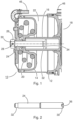
- a brake cylinder 10 includes a housing 12, a piston 14, a pressure pin 16, a membrane 18 and a compression spring 20.
- the compression spring 20 is in particular a helical spring, for example a barrel spring.
- the piston 14 is movably arranged in a cavity 22 of the housing 12 and moves the diaphragm 18 via the pressure pin 16.
- the brake cylinder 10 is in particular part of a compressed air brake, for example a parking brake. If the cavity 22 is without compressed air, the piston 14 is displaced by the compression spring 20 and the membrane 18 is thereby moved via the pressure bolt 16, so that a braking process is carried out. If compressed air is supplied to the cavity 22 via a brake valve, for example a hand brake valve, the piston 14 is pushed back against the resistance of the compression spring 20 and the compressed air brake is thereby released.
- a brake valve for example a hand brake valve
- the parking brake is integrated into a commercial vehicle, for example. Since the parking brake blocks without air pressure, the commercial vehicle is thereby secured when the engine is switched off and the braking system of the commercial vehicle is without compressed air. However, if the braking system malfunctions, for example if there is a leak in the compressed air system, the commercial vehicle can then no longer be moved.
- the brake cylinder therefore includes a threaded release bolt 24 onto which a nut 26, such as a hex nut, is screwed at an end 30 external to the housing 12 and by which the parking brake can be manually released by one person.
- the release bolt 24 has at its end 32 opposite the end 30 a plate-shaped end piece 34 or a thickening, through which the piston 14 is pushed back against the pressure of the compression spring 20 when the release bolt 24 is unscrewed.
- the nut 26 is secured to the end 30 of the release bolt 24 by a locking pin 28 .
- the release bolt 24 has a recess 36 at the end 30, as in FIG 2 shown, into which the locking pin 28 is pushed during assembly, after the nut 26 is screwed onto the release bolt 24.
- the depression 36 can be produced, for example, by a milling process or with a hacksaw. Through the recess 36, the nut 26 is secured by the locking pin 28 just as reliably as with a hole in the release bolt 24, but the recess 36 is considerably easier and more reliable to produce than a bore through the end 30 of the release bolt 24.
- recess 34 is square or rectangular in shape. This indentation can be produced, for example, by sawing the end 30 of the release bolt 24 .
- the depth of the depression 36 is advantageously greater than the diameter of the locking pin 28, and the width of the depression 36 is equal to or greater than the diameter of the locking pin 28.
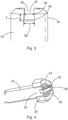
- the indentation 36 has a trapezoidal shape that tapers toward the end 30 of the release pin 24, as shown in FIG 3 shown.
- This depression can be produced, for example, by milling with a milling cutter at the end 30 of the release pin 24 .
- the depth T of the recess 36 is advantageously equal to or greater than the diameter of the locking pin 28.
- the recess 36 has a width B1 which is smaller than the diameter of the locking pin 28, and at the inner end 40 of the recess 36, the recess 36 has a width B2 which is greater than the diameter of the locking pin 28.
- the release bolt 24 with the assembled nut 26 and the assembled locking pin 28 is shown schematically in FIG 4 shown.
- the locking pin 28 is seated in the release bolt 24 , secured by a press fit.
- due to the trapezoidal shape of the A reliable press fit for the locking pin 28 can be produced in the recess 36 .
- the mother 26 can instead of a hole, as in the 1 shown, also have an incision 42, 4 .
- the indentation has a depth T equal to the diameter of the locking pin 28, then the locking pin 28 rests on the edge of the release pin 24, as shown in FIG 4 shown.
- a hole in the nut does not make sense in this case since the nut 26 is ideally screwed completely onto the release bolt 24 .
- the cut 42 of the nut 26 can be made, for example, by a sawing operation, which can easily be made by a manufacturer.
- the depth T of the indentation 36 must ideally be significantly greater than the diameter of the locking pin 28.
- a rectangular indentation 36 is advantageous, since a deep incision for producing this indentation 36 in the release pin 24 can easily be made with a sawing tool .
- the locking pin 28 also has a Torx slot 44 in the end 30 of the release pin 24 that can be used to mount the release pin 24 in the brake cylinder 10.
- a Torx incision 44 an incision for a Phillips tool can also be used, for example. This incision can also be dispensed with, since the release pin 24 already has the recess 36, via which the release pin 24 can be fastened in the brake cylinder 10 with a screwdriver.
- the brake cylinder 10 is a combination brake cylinder, also known as a tristop cylinder.
- a service brake is combined with the parking brake in the brake cylinder 10, the parking brake being actuated via the hand brake valve and the service brake via a service brake valve.
- the service brake is with the Parking brake in this embodiment via a compressed air connection 46 in which 1 shown, connected.
- a combination brake cylinder of this type can advantageously be used for a compressed air-operated brake system of a commercial vehicle, in particular a truck or a trailer vehicle.
Landscapes
- Engineering & Computer Science (AREA)
- Transportation (AREA)
- Mechanical Engineering (AREA)
- Braking Arrangements (AREA)
Description
- Die Erfindung betrifft einen Bremszylinder, insbesondere für eine Druckluftbremse, wie sie beispielsweise in Nutzfahrzeugen, wie Lastkraftfahrzeugen oder Anhängefahrzeugen, verwendet wird. Druckluftbetriebene Bremssysteme für Nutzfahrzeuge besitzen üblicherweise eine Feststellbremse mit einem Bremszylinder, der eine Parkfunktion aufweist. Der Bremszylinder enthält hierbei eine Druckfeder, die bewirkt, dass die Feststellbremse ohne Druckluft blockiert. Hierdurch ist das Nutzfahrzeug gesichert, wenn der Motor ausgeschaltet ist. Bei einer Fehlfunktion des Bremssystems, beispielsweise bei einer Leckage des Druckluftsystems, kann das Nutzfahrzeug dann jedoch nicht mehr bewegt werden. Der Bremszylinder enthält deshalb einen Freigabebolzen mit einer Sechskantmutter, durch den die Feststellbremse von einer Person manuell gelöst werden kann. Wird der Freigabebolzen durch eine Drehung der Sechskantmutter, beispielsweise mit einem Gabelschlüssel, herausgedreht, so wird die Druckfeder gespannt und hierdurch die Feststellbremse gelöst.
- Zur Befestigung der Mutter auf dem Freigabebolzen weisen der Freigabebolzen und die Mutter jeweils ein gebohrtes Loch auf, in die ein Sicherungsstift geschoben ist. Die Löcher sind hierbei derart ausgeführt, dass der Sicherungsstift mit einem Presssitz im Freigabebolzen sitzt und hierdurch die Mutter sichert.
- Die Bohrungen der Löcher des Sicherungsstifts und der Mutter sind jedoch bei der Herstellung in einer Serienproduktion problematisch für Hersteller. Außerdem müssen bei der Montage der Mutter auf dem Freigabebolzen die beiden Löcher genau justiert sein.
- Es besteht somit ein Bedarf für einen Bremszylinder mit einer Parkfunktion, der eine einfachere Herstellung aufweist. D2
GB 2 144 803 A - Aufgabe der Erfindung ist es daher, einen derartigen Bremszylinder anzugeben, der eine vereinfachte Herstellung und damit geringere Montagekosten aufweist.
- Diese Aufgabe wird durch einen Bremszylinder gemäß Anspruch 1 und ein Nutzfahrzeug gemäß Anspruch 10 gelöst.
- Die abhängigen Ansprüche beinhalten vorteilhafte Weiterbildungen und Verbesserungen der Erfindung entsprechend der nachfolgenden Beschreibung dieser Maßnahmen.
- Die Erfindung betrifft einen Bremszylinder mit einem Gehäuse, einem Kolben, einem Druckbolzen, einer Druckfeder, einem Freigabebolzen mit einem Gewinde, einem Sicherungsstift und einer Mutter, wobei die Mutter mit dem Sicherungsstift auf einem Ende des Freigabebolzens befestigt ist. Der Freigabebolzen weist hierbei an dem Ende eine Vertiefung zur Aufnahme des Sicherungsstifts auf.
- In einer vorteilhaften Ausführungsform weist die Mutter ein Loch oder einen Einschnitt zur Sicherung der Mutter mit dem Sicherungsstift auf dem Freigabebolzen auf.
- In einem bevorzugten Ausführungsbeispiel weist die Vertiefung des Freigabebolzens eine quadratische oder eine rechteckige Form auf. Die Tiefe der Vertiefung ist hierbei vorteilhafterweise größer als der Durchmesser des Sicherungsstifts und die Breite der Vertiefung ist gleich oder größer als der Durchmesser des Sicherungsstifts.
- In einem weiteren bevorzugten Ausführungsbeispiel weist die Vertiefung des Freigabebolzens eine trapezartige Form auf.
- In einem weiteren bevorzugten Ausführungsbeispiel ist die trapezartige Form zum Ende des Freigabebolzens hin verjüngt. Die Vertiefung weist hierbei vorteilhafterweise eine Tiefe auf, die gleich oder größer ist als der Durchmesser des Sicherungsstifts.
- In einem weiteren bevorzugten Ausführungsbeispiel weist die Vertiefung der trapezartigen Form an ihrem äußeren Ende eine Breite auf, die kleiner ist als der Durchmesser des Sicherungsstifts, und weist an ihrem inneren Ende eine Breite auf, die größer ist als der Durchmesser des Sicherungsstifts.
- In einer weiteren vorteilhaften Ausführungsform sitzt der Sicherungsstift durch einen Presssitz gesichert im Freigabebolzen.
- In einer weiteren vorteilhaften Ausführungsform ist die Vertiefung des Freigabebolzens durch einen Fräsvorgang oder einen Sägevorgang bewirkt.
- Der Bremszylinder ist vorteilhafterweise für ein Nutzfahrzeug, insbesondere für ein Lastkraftfahrzeug, sowie für ein Anhängefahrzeug, verwendbar.
- Ausführungsbeispiele der Erfindung sind in den Zeichnungen schematisch dargestellt und werden nachfolgend anhand der Figuren näher erläutert.
-
- Fig. 1
- einen manuell lösbaren Bremszylinder einer Feststellbremse mit einer Parkfunktion;
- Fig. 2
- einen Freigabebolzen des Bremszylinders der
Figur 1 ; - Fig. 3
- ein Ende des Freigabebolzens der
Figur 2 ; und - Fig. 4
- den Freigabebolzen der
Figur 2 mit einer Mutter und einem Sicherungsstift. - Die vorliegende Beschreibung veranschaulicht die Prinzipien der erfindungsgemäßen Offenbarung. Es versteht sich somit, dass Fachleute in der Lage sein werden, verschiedene Anordnungen zu konzipieren, die zwar hier nicht explizit beschrieben werden, die aber Prinzipien der erfindungsgemäßen Offenbarung verkörpern und in ihrem Umfang ebenfalls geschützt sein sollen.
- In einem bevorzugten Ausführungsbeispiel, wie in der
Fig. 1 dargestellt, enthält ein Bremszylinder 10 ein Gehäuse 12, einen Kolben 14, einen Druckbolzen 16, eine Membran 18 und eine Druckfeder 20. Die Druckfeder 20 ist insbesondere eine Schraubenfeder, beispielsweise eine Tonnenfeder. Der Kolben 14 ist in einem Hohlraum 22 des Gehäuses 12 beweglich angeordnet und bewegt über den Druckbolzen 16 die Membran 18. - Der Bremszylinder 10 ist insbesondere ein Teil einer Druckluftbremse, beispielsweise einer Feststellbremse. Ist der Hohlraum 22 ohne Druckluft, so wird durch die Druckfeder 20 der Kolben 14 verschoben und hierdurch über den Druckbolzen 16 die Membran 18 bewegt, so dass ein Bremsvorgang ausgeführt wird. Wird über ein Bremsventil, beispielsweise ein Handbremsventil, dem Hohlraum 22 Druckluft zugeführt, so wird der Kolben 14 gegen den Widerstand der Druckfeder 20 zurückgeschoben und hierdurch die Druckluftbremse gelöst.
- Die Feststellbremse ist beispielsweise in ein Nutzfahrzeug integriert. Da die Feststellbremse ohne Luftdruck blockiert, ist hierdurch das Nutzfahrzeug gesichert, wenn der Motor ausgeschaltet ist und das Bremssystem des Nutzfahrzeugs ohne Druckluft ist. Bei einer Fehlfunktion des Bremssystems, beispielsweise bei einer Leckage des Druckluftsystems, kann das Nutzfahrzeug dann jedoch nicht mehr bewegt werden. Der Bremszylinder enthält deshalb einen Freigabebolzen 24 mit einem Gewinde, auf den an einem außerhalb des Gehäuses 12 liegenden Ende 30 eine Mutter 26 aufgeschraubt ist, beispielsweise eine Sechskantmutter, und durch den die Feststellbremse von einer Person manuell gelöst werden kann.
- Der Freigabebolzen 24 weist an seinem dem Ende 30 gegenüberliegenden Ende 32 ein plattenförmiges Endstück 34 oder eine Verdickung auf, durch das der Kolben 14 beim Herausdrehen des Freigabebolzens 24 gegen den Druck der Druckfeder 20 zurückgeschoben wird. Die Mutter 26 ist über einen Sicherungsstift 28 an dem Ende 30 des Freigabebolzens 24 befestigt. Hierdurch kann die Feststellbremse durch die Person manuell gelöst werden, indem der Freigabebolzen 24 durch eine Drehung der Mutter 26, beispielsweise mit einem Gabelschlüssel, von der Person herausgedreht wird.
- Der Freigabebolzen 24 weist nach der Erfindung an dem Ende 30 eine Vertiefung 36 auf, wie in der
Fig. 2 dargestellt, in die der Sicherungsstift 28 bei der Montage geschoben wird, nachdem die Mutter 26 auf den Freigabebolzen 24 geschraubt ist. Die Vertiefung 36 kann beispielsweise durch einen Fräsvorgang oder mit einer Metallsäge hergestellt werden. Durch die Vertiefung 36 ist hierbei die Mutter 26 durch den Sicherungsstift 28 genauso zuverlässig gesichert wie durch ein Loch im Freigabebolzen 24, die Vertiefung 36 ist jedoch erheblich einfacher und zuverlässiger herzustellen als eine Bohrung durch das Ende 30 des Freigabebolzens 24. - In einem bevorzugten Ausführungsbeispiel hat die Vertiefung 34 eine quadratische oder eine rechteckige Form. Diese Vertiefung kann beispielsweise durch einen Sägevorgang am Ende 30 des Freigabebolzens 24 hergestellt werden. Die Tiefe der Vertiefung 36 ist hierbei vorteilhafterweise größer als der Durchmesser des Sicherungsstifts 28, und die Breite der Vertiefung 36 ist gleich oder größer als der Durchmesser des Sicherungsstifts 28.
- In einem weiteren bevorzugten Ausführungsbeispiel hat die Vertiefung 36 eine trapezartige Form, die zum Ende 30 des Freigabebolzens 24 hin verjüngt ist, wie in der
Fig. 3 dargestellt. Diese Vertiefung kann beispielsweise durch einen Fräsvorgang mit einem Fräser am Ende 30 des Freigabebolzens 24 hergestellt werden. Die Tiefe T der Vertiefung 36 ist hierbei vorteilhafterweise gleich oder größer als der Durchmesser des Sicherungsstifts 28. An dem äußeren Ende 38 der Vertiefung 36 hat die Vertiefung 36 eine Breite B1, die kleiner als der Durchmesser der Sicherungsstifts 28 ist, und an dem inneren Ende 40 der Vertiefung 36 hat die Vertiefung 36 eine Breite B2, die größer als der Durchmesser der Sicherungsstifts 28 ist. - Der Freigabebolzen 24 mit der montierten Mutter 26 und dem montierten Sicherungsstift 28 ist schematisch in der
Fig. 4 dargestellt. Der Sicherungsstift 28 sitzt hierbei durch einen Presssitz gesichert im Freigabebolzen 24. Die Mutter 26 ist hierdurch durch den Sicherungsstift 28 zuverlässig auf dem Freigabebolzen 24 befestigt. Insbesondere durch die trapezartige Form der Vertiefung 36 kann hierbei ein zuverlässiger Presssitz für den Sicherungsstift 28 hergestellt werden. - Die Mutter 26 kann anstatt eines Lochs, wie in der
Fig. 1 dargestellt, auch einen Einschnitt 42 aufweisen,Fig. 4 . Hat die Vertiefung beispielsweise eine Tiefe T, die gleich ist dem Durchmesser des Sicherungsstifts 28, dann liegt der Sicherungsstift 28 am Rand des Freigabebolzens 24, wie in derFig. 4 dargestellt. Ein Loch in der Mutter ist 26 in diesem Fall nicht sinnvoll, da die Mutter 26 idealerweise vollständig auf den Freigabebolzen 24 aufgeschraubt ist. Der Einschnitt 42 der Mutter 26 kann beispielsweise durch einen Sägevorgang hergestellt werden, der problemlos durch einen Hersteller herstellbar ist. - Für den Fall, dass die Mutter 26 ein Loch aufweist, das mittig in der Mutter gelegen ist, wie in der
Fig. 1 dargestellt, muss die Tiefe T der Vertiefung 36 idealerweise deutlich größer sein als der Durchmesser des Sicherungsstifts 28. In diesem Fall ist eine rechteckige Vertiefung 36 vorteilhaft, da ein tiefer Einschnitt zur Herstellung dieser Vertiefung 36 in dem Freigabebolzen 24 problemlos mit einem Sägewerkzeug hergestellt werden kann. - In der
Figur 4 weist der Sicherungsstift 28 noch einen Torx-Einschnitt 44 in dem Ende 30 des Freigabebolzens 24 auf, der für die Montage des Freigabebolzens 24 in dem Bremszylinder 10 verwendet werden kann. Anstatt eines Torx-Einschnitts 44 kann beispielsweise auch ein Einschnitt für ein Phillips-Werkzeug verwendet werden. Es kann auch auf diesen Einschnitt verzichtet werden, da der Freigabebolzen 24 bereits die Vertiefung 36 aufweist, über die der Freigabebolzen 24 mit einem Schraubendreher in dem Bremszylinder 10 befestigt werden kann. - Der Bremszylinder 10 ist in diesem Ausführungsbeispiel ein Kombibremszylinder, auch als Tristop-Zylinder bekannt. Hierbei ist in dem Bremszylinder 10 eine Betriebsbremse mit der Feststellbremse kombiniert, wobei die Feststellbremse über das Handbremsventil betätigt wird und die Betriebsbremse über ein Betriebsbremsventil. Die Betriebsbremse ist mit der Feststellbremse in diesem Ausführungsbeispiel über eine Druckluftverbindung 46, in der
Fig. 1 dargestellt, verbunden. - Ein Kombibremszylinder dieser Art ist vorteilhafterweise für eine druckluftbetriebene Bremsanlage eines Nutzfahrzeugs, insbesondere eines Lastkraftfahrzeugs oder eines Anhängefahrzeugs, verwendbar.
- Alle hierin erwähnten Beispiele wie auch bedingte Formulierungen sind ohne Einschränkung auf solche speziell angeführten Ausführungsbeispiele zu verstehen. Die Offenbarung ist nicht auf die hier beschriebenen Ausführungsbeispiele beschränkt. Es gibt Raum für verschiedene Anpassungen und Modifikationen, die der Fachmann aufgrund seines Fachwissens als auch zu der Offenbarung zugehörend in Betracht ziehen würde.
-
- 10
- Bremszylinder
- 12
- Gehäuse
- 14
- Kolben
- 16
- Druckbolzen
- 18
- Membran
- 20
- Druckfeder
- 22
- Hohlraum
- 24
- Freigabebolzen
- 26
- Mutter
- 28
- Sicherungsstift
- 30, 32
- Enden des Freigabebolzens
- 34
- Endstück
- 36
- Vertiefung des Freigabebolzens
- 38
- äußeres Ende der Vertiefung
- 40
- inneres Ende der Vertiefung
- 42
- Einschnitt der Mutter
- 44
- Torx-Einschnitt
- 46
- Druckluftverbindung
- T
- Tiefe der Vertiefung 36
- B1, B2
- Breiten der Vertiefung 36
Claims (10)
- Bremszylinder (10) mit einem Gehäuse (12), einem Kolben (14), einem Druckbolzen (16), einer Druckfeder (20), einem Freigabebolzen (24) mit einem Gewinde, einem Sicherungsstift (28) und einer Mutter (26), wobei die Mutter (26) mit dem Sicherungsstift (28) auf einem Ende (30) des Freigabebolzens (24) befestigt ist, dadurch gekennzeichnet, dass der Freigabebolzen (24) an dem Ende (30) eine Vertiefung (36) zur Aufnahme des Sicherungsstifts (28) aufweist.
- Bremszylinder (10) nach Anspruch 1, wobei die Mutter (26) ein Loch oder einen Einschnitt (42) zur Sicherung der Mutter (26) mit dem Sicherungsstift (28) auf dem Freigabebolzen (24) aufweist.
- Bremszylinder (10) nach Anspruch 1 oder 2, wobei die Vertiefung (36) des Freigabebolzens (10) eine quadratische oder eine rechteckige Form aufweist.
- Bremszylinder (10) nach Anspruch 3, wobei die Tiefe der Vertiefung (36) größer als der Durchmesser des Sicherungsstifts (28) und die Breite der Vertiefung (36) gleich oder größer als der Durchmesser des Sicherungsstifts (28) ist.
- Bremszylinder (10) nach Anspruch 1 oder 2, wobei die Vertiefung (36) des Freigabebolzens (24) eine trapezartige Form aufweist.
- Bremszylinder (10) nach Anspruch 5, wobei die trapezartige Form zum Ende (30) des Freigabebolzens (24) hin verjüngt ist.
- Bremszylinder (10) nach Anspruch 4 oder 5, wobei die Vertiefung (36) eine Tiefe (T) aufweist, die gleich oder größer als der Durchmesser des Sicherungsstifts (28) ist, und die Vertiefung (36) an ihrem äußeren Ende (38) eine Breite (B1) aufweist, die kleiner als der Durchmesser des Sicherungsstifts (28) ist, und die Vertiefung (36) an ihrem inneren Ende (40) eine Breite (B2) aufweist, die größer als der Durchmesser des Sicherungsstifts (28) ist.
- Bremszylinder (10) nach einem der vorangehenden Ansprüche, wobei der Sicherungsstift (28) durch einen Presssitz gesichert im Freigabebolzen (24) sitzt.
- Bremszylinder (10) nach einem der vorangehenden Ansprüche, wobei die Vertiefung (36) des Freigabebolzens (24) durch einen Fräsvorgang oder einen Sägevorgang bewirkt ist.
- Nutzfahrzeug, insbesondere Lastkraftfahrzeug oder Anhängefahrzeug, das einen Bremszylinder (10) nach einem der vorangehenden Ansprüche aufweist.
Priority Applications (1)
| Application Number | Priority Date | Filing Date | Title |
|---|---|---|---|
| EP20213046.4A EP4011729B1 (de) | 2020-12-10 | 2020-12-10 | Bremszylinder, sowie nutzfahrzeug mit einem bremszylinder |
Applications Claiming Priority (1)
| Application Number | Priority Date | Filing Date | Title |
|---|---|---|---|
| EP20213046.4A EP4011729B1 (de) | 2020-12-10 | 2020-12-10 | Bremszylinder, sowie nutzfahrzeug mit einem bremszylinder |
Publications (2)
| Publication Number | Publication Date |
|---|---|
| EP4011729A1 EP4011729A1 (de) | 2022-06-15 |
| EP4011729B1 true EP4011729B1 (de) | 2023-08-30 |
Family
ID=73793042
Family Applications (1)
| Application Number | Title | Priority Date | Filing Date |
|---|---|---|---|
| EP20213046.4A Active EP4011729B1 (de) | 2020-12-10 | 2020-12-10 | Bremszylinder, sowie nutzfahrzeug mit einem bremszylinder |
Country Status (1)
| Country | Link |
|---|---|
| EP (1) | EP4011729B1 (de) |
Family Cites Families (2)
| Publication number | Priority date | Publication date | Assignee | Title |
|---|---|---|---|---|
| DE1630624A1 (de) * | 1967-08-18 | 1971-06-09 | Knorr Bremse Gmbh | Federspeicher,insbesondere Bremszylinder fuer Kraftfahrzeugbremsen |
| GB8321627D0 (en) * | 1983-08-11 | 1983-09-14 | Bendix Ltd | Fluid pressure operable actuators |
-
2020
- 2020-12-10 EP EP20213046.4A patent/EP4011729B1/de active Active
Also Published As
| Publication number | Publication date |
|---|---|
| EP4011729A1 (de) | 2022-06-15 |
Similar Documents
| Publication | Publication Date | Title |
|---|---|---|
| EP1792827B1 (de) | Sitzbefestigungsvorrichtung | |
| EP3307594B2 (de) | Pneumatische bremsanlage für ein anhängefahrzeug | |
| DE69331337T2 (de) | Federspeicherbremszylinder und bolzenverriegelung dafür | |
| DE202009004589U1 (de) | Exzentereinstellelement und Exzenter-Scheibe dafür | |
| DE10245797A1 (de) | Vorrichtung zur schwingungsdämpfenden Anordnung eines Aggregats und mit derartigen Vorrichtungen ausgestattetes Aggregat | |
| EP3153725A1 (de) | Verfahren und vorrichtung zur befestigung eines kunststoffbauteils an einem tragenden bauteil | |
| EP4011729B1 (de) | Bremszylinder, sowie nutzfahrzeug mit einem bremszylinder | |
| DE29713995U1 (de) | Türscharnier mit Feststeller | |
| DE102007060089A1 (de) | Befestigungshülse | |
| WO2017102046A1 (de) | Vorrichtung zur erhöhung der entlüftungsgeschwindigkeit eines pneumatischen regelventils | |
| DE60107178T2 (de) | Elastisches Gelenk für einen Stossdämpfer and Stossdämpfer mit einem solchen Gelenk | |
| EP0212322A2 (de) | Abnehmbare Anhängerkupplung | |
| DE202016104567U1 (de) | Diebstahlhemmende Schraubvorrichtung | |
| EP1419078A1 (de) | Gegen crash gesicherter unterdruckbremskraftverstärker für kraftfahrzeuge | |
| DE202019105596U1 (de) | Schnellverriegelungs- und entriegelungsvorrichtung | |
| EP3230137B1 (de) | Druckluftsystem für lastkraftwagen | |
| DE202018104467U1 (de) | Molekularlager-Demontage-/Montagewerkzeug | |
| DE2422094A1 (de) | Loesbare schraubverbindung mit einer auf klemmwirkung beruhenden verdrehsicherung gegen ungewolltes loesen | |
| DE68907712T2 (de) | Von der Last eines Fahrzeugs abhängiger Bremskraftregler. | |
| DE29514063U1 (de) | Bremskraftverstärker/Hauptzylinder-Einheit mit Verbindungsbolzen | |
| DE29612001U1 (de) | Überlastsicherung für Spindelantriebe | |
| EP4686585A1 (de) | System mit einem reifenventil und einer reifendrucküberwachungseinheit | |
| DE3125461A1 (de) | "verbindung zweier bauteile, insbesondere bei gehaeusekoerpern von bremszylindern und verfahren zur herstellung der verbindung" | |
| DE102013109724B4 (de) | Scheibenanordnung und Verschlusselement hiermit | |
| DE2548992B2 (de) | Zweileitungs-druckluftbremsanlage fuer kraftfahrzeuge mit anhaenger, mit einem anhaengersteuerventil und einem sperrventil |
Legal Events
| Date | Code | Title | Description |
|---|---|---|---|
| PUAI | Public reference made under article 153(3) epc to a published international application that has entered the european phase |
Free format text: ORIGINAL CODE: 0009012 |
|
| STAA | Information on the status of an ep patent application or granted ep patent |
Free format text: STATUS: THE APPLICATION HAS BEEN PUBLISHED |
|
| AK | Designated contracting states |
Kind code of ref document: A1 Designated state(s): AL AT BE BG CH CY CZ DE DK EE ES FI FR GB GR HR HU IE IS IT LI LT LU LV MC MK MT NL NO PL PT RO RS SE SI SK SM TR |
|
| STAA | Information on the status of an ep patent application or granted ep patent |
Free format text: STATUS: REQUEST FOR EXAMINATION WAS MADE |
|
| 17P | Request for examination filed |
Effective date: 20221215 |
|
| RBV | Designated contracting states (corrected) |
Designated state(s): AL AT BE BG CH CY CZ DE DK EE ES FI FR GB GR HR HU IE IS IT LI LT LU LV MC MK MT NL NO PL PT RO RS SE SI SK SM TR |
|
| GRAP | Despatch of communication of intention to grant a patent |
Free format text: ORIGINAL CODE: EPIDOSNIGR1 |
|
| STAA | Information on the status of an ep patent application or granted ep patent |
Free format text: STATUS: GRANT OF PATENT IS INTENDED |
|
| RIC1 | Information provided on ipc code assigned before grant |
Ipc: B60T 17/08 20060101AFI20230428BHEP |
|
| INTG | Intention to grant announced |
Effective date: 20230607 |
|
| GRAS | Grant fee paid |
Free format text: ORIGINAL CODE: EPIDOSNIGR3 |
|
| GRAA | (expected) grant |
Free format text: ORIGINAL CODE: 0009210 |
|
| STAA | Information on the status of an ep patent application or granted ep patent |
Free format text: STATUS: THE PATENT HAS BEEN GRANTED |
|
| AK | Designated contracting states |
Kind code of ref document: B1 Designated state(s): AL AT BE BG CH CY CZ DE DK EE ES FI FR GB GR HR HU IE IS IT LI LT LU LV MC MK MT NL NO PL PT RO RS SE SI SK SM TR |
|
| REG | Reference to a national code |
Ref country code: GB Ref legal event code: FG4D Free format text: NOT ENGLISH |
|
| REG | Reference to a national code |
Ref country code: CH Ref legal event code: EP |
|
| REG | Reference to a national code |
Ref country code: DE Ref legal event code: R096 Ref document number: 502020004968 Country of ref document: DE |
|
| REG | Reference to a national code |
Ref country code: IE Ref legal event code: FG4D Free format text: LANGUAGE OF EP DOCUMENT: GERMAN |
|
| REG | Reference to a national code |
Ref country code: LT Ref legal event code: MG9D |
|
| REG | Reference to a national code |
Ref country code: NL Ref legal event code: MP Effective date: 20230830 |
|
| PG25 | Lapsed in a contracting state [announced via postgrant information from national office to epo] |
Ref country code: GR Free format text: LAPSE BECAUSE OF FAILURE TO SUBMIT A TRANSLATION OF THE DESCRIPTION OR TO PAY THE FEE WITHIN THE PRESCRIBED TIME-LIMIT Effective date: 20231201 |
|
| PG25 | Lapsed in a contracting state [announced via postgrant information from national office to epo] |
Ref country code: IS Free format text: LAPSE BECAUSE OF FAILURE TO SUBMIT A TRANSLATION OF THE DESCRIPTION OR TO PAY THE FEE WITHIN THE PRESCRIBED TIME-LIMIT Effective date: 20231230 |
|
| PG25 | Lapsed in a contracting state [announced via postgrant information from national office to epo] |
Ref country code: SE Free format text: LAPSE BECAUSE OF FAILURE TO SUBMIT A TRANSLATION OF THE DESCRIPTION OR TO PAY THE FEE WITHIN THE PRESCRIBED TIME-LIMIT Effective date: 20230830 Ref country code: RS Free format text: LAPSE BECAUSE OF FAILURE TO SUBMIT A TRANSLATION OF THE DESCRIPTION OR TO PAY THE FEE WITHIN THE PRESCRIBED TIME-LIMIT Effective date: 20230830 Ref country code: NO Free format text: LAPSE BECAUSE OF FAILURE TO SUBMIT A TRANSLATION OF THE DESCRIPTION OR TO PAY THE FEE WITHIN THE PRESCRIBED TIME-LIMIT Effective date: 20231130 Ref country code: LV Free format text: LAPSE BECAUSE OF FAILURE TO SUBMIT A TRANSLATION OF THE DESCRIPTION OR TO PAY THE FEE WITHIN THE PRESCRIBED TIME-LIMIT Effective date: 20230830 Ref country code: LT Free format text: LAPSE BECAUSE OF FAILURE TO SUBMIT A TRANSLATION OF THE DESCRIPTION OR TO PAY THE FEE WITHIN THE PRESCRIBED TIME-LIMIT Effective date: 20230830 Ref country code: IS Free format text: LAPSE BECAUSE OF FAILURE TO SUBMIT A TRANSLATION OF THE DESCRIPTION OR TO PAY THE FEE WITHIN THE PRESCRIBED TIME-LIMIT Effective date: 20231230 Ref country code: HR Free format text: LAPSE BECAUSE OF FAILURE TO SUBMIT A TRANSLATION OF THE DESCRIPTION OR TO PAY THE FEE WITHIN THE PRESCRIBED TIME-LIMIT Effective date: 20230830 Ref country code: GR Free format text: LAPSE BECAUSE OF FAILURE TO SUBMIT A TRANSLATION OF THE DESCRIPTION OR TO PAY THE FEE WITHIN THE PRESCRIBED TIME-LIMIT Effective date: 20231201 Ref country code: FI Free format text: LAPSE BECAUSE OF FAILURE TO SUBMIT A TRANSLATION OF THE DESCRIPTION OR TO PAY THE FEE WITHIN THE PRESCRIBED TIME-LIMIT Effective date: 20230830 |
|
| PG25 | Lapsed in a contracting state [announced via postgrant information from national office to epo] |
Ref country code: PL Free format text: LAPSE BECAUSE OF FAILURE TO SUBMIT A TRANSLATION OF THE DESCRIPTION OR TO PAY THE FEE WITHIN THE PRESCRIBED TIME-LIMIT Effective date: 20230830 Ref country code: NL Free format text: LAPSE BECAUSE OF FAILURE TO SUBMIT A TRANSLATION OF THE DESCRIPTION OR TO PAY THE FEE WITHIN THE PRESCRIBED TIME-LIMIT Effective date: 20230830 |
|
| PG25 | Lapsed in a contracting state [announced via postgrant information from national office to epo] |
Ref country code: ES Free format text: LAPSE BECAUSE OF FAILURE TO SUBMIT A TRANSLATION OF THE DESCRIPTION OR TO PAY THE FEE WITHIN THE PRESCRIBED TIME-LIMIT Effective date: 20230830 |
|
| PG25 | Lapsed in a contracting state [announced via postgrant information from national office to epo] |
Ref country code: SM Free format text: LAPSE BECAUSE OF FAILURE TO SUBMIT A TRANSLATION OF THE DESCRIPTION OR TO PAY THE FEE WITHIN THE PRESCRIBED TIME-LIMIT Effective date: 20230830 Ref country code: RO Free format text: LAPSE BECAUSE OF FAILURE TO SUBMIT A TRANSLATION OF THE DESCRIPTION OR TO PAY THE FEE WITHIN THE PRESCRIBED TIME-LIMIT Effective date: 20230830 Ref country code: ES Free format text: LAPSE BECAUSE OF FAILURE TO SUBMIT A TRANSLATION OF THE DESCRIPTION OR TO PAY THE FEE WITHIN THE PRESCRIBED TIME-LIMIT Effective date: 20230830 Ref country code: EE Free format text: LAPSE BECAUSE OF FAILURE TO SUBMIT A TRANSLATION OF THE DESCRIPTION OR TO PAY THE FEE WITHIN THE PRESCRIBED TIME-LIMIT Effective date: 20230830 Ref country code: DK Free format text: LAPSE BECAUSE OF FAILURE TO SUBMIT A TRANSLATION OF THE DESCRIPTION OR TO PAY THE FEE WITHIN THE PRESCRIBED TIME-LIMIT Effective date: 20230830 Ref country code: CZ Free format text: LAPSE BECAUSE OF FAILURE TO SUBMIT A TRANSLATION OF THE DESCRIPTION OR TO PAY THE FEE WITHIN THE PRESCRIBED TIME-LIMIT Effective date: 20230830 Ref country code: PT Free format text: LAPSE BECAUSE OF FAILURE TO SUBMIT A TRANSLATION OF THE DESCRIPTION OR TO PAY THE FEE WITHIN THE PRESCRIBED TIME-LIMIT Effective date: 20240102 Ref country code: SK Free format text: LAPSE BECAUSE OF FAILURE TO SUBMIT A TRANSLATION OF THE DESCRIPTION OR TO PAY THE FEE WITHIN THE PRESCRIBED TIME-LIMIT Effective date: 20230830 |
|
| PG25 | Lapsed in a contracting state [announced via postgrant information from national office to epo] |
Ref country code: IT Free format text: LAPSE BECAUSE OF FAILURE TO SUBMIT A TRANSLATION OF THE DESCRIPTION OR TO PAY THE FEE WITHIN THE PRESCRIBED TIME-LIMIT Effective date: 20230830 |
|
| REG | Reference to a national code |
Ref country code: DE Ref legal event code: R097 Ref document number: 502020004968 Country of ref document: DE |
|
| PLBE | No opposition filed within time limit |
Free format text: ORIGINAL CODE: 0009261 |
|
| STAA | Information on the status of an ep patent application or granted ep patent |
Free format text: STATUS: NO OPPOSITION FILED WITHIN TIME LIMIT |
|
| PG25 | Lapsed in a contracting state [announced via postgrant information from national office to epo] |
Ref country code: SI Free format text: LAPSE BECAUSE OF FAILURE TO SUBMIT A TRANSLATION OF THE DESCRIPTION OR TO PAY THE FEE WITHIN THE PRESCRIBED TIME-LIMIT Effective date: 20230830 |
|
| REG | Reference to a national code |
Ref country code: CH Ref legal event code: PL |
|
| 26N | No opposition filed |
Effective date: 20240603 |
|
| PG25 | Lapsed in a contracting state [announced via postgrant information from national office to epo] |
Ref country code: LU Free format text: LAPSE BECAUSE OF NON-PAYMENT OF DUE FEES Effective date: 20231210 |
|
| PG25 | Lapsed in a contracting state [announced via postgrant information from national office to epo] |
Ref country code: MC Free format text: LAPSE BECAUSE OF FAILURE TO SUBMIT A TRANSLATION OF THE DESCRIPTION OR TO PAY THE FEE WITHIN THE PRESCRIBED TIME-LIMIT Effective date: 20230830 |
|
| REG | Reference to a national code |
Ref country code: BE Ref legal event code: MM Effective date: 20231231 |
|
| PG25 | Lapsed in a contracting state [announced via postgrant information from national office to epo] |
Ref country code: MC Free format text: LAPSE BECAUSE OF FAILURE TO SUBMIT A TRANSLATION OF THE DESCRIPTION OR TO PAY THE FEE WITHIN THE PRESCRIBED TIME-LIMIT Effective date: 20230830 Ref country code: LU Free format text: LAPSE BECAUSE OF NON-PAYMENT OF DUE FEES Effective date: 20231210 |
|
| REG | Reference to a national code |
Ref country code: IE Ref legal event code: MM4A |
|
| PG25 | Lapsed in a contracting state [announced via postgrant information from national office to epo] |
Ref country code: IE Free format text: LAPSE BECAUSE OF NON-PAYMENT OF DUE FEES Effective date: 20231210 |
|
| PG25 | Lapsed in a contracting state [announced via postgrant information from national office to epo] |
Ref country code: BE Free format text: LAPSE BECAUSE OF NON-PAYMENT OF DUE FEES Effective date: 20231231 |
|
| PG25 | Lapsed in a contracting state [announced via postgrant information from national office to epo] |
Ref country code: CH Free format text: LAPSE BECAUSE OF NON-PAYMENT OF DUE FEES Effective date: 20231231 |
|
| PG25 | Lapsed in a contracting state [announced via postgrant information from national office to epo] |
Ref country code: IE Free format text: LAPSE BECAUSE OF NON-PAYMENT OF DUE FEES Effective date: 20231210 Ref country code: CH Free format text: LAPSE BECAUSE OF NON-PAYMENT OF DUE FEES Effective date: 20231231 Ref country code: BE Free format text: LAPSE BECAUSE OF NON-PAYMENT OF DUE FEES Effective date: 20231231 |
|
| PG25 | Lapsed in a contracting state [announced via postgrant information from national office to epo] |
Ref country code: BG Free format text: LAPSE BECAUSE OF FAILURE TO SUBMIT A TRANSLATION OF THE DESCRIPTION OR TO PAY THE FEE WITHIN THE PRESCRIBED TIME-LIMIT Effective date: 20230830 |
|
| PG25 | Lapsed in a contracting state [announced via postgrant information from national office to epo] |
Ref country code: BG Free format text: LAPSE BECAUSE OF FAILURE TO SUBMIT A TRANSLATION OF THE DESCRIPTION OR TO PAY THE FEE WITHIN THE PRESCRIBED TIME-LIMIT Effective date: 20230830 |
|
| PGFP | Annual fee paid to national office [announced via postgrant information from national office to epo] |
Ref country code: GB Payment date: 20241001 Year of fee payment: 5 |
|
| PGFP | Annual fee paid to national office [announced via postgrant information from national office to epo] |
Ref country code: FR Payment date: 20241001 Year of fee payment: 5 |
|
| PG25 | Lapsed in a contracting state [announced via postgrant information from national office to epo] |
Ref country code: CY Free format text: LAPSE BECAUSE OF FAILURE TO SUBMIT A TRANSLATION OF THE DESCRIPTION OR TO PAY THE FEE WITHIN THE PRESCRIBED TIME-LIMIT; INVALID AB INITIO Effective date: 20201210 |
|
| PG25 | Lapsed in a contracting state [announced via postgrant information from national office to epo] |
Ref country code: HU Free format text: LAPSE BECAUSE OF FAILURE TO SUBMIT A TRANSLATION OF THE DESCRIPTION OR TO PAY THE FEE WITHIN THE PRESCRIBED TIME-LIMIT; INVALID AB INITIO Effective date: 20201210 |
|
| PG25 | Lapsed in a contracting state [announced via postgrant information from national office to epo] |
Ref country code: TR Free format text: LAPSE BECAUSE OF FAILURE TO SUBMIT A TRANSLATION OF THE DESCRIPTION OR TO PAY THE FEE WITHIN THE PRESCRIBED TIME-LIMIT Effective date: 20230830 |
|
| PGFP | Annual fee paid to national office [announced via postgrant information from national office to epo] |
Ref country code: DE Payment date: 20250930 Year of fee payment: 6 |
|
| PGFP | Annual fee paid to national office [announced via postgrant information from national office to epo] |
Ref country code: AT Payment date: 20260113 Year of fee payment: 5 |