EP4011007B1 - Systeme und verfahren zur auswahl eines netztestwegpfades mit oberster priorität des schlechtesten services - Google Patents
Systeme und verfahren zur auswahl eines netztestwegpfades mit oberster priorität des schlechtesten services Download PDFInfo
- Publication number
- EP4011007B1 EP4011007B1 EP20853241.6A EP20853241A EP4011007B1 EP 4011007 B1 EP4011007 B1 EP 4011007B1 EP 20853241 A EP20853241 A EP 20853241A EP 4011007 B1 EP4011007 B1 EP 4011007B1
- Authority
- EP
- European Patent Office
- Prior art keywords
- test points
- result
- test
- current location
- respective predictive
- Prior art date
- Legal status (The legal status is an assumption and is not a legal conclusion. Google has not performed a legal analysis and makes no representation as to the accuracy of the status listed.)
- Active
Links
Images

Classifications
-
- G—PHYSICS
- G06—COMPUTING OR CALCULATING; COUNTING
- G06Q—INFORMATION AND COMMUNICATION TECHNOLOGY [ICT] SPECIALLY ADAPTED FOR ADMINISTRATIVE, COMMERCIAL, FINANCIAL, MANAGERIAL OR SUPERVISORY PURPOSES; SYSTEMS OR METHODS SPECIALLY ADAPTED FOR ADMINISTRATIVE, COMMERCIAL, FINANCIAL, MANAGERIAL OR SUPERVISORY PURPOSES, NOT OTHERWISE PROVIDED FOR
- G06Q30/00—Commerce
- G06Q30/018—Certifying business or products
-
- G—PHYSICS
- G01—MEASURING; TESTING
- G01C—MEASURING DISTANCES, LEVELS OR BEARINGS; SURVEYING; NAVIGATION; GYROSCOPIC INSTRUMENTS; PHOTOGRAMMETRY OR VIDEOGRAMMETRY
- G01C21/00—Navigation; Navigational instruments not provided for in groups G01C1/00 - G01C19/00
- G01C21/20—Instruments for performing navigational calculations
- G01C21/206—Instruments for performing navigational calculations specially adapted for indoor navigation
-
- G—PHYSICS
- G06—COMPUTING OR CALCULATING; COUNTING
- G06F—ELECTRIC DIGITAL DATA PROCESSING
- G06F16/00—Information retrieval; Database structures therefor; File system structures therefor
- G06F16/20—Information retrieval; Database structures therefor; File system structures therefor of structured data, e.g. relational data
- G06F16/29—Geographical information databases
-
- G—PHYSICS
- G06—COMPUTING OR CALCULATING; COUNTING
- G06F—ELECTRIC DIGITAL DATA PROCESSING
- G06F16/00—Information retrieval; Database structures therefor; File system structures therefor
- G06F16/90—Details of database functions independent of the retrieved data types
- G06F16/907—Retrieval characterised by using metadata, e.g. metadata not derived from the content or metadata generated manually
- G06F16/909—Retrieval characterised by using metadata, e.g. metadata not derived from the content or metadata generated manually using geographical or spatial information, e.g. location
-
- G—PHYSICS
- G06—COMPUTING OR CALCULATING; COUNTING
- G06N—COMPUTING ARRANGEMENTS BASED ON SPECIFIC COMPUTATIONAL MODELS
- G06N5/00—Computing arrangements using knowledge-based models
- G06N5/01—Dynamic search techniques; Heuristics; Dynamic trees; Branch-and-bound
-
- G—PHYSICS
- G06—COMPUTING OR CALCULATING; COUNTING
- G06N—COMPUTING ARRANGEMENTS BASED ON SPECIFIC COMPUTATIONAL MODELS
- G06N5/00—Computing arrangements using knowledge-based models
- G06N5/04—Inference or reasoning models
-
- G—PHYSICS
- G06—COMPUTING OR CALCULATING; COUNTING
- G06Q—INFORMATION AND COMMUNICATION TECHNOLOGY [ICT] SPECIALLY ADAPTED FOR ADMINISTRATIVE, COMMERCIAL, FINANCIAL, MANAGERIAL OR SUPERVISORY PURPOSES; SYSTEMS OR METHODS SPECIALLY ADAPTED FOR ADMINISTRATIVE, COMMERCIAL, FINANCIAL, MANAGERIAL OR SUPERVISORY PURPOSES, NOT OTHERWISE PROVIDED FOR
- G06Q10/00—Administration; Management
- G06Q10/04—Forecasting or optimisation specially adapted for administrative or management purposes, e.g. linear programming or "cutting stock problem"
-
- G—PHYSICS
- G06—COMPUTING OR CALCULATING; COUNTING
- G06Q—INFORMATION AND COMMUNICATION TECHNOLOGY [ICT] SPECIALLY ADAPTED FOR ADMINISTRATIVE, COMMERCIAL, FINANCIAL, MANAGERIAL OR SUPERVISORY PURPOSES; SYSTEMS OR METHODS SPECIALLY ADAPTED FOR ADMINISTRATIVE, COMMERCIAL, FINANCIAL, MANAGERIAL OR SUPERVISORY PURPOSES, NOT OTHERWISE PROVIDED FOR
- G06Q50/00—Information and communication technology [ICT] specially adapted for implementation of business processes of specific business sectors, e.g. utilities or tourism
- G06Q50/10—Services
- G06Q50/26—Government or public services
-
- H—ELECTRICITY
- H04—ELECTRIC COMMUNICATION TECHNIQUE
- H04B—TRANSMISSION
- H04B17/00—Monitoring; Testing
- H04B17/30—Monitoring; Testing of propagation channels
- H04B17/373—Predicting channel quality or other radio frequency [RF] parameters
-
- H—ELECTRICITY
- H04—ELECTRIC COMMUNICATION TECHNIQUE
- H04B—TRANSMISSION
- H04B17/00—Monitoring; Testing
- H04B17/30—Monitoring; Testing of propagation channels
- H04B17/391—Modelling the propagation channel
- H04B17/3913—Predictive models, e.g. based on neural network models
-
- H—ELECTRICITY
- H04—ELECTRIC COMMUNICATION TECHNIQUE
- H04W—WIRELESS COMMUNICATION NETWORKS
- H04W4/00—Services specially adapted for wireless communication networks; Facilities therefor
- H04W4/02—Services making use of location information
-
- H—ELECTRICITY
- H04—ELECTRIC COMMUNICATION TECHNIQUE
- H04W—WIRELESS COMMUNICATION NETWORKS
- H04W4/00—Services specially adapted for wireless communication networks; Facilities therefor
- H04W4/30—Services specially adapted for particular environments, situations or purposes
- H04W4/33—Services specially adapted for particular environments, situations or purposes for indoor environments, e.g. buildings
-
- H—ELECTRICITY
- H04—ELECTRIC COMMUNICATION TECHNIQUE
- H04W—WIRELESS COMMUNICATION NETWORKS
- H04W4/00—Services specially adapted for wireless communication networks; Facilities therefor
- H04W4/02—Services making use of location information
- H04W4/029—Location-based management or tracking services
Definitions
- the present invention relates generally to systems and methods for testing a public safety network. More particularly, the present invention relates to systems and methods for selecting a worst service first priority grid test route path.
- Known systems and methods for testing a public safety network in a building include a user walking through the building to collect coverage data of the public safety network for a public safety communication system and spatially organizing the coverage data via a grid overlaid on a floor plan of the building on a floor by floor basis. For example, the user is tasked with walking to areas in the building represented by areas on the grid and collecting the coverage data from approximate centers of those areas.
- the grid is defined in X and Y coordinates, and each of the areas on the grid represents a respective one of the areas in the building that is several square meters in size. The user must populate each of areas on the grid with the coverage data prior to determining whether the building requires correction and prior to submitting an associated certification request, for example, for occupancy permits, to a relevant municipality.
- known systems and methods require the user to manually record the coverage data, and some known systems and methods automatically collect and process the coverage data. However, all known systems and methods still require the user walk to X*Y*F test points for collecting the coverage data, where the grid overlaid on the floor plan of the building is defined in X and Y coordinates, and where F is a number of floors in the building. Accordingly, known systems and methods require at least X*Y*F*(TSc + TSw) amount of time to execute, where TSc is time in seconds to collect the coverage data at a single one of the test points, and where TSw is an average time to walk between the test points. Indeed, in some cases, known systems and methods could require at least X*Y*F*(TSc + TSw) + F*(TSf) amount of time to execute, where TSf is time in seconds to move between the floors in the building.
- At least a minimum pass threshold percentage of the areas on the grid for one of the floors in the building must pass, for example, by the coverage data complying with a predetermined standard or threshold, for that one of the floors to pass.
- the grid for at least the minimum pass threshold percentage of the floors in the building must pass for the building to pass. Accordingly, to achieve a result that enables the user to determine whether the building requires correction and that enables the user to submit the associated certification request to the relevant municipality, the user must effectively walk to at least the minimum pass threshold percentage number of the points, that is, X*Y*MPTp*F*(TSc + TSw) + F*(TSf) test points, where MPTp is the minimum pass threshold percentage. In some cases, this can amount to a substantial amount of manual labor and effort.
- United States Patent Application Publication No. US 2005/0265321 A1 relates to a system and method for design, tracking, measurement, prediction and optimization of data communications networks, which include a site specific model of the physical environment, and which perform a wide variety of different calculations for predicting network performance using a combination of prediction modes and measurement data based on the components used in the communications networks, the physical environment, and radio propagation characteristics.
- Embodiments disclosed herein can include systems and methods for selecting a worst service first priority grid test route path.
- systems and methods disclosed herein can differentiate between a final certification walk test and a preliminary walk test executed to establish baselines of buildings before retrofitting and correction. Accordingly, prior to executing the final certification walk for a target building, systems and methods disclosed herein can use a collection of available data from adjacent buildings to predictively identify which areas of the target building are most likely to fail the final certification walk test and either (a) calculate whether enough of the areas of the target building that are most likely to fail exceed the areas of the target building that are most likely to pass and, therefore, determine that retrofitting and correction is necessary prior to ordering or executing the final certification walk test or (b) calculate whether enough of the areas of the target building that are most likely to fail are less than the areas of the target building that are mostly likely to pass and, therefore, determine that ordering the final certification walk test is prudent.
- systems and methods can store grid test results, that is, coverage data, and/or certification results based on the grid test results in a database that organizes, stores, and/or cross-references the grid test results with geographic information for locations related to the grid test results, for example, where underlying data associated with the grid test results was collected or where the underlying data associated with the grid test results originated.
- the geographic information can include a building address, a property identification number (PIN), a GPS location, a GPS index, a building diagram, a floor map, and/or a height of a building.
- a target building can include a building without grid test results and certification results, and systems and methods disclosed herein can use the grid test results and/or the certification results for other buildings surrounding the target building to calculate, estimate, or approximate a predictive coverage map of the target building.
- systems and methods disclosed herein can access the database to identify the grid test results (first ones of the grid test results) most recently collected at each frequency of a network being tested (e.g. a public safety network) in a closest one of the other buildings by geographic distance to a grid test point for the target building on each side of X, Y, and Z axes.
- systems and methods disclosed herein can translate the first ones of the grid test results into rough estimates for grid values of the target building. For example, because the underlying data of the first ones of the grid test results originated from inside of the closest one of the other buildings, it can be understood that the first ones of the grid test results are first indoor RF results. Accordingly, systems and methods disclosed herein can translate the first ones of the grid test results to first outdoor RF results using known, typical, and/or predetermined building materials loss data. Then, systems and methods disclosed herein can translate the first outdoor RF results to second outdoor RF results adjacent the grid test point for the target building using known, typical, and/or predetermined outdoor propagation models.
- systems and methods disclosed herein can translate the second outdoor RF results to second indoor RF results using the known, typical, and/or predetermined building materials loss data, and it can be understood that the second indoor RF results can be a starting RF result for the grid test point for the target building.
- systems and methods disclosed herein can use the starting RF result for the grid test point for the target building to generate predictive RF results for and the predictive coverage map of the target building using known, typical, and/or predetermined indoor propagation models, for example, in a linear manner and on a floor by floor basis.
- the predictive coverage map can predictively identify whether test points on a grid of the target building predictively pass or predictively fail.
- systems and methods disclosed herein can calculate an optimized test path for the building that reaches only 1-MPTp of the test points that predictively failed, where MPTp is a minimum pass threshold percentage. For example, systems and methods disclosed herein can identify a number of the test points that predictively failed adjacent to one another on each floor of the target building by giving each of those test points a respective value incremented by one for itself and for each of those test points adjacent thereto that predictively failed. Then, systems and methods disclosed herein can identify a respective grid value for each floor of the target building based on the respective value of each of the test points on that floor.
- systems and methods disclosed herein can identify a respective score for each floor of the target building by combining the respective grid value for that floor and the respective grid value for floors immediately above and below that floor. Finally, systems and methods disclosed herein can construct the optimized test path using the identified data for the test grid of the target building.
- the optimized test path can be transmitted to a signal measurement device or a similar portable user device. Then, the signal measurement device or the similar portable user device can direct a user thereof from a lowest floor of the target building to a highest scored floor of the target building and direct the user to walk to a highest valued one of the test points on the highest scored floor of the target building by stopping at all of the test points on such a path to the highest valued one of the test points on the highest scored floor of the target building.
- the signal measurement device or the similar portable user device can direct the user to walk to a next highly valued one of the test points on the highest scored floor of the target building in a similar manner until the grid test results for all of the test points that predictively failed are collected. Similarly, if necessary, then the signal measurement device or the similar portable user device can also direct the user to a next highly scored floor of the target building in a similar manner until the grid test results for each floor in the target building are collected. In some embodiments, the signal measurement device or the similar portable user device can direct the user to an adjacent floor of the target building immediately above one floor of the target building immediately after directing the user to walk test that one floor of the target building and before identifying the next highly scored floor of the target building.
- the signal measurement device or the similar portable user device can collect and/or record the grid test results.
- the signal measurement device or the similar portable user device can count how many of the test points at which the grid test results have been collected and recorded and then direct the user to complete testing (e.g. to stop measuring the grid test results) once a minimum number of the test points that exceeds the minimum pass threshold percentage have been counted, thereby identifying an end of the optimized test path.
- a building owner can request an inspection of an owned building via an automated system owned and/or operated by a local municipality. Responsive thereto, the automated system can use the grid test results and/or the certification results for the other buildings surrounding the owned building to calculate the predictive coverage map of the owned building. Responsive thereto, the automated system can require the building owner to remediate the test points in the owned building that predictively failed and provide the optimized test path for the owned building via which the building owner can walk the minimum number of the test points to collect and record the grid test results, thereby proving compliance before the automated system will commission the final certification walk test for the owned building, and thereby saving the municipality expenses associated with commissioning the final certification walk test when the owned building is likely to fail.
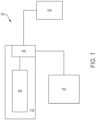
- FIG. 1 is a block diagram of a system 20 according to disclosed embodiments.
- the system 20 can include an electronic device 22, a database device 24 storing previously collected grid test results for a plurality of geographic areas, and a signal measurement device 26.
- the electronic device 22 can include a programmable processor 28 and a transceiver device 30.
- the electronic device 22 and the user signal measurement device 26 can form a single, unitary device.
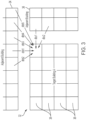
- FIG. 2 and FIG. 3 are block diagrams of grids of a target building 32 and adjacent buildings 34, 36 according to disclosed embodiments.
- the electronic device 22 can calculate, estimate, or approximate a predictive coverage map of the target building 32 by using the previously collected grid test results for the adjacent buildings 34, 36 stored in the database device 24 to generate predictive RF results for a plurality of test points 38 on the grid of the target building 32. Then, the electronic device 22 can calculate an optimized test path through the target building 32 for measuring a respective actual RF signal value at each of the plurality of test points 38.
- the optimized test path can be configured for a user to most quickly assess whether the respective actual RF signal value at each of a minimum number of the plurality of test points 38 is a failing value, thereby preventing the target building 28 from passing a certification walk test.
- the programmable processor 28 can assign each of the plurality of test points 38 to a respective physical space of the target building 32 and retrieve the previously collected grid test results that are relevant to the target building 32 from the database device 22.
- the previously collected grid test results that are relevant to the target building 32 can be those results that are associated with the adjacent buildings 34, 36 that are proximate to the target building 32, and in some embodiments, the previously collected grid test results that are relevant to the target building 32 can include those results that are associated with the plurality of geographic areas in the adjacent buildings 34, 36 that are closest to the target building 32. Still further, in some embodiments, the previously collected grid test results that are relevant to the target building 32 can include those results that are associated with the plurality of geographic areas within a respective line of sight of each of the plurality of test points 38.
- the programmable processor 28 can use the previously collected grid test results that are relevant to the target building to calculate a respective predictive RF result for each of the plurality of test points 38, use the respective predictive RF result for each of the plurality of test points 38 to calculate the optimized test path through the target building 32, and transmit, via the transceiver device 30, the optimized test path to the signal measurement device 26.
- the programmable processor 28 can calculate the respective predictive RF result for each of the plurality of test points 38 by decreasing the previously collected grid test results that are relevant to the target building 32 based on (1) a respective size of a respective one of the plurality of test points 38, (2) a distance between the respective one of the plurality of test points 38 and the plurality of geographic areas in the adjacent buildings 34, 36 associated with the previously collected grid test results that are relevant to the target building 32, and (3) applicable radiation loss factors.
- the programmable processor 28 can average the previously collected grid test results as decreased with respect to each of the plurality of geographic areas within the line of sight of the respective one of the plurality of test points 38.
- the applicable radiation loss factors can include standard radiation loss through air. Additionally or alternatively, in some embodiments, the applicable radiation loss factors can include standard radiation loss through standard building materials and/or a thickness of walls of the target building 32 and the adjacent buildings 34, 36.
- An exemplary, but non-limiting example of calculating the respective predictive RF results for one of the plurality of test points 38 can include starting with an original value of one of the previously collected grid test results that are relevant to the target building 32, decreasing the original value by half of a size of a respective one of the plurality of geographic areas in the adjacent buildings 34, 36 and associated with the one of the previously collected grid test results in a direction between a relative position of the one of the plurality of test points 38 and the respective one of the plurality of geographic areas in the adjacent buildings 34, 36 and associated with the one of the one of the plurality of previously collected grid test results, multiplying that decreased value by radiation loss in free air to account for free air signal loss from a center of the respective one of the plurality of geographic areas, decreasing that product by radiation loss in the standard building materials times the thickness of the walls in the adjacent buildings 34, 36, multiplying that decreased value by the radiation loss in free air to account for free air signal loss between the target building 32 and the adjacent buildings 34, 36, decreasing that by the radiation loss in the standard building materials times
- FIG. 2 Another exemplary, but not-limiting example of calculating the respective predictive RF results for one of the plurality of test points 38 is illustrated in FIG. 2 .
- the predictive RF results X 0,1 for test point 0,1 in the plurality of test points 38 can be calculated by using the previously collected grid test results for grid element AB11,1 of the adjacent building 34 and grid element AB20,1 of the adjacent building 36.
- the signal measurement device 26 can begin measuring the respective actual RF signal value at each of the plurality of test points 38 in succession along the optimized test path, count failing ones of the plurality of test points 38 for which the respective actual RF signal value is below a passing threshold value, and when a counted number of the failing ones of the plurality of test points 38 exceeds a failure threshold value, stop measuring the respective actual RF signal value of each of the plurality of test points 38 in succession along the optimized test path.
- the optimized test path can be limited to the plurality of test points 38 for which the respective predictive RF result is below the passing threshold value and the plurality of test points 38 on the shortest path therebetween.
- the signal measurement device 26 can instruct the user to complete collection of all remaining ones of the plurality of test points 38 that have yet to be measured.
- the programmable processor 28 can begin calculating the optimized test path by designating as a starting location for the optimized test path a first one of the plurality of target test points 38 for which the respective predictive RF result is lowest as compared with the respective predictive RF result for each of the plurality of test points 38. Then, the programmable processor 28 can iteratively designate subsequent locations on the optimized test path beyond the starting location based on previous locations on the optimized test path.
- the programmable processor 28 can select a subsequent location on the optimized test path as one of the plurality of test points 38 adjacent to a current location on the optimized test path when the counted number of the failing ones of the plurality of test points 38 fails to exceed the failure threshold value and when the respective predictive RF result for the one of the plurality of test points 38 adjacent to the current location is below the passing threshold value.
- the programmable processor 28 can select the subsequent locations on the optimized test path as those of the plurality of test points 38 on the shortest path to one of the plurality of test points 38 for which the respective predictive RF result is a next lowest one as compared with the respective predictive RF result for the one of the plurality of test points 38 associated with the current location.
- the target building 32 can contain multiple floors, and in these embodiments, the programmable processor 28 can divide the plurality of test points 38 into groups corresponding to the multiple floors of the target building 32. Furthermore, in these embodiments, the programmable processor 28 can account for the multiple floors of the target building 32 when selecting the subsequent locations on the optimized test path beyond the starting location.
- the signal measurement device 26 can instruct the user to first measure remaining ones of the plurality of test points 38 that have yet to be measured on a currently occupied one of the multiple floors, then measure remaining ones of the plurality of test points 38 that have yet to be measured on adjacent ones of the multiple floors higher than the current occupied one of the multiple floors, and finally measure remaining ones of the plurality of the test points 38 that have yet to be measured on any of the multiple floors lower than the currently occupied one of the multiple floors.
- the programmable processor 28 can select the subsequent locations on the optimized test path as those of the plurality of test points 38 on the shortest path to one of the plurality of test points 38 on that one of the multiple floors and for which the respective predictive RF result is the next lowest one as compared with the respective predictive RF result for the one of the plurality of test points 38 associated with the current location.
- the programmable processor 28 can select the subsequent locations on the optimized test path as those of the plurality of test points 38 on the shortest path to one of the plurality of test points 38 on a different one of the multiple floors and for which the respective predictive RF result is the next lowest one as compared with the respective predictive RF result for the unselected ones of the plurality of test points 38 for which the respective predictive RF result is below the passing threshold value.
Landscapes
- Engineering & Computer Science (AREA)
- Business, Economics & Management (AREA)
- Theoretical Computer Science (AREA)
- Physics & Mathematics (AREA)
- General Physics & Mathematics (AREA)
- Strategic Management (AREA)
- Economics (AREA)
- Tourism & Hospitality (AREA)
- Marketing (AREA)
- Human Resources & Organizations (AREA)
- General Business, Economics & Management (AREA)
- Development Economics (AREA)
- Remote Sensing (AREA)
- Computer Networks & Wireless Communication (AREA)
- Signal Processing (AREA)
- Radar, Positioning & Navigation (AREA)
- Databases & Information Systems (AREA)
- Data Mining & Analysis (AREA)
- Evolutionary Computation (AREA)
- General Engineering & Computer Science (AREA)
- Artificial Intelligence (AREA)
- Entrepreneurship & Innovation (AREA)
- Electromagnetism (AREA)
- Quality & Reliability (AREA)
- Mathematical Physics (AREA)
- Educational Administration (AREA)
- Game Theory and Decision Science (AREA)
- Software Systems (AREA)
- Operations Research (AREA)
- Computing Systems (AREA)
- General Health & Medical Sciences (AREA)
- Finance (AREA)
- Health & Medical Sciences (AREA)
- Primary Health Care (AREA)
- Computational Linguistics (AREA)
- Accounting & Taxation (AREA)
- Automation & Control Theory (AREA)
- Library & Information Science (AREA)
- Management, Administration, Business Operations System, And Electronic Commerce (AREA)
- Train Traffic Observation, Control, And Security (AREA)
Claims (15)
- Verfahren, das durch ein System ausgeführt wird, umfassend:Zuweisen jedes einer Vielzahl von Testpunkten (38) zu einem jeweiligen physischen Raum eines Zielgebäudes (32);Verwenden von zuvor gesammelten Raster-HF-Testergebnissen benachbarter Gebäude (34, 36), die für das Zielgebäude (32) relevant sind, um ein jeweiliges HF-Vorhersageergebnis für jeden der Vielzahl von Testpunkten (38) zu berechnen;Verwenden des jeweiligen HF-Vorhersageergebnisses für jeden der Vielzahl von Testpunkten (38), um einen optimierten Testpfad durch das Zielgebäude (32) zu berechnen;Messen eines jeweiligen tatsächlichen HF-Signalwerts jedes der Vielzahl von Testpunkten (38) nacheinander entlang des optimierten Testpfads;Zählen der fehlgeschlagenen Punkte aus der Vielzahl von Testpunkten (38), für die der jeweilige aktuelle HF-Signalwert unter einem Schwellenwert für das Bestehen liegt; undwenn eine gezählte Anzahl der fehlgeschlagenen Punkte aus der Vielzahl von Testpunkten (38) einen Schwellenwert überschreitet, Anhalten der Messungen des jeweiligen aktuellen HF-Signalwerts jedes der Vielzahl von Testpunkten (38) entlang des optimierten Testpfads.
- Verfahren nach Anspruch 1, ferner umfassend:
Identifizieren der zuvor gesammelten Raster-HF-Testergebnisse benachbarter Gebäude (34, 36), die für das Zielgebäude (32) relevant sind, als diejenigen, die einer Vielzahl von geografischen Gebieten innerhalb einer jeweiligen Sichtlinie jeder Vielzahl von Testpunkten (38) zugeordnet sind. - Verfahren nach Anspruch 1, ferner umfassend:
Berechnen des jeweiligen HF-Vorhersageergebnisses für jeden der Vielzahl von Testpunkten (38) durch Verringern der zuvor gesammelten Raster-HF-Testergebnisse benachbarter Gebäude (34, 36), die für das Zielgebäude (32) relevant sind, basierend auf:(1) einer jeweiligen Größe eines jeweiligen der Vielzahl von Testpunkten (38),(2) einer Entfernung zwischen dem jeweiligen der Vielzahl von Testpunkten (38) und einer Vielzahl von geografischen Gebieten, die den zuvor gesammelten HF-Rastertestergebnissen benachbarter Gebäude (34, 36) zugeordnet sind, und(3) anwendbaren Strahlungsverlustfaktoren. - Verfahren nach Anspruch 3, wobei die anwendbaren Strahlungsverlustfaktoren den Standardstrahlungsverlust durch Luft beinhalten.
- Verfahren nach Anspruch 3, wobei die anwendbaren Strahlungsverlustfaktoren den Standardstrahlungsverlust durch Standardbaumaterialien und die Dicke der Wände des Zielgebäudes (32) und der benachbarten Gebäude (34, 36), in denen sich die Vielzahl von geografischen Gebieten befindet, beinhalten.
- Verfahren nach Anspruch 1, ferner umfassend:
Identifizieren der zuvor gesammelten HF-Rastertestergebnisse benachbarter Gebäude (34, 36), die für das Zielgebäude (32) relevant sind, als diejenigen, die einer Vielzahl von geografischen Gebieten in benachbarten Gebäuden (34, 36) zugeordnet sind, die dem Zielgebäude (32) am nächsten sind. - Verfahren nach Anspruch 1, ferner umfassend:Bestimmen eines ersten der Vielzahl von Testpunkten (38) als Ausgangsposition für den optimierten Testpfad, für den das jeweilige HF-Vorhersageergebnis verglichen mit dem jeweiligen HF-Vorhersageergebnis für jeden der Vielzahl von Testpunkten (38) am niedrigsten ist; unditeratives Bestimmen nachfolgender Positionen auf dem optimierten Testpfad jenseits der Ausgangsposition als:(1) einen der Vielzahl von Testpunkten (38), der einer aktuellen Position benachbart ist, wenn das jeweilige HF-Vorhersageergebnis für den einen der Vielzahl von Testpunkten (38), welcher der aktuellen Position benachbart ist, unter dem Schwellenwert für das Bestehen liegt, und(2) diejenigen der Vielzahl von Testpunkten (38) auf einem kürzesten Weg zu einem der Vielzahl von Testpunkten (38), für den das jeweilige HF-Vorhersageergebnis das nächstniedrigere ist, verglichen mit dem jeweiligen HF-Vorhersageergebnis für den einen der Vielzahl von Testpunkten (38), welcher der aktuellen Position zugeordnet ist, wenn das jeweilige HF-Vorhersageergebnis für alle der Vielzahl von Testpunkten (38), die der aktuellen Position benachbart sind, nicht unter dem Schwellenwert für das Bestehen liegt.
- Verfahren nach Anspruch 1, ferner umfassend:Bestimmen eines ersten der Vielzahl von Testpunkten (38) als Ausgangsposition für den optimierten Testpfad, für den das jeweilige HF-Vorhersageergebnis verglichen mit dem jeweiligen HF-Vorhersageergebnis für jeden der Vielzahl von Testpunkten (38) am niedrigsten ist; unditeratives Bestimmen nachfolgender Positionen auf dem optimierten Testpfad jenseits der Ausgangsposition als:(1) einen der Vielzahl von Testpunkten (38), der einer aktuellen Position benachbart ist, wenn das jeweilige HF-Vorhersageergebnis für den einen der Vielzahl von Testpunkten (38), welcher der aktuellen Position benachbart ist, unter dem Schwellenwert für das Bestehen liegt,(2) diejenigen der Vielzahl von Testpunkten (38), die sich auf dem kürzesten Weg zu einem der Vielzahl von Testpunkten (38) auf einer Etage befinden, auf der sich die aktuelle Position befindet, und für die das jeweilige HF-Vorhersageergebnis das nächstniedrigere ist, verglichen mit dem jeweiligen HF-Vorhersageergebnis für den einen der Vielzahl von Testpunkten (38), welcher der aktuellen Position zugeordnet ist, wenn das jeweilige HF-Vorhersageergebnis für alle der Vielzahl von Testpunkten (38), die der aktuellen Position benachbart sind, nicht unter dem Schwellenwert für das Bestehen liegt und die Etage, auf der sich die aktuelle Position befindet, nicht ausgewählte der Vielzahl von Testpunkten (38) beinhaltet, für die das jeweilige HF-Vorhersageergebnis unter dem Schwellenwert für das Bestehen liegt, und(3) diejenigen der Vielzahl von Testpunkten (38) auf dem kürzesten Weg zu einem der Vielzahl von Testpunkten (38) außerhalb der Etage, auf der sich die aktuelle Position befindet, und für die das jeweilige HF-Vorhersageergebnis ein nächstniedriges ist, verglichen mit dem jeweiligen HF-Vorhersageergebnis für die nicht ausgewählten der Vielzahl von Testpunkten (38), für die das jeweilige HF-Vorhersageergebnis unter dem Durchgangsschwellenwert liegt, wenn das jeweilige HF-Vorhersageergebnis für alle der aktuellen Position benachbarten Vielzahl von Testpunkten (38) nicht unter dem Schwellenwert liegt und die Etage, auf der sich die aktuelle Position befindet, die nicht ausgewählten Testpunkte (38), für die das jeweilige HF-Vorhersageergebnis unter dem Schwellenwert liegt, nicht enthält.
- Verfahren nach Anspruch 1, wobei der optimierte Testpfad 1-MPTp der Vielzahl von Testpunkten (38) beinhaltet, für die das jeweilige HF-Vorhersageergebnis unter dem Schwellenwert für das Bestehen liegt, wobei MPTp ein minimaler Schwellenprozentsatz für das Bestehen ist.
- System (20), Folgendes umfassend:einen programmierbaren Prozessor (28);eine Sendeempfängervorrichtung (30);eine Datenbankvorrichtung (24), die zuvor gesammelte HF-Netztestergebnisse von benachbarten Gebäuden (34, 36) speichert; undeine Signalmessvorrichtung (26),wobei der programmierbare Prozessor (28):jeden von einer Vielzahl von Testpunkten (38) einem jeweiligen physischen Raum eines Zielgebäudes (32) zuweist,die zuvor gesammelten HF-Rastertestergebnisse benachbarter Gebäude (34, 36), die für das Zielgebäude (32) relevant sind, aus der Datenbankvorrichtung abruft,die zuvor gesammelten HF-Rasterergebnisse benachbarter Gebäude (34, 36), die für das Zielgebäude (32) relevant sind, verwendet, um ein jeweiliges HF-Vorhersageergebnis für jeden der Vielzahl von Testpunkten (38) zu berechnen,das jeweilige HF-Vorhersageergebnisses für jeden der Vielzahl von Testpunkten (38) verwendet, um einen optimierten Testpfad durch das Zielgebäude (32) zu berechnen, undden optimierten Testpfad an die Signalmessvorrichtung überträgt, und wobei die Signalmessvorrichtung (26):einen jeweiligen tatsächlichen HF-Signalwerts jedes der Vielzahl von Testpunkten (38) nacheinander entlang des optimierten Testpfads misst;die fehlgeschlagenen Punkte aus der Vielzahl von Testpunkten (38), für die der jeweilige aktuelle HF-Signalwert unter einem Schwellenwert für das Bestehen liegt, zählt; undwenn eine gezählte Anzahl der fehlgeschlagenen Punkte aus der Vielzahl von Testpunkten (38) einen Schwellenwert überschreitet,Anhalten der Messungen des jeweiligen aktuellen HF-Signalwerts jedes der Vielzahl von Testpunkten entlang des optimierten Testpfads.
- System (20) nach Anspruch 10, wobei der programmierbare Prozessor (28) die zuvor gesammelten HF-Rastertestergebnisse benachbarter Gebäude (34, 36), die für das Zielgebäude (32) relevant sind, als diejenigen identifiziert, die einer Vielzahl von geografischen Gebieten innerhalb einer jeweiligen Sichtlinie jeder Vielzahl von Testpunkten (38) zugeordnet sind.
- System (20) nach Anspruch 10, wobei der programmierbare Prozessor (28) das jeweilige HF-Vorhersageergebnis für jeden der Vielzahl von Testpunkten (38) berechnet, indem er die zuvor erfassten HF-Rastertestergebnisse benachbarter Gebäude (34, 36), die für das Zielgebäude (32) relevant sind, verringert, basierend auf:(1) einer jeweiligen Größe eines jeweiligen der Vielzahl von Testpunkten (38),(2) einer Entfernung zwischen dem jeweiligen der Vielzahl von Testpunkten (38) und einer Vielzahl von geografischen Gebieten, die den zuvor gesammelten HF-Rastertestergebnissen benachbarter Gebäude (34, 36) zugeordnet sind, und(3) anwendbaren Strahlungsverlustfaktoren, und wobei die anwendbaren Strahlungsverlustfaktoren den Standardstrahlungsverlust durch Luft und durch Standardbaumaterialien und die Dicke der Wände des Zielgebäudes (32) und der benachbarten Gebäude (34, 36), in denen sich die Vielzahl der geografischen Gebiete befindet, beinhalten.
- System (20) nach Anspruch 10, wobei der programmierbare Prozessor (28) die zuvor gesammelten HF-Rastertestergebnisse benachbarter Gebäude (34, 36), die für das Zielgebäude (32) relevant sind, als diejenigen identifiziert, die einer Vielzahl von geografischen Bereichen in benachbarten Gebäuden (34, 36) zugeordnet sind, die dem Zielgebäude (32) am nächsten sind.
- System (20) nach Anspruch 10, wobei der programmierbare Prozessor (28) als Ausgangsposition für den optimierten Testpfad einen ersten der Vielzahl von Testpunkten (38) bestimmt, für den das jeweilige HF-Vorhersageergebnis verglichen mit dem jeweiligen HF-Vorhersageergebnis für jeden der Vielzahl von Testpunkten (38) am niedrigsten ist, und wobei der programmierbare Prozessor (28) iterativ nachfolgende Positionen auf dem optimierten Testpfad jenseits der Ausgangsposition wie folgt bestimmt:(1) einen der Vielzahl von Testpunkten (38), der einer aktuellen Position benachbart ist, wenn das jeweilige HF-Vorhersageergebnis für den einen der Vielzahl von Testpunkten (38), welcher der aktuellen Position benachbart ist, unter dem Schwellenwert für das Bestehen liegt, und(2) diejenigen der Vielzahl von Testpunkten (38) auf einem kürzesten Weg zu einem der Vielzahl von Testpunkten (38), für den das jeweilige HF-Vorhersageergebnis das nächstniedrigere ist, verglichen mit dem jeweiligen HF-Vorhersageergebnis für den einen der Vielzahl von Testpunkten (38), welcher der aktuellen Position zugeordnet ist, wenn das jeweilige HF-Vorhersageergebnis für alle der Vielzahl von Testpunkten (38), die der aktuellen Position benachbart sind, nicht unter dem Schwellenwert für das Bestehen liegt.
- System (20) nach Anspruch 10, wobei der programmierbare Prozessor (28) als Ausgangsposition für den optimierten Testpfad einen ersten der Vielzahl von Testpunkten (38) bestimmt, für den das jeweilige HF-Vorhersageergebnis verglichen mit dem jeweiligen HF-Vorhersageergebnis für jeden der Vielzahl von Testpunkten (38) am niedrigsten ist, und wobei der programmierbare Prozessor (28) iterativ nachfolgende Positionen auf dem optimierten Testpfad jenseits der Ausgangsposition wie folgt bestimmt:(1) einen der Vielzahl von Testpunkten (38), der einer aktuellen Position benachbart ist, wenn das jeweilige HF-Vorhersageergebnis für den einen der Vielzahl von Testpunkten (38), welcher der aktuellen Position benachbart ist, unter dem Schwellenwert für das Bestehen liegt,(2) diejenigen der Vielzahl von Testpunkten (38), die sich auf dem kürzesten Weg zu einem der Vielzahl von Testpunkten (38) auf einer Etage befinden, auf der sich die aktuelle Position befindet, und für die das jeweilige HF-Vorhersageergebnis das nächstniedrigere ist, verglichen mit dem jeweiligen HF-Vorhersageergebnis für den einen der Vielzahl von Testpunkten (38), welcher der aktuellen Position zugeordnet ist, wenn das jeweilige HF-Vorhersageergebnis für alle der Vielzahl von Testpunkten (38), die der aktuellen Position benachbart sind, nicht unter dem Schwellenwert für das Bestehen liegt und die Etage, auf der sich die aktuelle Position befindet, nicht ausgewählte der Vielzahl von Testpunkten (38) beinhaltet, für die das jeweilige HF-Vorhersageergebnis unter dem Schwellenwert für das Bestehen liegt, und(3) diejenigen der Vielzahl von Testpunkten (38) auf dem kürzesten Weg zu einem der Vielzahl von Testpunkten (38) außerhalb der Etage, auf der sich die aktuelle Position befindet, und für die das jeweilige HF-Vorhersageergebnis ein nächstniedriges ist, verglichen mit dem jeweiligen HF-Vorhersageergebnis für die nicht ausgewählten der Vielzahl von Testpunkten (38), für die das jeweilige HF-Vorhersageergebnis unter dem Durchgangsschwellenwert liegt, wenn das jeweilige HF-Vorhersageergebnis für alle der aktuellen Position benachbarten Vielzahl von Testpunkten (38) nicht unter dem Schwellenwert liegt und die Etage, auf der sich die aktuelle Position befindet, die nicht ausgewählten Testpunkte (38), für die das jeweilige HF-Vorhersageergebnis unter dem Schwellenwert liegt, nicht enthält.
Applications Claiming Priority (2)
| Application Number | Priority Date | Filing Date | Title |
|---|---|---|---|
| US201962884976P | 2019-08-09 | 2019-08-09 | |
| PCT/US2020/045679 WO2021030299A1 (en) | 2019-08-09 | 2020-08-10 | Systems and methods for selecting a worst service first priority grid test route path |
Publications (3)
| Publication Number | Publication Date |
|---|---|
| EP4011007A1 EP4011007A1 (de) | 2022-06-15 |
| EP4011007A4 EP4011007A4 (de) | 2023-07-26 |
| EP4011007B1 true EP4011007B1 (de) | 2024-08-07 |
Family
ID=74498667
Family Applications (1)
| Application Number | Title | Priority Date | Filing Date |
|---|---|---|---|
| EP20853241.6A Active EP4011007B1 (de) | 2019-08-09 | 2020-08-10 | Systeme und verfahren zur auswahl eines netztestwegpfades mit oberster priorität des schlechtesten services |
Country Status (5)
| Country | Link |
|---|---|
| US (1) | US11636492B2 (de) |
| EP (1) | EP4011007B1 (de) |
| CA (1) | CA3112328C (de) |
| FI (1) | FI4011007T3 (de) |
| WO (1) | WO2021030299A1 (de) |
Families Citing this family (2)
| Publication number | Priority date | Publication date | Assignee | Title |
|---|---|---|---|---|
| CA3112328C (en) * | 2019-08-09 | 2024-10-08 | Pctel, Inc. | Systems and methods for selecting a first worst-service priority network test route |
| CN113256029B (zh) * | 2021-06-23 | 2025-02-07 | 合肥量圳建筑科技有限公司 | 建筑内寻路方法、装置、设备及存储介质 |
Family Cites Families (8)
| Publication number | Priority date | Publication date | Assignee | Title |
|---|---|---|---|---|
| DE10018439B4 (de) | 2000-04-13 | 2006-12-14 | T-Mobile Deutschland Gmbh | Verfahren zur Mobilfunkversorgung eines zu versorgenden Gebäudes |
| US6973622B1 (en) | 2000-09-25 | 2005-12-06 | Wireless Valley Communications, Inc. | System and method for design, tracking, measurement, prediction and optimization of data communication networks |
| US8868002B2 (en) * | 2011-08-31 | 2014-10-21 | Xirrus, Inc. | System and method for conducting wireless site surveys |
| GB2516467A (en) * | 2013-07-23 | 2015-01-28 | Nec Corp | Communication system |
| US9380425B2 (en) * | 2013-12-05 | 2016-06-28 | At&T Mobility Ii Llc | Systems, methods, and computer-readable storage devices for generating and using a radio-frequency map of an area |
| US20190059002A1 (en) * | 2017-08-21 | 2019-02-21 | Pc-Tel, Inc. | Systems and methods for verifying acceptable performance of a network in a building |
| US11184871B2 (en) * | 2019-08-08 | 2021-11-23 | Pctel, Inc. | Systems and methods for time coordinating a plurality of RF data collection devices at disparate locations |
| CA3112328C (en) * | 2019-08-09 | 2024-10-08 | Pctel, Inc. | Systems and methods for selecting a first worst-service priority network test route |
-
2020
- 2020-08-10 CA CA3112328A patent/CA3112328C/en active Active
- 2020-08-10 WO PCT/US2020/045679 patent/WO2021030299A1/en not_active Ceased
- 2020-08-10 EP EP20853241.6A patent/EP4011007B1/de active Active
- 2020-08-10 FI FIEP20853241.6T patent/FI4011007T3/fi active
- 2020-08-10 US US16/989,380 patent/US11636492B2/en active Active
Also Published As
| Publication number | Publication date |
|---|---|
| CA3112328A1 (en) | 2021-02-18 |
| US20210042760A1 (en) | 2021-02-11 |
| CA3112328C (en) | 2024-10-08 |
| WO2021030299A1 (en) | 2021-02-18 |
| US11636492B2 (en) | 2023-04-25 |
| EP4011007A4 (de) | 2023-07-26 |
| FI4011007T3 (fi) | 2024-10-25 |
| EP4011007A1 (de) | 2022-06-15 |
Similar Documents
| Publication | Publication Date | Title |
|---|---|---|
| CN106355883B (zh) | 一种获取交通事故发生概率的方法、装置及系统 | |
| US20130003572A1 (en) | Indoor position determination method and system based on wlan signal strength | |
| US20200141734A1 (en) | Crowdsourced mapping of environmental hazards | |
| CN101923118B (zh) | 建筑物影响估计装置及建筑物影响估计方法 | |
| US20180279078A1 (en) | Confirming work supporting device, confirming work supporting system, and computer program product | |
| KR101709411B1 (ko) | 가중치 삼변측량법에 기반한 위치 측정 방법과 이를 이용한 실내 측위 방법 | |
| EP4011007B1 (de) | Systeme und verfahren zur auswahl eines netztestwegpfades mit oberster priorität des schlechtesten services | |
| JP5116750B2 (ja) | 位置特定方法、測位システム及びプログラム | |
| Grzechca et al. | Analysis of object location accuracy for iBeacon technology based on the RSSI path loss model and fingerprint map | |
| CN108271171B (zh) | 建筑物网络状况统计方法及装置 | |
| CN113720283B (zh) | 建筑施工高度的识别方法、装置、电子设备及系统 | |
| CN113678468B (zh) | 机器学习装置 | |
| EP3349031A1 (de) | Verfahren zur erzeugung eines innenraumumgebungsmodells und verfahren zur bestimmung von positionsdaten zur positionierung in einer innenraumumgebung | |
| CN104703215B (zh) | 一种室内信号强度异常诊断方法及系统 | |
| EP3273260A2 (de) | Analyse und überwachung einer positionierung einer infrastruktur | |
| US8812022B2 (en) | Method and apparatus for indoor location measurement | |
| CN119309566A (zh) | 一种基于资源整合的高精度地图测试方法及系统 | |
| RU2487386C2 (ru) | Способ моделирования процессов централизованного управления техническими средствами и система для его осуществления (варианты) | |
| KR101738745B1 (ko) | 셀 가치 추산을 이용한 범죄 예측 방법 및 범죄 예측 시스템 | |
| WO2020209380A1 (ja) | 機械学習装置 | |
| JP6967368B2 (ja) | 電波強度マップの生成方法、伝搬損失推定方法及び屋内測位システム | |
| KR101853700B1 (ko) | 재난 구조시의 실내 위치 표시 시스템 및 방법 | |
| JP5267209B2 (ja) | 測定ルート決定システム、方法およびプログラム | |
| US11129042B2 (en) | Path crossing detection based on wireless signals travel time | |
| KR101444539B1 (ko) | 통계적 공정 분석 방법 및 그 분석 장치 |
Legal Events
| Date | Code | Title | Description |
|---|---|---|---|
| STAA | Information on the status of an ep patent application or granted ep patent |
Free format text: STATUS: THE INTERNATIONAL PUBLICATION HAS BEEN MADE |
|
| PUAI | Public reference made under article 153(3) epc to a published international application that has entered the european phase |
Free format text: ORIGINAL CODE: 0009012 |
|
| STAA | Information on the status of an ep patent application or granted ep patent |
Free format text: STATUS: REQUEST FOR EXAMINATION WAS MADE |
|
| 17P | Request for examination filed |
Effective date: 20220308 |
|
| AK | Designated contracting states |
Kind code of ref document: A1 Designated state(s): AL AT BE BG CH CY CZ DE DK EE ES FI FR GB GR HR HU IE IS IT LI LT LU LV MC MK MT NL NO PL PT RO RS SE SI SK SM TR |
|
| DAV | Request for validation of the european patent (deleted) | ||
| DAX | Request for extension of the european patent (deleted) | ||
| A4 | Supplementary search report drawn up and despatched |
Effective date: 20230622 |
|
| RIC1 | Information provided on ipc code assigned before grant |
Ipc: H04W 24/08 20090101ALI20230616BHEP Ipc: H04W 24/06 20090101ALI20230616BHEP Ipc: H04W 24/00 20090101ALI20230616BHEP Ipc: H04W 16/20 20090101ALI20230616BHEP Ipc: H04W 16/18 20090101ALI20230616BHEP Ipc: H04B 17/00 20150101AFI20230616BHEP |
|
| GRAP | Despatch of communication of intention to grant a patent |
Free format text: ORIGINAL CODE: EPIDOSNIGR1 |
|
| STAA | Information on the status of an ep patent application or granted ep patent |
Free format text: STATUS: GRANT OF PATENT IS INTENDED |
|
| INTG | Intention to grant announced |
Effective date: 20240423 |
|
| GRAS | Grant fee paid |
Free format text: ORIGINAL CODE: EPIDOSNIGR3 |
|
| GRAA | (expected) grant |
Free format text: ORIGINAL CODE: 0009210 |
|
| STAA | Information on the status of an ep patent application or granted ep patent |
Free format text: STATUS: THE PATENT HAS BEEN GRANTED |
|
| AK | Designated contracting states |
Kind code of ref document: B1 Designated state(s): AL AT BE BG CH CY CZ DE DK EE ES FI FR GB GR HR HU IE IS IT LI LT LU LV MC MK MT NL NO PL PT RO RS SE SI SK SM TR |
|
| REG | Reference to a national code |
Ref country code: GB Ref legal event code: FG4D |
|
| REG | Reference to a national code |
Ref country code: CH Ref legal event code: EP |
|
| REG | Reference to a national code |
Ref country code: DE Ref legal event code: R096 Ref document number: 602020035514 Country of ref document: DE |
|
| REG | Reference to a national code |
Ref country code: IE Ref legal event code: FG4D |
|
| PGFP | Annual fee paid to national office [announced via postgrant information from national office to epo] |
Ref country code: FI Payment date: 20240927 Year of fee payment: 5 |
|
| PGFP | Annual fee paid to national office [announced via postgrant information from national office to epo] |
Ref country code: CH Payment date: 20240926 Year of fee payment: 5 |
|
| REG | Reference to a national code |
Ref country code: SE Ref legal event code: TRGR |
|
| REG | Reference to a national code |
Ref country code: FI Ref legal event code: FGE |
|
| REG | Reference to a national code |
Ref country code: LT Ref legal event code: MG9D |
|
| REG | Reference to a national code |
Ref country code: NL Ref legal event code: MP Effective date: 20240807 |
|
| PG25 | Lapsed in a contracting state [announced via postgrant information from national office to epo] |
Ref country code: NO Free format text: LAPSE BECAUSE OF FAILURE TO SUBMIT A TRANSLATION OF THE DESCRIPTION OR TO PAY THE FEE WITHIN THE PRESCRIBED TIME-LIMIT Effective date: 20241107 |
|
| REG | Reference to a national code |
Ref country code: AT Ref legal event code: MK05 Ref document number: 1712070 Country of ref document: AT Kind code of ref document: T Effective date: 20240807 |
|
| PG25 | Lapsed in a contracting state [announced via postgrant information from national office to epo] |
Ref country code: GR Free format text: LAPSE BECAUSE OF FAILURE TO SUBMIT A TRANSLATION OF THE DESCRIPTION OR TO PAY THE FEE WITHIN THE PRESCRIBED TIME-LIMIT Effective date: 20241108 Ref country code: NL Free format text: LAPSE BECAUSE OF FAILURE TO SUBMIT A TRANSLATION OF THE DESCRIPTION OR TO PAY THE FEE WITHIN THE PRESCRIBED TIME-LIMIT Effective date: 20240807 Ref country code: PT Free format text: LAPSE BECAUSE OF FAILURE TO SUBMIT A TRANSLATION OF THE DESCRIPTION OR TO PAY THE FEE WITHIN THE PRESCRIBED TIME-LIMIT Effective date: 20241209 Ref country code: PL Free format text: LAPSE BECAUSE OF FAILURE TO SUBMIT A TRANSLATION OF THE DESCRIPTION OR TO PAY THE FEE WITHIN THE PRESCRIBED TIME-LIMIT Effective date: 20240807 |
|
| PG25 | Lapsed in a contracting state [announced via postgrant information from national office to epo] |
Ref country code: BG Free format text: LAPSE BECAUSE OF FAILURE TO SUBMIT A TRANSLATION OF THE DESCRIPTION OR TO PAY THE FEE WITHIN THE PRESCRIBED TIME-LIMIT Effective date: 20240807 |
|
| PG25 | Lapsed in a contracting state [announced via postgrant information from national office to epo] |
Ref country code: LV Free format text: LAPSE BECAUSE OF FAILURE TO SUBMIT A TRANSLATION OF THE DESCRIPTION OR TO PAY THE FEE WITHIN THE PRESCRIBED TIME-LIMIT Effective date: 20240807 |
|
| PG25 | Lapsed in a contracting state [announced via postgrant information from national office to epo] |
Ref country code: IS Free format text: LAPSE BECAUSE OF FAILURE TO SUBMIT A TRANSLATION OF THE DESCRIPTION OR TO PAY THE FEE WITHIN THE PRESCRIBED TIME-LIMIT Effective date: 20241207 Ref country code: AT Free format text: LAPSE BECAUSE OF FAILURE TO SUBMIT A TRANSLATION OF THE DESCRIPTION OR TO PAY THE FEE WITHIN THE PRESCRIBED TIME-LIMIT Effective date: 20240807 |
|
| PG25 | Lapsed in a contracting state [announced via postgrant information from national office to epo] |
Ref country code: HR Free format text: LAPSE BECAUSE OF FAILURE TO SUBMIT A TRANSLATION OF THE DESCRIPTION OR TO PAY THE FEE WITHIN THE PRESCRIBED TIME-LIMIT Effective date: 20240807 |
|
| PG25 | Lapsed in a contracting state [announced via postgrant information from national office to epo] |
Ref country code: RS Free format text: LAPSE BECAUSE OF FAILURE TO SUBMIT A TRANSLATION OF THE DESCRIPTION OR TO PAY THE FEE WITHIN THE PRESCRIBED TIME-LIMIT Effective date: 20241107 Ref country code: ES Free format text: LAPSE BECAUSE OF FAILURE TO SUBMIT A TRANSLATION OF THE DESCRIPTION OR TO PAY THE FEE WITHIN THE PRESCRIBED TIME-LIMIT Effective date: 20240807 |
|
| PG25 | Lapsed in a contracting state [announced via postgrant information from national office to epo] |
Ref country code: RS Free format text: LAPSE BECAUSE OF FAILURE TO SUBMIT A TRANSLATION OF THE DESCRIPTION OR TO PAY THE FEE WITHIN THE PRESCRIBED TIME-LIMIT Effective date: 20241107 Ref country code: PT Free format text: LAPSE BECAUSE OF FAILURE TO SUBMIT A TRANSLATION OF THE DESCRIPTION OR TO PAY THE FEE WITHIN THE PRESCRIBED TIME-LIMIT Effective date: 20241209 Ref country code: PL Free format text: LAPSE BECAUSE OF FAILURE TO SUBMIT A TRANSLATION OF THE DESCRIPTION OR TO PAY THE FEE WITHIN THE PRESCRIBED TIME-LIMIT Effective date: 20240807 Ref country code: NO Free format text: LAPSE BECAUSE OF FAILURE TO SUBMIT A TRANSLATION OF THE DESCRIPTION OR TO PAY THE FEE WITHIN THE PRESCRIBED TIME-LIMIT Effective date: 20241107 Ref country code: NL Free format text: LAPSE BECAUSE OF FAILURE TO SUBMIT A TRANSLATION OF THE DESCRIPTION OR TO PAY THE FEE WITHIN THE PRESCRIBED TIME-LIMIT Effective date: 20240807 Ref country code: LV Free format text: LAPSE BECAUSE OF FAILURE TO SUBMIT A TRANSLATION OF THE DESCRIPTION OR TO PAY THE FEE WITHIN THE PRESCRIBED TIME-LIMIT Effective date: 20240807 Ref country code: IS Free format text: LAPSE BECAUSE OF FAILURE TO SUBMIT A TRANSLATION OF THE DESCRIPTION OR TO PAY THE FEE WITHIN THE PRESCRIBED TIME-LIMIT Effective date: 20241207 Ref country code: HR Free format text: LAPSE BECAUSE OF FAILURE TO SUBMIT A TRANSLATION OF THE DESCRIPTION OR TO PAY THE FEE WITHIN THE PRESCRIBED TIME-LIMIT Effective date: 20240807 Ref country code: GR Free format text: LAPSE BECAUSE OF FAILURE TO SUBMIT A TRANSLATION OF THE DESCRIPTION OR TO PAY THE FEE WITHIN THE PRESCRIBED TIME-LIMIT Effective date: 20241108 Ref country code: ES Free format text: LAPSE BECAUSE OF FAILURE TO SUBMIT A TRANSLATION OF THE DESCRIPTION OR TO PAY THE FEE WITHIN THE PRESCRIBED TIME-LIMIT Effective date: 20240807 Ref country code: BG Free format text: LAPSE BECAUSE OF FAILURE TO SUBMIT A TRANSLATION OF THE DESCRIPTION OR TO PAY THE FEE WITHIN THE PRESCRIBED TIME-LIMIT Effective date: 20240807 Ref country code: AT Free format text: LAPSE BECAUSE OF FAILURE TO SUBMIT A TRANSLATION OF THE DESCRIPTION OR TO PAY THE FEE WITHIN THE PRESCRIBED TIME-LIMIT Effective date: 20240807 |
|
| PG25 | Lapsed in a contracting state [announced via postgrant information from national office to epo] |
Ref country code: DK Free format text: LAPSE BECAUSE OF FAILURE TO SUBMIT A TRANSLATION OF THE DESCRIPTION OR TO PAY THE FEE WITHIN THE PRESCRIBED TIME-LIMIT Effective date: 20240807 Ref country code: SM Free format text: LAPSE BECAUSE OF FAILURE TO SUBMIT A TRANSLATION OF THE DESCRIPTION OR TO PAY THE FEE WITHIN THE PRESCRIBED TIME-LIMIT Effective date: 20240807 |
|
| PG25 | Lapsed in a contracting state [announced via postgrant information from national office to epo] |
Ref country code: LU Free format text: LAPSE BECAUSE OF NON-PAYMENT OF DUE FEES Effective date: 20240810 |
|
| PG25 | Lapsed in a contracting state [announced via postgrant information from national office to epo] |
Ref country code: EE Free format text: LAPSE BECAUSE OF FAILURE TO SUBMIT A TRANSLATION OF THE DESCRIPTION OR TO PAY THE FEE WITHIN THE PRESCRIBED TIME-LIMIT Effective date: 20240807 |
|
| PG25 | Lapsed in a contracting state [announced via postgrant information from national office to epo] |
Ref country code: CZ Free format text: LAPSE BECAUSE OF FAILURE TO SUBMIT A TRANSLATION OF THE DESCRIPTION OR TO PAY THE FEE WITHIN THE PRESCRIBED TIME-LIMIT Effective date: 20240807 |
|
| PG25 | Lapsed in a contracting state [announced via postgrant information from national office to epo] |
Ref country code: SK Free format text: LAPSE BECAUSE OF FAILURE TO SUBMIT A TRANSLATION OF THE DESCRIPTION OR TO PAY THE FEE WITHIN THE PRESCRIBED TIME-LIMIT Effective date: 20240807 |
|
| REG | Reference to a national code |
Ref country code: DE Ref legal event code: R097 Ref document number: 602020035514 Country of ref document: DE |
|
| PLBE | No opposition filed within time limit |
Free format text: ORIGINAL CODE: 0009261 |
|
| STAA | Information on the status of an ep patent application or granted ep patent |
Free format text: STATUS: NO OPPOSITION FILED WITHIN TIME LIMIT |
|
| REG | Reference to a national code |
Ref country code: BE Ref legal event code: MM Effective date: 20240831 |
|
| PG25 | Lapsed in a contracting state [announced via postgrant information from national office to epo] |
Ref country code: MC Free format text: LAPSE BECAUSE OF FAILURE TO SUBMIT A TRANSLATION OF THE DESCRIPTION OR TO PAY THE FEE WITHIN THE PRESCRIBED TIME-LIMIT Effective date: 20240807 |
|
| PGFP | Annual fee paid to national office [announced via postgrant information from national office to epo] |
Ref country code: GB Payment date: 20250619 Year of fee payment: 6 |
|
| PG25 | Lapsed in a contracting state [announced via postgrant information from national office to epo] |
Ref country code: BE Free format text: LAPSE BECAUSE OF NON-PAYMENT OF DUE FEES Effective date: 20240831 |
|
| 26N | No opposition filed |
Effective date: 20250508 |
|
| PGFP | Annual fee paid to national office [announced via postgrant information from national office to epo] |
Ref country code: FR Payment date: 20250610 Year of fee payment: 6 |
|
| PG25 | Lapsed in a contracting state [announced via postgrant information from national office to epo] |
Ref country code: IE Free format text: LAPSE BECAUSE OF NON-PAYMENT OF DUE FEES Effective date: 20240810 |
|
| PGFP | Annual fee paid to national office [announced via postgrant information from national office to epo] |
Ref country code: SE Payment date: 20250610 Year of fee payment: 6 |
|
| PGFP | Annual fee paid to national office [announced via postgrant information from national office to epo] |
Ref country code: DE Payment date: 20250618 Year of fee payment: 6 |
|
| PG25 | Lapsed in a contracting state [announced via postgrant information from national office to epo] |
Ref country code: RO Free format text: LAPSE BECAUSE OF FAILURE TO SUBMIT A TRANSLATION OF THE DESCRIPTION OR TO PAY THE FEE WITHIN THE PRESCRIBED TIME-LIMIT Effective date: 20240807 |
|
| PG25 | Lapsed in a contracting state [announced via postgrant information from national office to epo] |
Ref country code: IT Free format text: LAPSE BECAUSE OF FAILURE TO SUBMIT A TRANSLATION OF THE DESCRIPTION OR TO PAY THE FEE WITHIN THE PRESCRIBED TIME-LIMIT Effective date: 20240807 Ref country code: CY Free format text: LAPSE BECAUSE OF FAILURE TO SUBMIT A TRANSLATION OF THE DESCRIPTION OR TO PAY THE FEE WITHIN THE PRESCRIBED TIME-LIMIT; INVALID AB INITIO Effective date: 20200810 |
|
| PG25 | Lapsed in a contracting state [announced via postgrant information from national office to epo] |
Ref country code: HU Free format text: LAPSE BECAUSE OF FAILURE TO SUBMIT A TRANSLATION OF THE DESCRIPTION OR TO PAY THE FEE WITHIN THE PRESCRIBED TIME-LIMIT; INVALID AB INITIO Effective date: 20200810 |
|
| REG | Reference to a national code |
Ref country code: CH Ref legal event code: H13 Free format text: ST27 STATUS EVENT CODE: U-0-0-H10-H13 (AS PROVIDED BY THE NATIONAL OFFICE) Effective date: 20260324 |
|
| PG25 | Lapsed in a contracting state [announced via postgrant information from national office to epo] |
Ref country code: FI Free format text: LAPSE BECAUSE OF NON-PAYMENT OF DUE FEES Effective date: 20250810 |
|
| PG25 | Lapsed in a contracting state [announced via postgrant information from national office to epo] |
Ref country code: CH Free format text: LAPSE BECAUSE OF NON-PAYMENT OF DUE FEES Effective date: 20250831 |