EP4010232B1 - Verfahren zur erzeugung einer steuerungseinstellung für ein kraftfahrzeugbauteil - Google Patents
Verfahren zur erzeugung einer steuerungseinstellung für ein kraftfahrzeugbauteil Download PDFInfo
- Publication number
- EP4010232B1 EP4010232B1 EP20734553.9A EP20734553A EP4010232B1 EP 4010232 B1 EP4010232 B1 EP 4010232B1 EP 20734553 A EP20734553 A EP 20734553A EP 4010232 B1 EP4010232 B1 EP 4010232B1
- Authority
- EP
- European Patent Office
- Prior art keywords
- acceleration
- motor vehicle
- veh
- max
- phases
- Prior art date
- Legal status (The legal status is an assumption and is not a legal conclusion. Google has not performed a legal analysis and makes no representation as to the accuracy of the status listed.)
- Active
Links
Images


Classifications
-
- B—PERFORMING OPERATIONS; TRANSPORTING
- B60—VEHICLES IN GENERAL
- B60W—CONJOINT CONTROL OF VEHICLE SUB-UNITS OF DIFFERENT TYPE OR DIFFERENT FUNCTION; CONTROL SYSTEMS SPECIALLY ADAPTED FOR HYBRID VEHICLES; ROAD VEHICLE DRIVE CONTROL SYSTEMS FOR PURPOSES NOT RELATED TO THE CONTROL OF A PARTICULAR SUB-UNIT
- B60W30/00—Purposes of road vehicle drive control systems not related to the control of a particular sub-unit, e.g. of systems using conjoint control of vehicle sub-units
- B60W30/18—Propelling the vehicle
- B60W30/19—Improvement of gear change, e.g. by synchronisation or smoothing gear shift
-
- B—PERFORMING OPERATIONS; TRANSPORTING
- B60—VEHICLES IN GENERAL
- B60W—CONJOINT CONTROL OF VEHICLE SUB-UNITS OF DIFFERENT TYPE OR DIFFERENT FUNCTION; CONTROL SYSTEMS SPECIALLY ADAPTED FOR HYBRID VEHICLES; ROAD VEHICLE DRIVE CONTROL SYSTEMS FOR PURPOSES NOT RELATED TO THE CONTROL OF A PARTICULAR SUB-UNIT
- B60W30/00—Purposes of road vehicle drive control systems not related to the control of a particular sub-unit, e.g. of systems using conjoint control of vehicle sub-units
- B60W30/02—Control of vehicle driving stability
- B60W30/025—Control of vehicle driving stability related to comfort of drivers or passengers
-
- B—PERFORMING OPERATIONS; TRANSPORTING
- B60—VEHICLES IN GENERAL
- B60W—CONJOINT CONTROL OF VEHICLE SUB-UNITS OF DIFFERENT TYPE OR DIFFERENT FUNCTION; CONTROL SYSTEMS SPECIALLY ADAPTED FOR HYBRID VEHICLES; ROAD VEHICLE DRIVE CONTROL SYSTEMS FOR PURPOSES NOT RELATED TO THE CONTROL OF A PARTICULAR SUB-UNIT
- B60W30/00—Purposes of road vehicle drive control systems not related to the control of a particular sub-unit, e.g. of systems using conjoint control of vehicle sub-units
- B60W30/18—Propelling the vehicle
- B60W30/20—Reducing vibrations in the driveline
-
- B—PERFORMING OPERATIONS; TRANSPORTING
- B60—VEHICLES IN GENERAL
- B60W—CONJOINT CONTROL OF VEHICLE SUB-UNITS OF DIFFERENT TYPE OR DIFFERENT FUNCTION; CONTROL SYSTEMS SPECIALLY ADAPTED FOR HYBRID VEHICLES; ROAD VEHICLE DRIVE CONTROL SYSTEMS FOR PURPOSES NOT RELATED TO THE CONTROL OF A PARTICULAR SUB-UNIT
- B60W2520/00—Input parameters relating to overall vehicle dynamics
- B60W2520/10—Longitudinal speed
-
- B—PERFORMING OPERATIONS; TRANSPORTING
- B60—VEHICLES IN GENERAL
- B60W—CONJOINT CONTROL OF VEHICLE SUB-UNITS OF DIFFERENT TYPE OR DIFFERENT FUNCTION; CONTROL SYSTEMS SPECIALLY ADAPTED FOR HYBRID VEHICLES; ROAD VEHICLE DRIVE CONTROL SYSTEMS FOR PURPOSES NOT RELATED TO THE CONTROL OF A PARTICULAR SUB-UNIT
- B60W2540/00—Input parameters relating to occupants
- B60W2540/22—Psychological state; Stress level or workload
-
- B—PERFORMING OPERATIONS; TRANSPORTING
- B60—VEHICLES IN GENERAL
- B60W—CONJOINT CONTROL OF VEHICLE SUB-UNITS OF DIFFERENT TYPE OR DIFFERENT FUNCTION; CONTROL SYSTEMS SPECIALLY ADAPTED FOR HYBRID VEHICLES; ROAD VEHICLE DRIVE CONTROL SYSTEMS FOR PURPOSES NOT RELATED TO THE CONTROL OF A PARTICULAR SUB-UNIT
- B60W2540/00—Input parameters relating to occupants
- B60W2540/221—Physiology, e.g. weight, heartbeat, health or special needs
-
- B—PERFORMING OPERATIONS; TRANSPORTING
- B60—VEHICLES IN GENERAL
- B60W—CONJOINT CONTROL OF VEHICLE SUB-UNITS OF DIFFERENT TYPE OR DIFFERENT FUNCTION; CONTROL SYSTEMS SPECIALLY ADAPTED FOR HYBRID VEHICLES; ROAD VEHICLE DRIVE CONTROL SYSTEMS FOR PURPOSES NOT RELATED TO THE CONTROL OF A PARTICULAR SUB-UNIT
- B60W2552/00—Input parameters relating to infrastructure
- B60W2552/15—Road slope, i.e. the inclination of a road segment in the longitudinal direction
-
- B—PERFORMING OPERATIONS; TRANSPORTING
- B60—VEHICLES IN GENERAL
- B60W—CONJOINT CONTROL OF VEHICLE SUB-UNITS OF DIFFERENT TYPE OR DIFFERENT FUNCTION; CONTROL SYSTEMS SPECIALLY ADAPTED FOR HYBRID VEHICLES; ROAD VEHICLE DRIVE CONTROL SYSTEMS FOR PURPOSES NOT RELATED TO THE CONTROL OF A PARTICULAR SUB-UNIT
- B60W2720/00—Output or target parameters relating to overall vehicle dynamics
- B60W2720/10—Longitudinal speed
- B60W2720/106—Longitudinal acceleration
Definitions
- the present invention generally relates to the driving pleasure of motor vehicles.
- It relates more particularly to a method for developing a control instruction for a control member of a motor vehicle.
- the invention finds a particularly advantageous application in the control of any organ having an influence on the acceleration of the motor vehicle, such as the vehicle engine, or the gearbox, or the clutch, or the braking system.
- cruise control functions make it possible to adapt the vehicle speed according to the environment (speed limit, traffic jams, etc.) autonomously, that is to say without driver intervention, by acting on the engine, gearbox and braking system.
- CN108639061A describes a system which consists of calculating an acceleration likely to prevent the onset of motion sickness.
- the vestibular system is the one that allows us to feel the movements applied to the human body.
- the second document shows a preference for symmetrical acceleration/deceleration maneuvers.
- the present invention proposes to take into account the vestibular system during the design of motor vehicles in order to improve their comfort.
- the invention makes it possible to determine whether or not an autonomous driving maneuver of a vehicle component would be acceptable from the point of view of driver comfort. It will be based in particular on human proprioception associated with the vestibular system, but also on the psychology and feelings of the driver as well as the influence of the environment.
- the invention can be easily implemented on an on-board computer and then used to authorize or not the sending of control instructions to the vehicle's components. It can also be used upstream, during vehicle design.
- the invention also proposes a motor vehicle comprising at least one control member which is adapted to vary the acceleration of the motor vehicle, and a computer adapted to control this member so as to implement the aforementioned development method.
- the vestibular system is the sensory organ that detects sensations related to balance. In particular, it informs the central nervous system about the position and movements of the head.
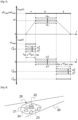
- otolitic organs which interest us more particularly here, are made up of a piece of approximately elliptical shape, called macula 11, which is covered by a gelatinous membrane which is called otolithic membrane 12.
- This otolithic membrane 12 is itself covered with a layer 13 of calcium carbonate particles called otoliths.
- Sensory cells 16 which are located in the macula 11, carry cilia embedded in the otolithic membrane 12. They each carry, at one end, a main cilium called kinocil 14, and other cilia called stereocilia 15.
- the layer 13 of otoliths which presents a relatively substantial inertia, tends to remain in place while the base of macula 11 moves with the rest of the human body.
- the otolithic membrane 12 is deformed, which produces an inclination of the cilia 14, 15.
- This inclination is translated by the sensory cells 16 in the form of electrical signals sent to the central nervous system, which allows the brain to interpret an acceleration.
- the signal varies depending on whether the stereocilia 15 incline towards the kinocilium 14 or away from the latter, which makes it possible to distinguish between positive and negative accelerations.
- sustained vestibular system and “transient vestibular system”. These two systems have different sensitivities to different stimuli.
- the sustained vestibular system perceives the low frequency components of acceleration, while the transient vestibular system is more sensitive to high frequencies as well as to transient phases of acceleration.
- the present invention proposes to take into account the structure of this vestibular system, and in particular its two-component structure, to control a motor vehicle 20 in a comfortable manner for the passengers of a vehicle and in particular for its driver.
- the motor vehicle 20 considered here conventionally comprises a chassis supporting an internal combustion engine 22 making it possible to accelerate the vehicle, a clutch and a gearbox 23, braking means 24 making it possible to decelerate the vehicle, and at least one computer 21 adapted to autonomously control the aforementioned organs.
- the invention will also apply to vehicles with electric or hybrid propulsion.
- the computer 21 is in particular programmed to implement the method which will be described below. For this purpose, it is connected to at least one sensor allowing it to measure or calculate the longitudinal acceleration A veh experienced by the motor vehicle 20 and the temporal derivative of this acceleration J veh .
- the computer 21 could for example be programmed to clip the values of these instructions so as to ensure the comfort of the driver and passengers of the vehicle.
- a “maneuver” will be defined here as a non-stationary state of the vehicle, between two quasi-stationary states from the point of view of the driver's feelings.
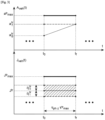
- a maneuver can thus be represented as a piecewise affine function representing the variations in the acceleration of the vehicle over time, the different segments of which correspond to the different phases of the maneuver.
- transient phases during which the acceleration varies linearly, will be felt by the transient vestibular system.
- the acceleration A veh takes a constant value a s . Then, to guarantee driving pleasure during such a phase, the computer 21 must ensure that the value a s of the stabilized acceleration does not exceed a maximum acceleration threshold a s max .
- This maximum acceleration threshold a s max can be identified empirically, by carrying out comfort tests on a representative panel of people.
- tolerance thresholds ⁇ a - , ⁇ a + between which the value of the acceleration can vary slightly during stabilized phases without being felt as such.
- These two tolerance thresholds ⁇ a - , ⁇ a + are preferentially different, so as to reflect the dispersion in the responses of the vestibular system which is capable of distinguishing an increasing variation in acceleration from a decreasing variation.
- acceleration thresholds a s max and tolerance ⁇ a_, ⁇ a + are therefore values that the computer 21 must take care not to exceed during phases of constant acceleration.
- the computer 21 For a maneuver to be considered acceptable from the point of view of driver comfort, the computer 21 must ensure that the value J tr of the transient jerk does not exceed a threshold J tr max , the value of which can be found empirically using tests carried out on a representative panel of individuals.
- the calculator 21 must ensure that the duration ⁇ ph of the transient shock does not exceed a maximum duration ⁇ tr max .
- the amplitude and duration of the transient acceleration phase are both parameters having an influence on the response of the central nervous system, so that the computer 21 must determine their values simultaneously or one as a function of the other.
- tolerance thresholds ⁇ j tr - , ⁇ j tr + between which the value of the jerk can vary slightly during transient phases without being felt as such.
- These two tolerance thresholds ⁇ j tr - , ⁇ j tr + are preferentially different, so as to reflect the dispersion in the responses of the vestibular system which is capable of distinguishing an increasing variation in acceleration from a decreasing variation.
- This first example consists of a change of gearbox ratio 23.
- acceleration thresholds considered at tr min , a s min are not the same during the transient phases and during the stabilized phase since the components of the vestibular system which are sensitive during these phases are not the same.
- the acceleration thresholds considered at tr min , a s min will be lower limits whose values can be distinct (in absolute values) from the aforementioned thresholds at tr max , a s max , since the vestibular system does not react in the same way during acceleration and deceleration phases.
- the computer 21 must ensure that neither the acceleration nor the jerk falls below the thresholds a tr min , J tr min . During this phase, it must also check that the jerk remains within the tolerance thresholds ⁇ j tr - , ⁇ j tr + . Finally, this phase must not exceed a duration ⁇ tr ph1, max .
- the computer 21 could for example modify the opening and closing speed of the clutch so as to finally respect these conditions.
- the computer 21 must ensure that the deceleration due to the fact that the clutch is open does not exceed a threshold a s min and that it remains within the zone defined by the thresholds of tolerance ⁇ a - , ⁇ a + .
- the jerk which is substantially zero during this phase, must not leave the zone defined by the tolerance thresholds ⁇ j s - , ⁇ j s + .
- the computer 21 must ensure that the acceleration does not pass not below the threshold a tr min and that the jerk does not pass above the threshold J tr min . During this phase, it must also check that the jerk remains within the tolerance thresholds ⁇ j tr - , ⁇ j tr + . Finally, this phase must not exceed a duration ⁇ tr ph3, max .
- the computer 21 could for example modify the closing speed of the clutch, the choice of the gear ratio, as well as the speed and the torque of the powertrain so as to ultimately meet these conditions.
- This second example consists of a change in speed and/or torque of the engine 22, which can occur for example in the event of a transition between two regulatory speeds on a portion of road with a constant slope and in a straight line, or in the event of a variation in slope. at constant speed, or in the event of braking due to the vehicle catching up with a slower vehicle after a phase of driving at constant speed.
- the computer 21 verifies that the instructions transmitted to the motor 22 are such that the acceleration and the jerks do not exceed predetermined thresholds.
- the computer 21 must ensure that neither the acceleration nor the jerk exceed thresholds a tr max , J tr max . During this phase, it must also check that the jerk remains within the tolerance thresholds ⁇ j tr - , ⁇ j tr +. Eventually, this phase must not exceed a duration ⁇ tr ph1,max .
- the computer 21 must ensure that the acceleration does not exceed a threshold a s max and that it remains within the zone defined by the tolerance thresholds ⁇ a_, ⁇ a + .
- the jerk which is substantially zero during this phase, must not leave the zone defined by the tolerance thresholds ⁇ j s - , ⁇ j s + .
- the computer 21 must ensure that the deceleration does not go above the threshold a tr max and that the jerk does not go below the threshold J tr min . During this phase, it must also check that the jerk remains within the tolerance thresholds ⁇ j tr - , ⁇ j tr + . Finally, this phase must not exceed a duration ⁇ tr ph3, max .
- one of these phenomena is physiological and is associated with the inclination of one's head (and therefore with the inclination of the vehicle) which can produce an effect similar to that produced by acceleration of the vehicle.
- the computer 21 will be able to consider in the two aforementioned examples not the acceleration A veh of the vehicle but rather this acceleration felt at drv .
- the computer 21 can consider yet another acceleration. There will indeed be values acceleration which will no longer be acceptable to the driver at high speed, whereas they would be at moderate speed. These values can be determined empirically, by means of tests carried out on a representative panel of individuals.
- the manager system could be adapted to define the nominal values of acceleration and jerk of the different phases, and the execution system could be adapted to execute each phase, by issuing control instructions for the different bodies associated with the acceleration during the maneuver, while ensuring that the acceleration and jerk values always remain within the planned tolerance thresholds.
- the management system will be adapted to set acceleration and jerk instructions for each phase which respect the different approval thresholds and will allow a passage fast speed.
- the execution system will take these instructions as input and will control the organs to ensure that the instructions are respected and that they always remain within defined tolerance zones.
- the management system will be adapted to ensure that the values of the different acceleration instructions make it possible to vary the speed of the vehicle in the desired manner.
- the execution system will be adapted to retrieve the instruction from the maneuver manager and to execute a command on the dynamics of the vehicle while ensuring that the acceleration and jerk values are always confined to the tolerance zones. predefined.
Landscapes
- Engineering & Computer Science (AREA)
- Automation & Control Theory (AREA)
- Transportation (AREA)
- Mechanical Engineering (AREA)
- Control Of Driving Devices And Active Controlling Of Vehicle (AREA)
- Control Of Electric Motors In General (AREA)
- Electric Propulsion And Braking For Vehicles (AREA)
Claims (9)
- Verfahren zur Erzeugung eines Sollwerts zur Ansteuerung eines Steuerorgans (22, 23, 24) eines Kraftfahrzeugs (20), das geeignet ist, die Beschleunigung des Kraftfahrzeugs (20) variieren zu lassen, wobei der Sollwert in Abhängigkeit von einem mathematischen Modell erzeugt wird, das die Nervenreaktion des menschlichen Gleichgewichtssystems auf eine Beschleunigung (Aveh) berücksichtigt, dadurch gekennzeichnet, dass das mathematische Modell die Tatsache berücksichtigt, dass die Nervenreaktion des menschlichen Gleichgewichtssystems auf eine Beschleunigung (Aveh) je nachdem, ob die Beschleunigung (Aveh) im Wesentlichen konstant ist oder variabel ist, unterschiedlich ist.
- Verfahren zur Erzeugung nach dem vorhergehenden Anspruch, bei dem der Sollwert so erzeugt wird, dass die Beschleunigung (Aveh) des Kraftfahrzeugs (20) und/oder die Zeitableitung der Beschleunigung (Jveh) des Kraftfahrzeugs (20), als absoluter Wert, geringer als ein bestimmter Schwellenwert (as max, atr max, Jtr max, as min, atr min, Jtr min) ist.
- Verfahren zur Erzeugung nach dem vorhergehenden Anspruch, bei dem der Schwellenwert (as max, atr max, as min, atr min) je nachdem, ob die Beschleunigung (Aveh) im Wesentlichen konstant ist oder variabel ist, nicht der Gleiche ist.
- Verfahren zur Erzeugung nach einem der beiden vorhergehenden Ansprüche, bei dem der Schwellenwert (as max, atr max, Jtr max, as min, atr min, Jtr min) nicht der Gleiche ist, wenn die Beschleunigung (Aveh) des Kraftfahrzeugs (20) und/oder die Zeitableitung der Beschleunigung (Jveh) des Kraftfahrzeugs (20) positiv oder negativ ist.
- Verfahren zur Erzeugung nach einem der drei vorhergehenden Ansprüche, bei dem, wenn das Kraftfahrzeug (20) auf einer Straße fährt, der Schwellenwert (as max, atr max, Jtr max, as min, atr min, Jtr min) in Abhängigkeit vom Gefälle der Straße und/oder in Abhängigkeit von der Geschwindigkeit des Kraftfahrzeugs (20) bestimmt wird.
- Verfahren zur Erzeugung nach einem der vorhergehenden Ansprüche, bei dem vorgesehen ist, ein Änderungsmanöver des Kraftfahrzeugs (20) wie etwa einen Motordrehzahlwechsel oder einen Schaltgetriebe-Gangwechsel zu antizipieren, indem es in verschiedene Phasen diskretisiert wird, in deren Verlauf jeweils die Beschleunigung (Aveh) des Kraftfahrzeugs (20) entweder als im Wesentlichen konstant oder als linear variierend betrachtet wird.
- Verfahren zur Erzeugung nach dem vorhergehenden Anspruch, bei dem bei Phasen, in denen die Beschleunigung (Aveh) des Kraftfahrzeugs (20) als im Wesentlichen konstant seiend antizipiert wird, der Sollwert so erzeugt wird, dass die Beschleunigung (Aveh) des Kraftfahrzeugs (20) und/oder die Zeitableitung der Beschleunigung (Jveh) des Kraftfahrzeugs (20) zwischen zwei Toleranzschwellenwerten (δa-, δa+, δjs -, δjs +) bleibt.
- Verfahren zur Erzeugung nach dem vorhergehenden Anspruch, bei dem bei Phasen, in denen die Beschleunigung (Aveh) des Kraftfahrzeugs (20) als variabel seiend antizipiert wird, der Sollwert so erzeugt wird, dass die Variation der Zeitableitung der Beschleunigung (Jveh) des Kraftfahrzeugs (20) zwischen zwei Toleranzschwellenwerten (δjtr -, δjtr +) bleibt, die verschieden von den Toleranzschwellenwerten (δjs -, δjs +) sind, die bei Phasen verwendet werden, in denen die Beschleunigung (Aveh) des Kraftfahrzeugs (20) als im Wesentlichen konstant seiend antizipiert wird.
- Kraftfahrzeug (20), umfassend mindestens ein Steuerorgan (22, 23, 24), das geeignet ist, die Beschleunigung des Kraftfahrzeugs (20) variieren zu lassen, dadurch gekennzeichnet, dass es einen Rechner (21) umfasst, der geeignet ist, ein Verfahren zur Erzeugung eines Sollwerts zur Ansteuerung des Steuerorgans (22, 23, 24) gemäß einem der vorhergehenden Ansprüche umzusetzen.
Applications Claiming Priority (2)
| Application Number | Priority Date | Filing Date | Title |
|---|---|---|---|
| FR1908973A FR3099737B1 (fr) | 2019-08-05 | 2019-08-05 | Procédé d’élaboration d’une consigne de pilotage d’un organe d’un véhicule automobile |
| PCT/EP2020/068125 WO2021023438A1 (fr) | 2019-08-05 | 2020-06-26 | Procédé d'élaboration d'une consigne de pilotage d'un organe d'un véhicule automobile |
Publications (2)
| Publication Number | Publication Date |
|---|---|
| EP4010232A1 EP4010232A1 (de) | 2022-06-15 |
| EP4010232B1 true EP4010232B1 (de) | 2024-05-01 |
Family
ID=68807044
Family Applications (1)
| Application Number | Title | Priority Date | Filing Date |
|---|---|---|---|
| EP20734553.9A Active EP4010232B1 (de) | 2019-08-05 | 2020-06-26 | Verfahren zur erzeugung einer steuerungseinstellung für ein kraftfahrzeugbauteil |
Country Status (3)
| Country | Link |
|---|---|
| EP (1) | EP4010232B1 (de) |
| FR (1) | FR3099737B1 (de) |
| WO (1) | WO2021023438A1 (de) |
Family Cites Families (7)
| Publication number | Priority date | Publication date | Assignee | Title |
|---|---|---|---|---|
| AU1963600A (en) * | 1998-11-18 | 2000-06-05 | Luk Lamellen Und Kupplungsbau Gmbh | Method and control device for controlling a motor vehicle fitted with a manual gearbox |
| KR102484148B1 (ko) * | 2015-06-03 | 2023-01-03 | 클리어모션, 아이엔씨. | 차체 모션 및 승객 경험을 제어하기 위한 방법 및 시스템 |
| DE102017208283B4 (de) * | 2016-11-07 | 2026-01-22 | Bayerische Motoren Werke Aktiengesellschaft | Verfahren zum Betreiben eines Fahrerassistenzsystems eines Kraftwagens sowie Fahrerassistenzsystem eines Kraftwagens |
| JP6645471B2 (ja) * | 2017-04-18 | 2020-02-14 | トヨタ自動車株式会社 | 車両の駆動力制御装置 |
| US20180335776A1 (en) * | 2017-05-16 | 2018-11-22 | GM Global Technology Operations LLC | Systems and methods for selecting driving modes in autonomous vehicles |
| US20190210591A1 (en) * | 2018-01-08 | 2019-07-11 | Sri International | System and Method to Enhance the Driving Performance of a Leanable Vehicle |
| CN108639061B (zh) * | 2018-04-16 | 2020-06-02 | 浙江工业大学 | 一种自动驾驶车辆主动防晕车辅助驾驶控制方法 |
-
2019
- 2019-08-05 FR FR1908973A patent/FR3099737B1/fr not_active Expired - Fee Related
-
2020
- 2020-06-26 EP EP20734553.9A patent/EP4010232B1/de active Active
- 2020-06-26 WO PCT/EP2020/068125 patent/WO2021023438A1/fr not_active Ceased
Also Published As
| Publication number | Publication date |
|---|---|
| EP4010232A1 (de) | 2022-06-15 |
| FR3099737A1 (fr) | 2021-02-12 |
| WO2021023438A1 (fr) | 2021-02-11 |
| FR3099737B1 (fr) | 2022-06-10 |
Similar Documents
| Publication | Publication Date | Title |
|---|---|---|
| EP3938260B1 (de) | Verfahren zur erzeugung eines sollwertes für die kombinierte regelung eines radlenksystems und eines differentialbremssystems eines kraftfahrzeuges | |
| JP6613590B2 (ja) | 走行制御装置および走行制御方法 | |
| FR3037024A1 (fr) | Utilisation de l’assistance de direction pour compenser les effets negatifs induits par un differentiel a glissement limite | |
| EP3259165B1 (de) | Verfahren und vorrichtung zum erkennen einer änderung des verhaltens eines fahrers eines kraftfahrzeugs | |
| JP7312378B2 (ja) | 車両のhmi装置 | |
| EP4010232B1 (de) | Verfahren zur erzeugung einer steuerungseinstellung für ein kraftfahrzeugbauteil | |
| FR2918325A1 (fr) | Procede d'aide a la conduite d'un vehicule automobile | |
| EP4237301B1 (de) | Verfahren zur bestimmung von längsbeschleunigungssollwerten | |
| WO2018224778A1 (fr) | Dispositif d'assistance a la conduite d'un vehicule automobile dans une voie de circulation | |
| FR3044625A1 (fr) | Procede d'assistance a la conduite | |
| EP3357794A1 (de) | Assistenzverfahren und -vorrichtung zum lenken eines kraftfahrzeugs | |
| EP4232333B1 (de) | Verfahren und vorrichtung zur typisierung des fahrmodus eines autonomen fahrzeugs | |
| EP3665067A1 (de) | Verfahren und vorrichtung zur unterstützung des automatisierten fahrens eines fahrzeugs, wobei die querpositionierung durch fahrerhandlung gesteuert wird | |
| WO2019058081A1 (fr) | Adaptation d'un gain de dérivée en fonction du couple volant pour améliorer le ressenti d'un système de direction assistée | |
| EP1985828A1 (de) | Verfahren und Vorrichtung zur Betriebsregulierung eines Motors, der mit einer Drehmomentsteuerung ausgestattet ist | |
| EP2900541A1 (de) | Servolenkungsverwaltung für ein kraftfahrzeug | |
| EP4370392B1 (de) | Verfahren und vorrichtung zur steuerung des weges eines kraftfahrzeugs, das sich in einer fahrspur fortbewegt, und zugehöriges fahrzeug | |
| FR3104519A1 (fr) | Procédé de détermination d’un profil de vitesse d’un véhicule automobile | |
| WO2022084598A1 (fr) | Procédé et dispositif de détermination d'un temps de manœuvre d'un véhicule autonome pour atteindre une vitesse cible | |
| EP4479283B1 (de) | Verfahren zur steuerung mindestens einer vorrichtung eines kraftfahrzeugs und zugehöriges kraftfahrzeug | |
| FR2941808A1 (fr) | Dispositif pour transmettre des informations concernant l'etat de fonctionnement d'un vehicule | |
| EP1787848B1 (de) | Fahrzeuggeschwindigkeitsregelung | |
| EP2231457B1 (de) | Vorrichtung und verfahren zur steuerung eines automatikgetriebes für den antriebszug eines automobils | |
| WO2022135990A1 (fr) | Dispositif d'accélération d'un véhicule | |
| EP2032407B1 (de) | Verfahren zur regulierung des abstandes zwischen zwei fahrzeugen |
Legal Events
| Date | Code | Title | Description |
|---|---|---|---|
| STAA | Information on the status of an ep patent application or granted ep patent |
Free format text: STATUS: UNKNOWN |
|
| STAA | Information on the status of an ep patent application or granted ep patent |
Free format text: STATUS: THE INTERNATIONAL PUBLICATION HAS BEEN MADE |
|
| PUAI | Public reference made under article 153(3) epc to a published international application that has entered the european phase |
Free format text: ORIGINAL CODE: 0009012 |
|
| STAA | Information on the status of an ep patent application or granted ep patent |
Free format text: STATUS: REQUEST FOR EXAMINATION WAS MADE |
|
| 17P | Request for examination filed |
Effective date: 20220131 |
|
| AK | Designated contracting states |
Kind code of ref document: A1 Designated state(s): AL AT BE BG CH CY CZ DE DK EE ES FI FR GB GR HR HU IE IS IT LI LT LU LV MC MK MT NL NO PL PT RO RS SE SI SK SM TR |
|
| RAP3 | Party data changed (applicant data changed or rights of an application transferred) |
Owner name: RENAULT S.A.S |
|
| DAV | Request for validation of the european patent (deleted) | ||
| DAX | Request for extension of the european patent (deleted) | ||
| P01 | Opt-out of the competence of the unified patent court (upc) registered |
Effective date: 20230608 |
|
| GRAP | Despatch of communication of intention to grant a patent |
Free format text: ORIGINAL CODE: EPIDOSNIGR1 |
|
| STAA | Information on the status of an ep patent application or granted ep patent |
Free format text: STATUS: GRANT OF PATENT IS INTENDED |
|
| INTG | Intention to grant announced |
Effective date: 20231201 |
|
| GRAS | Grant fee paid |
Free format text: ORIGINAL CODE: EPIDOSNIGR3 |
|
| GRAA | (expected) grant |
Free format text: ORIGINAL CODE: 0009210 |
|
| STAA | Information on the status of an ep patent application or granted ep patent |
Free format text: STATUS: THE PATENT HAS BEEN GRANTED |
|
| RAP1 | Party data changed (applicant data changed or rights of an application transferred) |
Owner name: AMPERE SAS |
|
| AK | Designated contracting states |
Kind code of ref document: B1 Designated state(s): AL AT BE BG CH CY CZ DE DK EE ES FI FR GB GR HR HU IE IS IT LI LT LU LV MC MK MT NL NO PL PT RO RS SE SI SK SM TR |
|
| REG | Reference to a national code |
Ref country code: GB Ref legal event code: FG4D Free format text: NOT ENGLISH |
|
| REG | Reference to a national code |
Ref country code: CH Ref legal event code: EP |
|
| REG | Reference to a national code |
Ref country code: IE Ref legal event code: FG4D Free format text: LANGUAGE OF EP DOCUMENT: FRENCH |
|
| REG | Reference to a national code |
Ref country code: DE Ref legal event code: R096 Ref document number: 602020030158 Country of ref document: DE |
|
| REG | Reference to a national code |
Ref country code: LT Ref legal event code: MG9D |
|
| REG | Reference to a national code |
Ref country code: NL Ref legal event code: MP Effective date: 20240501 |
|
| PG25 | Lapsed in a contracting state [announced via postgrant information from national office to epo] |
Ref country code: IS Free format text: LAPSE BECAUSE OF FAILURE TO SUBMIT A TRANSLATION OF THE DESCRIPTION OR TO PAY THE FEE WITHIN THE PRESCRIBED TIME-LIMIT Effective date: 20240901 |
|
| PG25 | Lapsed in a contracting state [announced via postgrant information from national office to epo] |
Ref country code: BG Free format text: LAPSE BECAUSE OF FAILURE TO SUBMIT A TRANSLATION OF THE DESCRIPTION OR TO PAY THE FEE WITHIN THE PRESCRIBED TIME-LIMIT Effective date: 20240501 |
|
| PG25 | Lapsed in a contracting state [announced via postgrant information from national office to epo] |
Ref country code: HR Free format text: LAPSE BECAUSE OF FAILURE TO SUBMIT A TRANSLATION OF THE DESCRIPTION OR TO PAY THE FEE WITHIN THE PRESCRIBED TIME-LIMIT Effective date: 20240501 Ref country code: FI Free format text: LAPSE BECAUSE OF FAILURE TO SUBMIT A TRANSLATION OF THE DESCRIPTION OR TO PAY THE FEE WITHIN THE PRESCRIBED TIME-LIMIT Effective date: 20240501 |
|
| PG25 | Lapsed in a contracting state [announced via postgrant information from national office to epo] |
Ref country code: GR Free format text: LAPSE BECAUSE OF FAILURE TO SUBMIT A TRANSLATION OF THE DESCRIPTION OR TO PAY THE FEE WITHIN THE PRESCRIBED TIME-LIMIT Effective date: 20240802 |
|
| PG25 | Lapsed in a contracting state [announced via postgrant information from national office to epo] |
Ref country code: PT Free format text: LAPSE BECAUSE OF FAILURE TO SUBMIT A TRANSLATION OF THE DESCRIPTION OR TO PAY THE FEE WITHIN THE PRESCRIBED TIME-LIMIT Effective date: 20240902 |
|
| REG | Reference to a national code |
Ref country code: AT Ref legal event code: MK05 Ref document number: 1681963 Country of ref document: AT Kind code of ref document: T Effective date: 20240501 |
|
| PG25 | Lapsed in a contracting state [announced via postgrant information from national office to epo] |
Ref country code: NL Free format text: LAPSE BECAUSE OF FAILURE TO SUBMIT A TRANSLATION OF THE DESCRIPTION OR TO PAY THE FEE WITHIN THE PRESCRIBED TIME-LIMIT Effective date: 20240501 |
|
| PG25 | Lapsed in a contracting state [announced via postgrant information from national office to epo] |
Ref country code: ES Free format text: LAPSE BECAUSE OF FAILURE TO SUBMIT A TRANSLATION OF THE DESCRIPTION OR TO PAY THE FEE WITHIN THE PRESCRIBED TIME-LIMIT Effective date: 20240501 |
|
| PG25 | Lapsed in a contracting state [announced via postgrant information from national office to epo] |
Ref country code: AT Free format text: LAPSE BECAUSE OF FAILURE TO SUBMIT A TRANSLATION OF THE DESCRIPTION OR TO PAY THE FEE WITHIN THE PRESCRIBED TIME-LIMIT Effective date: 20240501 |
|
| PG25 | Lapsed in a contracting state [announced via postgrant information from national office to epo] |
Ref country code: PL Free format text: LAPSE BECAUSE OF FAILURE TO SUBMIT A TRANSLATION OF THE DESCRIPTION OR TO PAY THE FEE WITHIN THE PRESCRIBED TIME-LIMIT Effective date: 20240501 |
|
| PG25 | Lapsed in a contracting state [announced via postgrant information from national office to epo] |
Ref country code: LV Free format text: LAPSE BECAUSE OF FAILURE TO SUBMIT A TRANSLATION OF THE DESCRIPTION OR TO PAY THE FEE WITHIN THE PRESCRIBED TIME-LIMIT Effective date: 20240501 |
|
| PG25 | Lapsed in a contracting state [announced via postgrant information from national office to epo] |
Ref country code: PT Free format text: LAPSE BECAUSE OF FAILURE TO SUBMIT A TRANSLATION OF THE DESCRIPTION OR TO PAY THE FEE WITHIN THE PRESCRIBED TIME-LIMIT Effective date: 20240902 Ref country code: PL Free format text: LAPSE BECAUSE OF FAILURE TO SUBMIT A TRANSLATION OF THE DESCRIPTION OR TO PAY THE FEE WITHIN THE PRESCRIBED TIME-LIMIT Effective date: 20240501 Ref country code: NO Free format text: LAPSE BECAUSE OF FAILURE TO SUBMIT A TRANSLATION OF THE DESCRIPTION OR TO PAY THE FEE WITHIN THE PRESCRIBED TIME-LIMIT Effective date: 20240801 Ref country code: NL Free format text: LAPSE BECAUSE OF FAILURE TO SUBMIT A TRANSLATION OF THE DESCRIPTION OR TO PAY THE FEE WITHIN THE PRESCRIBED TIME-LIMIT Effective date: 20240501 Ref country code: LV Free format text: LAPSE BECAUSE OF FAILURE TO SUBMIT A TRANSLATION OF THE DESCRIPTION OR TO PAY THE FEE WITHIN THE PRESCRIBED TIME-LIMIT Effective date: 20240501 Ref country code: IS Free format text: LAPSE BECAUSE OF FAILURE TO SUBMIT A TRANSLATION OF THE DESCRIPTION OR TO PAY THE FEE WITHIN THE PRESCRIBED TIME-LIMIT Effective date: 20240901 Ref country code: HR Free format text: LAPSE BECAUSE OF FAILURE TO SUBMIT A TRANSLATION OF THE DESCRIPTION OR TO PAY THE FEE WITHIN THE PRESCRIBED TIME-LIMIT Effective date: 20240501 Ref country code: GR Free format text: LAPSE BECAUSE OF FAILURE TO SUBMIT A TRANSLATION OF THE DESCRIPTION OR TO PAY THE FEE WITHIN THE PRESCRIBED TIME-LIMIT Effective date: 20240802 Ref country code: FI Free format text: LAPSE BECAUSE OF FAILURE TO SUBMIT A TRANSLATION OF THE DESCRIPTION OR TO PAY THE FEE WITHIN THE PRESCRIBED TIME-LIMIT Effective date: 20240501 Ref country code: ES Free format text: LAPSE BECAUSE OF FAILURE TO SUBMIT A TRANSLATION OF THE DESCRIPTION OR TO PAY THE FEE WITHIN THE PRESCRIBED TIME-LIMIT Effective date: 20240501 Ref country code: BG Free format text: LAPSE BECAUSE OF FAILURE TO SUBMIT A TRANSLATION OF THE DESCRIPTION OR TO PAY THE FEE WITHIN THE PRESCRIBED TIME-LIMIT Effective date: 20240501 Ref country code: AT Free format text: LAPSE BECAUSE OF FAILURE TO SUBMIT A TRANSLATION OF THE DESCRIPTION OR TO PAY THE FEE WITHIN THE PRESCRIBED TIME-LIMIT Effective date: 20240501 Ref country code: RS Free format text: LAPSE BECAUSE OF FAILURE TO SUBMIT A TRANSLATION OF THE DESCRIPTION OR TO PAY THE FEE WITHIN THE PRESCRIBED TIME-LIMIT Effective date: 20240801 |
|
| PG25 | Lapsed in a contracting state [announced via postgrant information from national office to epo] |
Ref country code: DK Free format text: LAPSE BECAUSE OF FAILURE TO SUBMIT A TRANSLATION OF THE DESCRIPTION OR TO PAY THE FEE WITHIN THE PRESCRIBED TIME-LIMIT Effective date: 20240501 |
|
| PG25 | Lapsed in a contracting state [announced via postgrant information from national office to epo] |
Ref country code: EE Free format text: LAPSE BECAUSE OF FAILURE TO SUBMIT A TRANSLATION OF THE DESCRIPTION OR TO PAY THE FEE WITHIN THE PRESCRIBED TIME-LIMIT Effective date: 20240501 |
|
| PG25 | Lapsed in a contracting state [announced via postgrant information from national office to epo] |
Ref country code: CZ Free format text: LAPSE BECAUSE OF FAILURE TO SUBMIT A TRANSLATION OF THE DESCRIPTION OR TO PAY THE FEE WITHIN THE PRESCRIBED TIME-LIMIT Effective date: 20240501 |
|
| PG25 | Lapsed in a contracting state [announced via postgrant information from national office to epo] |
Ref country code: SK Free format text: LAPSE BECAUSE OF FAILURE TO SUBMIT A TRANSLATION OF THE DESCRIPTION OR TO PAY THE FEE WITHIN THE PRESCRIBED TIME-LIMIT Effective date: 20240501 Ref country code: RO Free format text: LAPSE BECAUSE OF FAILURE TO SUBMIT A TRANSLATION OF THE DESCRIPTION OR TO PAY THE FEE WITHIN THE PRESCRIBED TIME-LIMIT Effective date: 20240501 |
|
| PG25 | Lapsed in a contracting state [announced via postgrant information from national office to epo] |
Ref country code: SM Free format text: LAPSE BECAUSE OF FAILURE TO SUBMIT A TRANSLATION OF THE DESCRIPTION OR TO PAY THE FEE WITHIN THE PRESCRIBED TIME-LIMIT Effective date: 20240501 |
|
| PG25 | Lapsed in a contracting state [announced via postgrant information from national office to epo] |
Ref country code: SM Free format text: LAPSE BECAUSE OF FAILURE TO SUBMIT A TRANSLATION OF THE DESCRIPTION OR TO PAY THE FEE WITHIN THE PRESCRIBED TIME-LIMIT Effective date: 20240501 Ref country code: SK Free format text: LAPSE BECAUSE OF FAILURE TO SUBMIT A TRANSLATION OF THE DESCRIPTION OR TO PAY THE FEE WITHIN THE PRESCRIBED TIME-LIMIT Effective date: 20240501 Ref country code: RO Free format text: LAPSE BECAUSE OF FAILURE TO SUBMIT A TRANSLATION OF THE DESCRIPTION OR TO PAY THE FEE WITHIN THE PRESCRIBED TIME-LIMIT Effective date: 20240501 Ref country code: EE Free format text: LAPSE BECAUSE OF FAILURE TO SUBMIT A TRANSLATION OF THE DESCRIPTION OR TO PAY THE FEE WITHIN THE PRESCRIBED TIME-LIMIT Effective date: 20240501 Ref country code: DK Free format text: LAPSE BECAUSE OF FAILURE TO SUBMIT A TRANSLATION OF THE DESCRIPTION OR TO PAY THE FEE WITHIN THE PRESCRIBED TIME-LIMIT Effective date: 20240501 Ref country code: CZ Free format text: LAPSE BECAUSE OF FAILURE TO SUBMIT A TRANSLATION OF THE DESCRIPTION OR TO PAY THE FEE WITHIN THE PRESCRIBED TIME-LIMIT Effective date: 20240501 Ref country code: MC Free format text: LAPSE BECAUSE OF FAILURE TO SUBMIT A TRANSLATION OF THE DESCRIPTION OR TO PAY THE FEE WITHIN THE PRESCRIBED TIME-LIMIT Effective date: 20240501 |
|
| REG | Reference to a national code |
Ref country code: CH Ref legal event code: PL |
|
| REG | Reference to a national code |
Ref country code: DE Ref legal event code: R097 Ref document number: 602020030158 Country of ref document: DE |
|
| PG25 | Lapsed in a contracting state [announced via postgrant information from national office to epo] |
Ref country code: IT Free format text: LAPSE BECAUSE OF FAILURE TO SUBMIT A TRANSLATION OF THE DESCRIPTION OR TO PAY THE FEE WITHIN THE PRESCRIBED TIME-LIMIT Effective date: 20240501 |
|
| PG25 | Lapsed in a contracting state [announced via postgrant information from national office to epo] |
Ref country code: LU Free format text: LAPSE BECAUSE OF NON-PAYMENT OF DUE FEES Effective date: 20240626 |
|
| PLBE | No opposition filed within time limit |
Free format text: ORIGINAL CODE: 0009261 |
|
| STAA | Information on the status of an ep patent application or granted ep patent |
Free format text: STATUS: NO OPPOSITION FILED WITHIN TIME LIMIT |
|
| 26N | No opposition filed |
Effective date: 20250204 |
|
| PG25 | Lapsed in a contracting state [announced via postgrant information from national office to epo] |
Ref country code: IE Free format text: LAPSE BECAUSE OF NON-PAYMENT OF DUE FEES Effective date: 20240626 |
|
| PG25 | Lapsed in a contracting state [announced via postgrant information from national office to epo] |
Ref country code: SI Free format text: LAPSE BECAUSE OF FAILURE TO SUBMIT A TRANSLATION OF THE DESCRIPTION OR TO PAY THE FEE WITHIN THE PRESCRIBED TIME-LIMIT Effective date: 20240501 Ref country code: CH Free format text: LAPSE BECAUSE OF NON-PAYMENT OF DUE FEES Effective date: 20240630 Ref country code: BE Free format text: LAPSE BECAUSE OF NON-PAYMENT OF DUE FEES Effective date: 20240630 |
|
| REG | Reference to a national code |
Ref country code: BE Ref legal event code: MM Effective date: 20240630 |
|
| PGFP | Annual fee paid to national office [announced via postgrant information from national office to epo] |
Ref country code: DE Payment date: 20250618 Year of fee payment: 6 |
|
| PGFP | Annual fee paid to national office [announced via postgrant information from national office to epo] |
Ref country code: GB Payment date: 20250618 Year of fee payment: 6 |
|
| PGFP | Annual fee paid to national office [announced via postgrant information from national office to epo] |
Ref country code: FR Payment date: 20250627 Year of fee payment: 6 |
|
| PG25 | Lapsed in a contracting state [announced via postgrant information from national office to epo] |
Ref country code: SE Free format text: LAPSE BECAUSE OF FAILURE TO SUBMIT A TRANSLATION OF THE DESCRIPTION OR TO PAY THE FEE WITHIN THE PRESCRIBED TIME-LIMIT Effective date: 20240501 |
|
| PG25 | Lapsed in a contracting state [announced via postgrant information from national office to epo] |
Ref country code: CY Free format text: LAPSE BECAUSE OF FAILURE TO SUBMIT A TRANSLATION OF THE DESCRIPTION OR TO PAY THE FEE WITHIN THE PRESCRIBED TIME-LIMIT; INVALID AB INITIO Effective date: 20200626 |
|
| PG25 | Lapsed in a contracting state [announced via postgrant information from national office to epo] |
Ref country code: HU Free format text: LAPSE BECAUSE OF FAILURE TO SUBMIT A TRANSLATION OF THE DESCRIPTION OR TO PAY THE FEE WITHIN THE PRESCRIBED TIME-LIMIT; INVALID AB INITIO Effective date: 20200626 |