EP4008778A2 - Verfahren zur herstellung von transformanten - Google Patents
Verfahren zur herstellung von transformanten Download PDFInfo
- Publication number
- EP4008778A2 EP4008778A2 EP21211671.9A EP21211671A EP4008778A2 EP 4008778 A2 EP4008778 A2 EP 4008778A2 EP 21211671 A EP21211671 A EP 21211671A EP 4008778 A2 EP4008778 A2 EP 4008778A2
- Authority
- EP
- European Patent Office
- Prior art keywords
- nucleic acid
- sequence
- homologous
- gene
- dna
- Prior art date
- Legal status (The legal status is an assumption and is not a legal conclusion. Google has not performed a legal analysis and makes no representation as to the accuracy of the status listed.)
- Pending
Links
- 238000004519 manufacturing process Methods 0.000 title claims description 24
- 150000007523 nucleic acids Chemical group 0.000 claims abstract description 214
- 108090000623 proteins and genes Proteins 0.000 claims abstract description 183
- 108010052160 Site-specific recombinase Proteins 0.000 claims abstract description 42
- 238000002744 homologous recombination Methods 0.000 claims description 143
- 230000006801 homologous recombination Effects 0.000 claims description 134
- 239000003550 marker Substances 0.000 claims description 114
- 108700026220 vif Genes Proteins 0.000 claims description 9
- 230000010354 integration Effects 0.000 claims description 6
- 238000011156 evaluation Methods 0.000 abstract description 3
- 230000009471 action Effects 0.000 abstract description 2
- 108020004414 DNA Proteins 0.000 description 182
- 239000012634 fragment Substances 0.000 description 177
- 238000000034 method Methods 0.000 description 65
- 108091028043 Nucleic acid sequence Proteins 0.000 description 43
- 239000013612 plasmid Substances 0.000 description 39
- 239000013598 vector Substances 0.000 description 38
- 101150036876 cre gene Proteins 0.000 description 27
- 230000014509 gene expression Effects 0.000 description 26
- 240000004808 Saccharomyces cerevisiae Species 0.000 description 24
- 235000014680 Saccharomyces cerevisiae Nutrition 0.000 description 23
- 210000004027 cell Anatomy 0.000 description 22
- 238000010586 diagram Methods 0.000 description 15
- 230000001939 inductive effect Effects 0.000 description 14
- 230000006798 recombination Effects 0.000 description 12
- 238000005215 recombination Methods 0.000 description 12
- 101150052453 ADE1 gene Proteins 0.000 description 11
- 239000002773 nucleotide Substances 0.000 description 10
- 125000003729 nucleotide group Chemical group 0.000 description 10
- 238000011144 upstream manufacturing Methods 0.000 description 10
- 239000013604 expression vector Substances 0.000 description 9
- 101150118141 GRE3 gene Proteins 0.000 description 8
- 102100024638 Cytochrome c oxidase subunit 5B, mitochondrial Human genes 0.000 description 7
- 101000908835 Homo sapiens Cytochrome c oxidase subunit 5B, mitochondrial Proteins 0.000 description 7
- 101100069420 Saccharomyces cerevisiae (strain ATCC 204508 / S288c) GRE3 gene Proteins 0.000 description 7
- NRAUADCLPJTGSF-ZPGVOIKOSA-N [(2r,3s,4r,5r,6r)-6-[[(3as,7r,7as)-7-hydroxy-4-oxo-1,3a,5,6,7,7a-hexahydroimidazo[4,5-c]pyridin-2-yl]amino]-5-[[(3s)-3,6-diaminohexanoyl]amino]-4-hydroxy-2-(hydroxymethyl)oxan-3-yl] carbamate Chemical compound NCCC[C@H](N)CC(=O)N[C@@H]1[C@@H](O)[C@H](OC(N)=O)[C@@H](CO)O[C@H]1\N=C/1N[C@H](C(=O)NC[C@H]2O)[C@@H]2N\1 NRAUADCLPJTGSF-ZPGVOIKOSA-N 0.000 description 7
- 238000002360 preparation method Methods 0.000 description 7
- 108010051219 Cre recombinase Proteins 0.000 description 6
- 238000010367 cloning Methods 0.000 description 6
- 230000002950 deficient Effects 0.000 description 6
- 238000012217 deletion Methods 0.000 description 6
- 230000037430 deletion Effects 0.000 description 6
- 108020004707 nucleic acids Proteins 0.000 description 6
- 102000039446 nucleic acids Human genes 0.000 description 6
- 102000004190 Enzymes Human genes 0.000 description 5
- 108090000790 Enzymes Proteins 0.000 description 5
- 101150094690 GAL1 gene Proteins 0.000 description 5
- 102100028501 Galanin peptides Human genes 0.000 description 5
- 101100121078 Homo sapiens GAL gene Proteins 0.000 description 5
- 108010091086 Recombinases Proteins 0.000 description 5
- 102000018120 Recombinases Human genes 0.000 description 5
- 230000009466 transformation Effects 0.000 description 5
- 206010059866 Drug resistance Diseases 0.000 description 4
- 108010004889 Heat-Shock Proteins Proteins 0.000 description 4
- 102000002812 Heat-Shock Proteins Human genes 0.000 description 4
- 101710200251 Recombinase cre Proteins 0.000 description 4
- 229940079593 drug Drugs 0.000 description 4
- 239000003814 drug Substances 0.000 description 4
- 230000000694 effects Effects 0.000 description 4
- 239000002609 medium Substances 0.000 description 4
- 241000588724 Escherichia coli Species 0.000 description 3
- 238000006243 chemical reaction Methods 0.000 description 3
- 238000010276 construction Methods 0.000 description 3
- 229930182830 galactose Natural products 0.000 description 3
- 230000007246 mechanism Effects 0.000 description 3
- 239000013605 shuttle vector Substances 0.000 description 3
- 238000013518 transcription Methods 0.000 description 3
- 230000035897 transcription Effects 0.000 description 3
- QRZMXADUXZADTF-UHFFFAOYSA-N 4-aminoimidazole Chemical compound NC1=CNC=N1 QRZMXADUXZADTF-UHFFFAOYSA-N 0.000 description 2
- NKYAAYKKNSYIIW-XVFCMESISA-N 5-aminoimidazole ribonucleoside Chemical compound NC1=CN=CN1[C@H]1[C@H](O)[C@H](O)[C@@H](CO)O1 NKYAAYKKNSYIIW-XVFCMESISA-N 0.000 description 2
- 101150026650 ALD4 gene Proteins 0.000 description 2
- 101150021180 ALD6 gene Proteins 0.000 description 2
- 229930024421 Adenine Natural products 0.000 description 2
- GFFGJBXGBJISGV-UHFFFAOYSA-N Adenine Chemical compound NC1=NC=NC2=C1N=CN2 GFFGJBXGBJISGV-UHFFFAOYSA-N 0.000 description 2
- 244000063299 Bacillus subtilis Species 0.000 description 2
- 235000014469 Bacillus subtilis Nutrition 0.000 description 2
- 108010046276 FLP recombinase Proteins 0.000 description 2
- 241000233866 Fungi Species 0.000 description 2
- 108010014458 Gin recombinase Proteins 0.000 description 2
- 101001047090 Homo sapiens Potassium voltage-gated channel subfamily H member 2 Proteins 0.000 description 2
- 101150091764 PDC6 gene Proteins 0.000 description 2
- 241000235648 Pichia Species 0.000 description 2
- 102100022807 Potassium voltage-gated channel subfamily H member 2 Human genes 0.000 description 2
- 241000235070 Saccharomyces Species 0.000 description 2
- 108020004566 Transfer RNA Proteins 0.000 description 2
- 229960000643 adenine Drugs 0.000 description 2
- 230000003321 amplification Effects 0.000 description 2
- AGOYDEPGAOXOCK-KCBOHYOISA-N clarithromycin Chemical compound O([C@@H]1[C@@H](C)C(=O)O[C@@H]([C@@]([C@H](O)[C@@H](C)C(=O)[C@H](C)C[C@](C)([C@H](O[C@H]2[C@@H]([C@H](C[C@@H](C)O2)N(C)C)O)[C@H]1C)OC)(C)O)CC)[C@H]1C[C@@](C)(OC)[C@@H](O)[C@H](C)O1 AGOYDEPGAOXOCK-KCBOHYOISA-N 0.000 description 2
- 238000007796 conventional method Methods 0.000 description 2
- 238000012258 culturing Methods 0.000 description 2
- 125000004122 cyclic group Chemical group 0.000 description 2
- 239000003623 enhancer Substances 0.000 description 2
- 230000002068 genetic effect Effects 0.000 description 2
- 238000003199 nucleic acid amplification method Methods 0.000 description 2
- 230000001105 regulatory effect Effects 0.000 description 2
- 125000006850 spacer group Chemical group 0.000 description 2
- 230000009261 transgenic effect Effects 0.000 description 2
- 239000007222 ypd medium Substances 0.000 description 2
- RLMLFADXHJLPSQ-NPPFTVEMSA-N (3s,6s,9s,12s,15s,18s,21s,24r,27s)-3,6-dibenzyl-12,24-bis[(2r)-butan-2-yl]-15-(2-hydroxypropan-2-yl)-4,10,16,22-tetramethyl-18-(2-methylpropyl)-9,21-di(propan-2-yl)-13-oxa-1,4,7,10,16,19,22,25-octazabicyclo[25.3.0]triacontane-2,5,8,11,14,17,20,23,26-nonon Chemical compound C([C@H]1C(=O)N2CCC[C@H]2C(=O)N[C@@H](C(N(C)[C@@H](C(C)C)C(=O)N[C@@H](CC(C)C)C(=O)N(C)[C@H](C(=O)O[C@H](C(=O)N(C)[C@@H](C(C)C)C(=O)N[C@@H](CC=2C=CC=CC=2)C(=O)N1C)[C@H](C)CC)C(C)(C)O)=O)[C@H](C)CC)C1=CC=CC=C1 RLMLFADXHJLPSQ-NPPFTVEMSA-N 0.000 description 1
- 108091032973 (ribonucleotides)n+m Proteins 0.000 description 1
- 101150084750 1 gene Proteins 0.000 description 1
- 102100024341 10 kDa heat shock protein, mitochondrial Human genes 0.000 description 1
- 102100038222 60 kDa heat shock protein, mitochondrial Human genes 0.000 description 1
- 229920001817 Agar Polymers 0.000 description 1
- 241000589158 Agrobacterium Species 0.000 description 1
- 101100007857 Bacillus subtilis (strain 168) cspB gene Proteins 0.000 description 1
- 241000894006 Bacteria Species 0.000 description 1
- 101100327917 Caenorhabditis elegans chup-1 gene Proteins 0.000 description 1
- UXVMQQNJUSDDNG-UHFFFAOYSA-L Calcium chloride Chemical compound [Cl-].[Cl-].[Ca+2] UXVMQQNJUSDDNG-UHFFFAOYSA-L 0.000 description 1
- 241000222120 Candida <Saccharomycetales> Species 0.000 description 1
- 108010059013 Chaperonin 10 Proteins 0.000 description 1
- 108010058432 Chaperonin 60 Proteins 0.000 description 1
- JPVYNHNXODAKFH-UHFFFAOYSA-N Cu2+ Chemical compound [Cu+2] JPVYNHNXODAKFH-UHFFFAOYSA-N 0.000 description 1
- 102000053602 DNA Human genes 0.000 description 1
- 241000196324 Embryophyta Species 0.000 description 1
- YQYJSBFKSSDGFO-UHFFFAOYSA-N Epihygromycin Natural products OC1C(O)C(C(=O)C)OC1OC(C(=C1)O)=CC=C1C=C(C)C(=O)NC1C(O)C(O)C2OCOC2C1O YQYJSBFKSSDGFO-UHFFFAOYSA-N 0.000 description 1
- 241001231273 Escherichia phage D6 Species 0.000 description 1
- 241000702189 Escherichia virus Mu Species 0.000 description 1
- 101150038242 GAL10 gene Proteins 0.000 description 1
- 102100024637 Galectin-10 Human genes 0.000 description 1
- 101710113864 Heat shock protein 90 Proteins 0.000 description 1
- 102100034051 Heat shock protein HSP 90-alpha Human genes 0.000 description 1
- 241000238631 Hexapoda Species 0.000 description 1
- 241000235649 Kluyveromyces Species 0.000 description 1
- 229910009891 LiAc Inorganic materials 0.000 description 1
- 229930193140 Neomycin Natural products 0.000 description 1
- 108091034117 Oligonucleotide Proteins 0.000 description 1
- 239000001888 Peptone Substances 0.000 description 1
- 108010080698 Peptones Proteins 0.000 description 1
- 108010087512 R recombinase Proteins 0.000 description 1
- 108091081062 Repeated sequence (DNA) Proteins 0.000 description 1
- 241000235072 Saccharomyces bayanus Species 0.000 description 1
- 241000235346 Schizosaccharomyces Species 0.000 description 1
- 108020004459 Small interfering RNA Proteins 0.000 description 1
- 239000004098 Tetracycline Substances 0.000 description 1
- 101710183280 Topoisomerase Proteins 0.000 description 1
- 241000235033 Zygosaccharomyces rouxii Species 0.000 description 1
- JLCPHMBAVCMARE-UHFFFAOYSA-N [3-[[3-[[3-[[3-[[3-[[3-[[3-[[3-[[3-[[3-[[3-[[5-(2-amino-6-oxo-1H-purin-9-yl)-3-[[3-[[3-[[3-[[3-[[3-[[5-(2-amino-6-oxo-1H-purin-9-yl)-3-[[5-(2-amino-6-oxo-1H-purin-9-yl)-3-hydroxyoxolan-2-yl]methoxy-hydroxyphosphoryl]oxyoxolan-2-yl]methoxy-hydroxyphosphoryl]oxy-5-(5-methyl-2,4-dioxopyrimidin-1-yl)oxolan-2-yl]methoxy-hydroxyphosphoryl]oxy-5-(6-aminopurin-9-yl)oxolan-2-yl]methoxy-hydroxyphosphoryl]oxy-5-(6-aminopurin-9-yl)oxolan-2-yl]methoxy-hydroxyphosphoryl]oxy-5-(6-aminopurin-9-yl)oxolan-2-yl]methoxy-hydroxyphosphoryl]oxy-5-(6-aminopurin-9-yl)oxolan-2-yl]methoxy-hydroxyphosphoryl]oxyoxolan-2-yl]methoxy-hydroxyphosphoryl]oxy-5-(5-methyl-2,4-dioxopyrimidin-1-yl)oxolan-2-yl]methoxy-hydroxyphosphoryl]oxy-5-(4-amino-2-oxopyrimidin-1-yl)oxolan-2-yl]methoxy-hydroxyphosphoryl]oxy-5-(5-methyl-2,4-dioxopyrimidin-1-yl)oxolan-2-yl]methoxy-hydroxyphosphoryl]oxy-5-(5-methyl-2,4-dioxopyrimidin-1-yl)oxolan-2-yl]methoxy-hydroxyphosphoryl]oxy-5-(6-aminopurin-9-yl)oxolan-2-yl]methoxy-hydroxyphosphoryl]oxy-5-(6-aminopurin-9-yl)oxolan-2-yl]methoxy-hydroxyphosphoryl]oxy-5-(4-amino-2-oxopyrimidin-1-yl)oxolan-2-yl]methoxy-hydroxyphosphoryl]oxy-5-(4-amino-2-oxopyrimidin-1-yl)oxolan-2-yl]methoxy-hydroxyphosphoryl]oxy-5-(4-amino-2-oxopyrimidin-1-yl)oxolan-2-yl]methoxy-hydroxyphosphoryl]oxy-5-(6-aminopurin-9-yl)oxolan-2-yl]methoxy-hydroxyphosphoryl]oxy-5-(4-amino-2-oxopyrimidin-1-yl)oxolan-2-yl]methyl [5-(6-aminopurin-9-yl)-2-(hydroxymethyl)oxolan-3-yl] hydrogen phosphate Polymers Cc1cn(C2CC(OP(O)(=O)OCC3OC(CC3OP(O)(=O)OCC3OC(CC3O)n3cnc4c3nc(N)[nH]c4=O)n3cnc4c3nc(N)[nH]c4=O)C(COP(O)(=O)OC3CC(OC3COP(O)(=O)OC3CC(OC3COP(O)(=O)OC3CC(OC3COP(O)(=O)OC3CC(OC3COP(O)(=O)OC3CC(OC3COP(O)(=O)OC3CC(OC3COP(O)(=O)OC3CC(OC3COP(O)(=O)OC3CC(OC3COP(O)(=O)OC3CC(OC3COP(O)(=O)OC3CC(OC3COP(O)(=O)OC3CC(OC3COP(O)(=O)OC3CC(OC3COP(O)(=O)OC3CC(OC3COP(O)(=O)OC3CC(OC3COP(O)(=O)OC3CC(OC3COP(O)(=O)OC3CC(OC3COP(O)(=O)OC3CC(OC3CO)n3cnc4c(N)ncnc34)n3ccc(N)nc3=O)n3cnc4c(N)ncnc34)n3ccc(N)nc3=O)n3ccc(N)nc3=O)n3ccc(N)nc3=O)n3cnc4c(N)ncnc34)n3cnc4c(N)ncnc34)n3cc(C)c(=O)[nH]c3=O)n3cc(C)c(=O)[nH]c3=O)n3ccc(N)nc3=O)n3cc(C)c(=O)[nH]c3=O)n3cnc4c3nc(N)[nH]c4=O)n3cnc4c(N)ncnc34)n3cnc4c(N)ncnc34)n3cnc4c(N)ncnc34)n3cnc4c(N)ncnc34)O2)c(=O)[nH]c1=O JLCPHMBAVCMARE-UHFFFAOYSA-N 0.000 description 1
- 239000008272 agar Substances 0.000 description 1
- 229960000723 ampicillin Drugs 0.000 description 1
- AVKUERGKIZMTKX-NJBDSQKTSA-N ampicillin Chemical compound C1([C@@H](N)C(=O)N[C@H]2[C@H]3SC([C@@H](N3C2=O)C(O)=O)(C)C)=CC=CC=C1 AVKUERGKIZMTKX-NJBDSQKTSA-N 0.000 description 1
- 210000004102 animal cell Anatomy 0.000 description 1
- 108010008887 aureobasidin A Proteins 0.000 description 1
- 230000003115 biocidal effect Effects 0.000 description 1
- 230000006696 biosynthetic metabolic pathway Effects 0.000 description 1
- 239000001110 calcium chloride Substances 0.000 description 1
- 229910001628 calcium chloride Inorganic materials 0.000 description 1
- 229940041514 candida albicans extract Drugs 0.000 description 1
- 230000002759 chromosomal effect Effects 0.000 description 1
- 210000000349 chromosome Anatomy 0.000 description 1
- 238000004040 coloring Methods 0.000 description 1
- 238000012790 confirmation Methods 0.000 description 1
- 229910001431 copper ion Inorganic materials 0.000 description 1
- 101150110403 cspA gene Proteins 0.000 description 1
- 101150068339 cspLA gene Proteins 0.000 description 1
- 238000013461 design Methods 0.000 description 1
- 230000005782 double-strand break Effects 0.000 description 1
- 102000034287 fluorescent proteins Human genes 0.000 description 1
- 108091006047 fluorescent proteins Proteins 0.000 description 1
- 230000006870 function Effects 0.000 description 1
- 238000003384 imaging method Methods 0.000 description 1
- 229960000318 kanamycin Drugs 0.000 description 1
- 229930027917 kanamycin Natural products 0.000 description 1
- SBUJHOSQTJFQJX-NOAMYHISSA-N kanamycin Chemical compound O[C@@H]1[C@@H](O)[C@H](O)[C@@H](CN)O[C@@H]1O[C@H]1[C@H](O)[C@@H](O[C@@H]2[C@@H]([C@@H](N)[C@H](O)[C@@H](CO)O2)O)[C@H](N)C[C@@H]1N SBUJHOSQTJFQJX-NOAMYHISSA-N 0.000 description 1
- 229930182823 kanamycin A Natural products 0.000 description 1
- 238000013507 mapping Methods 0.000 description 1
- 238000012269 metabolic engineering Methods 0.000 description 1
- 239000002207 metabolite Substances 0.000 description 1
- 230000000813 microbial effect Effects 0.000 description 1
- 229960004927 neomycin Drugs 0.000 description 1
- 235000019319 peptone Nutrition 0.000 description 1
- 230000008569 process Effects 0.000 description 1
- 210000001236 prokaryotic cell Anatomy 0.000 description 1
- 102000004169 proteins and genes Human genes 0.000 description 1
- 210000001938 protoplast Anatomy 0.000 description 1
- 230000008439 repair process Effects 0.000 description 1
- 230000004044 response Effects 0.000 description 1
- 229960002181 saccharomyces boulardii Drugs 0.000 description 1
- 101150006457 sed1 gene Proteins 0.000 description 1
- 230000035939 shock Effects 0.000 description 1
- 235000013555 soy sauce Nutrition 0.000 description 1
- 239000000126 substance Substances 0.000 description 1
- 238000003786 synthesis reaction Methods 0.000 description 1
- 230000008685 targeting Effects 0.000 description 1
- 229960002180 tetracycline Drugs 0.000 description 1
- 229930101283 tetracycline Natural products 0.000 description 1
- 235000019364 tetracycline Nutrition 0.000 description 1
- 150000003522 tetracyclines Chemical class 0.000 description 1
- 238000012546 transfer Methods 0.000 description 1
- 241001515965 unidentified phage Species 0.000 description 1
- 239000012138 yeast extract Substances 0.000 description 1
- 239000007207 ypga Substances 0.000 description 1
Images







Classifications
-
- C—CHEMISTRY; METALLURGY
- C12—BIOCHEMISTRY; BEER; SPIRITS; WINE; VINEGAR; MICROBIOLOGY; ENZYMOLOGY; MUTATION OR GENETIC ENGINEERING
- C12N—MICROORGANISMS OR ENZYMES; COMPOSITIONS THEREOF; PROPAGATING, PRESERVING, OR MAINTAINING MICROORGANISMS; MUTATION OR GENETIC ENGINEERING; CULTURE MEDIA
- C12N15/00—Mutation or genetic engineering; DNA or RNA concerning genetic engineering, vectors, e.g. plasmids, or their isolation, preparation or purification; Use of hosts therefor
- C12N15/09—Recombinant DNA-technology
- C12N15/63—Introduction of foreign genetic material using vectors; Vectors; Use of hosts therefor; Regulation of expression
- C12N15/79—Vectors or expression systems specially adapted for eukaryotic hosts
- C12N15/80—Vectors or expression systems specially adapted for eukaryotic hosts for fungi
- C12N15/81—Vectors or expression systems specially adapted for eukaryotic hosts for fungi for yeasts
-
- C—CHEMISTRY; METALLURGY
- C12—BIOCHEMISTRY; BEER; SPIRITS; WINE; VINEGAR; MICROBIOLOGY; ENZYMOLOGY; MUTATION OR GENETIC ENGINEERING
- C12N—MICROORGANISMS OR ENZYMES; COMPOSITIONS THEREOF; PROPAGATING, PRESERVING, OR MAINTAINING MICROORGANISMS; MUTATION OR GENETIC ENGINEERING; CULTURE MEDIA
- C12N15/00—Mutation or genetic engineering; DNA or RNA concerning genetic engineering, vectors, e.g. plasmids, or their isolation, preparation or purification; Use of hosts therefor
- C12N15/09—Recombinant DNA-technology
- C12N15/87—Introduction of foreign genetic material using processes not otherwise provided for, e.g. co-transformation
- C12N15/90—Stable introduction of foreign DNA into chromosome
- C12N15/902—Stable introduction of foreign DNA into chromosome using homologous recombination
- C12N15/905—Stable introduction of foreign DNA into chromosome using homologous recombination in yeast
-
- C—CHEMISTRY; METALLURGY
- C12—BIOCHEMISTRY; BEER; SPIRITS; WINE; VINEGAR; MICROBIOLOGY; ENZYMOLOGY; MUTATION OR GENETIC ENGINEERING
- C12N—MICROORGANISMS OR ENZYMES; COMPOSITIONS THEREOF; PROPAGATING, PRESERVING, OR MAINTAINING MICROORGANISMS; MUTATION OR GENETIC ENGINEERING; CULTURE MEDIA
- C12N9/00—Enzymes; Proenzymes; Compositions thereof; Processes for preparing, activating, inhibiting, separating or purifying enzymes
- C12N9/14—Hydrolases (3)
- C12N9/16—Hydrolases (3) acting on ester bonds (3.1)
- C12N9/22—Ribonucleases [RNase]; Deoxyribonucleases [DNase]
-
- C—CHEMISTRY; METALLURGY
- C12—BIOCHEMISTRY; BEER; SPIRITS; WINE; VINEGAR; MICROBIOLOGY; ENZYMOLOGY; MUTATION OR GENETIC ENGINEERING
- C12N—MICROORGANISMS OR ENZYMES; COMPOSITIONS THEREOF; PROPAGATING, PRESERVING, OR MAINTAINING MICROORGANISMS; MUTATION OR GENETIC ENGINEERING; CULTURE MEDIA
- C12N9/00—Enzymes; Proenzymes; Compositions thereof; Processes for preparing, activating, inhibiting, separating or purifying enzymes
- C12N9/90—Isomerases (5.)
-
- C—CHEMISTRY; METALLURGY
- C12—BIOCHEMISTRY; BEER; SPIRITS; WINE; VINEGAR; MICROBIOLOGY; ENZYMOLOGY; MUTATION OR GENETIC ENGINEERING
- C12Y—ENZYMES
- C12Y599/00—Other isomerases (5.99)
- C12Y599/01—Other isomerases (5.99.1)
-
- C—CHEMISTRY; METALLURGY
- C12—BIOCHEMISTRY; BEER; SPIRITS; WINE; VINEGAR; MICROBIOLOGY; ENZYMOLOGY; MUTATION OR GENETIC ENGINEERING
- C12N—MICROORGANISMS OR ENZYMES; COMPOSITIONS THEREOF; PROPAGATING, PRESERVING, OR MAINTAINING MICROORGANISMS; MUTATION OR GENETIC ENGINEERING; CULTURE MEDIA
- C12N2800/00—Nucleic acids vectors
- C12N2800/30—Vector systems comprising sequences for excision in presence of a recombinase, e.g. loxP or FRT
Definitions
- the present disclosure relates to a method for producing a transformant comprising deleting a particular region from a host genome with the use of a site-specific recombinase and a recognition sequence thereof.
- a site-specific recombinase is an enzyme that has activity of recognizing a particular, short, homologous pair of nucleotide sequences and causing homologous recombination between the pair of nucleotide sequences.
- homologous recombination takes place between a pair of homologous nucleotide sequences aligned in the same direction, a region flanked by such pair of nucleotide sequences would be cleaved.
- homologous recombination takes place between a pair of homologous nucleotide sequences aligned in the opposite direction, in contrast, a region flanked by such pair of nucleotide sequences would be inverted.
- a site-specific recombinase and a recognition sequence thereof may be used to delete (knock out) a particular region from the host genome, or a selection marker gene may be located between a pair of nucleotide sequences to remove the selection marker gene.
- a technique involving the use of a site-specific recombinase and a recognition sequence thereof a transformant or a gene recombinant that has traits different from the original traits can be produced.
- synthetic biology-based microbial metabolic engineering can be advanced and efficiency thereof can be promoted.
- Synthetic biology is a technique that is achieved by rapidly advancing a cycle of design, construction, evaluation, and learning of a production host.
- synthetic biology involving the use of a yeast host, in particular, efficient host construction; i.e., efficient preparation of a recombinant yeast, is critical.
- Transformation techniques involving the use of the yeast hosts can be roughly classified into a method involving the use of a cyclic plasmid comprising a target gene integrated therein and a method involving the use of a linear vector comprising a target gene.
- a target gene can be easily introduced into a yeast host using a cyclic plasmid, and a transgenic yeast can be prepared with high efficiency of approximately 10 -2 ( Gietz, R.D., et al., "High-efficiency yeast transformation using the LiAc/SS carrier DNA/PEG method," Nature Protocols, 2, 2007: 31-34 ).
- Gietz, R.D., et al. "High-efficiency yeast transformation using the LiAc/SS carrier DNA/PEG method," Nature Protocols, 2, 2007: 31-34 ).
- a target gene is introduced into a yeast host using a linear vector, in contrast, it is necessary that the target gene be integrated into the genome via homologous recombination.
- efficiency for preparing a transgenic yeast would be approximately 10 -6 at most ( Storici, F, et al., "Chromosomal site-specific double-strand breaks are efficiently targeted for repair by oligonucleotides in yeast," Proc. Natl. Acad. Sci., U.S.A., 100, 2003: 14994-14999 ).
- a target gene When a target gene is to be integrated into a particular site of genome DNA, the target gene is integrated into a site between a pair of homologous recombination sequences that enable homologous recombination with an upstream region and a downstream region of the site.
- a nucleic acid fragment 100 containing an upstream region of the site, a nucleic acid fragment 101 containing a target gene, and a nucleic acid fragment 102 containing a downstream region of the site are introduced simultaneously, so that the target gene can be integrated into the particular site.
- homologous recombination regions are provided at the end of the nucleic acid fragment 100 containing the upstream region and at the end of the nucleic acid fragment 101 containing the target gene, so that the nucleic acid fragment 100 can be linked to the nucleic acid fragment 101 via homologous recombination. Also, homologous recombination regions are provided at the end of the nucleic acid fragment 101 and at the end of the nucleic acid fragment 102.
- the nucleic acid fragment 101 containing a target gene can be used in common, regardless of the site of the genome DNA into which such fragment is to be integrated. That is, the nucleic acid fragment 100 and the nucleic acid fragment 102 may be designed in accordance with the sites of the genome DNA into which the fragments are to be integrated. Thus, the nucleic acid fragment 101 containing a target gene can be used in common.
- a target gene included in the nucleic acid fragment 101 can be cleaved from genome DNA (not shown).
- a selection marker gene is designated as a target gene, for example, a nucleic acid fragment may be first introduced, and a selection marker gene may then be removed (i.e., a marker recycle method).
- the present disclosure provides a method for producing a transformant that enables evaluation as to accurate integration of a plurality of nucleic acid fragments including a nucleic acid fragment having a target gene into the host genome DNA or accurate cleaving of a target gene in a simple manner, so that a transformant can be efficiently produced.
- the present disclosure encompasses the following.
- At least one recognition sequence of a pair of recognition sequences recognized by a site-specific recombinase is provided in a nucleic acid fragment other than a nucleic acid fragment having a target gene.
- a group of nucleic acid fragments are not accurately integrated into genome DNA, accordingly, it is not possible to cleave the target gene from genome DNA by the method of the present disclosure.
- whether or not a group of nucleic acid fragments were accurately integrated into genome DNA can be determined based on the target gene expression.
- a group of nucleic acid fragments comprising a target genes i.e. a group of nucleic acid fragments comprising a nucleic acid fragment comprising the target gene and other nucleic acid fragments
- a group of nucleic acid fragments comprising a target gene and other nucleic acid fragments are introduced into a particular position of the host genome DNA, so that a particular region is deleted from the genome DNA or a target gene is integrated into a particular position of the genome DNA, and genetic properties of the host are altered as a consequence.
- expression of the integrated target gene and deletion of a particular region from the genome DNA or expression of the integrated target gene would alter the genetic properties of the host.
- a group of nucleic acid fragments is composed of a plurality of nucleic acid fragments. At least one nucleic acid fragment of a group of nucleic acid fragments comprises a target gene.
- a plurality of nucleic acid fragments constituting a group of nucleic acid fragments each have homologous sequences at both ends, so that the fragments can be integrated into the genome DNA or can be linked to each other via homologous recombination.
- Nucleic acid fragments located at the both ends when such plurality of nucleic acid fragments are linked to each other via homologous recombination have homologous sequences at the ends so as to integrate a group of nucleic acid fragments into a particular region of genome DNA.
- a group of nucleic acid fragments comprises a nucleic acid fragment having either one of the pair of homologous recombination sequences corresponding to a particular region of genome DNA and a nucleic acid fragment having the other of the pair of homologous recombination sequences.
- a site-specific recombinase and a pair of recognition sequences recognized by such enzyme are used to cleave a target gene from the genome DNA.
- a host cell in which the target gene flanked by the pair of recognition sequences recognized by the site-specific recombinase is cleaved from the genome DNA is selected from among the host cells into which the group of nucleic acid fragments had been introduced.
- At least one recognition sequence of a pair of recognition sequences is provided in a nucleic acid fragment other than the nucleic acid fragment comprising a target gene among the group of nucleic acid fragments.
- a target gene would not be flanked by a pair of recognition sequences, and a target gene would remain in the genome DNA. Therefore, whether or not the target gene has been cleaved from the genome DNA and whether or not a particular region has been accurately deleted from the genome DNA can be determined on the basis of the target gene expression.
- a site-specific recombinase is an enzyme that has activity of targeting a recognition sequence comprising a particular nucleotide sequence and causing recombination between a pair of recognition sequences.
- An example of a representative site-specific recombinase is a Cre recombinase, which is Type I topoisomerase derived from bacteriophage PI (it may be simply referred to as "Cre"). Cre catalyzes site-specific recombination of DNA between a pair of loxP sites comprising particular sequences (i.e., Cre recognition sequences).
- a loxP recognition sequence is a 34-bp sequence comprising a 8-bp spacer sequence that determines the orientation and two 13-bp inverted repeat sequences that flank the spacer sequence.
- Cre is capable of recognizing the lox511 sequence comprising a nucleotide sequence different from the loxP recognition sequence and various variant lox sequences, such as lox2272 and loxFAS ( Siegel, R. W. et al., 2001, FEBS letters, 499 (1-2), 147-53 ) and catalyzing site-specific recombination between such variant lox sequences.
- examples of system of site-specific recombinases and recognition sequences include Flp recombinase and FRT sequence derived from the yeast 2 ⁇ plasmid ( Broach, J.R. et al., 1982, Cell, 29 (1), 227-34 ), Dre recombinase and rox sequence derived from the Enterobacteria phage D6 ( US Patent No. 7,422,889 ), R recombinase and RS sequence derived from a soy sauce yeast (Zygosaccharomyces rouxii) ( Araki, H.
- a target gene refers to a nucleic acid to be introduced into the host genome. Accordingly, a target gene is not limited to a nucleotide sequence encoding a particular protein, and it encompasses nucleic acids comprising various nucleotide sequences, such as a nucleotide sequence encoding siRNA, a nucleotide sequence of a transcription regulatory region, such as a promoter or enhancer, that regulates the timing of transcription and the amount of production of transcription products, and a nucleotide sequence encoding transfer RNA (tRNA) or ribosome RNA (rRNA).
- tRNA transfer RNA
- rRNA ribosome RNA
- selection marker genes include a drug-resistant gene that provides a host having susceptibility to a particular drug with resistance against such drug, a gene that encodes a fluorescent protein, a gene that encodes an enzyme catalyzing a coloring reaction, and an auxotrophic marker gene.
- drug-resistant genes include, but are not particularly limited to, antibiotic-resistant genes, such as a G418-resistant gene, a nourseothricin-resistant gene, a kanamycin-resistant gene, a hygromycin-resistant gene, a neomycin-resistant gene, an ampicillin-resistant gene, and an Aureobasidin A-resistant gene.
- a target gene is not limited to the marker genes mentioned above, and it may be a site-specific recombinase gene. Specific examples include genes encoding the Cre recombinase, the Dre recombinase, and the Flp or Gin recombinase mentioned above.
- a site-specific recombinase gene is adequately selected in accordance with the recognition sequence used in the method of the present disclosure.
- a target gene is integrated into genome DNA in an expressible state.
- a site-specific recombinase gene may be integrated into genome DNA together with a target gene in an expressible state, or a site-specific recombinase gene may be integrated into an expression vector and then introduced into the host in an expressible state.
- a target gene or a site-specific recombinase gene is linked to a promoter, so that the gene is expressed under the control of a particular inducible promoter or a constitutive expression promoter in a host organism.
- cis elements such as a promoter, a terminator, and, according to need, an enhancer, a splicing signal, a poly A addition signal, or a ribosome-binding (SD) sequence, can be ligated to the target gene.
- a promoter for a target gene or a site-specific recombinase gene may be an inducible promoter or a constitutive expression promoter.
- An inducible promoter has functions of inducing expression under specific conditions. Examples of inducible promoters include, but are not particularly limited to, a promoter that induces expression in the presence of a particular substance, a promoter that induces expression under particular temperature conditions, and a promoter that induces expression in response to various types of stress.
- a promoter can be adequately selected in accordance with a host to be transformed.
- inducible promoters examples include galactose-inducible GAL1 and GAL10 promoters, Tet-on/Tet-off system promoters that induce expression with the addition or removal of tetracycline or its derivative, and promoters of genes encoding heat shock proteins (HSP) such as HSP10, HSP60, and HSP90.
- HSP heat shock proteins
- a CUP 1 promoter that is activated with the addition of copper ions can be used.
- examples of inducible promoters include an IPTG-inducible lac promoter, a cold-shock-inducible cspA promoter, and an arabinose-inducible araBAD promoter.
- a method for regulating target gene or site-specific recombinase gene expression is not limited to a method involving the use of a promoter, such as an inducible promoter or a constitutive expression promoter.
- a method involving the use of a DNA recombinase may be employed.
- An example of a method that turns gene expression on or off with the use of a DNA recombinase is the FLEx switch method (A FLEX Switch Targets Channelrhodopsin-2 to Multiple Cell Types for Imaging and Long-Range Circuit Mapping, Atasoy et al., The Journal of Neuroscience, 28, 7025-7030, 2008 ).
- FLEx switch method a DNA recombinase is used to cause recombination that alters the promoter sequence orientation and turns the gene expression on or off.
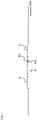
- Fig. 1 schematically shows an embodiment of the method of the present disclosure.
- a first nucleic acid fragment 1 containing, as a target gene, a selection marker gene S, a second nucleic acid fragment 2 containing one recognition sequence M1 of a pair of recognition sequences recognized by a site-specific recombinase, and a third nucleic acid fragment 3 containing the other recognition sequence M2 are introduced into the host.
- each of such fragments can be prepared as a double-stranded DNA via chemical synthesis in accordance with a conventional technique.
- a site-specific recombinase gene is introduced into the host in an expressible manner, although it is not shown in Fig. 1 .
- a site-specific recombinase gene may be contained in the first nucleic acid fragment 1, or it may be contained in an expression vector separately prepared.
- the second nucleic acid fragment 2 comprises a first homologous recombination sequence 4 that can undergo homologous recombination with the host genome DNA at one end and a second homologous recombination sequence 5 that can undergo homologous recombination with the first nucleic acid fragment 1 at the other end.
- the first nucleic acid fragment 1 comprises a third homologous recombination sequence 6 that can undergo homologous recombination with the second nucleic acid fragment 2 at one end and a fourth homologous recombination sequence 7 that can undergo homologous recombination with the third nucleic acid fragment 3 at the other end.
- the third nucleic acid fragment 3 comprises a fifth homologous recombination sequence 8 that can undergo homologous recombination with the first nucleic acid fragment 1 at one end and a sixth homologous recombination sequence 9 that can undergo homologous recombination with the host genome DNA at the other end.
- the first homologous recombination sequence 4 of the second nucleic acid fragment 2 and the sixth homologous recombination sequence 9 of the third nucleic acid fragment 3 can be designed based on a region to be deleted from the genome DNA.
- the first homologous recombination sequence 4 is designed based on the sequence of a recombinant region 10 upstream of the region R
- the sixth homologous recombination sequence 9 is designed based on the sequence of a recombinant region 11 downstream of the region R.
- the first homologous recombination sequence 4 of the second nucleic acid fragment 2 and the sixth homologous recombination sequence 9 of the third nucleic acid fragment 3 can be designed as an upstream region in a particular region of genome DNA and a downstream region continuous to the upstream region.
- the recombinant region 10 and the recombinant region 11 can be designed as continuous regions (i.e., the region R is not present), and the first homologous recombination sequence 4 and the sixth homologous recombination sequence 9 can be designed to correspond to such regions.
- the original genome DNA would not be deleted of any region, and a group of nucleic acid fragments comprising target genes would be inserted into the genome DNA.
- the second homologous recombination sequence 5 of the second nucleic acid fragment 2 and the fifth homologous recombination sequence 8 of the third nucleic acid fragment 3 can be designed based on the nucleotide sequences at the both ends of the first nucleic acid fragment 1.
- the second homologous recombination sequence 5 of the second nucleic acid fragment 2 and the third homologous recombination sequence 6 of the first nucleic acid fragment 1 can be designed as any nucleotide sequences as long as such sequences can undergo homologous recombination.
- the fifth homologous recombination sequence 8 of the third nucleic acid fragment 3 and the fourth homologous recombination sequence 7 of the first nucleic acid fragment 1 can be designed as any nucleotide sequences as long as such sequences can undergo homologous recombination.
- the first nucleic acid fragment 1 can be designed to comprise sequences at the both ends other than the target gene (i.e., the third homologous recombination sequence 6 and the fourth homologous recombination sequence 7) as any common nucleotide sequences, regardless of the region R to be deleted and the selection marker gene S.
- a region between the first homologous recombination sequence 4 of the second nucleic acid fragment 2 and the recombinant region 10 and a region between the sixth homologous recombination sequence 9 of the third nucleic acid fragment 3 and the recombinant region 11 have sequence identity that is high enough to undergo homologous recombination (crossing).
- Nucleotide sequence identity in each of the regions can be calculated using a conventional sequence comparison software, such as blastn. Nucleotide sequence identity in each of the regions may be 60% or higher. In some embodiments, sequence identity may be 80% or higher, 90% or higher, 95% or higher, and 99% or higher.
- the length of the first homologous recombination sequence 4 of the second nucleic acid fragment 2 may be the same with or different from that of the sixth homologous recombination sequence 9 of the third nucleic acid fragment 3.
- the length of the first homologous recombination sequence 4 and that of the sixth homologous recombination sequence 9 need to be long enough to undergo homologous recombination (crossing) with the genome DNA.
- such length may be 0.1 kb to 3 kb, 0.5 kb to 3 kb, and 0.5 kb to 2 kb.
- the lengths of the second homologous recombination sequence 5 to the fifth homologous recombination sequence 8 of the first nucleic acid fragment 1 to the third nucleic acid fragment 3 may be the same with or different from one another, provided that these sequences can undergo homologous recombination.
- the lengths of the second homologous recombination sequence 5 to the fifth homologous recombination sequence 8 may be, for example, 30 b to 300 b. In some embodiments, the length may be 40 b to 200 b, or 50 b to 100 b.
- Sequence identity between the third homologous recombination sequence 6 of the first nucleic acid fragment 1 and the second homologous recombination sequence 5 of the second nucleic acid fragment 2 and sequence identity between the fourth homologous recombination sequence 7 of the first nucleic acid fragment 1 and the fifth homologous recombination sequence 8 of the third nucleic acid fragment 3 need to be high enough to undergo homologous recombination (crossing).
- Nucleotide sequence identity in each of the regions can be calculated using a conventional sequence comparison software, such as blastn. Nucleotide sequence identity in each of the regions may be 60% or higher. In some embodiments, sequence identity may be 80% or higher, 90% or higher, 95% or higher, and 99% or higher.
- the first nucleic acid fragment 1, the second nucleic acid fragment 2, and the third nucleic acid fragment 3 configured as described above are introduced into the host.
- homologous recombination takes place between the first nucleic acid fragment 1 and the genome DNA, between the first nucleic acid fragment 1 and the second nucleic acid fragment 2, between the first nucleic acid fragment 1 and the third nucleic acid fragment 3, and between the third nucleic acid fragment 3 and the genome DNA, as schematically shown in Fig. 1 .
- the first nucleic acid fragment 1, the second nucleic acid fragment 2, and the third nucleic acid fragment 3 would be integrated into the genome DNA. This would result in deletion of the region R from the genome DNA.
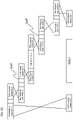
- a region between the pair of recognition sequences M1 and M2 would be deleted. More specifically, the third homologous recombination sequence 6, the selection marker gene S, and the fourth homologous recombination sequence 7 between the pair of recognition sequences M1 and M2 would be deleted from the genome DNA, as shown in Fig. 2 .
- the recognition sequence M1 is located on the second nucleic acid fragment 2, and the recognition sequence M2 is located on the third nucleic acid fragment 3.
- the selection marker gene S would not be flanked by the pair of recognition sequences M1 and M2. Even if the site-specific recombinase gene is expressed, the selection marker gene S would remain in the genome DNA.
- the selection marker gene S When the second nucleic acid fragment 2 is not integrated but the first nucleic acid fragment 1 and the third nucleic acid fragment 3 are integrated into a region other than the region R in the genome DNA as shown in Fig. 3 , for example, the selection marker gene S would not be deleted and it would remain in the genome DNA even if the site-specific recombinase gene is expressed. With the use of a phenotype resulting from the selection marker gene S, such as drug resistance or fluorescence, as the indicator, whether or not the first nucleic acid fragment 1 to the third nucleic acid fragment 3 had been accurately integrated into the genome DNA, in other words, whether or not the region R had been accurately deleted, can be evaluated.
- a phenotype resulting from the selection marker gene S such as drug resistance or fluorescence
- the selection marker gene S flanked by the pair of recognition sequences M1 and M2 would be deleted from the genome DNA upon expression of the site-specific recombinase gene, regardless of whether a plurality of nucleic acid fragments had been integrated into the genome DNA accurately or inaccurately. In such a case, it is not possible to evaluate as to whether or not a plurality of nucleic acid fragments had been accurately integrated into the genome DNA using a phenotype resulting from the selection marker gene S, such as drug resistance or fluorescence, as the indicator.
- a phenotype resulting from the selection marker gene S such as drug resistance or fluorescence
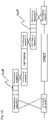
- the pair of recognition sequences M1 and M2 are present in the same nucleic acid fragment to flank the selection marker gene S as shown in Fig. 4 , accordingly, it is necessary to subject the plurality of nucleic acid fragments to a nucleic acid amplification reaction, such as PCR, to verify that the target region had been deleted from the genome DNA.
- a nucleic acid amplification reaction such as PCR
- the method of using the site-specific recombinase and its recognition sequence to remove the selection marker gene S from the genome DNA can be applied to the so-called marker recycle method.
- the marker recycle method a plurality of genes are successively introduced or deleted, a selection marker gene used for a single instance of gene introduction or deletion is removed, and the same selection marker gene is used for the subsequent gene introduction or deletion.
- the method of the present disclosure shown in Figs. 1 to 3 can be applied to the marker recycle method.
- a transformant from which the particular region R had been removed is selected using the phenotype resulting from the expression of the selection marker gene S as an indicator, and the selection marker gene S is then removed using the site-specific recombinase and its recognition sequence.
- a transformant lacking a particular region R does not have the selection marker gene S.
- the first nucleic acid fragment 1 having the selection marker gene S may be used again to delete a region other than the region R.
- the marker recycle method as shown in Fig. 3 , it is possible to verify that the first nucleic acid fragment 1 to the third nucleic acid fragment 3 were not accurately integrated based on the expression of the selection marker gene S.
- the first nucleic acid fragment 1 having the selection marker gene S can be repeatedly used.
- the selection marker gene S is removed with the use of the site-specific recombinase and its recognition sequence, and the third homologous recombination sequence 6 and the fourth homologous recombination sequence 7 are removed at the same time.
- the pair of recognition sequences M1 and M2 are present in the same nucleic acid fragment to flank the selection marker gene S as shown in Fig.
- the selection marker gene S may be deleted from a region between the pair of recognition sequences M1 and M2 with the aid of a site-specific recombinase.
- the homologous recombination sequences 20 and 21 at the both ends of the nucleic acid fragment would remain in the genome DNA.
- a newly introduced nucleic acid fragment may undergo homologous recombination with the homologous recombination sequences 20 and 21 remaining in the genome DNA.
- the third homologous recombination sequence 6 and the fourth homologous recombination sequence 7 in the first nucleic acid fragment 1 comprising the selection marker gene S would not remain in the genome DNA at the same time. Even if a region other than the region R is deleted with the use of the first nucleic acid fragment 1 comprising the selection marker gene S again, accordingly, it is possible to prevent a problem such that the first nucleic acid fragment 1 would be integrated into a site where the region R had existed.
- at least one recognition sequence of the pair of recognition sequences M1 and M2 may be provided in a nucleic acid fragment other than the first nucleic acid fragment 1 having the selection marker gene S.
- the first nucleic acid fragment 1 having the selection marker gene S can be repeatedly used.
- the first nucleic acid fragment 1 can be repeatedly used. In other words, it is not necessary to prepare the first nucleic acid fragment 1 every time when the selection marker gene S is used a plurality of times in the marker recycle method.
- the pair of recognition sequences M1 and M2 is present in the same nucleic acid fragment to flank the selection marker gene S as shown in Fig. 4 , it is necessary to prepare nucleic acid fragments designed to constitute the homologous recombination sequences 20 and 21 comprising different nucleotide sequences in order to prevent the problem as shown in Fig. 5 . Since the first nucleic acid fragment 1 can be repeatedly used in the method of the present disclosure, a procedure can be simplified when such method is applied to the marker recycle method.
- the second nucleic acid fragment 2 and the third nucleic acid fragment 3 were designed to comprise the recognition sequences M1 and M2, respectively. That is, both of the pair of recognition sequences M1 and M2 were designed to be located in nucleic acid fragments other than the first nucleic acid fragment 1 comprising the selection marker gene S. In the method of the present disclosure, in contrast, it is sufficient if the pair of recognition sequences M1 and M2 flanks the selection marker gene S, at least one of the pair of recognition sequences M1 and M2 is located on a nucleic acid fragment other than the first nucleic acid fragment 1 comprising the selection marker gene S, and the other thereof is located on the first nucleic acid fragment 1.
- the recognition sequence M1 of the pair of recognition sequences M1 and M2 may be located on the first nucleic acid fragment 1 comprising the selection marker gene S, and the other recognition sequence M2 may be located on the third nucleic acid fragment 3, as shown in Fig. 6 .
- the selection marker gene S and the fourth homologous recombination sequence 7 are deleted from a region between the pair of recognition sequences M1 and M2 by the action of the site-specific recombinase, but the third homologous recombination sequence 6 of the first nucleic acid fragment 1 would remain in the genome DNA.
- a phenotype resulting from the selection marker gene S such as drug resistance or fluorescence, may be used as the indicator to evaluate as to whether or not the first nucleic acid fragment 1 to the third nucleic acid fragment 3 had been accurately integrated into the genome DNA, in other words, whether or not the region R had been accurately deleted. Even if the third homologous recombination sequence 6 of the first nucleic acid fragment 1 remains in the genome DNA as shown in Fig.
- the first nucleic acid fragment 1 having the selection marker gene S would not be erroneously integrated into the same position. As described above, accordingly, it is possible to prevent erroneous integration of the first nucleic acid fragment 1 having the selection marker gene S in the marker recycle method.
- a plurality of nucleic acid fragments are not limited to the first nucleic acid fragment 1 to the third nucleic acid fragment 3, and 4 or more nucleic acid fragments may be used to introduce a target gene into a particular region of genome DNA.
- a phenotype resulting from the selection marker gene S such as drug resistance or fluorescence, may be used as the indicator to evaluate as to whether or not a plurality of nucleic acid fragments had been accurately integrated into the genome DNA, in other words, whether or not the region R had been accurately deleted.
- a phenotype resulting from the selection marker gene S such as drug resistance or fluorescence
- the method of the present disclosure can be applied to any host cell without particular limitation.
- host cells include fungi such as filamentous fungi and yeast, bacteria such as E. coli and Bacillus subtilis, plant cells, and animal cells including mammalian and insect cells.
- yeast host cells may be used.
- yeast include, but are not particularly limited to, yeast of Saccharomyces, yeast of Kluyveromyces, yeast of Candida, yeast of Pichia, yeast of Schizosaccharomyces, and yeast of Hansenula.
- yeast species of Saccharomyces such as Saccharomyces cerevisiae, Saccharomyces bayanus, and Saccharomyces boulardii.
- Expression vectors comprising site-specific recombinase genes are not particularly limited. Examples of expression vectors that can be used include: YCp-type E. coli-yeast shuttle vectors such as pRS413, pRS414, pRS415, pRS416, YCp50, pAUR112, and pAUR123; Yep-type E. coli-yeast shuttle vectors such as YES2 and YEp13; YIp-type E. coli-yeast shuttle vectors such as pRS403, pRS404, pRS405, pRS406, pAUR101, and pAUR135; E.
- ColE-type plasmids such as ColE-type plasmids such as pBR322, pBR325, pUC18, pUC19, pUC118, pUC119, pTV118N, pTV119N, pBluescript, pHSG298, pHSG396, and pTrc99A, p15A-type plasmids such as pACYC177 and pACYC184, and pSC101-type plasmids such as pMW118, pMW119, pMW218, and pMW219; Agrobacterium-derived plasmids such as pBI101; and Bacillus subtilis-derived plasmids such as pUB110 and pTP5.
- ColE-type plasmids such as pBR322, pBR325, pUC18, pUC19, pUC118, pUC119, pTV118N, pTV119N, pBluescript, pHSG29
- the first nucleic acid fragment 1 to the third nucleic acid fragment 3 or an expression vector can be introduced into a host cell by any method without particular limitation.
- An adequate method may be selected from among conventional techniques, such as the calcium chloride method, the competent cell method, the protoplast or spheroplast method, and the electropulse method.
- a site-specific recombinase gene under the control of an inducible promoter, adequate conditions are determined in accordance with the inducible promoter.
- a galactose-inducible promoter such as GAL1- or GALlO-inducible promoter
- galactose is added to a medium used for culturing a host cell comprising the first nucleic acid fragment 1 to the third nucleic acid fragment 3 or the expression vector introduced therein, or the host cell is transferred to and cultured in a galactose-containing medium.
- a site-specific recombinase gene can be induced to express.
- HSP heat shock protein
- the first nucleic acid fragment 1 to the third nucleic acid fragment 3 or the expression vector may be introduced into a host cell, and a site-specific recombinase gene may be expressed under the control of the inducible promoter. In such a case, it is not necessary to transfer the host cell to an expression-inducible condition. Thus, a transformant can be obtained more easily.
- the first homologous recombination sequence 4 of the second nucleic acid fragment 2 and the sixth homologous recombination sequence 9 of the third nucleic acid fragment 3 are designed to comprise nucleotide sequences that are highly homologous to an upstream region and a downstream region of a particular gene.
- a nucleic acid fragment comprising a target gene would be integrated into the genome via homologous recombination and the particular gene would be deleted from the genome.
- observing a phenotype resulting from deletion of the particular gene accordingly, whether or not a nucleic acid fragment comprising a target gene had been integrated into the genome can be determined.
- the ADE1 gene When the ADE1 gene is used as a particular gene, for example, the ADE1 gene would be deleted from the genome upon integration of a group of nucleic acid fragments comprising target genes into the genome. As a result, 5-aminoimidazole riboside is accumulated in the host, and a transformant is colored red by the polymerized polyribosyl aminoimidazole. By detecting a red color, accordingly, whether or not a group of nucleic acid fragments having target genes had been integrated into the host genome can be determined.
- the haploid experimental yeast strain S. cerevisiae BY4742, was used as a host.
- 3 types of plasmids each comprising a DNA fragment containing the 5'-homologous recombination region of the GRE3 gene (homologous sequence 1) and a DNA sequence to perform homologous recombination (homologous sequence 2); a DNA fragment containing a gene sequence having a G418-resistant gene (G418 marker) and a DNA recombinase Cre gene (not shown in Fig.
- the target DNA fragments were amplified, the DNA fragments were successively bound to each other using the In-Fusion HD Cloning Kit or the like, and the resultant was cloned into the pUC19 vector to prepare the 3 types of target plasmids.
- the resulting plasmids were designated as pUC-5U_GRE3-homologous sequence 2, pUC-homologous sequence 2-loxP-P_ERG1-G418-T_URA3-T_CYC1-Cre-P_GAL1-loxP-homologous sequence 3, and pUC-homologous sequence 3-3U_GRE3.
- a set of the 3 types of plasmids was designated as the pUC-gre3::loxPin-G418-Cre vector set.
- 3 types of plasmids each comprising a DNA fragment containing the 5'-homologous recombination region of the GRE3 gene (homologous sequence 1), one loxP sequence and a DNA sequence to perform homologous recombination (homologous sequence 5); a DNA fragment containing a gene sequence having a G418-resistant gene (G418 marker), the DNA recombinase Cre gene, and, at both ends, DNA sequences to perform homologous recombination (homologous sequences 5 and 6); and a DNA fragment containing the DNA sequence to perform homologous recombination (homologous sequence 6), the other loxP sequence, and a 3'-homologous recombination region of the GRE3 gene (homologous sequence 4) inserted therein were prepared.
- the homologous sequence 2 and the homologous sequence 3 were both of approximately 60 bp and designed on a primer sequence.
- the G418 marker and the Cre gene are flanked by two loxP sequences located on adjacent fragments. Upon expression of the Cre gene, the G418 marker, the Cre gene, and the homologous sequences 2 and 3 can be removed. DNA sequences can be amplified via PCR. In order to bind DNA fragments to each other, primers were synthesized with the addition of a DNA sequence so as to overlap with the adj acent DNA sequence by approximately 15 bp (Table 2).
- the target DNA fragments were amplified, the DNA fragments were successively bound to each other using the In-Fusion HD Cloning Kit or the like, and the resultant was cloned into the pUC19 vector to prepare the 3 types of target plasmids.
- the resulting plasmids were designated as pUC-5U_GRE3-loxP-homologous sequence 5, pUC-homologous sequence 5-P_REG1-G418-T_URA3-T_CYC1-Cre-P_GAL1-homologous sequence 6, and pUC-homologous sequence 6-loxP-3U_GRE3.
- a set of the 3 types of plasmids was designated as the pUC-gre3::loxPout-G418-Cre vector set.
- a GRE3-destructive linear vector set comprising 5 fragments was prepared.
- 2 types of plasmids each comprising a DNA fragment containing the loxP sequence and, at both ends, the homologous sequence 2 and the homologous sequence 5 and a DNA fragment containing the loxP sequence and, at both ends, the homologous sequence 6 and the homologous sequence 3 inserted therein were prepared.
- a 3'-downstream region of the ALD4 gene is inserted in a region between the homologous sequence 2 and the loxP sequence
- a 3'-downstream region of the ALD6 gene is inserted in a region between the loxP sequence and the homologous sequence 3 as dummy sequences so as to extend the length of the DNA fragment.
- DNA sequences can be amplified via PCR. In order to bind DNA fragments to each other, primers were synthesized with the addition of a DNA sequence so as to overlap with the adj acent DNA sequence by approximately 15 bp (Table 3).
- the target DNA fragments were amplified, the DNA fragments were successively bound to each other using the In-Fusion HD Cloning Kit or the like, and the resultant was cloned into the pUC19 vector to prepare the 2 types of target plasmids.
- the resulting plasmids were designated as pUC-homologous sequence 2-loxP-dummy 1-homologous sequence 5 and pUC-homologous sequence 6-loxP-dummy 2-homologous sequence 3.
- a set of the 5 plasmids comprising pUC-homologous sequence 2-dummy 1-loxP-homologous sequence 5, pUC-homologous sequence 6-loxP-dummy 2-homologous sequence 3, pUC-5U_GRE3-homologous sequence 2 designed in advance ( Fig. 8 ), pUC-homologous sequence 5-P_REG1-G418-T_URA3-T_CYC1-Cre-P_GAL1-homologous sequence 6 ( Fig. 9 ), and pUC-homologous sequence 3-3U GRE3 ( Fig. 8 ) was designated as the pUC-gre3::loxPout-G418-Cre (5 fragments) vector set.
- 3 types of plasmids each comprising a DNA fragment containing a 5'-homologous recombination region of the ADE1 gene (homologous sequence 7) and a DNA sequence to perform homologous recombination (homologous sequence 2); a DNA fragment containing the nourseothricin-resistant gene (natl: nat marker) and the DNA recombinase Cre gene (not shown) flanked by the loxP sequences and, at both ends, DNA sequences to perform homologous recombination (homologous sequences 2 and 3); and a DNA fragment containing a 3'-homologous recombination region of the ADE1 gene (homologous sequence 8) and a DNA sequence to perform homologous recombination (homologous sequence 3) inserted therein were prepared.
- the nat marker and the Cre gene flanked by a pair of loxP sequences can be removed.
- DNA sequences can be amplified via PCR.
- primers were synthesized with the addition of a DNA sequence so as to overlap with the adjacent DNA sequence by approximately 15 bp (Table 4).
- the target DNA fragments were amplified, the DNA fragments were successively bound to each other using the In-Fusion HD Cloning Kit or the like, and the resultant was cloned into the pUC19 vector to prepare the 3 types of target plasmids.
- the resulting plasmids were designated as pUC-5U_ADE1-homologous sequence 2, pUC-homologous sequence 2-loxP-P_PMA1-nat1-T_LEU2-P_GAL1-Cre-T_CYC1-loxP-homologous sequence 3, and pUC-homologous sequence 3-3U_ADE1.
- a set of the 3 types of plasmids was designated as the pUC-ade1::loxPin-nat1-Cre vector set.
- 3 types of plasmids each comprising a DNA fragment containing a 5'-homologous recombination region of the ADE1 gene (homologous sequence 7), the loxP sequence, and a homologous sequence to perform homologous recombination (homologous sequence 2); a DNA fragment containing a gene sequence having the nourseothricin-resistant gene (natl) (nat marker), the DNA recombinase Cre gene, and, at both ends, DNA sequences to perform homologous recombination (homologous sequences 2 and 3); and a DNA fragment containing a 3'-homologous recombination region of the ADE1 gene (homologous sequence 8), the loxP sequence, and a homologous sequence to perform homologous recombination (homologous sequence 3) inserted therein were prepared.
- the nat marker and the Cre gene are flanked by the loxP sequences contained in the adjacent fragments. Upon expression of the Cre gene, the nat marker and the Cre gene can be removed. DNA sequences can be amplified via PCR. In order to bind DNA fragments to each other, primers were synthesized with the addition of a DNA sequence so as to overlap with the adjacent DNA sequence by approximately 15 bp (Table 5).
- the target DNA fragments were amplified, the DNA fragments were successively bound to each other using the In-Fusion HD Cloning Kit or the like, and the resultant was cloned into the pUC19 vector to prepare the 3 types of target plasmids.
- the resulting plasmids were designated as pUC-5U_ADE1-loxP-homologous sequence 2, pUC-homologous sequence 2-P_PMA1-nat1-T_LEU2- P_GAL1-Cre-T_CYC1-homologous sequence 3, and pUC-homologous sequence 3-loxP-3U_ADE1.
- a set of the 3 types of plasmids was designated as the pUC-ade1::loxPout-nat1-Cre vector set.
- plasmids each comprising a DNA fragment containing the loxP sequence and, at both ends, the homologous sequence 2 and the homologous sequence 5; and a DNA fragment containing the loxP sequence and, at both ends, the homologous sequence 6 and the homologous sequence 3 inserted therein were prepared.
- a 5'-upstream region of the PDC6 gene is inserted in a region between the homologous sequence 2 and the loxP sequence
- a 5'-upstream region of the SED1 gene is inserted in a region between the loxP sequence and the homologous sequence 3 as dummy sequences so as to merely extend the length.
- DNA sequences can be amplified via PCR. In order to bind DNA fragments to each other, primers were synthesized with the addition of a DNA sequence so as to overlap with the adj acent DNA sequence by approximately 15 bp (Table 6).
- the target DNA fragments were amplified, the DNA fragments were successively bound to each other using the In-Fusion HD Cloning Kit or the like, and the resultant was cloned into the pUC19 vector to prepare the 2 types of target plasmids.
- the resulting plasmids were designated as pUC-homologous sequence 2-dummy 3-loxP-homologous sequence 5 and pUC-homologous sequence 6-loxP-dummy 4-homologous sequence 3.
- a set of the 5 types of plasmids comprising pUC-homologous sequence 2-dummy 3-loxP-homologous sequence 5, pUC-homologous sequence 6-loxP-dummy 4-homologous sequence 3, pUC-5U_ADE1-homologous sequence 2 designed in advance (Table 4, Fig. 11 ), pUC-homologous sequence 2-P_PMA1-nat1-T_LEU2- P_GAL1-Cre-T_CYC1-homologous sequence 3 (Table 5, Fig. 12 ), and pUC-homologous sequence 3-3U_ADE1 (Table 4, Fig.
- DNA fragments contained in the plasmids were amplified via PCR.
- the primer sets used in PCR are shown in Table 7.
- DNA fragments contained in the plasmids were amplified via PCR.
- the primer sets used in PCR are shown in Table 7.
- the Uz3444 or Uz3445 strains were transformed, the transformants were applied to a nourseothricin-containing YPD medium, and colonies were allowed to grow.
- DNA fragments contained in the plasmids were amplified via PCR.
- the primer sets used in PCR are shown in Table 7.
- the amplified DNA fragments the BY4742 or Uz3760 strains were transformed, the transformants were applied to a nourseothricin-containing YPD medium, and colonies were allowed to grow.
- the ADE1 gene is a gene of the adenine biosynthetic pathway.
- ADE1-deficient strains In ADE1-deficient strains, adenine intermediary metabolites; i.e., 5-aminoimidazole riboside, are accumulated, and polymerized polyribosyl aminoimidazole is colored red. Thus, ADE1-deficient strains can be easily identified. The red grown colonies and the white grown colonies were separately counted to inspect the efficiency of the strain comprising the vector set genome introduced thereinto for destructing the ADE1 gene.
- loxP is provided in each of the DNA fragments adjacent to the DNA fragment that would undergo homologous recombination via the homologous sequence, not in a DNA fragment containing a marker gene.
- the marker gene and the homologous sequences flanking the marker gene would be removed from the genome DNA through site-specific recombination by the Cre recombinase.
- loxP sequences are provided to flank a marker gene in a DNA fragment comprising the marker gene
- the marker gene would be removed through site-specific recombination by Cre recombinase, but the homologous sequences flanking the marker gene would not be removed from the genome DNA.
- a DNA fragment having the homologous sequences and the marker gene is repeatedly used, accordingly, in the second homologous recombination and thereafter, a homologous sequence remaining after the previous homologous recombination may undergo homologous recombination with the DNA fragment to be repeatedly used.
- Such homologous recombination may be problematic in practical applications (see Fig. 5 ).
- the pUC-gre3: :loxPin-G418-Cre vector set containing a DNA fragment comprising a marker gene flanked by a pair of loxP sequences and the pUC-gre3::loxPout-G418-Cre vector set containing a DNA fragment comprising a marker gene, other DNA fragments comprising loxP positioned adjacent to the both sides of the aforementioned DNA fragment were introduced into the GRE3 gene locus, respectively, and the marker gene was removed via Cre/loxP site-specific recombination to prepare strains (Uz3444, Uz3445). Subsequently, the second homologous recombination was performed.
- the pUC-ade1::loxPin-nat1-Cre vector set containing a DNA fragment in which a pair of loxP sequences flanks the marker gene, or the pUC-ade1::loxPout-nat1-Cre vector set containing a DNA fragment having a marker gene and DNA fragments positioned adjacent to the both sides of the aforementioned DNA fragment and comprising loxP was introduced into the ADE1 gene locus, and efficiency for homologous recombination was examined.
- the loxP sequences are provided in both DNA fragments adjacent to the DNA fragment comprising a marker gene
- the homologous sequences provided outside the pair of loxP sequences would remain in the genome DNA when the number of DNA fragments is 5 or more (see Fig. 10 , the homologous sequences 2 and 3 in Fig. 10 ).
- the marker gene is to be introduced into the ADE1 gene locus in the second recombination (see Fig. 13 )
- homologous recombination may occur between the homologous sequences 2 and 3 remaining in the first GRE3-gene locus and the 3 DNA fragments, as shown in Fig. 14 .
- the pUC-gre3::loxPout-G418-Cre (5 fragments) vector set was introduced into the GRE3 gene locus and the marker gene was removed through Cre/loxP site-specific recombination to prepare a strain of interest (Uz3760). Subsequently, the second homologous recombination was performed. That is, the pUC-ade1::loxPout-nat1-Cre (5 fragments) vector set was introduced into the ADE1 gene locus to prepare a strain of interest. For comparison, a strain selectively comprising the pUC-ade1::loxPout-nat1-Cre (5 fragments) introduced therein was prepared, and the efficiency for homologous recombination was compared.
Landscapes
- Life Sciences & Earth Sciences (AREA)
- Health & Medical Sciences (AREA)
- Genetics & Genomics (AREA)
- Engineering & Computer Science (AREA)
- Chemical & Material Sciences (AREA)
- Organic Chemistry (AREA)
- Zoology (AREA)
- Wood Science & Technology (AREA)
- Bioinformatics & Cheminformatics (AREA)
- General Engineering & Computer Science (AREA)
- Biotechnology (AREA)
- Molecular Biology (AREA)
- Biomedical Technology (AREA)
- Mycology (AREA)
- Biochemistry (AREA)
- General Health & Medical Sciences (AREA)
- Microbiology (AREA)
- Plant Pathology (AREA)
- Physics & Mathematics (AREA)
- Biophysics (AREA)
- Medicinal Chemistry (AREA)
- Micro-Organisms Or Cultivation Processes Thereof (AREA)
- Measuring Or Testing Involving Enzymes Or Micro-Organisms (AREA)
Applications Claiming Priority (1)
| Application Number | Priority Date | Filing Date | Title |
|---|---|---|---|
| JP2020200752A JP7517120B2 (ja) | 2020-12-03 | 2020-12-03 | 形質転換体の製造方法 |
Publications (2)
| Publication Number | Publication Date |
|---|---|
| EP4008778A2 true EP4008778A2 (de) | 2022-06-08 |
| EP4008778A3 EP4008778A3 (de) | 2022-06-22 |
Family
ID=79730647
Family Applications (1)
| Application Number | Title | Priority Date | Filing Date |
|---|---|---|---|
| EP21211671.9A Pending EP4008778A3 (de) | 2020-12-03 | 2021-12-01 | Verfahren zur herstellung von transformanten |
Country Status (3)
| Country | Link |
|---|---|
| EP (1) | EP4008778A3 (de) |
| JP (1) | JP7517120B2 (de) |
| CN (1) | CN114591998B (de) |
Families Citing this family (1)
| Publication number | Priority date | Publication date | Assignee | Title |
|---|---|---|---|---|
| JP7635182B2 (ja) * | 2022-08-04 | 2025-02-25 | 株式会社豊田中央研究所 | 相同組換え方法 |
Family Cites Families (4)
| Publication number | Priority date | Publication date | Assignee | Title |
|---|---|---|---|---|
| CN104981542B (zh) * | 2012-03-12 | 2018-10-16 | 帝斯曼知识产权资产管理有限公司 | 重组系统 |
| EP3083958B1 (de) * | 2013-12-19 | 2019-04-17 | Amyris, Inc. | Verfahren zur genomischen integration |
| CN106191041B (zh) * | 2015-04-30 | 2020-12-29 | 杭州菁因康生物科技有限公司 | 基因打靶方法 |
| JP7690257B2 (ja) * | 2019-06-24 | 2025-06-10 | トヨタ自動車株式会社 | 形質転換補助用プラスミド及びこれを用いた形質転換体の製造方法、並びに形質転換方法 |
-
2020
- 2020-12-03 JP JP2020200752A patent/JP7517120B2/ja active Active
-
2021
- 2021-12-01 EP EP21211671.9A patent/EP4008778A3/de active Pending
- 2021-12-03 CN CN202111474177.1A patent/CN114591998B/zh active Active
Also Published As
| Publication number | Publication date |
|---|---|
| JP2022088751A (ja) | 2022-06-15 |
| CN114591998B (zh) | 2024-05-14 |
| JP7517120B2 (ja) | 2024-07-17 |
| CN114591998A (zh) | 2022-06-07 |
| US20220177927A1 (en) | 2022-06-09 |
| EP4008778A3 (de) | 2022-06-22 |
Similar Documents
| Publication | Publication Date | Title |
|---|---|---|
| US20240117330A1 (en) | Enzymes with ruvc domains | |
| US20240344045A1 (en) | Enzymes with ruvc domains | |
| US12338454B2 (en) | Helper plasmid for transformation, method for producing transformant using the same, and transformation method | |
| US20220298494A1 (en) | Enzymes with ruvc domains | |
| US20240110167A1 (en) | Enzymes with ruvc domains | |
| US20220220460A1 (en) | Enzymes with ruvc domains | |
| US11299754B2 (en) | Gene targeting method | |
| EP4008778A2 (de) | Verfahren zur herstellung von transformanten | |
| Karim et al. | Harnessing the CRISPR/Cas9 in filamentous fungi for the production of secondary metabolites | |
| US12618084B2 (en) | Method for producing transformant | |
| US11939571B2 (en) | Library-scale engineering of metabolic pathways | |
| JP2024114900A (ja) | 形質転換用プラスミド及びこれを用いた形質転換体の製造方法、並びに形質転換方法 | |
| WO2022138649A1 (en) | A plasmid for transformation, a method for producing a transformant using the same, and a method of transformation | |
| JP2021000051A (ja) | 形質転換用プラスミド及びこれを用いた形質転換体の製造方法、並びに形質転換方法 | |
| EP4578946A1 (de) | Optimierte guide-rna, crispr/acc2c9-geneditiersystem und geneditierverfahren | |
| US20240043855A1 (en) | A helper plasmid for transformation, a method for producing a transformant using the same, and a method of transformation | |
| EP4567098A1 (de) | Verfahren zur homologen rekombination | |
| JP3921527B2 (ja) | 染色体の改変方法 | |
| JP2022045981A (ja) | 形質転換体の製造方法及び形質転換方法 | |
| CN120615122A (zh) | 基因组编辑细胞的制备方法及杂交促进方法 |
Legal Events
| Date | Code | Title | Description |
|---|---|---|---|
| PUAI | Public reference made under article 153(3) epc to a published international application that has entered the european phase |
Free format text: ORIGINAL CODE: 0009012 |
|
| STAA | Information on the status of an ep patent application or granted ep patent |
Free format text: STATUS: REQUEST FOR EXAMINATION WAS MADE |
|
| PUAL | Search report despatched |
Free format text: ORIGINAL CODE: 0009013 |
|
| 17P | Request for examination filed |
Effective date: 20211201 |
|
| AK | Designated contracting states |
Kind code of ref document: A2 Designated state(s): AL AT BE BG CH CY CZ DE DK EE ES FI FR GB GR HR HU IE IS IT LI LT LU LV MC MK MT NL NO PL PT RO RS SE SI SK SM TR |
|
| AK | Designated contracting states |
Kind code of ref document: A3 Designated state(s): AL AT BE BG CH CY CZ DE DK EE ES FI FR GB GR HR HU IE IS IT LI LT LU LV MC MK MT NL NO PL PT RO RS SE SI SK SM TR |
|
| RIC1 | Information provided on ipc code assigned before grant |
Ipc: C12N 15/90 20060101ALI20220518BHEP Ipc: C12N 15/113 20100101ALI20220518BHEP Ipc: C12N 9/22 20060101AFI20220518BHEP |
|
| STAA | Information on the status of an ep patent application or granted ep patent |
Free format text: STATUS: EXAMINATION IS IN PROGRESS |
|
| 17Q | First examination report despatched |
Effective date: 20241213 |